


Abstract
Biofortification of wheat with anthocyanins is a strategy for solving the problem of “hidden hunger” and preventing chronic diseases. In this study, the blue aleurone trititrigia line ‘Istra 116’ is characterized as a new genetic resource for wheat breeding. Field and laboratory assessments (the years 2021–2024) compared its characteristics with the commercial trititrigia variety in ‘Pamyati Lyubimovoy’ and wheat varieties (Triticum aestivum L.). ‘Istra 116’ showed excellent agronomic qualities: a higher coefficient of productive tillering (1.93 versus 1.2), longer spikes (up to 17.5 cm) and grain yield (4.2 t/ha), exceeding the control for trititrigia (2.6 t/ha) and comparable to winter wheat (4.5 t/ha). A laboratory baking assessment confirmed its satisfactory quality (overall score 4.5/5). The blue pigment from the aleurone layer partially passed into the flour, giving the bread a darker crust but retaining the anthocyanins in the finished product. The results position ‘Istra 116’ as a dual-purpose genetic resource: a potential commercial biofortified crop and a valuable donor of the blue aleurone layer trait for traditional wheat breeding, offering a practical way to increase the nutritional value of basic foodstuffs.
1. Introduction
Human nutrition has undergone significant changes with the transition to agriculture, which has led to a reduction in the diversity of plant species consumed, and such reduction has had a negative impact on public health [1]. Despite advances in food production, population growth is outpacing these successes [2]. More than 925 million people in the world suffer from hunger, and about 2 billion face “hidden hunger”—a chronic deficiency of important micronutrients. Solving this problem is a key objective of UN Sustainable Development Goal 2 [3,4], and biofortification of agricultural crops is recognized as one of the most effective approaches [5].
Historically, the breeding of cereals (wheat, rice, corn) was focused on increasing yields, which led to a decrease in the nutritional value of grain. Since grains remain the mainstay of the diet [6], their biofortification is of strategic interest. Genetic engineering methods have made it possible to create rice, corn, and wheat varieties enriched with compounds such as beta-carotene (provitamin A), folic acid (vitamin B9), iron, essential amino acids, polyunsaturated fatty acids, and flavonoids [7,8,9,10,11]; however, the cultivation and use of genetically modified (GM) crops face regulatory challenges, barriers and public skepticism in many countries.
In this regard, traditional breeding retains its relevance as the main method of obtaining biofortified varieties [12].
A promising direction is the enrichment of grain with anthocyanins; the consumption of which is associated with a reduced risk of cardiovascular, neurological diseases and obesity due to their antioxidant activity [13,14,15]. Wheat (Tr. aestivum L., Tr. durum Desf.) ranks second in the world in terms of consumption among grain crops. Along with the common red-grain (controlled by the genes *R-A1, R-B1, R-D1*) and white-grain varieties, there are forms with blue, purple, and black grain color [16,17]. This is due to the accumulation of anthocyanins either in the aleurone layer (blue aleurone), controlled by Ba genes, or in the pericarp (purple pericarp), controlled by Pp-1 and Pp-3 genes [18,19,20,21]. The anthocyanin content in grains with pigmented aleurone is usually higher than in non-pigmented grains, and when ground, they are preserved in the bran, increasing the nutritional value of whole grains [22,23]. The creation of anthocyanin-enriched varieties largely depends on the use of the genetic diversity of wild relatives of cultivated plants [24,25]. In particular, Ba genes controlling the “blue aleurone” trait have been identified in species from the tertiary genetic pool of cereals, such as Thinopyrum ponticum, Th. bessarabicum, Tr. monococcum and Tr. boeoticum [26,27]. In this context, the blue-grained genotypes of trititrigia (×Trititrigia cziczinii Tzvelev) are of particular interest [28]. This synthetic species, created by N.V. Tsitsin by remote hybridization of wheat (Tr. aestivum, Tr. durum) with species of the genus Thinopyrum, is an amphiploid (2n = 56) [29,30,31]. Due to the combination of wheat and wheatgrass chromosomes, trititrigia serves as an effective “genetic bridge” for the transfer of valuable traits from wild cereals to the genotype of cultivated wheat [32,33,34,35,36]. No previous studies have been conducted to describe the characteristics of the lines of the new synthetic crop ×Trititrigia cziczinii Tzvel., which has a colored grain.
The purpose of this study was a comprehensive assessment of the morphological and biological properties of the blue-grained tritrigia variety ‘Istra 116’ in comparison with the commercial tritrigia variety ‘Pamyati Lyubimovoy’. Evaluation of the baking properties of trititrigia, compared with wheat varieties (winter and spring forms of development) to determine their breeding value and potential in biofortification programs.
2. Materials and Methods
2.1. Plant Material
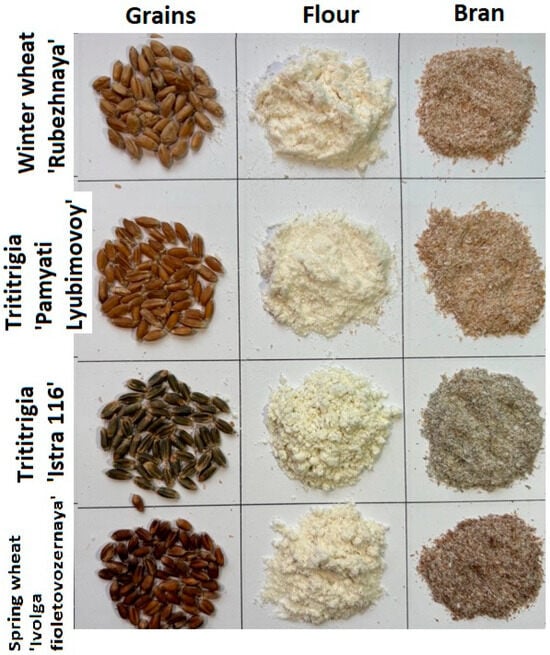
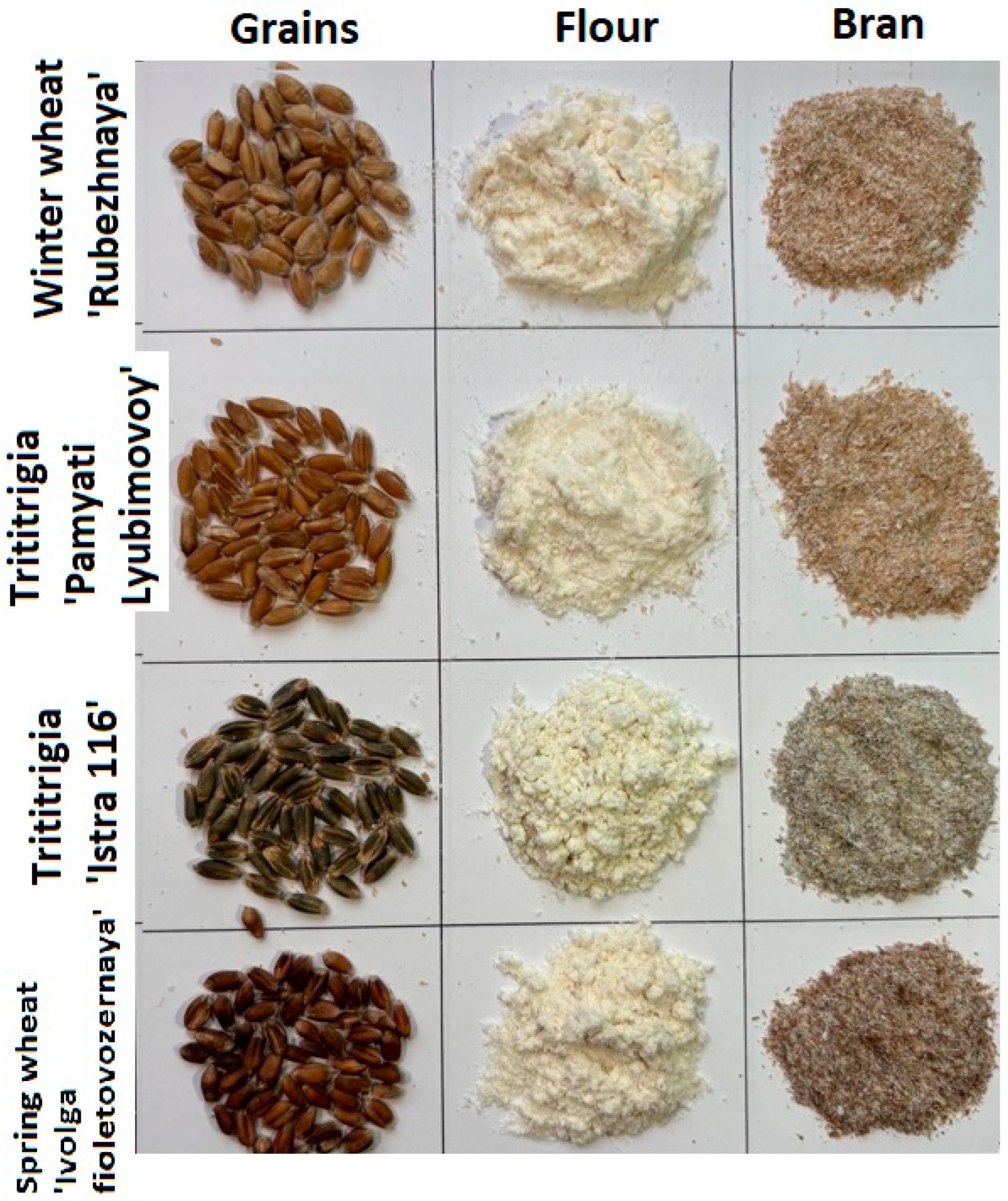
The object of the research was the trititrigia lineage (×Trititrigia cziczinii Tzvel.) (2n = 56) from the genetic collection of the Department of Distant Hybridization N.V. Tsitsin Main Botanical Garden of Russian Academy of Sciences—‘Istra 116’. The first commercial variety of trititrigia ‘Pamyati Lyubimovoy’ was used for its yield control, crop structure, and baking characteristics. The winter soft wheat variety ‘Rubezhnaya’, created at the N.V. Tsitsin Main Botanical Garden of Russian Academy of Sciences with the involvement of Elymus genetic material in hybridization, was chosen as a traditional (common for the region) grain crop [37,38,39,40]. The line of spring soft wheat ‘Ivolga fioletovozernaia’, characterized by the purple pericarp trait, was used to understand the baking characteristics of cereals with pigment in the pericarp of the grain (Figure 1).
Figure 1.
Grain, flour, and bran of grain crops.
2.2. Plant Growing Conditions
The studies were carried out on sod-podzolic medium loamy soils in the Department of Distant Hybridization N.V. Tsitsin Main Botanical Garden of Russian Academy of Sciences (55°85′ N, 37°02′ E) (Moscow, Russia) from the years 2021 to 2024. The soil of the experimental plot was well-supplied with mobile forms of phosphorus (P2O5)—198 mg kg of soil, moderately supplied with mobile forms of potassium (K2O)—164 mg kg of soil, a high content of easily hydrolysable nitrogen—64–69 mg kg of soil, and a low humus content—1.7%.
The experimental fields were kept free from any vegetation in the year preceding the planting. The sowing of trititrigia and winter wheat was carried out within the time limits accepted for sowing winter cereals (wheat, triticale, trititrigia) in the Central Non-Chernozem zone of the Russian Federation—from 20 August to 10 September (2021, 2022 and 2023 years). The sowing of spring wheat was carried out on the accepted dates from 1 May to 15 May (2022, 2023 and 2024). In the competitive variety testing, the area of the plot was 10 m2, the replication was sixfold. Sowing was carried out with a SN-16 breeding drill. The row spacing was 15 cm. The seeding rate was 500 seeds per m2. The experimental plots were cleaned with a “Sampo-500” breeding combine in the phase of full grain ripeness in 85% of the spikes. Before harvesting the crops with a combine harvester, a sample with roots from an area of 0.25 m2 was taken from each plot to analyze the structure of the crop. The analysis was carried out on 10 typical plants from each sheaf, selected from 6 repetitions for each variant.
Meteorological conditions during the years of research were generally favorable for the growth and development of winter crops. Precipitation and temperature conditions for the entire growing season were at the annual average level. At the same time, abnormal fluctuations in individual ten-day periods affected the yield and quality of grain. The high snow-cover in the winter of 2022 led to massive damage to breeding crops of winter crops by snow mold caused by cryophilic fungi, which affected the density of stems before harvesting and yields that year. Precipitation exceeding six times the average annual observations (260 mm versus 42 mm) in the second ten-day period of June 2024 led to a slight deposit in crops and a decrease in grain quality (Table 1).
Table 1.
Meteorological conditions during the years of the field experiment.
2.3. Data Collection
Field assessments, accounting for yields and characteristics describing the growth habit, were carried out in accordance with the methodology of the state variety testing of agricultural crops [41].
The grains were ground using a Brabender Quadrumat junior (Germany, Duisburg) mill, followed by sieving at a laboratory screening facility. Bread baking was carried out according to the methodology of the state variety testing GOST 27669-88, with changes depending on the type of grain crop (wheat or trititrigia) [42]. The bread was ground and baked from a combined grain sample. Three loaves (2 shaped + 1 hearth) were baked from each sample (variety or line).
Dough recipe: flour 70% yield—100 g (at 14% humidity), pressed yeast—3 g, sugar—2.5 g, salt—1.3 g, vegetable oil (to lubricate the baking dish).
The method of making the dough is simple. Ferment and proof the kneaded dough for 180–240 min at a temperature of 31 °C. Bake for 25 min at a temperature of 230 °C.
The baking assessment was carried out in a laboratory setting. The criteria for the final bakery grade on a 5-point scale are presented in Table 2.
Table 2.
Criteria for the bakery evaluation of laboratory baking.
The final bakery assessment consists of several indicators: physical—the volume of bread (cm3) and organoleptic appearance, which includes the shape of the crust, surface texture, and color of the crust. The crumb has porosity, elasticity, color, and taste (scores).
The determination of the protein and crude gluten content in the grain was performed using the method of BIC spectroscopy according to GOST/ISO on an Lumex Infralume FT 12 instrument (Russia, Saint-Petersburg)measuring the transmission spectra of whole grains in the spectral range from 8700 to 13,200 cm−1. Courtesy of the Laboratory of Marker and Genomic Breeding of the All-Russian Research Institute of Agricultural Biotechnology.
2.4. Statistical Analysis
Statistical analysis was performed using MS Excel 2024 software (version 17.0). The normality of the distribution of features was checked using the Kolmagorov–Smirnov method. The t-test (p = 0.05) and ANOVA with Duncan’s a posteriori criterion were used to compare the averages.
3. Results
3.1. Origin and Biological Features of Trititrigia
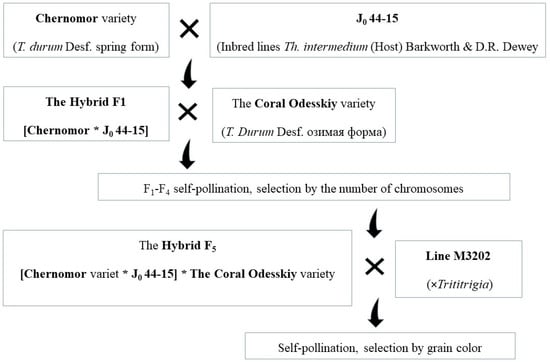
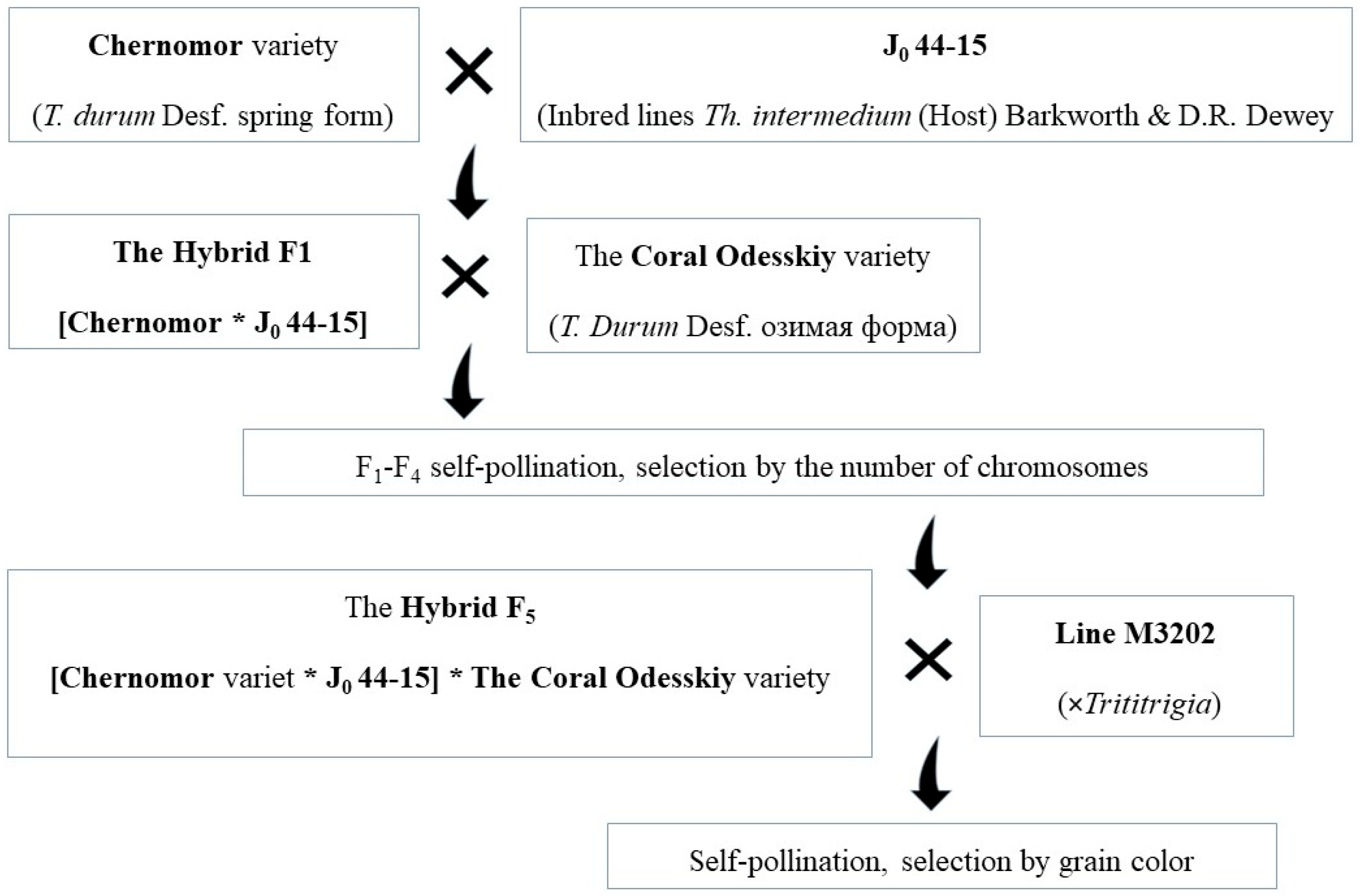
The studied line ‘Istra 116’ belongs to the synthetic species ×Trititrigia cziczinii Tzvel. (2n = 56), registered in international taxonomic databases [28,41]. The hybridization scheme for obtaining this line is shown in Figure 2.
Figure 2.
Hybridization scheme for obtaining the trititrigia line ‘Istra 116’.
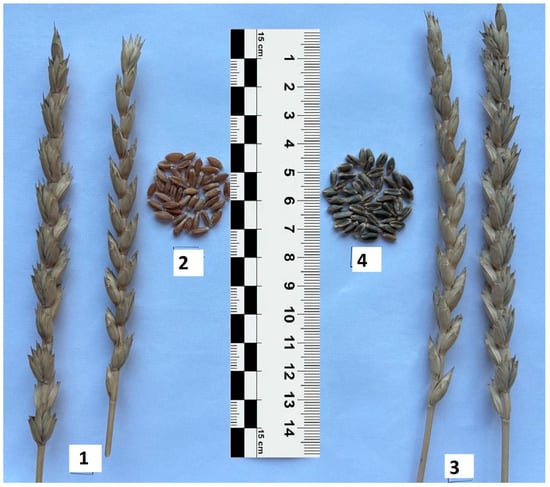
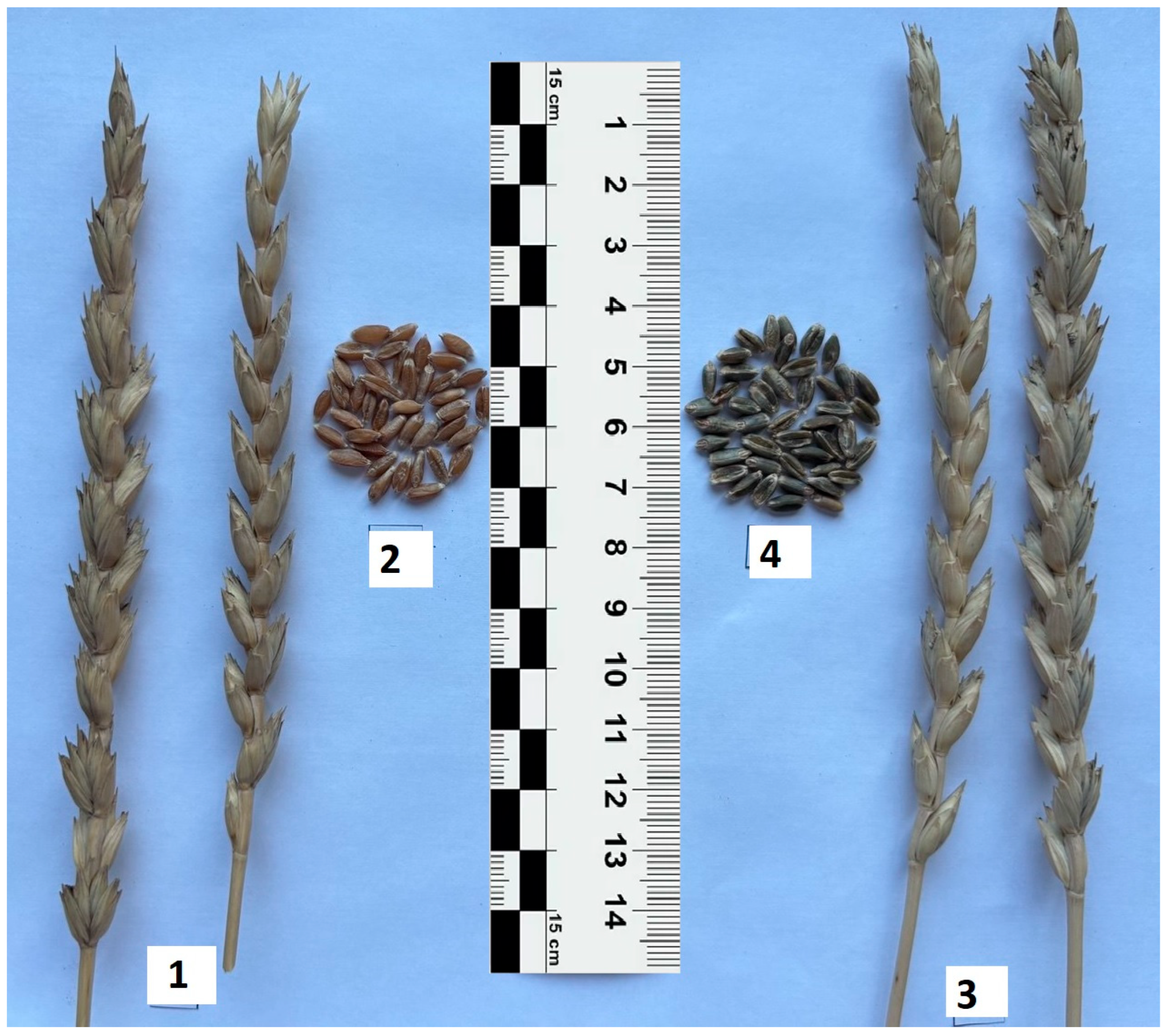
The line belongs to the viride variety, characterized by a white, unblemished, spineless spike and a blue (green) grain (Figure 3) [29].
Figure 3.
Comparison of morphological features of grain and spike of tritirigia of the variety ‘Pamyati Lyubimovoy’and the variety ‘Istra 116’. 1—spike of trititrigia variety ‘Pamyati Lyubimovoy’; 2—grains of trititrigia variety ‘Pamyati Lyubimovoy’; 3—spike of trititrigia variety “Istra 116”; 4—grains of trititrigia variety ‘Istra 116’.
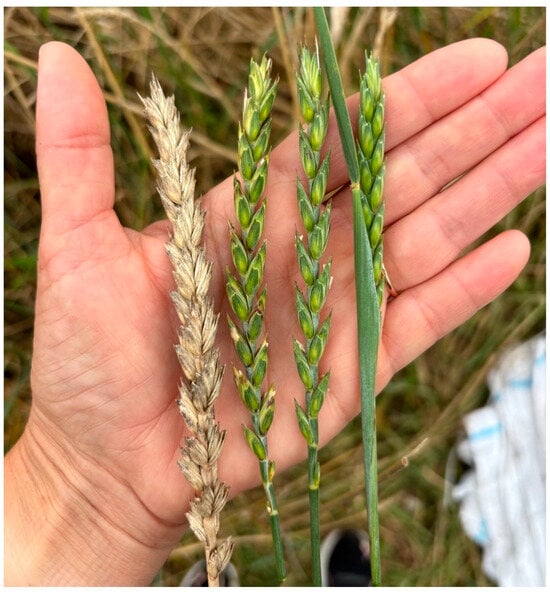
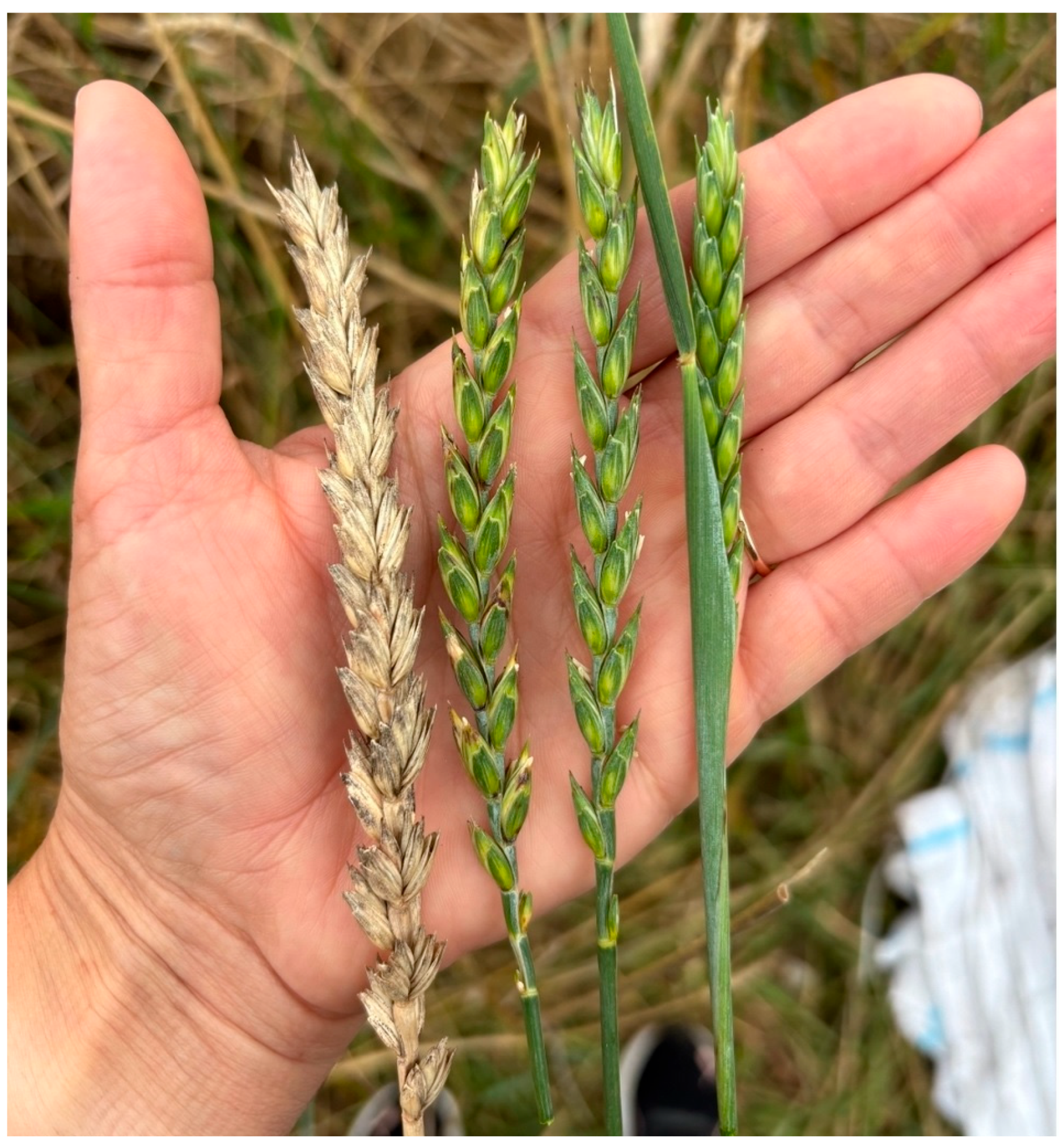
One of the features of trititrigia is the ability for continuous generative shoot formation, which occurs throughout the growing season [42]. Before harvesting, you can simultaneously mark the spikes in the crops, both at the stage of full maturity of the grain and when it is just beginning to bloom (Figure 4).
Figure 4.
Heterogeneous maturity of trititrigia spikes. The photograph illustrates the characteristic non-uniform ripening within a single trititrigia plant, with ears present at both anthesis and full grain maturity stages at the time of harvest.
In the years when the ripening of trititrigia is dry and hot, all spikes of trititrigia ripen evenly. For modern grain harvesting equipment, uneven maturation of trititrigia is not a problem. The ripened grain is threshed well, and the unripe grains are removed along with all the remaining straw.
3.2. Morphobiological Indicators of Trititrigia
All studied trititrigia genotypes showed the winter type of development. The transition to the generative phase of the ‘Istra 116’ line required at least 60 days of vernalization at +5 °C, while 43 days were enough for the ‘Pamyati Lyubimovoy’ variety. When sowing trititrigia in the spring in the field, all lines do not form a spike during the growing season. The plants remain in the tillering phase until autumn frosts, forming a spike only on single specimens in which the grain does not have time to ripen.
Morphological features are shown in Table 2. Plants of the ‘Istra 116’ line were on average 15–20 cm higher than those of the ‘Pamyati Lyubimovoy’ variety. The ‘Istra 116’ line was also characterized by a high coefficient of productive tillering (1.93 versus 1.2) and formed longer spikes (up to 17.5 cm) with a large number of spikelets (up to 22 pcs).
The average number of grains per spike is 43.4 pieces (maximum 82.0 pieces). The ‘Pamyati Lyubimovoy’ variety has a more compact spike, in which about 36.6 grains are formed (the maximum number is 63.0 pcs). The weight of 1000 grains from the ‘Istra 116’ line were 31.0 g, which was slightly higher than the value of the ‘Pamyati Lyubimovoy’ variety (29.2 g).
3.3. Productivity
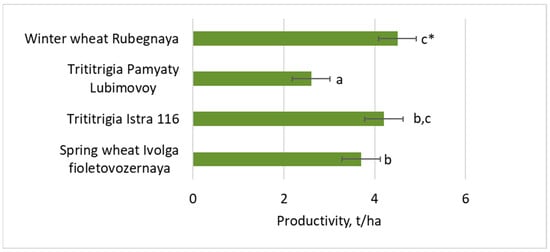
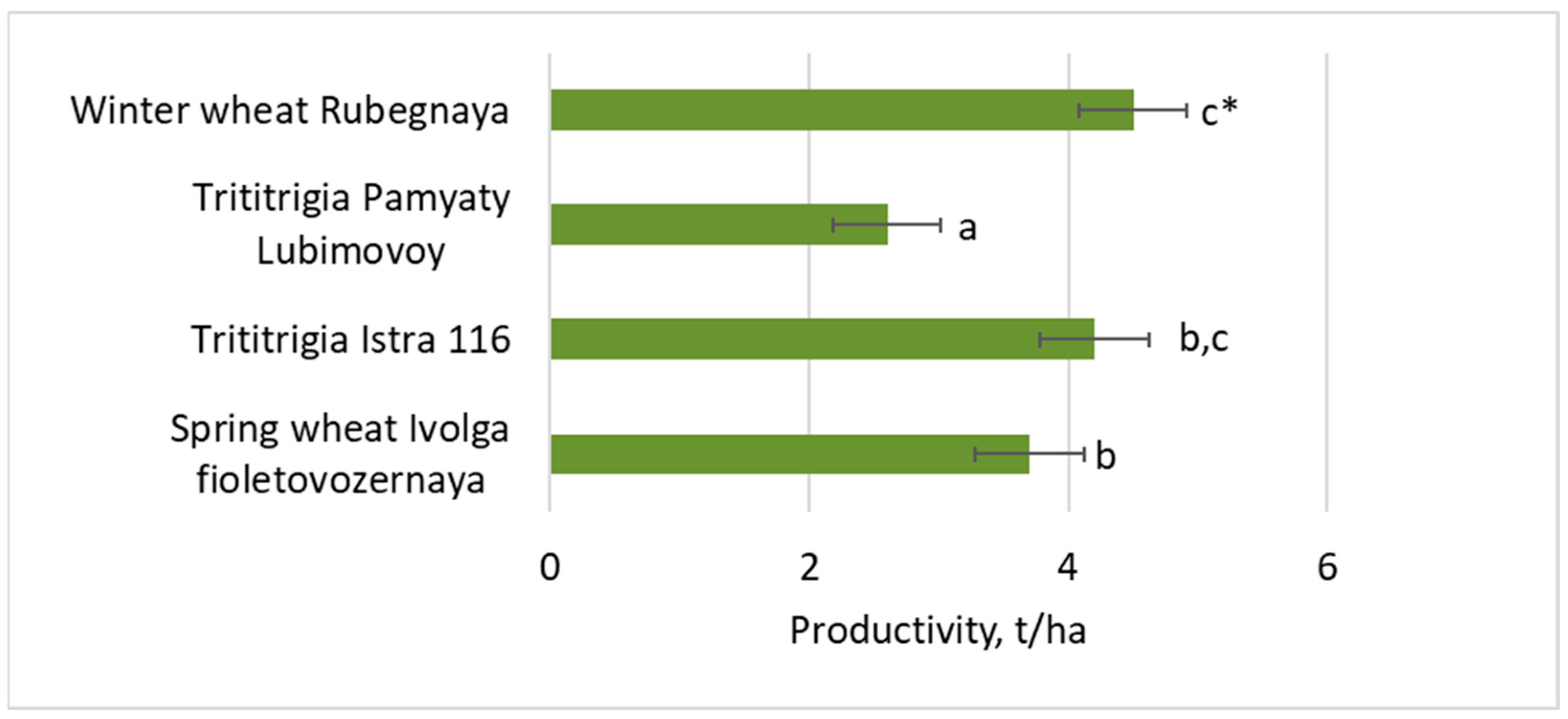
The average yield of the ‘Istra 116’ line during the research period (2021–2024) was 4.2 t/ha, which was comparable to the yield of winter wheat ‘Rubezhnaya’ (4.5 t/ha) and significantly higher than that of the trititrigia variety in ‘Pamyati Lyubimovoy’ (2.6 t/ha) (Figure 5).
Figure 5.
Yield of trititrigia and wheat with indication of standard deviation, t/ha. * The letters indicate significant differences between the average ANOVA results according to Duncan’s a posteriori criteria (p = 0.05).
3.4. Baking Properties
The results of the laboratory baking assessment are presented in Table 3. The volume of bread made from flour of the ‘Istra 116’ line was 520 cm3. Due to the partial penetration of blue pigment from the aleurone layer into the flour, the color of the flour and, after baking, the crust of the bread are slightly darker than that of wheat bread made from white flour, which reduces the overall final score. The highest baking rating was noted for bread made from flour from trititrigia in the ‘Pamyati Lyubimovoy’ variety. The bread had a maximum volume of 580 cm3 (Table 4). The shape of the bread was smooth and regular, and the color was uniform. Despite the fact that traditionally spring wheat in Russia has higher-quality characteristics, bread made from wheat flour of the ‘Ivolga fioletovozernaia’ line did not receive an advantage. This is due to the low bread volume (520 cm3). The remaining indicators were the highest possible.
Table 3.
Morphological features of the ‘Istra 116’ line compared to the commercial trititrigia variety in ‘Pamyati Lyubimovoy’.
Table 4.
Bakery evaluation of trititrigia lines compared to other grain crops.
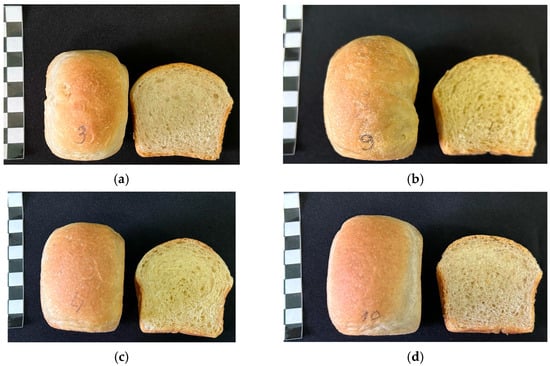
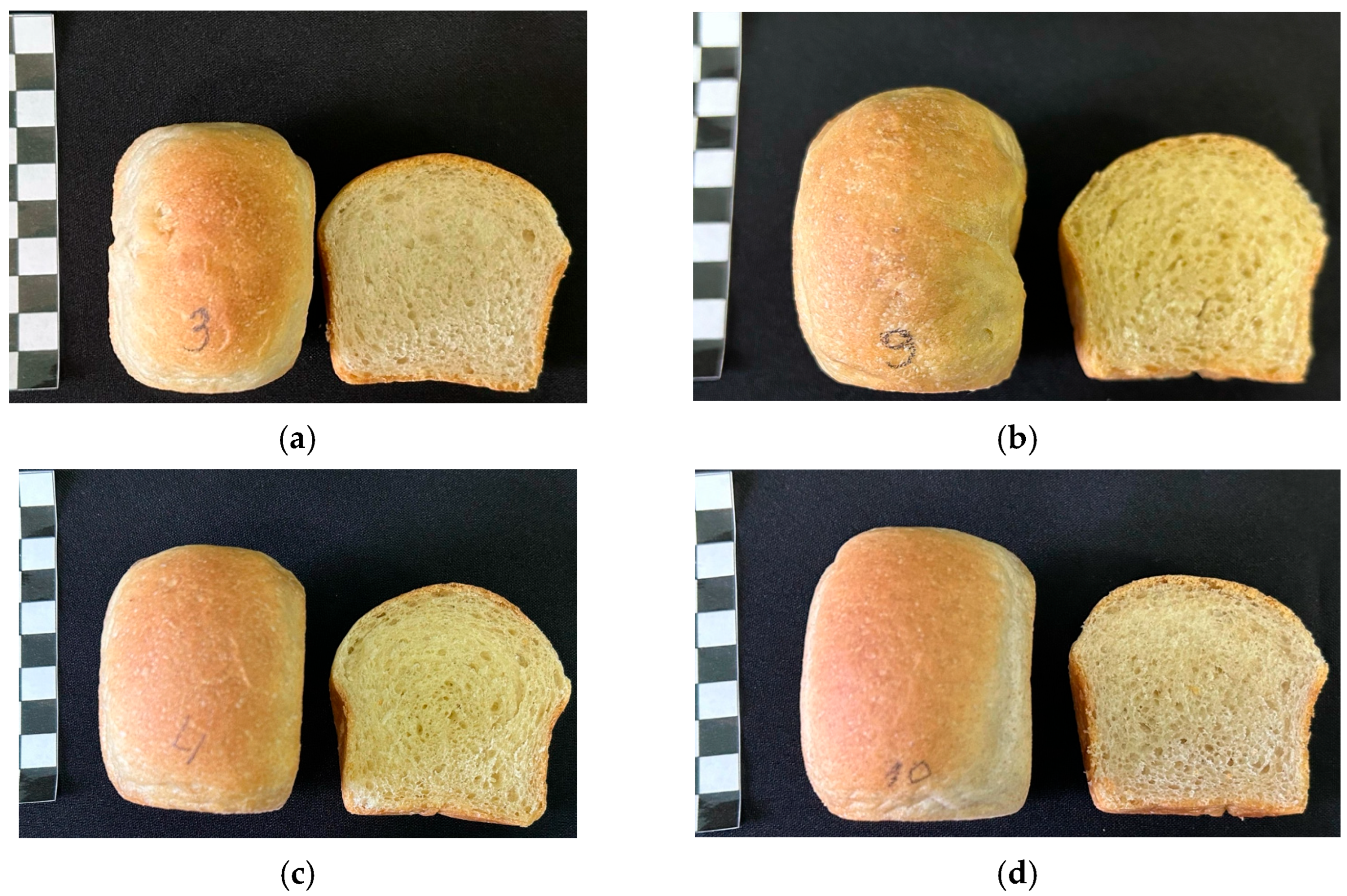
The color of the bread crust received a score of 4 points, and the taste scored 4 points, which together gave a total score of 4.5. Bread from the variety ‘Pamyati Lyubimovoy’ had a maximum volume (580 cm3) and an overall score of 4.8 points. The appearance of the bread samples is shown in Figure 6.
Figure 6.
Laboratory baking: (a) winter wheat ‘Rubezhnaya’; (b) trititrigia ‘Istra 116’; (c) trititrigia ‘Pamyati Lyubimovoy’; (d) spring wheat ‘Ivolga fioletovozernaia’.
The pores of bread made from trititrigia flour are quite large, of different sizes and unevenly distributed throughout the volume. The fermentation process of the dough is more intense, and the high gluten content in the trititrigia lines makes the dough more elastic (Table 5). In some trititrigia lines, the crumb color has a pronounced yellow tint, which may indicate the presence of carotene pigments in the grain. Bread can be baked from trititrigia flour ‘Istra 116’ without adding improvers.
Table 5.
Gluten, protein and starch content in grain crops.
The samples of grain crops with colored grains (trititrigia line ‘Istra 116’ and wheat line ‘Ivolga fioletovozernaya’) had a high gluten content of 35.4 and 34.2%, respectively. These samples have a high protein content in the same soil and meteorological conditions compared to the ‘Rubezhnaya’ wheat variety and the ‘Pamyati Lyubimovoy’ trititrigia variety.
4. Discussion
4.1. The Breeding Value of the “Blue-Grain” Trait
The trititrigia line ‘Istra 116’ has a unique feature for breeding—the blue color of the grain, belonging to the viride variety [29]. Our research confirmed that the grain pigmentation in ‘Istra 116’ is preserved and partially transfers into the flour during milling, visually distinguishing the bread from the control samples (Figure 5). This phenotype indicates the successful introgression and expression of Ba genes inherited from the genus Thinopyrum during distant hybridization [20]. Considering that the anthocyanin content in grain with pigmented aleurone is usually higher than with pigmentation only in the pericarp [42,43], and most of these compounds are preserved in the bran during milling, the ‘Istra 116’ line represents a valuable donor for wheat biofortification programs. This is especially relevant for regions where the use of GM crops is restricted [12], as trait transfer is possible using traditional breeding methods with trititrigia as a ‘genetic bridge’ [44,45,46].
4.2. Production Potential and Agronomic Characteristics
The advantage of the ‘Istra 116’ line in terms of yield (4.2 t/ha) compared to the control trititrigia variety ‘Pamyati Lyubimovoy’ (2.6 t/ha) and its comparability with winter wheat ‘Rubezhnaya’ (4.5 t/ha) is directly related to the complex of morphological features. The higher coefficient of productive tillering (1.93 versus 1.2), the length of the spike (up to 17.5 cm) and the number of spikelets (up to 22 pieces) determine its high productive potential.
This is consistent with the classical principle of breeding formulated by P.P. Lukyanenko, according to which the weight of grain per spike is a key indicator of yield [47,48,49]. In our study, individual spikes of ‘Istra 116’ formed up to 2.46 g of the grain, which confirms its breeding value. However, the high vegetative mass and tendency to secondary shoot formation, characteristic of trititrigia [50,51], create a potential risk of lodging with intensive agricultural technology, which requires the development of special cultivation technologies [52,53].
4.3. Grain Quality and Potential for Functional Nutrition
The satisfactory baking qualities of the ‘Istra 116’ line (total score 4.5), in particular, the high elasticity of the crumb (5 points), demonstrate the suitability of its grain for food-use. The slightly reduced crust color score (4 points) is a direct consequence of the partial preservation of anthocyanins in flour after grinding. This is not a disadvantage, but, on the contrary, serves as a marker of increased nutritional value, since most of the anthocyanins are preserved in the product [21,22].
The darker color of bread due to the presence of anthocyanins may be perceived differently by consumers. On the one hand, this may cause wariness among those accustomed to traditional products. On the other hand, the growing demand for functional foods opens up opportunities for positioning such bread as healthy, which is confirmed by data on the positive effect of anthocyanins on the body [14,15]. Thus, the compromise between benefits and appearance is shifting towards conscious consumption.
4.4. Research Limitations and Prospects
The main limitation of this study is its implementation in the conditions of a single soil and climatic region. In the future, it is advisable to evaluate the stability of the signs of ‘Istra 116’ in different agroecological conditions. In addition, for accurate identification and monitoring during breeding, molecular genetic analysis is necessary to confirm the presence and expression of specific Ba genes inherited from Thinopyrum.
In the context of international research, blue-grained trititrigia “Istra 116” contributes to the global trend in the development of biofortified crops. It represents an alternative way of enriching wheat with anthocyanins based on classical breeding, complementing the work on creating lines with purple- and black grains [17,21]. Further study and use of genetic resources such as trititrigia will contribute to the achievement of sustainable development goals aimed at eliminating “hidden hunger” [3,4].
5. Conclusions
A comprehensive study of the trititrigia line ‘Istra 116’ allows us to consider it a highly promising genetic material for modern breeding. It was found that the line combines high productivity (4.2 t/ha), comparable to the yield of winter wheat, and a unique economically valuable feature—the blue color of the grain (blue aleurone), due to the accumulation of anthocyanins in the aleurone layer. The advantage of ‘Istra 116’ in a number of morphological features (the coefficient of productive tillering, the length of the spike and the weight of grain from the spike) over the first commercial variety of trititrigia ‘Pamyati Lyubimovoy’ confirms its breeding value. Satisfactory baking qualities and preservation of biologically active anthocyanins in flour open up possibilities for using the grain of this line in the production of functional food products.
Thus, the ‘Istra 116’ line has a double practical significance. Firstly, it can be directly used as a new commercial trititrigia variety with biofortified grain. Secondly, and most importantly, it serves as a valuable donor of anthocyanin biofortification genes for transfer to the genotype of cultivated wheat by traditional breeding methods. Further research should focus on assessing the stability of the line’s traits in various soil and climatic conditions and on the molecular genetic labeling of target genes to accelerate the breeding process.
Author Contributions
Conceptualization, O.S. and T.A.; methodology, O.S.; software, D.S.; validation, I.V., N.D. and K.D.; formal analysis, T.A.; investigation, O.S.; resources, I.V.; data curation, V.S.; writing—original draft preparation, O.S. and T.A.; writing—review and editing, K.D.; visualization, A.A.; supervision, O.S.; project administration, O.S. All authors have read and agreed to the published version of the manuscript.
Funding
This research was supported by the Russian Science Foundation (agreement No. 25-26-00313 dated 26 December 2024).
Data Availability Statement
The original contributions presented in this study are included in the article.
Conflicts of Interest
The authors declare no conflicts of interest.
Abbreviations
The following abbreviations are used in this manuscript:
| MBG | Main Botanical Garden, Moscow |
| WWH | Wheat–Wheatgrass Hybrids |
References
- Larsen, C.S. The agricultural revolution as environmental catastrophe: Implications for health and lifestyle in the Holocene. Quat. Int. 2006, 150, 12–20. [Google Scholar] [CrossRef] [Scilit]
- Bogale, A.A.; Kende, Z.; Balla, I.; Mikó, P.; Bozóki, B.; Percze, A. Agronomic Biofortification: Enhancing the Grain Nutritional Composition and Mineral Content of Winter Barley (Hordeum vulgare L.) Through Foliar Nutrient Application Under Different Soil Tillage Methods. Agriculrure 2025, 15, 1668. [Google Scholar] [CrossRef] [Scilit]
- Amoroso, L. The Second International Conference on Nutrition: Implications for Hidden Hunger. World Rev. Nutr. Diet. 2016, 15, 142–152. [Google Scholar]
- Lowe, N.M. The global challenge of hidden hunger: Perspectives from the field. Proc. Nutr. Soc. 2021, 80, 283–289. [Google Scholar] [CrossRef] [Scilit] [PubMed]
- Straeten, D.V.D.; Bhullar, N.K.; Steur, H.D.; Gruissem, W.; MacKenzie, D.; Pfeiffer, W.; Qaim, M.; Slamet-Loedin, I.; Strobbe, S.; Tohme, J.; et al. Multiplying the efficiency and impact of biofortification through metabolic engineering. Nat. Commun. 2020, 11, 5203. [Google Scholar] [CrossRef] [Scilit]
- Khush, G.S.; Lee, S.; Cho, J.I.; Jeon, J.-S. Biofortification of crops for reducing malnutrition. Plant Biotechnol. Rep. 2012, 6, 195–202. [Google Scholar] [CrossRef] [Scilit]
- Datta, K.; Baisakh, N.; Oliva, N.; Torrizo, L.; Abrigo, E.; Tan, J.; Rai, M.; Rehana, S.; Al-Babili, S.; Beyer, P.; et al. Bioengineered ‘golden’ Indica rice cultivars with beta-carotene metabolism in the endosperm with hygromycin and mannose selection systems. Plant Biotechnol. J. 2003, 1, 81–90. [Google Scholar]
- Storozhenko, S.; De Brouwer, V.; Volckaert, M.; Navarrete, O.; Blancquaert, D.; Zhang, G.F.; Lambert, W.; Van Der Straeten, D. Folate fortification of rice by metabolic engineering. Nat. Biotechnol. 2007, 25, 1277–1279. [Google Scholar] [CrossRef] [Scilit]
- Trijatmiko, K.; Duenas, C.; Tsakirpaloglou, N.; Torrizo, L.; Arines, F.M.; Adeva, C.; Balindong, J.; Oliva, N.; Sapasap, M.V.; Borrero, J.; et al. Biofortified indica rice attains iron and zinc nutrition dietary targets in the field. Sci. Rep. 2016, 6, 19792. [Google Scholar] [CrossRef] [Scilit]
- Cong, L.; Wang, C.; Chen, L.; Liu, H.; Yang, G.; He, G. Expression of phytoene synthase1 and carotene desaturase crtI genes result in an increase in the total carotenoids content in transgenic elite wheat (Triticum aestivum L.). J. Agric. Food Chem. 2009, 57, 8652–8660. [Google Scholar] [CrossRef] [Scilit] [PubMed]
- Naqvi, S.; Zhu, C.; Farre, G.; Ramessar, K.; Bassie, L.; Breitenbach, J.; Conesa, D.P.; Ros, G.; Sandmann, G.; Capell, T.; et al. Transgenic multivitamin corn through biofortification of endosperm with three vitamins representing three distinct metabolic pathways. Proc. Natl. Acad. Sci. USA 2009, 106, 7762–7767. [Google Scholar] [CrossRef] [Scilit] [PubMed]
- Azeem, A.; Khan, S.; Haq, M.Z.U.; Shafiq, S.; Aslam, M.T.; Munir, S.; Zaman, M.S. Biofortification strategies for enhancing crop nutritional value: A review of methods, challenges, and future directions. Discov. Plants 2025, 2, 185. [Google Scholar] [CrossRef] [Scilit]
- Kukoeva, T.V.; Molobekova, C.A.; Totsky, I.V.; Vasiliev, G.V.; Pronozin, A.Y.; Afonnikov, D.A.; Khlestkina, E.K.; Shoeva, O.Y. Enrichment of Grain AnthocyaninContent through Marker-AssistedBreeding for Ant1, Ant2 or HvMyc2Genes in Barley (Hordeum vulgare L.). Agronomy 2024, 14, 1231. [Google Scholar]
- Li, D.; Wang, P.; Luo, Y.; Zhao, M.; Chen, F. Health Benefits of Anthocyanins and Molecular Mechanisms: Update from Recent Decade. Crit. Rev. Food Sci. Nutr. 2017, 57, 1729–1741. [Google Scholar]
- Ghosh, D.; Konishi, T. Anthocyanins and anthocyanin-rich extracts: Role in diabetes and eye function. Asia Pac. J. Clin. Nutr. 2007, 16, 200–208. [Google Scholar]
- Strygina, K.V. Synthesis of flavonoid pigments in grain of representatives of poaceae: General patterns and exceptions in n.i. vavilov’s homologous series. Russ. J. Genet. 2020, 56, 1345–1358. [Google Scholar]
- Dorofeev, V.F. Flora of Cultivated Plants; Dorofeev, V.F., Korovina, O.N., Eds.; Kolos, Leningrad Branch: Saint Petersburg, Russia, 1979; 347p. [Google Scholar]
- Francavilla, A.; Joye, I.J. Anthocyanins in Whole Grain Cereals and Their Potential Effect on Health. Nutrients 2020, 12, 2922. [Google Scholar] [CrossRef] [Scilit]
- Jiang, W.; Liu, T.; Nan, W.; Jeewani, D.C.; Niu, Y.; Li, C.; Wang, Y.; Shi, X.; Wang, C.; Wang, J.; et al. Two transcription factors TaPpm1 and TaPpb1 co-regulate anthocyanin biosynthesis in purple pericarps of wheat. J. Exp. Bot. 2018, 69, 2555–2567. [Google Scholar] [CrossRef] [Scilit]
- Tereshchenko, O.Y.; Gordeeva, E.I.; Arbuzova, V.S.; Borner, A.; Khlestkina, E.K. The D genome carries a gene determining purple grain colour in wheat. Cereal Res. Commun. 2021, 40, 334–341. [Google Scholar]
- Zeven, A.C. Wheats with purple and blue grains: A review. Euphytica 1991, 56, 243–258. [Google Scholar] [CrossRef] [Scilit]
- Gamel, T.H.; Saeed, S.M.G.; Ali, R.; Abdel-Aal, E.M. Purple Wheat: Food Development, Antocyanin Stability, and Potential Health Benefits. Foods 2023, 12, 1358. [Google Scholar] [CrossRef] [Scilit] [PubMed]
- Gaikwad, K.B.; Rani, S.; Kumar, M.; Gupta, V.; Babu, P.H.; Bainsla, N.K.; Yadav, R. Enhancing the Nutritional Quality of Major Food Crops Through Conventional and Genomics-Assisted Breeding. Front. Nutr. 2020, 7, 533453. [Google Scholar] [CrossRef] [Scilit]
- Liu, L.; Luo, Q.; Li, H.; Li, B.; Li, Z.; Zheng, Q. Physical mapping of the blue-grained gene from Thinopyrum ponticum chromosome 4Ag and development of blue-grain-related molecular markers and a FISH probe based on SLAF-seq technology. Theor. Appl. Genet. 2018, 131, 2359–2370. [Google Scholar]
- Singh, K.; Ghai, M.; Garg, M.; Chhuneja, P.; Kaur, P.; Schnurbusch, T.; Keller, B.; Dhaliwal, H.S. An integrated molecular linkage map ofdiploid wheat based on a Triticum boeoticum × T. monococcum RIL population. Theor Appl Genet. 2007, 115, 301–312. [Google Scholar]
- Dubcovsky, J.; Luo, M.C.; Zhong, G.Y.; Bransteitter, R.; Desai, A.; Kilian, A.; Kleinhofs, A.; Dvorak, J. Genetic map of diploid wheat, Triticum monococcum L., and its comparison with maps of Hordeum vulgare L. Genetics 1996, 143, 983–999. [Google Scholar] [CrossRef] [Scilit]
- POWO (Plants of the World Online). Available online: https://powo.science.kew.org/taxon/urn:lsid:ipni.org:names:426030-1 (accessed on 21 December 2025).
- Tsitsin, N.V. Perennial Triticum; Nauka: Moscow, Russia, 1978; p. 287. [Google Scholar]
- Morgounov, A.; Shchuklina, O.; Pototskaya, I.; Aydarov, A.; Shamanin, V. Perennial Grains in Russia: History, Status, and Perspectives. Crops 2025, 5, 46. [Google Scholar] [CrossRef] [Scilit]
- Trifonova, A.A.; Boris, K.V.; Dedova, L.V.; Melnik, V.A.; Ivanova, L.P.; Kuzmina, N.P.; Zavgorodniy, S.V.; Upelniek, V.P. Genome polymorphism of the synthetic species Trititrigia cziczinii Tsvel. inferred from AFLP analysis. Vavilov J. Gen. Breed. 2018, 22, 648–653. [Google Scholar] [CrossRef] [Scilit]
- Kroupin, P.Y.; Divashuk, M.G.; Karlov, G.I. Gene resources of perennial wild cereals involved in breeding to improve wheat crop (review). Agric. Biol. 2019, 54, 409–425. [Google Scholar]
- Kroupin, P.Y.; Divashuk, M.; Belov, V.; Glukhova, L.; Aleksandrov, O.; Karlov, G. Comparative molecular cytogenetic characterization of partial wheat-wheatgrass hybrids. Russ. J. Genet. 2011, 47, 432–437. [Google Scholar] [CrossRef] [Scilit]
- Loshakova, P.; Babosha, A.; Badaeva, E.; Pogost, A.; Gevorkyan, M.; Klimenkov, F.; Fisenko, A.; Wineshenker, T.; Koroleva, O.; Klimenkova, I.; et al. The genotype ‘1/3’ (× Trititrigia × Elymus farctus) and its potential for wheat breeding. Cereal Res. Commun. 2025, 53, 2605–2614. [Google Scholar] [CrossRef] [Scilit]
- Wu, C.; Zhao, X.; Li, M.; Qu, Y.; Yan, X.; Ding, J.; Zhou, T.; Jiang, C.; Liu, Q.; Jiang, J.; et al. Development and molecular cytogenetic characterization of black-grain wheat derived from wheat-Thinopyrum intermedium hybridization. Theor. Appl. Genet. 2025, 138, 184. [Google Scholar] [CrossRef] [Scilit]
- Zykin, P.A.; Utkina, E.L. Experience of image-analysis of rye grain. Agric. Sci. Euro-North-East 2017, 6, 4–8. [Google Scholar]
- Alenicheva, A.D.; Zavgorodniy, S.V.; Ivanova, L.P.; Shchuklina, O.A.; Upelniek, V.P. In Pamyaty Lyubimovoy—The first variety of a new grain crop × Trititrigia cziczinii Tsvelev. Proc. Kuban State Agrar. Univ. 2022, 97, 23–26. [Google Scholar] [CrossRef] [Scilit]
- Federal State Budgetary Institution. Available online: https://gossortrf.ru/registry/gosudarstvennyy-reestr-selektsionnykh-dostizheniy-dopushchennykh-k-ispolzovaniyu-tom-1-sorta-rasteni/ (accessed on 21 December 2025).
- Kvitko, V.E.; Kuzmina, N.P.; Shchuklina, O.A. Assesment of indicators of the yield structure winter wheat-wheatgrass hybrids. Proc. Kuban State Agrar. Univ. 2022, 97, 82–86. [Google Scholar] [CrossRef] [Scilit]
- Upelniek, V.P.; Belov, V.I.; Ivanova, L.P.; Dolgova, S.P.; Demidov, A.S. The legacy of academician N.V. Tsitsina—The current state and prospects for the use of a collection of inermediate wheat-couch grass hybrids. Vavilov J. Genet. Breed. 2014, 16, 667–674. [Google Scholar]
- Ministry of Agriculture of the Russian Federation. Methodology of State Variety Testing of Agricultural Crops. The First Issue. The General Part; Federal State Budgetary Institution: Moscow, Russia, 2019; p. 329.
- GOST 27669-88; The Interstate Standard “Wheat Flour Bakery. The Method of Trial Laboratory Baking of Bread”. Standartinform: Moscow, Russia, 2007; p. 10.
- Tsvelev, N.N. A review of the Tribe Triticeae Dum. from the family Poaceae of the flora of the Soviet Union. Novit. Syst. Plant. Vasc. 1973, 10, 19–60. [Google Scholar]
- Gordeeva, E.; Badaeva, E.; Yudina, R.; Shchukina, L.; Shoeva, O.; Khlestkina, E. Marker-Assisted Development of a Blue-Grained Substitution Line Carrying the Thinopyrum ponticum Chromosome 4Th(4D) in the Spring Bread Wheat Saratovskaya 29 Background. Agronomy 2019, 9, 723. [Google Scholar] [CrossRef] [Scilit]
- Zhang, Y.; Xu, W.; Wang, W.; Dong, H.; Qi, X.; Zhao, M.; Fang, Y.; Gao, C.; Hu, L. Progress in genetic improvement of grain yield and related physiological traits of Chinese wheat in Henan Province. Field Crops Res. 2016, 199, 117–128. [Google Scholar] [CrossRef] [Scilit]
- Martynov, S.P.; Dobrotvorskaya, T.V.; Krupnov, V.A. Genealogical analysis of the use of two wheatgrass (Agropyron) species in common wheat (Triticum aestivum L.) breeding for disease resistance. Russ. J. Genet. 2016, 52, 154–163. [Google Scholar] [CrossRef] [Scilit]
- Green, A.J.; Berger, G.; Griffey, C.A.; Pitman, R.; Thomason, W.; Balota, M. Genetic yield improvement in soft red winter wheat in theEastern United States from 1919 to 2009. Crop Sci. 2012, 52, 2097–2108. [Google Scholar] [CrossRef] [Scilit]
- Morgounov, A.; Zykinb, V.; Belanb, I.; Roseevab, L.; Zelenskiyc, Y.; Gomez-Becerrad, H.F.; Budak, H.; Bekes, F. Genetic gains for grain yield in high latitude spring wheat grown in Western Siberia in 1900–2008. Field Crops Res. 2010, 117, 101–112. [Google Scholar] [CrossRef] [Scilit]
- Lukyanenko, P.P. Breeding of high-yielding low-stemmed varieties of winter wheat. Agric. Biol. 1969, 4, 483–492. [Google Scholar]
- Tshikunde, N.M.; Mashilo, J.; Shimelis, H.; Odindo, A. Agronomic and Physiological Traits, and Associated Quantitative Trait Loci (QTL) Affecting Yield Response in Wheat (Triticum aestivum L.): A Review. Front. Plant Sci. 2019, 10, 1428. [Google Scholar] [CrossRef] [Scilit] [PubMed]
- Ivanova, L.P.; Shchuklina, O.A.; Voronchikhina, I.N.; Voronchikhin, V.V.; Zavgorodniy, S.V.; Enzekrei, E.S.; Komkova, A.D.; Upelniek, V.P. Prospects for the use of a new agricultural crop of Trititrigia (×Trititrigia cziczinii Tsvelev) in fodder production. Feed Prod. 2020, 10, 13–16. [Google Scholar]
- Voronchikhina, I.N.; Sidorenko, V.S.; Rubets, V.S.; Pylnev, V.V.; Igonin, V.N.; Voronchikhin, V.V.; Gruzdev, I.V. Evatuating the grain quality of spring wheat varieties with purple grain coloring in the conditions of the central region of the Non-chernozem zone. Izv. TSHA 2022, 6, 54–66. [Google Scholar]
- Zavgorodny, S.V.; Ivanova, L.P.; Alenicheva, A.D.; Shchuklina, O.A.; Kvitkov, V.E.; Klimenkova, I.N.; Soloviev, A.A.; Upelniek, V.P. Morphobiological and economically valuable features of specimens from the modern collection of Trititrigia (×Trititrigia cziczinii Tzvel.) of the MBS RAS. Veg. Russ. 2022, 2, 10–14. [Google Scholar]
- Shchuklina, O.A.; Zavgorodniy, S.V.; Alenicheva, A.D.; Ivanova, L.P.; Kvitko, V.E.; Pylnev, V.V.; Upelniek, V.P. The relationship between the elements of the ear structure and the productivity of plants of the accessions × Trititrigia cziczinii Tzvel. Izv. TSHA 2022, 5, 57–68. [Google Scholar]

Disclaimer/Publisher’s Note: The statements, opinions and data contained in all publications are solely those of the individual author(s) and contributor(s) and not of MDPI and/or the editor(s). MDPI and/or the editor(s) disclaim responsibility for any injury to people or property resulting from any ideas, methods, instructions or products referred to in the content. |
© 2026 by the authors. Licensee MDPI, Basel, Switzerland. This article is an open access article distributed under the terms and conditions of the Creative Commons Attribution (CC BY) license.