


Abstract
Children’s skin is uniquely vulnerable, requiring specialised design solutions that transcend traditional aesthetics. This exploratory study investigates the importance of paediatric dermatology in informing functional fashion design through expert medical perspectives. Using a qualitative approach, data were gathered from a purposive cohort of paediatric dermatologists and immunoallergologists and analysed through inductive thematic analysis. Findings identify four core themes: the physiological immaturity of children’s skin (notably the prevalence of atopic dermatitis), clothing’s role as a symptomatic aggravator rather than a primary aetiology, the clinical risks posed by chemical additives in synthetic textile processes, and the therapeutic potential of natural fibres and biofunctional agents. The data also highlights significant diagnostic constraints in paediatric patch testing, emphasising the necessity of proactive material safety. The findings suggest that integrating healthcare expertise into human-centred design may support the development of safer paediatric clothing solutions, ensuring that fashion industry innovation meets the physiological requirements of children. By transitioning from hazardous synthetic processes to biocompatible textiles, such as undyed natural fibres and medicinal plant-derived dyes, the industry can transform apparel from a potential irritant into a secondary protective barrier. This provides initial insights for developing clothing that safeguards the skin barrier and improves the overall wellbeing of vulnerable populations.
1. Introduction
Children’s skin, especially in the first years of life, is characterised by an immature skin barrier, thinner epidermis, and increased permeability [1]. These physiological factors heighten susceptibility to irritants, allergens, and chemical compounds. This vulnerability is further exacerbated by common paediatric conditions such as atopic dermatitis (AD), characterised by inflammation of the skin, which facilitates the sensitisation to external substances, including those found in textiles [2]. Furthermore, age-specific behaviours, such as mouthing fabrics, profuse sweating during play, and constant physical friction, accelerate the solubilisation of dyes and the release of chemical compounds, increasing the risk of cutaneous, oral, or respiratory absorption [3]. Consequently, these exposure routes can lead to dermatological, respiratory, or systemic toxic effects [4,5].
Irritant and allergic contact dermatitis (ICD/ACD) are negative skin reactions upon contact with a sensitising substance (allergen) and represent significant paediatric pathologies, particularly between the ages of 0 and 3, when skin development is most critical [6]. Recent environmental shifts and the proliferation of synthetic chemicals in daily life have increased the clinical relevance of contact dermatitis in children, often resulting in a diminished quality of life for both the patient and their family [2,7].
Given that clothing remains in continuous, intimate contact with the skin, the textile industry’s manufacturing processes are of high clinical importance. Recent research highlights that humans are exposed to a vast array of chemicals, including those used in fibre production and material processing, which can be absorbed through the skin, ingested, or inhaled [8]. The industry utilises over 1200 synthetic dyes, many of which are known sensitisers. Textile dye mixtures are frequently identified as primary allergens in paediatric patch testing [7]. During garment use, factors such as heat and moisture facilitate the migration of these soluble dyes, intensifying the risk of percutaneous absorption [9]. Beyond dyes, fabrics often contain a complex chemical mixture of heavy metals, antimicrobial finishes, resins, and waterproofing agents [10]. These substances may exert cumulative irritant effects or, in certain circumstances, trigger deeper biological alterations, including DNA damage [3]. However, there remains a critical gap in the literature regarding human cytotoxicity and the long-term dangers of chronic textile exposure [8].
While the rising interest in natural dyes is driven by sustainability, many of these compounds offer bioactive benefits, including antioxidant, antimicrobial, and anti-ultraviolet properties [11,12,13,14]. Such characteristics make natural dyes an attractive alternative for functional textiles designed for sensitive paediatric skin [15]. However, it is essential to acknowledge that a natural origin does not inherently guarantee toxicological safety or the absence of allergenic potential. Plant-based dyes from sources like ivy, fig, or henna are documented allergens in predisposed individuals [16]. Furthermore, the successful integration of these materials into clinical practice requires a robust co-design framework, where the intersection of design and healthcare expertise facilitates the development of innovative, user-centred solutions for complex health challenges [17].
Despite these known risks, a disconnect persists between theoretical dermatological knowledge and the practical application of textile design. This study addresses this gap through a preliminary exploratory approach, gathering expert insights from paediatric dermatologists and immunoallergologists. Rather than seeking to provide definitive clinical conclusions, the primary objective of this study is to initiate a cross-disciplinary dialogue between paediatric medicine and fashion design and textile engineering. By identifying specific textile-related triggers and diagnostic challenges, this research positions the healthcare professional’s expertise as an important pillar for human-centred design. These findings serve as a point of departure to advocate for fashion industry innovation that is more closely aligned with the rigorous physiological requirements of children, especially those with sensitive skin.
2. Materials and Methods
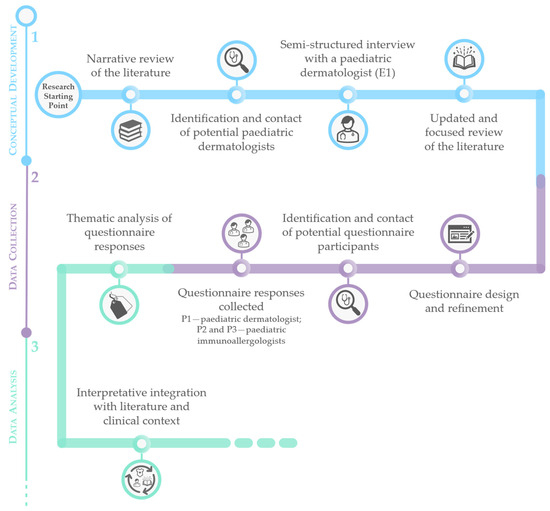
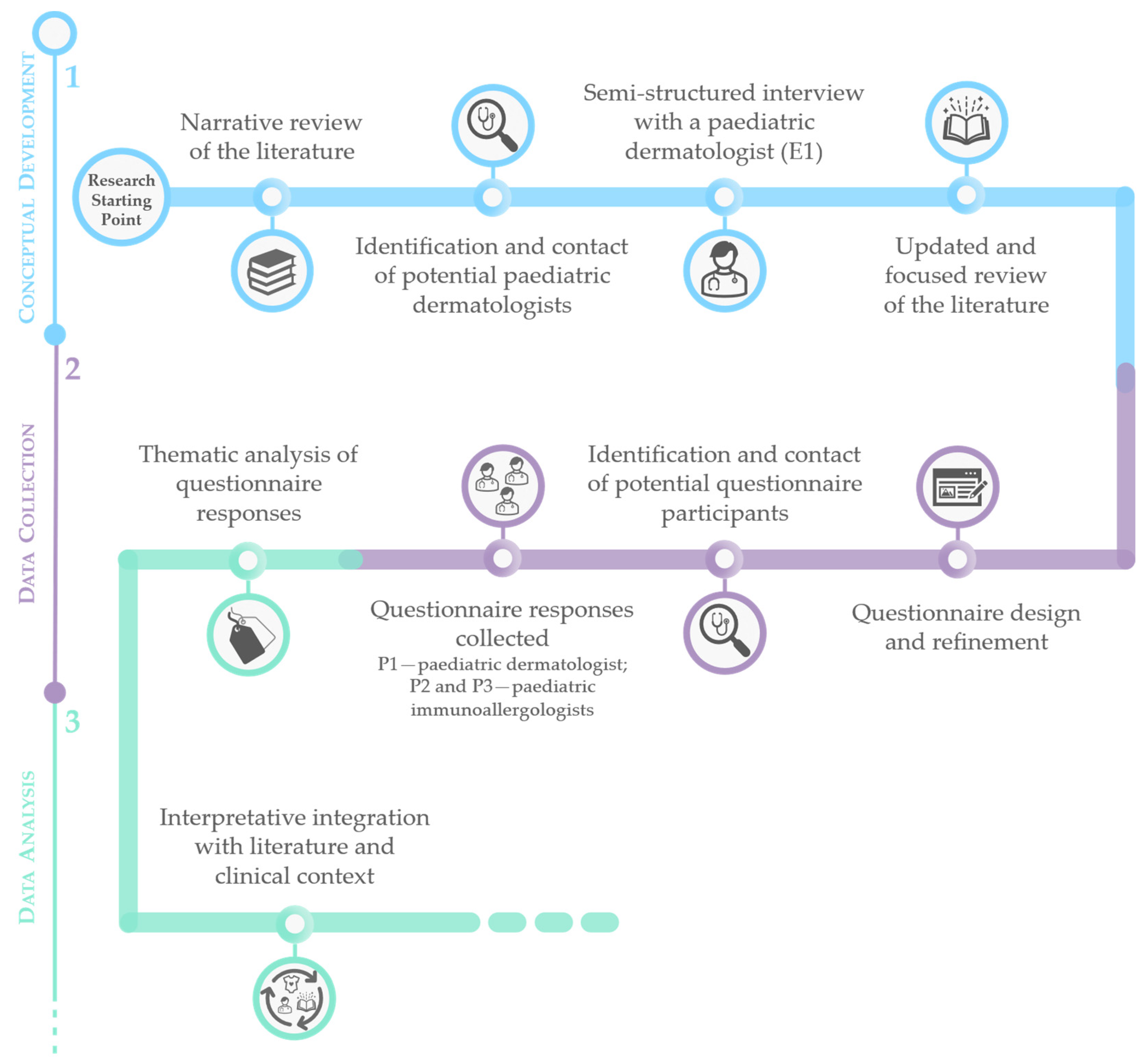
Considering the exploratory nature of the study and its focus on specialist experience rather than statistical generalisation, the research prioritised the depth of the contributions gathered over numerical representativeness. The aim was to identify design guidance grounded in clinically informed knowledge through a structure of three sequential phases: Phase 1, conceptual development; Phase 2, data collection; and Phase 3, data analysis. The study followed an iterative logic that allowed for the continuous refinement of the research focus and methodological decisions. A graphical overview of the methodological timeline can be found in Figure 1, illustrating how the study design was developed.
Figure 1.
Workflow illustrating the three-phase research design.
The first phase focused on conceptual development and comprised two stages of literature review, facilitating both the initial framing of key theoretical concepts and the subsequent refinement of the research focus. In parallel, a scoping interview with a paediatric dermatologist (E1) was conducted to support the conceptual understanding of textile–skin interactions in paediatric contexts. This interview contributed to the identification of specific characteristics of children’s skin, recommended care practices, and common dermatological pathologies, including their underlying causes, diagnostic approaches, and treatment options or symptom reduction. Furthermore, the insights gained informed the design of a questionnaire for healthcare professionals specialising in paediatric dermatology. Although these data were used exclusively to inform the analytical perspective and interpretation of the findings and were therefore not included in the empirical data analysis, this phase was foundational in the contextualisation and development of the research design. Consequently, a fully anonymised transcript of the interview (E1) is available in the Supplementary Materials—File 01 [18].
The second phase involved data collection through a qualitative questionnaire survey administered to clinicians working directly with paediatric populations. This instrument was implemented asynchronously over approximately one year and comprised exclusively open-ended questions designed to capture the nuance of clinical experience, diagnostic challenges, and perceptions of textile-related dermatological issues in children.
The final stage consisted of an inductive thematic analysis. This approach was selected to identify recurring patterns that bridge clinical observation with material performance. This iterative process facilitated an interpretative translation of the findings, moving beyond clinical description to propose a multidisciplinary framework that identifies design-relevant parameters for functional textiles and the technical requirements of paediatric clothing development.
2.1. Study Design
A qualitative exploratory design was employed to examine specialist perceptions of textile–skin interactions in paediatric populations. By adopting this approach, the study acknowledges the contextual and heuristic nature of the findings, focusing on generating rich and expert-informed insights that can serve as a springboard for future large-scale research.
2.2. Participants
The study used a purposive sampling strategy, involving three (n = 3) healthcare professionals with clinical experience in paediatric populations. Participants were coded chronologically:
- P1—4 August 2024
- P2—17 April 2025
- P3—18 April 2025
One participant was a paediatric dermatologist, while the remaining two were paediatric immunoallergologists. All participants were actively working with paediatric populations at the time of data collection.
2.3. Data Collection
Data were collected using a semi-structured, open-ended questionnaire administered via Google Forms. Data collection occurred over an extended period of approximately one year (April 2024 to April 2025). This asynchronous approach was intentionally chosen to accommodate the demanding clinical schedules of the specialist participants, ensuring they had sufficient time to provide the depth of insight required for qualitative analysis.
The full set of questions is available in the Supplementary Materials—File 02 [18].
2.4. Data Management
To ensure the integrity and privacy of the expert contributions, all responses were collected anonymously. No personally identifiable information was requested or stored. Participants were assigned non-identifiable codes (P1–P3) to facilitate data organisation and analysis.
The anonymised dataset is provided as Supplementary Materials—File 03 to support transparency and reproducibility [18]. All data were securely stored and accessed solely for research purposes.
2.5. Data Analysis
An inductive thematic analysis was conducted to identify recurring themes within the data.
Given the exploratory and qualitative focus of the research, manual coding was employed to ensure depth of interpretation, coherence across themes, and close engagement with the data. This method prioritises the thematic saturation of ideas over statistical frequency, ensuring that even singular expert insights can be evaluated for their potential impact on functional fashion design.
2.6. Ethical Considerations
Participation in this study was strictly voluntary, and informed consent was obtained prior to data collection. Respondents were only able to proceed with the questionnaire after explicitly consenting to the use of their anonymised responses for research purposes.
No sensitive patient data were collected, and all procedures complied with principles of confidentiality and ethical research conduct involving professional participants.
3. Results
The inductive thematic analysis of the expert responses identified four emergent themes. These themes represent qualitative patterns regarding clinical perceptions of the interaction between textiles and paediatric skin. Each is described and supported by representative excerpts.
3.1. Theme 1: Vulnerability and Dermatological Skin Conditions in Children
The participating specialists highlighted a shared perspective on the physiological vulnerability of paediatric skin, particularly during the neonatal and early childhood periods. The insights suggest a convergent perception regarding the heightened sensitivity of paediatric tissue and its distinct predisposition toward dermatological pathologies compared to adult populations.
Participants identified structural differences as a primary factor in paediatric skin sensitivity. One expert noted that “children’s skin tends to be thinner” (P1), a characteristic that suggests a potential risk for barrier disruption from external stimuli. Regarding the most prevalent pathologies observed in clinical practice for children under five, AD emerged as the dominant thematic concern. It should be noted that the terms “atopic dermatitis” and “atopic eczema” were used interchangeably by participants to refer to the same chronic inflammatory condition. One of the experts noted that “atopic eczema is more common in young children” (P1), and expert P2 highlighted the “high prevalence of atopic dermatitis in these ages [up to 5 years]”, reinforcing its status as a critical consideration for textile engineering.
Beyond atopic conditions, the results identified a diverse range of pathologies prevalent in paediatric clinical practice. These include viral infections: participants specifically mentioned viral warts and molluscum contagiosum (P1) as frequent reasons for consultation; inflammatory dermatoses, such as seborrhoeic dermatitis and irritant dermatitis (P2); and hypersensitivity reactions: the occurrence of “prurigo (exuberant reactions to insect bites)” (P3) was also noted.
To provide a clearer overview of the dermatological conditions most frequently identified by the participants in children up to five years of age, Table 1 summarises the main pathologies reported.
Table 1.
Primary paediatric dermatological conditions identified as prevalent in children up to five years of age, according to participants.
3.2. Theme 2: Clothing as an Aggravating Factor in Paediatric Dermatoses
The participants reached a consensus that clothing is generally perceived not as a primary aetiologic agent of dermatological disease but rather as an aggravating or triggering factor for cutaneous symptoms (P1–P3). This role appears particularly significant for children with pre-existing dermatological pathologies (P1, P2).
Within this specialised cohort, textile-induced cutaneous manifestations were reported as relatively infrequent within the general paediatric population, with pruritus identified as the most prevalent symptom (P3). However, the clinical relevance of these manifestations increases significantly in children with underlying inflammatory conditions, such as atopic dermatitis (P2) and other forms of inflammatory dermatitis (P1), where clothing often functions as a catalyst for the exacerbation of the clinical picture. The most frequently observed manifestations include localised eczema (P1), pruritus (P3), and contact dermatitis (P2), which are typically attributed to mechanical irritation from friction, fabric roughness and epidermal water loss.
Furthermore, specific garment components such as synthetic fibres, wool fibres, textile dyes, and labels were highlighted as primary triggers for these adverse reactions (P1). Regarding the anatomical distribution, experts noted that while these negative reactions can potentially “affect any part of the body” at an early age (P1–P3).
3.3. Theme 3: Chemical Additives in Textiles: Clinical Implications and Diagnostic Constraints
The expert insights highlighted a significant clinical concern regarding chemical agents in conventional textile dyeing processes, primarily due to their role in the exacerbation of paediatric skin pathologies (P1, P2). Participants pointed to the risk of secondary ACD superimposed on pre-existing AD, frequently triggered by specific synthetic dyes. Among the most problematic haptens identified were the disperse dyes, including “Disperse Blue 106 and 124, Disperse Yellow 3, Disperse Orange 3, and Disperse Red 1” (P2). These findings suggest that chemical residues in fabrics can act as potent allergens, complicating the management of chronic inflammatory conditions.
Furthermore, the diagnostic process for textile-related allergies in early childhood presents substantial clinical challenges. All participants identified significant barriers to performing standard epicutaneous (patch) testing in this demographic, citing anatomical and behavioural constraints. Specifically, the restricted surface area of a young child’s back limits the number of haptens that can be tested simultaneously (P1, P3). Additionally, high levels of physical activity and constant movement often compromise the integrity of the testing site, hindering the continuous contact required for the standard 48 h application period (P1–P3). This suggests that many textile-related reactions may go undiagnosed, reinforcing the need for pre-emptive safety standards in textile design.
3.4. Theme 4: Clinical Recommendations, Natural Agents, and Preventive Strategies
Clinical recommendations regarding paediatric clothing consistently emphasised material simplicity, the elimination of potentially sensitising substances, and the adoption of specific laundry and skincare protocols. There was a shared preference for natural textile fibres, specifically cotton (P1–P3), ideally in its undyed state. Conversely, the avoidance of synthetic fabrics, dark pigments (P3), and chemical finishes was identified as crucial due to their association with adverse cutaneous reactions (P2). Beyond material composition, preventive strategies extend to hygiene and maintenance practices; these include maintaining adequate skin hydration (P3), utilising minimal amounts of hygiene products (P1), and implementing laundry precautions such as “long rinsing cycles” and the avoidance of fabric softeners (P1, P2). Experts also recommended the use of mild, fragrance-free, and dye-free detergents, alongside the selection of “loose, breathable clothing to minimise friction” (P2).
Regarding the integration of natural products into paediatric dermatological care, the data revealed a cautious stance. While some participants recognised the therapeutic potential of substances like “emollients based on plant extracts, especially young oats extracts” (P1) or aloe vera (P2), they simultaneously warned of the risk of allergic sensitisation, particularly in children with a compromised skin barrier, such as those with AD (P2, P3). In this context, several plants were identified as potential allergens in paediatric populations, including “Arnica montana, calendula (Calendula officinalis), arnica, aloe vera, chamomile and lavender, tea tree oil, ivy (Hedera helix)” (P2), and various species of the Urticaceae (nettle) and Compositae families (P2, P3).
Despite the inherent risks of sensitisation, some participants acknowledged the therapeutic potential of certain plant-based substances with recognised anti-inflammatory or other medicinal properties (P1, P2). For instance, the use of “colloidal oatmeal (Avena sativa), aloe vera, chamomile (Matricaria chamomilla), calendula (Calendula officinalis), [and] evening primrose oil (Oenothera biennis)” was mentioned as having clinical value (P2). However, it was reiterated that their use is not routine due to the prevailing risk of induction of contact allergies (P3). Even plants recognised for their medicinal properties, such as calendula, can act as potent sensitisers in certain skin types, requiring a cautious and individualised approach. The time required to see effects on the skin varies according to the clinical context: participants suggested timelines ranging from a few days in cases of active dermatological disease to several weeks or months in other scenarios (P1–P3).
Finally, the study explored the intersection of natural dyes and paediatric health. Although literature suggests that certain plant-derived dyes retain the medicinal properties of their source plants [19,20], all participants indicated they were currently unaware of any direct clinical influence of these materials on paediatric skin through clothing (P1–P3). Nevertheless, participants shared a common interest in the potential development of textiles with antibacterial properties derived from natural dyes. According to them, this interest is contingent upon rigorous safety standards, specifically ensuring the absence of systemic absorption through the skin (P1), thereby maintaining a favourable safety profile for paediatric users.
4. Discussion
The findings of this exploratory study align with the clinical consensus that the paediatric integumentary system is a unique environment requiring specialised design solutions. For fashion and textile designers, the vulnerability identified by experts (P1, P2), corroborated by the literature [21] and the interviewed specialist (E1), serves as a primary design constraint. The anatomical immaturity of paediatric skin, characterised by a thinner epidermis, higher transepidermal water loss (TEWL), and a heightened risk of dryness [1,22], could translate, from a design perspective, into conceptualising clothing as a secondary protective barrier rather than merely an aesthetic layer. An incomplete epidermal barrier renders children biologically unprepared for chronic contact with hazardous substances or mechanical irritants.
In functional fashion design, the transition from clinical observations to design solutions requires a deep understanding of the user’s daily experience. Questionnaires and surveys appear as important tools in this process. While clinicians identify “flexural areas” as pathological hotspots (P1), this study promotes a discussion on how designers can translate this into technical specifications, prioritising material structures that optimise the skin’s microclimate and minimise mechanical irritation in these sensitive zones.
Participants highlighted the high prevalence of AD in childhood (P1–P3), a finding consistent with epidemiological literature, since AD affects approximately 20% of the paediatric population [2]. Clothing for this population should consider the sensory processing characteristics common in children with this condition. Building on these clinical observations, this may suggest the need for fabric selection strategies that minimise the symptom severity and frequency of exacerbations in children with AD [23]. Collaboration allows designers to translate clinical findings into technical specifications. For example, knowing that AD affects the trunk and limbs more frequently (P1, P2) leads designers to consider material structure, thermo-physiological comfort, and chemical finishes, especially in areas most prone to symptoms.
Because parents often fail to associate a garment with a flare-up (E1), structured feedback helps designers track the performance of materials over time, leading to clothing that does not interfere with the skin’s natural functions.
A fundamental focus of this investigation is the capacity of apparel to regulate dermatological outcomes. The finding that clothing serves primarily as an aggravating factor rather than a primary cause is consistent with the literature [24,25] and suggests that the fashion industry has an opportunity to move from neutral clothing to protective or symptom-attenuating garments. However, the discrepancy between the perceived decline in textile-induced ACD (E1) and the literature suggesting an increase [4,25] highlights the importance of the diagnostic barriers identified in Theme 3. This discrepancy is attributed to the fact that textile chemicals are difficult to identify and are frequently overlooked as potential causes of skin reactions during medical examinations [2,25]. If testing is difficult in children, the design industry must take a proactive and precautionary approach to chemical safety.
Furthermore, the literature highlights a critical non-dermal exposure route: oral ingestion. Behaviours such as sucking or chewing on fabrics significantly increase the migration of toxins into saliva, potentially leading to DNA damage and systemic risks [3,10]. These findings, supported by both participant data and the literature, justify the clinical recommendation for innocuous and undyed textiles to safeguard paediatric wellbeing [26]. While avoiding dyes is a standard clinical recommendation, this study acknowledges the importance of colour in fashion design and cognitive development of children [27]. The preference for undyed cotton (P1–P3) suggests a market opportunity for the development of non-toxic and high-strength natural dyeing processes that avoid the synthetic dyes identified as potent allergens (P2).
The expert interest in antibacterial properties (P1) and in the medicinal potential of natural extracts (P2) opens a pathway for antimicrobial and antioxidant textiles. Natural dyes with medicinal properties [11,19,28] can be strategically applied to textiles used in flexural zones. These functional garments could potentially deliver anti-inflammatory benefits directly to areas most prone to clinical exacerbation (P1).
This is particularly relevant given the risks of synthetic dyes. While synthetic fibres require high chemical loads [5,29], the primary causative agents of dermatitis are often the substances used for dyeing and finishing [7,25,30]. According to various authors, synthetic textile dyes can trigger dermatological pathologies in children, affecting their wellbeing [31,32]. Expert observations regarding the anatomical distribution of symptoms (trunk and limbs) are corroborated by migration theories, where sweat and friction act as catalysts for dye absorption [9,30]. From a future design perspective, this could translate into exploring the potential of natural dyes with medicinal properties in high-sweat areas.
However, the experts in this study provided an important counter-narrative regarding the safety of natural products. They corroborate warnings that botanical extracts (such as ivy, henna, or the fig tree) can trigger severe contact allergies or cutaneous dysbiosis, which disrupts the essential bacterial balance of the skin. By collaborating with clinicians, designers can ensure that naturally dyed textiles meet safety standards regarding systemic absorption, guiding the industry toward a model of preventive dermatology.
Drawing on the expert insights gathered, it may be argued that addressing the systemic risks posed by hazardous chemical additives in the textile industry would benefit from a transdisciplinary framework that bridges the gap between clinical dermatology and material science. The findings of this study emphasise that the development of safe paediatric apparel cannot rely on a single field of expertise. It necessitates active synergy between healthcare professionals, textile and biochemical engineers, and fashion designers. While healthcare providers offer critical insights into the physiological limitations of the developing integumentary system, textile and biochemical engineers possess the technical capacity to innovate biocompatible fibres and non-toxic dyeing processes. Simultaneously, fashion designers are essential in translating these safe materials into garments that are functional, aesthetically pleasing, and cognitively stimulating for the children. This collaborative approach is essential to eliminate harmful agents and to explore the potential for biofunctional textiles that actively promote wellbeing. By integrating medical safety standards into the early stages of the fashion design process and textile manufacturing, the industry can move beyond simple harm reduction toward a future of preventive dermatology, where clothing serves as a proactive tool for protecting and improving children’s wellbeing.
4.1. Limitations
Interpretation of the findings should consider certain methodological limitations. First, the small sample size (n = 3) reinforces the strictly exploratory character of the study. While the depth of the expert insights provided is significant, the results are intended to be hypothesis-generating rather than confirmatory and cannot be generalised to the wider clinical population. This small cohort is a direct reflection of the significant time constraints and high clinical workloads currently faced by paediatric specialists. Despite rigorous recruitment efforts (including direct outreach and engagement at medical congresses), securing participation from this specialised population proved challenging, reflecting the difficulty of bridging clinical practice and academic research.
In addition, the data collection method was conducted based on written responses to a qualitative questionnaire. While this method respected the participants’ limited availability, it lacked the real-time probing and iterative clarification that a semi-structured verbal interview provides. Consequently, some emerging nuances may require further exploration in future studies. Additionally, the extended and asynchronous data collection period may have introduced minor temporal variability in responses. Although no major shifts in paediatric dermatological guidelines occurred during this timeframe, the absence of synchronous interaction limits direct comparability across participants.
Finally, the absence of complementary perspectives, such as those of textile industry professionals, represents a limitation. A more holistic, multidisciplinary approach could have provided additional technical insights into the manufacturing and chemical finishing processes that clinicians identify as problematic.
4.2. Future Research
Considering these limitations, the present study emphasises several relevant directions for future research. Studies involving larger clinical samples and mixed-methods approaches, incorporating the perspectives of designers and textile engineers, may contribute to a more robust validation of the patterns identified and enable a deeper understanding of the prevalence and clinical impact of textile–skin interactions.
Furthermore, there is indeed a clear need for rigorous evaluation of textile materials and natural-based products used in children’s clothing. Future studies should be supported by laboratory testing and safety assessments capable of identifying their irritant and/or allergenic potential. In this context, closer articulation between clinical experience and applied research in textile materials and natural dyes is particularly relevant.
Finally, being able to combine these clinical insights into the practical guidelines for the design and development of children’s clothing represents an important step towards bridging dermatological expertise and fashion development. Such contributions may foster safer and more appropriate textile solutions tailored to the specific needs of paediatric skin.
5. Conclusions
This exploratory study underscores the premise that the physiological vulnerability of paediatric skin necessitates a transition toward a health-integrated design framework. By mapping the specialised perspectives of paediatric dermatologists and immunoallergologists, this research suggests that clothing should be viewed as a primary clinical determinant of cutaneous health. The design process should, therefore, prioritise skin-neutral apparel that supports the natural barrier and microbiome. This approach provides a conceptual bridge, allowing designers to translate expert clinical insights into tangible garment solutions that address real-world friction points and sensory triggers.
Realising this shift from a fashion-focused product to a functional and health-promoting product requires a transdisciplinary synergy between designers, textile and biochemical engineers, and healthcare experts. Such collaboration is essential to address the “natural versus safe” paradox and validate material safety. This is particularly critical for the development of biofunctional textiles, where, for example, natural dyes with antibacterial and antioxidant properties can be strategically applied to high-risk flexural zones. This targeted approach allows for localised therapeutic benefits without the risk of systemic absorption or cutaneous dysbiosis.
Ultimately, by embedding medical safety standards directly into textile engineering and patternmaking, the textile and fashion industry can establish a future of preventive dermatology. While this study represents an initial exploratory step, it highlights the potential for functional children’s clothing to act as a seamless extension of the skin’s barrier. This proactive model offers a roadmap for protecting and improving the wellbeing of the most vulnerable populations.
Supplementary Materials
The following supporting information can be downloaded at the DataRepositóriUM: https://doi.org/10.34622/datarepositorium/VNIGAX [18]. This includes File 01: Interview; File 02: Questionnaire; File 03: Raw data questionnaire.
Author Contributions
Conceptualisation, D.S.; methodology, D.S.; validation, D.S., S.M., I.C., P.M. and J.C.; formal analysis, D.S. and S.M.; investigation, D.S.; resources, D.S.; data curation, D.S.; writing—original draft preparation, D.S. and S.M.; writing—review and editing, D.S., S.M., I.C., P.M. and J.C.; visualisation, D.S. and S.M.; supervision, J.C. and I.C.; funding acquisition, P.M. All authors have read and agreed to the published version of the manuscript.
Funding
This work was funded by national funds through FCT—Fundação para a Ciência e a Tecnologia, I.P. and Programa de Recuperação e Resiliência (PRR) through NextGenerationEU from the European Union, under the Strategic Projects UID/00264/2025 and UID/PRR/00264/2025 of the 2C2T—Centro de Ciência e Tecnologia Têxtil (https://doi.org/10.54499/UID/00264/2025 and https://doi.org/10.54499/UID/PRR/00264/2025). D.S., S.M. and I.C. also acknowledge FCT for PhD scholarships (https://doi.org/10.54499/2021.06351.BD and https://doi.org/10.54499/2022.13244.BD) and a junior researcher contract (https://doi.org/10.54499/2022.08710.CEECIND/CP1718/CT0031), respectively.
Institutional Review Board Statement
This study was conducted in accordance with the Code of Ethical Conduct of the University of Minho, specifically the section on Ethical Conduct in Scientific Research [33]. Ethical review and approval were waived for this study because it was based on an anonymous, voluntary questionnaire involving no physical or psychological interventions. The research did not collect sensitive personal data as defined in Article 9 of the EU General Data Protection Regulation (GDPR). Furthermore, according to the Portuguese Clinical Research Law (Law No. 21/2014, 16 April), formal ethical approval is not required for non-interventional studies that do not involve identifiable health data.
Informed Consent Statement
The online questionnaires used/completed for the purposes of the study were anonymous. Informed consent was obtained by requiring participants to check a consent box in the first question of the questionnaire before proceeding.
Data Availability Statement
Data is contained within the article or Supplementary Materials.
Acknowledgments
The authors thank the paediatric dermatologists and the paediatric immunoallergologists for their participation in the interview and questionnaires. Their professional insights and time were invaluable to the completion of this study.
Conflicts of Interest
All authors, including Paulo Mendes, who is employed by Vestas Wind Systems A/S, declare that the research was conducted in the absence of any commercial or financial relationships that could be construed as a potential conflict of interest.
References
- Brod, B.A.; Treat, J.R.; Rothe, M.J.; Jacob, S.E. Allergic Contact Dermatitis: Kids Are Not Just Little People. Clin. Dermatol. 2015, 33, 605–612. [Google Scholar] [CrossRef] [Scilit]
- Tam, I.; Yu, J. De Allergic Contact Dermatitis in Children: Recommendations for Patch Testing. Curr. Allergy Asthma Rep. 2020, 20, 41. [Google Scholar] [CrossRef] [Scilit]
- Tang, A.Y.L.; Lo, C.K.Y.; Kan, C.w. Textile Dyes and Human Health: A Systematic and Citation Network Analysis Review. Color. Technol. 2018, 134, 245–257. [Google Scholar] [CrossRef] [Scilit]
- Bonchak, J.G.; Prouty, M.E.; De La Feld, S.F. Prevalence of Contact Allergens in Personal Care Products for Babies and Children. Dermatitis 2018, 29, 81–84. [Google Scholar] [CrossRef] [Scilit] [PubMed]
- Berry, H.S.; Ismail, R.K.; Al-Daadi, S.E.; Badr, S.I.O.; Mesbah, Y.O.; Dabbagh, M.A. Measuring Saudi Mothers’ Awareness of Sustainable Children’s Clothing. Open J. Soc. Sci. 2020, 08, 244–262. [Google Scholar] [CrossRef]
- Niu, J.R.; Zhou, H.; Xia, X.; Tian, R. Analysis of Patch Test Results in 716 Pediatric Patients with Type IV Hypersensitivity Dermatosis. Arch. Dermatol. Res. 2025, 317, 515. [Google Scholar] [CrossRef] [Scilit] [PubMed]
- Bonamonte, D.; Hansel, K.; Romita, P.; Fortina, A.B.; Girolomoni, G.; Fabbrocini, G.; Patruno, C.; Napolitano, M.; Patrizi, A.; Argenziano, G.; et al. Contact Allergy in Children with and without Atopic Dermatitis: An Italian Multicentre Study. Contact Dermat. 2022, 87, 265–272. [Google Scholar] [CrossRef] [Scilit]
- Machado, V.; Marinho, A.; Castro, P.V.d.; Silva, T.; Machado, V.; Marinho, A.; de Castro, P.V.; Silva, T. From Fabric to Finish: The Cytotoxic Impact of Textile Chemicals on Humans Health. Textiles 2025, 5, 16. [Google Scholar] [CrossRef] [Scilit]
- Chen, X.; Deng, Q.; Lin, S.; Du, C.; Zhao, S.; Hu, Y.; Yang, Z.; Lyu, Y.; Han, J. A New Approach for Risk Assessment of Aggregate Dermal Exposure to Banned Azo Dyes in Textiles. Regul. Toxicol. Pharmacol. 2017, 91, 173–178. [Google Scholar] [CrossRef] [Scilit]
- Liu, W.; Xue, J.; Kannan, K. Occurrence of and Exposure to Benzothiazoles and Benzotriazoles from Textiles and Infant Clothing. Sci. Total Environ. 2017, 592, 91–96. [Google Scholar] [CrossRef] [Scilit]
- Cooke, A.; Bedwell, C.; Campbell, M.; McGowan, L.; Ersser, S.J.; Lavender, T. Skin Care for Healthy Babies at Term: A Systematic Review of the Evidence. Midwifery 2018, 56, 29–43. [Google Scholar] [CrossRef] [Scilit]
- Zimniewska, M.; Pawlaczyk, M.; Krucinska, I.; Frydrych, I.; Mikolajczak, P.; Schmidt-Przewozna, K.; Komisarczyk, A.; Herczynska, L.; Romanowska, B. The Influence of Natural Functional Clothing on Some Biophysical Parameters of the Skin. Text. Res. J. 2019, 89, 1381–1393. [Google Scholar] [CrossRef] [Scilit]
- Santiago, D.; Cunha, J.; Cabral, I. Chromatic and Medicinal Properties of Six Natural Textile Dyes: A Review of Eucalyptus, Weld, Madder, Annatto, Indigo and Woad. Heliyon 2023, 9, e22013. [Google Scholar] [CrossRef] [Scilit] [PubMed]
- Santiago, D.; Cunha, J.; Mendes, P.; Cabral, I. Ultraviolet-Protective Textiles: Exploring the Potential of Cotton Knits Dyed with Natural Dyes. Textiles 2025, 5, 33. [Google Scholar] [CrossRef] [Scilit]
- Santiago, D.; Cabral, I.; Cunha, J. Children’s Functional Clothing: Design Challenges and Opportunities. Appl. Sci. 2024, 14, 4472. [Google Scholar] [CrossRef] [Scilit]
- Romita, P.; Foti, C.; Bonamonte, D.; Romita, P. Allergic Contact Dermatitis in Children: “Emerging Allergens”. Eur. J. Pediatr. Dermatol. 2020, 30, 31–33. [Google Scholar] [CrossRef] [Scilit]
- Wu, Y.; Hasley Ramli, S.; How, K.N.; Ho, W.C.; Lai, O.M.; Xiao, M. Development of Therapeutic Garments for Atopic Dermatitis: Integrating Functional Textiles and Clothing Design. Des. J. 2025, 33, e15081. [Google Scholar] [CrossRef] [Scilit]
- Santiago, D.; Cabral, I.; Cunha, J. Textile Interactions with Paediatric Skin: Questionnaire Survey. Repositório Dados Univ. Minho 2026, 1. [Google Scholar] [CrossRef]
- Santiago, D.; Mehravani, B.; Alves, C.; Cabral, I.; Cunha, J.; Zille, A.; Padrão, J. Antibacterial and Antioxidant Performance of Natural Textile Dyes for Children’s Wear. Appl. Sci. 2025, 16, 307. [Google Scholar] [CrossRef] [Scilit]
- Safapour, S.; Rather, L.J.; Mazhar, M. Coloration and Functional Finishing of Wool via Prangos Ferulacea Plant Colorants and Bioactive Agents: Colorimetric, Fastness, Antibacterial, and Antioxidant Studies. Fibers Polym. 2023, 24, 1379–1388. [Google Scholar] [CrossRef] [Scilit]
- Skodova, M.; Glombikova, V.; Komarkova, P.; Havelka, A. Performance of Textile Materials for the Needs of Children with Skin Problems. Fibres Text. 2020, 4, 96–101. [Google Scholar]
- Stamatas, G.N.; Roux, P.F.; Boireau-Adamezyk, E.; Lboukili, I.; Oddos, T. Skin Maturation from Birth to 10 Years of Age: Structure, Function, Composition and Microbiome. Exp. Dermatol. 2023, 32, 1420–1429. [Google Scholar] [CrossRef] [Scilit]
- Jaros, J.; Wilson, C.; Shi, V.Y. Fabric Selection in Atopic Dermatitis: An Evidence-Based Review. Am. J. Clin. Dermatol. 2020, 21, 467–482. [Google Scholar] [CrossRef] [Scilit]
- Aldalbahi, A.; El-Naggar, M.E.; El-Newehy, M.H.; Rahaman, M.; Hatshan, M.R.; Khattab, T.A. Effects of Technical Textiles and Synthetic Nanofibers on Environmental Pollution. Polymers 2021, 13, 155. [Google Scholar] [CrossRef] [Scilit] [PubMed]
- Svedman, C.; Engfeldt, M.; Malinauskiene, L. Textile Contact Dermatitis: How Fabrics Can Induce Dermatitis. Curr. Treat. Options Allergy 2019, 6, 103–111. [Google Scholar] [CrossRef] [Scilit]
- Shaharuddin, S.S.; Jalil, M.H. Parents’ Determinants Buying Intent on Environmentally Friendly Children’s Clothing. Int. J. Bus. Soc. 2021, 22, 1623–1638. [Google Scholar] [CrossRef] [Scilit]
- Siu, K.W.M.; Lam, M.S.; Wong, Y.L. Children’s Choice: Color Associations in Children’s Safety Sign Design. Appl. Erg. 2017, 59, 56–64. [Google Scholar] [CrossRef] [Scilit]
- Nateri, A.S.; Nateri, F.S. Eco-Friendly and Sustainable Antibacterial Functionalization of Medical Textiles Using Natural Dyes: A Review. Results Chem. 2025, 17, 102589. [Google Scholar] [CrossRef] [Scilit]
- Shaharuddin, S.S.; Jalil, M.H.; Moghadasi, K. Study of Mechanical Properties and Characteristics of Eco-Fibres for Sustainable Children’s Clothing. J. Met. Mater. Miner. 2021, 31, 19–26. [Google Scholar] [CrossRef] [Scilit]
- Mohamoud, A.A.; Andersen, F. Allergic Contact Dermatitis Caused by Textile Dyes Mimicking Atopic Dermatitis. Contact Dermat. 2017, 76, 119–120. [Google Scholar] [CrossRef] [Scilit]
- Overdahl, K.E.; Gooden, D.; Bobay, B.; Getzinger, G.J.; Stapleton, H.M.; Ferguson, P.L. Characterizing Azobenzene Disperse Dyes in Commercial Mixtures and Children’s Polyester Clothing. Environ. Pollut. 2021, 287, 117299. [Google Scholar] [CrossRef] [Scilit] [PubMed]
- Tounsadi, H.; Metarfi, Y.; Taleb, M.; El Rhazi, K.; Rais, Z. Impact of Chemical Substances Used in Textile Industry on the Employee’s Health: Epidemiological Study. Ecotoxicol. Environ. Saf. 2020, 197, 110594. [Google Scholar] [CrossRef] [Scilit] [PubMed]
- University of Minho. Code of Ethical Conduct. Available online: https://www.uminho.pt/PT/uminho/Etica/Codigo-de-conduta-etica (accessed on 17 June 2024).

Disclaimer/Publisher’s Note: The statements, opinions and data contained in all publications are solely those of the individual author(s) and contributor(s) and not of MDPI and/or the editor(s). MDPI and/or the editor(s) disclaim responsibility for any injury to people or property resulting from any ideas, methods, instructions or products referred to in the content. |
© 2026 by the authors. Licensee MDPI, Basel, Switzerland. This article is an open access article distributed under the terms and conditions of the Creative Commons Attribution (CC BY) license.