


Abstract
Pinus oocarpa is ecologically and economically important because of its resin production; however, the effects of variation in resin production on its reproductive performance remain poorly understood. This study aimed to evaluate the variation and genetic control of seed germination in high-resin-producing, low-resin-producing, and non-resin-tapped trees. Seeds from the three tree groups were collected, germinated, and counted daily to evaluate eight germination indices. The variation, heritability, and genetic correlations of the germination traits were estimated separately for each tree group. Four of the eight germination indices were significantly lower in trees with high resin production, demonstrating the negative effect of resin production on seed germination. The distribution of variation, genetic coefficients of variation (7.68 to 68.21%), heritability estimates (0.63 to 0.75), and phenotypic correlations (−0.09 to −0.76; 0.13 to 0.94) were similar among the tree groups; however, genetic correlations (−0.12 to −0.99; 0.20 to 0.99) were stronger in high-resin-producing trees. The lower germination capacity and germination rate observed in high resin-producing trees may compromise natural regeneration. Therefore, conservation strategies should prioritize reforestation using seeds from high resin-producing trees that also exhibit high germination capacity, thereby helping maintain forest persistence and productivity.
1. Introduction
Pinus oocarpa Schiede ex Schltdl. occurs in montane forests extending from the state of Sonora, Mexico, to Nicaragua, where it is of considerable economic importance because of its high resin yield and valuable timber [1,2,3]. This species also plays a key ecological role by creating microclimatic conditions that provide shelter and suitable habitats for numerous plant and animal species, thereby contributing to the maintenance of diverse forest ecosystems [4,5]. In addition, P. oocarpa contributes to atmospheric carbon sequestration and oxygen release, thereby supporting ecosystem functioning and climate regulation [6]. Accordingly, P. oocarpa is considered a strategic species for sustainable forest development and the provision of ecosystem services [6]. Furthermore, P. oocarpa exhibits high genetic diversity, which may enhance its capacity to adapt to changing environmental conditions and provides valuable genetic resources for conservation and tree breeding programs [7,8].
Resin from several pine species is the most economically important non-timber forest product for rural communities in the state of Michoacán, Mexico [2,9]. It serves as the primary raw material for producing turpentine and rosin, which are widely used in the chemical, pharmaceutical, cosmetic, paper, and paint industries [10,11]. The increasing demand for resin has led to more intensive resin harvesting, which can result in tree mortality and place additional pressure on forest ecosystems [12]. These challenges highlight the need for sustainable forest management practices to ensure the long-term conservation and productivity of forest resources [2,12]. Resin harvesting involves removing the bark, cambium, and part of the sapwood from the stem to induce resin production as a defense response. This practice alters resource allocation within the tree and may compromise growth and reproduction because of the high energetic cost associated with resin synthesis and production [13,14].
Seed quality generally declines when seeds are collected from resin-harvested trees [14,15,16,17]. However, some studies have reported that resin harvesting does not affect seed quality in certain species of the family Burseraceae [17,18]. Information on the effects of resin harvesting on seed production is particularly important for understanding the natural regeneration and long-term persistence of forest tree species, as these processes depend largely on seed production and seed quality [19]. In populations of P. oocarpa from the Trans-Mexican Volcanic Belt and the Sierra Madre del Sur, germination percentage exhibits substantial variation attributable to both provenance and differences among individual trees within provenances [20,21]. Although the mean germination percentage is similar between P. oocarpa populations subjected to resin harvesting and those without resin harvesting [20,21,22], germination is less uniform among resin-producing trees [20]. However, these previous studies do not allow determination of whether this heterogeneity in germination is associated with differences in the trees’ levels of resin production.
Pine species generally exhibit lower regeneration capacity under disturbance and adverse climatic conditions than oaks, which typically regenerate more successfully [23]. Because seed production and seed quality are critical determinants of forest regeneration [24], reductions in these attributes resulting from intensive resin harvesting may limit seedling establishment [14] and ultimately threaten the persistence of forests where this practice is widespread. In Pistacia eurycarpa Yalt., continuous resin harvesting has been shown to reduce natural regeneration by as much as threefold [25]. In P. oocarpa forests affected by wildfires, only 17% of regeneration originates from seeds, whereas 83% results from root sprouting [26]. This regeneration pattern may compromise the long-term sustainability of these forests and underscores the importance of maintaining adequate seed production to ensure the recovery and persistence of P. oocarpa populations [26].
Moreover, seedling emergence and morphological traits in P. oocarpa are under strong genetic control [20,27]. Environmental conditions and provenance may also influence the expression of the genetic values of germination and other seed vigor-related traits, including germination capacity, peak value, germination rate, mean daily germination, germination energy, germination uniformity coefficient, mean germination time, and germination value [28,29,30]. Likewise, environmental conditions and tree age also influence the genetic control of growth traits in P. oocarpa [31]. However, it remains unknown whether the intensity of resin harvesting, as a forest management practice, affects the genetic control of germination traits in this species. Understanding the effects of resin harvesting on the variation and genetic control of germination is essential for developing conservation strategies and sustainable management practices for P. oocarpa resin-producing stands.
This study aimed to evaluate the variation and genetic control of eight germination indices in high-resin-producing, low-resin-producing, and non-resin-tapped P. oocarpa trees. We evaluated the following hypotheses: (i) high-resin-producing trees exhibit lower germination capacity and a slower germination rate than non-tapped trees and low-resin-producing trees because the greater allocation of physiological resources to resin synthesis and exudation reduces the availability of carbohydrates and nutrients required for the formation and development of seeds with high physiological quality; and (ii) the variation and genetic control of germination traits are similar among tree groups because the genetic mechanisms regulating resin production are independent of those controlling germination and seed vigor.
2. Materials and Methods
2.1. Study Area
The study was conducted in a natural stand of P. oocarpa in Ejido San José de Cañas, Ario, Michoacán, Mexico, located between 19°05′42″ and 19°06′05″ N and 101°45′29″ and 101°46′02″ W, at elevations ranging from 1408 to 1498 m above sea level (Figure 1). The predominant climate is warm subhumid with summer rainfall, with a mean annual temperature of 20.7 °C and a mean annual precipitation of 1124.1 mm [32,33]. The vegetation consists of pine forest dominated by P. oocarpa, with an average tree density of 272 trees ha−1. Silvicultural management is essentially limited to resin extraction.
Figure 1.
Location of the 16 sampling units, where one Pinus oocarpa tree from each of the three groups was selected. The green and orange dashed-line boxes indicate the approximate location of the State of Michoacán de Ocampo and the study area, respectively.
Across the sampling units (Figure 1), the soils are acidic (pH 5.3–6.5) and exhibit high spatial variability in nutrient availability (total nitrogen = 0.091–6.314%, available phosphorus = 2.96–14.78 ppm, and organic matter = 0.91–9.17%), as well as substantial variation in exchangeable base cations (Ca = 1.35–5.05, K = 0.06–0.75, Mg = 2.19–5.31, and Na = 4.84–75.82 cmol kg−1). The mean terrain slope is 14.8%, and the predominant aspects are SE, SW, E, and NE (Figure 1).
2.2. Tree Selection
In the natural P. oocarpa stand, sixteen high-resin-producing trees (HRPs) were selected in 2019 using the individual-tree selection method [34]. The selected HRPs were located at least 100 m apart to reduce the probability of inbreeding [35,36]. In February 2025, two additional trees were selected within a maximum distance of 50 m from each HRP tree: one low-resin-producing tree (LRP) and one non-tapped tree (NTT), the latter serving as the control tree. The proximity of the three tree categories within each sampling unit was intended to reduce environmental heterogeneity and improve comparability among HRP, LRP, and NTTs under natural stand conditions. High-resin-producing trees yielded an average of 4.9 kg of resin per month (from January to April) and were therefore considered superior resin producers, whereas low-resin-producing trees yielded an average of 1.2 kg of resin per month.
Four dendrometric variables were measured for each tree. Tree height was measured using a hypsometer (Haga®, Haga GmbH + Co. KG, Nuremberg, Germany), diameter at breast height (DBH) was measured with a diameter tape (GIM-GEM, Forestry Suppliers Inc., Jackson, MS, USA), crown diameter was measured with a measuring tape (Truper®, TP20ME, Truper, S.A. de C.V., Jilotepec, Mexico), and tree age was estimated by counting annual growth rings on an increment core extracted with a Pressler increment borer (Haglöf, Haglöf Sweden AB, Långsele, Sweden) (Table S1).
2.3. Seed Collection, Extraction, and Germination
In February 2025, 20 to 40 mature and healthy cones were collected from each selected tree in the natural stand. Subsequently, 20 cones per tree were selected and placed under 50% shade cloth to allow the cone scales to open and facilitate seed extraction. The seeds extracted from the cones of each individual tree were designated as a family, and their identity was maintained throughout the entire experiment. Of the 16 trees initially selected for each group, only 12, 11, and 10 HRP, LRP, and NTTs, respectively, had a sufficient number of seeds; therefore, the germination trial included seeds from 33 trees.
The average weight of 100 seeds from HRP, LRP, and NTTs was 2.55, 2.15, and 2.51 g, with coefficients of variation of 21.8, 22.6, and 21.57%, respectively. Meanwhile, seed diameter for these trees was 3.1, 3.0, and 3.1 mm, with coefficients of variation of 7.3, 7.8, and 9.1%, respectively. From the time of extraction until the germination test was established in August 2025, the seeds were stored in paper bags in a cold chamber at 4 °C. Before establishing the germination experiment, the seeds were soaked for 12 h in water containing Captan 50WP® fungicide (50% N-trichloromethylthio-4-cyclohexene-1,2-dicarboximide; 3.0 g L−1 water) (ADAMA México, Ingeniería Industrial, S.A. de C.V., Mexico City, Mexico) to prevent fungal development. This procedure also allowed empty or damaged seeds to be separated from filled seeds; only the latter were used in the germination test.
The seeds were placed on previously moistened blotting paper in six plastic trays, which served as experimental replicates. In each of the six trays (replicates), 16 seeds from each of the 33 trees (families), representing the three groups (HRP, LRP, and NTT), were randomly distributed, for a total of 3168 seeds in the experiment. The trays containing the seeds were placed in a controlled-environment chamber (SMÒ, Lab-Line Instruments, Inc., Melrose Park, IL, USA) maintained at 25 ± 3 °C [37,38,39,40]. A seed was considered germinated when the radicle reached 2 mm in length [40,41,42]. The number of germinated seeds was recorded daily for 30 days [20,21,43,44].
Eight germination indices were calculated to characterize different quantitative and temporal components of seed germination under standardized environmental conditions. These indices included germination capacity, peak value, germination rate, mean daily germination, time to 50% germination, mean germination time, germination uniformity coefficient, and germination value, which collectively described final germination capacity, germination rate, timing, and temporal distribution. Germination capacity was calculated as the final percentage of germinated seeds at the end of the evaluation period. The peak value was defined as the maximum ratio between cumulative germination percentage and the number of days elapsed since the beginning of the germination test [45]. Germination rate was calculated as the sum of the number of germinated seeds per day divided by the corresponding time interval [46]. Mean daily germination was calculated as the final germination percentage divided by the total number of days in the evaluation period [45]. Time to 50% germination was defined as the number of days required to reach 50% of the final germination percentage [47]. Mean germination time (MGT) and the germination uniformity coefficient (GUC) were calculated using the following equations:
where i represents the number of days after sowing and n represents the number of seeds germinated on day i [48]. Germination value was calculated as the product of peak value and mean daily germination [45]. The data for each tree are presented in Table S2.
2.4. Data Analysis
Prior to data analysis, the assumptions of normality and homogeneity of variance were evaluated using the Shapiro–Wilk and Levene tests, respectively. Although the data for all germination indices met the assumption of homogeneity of variance (p ≥ 0.14), none met the assumption of normality (p ≤ 0.001). Therefore, to assess differences among tree groups, ANOVAs for all germination indices were performed using the nonparametric rank-based type 2 transformation (RT-2) [49]. When significant differences were found, multiple comparisons of ranks were performed [49].
Spearman rank correlation coefficients were calculated between germination indices and dendrometric variables (tree age, diameter at breast height, tree height, and crown diameter) [50].
To obtain the genetic parameters for each tree group, variance and covariance components were estimated using generalized linear mixed models fitted by maximum likelihood with the GLIMMIX procedure in SAS version 9.4 [51]. Several probability distributions and link functions were evaluated for each germination indices [52]. The lognormal distribution with an identity link function and the Laplace approximation was selected for all germination indices because it provided the best fit according to the Akaike and Bayesian information criteria [52]. The distribution and linear predictor equations were as follows:
where Yij is the observed value for the jth family in the ith block, μ is the overall mean, βi is the fixed effect of the ith block, is the random effect of the jth family, and σ2 is the parameter associated with the distribution.
Because variance components estimated from generalized linear mixed models are naturally obtained on the model scale, whereas biological interpretation often requires quantities expressed on the scale on which the trait is measured, the moments and variance components on the observed scale were subsequently derived from the following fitted model [53]:
where the linear predictor () includes the overall mean (µ), the fixed effect of block (, the random family effect (), and the residual component ().
This approach follows the general framework for inference in quantitative genetics using generalized linear mixed models, in which parameters estimated on the model scale are integrated to obtain means, variances, and genetic parameters on the observed scale [53]. In nonlinear mixed models, the corresponding quantities on the observed scale may also depend on the location and distribution of the fixed effects; therefore, integration or averaging over the biologically relevant range of the fixed effects is recommended [54]. Thus, the variance components on the model scale were not interpreted directly as variances on the original measurement scale. Instead, the means and variance components on the observed scale were derived from the fitted log-normal model using the corresponding moment relationships, while averaging over the fixed block effects, according to the following procedure [53,54]:
- (a)
- To account for the fixed effects of block when deriving quantities on the observed scale, the linear predictor was obtained for each block (Ci) and back-transformed using the exponential function:
- (b)
- The back-transformed predictor (A) was then averaged across the (b) experimental blocks as follows:
- (c)
- Subsequently, the moments on the observed scale were derived using the properties of the moments of the log-normal distribution. The expected mean of the germination indices on the original measurement scale was calculated as:where and are the family and residual variance components, respectively, estimated on the logarithmic model scale.
- (d)
- The family variance component on the observed scale was derived from the variance among the expected family means after back-transformation:
- (e)
- The residual contribution to the variance of the family mean was calculated by accounting for the number of blocks evaluated per family:
The genetic parameters for each tree group were estimated separately from the observed-scale variance components obtained from Equations (9) and (10). Narrow-sense heritability of family means () was estimated using the following equation [35,55,56,57]:
where is the additive genetic variance, is the family variance (), is the residual error variance (), and b is the number of blocks. The coefficient 3/4 was used assuming that families were not strictly composed of half-sibs due to the possibility of self-fertilization and departures from random mating caused by correlated paternity [56].
The standard error of family-mean heritability () was estimated using the following equation [58,59]:
where t is the intraclass correlation coefficient, and b is the number of blocks in the trial.
The genetic coefficient of variation (CVg) was calculated using the following equation [57]:
where is the overall mean and is the additive genetic variance. Additive genetic variance was estimated from the family variance component using a genetic determination coefficient of ¾ (), assuming that the open-pollinated progenies may comprise a mixture of half-sibs and full-sibs [56].
Because the variables did not meet the statistical assumptions, phenotypic correlations were estimated using Spearman’s rank correlation coefficient [50]. Genetic correlations between pairs of germination indices were estimated using the following equation [35,57,60]:
where and are the among-family variances for index X and Y, respectively, and is the among-family covariance between index X and Y. This covariance was estimated using the following expression [61]:
where is the family variance of the composite variable X + Y, which was estimated according to Equations (3)–(9). The standard error of the genetic correlation () was estimated using the following equation [57]:
where is the squared genetic correlation between indices X and Y, and are the standard errors of heritability estimates for indices X and Y, respectively, are the heritability estimates for indices X and Y, respectively.
3. Results
3.1. Differences Among Tree Groups
Mean germination capacity, germination rate, mean daily germination, and germination value differed significantly among tree groups with different levels of resin production (p ≤ 0.0342), with lower mean values observed in high-resin-producing trees (Table 1). In contrast, no significant differences were detected among groups for mean peak value, time to 50% germination, mean germination time, or germination uniformity coefficient (p ≥ 0.1709).
Table 1.
Mean values and multiple comparisons of rank means for germination indices in three groups of resin-producing Pinus oocarpa trees.
Only tree height showed significant, moderate correlations with peak germination value, time to 50% germination, and mean germination time; the remaining associations between dendrometric variables and germination indices were not significant (Table 2).
Table 2.
Spearman correlation coefficients (r) and significance values (p) between dendrometric variables and germination indices of Pinus oocarpa trees.
3.2. Variation and Genetic Control
On average, the contribution of families to total variance was 89.19%, 88.49%, and 84.80% in non-tapped trees, low-resin-producing, and high-resin-producing trees, respectively. The lowest contribution of family effects to total variance (32.96–42.28%) was observed for the germination uniformity coefficient across all three tree groups, whereas family effects accounted for a high proportion of the total variance (>73%) for the remaining germination indices, with a correspondingly low contribution from residual error (Table 3).
Table 3.
Variance components for germination indices in three groups of resin-producing Pinus oocarpa trees.
The mean genetic coefficients of variation (CVg) for the germination indices were 30.48%, 26.65%, and 30.71% for non-tapped trees, low-resin-producing trees, and high-resin-producing trees, respectively. Across the three tree groups, CVg values ranged from 7.68% to 60.21%. Among the three tree groups, mean germination time and the germination uniformity coefficient showed the lowest and highest levels of genetic variation, respectively (Table 4).
Table 4.
Variation in genetic parameters for germination indices in three groups of resin-producing Pinus oocarpa trees.
The mean values of family-mean heritability (h2f) for the germination indices were 0.74, 0.73, and 0.73 for non-tapped trees, low-resin-producing, and high-resin-producing trees, respectively. Across tree groups, h2f values for the germination indices ranged from 0.63 to 0.75. The germination uniformity coefficient exhibited the lowest level of genetic control, whereas the remaining germination indices showed high levels of genetic control (Table 4). The standard error of family-mean heritability ranged from 0.30 to 0.34 across the three tree groups (Table 4).
3.3. Control Genetic and Phenotypic Correlations
Across all three tree groups, genetic correlations between pairs of germination indices were positive, except for those involving time to 50% germination and mean germination time, which were negative. All genetic correlations were significant, except for the correlations of the germination uniformity coefficient with peak germination value, time to 50% germination, and mean germination time in low-resin-producing trees (Table 5).
Table 5.
Genetic correlations (above the diagonal) and phenotypic correlations (below the diagonal) among germination indices of three groups of Pinus oocarpa trees.
In 36% of cases, genetic correlations were similar among the three tree groups. In the remaining 64% of cases, genetic correlations were stronger in high-resin-producing trees than in non-tapped trees (peak germination value vs. all other indices, and germination capacity vs. germination value), in low-resin-producing trees (time to 50% germination vs. mean daily germination and germination value, and mean germination time vs. germination value), or in both groups (germination uniformity coefficient vs. the remaining indices, and mean daily germination vs. germination rate and mean germination time) (Table 5).
Phenotypic correlations between pairs of germination indices also showed similar patterns across tree groups. Most phenotypic correlations were significant; however, germination capacity showed weak and nonsignificant associations with peak germination value, the germination uniformity coefficient, and mean germination time (Table 5). Similar to the genetic correlations, time to 50% germination and mean germination time showed negative phenotypic correlations with all other germination indices, except for the correlation between these two indices. The remaining pairwise correlations were positive and were mostly significant (Table 5).
4. Discussion
4.1. Effect of Resin Tapping on Germination Indices
According to the results of the present study, resin tapping did not significantly affect the germination of seeds from P. oocarpa trees with low resin production. Similarly, resin tapping did not affect seed viability in P. pinaster Ait. [62]. However, resin harvesting negatively affects seed viability and germination capacity in Boswellia papyrifera (Del.) Hochst. [14,15], Commiphora wightii (Arnott) Bhandari [16], and several species of the genus Bursera Jacq. ex L. [17].
In contrast, four germination indices evaluated in P. oocarpa in the present study supported the hypothesis that high-resin-producing trees produce seeds of lower physiological quality. This may be attributable to the greater physiological cost associated with allocating larger proportions of nonstructural carbohydrates and starch to resin production as part of the wound-healing response triggered by resin tapping [62,63]. In P. elliottii Engelm., resin-tapped trees showed reductions of 2.2% and 1.9% in nonstructural carbohydrate and starch concentrations, respectively, relative to untapped trees [63]. Likewise, in P. pinaster, resin tapping reduced nitrogen content by up to 23% and phosphorus content by up to 17% [62]. In P. oocarpa, the greater induction of chemical defenses in high-resin-producing trees may have reduced the concentrations of nutrients and other chemical compounds in upper-crown branches and needles [62] during seed development, thereby affecting seed physical and physiological quality. In other species, seeds from untapped trees are larger and contain greater reserves, resulting in higher germination capacity [17].
Resin tapping negatively affected germination capacity, germination rate, mean daily germination, and germination value in high-resin-producing trees. These results suggest that germination may be influenced by environmental conditions during seed development [64]; therefore, resin tapping could modify the maternal environment and affect processes such as seed dormancy and physiological seed quality [65]. Moreover, maternal stress induced by resin tapping could have altered hormonal signaling during seed development, particularly the balance between abscisic acid and gibberellins, potentially affecting subsequent germination behavior [66]. In seeds of Arabidopsis thaliana (L.) Heynh., maternal herbivory reduced ABA concentration from approximately 95 to 65 ng g−1 and increased GA4 concentration from approximately 4 to 13 ng g−1 [66]. Similarly, in Thlaspi arvense L., maternal water stress increased seed dormancy and increased the concentration of GA3 required to break dormancy by approximately 14-fold compared with seeds produced by maternal plants grown under non-stress conditions [67]. Therefore, in P. oocarpa, greater investment in defense mechanisms associated with resin tapping could have altered the hormonal balance during seed development and contributed to the lower germination capacity and rate observed in high-resin-producing trees [68].
The lack of correlations between germination capacity, germination rate, mean daily germination, and germination value and the dendrometric variables supports the hypothesis that differences among tree groups may be associated with competition for carbohydrates between defense mechanisms and seed development [16,62], rather than with differences in tree dimensions. In P. pinaster, resin tapping increased defense responses in tissues above the tapping wound; resin flow increased from 8 to 58 mg g−1, phenolic compounds from 22 to 56 mg g−1, condensed tannins from 85 to 230 mg g−1, and flavonoids from 10 to 40 mg g−1 [62]. In contrast, chemical defenses decreased in the crown; in apical branches, nonvolatile resin content decreased from 56 to 44 mg g−1 and tannin content from 95 to 78 mg g−1, whereas the reductions in needles were smaller, with nonvolatile resin decreasing from 33 to 29 mg g−1 and tannins from 36 to 33 mg g−1 [62]. Likewise, foliar nitrogen and phosphorus contents decreased [62]. These findings suggest that resin tapping may alter carbon and nutrient allocation, favoring investment in defense mechanisms at the expense of other physiological functions. Consequently, resource availability for reproductive processes, including seed formation and maturation, may be reduced, providing a potential mechanism that could explain the differences observed in germination indices among trees with different levels of resin production.
On the other hand, the lack of significant differences among tree groups in peak germination value, time to 50% germination, germination uniformity, and mean germination time suggests that these indices may be less sensitive to the physiological effects associated with high resin production. This could be because these germination indices are related to other factors or tree characteristics, as peak germination value, time to 50% germination, and mean germination time were moderately correlated with tree height. In addition, germination rate and synchrony are closely related to physical seed characteristics [19,37,69].
Germination capacity in high-resin-producing trees was lower than the 80% germination capacity reported for resin-producing P. oocarpa trees in stands of the Trans-Mexican Volcanic Belt, whereas germination capacity in non-tapped trees and low-resin-producing trees was slightly higher [20]. This finding supports the possibility that the negative effect on germination is greater in high-resin-producing trees. In contrast, germination capacity in all three tree groups was higher than that reported for P. oocarpa trees from the Sierra Sur of Oaxaca (GC = 66.9%) and Central America (57.4%) [21,22]. Germination capacity in the three P. oocarpa tree groups was similar to the germination capacity reported for resin-producing P. pseudostrobus Lind. trees (65.5–100.0%) [70,71].
Overall, germination capacity values for the three P. oocarpa tree groups in the present study were higher than those reported for Mexican pine species not subjected to resin tapping, including P. rzedowskii Madrigal et Caballero (5.0%), P. maximartinezii Rzed. (59.1–71.7%), P. montezumae Lamb. (64.66%), P. pseudostrobus var. apulcensis (Lindl.) Shaw (69.0%), P. ayacahuite var. veitchii (Roezl) Shaw (71.5%), P. devoniana Lindl. (74.34%), and P. cembroides Zucc. (76.70%), but were similar to those reported for P. patula var. longipedunculata [Look] ex Martínez (83.0%) [37,42,72,73,74]. In contrast, mean daily germination (MDG) and time to 50% germination (T50) for the three tree groups in the present study were lower than those reported for P. oocarpa seeds from the Sierra Sur, whereas peak germination value (PGV) and germination value (GV) were higher in seeds from the Sierra Sur (MDG = 3.45, T50 = 14.3, PGV = 3.84, and GV = 14.71) [21].
4.2. Variation and Genetic Control
The results suggest that resin tapping and differences in resin production among trees do not appear to influence the distribution of variation or the degree of genetic control of seed germination. Although slight differences in genetic coefficients of variation were observed among tree groups, this pattern was not consistent for heritability estimates, supporting the hypothesis that the genetic control of resin production is not related to the germination process. This could be because the genetic mechanisms regulating resin production and germination are, at least partially, distinct. Resin production is regulated by genes, enzymes, and hormones involved in defense responses and terpenoid biosynthesis [75], whereas germination is regulated by numerous genes primarily associated with the production of phytohormones such as abscisic acid, gibberellins, and jasmonic acid [76]. In contrast, genetic control of resin production has been reported to be associated with genetic control of diameter and height growth, as well as crown traits, in P. elliottii trees [77].
The high contribution of family effects to total variance was consistent with the high genetic coefficients of variation and heritability estimates obtained for the three tree groups, supporting the existence of genetic control for all germination indices [20,28,30,78,79]. The high and similar heritability estimates observed among the three P. oocarpa tree groups may partly reflect the relatively limited contribution of environmental variation [35,61], which is consistent with the low contribution of residual error to total phenotypic variation. The close spatial proximity of the sampling units and of the trees within each unit (<50 m) may have contributed to reducing local environmental differences among tree groups. However, this spatial proximity may also have increased the likelihood of shared pollen sources or other forms of genetic relatedness among trees, because spatial distance alone does not ensure genetic independence. In Pinus species, pollen can disperse over considerably greater distances than those considered in this study [80].
The similarity in heritability for peak germination value and germination value among the three P. oocarpa tree groups in the present study was consistent with findings reported for P. contorta var. latifolia Dougl. ex Loud., Picea glauca (Moench) Voss., and Tsuga mertensiana (Bong.) Carr., in which pre-germination treatments did not affect the heritability estimates of these germination indices [28,43]. In contrast to the results obtained in the present study, where differences in heritability among tree groups were small (≤4.0%), pre-germination treatments affected the variation in heritability (11–38% difference) for germination capacity, time to 50% germination, and germination value in P. contorta var. latifolia, P. wallichiana A.B.Jacqs., and T. mertensiana [28,78,79].
The contribution of family effects to total variance for germination capacity was higher in the three P. oocarpa tree groups than the values reported for this indices in resin-producing trees of the same species from the Trans-Mexican Volcanic Belt and the Sierra Sur of Oaxaca (15.64 and 28.59%, respectively) [20,21]. Likewise, the contribution of family effects to germination capacity in the three P. oocarpa tree groups was greater than that reported for Pseudotsuga menziesii (Mirb.) Franco (3.38%) [44] and P. leiophylla Schiede ex Schltdl. & Cham. (41.29%) [38]. Similarly, family contributions to total variance for time to 50% germination (T50), peak germination value (PV), germination value (GV), and mean daily germination (MDG) in the three tree groups were greater than those reported for these indices in resin-producing P. oocarpa trees from the Sierra Madre del Sur (T50 = 40.63%, PV = 30.20%, GV = 24.00%, MDG = 22.52%) [21]. In addition, the contribution of family effects to total variance for time to 50% germination in the three tree groups was considerably greater than that reported for P. greggii Engelm. ex Parl. (17.8%) [81].
The high contribution of family effects to total variance in the three P. oocarpa tree groups suggests strong genetic control of germination indices [20], which is relevant for tree breeding programs [35,82], as family selection could potentially be used to improve these indices [20,27]. However, the contribution of residual error to total variance for mean daily germination and the germination uniformity coefficient across the three tree groups, as well as for germination capacity in high-resin-producing trees, suggests an influence of uncontrolled environmental factors on these indices [20], which is consistent with previous findings for P. oocarpa in the Sierra Sur of Oaxaca [21].
Overall, genetic coefficients of variation (CVg) for germination indices in the three P. oocarpa tree groups were high [83], except for mean germination time, peak germination value, and germination capacity, which showed low to moderate values. The moderate CVg values for germination capacity in the three tree groups were similar to that reported for P. roxburghii Sarg. (CVg = 17.24%) [78]; however, they were lower than the CVg reported for resin-producing P. oocarpa trees (CVg = 33.45%) [20], as well as those reported for P. wallichiana (CVg = 24.3 and 80%) [30,79] and P. sylvestris L. (CVg > 144%) [29]. The CVg values for germination value (GV) and mean germination time (MGT) in the three groups of P. oocarpa trees were similar and higher, respectively, than those reported for P. roxburghii (GV = 49%; MGT = 25.4%) [78]. Conversely, the CVg values for germination rate (GR), time to 50% germination (T50), and germination value (GV) in the three P. oocarpa tree groups were considerably higher than those reported for P. wallichiana (GR: 0.12–1.37%, T50: 0.61–9.39%, and GV: 0.27–16.27%) [30,79].
Heritability estimates for all germination indices were classified as high [83]. These results support a high degree of genetic control of germination indices in P. oocarpa, consistent with reports for this species and other species of the genus Pinus L. [20,28,30,78,79]. Heritability of germination capacity in the three tree groups was slightly higher than that reported for resin-producing trees (h2 = 0.70) of the same species from the Trans-Mexican Volcanic Belt [20]. Likewise, heritability estimates for germination capacity and germination value across the three tree groups were similar to those reported (0.67–0.96) for P. roxburghii, P. wallichiana, P. contorta var. latifolia, and P. glauca [28,30,78,79]. Likewise, heritability estimates for time to 50% germination (T50) in P. oocarpa were similar to those reported (0.70–0.97) for P. contorta var. latifolia and P. glauca [28], whereas heritability estimates for this index in P. wallichiana showed considerable variation (0.22–0.90) [30,79]. Heritability estimates for peak germination value and mean germination time in the three P. oocarpa tree groups were also lower than those reported for other pine species [28,78].
4.3. Genetic and Phenotypic Correlations
The high and significant genetic correlations observed between most pairs of germination indices likely reflect the close interrelationships among these indices [52,84]. Such interrelationships are expected because several indices are calculated as a function of time, whereas germination value is derived from peak germination value and mean daily germination. In P. oocarpa and other pine species, high genetic correlations have also been reported among seedling morphological traits and growth traits [20,31,52,84]. These associations may also be related to pleiotropic effects and genetic linkage [57,85].
The strong and significant negative genetic correlations between time to 50% germination (T50) and mean germination time (MGT) and the other germination indices indicate substantial genetic covariation among these indices. These relationships could reflect a partially shared genetic basis underlying the temporal and rate-related components of seed germination [86,87]. Therefore, the consistently strong negative correlations involving T50 and MGT suggest that genetic differences associated with slower germination tend to be accompanied by lower values for indices related to germination capacity, rate, or overall performance. However, these correlations should not be interpreted as evidence of specific physiological or molecular mechanisms, as demonstrating such mechanisms would require additional experimental evidence.
The high and significant genetic correlations among germination indices are potentially advantageous because selection of trees with high germination capacity would be expected to result in a favorable correlated response in other germination indices [52,88]. The direction of the genetic correlations was consistent with that of the phenotypic correlations. The negative genetic and phenotypic correlations of time to 50% germination and mean germination time with the remaining germination indices were expected because higher values of both indices indicate slower germination [19,89,90]. Similarly, the correlation between mean germination time and other germination indices was negative, although not significant, in P. yunnanensis Franch. [91].
Furthermore, genetic correlations were higher than phenotypic correlations, which was consistent with the correlations reported among seedling morphological traits and early growth traits in the same species [20,27]. The high and significant phenotypic correlations observed among most germination indices were similar to those reported between germination capacity, time to 50% germination, and germination value in P. wallichiana [79], as well as between germination capacity and germination rate in P. pseudostrobus [92]. In contrast, the correlation between germination capacity and mean germination time was low and nonsignificant in P. thunbergii Parl. and Cedrus deodara (Roxb.) G.Don. [39,93]. In P. yunnanensis, correlations among the germination indices evaluated in the present study ranged from low to high and were mostly nonsignificant, except for the correlation between germination value and mean daily germination, which was significant and slightly lower [91] than that obtained for the three P. oocarpa tree groups.
Finally, although the three tree groups showed similar levels of genetic variation and heritability for germination parameters, and phenotypic correlations were broadly consistent among groups, genetic correlations differed considerably. The greater magnitude of genetic correlations observed for numerous indices pairs in high-resin-producing trees suggests that resin production level may be associated with differences in the genetic covariation structure of germination indices. Such differences can occur even when the genetic variance and heritability of individual indices are similar, because genetic correlations depend on the covariance between indices as well as on their genetic variances. Genetic covariance among germination indices is a key component of the multivariate genetic architecture and can reflect shared genetic effects, including pleiotropy or linkage disequilibrium, thereby contributing to the genetic integration of functionally related indices [86,87]. Thus, the stronger genetic associations observed in high-resin-producing trees may indicate greater genetic coordination among some components of germination [86,87], although this interpretation should be considered as a hypothesis rather than evidence of a causal effect of resin production.
4.4. Conservation Implications
Understanding the distribution of genetic variation and the degree of genetic control of germination indices is important because it can contribute to the development of conservation strategies [20,94] for resin-producing P. oocarpa forests. Although tree groups differing in resin production level showed significant differences in germination capacity and germination rate, the similar and relatively high estimates of genetic coefficients of variation and heritability indicate that the magnitude of genetic variation available for these indices is comparable among groups. This suggests that resin tapping is associated with changes in the mean expression of germination indices but not with a substantial reduction or increase in the genetic variation underlying these indices. Consequently, the three groups retain a similar potential response to selection for germination indices.
Although high-resin-producing trees showed, on average, lower germination capacity and germination rate, these indices retained substantial additive genetic variation and high heritability. Therefore, there is potential to select high-resin-producing trees with high germination capacity and germination rate. In previous studies, germination indices and seedling morphology were used as criteria to identify resin-producing P. oocarpa trees without reproductive limitations [20,21]. Thus, the information generated in the present study can contribute to the selection of trees combining high resin production with superior germination performance for use in propagation and conservation programs [20]. However, once superior trees have been selected for their genetic value, their management should consider their potential role as seed sources in addition to their value for resin production. In this context, continued resin tapping of selected trees should be carefully evaluated, particularly when these trees are intended to provide propagules for reforestation or genetic improvement programs. Establishing a differentiated management strategy for selected seed trees could help reconcile resin production with the conservation and use of superior genetic resources.
The high values of germination indices observed in the three P. oocarpa tree groups were higher than or similar to those reported for the same species in other regions [20,21,22], indicating favorable potential for natural regeneration. However, because high-resin-producing trees showed lower germination capacity and germination rate, their likelihood of contributing successfully to natural regeneration may be lower [95] than that of low-resin-producing and non-tapped trees.
These findings suggest that natural regeneration and, consequently, the conservation of resin-producing P. oocarpa stands could be compromised if resin tapping consistently reduces seed physiological quality [25,96,97]. This concern is particularly relevant for trees previously selected for superior resin production, because their potential contribution extends beyond their current economic value to include the conservation of desirable genetic variation for future regeneration and breeding. Consequently, the management of resin-producing stands should not rely exclusively on the current resin yield of individual trees, but should also consider their reproductive contribution and genetic value. In other resin-producing species, such as B. papyrifera, intensive resin extraction has been associated with the absence of natural regeneration in more than 75% of the populations evaluated [97]. Similarly, intensive resin-tapping practices reduce natural regeneration in P. atlantica Desf. and species of the genus Bursera [25,96,98], highlighting that unsustainable harvesting practices can compromise the persistence of forest populations [97].
In the medium and long term, the lower likelihood that high-resin-producing trees will contribute to natural regeneration could result in less productive stands because of the relatively greater contribution of low-resin-producing trees. Low resin productivity in these stands could make resin harvesting and commercialization economically unviable [99], potentially jeopardizing the conservation of these forests in the face of the ongoing threat of land-use change for avocado cultivation [100]. Therefore, a strategy aimed at maintaining and increasing productivity while conserving resin-producing forests should consider reforestation using planting stock produced from seeds collected from high-resin-producing trees.
Producing planting stock for reforestation of resin-producing forests from seeds collected from high-resin-producing trees is feasible because, although their seeds show lower germination capacity and performance, the genetic control of germination indices is high and similar to that observed in low-resin-producing trees and non-tapped trees. The high heritability and substantial genetic variation in germination indices indicate a high potential for response to selection. Consequently, selecting trees with high resin production and superior germination performance could allow simultaneous genetic gains for both groups of traits. A similar outcome was reported for P. yunnanensis, where simultaneous selection for reproductive and economic traits resulted in gains in seed production, wood volume, and stem quality [101]. Moreover, high-resin-producing trees exhibit high genetic diversity [8], comparable to that of several populations across the natural range of P. oocarpa [7,102,103,104], suggesting favorable potential for propagation. Including germination indices among the selection criteria for P. oocarpa would allow the identification of trees combining high resin production with superior germination performance, thereby promoting simultaneous genetic gains in both groups of traits. Nevertheless, the establishment of seed orchards and other ex situ conservation strategies should be complemented by the in situ conservation of selected superior trees within their natural populations. Maintaining these trees in the stands can preserve locally adapted genetic resources while providing an opportunity to monitor their reproductive performance and resin productivity under natural conditions. Where continued resin tapping is economically necessary, management guidelines could prioritize the reduction or suspension of tapping in trees designated as seed sources, particularly during periods of cone and seed production.
Taken together, these results suggest that conservation of resin-producing P. oocarpa forests should integrate in situ conservation, genetic selection, and the production of improved planting material rather than relying exclusively on natural regeneration. In particular, selected high-resin-producing trees should be considered dual-purpose resources, with their management balancing resin production with their potential contribution to seed supply and genetic improvement.
Finally, as part of a strategy to conserve resin-producing P. oocarpa forests in Mexico, municipal, state, and federal agencies responsible for forest conservation and reforestation programs should collect seeds from trees selected for high resin production in Michoacán, Estado de México, and Oaxaca [8,20,21], store them in appropriate germplasm banks, produce high-quality planting stock, and establish plantations in areas with high potential for successful establishment [105], while considering the genetic regions of P. oocarpa [7,8] and seed-transfer guidelines in relation to the effects of global climate change [106,107]. In addition, as part of an ex situ conservation strategy and to provide seed for reforestation of resin-producing P. oocarpa forests, seed orchards should be established using germplasm from high-resin-producing trees [11,20,21,82].
5. Conclusions
Resin tapping differentially affects seed germination in P. oocarpa trees. Germination indices were not negatively affected in low-resin-producing trees; however, germination capacity and germination rate were lower in high-resin-producing trees, possibly because the greater physiological cost associated with resin production may limit the availability of nutrients and carbohydrates required for seed formation and development. Although tree groups showed differences in germination capacity and germination rate, the distribution of genetic variation and the similar and relatively high estimates of the genetic coefficient of variation and heritability indicated that the magnitude of genetic variation available for germination indices was comparable among groups.
The lower germination capacity and germination rate of seeds from high-resin-producing trees could reduce their contribution to natural regeneration and, consequently, decrease resin productivity at the stand level and compromise the conservation of P. oocarpa forests. Nevertheless, the similar genetic variation and high degree of genetic control of germination indices among tree groups differing in resin production level suggest that the conservation of resin-producing stands could be strengthened through reforestation programs using germplasm from high-resin-producing trees previously selected for superior germination performance.
Supplementary Materials
The following supporting information can be downloaded at https://www.mdpi.com/article/10.3390/conservation6030116/s1: Table S1. Dendrometric characteristics of the groups of resin-producing Pinus oocarpa trees; Table S2. Germination index values for individual trees from three groups of resin-producing Pinus oocarpa trees.
Author Contributions
Conceptualization, Y.M.S.-T., M.V.V.-G. and C.R.-H.; methodology, Y.M.S.-T., M.V.V.-G. and C.R.-H.; validation, M.V.V.-G. and C.R.-H.; formal analysis, Y.M.S.-T. and M.V.V.-G.; investigation, Y.M.S.-T. and M.V.V.-G.; resources, M.G.-C. and C.R.-H.; data curation, Y.M.S.-T. and M.V.V.-G.; writing—original draft preparation, Y.M.S.-T.; writing—review and editing, M.V.V.-G., C.R.-H., M.Á.L.-L. and V.M.C.-A.; visualization, M.V.V.-G., C.R.-H. and M.G.-C.; supervision, M.V.V.-G., C.R.-H., M.Á.L.-L. and V.M.C.-A. All authors have read and agreed to the published version of the manuscript.
Funding
This research received no external funding.
Institutional Review Board Statement
Not applicable. The study does not involve humans or animals.
Informed Consent Statement
Not applicable. The study did not involve human participants.
Data Availability Statement
The original contributions presented in this study are included in the article/Supplementary Materials. Further inquiries can be directed to the corresponding author.
Acknowledgments
The authors thank Víctor Gómez Arellano for allowing this research to be conducted in his forests. We also thank Bertario Sánchez Rosales, Jefry Cabrera González, Sergio Cárdenas Morales, and Luis León for their assistance with cone collection and fieldwork. We are grateful to Adriana Morales Vivanco for her assistance with establishing the germination experiment and recording germination data. Finally, the first author acknowledges the Secretaría de Ciencia, Humanidades, Tecnología e Innovación (Secihti) for providing a graduate scholarship.
Conflicts of Interest
The authors declare no conflicts of interest.
References
- Farjon, A.; Styles, B.T. Pinus (Pinaceae); Flora Neotropica Monograph 75; Organization for Flora Neotropica, New York Botanical Garden: New York, NY, USA, 1997; Volume 75, 291p. [Google Scholar]
- Conafor. La Producción de Resina de Pino en México, 1st ed.; CONAFOR: Guadalajara, México, 2013; pp. 20–82. Available online: http://www.conafor.gob.mx:8080/documentos/docs/43/6046La%20producci%C3%B3n%20de%20resina%20de%20pino%20en%20M%C3%A9xico.pdf (accessed on 27 January 2024).
- Ramos, R.D.; Longue Júnior, D.; Alves, E.M.; da Silva, J.V.M. Physical Properties of Wood from Pinus oocarpa and Pinus caribaea var. hondurensis in Bahia. Rev. Caatinga 2025, 38, e12871. [Google Scholar] [CrossRef] [Scilit]
- Purnomo, D.W.; Usmadi, D.; Hadiah, J.T. Dampak Keterbukaan Tajuk terhadap Kelimpahan Tumbuhan Bawah pada Tegakan Pinus oocarpa Schiede dan Agathis alba (Lam.) Foxw. J. Ilmu Kehutan. 2018, 12, 61–73. [Google Scholar] [CrossRef] [Scilit]
- Maglianesi, M.A. Avifauna Asociada a Bosque Nativo y Plantación Exótica de Coníferas en la Reserva Forestal Grecia, Costa Rica. Ornitol. Neotrop. 2010, 21, 339–350. [Google Scholar]
- Ríos Camey, J.M.; Aguirre Calderón, O.A.; López López, B.; Calleja Peláez, B. Producción de Oxígeno en Pinus teocote Schl. et Cham. y Pinus oocarpa Schiede en la Región Montaña del Estado de Guerrero, México. CIBA 2019, 8, 52–71. [Google Scholar] [CrossRef] [Scilit]
- Dvorak, W.S.; Potter, K.M.; Hipkins, V.D.; Hodge, G.R. Genetic Diversity and Gene Exchange in Pinus oocarpa, a Mesoamerican Pine with Resistance to the Pitch Canker Fungus (Fusarium circinatum). Int. J. Plant Sci. 2009, 170, 609–626. [Google Scholar] [CrossRef] [Scilit]
- Vallejo-Reyna, M.Á.; Velasco-García, M.V.; Aguilera-Martínez, V.; Méndez-Sánchez, H.; Muñoz-Gutiérrez, L.; Gómez-Cárdenas, M.; Hernández-Hernández, A. Genetic Diversity and Structure of Higher-Resin Trees of Pinus oocarpa Schiede in Mexico: Implications for Genetic Improvement. Forests 2024, 15, 2250. [Google Scholar] [CrossRef] [Scilit]
- Semarnat y Conafor. Estadísticas Estatales de Producción Forestal Maderable y no Maderable. Anuarios Estadísticos Forestales. Available online: https://snif.cnf.gob.mx/estadisticas-por-estados-de-produccion-forestal-maderable-y-no-maderable/ (accessed on 24 June 2026).
- Mahendra, V. Rosin Product Review. Appl. Mech. Mater. 2019, 890, 77–91. [Google Scholar] [CrossRef] [Scilit]
- Velasco-García, M.V.; Hernández-Hernández, A. Geographic and Climatic Variation in Resin Components and Quality of Pinus oocarpa in Southern Mexico Provenances. Plants 2024, 13, 1755. [Google Scholar] [CrossRef] [Scilit] [PubMed]
- Makkarennu, M.; Nual, I.S.; Supratman. Balance Sheet Analysis of Pine Resin Resources in South Sulawesi. J. Belantara 2026, 9, 1–11. [Google Scholar] [CrossRef] [Scilit]
- Kopaczyk, J.; Jelonek, T.; Szwed, T. The Impact of Resin Harvest History on Properties of Scots Pine Wood Tissue. BioResources 2023, 18, 6221–6235. [Google Scholar] [CrossRef] [Scilit]
- Eshete, A.; Teketay, D.; Lemenih, M.; Bongers, F. Effects of Resin Tapping and Tree Size on the Purity, Germination and Storage Behavior of Boswellia papyrifera (Del.) Hochst. Seeds from Metema District, Northwestern Ethiopia. For. Ecol. Manag. 2012, 269, 31–36. [Google Scholar] [CrossRef] [Scilit]
- Rijkers, T.; Ogbazghi, W.; Wessel, M.; Bongers, F. The Effect of Tapping for Frankincense on Sexual Reproduction in Boswellia papyrifera. J. Appl. Ecol. 2006, 43, 1188–1195. [Google Scholar] [CrossRef] [Scilit]
- Thomas, M.; Shrivastava, A.; Tomar, S.S. Resin Production System in Guggul Plant (Commiphora wightii (Arnott) Bhandari). JNKVV Res. J. 2010, 44, 1–7. [Google Scholar]
- Abad-Fitz, I.; Vázquez-Lobo, A.; Blancas, J.; Casas, A.; Sierra-Huelsz, J.A.; Martínez-Garza, C.; Alcalá, R.E.; Beltrán-Rodríguez, L. Can Resin Extraction Have an Effect on the Reproductive Biology in Burseraceae Species? A Global Analysis. Trees For. People 2022, 10, 100353. [Google Scholar] [CrossRef] [Scilit]
- Varghese, A. Ecology, Impact and Traditional Knowledge of Resin Harvest on the Wild Dammer Tree—Canarium strictum Roxb. in the Nilgiri Biosphere Reserve, Western Ghats, India. Ph.D. Thesis, University of Hawaiʻi at Mānoa, Honolulu, HI, USA, 2014. Available online: http://hdl.handle.net/10125/100356 (accessed on 5 April 2026).
- Bewley, J.D.; Bradford, K.J.; Hilhorst, H.W.M.; Nonogaki, H. Seeds: Physiology of Development, Germination and Dormancy, 3rd ed.; Springer: New York, NY, USA, 2013; pp. 247–297. [Google Scholar] [CrossRef] [Scilit]
- Velasco-García, M.V.; Muñoz-Gutiérrez, L.; Martínez-Cantera, G. Seedling Emergence Capacity and Morphological Traits Are under Strong Genetic Control in the Resin Tree Pinus oocarpa. iForest 2024, 17, 245–251. [Google Scholar] [CrossRef] [Scilit]
- Velasco-García, M.V.; Hernández-Hernández, A. Altitudinal Genetic Variation of Pinus oocarpa Seedling Emergence in the Southern Mountains, Oaxaca, Mexico. Seeds 2024, 3, 1–15. [Google Scholar] [CrossRef] [Scilit]
- Calderón Rivera, V.J. Germinación de las Semillas de Pinus oocarpa Schiede Utilizando Riego con Agua Residual Sedimentada. Agua Saneam. Ambient. 2012, 7, 36–40. [Google Scholar] [CrossRef] [Scilit]
- Alfaro Reyna, T.; Martínez-Vilalta, J.; Retana, J. Regeneration Patterns in Mexican Pine-Oak Forests. For. Ecosyst. 2019, 6, 50. [Google Scholar] [CrossRef] [Scilit]
- Santelices-Moya, R.; Promis, Á.; Peralta-Aguilera, M.; Cabrera-Ariza, A.M. Effect of Silvicultural Treatments on Nothofagus glauca Forests Regarding Canopy Structure Patterns, Solar Radiation Transmission, and Tree Regeneration. Forests 2024, 15, 134. [Google Scholar] [CrossRef] [Scilit]
- Mahdavi, A.; Karami, T.; Akhavan, R. Impact of Oleo-Gum Resin Extraction Periodicity on Natural Regeneration of Wild Pistachio. Ecol. Iran. For. 2016, 4, 18–25. [Google Scholar]
- Sánchez Durán, M.; Gallegos Rodríguez, A.; González Cueva, G.A.; Castañeda González, J.C.; Cabrera Orozco, R.G. Efecto del Fuego en la Regeneración de Pinus oocarpa Schiede ex Schltdl. Rev. Mex. Cienc. For. 2014, 5, 126–143. [Google Scholar] [CrossRef] [Scilit]
- Viveros-Viveros, H.; Sáenz-Romero, C.; Guzmán-Reyna, R.R. Control Genético de Características de Crecimiento en Vivero de Plántulas de Pinus oocarpa. Rev. Fitotec. Mex. 2005, 28, 333–339. [Google Scholar] [CrossRef] [Scilit]
- Krakowski, J.; El-Kassaby, Y.A. Lodgepole Pine and White Spruce Germination: Effects of Stratification and Simulated Aging. Silvae Genet. 2005, 54, 138–144. [Google Scholar] [CrossRef] [Scilit][Green Version]
- Ramírez-Valiente, J.A.; Robledo-Arnuncio, J.J. Exotic Gene Flow Affects Fitness Trait Values but Not Levels of Heritable Trait Variation in the Southernmost Population of Scots Pine (Pinus sylvestris L. var. nevadensis). Biol. Conserv. 2015, 192, 331–342. [Google Scholar] [CrossRef] [Scilit]
- Kaur, A.; Monga, R.; Bhardwaj, D.R.; Sharma, J. Estimation of Genetic Parameters of Pinus wallichiana Seedlings in the Nursery. Int. J. Bio-Resour. Stress Manag. 2022, 13, 578–585. [Google Scholar] [CrossRef] [Scilit]
- Fabián-Plesníková, I.; Sáenz-Romero, C.; Cruz de León, J.; Martínez-Trujillo, M.; Sánchez Vargas, N.M. Parámetros Genéticos de Caracteres de Crecimiento en un Ensayo de Progenies de Pinus oocarpa. Madera Bosques 2020, 26, e2632014. [Google Scholar] [CrossRef] [Scilit]
- INEGI. Compendio de Información Geográfica Municipal 2010: Ario, Michoacán de Ocampo; INEGI: Aguascalientes, México, 2010; Available online: https://www.inegi.org.mx/contenidos/app/mexicocifras/datos_geograficos/16/16009.pdf (accessed on 22 July 2026).
- Research on Forest Climate Change: Predicted Effects of Global Warming on Forests and Plant Climate Relationships in Western North America and Mexico. Available online: https://charcoal2.cnre.vt.edu//climate/customData/ (accessed on 6 April 2026).
- Velasco-García, M.V.; Muñoz-Gutiérrez, L.; Gómez-Cárdenas, M.; Hernández-Hernández, A. Métodos para Seleccionar Árboles Superiores Resineros de Pinus oocarpa. In Procedimientos Técnicos en el Inicio del Mejoramiento Genético de Pinus oocarpa con Fines Resineros; Velasco-García, M.V. (Compiler) Instituto Nacional de Investigaciones Forestales, Agrícolas y Pecuarias: Ciudad de México, México, 2024; pp. 35–50. [Google Scholar]
- Zobel, B.J.; Talbert, J.T. Applied Forest Tree Improvement; John Wiley & Sons: New York, NY, USA, 1984. [Google Scholar]
- Secretaría de Economía. Norma NMX-AA-169-SCFI-2016 Establecimiento de Unidades Productoras y Manejo de Germoplasma Forestal-Especificaciones Técnicas (Cancela a la NMX-AA-169-SCFI-2014); Diario Oficial de la Federación: Mexico City, Mexico, 2016. Available online: https://dof.gob.mx/nota_detalle.php?codigo=5455455&fecha=03/10/2016#gsc.tab=0 (accessed on 3 September 2026).
- García-Rodríguez, J.L.; Sigala, J.A.; Sarmiento-López, H.; Ramírez-Valadez, M.G.; Ríos-Saucedo, J.C.; Basave-Villalobos, E. Germination of Pinus maximartinezii Seeds from Two Relict Populations: Effects of Morphological Attributes, Seed Origin, and Pre-Germination Treatments. Folia Oecol. 2026, 53, 34–42. [Google Scholar] [CrossRef] [Scilit]
- Gómez-Jiménez, D.M.; Ramírez-Herrera, C.; Jasso-Mata, J.; López-Upton, J. Variación en Características Reproductivas y Germinación de Semillas de Pinus leiophylla Schiede ex Schltdl. & Cham. Rev. Fitotec. Mex. 2010, 33, 297–304. [Google Scholar] [CrossRef] [Scilit]
- Mao, P.; Guo, L.; Gao, Y.; Qi, L.; Cao, B. Effects of Seed Size and Sand Burial on Germination and Early Growth of Seedlings for Coastal Pinus thunbergii Parl. in the Northern Shandong Peninsula, China. Forests 2019, 10, 281. [Google Scholar] [CrossRef] [Scilit]
- Pedrero-López, L.V.; Sampayo-Maldonado, S.; Nabor-Vazquez, M.Y.; Sánchez-Coronado, M.E.; Orozco-Segovia, A.; Dávila Aranda, P.; Cabrera-Santos, D.; Rodríguez-Arévalo, I.; Acosta-Rojas, D.C.; Flores-Ortíz, C.M. Effect of Temperature on Germination and Distribution of Pinus ayacahuite Ehrenb. ex Schltdl. Under Climate Change Scenarios in Mexico. Forests 2025, 16, 1833. [Google Scholar] [CrossRef] [Scilit]
- Reyes-Reyes, J.; Aguirre-Medina, J.F.; Merino-García, A. Variación Física y Parámetros Germinativos de Semillas de Árboles Superiores de Cedrela odorata L. Rev. Mex. Cienc. For. 2024, 15, 117–139. [Google Scholar] [CrossRef] [Scilit]
- Fernandez-Guzman, P.; Hernandez-Juarez, A.; Gallegos-Morales, G.; Flores-Lopez, C.; Garcia-Diaz, S.E.; Diaz-Casero, J.J.; Castro-del Angel, E. Biopriming Pinus cembroides Seeds: A Sustainable Approach to Improve Germination and Fungal Disease Management. J. Plant Sci. Phytopathol. 2026, 10, 10–15. [Google Scholar] [CrossRef] [Scilit]
- El-Kassaby, Y.A.; Edwards, D.G.W. Genetic Control of Germination and the Effects of Accelerated Aging in Mountain Hemlock Seeds and Its Relevance to Gene Conservation. For. Ecol. Manag. 1998, 112, 203–211. [Google Scholar] [CrossRef] [Scilit]
- Juárez-Agis, A.; López-Upton, J.; Vargas-Hernández, J.; Sáenz-Romero, C. Variación Geográfica en la Germinación y Crecimiento Inicial de Plántulas de Pseudotsuga menziesii de México. Agrociencia 2006, 40, 783–792. [Google Scholar]
- Czabator, F.J. Germination Value: An Index Combining Speed and Completeness of Pine Seed Germination. For. Sci. 1962, 8, 386–396. [Google Scholar] [CrossRef] [Scilit]
- Maguire, J.D. Speed of Germination—Aid in Selection and Evaluation for Seedling Emergence and Vigor. Crop Sci. 1962, 2, 176–177. [Google Scholar] [CrossRef] [Scilit]
- Teixeira, C.S.P.; Hampton, J.G.; Moot, D.J. Thermal Time Requirements for Germination of Four Subterranean Clover Cultivars. N. Z. J. Agric. Res. 2020, 63, 301–314. [Google Scholar] [CrossRef] [Scilit]
- González-Zertuche, L.; Orozco-Segovia, A. Methods for Seed Germination Data Analysis. An Example: Manfreda brachystachya. Bot. Sci. 1996, 58, 15–30. [Google Scholar] [CrossRef] [Scilit]
- Conover, W.J. The Rank Transformation—An Easy and Intuitive Way to Connect Many Nonparametric Methods to Their Parametric Counterparts for Seamless Teaching Introductory Statistics Courses. WIREs Comput. Stat. 2012, 4, 432–438. [Google Scholar] [CrossRef] [Scilit]
- Spearman, C. The Proof and Measurement of Association between Two Things. Am. J. Psychol. 1904, 15, 72–101. [Google Scholar] [CrossRef] [Scilit] [PubMed]
- SAS Institute Inc. SAS® 9.4 (Version 9.4 M8); SAS Institute Inc.: Cary, NC, USA, 2023. [Google Scholar]
- Velasco-García, M.V.; Sánchez-Rosales, B.; Gómez-Cárdenas, M.; Hernández-Hernández, A. Control Genético y Selección Temprana de Pinus pseudostrobus var. apulcensis en la Mixteca Oaxaqueña. Ecosist. Recur. Agropecu. 2026, 13, e4790. [Google Scholar] [CrossRef] [Scilit]
- de Villemereuil, P.; Morrissey, M.B.; Nakagawa, S.; Schielzeth, H. General Methods for Evolutionary Quantitative Genetic Inference from Generalized Mixed Models. Genetics 2016, 204, 1281–1294. [Google Scholar] [CrossRef] [Scilit] [PubMed]
- de Villemereuil, P.; Morrissey, M.B.; Nakagawa, S.; Schielzeth, H. Fixed-Effect Variance and The Estimation of Repeatabilities and Heritabilities: Issues and Solutions. J. Evol. Biol. 2018, 31, 1304–1310. [Google Scholar] [CrossRef] [Scilit] [PubMed]
- Falconer, D.S. Introduction to Quantitative Genetics; Oliver and Boyd: Edinburgh, UK, 1960. [Google Scholar]
- Namkoong, G. Inbreeding Effects on Estimation of Genetic Additive Variance. For. Sci. 1966, 12, 8–13. [Google Scholar] [CrossRef] [Scilit]
- Falconer, D.S.; Mackay, T.F.C. Introduction to Quantitative Genetics, 4th ed.; Longman Group Ltd.: Harlow, UK, 1996. [Google Scholar]
- Robertson, A. Experimental Design in The Evaluation of Genetic Parameters. Biometrics 1959, 15, 219–226. [Google Scholar] [CrossRef] [Scilit]
- Swiger, L.A.; Harvey, W.R.; Everson, D.O.; Gregory, K.E. The variance of Intraclass Correlation Involving Groups with One Observation. Biometrics 1964, 20, 818–826. [Google Scholar] [CrossRef] [Scilit]
- Xu, S. Quantitative Genetics; Springer Nature: Cham, Switzerland, 2022. [Google Scholar] [CrossRef] [Scilit]
- White, T.L.; Hodge, G.R. Predicting Breeding Values with Applications in Forest Tree Improvement; Springer: Dordrecht, The Netherlands, 1989. [Google Scholar] [CrossRef] [Scilit]
- Zas, R.; López-Villamor, A.; Cao, A.; Touza, R.; Sampedro, L.; Lema, M. Impact of Resin-Tapping on Growth, Defenses and Reproduction of 40 yr-Old Maritime Pines in NW-Spain. For. Ecol. Manag. 2026, 604, 123497. [Google Scholar] [CrossRef] [Scilit]
- Li, Y.; Sun, H.; de Paula Protásio, T.; Gherardi Hein, P.R.; Du, B. The Mechanisms and Prediction of Non-Structural Carbohydrates Accretion and Depletion After Mechanical Wounding in Slash Pine (Pinus elliottii) Using Near-Infrared Reflectance Spectroscopy. Plant Methods 2022, 18, 107. [Google Scholar] [CrossRef] [Scilit] [PubMed]
- Badano, E.I.; Sánchez-Montes de Oca, E.J. Seed Fate, Seedling Establishment and the Role of Propagule Size in Forest Regeneration under Climate Change Conditions. For. Ecol. Manag. 2022, 503, 119776. [Google Scholar] [CrossRef] [Scilit]
- Penfield, S.; MacGregor, D.R. Effects of Environmental Variation During Seed Production on Seed Dormancy and Germination. J. Exp. Bot. 2017, 68, 819–825. [Google Scholar] [CrossRef] [Scilit] [PubMed]
- Singh, P.; Dave, A.; Vaistij, F.E.; Worrall, D.; Holroyd, G.H.; Wells, J.G.; Kaminski, F.; Graham, I.A.; Roberts, M.R. Jasmonic Acid-Dependent Regulation of Seed Dormancy Following Maternal Herbivory in Arabidopsis. New Phytol. 2017, 214, 1702–1711. [Google Scholar] [CrossRef] [Scilit] [PubMed]
- Chen, D.; Yuan, Z.; Wei, Z.; Hu, X. Effect of Maternal Environment on Seed Germination and Seed Yield Components of Thlaspi arvense. Ind. Crops Prod. 2022, 181, 114790. [Google Scholar] [CrossRef] [Scilit]
- Zuo, X.; Liu, S.; Li, Y.; Zhang, Y.; Lu, D.; Niu, S.; Li, X.; Lin, J.; Cui, Y. Pulled GA Signal Orchestration Proteome Reconfiguration and Redundancy Cycling via PtGA2ox10-Mediated Metabolic Gatekeeping in Chinese Pine Seeds. Plant Cell Rep. 2025, 44, 218. [Google Scholar] [CrossRef] [Scilit] [PubMed]
- Wu, H.; Meng, H.; Wang, S.; Wei, X.; Jiang, M. Geographic Patterns and Environmental Drivers of Seed Traits of a Relict Tree Species. For. Ecol. Manag. 2018, 422, 59–68. [Google Scholar] [CrossRef] [Scilit]
- Muñoz Flores, H.J.; Sáenz Reyes, J.T.; Gómez Cárdenas, M.; Hernández Ramos, J.; Barrera Ramírez, R. Variación Morfológica en Semillas de Pinus pseudostrobus Lindl. Altamente Productores de Resina. Acta Univ. 2023, 33, e3549. [Google Scholar] [CrossRef] [Scilit]
- Antonio-Bautista, A.; Muñoz-Flores, H.J.; Castillo-Quiroz, D.; Sáenz-Reyes, J.T.; Barrera-Ramírez, R.; Rueda-Sánchez, A. Germination and Initial Growth of Half-Sibling Families of Pinus pseudostrobus Lind. Outstanding in Resin Production. Aust. J. Crop Sci. 2025, 19, 748–757. [Google Scholar] [CrossRef] [Scilit]
- Castilleja Sánchez, P.; Delgado Valerio, P.; Sáenz-Romero, C.; Herrerías Diego, Y. Reproductive Success and Inbreeding Differ in Fragmented Populations of Pinus rzedowskii and Pinus ayacahuite var. veitchii, Two Endemic Mexican Pines under Threat. Forests 2016, 7, 178. [Google Scholar] [CrossRef] [Scilit]
- Arredondo-López, J.J.; Espinosa-Rojas, U. Pruebas de Germinación y Viabilidad de Tres Coníferas a Través del Tiempo de Almacén en el Banco de Germoplasma de la Comisión Forestal del Estado de Michoacán. e-CUCBA 2021, 9, 124–130. [Google Scholar] [CrossRef] [Scilit]
- Cervantes-Machuca, M.M.; Rodríguez-Ortiz, G.; Enríquez del Valle, J.R.; Rodríguez-Vásquez, M.E. Caracterización Morfológica de Semillas y Eficiencia Germinativa de Pinus patula var. longepedunculata y P. pseudostrobus var. oaxacana. e-CUCBA 2023, 20, 44–51. [Google Scholar] [CrossRef] [Scilit]
- Schmidt, A.; Nagel, R.; Krekling, T.; Christiansen, E.; Gershenzon, J.; Krokene, P. Induction of Isoprenyl Diphosphate Synthases, Plant Hormones and Defense Signalling Genes Correlates with Traumatic Resin Duct Formation in Norway Spruce (Picea abies). Plant Mol. Biol. 2011, 77, 577–590. [Google Scholar] [CrossRef] [Scilit] [PubMed]
- Li, Y.; Lu, D.; Zuo, X.; Zhang, Y.; Bu, Y.; Niu, S.; Lin, J.; Cui, Y. Dynamic Gene Regulatory Networks Drive Seed Dormancy and Germination of Pinus tabuliformis. BMC Plant Biol. 2025, 25, 1032. [Google Scholar] [CrossRef] [Scilit] [PubMed]
- Lai, M.; Dong, L.; Yi, M.; Sun, S.; Zhang, Y.; Fu, L.; Xu, Z.; Lei, L.; Leng, C.; Zhang, L. Genetic Variation, Heritability and Genotype × Environment Interactions of Resin Yield, Growth Traits and Morphologic Traits for Pinus elliottii at Three Progeny Trials. Forests 2017, 8, 409. [Google Scholar] [CrossRef] [Scilit]
- Roy, S.M.; Thapliyal, R.C.; Phartyal, S.S. Seed Source Variation in Cone, Seed and Seedling Characteristics across the Natural Distribution of Himalayan Low Level Pine (Pinus roxburghii Sarg.). Silvae Genet. 2004, 53, 116–123. [Google Scholar] [CrossRef] [Scilit]
- Rawat, K.; Bakshi, M. Provenance Variation in Cone, Seed and Seedling Characteristics in Natural Populations of Pinus wallichiana A.B. Jacks (Blue Pine) in India. Ann. For. Res. 2011, 54, 39–55. [Google Scholar] [CrossRef] [Scilit]
- Williams, C.G. Long-distance Pine Pollen Still Germinates After Meso-Scale Dispersal. Am. J. Bot. 2010, 97, 846–855. [Google Scholar] [CrossRef] [Scilit] [PubMed]
- López Upton, J.; Mendoza Herrera, A.J.; Jasso Mata, J.; Vargas Hernández, J.J.; Gómez Guerrero, A. Variación Morfológica de Plántulas e Influencia del pH del Agua de Riego en Doce Poblaciones de Pinus greggii Engelm. Madera Bosques 2000, 6, 81–94. [Google Scholar] [CrossRef] [Scilit][Green Version]
- White, T.L.; Adams, W.T.; Neale, D.B. Forest Genetics; CABI Publishing: Cambridge, MA, USA, 2007. [Google Scholar]
- Cornelius, J. Heritabilities and Additive Genetic Coefficients of Variation in Forest Trees. Can. J. For. Res. 1994, 24, 372–379. [Google Scholar] [CrossRef] [Scilit]
- Sánchez-Rosales, B.; Velasco-García, M.V.; Hernández-Hernández, A.; Gómez-Cárdenas, M.; López-Teloxa, L.C. Genetic Parameters and Family Selection of Pinus pseudostrobus var. apulcensis through Growth and Stem Quality in Mixteca Oaxaqueña Region, Mexico. Forests 2025, 16, 959. [Google Scholar] [CrossRef] [Scilit]
- Neale, D.B.; Savolainen, O. Association Genetics of Complex Traits in Conifers. Trends Plant Sci. 2004, 9, 325–330. [Google Scholar] [CrossRef] [Scilit] [PubMed]
- Waitt, D.E.; Levin, D.A. Genetic and Phenotypic Correlations in Plants: A Botanical Test of Cheverud’s Conjecture. Heredity 1998, 80, 310–319. [Google Scholar] [CrossRef]
- Blows, M.W. A Tale of Two Matrices: Multivariate Approaches in Evolutionary Biology. J. Evol. Biol. 2007, 20, 1–8. [Google Scholar] [CrossRef] [Scilit] [PubMed]
- Chaudhary, R.; Estravis Barcala, M.; Fundova, I.; Funda, T.; Chen, Z.-Q.; Wu, H.X. Breeding for Climate Adaptation: Genetic Variation and Genomic Selection for Drought Response in Scots Pine. BMC Genom. 2026, 27, 416. [Google Scholar] [CrossRef] [Scilit] [PubMed]
- Coolbear, P.; Francis, A.; Grierson, D. The Effect of Low Temperature Pre-Sowing Treatment on the Germination Performance and Membrane Integrity of Artificially Aged Tomato Seeds. J. Exp. Bot. 1984, 35, 1609–1617. [Google Scholar] [CrossRef] [Scilit]
- Ranal, M.A.; Garcia de Santana, D. How and Why to Measure the Germination Process? Braz. J. Bot. 2006, 29, 1–11. [Google Scholar] [CrossRef] [Scilit]
- Cai, N.; Xu, Y.; Chen, S.; He, B.; Li, G.; Li, Y.; Duan, A. Variation in Seed and Seedling Traits and their Relations to Geo-Climatic Factors Among Populations in Yunnan Pine (Pinus yunnanensis). J. For. Res. 2016, 27, 1009–1017. [Google Scholar] [CrossRef] [Scilit]
- Madrigal-González, D.; Sánchez-Vargas, N.; Gómez-Romero, M.; Uribe-Salas, M.M.; Martínez-Palacios, A.; Ramos-Ortiz, S. Caracteres Morfométricos y Patrones de Germinación de Semillas de Pinus pseudostrobus Lindl. de Diferentes Procedencias. Polibotánica 2026, 61, 165–179. [Google Scholar] [CrossRef] [Scilit]
- Topwal, D.; Khanduri, V.P.; Singh, B.; Bali, R.S.; Rawat, D. Provenance Variation in Cone Morphology, Seed Traits, and Seed Germination of Cedrus deodara from Uttarakhand Himalaya. Forestist 2024, 74, 62–73. [Google Scholar] [CrossRef] [Scilit]
- de Oliveira Silva, D.Y.B.; De Farias, S.G.G.; Araujo, P.C.D.; De Sousa, M.B.; Silva, R.B.E.; Oliveira, C.V.A. Genetic Variability of Parkia platycephala Populations: Support for Defining Seed Collection Areas. Rev. Caatinga 2022, 35, 905–914. [Google Scholar] [CrossRef] [Scilit]
- Liu, Y.; El-Kassaby, Y.A. Timing of Seed Germination Correlated with Temperature-Based Environmental Conditions During Seed Development in Conifers. Seed Sci. Res. 2015, 25, 29–45. [Google Scholar] [CrossRef] [Scilit]
- García-Núñez, R.; Buendía-Espinoza, J.C.; Arrazate-Jiménez, S.C.; Martínez-Ochoa, E.C. Effects of Copal Resin Extraction on the Diversity and Composition of Species in Tropical Deciduous Forests. Sci. Rep. 2023, 13, 4199. [Google Scholar] [CrossRef] [Scilit] [PubMed]
- Bongers, F.; Groenendijk, P.; Bekele, T.; Birhane, E.; Decuyper, M.; Eshete, A.; Gezahgne, A.; Girma, A.; Damtew, A.; Khamis, M.A.; et al. Frankincense in Peril. Nat. Sustain. 2019, 2, 602–610. [Google Scholar] [CrossRef] [Scilit]
- Melese, A.M.; Abarca, E.L.; Bongers, G.; Asmare, B.D.; Gashu, G.; Negirew, B. Assessing Boswellia papyrifera Population Structure and Frankincense Harvesting Practices in Metema District, Northwest Ethiopia. Discov. Environ. 2026, 4, 87. [Google Scholar] [CrossRef] [Scilit]
- Coppen, J.J.W.; Hone, G.A. Gum Naval Stores: Turpentine and Rosin from Pine Resin; Non-Wood Forest Products 2; Natural Resources Institute, FAO: Rome, Italy, 1995; Available online: https://openknowledge.fao.org/handle/20.500.14283/v6460e (accessed on 7 January 2026).
- Bravo Espinoza, M.; Sánchez Pérez, J.L.; Vidales Fernández, J.A.; Sáenz Reyes, J.T.; Chávez León, J.G.; Madrigal Huendo, S.; Muñoz Flores, H.J.; Tapia Vargas, L.M.; Orozco Gutiérrez, G.; Alcántar Rocillo, J.J.; et al. Impactos Ambientales y Socioeconómicos del Cambio de Uso del Suelo Forestal a Huertos de Aguacate en Michoacán; Instituto Nacional de Investigaciones Forestales, Agrícolas y Pecuarias: Morelia, México, 2009. [Google Scholar]
- Gao, C.; Li, Z.; Li, J.; Cui, K. High Genetic Gains in Wood Volume and Fecundity Can Be Both Achieved by Direct Selection in Half-Sib Families of Pinus yunnanensis Franch. Ann. For. Sci. 2024, 81, 51. [Google Scholar] [CrossRef] [Scilit]
- Díaz, V.; Muñiz, L.M.; Ferrer, E. Random Amplified Polymorphic DNA and Amplified Fragment Length Polymorphism Assessment of Genetic Variation in Nicaraguan Populations of Pinus oocarpa. Mol. Ecol. 2001, 10, 2593–2603. [Google Scholar] [CrossRef] [Scilit] [PubMed]
- Sáenz-Romero, C.; Tapia-Olivares, B.L. Pinus oocarpa Isoenzymatic Variation Along an Altitudinal Gradient in Michoacán, México. Silvae Genet. 2003, 52, 237–240. [Google Scholar]
- Díaz, V.; Ferrer, E. Genetic Variation of Populations of Pinus oocarpa Revealed by Resistance Gene Analog Polymorphism (RGAP). Genome 2003, 46, 404–410. [Google Scholar] [CrossRef] [Scilit] [PubMed]
- Romero-Sanchez, M.E.; Velasco-Garcia, M.V.; Perez-Miranda, R.; Velasco-Bautista, E.; Gonzalez-Hernandez, A. Different Modelling Approaches to Determine Suitable Areas for Conserving Egg-Cone Pine (Pinus oocarpa Schiede) Plus Trees in the Central Part of Mexico. Forests 2022, 13, 2112. [Google Scholar] [CrossRef] [Scilit]
- Sáenz-Romero, C.; Guzmán-Reyna, R.R.; Rehfeldt, G.E. Altitudinal Genetic Variation Among Pinus oocarpa Populations in Michoacán, Mexico: Implications for Seed Zoning, Conservation, Tree Breeding and Global Warming. For. Ecol. Manag. 2006, 229, 340–350. [Google Scholar] [CrossRef] [Scilit]
- Velasco-García, M.V.; Hernández-Hernández, A. Morphological Variation in Pinus oocarpa in the Sierra Madre del Sur, Mexico: Seed Transfer Zoning Under Climate Change. Diversity 2026, 18, 195. [Google Scholar] [CrossRef] [Scilit]
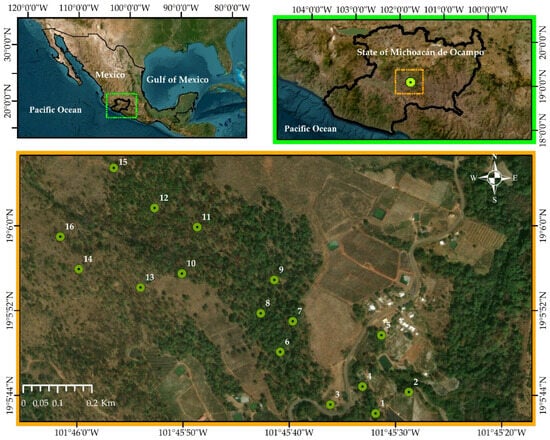
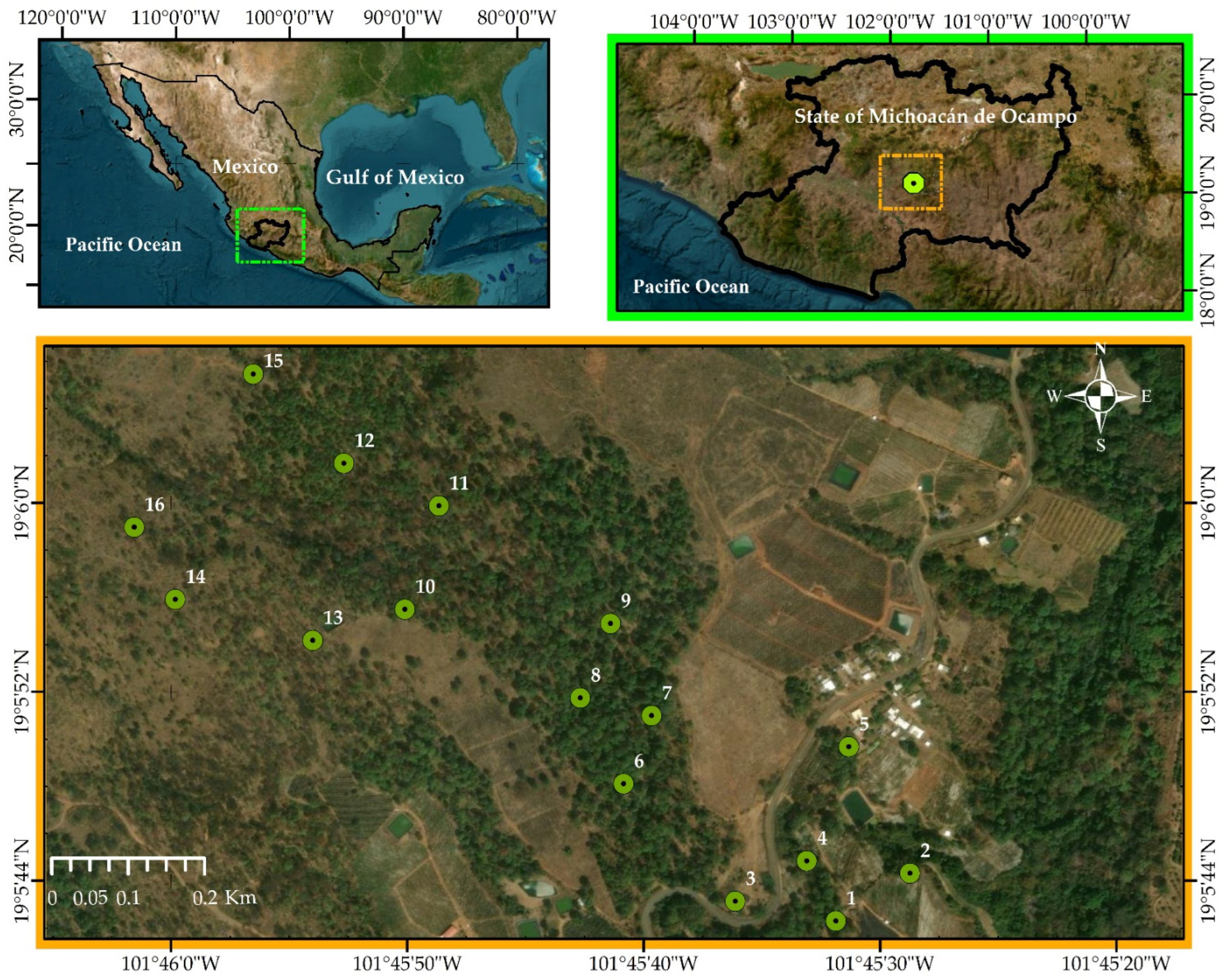

Disclaimer/Publisher’s Note: The statements, opinions and data contained in all publications are solely those of the individual author(s) and contributor(s) and not of MDPI and/or the editor(s). MDPI and/or the editor(s) disclaim responsibility for any injury to people or property resulting from any ideas, methods, instructions or products referred to in the content. |
© 2026 by the authors. Licensee MDPI, Basel, Switzerland. This article is an open access article distributed under the terms and conditions of the Creative Commons Attribution (CC BY) license.