


Abstract
Veterinary education has traditionally focused on companion and farm animals, while wildlife medicine and wildlife management remain insufficiently represented despite their growing importance within the One Health framework. This study aimed to assess and compare the knowledge, practical skills, and attitudes toward wildlife management and wildlife medicine among veterinary students enrolled in the Bulgarian- and English-language programmes at the Faculty of Veterinary Medicine, Trakia University (Bulgaria), and in the Veterinary Medicine degree programme at the University of Milan (Italy). A cross-sectional questionnaire survey was conducted among 307 veterinary students. The questionnaire evaluated students’ understanding of wildlife management, knowledge of the legislative and institutional framework governing wildlife conservation, practical experience in wildlife medicine, and preferred pathways for acquiring additional competencies. More than half of the respondents correctly associated wildlife management with the monitoring and active conservation of wildlife. However, knowledge of the relevant government authorities responsible for wildlife management was limited, with approximately one-third of the Bulgarian-language and English-language students and one-fifth of the Italian students unable to identify the responsible institutions. Practical experience in wildlife medicine was generally limited, particularly among Italian students, although students from Trakia University more frequently reported experience in multiple practical areas. Despite these gaps, respondents demonstrated a strong interest in wildlife medicine, with the majority expressing a willingness to develop competencies across multiple areas and preferring a combination of undergraduate education, postgraduate training, and voluntary practical experience. These findings highlight the need for stronger integration of wildlife medicine into undergraduate veterinary curricula through interdisciplinary teaching and practical training. Expanding educational opportunities in wildlife medicine would better prepare future veterinarians to contribute to wildlife health, biodiversity conservation, ecosystem health, and the implementation of the One Health approach.
1. Introduction
Wildlife health has become an increasingly important component of veterinary medicine owing to its close relationship with biodiversity conservation, ecosystem resilience, and the emergence of zoonotic diseases. As human activities continue to alter natural ecosystems, veterinarians are playing an expanding role in wildlife disease surveillance, conservation programmes, rehabilitation, and the management of health [1] at the interface between wildlife, domestic animals, humans, and the environment. Consequently, veterinary curricula should provide future professionals with the knowledge and practical competencies required to address these multidisciplinary challenges within the One Health framework [2,3].
The One Health concept recognizes the interdependence of human, animal, and environmental health and identifies wildlife as a critical component of this interconnected system. Consequently, veterinary professionals are increasingly expected to contribute not only to animal healthcare but also to biodiversity conservation, ecosystem health, and the prevention and control of emerging infectious diseases. The importance of wildlife medicine within veterinary education has long been recognized. As early as 1996, Ohtaishi [4] anticipated the expanding role of veterinarians in wildlife conservation and population management and proposed wildlife veterinary medicine as a distinct academic discipline, recognising its fundamental role in equipping future professionals with the competencies required to address the growing challenges of wildlife conservation. Nevertheless, wildlife medicine often remains underrepresented in undergraduate veterinary curricula, resulting in limited knowledge and awareness among students during the early stages of their education.
More recently, Aguirre [5] and Ryser-Degiorgis [6] emphasized that wildlife medicine should encompass not only clinical management of individual animals but also ecology, epidemiology, conservation biology, zoology, and population health. Such a broad interdisciplinary perspective has important implications for veterinary education and practice, requiring curricula that prepare future veterinarians for the complexity of wildlife health.
Previous studies have also shown that educational experiences can influence veterinary students’ career interests. Fish and Griffith [7] demonstrated that targeted educational interventions can increase veterinary students’ awareness of, and interest in, unfamiliar veterinary career areas, including wildlife medicine, suggesting that curriculum design plays an important role in shaping future career aspirations.
The influence of veterinary education on students’ perceptions is also reflected in studies exploring their understanding of the One Health concept. In a 2012 survey conducted among second-to-fourth-year veterinary students at Colorado State University, Wong and Kogan [8] reported that more than 80% of respondents considered wildlife health to be an integral element of the One Health approach, while relatively few reported active involvement in One Health-related activities. These findings highlight the growing awareness of wildlife medicine as an essential component of contemporary veterinary practice and support the need to strengthen education and training in this area. Such multidisciplinary competencies are increasingly important as veterinarians become actively involved in wildlife conservation, disease surveillance, biodiversity protection, and ecosystem management. These developments are reflected in the emergence of conservation medicine, an interdisciplinary field that integrates veterinary medicine, ecology, conservation biology, and public health to promote the health of wildlife populations and ecosystems [9]. Within this framework, veterinarians contribute to biodiversity conservation through disease surveillance, wildlife health monitoring, conservation interventions, and the management of emerging diseases affecting both wildlife and human populations [10]. Consequently, veterinary specialists require competencies that extend beyond traditional clinical practice and include an understanding of wildlife management, conservation policy, and ecosystem health [11].
Although all these findings indicate a high level of awareness of the importance of wildlife medicine, they also suggest that educational opportunities for active engagement and training in this area remain limited. Relatively little is known about veterinary students’ understanding of wildlife management, their knowledge of the institutional and legislative framework governing wildlife conservation, or their perceived educational needs in this field. Comparative studies involving veterinary faculties from different European countries are particularly scarce. Identifying common strengths and educational gaps may support curriculum development and contribute to harmonizing wildlife medicine education across European veterinary degree programmes.
Against this background, the present study aimed to assess and compare the knowledge, practical skills, and attitudes related to wildlife management and wildlife medicine among veterinary students enrolled in the Bulgarian- and English-language programmes at the Faculty of Veterinary Medicine, Trakia University (Stara Zagora, Bulgaria), and at the University of Milan (Italy). Specifically, the study evaluated students’ knowledge of the legislative framework and the responsible authorities for wildlife management, assessed their interest in acquiring knowledge and practical competencies in wildlife medicine, and explored their preferences regarding the most appropriate educational pathways for developing expertise in this field through undergraduate education, postgraduate training, and voluntary practical experience.
To the best of our knowledge, this is among the first comparative studies evaluating veterinary students’ knowledge, practical competencies, and educational expectations regarding wildlife management and wildlife medicine across veterinary degree programmes in different European countries.
2. Materials and Methods
2.1. Study Design and Participants
A cross-sectional questionnaire survey was conducted among veterinary students enrolled in veterinary degree programmes at two European universities. The study included students from the Bulgarian-language programme (n = 202) and the English-language programme (n = 33) at the Faculty of Veterinary Medicine, Trakia University (Stara Zagora, Bulgaria), together with students from the University of Milan (Italy) (n = 72). Students attending Veterinary Legislation classes during the study period were invited to participate, resulting in a convenience sample of undergraduate veterinary students. Participation was entirely voluntary and had no influence on students’ academic assessment.
At Trakia University, the Bulgarian-language and English-language programmes constitute two language versions of the same 5,5-year veterinary medicine degree programme and follow the same curriculum, course structure, learning objectives, and assessment requirements. The distinction between the two programmes is therefore the language of instruction rather than a difference in educational content or professional qualification. The English-language programme is not an Erasmus or exchange programme; it is a full veterinary degree programme taught in English and is open to both EU and non-EU students who meet the admission requirements, including the relevant entrance examinations. Thus, students enrolled in the English-language programme were regular undergraduate veterinary students rather than exchange students. The two Trakia University groups were distinguished in the dataset primarily to describe the composition of the study sample and the language of instruction, rather than to represent different veterinary curricula. Nevertheless, the distinction may be relevant when interpreting students’ perceptions, as the groups may differ in terms of nationality, cultural and social background, personal beliefs and values, and previous educational experiences in their countries of origin. These factors may influence students’ prior exposure to wildlife, their perceptions of the role of wildlife medicine in veterinary education, and their expectations regarding the knowledge and practical skills required in this field.
The veterinary medicine programme at the University of Milan is likewise a five-year single-cycle degree programme leading to the professional qualification of veterinary surgeon and is taught in Italian. Although the detailed organisation, sequencing of courses, teaching methods, and institutional educational context differ between Trakia University and the University of Milan, both programmes operate within the European framework for veterinary education and professional qualification. Under Directive 2005/36/EC [12], veterinary training in the European Union comprises at least five years of full-time theoretical and practical study and must cover the minimum programme specified for veterinary surgeons in Annex V, while individual institutions retain responsibility for the organisation and detailed implementation of their curricula.
Both veterinary establishments are also subject to European quality assurance through the European Association of Establishments for Veterinary Education (EAEVE). The Faculty of Veterinary Medicine at Trakia University is an EAEVE member, and its educational objectives and quality assurance procedures are aligned with the European System of Evaluation of Veterinary Training (ESEVT). The University of Milan’s Degree Programme in Veterinary Medicine has received EAEVE accreditation following ESEVT evaluation. These common European requirements and external quality-assurance standards provide a common professional framework, while not implying that the two institutions have identical curricula or teaching approaches.
2.2. Questionnaire and Data Collection
The questionnaire was developed by the authors following a review of the relevant literature on wildlife medicine education and veterinary curricula. Before implementation, the questionnaire was reviewed by three academic experts in wildlife medicine and veterinary education (staff members at the two universities) to assess its clarity, relevance, and content validity. The validated questionnaire was administered in paper format during scheduled Veterinary Legislation classes at the beginning of the summer semester in February 2022. Students who agreed to participate completed the questionnaire independently and returned it anonymously at the beginning of the following class session. Completed questionnaires were collected till the end of the academic year in June 2022. The survey did not collect names, student identification numbers, or any other personally identifiable information. All questionnaires were processed anonymously in accordance with Regulation (EU) 2016/679 (General Data Protection Regulation, GDPR) [13].
The questionnaire consisted of closed- and open-ended questions organized into four thematic domains: (i) knowledge of wildlife management, including the relevant legislative framework and responsible institutions; (ii) previous practical experience related to wildlife medicine; (iii) attitudes toward acquiring additional knowledge and practical competencies in wildlife medicine; and (iv) preferred educational pathways for developing competencies in wildlife medicine, including undergraduate education, postgraduate training, and voluntary practical experience.
2.3. Ethical Considerations
The study was conducted in accordance with the ethical principles of the Declaration of Helsinki and was approved by the Ethics Committee of the Faculty of Veterinary Medicine, Trakia University–Stara Zagora (Permit No. 02/2020, dated 2 June 2020). Participation in the survey was voluntary and anonymous. Before completing the questionnaire, students were informed about the purpose of the study, the voluntary nature of participation, the anonymous processing of the collected data, and their right to withdraw without any consequences for their academic standing. Informed consent was incorporated into the questionnaire, and completion and anonymous submission of the questionnaire were considered to constitute consent to participate. No names, student identification numbers, or other personally identifiable information were collected.
2.4. Statistical Analysis
The questionnaire was developed following established principles of empirical survey research. Statistical analyses were performed using IBM SPSS Statistics version 26.0 (IBM Corp., Armonk, NY, USA). Descriptive statistics were used to summarize respondents’ characteristics and questionnaire responses. Associations between categorical variables were evaluated using Pearson’s chi-square (χ2) test. Statistical significance was established at p < 0.05.
Generative artificial intelligence (GenAI OpenAI, GPT-5.5) tools were used to assist with language editing, improvement of text clarity and structure, and preparation of Figure 3a,b, based on the authors’ summary tables. Literature selection, scientific interpretation, data analysis, conclusions, and final manuscript revisions were all performed and critically reviewed by the authors, who take full responsibility for the content of the manuscript.
3. Results
3.1. Students’ Understanding of Wildlife Management
The study included 307 veterinary students in total from both universities. Regarding the demographic characteristics of the respondents, the majority were 19–24 years old (76.9%), followed by students aged 25–29 years (8.8%), those under 18 years (10.4%), and those aged 30 years or older (2.9%); 1.0% did not report their age. Females represented 66.1% of the participants, while males accounted for 33.9%. Regarding the distribution by year of study, first-year students comprised the largest proportion of respondents (41.0%), followed by fourth-year students (37.5%). Students in the fifth year accounted for 8.1% of the sample, while 5.5%, 3.3%, and 2.9% were in the third, second, and sixth years, respectively. Year of study was not reported by 1.6% of participants (Table 1).
Table 1.
Characteristics of the veterinary students participating in the study.
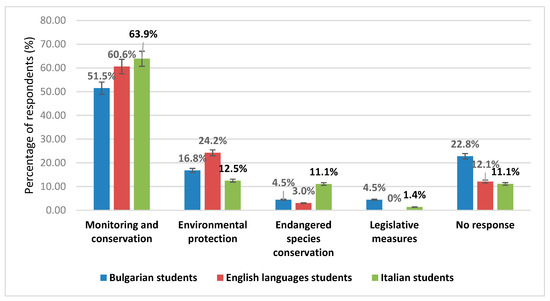
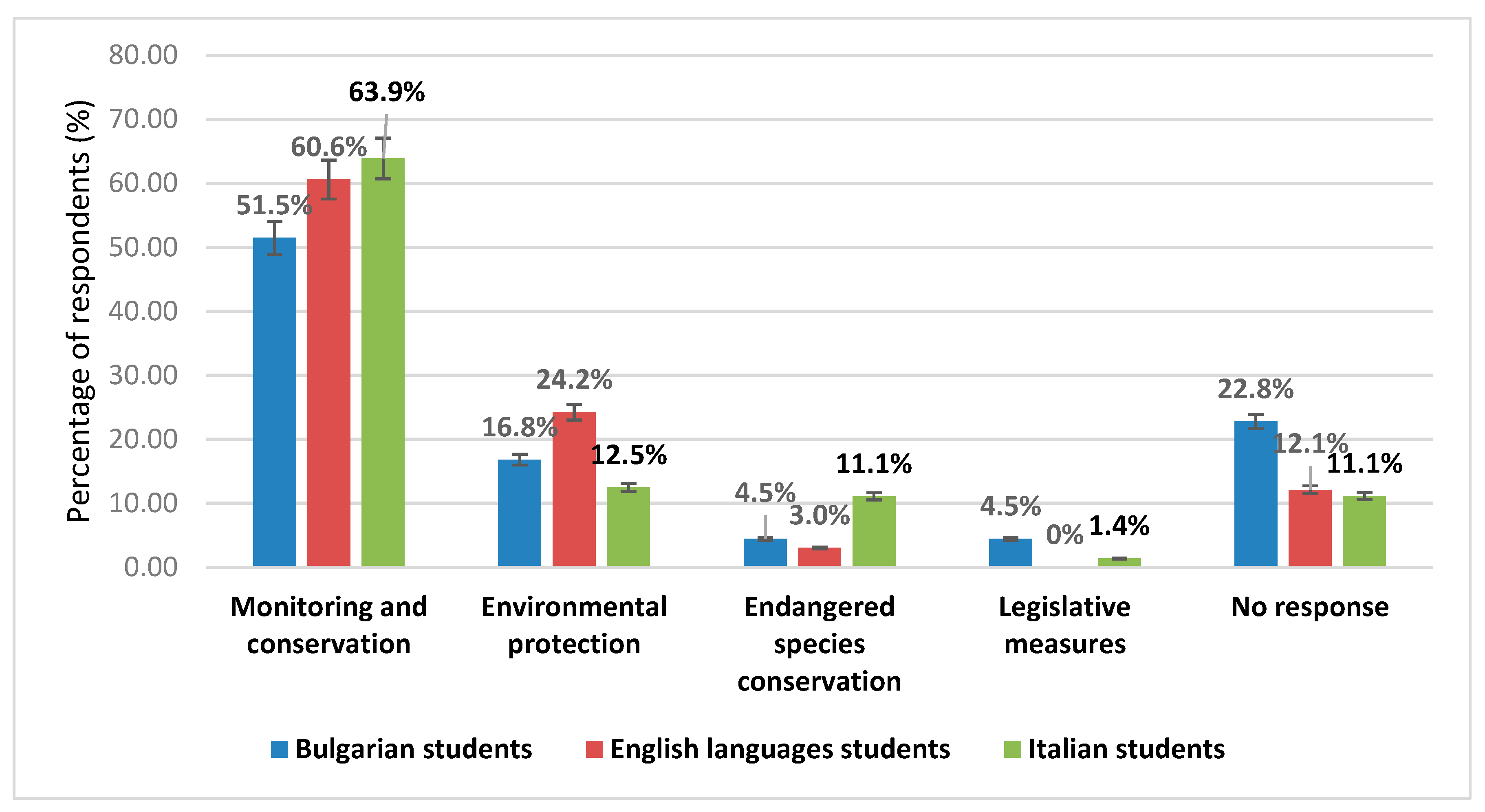
No statistically significant differences were observed among the three study groups in their conceptual understanding of wildlife management (χ2 = 15.52, p = 0.05). Across all groups, the most frequently selected definition was the monitoring and active conservation of wildlife, chosen by more than half of respondents in each group (51.5% of Bulgarian-language students, 60.6% of English-language students, and 63.9% of Italian students). Environmental protection represented the second most frequently selected dimension, particularly among English-language students (24.2%), while the corresponding proportions were lower among Bulgarian-language (16.8%) and Italian students (12.5%). The conservation of endangered species was selected less frequently, although this response was more common among Italian students (11.1%) than among Bulgarian-language (4.5%) and English-language students (3.0%). The legislative dimension was least frequently identified across the groups, accounting for 4.5% of Bulgarian-language students, 0% of English-language students, and 1.4% of Italian students. A relatively substantial proportion of respondents, particularly Bulgarian-language students (22.8%), did not provide a response. The detailed distribution of responses across the three study groups is presented in Figure 1.
Figure 1.
Distribution of veterinary students’ conceptual understanding and perceptions regarding the definition of “wildlife management”.
3.2. Knowledge of the Institutional Framework for Wildlife Management
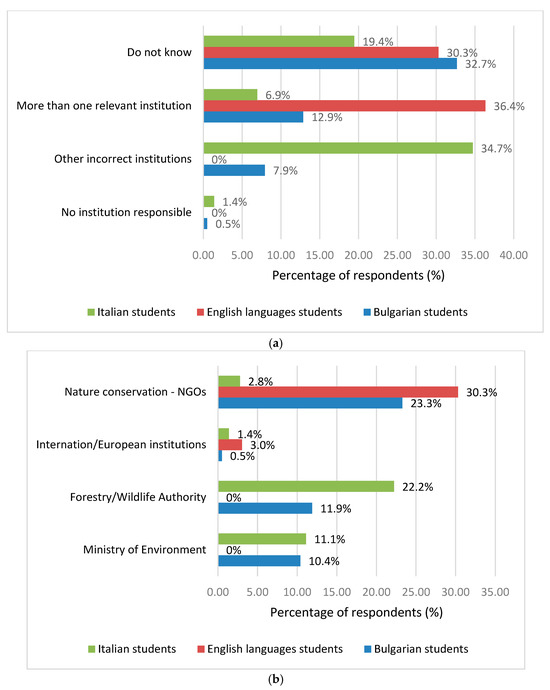
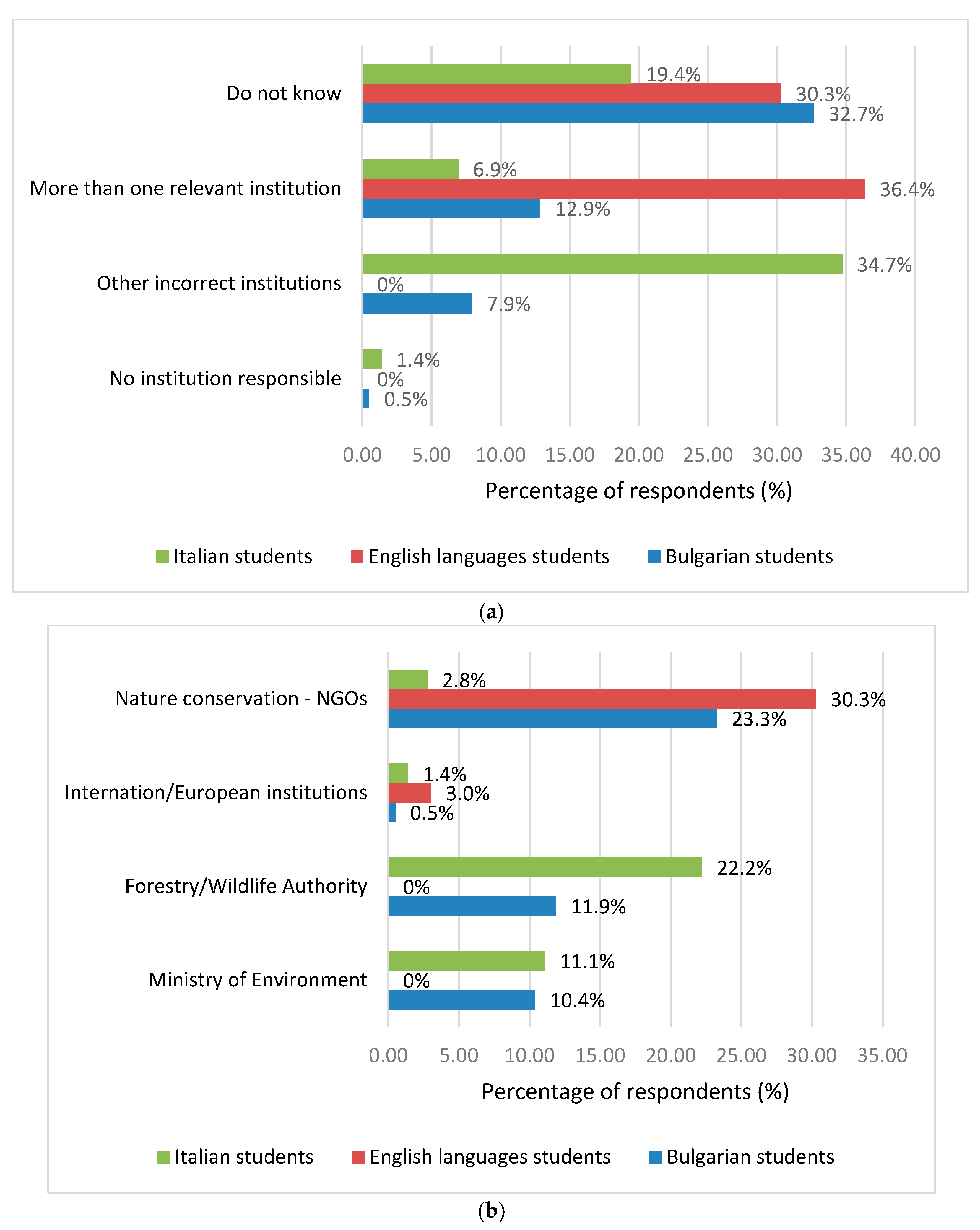
Knowledge of the government institutions responsible for wildlife management was limited across all three student groups (Figure 2a). Approximately one-third of the Bulgarian-language (32.7%) and English-language (30.3%) students, together with 19.4% of the Italian students, were unable to identify the responsible national authorities. A small proportion of respondents stated that no institution was responsible for wildlife management, while others selected organizations with limited or no statutory responsibility, including municipalities, ministries unrelated to environmental protection, private veterinary practitioners, or other inappropriate institutions. Such incorrect responses were particularly common among the Italian students (34.7%) compared with the Bulgarian-language students (7.9%).
Figure 2.
(a) Response and knowledge status regarding institutions responsible for wildlife management. Note: Percentages represent the proportion of respondents within each study group selecting each response option. Multiple responses were permitted; therefore, percentages do not sum to 100%. (b) Responsible institutions for wildlife management identified by the respondents. Note: Percentages represent the proportion of respondents within each study group selecting each response option. Multiple responses were permitted; therefore, percentages do not sum to 100%.“Ministry of Environment” refers to the Ministry of Environment and Water (MOEW) in Bulgaria and the Ministry of the Environment and Energy Security (MASE) in Italy. “Forestry/Wildlife authority” refers to the Executive Forest Agency (EFA) in Bulgaria and the Regional Authorities (Regions and Autonomous Provinces) and the Italian Institute for Environmental Protection and Research (ISPRA) in Italy.
Among the respondents who correctly identified responsible institutions, Bulgarian students most frequently selected the Executive Forest Agency (11.9%) and the Ministry of Environment and Water (10.4%) (Figure 2b). In Italy, the corresponding responsible authorities included the Ministry of the Environment and Energy Security (MASE), the Regional Authorities (Regions and Autonomous Provinces), which hold primary responsibility for wildlife management, and the Italian Institute for Environmental Protection and Research (ISPRA). Overall, 22.2% of the Italian students identified one of these responsible authorities, whereas only 11.1% specifically referred to the ministry responsible for environmental protection. In contrast, 30.3% of the English-language students and 23.3% of the Bulgarian-language students considered nature conservation non-governmental organizations to be the principal institutions responsible for wildlife management, compared with only 2.8% of the Italian students. Furthermore, 36.4% of the English-language students, 12.9% of the Bulgarian-language students, and 6.9% of the Italian students correctly identified more than one institution responsible for wildlife management (Figure 2a). The overall distribution of responses differed significantly among the three study groups (χ2 = 80.78, p < 0.001).
3.3. Practical Experience in Wildlife Medicine
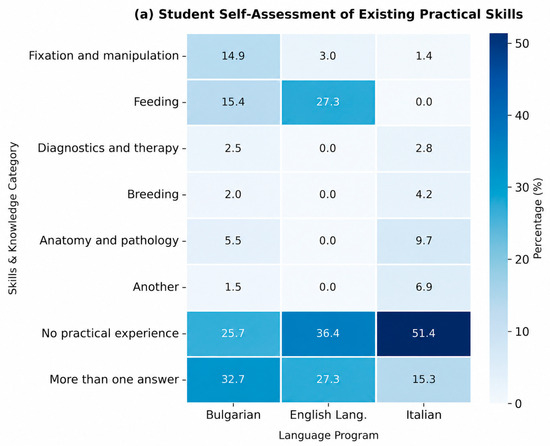
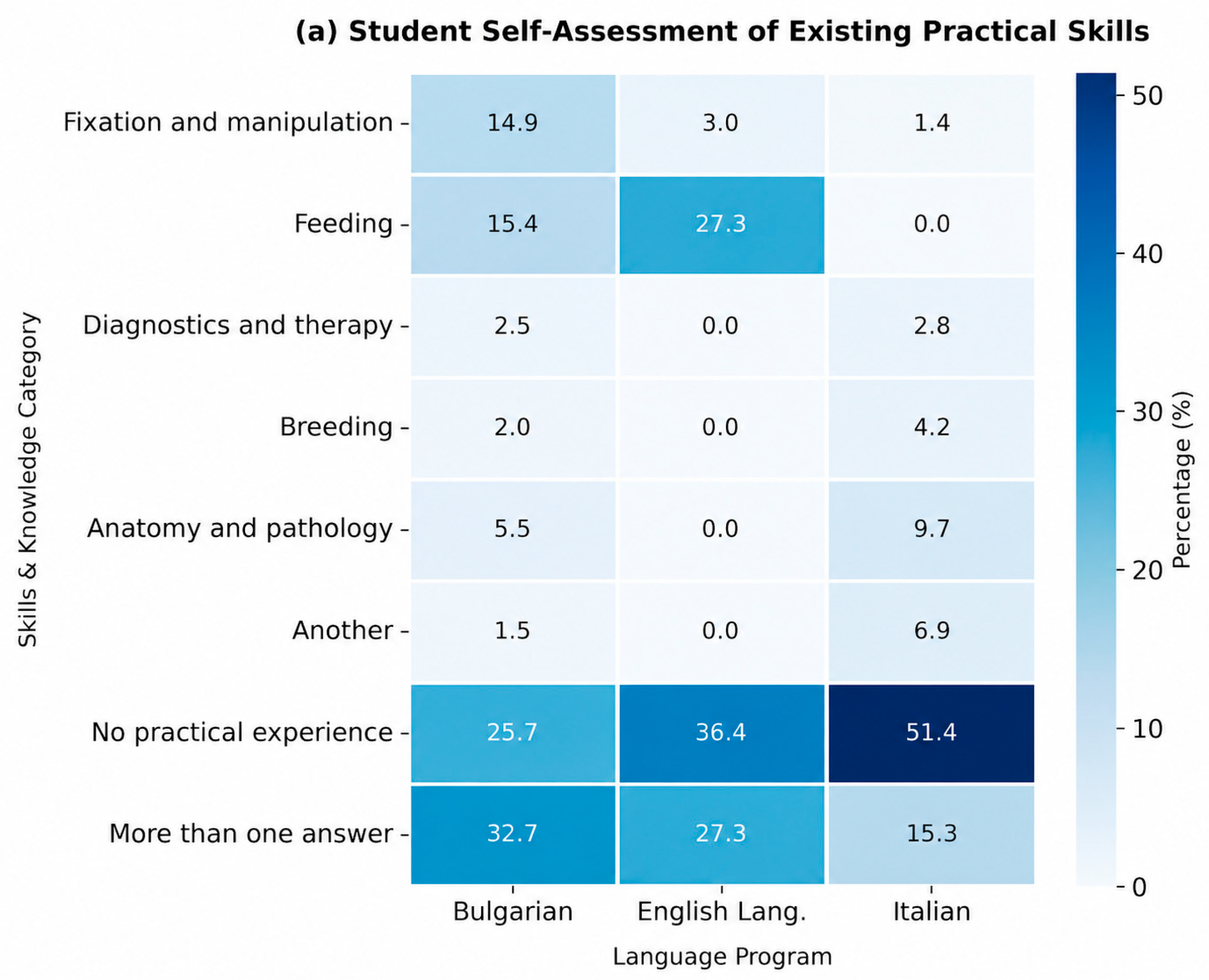
Practical experience in wildlife medicine was generally limited, although notable differences were observed among the three study groups (Figure 3a). Experience in more than one practical area was reported by 32.7% of the Bulgarian-language students, 27.3% of the English-language students, and 15.3% of the Italian students. Wildlife restraint and handling was most frequently reported by Bulgarian-language students (14.9%), whereas experience in wildlife feeding was more common among English-language students (27.3%) and Bulgarian-language students (15.4%). Knowledge related to wildlife anatomy and pathology was reported by 9.7% of the Italian students and 5.5% of the Bulgarian-language students, while practical experience in wildlife diagnostics and treatment was limited in all three groups. Participation in wildlife breeding activities was uncommon irrespective of the study programme.
Figure 3.
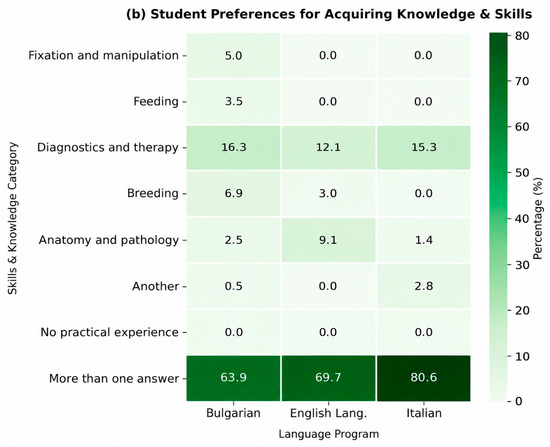
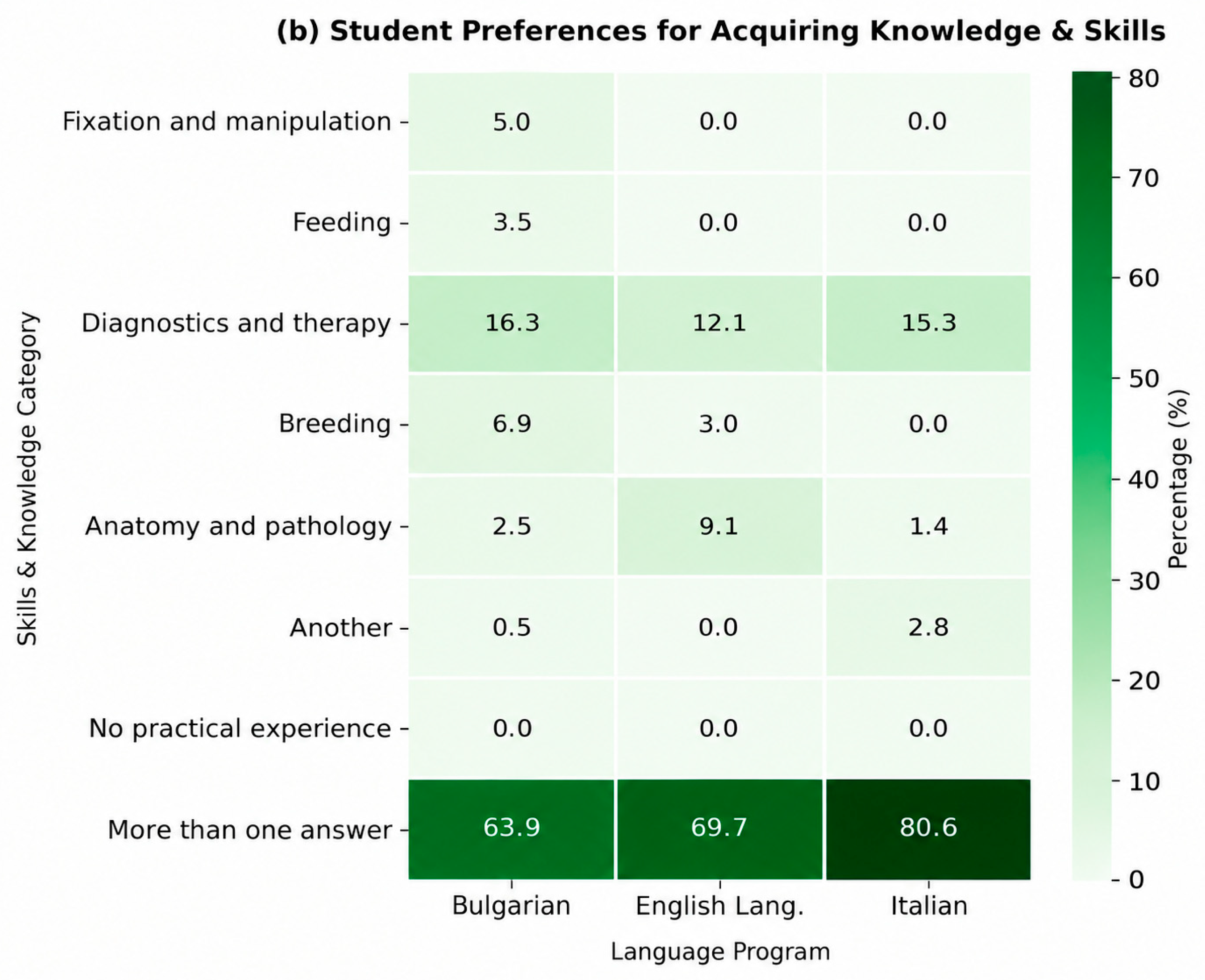
(a) Student self-assessment of existing practical skills across language programs. (AI-generated figure). Heatmap showing the percentage of students in Bulgarian, English, and Italian language programs who report having prior practical experience across specific skill categories. The row No practical experience indicates students without prior background in any category, while More than one answer represents students selecting multiple skill areas. Data values are displayed within each cell, with color intensity scaling from 0% to 52%. (b) Student preferences for acquiring knowledge and practical skills across language programs. (AI-generated figure). Heatmap displaying the proportion of students in Bulgarian, English, and Italian language programs interested in acquiring skills across various categories. The high percentage in the More than one answer row reflects widespread interest in gaining expertise across multiple fields. Values indicate percentage distributions, with color intensity scaling from 0% to 81%.
Importantly, a considerable proportion of respondents reported having no practical experience in wildlife medicine, particularly among the Italian students (51.4%), compared with the English-language students (36.4%) and Bulgarian-language students (25.7%). The observed differences among the three student groups were statistically significant (χ2 = 58.89, p < 0.001).
3.4. Interest in Acquiring Competencies in Wildlife Medicine
Despite their limited practical experience, respondents expressed strong interest in acquiring additional competencies in wildlife medicine (Figure 3b). The highest level of interest was observed for wildlife diagnostics and treatment, selected by 16.3% of the Bulgarian-language students, 12.1% of the English-language students, and 15.3% of the Italian students. Interest in wildlife anatomy and pathology was reported more frequently by English-language students (9.1%) than by Bulgarian-language (2.5%) or Italian students (1.4%). Wildlife breeding was selected by 6.9% of the Bulgarian-language students and 3.0% of the English-language students, whereas comparatively few respondents expressed interest in wildlife feeding or restraint and handling.
A substantial proportion of respondents wished to acquire competencies in more than one area of wildlife medicine, including 63.9% of the Bulgarian-language students, 69.7% of the English-language students, and 80.6% of the Italian students. Although significant differences were observed among the three groups, the strength of the association was small (χ2 = 25.04, p = 0.015).
3.5. Preferred Educational Pathways for Wildlife Medicine
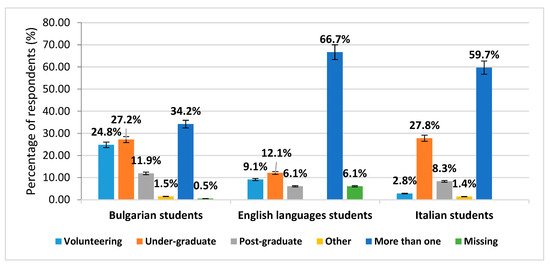
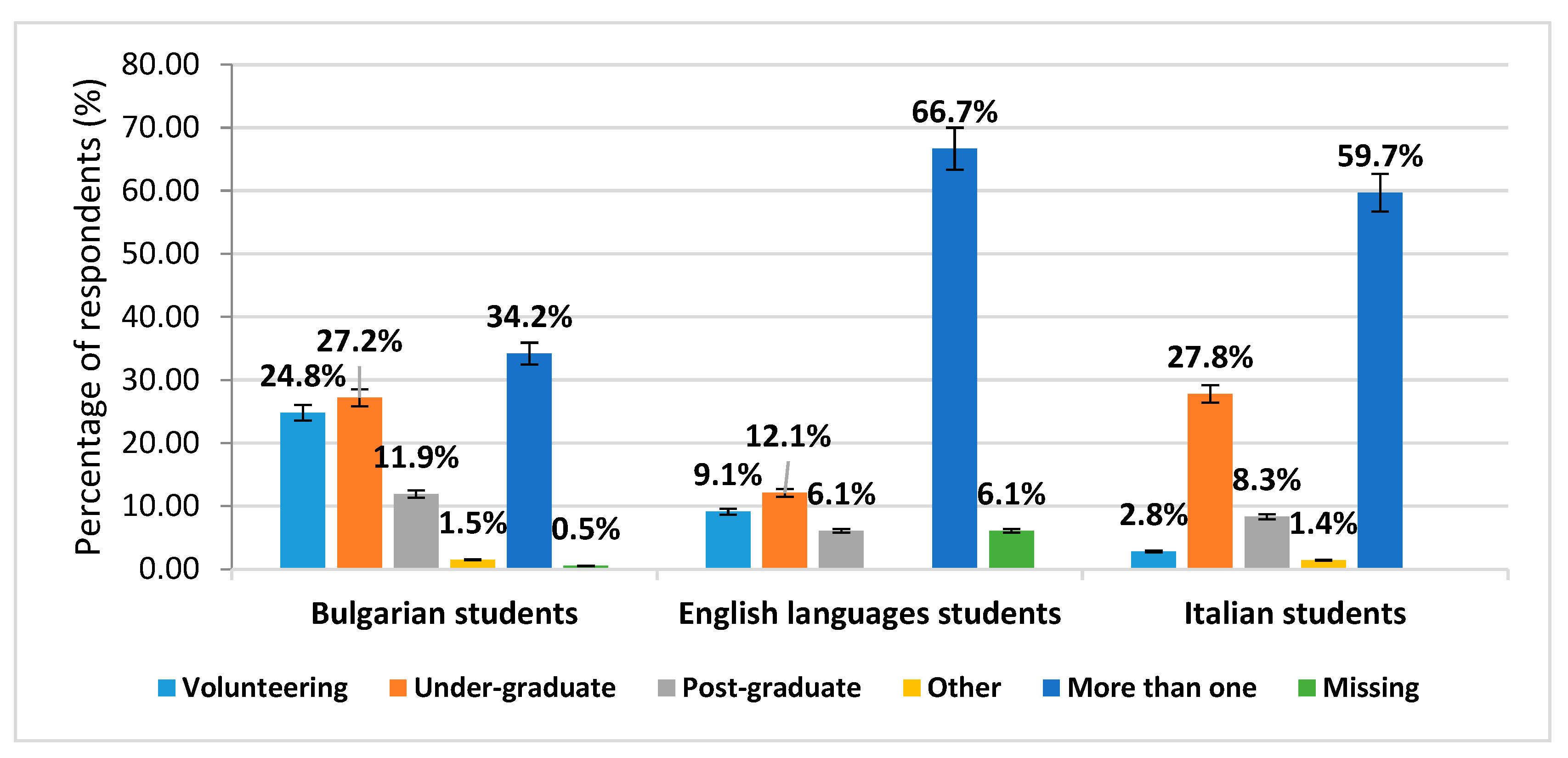
A statistically significant difference was observed among the three study groups in their preferences for educational pathways for developing competencies in wildlife medicine (χ2 = 33.01, p < 0.001). Across all three groups, the integrated educational approach combining undergraduate education, postgraduate training, and voluntary practical experience was the most frequently selected option, particularly among English-language students (66.7%) and Italian students (59.7%), compared with 34.2% of Bulgarian-language students (Figure 4).
Figure 4.
Distribution of students across preferred training modalities for wildlife specialization. Category “Missing” refers to “No response” provided by the students. Note: Percentages represent the proportion of respondents within each study group selecting each response option. Multiple responses were permitted; therefore, percentages do not sum to 100%.
Among the individual educational modalities, undergraduate education was selected by approximately one-quarter of Bulgarian-language and Italian students (27.2% and 27.8%, respectively), whereas postgraduate education was less frequently selected across the three groups. Voluntary practical activities were more frequently preferred by Bulgarian-language students (24.8%) than by English-language (9.1%) and Italian students (2.8%). The detailed distribution of educational preferences across the three study groups is presented in Figure 4. These findings reflect the preferences of students from different years of study represented within each programme group and should therefore be interpreted as overall group-level preferences rather than preferences associated with a specific year or cohort.
4. Discussion
Wildlife represents an essential component of global biodiversity and natural resources, requiring coordinated and evidence-based management to ensure its long-term conservation. Effective wildlife management depends on the active collaboration of multiple stakeholders, including government institutions, conservation organizations, researchers, and veterinary professionals [14]. Veterinary students constitute an important target group, because undergraduate education provides a unique opportunity to develop the knowledge, skills, and attitudes required for future professional responsibilities in wildlife conservation, biodiversity protection, and One Health initiatives [5,6,15]. In the present study, more than half of the respondents in each student group correctly associated wildlife management with the monitoring and active conservation of wildlife. Nevertheless, relatively few students recognized its broader legislative, ecological, and population-level dimensions. This finding is consistent with the conceptual framework proposed by Organ et al. [16], which describes wildlife management as a multidisciplinary field integrating science-based management, legislation, habitat conservation, population management, and human–wildlife interactions. It also reflects the need, emphasized by Ryser-Degiorgis [6], for wildlife health professionals to integrate knowledge from multiple disciplines and for veterinary education to strengthen training in wildlife health. These findings suggest that veterinary students possess a basic conceptual understanding of wildlife management but would benefit from a more comprehensive educational approach that better reflects its multidisciplinary nature, encompassing its ecological, legislative, and population-level dimensions. Such competencies are increasingly important for veterinarians participating in multidisciplinary conservation programmes and contributing to integrated One Health approaches at the interface between wildlife, domestic animals, humans, and the environment [17].
A major finding of the present study was the limited knowledge of veterinary students regarding the government institutions responsible for wildlife management. Approximately one-third of the Bulgarian-language and English-language students, together with one-fifth of the Italian students, were unable to identify the responsible national authorities. The higher proportion of English-speaking students who identified more than one institution as responsible for wildlife management may indicate a broader awareness of the complex structure of wildlife governance. Such knowledge gaps may hinder future collaboration with the authorities involved in wildlife conservation, disease surveillance, and the implementation of One Health policies. This is particularly concerning because veterinarians are increasingly expected to work within multidisciplinary teams alongside government authorities to support wildlife disease surveillance, biodiversity conservation, and ecosystem management [6,17,18]. Effective wildlife management requires close collaboration among veterinary services, environmental authorities, public health institutions, and scientific organizations, within a One Health framework [19]. Daszak et al. [20] emphasized that successful prevention and control of wildlife diseases depends on coordinated cooperation between veterinary professionals and other disciplines involved in wildlife health and conservation, while Ryser-Degiorgis [6] highlighted the importance of integrating expertise from veterinary medicine, ecology, zoology, pathology, microbiology, and public health to understand disease emergence and implement effective surveillance programmes. This broader perspective is consistent with the concept of conservation medicine, which recognizes veterinarians as key contributors to wildlife conservation, ecosystem health, biodiversity preservation, and the prevention and management of emerging diseases through multidisciplinary One Health approaches [21]. An additional finding was that more than 20% of the Bulgarian-language and 30% of the English-language students considered non-governmental organizations to be the principal authorities responsible for wildlife management. Non-governmental organizations play an important and diverse role in wildlife conservation, including biodiversity protection, community engagement, public awareness, capacity building, and efforts to combat illegal wildlife trade [22]. Depending on the national and institutional context, NGOs may complement government conservation programmes or, in some settings, take a leading role in delivering conservation activities and wildlife-related services [23,24]. The relatively high proportion of students identifying NGOs as the principal authorities may therefore reflect variation in their understanding of the roles and responsibilities of different stakeholders involved in wildlife management.
Together, these findings suggest that veterinary education should place greater emphasis on the institutional and legislative framework governing wildlife conservation to prepare future veterinarians for effective collaboration with government authorities, conservation organizations, and multidisciplinary One Health networks [9].
The limited knowledge among the respondents regarding the responsible authorities for wildlife management suggests that veterinary curricula should place greater emphasis not only on wildlife medicine itself but also on the institutional and legislative framework governing wildlife research, conservation and rehabilitation [25,26]. Such knowledge is essential for future veterinarians, whose professional responsibilities increasingly require cooperation with government authorities, research institutions, conservation organizations and local communities, especially in areas with limited veterinary services [26].
The present study also identified substantial differences in students’ practical experience with wildlife medicine. A considerably greater proportion of the Bulgarian-language and English-language students reported competencies in more than one practical area compared to the Italian students. One possible explanation is the long-standing collaboration between the Faculty of Veterinary Medicine at Trakia University and the Wildlife Rehabilitation and Breeding Centre “Green Balkans”, which provides students with opportunities for practical training and direct involvement in wildlife rehabilitation. Such experiential learning has been recognized as an important component of veterinary education, enhancing clinical skills while contributing to wildlife conservation [27]. Similar educational initiatives have been shown to improve students’ confidence, perceived practical competencies, and professional attitudes toward wildlife medicine [28]. Nevertheless, the overall level of practical experience remained limited across all three groups, supporting previous reports that undergraduate veterinary curricula often provide insufficient exposure to wildlife medicine [5,25]. These findings reinforce the importance of expanding practical learning opportunities through partnerships with wildlife health institutions, zoos and zoological collections, conservation organizations, wildlife rehabilitation centres, and other stakeholders involved in wildlife health and biodiversity conservation [27,29]. Zoos can provide valuable opportunities for veterinary students to gain practical experience in wildlife health and conservation medicine, while also contributing to conservation programmes, research, professional training, and the development of competencies relevant to the management of wildlife species [30,31].
The observed differences in students’ practical competencies should also be considered in the context of current recommendations for veterinary education. Even though additional postgraduate training is generally required to practice as a zoo or wildlife veterinarian, undergraduate veterinary curricula should provide foundational knowledge in wildlife and zoo animal-related subjects, including conservation biology, zoology, behaviour, physiology and conservation medicine, regardless of whether students intend to specialize in this field later in their careers [5]. These recommendations are consistent with broader World Organisation for Animal Health (WOAH) guidelines emphasizing the importance of competency-based veterinary education and the development of curricula to adequately prepare graduating veterinarians for their professional roles [30,32]. Veterinary students should also be introduced to modern field and laboratory approaches used for disease surveillance, wildlife health management and conservation research [31,33]. Our findings align with the conclusions by Frölich et al. [32,34], who reported considerable differences in the educational opportunities available in zoological and wildlife medicine among European veterinary schools. Current policies are striving to harmonize educational standards across Europe and to promote student and teacher mobility [33,35]. In the meantime, specialized education in wildlife medicine is becoming increasingly available in European veterinary curricula. Differences in curricular structure, opportunities for practical training, and institutional collaborations may therefore partly explain the variation observed among the participating universities. The importance of practical training is further highlighted by studies involving wildlife veterinarians and veterinary students [34,35,36,37], which emphasize the need for appropriate educational experiences to prepare them for professional work in wildlife medicine and wildlife health management.
Despite their limited practical experience, students demonstrated considerable interest in developing competencies across multiple areas of wildlife medicine. More than half of the respondents in each study group expressed a willingness to acquire knowledge in two or more fields, indicating that they recognize the multidisciplinary nature of wildlife medicine. Although respondents expressed interest across multiple competency areas, clinical disciplines—particularly the diagnosis and treatment of wildlife diseases—remained the highest priority, suggesting that students continue to associate wildlife medicine primarily with individual animal care rather than broader conservation and ecosystem health. This pattern suggests that students continue to perceive wildlife medicine primarily from a clinical perspective. Contemporary veterinary education, however, emphasizes that wildlife medicine extends beyond individual animal care to encompass population health, preventive medicine, conservation biology, epidemiology, ecosystem health, and the One Health approach [11,19,36,38]. Consequently, undergraduate curricula should provide a more balanced educational framework that integrates clinical competencies with ecological, conservation, and population-level aspects of wildlife health [37,39].
Students also expressed a clear preference for flexible educational pathways that combine undergraduate education, postgraduate specialization, and voluntary practical experience. This finding suggests that veterinary students perceive professional development in wildlife medicine as a continuous process extending beyond the undergraduate curriculum. The preference for integrating wildlife medicine into undergraduate education is consistent with previous studies advocating greater inclusion of wildlife-related subjects within core veterinary curricula [25,33,35]. At the same time, the interest in postgraduate training is consistent with the increasing complexity and specialization of wildlife and zoological medicine [38,39,40,41]. The willingness of many respondents to participate in voluntary activities further highlights the educational value of experiential learning. Previous studies have highlighted the value of practical training, mentorship, and participation in conservation programmes in strengthening professional competencies while fostering long-term engagement in wildlife conservation [40,42]. The relatively lower preference for postgraduate training may also reflect the undergraduate status of the respondents and their potentially limited familiarity with postgraduate educational opportunities in conservation medicine. Established programmes demonstrate that both undergraduate and postgraduate approaches can provide effective pathways for developing competencies in wildlife and conservation medicine, supporting the need for flexible educational models rather than a single training pathway [43,44]. Collectively, these findings support the development of integrated educational models that combine formal teaching, postgraduate specialization, and structured experiential learning to better prepare future veterinarians for the multidisciplinary challenges of wildlife medicine, biodiversity conservation, and One Health.
5. Conclusions
This study provides novel comparative evidence on veterinary students’ knowledge, practical skills, and educational needs related to wildlife management and wildlife medicine in two European veterinary education institutions. Although most respondents demonstrated a basic understanding of wildlife management and expressed a strong interest in developing competencies in this field, important gaps were identified in their knowledge of the institutional and legislative frameworks governing wildlife conservation. Practical experience in wildlife medicine was also limited, particularly in areas extending beyond clinical practice, highlighting a gap between students’ educational interests and their opportunities for practical training.
Despite the identified limitations, the consistently high level of interest in acquiring multidisciplinary competencies suggests that veterinary students recognize the expanding role of wildlife medicine within contemporary veterinary practice. The preference for educational pathways combining undergraduate teaching, postgraduate specialization, and structured practical experience further indicates that students perceive wildlife medicine as a discipline requiring continuous professional development and close integration of theoretical knowledge with experiential learning.
The findings of this study support the further integration of wildlife medicine into undergraduate veterinary curricula through interdisciplinary teaching and expanded practical training in collaboration with wildlife rehabilitation centres, zoological institutions, conservation organizations, and government agencies. Strengthening education in wildlife medicine can contribute to better preparing future veterinarians to contribute to wildlife health surveillance, biodiversity conservation, ecosystem resilience, and the prevention and management of emerging diseases at the human–animal–environment interface. Ultimately, investing in wildlife medicine education represents an investment in the veterinary workforce needed to address the interconnected challenges of biodiversity loss, environmental change, and global health within the One Health framework.
6. Limitations of the Study
Several limitations should be considered when interpreting the findings of this study. First, the survey included students from only two European universities offering veterinary degree programmes, which may limit the broader application of the results to other veterinary education settings. In addition, the unequal sample sizes among the three student groups, particularly the relatively small number of participants enrolled in the English-language programme, should be taken into account when comparing responses between cohorts.
Second, the study was based on self-reported questionnaire data. Consequently, the reported knowledge, practical skills, and educational preferences reflect students’ perceptions rather than their actual competencies. Future studies combining questionnaire surveys with objective assessments of theoretical knowledge and practical skills would provide a more comprehensive evaluation of students’ preparedness for wildlife medicine. Furthermore, participation was voluntary; therefore, self-selection bias cannot be excluded, as students with a greater interest in wildlife medicine may have been more likely to participate.
Finally, the cross-sectional design provides information on students’ knowledge and attitudes at a single point in time and does not allow assessment of how these competencies develop throughout veterinary education. In addition, although differences between institutions were discussed, the specific curricular components and educational experiences underlying these differences were not evaluated directly. Future longitudinal studies involving a larger number of veterinary schools from different countries and incorporating detailed curricular analyses would provide valuable insights into the effectiveness of different educational approaches to wildlife medicine and support the development of more harmonized educational standards at the European level.
Author Contributions
Conceptualization, I.L. and G.B.; methodology, I.L. and G.B.; software, I.L.; validation, I.L., G.B. and P.F.; formal analysis, I.L.; investigation, I.L., G.B. and P.F.; resources, I.L., G.B. and P.F.; data curation, I.L. and G.B.; writing—original draft preparation, I.L. and G.B.; writing—review and editing, I.L., G.B. and P.F.; visualization, G.B.; supervision, I.L.; project administration, G.B.; funding acquisition, G.B. All authors have read and agreed to the published version of the manuscript.
Funding
The article processing charge (APC) was funded by Trakia University, Stara Zagora, Bulgaria, through the University’s publication support programme.
Institutional Review Board Statement
The study was conducted in accordance with the Declaration of Helsinki and was approved by the Ethics Committee of the Faculty of Veterinary Medicine, Trakia University–Stara Zagora (Permit No. 02/2020, dated 2 June 2020).
Informed Consent Statement
Before participation, all respondents were provided with information regarding the purpose of the study, the voluntary nature of participation, the anonymous processing of the collected data, and their right to withdraw without any consequences for their academic standing. Informed consent was incorporated into the questionnaire. By completing and anonymously submitting the questionnaire, participants confirmed their informed consent to participate in the study.
Data Availability Statement
Raw data are available upon reasonable request to the corresponding author. All data after statistical processing are included in the manuscript.
Acknowledgments
The authors sincerely thank all veterinary students from the Faculty of Veterinary Medicine, Trakia University (Bulgaria), and the University of Milan (Italy) who voluntarily participated in this survey. Their time, thoughtful responses, and willingness to share their knowledge, experiences, and perspectives made this study possible and are greatly appreciated. During the preparation of this manuscript, the authors used ChatGPT (OpenAI, GPT-5.5) to assist with the graphical design and formatting of Figure 3a,b. The authors reviewed and edited the output and take full responsibility for the content of this publication.
Conflicts of Interest
The authors declare no conflicts of interest. The funders had no role in the design of the study; in the collection, analysis, or interpretation of data; in the writing of the manuscript; or in the decision to publish the results.
References
- Shrivastava, P.; Sahoo, S.K.; Venkatesh, K.M. Role of Veterinarians in Public Health. In Epidemiology and Environmental Hygiene in Veterinary Public Health; Rana, T., Ed.; Wiley: Hoboken, NJ, USA, 2025; pp. 287–298. [Google Scholar] [CrossRef] [Scilit]
- Stoddard, R.A.; Glynn, M.K. Opening the window on public health to veterinary students. Rev. Sci. Tech. 2009, 28, 671–679. [Google Scholar] [CrossRef] [Scilit] [PubMed]
- National Research Council. Veterinarians in wildlife and ecosystem health. In Workforce Needs in Veterinary Medicine; National Academies Press: Washington, DC, USA, 2013; Chapter 7. [Google Scholar] [CrossRef] [Scilit] [PubMed]
- Ohtaishi, N. The necessity for management of wildlife population—The future course of veterinary medicine for wildlife. J. Zoo Wildl. Med. 1996, 1, 2–7. [Google Scholar] [CrossRef] [Scilit]
- Aguirre, A. Essential veterinary education in zoological and wildlife medicine: A global perspective. Rev. Sci. Tech. 2009, 28, 605–610. [Google Scholar] [CrossRef] [Scilit] [PubMed]
- Ryser-Degiorgis, M.-P. Wildlife health investigations: Needs, challenges and recommendations. BMC Vet. Res. 2013, 9, 223. [Google Scholar] [CrossRef] [Scilit] [PubMed]
- Fish, R.E.; Griffith, E.H. Career attitudes of first-year veterinary students before and after a required course on veterinary careers. J. Vet. Med. Educ. 2014, 41, 243–252. [Google Scholar] [CrossRef] [Scilit] [PubMed]
- Wong, D.; Kogan, L.R. Veterinary students’ attitudes on One Health: Implications for curriculum development at veterinary colleges. J. Vet. Med. Educ. 2013, 40, 58–62. [Google Scholar] [CrossRef] [Scilit] [PubMed]
- Pathade, A.; Jadhav, A.; Bobde, K.; Bagwan, W.; Patil, P.; Pathade, G. The role of veterinary sciences in wildlife conservation and biodiversity protection. Rev. Electron. Vet. 2024, 25, 225–245. [Google Scholar]
- Deem, S.L.; Karesh, W.B.; Weisman, W. Putting theory into practice: Wildlife health in conservation. Conserv. Biol. 2001, 15, 1224–1233. [Google Scholar] [CrossRef] [Scilit]
- Espinosa García-San Román, J.; Quesada-Canales, Ó.; Arbelo Hernández, M.; Déniz Suárez, S.; Castro-Alonso, A. Veterinary education and training on non-traditional companion animals, exotic, zoo, and wild animals: Concepts review and challenging perspective on zoological medicine. Vet. Sci. 2023, 10, 357. [Google Scholar] [CrossRef] [Scilit] [PubMed]
- European Union. Directive 2005/36/EC of the European Parliament and of the Council of 7 September 2005 on the Recognition of Professional Qualifications; Directive 2005/36/EC; European Union: Luxembourg, 2005. [Google Scholar]
- Publications Office of the Eu-ropean Union. Regulation (EU) 2016/679 of the European Parliament and of the Council of 27 April 2016 on the Protection of Natural Persons with Regard to the Processing of Personal Data and on the Free Movement of Such Data, and Repealing Directive 95/46/EC (General Data Protection Regulation); Regulation (EU) 2016/679; Publications Office of the European Union: Luxembourg, 2016. [Google Scholar]
- Pawar, N.; Rajan, A.; Poonia, A.; Verma, R. Collaborative approaches to wildlife conservation. In Wildlife Trade in India; Poonia, A., Gupta, S.K., Delu, V., Eds.; Springer: Singapore, 2026; Chapter 17. [Google Scholar] [CrossRef] [Scilit]
- Wilkes, M.S.; Conrad, P.A.; Winer, J.N. One health–one education: Medical and veterinary inter-professional training. J. Vet. Med. Educ. 2019, 46, 14–20. [Google Scholar] [CrossRef] [Scilit] [PubMed]
- Organ, J.F.; Geist, V.; Mahoney, S.P.; Williams, S.; Krausman, P.R.; Batcheller, G.R.; Decker, T.A.; Carmichael, R.; Nanjappa, P.; Regan, R.; et al. The North American Model of Wildlife Conservation; The Wildlife Society Technical Review 12-04; The Wildlife Society: Bethesda, MD, USA, 2012. [Google Scholar]
- Sleeman, J.M.; Barton Behravesh, C.; Wiratsudakul, A.; Suwanpakdee, S. Enhancing multi-sector collaboration and integrating nature-based solutions for better One Health policy outcomes. Curr. Clin. Microbiol. Rep. 2025, 12, 22. [Google Scholar] [CrossRef] [Scilit]
- Kock, M.D. Wildlife, people and development: Veterinary contributions to wildlife health and resource management in Africa. Trop. Anim. Health Prod. 1996, 28, 68–80. [Google Scholar] [CrossRef] [Scilit] [PubMed]
- Goulet, C.; de Garine-Wichatitsky, M.; Chardonnet, P.; de Klerk, L.M.; Kock, R.; Muset, S.; Suu-Ire, R.; Caron, A. An operational framework for wildlife health in the One Health approach. One Health 2024, 19, 100922. [Google Scholar] [CrossRef] [Scilit] [PubMed]
- Daszak, P.; Cunningham, A.A.; Hyatt, A.D. Anthropogenic environmental change and the emergence of infectious diseases in wildlife. Acta Trop. 2001, 78, 103–116. [Google Scholar] [CrossRef] [Scilit] [PubMed]
- Aziz, K.; Waheed, A.; Siddique, M.; Marri, M.U.; Siapad, I.A.; Usman, S.; Mohsin, M.; Gull, N.; Wang, H. Veterinary perspectives on conservation medicine and zoological health. Planta Anim. 2025, 4, 493–504. [Google Scholar] [CrossRef] [Scilit]
- People Not Poaching. Engaging Communities to Tackle Illegal Wildlife Trade: Lessons from Southeast Asia, South America and Sub-Saharan Africa; IIED: London, UK; IUCN: Gland, Switzerland, 2022. [Google Scholar]
- Biggs, D.; Cooney, R.; Roe, D.; Dublin, H.; Allan, J.; Challender, D.; Skinner, D. Engaging Local Communities in Tackling Illegal Wildlife Trade: Can a “Theory of Change” Help? IIED: London, UK, 2015. [Google Scholar]
- Nkansah-Dwamena, E. Lessons learned from community engagement and participation in fostering coexistence and minimizing human–wildlife conflict in Ghana. Trees For. People 2023, 14, 100430. [Google Scholar] [CrossRef] [Scilit]
- Watene, G.; Smith, D.; Abuom, T.; Kipyegon, A.; Lekolool, I.; Omani, R.; Scarlett, M. Enhancing veterinary education: Integrating wildlife medicine into undergraduate training in Kenya. Vet. Med. Int. 2026, 2026, 4418942. [Google Scholar] [CrossRef] [Scilit] [PubMed]
- Pérez-Flores, J.; Calmé, S.; Schmook, B.; Oliva, M.; Lecuyer, L.; Cervantes, A.; Giordano, A.J. A land without veterinarians: Animal health practices among smallholders in the Selva Maya. Trop. Anim. Health Prod. 2025, 57, 217. [Google Scholar] [CrossRef] [Scilit] [PubMed]
- Stauber, E. The value of wildlife rehabilitation—Opportunities for medical training, research, education, conservation. J. Zoo Wildl. Med. 2002, 7, 1–4. [Google Scholar] [CrossRef] [Scilit]
- Liptovszky, M.; Dobbs, P.; Moittie, S.; White, K.; Targett, M.; Strong, V. Assessing the educational value of a zoo placement for veterinary students: A report on student feedback and perceptions. J. Vet. Med. Educ. 2022, 49, 236–240. [Google Scholar] [CrossRef] [Scilit] [PubMed]
- Meredith, A.; Anderson, N.; Malik, P.; Nigam, P.; Thomas, A.; Masters, N.; Guthrie, A.; Davidson, H.; Patterson, S.; Amin, R.; et al. Capacity building for wildlife health professionals: The Wildlife Health Bridge. One Health Implement. Res. 2022, 2, 68–78. [Google Scholar] [CrossRef] [Scilit]
- Mellor, D.J.; Hunt, S.; Gusset, M. Caring for Wildlife: The World Zoo and Aquarium Animal Welfare Strategy; WAZA: Gland, Switzerland, 2015; pp. 1–86. Available online: https://www.waza.org/wp-content/uploads/2019/03/WAZA-Animal-Welfare-Strategy-2015_Portrait.pdf (accessed on 21 August 2026).
- World Association of Zoos and Aquariums (WAZA). Advancing Animal Welfare: The World Zoo and Aquarium Animal Welfare Strategy; WAZA: Gland, Switzerland, 2025; Available online: https://www.waza.org/aniwelstr (accessed on 21 August 2026).
- World Organisation for Animal Health (WOAH). Veterinary Education Core Curriculum: WOAH Guidelines; World Organisation for Animal Health: Paris, France, 2013. [Google Scholar]
- National Academies of Sciences, Engineering, and Medicine. Session five: Role of veterinary medicine in wildlife research. In Animal Welfare Challenges in Research and Education on Wildlife, Non-Model Animal Species and Biodiversity: Proceedings of a Workshop; Sylvina, T.J., Ed.; National Academies Press: Washington, DC, USA, 2022. [Google Scholar]
- Frölich, K.; Grabitzky, S.E.; Walzer, C.; Delahay, R.J.; Dorrestein, G.M.; Hatt, J.-M. Zoo and wildlife medical education: A European perspective. J. Vet. Med. Educ. 2006, 33, 401–407. [Google Scholar] [CrossRef] [Scilit] [PubMed]
- European Commission; European Education and Culture Executive Agency. The European Higher Education Area in 2020: Bologna Process Implementation Report; Publications Office of the European Union: Luxembourg, 2020. [Google Scholar] [CrossRef]
- Mazet, J.A.; Hamilton, G.E.; Dierauf, L.A. Educating veterinarians for careers in free-ranging wildlife medicine and ecosystem health. J. Vet. Med. Educ. 2006, 33, 352–360. [Google Scholar] [CrossRef] [Scilit] [PubMed]
- Haering, R.; Wilson, V.; Zhuo, A.; Stathis, P. A survey of veterinary professionals about their interactions with free-living native animals and the volunteer wildlife rehabilitation sector in New South Wales, Australia. Aust. Zool. 2021, 41, 254–282. [Google Scholar] [CrossRef] [Scilit]
- Stoskopf, M.K. Current perspectives on curriculum needs in zoological medicine. J. Vet. Med. Educ. 2006, 33, 331–337. [Google Scholar] [CrossRef] [Scilit] [PubMed]
- Teel, T.L.; Bruyere, B.; Dayer, A.; Stoner, K.E.; Bishop, C.; Bruskotter, J.; Freeman, S.; Newmark, J.; Jager, C.; Manfredo, M.J. Reenvisioning the university education needs of wildlife conservation professionals in the United States. Conserv. Sci. Pract. 2022, 4, e610. [Google Scholar] [CrossRef] [Scilit]
- Fernandes, D.R.N.; Pinto, M.L.R. Veterinarian’s role in conservation medicine and animal welfare. In Veterinary Anatomy and Physiology; Rutland, C.S., Kubale, V., Eds.; IntechOpen: London, UK, 2019. [Google Scholar] [CrossRef] [Scilit]
- Cerda, J.R.; Webb, T.L. Wildlife conservation and preserving biodiversity: Impactful opportunities for veterinarians? J. Am. Vet. Med. Assoc. 2023, 261, 1077–1085. [Google Scholar] [CrossRef] [Scilit] [PubMed]
- Abu-Bakarr, I.; Bakarr, M.I.; Gelman, N.; Johnny, J.; Kamanda, P.J.; Killian, D.; Lebbie, A.; Murphy, M.; Ntongho, A.; O’COnnor, S.; et al. Capacity and leadership development for wildlife conservation in sub-Saharan Africa: Assessment of a programme linking training and mentorship. Oryx 2022, 56, 744–752. [Google Scholar] [CrossRef] [Scilit]
- Vitali, S.D.; Reiss, A.; Eden, P. Conservation medicine in and through zoos. Int. Zoo Yearb. 2010, 45, 160–167. [Google Scholar] [CrossRef] [Scilit]
- Warren, K.S. Postgraduate veterinary training in conservation medicine: An interdisciplinary program at Murdoch University, Australia. EcoHealth 2006, 3, 57–65. [Google Scholar] [CrossRef] [Scilit][Green Version]

Disclaimer/Publisher’s Note: The statements, opinions and data contained in all publications are solely those of the individual author(s) and contributor(s) and not of MDPI and/or the editor(s). MDPI and/or the editor(s) disclaim responsibility for any injury to people or property resulting from any ideas, methods, instructions or products referred to in the content. |
© 2026 by the authors. Licensee MDPI, Basel, Switzerland. This article is an open access article distributed under the terms and conditions of the Creative Commons Attribution (CC BY) license.