


Abstract
Temperature is a major environmental determinant of flowering time and reproductive success in plants. Ongoing global warming is changing flowering phenology across natural and agricultural ecosystems, yet the mechanisms by which ambient temperature regulates the transition to reproduction remain less fully resolved than those underlying photoperiodic flowering and vernalization. This review synthesizes eco-physiological and molecular evidence for temperature-dependent flowering across plant groups and terrestrial ecosystems. It considers the development of the florigen concept, the identification of FLOWERING LOCUS T (FT) and related phosphatidylethanolamine-binding protein family members, and the integration of temperature signals with flowering activators and repressors. Particular attention is given to the thermosensory pathway, including alternative splicing, chromatin regulation, membrane-associated signaling, phase separation and temperature-dependent accumulation or stability of regulatory proteins. The review also examines phenological responses to rising temperatures in bulbous geophytes, Arctic and boreal species, subtropical and tropical crops, and desert plants. Available evidence indicates that the temperature requirements for floral initiation, their organogenesis and anthesis vary widely among species and developmental stages, and that these optima reflect life-history strategy, origin and adaptation to seasonal temperature regimes.
1. Introduction
Global temperatures have increased across all regions of the Earth in recent decades, and additional warming of approximately 2–4 °C is projected by 2050 [1]. The global mean temperature has increased by approximately 0.2 °C per decade [2]. These changes are already altering flowering phenology in plant populations worldwide, although the available evidence remains more extensive for the Northern Hemisphere than for other regions [3]. Climate-driven phenological shifts can change the timing and duration of flowering within communities, but the direction and magnitude of these changes vary among species and biomes [4]. In many non-tropical regions, the growing season has lengthened, leading to earlier spring flowering and, in some cases, later autumn flowering [5]. Ambient temperature is a key ecological factor controlling the onset of flowering [6]. A trend toward a 6.0% decrease in mean flowering date and a 3.4% decrease in flowering season duration for each degree of latitude increase has been found [7]. Large-scale research suggests that flowering responses vary with latitude, with stronger phenological changes at lower latitudes than at higher latitudes [7]. These shifts can have cascading ecological consequences, including mismatches between flowering and pollinator activity, altered seed dispersal caused by changes in animal migration, and disruption of food-web interactions [8]. Temperature stress is therefore both a limiting factor in reproductive development and an important challenge for plant production. Flowering marks the transition from vegetative to reproductive growth, and the timing of this transition strongly influences seed production and reproductive success. Under stressful conditions, plants may adjust flowering time as part of a broader strategy to maintain reproduction [9]. Temperature-dependent flowering can interact with established flowering pathways and has been recognized as a distinct component of flowering responses to environmental stress [10]. In crops, high temperatures may accelerate flowering, shorten development and reduce yield [11]. Some projections indicate that continued warming could substantially reduce yields of temperature-sensitive crops by the end of the century [12].
The regulation of flowering has long been a central topic in plant eco-physiology and developmental biology [9,13,14,15,16], and important advances have been made in recent years [17,18,19]. Physiological and molecular-genetic studies, particularly in Arabidopsis thaliana, have identified six major pathways regulating flowering: photoperiodic, autonomous, thermosensory, vernalization, gibberellin and age-dependent pathways [9,20]. These pathways converge on a limited set of integrator genes that control the transition to reproductive development. The influence of photoperiod and light quality on flowering is well established in many species [21,22], and the molecular basis of vernalization in A. thaliana has been characterized in detail [23,24,25]. By contrast, the thermosensory pathway, through which plants respond to moderate changes in ambient temperature, remains less fully understood. This review analyses current evidence on the effects of temperature on plant flowering under global warming, with emphasis on eco-physiological responses, molecular regulation and the diversity of temperature optima across terrestrial ecosystems from the Arctic to the tropics.
2. Advances in Eco-Physiological and Molecular–Genetic Studies of Flowering
2.1. Eco-Physiological Studies of Flowering
One of the first hormonal theories of flowering was proposed by the Soviet plant physiologist Mikhail Chailakhyan in 1936. Chailakhyan suggested the existence of a universal flower-inducing stimulus, later termed florigen, that is produced in leaves and transported to the shoot apex [14]. Based on experiments with plants from different photoperiodic groups, he described florigen as a hormonally active substance formed in leaves under a favorable photoperiod and subsequently transported to the stem apex, where it induces the transition of the apical meristem from vegetative to reproductive development [15]. In the 1980s, Chailakhyan modified this theory and proposed a bicomponent florigen system comprising gibberellins and hypothetical anthesins [13]. Despite extensive research, the chemical nature of anthesins remained unresolved for many decades. The molecular nature of florigen was clarified only in 2005–2007, approximately 70 years after the hypothesis was first proposed. Independent groups in Sweden, Germany and Japan reported that florigen is a mobile protein that moves to the shoot apical meristem and induces flowering [14,26,27,28,29,30,31]. In A. thaliana, florigen was identified as the protein encoded by FLOWERING LOCUS T (FT). FT is produced in leaves under favorable environmental conditions and transported through the phloem to the shoot apex, where it interacts with the bZIP transcription factor FD to initiate flowering. High FT expression after the initial induction of reproductive development and during inflorescence development may also prevent reversion to vegetative growth [32]. The discovery of FT as a mobile flowering signal strongly confirmed the central assumptions of Chailakhyan’s florigen theory [14]. FT-like genes have since been identified in a wide range of species, from the biofuel plant Jatropha curcas to the conifer Pinus sylvestris [33,34].
2.2. Molecular–Genetic Studies of Flowering Regulation
Molecular-genetic studies of reproductive development have traditionally relied on the model species A. thaliana and Antirrhinum majus [6,17,30,35,36,37,38,39,40]. By the end of the twentieth century, genes controlling floral meristem identity and floral organ identity had been identified, and the genetic regulation of floral morphology had been analyzed in detail. One of the major discoveries in plant developmental biology was that the genetic systems underlying flower development are highly conserved [41]. Conservation of genes involved in photoperiodic flowering has also been demonstrated in A. thaliana and Oryza sativa [42]. Research on flowering regulation now extends across many cultivated species, including O. sativa [43,44], Zea mays [20,45,46], Triticum aestivum and Hordeum vulgare [47,48], Allium cepa [49], Solanum tuberosum [50], Brassica spp. [51], Nicotiana spp. [52], Chrysanthemum spp. [44,53] and others.
Flower differentiation begins when vegetative cells of the shoot apical meristem (SAM) are transformed into an inflorescence meristem (IM) [54,55,56]. The size and shape of the IM depend strongly on developmental stage and on environmental factors that regulate cell division [57]. The IM subsequently gives rise to floral meristems, which initiate the formation of floral organ primordia. This process is controlled by coordinated transcriptional regulation, with MADS-box genes playing a central role [58]. FT-like genes have been identified in many plant species [20,33,34]. FT protein is transported through the phloem to the SAM, where it interacts with FD [39]. Export of FT from companion cells to phloem sieve elements occurs through endosomal transport [6]. At the apex, the florigen activation complex activates floral meristem identity genes [59]. In addition to regulating flowering time at the SAM, FT is involved in axillary meristem growth and branching [59]. In the shoot apex, florigen activates APETALA1 (AP1), thereby initiating floral meristem formation at specific positions on the IM [20,60]. FT belongs to the phosphatidylethanolamine-binding protein (PEBP) gene family. In addition to FT, five other PEBP genes are present in Arabidopsis: TWIN SISTER OF FT (TSF), BROTHER OF FT (BFT), MOTHER OF FT (MFT), Arabidopsis thaliana CENTRORADIALIS (ATC) and TERMINAL FLOWER 1 (TFL1). FT, TSF and MFT generally function as flowering activators, whereas TFL1, ATC and BFT can act as flowering repressors [61,62,63]. The size of the PEBP family varies among species: 23 genes have been identified in Glycine max [64], 19 in O. sativa [65] and 24 in Z. mays [66]. In many species, however, a single PEBP gene encodes the principal florigenic protein.
In 1991, Coen and Meyerowitz proposed the ABC model of floral organ development based on floral mutants in A. thaliana and A. majus [67]. According to this model, sepals are determined by class A genes, petals by class A and B genes, stamens by class B and C genes, and carpels by class C genes. The model provided a framework for subsequent molecular studies of floral organ identity [68]. Later work expanded the model and showed that floral development is regulated by complex networks involving flowering integrators such as FT and SUPPRESSOR OF OVEREXPRESSION OF CONSTANS 1 (SOC1), floral meristem identity genes such as AP1, LEAFY (LFY), CAULIFLOWER (CAL), FRUITFULL (FUL) and AGL24, and ABCDE-class floral organ identity genes [20,63,69,70].
FT expression is a central integrator of flowering time and responds to photoperiod, vernalization and other endogenous and environmental signals [25,71,72]. Increased FT expression promotes flowering, whereas reduced expression delays the transition to reproductive development. TFL1, a close homolog of FT in Arabidopsis, has the opposite function and suppresses flowering by interfering with FT activity. FT- and TFL1-like proteins have been described in many angiosperm families and may act as either activators or repressors depending on conserved amino acid residues [44]. The balance between florigenic and antiflorigenic signals allows plants to adjust development at the shoot apex [44]. Although FT was first characterized within the photoperiodic pathway, it is now clear that it integrates multiple endogenous and environmental signals, including abiotic stress [9,72]. Flowering therefore depends on the interaction between endogenous gene-regulatory networks and external environmental cues.
3. Ecological and Molecular Studies of Temperature-Dependent Flowering
The study of flowering regulation by abiotic factors has traditionally focused on the inductive effects of photoperiod and low temperature during vernalization [6,9,13,17,35,73,74,75]. Temperature is nevertheless one of the principal environmental factors determining the transition to flowering. It is important to distinguish between inductive temperature effects, such as vernalization, and the physiological temperature ranges within which flowering can occur in different species [17]. Whereas the inductive effect of prolonged cold has been studied extensively, the influence of moderate ambient temperature on flowering has received comparatively less attention [40,76,77,78,79]. Global warming affects plant phenology, including flowering time, as documented by numerous ecological studies [17,80,81,82]. Understanding the molecular mechanisms underlying plant responses to ambient temperature is essential for predicting climate-change effects and mitigating impacts on crop productivity [83,84]. Important questions remain unresolved, including how plants perceive ambient temperature and how thermoresponsive flowering operates under natural field conditions. Evidence suggests that Arabidopsis may possess temperature-responsive regulatory systems that influence flowering independently of FT [63], and recent work indicates that temperature can also regulate flowering through post-translational control of FT proteins [85].
3.1. Vernalization
Vernalization is an adaptation to seasonal temperature dynamics that allows plants to acquire the competence to flower after prolonged exposure to winter cold [17]. The perception of low temperature during vernalization involves at least two related processes: induction of cold tolerance and acceleration of the transition to reproductive development [23]. Vernalization does not usually induce flowering directly; rather, it enables the meristem to respond to environmental signals that subsequently trigger flowering. In A. thaliana, vernalization mechanisms are well characterized [17]. Prolonged cold represses FLOWERING LOCUS C (FLC), a MADS-box transcription factor that acts as a negative regulator of FT and SOC1 [59]. FLC is activated by the positive regulator FRIGIDA (FRI), which functions within a large multiprotein complex. During winter, VERNALIZATION INSENSITIVE3 (VIN3) is gradually induced by prolonged cold and contributes to the epigenetic repression of FLC. Reduced FLC expression enables the SAM to respond to favorable photoperiod and temperature conditions [24,86]. Following cold exposure and increasing day length, FT is activated in leaves. Winter cereals evolved vernalization mechanisms independently of Arabidopsis, including additional regulatory pathways that control florigen activity [44]. In cereals, the key event is not the cold-induced repression of FLC, because FLC-like genes have not been identified in monocots. Instead, vernalization activates the MADS-box transcription factor gene VERNALIZATION1 (VRN1), which promotes flowering [44]. In wheat, VERNALIZATION2 (VRN2), encoding a Zinc finger-CCT-domain transcription factor, is repressed during vernalization [47]. The vernalization response therefore appears to have evolved independently in monocots and dicots, although MADS-box transcription factors play important roles in both systems [59]. A characteristic feature of many boreal Poaceae is delayed flowering initiation until after winter, reflecting a requirement for vernalization [87]. Many wheat and barley cultivars grow vegetatively for an extended period and do not flower without overwintering. Genetic studies of these cultivars have identified the VRN2 locus as a key determinant of vernalization requirement in cereals [88]. The history of wheat adaptation in Australia illustrates the agronomic importance of this trait. The first varieties grown in Australia were derived from English wheat and required vernalization and long days for rapid flowering; they were poorly adapted to warm Australian conditions. In the late nineteenth century, William Farrer crossed early-flowering Indian wheats with European varieties and selected better-adapted cultivars. His variety “Federation”, released in 1901, became highly successful and contributed to the genetic basis of Australian wheat adaptation until the 1960s [87]. This example remains relevant for cereal breeding under current warming in temperate regions.
3.2. The Thermosensory Pathway of Flowering
Ambient temperature also influences FT activity in Arabidopsis, but the genetic regulation of this process remains incompletely understood. Studies of flowering responses to ambient temperature in A. thaliana began later than studies of vernalization [77,78,79]. Interest in this field is driven both by the need to understand adaptation of reproductive development to changing environments [17,89,90] and by the potential to regulate plant growth under controlled or artificial climates. Several FT genes have also been identified in monocotyledonous species [91,92]. For a long time, no specific temperature sensors for flowering were identified in plants, and it was proposed that several cellular and molecular mechanisms might participate in temperature perception [93,94]. Temperature-dependent interactions between nucleosomes and DNA have been reported in plants [95,96], and temperature may also influence DNA structure [97]. Penfield [98] described temperature perception as one of the major unresolved questions in plant science. The plasma membrane has been proposed as a primary temperature sensor because temperature alters membrane fluidity, thickness, permeability and lipid packing [19,99]. Such changes can influence the mobility, activity and folding of membrane-associated proteins and may contribute to thermosensing [19,100]. Several membrane-associated proteins, including calcium channels, have been proposed as candidate thermosensors, because temperature stress causes rapid increases in cytosolic calcium [19].
In recent decades, substantial progress has been made in understanding temperature-dependent flowering and its molecular mechanisms. Several regulatory modules controlling plant growth and development in response to temperature have been described [40,101]. The term thermomorphogenesis is used to describe temperature-induced morphological changes in plants [40,79,101,102]. Plants use multiple pathways to reprogramme growth and development in response to temperature fluctuations [95,96]. Studies in Arabidopsis have shown that endogenous and exogenous signals influence flowering time through specific regulatory modules [40,103]. The transition of vegetative meristems to reproductive development in response to ambient temperature differs among species. In Arabidopsis, FT is essential for thermal regulation of flowering [104]. In many species, FT-like genes function as integrators of ambient-temperature responses, but the gene-regulatory networks controlling FT-like expression are not yet described in detail for most taxa [17]. Following the transition from the juvenile to the mature vegetative phase, plants become competent to respond to external flowering signals. A high degree of conservation in flowering-time regulation has been demonstrated across species [63]. Several temperature-responsive genes regulate flowering by sensing or responding to environmental temperature [59]. In Arabidopsis, the best-studied temperature-responsive gene is FLOWERING LOCUS M (FLM), which, together with SHORT VEGETATIVE PHASE (SVP), represses FT under conditions that are suboptimal for flowering [105]. Other temperature-responsive regulators include PIF3, PIF4 and PIF5, TERMINAL FLOWER 1 (TFL1) and EARLY FLOWERING 3 (ELF3) [94,106,107]. Temperature affects flowering through molecular processes such as alternative splicing, phase separation and temperature-dependent accumulation of regulatory proteins [101,102]. Both changes in ambient temperature and vernalization alter transcription of floral regulators. Moderate increases in temperature can accelerate Arabidopsis flowering and activate FT [6,40]. Temperature often acts through transcription factors that regulate FT as either activators or repressors. The balance between these opposing regulators determines FT expression and flowering response [40]. Primary cellular responses to temperature may include changes in membrane lipid composition and fluidity, chromatin modification, modulation of RNA processing and altered protein translation or stability [93]. The precise molecular nature of plant temperature perception remains unresolved [83].
4. Ambient Temperatures and Flowering
4.1. Developmental Changes in Temperature Requirements During Flower Development
Some of the earliest and most extensive studies of temperature effects on flower differentiation were conducted in the first half of the twentieth century by the Dutch scientist A. Blaauw and colleagues. Their work focused on bulbous geophytes and ornamental species, including Hyacinthus, Tulipa, Narcissus, Iris, Hippeastrum, Syringa, Rhododendron and Azalea [108,109,110,111,112]. These studies showed that temperature plays a critical role at different stages of dormancy and growth in geophytes. In many bulbous plants, successful flowering requires a sequence of warm, cold and then warm periods. In tulip, floral organ initiation generally requires relatively high summer temperatures, with an optimum of approximately 18–25 °C (Figure 1). After floral organ formation, low temperatures, usually 4–9 °C, are required during autumn and winter for dormancy release, stem elongation and full flowering. As flower buds and inflorescences begin to grow, the optimum shifts towards approximately 13 °C and then to higher temperatures as development proceeds [108,109,110,112]. These findings have been confirmed by later studies [63,92,113,114,115].
Figure 1.
Flowering of tulips (photographs by Valery and Natalia Vasilevsky). Flowering initiation in various tulip cultivars occurs within the daughter bulb in summer at 18–25 °C. A winter period of 4–9 °C is then required for release from dormancy and peduncle elongation. Tulips usually flower in April–May at 15–20 °C.
Studies of tulip by Leeggangers [63] showed that floral initiation occurs within the bulb and is induced by high ambient temperature, as in many other geophytes [110], including Narcissus tazetta [92], Hyacinthus and saffron [114]. High ambient temperature induces the transition from vegetative to reproductive development in daughter bulbs. By August or September, a fully developed dormant flower bud is already present within the bulb. A prolonged cold period is then required to release dormancy and prepare for stem elongation and spring flowering. Flowering generally occurs in April or May, depending on cultivar [63].
Studies of floral organogenesis in Scilla, Crocus and Muscari also show that elevated temperatures are necessary for flower initiation in these species [116]. This pattern is consistent with adaptation to high summer temperatures, under which reproductive development begins, whereas low temperatures delay floral differentiation [116]. In Tulipa, Hyacinthus, Narcissus and some species of Iris, cold is required not for the initial vegetative-to-reproductive switch, but for release from winter dormancy and peduncle elongation [117]. Although this process differs from vernalization, related regulatory mechanisms may be involved [118]. Temperature requirements are likely determined by ecological conditions of the region of origin. Iris species originating from temperate regions generally require only a short period near 20 °C for floral induction, followed by cooler conditions for optimal differentiation of the floral meristem [115] (Figure 2). Species originating from Irano-Turanian regions, such as Tulipa, Narcissus and Hyacinthus, require relatively high temperatures for floral induction, initiation and early differentiation [115]. These findings indicate that temperature optima shift during flower development and reflect adaptation of life cycles to seasonal temperature regimes in regions of origin.
Figure 2.
Flowering of Iris cultivars in the collection of the Botanical Garden of Moscow State University named after M. V. Lomonosov (photographs by Valery Vasilevsky). During initiation and early floral organogenesis, temperatures of 13, 15 or 17 °C are required, depending on species, whereas higher temperatures such as 25.5 °C can prevent floral primordium formation. Low winter temperatures are also required for subsequent flowering.
Premature flower formation caused by rising spring temperatures is an emerging problem for bulbous crops. When flower buds develop within the bulb under excessively warm conditions, subsequent dehydration during storage can cause flower abortion or reduced flower quality [111]. In the Netherlands, warm winters and high spring temperatures interfere with floral induction and have contributed to lower-quality tulips. Breeding programmes has therefore begun to develop tulip cultivars adapted to warmer winter conditions [63].
Recent studies of Lycoris (Amaryllidaceae) show that meiosis and pollen formation occur within the underground bulb during summer dormancy, when the above-ground shoot has senesced and before the peduncle emerges. These processes take place at temperatures of approximately 25–30 °C [119]. Lycoris is prone to meiotic instability. Heat during June meiosis can cause disturbances in chromosome segregation, spindle orientation and the formation of abnormal unreduced gametes, whereas low temperatures below 15 °C inhibit microsporogenesis and disrupt preparation for autumn flowering [119]. Studies of two diploid Lycoris species and two naturally derived allotriploid varieties showed unstable chromosome segregation in diploids and severe disruption of chromosome pairing and bivalent formation in allotriploids, leading to aneuploid meiotic products and sterility [119].
Molecular studies in tulip have shown that, before visible morphological changes occur in the SAM, rising ambient temperature suppresses floral repressors and prepares the bulb for the transition to reproductive development [63]. Flowering induction occurs together with bulb maturation and the onset of dormancy. Gene-expression analysis identified TgTFL1 and TgSOC1-like1 as potential flowering repressors and TgSOC1-like2 as a flowering activator. TgTFL1 appears to be a temperature-dependent inhibitor of flowering, with expression beginning four to five weeks before the transition to reproductive development. Several potential flowering-time regulators have been identified that may be specific to bulbous plants or tulip [63]. Three PEBP family genes, TgFT1, TgFT2 and TgFT3, have been identified in tulip. TgFT1 and TgFT2 are FT-like proteins, and expression of both genes increases in vegetative organs during development, peaking in May when flowering induction begins in daughter bulbs. Ectopic expression of TgFT1 in Arabidopsis delayed flowering, suggesting that TgFT1 may act antagonistically with TgFT2 during flowering regulation in tulip [63]. Such antagonism between FT-like proteins may be characteristic of biennial and perennial plants and has been described as an antiflorigenic mechanism [44]. Similar antagonistic FT-like pairs occur in sugar beet (BvFT1 and BvFT2) [120] and poplar (FT1 and FT2) [121]. In N. tazetta, high temperatures above 25 °C promote flowering through induction of the FT homolog NtFT, whereas temperatures around 12 °C inhibit floral organogenesis and maintain only basal NtFT expression [92,122]. Seven FT-like genes have also been identified in Allium cepa; AcFT2 appears to promote flowering in response to temperature and photoperiod [123]. Overall, the regulatory networks underlying ambient-temperature control of flowering in bulbous species are only beginning to be resolved [59].
4.2. Global Warming and Flowering
A general global trend under current climate warming is an acceleration of flowering [124]. However, phenological sensitivity to temperature varies with the geographic location of species [125]. In central England and the Mediterranean, flowering phenology advances by approximately 5 days for each 1 °C temperature increase [126,127]. In contrast, studies on the Qinghai–Tibet Plateau found that, from 1982 to 1991, mean annual temperature increased by 1.5 °C while plant phenology was delayed by 0.8 days [128]. Rising global temperature therefore triggers diverse phenological and physiological responses in terrestrial ecosystems, from polar deserts to tropical rainforests. The optimum temperature for floral initiation may differ from the optimum for subsequent reproductive organ development. Flower development rate depends mainly on mean daily temperature, whereas floral initiation may be accelerated by high temperature or inhibited when temperatures fall outside the species-specific optimum range [129,130].
4.2.1. Arctic Ecosystems
Low ambient-temperature requirements for floral meristem differentiation and flowering initiation have been described in Arctic tundra and polar-desert species [82,131,132,133,134,135,136,137,138,139,140,141,142,143] (Figure 3). Because of climate warming, flowering in northern ecosystems often begins earlier. In Norway, phenological shifts of approximately 0.9 days per decade have been reported [144], and in Arctic Canada an increase in flowering period of 1.2 days per decade has been observed [7]. Temperature is considered the dominant abiotic factor affecting flowering in Arctic and Subarctic ecosystems [137]. In these regions, floral primordia often initiate and develop during summer and autumn of the year preceding flowering, at relatively low positive temperatures [131,132,133,134,136,138]. Sorensen’s 1941 study in Greenland, which examined 169 species, showed that 92% of species possessed floral primordia at different developmental stages during winter [138]. Studies of floral organogenesis in the dwarf shrubs Arctous alpina, Phyllodoce caerulea and Cassiope tetragona in the mountain tundra of the Kola Peninsula showed that floral initiation and differentiation began in June, one year before flowering, when mean temperatures ranged from +5 to +10 °C. Androecium and gynoecium formation occurred in the middle of the growing season, and floral organogenesis was completed by September [132,133,134]. The presence of reproductive primordia through winter allows high-latitude plants to flower and produce mature seeds during a very short growing season despite low temperatures [131,136].
Figure 3.
Flowering of Saxifraga spp. in the polar desert of the Franz Josef Land Archipelago Saxifrages flower in July at 4–5 °C and can continue flowering during snowstorms (photographs by Valery Vasilevsky).
Recent Arctic tundra studies show that flowering is highly sensitive to changes in summer temperature [82,135,139]. Higher summer temperatures and longer growing seasons can increase flower abundance [82,135], whereas low temperatures early in the growing season may cause frost damage and flower mortality, reducing reproductive success [135]. Flower production appears to be among the most temperature-sensitive reproductive traits. Some Arctic species show accelerated growth and flowering under warming, although responses are species-specific [81].
Experimental warming in the Alaskan Subarctic resulted in earlier flowering and increased flowering duration and density in evergreen and deciduous shrubs [141]. Monitoring has also shown that flowering in Arctic ecosystems has shifted earlier over the past three decades under both experimental warming and field conditions associated with increasing mean annual temperature [142]. In Arctic Canada, however, long-term warming has been associated with a decline in the number of flowering species [141]. Climate change has therefore produced contrasting trends between the Low and High Arctic. In the High Arctic, mean annual temperatures remain below freezing, but warmer conditions and earlier snowmelt may expose reproductive buds and flowers to frost damage in some species [135]. On Svalbard, Dryas octopetala has shown reduced flowering productivity [139]. Similar patterns have been recorded in northern Greenland for Papaver and Cassiope, where flower production shows a strong downward trend. In contrast, long-term monitoring of vascular plants such as Salix glauca, Silene acaulis, Eriophorum angustifolium and Loiseleuria procumbens in southern Greenland has shown that overall flower density has nearly doubled over 13 years, contrasting with the decline observed in the High Arctic [135]. Thus, long-term warming may enhance flowering and seed production in some Low Arctic species but reduce reproductive productivity in High Arctic species through frost damage or resource limitation.
Molecular studies of flowering and reproductive development in Arctic plants are still at an early stage. One genomic analysis of four Arctic species, Oxyria digyna, Draba nivalis, Cochlearia groenlandica and Dryas octopetala, identified numerous expanded and contracted gene-family GO terms related to sexual reproduction, meiosis, pollen recognition, regulation of reproductive processes and anther wall tapetum development [143]. Genes regulating reproduction were expanded in O. digyna, whereas no such expansion was observed in D. nivalis and C. groenlandica, both of which are predominantly self-pollinating. Expansion of pollen-recognition genes was detected in O. digyna and D. octopetala but not in D. nivalis or C. groenlandica [143].
4.2.2. Boreal and Temperate Ecosystems
In temperate climates, flowering is synchronized with seasonal cues, particularly photoperiod and temperature [144]. Over evolutionary time, temperate plants have developed biological safeguards, including vernalization and photoperiodism, that prevent premature flowering during unpredictable winter thaws. Data from Europe between 1951 and 1998 suggest that spring phenological phases shifted four weeks earlier in Western and Central Europe but began approximately two weeks later in Eastern Europe [144,145]. Across 21 European countries, 78% of observations indicated earlier flowering, with phenological events advancing by an average of 2.5 days per decade. In Germany, 78 agricultural and horticultural phenological events between 1951 and 2004 advanced by an average of 1.1–1.3 days per decade [146]. Phenological patterns differ among trees, perennial herbs and annual herbs in temperate plant communities [147]. Sensitivity to temperature is primarily expressed through interactions between winter chilling and spring warming [148,149]. If plants are more sensitive to spring warming than to winter chilling, flowering tends to advance [150]. Conversely, if winter warming has a stronger effect than spring warming, satisfaction of chilling requirements may be delayed, resulting in delayed flowering [151]. For many species, warming advances spring phenological events and delays autumn senescence, thereby lengthening the growing season [152].
Phenological monitoring in southern England showed that flowering of angiosperms advanced by approximately 4 days for each 1 °C rise in spring temperature during 1954–1989 [153]. In Great Britain, the mean first-flowering date for 385 species in the 1990s was 4.5 days earlier than in the preceding 40 years, and 16% of species flowered 15 days earlier [154]. At the same time, about 3% of species flowered significantly later. A 1 °C rise in mean monthly temperature delayed flowering in some early-flowering species and advanced flowering in late-flowering species. A United Kingdom study based on 395,466 records of first-flowering dates for 405 species from 1753 to the present produced a 250-year index showing that first flowering has advanced markedly in recent decades [155]. The average community-level index for the past 25 years showed earlier flowering than any other consecutive 25-year period between 1760 and 1984, with differences ranging from 2.2 to 12.7 days. Flowering onset was strongly correlated with average February–April temperatures. Species-level indices showed, for example, that first flowering of hawthorn (Crataegus monogyna) and blackthorn (Prunus spinosa) occurred earlier in the past 25 years than in any other comparable period in the available record [155]. Swedish floristic data spanning 220 years also showed a shift in first flowering of approximately 0.49 days per decade [156]. Annuals flower on average about 10 days earlier than perennials and show more variable flowering times [153,154]. Trees and many perennials exhibit indirect flowering responses because their flowering is affected by temperature over relatively long periods. Since 1977, higher mean temperatures from February to April have been associated with earlier full flowering in apple cultivars registered in the UK National Fruit Collection [144]. However, temperate plants do not respond uniformly to warming. Warmer summers can have opposite effects on Daboecia cantabrica and Galanthus nivalis [144]. A 1 °C increase in overall warming has been predicted to delay flowering in Petasites hybridus by up to six weeks but to advance flowering in Geranium robertianum by more than five weeks [153]. Moreover, 24 species in one dataset showed no significant relationship between flowering time and temperature [153].
Flower organogenesis and the molecular mechanisms of flowering in boreal and temperate ecosystems are actively studied. In apple, plum, raspberry, blackberry and gooseberry, flower-bud formation occurs from the second ten-day period of July to the end of the first ten-day period of August, with optimal initiation temperatures of approximately 18–25 °C [157]. High temperatures generally stimulate vegetative growth in fruit trees and may inhibit flower-bud formation [157]. Exposure of sweet cherry trees to high temperatures during flower differentiation, for example 35/25 °C day/night for 15 days, induced the formation of flower buds with double pistils [157]. In wild strawberry (Fragaria vesca), flowering can occur independently of photoperiod under low temperatures [158]. During autumn, low temperatures induce the transition from vegetative to reproductive development, followed by flowering after winter. FvTFL1 is a major regulator of seasonal flowering in F. vesca [158]. At temperatures below 13 °C, low FvTFL1 expression under both short-day and long-day conditions permits flowering induction independently of photoperiod [159]. In Boechera stricta, a relative of A. thaliana, flowering is delayed at 25 °C compared with 18 °C [17,160]. Elevated summer temperatures above 20 °C delay flowering in Chrysanthemum morifolium through delayed expression of the FT homolog FT-like 3 (FTL3) [161].
During deep winter dormancy, buds of temperate trees do not develop even when air temperatures become positive, and dormancy depth is genetically determined [157]. Low temperatures below 12 °C contribute to dormancy induction in apple and pear. Dormancy release requires the completion of a chilling period, which can be expressed as hours below a defined temperature; for example, Bartlett pear and Delicious apple require approximately 1500 chilling hours [144]. Empirical models have been developed to estimate chilling requirements for temperate fruit trees and are used in practice [162]. Two climatic factors determine the seasonal pattern of budbreak in temperate trees: heat accumulation in spring and low temperatures in the preceding autumn–winter period. Increased heat accumulation can accelerate flowering, increasing the risk of flower damage during spring frosts. A 1 °C change in mean air temperature before flowering can delay flowering by 4 days and harvest by 8 days, with potential effects on yield and fruit quality [157]. Delaying flowering is therefore an important strategy for reducing spring-frost damage.
4.2.3. Subtropical Ecosystems
Subtropical species often show earlier flowering and fruiting in response to rising temperatures, although species differ markedly in their sensitivity. Monitoring of the reproductive phenology of 102 woody species in China between 1980 and 2008 showed that mean annual temperature increased by 0.23 °C per decade, consistent with global warming trends, while flowering advanced by 0.23 days per year across species [2]. Flowering timing varied significantly among species, with both advances and delays observed. Earlier flowering occurred in 73% of species. Flowering tended to advance in deciduous species but to be delayed in evergreen species. Species-specific differences in phenological responses may weaken interspecific flowering synchrony, which is important for attracting pollinators, and could thereby reduce pollination efficiency, alter gene flow and affect community composition [163].
In many subtropical fruit trees, floral meristems and flower primordia are initiated after vegetative growth slows during cool weather [164]. Species such as avocado, grapefruit, mandarin, orange, lychee and macadamia form flowers at temperatures below 20 °C [164,165,166,167,168,169,170,171,172,173]. In several of these species, reproductive development may be inhibited by even brief daily exposure to 25–30 °C, although vegetative growth remains unaffected. Controlled-climate experiments show that floral organogenesis responds to temperature in a species-specific manner. In lychee, mango and avocado, low temperatures stimulate flower initiation but inhibit subsequent floral organogenesis. The temperature at which the transition from vegetative to floral growth occurs varies among species but generally lies between 15 and 25 °C in subtropical avocado, lychee and mango [164]. In the mango cultivar Sensation, flower initiation occurred only under a 15/10 °C day/night regime for five weeks, after which the first floral primordia appeared [164]. In other subtropical mango cultivars, differentiation also began only under a 15/10 °C regime, although the required chilling period was longer [174].
In avocado (Persea americana), the optimal temperature range for flowering is approximately 20–25 °C [175] (Table 1). In artificial-climate experiments with the avocado cultivar Hass, 23/18 °C was close to the critical point, because flowering under this treatment began later and was weaker than under 18/15 °C. A low-temperature-dependent pattern of flowering-gene expression has been described in Hass. Floral meristem differentiation begins in autumn, and low autumn and winter temperatures regulate flowering induction [171]. Expression analysis of PaFT, PaLFY and PaAP1 in leaves and buds showed that low autumn temperatures increase PaFT expression in leaves, followed by increased PaAP1 and PaLFY expression in buds and formation of inflorescence meristems by late November [176]. Maximum accumulation of PaAP1 and PaLFY transcripts in buds occurred only after eight weeks of low-temperature treatment at 14 °C during the day and 10 °C at night, which was necessary and sufficient for the irreversible transition of the SAM to flowering in Hass avocado [145]. Thus, avocado flower development is stimulated by low-temperature-dependent induction and warm-temperature-dependent floral organogenesis [171]. Temperatures below 20 °C are sufficient for flowering induction in the cultivars Chocette, Booth-8 and Hass in Mexico [173].
Table 1.
Flower initiation and optimal flowering temperatures of selected tropical and subtropical trees.
Olive (Olea europaea) is among the most widespread subtropical trees, and olive flowering is often used as a bioindicator of potential climate change. Flower induction requires winter temperatures of approximately 10–13 °C; higher temperatures around 18 °C or lower temperatures around 4 °C can suppress flower initiation (Table 1) [177]. In southern Spain, olive flowering usually occurs between late April and mid-June. Flowering begins at temperatures of approximately 20–24 °C and ends at 28–30 °C [178]. Spring high temperatures can advance flowering. Temperatures around 25 °C favor pollen-tube growth in vivo, accelerate fertilization and support initial fruit set [179]. Three-year experiments using open temperature-controlled chambers (OTCs) showed that increasing temperature by 4 °C above ambient can lead to earlier flowering, longer flowering duration, more aborted pistils and reduced fruit set, potentially reducing yield [179]. In Portugal, inflorescence development duration decreased between 2012 and 2022, and some genotypes showed a 50% reduction in phenological development. In the extremely hot year 2022, all studied olive genotypes showed yield reductions associated with heat stress, with strong negative correlations with temperatures above 35 °C in April–May [178]. Genotype phenology should therefore be considered in cultivar selection of olive and breeding programs; highly productive cultivars must complete flowering and fruiting before the onset of extreme heat [180].
High temperatures can inhibit the development of fertile floral structures in subtropical trees, including stamen differentiation in avocado [181] and early inflorescence and flower formation in lychee [169]. Lychee flowering is most successful after approximately ten weeks at 15 °C, whereas exposure to temperatures above 20 °C for eight or more hours per day can maintain plants in a vegetative state [167]. In mandarin (Citrus unshiu), low-temperature treatment of 10–18 °C during the day and 5–12 °C at night releases bud dormancy and enhances flowering [168]. Low temperature may therefore have a dual role, releasing dormancy and stimulating flowering. In mandarin, the first stages of flower initiation appear to occur before winter dormancy. Chilling promotes CiFT expression and reduces metabolic activity while releasing buds from inhibition, allowing sprouting and flower development [168].
4.2.4. Tropical Ecosystems
Many tropical floras can flower throughout the year. This pattern has been documented along the Brazilian Atlantic coast, where most species flowered for at least six months annually [182]. In the Neotropics, flowering may occur continuously, show one or two seasonal peaks, or decline during the dry season [183]. Phenological changes in tropical flowering plants in response to rising temperature are still poorly documented, partly because tropical regions were long assumed to experience smaller phenological shifts due to relatively weak annual temperature variation [184]. Many tropical species flower continuously, but others have discrete flowering periods. Because long-term stationary studies in tropical plant phenology began mainly in the mid-twentieth century, digitized herbarium collections and sequence data from herbarium specimens provide valuable opportunities for historical analysis [185].
Herbarium-based studies have examined flowering phenology in tropical species with discrete flowering periods, including Ceiba spp., Peltogyne spp., Bougainvillea spp., Aeschynomene martii, Barnebya harley, Caesalpinia pluviosa, Mimosa acutistipula, Pseudobombax parvifolium and others from equatorial Africa, South America and Southeast Asia [184]. For the period 1794–2024, an average absolute change in flowering onset of 2.04 days per decade was documented, with species-level values ranging from 0.037 to 14.10 days per decade. The direction of shifts was not uniform: some species flowered earlier than indicated by historical data, whereas others flowered later. Peltogyne recifensis from INPA reserves in Brazil showed one of the strongest changes, with flowering delayed by 14.1 days per decade, equivalent to a total shift of 80.47 days between 1951 and 2008. Barnebya harley from Catimbau National Park in the Brazilian Caatinga showed later flowering by 5.84 days per decade, equivalent to 29.82 days over 51 years. These shifts are comparable in magnitude to those reported for temperate, boreal and alpine desert plants [184]. Tropical flowering patterns differ from those in many temperate and boreal systems because they often occur without winter dormancy and under relatively constant photoperiod [185]. The tropics also contain greater phylogenetic diversity, which may be associated with a wide diversity of phenological strategies. A global analysis of approximately 8 million digitized herbarium sheets representing nearly 200,000 species used computer vision to examine flowering phenology across latitudes and found that flowering seasons changed more strongly in tropical latitudes than at higher latitudes [7]. This result supports calls for greater attention to phenological shifts in tropical ecosystems [185].
The Cerrado, a Neotropical savanna in Brazil and one of the most species-rich regions of the world, contains more than 13,000 plant species. Peak flowering generally occurs in September during the dry-to-wet season transition, when pollinators are more active [186]. Fifteen years of monitoring of 33 Cerrado species, including Xylopia aromatica, Aspidosperma tomentosum, Connarus suberosus, Rourea induta, Diospyros lasiocalyx and Anadenanthera peregrina var. falcata, showed that dates of flowering onset and peak did not change significantly over time [186]. This contrasts with many extratropical regions, where flowering onset has advanced under warming [5,187,188]. The strongest change in the Cerrado was a decline in flowering duration, especially among pollinator-dependent species [186].
Wild tropical species are critically understudied in terms of eco-physiological and molecular mechanisms of flowering, that s why the current synthesis focuses primarily on key agricultural and representative species of this ecosystem. Rising global temperature has raised particular concern about maximum temperature thresholds for flowering in tropical crops. Coffea arabica develops optimally under mean annual temperatures of approximately 18–23 °C [189]. Day/night temperatures of 23/17 °C favor synchronous flower-bud development, whereas flowering initiation does not occur above 28 °C, regardless of variety (Table 2) [189]. Temperatures above 30 °C during the day can suppress flower initiation [190], and estimated thresholds for flowering activation and cessation are 12.9 °C and 32.4 °C, respectively [190]. Changes in temperature dynamics affect flowering and yield in both C. arabica and C. canephora [191]. Since 2015, producers have reported effects of climate variability and extreme temperatures on coffee flowering [192]. In coffee, CaFT1 expression peaks at low temperature and short photoperiod and is enhanced by high concentrations of soluble sugars, suggesting a link between sugar metabolism and florigen function [193]. SOC1 expression is also an important endogenous factor in coffee flowering and is associated with vernalization and autonomous flowering pathways [190]. Application of gibberellic acid during flowering induction and bud development increases flower-bud number and alters expression of genes associated with flowering induction and organ formation [194].
High-temperature optima for flowering are characteristic of many tropical cereals and legumes, including rice, sorghum, millet and peanut, often between 25 and 30 °C and sometimes as high as 35 °C [46,195,196,197,198,199,200,201]. Recent increases in ambient temperature pose challenges for flowering and subsequent reproductive development in these crops. In rice (O. sativa), the optimal temperature for the onset of inflorescence development is approximately 25–30 °C, whereas cold damage occurs below 17 °C [199,201]. Single-season rice is now commonly grown, and its flowering often coincides with the hottest period of the year, which can negatively affect yield [199]. Temperatures of 30–32 °C are optimal during heading and can accelerate flowering and pollen development, but excessive heat reduces pollen viability and yield [201]. The flowering stage is one of the most heat-sensitive periods in rice. High temperature during panicle formation exacerbates spikelet degeneration and disrupts floral organ development [199]. During flowering, heat stress reduces spikelet fertility and grain quality [196]. Suppressed anther dehiscence and reduced pollen shedding onto the stigma are major causes of reduced spikelet fertility under high temperature [202].
Rice heat tolerance has changed substantially with breeding and cultivar selection. Whereas 30 °C was once considered critical for spikelet fertility, later analyses of dominant single-season rice cultivars showed that many genotypes maintained high fertility at 35 °C, and some retained acceptable fertility at 38 °C [203]. In the Yangtze River region, the flowering period of single-season rice occurs mainly in July and August, when temperatures above 35–38 °C are common and extended periods above 40 °C have been recorded in some years [199]. Under field conditions, daily maximum temperatures above 38 °C increase spikelet degeneration, with degeneration occurring more rapidly in Japanese varieties than in Indian varieties. Suppression of spikelet formation by high temperature has been associated with inhibition of cytokinin synthesis and degradation pathways [204,205]. Temperatures above 38 °C reduce spikelet fertility, and prolonged exposure during flowering can cause mild, moderate or severe heat injury depending on duration [199]. High temperatures also inhibit anther filling during inflorescence initiation, reduce pollen fertility and affect pollen germination [201,202]. Planting long-duration cultivars so that flowering occurs later in August, after the hottest period, has been recommended as one strategy for reducing heat damage [199].
Maize (Zea mays) is of tropical origin and is cultivated mainly in warm regions. The mechanisms underlying flowering tolerance to temperatures above 35 °C are actively studied [46]. The optimal temperature for maize flowering is approximately 25–28 °C [197] (Table 2). Under global warming, heat stress during flowering is expected to become more frequent, increasing the risk of yield loss [198]. Heat stress above 35 °C during flowering affects ear growth, ear development and yield formation [197,198]. Rapid ear elongation and anthesis constitute a critical phase for temperature stress. Under heat stress, the number of panicle branches and florets [205,206], pollen production, and pollen viability are reduced [207]. A decrease in the rate of floret fertilization, caused by reduced pollen viability, is the main reason for the reduction in the number of grains per cob under heat stress [207]. Heat-stress treatments of 35–40 °C reduce floret number per ear, increase ovary abortion and reduce potential grain number. They also damage pollen morphology and ultrastructure [197]. Three sources of kernel loss in maize under high temperatures were identified by Wang [208]: decreased floret differentiation, pollination failure, and kernel abortion. The number of flowers is positively correlated with the maximum daily temperature during the period of rapid ear elongation [208]. The spread of maize to higher latitudes has required adaptation not only to photoperiod but also to lower temperatures. Florigenic pathways appear to have contributed to maize adaptation along latitudinal gradients [46]. In millet and related tropical cereals, development rate often increases with temperature up to an optimum. In Pennisetum typhoides, floral organogenesis shows an approximately linear temperature response with a lower threshold near 12 °C and an optimum near 30 °C; temperatures around 19 °C can damage spikelets within the inflorescence [209]. In Pennisetum americanum, increasing temperature from 24 to 30 °C increases apical growth rate and promotes floral meristem differentiation, whereas reducing temperature from 24 to 21 °C limits apical growth and inhibits inflorescence formation [210]. Similar responses have been reported for rice heading: increasing temperature shortens the developmental period and accelerates growth until approximately 30 °C, beyond which the response weakens and approaches saturation [201].
Table 2.
Flower initiation and optimal flowering temperatures of selected tropical trees and cereals.
Arabidopsis provides a well-studied model for warm-temperature flowering. In A. thaliana, an increase from 23 to 27 °C is sufficient to induce flowering under non-inductive short-day conditions [17,38]. This response is accompanied by increased FT expression, which is normally induced in leaves under an inductive photoperiod [25,211]. Prolonged exposure to warm temperatures can trigger thermomorphogenesis and accelerate flowering [212]. FT is required for thermal control of Arabidopsis flowering [83], and warm temperatures promote flowering through transcriptional activation of FT [72]. Multiple transcriptional regulators contribute to this process. The MADS-box transcription factors FLM and SVP repress FT transcription across a range of ambient temperatures [18,72]. PIF4 acts as a transcriptional activator of FT; under warm conditions, PIF4 binds more strongly to the FT promoter and increases FT transcription [213,214]. Although thermoresponsive flowering remains less well understood than vernalization, available evidence supports the presence of several partially independent temperature-responsive pathways [17].
4.2.5. Desert Ecosystems
Desert ecosystems are highly vulnerable to climate change because shifts in temperature and precipitation can push plants beyond physiological limits [215]. In the Sahara Desert, where mean annual temperature already exceeds 35 °C, further warming may particularly affect plant species that are sensitive to water limitation [216]. Long-term monitoring (2005–2020) of 27 herbaceous and shrub plants in desert ecotopes in China revealed that most species respond to temperature change. An earlier onset of vegetation was observed in 70% of species, and an earlier end was observed in 59% of species, resulting in a shortened growing season for 41% of species [217]. Stipa breviflora was monitored in the desert steppe of the Siziwang Banner in northern China from 2009 to 2019 under experimental warming conditions. Continuous temperature increases did not result in acceleration of reproductive phenology or earlier flowering of S. breviflora [149]. When high temperatures exceeded their physiological threshold, reproductive phenology of S. breviflora was temporarily delayed, indicating that the species exhibits strong phenological sensitivity to rising temperatures. The sensitivity of reproductive phenology to temperature reflects the ability of S. breviflora to adapt to climate change, providing a theoretical basis for predicting how desert steppe ecosystems will respond to rising global temperatures and species competitive differentiation in the future [149]. In the United Arab Emirates, the phenology of 75 desert plant species (50 perennials and 25 annuals) was monitored for 3 years (Acacia spp., Acridocarpus orientalis, Centaurea pseudosinaica, Blepharis ciliaris, Citrillus colocythis, Gymnocarpos decandros, Gypsophylla bellidifolia, Hellianthemum lippi, Morettia porviflora, Ochradenus spp., and others) [218]. The climate of the region is characterized by high summer temperatures and low rainfall. The average annual temperature in the study area is 28 °C. Flowering of most chamaephytes and therophytes occurred from December to March, when the lowest temperatures of the year were observed, slightly below and above 20 °C. When comparing the onset of flowering between the three years, flowering began earlier for some species in 2011 and was delayed by 2–3 weeks in 2012. For chamaephytes and therophytes, the beginning of flowering time correlated with temperature [218]. This confirms the findings of Fitter [154] that approximately 83% of 385 species exhibit a significant relationship of flowering with mean monthly air temperature.
In northern Australia, long growing seasons exceeding 300 days have been observed in dry savannas dominated by Acacia forests and shrublands [219]. Studies of flowering phenology using the AusTraits database, supplemented with descriptions of 627 species from the Flora of Australia, state and regional floras and herbarium sources, showed that climate change is already increasing mean and extreme temperatures and drought frequency in southern Australia [3]. Flowering periods were longest in deserts and arid shrublands, where mean annual temperature variation can reach 23 °C [3]. Desert biomes often lack strong seasonal flowering patterns. The distribution of flowering-period length has peaks at 3, 6 and 12 months, with most values between 3 and 6 months. Twelve-month flowering periods were particularly common in Chenopodiaceae, whereas 3- to 6-month flowering periods were more common in Fabaceae and Myrtaceae. Desert grasses also frequently showed 12-month flowering [3].
Annual plants are common in mid-latitude regions subject to prolonged drought, including deserts and Mediterranean habitats, and may account for more than half of the floristic diversity in these ecosystems despite being less common than perennials globally [220]. Mediterranean and subtropical deserts favor the evolution of annual life histories. A consistent pattern across many flowering-plant taxa is that annuals avoid the maximum temperatures of the hottest months by surviving as seeds. This suggests a shared evolutionary response to extreme heat, in which adult mortality is high and seed survival through the hottest season is favored. Both annuals and perennials may be sensitive to heat stress as adult plants, but annuals can escape the hottest season in the seed stage, one of the most resistant phases of the plant life cycle [220]. This pattern is concerning for ecosystems dominated by perennials, because extreme heat and heat waves are becoming increasingly frequent.
5. Evolution of Flowering Under Climate Warming
Global warming can impose natural selection on flowering phenology and thereby drive genetically based evolutionary shifts. Such shifts can occur rapidly, providing opportunities to study adaptive evolution in natural populations. Evidence accumulated over recent decades shows that natural selection can produce evolutionary change within only a few generations [221]. Experimental warming has demonstrated rapid adaptive shifts in flowering phenology. Earlier flowering in annual species after only a few generations indicates that evolution is not necessarily a slow process but can occur on contemporary time scales in natural populations [221]. The evolution of a shorter flowering period under heat and drought is consistent with life-history theory: when growing seasons are short, plants that delay flowering may fail to mature seeds before conditions deteriorate. Experimental results indicate that annuals can adapt to such climatic anomalies through an escape strategy of earlier flowering [222]. Flowering time is a critical developmental stage because it strongly influences seed production and adaptation to abiotic temperature stress [195]. Shifts in flowering time between closely related species have been demonstrated in many plant groups [183], and some phenological shifts are genetically controlled [222]. Such shifts can lead to assortative mating, as reported in Louisiana irises, Spanish oaks and South African mesembryanthemums [183]. Variation in FT may contribute to assortative mating and increase genetic divergence, particularly when flowering asynchrony is substantial [223]. Phenological divergence among closely related species may therefore reflect evolutionary variation rather than strict phylogenetic conservatism. Evolutionary adaptation to climate change may be especially important for plant survival because limited dispersal and habitat fragmentation can restrict migration as favorable climatic zones shift geographically [224].
Changes in flowering time may also be associated with habitat shifts, and assortative mating may promote specialization in these habitats [225]. However, few studies have examined the pathways by which evolutionary shifts in flowering phenology arise, and the relative contributions of environmental adaptation, inherited flowering constraints and speciation-associated shifts remain poorly understood [183]. If flowering time is inherited, related species should show some degree of flowering synchrony. In wind-pollinated taxa, shifts in flowering time may be one of the few mechanisms promoting reproductive isolation [183]. Evolution of flowering time can also influence community assembly. Species unable to adapt to climate change may be disadvantaged relative to competitors that shift flowering in response to warming [226]. Functional grouping may be useful for predicting such responses. For example, Mediterranean-type plants often show a synchronized end of the reproductive phase in late spring or early summer, even though first-flowering dates vary substantially among species. In such a group, which includes Ulex europaeus, Viburnum tinus, Forsythia intermedia and Cyclamen, the onset of reproduction may be more sensitive to climate change than the end of the reproductive phase [227].
6. Conclusions
Flowering phenology is closely linked to climate signals at individual, population, species and community levels. As mean annual temperatures rise, pollinator activity, plant resource allocation and the duration of flowering periods may all change. Available evidence indicates that temperature has both direct and indirect effects on floral organogenesis and flowering time. In non-inductive and facultatively inductive systems, reproductive organ initiation can occur across a wide temperature range, but the optimum may shift towards lower or higher temperatures depending on species, developmental stage and adaptation to seasonal climate regimes. Temperature optima for floral initiation and organogenesis should therefore be understood as dynamic traits shaped by life-history strategy, origin and developmental timing. Molecular-genetic studies have identified FT and related PEBP family members as central integrators of flowering responses to temperature, photoperiod, vernalization and endogenous developmental signals. However, most functional studies have been conducted in a limited number of model species. Wider comparative work is needed in economically important crops, bulbous ornamentals, forest trees, Arctic and alpine plants, and evolutionarily informative lineages. Priorities include identifying primary thermosensors, resolving the gene-regulatory networks controlling FT-like genes under ambient-temperature conditions, and understanding how temperature-dependent flowering operates under natural field conditions. Climate warming is already altering flowering phenology in natural and agricultural ecosystems. Some species may adjust phenology in ways that maintain reproduction under changing conditions, whereas others may suffer reduced flowering, lower fertility or increased exposure to heat stress. A better understanding of the eco-physiological and molecular basis of temperature-dependent flowering will be essential for predicting reproductive responses to warming and for developing crop varieties adapted to changing thermal regimes.
Funding
This research received no external funding.
Institutional Review Board Statement
Not applicable.
Informed Consent Statement
Not applicable.
Data Availability Statement
No new data were created or analyzed in this study. Data sharing is not applicable to this article.
Acknowledgments
The author expresses sincere gratitude to Valery Vasilevsky for providing photographs for publication.
Conflicts of Interest
The author declares no conflicts of interest.
References
- Stocher, T.F.; Plattner, G.K.; Tignor, M.M.B.; Allen, S.K.; Boschung, J.; Nauel, A.; Xia, Y.; Bex, V.; Midgley, P. Climate Change. The Physical Science Basis: Working Group I Contribution to the Fifth Assessment Report of the Intergovernmental Panel on Climate Change; Cambridge University Press: Cambridge, UK, 2013. [Google Scholar]
- Ji, G.; Peng, Y.; Li, Y.; Zhang, S.; Zhu, H.; Yang, Z.; Lv, V.; Berninger, F.; Ma, Q. Climate warming advances flowering and fruiting but drives divergent changes in reproductive season length. Commun. Earth Environ. 2026, 7, 424. [Google Scholar]
- Stephens, R.E.; Sauquet, H.; Guerin, G.R.; Jiang, M.; Falster, D.; Gallagher, R.V. Climate shapes community flowering periods across biomes. J. Biogeogr. 2022, 49, 1205–1217. [Google Scholar] [CrossRef] [Scilit]
- Prevéy, J.S.; Rixen, C.; Rüger, N.; Høye, T.T.; Bjorkman, A.D.; Myers-Smith, I.H.; Elmendorf, S.C.; Ashton IWCannone, N.; Chisholm, C.L.; Clark, K.; et al. Warming shortens flowering seasons of tundra plant communities. Nat. Ecol. Evol. 2019, 3, 45–52, Correction in Nat. Ecol. Evol. 2019, 3, 709. https://doi.org/10.1038/s41559-019-0859-5. [Google Scholar] [PubMed]
- Menzel, A.; Yuan, Y.; Matiu, M.; Sparks, T.; Scheifinger, H.; Gehrig, R.; Estrella, N. Climate change fingerprints in recent European plant phenology. Glob. Change Biol. 2020, 26, 2599–2612. [Google Scholar] [CrossRef] [Scilit] [PubMed]
- Jin, S.; Ahn, J.H. Regulation of flowering time by ambient temperature: Repressing the repressors and activating the activators. New Phytol. 2021, 230, 938–942. [Google Scholar] [CrossRef] [Scilit] [PubMed]
- Williamson, D.R.; Prestø, T.; Westergaard, K.B.; Trascau, B.M.; Vange, V.; Hassel, K.; Koch, W.; Speed, J.D.M. Long-term trends in global flowering phenology. New Phytol. 2026, 251, 707–720. [Google Scholar] [PubMed]
- Rudolf, V.H.W. The role of seasonal timing and phenological shifts for species coexistence. Ecol. Lett. 2019, 22, 1324–1338. [Google Scholar] [CrossRef] [Scilit] [PubMed]
- Chen, M.; Zhang, T.-L.; Hu, C.-G.; Zhang, J.Z. The role of drought and temperature stress in the regulation of flowering time in Annuals and Perennials. Agronomy 2023, 13, 3034. [Google Scholar] [CrossRef] [Scilit]
- Takeno, K. Stress-induced flowering: The third category of flowering response. J. Exp. Bot. 2016, 67, 4925–4934. [Google Scholar] [CrossRef] [Scilit] [PubMed]
- Liu, B.; Asseng, S.; Müller, C.; Ewert, F.; Elliott, J.; Lobell, D.B.; Martre, P.; Ruane, A.C.; Wallach, D.; Jones, J.W.; et al. Similar estimates of temperature impacts on global wheat yield by three independent methods. Nat. Clim. Change 2016, 6, 1130–1136. [Google Scholar] [CrossRef] [Scilit]
- Stewart, A.L.; Ahmed, S. Chapter 7—Effects of Climate Change on Fruit Nutrition. In Fruit Crops; Srivastava, A.K., Hu, C., Eds.; Elsevier: Amsterdam, The Netherlands, 2020; pp. 77–93. [Google Scholar]
- Chailakhyan, M.K. Regulation of Flowering of Higher Plants; Nauka: Moscow, Russia, 1988; p. 500. [Google Scholar]
- Aksenova, N.P.; Milyaeva, E.L.; Romanov, G.A. Florigen goes molecular: Seventy years of the hormonal theory of flowering regulation. Russ. J. Plant Physiol. 2006, 53, 401–406. [Google Scholar] [CrossRef] [Scilit]
- Romanov, G.A. The fate of a scientist under the sign of florigen. In Mikhail Khristoforovich Chailakhyan. Scientist and Man; KMK Scientific Publications Partnership: Moscow, Russia, 2015; pp. 11–23. [Google Scholar]
- Baral, R.; Vainer, A.; Melzer, S.; Hause, B.; Panda, S. “Bud to bloom”—Hormonal coordination in floral initiation. Plant Biol. 2025, 27, 1271–1284. [Google Scholar] [CrossRef] [Scilit] [PubMed]
- Capovilla, G.; Schmid, M.; Pose, D. Control of flowering by ambient temperature. J. Exp. Bot. 2015, 66, 59–69. [Google Scholar]
- Jin, S.; Kim, S.Y.; Susila, H.; Nasim, Z.; Youn, G.; Ahn, J.H. FLOWERING LOCUS M isoforms differentially affect the subcellular localization and stability of SHORT VEGETATIVE PHASE to regulate temperature—Responsive flowering in Arabidopsis. Mol. Plant. 2022, 15, 1696–1709. [Google Scholar] [CrossRef] [Scilit] [PubMed]
- Kerbler, S.M.; Wigge, P.A. Temperature sensing in plants. Annu. Rev. Plant Biol. 2022, 74, 341–366. [Google Scholar]
- Wu, Q.; Wu, Y.; Li, R.; Cao, H.; Li, Z.; Li, Q.; Zhou, L. Research progress on the regulation of plant floral organ development by the MADS-box gene family. Int. J. Mol. Sci. 2025, 26, 8946. [Google Scholar] [CrossRef] [Scilit] [PubMed]
- Searle, I.; Coupland, G. Induction of flowering by seasonal changes in photoperiod. EMBO J. 2004, 23, 1217–1222. [Google Scholar] [CrossRef] [Scilit] [PubMed]
- Mattson, N.S.; Erwin, J.E. The impact of photoperiod and irradiance on flowering of several herbaceous ornamentals. Sci. Hortic. 2005, 104, 275–292. [Google Scholar] [CrossRef] [Scilit]
- Xu, S.J.; Chong, K. Remembering winter through vernalization. Nat. Plants 2018, 4, 997–1009. [Google Scholar] [CrossRef] [Scilit] [PubMed]
- Sheldon, C.C.; Hills, M.J.; Lister, C.; Dean, C.; Dennis, E.S.; Peacock, W.J. Resetting of FLOWERING LOCUS C expression after epigenetic repression by vernalization. Proc. Nat. Acad. Sci. USA 2008, 105, 2214–2219. [Google Scholar] [CrossRef] [Scilit] [PubMed]
- Song, J.; Angel, A.; Howard, M.; Dean, C. Vernalization—A cold induced epigenetic switch. J. Cell Sci. 2012, 125, 3723–3731. [Google Scholar] [PubMed]
- Abe, M.; Kobayashi, Y.; Yamamoto, S.; Daimon, Y.; Yamaguchi, A.; Ikeda, Y.; Ichinoki, H.; Notaguchi, M.; Gato, K.; Araki, T. FD, a bZIP protein mediating signals from the floral pathway integrator FT at the shoot apex. Science 2005, 309, 1052–1056. [Google Scholar] [CrossRef] [Scilit] [PubMed]
- Wigge, P.A.; Kim, M.C.; Jaeger, K.E.; Busch, W.; Schmid, M.; Lohmann, I.U.; Weigel, D. Integration of spatial and temporal information during floral induction in Arabidopsis. Science 2005, 309, 1056–1059. [Google Scholar] [CrossRef] [Scilit] [PubMed]
- Zeevaart, J.A.D. Florigen Coming of Age after 70 Year. Plant Cell 2006, 18, 1783–1789. [Google Scholar] [CrossRef] [Scilit] [PubMed]
- Yang, Y.; Klejnot, J.; Yu, X.; Liu, X.; Lin, C. Florigen (II): It is a mobile protein. J. Integr. Plant Biol. 2007, 49, 1665–1669. [Google Scholar] [CrossRef] [Scilit]
- Corbesier, L.; Vincent, C.; Jang, S.H.; Fornara, F.; Fan, Q.; Searle, I.; Giakountis, A.; Farrona, S.; Gissot, L.; Turnbull, C.; et al. FT protein movement contributes to long-distance signaling in floral induction of Arabidopsis. Science 2007, 316, 1030–1033. [Google Scholar] [CrossRef] [Scilit] [PubMed]
- Tamaki, S.; Matsuo, S.; Wong, H.L.; Yokoi, S.; Shimamoto, K. Hd3a protein is a mobile flowering signal in rice. Science 2007, 316, 1033–1036. [Google Scholar] [CrossRef] [Scilit] [PubMed]
- Liu, L.; Adrian, J.; Pankin, A.; Hu, J.; Dong, X.; von Korff, M.; Turck, F. Induced, and natural variation of promoter length modulates the photoperiodic response of FLOWERING LOCUS T. Nat. Commun. 2014, 5, 4558. [Google Scholar] [CrossRef] [Scilit] [PubMed]
- Avia, K.; Karkkainen, K.; Lagercrantz, U.; Savolainen, O.C. Association of FLOWERING LOCUS T/TERMINAL FLOWER 1-like gene FTL2 expression with growth rhythm in Scots pine (Pinus sylvestris). New Phytol. 2014, 204, 159–170. [Google Scholar] [CrossRef] [Scilit] [PubMed]
- Li, C.; Luo, L.; Fu, Q.; Niu, L.; Xu, Z.-F. Isolation and functional characterization of JcFT, a FLOWERING LOCUS T (FT) homologous gene from the biofuel plant Jatropha curcas. BMC Plant Biol. 2014, 14, 125. [Google Scholar] [CrossRef] [Scilit] [PubMed]
- Hempel, F.D.; Welch, D.R.; Feldman, L.J. Floral induction and determination: Where is flowering controlled? Trends Plant Sci. 2000, 5, 17–21. [Google Scholar] [CrossRef] [Scilit] [PubMed]
- Matsumoto, N.; Okada, K. A homeobox gene, PRESSED FLOWER, regulated lateral axis-depended development of Arabidopsis flowers. Genes Dev. 2001, 15, 3355–3364. [Google Scholar] [CrossRef] [Scilit] [PubMed]
- Kamenetsky, R.; Barzilay, A.; Eres, A.; Halevy, A. Temperature requirements for floral development of herbaceous peony cv. Sarah Bernhardt. Sci. Hortic. 2003, 97, 309–320. [Google Scholar] [CrossRef] [Scilit]
- Balasubramanian, S.; Sureshkumar, S.; Lempe, J.; Weigel, D. Potent induction of Arabidopsis thaliana flowering by elevated growth temperature. PLoS Genet. 2006, 2, e106. [Google Scholar] [CrossRef] [Scilit] [PubMed]
- Jaeger, K.E.; Wigge, P.A. FT protein acts as a long-range signal in Arabidopsis. Curr. Biol. 2007, 17, 1050–1054. [Google Scholar] [CrossRef] [Scilit] [PubMed]
- Brighthill, C.M.; Sung, S. Temperature-mediated regulation of flowering time in Arabidopsis thaliana. Abiotech 2022, 3, 78–84. [Google Scholar] [CrossRef] [Scilit] [PubMed]
- Shishkova, S.O. Genetics of flower development. In Genetics of Plant Development; Lutova, L.A., Provorov, N.A., Tikhodeev, O.N., Khodjayova, L.T., Shishkova, S.O., Eds.; Nauka: St. Petersburg, Russia, 2000; pp. 201–252. [Google Scholar]
- Izawa, T.; Takahashi, Y.; Yano, M. Comparative biology comes into bloom: Genomic and genetic comparison of flowering pathways in rice and Arabidopsis. Curr. Opin. Plant Biol. 2003, 6, 113–120. [Google Scholar] [CrossRef] [Scilit] [PubMed]
- Taoka, K.-I.; Ohki, I.; Tsuji, H.; Furuita, K.; Hayashi, K.; Yanase, T.; Yamaguchi, V.; Nakashima, C.; Purwestri, Y.A.; Tamaki, S.; et al. 14-3-3 proteins act as intracellular receptors for rice Hd3a florigen. Nature 2011, 476, 332–335. [Google Scholar] [CrossRef] [Scilit] [PubMed]
- Lebedeva, M.A.; Dodueva, I.E.; Gancheva, M.S.; Tvorogova, V.E.; Kuznetsova, T.A.; Lutova, L.A. The evolutionary aspects of flowering control: Florigens and antiflorigens. Russ. J. Genet. 2020, 56, 1323–1344. [Google Scholar] [CrossRef] [Scilit]
- Castelletti, S.; Coupel-Ledru, A.; Granato, I.; Palaffre, C.; Cabrera-Bosquet, L.; Tonelli, C.; Nicolas, S.D.; Tardieu, F.; Welcker, C.; Conti, L. Maize adaptation across temperate climates was obtained via expression of two florigen genes. PLoS Genet. 2020, 16, 1008882. [Google Scholar] [CrossRef] [Scilit] [PubMed]
- Shchennikova, A.V. Photoperiod-dependent mechanisms of flowering initiation in Arabidopsis thaliana L. and Zea mays L. Russ. J. Plant Physiol. 2022, 69, 261–271. [Google Scholar] [CrossRef] [Scilit]
- Yan, L.; Fu, D.; Li, C.; Blechl, A.; Tranquilli, Q.; Bonafede, M.; Sabchez, A.; Valarik, M.; Yasuda, S.; Pubcovsky, Y. The wheat and barley vernalization gene VRN3 are an orthologue of FT. Proc. Nat. Acad. Sci. USA 2006, 103, 19581–19586. [Google Scholar] [CrossRef] [Scilit] [PubMed]
- Deng, W.; Casao, M.C.; Wang, P.; Sato, K.; Hayes, P.; Finnegan, E.Y.; Trevoskis, B. Direct links between the vernalization response and other key traits of cereal crops. Nat. Commun. 2015, 6, 5882. [Google Scholar] [CrossRef] [Scilit] [PubMed]
- Manoharan, R.K.; Han, J.S.H.; Vijayakumar, H.; Subramani, B.; Thamilarasan, S.K.; Park, Y.I.; Nou, I.S. Molecular and functional characterization of FLOWERING LOCUS T homologs in Allium cepa. Molecules 2016, 21, 217. [Google Scholar] [CrossRef] [Scilit] [PubMed]
- Navarro, C.; Abelenda, J.A.; Cruz-Ory, E.; Cuellar, C.A.; Tamaki, S.; Silva, J.; Shimamoto, K.; Prat, S. Control of flowering and storage organ formation in potato by FLOWERING LOCUS T. Nature 2011, 478, 119–122. [Google Scholar] [CrossRef] [Scilit] [PubMed]
- Teakle, G.R.; Kop, E.P.; Smith, L.B.; Ryder, C.D.; Mc Clenaghan, E.R.; King, G.J. Molecular genetic regulation of early floral development in Brassica oleraceae. Biochem. Soc. Trans. 2000, 28, 243. [Google Scholar] [CrossRef] [Scilit]
- Payne, T.; Clement, J.; Arnold, D.; Lloyd, A. Heterologous myb genes distinct from GL1 enhance trichome production when overexpressed in Nicotiana tabacum. Development 1999, 126, 671–682. [Google Scholar] [CrossRef] [Scilit] [PubMed]
- Sun, J.; Wang, H.; Ren, L.; Chen, S.; Chen, F.; Jiang, J. CmFTL2 is involved in the photoperiod- and sucrose-mediated control of flowering time in chrysanthemum. Hortic. Res. 2017, 4, 17001. [Google Scholar] [CrossRef] [Scilit] [PubMed]
- Yoon, J.; Baek, G.; Pasriga, R.; Tun, W.; Min, C.W.; Kim, S.T.; Cho, L.H.; An, G. Homeobox transcription factors OsZHD1 and OsZHD2 induce inflorescence meristem activity at floral transition in rice. Plant Cell Environ. 2023, 46, 1327–1339. [Google Scholar] [PubMed]
- Schiffmann, Y. The generation of the flower by self-organization. Prog. Biophys. Mol. Biol. 2023, 177, 42–54. [Google Scholar] [CrossRef] [Scilit] [PubMed]
- Zhou, L.; Iqbal, A.; Yang, M.; Yang, Y. Research progress on gene regulation of plant floral organogenesis. Genes 2025, 16, 79. [Google Scholar] [CrossRef] [Scilit] [PubMed]
- Gaillochet, C.; Stiehl, T.; Wenzl, C.; Ripoll, J.-J.; Bailey-Steinitz, L.J.; Li, L.; Pfeiffer, A.; Miotk, A.; Hakenjos, J.P.; Forner, J.; et al. Control of plant cell fate transitions by transcriptional and hormonal signals. eLife 2017, 6, e30135. [Google Scholar] [CrossRef] [Scilit] [PubMed]
- Xu, H.X.; Meng, D.; Yang, Q.; Chen, T.; Qi, M.; Li, X.Y.; Ge, H.; Chen, J.W. Sorbitol induces flower bud formation via the MADS-box transcription factor EjCAL in loquat. J. Integr. Plant Biol. 2023, 65, 1241–1261. [Google Scholar] [CrossRef] [Scilit] [PubMed]
- Leeggangers, H.A.C.F.; Rosilio-Brami, T.; Bigas-Nadal, J.; Rubin, N.; van Dijk, A.D.J.; de Caceres Gonzalez, F.F.N.; Saadon-Shitrit, S.; Nijveen, H.; Hilhorst, H.W.M.; Immink, R.; et al. Tulipa gesneriana and Lilium longiflorum PEBP genes and their putative roles in flowering time control. Plant Cell Phys. 2018, 59, 90–106. [Google Scholar]
- Cai, F.; Jin, X.; Han, L.; Chen, H.; Shao, C.; Shi, G.; Bao, M.; Sun, Y.; Zhang, J. AINTEGUMENTA-LIKE genes regulate reproductive growth and bud dormancy in Platanus acerifolia. Plant Cell Rep. 2024, 43, 261. [Google Scholar] [CrossRef] [Scilit] [PubMed]
- Yoo, S.Y.; Kardailsky, I.; Lee, J.S.; Weigel, D.; Ahn, J.H. Acceleration of flowering by overexpression of MFT (MOTHER OF FT AND TFL1). Mol. Cells 2004, 17, 95–101. [Google Scholar] [CrossRef] [Scilit]
- Yamaguchi, T.; Hirano, H.-Y. Function and Diversification of MADS-Box Genes in Rice. Sci. World J. 2006, 6, 1923–1932. [Google Scholar] [CrossRef] [Scilit] [PubMed]
- Leeggangers, M. The Hot, the Cold and the Tulip: The Regulation of Flowering Time and Dormancy Release. Ph.D. Thesis, Wageningen University, Wageningen, NL, USA, 2017; p. 243. [Google Scholar]
- Wang, Z.; Zhou, Z.; Liu, Y.; Liu, T.; Li, Q.; Ji, Y.; Li, C.; Fang, C.; Wang, M.; Wu, M.; et al. Functional evolution of phosphatidylethanolamine binding proteins in soybean and Arabidopsis. Plant Cell 2015, 27, 323–336. [Google Scholar] [CrossRef] [Scilit] [PubMed]
- Chardon, F.; Damerval, C. Phylogenomic analysis of the PEBP gene family in cereals. J. Mol. Evol. 2005, 61, 579–590. [Google Scholar] [CrossRef] [Scilit] [PubMed]
- Danilevskaya, O.N.; Meng, X.; Hou, Z.; Ananiev, E.V.; Simmons, C.R. A Genomic and expression compendium of the expanded PEBP gene family from maize. Plant Physiol. 2008, 146, 250–264. [Google Scholar] [PubMed]
- Coen, E.S.; Meyerowitz, E.M. The war of the whorls: Genetic interactions controlling flower development. Nature 1991, 353, 31–37. [Google Scholar] [CrossRef] [Scilit] [PubMed]
- Cozzolino, S.; Widmer, A. Orchid diversity: An evolutionary consequence of deception? Trends Ecol. Evol. 2005, 20, 487–494. [Google Scholar] [CrossRef] [Scilit] [PubMed]
- Srikanth, A.; Schmid, M. Regulation of flowering time: All roads lead to Rome. Cell. Mol. Life Sci. 2011, 68, 2013–2037. [Google Scholar] [CrossRef] [Scilit] [PubMed]
- Andres, F.; Coupland, G. The genetic basis of flowering responses to seasonal cues. Nat. Rev. Genet. 2012, 13, 627–639. [Google Scholar] [CrossRef] [Scilit] [PubMed]
- Nishikawa, F.; Endo, T.; Shimada, T.; Fujii, H.; Shimizu, T.; Omura, M.; Ikoma, Y. Increased CiFT abundance in the stem correlates with floral induction by low temperature in Satsuma mandarin (Citrus unshiu Marc.). J. Exp. Bot. 2007, 58, 3915–3927. [Google Scholar] [CrossRef] [Scilit] [PubMed]
- Kim, S.-L.; Junga, J.-H. A straightforward strategy for reducing variability in flowering time at warm ambient temperatures. Plant Signal. Behav. 2023, 18, 2193913. [Google Scholar] [CrossRef] [Scilit] [PubMed]
- Torata, Y.; Doi, M.; Imanishi, H. Multidirectional effects of exposing freesia corms to chilling on flower bud initiation, flower bud development and flower stalk elongation, and corm formation. J. Jpn. Soc. Hortic. Sci. 2000, 69, 115–117. [Google Scholar] [CrossRef] [Scilit]
- Lee, J.S.; Roh, M.S. Influence of frozen storage duration and forcing temperature on flowering of oriental hybrid lilies. J. Hortic. Sci. 2001, 36, 1053–1056. [Google Scholar] [CrossRef] [Scilit]
- Zhao, Y.; Antoniou-Kourounioti, R.L.; Calder, G.; Dean, C.; Howard, M. Temperature-dependent growth contributes to long term cold sensing. Nature 2020, 583, 825–829, Correction in Nature 2020, 585, E8. https://doi.org/10.1038/s41586-020-2694-x. [Google Scholar] [CrossRef] [Scilit] [PubMed]
- Tan, D.K.Y.; Birch, C.J.; Wearing, A.H.; Rickert, K.G. Predicting broccoli development. I. Development is predominantly determined by temperature rather than photoperiod. J. Sci. Hortic. 2000, 84, 227–243. [Google Scholar] [CrossRef] [Scilit]
- Samach, A.; Wigge, P.A. Ambient temperature perception in plants. Curr. Opin. Plant Biol. 2005, 8, 483–486. [Google Scholar] [CrossRef] [Scilit] [PubMed]
- Lee, J.H.; Lee, J.S.; Ahn, J.H. Ambient temperature signaling in plants: An emerging field in the regulation of flowering time. J. Plant Biol. 2008, 51, 321–326. [Google Scholar] [CrossRef] [Scilit]
- Wigge, P.A. Ambient temperature signaling in plants. Curr. Opin. Plant Biol. 2013, 16, 661–666. [Google Scholar] [CrossRef] [Scilit] [PubMed]
- Chambers, L.E.; Altwegg, R.; Barbraud, C.; Barnard, P.; Beaumont, L.J.; Crawford, R.J.M.; Durant, J.M.; Hughes, L.; Keatley, M.R.; Low, M.; et al. Phenological changes in the Southern Hemisphere. PLoS ONE 2013, 8, e75514. [Google Scholar] [CrossRef] [Scilit] [PubMed]
- Bjorkman, A.D.; Elmendorf, S.C.; Beamish, A.L.; Vellend, M.; Henry, G.H. Contrasting effects of warming and increased snowfall on Arctic tundra plant phenology over the past two decades. Glob. Change Biol. 2015, 21, 4651–4661. [Google Scholar] [CrossRef] [Scilit] [PubMed]
- Prevey, J.S.; Elmendorf, S.C.; Bjorkman, A.; Alatalo, J.M.; Ashton, J.; Assmann, J.J.; Bjork, R.G.; Bjorkman, M.P.; Cannone, N.; Carbognani, M.; et al. The tundra phenology database: More than two decades of tundra phenology responses to climate change. Arct. Sci. 2022, 8, 1026–1039. [Google Scholar] [CrossRef] [Scilit]
- Susila, H.; Jurić, S.; Liu, L.; Gawarecka, K.; Chung, K.S.; Jin, S.; Kim, S.-J.; Nasim, Z.; Youn, G.; Suh, M.C.; et al. Florigen sequestration in cellular membranes modulates temperature-responsive flowering. Science 2021, 373, 1137–1142. [Google Scholar] [CrossRef] [Scilit] [PubMed]
- Komiya, R.; Ikegami, A.; Tamaki, S.; Yokoi, S.; Shimamoto, K. Hd3a and RFT1 are essential for flowering in rice. Development 2008, 135, 767–774. [Google Scholar] [CrossRef] [Scilit] [PubMed]
- Turck, F.; Fornara, F.; Coupland, G. Regulation and identity of florigen: FLOWERING LOCUS T moves center stage. Annu. Rev. Plant Biol. 2008, 59, 573–594. [Google Scholar] [CrossRef] [Scilit] [PubMed]
- Choi, K.; Kim, J.; Hwang, H.-J.; Kim, S.; Park, C.; Kim, S.Y.; Lee, I. The FRIGIDA complex activates transcription of FLC, a strong flowering repressor in Arabidopsis, by recruiting chromatin modification factors. Plant Cell 2011, 23, 289–303. [Google Scholar] [CrossRef] [Scilit] [PubMed]
- Fjellheim, S.; Boden, S.; Trevaskis, B. The role of seasonal flowering responses in adaptations of grasses to temperate climates. Front. Plant Sci. 2014, 5, 431. [Google Scholar] [CrossRef] [Scilit] [PubMed]
- Yan, L.; Loukoianov, A.; Blechl, A.; Tranquilli, G.; Ramakrishna, W.; SanMiguel, P.; Bennetzen, J.L.; Echenique, V.; Dubcovsky, J. The wheat VRN2 gene is a flowering repressor down regulated by vernalization. Science 2014, 303, 1640–1644. [Google Scholar]
- De Craene, L.P.R.; Soltis, P.S.; Soltis, D.E. Evolution of floral structures in basal angiosperms. Int. J. Plant Sci. 2003, 164, 329–363. [Google Scholar] [CrossRef] [Scilit]
- Schonenberger, J.; Balthazar, M.; Matthews, M.L. Flowers—Diversity, development, and evolution: Introduction. Int. J. Plant Sci. 2003, 164, 197–199. [Google Scholar] [CrossRef] [Scilit] [PubMed]
- Li, X.-F.; Jia, L.-Y.; Xu, J.; Deng, X.-J.; Wang, Y.; Zhang, W.; Zhang, X.-P.; Fang, Q.; Zhang, D.-M.; Sun, Y.; et al. FT-Like NFT1 gene may play a role in flower transition induced by heat accumulation in Narcissus tazetta var. chinensis. Plant Cell Physiol. 2013, 54, 270–281. [Google Scholar] [CrossRef] [Scilit] [PubMed]
- Noy-Porat, T.; Cohen, D.; Mathew, D.; Eshel, A.; Kamenetsky, R.; Flaishman, M.A. Turned on by heat: Differential expression of FT and LFY-like genes in Narcissus tazetta during floral transition. J. Exp. Bot. 2013, 64, 3273–3284. [Google Scholar] [CrossRef] [Scilit] [PubMed]
- Mc Clung, C.R.; Davis, S.J. Ambient thermometers in plants: From physiological outputs towards mechanisms of thermal sensing. Curr. Biol. 2010, 20, R1086–R1092. [Google Scholar] [PubMed]
- Verhage, L.; Angenent, G.C.; Immink, R.G. Research on floral timing by ambient temperature comes into blossom. Trends Plant Sci. 2014, 19, 583–591. [Google Scholar] [CrossRef] [Scilit] [PubMed]
- Kumar, S.V.; Wigge, P.A. H2A.Z-containing nucleosomes mediate the thermosensory response in Arabidopsis. Cell 2010, 140, 136–147. [Google Scholar] [CrossRef] [Scilit] [PubMed]
- Kumar, S.V.; Lucyshyn, D.; Jaeger, K.E.; Alós, E.; Alvey, E.; Harberd, N.P.; Wigge, P.A. Transcription factor PIF4 controls the thermosensory activation of flowering. Nature 2012, 484, 242–245. [Google Scholar] [CrossRef] [Scilit] [PubMed]
- Wildes, A.; Theodorakopoulos, N.; Valle-Orero, J.; Cuesta-Lopez, S.; Garden, J.L.; Peyrard, M. Thermal denaturation of DNA studied with neutron scattering. Phys. Rev. Lett. 2011, 106, 048101. [Google Scholar] [CrossRef] [Scilit] [PubMed]
- Penfield, S. Temperature perception and signal transduction in plants. New Phytol. 2008, 179, 615–628. [Google Scholar] [CrossRef] [Scilit] [PubMed]
- Niu, Y.; Xiang, Y. An overview of bio membrane functions in plant responses to high-temperature stress. Front. Plant Sci. 2018, 9, 915. [Google Scholar] [CrossRef] [Scilit] [PubMed]
- Hayes, S.; Schachtschabel, J.; Mishkind, M.; Munnik, T.; Arisz, S.A. Hot topic: Thermosensing in plants. Plant Cell Environ. 2021, 44, 2018–2033. [Google Scholar] [CrossRef] [Scilit] [PubMed]
- Lin, J.; Xu, Y.; Zhu, Z. Emerging plant thermosensors: From RNA to protein. Trends Plant Sci. 2020, 25, 1187–1189. [Google Scholar] [CrossRef] [Scilit] [PubMed]
- Vu, L.D.; Gevaert, K.; De Smet, I. Feeling the heat: Searching for plant thermosensors. Trends Plant Sci. 2019, 24, 210–219. [Google Scholar] [CrossRef] [Scilit] [PubMed]
- He, Y.; Chen, T.; Zeng, X. Genetic and epigenetic understanding of the seasonal timing of flowering. Plant Commun. 2020, 1, 100008. [Google Scholar] [PubMed]
- Blazquez, M.A.; Ahn, J.H.; Weigel, D. A thermosensory pathway controlling flowering time in Arabidopsis thaliana. Nat. Genet. 2003, 33, 168–171. [Google Scholar] [CrossRef] [Scilit] [PubMed]
- Pose, D.; Verhage, L.; Ott, F.; Yant, L.; Mathieu, J.; Angenent, G.C.; Immink, R.G.H.; Schmid, M. Temperature-dependent regulation of flowering by antagonistic FLM variants. Nature 2013, 503, 414–417. [Google Scholar] [PubMed]
- Strasser, B.; Alvarez, M.J.; Califano, A.; Cerdán, P.D. A complementary role for ELF3 and TFL1 in the regulation of flowering time by ambient temperature. Plant J. 2009, 58, 629–640. [Google Scholar] [CrossRef] [Scilit] [PubMed]
- Thines, B.C.; Youn, Y.; Duarte, M.I.; Harmon, F.G. The time of day effects of warm temperature on flowering time involve PIF4 and PIF5. J. Exp. Bot. 2014, 65, 114–1151. [Google Scholar] [CrossRef] [Scilit] [PubMed]
- Blaauw, A.H.; Versluys, M.S. The results of the temperature treatment in summer for the Darwin tulip. Proc. R. Acad. Amst. 1925, 28, 717–731. [Google Scholar]
- Blaauw, A.H. Rapid flowering of Darwin-tulip. Proc. R. Acad. Amst. 1926, 29, 87. [Google Scholar]
- Hartsema, A.M.; Luyten, I.; Blaauw, A.H. The optimal temperatures from flower formation to flowering (Rapid flowering of Darwin tulips II). Verh. Kon. Ned. Acad. Wet. Natuurk. Amst. 1930, 27, 37–46. [Google Scholar]
- Hartsema, A.M. Influence of temperature on flower formation and flowering of bulbous and tuberous plants. In Encyclopedia of Plant Physiology; Ruhland, W., Ed.; Springer: Berlin/Heidelberg, Germany, 1961; Volume 16, pp. 123–167. [Google Scholar]
- Vegis, A. Effect of temperature on growth and development. In Temperature and Life; Springer: Berlin/Heidelberg, Germany, 1973; pp. 145–170. [Google Scholar]
- Kamenetsky, R.; Okubo, H. Ornamental Geophytes: From Basic Science to Sustainable Production; CRC Press: Boca Raton, FL, USA; London, UK; New York, NY, USA, 2012; p. 597. [Google Scholar]
- Tsaftaris, A.; Pasentsis, K.; Kalivas, A.; Michailidou, S.; Madesis, P.; Argiriou, A. Isolation of a CENTRORADIALIS/TERMINAL FLOWER1 homolog in saffron (Crocus sativus L.): Characterization and expression analysis. Mol. Biol. Rep. 2012, 39, 7899–7910. [Google Scholar] [CrossRef] [Scilit] [PubMed]
- Khodorova, N.V.; Boitel-Conti, M. The role of temperature in the growth and flowering of geophytes. Plants 2013, 2, 699–711. [Google Scholar] [CrossRef] [Scilit] [PubMed]
- Sedova, E.A. Bulbous and bulbotubers plants. In Biology of Development of Cultivated Plants; Vyshaya Shkola: Moscow, Russia, 1982; pp. 277–305. [Google Scholar]
- Cooke, J.E.K.; Eriksson, M.E.; Junttila, O. The dynamic nature of bud dormancy in trees: Environmental control and molecular mechanisms. Plant Cell Environ. 2012, 35, 1707–1728. [Google Scholar] [CrossRef] [Scilit] [PubMed]
- Horvath, D. Common mechanisms regulate flowering and dormancy. Plant Sci. 2009, 177, 523–531. [Google Scholar] [CrossRef] [Scilit]
- Putterill, J.; Varkonyi-Gasic, E. FT and florigen long-distance flowering control in plants. Curr. Opin. Plant Biol. 2016, 33, 77–82. [Google Scholar] [CrossRef] [Scilit] [PubMed]
- Ren, Z.; Wang, J.; Huang, N.; Fu, H.; Liu, B.; Xia, Y. Meiosis in bulbous flower species Lycoris. Front. Plant Sci. 2026, 16, 1691599. [Google Scholar] [CrossRef] [Scilit] [PubMed]
- Pin, P.A.; Nilsson, O. The multifaceted roles of FLOWERING LOCUS T in plant development. Plant Cell Environ. 2012, 35, 1742–1755. [Google Scholar] [CrossRef] [Scilit] [PubMed]
- Hsu, C.-Y.; Adams, J.P.; Kim, H.; No, K.; Ma, C.; Strauss, S.H.; Drnevich, J.; Vandervelde, L.; Ellis, J.D.; Rice, B.M.; et al. FLOWERING LOCUS T duplication coordinates reproductive and vegetative growth in perennial poplar. Proc. Natl. Acad. Sci. USA 2011, 108, 10756–10761. [Google Scholar] [CrossRef] [Scilit] [PubMed]
- Noy-Porat, T.; Flaishman, M.A.; Eshel, A.; Sandler-Ziv, D.; Kamenetsky, R. Florogenesis of the Mediterranean geophyte Narcissus tazetta and temperature requirements for flower initiation and differentiation. J. Sci. Hortic. 2009, 120, 138–142. [Google Scholar] [CrossRef] [Scilit]
- Lee, R.; Baldwin, S.; Kenel, F.; McCallum, J.; Macknight, R. FLOWERING LOCUS T genes control onion bulb formation and flowering. Nat. Commun. 2013, 4, 2884. [Google Scholar] [CrossRef] [Scilit] [PubMed]
- Miller-Rushing, A.J.; Primack, R.B. Global warming and flowering times in Thoreau’s Concord: A community perspective. Ecology 2008, 89, 332–341. [Google Scholar] [CrossRef] [Scilit] [PubMed]
- Post, E.; Steinman, B.A.; Mann, M.E. Acceleration of phenological advance and warming with latitude over the past century. Sci. Rep. 2018, 8, 3927. [Google Scholar] [CrossRef] [Scilit] [PubMed]
- Gordo, O.; Sanz, J.J. Impact of climate change on plant phenology in Mediterranean ecosystems. Glob. Change Biol. 2010, 16, 1082–1106. [Google Scholar] [CrossRef] [Scilit]
- Yu, H.; Luedeling, E.; Xu, J. Winter and spring warming result in delayed spring phenology on the Tibetan Plateau. Proc. Natl. Acad. Sci. USA 2010, 107, 22151–22156. [Google Scholar] [CrossRef] [Scilit] [PubMed]
- Moe, R.; Heins, R.D. Control of plant morphogenesis and flowering by light quality and temperature. Acta Hortic. 1990, 272, 81–90. [Google Scholar] [CrossRef] [Scilit]
- Shibaeva, T.G. Plant Response to Short-Term Daily Temperature Decrease: Phenomenology and Physiological Mechanisms. Ph.D. Thesis, Institute of Biology of the Karelian Scientific Center RAS, Petrozavodsk, Russia, 2019; p. 322. [Google Scholar]
- Hiede, O.M. Environmental control of flowering in some Northern Carex species. Ann. Bot. 1997, 79, 319–327. [Google Scholar] [CrossRef] [Scilit]
- Sedova, E.A.; Vasilevskaya, N.V. Polyvariance of ontogenetic processes of Phyllodoce caerulea L. Bab. (Ericaceae Juss). in the mountain tundras of the Subarctic. Mosc. Univer. Biol. Sci. Bull. 2003, 2, 44–48. [Google Scholar]
- Sedova, E.A.; Vasilevskaya, N.V. Polyvariance of development of Arctous alpina (L.) Niedenzu (Ericaceae Juss) in mountain tundra of European Subarctic. Mosc. Univer. Biol. Sci. Bull. 2005, 1, 44–49. [Google Scholar]
- Sedova, E.A.; Vasilevskaya, N.V. Polyvariance of ontogenetic processes of Cassiope tetragona (L.) D. Don. in mountain tundra of Khibiny Mountains. Mosc. Univer. Biol. Sci. Bull. 2005, 4, 37–43. [Google Scholar]
- Becker-Scarpitta, A.; Antão, L.H.; Schmidt, N.M.; Blanchet, F.G.; Kaarlejrvi, E.; Raundrup, K.; Roslin, T. Diverging trends and driver of Arctic flower production in Greenland over space and time. Polar Biol. 2023, 46, 837–848. [Google Scholar] [CrossRef] [Scilit] [PubMed]
- Vasilevskaya, N.V. Arctic plants under environmental stress: A review. Stresses 2025, 5, 64. [Google Scholar] [CrossRef] [Scilit]
- Panchen, Z.A.; Gorelick, R. Flowering and fruiting responses to climate change of two Arctic plant species, purle saxifrage (Saxifraga oppositifolia) and mountain avens (Dryas integrifolia). Arct. Sci. 2015, 1, 45–58. [Google Scholar] [CrossRef] [Scilit]
- Sorensen, T. Temperature Relations and Phenology of the Northeast Greenland Flowering Plants. Meddelelser Gronl. 1941, 125, 1–305. [Google Scholar]
- Semenchuk, P.R.; Elberling, B.; Cooper, E.J. Snow cover and extreme winter warming events control flower abundance of some, but not all species in high arctic Svalbard. Ecol. Evol. 2013, 3, 2586–2599. [Google Scholar] [CrossRef] [Scilit] [PubMed]
- Hoye, T.T.; Ellebjerg, S.M.; Philipp, M. The impact of climate on flowering in the high arctic- the case of Dryas in a hybrid zone. Arct. Antarct. Alp. Res. 2007, 39, 412–421. [Google Scholar] [CrossRef] [Scilit]
- Khorsand, R.S.; Sancier-Barbosa, F.; May, J.I.; Hoye, T.T.; Oberbauer, S.F. Effect of short- and long-term experimental warming on plant pollinator interactions and floral rewards in the Low Arctic. Arct. Sci. 2024, 10, 424–442. [Google Scholar] [CrossRef] [Scilit]
- Collins, C.G.; Elmendorf, S.C.; Hollister, R.D.; Henry, G.H.R.; Clark, K.; Bjorkman, A.D.; Myers-Smith, I.H.; Prevey, J.S.; Ashton, I.W.; Assmann, J.J.; et al. Experimental warming differentially affects vegetative and reproductive phenology of tundra plants. Nat. Commun. 2021, 12, 3442. [Google Scholar] [CrossRef] [Scilit] [PubMed]
- Elphistone, C. Arctic Plant Genomics: Biogeography, Comparative Genomics, DNA Methylation, Gene Expression and Centromeres. Ph.D. Thesis, The University of British Columbia, Vancouver, BC, Canada, 2025. [Google Scholar]
- Tooke, F.; Battey, N.H. Temperate flowering phenology. J. Exp. Bot. 2010, 61, 2853–2862. [Google Scholar] [CrossRef] [Scilit] [PubMed]
- Menzel, A.; Sparks, T.H.; Estrella, N.; Koch, E.; Aasa, A.; Ahas, R.; Alm-Kübler, K.; Bissolli, P.; Braslavská, O.; Briede, A.; et al. European phenological response to climate change matches the warming pattern. Glob. Change Biol. 2006, 12, 1969–1976. [Google Scholar] [CrossRef] [Scilit]
- Estrella, N.; Sparks, T.; Menzel, A. Trends and temperature response in the phenology of crops in Germany. Glob. Change Biol. 2007, 13, 1737–1747. [Google Scholar] [CrossRef] [Scilit]
- Nagahama, A.; Yahara, T. Quantitative comparison of flowering phenology traits among trees, perennial herbs, and annuals in a temperate plant community. Am. J. Bot. 2019, 106, 1545–1557. [Google Scholar] [CrossRef] [Scilit] [PubMed]
- Andresen, C.G.; Tweedie, C.E.; Lougheed, V.L. Climate and nutrient effects on Arctic wetland plant phenology observed from phenocams. Remote Sens. Environ. 2018, 205, 46–55. [Google Scholar] [CrossRef] [Scilit]
- Bai, L.; Lv, S.; Qu, Z.; Ren, H.; Wu, Q.; Han, G.; Li, Z. Effects of a warming gradient on reproductive phenology of Stipa breviflora in a desert steppe. Ecol. Indic. 2022, 136, 108590. [Google Scholar] [CrossRef] [Scilit]
- Dunne, J.A.; Harte, J.; Taylor, K.J. Subalpine meadow flowering phenology responses to climate change: Integrating experimental and gradient methods. Ecol. Monogr. 2003, 73, 69–86. [Google Scholar] [CrossRef] [Scilit]
- Richardson, A.D.; Keenan, T.F.; Migliavacca, M.; Ryu, Y.; Sonnentag, O.; Toomey, M. Climate change, phenology, and phenological control of vegetation feed backs to the climate system. Agric. For. Meteorol. 2013, 169, 156–173. [Google Scholar] [CrossRef] [Scilit]
- Delbart, N.; Toan, T.L.; Kergoat, L.; Fedotova, V. Remote sensing of spring phenology in boreal regions: A free of snow-effect method using NOAA-AVHRR and SPOT-VGT data (1982–2004). Remote Sens. Environ. 2006, 101, 52–62. [Google Scholar] [CrossRef] [Scilit]
- Fitter, A.H.; Fitter, R.; Harris, I.; Williamson, M.H. Relationships between first flowering date and temperature in the flora of a locality in central England. Funct. Ecol. 1995, 9, 55–60. [Google Scholar] [CrossRef] [Scilit]
- Fitter, A.H.; Fitter, R.S.R. Rapid changes in flowering time in British plants. Science 2002, 296, 1689–1691. [Google Scholar] [CrossRef] [Scilit] [PubMed]
- Amano, T.; Smithers, R.J.; Sparks, T.H.; Sutherland, W.J. A 250-year index of first flowering dates and its response to temperature changes. Proc. R. Soc. 2010, 277, 2451–2457. [Google Scholar] [CrossRef] [Scilit] [PubMed]
- Auffret, A.G. Historical floras reflect broad shifts in flowering phenology in response to a warming climate. Ecosphere 2021, 12, e03683. [Google Scholar] [CrossRef] [Scilit]
- Szot, I.; Łysiak, G.P. Factors influencing the formation, development of buds, and flowering of temperate fruit trees. Agriculture 2025, 15, 1304. [Google Scholar] [CrossRef] [Scilit]
- Rantanen, M.; Kurokura, T.; Mouhu, K.; Pinho, P.; Tetri, E.; Halonen, L.; Palonen, P.; Elomaa, P.; Hytönen, T. Light quality regulates flowering in FvFT1/FvTFL1 dependent manner in the woodland strawberry Fragaria vesca. Front. Plant Sci. 2014, 5, 271. [Google Scholar] [CrossRef] [Scilit] [PubMed]
- Rantanen, M.; Kurokura, T.; Jiang, P.; Mouhu, K.; Hytönen, T. Strawberry homologue of TERMINAL FLOWER1 integrates photoperiod and temperature signals to inhibit flowering. Plant J. 2015, 82, 163–173. [Google Scholar] [CrossRef] [Scilit] [PubMed]
- Anderson, J.T.; Lee, C.R.; Mitchell-Olds, T. Life-history QTLS and natural selection on flowering time in Boechera stricta, a perennial relative of Arabidopsis. Evolution 2011, 65, 771–787. [Google Scholar] [CrossRef] [Scilit] [PubMed]
- Nakano, Y.; Higuchi, Y.; Sumitomo, K.; Hisamatsu, T. Flowering retardation by high temperature in chrysanthemums: Involvement of FLOWERING LOCUS T-like 3 gene repression. J. Exp. Bot. 2013, 64, 909–920. [Google Scholar] [CrossRef] [Scilit] [PubMed]
- Łysiak, G.P.; Szot, I. The use of temperature—Based indices for estimation of fruit production conditions and risks in temperate climates. Agriculture 2023, 13, 960. [Google Scholar] [CrossRef] [Scilit]
- Rivest, S.; Lajoie, G.; Watts, D.A.; Vellend, M. Earlier spring reduces potential for gene flow via reduced flowering synchrony across an elevational gradient. Am. J. Bot. 2021, 108, 538–545. [Google Scholar] [CrossRef] [Scilit] [PubMed]
- Chaikiattiyass, S.; Menzel, C.M.; Rasmussen, T.S. Floral induction in tropical fruit trees: Effects of temperature and water supply. J. Hortic. Sci. 1994, 69, 397–415. [Google Scholar] [CrossRef] [Scilit]
- Nakajima, Y.; Susanto, S.; Hasegawa, K.; Agriculture, F. Influence of water stress in autumn on flower induction and fruiting in young pomelo trees (Citrus grandis L. Osbeck). J. Jpn. Soc. Hortic. Sci. 1993, 62, 15–20. [Google Scholar] [CrossRef] [Scilit]
- Nunes-Elisea, R.; Davenport, T.L. Flowering of mango trees in containers as influenced by seasonal temperature and water stress. Sci. Hortic. 1994, 58, 57–66. [Google Scholar] [CrossRef] [Scilit]
- Menzel, C.M.; Simpson, D.R. Temperatures above 20 °C reduce flowering in lychee (Litchi chinensis Sonn.). Sci. Hortic. 1995, 70, 981–987. [Google Scholar] [CrossRef] [Scilit]
- Garcia-Luis, A.; Konduser, M.; Santamarina, P.; Guardida, J.L. Low temperature influence of flowering in Citrus. The separation of induced bud dormancy releasing effect. Physiol. Plant. 2006, 86, 648–652. [Google Scholar]
- Hare, J.T. Interactions of temperature and vegetative flush maturity influences shoot structure and development of lychee (Litchi chinensis Sonn.). Sci. Hortic. 2002, 95, 203–211. [Google Scholar] [CrossRef] [Scilit]
- Wilkie, J.D.; Sedgley, M.; Olesen, T. Regulation of floral initiation in horticultural trees. J. Exp. Bot. 2008, 59, 3215–3228. [Google Scholar] [CrossRef] [Scilit] [PubMed]
- Acosta-Rangel, A.; Li, R.; Mauk, P.; Santiago, L.; Lovatt, C.J. Effects of Temperature, Soil Moisture and Light Intensity on the Temporal Pattern of Floral Gene Expression and Flowering of Avocado Buds (Persea americana Cv. Hass). Sci. Hortic. 2021, 280, 109940. [Google Scholar] [CrossRef] [Scilit]
- Shen, J.; Xiao, Q.; Qiu, H.; Chen, C.; Chen, H. Integrative effect of drought and low temperature on litchi (Litchi chinensis Sonn.) floral initiation revealed by dynamic genome-wide transcriptome analysis. Sci. Rep. 2016, 6, 32005. [Google Scholar] [CrossRef] [Scilit] [PubMed]
- Reyes-Aleman, J.C.; Mejia-Carranza, J.; Monteagudo-Rodriguez, O.R.; Valdez-Perez, M.E.; Gonzalez-Diaz, J.G.; Barquera, M.E. Phenology of the ‘Hass’ Avocado in the State of Mexico, Mexico. Rev. Chapingo Ser. Hortic. 2021, 27, 113–114. [Google Scholar] [CrossRef] [Scilit]
- Whiley, A.W.; Rasmussen, T.S.; Saranah, J.B.; Wolstenholme, B.N. Effect of temperature on growth, dry matter production and starch accumulation in ten mango (Mangifera indica L.) cultivars. J. Hortic. Sci. 1989, 64, 753–765. [Google Scholar] [CrossRef] [Scilit]
- Saikia, T.; Sharma, S.; Gosnami, S. Physiology of flowering in Avocado. Agric. Mag. 2025, 4, 52–55. [Google Scholar]
- Ziv, D.; Zviran, T.; Zezak, O.; Samach, A.; Irihimovitch, V. Expression profiling of FLOWERING LOCUS T-like gene in alternate bearing ‘Hass’ avocado trees suggests a role for PaFT in avocado flower induction. PLoS ONE 2014, 9, e110613. [Google Scholar] [CrossRef] [Scilit] [PubMed]
- Hackett, W.P.; Hartmann, H.T. The influence of temperature on floral initiation in the Olive. Physiol. Plant. 2006, 20, 430–436. [Google Scholar]
- Campos, J.; Lima, C.; Manuelito, M.C.; Pragana, J.; Ferreira, L.; Fernandes, J.; Cordeiro, A.M.; Ines, C.F. Olive tree growth and fruit yield at high air temperature. J. Hortic. Res. 2025, 33, 15–28. [Google Scholar] [CrossRef] [Scilit]
- Benlloch-González, M.; Sánchez-Lucas, R.; Benlloch, M.; Fernández-Escobar, R. An approach to global warming effects on flowering and fruit set of olive trees growing under field conditions. Sci. Hortic. 2018, 240, 405–410. [Google Scholar] [CrossRef] [Scilit]
- Rojas-Gómez, M.; Moral, J.; López-Orozco, R.; Cabello, D.; Oteros, J.; Barranco, D.; Galán, C.; Díez, C.M. Pollen production in olive cultivars and its interannual variability. Ann. Bot. 2023, 132, 1145–1158. [Google Scholar] [CrossRef] [Scilit] [PubMed]
- Sedgley, M.; Scholefield, P.; Alexander, D. Inhibition of flowering of Mexican-and Guatemalan-type avocados under tropical conditions. Sci. Hortic. 1985, 25, 21–30. [Google Scholar] [CrossRef] [Scilit]
- Brito, V.L.; Maia, F.R.; Silveira, F.A.; Fracasso, C.M.; Lemos-Filho, J.P.; Fernandes, G.W.; Goldenberg, R.; Morellato, L.P.C.; Sazima, M.; Staggemeier, V.G. Reproductive phenology of Melastomataceae species with contrasting reproductive systems: Contemporary and historical drivers. Plant Biol. 2017, 19, 806–817. [Google Scholar] [CrossRef] [Scilit] [PubMed]
- Linder, H.P. The evolution of flowering phenology: An example from the wind-pollinated African Restionaceae. Ann. Bot. 2020, 126, 1141–1153. [Google Scholar] [CrossRef] [Scilit] [PubMed]
- Graves, S.; Manzitto-Tripp, E.A. Observing shifts in phenology of tropical flowering plants. PLoS ONE 2026, 21, e0342105. [Google Scholar] [CrossRef] [Scilit] [PubMed]
- Davis, C.C.; Lyra, G.M.; Park, D.S.; Asprino, R.; Maruyama, R.; Torquato, D.; Cook, B.I.; Ellison, A.M. New directions in tropical phenology. Trends Ecol. Evol. 2022, 37, 683–693. [Google Scholar] [CrossRef] [Scilit] [PubMed]
- Martins, A.E.; Camargo, M.G.G.; Morellato, L.P.C. Flowering phenology and the influence of seasonality in flower conspicuousness for bees. Front. Plant Sci. 2021, 11, 594538. [Google Scholar] [CrossRef] [Scilit] [PubMed]
- Rafferty, N.E.; Diez, J.M.; Bertelsen, C.D. Changing climate drives divergent and nonlinear shifts in flowering phenology across elevations. Curr. Biol. 2020, 30, 432–441.e3. [Google Scholar] [CrossRef] [Scilit] [PubMed]
- Vitasse, Y.; Baumgarten, F.; Zohner, C.M.; Rutishauser, T.; Pietragalla, B.; Gehrig, R.; Dai, J.; Wang, H.; Aono, Y.; Sparks, T.H. The great acceleration of plant phenological shifts. Nat. Clim. Change 2022, 12, 300–302. [Google Scholar] [CrossRef] [Scilit]
- Unigarro, C.A.; Cayón Salinas, D.G.; León-Burgos, A.F.; Flórez-Ramos, C.P. Flowering and fruiting of Coffea arabica L.: A comprehensive perspective from phenology. Plants 2025, 14, 3396. [Google Scholar] [CrossRef] [Scilit] [PubMed]
- Rendón-Sáenz, J.R.; Zamorano-Montañez, C.; García-López, J.C.; Ceballos-Aguirre, N.; Castiblanco-Carranza, M.A.; Vargas-López, J. Unveiling triggers for flowering in coffee plants: A systematic review of endogenous and environmental factors. Front. Sustain. Food Syst. 2025, 9, 1711697. [Google Scholar] [CrossRef] [Scilit]
- Montoya, D.E.; Jaramillo, A. Efecto de la temperatura en la producci on de café. Rev. Cenicafe 2016, 67, 58–65. [Google Scholar]
- Beristain-Moreno, M.E.; Ramírez-Martínez, A.; Sósol-Reyes, D.; Osorio-Acosta, F. Percepción de pequeños productores respecto a los efectos del cambio climático en la floración y plagas de agroecosistemas cafetaleros: Un estudio de caso. Trop. Subtrop. Agroecosyst. 2024, 27, 091. [Google Scholar] [CrossRef] [Scilit]
- Cardon, C.H.; de Oliveira, R.R.; Lesy, V.; Ribeiro, T.H.C.; Fust, C.; Pereira, L.P.; Colasanti, J.; Chalfun-Junior, A. Expression of coffee florigen CaFT1 reveals a sustained floral induction window associated with asynchronous flowering in tropical perennials. Plant Sci. 2022, 325, 111479. [Google Scholar] [CrossRef] [Scilit] [PubMed]
- Azevedo, L.M.; De Oliveira, R.R.; Dos Reis, G.L.; De Campos Rume, G.; Alvarenga, J.P.; Marquez, R.; Costa, J.C.; Chalfun-Junior, A. Hormonal crosstalk during the reproductive stage of Coffea arabica: Interactions among gibberellin, abscisic acid, and ethylene. Planta 2025, 261, 110. [Google Scholar] [CrossRef] [Scilit] [PubMed]
- Craufurd, P.Q.; Wheeler, T.R. Climate change and the flowering time of annual crops. J. Exp. Bot. 2009, 60, 2529–2539. [Google Scholar] [CrossRef] [Scilit] [PubMed]
- Shi, P.H.; Zhu, Y.; Tang, L.; Chen, J.L.; Sun, T.; Cao, W.X.; Tian, Y.C. Differential effects of temperature and duration of heat stress during anthesis and grain filling stages in rice. Environ. Exp. Bot. 2016, 132, 28–41. [Google Scholar] [CrossRef] [Scilit]
- Tian, B.; Zhu, J.; Nie, Y.; Xu, C.; Meng, Q.; Wang, P. Mitigating heat and chilling stress by adjusting the sowing date of maize in the North China Plain. J. Agron. Crop Sci. 2019, 205, 77–87. [Google Scholar] [CrossRef] [Scilit]
- Lizaso, J.; Ruiz-Ramos, M.; Rodriguez, L.; Gabaldon-Leal, C.; Oliveira, J.; Lorite, I.; Sánchez, D.; García, E.; Rodríguez, A. Impact of high temperatures in maize: Phenology and yield components. Field Crop. Res. 2018, 216, 129–140. [Google Scholar] [CrossRef] [Scilit]
- Wang, Y.; Wang, L.; Zhou, J.; Hu, S.; Chen, H.; Xiang, J.; Zhang, Y.; Zeng, Y.; Shi, Q.; Zhu, D.; et al. Research progress on heat stress of rice at flowering stage. Rice Sci. 2019, 26, 1–10. [Google Scholar] [CrossRef] [Scilit]
- Wang, Y.; Liu, X.; Hou, X.; Sheng, D.; Dong, X.; Gao, Y.; Wang, P.; Huang, S. Maximum lethal temperature for flowering and seed set in maize with contrasting male and female flower sensitivities. J. Agron. Crop Sci. 2021, 207, 679–689. [Google Scholar] [CrossRef] [Scilit]
- Liu, Z.; Xu, D.; Wang, R.; Guo, X.; Song, Y.; Wang, M.; Cai, Y. Effects of temperature fluctuations on the growth cycle of rice. Agriculture 2025, 15, 99. [Google Scholar] [CrossRef] [Scilit]
- Coast, O.; Murdoch, A.J.; Ellis, R.H.; Hay, F.R.; Jagadish, K.S.V. Resilience of rice (Oryza spp.) pollen germination and tube growth to temperature stress. Plant Cell Environ. 2016, 39, 26–37. [Google Scholar] [CrossRef] [Scilit] [PubMed]
- Hu, S.B. Study of Differences of Varieties and its Mechanism in Rice Spikelet Sterility Induced by High Temperature. Ph.D. Thesis, Academy of Agricultural Sciences, Beijing, China, 2013. [Google Scholar]
- Wu, C.; Cui, K.H.; Wang, W.C.; Li, Q.; Fahad, S.; Hu, Q.Q.; Huang, J.L.; Nie, L.X.; Mohapatra, P.K.; Peng, S.B. Heat-induced cytokinin transportation and degradation are associated with reduced panicle cytokinin expression and fewer spikelets per panicle in rice. Front. Plant. Sci. 2017, 8, 371. [Google Scholar] [CrossRef] [Scilit] [PubMed]
- Wang, Y.L.; Zhang, Y.P.; Zhu, D.F.; Xiang, J.; Wu, H.; Chen, H.Z.; Zhang, Y.K. Effect of heat stress on spikelet degeneration and grain filling at panicle initiation period of rice. Acta Agron. Sin. 2016, 42, 1402–1410. [Google Scholar] [CrossRef] [Scilit]
- Shao, R.; Yu, K.; Li, H.; Jia, S.; Yang, Q.; Zhao, X.; Zhao, Y.; Liu, T. The effect of elevating temperature on the growth and development of reproductive organs and yield of summer maize. J. Integr. Agric. 2021, 20, 1783–1795. [Google Scholar] [CrossRef] [Scilit]
- Wang, Y.; Sheng, D.; Zhang, P.; Dong, X.; Yan, Y.; Hou, X.; Wang, P.; Huang, S. High temperature sensitivity of kernel formation in different short periods around silking in maize. Environ. Exp. Bot. 2020, 183, 104343. [Google Scholar] [CrossRef] [Scilit]
- Wang, N.; Liu, Q.; Ming, B.; Shang, W.; Zhao, X.; Wang, X.; Wang, J.; Zhang, J.; Luo, Z.; Liao, Y. Impacts of heat stress around flowering on growth and development dynamic of maize (Zea mays L.) ear and yield formation. Plants 2022, 11, 3515. [Google Scholar] [CrossRef] [Scilit] [PubMed]
- Ong, C.K. Response to temperature in stand of pearl millet (Pennisetum typhoides S.). 2. Reproductive development. J. Exp. Bot. 1983, 34, 337–348. [Google Scholar]
- Coaldrake, P.D.; Pearson, C.J. Environmental influences differentiation and spikelet number of Pennisetum americanum. J. Exp. Bot. 1986, 37, 865–875. [Google Scholar] [CrossRef] [Scilit]
- Mathieu, J.; Warthmann, N.; Kuttner, F.; Schmid, M. Export of FT protein from phloem companion cells is sufficient for floral induction in Arabidopsis. Curr. Biol. 2007, 17, 1055–1060. [Google Scholar] [CrossRef] [Scilit] [PubMed]
- Lippmann, R.; Babben, S.; Menger, A.; Delker, C.; Quint, M. Development of wild and cultivated plants under global warming conditions. Curr. Biol. 2019, 29, R1326–R1338. [Google Scholar] [CrossRef] [Scilit] [PubMed]
- Fernandez, V.; Takahashi, Y.; Le Gourrierec, J.; Coupland, G. Photoperiodic and thermosensory pathways interact through CONSTANS to promote flowering at high temperature under short days. Plant J. 2016, 86, 426–440. [Google Scholar] [CrossRef] [Scilit] [PubMed]
- Hong, J.K.; Park, S.R.; Suh, E.J.; Park, J. Effects of overexpression of Brassica rapa SHORT VEGETATIVE PHASE gene on flowering time. Korean J. Breed. Sci. 2020, 52, 244–251. [Google Scholar] [CrossRef] [Scilit]
- Tielbörger, K.; Salguero-Gómez, R. Some like it hot: Are desert plants indifferent to climate change? In Progress in Botany; Lüttge, U., Beyschlag, W., Cushman, J., Eds.; Springer: Berlin/Heidelberg, Germany, 2014; pp. 377–400. [Google Scholar]
- Mirgol, B.; Dieppois, B.; Northey, J.; Jarlan, L.; Khabba, S.; Le Page, M.; Eden, J.; Ekolu, J.; El Hazdour, I.; Mahe, G. Interplay among recent trends in climate extremes, vegetation phenology, and crop production in the Southern Mediterranean Region. Int. J. Climatol. 2025, 45, e8768. [Google Scholar] [CrossRef] [Scilit]
- Zheng, J.; Zhang, L.; He, H.; Ren, X.; Xu, Q.; Zhang, Z.; Bai, Y.; Li, X.; Tian, C.; Huang, Z. Variation in plant phenological changes and contributions by climatic drivers across six grassland and desert ecosystems in China. Int. J. Biometeorol. 2026, 70, 3. [Google Scholar] [CrossRef] [Scilit] [PubMed]
- Sakkir, S.; Shab, J.N.; Cheruth, A.J.; Cabshavi, M. Phenology of desert plants from an arid gravel plain in eastern United Arab Emirates. J. Arid. Land 2015, 7, 54–62. [Google Scholar] [CrossRef] [Scilit]
- Ma, X.; Huete, A.; Yu, Q.; Restrepo-Coupe, N.; Davies, K.; Broich, M.; Ratana, P.; Beringer, J.; Hutley, L.B.; Cleverly, J.; et al. Spatial patterns and temporal dynamics in savanna vegetation phenology across the North Australian Tropical Transect. Remote Sens. Environ. 2013, 139, 97–115. [Google Scholar] [CrossRef] [Scilit]
- Boyko, J.D.; Hagen, E.R.; Beaulieu2, J.M.; Vasconcelos, T. The evolutionary responses of life-history strategies to climatic variability in flowering plants. New Phytol. 2023, 240, 1587–1600. [Google Scholar] [CrossRef] [Scilit] [PubMed]
- Franks, S.J.; Sim, S.; Weis, A.E. Rapid evolution of flowering time by an annual plant in response to a climate fluctuation. Proc. Natl. Acad. Sci. USA 2007, 104, 1278–1282. [Google Scholar] [CrossRef] [Scilit] [PubMed]
- Hipperson, H.; Dunning, L.T.; Baker, W.J.; Butlin, R.K.; Hutton, I.; Papadopulos, A.S.T.; Smadja, C.M.; Wilson, T.C.; Devaux, C.; Savolainen, V. Ecological speciation in sympatric palms: 2. Pre- and post-zygotic isolation. J. Evol. Biol. 2016, 29, 2143–2156. [Google Scholar] [CrossRef] [Scilit] [PubMed]
- Weis, A.E.; Nardone, E.; Fox, G.A. The strength of assortative mating for flowering date and its basis in individual variation in flowering schedule. J. Evol. Biol. 2014, 27, 2138–2151. [Google Scholar] [CrossRef] [Scilit] [PubMed]
- Davis, M.B.; Shaw, R.G. Range shifts and adaptive responses to Quaternary climate change. Science 2001, 292, 673–679. [Google Scholar] [CrossRef] [Scilit] [PubMed]
- Paudel, B.R.; Burd, M.; Shrestha, M.; Dyer, A.G.; Li, Q.J. Reproductive isolation in alpine gingers: How do coexisting Roscoea (R. purpurea and R. tumjensis) conserve species integrity? Evolution 2018, 72, 1840–1850. [Google Scholar] [CrossRef] [Scilit] [PubMed]
- Cleland, E.E.; Allen, J.M.; Crimmins, T.M.; Dunne, J.A.; Pau, S.; Travers, S.E.; Zavaleta, E.S.; Wolkovich, E.M. ESA online journals—Phenological tracking enables positive species responses to climate change. Ecology 2012, 93, 1765–1771. [Google Scholar] [PubMed]
- Harper, G.; Morris, L. Flowering and climate change, Part 2. Sibbaldia 2007, 5, 25–42. [Google Scholar]
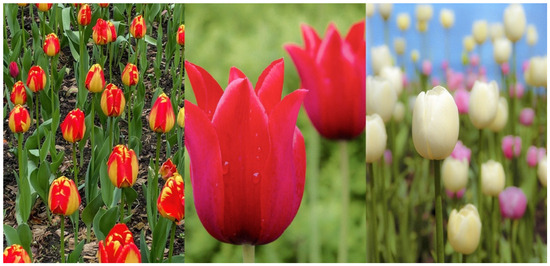
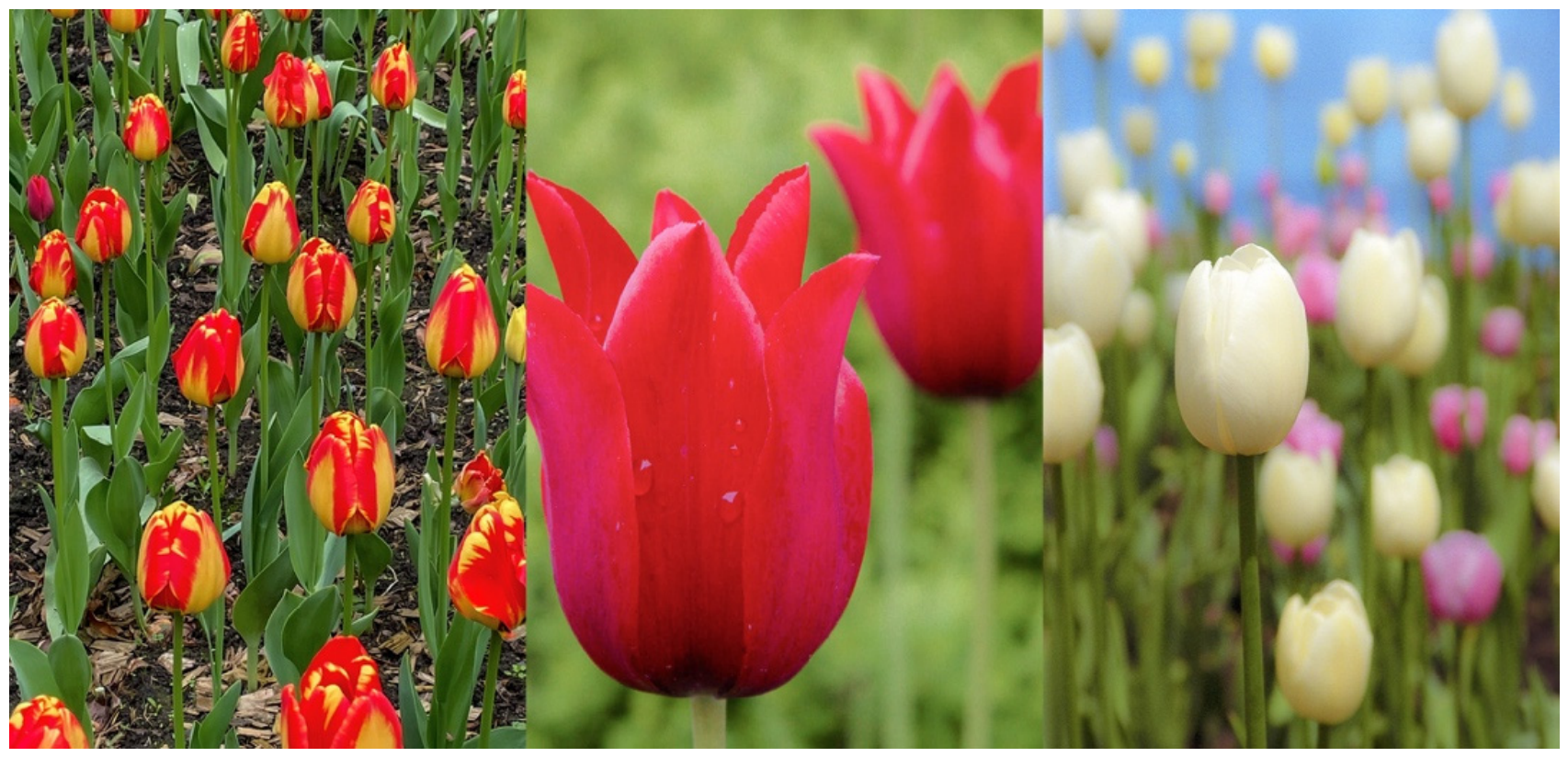
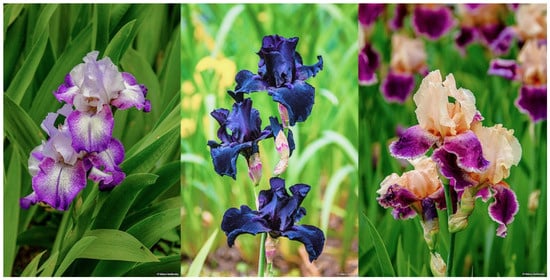
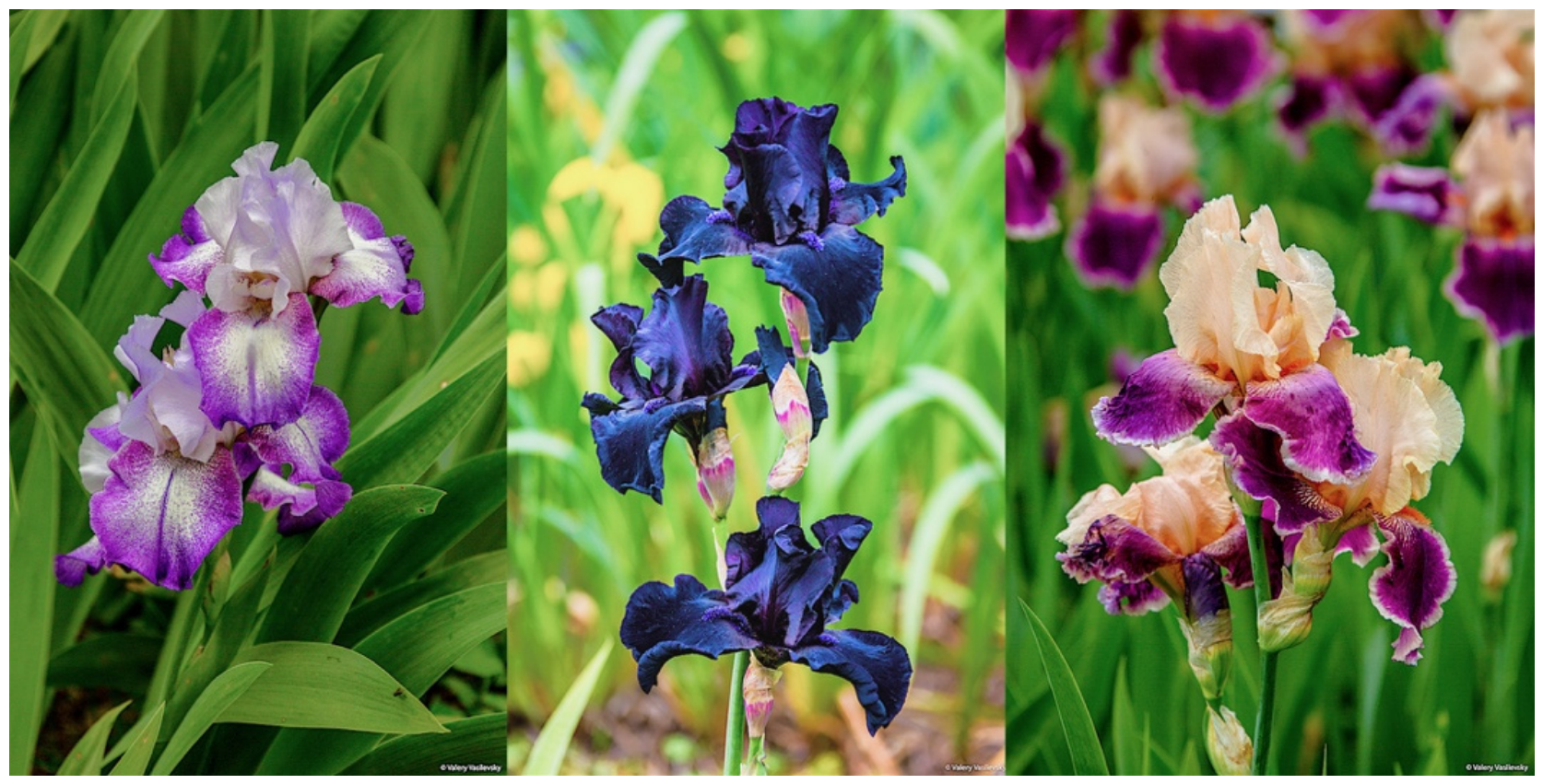
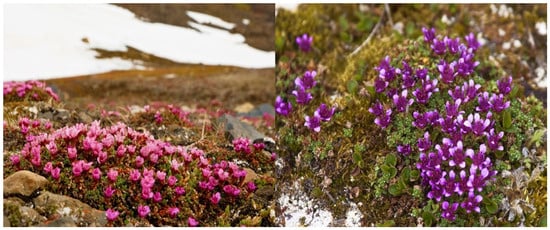
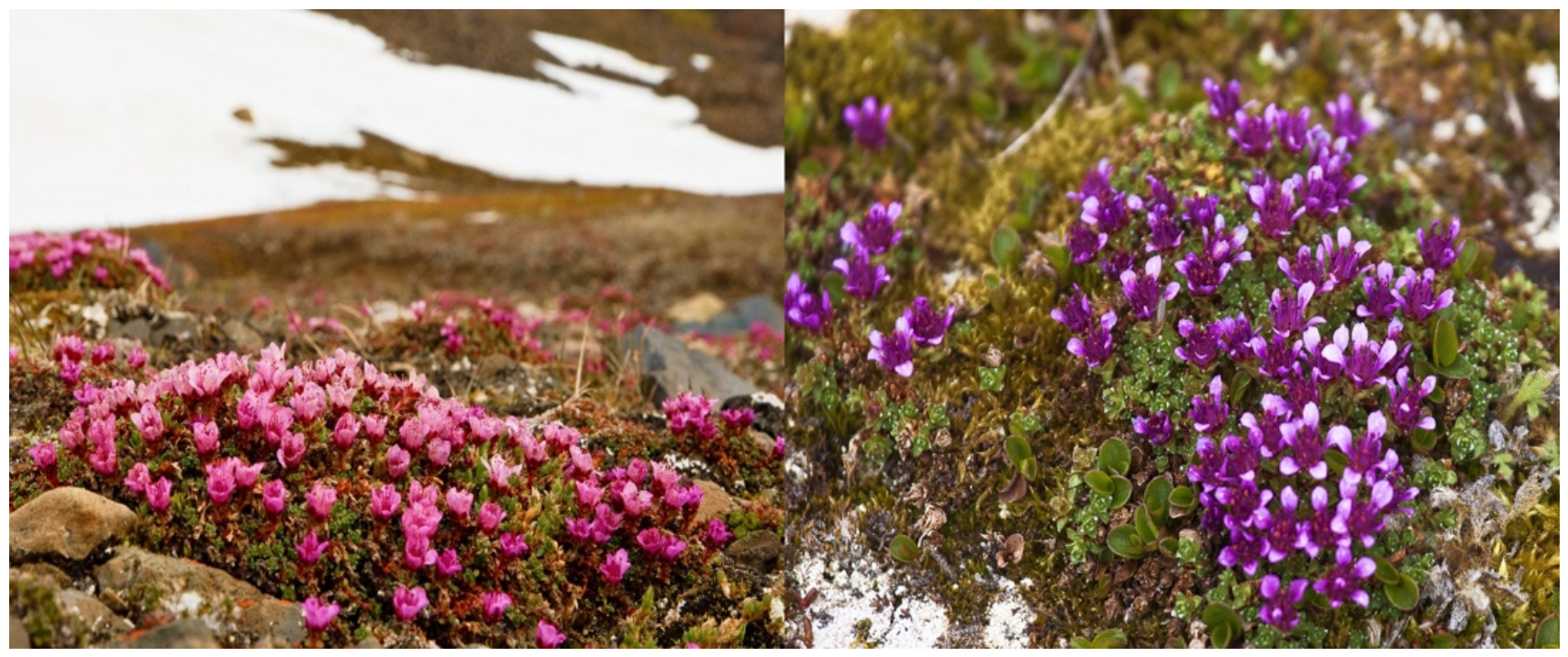

Disclaimer/Publisher’s Note: The statements, opinions and data contained in all publications are solely those of the individual author(s) and contributor(s) and not of MDPI and/or the editor(s). MDPI and/or the editor(s) disclaim responsibility for any injury to people or property resulting from any ideas, methods, instructions or products referred to in the content. |
© 2026 by the author. Licensee MDPI, Basel, Switzerland. This article is an open access article distributed under the terms and conditions of the Creative Commons Attribution (CC BY) license.