


Abstract
This study evaluates the performance of a rehabilitation mortar in controlling chloride ion migration in artificially contaminated ceramic masonry under controlled laboratory conditions. Coatings with thicknesses of 3 cm, 5 cm, and 7 cm were applied to ceramic brick substrates saturated with saline solution and exposed to accelerated contamination. Chloride concentration profiles were determined by potentiometric titration after 120 days of curing. The results showed that the rehabilitation mortar effectively retained soluble salts within its porous matrix, limiting their migration toward the surface. The 3 cm coating provided satisfactory salt retention and reduced the potential for surface efflorescence. Among the evaluated thicknesses, the 5 cm coating exhibited the most favorable chloride distribution, characterized by a pronounced concentration peak at the substrate–mortar interface followed by a sharp decrease toward the external surface, indicating the formation of an effective chloride retention zone. In contrast, the 7 cm coating showed a more homogeneous ion distribution but a less defined retention profile. The results demonstrate the potential of the rehabilitation mortar to act as a protective barrier under controlled laboratory conditions using artificially contaminated ceramic substrates. These findings provide experimental evidence that may support future applications in salt-contaminated historic masonry, although further validation under real field conditions is still required.
1. Introduction
Structural systems are susceptible to degradation caused by aggressive chemical agents and environmental actions. These deterioration processes progressively impair structural performance, reducing the load-bearing capacity and service life of buildings. Consequently, effective prevention and rehabilitation strategies are essential to ensure long-term durability [1]. According to research by [2], reinforcement corrosion is the leading cause of premature deterioration in reinforced concrete structures, accounting for approximately 70–90% of reported cases. Corrosion is primarily initiated by concrete carbonation or chloride ingress, which break down the steel’s passive layer, initiating an electrochemical process that can lead to loss of cross-sectional area of the reinforcement and the emergence of cracks. Given this scenario, the development of scientific approaches to predict the behavior of structures exposed to corrosive environments becomes essential.
To address this challenge, one of the approaches investigated is the use of chemical corrosion inhibitor admixtures, especially in reinforced concrete structures. Some examples of admixtures presented are a commercial nitrite-based admixture, which, although effective in cement-free solutions (85% efficiency), did not significantly reduce corrosion rates in concrete. Among them, sodium molybdate (MoNa2O4), which showed the highest efficiency (50%) at a dosage of 1% relative to the cement mass, but with a reduction to 42% at higher dosages (2%). Furthermore, it should be noted that sodium tungstate (Na2WO4·2H2O) demonstrated a relevant inhibitory effect (29% efficiency) at a 2% dosage, while the 1% dosage increased corrosion. These results indicate that although the use of admixtures such as sodium molybdate may be a promising solution, their efficacy critically depends on the proper dosage, highlighting shortcomings such as performance inconsistency at different concentrations and the inefficiency of certain admixtures (such as nitrite-based ones) in concrete matrices, despite their good performance in other contexts [3].
This dependence on specific parameters reinforces the need for alternative approaches, such as the study of rehabilitation mortars, especially where the application of conventional admixtures may compromise compatibility with the original substrate of historical structures. As highlighted by [4], the formulation of repair mortars must consider not only the chemical composition but also their specific function in masonry substrates and their exposure conditions. The conservation of historic masonry requires repair and replacement mortars that are compatible with the original substrate in terms of porosity, capillary absorption, water-vapor permeability, mechanical strength, and salt-transport behavior. Excessively dense or impermeable materials may alter moisture pathways and favor salt accumulation within the historic substrate rather than in the replaceable render. Accordingly, recent conservation approaches emphasize the use of porous, relatively low-strength lime-based mortars and sacrificial renders capable of accommodating moisture and soluble-salt transport while limiting damage to the original masonry. The selection of these materials should therefore consider not only their mechanical performance but also their interaction with moisture, salts, and the heterogeneous pore structure of historic walls [5,6,7].
Silvestro et al. [8] demonstrated that in a study in the coastal zone of Tramandaí/RS, chloride penetration follows decreasing profiles with depth, with higher surface concentrations in concretes with a low water/binder ratio (w/b = 0.45) due to the higher paste volume. However, in higher w/b ratios (0.65), accelerated chloride migration to the deepest analyzed layer was observed, compromising durability. The incorporation of silica fume (5–10%) reduced penetration (up to 82% for w/b = 0.45 using 10% silica fume), acting through the refinement of the concrete microstructure, which is associated with the mechanical action of silica, responsible for obstructing voids in the cement matrix and the formation of additional calcium silicate hydrate (C-S-H), a fundamental element for the mechanical strength of cementitious compounds. These findings highlight the need for rehabilitation mortars with controlled porosity and optimized chemical composition capable of limiting chloride migration while maintaining compatibility with historic masonry.
Nunes et al. [9] demonstrated in their study that, in the São Pedro Cathedral, rehabilitation mortars were effective in retaining chlorides in marine environments, with 78% of the samples exhibiting small and minimal salt retention. Based on these findings, the present study investigates whether a rehabilitation mortar with a similar composition can retain chloride ions under accelerated laboratory contamination conditions using artificially contaminated ceramic substrates. For this purpose, the use of a rehabilitation mortar with a composition similar to that employed by [9] is proposed, although evaluated using artificially contaminated ceramic substrates representative of laboratory conditions, on conventional masonry saturated with soluble salts, in order to observe the behavior along the penetration depth of the microstructure.
International studies have investigated different approaches for mitigating salt-related deterioration in historic masonry, including desalination poultices, sacrificial renders, salt-transporting mortars, and salt-accumulating render systems. Poultices are intended to mobilize and extract soluble salts from the substrate, whereas sacrificial or accumulating renders are designed to receive the salt solution and promote crystallization within a replaceable layer. Their performance depends on the relationship between the pore structures of the substrate and treatment material, capillary water transfer, drying conditions, salt type, and the location of the evaporation front. Consequently, successful salt mitigation does not necessarily mean preventing all internal crystallization but rather controlling where salts accumulate so that damage to the original historic substrate is minimized [5,10,11].
Based on this background, the proposed methodology evaluates the ability of the rehabilitation mortar to limit chloride migration in artificially contaminated ceramic substrates under controlled laboratory conditions. The objective is to investigate the chloride retention mechanism under accelerated contamination rather than to directly reproduce the behavior of naturally exposed historic masonry or marine atmospheric environments. Such migration of chloride ions in concrete structures exposed to marine environments occurs predominantly through diffusion, capillary action, and permeation, being influenced by factors such as material porosity, water/binder ratio (w/b), and the presence of mineral additions.
In cementitious and lime-based porous materials, chloride transport is governed by coupled physical and chemical mechanisms. In addition to diffusion driven by concentration gradients, chloride migration is also influenced by capillary suction associated with moisture transport, especially under wetting and drying conditions [12]. Simultaneously, chloride ions may remain free in the pore solution or become physically adsorbed and chemically bound to cement hydration products. The relationship between free and bound chlorides is commonly described by adsorption isotherms, particularly the Langmuir and Freundlich models, which provide a theoretical basis for interpreting chloride retention in porous cementitious materials [13]. Although the present study did not experimentally determine chloride binding isotherms, these concepts help explain the retention profiles observed in the rehabilitation mortars.
It should be emphasized that the present investigation was conducted under controlled laboratory conditions using newly manufactured ceramic substrates artificially contaminated with saline solution. Therefore, the results should be interpreted as experimental evidence contributing to the understanding of rehabilitation mortar performance rather than as a direct representation of the behavior of historic masonry, which is affected by aging, heterogeneous pore structures, previous coatings, surface soiling, and variable mechanical properties.
Despite the progress achieved in desalination poultices, sacrificial mortars, and salt-accumulating renders, comparatively limited information is available on how the thickness of a rehabilitation coating affects chloride concentration profiles across the substrate–mortar system. Most previous studies have focused on mortar composition, pore structure, salt-extraction capacity, or visible deterioration, whereas the influence of coating thickness on the location and shape of chloride accumulation zones remains insufficiently addressed. Therefore, the novelty of the present study lies in the depth-resolved comparison of chloride distribution in rehabilitation mortar coatings with thicknesses of 3, 5, and 7 cm applied to artificially contaminated ceramic substrates under controlled laboratory conditions.
2. Materials and Methods
2.1. Substrate Preparation and Salt Contamination
Solid brick substrates were immersed in saline solutions containing chloride, nitrate, and sulfate ions according to the recommendations of WTA [14]. The saline solutions were prepared with distilled water (produced in the Geotechnical and Concrete Laboratory, FURG, Rio Grande, RS, Brazil) and contained 35 g/L of NaCl, 15 g/L of NaNO3, and 5 g/L of Na2SO4 (all reagents from Dinâmica Química Contemporânea, São Paulo, SP, Brazil). For the 29 L containers (18 L of solution), 630 g of NaCl, 270 g of NaNO3, and 90 g of Na2SO4 were used; for the 50 L containers (26 L of solution), 910 g of NaCl, 390 g of NaNO3, and 130 g of Na2SO4 were added. The specimens remained immersed for 120 days and were subsequently cured under laboratory conditions for an additional 245 days.
The adopted immersion procedure represents an accelerated contamination method intended to reproduce severe chloride exposure under controlled laboratory conditions. It should not be interpreted as a direct simulation of natural marine atmospheric exposure, where chloride ingress occurs gradually through wetting–drying cycles, airborne salt deposition, and environmental variability.
2.2. Mortar Formulation, Application, and Curing
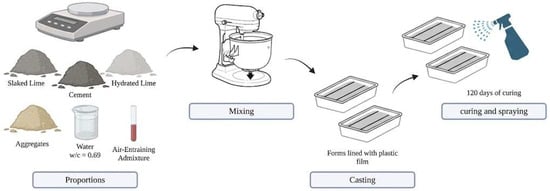
The mortar was prepared with a mass ratio of 1:3 (binders:aggregates), following the recommendations of WTA [14]. The binders (25%) consisted of a lime–ash mixture (3.5% and 1.5%), cement (5%; CP IV-32, Votoran, Pinheiro Machado, RS, Brazil), and hydraulic lime (15%); the aggregates (75%) comprised quartz sand (50%) and limestone sand (25%). The water/cement ratio was set at 0.69, with the addition of an air-entraining admixture (1% by mass of binders).
Dry materials were first introduced into an electromechanical planetary mortar mixer (Fortminas, São Paulo, SP, Brazil) with a capacity of 3.8 kg, followed by 50% of the water. After 10 min of mixing, the remaining water was added and mixing continued for another 10 min. Finally, the air-entraining admixture was incorporated until the desired consistency and workability were achieved according to WTA [14] (Figure 1). The coatings were applied using molds lined with plastic film for thickness control.
Figure 1.
Mortar preparation and molding on the substrates.
For the first seven days, the specimens were sprayed with water daily to prevent mortar shrinkage. After complete demolding, daily spraying was maintained for an additional 14 days, with manual correction of any imperfections. Subsequently, for 99 days, the spraying frequency was reduced to a weekly frequency, totaling 120 days of curing before sample extraction. This extended curing period was adopted to allow the complete development of the mortar’s microstructure and the stabilization of its physico-mechanical properties, especially in systems containing complex binder mixtures. This approach is supported by studies such as that of [15], who adopted curing ages beyond 28 days (90 and 180 days) to more accurately assess the performance of concretes with sustainable materials, arguing that hydration mechanisms and strength gain continue significantly beyond the standard 28-day age.
2.3. Preparation and Pre-Treatment of Samples
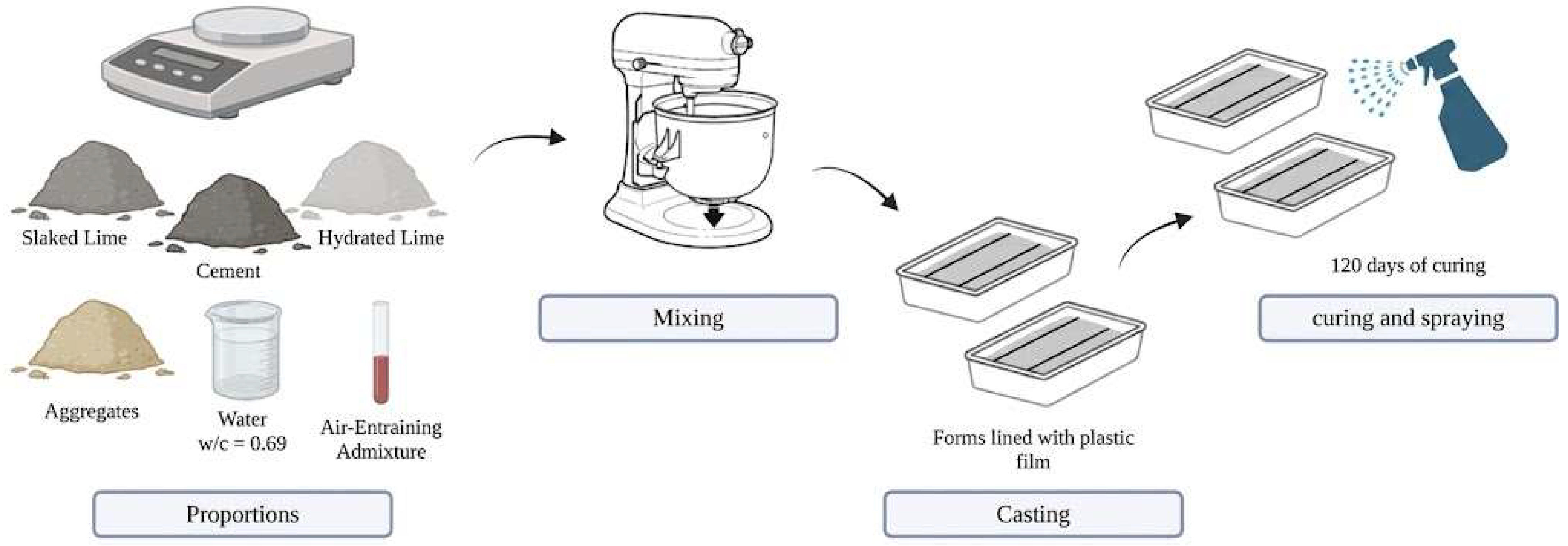
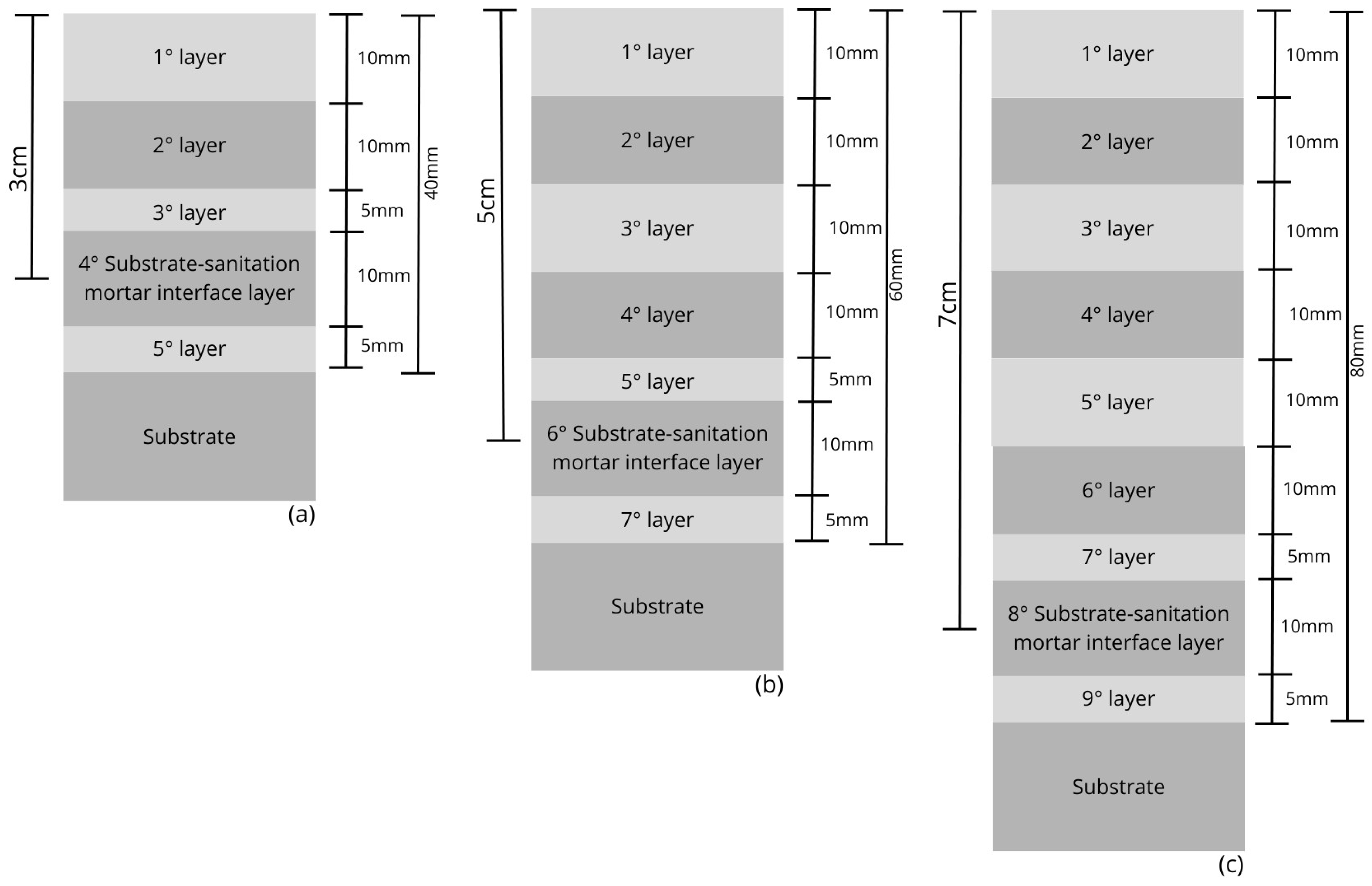
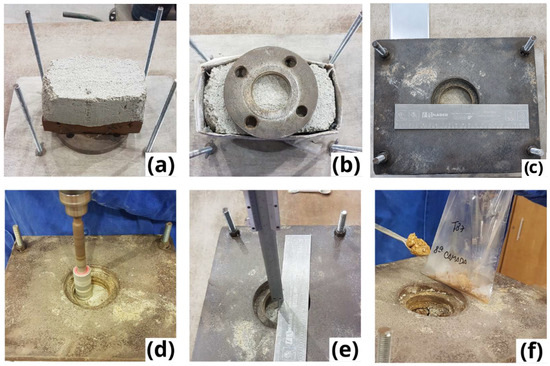
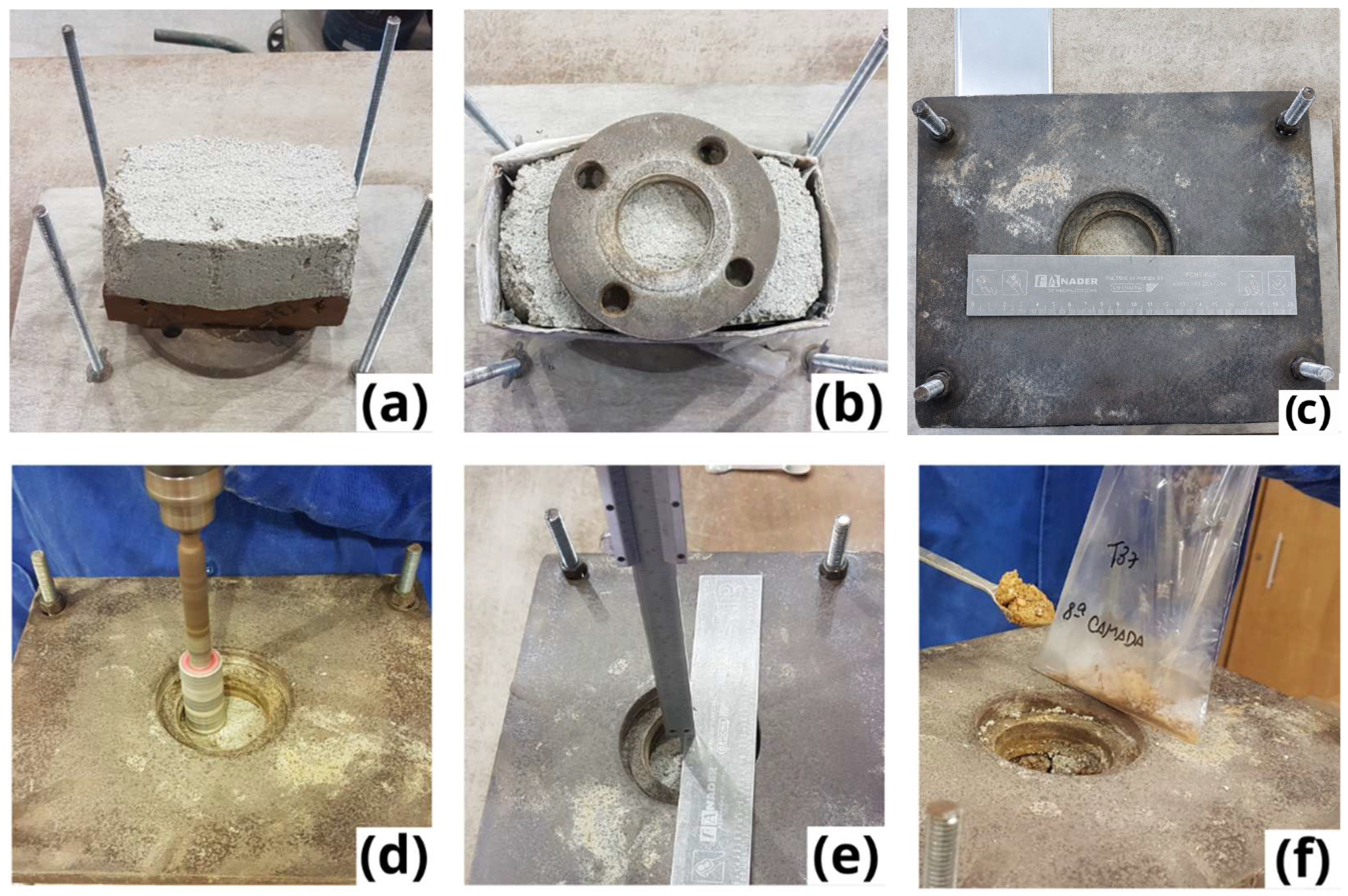
The extraction was carried out in the laboratory by collecting powdered samples at different depths in the coating, interface, and substrate (Figure 2a–c). The surfaces were previously cleaned with a brush and flannel. A variable-speed drill equipped with a 25 mm diamond core bit was used to drill to the predetermined depths (Figure 3d), monitored with a caliper and ruler (Figure 3e). The material was collected with a metal spoon (Figure 3f) and stored in airtight bags. A total of 283 powdered samples were collected. The extraction depths, number of layers, and targeted sample quantities for each coating thickness are summarized in Table 1. Each T identification represents one independent coated substrate specimen. The experimental groups comprised 13 specimens with a 3 cm coating, 12 specimens with a 5 cm coating, and 13 specimens with a 7 cm coating. From each specimen, one powdered sample was collected at each predefined depth. Thus, the measurements obtained at different depths within the same specimen represent repeated observations along a single chloride concentration profile rather than independent replicates. No analytical replicate was performed for each individual depth. For each evaluated depth and coating condition, six or seven independent specimens were analyzed. Each specimen was identified by the letter T followed by an individual number. One powdered sample was collected at each predefined depth from each specimen and subjected to a single potentiometric determination. Thus, the T specimens represent independent experimental units, whereas no analytical replicate was performed for each individual powdered sample.
Figure 2.
Planning for powdered sample extraction: (a) extraction depths for the 3 cm coating; (b) extraction depths for the 5 cm coating; (c) extraction depths for the 7 cm coating.
Figure 3.
Powdered sample extraction: (a) surface cleaning with brush and flannel; (b) specimen positioning for drilling; (c) drilling process; (d) variable-speed drill with 25 mm diamond core bit; (e) depth monitoring with caliper and ruler; (f) material collection with metal spoon.
Table 1.
Quantity of material versus extraction depth.
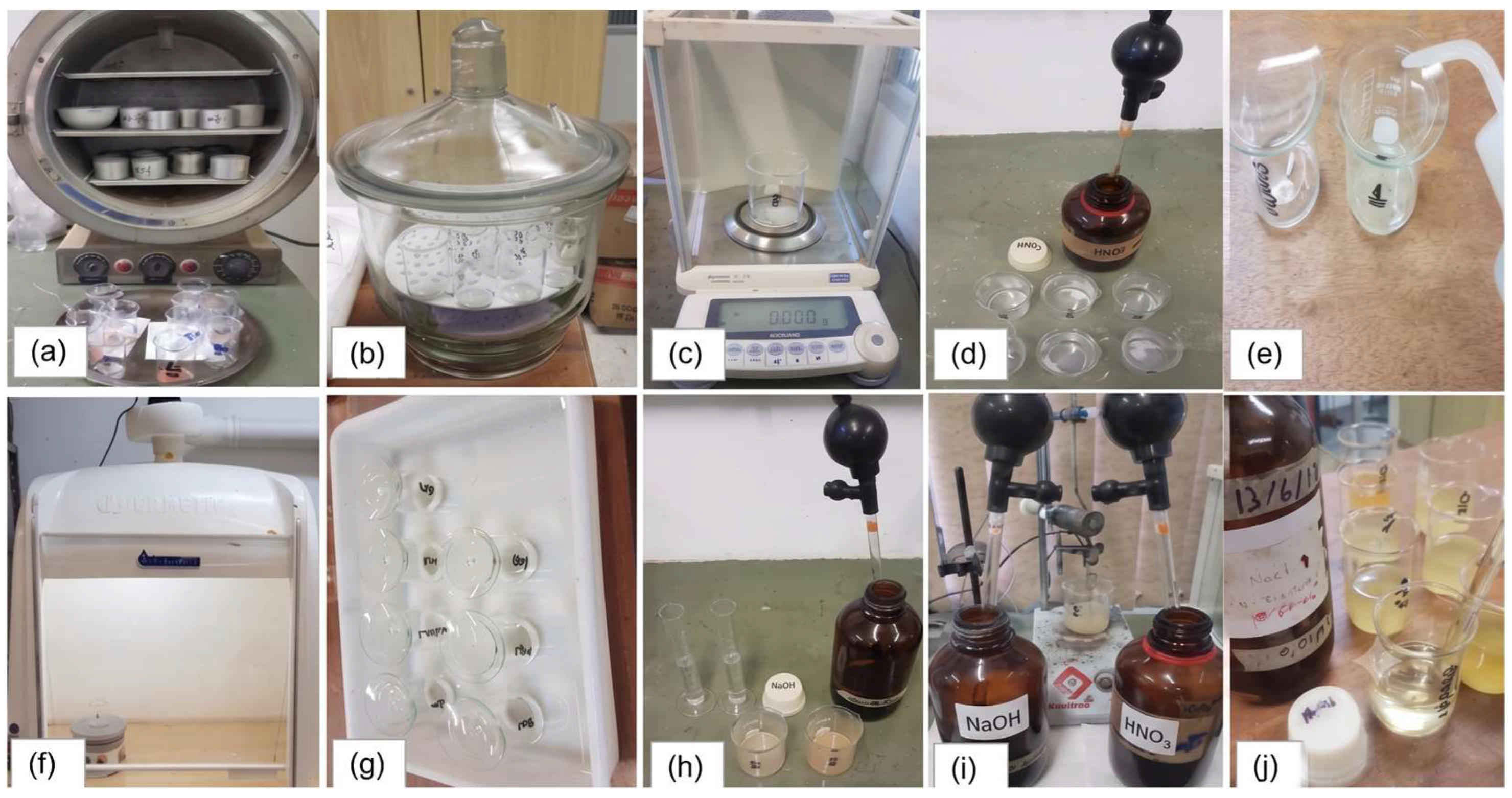
Each powdered sample was oven-dried at 100 °C for 24 h (Figure 4a), cooled in a desiccator with silica gel for 24 h (Figure 4b), and weighed on an analytical balance (0.1 mg precision) (Figure 4c). Next, 15 mL of a 1:2 HNO3 solution was added under continuous magnetic stirring (Figure 4d). The setup was covered with a watch glass containing deionized water (Figure 4e) and heated to boiling under a fume hood, with constant stirring (Figure 4f). After cooling in a water bath (Figure 4g), the walls of the beaker and the watch glass were rinsed with deionized water.
Figure 4.
Treatment of powdered samples: (a) oven-drying at 100 °C for 24 h; (b) cooling in desiccator with silica gel; (c) weighing on analytical balance; (d) addition of 1:2 HNO3 solution under magnetic stirring; (e) covering with watch glass containing deionized water; (f) heating to boiling under fume hood; (g) cooling in water bath; (h) addition of 2 M NaOH for pH adjustment; (i) pH correction with small portions of NaOH or HN3; (j) addition of 0.01 M NaCl for standardization.
To adjust the pH to between 2 and 3, 32 mL of 2 M NaOH were added (Figure 4h), with corrections made using small portions of NaOH or HNO3 as needed (Figure 4i). For standardization, 1 mL of 0.01 M NaCl was added to all samples (Figure 4j), including blank samples (without material), to control the volume of chlorides present in the solutions used.
The analyses were performed by potentiometric titration, using a standardized silver nitrate solution as the titrant, a solid silver indicator electrode, and an Ag/AgCl reference electrode. Chloride concentration profiles were obtained by plotting the electrode potential (mV) against the volume of titrant consumed (mL), allowing the determination of the chloride ion concentration profile as a function of depth in the samples.
Potentiometric titrations were performed according to the standard operating procedure routinely adopted by the laboratory, using a silver indicator electrode and an Ag/AgCl reference electrode. The equivalence point was determined from the potentiometric titration curve. Blank samples were analyzed as analytical controls to verify possible chloride contributions from the reagents used during sample preparation. Since blank analyses were used solely as analytical controls, no blank correction was applied to the reported results.
The results were evaluated descriptively through the individual chloride concentration profiles obtained for each specimen. No inferential statistical tests were performed because the objective of the study was to characterize the spatial distribution of chlorides within the rehabilitation mortar system rather than statistically comparing coating thicknesses. Likewise, no formal measurement uncertainty analysis was conducted. Therefore, the comparisons presented in this study should be interpreted as descriptive trends under the laboratory conditions evaluated.
3. Results and Discussion
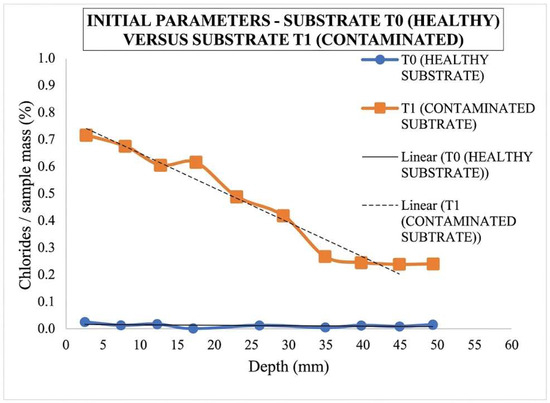
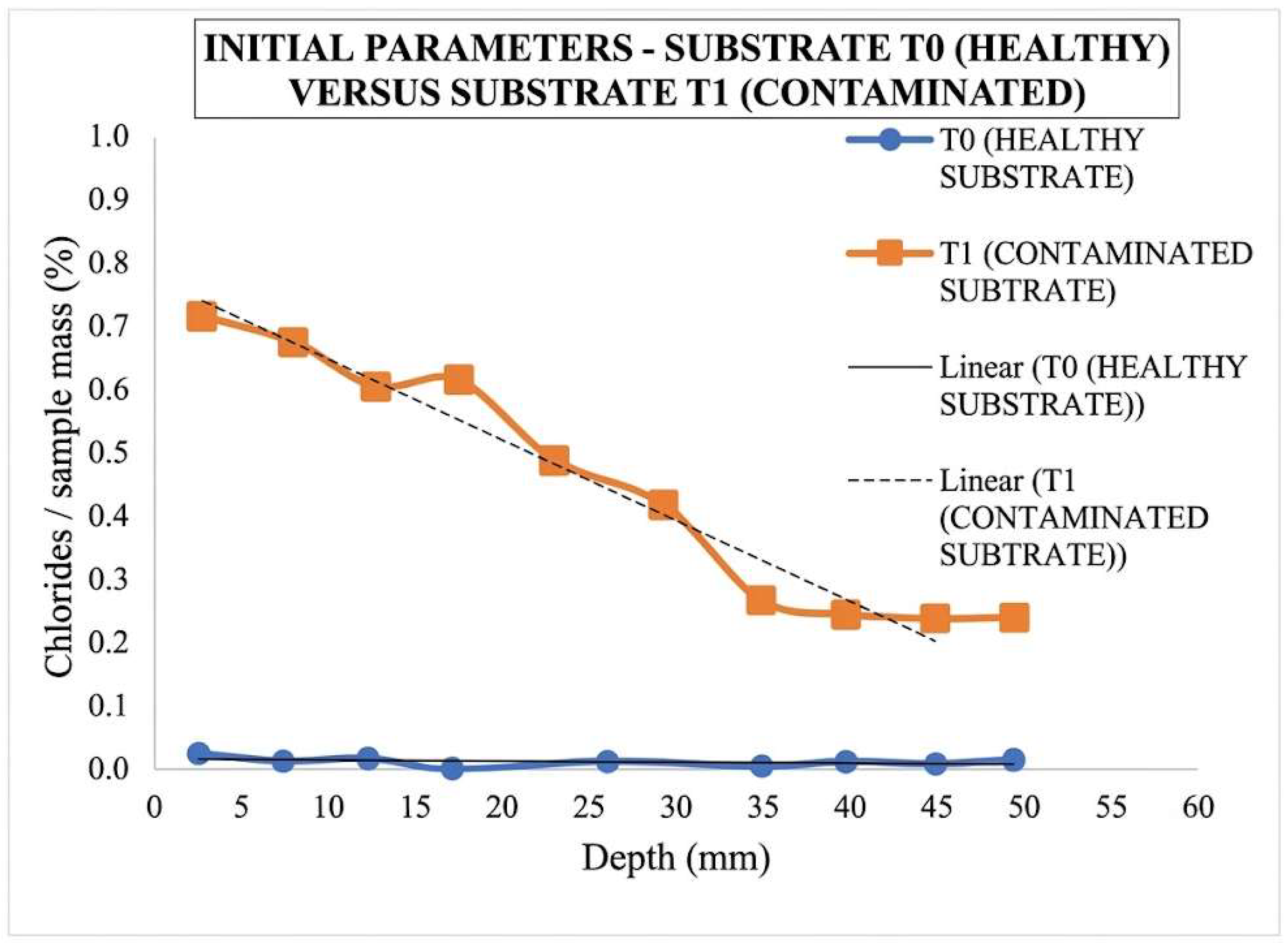
Figure 5 presents the chloride concentration profiles obtained for the reference substrates: T0 (healthy, non-contaminated substrate) and T1 (substrate contaminated by immersion in saline solution). These profiles provide the baseline for evaluating the effectiveness of the rehabilitation mortar as a barrier against chloride migration. The T0 substrate, free of chloride contamination, exhibited chloride levels close to zero throughout the analyzed depth. The nearly constant chloride content confirms the initial healthy condition of the material, serving as a reference for comparison with the contaminated substrates [8].
Figure 5.
Initial contamination parameters in saline solution.
In contrast, the T1 substrate displayed a characteristic saline contamination profile, with significantly elevated chloride levels. A heterogeneous distribution is observed along the depth, with maximum values in the surface region followed by a gradual decrease toward the deeper layers. This behavior follows the theoretical profile expected for immersion-induced contamination, where surface concentration is maximized by direct exposure to the saline solution [16], following a concentration gradient as a function of depth.
The comparison between the experimentally obtained real profile and the expected theoretical profile reveals minor discrepancies that can be attributed to the heterogeneous microstructure of the ceramic material and the curing conditions during the exposure period. The open porosity and pore size distribution of the substrate directly influence the transport kinetics of the ions, resulting in variations from the ideal theoretical model. Similar mechanisms are observed in self-compacting concretes with mineral additions, where microstructure and adequate curing are critical for material performance [17].
3.1. Chloride Profiles for Substrates Coated with a 3 cm Thickness
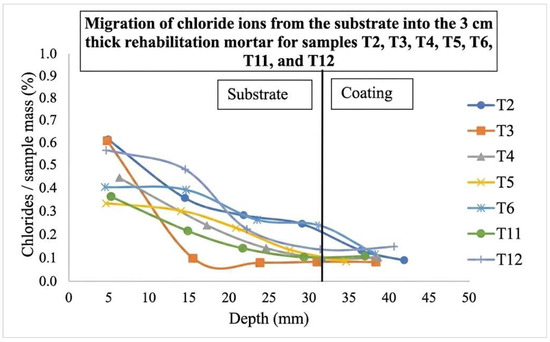
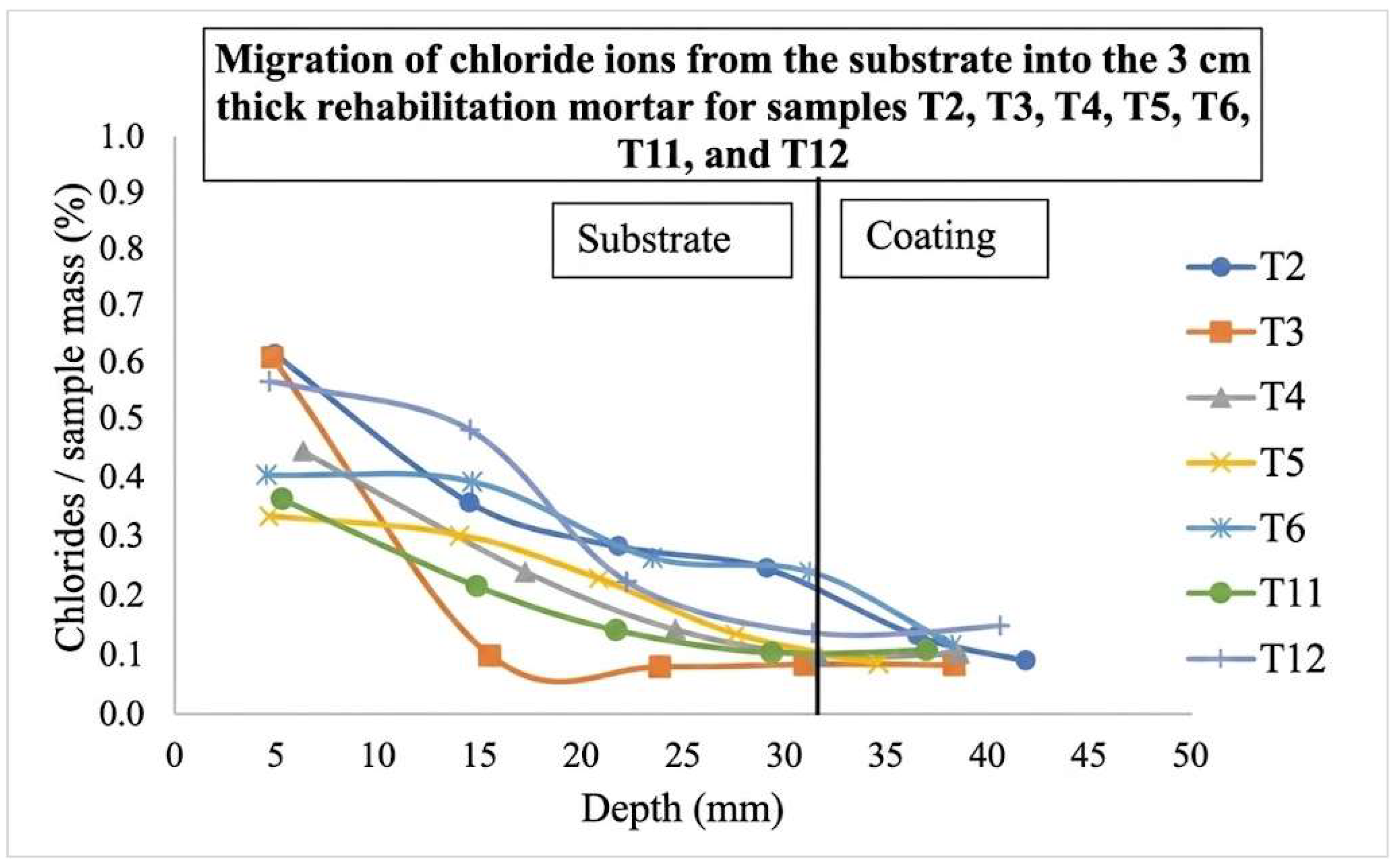
The chloride concentration profiles for the substrates coated with 3 cm thick rehabilitation mortar (T2, T3, T4, T5, T6, and T11) are presented in Figure 6. Overall, significant migration toward the coating surface was observed. In substrates T2 and T3, the profile exhibited a continuous increase in concentrations in the initial layers, approaching the surface. This behavior is consistent with that observed by Nunes et al. [9] at sampling point L2 of the coating of the Cathedral of São Pedro (Rio Grande, RS, Brazil), where a maximum chloride content of approximately 0.13% by mass of mortar was identified. The relatively low values found in the reference study, when compared to the highly contaminated substrates (T2 and T3) of this work, are probably associated with the service condition of the cathedral’s coating, which, although exposed to a marine environment, was not subjected to an accelerated saline contamination process in the laboratory.
Figure 6.
Chloride profiles in coated substrates (3 cm) for samples T2, T3, T4, T5, T6, T11, and T12. The black solid line indicates the substrate/coating interface.
In the case of substrates T6 and T11, the ionic migration behavior within the mortar remained equivalent to the others. However, a distinct decrease in chloride content was recorded near the coating surface. This specific profile shows notable similarity to that obtained by [9] at point L4 (up to 44 mm depth). The main divergence lies in the initial condition of the substrate: highly contaminated in the present study (T6) versus real-world service conditions in the reference study. Despite this, the dynamics of transport and redistribution of soluble salts within the rehabilitation mortar showed a similar transport pattern, reinforcing the material’s effectiveness as a barrier layer and moisture regulator, even under different contamination conditions.
The results indicate that the 3 cm thick coating (substrate T12, Figure 6) effectively retained chloride ions within the mortar matrix by trapping chloride ions within the rehabilitation mortar mass, preventing their migration to the surface. This mechanism is crucial for mitigating premature coating deterioration, as the accumulation of salts on the surface is a predominant factor for the emergence of efflorescence, scaling, and other pathological manifestations [16,18]. By retaining chlorides, the rehabilitation mortar acts as a sacrificial layer, potentially extending the service life of the coating system [9]. This behavior suggests that the rehabilitation mortar may contribute to chloride retention under severe contamination conditions similar to those investigated in this laboratory study. Further studies under natural exposure conditions are required before extrapolating these findings to coastal environments [18]. The obtained results indicate that the 3 cm thickness performed satisfactorily under the accelerated laboratory conditions adopted in this study.
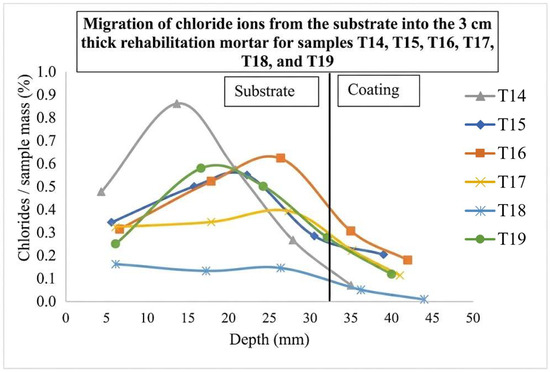
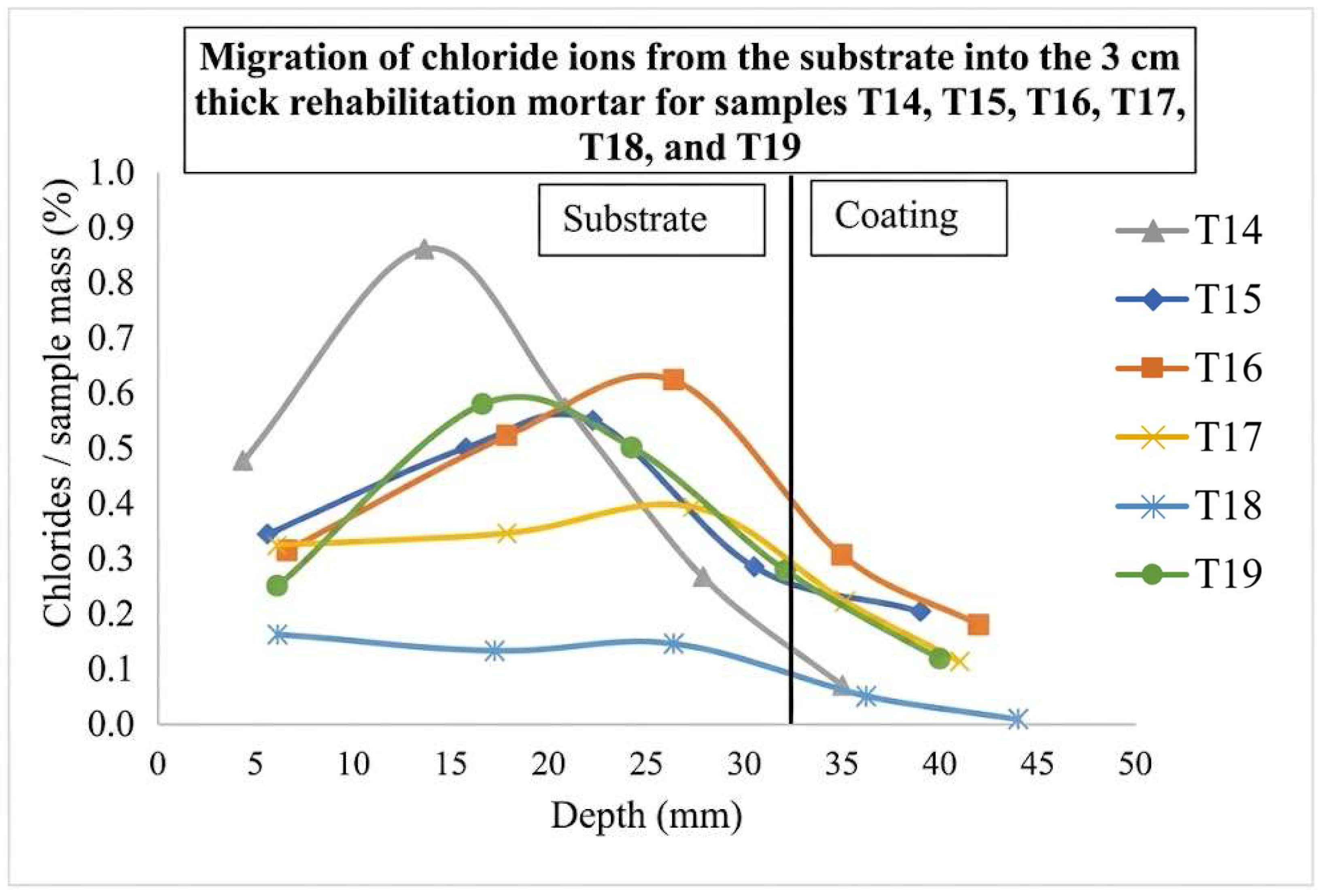
In contrast, the profile of substrate T14 (Figure 7) exhibited a peak chloride concentration in the second extracted layer (approximately 15 mm depth), with a subsequent decrease toward the surface. This profile is consistent with the expected behavior of rehabilitation mortars, which are designed to adsorb and retain salts, promoting the retention of soluble salts within their porous structure, thereby modifying the location where crystallization may occur. However, the present study did not evaluate whether internal crystallization reduces or increases mechanical deterioration, and therefore no conclusions regarding damage mechanisms can be drawn [18]. This mechanism of internal salt structure growth is supported by the evaporative transport of ions and controlled precipitation within the porous medium, as demonstrated by [19]. A similar pattern was observed by [9] at sampling point O2, although the concentration peak reported by the author was identified at a greater depth (42 mm). The difference in peak depth may be associated with variables such as the specific mortar composition, the initial contamination condition of the substrate, and the environmental exposure conditions. The lack of a direct and well-defined correlation between salt content and the manifestation of efflorescence, with this phenomenon being highly dependent on processing and exposure conditions, is a finding reported in the literature [18]. Despite this variation, the chloride concentration at the coating-substrate interface in the present study (approximately 0.25% by mass) corroborates the mortar’s efficiency in retaining ions, acting as an effective barrier.
Figure 7.
Chloride profiles in coated substrates (3 cm) for samples T14, T15, T16, T17, T18, and T19. The black solid line indicates the substrate/coating interface.
The formation of a peak in the chloride ion concentration profile within the rehabilitation mortar, without these ions reaching the surface, is an indication that the material is effectively fulfilling its function. This mechanism is based on the retention of soluble salts in its porous matrix, preventing their migration to the exterior and, consequently, avoiding surface crystallization that causes degradation and efflorescence in the coating [9]. As highlighted by [16], subflorescent crystallization within the pores, which generates stresses capable of disintegrating the matrix, is preferable to surface efflorescence when the salt is effectively retained and managed by the mortar.
The chloride ion profiles obtained for samples T17, T18, and T19 (Figure 7) corroborate this behavior, showing the concentration peak in the third extraction layer. This demonstrates that the highest chloride concentration was retained in the center of the coating, acting as a capture zone. Nunes et al. [9] observed a direct correlation between coating thickness and the depth of the retention peak: in thinner coatings, peaks occur near the surface, while in thicker coatings, the depth of the retention peak increases.
This phenomenon aligns with studies on chloride penetration, where cover thickness is a critical factor for substrate protection [8]. For mortar thicknesses close to 3 cm, ref. [9] found the highest salt retention at depths of up to 5 mm in samples of 1.8 and 2.3 cm. However, in the substrates analyzed here, coated with 3 cm, the highest salt concentration occurred at greater depths, between 15, 20, and 25 mm, highlighting how coating thickness modulates the dynamics of ion transport and retention.
The migration of salts from the substrate to the coating is notable. Therefore, it is evident that the rehabilitation mortar appears to perform its intended function of trapping soluble salts, preventing construction pathologies by blocking their arrival at the surface. The prevention of efflorescence and degradation, according to the observed mechanism, is directly linked to the ability of the mortar to retain soluble salts within its porous network, a complex process influenced by the properties of the porous medium and environmental conditions [18,19].
According to the average percentage of chloride ions relative to the mortar mass, point by point in the profile, the highly contaminated substrate T14 showed the highest average chloride content (0.445%). In contrast, the control sample T18 showed the least variation along the profile (0.101%). Substrates T2, T3, and T12 exhibited the highest chloride rates in the most superficial layers. In some cases, this surface concentration coincided with the internal peak, which may indicate the need for a longer curing time for the moisture profile to stabilize and the surface concentration to decrease, or the need for monitoring to verify whether the concentration would remain at this level. Nunes et al., [9] also identified, in their field studies, surface concentrations higher than the internal peak, although at lower percentages, attributing this variation to the specific contamination rate of the exposure location. This inconsistency in the profile, where the surface sometimes does not show the lowest concentration, is a recognized challenge in modeling the service life of structures, requiring careful analysis to predict long-term behavior [1].
3.2. Chloride Profiles for Substrates Coated with a 5 cm Thickness
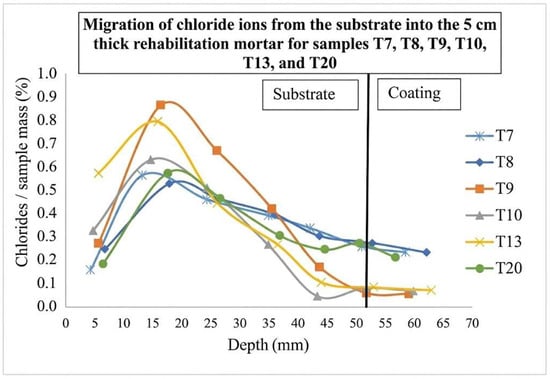
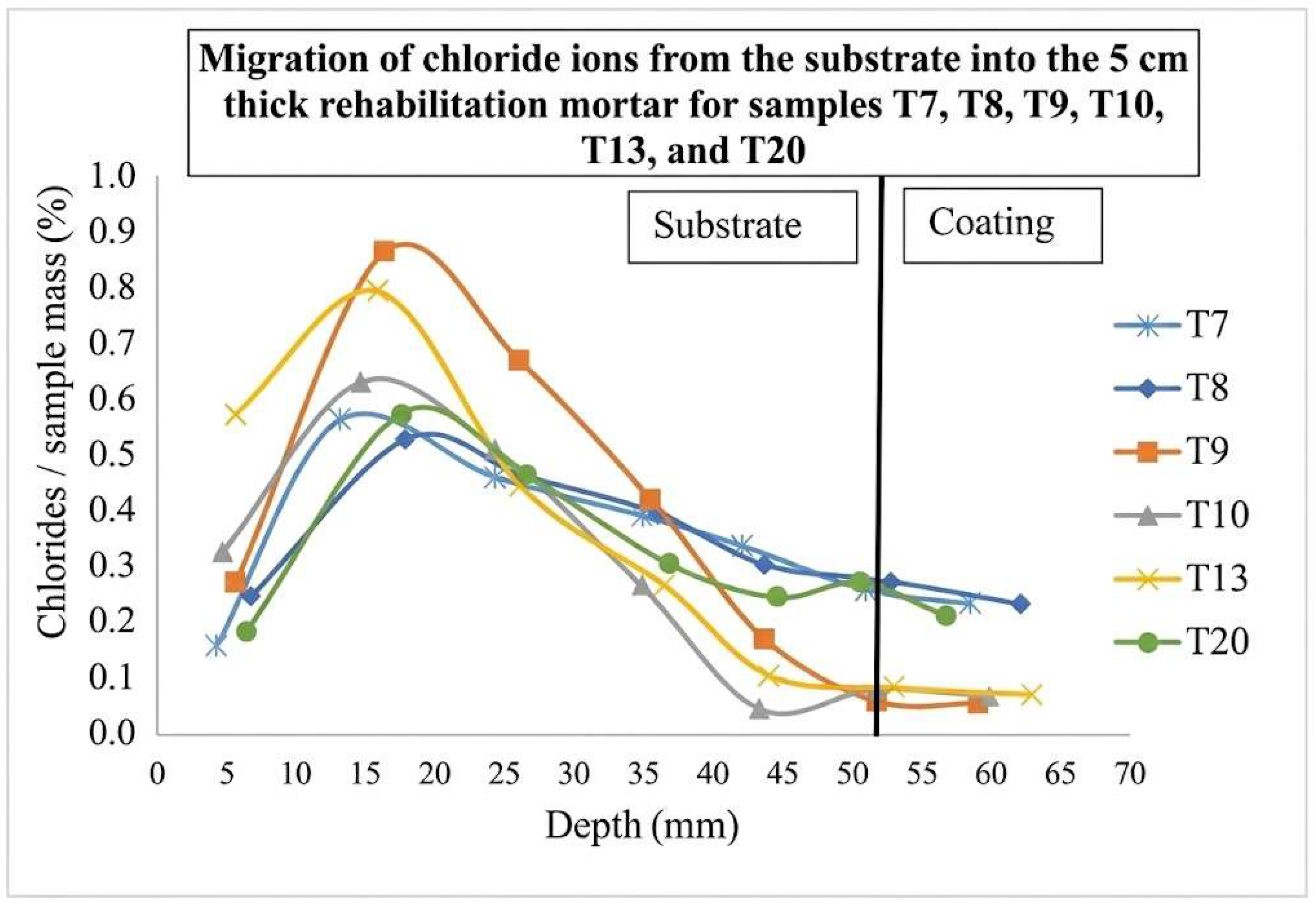
The 5 cm thick rehabilitation mortar coatings showed the best overall performance among the evaluated thicknesses, constituting an optimized physical and chemical barrier against chloride ion migration. As illustrated in Figure 8, the profiles of substrates T7, T8, T9, T10, T13, and T20 exhibited a consistent pattern: a pronounced concentration peak in the substrate-coating interface region, followed by an abrupt drop in subsequent layers toward the external surface. None of the samples showed significant chloride concentrations on the coating surface, with values being drastically reduced—in some cases, from approximately 0.9% to less than 0.3% by mass of mortar—after the point of maximum retention.
Figure 8.
Chloride profiles in coated substrates (5 cm) for samples T7, T8, T9, T10, T13, and T20. The black solid line indicates the substrate/coating interface.
This profile indicates an efficient mechanism for trapping soluble salts within the porous matrix of the mortar. The 5 cm thickness indicated is sufficient to create a moisture gradient and a retention zone that prevents ions from reaching the surface, avoiding destructive crystallization (efflorescence) and associated pathologies such as scaling and dusting [16,18]. The effectiveness of this barrier is intrinsically linked to the mortar’s porosity, which, as recommended by the [14], is developed through carbonation of lime, pozzolanic reactions, and the action of the air-entraining admixture, creating a network of capillaries that adsorb and retain salts.
The results strongly align with the field study by [9] at the Cathedral of São Pedro, where sampling points L1 and O1, at similar thicknesses, also exhibited the highest concentration peaks at depth. This behavior confirms that coating thickness is a determining factor for the depth of ion retention, acting in conjunction with the material’s microstructure [6]. The rapid reduction in concentration toward the surface suggests not only an effective barrier in the current state but also indicates a trend of performance improvement over time, as the system evolves toward equilibrium, redistributing and retaining salts even more effectively within the coating—a fundamental process for predicting the service life of structures exposed to aggressive environments [1].
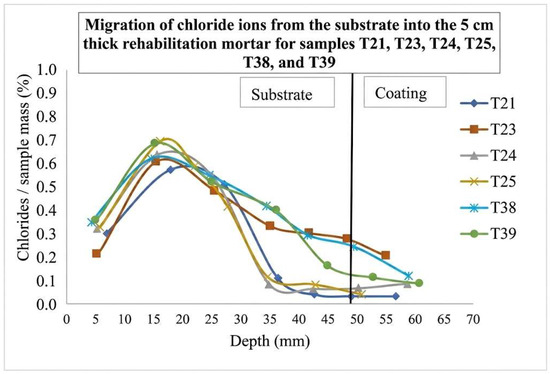
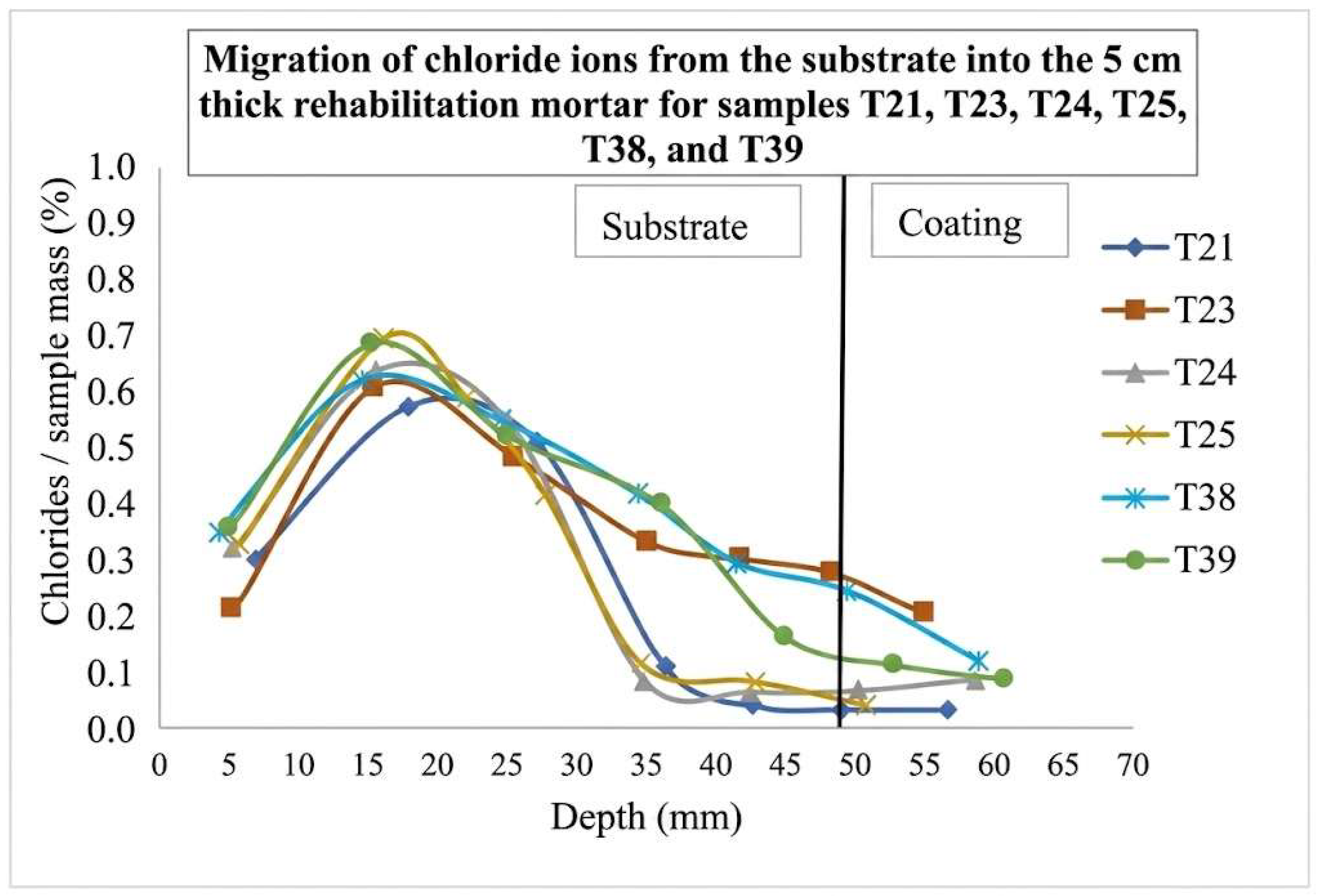
Figure 9 presents the chloride concentration profiles for substrates coated with 5 cm thick rehabilitation mortar (T21, T23, T24, T25, T38, and T39). The results demonstrate consistent performance, aligning with the observations of [9] in similar research. None of the samples exhibited measurable chloride levels on the coating surface, indicating an effective barrier against ionic migration. In all analyzed profiles, soluble salts are clearly trapped within the mortar matrix, evidenced by a sharp reduction in concentration toward the external face after the formation of a well-defined retention peak. This behavior is characteristic of functional repair materials, which act as sacrificial layers, capturing and managing salts to prevent surface pathologies such as efflorescence and scaling [16,18].
Figure 9.
Chloride profiles in coated substrates (5 cm) for samples T21, T23, T24, T25, T38, and T39. The black solid line indicates the substrate/coating interface.
The superior efficiency of the 5 cm thickness is corroborated by quantitative analysis. The chloride contents observed in the 5 cm coatings were generally lower than the maximum value recorded for the 3 cm coating (0.445% by sample mass in specimen T14). This result directly confirms the premise established by [9] that thinner coatings tend to exhibit higher surface ion concentrations due to a shallower and less capable retention zone for managing ionic flux. None of the 5 cm thick specimens approached the low uniform content observed in substrate T18 (3 cm, 0.101%), as all exhibited the expected dynamics of an internal concentration peak followed by a decrease toward the surface, an ideal profile for durability.
The depth and efficiency of this retention peak are intrinsically linked to the coating thickness and its porous microstructure. The rehabilitation mortar, with its porosity optimized by lime carbonation and additive action, creates a capillary network that adsorbs and retains ions, preventing their arrival at the surface [14]. This mechanism may contribute to understanding chloride transport under severe laboratory contamination conditions. Its influence under natural marine exposure should be evaluated in future field studies [1,2]. Although internal salt crystallization may reduce visible surface efflorescence, it may also generate crystallization pressures capable of causing cracking, scaling, or material loss [16,19]. Because the present study evaluated only chloride concentration profiles, without mechanical testing or damage assessment, no conclusions can be drawn regarding the beneficial or detrimental effects of sub-efflorescence on the long-term performance of the rehabilitation mortar.
Analogous results were reported by [9], which observed, in coatings with long service times, chloride levels close to zero in the surface region after the concentration peak. This difference in the profile can be attributed mainly to the substrate’s contamination condition and, especially, to the advanced state of curing and hygroscopic equilibrium achieved by the coating in the field after more than 20 years of exposure, in contrast to the 245 days of accelerated testing in this study. Despite the distinct experimental conditions—a highly contaminated substrate subjected to a short exposure period—the 5 cm thick coatings already demonstrated a clear trend of decreasing concentration toward the surface. This initial behavior is a strong indicator that the material is functioning as expected and suggests that, over time, the profile will evolve to an equilibrium state similar to that observed by [9], in which salts are effectively retained within the matrix, mitigating surface degradation.
3.3. Chloride Profiles for Substrates Coated with a 7 cm Thickness
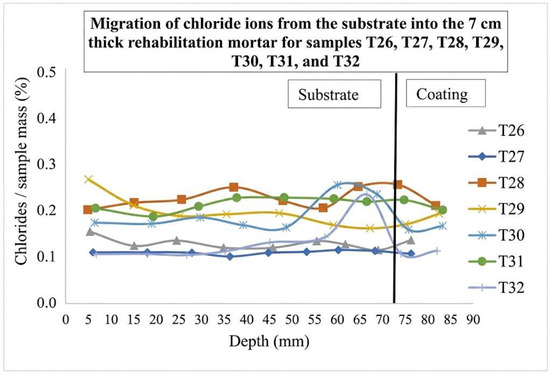
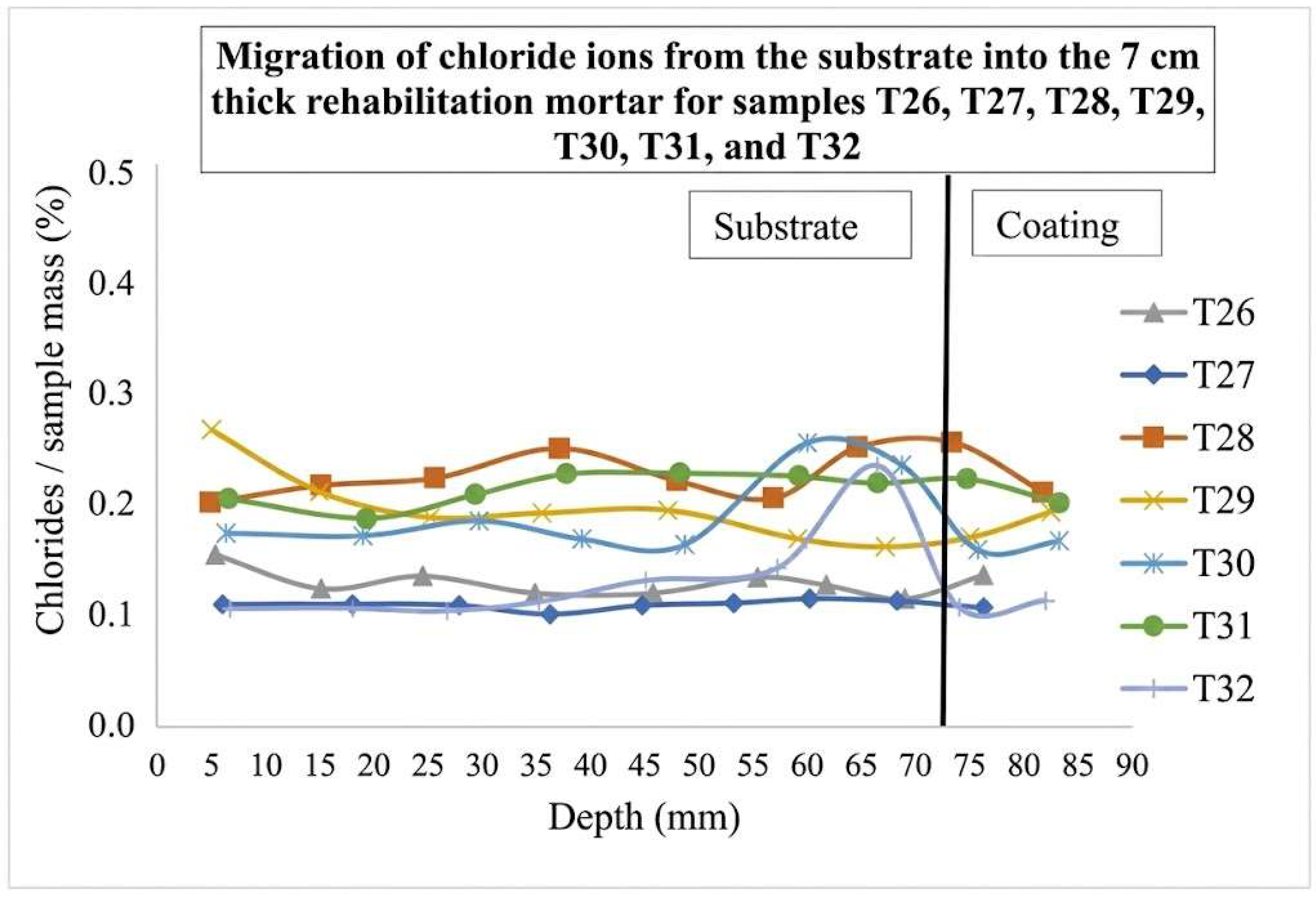
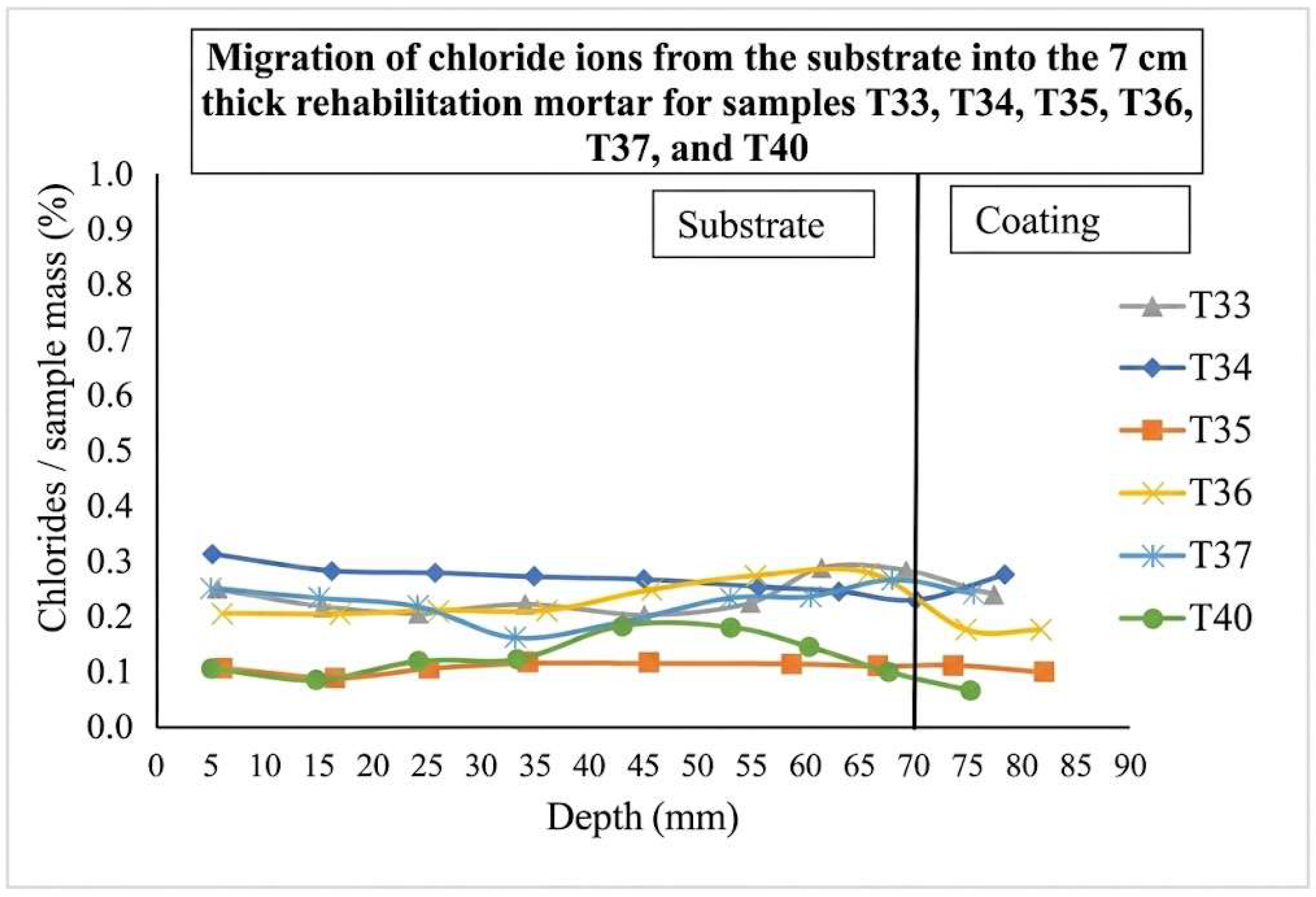
Analysis of the chloride concentration profiles in specimens T26 to T32 (Figure 10), corresponding to the 7 cm thickness of rehabilitation mortar, revealed a unique ionic migration dynamic compared to the 3 and 5 cm thicknesses. While the latter exhibited the characteristic behavior of rehabilitation mortars, with a sharp concentration peak acting as an internal retention zone, the 7 cm thickness resulted in notably continuous and homogeneous profiles.
Figure 10.
Chloride profiles in coated substrates (7 cm) for samples T26, T27, T28, T29, T30, T31, and T32. The black solid line indicates the substrate/coating interface.
A constant migration of ions was observed throughout the entire depth of the coating, accompanied only by slight and irrelevant concentration fluctuations, including in the interface region with the substrate. This uniform distribution pattern, not documented by [9] under real service conditions, suggests that the greater thickness may have promoted a different moisture equilibrium and a more linear diffusion of salts, rather than their capture and accumulation in a specific region. Although the mortar fulfilled its primary function of preventing chlorides from reaching the external surface, the absence of a defined retention peak contradicts the typical and desirable mechanism of action for this type of material, which is precisely based on the formation of a concentrated physical barrier of salts within its matrix, as advocated by [14,16]. Therefore, while not inadequate, the 7 cm thickness was suggested to be less efficient in generating the active retention profile considered ideal for rehabilitation mortars.
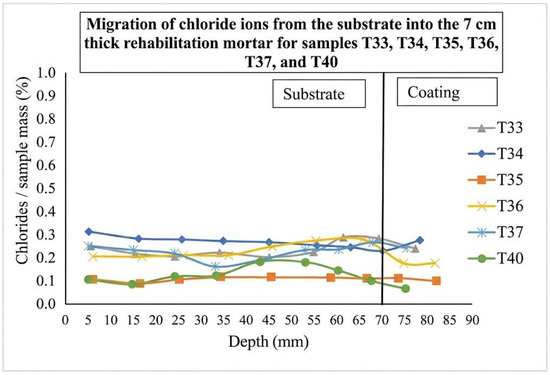
The chloride concentration profiles for the remaining 7 cm specimens (T33, T34, T35, T36, T37, and T40) are presented in Figure 11. It should be noted that the contamination solution used in this study contained chloride, nitrate, and sulfate ions, following the WTA recommendations for accelerated salt contamination. However, only chloride ions were quantified throughout the experimental program. Consequently, although chloride migration was used as the primary indicator of the mortar performance, the possible influence of nitrate and sulfate ions on transport, competitive adsorption, and salt crystallization processes cannot be completely disregarded. Interactions among these ions may influence the overall migration behavior within the porous network, particularly through differences in ionic mobility, crystallization tendencies, and competition for adsorption sites. Since nitrate and sulfate concentrations were not monitored, their individual contributions could not be experimentally distinguished and should be regarded as a limitation of the present study.
Figure 11.
Chloride profiles in coated substrates (7 cm) for samples T33, T34, T35, T36, T37, and T40. The black solid line indicates the substrate/coating interface.
The chloride concentration profiles observed in the rehabilitation mortars are likely governed by the combined effects of moisture transport, capillary suction, ionic diffusion, chloride binding, and salt crystallization within the porous structure rather than by a single transport mechanism [12,13]. Chloride binding may occur through both physical adsorption and chemical interaction with cement hydration products, and its behavior is commonly described using adsorption isotherms such as the Langmuir and Freundlich models [12]. Since the present study quantified only total chloride contents, without distinguishing free and bound chlorides, these models could not be applied quantitatively. Therefore, the present interpretation remains qualitative and aims only to support the understanding of the experimentally observed retention profiles.
The absence of a more efficient retention pattern at this greater thickness may be associated not only with the thickness itself but also with the interface conditions and adhesion to the substrate. As highlighted by [4], surface preparation and the correct application of leveling layers, such as a proper roughcast, are critical factors for the performance of repair coatings, as they ensure an efficient transition of properties between the substrate and the new mortar. Therefore, it is plausible to infer that optimizing the interface layer, possibly through the application of a specific roughcast, could enhance the retention capacity of the rehabilitation mortar even at greater thicknesses such as 7 cm, redirecting salt migration toward the formation of a more defined and effective retention peak.
The presence of chlorides at the interface between the rehabilitation mortar coating and the substrate can lead to the crystallization of soluble salts, potentially triggering pathologies and compromising the system’s adhesion. This risk is particularly relevant in thicker coatings, where the dynamics of ionic migration are altered. At point “O2” in the field study by [9], which exhibited a penetration depth similar (~80 mm) to the 7 cm specimens analyzed here, a chloride concentration peak of 0.06% by mass was observed at a depth of 42 mm. In contrast, the profiles obtained for the 7 cm thickness in the present study exhibited more constant percentage values throughout the layer, with only minor and irrelevant peaks near the interface, diverging from the ideal active retention mechanism.
The primary function of a rehabilitation mortar is not to prevent salt crystallization, but to provide a porous microstructure capable of accommodating soluble salts within the coating. Air-entraining admixtures contribute to the development of this porous network, promoting salt retention within the mortar matrix rather than at the exposed surface [14,16]. However, internal salt crystallization (sub-efflorescence) may also generate crystallization pressures capable of causing cracking, scaling, or material loss, depending on the pore structure and environmental conditions. Since the present study evaluated only chloride concentration profiles and did not include mechanical damage assessment, no conclusions can be drawn regarding whether internal crystallization is beneficial or detrimental. Nunes et al. [9] corroborate this view, establishing a direct correlation between coating thickness and the depth of the retention peak: in thinner coatings, peaks occur near the surface, while in thicker coatings, the retention zone shifts to deeper layers.
Among the three thicknesses evaluated, the 5 cm coating demonstrated the most efficient performance. All profiles for this thickness exhibited the ideal trend: a pronounced concentration peak followed by an abrupt reduction toward the surface. This behavior, also observed by [9] at points with equivalent thicknesses (L1 and O1), confirms the material’s ability to act as an optimized physical and chemical barrier, efficiently trapping soluble salts extracted from the contaminated substrate within its mass and preventing their migration to the exterior.
Although the experimental methodology reproduced chloride contamination under controlled laboratory conditions, the tested substrates do not reproduce all characteristics of historic masonry. Historic buildings typically present heterogeneous materials, previous repair interventions, aging, weathering, variable pore structures, and surface contamination, all of which may influence moisture transport and salt accumulation. Therefore, the present findings should be interpreted as laboratory evidence that contributes to understanding the behavior of rehabilitation mortars rather than as direct predictions of field performance.
Among the coating thicknesses investigated, the 5 cm coating exhibited the most favorable chloride concentration profile. However, this observation should not be interpreted as evidence that this thickness is universally optimal for the rehabilitation of historic masonry. Field performance depends on several additional factors, including environmental exposure, moisture regime, salt composition, substrate characteristics, workmanship, and long-term aging, which were beyond the scope of the present study. Consequently, further investigations under real service conditions are required before practical recommendations can be established.
A limitation of the present study is that the chloride concentration profiles were evaluated descriptively. Because one analytical determination was performed for each sampled depth within each independent specimen, the experimental design does not support inferential statistical comparisons between coating thicknesses. Future investigations should include replicated analytical determinations and formal uncertainty analyses to enable statistical evaluation of chloride transport behavior.
4. Conclusions
The results of this study indicate that the rehabilitation mortar effectively acted as a physical and chemical barrier, retaining soluble salts within its porous matrix and limiting chloride migration toward the surface under the investigated laboratory conditions. For the 3 cm thickness, the coating exhibited good performance, retaining salts extracted from the substrate and mitigating the emergence of pathological manifestations such as efflorescence and scaling—phenomena closely linked to the surface crystallization of salts in porous materials [16,18]. This behavior is likely associated with the material’s microstructure, optimized by the aggregate’s granulometric composition and the action of the air-entraining admixture, which together promote a capillary network capable of adsorbing and retaining ions.
Among the coating thicknesses evaluated under the present laboratory conditions, the 5 cm coating exhibited the most favorable chloride concentration profile. This result corroborates the observations of [9], who reported the best performance at equivalent thicknesses under real-world marine exposure conditions. The characteristic profile, marked by a pronounced concentration peak followed by an abrupt reduction toward the surface, confirms the formation of an active retention zone. This retention mechanism is expected to contribute to improved durability in aggressive environments by promoting internal salt retention instead of surface crystallization [16,19].
The integrated analysis of the concentration profiles indicates that the rehabilitation mortar showed promising performance under controlled laboratory conditions using artificially contaminated ceramic substrates. These findings provide experimental evidence regarding the chloride retention capacity of the proposed mortar; however, further studies using actual historic masonry are required before direct application to heritage buildings can be recommended [2,8].
Therefore, the proposed rehabilitation mortar showed promising performance under the accelerated laboratory contamination conditions adopted in this study. Additional field investigations are required before extending these findings to naturally exposed marine environments [1,4]. Future studies should also investigate long-term chloride binding and transport mechanisms in naturally aged historic masonry exposed to real environmental conditions. Future investigations should also quantify nitrate and sulfate transport to clarify possible competitive effects among soluble salts during migration and crystallization processes.
Author Contributions
Conceptualization, L.B., R.B., J.N., T.A.d.S., R.d.P.N. and R.d.A.D.; methodology, L.B., R.B., J.N., T.A.d.S. and R.d.P.N.; validation, L.B., T.A.d.S. and R.d.P.N.; formal analysis, L.B., T.A.d.S. and R.d.P.N.; investigation, L.B., J.N., T.A.d.S. and R.d.P.N.; resources, R.B. and R.d.A.D.; data curation, L.B., T.A.d.S. and R.d.P.N.; writing—original draft preparation, L.B., T.A.d.S. and R.d.P.N.; writing—review and editing, L.B., R.B., J.N., T.A.d.S., R.d.P.N. and R.d.A.D.; visualization, L.B., T.A.d.S. and R.d.P.N.; supervision, R.B. and R.d.A.D.; project administration, R.B. and R.d.A.D.; funding acquisition, R.d.A.D. All authors have read and agreed to the published version of the manuscript.
Funding
This research received no external funding.
Data Availability Statement
The data presented in this study are available on request from the corresponding author.
Acknowledgments
The authors would like to thank the National Council for Scientific and Technological Development—CNPq (Process: 304108/2024-3, Edital CNPq Nº 18/2024), the Coordination for the Improvement of Higher Education—CAPES (code 001).
Conflicts of Interest
The authors declare no conflicts of interest.
References
- Felix, E.F.; Balabuch, T.J.; Posterlli, M.; Possan, E.; Carrazedo, R. Análise Da Vida Útil de Estruturas de Concreto Armado Sob Corrosão Uniforme Por Meio de Um Modelo Com RNA Acoplado Ao MEF. Rev. Alconpat 2018, 8, 1–15. [Google Scholar] [CrossRef] [Scilit]
- Angst, U.M. Challenges and Opportunities in Corrosion of Steel in Concrete. Mater. Struct. 2018, 51, 4. [Google Scholar] [CrossRef] [Scilit]
- Trevisol, C.A.; Da Silva, P.R.P.; Da Silva Paula, M.M.; Pelisser, F. Avaliação de Inibidores de Corrosão Para Estruturas de Concreto Armado. Rev. Mater. 2017, 22, 13. [Google Scholar] [CrossRef] [Scilit]
- Hughes, J.J.; Taylor, A.K. Compressive and Flexural Strength Testing of Brick Masonry Panels Constructed with Two Contrasting Traditionally Produced Lime Mortars. In Proceedings of the International RILEM Workshop on Repair Mortars for Historic Masonry, Delft, The Netherlands, 26–28 January 2005. [Google Scholar]
- Fragata, A.; Veiga, R.; Velosa, A. Performance of a Salt-Accumulating Substitution Lime Render for Salt Laden Historic Masonry Walls. Heritage 2021, 4, 3879–3891. [Google Scholar] [CrossRef] [Scilit]
- Caroselli, M.; Ruffolo, S.A.; Piqué, F. Mortars and Plasters—How to Manage Mortars and Plasters Conservation. Archaeol. Anthropol. Sci. 2021, 13, 188. [Google Scholar] [CrossRef] [Scilit]
- Rirsch, E.; Zhang, Z. Rising Damp in Masonry Walls and the Importance of Mortar Properties. Constr. Build. Mater. 2010, 24, 1815–1820. [Google Scholar] [CrossRef] [Scilit]
- Silvestro, L.; Romano, F.S.; Molin, D.C.C.D.M. Penetração de Cloretos Em Concretos Expostos Em Zona de Atmosfera Marinha Por Um Período de 9 Anos. Ambient. Construído 2021, 21, 101–118. [Google Scholar] [CrossRef] [Scilit]
- Nunes, J.L.O.; Gonçalves, M.R.F.; Tessaro, A.B. Análise de Íons Cloreto Na Argamassa de Restauração Da Catedral de São Pedro. Ambient. Construído 2025, 25, 17. [Google Scholar] [CrossRef] [Scilit]
- Randazzo, L.; Montana, G.; Castiglia, A.; Russa, M.F. La Salt Extraction from Lime-Based Mortars: An Experimental Study Using Different Poultice Formulations. Constr. Build. Mater. 2020, 255, 119391. [Google Scholar] [CrossRef] [Scilit]
- Ergenç, D.; Cizer, O.; Akgül, C.M.; Conde, J.F. Sustainable Conservation of Salt-Damaged Bricks Using Multi-Functional Lime Mortar with Bio-Based and Waste Admixtures. Case Stud. Constr. Mater. 2025, 23, e05038. [Google Scholar] [CrossRef] [Scilit]
- Baroghel-Bouny, V.; Thiéry, M.; Wang, X. Modelling of Isothermal Coupled Moisture—Ion Transport in Cementitious Materials. Cem. Concr. Res. 2011, 41, 828–841. [Google Scholar] [CrossRef] [Scilit]
- Yuan, Q.; Shi, C.; De Schutter, G.; Audenaert, K.; Deng, D. Chloride Binding of Cement-Based Materials Subjected to External Chloride Environment—A Review. Constr. Build. Mater. 2009, 23, 1–13. [Google Scholar] [CrossRef] [Scilit]
- Wissenschaftlich-Technische Arbeitsgemeinschaft Für Bauwerkserhaltung Und Denkmalpflege. WTA 2-2-91—Recomendações Alemãs Para Sistemas de Rebocos de Recuperação. In Métodos de Tratamento de Alvenarias Deterioradas; UFRGS: Porto Alegre, Brazil, 1995. [Google Scholar]
- Aquino Rocha, J.H.; Cayo Chileno, N.G.; Toledo Filho, R.D. Normal- and High-Strength Concretes with Eco-Efficient Cementitious Materials: Proportioning and Evaluation of Physical, Mechanical, and Durability Properties. J. Build. Eng. 2025, 111, 113230. [Google Scholar] [CrossRef] [Scilit]
- Charola, A.E. Salts in the Deterioration of Porous Materials: An Overview. J. Am. Inst. Conserv. 2000, 39, 327–343. [Google Scholar] [CrossRef]
- Dey, S.; Kumar, V.V.P.; Goud, K.R.; Basha, S.K.J. State of Art Review on Self Compacting Concrete Using Mineral Admixtures. J. Build. Pathol. Rehabil. 2021, 6, 18. [Google Scholar] [CrossRef] [Scilit]
- Menezes, R.R.; Ferreira, H.S.; Neves, G.A.; Ferreira, H.C. Sais Solúveis e Eflorescência Em Blocos Cerâmicos e Outros Materiais de Construção—Revisão. Cerâmica 2006, 52, 37–49. [Google Scholar] [CrossRef] [Scilit]
- Sghaier, N.; Geoffroy, S.; Prat, M.; Eloukabi, H.; Ben Nasrallah, S. Evaporation-Driven Growth of Large Crystallized Salt Structures in a Porous Medium. Phys. Rev. E—Stat. Nonlinear Soft Matter Phys. 2014, 90, 042402. [Google Scholar] [CrossRef] [Scilit] [PubMed]

Disclaimer/Publisher’s Note: The statements, opinions and data contained in all publications are solely those of the individual author(s) and contributor(s) and not of MDPI and/or the editor(s). MDPI and/or the editor(s) disclaim responsibility for any injury to people or property resulting from any ideas, methods, instructions or products referred to in the content. |
© 2026 by the authors. Licensee MDPI, Basel, Switzerland. This article is an open access article distributed under the terms and conditions of the Creative Commons Attribution (CC BY) license.