


Abstract
This study investigated the underwater abrasion resistance of recycled aggregate concrete according to ASTM C1138 using recycled aggregates obtained from demolished concrete as a 100% replacement of natural aggregates. The objective was to reduce the consumption of natural resources and minimize construction and demolition waste. In addition, ground granulated blast furnace slag (BFS) was used as a supplementary cementitious material at replacement ratios of 25% and 50%. Three BFS products with Blaine fineness values of 3000, 4000, and 6000 cm2/g were used to investigate their effects on the compressive strength and underwater abrasion resistance of recycled aggregate concrete. The experimental results showed that the compressive strength of recycled aggregate concrete was approximately 7% lower than that of natural aggregate concrete. However, the underwater abrasion test according to ASTM C1138 showed that the abrasion depth of recycled aggregate concrete was comparable to that of natural aggregate concrete. After 72 h of testing, the abrasion depth of recycled aggregate concrete was only slightly higher than that of natural aggregate concrete. In contrast, recycled aggregate concrete exhibited a higher weight loss, with an average value of 2.10% compared with 1.77% for natural aggregate concrete. Among the BFS mixtures, increasing the Blaine fineness of BFS resulted in lower abrasion depth and lower mass loss. Concrete containing BFS6000 exhibited the best underwater abrasion resistance within the BFS mixtures, although all BFS mixtures showed higher abrasion depth and mass loss than recycled aggregate concrete without BFS. At the 25% replacement ratio, concrete containing BFS6000 exhibited the lowest abrasion depth (3.11 mm) and weight loss (3.37%), whereas concrete containing BFS3000 showed higher values. A similar trend was observed at the 50% replacement ratio, although both abrasion depth and weight loss slightly increased compared with the corresponding 25% mixtures. The results demonstrate that recycled aggregate concrete combined with BFS has good potential for hydraulic structures and other concrete structures exposed to underwater abrasion. Although a slight reduction in compressive strength was observed, the underwater abrasion resistance can be improved by using BFS with higher Blaine fineness together with quality-controlled recycled aggregates. These findings provide useful information for the development of sustainable recycled aggregate concrete and support the efficient utilization of recycled materials in hydraulic engineering applications.
1. Introduction
At present, the construction industry places increasing emphasis on sustainability and environmental impact reduction alongside infrastructure development. This is because the construction sector is one of the largest consumers of natural resources and generates significant amounts of waste and greenhouse gas emissions throughout the life cycle of structures, from material production and construction to service life and eventual demolition.
Concrete is one of the most widely used construction materials in the world due to its many advantages, including high strength, ease of casting, durability under various environmental conditions, and relatively low production cost compared with other construction materials. Therefore, concrete is extensively used in a wide range of applications such as residential buildings, high-rise buildings, roads, bridges, dams, drainage structures, ports, airports, irrigation systems, and other public infrastructure facilities. As a result, global concrete consumption continues to increase with urban expansion and infrastructure development, particularly in developing countries.
However, although concrete structures generally possess a long service life, demolition becomes necessary when buildings and infrastructure reach the end of their service life, deteriorate, or are damaged by natural disasters and other events. This process generates enormous quantities of waste concrete and construction debris. These materials are classified as Construction and Demolition Waste (CDW), which has become a major environmental issue in many countries worldwide. If not properly managed, CDW can cause various environmental impacts, including excessive landfill consumption, contamination of air and water resources by dust and sediments, disturbance of ecosystems due to improper disposal practices, and the loss of valuable natural resources that could otherwise be recycled. Furthermore, transporting demolition waste to disposal sites requires additional energy consumption and carbon dioxide emissions. At the same time, the production of natural aggregates, such as crushed stone and sand, requires quarrying and sand extraction from natural sources, which may adversely affect landscapes, water resources, ecosystems, and natural resources over the long term.
One approach that has attracted considerable attention is the recycling of waste concrete into recycled aggregates (RA) for use as a substitute for natural aggregates in new concrete production. This approach can reduce construction waste generation and decrease the consumption of natural resources, thereby supporting the concept of a circular economy within the construction industry. However, recycled aggregate concrete generally exhibits certain limitations in engineering performance. Nevertheless, several studies have reported that recycled aggregate concrete can still be used in structural applications when proper quality control of recycled aggregates and appropriate mix design procedures are applied [1].
It has been reported that the quality of recycled aggregates has a significant influence on the performance of concrete, particularly when the aggregates are not properly processed, classified, and quality-controlled. Silva et al. reported that recycled aggregates obtained from different sources exhibit considerable variations in physical properties, including water absorption, density, and contamination content, which directly affect the quality of the resulting concrete [2]. In addition, Poon et al. found that concrete produced with low-quality recycled aggregates containing a large amount of adhered old mortar and high water absorption could exhibit a substantial reduction in compressive strength compared with concrete made with natural aggregates [3]. Rao et al. also reported that inconsistency in recycled aggregate quality and the presence of contaminants such as brick fragments and ceramic debris are important factors contributing to reductions in compressive strength and durability of concrete [4]. Therefore, quality control of recycled aggregates is considered a key factor governing the safe and effective utilization of such materials in structural concrete applications.
Due to the limitations associated with recycled aggregates, many countries and standards permit their use only within specified limits [2,5]. For example, the Japanese Industrial Standards (JIS A 5022) classify recycled aggregates into different quality categories, such as Class H and Class M, in order to ensure that the material quality is suitable for structural concrete applications. According to JIS A 5022 [6], recycled coarse aggregate classified as Class M must have a water absorption not exceeding 5%, while recycled fine aggregate classified as Class M must have a water absorption not exceeding 7%. In the United Kingdom, BS 8500 [7] permits the use of recycled coarse aggregate in structural concrete at replacement levels generally limited to approximately 20–30%, depending on the type of structure and exposure conditions. Similarly, EN 206 [8] and RILEM recommendations in Europe suggest limiting the replacement ratio of recycled aggregates in certain structural applications in order to maintain adequate quality and long-term durability.
Although many standards continue to restrict the use of recycled aggregates in structural concrete, these limitations are largely associated with concerns regarding variations in recycled aggregate quality arising from different sources and processing methods. Therefore, if recycled aggregates can be produced under controlled conditions and consistently satisfy the same quality requirements, uncertainties in concrete performance may be significantly reduced, leading to greater confidence in practical applications.
However, there is still limited information regarding the performance of concrete produced with quality-controlled recycled coarse and fine aggregates conforming to JIS A 5022 Class M when used as a complete replacement for natural aggregates. This is particularly true for durability-related properties in hydraulic structures and structures continuously exposed to flowing water. Therefore, investigating the performance of concrete incorporating 100% quality-controlled recycled aggregates is of considerable importance. The findings can provide valuable information regarding the feasibility of completely replacing natural aggregates with recycled aggregates and may contribute to increasing confidence in the structural use of recycled materials while promoting sustainable resource utilization in the construction industry.
For hydraulic structures and structures exposed to flowing water, such as dams, spillways, irrigation canals, ports, and coastal protection structures, abrasion resistance is considered one of the most important durability properties in addition to compressive strength. The continuous movement of water carrying sand, gravel, and suspended particles can cause progressive abrasion on the concrete surface, resulting in material loss, cracking, and a reduction in service life. Consequently, the development of recycled aggregate concrete with adequate abrasion resistance is essential for its practical application in such aggressive environments.
One promising approach for improving the performance of recycled aggregate concrete is the incorporation of ground granulated blast furnace slag (GGBFS), commonly referred to as blast furnace slag (BFS), as a partial replacement for Portland cement. BFS is a latent hydraulic material obtained as a by-product of the iron-making industry. The use of BFS has attracted considerable attention because it can reduce cement consumption, decrease carbon dioxide emissions associated with cement production, and improve the long-term durability of concrete. Previous studies have demonstrated that BFS contributes to the refinement of concrete microstructure by reducing pore connectivity and permeability, thereby enhancing resistance to aggressive environmental conditions [9].
Bilim et al. reported that the incorporation of BFS can improve the durability performance of cementitious materials through the formation of additional calcium silicate hydrate (C-S-H) gel, which contributes to a denser microstructure and lower permeability [9]. As a result, concrete containing BFS generally exhibits improved resistance to chloride penetration, sulfate attack, and other deterioration mechanisms associated with long-term exposure conditions.
In the case of recycled aggregate concrete, the use of BFS has been reported as an effective method for mitigating some of the disadvantages associated with recycled aggregates. Limbachiya et al. found that incorporating BFS in recycled aggregate concrete could partially compensate for the reduction in mechanical properties caused by recycled aggregates by improving the quality of the interfacial transition zone (ITZ) between aggregates and cement paste [10]. Similarly, Majhi and Nayak reported that BFS-based recycled aggregate concrete exhibited improved durability characteristics, including reduced permeability and enhanced resistance to the ingress of harmful substances [11].
In addition to improving durability, BFS has also been shown to enhance abrasion resistance. Jian et al. investigated the abrasion resistance of recycled aggregate concrete incorporating blast furnace slag and reported that the use of BFS significantly improved abrasion resistance due to the densification of the internal concrete structure and the enhancement of matrix hardness [12]. These findings indicate that BFS may play an important role in improving the durability performance of recycled aggregate concrete intended for hydraulic and abrasion-prone applications.
Despite these advantages, previous studies have primarily focused on the influence of BFS replacement ratio, while comparatively limited attention has been paid to the influence of BFS fineness. Since the hydration activity and reaction rate of BFS are strongly affected by particle fineness, the Blaine fineness of BFS may significantly influence strength development, pore refinement, and long-term durability properties of concrete. Therefore, a better understanding of the influence of BFS fineness is necessary for optimizing the performance of recycled aggregate concrete.
Date et al. reported that the fineness of blast furnace slag has a significant influence on hydration reactions, microstructural development, and durability performance of cementitious materials. BFS with higher fineness can accelerate hydration reactions, promote the formation of additional calcium silicate hydrate (C-S-H) gel, reduce internal porosity, and improve the resistance of cementitious materials to chloride penetration [13]. These findings suggest that the fineness of BFS may also influence other durability-related properties of concrete.
However, although numerous studies have investigated the effects of BFS on the mechanical and durability properties of conventional concrete and recycled aggregate concrete, limited information is available regarding the influence of BFS fineness on the underwater abrasion resistance of recycled aggregate concrete. In particular, there is insufficient information concerning concrete produced with 100% replacement of both natural coarse and fine aggregates by recycled aggregates conforming to JIS A 5022 Class M. Most previous studies have focused on partial replacement of natural aggregates or have investigated the influence of BFS replacement ratio rather than the influence of BFS fineness [10,11,12].
Furthermore, the majority of current design standards and practical recommendations continue to adopt conservative limits on the use of recycled aggregates because of concerns regarding quality variability and durability performance [5,6,7,8]. Therefore, evaluating the performance of concrete produced with quality-controlled recycled aggregates under severe exposure conditions is important for expanding the practical application of recycled aggregate concrete.
Accordingly, this study aims to investigate the effects of blast furnace slag (BFS) fineness and cement replacement ratio on the compressive strength and underwater abrasion resistance of recycled aggregate concrete incorporating 100% recycled coarse aggregate and recycled fine aggregate classified as Class M according to JIS A 5022. Three BFS fineness levels, namely 3000, 4000, and 6000 cm2/g, were used together with cement replacement ratios of 25% and 50%.
The underwater abrasion resistance of the concrete mixtures was evaluated using the ASTM C1138 [14] test method. The results obtained from this study are expected to contribute to a better understanding of the potential of quality-controlled recycled aggregate concrete containing BFS for hydraulic structures and other concrete structures exposed to long-term abrasion caused by flowing water. In addition, the findings may provide useful information for increasing confidence in the utilization of recycled aggregates as a complete replacement for natural aggregates, thereby promoting sustainable construction practices and more efficient use of resources in the construction industry.
2. Materials and Methodology
2.1. Materials and Proportions
The recycled aggregates used in this research consisted of recycled coarse aggregate and recycled fine aggregate, which were procured from Musashino Doboku Kogyo Co., Ltd. (Machida Recycling Plant, Machida, Tokyo, Japan). The aggregates satisfied the requirements of Japanese Industrial Standards JIS A 5022 Class M. Class M recycled aggregate is produced from waste concrete through crushing, grinding, and classification processes in order to obtain suitable size and properties for reuse in concrete production. This type of aggregate is suitable for concrete structures that are not significantly affected by drying shrinkage or freezing and thawing conditions, such as piles, foundation beams, and some underground structural elements. In addition, the reuse of recycled aggregate helps reduce construction waste and decrease the consumption of natural resources, which is consistent with the concept of sustainable development in civil engineering.
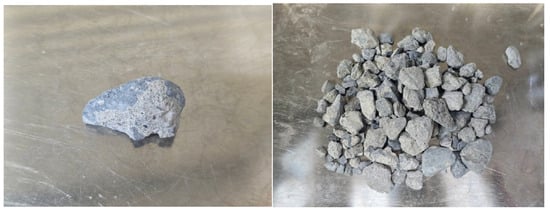
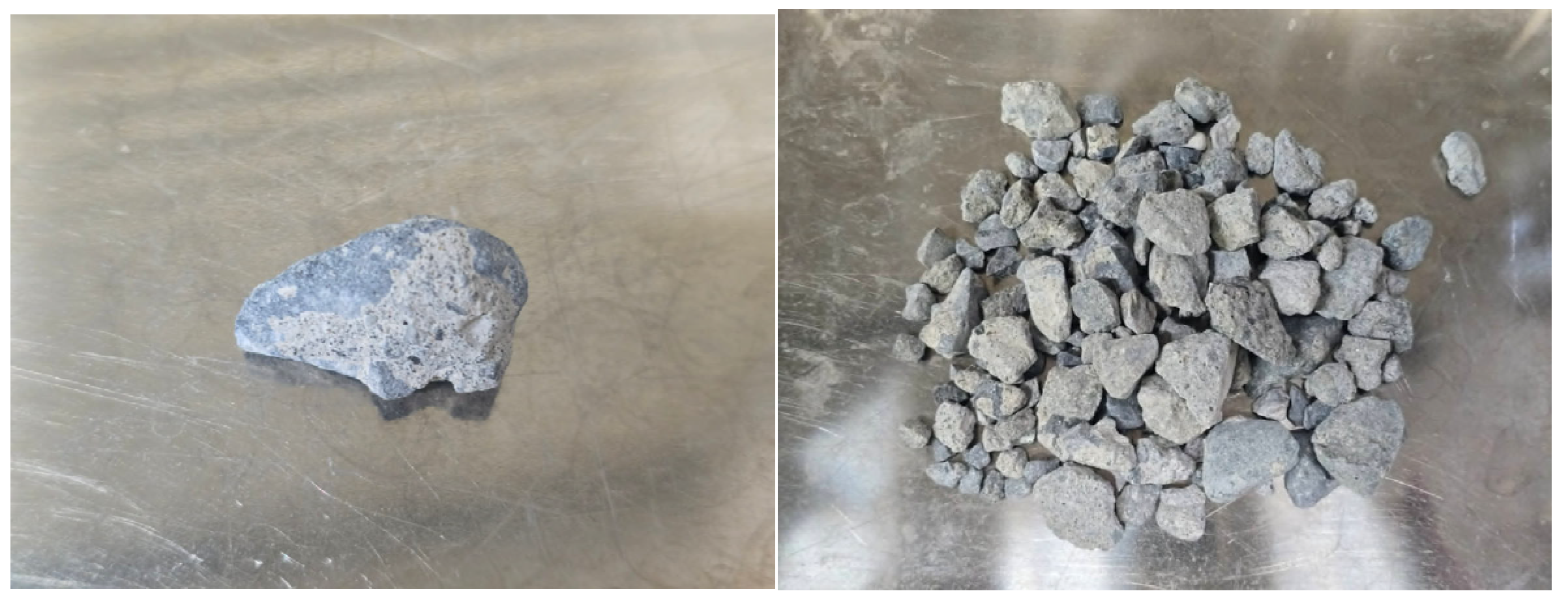
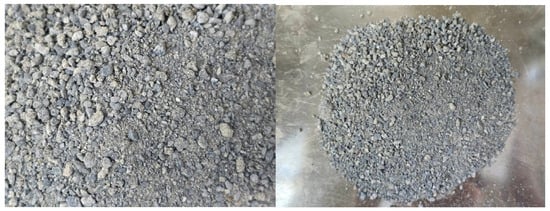
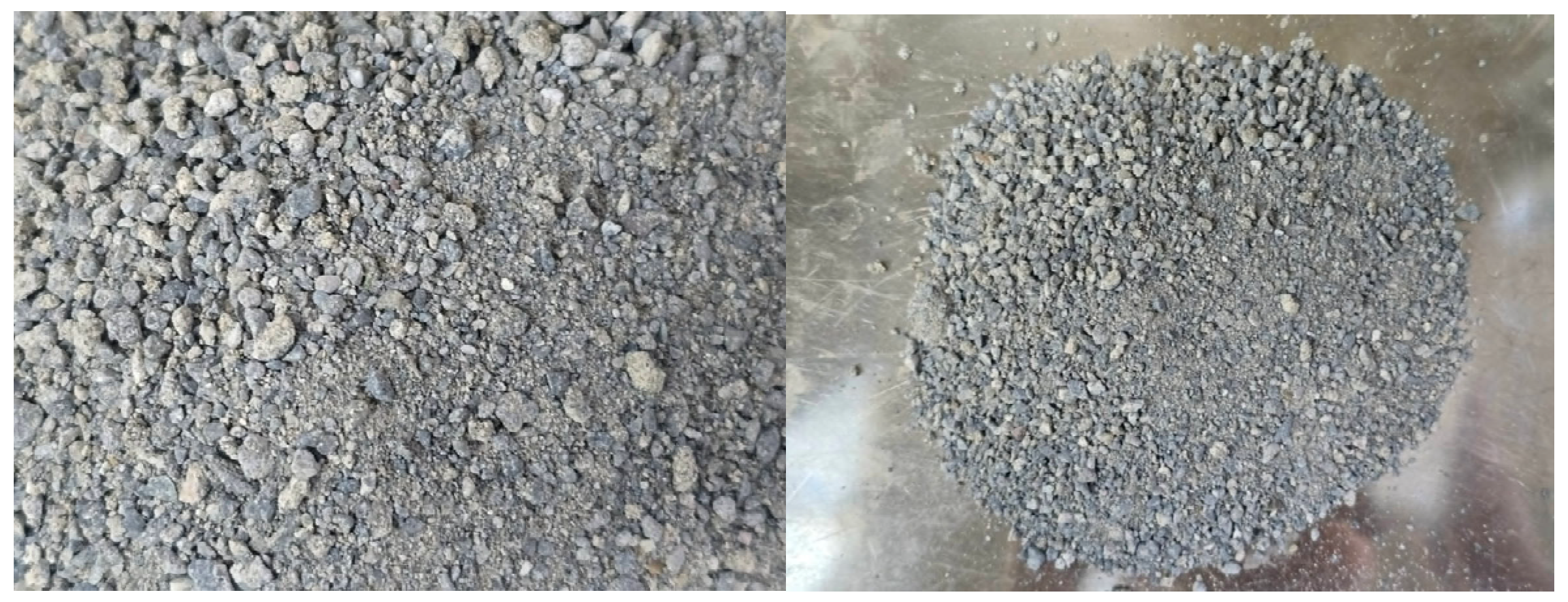
The recycled aggregates used in this experiment were obtained from demolished concrete structures and buildings. The concrete debris was crushed using a jaw crusher and subsequently sieved into recycled fine aggregate (RF, 0–5 mm) and recycled coarse aggregate (RC, 5–20 mm) for use in this study. The recycled aggregates satisfied the requirements of JIS A 5022 Class M, as shown in Figure 1 and Figure 2. Contaminants such as steel, wood, asphalt, and other unwanted materials were removed before use in order to ensure suitable quality for concrete production.
Figure 1.
Physical appearance of the recycled coarse aggregate (RC, 5–20 mm) used in this study.
Figure 2.
Physical appearance of the recycled fine aggregate (RF, 0–5 mm) used in this study.
The recycled aggregates used in this study satisfied the physical property requirements specified in JIS A 5022 Class M. The main properties, including density, water absorption, and fineness modulus, were examined before being used in concrete production. As shown in Figure 1, the recycled coarse aggregate contained adhered old mortar and exhibited an irregular and angular particle morphology with a relatively rough surface texture. These characteristics generally result in higher water absorption and lower particle density than those of natural aggregates, which is consistent with previous studies on recycled concrete aggregates [15]. Likewise, the recycled fine aggregate, shown in Figure 2, consisted of a heterogeneous mixture of natural aggregate particles, adhered mortar, and fine particles generated during the demolition and crushing processes, resulting in a rougher surface texture than natural sand. Such characteristics are also commonly associated with increased porosity and changes in the interfacial transition zone (ITZ), which may influence the mechanical and durability properties of recycled aggregate concrete [15]. The detailed physical properties of the recycled aggregate are presented in Table 1 and Table 2.
Table 1.
Grade segment of recycled aggregate in JIS A 5022 Class M.
Table 2.
Impurity amount of recycled aggregate Class M.
The cement used in this experiment was ordinary Portland cement (OPC), which had a density of 3.16 g/cm3 and Blaine fineness of 3300 cm2/g. In addition, blast furnace slag (BFS) was used as a supplementary cementitious material in order to study the effect of BFS on the underwater abrasion resistance properties of recycled aggregate concrete.
The blast furnace slag used in this study was divided into three types according to Blaine fineness values, namely 3000, 4000, and 6000 cm2/g, with a density equal to 2.90 g/cm3. BFS was used to replace ordinary Portland cement at replacement ratios of 25% and 50% by weight of the binder material. The use of BFS was expected to improve pore structure and enhance durability properties of concrete through the pozzolanic reaction and latent hydraulic reaction of the material [9,11].
For natural aggregates used as comparison in the experiment, crushed stone was used as natural coarse aggregate and natural sand was used as natural fine aggregate. The physical properties and density values of all materials used in this experiment are presented in Table 3.
Table 3.
Raw materials.
In this experiment, the concrete mixtures were designed with a constant water-to-binder ratio (W/B) of 0.45 for all mixtures in order to control variables in the study and compare the effects of recycled aggregate and replacement of ordinary Portland cement with blast furnace slag on underwater abrasion resistance properties of concrete. Blast furnace slag was used to replace ordinary Portland cement at replacement ratios of 25% and 50% by weight of the binder material. In addition, a control mixture without blast furnace slag was also prepared for comparison. The concrete mixtures were designated according to the use of recycled aggregate, the BFS replacement ratio, and the BFS Blaine fineness. “OPC” denotes the control concrete made with ordinary Portland cement and natural aggregates, whereas “RCA” denotes the control recycled aggregate concrete without BFS replacement. For example, “25RCA3000” denotes recycled aggregate concrete containing 25% BFS with a Blaine fineness of 3000 cm2/g, while “50RCA6000” denotes recycled aggregate concrete containing 50% BFS with a Blaine fineness of 6000 cm2/g. The detailed mix proportions of concrete used in this experiment are shown in Table 4.
Table 4.
Mix proportions of concrete expressed as mass (kg) per unit volume (1 m3) of concrete.
2.2. Mixing Method
The concrete mixing and specimen preparation in this research were carried out according to Japanese Industrial Standards JIS A 1138 [16] Method of making test samples of concrete in laboratory. Before starting the mixing process, all materials were weighed according to the mix proportions shown in Table 4. The recycled aggregates were adjusted to Saturated Surface Dry (SSD) condition in order to reduce the effect of water absorption during the mixing process.
The mixing procedure began by dry mixing the ordinary Portland cement (OPC), blast furnace slag (BFS), recycled coarse aggregate, and recycled fine aggregate for 30 s to ensure a uniform distribution of the constituent materials. Water was then added to the mixer, and the mixture was mixed for 60 s, followed by an additional 30 s of mixing to obtain a homogeneous concrete mixture and minimize material segregation prior to casting.
After the mixing process was completed, fresh concrete was cast into molds according to the required dimensions for each testing method. The concrete specimens were compacted using a concrete vibrator to remove air bubbles inside the specimens. After that, the concrete surface was leveled, and the specimens were stored under laboratory conditions for 24 h before demolding and curing under the specified experimental conditions.
2.3. Curing Conditions
After casting, the concrete specimens were kept in the molds for 24 ± 2 h before demolding. Subsequently, the specimens were subjected to water curing in accordance with JIS A 1132 [17] (Methods of Curing Concrete Specimens) under laboratory temperature conditions. This curing regime was adopted to ensure continuous hydration of the cementitious materials and promote the development of a stable microstructure. All specimens were cured in water for 28 days prior to testing, including the compressive strength and underwater abrasion resistance tests.
3. Testing Conditions
3.1. Compressive Strength Test
The compressive strength test of concrete was conducted after water curing for 28 days. Cylindrical concrete specimens with dimensions of 10 cm in diameter and 20 cm in height were used in this experiment. The preparation and testing procedures of specimens were carried out according to Japanese Industrial Standards JIS A 1108 [18]: Method of test for compressive strength of concrete, which is the standard method for concrete compressive strength testing in Japan.
3.2. Underwater Abrasion Resistance Test
The underwater abrasion resistance test of concrete was conducted according to ASTM International ASTM C1138 [14]: Standard Test Method for Abrasion Resistance of Concrete (Underwater Method). This test method was used to evaluate the abrasion resistance performance of concrete under underwater conditions, which is suitable for simulating service conditions of hydraulic structures such as dams, spillways, and concrete structures exposed to flowing water and sediment.
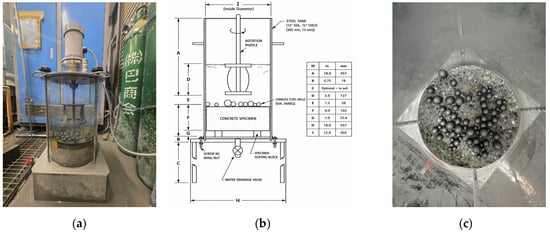
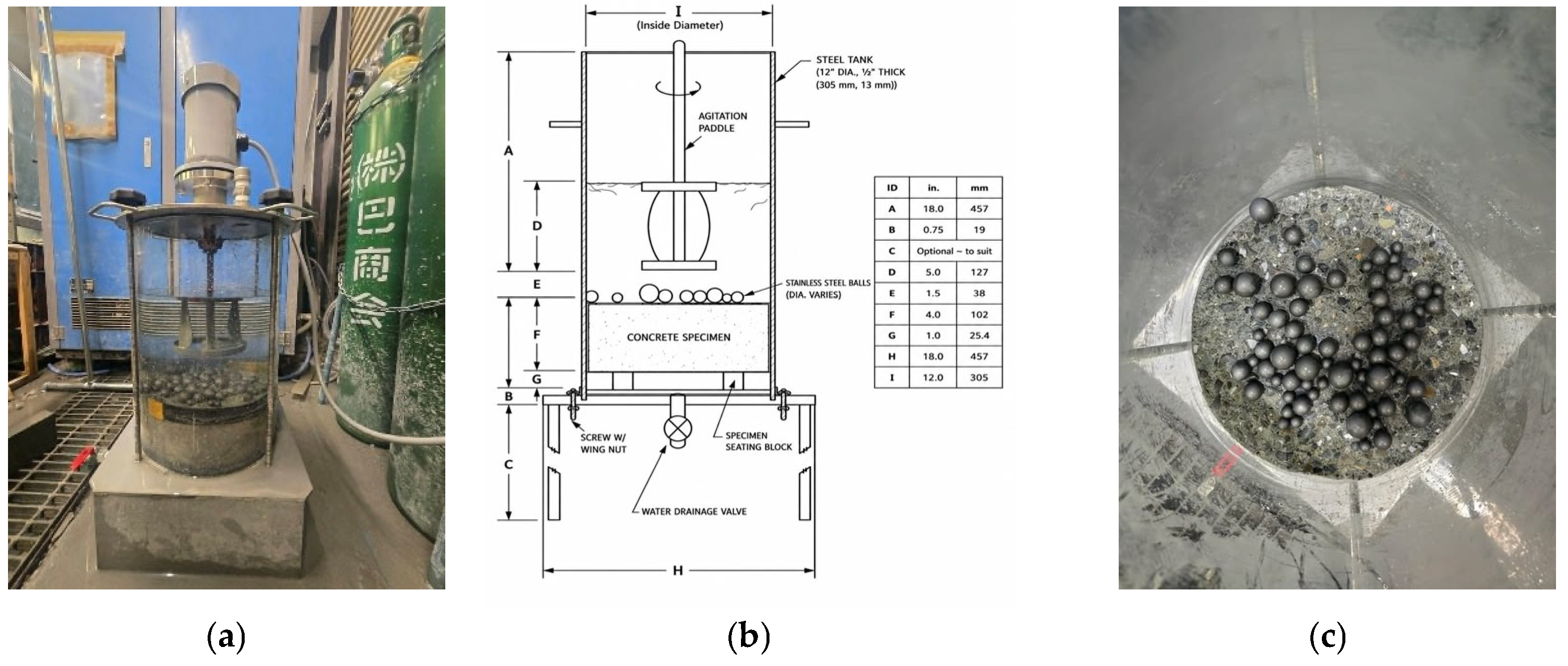
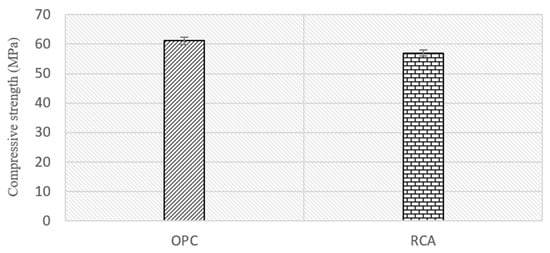
In this experiment, cylindrical concrete specimens with dimensions of 300 mm in diameter and 100 mm in thickness were installed inside the testing apparatus according to ASTM C1138, as shown in Figure 3. Inside the testing tank, stainless steel balls with quantities and sizes specified by the standard were placed on the concrete surface. After that, clean water was added to the tank until the water level was approximately 16 cm above the concrete surface.
Figure 3.
(a) Testing tank, (b) test apparatus, (c) stainless steel balls.
During the test, the water inside the tank was stirred by a rotating paddle with dimensions specified in the standard at a rotational speed of 1200 ± 100 rpm. This movement caused the stainless steel balls to continuously move along the water flow and generate impact force and friction on the concrete surface. The testing conditions simulated abrasion and erosion conditions occurring in actual underwater concrete structures.
Each testing cycle was conducted for 12 h. After each cycle, the concrete specimen was removed from the testing tank for cleaning and abrasion evaluation by measuring the specimen’s weight in air and in water. After measurement, the specimen was returned to the testing apparatus, and the same procedure was repeated for a total of six testing cycles.
From each testing cycle, the weight data of concrete specimens measured in air and water were obtained. These weight values gradually decreased with increasing testing duration. The measured weights were used to calculate the specimen volume at each testing cycle and to evaluate cumulative volume loss after six testing cycles. The calculated volume loss was compared with the initial specimen volume before testing and used as an indicator of the underwater abrasion resistance of concrete. In this study, at least three concrete specimens were used for each concrete mixture according to the requirement of the standard in order to improve reliability and allow a proper comparison of test results.
The abrasion performance of concrete was evaluated from the change in specimen volume during the testing process. The specimen volume at each testing period was calculated from the measured weight in air and water according to Equation (1).
where:
Vt = (Wair − Wwater)/Gw
Vt—volume of the specimen at the desired time, m3
Wair—mass of the specimen in air at the desired time, kg
Wwater—apparent mass of the specimen in water at the desired time, kg
Gw—unit weight of water, kg/m3
After that, the concrete volume loss caused by underwater abrasion at each testing period was calculated according to Equation (2).
where:
VLt = Vi − Vt
VLt—volume of material lost by abrasion at the end of the test increment in question, m3
Vi—volume of specimen before testing, m3
Vt—volume of the specimen at the end of the test increment in question, m3
In addition, the average depth of abrasion (ADA) was calculated from the volume loss divided by the surface area of the specimen according to Equation (3).
where:
ADAt = VLt/A
ADAt —average depth of abrasion at the end of the test increment in question, m
A—area of the top of the specimen, m2
The calculated values from these equations were used to evaluate and compare the underwater abrasion resistance of each concrete mixture. Lower volume loss and lower average depth of abrasion indicated better abrasion resistance performance of concrete.
4. Results and Discussion
4.1. Compressive Strength
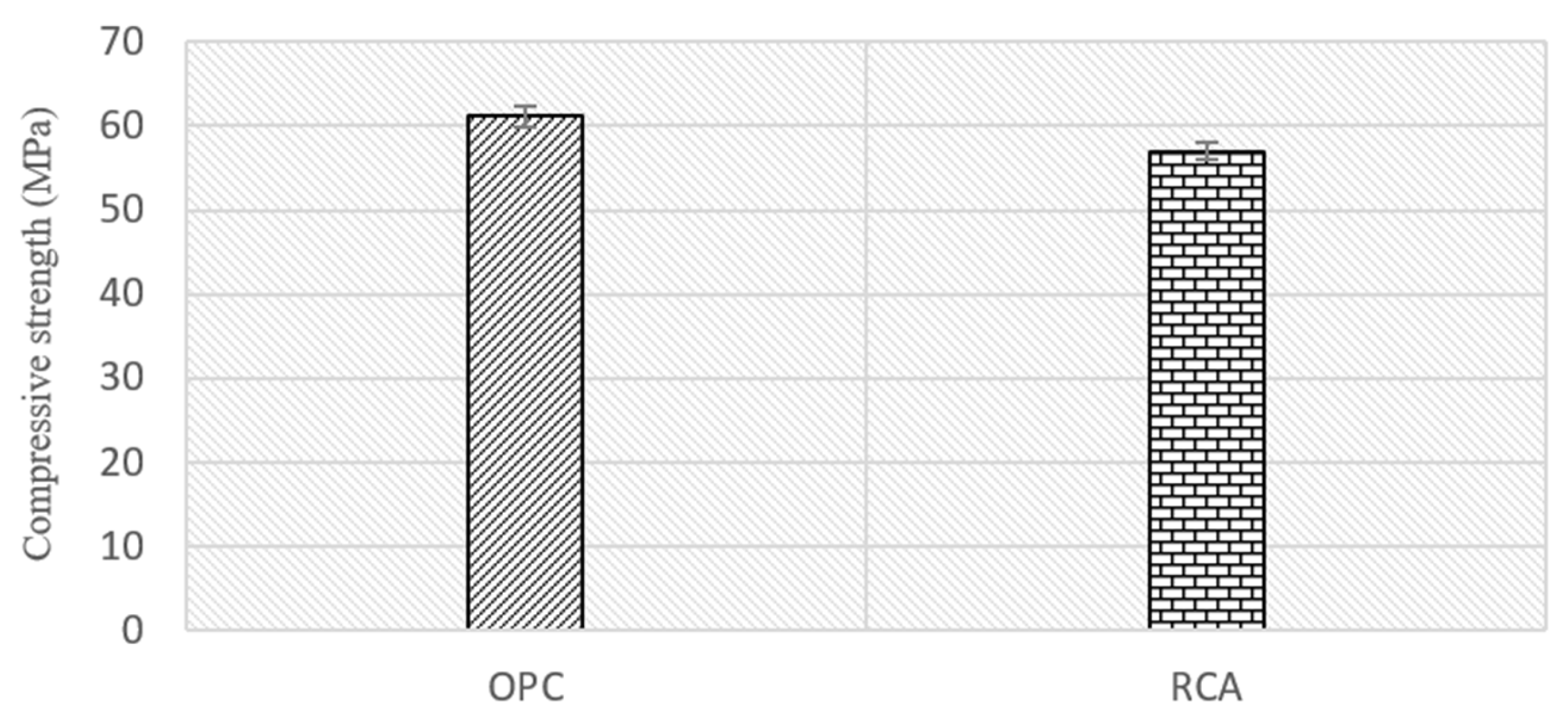
From the compressive strength test results after 28 days of water curing, it was found that under the same mix proportion, when natural aggregates were replaced with 100% recycled aggregates, the compressive strength of concrete decreased from 61.20 MPa to 56.97 MPa, which was approximately 7% lower, as shown in Figure 4. These experimental results indicate that concrete containing recycled aggregates exhibited compressive strength close to that of OPC concrete, with only a slight reduction in strength.
Figure 4.
Compressive strength after 28 days of water curing for ordinary Portland cement (OPC) concrete and recycled aggregate concrete (RCA).
The reduction in compressive strength of recycled aggregate concrete can be explained by the presence of old mortar attached to the surface of the recycled aggregate. This caused the aggregates to have higher porosity and higher water absorption compared with natural aggregates. In addition, the interfacial transition zone (ITZ) between aggregate and cement paste in recycled aggregate concrete tended to contain more voids and microcracks. Therefore, the stress transfer inside the concrete structure decreased, resulting in lower compressive strength compared with concrete made with natural aggregates.
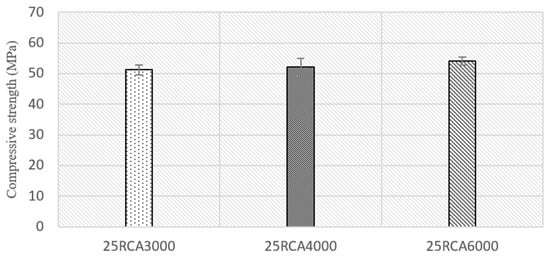
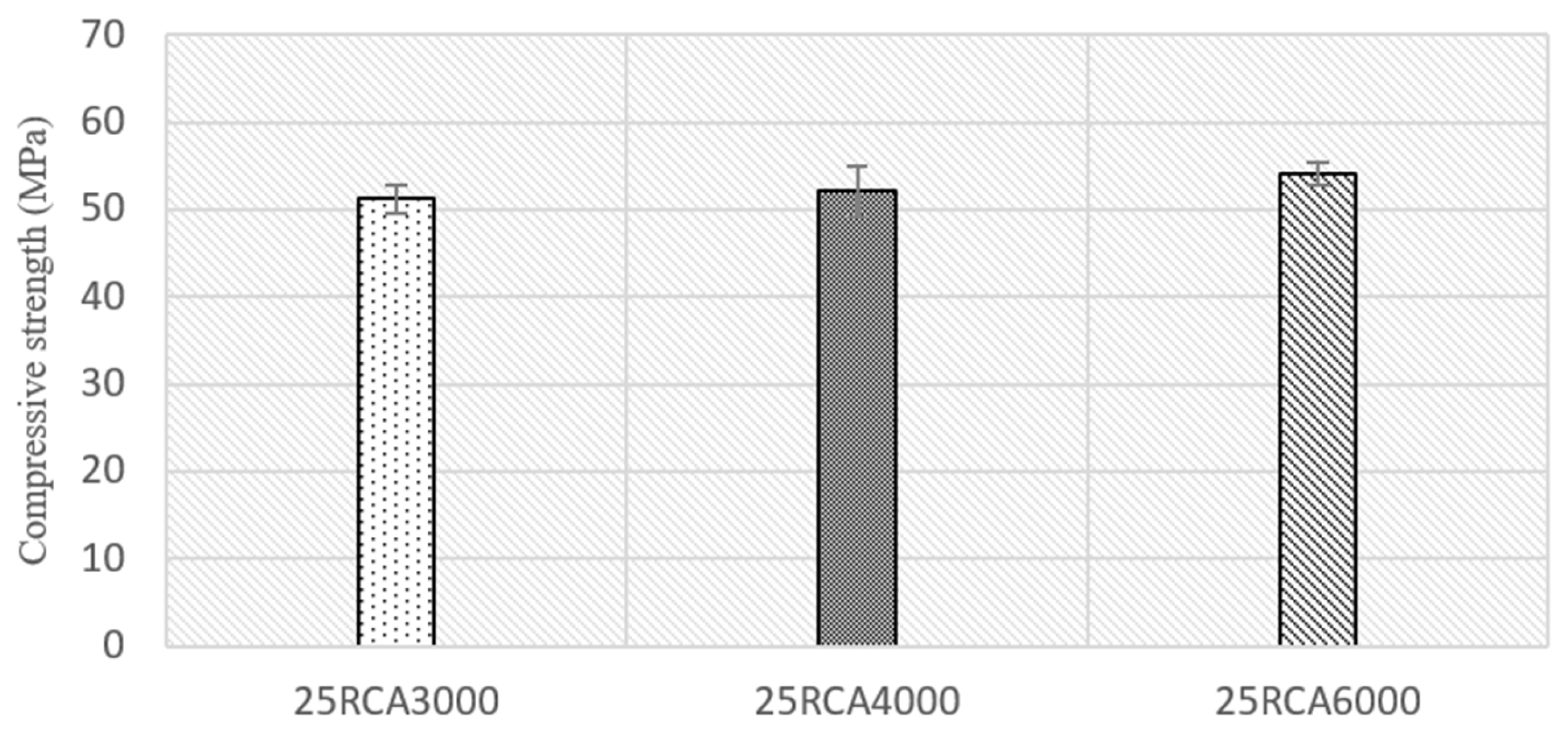
Furthermore, when ordinary Portland cement was replaced with blast furnace slag (BFS) in recycled aggregate concrete at the replacement ratio of 25%, the compressive strengths were 51.20 MPa, 52.06 MPa, and 54.13 MPa for BFS with Blaine fineness values of 3000, 4000, and 6000 cm2/g, respectively, as shown in Figure 5.
Figure 5.
Compressive strength after 28 days of water curing of recycled aggregate concrete with 25% replacement of ordinary Portland cement (OPC) by blast furnace slag (BFS) at different Blaine fineness values.
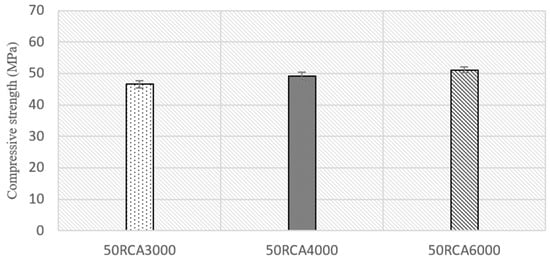
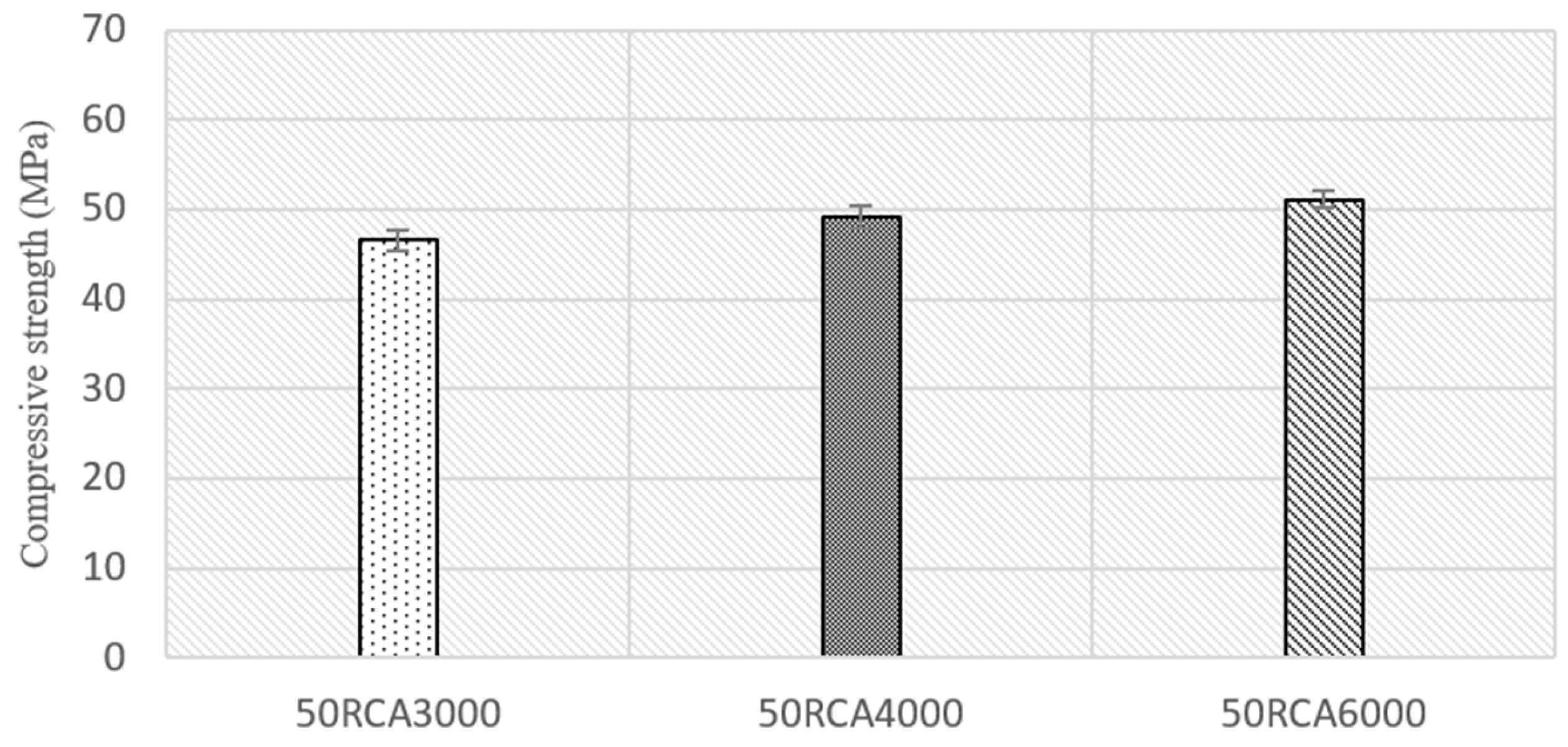
Meanwhile, at a BFS replacement ratio of 50%, the compressive strengths were 46.60 MPa, 49.20 MPa, and 51.10 MPa for BFS with Blaine fineness values of 3000, 4000, and 6000 cm2/g, respectively, as shown in Figure 6.
Figure 6.
Compressive strength after 28 days of water curing of recycled aggregate concrete with 50% replacement of ordinary Portland cement (OPC) by blast furnace slag (BFS) at different Blaine fineness values.
The experimental results showed that the Blaine fineness of blast furnace slag significantly affected the compressive strength of concrete. Concrete containing BFS with higher fineness showed higher compressive strength than concrete containing BFS with lower fineness for both 25% and 50% replacement ratios.
Previous studies have suggested that BFS with higher fineness provides a larger specific surface area, which may promote faster hydraulic and pozzolanic reactions. In addition, finer BFS particles may contribute to a denser microstructure through filler effects and additional C-S-H formation, thereby reducing pore connectivity and internal voids. Therefore, the higher compressive strength observed in this study is likely associated with these mechanisms rather than being directly verified by microstructural analyses.
However, when the BFS replacement ratio increased from 25% to 50%, the compressive strength of concrete tended to decrease even when high-fineness BFS was used. This reduction can be attributed to the dilution effect caused by the lower Portland cement content together with the relatively slow hydration kinetics of BFS. Previous studies have reported that concrete incorporating high volumes of BFS generally exhibits lower compressive strength at early ages but continues to gain strength beyond 28 days because of the latent hydraulic and pozzolanic reactions of BFS [19]. Similarly, Oner and Akyuz [20] reported that increasing the replacement level of ground granulated blast furnace slag (GGBFS) reduced early-age compressive strength, whereas significant strength development was observed at later curing ages. Since only the 28-day compressive strength was evaluated in the present study, the interpretation regarding early-age strength development is based on these previously reported findings rather than direct experimental evidence.
The results of this study are consistent with many previous studies that reported that blast furnace slag must be used at an appropriate replacement ratio (optimum replacement ratio) in order to improve the compressive strength of concrete. An excessive replacement ratio may cause lower compressive strength compared with normal concrete without BFS.
Ayim-Mensah et al. [21] reported that concrete containing approximately 40% ground granulated blast furnace slag (GGBFS) showed the highest compressive strength, while replacement ratios of 60–90% caused significant strength reduction. Similarly, Kioumarsi et al. [22] reported that high-volume blast furnace slag replacement could reduce compressive strength by more than 45% compared with normal concrete. In addition, Cabrera-Madrid et al. [23] reported that the compressive strength of concrete gradually decreased when the blast furnace slag replacement ratio exceeded approximately 50%.
Lee et al. [24] further explained that there is an optimum usage level of BFS for compressive strength development because excessive slag replacement decreases the amount of Portland cement available for hydration reaction, resulting in slower early-age strength development compared with conventional concrete. Therefore, although high-fineness BFS can improve the density of concrete structures through filler effect and pozzolanic reaction, an excessive cement replacement ratio still causes lower compressive strength compared with control concrete.
Although the compressive strength in the present study was evaluated after 28 days of water curing, blast furnace slag (BFS) is well known to continue its latent hydraulic and pozzolanic reactions beyond this curing age. Consequently, additional C–S–H gel may continue to form, leading to further pore refinement and matrix densification at later ages. According to ACI Committee 233 [25], concrete incorporating slag cement generally exhibits slower early-age strength development but continues to gain strength and improve durability over extended curing periods due to the ongoing hydration of BFS. Similarly, Shariq et al. [19] reported that ground granulated blast furnace slag (GGBFS) concrete commonly exhibits significant strength development beyond 28 days, with continued improvements observed at 56, 90, and even 180 days, together with reduced permeability and a refined pore structure. Therefore, it is expected that the BFS mixtures investigated in this study may exhibit further improvements in mechanical properties and underwater abrasion resistance with extended curing periods. However, verification of this behavior requires long-term experimental investigation and is recommended for future work.
4.2. Abrasion Depth and Mass Loss
4.2.1. Effect of Recycled Aggregates on Abrasion Depth and Mass Loss
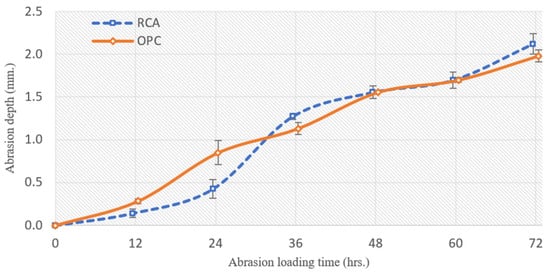
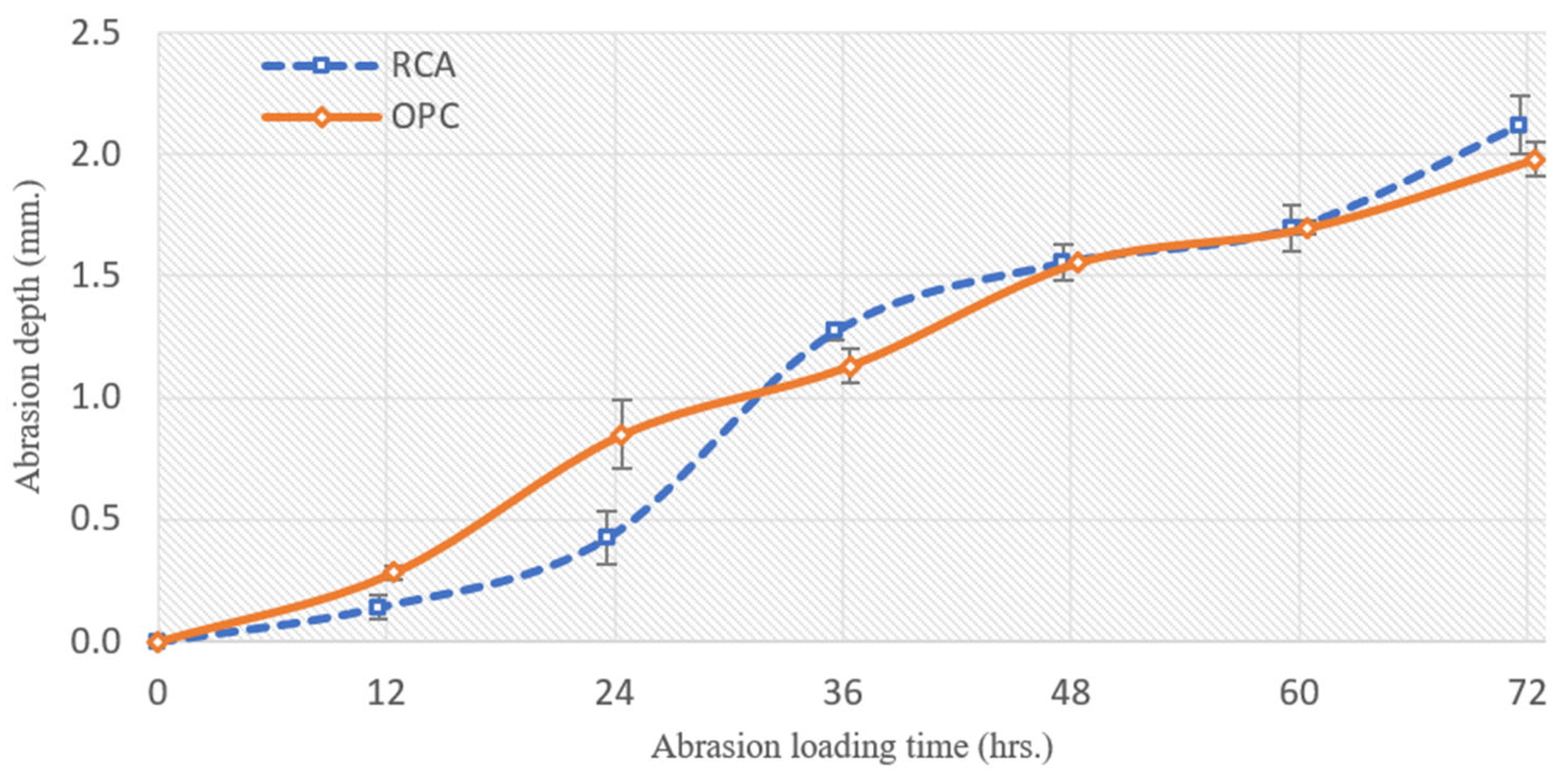
From the underwater abrasion resistance test results according to ASTM C1138 [14], it was found that after 72 h of testing, concrete using recycled aggregates (RCA) and concrete using natural aggregates (OPC) exhibited similar abrasion depth values. The abrasion depth values of RCA concrete and OPC concrete were 2.12 mm and 1.98 mm, respectively, as shown in Figure 7. These results indicate that the use of recycled aggregates did not significantly increase the abrasion depth compared with normal concrete.
Figure 7.
Relationship between abrasion depth and abrasion loading time.
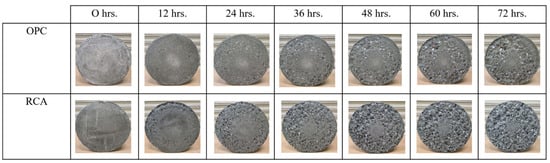
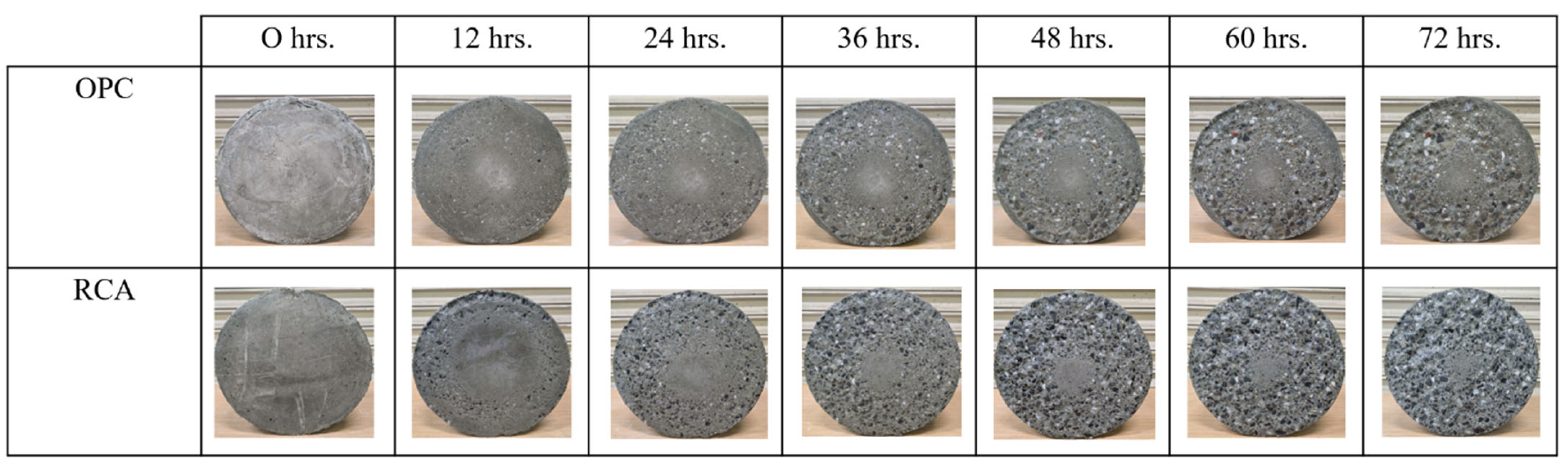
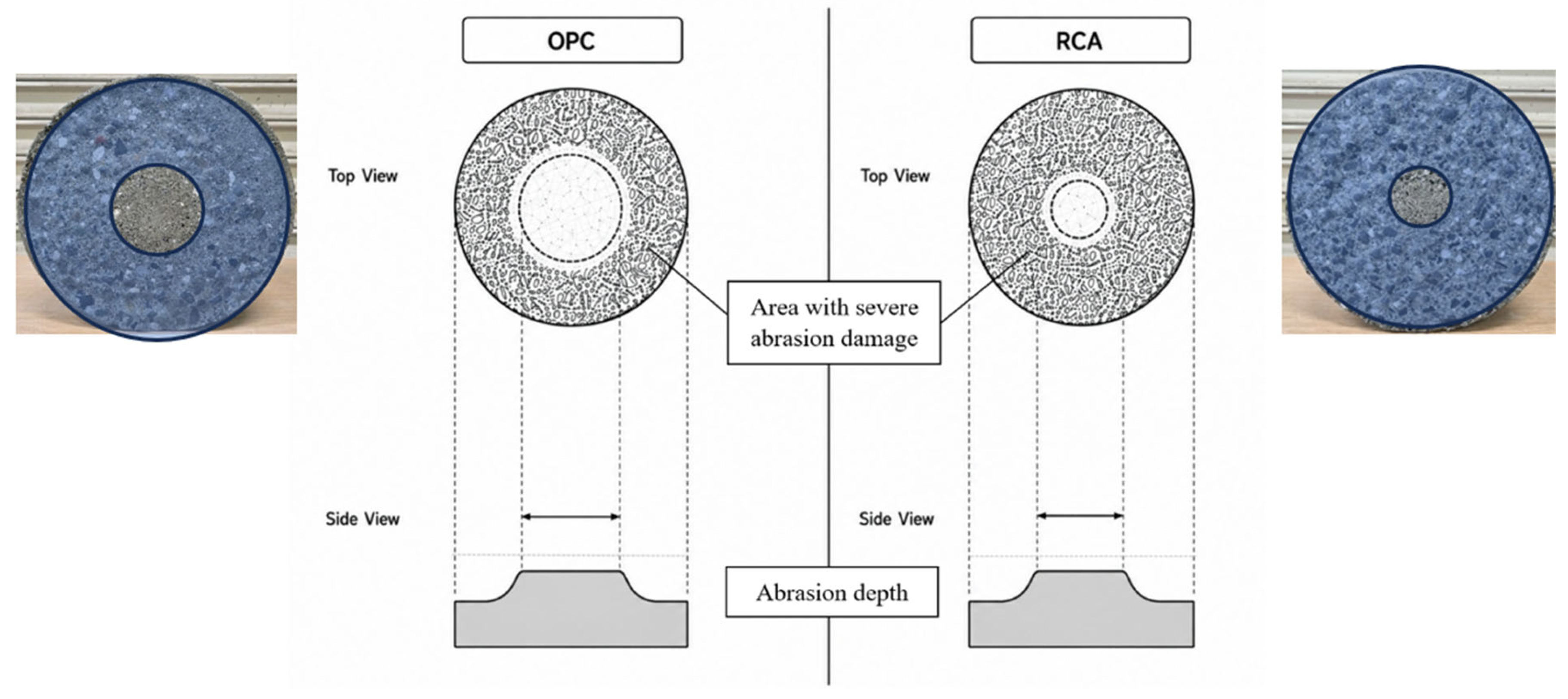
In addition, when considering the abrasion behavior at testing periods of 12, 24, 36, 48, 60, and 72 h, both types of concrete showed similar abrasion trends. The abrasion depth gradually increased with increasing testing duration, and no severe abrasion occurred during any specific testing period, as shown in Figure 8. This behavior reflects that the abrasion mechanism of both concretes continuously occurred under the impact force and friction generated by the steel balls inside the testing apparatus.
Figure 8.
Surface appearance of OPC and RCA under underwater abrasion test.
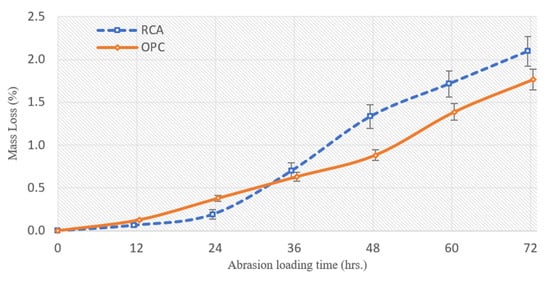
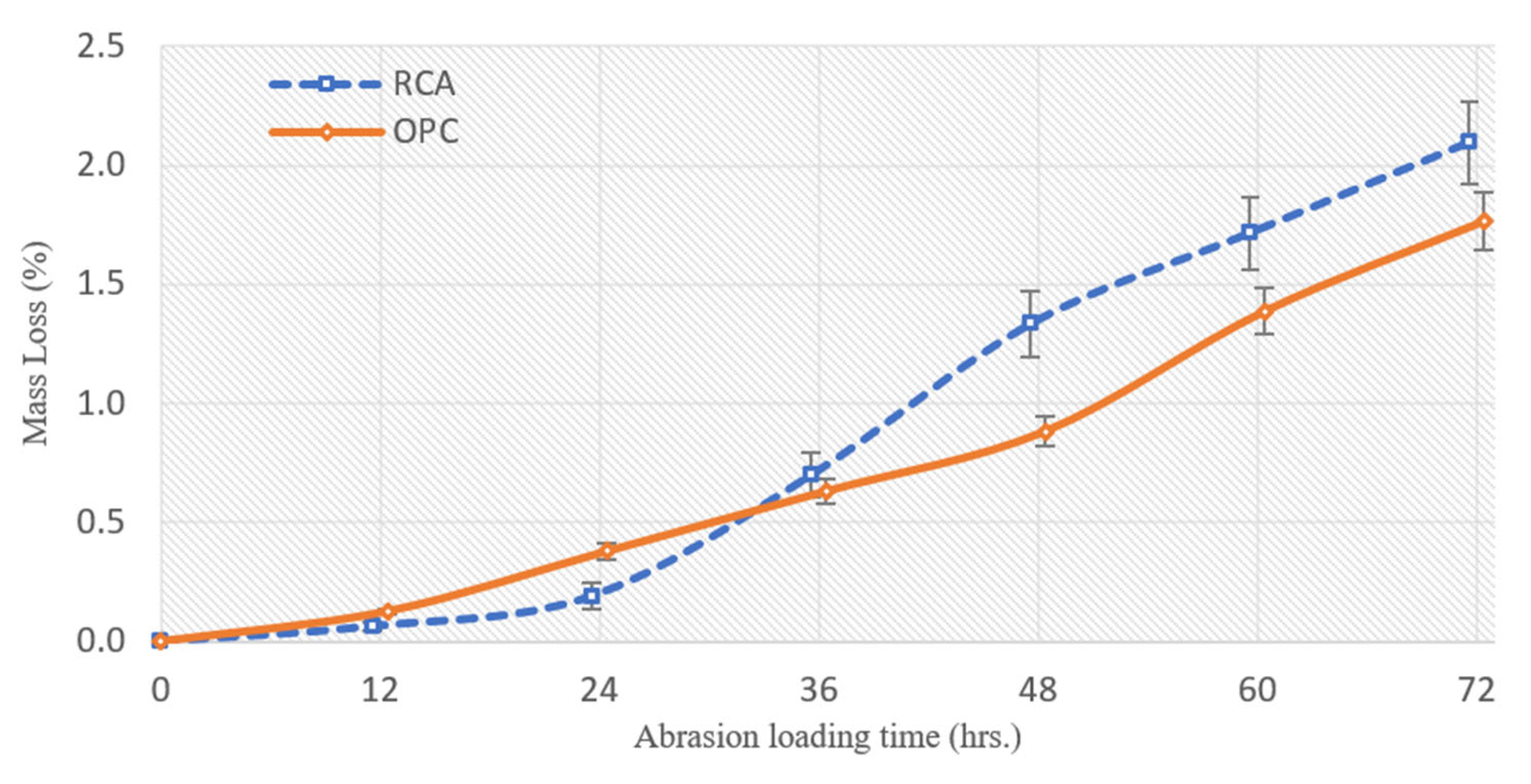
However, when considering the mass loss values, RCA concrete showed slightly higher mass loss than OPC concrete. After 72 h of testing, RCA concrete showed a mass loss value of 2.10%, while OPC concrete showed only 1.77%, as shown in Figure 9.
Figure 9.
Relationship between mass loss and abrasion loading time.
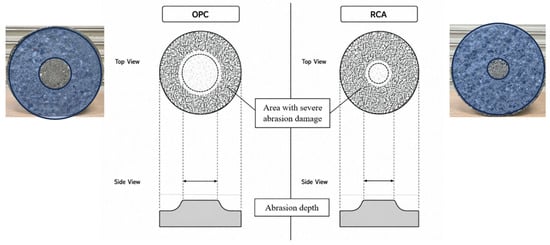
From observation of the specimen surface conditions after 72 h of testing, as shown in Figure 8, it was found that although both concretes had similar abrasion depth values, the severe abrasion damage area of RCA concrete was clearly larger than that of OPC concrete. Figure 10, which shows the top view and side view of the tested specimens, indicates that RCA concrete had a larger damaged surface area caused by abrasion, even though the abrasion depth was similar. As a result, RCA concrete showed a higher total mass loss.
Figure 10.
Abrasion of OPC and RCA under underwater abrasion test at 72 h.
This phenomenon can be explained by the fact that recycled aggregates contain old mortar attached to the aggregate surface, which generally has higher porosity and lower strength compared with natural stone aggregates. Under continuous impact force and friction under underwater conditions, the old mortar on the surface of recycled aggregate concrete can easily detach from the concrete surface. Therefore, the damaged surface area caused by abrasion becomes larger, even though the average abrasion depth is not significantly different from conventional concrete. These results are consistent with the study by Kou, S. C. and Poon, C. S., who reported that old mortar attached to recycled aggregate surfaces is an important factor affecting the porosity and durability properties of recycled aggregate concrete [26].
Furthermore, the interfacial transition zone (ITZ) between aggregate and cement paste in recycled aggregate concrete tends to contain more microvoids and microcracks. This causes the concrete surface to have lower resistance against surface peeling and results in higher cumulative mass loss compared with concrete using natural aggregates under the same underwater abrasion conditions. These findings are consistent with the study by Evangelista, L. and de Brito, J., who reported that the ITZ structure of recycled aggregate concrete directly affects the durability properties and abrasion resistance performance of recycled aggregate concrete [27].
Although the abrasion depth of RCA concrete was comparable to that of OPC concrete, the mass loss was consistently higher. This suggests that abrasion damage was governed not only by penetration depth but also by the extent of surface deterioration. Recycled aggregates contain adhered old mortar with higher porosity and lower hardness than natural aggregates. During repeated impact and rolling abrasion, the old mortar is more easily detached from the concrete surface, resulting in a wider damaged area. Consequently, even when the average abrasion depth remained similar, the total amount of material removed increased, leading to greater cumulative mass loss.
This observation indicates that mass loss may be a more sensitive indicator than abrasion depth when evaluating the abrasion behavior of recycled aggregate concrete because it reflects both the depth and the extent of surface deterioration.
4.2.2. Effect of Blast Furnace Slag on Abrasion Depth and Mass Loss
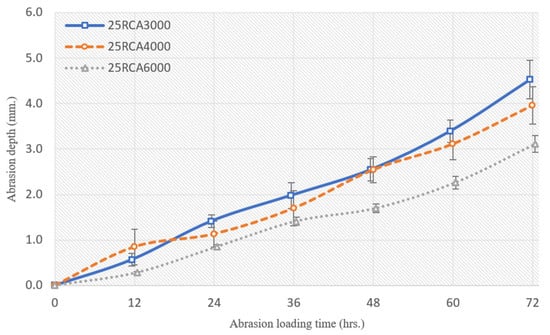
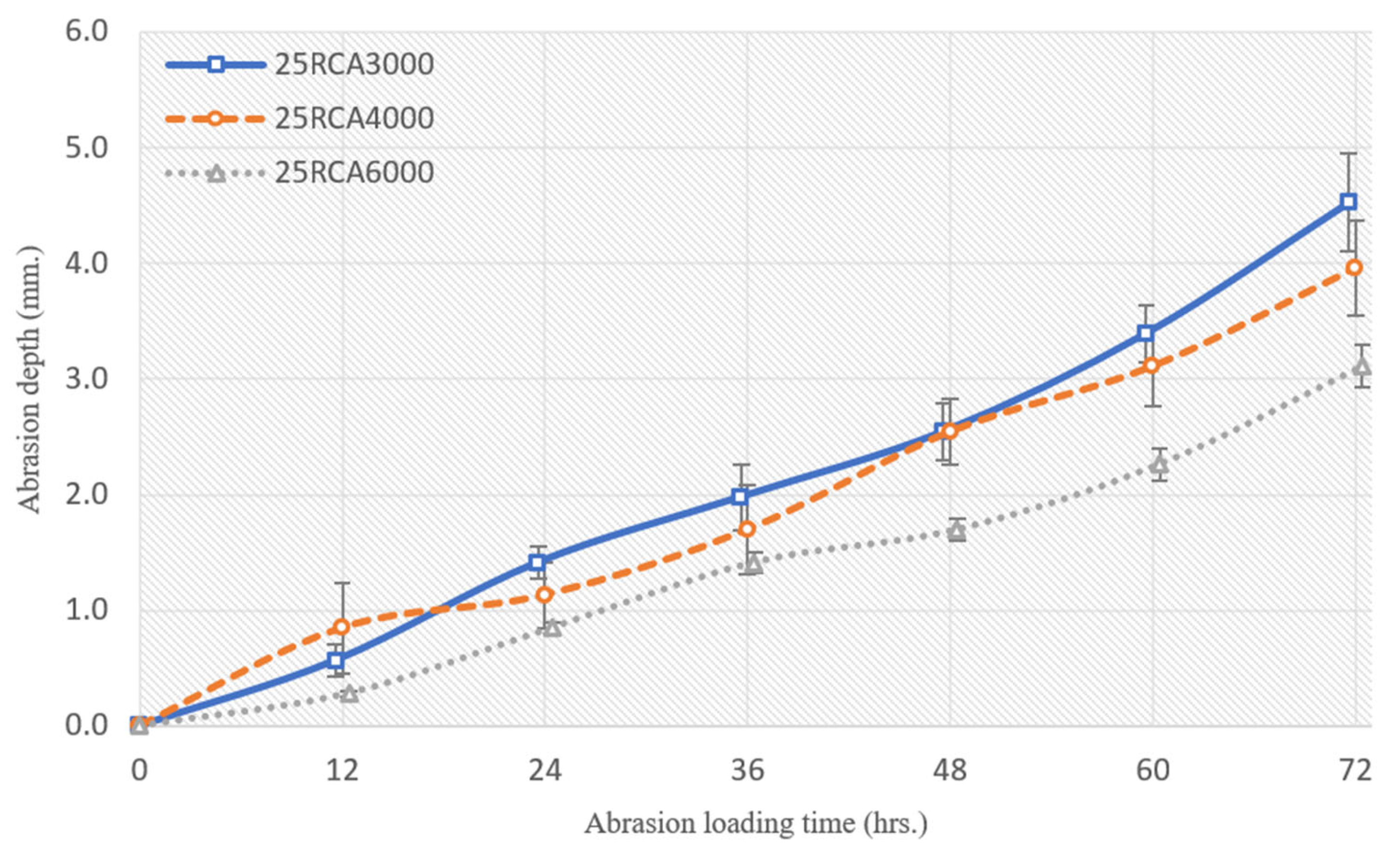
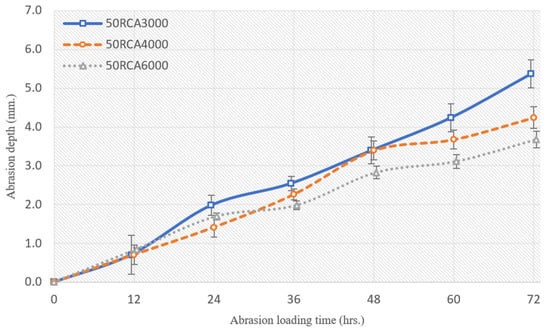
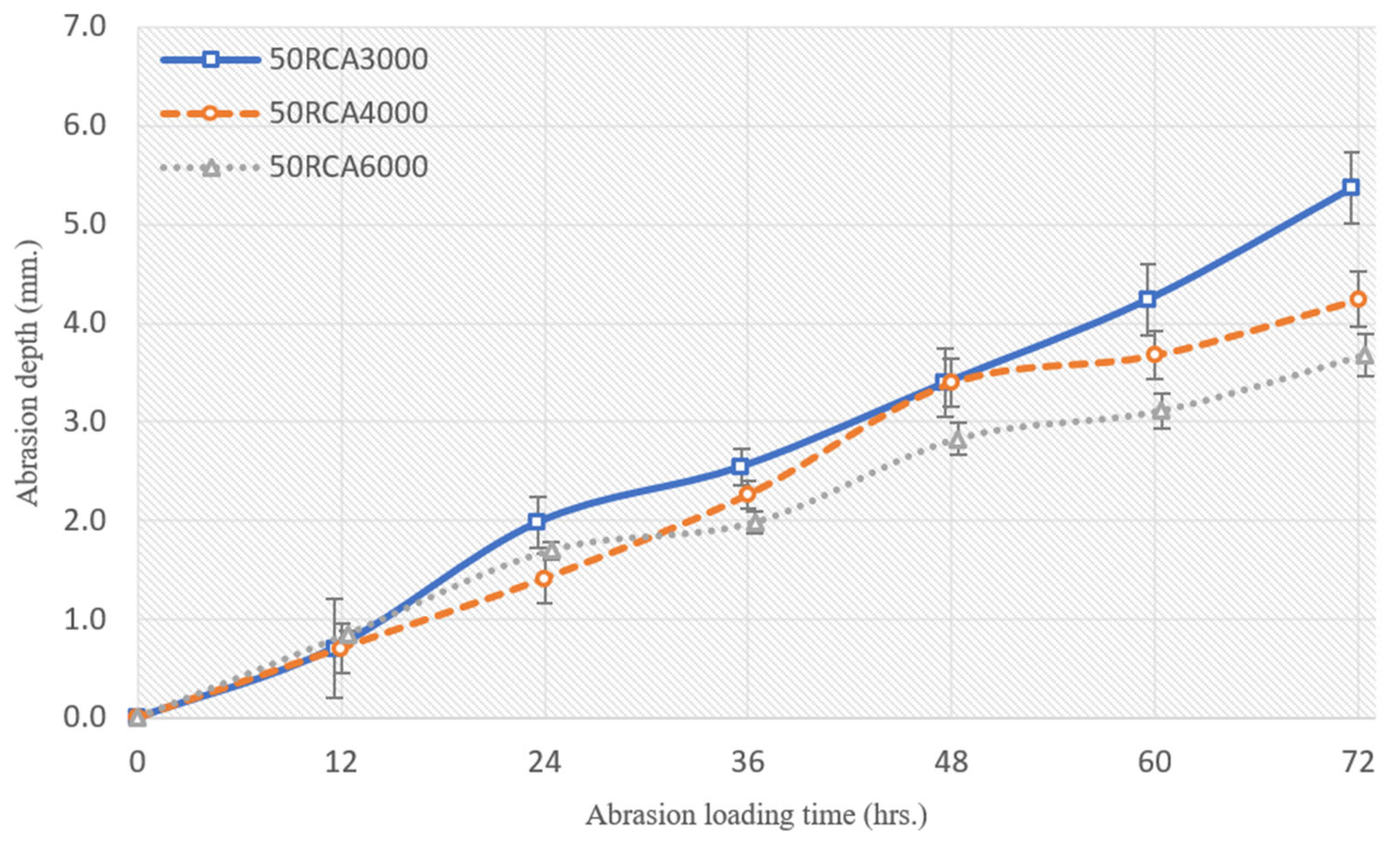
Figure 11 and Figure 12 show the abrasion depth values at testing periods of 12, 24, 36, 48, 60, and 72 h of recycled aggregate concrete mixed with blast furnace slag (BFS) having Blaine fineness values of 3000, 4000, and 6000 cm2/g at cement replacement ratios of 25% and 50%, respectively.
Figure 11.
Relationship between abrasion depth and abrasion loading time (BFS replacement ratio 25%).
Figure 12.
Relationship between abrasion depth and abrasion loading time (BFS replacement ratio 50%).
From the experimental results, it was found that all concrete mixtures showed continuously increasing abrasion with increasing testing duration. No severe abrasion occurred during any specific testing period. This behavior was similar to normal concrete and recycled aggregate concrete without BFS, in which the concrete surface was gradually worn layer by layer under the impact force and friction from steel balls inside the ASTM C1138 testing apparatus.
However, the Blaine fineness of BFS clearly affected the underwater abrasion resistance properties of concrete. At the cement replacement ratio of 25%, after 72 h of testing, concrete containing BFS with Blaine fineness of 6000 cm2/g showed the lowest abrasion depth of only 3.11 mm, which was lower than concrete containing BFS with Blaine fineness of 4000 cm2/g and 3000 cm2/g, which showed abrasion depth values of approximately 3.96 mm and 4.52 mm, respectively, as shown in Figure 11.
Similarly, at the cement replacement ratio of 50%, concrete containing BFS with Blaine fineness of 6000 cm2/g showed the lowest abrasion depth of approximately 3.67 mm, while concrete containing BFS with Blaine fineness values of 4000 cm2/g and 3000 cm2/g showed higher abrasion depth values of approximately 4.24 mm and 5.37 mm, respectively, as shown in Figure 12.
These results indicate that, among the BFS mixtures, increasing the Blaine fineness of BFS reduced the abrasion depth. Concrete containing BFS6000 consistently exhibited lower abrasion depth than those containing BFS4000 and BFS3000 at both replacement ratios. However, all BFS mixtures still showed higher abrasion depth than recycled aggregate concrete without BFS.
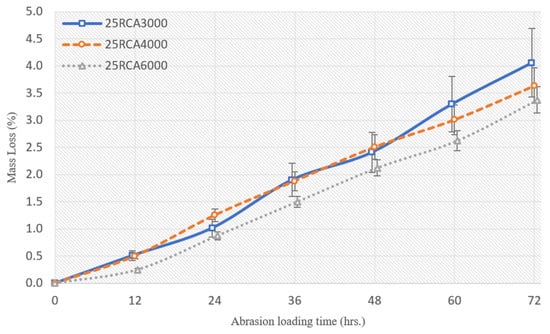
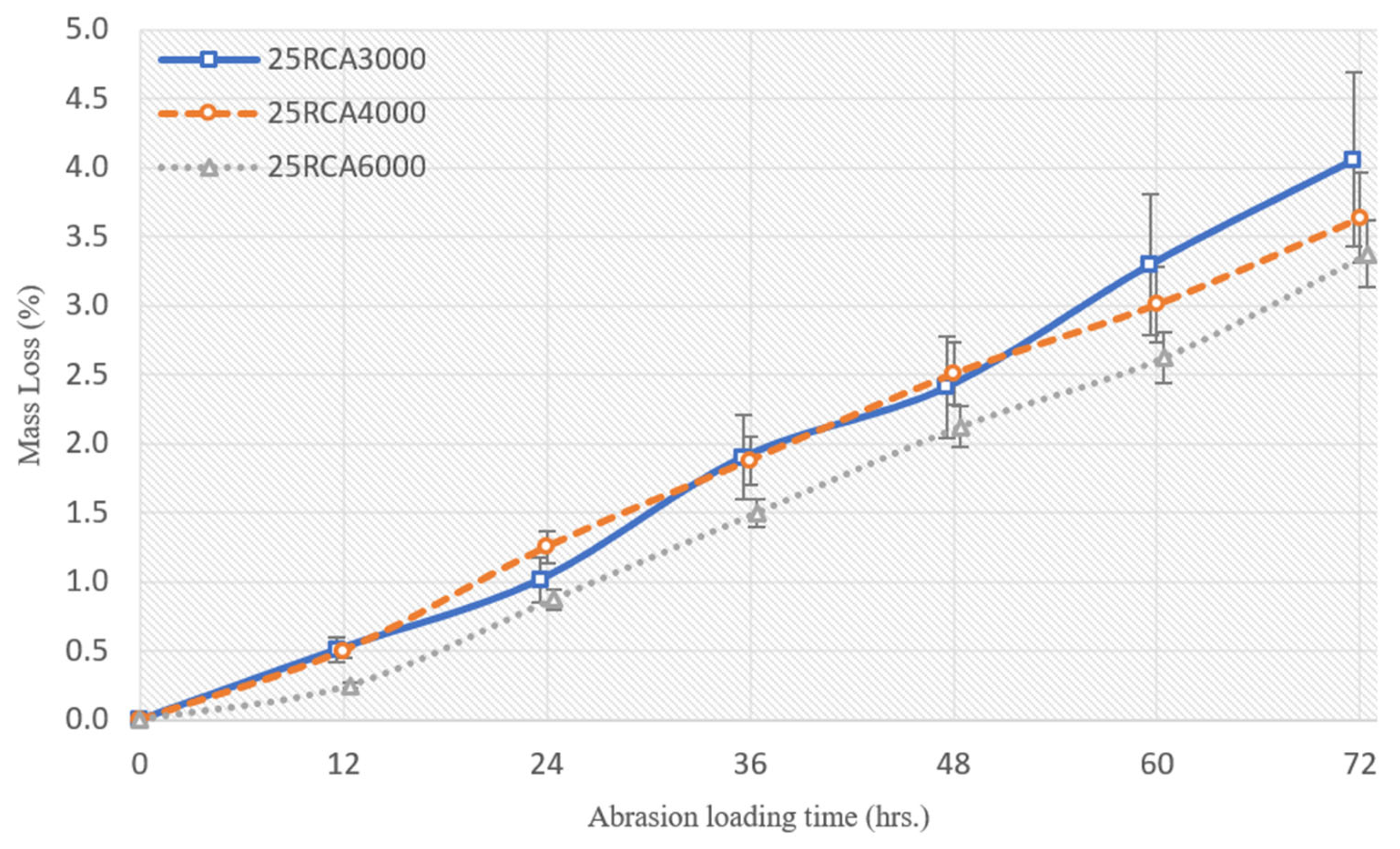
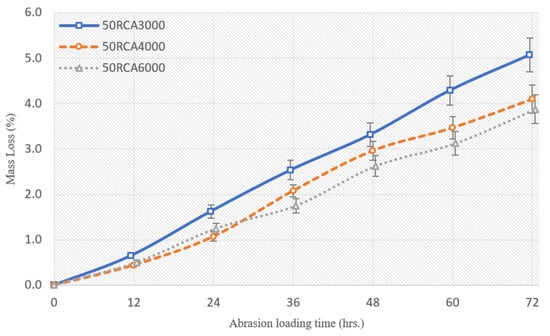
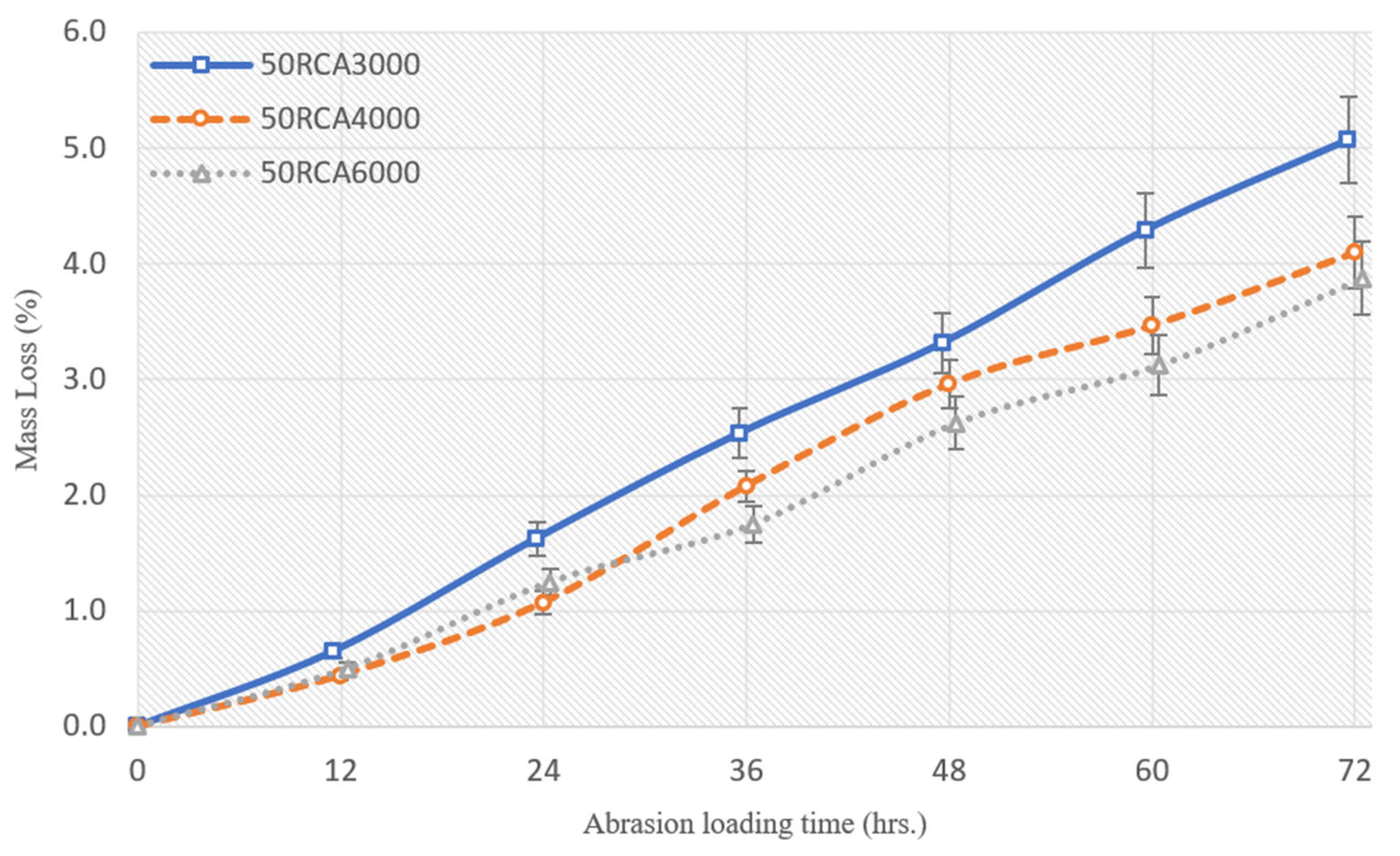
Figure 13 and Figure 14 show the mass loss values of recycled aggregate concrete mixed with BFS having different fineness values. It was found that the mass loss trend was consistent with the abrasion depth results. Mixtures with higher abrasion depth also showed higher mass loss values.
Figure 13.
Relationship between mass loss and abrasion loading time (BFS replacement ratio 25%).
Figure 14.
Relationship between mass loss and abrasion loading time (BFS replacement ratio 50%).
At the cement replacement ratio of 25%, concrete containing BFS with a Blaine fineness of 6000 cm2/g showed the lowest mass loss value of approximately 3.37%, while BFS3000 and BFS4000 showed mass loss values of approximately 4.06% and 3.64%, respectively.
Meanwhile, at a cement replacement ratio of 50%, concrete containing BFS6000 still showed the lowest mass loss value of approximately 3.88%, while BFS4000 and BFS3000 showed increased mass loss values of approximately 4.10% and 5.07%, respectively.
From the experimental results, it can be concluded that increasing the Blaine fineness of BFS reduced both abrasion depth and mass loss within the BFS mixtures at both replacement ratios. Nevertheless, the abrasion depth and mass loss of all BFS mixtures remained higher than those of recycled aggregate concrete without BFS.
The improved abrasion resistance observed in concrete containing finer BFS is likely associated with the denser microstructure developed through the mechanisms discussed in Section 4.1. Previous studies have reported that finer BFS promotes pore refinement and matrix densification through enhanced hydration, pozzolanic reactions, filler effects, and additional C–S–H formation, thereby improving resistance to abrasion [9,28]. As SEM and XRD analyses were not performed in the present study, these mechanisms are presented as literature-based interpretations rather than direct experimental evidence.
On the other hand, BFS with lower fineness reacts more slowly, resulting in more voids and higher porosity inside the concrete structure. Therefore, the concrete surface can more easily peel off under underwater abrasion conditions, resulting in higher abrasion depth and mass loss values.
The results of this study are consistent with the study of Prang Subpa-asa, who reported that BFS with higher fineness could reduce pore size and improve the density of cementitious materials better than BFS with lower fineness [29]. In addition, these results also agree with the study of Horszczaruk, E., who reported that concrete with a denser internal structure and lower porosity showed significantly better resistance against underwater abrasion and erosion [30].
4.3. Effect of Compressive Strength on Abrasion Resistance
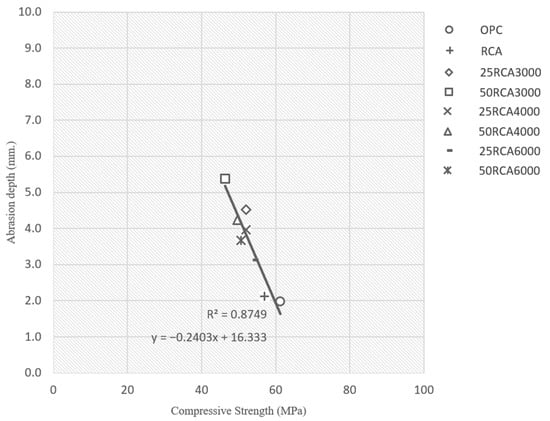
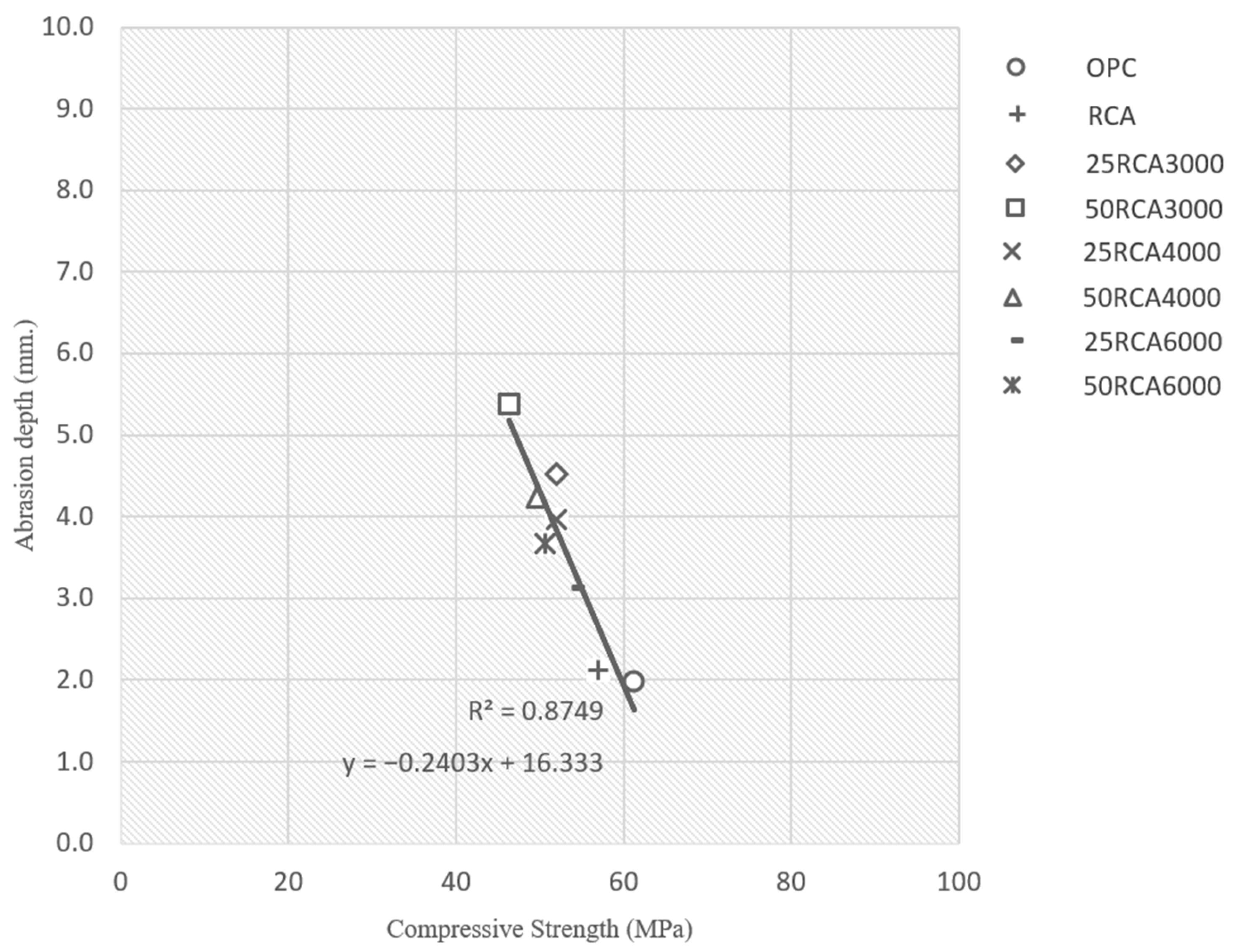
From the test results shown in Figure 15, a negative relationship was observed between compressive strength and underwater abrasion depth. To further evaluate this relationship, a Pearson correlation analysis was performed between compressive strength and abrasion depth for all mixtures. A strong negative correlation was obtained (r = −0.936, R2 = 0.8749, p < 0.01), indicating that concrete with higher compressive strength generally tended to exhibit lower abrasion depth. However, compressive strength should not be regarded as the sole factor governing underwater abrasion resistance. This limitation becomes more apparent when comparing mixtures with similar compressive strengths, where noticeable differences in abrasion depth were still observed. These results suggest that factors other than compressive strength, such as pore structure, matrix densification, and the quality of the interfacial transition zone (ITZ), which are influenced by the Blaine fineness of BFS, also contribute to abrasion performance.
Figure 15.
Relationship between Compressive Strength and Abrasion Resistance of Concrete.
OPC concrete, which had the highest compressive strength of approximately 61.20 MPa, showed the lowest abrasion depth of approximately 1.98 mm. On the other hand, recycled aggregate concrete mixed with low-fineness BFS, such as 50RCA3000, which had a compressive strength of only 46.60 MPa, showed a significantly higher abrasion depth of approximately 5.37 mm.
In addition, recycled aggregate concrete containing finer BFS (BFS6000) exhibited a lower abrasion depth than mixtures containing BFS3000. This trend is consistent with the compressive strength results presented in Section 4.1. The observed relationship between compressive strength and abrasion resistance is consistent with the microstructural characteristics discussed previously. Concrete with higher compressive strength generally exhibited lower abrasion depth because of its denser matrix and improved resistance to surface deterioration.
This relationship can be explained by the fact that concrete with higher compressive strength usually has a denser internal structure with lower porosity and fewer internal microcracks. Therefore, the concrete surface can better resist surface peeling caused by impact force from steel balls and water turbulence during the abrasion test. In contrast, concrete with lower compressive strength generally has a more porous structure and a weaker interfacial transition zone (ITZ), resulting in easier mortar detachment and surface abrasion, which ultimately increases the abrasion depth.
Overall, the experimental results indicate that the compressive strength of concrete can be used as an indicator for predicting underwater abrasion resistance performance. Concrete with higher compressive strength generally showed lower abrasion damage. These findings are consistent with the studies of Horszczaruk, E. [30] and the American Concrete Institute ACI 210R-93 [31], which reported that concrete with a denser structure and higher compressive strength has better resistance against abrasion and erosion in hydraulic structures.
5. Conclusions
This study investigated the underwater abrasion resistance of concrete incorporating 100% recycled coarse and fine aggregates together with blast furnace slag (BFS) of different Blaine fineness values under ASTM C1138 testing conditions. Based on the experimental results, the following conclusions can be drawn:
- (1)
- Replacing natural aggregates with 100% recycled coarse and fine aggregates reduced the 28-day compressive strength from 61.20 MPa to 56.97 MPa, corresponding to a reduction of approximately 7%.
- (2)
- Despite the reduction in compressive strength, recycled aggregate concrete exhibited underwater abrasion resistance comparable to that of OPC concrete. After 72 h of testing, the abrasion depth values were 2.12 mm and 1.98 mm for recycled aggregate concrete and OPC concrete, respectively. However, recycled aggregate concrete showed a slightly higher mass loss value (2.10%) than OPC concrete (1.77%), indicating greater material removal during the abrasion process.
- (3)
- Among the BFS mixtures, higher Blaine fineness generally resulted in improved mechanical and abrasion performance. Concrete incorporating BFS with a Blaine fineness of 6000 cm2/g exhibited higher compressive strength together with lower abrasion depth and mass loss values than mixtures containing lower Blaine fineness. Within the investigated replacement ratios, 25% BFS generally provided a better balance between compressive strength and underwater abrasion resistance than 50% BFS.
- (4)
- A clear relationship was observed between compressive strength and underwater abrasion resistance. Concrete with higher compressive strength generally exhibited lower abrasion depth, indicating that improved mechanical properties contribute to enhanced resistance against underwater abrasion.
- (5)
- The results demonstrate that concrete incorporating 100% recycled coarse and fine aggregates together with appropriately selected BFS can achieve satisfactory underwater abrasion resistance while reducing the consumption of natural aggregate resources and Portland cement. These findings demonstrate that recycled aggregate concrete incorporating appropriately selected BFS has considerable potential for sustainable hydraulic engineering applications. By reducing the consumption of natural aggregates and Portland cement while maintaining satisfactory underwater abrasion resistance, this material could contribute to more environmentally sustainable construction of hydraulic infrastructure, including irrigation canals, spillways, drainage channels, coastal protection structures, and other water-retaining facilities subjected to abrasive flow conditions.
Furthermore, the present study was limited to laboratory-scale ASTM C1138 testing under controlled conditions and 28-day curing. Therefore, the long-term performance of recycled aggregate concrete containing BFS under actual service conditions remains to be verified. Future studies are recommended to evaluate the long-term durability and field performance of recycled aggregate concrete incorporating BFS under practical hydraulic environments. Particular attention should be given to sulfate attack, acidic environments, freeze–thaw cycles, sediment erosion, chloride exposure, temperature fluctuations, and other aggressive exposure conditions commonly encountered in hydraulic structures.
In addition, detailed microstructural investigations, including SEM, XRD, pore structure characterization, and quantitative evaluation of the interfacial transition zone (ITZ), are recommended to verify the proposed mechanisms and to provide a more comprehensive understanding of the factors governing underwater abrasion resistance. Such investigations will help establish the long-term reliability of recycled aggregate concrete containing BFS and facilitate its broader application in hydraulic engineering practice.
Author Contributions
Conceptualization, C.T. and S.D.; methodology, C.T. and S.D.; investigation, C.T. and S.D.; formal analysis, C.T., P.S.-a., and T.M.; writing—original draft, C.T.; validation and investigation, C.T., P.S.-a., T.M., and S.D.; supervision, S.D.; project administration, C.T. and S.D.; conceptualization, C.T. and S.D.; writing—review and editing, C.T. and S.D. All authors have read and agreed to the published version of the manuscript.
Funding
This research received no external funding.
Data Availability Statement
Data from the numerical part of the study are contained within the article.
Acknowledgments
The authors appreciate the support from the Department of Architecture and Civil Engineering, Graduate School of Science and Technology, Tokai University, Japan. The authors would also like to thank the construction-material laboratory members for their cooperation and assistance. Lastly, the authors would like to thank the reviewers and journal editor for the constructive feedback and comments.
Conflicts of Interest
The authors declare no conflicts of interest. Author Prang Subpa-asa was employed by the company Taisei (Thailand) Co., Ltd. However, this research was conducted independently and outside the scope of Prang Subpa-asa’s employment. The company had no role in the study design, data collection, data analysis, interpretation of the results, preparation of the manuscript, or the decision to publish. No financial support, compensation, or other resources were provided by the company for this research. The remaining authors declare that the research was conducted in the absence of any commercial or financial relationships that could be construed as a potential conflict of interest.
References
- Xiao, J.; Li, W.; Fan, Y. An Overview of Study on Recycled Aggregate Concrete in China (1996–2011). Constr. Build. Mater. 2012, 31, 364–383. [Google Scholar] [CrossRef] [Scilit]
- Silva, R.V.; de Brito, J.; Dhir, R.K. Properties and Composition of Recycled Aggregates from Construction and Demolition Waste Suitable for Concrete Production. Constr. Build. Mater. 2014, 65, 201–217. [Google Scholar] [CrossRef] [Scilit]
- Poon, C.S.; Shui, Z.H.; Lam, L.; Fok, H.; Kou, S.C. Influence of Moisture States of Natural and Recycled Aggregates on the Slump and Compressive Strength of Concrete. Cem. Concr. Res. 2004, 34, 31–36. [Google Scholar] [CrossRef] [Scilit]
- Rao, A.; Jha, K.N.; Misra, S. Use of Aggregates from Recycled Construction and Demolition Waste in Concrete. Resour. Conserv. Recycl. 2007, 50, 71–81. [Google Scholar] [CrossRef] [Scilit]
- Tam, V.W.Y.; Soomro, M.; Evangelista, A.C.J. A Review of Recycled Aggregate in Concrete Applications (2000–2017). Constr. Build. Mater. 2018, 172, 272–292. [Google Scholar] [CrossRef] [Scilit]
- JIS A 5022; Recycled Aggregate for Concrete—Class M. Japanese Standards Association: Tokyo, Japan, 2018.
- BS 8500; Concrete—Complementary British Standard to BS EN 206. British Standards Institution: London, UK, 2023.
- EN 206; Concrete—Specification, Performance, Production and Conformity. European Committee for Standardization: Brussels, Belgium, 2021.
- Bilim, C.; Atiş, C.D.; Tanyildizi, H.; Karahan, O. Predicting the Compressive Strength of Ground Granulated Blast Furnace Slag Concrete Using Artificial Neural Network. Adv. Eng. Softw. 2009, 40, 334–340. [Google Scholar] [CrossRef] [Scilit]
- Limbachiya, M.C.; Leelawat, T.; Dhir, R.K. Use of Recycled Concrete Aggregate in High-Strength Concrete. Mater. Struct. 2000, 33, 574–580. [Google Scholar] [CrossRef] [Scilit]
- Majhi, R.K.; Nayak, A.N. Bond, durability and microstructural characteristics of ground granulated blast furnace slag based recycled aggregate concrete. Constr. Build. Mater. 2019, 212, 578–595. [Google Scholar] [CrossRef] [Scilit]
- Jian, S.; Wei, B.; Zhi, X.; Tan, H. Abrasion Resistance Improvement of Recycled Aggregate Pervious Concrete with Granulated Blast Furnace Slag and Copper Slag. J. Adv. Concr. Technol. 2021, 19, 1088–1099. [Google Scholar] [CrossRef] [Scilit]
- Date, S.; Subpa-asa, P.; Nito, N.; Fujiwara, S. Evaluation of the Prediction and Durability on the Chloride Penetration in Cementitious Materials with Blast Furnace Slag as Cement Addition. Constr. Mater. 2022, 2, 53–69. [Google Scholar] [CrossRef] [Scilit]
- ASTM C1138/C1138M-21; Standard Test Method for Abrasion Resistance of Concrete (Underwater Method). ASTM International: West Conshohocken, PA, USA, 2021.
- Su, Y.; Yao, Y.; Wang, Y.; Zhao, X.; Li, L.; Zhang, J. Modification of Recycled Concrete Aggregate and Its Use in Concrete: An Overview of Research Progress. Materials 2023, 16, 7144. [Google Scholar] [CrossRef] [Scilit] [PubMed]
- JIS A 1138; Method of Making Test Samples of Concrete in the Laboratory. Japanese Standards Association: Tokyo, Japan, 2018.
- JIS A 1132; Methods of Curing Concrete Specimens. Japanese Standards Association: Tokyo, Japan, 2020.
- JIS A 1108; Method of Test for Compressive Strength of Concrete. Japanese Standards Association: Tokyo, Japan, 2018.
- Shariq, M.; Prasad, J.; Masood, A. Effect of GGBFS on Time Dependent Compressive Strength of Concrete. Constr. Build. Mater. 2010, 24, 1469–1478. [Google Scholar] [CrossRef] [Scilit]
- Oner, A.; Akyuz, S. An Experimental Study on Optimum Usage of GGBS for the Compressive Strength of Concrete. Cem. Concr. Compos. 2007, 29, 505–514. [Google Scholar] [CrossRef] [Scilit]
- Ayim-Mensah, G.; Radosavljevic, M. Influence of Ground Granulated Blast Furnace Slag on the Compressive Strength and Ductility of Ultra-High-Performance Fibre-Reinforced Cementitious Composite. Cement 2022, 8, 100030. [Google Scholar] [CrossRef] [Scilit]
- Kioumarsi, M.; Dabiri, H.; Kandiri, A.; Farhangi, V. Compressive Strength of Concrete Containing Furnace Blast Slag: Optimized Machine Learning-Based Models. Clean. Eng. Technol. 2023, 13, 100604. [Google Scholar] [CrossRef] [Scilit]
- Cabrera-Madrid, J.A.; Escalante-García, J.I.; Castro-Borges, P. Compression Resistance of Concretes with Blast Furnace Slag. Re-Visited State-of-the-Art. Rev. ALCONPAT 2016, 6, 64–83. [Google Scholar] [CrossRef] [Scilit]
- Lee, H.-S.; Wang, X.-Y.; Zhang, L.-N.; Koh, K.-T. Analysis of the Optimum Usage of Slag for the Compressive Strength of Concrete. Materials 2015, 8, 1213–1229. [Google Scholar] [CrossRef] [Scilit] [PubMed]
- ACI Committee 233. Guide to the Use of Slag Cement in Concrete and Mortar (CI 233R-17); American Concrete Institute: Farmington Hills, MI, USA, 2017. [Google Scholar]
- Kou, S.C.; Poon, C.S. Enhancing the Durability Properties of Concrete Prepared with Coarse Recycled Aggregate. Constr. Build. Mater. 2012, 35, 69–76. [Google Scholar] [CrossRef] [Scilit]
- Evangelista, L.; de Brito, J. Mechanical Behaviour of Concrete Made with Fine Recycled Concrete Aggregates. Cem. Concr. Compos. 2007, 29, 397–401. [Google Scholar] [CrossRef] [Scilit]
- Dai, J.; Wang, Q.; Xie, C.; Xue, Y.; Duan, Y.; Cui, X. The Effect of Fineness on the Hydration Activity Index of Ground Granulated Blast Furnace Slag. Materials 2019, 12, 2984. [Google Scholar] [CrossRef] [Scilit] [PubMed]
- Subpa-asa, P.; Nito, N.; Fujiwara, S.; Date, S. Influence of Both Blaine Value and Curing Condition on Pore Size Distribution of Mortar Using Blast Furnace Slag. AIP Conf. Proc. 2021, 2397, 030001. [Google Scholar] [CrossRef] [Scilit]
- Horszczaruk, E. Hydro-Abrasive Erosion of High Performance Fiber-Reinforced Concrete. Wear 2009, 267, 110–115. [Google Scholar] [CrossRef] [Scilit]
- ACI 210R-93; Erosion of Concrete in Hydraulic Structures. American Concrete Institute: Farmington Hills, MI, USA, 1993.

Disclaimer/Publisher’s Note: The statements, opinions and data contained in all publications are solely those of the individual author(s) and contributor(s) and not of MDPI and/or the editor(s). MDPI and/or the editor(s) disclaim responsibility for any injury to people or property resulting from any ideas, methods, instructions or products referred to in the content. |
© 2026 by the authors. Licensee MDPI, Basel, Switzerland. This article is an open access article distributed under the terms and conditions of the Creative Commons Attribution (CC BY) license.