


Abstract
Background: Team sports often involve high-intensity unilateral actions that can lead to neuromuscular asymmetries, increasing injury risk and reducing performance, particularly in young female athletes. Methods: This study quantified and compared inter-limb asymmetries in single-leg countermovement jumps (slCMJ) across sexes and sports in 96 youth elite athletes (16.42 ± 1.03 years; 1.83 ± 0.09 m; 74.36 ± 8.69 kg) from basketball, handball, and volleyball. Using a force plate, asymmetries were assessed, and statistical analyses (t-test, ANOVA) identified differences. Results: Females showed greater asymmetry in jump height (9.64 ± 6.43% vs. 6.48 ± 4.87%, p = 0.01, d = 0.59), whereas males exhibited higher asymmetry in time to take-off (10.32 ± 7.5% vs. 6.4 ± 4.7%, p = 0.003, d = 0.63). Volleyball players displayed the lowest asymmetry in jump height (7.05 ± 4.9%) compared to basketball (8.73 ± 7.2%) and handball (11.88 ± 9.7%, p = 0.05), and in relative maximum power (4.63 ± 3.7%) compared to basketball (7.75 ± 5.3%, p = 0.04) and handball (6.51 ± 4.7%). Conclusions: These findings highlight sex- and sport-specific neuromuscular asymmetry patterns, emphasizing their relevance for injury prevention and performance strategies. However, asymmetries are highly variable, influenced by multiple factors.
1. Introduction
Team sports are characterized by high-intensity unilateral actions, such as jumping and changes in direction [1]. Such actions, in addition to limb dominance, are likely to result in the development of inter-limb asymmetries [2,3,4]. Inter-limb asymmetries are defined as the difference in function or performance between two limbs. Inter-limb asymmetries in power and strength have been purported as important risk factors for sport injuries [5,6], and have been associated with decrements in sporting performance [3,7].
Female athletes in particular are at greater risk of injury than males for conditions such as anterior knee pain [8,9], anterior cruciate ligament rupture [10] and ankle sprains [8,9,11]. Although injury risk is multifactorial, some research suggests that neuromuscular asymmetries are a risk factor that differs between the sexes [12,13,14,15]. In high-risk or clinical models, these imbalances are often linked to altered neuromuscular coordination strategies and distinct motor modules during dynamic tasks, highlighting the importance of screening sub-clinical kinetic variations in healthy, developing cohorts [16]. Even so, there is still no consensus on this idea [6,17,18]. Furthermore, existing literature on this topic is inconclusive due to conflicting evidence related to asymmetry and sex differences [15,19]. Additionally, most studies have been conducted on adult populations, with minimal research conducted on adolescents [20,21].
Asymmetries have been studied across many team sports, including basketball [22,23] handball [24], football [25], and volleyball [26,27], among others. Quantification of neuromuscular asymmetries in the lower limbs is an important part of identifying youth athletes who may be at risk of injury [24] and monitoring the progress of athletes in rehabilitation programs following injury [22,28]. Multiple testing modalities have been used to detect neuromuscular asymmetries, including isokinetic dynamometry [21,29], isometric muscle strength [30,31], change of direction deficits [17,28] and a variety of jumping-based tasks [32,33]. Among these, vertical jump protocols—specifically the single-leg countermovement jump (slCMJ)—are widely preferred in youth athletic screening due to their high reliability, strong ecological validity regarding multi-directional sports actions, and low technical learning curve for developing athletes [17,22]. Crucially, while previous literature has heavily relied on field-based tools (e.g., contact mats or photoelectric cells) that restrict analysis exclusively to outcome-based metrics like jump height, the deployment of high-precision force plates offers a significant technological leap. Force plates permit a comprehensive force–time curve analysis, uncovering subtle strategy-based imbalances across different jump phases—such as temporal metrics during the impulse phase or impact mechanics during landing—that remain completely hidden when calculating asymmetries based solely on final performance outcomes [34,35]. Moreover, jump tests not only offer a viable method of quantifying inter-limb asymmetries, but many have also been effectively used to prospectively identify athletes at risk of injury [28].
Previous studies have identified inter-limb asymmetries across a range of unilateral jump tasks in athletic populations. However, these findings remain difficult to compare directly because asymmetry magnitude and direction appear to be task-specific and can vary according to the population examined and the assessment method used [7,36,37].
Although sex differences in youth sport are often framed through injury epidemiology, their biomechanical rationale is more appropriately grounded in biological maturation. During adolescence, boys and girls follow different maturational trajectories around peak height velocity (PHV), and athletes of the same chronological age can therefore differ substantially in biological status, physical capacities, and neuromuscular control [38,39]. Girls generally reach PHV earlier than boys, whereas sex-related differences in strength, power, and performance become more pronounced from puberty onward and are largely linked to divergent hormonal and morphological development [39,40]. Around the adolescent growth spurt, rapid changes in stature, mass, and limb proportions can temporarily disrupt coordination and motor control, a phenomenon often described as adolescent awkwardness, which has been linked to altered movement strategies and elevated injury susceptibility [20,41,42]. In females, maturation has been associated with increased knee valgus during landing tasks, while later and post-pubertal females tend to show greater knee abduction angles and moments than males and pre-pubertal females during landing and cutting tasks [43,44]. At the same time, evidence on inter-limb asymmetry is less uniform, suggesting that any sex effect is likely moderated by maturation stage, sport, and the specific task being assessed rather than representing a universal pattern [20,45]. Although these physiological mechanisms suggest that sex and sport are key moderators of asymmetry, existing literature remains inconclusive due to conflicting evidence and a historical reliance on field-based tools (e.g., contact mats) over high-precision laboratory measures [15,17,19,46,47]. Furthermore, sport-specific asymmetry profiles in youth team-sport athletes are still insufficiently understood, particularly given the limited number of direct comparisons across sports and maturation stages [17,48,49]. Therefore, a comprehensive profiling of inter-limb asymmetry across both sexes and different sport modalities in elite adolescent athletes using force plate-derived variables is still warranted [17,22].
To address these gaps, the main aim of this study was to quantify and compare inter-limb asymmetries during the slCMJ using force plate methodology between male and female elite youth team sport athletes. A secondary objective was to evaluate these asymmetry profiles across basketball, handball, and volleyball. Based on the unique anatomical and biomechanical adaptations of each cohort, it was hypothesized that female youth athletes would display greater inter-limb asymmetries than their male counterparts [15,50]. Furthermore, volleyball athletes were hypothesized to exhibit the smallest asymmetries due to the high volume of synchronized, bilateral vertical actions (e.g., blocking and jumping) required by their sport, contrasting with the predominantly multi-planar and unilateral demands of basketball and handball.
2. Materials and Methods
The current study employed a cross-sectional design to compare inter-limb asymmetries between sexes in adolescent basketball, handball, and volleyball athletes. To quantify unilateral neuromuscular performance, athletes executed a slCMJ on a force plate. The variables analyzed from the test were jump height, jump power and strength, modified reactive strength index (RSI-mod), time to take-off, propulsive peak force, and landing peak force. To calculate the differences between legs we used the asymmetry index. All tests were compared between sexes and sports. Within this analytical framework, sex and sporting discipline were established as independent grouping factors, and their main effects on inter-limb asymmetries were evaluated independently without assuming an interactive model, given the specific convenience distribution of the sub-cohorts.
2.1. Participants
Ninety-six competitive team sports athletes, including 37 basketball athletes (22 female and 15 male), 33 handball athletes (14 female and 19 male) and 26 volleyball athletes (13 female and 13 male) volunteered to participate in this study before their seasons started. Due to the elite nature of the cohort, a convenience sample was used to recruit all eligible athletes from the high-performance center. Although partitioning by sex and sport yields small sub-groups, this unique sample ensures maximal environmental and training homogeneity, consistent with similar athletic screening studies [17,24,51].
Athletes were categorized by sex and sport. A binary sex categorization (male/female) was determined by the ‘sex assigned’ at birth, based solely on the visible external anatomy of the newborn, as defined by the SAGER guidelines [52]. Athletes were included if they were high-performance team sports athletes between 14–18 years old. Specifically, they were national- or regional-elite level youth athletes officially selected for the high-performance sport program of their respective national or regional federations, competing in the highest division of their respective age categories. All subjects were required to complete between six and ten training sessions per week (90–120 training minutes) as well as a weekend game, leading to a total of 16–20 h of combined training and competition per week. Participants were also required to have at least 3 years of sport experience. All athletes trained and studied in the same high-performance sports center, in Joaquim Blume Residence (Esplugues de Llobregat). Participants with any injury (overuse or acute) at the time of testing were excluded. Table 1 presents general participant characteristics. Biological maturation was calculated in a non-invasive manner using a regression equation comprising measures of age, body mass, standing height, and sitting height [53]. While this method is widely used due to its non-invasive nature, it carries a known standard error of estimate (SEE) of approximately ±0.54 years for boys and ±0.56 years for girls. Before the familiarization sessions started, subjects and their parents received a detailed written informed consent and assent, and both were obtained from the subjects and the parents. The Catalan Sport Council Ethics Committee approved the study on July 2023 (CEICEGC) and it conformed to the recommendations of the Declaration of Helsinki.
Table 1.
Team sport elite athlete’s anthropometrics by sport and sex.
2.2. Procedures
Two weeks before data collection, subjects underwent familiarization with the testing procedures. During these two weeks, they practiced the slCMJ during every gym session warm-up, and each athlete was allowed to practice the test between 2–5 times. During the first familiarization session, the test was explained to the athletes and practiced until they performed it correctly. Consistent feedback was provided throughout to ensure proper technique. Prior to the data collection, all participants completed a standardized warm-up, consisting of five minutes of light jogging followed by three minutes of dynamic stretches, and five minutes of lower-body strength work, such as multi-directional lunges, bodyweight squats and planks. Upon completion, three practice trials were provided for each test where subjects were instructed to perform them at 75, 90 and 100% of their perceived maximal effort. The starting leg was randomized using a digital program.
Single Leg Countermovement Jump (slCMJ)
This test was performed on a Kistler force plate (Kistler, Winterthur, Switzerland; sampling frequency 5000 Hz, 2014) and analyzed by the MARS system. The onset of the movement (eccentric phase) was automatically identified by the software using a vertical force threshold deviation (>20 N) relative to the baseline quiet standing weight, which was determined during a 2-s stabilization period prior to each jump. Jump height was derived via the impulse–momentum method, calculated from the time integral of the vertical net force until the instant of take-off. The modified reactive strength index (RSI-mod) was calculated by the software as the ratio between jump height and the total contact time (the time interval from the initiation of movement until take-off). Propulsive force parameters, including peak power and propulsive peak force, were obtained directly from the instantaneous force–time data points during the push-off phase and normalized relative to the athlete’s body weight. Landing peak force was identified as the maximum vertical force value recorded during the impact phase immediately following the landing cursor. Take-off and landing thresholds were defined using a standardized vertical force cut-off of <10 N and >10 N, respectively. All proprietary mathematical calculations and phase definitions embedded within the Kistler MARS system were systematically accepted without secondary manual filtering.
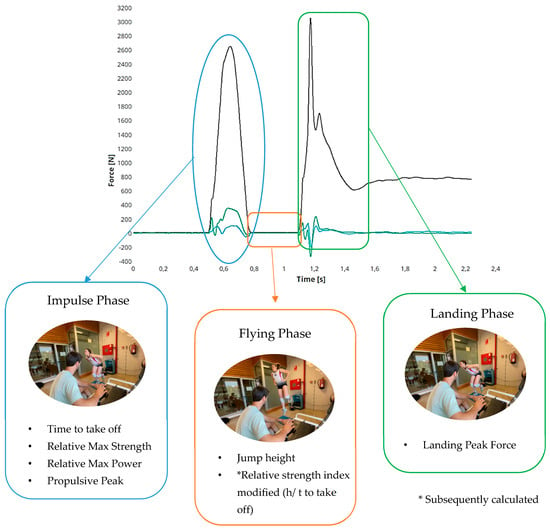
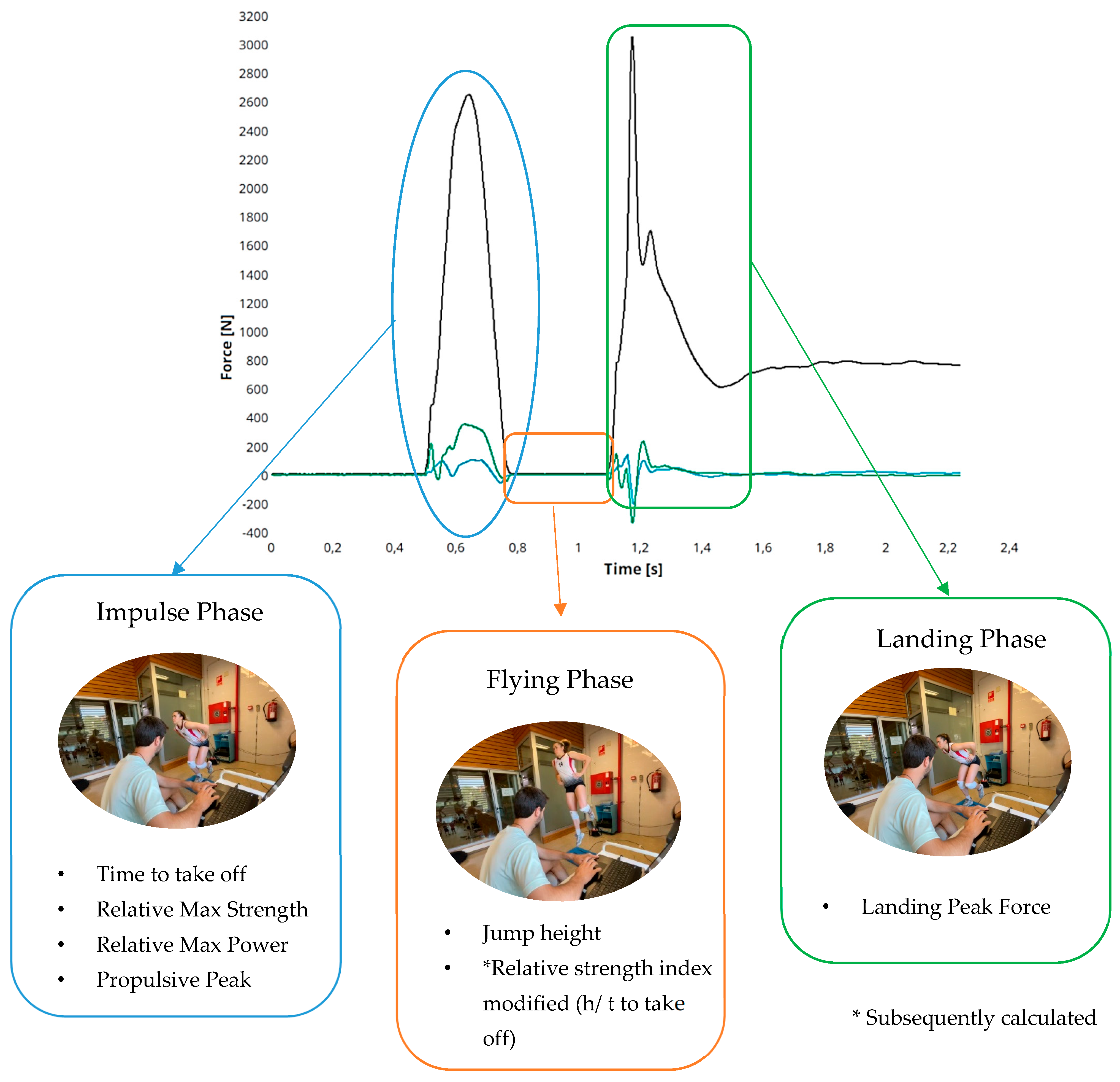
Subjects were required to stand with one leg on the center of the platform and place their hands on their hips. Limb dominance was operationally defined based on performance, specifically identifying the dominant leg as the one that achieved the greatest jump height during the testing trials. When ready, they performed a countermovement to a self-selected depth (instructed to maintain their natural, consistent displacement across all trials) before accelerating as hard as possible into a one-sided vertical jump, following the instruction to “jump as high as you can”. The non-jumping leg was slightly flexed at the knee. No additional swing of this leg was allowed during the jump, and the hands were to remain fixed to the hips. Upon airborne completion, athletes were strictly required to land entirely on the same testing leg and maintain a stable single-leg balance for at least 2 s to properly capture landing mechanics. Any deviation from these criteria resulted in an invalid trial and the test was repeated (i.e., hands removing from hips, non-jumping leg swinging, or landing instability). Three successful trials were completed on each leg with a rest period of 40 s between each trial. This recovery duration has been previously validated as sufficient to prevent neuromuscular fatigue during unilateral jump testing in youth and competitive populations [24,54]. The average of the three jumps and the average for the asymmetry index [55,56,57] were used for the analysis. Each variable of the jump was extrapolated from a different phase of the jump (Figure 1).
Figure 1.
Force–time curve of a single leg countermovement jump (slCMJ) recorded via Kistler force plate, illustrating the different jump phases and analyzed variables.
2.3. Statistical Analysis
Statistical analyses were performed using IBM SPSS Statistics for Windows, version 28.0 (IBM Corp., Armonk, NY, USA). Quantitative variables obtained in the study were described by central tendency and dispersion measures, namely the mean and standard deviation. The normality of the data distribution was systematically assessed using the Shapiro–Wilk test across all analyzed subgroups, given its superior statistical power for the specific sample sizes of the cohorts.
Within-session reliability of test measures was analyzed using two-way random interclass correlation coefficient (ICC) with absolute agreement (95% confidence intervals) and coefficient of variation (CV). ICC values were categorized as follows; >0.9 = excellent, 0.75–0.9 = good, 0.5–0.75 = moderate, and <0.5 = poor [58] and CV values were considered acceptable if <10% [59].
We calculated the asymmetry index using the following formula [12,17,20] in the slCMJ to quantify inter-limb asymmetry magnitude between limbs:
The higher-performing limb was defined as the side with the higher average value of the three trials, while the lower-performing limb was defined as the side with the lower average value.
As the variables were normally distributed, Student t-tests were used to compare differences in the inter-limb asymmetries between male and female athletes. No multiplicity corrections (e.g., Bonferroni) were applied because this study possesses an exploratory and descriptive nature aimed at comprehensive athletic screening. Each analyzed asymmetry metric reflects distinct mechanical and temporal phases of the jump (e.g., propulsive vs. landing phases), representing independent neuromuscular qualities. Applying highly conservative corrections would excessively increase Type II error rates, potentially masking meaningful practical differences critical for sports practitioners. The magnitude of the difference was determined using Cohen’s d effect sizes with 95% confidence intervals. To account for the specific characteristics of highly trained athletic cohorts, the qualitative evaluation of these values followed the modified scales suggested by Hopkins et al. [60]: <0.20 = trivial; 0.20–0.60 = small; 0.61–1.20 = moderate; 1.21–2.0 = large; and >2.0 = very large. The absolute magnitude of the ASI was selected as the primary outcome metric for this study. This approach aligns with established recommendations for group-level asymmetry analysis [7,54], as it prevents individual positive and negative values (associated with right vs. left limb dominance) from canceling each other out, which would otherwise lead to an artificial underestimation of the group’s actual neuromuscular imbalances. Because this study aimed to quantify the total magnitude of asymmetry across sports and sexes rather than individual lateralization or limb dominance, directional data was not aggregated.
A standard one-way between-groups ANOVA was used to assess differences in neuromuscular asymmetries between sports (basketball, handball and volleyball). When significant main effects were detected, Tukey post hoc tests were applied to locate the specific pairwise differences. Statistical significance was set at p < 0.05.
3. Results
3.1. Reliability of Measurements
The reliability analysis for the slCMJ variables demonstrated the following:
- Primary performance variables (jump height, relative power, and propulsive force) showed good-to-excellent within-trial reliability (ICC range: 0.74–0.94), while temporal and landing metrics displayed poor-to-moderate consistency (ICC range: 0.32–0.67).
- Acceptable-to-good measurement consistency was observed across most parameters, with CV values remaining below or close to the 10% threshold (range: 2.59–11.33%).
- Detailed reliability statistics (including specific values per sex and limb) for all variables studied are provided in Appendix A Table A1.
3.2. Sex Differences in Single-Leg Countermovement Jump Asymmetries
Significant sex differences in inter-limb asymmetries were observed exclusively for jump height and time-to-take-off. Table 2 presents the descriptive statistics and the comparative analysis of asymmetries according to sex.
Table 2.
Descriptive statistics and comparison of inter-limb asymmetries between female and male athletes (independent samples t-test).
The analysis of jump height revealed that female athletes exhibited significantly greater asymmetry values compared to male athletes (9.64 ± 6.43% vs. 6.48 ± 4.87%, p = 0.01; d = 0.59). Conversely, male athletes showed significantly higher asymmetry in the time to take-off (10.32 ± 7.5%) compared to females (6.4 ± 4.7%) (p = 0.003; d = 0.63).
Regarding the other five variables analyzed, no statistically significant differences were found (p > 0.05):
- Relative maximum strength.
- Relative maximum power.
- Modified reactive strength index (RSI-mod).
- Landing peak force.
- Propulsive peak force.
Although no statistically significant differences were detected for the remaining variables (p > 0.05), interpretation of the effect sizes suggested subtle, non-trivial practical differences between sexes. Specifically, male athletes displayed small-to-moderate effect sizes toward higher absolute asymmetry values in relative maximum strength (d = −0.34, p = 0.103) and landing peak force (d = −0.37, p = 0.07) compared to female athletes. These observed magnitudes warrant caution and should be interpreted as potential descriptive indicators of sex-specific strategy variances rather than definitive statistical differences (Table 2).
3.3. Comparison of Asymmetries Across Team Sports
The one-way ANOVA identified a significant main effect of sport type across the athletic disciplines for two specific inter-limb asymmetry variables (Table 3):
Table 3.
Descriptive statistics and comparison of inter-limb asymmetries across different team sports (ANOVA).
- Jump Height Asymmetry (%ASI h slCMJ): A significant main effect of sport type was detected (F(2,93) = 3.07, p = 0.05, ŋ2p = 0.062).
- ○
- Tukey post hoc pairwise comparisons revealed that volleyball players displayed significant lower asymmetry values (7.05 ± 4.9%) compared to handball players (11.88 ± 9.7%, p = 0.048).
- ○
- No statistically significant differences were observed between basketball players (8.73 ± 7.2%) and either handball or volleyball cohorts (p > 0.05).
- Relative Maximum Power Asymmetry (%ASI RMP): A significant main effect of sport type was observed (F(2,93) = 3.34, p = 0.04, ŋ2p = 0.067).
- ○
- Tukey post hoc pairwise comparisons revealed that volleyball players displayed significant lower asymmetry values (4.63 ± 3.7%) compared to basketball players (7.75 ± 5.3%, p = 0.03).
- ○
- No statistically significant differences were observed between handball players (6.51 ± 4.7%) and either basketball or volleyball cohorts (p > 0.05).
- Remaining Asymmetry Metrics: No statistically significant main effects of sport type (p > 0.05) were detected for any of the other kinematic, kinetic, or temporal asymmetry parameters studied (Table 3):
- ○
- Relative maximum strength (F(2,93) = 1.88, p = 0.15, ŋ2p = 0.039).
- ○
- Modified reactive strength index (F(2,93) = 1.32, p = 0.27, ŋ2p = 0.028).
- ○
- Time to take-off (F(2,93) = 0.73, p = 0.48, ŋ2p = 0.015).
- ○
- Landing peak force (F(2,93) = 1.36, p = 0.263, ŋ2p = 0.028).
- ○
- Propulsive peak force (F(2,93) = 2.17, p = 0.12, ŋ2p = 0.044).
4. Discussion
The aim of this study was to quantify and compare inter-limb asymmetries during the slCMJ between sexes and across different team sports in youth athletes. Our findings reveal that neuromuscular asymmetries in adolescent athletes are variable-dependent and differ according to both sex and the specific demands of the sport.
The primary finding of this investigation was that female athletes demonstrated significantly higher asymmetry values in jump height compared to their male counterparts. Conversely, male athletes exhibited greater asymmetry in time to take-off. Furthermore, our results regarding sport specificity partially confirmed the initial hypothesis: athletes in sports with predominantly bilateral patterns, such as volleyball, present lower levels of asymmetry in key performance variables like jump height and relative power compared to those in sports with more unilateral demands, such as handball and basketball. In summary, our study’s overarching hypothesis was partially confirmed, demonstrating that neuromuscular asymmetry patterns in elite youth athletes are complex, variable-dependent, and heavily dictated by both sex and sport-specific biomechanical profiles.
4.1. Sex Differences in Jump Height and Neuromuscular Asymmetries
Jump height has been identified as a primary variable for assessing performance and asymmetries in vertical jumping tests [34,61,62]. In the present study, female athletes demonstrated significantly greater asymmetry in jump height compared to their male counterparts (9.64 ± 6.43% vs. 6.48 ± 4.87%, p = 0.01; d = 0.59), confirming our initial hypothesis for this specific outcome parameter. This finding aligns with several studies that have reported higher outcome-based neuromuscular asymmetries in the female population. However, our results contrast with those reported by Fort-Vanmeerheaghe et al. [17], who found no significant sex differences in jump height asymmetry among adolescent athletes (15.9 ± 1.1 years). Interestingly, while the asymmetry values for females in our study (9.64 ± 6.43%) were mathematically close to those reported by Fort-Vanmeerheaghe et al. [17] (10.8 ± 6.92%), a notable discrepancy was observed in the male samples. Male athletes in our study exhibited substantially lower asymmetry (6.48%) compared to the 12.9% reported in their investigation. Similar divergent patterns in males were observed when comparing our findings with Domínguez-Navarro et al. [63], where male basketball players showed higher asymmetries (10.8%) than those in our sample.
These widespread inconsistencies in the literature highlight that sex-related differences in asymmetry are highly context-dependent and far from reaching a consensus. Beyond potential differences in training volume or sport-specific demands, these discrepancies may be largely driven by confounding factors such as the chronological versus biological maturation status of the youth cohorts, as well as methodological differences, specifically the measurement instrumentation. Most previous research [17,24,54,63] utilized contact mats or mobile applications, which are widely accessible but lack the precision of force platforms. Force plates provide more accurate insights into the jumping phases and take-off characteristics. However, attributing the lower asymmetry values found in our male sample solely to instrumentation would be an oversimplification. While force plates eliminate noise measurement and offer superior precision, these discrepancies across studies are multi-factorial. They likely reflect differences in sample characteristics, including the highly selected elite status of our academy athletes, their specific training backgrounds, and potential variations in biological maturation compared to amateur or recreationally active cohorts in previous literature. Furthermore, the higher asymmetry observed in female athletes in our study (p < 0.05) underscores the importance of sex-specific monitoring during adolescence While biological maturation was not directly modeled as a covariant in our statistical analyses, this developmental stage (14–18 years) is characterized by ongoing neuromuscular adaptations that are absent in fully matured adult populations (e.g., athletes over 25 years old). Therefore, these findings could conceptually reflect varying timelines in neuromuscular stabilization between sexes, though this systemic baseline difference remains a theoretical framework rather than a directly tested statistical mechanism in this study.
4.2. Neuromuscular Strategy and Force Production Asymmetries
Beyond jump height, the analysis of temporal and kinetic variables provides deeper insight into the neuromuscular strategies employed by athletes [34,35]. In our study, male athletes demonstrated significantly higher asymmetry in the time to take-off compared to females (10.32% vs. 6.4%). Take-off time is a critical indicator of neuromuscular status and efficiency [60,64]. The divergence between jump height and take-off time asymmetries suggests distinct neuromuscular challenges for each sex. While females exhibited higher “result-based” asymmetry (jump height), males showed a more pronounced “strategy-based” asymmetry (time to take-off).
This indicates that while male athletes achieve relatively symmetrical jump heights with both limbs, they utilize distinct, inconsistent underlying movement strategies to accomplish the task. A compelling neuromuscular interpretation for this behavior involves the rapid physiological changes unique to male adolescence, where accelerated gains in body mass and absolute muscle power might temporarily outpace the refinement of fine motor control and inter-limb coordination. Within this conceptual framework, young males may leverage motor abundance or structural redundancy—essentially “reaching the same performance destination via different kinetic paths” [65]. Speculatively, in athletic youth populations, this operational strategy manifests as higher trial-to-trial strategy variability, hiding underlying imbalances behind a symmetrical final outcome, which could theoretically elevate injury risk due to less efficient force-time characteristics during the push-off phase [60,66]. Because our study did not include electromyographical, anthropometric, or kinematic tracking to verify these mechanisms, these factors must be treated strictly as candidate interpretations rather than definitive explanations. Nevertheless, these findings highlight that evaluating asymmetry solely through performance outcomes like jump height may overlook critical deficits in movement quality and neuromuscular coordination [34,63]. Our findings regarding take-off time contrast with those of Pérez-Castilla A, et al. [67], who observed much lower asymmetries (2.3%) in amateur basketball players, a discrepancy that may stem from differences in age, competitive level, or sample size.
Regarding force production, our results showed no significant sex differences in propulsive or landing peak force asymmetries. This contrasts with research by Bailey et al. [15], who found significant sex differences in impulse asymmetries during bilateral jumps. This lack of alignment suggests that asymmetries may be task-specific; while bilateral jumps might highlight certain force production imbalances, the unilateral nature of the slCMJ used in this study may place different demands on neuromuscular control [15,54].
Furthermore, while previous literature often reports that female athletes exhibit greater asymmetries in dynamic stability, proprioception, and knee valgus moments [19,68], our findings indicate that for most kinetic variables, male and female adolescent athletes demonstrate nearly identical asymmetry patterns. Consequently, our initial hypothesis that females would be more asymmetrical across all variables was confirmed only for jump height and must be rejected for the remaining parameters. However, this rejection must be interpreted with caution when considering statistical power. Given the highly selected nature of our elite cohort and the resulting constraints on subgroup sample sizes, it remains possible that certain non-significant findings represent a Type II error (insufficient statistical power to detect an effect) rather than a true absence of sex-induced differences in these kinetic traits. This underscores the importance of not only utilizing a comprehensive battery of variables and accurate instrumentation, such as force plates, rather than relying solely on jump height to characterize an athlete’s profile, but also of conducting future large-scale, multi-center studies to definitively confirm these multi-variable trends.
4.3. Influence of Sport Specificity on Asymmetry Patterns
Sport-specific demands significantly influence the development of inter-limb asymmetries in adolescent athletes. In our study, volleyball athletes exhibited the lowest asymmetry values across several key variables, including jump height (7.05%) and relative maximum power (4.63%). These results confirm our initial hypothesis. While not directly tested in our study design, this finding can be plausibly attributed to the predominantly bilateral nature of volleyball’s most frequent explosive actions, such as the block and the jump set. While volleyball players do perform unilateral movements, it can be hypothesized that the systematic repetition of bilateral take-offs and landings fosters a more symmetrical neuromuscular profile compared to other team sports. However, since we did not strictly quantify sport-specific training volumes or the exact ratio of unilateral-to-bilateral actions during practice, this mechanistic interpretation remains speculative and should be confirmed through direct movement-tracking protocols.
In contrast, basketball and handball athletes showed higher levels of asymmetry, particularly in jump height (8.73 and 11.88%, respectively). While both basketball and handball involve a substantial volume of bilateral movements (e.g., jump shots, rebounds, or defensive blocks), they also structurally integrate high-frequency unilateral demands, such as layups, rapid changes in direction, and sport-specific asymmetric loading patterns (e.g., the three-step rhythm in handball). Although we did not directly quantify the exact volume of sport-specific movement exposure, it is highly likely that these conflicting mechanical stress patterns drive different outcomes. These findings align with the work of Parpa et al. [69], who noted that sports with highly asymmetrical actions tend to display greater functional imbalances. However, the development of these inter-limb differences must be viewed as highly multi-factorial; it is not solely a reflection of broad unilateral sport demands, but rather a complex interaction between position-specific roles, individualized training history, previous injuries, and specific movement preferences within each discipline.
Furthermore, our observations regarding sport-specific differences are supported by the landing mechanics analysis of Harato et al. [70], who used the Landing Error Scoring System (LESS) to compare basketball and volleyball players. Their findings indicated that volleyball players often present different mechanical stress patterns compared to basketball or soccer players, likely due to the sport’s unique landing requirements. However, the discrepancies observed between our study and previous research regarding the magnitude of these asymmetries may be due to our use of force platforms, which capture subtle kinetic imbalances that contact mats or observational scales might miss [34,35]. The lower asymmetry in volleyball underscores the importance of considering the “sport-type” when screening youth athletes, as the inherent mechanics of the discipline can either mitigate or exacerbate limb dominance.
4.4. Limitations and Future Perspectives
Despite the significant findings and the use of high-precision instrumentation, this study is not without limitations that should be acknowledged. First, the cross-sectional nature of research design precludes the establishment of causal relationships between sport specialization and the development of asymmetries over time. Longitudinal studies would be necessary to monitor how these neuromuscular imbalances evolve throughout the different stages of adolescent maturation.
Secondly, biological maturation was assessed using the equation by Mirwald et al. (2002) [53]. This approach presents specific limitations when applied to sport-specific cohorts. Youth athletic populations often exhibit skewed maturation profiles due to early selection processes (e.g., preference for early maturer in contact sports). Anthropometric equations are prone to a “regression-to-the-mean” effect, potentially underestimating the maturity offset in early maturers and overestimating it in late maturers. Consequently, while this method provides a practical, non-invasive estimate suitable for field settings, the potential error margin (SEE ± 0.5 years) and its limitations in highly selected athletic populations should be considered when interpreting the precise timing of the PHV in this cohort. Furthermore, a limitation to acknowledge is that biological maturation status was not statistically incorporated as a covariate in our primary inferential analyses. This decision was primarily guided by our specific cross-sectional study design, sample size constraints, and primary analytical objectives, which focused on profiling group-level variations across sexes and sports. Nevertheless, because we did not apply a formal statistical control for maturity staging, residual confounding by ongoing maturation processes cannot be completely excluded, particularly given the observable variations in years post-PHV across certain sub-groups. Consequently, readers should interpret the speculated maturation-related discussion points as theoretical frameworks rather than directly modeled statistical effects.
Additionally, in accordance with the SAGER guidelines, this study categorized participants strictly based on biological sex assigned at birth due to its direct influence on anthropometric metrics, hormonal profiles, and neuromuscular maturation during adolescence. However, we acknowledge that gender identity was not assessed. This represents a limitation, as sociocultural factors associated with gender identity may also influence training histories, sports socialization, and injury reporting, which should be explored in future holistic investigations.
Thirdly, although participants were instructed to maintain their usual routines, external factors such as nutritional intake, sleep quality, and cumulative fatigue from previous training sessions or school activities were not strictly controlled. These variables are known to influence neuromuscular performance and could introduce some variability in the results. Future research should aim to incorporate more rigorous monitoring of the athletes’ recovery status and lifestyle factors to minimize these potential confounders.
Fourthly, it is critical to acknowledge that while most kinetic and performance variables demonstrated good-to-excellent reliability, certain parameters fell below the acceptable threshold (ICC < 0.50) in the reliability analysis (see Appendix A). Specifically, the time to take-off for the male right limb (ICC = 0.40), along with RSI-Mod and landing peak force, exhibited poor reliability. This high intra-subject variability is a known challenge when testing youth populations, as rapid biological maturation and ongoing neuromuscular adaptations often lead to inconsistent movement strategies and force–time characteristics. Consequently, the findings related to these specific parameters must be interpreted with caution, and future research should consider longer familiarization protocols to stabilize these highly sensitive metrics in young cohorts.
Additionally, a limitation of the present study is the absence of an a priori power analysis to determine sample size. Instead, a convenience sample comprising all available elite youth athletes from the high-performance centers was utilized. Consequently, the sample size was inherently restricted by the limited and highly selected nature of this specific elite athletic cohort, which should be considered when evaluating the statistical power of certain variables. Relatedly, due to these sample size constraints, male and female athletes were pooled for the inter-sport ANOVA. While this avoided fragmenting the sample into underpowered sub-groups and inflating Type II error, it prevents isolating whether the observed differences (e.g., in relative maximum power) reflect pure sport-specific adaptations or partial sex-composition effects. Additionally, because corrections for multiple comparisons (e.g., Bonferroni) were omitted due to the exploratory and descriptive nature of this screening study, a higher inherent risk of Type I error should be acknowledged when interpreting the reported p-values. Consequently, these comparative findings should be interpreted with caution. While the cohort was representative of regional competitive and elite development levels, including a broader range of sports and higher-level international academies could provide further insights into how competitive pressure and training volume affect asymmetry patterns. Future investigations should also consider the relationship between the kinetic asymmetries identified in this study and the actual incidence of injuries through prospective injury tracking. This would help establish clear clinical thresholds for the asymmetry percentages reported here, moving from our current cross-sectional associations to prospective, predictive models of injury susceptibility.
5. Conclusions
The findings of this study demonstrate that the single-leg countermovement jump (slCMJ) is a highly reliable tool for quantifying neuromuscular asymmetries in youth athletes. Our results highlight that inter-limb asymmetries are not uniform but are significantly influenced by both sex and sport-specific demands.
Specifically, a distinct sex-related asymmetry pattern emerged: female athletes exhibited greater asymmetry in jump height (“result-based” asymmetry), while male athletes showed higher asymmetry in the time to take-off (“strategy-based” asymmetry). This suggests that adolescent males and females may require different neuromuscular monitoring and intervention focuses during maturation.
Furthermore, sport specificity plays a crucial role in modulating these imbalances. Volleyball athletes presented a more symmetrical profile in terms of jump height and relative power, likely due to the highly synchronized, bilateral nature of the sport’s primary technical actions (e.g., blocking and jumping). In contrast, basketball and handball athletes exhibited higher asymmetry magnitudes, reflecting the predominantly unilateral and multi-planar biomechanical demands characteristic of their respective disciplines.
In conclusion, sports medicine practitioners and strength and conditioning specialists should adopt a comprehensive, multi-variable approach to inter-limb asymmetry screening. Relying solely on outcome-based metrics like jump height may overlook critical neuromuscular deficits hidden within the movement strategy (e.g., time to take-off). These findings provide a robust baseline for developing tailored, sex- and sport-specific injury prevention and performance-enhancing intervention programs in elite youth sports.
Author Contributions
Conceptualization, O.N.-C., M.P.-M. and A.F.-V.; methodology, O.N.-C., M.P.-M. and A.F.-V.; formal analysis, O.N.-C., M.P.-M., A.F.-V., B.M.-P. and A.M.M.; investigation, O.N.-C., M.P.-M. and A.F.-V.; resources, O.N.-C.; data curation, O.N.-C., B.M.-P. and A.M.M.; writing—original draft preparation, O.N.-C.; writing—review and editing, O.N.-C., M.P.-M., A.F.-V., A.M.M. and B.M.-P.; supervision, A.F.-V. and M.P.-M. All authors have read and agreed to the published version of the manuscript.
Funding
This research received no external funding.
Institutional Review Board Statement
The study was conducted in accordance with the Declaration of Helsinki and approved by the Ethics Committee of the Catalan Sport Council (approval code 025/CEICGC/2023); approval date 28 July 2023).
Informed Consent Statement
Informed consent was obtained from all subjects involved in the study. Written informed consent has been obtained from the patients to publish this paper.
Data Availability Statement
The data presented in this study are available on request from the corresponding author due to privacy restrictions.
Acknowledgments
The authors would like to express their sincere gratitude to all the athletes who participated in this study, as well as their families and coaches, for their time and commitment. We also extend our thanks to the collaborating clubs (Handball, Basketball, and Volleyball) for providing access to their facilities and players. Special thanks are given to the Facultat de Psicologia, Ciències de l’Educació i de l’Esport Blanquerna (Universitat Ramon Llull) for their technical support and for providing the force platforms and instrumentation used during the data collection process.
Conflicts of Interest
The authors declare no conflicts of interest.
Abbreviations
The following abbreviations are used in this manuscript:
| slCMJ | Single-leg countermovement jump. |
| slBJ | Single-leg broad jump. |
| slLJ | Single-leg lateral jump. |
| slDJ | Single-leg drop jump. |
| PHV | Peak height velocity. |
| ICC | Interclass correlation coefficient. |
| CV | Coefficient of variation. |
| %ASI | Percentage of asymmetry. |
| RSI-mod | Reactive Strength Index—modified. |
| SD | Standard deviation. |
| LESS | Landing error scoring system. |
Appendix A
Table A1.
Reliability measures; interclass correlation coefficient (ICC) and coefficient of variation (CV) values of the single-leg countermovement jump.
References
- Spencer, M.; Bishop, D.; Dawson, B.; Goodman, C. Physiological and Metabolic Responses of Repeated-Sprint Activities: Specific to Field-Based Team Sports. Sports Med. 2005, 35, 1025–1044. [Google Scholar] [CrossRef] [Scilit] [PubMed]
- Hewit, J.K.; Cronin, J.B.; Hume, P.A. Asymmetry in Multi-Directional Jumping Tasks. Phys. Ther. Sport 2012, 13, 238–242. [Google Scholar] [CrossRef] [Scilit] [PubMed]
- Maloney, S.J.; Richards, J.; Nixon, D.G.D.; Harvey, L.J.; Fletcher, I.M. Do Stiffness and Asymmetries Predict Change of Direction Performance? J. Sports Sci. 2016, 35, 547–556. [Google Scholar] [CrossRef] [Scilit] [PubMed]
- Menzel, H.-J.; Chagas, M.H.; Szmuchrowski, L.A.; Araujo, S.R.S.; De Andrade, A.G.P.; De Jesus-Moraleida, F.R. Analysis of Lower Limb Asymmetries by Isokinetic and Vertical Jump Tests in Soccer Players. J. Strength Cond. Res. 2013, 27, 1370–1377. [Google Scholar] [CrossRef] [Scilit] [PubMed]
- Paterno, M.V.; Ford, K.R.; Myer, G.D.; Heyl, R.; Hewett, T.E. Limb Asymmetries in Landing and Jumping 2 Years Following Anterior Cruciate Ligament Reconstruction. Clin. J. Sport Med. 2007, 17, 258–262. [Google Scholar] [CrossRef] [Scilit] [PubMed]
- Paterno, M.V.; Schmitt, L.C.; Ford, K.R.; Rauh, M.J.; Myer, G.D.; Huang, B.; Hewett, T.E. Biomechanical Measures during Landing and Postural Stability Predict Second Anterior Cruciate Ligament Injury after Anterior Cruciate Ligament Reconstruction and Return to Sport. Am. J. Sports Med. 2010, 38, 1968–1978. [Google Scholar] [CrossRef] [Scilit] [PubMed]
- Bishop, C.; Turner, A.; Read, P. Effects of Inter-Limb Asymmetries on Physical and Sports Performance: A Systematic Review. J. Sports Sci. 2018, 36, 1135–1144. [Google Scholar] [CrossRef] [Scilit] [PubMed]
- Taylor, J.B.; Ford, K.R.; Nguyen, A.-D.; Terry, L.N.; Hegedus, E.J. Prevention of Lower Extremity Injuries in Basketball: A Systematic Review and Meta-Analysis. SPORTS Health 2015, 7, 392–398. [Google Scholar] [CrossRef] [Scilit] [PubMed]
- Foss, K.D.B.; Myer, G.D.; Hewett, T.E. Epidemiology of Basketball, Soccer, and Volleyball Injuries in Middle-School Female Athletes. Phys. Sportsmed. 2014, 42, 146–153. [Google Scholar] [CrossRef] [Scilit] [PubMed]
- Hewett, T.E.; Myer, G.D.; Ford, K.R.; Paterno, M.V.; Quatman, C.E. Mechanisms, Prediction, and Prevention of ACL Injuries: Cut Risk with Three Sharpened and Validated Tools. J. Orthop. Res. 2016, 34, 1843–1855. [Google Scholar] [CrossRef] [Scilit] [PubMed]
- Zuckerman, S.L.; Wegner, A.M.; Roos, K.G.; Djoko, A.; Dompier, T.P.; Kerr, Z.Y. Injuries Sustained in National Collegiate Athletic Association Men’s and Women’s Basketball, 2009/2010–2014/2015. Br. J. Sports Med. 2018, 52, 261–268. [Google Scholar] [CrossRef] [Scilit] [PubMed]
- Impellizzeri, F.M.; Rampinini, E.; Maffiuletti, N.; Marcora, S.M. A Vertical Jump Force Test for Assessing Bilateral Strength Asymmetry in Athletes. Med. Sci. Sports Exerc. 2007, 39, 2044–2050. [Google Scholar] [CrossRef] [Scilit] [PubMed]
- Grindem, H.; Logerstedt, D.; Eitzen, I.; Moksnes, H.; Axe, M.J.; Snyder-Mackler, L.; Engebretsen, L.; Risberg, M.A. Single-Legged Hop Tests as Predictors of Self-Reported Knee Function in Nonoperatively Treated Individuals With Anterior Cruciate Ligament Injury. Am. J. Sports Med. 2011, 39, 2347–2354. [Google Scholar] [CrossRef] [Scilit] [PubMed]
- Myer, G.D.; Brent, J.L.; Ford, K.R.; Hewett, T.E. Real-Time Assessment and Neuromuscular Training Feedback Techniques to Prevent Anterior Cruciate Ligament Injury in Female Athletes. Strength Cond. J. 2011, 33, 21–35. [Google Scholar] [CrossRef] [Scilit] [PubMed]
- Bailey, C.A.; Sato, K.; Burnett, A.; Stone, M.H. Force-Production Asymmetry in Male and Female Athletes of Differing Strength Levels. Int. J. Sports Physiol. Perform. 2015, 10, 504–508. [Google Scholar] [CrossRef] [Scilit] [PubMed]
- Wei, Y.; Zhou, Z.; Jie, T.; Yuan, Y.; Zhou, H.; Gao, X.; Chen, T.; Ge, Q.; Xiang, L.; Xu, D.; et al. Distinct Motor Modules After Anterior Cruciate Ligament Reconstruction During Stair Descent: A One-Year Longitudinal Study. IEEE Trans. Neural Syst. Rehabil. Eng. 2026, 34, 1734–1745. [Google Scholar] [CrossRef] [Scilit] [PubMed]
- Fort-Vanmeerhaeghe, A.; Bishop, C.; Buscà, B.; Aguilera-Castells, J.; Vicens-Bordas, J.; Gonzalo-Skok, O. Inter-Limb Asymmetries Are Associated with Decrements in Physical Performance in Youth Elite Team Sports Athletes. PLoS ONE 2020, 15, e0229440. [Google Scholar] [CrossRef] [Scilit] [PubMed]
- Kyritsis, P.; Bahr, R.; Landreau, P.; Miladi, R.; Witvrouw, E. Likelihood of ACL Graft Rupture: Not Meeting Six Clinical Discharge Criteria before Return to Sport Is Associated with a Four Times Greater Risk of Rupture. Br. J. Sports Med. 2016, 50, 946–951. [Google Scholar] [CrossRef] [Scilit] [PubMed]
- Sell, T.C.; Lephart, S.M. Neuromuscular Differences Between Men and Women. In ACL Injuries in the Female Athlete; Noyes, F.R., Barber-Westin, S., Eds.; Springer: Berlin/Heidelberg, Germany, 2018; pp. 133–152. ISBN 978-3-662-56557-5. [Google Scholar]
- Read, P.J.; Oliver, J.L.; Myer, G.D.; De Ste Croix, M.B.A.; Lloyd, R.S. The Effects of Maturation on Measures of Asymmetry During Neuromuscular Control Tests in Elite Male Youth Soccer Players. Pediatr. Exerc. Sci. 2018, 30, 168–175. [Google Scholar] [CrossRef] [Scilit] [PubMed]
- Ceroni, D.; Martin, X.E.; Delhumeau, C.; Farpour-Lambert, N.J. Bilateral and Gender Differences During Single-Legged Vertical Jump Performance in Healthy Teenagers. J. Strength Cond. Res. 2012, 26, 452–457. [Google Scholar] [CrossRef] [Scilit] [PubMed]
- Fort-Vanmeerhaeghe, A.; Montalvo, A.M.; Sitjà-Rabert, M.; Kiefer, A.W.; Myer, G.D. Neuromuscular Asymmetries in the Lower Limbs of Elite Female Youth Basketball Players and the Application of the Skillful Limb Model of Comparison. Phys. Ther. Sport 2015, 16, 317–323. [Google Scholar] [CrossRef] [Scilit] [PubMed]
- Theoharopoulos, A.; Tsitskaris, G.; Nikopoulou, M.; Tsaklis, P. Knee Strength of Professional Basketball Players. J. Strenght Cond. Res. 2000, 14, 457–463. [Google Scholar] [CrossRef] [Scilit]
- Madruga-Parera, M.; Bishop, C.; Beato, M.; Fort-Vanmeerhaeghe, A.; Gonzalo-Skok, O.; Romero-Rodríguez, D. Relationship Between Interlimb Asymmetries and Speed and Change of Direction Speed in Youth Handball Players. J. Strength Cond. Res. 2021, 35, 3482–3490. [Google Scholar] [CrossRef] [Scilit] [PubMed]
- Rahnama, N.; Lees, A.; Bambaecichi, E. A Comparison of Muscle Strength and Flexibility between the Preferred and Non-Preferred Leg in English Soccer Players. Ergonomics 2005, 48, 1568–1575. [Google Scholar] [CrossRef] [Scilit] [PubMed]
- Markou, S.; Vagenas, G. Multivariate Isokinetic Asymmetry of the Knee and Shoulder in Elite Volleyball Players. Eur. J. Sport Sci. 2006, 6, 71–80. [Google Scholar] [CrossRef] [Scilit]
- Lawson, B.R.; Stephens, T.M.; DeVoe, D.E.; Reiser, R.F. Lower-Extremity Bilateral Differences During Step-Close and No-Step Countermovement Jumps With Concern for Gender. J. Strength Cond. Res. 2006, 20, 608–619. [Google Scholar] [CrossRef] [Scilit]
- Bishop, C.; Turner, A.; Maloney, S.; Lake, J.; Loturco, I.; Bromley, T.; Read, P. Drop Jump Asymmetry Is Associated with Reduced Sprint and Change-of-Direction Speed Performance in Adult Female Soccer Players. Sports 2019, 7, 29. [Google Scholar] [CrossRef] [Scilit] [PubMed]
- Maloney, S.J. The Relationship Between Asymmetry and Athletic Performance: A Critical Review. J. Strength Cond. Res. 2019, 33, 2579–2593. [Google Scholar] [CrossRef] [Scilit] [PubMed]
- Nevot-Casas, O.; Pujol-Marzo, M.; Moreno-Planes, B.; Fort-Vanmeerhaeghe, A. Neuromuscular Fatigue Effects on Hamstring to Quadriceps Ratio in Young Female Players. Apunt. Sports Med. 2020, 55, 137–142. [Google Scholar] [CrossRef] [Scilit]
- Whiteley, R.; Jacobsen, P.; Prior, S.; Skazalski, C.; Otten, R.; Johnson, A. Correlation of Isokinetic and Novel Hand-Held Dynamometry Measures of Knee Flexion and Extension Strength Testing. J. Sci. Med. Sport 2012, 15, 444–450. [Google Scholar] [CrossRef] [Scilit] [PubMed]
- Peek, K.; Gatherer, D.; Bennett, K.J.M.; Fransen, J.; Watsford, M. Muscle Strength Characteristics of the Hamstrings and Quadriceps in Players from a High-Level Youth Football (Soccer) Academy. Res. Sports Med. 2018, 26, 276–288. [Google Scholar] [CrossRef] [Scilit] [PubMed]
- Thompson, B.J.; Cazier, C.S.; Bressel, E.; Dolny, D.G. A Lower Extremity Strength-Based Profile of NCAA Division I Women’s Basketball and Gymnastics Athletes: Implications for Knee Joint Injury Risk Assessment. J. Sports Sci. 2018, 36, 1749–1756. [Google Scholar] [CrossRef] [Scilit] [PubMed]
- Bishop, C.; Turner, A.; Jordan, M.; Harry, J.; Loturco, I.; Lake, J.; Comfort, P. A Framework to Guide Practitioners for Selecting Metrics During the Countermovement and Drop Jump Tests. Strength Cond. J. 2022, 44, 95–103. [Google Scholar] [CrossRef] [Scilit]
- Wade, L.; Lichtwark, G.A.; Farris, D.J. Comparisons of Laboratory-based Methods to Calculate Jump Height and Improvements to the Field-based Flight-time Method. Scand. J. Med. Sci. Sports 2020, 30, 31–37. [Google Scholar] [CrossRef] [Scilit] [PubMed]
- Arboix-Alió, J.; Bishop, C.; Benet, A.; Buscà, B.; Aguilera-Castells, J.; Fort-Vanmeerhaeghe, A. Assessing the Magnitude and Direction of Asymmetry in Unilateral Jump and Change of Direction Speed Tasks in Youth Female Team-Sport Athletes. J. Hum. Kinet. 2021, 79, 15–27. [Google Scholar] [CrossRef] [Scilit] [PubMed]
- Bishop, C.; Pereira, L.A.; Reis, V.P.; Read, P.; Turner, A.N.; Loturco, I. Comparing the Magnitude and Direction of Asymmetry during the Squat, Countermovement and Drop Jump Tests in Elite Youth Female Soccer Players. J. Sports Sci. 2020, 38, 1296–1303. [Google Scholar] [CrossRef] [Scilit] [PubMed]
- Tingelstad, L.M.; Raastad, T.; Myklebust, G.; Gjerstad Andersen, T.E.; Solstad, B.E.; Bugten, J.B.; Luteberget, L.S. Age and Sex Differences in Physical Performance Among Adolescent Team Sport Athletes. Eur. J. Sport Sci. 2025, 25, e12284. [Google Scholar] [CrossRef] [Scilit] [PubMed]
- Albaladejo-Saura, M.; Vaquero-Cristóbal, R.; García-Roca, J.A.; Esparza-Ros, F. The Effect of Age, Biological Maturation and Birth Quartile in the Kinanthropometric and Physical Fitness Differences between Male and Female Adolescent Volleyball Players. Children 2022, 9, 58. [Google Scholar] [CrossRef] [Scilit] [PubMed]
- Hunter, S.K.; Angadi, S.S.; Bhargava, A.; Harper, J.; Hirschberg, A.L.; Levine, B.D.; Moreau, K.L.; Nokoff, N.J.; Stachenfeld, N.S.; Bermon, S. The Biological Basis of Sex Differences in Athletic Performance: Consensus Statement for the American College of Sports Medicine. Med. Sci. Sports Exerc. 2023, 55, 2328–2360. [Google Scholar] [CrossRef] [Scilit] [PubMed]
- Williams, M.D.; Ramirez-Campillo, R.; Chaabene, H.; Moran, J. Neuromuscular Training and Motor Control in Youth Athletes: A Meta-Analysis. Percept. Mot. Ski. 2021, 128, 1975–1997. [Google Scholar] [CrossRef] [Scilit] [PubMed]
- Bertozzi, F.; Brunetti, C.; Maver, P.; Galli, M.; Tarabini, M. The Role of Age and Maturation on Jump Performance and Postural Control in Female Adolescent Volleyball Players over a Season. BMC Sports Sci. Med. Rehabil. 2025, 17, 85. [Google Scholar] [CrossRef] [Scilit] [PubMed]
- Holden, S.; Boreham, C.; Delahunt, E. Sex Differences in Landing Biomechanics and Postural Stability During Adolescence: A Systematic Review with Meta-Analyses. Sports Med. 2016, 46, 241–253. [Google Scholar] [CrossRef] [Scilit] [PubMed]
- Butcher, A.J.; Ward, S.; Clissold, T.; Richards, J.; Hébert-Losier, K. Maturation and Biomechanical Risk Factors Associated with Anterior Cruciate Ligament Injury: Is There a Link? A Systematic Review. Phys. Ther. Sport 2024, 68, 31–50. [Google Scholar] [CrossRef] [Scilit] [PubMed]
- Marzouki, H.; Cherni, B.; Sassi, A.E.; Bouassida, A.; Bouhlel, E.; Chen, Y.-S.; Chamari, K. Inter-Limb Asymmetry across Multiple Soccer Tasks Varies with Maturity Status in Young Players: A Cross-Sectional Study. Biol. Sport 2026, 43, 369–378. [Google Scholar] [CrossRef] [Scilit] [PubMed]
- Phukan, M.I.; Thapa, R.K.; Kumar, G.; Bishop, C.; Chaabene, H.; Ramirez-Campillo, R. Inter-Limb Jump Asymmetries and Their Association with Sport-Specific Performance in Young Male and Female Swimmers. Int. J. Environ. Res. Public Health 2021, 18, 7324. [Google Scholar] [CrossRef] [Scilit] [PubMed]
- Guan, Y.; Bredin, S.S.D.; Taunton, J.; Jiang, Q.; Wu, N.; Warburton, D.E.R. Predicting the Risk of Injuries Through Assessments of Asymmetric Lower Limb Functional Performance: A Prospective Study of 415 Youth Taekwondo Athletes. Orthop. J. Sports Med. 2023, 11, 23259671231185586. [Google Scholar] [CrossRef] [Scilit] [PubMed]
- Cadens Roca, M.; Planas-Anzano, A.; Peirau-Terés, X.; Bishop, C.; Romero-Rodríguez, D.; Madruga-Parera, M. Relationship between Asymmetry Profiles and Jump Performance in Youth Female Handball Players. J. Hum. Kinet. 2023, 88, 5–16. [Google Scholar] [CrossRef] [Scilit] [PubMed]
- Robles-Palazón, F.J.; McMahon, J.J.; Ayala, F.; Comfort, P. Things to Keep in Mind When Selecting Physical Assessments in Youth Soccer: Correlations between Test Performances, Interlimb Asymmetries, and Effects of Maturation. PLoS ONE 2024, 19, e0305570. [Google Scholar] [CrossRef] [Scilit] [PubMed]
- Hewett, T.E.; Ford, K.R.; Hoogenboom, B.J.; Myer, G.D. Understanding and Preventing Acl Injuries: Current Biomechanical and Epidemiologic Considerations - Update 2010. N. Am. J. Sports Phys. Ther. 2010, 5, 234–251. [Google Scholar] [PubMed]
- Madruga-parera, M.; Bishop, C.; Fort-vanmeerhaeghe, A.; Beato, M.; Gonzalo-Skok, O.; Romero-Rodríguez, D. Effects of 8 Weeks of Isoinertial vs.. Cable-Resistance Training on Motor Skills Performance and Interlimb Asymmetries. J. Strength Cond. Res. 2020, 29, 1200–1208. [Google Scholar] [CrossRef] [Scilit]
- Heidari, S.; Babor, T.F.; De Castro, P.; Tort, S.; Curno, M. Sex and Gender Equity in Research: Rationale for the SAGER Guidelines and Recommended Use. Res. Integr. Peer Rev. 2016, 1, 2. [Google Scholar] [CrossRef] [Scilit] [PubMed]
- Mirwald, R.L.; G. Baxter-Jones, A.D.; Bailey, D.A.; Beunen, G.P. An Assessment of Maturity from Anthropometric Measurements. Med. Sci. Sports Exerc. 2002, 34, 689–694. [Google Scholar] [CrossRef] [Scilit] [PubMed]
- Bishop, C.; Read, P.; McCubbine, J.; Turner, A. Vertical and Horizontal Asymmetries Are Related to Slower Sprinting and Jump Performance in Elite Youth Female Soccer Players. J. Strength Cond. Res. 2021, 35, 56–63. [Google Scholar] [CrossRef] [Scilit] [PubMed]
- Quagliarella, L.; Sasanelli, N.; Belgiovine, G.; Accettura, D.; Notarnicola, A.; Moretti, B. Evaluation of Counter Movement Jump Parameters in Young Male Soccer Players. J. Appl. Biomater. Biomech. 2011, 9, 40–46. [Google Scholar] [CrossRef] [Scilit] [PubMed]
- Górski, M.; Starczewski, M.; Pastuszak, A.; Mazur-Różycka, J.; Gajewski, J.; Buśko, K. Changes of Strength and Maximum Power of Lower Extremities in Adolescent Handball Players during a Two-Year Training Cycle. J. Hum. Kinet. 2018, 63, 95–103. [Google Scholar] [CrossRef] [Scilit] [PubMed]
- Makaracı, Y.; Özer, Ö.; Soslu, R.; Uysal, A. Bilateral Counter Movement Jump, Squat, and Drop Jump Performances in Deaf and Normal-Hearing Volleyball Players: A Comparative Study. J. Exerc. Rehabil. 2021, 17, 339–347. [Google Scholar] [CrossRef] [Scilit] [PubMed]
- Koo, T.K.; Li, M.Y. A Guideline of Selecting and Reporting Intraclass Correlation Coefficients for Reliability Research. J. Chiropr. Med. 2016, 15, 155–163. [Google Scholar] [CrossRef] [Scilit] [PubMed]
- Cormack, S.J.; Newton, R.U.; McGuigan, M.R.; Doyle, T.L.A. Reliability of Measures Obtained During Single and Repeated Countermovement Jumps. Int. J. Sports Physiol. Perform. 2008, 3, 131–144. [Google Scholar] [CrossRef] [Scilit] [PubMed]
- Hopkins, W.G.; Marshall, S.W.; Batterham, A.M.; Hanin, J. Progressive Statistics for Studies in Sports Medicine and Exercise Science. Med. Sci. Sports Exerc. 2009, 41, 3–12. [Google Scholar] [CrossRef] [Scilit] [PubMed]
- Ziv, G.; Lidor, R. Vertical Jump in Female and Male Volleyball Players: A Review of Observational and Experimental Studies. Scand. J. Med. Sci. Sports 2010, 20, 556–567. [Google Scholar] [CrossRef] [Scilit] [PubMed]
- Laurson, K.R.; Baptista, F.; Mahar, M.T.; Welk, G.J.; Janz, K.F. Long Jump, Vertical Jump, and Vertical Jump Power Reference Curves for 10-18 Year Olds. Meas. Phys. Educ. Exerc. Sci. 2022, 26, 306–314. [Google Scholar] [CrossRef] [Scilit]
- Domínguez-Navarro, F.; Gámez-Payá, J.; Ricart-Luna, B.; Chulvi-Medrano, I. Exploring the Implications of Inter-Limb Asymmetries on Sprint, Agility, and Jump Performance in Young Highly-Trained Basketball Athletes: Is There a Relevant Threshold? Medicina 2024, 60, 131. [Google Scholar] [CrossRef] [Scilit] [PubMed]
- Rocchi, J.E.; Labanca, L.; Laudani, L.; Minganti, C.; Mariani, P.P.; Macaluso, A. Timing of Muscle Activation Is Altered During Single-Leg Landing Tasks After Anterior Cruciate Ligament Reconstruction at the Time of Return to Sport. Clin. J. Sport Med. 2020, 30, e186–e193. [Google Scholar] [CrossRef] [Scilit] [PubMed]
- Latash, M.L. The Bliss (Not the Problem) of Motor Abundance (Not Redundancy). Exp. Brain Res. 2012, 217, 1–5. [Google Scholar] [CrossRef] [Scilit] [PubMed]
- Bromley, T.; Turner, A.; Read, P.; Lake, J.; Maloney, S.; Chavda, S.; Bishop, C. Effects of a Competitive Soccer Match on Jump Performance and Interlimb Asymmetries in Elite Academy Soccer Players. J. Strength Cond. Res. 2021, 35, 1707–1714. [Google Scholar] [CrossRef] [Scilit] [PubMed]
- Pérez-Castilla, A.; García-Ramos, A.; Janicijevic, D.; Delgado-García, G.; De La Cruz, J.C.; Rojas, F.J.; Cepero, M. Between-Session Reliability of Performance and Asymmetry Variables Obtained during Unilateral and Bilateral Countermovement Jumps in Basketball Players. PLoS ONE 2021, 16, e0255458. [Google Scholar] [CrossRef] [Scilit] [PubMed]
- Ford, K.R.; Myer, G.D.; Hewett, T.E. Valgus Knee Motion during Landing in High School Female and Male Basketball Players. Med. Sci. Sports Exerc. 2003, 35, 1745–1750. [Google Scholar] [CrossRef] [Scilit] [PubMed]
- Parpa, K.; Michaelides, M. Anterior-Posterior and Inter-Limb Lower Body Strength Asymmetry in Soccer, Basketball, Futsal, and Volleyball Players. Medicina 2022, 58, 1080. [Google Scholar] [CrossRef] [Scilit] [PubMed]
- Harato, K.; Morishige, Y.; Kobayashi, S.; Niki, Y.; Nagura, T. Biomechanical Features of Drop Vertical Jump Are Different among Various Sporting Activities. BMC Musculoskelet. Disord. 2022, 23, 331. [Google Scholar] [CrossRef] [Scilit] [PubMed]

Disclaimer/Publisher’s Note: The statements, opinions and data contained in all publications are solely those of the individual author(s) and contributor(s) and not of MDPI and/or the editor(s). MDPI and/or the editor(s) disclaim responsibility for any injury to people or property resulting from any ideas, methods, instructions or products referred to in the content. |
© 2026 by the authors. Licensee MDPI, Basel, Switzerland. This article is an open access article distributed under the terms and conditions of the Creative Commons Attribution (CC BY) license.