


Abstract
Capsicum chinense Jacq. is an economically important chili pepper species characterized by a high capsaicinoid content, which contributes to its growing relevance in the food, pharmaceutical, and agricultural sectors. Although the chemistry and biological properties of capsaicinoids have been extensively investigated, available information remains fragmented, and no review has comprehensively integrated their botanical aspects, chemistry, biosynthesis, and insecticidal potential. This review provides an integrated overview of the major capsaicinoids of C. chinense, particularly capsaicin, dihydrocapsaicin, and nordihydrocapsaicin, focusing on their chemical composition, biosynthetic pathways, structure–activity relationships, and insecticidal properties and mechanisms. Particular emphasis is placed on the relationship between chemical structure and biological activity, as well as on the role of capsaicinoids as natural defense compounds and their insecticidal potential. Current evidence indicates that capsaicinoids exhibit insecticidal, repellent, and antifeedant activities through multiple mechanisms, including membrane disruption, oxidative stress induction, and interference with ion transport and neuronal signaling. Despite these promising findings, further field validation, methodological standardization, and optimized formulations are required. Overall, this review integrates the currently dispersed evidence on C. chinense capsaicinoids and highlights their potential as bioactive compounds for the development of more sustainable botanical insecticides.
1. Introduction
The genus Capsicum, which comprises about 30 species, is the most economically important group within the family Solanaceae and is widely recognized as an important horticultural crop. Its fruits, commonly known as peppers or chilies, have been part of the human diet for millennia, traditionally used as a spice or herb. Archaeological evidence indicates that indigenous peoples in Mesoamerica used these plants as early as 7000 B.C. [1]. This botanical group is notable for its high content of vitamins A, C, and E, as well as capsaicinoids, flavonoids, and carotenoids—compounds that confer a wide range of biological properties [2].
At present, five species have been domesticated: C. annuum, C. pubescens, C. frutescens, C. baccatum, and C. chinense. These species differ in the wide variety of shapes, colors, and flavors of their fruits, with China, Mexico, and India being the main global producers [3]. Among their chemical constituents, capsaicinoids (the compounds responsible for pungency) stand out as the principal components. Capsaicin (trans-8-methyl-N-vanillyl-6-nonenamide) is the most abundant alkaloid, followed by dihydrocapsaicin and nordihydrocapsaicin [4]. These substances have relevance across multiple industries, including pharmaceutical, food, veterinary, and medical applications [5]. The scientific literature attributes a broad range of biological activities to capsaicinoids, including antimicrobial [6], antioxidant [7], anti-inflammatory [8], anticancer [9] and insecticidal effects [10], among others.
Mexico is one of the world’s leading producers and exporters of peppers and harbors a wide diversity of cultivated chili varieties. Among these, Capsicum chinense Jacq. (Solanaceae) is particularly important, especially in the Yucatán Peninsula, where it was introduced from Cuba and subsequently became an economically relevant crop [11]. The Yucatán Peninsula is currently one of the most important production regions for habanero pepper in Mexico, and a designation of origin has protected its product since 2010 [12]. Morphologically, C. chinense can reach up to 1.5 m in height and may remain productive for as long as 16 months. Within the genus Capsicum, it is also recognized for producing fruits with exceptionally high pungency levels [13].
Habanero pepper contains a wide variety of secondary metabolites, among which capsaicinoids, chemically classified as phenolic amides, are particularly prominent [14]. The capsaicinoids present in C. chinense contribute significantly to its biological properties and are closely associated with its insecticidal activity, highlighting its potential as a natural agent in the biological control of agricultural pests [10].
Despite the extensive research on capsaicinoids, available information remains fragmented, particularly regarding the integration of their botanical background, phytochemistry, biosynthesis, and insecticidal potential. Therefore, this review provides an integrated overview of the major capsaicinoids of C. chinense, emphasizing their botanical characteristics, chemical composition, biosynthetic pathways, structure–activity relationships, insecticidal mechanisms, and future perspectives for their application as sustainable botanical insecticides.
2. Review Methodology
A narrative literature review was conducted to integrate available information on the botanical aspects, phytochemistry, biosynthesis, and insecticidal potential of the major capsaicinoids of Capsicum chinense. Scopus, Web of Science, PubMed, and SciFinder were searched for publications from 1975 to 2026. The main search terms included “Capsicum chinense”, “capsaicinoids”, “capsaicin”, “dihydrocapsaicin”, “phytochemistry”, “biosynthesis”, “insecticidal activity”, “toxicity”, “repellent activity”, and “antifeedant activity”.
Peer-reviewed articles and reviews published in English or Spanish and relevant to the scope of this review were included. Duplicate records, conference abstracts, dissertations, non-peer-reviewed documents, and studies unrelated to the review objectives were excluded. Titles and abstracts were screened for relevance, followed by full-text assessment. Additional relevant studies were identified from the reference lists of selected publications, and bibliographic information was verified against the original sources.
3. Botanical Aspects
3.1. Taxonomical Background
Capsicum chinense was formally identified by the Austrian botanist Nikolaus Joseph von Jacquin in 1776 [15]. This discovery was recorded as part of his monumental work Hortus Botanicus Vindobonensis, a compendium that includes numerous plant species documented during his studies in botanical gardens and scientific explorations. Taxonomically, C. chinense belongs to the family Solanaceae and the genus Capsicum, one of the most economically important genera within this family [16].
3.2. Characteristics
Capsicum chinense is commonly classified as a shrub or small tree, reaching a height between 1 and 2 m. Its leaves range from oval to lanceolate in shape, measure approximately 5–12 cm in length, and exhibit a rough texture. The flowers of this species are small, white or pale green, and typically grow in clusters in the leaf axils. The fruits may be conical or rounded, with a diameter ranging from 2 to 5 cm. As they mature, their color shifts from green to shades of red, orange, or yellow. Flowering and fruiting periods in C. chinense vary according to geographical location, climatic conditions, and cultivation practices [17].
3.3. Origin and Distribution
The genus Capsicum originated in the tropical and subtropical regions of the Americas. Its main distribution areas extend from the southern United States and Mexico to western South America, as well as northeastern Brazil and the Venezuelan coast, the eastern coastal region of Brazil, and central Bolivia and Paraguay, reaching into northern and central Argentina [18].
Capsicum chinense originated in the Amazon region and was later introduced into Central America, Yucatán, and the Caribbean islands, where it began to be cultivated several centuries ago. This chili was incorrectly named C. chinense (“from China”) by the Dutch physician Nikolaus von Jacquin, who collected specimens in the Caribbean in 1777 [19].
Upon arriving in the New World, Cristobal Colón was among the first Europeans to encounter chili peppers, which he called “peppers” due to their pungent flavor, a sensation unfamiliar in Europe. Culinary use of chili soon spread throughout Europe and Asia [20]. Habanero pepper was not only an essential dietary ingredient but also held medicinal relevance in Mesoamerican cultures. The Maya of Mexico, for instance, used habanero pepper to treat respiratory ailments such as cough and asthma [21]. The Maya also employed peppers in various medicinal preparations to treat illnesses such as respiratory problems, intestinal disorders, earaches, and ulcers; the fruits were used alone or combined with other plant parts, and in many cases were boiled or heated prior to application [22].
4. Chemistry and Biosynthesis of Capsaicinoids
4.1. Chemical Characteristics
Capsaicinoids are a characteristic group of secondary metabolites produced by plants of the genus Capsicum and are primarily responsible for the pungency of their fruits [1]. Chemically, they are phenolamide compounds formed by the condensation of a vanillyl-derived aromatic moiety with a branched-chain fatty acid, generally containing a C9–C11 acyl chain [23,24].
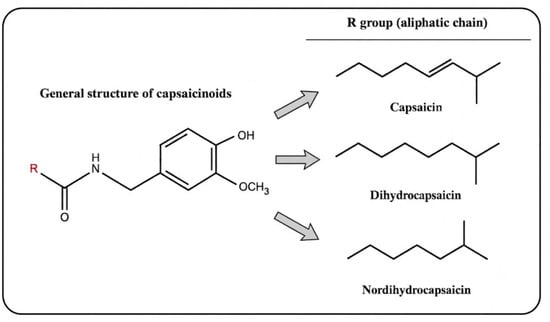
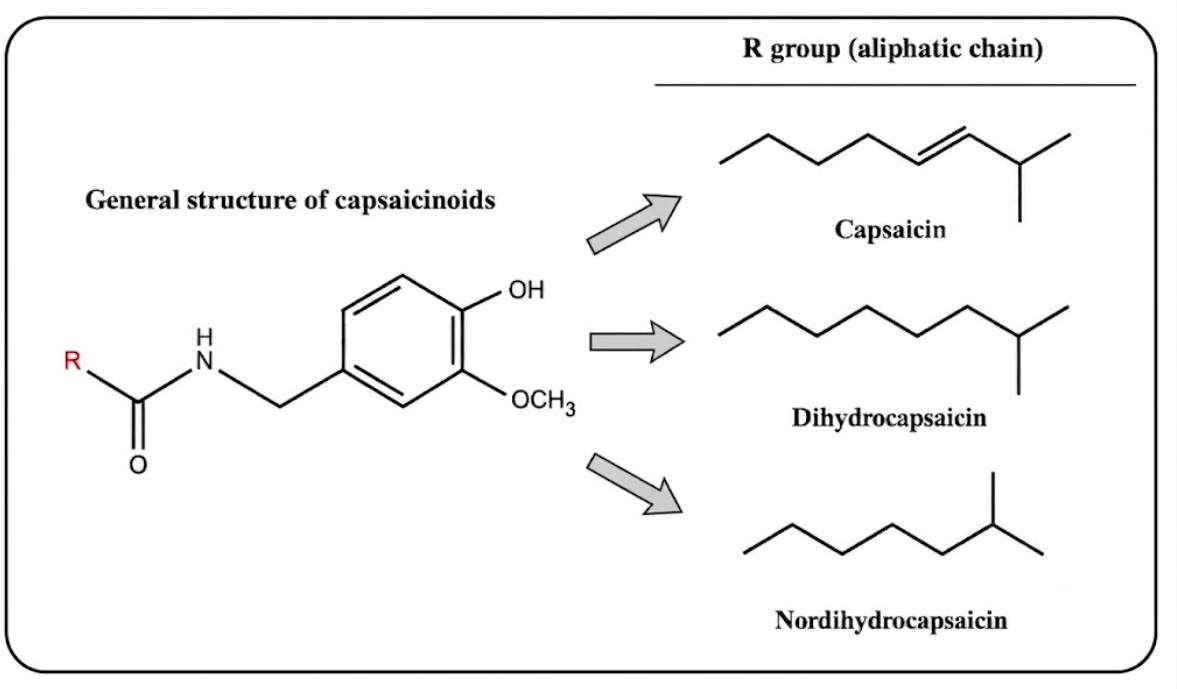
Structurally, capsaicinoids share a common molecular framework consisting of a vanillyl aromatic moiety, an amide linkage, and a hydrophobic aliphatic side chain. As shown in Figure 1, the major capsaicinoids differ mainly in the length and degree of unsaturation of their acyl side chains. These structural variations influence their lipophilicity, physicochemical properties, interactions with biological membranes, and biological activity [25]. These structural variations distinguish the major naturally occurring capsaicinoids and contribute to differences in their biological activity.
Figure 1.
General structure of capsaicinoids and structural variations in the acyl side chain of the major analogues.
4.2. Biosynthesis
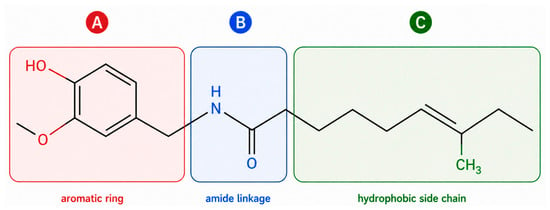
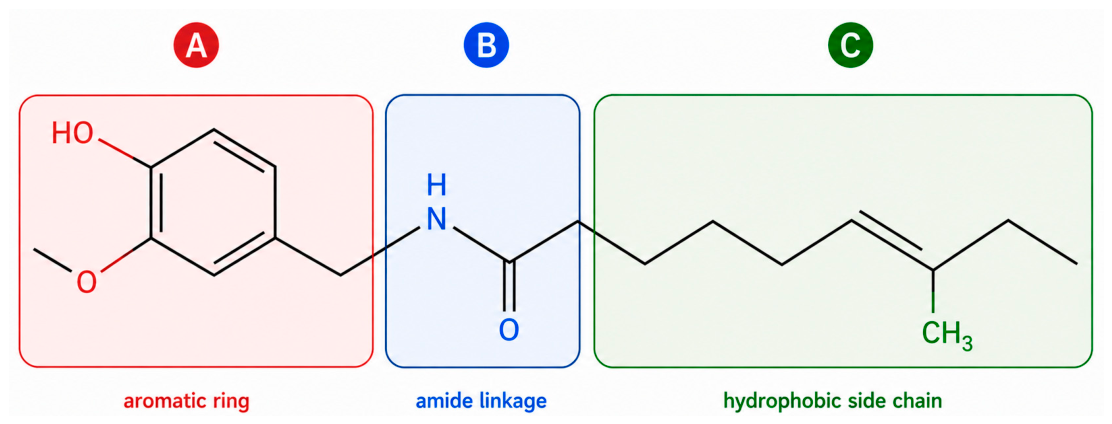
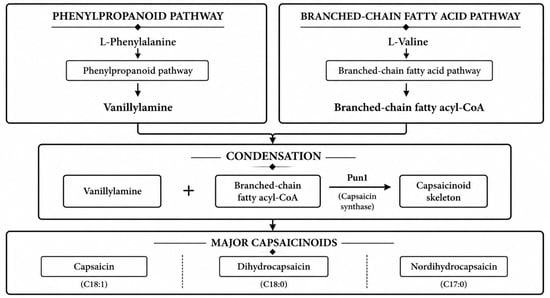
Capsaicinoids biosynthesis is a specialized metabolic process that occurs predominantly in the placental tissues of Capsicum fruits. The biosynthetic pathway involves the convergence of two major metabolic routes: the phenylpropanoid pathway, which generates the aromatic precursor vanillylamine, and the branched-chain fatty acid pathway, which produces the corresponding hydrophobic acyl-CoA precursors. The three principal structural regions of capsaicinoids: the aromatic ring (A), amide linkage (B), and hydrophobic side chain (C), are illustrated in Figure 2. Together, these pathways provide the two molecular components required for capsaicinoid formation [26].
Figure 2.
General structure of capsaicinoids showing the three main structural regions: (A) aromatic ring (vanillyl moiety), (B) amide linkage, and (C) hydrophobic side chain.
In the phenylpropanoid pathway, L-phenylalanine is initially deaminated by phenylalanine ammonia-lyase (PAL). Subsequent reactions involving cinnamate 4-hydroxylase (C4H), 4-coumarate:CoA ligase (4CL), caffeic acid O-methyltransferase (COMT), and putative aminotransferase (pAMT) ultimately lead to the formation of vanillylamine, the aromatic precursor of capsaicinoids [27].
In parallel, the branched-chain fatty acid pathway uses L-valine as a precursor for the formation of the hydrophobic side chain. Reactions involving branched-chain aminotransferase (BCAT), branched-chain α-keto acid dehydrogenase (BCKDH), and fatty acid elongation enzymes, including β-ketoacyl-ACP synthase III (KAS III), generate branched-chain intermediates that are subsequently converted into acyl-CoA derivatives such as 8-methyl-6-nonenoyl-CoA [28].
As illustrated in Figure 3, the phenylpropanoid and branched-chain fatty acid pathways converge in the final step of capsaicinoid biosynthesis. Capsaicin synthase, encoded by the Pun1 locus, catalyzes the condensation of vanillylamine with the corresponding fatty acyl-CoA precursor, resulting in the formation of capsaicin and related capsaicinoids. Variations in the fatty acyl precursor contribute to the structural diversity of the major capsaicinoids, including capsaicin, dihydrocapsaicin, and nordihydrocapsaicin, and influence their physicochemical and biological properties [29].
Figure 3.
Proposed biosynthetic pathway of the major capsaicinoids in C. chinense. Vanillylamine and branched-chain fatty acyl-CoA, derived from L-phenylalanine and L-valine, respectively, are condensed by capsaicin synthase, encoded by the Pun1 locus, to produce capsaicin, dihydrocapsaicin, and nordihydrocapsaicin.
5. Major Capsaicinoids of Capsicum chinense
The fruits of C. chinense contain a complex mixture of capsaicinoids, among which capsaicin, dihydrocapsaicin, and nordihydrocapsaicin are the predominant compounds. Capsaicin and dihydrocapsaicin generally constitute the major proportion of the total capsaicinoid content, whereas nordihydrocapsaicin is usually present at lower concentrations. Their relative abundance may vary depending on genotype, fruit developmental stage, environmental conditions, nutrient availability, and biotic or abiotic stress. These compounds accumulate mainly in the placental tissue of the fruit and are primarily responsible for its characteristic pungency [30].
Although the three major capsaicinoids share a common vanillyl-amide structural framework, they differ mainly in the length and degree of unsaturation of their hydrophobic side chains. These structural differences influence their molecular properties, particularly lipophilicity and pungency, and contribute to differences in their biological behavior. Therefore, the following subsections focus on the principal chemical and structural characteristics of capsaicin, dihydrocapsaicin, and nordihydrocapsaicin.
5.1. Capsaicin
Capsaicin (trans-8-methyl-N-vanillyl-6-nonenamide, C18H27NO3) is the predominant capsaicinoid in C. chinense and one of the principal compounds responsible for the pungency of its fruits. Structurally, it consists of a vanillyl aromatic moiety containing hydroxyl and methoxy substituents, linked through an amide bond to an unsaturated hydrophobic aliphatic chain [31]. The presence of a double bond in the side chain distinguishes capsaicin from its saturated analogue, dihydrocapsaicin, and contributes to differences in molecular rigidity, lipophilicity, and pungency [32,33].
These structural characteristics are closely associated with its ability to interact with membrane components and specific molecular targets. Recent experimental evidence indicates that capsaicin can inhibit voltage-gated sodium channels (VGSCs) in insects, particularly slow-inactivation sodium currents, resulting in neurophysiological alterations, reduced locomotor activity, and paralysis [34]. Furthermore, its lipophilic nature may facilitate interaction with biological membranes and penetration through the insect cuticle, potentially contributing to its insecticidal activity.
Collectively, these properties identify capsaicin as the most abundant and biologically relevant capsaicinoid in C. chinense, highlighting the importance of side-chain structure as a determinant of its biological activity and potential application as a botanical insecticide.
5.2. Dihydrocapsaicin
Dihydrocapsaicin (8-methyl-N-vanillylnonanamide, C18H29NO3) differs from capsaicin primarily by the complete saturation of its ten-carbon aliphatic chain. This compound is formed through the condensation of vanillylamine with 8-methylnonanoic acid and retains the characteristic structural features of capsaicinoids, including the vanillyl-type aromatic ring and the amide bond [35].
The absence of a double bond in the hydrophobic chain reduces molecular rigidity relative to capsaicin, thereby influencing its physicochemical properties. Although dihydrocapsaicin remains highly lipophilic, saturation of the side chain may alter its interaction with biological membranes and its orientation within lipid bilayers [36]. These structural differences can influence pungency perception and biological activity when compared with capsaicin [3].
Despite these differences, dihydrocapsaicin exhibits considerable biological activity and contributes substantially to the overall effects of capsaicinoids due to its high abundance in C. chinense. Its interactions with ion channels and receptor proteins, including TRP-related systems, have been described mainly in non-insect biological models [28,37]. From an insecticidal perspective, mechanisms such as membrane disruption, interference with ion transport, and oxidative stress have been proposed by analogy with capsaicin and evidence from other biological systems; however, direct experimental confirmation of these mechanisms in insects remains limited. Therefore, these effects should be considered putative mechanisms requiring further validation.
From an insecticidal perspective, dihydrocapsaicin is believed to act through mechanisms similar to those described for capsaicin, including disruption of cellular membranes, interference with ion transport, and induction of oxidative stress [10,34]. Collectively, these observations highlight the importance of the degree of saturation of the aliphatic chain in modulating the biological activity of capsaicinoids and further support the structure–activity relationship within this group of compounds.
5.3. Nordihydrocapsaicin
Nordihydrocapsaicin (N-[(4-hydroxy-3-methoxyphenyl)methyl]-7-methyloctanamide, C17H27NO3) is a structural analog of capsaicin characterized by a fully saturated aliphatic chain that is shorter by one methylene group (CH2). Considered the third-most abundant capsaicinoid in C. chinense, it retains the characteristic structural framework of this class of compounds, including a vanillyl-type aromatic ring and an amide bond [3].
The reduction in side-chain length, together with complete saturation, decreases its lipophilicity relative to capsaicin and dihydrocapsaicin, thereby affecting its partitioning into biological membranes and its mobility within lipid bilayers. These structural differences are generally associated with lower pungency, although nordihydrocapsaicin retains important biological activity [38,39].
At the molecular level, nordihydrocapsaicin has been suggested to influence ion-channel activity and oxidative stress-related pathways, although most of this evidence derives from non-insect biological systems [40,41]. Its contribution to insecticidal activity may involve membrane interactions, interference with ion transport, and oxidative stress; however, these mechanisms have not been directly demonstrated in insects and should therefore be regarded as hypothetical or indirectly supported. Further experimental studies are required to establish its specific molecular targets and mechanisms of action in insects.
From an insecticidal perspective, nordihydrocapsaicin contributes to the overall bioactivity of capsaicinoids through mechanisms such as membrane disruption, interference with ion transport, and the generation of reactive oxygen species. However, its lower lipophilicity may reduce penetration through the insect cuticle, which could contribute to differences in biological activity relative to capsaicin and dihydrocapsaicin [42,43]. Collectively, these observations highlight the importance of side-chain length and degree of saturation as key determinants of biological activity, further supporting the structure–activity relationship within the capsaicinoids group.
5.4. Structure–Activity Relationships of the Major Capsaicinoids
Capsaicin, dihydrocapsaicin, and nordihydrocapsaicin share a common structural core consisting of a vanillyl-type aromatic region, an amide linkage, and a hydrophobic side chain. The main differences among these capsaicinoids involve the length and degree of unsaturation of the side chain, which may influence their physicochemical properties and biological activity. Structure–activity studies of capsaicin analogues have demonstrated that modifications of the hydrophobic region can substantially affect biological activity [33,36].
Capsaicin contains an unsaturated hydrophobic side chain, whereas dihydrocapsaicin possesses a saturated chain of comparable length. In contrast, nordihydrocapsaicin has a shorter saturated side chain. These structural differences may modify properties such as molecular flexibility, lipophilicity, and interactions with biological systems, thereby contributing to differences in the biological behavior of the major capsaicinoids [31].
However, the relationship between these structural differences and insecticidal activity remains insufficiently established. The literature considered in this review does not provide a direct experimental comparison of capsaicin, dihydrocapsaicin, and nordihydrocapsaicin against the same insect species under standardized experimental conditions. Therefore, it is currently not possible to conclusively establish how side-chain length or degree of saturation determines the relative insecticidal potency of these three capsaicinoids.
6. Insecticidal Potential of Capsicum chinense
Capsaicinoids, the characteristic secondary metabolites of the genus Capsicum, comprise a group of nitrogen-containing phenolic compounds that play a central role in plant defense against herbivores and pathogens. Beyond their contribution to fruit pungency, these metabolites exhibit a wide range of biological activities, including insecticidal, repellent, and antifeedant effects, making them promising candidates for the development of botanical insecticides [44,45]. Their biological activity has been attributed to their ability to interact with cellular membranes, alter physiological processes, and affect the behavior of target insects.
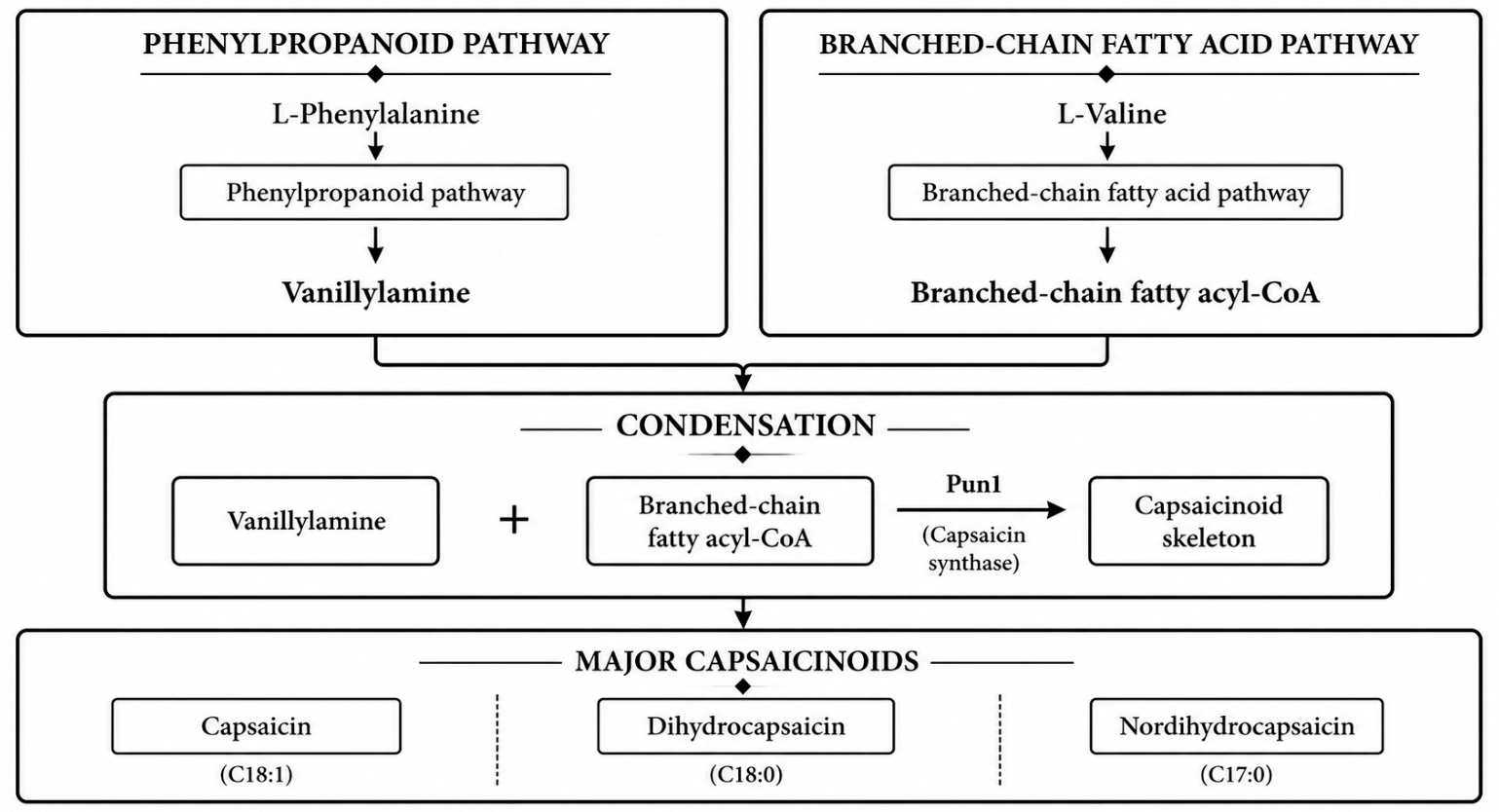
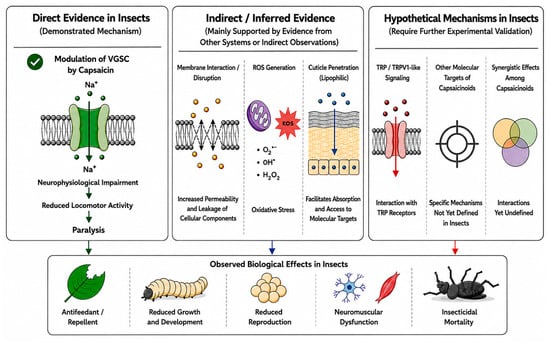
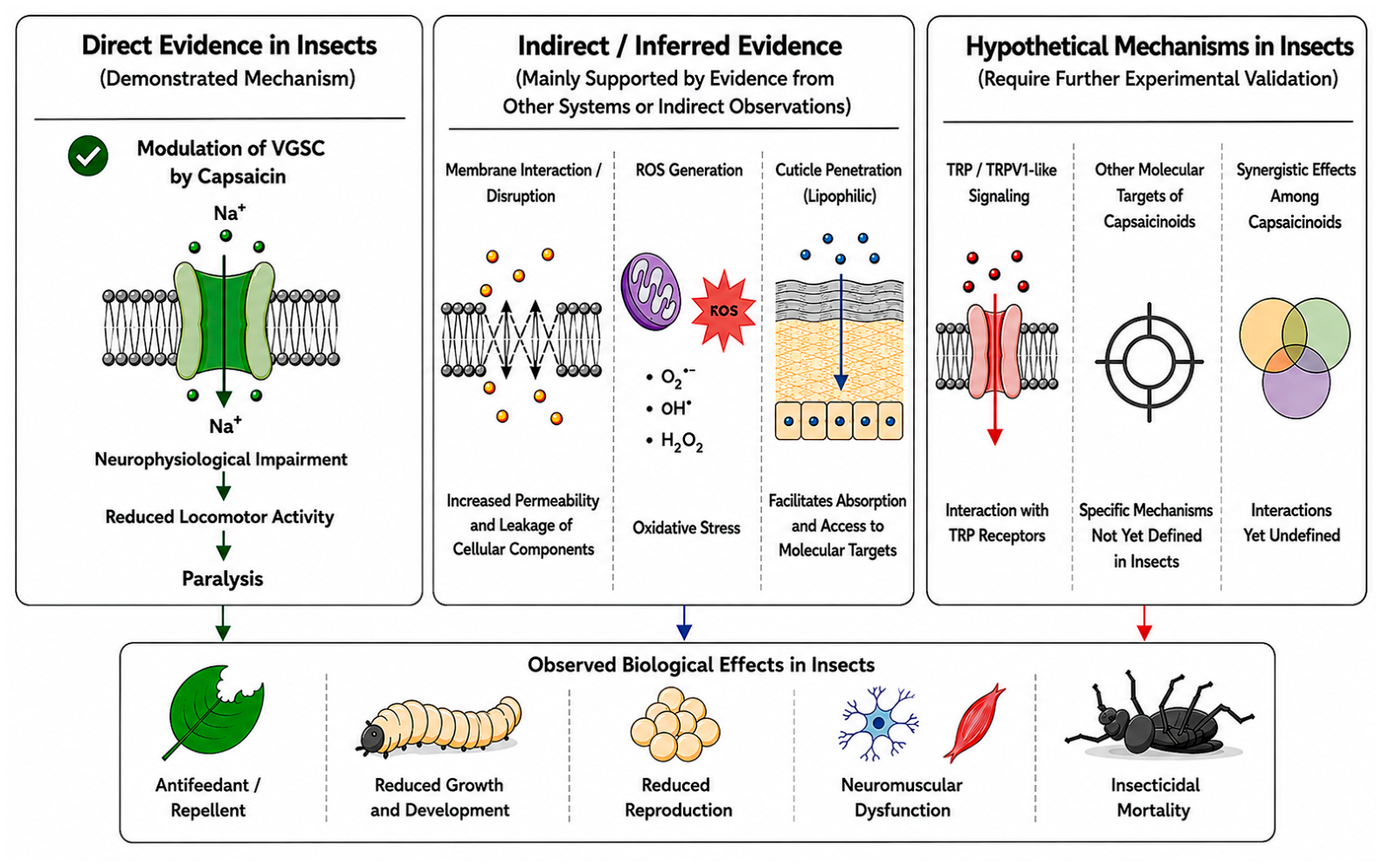
As summarized in Figure 4, current evidence suggests that the insecticidal effects of capsaicinoids may involve multiple mechanisms; however, the level of experimental support differs among them. Direct evidence in insects supports the modulation of voltage-gated sodium channels (VGSCs) by capsaicin, resulting in neurophysiological impairment and paralysis. In contrast, membrane disruption, oxidative stress associated with reactive oxygen species (ROS), and interactions with TRP/TRPV1-like signaling pathways are mainly supported by evidence from other biological systems or indirect observations. These mechanisms should therefore be considered proposed or hypothetical in insects until further experimental validation is available. Susceptibility to capsaicinoids has been reported in several insect orders of agricultural importance, including Hemiptera, Coleoptera, Diptera, and Lepidoptera.
Figure 4.
Evidence-based classification of the proposed insecticidal mechanisms of capsaicinoids. Mechanisms are categorized as directly demonstrated in insects, indirectly supported or inferred from other biological systems, and hypothetical mechanisms requiring further experimental validation. Observed biological effects associated with capsaicinoid exposure are also shown.
Among the capsaicinoids present in C. chinense, capsaicin, dihydrocapsaicin, and nordihydrocapsaicin are the most abundant compounds and are considered the principal contributors to its insecticidal activity. The insecticidal activity of Capsicum extracts may result from the combined contribution of multiple constituents; however, the specific contribution of individual capsaicinoids and possible interactions among metabolites remain to be experimentally established [46,47]. Consequently, both the composition and relative abundance of individual capsaicinoids should be considered when evaluating the insecticidal potential of C. chinense.
From a functional perspective, capsaicinoids exhibit a multimodal mechanism of action, combining direct toxicity with behavioral and physiological effects on insects. These compounds can disrupt feeding activity, impair growth and development, reduce reproductive performance, and ultimately contribute to insect mortality, characteristics commonly associated with botanical biopesticides [48]. Furthermore, their insecticidal efficacy is strongly influenced by physicochemical properties, particularly lipophilicity, which facilitates penetration through the insect cuticle and promotes interactions with cellular membranes and molecular targets, thereby enhancing biological activity [49].
Table 1 summarizes the reported insecticidal activity of C. chinense and its major capsaicinoids against different insect species, including toxicity parameters, repellency responses, and associated biological effects. Together with the mechanisms illustrated in Figure 4, these studies provide comparative evidence of the effectiveness of capsaicinoids across different insect orders, bioassay approaches, and formulation strategies, highlighting their potential as environmentally friendly alternatives for insect pest management.
Table 1.
Insecticidal activity of Capsicum chinense and capsaicinoids against agricultural pests.
7. Toxicity and Safety of Capsaicinoids
Although capsaicinoids are naturally occurring compounds associated with the consumption of Capsicum fruits, their potential use as botanical insecticides requires careful consideration of their toxicological and safety profiles. Capsaicin is a potent irritant whose biological effects are primarily associated with activation of the transient receptor potential vanilloid 1 (TRPV1) channel. Depending on the concentration and route of exposure, capsaicin may induce burning sensations and irritation of the skin, eyes, respiratory tract, and gastrointestinal mucosa [59].
The toxicological behavior of capsaicinoids is also influenced by their metabolism. Capsaicin undergoes biotransformation mainly through cytochrome P450-dependent pathways, generating several metabolites. Experimental evidence indicates that P450-mediated metabolism can modify capsaicin cytotoxicity, suggesting that its biological and toxicological effects depend not only on dose and exposure route but also on metabolic transformation [60].
From an agricultural perspective, the safety of capsaicinoid-based formulations should be evaluated not only in relation to human exposure but also regarding their potential effects on non-target organisms. Capsaicin has been registered and evaluated as an active ingredient in animal and insect repellent products; nevertheless, its irritant properties and biological activity indicate that its natural origin should not be interpreted as evidence of complete safety [61]. Consequently, assessments of acute and chronic toxicity, environmental persistence, residues, and effects on beneficial and other non-target organisms are necessary before large-scale agricultural application.
Furthermore, formulation technologies such as nanoencapsulation, microencapsulation, and nanoemulsions may alter the stability, bioavailability, persistence, and exposure profile of capsaicinoids. Therefore, the development of capsaicinoid-based botanical insecticides should integrate efficacy studies with toxicological and ecotoxicological assessments to identify application rates that provide effective pest control while minimizing risks to humans and non-target organisms.
8. Future Perspectives and Challenges
Despite the promising insecticidal activity exhibited by capsaicinoids from C. chinense, several limitations still restrict their large-scale application as botanical biopesticides. One of the principal challenges is their relatively low stability under environmental conditions, since these compounds may undergo degradation when exposed to light, oxygen, high temperatures, and environmental fluctuations, thereby reducing their persistence and effectiveness under field conditions [62]. In addition, variability in capsaicinoid composition among genotypes, cultivation conditions, fruit maturity stages, and extraction methods may significantly influence biological activity and the reproducibility of results.
Another important limitation is the scarcity of field-scale studies. Most investigations have been conducted under laboratory conditions using controlled bioassays, while information regarding long-term efficacy and compatibility with agricultural systems remains limited [63]. Moreover, the natural origin of capsaicinoids should not be interpreted as evidence of environmental safety. Current information on their effects on pollinators and other beneficial organisms, aquatic species, soil microorganisms, and non-target plants remains limited. Further studies are also required to assess operator exposure, environmental persistence and degradation products, as well as their comparative environmental risk relative to conventional insecticides. Therefore, comprehensive ecotoxicological and environmental risk assessments are necessary before capsaicinoid-based products can be considered environmentally safer alternatives for pest management.
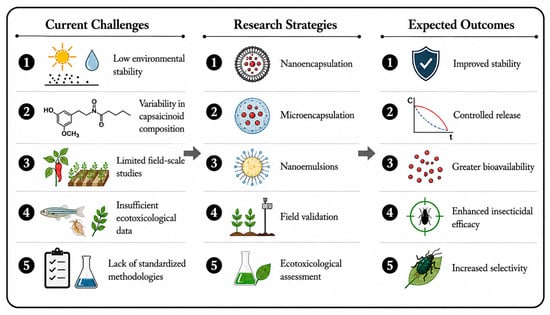
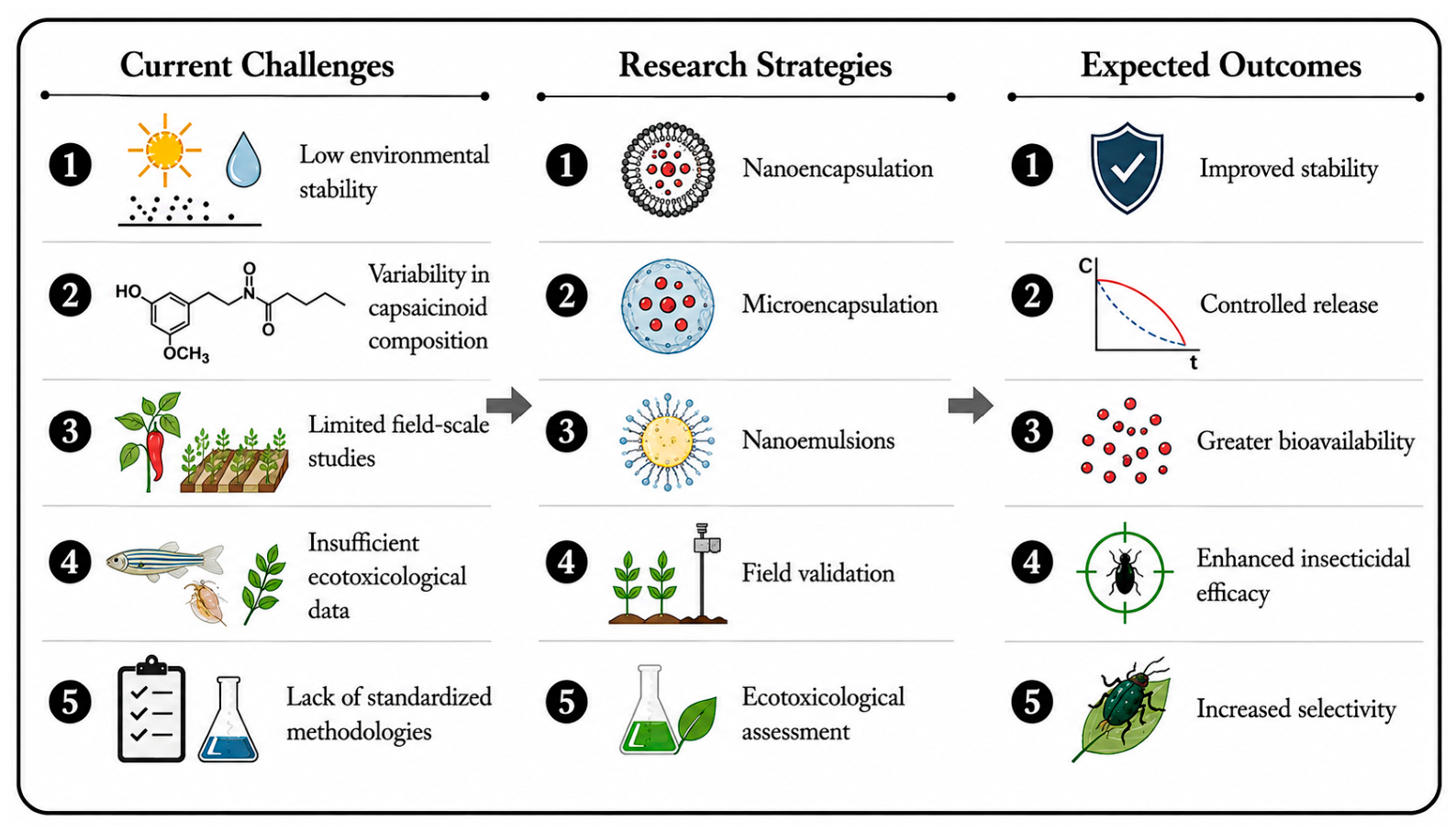
Future research should focus on the development of innovative formulation strategies capable of improving the stability, bioavailability, and controlled release of capsaicinoids. In this regard, nanoencapsulation, microencapsulation, nanoemulsions, and biodegradable carrier systems represent promising approaches to enhance insecticidal performance and prolong residual activity [64]. The main current challenges, research strategies, and expected outcomes for the development of capsaicinoid-based botanical insecticides are summarized in Figure 5. Likewise, potential interactions between capsaicinoids and other plant-derived metabolites warrant further investigation to determine whether combined formulations can improve insecticidal efficacy.
Figure 5.
Current challenges, research strategies, and expected outcomes for the development of C. chinense capsaicinoids as botanical insecticides.
Advances in molecular biology, metabolomics, and omics-based approaches may also provide valuable insights into the biosynthesis, regulation, and molecular targets of capsaicinoids in insects. Understanding these mechanisms in greater detail could facilitate the design of more effective and selective botanical insecticides. Overall, capsaicinoids from C. chinense represent promising candidates for the development of botanical insecticides; however, their efficacy, environmental safety, persistence, and effects on non-target organisms require further validation under field conditions.
9. Conclusions
Capsicum chinense is an important source of capsaicinoids, particularly capsaicin, dihydrocapsaicin, and nordihydrocapsaicin, whose structural differences influence their physicochemical and biological properties. Available evidence supports their insecticidal, repellent, and antifeedant activities, highlighting their potential for the development of botanical insecticides. However, direct comparisons among individual capsaicinoids under standardized bioassay conditions remain limited, and several proposed insecticidal mechanisms require further experimental validation. Moreover, additional studies on formulation, field efficacy, environmental fate, ecotoxicological effects, and impacts on non-target organisms are required before their environmental safety and practical application in pest management can be fully established.
Author Contributions
E.T.-H.: Conceptualization, literature search, data analysis, writing—original draft, writing—review and editing. L.J.T.-E. and L.A.C.-A.: Literature search, data curation, writing—original draft. D.O.S.-S.: Conceptualization, literature search, data analysis, writing—original draft, writing—review and editing. F.P.-A. and R.F.-B.: Data interpretation, writing—review and editing. S.Á.O.-A., G.H.-S. and E.J.D.-N.: Methodology, writing—review and editing. C.S.-L.: Supervision, conceptualization, data analysis, writing—original draft, writing—review and editing, final approval of the manuscript. All authors have read and agreed to the published version of the manuscript.
Funding
This research received no funding.
Data Availability Statement
No new data were created or analyzed in this study. Data sharing is not applicable to this article.
Acknowledgments
The authors acknowledge the Universidad Autónoma de Guerrero, for the facilities provided and access to the bibliographic resources necessary for the preparation of this review.
Conflicts of Interest
The authors declare no conflict of interest.
Abbreviations
| ACP | Acyl Carrier Protein |
| BCAT | Branched-Chain Aminotransferase |
| BCKDH | Branched-Chain α-Keto Acid Dehydrogenase |
| C4H | Cinnamate 4-Hydroxylase |
| C.I. | Confidence Interval |
| CoA | Coenzyme A |
| COMT | Caffeic Acid O-Methyltransferase |
| HPLC | High-Performance Liquid Chromatography |
| KAS III | β-Ketoacyl-ACP Synthase III |
| LC50 | Median Lethal Concentration |
| LT50 | Median Lethal Time |
| PAL | Phenylalanine Ammonia-Lyase |
| pAMT | Putative Aminotransferase |
| Pun1 | Pun1 Pungency locus 1 |
| ROS | Reactive Oxygen Species |
| RP-HPLC | Reverse-Phase High-Performance Liquid Chromatography |
| TRP | Transient Receptor Potential |
| TRPV1 | Transient Receptor Potential Vanilloid 1 |
| VGSC | Voltage-Gated Sodium Channels |
| 4CL | 4-Coumarate:CoA Ligase |
| mg kg−1 | Milligrams per Kilogram |
| mg L−1 | Milligrams per Liter |
| µM | Micromolar |
| °C | Degrees Celsius |
References
- Antonio, A.S.; Wiedemann, L.S.M.; Veiga-Junior, V.F. The Genus Capsicum: A Phytochemical Review of Bioactive Secondary Metabolites. RSC Adv. 2018, 8, 25767–25784. [Google Scholar] [CrossRef] [Scilit]
- Yunbao, L.; Muraleedharan, G.N. Capsaicinoids in the Hottest Pepper Bhut Jolokia and Its Antioxidant and Anti-Inflammatory Activities. Nat. Prod. Commun. 2010, 5, 91–94. [Google Scholar] [CrossRef] [Scilit]
- Zhang, D.; Sun, X.; Battino, M.; Wei, X.; Shi, J.; Zhao, L.; Liu, S.; Xiao, J.; Shi, B.; Zou, X. A Comparative Overview on Chili Pepper (Capsicum Genus) and Sichuan Pepper (Zanthoxylum Genus): From Pungent Spices to Pharma-Foods. Trends Food Sci. Technol. 2021, 117, 148–162. [Google Scholar] [CrossRef] [Scilit]
- Barbero, G.F.; Liazid, A.; Azaroual, L.; Palma, M.; Barroso, C.G. Capsaicinoid Contents in Peppers and Pepper-Related Spicy Foods. Int. J. Food Prop. 2016, 19, 485–493. [Google Scholar] [CrossRef] [Scilit]
- Kaiser, M.; Higuera, I.; Goycoolea, F.M. Capsaicinoids: Occurrence, Chemistry, Biosynthesis, and Biological Effects. In Fruit and Vegetable Phytochemicals: Chemistry and Human Health, 2nd ed.; Yahia, E.M., Ed.; Wiley: Hoboken, NJ, USA, 2018; pp. 499–513. [Google Scholar]
- Soumya, S.L.; Nair, B.R. Antifungal Efficacy of Capsicum frutescens L. Extracts against Some Prevalent Fungal Strains Associated with Groundnut Storage. Int. J. Agric. Technol. 2012, 8, 739–750. [Google Scholar]
- Shimizu, N.; Hosogi, N.; Hyon, G.S.; Jiang, S.; Inoue, K.; Park, P. Reactive Oxygen Species (ROS) Generation and ROS-Induced Lipid Peroxidation Are Associated with Plasma Membrane Modifications in Host Cells in Response to AK-Toxin I from Alternaria alternata Japanese Pear Pathotype. J. Gen. Plant Pathol. 2006, 72, 6–15. [Google Scholar] [CrossRef] [Scilit]
- Park, J.S.; Choi, M.A.; Kim, B.S.; Han, I.S.; Kurata, T.; Yu, R. Capsaicin Protects against Ethanol-Induced Oxidative Injury in the Gastric Mucosa of Rats. Life Sci. 2000, 67, 3087–3093. [Google Scholar] [CrossRef] [Scilit]
- Meral, O.; Alpay, M.; Kismali, G.; Kosova, F.; Cakir, D.U.; Pekcan, M.; Yigit, S.; Sel, T. Capsaicin Inhibits Cell Proliferation by Cytochrome c Release in Gastric Cancer Cells. Tumour Biol. 2014, 35, 6485–6492. [Google Scholar] [CrossRef] [Scilit]
- Li, B.; Yang, M.; Shi, R.; Ye, M. Insecticidal Activity of Natural Capsaicinoids against Several Agricultural Insects. Nat. Prod. Commun. 2019, 14, 1934578X19862695. [Google Scholar] [CrossRef] [Scilit]
- Ruíz-Lau, N.; Medina-Lara, F.; Minero-García, Y.; Torres-Tapia, L.W.; Peraza-Sánchez, S.R.; Martínez-Estévez, M. Capsaicinoids Are Absent in Habanero Pepper Vegetative Organs (Capsicum chinense Jacq.). HortScience 2010, 45, 323–326. [Google Scholar] [CrossRef] [Scilit]
- Oney-Montalvo, J.E.; Avilés-Betanzos, K.A.; Ramírez-Rivera, E.J.; Ramírez-Sucre, M.O.; Rodríguez-Buenfil, I.M. Polyphenols Content in Capsicum chinense Fruits at Different Harvest Times and Their Correlation with the Antioxidant Activity. Plants 2020, 9, 1394. [Google Scholar] [CrossRef] [Scilit]
- Tun, D.C. Características y Tecnología de Producción del Chile Habanero. In Centro de Investigación Regional del Sureste; INIFAP-SAGARPA: Mocochá, Yucatán, Mexico, 2001; pp. 5–74. [Google Scholar]
- Rodríguez-Maturino, A.; Valenzuela-Solorio, A.; Troncoso-Rojas, R.; González-Mendoza, D.; Grimaldo-Juárez, O.; Avilés-Marín, M. Antioxidant Activity and Bioactive Compounds of Chiltepin (Capsicum annuum var. glabriusculum) and Habanero (Capsicum chinense): A Comparative Study. J. Med. Plants Res. 2012, 6, 1758–1763. [Google Scholar] [CrossRef] [Scilit]
- Eshbaugh, W.H. Genetic and Biochemical Systematic Studies of Chili Peppers (Capsicum, Solanaceae). Bull. Torrey Bot. Club. 1975, 102, 396–403. [Google Scholar] [CrossRef] [Scilit]
- USDA. Capsicum chinense Jacq. Plants Database; United States Department of Agriculture: Washington, DC, USA, 2024. Available online: https://plants.sc.egov.usda.gov/home/plantProfile?symbol=CAPCH2 (accessed on 15 December 2024).
- Baruah, J.; Lal, M. Capsicum chinense Jacq.: Ethnobotany, Bioactivity and Future Prospects. In Botanical Leads for Drug Discovery; Singh, B., Ed.; Springer: Singapore, 2020; pp. 287–302. [Google Scholar] [CrossRef] [Scilit]
- Mongkolporn, O.; Taylor, P.W.J. Capsicum . In Wild Crop Relatives: Genomic and Breeding Resources; Kole, C., Ed.; Springer: Berlin/Heidelberg, Germany, 2011; pp. 43–57. [Google Scholar] [CrossRef] [Scilit]
- Lim, T.K. Capsicum chinense . In Edible Medicinal and Non-Medicinal Plants; Springer: Dordrecht, The Netherlands, 2012; pp. 205–212. [Google Scholar] [CrossRef] [Scilit]
- Powis, T.G.; Gallaga Murrieta, E.; Lesure, R.; López-Bravo, R.; Grivetti, L.; Kucera, H. Prehispanic Use of Chili Peppers in Chiapas, Mexico. PLoS ONE 2013, 8, e79013. [Google Scholar] [CrossRef] [Scilit]
- Gogoi, B. Capsicum chinense Jacq. (Bhut Jolokia)—Rich Source of Capsaicin with Wide Application and Economic Potential. Ann. Plant Sci. 2017, 6, 1664–1667. [Google Scholar] [CrossRef] [Scilit][Green Version]
- Cichewicz, R.H.; Thorpe, P.A. The Antimicrobial Properties of Chile Peppers (Capsicum Species) and Their Uses in Mayan Medicine. J. Ethnopharmacol. 1996, 52, 61–70. [Google Scholar] [CrossRef] [Scilit]
- Barbero, G.F.; Liazid, A.; Ferreiro-González, M.; Palma, M.; Barroso, C.G. Fast Separation of Capsaicinoids from Peppers by Reversed Phase Ultra-Performance Liquid Chromatography: Comparation with Traditional High-Performance Liquid Chromatography Methods. Int. J. Food Prop. 2016, 19, 984–992. [Google Scholar] [CrossRef] [Scilit]
- Abdel-Salam, O.M.E.; Mózsik, G. Capsaicin, the Vanilloid Receptor TRPV1 Agonist in Neuroprotection: Mechanisms Involved and Significance. Neurochem. Res. 2023, 48, 3296–3315. [Google Scholar] [CrossRef] [Scilit] [PubMed]
- Reyes-Escogido, M.L.; Gonzalez-Mondragon, E.G.; Vazquez-Tzompantzi, E. Chemical and Pharmacological Aspects of Capsaicin. Molecules 2011, 16, 1253–1270. [Google Scholar] [CrossRef] [Scilit]
- Tanaka, Y.; Watachi, M.; Nemoto, W.; Kikuchi, S.; Ueda, H.; Kato, M.; Matsunaga, S.; Yamamoto, N.; Sato, F. Capsaicinoid Biosynthesis in the Pericarp of Chili Pepper Fruits Is Associated with a Placental Septum-Like Transcriptome Profile and Tissue Structure. Plant Cell Rep. 2021, 40, 1859–1874. [Google Scholar] [CrossRef] [Scilit]
- Zhang, W.; Zhang, Y.; Fan, J.; Feng, Z.; Song, X. Pharmacological Activity of Capsaicin: Mechanisms and Controversies (Review). Mol. Med. Rep. 2024, 29, 38. [Google Scholar] [CrossRef] [Scilit]
- Basith, S.; Cui, M.; Hong, S.; Choi, S. Harnessing the Therapeutic Potential of Capsaicin and Its Analogues in Pain and Other Diseases. Molecules 2016, 21, 966. [Google Scholar] [CrossRef] [Scilit]
- Cinar, M.; Alum, B.; Alum, Z.; Sakar, E. Determination of the Molecular Structure and Spectroscopic Properties of Capsaicin. Radiat. Phys. Chem. 2023, 208, 110879. [Google Scholar] [CrossRef] [Scilit]
- Alonso-Villegas, R.; González-Amaro, R.M.; Figueroa-Hernández, C.Y.; Rodríguez-Buenfil, I.M. The Genus Capsicum: A Review of Bioactive Properties of Its Polyphenolic and Capsaicinoid Composition. Molecules 2023, 28, 4239. [Google Scholar] [CrossRef] [Scilit]
- Othman, Z.A.A.; Ahmed, Y.B.H.; Habila, M.A.; Ghafar, A.A. Determination of Capsaicin and Dihydrocapsaicin in Capsicum Fruit Samples Using High-Performance Liquid Chromatography. Molecules 2011, 16, 8919–8929. [Google Scholar] [CrossRef] [Scilit]
- Surh, Y.J. More than Spice: Capsaicin in Hot Chili Peppers Makes Tumor Cells Commit Suicide. J. Natl. Cancer Inst. 2002, 94, 1263–1265. [Google Scholar] [CrossRef] [Scilit]
- Govindarajan, V.S.; Sathyanarayana, M.N. Capsicum—Production, Technology, Chemistry, and Quality. Part V. Impact on Physiology, Pharmacology, Nutrition, and Metabolism; Structure, Pungency, Pain, and Desensitization Sequences. Crit. Rev. Food Sci. Nutr. 1991, 29, 435–474. [Google Scholar] [CrossRef] [Scilit]
- Kamezaki, M.; Nishiwaki, H. Capsaicin preferentially inhibits slow-inactivation sodium currents in insects. Toxicon 2025, 256, 108264. [Google Scholar] [CrossRef] [Scilit]
- Aza-González, C.; Núñez-Palenius, H.G.; Ochoa-Alejo, N. Molecular Biology of Capsaicinoid Biosynthesis in Chili Pepper (Capsicum spp.). Plant Cell Rep. 2011, 30, 695–706. [Google Scholar] [CrossRef] [Scilit]
- Walpole, C.S.J.; Wrigglesworth, R.; Bevan, S.; Campbell, E.A.; Dray, A.; James, I.F.; Masdin, K.J.; Perkins, M.N.; Winter, J. Analogues of Capsaicin with Agonist Activity as Novel Analgesic Agents: Structure–Activity Studies. 3. The Hydrophobic Side-Chain “C-Region”. J. Med. Chem. 1993, 36, 2381–2389. [Google Scholar] [CrossRef] [Scilit]
- Caterina, M.J.; Schumacher, M.A.; Tominaga, M.; Rosen, T.A.; Levine, J.D.; Julius, D. The Capsaicin Receptor: A Heat-Activated Ion Channel in the Pain Pathway. Nature 1997, 389, 816–824. [Google Scholar] [CrossRef] [Scilit]
- Yaldiz, G.; Ozguven, M.; Sekeroglu, N. Variation in capsaicin contents of different Capsicum species and lines by varying drying parameters. Ind. Crops Prod. 2010, 32, 434–438. [Google Scholar] [CrossRef] [Scilit]
- Wahyuni, Y.; Ballester, A.R.; Sudarmonowati, E.; Bino, R.J.; Bovy, A.G. Metabolite Biodiversity in Pepper (Capsicum) Fruits of Thirty-Two Diverse Accessions: Variation in Health-Related Compounds and Implications for Breeding. Phytochemistry 2011, 72, 1358–1370. [Google Scholar] [CrossRef] [Scilit]
- Jolayemi, A.T.; Ojewole, J.A.O. Comparative Anti-Inflammatory Properties of Capsaicin and Ethyl Acetate Extract of Capsicum frutescens Linn. (Solanaceae) in Rats. Afr. Health Sci. 2013, 13, 357–361. [Google Scholar] [CrossRef] [Scilit]
- Oz, M.; Lorke, D.E.; Howarth, F.C. Transient Receptor Potential Vanilloid 1 (TRPV1)-Independent Actions of Capsaicin on Cellular Excitability and Ion Transport. Med. Res. Rev. 2023, 43, 1038–1067. [Google Scholar] [CrossRef] [Scilit]
- Appendino, G.; Harrison, S.; De Petrocellis, L.; Daddario, N.; Bianchi, F.; Schiano Moriello, A.; Trevisani, M.; Benvenuti, F.; Geppetti, P.; Di Marzo, V. Halogenation of a Capsaicin Analogue Leads to Novel Vanilloid TRPV1 Receptor Antagonists. Br. J. Pharmacol. 2003, 139, 1417–1424. [Google Scholar] [CrossRef] [Scilit]
- Upadhyay, R.K. Therapeutic and insecticidal potential of plant terpenes: A review. Int. J. Green Pharm. 2022, 16, 14–25. [Google Scholar] [CrossRef]
- Tewksbury, J.J.; Nabhan, G.P. Seed Dispersal: Directed Deterrence by Capsaicin in Chilies. Nature 2001, 412, 403–404. [Google Scholar] [CrossRef] [Scilit]
- Isman, M.B. Botanical Insecticides, Deterrents, and Repellents in Modern Agriculture. Annu. Rev. Entomol. 2006, 51, 45–66. [Google Scholar] [CrossRef] [Scilit]
- Isman, M.B. Botanical Insecticides in the Twenty-First Century—Fulfilling Their Promise? Annu. Rev. Entomol. 2020, 65, 233–249. [Google Scholar] [CrossRef] [Scilit]
- Pavela, R.; Benelli, G. Essential Oils as Ecofriendly Biopesticides? Challenges and Constraints. Trends Plant Sci. 2016, 21, 1000–1007. [Google Scholar] [CrossRef] [Scilit] [PubMed]
- Rattan, R.S. Mechanism of Action of Insecticidal Secondary Metabolites of Plant Origin. Crop Prot. 2010, 29, 913–920. [Google Scholar] [CrossRef] [Scilit]
- Pavela, R. Essential Oils for the Development of Eco-Friendly Mosquito Larvicides: A Review. Ind. Crops Prod. 2015, 76, 174–187. [Google Scholar] [CrossRef] [Scilit]
- Claros-Cuadrado, J.L.; Pinillos, E.O.; Tito, R.; Mirones, C.S.; Gamarra Mendoza, N.N. Insecticidal Properties of Capsaicinoids and Glucosinolates Extracted from Capsicum chinense and Tropaeolum tuberosum. Insects 2019, 10, 132. [Google Scholar] [CrossRef] [Scilit]
- Castillo-Sánchez, L.E.; Jiménez-Osornio, J.J.; Delgado-Herrera, M.A. Actividad Biológica In Vitro del Extracto de Capsicum chinense Jacq. Contra Bemisia tabaci Genn. Rev. Chapingo Ser. Hortic. 2012, 18, 345–356. [Google Scholar] [CrossRef] [Scilit]
- Musa, A.K.; Adeyewi, A.A. Evaluation of Insecticidal Potential of Capsicum chinense Jacq. and Aframomum melegueta K. Schum. against Trogoderma granarium Everts (Coleoptera: Dermestidae) in Groundnut. J. Northeast Agric. Univ. 2015, 22, 16–22. [Google Scholar] [CrossRef] [Scilit]
- Diallo, A.; Camara, B.; Keita, M.; Bangoura, M.; Bah, A.; Camara, B.T.; Camara, Y.; Sylla, M.; Bangoura, K. Ethnobotanical Investigation of Insecticidal Plants and Evaluation of the Insecticidal Activity of Capsicum chinense on Sitophilus zeamais of Maize and Aphis craccivora of Groundnuts: Case of Boffa, Boké Region (Republic of Guinea). J. Agric. Chem. Environ. 2022, 11, 164–180. [Google Scholar] [CrossRef]
- Cui, S.-F.; Wang, J.-W.; Li, H.-F.; Fang, R.; Yu, X.; Lu, Y.-J. Microencapsulation of Capsaicin in Chitosan Microcapsules: Characterization, Release Behavior, and Pesticidal Properties against Tribolium castaneum (Herbst). Insects 2023, 14, 27. [Google Scholar] [CrossRef] [Scilit]
- Rakesh, V.; Patgiri, P.; Borah, A.; Nandhini, D.; Gogoi, I. Comparative Study on the Repellency and Chemical Profiles of Different Chili Pepper Formulations against Sitophilus oryzae (L.) (Coleoptera: Curculionidae) in Stored Wheat. J. Stored Prod. Res. 2024, 106, 102312. [Google Scholar] [CrossRef] [Scilit]
- Wang, J.; Yu, S.; Liu, Y.; Zhang, Y.; Zhang, Y.; Zhang, L. Capsaicin Decreases Fecundity in the Asian Malaria Vector Anopheles stephensi by Inhibiting the Target of Rapamycin Signaling Pathway. Parasites Vectors 2022, 15, 458. [Google Scholar] [CrossRef] [Scilit]
- Alfaro-Cortés, A.E.; González-Mendoza, D.; Ruiz-Sánchez, E.; Ail-Catzin, C.; Valdez-Salas, B.; Gutiérrez-Miceli, F.; Reyes-Ramírez, A.; Pierre, J.F. Insecticidal Activity and Physicochemical Characterization of Nanoparticles from Foliar Extract of Capsicum chinense. J. Renew. Mater. 2023, 11, 54431. [Google Scholar] [CrossRef] [Scilit]
- Oyedeji, A.A.; Oku, I.; Akanwa, F.E.; Digia, L.I. Insecticidal Potentials of Capsicum chinense (Jacq.) and Garcinia kola (Heckel) Extracts on Callosobruchus maculatus (Cowpea Weevil) Infestation. UMYU Sci. 2022, 1, 133–137. [Google Scholar] [CrossRef] [Scilit]
- Fattori, V.; Hohmann, M.S.N.; Rossaneis, A.C.; Pinho-Ribeiro, F.A.; Verri, W.A., Jr. Capsaicin: Current Understanding of Its Mechanisms and Therapy of Pain and Other Pre-Clinical and Clinical Uses. Molecules 2016, 21, 844. [Google Scholar] [CrossRef] [Scilit]
- Reilly, C.A.; Ehlhardt, W.J.; Jackson, D.A.; Kulanthaivel, P.; Mutlib, A.E.; Espina, R.J.; Moody, D.E.; Crouch, D.J.; Yost, G.S. Metabolism of Capsaicin by Cytochrome P450 Produces Novel Dehydrogenated Metabolites and Decreases Cytotoxicity to Lung and Liver Cells. Chem. Res. Toxicol. 2003, 16, 336–349. [Google Scholar] [CrossRef] [Scilit]
- U.S. Environmental Protection Agency (EPA). Capsaicin: Reregistration Eligibility Decision (RED) Fact Sheet; U.S. Environmental Protection Agency: Washington, DC, USA, 1992.
- Ngegba, P.M.; Cui, G.; Khalid, M.Z.; Zhong, G. Use of Botanical Pesticides in Agriculture as an Alternative to Synthetic Pesticides. Agriculture 2022, 12, 600. [Google Scholar] [CrossRef] [Scilit]
- Luneja, R.L.; Mkindi, A.G. Advances in Botanical-Based Nanoformulations for Sustainable Cotton Insect Pest Management in Developing Countries. Front. Agron. 2025, 7, 1558395. [Google Scholar] [CrossRef] [Scilit]
- Falsini, S.; Nieri, T.; Papini, A.; Salvatici, M.C.; Abou-Hassan, A.; Gonnelli, C.; Ristori, S. Efficiency of Lignin Nanocapsules for Delivering Neem Oil and Capsaicin against Pest Insects: Insights from the System Eruca sativa–Plutella xylostella. Environ. Sci. Nano 2025, 12, 1023–1038. [Google Scholar] [CrossRef] [Scilit]

Disclaimer/Publisher’s Note: The statements, opinions and data contained in all publications are solely those of the individual author(s) and contributor(s) and not of MDPI and/or the editor(s). MDPI and/or the editor(s) disclaim responsibility for any injury to people or property resulting from any ideas, methods, instructions or products referred to in the content. |
© 2026 by the authors. Licensee MDPI, Basel, Switzerland. This article is an open access article distributed under the terms and conditions of the Creative Commons Attribution (CC BY) license.