


Abstract
Background and Forensic Significance: Intimate partner violence (IPV) is a major public health concern that can result in intimate partner homicide (IPH). While most reported cases involve female victims, fatal violence against men, particularly older adults, remains under-recognized. We report an atypical case of IPH involving an elderly male victim who was killed by his female partner. This case highlights the importance of comprehensive medico-legal investigation to accurately reconstruct the mechanism of injury and exclude alternative causes of death. Case Presentation: A 76-year-old man was found dead in his home after his 72-year-old wife reported that she found him unresponsive. He had a history of asthma and chronic alcohol use, was reportedly intoxicated, and had been involved in a longstanding conflict with his spouse. Autopsy revealed multiple patterned abrasions and contusions with extensive intramuscular hemorrhage involving the extremities. Internal examination demonstrated generalized visceral pallor. Fatal acute asthma and alcohol intoxication were excluded. Overall, the cause of death was determined to be hemorrhagic shock resulting from repeated blunt force trauma, and the manner of death was classified as homicide. Conclusions: This case demonstrates that a sustained blunt force assault can lead to fatal intramuscular blood pooling. Furthermore, it illustrates the rare demographic and mechanism patterns of IPH, underscoring the importance of comprehensive medico-legal evaluation and awareness of such occurrences.
1. Introduction
Intimate partner violence (IPV) refers to behaviors within romantic relationships, involving either a current or former spouse or partner, that lead to physical, sexual, or psychological harm [1]. It represents a significant public health issue worldwide, resulting in serious physical, mental, and long-term health effects, including fatal outcomes [2,3,4]. Deaths related to IPV most commonly occur through homicide, referred to as intimate partner homicide (IPH), which represents the most severe manifestation of such violence and accounts for a substantial proportion of global homicides [5]. IPH has grave consequences not only for the victim but also for the bereaved family and the wider community, leading to profound psychological, social, and economic impacts [6,7]. Although IPV is widely recognized as disproportionately affecting women, emerging evidence indicates that men can also experience severe and even fatal violence from their intimate partners [8,9]. However, male victimization remains underreported and insufficiently characterized, particularly among older adults. This is influenced by social stigma, gender norms, reduced help-seeking behavior, and limited representation in forensic and epidemiological literature [10,11]. In older adults, additional factors such as reduced physical strength and greater reliance on others can increase their susceptibility to severe or deadly abuse, which continues to be infrequently reported [12,13]. Moreover, typical IPH patterns often involve male perpetrators and usage of conventional lethal methods, including firearms or sharp weapons in case of female perpetrators [8,14,15]. In contrast, atypical presentations, such as those involving female perpetrators, elderly victims, and non-conventional mechanisms of assault, are poorly represented in the literature, limiting forensic awareness and investigative preparedness in such cases.
Overkill, defined as the application of excessive and repeated force beyond that necessary to cause death, has been described in cases of interpersonal violence, particularly in domestic and familial settings [16,17]. It is often associated with intense emotional dynamics, prolonged assaults, and close victim–perpetrator relationships and may provide important contextual insights into the mechanisms and severity of fatal intimate partner violence [18,19].
This case report addresses these gaps by presenting a rare instance of fatal IPV involving an elderly male victim subjected to a prolonged blunt-force assault by his female partner. This report provides detailed medico-legal documentation, including crime scene findings, autopsy observations, and histopathological and toxicological analyses, and correlates them with the cause and manner of death and the mechanism of injuries. By highlighting an unusual pattern of IPH and emphasizing the role of age and alcohol-related vulnerability, this study contributes novel forensic insights and underscores the need for broader recognition of diverse IPV manifestations across sex and age groups. This case report was prepared in accordance with CARE guidelines, and the completed CARE checklist is provided as Supplementary Material File S1.
2. Case Presentation
A 72-year-old woman, who was in relatively good health, informed her neighbors that she found her 76-year-old husband dead inside their residential house near the entrance to a salon. They were married 51 years prior to his death and had five children together. They lived together without any incidents of separation or violence. The deceased had asthma and used a salbutamol inhaler. He had a history of smoking and alcohol consumption, often coming home drunk, which led to arguments with his spouse. The victim had no known anatomical disability and no history of other chronic illnesses or medication use.
On scene examination, the deceased was found lying supine on the living room floor, with partially disarranged clothing and visible injuries to the head and lower extremities. The surrounding environment was mildly disarrayed with displaced household items, but there were no visible bloodstains. A wooden stick, which appeared to have been partially broken not long before, was discovered on top of furniture in the room. There were no signs of forced entry, and no sharp weapons, ligature materials, suicide notes, or toxic substances were identified. No features indicative of an accidental fall was observed. Following documentation, the body was recovered, placed in a labeled body bag, and secured to maintain the chain of custody. It was transported to the autopsy facility by authorized personnel, accompanied by the investigating officer and official documentation. A medico-legal autopsy was performed on the same day.
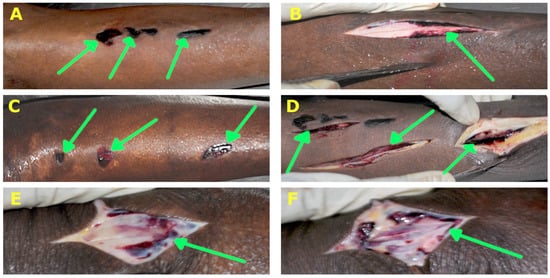
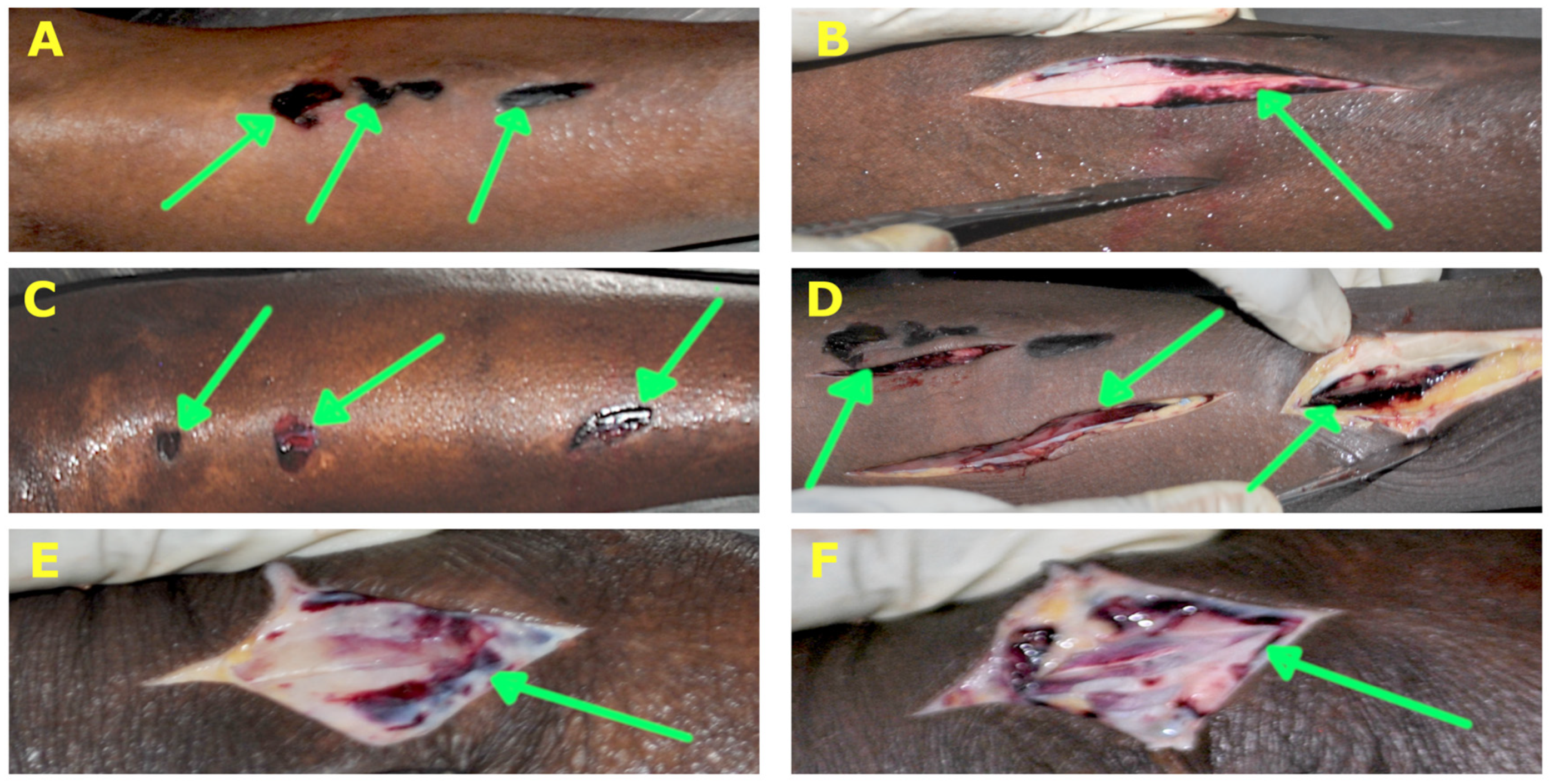
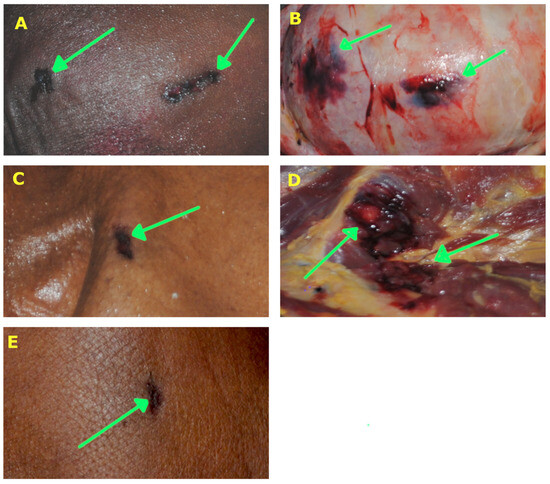
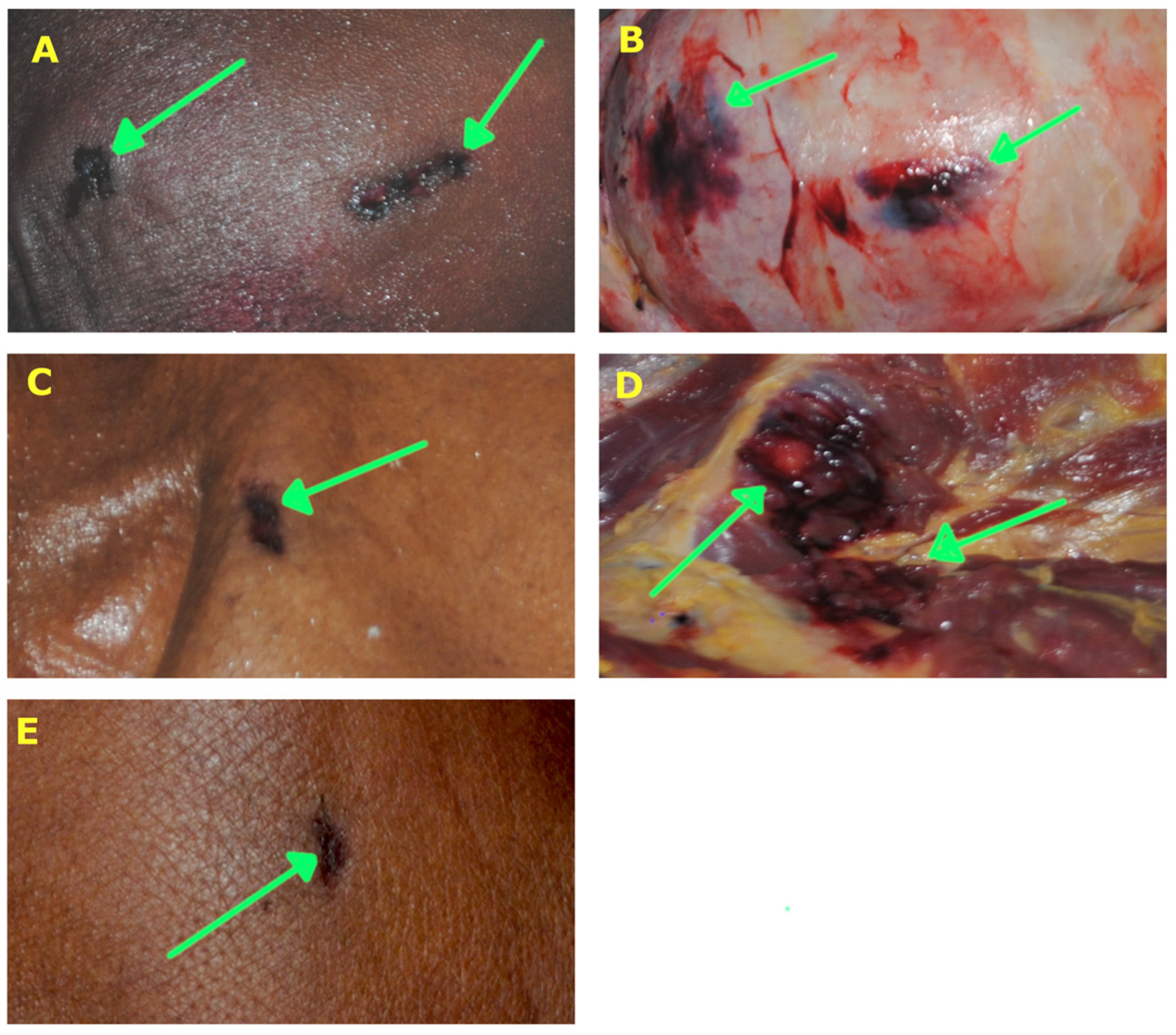
On external examination, the body was noted as belonging to an elderly man with dark-brown skin and with pale conjunctivae. In addition, three patterned abrasions (each measuring approximately 2 cm × 1 cm) were observed on the anterior aspect of both legs. These injuries were associated with multiple contusions and extensive intramuscular hemorrhage involving the calf and anterior compartment muscles, extending bilaterally to the knee and ankle levels (Figure 1A–F).
Figure 1.
Lower limb injuries demonstrating patterned abrasions and contusions with soft tissue and intramuscular hemorrhage. (A): Patterned abrasion injuries dispersed on middle and upper third of front of left leg (bright green arrow heads); (B): contusion located on lower third of front of left leg with extensive intramuscular hemorrhage involving calf and anterior leg muscle compartments, visible on cut sections (bright green arrow head); (C): patterned abrasion injuries dispersed on upper third of front of right leg (bright green arrow heads); (D): contusions located on upper, middle, and lower thirds of front and lateral aspects of right leg with extensive intramuscular hemorrhage involving the calf and anterior leg muscle compartments, visible on cut sections (bright green arrow heads); (E): contusion on front of right knee with soft tissue hemorrhage, visible on cut sections (bright green arrow head); and (F): contusion on front of right knee with soft tissue hemorrhage, visible on cut sections (bright green arrow heads). Scale bars are not included in any figure because of the absence of calibration references at the time of image acquisition.
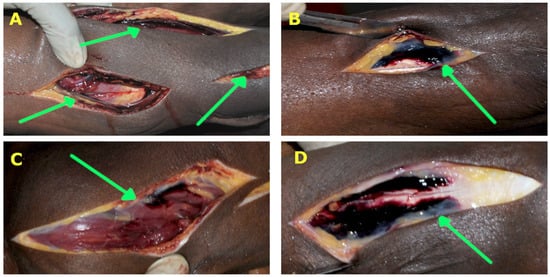
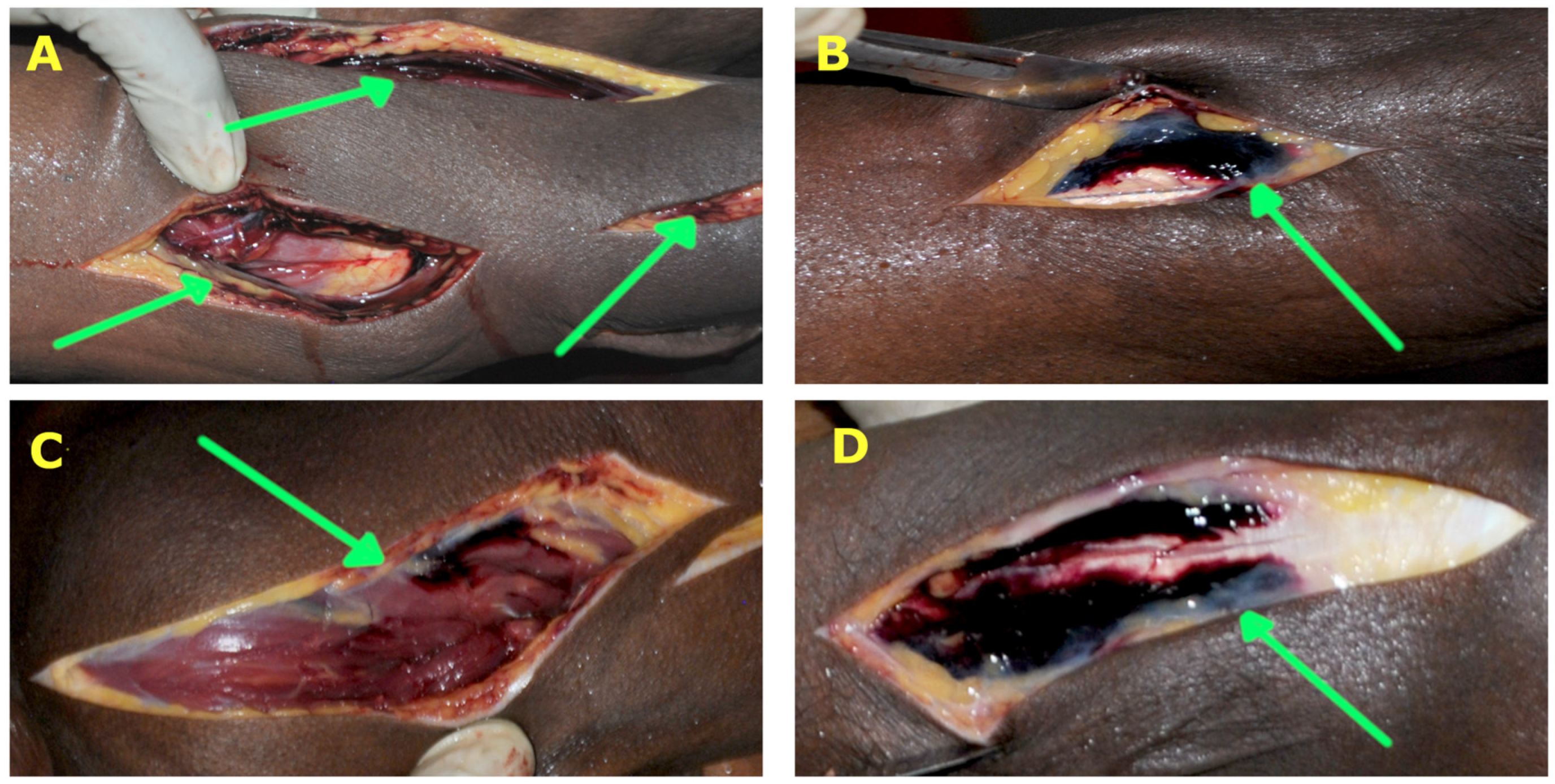
Additional contusions of comparable size were identified over the anterior and posterior aspect of the right forearm and wrist, with extensive underlying intramuscular hemorrhage involving the extensor muscle compartments (Figure 2B,C). Moreover, multiple contusions were present on the anterior and posterior aspects of both arms, accompanied by extensive intramuscular hemorrhage affecting the anterior and posterior muscle groups (Figure 2A,D). In addition, there were abrasions on the front of the right side of the base of the neck, back of the left shoulder, and parietal and occipital areas of the scalp, each measuring 1.5 cm × 1 cm (Figure 3A,C). Abrasions measuring 2.5 cm × 0.5 cm were also noted on the nasal bridge, left cheek, right lateral periorbital, and left nasolabial fold areas of the face. Rigor mortis was not evident in the limbs. No signs of asphyxia were detected.
Figure 2.
Upper limb injuries showing contusions with intramuscular hemorrhage, visible on cut sections. (A): Multiple contusions with extensive intramuscular hemorrhage along the lateral and front aspects of the right arm (bright green arrow heads); (B): contusion on the middle third of the back of the right forearm with extensive intramuscular hemorrhage (bright green arrow head); (C): contusion on the lateral aspect of the upper third of the left arm with intramuscular hemorrhage (bright green arrow head); and (D): contusion extended from the middle third of the back of the right forearm to the back of the right wrist area with extensive intramuscular hemorrhage (bright green arrow head).
Figure 3.
Injuries involving the head, neck, shoulder, and chest. (A): Abrasions on the parietal and occipital areas of the scalp located above the line encircling the scalp between the parietal and frontal eminences and tip of the occipital protuberance (bright green arrow heads); (B): contusions on the parietal and occipital areas of the head underneath of the abrasion injuries, visible after reflection of the scalp (bright green arrow heads); (C): abrasion injury on the base of the right side of the front of the neck at the supraclavicular area (bright green arrow heads); (D):contusion injury on the upper part of the right side of the front of the chest wall at the infraclavicular area, visible after reflection of the chest wall soft tissue (bright green arrow heads); and (E): abrasion injury on the back of the left shoulder (bright green arrow head).
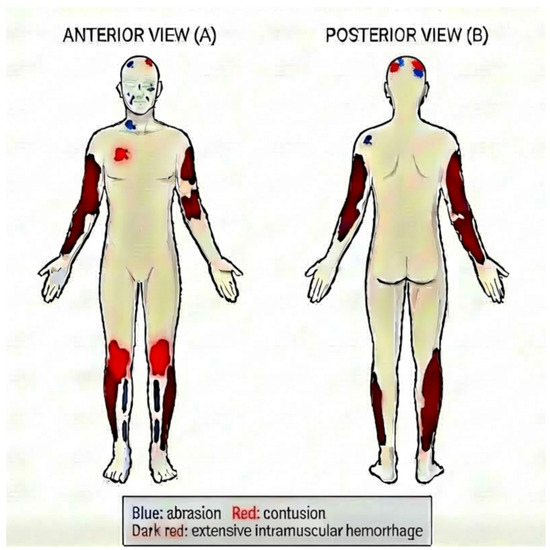
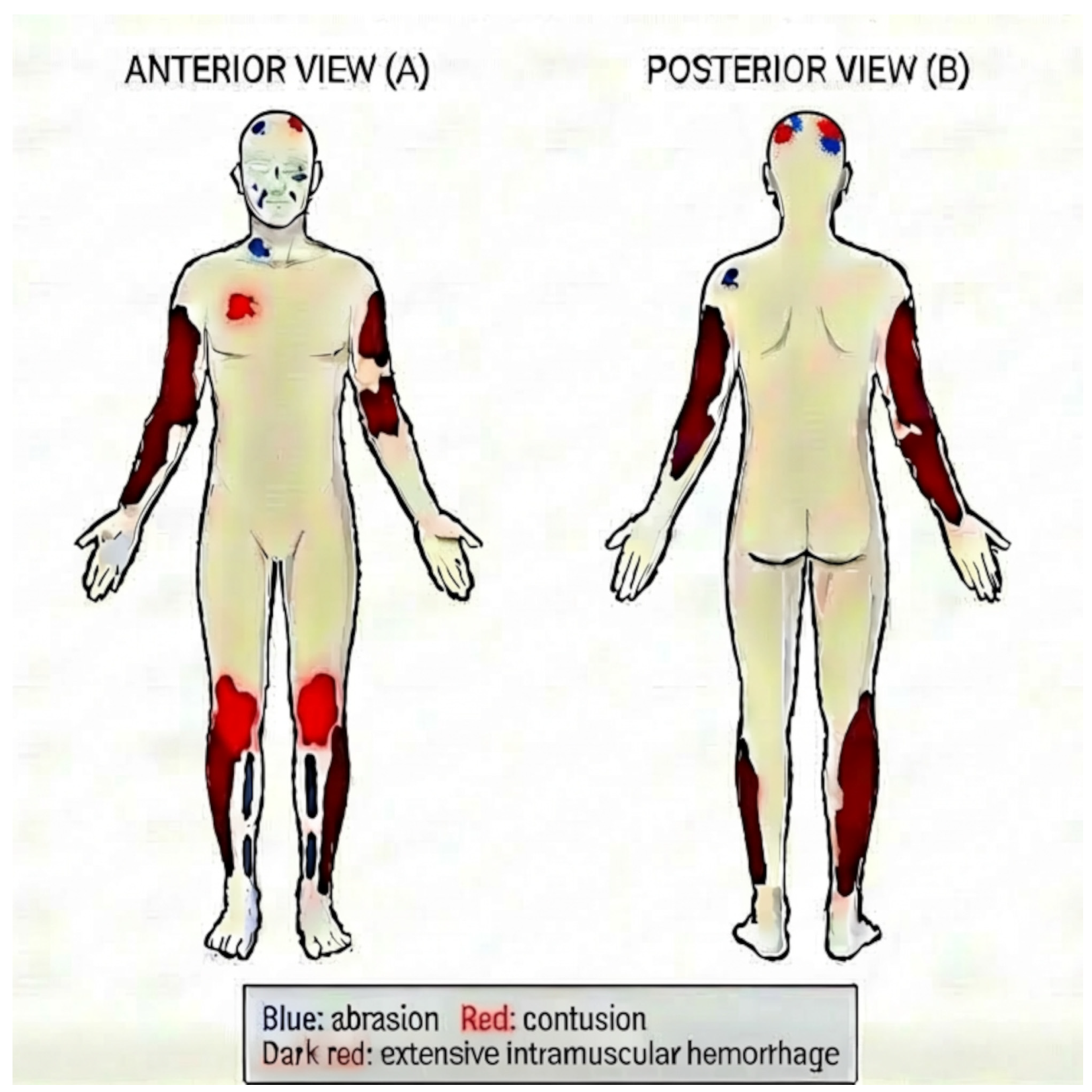
On internal examination, contusions were detected on the parietal and occipital regions, each measuring 3 cm × 2 cm, and right upper chest wall, measuring 2 cm × 1 cm (Figure 3B,E). Lungs showed no gross evidence of hyperinflation or air trapping. No mucus plugs or gastric contents were observed in the airways. The heart weighed 310 g and was of normal size and configuration. The ventricular wall thickness was within normal limits, with no evidence of hypertrophy or thinning. The cardiac valves were anatomically normal, without stenosis, regurgitation, vegetations, or calcific changes. The coronary arteries were dissected and examined, revealing no significant atherosclerotic narrowing or thrombosis. The myocardium was homogeneous, without evidence of acute infarction or focal lesions, along with small punctate subendocardial hemorrhages in the left ventricle. The kidneys demonstrated cortical pallor with relative medullary congestion, and the remaining internal organs were diffusely pale. Histological investigation of the internal organs revealed the following: the kidneys showed proximal tubular epithelial cell hydropic degeneration, loss of the brush border, and tubular cast formation; the liver showed centrilobular congestion, fatty changes, and hepatocellular injury; the heart showed vascular congestion and interstitial edema without evidence of infarction; the spleen showed diffuse congestion; and the brain showed vascular congestion with focal petechial hemorrhages. Similarly, the lungs showed subepithelial basement membrane thickening, epithelial shedding, and smooth muscle cell proliferation, accompanied by vascular congestion, mild focal mucus plug formation without significant airway obstruction or inflammation, and pulmonary congestion, edema, and focal alveolar hemorrhage. Toxicology tests were negative, except for a blood ethanol level of 0.14%. All the other findings were unremarkable. The overall distribution and pattern of injuries are summarized in a schematic injury map (Figure 4), which illustrates the widespread and bilateral involvement of multiple anatomical regions.
Figure 4.
Schematic representation of the distribution of injuries. (A): Anterior view demonstrating multiple patterned abrasions and contusions involving the parietal areas of the scalp, facial regions, neck, chest, both arms, and the right arm and wrist. (B): Posterior view showing injuries distributed over the upper border of the occipital area of the scalp, shoulder, both arms, and the right forearm. Red shaded areas indicate contusion, dark red indicates contusion with extensive intramuscular compartment hemorrhage, and blue markings represent abrasions. This schematic summarizes the widespread, bilateral, and multi-regional distribution of lesions, supporting a mechanism of repeated blunt-force trauma.
The cause of death was determined to be hemorrhagic shock due to multiple blunt-force injuries. The manner of death was classified as a homicide. The investigation revealed that the wife admitted her husband returned home intoxicated, with an unsteady gait and slurred speech, and a confrontation followed after she accused him of infidelity. She then pinned him to the ground and restrained him using her body force and repeatedly struck him with a stick for about four hours, targeting the head, trunk, and extremities, and left his body lifeless to inform the neighbors that she had found him dead at their home. The investigation concluded that the death resulted from repeated blunt force trauma inflicted by the wife, who was subsequently convicted and imprisoned.
3. Discussion
This case report describes a rare instance of IPH involving an elderly male victim killed by his elderly female partner emphasizing the importance of focused forensic evaluation of atypical presentations.
The presence of multiple patterned abrasions and contusions with extensive subcutaneous and intramuscular hemorrhage (Figure 1, Figure 2 and Figure 3) indicates repeated blunt-force impact [20,21]. The mechanism of death is best explained by hemorrhagic shock secondary to repeated blunt-force trauma, in which cumulative intramuscular hemorrhage results in significant internal blood sequestration, hypovolemia, and circulatory collapse [22,23]. The gross and histological findings support this mechanism. Diffuse visceral pallor, renal cortical hypoperfusion with relative medullary congestion, and subendocardial hemorrhage were observed. Histologically, renal tubular injury, centrilobular hepatic changes, myocardial vascular congestion, and pulmonary edema with focal alveolar hemorrhage were observed. Together, these findings indicate systemic hypoperfusion and evolving multi-organ dysfunction consistent with hemorrhagic shock [24,25,26]. Although complications such as rhabdomyolysis are unlikely given the short survival interval, advanced age and alcohol intoxication likely hastened decompensation by limiting tolerance to ongoing blood loss [27,28,29].
The morphology and distribution of injuries provide critical evidence regarding the manner of death. The widespread involvement of both the anterior and posterior body surfaces (Figure 4) indicates repeated impacts from multiple directions over a sustained period rather than an isolated or accidental event [30]. The pattern is consistent with blunt-force trauma from a linear object, such as a stick, and the extensive intramuscular hemorrhage supports repeated forceful impacts by the same implement [31,32,33]. These findings do not align with injuries from falls at standing height, which are common during alcohol intoxication and usually result in localized damage over bony areas with a single impact point. The presence of injuries above the scalp reference line further argues against the fall mechanism [34,35]. The crime scene findings reinforce this interpretation. A disarrayed environment with displaced items indicates a physical struggle, while the absence of forced entry supports a domestic context [36,37]. In keeping with these findings, the recovery of a damaged wooden stick corresponds with the patterned injuries and identifies it as the likely weapon. Furthermore, the body position, disarranged clothing, and lack of features suggestive of self-harm or accidental injury reinforce the assessment of a sustained assault [38,39,40]. Overall, integrating the scene findings with the injury patterns substantiates repeated blunt-force trauma in a homicidal context and aligns the perpetrator’s account of repeated striking with a stick over time while remaining grounded in objective forensic evidence. Rigor mortis offers further insight into the cause and circumstances of death [41,42,43]. Its absence in the extremities within 24 h of death is likely attributable to the accelerated onset and early resolution associated with advanced age and significant pre-mortem muscular exertion. [44,45]. This is consistent with sustained physical activity prior to death and supports the reconstruction of repeated assaults.
Alternative causes of death, including asthma and alcohol intoxication, were systematically excluded [46,47,48]. The absence of airway hyperinflation, significant mucus plugging, and inflammatory changes, together with non-lethal blood ethanol levels, argues against these conditions [49,50,51,52]. Blood ethanol produces progressive central nervous system depression, with moderate levels (0.05–0.15%) causing impaired coordination and judgment, and levels above 0.30–0.40% are typically associated with coma and potentially fatal respiratory depression [53,54]. Although the effects may vary with factors such as age and tolerance, the measured level of 0.14% falls below the level of fatal toxicity, supporting the conclusion that alcohol increased the vulnerability of the victim rather than being the underlying cause of death [55,56].
This case represents an atypical demographic and circumstantial presentation of IPH. The advanced age of the male victim is notable, which is likely to be associated with age-related morbidity that may have influenced both susceptibility and response to the assault [57,58]. In addition, the mechanism of assault is unusual, involving bodily force and a simple blunt object rather than conventional lethal weapons [59,60,61]. In this context, the occurrence of fatal violence is likely multifactorial, with contributing factors including escalating interpersonal conflict, alcohol use, age-related vulnerability, and emotional triggers such as perceived infidelity [62,63,64]. The gender roles in this case are atypical, involving a male victim and a female perpetrator, which deviates from the more commonly observed pattern of IPH. In particular, male victimization, especially among older adults, remains underrepresented in the forensic literature, likely due to sociocultural influences [8,61,65]. This unusual event may be explained by the interplay of these demographic and behavioral elements, underscoring the need for increased forensic awareness, especially in domestic settings.
Overkill, characterized by the application of excessive and repeated force beyond that necessary to cause death, has been described in domestic and familial settings and is often associated with intense emotional dynamics and prolonged assaults. While overkill reflects the severity and extent of the inflicted injuries, IPH represents the broader relational and behavioral context in which such acts occur [16,66]. In the present case, the pattern of injuries is consistent with the features described in overkill, while the circumstances of the event align with IPH, illustrating the overlap between these concepts.
This study has several limitations. As a single case report, its findings have limited generalizability. The total volume of blood loss from intramuscular hemorrhage cannot be directly quantified; therefore, the diagnosis of hemorrhagic shock is based on established pathological indicators. In addition, the precise sequence and timing of injuries could not be determined, and the absence of independent eyewitness accounts further constrains reconstruction, although the conclusions were based primarily on objective findings to minimize bias. While alternative causes of death were excluded, the contribution of underlying comorbidities cannot be entirely ruled out. Despite these limitations, the cause of death was established with a high degree of certainty through a comprehensive medico-legal evaluation. Future studies involving larger case series and improved methods for estimating internal blood loss and injury timing may further strengthen the medico-legal interpretation of similar cases.
Overall, this case addresses gaps in the forensic characterization of IPH by documenting an uncommon presentation involving an elderly male victim, a female perpetrator, and a non-conventional mechanism of assault. The integration of crime scene findings with autopsy, histopathological, and toxicological analyses provides a robust framework for interpreting complex cases of repeated blunt-force trauma with concealed hemorrhage. This multidisciplinary approach enhances the accuracy of cause and manner of death determination and underscores the need for heightened forensic awareness of atypical patterns of IPV.
4. Conclusions
This case demonstrates that repeated blunt-force trauma can result in fatal hemorrhagic shock through extensive intramuscular blood sequestration, even in the absence of significant external bleeding. This is supported by widespread soft tissue injuries with extensive intramuscular hemorrhage, diffuse visceral pallor, and histological evidence of systemic hypoperfusion and multi-organ involvement. The distribution and pattern of injuries, together with the crime scene findings and exclusion of alternative causes, support a sustained blunt-force assault consistent with a homicide.
This case also highlights an atypical presentation of IPH involving an elderly male victim and a female perpetrator, with the additional atypical use of bodily force and a simple blunt object rather than conventional lethal weapons. These findings underscore the fact that fatal IPV may occur outside the traditionally recognized pattern. A comprehensive medico-legal approach, combined with awareness of atypical presentations, is essential for the accurate determination of the cause and manner of death and for improving forensic investigation outcomes.
Supplementary Materials
The following supporting information can be downloaded at https://www.mdpi.com/article/10.3390/forensicsci6020046/s1, File S1: This case report was prepared in accordance with the CARE guidelines for case reports, and the CARE checklist has been completed and submitted along with this manuscript.
Author Contributions
Conceptualization, G.T.G. and I.N.; Methodology, G.T.G. and I.N.; Validation, G.T.G., I.N. and C.K.; Formal Analysis, G.T.G.; Investigation, G.T.G. and I.N.; Resources, C.K.; Data Curation, G.T.G. and D.I.; Writing—Original Draft Preparation, G.T.G.; Writing—Review and Editing, I.N., C.K. and D.I.; Visualization, G.T.G.; Supervision, I.N. and C.K.; Project Administration, I.N.; Funding Acquisition, C.K. All authors have read and agreed to the published version of the manuscript and meet the ICMJE criteria for authorship. All authors are accountable for the integrity and accuracy of the work.
Funding
This research received no external funding, and the APC was funded by the Rwanda Forensic Institute (RFI).
Institutional Review Board Statement
This study was conducted in accordance with the Declaration of Helsinki and approved by the Institutional Review Board of the Rwanda Forensic Institute (RFI). Ref number RFI/RSF 0023/26, dated as of 20 January 2026.
Informed Consent Statement
This study is a case report, and written informed consent for the study and publication of the findings was obtained from the bereaved family.
Data Availability Statement
The raw data supporting the conclusions of this article will be made available by the authors on request.
Acknowledgments
I acknowledge the administration of the Rwanda forensic Institute (RFI) for their permission to conduct this case report and provide us with the investigation records.
Conflicts of Interest
Payment/services info: No financial support was received from any organization for this study. Financial relationships: There are no financial relationships at present or within the previous three years with any organizations that might constitute a conflict of interest in this study. Other relationships: There are no other relationships or activities that could appear to have influenced this study. The funders of the APC had no role in the design of the study; in the collection, analyses, or interpretation of data; in the writing of the manuscript; or in the decision to publish the results. The authors declare no conflicts of interest.
Abbreviations
The following abbreviations are used in this manuscript:
| IPV | Intimate partner violence |
| IPH | Intimate partner homicide |
References
- Nesca, M.; Au, W.; Turnbull, L.; Brownell, M.; Brownridge, D.A.; Urquia, M.L. Intentional injury and violent death after intimate partner violence. A retrospective matched-cohort study. Prev. Med. 2021, 149, 106616. [Google Scholar] [CrossRef] [Scilit]
- Dunaiski, M.; Abdelgelil, C.; Filip, A.M.; Ivanova, N.; Rausis, D.; Yee, S.; Me, A. Global and Regional Estimates of Female Intimate Partner and Family-Related Homicide. J. Contemp. Crim. Justice 2024, 40, 352–363. [Google Scholar] [CrossRef] [Scilit]
- Sardinha, L.; Maheu-Giroux, M.; Stöckl, H.; Meyer, S.R.; García-Moreno, C. Global, regional, and national prevalence estimates of physical or sexual, or both, intimate partner violence against women in 2018. Lancet 2022, 399, 803–813. [Google Scholar] [CrossRef] [Scilit]
- Enander, V.; Krantz, G.; Lövestad, S.; Örmon, K. Bereaved by Intimate Partner Homicide: Consequences and Experiences of Support. Sage Open 2024, 14, 21582440241252311. [Google Scholar] [CrossRef] [Scilit]
- Kafka, J.M.; Moracco, K.E.; Young, B.R.; Taheri, C.; Graham, L.M.; Macy, R.J.; Proescholdbell, S.K. Fatalities related to intimate partner violence: Towards a comprehensive perspective. Inj. Prev. 2021, 27, 137–144. [Google Scholar] [CrossRef] [Scilit]
- Matias, A.; Gonçalves, M.; Soeiro, C.; Matos, M. Intimate partner homicide: A meta-analysis of risk factors. Aggress. Violent Behav. 2020, 50, 101358. [Google Scholar] [CrossRef] [Scilit]
- Manifold, B.M. Victim-perpetrator relationship, age and method of homicide in intimate and non-intimate cases of femicide from the republic of Ireland. Med. Sci. Law 2024, 64, 190–198. [Google Scholar] [CrossRef] [Scilit] [PubMed]
- Vignola-Lévesque, C.; Léveillée, S. Intimate Partner Violence and Intimate Partner Homicide: Development of a Typology Based on Psychosocial Characteristics. J. Interpers. Violence 2022, 37, NP15874–NP15898. [Google Scholar] [CrossRef] [Scilit]
- Hanson, K.; Lysova, A. The Father, the Son, and the Abuser: The Portrayal of Male Victims of Intimate Partner Homicide in the News Media. Homicide Stud. 2023, 27, 361–383. [Google Scholar] [CrossRef] [Scilit]
- Dziewa, A.; Glowacz, F. Getting out from Intimate Partner Violence: Dynamics and Processes. A Qualitative Analysis of Female and Male Victims’ Narratives. J. Fam. Violence 2022, 37, 643–656. [Google Scholar] [CrossRef] [Scilit] [PubMed]
- Park, S.; Bang, S.-H.; Jeon, J. “This Society Ignores Our Victimization”: Understanding the Experiences of Korean Male Victims of Intimate Partner Violence. J. Interpers. Violence 2021, 36, 11658–11680. [Google Scholar] [CrossRef] [Scilit]
- Crockett, C.; Brandl, B. Intimate Partner Violence in Later Life. In Handbook of Interpersonal Violence and Abuse Across the Lifespan; Geffner, R., White, J.W., Hamberger, L.K., Rosenbaum, A., Vaughan-Eden, V., Vieth, V.I., Eds.; Springer International Publishing: Cham, Switzerland, 2022; pp. 4457–4478. [Google Scholar]
- Li, M.; Dong, X. Intimate Partner Violence in Older Adults. In Intimate Partner Violence; Mitchell, C., Miller, E., McCaw, B., Alexander, K.A., Eds.; Oxford University Press: New York, NY, USA, 2025; pp. 671–694. [Google Scholar]
- Carlsson, L.; Lysell, H.; Enander, V.; Örmon, K.; Lövestad, S.; Krantz, G. Socio-demographic and psychosocial characteristics of male and female perpetrators in intimate partner homicide: A case-control study from Region Västra Götaland, Sweden. PLoS ONE 2021, 16, e0256064. [Google Scholar] [CrossRef] [Scilit]
- Willie, T.C.; Kershaw, T.; Perler, R.; Caplon, A.; Katague, M.; Sullivan, T.P. Associations between state intimate partner violence-related firearm policies and injuries among women and men who experience intimate partner violence. Inj. Epidemiol. 2021, 8, 8. [Google Scholar] [CrossRef] [Scilit] [PubMed]
- Willie, T.C.; Kershaw, T.; Perler, R.; Caplon, A.; Katague, M.; Sullivan, T.P. Overkill in forensic medicine: A systematic review. Acta Psychol. 2025, 259, 105388. [Google Scholar] [CrossRef] [Scilit]
- Karakasi, M.V.; Nastoulis, E.; Zisopoulos, K.; Markopoulou, M.; Alexandri, M.; Bakirtzis, C.; Douzenis, A.; Zaggelidou, E.; Pavlidis, P. Investigating the phenomenon of overkill in Greece: A forensic psychiatric autopsy study between 2005 and 2020. J. Forensic Leg. Med. 2021, 81, 102184. [Google Scholar] [CrossRef] [Scilit] [PubMed]
- Kopacz, P.; Juźwik-Kopacz, E.; Bolechała, F.; Strona, M.; Konopka, T. Overkilling: A specific type of homicide–Constructing the definition: Injuries and victim. Leg. Med. 2022, 59, 102147. [Google Scholar] [CrossRef] [Scilit]
- Chopin, J.; Beauregard, E. Patterns of overkill in sexual homicides. J. Crim. Psychol. 2021, 11, 44–58. [Google Scholar] [CrossRef] [Scilit]
- Penttinen, E. The harm of normalized violence: Re-identifying intimate partner violence as torture in acknowledging the stakes of abusive relationships. Int. Fem. J. Politics 2024, 26, 150–170. [Google Scholar] [CrossRef] [Scilit]
- Petersen, H.D.; Morentin, B.; Pérez-Sales, P. Physical Torture. In Encyclopedia of Forensic Sciences, 3rd ed.; Elsevier: Amsterdam, The Netherlands, 2023; pp. 182–203. [Google Scholar]
- Kurucan, E.; Wiekrykas, B.; Talsania, A.; Alonso, G.; Thoder, J.; Solarz, M. Upper-Extremity Compartment Syndrome: Comparison of Substance-Related Found Down and Acute Trauma Mechanisms. J. Hand Surg. 2026, 51, 215.e1–215.e9. [Google Scholar] [CrossRef] [Scilit]
- Mortensen, S.J.; Orman, S.; Serino, J.; Mohamadi, A.; Nazarian, A.; Von Keudell, A. Factors Associated with Development of Traumatic Acute Compartment Syndrome: A Systematic Review and Meta-analysis. Arch. Bone Jt. Surg. 2021, 9, 263–271. [Google Scholar]
- Huang, Q.; Wang, Y.; Zhang, Z.; Wu, M.; Liu, J.; Chen, J.; Li, J.; Yao, Y.; Guo, C.; Zhao, D.; et al. Organ dysfunction induced by hemorrhagic shock: From mechanisms to therapeutic medicines. Pharmacol. Res. 2025, 216, 107755. [Google Scholar] [CrossRef] [Scilit]
- Schmidt, U.; Oramary, D.; Kamin, K.; Buschmann, C.T.; Kleber, C. Synergistic Effects of Forensic Medicine and Traumatology: Comparison of Clinical Diagnosis Autopsy Findings in Trauma-Related Deaths. World J. Surg. 2020, 44, 1137–1148. [Google Scholar] [CrossRef] [Scilit]
- Shimbashi, S.; Yoshimiya, M.; Tashiro, A.; Noriki, S.; Hyodoh, H. “Shock kidney-like Appearance”: Objective evaluation of renal color changes in hemorrhagic shock deaths. Leg. Med. 2024, 71, 102521. [Google Scholar] [CrossRef] [Scilit]
- Khan, S.; Neradi, D.; Unnava, N.; Jain, M.; Tripathy, S.K. Pathophysiology and management of crush syndrome: A narrative review. World J. Orthop. 2025, 16, 104489. [Google Scholar] [CrossRef] [Scilit] [PubMed]
- Akrivos, V.S.; Koutalos, A.; Stefanou, N.; Koskiniotis, A.; Arnaoutoglou, C. Crush injury and crush syndrome: A comprehensive review. EFORT Open Rev. 2025, 10, 424–430. [Google Scholar] [CrossRef] [Scilit] [PubMed]
- Yun, K.S.; Cho, J.S.; Lim, Y.S.; Jang, J.H.; Yang, H.J.; Choi, W.S. Effect of alcohol intake on the severity of injuries caused by slipping down. Clin. Exp. Emerg. Med. 2020, 7, 170–175. [Google Scholar] [CrossRef] [Scilit]
- Yin, X.; Li, D.; Zhu, K.; Liang, X.; Peng, S.; Tan, A.; Du, Y. Comparison of Intentional and Unintentional Injuries Among Chinese Children and Adolescents. J. Epidemiol. 2020, 30, 529–536. [Google Scholar] [CrossRef] [Scilit]
- Motorca, M.A.; Buhaş, C.L.; Bungău, S.G.; Judea-Pusta, C.T.; Nicula, C.A.; Rus, M.; Stănescu, A.M.A.; Venter, A.C.; Diaconu, C.C.; Marian, P. The morphological characteristics of the physically abused child. Report of a case and literature review. Rom. J. Morphol. Embryol. 2020, 61, 261–265. [Google Scholar] [CrossRef] [Scilit] [PubMed]
- Toya, M.; Minegishi, S.; Utsuno, H.; Ohta, J.; Namiki, S.; Unuma, K.; Uemura, K.; Sakurada, K. Forensic Characteristics of Physical Elder Abuse and Current Status and Issues of Collaboration between Forensic Medicine Departments and Related Institutions in Japan. Int. J. Environ. Res. Public Health 2022, 19, 15382. [Google Scholar] [CrossRef] [Scilit]
- Nemati-Vakilabad, R.; Khalili, Z.; Ghanbari-Afra, L.; Mirzaei, A. The prevalence of elder abuse and risk factors: A cross-sectional study of community older adults. BMC Geriatr. 2023, 23, 616. [Google Scholar] [CrossRef] [Scilit]
- Poli, F.; Doci, K.; Seligardi, M.; Dagoli, S.; Amadasi, A.; Oesterhelweg, L.; Bugelli, V. Case-based analysis to assess the validity of the Hat Brim Line Rule in cranial trauma. Forensic Sci. Int. 2026, 379, 112787. [Google Scholar] [CrossRef] [Scilit]
- Calabrese, S.; Spadaro, B.; Nicolosi, A.; Burrascano, G.; Asmundo, A.; Baldino, G.; Ventura Spagnolo, E. Blunt force vs. fall-induced head trauma: A systematic review and methodological framework. Forensic Sci. Med. Pathol. 2025, Epub ahead of printing. [Google Scholar] [CrossRef] [Scilit]
- Sohoni, T.; Snell, J.; Harden, E. They Never Saw It Coming: Frames of Intimate Partner Homicide on Crime Scene Investigation (CSI). J. Fam. Violence 2025, Epub ahead of printing. [Google Scholar] [CrossRef] [Scilit]
- Griffiths, N.; David, J.O.; Mabudusha, S.A. Advancing Detection of Crime Scene Staging in Intimate Partner Homicide: A Study in Gauteng, South Africa. Violence Against Women 2025, Epub ahead of printing. [Google Scholar] [CrossRef] [Scilit]
- Geberth, V.J. Practical Homicide Investigation: Tactics, Procedures, and Forensic Techniques, 5th ed.; CRC Press: Boca Raton, FL, USA, 2020. [Google Scholar] [CrossRef] [Scilit]
- Chandra, S.; Pradeep, K.R.; Kait, J.P.; Gupta, S.K.; Verma, D. Crime Scene Examination of Murder Case. J. Forensic Sci. Res. 2024, 8, 108–110. [Google Scholar] [CrossRef] [Scilit]
- Wickenheiser, R.A. Proactive crime scene response optimizes crime investigation. Forensic Sci. Int. Synerg. 2023, 6, 100325. [Google Scholar] [CrossRef] [Scilit]
- Zar, M.S.; Bibi, A.; Akhtar, M.S. Unravelling time after death: A comprehensive review of multi-omics approaches in postmortem interval estimation. Forensic Sci. Int. 2026, 379, 112779. [Google Scholar] [CrossRef] [Scilit]
- Dahiya, S.K.; Kaushik, R.; Jakhar, J.K.; Dhattarwal, S.K.; Dahiya, A. Rigor Mortis: A Reliable Tool for Estimating Time Since Death in Indian Scenario. J. Indian Acad. Forensic Med. 2024, 46, 523–532. [Google Scholar] [CrossRef] [Scilit]
- Mesri, M.; Behzadnia, M.; Dorooshi, G. Accelerated rigor mortis: A case letter. J. Res. Med. Sci. 2017, 22, 126. [Google Scholar] [CrossRef] [Scilit]
- Pollak, S.; Saukko, P.; Knight, B. Knight’s Forensic Pathology, 5th ed.; CRC Press: Boca Raton, FL, USA, 2026. [Google Scholar] [CrossRef] [Scilit]
- Madea, B. Estimation of the Time Since Death, 4th ed.; CRC Press: Boca Raton, FL, USA, 2023. [Google Scholar] [CrossRef] [Scilit]
- Lammert, S.; Chang, A.; Mueller, J.; Husain, A. 11 Adult Asthma at Autopsy: A Retrospective Autopsy Review. Lab. Investig. 2025, 105, 102233. [Google Scholar] [CrossRef] [Scilit]
- Argo, A.; Zerbo, S.; Buscemi, R.; Trignano, C.; Bertol, E.; Albano, G.D.; Vaiano, F. A Forensic Diagnostic Algorithm for Drug-Related Deaths: A Case Series. Toxics 2022, 10, 152. [Google Scholar] [CrossRef] [Scilit]
- Fiscella, K.; Noonan, M.; Leonard, S.H.; Farah, S.; Sanders, M.; Wakeman, S.E.; Savolainen, J. Drug-and Alcohol-Associated Deaths in U.S. Jails. J. Correct. Health Care 2020, 26, 183–193. [Google Scholar] [CrossRef] [Scilit] [PubMed]
- Konopka, K.E.; Wilson, A.; Myers, J.L. Postmortem Lung Findings in a Patient with Asthma and Coronavirus Disease 2019. Chest 2020, 158, e99–e101. [Google Scholar] [CrossRef] [Scilit] [PubMed]
- Aegerter, H.; Lambrecht, B.N. The Pathology of Asthma: What Is Obstructing Our View? Annu. Rev. Pathol. Mech. Dis. 2023, 18, 387–409. [Google Scholar] [CrossRef] [Scilit] [PubMed]
- Wang, H.; Xu, H.; Li, W.; Li, B.; Shi, Q.; Ma, K.; Xiao, B.; Chen, L. Forensic appraisal of death due to acute alcohol poisoning: Three case reports and a literature review. Forensic Sci. Res. 2020, 5, 341–347. [Google Scholar] [CrossRef] [Scilit]
- D’Angelo, A.; Petrella, C.; Greco, A. Acute alcohol intoxication: A clinical overview. Clin. Ter. 2022, 173, 280–291. [Google Scholar]
- Mirijello, A.; Sestito, L.; Antonelli, M.; Gasbarrini, A.; Addolorato, G. Identification and management of acute alcohol intoxication. Eur. J. Intern. Med. 2023, 108, 1–8. [Google Scholar] [CrossRef] [Scilit]
- Jones, A.W. Dubowski’s stages of alcohol influence and clinical signs and symptoms of drunkenness in relation to a person’s blood-alcohol concentration—Historical background. J. Anal. Toxicol. 2024, 48, 131–140. [Google Scholar] [CrossRef] [Scilit]
- Rajendram, R.; Hunter, R.J.; Preedy, V.R. Alcohol: Absorption, metabolism, and physiological effects. In Encyclopedia of Human Nutrition; Elsevier: Amsterdam, The Netherlands, 2023; pp. 250–265. [Google Scholar]
- Monds, L.A.; Riordan, B.C.; Flett, J.A.; Conner, T.S.; Haber, P.; Scarf, D. How intoxicated are you? Investigating self and observer intoxication ratings in relation to blood alcohol concentration. Drug Alcohol Rev. 2021, 40, 1173–1177. [Google Scholar] [CrossRef] [Scilit]
- Lü, W.P.; Liao, X.B.; Ren, L.J.; Kong, X.P.; Chen, Y.C.; Chang, Y.F.; Luo, B. Construction and Evaluation of Intimate Partner Homicide Prediction Model. Fa Yi Xue Za Zhi 2024, 40, 582–588. [Google Scholar]
- Gonçalves, M.; Gomes, E.; Matos, M. Intimate Partner Homicide: Comparison Between Homicide and Homicide-Suicide in Portugal. J. Interpers. Violence 2024, 39, 519–540. [Google Scholar] [CrossRef] [Scilit] [PubMed]
- Valabdass, S.N.; Subramaney, U.; Edge, A. Characteristics of persons accused of intimate partner homicide amongst forensic psychiatric observations. S. Afr. J. Psychiatry 2021, 27, a1675. [Google Scholar] [CrossRef] [Scilit] [PubMed]
- Lü, W.P.; Liao, X.B.; Ren, L.J.; Kong, X.P.; Chen, Y.C.; Chang, Y.F.; Luo, B. Intimate Female Partner Homicide Suicide: Demographic and psychopathology aspects of perpetrators and a potential not yet classified diagnostic entityAnalyses of data taken from newspapers in Italy from 2009 to 2019. Riv. Psichiatr. 2022, 57, 273–281. [Google Scholar] [CrossRef] [Scilit]
- Crosland, S.; Tzani, C.; Ioannou, M. What Do We Think About Women Who Kill? Validation of the Attitudes Towards Female Perpetrators of Intimate Partner Homicide Scale. J. Interpers. Violence 2025, Epub ahead of printing. [Google Scholar] [CrossRef] [Scilit]
- Allen, T.; Salari, S.; Buckner, G. Homicide Illustrated Across the Ages: Graphic Depictions of Victim and Offender Age, Sex, and Relationship. J. Aging Health 2020, 32, 162–174. [Google Scholar] [CrossRef] [Scilit]
- Kafonek, K.; Gray, A.C.; Parker, K.F. Understanding Escalation Through Intimate Partner Homicide Narratives. Violence Against Women 2022, 28, 3635–3656. [Google Scholar] [CrossRef] [Scilit]
- Sontate, K.V.; Rahim Kamaluddin, M.; Naina Mohamed, I.; Mohamed, R.M.P.; Shaikh, M.F.; Kamal, H.; Kumar, J. Alcohol, Aggression, and Violence: From Public Health to Neuroscience. Front. Psychol. 2021, 12, 699726. [Google Scholar] [CrossRef] [Scilit]
- Gaman, A.; McAfee, S.; Homel, P.; Jacob, T. Understanding Patterns of Intimate Partner Abuse in Male–Male, Male–Female, and Female–Female Couples. Psychiatr. Q. 2017, 88, 335–347. [Google Scholar] [CrossRef] [Scilit]
- Campbell, J.; Spearman, K.; Glass, N. Intimate Partner Homicide, Lethality Assessment, and Safety Planning. In Intimate Partner Violence; Mitchell, C., Miller, E., McCaw, B., Alexander, K.A., Eds.; Oxford University Press: New York, NY, USA, 2025; pp. 326–360. [Google Scholar]
Disclaimer/Publisher’s Note: The statements, opinions and data contained in all publications are solely those of the individual author(s) and contributor(s) and not of MDPI and/or the editor(s). MDPI and/or the editor(s) disclaim responsibility for any injury to people or property resulting from any ideas, methods, instructions or products referred to in the content. |
© 2026 by the authors. Licensee MDPI, Basel, Switzerland. This article is an open access article distributed under the terms and conditions of the Creative Commons Attribution (CC BY) license.