


Abstract
Flotation is a fundamental unit operation in mineral processing; however, achieving high selectivity while reducing the environmental impact of reagents remains a major challenge in phosphate ore beneficiation. Conventional depressants often exhibit limited selectivity and may pose environmental concerns, highlighting the need for sustainable alternatives. This study reports, for the first time, the application of starch nanostructures derived from potato pulp processing residues as a depressant in phosphate flotation, representing an innovative and eco-friendly approach. An exploratory and experimental methodology was adopted, including nanostarch synthesis via acid hydrolysis followed by centrifugation and sonication, as well as comprehensive physicochemical characterization. The primary objective was to evaluate the selective depressant performance of the nanomaterial in apatite–calcite flotation systems. The synthesized nanostructures exhibited particle diameters ranging from 179 to 443.6 nm. Microflotation tests conducted in a Hallimond tube using pure mineral samples under alkaline conditions (pH ≈ 9), at a depressant dosage of 500 mg/L and in combination with a plant-based fatty acid collector, revealed a pronounced selectivity window, resulting in an approximately 77% difference in flotation recovery between apatite and calcite. These findings demonstrate that nanostarch derived from agro-industrial residues is a promising, biodegradable, and sustainable depressant capable of enhancing selectivity in phosphate flotation. The results contribute to the advancement of greener mineral processing Technologies, although Further studies are required to elucidate the underlying interaction mechanisms.
1. Introduction
The concentration of phosphate ores plays a strategic role in the global supply of phosphorus, a non-renewable resource that is essential for fertilizer production and global food security. Flotation is the most widely applied technique for phosphate beneficiation and is commonly carried out using fatty acid collectors derived from vegetable oils. Despite its extensive industrial application, phosphate flotation remains a highly complex process due to the significant variability in the chemical composition and surface properties of apatite, which can vary considerably among phosphate rock deposits [1]. This complexity is further exacerbated by the presence of carbonate minerals, particularly calcite, which exhibit surface characteristics similar to apatite, resulting in poor flotation selectivity, increased reagent consumption, and reduced separation efficiency [2,3].
To achieve selectivity in apatite flotation systems employing fatty acid collectors, the use of surface-modifying agents, commonly referred to as depressants, is essential. In Brazilian phosphate ore processing, starch has traditionally been used as a depressant for carbonate and iron-bearing gangue minerals, due to its wide availability, low toxicity, and favorable interaction with mineral surfaces [4,5]. In recent years, increasing environmental concerns and stricter sustainability requirements have intensified the search for biobased and biodegradable flotation reagents capable of improving process efficiency while minimizing environmental impact [6].
In this context, Carneiro et al. [7,8] demonstrated that potato residual starch pulp (PRSP), an agro-industrial by-product from the food industry, can act as an effective depressant in the anionic flotation of Brazilian phosphate ores, achieving performance comparable to that of conventional industrial starch. The possibility of applying PRSP directly after simple dewatering and drying steps, without the need for chemical modification, highlights its potential as a low-cost and sustainable alternative for mineral processing and waste valorization.
Recent advances in nanotechnology have opened new perspectives for mineral flotation through the development of nanostructured reagents with enhanced surface activity, reactivity, and selectivity. Madzokere et al. [9] reported that nanosilica-based frothers outperformed conventional reagents in the flotation of platinum group minerals, while Yang et al. [10] demonstrated improved nickel grade and recovery using nanoparticle-based collectors in ultramafic pentlandite flotation. Laitinen et al. [11] showed that chemically modified nanocelluloses can function either as starch-like depressants for hematite or as amine-type collectors for quartz. Similarly, Santos et al. [12] investigated nanocellulose derived from Eucalyptus spp. as a flotation reagent and observed that modified nanocellulose, when combined with a fatty acid collector, reduced the floatability of both apatite and calcite. Collectively, these studies highlight the versatility and potential of nanostructured materials to improve flotation selectivity and support the development of more sustainable mineral processing routes.
Despite these advances, most studies have focused on synthetic nanomaterials or chemically modified biopolymers. The use of starch derived from agro-industrial residues, such as potato pulp waste, remains largely unexplored in phosphate flotation systems, representing an significant knowledge gap in the development of sustainable and circular approaches for mineral processing. Furthermore, reducing starch to the nanoscale can significantly enhance its physicochemical properties, including increased specific surface area and surface reactivity, which may improve its adsorption onto mineral surfaces and strengthen polymer–mineral interactions. As a result, nanostructured starch materials may provide more efficient and selective depression compared to conventional gelatinized starch in flotation systems.
Addressing this gap, the present study investigates the synthesis of starch nanostructures from potato residual starch pulp generated by the food industry and evaluates their application as depressants in apatite flotation. The proposed approach aims to enhance mineral selectivity and flotation performance while promoting the valorization of agro-industrial residues, thereby contributing to more sustainable and cost-effective phosphate ore beneficiation. To the best of the authors’ knowledge, this is the first study to report the use of starch nanoparticles as depressants in phosphate flotation systems.
2. Materials and Methods
2.1. Samples
The Apatite samples were collected from a deposit located in Patrocínio, Minas Gerais, Brazil, while calcite samples were obtained from a silver mining site in Januária, Minas Gerais, Brazil. Apatite preparation involved desliming, drying, magnetic separation, particle size reduction, and sieving. Desliming was carried out using a 38 µm (400#) Tyler sieve, and the retained fraction was dried at room temperature. The material subsequently subjected to magnetic separation using a hand magnet, and the non-magnetic fraction was ground in a porcelain mortar. After grinding, the material was sieved to obtain the −300 µm + 75 µm size fraction, which was further purified using a carousel magnetic separator operating at a magnetic field intensity of 5000 Gauss. Calcite preparation consisted of successive comminution steps. The material was initially crushed in a jaw crusher with a ½-inch (1.27 mm) opening, followed by manual grinding in an agate mortar. Sieving was performed following the same procedure used for the apatite samples.
Potato residual starch pulp (PRSP), (Solanum tuberosum L.), was collected from the pre-fried potato production line of Bem-Brasil Alimentos, located in Araxá, Minas Gerais, Brazil, in 2023.
2.2. Minerals Samples Characterization
Mineralogical characterization of the samples was performed by X-ray diffraction (XRD) using Cu Kα radiation (λ = 1.540 Å), operating at 40 kV and 30 mA. The analysis was conducted over a 2θ range of 5–100°, with a step size of 0.020° and a counting time of 1 s per step.
2.3. Reagents
2.3.1. Apatite Flotation Conventional Reagents
The collector used was AGEM vegetable oil, supplied by RJMG Óleo Química, consisting of a mixture of fatty acids. Saponification was carried out by mixing 5 g of oil, 7.85 g of distilled water, and 7.15 g of a 10% NaOH solution. The mixture was magnetically stirred for 10 min, followed by the addition of 180 g of distilled water to obtain a final solution of 2.5% (w w−1). The solution was further stirred for 10 min to ensure complete homogenization [8]. Gelatinization of the depressant (residual potato starch) was performed according to Carneiro et al. [8]. For this purpose, 5 g of starch, 45 g of H2O, and 12.5 g of a 10% NaOH solution were mixed and stirred for 10 min. Subsequently, 104.16 g of water were added to dilute the suspension, followed by an additional 10 min of magnetic stirring until complete homogenization was achieved.
2.3.2. Potato Residual Starch Pulp—PRSP—Production
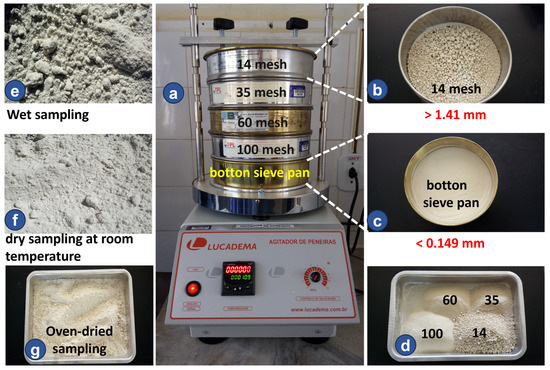
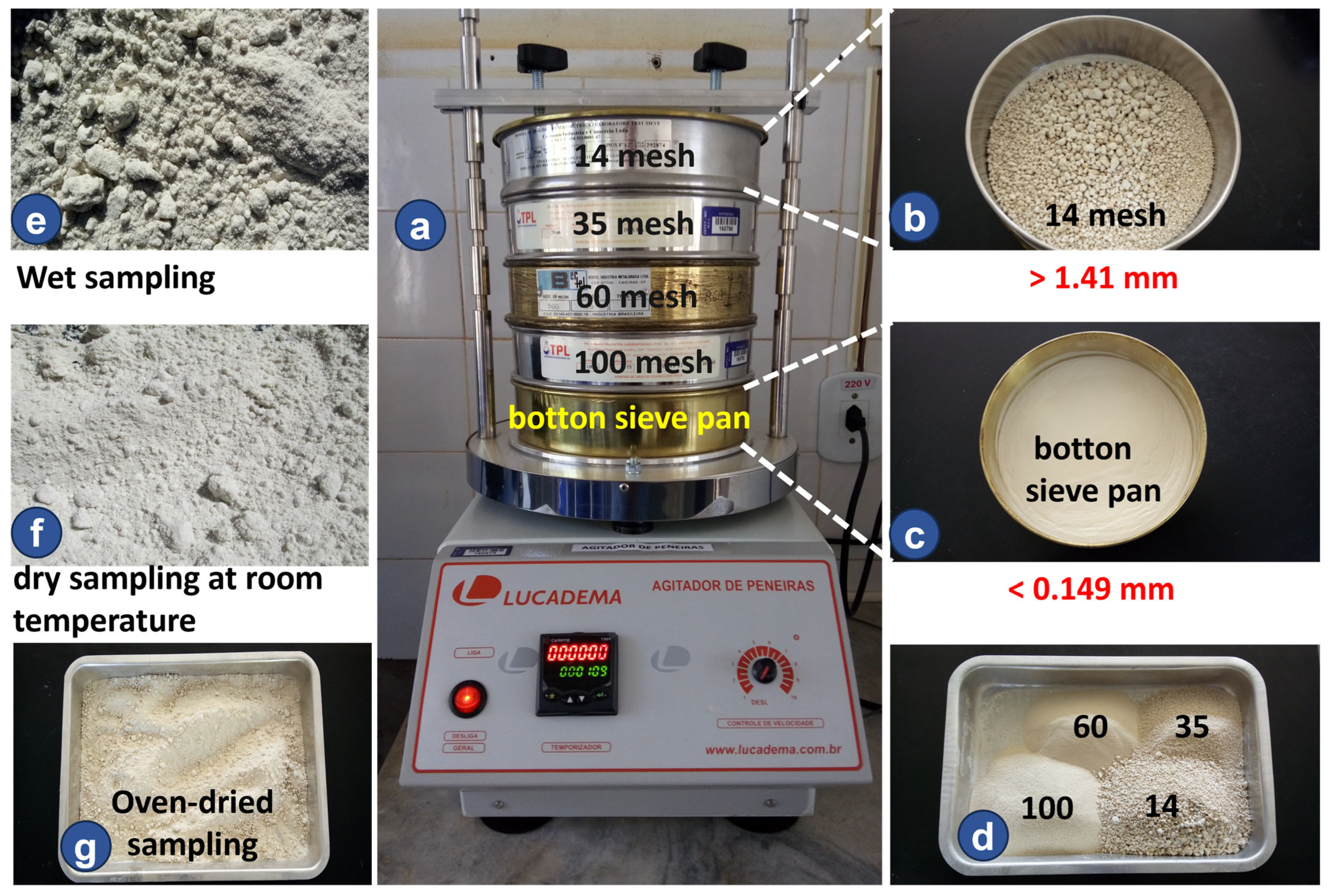
Potato residual starch pulp, free of peel residues, was collected after peeling, cutting, washing, and sedimentation stages of the processing line. Approximately 50 L batches were stored in low-density polyethylene “big bag” containers with a moisture content of approximately 75%. The material was initially air-dried at room temperature for five days followed by oven drying at 65 °C under forced air circulation for 48 h to prevent microbial growth. The dried materials was sieved using a vibratory sieve shaker with four mesh sizes (14, 35, 60, and 100) to obtain the most homogeneous fractions, corresponding to particles passing through the 100-mesh sieve. The select material was then stored in sealed containers under dry condition at room temperature. Sample preparation steps are shown in Figure 1.
Figure 1.
PRSP Sample preparation steps: (a) vibratory sieve shaker equipped with four sieves; (b) sieve for particle size classification with 1.41 mm aperture; (c) sieve for particle size classification with 0.59 mm aperture; (d) PRSP sample after sieving; (e) oven-dried sample; (f) sample air-dried at room temperature; and (g) wet sample.
2.3.3. PRSP—Proximate Composition
The composition of PRSP was determined in terms of moisture, ash, dietary fiber, protein, lipids, amylose, amylopectin, and total carbohydrates. Moisture, ash, and lipid contents were determined according to the standards of the Adolfo Lutz Institute [13]. Moisture content was measured by oven drying at 105 °C until constant weight (Method 12/IV), ash content was determined by incineration in a muffle furnace at 550 °C (Method 18/IV), and lipids were extracted using a Soxhlet apparatus with petroleum ether (Method 32/IV). Total dietary fiber was determined using the enzymatic–gravimetric method (AOAC Official Method 991.43) [14]. Protein content was determined by the Kjeldahl method and converted using a factor of 6.38, in accordance with ISO 1871:2009 [15]. Amylose and amylopectin contents were determined following the method proposed by Bienvenido [16]. Total carbohydrate content was calculated by difference, in accordance with Brazilian Resolution RDC No. 360 [17]. All analyses were carried out in triplicate.
2.3.4. PRSP—Viscoamylographic Analysis
The pasting properties of the polysaccharide samples were determined using a Rapid Visco Analyzer (RVA-4) (PerkinElmer, Waltham, MA, USA), operated with Thermocline software (version 2.3, Newport Scientific, Jessup, MD, USA). The analysis followed ICC Standard Method No. 162 [18], using the Standard 1 profile. Viscosity was expressed in Rapid Visco Units (RVU). Samples of 3.5 g (adjusted to 14% moisture content) were mixed with 25 mL of distilled water. The following temperature profile was applied: holding at 50 °C for 1 min, heating to 95 °C over 3.5 min, holding at 95 °C for 2.5 min, and cooling to 50 °C over 2 min. The stirring speed was set at 960 rpm for the first 10 s and then maintained at 160 rpm [19]. The evaluated parameters included pasting temperature, peak viscosity, breakdown, final viscosity, and setback. All tests were performed in triplicate.
2.3.5. PRSP—X-Ray Diffraction Analysis
X-ray diffraction (XRD) analysis of PRSP was performed using a Shimadzu XRD-7000 diffractometer (Shimadzu Corporation, Kyoto, Japan). The analysis was conducted at room temperature over a 2θ range of 10–40°, with a scanning rate of 0.01° s−1, using Cu Kα radiation (λ = 1.5406 Å) generated at 40 kV and 20 mA. The crystallinity index (CrI) was estimated according to the method proposed by Nara and Komiya [20]. The crystalline area (Ac) was determined by integration of the peak regions, while the total area (At) was calculated over the angular range of 16–40°. Calculations were performed using Origin 2023 software with peak deconvolution and fitting procedures.
2.3.6. PRSP—Scanning Electron Microscopy
Morphological analysis of PRSP granules was conducted using a Shimadzu SSX-550 scanning electron microscope (Shimadzu Corporation, Kyoto, Japan). The samples were mounted on copper stubs using double-sided carbon tape and coated with a thin layer of gold using a Balzers SCD 050 sputter coater (BalTec Corporation, Pfäffikon, Switzerland). The samples were then stored in a desiccator for 24 h prior to analysis. Images were acquired under high vacuum at an accelerating voltage of 10 kV. Granule size distributions were determined using ImageJ2 version 2.16.0; National Institute of Health, USA) based on 150 measurements obtained from the SEM micrographs.
2.3.7. Obtaining and Preparing Starch Nanostructures
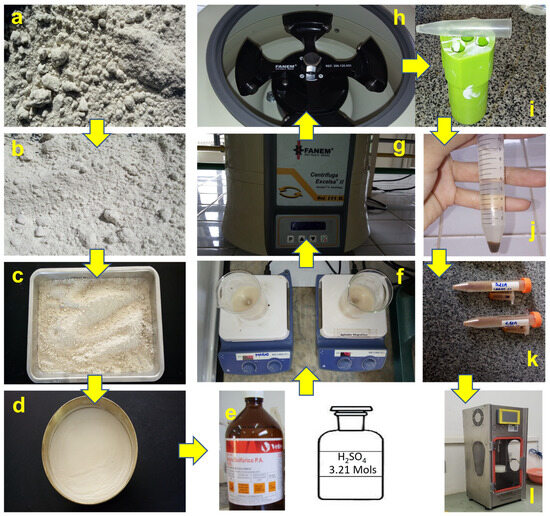
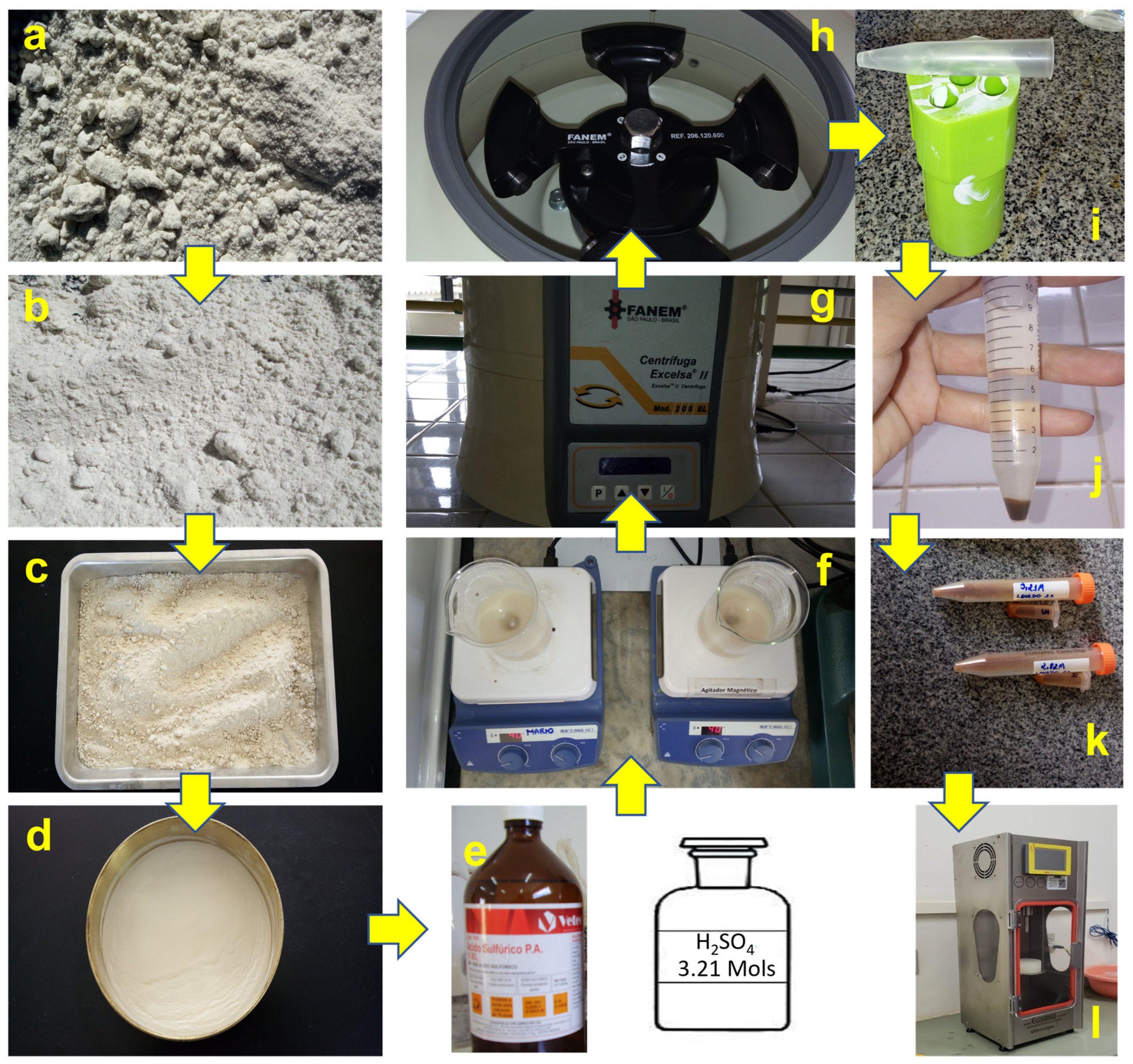
Starch nanostructures were produced from PRSP through acid hydrolysis, following the method of Angellier et al. [21]. In this procedure, 36.725 g of PRSP were dispersed in 250 mL of a 14.5% H2SO4 solution (3.21 M) and maintained under constant stirring at 200 rpm and 40 °C for five days. After hydrolysis, the suspension was washed by successive centrifugation cycles at 5000 rpm for 20 min using cold distilled water until neutral pH (~7) was achieved. The resulting suspension was stored in 5 mL Eppendorf tubes at 5 °C. The final concentration after centrifugation was approximately 3.4 wt%. This process yielded a suspension of starch nanocrystals with preserved crystalline regions and distinct physicochemical characteristics compared to the raw material. Figure 2 shows the process of obtaining suspensions aqueous samples containing PRSP nanostructures.
Figure 2.
Steps for obtaining aqueous suspensions of PRSP nanostructures: (a) wet PRSP sample collected at the processing plant; (b) PRSP sample air-dried at room temperature; (c) oven-dried PRSP sample; (d) PRSP after drying, sieving, and particle size classification (bottom fraction of the sieve series); (e) sulfuric acid (analytical grade) diluted in distilled water to obtain the desired molar concentration; (f) acid hydrolysis of PRSP at the specified molar concentration for 5 days under constant stirring and temperatures; (g) centrifugation of the hydrolyzed suspension; (h) centrifuge rotor (tube holder); (i) centrifuge tube placed in the rotor during operation; (j) centrifuged sample showing phase separation according to density, with precipitate (brown phase) and supernatant (white phase); (k) colloidal suspensions (precipitate) containing starchy nanostructured after five washing cycles. with (3.21 mols system), and (l) High-power sonicator used for nanostructure dispersion.
2.3.8. Characterization of Starch Nanostructures
Atomic Force Microscopy (AFM) analyses were performed using a Shimadzu SPM-9600 system (Shimadzu Corporation, Kyoto, Japan) at the Federal University of Uberlândia (UFU), Uberlândia, Brazil. A drop of diluted suspension (~0.05 g L−1) was deposited onto a freshly cleaved mica substrate and dried at 60 °C for 12 h. Images were acquired in dynamic mode at room temperature with a scan rate of 1 Hz, using silicon cantilevers with a tip radius < 10 nm and a spring constant of 42 N m−1. Image processing and particle size measurements were performed using Gwyddion (64-bit) software (version 2.3.4), considering scan areas of 4, 9, 25, and 64 µm2 [22].
2.4. Microflotation Tests
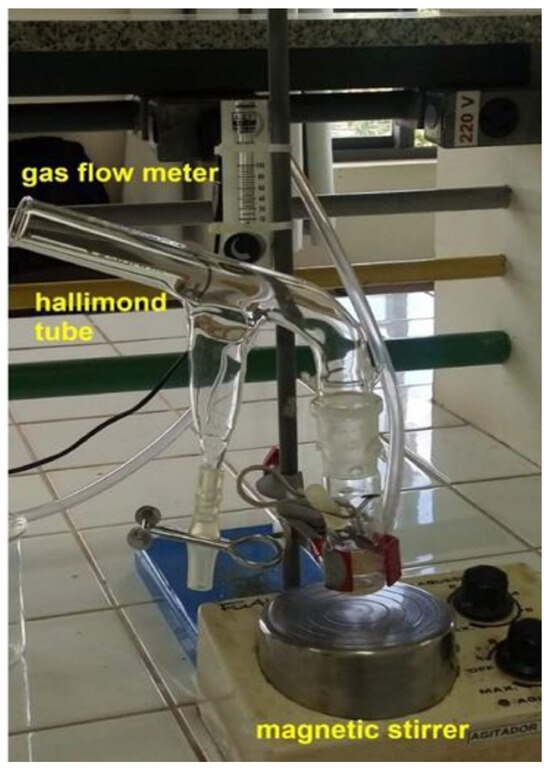
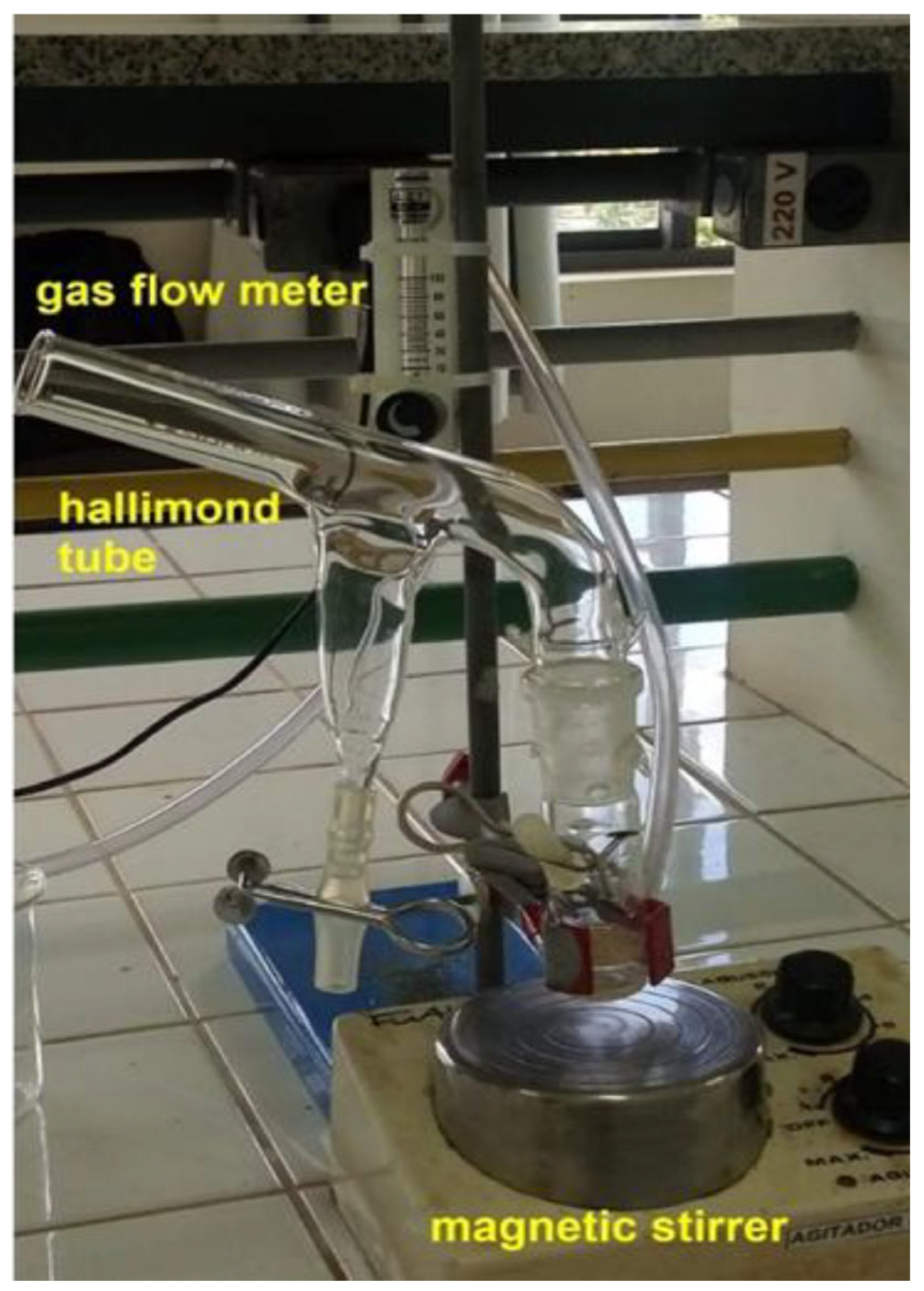
Microflotation experiments were conducted in a modified Hallimond tube with a total volume of 250 mL, at room temperature (22 ± 2 °C), using magnetic stirring. Figure 3 shows the schematic of the modified Hallimond tube. The flotation cell consists of two glass sections joined by a ground-glass joint: the lower section contains a sintered glass disc for bubble generation, while the upper section is used to collect the floated material.
Figure 3.
Modified Hallimond tube equipped with magnetic stirrer.
The flotation tests were performed by first adding the depressant solution, followed by mineral sample (apatite or calcite). The suspension was conditioned under constant agitation for 5 min at pH 9, followed by collector addition and an additional 5 min conditioning period at the same pH. After conditioning, the total volume was adjusted to 250 mL with water, and flotation was initiated by nitrogen gas aeration at a flow rate of 50 mL min−1 [12]. The collector (AGEM vegetable oil) was used at a fixed concentration of 100 mg L−1, while both gelatinized starch and nanostarch were tested at different dosages. The operational parameters adopted in the microflotation tests are summarized in Table 1. Hydrodynamic entrainment tests were performed in the absence of reagents under the same operating conditions. After flotation, the floated and non-floated fractions were collected, filtered, and dried at 95 °C for 24 h prior to recovery determination. Results are presented as the average of triplicate experiments, and the error bars shown in the microflotation graphs represent the experimental variability based on the minimum and maximum values obtained for each condition.
Table 1.
Operational parameters used in the microflotation tests.
3. Results
3.1. Mineral Characterization
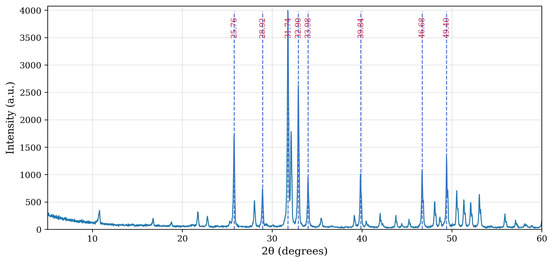
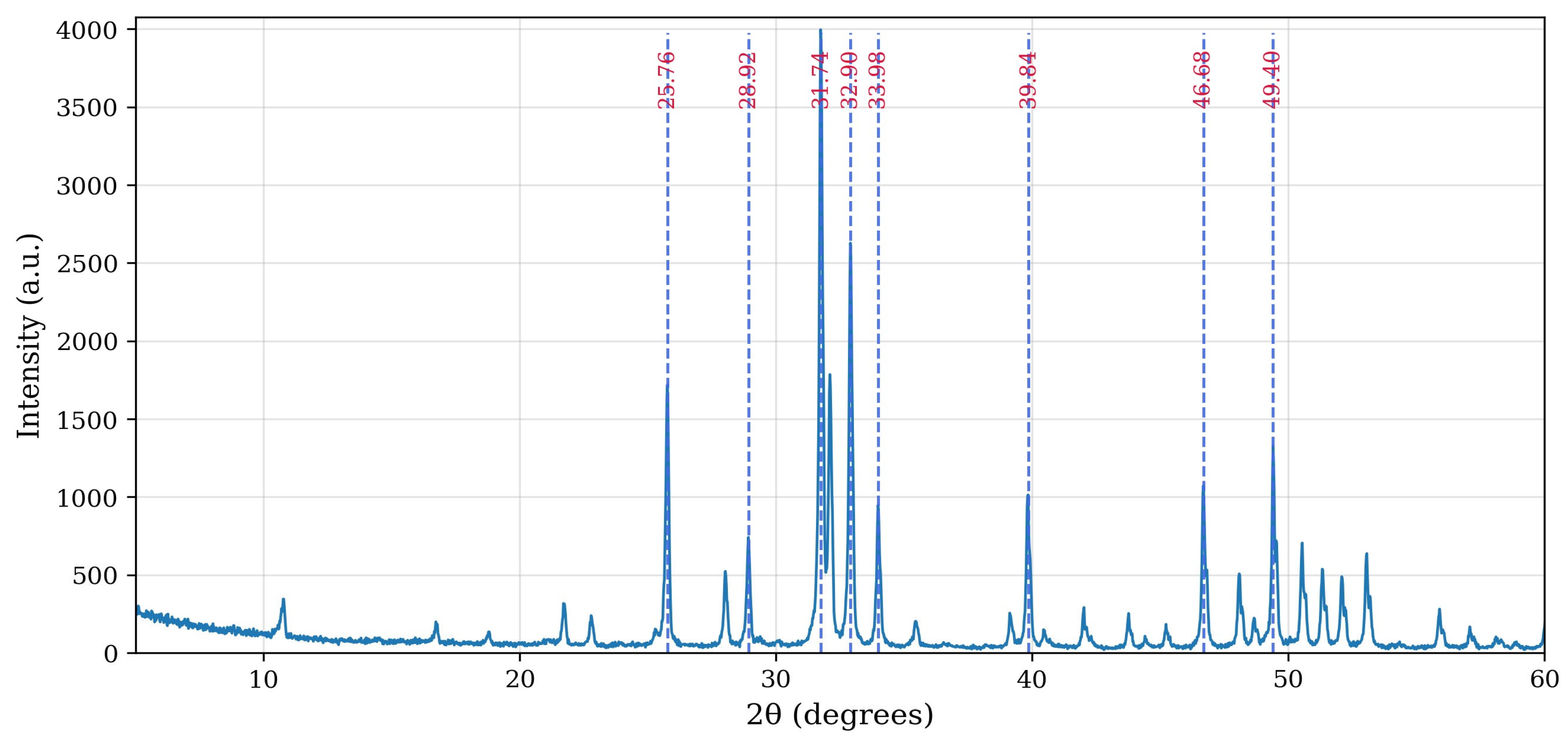
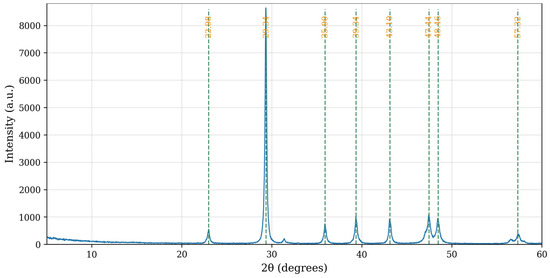
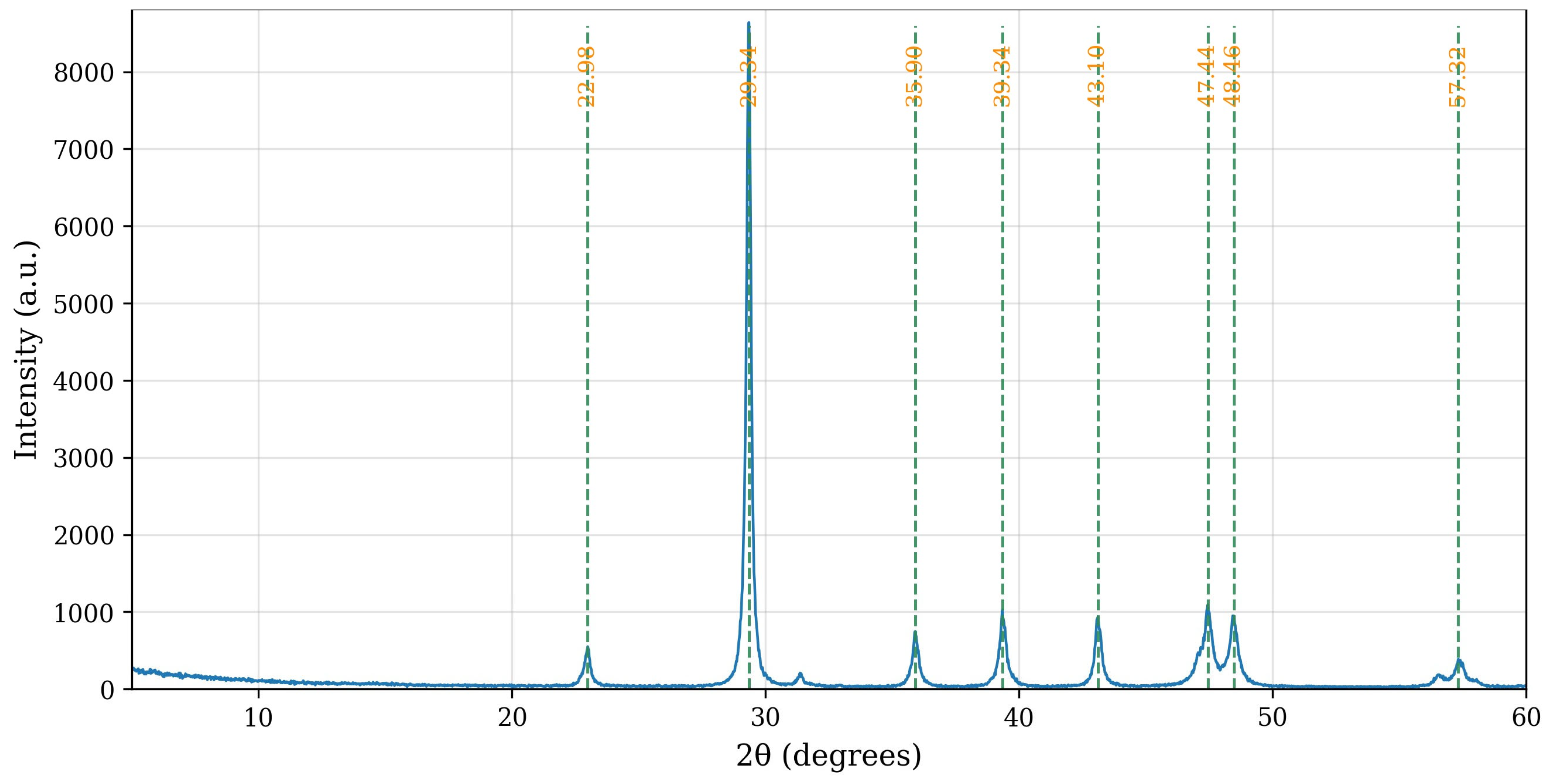
The crystalline phases of the apatite and calcite samples were identified by X-ray diffraction (XRD). The diffraction patterns presented in Figure 4 and Figure 5 show excellent agreement with reference data, confirming the mineralogical identity of the samples. The coincidence of peak positions and relative intensities indicates that the dominant phases correspond to apatite and calcite, respectively.
Figure 4.
X-ray diffraction (XRD) pattern of apatite showing the agreement between experimental and reference peaks.
Figure 5.
X-ray diffraction (XRD) pattern of calcite showing the agreement between experimental and reference peaks.
The apatite sample exhibits sharp and intense diffraction peaks, particularly in the 31.7–33° (2θ) range, which is characteristic of well-crystallized apatite. Similarly, the calcite sample displays a typical diffraction pattern of crystalline carbonate minerals, with the most intense reflection located at approximately 29.4° (2θ), corresponding to the (104) plane. Minor variations in peak position and intensity may be attributed to lattice defects, crystallite size distribution, or the presence trace impurities.
Overall, the high crystallinity and phase purity confirm that both samples are suitable for flotation testing, ensuring that the observed flotation responses are predominantly governed by physicochemical interactions rather than mineralogical heterogeneity.
3.2. Characterization of Potato Residual Starch Pulp
A comprehensive characterization of raw materials is essential for understanding its behavior as a flotation reagent, since its physicochemical Properties directly influence adsorption mechanisms and surface interactions. Table 2 summarizes the centesimal composition of the potato residual starch pulp (PRSP), highlighting its high carbohydrate content (84.82 ± 0.14%), which is consistent with typical starch-based materials.
Table 2.
Centesimal composition of potato residual starch pulp.
The moisture content (9.45 ± 1.16%) is in accordance with Brazilian standards [23], which allow values of up to 14%. In contrast, the protein content (1.64 ± 0.22%) exceeds the limit established by Brazilian legislation [22], which specifies a maximum value of 0.18%. The dietary fiber content (3.72 ± 0.31%) falls within the range classified as moderate (2.4 to 4.4 g fiber/100 g), according to [24]. This indicates that the residual starch, in its current form, is not suitable for certain food applications. The amylose (23.09 ± 1.29%) and amylopectin (76.91 ± 1.32%) contents are consistent with those reported for conventional starches. The values obtained for fatty acids, saturated fats (<0.03 ± 0.01%), and trans fats (<0.03 ± 0.01%) are considered favorable, as these components may interfere with the gelatinization and retrogradation behavior of starch granules. The average ash content (0.37 ± 0.31%) and lipid content (<0.1 ± 0.45%) are relatively low compared to other starch types and are typically below 0.5% in the case of ash. These values are advantageous for the present study, since elevated levels of such components may affect physicochemical properties of the granules, including viscosity and retrogradation behavior.
Table 3 presents the main viscoamylographic properties of PRSP, which are essential for understanding film formation during the retrogradation process. The material exhibited considerable stability, as evidenced by its low breakdown viscosity (105.58 ± 1.37 RVU) compared to other polysaccharides, such as rice starch (266.4 ± 1.9 RVU), cassava starch (129.7 ± 2.1 RVU), and corn starch (135.1 ± 2.2 RVU) [25].
Table 3.
Viscoamylographic properties of PRSP.
The high peak viscosity (392.92 ± 2.06 RVU) indicates a strong water retention capacity prior to the disruption of molecular structures [26], suggesting the presence of a relatively organized molecular arrangement. The pasting temperature of PRSP (73.92 °C ± 0.81) is comparable to that of sweet potato starch (72.8 °C), as reported by Sarmento et al. [27]. Peroni [28], working with native cassava starch, reported a lower pasting temperature of 67.4 °C.
The setback value (204.79 ± 1.64 RVU) is likely influenced by the amylose content (23.09 ± 1.29%), as amylose molecules are primarily responsible for this phenomenon due to their linear structure, which facilitates molecular reassociation more readily than amylopectin. The high final viscosity (492.12 ± 1.52 RVU) indicates that the PRSP sample forms a highly viscous paste, reflecting strong resistance to shear and enhanced paste stability.
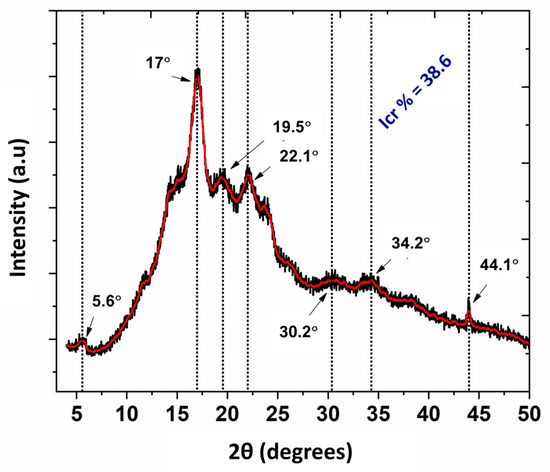
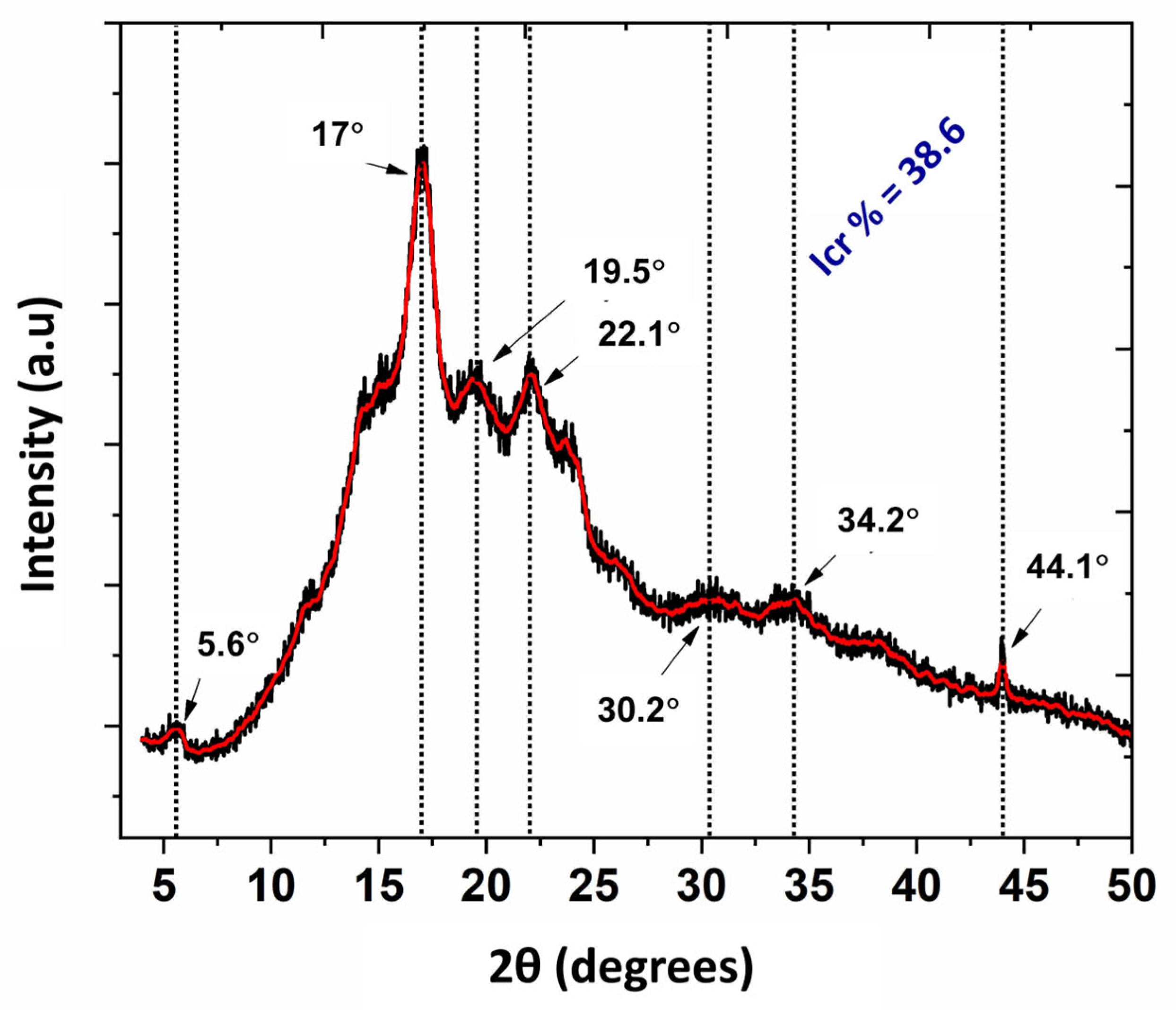
The diffractogram shown in Figure 6 reveals seven main peaks at 2θ = 5.6°, 17.0°, 19.5°, 22.1°, 30.2°, 34.2°, and 44.1° (Figure 6). These peaks are characteristic of B-type hexagonal crystalline structures, typically found in tuber starches such as potato and cassava. Their main features include a small peak at 2θ = 5.6° and a sharp, intense peak around 17° (Figure 6). The calculated crystallinity index (CrI) was approximately 38.6%. According to Ma et al. [29], native starch is partially crystalline, with typical crystallinity values ranging from 15% to 45%, depending on the packing arrangement of the double helices. Guimarães Junior [24], in a study on various starches used for producing blends with PVA (polyvinyl alcohol), reported CrI values of 30.2%, 38.7%, and 41.2% for rice, cassava, and corn starches, respectively—values similar to those obtained in the present study.
Figure 6.
X-ray diffractogram of the PRSP sample after deconvolution using Pseudo-Voigt 2 fitting (0 to 50°) in Origin 2023 software, highlighting the main diffraction peaks.
According to Peroni [27], B-type starch crystals exhibit an open and highly hydrated structure, containing approximately 36 water molecules within a central channel, with double helices arranged in a hexagonal pattern. This structure is typically observed in tuber starches, high-amylose starches, and retrograded starches. In contrast, A-type starch consists of more compact double helices formed by amylose and amylopectin, arranged in a monoclinic pattern, and is commonly found in cereal starches.
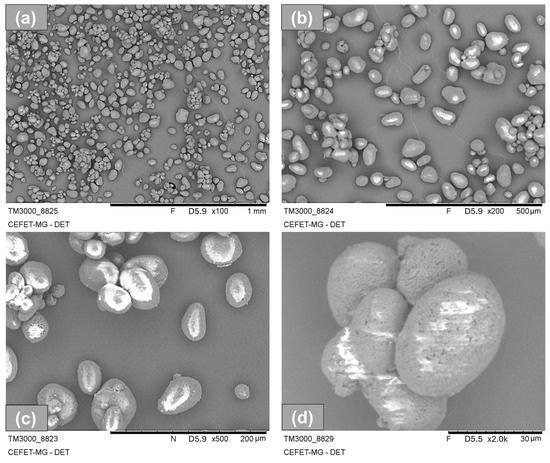
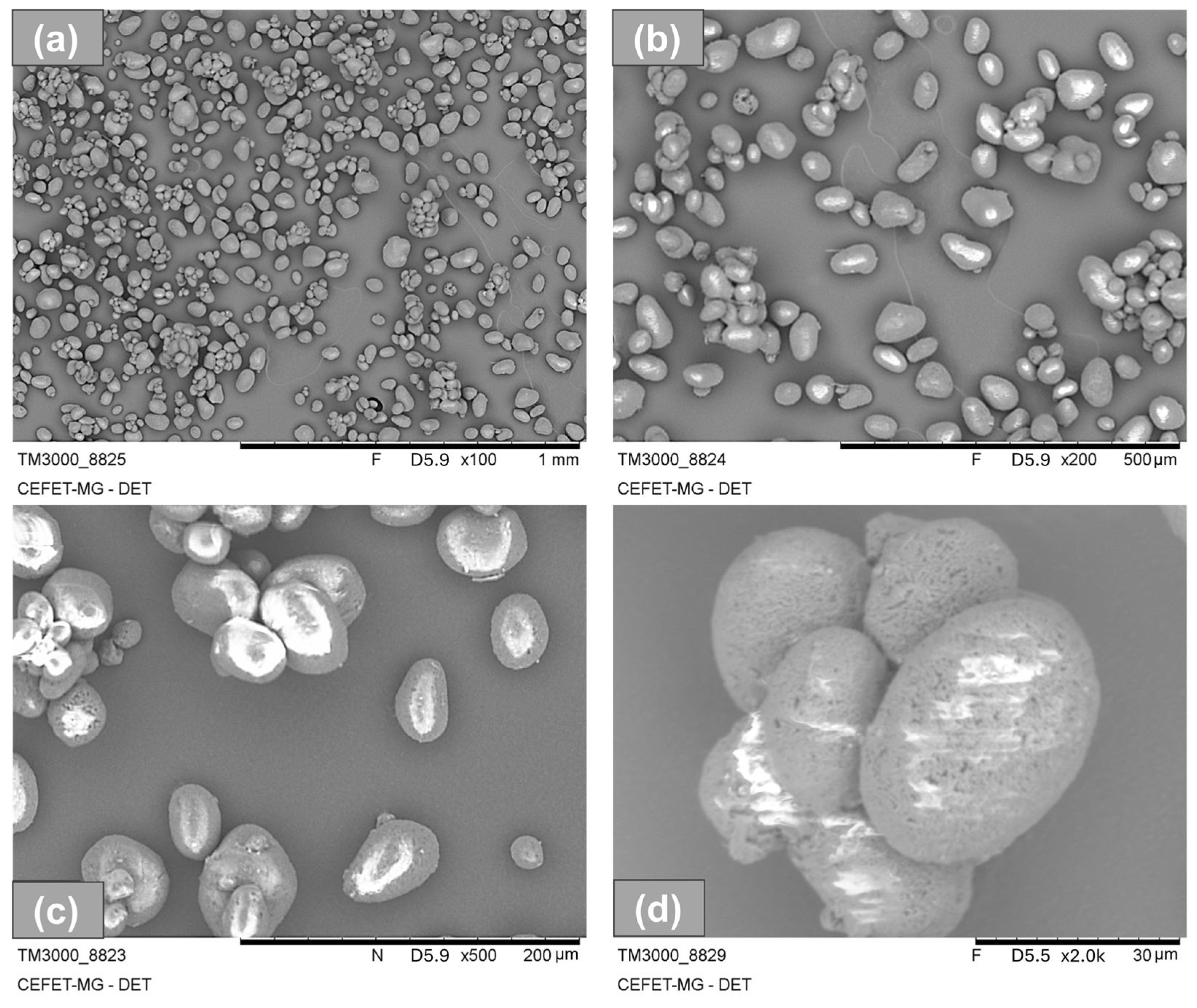
The analysis of the morphology and size distribution of PRSP granules revealed predominantly circular and oval shapes, with diameters ranging from 13 to 52 μm, as shown in Figure 7. According to Alexander [30], potato starch granules typically exhibit oval to spherical morphologies, with diameters ranging from 5 to 100 μm and an average diameter of approximately 27 μm. Singh and Singh [31], in a study on starch granules obtained from different potato cultivars (Solanum tuberosum) using scanning electron microscopy (SEM), reported significant variations in both shape and size among cultivars. In terms of morphology, granules ranged from oval to more regular or cuboidal forms, with average diameters between 15–20 μm for smaller granules and 20–45 μm for larger ones.
Figure 7.
Scanning electron microscopy (SEM) images of PRSP. Micrographs acquired at different scale bars: (a) 1 mm; (b) 500 µm; (c) 200 µm; and (d) 30 µm.
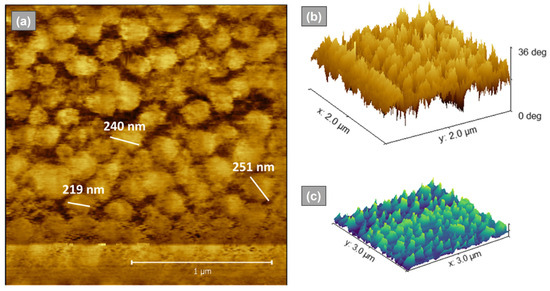
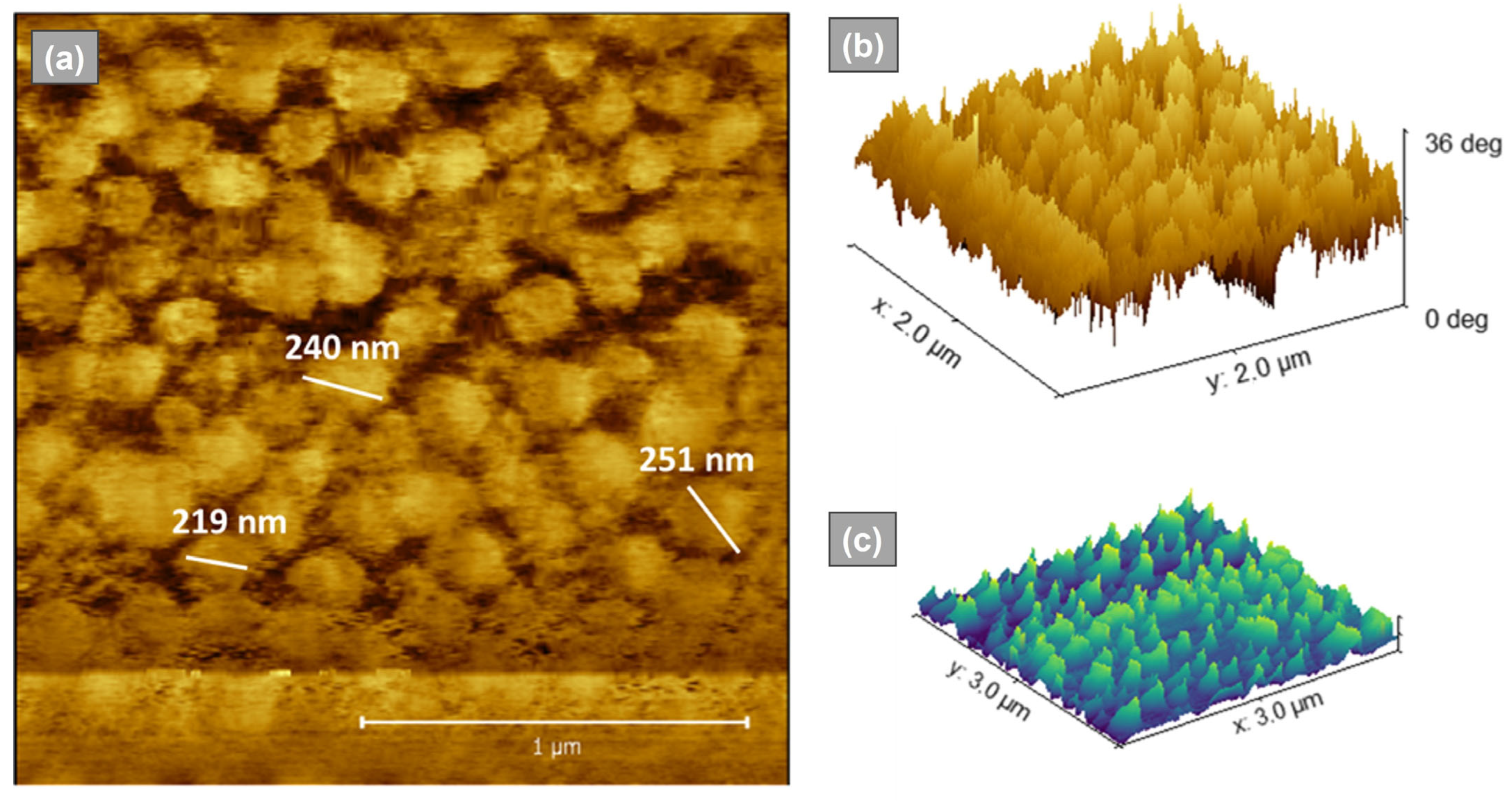
Figure 8 presents representative images of the synthesized nanostructures. Figure 8a shows the topography of a 64 μm2 (8 μm × 8 μm) scanning area, revealing starch nanostructures with predominantly spherical morphology and diameters of 219, 240, and 251 nm. Measurements were performed using a silicon cantilever (tip radius < 10 nm) operating in dynamic mode at room temperature. Figure 8b and Figure 8c display three-dimensional phase-mode images of areas measuring 4 μm2 (2 μm × 2 μm) and 9 μm2 (3 μm × 3 μm), respectively, highlighting the spatial distribution and organization of the nanostructures. These results confirm the successful synthesis of starch nanostructures, thereby validating the adopted preparation procedure.
Figure 8.
AFM micrograph in topography mode of PRSP nanostructures suspensions: (a) 64 µm2 scanning area; (b) 4 µm2; and (c) 9 µm2.
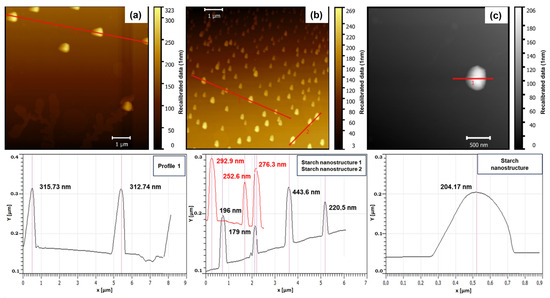
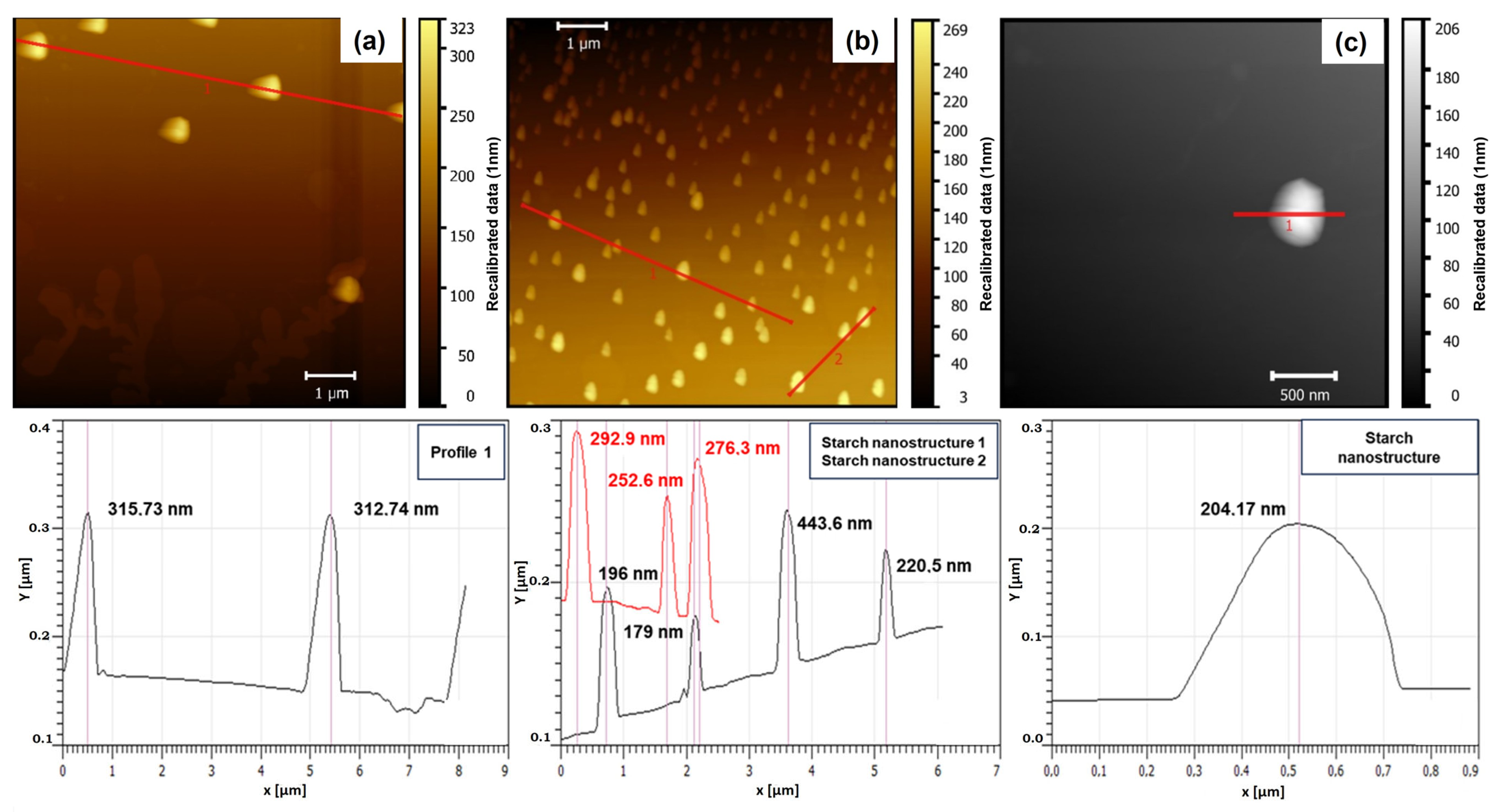
Figure 9 presents starch nanostructures obtained after successive dilution, sonication, and drying steps, with particle size analysis performed using Gwyddion (version 2.68, Czech Metrology Institute, Czech Republic and WsXM (version 4.0 Beta 10.1; Nanotec Electrónica, Spain). Measurements were carried out in real time on selected cleavage surface, with approximately 100 measurements per plate across total of 12 plates, resulting in an average diameter of 78 nm. The upper panels (a, b, and c) correspond to topographic images processed with the software mentioned above), while the lower panels display the corresponding height profiles of the nanostructures on mica substrates. The measured particles size ranged from 179 to 443.6 nm, confirming the formation of starch nanostructures from residual potato starch pulp via acid hydrolysis, followed by centrifugation and sonication.
Figure 9.
AFM topographic images of PRSP (14 μm2 scanning area): (a) 1 μm scale with two nanostructure diameter measurements; (b) 1 μm scale with six nanostructure diameter measurements (three highlighted in red and three in black); (c) 500 nm scale with a single nanostructure diameter measurement. The lower panels show the corresponding nanometric diameter profiles.
3.3. Microflotation Test
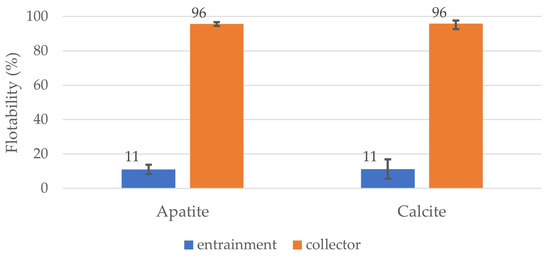
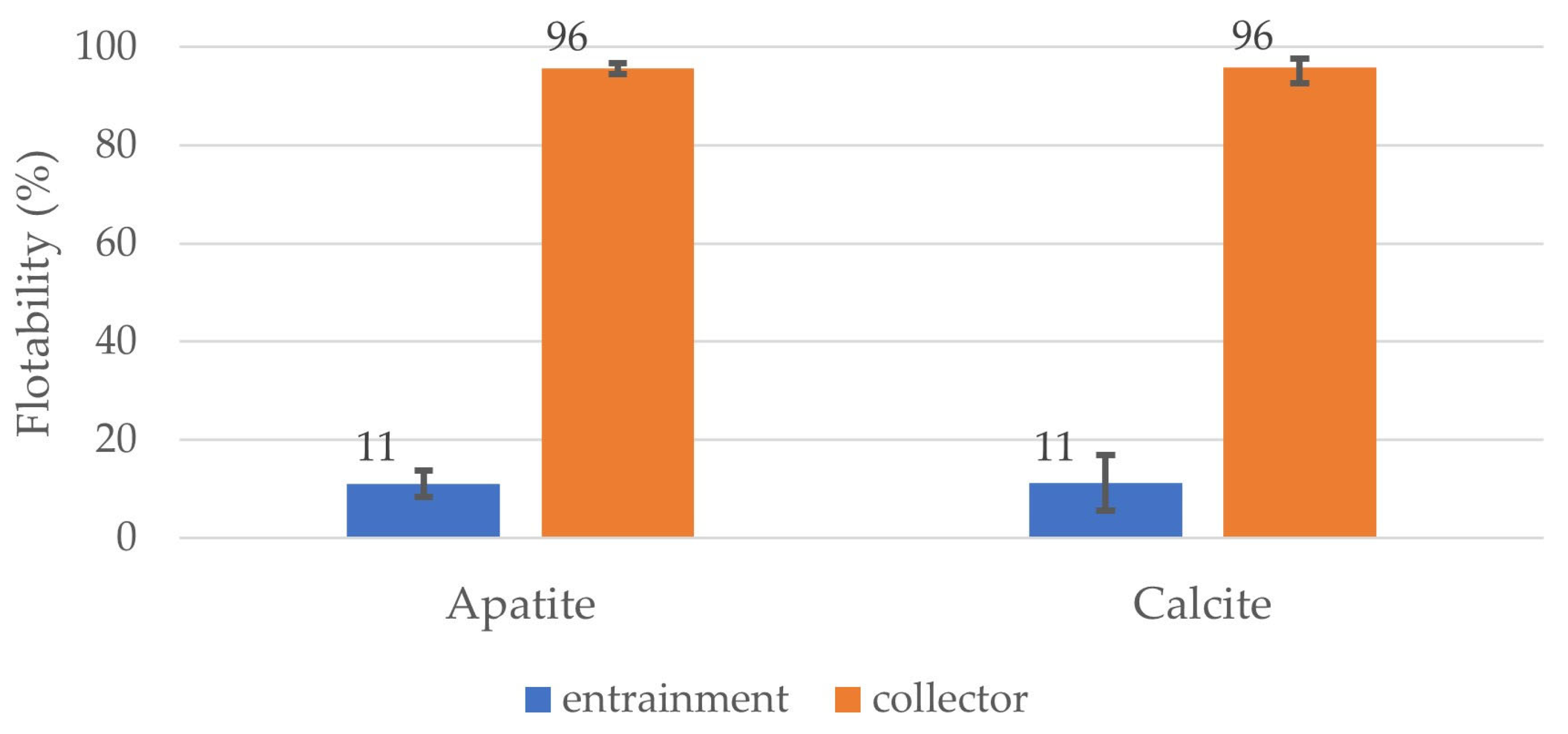
The microflotation results presented in Figure 10 include hydrodynamic entrainment tests conducted in the absence of reagents confirming the intrinsically hydrophilic nature of apatite and calcite, as well as their limited ability to attach to air bubbles under these conditions. When the plant-based collector AGEM was applied (100 mg L−1, pH 9), both minerals exhibited high flotation recoveries, reaching 95.6% for apatite and 95.8% for calcite. These results indicate effective adsorption of fatty acids onto calcium-active sites on the mineral surfaces, leading to the formation of insoluble calcium salts and a consequent increase in surface hydrophobicity [32]. Similar flotation behavior was reported by Oliveira and Peres [33], who achieved recoveries above 90% using sodium oleate (5 × 10⁻⁴ mol L−1) at pH 9. In addition, Barros et al. [34] evaluated the microflotation behavior of apatites from different origins and lithologies, including primary and secondary apatites from phoscorite and pyroxenite ores, and reported that, at pH 10 and sodium oleate dosages of approximately 100 mg/L, all apatite types presented high floatability levels, with recoveries higher than 90%. Although oleate adsorption occurs on negatively charged apatite surfaces, the interaction proceeds via chemisorption, involving the formation of calcium oleate complexes at surface Ca2+ sites. Consistent with these findings, Santos et al. [12] reported an apatite floatability of 91.06 ± 2.99% using saponified vegetable oil under the same pH conditions.
Figure 10.
Flotability of minerals at pH 9, without (entrainment) and with collector (100 mg L−1 of vegetable oil).
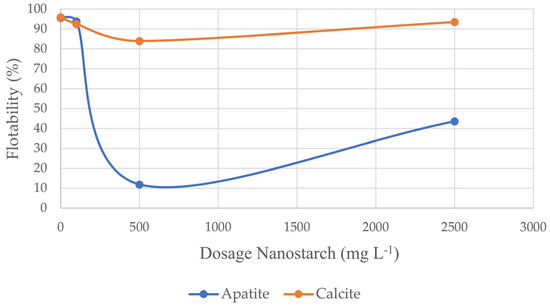
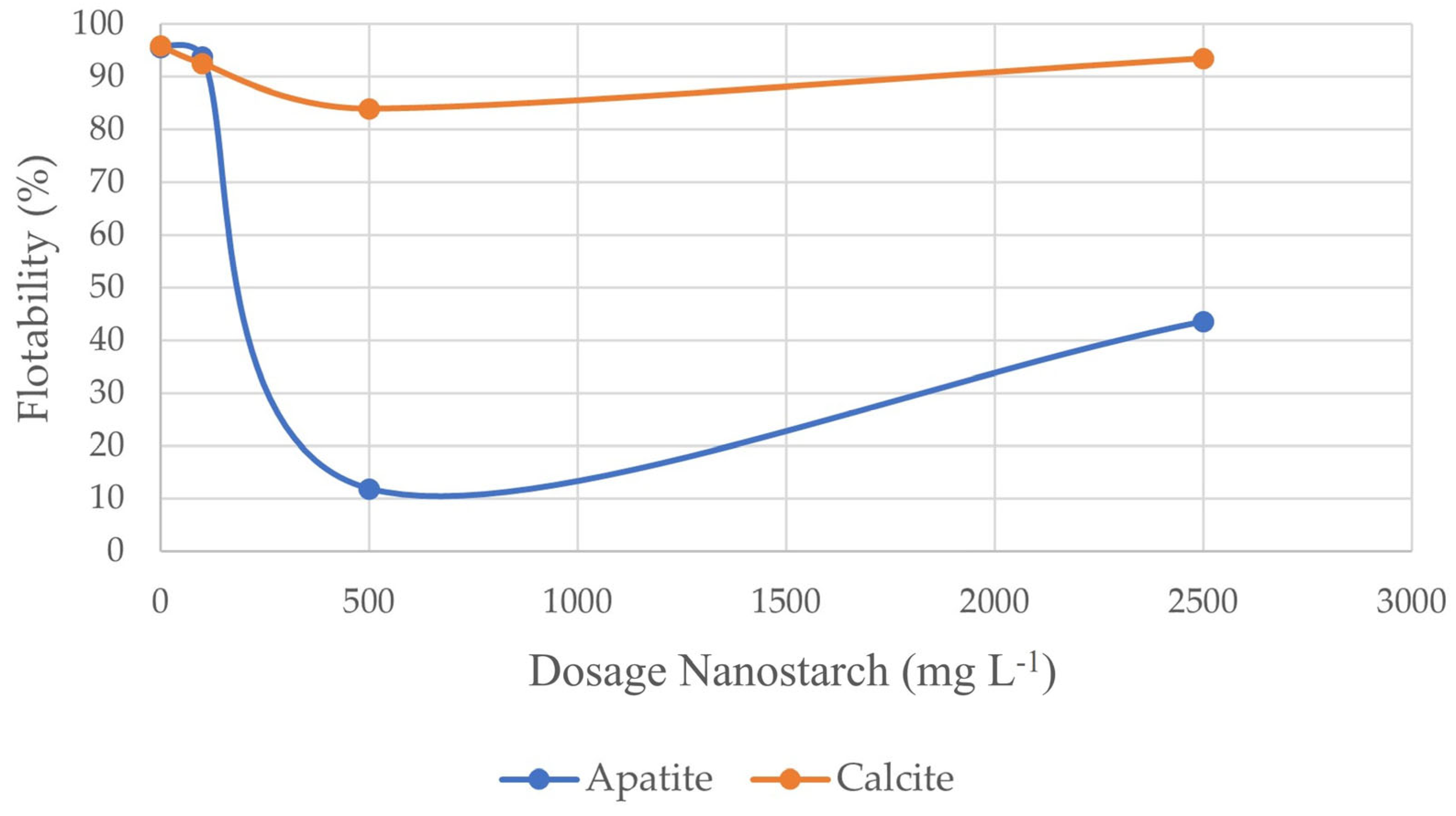
To further investigate the applicability of biopolymers as surface-modifying reagents in phosphate mineral flotation, nanostarch was evaluated as a potential depressant. As shown in Figure 11, nanostarch exhibited a pronounced depressing effect on apatite, reducing its floatability to 11% and 43.45% at concentrations of 500 and 2500 mg L−1, respectively. This behavior can be attributed to the strong affinity of starch-based polymers for calcium-bearing mineral surfaces, where adsorption occurs through hydrogen bonding and interactions with surface Ca2+ active sites, leading to increased surface hydrophilicity and reduced collector adsorption [32,34,35].
Figure 11.
Flotability of minerals at pH 9, com 100 mg L−1 of vegetable oil collector.
In contrast, calcite—a common gangue mineral in igneous phosphate ores—maintained high floatability over the evaluated concentration range, indicating a differential interaction between nanostarch particles and the two mineral surfaces. This selective depression suggests that nanostarch may be effectively applied in alkaline reverse flotation systems to enhance apatite–calcite separation. However, at the highest nanostarch dosage (2500 mg L−1), an anomalous increase in floatability was observed for both minerals. This effect is likely associated with nanoparticle aggregation at elevated concentrations, which reduces the effective surface area and limits the availability of active adsorption sites on the mineral surfaces, thereby diminishing the depressing efficiency.
This behavior highlights the importance of dosage optimization when using nanostructured reagents. Similar concentration-dependent effects have been reported by Laitinen et al. [11], who demonstrated that excessive nanomaterial dosages can adversely affect hematite microflotation due to particle agglomeration and non-uniform surface coverage. Therefore, the flotation response observed reinforces the need for precise control of nanostarch concentration to maximize selectivity and depressant performance.
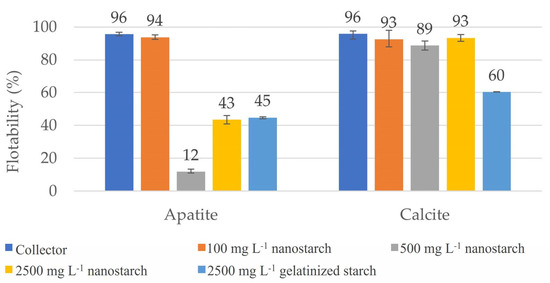
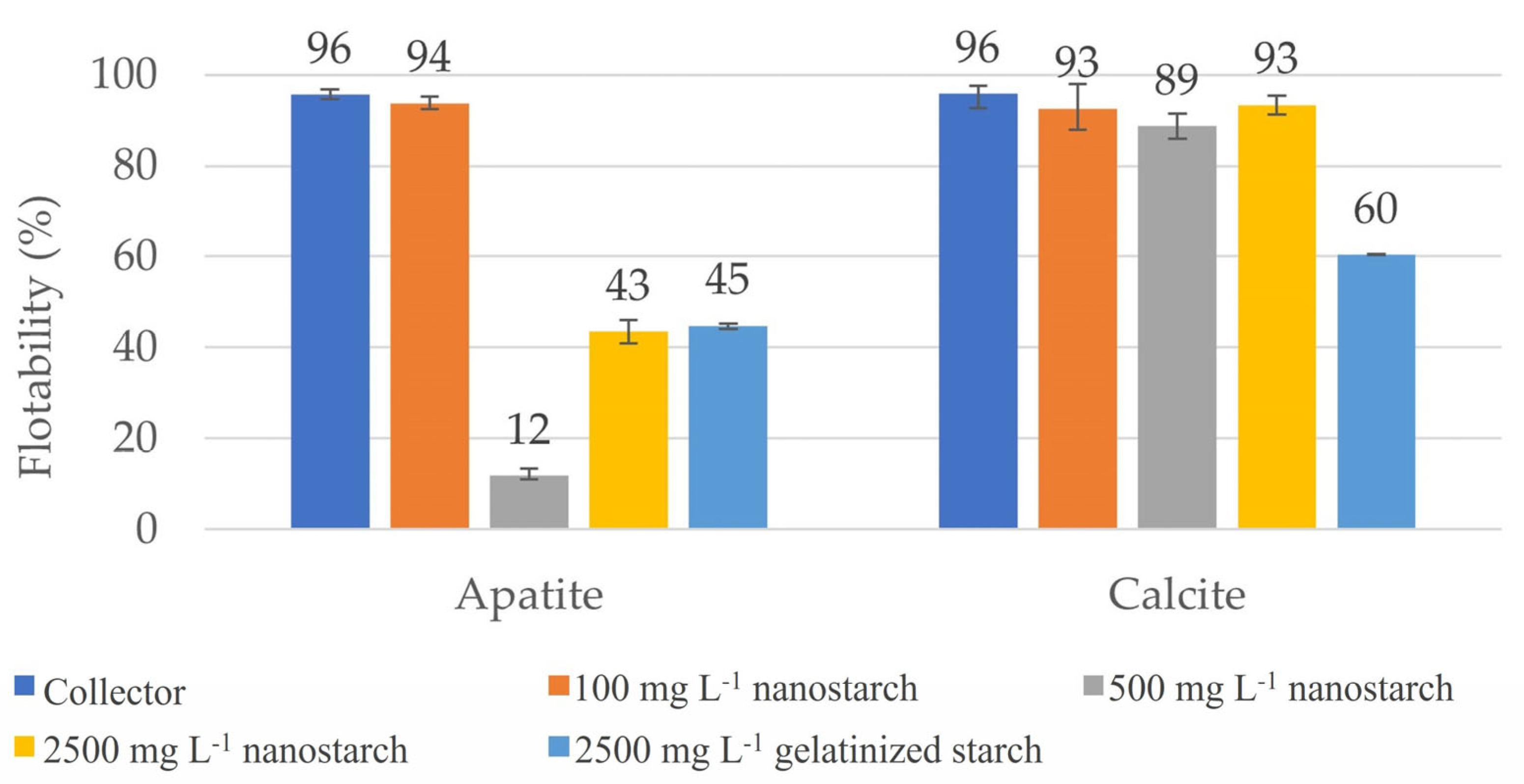
To evaluate the effect of nanostructuring on biopolymer performance, comparative flotation tests were conducted using conventional starch and nanostarch (Figure 12), in order to assess whether the reduction to the nanomeric scale enhances depressant efficiency in the flotation of apatite and calcite. The underlying hypothesis is that nanostructuring may intensify polymer–mineral interactions by increasing surface area and improving adsorption kinetics. The results show that the use of gelatinized potato residual starch led to a reduction in floatability of 53% for apatite and 37% for calcite, indicating a clear depressant effect, particularly for the phosphate mineral.
Figure 12.
Microflotation of minerals in the presence and absence of polymers.
This behavior suggests that starch macromolecules, especially at higher dosages, adsorb onto the mineral surface, forming a hydrophilic layer that hinders collector adsorption and bubble attachment [35]. The stronger depressing effect observed for apatite reflects its higher surface reactivity toward polysaccharides, which is consistent with the presence of accessible calcium sites capable of interacting with hydroxyl groups along the starch chains. Similar results were reported by [33], who observed a 47% decrease in the floatability of igneous apatite when gelatinized corn starch was applied as a depressant in fatty acid flotation systems. Previous microflotation studies conducted by Barros et al. [34] demonstrated that increasing starch dosage significantly decreased the floatability of both apatite and calcite from igneous phosphate ores. The authors reported reductions of approximately 95% in calcite floatability, while apatite floatability decreased by approximately 34% to over 90%, depending on the apatite type, at starch dosages of up to 100 mg/L. Further comparative studies between gelatinized starch and nanostarch at equivalent concentrations, particularly at 500 mg/L, are necessary to better understand the specific contribution of the nanostructuring process to the selective depression behavior observed in this study.
From a mechanistic perspective, starch adsorption is governed by specific chemical interactions, including hydrogen bonding between hydroxyl groups (OH−) of the polymer chains and hydroxylated metal species (MOH+) present on the mineral surface. Previous studies by Somasundaran [36] and Araújo et al. [37] demonstrated that strong interactions may occur between surface Ca2+ sites and starch macromolecules, leading to stable adsorption layers and increased surface hydrophilicity. These interactions explain the observed reduction in floatability and support the role of starch-based reagents as effective depressants in selective flotation processes.
Both gelatinized starches traditionally applied in the flotation of igneous phosphate ores and nanostarch exhibited comparable efficiency in apatite depression (Figure 12), suggesting that the reduction in particle size to the nanometric scale does not necessarily result in a proportional enhancement of depressant performance under the evaluated conditions. This behavior indicates that apatite depression is primarily governed by the affinity between polysaccharide functional groups and calcium-active surface sites, rather than solely by the specific surface area of the depressant.
These results are consistent with the findings of Laitinen et al. [11], who demonstrated that nanocelluloses perform at least as effectively as commercial starch depressants in hematite flotation, while also exhibiting collector-like behavior toward quartz, highlighting the multifunctional nature of nanostructured biopolymers.
In contrast, gelatinized starch exhibited a more pronounced depressant effect on calcite compared to nanostarch, indicating that conventional starch may form denser or more stable adsorption layers on calcite surfaces under the investigated conditions. This behavior can be attributed to differences in surface reactivity, hydration state, and calcium site accessibility, which influence polymer conformation and adsorption strength.
As reported by Leal Filho [38], the selective depression of calcite by starch is highly dependent on mineralogical and deposit-specific characteristics, reinforcing the complexity of polymer–mineral interactions. The present results corroborate the conclusions of [8], confirming the technical feasibility of using PRSP in phosphate ore flotation and supporting its potential as a sustainable and cost-effective alternative depressant.
According to Tardy et al. [39], the wide range of possible interactions between surfactants and nanocellulosic materials remains a complex and not yet fully resolved issue, as these systems are governed by multiple competing mechanisms. The performance of such systems depends on a delicate balance between electrostatic interactions, hydration and solvation effects, polymer architecture, surfactant molecular structure, and surface chemistry. Consequently, although promising, the interfacial behavior of flotation reagents in the presence of nanostructured materials such as nanostarch and nanocellulose requires further systematic investigation to clarify adsorption mechanisms and optimize selectivity in mineral flotation systems.
4. Conclusions
Nanostructured starch with particle sizes ranging 179 and 443.6 nm was successfully produced from potato residual starch pulp (PRSP), an agro-industrial by-product of the pre-fried potato industry, using a synthesis route based on acid hydrolysis followed by centrifugation and sonication. The material was evaluated as a depressant in apatite–calcite flotation systems representative of Brazilian igneous phosphate ores, employing a fatty acid collector derived from vegetable oil. In the absence of a depressant, flotation tests showed similarly high recoveries for both minerals (approximately 95%), highlighting the intrinsically low selectivity of the system. The addition of nanostarch significantly altered the flotation behavior. Under alkaline conditions (pH 9), a dosage of 500 mg·L−1 provided the most pronounced selectivity, resulting in the widest difference in flotation recovery between apatite and calcite.
From a practical perspective, the results demonstrate that nanostarch effectively modifies mineral surface interactions, enabling selective depression and enhancing flotation performance. These findings indicate its strong potential for application in industrial phosphate beneficiation, particularly in reverse flotation circuits targeting carbonate gangue, where apatite depression is required. Furthermore, future studies should investigate its performance in more complex systems, including ores containing silicate gangue, using amine collectors for silicates while maintaining apatite depression. Overall, nanostarch derived from agro-industrial residues represents a technically viable and environmentally sustainable flotation reagent, combining process efficiency with waste valorization and contributing to the development of greener mineral processing practices.
Author Contributions
Conceptualization, M.G.J., M.D.S.O. and A.H.L.P.; methodology, M.G.J., A.H.L.P. and M.D.S.O.; formal analysis, M.G.J. and M.D.S.O.; investigation, M.G.J., M.D.S.O., A.H.L.P. and M.M.D.A.; resources, M.G.J. and M.D.S.O.; data curation, M.D.S.O., A.H.L.P. and M.G.J.; writing—original draft preparation, M.G.J., M.D.S.O., J.X.P. and M.M.D.A.; writing—review and editing, M.G.J. and M.D.S.O.; visualization, M.D.S.O., M.M.D.A., J.X.P. and A.H.L.P.; supervision, M.G.J. and M.D.S.O.; project administration, M.D.S.O. and M.G.J. All authors have read and agreed to the published version of the manuscript.
Funding
The authors also thank the Fundação de Amparo à Pesquisa do Estado de Minas Gerais (FAPEMIG) for its financial support for the development of this research project (APQ-02035-22 and PVC357-2023).
Data Availability Statement
The original contributions presented in this study are included in the article. Further inquiries can be directed to the corresponding author.
Acknowledgments
The authors would like to thank the Centro Federal de Educação Tecnológica de Minas Gerais (CEFET-MG), Campus Araxá, for providing the infrastructure and laboratory facilities necessary for carrying out this research. Special thanks are extended to the Mineral Processing Laboratories and the Polymers and Nanostructured Materials Laboratory for their technical support during the experimental procedures.
Conflicts of Interest
The authors declare no conflicts of interest.
References
- Pearse, M.J. An interview of the use of chemical reagents in mineral processing. Miner. Eng. 2005, 18, 139–149. [Google Scholar] [CrossRef] [Scilit]
- Santos, L.H.; Santos, G.O.; Magalhães, L.F.; Silva, G.R.; Peres, A.E.C. Application of andiroba oil as a novel collector in apatite flotation. Miner. Eng. 2022, 185, 107678. [Google Scholar] [CrossRef] [Scilit]
- Oliveira, P.; Mansur, H.; Mansur, A.; Silva, G.R.; Peres, A.E.C. Apatite flotation using pataua palm tree oil as collector. J. Mater. Res. Technol. 2019, 8, 4612–4619. [Google Scholar] [CrossRef] [Scilit]
- Barros, L.A.F.; Leal Filho, L.S.; Peres, A.E.C. Plant practice innovations in a phosphate concentrator. Miner. Eng. 2001, 14, 117–121. [Google Scholar] [CrossRef] [Scilit]
- Guimarães, R.C.; Araujo, A.C.; Peres, A.E.C. Reagents in igneous phosphate ores flotation. Miner. Eng. 2005, 18, 199–204. [Google Scholar] [CrossRef] [Scilit]
- El-Bahi, A.; Taha, Y.; Ait-Khouia, Y.; Hakkou, R.; Benzaazoua, M. Advancing phosphate ore minerals separation with sustainable flotation reagents: An investigation into highly selective biobased depressants. Adv. Colloid Interface Sci. 2023, 317, 102921. [Google Scholar] [CrossRef] [Scilit] [PubMed]
- Carneiro, A.A.; Santos, A.M.A.; Alves, J.V.S.; Oliveira, M.S.; Guimarães Junior, M. Evaluation of different polysaccharides as depressants in the direct anionic flotation of ultrafine phosphate ore. Braz. J. Dev. 2021, 7, 19633–19645. [Google Scholar] [CrossRef] [Scilit]
- Carneiro, A.A.; Santos, A.M.A.; Alves, J.V.S.; Oliveira, M.S.; Guimarães Junior, M. Performance of residual potato starch as depressant in the direct anionic flotation of phosphate ore. Rev. Gest. Secr. 2024, 15, e3684. [Google Scholar] [CrossRef] [Scilit]
- Madzokere, T.C.; Kudzai, R.; Haleden, C. Nano-silica based mineral flotation frother: Synthesis and flotation of platinum group metals (PGMs). Miner. Eng. 2021, 166, 106881. [Google Scholar] [CrossRef] [Scilit]
- Yang, S.; Pelton, R.; Abarca, C.; Dai, Z.; Montgomery, M.; Xu, M.; Bos, J.-A. Towards nanoparticle flotation collectors for pentlandite separation. Int. J. Miner. Process. 2013, 123, 137–144. [Google Scholar] [CrossRef] [Scilit]
- Laitinen, O.; Kemppainen, K.; Ämmälä, A.; Sirviö, J.A.; Liimatainen, H.; Niinimäki, J. Use of chemically modified nanocelluloses in flotation of hematite and quartz. Ind. Eng. Chem. Res. 2014, 53, 12910–12918. [Google Scholar] [CrossRef] [Scilit]
- Santos, R.K.; Silva, L.A.; Santos, R.K.; Paiva, A.H.L.; Almeida, M.M.; Carneiro, A.A.; Oliveira, M.S.; Guimarães Junior, M. Influence of Eucalyptus spp. nanocellulose as a reagent in the microflotation of apatite and calcite. In Proceedings of the 1st Brazilian Congress on Phosphates (CBFos); Universidade Federal de Goiás (UFG): Catalão, GO, Brazil, 2024; ISBN 978-65-01-29206-9. [Google Scholar]
- Instituto Adolfo Lutz (IAL). Analytical Standards of the Adolfo Lutz Institute: Physicochemical Methods for Food Analysis, 4th ed.; Ministry of Health, National Health Surveillance Agency: Brasília, Brazil, 2008; 1018p. [Google Scholar]
- AOAC International. Official Methods of Analysis of AOAC International, 18th ed., 3rd rev.; AOAC International: Gaithersburg, MD, USA, 2010; Method 991.43. [Google Scholar]
- ISO 1871:2009; Food and Feed Products—General Guidelines for the Determination of Nitrogen by the Kjeldahl Method. International Organization for Standardization: Geneva, Switzerland, 2009.
- Bienvenido, O.J. A simplified assay for milled rice amylose. Cereal Sci. Today 1971, 16, 334–338. [Google Scholar]
- Brazil, National Health Surveillance Agency (ANVISA). Resolution RDC No. 360, of 23 December 2003—Technical regulation on nutritional labeling of packaged foods. In Official Gazette of the Federative Republic of Brazil; Brazil, National Health Surveillance Agency (ANVISA): Brasília, Brazil, 2003. [Google Scholar]
- International Association for Cereal Science and Technology (ICC). Rapid Pasting Method Using the Newport Rapid Visco Analyser; Standard No. 162; ICC: Vienna, Austria, 1995; 10p. [Google Scholar]
- Heck, R.T.; Vaz, B.S.; Ferreira, M.C.; Dias, A.R.G.; Zavareze, E.R. Viscoamylographic properties of rice, pinhão, and corn starch gels with different xanthan gum contents. In Proceedings of the 3rd International Exhibition on Teaching, Research and Extension, Uruguaiana, Brazil, 2011. [Google Scholar]
- Nara, S.; Komiya, T. Studies on the relationship between water-saturated state and crystallinity by the diffraction method for moistened potato starch. Starch/Stärke 1983, 35, 407–410. [Google Scholar] [CrossRef] [Scilit]
- Angellier, H.; Molina-Boisseau, S.; Lebrun, L.; Dufresne, A. Thermoplastic starch–waxy maize starch nanocrystals nanocomposites. Biomacromolecules 2006, 7, 531–539. [Google Scholar] [CrossRef] [Scilit]
- Kaboorani, A.; Riedl, B.; Blanchet, P.; Fellin, M.; Hosseinaei, O.; Wang, S. Nanocrystalline cellulose (NCC): A renewable nanomaterial for polyvinyl acetate (PVA) adhesive. Eur. Polym. J. 2012, 48, 1829–1837. [Google Scholar] [CrossRef] [Scilit]
- Brazil, National Health Surveillance Agency (ANVISA). Resolution CNNPA 12/78—Approving special technical standards regarding food and beverages. In Official Gazette of the Federative Republic of Brazil; Brazil, National Health Surveillance Agency (ANVISA): Brasília, Brazil, 1978. [Google Scholar]
- Mattos, L.L.; Martins, I.S. Dietary fiber consumption in the adult population. Rev. Saúde Pública 2000, 34, 50–55. [Google Scholar] [CrossRef] [Scilit]
- Guimarães Junior, M. Development of Bionanocomposites Using Bamboo Cellulose Nanofibers as Reinforcement in Starch and Polyvinyl Alcohol Matrix. Ph.D. Thesis, Universidade Federal de Ouro Preto—Rede Temática em Engenharia de Materiais, Ouro Preto, Brazil, 2015; 220p. [Google Scholar]
- Singh, J.; Kaur, L.; McCarthy, O.J. Factors influencing the physicochemical, morphological, thermal, and rheological properties of some chemically modified starches for food applications: A review. Food Hydrocoll. 2007, 21, 1–22. [Google Scholar] [CrossRef] [Scilit]
- Sarmento, S.B.S.; Gonçalves, M.F.V.; Dias, S.T.S.; Marquezini, N. Thermal treatment of sweet potato (Ipomoea batatas L.) starch under low moisture in a microwave. Food Sci. Technol. 2009, 29, 270–276. [Google Scholar] [CrossRef] [Scilit]
- Peroni, F.H.G. Structural and Physicochemical Characteristics of Starches Obtained from Different Botanical Sources. Master’s Dissertation, Universidade Estadual Paulista “Júlio de Mesquita Filho”, São José do Rio Preto, Brazil, 2003; 118p. [Google Scholar]
- Ma, X.; Yu, J.; Kennedy, J.F. Study on the properties of natural-fiber-reinforced thermoplastic starch composites. Carbohydr. Polym. 2005, 62, 19–24. [Google Scholar] [CrossRef] [Scilit]
- Alexander, R.J. Potato Starch: New Prospects for an Old Product; Cereal Foods World: Saint Paul, MN, USA, 1995; pp. 763–764. [Google Scholar]
- Singh, J.; Singh, N. Studies on the morphological, thermal, and rheological properties of starch separated from some Indian potato cultivars. Food Chem. 2001, 75, 67–77. [Google Scholar] [CrossRef] [Scilit]
- Hanumantha, R.K.; Britt-Marie, A.; Forssberg, E. Flotation of phosphatic material containing carbonatic gangue using sodium oleate as collector and sodium silicate as modifier. Int. J. Miner. Process. 1989, 26, 123–140. [Google Scholar] [CrossRef] [Scilit]
- Oliveira, M.S.; Peres, A.E.C. Flotation of apatite and gangue minerals from silico-carbonate ore using sodium oleate. Rev. Esc. Minas 2010, 63, 551–557. [Google Scholar] [CrossRef] [Scilit]
- Barros, L.A.F.; Ferreira, E.E.; Peres, A.E.C. Floatability of apatites and gangue minerals of an igneous phosphate ore. Miner. Eng. 2008, 21, 994–999. [Google Scholar] [CrossRef] [Scilit]
- Baltar, C.A.M. Flotation: A New Approach; Ed. UFPE: Recife, Brazil, 2021. [Google Scholar]
- Somasundaran, P. Adsorption of starch and oleate and interaction between them on calcite in aqueous solutions. J. Colloid Interface Sci. 1969, 31, 295–307. [Google Scholar] [CrossRef] [Scilit]
- Araujo, A.C.; Guimarães, R.C.; Peres, A.E.C.; Poling, G.W. Selective adsorption of starches onto Ca-bearing surfaces. In Beneficiation of Phosphates IV: Technology and Sustainability; SME: Littleton, CO, USA, 2006; Chapter 2; pp. 15–24. [Google Scholar]
- Leal Filho, L.S. The influence of modifier agents on the separation of apatite/silicates by froth flotation. In Beneficiation of Phosphate: Advances in Research and Practice, 1st ed.; Zhang, P., El Shall, H., Wiegel, R., Eds.; SME: Littleton, CO, USA, 1999; pp. 53–62. [Google Scholar]
- Tardy, L.B.; Yokota, S.; Ago, M.; Xiang, W.; Kondo, T.; Bordes, R.; Rojas, O.J. Nanocellulose–surfactant interactions. Curr. Opin. Colloid Interface Sci. 2017, 29, 57–67. [Google Scholar] [CrossRef] [Scilit]

Disclaimer/Publisher’s Note: The statements, opinions and data contained in all publications are solely those of the individual author(s) and contributor(s) and not of MDPI and/or the editor(s). MDPI and/or the editor(s) disclaim responsibility for any injury to people or property resulting from any ideas, methods, instructions or products referred to in the content. |
© 2026 by the authors. Licensee MDPI, Basel, Switzerland. This article is an open access article distributed under the terms and conditions of the Creative Commons Attribution (CC BY) license.