


Abstract
The objective of this scoping review was to map out the cultural themes related to oral health practices, beliefs, and experiences in Nigeria; explore mythologies about oral health in Nigeria; identify the perceived cultural significance of oral health within the Nigerian communities; and determine the implications of study findings for oral health promotion and intervention strategies. This was a scoping review. A systematic literature search was conducted in PubMed, Cochrane Library, Web of Science, Google Scholar, and CINAHL. Published studies in peer-reviewed journals written in English that investigated culture and oral health were included. All forms of literature reviews, editorials, or opinion pieces were excluded. Information on the study characteristics and population characteristics, cultural determinants of oral health, oral health outcomes, and the methods used to assess cultural factors and oral health outcomes was extracted. A narrative synthesis of the findings was conducted to identify key themes in the literature. The 37 articles, published between 1998 and 2024, that met the eligibility criteria wrote on the prevalence of a culture of self-medication and self-care, myths that affect utilization of oral health services, cultures that expose people to increased risk of poor oral health, and cultural norms, beliefs, and practices that facilitate oral health. The findings emphasize the need for culturally tailored strategies to improve oral health literacy and reduce disparities. This review underscores the potential to foster community engagement, trust, and sustainable improvements in oral health outcomes by aligning oral health promotion efforts with Nigeria’s culture. In conclusion, cultural norms, beliefs, and practices can be barriers and facilitate oral health in Nigeria. Identifying and understanding the norms, beliefs, and practices that affect oral health can help improve oral health education and promotion so that they are culturally relevant and effective.
1. Introduction
Poor oral health is a public health crisis affecting over 3.5 billion people worldwide [1]. Yet, oral health is a critical component of overall well-being due to its link with systemic health [2]. Poor oral health is associated with increased risk for systemic conditions such as cardiovascular disease, diabetes, respiratory infections, adverse pregnancy outcomes (e.g., preterm birth and low birth weight), and other chronic diseases [3]. In addition, it can contribute to social and psychological challenges, including reduced self-esteem, difficulties with communication, and diminished quality of life [4].
Most oral health problems are preventable because their causative factors—such as poor hygiene, unhealthy dietary habits, limited access to dental care, and lifestyle choices—are modifiable [5,6,7]. However, addressing these individual behaviours without considering the broader context in which they occur can limit the effectiveness of prevention strategies. The interplay between individual habits and structural factors, such as cultural values, beliefs, and systemic barriers, highlights the complexity of achieving optimal oral health [8].
The study of culture and health is an emerging field driven by the increasing interest in reducing disparities in health, including improving oral healthcare delivery, designing effective public health interventions, and achieving better health outcomes for all populations. It underscores the importance of a holistic view of health that respects cultural diversity and integrates it into global health strategies [9]. Cultural beliefs significantly influence how individuals perceive oral health and illness and determine the causes of oral diseases, including dietary and hygiene practices, perceptions of illness severity, and decisions on treatment options [10]. In addition, communication styles, gender roles, and respect for authority vary across cultures and impact healthcare delivery, as mismatched cultural understanding between providers and patients can lead to mistrust, non-compliance, and poor health outcomes [9,11]. Understanding cultural diversity is crucial for designing effective interventions. Universal solutions often fail without adaptation to local cultural contexts.
Despite the growing recognition of cultural determinants in health research, including their possible effect on the oral health of different communities in Nigeria [12,13], there is a limited synthesis of evidence specifically exploring how culture influences oral health in these communities and for these different populations. The need for this is high given the growing oral health problems in the region: 1 in about every two persons living in the World Health Organization Africa region had an oral health problem in 2019 [14]. Nigeria has over 250 diverse ethnic groups, each with distinct languages, cultures, and traditions influencing food and health behaviours [15]. Little is known about the disparities in oral health outcomes across different cultural groups and the role of culture in shaping these outcomes. Understanding the link between culture and oral health is crucial for developing culturally sensitive oral health interventions and policies and improving oral health outcomes globally [16].
This scoping review mapped the existing literature, identified knowledge gaps, and informed future research directions on the intersection between culture and oral health in Nigeria. The objective of this scoping review was to map out the cultural themes related to oral health practices, beliefs, and experiences in Nigeria; identify the perceived cultural significance of oral health within communities in Nigeria; determine the implications of study findings for oral health promotion and intervention strategies; and develop culturally appropriate recommendations for oral health promotion interventions in Nigeria.
2. Materials and Methods
This scoping review was registered with the Open science Foundation (DOI: https://doi.org/10.17605/OSF.IO/VQRUK) on the 4 March 2025, and the study was conducted in strict adherence to the Joanna Briggs Institute (JBI) guidelines for scoping reviews [17] and reported in alignment with the Preferred Reporting Items for Systematic Reviews and Meta-Analyses extension for scoping reviews (PRISMA-ScR) statement [18]. It followed a five-stage framework, adapted to comprehensively explore the intersection of cultural factors and oral health in Nigerian communities. Each stage was conducted systematically to ensure rigour and transparency.
To structure the review, we utilized the population, concept, context framework. The population focused on individuals in Africa. The concept centred on cultural norms, beliefs, and practices that can be barriers and facilitate oral health in Nigeria. The context was confined to studies conducted within any of the 54 African countries recognized by the United Nations [19]. This approach ensured a comprehensive and systematic exploration of the literature while maintaining clarity and relevance to the African context.
- Stage 1: Identifying the Research Questions
The following research questions guided this review: (1) What themes related to oral health practices, beliefs, and experiences can be identified within Nigerian communities’ traditional songs and contemporary music? (2) What cultural significance is attributed to oral health? (3) What implications do these perceptions have for oral health promotion and intervention strategies? (4) What culturally appropriate recommendations can be developed for oral health promotion interventions to improve health outcomes in Nigeria?
- Stage 2: Identifying Relevant Literature
A comprehensive literature search was conducted across multiple databases, including PubMed, Cochrane Library, Web of Science, Google Scholar, and CINAHL. The search strategy involved MeSH terms and keywords such as “culture”, “cultural competency”, “cultural diversity”, “ethnic group”, “oral health”, “oral hygiene”, “dental health”, “oral diseases”, “Nigeria”, and “Federal Republic of Nigeria.” Boolean operators (AND, OR) and truncation were applied to refine the search results. The search strategies are outlined in Appendix A. In addition, the title “The use of cultural tools for oral health in Nigeria” was used as a search phrase in Google Scholar to capture broader sources. Supplementary sources included grey literature (e.g., conference proceedings, reports) and the reference lists of included studies.
- Stage 3: Study Selection
Empirical studies published in peer-reviewed journals, written in English, and investigating culture and oral health, examined outcomes such as oral health behaviours (e.g., brushing frequency, dietary practices), oral health outcomes (e.g., dental caries, periodontal disease), and cultural practices (e.g., traditional oral health remedies) were included. All forms of literature reviews, editorials, and opinion pieces not explicitly addressing culture and oral health were excluded.
- Stage 4: Data Extraction
Two reviewers (AOE and LA) independently extracted data using a standardized data extraction form. Discrepancies were resolved through discussion or consultation with a third reviewer (MOF). Data extraction forms were designed to capture the study characteristics (author(s), year of publication, study location, design), population characteristics (cultural group, sample size, demographics), cultural determinants (specific cultural factors investigated), oral health outcomes (measures and findings related to oral health), and the methodology (methods used to assess cultural factors and oral health outcomes). Inter-rater reliability was conducted. The inter-rater reliability score was 0.85.
- Stage 5: Data Analysis and Synthesis
A narrative synthesis approach was employed to analyze and present the findings. The extracted data were qualitatively analyzed to identify key themes, patterns, and gaps in the literature. Cultural determinants, oral health outcomes, and study methodologies organized findings. Patterns and trends within different cultural groups were identified, and variations in cultural influences on oral health outcomes were examined. ChatGPT (Version 3.5) was partially used for the qualitative analysis.
3. Results
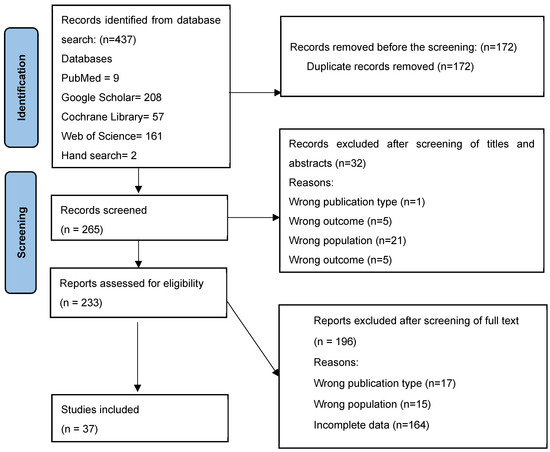
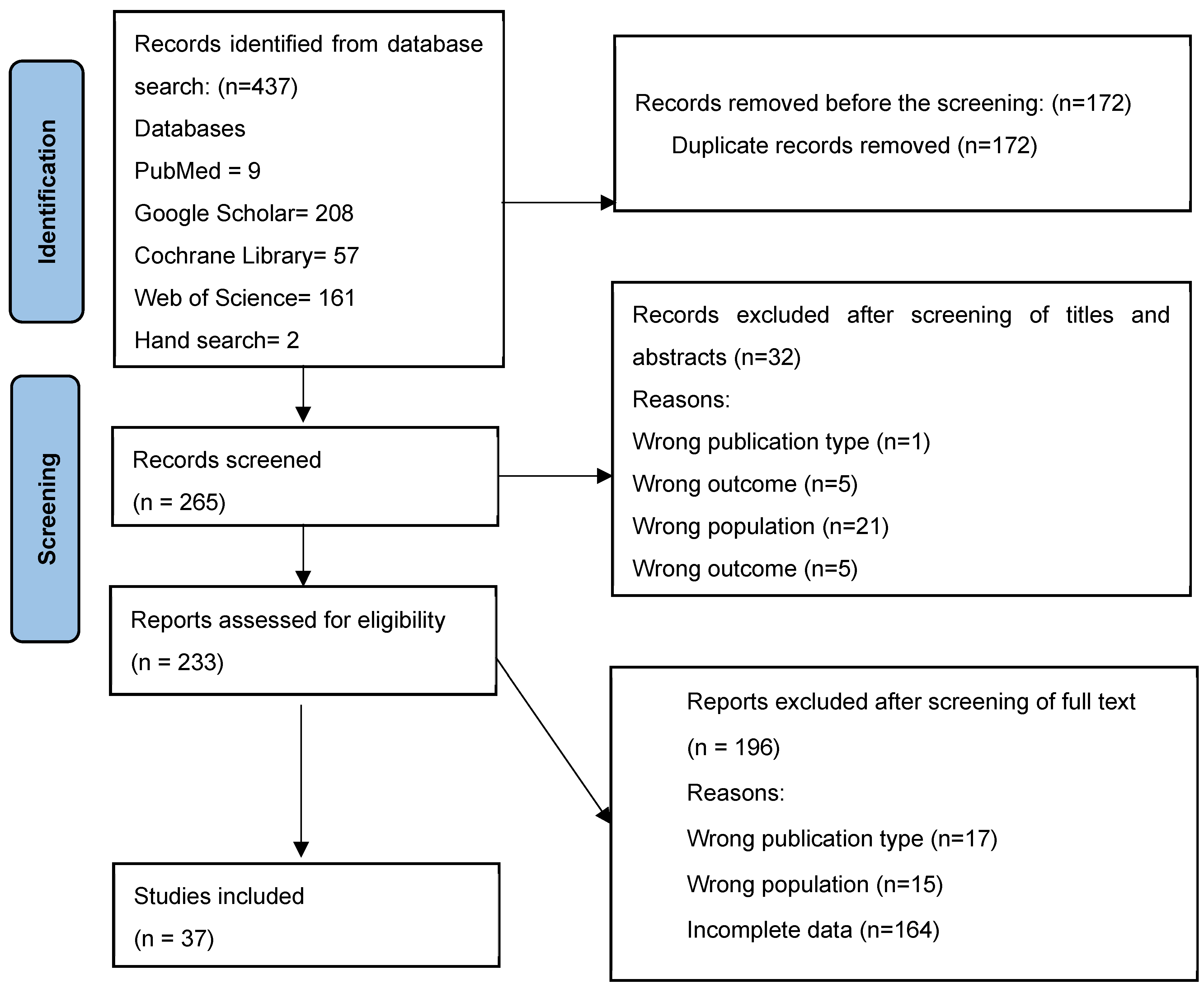
The search yielded 437 records, downloaded into Endnote and imported into Rayyan. After removing duplicates, 265 records remained. After reviewing the titles and abstracts, 233 articles were eligible for full-text screening. One hundred and fourteen articles were excluded due to insufficient extractable data (especially on the effect of culture on oral health), 15 articles were excluded because the data were not specific to Nigeria, 17 articles were excluded for the publication type, and 37 articles were included in the scoping review [12,20,21,22,23,24,25,26,27,28,29,30,31,32,33,34,35,36,37,38,39,40,41,42,43,44,45,46,47,48,49,50,51,52,53,54,55]. Figure 1 is the flow diagram of the publication screening process.
Figure 1.
Flow diagram of studies included in the scoping review of Nigerian studies on culture and oral health.
3.1. Characteristics of Studies on Culture and Oral Health in Nigeria
Table 1 shows the characteristics of the 37 studies on culture and oral health between 1998 and 2024. Five (13.5%) studies were conducted between 1998 and 2007, 12 (32.4%) studies were conducted between 2008 and 2017, and 20 (54.1%) studies were conducted between 2018 and 2024. The total number of participants included in the study was 9236: 5319 (57.6%) females and 3917 (42.4%) males. The sample size ranged from 33 [23] to 845 [38].
Table 1.
Extracted information from the scoping review of Nigerian studies on culture and oral health.
Twenty-one (56.8%) studies were conducted in the Southwest [12,20,24,29,31,34,35,37,38,39,40,42,43,44,45,46,47,48,49,52,53], three in the South-south [26,36,55], six in the Southeast [25,28,30,33,50,51], three in the Northwest [22,23,27], one in the Northcentral [21], and two in the Northeast [41,54] geopolitical zones. A study was conducted in 34 out of the 36 states of Nigeria [32]. In Southwest Nigeria, the studies were conducted in the Oyo [12,20,29,31,34,37,40,42,43,44,45,46,47,48,49,53], Osun [24,39,52], Ogun [35], and Lagos and Osun [38] states. No studies were conducted in the Ekiti and Ondo states in the Southwest geopolitical zone.
The included studies were cross-sectional studies [12,20,21,22,23,24,25,26,27,28,29,30,31,32,33,34,35,36,38,41,43,44,45,50,51,54,55], a literature review [39], protocols for oral health education tool development [37,42,46,47,48,49,52,53], and a protocol for a cluster-randomised, assessor-blinded, controlled trial [40]. One of the cross-sectional studies was comparative [24], and two made use of focus group discussion [12,23] and case–control studies [42,45], respectively.
The cross-sectional studies collected data that reflected the effect of culture on oral health practices, beliefs, or statuses from various groups such as school children in primary and/or secondary schools [30,31,39,40,54], pupils in Qur’anic schools [27], adolescents [20], street-involved young people [38], adult patients [25,26,33,36], mothers [23,25,35,41,43], students in Nigeria [24,34,50], adult household representatives [12,29], oral health professionals [28], community pharmacists [21], nurses [49], traditional birth attendants [45], primary school teachers [55], parents of children attending child welfare clinics [44], and randomly selected individuals in communities of northern and southern Nigeria [32]. Some of the women studied were Hausa women [22,23], Kanuri women [41], and nomadic Fulani women [43].
Some of the included studies documented protocols for developing culturally appropriate tools for oral health education. The tools were in the form of oral hygiene education songs developed in English and translated into Yorùbá [37,40], oral health educational videos acted in Yorùbá [42,46,47], photo-posters with educative captions translated into Yorùbá, Igbo, and Hausa [48], Yorùbá proverbs and wise sayings [52], and traditional folktales graphically presented with comic strips [53].
3.2. Cultural Implications for Oral Health
Table 2 shows the cultural norms, beliefs, and practices identified from the included studies as potential oral health barriers [12,21,22,23,24,25,26,27,28,29,30,31,32,33,34,35,41,43,44,45,46,47,50,51,54,55]. Cultural factors influence the choice of oral hygiene aids [12,25]. The culture of self-medication and self-care is prevalent among the Nigerian population studied [27], and they sometimes resort to the use of various agents such as ground glass, wood ash, charcoal [12,29,41] herbs, traditional concoctions, and unorthodox medications [35,43,51] for oral healthcare. Some scientifically explainable patterns seen in Nigerian populations are, in some cases, culturally believed to be caused by evil spirits, curses, and repercussions for contravening cultural taboos [30,31,34,45,47].
Table 2.
Cultural implications for oral health.
Some cultural beliefs and myths affect the utilization of oral health services [28]. Some treatable oral health conditions may be erroneously perceived as inevitable; e.g., tooth loss is believed to be due to vomiting during labour [23], diastema was considered a sign of beauty [24], tooth loss was considered a natural process by some, and many did not feel it is possible to keep all the teeth in the dentition for life [55]. Some cultures also expose the people to increase the risk of oral health conditions, e.g., Hausa culture allows early marriage, high parity, and longer reproductive years, which are related to more significant tooth loss [23]; the culture of ‘Almajiris’ can lead to oral health neglect and increased prevalence of the oral diseases [27]; the culture of cracking bones or open caps of bottled drinks with teeth can lead to tooth fractures [31], and the cultural/social belief that slimness is more beautiful can make women seek voluntary wiring of the jaws, which can potentially prevent their optimal plaque control [33].
Table 2 also shows the cultural norms, beliefs, and practices that can be potential oral health facilitators [20,36,37,38,39,40,42,49,52,53]. Oral health literacy can improve poor oral health [36] and using the indigenous language in oral health education can improve oral health literacy [20]. Culturally sensitive and appropriate tools for oral health education are being developed using indigenous languages and tools. These appear in forms of oral hygiene education songs [37,40], oral health educational stories acted in short videos [40,46,47], photo-posters depicting oral health used to correct myths and misconceptions about oral health [42], proverbs and wise sayings [52], and traditional folktales graphically presented with comic strips used to convey oral health education to children in a form they can easily understand and identify with [53].
Some included studies identified cultural values that can be capitalized on to improve oral health. Yorùbá’s cultural emphasis on mouth cleanliness and teeth whiteness, irrespective of the number lost, can lead to good oral health attitudes and practices [52]. African cultures stress obedience, self-control, and emotional restraint, which can make an African child more cooperative when receiving dental treatment [39]. Good water and sanitation hygiene (WASH) practices (water collection and storage) are associated with good oral hygiene, implying that WASH practices can be improved on to improve oral health [38].
4. Discussion
This scoping review explored the cultural factors influencing oral health practices in Nigerian communities and provided recommendations for culturally appropriate interventions. The study findings indicated that cultural beliefs, self-medication, and traditional remedies often delay proper dental care and perpetuate myths that discourage seeking professional help. Practices such as using their teeth to crack bones or open bottles increase the risk of dental damage and poor hygiene. However, integrating cultural tools like music, storytelling, and proverbs has proven effective in promoting oral health awareness, especially when using indigenous languages and aligning with cultural values like the Yorùbá emphasis on mouth cleanliness.
In addition, the study findings indicated that broader sociocultural factors, such as religious beliefs and social norms, also shape oral health behaviours. For instance, the Almajiri system’s neglect of children’s oral hygiene and cultural practices, like early marriages in Hausa communities, contributes to higher rates of oral health issues. Thus, interventions must address these social determinants, incorporating education on oral hygiene and water, sanitation, and hygiene (WASH) initiatives to improve both oral health and public health outcomes.
Furthermore, the study findings highlighted that cultural myths, sayings, beliefs, and misconceptions such as the supernatural causes of tooth loss, continue to impede access to professional dental care. To combat these, oral health education must challenge harmful beliefs and promote scientifically validated practices through culturally relevant methods like folktales and songs. Collaboration with cultural and religious leaders is essential to debunk these myths and foster a healthier attitude toward dental care. Culturally sensitive oral health campaigns should align with positive cultural values such as cleanliness and respect for children’s behaviour during treatment.
The study findings indicated that addressing oral health in Nigeria cannot only be dependent on addressing cultural barriers and promoting cultural facilitators to oral care. There is also the need to improve access to care, such as expanding affordable dental services, particularly in underserved areas, and integrating oral health into primary healthcare. Focusing on vulnerable populations, such as the Almajiris and nomadic groups, will ensure that preventive and curative services reach those most in need. In addition, educating women about the connection between reproductive health and oral health and integrating oral health programmes into schools will further enhance care accessibility and awareness. Policy efforts must focus on integrating oral health education into school curricula and community health programmes. Ongoing community engagement and a regular evaluation of these strategies will ensure they effectively address local cultural norms and improve oral health outcomes across Nigerian communities.
One of the strengths of the study is that it offers valuable insights into improving oral health in Nigerian communities through culturally appropriate interventions. It highlights the importance of incorporating cultural values and beliefs into oral health interventions, ensuring strategies are grounded in local contexts. This cultural sensitivity enhances the likelihood of community acceptance and engagement. It also thoroughly examines the barriers and facilitators to oral health in Nigerian communities, offers insights into cultural practices, myths, and social norms that influence behaviours, and outlines actionable, culturally appropriate strategies for improving oral health outcomes. Special attention is given to vulnerable populations, such as the Almajiris and nomadic groups, which ensures that the recommendations address health disparities and reach those most in need. Furthermore, the study connects oral health improvement with other public health initiatives—the WASH programme—demonstrating a holistic approach to health promotion.
The study, however, has some limitations. First, the study is a scoping review, relying heavily on secondary sources and theoretical frameworks rather than primary data collection. This limits the ability to make firm conclusions based on real-world evidence from Nigerian communities. In addition, while cultural factors are essential, the study may not fully address the structural barriers to oral healthcare, such as economic constraints, healthcare infrastructure, and policy gaps, which also play a significant role in oral health outcomes. The study’s simplified recommendations may underestimate the complexity of changing deeply ingrained cultural beliefs and practices. They may not fully account for regional variations within Nigeria, potentially oversimplifying the approach needed in certain areas. Finally, while the study advocates for ongoing community engagement and regular evaluation, the practical aspects of monitoring and adapting interventions remain underexplored, which could make it difficult to assess the effectiveness of these strategies over time. Despite the study’s limitations, the findings are strategically important for planning oral health promotion programmes in Nigeria.
The findings of this scoping review highlight the complex relationship between cultural beliefs, practices, and oral health in Nigerian communities. These findings can be connected to several theories guiding culturally competent health interventions, each offering valuable insights for improving oral health outcomes. First, the study underscores the importance of engaging communities and religious leaders in ongoing self-reflection and learning as highlighted in prior studies [56,57]. Health programmes can address cultural myths and misperceptions by collaborating with local leaders, including religious and cultural figures. This aligns with cultural humility, which promotes recognizing power imbalances and learning directly from communities to provide more culturally relevant care [58].
Second, the study found that beliefs, such as supernatural explanations for tooth loss, create barriers to seeking professional care, emphasizing how cultural beliefs shape health perceptions and behaviours, as highlighted by the Health Belief Model [59]. Addressing these myths through culturally appropriate interventions, like using indigenous languages, folk songs, and storytelling, can shift perceptions and encourage timely dental care.
Third, the scoping review revealed that social influences like community norms and family practices shape oral health behaviours. Social Cognitive Theory highlights role models’ role in behaviour change [60]. By using traditional figures as positive role models for oral hygiene and showcasing successful health behaviours, the community can be encouraged to adopt better oral health practices.
Fourth, the Ecological Systems Theory, on the other hand, emphasizes the multiple layers of influence on health, from individual behaviour to broader societal factors [61]. The study found that sociocultural factors, such as the Almajiri system and the early marriage norms in some Nigerian communities, shape oral health outcomes. Interventions must address these broader structural issues, integrating oral health into primary care and WASH programmes, to ensure a holistic approach to improving oral health.
Fifth, the findings underscore the importance of cultural sensitivity in oral health interventions. Culturally rooted practices can either support or hinder oral health. Health professionals should advance along the Cultural Competence Continuum by integrating culturally acceptable methods, such as promoting chewing sticks with scientific validation [62]. Interventions must address cultural norms through local narratives and influencers, reshaping attitudes and encouraging preventive care, as emphasized by the Theory of Planned Behaviour [63]. Social factors like gender, class, ethnicity, religion, and education intersect with cultural practices to influence oral health outcomes, as highlighted in Intersectionality Theory [64]. For instance, early marriages and low oral health literacy among groups like the Almajiri community worsen disparities.
Low oral health literacy refers to an individual’s limited ability to obtain, process, understand, and use basic oral health information and services to make appropriate decisions regarding their oral health [65]. This includes difficulties in comprehending dental care instructions, understanding the importance of preventive measures, navigating the healthcare system to access dental services, and interpreting oral health-related materials [66]. Low oral health literacy can lead to poor oral hygiene practices, delayed or inappropriate care-seeking behaviours, and a higher prevalence of oral diseases, as individuals may not fully grasp the significance of maintaining good oral health or the consequences of neglecting it [67,68]. In the context of this study, low oral health literacy is particularly relevant in Nigerian communities where cultural beliefs, myths, and limited access to education may further exacerbate the challenges individuals face in understanding and managing their oral health effectively. Targeted education and services addressing these intersecting factors of culture and low oral health literacy can promote equitable care. Recognizing individuals’ varying readiness to change, interventions should be tailored to behavioural stages, using storytelling for earlier stages and direct education for those ready to adopt healthier habits, per the Transtheoretical Model [69].
Cultural themes are essential in the study of oral healthcare practices because they can inform policy formulation and the development of practice guidelines [70]. With global migration and regional cultural variations, dental professionals need evidence to be able to adapt to diverse cultural contexts to provide inclusive and equitable care. Cultural themes also include the socioeconomic challenges faced by marginalized groups [71], like the Almajiri children in Nigeria. Addressing these factors through culturally competent interventions can reduce disparities and promote sustainable health improvements. In addition, by integrating traditional cultural values and practices with evidence-based oral healthcare practices, it is possible to bridge the gap between modern dental care and local cultural beliefs [72], and by fostering a more inclusive approach, communities may be more willing to adopt healthy behaviours while preserving cultural identity [73]. Addressing cultural barriers is not just about changing behaviours; it is about respecting and working within existing cultural frameworks to build trust and improve access to care sustainably [74,75]. Monitoring and ensuring intervention effectiveness are equally critical through regular assessments, community feedback mechanisms, and longitudinal studies that can track progress, inform programme adjustments, and strengthen the long-term impact of oral health initiatives.
For Nigeria specifically, the study findings indicate that the use of indigenous languages, folk songs, proverbs, and community gatherings to disseminate oral health messages, correct misconceptions, and promote scientific knowledge to overcome barriers related to myths and supernatural explanations of oral conditions is crucial. Actions such as collaborating with community and religious leaders to challenge harmful myths and engaging these leaders as role models for positive oral health behaviours can effectively influence community norms. A focus on groups like the Almajiri and women in rural communities would help to address specific cultural practices and offer tailored education, such as educating women about the links between pregnancy and oral health, to promote early interventions. Collaborating with the local media to create culturally relevant campaigns can further enhance the reach of oral health messages. Finally, policies that integrate oral health into the broader healthcare system, particularly in schools and community health programmes, can ensure sustainable changes and practices that are culturally sensitive. These findings may be adaptable to other countries and regions with similar cultures to Nigeria.
5. Conclusions
In conclusion, addressing cultural barriers to oral healthcare access and uptake is a crucial step in reducing inequalities in oral health outcomes, especially in communities where traditional beliefs and practices heavily influence health behaviours, such as in Nigeria. By combining traditional cultural values with evidence-based oral healthcare practices, it becomes possible to bridge the gap between modern dental care and local cultural beliefs. Future research is needed to generate evidence on how to sustainably address cultural barriers in African communities through working within existing cultural frameworks to build trust and sustainably improve access to care.
Author Contributions
M.O.F., O.S.T. and T.K.A.: Conceptualization, investigation, methodology, project administration, supervision, resources, writing—review and editing; M.O.F.: project administration, supervision, writing—review and editing and editing; A.O.E.: formal analysis, investigation, methodology, writing—original draft, writing—review and editing; O.T.B. and O.T.A.: writing—review and editing; All authors made intellectual contributions read and approved the published version of the manuscript. All authors have read and agreed to the published version of the manuscript.
Funding
This research was supported by grants from TETFUND, Nigeria: DVC/RID/CE/UNIV/ILE-IFE/IBR/2023/VOL.1/020.
Institutional Review Board Statement
Not applicable.
Informed Consent Statement
Not applicable.
Data Availability Statement
No new data were created or analyzed in this study. Data sharing is not applicable to this article.
Acknowledgments
To thank Love Ayanmolowo who supported the conduct of this scoping review.
Conflicts of Interest
The authors declare no conflicts of interest.
Abbreviations
The following abbreviations are used in this manuscript:
| WASH | Water, Sanitation, and Hygiene |
Appendix A
Search strategy
- 1.
- Pubmed = 9
| Search Number | Query | Search Details | Result |
| 4 | ((#1) AND (#2)) AND (#3) | (“culture”[MeSH Terms] OR “cultural competency”[MeSH Terms] OR “cultural diversity”[MeSH Terms] OR “ethnicity”[MeSH Terms]) AND (“oral health”[MeSH Terms] OR “oral hygiene”[MeSH Terms] OR “oral health”[MeSH Terms] OR ((“mouth”[MeSH Terms] OR “mouth”[All Fields] OR “oral”[All Fields]) AND “disease”[MeSH Terms])) AND (“nigeria”[MeSH Terms] OR “nigeria”[MeSH Terms]) | 9 |
| 3 | (nigeria[MeSH Terms]) OR (federal republic of nigeria[MeSH Terms]) | “nigeria”[MeSH Terms]” | 35,797 |
| 2 | (((oral health[MeSH Terms]) OR (oral hygiene[MeSH Terms])) OR (dental health[MeSH Terms])) OR (oral diseases[MeSH Terms]) | “oral health”[MeSH Terms] OR “oral hygiene”[MeSH Terms] OR “oral health”[MeSH Terms] OR ((“mouth”[MeSH Terms] OR “mouth”[All Fields] OR “oral”[All Fields]) AND “disease”[MeSH Terms]) | 47,817 |
| 1 | (((culture[MeSH Terms]) OR (cultural competency[MeSH Terms])) OR (cultural diversity[MeSH Terms])) OR (ethnic groups[MeSH Terms]) | “culture”[MeSH Terms] OR “cultural competency”[MeSH Terms] OR “cultural diversity”[MeSH Terms] OR “ethnicity”[MeSH Terms] | 281,428 |
- 2.
- Cochrane library
| ID | Search | Hits |
| #1 | culture | 21,525 |
| #2 | cultural competency | 344 |
| #3 | culttural diversity | 0 |
| #4 | ethnic groups | 4196 |
| #5 | #1OR#2OR#3OR#4 | 25,765 |
| #6 | Oral Health | 47,099 |
| #7 | Oral hygiene | 9020 |
| #8 | dental health | 11,444 |
| #9 | oral diseases | 30,373 |
| #10 | #6OR#7OR#8OR#9 | 75,372 |
| #11 | #5AND#10 | 2331 |
| #12 | Nigeria | 3039 |
| #13 | fed rep of Nigeria | 9 |
| #14 | #12OR#13 | 3039 |
| #15 | #5AND#10AND#14 | 57 |
- 3.
- Web of Science Search Strategy (v0.1)
- # Database: All Databases
- # Entitlements:
- - WOS: 1985 to 2024
- - CSCD: 1989 to 2024
- - KJD: 1980 to 2024
- - MEDLINE: 1950 to 2024
- - PPRN: 1991 to 2024
- - PQDT: 1637 to 2024
- - SCIELO: 2002 to 2024
- # Searches:
- 1: TS = (Culture OR Cultural competency OR Cultural diversity OR Ethnic groups) and Preprint
- Citation Index (Exclude—Database) Date Run: Tue Sep 24 2024 16:09:46 GMT+0800
- (China Standard Time) Results: 3424290
- 2: TS = (Oral health OR Oral hygiene OR Dental health OR Oral diseases) and Preprint Citation
- Index (Exclude—Database) Date Run: Tue Sep 24 2024 16:10:02 GMT+0800 (China Standard Time) Results: 1019092
- 3: #1 AND #2 and Preprint Citation Index (Exclude—Database) Date Run: Tue Sep 24 2024
- 16:10:10 GMT+0800 (China Standard Time) Results: 64427
- 4: #1 AND #2 and Preprint Citation Index (Exclude—Database) and NIGERIA
- (Countries/Regions) Date Run: Tue Sep 24 2024 16:10:51 GMT+0800 (China Standard Time) Results: 161
- 4.
- Google scholar—208
Title for google scholar—The use of cultural tools for oral health in Nigeria
- 5.
- Hand search—2
References
- World Health Organization. Global Oral Health Status Report: Towards Universal Health Coverage for Oral Health by 2030. World Health Organization: Geneva, Switzerland, 2022. [Google Scholar]
- Sabbah, W.; Folayan, M.O.; El Tantawi, M. The Link between Oral and General Health. Int. J. Dent. 2019, 2019, 7862923. [Google Scholar] [CrossRef] [Scilit] [PubMed]
- Adebayo, E.T.; Abodunrin, O.R.; Adewole, I.E.; Salako, A.O.; Lusher, J.; Akinsolu, F.T.; El Tantawi, M.; Alade, O.T.; Eleje, G.U.; Ezechi, O.C.; et al. Oral Diseases and Adverse Pregnancy Outcomes in Sub-Saharan Africa: A Scoping Review. Biomed 2023, 4, 1–18. [Google Scholar] [CrossRef] [Scilit]
- World Health Organization. Oral Health. 2024. Available online: https://www.who.int/news-room/fact-sheets/detail/oral-health (accessed on 18 December 2024).
- Oral Health in America: Advances and Challenges. Bethesda (MD): National Institute of Dental and Craniofacial Research (US); 2021 Dec. Section 1, Effect of Oral Health on the Community, Overall Well-Being, and the Economy. Available online: https://www.ncbi.nlm.nih.gov/books/NBK578297/ (accessed on 18 December 2024).
- Vergnes, J.N.; Mazevet, M. Oral diseases: A global public health challenge. Lancet 2020, 395, 186. [Google Scholar] [CrossRef] [Scilit]
- Shomuyiwa, D.O.; Bridge, G. Oral health of adolescents in West Africa: Prioritizing its social determinants. Glob. Health Res. Policy 2023, 8, 28. [Google Scholar] [CrossRef] [Scilit]
- Reddy, S.; Anitha, M. Culture and its Influence on Nutrition and Oral Health. Biomed Pharmacol. J. 2015, 8, 613. Available online: http://biomedpharmajournal.org/?p=3340> (accessed on 18 December 2024). [CrossRef] [Scilit]
- Swihart, D.L.; Yarrarapu, S.N.S.; Martin, R.L. Cultural Religious Competence in Clinical Practice. In StatPearls; StatPearls Publishing: Treasure Island, FL, USA, 2024. Available online: https://www.ncbi.nlm.nih.gov/books/NBK493216/ (accessed on 18 December 2024).
- Chen, M.; Wright, C.D.; Tokede, O.; Yansane, A.; Montasem, A.; Kalenderian, E.; Beaty, T.H.; Feingold, E.; Shaffer, J.R.; Crout, R.J.; et al. Predictors of dental care utilization in north-central Appalachia in the USA. Community Dent. Oral Epidemiol. 2019, 47, 283–290. [Google Scholar]
- Taylan, C.; Weber, L.T. “Don’t let me be misunderstood”: Communication with patients from a different cultural background. Pediatr. Nephrol. 2023, 38, 643–649. [Google Scholar]
- Osuh, M.E.; Oke, G.A.; Lilford, R.J.; Osuh, J.I.; Lawal, F.B.; Gbadebo, S.O.; Owoaje, E.; Omigbodun, A.; Adedokun, B.; Chen, Y.-F.; et al. Oral health in an urban slum, Nigeria: Residents’ perceptions, practices and care-seeking experiences. BMC Oral Health 2023, 23, 657. [Google Scholar] [CrossRef] [Scilit]
- Adeniyi, A.A.; Oyapero, A. Predisposing, enabling and need factors influencing dental service utilization among adult Nigerians. Popul. Med. 2020, 2, 44. [Google Scholar] [CrossRef] [Scilit]
- World Health Organization. Africa Burdened with Largest Global Increase of Oral Diseases. 2023. Available online: https://www.afro.who.int/news/africa-burdened-largest-global-increase-oral-diseases (accessed on 18 December 2024).
- Ministry of Foreign Affairs. Nigeria Culture and Heritage. 2024. Available online: https://foreignaffairs.gov.ng/nigeria/nigeria-culture/ (accessed on 18 December 2024).
- Shameema, G.S.P.; Shenoy, R.P.; Jodalli, P.; Sonde, L. Culture and oral health—A review. J. Appl. Dent. Med. Sci. 2016, 2, 72–79. [Google Scholar]
- Peters, M.D.J.; Marnie, C.; Tricco, A.C.; Pollock, D.; Munn, Z.; Alexander, L.; McInerney, P.; Godfrey, C.M.; Khalil, H. Updated methodological guidance for the conduct of scoping reviews. JBI Evid. Synth. 2020, 18, 2119–2126. [Google Scholar] [CrossRef] [Scilit] [PubMed]
- Tricco, A.C.; Lillie, E.; Zarin, W.; O’Brien, K.K.; Colquhoun, H.; Levac, D.; Moher, D.; Peters, M.D.J.; Horsley, T.; Weeks, L.; et al. PRISMA extension for scoping reviews (PRISMA-ScR): Checklist and explanation. Ann. Intern. Med. 2018, 169, 467–473. [Google Scholar] [CrossRef] [Scilit] [PubMed]
- Africa UNECf. Member States. 6 January 2025. Available online: https://archive.uneca.org/pages/member-states (accessed on 18 December 2024).
- Lawal, F.B.; Ifesanya, J.U. Oral Health Impact Profile (OHIP-14) and its association with dental treatment needs of adolescents in a rural Nigerian community. Braz. J. Oral Sci. 2015, 15, 215–220. [Google Scholar]
- Taiwo, O.O.; Panas, R.M. Evaluation of Oral Health Treatment Needs encountered by Community Pharmacists in Plateau State, Nigeria. J. Oral Health Comm. Dent. 2018, 12, 1–7. [Google Scholar] [CrossRef] [Scilit]
- Oziegbe, E.O.; Schepartz, L.A. Association between parity and tooth loss among northern Nigerian Hausa women. Am. J. Phys. Anthropol. 2021, 174, 451–462. [Google Scholar] [CrossRef] [Scilit]
- Oziegbe, E.O.; Schepartz, L.A. Is parity a cause of tooth loss? Perceptions of northern Nigerian Hausa women. PLoS ONE 2019, 14, e0226158. [Google Scholar] [CrossRef] [Scilit]
- Otuyemi, O.D.; Ogunyinka, A.; Dosumu, O.; Cons, N.C.; Jenny, J.; Kohout, F.J.; Jakobsen, J. Perceptions of dental aesthetics in the United States and Nigeria. Community Dent. Oral Epidemiol. 1998, 26, 418–420. [Google Scholar] [CrossRef] [Scilit]
- Azodo, C.C.; Amenaghawon, O.P. Oral hygiene status and practices among rural dwellers. Eur. J. Gen. Dent. 2013, 2, 42–45. [Google Scholar] [CrossRef] [Scilit]
- Okundigie, E.A.; Ogbebor, O.G. Concerns and care-seeking behaviour for dental caries among dental outpatients in Central Hospital, Benin City. Nig. J. Dent. Sci. 2018, 1, 6–13. [Google Scholar]
- Okolo, C.C.; Oredugba, F.A.; Denloye, O.O.; Adeyemo, Y.I. Dental Caries, Traumatic Dental Injuries and Gingivitis among Street-Children in Kano, Nigeria. West Afr. J. Med. 2022, 39, 1040–1044. [Google Scholar]
- Okoli, S.C.; Onwuzuluigbo, N.I.; Ngwu, J.N.; Ohadoma, A.N.; Enebechi, P.C.; Obeta, J.C. Contributing Factors to Challenges of Oral Health Care Services among Health Care Professionals in Anambra State. Niger. J. Health Promot. 2024, 17. Available online: https://journals.aphriapub.com/index.php/NJHP/article/view/2702 (accessed on 18 December 2024).
- Lawal, F.B.; Taiwo, J.O.; Oke, G.A. Oral health practices of adult inhabitants of a traditional community in Ibadan, Nigeria. Niger. J. Med. 2013, 22, 212–217. [Google Scholar] [PubMed]
- Ohamaeme, M.; Egwurugwu, J.N.; Eberendu, I.G.; FOgunnaya, U.; Ekweogu, C.N.; DEjikunle, S. Periodontal Diseases and Associated Risk Factors among Residents in Orlu, Nigeria. Asian J. Med. Health 2018, 12, 1–8. Available online: https://journalajmah.com/index.php/AJMAH/article/view/261 (accessed on 18 December 2024).
- Ogunrinde, T.J.; Oyewole OEDosumu, O.O. Dental care knowledge and practices among secondary school adolescents in Ibadan North Local Government Areas of Oyo State, Nigeria. Eur. J. Gen. Dent. 2015, 4, 68–73. [Google Scholar] [CrossRef] [Scilit]
- Oginni, F.O.; Asuku, M.E.; Oladele, A.O.; Obuekwe, O.N.; Nnabuko, R.E. Knowledge and cultural beliefs about the etiology and management of orofacial clefts in Nigeria’s major ethnic groups. Cleft Palate-Craniofacial J. 2010, 47, 327–334. [Google Scholar] [CrossRef] [Scilit]
- Nwoga, M.; Maduakor, S.N.; Ndukuba, A. Voluntary jaw wiring in Nigeria: Reasons and treatment outcome. International J. Med. Health Dev. 2019, 24, 20. [Google Scholar] [CrossRef] [Scilit]
- Kanmodi, K.; Olukoya, E.; Akinloye, A. Perception of Natal Tooth among Trainees in Primary Health Care-Related Programmes in Ibadan, Nigeria. Adv. Multidiscip. Sci. Res. J. 2017, 3, 95–103. [Google Scholar]
- Jauro, T.S.; Sofola, O.O.; Uti, O. Knowledge, Myths and Practices of Teething among Nigerian Mothers in a Rural Area: Knowledge, Myths and Practices of Teething. J. Paediatr. Dent. Res. Pract. 2024, 5, 37–45. [Google Scholar] [CrossRef] [Scilit]
- Inegbenosun, H.; Azodo, C. Association Between Oral Health Literacy, Oral Hygiene and Gingival Health among Dental Patients. Niger. J. Dent. Res. 2020, 5, 7–13. [Google Scholar]
- Ibiyemi, O.; Lawal, F.; Osuh, M.; Owoaje, T.; Idiga, E.; Fagbule, O.; Ijarogbe, O. Developing an Oral Hygiene Education Song for Children and Teenagers in Nigeria. Int. Dent. J. 2022, 72, 866–871. [Google Scholar] [CrossRef] [Scilit]
- Folayan, M.; Obiyan, M.; Olaleye, A. Association Between Water, Sanitation, General Hygiene and Oral Hygiene Practices of Street Involved Young People in Southwest Nigeria. BMC Oral Health 2020, 20, 32. [Google Scholar] [CrossRef] [Scilit] [PubMed]
- Folayan, M.O.; Idehen, E.E.; Ojo, O.O. The modulating effect of culture on the expression of dental anxiety in children: A literature review. Int. J. Paediatr. Dent. 2004, 14, 241–245. [Google Scholar] [PubMed]
- Fagbule, O.F.; Emenyonu, U.K.; Idiga, E.; Oni, O.O.; Ijarogbe, O.A.; Osuh, M.E.; Lawal, F.B.; Owoaje, T.O.; Ibiyemi, O. Using traditional rhyme (folk song) as a tool for oral hygiene promotion (UTRATOHP) among children in rural communities in Nigeria: A protocol for a randomised controlled trial. PLoS ONE 2023, 18, e0280856. [Google Scholar] [CrossRef] [Scilit] [PubMed]
- Bukar, A.; Danfillo, I.S.; Adeleke, O.A.; Ogunbodede, E.O. Traditional oral health practices among Kanuri women of Borno State, Nigeria. Odontostomatol. Trop. 2004, 27, 25–31. [Google Scholar]
- Bankole, O.O.; Lawal, F.B.; Ibiyemi, O. “Owoero”: A Health Education Tool to Dispel Teething Myths and Misconceptions—A Report. Niger. J. Med. 2018, 27, 368–373. [Google Scholar] [CrossRef] [Scilit]
- Bankole, O.O.; Lawal, F.B.; Balogun, A. Perception and Practices of Nomadic Women in a Rural Community in Southwestern Nigeria to Their Children’s Oral Health. Int. Q. Community Health Educ. 2017, 38, 17–26. [Google Scholar]
- Bankole, O.O.; Lawal, F.B. Teething: Misconceptions and Unhealthy Practices Among Residents of a Rural Community in Nigeria. Int. Q. Community Health Educ. 2017, 37, 99–106. [Google Scholar] [CrossRef] [Scilit]
- Bankole, O.; Taiwo, J.; Nasiru, O. Attitude and beliefs of traditional birth attendants to prematurely erupted teeth of infants in urban local government areas in Ibadan, Nigeria. Int. Q. Community Health Educ. 2012, 32, 355–366. [Google Scholar]
- Bankole, O.O.; Lawal, F.B.; Ibiyemi, O. Development of a tool for dispelling myths associated with natal/neonatal teeth: “Adunni” a health education video in a native Nigerian language. Ann. Ib. Postgrad. Med. 2017, 15, 137–141. [Google Scholar]
- Bankole, O.O.; Ibiyemi, O.; Lawal, F.B. A Health Education Video in an Indigenous Nigerian Language to Dispel Misconceptions Associated with Reversal of Eruption Sequence of Anterior Teeth. Afr. J. Biomed. Res. 2019, 22, 97–100. [Google Scholar]
- Bankole, O.O.; Denloye, O.O.; Aderinokun, G.A.; Badejo, C.O. Developing Photo-Posters for Health Education on Perceived Teething Problems in Nigeria. Int. Q. Community Health Educ. 2003, 21, 369–375. [Google Scholar] [CrossRef] [Scilit]
- Bankole, O.O.; Aderinokun, G.A.; Denloye, O.O. Evaluation of a photo-poster on nurses’ perceptions of teething problems in South-western Nigeria. Public Health 2005, 119, 276–282. [Google Scholar] [CrossRef] [Scilit] [PubMed]
- Azodo, C.C.; Ehizele, A.O.; Umoh, A.; Okechukwu, R. Nigerian dental therapy students’ knowledge, attitude, and willingness to care for patients with HIV. J. Dent. Educ. 2013, 77, 793–800. [Google Scholar] [CrossRef] [Scilit] [PubMed]
- Ani, S.E.; Onyejaka, N.K.; Musa HBOkoli, C.S.; Igbinedion, U.H. Prevalence and factors associated with the use of unorthodox medication for dental treatment among patients in Enugu, Nigeria. Int. J. Med. Health Dev. 2024, 29, 50–55. [Google Scholar]
- Alabi, T. Mouth matters: Exploring the intersection of Yoruba cultural beliefs, metaphysical significance, and oral health practices. Afr. Anthropol. 2024, 22, 45–70. [Google Scholar] [CrossRef] [Scilit]
- Ibiyemi, O.; Ajayi, I.; Babalola, A.; Giwa, O.; Oyebode, G.; Folakemi, A.; Ade-davies, O.; Fagbule, O.; Okoye, C. Developing a Traditional Oral Health Education Folktale for Primary School Pupils in Ibadan, Oyo State, Nigeria. Niger. Dent. J. 2023, 31, 73–89. [Google Scholar] [CrossRef] [Scilit]
- Ada, O.G. Cultural and Environmental Determinants of Dental Discoloration Among School-Aged Children in Nigeria. Ph.D. Thesis, Walden University, Minneapolis, MN, USA, 2018; p. 4770. Available online: https://scholarworks.waldenu.edu/dissertations/4770 (accessed on 18 December 2024).
- Ehizele, A.O.; Azodo, C.C.; Ehigiator, O.; Ezeja, E.B. Misconceptions about oral health among a group of Nigerian primary school teachers. Niger. Dent. J. 2012, 20, 37–40. [Google Scholar] [CrossRef] [Scilit]
- Tervalon, M.; Murray-Garcia, J. Cultural humility versus cultural competence: A critical distinction in defining physician training outcomes in multicultural education. J. Health Care Poor Underserved 1998, 9, 117–125. [Google Scholar] [CrossRef] [Scilit]
- Alyafei, A.; Easton-Carr, R. The Health Belief Model of Behavior Change. In StatPearls; StatPearls Publishing: Treasure Island, FL, USA, 2024. Available online: https://www.ncbi.nlm.nih.gov/books/NBK606120/ (accessed on 18 December 2024).
- Bandura, A. Social cognitive theory of self-regulation. Organ. Behav. Hum. Decis. Process. 1991, 50, 248–287. [Google Scholar] [CrossRef] [Scilit]
- Modha, B. Utilising dentist-dental health educator skill-mix to implement oral health promotion that better supports diverse communities. J. Integr. Care 2022, 30, 237–250. [Google Scholar] [CrossRef] [Scilit]
- Campbell, M.K.; Hudson, M.A.; Resnicow, K.; Blakeney, N.; Paxton, A.; Baskin, M. Church-based health promotion interventions: Evidence and lessons learned. Annu. Rev. Public Health 2007, 28, 213–234. [Google Scholar] [CrossRef] [Scilit] [PubMed]
- Bronfenbrenner, U. The Ecology of Human Development: Experiments by Nature and Design; Harvard University Press: Cambridge, MA, USA, 1979. [Google Scholar]
- Center for Substance Abuse Treatment (US). Improving Cultural Competence; Substance Abuse and Mental Health Services Administration (US): Rockville, MD, USA, 2014; (Treatment Improvement Protocol (TIP) Series, No. 59.) 1, Introduction to Cultural Competence. Available online: https://www.ncbi.nlm.nih.gov/books/NBK248431/ (accessed on 18 December 2024).
- Ajzen, I. The theory of planned behavior. Organ. Behav. Hum. Decis. Process. 1991, 50, 179–211. [Google Scholar] [CrossRef] [Scilit]
- Crenshaw, K.W. Demarginalizing the Intersection of Race and Sex: A Black Feminist Critique of Antidiscrimination Doctrine, Feminist Theory and Antiracist Politics; University of Chicago Legal Forum: Chicago, IL, USA, 1989; pp. 139–167. [Google Scholar]
- Prochaska, J.O.; Velicer, W.F. The Transtheoretical Model of Health Behavior Change. Am. J. Health Promot. 1997, 12, 38–48. [Google Scholar]
- U.S. Department of Health and Human Services; Administration for Children and Families; Office of Head Start; National Center on Health, Behavioral Health, and Safety. Using Culturally Responsive Practices to Promote Oral Health. Available online: https://www.mchoralhealth.org/PDFs/brushup/brushup-using-culturally-responsive-practices-promote-oral-health.pdf (accessed on 18 December 2024).
- Esquierdo-Leal, J.L.; Houmanfar, R.A. Creating Inclusive and Equitable Cultural Practices by Linking Leadership to Systemic Change. Behav. Anal. Pract. 2021, 14, 499–512. [Google Scholar]
- Ratzan, S.C.; Parker, R.M. Introduction. In National Library of Medicine Current Bibliographies in Medicine: Health Literacy; Selden, C.R., Zorn, M., Ratzan, S.C., Parker, R.M., Eds.; National Institutes of Health: Bethesda, MD, USA, 2000; (NLM Pub. No. CBM 2000–1); Available online: https://www.researchgate.net/publication/230877250_National_Library_of_Medicine_Current_Bibliographies_in_Medicine_Health_Literacy (accessed on 18 December 2024).
- The Invisible Barrier: Literacy and Its Relationship with Oral Health. J. Public Health Dent. 2005, 65, 174–182. [CrossRef] [Scilit]
- Silva-Junior, M.F.; Rosário de Sousa, M.d.L.; Batista, M.J. Health literacy on oral health practice and condition in an adult and elderly population. Health Promot. Int. 2020, 36, 933–942. [Google Scholar] [CrossRef] [Scilit]
- Baskaradoss, J.K. Relationship between oral health literacy and oral health status. BMC Oral Health 2018, 18, 172. [Google Scholar] [CrossRef] [Scilit]
- Coleman, J.S. Social capital in the creation of human capital. Am. J. Sociol. 1988, 94, S95–S120. [Google Scholar] [CrossRef] [Scilit]
- Foláyan, M.O.; Bernard, O.T.; Titus, O.S.; Alade, O.; Aliyu, T.K.; Bhayat, A.; Ndembi, N.; Fasiku, G.; El Tantawi, M. Cultural practices, oral health service utilisation and oral health policy and guidelines development in Africa: Insights from the yorùbá ethnic group. Front. Oral Health 2025, 6, 1539827. [Google Scholar] [CrossRef] [Scilit]
- Gnana, S.R. Impact of culture on economic development and resistance of marginalized people. Int. J. Sociol. Anthropol. 2022, 14, 28–39. [Google Scholar] [CrossRef] [Scilit]
- Liu, J.H.; Milojev, P.; Gil de Zúñiga, H.; Zhang, R.J. The global trust inventory as a “proxy measure” for social capital: Measurement and impact in 11 democratic societies. J. Cross-Cult Psychol. 2018, 49, 789–810. [Google Scholar] [CrossRef] [Scilit]

Disclaimer/Publisher’s Note: The statements, opinions and data contained in all publications are solely those of the individual author(s) and contributor(s) and not of MDPI and/or the editor(s). MDPI and/or the editor(s) disclaim responsibility for any injury to people or property resulting from any ideas, methods, instructions or products referred to in the content. |
© 2025 by the authors. Licensee MDPI, Basel, Switzerland. This article is an open access article distributed under the terms and conditions of the Creative Commons Attribution (CC BY) license (https://creativecommons.org/licenses/by/4.0/).