


Abstract
Background: Relapsed or refractory acute myeloid leukemia (R/R AML) poses significant therapeutic challenges due to its aggressive nature. With numerous salvage therapies available, clinicians often face uncertainty regarding optimal treatment selection. This network meta-analysis (NMA) aimed to compare the efficacy and safety of available salvage regimens for R/R AML to inform clinical decision-making. Methods: A systematic search of PubMed, Embase, Cochrane Library, and Web of Science was conducted according to PRISMA guidelines to identify randomized controlled trials evaluating salvage therapies in patients with R/R AML. Primary efficacy outcomes included overall survival (OS), event-free survival (EFS), and complete remission rate (CRR); safety outcomes included adverse events (AEs) and treatment-related mortality. A Bayesian NMA was performed using a placebo as the reference comparator, and treatments were ranked using Surface Under the Cumulative Ranking (SUCRA) values. Results: A total of 20 studies (4196 patients) were included. Among the evaluated interventions, gemtuzumab ozogamicin ranked highest for OS (0.85), gilteritinib for EFS (0.81), and apamistamab for CRR (0.85). For safety, cytarabine showed the lowest incidence of AEs (0.71), while enasidenib demonstrated the best profile in reducing mortality (0.87), particularly in patients with IDH2 mutations. Gilteritinib exhibited superior efficacy across multiple endpoints, particularly in patients with FLT3 mutations. Conclusion: This NMA highlights gilteritinib as the most effective and safest salvage therapy for the FLT3-mutated population in R/R AML. Gemtuzumab ozogamicin, apamistamab, and enasidenib also showed favorable outcomes. These findings underscore the importance of individualized therapy selection based on efficacy, safety, and molecular characteristics.
1. Introduction
AML is a heterogeneous clonal disorder of hematopoietic progenitor cells characterized by the uncontrolled proliferation and accumulation of immature myeloid blasts in the bone marrow, peripheral blood, and other tissues [1] Despite advances in understanding its molecular underpinnings and therapeutic interventions, AML remains a challenging malignancy with a poor overall prognosis, particularly in cases of R/R AML [2]. Despite therapeutic advances, AML remains associated with poor outcomes, particularly in patients who experience relapse or who are refractory to initial therapy. A study stated that while CRR can be achieved in a significant proportion of newly diagnosed patients with intensive chemotherapy, relapse occurs in up to 50% of younger adults and more frequently in older patients, highlighting the critical need for effective salvage therapies [3]. The prognosis for R/R AML remains dismal, with limited durable responses and median OS often measured in months. The R/R AML population is highly heterogeneous, encompassing patients who are refractory to induction therapy, those who relapse after achieving remission, and those with primary refractory disease, each group presenting unique therapeutic challenges and prognostic implications [4].
Management of R/R AML is complex due to the disease’s inherent biological heterogeneity and patient variability in age, comorbidities, and prior treatment history. Salvage strategies have traditionally relied on intensive cytotoxic regimens such as FLAG-IDA (fludarabine, cytarabine, G-CSF, and idarubicin), MEC (mitoxantrone, etoposide, and cytarabine), and CLAG (cladribine, cytarabine, and G-CSF). While these regimens may induce second remission (CR2), they are often associated with significant toxicities and limited efficacy, particularly in heavily pretreated or frail populations. In recent decades, a variety of salvage regimens have been employed for R/R AML, including intensive chemotherapy, hypomethylating agents (HMAs), targeted therapies, monoclonal antibodies, cellular therapies, and investigational agents. Despite these options, the optimal therapeutic approach remains unclear due to a lack of direct head-to-head randomized controlled trials (RCTs), variability in study designs, patient characteristics, and outcome reporting [5]. Furthermore, according to Schjesvold in 2022, the rapidly evolving therapeutic landscape, particularly with the advent of precision medicine and novel agents targeting specific molecular abnormalities (such as FLT3, IDH1/2, and BCL-2), necessitates comprehensive comparative analyses to guide clinical decision-making [6]. Despite these advances, treatment decisions in R/R AML remain inconsistent due to a lack of robust comparative data, particularly direct head-to-head RCTs.
Salvage therapies in R/R AML aim to achieve a CR2, bridge to allogeneic hematopoietic stem cell transplantation (allo-HSCT), and ultimately improve OS and quality of life. However, treatment efficacy must be balanced against potential toxicities, especially in heavily pretreated, elderly, or frail patients [7]. According to Berdel in 2022, regimens such as FLAG-IDA, MEC, and CLAG have long been standard options, albeit with variable response rates and significant toxicity profiles [8]. More recently, less intensive approaches, including HMAs (azacitidine, decitabine), venetoclax-based combinations, and novel small-molecule inhibitors, have gained traction, especially in patients unfit for intensive therapy. The diversity of available treatments led to inconsistencies in treatment selection and outcome expectations across clinical practice [9].
The diversity of available salvage regimens and the lack of direct comparisons and variations in study design and reporting complicate evidence-based clinical decision-making. Given the absence of comprehensive comparisons and the need to synthesize available evidence, NMA emerges as a powerful methodological tool in this context. NMA, also known as multiple treatment comparison meta-analysis, enables the simultaneous comparison of multiple interventions by integrating direct and indirect evidence. This approach allows for estimating relative treatment effects across a network of studies, even without direct comparisons. It facilitates the ranking of therapies based on efficacy and safety outcomes. For clinicians and policymakers, NMA offers a robust framework for evidence-based decision-making, particularly in contexts where treatment guidelines are unclear or rapidly evolving. NMA assesses both efficacy and safety outcomes, providing a comprehensive evaluation of therapeutic options. Efficacy outcomes commonly include OS, EFS, and CR rates. Equally important, safety outcomes capture the incidence of treatment-related adverse events (TRAEs) and treatment-related mortality (TRM). By integrating a wide range of outcomes, NMA supports informed judgments on the benefit-risk profiles of various interventions.
The present study conducted a comprehensive network meta-analysis of salvage therapies for patients with R/R AML, synthesizing evidence from diverse study designs. We evaluated both efficacy and safety outcomes across a spectrum of interventions, including conventional chemotherapy regimens, hypomethylating agents, apamistamab, gilteritinib, and emerging novel agents. The analysis adhered to rigorous methodological standards, incorporating risk of bias assessments and treatment ranking using SUCRA probabilities. By providing a comparative synthesis of available therapies, this study aimed to inform evidence-based treatment decisions, support the development of clinical practice guidelines, and ultimately improve outcomes for patients with this aggressive hematologic malignancy.
2. Methods
2.1. Search Strategy and Selection Criteria
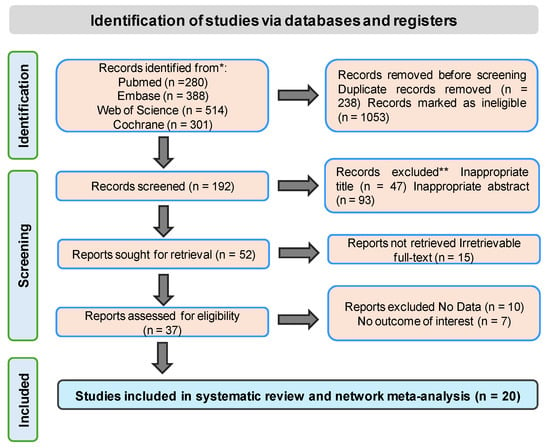
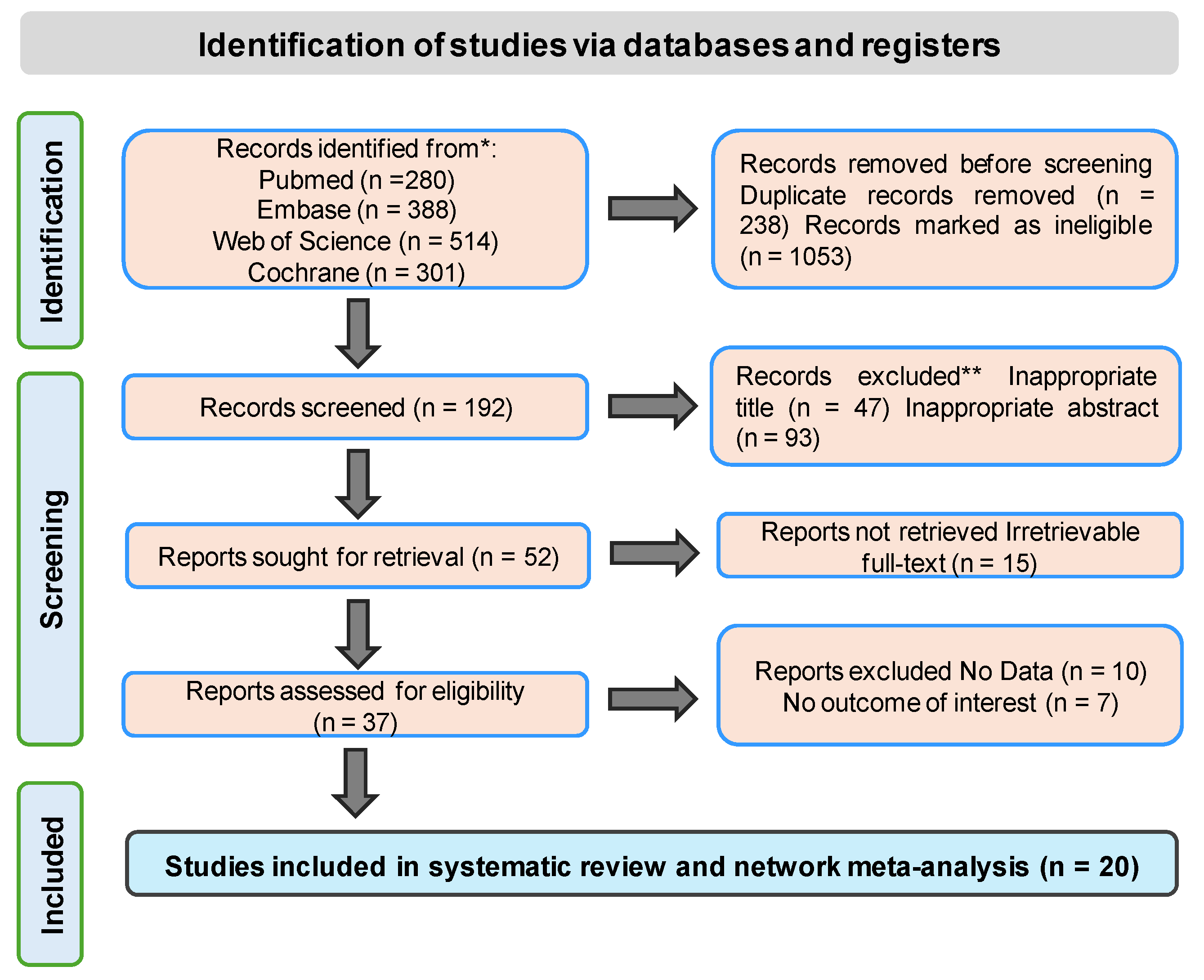
This NMA was conducted in accordance with the PRISMA guidelines [10]. A systematic literature search was conducted in PubMed, Embase, Cochrane, and Web of Science, from the inception of the databases to the present date (Figure 1). The search strategy employed combinations of the following terms: efficacy, safety, salvage, therapy, patients, recurrence, relapse, refractory, acute, myeloid, leukemia, standard care, and AML.
Figure 1.
PRISMA flow diagram illustrating the study selection process. The diagram summarizes the identification, screening, eligibility assessment, and final inclusion of studies in the systematic review and network meta-analysis, in accordance with the PRISMA guidelines. * Total records; ** Records excluded.
2.2. Eligibility Criteria
2.2.1. Inclusion Criteria
(1) RCTs evaluating therapeutic interventions for patients with relapsed or refractory AML.
(2) Trials comparing salvage therapies with standard care, placebo, or alternative salvage treatment regimens.
(3) Studies reporting at least one prespecified efficacy outcome, including OS, EFS, and CRR.
(4) Studies providing extractable data for comparative efficacy or safety assessment.
2.2.2. Exclusion Criteria
(1) Non-randomized observational studies, retrospective cohort studies, case reports, case series, reviews, and editorials.
(2) Non-comparative or single-arm studies without an eligible control group.
(3) Studies without separately extractable data for patients with R/R AML.
(4) Studies conducted in a language other than English.
(5) Studies without extractable data for the outcomes of interest.
2.3. Data Extraction and Quality Assessment
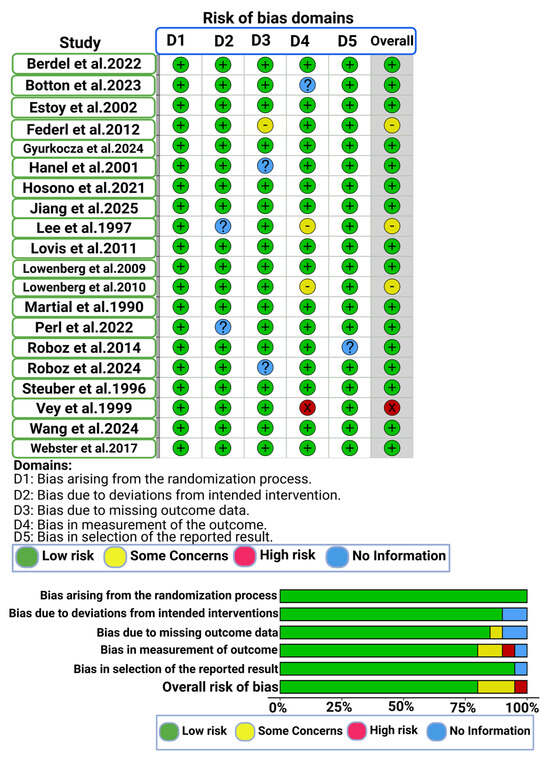
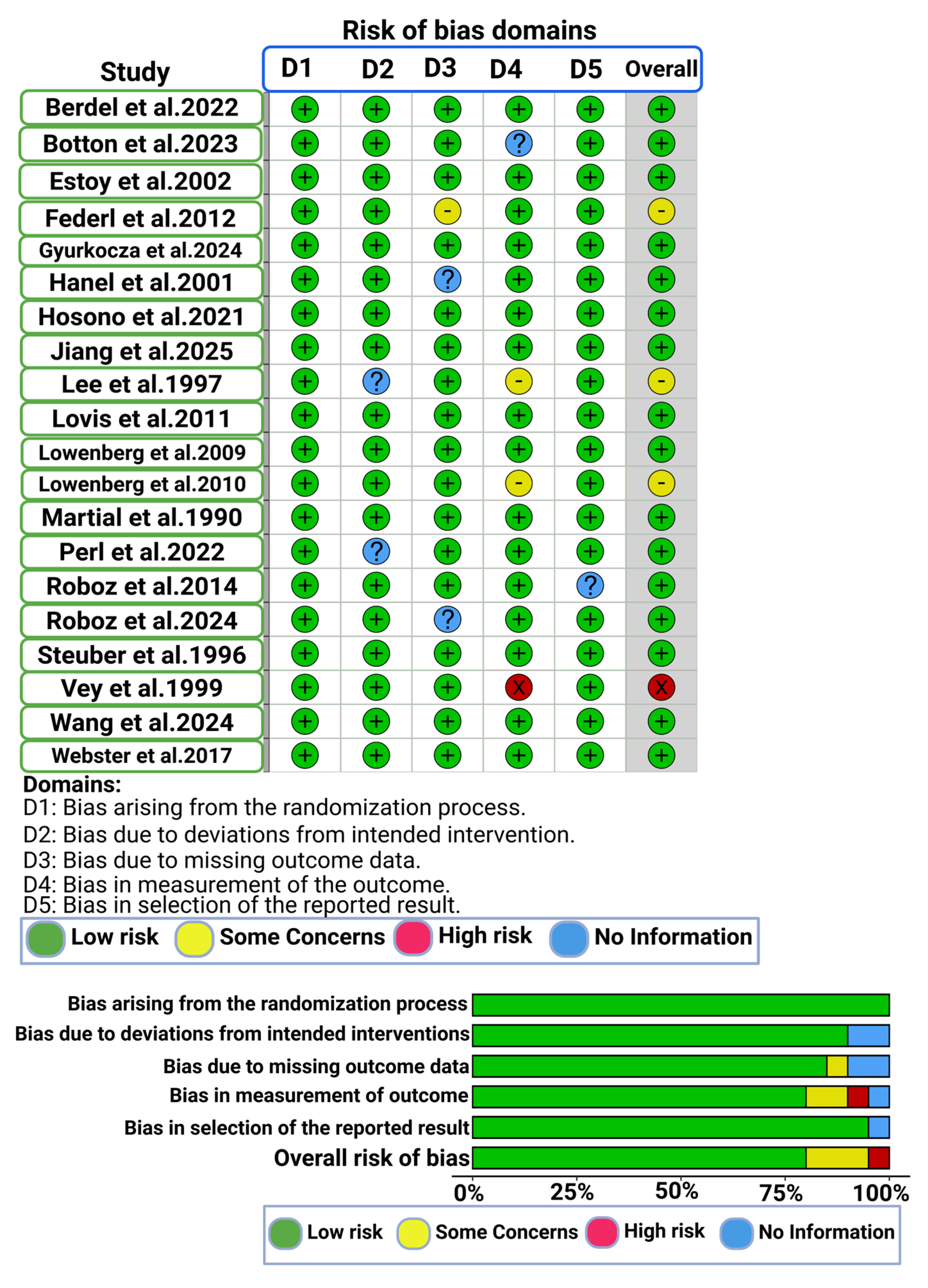
Two independent reviewers (SSM and SK) independently reviewed the literature according to the above-defined strategy and criteria. Each reviewer extracted the following information: first author, publication year, treatment details, sample size, patient demographics, efficacy outcomes (OS, EFS, CRR), safety data (AEs and mortality rates), number of patients in each study, number treated by each approach, and number of treatment lines. All data were recorded independently in separate databases and were compared at the end of the review process to limit selection bias. Duplicates were removed, and any disparities were clarified. Selected studies were assessed for quality according to the Cochrane handbook for systematic reviews of interventions [11]. The methodological quality of the included trials was assessed using the risk of bias visualization tool [11], which displays “traffic light” plots of domain-level judgments for each result and weighted bar plots of the distribution of risk-of-bias judgments within each bias domain. The green region represents studies with a low risk of bias, the yellow region shows studies with an unclear risk of bias, the blue region indicates studies with missing information, and the red region represents studies with a high risk of bias (Figure 2).
Figure 2.
Risk of bias summary using the Cochrane Risk of Bias 2.0 tool for randomized controlled trail studies. The green region represents studies with low risk of bias, the yellow region shows studies with unclear risk of bias, the blue region shows studies with missing information and the red region shows studies with high risk of bias.
2.4. Statistical Analysis
The primary analysis employed an NMA framework using a placebo as the common anchor comparator. Treatment efficacy was assessed using ORs for OS, EFS, and CRR with 95% confidence intervals (CI). Safety was evaluated using ORs for AEs. The relative ranking of treatments was determined using the SUCRA method, which ranges from 0 (certainly the worst) to 1 (certainly the best) [12]. Ranking probabilities and SUCRA, which provides a numerical summary of the rank distribution of each treatment schedule across different endpoints, were used to offer hierarchy probabilities. The larger the SUCRA value (i.e., closer to 1), the better the rank of the intervention. The frequentist list equivalent of the SUCRA, the p-score, was further used to confirm the results of NMA. All analyses were performed using R software version 4.4.2 with the ‘netmeta’ package. Our systematic search identified 1483 records. After removing duplicates and screening titles and abstracts, 52 full-text articles were assessed for eligibility. Ultimately, 20 RCTs met the inclusion criteria for the primary analysis (Figure 1).
After full-text screening, 20 studies [1,4,8,9,13,14,15,16,17,18,19,20,21,22,23,24,25,26,27,28] met the inclusion criteria and were included in the meta-analysis. The characteristics of included studies are summarized in Table 1. The trials enrolled a total of 4196 patients. The trials varied in sample size (ranging from 29 to 813 patients), geographic regions, and baseline characteristics.
Table 1.
Outlines the design, region, population, sample size, mean age, patient status, and primary endpoints of the included studies.
3. Results
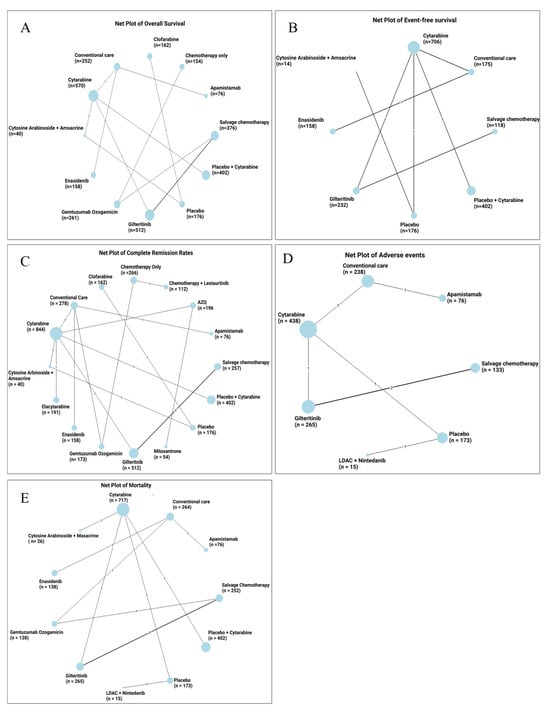
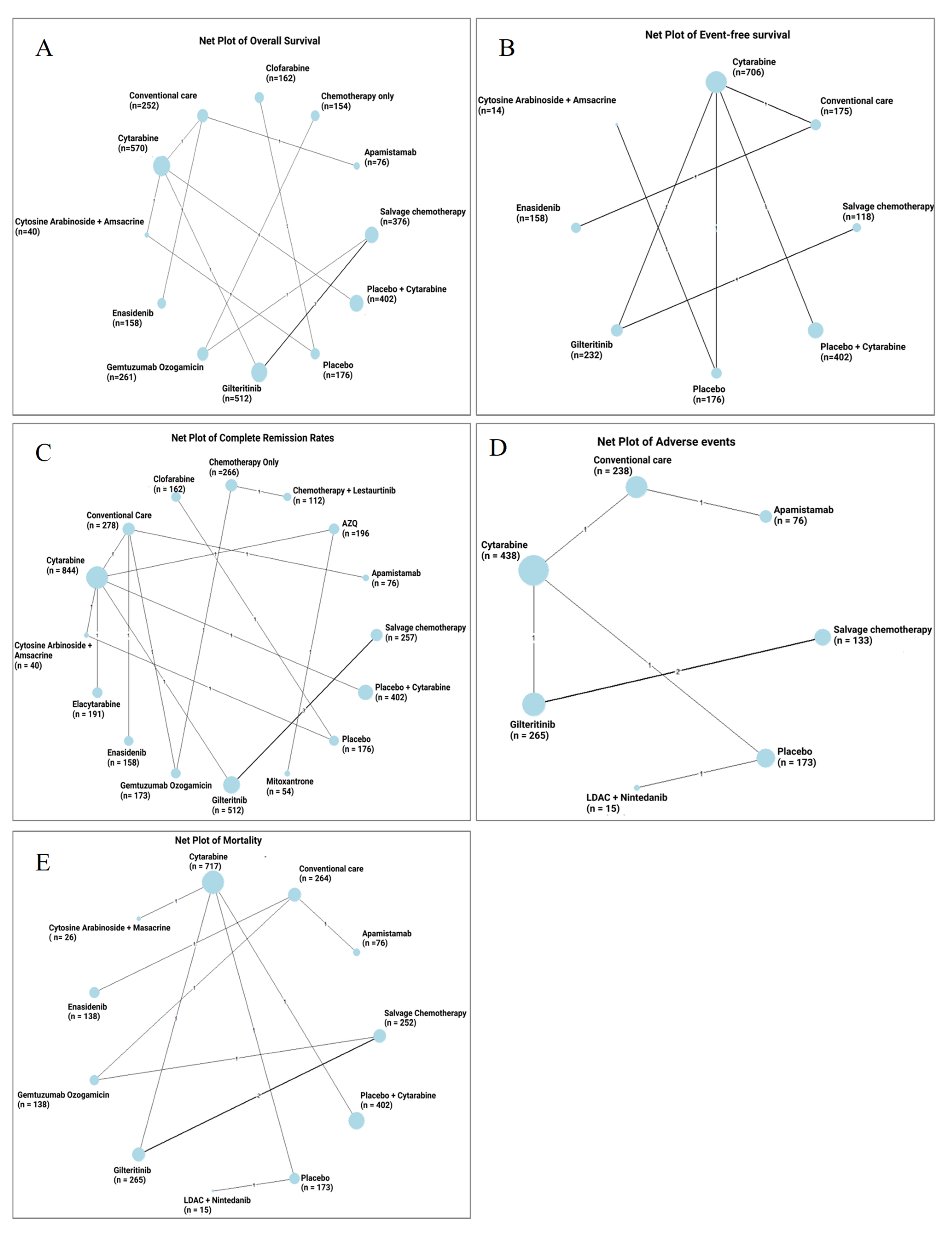
Figure 3 illustrates the network of comparisons among all evaluated regimens. A network plot illustrates the direct and indirect comparisons between the evaluated therapeutic regimens. The network structure highlights the heterogeneity in available evidence, with some treatment pairs having more direct comparisons than others. The network plot, as shown in Figure 3, further illustrates the network geometry for outcomes, including OS, EFS, CRR, AE, and mortality rates. Stronger associations were observed between conventional medicine, such as cytarabine and placebo. In contrast, innovative agents, such as apamistamab and gilteritinib, exhibited fewer direct comparisons, indicating a scarcity of head-to-head trials. This highlights the significance of indirect comparisons facilitated by NMA methodology.
Figure 3.
Network plot of all the treatment groups evaluated in the network meta-analysis (NMA) for all the efficacy and safety endpoints. Each network plot represents the treatment interventions and their direct comparisons evaluated in RCTs. Each node represents an individual therapeutic regimen, with node size proportional to the total number of patients receiving that treatment. The connecting edges represent direct comparisons between treatment regimens within the included RCTs, with edge thickness proportional to the number of studies contributing to each direct comparison. The network geometry illustrates the extent of direct comparative evidence available for each treatment and the connectivity of the evidence network. (A): overall survival, (B): event-free survival, (C): complete remission rate, (D): adverse events, and (E): treatment-related mortality.
3.1. Efficacy Outcomes Analyses:
Overall Survival
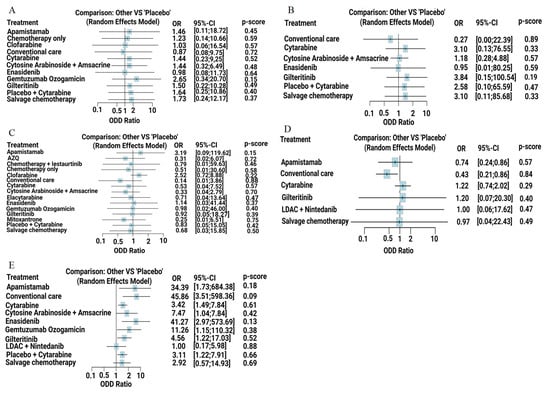
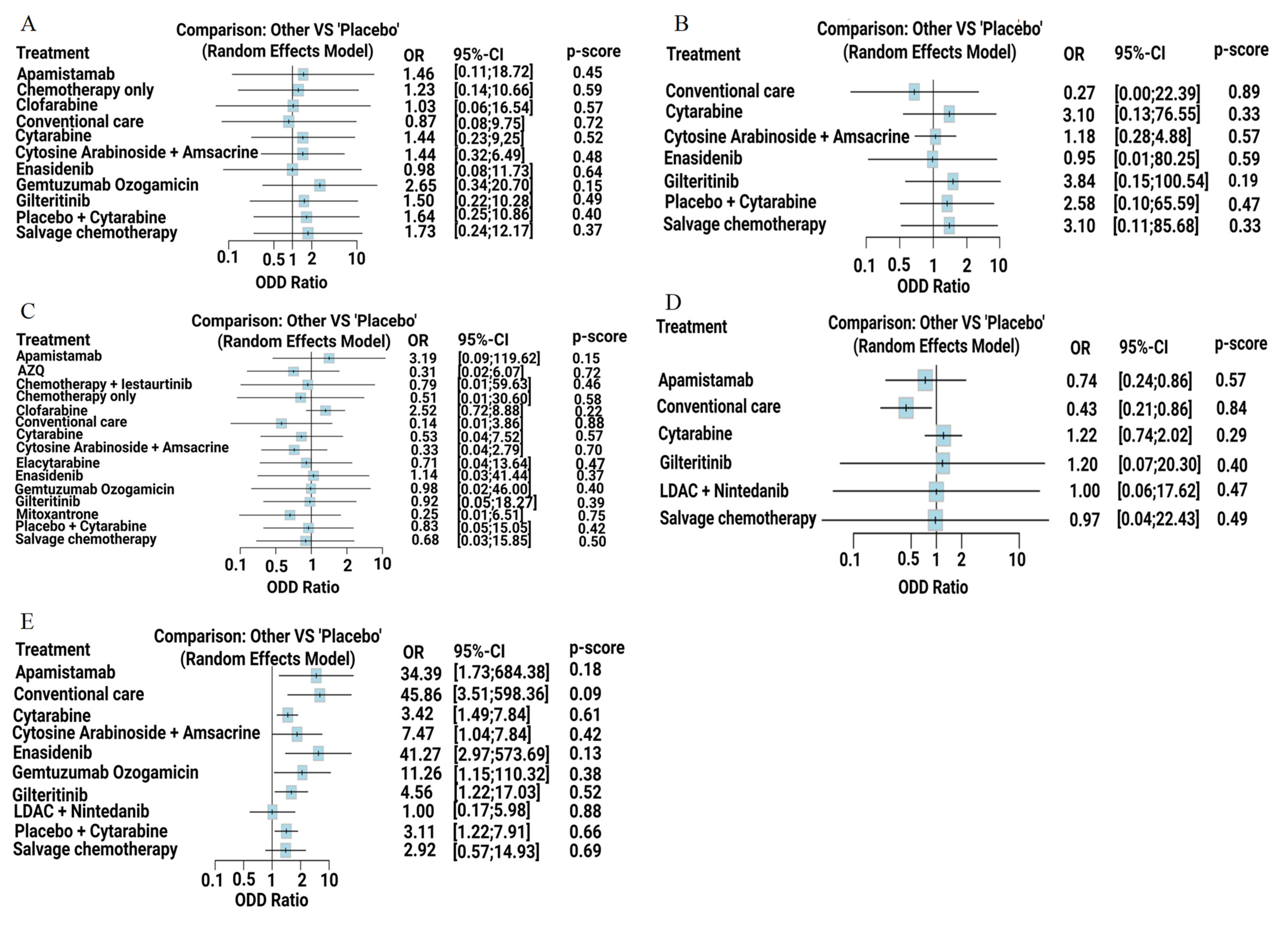
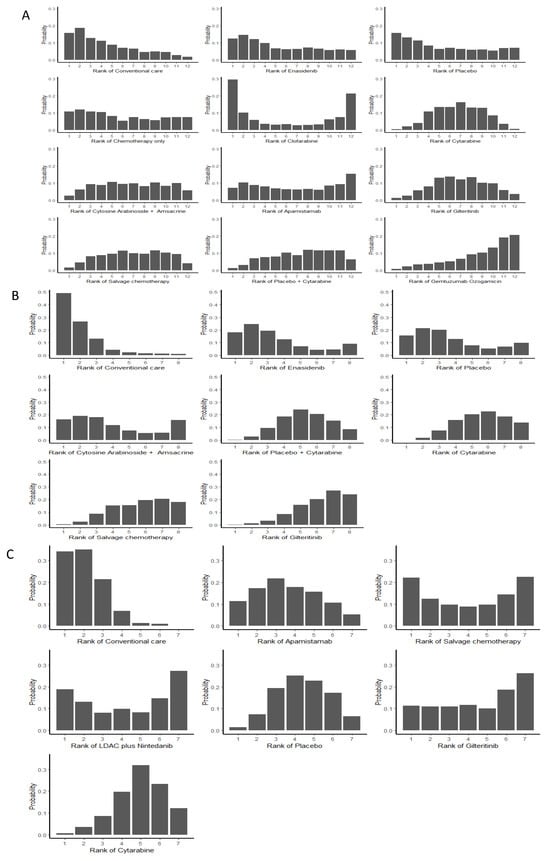
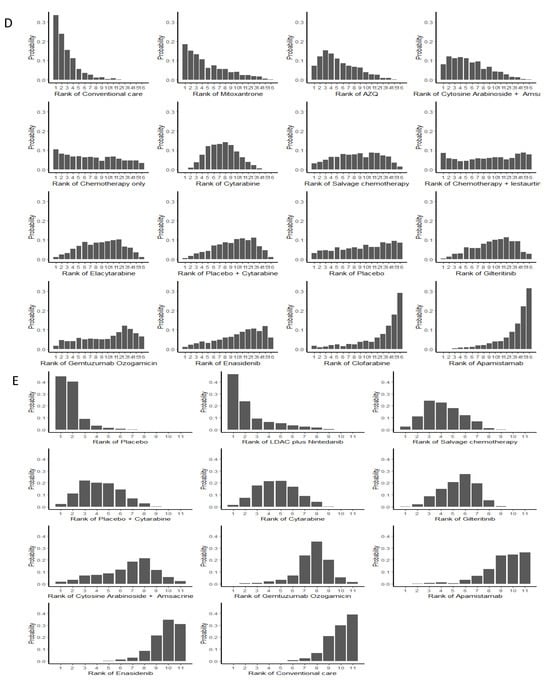
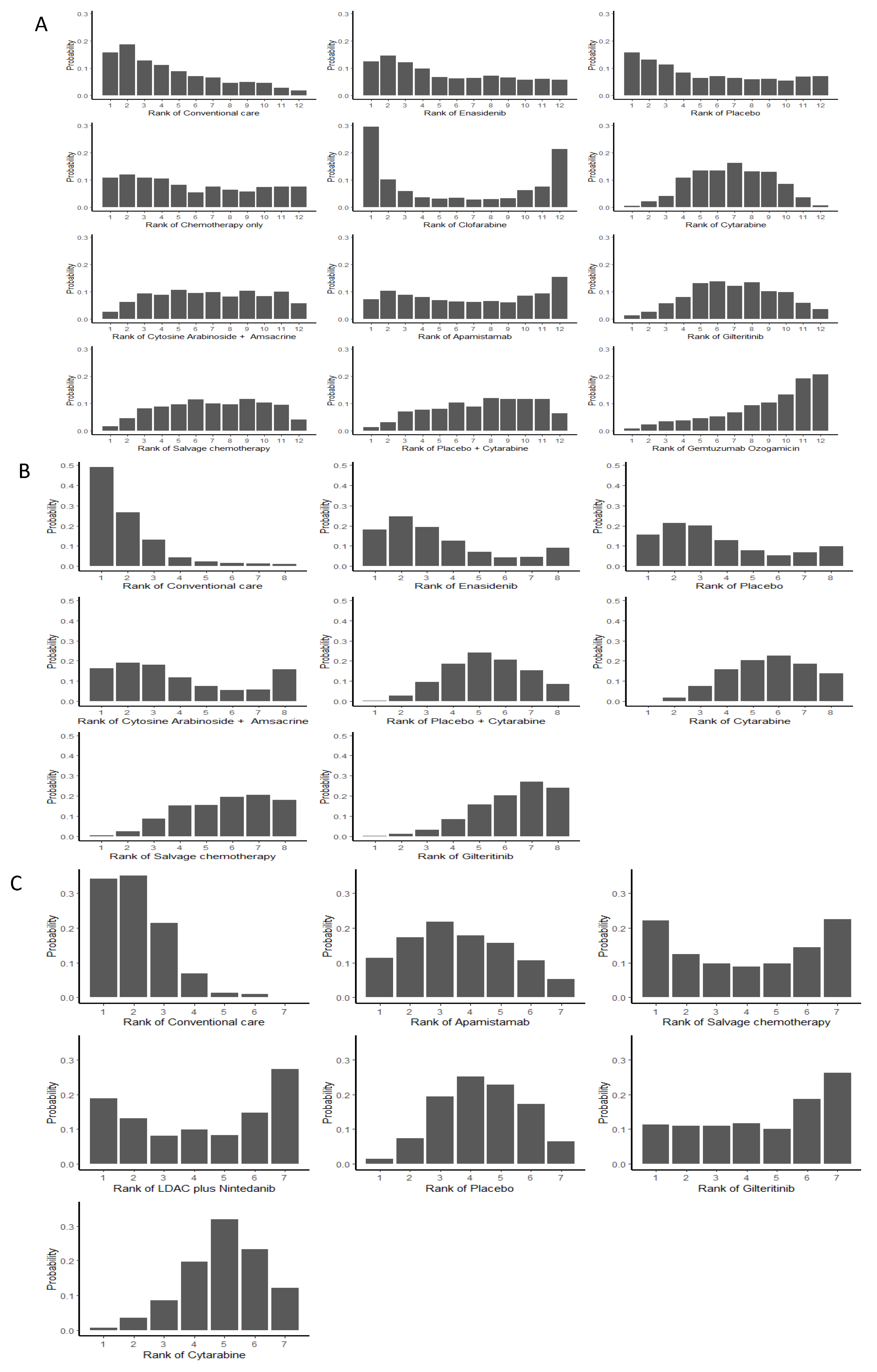
The network diagram for OS (Figure 3A) demonstrates the comparative efficacy landscape of salvage therapies in cases with R/R AML. Among the treatments analyzed, gemtuzumab ozogamicin (OR 2.65, 95% CI; 0.34–20.70) and apamistamab (OR 1.46, 95% CI; 0.11–18.72) demonstrated numerically favorable point estimates for OS. However, both CI crossed the null value, indicating that the observed differences were not statistically significant. (Figure 4A). Graphical demonstration of the network (Figure 5) further supports these trends. Gemtuzumab ozogamicin and apamistamab are represented by lighter-colored nodes in the heat map, indicating superior survival probabilities relative to several treatments, including conventional care, cytarabine alone, and placebo plus cytarabine. Although gemtuzumab ozogamicin achieved the highest SUCRA ranking (0.85), this ranking should be interpreted as a probability-based treatment hierarchy rather than evidence of statistically established superiority. (Supplementary Figure S1A and Supplementary Table S1). While gemtuzumab ozogamicin appears promising in terms of survival outcomes, the wide uncertainty intervals necessitate cautious interpretation. The current body of evidence suggests a potential clinical benefit but underscores the need for high-quality randomized controlled trials to validate these preliminary findings. The limited number of studies explicitly enrolling pediatric patients constrained subgroup analyses for this population. Notably, only one study conducted in 1996 investigated azacitidine in pediatric patients, demonstrating a modest survival advantage. However, given the age of the study and significant advancements in treatment strategies since then, these results are not generalizable to contemporary clinical practice. Overall, the analysis indicates that gemtuzumab ozogamicin and apamistamab may offer a survival advantage for patients with R/R AML, particularly within certain subgroups. These findings warrant further exploration through well-powered, stratified clinical trials to confirm OS benefits and to identify patient populations most likely to benefit.
Figure 4.
Forest plots of comparisons between treatments in terms of (A): overall survival, (B): event-free survival, (C): complete remission rate, (D): adverse events, and (E): treatment-related mortality. The vertical reference line at OR = 1 represents the null effect, indicating no difference between the compared treatment interventions. For efficacy outcomes (OS, EFS, and CRR), ORs greater than 1 indicate higher odds of the favorable outcome, whereas ORs below 1 indicate lower odds. Conversely, for safety outcomes (AEs and mortality), ORs below 1 indicate lower odds of experiencing the respective adverse outcome and therefore favor the treatment in the numerator. ORs greater than 1 indicate higher odds of the adverse outcome. The direction of the treatment effect depends on the order of interventions in each comparison. Comparisons with 95% CI excluding 1 indicate evidence of a difference between the compared interventions.
Figure 5.
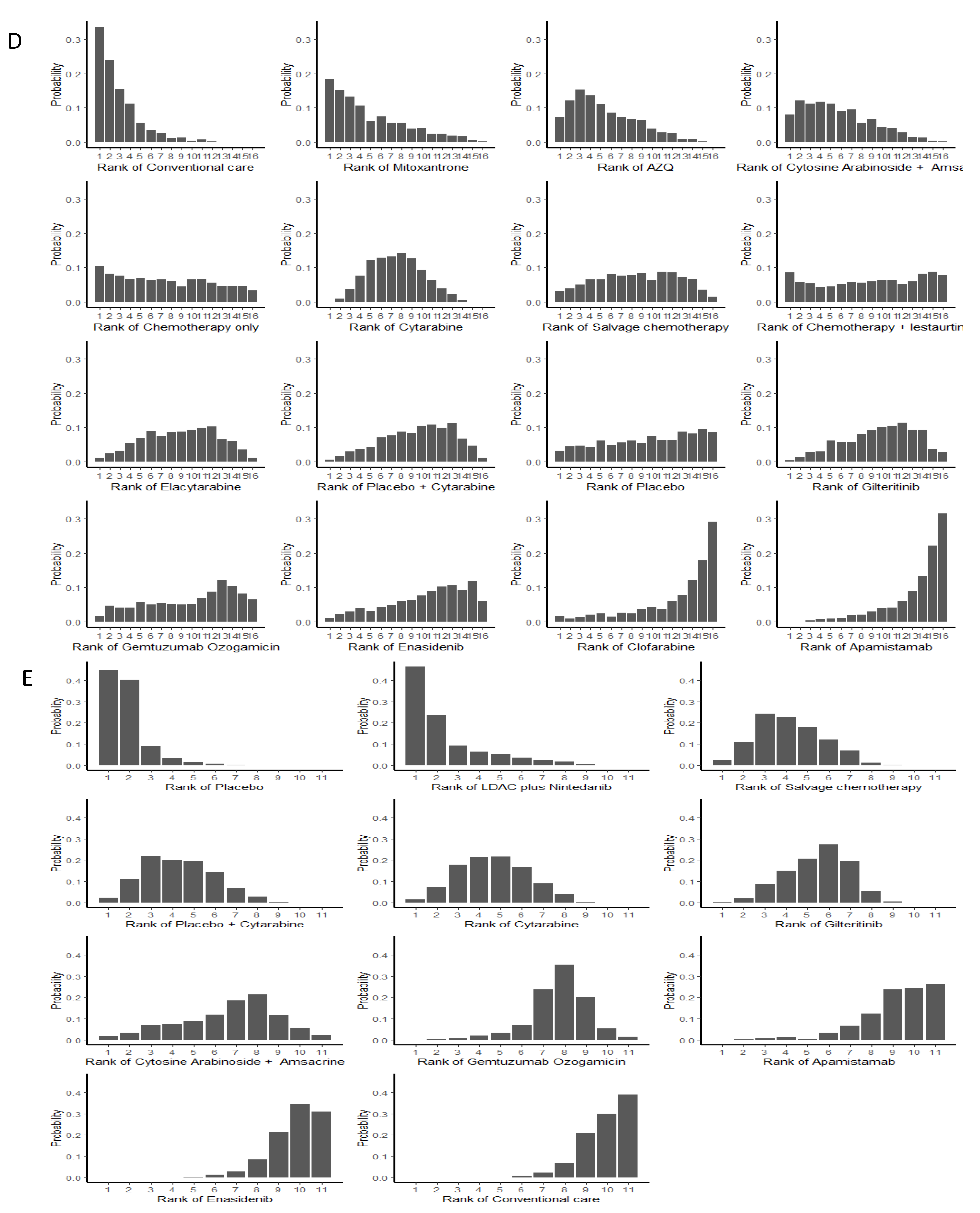
The rankogram bar plots that shows the rank values of treatments: Distribution of the probabilities of being at each rank together with mean rank. Cumulative ranking probabilities for each treatment evaluated in terms of; (A): overall survival, (B): event-free survival, (C): complete remission rate, (D): adverse events, and (E): mortality. Rankograms depict the posterior probability of each treatment occupying a particular ranking position among all evaluated interventions for each outcome. Separate rankograms are presented for OS, EFS, CRR, AEs, and mortality. In each panel, the horizontal axis represents the possible treatment rankings (Rank 1 to Rank 12), while the vertical axis represents the corresponding posterior ranking probability (0–1). Each bar indicates the probability that a specific intervention occupies the corresponding rank based on the posterior distribution of treatment effects obtained from the network meta-analysis. The probabilities across all ranking positions for an individual treatment sum to approximately 1 (100%). For efficacy outcomes (OS, EFS, and CRR), Rank 1 represents the most favorable treatment ranking and Rank 12 the least favorable ranking, based on the direction of the outcome measures. For safety outcomes (AEs and Mortality), the ranking direction is reversed, with Rank 1 representing the lowest risk and therefore the most favorable safety profile, and Rank 12 representing the highest risk. Thus, a greater concentration of probability toward Rank 1 indicates a more favorable relative ranking for the respective outcome. Conversely, a broadly distributed ranking probability indicates greater uncertainty regarding the relative position of a treatment. Rankograms provide a probabilistic representation of treatment rankings and should not be interpreted as direct estimates of treatment effects or as definitive evidence of statistical superiority.
3.2. Event-Free Survival
The network diagram for EFS is presented in Figure 3B, providing a visual overview of the comparative efficacy of available salvage therapies for patients with R/R AML. Among the interventions analyzed, gilteritinib and cytarabine demonstrated a clear trend toward improved EFS outcomes. Specifically, gilteritinib showed an odds ratio (OR) of 3.84 (95% CI: 0.15–10.54), and cytarabine yielded an OR of 3.10 (95% CI: 0.13–7.55) compared to control or standard regimens, demonstrating numerically favorable point estimates for EFS. However, the corresponding CI crossed the null values, and therefore statistical superiority over the comparators could not be established. (Figure 4B). While the findings were not statistically significant, the observed effect size direction and effect size trends indicate a potential therapeutic benefit that warrants further investigation. When analyzed within the context of the entire network (Figure 5), gilteritinib and cytarabine consistently outperformed conventional treatment options, including conventional care, placebo, and salvage chemotherapy, as evidenced by their favorable positioning in the comparative heatmap and network architecture. These agents were associated with a lower incidence of progression-related events and longer remission durations in the evaluated studies. Gilteritinib achieved the highest SUCRA ranking (0.81), suggesting a favorable probability-based position within the treatment network. Nevertheless, this ranking should be interpreted cautiously in view of the substantial uncertainty surrounding the treatment effect estimates (Supplementary Figure S1B and Supplementary Table S2). Cytarabine ranked closely behind, reinforcing its established role as a backbone agent in salvage therapy regimens, particularly when used in optimized dosing strategies or combination formats. While the upper bounds of the CIs remain wide—reflecting a degree of uncertainty—this is likely attributable to heterogeneity in study populations and variable sample sizes. Nonetheless, the overall consistency across statistical outputs and network visualizations strengthens the evidence base supporting gilteritinib and cytarabine as viable therapeutic options for improving EFS in R/R AML. In conclusion, this network meta-analysis identifies gilteritinib, followed by cytarabine, as the most promising agent for prolonging EFS in this patient population. These findings emphasize the need for further clinical validation through biomarker-guided or risk-adapted trial designs to refine treatment strategies and identify optimal patient subgroups most likely to benefit.
3.3. Complete Remission Rates (CRR)
The network diagram for CRR is presented in Figure 3C, highlighting the comparative efficacy of treatments in inducing remission in patients with R/R AML. The analysis demonstrated that apamistamab and clofarabine reflect a trend toward higher CRR than other agents. Specifically, apamistamab showed an odds ratio (OR) of 3.19 (95% CI: 0.09–19.62), while clofarabine had an OR of 2.52 (95% CI: 0.72–8.88), demonstrating numerically favorable estimates for CR. However, the CI crossed the null value, indicating that statistically significant differences could not be established (Figure 4C). Although the CI are wide, suggesting limited precision, the direction of effect strongly favors these agents in achieving CR. Moreover, apamistamab and clofarabine outperformed conventional treatments—such as conventional care, placebo, cytarabine, and salvage chemotherapy—in achieving higher rates of complete remission (Figure 5 and Supplementary Table S3). These findings indicate a clinically meaningful benefit for these novel or targeted therapies, particularly in patient subsets resistant to traditional cytotoxic approaches. Although apamistamab achieved a high SUCRA ranking (0.85), the uncertainty surrounding its estimated effect warrants cautious interpretation (Supplementary Figure S1C). Interpreting these findings in the context of study heterogeneity and sample size variation is essential, as they contribute to the wide confidence intervals. Nevertheless, the consistency across network geometry, forest plots, and SUCRA rankings supports the potential utility of apamistamab and clofarabine in improving remission outcomes in this high-risk population. In conclusion, this NMA identifies apamistamab and clofarabine as promising candidates for improving complete remission rates in R/R AML. These findings warrant further validation in prospective, biomarker-stratified clinical trials.
3.4. Adverse Events (AEs)
The network diagram for AEs is shown in Figure 3D, presenting the comparative safety profiles of salvage therapies in R/R AML. The forest plot demonstrates that gilteritinib and cytarabine were associated with a trend toward reduced adverse event risk, with odds ratios of 1.20 (95% CI: 0.07–20.30) and 1.22 (95% CI: 0.74–2.02), respectively (Figure 4D). Although these values slightly exceed 1.0, they suggest a more favorable AE profile relative to other agents when interpreted within broad and overlapping confidence intervals. Conventional care, Placebo, and apamistamab + salvage chemotherapy demonstrated comparatively higher AE risks, as visualized in Figure 5 and detailed in Supplementary Table S4. This suggests that patients receiving gilteritinib or cytarabine may experience fewer treatment-related toxicities, making them potentially more tolerable options, particularly for patients with comorbidities or advanced age. The SUCRA value analysis ranked cytarabine highest in minimizing adverse events, with a score of 0.71, further supporting its safety advantage among the included treatments (Supplementary Figure S1D). While none of the comparisons reached statistical significance due to variability and limited study size, the consistency of favorable trends for gilteritinib and cytarabine suggests these agents may offer a more manageable toxicity profile. This is particularly relevant in the R/R-AML setting, where maintaining quality of life is a key consideration. In summary, cytarabine and gilteritinib offer a balanced efficacy-safety profile, emerging as preferable options for patients who may not tolerate intensive or combination regimens. These findings should be further explored in prospective safety-focused trials to guide clinical decision-making.
3.5. Treatment-Related Mortality (TRM)
The network diagram for mortality is presented in Figure 3E, illustrating the comparative mortality rates across salvage therapies in patients with R/R AML. The forest plot indicates that enasidenib and apamistamab showed a strong trend toward reducing mortality, with odds ratios of 41.20 (95% CI: 2.97–573.69) and 34.39 (95% CI: 1.73–684.38), respectively (Figure 4E). These highly elevated OR values—favouring survival—reflect substantially lower mortality rates in patients receiving these agents compared to those treated with a placebo or salvage chemotherapy. However, the wide CI suggests caution in interpretation due to possible imprecision and small sample sizes. These agents also consistently showed the lowest mortality rates across the treatment network, as highlighted in Figure 5 and further supported by Supplementary Table S5. In particular, patients treated with enasidenib showed a significant survival advantage compared to standard regimens and experimental comparators. The SUCRA analysis further demonstrates these findings, identifying enasidenib as the top-ranked therapy in minimizing mortality, with a SUCRA value of 0.87, indicating the highest probability of being the most effective option among all compared treatments (Supplementary Figure S1E).
In conclusion, enasidenib and apamistamab emerged as promising candidates for reducing treatment-related mortality in R/R AML. While the observed magnitude of benefit is striking, it must be interpreted cautiously due to the wide variability and limited number of direct comparative studies. Nevertheless, their favorable mortality profiles underscore the need for larger, prospective studies to validate these findings and clarify their role in clinical practice. A complete summary of the efficacy and safety of all the interventions was presented in Supplementary Table S6.
4. Discussion
This study aimed to systematically review and compare all therapeutic options available for R/R AML, evaluating the efficacy and safety profiles of both conventional and novel agents. Although many of these therapies have been tested in randomized trials, a clear comparative understanding remains elusive. Without definitive predictive biomarkers, treatment choices are predominantly influenced by patient-specific factors like prior therapies, disease refractoriness, comorbidities, treatment tolerability, and disease-specific characteristics (cytogenetics, molecular mutations, risk status, and disease burden). Therefore, our comparative assessment is crucial in identifying promising therapies and informing future treatment algorithms.
This network meta-analysis synthesizes evidence from RCT studies to evaluate and rank salvage regimens for patients with R/R AML. The analysis included various interventions, including FLT3 inhibitors, IDH inhibitors, antibody–drug conjugates, and various salvage chemotherapy regimens. Among the evaluated treatments, gilteritinib demonstrated a favorable probability-based ranking across selected efficacy outcomes, particularly in the context of FLT3-mutated R/R AML. The wide CI associated with some treatment comparisons indicates uncertainty in the estimated effects, and further comparative clinical evidence is required to establish the magnitude of its therapeutic benefit. Significantly, gilteritinib was also associated with a lower rate of AEs (OR 1.20 [0.07–20.30]), reinforcing its favorable safety profile, which is a key consideration in the heavily pretreated and often frail population with R/R AML. This makes it a compelling option for patients with FLT3 mutations who are ineligible for intensive salvage regimens. Gemtuzumab ozogamicin, a CD33-targeted monoclonal antibody–drug conjugate, also demonstrated benefit in remission rates and survival in CD33-positive subgroups, with an acceptable toxicity profile. Similarly, cytarabine, widely used in combination chemotherapy, ranked highly in AE reduction (SUCRA: 0.71), making it an essential component of low- to intermediate-intensity regimens.
Significantly, our analysis identified enasidenib and apamistamab as therapies associated with substantially lower mortality rates, showing ORs of 41.20 (95% CI: 2.97–573.69) and 34.39 (1.73–684.38), respectively. Enasidenib had the highest SUCRA score (0.87) for mortality reduction, suggesting a potentially protective effect on overall outcomes. Although these findings are promising, they are based on limited data from early-phase trials. The wide confidence intervals indicate uncertainty and highlight the need for validation in larger, well-designed randomized studies. Other treatments, such as clofarabine and elacytarabine, have demonstrated modest efficacy; however, their clinical utility may be limited by toxicity concerns or the absence of clear survival benefits. Conventional chemotherapy regimens—including combinations such as cytarabine with amacrine, mitoxantrone, or high-dose anthracyclines—remain appropriate for younger, fit patients. Nonetheless, these regimens consistently rank lower in comparative analyses due to their substantial toxicity burden, including significant myelosuppression and risk of infectious complications. Similarly, the addition of lestaurtinib to chemotherapy failed to yield meaningful survival improvements, underscoring the challenges of incorporating multi-targeted kinase inhibitors in the absence of robust patient selection strategies. A key limitation of this NMA is the relatively small number of eligible randomized trials [19], which is typical for R/R AML due to disease heterogeneity, limited RCT availability, and evolving targeted therapies. This limited number of studies resulted in sparse networks for comparisons and wide CI. Consequently, comprehensive subgroup analyses stratified by factors (e.g., genetic markers such as FLT3 or IDH2 mutations, age categories) were not feasible, as they would further reduce the power of the study. We attempted possible exploratory stratifications where all data permitted. Despite these challenges, the NMA framework enabled indirect comparisons and SUCRA-based rankings, facilitating the identification of the relative efficacy and safety profiles of available salvage regimens. Overall, this study underscores the shifting therapeutic landscape in relapsed or refractory AML, wherein targeted agents such as gilteritinib and enasidenib are gaining prominence due to their favorable efficacy and tolerability. The emerging potential of antibody-based therapies and molecularly guided interventions further reinforces the paradigm shift toward personalized medicine in R/R-AML treatment.
In conclusion, the overall goal of this study is not necessarily to identify a statistically significant winner candidate; it is to synthesize comparative evidence and quantify uncertainty. This comprehensive NMA provides a comparative framework for evaluating salvage therapies in R/R AML. Among the evaluated agents, gilteritinib emerged as the most effective and safest salvage therapy, demonstrating improved survival outcomes and a reduced incidence of adverse events. Its selectivity and tolerability make it the preferred choice for patients with FLT3 mutations. Enasidenib and apamistamab demonstrated the most favorable mortality reduction profiles, with high SUCRA rankings. While their results are promising, further validation in larger cohorts is necessary. Cytarabine ranked highly in minimizing adverse events, reinforcing its role in specific treatment regimens, particularly in scenarios where toxicity reduction is a clinical priority. Gemtuzumab ozogamicin and other targeted or investigational therapies present additional options for molecularly defined subgroups, although the supporting evidence remains variable. Conventional chemotherapy remains viable for fit, younger patients, albeit with higher toxicity concerns and limited survival gains. These findings underscore the importance of personalized treatment strategies and highlight the need for biomarker-driven clinical trials to optimize therapeutic outcomes. Future research should focus on integrating novel agents into rational combination regimens, identifying predictive molecular markers, and validating the current treatment rankings through prospective, head-to-head clinical studies. Such efforts are essential to refine clinical decision-making and advance care in this challenging and heterogeneous disease setting.
Supplementary Materials
The following supporting information can be downloaded at: https://www.mdpi.com/article/10.3390/hemato7040042/s1, Table S1: Comparative Efficacy of Salvage Therapies in R/R AML Based on Overall Survival; Table S2: Comparative Efficacy of Salvage Therapies in R/R AML Based on Event-Free Survival; Table S3: Comparative Efficacy of Salvage Therapies in R/R AML Based on Complete remission rate, Table S4: Comparative Efficacy of Salvage Therapies in R/R AML Based on Adverse Events; Table S5: Comparative Efficacy of Salvage Therapies in R/R AML Based on Mortality; Table S6: Summary of Efficacy and Safety Outcomes in Salvage Therapies for R/R AML; Figure S1: Heatmap reporting the surface under the cumulative ranking curve (SUCRA) for each endpoint analyzed for each treatment schedule included in the analysis. (A) Overall survival, (B) Event-free Survival, (C) Complete remission rate, (D) Adverse events, (E) Mortality.
Author Contributions
S.S.M. conceived the study, designed the experiments, performed the research work, analyzed the data, and wrote the manuscript. S.K.C. contributed to study design, helped with the literature search and provided guidance. A.V. and N.J. critically reviewed the manuscript and contributed to editing and corrections. All authors have read and agreed to the published version of the manuscript.
Funding
This research received no external funding.
Institutional Review Board Statement
Not applicable.
Data Availability Statement
No new data were created or analyzed in this study. Data sharing is not applicable to this article.
Acknowledgments
The authors thank all the research groups whose studies were included in this manuscript.
Conflicts of Interest
The authors declare no conflicts of interest.
References
- Löwenberg, B.; Beck, J.; Graux, C.; van Putten, W.; Schouten, H.C.; Verdonck, L.F.; Ferrant, A.; Sonneveld, P.; Jongen-Lavrencic, M.; von Lilienfeld-Toal, M.; et al. Gemtuzumab ozogamicin as postremission treatment in AML at 60 years of age or more: Results of a multicenter phase 3 study. Blood 2010, 115, 2586–2591. [Google Scholar] [CrossRef] [Scilit]
- Short, N.J.; Kantarjian, H.; Ravandi, F.; Huang, X.; Xiao, L.; Garcia-Manero, G.; Plunkett, W.; Gandhi, V.; Sasaki, K.; Pemmaraju, N.; et al. A phase I/II randomized trial of clofarabine or fludarabine added to idarubicin and cytarabine for adults with relapsed or refractory acute myeloid leukemia. Leuk. Lymphoma 2017, 59, 813–820. [Google Scholar] [CrossRef] [Scilit]
- Roboz, G.J.; Kantarjian, H.M.; Yee, K.W.L.; Kropf, P.L.; O’COnnell, C.L.; Griffiths, E.A.; Stock, W.; Daver, N.G.; Jabbour, E.; Ritchie, E.K.; et al. Dose, schedule, safety, and efficacy of guadecitabine in relapsed or refractory acute myeloid leukemia. Cancer 2017, 124, 325–334. [Google Scholar] [CrossRef] [Scilit]
- Wang, J.; Jiang, B.; Li, J.; Liu, L.; Du, X.; Jiang, H.; Hu, J.; Yuan, M.; Sakatani, T.; Kadokura, T.; et al. Phase 3 study of gilteritinib versus salvage chemotherapy in predominantly Asian patients with relapsed/refractory FLT3-mutated acute myeloid leukemia. Leukemia 2024, 38, 2410–2418. [Google Scholar] [CrossRef] [Scilit]
- Montesinos, P.; Beckermann, B.M.; Catalani, O.; Esteve, J.; Gamel, K.; Konopleva, M.Y.; Martinelli, G.; Monnet, A.; Papayannidis, C.; Park, A.; et al. MIRROS: A randomized, placebo-controlled, Phase III trial of cytarabine ± idasanutlin in relapsed or refractory acute myeloid leukemia. Future Oncol. 2020, 16, 807–815. [Google Scholar] [CrossRef] [Scilit]
- Schjesvold, F.H.; Dimopoulos, M.-A.; Delimpasi, S.; Robak, P.; Coriu, D.; Legiec, W.; Pour, L.; Špička, I.; Masszi, T.; Doronin, V.; et al. Melflufen or pomalidomide plus dexamethasone for patients with multiple myeloma refractory to lenalidomide (OCEAN): A randomised, head-to-head, open-label, phase 3 study. Lancet Haematol. 2022, 9, e98–e110. [Google Scholar] [CrossRef] [Scilit]
- Orlowski, R.Z.; Moreau, P.; Niesvizky, R.; Ludwig, H.; Oriol, A.; Chng, W.J.; Goldschmidt, H.; Yang, Z.; Kimball, A.S.; Dimopoulos, M. Carfilzomib-Dexamethasone Versus Bortezomib-Dexamethasone in Relapsed or Refractory Multiple Myeloma: Updated Overall Survival, Safety, and Subgroups. Clin. Lymphoma Myeloma Leuk. 2019, 19, 522–530.e1. [Google Scholar] [CrossRef] [Scilit]
- Berdel, A.F.; Koch, R.; Gerss, J.; Hentrich, M.; Peceny, R.; Bartscht, T.; Steffen, B.; Bischoff, M.; Spiekermann, K.; Angenendt, L.; et al. A randomized phase 2 trial of nintedanib and low-dose cytarabine in elderly patients with acute myeloid leukemia ineligible for intensive chemotherapy. Ann. Hematol. 2022, 102, 63–72. [Google Scholar] [CrossRef] [Scilit]
- Jiang, B.; Li, J.; Liu, L.; Du, X.; Jiang, H.; Hu, J.; Zeng, X.; Sakatani, T.; Kosako, M.; Deng, Y.; et al. Gilteritinib versus salvage chemotherapy in predominantly Asian patients with relapsed/refractory FLT3-mutated acute myeloid leukemia: A regional analysis of COMMODORE in China, South-East Asia, and Russia. Ann. Hematol. 2025, 104, 1563. [Google Scholar] [CrossRef] [Scilit]
- Page, M.J.; McKenzie, J.E.; Bossuyt, P.M.; Boutron, I.; Hoffmann, T.C.; Mulrow, C.D.; Shamseer, L.; Tetzlaff, J.M.; Akl, E.A.; Brennan, S.E.; et al. The PRISMA 2020 statement: An Updated Guideline for Reporting Systematic Reviews. Br. Med. J. 2021, 372, n71. [Google Scholar] [CrossRef] [Scilit] [PubMed]
- McGuinness, L.A.; Higgins, J.P.T. Risk-of-bias VISualization (robvis): An R package and Shiny web app for visualizing risk-of-bias assessments. Res. Synth. Methods 2020, 12, 55–61. [Google Scholar] [CrossRef] [Scilit]
- Salanti, G.; Ades, A.E.; Ioannidis, J.P.A. Graphical methods and numerical summaries for presenting results from multiple-treatment meta-analysis: An overview and tutorial. J. Clin. Epidemiol. 2011, 64, 163–171. [Google Scholar] [CrossRef] [Scilit] [PubMed]
- de Botton, S.; Montesinos, P.; Schuh, A.C.; Papayannidis, C.; Vyas, P.; Wei, A.H.; Ommen, H.; Semochkin, S.; Kim, H.-J.; Larson, R.A.; et al. Enasidenib vs conventional care in older patients with late-stage mutant-IDH2 relapsed/refractory AML: A randomized phase 3 trial. Blood 2023, 141, 156–167. [Google Scholar] [CrossRef] [Scilit]
- Faderl, S.; Wetzler, M.; Rizzieri, D.; Schiller, G.; Jagasia, M.; Stuart, R.; Ganguly, S.; Avigan, D.; Craig, M.; Collins, R.; et al. Clofarabine Plus Cytarabine Compared with Cytarabine Alone in Older Patients With Relapsed or Refractory Acute Myelogenous Leukemia: Results From the CLASSIC I Trial. J. Clin. Oncol. 2012, 30, 2492–2499. [Google Scholar] [CrossRef] [Scilit]
- Estey, E.H.; Thall, P.F.; Giles, F.J.; Wang, X.-M.; Cortes, J.E.; Beran, M.; Pierce, S.A.; Thomas, D.A.; Kantarjian, H.M. Gemtuzumab ozogamicin with or without interleukin 11 in patients 65 years of age or older with untreated acute myeloid leukemia and high-risk myelodysplastic syndrome: Comparison with idarubicin plus continuous-infusion, high-dose cytosine arabinoside. Blood 2002, 99, 4343–4349. [Google Scholar] [CrossRef] [Scilit]
- Gyurkocza, B.; Nath, R.; Seropian, S.; Choe, H.; Litzow, M.R.; Abboud, C.; Koshy, N.; Stiff, P.; Tomlinson, B.; Abhyankar, S.; et al. Randomized Phase III SIERRA Trial of 131I-Apamistamab Before Allogeneic Hematopoietic Cell Transplantation Versus Conventional Care for Relapsed/Refractory AML. J. Clin. Oncol. 2024, 43, 201–213. [Google Scholar] [CrossRef] [Scilit]
- Martiat, P.; Ghilain, J.M.; Ferrant, A.; Doyen, C.; Delannoy, A.; Chatelain, C.; Bosly, A.; Michaux, J.L.; Sokal, G. High-dose cytosine arabinoside and amsacrine or mitoxantrone in relapsed and refractory acute myeloid leukaemia: A prospective randomized study. Eur. J. Haematol. 1990, 45, 164–167. [Google Scholar] [CrossRef] [Scilit]
- Löwenberg, B.; Ossenkoppele, G.J.; Van Putten, W.; Schouten, H.C.; Graux, C.; Ferrant, A.; Sonneveld, P.; Maertens, J.; Jongen-Lavrencic, M.; Von Lilienfeld-Toal, M.; et al. High-Dose Daunorubicin in Older Patients with Acute Myeloid Leukemia. N. Engl. J. Med. 2009, 361, 1235–1248. [Google Scholar] [CrossRef] [Scilit] [PubMed]
- Levis, M.; Ravandi, F.; Wang, E.S.; Baer, M.R.; Perl, A.; Coutre, S.; Erba, H.; Stuart, R.K.; Baccarani, M.; Cripe, L.D.; et al. Results from a randomized trial of salvage chemotherapy followed by lestaurtinib for patients with FLT3 mutant AML in first relapse. Blood 2011, 117, 3294–3301. [Google Scholar] [CrossRef] [Scilit]
- Lee, E.; George, S.; Amrein, P.; Paciucci, P.; Allen, S.; Schiffer, C. An evaluation of combinations of diaziquone, etoposide and mitoxantrone in the treatment of adults with relapsed or refractory acute myeloid leukemia: Results of 8722, a randomized phase II study conducted by Cancer and Leukemia Group B. Leukemia 1998, 12, 139–143. [Google Scholar] [CrossRef] [Scilit][Green Version]
- Hosono, N.; Yokoyama, H.; Aotsuka, N.; Ando, K.; Iida, H.; Ishikawa, T.; Usuki, K.; Onozawa, M.; Kizaki, M.; Kubo, K.; et al. Gilteritinib versus chemotherapy in Japanese patients with FLT3-mutated relapsed/refractory acute myeloid leukemia. Int. J. Clin. Oncol. 2021, 26, 2131–2141. [Google Scholar] [CrossRef] [Scilit]
- Hänel, M.; Friedrichsen, K.; Hänel, A.; Herbst, R.; Morgner, A.; Neser, S.; Nicklisch, M.; Teich, M.; Ehninger, G.; Fiedler, F. Mito-FLAG as Salvage Therapy for Relapsed and Refractory Acute Myeloid Leukemia. Oncol. Res. Treat. 2001, 24, 356–360. [Google Scholar] [CrossRef] [Scilit]
- Roboz, G.J.; Rosenblat, T.; Arellano, M.; Gobbi, M.; Altman, J.K.; Montesinos, P.; O’Connell, C.; Solomon, S.R.; Pigneux, A.; Vey, N.; et al. International Randomized Phase III Study of Elacytarabine Versus Investigator Choice in Patients with Relapsed/Refractory Acute Myeloid Leukemia. J. Clin. Oncol. 2014, 32, 1919–1926. [Google Scholar] [CrossRef] [Scilit]
- Perl, A.E.; Larson, R.A.; Podoltsev, N.A.; Strickland, S.; Wang, E.S.; Atallah, E.; Schiller, G.J.; Martinelli, G.; Neubauer, A.; Sierra, J.; et al. Outcomes in Patients with FLT3-Mutated Relapsed/ Refractory Acute Myelogenous Leukemia Who Underwent Transplantation in the Phase 3 ADMIRAL Trial of Gilteritinib versus Salvage Chemotherapy. Transplant. Cell. Ther. 2022, 29, 265.e1–265.e10. [Google Scholar] [CrossRef] [Scilit]
- Roboz, G.J.; Sanz, G.; Griffiths, E.A.; Yee, K.; Kantarjian, H.; Récher, C.; Byrne, M.T.; Patkowska, E.; Kim, H.-J.; Thomas, X.; et al. Guadecitabine vs TC in relapsed/refractory AML after intensive chemotherapy: A randomized phase 3 ASTRAL-2 trial. Blood Adv. 2024, 8, 2020–2029. [Google Scholar] [CrossRef] [Scilit] [PubMed]
- Vey, N.; Kantarjian, H.; Beran, M.; O’BRien, S.; Cortes, J.; Koller, C.; Estey, E. Combination of topotecan with cytarabine or etoposide in patients with refractory or relapsed acute myeloid leukemia: Results of a randomized phase I/II study. Investig. New Drugs 1999, 17, 89–95. [Google Scholar] [CrossRef] [Scilit]
- Steuber, C.P.; Krischer, J.; Holbrook, T.; Camitta, B.; Land, V.; Sexauer, C.; Mahoney, D.; Weinstein, H. Therapy of refractory or recurrent childhood acute myeloid leukemia using amsacrine and etoposide with or without azacitidine: A Pediatric Oncology Group randomized phase II study. J. Clin. Oncol. 1996, 14, 1521–1525. [Google Scholar] [CrossRef] [Scilit]
- Webster, J.A.; Tibes, R.; Morris, L.; Blackford, A.L.; Litzow, M.; Patnaik, M.; Rosner, G.L.; Gojo, I.; Kinders, R.; Wang, L.; et al. Randomized phase II trial of cytosine arabinoside with and without the CHK1 inhibitor MK-8776 in relapsed and refractory acute myeloid leukemia. Leuk. Res. 2017, 61, 108–116. [Google Scholar] [CrossRef] [Scilit]

Disclaimer/Publisher’s Note: The statements, opinions and data contained in all publications are solely those of the individual author(s) and contributor(s) and not of MDPI and/or the editor(s). MDPI and/or the editor(s) disclaim responsibility for any injury to people or property resulting from any ideas, methods, instructions or products referred to in the content. |
© 2026 by the authors. Licensee MDPI, Basel, Switzerland. This article is an open access article distributed under the terms and conditions of the Creative Commons Attribution (CC BY) license.