


Abstract
Which patients benefit from carfilzomib in multiple myeloma depends on the regimen, the comparator and the treatment phase. This critical narrative review integrates randomised trials, selected translational and observational studies, guidance, and targeted source verification through 16 October 2026. Frontline substitution trials, including ENDURANCE and CLARION, did not demonstrate progression-free survival superiority over bortezomib-based comparators, whereas FORTE, ATLAS, and IsKia address distinct questions of induction, maintenance, and antibody intensification. In relapse, ASPIRE and ENDEAVOR established benefits against historical active controls, while CANDOR and IKEMA support anti-CD38 intensification with progression-free survival gains and no established overall survival advantage. SUCCESSOR-2 supports a mezigdomide-containing strategy after lenalidomide and anti-CD38 exposure, although differing carfilzomib schedules limit attribution to mezigdomide alone. Cardiovascular, renal, infectious, logistical, and access constraints materially shape treatment value. Current data do not define an optimal sequence, and resensitisation after B-cell maturation antigen (BCMA)-directed therapy remains investigational. At relapse, the evidence for adding daratumumab or isatuximab to carfilzomib and dexamethasone applies most directly to patients naïve to both carfilzomib and anti-CD38 therapy who need a lenalidomide-sparing regimen and have sufficient cardiovascular reserve for repeated infusions.
1. Introduction
The central clinical question is no longer whether carfilzomib has antimyeloma activity, but which patients derive sufficient benefit from a specific carfilzomib regimen to justify its toxicity and delivery burden. Anti-CD38 combinations have reshaped initial therapy, and earlier immune redirection has altered the options available at relapse. Contemporary European Hematology Association–European Myeloma Network (EHA–EMN) guidance and the PERSEUS, IMROZ, and CEPHEUS trials provide the framework for evaluating carfilzomib-containing strategies against anti-CD38–bortezomib–lenalidomide–dexamethasone regimens when these are indicated and accessible [1,2,3,4]. Trial superiority and local feasibility remain separate considerations: transplant eligibility, frailty, previous exposure, reimbursement, and infusion capacity determine which comparison is clinically relevant.
This review separates four questions that are often conflated: substitution of one proteasome inhibitor for another, addition of a partner drug, modification of dose or schedule, and maintenance intensification. It then considers how organ toxicity, treatment delivery, and access to subsequent therapy shape the applicability of those results. Maintaining these distinctions helps avoid interpreting a favourable multidrug regimen as proof of a universal carfilzomib advantage or as evidence for a predictive biomarker of carfilzomib sensitivity.
2. Evidence Identification and Critical Appraisal
The initial PubMed-centred search covered inception to 1 September 2026, used the strategy reproduced in Appendix A, and was supplemented by reference-list and journal checks. Targeted verification and supplementary searches by trial name, publication title, and identifier continued through 16 October 2026. Primary reports, prespecified updates, and publisher correction records were prioritised. Trial families were linked by study identifier and treatment phase so that overlapping reports could be distinguished from independent evidence. The update focused on comparative results, exposure definitions, dosing schedules, survival maturity, and safety claims central to this review; it was not a complete repeat of all bibliographic searches. Trial-level results for newly diagnosed disease, relapsed or refractory disease, and safety are compiled in Supplementary Tables S1–S3.
Numerical results were checked against primary publications or indexed abstracts, with full-text methods and tables consulted where available for eligibility, dosing, and endpoint interpretation. Confidence levels and analysis time points were retained when they differed. Critical appraisal considered the randomised contrast, endpoint hierarchy, follow-up, open-label design, post-progression treatment, selected eligibility, and adverse-event ascertainment. No pooled effect, indirect ranking, or formal risk-of-bias score was calculated. Screening and extraction were not independently duplicated, record-level exclusions were not logged, and no protocol was registered. Accordingly, this is a critical narrative review rather than a systematic review; source verification reduces extraction error but cannot eliminate selection bias. Generative AI assisted with drafting and editing the synthesis, checking source-to-claim links and preparing figure code. The publications cited here are the sources of the clinical findings.
3. Pharmacology and Resistance Biology
Carfilzomib irreversibly binds the catalytic N-terminal threonine of proteasome active sites, disrupting protein degradation and increasing proteotoxic stress [5,6]. Target inhibition can outlast plasma exposure, and clinical activity also relates to inhibition across proteasome subunits; pharmacokinetic–pharmacodynamic modelling further supports the investigation of extended dosing intervals [7,8]. These properties explain why dose in milligrams per square metre alone is an incomplete description of treatment. Infusion duration, dosing interval, combination partner, and treatment interruption all shape exposure, but pharmacological plausibility cannot establish equivalence between clinically untested schedules.
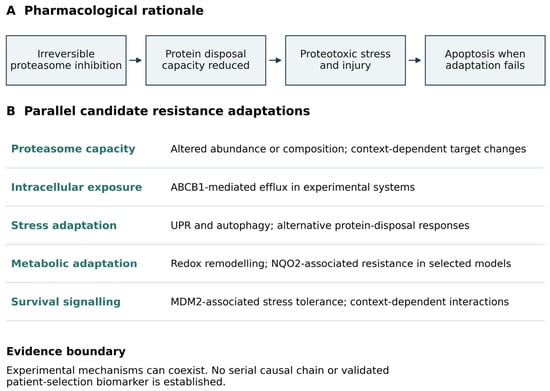
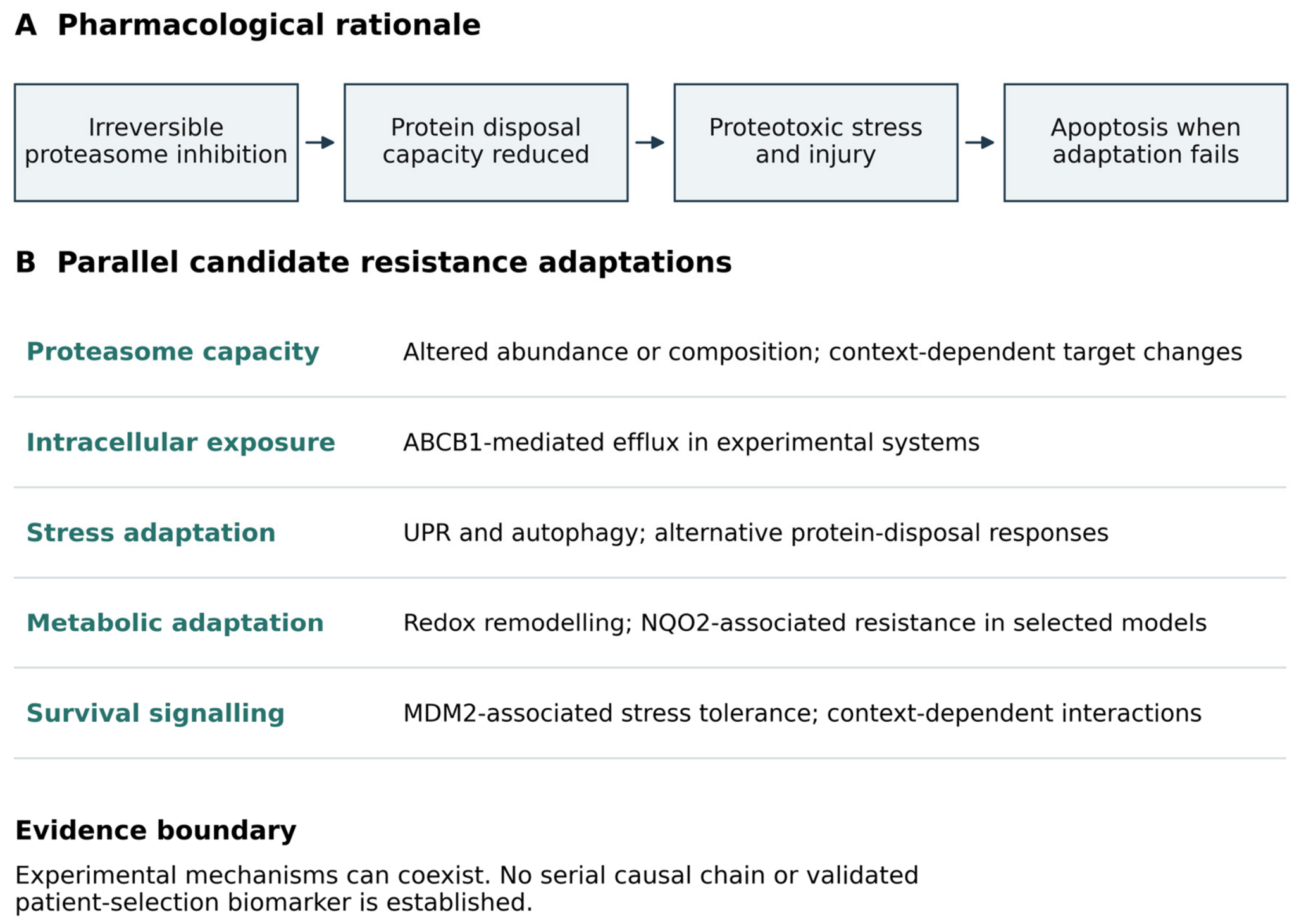
Resistance mechanisms are best viewed as parallel and potentially interacting adaptations rather than as a fixed sequence (Figure 1). ABCB1-mediated efflux can reduce intracellular carfilzomib exposure in experimental models [9]. Proteomic work identifies heterogeneous adaptations, including NQO2-associated resistance in selected cell lines, whereas functional screens implicate MDM2-mediated stress tolerance in cell lines and ex vivo patient material [10,11]. These findings justify mechanistic investigation, but they do not establish that inhibiting the identified pathways will be effective or tolerable in patients. Autophagy, altered proteasome capacity, and metabolic adaptation may coexist, with relative importance depending on the model and treatment history.
Figure 1.
Target inhibition and parallel candidate resistance mechanisms. The upper pathway summarises the pharmacological rationale for proteotoxic injury. The lower domains are parallel adaptations supported to differing degrees by experimental studies; arrows between them have deliberately been omitted because a serial causal pathway is not established. ABCB1, ATP-binding cassette subfamily B member 1; MDM2, mouse double minute 2; NQO2, quinone reductase 2; UPR, unfolded protein response. No clinical selection assay is implied [5,6,9,10,11].
A useful predictive marker must distinguish benefit from carfilzomib relative to a credible alternative, not simply correlate with poor prognosis or response to a combination. This requires an analytically reproducible assay, prespecified sampling, independent validation and a treatment-by-marker interaction. Drug resistance in a cell line, a prognostic cytogenetic lesion and a clinically predictive assay are therefore different evidence categories. None of the mechanisms discussed here supports routine patient selection or exclusion on its own.
4. Newly Diagnosed Disease and Maintenance
4.1. Proteasome Inhibitor Substitution
ENDURANCE tested carfilzomib–lenalidomide–dexamethasone (KRd) against bortezomib–lenalidomide–dexamethasone (VRd) without immediate transplant intent and did not improve progression-free survival (PFS; Table 1). Its eligibility criteria excluded several high-risk features, including del(17p), t(14;16), t(14;20), high-risk gene-expression profiling, and plasma cell leukaemia, while allowing t(4;14) [12]. The result limits routine substitution in the studied setting but does not settle all high-risk induction questions. CLARION likewise found no PFS superiority for carfilzomib–melphalan–prednisone (KMP) over bortezomib–melphalan–prednisone (VMP) in transplant-ineligible disease, with greater cardiac and renal toxicity and less neuropathy [13]. Both were superiority trials; a negative result does not establish therapeutic equivalence. Their historical comparators also differ from present anti-CD38 quadruplets.
The interim COBRA conference report found longer PFS with the KRd strategy than with the VRd strategy (hazard ratio [HR] 0.57, 95% confidence interval [CI] 0.37–0.88) in patients enrolled irrespective of transplant eligibility or cytogenetic risk [14]. Carfilzomib continued into maintenance, whereas bortezomib stopped after induction. This preliminary comparison therefore estimates the effect of an induction and maintenance strategy and cannot isolate substitution of the proteasome inhibitor during induction.
Table 1.
Comparative evidence in newly diagnosed disease and maintenance.
4.2. Induction Intensification and Maintenance Are Distinct Questions
FORTE used two randomisations: an induction–intensification–consolidation comparison and a subsequent carfilzomib–lenalidomide (KR) versus lenalidomide (R) maintenance comparison [15]. Its maintenance PFS result therefore cannot be attributed to the induction regimen alone. ATLAS later evaluated a risk- and measurable residual disease (MRD)-adapted KRd maintenance strategy against lenalidomide, with 69 months of median follow-up in the 2026 primary report [16]. Because lower-risk MRD-negative patients could de-escalate, the estimate applies to the assigned strategy as a whole, not to uninterrupted KRd for every patient. Contemporary applicability also depends on prior anti-CD38 exposure and on the maintenance alternatives available after modern induction.
IsKia randomised 302 transplant-eligible patients to isatuximab–KRd (Isa-KRd) or KRd. Post-consolidation MRD negativity at 10−5 was 77% versus 67% (odds ratio [OR] 1.67, 95% confidence interval [CI] 1.00–2.80; p = 0.049); the 10−6 analysis was exploratory, with rates of 68% versus 48% (OR 2.36, 95% CI 1.47–3.79) [17]. The primary result supports deeper response but carries appreciable uncertainty, and survival data remain immature in that report. Neither MRD threshold establishes superiority over daratumumab–VRd or isatuximab–VRd. Clinically useful interpretation must preserve the intention-to-treat (ITT) denominator, assay sensitivity, sampling time, and duration of MRD negativity.
MASTER, GMMG-CONCEPT and the cytogenetic analysis of FORTE add information on response-adapted treatment and high-risk disease [18,19,20]. Their different designs, risk definitions and treatment phases do not establish that carfilzomib abolishes adverse-risk biology. Single-arm depth of response and exploratory subgroup consistency should not be converted into a treatment recommendation for every patient with a high-risk lesion. The principal comparative results and their limits are summarised in Table 1.
Values follow the arm order in column 2. AE, adverse event; ASCT, autologous stem-cell transplantation; CI, confidence interval; HR, hazard ratio; K, carfilzomib; R, lenalidomide; V, bortezomib; C, cyclophosphamide; M, melphalan; P, prednisone; d, dexamethasone; Isa, isatuximab; MRD, measurable residual disease; OR, odds ratio; OS, overall survival; PFS, progression-free survival; VGPR, very good partial response. Selected harms are not an exhaustive safety inventory. Follow-up and safety denominators differ across reports; no cross-trial ranking is intended.
5. Relapsed or Refractory Disease
5.1. Established Efficacy and the Limits of Historical Controls
ASPIRE and ENDEAVOR established PFS and overall survival (OS) benefits against lenalidomide–dexamethasone (Rd) and bortezomib–dexamethasone (Vd), respectively [21,22,23,24]. These randomised results remain clinically important, but their controls and exposure histories differ from those of patients now relapsing after anti-CD38 quadruplets. ASPIRE did not exclude all previous lenalidomide resistance: 57 patients had lenalidomide-refractory disease in an earlier regimen, although eligibility restricted progression during early Rd treatment or during Rd when it was the most recent regimen [25]. The trial therefore does not directly establish KRd efficacy for the broad contemporary population progressing on lenalidomide maintenance.
ARROW compared weekly carfilzomib at a target dose of 70 mg/m2 (K70) with twice-weekly 27 mg/m2 (K27), each with dexamethasone, and improved PFS [26]. Because dose, infusion duration, and interval changed together, the trial establishes the tested regimen contrast rather than the isolated effect of fewer visits. It does not show that every weekly schedule is equivalent or superior to twice-weekly K56. Numerical benefit and selected safety findings for relapse trials are summarised in Table 2.
5.2. Anti-CD38 Combinations and Survival Maturity
CANDOR and IKEMA used carfilzomib–dexamethasone (Kd) in both arms and established the benefit of adding an anti-CD38 antibody within their tested populations: daratumumab–carfilzomib–dexamethasone (Dara-Kd) and isatuximab–carfilzomib–dexamethasone (Isa-Kd), respectively [27,28,29,30]. Exposure should be distinguished from refractoriness: CANDOR permitted selected previous anti-CD38 treatment, whereas IKEMA excluded anti-CD38-refractory disease. IKEMA also excluded prior carfilzomib. CANDOR allowed retreatment only in selected previous responders after a carfilzomib-free interval of at least six months [27,29,30]. Neither trial provides robust evidence for routine anti-CD38 retreatment when the disease is refractory to that class. Nor can carfilzomib-specific sensitivity be inferred from these combination comparisons.
PFS and OS conclusions differ. CANDOR’s final analysis retained a PFS advantage, while its OS estimate crossed the null in the 95% confidence interval [28]. The 2024 IKEMA OS analysis, at a median follow-up of 56.61 months, yielded a hazard ratio (HR) of 0.855 (95% CI 0.608–1.202), without a detected OS difference; reported p values were non-inferential because of the testing hierarchy [31]. These findings neither erase the PFS benefit nor establish equivalent survival. Subsequent therapies, follow-up, and power complicate OS interpretation.
5.3. Mezigdomide and the Importance of the Actual Regimen Contrast
SUCCESSOR-2 studied patients previously exposed to lenalidomide and anti-CD38 therapy, with 606 participants enrolled in the two-stage trial [32]. Of the 479 patients in the selected-dose analysis, 411 (86%) were refractory to anti-CD38 therapy and 363 (76%) to lenalidomide. Mezigdomide–carfilzomib–dexamethasone (Mezi-Kd) improved PFS but increased severe neutropenia and infection (Table 2). Importantly, the experimental arm used weekly K56, whereas control Kd used twice-weekly K56 or weekly K70. The result therefore supports the assigned Mezi-Kd strategy, but it does not isolate the effect of mezigdomide on an otherwise identical backbone. Short median follow-up also limits the assessment of OS and late toxicity. No direct comparison with a contemporary T-cell-directed strategy was performed.
A positive phase 3 result must be separated from routine availability. As of the verification date, the sponsor reported US regulatory review of mezigdomide with a target action date in May 2027 [33]. This review therefore treats Mezi-Kd as emerging evidence, not as an assumed locally licenced option. Access and current regional authorisation require checking at the point of treatment.
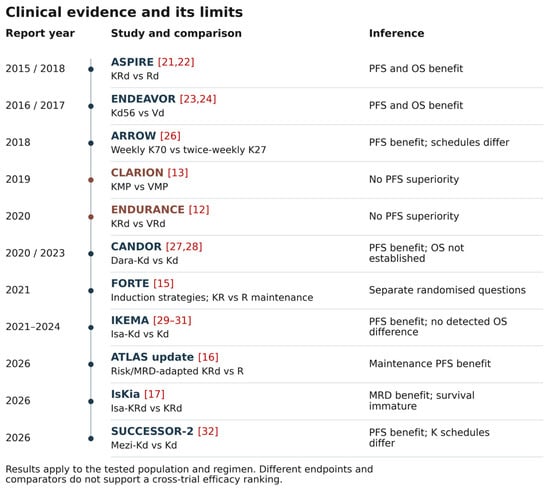
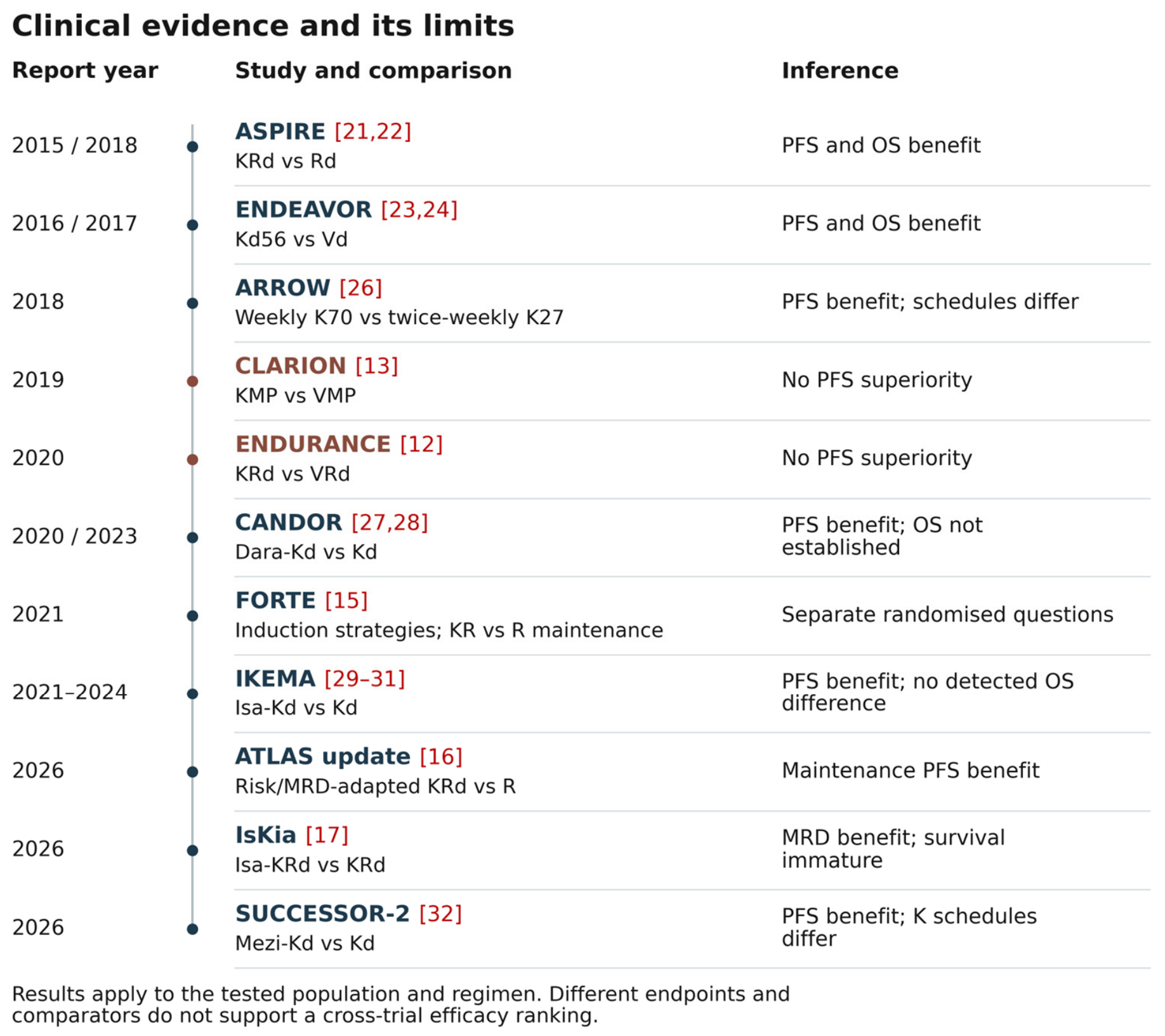
Figure 2 places positive and negative findings in their treatment context. The same drug can fail to improve one strategy while contributing to another effective regimen. The distinction is especially important when response depth, PFS and OS are presented together: they answer different questions, and their evidentiary maturity should remain visible.
Figure 2.
Selected milestones in the comparative carfilzomib evidence base. Years identify the cited primary report or specified update, rather than trial recruitment or regulatory approval. Negative substitution trials are shown alongside positive relapse and maintenance studies. MRD, measurable residual disease; OS, overall survival; PFS, progression-free survival. The map identifies the tested question and its boundary; it does not rank regimens across trials [12,13,15,16,17,21,22,23,24,26,27,28,29,30,31,32]. Bracketed references beside each trial name identify the primary report and relevant follow-up publications. In the regimen labels, K denotes carfilzomib, R lenalidomide, d dexamethasone, V bortezomib, M melphalan, P prednisone, Dara daratumumab, Isa isatuximab and Mezi mezigdomide. Numbers in these labels indicate the target carfilzomib dose in mg/m2.
Table 2.
Comparative efficacy and selected safety findings in relapsed or refractory disease.
6. Dose Scheduling and Treatment Delivery
A regimen should be described by starting dose, target dose, infusion duration, dosing days, cycle length, and planned duration. K27, K36, K56, and K70 are not interchangeable shorthand. Table 3 separates key trial architectures and their changes over time. Protocol descriptions in this review are evidence summaries only; clinical prescribing must follow the applicable product information and complete regimen protocol [34].
Table 3.
Selected carfilzomib schedules and the treatment questions they support.
Treatment delivery has measurable dimensions beyond nominal dose. In IKEMA at 44 months, median relative carfilzomib dose intensity was 89.5% with Isa-Kd and 90.8% with Kd, despite median treatment durations of 94.0 and 61.9 weeks [30]. Similar relative dose intensity does not imply equal cumulative burden. Longer exposure can increase crude adverse-event incidence, whereas analyses restricted to patients remaining on treatment can preferentially retain those who tolerate therapy. Both exposure-adjusted rates and cumulative patient-level risks are informative; neither alone fully describes the experience of a patient starting treatment.
A 2025 electronic-health-record study of 486 patients found increasing weekly use and no statistically significant PFS difference among weekly K56, twice-weekly K56, and weekly K70 [35]. However, schedule selection, partner drugs, missing toxicity, and unmeasured frailty can confound such comparisons. These data support pragmatic comparative trials but do not establish non-inferiority or a universally optimal weekly dose. Similarly, an association between lower delivered dose and poorer outcomes may reflect progression or toxicity rather than an independent dose effect.
Future studies should report planned and received dose separately, reasons for interruption, cumulative exposure, hospital days, infusion visits, and patient-reported function. Three rather than six scheduled carfilzomib administrations per 28-day cycle can reduce infusion attendance, but total visits also depend on partner administration, laboratory surveillance, and complications. Trial evidence of improved health-related quality of life in ASPIRE is relevant [21], yet it does not quantify the travel or caregiving burden in every health system.
7. Cardiovascular, Renal, and Infectious Constraints
7.1. Quantifying Risk Without Merging Incompatible Estimates
Cardiovascular risk depends on regimen, eligibility, follow-up, and surveillance intensity. A meta-analysis of 24 prospective trials estimated all-grade and grade ≥ 3 cardiovascular adverse events at 18.1% and 8.2%, respectively [36]. In the prospective PROTECT study, 33 of 65 carfilzomib recipients (51%) experienced a cardiovascular event under intensive surveillance. Across both proteasome-inhibitor cohorts, 86% of events occurred in the first three months [37]. The carfilzomib incidence estimate reflects the study population, event definitions and intensity of surveillance. Proteasome-inhibitor treatment was resumed in many affected patients, often with modification; an event should therefore not be equated automatically with permanent treatment failure.
Clinical phenotypes include hypertension, ischaemia, arrhythmia and heart failure with preserved or reduced ejection fraction. These require distinct reporting and differential diagnosis; a normal ejection fraction does not exclude haemodynamic or vascular toxicity. Baseline blood pressure, pre-existing organ damage and selected risk scores can inform surveillance, but their calibration and transportability differ across cohorts [38,39,40]. A biomarker rise alone should not be treated as a validated universal stopping rule.
Renal risk likewise cannot be reduced to a single pooled estimate. Randomised evidence and renal subgroups address questions different from those addressed by monitored observational cohorts [41,42]. In one series of 114 consecutive carfilzomib-treated patients, 17% developed renal complications judged unrelated to myeloma progression, including thrombotic microangiopathy (TMA), albuminuria, and otherwise unexplained severe acute kidney injury [43]. These observations justify renal and urinary assessment, but they do not identify a reliable individual predictor. Evidence for TMA treatment remains dominated by case reports and series [44]; complement-directed therapy should not be presented as uniformly established for every suspected case.
7.2. Translating Surveillance into Proportionate Clinical Action
Baseline evaluation should integrate cardiovascular history, blood pressure, volume status, renal function, concomitant drugs and functional reserve, with cardiac imaging and biomarkers guided by risk and cardio-oncology recommendations [45,46]. During therapy, new dyspnoea, oedema, chest pain, uncontrolled hypertension or abrupt renal deterioration require prompt evaluation for treatment toxicity and alternative causes. Hydration must balance tumour-lysis prevention against fluid overload. Table 4 distinguishes supported management principles from areas requiring individual judgement.
Table 4.
Surveillance findings and evidence-based reassessment priorities.
The prescribing information recommends withholding carfilzomib for grade 3–4 cardiac adverse reactions while the event is evaluated and recovery assessed, and stopping treatment when TMA is suspected [34]. Decisions about resumption require consideration of the event phenotype, reversibility, disease control, and available alternatives. Rechallenge after confirmed TMA is not supported by a general safety assurance. Infection prevention, blood-count surveillance, and dose modification must also reflect the partner regimen, particularly with anti-CD38 antibodies or mezigdomide. In frail patients, the cumulative effect of corticosteroids, cytopenia, and repeated attendance can be as relevant as an isolated organ-specific toxicity.
8. Sequencing and Preservation of Subsequent Therapy
8.1. Previous Exposure Changes the Relevant Comparator
Sequencing discussions must identify what the disease is refractory to, rather than simply listing previous drugs. Lenalidomide-refractory, anti-CD38-sensitive relapse differs from relapse refractory to both classes. CANDOR and IKEMA support specific anti-CD38-containing backbones in the former setting, whereas SUCCESSOR-2 directly addresses prior exposure to both agents but remains an emerging option. Table 5 separates these contexts from pre-apheresis treatment, bridging, and post-immunotherapy salvage [28,31,32,47,48].
Randomised immune-therapy trials also require precise framing. CARTITUDE-4 compared ciltacabtagene autoleucel (cilta-cel) with daratumumab–pomalidomide–dexamethasone (DPd) or pomalidomide–bortezomib–dexamethasone (PVd) in lenalidomide-refractory disease, rather than with a carfilzomib triplet [49]. KarMMa-3 compared idecabtagene vicleucel (ide-cel) with investigator-selected regimens, one of which was Kd [50]. The latter informs treatment-policy comparisons, but it is not a separately powered head-to-head test of ide-cel against each carfilzomib combination. Raw median PFS values across these trials cannot define a preferred sequence because treatment line, resistance state, eligibility, and time origin differ.
PFS2, measured from randomisation to progression on the next line or death, is already available in parts of the evidence base. In the 2024 IKEMA report, the PFS2 HR was 0.663 (95% CI 0.491–0.895), with non-inferential P values under the testing hierarchy [31]. This supports the persistence of benefit beyond first progression within that randomised strategy, but does not randomise the subsequent treatment. PFS2, time to next therapy, access to the intended next line, and OS should therefore be interpreted together; none proves that initial carfilzomib preserves every later option.
8.2. Holding Therapy and Bridging Require Different Endpoints
Treatment before leukapheresis must account for T-cell collection and manufacturing, whereas bridging after collection aims to control disease until lymphodepletion and infusion. International Myeloma Working Group (IMWG) and European Myeloma Network guidance emphasise treatment history, washout, disease tempo, and minimisation of avoidable immune-cell injury [47,48]. A carfilzomib regimen may be reasonable when prior sensitivity, organ reserve, and timing make it feasible, but no randomised evidence establishes it as the preferred bridge. Outcomes should include the proportion reaching the intended infusion, time to infusion, infection, and cytopenia, rather than response rate alone.
The denominator is critical: analysing only patients who receive chimeric antigen receptor T-cell therapy (CAR-T) excludes those who deteriorate during the waiting period. Comparisons should begin at the treatment decision or referral point and account for attrition, competing events, and access. Similarly, EMN12/HOVON-129 provides selected prospective evidence in primary plasma cell leukaemia [51,52], but successful transition to transplantation in an expert-centre cohort cannot be used to estimate CAR-T bridging success in routine practice.
Table 5.
Decision contexts for interpreting carfilzomib sequencing evidence.
8.3. Post-Immune-Redirection Biology
Proteasomal stress may remain relevant after immune escape, but retained biological plausibility does not guarantee clinical benefit. Rieger and colleagues showed that proteasome inhibition increased surface BCMA and enhanced CAR-T activity in experimental systems; in a small clinical series of ten patients with relapse (n = 8) or primary refractory disease (n = 2) after BCMA-directed CAR-T, responses were observed only when residual or expanding CAR T cells were detectable [53]. These data are compatible with restoration of effector–target interaction but cannot separate that contribution reliably from direct cytotoxicity or patient selection. Increased antigen expression should not be treated as proof of restored sensitivity, and the observation cannot be generalised to all post-BCMA or post-GPRC5D relapse.
9. Clinical Contribution, Limitations and Research Priorities
This review separates four decisions that often arise at different points in care: substituting one proteasome inhibitor for another, adding a partner drug, changing a schedule and intensifying maintenance. The distinction matters at relapse. CANDOR and IKEMA inform the decision to add an anti-CD38 antibody once Kd has been selected [27,28,29,30,31]. Neither compared its triplet with an active regimen that omits carfilzomib. Matching the trial question, prior exposures and treatment burden to the decision facing the patient is the principal clinical contribution of this review.
This narrative review has methodological limitations. The search was selective, screening and extraction were not independently duplicated, and no formal risk-of-bias assessment was undertaken. Targeted checks through 16 October 2026 could have missed relevant reports, and the safety tables report selected outcomes only. The primary evidence has separate limitations. Historical control regimens and restricted eligibility narrow applicability, especially after anti-CD38-based induction. Differences in follow-up and safety reporting preclude reliable comparisons of toxicity across trials, and subsequent therapies complicate interpretation of overall survival [12,13,21,22,23,24,27,28,29,30,31].
A priority is to compare feasible relapse regimens in patients whose disease has progressed on both lenalidomide and an anti-CD38 antibody, including patients with cardiovascular comorbidity or limited functional reserve. Recording why treatment stopped, time spent receiving care and the proportion who reached the intended next therapy would show what a gain in progression-free survival means in practice. Until such comparisons are available, the most actionable conclusions concern patients whose treatment history and ability to sustain therapy resemble those in the randomised trials.
10. Conclusions
After one to three prior lines, Dara-Kd or Isa-Kd is a well-supported option for patients naïve to both carfilzomib and anti-CD38 therapy who need a lenalidomide-sparing regimen and can sustain intravenous treatment. This includes patients progressing on lenalidomide maintenance. In the overall trial populations, median PFS was 28.4 versus 15.2 months with Dara-Kd versus Kd in CANDOR and 35.7 versus 19.2 months with Isa-Kd versus Kd in IKEMA [28,30]. Neither trial established an OS advantage nor do they justify routine antibody retreatment in anti-CD38-refractory disease [27,28,29,30,31]. When a proteasome-inhibitor doublet is appropriate, ENDEAVOR provides a direct comparison. Kd prolonged PFS and OS relative to twice-weekly Vd, with fewer grade ≥ 2 peripheral neuropathy events and more grade ≥ 3 hypertension [23,24]. For patients previously exposed to both lenalidomide and an anti-CD38 antibody, SUCCESSOR-2 supports Mezi-Kd against its tested Kd control, with more severe neutropenia and infection. Local availability and its place relative to T-cell-directed therapy remain open considerations [32,33,47,48,49,50].
In newly diagnosed disease, ENDURANCE and CLARION do not support routine substitution of carfilzomib for bortezomib in the populations they enrolled [12,13]. For maintenance after transplantation, ATLAS showed longer PFS with risk- and MRD-adapted KRd than with lenalidomide alone, although the incremental benefit after contemporary anti-CD38 induction remains uncertain [15,16]. For an individual patient, uncontrolled hypertension, heart failure or evolving renal injury may make another active regimen preferable. Infection history and the feasibility of repeated visits also matter [28,30,34,43,45,46]. These comparisons inform choices between the regimens studied. Selective retrieval and the absence of a formal risk-of-bias assessment limit this review’s conclusions. Direct comparisons of contemporary sequences are still needed to determine which sequences best preserve survival and access to the next therapy.
Supplementary Materials
The following supporting information can be downloaded at: https://www.mdpi.com/article/10.3390/hemato7040043/s1, Table S1: Initial treatment and maintenance [12,13,14,15,16,17]; Table S2: Relapsed or refractory disease [21,22,23,24,25,26,27,28,29,30,31,32,34]; Table S3: Safety and sequencing [31,32,33,34,37,43,53].
Author Contributions
Conceptualisation, A.M.H.; literature investigation, A.M.H., A.R.H.M., M.M.A., A.M.S.A. and I.B.I.E.; interpretation and synthesis, all authors; writing—original draft preparation, all authors; writing—review and editing, all authors. All authors have read and agreed to the published version of the manuscript.
Funding
This research received no external funding.
Data Availability Statement
No new patient-level or experimental data were generated. The review synthesises the published sources cited in the manuscript.
Acknowledgments
OpenAI ChatGPT-5 assisted with language editing and revision. The authors are responsible for source verification, scientific interpretation and the final manuscript.
Conflicts of Interest
The authors declare no conflicts of interest.
Appendix A
The initial PubMed search, last run on 1 September 2026, used the following string without a language filter:
((carfilzomib[Title/Abstract] OR “proteasome inhibitors”[MeSH Terms] OR proteasome inhibitor*[Title/Abstract]) AND (“multiple myeloma”[Title/Abstract] OR “Multiple Myeloma”[MeSH Terms]) AND (dose[Title/Abstract] OR schedule[Title/Abstract] OR resistance[Title/Abstract] OR biomarker*[Title/Abstract] OR cardiovascular[Title/Abstract] OR renal[Title/Abstract] OR toxicity[Title/Abstract] OR “measurable residual disease”[Title/Abstract] OR sequencing[Title/Abstract] OR BCMA[Title/Abstract] OR GPRC5D[Title/Abstract] OR “CAR T”[Title/Abstract] OR bispecific*[Title/Abstract] OR mezigdomide[Title/Abstract] OR isatuximab[Title/Abstract] OR daratumumab[Title/Abstract])).
Because the third concept block can miss reports that do not mention these terms in the title or abstract, supplementary verification used trial-name and title searches for ASPIRE, ENDEAVOR, ENDURANCE, CLARION, FORTE, ATLAS, ARROW, CANDOR, IKEMA, IsKia and SUCCESSOR-2, including survival updates, eligibility, schedules and correction records. Related searches addressed cardiac and renal safety, resistance mechanisms, CAR-T sequencing and contemporary guidance. Publisher pages, PubMed records, trial records and the product label were checked as applicable. These checks were targeted rather than an exhaustive, independently screened database update; no reconstructed screening counts are claimed.
References
- Dimopoulos, M.A.; Terpos, E.; Boccadoro, M.; Moreau, P.; Mateos, M.-V.; Zweegman, S.; Cook, G.; Engelhardt, M.; Delforge, M.; Hajek, R.; et al. EHA–EMN evidence-based guidelines for diagnosis, treatment and follow-up of patients with multiple myeloma. Nat. Rev. Clin. Oncol. 2025, 22, 680–700. [Google Scholar] [CrossRef] [Scilit] [PubMed]
- Sonneveld, P.; Dimopoulos, M.A.; Boccadoro, M.; Quach, H.; Ho, P.J.; Beksac, M.; Hulin, C.; Antonioli, E.; Leleu, X.; Mangiacavalli, S.; et al. Daratumumab, bortezomib, lenalidomide, and dexamethasone for multiple myeloma. N. Engl. J. Med. 2024, 390, 301–313. [Google Scholar] [CrossRef] [Scilit] [PubMed]
- Facon, T.; Dimopoulos, M.A.; Leleu, X.P.; Beksac, M.; Pour, L.; Hájek, R.; Liu, Z.; Minarik, J.; Moreau, P.; Romejko-Jarosinska, J.; et al. Isatuximab, bortezomib, lenalidomide, and dexamethasone for multiple myeloma. N. Engl. J. Med. 2024, 391, 1597–1609. [Google Scholar] [CrossRef] [Scilit] [PubMed]
- Usmani, S.Z.; Facon, T.; Hungria, V.; Bahlis, N.J.; Venner, C.P.; Braunstein, M.; Pour, L.; Martí, J.M.; Basu, S.; Cohen, Y.C.; et al. Daratumumab plus bortezomib, lenalidomide and dexamethasone for transplant-ineligible or transplant-deferred newly diagnosed multiple myeloma: The randomized phase 3 CEPHEUS trial. Nat. Med. 2025, 31, 1195–1202. [Google Scholar] [CrossRef] [Scilit] [PubMed]
- Demo, S.D.; Kirk, C.J.; Aujay, M.A.; Buchholz, T.J.; Dajee, M.; Ho, M.N.; Jiang, J.; Laidig, G.J.; Lewis, E.R.; Parlati, F.; et al. Antitumor activity of PR-171, a novel irreversible inhibitor of the proteasome. Cancer Res. 2007, 67, 6383–6391. [Google Scholar] [CrossRef] [Scilit] [PubMed]
- Kuhn, D.J.; Chen, Q.; Voorhees, P.M.; Strader, J.S.; Shenk, K.D.; Sun, C.M.; Demo, S.D.; Bennett, M.K.; van Leeuwen, F.W.B.; Chanan-Khan, A.A.; et al. Potent activity of carfilzomib, a novel, irreversible inhibitor of the ubiquitin-proteasome pathway, against preclinical models of multiple myeloma. Blood 2007, 110, 3281–3290. [Google Scholar] [CrossRef] [Scilit] [PubMed]
- Lee, S.J.; Levitsky, K.; Parlati, F.; Bennett, M.K.; Arastu-Kapur, S.; Kellerman, L.; Woo, T.F.; Wong, A.F.; Papadopoulos, K.P.; Niesvizky, R.; et al. Clinical activity of carfilzomib correlates with inhibition of multiple proteasome subunits: Application of a novel pharmacodynamic assay. Br. J. Haematol. 2016, 173, 884–895. [Google Scholar] [CrossRef] [Scilit] [PubMed]
- Yago, M.R.; Mehta, K.; Bose, M.; Bhagwat, S.; Chopra, V.S.; Dutta, S.; Upreti, V.V. Mechanistic pharmacokinetic/pharmacodynamic modeling in support of a patient-convenient, longer dosing interval for carfilzomib, a covalent inhibitor of the proteasome. Clin. Pharmacokinet. 2023, 62, 779–788. [Google Scholar] [CrossRef] [Scilit] [PubMed]
- Besse, A.; Stolze, S.C.; Rasche, L.; Weinhold, N.; Morgan, G.J.; Kraus, M.; Bader, J.; Overkleeft, H.S.; Besse, L.; Driessen, C. Carfilzomib resistance due to ABCB1/MDR1 overexpression is overcome by nelfinavir and lopinavir in multiple myeloma. Leukemia 2018, 32, 391–401. [Google Scholar] [CrossRef] [Scilit] [PubMed]
- Lee, C.Y.; Han, S.; Haertle, L.; Munawar, U.; Vogt, C.; Streubel, J.; Besse, A.; Besse, L.; Driessen, C.; Einsele, H.; et al. Proteome profiling reveals NQO2 activity contributing to proteasome inhibitor resistance in multiple myeloma cell lines. Mol. Cell. Proteom. 2026, 25, 101615. [Google Scholar] [CrossRef] [Scilit] [PubMed]
- Labrador, M.; Cozzubbo, S.; Porro, M.; Cumerlato, M.; Bandini, C.; Mereu, E.; Paradzik, T.; Donati, B.; Manicardi, V.; Ronchetti, D.; et al. MDM2 drives proteasome inhibitor resistance and represents a TP53-independent therapeutic vulnerability in multiple myeloma. Cells 2026, 15, 831. [Google Scholar] [CrossRef] [Scilit] [PubMed]
- Kumar, S.K.; Jacobus, S.J.; Cohen, A.D.; Weiss, M.; Callander, N.; Singh, A.K.; Parker, T.L.; Menter, A.; Yang, X.; Parsons, B.; et al. Carfilzomib or bortezomib in combination with lenalidomide and dexamethasone for patients with newly diagnosed multiple myeloma without intention for immediate autologous stem-cell transplantation (ENDURANCE): A multicentre, open-label, phase 3, randomised, controlled trial. Lancet Oncol. 2020, 21, 1317–1330. [Google Scholar] [CrossRef] [Scilit] [PubMed]
- Facon, T.; Lee, J.H.; Moreau, P.; Niesvizky, R.; Dimopoulos, M.; Hajek, R.; Pour, L.; Jurczyszyn, A.; Qiu, L.; Klippel, Z.; et al. Carfilzomib or bortezomib with melphalan-prednisone for transplant-ineligible patients with newly diagnosed multiple myeloma. Blood 2019, 133, 1953–1963. [Google Scholar] [CrossRef] [Scilit] [PubMed]
- Dytfeld, D.; Kubicki, T.; Tyczynska, A.; Rymko, M.; Jamroziak, K.; Schjesvold, F.; Piszcz, J.; Wrobel, T.; Giannopoulos, K.; Pula, B.; et al. Carfilzomib, lenalidomide, and dexamethasone (KRd) versus bortezomib, lenalidomide, and dexamethasone (VRd) in patients with newly diagnosed multiple myeloma: Interim results from the randomized phase III COBRA trial. Blood 2025, 146, 99. [Google Scholar] [CrossRef] [Scilit]
- Gay, F.; Musto, P.; Rota-Scalabrini, D.; Bertamini, L.; Belotti, A.; Galli, M.; Offidani, M.; Zamagni, E.; Ledda, A.; Grasso, M.; et al. Carfilzomib with cyclophosphamide and dexamethasone or lenalidomide and dexamethasone plus autologous transplantation or carfilzomib plus lenalidomide and dexamethasone, followed by maintenance with carfilzomib plus lenalidomide or lenalidomide alone for patients with newly diagnosed multiple myeloma (FORTE): A randomised, open-label, phase 2 trial. Lancet Oncol. 2021, 22, 1705–1720. [Google Scholar] [CrossRef] [Scilit] [PubMed]
- Dytfeld, D.; Wróbel, T.; Jamroziak, K.; Kubicki, T.; Robak, P.; Puła, A.; Walter-Croneck, A.; Czyż, J.; Tyczyńska, A.; Druzd-Sitek, A.; et al. Carfilzomib, lenalidomide, and dexamethasone compared with lenalidomide treatment after autologous haematopoietic stem-cell transplantation in patients with multiple myeloma (ATLAS): Primary analysis of a randomised, open-label, phase 3 trial. Lancet Haematol. 2026, 13, e241–e253, Correction in Lancet Haematol. 2026, 13, e194. [Google Scholar] [CrossRef] [Scilit] [PubMed]
- Gay, F.; Roeloffzen, W.; Dimopoulos, M.A.; Rosiñol, L.; van der Klift, M.; Mina, R.; Oriol, A.; Katodritou, E.; Wu, K.L.; Otero, P.R.; et al. Isatuximab, carfilzomib, lenalidomide and dexamethasone in newly diagnosed multiple myeloma: A randomized phase 3 trial. Nat. Med. 2026, 32, 1773–1782. [Google Scholar] [CrossRef] [Scilit] [PubMed]
- Costa, L.J.; Chhabra, S.; Medvedova, E.; Dholaria, B.R.; Schmidt, T.M.; Godby, K.N.; Silbermann, R.; Dhakal, B.; Bal, S.; Giri, S.; et al. Minimal residual disease response-adapted therapy in newly diagnosed multiple myeloma (MASTER): Final report of the multicentre, single-arm, phase 2 trial. Lancet Haematol. 2023, 10, e890–e901. [Google Scholar] [CrossRef] [Scilit] [PubMed]
- Leypoldt, L.B.; Tichy, D.; Besemer, B.; Hänel, M.; Raab, M.S.; Mann, C.; Munder, M.; Reinhardt, H.C.; Nogai, A.; Görner, M.; et al. Isatuximab, carfilzomib, lenalidomide, and dexamethasone for the treatment of high-risk newly diagnosed multiple myeloma. J. Clin. Oncol. 2024, 42, 26–37. [Google Scholar] [CrossRef] [Scilit] [PubMed]
- Mina, R.; Musto, P.; Rota-Scalabrini, D.; Paris, L.; Gamberi, B.; Palmas, A.; Aquino, S.; de Fabritiis, P.; Giuliani, N.; De Rosa, L.; et al. Carfilzomib induction, consolidation, and maintenance with or without autologous stem-cell transplantation in patients with newly diagnosed multiple myeloma: Pre-planned cytogenetic subgroup analysis of the randomised, phase 2 FORTE trial. Lancet Oncol. 2023, 24, 64–76. [Google Scholar] [CrossRef] [Scilit] [PubMed]
- Stewart, A.K.; Rajkumar, S.V.; Dimopoulos, M.A.; Masszi, T.; Špička, I.; Oriol, A.; Hájek, R.; Rosiñol, L.; Siegel, D.S.; Mihaylov, G.G.; et al. Carfilzomib, lenalidomide, and dexamethasone for relapsed multiple myeloma. N. Engl. J. Med. 2015, 372, 142–152. [Google Scholar] [CrossRef] [Scilit] [PubMed]
- Siegel, D.S.; Dimopoulos, M.A.; Ludwig, H.; Facon, T.; Goldschmidt, H.; Jakubowiak, A.; San-Miguel, J.; Obreja, M.; Blaedel, J.; Stewart, A.K. Improvement in overall survival with carfilzomib, lenalidomide, and dexamethasone in patients with relapsed or refractory multiple myeloma. J. Clin. Oncol. 2018, 36, 728–734. [Google Scholar] [CrossRef] [Scilit] [PubMed]
- Dimopoulos, M.A.; Moreau, P.; Palumbo, A.; Joshua, D.; Pour, L.; Hájek, R.; Facon, T.; Ludwig, H.; Oriol, A.; Goldschmidt, H.; et al. Carfilzomib and dexamethasone versus bortezomib and dexamethasone for patients with relapsed or refractory multiple myeloma (ENDEAVOR): A randomised, phase 3, open-label, multicentre study. Lancet Oncol. 2016, 17, 27–38. [Google Scholar] [CrossRef] [Scilit] [PubMed]
- Dimopoulos, M.A.; Goldschmidt, H.; Niesvizky, R.; Joshua, D.; Chng, W.-J.; Oriol, A.; Orlowski, R.Z.; Ludwig, H.; Facon, T.; Hajek, R.; et al. Carfilzomib or bortezomib in relapsed or refractory multiple myeloma (ENDEAVOR): An interim overall survival analysis of an open-label, randomised, phase 3 trial. Lancet Oncol. 2017, 18, 1327–1337. [Google Scholar] [CrossRef] [Scilit] [PubMed]
- Dimopoulos, M.A.; Stewart, A.K.; Masszi, T.; Špička, I.; Oriol, A.; Hájek, R.; Rosiñol, L.; Siegel, D.; Mihaylov, G.G.; Goranova-Marinova, V.; et al. Carfilzomib–lenalidomide–dexamethasone vs. lenalidomide–dexamethasone in relapsed multiple myeloma by previous treatment. Blood Cancer J. 2017, 7, e554. [Google Scholar] [CrossRef] [Scilit] [PubMed]
- Moreau, P.; Mateos, M.V.; Berenson, J.R.; Weisel, K.; Lazzaro, A.; Song, K.; Dimopoulos, M.A.; Huang, M.; Zahlten-Kumeli, A.; Stewart, A.K. Once weekly versus twice weekly carfilzomib dosing in patients with relapsed and refractory multiple myeloma (A.R.R.O.W.): Interim analysis results of a randomised, phase 3 study. Lancet Oncol. 2018, 19, 953–964. [Google Scholar] [CrossRef] [Scilit] [PubMed]
- Dimopoulos, M.A.; Quach, H.; Mateos, M.V.; Landgren, O.; Leleu, X.; Siegel, D.; Weisel, K.; Yang, H.; Klippel, Z.; Zahlten-Kumeli, A.; et al. Carfilzomib, dexamethasone, and daratumumab versus carfilzomib and dexamethasone for patients with relapsed or refractory multiple myeloma (CANDOR): Results from a randomised, multicentre, open-label, phase 3 study. Lancet 2020, 396, 186–197. [Google Scholar] [CrossRef] [Scilit] [PubMed]
- Usmani, S.Z.; Quach, H.; Mateos, M.V.; Landgren, O.; Leleu, X.; Siegel, D.S.; Weisel, K.C.; Shu, X.; Li, C.; Dimopoulos, M.A. Final analysis of carfilzomib, dexamethasone, and daratumumab vs. carfilzomib and dexamethasone in the CANDOR study. Blood Adv. 2023, 7, 3739–3748. [Google Scholar] [CrossRef] [Scilit] [PubMed]
- Moreau, P.; Dimopoulos, M.A.; Mikhael, J.; Yong, K.; Capra, M.; Facon, T.; Hajek, R.; Baker, R.; Martinez, G.; Min, C.-K.; et al. Isatuximab, carfilzomib, and dexamethasone in relapsed multiple myeloma (IKEMA): A multicentre, open-label, randomised phase 3 trial. Lancet 2021, 397, 2361–2371. [Google Scholar] [CrossRef] [Scilit] [PubMed]
- Martin, T.; Dimopoulos, M.A.; Mikhael, J.; Yong, K.; Capra, M.; Facon, T.; Hajek, R.; Špička, I.; Baker, R.; Kim, K.; et al. Isatuximab, carfilzomib, and dexamethasone in patients with relapsed multiple myeloma: Updated results from IKEMA, a randomized Phase 3 study. Blood Cancer J. 2023, 13, 72. [Google Scholar] [CrossRef] [Scilit] [PubMed]
- Yong, K.; Martin, T.; Dimopoulos, M.A.; Mikhael, J.; Capra, M.; Facon, T.; Hajek, R.; Špička, I.; Baker, R.; Kim, K.; et al. Isatuximab plus carfilzomib-dexamethasone versus carfilzomib-dexamethasone in patients with relapsed multiple myeloma (IKEMA): Overall survival analysis of a phase 3, randomised, controlled trial. Lancet Haematol. 2024, 11, e741–e750. [Google Scholar] [CrossRef] [Scilit] [PubMed]
- Dimopoulos, M.A.; Schjesvold, F.; Fu, C.; A Hartley-Brown, M.; Gomez, C.; Reece, D.; Mikala, G.; Alkharabsheh, O.; Parrish, C.; Crusoé, E.d.Q.; et al. Mezigdomide, carfilzomib, and dexamethasone versus carfilzomib and dexamethasone in patients with relapsed or refractory multiple myeloma (SUCCESSOR-2): A phase 3, open-label, randomised controlled trial. Lancet 2026, 408, 219–233. [Google Scholar] [CrossRef] [Scilit] [PubMed]
- Bristol Myers Squibb. U.S. Food and Drug Administration Accepts Bristol Myers Squibb’s New Drug Application for Mezigdomide in Patients with Relapsed or Refractory Multiple Myeloma. 13 July 2026. Available online: https://news.bms.com/news/details/2026/U-S--Food-and-Drug-Administration-Accepts-Bristol-Myers-Squibbs-New-Drug-Application-for-Mezigdomide-in-Patients-with-Relapsed-or-Refractory-Multiple-Myeloma/default.aspx (accessed on 16 October 2026).
- Amgen Inc. Kyprolis (Carfilzomib) for Injection: US Prescribing Information. DailyMed. Available online: https://dailymed.nlm.nih.gov/dailymed/drugInfo.cfm?setid=ea66eb30-e665-4693-99a1-a9d3b4bbe2d6 (accessed on 16 October 2026).
- Dong, S.; Banerjee, R.; Khan, A.M.; Wang, M.; Wang, X.; Afghahi, A.; Afrough, A.; Janakiram, M.; Wang, B.; Cowan, A.J.; et al. Carfilzomib prescribing patterns and outcomes for relapsed or refractory multiple myeloma: A real-world analysis. Blood Cancer J. 2025, 15, 48. [Google Scholar] [CrossRef] [Scilit] [PubMed]
- Waxman, A.J.; Clasen, K.; Hwang, B.; Garfall, A.; Vogl, D.T.; Carver, J.; O’qUinn, R.; Cohen, A.D.; Stadtmauer, E.A.; Ky, B.; et al. Carfilzomib-associated cardiovascular adverse events: A systematic review and meta-analysis. JAMA Oncol. 2018, 4, e174519. [Google Scholar] [CrossRef] [Scilit] [PubMed]
- Cornell, R.F.; Ky, B.; Weiss, B.M.; Dahm, C.N.; Gupta, D.K.; Du, L.; Carver, J.R.; Cohen, A.D.; Engelhardt, B.G.; Garfall, A.L.; et al. Prospective study of cardiac events during proteasome inhibitor therapy for relapsed multiple myeloma. J. Clin. Oncol. 2019, 37, 1946–1955. [Google Scholar] [CrossRef] [Scilit] [PubMed]
- Bruno, G.; Bringhen, S.; Maffei, I.; Iannaccone, A.; Crea, T.; Ravera, A.; Astarita, A.; Vallelonga, F.; Salvini, M.; Gay, F.; et al. Cardiovascular organ damage and blood pressure levels predict adverse events in multiple myeloma patients undergoing carfilzomib therapy. Cancers 2019, 11, 622. [Google Scholar] [CrossRef] [Scilit] [PubMed]
- Astarita, A.; Mingrone, G.; Airale, L.; Vallelonga, F.; Covella, M.; Catarinella, C.; Cesareo, M.; Bruno, G.; Leone, D.; Giordana, C.; et al. Multiple myeloma patients undergoing carfilzomib: Development and validation of a risk score for cardiovascular adverse events prediction. Cancers 2021, 13, 1631. [Google Scholar] [CrossRef] [Scilit] [PubMed]
- Astarita, A.; Mingrone, G.; Airale, L.; Colomba, A.; Catarinella, C.; Cesareo, M.; Vallelonga, F.; Paladino, A.; Bruno, G.; Leone, D.; et al. Validation of the HFA-ICOS score for carfilzomib-induced cardiotoxicity in multiple myeloma: A real-life perspective study. Cancers 2025, 17, 2353. [Google Scholar] [CrossRef] [Scilit] [PubMed]
- Ball, S.; Behera, T.R.; Anwer, F.; Chakraborty, R. Risk of kidney toxicity with carfilzomib in multiple myeloma: A meta-analysis of randomized controlled trials. Ann. Hematol. 2020, 99, 1265–1271. [Google Scholar] [CrossRef] [Scilit] [PubMed]
- Dimopoulos, M.A.; Siegel, D.; White, D.J.; Boccia, R.; Iskander, K.S.; Yang, Z.; Kimball, A.S.; Mezzi, K.; Ludwig, H.; Niesvizky, R. Carfilzomib vs. bortezomib in patients with multiple myeloma and renal failure: A subgroup analysis of ENDEAVOR. Blood 2019, 133, 147–155. [Google Scholar] [CrossRef] [Scilit] [PubMed]
- Fotiou, D.; Roussou, M.; Gakiopoulou, C.; Psimenou, E.; Gavriatopoulou, M.; Migkou, M.; Kanellias, N.; Dialoupi, I.; Eleutherakis-Papaiakovou, E.; Giannouli, S.; et al. Carfilzomib-associated renal toxicity is common and unpredictable: A comprehensive analysis of 114 multiple myeloma patients. Blood Cancer J. 2020, 10, 109. [Google Scholar] [CrossRef] [Scilit] [PubMed]
- Chen, C.; Li, Y.; Shi, P.; Qian, S. Proteasome inhibitors related thrombotic microangiopathy: A systematic and comprehensive review. Blood Cancer J. 2024, 14, 196. [Google Scholar] [CrossRef] [Scilit] [PubMed]
- Lyon, A.R.; López-Fernández, T.; Couch, L.S.; Asteggiano, R.; Aznar, M.C.; Bergler-Klein, J.; Boriani, G.; Cardinale, D.; Cordoba, R.; Cosyns, B.; et al. 2022 ESC Guidelines on cardio-oncology developed in collaboration with the European Hematology Association (EHA), the European Society for Therapeutic Radiology and Oncology (ESTRO) and the International Cardio-Oncology Society (IC-OS). Eur. Heart J. 2022, 43, 4229–4361. [Google Scholar] [CrossRef] [Scilit] [PubMed]
- Bringhen, S.; Milan, A.; D’Agostino, M.; Ferri, C.; Wäsch, R.; Gay, F.; Larocca, A.; Offidani, M.; Zweegman, S.; Terpos, E.; et al. Prevention, monitoring and treatment of cardiovascular adverse events in myeloma patients receiving carfilzomib: A consensus paper by the European Myeloma Network and the Italian Society of Arterial Hypertension. J. Intern. Med. 2019, 286, 63–74. [Google Scholar] [CrossRef] [Scilit] [PubMed]
- Costa, L.J.; Banerjee, R.; Mian, H.; Weisel, K.; Bal, S.; Derman, B.A.; Htut, M.M.; Nagarajan, C.; Rodriguez, C.; Richter, J.; et al. International myeloma working group immunotherapy committee recommendation on sequencing immunotherapy for treatment of multiple myeloma. Leukemia 2025, 39, 543–554. [Google Scholar] [CrossRef] [Scilit] [PubMed]
- van de Donk, N.W.C.J.; Moreau, P.; San-Miguel, J.F.; Mateos, M.; Dimopoulos, M.A.; Zweegman, S.; Gay, F.; Engelhardt, M.; Mina, R.; Zamagni, E.; et al. Sequencing BCMA- and GPRC5D-targeting immunotherapies in multiple myeloma: Practical guidance from the European Myeloma Network. HemaSphere 2025, 9, e70260. [Google Scholar] [CrossRef] [Scilit] [PubMed]
- San-Miguel, J.; Dhakal, B.; Yong, K.; Spencer, A.; Anguille, S.; Mateos, M.-V.; de Larrea, C.F.; Martínez-López, J.; Moreau, P.; Touzeau, C.; et al. Cilta-cel or standard care in lenalidomide-refractory multiple myeloma. N. Engl. J. Med. 2023, 389, 335–347. [Google Scholar] [CrossRef] [Scilit] [PubMed]
- Rodriguez-Otero, P.; Ailawadhi, S.; Arnulf, B.; Patel, K.; Cavo, M.; Nooka, A.K.; Manier, S.; Callander, N.; Costa, L.J.; Vij, R.; et al. Ide-cel or standard regimens in relapsed and refractory multiple myeloma. N. Engl. J. Med. 2023, 388, 1002–1014. [Google Scholar] [CrossRef] [Scilit] [PubMed]
- van de Donk, N.W.C.J.; Minnema, M.C.; van der Holt, B.; Schjesvold, F.; Wu, K.L.; Broijl, A.; Roeloffzen, W.W.H.; Gadisseur, A.; Pietrantuono, G.; Pour, L.; et al. Treatment of primary plasma cell leukaemia with carfilzomib and lenalidomide-based therapy (EMN12/HOVON-129): Final analysis of a non-randomised, multicentre, phase 2 study. Lancet Oncol. 2023, 24, 1119–1133. [Google Scholar] [CrossRef] [Scilit] [PubMed]
- van de Donk, N.W.C.J.; Schjesvold, F.; van der Holt, B.; Minnema, M.C.; Wu, K.L.; Broijl, A.; Roeloffzen, W.W.H.; Gadisseur, A.; Pietrantuono, G.; Pour, L.; et al. Long-term follow-up of the transplant-eligible cohort of the EMN12/HOVON-129 study for primary plasma cell leukemia patients. Blood Cancer J. 2026, 16, 102. [Google Scholar] [CrossRef] [Scilit] [PubMed]
- Rieger, L.; Irlinger, K.; Füchsl, F.; Tietje, M.; Purcarea, A.; Barbian, N.; Faber, M.; Vogelsang, C.; Pfeuffer, L.; Stotz, S.; et al. Boosting CAR T-cell efficacy by blocking proteasomal degradation of membrane antigens. Blood 2026, 147, 534–546. [Google Scholar] [CrossRef] [Scilit] [PubMed]

Disclaimer/Publisher’s Note: The statements, opinions and data contained in all publications are solely those of the individual author(s) and contributor(s) and not of MDPI and/or the editor(s). MDPI and/or the editor(s) disclaim responsibility for any injury to people or property resulting from any ideas, methods, instructions or products referred to in the content. |
© 2026 by the authors. Licensee MDPI, Basel, Switzerland. This article is an open access article distributed under the terms and conditions of the Creative Commons Attribution (CC BY) license.