


Abstract
Mushrooms have been used for centuries in traditional folk medicine for the treatment of various diseases and are valued for their health-promoting properties. This long-standing use has sparked growing scientific interest in mushrooms as a source of bioactive compounds. While mushrooms contain a wide range of biologically active substances, including terpenoids, alkaloids, and glycoproteins, this review focuses specifically on polysaccharides derived from mushroom and their potential anti-aging effects at the cellular level. The evidence presented here summarizes current knowledge based on both in vitro and in vivo studies. Additionally, this review highlights the emerging potential of mushroom-derived polysaccharides as natural carriers in advanced drug delivery systems. Although several studies have investigated the use of fungal polysaccharides in combination with therapeutic agents—such as bovine serum albumin, resveratrol, paclitaxel, and quercetin—the potential of combining fungal polysaccharides with senotherapeutics remains unexplored. To fully realize the potential of mushroom-derived polysaccharides in promoting everyday health, combating cellular aging and obtaining synergistic anti-ageing effect via using mushroom polysaccharides as carriers for senolytics, further research is needed.
1. Introduction
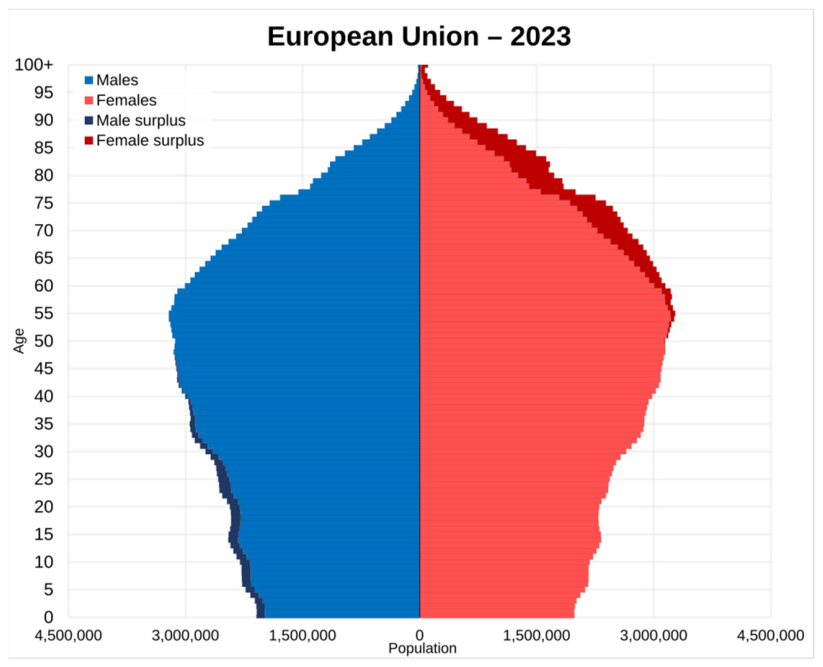
In many European countries, population aging has become an increasingly pressing issue (Figure 1). Advances in medicine and improvements in quality of life over recent decades have significantly increased life expectancy. While this development is generally positive, it also brings with it serious challenges, such as a growing demand for geriatric care.
Aging is associated with an elevated risk of chronic diseases, cognitive decline, reduced immune function and physical performance, and the progression of chronic low-grade inflammation. These challenges can be partially addressed through preventive strategies, including healthy lifestyle choices and appropriate nutrition [1]. Within this context, the growing interest in the health-promoting properties of natural bioactive compounds-derived from plants, herbs, and fungi, including mushrooms has gained increasing attention. This interest is shared both by consumers seeking natural approaches to disease prevention and by the scientific community exploring the therapeutic potential of natural products.
Figure 1.
European Union age population pyramid. Reprinted from Ref. [2] under CC BY-SA 4.0 license.
Among natural sources of bioactive compounds, mushrooms have long been a focus of scientific interest as potential functional foods. Particular attention has been given to identifying species and analyzing their biological activities. In the case of Chinese medicinal fungi, the most commonly observed functions include antitumor or anticancer effects (399 species), followed by antioxidant properties (244 species), antimicrobial activity—including antibacterial, antifungal, and antiviral effects (185 species)—as well as immunomodulatory or immunostimulatory functions (53 species), anti-inflammatory effects (48 species), and others [3]. Some species, such as Ganoderma lingzhi—sometimes referred to as the “mushroom of immortality”—have already been attributed longevity-promoting properties in traditional Chinese medicine [4]. Modern research confirms that compounds in mushrooms, especially polysaccharides, can affect aging processes at different levels of biological organization.
While in vitro studies have demonstrated that topically applied polysaccharides extracted from mushrooms can mitigate skin photoaging, the present discussion focuses on the equally intriguing effects of orally consumed mushrooms on systemic aging processes [5]. In a cross-sectional study conducted in a population of people over the age of 60, it was observed that regular mushroom consumption was associated with a significantly lower risk of mild cognitive impairment [6]. The broad-spectrum effects of mushroom polysaccharides are further supported by preclinical studies, in which improvements in cognitive function were observed in laboratory animals. The mechanisms included not only reduction in oxidative stress and activation of the mTOR-dependent pathway, but also beneficial effects on the composition of the intestinal microbiota [7,8]. Subsequent work showed that supplementation with Grifola frondosa extract led to prolonged health and lifespan in an animal model, which was attributed to a reduction in oxidative stress via activation of the daf-16/FOXO and skn-1/Nrf2 pathways [9]. The anti-inflammatory properties of mushroom have also been widely reported in the scientific literature [10,11,12], which is particularly relevant in the context of aging as a process closely associated with chronic low-grade inflammation, known as inflammaging [13].
This review compiles available data from the literature on in vitro and in vivo studies investigating the effects of mushroom-derived polysaccharides on cellular aging mechanisms. It also discusses the pharmacodynamic aspects of these polysaccharides. In addition, information on the structural characteristics of mushroom polysaccharides, their modification, as well as the influence of different extraction conditions and mushroom growth conditions is presented. Furthermore, examples reported in the literature in which mushroom polysaccharides have been used as carriers for active compounds are reviewed, with particular emphasis on their potential as delivery systems for senolytic agents and their possible synergistic effects, which warrant further investigation to be conclusively demonstrated. Although there are reviews available in the literature covering topics such as the anti-aging effects of mushroom extracts on the skin [14], the anti-inflammatory properties of edible mushrooms [15], and the neuroprotective potential of various mushroom-derived compounds [16], this review differs by focusing specifically on mushroom-derived polysaccharides, their multi-targeted effects on cellular aging, and their emerging potential as carriers for bioactive compounds.
2. Methods
A comprehensive literature search was conducted across three major scientific databases: PubMed, Scopus, and EBSCO. The search strategy employed combinations of the following keywords: “mushroom polysaccharides”, “fungal polysaccharides”, “inflammation”, “aging”, “cellular aging” and “senescence”. To ensure relevance and recency of the data, and in light of the rapidly evolving research on fungal polysaccharides and aging mechanisms, only articles published within the last ten years were considered. The search was limited to articles available in English. Titles and abstracts were screened to identify studies that specifically addressed the role of mushroom- or fungal-derived polysaccharides in the context of aging or cellular senescence. Relevant full texts were subsequently reviewed for inclusion.
3. Structure of Mushroom Polysaccharides and Their Biological Activity
Numerous mushroom species representing diverse fungal families have been the focus of extensive research on bioactive polysaccharides. These include members of the families Ganodermataceae (e.g., Ganoderma lingzhi, Ganoderma applanatum), Marasmiaceae (Lentinula edodes), Pleurotaceae (Pleurotus ostreatus), Cordycipitaceae (Cordyceps militaris), Hymenochaetaceae (Inonotus obliquus, Phellinus linteus, Sanghuangporus sanghuang), Meripilaceae (Grifola frondosa), Ophiocordycipitaceae (Ophiocordyceps sinensis), Tremellaceae (Tremella fuciformis), Auriculariaceae (e.g., Auricularia auricula-judae, Auricularia heimuer) and Polyporaceae (Poria cocos and Trametes versicolor). At the same time, there is a degree of inconsistency and ongoing revision in scientific research, as new fungal species are continually being discovered. In some cases, fungi that were previously classified as European species are now being redefined as distinct, separate species based on updated taxonomic and molecular analyses (e.g., Ganoderma lingzhi formerly classified as Gandoerma lucidum) [3].
3.1. Mushrooms as a Source of Polysaccharides
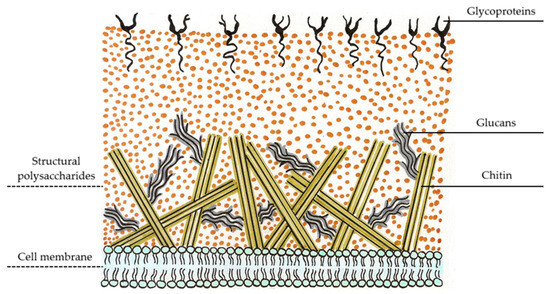
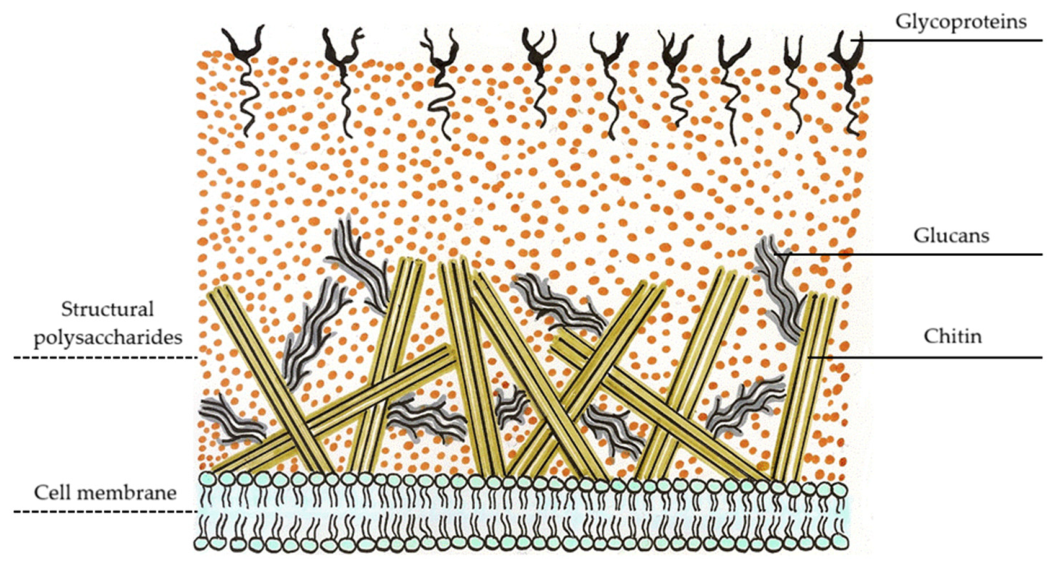
Polysaccharides are high-molecular-weight carbohydrates composed of monosaccharide units, including neutral sugars and uronic acids, linked by glycosidic bonds. Mushrooms are a rich source of structurally diverse polysaccharides, primarily because these polymers form the fungal cell wall, providing structural integrity and protection. The cell wall, presented in Figure 2, is mainly composed of two components: a rigid fibrillar network of chitin and a matrix containing α-glucans, β-glucans, and glycoproteins. The outer layer consists of glycoproteins and heteropolysaccharides, which vary in proportion and monosaccharide composition between species and developmental stages of mushrooms [17,18]. In addition to their structural role, these heteropolysaccharides, rich in fucose, galactose, mannose, and xylose, contribute to the biological activity of mushrooms. The most important polysaccharides include homopolysaccharides such as β-glucans and chitin, as well as galactans and mannans, together with structurally complex heteropolysaccharides and polysaccharide–protein complexes [19].
Figure 2.
Structure of the mushroom cell wall. Adapted from Ref. [20] under CC BY 3.0 license.
3.2. Polysaccharides Extraction Methods
The extraction of mushroom polysaccharides can be performed using a variety of methods, depending on the desired fraction. Selecting an appropriate extraction strategy is crucial, as it influences the yield, structural characteristics, spatial conformation, and consequently the biological activity of the extract. Economic aspect is also an important consideration. Extraction methods are generally classified into conventional and advanced approaches, and the process typically consists of three main stages: pre-treatment, extraction, and purification.
During pre-treatment, fruiting bodies undergo processes such as defatting with organic solvents and alcohol treatment to remove low-molecular-weight impurities. The extracted polysaccharides are then purified using techniques such as ethanol precipitation, deproteinization (e.g., Sevag method), decolorization, dialysis, or fractionation [17].
Conventional extraction methods primarily rely on water, as most mushroom polysaccharides are water-soluble. Hot water extraction is the most widely used due to its low cost and simplicity. These methods typically yield heteropolysaccharide–protein complexes from the outer layer of the fungal cell wall, as they are less effective at penetrating the glycoprotein-rich outer layer. Acidic or alkaline solutions are often applied to obtain higher amounts of β-glucans from the middle layer of the cell wall [18].
Advanced extraction techniques have been developed to overcome the limitations of conventional methods, particularly for polysaccharides that are insoluble or strongly associated with the cell wall, such as certain β-glucans and chitin-containing fractions. These techniques include ultrasonic-assisted extraction, microwave-assisted extraction, enzyme-assisted extraction, ultrasonic–microwave synergistic extraction, subcritical water extraction, pulsed electric field-assisted extraction, and aqueous two-phase extraction. Advanced methods offer advantages such as shorter extraction times, improved efficiency, reduced energy consumption, and better preservation of bioactive properties [21].
3.3. Biological Activity of Mushroom Polysaccharides in Relation to Their Structure and Composition
Polysaccharides are largely responsible for the health-promoting effects of mushrooms. Their content can vary significantly depending on the species—from 3.79% in Ophiocordyceps sinensis to as much as 60.79% in Trametes versicolor [22].
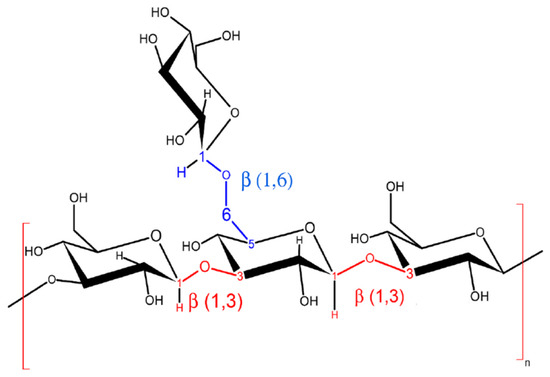
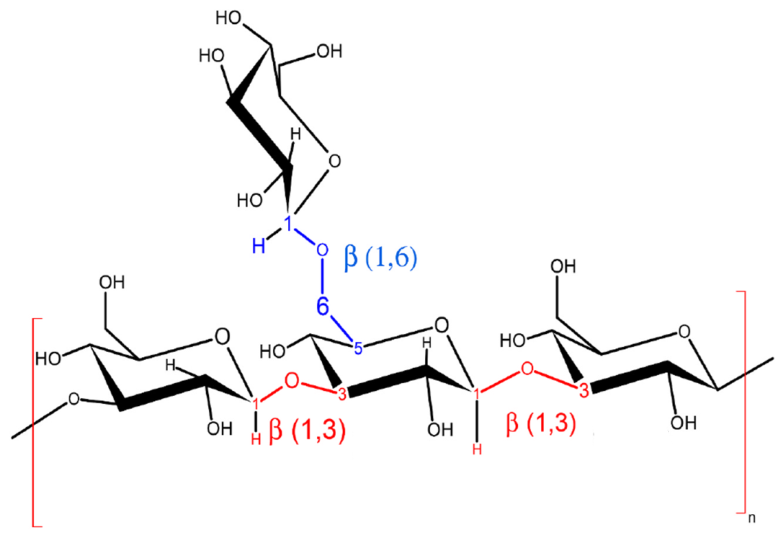
Among these, β-glucans are of particular interest—due to their strong biological activity. β-glucans are long-chain, multidimensional glucose polymers in which individual glucopyranose units are linked by β-glycosidic bonds, either in a linear (1→3) and/or (1→4) arrangement or in a branched form—with side chains of varying lengths attached to the main backbone via β–(1→6) glycosidic bonds (Figure 3) [23]. β-glucans exhibit a broad spectrum of properties, including immunomodulatory, antioxidant, anti-inflammatory, antimicrobial and anticancer activities. Thanks to numerous studies confirming their efficacy and safety, the anticancer properties of polysaccharides such as Schizophyllan (obtained from Schizophyllum commune) and Lentinan (obtained from Lentinula edodes) have been recognized at the clinical level and used in medical practice. As a result, they have been approved for use as an adjunctive therapy to chemotherapy in the treatment of certain cancers in Japan since 1986 [6,23,24]. This case serves as an example of the clinical application of mushroom polysaccharides, opening up promising prospects for their use in other fields, including the prevention of aging-related processes.
Figure 3.
Structural formula of β-glucans.
In order to reveal the full therapeutic potential of mushroom polysaccharides, it is necessary to have a thorough understanding of the molecular mechanisms underlying their anti-aging properties. Their mechanism of action depends largely on the chemical structure of the polysaccharide, the molecular weight, the type of bonds in the main chain, the presence and type of side chains, weighted degree of branching and the monosaccharide composition [4].
In a study which compared the properties of Agrocybe aegerita polysaccharides extracted by alkaline and acid extraction (Al-MPS and Ac-MPS, respectively), the Ac-MPS fraction was shown to have stronger antioxidant activity, both in in vitro tests (DPPH, hydroxyl radicals) and in in vivo models (liver enzyme activity: SOD, CAT, GPx and T-AOC; inhibition of liver LPO and MDA content). The authors suggest that this difference may be due to the different composition, particularly the presence of arabinose (Ara) exclusively in Ac-MPS [24].
In another study evaluating the antioxidant properties of five polysaccharide fractions from Flammulina velutipes (reducing power, DPPH assay, hydroxyl and superoxide radicals), a positive correlation was observed between rhamnose (Rha) content and antioxidant activity. The authors indicate that fractions containing rhamnose as the main monosaccharide show the strongest antioxidant activity [25]. A study of polysaccharides from Grifola frondosa cultured in zinc-enriched medium (IZPS) and standard medium (IPS) showed that the better antioxidant properties of the IZPS fraction may be due not only to the presence of zinc atoms, but also to differences in composition. In both cases, the main component was rhamnose (Rha)—67% in IZPS and 48.2% in IPS—but IZPS also contained glucose and a higher proportion of inositol. The differences in antioxidant activity may therefore be due to varying molecular composition and zinc content [26]. It is worth noting that the relationship between the chemical structure of mushroom polysaccharides and their anti-aging activity remains a largely unexplored area, presenting significant potential for future research. Factors such as glycosidic linkage types, composition, and molecular weight all influence the nature of their biological effects. A deeper understanding of these relationships could not only help in identifying the most bioactive structures but also enable their targeted application in the prevention and treatment of age-related disorders.
4. Anti-Aging Properties of Polysaccharides and Mechanisms of Action
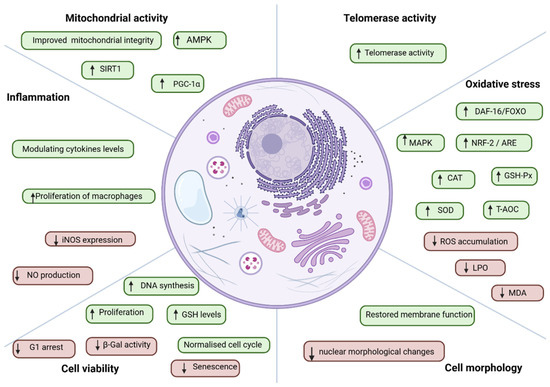
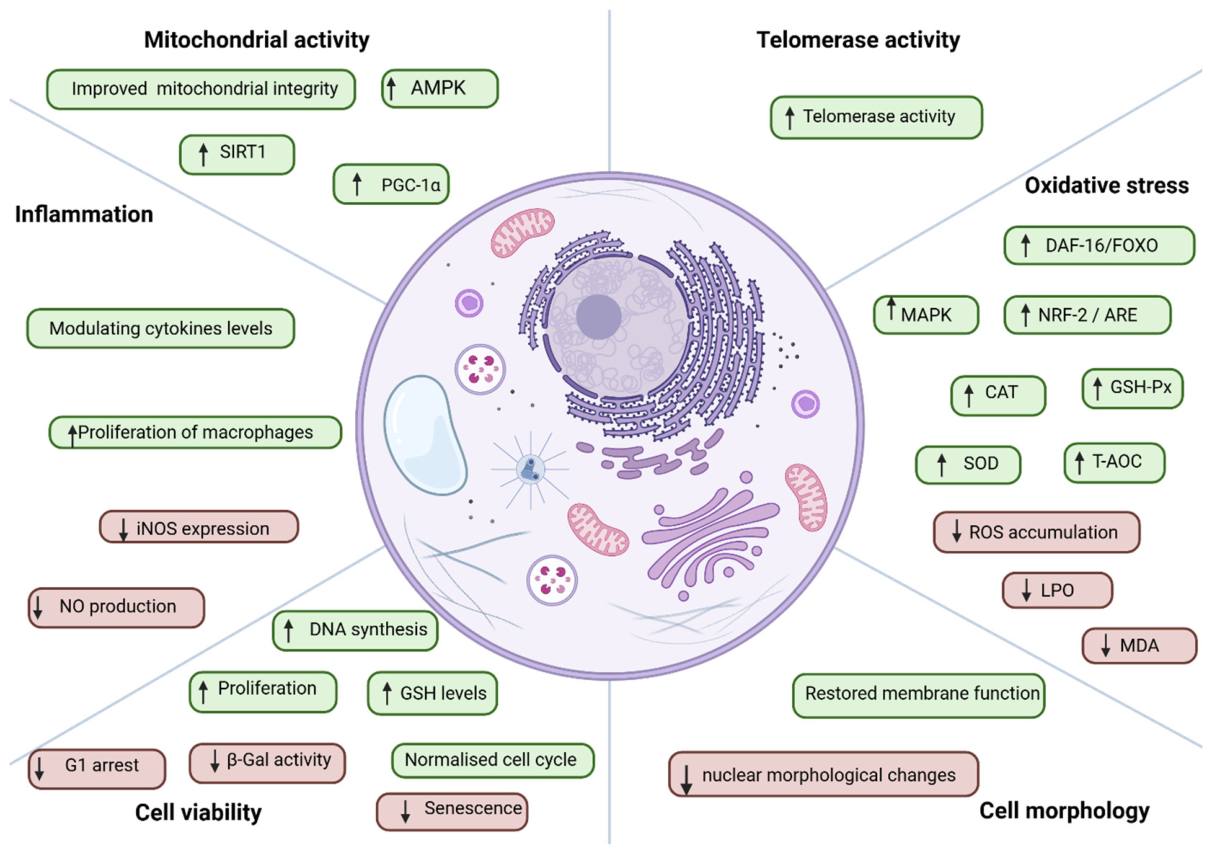
The available literature identifies multiple hallmarks of aging at different levels of biological organization, including DNA-related changes, cellular alterations, and higher-level systemic processes. These hallmarks include epigenetic regulation, macroautophagy capacity, changes in intercellular communication, alterations in the senescence-associated secretory phenotype (SASP), and dysbiosis [27,28]. Among these hallmarks, alterations at the cellular level, particularly those affecting cell viability, are considered central to the aging process. Thus, this review focuses on mechanisms that affect cell viability. In the case of mushroom polysaccharides, the literature describes their effects on inflammation, mitochondrial function, cell morphology, oxidative stress, telomerase activity, and cell viability. The mechanisms by which polysaccharides influence these processes related to cell viability are presented in Figure 4. However, the manifestation of these cellular effects is critically dependent on the absorption and bioavailability of polysaccharides. To date, only a limited number of studies have investigated the bioavailability of mushroom polysaccharides. The high molecular weight, complex spatial structure, and limited availability of suitable analytical methods have contributed to the long-standing assumption that polysaccharides are non-absorbable following oral administration. However, with the development of modern detection techniques, an increasing number of studies have indicated that certain polysaccharide fractions can be absorbed, albeit to a limited extent [29]. The pharmacokinetic behavior of these compounds depends on their monosaccharide composition, molecular weight, charge, and three-dimensional conformation [30].
Figure 4.
Anti-aging cellular mechanisms of mushroom polysaccharides. Illustration created by the authors based on literature data cited in the text.
In vivo studies in rats demonstrated that lentinan (LNT) undergoes slow but measurable hepatic metabolism prior to systemic distribution. Analysis of hepatic microsomes revealed the involvement of cytochrome P450 enzymes, particularly CYP2D6 and CYP2C9 isoforms, as well as epoxide hydrolases, indicating active biotransformation of LNT in the liver [31]. Pharmacokinetic analyses further showed that LNT is absorbed following oral administration, with peak plasma concentrations observed approximately one hour post-dosing.
The intestinal absorption mechanisms of LNT have been further elucidated using ex vivo and in vitro models. Studies employing Ussing chambers and the Caco-2 cell monolayer demonstrated that LNT is capable of traversing the intestinal epithelium, primarily via macropinocytosis and clathrin-mediated endocytosis, indicating limited but measurable intestinal permeability consistent with its macromolecular structure [32,33].
Comparable absorption behaviors have been reported for other mushroom polysaccharides. Ganoderma lucidum polysaccharides (GLP) were shown to enter Caco-2 cells via macropinocytosis and to penetrate the cell nucleus, with intestinal uptake partially mediated by the sugar transporters SGLT1 and GLUT2 in a concentration-dependent manner [34]. Similarly, selenium-enriched Grifola frondosa polysaccharide (Se-GFP-22) was classified as a moderately absorbed macromolecule, with uptake occurring predominantly through macropinocytosis and subsequent intracellular trafficking from the cytoplasm to the nucleus [35].
Taken together, these findings indicate that mushroom polysaccharides are capable of penetrating the intestinal epithelium primarily through macropinocytosis, despite their limited systemic absorption in intact form. Their biological activity is therefore likely mediated not only by direct absorption, but also by fragmentary or metabolized forms, as well as indirect mechanisms involving immune modulation and microbiota-derived metabolites. Further investigation into the absorption pathways and pharmacokinetics of mushroom polysaccharides remains essential for understanding their systemic biological effects, including their potential anti-aging properties.
4.1. Free Radicals Scavenging and Activating Antioxidant Enzymes
The best-studied mechanism for the anti-aging effects of mushroom polysaccharides at the cellular level is their ability to neutralize free radicals. Free radicals cause the conversion of unsaturated fatty acids found in biological membranes into lipid peroxides in a process called lipid peroxidation (LPO). The resulting products (including malonaldehyde—MDA) damage proteins, nucleic acids and other cellular structures which accelerates the aging process [36]. The human body is equipped with natural free radical scavenging mechanisms such as superoxide dismutase (SOD), catalase (CAT) and glutathione peroxidase (GSH-Px). As the body ages naturally, it becomes more difficult to maintain a balance between antioxidant enzymes and free radicals [33]. The following table summarizes in vivo studies available in the literature on the ability to enhance the antioxidant capacity of cells and by that reducing effects the free radicals have on aging of the cell. Mushroom polysaccharides have been shown to not only enhance the activity of key antioxidant enzymes but also upregulate the expression of genes involved in the cellular antioxidant response. For example, in Drosophila melanogaster, administration of Cordyceps cicadae polysaccharides significantly increased the expression of CAT, SOD1, and methuselah genes, indicating a dual mechanism by which these compounds reinforce the endogenous antioxidant defense system. Table 1 provides a comparative summary of in vivo studies investigating the antioxidant activities of mushroom-derived polysaccharides, with particular emphasis on their effects on endogenous antioxidant enzymes and oxidative stress biomarkers in aging models.
Table 1.
Antioxidant effects of mushroom polysaccharides.
4.2. Increasing Telomerase Activity
The telomere theory explains the aging process through the gradual shortening of telomeres—structures made of DNA and proteins that protect the end fragments of chromosomes from loss of integrity. During successive cell divisions, telomeres shorten, eventually leading to a loss of the ability to inhibit the DNA damage response and a loss of the ability to divide cells. This manifests as a cell cycle arrest in the G0 phase and puts the cell into a state of senescence or apoptosis, which is one of the main causes of aging and age-related diseases. Telomere length, in addition to other factors such as gender or genetic factors, also depends on telomerase activity [53,54].
Up to now, there has been one study proving that mushroom polysaccharides increase the activity of this enzyme. In an in vitro study on cells from the MCR-5 line treated with H2O2, polysaccharides derived from Agrocybe aegirita (AAPS) were shown to increase telomerase activity, and this increase was dependent on the concentration of AAPS [55].
4.3. Increasing Cell Viability and Normalizing Cell Cycle
Cell viability assays demonstrated that polysaccharides from Agrocybe aegirita (AAPS) conferred protection to MRC-5 cells against H2O2-induced oxidative stress. Trypan Blue and 4′,6-diamidino-2-phenylindole (DAPI) staining confirmed reduced cell death, with higher concentrations showing greater efficacy. AAPS treatment increased GSH activity and decreased expression of the senescence marker β-Gal, suggesting a protective effect on DNA. Moreover, AAPS alleviated G1 phase cell cycle arrest, indicating its potential to extend cellular lifespan [55]. Similarly, polysaccharides from Grifola frondosa and Hericium erinaceus extended lifespan in yeast cells via a Ras/PKA-dependent pathway [41]. Polysaccharides from Tricholoma lobayense (TLH-3) enhanced HELF cell viability in a dose-dependent manner, achieving up to 75.5%—a level comparable to that of vitamin C. Flow cytometry analysis confirmed that TLH-3 reduced G0/G1 cell cycle arrest, promoted DNA synthesis, and stimulated cell proliferation, indicating its capacity to mitigate oxidative damage and protect HELF cells from apoptosis induced by oxidative stress [49]. Table 2 summarizes selected studies examining the effects of mushroom-derived polysaccharides on cell viability and cell cycle regulation, with particular emphasis on their ability to counteract oxidative damage, restore normal cell cycle progression, and delay cellular senescence in in vitro and in vivo models.
Table 2.
Cell cycle regulating properties of mushroom polysaccharides.
4.4. Immunity Modulation
As previously mentioned, the aging process is closely associated with a chronic low-grade inflammatory state. Mushroom polysaccharides are well-known for their immunomodulatory properties, and their potential in the context of cellular aging has been increasingly investigated. These compounds not only activate immune responses but also modulate them, thereby contributing to the regulation of chronic inflammation. In a mouse model subjected to D-galactose (D-gal)-induced oxidative stress, a significant elevation of pro-inflammatory cytokines—including TNF-α, IL-1β, and IL-6—was observed. Oral administration of polysaccharides from Agaricus bisporus markedly reduced the levels of these cytokines compared to the model group, demonstrating their anti-inflammatory and protective effects [7]. Polysaccharides isolated from the fruiting bodies of Dictyophora indusiata (DIP) via water extraction were shown to support the priming phase of NLRP3 inflammasome activation. Mechanistic analyses revealed that DIP enhances TLR4 receptor expression, promotes phosphorylation of the inhibitor IκB-α, and facilitates nuclear translocation of the p65 subunit of NF-κB, highlighting a molecular basis for its immunomodulatory action [56]. Similarly, polysaccharides derived from Amauroderma rugosum exhibit potent immunomodulatory activity by dose-dependently increasing TNF-α and IL-6 production. This effect is mediated through activation of macrophages and dendritic cells via Dectin-1 and TLR-2/TLR-4 receptors, and higher molecular weight β-glucans were correlated with stronger immunostimulatory responses [57]. In addition, a polysaccharide extract from Pleurotus pulmonarius (PPp) demonstrated immunoregulatory effects in LPS-stimulated THP-1 macrophages by activating multiple signaling pathways. PPp significantly regulated genes encoding pro-inflammatory cytokines (TNF-α, IL-1β, IL-6), with concurrent morphological changes indicative of immune cell activation. Notably, downregulation of PD-L1 expression in macrophages suggests a potential role of PPp in modulating immune checkpoint responses [58]. Table 3 presents selected studies on the immunomodulatory properties of mushroom-derived polysaccharides, highlighting their ability to regulate pro-inflammatory cytokines, activate innate immune signaling pathways, and modulate immune cell function in both in vitro and in vivo models.
Table 3.
Immunomodulatory effects of mushroom polysaccharides.
4.5. Improving Mitochondrial Activity
At high concentrations, Agrocybe aegirita polysaccharide (AAPS) exhibited pronounced mitochondrial protective effects by significantly restoring mitochondrial membrane potential. Following H2O2-induced oxidative damage, the proportion of J-aggregates—a marker of mitochondrial integrity—dropped from 96.71% to 19.16%. Supplementation with AAPS markedly increased this proportion, confirming its capacity to stabilize mitochondrial function and protect cells from oxidative stress [55]. Similarly, GPF, a purified polysaccharide from Gomphus clavatus Gray, demonstrated potent anti-aging activity through activation of the AMPK/SIRT1/PGC-1α signaling pathway, which plays a central role in regulating mitochondrial function. GPF enhanced AMPK phosphorylation and upregulated the expression of SIRT1 and PGC-1α, thereby promoting mitochondrial biogenesis and improving energy metabolism in D-galactose-induced aging mice. These results underscore the potential of GPF as a natural compound for mitigating age-related mitochondrial dysfunction and delaying aging processes [46]. Table 4 summarizes studies evaluating the effects of mushroom polysaccharides on mitochondrial function in aging models.
Table 4.
Mitochondrial-activity improving properties of mushroom polysaccharides.
4.6. Improving Cell Morphology
In in vitro studies, cellular senescence is typically characterized by an abnormally large and flattened morphology [59]. Studies investigating extracts from Grifola frondosa and Hericium erinaceus in yeast cells and Drosophila melanogaster demonstrated that these extracts attenuated α-synuclein-induced premature aging through multifaceted mechanisms, including restoration of cell membrane functionality and reduction in protein aggregation [41]. Similarly, in HELF cells exposed to t-BHP-induced oxidative stress, polysaccharides derived from Tricholoma lobayense were shown to mitigate nuclear fragmentation and condensation, hallmarks of oxidative stress-induced cellular damage [35]. Table 5 outlines key findings on the effects of mushroom polysaccharides in preserving cellular morphology under oxidative stress.
Table 5.
Effect of mushroom polysaccharides on cell morphology.
5. Mushroom Polysaccharides as Versatile Carriers of Bioactive Substances
Polysaccharides derived from mushrooms have gained increasing attention not only for their intrinsic biological activities but also for their potential applications in drug delivery systems.
Polysaccharides extracted from Auricularia heimuer (previously referred to as Auricularia Auricular in the cited studies) were used to develop a crosslinked hydrogel (AAP) via epichlorohydrin. Bovine serum albumin (BSA) served as a model drug to evaluate in vitro release under simulated gastric and intestinal conditions. The results demonstrated that AAP could function as a pH-responsive carrier for oral delivery of protein-based drugs [60]. Hybrid hydrogels were synthesized by combining hyperbranched mushroom polysaccharides (TM3a) with xanthan gum (XG) via esterification and crosslinking with sodium trimetaphosphate (STMP). The resulting hydrogels exhibited self-healing properties and enabled controlled release of BSA and 5-fluorouracil (5-Fu). Incorporation of TM3a and chemical crosslinking enhanced the linear elastic range, stiffness, and yield stress of the hydrogels, while maintaining the shear-thinning behavior of the XG-TM3a-STMP systems [61].
A pH-sensitive delivery system was also developed for anticancer therapy by conjugating histidine (His) to Auricularia heimuer (previously referred to as Auricularia auricular in the cited studies) polysaccharides (AAP) via esterification to form His-AAP, which self-assembled into paclitaxel-loaded micelles (His-AAP-PTX). Formation of the micelles was confirmed, and in vivo experiments in tumor-bearing mice demonstrated significant inhibition of tumor growth, indicating the potential of His-AAP-PTX as an effective anticancer delivery platform [62]. The feasibility of coating liposomes with β-glucans from Pleurotus eryngii was investigated to target immune cells via the dectin-1b receptor. This approach allows for the delivery of both hydrophobic and hydrophilic drugs to immune cells and may have applications in treating infectious diseases or serving as vaccine adjuvants [63]. Finally, several studies have reported the development of nanoparticles based on Ganoderma lucidum polysaccharides (GLPs) as carriers for bioactive compounds. These systems offer potential for targeted delivery to tumor tissues, enhancement of anticancer drug efficacy, and reduction in chemotherapy-associated side effects. A recent review highlighted that GLPs may serve as natural adjuncts in cancer therapy, providing therapeutic benefits with reduced toxicity, and opening avenues for more personalized and effective treatment strategies [64].
Given their bioactivity, including antioxidant and immunomodulatory properties, these polysaccharides may exert synergistic effects with senotherapeutics, offering a dual therapeutic strategy against age-related diseases. Although the application of mushroom-derived polysaccharides as carriers for senotherapeutics agents remains underexplored, the studies outlined below provide a strong foundation for their potential use. Beyond prolonged release, the bioavailability and biological activity of mushroom polysaccharide-based carriers have also been explored. For instance nanoparticles encapsulating resveratrol (RES-CBFMP), developed using mushroom-derived polysaccharides, demonstrated high stability across various temperature, pH, and ionic strength conditions, along with controlled release during in vitro digestion. Importantly, the carrier (CBFMP) itself exhibited biological activity, and RES-CBFMP showed stronger antioxidant and anticancer effects compared to free RES, highlighting the potential of natural polysaccharides for delivering hydrophobic bioactives in functional food applications [65]. A solid carrier system combining probiotics (PBs) and Ganoderma lucidum extract (GLEP) was developed in liquisolid formulations (LSCs), demonstrating high adsorption capacity, favorable flow properties, and efficient drug loading. Notably, the solubility of quercetin (QUR) was markedly enhanced when incorporated into LSCs compared with its raw form, further supporting the role of mushroom polysaccharides in improving the bioavailability of poorly soluble compounds [66].
The studies discussed above have demonstrated that mushroom polysaccharides can be engineered into hydrogels, nanoparticles, micelles, and liposomes, enabling controlled release, targeted delivery, and enhanced bioavailability of therapeutics. Their natural origin, biocompatibility, biodegradability, and structural versatility make them promising candidates as carriers for various bioactive compounds, including proteins, peptides, and phytochemicals.
6. Discussion
This review summarizes current research on the effects of mushroom polysaccharides on cellular aging. The biological activity of these polysaccharides appears to be closely related to their structural features, highlighting the need for further studies to clarify the relationship between structure and function. Most anti-aging studies have focused on antioxidant mechanisms, but additional research is necessary to better understand other processes involved in their effects. In vitro studies on cellular models suggest that mushroom polysaccharides may influence aging through multiple mechanisms. While these results are promising, more comprehensive studies are needed to confirm and expand these findings. The biological activity, bioavailability, and efficacy of mushroom polysaccharides in living organisms may differ, underscoring the need for further in vivo and clinical studies to validate these findings and enable well-supported conclusions.
A noticeable difference exists in the literature between the volume of studies on the bioactivity and pharmacokinetics of mushroom polysaccharides compared to those of plant polysaccharides. This clearly represents a significant research gap and an opportunity for further investigation. Pharmacokinetic properties of mushroom polysaccharides remain largely unexplored and represent an important area for future investigation.
Another promising direction of action is the development of delivery systems for senolytics utilizing mushroom polysaccharides as carriers. Although current literature lacks data specifically addressing senolytic delivery, existing studies on delivery systems for various bioactive compounds provide a foundation for research in which mushroom polysaccharides serve both as carriers and as agents exhibiting anti-aging properties with potential synergistic effect. Another area for further research is the role of mushroom polysaccharides in modulating gut microbiota composition, which may contribute to their anti-aging effects. Taken together, mushroom polysaccharides represent promising natural compounds for aging prevention, with potential applications as supplements or nutraceuticals that provide protective and health-promoting effects.
Author Contributions
Conceptualization, J.C.-P., S.S. and A.K.; methodology, A.K. and S.S.; investigation, A.K. and S.S.; data curation, A.K.; writing—original draft preparation, A.K. and A.S.-K.; writing—review and editing, J.C.-P. and A.S.-K.; visualization, A.K.; supervision, J.C.-P., A.S.-K. and S.S. All authors have read and agreed to the published version of the manuscript.
Funding
This research received no external funding.
Data Availability Statement
Extracted data used in the review are available upon reasonable request.
Conflicts of Interest
The authors declare no conflicts of interest.
Abbreviations
The following abbreviations are used in this manuscript:
| AAPS | Agrocybe aegirita polysaccharides |
| AMPK | AMP-activated protein kinase |
| Ara | Arabinose |
| BSA | Bovine serum albumin |
| CAT | Catalase |
| CBFMP | Carrier based on fungal polysaccharides |
| DAPI | 4′,6-diamidino-2-phenylindole |
| D-Gal | D-galactose |
| DIP | Polysaccharide from Dictyophora indusiate |
| FOXO | Forkhead box O transcription factor |
| GLEP | Ganoderma lucidum extract polysaccharides |
| GLP | Ganoderma lucidum polysaccharides |
| GSH | Glutathione |
| HELF | Human embryonic lung fibroblasts |
| His | Histidine |
| His-AAP-PTX | Histidine-conjugated Auricularia auricular polysaccharide micelles loaded with paclitaxel |
| IL-1β | Interleukin-1 beta (pro-inflammatory cytokine) |
| IL-6 | Interleukin-6 (pro-inflammatory cytokine) |
| LNT | Lentinan (Lentinula edodes polysaccharide) |
| LPO | Lipid peroxidation |
| LSC | Liquisolid formulation |
| MDA | Malondialdehyde (lipid peroxidation marker) |
| mTOR | Mechanistic target of rapamycin |
| PD-L1 | Programmed death-ligand 1 |
| PGC-1α | Peroxisome proliferator-activated receptor gamma coactivator 1-alpha |
| PPp | Polysaccharide from Pleurotus pulmonarius |
| PTX | Paclitaxel |
| SASP | Senescence-associated secretory phenotype |
| Rha | Rhamnose (monosaccharide) |
| ROS | Reactive oxygen species |
| Se-GFP-22 | Selenium-enriched Grifola frondosa polysaccharide |
| SGLT1 | Sodium-glucose transport protein 1 |
| SOD | Superoxide dismutase |
| STMP | Sodium trimetaphosphate |
| TLH-3 | Polysaccharide from Tricholoma lobayense |
| TNF-α | Tumor necrosis factor-alpha |
| T-AOC | Total antioxidant capacity |
| XG | Xanthan gum |
| β-Gal | Beta-galactosidase (senescence marker) |
| Βcd | β-cyclodextrin |
| β-Glucans | Beta-glucans |
References
- Duan, H.; Li, J.; Yu, L.; Fan, L. The road ahead of dietary restriction on anti-aging: Focusing on personalized nutrition. Crit. Rev. Food Sci. Nutr. 2024, 64, 891–908. [Google Scholar] [CrossRef] [Scilit]
- Tweedle. Europe Population Pyramid 2023. Wikimedia Commons. 2023. Available online: https://commons.wikimedia.org/wiki/File:Europe_population_pyramid_2023.svg#Licensing (accessed on 1 February 2026).
- Wu, F.; Zhou, L.W.; Yang, Z.L.; Bau, T.; Li, T.H.; Dai, Y.C. Resource diversity of Chinese macrofungi: Edible, medicinal and poisonous species. Fungal Divers. 2019, 98, 1–76. [Google Scholar] [CrossRef] [Scilit]
- Venturella, G.; Ferraro, V.; Cirlincione, F.; Gargano, M.L. Medicinal Mushrooms: Bioactive Compounds, Use, and Clinical Trials. Int. J. Mol. Sci. 2021, 22, 634. [Google Scholar] [CrossRef] [Scilit]
- Lin, P.; Lu, Y.; Shi, H.; Chen, Z.; Lin, J. Inonotus obliquus polysaccharides prevent UVB-induced skin photodamage by modulating Sirt3-activated Foxo3a/PINK1-Parkin pathway: An in vitro and in vivo study. Food Sci. Hum. Wellness 2025, 14, 9250216. [Google Scholar] [CrossRef] [Scilit]
- Feng, L.; Cheah, I.K.-M.; Ng, M.M.-X.; Li, J.; Chan, S.M.; Lim, S.L.; Mahendran, R.; Kua, E.-H.; Halliwell, B. The Association between Mushroom Consumption and Mild Cognitive Impairment: A Community-Based Cross-Sectional Study in Singapore. J. Alzheimer’s Dis. 2019, 68, 197–203. [Google Scholar] [CrossRef] [Scilit] [PubMed]
- Duan, H.; Li, J.; Fan, L. Agaricus bisporus Polysaccharides Ameliorates Behavioural Deficits in D-Galactose-Induced Aging Mice: Mediated by Gut Microbiota. Foods 2023, 12, 424. [Google Scholar] [CrossRef] [Scilit]
- Rangsinth, P.; Zheng, C.; Shiu, P.H.; Wang, W.; Kwong, T.C.; Choy, C.T.; Leung, S.W.; Tencomnao, T.; Chuchawankul, S.; Prasansuklab, A.; et al. Amauroderma rugosum Extract Improves Brain Function in d-Galactose-Induced Aging Mouse Models via the Regulatory Effects of Its Polysaccharides on Oxidation, the mTOR-Dependent Pathway, and Gut Microbiota. Food Front. 2025, 6, 872–890. [Google Scholar] [CrossRef] [Scilit]
- Aranaz, P.; Peña, A.; Vettorazzi, A.; Fabra, M.J.; Martínez-Abad, A.; López-Rubio, A.; Pera, J.; Parladé, J.; Castellari, M.; Milagro, F.I.; et al. Grifola frondosa (Maitake) extract reduces fat accumulation and improves health span in c. elegans through the daf-16/foxo and skn-1/nrf2 signalling pathways. Nutrients 2021, 13, 3968. [Google Scholar] [CrossRef] [Scilit] [PubMed]
- Shi, D.; Xu, X.; Wang, J.; Bu, T.; Sun, P.; Yang, K.; Cai, M. Synergistic anti-inflammatory effects of Ganoderma lucidum polysaccharide and ganoderic acid A on LPS-induced RAW264.7 cells by inhibition of TLR4/NF-κB activation. Int. J. Biol. Macromol. 2025, 309, 143074. [Google Scholar] [CrossRef] [Scilit]
- Zhang, X.; Liu, T.; Wang, X.; Zhou, L.; Qi, J.; An, S. Structural characterization, antioxidant activity and anti-inflammatory of the phosphorylated polysaccharide from Pholiota nameko. Front. Nutr. 2022, 9, 976552. [Google Scholar] [CrossRef] [Scilit] [PubMed]
- Jen, C.-I.; Su, C.-H.; Lu, M.-K.; Lai, M.-N.; Ng, L.-T. Synergistic anti-inflammatory effects of different polysaccharide components from Xylaria nigripes. J. Food Biochem. 2021, 45, e13694. [Google Scholar] [CrossRef] [Scilit]
- Cevenini, E.; Monti, D.; Franceschi, C. Inflamm-ageing. Curr. Opin. Clin. Nutr. Metab. Care 2013, 16, 14–20. [Google Scholar] [CrossRef] [Scilit]
- Paterska, M.; Czerny, B.; Cielecka-Piontek, J. Macrofungal Extracts as a Source of Bioactive Compounds for Cosmetical Anti-Aging Therapy: A Comprehensive Review. Nutrients 2024, 16, 2810. [Google Scholar] [CrossRef] [Scilit] [PubMed] [PubMed Central]
- Muszyńska, B.; Grzywacz-Kisielewska, A.; Kała, K.; Gdula-Argasińska, J. Anti-inflammatory properties of edible mushrooms: A review. Food Chem. 2018, 243, 373–381. [Google Scholar] [CrossRef] [Scilit] [PubMed]
- Bonetto, V.; Ferraresi, A.; Sampò, S.; Isidoro, C. Fungal Bioactive Compounds as Emerging Therapeutic Options for Age-Related Neurodegenerative Disorders. Int. J. Mol. Sci. 2025, 26, 4800. [Google Scholar] [CrossRef] [Scilit] [PubMed] [PubMed Central]
- Leong, Y.K.; Yang, F.-C.; Chang, J.S. Extraction of polysaccharides from edible mushrooms: Emerging technologies and recent advances. Carbohydr. Polym. 2021, 251, 117006. [Google Scholar] [CrossRef] [Scilit] [PubMed]
- Liu, X.; Luo, D.; Guan, J.; Chen, J.; Xu, X. Mushroom polysaccharides with potential in anti-diabetes: Biological mechanisms, extraction, and future perspectives: A review. Front. Nutr. 2022, 9, 1087826. [Google Scholar] [CrossRef] [Scilit]
- Zhang, X.; Duan, Y.; Xue, J.; Chen, S.; Wang, H. Edible mushroom polysaccharides: Structural characteristics, chemical modification strategies, and structure-activity relationship: A review. Int. J. Biol. Macromol. 2025, 320, 145888. [Google Scholar] [CrossRef] [Scilit] [PubMed]
- Maya; Rike. Cell Wall Structure of Fungi. Wikimedia Commons. 2013. Available online: https://commons.wikimedia.org/wiki/File:Cell_wall_structure_of_Fungi.png (accessed on 1 February 2026).
- Gong, P.; Wang, S.; Liu, M.; Chen, F.; Yang, W.; Chang, X.; Liu, N.; Zhao, Y.; Wang, J.; Chen, X. Extraction methods, chemical characterizations and biological activities of mushroom polysaccharides: A mini-review. Carbohydr. Res. 2020, 494, 108037. [Google Scholar] [CrossRef] [Scilit]
- Łysakowska, P.; Sobota, A.; Wirkijowska, A. Medicinal Mushrooms: Their Bioactive Components, Nutritional Value and Application in Functional Food Production—A Review. Molecules 2023, 28, 5393. [Google Scholar] [CrossRef] [Scilit]
- Waszkiewicz-Robak, B.; Kulik, K. Pochodzenie i właściwości prozdrowotne beta glukanów. Postępy Tech. Przetwórstwa Spożywczego 2019, 29, 115–125. [Google Scholar]
- Jing, H.; Li, J.; Zhang, J.; Wang, W.; Li, S.; Ren, Z.; Gao, Z.; Song, X.; Wang, X.; Jia, L. The antioxidative and anti-aging effects of acidic- and alkalic-extractable mycelium polysaccharides by Agrocybe aegerita (Brig.) Sing. Int. J. Biol. Macromol. 2018, 106, 1270–1278. [Google Scholar] [CrossRef] [Scilit]
- Ma, Z.; Zhang, C.; Gao, X.; Cui, F.; Zhang, J.; Jia, M.; Jia, S.; Jia, L. Enzymatic and acidic degradation effect on intracellular polysaccharide of Flammulina velutipes SF-08. Int. J. Biol. Macromol. 2015, 73, 236–244. [Google Scholar] [CrossRef] [Scilit]
- Zhang, C.; Gao, Z.; Hu, C.; Zhang, J.; Sun, X.; Rong, C.; Jia, L. Antioxidant, antibacterial and anti-aging activities of intracellular zinc polysaccharides from Grifola frondosa SH-05. Int. J. Biol. Macromol. 2017, 95, 778–787. [Google Scholar] [CrossRef] [Scilit]
- González-Gualda, E.; Baker, A.G.; Fruk, L.; Muñoz-Espín, D. A guide to assessing cellular senescence in vitro and in vivo. FEBS J. 2021, 288, 56–80. [Google Scholar] [CrossRef] [Scilit] [PubMed]
- López-Otín, C.; Blasco, M.A.; Partridge, L.; Serrano, M.; Kroemer, G. Hallmarks of aging: An expanding universe. Cell 2023, 186, 243–278. [Google Scholar] [CrossRef] [Scilit] [PubMed]
- Deng, R.; Wang, F.; Wang, L.; Xiong, L.; Shen, X.; Song, H. Advances in Plant Polysaccharides as Antiaging Agents: Effects and Signaling Mechanisms. J. Agric. Food Chem. 2023, 71, 7175–7191. [Google Scholar] [CrossRef] [Scilit]
- Zheng, Z.; Pan, X.; Xu, J.; Wu, Z.; Zhang, Y.; Wang, K. Advances in tracking of polysaccharides in vivo: Labeling strategies, potential factors and applications based on pharmacokinetic characteristics. Int. J. Biol. Macromol. 2020, 163, 1403–1420. [Google Scholar] [CrossRef] [Scilit] [PubMed]
- Zheng, Z.; Zhang, Y.; Liu, Y.; Wang, J.; Cui, Z.; Pan, X.; Liu, Y.; Tang, W.; Wang, K. Metabolic degradation of lentinan in liver mediated by CYP450 enzymes and epoxide hydrolase. Carbohydr. Polym. 2021, 253, 117255. [Google Scholar] [CrossRef] [Scilit] [PubMed]
- Wang, Z.; Zhang, H.; Shen, Y.; Zhao, X.; Wang, X.; Wang, J.; Fan, K.; Zhan, X. Characterization of a novel polysaccharide from Ganoderma lucidum and its absorption mechanism in Caco-2 cells and mice model. Int. J. Biol. Macromol. 2018, 118, 320–326. [Google Scholar] [CrossRef] [Scilit] [PubMed]
- Guo, X.; Luo, J.; Qi, J.; Zhao, X.; An, P.; Luo, Y.; Wang, G. The Role and Mechanism of Polysaccharides in Anti-Aging. Nutrients 2022, 14, 5330. [Google Scholar] [CrossRef] [Scilit] [PubMed]
- Zheng, Z.; Pan, X.; Wang, H.; Wu, Z.; Sullivan, M.A.; Liu, Y.; Liu, J.; Wang, K.; Zhang, Y. Mechanism of Lentinan Intestinal Absorption: Clathrin-Mediated Endocytosis and Macropinocytosis. J. Agric. Food Chem. 2021, 69, 7344–7352. [Google Scholar] [CrossRef] [Scilit]
- Xiang, Q.; Zhang, W.; Li, Q.; Zhao, J.; Feng, W.; Zhao, T.; Mao, G.; Chen, Y.; Wu, X.; Yang, L.; et al. Investigation of the uptake and transport of polysaccharide from Se-enriched Grifola frondosa in Caco-2 cells model. Int. J. Biol. Macromol. 2020, 158, 1330–1341. [Google Scholar] [CrossRef] [Scilit]
- Mu, S.; Yang, W.; Huang, G. Antioxidant activities and mechanisms of polysaccharides. Chem. Biol. Drug Des. 2021, 97, 628–632. [Google Scholar] [CrossRef] [Scilit]
- Zhu, Y.; Yu, X.; Ge, Q.; Li, J.; Wang, D.; Wei, Y.; Ouyang, Z. Antioxidant and anti-aging activities of polysaccharides from Cordyceps cicadae. Int. J. Biol. Macromol. 2020, 157, 394–400. [Google Scholar] [CrossRef] [Scilit]
- Zhong, W.; Liu, N.; Xie, Y.; Zhao, Y.; Song, X.; Zhong, W. Antioxidant and anti-aging activities of mycelial polysaccharides from Lepista sordida. Int. J. Biol. Macromol. 2013, 60, 355–359. [Google Scholar] [CrossRef] [Scilit] [PubMed]
- Zhang, C.; Song, X.; Cui, W.; Yang, Q. Antioxidant and anti-ageing effects of enzymatic polysaccharide from Pleurotus eryngii residue. Int. J. Biol. Macromol. 2021, 173, 341–350. [Google Scholar] [CrossRef] [Scilit] [PubMed]
- Govindan, S.; Johnson, E.E.R.; Christopher, J.; Shanmugam, J.; Thirumalairaj, V.; Gopalan, J. Antioxidant and anti-aging activities of polysaccharides from Calocybe indica var. APK2. Exp. Toxicol. Pathol. 2016, 68, 329–334. [Google Scholar] [CrossRef] [Scilit]
- Tripodi, F.; Falletta, E.; Leri, M.; Angeloni, C.; Beghelli, D.; Giusti, L.; Milanesi, R.; Sampaio-Marques, B.; Ludovico, P.; Goppa, L.; et al. Anti-Aging and Neuroprotective Properties of Grifola frondosa and Hericium erinaceus Extracts. Nutrients 2022, 14, 4368. [Google Scholar] [CrossRef] [Scilit]
- Yuan, F.; Gao, Z.; Liu, W.; Li, H.; Zhang, Y.; Feng, Y.; Song, X.; Wang, W.; Zhang, J.; Huang, C.; et al. Characterization, Antioxidant, Anti-Aging and Organ Protective Effects of Sulfated Polysaccharides from Flammulina velutipes. Molecules 2019, 24, 3517. [Google Scholar] [CrossRef] [Scilit]
- Ye, M.; Chen, W.-X.; Qiu, T.; Yuan, R.-Y.; Ye, Y.-W.; Cai, J.-M. Structural characterisation and anti-ageing activity of extracellular polysaccharide from a strain of Lachnum sp. Food Chem. 2012, 132, 338–343. [Google Scholar] [CrossRef] [Scilit]
- Zhang, H.; Wang, Z.-Y.; Zhang, Z.; Wang, X. Purified Auricularia auricular-judae polysaccharide (AAP I-a) prevents oxidative stress in an ageing mouse model. Carbohydr. Polym. 2011, 84, 638–648. [Google Scholar] [CrossRef] [Scilit]
- Liu, M.; Jing, H.; Zhang, J.; Che, G.; Zhou, M.; Gao, Z.; Li, S.; Ren, Z.; Hao, L.; Liu, Y.; et al. Optimization of mycelia selenium polysaccharide extraction from agrocybe cylindracea SL-02 and assessment of their antioxidant and anti-ageing activities. PLoS ONE 2016, 11, e0160799. [Google Scholar] [CrossRef] [Scilit] [PubMed]
- Zhang, F.; Ren, T.; Gao, P.; Li, N.; Wu, Z.; Xia, J.; Jia, X.; Yuan, L.; Jiang, P. Characterization and anti-aging effects of polysaccharide from Gomphus clavatus Gray. Int. J. Biol. Macromol. 2023, 246, 125706. [Google Scholar] [CrossRef] [Scilit]
- Li, S.; Liu, M.; Zhang, C.; Tian, C.; Wang, X.; Song, X.; Jing, H.; Gao, Z.; Ren, Z.; Liu, W.; et al. Purification, in vitro antioxidant and in vivo anti-aging activities of soluble polysaccharides by enzyme-assisted extraction from Agaricus bisporus. Int. J. Biol. Macromol. 2018, 109, 457–466. [Google Scholar] [CrossRef] [Scilit]
- Zheng, L.; Liu, M.; Zhai, G.; Ma, Z.; Wang, L.; Jia, L. Antioxidant and anti-ageing activities of mycelia zinc polysaccharide from Pholiota nameko SW-03. J. Sci. Food Agric. 2015, 95, 3117–3126. [Google Scholar] [CrossRef] [Scilit] [PubMed]
- Ding, Q.; Yang, D.; Zhang, W.; Lu, Y.; Zhang, M.; Wang, L.; Li, X.; Zhou, L.; Wu, Q.; Pan, W.; et al. Antioxidant and anti-aging activities of the polysaccharide TLH-3 from Tricholoma lobayense. Int. J. Biol. Macromol. 2016, 85, 133–140. [Google Scholar] [CrossRef] [Scilit]
- Ma, X.-K.; Guo, D.D.; Peterson, E.C.; Dun, Y.; Li, D.Y. Structural characterization and anti-aging activity of a novel extracellular polysaccharide from fungus: Phellinus sp. in a mammalian system. Food Funct. 2016, 7, 3468–3479. [Google Scholar] [CrossRef] [Scilit]
- Li, S.; Liu, H.; Wang, W.; Wang, X.; Zhang, C.; Zhang, J.; Jing, H.; Ren, Z.; Gao, Z.; Song, X.; et al. Antioxidant and anti-aging effects of acidic-extractable polysaccharides by Agaricus bisporus. Int. J. Biol. Macromol. 2018, 106, 1297–1306. [Google Scholar] [CrossRef]
- Guo, X.; Ye, Y.; Liu, X.; Sheng, Y.; Yu, Y.; Yang, Y.; Gu, M.; Lin, R.; Wang, B.; An, L.; et al. Effects of Agaricus blazei acidic polysaccharide on the aging of mice through keap1-Nrf2/ARE and MAPKs signal pathway. Electron. J. Biotechnol. 2022, 57, 31–41. [Google Scholar] [CrossRef] [Scilit]
- Xu, W.; Han, S.; Huang, M.; Yin, J.; Yang, F.; Luo, F. Antiaging Effects of Dietary Polysaccharides: Advance and Mechanisms. Oxidative Med. Cell. Longev. 2022, 2022, 4362479. [Google Scholar] [CrossRef] [Scilit]
- Lulkiewicz, M.; Bajsert, J.; Kopczynski, P.; Barczak, W.; Rubis, B. Telomere length: How the length makes a difference. Mol. Biol. Rep. 2020, 47, 7181–7188. [Google Scholar] [CrossRef] [Scilit]
- Liu, X.; Liu, D.; Chen, Y.; Zhong, R.; Gao, L.; Yang, C.; Ai, C.; El-Seedi, H.R.; Zhao, C. Physicochemical characterization of a polysaccharide from Agrocybe aegirita and its anti-ageing activity. Carbohydr. Polym. 2020, 236, 116056. [Google Scholar] [CrossRef] [Scilit]
- Liu, Y.; Zhang, H.; Li, Y.; Zha, H.; Gao, Y.; Chen, H.; Wang, Y.; Zhou, T.; Deng, C. Dictyophora indusiata polysaccharide mediates priming of the NLRP3 inflammasome activation via TLR4/ NF-κB signaling pathway to exert immunostimulatory effects. J. Appl. Biomed. 2024, 22, 23–32. [Google Scholar] [CrossRef] [Scilit]
- Zhang, L.; Khoo, C.S.; Koyyalamudi, S.R.; Reddy, N. Immunomodulatory activities of polysaccharides isolated from Amauroderma rugosum (Blume and T. Nees) Torrend and their structural characterization. Heliyon 2024, 10, e31672. [Google Scholar] [CrossRef] [Scilit]
- Mokhtar, M.; Leow, C.H.; Mokhtar, N.F.; Xu, Z.; Chuah, C.; Gobert, G.N. Immunomodulatory effects of bioactive polysaccharides from Pleurotus pulmonarius on LPS-stimulated THP-1 human macrophages. Food Biosci. 2025, 63, 105729. [Google Scholar] [CrossRef] [Scilit]
- Neurohr, G.E.; Terry, R.L.; Lengefeld, J.; Bonney, M.; Brittingham, G.P.; Moretto, F.; Miettinen, T.P.; Vaites, L.P.; Soares, L.M.; Paulo, J.A.; et al. Excessive Cell Growth Causes Cytoplasm Dilution And Contributes to Senescence. Cell 2019, 176, 1083–1097.e18. [Google Scholar] [CrossRef] [Scilit] [PubMed]
- Yu, Y.; Pan, H.; Wang, Y.; Xiong, W.; Zhang, Q.; Chen, K.; Gai, X.; Li, P.; Yang, X. New insights into an innovative: Auricularia auricular polysaccharide pH-sensitive hydrogel for controlled protein drug delivery. RSC Adv. 2016, 6, 59794–59799. [Google Scholar] [CrossRef] [Scilit]
- Zhang, R.; Tao, Y.; Xu, W.; Xiao, S.; Du, S.; Zhou, Y.; Hasan, A. Rheological and controlled release properties of hydrogels based on mushroom hyperbranched polysaccharide and xanthan gum. Int. J. Biol. Macromol. 2018, 120, 2399–2409. [Google Scholar] [CrossRef] [Scilit] [PubMed]
- Wang, Y.; Li, P.; Chen, F.; Jia, L.; Xu, Q.; Gai, X.; Yu, Y.; Di, Y.; Zhu, Z.; Liang, Y.; et al. A novel pH-sensitive carrier for the delivery of antitumor drugs: Histidine-modified auricularia auricular polysaccharide nano-micelles. Sci. Rep. 2017, 7, 4751. [Google Scholar] [CrossRef] [Scilit]
- de Carvalho, M.M.; Eltvik, A.A.; Ellefsen, C.F.; Hiorth, M.; Samuelsen, A.B.C. Coating of liposomes with β-glucans from the king oyster mushroom (Pleurotus eryngii). Colloids Surf. A Physicochem. Eng. Asp. 2024, 700, 134783. [Google Scholar] [CrossRef] [Scilit]
- Gao, X.; Homayoonfal, M. Exploring the anti-cancer potential of Ganoderma lucidum polysaccharides (GLPs) and their versatile role in enhancing drug delivery systems: A multifaceted approach to combat cancer. Cancer Cell Int. 2023, 23, 324. [Google Scholar] [CrossRef] [Scilit]
- Liu, K.; Liu, Y.; Lu, J.; Liu, X.; Hao, L.; Yi, J. Nanoparticles prepared by polysaccharides extracted from Biyang floral mushroom loaded with resveratrol: Characterization, bioactivity and release behavior under in vitro digestion. Food Chem. 2023, 426, 136612. [Google Scholar] [CrossRef] [Scilit] [PubMed]
- Khursheed, R.; Singh, S.K.; Gulati, M.; Wadhwa, S.; Kapoor, B.; Pandey, N.K.; Chellappan, D.K.; Gupta, G.; Jha, N.K.; Dua, K.; et al. Exploring role of polysaccharides present in Ganoderma lucidium extract powder and probiotics as solid carriers in development of liquisolid formulation loaded with quercetin: A novel study. Int. J. Biol. Macromol. 2021, 183, 1630–1639. [Google Scholar] [CrossRef] [Scilit] [PubMed]

Disclaimer/Publisher’s Note: The statements, opinions and data contained in all publications are solely those of the individual author(s) and contributor(s) and not of MDPI and/or the editor(s). MDPI and/or the editor(s) disclaim responsibility for any injury to people or property resulting from any ideas, methods, instructions or products referred to in the content. |
© 2026 by the authors. Licensee MDPI, Basel, Switzerland. This article is an open access article distributed under the terms and conditions of the Creative Commons Attribution (CC BY) license.