


Abstract
When a community is thrust into the spotlight due to a tragic event or has a reputation given to it by folklore, it joins the pantheon of dark tourism destinations. Tourists will visit these infamous places regardless of how residents and the local government feel about visitors coming to explore their local tragedy, especially when the community is still rebuilding or grieving. Local governments must decide how they will handle this interest in their community, while protecting and providing service to their residents. This study investigates the frequency of dark tourism being integrated into long-range urban planning document to manage, or possibly enhance, dark tourism in their community.
1. Introduction
1.1. Welcome to Lockerbie!
No community wants dark tourism based on their community’s tragedy. Even the communities who have successfully navigated respectful memorialization and economic stimulation for their communities do not want it; with the exception, perhaps, of dark tourism derived in folklore. Dark tourism means a tragic event has happened within the boundaries of the community, and even when it stimulates the local economy, there is always a shadow of grief beneath the local tourism industry. Local governments have to tread lightly in how they deal with their role as stewards of the community and of its history. Small communities, particularly, need to tread carefully in their role as dark tourism ‘hosts’ to avoid charges of exploitation. This study, using summative content analysis, finds that local governments, those who are well known for the tragic events in their history, rarely address dark tourism as a unique factor in their long-range planning efforts, despite the potential for economic benefit to the community. In the rare cases where local governments address dark tourism in long-range planning, the frequency of dark tourism involvement depends on the type of dark tourism being presented, supporting the theoretical framework of the dark tourism spectrum (Stone, 2006; Miles, 2002), where some types of sites are ‘darker’ than others, and thus more “politically benign” (Sharpley, 2009). This article explores this awkward, uncharted aspect of community development through the lens of a community that has managed this issue since 1988; Lockerbie, Scotland.
A sense of calm greets visitors as they step off the train on a late summer afternoon in Lockerbie, a historic agricultural community situated in Scotland’s lush lowlands, pleasantly dotted by sheep grazing in fields and the occasional farm or churchyard. Walking toward downtown, they are greeted by the Tower Fish Bar with the scent of freshly made fish and chips wafting from the historic corner building, the looming tower of the Town Hall and a World War I memorial centered in a multi-point intersection. The overall atmosphere is a reminder to slow down and enjoy the historic buildings, shops, and eateries. There are few hints of the international spotlight Lockerbie has been under since 21 December 1988, when Pan Am flight 103 exploded in the sky over their community, the target of a terrorist bombing. It was not intended to be, but dark tourism comes to the community, rarely the other way around.
There is little precedent or best practices to help guide local governments like Lockerbie navigate this challenging subset of heritage tourism. Understanding the methods local governments use to address their role as ‘host’ is an unexplored realm of dark tourism research This study tests the hypothesis that dark tourism appearing in local government long-range planning goals and documents is rare, that most local governments will avoid the awkward realm of dark tourism against the null hypothesis that local governments commonly include dark tourism in their long range planning goals. A pilot sample was tested to address the research question of whether Lockerbie and similar small local governments best known for a tragedy are active participants in dark tourism through inclusion in their long-range plans for the community, or whether they take a more ‘hands off’ approach to dark tourism, despite the potential economic benefits to their municipalities, and how this fits into the theoretical framework that some dark tourism may be more ‘acceptable’ than others to local governments.
Despite this continuous international interest in the Pan Am 103 tragedy, Lockerbie holds on to its small-town atmosphere—by choice, according to local officials. The community is welcoming and friendly to tourists but has not developed Pan Am tourism as a tourism strategy. Tourism in general requires a great deal of logistic planning for local governments hosting visitors, but dark tourism, tourism associated with tragedy, death, or supernatural folklore, adds a unique dynamic; how to host visitors without exploiting the victims and their loved ones.
1.2. Lockerbie’s Worst Day
It is the rare community that plans to become a dark tourism destination. This is usually reserved dark tourism is rooted in folklore or part of what Stone (2006) describes as a “fun fear factory,” as part of his “Spectrum of Dark Tourism.” These are places like haunted houses or ghost tours at traditional historic sites. Dark tourism is most often thrust upon local governments without consent. It happened in Oświęcim, Poland, when the world learned their community was used for the Auschwitz concentration, labor, and extermination camp, and in Aberfan, after a mud avalanche slid into the community, killing 144 people, 116 of them at Pantglas Junior School. The community’s name becomes synonymous with a terrible or frightening thing, a sort of “fame transfer (Heidelberg, 2015). This is what happened to Lockerbie.
For Lockerbie’s residents, 21 December 1988, was typical Wednesday. The town sparkled with decorations for the upcoming Christmas holiday. People wound down the workday and tucked into warm houses for the evening, perhaps finishing dinner or sitting down to watch television, or setting off to a pub with friends. A little after 19:00 (7:00 p.m.), a loud, unusual sound rang out across the town. Windows shattered. In an interview with ABC News Australia (B. Miller, 2023), one resident described it as a “rushing and screaming noise.” Nearby residents thought the local petrol station exploded. Calls to friends and family went unconnected, and a frightening glow came from the town’s south end.
The question of “what was that?” was answered in an onslaught of falling pieces of airplane debris rained down on the town. Pan Am 103, a wide-body jet outbound from London’s Heathrow Airport exploded high above their community, the target of a terrorist bomb. The bomb killed 259 passengers, and debris scattered up to eighty miles away (Smith, 1989). In Lockerbie’s residential south end, the fuel-filled wings of the large Boeing 747 cut a swath through homes in a great fire of jet fuel, burning houses and killing eleven Lockerbie residents in the Sherwood Crescent neighborhood. Emergency response crews from multiple communities in the area (FBI, 2018). The idyllic small Scottish town suddenly became a nightmare under the scope of an international audience.
Since 1988, attention on Lockerbie has ebbed and flowed. Subsequent legal action against the bombers and new documentaries still bring attention to the community. Despite Lockerbie’s international profile, conversations with local officials with Dumfries and Galloway, Lockerbie, and the Pan Am 103 Lockerbie Legacy Foundation during a 2024 field visit revealed a split in the Lockerbie community regarding tourism and memorialization between wanting greater public memorialization, centered on a proposal to develop the Pan Am 103 Lockerbie Legacy Museum vs. wanting to let the matter remain quietly in the town’s history. This split makes it difficult for the Dumfries and Galloway Council to gather sufficient public support for large-scale tourism and memorialization efforts. She says that such efforts tend to be reactive rather than proactive. Lockerbie has taken a clear stance on their involvement in dark tourism: They prefer not to make Pan Am 103-related tourism a central focus of their economic development and urban planning. This division amongst residents in tragedy-stricken towns is common in communities when tourists follow tragic events, sometimes even as the local government is still trying to manage the trauma (Kim & Butler, 2015; D. S. Miller, 2008; Pezzullo, 2009; S. Wang et al., 2019; Wright & Sharpley, 2018).
Despite the potential revenue that can come with accommodating large-scale tourism, Lockerbie treats the crash with reverence, respect, empathy, but definitely a certain distance that indicates that it has not stopped the small town from being who it has always been and does not intend to become a curated tourist destination. Dark tourism has required communities like Lockerbie to reflect on who they are, who they want to be, and how they want to handle an awkward, tragic spotlight it never asked for.
Lockerbie’s story could be one of any communities who experienced a tragedy. Local governments must carefully consider their first charge; the health, safety, and welfare of their residents and, later, how to deal with their role in this challenging tourism realm.
1.3. An Industry Nobody Wants
As difficult as dark tourism is for local governments and a healing public, refusing to acknowledge dark tourism will not make tourists stop coming. Communities have tried this tactic. For example, Amityville, New York is a well-known dark tourism destination. In 1974, Ronald DeFeo Jr. murdered his parents and four siblings, shocking the quiet Amityville village. Shortly afterward, Lutz family moved into the DeFeo home, living there only twenty-eight days between December 1975 and January 1976. Their claims of a demonic presence, possession, bleeding walls, and other supernatural ‘attacks, became a bestselling book, a series of movies, documentaries, and a popular culture juggernaut.
For the last fifty years, visitors have continuously come to see the “haunted” house in Amityville, much to the chagrin of residents, especially those who knew the DeFeo family (Spangler & Grasso, 2024). Despite sustained interest, the local government and most of the community refuse to discuss the so-called ‘haunted’ property (Munoz, 2005). Seth Purdy of the Amityville Historical Society explained, “Every time a new movie or TV show comes out, it just dredges up the past and draws tourists to the house.” Or, as Imbert says, “It constantly brings a bunch of freaks to the neighborhood.” (Munoz, 2005). Amityville’s government has approved a change of address and physical changes to the property to deter visitors, to little effect.
Lockerbie, however, accepts its role as stewards of the disaster and memorialization of the victims with permanent memorials like a stained glass window with the flags of the 21 nations who lost people in the disaster displayed prominently in the Town Hall (Figure 1), a reflective Garden of Remembrance in the local cemetery, and a reflective stone and garden in the Sherwood Crescent neighborhood, and an outbuilding at Tundergarth Kirk that has information about the flight and each victim. The difference between Amityville’s efforts to tone down the public interest in their dark tourism versus Lockerbie is that Lockerbie’s legacy is one of quiet acceptance and reverence rather than trying to bury the past. They use a hybrid of passive memorialization, monuments and places visitors can go and explore on their own rather than guided tours or pre-planned routes, and active participation in the form of an annual wreath laying ceremony to remember the victims and their families.
Figure 1.
Lockerbie’s Town Hall window featuring the flags of all twenty-one nations that lost a citizen during the Pan Am 103 disaster. Author image.
But passive participation is the dominant approach for the community. Their urban planning efforts refrain from catering to a tourism industry, a choice that works for them, although visitors will still come to the community Understanding how dark tourism communities like Lockerbie work with dark tourism in their urban planning efforts can help other communities decide the right approach for them, giving this study a practical purpose on top of a deeper academic understanding of dark tourism in practical application. And part of that understanding is to examine how long-range planning (LRP) integrates dark tourism into community development goals.
2. Literature Review
2.1. The Research Gap Between Local Government and Dark Tourism
Dark tourism, thanatourism, grief tourism, ghost tourism, and all the name variations for tragedy-based heritage tourism have been the subject of a growing body of literature since the mid-1990s, when Foley and Lennon (1996) devised the term “dark tourism” to describe the ancient practice of traveling to visit sites where terrible things happen. It has not only been the subject of academic research but has moved into popular culture with documentary programming like Dark Tourist (2018) and Files of the Unexplained (2024) on Netflix. It is an ancient phenomenon that includes Roman gladiator games and traveling to view executions, but a modern academic research area.
While dark tourism has gained a great deal of momentum in terms of research over the past thirty years, there is little research into the realm of how local government policy and practices are impacted by being a well-known dark tourism destination. Studies by Assylkhanova et al. (2024), Light (2017), Yu and Egger (2022), and Zhang et al. (2024) show that local government involvement in dark tourism does not rank among the top dark tourism research themes. Similar studies found the most frequently studied topics in dark tourism research focused on defining dark tourism issues around collective memory visitor motivations and psychology, site management and interpretation the ethics behind dark tourism (Ashworth & Hartmann, 2005; Chen & Xu, 2021; Kennell & Powell, 2021; Korstanje, 2016; Light, 2017; Moscardo, 1996; Séraphin, 2017; Wight, 2006; Wright & Sharpley, 2018; Wu et al., 2014; Zhang et al., 2024).
Despite the research gap into the local government’s role in dark tourism, investigating this realm is important, given tourism’s role, as part of an economic development strategy and for some communities, dark tourism is its main, perhaps only major draw. This tourism magnet impacts local public policy, planning, and financial decisions, that have a direct effect on residents. This makes local government a vital stakeholder, albeit often unacknowledged, in local dark tourism. Light (2017) identified a research need to investigate the ways local communities are “impacted by, negotiate, and respond to become the focus of touristic interest based on a particular instance of death or tragedy (p. 296).”
2.2. Why Dark Tourism Matters to Local Government Beyond Memorialization: The Nexus Between Dark Tourism and Public Sector Economic Development
For local governments in small and medium sized communities, the subject of this study, the decision of whether or not to become involved in dark tourism is complex, as it directly impacts economic factors of the community. Studies by Kim and Butler (2015), J. Wang and Luo (2018), Séraphin (2017), S. Wang (2019), and Yuko (2021) show dark tourism can benefit the community by increasing external revenue, which can be leveraged into improvements in infrastructure, services, and local programming, and drawing visitors to local businesses.
In 2024, tourism in general was a $1.3 trillion a year industry in the United States and employed fifteen million people directly and in related fields (U.S. Travel Association, n.d.). In 2023, tourism and related services in Great Britain generated £127 billion, £58 billion of that directly from direct tourism services alone, employing 3.9 million people, 1.2 million directly in the tourism industry (Murray, 2025). While these breakdowns do not delineate dark tourism individually, it shows tourism in general as a significant economic driver.
Kim and Butler (2015), J. Wang and Luo (2018), Séraphin (2017), S. Wang (2019), and Yuko (2021) found, in their case studies the economic benefits dark tourism can bring to a city, which can be used to enhance public services and local amenities, enhancing the overall quality of life. These benefits to a community that supports dark tourism, however, are only possible if the residents and stakeholders are willing to engage in supporting the industry, given the ethical quandary the type of tourism provokes.
For example, the city of Clear Lake, Iowa, is a small community in the USA Midwest. And they are economically thriving. Their economic success is, however, tied directly to the 1959 plane crash that killed musicians Buddy Holly, J.P. Richardson, and Ritchie Valens. The Clear Lake business community is active in tourism, heavy with activities and events, and full of unique downtown shops, but Flory and Crabb fully acknowledge the economic benefits the city has seen is rooted in the plane crash that took Holly, Richardson, and Valens’ life, and the public support for their memorialization efforts. The lesson from Clear Lake, however, is to link the memorialization with education about Holly, Richardson, and Valens’ role in music history, to involve the families of the victims, and to provide a place where people will linger and explore rather than visit for an hour and move on to another destination (Heidelberg, 2023).
Salem, Massachusetts, which collaborates with the nonprofit organization Destination Salem to coordinate the tourism industry, generated $144 million in direct spending alone (hotels, restaurants, museums) in 2023 and supports 1212 local jobs (Destination Salem, 2025). They city purchased the Jonathan Corwin house (also known as the “Witch House,” seen in Figure 2), one of the few extant properties directly connected to the Trials. They developed the site, turned the building into a museum that provides context and education about colonial Salem and the conditions that may have made the Trials happen.
Figure 2.
City-owned Jonathan Corwin “Witch House,” Salem, Massachusetts. Author photo.
The Witch House is one of Salem’s most profitable city-owned tourist sites. But it is not included in their LRP, as there are no plans for major changes to the operations, maintenance, or the property. While it could be part of the economic development goals, it is already functioning as a significant revenue generator, and there may not be any reason to include this property in the goal areas. When there are so many other areas of the city to focus attention on, things that are going well may not be highlighted specifically in a plan.
Clear Lake, Iowa has seen their small community of 7700 fiscally prosper from tourism related to its role in one of music history’s most tragic days (Heidelberg, 2023). It is, however, careful about how it approaches its legacy; it considers the families of the musicians and pilot first and foremost in their urban and economic development planning. It involves them in memorialization, such as development of the commemorative Three Stars Plaza and streetscaping, including gateway monument signate (Figure 3) along a roadway that connects the major collector road to the historic Surf Ballroom, where the musicians played their final concert the night they died. The plans for this particular street is part of the city’s LRP document, a 2008 Comprehensive Plan, to create community connections from major roadways to the significant dark tourism sites and further into the commercial nodes, enhancing the robust tourism industry.
Figure 3.
Monumental signage in Clear Lake, Iowa at the intersection leading to the Surf Ballroom, a central dark tourism point of interest. Author photo.
There is no guarantee that local governments will have the economic success that Salem, Clear Lake, and Snowtown have seen. And even the communities that have seen the economic benefit of dark tourism have to address a moral dilemma. In Snowtown, Australia, site of a multiple homicide that attracted tourists, the long-term residents objected to being known as a dark tourism destination, even proposing to change the name (Kim & Butler, 2015). As Yuko (2021) and Chen and Xu (2021) explain, economic benefits should not come at the cost of ethical responsibility and sensitivity to lingering grief and trauma.
Kim and Butler (2015), D. S. Miller (2008), Pezzullo (2009), S. Wang et al. (2019) and Wright and Sharpley (2018), explore the conflict between well planned dark tourism and an intrusion on the lives of victims and the community. In their various studies, they found residents conflicted between financially aiding recovery and public investment versus their community—and their lives—becoming a spectacle for tourist consumption. D. S. Miller (2008) describes post-Hurricane Katrina residents of New Orleans Lower Ninth Ward having an uneasy feeling of being on display when tour busses started showing up to see the damage to the area. As D. S. Miller (2008) says, it was “tragedy on display—display for profit.”
The economic benefits and revenue a community could derive from dark tourism must not outweigh the underlying sense of personal and community grief and the human toll that created the point of interest (Yuko, 2021). J. Wang and Luo (2018) point out the emotional attachment residents have to their ‘place,’ even if they were not as directly impacted by the event as a victim or a victim’s loved ones and may oppose dark tourism as an intrusion on their grief.
Should a local government consider including dark tourism in their economic development LRP, Séraphin (2017), S. Wang (2019), and Yuko (2021), suggest that the community might be more accepting of the idea when they understand the potential benefits they may see, like improved infrastructure, expanded city services, and other enhancements to their community. But the potential for a strong local economy may not persuade the community when they are still feeling the effects of a tragedy. It is a delicate situation with no cut and dry answers, the residents themselves may be debating about how they feel.
2.3. The Theory of a Dark Tourism Spectrum and Its Impact on Local Government Involvement in Dark Tourism
Despite the economic potential of dark tourism, local governments may have qualms about integrating it into public policy at the risk of seeming ghoulish or exploitative. It may have something to do with the Miles (2002), Stone (2006) and Sharpley (2009) theories that dark tourism is a spectrum, and there are some types of dark tourism or tragedies more “acceptable” to the public, depending on the way it is presented, and some that are not. Stone’s (2006) developed a dark tourism spectrum, there are sites on the ‘lighter’ side of the scale, places geared toward entertainment, that present death and tragedy, but were not the primary sites where death and tragedy have occurred, places like the Alnwick Poison Garden, which presents a dearth of deadly plants that have been used in homicides and accidental death, but the site is not the location of any known death. These would also include sites affiliated with fiction and folklore, like haunted houses or, for Sleepy Hollow New York, a town plagued by a well-known but fictional decapitated horseman. These ‘lighter’ sites tend to be politically easier for a local government to integrated into a tourism strategy or to use as part of an long-range planning goals to encourage tourism; they do not have victims, they are not affiliated with very real grief, and there is no real heritage dissonance, where visitors carry very different viewpoints of what happened (Hartmann, 2014). These are very easy to include in long-range plans (LRPs), as they carry no emotional weight and can be played for fun.
Toward the middle of the spectrum, Stone explains the dark tourism shifting from fully ‘light,’ or “Fun Fear Factories” like amusement parks and haunted houses, to real-life tragedies. These events carry the weight of loss, of death, and of lingering, sometimes generational, trauma or grief. These are the tragedies that have made the community famous, but at the same time, that fame carries the weight of having to walk the line between commemoration and commodification. This becomes politically more difficult, as local governments cannot treat primary (the place where it happened) nor secondary (sites that supplement the primary site with more information and education) as entertainment venues. These sites can be part of a city’s LRP goals if the local government focuses on respectful commemoration and education. There are, however, opportunities to make some (not all) of these sites, for instance a former prison, include some entertainment to engage younger travelers or those who can contextualize the tragedy.
At the very end of Stone’s spectrum, the ‘darkest of the dark,’ lies the most challenging of dark tourism sites. These are, for instance, sites affiliated with genocide (Miles, 2002; Hartmann, 2014), warfare, mass murder, homicide, and other intentional—often systematic death. These cause quite a bit of challenge for local governments, as these are sites that can become very politically charged when it comes to interpretation and presentation due to the heritage dissonance (Hartmann, 2014), the scale of the death toll, how recent the event is—events in living memory can cause a lot more conflict over presentation than events far in the past, and MUST focus on the educational component over any entertainment factor. These ‘darkest tourism’ sites tend to be difficult to include in an LRP, as they have the most societal weight to them from a political perspective. Any focus on them from an economic development perspective can be seen as exploitative or ghoulish.
This circles back to the original research question; knowing that certain types of dark tourism are easier to include in long range plans than others, and understanding that the spectrum of dark tourism results in different approaches, but can likewise yield economic benefits, are local governments including dark tourism in their LRPs, and whether their placement on the spectrum influence how often they are found in LRPs.
3. Materials and Methods
3.1. Addressing a Research Gap
This study began with a hypothesis based on previous research and case studies. During those processes, the hypothesis emerged that it is rare for local governments to include dark tourism related goals in their development-guiding long-range planning (LRP) documents. This study was devised to determine whether that was true based on evidence rather than leaving it as a speculation. This pilot study tests this hypothesis and produces a foundational theory based on the findings. Because this is a pilot study to determine whether a larger study is appropriate, a the sample population of one hundred communities was selected from communities known for their dark tourism, small and medium sized communities with limited tourism points of interest outside of their notorious site based on communities discussed in dark tourism literature, from the Atlas of Dark Destinations (Hohenhaus, 2021), and limited by the population of the community. This can lead to potential bias in that some communities are included because they are well-known dark tourism destinations and cannot be attributed to a specific source.
The goal is to determine whether the pilot study will yield enough significant results to spark a new realm of research into the nexus between dark tourism and the impact on local government urban planning policy and lay the foundation for an expanded study of dark tourism in long-range urban planning (LRP).
There is no known study or body of literature that addresses this hypothesis or tests the applied policy aspect of local government’s involvement in dark tourism. For that reason, this research, even at the pilot level, is vital to expanding the understanding of dark tourism as an academic study and applied practice.
3.2. Using Summative Content Analysis
Since this pilot study is focused on spotting trends in policy documents, and since policy documents are not uniform across all municipalities, content analysis was necessary to test the hypothesis. This study applies summative content analysis to identify official inclusion of dark tourism in LRP goals and actions. Content analysis allows researchers to examine large volumes of written communications (Kleinheksel et al., 2020), like the government LRPs used in this study. Content analysis develops qualitative data out of such printed material; in this case, policy and planning documents, maps, and other LRP related documents through the use of coding and categorization (Hsieh & Shannon, 2005; Kleinheksel et al., 2020).
This study uses a hybrid of manifest and latent content analysis, known as summative content analysis (Hsieh & Shannon, 2005). Summative content analysis first identifies specific words or content, examining their contextual use within the document. It allows the researcher to look for manifest use of certain keywords or phrases, where the word is an exact match of the research term, but allows the flexibility of latent use of these terms, where the words or phrases may not be an exact match to the researcher’s target, but when looked at from a contextual standpoint, fits the description and reason those words or phrases were selected for inclusion.
Summative content analysis is the most appropriate approach for this study, as communities will often have different names and approaches for the same basic idea, a phenomenon addressed by Graneheim and Lundman (2004), who note that text used in content analysis will commonly have more than one meaning, and there is always some degree of interpretation within the document text. Using strict manifest content analysis would exclude innumerable data points if there was not room for interpretation; for instance, one community might call their long range plans a comprehensive plan, whereas another might call it a local plan. A local government might call their dark tourism point of interest a “dark tourism destination,” where another might call it a “tragic historic site.” A strict manifest content analysis would not permit these variables.
These variables, for example, occur with a reportedly haunted house in Harrisville, Rhode Island is famous for being “The Conjuring House” or the “Perron House” thanks to its depiction in a popular film series. Officially, however, it is known as the Old Arnold House, built in 1736, and may appear in documents as that. If the researcher does not know about the official name, nor knows to even look for that alternative term and only knows the site from its more popular reference, it may be overlooked in the content coding process. If the researcher is doing strict manifest coding, it may also be overlooked. This also happens frequently when the property is affiliated with homicide; the Fred and Rose West property at 25 Cromwell Street in Gloucester, England, which was demolished and turned into a public footpath. A search for the “West House” did not yield any results in the study documents, but the address of the site was found in Gloucester’s local planning document.
Additionally, the human factor plays into the latent content analysis, which is a significant part of the summative content analysis process. It relies on the researcher’s interpretation of the text and has repeatedly raised questions about validity (Kleinheksel et al., 2020). These interpretations may vary if the research is replicated by another. Dumay and Cai (2015) argue that reliability, trusting that the data actually represent the greater phenomenon, and validity, whether the content analysis is properly measuring unbiased data points can be challenging in content analysis. They agree with Guthrie et al. (2004) who say reliability can be increased by including categories created from credible literature, then coding with a strict set of rules and training coders in these methods. Viability and reliability come from a well-defined set of rules for coding and logical categories based on the literature for inputting the resulting codes. In this case, this is addressed by using categories created from the review of the LRPs and spotting trends (this will be discussed further in Section 3.8), thus addressing the issue of reliability since the categories are directly tied to the literature, and viability from the coding rules discussed later in this section. As this is a pilot study, the results were not sent to an independent coder to validate the data, but future research will need to take this step to enhance the reliability of the results.
3.3. Selection of Haunted Communities
Population selection was less than random, due to the unique nature of the cities needed for the study. They needed to be affiliated with at least one well-known dark tourism point (i.e., known beyond the immediate economic region of the community) of interest. There were various sources for identifying these sites; documentary film or television programs, print media, the Atlas of Dark Destinations (Hohenhaus, 2021), Atlas Obscura, an online resource for curiosities and oddities, including dark tourism sites, and web sites devoted to delineating dark tourism destinations.
For this pilot study, the selected community had to be small enough where the dark tourism site was one of, if not the major tourism draw for the community; sites where the dark tourism was the destination, not just one point of interest among many to choose from. Tourists would need to go out of their way to visit these communities.
Thus the sample was limited to local governments with a population of 125,000 and under, known to have a dark tourism point of interest (Hohenhaus, 2021). This means the sample was not random; while every community has its ghosts, some of these ghosts are limited to local legend and do not reach an international audience. The municipalities in this study needed to be reasonably well known beyond its region, likely to attract diverse and widespread demographics to visit.
Additionally, the population limitation eliminates major metropolitan areas like London, Boston, New York, or Birmingham that have many tourist points of interest where visitors are likely to visit many sites of various types. Small communities of 125,000 and under may have other attractions, but dark tourism may be a major point of interest and tourism magnet.
The need to limit the study to small and medium communities became clear during a visit to Southampton, England. Initially it was looked at due to its role as the departure port of the doomed ship Titanic. But it quickly became clear that the city attracted visitors far more than Titanic history alone; there were multiple major tourist attractions around the community, and from the Tudor House to Bargate, the historic city walls, Jane Austen sites, and the city’s historic roots in maritime history (the Titanic being only one of many stories) displayed at the SeaCity Museum. This study focuses on smaller communities that may have additional points of interest, but the notorious, tragic, or folklore is a primary draw for national and international travel.
The pilot study limited the dark tourism sample to local governments in the British Isles and the United States. There are two reasons behind this; first, the reasonable similarities in the long-range planning documents used in local government. Second, the study began with a friendly collaboration with the Local Government Information Unit (LGiU), a nonprofit technical assistance organization for local governments across the British Isles and Australia. LGiU staff did not perform document review or coding but served a vital advisory role as the study evolved, helping identify communities with a dark tourism past in the British Isles and assisting with understanding the nuanced elements and structural differences of local government across the countries in the British Isles.
3.4. Document Selection
Once the parameters of the communities were set, the study searched for the community’s long-range planning (LRP) documents. The LRP documents included Comprehensive Plans, small area plans such as downtown or neighborhood plans, area-wide plans, which were used when a local government was under county oversight and the plan had to cover several communities, city center plans, neighborhood plans, any plans that typically support long-range planning efforts in a community.
In the pantheon of important local government documents, the Long-Range Plan (LRP) is the one that guides the physical development of a community. Through public input, data analysis, knowledge of existing and projected conditions, and coordination with stakeholders, the LRP lays out the goals identified by the community as they consider how they want to grow in a managed, controlled manner. These documents, due to the public input required in their development, represent the goals identified by residents of the community, illustrating the community’s priorities for how it grows in the next seven to ten years to come.
The LRP typically identifies goals for the physical development of the community, covering topics like land use and zoning, transportation, housing, parks and open space, public safety, infrastructure. It may also cover economic development goals, such as economic development, historic preservation, and tourism.
Small communities, such as those in this sample, consult these documents whenever planning matters come before their community boards, such as Planning Commissions or City Councils. They check them to make sure subdivision developments are consistent with the future land use goals in the community. They make sure new infrastructure is being laid in areas identified as priority for development. They make sure new transit lines are located near current and projected population centers, and they ensure tourism engages properly with the rest of the community.
They do this by identifying LRP goals that will connect tourism centers to pedestrians and transportation routes that will draw visitors into other parts of the city. They might locate secondary sites near business areas or along walkable corridors to encourage visitors to move beyond the primary points of interest. The LRP can identify where the points of interest are in relation to population areas to dissuade traffic and service interruption during high-volume visitor periods and add goals or strategies to help mitigate these conflicts.
Long-range plans impact how humans relate to the built environment, whether residents or visitors. Inclusion of dark tourism in the goal statements of an LRP shows a local government’s willingness to accommodate that distinct sector of tourism and enhance the visitor experience.
To ensure the LRPs included in this study were accessible to the public, to dark tourists, and to anyone wanting to research how the local government was working with their dark tourism, only LRPs available online were included in this study. Future expansion of the study would contact communities directly if an online version of the LRP was not posted. For subsequent testing or efforts to duplicate results, it is important to note that these documents are updated annually, and local policies may change between documents. An archive of the documents used for this study has been retained by the author.
Not included were specific project plans, one-time projects that would make improvements to the site, then be considered ‘complete’ aside from regular operations and maintenance, like plans for the installation of a memorial or development of a museum. These are the result of the LRP process, not a long-range plan unto themselves, part of the strategic actions to achieve goals delineated in the long-range planning process. Because these are individual action with a completion date, and without comparison in other communities, they were not appropriate for the study.
3.5. Document Collection and Local Government Document Supply
Given the breadth of the study parameters in terms of sample size (100 unique communities) and using only documents currently available online, there is a high rate of documents that were not found, 27% of the total sample 100 communities, as seen in Figure 4. Most of these ‘missing’ LRP documents were from communities in the United States, while the British Isles had a higher rate of LRP documents available online due to stringent British reporting requirements.
Figure 4.
Availability of communities with online long-range planning documents, USA vs. British Isles, percentage of total sample population.
Reporting requirements in Great Britain states that local governments in the UK “should publish their Local Development Scheme on their website” (Department for Levelling Up, Housing and Communities, 2025). Ireland requires local area plans (part of the long-range planning family) to be available online and at their public counters, in part to ensure applicants for planning approvals have easy access to them (Office of the Planning Regulator, 2007, Chapter 2.2).
In the United States, the law requiring online publication of local government long-range plans varies from state-to-state. Some states have local government transparency acts that require publication online for some cities meeting a budgetary or population threshold, but other states deem public records transparency fulfilled by providing a copy at the local library or City Hall, leaving publication optional on the local government web site. 62% of the 50-community sample published their LRP documents, it still fell short of the British Isle’s sample, where 84% of the 50-unit sample had their LRP documents available online, making them available for a widespread audience.
Although this percentage of data points being “not available” is typically considered a high rate of unavailability for documents in latent content analysis, there are mitigating factors to consider. First, this was a targeted study population, as the data set consisted of communities with a population of 125,000 or under, and known beyond its own region to have at least one widely known dark tourism point of interest. This is a limiting factor for sample selection. The population could not be randomized due to the unique circumstances of local governments needed to fit that criteria—a known dark tourism destination.
The sample was limited to 50 from the USA and 50 from the British Isles to create a balance for comparative purposes in this pilot project and to test whether this method is appropriate to yield findings that could serve as a foundation for a future line of research. Expansion of the study would pursue the documents not found online, but in this case, a sample of 73 documents from different areas of the involved countries provided a reasonable sample to create a foundational test of the hypothesis and determine if further investigation is worthwhile.
While the number of cities who did not have LRP documents available online was high, there was no introduction of systematic bias from documents being removed for not including dark tourism. Every selected community was counted in the study, even if the answer was “No document found.”
3.6. The Coding Process
In this study, only the primary investigator (PI) conducted the review of the literature and coding to ensure consistency in the coding, capitalizing on the PI’s professional local government staff experience, having been part of creating, examining, and applying local government LRP documents in the urban planning process. This experience means deep familiarity with the latent references and variations in wording, which provides both consistency in coding and enhances the reliability of results.
Since this is pilot research, entirely new categories had to be created. Given the thousands of issues and goal topics addressed in LRPs worldwide, the categories had to be narrowed to a reasonable number based on where dark tourism references were actually found.
The first step was the identification of dark tourism communities and collecting the LRP documents available online, as previously described. The next step was a ‘cold read’ of approximately ten of those documents. The LRP documents were scanned for latent and manifest references to:
- The dark tourism site
- The street or exact address of specific properties.
- The historic event at the root of the community’s dark tourism.
- General historic preservation activities and goals
- General tourism activities and goals
- References to museums, exhibits, and other places that might feature education about the dark tourism site
These ‘cold readings’ allowed the initial categories to be created, based on the context of the topic areas where references were found, and known traditional categories typically included in LRP documents. There was a miscellaneous category called “Other,” in case a reference did not fit into any of the initial categories created for the study. In that case, if there were more than five references to the same type of activity, a new category would be created, and the previous LRP documents would be re-scanned to ensure no references to that new category were missed.
This happened, for example, in the category “Protection of the dark tourism site as a cultural asset—No Build area or Build with Sensitivity,” where eleven LRPs mentioned the dark tourism site as an area of value where development projects need to be either prohibited or require significantly mitigated impact. The initial roster of categories did not include this, so coding was underway. References to these “No Build” goals in the LRP were initially coded under “Other,” until there were five local governments with the same type of goal indicated in their LRP. After the fifth instance of this, a new category for this activity was created, and all the previously reviewed documents were re-scanned to determine if they included similar goals. Every document scanned after the inclusion of this new category was automatically scanned for references to memorial plans and protections. The re-scanning was a timely process, but necessary to ensure each document was scanned for the same summative content.
3.7. Coding the Latent Side of Summative Content Analysis
Coding latent content analysis presents a challenge, as the terminology in an LRP document varies between communities. To ensure consistency and enhance reliability, the coding process required specific rules to handle coding latent references to the dark tourism point of interest. Typically, the latent information this study searched for in the document directly references the property, such as another name or a street address, or whether it was a notable part of a larger historic museum property.
When a document search did not yield a specific reference to the dark tourism site, an online search was conducted to find another way to identify the property; street address, or additional research to determine if the property is commonly known by another name or nickname. For instance, the Perron House, better known by its popular culture name “The Conjuring House” in Harrisville, Rhode Island, was originally known as the Old Arnold Estate. A search for the Old Arnold House revealed the property to be of interest for tourism purposes, and potential listing on the National Register of Historic Places (NRHP), though there is no indication that the folklore associated with the property will be included as part of the factors contributing to its NRHP eligibility.
When the document referred to goals related to a museum, interpretive center, or other secondary site with a name that did not specify the dark tourism site, the researcher searched for that site’s web page to determine whether the dark tourism point of interest is a publicized, permanent exhibit within that site, as it would be a secondary site of interest for dark tourism.
In terms of reliability and reproducibility, there is an inherent bias in the PI’s experience as a practitioner that might color the understanding of the terms used in the LRP documents. The applied experience means that terms may mean one thing to the PI and another to the community. Inherent biases such as these may impact reproducibility, but the PI attempted to address such biases by looking at the context of the term, where it lied in the document, and the discussion around the issue where the dark tourism point of interest is addressed.
Coding, unfortunately, content analysis relies on the coder’s discretionary judgement on terminology; it isn’t always a binary “yes” or “no” checkbox, so there may never be 100% reproducibility in a study like this that relies on local government documents, which are riddled with different meanings for the same words, or multiple ways to express the same concept. That is why this pilot study is identifying a trend and inviting future researchers to see if their findings match those of this initial sample.
While this method may not catch all the latent references to the dark tourism site, it is a way to ensure reasonable diligence is done to capture as many as possible. Future research may find a way to refine this method further to capture additional latent references for coding.
3.8. Categorization of the Data—Multiple Categories Apply in Long-Range Planning
Categorization can be challenging when the content falls into multiple categories (Graneheim & Lundman, 2004), a phenomenon that happened in several categories in this study. For instance, a community might plan to upgrade connections between the dark tourism POI, improve the transportation infrastructure, and identify goals for aesthetic and design elements like streetscaping, infrastructure improvements, etc.
For this study, a dark tourism point of interest could be coded into the study multiple times. This happened many times, as a site might be included in LRP goals for, say,
This happened, for instance, in the case of Clear Lake, Iowa in the United States, where the city undertook the connection between a major arterial road and the Surf Ballroom, where Buddy Holly, JP Richardson, and Ritchie Valens played their last concert. The city created both aesthetic and infrastructure improvements, and these fit into two categories. This means that, while the total population sample was 100 cities, the urban planning section would have 184 points isolated into categories; these communities simply fit into multiple categories.
4. Findings
4.1. Community Profile
The one hundred communities selected for this study, fifty in the British Isles and fifty in the United States, have an average population of 20,538. Using the UK Parliamentary definitions for local government classifications (Baker, 2018), which would classify the average city in this study as a ‘Small Town,” fitting the study’s objective of looking at dark tourism is smaller communities (population under 125,000) with fewer tourism points of interest. Since the United States does not have a single standard for local government classification, it varies by state, the U.K. Parliamentary definitions allowed for a single standard. Table 1 demonstrates the breakdown of the sample cities show a heavy lean towards small towns and villages for both the US and the British Isles.
Table 1.
Sample city categorization, using UK Parliamentary definitions for consistency.
Table 2 shows that most of the communities in the study are autonomous local government units (79%), meaning they have their own council and ability to create policy (including approving a long-range plan), rather than having a county or regional government unit conduct these processes for them. This gives the community more direct autonomy to decide its policies regarding its level of involvement in LRP development rather than having to fit into a much larger regional tourism strategy. Local government autonomy was higher in the USA (94%) than the British Isles (64%), where many local units are under County or District authority, but most of the study population, 79%, operated under an autonomous local government.
Table 2.
Local Government Structure of Selected Communities, by percentage.
4.2. Dark Tourism in Long Range Planning (LRP) Documents
Long range planning documents provide guidance and goals for a variety of community elements that impact growth and development, including land use, infrastructure, transportation, environmental factors, housing, economic development, and public facilities, and other chapters dedicated to local concerns.
Long-range plans can be comprehensive plans, laying out the development guidelines for the whole community, area-wide plans that cover a region or county, small area plans like city center plans or neighborhood plans that cover a small subsection of a community, or strategic plans that lay out each goal and create a strategy to make them happen. Whatever method a community uses for long-range planning, they have an option to address tourism—and the dark tourism their community is known for.
Table 3 shows the various types of plans used in the investigation. Although there are fifty communities from the USA and 50 from the British Isles, n > 100. This is because Each type of plan is counted individually, to demonstrate the breadth of the plans local governments use in their long-term planning efforts.
Table 3.
Long-range planning documents reviewed, comparative and total (note: some communities had a combination of comprehensive and other types of plans, two pieces of one long-range planning policy.
The largest segment of the sample used a local government Comprehensive Plan (28% of total sample, 46.3% in the United States, 14.1% in the British Isles). It is important to note that many countries within the British Isles use county-wide planning regions, so would have County, Regional, or District plans rather than a single-community Comprehensive Plan, as reflected in the 19.7% of these plans in the sample, compared to the United States, where only 1.9% of the long-range plans are county or regional level. Together, county and regional level plans make up 12% of the total sample. Small area plans, looking just at certain segments of the city (filtered to ensure the plan included the dark tourism point of interest) accounted for 6.4% of the total plans reviewed.
Figure 5 reveals the overall prevalence of LRP goals that include dark tourism in the sample. In total, 40% of the sample included dark tourism in some manner in their LRPs, whether it was part of discussion of cultural assets or a goal related to the site. Some LRPs may wrap their dark tourism sites into generalized plans for heritage tourism (as dark tourism is part of community history and heritage) and generalized plans for tourism, so the LRPs were additionally scanned for general heritage or historic preservation and for tourism goals. These are kept as distinct categories, as it isn’t certain whether dark tourism is included in these goal areas.
Figure 5.
Dark tourism sites or adjacent areas included in long-range planning documents, total sample, by percentage.
4.3. Detailed Results of Long-Range Planning Data
While the initial data in Figure 5 answer the research question of how often local governments include dark tourism in long-range planning goals, there is more to the story. The first three categories, indicated in blue in Figure 6, show that communities are dedicated to historic and cultural preservation (75.4% of the sample) and tourism, (69.6%). and (although less commonly) acknowledge the tragic events in their past in a description of the community’s history, existing conditions, or a delineation of cultural assets (44.9%), but the sample data, indicated in green, reveal that this acknowledgement does not necessarily translate into active urban planning goals within the community. It is important to note that the heritage and tourism goals in the LRP may or may not include the dark tourism site; it is not specifically mentioned and may be one of many sites in the community covered under these goal areas.
Figure 6.
Topical categories where dark tourism and area sites are addressed in long-range plans, total sample, percentage. Note: Communities may include the site in multiple facets of the plan. Each occurrence is counted individually, increasing n.
Figure 6 also reveals the five most common places where dark tourism appears in local government long-range plans, all of which enhance the visitor experience and overall community development; protection of dark tourism as a cultural asset through “no build” or “build with sensitivity” policies (15.9%), aesthetics and design (15.9%), transportation infrastructure improvement goals (14.5%), enhanced community connections (14.5%), and tourism as a means for economic development activity (10.1%).
In this study, n = 69, as long-range planning documents were not found for 27 communities from 100 dark tourism communities selected for the study, and there were special considerations for 4 communities, such as the dark tourism event had not yet happened when the LRP was developed. This is the case in Moscow, Idaho, where four university students were killed in their off-campus housing, a tragedy that generated interest well beyond Idaho. The LRP Comprehensive Plan was developed in 2019, 3 years prior to the tragedy. While the local government had an LRP, it would not be possible for it to include tragedy-based tourism in its goal areas, and was thus categorized into “Other,” and not included in n.
4.4. Dark Tourism Types Found Within Each of the Coding Categories and Its Theoretical Meaning
In Figure 6, there were five categories of LRP goal areas where communities identified distinct actions planned for dark tourism sites, ranging from 10.1% representation to 15.9% representation (or the green bars for those viewing this in a colorized format). Figure 7 breaks down those categories to determine whether there are any trends in what type of dark tourism featured more heavily than others in a communities planning. To that end, each category has been analyzed in terms of what type of dark tourism the community features in their LRP goal areas.
Figure 7.
Breakdown of LRP types within coding categories, by percentage.
5. Discussion
5.1. The Dark Tourism Spectrum and the Frequency of LRP Presence
Figure 7 reveals a notable finding that supports Stone’s (2006) Dark Tourism spectrum and suggests the place on the spectrum matters when it comes to whether or not local governments want to be involved in dark tourism.
Communities with dark tourism based on folklore and haunted places, which lie at the lightest end of Stone’s spectrum, tend to be addressed in LRP goals at a higher frequency than most other types of dark tourism. While LRP inclusion for dark tourism is overall low, sites that fall under the category of “Folklore and Haunted Places appear in all five of the categories where dark tourism is found in LRPs. This category of dark tourism, being on the lightest end of the spectrum, has the advantage of not being associated with any actual death; it can focus on thrill-based entertainment, and can build an economic development strategy without political repercussion or charges of exploitation or disrespect for victims of any sort. Since the site is based on folklore and legend, there will not be arguments about dissonant heritage (Hartmann, 2014). The economic benefit to presenting these fun thrills can be beneficial to cities through programming, events, even souvenirs since there is no actual death being depicted.
The inclusion in all of the LRP categories where dark tourism was found indicates local government interest in not just developing a well-known tourist site, but connecting it to the community and actively using it as an economic development strategy, demonstrating an active-positive acceptance of this ‘light’ dark tourism based on a model of tourism behavior developed by Abler et al. (1975), adapted to tourism by Butler (1975) and detailed by Carmichael (2000). This acceptance and decision to integrate it into goals for protection of a site, aesthetic and design improvements, transportation and infrastructure improvements, community connections, and economic development strategy shows that the lighter end of the dark tourism spectrum is likely not to face political and community backlash for such investments.
The Reform and Recovery category appeared in four of the five LRP categories in Figure 7. In Stone’s (2006) spectrum, this category was called “Dark Dungeons,” and limited to prisons and other judicial incarceration. But this study expanded this category to include historic asylums, workhouses and schools like the Stewart Indian School in Nevada, where indigenous Americans were taken in a concentrated effort to eradicate their culture and heritage. These places move closer to the middle of the dark tourism spectrum due to the intent behind them. These places were created to help society, through reform and recovery. They were considered innovative advances in reform or recovery. Of course, we know now that this isn’t how the story ended for many of those caught up in this world, and today we would consider many of the practices torturous or barbaric. And these places are associated with many actual deaths, making them, according to Stone, a darker level on the spectrum.
While Stone did not assign a specific place on the spectrum to this category but suggests if falls somewhere near the midpoint, as there can be some entertainment value at some sites, such as paranormal tours offered at Wicklow Gaol in Ireland or the Ripon Workhouse in England. There are sites, though, so associated with actual suffering, such as the Stewart School, that ‘entertainment’ is out of the question. Typically, local government involvement in any of these sites is strictly limited to the educational aspect of it rather than trying to offer entertainment value. Being involved in any aspect of entertainment might invite unwanted scrutiny and backlash from family members of people who were incarcerated in these places and give the local government the stigma of being exploitative.
Reform and Recovery sites, these midpoint dark tourism sites on Stone’s spectrum, were included in LRPs under the categories of aesthetics and design, transportation and infrastructure improvements, enhanced community connections, and economic development activity, indicating these sites are seen as an important contributor toward the local economy, and worthy of intentional improvements that would enhance a visitor experience. This is an active-positive response on Carmichael’s (2000) version of the 175 models, where the city is willing to invest in improvements to the site and considers it an important part of the local economy.
Dark exhibitions (Stone, 2006), appeared in only three of the five LRP categories, even though this fell to the lighter end of the dark tourism spectrum. These are places that present death but are not the actual sites where it happened. In Lockerbie, this includes the Lockerbie Remembrance Room outbuilding at Tundergarth Kirk and the Garden of Remembrance at Dryfesdale Cemetery. It can also include museums, such as the SeaCity Museum in Southampton that includes an exhibit about the impact of the 1912 Titanic disaster on the community, or public memorials. This could be due to the sites already having been established and operational for ages, such as the Alnwick Poison Gardens in England, where visitors learn about the deadliest plants in the world. But this ‘light’ category has the advantage of not being affiliated with actual deaths; these are not primary sites where deaths actually occurred. These sites can be used as a blend of entertainment and education. The subject matter may provoke an emotional response from visitors, but in terms of local government involvement, the goal of local government involvement would focus on supporting a site that provides education and respect for those impacted by the things being presented.
LRP inclusions for dark exhibitions included preservation of the site with a ‘No Build” or “Build with Sensitivity” zone around the site, transportation and infrastructure enhancements, and enhanced community connections. This demonstrates, through LRP inclusion, that dark exhibition sites are educational enough for consideration in local preservation efforts and integration into the larger community systems. This indicates both active-positive, where the LRP plans to enhance connections with transportation and infrastructure, and passive-positive, through preservation efforts, as discussed in Carmichael (2000).
Moving toward the darker end of Stone’s spectrum, and being represented in three of the five LRP categories, notorious resting places refer to places where the dead are laid to rest; it could be famous cemeteries, ossuaries, or catacombs. These places, where the dead are to be remembered and memorialized, is not the place of death. The educational and entertainment value depends on external factors such as who was interred there; for instance, American musician and poet Jim Morrison’s grave at the Père Lachaise cemetery in Paris, France attracts visitors who ‘decorate’ the grave, and the Marie Laveau grave in the St. Louis Cemetery NO. 1 in New Orleans, USA is frequently covered with “XXX’ as a tribute to Leveau’s voodoo reputation. In the case of ossuaries, it is rare that international tourists go there to honor any one of the hundreds or thousands of people whose bones are on display, but to take in the space as a whole.
Local governments including these sites in LRPs have included them in categories of “No Build” or “Build with Sensitivity” areas, aesthetic and design enhancements, and transportation and infrastructure enhancements. Including them in the “no build’ goal areas may come from the resting place being under the ownership and operation of a religious or nonprofit entity; it is not going to be the local government’s jurisdiction. But they can oversee whether they enhance the tourist experience by making the areas around the site and the transportation and infrastructure visitor friendly. This blends the passive-positive (restricting development at and around the site) and the active-positive (enhancing community connections, infrastructure, and transportation corridors) modeling in Carmichael’s explanation of the Abler et al. (1975) and Butler (1975) models.
Moving even further to the darker end of Stone’s spectrum, local governments who have been affected by natural disasters or tragedies rooted in natural events were present in three of the fiver LRP categories; “No build” or “build with sensitivity” areas, transportation and infrastructure enhancement, and dark tourism as an economic development activity. These sites are complicated; they deal with very real death and destruction, often something that impacted the whole community instead of specific individuals, such as England’s Canvey Island flood or the Great Hinckley, Minnesota Fire. Real lives were lost, real property destroyed. This means any dark tourism proposed in LRPs must focus on education, not entertainment. Any effort to provide an entertainment experience or commodify the event would be met with backlash; even if the event was earlier than living memory, residents still lost “their people.”
The LRP representation focuses on Carmichael’s (2000) discussion of the active-positive and the passive positive. Communities who create building restrictions in their LRP goals are passively preserving a site by refusing significant change on the site. In terms of Carmichael’s active-positive stance, the sites associated with natural disasters were most frequently represented in terms of being an active part of economic development activity. This could be attributed to the nature of the incident; the deaths were not deliberate, they were not intentional, and it is a shared trauma that residents experienced together (or an understanding that it was a shared trauma for a past generation).
The category Cruel and Unusual is also represented in three LRT categories; “No build” or “build with sensitivity” (the passive-positive aspect of Carmichael’s explanation of Abler et al. (1975), and Butler (1975), aesthetic and design improvements, and enhanced community connections with the dark tourism site. This category represents sites of or associated with judicial punishments that were unjust, excessively cruel, or come with significant heritage dissonance (Hartmann, 2014). These fall close to the darkest end of the Stone spectrum, making them challenging for local governments to address. If a local government chooses to become involved, it will typically approach it from the educational aspect exclusively, even if there are private sector sites that integrate an entertainment component. Salem, Massachusetts, USA, is a significant case of a raucous private sector based (deliberately ironically) on a witchcraft industry, but the city-owned sites affiliated with memorializing the Salem Witch Trials is presented exclusively with the goal of memorialization, education, and providing context to what happened. This presentation, even with the Trials being on the darker end of Stone’s spectrum, receives little political backlash, and is an integral part of the LRPs economic development focus.
As the dark tourism moves closer to the darkest end of Stone’s spectrum, the numbers of LRP categories likewise decrease. Sites associated with industrial and non-natural accidents such as the Aberfan mining disaster in Wales or the Johnstown Flood as the result of a dam break appeared in two categories; aesthetics and design enhancements, and tourism as a means for economic development, both active-positive actions according to Carmichael’s presentation of the 1975 Abler et al. (1975) and Butler (1975) model. These sites are affiliated with actual death, and the primary sites of the occurrence may still be extant in the community, whether the land or any structures that were there at the time of the accident. These communities may still be grieving the dead if the accident happened in living memory. Being on the darker end of Stone’s spectrum, particularly the affiliation with actual death and the land (or even buildings) still being extant means any site interpretation will focus on the educational context and not entertainment value. But this does not exclude it from being part of an economic development strategy; the local government can provide educational experiences at authentic sites, drawing tourists without exploiting the victims of the tragedy (but if there are survivors, families of the dead, and other loved ones, this should ALWAYS be undertaken with their input and support).
Warfare, terrorism, and conflict likewise appeared in only two of the five LRP categories. These sites are found under the “no build” or “build with sensitivity” (passive-positive, as described by Carmichael (2000)) and the aesthetics and design enhancements (active-positive (Carmichael, 2000)). These sites are affiliated with actual death, often at a mass scale, deliberately inflicted by one side, which leads to concerns about heritage dissonance in the presentation (Hartmann, 2014). Lockerbie falls into this category; the bombing of Pan Am 103 was an act of aggression that impacted both the victims on the plane and the community itself. This deliberate mass death means that it is at the darkest end of Stone’s spectrum, and there is no question that any involvement from local government would need to be focused on context and education. There would be massive political backlash if there were any ‘entertainment derived from the event. Thus, the LRP goals need to be very sensitive and focus on preservation efforts; in many cases these sites will be owned and operated by other governmental entities or crossing multiple jurisdictions, but in some cases, like Lockerbie, the primary sites lie mainly within a single jurisdiction, and the local government can use the LRP goals to identify the sensitive sites to preserve and put it on an official map.
It is important to note that there are no sites affiliated with homicide or genocide represented in the LRP samples. This could be a passive-negative decision using Carmichael’s interpretation of the Abler et al. (1975) and Butler (1975) scale, because these are among the darkest of the dark end of Stone’s (2006) spectrum. In the cases of famous homicides that draw tourists, there is little in terms of education a community can offer, although that being said, the City of Holcomb, site of the 1959 murder of the Clutter family during an attempted robbery, was featured in Truman Capote’s bestselling book (with subsequent retelling), In Cold Blood (1966). Given the tourism interest in the case and visitation to the primary sites, the local government created a plaza to honor the victims and used a plaque to tell the world about the lives of the Clutter family and their contributions to the Holcomb community—a rare local government acknowledgement of a homicide in a small community.
Genocide, which Stone (2006), Miles (2002), and Hartmann (2014) acknowledge as the ‘worst of the worst’ end of the dark tourism spectrum, is also not represented in the LRP sample. The mass deaths are real, and there is no entertainment to be derived from the event; local government involvement would need to focus on education and context. This lack of representation in the LRT analysis sample may be indicative of the sample, or perhaps where genocidal acts are the subject of heritage dissonance (Hartmann, 2014) based on what atrocities are considered ‘genocide’ or whether they should be classified as something else.
In short, the place on the spectrum, and the necessity for local governments to entertain vs. education, to preserve or to enhance, and how politically ‘cautious’ the local government needs to be, all seem to play in to where the dark tourism site is represented in an LRP, with the note that genocide and homicide do not appear in the current sample. But this opens up a new question of how local governments can participate in dark tourism, especially when the dark tourism points of interest lie on the ‘darker’ side of the spectrum.
5.2. Local Government Approaches—LRP Goals Come to Life
One of the key differences between local government and private sector dark tourism is in the approach. With the exception of the tourism points of interest being on the lightest ends of Stone’s (2006) spectrum, local government will typically not want to compromise its reputation and respectability by engaging in dark tourism as an entertainment commodity. As the spectrum gets darker, the need for communities to preserve primary sites and provide an educational element that provides community context and evidence-based context grows stronger. To that end, there are four approaches dark tourism communities seem to take, based on informal field investigation and literature about community experiences with dark tourism (Donofrio, 2010; Gonzales, 2016; Holden, 2023; Imrie, 2006; Kim & Butler, 2015; D. S. Miller, 2008; Pezzullo, 2009) can be offered as a starting point for this future research. Examination of these cases indicates four main methods of respectful dark tourism participation:
Active refusal—Local governments actively avoid playing ‘host’ to dark tourism, to the point where tourists are discouraged from visiting. They enact policies to discourage visitors, provide NO education or entertainment connected to the site, even though this could produce revenue. This is the case in Amityville, USA, where tourists are referred to as interlopers and the city has taken steps like renumbering its famous ‘haunted’ house and approving changes to the fenestration of a historic property so visitors can’t find it.
Passive participation—The local government accepts and provides places for visitors to learn more about the tragedy. This may include primary sites (places where the tragedy happened) or secondary sites, but it is unstaffed and may be part of a routine maintenance program but not programming. These include memorials and statues, plazas for quiet reflection, or other low-maintenance sites. These sites might provide educational information to provide context and honor the victims. Lockerbie does this in the plaza developed at the Sherwood Crescent primary site, the Tundergarth Kirk Remembrance Room, a secondary site across from the field where Pan Am 103’s fuselage came down, and the Garden of Remembrance at Dryfesdale Cemetery.
Active participation—Active participation aligns with Carmichael’s (2000) vision of active-positive sections of the Abler et al. (1975) and Butler (1975) model and is suitable for all ends of the dark tourism spectrum (Stone, 2006). This includes including a site in the LRP in the ‘active development categories, which means local investment in aesthetics and design, transportation and infrastructure, strengthening community connections, and using the site as an economic development model. Lockerbie has an annual remembrance event at Dryfesdale Cemetery’s Garden of Remembrance, which takes local government resources to produce. Salem, Massachusetts’ ownership of the Witch House also falls under active participation—their ownership ensures it will be factored into local annual budgets, requires staffing and maintenance, and will be considered when setting LRP goals.
Hybrid—Cities like Lockerbie, where the event was in living memory and annual memorialization is still desired, or like Mankato, USA, where the dark tourism point of interest represents cultural conflict that goes beyond the event, a hybrid model is appropriate. These can be used for dark tourism on all parts of Stone’s (2006) spectrum, because they can provide a heightened level of education and immersion. Development of passive sites to give visitors education and context while exploring at their own pace, combined with active programming, whether a memorial service, a commemorative event, or a staffed museum or exhibit can give visitors a higher level of immersive experience, and meet the local needs of tourism revenue to enhance the sites and improve the local economy. These enhancements can be included in the LRPs.
Passive participation, active participation, and hybrid models are appropriate for all ends of the spectrum, but sites of particular note, especially those on the darkest end of the spectrum, would do well to consider the hybrid model to ensure there are docents or staff to provide additional information and respond to visitor questions. And most importantly—it allows the local government to have a voice in a tragedy that impacted its community and still feels the fallout from that event. Their efforts should not preclude the private sector from operating, but local government participation can ensure the story is evidence driven, not market driven. If the local government is seeking economic benefit over providing public education, charges of exploitation are warranted, but the economic benefit tends to be a side effect of some dark tourism in some communities and should not be expected and anticipated.
But the most important thing for the inclusion of dark tourism in a local government LRP is that the victims and their families need to be included in the planning process, as early as possible, to ensure their story is told. This is challenging when there are mass numbers of victims, such as those killed in the 11 September 2001, attacks in the United States and the genocides around the world, but the effort is important to avoid validating claims of exploitation and ghoulishness.
5.3. Future Research Opportunities
This pilot study reveals a good deal of information about how LRPs reflect Stone’s dark tourism spectrum, and how local governments might apply LRP goals ‘on the ground.’ But it also opened up several additional opportunities for follow-up research. First, the study could be expanded to include additional countries across more continents. This study was focused on testing whether the idea that there was low dark tourism representation in LRPS, which turned out to be the case in the sample countries. The next step is to see if this is true at a global level. This will also validate the pilot study findings by determining if the sample yielded a ‘universal trend’ in dark tourism inclusion LRP, or if the trends noted here (namely, the low inclusion rate of dark tourism in LRPs, and the impact of dark tourism type on what type of LRP goals it fits) is global or limited just to the pilot sample.
The second realm of research that this study opens up is why small to medium local governments local governments shy away from including dark tourism. Ultimately, the decision to address dark tourism in policy documents is personal to each community, but a survey would allow researchers to identify trends in why cities made the decision to address dark tourism (or not) in their LRPs, and whether the type of tourism (i.e., where it lies on Stone’s spectrum) played into that decision.
Additionally, there are studies from the sociological, political science, and public administration perspective that would enhance this investigation, looking the local government circumstances that might influence their decisions to actively (or even passively) participate in their dark tourism industry.
5.4. Limitations to the Pilot Study
There are, of course, limitations and challenges to this type of study due to the ever-changing nature of local government. Policies change every time a new Council comes into office. Long-range plans age into obsolescence and are replaced. Online content changes and updates. Markets change, and even though local government owned sites are not always as dependent on the markets if they are supported through tax funding, they still want to attract visitors.
And, as discussed, there is a limitation in which cities could be included in the study. While just about every city has experienced tragedy, death, or has an interesting story attached to it, not every city becomes internationally famous for it, and is the subject of a regional, national, or international tourist interest. The cities were, then, self-selecting. A random sample of local governments is not feasible.
Additionally, the sample can suddenly expand. A new city might be added to this pantheon when a new, and widely publicized, tragedy occurs. No city wants this to happen, but Lockerbie did not expect to become famous overnight in December of 1988, either. This sudden fame could introduce new local governments into the sample population, changing the numbers over time and altering the theory.
And, of course, there were a number of cities, who did not provide long range planning documents online. While this may not impact the concluding theory that dark tourism is not commonly included or supported in these local government documents despite potential economic benefit, using an extra level of investigation and contacting the local government itself to see if these documents can be provided would increase sample data and give more voice to the communities in terms of being included in the results.
Should the study to expand, including more countries in the Americas, more European countries, nations in Africa, Asia, Australia, and possibly Antarctica with tragedies such as the Shackleton misadventure, other shipwreck disasters, fires, and plane crashes, the numbers may look quite different. This pilot study investigated whether the methodology worked, whether the procedure of coding and analysis was feasible, and whether the outcome yielded useful results, which it did. Expanding the study would determine whether this trend of low involvement is limited to the USA and Great Britain, or if it is a worldwide commonality.
6. Conclusions
The data reveals a low number of communities that include dark tourism in their LRPs, despite the potential social value of education about the darker end of Stone’s spectrum (Moore, 1994, 2014). LRP inclusion, and the resulting strategic planning, can ensure the local government has a voice in dark tourism that can balance the more market-adaptable private sector tourism industry. The dark tourism spectrum offers insight into how the ‘darker’ the placement on the spectrum, the more politically precarious including dark tourism in an LRP can be, but the level of participation, amount of education and context provided- and inclusion of victims families and loved ones—might mitigate some of those challenges.
The legacy of the Lockerbie bombing itself can be felt through many avenues, from how justice agencies work with families to tightened airline security measures (FBI, 2018; Butcher, 2011). In terms of long-range planning, though, the tragedy has created a tourism industry it never wanted, and its approach, a hybrid of passive memorialization and annual active participation in December of each year ensures continuous honoring of the victims and their families. But their memorials and events have already been developed, there are no plans for alterations, and are part of Lockerbie’s culture. Thus, possibly aside from a mention in a ‘history’ or ‘existing conditions’ section in an LRP, the Pan Am 103 disaster may not have a place in their long-range planning goals for the community, and would not need to be included in a LRP. Tourism revenue isn’t a goal for the people of Lockerbie.
Long-range plans for Lockerbie, through the County of Dumfries and Galloway, may not focus planning activity specifically on the Pan Am 103 bombing, but tourists are still driven there by the story of that horrible night in December of 1988. During the field visit for this study, there were two separate, unrelated incidents where tourists were encountered at Lockerbie’s crash sites. The first encounter at Tundergarth Kirk was with a man who, when asked, just felt compelled to visit after seeing a documentary. The other, in Sherwood Crescent where the wing crashed into one of Lockerbie’s neighborhoods and killed 11 of its fellow townsfolk, was with a couple who were sitting quietly on a bench overlooking the memorial pictured in Figure 8. When asked, they responded that no, they weren’t from Lockerbie. There was a sense that this couple wanted to conduct their own quiet contemplation, so they weren’t pressed further to discuss their motivation for visiting. But it demonstrates the lasting power of sites related to tragedies, and the sustainability of this tourism sector.
Figure 8.
Memorial stone at the Sherwood Crescent plaza, commemorating the 11 Lockerbie residents killed in that neighborhood in the Pan Am 103 tragedy (Author’s image).
Lockerbie is a quiet, rural town, and intends to stay that way. The data reveal they may not be the only ones who hold that sentiment dear. As a local official who lived in Lockerbie at the time of the bombing notes, “It’s a very Scottish sensibility to want to put it aside and move on.” Whether they want to talk about their experiences or not, the memory of that night will live on past their lifetime. And the memory of that event, one that changed aviation systems around the world (Butcher, 2011), will draw tourists, with or without active participation from its local government. Participation of the local government can ensure the story will be told using existing evidence, facts over sensationalism, preserving the legacy, contributing to public education, and making sure the victims are properly honored.
Funding
This research received funding for field study in Lockerbie from Minnesota State University’s Faculty Research Grant (FRG) program, number 211654.
Institutional Review Board Statement
Not applicable.
Informed Consent Statement
Not applicable.
Data Availability Statement
The original data presented in the study are openly available at Heidelberg, Beth. Ghosts Among Us (2026) Raw Data Set. figshare. Dataset. https://doi.org/10.6084/m9.figshare.31354702.
Acknowledgments
The author would like to thank Freya Millard at the Local Government Information Unit (LGiU) and the LGiU team, the Lockerbie officials and partners who participated in this work, including Simon Poole, Fiona Reid, the Pan Am Lockerbie Legacy Foundation, and the local government officials and that responded to questions about their experience. The author would also like to thank Minnesota State University, Mankato for the support and financial contribution through the Faculty Research Grant (FRG) that made this work possible. During the preparation of this manuscript, the author used ChatGPT 5.2 to format the reference section and parenthetical references into APA 7th Edition style. The author has reviewed and edited the output and take full responsibility for the content of this reference section.
Conflicts of Interest
The author declares no conflicts of interest.
Abbreviations
The following abbreviations are used in this manuscript.
| FBI | Federal Bureau of Investigation (United States) |
| LGiU | Local Government Information Unit, London |
| LRP | Long-range urban planning/long range urban plan |
| Pan Am | Pan American Airlines |
| USA | United States of America |
| UK | United Kingdom |
References
- Abler, R., Janelle, D., Philbrick, A., & Sommer, J. (1975). Human geography in a shrinking world. Duxbury Press. [Google Scholar]
- Ashworth, G. J., & Hartmann, R. (2005). Introduction: Managing atrocity for tourism. In G. J. Ashworth, & R. Hartmann (Eds.), Horror and human tragedy revisited: The management of sites of atrocities for tourism (pp. 1–14). Cognizant Communication Corporation. [Google Scholar]
- Assylkhanova, A., Nagy, G., Morar, C., Teleubay, Z., & Boros, L. (2024). A critical review of dark tourism studies. Hungarian Geographical Bulletin, 73(4), 413–435. [Google Scholar] [CrossRef] [Scilit]
- Baker, C. (2018, June 21). City & town classification of constituencies & local authorities (Research briefing No. CBP-8322). House of Commons Library. Available online: https://commonslibrary.parliament.uk/research-briefings/cbp-8322/ (accessed on 16 February 2026).
- Butcher, L. (2011, June 14). Aviation: Security (Standard Note SN/BT/1246). UK Parliament, House of Commons Library. Available online: https://researchbriefings.files.parliament.uk/documents/SN01246/SN01246.pdf (accessed on 2 January 2026).
- Butler, R. (1975). Tourism as an agent of social change. In Tourism as a factor in regional and national development (pp. 85–90). Occasional paper No. 4. Department of Geography, Trent University. [Google Scholar]
- Carmichael, B. A. (2000). A matrix model for resident attitudes and behaviours in a rapidly changing tourist area. Tourism Management, 21(6), 601–611. [Google Scholar] [CrossRef] [Scilit]
- Chen, S., & Xu, H. (2021). The moral gaze in commercialized dark tourism. Current Issues in Tourism, 24(15), 2167–2186. [Google Scholar] [CrossRef] [Scilit]
- Department for Levelling Up, Housing and Communities. (2025, November 27). Plan-making. Available online: https://www.gov.uk/guidance/plan-making (accessed on 27 February 2026).
- Destination Salem. (2025, February 20). Destination Salem annual meeting report [Annual meeting report]. Available online: https://www.salem.org/wp-content/uploads/2025/02/2025-DS-Annual-Meeting-Presentation_FNL.pdf (accessed on 9 February 2026).
- Donofrio, T. A. (2010). Ground zero and place-making authority: The conservative metaphors in 9/11 families’ “Take back the memorial” rhetoric. Western Journal of Communication, 74(2), 150–169. [Google Scholar] [CrossRef] [Scilit]
- Dumay, J. C., & Cai, L. (2015). Using content analysis as a research methodology for investigating intellectual capital disclosure: A critique. Journal of Intellectual Capital, 16(1), 121–155. [Google Scholar] [CrossRef] [Scilit]
- FBI—Federal Bureau of Investigation. (2018, December 18). Remembering Pan Am Flight 103: 30 years later. YouTube. Available online: https://www.youtube.com/watch?v=ZsSLarqlI1I (accessed on 2 January 2026).
- Foley, M., & Lennon, J. J. (1996). JFK and dark tourism: A fascination with assassination. International Journal of Heritage Studies, 2(4), 198–211. [Google Scholar] [CrossRef] [Scilit]
- Gonzales, D. (2016, September 19). How a small Maryland town survived the Blair Witch. Thrillist. Available online: https://www.thrillist.com/entertainment/nation/blair-witch-project-true-story-burkittsville-maryland (accessed on 29 January 2016).
- Graneheim, U. H., & Lundman, B. (2004). Qualitative content analysis in nursing research: Concepts, procedures and measures to achieve trustworthiness. Nurse Education Today, 24(2), 105–112. [Google Scholar] [CrossRef] [Scilit] [PubMed]
- Guthrie, J., Petty, R., Yongvanich, K., & Ricceri, F. (2004). Using content analysis as a research method to inquire into intellectual capital reporting. Journal of Intellectual Capital, 5(2), 282–293. [Google Scholar] [CrossRef] [Scilit]
- Hartmann, R. (2014). Dark tourism, thanatourism, and dissonance in heritage tourism management: New directions in contemporary tourism research. Journal of Heritage Tourism, 9(2), 166–182. [Google Scholar] [CrossRef] [Scilit]
- Heidelberg, B. A. W. (2015). Managing ghosts: Exploring local government involvement in dark tourism. Journal of Heritage Tourism, 10(1), 74–90. [Google Scholar] [CrossRef] [Scilit]
- Heidelberg, B. A. W. (2023). Not fade away: A case study of Clear Lake, Iowa and municipal involvement in dark tourism. Journal of Heritage Tourism, 18(1), 121–139. [Google Scholar] [CrossRef] [Scilit]
- Hohenhaus, P. (2021). Atlas of dark destinations: Explore the world of dark tourism. Laurence King Publishing. [Google Scholar]
- Holden, W. N. (2023). Bonnie and Clyde’s extrajudicial killing: Gibsland, Louisiana’s dark tourism. Journal of Heritage Tourism, 18(5), 658–675. [Google Scholar] [CrossRef] [Scilit]
- Hsieh, H.-F., & Shannon, S. E. (2005). Three approaches to qualitative content analysis. Qualitative Health Research, 15(9), 1277–1288. [Google Scholar] [CrossRef] [Scilit]
- Imrie, R. (2006, April 8). 40 acres of killer’s land listed at $250,000. The Associated Press. [Google Scholar]
- Kennell, J., & Powell, R. (2021). Dark tourism and world heritage sites: A Delphi study of stakeholder perceptions of the development of dark tourism products. Journal of Heritage Tourism, 16(4), 367–381. [Google Scholar] [CrossRef] [Scilit]
- Kim, S., & Butler, G. (2015). Local community perspectives towards dark tourism development: The case of Snowtown, South Australia. Journal of Tourism and Cultural Change, 13(1), 78–89. [Google Scholar] [CrossRef] [Scilit]
- Kleinheksel, A. J., Rockich-Winston, N., Tawfik, H., & Wyatt, T. R. (2020). Qualitative research in pharmacy education: Demystifying content analysis. American Journal of Pharmaceutical Education, 84(1), 7113. [Google Scholar] [CrossRef] [Scilit] [PubMed]
- Korstanje, M. (2016). The rise of death-seekers: Commoditizing death. Journal of Hospitality and Tourism, 14(1), 73–85. [Google Scholar]
- Light, D. (2017). Progress in dark tourism and thanatourism research: An uneasy relationship with heritage tourism. Tourism Management, 61, 275–301. [Google Scholar] [CrossRef] [Scilit]
- Miles, W. F. S. (2002). Auschwitz: Museum interpretation and darker tourism. Annals of Tourism Research, 29(4), 1175–1178. [Google Scholar] [CrossRef] [Scilit]
- Miller, B. (2023, January 29). A passenger plane exploded over Lockerbie 34 years ago. Its alleged bombmaker is now in US custody. ABC News Australia. Available online: https://www.abc.net.au/news/2023-01-30/alleged-bombmaker-lockerbie-pan-am-103-in-us-custody/101896192 (accessed on 11 February 2026).
- Miller, D. S. (2008). Disaster tourism and disaster landscape attractions after Hurricane Katrina: An auto-ethnographic journey. International Journal of Culture, Tourism and Hospitality Research, 2(2), 115–131. [Google Scholar] [CrossRef] [Scilit]
- Moore, M. H. (1994). Public value as the focus of strategy. Australian Journal of Public Administration, 53(3), 296–303. [Google Scholar] [CrossRef] [Scilit]
- Moore, M. H. (2014). Public value accounting: Establishing the philosophical basis. Public Administration Review, 74(4), 465–477. [Google Scholar] [CrossRef] [Scilit]
- Moscardo, G. (1996). Mindful visitors: Heritage and tourism. Annals of Tourism Research, 23(2), 376–397. [Google Scholar] [CrossRef] [Scilit]
- Munoz, L. (2005, April 10). Amityville’s latest ghouls: Tourists! Crowds expected for remake of flick. New York Daily News. Available online: https://www.nydailynews.com/2005/04/10/amityvilles-latest-ghouls-tourists-crowds-expected-for-remake-of-flick/ (accessed on 11 February 2026).
- Murray, A. (2025, August 27). Tourism: Statistics and policy (House of Commons Library briefing paper No. SN 06022). UK Parliament. Available online: https://commonslibrary.parliament.uk/research-briefings/sn06022/ (accessed on 27 February 2026).
- Office of the Planning Regulator. (2007). Development management: Guidelines for planning authorities. Available online: https://www.opr.ie/wp-content/uploads/2019/08/2007-Development-Management-1.pdf (accessed on 24 February 2026).
- Pezzullo, P. C. (2009). “This is the only tour that sells”: Tourism, disaster, and national identity in New Orleans. Journal of Tourism and Cultural Change, 7(2), 99–114. [Google Scholar] [CrossRef] [Scilit]
- Séraphin, H. (2017). Assessing dark tourism as a sustainable economic activity for emerging destinations using a multi-criteria approach. In M. E. Korstanje, & B. Handayani (Eds.), Gazing at death: Dark tourism as an emergent horizon of research (pp. 57–74). Nova Publishers. ISBN 978-1-53610-666-4. [Google Scholar]
- Sharpley, R. (2009). Shedding light on dark tourism: An introduction. In R. Sharpley, & P. R. Stone (Eds.), The darker side of travel: The theory and practice of dark tourism (pp. 3–22). Channel View Publications. [Google Scholar]
- Smith, W. E. (1989, January 2). Terror in the night: The crash of Pan Am Flight 103. Time. Available online: https://time.com/archive/6701505/terror-in-the-night-the-crash-of-pan-am-flight-103/ (accessed on 11 February 2026).
- Spangler, N., & Grasso, N. (2024, November 13). Residents still haunted in Amityville by sightseers to house of horror. Available online: https://www.newsday.com/long-island/suffolk/amityville-home-ronald-defeo-jr-ocean-avenue-m85e9hpe (accessed on 11 February 2026).
- Stone, P. R. (2006). A dark tourism spectrum: Towards a typology of death and macabre related tourist sites, attractions and exhibitions. Tourism: An International Interdisciplinary Journal, 54(2), 145–160. [Google Scholar]
- U.S. Travel Association. (n.d.). U.S. economic impact of travel 2024. Available online: https://www.ustravel.org/sites/default/files/2024-03/National%20Data_0.pdf (accessed on 1 January 2026).
- Wang, J., & Luo, X. (2018). Resident perception of dark tourism impact: The case of Beichuan County, China. Journal of Tourism and Cultural Change, 16(5), 463–481. [Google Scholar] [CrossRef] [Scilit]
- Wang, S. (2019). Residents’ perceptions of community-based disaster tourism: The case of Yingxiu, China. Asia Pacific Journal of Tourism Research, 24(7), 669–678. [Google Scholar] [CrossRef] [Scilit]
- Wang, S., Chen, S., & Xu, H. (2019). Resident attitudes towards dark tourism, a perspective of place-based identity motives. Current Issues in Tourism, 22(13), 1601–1616. [Google Scholar] [CrossRef] [Scilit]
- Wight, A. C. (2006). Philosophical and methodological praxes in dark tourism: Controversy, contention and the evolving paradigm. Journal of Vacation Marketing, 12(2), 119–129. [Google Scholar] [CrossRef] [Scilit]
- Wright, D., & Sharpley, R. (2018). Local community perceptions of disaster tourism: The case of L’Aquila, Italy. Current Issues in Tourism, 21(14), 1569–1585. [Google Scholar] [CrossRef] [Scilit]
- Wu, C. T., Funck, C., & Hayashi, Y. (2014). The impact of host community on destination (re)branding: A case study of Hiroshima. International Journal of Tourism Research, 16(6), 546–555. [Google Scholar] [CrossRef] [Scilit]
- Yu, J., & Egger, R. (2022). Looking behind the scenes at dark tourism: A comparison between academic publications and user-generated-content using natural language processing. Journal of Heritage Tourism, 17(5), 548–562. [Google Scholar] [CrossRef] [Scilit]
- Yuko, E. (2021, October 28). When ghost hunters become historic preservationists. Bloomberg. Available online: https://www.bloomberg.com/news/features/2021-10-28/when-ghost-hunters-become-historic-preservationists (accessed on 11 February 2026).
- Zhang, Y., Wang, L., Wang, J., & Tian, F. (2024). Progress and prospects for dark tourism research. Journal of Tourism and Cultural Change, 22(1), 93–117. [Google Scholar] [CrossRef] [Scilit]
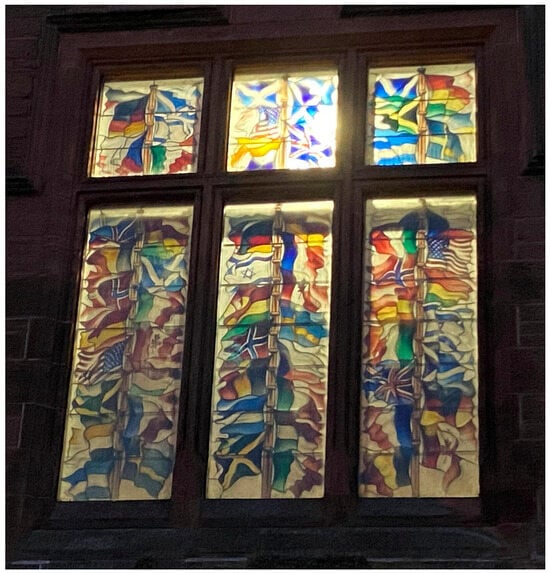
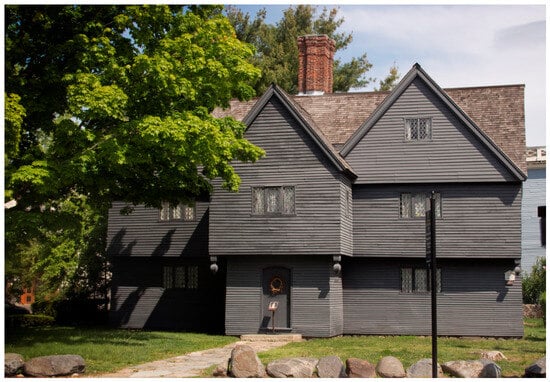
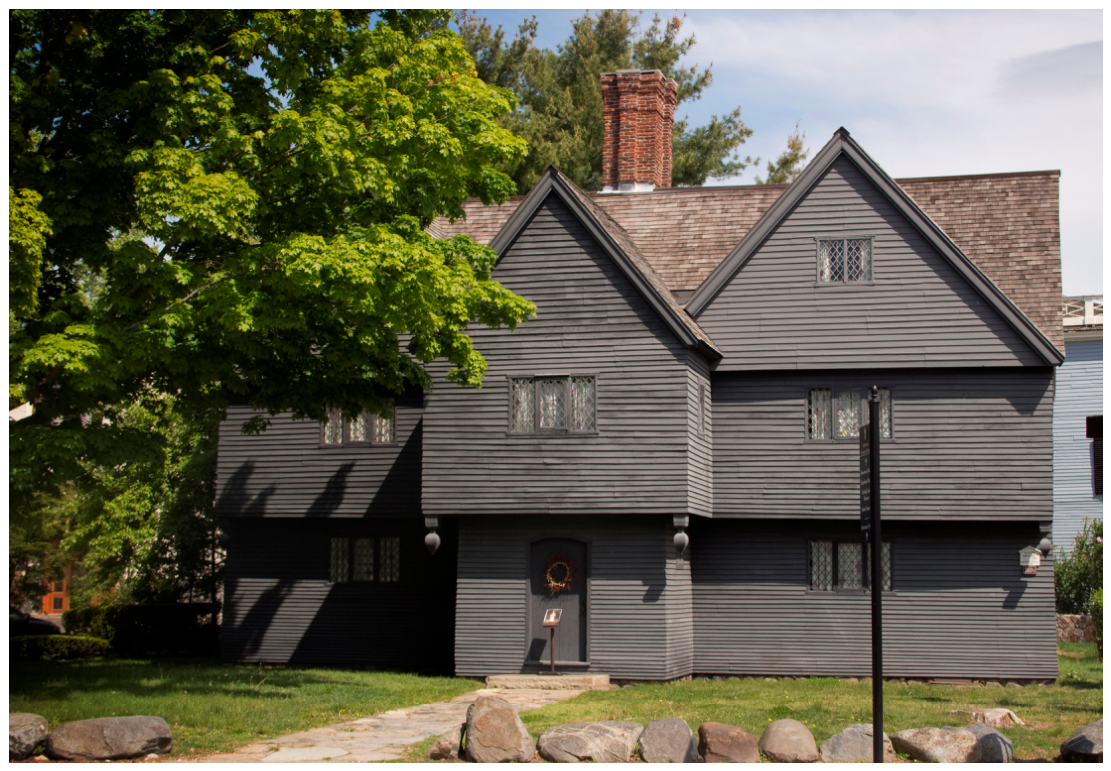
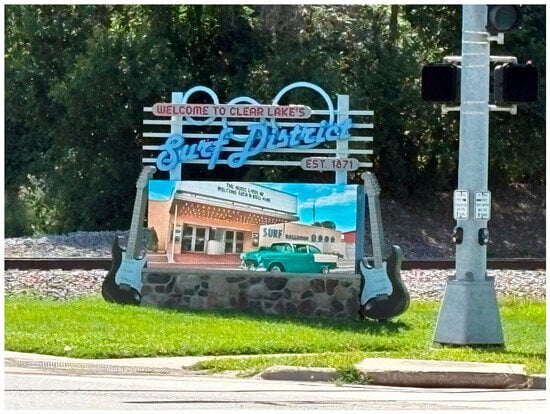
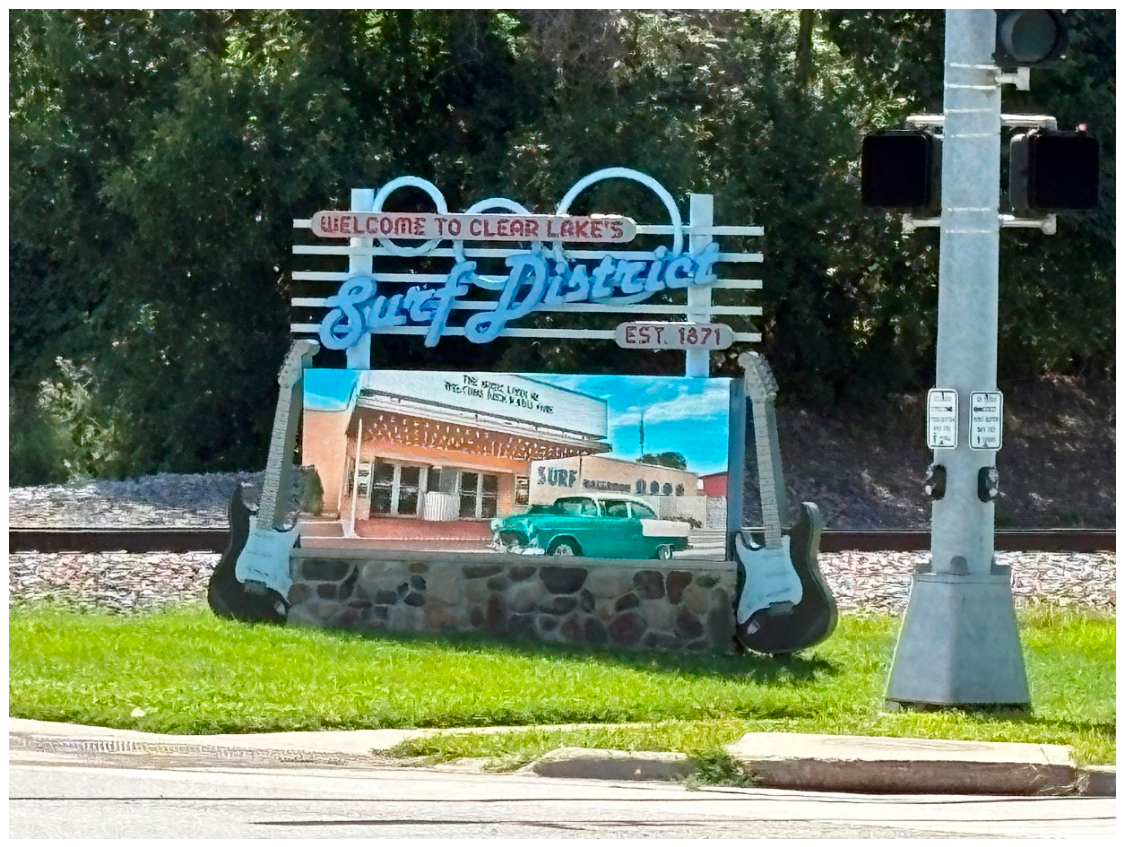
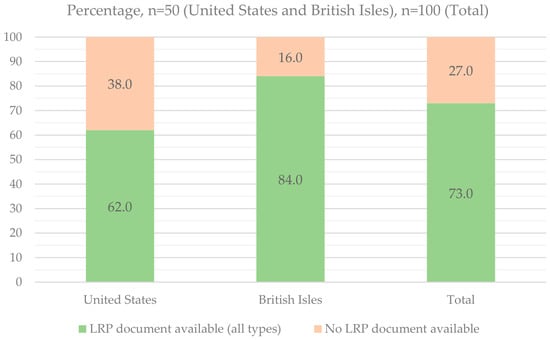
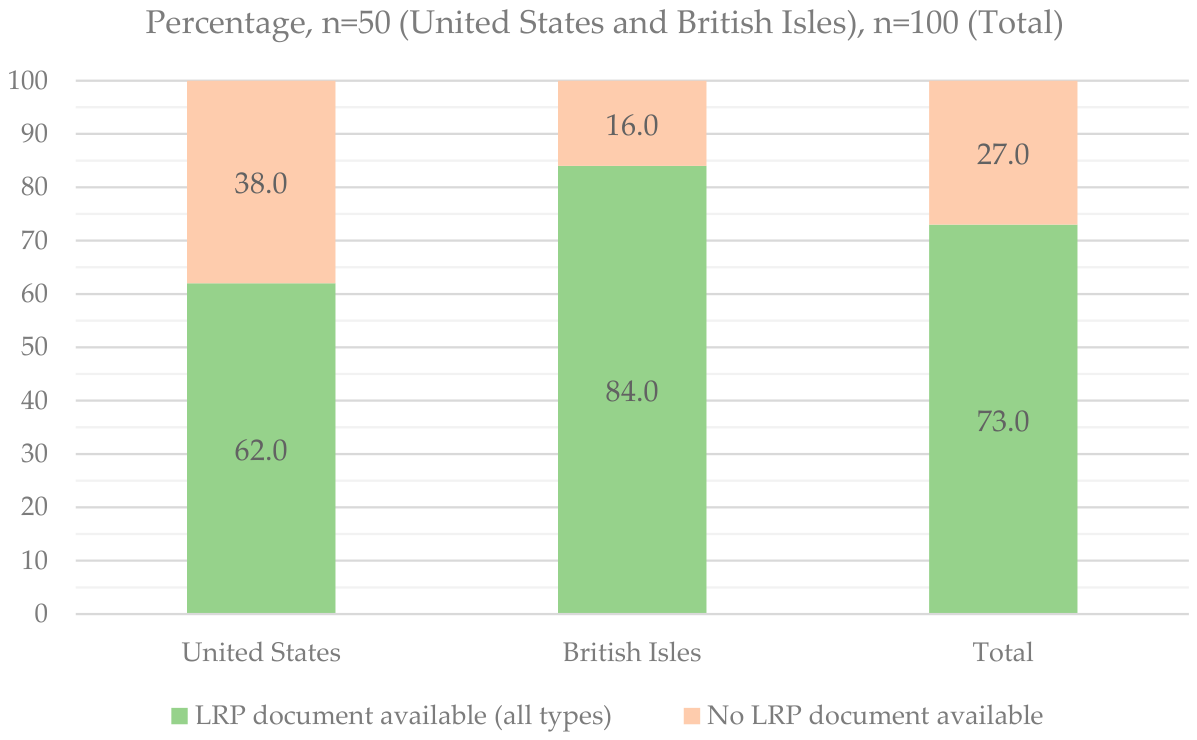
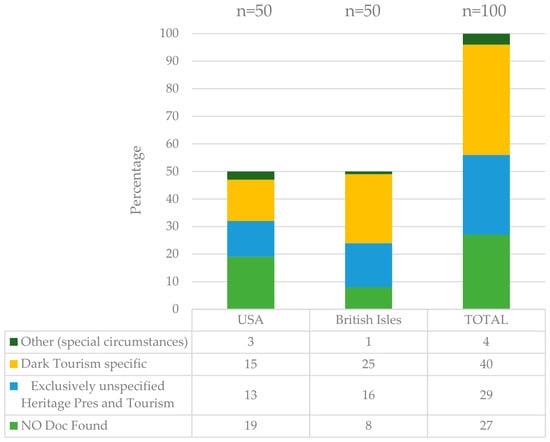
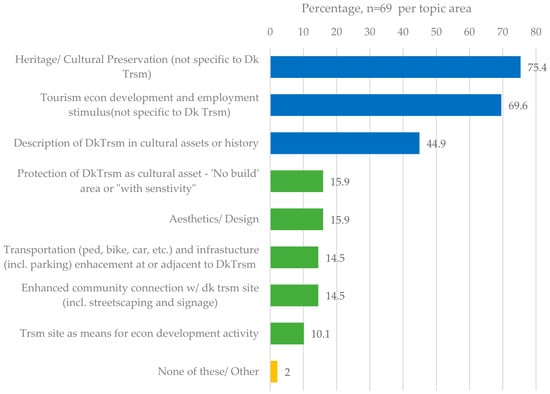
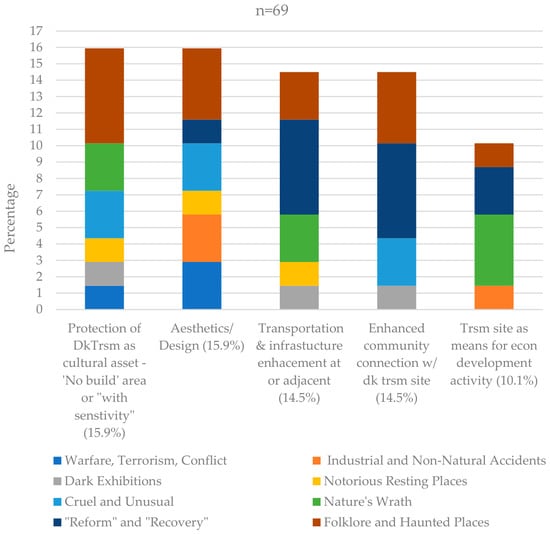
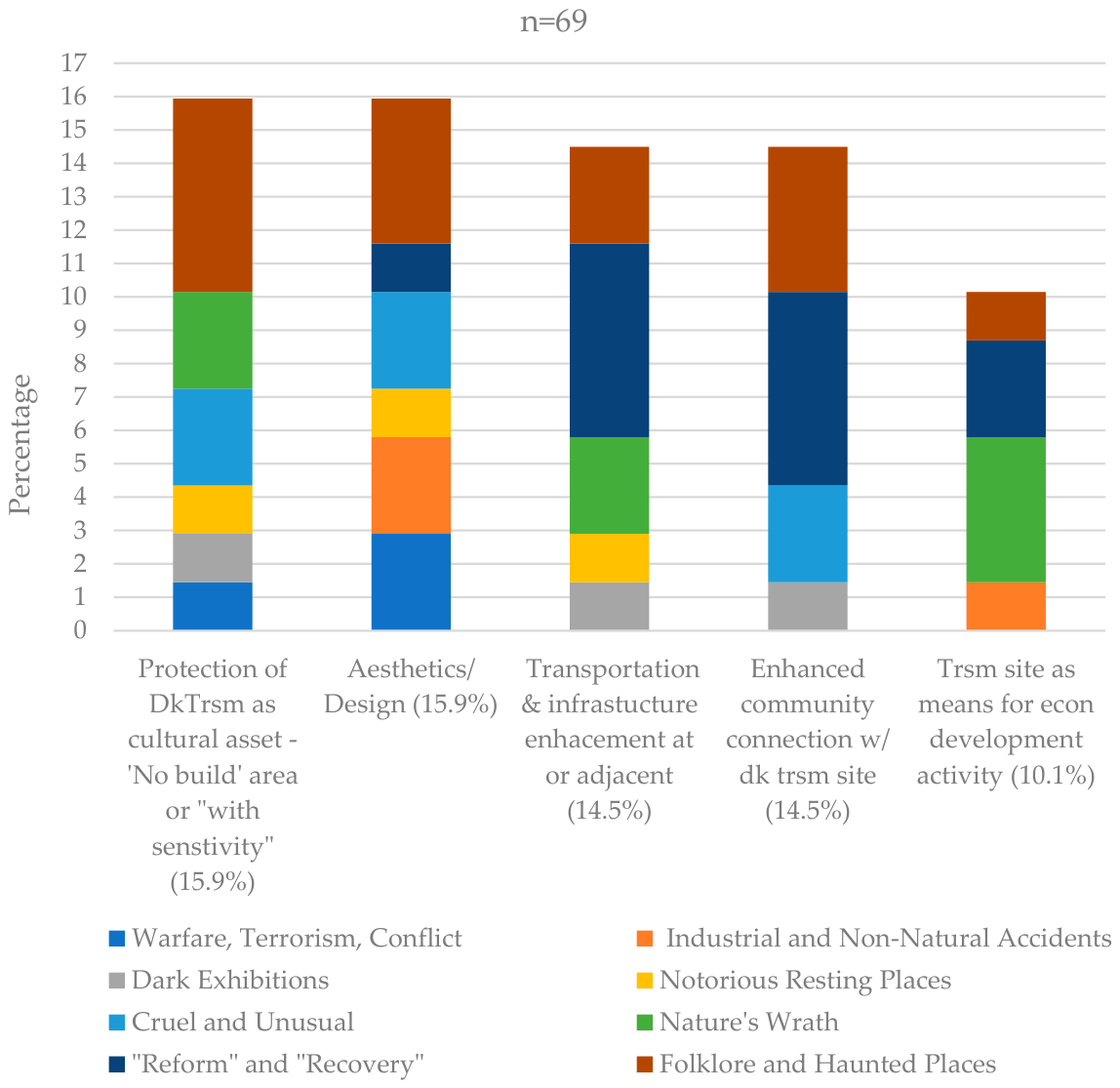
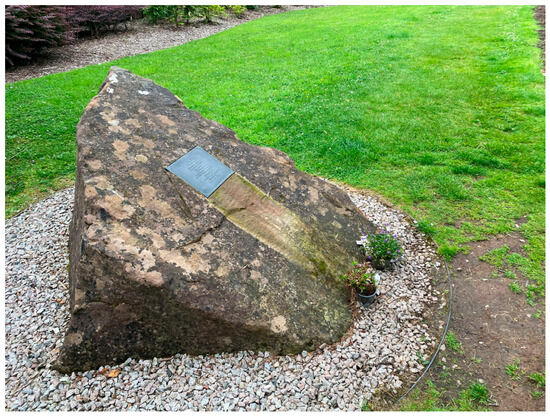
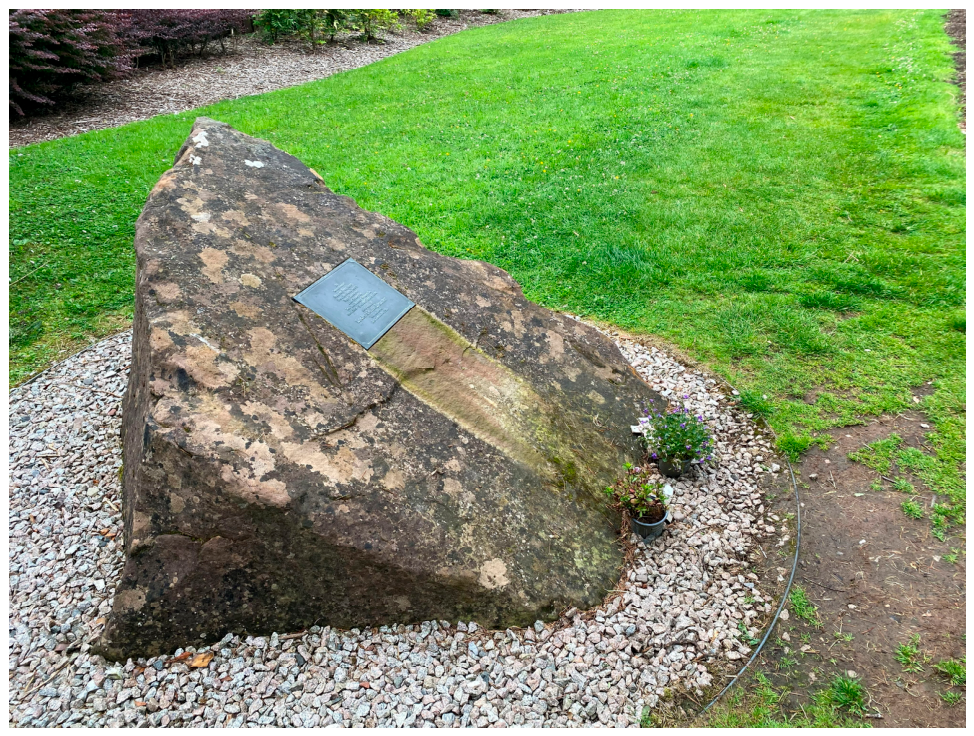

Disclaimer/Publisher’s Note: The statements, opinions and data contained in all publications are solely those of the individual author(s) and contributor(s) and not of MDPI and/or the editor(s). MDPI and/or the editor(s) disclaim responsibility for any injury to people or property resulting from any ideas, methods, instructions or products referred to in the content. |
© 2026 by the author. Licensee MDPI, Basel, Switzerland. This article is an open access article distributed under the terms and conditions of the Creative Commons Attribution (CC BY) license.