


Abstract
Digital technologies are reshaping how tourists and hospitality consumers search for, personalize, interpret, and share experiences. This study examines customer value co-creation (VCC) as a mechanism linking digital-age participation with consumer outcomes in tourism and hospitality. A PRISMA 2020-guided meta-analysis was conducted using Scopus, Web of Science Core Collection, and Hospitality & Tourism Complete. Forty peer-reviewed studies met the eligibility criteria. Random-effects models synthesized unadjusted correlations between VCC and its main antecedents and outcomes. VCC was positively associated with customer engagement, perceived innovation, and sustainability/CSR-related perceptions. On the outcome side, the strongest and most mature associations were observed for satisfaction (r = 0.64), loyalty (r = 0.61), and perceived value (r = 0.52). Extended outcomes, including experience evaluations, well-being, image, and equity-related indicators, were also positive on average but less empirically mature. High heterogeneity and wide prediction intervals show that VCC is better understood as a context-dependent mechanism rather than a universally strong predictor. Exploratory evidence suggests that digitally intensive service environments may strengthen the VCC–loyalty association. Although the evidence base is not cultural-tourism-specific, the findings are relevant to cultural and heritage settings where digital touchpoints can support interpretation, perceived authenticity, symbolic meaning, and post-visit advocacy.
1. Introduction
In the digital age, tourism consumption is increasingly shaped by interconnected pre-visit, on-site, and post-visit touchpoints, including social media, mobile interfaces, platform ecosystems, user-generated content, and AI-enabled interactions. This transformation has altered how destinations and hospitality firms communicate with consumers and how travelers search, evaluate, personalize, interpret, and share their experiences. The shift is especially consequential for cultural tourism, where destination meaning, authenticity, symbolic value, and experiential expectations are often formed through hybrid journeys that combine digital representations with embodied, place-based encounters. In such environments, competitive advantage depends not only on functional service quality but also on enabling visitors to participate in creating and circulating memorable experiences (Chang, 2018; Chatzigeorgiou et al., 2025; Christou et al., 2025b; Simeli et al., 2025).
Within this broader transformation, customer value co-creation (VCC) has emerged as a central lens for understanding how value is jointly formed through interactions among consumers, providers, technologies, and service ecosystems (Vargo & Akaka, 2012). Rather than treating value as embedded in outputs and delivered unilaterally by firms, service-dominant and customer-dominant perspectives conceptualize value as realized in use, context, and lived experience (Lusch & Vargo, 2006; Vargo & Lusch, 2008; Galvagno & Dalli, 2014; Heinonen & Strandvik, 2015). This is especially relevant to tourism and hospitality, where offerings are experiential, relational, and temporally extended, and to cultural tourism settings, where digitally mediated touchpoints increasingly shape destination meaning, authenticity, interpretation, and post-visit advocacy (Pine & Gilmore, 1999; Ribeiro et al., 2023; Chatzigeorgiou et al., 2025; Christou et al., 2025a; Simeli et al., 2025). VCC therefore connects digital marketing with consumer behavior by showing how engagement, participation, personalization, and interactive service design relate to experience and loyalty outcomes.
Empirical research has increasingly linked VCC in tourism and hospitality to antecedents such as customer engagement, innovation-related perceptions, sustainability/CSR cues, and supportive service conditions. It has also associated VCC with outcomes such as perceived value, satisfaction, loyalty, experience evaluations, well-being, image, and brand equity (Jaakkola & Alexander, 2014; Prebensen & Xie, 2017; González-Mansilla et al., 2019; Solakis et al., 2021, 2022; Carvalho & Alves, 2023; John & Supramaniam, 2024). Despite this growing body of work, the evidence remains difficult to interpret cumulatively. Studies often examine isolated relationships, use heterogeneous operationalizations of VCC, and rely on different analytical traditions. Some conceptualize VCC primarily as customer behavior, others as a perceived co-creation climate, and others as relational interaction quality. As a result, it remains unclear which VCC relationships are well established, which are still developing, and which remain emerging or highly context-dependent.
Three specific gaps motivate the present study. First, although prior reviews have helped organize the VCC literature, the tourism and hospitality field still lacks a domain-specific meta-analysis that quantifies the average associations between VCC and its main antecedents and outcomes. Existing reviews are primarily narrative or systematic, while adjacent quantitative syntheses often focus on broader service settings, different units of analysis, or non-hospitality contexts (Mandrella et al., 2020; Carvalho & Alves, 2023; C. Wang et al., 2024; J. Wang et al., 2025). This limits the ability of tourism and hospitality scholars to assess the cumulative strength of the evidence within their own domain.
Second, the field lacks a clear assessment of the empirical maturity of different VCC relationships. In tourism and hospitality, VCC is frequently linked to engagement, innovation, sustainability/CSR perceptions, satisfaction, perceived value, loyalty, experience evaluations, well-being, image, and equity-related outcomes. However, not all of these relationships have been studied with the same intensity. Some may represent relatively established associations, whereas others remain developing or emerging. Without a quantitative synthesis that reports both pooled associations and study coverage, it is difficult to distinguish well-supported links from promising but still provisional ones.
Third, the relevance of VCC to cultural tourism in the digital age remains theoretically underdeveloped. Cultural and heritage experiences are not evaluated only through functional service quality or immediate satisfaction. They are also shaped by perceived authenticity, symbolic meaning, interpretation, memory, identity connection, and post-visit advocacy, as cultural-tourism research has shown that authenticity, storytelling, and heritage interpretation are central to how visitors construct meaning and develop loyalty-related responses (Kolar & Žabkar, 2010; Campos et al., 2025; Leong et al., 2024). Digital touchpoints intensify these processes because visitors increasingly encounter, interpret, personalize, and share cultural experiences before, during, and after the visit. However, because the available empirical evidence spans tourism and hospitality more broadly, cultural tourism is not treated here as a formal sampling boundary. Instead, it is treated as an application domain in which the findings can be interpreted through the lenses of authenticity, meaning-making, visitor participation, and digitally mediated advocacy.
The present study addresses these gaps by conducting a PRISMA 2020-guided meta-analysis of the explicitly labeled VCC literature in tourism and hospitality. It synthesizes unadjusted bivariate associations between VCC and a theoretically central set of antecedents and outcomes in customer and tourist samples. In doing so, the study makes three contributions. First, it provides a domain-specific quantitative synthesis of VCC in tourism and hospitality rather than extrapolating from broader service research. Second, it organizes the evidence into a correlational nomological map that distinguishes core and extended antecedents and outcomes, while also indicating whether relationships are established, developing, or emerging. Third, it explains the relevance of VCC for cultural tourism by showing how co-creation may inform perceived authenticity, symbolic meaning, interpretation, and loyalty-related advocacy across digitally mediated visitor journeys.
Accordingly, the present meta-analysis addresses the following research questions:
- RQ1.
- What is the average association between key antecedents of customer value co-creation, namely customer engagement, perceived innovation, and sustainability/CSR-related perceptions, and VCC in tourism and hospitality contexts?
- RQ2.
- What is the average association between VCC and core consumer outcomes central to the satisfaction-value-loyalty chain, namely satisfaction, perceived value, and loyalty intentions or behavior, in tourism and hospitality contexts?
- RQ3.
- What is the average association between VCC and its extended antecedents and outcomes, such as attachment, prior experience evaluations, overall experience evaluations, well-being, image, and equity-related outcomes, and to what extent do these associations vary across studies?
These research questions guide the structure of the meta-analysis. The first question addresses core antecedent-side associations with VCC, the second focuses on core outcome-side associations within the satisfaction–value–loyalty chain, and the third examines extended correlates and the extent to which VCC associations vary across studies, as indicated by heterogeneity, prediction intervals, sensitivity analyses, and exploratory moderation.
2. Literature Review
2.1. Customer Value Co-Creation in Digitally Mediated Tourism and Hospitality Experiences
Tourism and hospitality are experience-based sectors in which value emerges across temporally extended customer journeys rather than at a single moment of service delivery. Because these journeys unfold across pre-visit, on-site, and post-visit phases, customer value depends not only on provider performance but also on how customers interpret, combine, and use multiple resources across touchpoints (Pine & Gilmore, 1999; Tax et al., 2013; Akaka et al., 2015; Voorhees et al., 2017; Becker et al., 2020).
This logic has become even more salient in digitally mediated environments. Social media, mobile interfaces, online communities, platform ecosystems, and increasingly intelligent systems shape how travelers search, compare, personalize, evaluate, and share experiences, while also expanding opportunities for interaction between providers and users (Pencarelli, 2020; Lange-Faria & Elliot, 2012). These dynamics are especially important in cultural and destination-based tourism, where symbolic meaning, authenticity, and interpretation are central to consumption and are increasingly shaped by digitally mediated representations and user-generated content (Baloglu & McCleary, 1999; Lange-Faria & Elliot, 2012). This is consistent with cultural heritage tourism research showing that authenticity and storytelling shape visitor interpretation, perceived value, and loyalty-related responses (Kolar & Žabkar, 2010; Leong et al., 2024). Within this context, VCC provides a useful lens for understanding how visitors actively contribute to experience formation and to the wider circulation of destination meanings, service narratives, and brand-related value. Recent syntheses likewise position VCC as an important explanatory mechanism through which tourism and hospitality firms foster differentiation, stronger customer relationships, and higher-order experiential and relational outcomes in competitive and digitally mediated markets (Busser & Shulga, 2018; Carvalho & Alves, 2023).
2.2. Theoretical Foundations of VCC: Service-Dominant, Critical Service, and Customer-Dominant Perspectives
VCC is most commonly grounded in service-dominant logic (S-D logic), which shifts attention from goods as units of exchange to service as the basis of value creation. From this perspective, value is not produced independently by the firm and then delivered to a passive customer; instead, value is co-created through interactions among multiple actors who integrate resources within a given context (Caridà et al., 2019). Value is therefore better understood as value-in-use or value-in-context, emerging in practice and experience rather than residing in outputs alone (Vargo & Lusch, 2008; Helkkula et al., 2012).
For tourism and hospitality, this perspective is especially compelling because services are experiential, co-present, and highly dependent on the customer’s own participation, interpretation, and emotional engagement. A hotel stay, restaurant visit, guided tour, resort experience, or destination encounter cannot be fully specified or evaluated prior to use. Instead, customers integrate provider resources with their own expectations, prior experiences, goals, companions, moods, and social environments. In such settings, value is inherently co-constructed and contingent on both interaction quality and the broader context of use (Chen et al., 2014; Akaka et al., 2015; Jaakkola et al., 2015).
Critical service logic further refines this view by distinguishing value creation from value co-creation. Grönroos and Voima (2013) argue that value formation primarily takes place in the customer’s sphere, where experiences are lived and interpreted, whereas firms can only facilitate or join that process under certain conditions. This distinction is highly useful for tourism and hospitality because it prevents an overly provider-centric reading of co-creation. Providers can design enabling systems, atmospheres, and touchpoints, but they do not fully control value realization. Instead, customers remain active agents who determine how, whether, and to what extent available resources become meaningful and valuable in their own situations (Grönroos & Voima, 2013).
Customer-dominant logic (C-D logic) extends this argument by locating value formation in the customer’s life context rather than in the firm’s service process. From this perspective, customers do not simply enter provider-designed interactions; rather, providers and their offerings become embedded in customers’ broader projects, routines, identities, and goals. In tourism, this means that value formation extends well beyond the encounter itself and includes planning, anticipation, social discussion, memory formation, sharing, and post-visit reflection. A hospitality or destination experience is therefore only one element in a larger consumer process shaped by personal and social lifeworlds (Heinonen et al., 2010; Becker et al., 2020).
Together, these perspectives position VCC in tourism and hospitality as a context-sensitive, multi-actor process through which customers integrate provider resources, technological interfaces, and personal meanings over time. This broader understanding is especially relevant in digitally mediated tourism environments, where important moments of value formation occur both during and beyond the immediate service encounter.
2.3. Co-Creation Versus Co-Production
Although the terms are sometimes used interchangeably, VCC should be distinguished from co-production and related constructs. Co-production usually refers to customer participation in specific operational, design, or delivery tasks, such as self-service or customization. VCC, by contrast, concerns the broader process through which customers and providers jointly contribute to the formation of experiential, symbolic, emotional, and relational value, often beyond the immediate service act (Prahalad & Ramaswamy, 2004; Payne et al., 2008; Etgar, 2008).
This distinction is important in tourism and hospitality because participation in service tasks does not automatically imply meaningful co-creation. A guest may use a mobile check-in system or configure service options, but such behaviors become co-creative only insofar as they contribute to perceived convenience, personalization, control, enjoyment, or meaning (Grönroos & Voima, 2013; Jaakkola et al., 2015). The same caution applies to adjacent constructs such as engagement, customer participation, citizenship behavior, and customer experience. Engagement is commonly treated as an antecedent or enabling condition, whereas experience is often treated as an outcome or sphere of value realization. Preserving this distinction helps maintain analytical precision and avoids collapsing VCC into any interactive or participatory behavior (Busser & Shulga, 2018; Carvalho & Alves, 2023).
2.4. Empirical Evidence on Antecedents and Outcomes of VCC in Hospitality and Tourism
Empirical research in tourism and hospitality suggests that VCC is embedded in a broader nomological network of motivational, contextual, experiential, and relational constructs. Review evidence indicates that commonly studied antecedents include customer-related factors such as engagement, participation readiness, trust, and attachment, as well as provider- or context-related factors such as service design, fairness, transparency, innovation, and, increasingly, sustainability-related cues that shape customers’ willingness to interact and collaborate in value formation (Carvalho & Alves, 2023).
Among these antecedents, customer engagement appears particularly salient because VCC requires active participation, psychological investment, and interactional openness. Perceived innovation also appears relevant, especially in digitally intensive service environments where interactivity, immediacy, and personalization reduce friction and invite customer input (Pencarelli, 2020; Solakis et al., 2022). Sustainability- and CSR-related perceptions may likewise support VCC by providing a shared ethical or value-based frame through which participation becomes more meaningful (Carvalho & Alves, 2023; Elliot et al., 2023).
On the outcome side, the literature most consistently links VCC with perceived value, satisfaction, and loyalty-related outcomes. This is theoretically plausible because co-creation can increase customers’ sense of control, relevance, personalization, and emotional connection, thereby strengthening both immediate evaluations and longer-term relational bonds (Cossío-Silva et al., 2016; Kamali et al., 2021; Prebensen & Xie, 2017; Solakis et al., 2022; Wahab et al., 2022). Research has also begun to examine broader experiential and strategic consequences, including experience evaluations, well-being, image, and brand or destination equity (Busser & Shulga, 2018; González-Mansilla et al., 2019; Henkens et al., 2021; V. C. Lyu et al., 2022; Lee et al., 2023; Uslu & Tosun, 2024). Taken together, the literature suggests that VCC is strategically important but context-sensitive, with relationships that vary across settings, measures, and service formats. This fragmentation provides a clear rationale for a meta-analytic synthesis focused on the customer-side correlational network of VCC in tourism and hospitality.
2.5. Conceptual Framework, Analytic Scope, and Expected Associations
Building on G-D, S-D, and customer-dominant logics, this study positions VCC as a link between attitudinal and contextual drivers, core marketing outcomes, and broader experiential, well-being, and brand-level consequences in tourism and hospitality service ecosystems (Vargo & Lusch, 2008; Heinonen et al., 2010; Ribeiro et al., 2023). Recent engagement–experience–loyalty frameworks conceptualize VCC as an interactive mechanism through which engaged customers and providers jointly shape service experiences that eventually translate into satisfaction, perceived value, and loyalty (Bharti et al., 2015; Cossío-Silva et al., 2016; J. Liu & Jo, 2020; Shoukat & Ramkissoon, 2022; Elgarhy & Abou-Shouk, 2024). Within this stream, VCC is consistently treated as a relational and experiential process situated at the heart of the evidence map of bivariate associations that connects guests’ attitudes and evaluations with canonical performance indicators and extended outcomes such as well-being and brand equity (Prebensen & Xie, 2017; John & Supramaniam, 2024). Figure 1 summarizes the conceptual framework and the distinction between core and extended antecedents and outcomes of value co-creation (VCC) examined in this meta-analysis.
Figure 1.
Conceptual framework of value co-creation (VCC): core and extended antecedents and outcomes in hospitality and tourism (1a–4d). All propositions are directional (positive) but are evaluated using bivariate (unadjusted) associations; the meta-analysis does not claim causal identification but tests whether the pattern of associations predicted by theory is consistently supported across available studies. Because the syntheses are conducted as separate two-variable meta-analyses (one VCC–correlate pair at a time), the resulting correlational nomological map is descriptive and does not estimate an interdependent multivariate correlation structure.
Against this backdrop, the present study differentiates between core and extended antecedents of VCC. Core antecedents are defined as constructs that (a) are repeatedly identified as primary enablers of customer participation in co-creation and (b) directly capture customers’ motivational or contextual readiness to engage in VCC. Customer engagement is widely described as a psychological state of cognitive, emotional, and behavioral investment in brand interactions that fosters co-creation behaviors and value outcomes in tourism and hospitality settings (Nangpiire et al., 2021; Shoukat & Ramkissoon, 2022; Yang et al., 2025). Perceived innovation, whether technological or service-process based, has likewise been shown to stimulate value co-creation behaviors by signaling novel, interactive service designs that invite customer input (Yen et al., 2020). This aligns with recent syntheses on the evolution of digital tourism marketing toward AI-immersive and metaverse-linked journeys, where interactivity and personalization become central service cues (Christou et al., 2025b). Sustainability- and CSR-related perceptions constitute a third core driver: studies of sustainable tourism and hospitality show that when sustainability is meaningfully integrated and communicated, guests are more willing to participate in co-creating responsible and meaningful experiences with providers (Font et al., 2021; Tuan et al., 2019). Recent evidence highlights that sustainability-oriented marketing strategies are increasingly embedded in hotel contexts, shaping how firms position and communicate their sustainability commitments (Marco-Gardoqui et al., 2024; Dias et al., 2024). The review formulates expected associations (1–4) to structure the synthesis; however, all estimates are pooled zero-order correlations and are interpreted as associative (non-causal) evidence. On this basis, engagement, innovation-related perceptions, and sustainability/CSR-related perceptions are defined as core antecedents of VCC and the following expected associations (propositions) are specified:
- 1a. Customer engagement is positively associated with value co-creation (VCC).
- 1b. Perceived innovation (e.g., innovative services, technologies, or processes) is positively associated with VCC.
- 1c. Sustainability- and CSR-related perceptions are positively associated with VCC.
In contrast, extended antecedents are treated as constructs that can facilitate VCC but are more distal or context-dependent in the causal chain. Customer attachment reflects affective bonds and psychological closeness to a place or brand; recent work in hospitality and tourism links emotional brand attachment and place attachment to stronger value co-creation behaviors, yet these constructs are not as universally modeled as primary drivers of VCC as engagement itself (Suntikul & Jachna, 2016; Kalra & Kalra, 2024). Prior experience evaluations can also act as enabling conditions: positive prior experiences may build trust and familiarity that make customers more willing to co-create in subsequent encounters, but the literature also situates experience as a consequence of co-creation, with VCC enhancing tourists’ experiential evaluations and life satisfaction (Mathis et al., 2016; J. Lyu et al., 2022). Related evidence suggests that perceived value can contribute to social cohesion and life satisfaction, underscoring the broader well-being implications of tourism experiences (Yeh et al., 2024). For these reasons, attachment and prior experience are included as extended antecedents that enrich, rather than define, the core VCC driver set, and the following associations (propositions) are expected:
- 2a. Customer attachment to the service provider or brand is positively associated with VCC.
- 2b. Customers’ evaluations of prior service or tourism experiences are positively associated with VCC in subsequent encounters.
On the outcome side, the classification follows the logic of canonical service and tourism loyalty models. A substantial body of research shows that VCC enhances tourists’ perceived value and satisfaction, which in turn underpin revisit intentions and loyalty, effectively embedding VCC in the classic satisfaction–value–loyalty chain (Prebensen & Xie, 2017; Solakis et al., 2022; Xu et al., 2021). This pattern is consistent with broader tourism service evidence linking brand image and trust to customer satisfaction and subsequent loyalty outcomes (Le & Khuong, 2023). Empirical studies consistently document positive associations between VCC and perceived value in hospitality (Solakis et al., 2022), as well as between VCC and both loyalty intentions and behavior across service settings (Cossío-Silva et al., 2016; Kamali et al., 2021). Accordingly, satisfaction, perceived value, and loyalty are designated as core outcomes of VCC because they represent widely accepted, high-priority performance indicators that appear consistently across VCC models in tourism and hospitality. On this theoretical basis, the following associations (propositions) are expected:
- 3a. VCC is positively associated with customer satisfaction.
- 3b. VCC is positively associated with perceived value.
- 3c. VCC is positively associated with customer loyalty (e.g., revisit, repurchase, recommendation, word-of-mouth intentions or behavior).
Beyond these core outcomes, the literature has begun to examine a broader set of extended consequences of VCC. Empirical work links co-creation behaviors to enriched customer experiences, suggesting that interactive value formation shapes how guests evaluate the overall tourism or accommodation experience (Mathis et al., 2016; J. Lyu et al., 2022). Other studies highlight emotional and quality-of-life effects, showing that VCC can foster tourists’ emotional well-being alongside satisfaction (Uslu & Tosun, 2024). At a more strategic level, value co-creation has been found to influence brand- and destination-level constructs such as image and brand equity in hotel contexts (González-Mansilla et al., 2019). These outcomes, experience evaluations, well-being, image, and brand equity, are therefore conceptualized as extended outcomes: they capture the wider experiential and strategic footprint of VCC but sit further downstream than the core satisfaction–value–loyalty chain. On this theoretical basis, the following propositions are formed:
- 4a. VCC is positively associated with customers’ overall evaluations of the service or tourism experience.
- 4b. VCC is positively associated with customer well-being.
- 4c. VCC is positively associated with brand or destination image.
- 4d. VCC is positively associated with equity-based outcomes (e.g., brand or destination equity indicators).
In this review, the proximal (“core”) versus distal (“extended”) distinction was specified a priori to organize the correlational nomological map rather than to rank constructs by importance. Core correlates refer to constructs typically positioned close to VCC in tourism and hospitality co-creation models, whereas extended correlates capture more distal enabling conditions or downstream experiential, well-being, image, and equity-related consequences. To make this classification reproducible, Appendix A (Table A2) reports the decision criteria and empirical coverage for each relationship. Separately, empirical maturity is indicated by the number of independent samples contributing to each synthesis: relationships are described as emerging when k < 5, developing when 5 ≤ k < 10, and established when k ≥ 10.
In operational terms, the proximal (“core”) set was chosen because these correlates reflect distinct, managerially salient cue categories that canonical tourism/hospitality models repeatedly place next to VCC (engagement as a motivational state; innovation as a service-design cue; sustainability/CSR as a meaning/ethics cue), together with the immediate performance outcomes most often theorized as consequences of co-creation (satisfaction, perceived value, loyalty). Other antecedents frequently discussed in the broader VCC and service literature (e.g., trust, empowerment, service quality, perceived justice, platform usability) remain important but could not be synthesized here because extractable bivariate correlations with VCC were too sparse or operationalizations were too heterogeneous for meaningful pooling. Accordingly, the proximal–distal map should be interpreted as a focused correlational subset of the explicit VCC literature in tourism and hospitality, not as an exhaustive taxonomy of all constructs related to co-creation.
Although the synthesized evidence spans tourism and hospitality more broadly, the framework is especially relevant to culturally oriented destinations and heritage-based experiences, where digitally mediated touchpoints increasingly shape engagement, experience interpretation, destination meaning, perceived authenticity, and post-visit advocacy.
3. Materials and Methods
3.1. Protocol and Reporting Standard
This review was conducted and reported in accordance with the PRISMA 2020 guidelines for systematic reviews and meta-analyses (Page et al., 2021). The completed PRISMA 2020 checklist is provided in Supplementary File S4. The review protocol was not preregistered. To support transparency and reproducibility, the search strings, screening decisions, extraction/granulation tables, descriptive checklist, coding rules, PRISMA checklist, and sensitivity summaries are provided in Supplementary Files S1–S6. The review focuses on empirical quantitative studies examining customer-side value co-creation (VCC) in tourism and hospitality contexts.
3.2. Eligibility Criteria
Studies were eligible for inclusion if they met five criteria. First, they had to be conducted in a hospitality, tourism, or closely related service setting, such as hotels, resorts, restaurants, peer-to-peer accommodation, tour operators, attractions, or destinations. Second, the sample had to consist of customers, guests, tourists, or visitors rather than employees, managers, or firms. Third, the study had to include at least one customer-side measure of VCC, such as co-creation behavior, perceived co-creation climate, or another construct explicitly aligned with interactive value formation in the customer experience sphere. Studies focusing only on narrow operational co-production activities were excluded unless the authors explicitly linked them to broader value co-creation processes.
Fourth, the study had to report a bivariate, unadjusted association between VCC and at least one antecedent or outcome included in the conceptual framework, or provide sufficient information to recover an equivalent correlation coefficient. Controlled multivariate coefficients were not pooled because they are not comparable across model specifications. Fifth, the study had to be published in a peer-reviewed academic journal and written in English. Conceptual papers, qualitative studies, conference proceedings, dissertations, book chapters, and reviews without primary quantitative data were excluded. When multiple publications appeared to use overlapping data, the most comprehensive or recent report was retained to avoid double-counting.
Studies were not required to focus exclusively on cultural tourism. The review was designed to synthesize the broader tourism and hospitality VCC literature. Cultural tourism is therefore treated as an interpretive and managerial application domain rather than as a formal eligibility criterion.
3.3. Search Strategy
Electronic searches were conducted in December 2025 in three databases: Scopus, Web of Science Core Collection, and Hospitality & Tourism Complete. The search strategy combined a VCC-related term block with tourism and hospitality sector terms. The VCC block included terms such as “value co-creation,” “co-creation of value,” and “value cocreation.” The sector block included terms such as “hospitality,” “hotel*,” “resort*,” “restaurant*,” “cruise*,” “touris*,” “travel*,” “attraction*,” “peer-to-peer accommodation*,” and “destination*.”
To capture studies that explicitly positioned VCC as a focal construct, VCC terms were searched in the title field in Scopus and Web of Science, while tourism and hospitality terms were searched in broader title/abstract/keyword fields, using each database’s equivalent syntax. The equivalent title-field restriction was applied in Hospitality & Tourism Complete. This conservative strategy was selected to privilege construct centrality over breadth. Searches were limited to English-language peer-reviewed journal publications published between 2000 and 2025. Full database-specific search strings and field restrictions are provided in Supplementary File S1.
This title-field strategy was intentionally conservative. It improved precision and ensured that included studies explicitly labeled VCC as a central construct. However, it may have excluded studies in which co-creation operated as an embedded mechanism or mediating construct without appearing in the title. This limitation is acknowledged in Section 7. As a sensitivity check, an expanded Scopus query searched the VCC term block in title, abstract, and keywords while keeping all other restrictions constant. The expanded query retrieved additional records but did not add new independent meta-analyzable samples beyond the final dataset.
3.4. Study Selection
The database searches retrieved 386 records: 205 from Scopus, 178 from Web of Science Core Collection, and 3 from Hospitality & Tourism Complete. After removing 162 duplicates and one retracted article, 223 unique records remained for title and abstract screening. At this stage, 80 records were excluded as clearly ineligible, leaving 143 articles for full-text assessment.
The full texts of these 143 articles were assessed against the eligibility criteria. Articles were excluded if VCC was only discussed conceptually, if VCC was not clearly operationalized as a customer-side co-creation construct, if the required VCC–antecedent or VCC–outcome relationships were not examined, if the sample did not consist of customers or tourists, if the study was outside the tourism and hospitality domain, or if no extractable zero-order effect size was available. In total, 103 full-text articles were excluded. The remaining 40 studies met all eligibility criteria and were retained for meta-analysis.
Deduplication was performed using DOI matching and exact or near-exact title matching, followed by manual verification. Two reviewers independently screened records at the title/abstract stage using Yes/No/Maybe decisions. Records were excluded only when both reviewers coded them as ineligible; disagreements and uncertain cases were carried forward to full-text assessment. The PRISMA 2020 flow of records through identification, screening, eligibility assessment, and inclusion is shown in Figure 2. The full screening log and inter-rater reliability calculations are provided in Supplementary File S1.
Figure 2.
PRISMA 2020 flow diagram of study identification and selection.
3.5. Coding and Effect-Size Extraction
For each eligible study, study-level and effect-size information was extracted using a structured coding sheet. The extracted information included the article citation, study context, sample type and size, VCC operationalization, antecedents and outcomes examined, reported associations, and extraction notes. Construct classification and effect-size extraction followed a prespecified codebook, with ambiguous cases documented in the extraction notes.
The meta-analytic dataset was organized in long format, with each row representing one unique StudyID × VCC–correlate pair. For each pair, the extracted information included the StudyID, pair label, correlation coefficient (r), and sample size (N). When a study reported multiple indicators for the same conceptual construct, the correlations were transformed to Fisher’s z, averaged, and back-transformed to a single aggregate r. This ensured that each StudyID contributed only one effect size per conceptual pair.
The primary effect size was the bivariate, unadjusted association between VCC and each antecedent or outcome. Depending on primary-study reporting, this association was extracted either as a manifest correlation or as a construct/latent correlation from SEM/PLS outputs. Because these statistics are not strictly identical, the effect source was coded for transparency and examined in sensitivity checks. Across the final input dataset, 65 VCC–correlate associations were synthesized. Of these, 44 were directly reported correlations and 21 involved aggregation across multiple indicators of the same construct.
To address quality and transparency, each StudyID was also appraised using domains adapted from the AXIS approach for cross-sectional studies. The coded domains were sampling clarity, measurement validity, common-method variance handling/reporting, and statistical transparency for effect-size extraction. These judgments are reported descriptively in the Supplementary Materials and were not combined into an overall quality score.
3.6. Statistical Analysis
Separate meta-analyses were conducted for each VCC–correlate pair. All statistical analyses were conducted using jamovi 2.7.12 and JASP 0.95.4.0, with the two software packages used to cross-check the consistency of the main pooled estimates and sensitivity diagnostics. All analyses used Fisher’s z-transformed correlations, with sampling variance computed as 1/(N − 3). Pooled estimates were back-transformed and reported as correlations (r) for ease of interpretation. Because the included studies varied in context, measurement, and sample characteristics, random-effects models were used throughout. The primary models used restricted maximum likelihood (REML) to estimate between-study variance (τ2). DerSimonian and Laird (1986) estimates were also computed as a robustness check.
Heterogeneity was assessed using Cochran’s Q, τ2, and I2 (Higgins & Thompson, 2002) For syntheses with sufficient coverage, 95% prediction intervals were reported to indicate the expected range of true effects in a new setting. Hartung–Knapp–Sidik–Jonkman adjusted confidence intervals were also reported as a robustness check when appropriate, especially for syntheses with modest k and high heterogeneity. Under high heterogeneity, pooled correlations were interpreted as average tendencies rather than universal effects.
Publication bias and small-study effects were examined using funnel-plot asymmetry diagnostics and sensitivity analyses when enough studies were available (Egger et al., 1997; L.-L. Ma et al., 2020). Egger’s regression test and Kendall’s rank-correlation test were reported cautiously, particularly when k was small. Orwin’s (1983) fail-safe N was computed using a trivial-effect benchmark of r = 0.10 and assuming missing studies with r = 0. Duval and Tweedie’s (2000) trim-and-fill procedure was used as an additional sensitivity check. Leave-one-out analyses were inspected to assess whether pooled estimates were disproportionately influenced by single studies.
Exploratory moderator analyses were conducted only where the evidence base was sufficiently large. Specifically, mixed-effects moderator analyses were estimated for the two largest outcome syntheses, VCC–satisfaction and VCC–loyalty. Prespecified moderators included service type, region, VCC operationalization, publication year, and digital intensity of the service context. Digital intensity was coded as high when focal co-creation touchpoints were primarily mediated by digital technologies or online platforms, and low/unclear otherwise. These moderator findings were interpreted as exploratory because of high heterogeneity and limited subgroup sizes.
This analytic structure mirrors the research questions by separating antecedent-side syntheses, outcome-side syntheses, and analyses of heterogeneity, robustness, and exploratory moderation.
4. Results
The results are organized in four substantive blocks that follow the conceptual framework: core antecedents of VCC, extended antecedents of VCC, core consumer outcomes, and extended consumer outcomes. Heterogeneity statistics, prediction intervals, sensitivity checks, and exploratory moderator analyses are used to assess the consistency and context-dependence of these associations. For each VCC–correlate pair, we report random-effects estimates (REML) of bivariate, unadjusted associations, expressed as back-transformed correlations (r), together with τ2, I2, Q statistics, and, where appropriate, 95% prediction intervals. Under high heterogeneity, pooled correlations are interpreted as average tendencies rather than universal effects.
For interpretation, relationships with k < 5 are treated as emerging, relationships with 5 ≤ k < 10 as developing, and relationships with k ≥ 10 as established within the explicitly labeled VCC tourism and hospitality literature. This classification reflects empirical coverage rather than theoretical importance. Therefore, a relationship may be conceptually central but still empirically emerging if only a small number of independent samples are available.
4.1. Core Antecedents of Value Co-Creation
Customer engagement showed a strong positive association with VCC (Proposition 1a; k = 3, r = 0.71, 95% CI [0.43, 0.87]). Heterogeneity was very high (I2 = 98.8%; τ2 = 0.147), indicating substantial dispersion across a small evidence base (Table 1). Given potential construct proximity between some engagement operationalizations and behavior-based VCC measures, we provide a brief measurement taxonomy for the contributing studies (Appendix A, Table A1). As a planned sensitivity check, leave-one-out analysis shows that excluding the most influential study reduces the pooled association to r = 0.59, suggesting that the mean estimate should be interpreted cautiously and as measurement- or context-sensitive rather than universal.
Table 1.
Random-effects meta-analytic correlations between core antecedents and VCC in hospitality and tourism (Propositions 1a–1c) *.
Perceived innovation also showed a strong positive association with VCC (Proposition 1b; limited evidence base, k = 4, r = 0.71, 95% CI [0.62, 0.78]). Although the mean association is large, heterogeneity remained high (I2 = 90.3%; τ2 = 0.026).
Sustainability/CSR-related perceptions were likewise strongly associated with VCC (Proposition 1c; k = 6, r = 0.65, 95% CI [0.46, 0.79]). Heterogeneity was very high (I2 = 97.9%; τ2 = 0.120), and the 95% PI was wide ([−0.26, 0.95]), highlighting context sensitivity. Because the PI crosses zero, sustainability/CSR perceptions should be treated as a strongly context-contingent correlate of VCC rather than a uniformly positive association across all settings.
Among the core antecedents, customer engagement and perceived innovation show the strongest average associations with VCC (r = 0.71 in both cases), followed by sustainability/CSR-related perceptions (r = 0.65). However, the maturity of the evidence differs across relationships. Engagement–VCC and innovation–VCC should be treated as emerging relationships because they are based on fewer than five independent samples, whereas sustainability/CSR perceptions–VCC represents a developing relationship. Heterogeneity is high across all three associations, and the prediction interval for sustainability/CSR perceptions crosses zero. This suggests that sustainability-related co-creation effects are positive on average but likely vary by context, segment, and implementation quality.
4.2. Extended Antecedents of Value Co-Creation
Customer attachment showed a moderate positive association with VCC (Proposition 2a; k = 3, r = 0.38, 95% CI [0.18, 0.55]), with high heterogeneity (I2 = 94.6%). Given k = 3, this estimate should be interpreted cautiously (Table 2).
Table 2.
Random-effects meta-analytic correlations between extended antecedents and VCC in hospitality and tourism (Propositions 2a–2b) *.
Prior experience evaluations were positively associated with VCC (Proposition 2b; k = 3, r = 0.56, 95% CI [0.26, 0.76]), again with substantial heterogeneity (I2 = 97.9%). This pattern is consistent with a feedback-loop interpretation in which prior experiences are linked to subsequent willingness to co-create. Here, “prior” refers to evaluations of earlier/past experiences, not the focal/current encounter.
Among the extended antecedents, prior experience evaluations show a stronger average association with VCC (r = 0.56) than customer attachment (r = 0.38). Both relationships are classified as emerging because each is based on three independent samples. The high I2 values indicate substantial between-study variability, so these associations should not be interpreted as stable across tourism and hospitality settings. Instead, they suggest that attachment and prior experience may facilitate VCC in some contexts, but the evidence remains provisional and requires further primary research.
Taken together, the antecedent-side results indicate that customer engagement, perceived innovation, sustainability/CSR-related perceptions, customer attachment, and prior experience evaluations are positively associated with VCC in tourism and hospitality. However, several antecedent relationships are based on small numbers of studies and show high heterogeneity. Therefore, these findings should be interpreted as positive average associations whose strength depends on measurement and context, rather than as uniform effects across all settings.
4.3. Core Outcomes of Value Co-Creation
Table 3 shows that VCC was strongly associated with satisfaction (Proposition 3a; k = 11, r = 0.64, 95% CI [0.55, 0.71]). Heterogeneity was very high (I2 = 95.4%; τ2 = 0.052), and the PI suggests substantial dispersion across settings ([0.21, 0.86]), see Appendix A, Figure A1.
Table 3.
Random-effects meta-analytic correlations between VCC and core outcomes in hospitality and tourism (Propositions 3a–3c) *.
VCC was also positively associated with perceived value (Proposition 3b; k = 5, r = 0.52, 95% CI [0.31, 0.69]), with very high heterogeneity (I2 = 96.7%) and a wide PI ([−0.42, 0.92]), see Appendix A, Figure A2. Because the PI crosses zero, this association is best interpreted as context-contingent rather than generally uniform across hospitality/tourism settings.
Finally, VCC was strongly positively associated with loyalty (intentions/behavior; Proposition 3c; k = 15, r = 0.61, 95% CI [0.49, 0.70]). Heterogeneity was again very high (I2 = 97.4%; τ2 = 0.106), and the PI was wide ([−0.03, 0.89]), an seein in Appendix A, Figure A3. Sub-syntheses by loyalty operationalization indicate similarly positive associations for intention-based loyalty (k = 9, r = 0.63) and behavioral/overall loyalty (k = 6, r = 0.56) (Appendix A, Table A4), although k is smaller within each subgroup. Because the PI includes near-zero values, the VCC–loyalty association should be interpreted as context-contingent despite its positive mean effect.
Among the core outcomes, VCC shows the strongest average association with satisfaction (r = 0.64), followed closely by loyalty (r = 0.61) and perceived value (r = 0.52). The VCC–satisfaction and VCC–loyalty relationships can be considered established within the explicitly labeled VCC tourism and hospitality literature because they are based on at least ten independent samples. The VCC–perceived value relationship is developing. Nevertheless, heterogeneity is very high across all three outcome syntheses. The prediction interval for satisfaction remains positive, whereas the intervals for perceived value and loyalty include negative or near-zero values. This means that VCC is positively related to core consumer outcomes on average, but its effect is not equally strong across all service settings, measurement approaches, or digital contexts.
Exploratory moderator analyses for the two largest syntheses (satisfaction and loyalty) are summarized in Table 4. For loyalty, publication year was a positive moderator in univariate meta-regression (βyear = 0.117 on Fisher’s z, SE = 0.045, p = 0.023), but this trend was sensitive to the most recent studies (excluding 2025: βyear = 0.033, p = 0.521). Digital intensity of the service context also showed suggestive moderation for loyalty (high vs. low/unclear digital: p ≈ 0.051), whereas moderators for satisfaction were not statistically clear, given heterogeneity and limited k in subgroups. This pattern is relevant to digitized tourism and hospitality environments, where social, mobile, platform-based, and AI-enabled touchpoints may amplify the loyalty benefits of co-creation. However, given the borderline subgroup result and the high between-study heterogeneity, this finding is best interpreted as exploratory rather than confirmatory.
Table 4.
Exploratory moderation analyses for VCC–satisfaction and VCC–loyalty associations *.
Effect-source sensitivity (manifest vs. construct/latent). Because manifest bivariate correlations were rarely reported in the primary literature (4/65 total associations; typically, k = 1 per outcome pair), formal manifest-only pooling was not feasible. As a robustness check, we therefore re-estimated the key outcome syntheses using only construct/latent correlations. The conclusions were materially unchanged: for VCC–Satisfaction, r = 0.64 (k = 11) versus r = 0.66 (k = 10) in latent-only analyses; for VCC–Perceived value, r = 0.52 (k = 5) versus r = 0.52 (k = 4); and for VCC–Loyalty (intentions/behavior pooled), r = 0.61 (k = 15) versus r = 0.61 (k = 13). Details are reported in Supplementary File S6 (Effect source sensitivity worksheet).
Table 4 explores whether selected study-level characteristics help explain variability in the two largest outcome syntheses. The clearest pattern appears for the VCC–loyalty relationship. Digitally intensive service environments show a higher pooled association (r = 0.69) than low or unclear digital intensity environments (r = 0.48), although the subgroup difference is borderline and should be interpreted cautiously. Publication year is also positively associated with VCC–loyalty effect sizes, but this pattern is sensitive to the most recent studies. These findings therefore provide exploratory rather than confirmatory evidence that digital mediation may strengthen the loyalty-related relevance of VCC. For cultural tourism applications, this suggests that digital touchpoints may amplify post-visit advocacy and loyalty when they support meaningful interpretation and participation, but the evidence is not yet strong enough to support universal claims.
Figure 3 visualizes the positive publication-year trend in the VCC–loyalty association. However, because this trend becomes non-significant after excluding the most recent studies, it should be interpreted as a tentative indication of temporal change rather than as a stable longitudinal pattern.
Figure 3.
Scatterplot of publication year versus VCC–loyalty effect sizes (Fisher’s z) with fitted meta-regression line.
4.4. Extended Outcomes of Value Co-Creation
Table 5 shows that VCC was positively associated with experience evaluations (Proposition 4a; k = 4, r = 0.54, 95% CI [0.45, 0.62]). Although the direction is consistent, heterogeneity was high (I2 = 85.4%). Here, “experience evaluations” refer to evaluations of the focal/current experience.
Table 5.
Random-effects meta-analytic correlations between VCC and extended outcomes in hospitality and tourism (Propositions 4a–4d) *.
VCC was strongly associated with customer well-being (limited evidence base, k = 3, r = 0.68, 95% CI [0.52, 0.80]), with substantial heterogeneity (I2 = 90.9%).
For image-related outcomes (Proposition 4c; limited evidence base, k = 3), the pooled association was positive on average (r = 0.59) but highly uncertain (95% CI [−0.07, 0.89]) with extreme heterogeneity (I2 = 99.5%), so inference should be treated as provisional. Given the conceptual breadth of “image” and “equity” constructs in tourism (e.g., brand image, destination image, brand equity subdimensions), Table A6 (in Appendix A) lists the specific operationalizations pooled under these labels to support transparent interpretation.
VCC was also positively associated with equity-based outcomes (Proposition 4d; k = 5, r = 0.61, 95% CI [0.41, 0.75]), again with very high heterogeneity (I2 = 98.0%; 95% PI [−0.33, 0.94]). The PI crosses zero, indicating substantial context contingency in equity-related associations. From a tourism-management perspective, these broader image- and equity-related associations are especially noteworthy because they suggest that the implications of co-creation may extend beyond immediate transactional evaluations to more strategic destination- and brand-facing outcomes. At the same time, the wide intervals and high heterogeneity indicate that these broader returns are unlikely to be uniform across service and destination contexts.
Among the extended outcomes, the strongest average association is observed for customer well-being (r = 0.68), followed by equity-based outcomes (r = 0.61), brand/destination image (r = 0.59), and experience evaluations (r = 0.54). However, most of these relationships are emerging because they are based on fewer than five independent samples. Equity-based outcomes represent a developing relationship, but the prediction interval crosses zero, indicating substantial context contingency. The image-related association is particularly uncertain because its confidence interval includes zero and heterogeneity is extreme. Overall, these findings suggest that VCC may extend beyond immediate satisfaction, value, and loyalty outcomes toward broader experiential and strategic outcomes, but the evidence is still less mature and more variable than for the core satisfaction–loyalty pathway.
Overall, both antecedent- and outcome-side VCC relationships are positive on average, but they differ in empirical maturity and context-dependence. Core outcomes, especially satisfaction and loyalty, represent the most established part of the evidence base, whereas several antecedent and extended-outcome relationships remain emerging or developing. The high heterogeneity values, wide prediction intervals, and exploratory moderator findings indicate that VCC should be interpreted as a context-dependent mechanism rather than a universally strong predictor. This is especially important for digital-age and cultural tourism contexts, where co-creation depends on how visitor participation, authenticity, symbolic meaning, interpretation, and post-visit advocacy are designed and digitally mediated.
5. Discussion
This meta-analysis advances the tourism and hospitality literature by quantitatively synthesizing the explicitly labeled VCC evidence base. Three main insights emerge. First, VCC forms part of a broader consumer-behavior nomological network, although the maturity of the evidence varies across relationships. Second, the benefits associated with VCC should be interpreted as positive average returns rather than universal effects. Third, digital intensity appears to be an emerging boundary condition, especially for the VCC–loyalty relationship. These insights also provide a useful basis for interpreting the relevance of VCC in cultural tourism, where visitor participation contributes to authenticity, symbolic meaning, interpretation, memory, and post-visit advocacy.
5.1. Main Contribution: A Quantitative VCC Nomological Map
The first contribution of this study is the development of a quantitative nomological map of customer-side VCC in tourism and hospitality. Prior research has linked VCC to a wide range of antecedents and outcomes, but the evidence has remained dispersed across different constructs, operationalizations, and service contexts. By pooling unadjusted correlations across 40 eligible studies, this meta-analysis clarifies where the evidence is most developed and where it remains provisional.
The strongest and most mature pattern appears around the satisfaction–value–loyalty chain. VCC is positively associated with satisfaction, perceived value, and loyalty, with satisfaction and loyalty representing the most empirically established outcome relationships. This finding suggests that co-creation is not merely a participation tactic but a relational mechanism linked to major consumer outcomes in tourism and hospitality. At the same time, the map also shows that several theoretically important relationships remain emerging or developing. This is particularly true for engagement, innovation, attachment, well-being, image, and some equity-related outcomes. Thus, the main contribution is not merely to confirm favorable average associations, but to clarify the empirical maturity of each part of the VCC evidence base.
Theoretically, the study reframes VCC as a conditional relational process whose returns depend on measurement, service context, and digital mediation. This “conditional returns” interpretation advances the tourism and hospitality VCC literature by explaining why strong average correlations can coexist with wide prediction intervals and substantial contextual variability.
5.2. Positive Average Returns, but Not Universal Returns
A second key insight is that VCC yields positive average returns, but not uniformly across contexts. Across the synthesized relationships, most pooled correlations are positive and theoretically consistent. However, high I2 values and wide prediction intervals indicate that the strength of these associations varies substantially across studies. This is particularly important for perceived value, loyalty, sustainability/CSR perceptions, and equity-related outcomes, where prediction intervals include near-zero or negative values.
This pattern suggests that VCC should be treated as a context-dependent mechanism, not as a universally reliable managerial lever. In some settings, co-creation may enhance perceived relevance, control, personalization, satisfaction, and loyalty. In others, the same co-creation efforts may produce weaker returns if they increase customer effort, create participation burden, lack authenticity, or are poorly integrated into the service journey. The findings therefore support a “conditional returns” interpretation: VCC is often beneficial, but its practical value depends on how co-creation opportunities are designed, mediated, and experienced.
This interpretation is especially important in tourism and hospitality, where service settings differ in intensity, visitor motivation, emotional involvement, symbolic meaning, and digital mediation. The same co-creation mechanism is therefore unlikely to produce identical effects across all settings. Rather than treating heterogeneity as a limitation alone, this study interprets it as a theoretically meaningful feature of VCC in experience-based industries.
5.3. Digital Intensity as an Emerging Boundary Condition
The exploratory moderator results suggest that digital intensity may condition some VCC relationships, particularly the VCC–loyalty association. Digitally intensive service environments showed a stronger average VCC–loyalty association than low or unclear digital intensity environments. This pattern should be interpreted cautiously because the subgroup result is exploratory and heterogeneity remains high. Nevertheless, it is theoretically meaningful in the context of digital-age tourism.
Digital touchpoints can extend co-creation beyond the immediate service encounter. Social media, mobile applications, platform-based systems, and AI-enabled interfaces allow visitors to search, personalize, evaluate, narrate, and share experiences across the visitor journey. They may strengthen loyalty when they make participation easier, enhance perceived relevance, support memory formation, and encourage post-visit advocacy. However, digital mediation does not automatically improve co-creation. Poorly designed digital tools may increase cognitive effort, reduce perceived authenticity, or turn meaningful participation into a transactional task.
Thus, digital intensity should be viewed as a potential boundary condition rather than a confirmed moderator. It opens an important research direction for digital tourism marketing: future studies should examine not only whether digital tools are present, but also how they structure visitor participation, interpretation, personalization, and sharing. This is particularly relevant for the Special Issue theme, because digital transformation affects not only marketing communication but also the ways in which consumers participate in the formation and circulation of tourism meaning.
5.4. Implications for Cultural Tourism in the Digital Age
Although the synthesized evidence spans tourism and hospitality more broadly, its implications are particularly relevant to cultural tourism in the digital age. In cultural and heritage settings, visitor value is shaped not only by satisfaction or loyalty, but also by interpretation, perceived authenticity, symbolic meaning, identity connection, memory, storytelling, and post-visit advocacy. The interpretation below therefore applies the broader VCC evidence to cultural tourism without treating the pooled estimates as cultural-tourism-specific.
In such settings, VCC has a distinctive meaning because visitors do not simply consume cultural sites, museums, heritage routes, festivals, or destinations. They interpret it, connect it to prior knowledge and identity, share it with others, and contribute to its meaning through reviews, photographs, stories, recommendations, and social media content. This interpretation is consistent with cultural heritage tourism research showing that authenticity, storytelling, and authentic place perceptions shape visitor engagement, memorability, value co-creation, and loyalty-related responses (Kolar & Žabkar, 2010; Leong et al., 2024; Campos et al., 2025). These user-generated narratives extend the cultural experience beyond the visit and may influence how future visitors imagine, evaluate, and interpret destinations or heritage settings.
From this perspective, VCC can be understood as a mechanism through which authenticity and symbolic meaning are co-constructed. Authenticity is not produced solely by the providers or destinations; it is also negotiated through visitors’ interpretations, expectations, interactions, and digital representations. Similarly, symbolic meaning emerges when visitors connect cultural resources with personal memories, collective narratives, local identity, and social sharing. Digital touchpoints intensify this process by allowing cultural meanings to be encountered before the visit, enriched during the visit, and circulated after the visit.
This interpretation is particularly relevant to cultural tourism in the digital age. It suggests that VCC is relevant not only because it is associated with satisfaction and loyalty, but also because it helps explain how visitors participate in meaning-making. For cultural tourism stakeholders, the challenge is not simply to increase participation, but to design co-creation opportunities that support interpretation, perceived authenticity, respectful engagement with heritage, and meaningful post-visit advocacy. In this sense, digital tools should enrich cultural understanding rather than replace embodied, place-based experience.
5.5. Measurement and Theory Implications
The findings also raise several measurement and theory implications. First, the strong average association between engagement and VCC should be interpreted with caution because some engagement measures may overlap with behavior-based VCC measures. This construct proximity issue may partly inflate associations and make it difficult to distinguish engagement as an antecedent from co-creation as a behavioral or experiential process. Future studies should therefore report scale items more transparently and separate psychological engagement, participation behavior, co-creation climate, and experiential value more clearly.
Second, the dual role of experience suggests that VCC may operate within a feedback system rather than a simple linear sequence. Prior experience evaluations are positively associated with VCC, and VCC is also positively associated with experience evaluations. Because most included studies are cross-sectional, these findings should not be interpreted causally. However, they suggest a theoretically important cycle in which positive experiences may encourage later co-creation, while co-creation may also shape subsequent experience evaluations, memory, loyalty, and advocacy.
Third, future research should move beyond cross-sectional correlational evidence. Longitudinal, experimental, field-based, and within-journey designs are needed to examine when and how VCC produces stronger outcomes. This is particularly important in digital and cultural tourism settings, where the timing of co-creation matters. Visitors may co-create value before the visit through search and anticipation, during the visit through interpretation and interaction, and after the visit through memory, storytelling, reviews, and advocacy. Understanding these temporal dynamics would help explain not only whether VCC relates to favorable outcomes, but also when, for whom, and under what conditions it matters most.
6. Managerial and Research Implications
Table 6 translates the findings into a compact prioritization tool for tourism and hospitality decision makers. It should be read as an evidence-informed guide to the VCC-related correlates that appear most promising, while also showing where heterogeneity and prediction intervals call for caution.
Table 6.
Managerial prioritization of VCC levers and potential payoffs (pooled correlations) *.
For practitioners, the findings identify conditions that tend to co-vary with higher VCC (e.g., engagement-supportive interaction climates, innovation cues, and credible sustainability/CSR positioning) and outcomes that tend to co-vary with VCC (e.g., satisfaction, perceived value, and loyalty). Because the evidence is correlational and often highly heterogeneous, these patterns should guide local testing, experimentation, and monitoring rather than be treated as causal guarantees or universally transferable levers.
For cultural tourism managers, these findings point to experience-design decisions that support interpretation, authenticity, and meaningful participation. Co-creation initiatives may include digital storytelling before the visit, interactive interpretation during the visit, visitor reflection prompts, culturally sensitive personalization, community-informed narratives, and post-visit sharing opportunities. The goal is not simply to increase digital interaction, but to help visitors connect cultural resources with personal meaning, local identity, memory, and responsible advocacy. As with all context-sensitive VCC initiatives, these practices should be locally tested and evaluated rather than assumed to produce uniform effects.
From a theoretical perspective, the calibrated effect sizes reported here can also serve as empirical priors for power analysis and sample-size planning in future VCC studies, and they encourage modeling VCC explicitly as a mediating mechanism linking engagement, innovation and sustainability/CSR perceptions to downstream satisfaction, value, loyalty and brand-level outcomes.
VCC is best viewed as a strategically relevant but non-uniform mechanism in tourism and hospitality: it is associated with favorable customer and brand outcomes, but its returns depend on context, measurement, and the configuration of experience touchpoints. This conclusion is especially pertinent to digital-age tourism and cultural experience management, where co-creation increasingly unfolds across hybrid on-site and off-site journeys.
7. Limitations and Future Research
This meta-analysis has several limitations. First, some of the extended VCC relationships, especially those involving experience evaluations, well-being, image, and equity, are based on a relatively small number of primary studies (k), which reduces precision and makes heterogeneity estimates less stable (Borenstein et al., 2009).
Second, small-study diagnostics for the largest syntheses produced statistically significant Egger tests, whereas trim-and-fill imputed no missing studies and left the adjusted r unchanged (Appendix A, Table A5). This pattern may reflect extreme heterogeneity and influential outliers rather than selective publication alone. Egger’s regression can detect funnel asymmetry caused by heterogeneity, while trim-and-fill may under-impute or behave unstably when heterogeneity is high and the missingness mechanism does not follow a simple “missing on one side” pattern. For this reason, publication-bias diagnostics are treated as sensitivity evidence rather than definitive tests and are complemented with PET–PEESE estimates for the largest syntheses (Appendix A, Table A5). Small-study effects therefore cannot be ruled out, particularly because the review was restricted to peer-reviewed journals and did not include a systematic grey literature search (Adams et al., 2017).
Third, the evidence base consists almost entirely of cross-sectional self-report surveys. These designs capture associations but cannot establish temporal precedence or strong causal claims. A key validity concern is potential construct overlap between engagement-type antecedents and VCC operationalizations. In some instruments, engagement items reflect interactive or participatory behaviors that resemble VCC behaviors, which may inflate zero-order correlations, especially in single-source, same-wave designs. Although the synthesis was restricted to bivariate correlations and coded whether studies reported CMV checks (Supplementary File S3), common method variance and conceptual proximity remain plausible sources of upward bias. This overlap risk is not limited to engagement. VCC measures may also include participatory or evaluative statements that are conceptually close to satisfaction, perceived value, and experience evaluations. When measured in the same questionnaire and wave, such item-content proximity and shared evaluative tone may inflate bivariate associations and contribute to high mean r values and extreme heterogeneity. Accordingly, the pooled correlations should be interpreted as evidence of nomological co-variation rather than clean leverage points. Future studies should report full scale items, establish discriminant validity (e.g., HTMT/AVE/CFA), and use temporal separation, multi-source measurement, or behavioral outcomes where feasible.
Fourth, no formal study-level risk-of-bias tool was applied; existing instruments are largely designed for clinical or epidemiological designs and do not yet offer a widely accepted standard for cross-sectional survey research (Kelly et al., 2024).
Fifth, the review was not preregistered, and the protocol was refined iteratively. This leaves some room for researchers’ degrees of freedom despite the use of established meta-analytic procedures (Hardwicke & Wagenmakers, 2023). In addition, because the database queries placed the VCC term block in title fields, the evidence base may under-capture hospitality/tourism studies that operationalize co-creation using adjacent labels without using VCC terminology in the title; accordingly, conclusions should be interpreted as applying to the explicitly labeled VCC literature.
A further limitation concerns the cultural tourism framing of the study. Although the findings are interpreted as relevant to cultural tourism, the included studies were not restricted to cultural or heritage settings. Therefore, the cultural tourism implications should be understood as theoretically grounded applications of the broader tourism and hospitality VCC evidence, not as cultural-tourism-specific pooled estimates. Future meta-analyses should revisit this issue when a larger body of primary studies focused specifically on cultural and heritage tourism becomes available. Restricting inclusion to studies that report (or allow exact recovery of) zero-order correlations can also introduce a reporting-selection concern: relevant studies that do not disclose bivariate correlations may be underrepresented.
These limitations suggest several avenues for future research. Additional high-quality studies are needed on the extended outcomes of VCC, particularly guest well-being, brand and destination image, and equity-based indicators, to allow more precise estimates and moderator analyses. Future primary research should also move beyond single-wave surveys toward longitudinal, experimental, and field designs that can better identify causal pathways between engagement, innovation, sustainability/CSR perceptions, VCC, and downstream outcomes. Future research should also examine how digital intensity, platform-based interaction, and culturally meaningful experience settings condition VCC associations, particularly for loyalty, image, and equity-related outcomes. At the synthesis level, subsequent reviews could broaden the evidence base by incorporating the carefully screened grey literature to mitigate dissemination bias (Adams et al., 2017) and by adopting preregistered protocols and registered reports to enhance transparency (Hardwicke & Wagenmakers, 2023). As the literature matures, more advanced approaches, such as meta-analytic structural equation modeling or individual-participant-data meta-analysis, could be used to test more nuanced process models of VCC in hospitality and tourism (Ustunel et al., 2021).
8. Conclusions
This PRISMA 2020-guided meta-analysis quantitatively synthesized the explicitly labeled customer value co-creation (VCC) literature in tourism and hospitality. The antecedent-side synthesis shows that customer engagement, perceived innovation, sustainability/CSR-related perceptions, customer attachment, and prior experience evaluations are positively associated with VCC, although the empirical maturity of these relationships varies considerably. Some associations remain emerging because they are based on a small number of independent samples, whereas others are more developed.
The outcome-side synthesis shows that VCC is positively associated with core consumer outcomes, especially satisfaction, perceived value, and loyalty. VCC also tends to show positive average associations with broader experiential and brand-related outcomes, including experience evaluations, well-being, image, and equity-related indicators. These findings position VCC not only as a participation-related construct but also as a relational mechanism associated with important consumer outcomes in tourism and hospitality.
At the same time, VCC relationships are highly context-dependent. High heterogeneity and wide prediction intervals indicate that VCC should not be treated as a universally reliable managerial lever. Instead, its relevance depends on service setting, measurement approach, digital mediation, and experience design. Exploratory evidence further suggests that digitally intensive environments may strengthen the VCC–loyalty relationship, although this finding should be interpreted cautiously.
Overall, the study contributes a quantitative nomological map of VCC in tourism and hospitality and clarifies its relevance for digital-age tourism, including cultural tourism applications. For cultural and heritage settings, the findings suggest that visitor participation may support perceived authenticity, symbolic meaning, interpretation, storytelling, memory, and post-visit advocacy. These implications should be understood as applications of the broader tourism and hospitality VCC evidence. Future research should examine when, how, and for whom VCC creates value across digitally mediated and culturally meaningful tourism experiences.
Supplementary Materials
The following supporting information can be downloaded at https://www.mdpi.com/article/10.3390/tourhosp7060148/s1: File S1: Screening log (all screened records and decisions); File S2: Extraction/granulation tables (analysis-ready meta-analytic input); File S3: Descriptive checklist; File S4: PRISMA 2020 checklist; File S5: Construct codebook and coding rules; File S6: Sensitivity summaries. References (Chagas & Aguiar, 2020; Robina-Ramírez et al., 2023; Yen, 2023; Esawe et al., 2024b; Y. Liu & Meng, 2024; Y. Ma et al., 2025; Xie et al., 2024; Zhao et al., 2024; Cavalcante et al., 2025; Hoang & Nguyen, 2025; Li & Jiang, 2025; Peco-Torres et al., 2025b; Zhao & Park, 2025; L. Zhou et al., 2025) are cited in the Supplementary Materials.
Author Contributions
Conceptualization, M.M.K., C.C., E.C. and I.S.; methodology, M.M.K. and E.C.; validation, C.C. and I.S.; formal analysis, M.M.K. and E.C.; resources, C.C. and I.S.; data curation, M.M.K., E.C. and I.S.; writing—original draft preparation, M.M.K., C.C. and E.C.; writing—review and editing, C.C. and I.S. All authors have read and agreed to the published version of the manuscript.
Funding
This research received no external funding.
Institutional Review Board Statement
Not applicable.
Informed Consent Statement
Not applicable.
Data Availability Statement
The original contributions presented in this study are included in the article/Supplementary Materials (the screening log, extraction/granulation tables, codebook, PRISMA checklist, and sensitivity summaries are provided as Supplementary Files S1–S6). Further inquiries can be directed to the corresponding author.
Acknowledgments
During the preparation of this manuscript, the authors used ChatGPT 5.2 for the purposes of improving the readability and language of the manuscript. The authors have reviewed and edited the output and take full responsibility for the content of this publication.
Conflicts of Interest
The authors declare no conflicts of interest.
Abbreviations
The following abbreviations are used in this manuscript:
| AXIS | Appraisal tool for cross-sectional studies (critical appraisal/risk-of-bias tool) |
| CMV | Common method variance |
| CSR | Corporate social responsibility |
| DART | Dialogue, access, risk assessment, transparency (value co-creation framework) |
| DL | DerSimonian–Laird method |
| G-D | Goods-dominant (logic) |
| HKSJ | Hartung–Knapp–Sidik–Jonkman method |
| JASP | Jeffrey’s Amazing Statistics Program |
| PEESE | Precision Effect Estimate with Standard Error |
| PET | Precision Effect Test |
| PI | Prediction Interval(s) |
| PRISMA | Preferred reporting items for systematic reviews and meta-analyses |
| REML | Random-effects models |
| S-D | Service-dominant (logic) |
| SEM/PLS | Structural equation modeling/Partial least squares |
| VCC | Value co-creation |
Appendix A
Table A1.
Measurement taxonomy for studies contributing to the engagement–VCC synthesis (k = 3) *.
Table A2.
Core versus extended assignment: operational decision rule and empirical coverage (k and % of StudyIDs).
Table A3.
Taxonomy of VCC operationalizations across included StudyIDs (constructed from reported VCC measures).
Table A4.
Sub-syntheses for VCC–loyalty by loyalty operationalization.
Table A5.
Small-study effects/publication-bias diagnostics for the largest syntheses. Trim-and-fill uses the Duval and Tweedie L0 estimator; Orwin’s fail-safe N assumes missing studies have r = 0. PET (Precision Effect Test) and PEESE (Precision Effect Estimate with Standard Error) are precision-effect meta-regression sensitivity estimates reported as the intercept back-transformed to r; they are heuristic under high heterogeneity and should be interpreted cautiously.
Table A6.
Operationalizations pooled under the “Image” and “Equity” outcome labels.
Figure A1.
Forest plot for the VCC–satisfaction association (González-Mansilla et al., 2019; Moise et al., 2020; Shulga & Busser, 2020; Bordian & Gil-Saura, 2021; Solakis et al., 2021; Tunde-Ajayi, 2021; Tao et al., 2022; Bordian et al., 2024b; Bouchriha et al., 2024; Lopes et al., 2024; Tian & Liu, 2024).
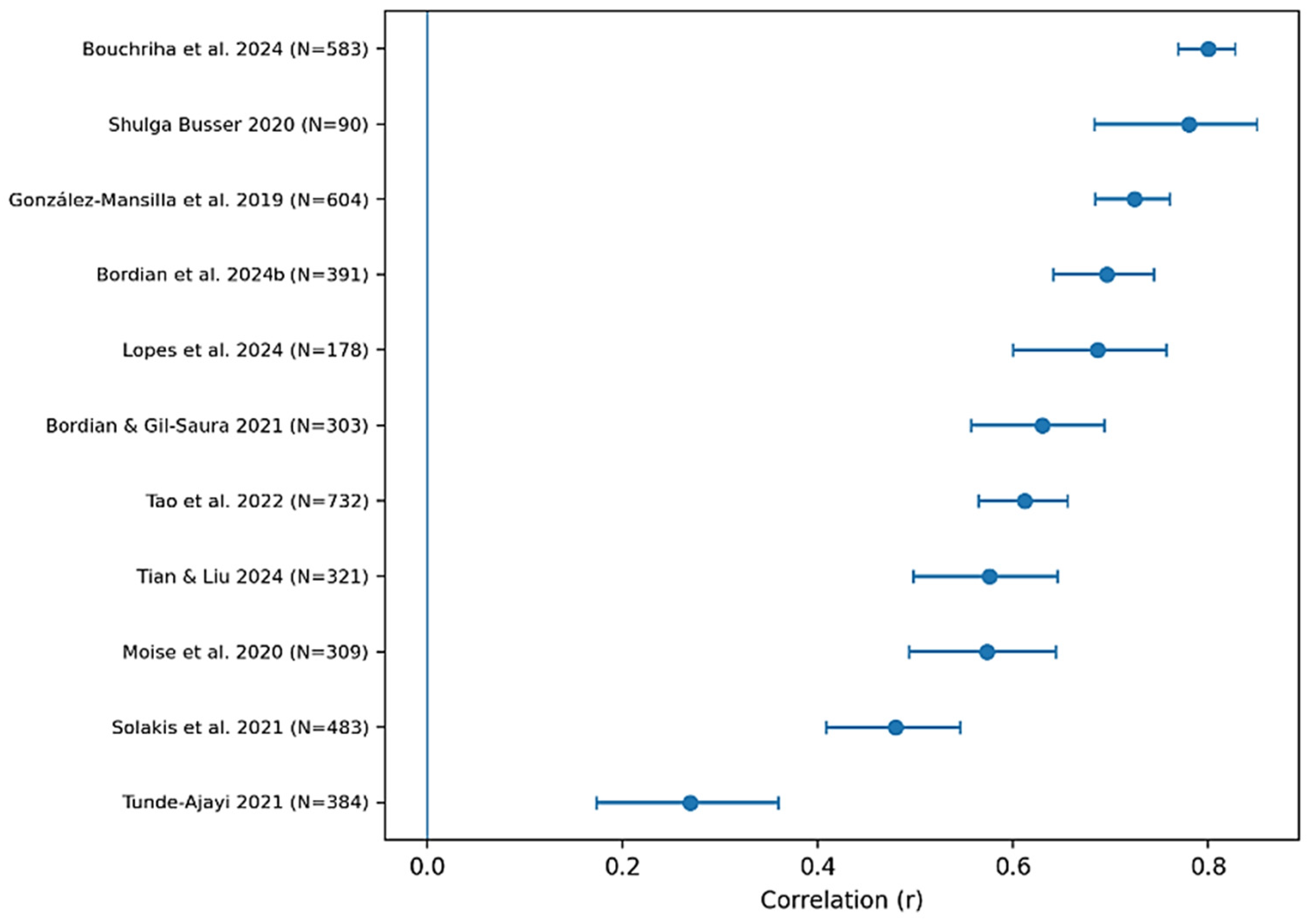
Figure A2.
Forest plot for the VCC–perceived value association (Guan et al., 2018; Xu et al., 2021; Zhang & Lee, 2022; Tian & Liu, 2024; Zhang & Prebensen, 2025).
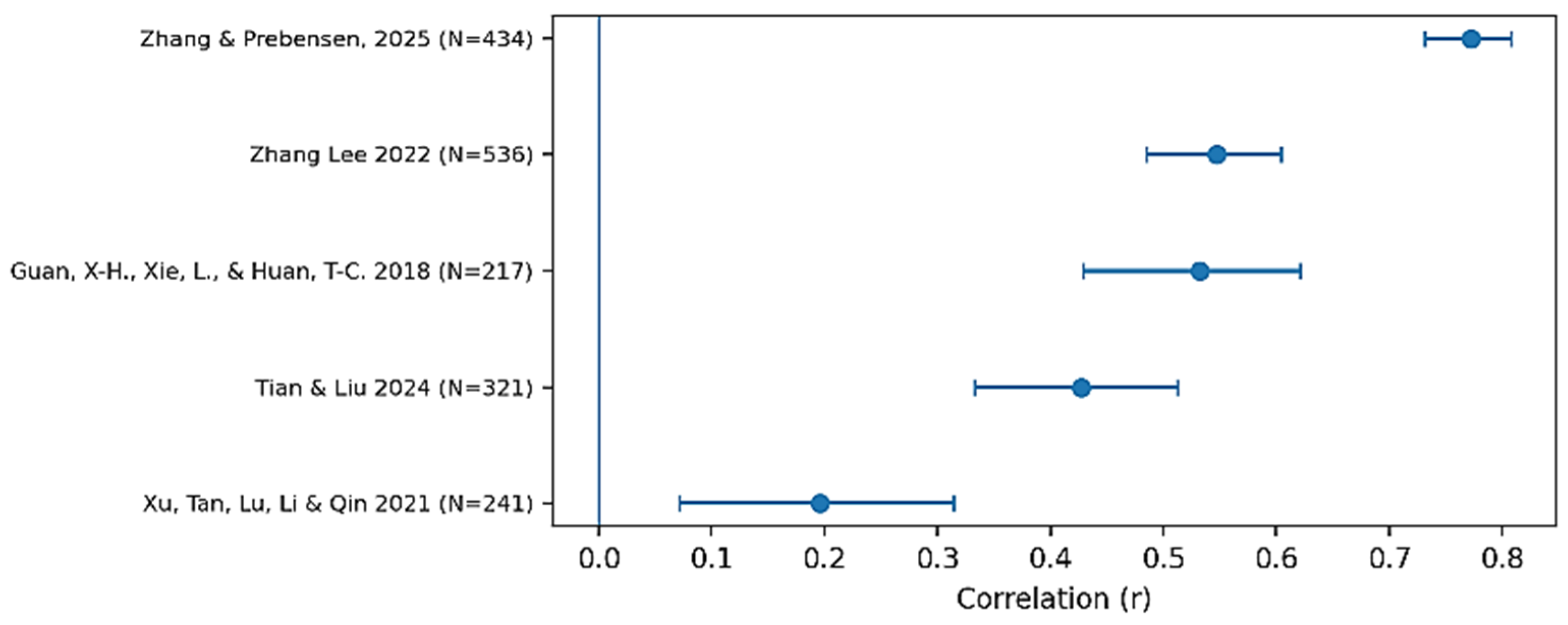
Figure A3.
Forest plot for the VCC–loyalty association (intentions/behavior) (Moise et al., 2020; Bordian & Gil-Saura, 2021; Tunde-Ajayi, 2021; V. C. Lyu et al., 2022; Rather et al., 2022; Tao et al., 2022; Zhang & Lee, 2022; Abbass et al., 2024; Bordian et al., 2024a; Esawe et al., 2024a; Lopes et al., 2024; Tian & Liu, 2024; Badar Imran et al., 2025; J. Liu et al., 2025; Wu, 2025).
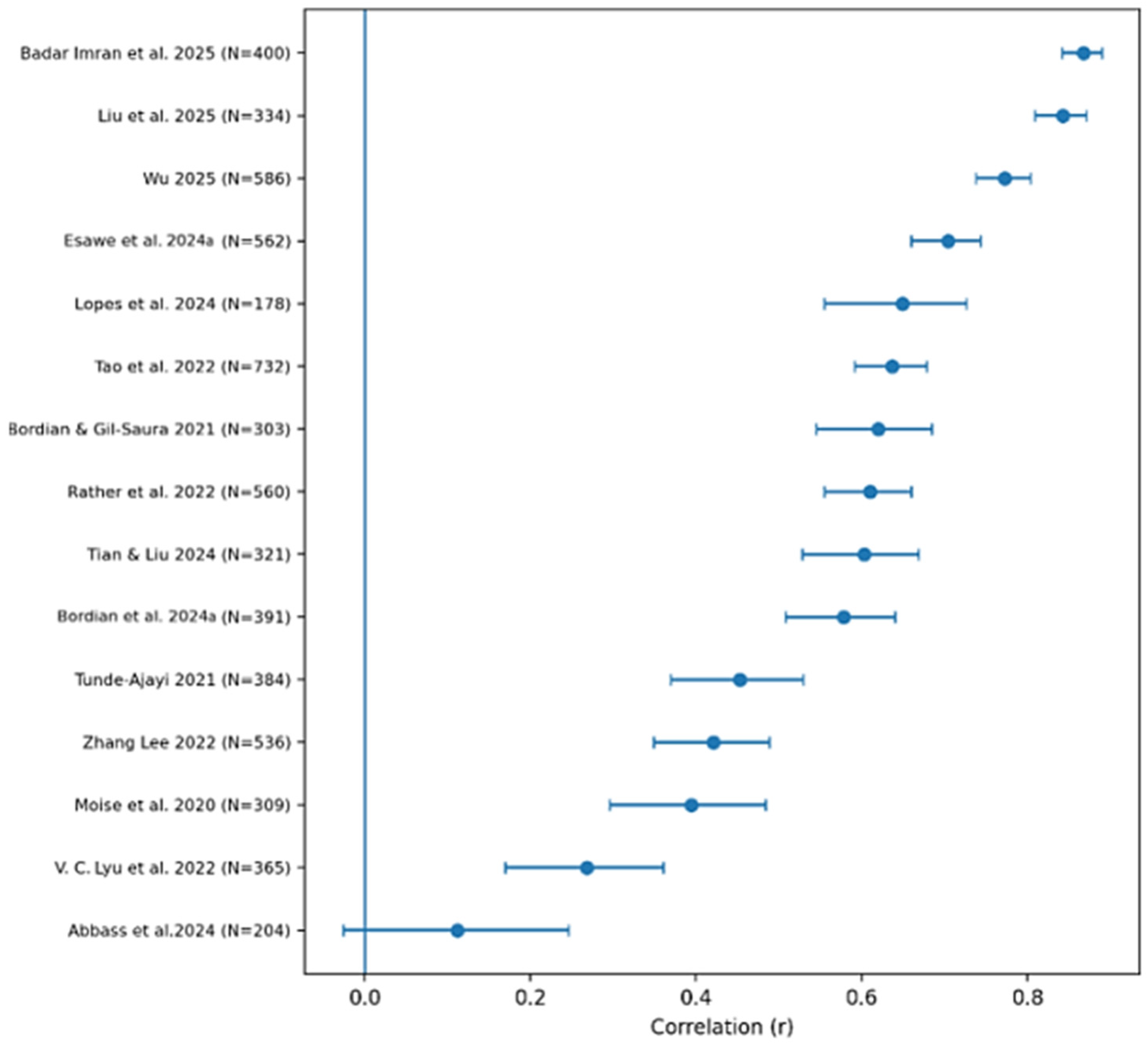
References
- Abbass, Z., Benjelloun Andaloussi, O., & Rais, F. (2024). Corporate social responsibility impact on customer-based brand equity in the Moroccan luxury hotel context: Mediating role of customer value co-creation. Social Responsibility Journal, 20(10), 2295–2313. [Google Scholar] [CrossRef] [Scilit]
- Abubakari, A. R., Majeed, M., Awini, G., & Sakara, A. (2025). The effect of brand engagement on brand equity: The role of value co-creation in the hospitality sector of emerging markets. Journal of African Business, 1–24. [Google Scholar] [CrossRef] [Scilit]
- Adams, R. J., Smart, P., & Sigismund Huff, A. (2017). Shades of grey: Guidelines for working with the grey literature in systematic reviews for management and organizational studies. International Journal of Management Reviews, 19(4), 432–454. [Google Scholar] [CrossRef] [Scilit]
- Akaka, M. A., Vargo, S. L., & Schau, H. J. (2015). The context of experience. Journal of Service Management, 26(2), 206–223. [Google Scholar] [CrossRef] [Scilit]
- Ansary, A., & Nik Hashim, N. M. H. (2018). Brand image and equity: The mediating role of brand equity drivers and moderating effects of product type and word of mouth. Review of Managerial Science, 12(4), 969–1002. [Google Scholar] [CrossRef] [Scilit]
- Badar Imran, S., Waheed, A., Tanveer, A., & Fayyaz, H. (2025). Hotel’s customer empowerment, environmental corporate social responsibility, and online customer value co-creation to attain sustainable development goals (SDGs). Spanish Journal of Marketing-ESIC, 29(2), 228–250. [Google Scholar] [CrossRef] [Scilit]
- Baloglu, S., & McCleary, K. W. (1999). A model of destination image formation. Annals of Tourism Research, 26(4), 868–897. [Google Scholar] [CrossRef] [Scilit]
- Beatson, A., Coote, L. V., & Rudd, J. M. (2006). Determining consumer satisfaction and commitment through self-service technology and personal service usage. Journal of Marketing Management, 22(7–8), 853–882. [Google Scholar] [CrossRef] [Scilit]
- Becker, L., Jaakkola, E., & Halinen, A. (2020). Toward a goal-oriented view of customer journeys. Journal of Service Management, 31(4), 767–790. [Google Scholar] [CrossRef] [Scilit]
- Bharti, K., Agrawal, R., & Sharma, V. (2015). Literature review and proposed conceptual framework. International Journal of Market Research, 57(4), 571–604. [Google Scholar] [CrossRef] [Scilit]
- Bordian, M., & Gil-Saura, I. (2021). Do IMC and ecological knowledge drive value co-creation? The new way to loyalty in hospitality. Sustainability, 13(19), 10785. [Google Scholar] [CrossRef] [Scilit]
- Bordian, M., Gil-Saura, I., Berenguer-Contri, G., Ruiz-Molina, M. E., & Marín-García, A. (2024a). Boost effect of sustainable practices and relational innovation on value co-creation and brand equity: Outcomes of hotel size moderation. Journal of Marketing Analytics, 12, 717–733. [Google Scholar] [CrossRef] [Scilit]
- Bordian, M., Gil-Saura, I., Fuentes-Blasco, M., Ruíz-Molina, M. E., & Berenguer-Contrí, G. (2024b). Sustainabil-ity-oriented service innovation and customer satisfaction in hospitality: Assessing the impact of value co-creation, ecological knowledge and gender. Journal of Vacation Marketing, 32(1), 35–51. [Google Scholar] [CrossRef] [Scilit]
- Borenstein, M., Hedges, L. V., Higgins, J. P. T., & Rothstein, H. R. (2009). Introduction to meta-analysis. John Wiley & Sons. [Google Scholar]
- Bouchriha, Z., Farid, S., & Ouiddad, S. (2024). Enhancing value co-creation behaviors through customer engagement in the Moroccan hotel context: How does it influence customer satisfaction and brand image? Journal of Quality Assurance in Hospitality & Tourism, 25(6), 1581–1606. [Google Scholar] [CrossRef] [Scilit]
- Busser, J. A., & Shulga, L. V. (2018). Co-created value: Multidimensional scale and nomological network. Tourism Management, 65, 69–86. [Google Scholar] [CrossRef] [Scilit]
- Campos, A. C., Guerreiro, M. M., & Beevor, M. C. (2025). Storytelling in heritage tourism: An exploration of co-creative experiences from a tourist perspective. Museum Management and Curatorship, 40(2), 225–250. [Google Scholar] [CrossRef] [Scilit]
- Caridà, A., Edvardsson, B., & Colurcio, M. (2019). Conceptualizing resource integration as an embedded process: Matching, resourcing and valuing. Marketing Theory, 19(1), 65–84. [Google Scholar] [CrossRef] [Scilit]
- Carvalho, P., & Alves, H. (2023). Customer value co-creation in the hospitality and tourism industry: A systematic literature review. International Journal of Contemporary Hospitality Management, 35(1), 250–276. [Google Scholar] [CrossRef] [Scilit]
- Cavalcante, W. Q. F., Coelho, A., & Bairrada, C. M. (2025). A place to remember? Exploring perceived destination sustainability effects on memory and place attachment: The role of tourism experience and value co-creation. Corporate Social Responsibility and Environmental Management, 32(4), 5222–5237. [Google Scholar] [CrossRef] [Scilit]
- Chagas, G. M. D. O., & Aguiar, E. C. (2020). The role of utilitarian and hedonic motivations in value cocreation and their relationship with AIRBNB experience. Revista Brasileira de Pesquisa em Turismo, 14(3), 158–176. [Google Scholar] [CrossRef] [Scilit]
- Chang, S. (2018). Experience economy in the hospitality and tourism context. Tourism Management Perspectives, 27, 83–90. [Google Scholar] [CrossRef] [Scilit]
- Chatzigeorgiou, C., Christou, E., & Simeli, I. (2025). From brochures to bytes: Destination branding through social, mobile, and AI—A systematic narrative review with meta-analysis. Administrative Sciences, 15(9), 371. [Google Scholar] [CrossRef] [Scilit]
- Chen, N., Ji, S., & Funk, D. C. (2014). An extended study on destination image decay of sport tourists over time. Journal of Destination Marketing & Management, 2(4), 241–252. [Google Scholar] [CrossRef] [Scilit]
- Christou, E., Fotiadis, A., & Giannopoulos, A. (2025a). Generative AI as a tourism actor: Reconceptualising experience co-creation, destination governance and responsible innovation in the synthetic experience economy. Journal of Tourism, Heritage & Services Marketing, 11(2), 16–41. [Google Scholar] [CrossRef]
- Christou, E., Giannopoulos, A., & Simeli, I. (2025b). The evolution of digital tourism marketing: From hashtags to AI-immersive journeys in the metaverse era. Sustainability, 17(13), 6016. [Google Scholar] [CrossRef] [Scilit]
- Cossío-Silva, F.-J., Revilla-Camacho, M.-Á., Vega-Vázquez, M., & Palacios-Florencio, B. (2016). Value co-creation and customer loyalty. Journal of Business Research, 69(5), 1621–1625. [Google Scholar] [CrossRef] [Scilit]
- DerSimonian, R., & Laird, N. (1986). Meta-analysis in clinical trials. Controlled Clinical Trials, 7(3), 177–188. [Google Scholar] [CrossRef] [Scilit]
- Dias, A., Santos, M., & Pereira, L. (2024). Green marketing strategies and customer satisfaction in rural accommodations: A configurational approach. Journal of Tourism, Heritage & Services Marketing, 10(2), 69–78. [Google Scholar] [CrossRef]
- Duval, S., & Tweedie, R. (2000). Trim and fill: A simple funnel-plot–based method of testing and adjusting for publication bias in meta-analysis. Biometrics, 56(2), 455–463. [Google Scholar] [CrossRef] [Scilit]
- Egger, M., Smith, G. D., Schneider, M., & Minder, C. (1997). Bias in meta-analysis detected by a simple, graphical test. BMJ, 315(7109), 629–634. [Google Scholar] [CrossRef] [Scilit]
- Elgarhy, S. D., & Abou-Shouk, M. (2024). The influence of co-creation and subjective norms on customer loyalty: Customer satisfaction as a mediator. Journal of Quality Assurance in Hospitality & Tourism, 25(5), 1328–1348. [Google Scholar] [CrossRef] [Scilit]
- Elliot, E. A., Adams, R., & Tsetse, E. K. K. (2023). Customer value co-creation: Environmental sustainability as a tourist experience. Sustainability, 15(13), 10486. [Google Scholar] [CrossRef] [Scilit]
- Esawe, A. T., Esawe, K. T., & Esawe, N. T. (2024a). Impact of environmentally sustainable innovation practices on consumer resistance: The moderating role of value co-creation in eco-hotel enterprises. Consumer Behavior in Tourism and Hospitality, 19(1), 55–69. [Google Scholar] [CrossRef] [Scilit]
- Esawe, A. T., Esawe, K. T., & Esawe, N. T. (2024b). Understanding the implications of value co-creation in eco-hotels: The antecedents and consequences. Journal of Hospitality and Tourism Insights, 7(4), 1974–1993. [Google Scholar] [CrossRef] [Scilit]
- Etgar, M. (2008). A descriptive model of the consumer co-production process. Journal of the Academy of Marketing Science, 36(1), 97–108. [Google Scholar] [CrossRef] [Scilit]
- Font, X., English, R., Gkritzali, A., & Tian, W. (2021). Value co-creation in sustainable tourism: A service-dominant logic approach. Tourism Management, 82, 104200. [Google Scholar] [CrossRef] [Scilit]
- Frías Jamilena, D. M., Polo Peña, A. I., & Rodríguez Molina, M. Á. (2016). The effect of value-creation on consumer-based destination brand equity. Journal of Travel Research, 56(8), 1011–1031. [Google Scholar] [CrossRef] [Scilit]
- Galvagno, M., & Dalli, D. (2014). Theory of value co-creation: A systematic literature review. Managing Service Quality, 24(6), 643–683. [Google Scholar] [CrossRef] [Scilit]
- Gimenez, C., & Sierra, V. (2013). Sustainable supply chains: Governance mechanisms to greening suppliers. Journal of Business Ethics, 116(1), 189–203. [Google Scholar] [CrossRef] [Scilit]
- González-Mansilla, Ó., Berenguer-Contrí, G., & Serra-Cantallops, A. (2019). The impact of value co-creation on hotel brand equity and customer satisfaction. Tourism Management, 75, 51–65. [Google Scholar] [CrossRef] [Scilit]
- Grönroos, C., & Voima, P. (2013). Critical service logic: Making sense of value creation and co-creation. Journal of the Academy of Marketing Science, 41(2), 133–150. [Google Scholar] [CrossRef] [Scilit]
- Guan, X. H., Xie, L., & Huan, T. C. (2018). Customer knowledge sharing, creativity and value co-creation: A triad model of hotels, corporate sales employees and their customers. International Journal of Contemporary Hospitality Management, 30(2), 961–979. [Google Scholar] [CrossRef] [Scilit]
- Hardwicke, T. E., & Wagenmakers, E.-J. (2023). Reducing bias, increasing transparency and calibrating confidence with preregistration. Nature Human Behaviour, 7(1), 15–26. [Google Scholar] [CrossRef] [Scilit]
- Heinonen, K., & Strandvik, T. (2015). Customer-dominant logic: Foundations and implications. Journal of Services Marketing, 29(6–7), 472–484. [Google Scholar] [CrossRef] [Scilit]
- Heinonen, K., Strandvik, T., Mickelsson, K.-J., Edvardsson, B., Sundström, E., & Andersson, P. (2010). A customer-dominant logic of service. Journal of Service Management, 21(4), 531–548. [Google Scholar] [CrossRef] [Scilit]
- Helkkula, A., Kelleher, C., & Pihlström, M. (2012). Characterizing value as an experience: Implications for service researchers and managers. Journal of Service Research, 15(1), 59–75. [Google Scholar] [CrossRef] [Scilit]
- Henkens, B., Verleye, K., & Larivière, B. (2021). The smarter, the better?! Customer well-being, engagement, and perceptions in smart service systems. International Journal of Research in Marketing, 38(2), 425–447. [Google Scholar] [CrossRef] [Scilit]
- Higgins, J. P., & Thompson, S. G. (2002). Quantifying heterogeneity in a meta-analysis. Statistics in Medicine, 21(11), 1539–1558. [Google Scholar] [CrossRef] [Scilit]
- Hoang, L. C., & Nguyen, D. H. (2025). Bridging the nexus between sustainable destination gestalt and tourists’ value co-creation with the site: An analysis in a collectivism-oriented nation. Journal of Hospitality and Tourism In-Sights, 8(7), 2575–2594. [Google Scholar] [CrossRef] [Scilit]
- Hollebeek, L., & Rather, R. A. (2019). Service innovativeness and tourism customer outcomes. International Journal of Contemporary Hospitality Management, 31(11), 4227–4246. [Google Scholar] [CrossRef] [Scilit]
- Hollebeek, L. D., Glynn, M. S., & Brodie, R. J. (2014). Consumer brand engagement in social media: Conceptualization, scale development and validation. Journal of Interactive Marketing, 28(2), 149–165. [Google Scholar] [CrossRef] [Scilit]
- Jaakkola, E., & Alexander, M. (2014). The role of customer engagement behavior in value co-creation: A service system perspective. Journal of Service Research, 17(3), 247–261. [Google Scholar] [CrossRef] [Scilit]
- Jaakkola, E., Helkkula, A., & Aarikka-Stenroos, L. (2015). Service experience co-creation: Conceptualization, implications, and future research directions. Journal of Service Management, 26(2), 182–205. [Google Scholar] [CrossRef] [Scilit]
- John, S. P., & Supramaniam, S. (2024). Value co-creation research in tourism and hospitality management: A systematic literature review. Journal of Hospitality and Tourism Management, 61, 215–228. [Google Scholar] [CrossRef] [Scilit]
- Kalra, G., & Kalra, A. (2024). Emotional brand attachment, brand tribalism, and co-creation behaviour in the hospitality industry. The Open Psychology Journal, 17, e18743501301683. [Google Scholar] [CrossRef] [Scilit]
- Kamali, M., Zarea, H., Su, Z., & Soltani, S. (2021). The influence of value co-creation on customer loyalty, behavioural intention, and customer satisfaction in emerging markets. AD-Minister, 39, 5–24. [Google Scholar] [CrossRef] [Scilit]
- Kelly, S. E., Brooks, S. P. J., Benkhedda, K., MacFarlane, A. J., Greene-Finestone, L. S., Skidmore, B., Clifford, T. J., & Wells, G. A. (2024). A scoping review shows that no single existing risk of bias assessment tool considers all sources of bias for cross-sectional studies. Journal of Clinical Epidemiology, 172, 111408. [Google Scholar] [CrossRef] [Scilit]
- Klassen, R. D., & Vachon, S. (2003). Collaboration and evaluation in the supply chain: The impact on plant-level environmental investment. Production and Operations Management, 12(3), 336–352. [Google Scholar] [CrossRef] [Scilit]
- Kolar, T., & Žabkar, V. (2010). A consumer-based model of authenticity: An oxymoron or the foundation of cultural heritage marketing? Tourism Management, 31(5), 652–664. [Google Scholar] [CrossRef] [Scilit]
- Lange-Faria, W., & Elliot, S. (2012). Understanding the role of social media in destination marketing. Tourismos, 7(1), 193–211. [Google Scholar] [CrossRef]
- Large, R. O., & Gimenez Thomsen, C. (2011). Drivers of green supply management performance: Evidence from Germany. Journal of Purchasing and Supply Management, 17(3), 176–184. [Google Scholar] [CrossRef] [Scilit]
- Le, N. T. C., & Khuong, M. N. (2023). Investigating brand image and brand trust in airline service: Evidence of Korean air. Journal of Tourism, Heritage & Services Marketing, 9(2), 55–65. [Google Scholar] [CrossRef]
- Lee, J. L.-M., Lau, C. Y.-L., & Wong, C. W.-G. (2023). Reexamining brand loyalty and brand awareness with social media marketing: A collectivist country perspective. Journal of Tourism, Heritage & Services Marketing, 9(2), 3–10. [Google Scholar] [CrossRef]
- Leong, A. M. W., Yeh, S. S., Zhou, Y., Hung, C. W., & Huan, T. C. (2024). Exploring the influence of historical storytelling on cultural heritage tourists’ value co-creation using tour guide interaction and authentic place as mediators. Tourism Management Perspectives, 50, 101198. [Google Scholar] [CrossRef] [Scilit]
- Li, Q., & Jiang, S. (2025). Perceptual service robot attributes affecting customer value co-creation intention in lux-ury hotels industry. Innovative Marketing, 21(1), 89–104. [Google Scholar] [CrossRef] [Scilit]
- Liu, J., Cheng, V. T. P., Zhu, Z., & Wu, D. (2025). Antecedents and consequences of value co-creation in tourist behaviours: Empirical evidence from smart tourism application. Current Issues in Tourism, 1–17. [Google Scholar] [CrossRef] [Scilit]
- Liu, J., & Jo, W. (2020). Value co-creation behaviors and hotel loyalty program member satisfaction based on engagement and involvement: Moderating effect of company support. Journal of Hospitality and Tourism Management, 43, 23–31. [Google Scholar] [CrossRef] [Scilit]
- Liu, Y., & Meng, Q. (2024). How online reviews of sports tourism affect tourists’ value co-creation behavior: Findings from PLS-SEM, NCA, and fsQCA. Journal of Hospitality and Tourism Management, 60, 360–372. [Google Scholar] [CrossRef] [Scilit]
- Lopes, L., Mangini, E., & Esteves, S. (2024). The role of value co-creation, delight and satisfaction on tourism loyalty: An empirical study in hospitality. European Journal of Tourism, Hospitality and Recreation, 14(2), 214–230. [Google Scholar] [CrossRef] [Scilit]
- Lusch, R. F., & Vargo, S. L. (Eds.). (2006). The service-dominant logic of marketing: Dialog, debate, and directions. M.E. Sharpe. [Google Scholar]
- Lyu, J., Li, M., Law, R., & Song, H. (2022). The impact of value co-creation behavior on customers’ experiences and loyalty in peer-to-peer accommodations. Frontiers in Psychology, 13, 988318. [Google Scholar] [CrossRef] [Scilit]
- Lyu, V. C., Roldan, J. L., Chin, W., Liu, V., & Li, C. (2022). Value or image? The effects of restaurant–supplier co-creation on consumers’ behavioral intentions. British Food Journal, 124(3), 795–810. [Google Scholar] [CrossRef] [Scilit]
- Ma, L.-L., Wang, Y.-Y., Yang, Z.-H., Huang, D., Weng, H., & Zeng, X.-T. (2020). Methodological quality (risk of bias) assessment tools for primary and secondary medical studies: What are they and which is better? Military Medical Research, 7(1), 7. [Google Scholar] [CrossRef] [Scilit]
- Ma, Y., Tarofder, A. K., Chong, S. C., Rehman, A. U., & Kushwaha, B. P. (2025). Unveiling the emotional and cognitive drivers of value co-creation: Insights from China’s leisure agriculture destinations. Journal of China Tourism Research, 22(1), 140–166. [Google Scholar] [CrossRef] [Scilit]
- Mandrella, M., Trang, S., & Kolbe, L. M. (2020). Synthesizing and integrating research on IT-based value cocreation: A meta-analysis. Journal of the Association for Information Systems, 21(2), 388–427. [Google Scholar] [CrossRef] [Scilit]
- Marco-Gardoqui, M., García-Feijoo, M., & Eizaguirre, A. (2024). Changes in marketing strategies at Spanish hotel chains under the framework of sustainability. Journal of Tourism, Heritage & Services Marketing, 10(1), 28–38. [Google Scholar] [CrossRef]
- Mathis, E. F., Kim, H. L., Uysal, M., Sirgy, M. J., & Prebensen, N. K. (2016). The effect of co-creation experience on outcome variables. Tourism Management, 57, 62–75. [Google Scholar] [CrossRef] [Scilit]
- Moise, M. S., Gil-Saura, I., & Ruiz-Molina, M. E. (2020). Implications of value co-creation in green hotels: The moderating effect of trip purpose and generational cohort. Sustainability, 12(23), 9866. [Google Scholar] [CrossRef] [Scilit]
- Nangpiire, C., Agbemabiese, G. C., & Amoako, G. K. (2021). Customer engagement and value co-creation/destruction: The internal fostering and hindering factors and actors in the tourist hotel experience. Journal of Research in Interactive Marketing, 16(2), 207–227. [Google Scholar] [CrossRef] [Scilit]
- Orwin, R. G. (1983). A fail-safe N for effect size in meta-analysis. Journal of Educational Statistics, 8(2), 157–159. [Google Scholar] [CrossRef] [Scilit]
- Page, M. J., McKenzie, J. E., Bossuyt, P. M., Boutron, I., Hoffmann, T. C., Mulrow, C. D., Shamseer, L., Tetzlaff, J. M., Akl, E. A., Brennan, S. E., Chou, R., Glanville, J., Grimshaw, J. M., Hróbjartsson, A., Lalu, M. M., Li, T., Loder, E. W., Mayo-Wilson, E., McDonald, S., … Moher, D. (2021). The PRISMA 2020 statement: An updated guideline for reporting systematic reviews. BMJ, 372, n71. [Google Scholar] [CrossRef] [Scilit]
- Payne, A. F., Storbacka, K., & Frow, P. (2008). Managing the co-creation of value. Journal of the Academy of Marketing Science, 36(1), 83–96. [Google Scholar] [CrossRef] [Scilit]
- Peco-Torres, F., Jones, A., Polo-Peña, A. I., & Frías-Jamilena, D. M. (2025a). Customer brand engagement via value co-creation with hotel online media and travel websites and its effect on brand equity: The moderating role of culture. Journal of Hospitality and Tourism Technology, 17(1), 192–211. [Google Scholar] [CrossRef] [Scilit]
- Peco-Torres, F., Jones, A., Polo-Peña, A. I., & Frías-Jamilena, D. M. (2025b). Online value co-creation during the “dreaming” phase, brand image and uncertainty avoidance. Journal of Services Marketing, 39(10), 101–115. [Google Scholar] [CrossRef] [Scilit]
- Pencarelli, T. (2020). The digital revolution in the travel and tourism industry. Information Technology & Tourism, 22(3), 455–476. [Google Scholar] [CrossRef] [Scilit]
- Pham, L. H., Woyo, E., Pham, T. H., & Truong, D. T. X. (2023). Value co-creation and destination brand equity: Understanding the role of social commerce information sharing. Journal of Hospitality and Tourism Insights, 6(5), 1796–1817. [Google Scholar] [CrossRef] [Scilit]
- Pine, B. J., & Gilmore, J. H. (1999). The experience economy: Work is theatre & every business a stage. Harvard Business School Press. [Google Scholar]
- Prahalad, C. K., & Ramaswamy, V. (2004). Co-creation experiences: The next practice in value creation. Journal of Interactive Marketing, 18(3), 5–14. [Google Scholar] [CrossRef] [Scilit]
- Prebensen, N. K., & Xie, J. (2017). Efficacy of co-creation and mastering on perceived value and satisfaction in tourists’ consumption. Tourism Management, 60, 166–176. [Google Scholar] [CrossRef] [Scilit]
- Ranjan, K. R., & Read, S. (2016). Value co-creation: Concept and measurement. Journal of the Academy of Marketing Science, 44, 290–315. [Google Scholar] [CrossRef] [Scilit]
- Rather, R. A., Hollebeek, L. D., & Rasoolimanesh, S. M. (2022). First-time versus repeat tourism customer engagement, experience, and value cocreation: An empirical investigation. Journal of Travel Research, 61(3), 549–564. [Google Scholar] [CrossRef] [Scilit]
- Ribeiro, T. d. L. S., Costa, B. K., Ferreira, M. P., & de Lamônica Freire, O. B. (2023). Value co-creation in tourism and hospitality: A systematic literature review. European Management Journal, 41(6), 985–999. [Google Scholar] [CrossRef] [Scilit]
- Robina-Ramírez, R., Leal-Solís, A., Medina-Merodio, J. A., & Estriegana-Valdehita, R. (2023). From satisfaction to happiness in the co-creation of value: The role of moral emotions in the Spanish tourism sector. Quality & Quantity, 57(4), 3783–3804. [Google Scholar] [CrossRef] [Scilit]
- Shoukat, M. H., & Ramkissoon, H. (2022). Customer delight, engagement, experience, value co-creation, place identity, and revisit intention: A new conceptual framework. Journal of Hospitality Marketing & Management, 31(6), 757–775. [Google Scholar] [CrossRef] [Scilit]
- Shulga, L. V., & Busser, J. A. (2020). Hospitality employee and customer role in value co-creation: Personal, organizational and collaborative outcomes. International Journal of Hospitality Management, 91, 102648. [Google Scholar] [CrossRef] [Scilit]
- Simeli, I., Christou, E., & Chatzigeorgiou, C. (2025). Digital nomads as unintentional influencers in destination branding: A multi-method study of ambient influence. Journal of Theoretical and Applied Electronic Commerce Research, 20(4), 340. [Google Scholar] [CrossRef] [Scilit]
- Solakis, K., Peña-Vinces, J. C., & Lopez-Bonilla, J. M. (2021). From value co-creation to positive experiences and customer satisfaction: A customer perspective in the hotel industry. Technological and Economic Development of Economy, 27(6), 1354–1373. [Google Scholar] [CrossRef] [Scilit]
- Solakis, K., Peña-Vinces, J. C., & López-Bonilla, J. M. (2022). Value co-creation and perceived value: A customer perspective in the hospitality context. European Research on Management and Business Economics, 28(1), 100179. [Google Scholar] [CrossRef] [Scilit]
- Suntikul, W., & Jachna, T. (2016). The co-creation/place attachment nexus. Tourism Management, 52, 276–286. [Google Scholar] [CrossRef] [Scilit]
- Tao, K., Ye, J., Xiao, H., & Chen, P. (2022). A model of perceived co-creation value in tourism service setting: An application of structure equation modeling. Frontiers in Psychology, 13, 808114. [Google Scholar] [CrossRef] [Scilit]
- Tax, S. S., McCutcheon, D., & Wilkinson, I. F. (2013). The service delivery network (SDN): A customer-centric perspective of the customer journey. Journal of Service Research, 16(4), 454–470. [Google Scholar] [CrossRef] [Scilit]
- Tian, Z., & Liu, X. (2024). Customer participation in the value co-creation of hotel service robot interaction. SAGE Open, 14(4), 21582440241296652. [Google Scholar] [CrossRef] [Scilit]
- Tuan, L. T., Rajendran, D., Rowley, C., & Khai, D. C. (2019). Customer value co-creation in the business-to-business tourism context: The roles of corporate social responsibility and customer empowering behaviors. Journal of Hospitality and Tourism Management, 39, 137–149. [Google Scholar] [CrossRef] [Scilit]
- Tunde-Ajayi, O. A. (2021). The effect of value co-creation on behavioural intention and satisfaction with tourism resources in Lagos State, Nigeria. European Journal of Tourism, Hospitality and Recreation, 11(2), 149–158. [Google Scholar] [CrossRef] [Scilit]
- Uslu, A., & Tosun, P. (2024). Tourist personality, value co-creation, and emotional well-being. International Journal of Consumer Studies, 48(1), e12995. [Google Scholar] [CrossRef] [Scilit]
- Ustunel, M. F., Celiker, N., & Guzeller, C. O. (2021). Systematic review of meta-analysis studies in the tourism and hospitality literature. European Journal of Tourism Research, 27, 2710. [Google Scholar] [CrossRef] [Scilit]
- Vargo, S. L., & Akaka, M. A. (2012). Value cocreation and service systems (re)formation: A service ecosystems view. Service Science, 4(3), 207–217. [Google Scholar] [CrossRef] [Scilit]
- Vargo, S. L., & Lusch, R. F. (2008). Service-dominant logic: Continuing the evolution. Journal of the Academy of Marketing Science, 36(1), 1–10. [Google Scholar] [CrossRef] [Scilit]
- Voorhees, C. M., Fombelle, P. W., Grégoire, Y., Bone, S., Gustafsson, A., Sousa, R., & Walkowiak, T. (2017). Service encounters, experiences and the customer journey: Defining the field and a call to expand our lens. Journal of Business Research, 79, 269–280. [Google Scholar] [CrossRef] [Scilit]
- Wahab, H. K. A., Tao, M., Alam, F., & Ocloo, E. C. (2022). Impact of value co-creation on customer loyalty. International Journal of E-Business Research, 18(1), 1–20. [Google Scholar] [CrossRef] [Scilit]
- Wang, C., Zhao, X., & Hong, J. (2024). A meta-analysis of the effects of interaction on value co-creation in online collaborative innovation communities based on the service ecosystem framework. Behavioral Sciences, 14(12), 1177. [Google Scholar] [CrossRef] [Scilit]
- Wang, J., Li, M., Nguyen, T. H. H., Fu, Z., & Liu, M. (2025). A meta-analysis of the relationship between value co-creation and the perceived trade exhibition performance of key stakeholders. Asia Pacific Journal of Tourism Research, 31, 913–936. [Google Scholar] [CrossRef] [Scilit]
- Wu, M. H. (2025). The impact of brand identification, brand image, and brand love on brand loyalty: The mediating role of customer value co-creation in hotel customer experience. Frontiers in Communication, 10, 1626744. [Google Scholar] [CrossRef] [Scilit]
- Xie, L., Guan, X., Yeh, S.-S., & Huan, T.-C. (2024). Using value co-creation behavior as a mediator to explore the influence of virtual tourism community characteristics on destination brand equity. Journal of Brand Management, 32, 1–16. [Google Scholar] [CrossRef] [Scilit]
- Xu, F., Tan, J., Lu, L., Li, S., & Qin, L. (2021). How does value co-creation behavior affect destination loyalty? A role switching perspective. Journal of Theoretical and Applied Electronic Commerce Research, 16(5), 1805–1826. [Google Scholar] [CrossRef] [Scilit]
- Yang, W., Xie, Y., & Wang, Y. (2025). Does the level of anthropomorphism induce cognitive crafting in human-robot interaction? The role of positive emotions and interaction frequency. Journal of Hospitality Marketing & Management, 34(4), 549–573. [Google Scholar] [CrossRef] [Scilit]
- Yeh, S.-P., Chiang, T.-Y., Zhong, J.-H., & Yeh, S.-S. (2024). Religious tourism and life satisfaction: The role of motivation, perceived value and social cohesion. Journal of Tourism, Heritage & Services Marketing, 10(1), 79–89. [Google Scholar] [CrossRef]
- Yen, C. H. (2023). Customer value cocreation behaviors in hospitality: Antecedents and mediators. International Journal of Hospitality Management, 110, 103456. [Google Scholar] [CrossRef] [Scilit]
- Yen, C. H., Teng, H. Y., & Tzeng, J. C. (2020). Innovativeness and customer value co-creation behaviors: Mediating role of customer engagement. International Journal of Hospitality Management, 88, 102514. [Google Scholar] [CrossRef] [Scilit]
- Yi, Y., & Gong, T. (2013). Customer value co-creation behavior: Scale development and validation. Journal of Business Research, 66(9), 1279–1284. [Google Scholar] [CrossRef] [Scilit]
- Yuan, C. L., & Wang, J. (2022). Influence of island authenticity perception on tourists’ value co-creation behavior: Place attachment as mediation. Transactions of Oceanology and Limnology, 44(3), 176–184. [Google Scholar]
- Zhang, Y., & Lee, H. (2022). Wine tourism experience effects on co-creation, perceived value and consumer behavior. Ciência e Técnica Vitivinícola, 37(2), 159–177. [Google Scholar] [CrossRef] [Scilit]
- Zhang, Y., & Prebensen, N. K. (2025). Value co-creation in tourism live shopping. Journal of Business Research, 186, 114964. [Google Scholar] [CrossRef] [Scilit]
- Zhao, J. W., & Park, H. J. (2025). Enhancing value co-creation through mental imagery in virtual reality tourism. Asia Pacific Journal of Tourism Research, 30(9), 1177–1187. [Google Scholar] [CrossRef] [Scilit]
- Zhao, J. W., Park, H. J., Li, C. C., Wang, X. R., & Chen, Y. (2024). How awe affects value co-creation in virtual reality tourism experience. Asia Pacific Journal of Tourism Research, 29(11), 1323–1332. [Google Scholar] [CrossRef] [Scilit]
- Zhou, G., & Chen, W. (2023). Agritourism experience value cocreation impact on the brand equity of rural tourism destinations in China. Tourism Review, 78(5), 1315–1335. [Google Scholar] [CrossRef] [Scilit]
- Zhou, L., Liu, X., & Wei, W. (2025). The emotional foundations of value co-creation in sustainable cultural heritage tourism: Insights into the motivation–experience–behavior framework. Sustainability, 17(15), 6961. [Google Scholar] [CrossRef] [Scilit]
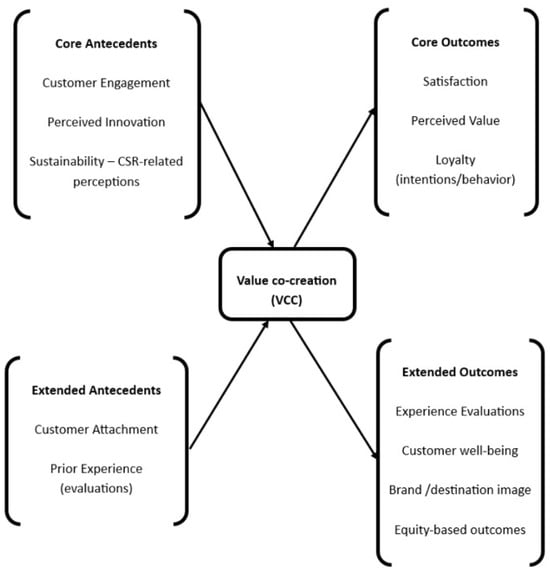
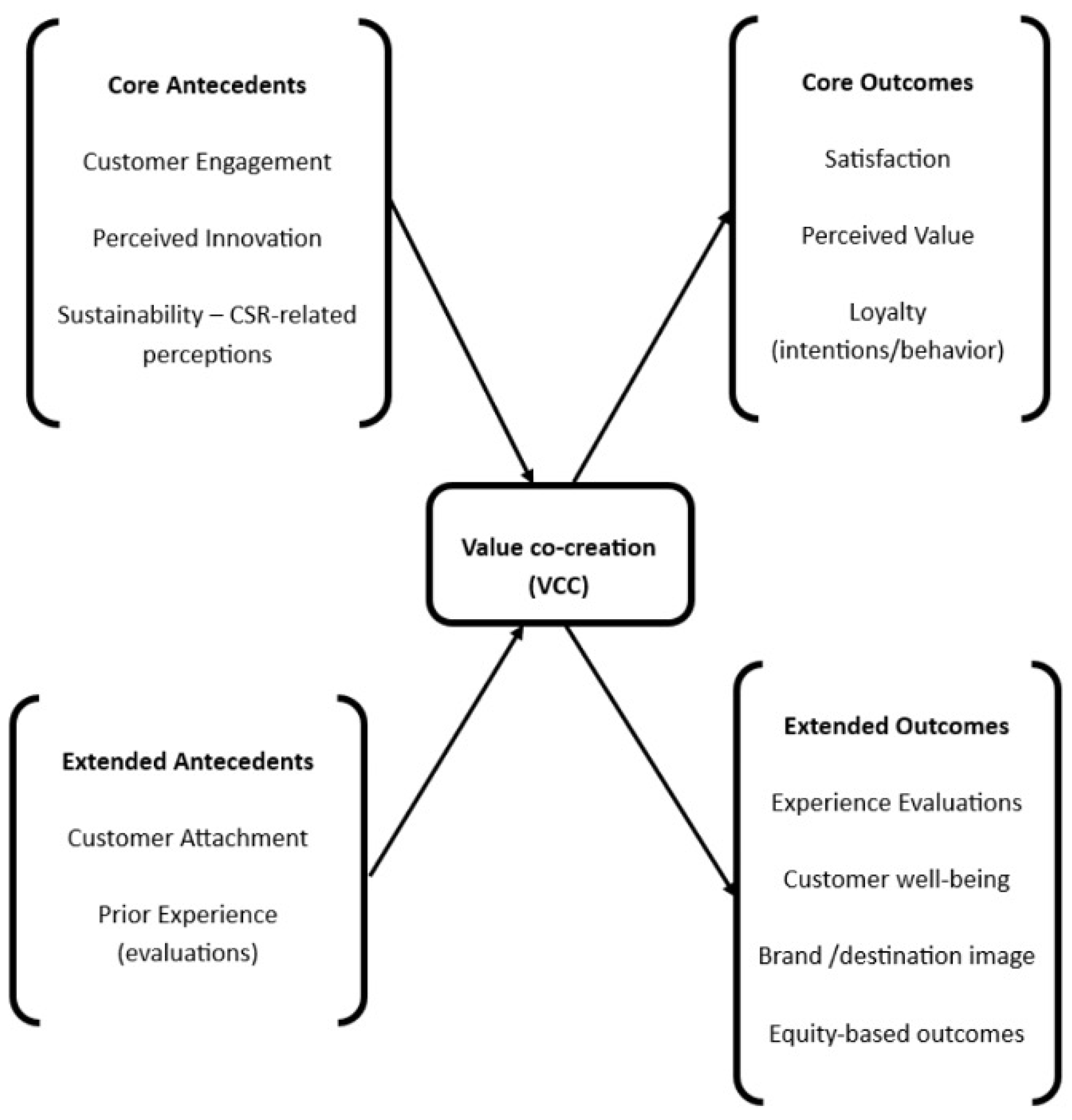
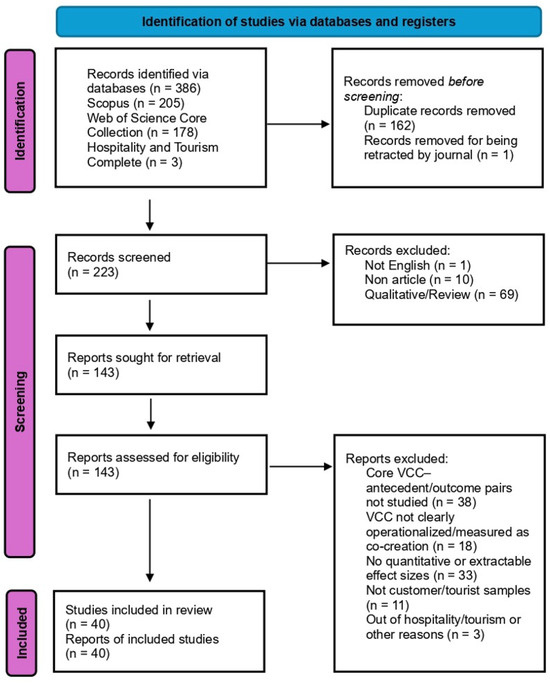
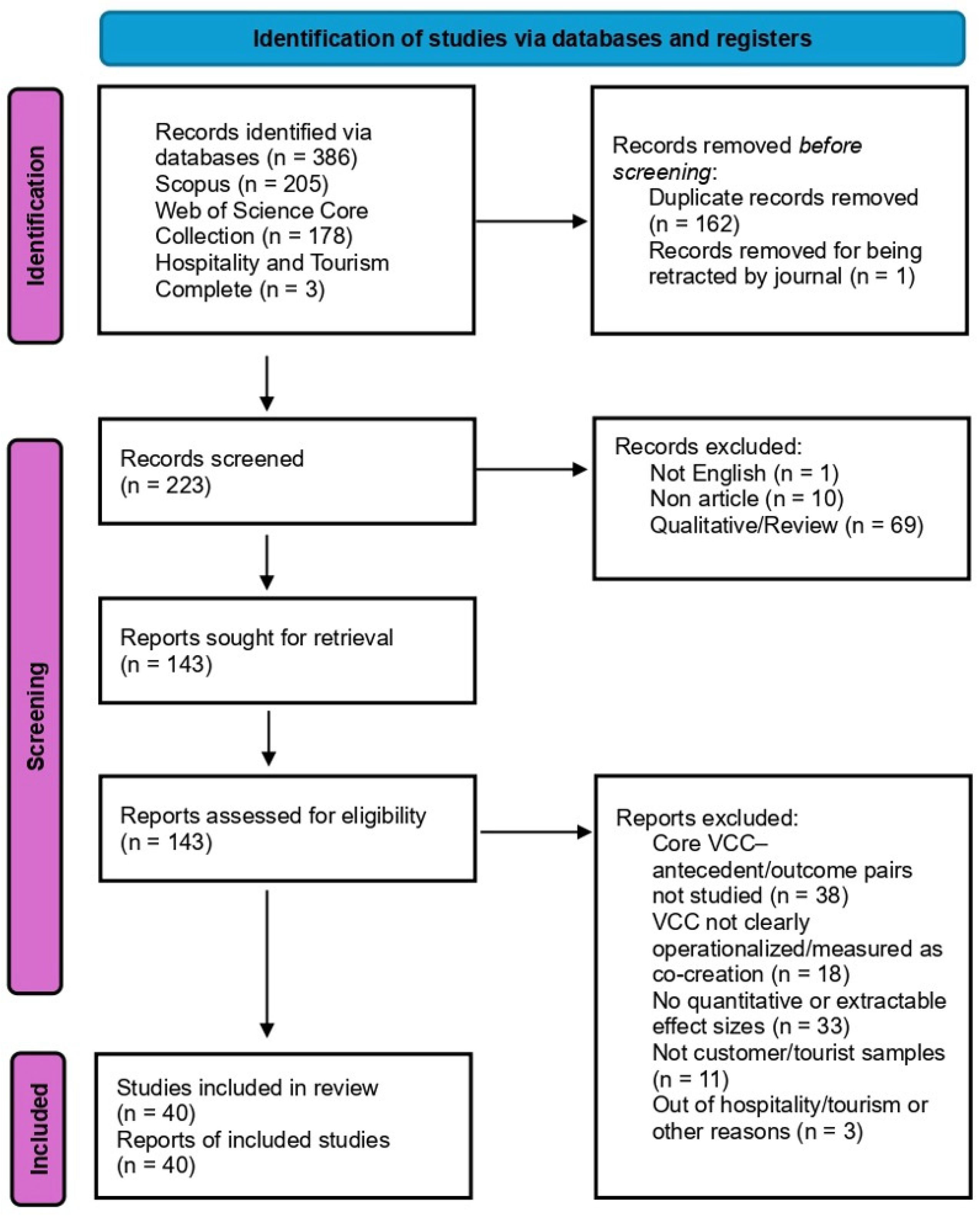
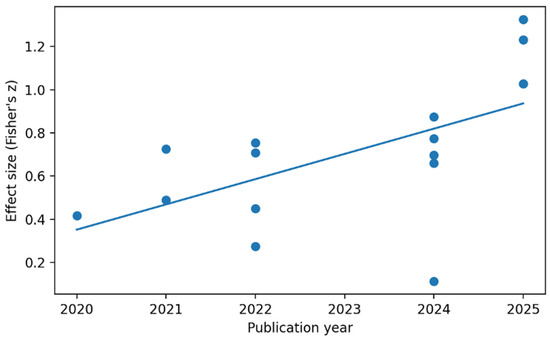
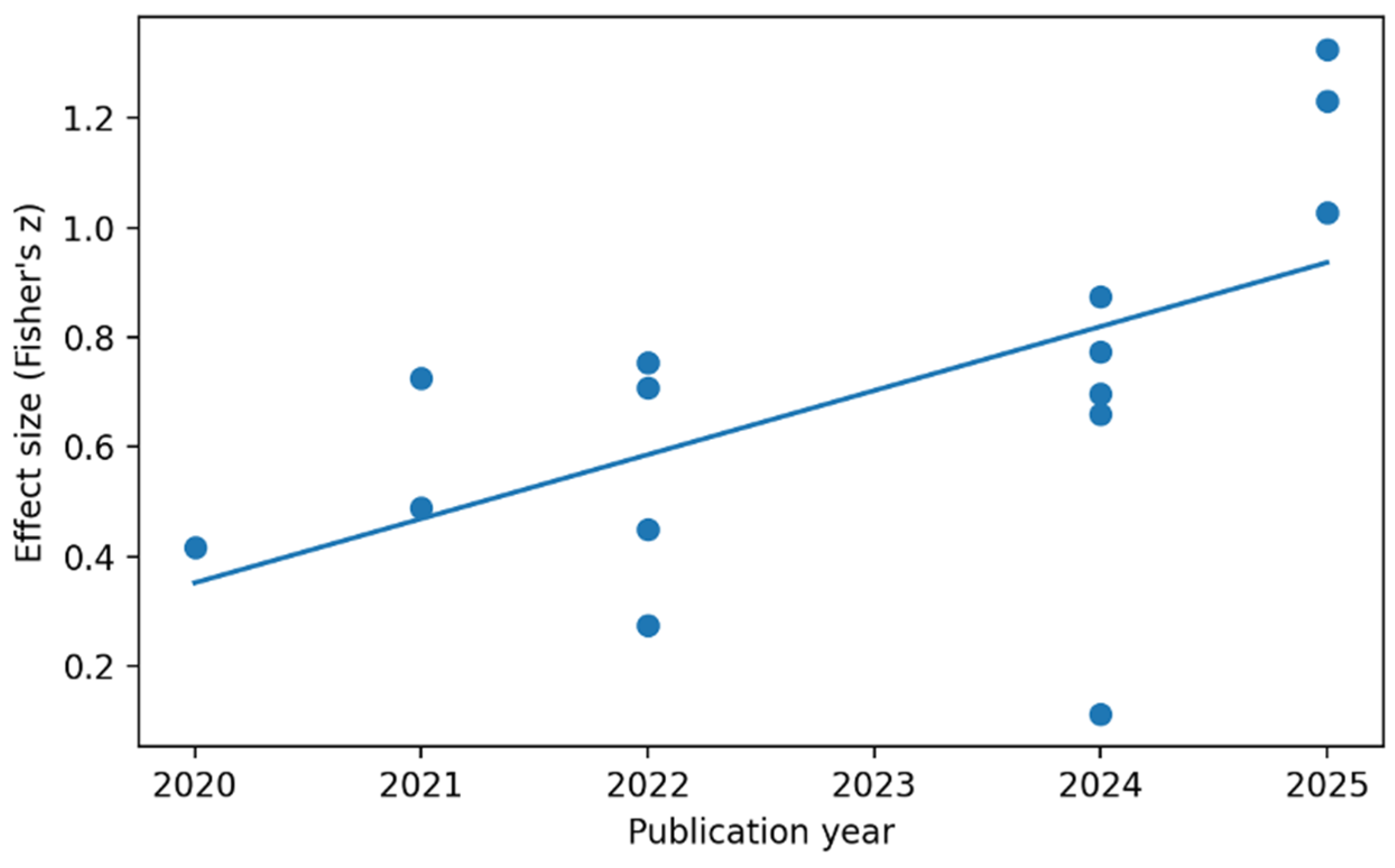

Disclaimer/Publisher’s Note: The statements, opinions and data contained in all publications are solely those of the individual author(s) and contributor(s) and not of MDPI and/or the editor(s). MDPI and/or the editor(s) disclaim responsibility for any injury to people or property resulting from any ideas, methods, instructions or products referred to in the content. |
© 2026 by the authors. Licensee MDPI, Basel, Switzerland. This article is an open access article distributed under the terms and conditions of the Creative Commons Attribution (CC BY) license.