Application of Artificial Intelligence in Social Media Depression Detection: A Narrative Review from Temporal Analysis

 ,
,  ,
,  , ,
, ,  , ,
, ,  , and
, and
Abstract
1. Introduction
2. Materials and Methods
2.1. Study Design
2.2. Defining the Research Question
- -
- Have AI models improved effectiveness in detecting depression on social media during and after the pandemic compared to the pre-pandemic period?
- -
- During and after the pandemic, have AI models that utilize textual, visual, or multimodal data been more effective in detecting depression on social media compared to the pre-pandemic period?
- -
- Have AI models updated or developed during and after the pandemic shown improvements in addressing technical challenges such as data quality and diversity compared to pre-pandemic models?
- -
- Have the strategies implemented to improve AI models in detecting depression on social media during and after the pandemic been more effective in promoting responsible and inclusive use of AI compared to pre-pandemic strategies?
- P (Population): social media users;
- I (Intervention): AI models to detect signs of depression in social media during and after the pandemic;
- C (Comparison): AI models used pre-pandemic for depression detection;
- O (Outcome): improvement in detection effectiveness (accuracy, sensitivity, and specificity);
- S (Study Type): primary studies.
2.3. Inclusion and Screening Criteria
2.4. Data Synthesis and Risk of Bias
3. Results
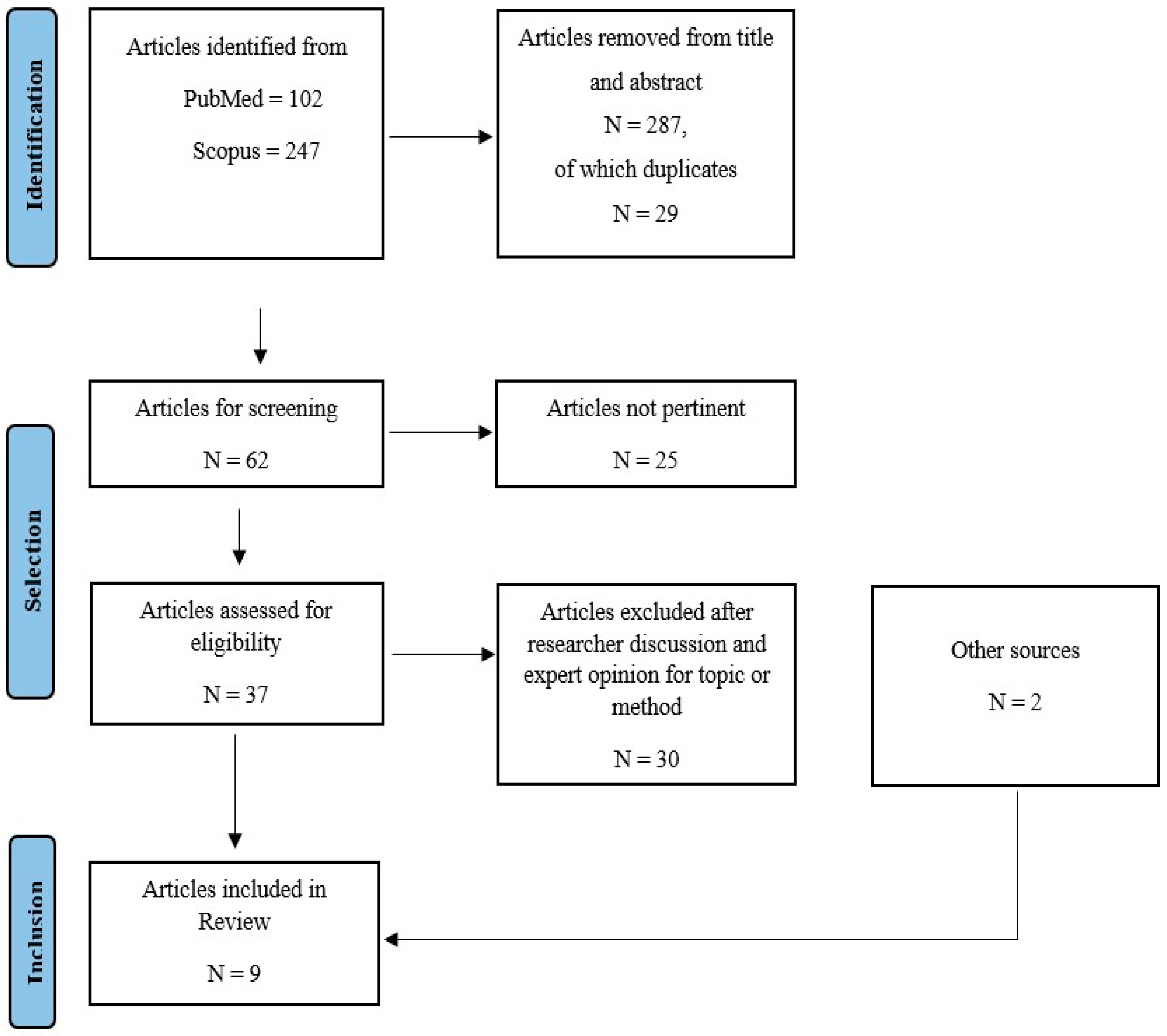
3.1. Characteristics of the Included Studies
3.2. Pre-Pandemic Evolution: Foundations and Initial Applications of AI
3.3. Impacts of the Pandemic: Adaptations and Challenges of AI in Depression Detection
3.4. Post-Pandemic: Advances of AI in Monitoring Mental Health
4. Discussion
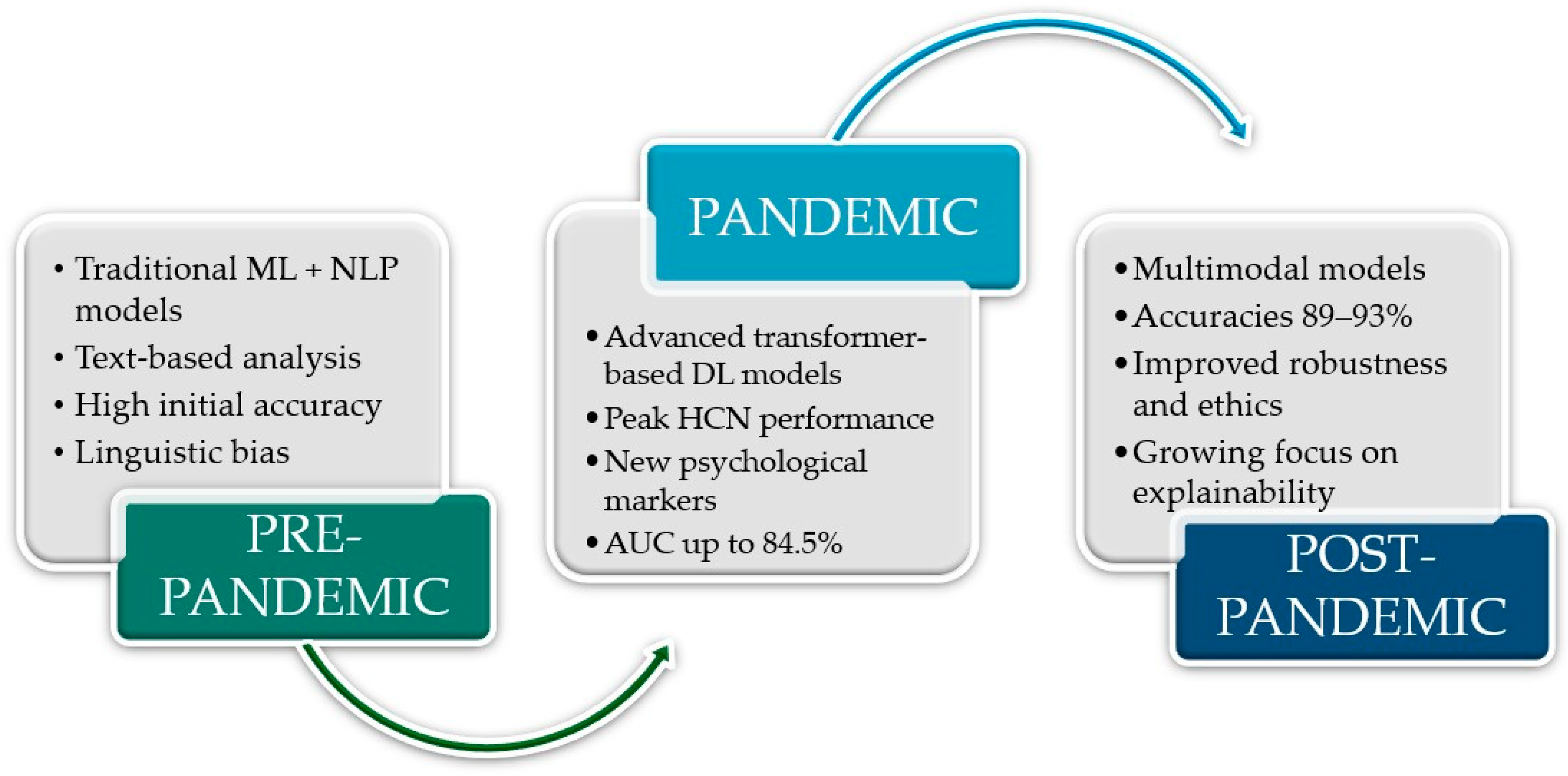
4.1. AI Model Effectiveness Evolution (Pre vs. During/Post-Pandemic)
4.2. Data Modality Effectiveness Across Time Periods
4.3. Technical Challenges and Data Quality Improvements
4.4. Responsible AI Strategy Evolution
4.5. Limitations and Implications
- Sample Size Limitations: With only nine studies, our analysis lacks the statistical power to draw robust conclusions about temporal trends in AI effectiveness for depression detection.
- Attribution Challenges: While the pandemic provided increased social media data availability, observed improvements in AI performance likely reflect natural technological evolution (e.g., advancement from traditional ML to deep learning and transformers) rather than pandemic-specific innovations.
- Review design constraints: Although we applied structured methods (PICOS, independent screening, and PRISMA-like flow), the restricted time frame, English-only inclusion, and limited database search prevent classification as a true scoping review. These methodological constraints, together with study heterogeneity, justify the narrative approach and are now explicitly acknowledged to enhance transparency.
- Methodological Heterogeneity: Differences in datasets, evaluation metrics, and study populations across the included studies limit direct comparisons and trend analysis.
- The persistent technical and ethical challenges across all time periods suggest that fundamental issues in social media-based depression detection, including privacy concerns, cultural bias, and generalization limitations, require ongoing research attention rather than representing time-specific problems.
- Missing Literature: Our exclusion of key technical databases such as ACL Anthology, IEEE Xplore, and major AI conferences represents a significant limitation. This may have led to the omission of important developments in computational approaches to mental health detection. While this is acknowledged as a limitation, it also frames a future research perspective.
4.6. Future Research Directions
- -
- These reflections also align with earlier critical insights, which highlight the need for clearer framing when interpreting temporal trends in AI-based analyses;
- -
- Comprehensive Systematic Reviews: Larger studies incorporating computational linguistics conferences and AI research databases to provide more robust evidence about temporal trends;
- -
- Longitudinal Validation Studies: Research designed specifically to distinguish between technological evolution and contextual factors (such as increased data availability during the pandemic) in AI performance improvements;
- -
- Ethical Framework Development: Systematic approaches to responsible AI implementation in mental health applications, moving beyond acknowledgment of ethical concerns to practical implementation strategies;
- -
- Cross-Cultural Validation: Studies addressing linguistic and cultural biases that persist across all time periods in our review;
- -
- As artificial intelligence technologies evolve, ensuring the privacy of sensitive mental health data becomes fundamental, necessitating robust methodologies that preserve confidentiality while leveraging vast data sets. In addition, improving the robustness of the model against adversarial attacks is essential to maintain trust and effectiveness in therapeutic contexts. The integration of multimodal data—signs of voice, text, and physiological data—can enrich the assessments of mental health; however, the challenges in the harmonization of disparate data types require further exploration;
- -
- The interdisciplinary collaboration between IT, psychologists, and doctors is essential to encourage innovative solutions that are ethically sound and clinically relevant. Incorporating user feedback into the development of the AI model can help align technological progress with the needs of the real-world practice [61]. Finally, understanding post-pandemic behavioral changes will inform artificial intelligence applications that address mental health problems emerging in an increasingly digital landscape in clinical procedure in general [62,63,64,65];
- -
- Our analysis represents an exploratory examination that requires validation through more comprehensive research before definitive conclusions can be drawn about temporal trends in AI-based depression detection on social media;
- -
- The advancements of AI models for detecting depression on social media have evolved significantly, particularly in response to the COVID-19 pandemic. The effectiveness of these models heavily relies on the integration of various types of data, addressing the technical challenges of bias, privacy, and interpretability. As AI continues to play a crucial role in mental health research, responsible strategies must be prioritized to ensure that these innovations serve the best interests of all users. Exploring these dynamics will be fundamental in shaping the future of mental health interventions in social media contexts, facilitating timely support for individuals struggling with depression. The research landscape continues to generate insights that can lead to better health outcomes, further strengthening the critical intersection between technology and mental well-being [66,67,68].
5. Conclusions
Supplementary Materials
Author Contributions
Funding
Institutional Review Board Statement
Informed Consent Statement
Data Availability Statement
Conflicts of Interest
References
- GBD 2019 Diseases and Injuries Collaborators. Global burden of 369 diseases and injuries in 204 countries and territories, 1990–2019: A systematic analysis for the Global Burden of Disease Study 2019. Lancet 2020, 396, 1204–1222. [Google Scholar] [CrossRef]
- GBD 2019 Mental Disorders Collaborators. Global, regional, and national burden of 12 mental disorders in 204 countries and territories, 1990–2019: A systematic analysis for the Global Burden of Disease Study 2019. Lancet Psychiatry 2022, 9, 137–150. [Google Scholar] [CrossRef] [Scilit]
- Chand, S.P.; Arif, H. Depression. In StatPearls [Internet]; StatPearls Publishing: Treasure Island, FL, USA, 2025. Available online: https://www.ncbi.nlm.nih.gov/books/NBK430847/ (accessed on 17 July 2023).
- World Health Organization (WHO). Depressive Disorder (Depression). Available online: https://www.who.int/news-room/fact-sheets/detail/depression (accessed on 11 January 2025).
- Zhu, C.; Zhang, T.; Li, Q.; Chen, X.; Wang, K. Depression and Anxiety During the COVID-19 Pandemic: Epidemiology, Mechanism, and Treatment. Neurosci. Bull. 2023, 39, 675–684. [Google Scholar] [CrossRef] [Scilit]
- Khubchandani, J.; Sharma, S.; Webb, F.J.; Wiblishauser, M.J.; Bowman, S.L. Post-lockdown depression and anxiety in the USA during the COVID-19 pandemic. J. Public Health 2021, 43, 246–253. [Google Scholar] [CrossRef] [Scilit]
- Deighton, J.; Lereya, S.T.; Casey, P.; Patalay, P.; Humphrey, N.; Wolpert, M. Prevalence of mental health problems in schools: Poverty and other risk factors among 28,000 adolescents in England. Br. J. Psychiatry 2019, 215, 565–567. [Google Scholar] [CrossRef] [Scilit]
- Panchal, U.; Salazar de Pablo, G.; Franco, M.; Moreno, C.; Parellada, M.; Arango, C.; Fusar-Poli, P. The impact of COVID-19 lockdown on child and adolescent mental health: Systematic review. Eur. Child Adolesc. Psychiatry 2023, 32, 1151–1177. [Google Scholar] [CrossRef] [Scilit] [PubMed]
- Tsao, S.F.; Chen, H.; Tisseverasinghe, T.; Yang, Y.; Li, L.; Butt, Z.A. What social media told us in the time of COVID-19: A scoping review. Lancet Digit. Health 2021, 3, e175–e194. [Google Scholar] [CrossRef] [Scilit]
- Rosen, A.O.; Holmes, A.L.; Balluerka, N.; Hidalgo, M.D.; Gorostiaga, A.; Gómez-Benito, J.; Huedo-Medina, T.B. Is Social Media a New Type of Social Support? Social Media Use in Spain during the COVID-19 Pandemic: A Mixed Methods Study. Int. J. Environ. Res. Public Health 2022, 19, 3952. [Google Scholar] [CrossRef] [Scilit]
- Kim, A.C.H.; Du, J.; Andrew, D.P.S. Social media consumption and depressive symptoms during the COVID-19 lockdown: The mediating effect of physical activity. Front. Psychiatry 2023, 14, 1120230. [Google Scholar] [CrossRef] [Scilit] [PubMed]
- Spina, G.; Bozzola, E.; Ferrara, P.; Zamperini, N.; Marino, F.; Caruso, C.; Antilici, L.; Villani, A. Children and Adolescent’s Perception of Media Device Use Consequences. Int. J. Environ. Res. Public Health 2021, 18, 3048. [Google Scholar] [CrossRef] [Scilit] [PubMed]
- US Preventive Services Task Force; Mangione, C.M.; Barry, M.J.; Nicholson, W.K.; Cabana, M.; Chelmow, D.; Coker, T.R.; Davidson, K.W.; Davis, E.M.; Donahue, K.E.; et al. Screening for Depression and Suicide Risk in Children and Adolescents: US Preventive Services Task Force Recommendation Statement. JAMA 2022, 328, 1534–1542. [Google Scholar] [CrossRef] [Scilit]
- Young, A.S.; Meers, M.R.; Vesco, A.T.; Seidenfeld, A.M.; Arnold, L.E.; Fristad, M.A. Predicting Therapeutic Effects of Psychodiagnostic Assessment Among Children and Adolescents Participating in Randomized Controlled Trials. J. Clin. Child Adolesc. Psychol. 2019, 48, S1–S12. [Google Scholar] [CrossRef] [Scilit]
- Meloni, M.E.; Cherchi, S.; Tonolo, G. Psychodiagnostic Investigation between Diabetes and Depression: There Is a Correlation. Psychiatr. Danub. 2022, 34, 262–264. [Google Scholar]
- Teusen, C.; Bühner, M.; Hapfelmeier, A.; von Schrottenberg, V.; Linde, K.; Gensichen, J.; Schneider, A. Development and psychometric evaluation of a questionnaire for the assessment of depression in primary care: A cross-sectional study. BMJ Open 2024, 14, e084102. [Google Scholar] [CrossRef] [Scilit]
- Obeid, S.; Abi Elias Hallit, C.; Haddad, C.; Hany, Z.; Hallit, S. Validation of the Hamilton Depression Rating Scale (HDRS) and sociodemographic factors associated with Lebanese depressed patients. Encephale 2018, 44, 397–402. [Google Scholar] [CrossRef] [Scilit] [PubMed]
- Stepankova Georgi, H.; Horakova Vlckova, K.; Lukavsky, J.; Kopecek, M.; Bares, M. Beck Depression Inventory-II: Self-report or interview-based administrations show different results in older persons. Int. Psychogeriatr. 2019, 31, 735–742. [Google Scholar] [CrossRef] [Scilit] [PubMed]
- Costantini, L.; Pasquarella, C.; Odone, A.; Colucci, M.E.; Costanza, A.; Serafini, G.; Aguglia, A.; Belvederi Murri, M.; Brakoulias, V.; Amore, M.; et al. Screening for depression in primary care with Patient Health Questionnaire-9 (PHQ-9): A systematic review. J. Affect. Disord. 2021, 279, 473–483. [Google Scholar] [CrossRef] [Scilit] [PubMed]
- Owusu, P.N.; Reininghaus, U.; Koppe, G.; Dankwa-Mullan, I.; Bärnighausen, T. Artificial intelligence applications in social media for depression screening: A systematic review protocol for content validity processes. PLoS ONE 2021, 16, e0259499. [Google Scholar] [CrossRef] [Scilit]
- Venegas-Vera, A.V.; Colbert, G.B.; Lerma, E.V. Positive and negative impact of social media in the COVID-19 era. Rev. Cardiovasc. Med. 2020, 21, 561–564. [Google Scholar] [CrossRef] [Scilit]
- McClellan, C.; Ali, M.M.; Mutter, R.; Kroutil, L.; Landwehr, J. Using social media to monitor mental health discussions—Evidence from Twitter. J. Am. Med. Inform. Assoc. 2017, 24, 496–502. [Google Scholar] [CrossRef] [Scilit]
- Yazdavar, A.H.; Mahdavinejad, M.S.; Bajaj, G.; Romine, W.; Sheth, A.; Monadjemi, A.H.; Thirunarayan, K.; Meddar, J.M.; Myers, A.; Pathak, J.; et al. Multimodal mental health analysis in social media. PLoS ONE 2020, 15, e0226248. [Google Scholar] [CrossRef] [Scilit] [PubMed]
- Babu, N.V.; Kanaga, E.G.M. Sentiment Analysis in Social Media Data for Depression Detection Using Artificial Intelligence: A Review. SN Comput. Sci. 2022, 3, 74. [Google Scholar] [CrossRef] [Scilit]
- Alkhaldi, N.A.; Asiri, Y.; Mashraqi, A.M.; Halawani, H.T.; Abdel-Khalek, S.; Mansour, R.F. Leveraging Tweets for Artificial Intelligence Driven Sentiment Analysis on the COVID-19 Pandemic. Healthcare 2022, 10, 910. [Google Scholar] [CrossRef] [Scilit]
- Mehta, A.; Niles, A.N.; Vargas, J.H.; Marafon, T.; Couto, D.D.; Gross, J.J. Acceptability and Effectiveness of Artificial Intelligence Therapy for Anxiety and Depression (Youper): Longitudinal Observational Study. J. Med. Internet Res. 2021, 23, e26771. [Google Scholar] [CrossRef] [Scilit]
- Ford, E.; Curlewis, K.; Wongkoblap, A.; Curcin, V. Public Opinions on Using Social Media Content to Identify Users With Depression and Target Mental Health Care Advertising: Mixed Methods Survey. JMIR Ment. Health 2019, 6, e12942. [Google Scholar] [CrossRef] [Scilit]
- Arigo, D.; Pagoto, S.; Carter-Harris, L.; Lillie, S.E.; Nebeker, C. Using social media for health research: Methodological and ethical considerations for recruitment and intervention delivery. Digit. Health 2018, 4, 2055207618771757. [Google Scholar] [CrossRef] [Scilit] [PubMed]
- Baethge, C.; Goldbeck-Wood, S.; Mertens, S. SANRA—A scale for the quality assessment of narrative review articles. Res. Integr. Peer Rev. 2019, 4, 5. [Google Scholar] [CrossRef] [Scilit]
- Amir-Behghadami, M.; Janati, A. Population, Intervention, Comparison, Outcomes and Study (PICOS) Design as a Framework to Formulate Eligibility Criteria in Systematic Reviews. Emerg. Med. J. 2020, 37, 387. [Google Scholar] [CrossRef] [Scilit]
- Mendeley. (n.d.). Available online: https://www.mendeley.com/download-reference-manager/windows (accessed on 1 May 2025).
- Critical Appraisal Skills Programme, CASP. Available online: https://casp-uk.net/casp-tools-checklists/ (accessed on 13 January 2025).
- Zogan, H.; Razzak, I.; Jameel, S.; Xu, G. Hierarchical Convolutional Attention Network for Depression Detection on Social Media and Its Impact During Pandemic. IEEE J. Biomed. Health Inform. 2024, 28, 1815–1823. [Google Scholar] [CrossRef] [Scilit] [PubMed]
- Chatterjee, M.; Kumar, P.; Sarkar, D. Generating a Mental Health Curve for Monitoring Depression in Real Time by Incorporating Multimodal Feature Analysis Through Social Media Interactions. Int. J. Intell. Inf. Technol. 2023, 19, 1–25. [Google Scholar] [CrossRef] [Scilit]
- Anshul, A.; Pranav, G.S.; Rehman, M.Z.U.; Kumar, N. A Multimodal Framework for Depression Detection During COVID-19 via Harvesting Social Media. IEEE Trans. Comput. Soc. Syst. 2024, 11, 2872–2888. [Google Scholar] [CrossRef] [Scilit]
- Zhang, Y.; Lyu, H.; Liu, Y.; Zhang, X.; Wang, Y.; Luo, J. Monitoring Depression Trends on Twitter During the COVID-19 Pandemic: Observational Study. JMIR Infodemiology 2021, 1, e26769. [Google Scholar] [CrossRef] [Scilit]
- Sun, B.; Zhang, Y.; He, J.; Xiao, Y.; Xiao, R. An automatic diagnostic network using skew-robust adversarial discriminative domain adaptation to evaluate the severity of depression. Comput. Methods Programs Biomed. 2019, 173, 185–195. [Google Scholar] [CrossRef] [Scilit] [PubMed]
- Tadesse, M.M.; Lin, H.; Xu, B.; Yang, L. Detection of Depression-Related Posts in Reddit Social Media Forum. IEEE Access 2019, 7, 44883–44893. [Google Scholar] [CrossRef] [Scilit]
- Cacheda, F.; Fernandez, D.; Novoa, F.J.; Carneiro, V. Early Detection of Depression: Social Network Analysis and Random Forest Techniques. J. Med. Internet Res. 2019, 21, e12554. [Google Scholar] [CrossRef] [Scilit] [PubMed]
- Ricard, B.J.; Marsch, L.A.; Crosier, B.; Hassanpour, S. Exploring the Utility of Community-Generated Social Media Content for Detecting Depression: An Analytical Study on Instagram. J. Med. Internet Res. 2018, 20, e11817. [Google Scholar] [CrossRef] [Scilit] [PubMed]
- Islam, M.R.; Kabir, M.A.; Ahmed, A.; Kamal, A.R.M.; Wang, H.; Ulhaq, A. Depression detection from social network data using machine learning techniques. Health Inf. Sci. Syst. 2018, 6, 8. [Google Scholar] [CrossRef] [Scilit]
- Kim, J.; Lee, D.; Park, E. Machine Learning for Mental Health in Social Media: Bibliometric Study. J. Med. Internet Res. 2021, 23, e24870. [Google Scholar] [CrossRef] [Scilit]
- Malhotra, A.; Jindal, R. Deep learning techniques for suicide and depression detection from online social media: A scoping review. Appl. Soft Comput. 2022, 130, 109713. [Google Scholar] [CrossRef] [Scilit]
- Zheng, Q.; Liu, F.; Xu, S.; Hu, J.; Lu, H.; Liu, T.T. Artificial intelligence empowering research on loneliness, depression and anxiety—Using COVID-19 as an opportunity. J. Saf. Sci. Resil. 2023, 4, 396–409. [Google Scholar] [CrossRef] [Scilit]
- Di Cara, N.H.; Maggio, V.; Davis, O.S.P.; Haworth, C.M.A. Methodologies for Monitoring Mental Health on Twitter: Systematic Review. J. Med. Internet Res. 2023, 25, e42734. [Google Scholar] [CrossRef] [Scilit]
- Lee, Y.; Jeon, Y.J.; Kang, S.; Shin, J.I.; Jung, Y.C.; Jung, S.J. Social media use and mental health during the COVID-19 pandemic in young adults: A meta-analysis of 14 cross-sectional studies. BMC Public Health 2022, 22, 995. [Google Scholar] [CrossRef] [Scilit]
- Tornero-Costa, R.; Martinez-Millana, A.; Azzopardi-Muscat, N.; Lazeri, L.; Traver, V.; Novillo-Ortiz, D. Methodological and Quality Flaws in the Use of Artificial Intelligence in Mental Health Research: Systematic Review. JMIR Ment. Health 2023, 10, e42045. [Google Scholar] [CrossRef] [Scilit]
- Adarsh, V.; Kumar, P.A.; Vilvanathan, L.; Gangadharan, G.R. Fair and Explainable Depression Detection in Social Media. Inf. Process. Manag. 2023, 60, 103168. [Google Scholar] [CrossRef] [Scilit]
- Zogan, H.; Razzak, I.; Wang, X.; Jameel, S.; Xu, G. Explainable depression detection with multi-aspect features using a hybrid deep learning model on social media. World Wide Web 2022, 25, 281–304. [Google Scholar] [CrossRef] [Scilit] [PubMed]
- Garg, M. Mental Health Analysis in Social Media Posts: A Survey. Arch. Comput. Methods Eng. 2023, 30, 1819–1842. [Google Scholar] [CrossRef] [Scilit] [PubMed]
- Dhelim, S.; Chen, L.; Das, S.; Nugent, C.; Leavey, G.; Pesch, D.; Bantry White, E.; Burns, D. Detecting Mental Distresses Using Social Behavior Analysis in the Context of COVID-19: A Survey. ACM Comput. Surv. 2023, 55, 318. [Google Scholar] [CrossRef] [Scilit]
- Chen, M.; Shen, K.; Wang, R.; Miao, Y.; Jiang, Y.; Hwang, K.; Hao, Y.; Tao, G.; Hu, L.; Liu, Z. Negative Information Measurement at AI Edge: A New Perspective for Mental Health Monitoring. ACM Trans. Internet Technol. 2022, 22, 62. [Google Scholar] [CrossRef] [Scilit]
- Lin, Y.H.; Chen, C.Y.; Wu, S.I. Efficiency and Quality of Data Collection Among Public Mental Health Surveys Conducted During the COVID-19 Pandemic: Systematic Review. J. Med. Internet Res. 2021, 23, e25118. [Google Scholar] [CrossRef] [Scilit]
- Sguanci, M.; Mancin, S.; Gazzelloni, A.; Diamanti, O.; Ferrara, G.; Morales Palomares, S.; Parozzi, M.; Petrelli, F.; Cangelosi, G. The internet of things in the nutritional management of patients with chronic neurological cognitive impairment: A scoping review. Healthcare 2024, 13, 23. [Google Scholar] [CrossRef] [Scilit]
- Cangelosi, G.; Mancin, S.; Morales Palomares, S.; Pantanetti, P.; Quinzi, E.; Debernardi, G.; Petrelli, F. Impact of School Nurse on Managing Pediatric Type 1 Diabetes with Technological Devices Support: A Systematic Review. Diseases 2024, 12, 173. [Google Scholar] [CrossRef] [Scilit]
- Tabashum, T.; Snyder, R.C.; O’Brien, M.K.; Albert, M.V. Machine learning models for Parkinson disease: Systematic review. JMIR Med. Inform. 2024, 12, e50117. [Google Scholar] [CrossRef] [Scilit] [PubMed]
- Pantanetti, P.; Cangelosi, G.; Morales Palomares, S.; Ferrara, G.; Biondini, F.; Mancin, S.; Caggianelli, G.; Parozzi, M.; Sguanci, M.; Petrelli, F. Real-World Life Analysis of a Continuous Glucose Monitoring and Smart Insulin Pen System in Type 1 Diabetes: A Cohort Study. Diabetology. 2025, 6, 7. [Google Scholar] [CrossRef] [Scilit]
- Sguanci, M.; Palomares, S.M.; Cangelosi, G.; Petrelli, F.; Sandri, E.; Ferrara, G.; Mancin, S. Artificial Intelligence in the Management of Malnutrition in Cancer Patients: A Systematic Review. Adv Nutr. 2025, 16, 100438. [Google Scholar] [CrossRef] [Scilit]
- Carbone, S. Artificial intelligence in cancer-related malnutrition and cachexia: A transformative tool in clinical nutrition. Adv Nutr. 2025, 16, 100447. [Google Scholar] [CrossRef] [Scilit]
- Palomares, S.M.; Ferrara, G.; Sguanci, M.; Gazineo, D.; Godino, L.; Palmisano, A.; Paderno, A.; Vrenna, G.; Faraglia, E.; Petrelli, F.; et al. The Impact of Artificial Intelligence Technologies on Nutritional Care in Patients With Chronic Kidney Disease: A Systematic Review. J Ren Nutr. 2025, 36, 13–23. [Google Scholar] [CrossRef] [Scilit]
- Ignatowicz, A.; Slowther, A.M.; Bassford, C.; Griffiths, F.; Johnson, S.; Rees, K. Evaluating interventions to improve ethical decision making in clinical practice: A review of the literature and reflections on the challenges posed. J. Med. Ethics 2023, 49, 136–142. [Google Scholar] [CrossRef] [Scilit] [PubMed]
- Cangelosi, G.; Biondini, F.; Sguanci, M.E.; Nguyen, C.T.T.; Palomares, S.M.; Mancin, S.; Petrelli, F. Systematic review protocol: Anhedonia in youth and the role of internet-related behavior. Psychiatry Int. 2024, 5, 447–457. [Google Scholar] [CrossRef] [Scilit]
- Cangelosi, G.; Biondini, F.; Sguanci, M.; Nguyen, C.T.T.; Ferrara, G.; Diamanti, O.; Palomares, S.M.; Mancin, S.; Petrelli, F. Anhedonia in youth and the role of internet-related behavior: A systematic review. Psychiatry Int. 2025, 6, 1. [Google Scholar] [CrossRef] [Scilit]
- Saha, K.; Torous, J.; Caine, E.D.; De Choudhury, M. Psychosocial Effects of the COVID-19 Pandemic: Large-scale Quasi-Experimental Study on Social Media. J. Med. Internet Res. 2020, 22, e22600. [Google Scholar] [CrossRef] [Scilit]
- Abbas, J.; Wang, D.; Su, Z.; Ziapour, A. The Role of Social Media in the Advent of COVID-19 Pandemic: Crisis Management, Mental Health Challenges and Implications. Risk Manag. Healthc. Policy 2021, 14, 1917–1932. [Google Scholar] [CrossRef] [Scilit] [PubMed]
- Nanath, K.; Balasubramanian, S.; Shukla, V.; Islam, N.; Kaitheri, S. Developing a mental health index using a machine learning approach: Assessing the impact of mobility and lockdown during the COVID-19 pandemic. Technol. Forecast. Soc. Chang. 2022, 178, 121560. [Google Scholar] [CrossRef] [Scilit] [PubMed]
- Wei, X.; Zhou, H.; Zheng, Q.; Ren, L.; Chen, N.; Wang, P.; Liu, C. Longitudinal interactions between problematic internet gaming and symptoms of depression among university students: Differentiating anhedonia and depressed mood. Addict. Behav. 2025, 160, 108184. [Google Scholar] [CrossRef] [Scilit] [PubMed]
- Ye, X.; Fong, T.C.T.; Yip, P.S.F. A cross-lagged panel network model on internet gaming disorder and depressive symptoms concerning preferences for game genres. J. Affect. Disord. 2025, 375, 27–34. [Google Scholar] [CrossRef] [Scilit]



| Characteristic | Frequency (n = 9) | Percentage |
|---|---|---|
| Publication year | ||
| 2024 | 1 | 11.1% |
| 2023 | 2 | 22.2% |
| 2021 | 1 | 11.1% |
| 2019 | 3 | 33.3% |
| 2018 | 2 | 22.2% |
| Country | ||
| USA | 2 | 22.2% |
| China | 2 | 22.2% |
| Australia | 1 | 11.1% |
| Spain | 1 | 11.1% |
| India | 2 | 22.2% |
| Bangladesh | 1 | 11.1% |
| Study Design | ||
| Experimental study | 6 | 66.7% |
| Observational study | 3 | 33.3% |
| Type of AI | ||
| HCN | 1 | 11.1% |
| NLP | 1 | 11.1% |
| ML | 4 | 44.4% |
| DL | 3 | 33.3% |
| Quality of study | ||
| Positive | 9 | 100% |
| Negative | 0 | 0% |
| Unknown | 0 | 0% |
| Author and Year | Country | Study Design | Sample | Type of AI | Objective | Results | Limitations |
|---|---|---|---|---|---|---|---|
| Zogan et al. [33] 2024 | Australia | Experimental study | Tweets from depressed and non-depressed users | HCN | Develop a model to detect depression in social media users by analyzing changes in behavior and tweet content during the COVID-19 pandemic | The HCN model demonstrated high effectiveness in identifying depression, with an increase in depression rates among users during the pandemic | Limited generalization of results; bias in the dataset; technical limitations; problematic labeling |
| Chatterjee et al. [34] 2023 | India | Experimental study | Depressive symptoms tweet | ML (SVM classifier) | Develop a real-time depression detection model through multimodal analysis of Twitter posts | The model showed an accuracy of 89% in detecting depression, combining sentiment analysis and user interaction data to track mental health trends | Selection bias; limited reliability; linguistic interpretation; limited generalization; lack of clinical comparison |
| Anshul et al. [35] 2023 | India | Experimental study | Depressed and non-depressed social media users | DL (VNN and textual analysis) | To detect depression among social media users using a novel AI framework | Achieved high accuracy with 93.1% on the Tsinghua dataset and 91.7% on the novel COVID-19 dataset, demonstrating the effectiveness of the multimodal approach | Limited data from social media; self-selection bias; classification accuracy; difficult multimodal interpretation; non-generalizable results |
| Zhang et al. [36] 2021 | USA | Observational study | 5150 Twitter users | DL (BERT, RoBERTa, XLNet) | Monitor depression trends on Twitter during the pandemic by identifying depressed users through AI | The fusion model achieved an accuracy of 78.9%, identifying key linguistic and psychological markers related to depression | Limited representativeness; uncertain identification; control group contamination; linguistic limitations; analysis based on social media |
| Sun et al. [37] 2019 | China | Experimental study | Various datasets | DL (Domain- adversarial neural networks) | Improving depression diagnosis through a skew-robust adversarial domain adaptation network | The study showed performance comparable to the baseline, surpassing other DL models in depression diagnosis | Dimensional discrepancy between datasets; distribution variations; dependence on pre-selection; limited generalization; bias in model training |
| Tadesse et al. [38] 2019 | China | Experimental study | Reddit posts | NLP; ML (SVM, MLP, etc.) | Identify linguistic markers of depression in Reddit posts | Linguistic features indicate depression with 91% accuracy and F1-score 0.93 using MLP | Dependence on self-reports; linguistic and cultural biases; limitations of NLP models; ethical issues; variability in user behavior |
| Cacheda et al. [39] 2019 | Spain | Observational study | 887 users from social media | ML (RF Algorithm) | Improve early diagnosis of MDD with social data | The dual model showed an improvement of over 10% compared to current standard detection models | Data selection and limited self-reporting; linguistic focus; non-generalizable results; bias in machine learning models; timing of predictions |
| Ricard et al. [40] 2018 | USA | Observational study | 749 Instagram users | ML | Evaluate Instagram content for depression detection using PHQ-8. | Model with AUC 0.73 demonstrates predictive capability; data combination slightly improves AUC to 0.71 | Limited participant selection; limited data from Instagram; lack of demographic data; limited use of comment data; small sample of depressed individuals |
| Islam et al. [41] 2018 | Bangladesh | Experimental study | 7145 comments from Facebook | ML (DT, SVM, KNN, Ensemble methods) | Detect depression among Facebook users by analyzing comments for psycholinguistic features. | The DT highlighted maximum precision, recall, and F-measure of 0.59, 0.99, and 0.74, identifying key psycholinguistic markers in depressive comments | Limited data source; lack of external validation; reliance on self-reporting; label imbalance; limited linguistic interpretation |
Disclaimer/Publisher’s Note: The statements, opinions and data contained in all publications are solely those of the individual author(s) and contributor(s) and not of MDPI and/or the editor(s). MDPI and/or the editor(s) disclaim responsibility for any injury to people or property resulting from any ideas, methods, instructions or products referred to in the content. |
© 2026 by the authors. Licensee MDPI, Basel, Switzerland. This article is an open access article distributed under the terms and conditions of the Creative Commons Attribution (CC BY) license.
Share and Cite
Sacchini, F.; Biondini, F.; Cangelosi, G.; Morales Palomares, S.; Mancin, S.; Parozzi, M.; Caggianelli, G.; Russotto, S.; Masini, A.; Lopane, D.; et al. Application of Artificial Intelligence in Social Media Depression Detection: A Narrative Review from Temporal Analysis. Psychiatry Int. 2026, 7, 24. https://doi.org/10.3390/psychiatryint7010024
Sacchini F, Biondini F, Cangelosi G, Morales Palomares S, Mancin S, Parozzi M, Caggianelli G, Russotto S, Masini A, Lopane D, et al. Application of Artificial Intelligence in Social Media Depression Detection: A Narrative Review from Temporal Analysis. Psychiatry International. 2026; 7(1):24. https://doi.org/10.3390/psychiatryint7010024
Chicago/Turabian StyleSacchini, Francesco, Federico Biondini, Giovanni Cangelosi, Sara Morales Palomares, Stefano Mancin, Mauro Parozzi, Gabriele Caggianelli, Sophia Russotto, Alice Masini, Diego Lopane, and et al. 2026. "Application of Artificial Intelligence in Social Media Depression Detection: A Narrative Review from Temporal Analysis" Psychiatry International 7, no. 1: 24. https://doi.org/10.3390/psychiatryint7010024
APA StyleSacchini, F., Biondini, F., Cangelosi, G., Morales Palomares, S., Mancin, S., Parozzi, M., Caggianelli, G., Russotto, S., Masini, A., Lopane, D., & Petrelli, F. (2026). Application of Artificial Intelligence in Social Media Depression Detection: A Narrative Review from Temporal Analysis. Psychiatry International, 7(1), 24. https://doi.org/10.3390/psychiatryint7010024