


Abstract
The rapid acceleration of artificial intelligence (AI) and, more recently, generative AI is reshaping journalism in ways that extend far beyond earlier forms of news automation. As generative AI tools become widely accessible and capable of processing unstructured data, longstanding definitions of automated journalism—once centered on structured datasets and template-based text generation—are being fundamentally reconfigured. This paper presents the most comprehensive and up-to-date systematized review of automated journalism scholarship, expanding on earlier research by synthesizing 185 peer-reviewed, English studies published between 2012 and 2024 about machine-generated textual news content published online. Through a rigorously designed search strategy across four major social science databases, this review maps how the field’s conceptual, methodological, and geographical contours have transformed as AI and generative AI become increasingly ubiquitous. The findings show a surge of research in 2024 alone, as well as the emergence of more than 150 overlapping terms used to describe AI- and algorithmically generated news, illustrating significant conceptual fragmentation. Despite no overly dominant theories, concepts or frameworks, key themes include credibility and trust, human–machine collaboration, newsroom adoption and institutional logics, transparency and disclosure, and the ethical and regulatory challenges introduced by increasingly sophisticated AI systems. By consolidating patterns, evaluating an expanded selection of key terms, and assessing theoretical and conceptual frameworks, this review demonstrates how AI and especially generative AI reflect the speed of industrial change, but also the lack of shared academic frameworks to make sense of that change.
1. Introduction
Thanks to increasingly abundant and openly available data, combined with artificial intelligence (AI)-enabled tools, over the past decade there has been a steady increase in news outlets publishing machine-generated textual content, known broadly as automated journalism (Diakopoulos, 2019). However, with the recent rise of generative AI, which began in 2014 with structured earthquake data being automatically fed into a pre-written template and sent to the Los Angeles Times’ copy desk for proofing (Oremus, 2014), this has exploded into a myriad of possibilities. Large language models can validate subjective game insights of sports journalists (Cheng et al., 2024) or produce real-time match summaries from video (Sarkar et al., 2024). Machine learning can generate complete news articles from geo-tagged images (Gotmare et al., 2024) or the transcripts of legislative proceedings (Klimashevskaia et al., 2021). Text can be quickly edited, translated, and formatted to align with the style and tone of news outlets (Newman, 2024). This fundamental shift in what constitutes automated journalism in practice demands a renewed exploration into what falls under the same banner within scholarship.
While automated journalism has, to date, been most understood to represent algorithmically generated news texts, a number of terms have been used interchangeably. Initially called robot journalism (or robo-journalism) (Carlson, 2015; Clerwall, 2014; Latar, 2018), this term has generally fallen out of favor because such content production does not actually involve robotics (Danzon-Chambaud, 2021). Algorithmic journalism (Dörr, 2016) includes machine-generated content but can also be used to describe several other algorithmic applications in journalism, like data mining, content optimization, and news dissemination (Kotenidis & Veglis, 2021). Since automation can increasingly be used to generate other types of content, such as images or video, or could be used to describe the automated publication of news rather than its production (Danzon-Chambaud, 2021; S. Wu et al., 2019), it has become increasingly common to use more specific terms to describe machine-generated news texts, including computer-generated news (Graefe et al., 2016), automated content production (Kotenidis & Veglis, 2021), auto-written news stories (Y. Wu, 2020), automated news/news automation (Dierickx, 2023; Haim & Graefe, 2017), and AI-generated news (S. Kim & Kim, 2020). When we began this study, we had already documented 25 different terms being used to describe automated journalism. By the end, that list had expanded to more than 150.
With the widespread and rapid uptake of easy-to-use generative AI technologies, the amount of research on automated journalism has also grown over the past decade (Danzon-Chambaud, 2021), and this trend is likely to accelerate. Studies to date have explored audience perceptions of automated news content (Graefe et al., 2016; Graefe & Bohlken, 2020; Jung et al., 2017; Y. Kim & Lee, 2021; Noain-Sánchez, 2022; Waddell, 2019b; Y. Wu, 2020); the impact on jobs, news organizations, and newsroom routines (Danzon-Chambaud & Cornia, 2021; Dierickx, 2023; Wagner, 2022); questions about journalistic authority and authorship (Carlson, 2015; Schapals & Porlezza, 2020); ethical implications (Dörr & Hollnbuchner, 2017; Rojas Torrijos, 2021); and automating more complex news stories (Caswell & Dörr, 2018, 2019).
While there is a fear that such automated content will further decrease the availability of jobs in an already decimated industry (St-Germain & White, 2021), research suggests it in fact supplements the work of journalists (Carlson, 2015; Clerwall, 2014; Diakopoulos, 2019; Schapals, 2020; Noain-Sánchez, 2022). Automated journalism has the potential to improve the quality of news content and news by providing audiences with more relevant information (Peiser, 2019; Wagner, 2022), increasing the credibility of news content (Graefe et al., 2016; Waddell, 2018, 2019a; Y. Wu, 2020), reducing financial burdens on news organizations (Wagner, 2022), and freeing up journalists’ time, efforts and energy for more impactful work (Clerwall, 2014; Diakopoulos, 2019; Schapals, 2020). With the uptake of generative AI, automated journalism has the further potential to leverage unstructured data, such as quotes, transcripts, and images, to create richer content for news audiences that moves beyond repetitive and dry pre-formatted templates without further taxing the resources of journalists and news organizations (Caswell & Dörr, 2018, 2019; Cheng et al., 2024; Sarkar et al., 2024). Techno-optimists argue that these powerful tools will serve to revitalize journalism by expanding journalists’ capabilities, engaging fragmented news audiences, and making content more global and more accessible (Munoriyarwa & de-Lima-Santos, 2025). However, generative AI presents challenges for journalism that go beyond questions of job replacement, content quality, transparency and authorship, and instead strike at the heart of the concepts of journalistic agency, power, and authority (Munoriyarwa & de-Lima-Santos, 2025). To that end, it is imperative that scholars better understand what constitutes automated journalism, how it is being deployed, and its impacts.
Given the exponential uptake of generative AI that is fundamentally altering the paradigm of machine-generated content, this study begins with an assumption that even recent scholarship is already out of date. In this paper, building on a 2021 systematic review by Danzon-Chambaud, we present the results of our comprehensive and up-to-date systematized review of automated journalism scholarship, which found a six-fold increase in the number of studies in just 4 years, identifying 185 peer-reviewed studies published between 2012 and 2024, alongside an explosion of terms used to describe AI- and algorithmically generated news, illustrating significant conceptual fragmentation in this rapidly evolving area.
2. Literature Review
In this section, we briefly review the development of automated journalism. We highlight the implications of the rapid rise of AI in general, and generative AI in particular, in both reshaping journalistic practice and norms and complicating the study of automated journalism.
2.1. Early Automation
Digital technologies have fundamentally changed how we interact with information, and with each other, and have ultimately changed the paradigm of journalism which previously existed in a news landscape marked by scarcity, with a limited number of outlets, and a limited amount of content that could be circulated at any given time (Carlson, 2015; Jarvis, 2014). As a result of the digitization of our information ecosystem, traditional media outlets no longer hold either of two longstanding monopolies: the production and the distribution of information (Jarvis, 2014). Collectively, the implications of digitization—lower costs, increased access and speed, networked communication, and lost monopolies—have unraveled the journalism industry over the past two decades (Alexander et al., 2016; Benson, 2018; Kovach & Rosenstiel, 2021; Wilkinson & Winseck, 2019). In particular, Hamilton and Turner (2009) note that it is ubiquitous computation that has “transformed the landscape of journalism.” Journalists have always used tools—notepads, voice recorders, telephones, typewriters, fax machines, computers, email, databases, and content management systems—to stretch and expand their capacity to collect, document, present, and spread information, making the work faster and easier.
Scholars have previously examined the impacts of the printing press, telegraph, radio, TV, satellites and the internet on the institution of journalism. Now researchers are turning their attention to digital technologies, and the sphere of computational journalism, an umbrella term under which a number of different “journalisms” fall, including algorithmic journalism, data journalism, and automated journalism. Diakopoulos (2019) first defines computing as “the systematic study of algorithmic processes that describe and transform information,” where an algorithm is “a series of steps that is undertaken in order to solve a particular problem or to accomplish a defined outcome.” Algorithms are not inherently digital; the inverted news pyramid, for example, is an algorithm. Initially, Hamilton and Turner (2009, p. 2) described computational journalism as “the combination of algorithms, data, and knowledge from the social sciences to supplement the accountability function of journalism.” A decade later, Diakopoulos (2019, p. 27) offered a slightly refined version: “information and knowledge production with, by, and about algorithms that embraces journalistic values.”
2.2. AI and Automated Journalism
While computational tools have previously included desktop computers, laptops, cell phones, smartphones, networked devices, and a range of software and applications that have made journalism faster and easier, artificial intelligence presents an entirely new paradigm of computational journalism. AI is a subfield of computer science which itself boasts a number of subfields, including machine learning and natural language processing (NLP) (Broussard et al., 2019). While AI is leveraged in vastly different ways across various disciplines, leading to a range of descriptions and definitions, it broadly refers to “processes in which technology simulates human intelligence and that allows for computers and machines to behave in a similar way to people” (Peña-Fernández et al., 2023, p. 2). Within the context of journalism, AI has been deployed across all phases of the news cycle, including (1) newsgathering, where AI tools help reporters sort through huge amounts data, do event monitoring, act as automated assistants, and transcribe and translate source materials; (2) production, where in addition to automated content, AI is used for summarization, to generate headlines and social media, for data visualization and article translation; and, (3) distribution, where AI optimizes and personalizes web content, interacts with news audiences through chatbots, and adjusts subscription rates and access (Aissani et al., 2023; Broussard et al., 2019; Dodds et al., 2025; Ioscote et al., 2024; Verma, 2024).
AI is becoming an increasingly key component of automated journalism, which has most commonly been understood as the use of algorithms to convert raw data into text that mimics the writing styles of human journalists (Carlson, 2015; Danzon-Chambaud, 2021; Kotenidis & Veglis, 2021). Initially, automated journalism was similar to a high-tech version of Mad Libs, where structured data—data that have been sorted and categorized, generally in a tabular format—are automatically inserted into pre-written templates (Diakopoulos, 2019) and are most often used for number-heavy content like weather forecasts, financial reports, sports statistics, and election results. This process can be entirely automated, but is more commonly semi-automated, where at minimum editors review and sign off on machine-generated drafts, or where reporters use it as a base to build on, adding descriptive narratives and additional reporting. While a number of news organizations have deployed automated journalism tools internally, such as the LA Times’ Quakebot, the Washington Post’s Heliograf and Reuters’ Lynx Insight, these technologies are more often purchased from external service providers and customized (Schapals, 2020). A few common tools used to produce automated journalism include Automated Insights’ Wordsmith, RADAR News, Retresco, Aria NLG and, previously, Narrative Science’s Quill.
As these technologies evolve and capitalize on generative AI’s ability to process unstructured data—for example narrative descriptions, images and video—and generate unique synthetic content, the breadth and complexity of the journalistic content that can be generated will also evolve, representing a growing area of research (Arguedas & Simon, 2023; Cools & Diakopoulos, 2024; Guzman & Lewis, 2024; Shi & Sun, 2024).
2.3. Generative AI
Generative AI, sometimes abbreviated to GAI or GenAI, is an umbrella term used to describe complex AI systems that use vast amounts of data to create new content, including text, images, audio, and video, known as synthetic content (Arguedas & Simon, 2023; Cools & Diakopoulos, 2024). The exponential uptake of generative AI tools was ushered in by OpenAI in November 2022, when the American tech firm unveiled ChatGPT, an AI-driven chatbot that can process human prompts and uses vast datasets to generate text, images and computer code in response (Shi & Sun, 2024). Since then, generative AI has become ubiquitous, with major technology firms deploying their own versions, from Google’s Gemini to Microsoft’s Copilot. Social media platforms have embedded generative AI tools, such as Meta AI, TikTok’s Symphony and X’s Grok, while ChatGPT alternatives like Anthropic’s Claude or Perplexity are growing in number. Unlike previous AI-enabled tools, which helped journalists work more efficiently, generative AI introduces a fundamentally different capability: “In contrast to narrow AI applications designated to carry out a specific task, generative AI tools mark a step-change that seems particularly disruptive to media enterprises because they can create content—text, images, audio, video, code, and more—that seem uncannily humanlike” (Guzman & Lewis, 2024, p. 348).
While techno-optimists argue that these powerful tools further enhance journalists’ capabilities, personalize content in ways that can engage fragmented news audiences, make news and information more global and accessible, and will ultimately serve to revitalize journalism (Munoriyarwa & de-Lima-Santos, 2025), many argue that the arrival of generative AI presents an existential threat unlike any to date. From AI slop and pink slime journalism—prolific, low-quality AI-generated content masked as legitimate news sources (Darr, 2023; Goudarzi, 2024)—to deep fakes and synthetic audio, there is widespread and growing concern that the outputs of generative AI will have profound effects not just for journalism but for peoples’ understanding of truth and facts, their trust in social institutions, and ultimately the future of democracy (Arguedas & Simon, 2023; Cools & Diakopoulos, 2024; Munoriyarwa & de-Lima-Santos, 2025).
2.4. Systematically Reviewing Automated Journalism Scholarship
In 2021, Danzon-Chambaud published a review of automated journalism scholarship, which identified 33 empirical studies published in English between 2012 and 2020. However, with the pace of AI development since this review was completed, alongside the uptake of generative AI, the state of automated journalism research has shifted considerably in just a few years, leaving a gap in our collective understanding of the amount and type of studies being conducted, as well as the theoretical and methodological approaches and critical issues that currently underpin this scholarship.
Exacerbating this gap is a deluge of terms at play. Danzon-Chambaud (2021) based his review on five key terms, which at the time were the most prevalent: automated journalism, algorithmic journalism, robot journalism, computational journalism, and machine-written journalism. Since then, there has been a move away from more general (computation, AI or algorithmic journalism) or contested terms (robot or robo-journalism), as well as a growing number of increasingly specific terms being used to distinguish the ever-increasing variations in this type of content, such as automated news generation (Oh et al., 2020; Wagner, 2022), auto-written news stories (Y. Wu, 2020), algorithmically generated news (Jang et al., 2022), and AI-generated news (S. Kim & Kim, 2020). Even when Danzon-Chambaud’s (2021) review was published, the definition of automated journalism blurred the lines between basic automation and generative AI, and with the exponential uptake of generative AI, the distinction of what constitutes automated journalism has become even less clear. When we began this study, we had already identified at least 25 alternatives to the term automated journalism (see Table 1). This overabundance contributes to a lack of conceptual clarity that makes it challenging for scholars to have an accurate overview of the scope of existing research or direct future lines of inquiry and calls for deeper exploration into the current literature.
Table 1.
Initial search terms.
As such, this study picks up where Danzon-Chambaud’s (2021) review left off. In response to the rapid development and the fundamental changes presented by generative AI, we expand on this review by developing more nuanced search parameters in order to capture and assess a fuller range of existing automated journalism scholarship. In addition to empirical studies, we also include conceptual, applied, and analytical research, as well as empirical studies, to build a more fulsome picture of automated journalism scholarship. Finally, we add to our analysis a summary of prevalent theories, concepts and frameworks.
As such, the research questions guiding this systematized review are as follows:
- RQ1
- What patterns arise from an updated and expanded systematic retrieval of peer-reviewed automated journalism scholarship?
- RQ2
- How does an expanded and more nuanced selection of key search terms impact the results?
- RQ3
- What theoretical and conceptual frameworks are most prominent when a systematic review is expanded beyond empirical studies?
3. Methods
This study comprises a systematized review of automated journalism scholarship, as described by Grant and Booth (2009) in their typology of reviews. This type of research synthesis includes elements of a systematic review, best suited to assess the quantity and scope of available research, and to characterize key features (Grant & Booth, 2009). Unlike a systematic review, a systematized review does not require a formal quality assessment of included studies and is instead meant to summarize research, identify existing gaps, and refine future lines of inquiry. The steps we follow include: identifying appropriate databases, designing and testing a search strategy, running the searches and exporting the results, a title and abstract screening to eliminate irrelevant studies, a full text review to include or exclude the remaining studies, and finally, analysis of the resulting corpus.
While this systematized review falls under disciplines outside of the health sciences and does not include a quality assessment of included studies, it has been aligned as closely as possible to the Preferred Reporting Items for Systematic reviews and Meta-Analyses (PRISMA) 2020 Statement (Page et al., 2021). The completed 27-item PRISMA 2020 Checklist can be found in Appendix B.
3.1. Search Strategy
Prior to conducting the search, and at regular intervals throughout data collection, a research librarian was consulted to design and operationalize a formal search strategy, including determining the appropriate search criteria, parameters and sources, designating inclusion and exclusion criteria, testing and validating search strings, identifying validation articles, and updating the initial search.
3.1.1. Inclusion Criteria
A search strategy was designed to identify studies with the following characteristics: (1) peer-reviewed studies, (2) published in English, and (3) about machine-generated textual news content published online. While Danzon-Chambaud’s (2021) corpus was limited to empirical studies, this review was extended to include articles that were also theoretical, applied, or analytical, to identify gaps in research, critical issues that have not yet been studied empirically, technical studies, and other research synthesis.
This review also includes studies that are fully about automated journalism, as well as those that are partially about automated journalism (not solely about automated journalism, but includes a significant portion on the topic), or tangentially about it (directly relevant to the subject of automated journalism, even if the paper itself is not explicitly about automated journalism). Finally, we chose to include studies that were clearly touching on the topic of automated journalism but were poorly written, poorly translated, or where the method or descriptions were challenging to understand; these were tagged as unsure.
3.1.2. Databases
Four social science databases were chosen for this study, on the advice of the consulting research librarian: (1) EBSCO’s Communication Source, the most prevalent database for communication and media scholarship, indexes 79 journalism-related journals and 278 media journals; (2) EBSCO’s Academic Search Complete provides a broad scholarship overview, with indexing of potentially related disciplines outside of the field of communications and media, such as political science, sociology, philosophy and psychology; (3) all six indexes of the Web of Science—in addition to both social sciences and arts and humanities indexes, Web of Science also includes a science citation index and conference proceedings, which could return related results from the fields of computer science and engineering, as well as an index of emerging journals, which may capture studies from more novel or exploratory fields like technology; and, (4) SCOPUS—a well-established counterpart to Web of Science, providing some overlap.
3.1.3. Search Terms
This review was also expanded to include a wide variety of terms increasingly being used to describe machine-generated news content. We found 25 variations of the term automated journalism identified within a preliminary search, which we used to build and refine our search strategy. Each term was tested individually in the Communication Source database to initially assess the number and relevance of the results (see Table 1).
Search terms with limited results were eliminated, and similar terms were then aggregated, with Boolean operators and wildcards added, to create a more refined set of 10 search strings (See Table 1). These were tested again for relevance and breadth, and refined to the following final list of search strings:
- automat* nX (journalis* OR news).
- algorithm nX (journalis* OR news).
- AI AND (journalis* OR news).
- “artificial intelligence” AND (journalis* OR news).
- computational journalis*.
- robot journalis*.
- machine journalis*.
Each of these search strings was adjusted for syntax and tested individually in each of the four databases, adjusting proximity indicators—a search operator which specifies how far apart two search terms can be—until returns no longer included relevant results. Once each search string was finalized for each database, all seven were combined into a single search string. For example, the final search string for Communication Source is as follows:
(automat* n5 (journalis* OR news)) OR (algorithm n6 (journalis* OR news)) OR (AI AND (journalis* OR news)) OR (“artificial intelligence” AND (journalis* OR news)) OR computational journalis* OR robot journalis* OR machine journalis*)
3.2. Data Collection
An initial search limited to English-language, peer-reviewed studies was conducted on 1 May 2024, and updated on 27 January 2025, to collect complete data for 2024. Search results were exported from each of databases in .ris format and imported into Covidence, an online systematic review tool. A total of 3211 articles were imported, and 878 duplicates were automatically removed, leaving 2270 articles to be screened. The titles and abstracts were manually screened to eliminate irrelevant studies, including those outside of the discipline, non-English studies, and non-peer reviewed articles, such as book reviews and commentary. Through screening, 1807 studies were deemed irrelevant and an additional 63 duplicates were manually identified.
Two authors then independently reviewed all 463 articles remaining for full-text review, choosing which to exclude based on the following criteria: (1) not automated journalism; (2) not textual automated journalism; (3) not peer-reviewed; (4) not in English; or (5) general overview. Studies were coded as general overviews when they were not explicitly about automated journalism, but rather about the broader impact of digital technologies on the journalism domain, wherein automated journalism may have been listed as an example but not further discussed. One retracted article was also excluded. Once the remaining studies were reviewed independently, the authors met to discuss any disagreements, and a final decision was made by consensus (Syed & Nelson, 2015; Zade et al., 2018), resulting in 278 studies excluded. The final corpus includes a total of 185 studies, which are listed in Appendix A. The PRISMA flow chart generated by Covidence is shown in Figure 1.
Figure 1.
PRISMA flow chart.
Of note is that all 33 Danzon-Chambaud’s studies included in his 2021 review were accounted for in our results. However, we chose to exclude two of these studies, which were about Chatbots and Twitter bots, as they did not meet our current definition of automated journalism.
3.3. Data Analysis
The final corpus was exported from Covidence in tabular format and then imported into the online database tool AirTable for analysis. A codebook was developed outlining each element of analysis including study type; keywords; authors and countries of origin; journals and disciplinary areas; regions of study; news organizations; theoretical frameworks; research methods and tools; and automated journalism terms and tools. The analysis also included more qualitative notes on study findings, critical issues, and areas of future research.
Both authors initially independently analyzed and coded the first 10% (n = 15) of the studies included from the dataset collected on 1 May 2024 (n = 143). The authors then met to compare results, and any differences were again reconciled by consensus (Syed & Nelson, 2015; Zade et al., 2018). The remaining studies were then divided between the authors to be coded individually.
4. Results
In this section, we present a range of top-level results emerging from our data collection process. Responding to our research questions, we first discuss the broad patterns that arise from our updated and expanded systematic retrieval of peer-reviewed automated journalism scholarship (RQ1). Next, we examine the impacts of an expanded selection of key terms (RQ2), and finally discussing prominent theories, concepts and frameworks (RQ3).
4.1. Patterns Arising from an Updated and Expanded Review (RQ1)
We first consider the types of studies, publication dates, top journals, keywords, prevalent authors and their institutional regions, regions of study, and prevalent research methods.
4.1.1. Study Tags and Types
We included a total of 185 studies in our final corpus, of which 70% (n = 130) were fully about automated journalism, 17% (n = 30) partially about automated journalism, and the remaining 13% (n = 25) tangentially about automated journalism. Of these, 61% are empirical studies (n = 112), 11% are analytical (n = 20), 9% are conceptual (n = 16), and 5% are applied (n = 10). The remaining 15% of the studies were mixed (n = 27) and include more than one study type. See Figure 2.
Figure 2.
Study tags across study types.
4.1.2. Publication Dates and Journals
Danzon-Chambaud’s (2021) study found 33 empirical studies conducted between 2012 and 2020. While we cannot compare directly, as we have included applied, analytical, and conceptual studies alongside empirical research, as well as studies that are also partially or tangentially about automated journalism, Figure 3 still shows the growth trends over time, alongside a sheer explosion of studies in 2024.
Figure 3.
Number of studies by year of publication. Note: While we referred to the journal publication dates cited for each study within our corpus, the Danzon-Chambaud (2021) study used the first published date, meaning there is some variance between the records. In order to draw comparisons, we have adjusted the dates of the Danzon-Chambaud studies in this table to reflect the publication dates indicated within citations. We have also not included the three studies that we excluded for our study (one in 2016 and two in 2019), thus showing a total of 30 records, rather than the 33 in the study.
The 185 studies in our corpus were published in 73 individual academic journals, as well as in conference proceedings and lecture notes. While the top five journals in our study fell under the discipline of communications within social sciences, we in fact included studies from 46 subjects within 14 disciplines, compared to Danzon-Chambaud’s (2021) study with 13 academic journals from 19 subjects within 7 disciplines. Moreover, 70% (n = 23) of the 33 studies were published in journalism studies journals, in contrast to only 40% (n = 76) of our 185 studies. See Table 2.
Table 2.
Top journals.
4.1.3. Keywords
The author-listed keywords from each study were captured, with 531 unique keywords emerging from a total of 1030. Table 3 includes the top raw keywords and a list of aggregated groupings of keywords. For example, the automated journalism grouping includes related terms, such as automated journalistic writing, automated news, automated news generation, automated news writing, automated text generation, Chinese automated journalism, machine generated news, and machine-written news.
Table 3.
Top keywords and keyword groupings.
4.1.4. Authors
The corpus includes 351 individual authors (compared to 70 in Danzon-Chambaud’s (2021) study), representing institutions in 43 countries (15 in Danzon-Chambaud (2021)), with more than half coming from five countries (see Table 4): the United States (n = 76, 21.7%), Spain (n = 36, 10.3%), South Korea (n = 27, 7.7%), Germany (n = 25, 7.1%), and China (n = 18, 5.1%).
Table 4.
Top Countries of Authors.
Of the 351 individual authors, 14 authored at least four studies within the corpus. See Table 5.
Table 5.
Top Authors.
4.1.5. Regions of Study
Within our 185 studies, research was conducted in 41 countries, as well as across eight distinct regions (Europe, Africa, Latin America, Middle East, The Caribbean, the Arab World, South Asia, Asia Pacific, and Catalonia). There were 24 countries within which individual studies were conducted (Figure 4), and another 17 countries represented comparative studies. The top 5 countries overall were the United States (n = 51), the United Kingdom (n = 22), Spain (n = 20), Germany (n = 19), and South Korea (n = 12).
Figure 4.
Regions of individual study.
In addition to studies conducted in individual countries, another 17 countries were part of comparative studies, including Austria (n = 4), Bulgaria (n = 1), Canada (n = 2), Estonia (n = 2), France (n = 6), Greece (n = 1), Hungary (n = 1), Iceland (n = 1), Japan (n = 1), Luxembourg (n = 1), Netherlands (n = 2), Romania (n = 1), Slovenia (n = 1), Sweden (n = 3), Switzerland (n = 4), Taiwan (n = 1), and Ukraine (n = 1).
4.1.6. Research Methods and Tools
To evaluate the research methods within our corpus, we captured methods as described by the authors, then grouped them into types. With the 185 studies, we found 444 total mentions of 157 unique methods, which we grouped according to common research types, shown in Table 6. Recognizing that individual studies mention the use of multiple methods, and that the count totals are not proportional representations across the corpus, we found 35% of the studies in our corpus noted qualitative methods (n = 66), including 52 studies that conducted interviews, 18 case studies, 7 using ethnographic approaches and 3 focus groups. One quarter of the studies used experimental methods (n = 45), with at least 17 conducting between-subject tests, which were generally one of two themes: (1) testing whether audiences could tell the difference between automated- and human-generated content; and (2) accessing audience perceptions of automated- versus human-generated content. About 4% of the studies are applied research, which were most often the description of a computational technique to produce automated news content. A quarter of the studies note using surveys (n = 47), and almost 10% describe variations in systematic reviews (n = 17). When it comes to analyses, 30% of the studies applied content analysis techniques (n = 54), while 16% performed statistical analysis. Finally, 12% of the studies in our corpus described other research designs (n = 22), such as theoretical or philosophical approaches like grounded theory or the dialectic method, while 10% describe their sampling approaches (n = 20), most often snowball sampling or purposive sampling. See Table 6.
Table 6.
Research methods.
In addition to documenting research methods, we also noted 139 unique tools mentioned 233 times within the studies (Table 7). One quarter (n = 34) were applications, in particular research software such as NVivo, Zoom, SPSS, and MaxQDA. Another 20% (n = 27) were databases, including research databases like Scopus, Lexis Nexis, and Web of Science, as well as public databases like Google Scholar, Compustat, or MediaCloud. Computational techniques like coding languages comprised 10% (n = 15) and another 10% were survey tools like Qualtrics and YouGov.
Table 7.
Top Research Tool Categories.
By raw count within the 185 studies, the five most prevalent tools are Amazon’s crowdsourcing tool Mechanical Turk (n = 13), the academic database Scopus (n = 10), the AI tool Prolific (n = 9), the qualitative content analysis software NVivo (n = 8) and the survey tool Qualtrics (n = 8).
4.2. Expanded Selection of Search Terms (RQ2)
As previously described, the wide range of terms in use as alternatives to automated journalism necessitated a rigorous and nuanced search strategy meant to capture any number of combinations of terms. In addition to author-provided keywords (shown in Table 3), we compiled a list of terms used interchangeably with “automated journalism” within our corpus. For example, some authors may have used the term “automated journalism” in their title and keywords but additionally used related terms like “automated news” and “automated content” throughout their text. To our surprise, we documented 157 overlapping but distinct terms mentioned 572 times across our 185 studies. We also noted an additional 11 terms used in studies that were ultimately excluded from our corpus. The top terms aligned almost exactly with Danzon-Chambaud’s (2021) search terms: 64% of the studies mentioned the term automated journalism (n = 119), 35% mentioned robot journalism (n = 65), 26% mentioned algorithmic journalism (n = 48), and 22% mentioned computational journalism (n = 40). Because there were often slight but distinct variations—for example, algorithm journalism as well as algorithmic journalism, or automated journalism, automatic journalism and automated journalistic outputs—we also grouped such similar terms together, which increased the prevalence of automated journalism variations to 68% (n = 185), and more than doubled variations of automated news to 32% (n = 59). With this grouping, we also start to see the prevalence of AI-generated (content, text, journalism, articles) and AI journalism (both n = 12). See Table 8.
Table 8.
Top raw terms and groupings of automated journalism terms.
Because so many general components of the terms were used interchangeably, we also broke down the elements of each of the 157 terms (for example automation + journalism) into 52 components. The most prevalent components are shown in Table 9, along with examples, which provide a clearer picture of how these elements are used interchangeably to generate dozens of alternative terms.
Table 9.
Breakdown of term elements.
4.3. Theories, Concepts and Frameworks (RQ3)
One area of analysis that we wanted to give more consideration to was the theoretical and conceptual approaches and frameworks underpinning the studies in our corpus. These were generally identified by topics addressed within literature review sections of the studies. However, because automated journalism is also an applied practice, this resulted in a broad and varied list that not only included theoretical and conceptual frameworks, but also applied concepts, models, and research areas. We found a total of 242 distinct topics, of which the top three accounted for less than 3% of each study (see Table 10).
Table 10.
Top terms.
Given this broad range, we chose to group the 242 terms into three categories: (1) concepts, which includes academic terms and definitions (n = 103, 43%); (2) theories and frameworks, which include developed theoretical explanations or frameworks applied academically (n = 79, 33%); and (3) applied practices, which include concepts or models that are operationalized in applied settings (n = 60, 25%). Additionally, given the limited prevalence of any one term, we also chose to group similar terms and count them together. For example, under concepts, a number of terms relating to news and media credibility were grouped together, including news credibility, source credibility, message credibility, and credibility perception. Under theories, variations of hostile media theories, including hostile media bias (HMB), hostile media effect (HME), and hostile media perceptions (HMP), were counted together, while in applied practices, natural language processing and natural language generation were bundled.
Even with these groupings, with the exception of news & media credibility, which was mentioned in 14% of our corpus’ 185 studies (n = 26), none accounted for more than 10% of the studies in our corpus, indicating a very broad range of theoretical and conceptual approaches with the study of automated journalism (see Table 11).
Table 11.
Top theoretical and conceptual approaches and frameworks.
However, despite no overly dominant theories, concepts or frameworks, there were a number of clear themes that emerged when items were more generally clustered across the three categories. For example, concepts, theories and frameworks broadly related to journalism scholarship were grouped, such as news values and norms (applied), journalism ideology (concept) and the spheres of journalism theory (theories), while concepts of trust and credibility were grouped with the MAIN model theory, which is a framework for measuring credibility of online news sources. The prevalence of these themes was then estimated by adding up the number of times each term within a theme was mentioned across all studies in the corpus. For example, news credibility was mentioned in 12 studies, source credibility in 5 studies, trust in 5 studies, the MAIN model in 9 studies, and so on, with theories, concepts and frameworks related to credibility and trust mentioned on 44 occasions (see Table 12).
Table 12.
Theoretical and conceptual themes.
5. Discussion
Our updated and expanded systematized review of automated journalism scholarship shows an exponential increase in the number of studies, authors, and countries over the past 4 years (RQ1), alongside a surge of key terms in use (RQ2), and a wide range of theoretical and conceptual approaches with the study of automated journalism (RQ3). Drawing these findings together, we see clearly how the speed of AI-driven changes within the journalism industry, alongside the seismic shifts introduced by generative AI, are leading to fragmentation as scholars try to keep up with the terms, technologies, and tools at play. This lack of conceptual clarity and consensus makes the study of automated journalism challenging and calls for common language across the diversity of disciplines contributing to our collective understanding of this increasingly complex practice.
5.1. Exponential Growth
The clearest finding of this review is the sheer quantity of studies and the exponential increase since Danzon-Chambaud (2021) identified 33 studies in his review, particularly in 2024, which accounts for one-third of the 185 studies we identified since 2012 (n = 65). Even when recognizing that Danzon-Chambaud (2021) only considered empirical studies that were fully about automated journalism, and filtering for those attributes, we still find a threefold increase (n = 94).
While Western regions continue to dominate scholarship even as generative AI lowers technical barriers for participation, there has been a substantial increase in the number of countries represented in terms of the institutional affiliation of the authors represented within the corpus (43 countries compared to 15 previously). Additionally, we tracked the geographic regions being studied, which were not specified in the original review, and found 46 individual countries alongside a number of studies conducted across broader regions, including the European Union, Latin America, and Sub-Saharan Africa.
In addition to the regions represented within our corpus, given the significant overlap between automated news content and other AI and algorithmic applications within journalism, it is worth mentioning that we identified research taking place in a number of understudied regions, which were ultimately excluded from our corpus because they fell under the category of ‘general overview.’ As mentioned, studies were coded as general overviews when they were not explicitly about automated journalism, but rather about the broader impact of digital technologies on the journalism domain, wherein automated journalism may have been listed as an example but not further discussed. This includes Egypt, Finland, Ghana, Jordan, Kazakhstan, Vietnam, Malta, Morocco, the Philippines, Poland, Russia, Saudi Arabia, Singapore, South Africa, and the United Arab Emirates.
Within our corpus studies we also observed a wide range of research methods and tools for analysis used, pointing to breadth in the methodological and analytical approaches used to explore automated journalism. This suggests that the subject is approached by a wide variety of scholars from across a range of disciplines, including technical studies from computer science and engineering, business management, psychology and social sciences, but also from increasingly far-reaching disciplines like materials science, mathematics, environmental science, and behavioral science.
Alongside the exponential increase in the number of studies from increasingly diverse regions and disciplines, a second important finding is the sheer number of terms being used to describe machine-generated news content. We found 157 overlapping but distinct terms within our final corpus, as well as an additional 11 terms in studies that we excluded. We show a breakdown of the most prevalent components in Table 11, a valuable contribution for future research to help scholars make sense of the deluge of available terms to describe automated journalism.
This explosion of terms suggests a field that is developing so rapidly that scholars are simultaneously reaching for increasingly nuanced descriptions of automated journalism on the fly. Additionally, the influence of AI can easily be seen in the evolution of these terms. Of the 157 distinct terms, almost 20% (n = 29) include “artificial intelligence” or “AI” as a component (for example, AI journalism, AI news, AI-driven journalism, generative AI journalism), with 1 of them occurring in a 2018 study, 4 in 2020, 1 in 2021, 1 in 2022, 3 in 2023, and the remaining 19 in 2024. In comparison, only one study in Danzon-Chambaud’s (2021) corpus used an alternative to automated journalism that included artificial intelligence (specifically, “artificial intelligence systems-aided production of news items,” Díaz-Noci, 2020).
The exponential growth of AI in journalism in general, and generative AI in particular, has fundamentally expanded what counts as automated journalism and is thus moving the field far beyond template-based text generation as initially envisaged when the technology made its first foray in the journalism domain.
5.2. Lack of Consensus and Conceptual Clarity
One of the issues with trying to make sense of this dataset is the lack of disciplinary consensus and conceptual clarity that is normally relied upon by scholars in order to build on and contribute to collective knowledge. The breadth of terms being used to describe automated content is particularly problematic for two reasons. First, it makes searching for relevant literature challenging. While this is in part because the combination of terms used as alternative for automated journalism include generic elements (automated, AI, algorithmic, journalism, news, etc.), it is also because we built our own search parameters on the elements found within studies in Danzon-Chambaud’s (2021) corpus, which already included 25 alternatives for the term automated journalism. Even within these search parameters, however, we had to negotiate with thousands of irrelevant results.
Second, it undermines conceptual clarity as various authors use different terms to talk about the same object of study or, vice versa, similar terms to talk about different objects of study, especially within this interdisciplinary space. For example, the idea of data-driven journalism within journalism studies describes a type of reporting that relies on computational methods to look for stories within vast datasets. However, within our corpus it was used to discuss the need for algorithmic transparency in the context of the adoption of automated and algorithmic systems within newsrooms (Cools & Koliska, 2024). In all, it can be said that the proliferation of terminology reflects a deeply unsettled conceptual landscape, driven by rapid innovations in the AI space and inconsistent usage across disciplines.
This collection of diverse terms, however, forced us to be significantly more nuanced in how we designed our search strategy. For example, in terms of raw numbers, when we replicate Danzon-Chambaud’s (2021) search query in Communication Source, it returns 151 results versus the 916 found with our search query. Acknowledging that some results might be duplicates or irrelevant, this more nuanced search query still casts a wider net that allows for the possibility of identifying a greater number of relevant studies, including those from different geographical, political or cultural contexts that may be applying different terms for any number of reasons.
One surprising finding that underscores this missing conceptual clarity is a general lack of prevalent conceptual or theoretical frameworks within our corpus. While there were themes around trust and credibility, machine language and socio-technical theories, no single concept, theory or framework—with the exception of news and media credibility (6%, n = 26)—was present in more than 5% of the 185 studies, even when grouped together with similar terms. One explanation may be the interdisciplinary nature of this field comprising several disciplines, each subscribing to their respective bodies of literature, and theorical and methodological traditions. While the top five journals in our study were indeed journalism studies publications (labeled as the subject of communications within social sciences on SCImago Journal Rankings), we in fact found studies about automated journalism from 46 subjects within 14 disciplines. To that end, the same problem of breadth and range repeated itself across the corpus’ keywords and research methods, with dozens of list items that can be loosely grouped together thematically but show no distinct trends or gaps. For scholars, this lack of disciplinary consensus and conceptual clarity means they are left without clear collective signposts to guide them as they develop concepts, test theories, refine research methods, analyze data, and draw conclusions about automated journalism. This in turn forces them to create their own signposts as they carve their own paths for lack of any to follow: creating their own terms, applying their own preferred theories, citing their own narrow corpus of literature, and ultimately further exacerbating the lack of clarity and consensus.
5.3. A Call for Common Language and Future Research
We are not suggesting that scholars should not be innovative, creative and carve their own paths when necessary, but this study underscores the challenges that arise when our collective knowledge and collaboration is unduly fragmented. Without a doubt, this area of study has fundamentally shifted since Danzon-Chambaud’s (2021) study, which was published before ChatGPT went public and before the deluge of generative AI tools were available. Danzon-Chambaud (2021) in fact noted that the term “automated journalism” was already contested by some scholars for being too narrow and that it could apply to other algorithmic tasks in journalism, beyond the computer generation of news texts, such as for data-driven investigation or automated fact checking. Now, with the increasing prevalence of not only AI but also generative AI, the underlying understanding of what constitutes automated journalism has fundamentally shifted. While computational and algorithmic in nature, automated news content previously relied on structured data being fed into pre-designed templates that were designed and built in partnership with newsrooms. With the widespread uptake of generative AI tools, which can deal with unstructured data in ways not previously seen, the definitions, theories, concepts, and lines of inquiry around automated news content have ultimately evolved, and along with them, so have the scholarly lines of inquiry.
As such, we ended up with a wildly varied corpus of studies, all of which, indeed, fall under the banner of automated journalism, but which address a broad range of ideas that need to be clarified conceptually. This calls for continued conceptual research into the subject of automated journalism, further dissecting these 185 studies—and inevitably the dozens more that have been completed in the interim—in order to provide the conceptual clarity that is clearly needed and, in doing so, set a foundation for a scholarly consensus in this ever-changing area.
6. Conclusions
In this study, we conducted a systematized review of automated journalism scholarship, with the objective of updating and expanding on a study conducted by Danzon-Chambaud in 2021, which found 33 empirical studies conducted between 2012 and 2020. We include 185 studies in our corpus, 128 of which are fully, 30 tangentially, and 23 partially about automated news content. Within this corpus we included empirical, analytical, applied, and conceptual studies to build a more fulsome picture of the landscape of automated journalism scholarship.
As such, the incursion of generative AI on the journalism domain—and the subsequent reflection of this development in journalism studies research—highlights a key takeaway in our study: scholarly research on the subject matter demonstrates a clear need for conceptual clarity. Researchers use inconsistent and overlapping terms, which not only reflects the speed of AI-driven industrial change, but also the lack of shared academic frameworks to make sense of that change.
Beyond a need for conceptual clarity, another key take-away of our study is that the rapid expansion of AI in journalism research reveals structural blind spots in the field, including a persistent Western bias and the underrepresentation of female scholars, non-English scholarship, and researchers from marginalized communities. Future research should therefore move beyond terminological alignment to actively map and integrate diverse epistemologies, languages, and regional experiences in order to foreground how power, bias, and inequality shape both AI systems and the knowledge produced about them.
In addition to these suggestions, this study sets the scene for further lines of inquiry for future research. Ultimately, the substantial number of studies included within our corpus make it challenging to conduct the nuanced analysis that is deserved. This first calls for a more systematic-style review that includes a quality assessment. This could further include a clearer analysis of the focuses within the study types; an analysis of the mixed studies; a meta-analysis of the experimental studies; an evaluation of critical issues related to the uptake of automated journalism; an exploration into the automated journalism tools in use; a theoretical breakdown and conceptual framework of the terms being used to describe automated journalism; and a deeper look into the scholarship at regional levels.
In terms of theoretical frameworks, scholars would be well advised to borrow from concepts in fields adjacent to or even unrelated to the journalism domain. This may include theories such as the technology acceptance model (TAM) situated in the information systems discipline or the theory of planned behavior (TPB) rooted in the field of social psychology to explain, among other avenues of discovery, why people use and perceive AI-generated content or AI-assisted production differently.
That said, by mapping 185 studies across 12 years, this review provides a solid foundation for the next phase of scholarship—one that must grapple with the disruptive, still-unfolding implications of generative AI for both journalistic practice and norms. As such, it is fair to suggest that the rise of AI and generative AI marks a real watershed moment for automated journalism—one which is broadening the field’s scope, scale, and complexity, whilst simultaneously also reshaping its core definitions.
Author Contributions
Conceptualization, M.B.; Methodology, M.B., E.D. and A.K.S.; Formal Analysis, M.B. and A.K.S.; Writing—Original Draft Preparation, M.B.; Writing—Review & Editing, A.K.S. and E.D.; Visualization, M.B.; Supervision, E.D. All authors have read and agreed to the published version of the manuscript.
Funding
This research was funded in part by the Canada Graduate Research Scholarship—Doctoral program and a Partnership Grant both through the Social Sciences and Humanities Research Council of Canada (grant numbers: 767-2023-2741-SSHRC; 895-2019-1010-SSHRC).
Institutional Review Board Statement
Not applicable.
Informed Consent Statement
Not applicable.
Data Availability Statement
Data can be made available on request to authors.
Acknowledgments
The authors gratefully acknowledge Patrick Labelle, research librarian at the University of Ottawa, for his guidance and feedback in developing and testing our rigorous systematized review search strategy.
Conflicts of Interest
The authors declare no conflicts of interest.
Appendix A. Full List of Included Articles
Table A1.
Full list of studies.
Appendix B. PRISMA Checklist
| Section and Topic | Item # | Checklist Item | Location Where Item Is Reported |
| Title | |||
| Title | 1 | Identify the report as a systematic review. | The paper is identified as a systematized review in the title. |
| Abstract | |||
| Abstract | 2 | See the PRISMA 2020 for Abstracts checklist (Table 2). | n/a—this is a full paper |
| Introduction | |||
| Rationale | 3 | Describe the rationale for the review in the context of existing knowledge. | Page 5, in the Section 2.4. Systematically Reviewing Automated Journalism Scholarship |
| Objectives | 4 | Provide an explicit statement of the objective(s) or question(s) the review addresses. | Page 6, summarized in the research questions. |
| Methods | |||
| Eligibility criteria | 5 | Specify the inclusion and exclusion criteria for the review and how studies were grouped for the syntheses. | Inclusion criteria are summarized on page 7 in the Section 3.1.1. Inclusion Criteria. Exclusion criteria are listed on page 8 under Section 3.2. Data Collection. |
| Information sources | 6 | Specify all databases, registers, websites, organizations, reference lists and other sources searched or consulted to identify studies. Specify the date when each source was last searched or consulted. | Databases are listed beginning on page 7 in the Section 3.1.3. Databases. Collection dates are included on page 8 under Section 3.2. Data Collection. |
| Search strategy | 7 | Present the full search strategies for all databases, registers and websites, including any filters and limits used. | Page 7, in the Section 3.1. Search Strategy. |
| Selection process | 8 | Specify the methods used to decide whether a study met the inclusion criteria of the review, including how many reviewers screened each record and each report retrieved, whether they worked independently, and if applicable, details of automation tools used in the process. | Page 8 beginning in the Section 3.2. Data Collection and continued in the Section 3.3. Data Analysis. |
| Data collection process | 9 | Specify the methods used to collect data from reports, including how many reviewers collected data from each report, whether they worked independently, any processes for obtaining or confirming data from study investigators, and if applicable, details of automation tools used in the process. | Page 8 beginning in the Section 3.2. Data Collection and continued in the Section 3.3. Data Analysis. |
| Data items | 10a | List and define all outcomes for which data were sought. Specify whether all results that were compatible with each outcome domain in each study were sought (e.g., for all measures, time points, analyses), and if not, the methods used to decide which results to collect. | Page 7 in the Section 3.1.1. Inclusion Criteria. |
| 10b | List and define all other variables for which data were sought (e.g., participant and intervention characteristics, funding sources). Describe any assumptions made about any missing or unclear information. | Page 9 in the Section 3.3. Data Analysis. | |
| Study risk of bias assessment | 11 | Specify the methods used to assess risk of bias in the included studies, including details of the tool(s) used, how many reviewers assessed each study and whether they worked independently, and if applicable, details of automation tools used in the process. | n/a—This systematized review does not include a quality assessment of the included studies. |
| Effect measures | 12 | Specify for each outcome the effect measure(s) (e.g., risk ratio, mean difference) used in the synthesis or presentation of results. | n/a—This systematized review does not include a quality assessment of the included studies. |
| Synthesis methods | 13a | Describe the processes used to decide which studies were eligible for each synthesis (e.g., tabulating the study intervention characteristics and comparing against the planned groups for each synthesis (item #5)). | Page 7 in the Section 3.1.1. Inclusion Criteria and page 8 under Section 3.2. Data Collection. |
| 13b | Describe any methods required to prepare the data for presentation or synthesis, such as handling of missing summary statistics, or data conversions. | Any synthesis methods or calculations are reported alongside specific results, beginning on Page 9. | |
| 13c | Describe any methods used to tabulate or visually display results of individual studies and syntheses. | ||
| 13d | Describe any methods used to synthesise results and provide a rationale for the choice(s). If meta-analysis was performed, describe the model(s), method(s) to identify the presence and extent of statistical heterogeneity, and software package(s) used. | ||
| 13e | Describe any methods used to explore possible causes of heterogeneity among study results (e.g., subgroup analysis, meta-regression). | ||
| 13f | Describe any sensitivity analyses conducted to assess robustness of the synthesised results. | ||
| Reporting bias assessment | 14 | Describe any methods used to assess risk of bias due to missing results in a synthesis (arising from reporting biases). | n/a—This systematized review does not include a quality assessment of the included studies. |
| Certainty assessment | 15 | Describe any methods used to assess certainty (or confidence) in the body of evidence for an outcome. | n/a—This systematized review does not assess health outcomes. |
| Results | |||
| Study selection | 16a | Describe the results of the search and selection process, from the number of records identified in the search to the number of studies included in the review, ideally using a flow diagram (see Figure 1). | Page 8 beginning in the Section 3.2. Data Collection and continued in the Section 3.3. Data Analysis. |
| 16b | Cite studies that might appear to meet the inclusion criteria, but which were excluded, and explain why they were excluded. | Page 8 under Section 3.2. Data Collection describes studies from the original corpus that were excluded. | |
| Study characteristics | 17 | Cite each included study and present its characteristics. | Appendix A |
| Risk of bias in studies | 18 | Present assessments of risk of bias for each included study. | n/a—This systematized review does not include a quality assessment of the included studies, does not address health issues and does not include any statistical synthesis. |
| Results of individual studies | 19 | For all outcomes, present, for each study: (a) summary statistics for each group (where appropriate) and (b) an effect estimate and its precision (e.g., confidence/credible interval), ideally using structured tables or plots. | |
| Results of syntheses | 20a | For each synthesis, briefly summarize the characteristics and risk of bias among contributing studies. | |
| 20b | Present results of all statistical syntheses conducted. If meta-analysis was done, present for each the summary estimate and its precision (e.g., confidence/credible interval) and measures of statistical heterogeneity. If comparing groups, describe the direction of the effect. | ||
| 20c | Present results of all investigations of possible causes of heterogeneity among study results. | ||
| 20d | Present results of all sensitivity analyses conducted to assess the robustness of the synthesized results. | ||
| Reporting biases | 21 | Present assessments of risk of bias due to missing results (arising from reporting biases) for each synthesis assessed. | |
| Certainty of evidence | 22 | Present assessments of certainty (or confidence) in the body of evidence for each outcome assessed. | |
| Discussion | |||
| Discussion | 23a | Provide a general interpretation of the results in the context of other evidence. | Pages 18–21 in Section 5. Discussion |
| 23b | Discuss any limitations of the evidence included in the review. | n/a—This systematized review does not include a quality assessment of evidence from the included studies. | |
| 23c | Discuss any limitations of the review processes used. | Issues with inconsistent terms is discussed throughout, but addressed specifically on Pages 20–21 in Section 5. Discussion. | |
| 23d | Discuss implications of the results for practice, policy, and future research. | Pages 18–21 in Section 5. Discussion and pages 21–22 in Section 6. Conclusion. | |
| Other information | |||
| Registration and protocol | 24a | Provide registration information for the review, including register name and registration number, or state that the review was not registered. | n/a—This systematized review does not assess health or medical issues, does not include a quality assessment of the included studies, and is not registered. |
| 24b | Indicate where the review protocol can be accessed, or state that a protocol was not prepared. | ||
| 24c | Describe and explain any amendments to information provided at registration or in the protocol. | ||
| Support | 25 | Describe sources of financial or non-financial support for the review, and the role of the funders or sponsors in the review. | Page 22 |
| Competing interests | 26 | Declare any competing interests of review authors. | Page 22 |
| Availability of data, code, and other materials | 27 | Report which of the following are publicly available and where they can be found: template data collection forms; data extracted from included studies; data used for all analyses; analytic code; any other materials used in the review. | Data are available from authors on request. |
References
- Aissani, R., Abdallah, R. A.-Q., Taha, S., & Al Adwan, M. N. (2023). Artificial intelligence tools in media and journalism: Roles and concerns. In 2023 international conference on multimedia computing, networking and applications (MCNA) (pp. 19–26). IEEE. [Google Scholar] [CrossRef] [Scilit]
- Alexander, J. C., Breese, E. B., & Luengo, M. (Eds.). (2016). The crisis of journalism reconsidered: Democratic culture, professional codes, digital future. Cambridge University Press. [Google Scholar]
- Arguedas, A. R., & Simon, F. M. (2023). Automating democracy: Generative AI, journalism, and the future of democracy. Available online: https://ora.ox.ac.uk/objects/uuid:0965ad50-b55b-4591-8c3b-7be0c587d5e7 (accessed on 19 December 2025).
- Benson, R. (2018). Can foundations solve the journalism crisis? Journalism, 19(8), 1059–1077. [Google Scholar] [CrossRef] [Scilit]
- Blankespoor, E., deHaan, E., & Zhu, C. (2018). Capital market effects of media synthesis and dissemination: Evidence from robo-journalism. Review of Accounting Studies, 23(1), 1–36. [Google Scholar] [CrossRef] [Scilit]
- Broussard, M., Diakopoulos, N., Guzman, A. L., Abebe, R., Dupagne, M., & Chuan, C.-H. (2019). Artificial intelligence and journalism. Journalism & Mass Communication Quarterly, 96(3), 673–695. [Google Scholar] [CrossRef] [Scilit]
- Carlson, M. (2015). The robotic reporter: Automated journalism and the redefinition of labor, compositional forms, and journalistic authority. Digital Journalism, 3(3), 416–431. [Google Scholar] [CrossRef] [Scilit]
- Caswell, D., & Dörr, K. (2018). Automated journalism 2.0: Event-driven narratives: From simple descriptions to real stories. Journalism Practice, 12(4), 477–496. [Google Scholar] [CrossRef] [Scilit]
- Caswell, D., & Dörr, K. (2019). Automating complex news stories by capturing news events as data. Journalism Practice, 13(8), 951–955. [Google Scholar] [CrossRef] [Scilit]
- Cheng, L., Deng, D., Xie, X., Qiu, R., Xu, M., & Wu, Y. (2024). SNIL: Generating sports news from insights with large language models. IEEE Transactions on Visualization and Computer Graphics, 31(7), 3973–3986. [Google Scholar] [CrossRef] [Scilit]
- Clerwall, C. (2014). Enter the robot journalist: Users’ perceptions of automated content. Journalism Practice, 8(5), 519–531. [Google Scholar] [CrossRef] [Scilit]
- Cools, H., & Diakopoulos, N. (2024). Uses of generative AI in the newsroom: Mapping journalists’ perceptions of perils and possibilities. Journalism Practice, 1–19. [Google Scholar] [CrossRef] [Scilit]
- Cools, H., & Koliska, M. (2024). News automation and algorithmic transparency in the newsroom: The case of the Washington Post. Journalism Studies, 25(6), 662–680. [Google Scholar] [CrossRef] [Scilit]
- Cools, H., Van Gorp, B., & Opgenhaffen, M. (2022). New organizations, different journalistic roles, and innovative projects: How second-generation newsroom innovation labs are changing the news ecosystem. Journalism Practice, 18(6), 1605–1620. [Google Scholar] [CrossRef] [Scilit]
- Danzon-Chambaud, S. (2021). A systematic review of automated journalism scholarship: Guidelines and suggestions for future research. Open Research Europe, 1, 4. [Google Scholar] [CrossRef] [Scilit] [PubMed]
- Danzon-Chambaud, S. (2023). Automated news in practice: A cross-national exploratory study. Open Research Europe, 3, 95. [Google Scholar] [CrossRef] [Scilit] [PubMed]
- Danzon-Chambaud, S., & Cornia, A. (2021). Changing or reinforcing the “rules of the game”: A field theory perspective on the impacts of automated journalism on media practitioners. Journalism Practice, 17(2), 174–188. [Google Scholar] [CrossRef] [Scilit]
- Darr, J. (2023). How sticky is pink slime? Assessing the credibility of deceptive local media. Annals of the American Academy of Political and Social Science, 707(1), 109–124. [Google Scholar] [CrossRef] [Scilit]
- Diakopoulos, N. (2019). Automating the news: How algorithms are rewriting the media. Harvard University Press. [Google Scholar]
- Dierickx, L. (2023). News automation, materialities, and the remix of an editorial process. Journalism, 24(3), 654–670. [Google Scholar] [CrossRef] [Scilit]
- Díaz-Noci, J. (2020). Artificial intelligence systems-aided news and copyright: Assessing legal implications for journalism practices. Future Internet, 12(5), 85. [Google Scholar] [CrossRef] [Scilit]
- Dodds, T., Zamith, R., & Lewis, S. C. (2025). The AI turn in journalism: Disruption, adaptation, and democratic futures. Journalism. [Google Scholar] [CrossRef] [Scilit]
- Dörr, K. N. (2016). Mapping the field of algorithmic journalism. Digital Journalism, 4(6), 700–722. [Google Scholar] [CrossRef] [Scilit]
- Dörr, K. N., & Hollnbuchner, K. (2017). Ethical challenges of algorithmic journalism. Digital Journalism, 5(4), 404–419. [Google Scholar] [CrossRef] [Scilit]
- Galily, Y. (2018). Artificial intelligence and sports journalism: Is it a sweeping change? Technology in Society, 54, 47–51. [Google Scholar] [CrossRef] [Scilit]
- Gotmare, A., Thite, G., & Bewoor, L. (2024). A multimodal machine learning approach to generate news articles from geo-tagged images. International Journal of Electrical and Computer Engineering, 14(3), 3434–3442. [Google Scholar] [CrossRef] [Scilit]
- Goudarzi, S. (2024). To protect democratic values, journalism must save itself. Bulletin of the Atomic Scientists, 80(5), 314–320. [Google Scholar] [CrossRef] [Scilit]
- Graefe, A., & Bohlken, N. (2020). Automated journalism: A meta-analysis of readers’ perceptions of human-written in comparison to automated news. Media and Communication, 8(3), 50–59. [Google Scholar] [CrossRef] [Scilit]
- Graefe, A., Haim, M., Haarmann, B., & Brosius, H.-B. (2016). Readers’ perception of computer-generated news: Credibility, expertise, and readability. Journalism, 19(5), 595–610. [Google Scholar] [CrossRef] [Scilit]
- Grant, M. J., & Booth, A. (2009). A typology of reviews: An analysis of 14 review types and associated methodologies: A typology of reviews. Health Information & Libraries Journal, 26(2), 91–108. [Google Scholar] [CrossRef] [Scilit]
- Guzman, A. L., & Lewis, S. C. (2024). What generative AI means for the media industries, and why it matters to study the collective consequences for advertising, journalism, and public relations. Emerging Media, 2(3), 347–355. [Google Scholar] [CrossRef] [Scilit]
- Haim, M., & Graefe, A. (2017). Automated news. Digital Journalism, 5(8), 1044–1059. [Google Scholar] [CrossRef] [Scilit]
- Hamilton, J. T., & Turner, F. (2009). Accountability through algorithm: Developing the field of computational journalism. Center for Advanced Study in the Behavioral Sciences. [Google Scholar]
- Henestrosa, A. L., Greving, H., & Kimmerle, J. (2023). Automated journalism: The effects of AI authorship and evaluative information on the perception of a science journalism article. Computers in Human Behavior, 138, 107445. [Google Scholar] [CrossRef] [Scilit]
- Ioscote, F., Gonçalves, A., & Quadros, C. (2024). Artificial intelligence in journalism: A ten-year retrospective of scientific articles (2014–2023). Journalism and Media, 5(3), 873–891. [Google Scholar] [CrossRef] [Scilit]
- Jang, W., Chun, J. W., Kim, S., & Kang, Y. W. (2021). The effects of anthropomorphism on how people evaluate algorithm-written news. Digital Journalism, 11(1), 103–124. [Google Scholar] [CrossRef] [Scilit]
- Jang, W., Kwak, D. H., & Bucy, E. (2022). Knowledge of automated journalism moderates evaluations of algorithmically generated news. New Media and Society, 26(10), 5898–5922. [Google Scholar] [CrossRef] [Scilit]
- Jarvis, J. (2014). Geeks bearing gifts: Imagining new futures for news. New CUNY Journalism Press. [Google Scholar]
- Jung, J., Song, H., Kim, Y., Im, H., & Oh, S. (2017). Intrusion of software robots into journalism: The public’s and journalists’ perceptions of news written by algorithms and human journalists. Computers in Human Behavior, 71, 291–298. [Google Scholar] [CrossRef] [Scilit]
- Kim, S., & Kim, B. (2020). A Decision-making model for adopting Al-generated news articles: Preliminary results. Sustainability, 12(18), 7418. [Google Scholar] [CrossRef] [Scilit]
- Kim, Y., & Lee, H. (2021). Towards a sustainable news business: Understanding readers’ perceptions of algorithm-generated news based on cultural conditioning. Sustainability, 13(7), 3728. [Google Scholar] [CrossRef] [Scilit]
- Klimashevskaia, A., Gadgil, R., Gerrity, T., Khosmood, F., Gütl, C., & Howe, P. (2021). Automatic news article generation from legislative proceedings: A phenom-based approach (Vol. 13062, pp. 15–26). Lecture Notes in Computer Science (Including Subseries Lecture Notes in Artificial Intelligence and Lecture Notes in Bioinformatics), LNAI. Springer. [Google Scholar] [CrossRef] [Scilit]
- Kotenidis, E., & Veglis, A. (2021). Algorithmic journalism—Current applications and future perspectives. Journalism and Media, 2(2), 244–257. [Google Scholar] [CrossRef] [Scilit]
- Kovach, B., & Rosenstiel, T. (2021). The elements of journalism (Revised and updated 4th ed.). Crown. [Google Scholar]
- Latar, N. L. (2018). Robot journalism. In Robot Journalism: Can Human Journalism Survive? World Scientific Publishing Co. Pte. Ltd. [Google Scholar] [CrossRef] [Scilit]
- Lee, S., Nah, S., Chung, D. S., & Kim, J. (2020). Predicting AI news credibility: Communicative or social capital or both? Communication Studies, 71(3), 428–447. [Google Scholar] [CrossRef] [Scilit]
- Moravec, V., Macková, V., Sido, J., & Ekštein, K. (2020). The robotic reporter in the Czech news agency: Automated journalism and augmentation in the newsroom. Communication Today, 11(1), 36–52. [Google Scholar]
- Munoriyarwa, A., & de-Lima-Santos, M.-F. (2025). Generative AI and the future of news: Examining AI’s agency, power, and authority. Journalism Practice, 19(10), 2177–2188. [Google Scholar] [CrossRef] [Scilit]
- Newman, N. (2024). Journalism, media, and technology trends and predictions 2024. Reuters Institute for the Study of Journalism. [Google Scholar] [CrossRef]
- Noain-Sánchez, A. (2022). Addressing the impact of artificial intelligence on journalism: The perception of experts, journalists and academics. Communication and Society, 35(3), 105–121. [Google Scholar] [CrossRef] [Scilit]
- Oh, C., Choi, J., Lee, S., Park, S., Kim, D., Song, J., Kim, D., Lee, J., & Suh, B. (2020, April 25–30). Understanding user perception of automated news generation system. 2020 CHI Conference on Human Factors in Computing Systems (pp. 1–13), Honolulu, HI, USA. [Google Scholar] [CrossRef] [Scilit]
- Oremus, W. (2014, March 17). The first news report on the L.A. earthquake was written by a robot. Slate. Available online: https://slate.com/technology/2014/03/quakebot-los-angeles-times-robot-journalist-writes-article-on-la-earthquake.html (accessed on 20 December 2025).
- Page, M. J., McKenzie, J. E., Bossuyt, P. M., Boutron, I., Hoffmann, T. C., Mulrow, C. D., Shamseer, L., Tetzlaff, J. M., Akl, E. A., Brennan, S. E., Chou, R., Glanville, J., Grimshaw, J. M., Hróbjartsson, A., Lalu, M. M., Li, T., Loder, E. W., Mayo-Wilson, E., McDonald, S., … Moher, D. (2021). The PRISMA 2020 statement: An updated guideline for reporting systematic reviews. Systematic Reviews, 10, 89. [Google Scholar] [CrossRef] [Scilit] [PubMed]
- Peiser, J. (2019, February 5). The rise of the robot reporter. The New York Times. Available online: https://www.nytimes.com/2019/02/05/business/media/artificial-intelligence-journalism-robots.html (accessed on 20 December 2025).
- Peña-Fernández, S., Meso-Ayerdi, K., Larrondo-Ureta, A., & Díaz-Noci, J. (2023). Without journalists, there is no journalism: The social dimension of artificial intelligence in the media. Profesional de la Informacion, 32(2), e320227. [Google Scholar] [CrossRef] [Scilit]
- Rojas Torrijos, J. L. (2021). Semi-automated journalism: Reinforcing ethics to make the most of artificial intelligence for writing news. In M. Luengo, & S. Herrera-Damas (Eds.), News media innovation reconsidered (1st ed., pp. 124–137). Wiley. [Google Scholar] [CrossRef] [Scilit]
- Sarkar, S., Yashwanth, T. S., & Giri, A. (2024). Advancing cricket narratives: AI-enhanced advanced journaling in the IPL using language models. In 2024 IEEE international conference on electronics, computing and communication technologies (CONECCT) (pp. 1–6). IEEE. [Google Scholar] [CrossRef] [Scilit]
- Schapals, A. K. (2020). Automated journalism: Expendable or supplementary for the future of journalistic work? In The future of creative work: Creativity and digital disruption. Edward Elgar Publishing Ltd. [Google Scholar] [CrossRef] [Scilit]
- Schapals, A. K., & Porlezza, C. (2020). Assistance or resistance? Evaluating the intersection of automated journalism and journalistic role conceptions. Media and Communication, 8(3), 16–26. [Google Scholar] [CrossRef] [Scilit]
- Shi, Y., & Sun, L. (2024). How generative AI Is transforming journalism: Development, application and ethics. Journalism and Media, 5(2), 582–594. [Google Scholar] [CrossRef] [Scilit]
- St-Germain, N., & White, P. (2021). The impact of artificial intelligence on journalistic practices in Canada. SSRN. [Google Scholar] [CrossRef] [Scilit]
- Syed, M., & Nelson, S. C. (2015). Guidelines for establishing reliability when coding narrative data. Emerging Adulthood, 3(6), 375–387. [Google Scholar] [CrossRef] [Scilit]
- Tandoc, E. C., Yao, L. J., & Wu, S. (2020). Man vs. machine? The impact of algorithm authorship on news credibility. Digital Journalism, 8(4), 548–562. [Google Scholar] [CrossRef] [Scilit]
- Túñez-López, M., Toural-Bran, C., & Valdiviezo Abad, C. (2019). Automation, bots and algorithms in newsmaking. Impact and quality of artificial journalism. Revista Latina de Comunicacion Social, 74, 1411–1433. [Google Scholar] [CrossRef] [Scilit]
- van Dalen, A. (2012). The algorithms behind the headlines: How machine-written news redefines the core skills of human journalists. Journalism Practice, 6(5–6), 648–658. [Google Scholar] [CrossRef] [Scilit]
- Verma, D. (2024). Impact of artificial intelligence on journalism: A comprehensive review of AI in journalism. Journal of Communication and Management, 3(2), 150–156. [Google Scholar] [CrossRef] [Scilit]
- Waddell, T. F. (2018). A robot wrote this?: How perceived machine authorship affects news credibility. Digital Journalism, 6(2), 236–255. [Google Scholar] [CrossRef] [Scilit]
- Waddell, T. F. (2019a). Attribution practices for the man-machine marriage: How perceived human intervention, automation metaphors, and byline location affect the perceived bias and credibility of purportedly automated content. Journalism Practice, 13(10), 1255–1272. [Google Scholar] [CrossRef] [Scilit]
- Waddell, T. F. (2019b). Can an algorithm reduce the perceived bias of news? Testing the effect of machine attribution on news readers’ evaluations of bias, anthropomorphism, and credibility. Journalism & Mass Communication Quarterly, 96(1), 82–100. [Google Scholar] [CrossRef] [Scilit]
- Wagner, M. (2022). Automated journalism: The effects of automated news generation on news organizations. Technische Universität Wien. [Google Scholar]
- Wilkinson, S., & Winseck, D. (2019). Crisis or transformation? Debates over journalistic work in Canada. Canadian Journal of Communication, 44(3), 373–395. [Google Scholar] [CrossRef] [Scilit]
- Wu, S., Tandoc, E. C., & Salmon, C. T. (2019). A field analysis of journalism in the automation age: Understanding journalistic transformations and struggles through structure and agency. Digital Journalism, 7(4), 428–446. [Google Scholar] [CrossRef] [Scilit]
- Wu, Y. (2020). Is automated journalistic writing less biased? An experimental test of auto-written and human-written news stories. Journalism Practice, 14(8), 1008–1028. [Google Scholar] [CrossRef] [Scilit]
- Zade, H., Drouhard, M., Chinh, B., Gan, L., & Aragon, C. (2018, April 21–26). Conceptualizing disagreement in qualitative coding. 2018 CHI Conference on Human Factors in Computing Systems (pp. 1–11), Montreal, QC, Canada. [Google Scholar] [CrossRef] [Scilit]
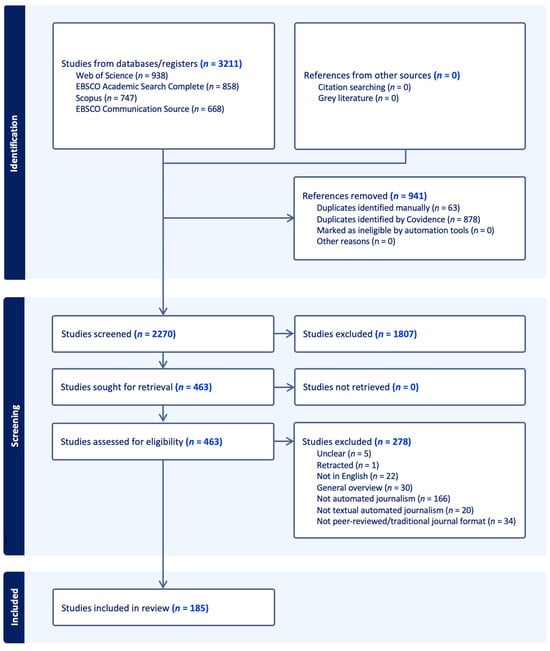
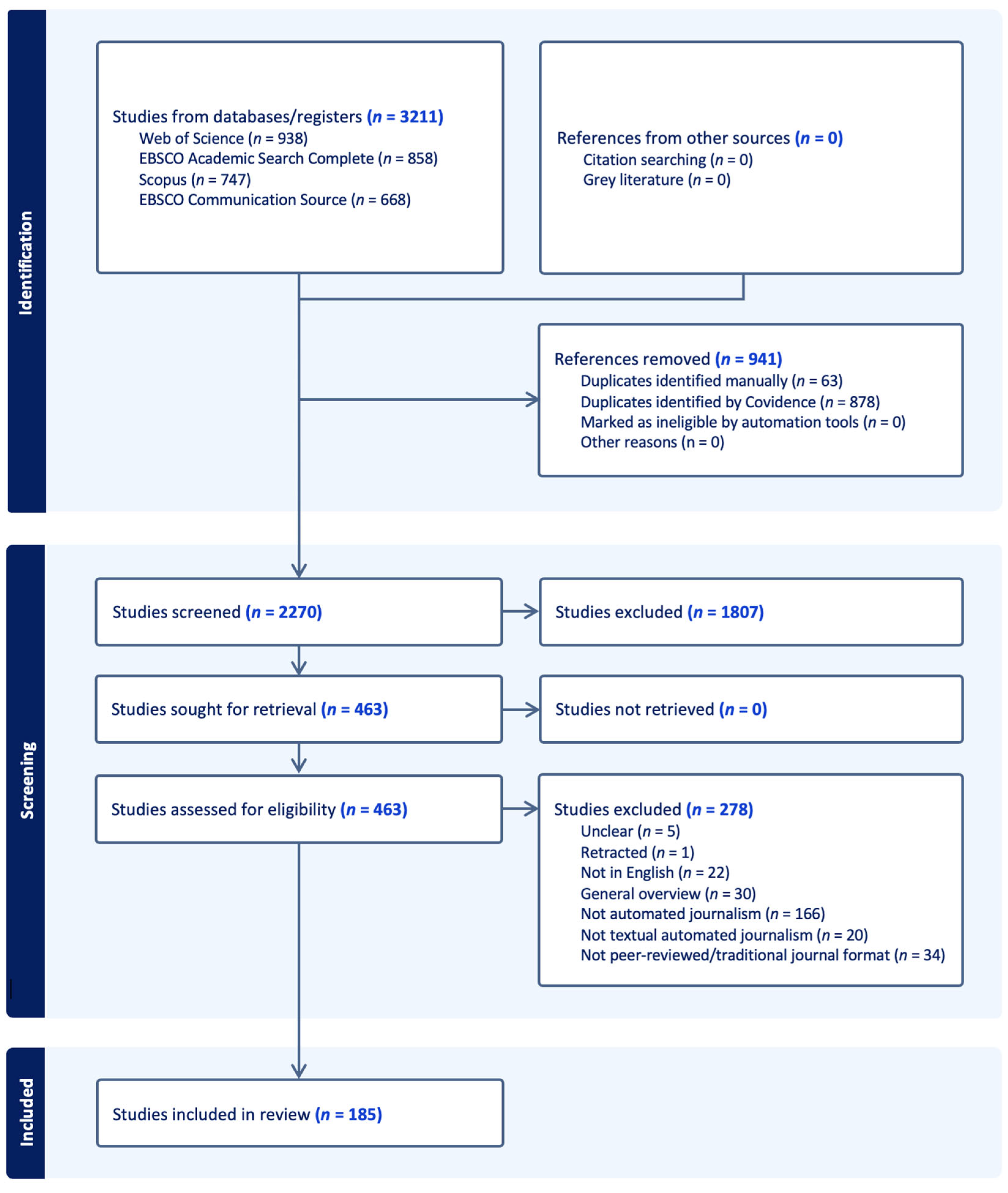
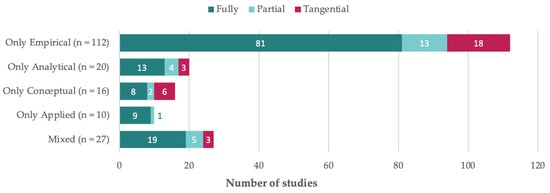
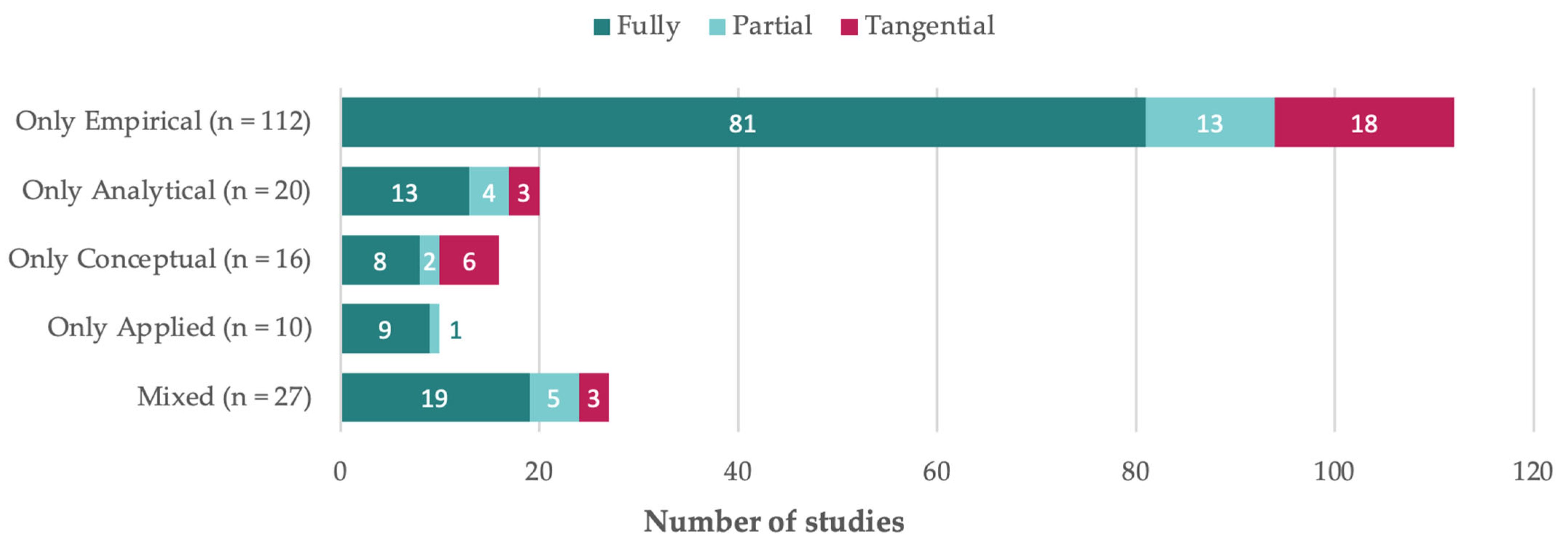
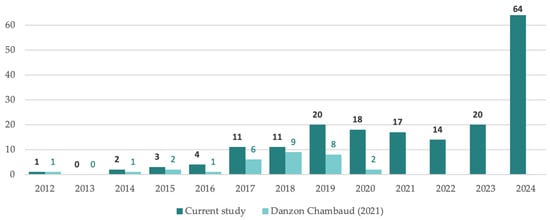
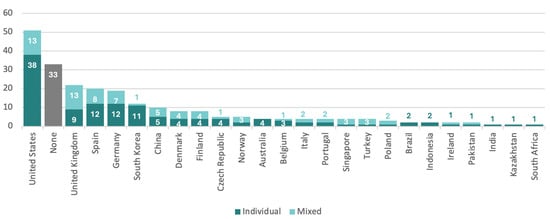

Disclaimer/Publisher’s Note: The statements, opinions and data contained in all publications are solely those of the individual author(s) and contributor(s) and not of MDPI and/or the editor(s). MDPI and/or the editor(s) disclaim responsibility for any injury to people or property resulting from any ideas, methods, instructions or products referred to in the content. |
© 2026 by the authors. Licensee MDPI, Basel, Switzerland. This article is an open access article distributed under the terms and conditions of the Creative Commons Attribution (CC BY) license.