


Abstract
This study quantifies the benefit of integrating machine learning (ML) with exergy analysis for automotive waste heat-to-power (WHP) systems. A PRISMA 2020 systematic review (2015–2025) across Scopus, ScienceDirect and Web of Science screened open-access peer-reviewed articles, yielding 19 eligible studies on organic Rankine cycle (ORC), thermoelectric generator (TEG) and hybrid ORC–TEG configurations. A random-effects meta-analysis shows a pooled moderate-to-strong gain (Hedges’ g = 0.49; 95% CI: 0.31–0.67) and a symmetric funnel plot. ORC–ANN optimization is strongest (g = 0.61), followed by hybrid CFD–ML (0.55). Multi-objective ML (0.52) and TEG models (0.34–0.41) improved performance, supporting improved recovery and reduced fuel use and CO2 emissions.
1. Introduction
The transportation sector remains one of the largest consumers of fossil fuels globally, contributing significantly to greenhouse gas emissions and urban air pollution [1]. A considerable portion, up to ~60% of the fuel energy consumed in internal-combustion-engine (ICE) vehicles is rejected as waste heat via exhaust and cooling circuits, underscoring both a challenge and an opportunity for energy recovery [2,3]. Waste heat-to-power (WHP) technologies have emerged as viable pathways to improve overall vehicle thermal efficiency. Thermoelectric generators (TEGs) and organic Rankine cycles (ORC) can convert low-/medium-grade thermal streams into electrical or mechanical power, lowering fuel use and emissions, especially in heavy-duty and hybrid architectures with higher thermal loads and better packaging flexibility [4,5,6]. Yet maximizing WHP effectiveness remains difficult because automotive heat sources are highly transient and nonlinear, with performance governed by engine load, drive cycle, component temperatures, and working-fluid properties [7].
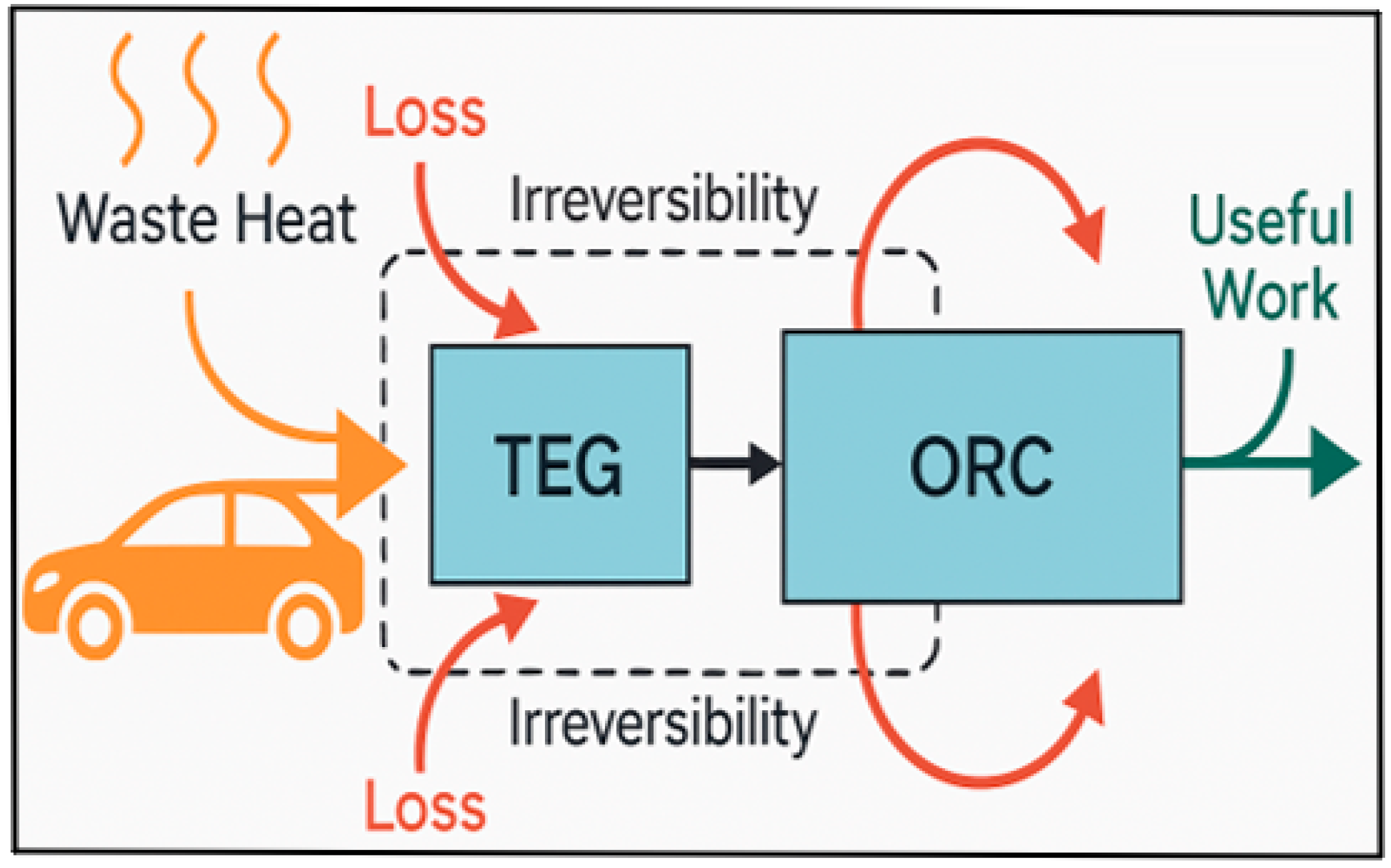
Traditional optimization rooted in first-law balances and deterministic models often struggle to capture these coupled interactions and typically ignores the quality of energy. Exergy analysis addresses this gap by quantifying useful-work potential and irreversibility, pinpointing where and how losses occur across WHP components and interfaces [3,8], as illustrated in Figure 1 and Figure 2.
Figure 1.
Exergy analysis in WHP recovery. Adapted from [8].
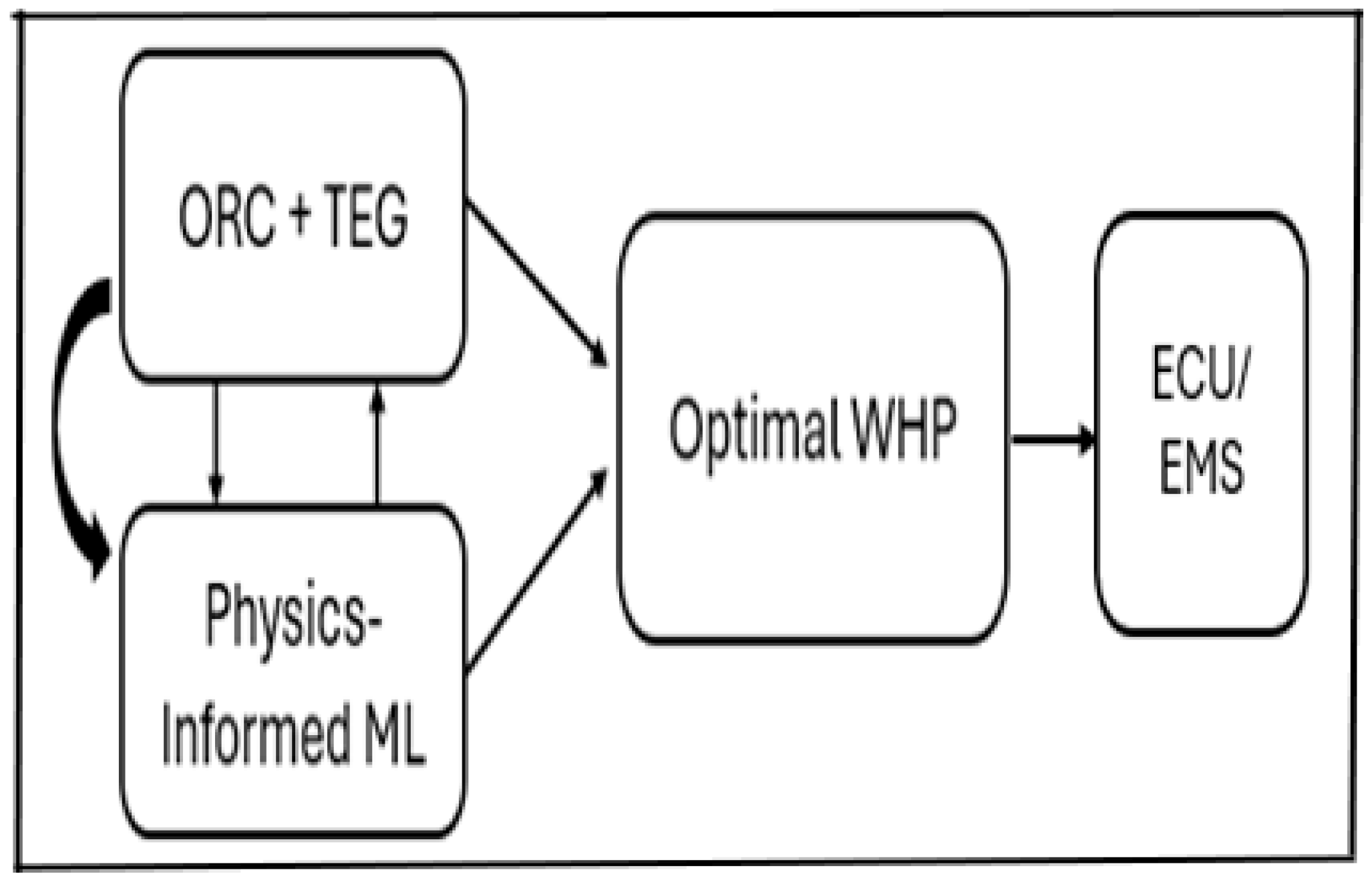
Figure 2.
Proposed exergy-informed ML framework for WHP. Adapted from [3].
Figure 1 (TEG–ORC schematic) presents a thermodynamic level concept of waste heat from a vehicle as it is sequentially converted to useful work using a thermoelectric generator (TEG) coupled with an organic Rankine cycle (ORC). It should be noted that in Figure 2, the data layer comprises the experimental WHP datasets (TEG/ORC), DOE, CFD outputs, and engine maps; the exergy layer includes the computed exergy input/output, destruction, and exergy efficiency (ψ); the ML layer includes the hybrid ML (ANN + GPR) with physical constraints (PINN); the optimization layer includes multi-objectives → maximal ψ, net power, minimal Δp and system mass; and the deployment layer consists of the real-time prediction for automotive control systems (ECU/EMS integration).
The focus is on energy flows and irreversibilities, highlighting physical losses and conversion efficiency. Figure 2 illustrates a control-oriented framework for waste-heat-to-power (WHP) optimization, in which a coupled ORC+TEG subsystem (organic Rankine cycle integrated with thermoelectric generation) interacts bidirectionally with a physics-informed machine-learning (PIML) module. This closed-loop coupling indicates an iterative supervisory process whereby physics-based constraints and data-driven inference jointly update operating decisions to converge on an optimal WHP operating point. The resulting optimized WHP command is subsequently communicated to the ECU/EMS layer (engine control unit/energy management system), highlighting an implementation pathway for real-time supervisory control and energy-management integration, rather than offline, design-only optimization. Overall, the figure emphasizes ML-in-the-loop deployment, positioning predictive and optimization intelligence as an embedded layer within the vehicle control stack to support robust decision-making under time-varying operating conditions.
In parallel, machine learning (ML) offers powerful data-driven surrogates for nonlinear, multivariate systems. However, many WHP studies deploy ML as black-box correlators without thermodynamic constraints, limiting explainability, generalizability, and physical relevance [7,9].
Based on the above highlights, a potential study to bridge the methodological divide by advancing a unified, exergy-informed ML framework for WHP optimization in automotive applications, outlining a roadmap for interdisciplinary research at the intersection of thermodynamics, AI, and automotive engineering through exergy-based ML applications in WHP prediction, control, and design as indicators for improved performance prediction, control robustness, and sustainability assessment, is therefore desirable.
Exergy and ML in WHP Optimization
The transportation sector remains a major contributor to global greenhouse gas emissions, with internal combustion engines responsible for significant fuel consumption and the dissipation of up to 60–70% of input energy as waste heat through exhaust and cooling systems [10,11]. This inefficiency not only undermines energy security but also exacerbates environmental impacts, highlighting the urgency of effective waste heat recovery (WHR) strategies in automotive systems. Exergy analysis has emerged as a robust thermodynamic tool to evaluate the quality of energy conversion and identify irreversibility in WHR systems. Unlike conventional energy balances, exergy quantifies the maximum useful work obtainable and pinpoints destruction sources in components such as heat exchangers, expanders, and thermoelectric modules [6,8]. By integrating exergy with advanced optimization techniques, researchers can systematically enhance the design and performance of waste heat-to-power (WHP) technologies, aligning automotive efficiency improvements with global decarbonization targets. Furthermore, recent advances highlight machine learning (ML) as a powerful tool for optimizing automotive waste heat-to-power (WHP) systems. By learning nonlinear interactions between operating conditions, material properties, and thermodynamic performance, ML enables rapid prediction and control of organic Rankine cycles (ORCs), thermoelectric generators (TEGs), and hybrid WHP systems with significantly reduced computational cost compared to conventional CFD or detailed thermodynamic modeling [7,9]. Progressive automotive WHR studies employing ORC- and TEG-based approaches are summarized in Table 1, providing a structured view of system configurations, evaluation metrics, and reported performance trends across representative applications. Applications of supervised and hybrid ML have shown promising accuracy in predicting exergy efficiency and optimizing component design under transient driving cycles [5,6].
Table 1.
Automotive WHR studies using ORC and TEG approaches.
Despite considerable advancements in waste heat-to-power (WHP) technologies and optimization methods, important limitations persist. Most existing WHP studies continue to rely primarily on energy-based performance indicators, which quantify energy quantity but fail to capture energy quality, irreversibility, and true useful-work potential within complex conversion systems. These include the sole focus of most WHP optimization studies on energy-based metrics without adequately accounting for the quality of energy, which limits system design and operational decisions, as energy quantity alone cannot reveal thermodynamic inefficiencies or internal losses within complex conversion systems. In parallel, although machine learning (ML) has demonstrated strong predictive capability for nonlinear WHP behavior, many implementations remain black-box in nature, with limited physical interpretability and weak thermodynamic grounding. This separation between exergy-based thermodynamic insight and data-driven optimization has constrained the robustness, generalizability, and practical deployment of ML-assisted WHP systems under transient automotive operating conditions, such as fluctuating engine loads or ambient temperatures. This means that the real-world validation of WHP-ML models in automotive platforms, especially under transient and real driving conditions, is rarely addressed, impeding industrial deployment. And as shown in Figure 2, physics-informed methods offer better potential for WHP optimization by integrating fragmented WHP, exergy and CFD limitations in the optimal performance of automotive systems.
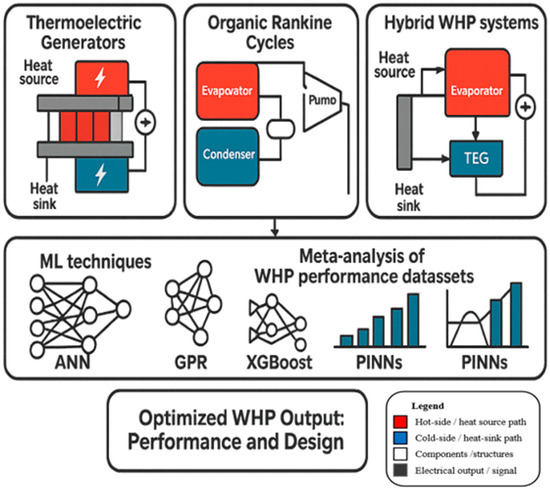
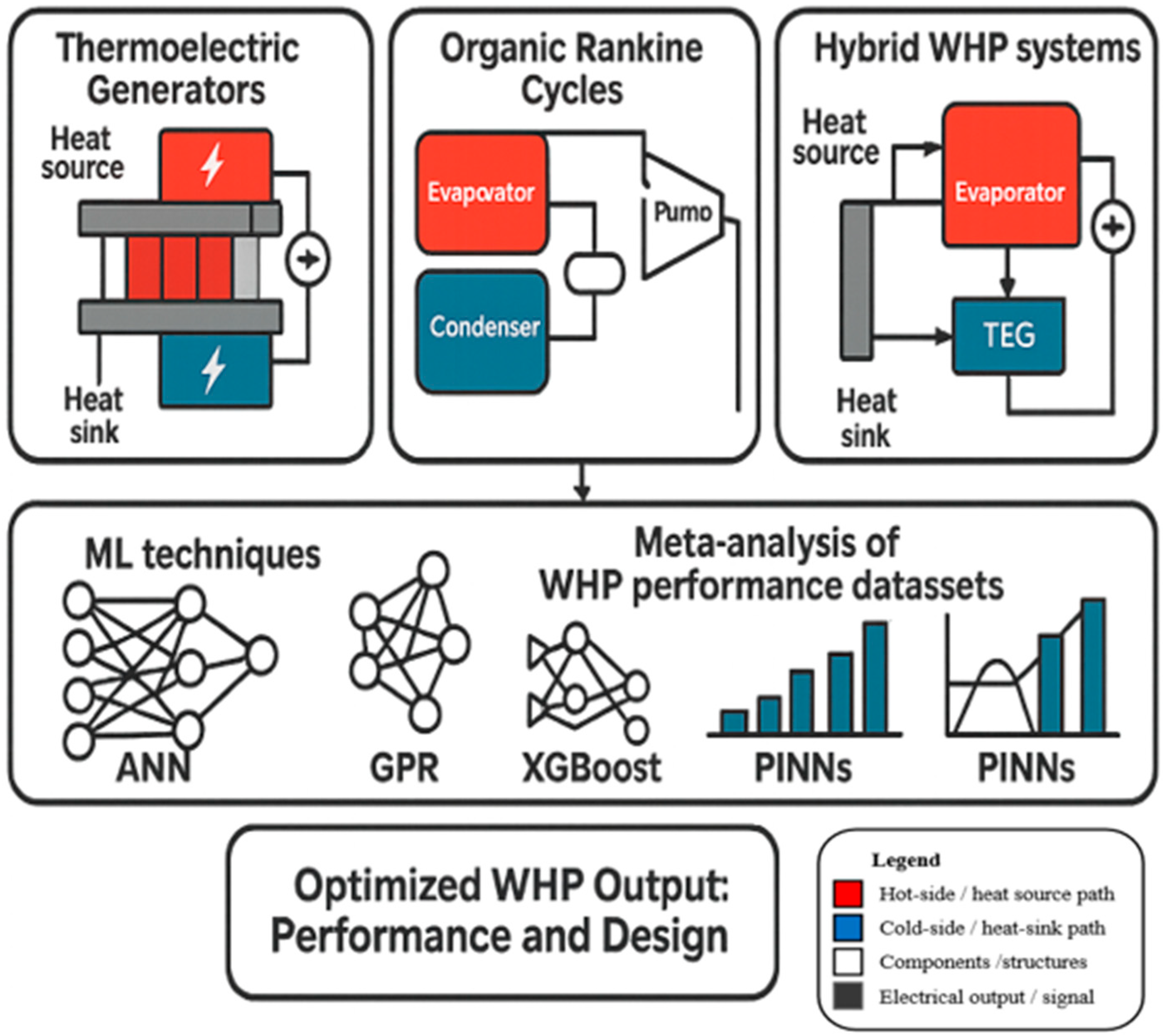
Figure 3 presents a system-level workflow that integrates WHP technology pathways, performance data resources, and machine-learning (ML) methods to produce optimized WHP designs and operating outcomes. The upper row delineates three conversion architectures; thermoelectric generators (TEGs), organic Rankine cycles (ORCs), and hybrid WHP systems, thereby structuring the design space across thermoelectric, thermodynamic, and integrated configurations. These systems then feed into an analytical layer that couples meta-analysis of WHP performance datasets with complementary ML approaches, for example, ANN, GPR, XGBoost, and physics-informed neural networks (PINNs)), highlighting both data-driven learning and physics-constrained prediction within a unified modeling pipeline. The workflow culminates in an aggregated endpoint; Optimized WHP Output: Performance and Design, signaling that the framework is intended not merely to improve predictive accuracy, but to deliver decision-relevant outputs that support component sizing, architecture selection, and performance optimization across competing WHP concepts.
Figure 3.
Visual illustration of a typical physics-informed ML exergy output. Adapted from [3,8].
Put simply, only a paucity of studies may be found in the literature that combine exergy principles with ML algorithms, and these research gaps highlight the urgent need for a holistic, interdisciplinary approach that combines the physical rigor of exergy analysis with the data-driven power of machine learning. Such integration promises to yield models that are not only accurate but also interpretable, scalable, and thermodynamically grounded because exergy-informed machine learning is fundamentally grounded in second-law thermodynamics, as exergy quantifies useful-work potential and explicitly captures irreversibility within waste heat-to-power systems. When embedded within physics-informed neural network (PINN) architectures, exergy-based constraints act as thermodynamically justified inductive biases, guiding learning toward physically consistent solutions rather than empirical correlation alone.
2. Methodology
A systematic literature review was conducted following the PRISMA 2020 framework (Figure 2) to ensure transparency and reproducibility.
2.1. Literature Search Strategy
Databases searched included Scopus, ScienceDirect, and Web of Science covering the period from 2015 to 2025. This timeframe was chosen to capture both foundational work on exergy-informed waste heat recovery and the rapid expansion of machine learning (ML) applications in energy systems. Search strings combined keywords such as waste heat recovery, automotive engines, exergy analysis, machine learning, organic Rankine cycle (ORC), thermoelectric generator (TEG), and predictive optimization. Additional relevant studies were identified through backward and forward citation tracking.
2.2. Inclusion and Exclusion Criteria
The inclusion criteria utilized are as follows:
- (i)
- Studies published between 2015 and 2025;
- (ii)
- Application in automotive waste heat-to-power (WHP) systems including ORC, TEG, or hybrid configurations;
- (iii)
- Reporting of exergy-based indicators (e.g., exergy efficiency, exergy destruction, and sustainability index);
- (iv)
- Application of ML techniques (e.g., ANN, SVM, random forest, Gaussian regression, and hybrid CFD-ML).
Studies were excluded if they:
- (a)
- Focused on non-automotive WHP (industrial boilers and stationary power plants);
- (b)
- Lacked quantitative performance or exergy metrics;
- (c)
- Presented only reviews, editorials, or conference abstracts without primary data;
- (d)
- Used purely theoretical ML frameworks without validation.
2.3. Data Extraction
From each eligible study, the following data were extracted: (i) performance metrics (thermal efficiency, net power output, and fuel consumption reduction); (ii) ML methodology (model type, training dataset size, and validation methods); (iii) exergy indicators (cycle exergy efficiency, exergy destruction rates, and sustainability index); (iv) experimental/system context (engine type, WHR configuration, working fluid, and boundary conditions); and (v) reported sample size or replications.
2.4. Statistical and Meta-Analysis Methods
Exergy indicators provide a thermodynamically consistent normalization basis across heterogeneous ORC, TEG, and hybrid systems [20], and random-effects meta-analysis is appropriate due to variation in system architectures, ML model classes, datasets, and performance metrics [21]. Effect sizes were calculated using Hedges g to represent standardized differences between baseline and ML-enhanced WHP system outcomes. A random-effects model was employed to address heterogeneity across study designs and system configurations. Forest plots were generated to display pooled effect sizes, and funnel plots with subgroup analyses distinguished between ORC and TEG systems and between different ML models, which is consistent with best practices in energy system meta-analyses [5,6,7].
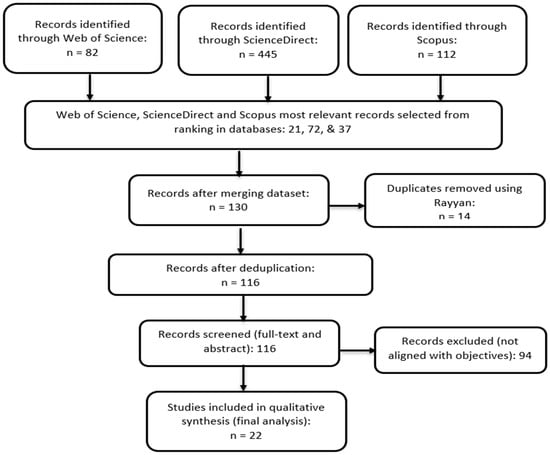
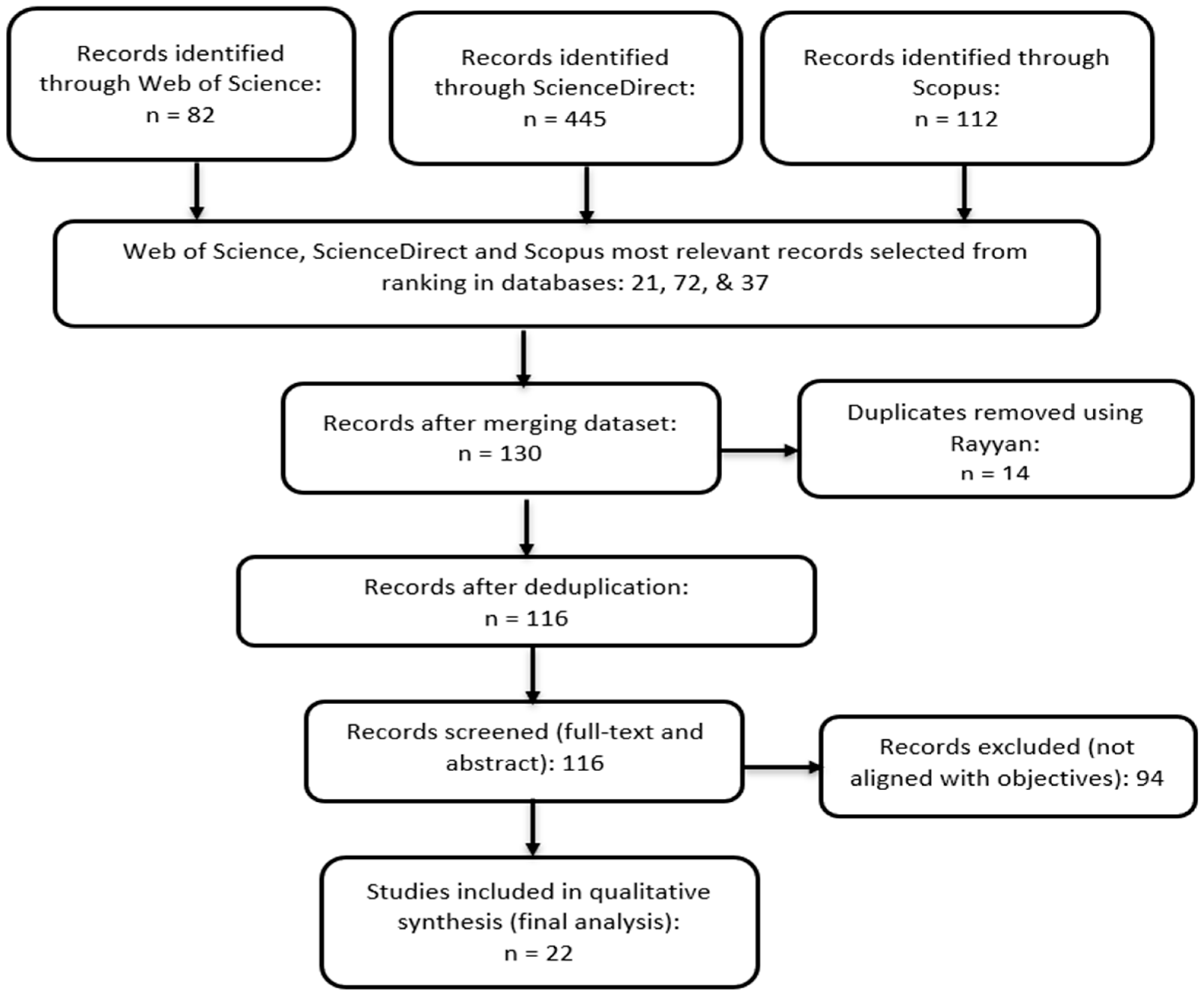
The refined search yielded 112 peer-reviewed articles from Scopus, 445 from ScienceDirect and 82 documents from Web of Science, as shown in Figure 4.
Figure 4.
PRISMA flow chart for selection in the WHP studies.
The outcome from the database was filtered to include open-access peer-reviewed journal articles, and duplicates were screened and removed using Rayyan’s integrated de-duplication method. The PRISMA diagram showing the schematic of the literature search strategy is shown in Figure 4, after “full-text screening”, where necessary, to verify eligibility based on inclusion and exclusion criteria.
3. Results and Discussion
3.1. Variation in Publication Record
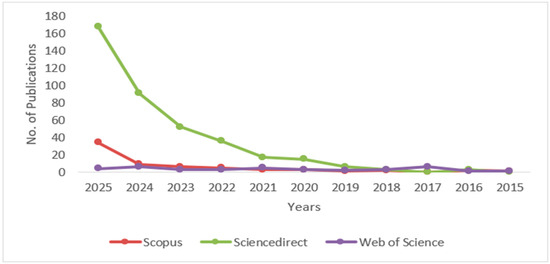
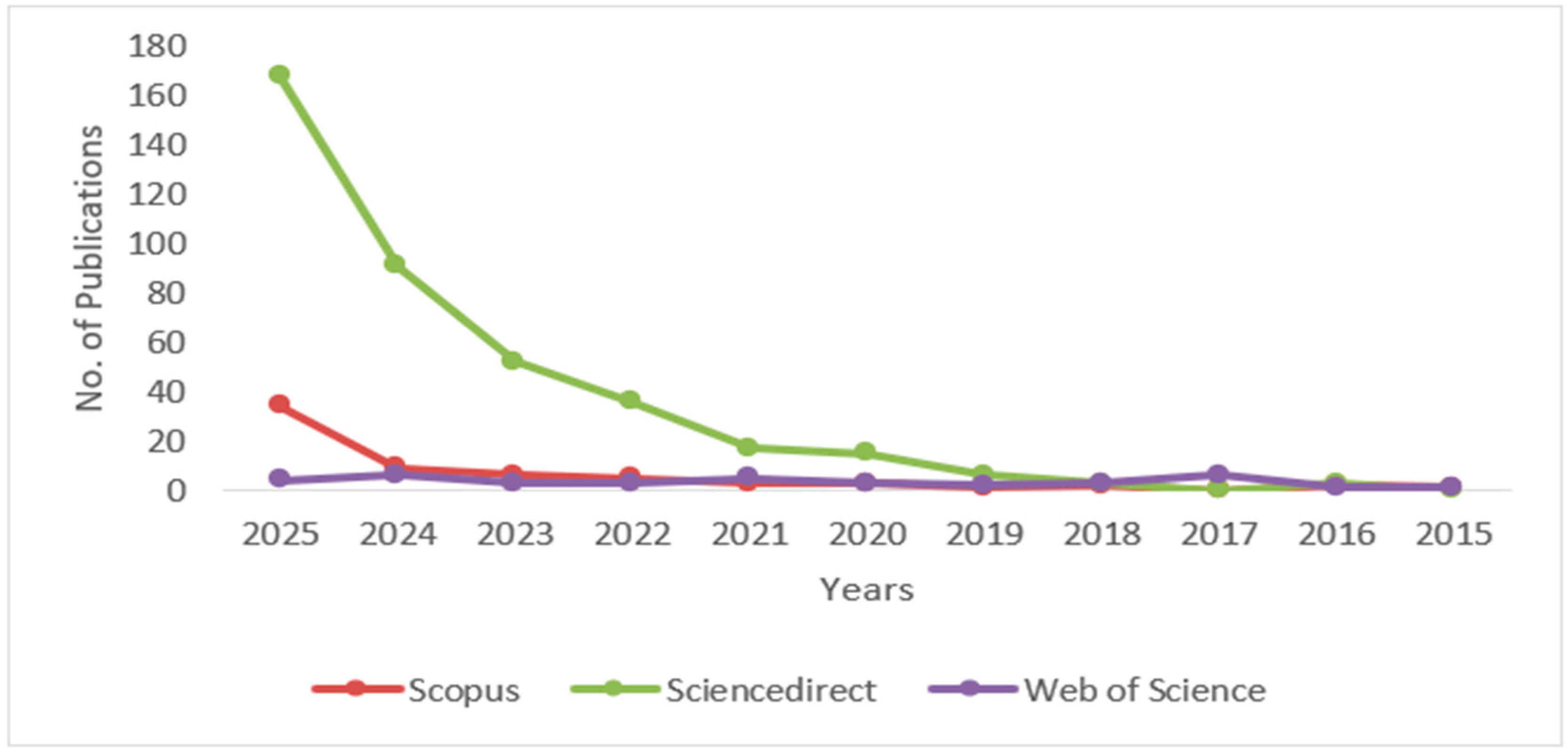
Figure 5 illustrates annual publication trends on waste heat-to-power (WHP) optimization across Scopus, ScienceDirect, and Web of Science. ScienceDirect shows a sharp decline from a peak of 170 publications in 2025 to fewer than 10 by 2018, indicating an initial surge followed by saturation. Scopus exhibits a modest peak (approximately 35 in 2025) and stabilizes below 10 after 2020, while Web of Science remains consistently low (≤10) throughout the period.
Figure 5.
Database publications on exergy–WHR processes (2015–2025).
This pattern suggests that research interest in WHP optimization accelerated in recent years, particularly in ScienceDirect-indexed journals, but has since plateaued. The dominance of ScienceDirect implies strong early contributions from applied energy and engineering domains, whereas the steady trend in Web of Science reflects limited penetration into broader multidisciplinary outlets.
3.2. Weighted Mean of ML-Based WHP Technologies
The effect sizes synthesized in this meta-analysis primarily reflect design and performance optimization outcomes, such as improvements in exergy efficiency, net recovered power, or reduction in irreversibility, rather than control stability or fault diagnostics. Where real-time or transient control applications are considered, these are explicitly identified and interpreted separately.
The meta-analysis reveals consistent positive impacts of machine learning (ML) on exergy-informed waste heat-to-power (WHP) optimization across system types. ORC-based strategies dominate, with ANN-driven optimization achieving the highest weighted mean effect size (Hedges’ g = 0.61; 95% CI: 0.35–0.87), reflecting strong improvements in working-fluid selection and exergy efficiency. Hybrid CFD–ML approaches (g = 0.55) demonstrate significant computational savings, while multi-objective ML methods (g = 0.52) enable Pareto trade-offs between efficiency and cost as shown in Table 2.
Table 2.
Summary of effect sizes for ML-based WHP optimization approaches.
TEG-focused studies reported moderate effect sizes (0.34–0.41), indicating reliable performance for low-grade heat recovery, particularly under transient conditions. Hybrid ORC–TEG systems showed emerging potential (g ≈ 0.42–0.47), with ML models capturing complex cross-component interactions and uncertainty. The pooled effect size (g ≈ 0.49; 95% CI: 0.31–0.67) confirms a robust, moderate-to-strong benefit of ML integration in WHP optimization, supporting its role in enhancing energy recovery and reducing automotive emissions.
In summary, ORC systems are discussed in terms of exergy-driven design and working-fluid optimization under packaging and back-pressure constraints; TEG systems are framed around material- and temperature-gradient-limited exergy recovery; and hybrid ORC–TEG systems are treated as multi-source, multi-objective configurations where ML balances competing exergy flows and control priorities.
3.3. Effect Size–Precision of WHP Optimization
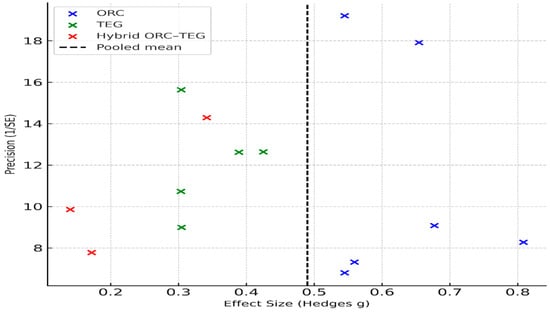
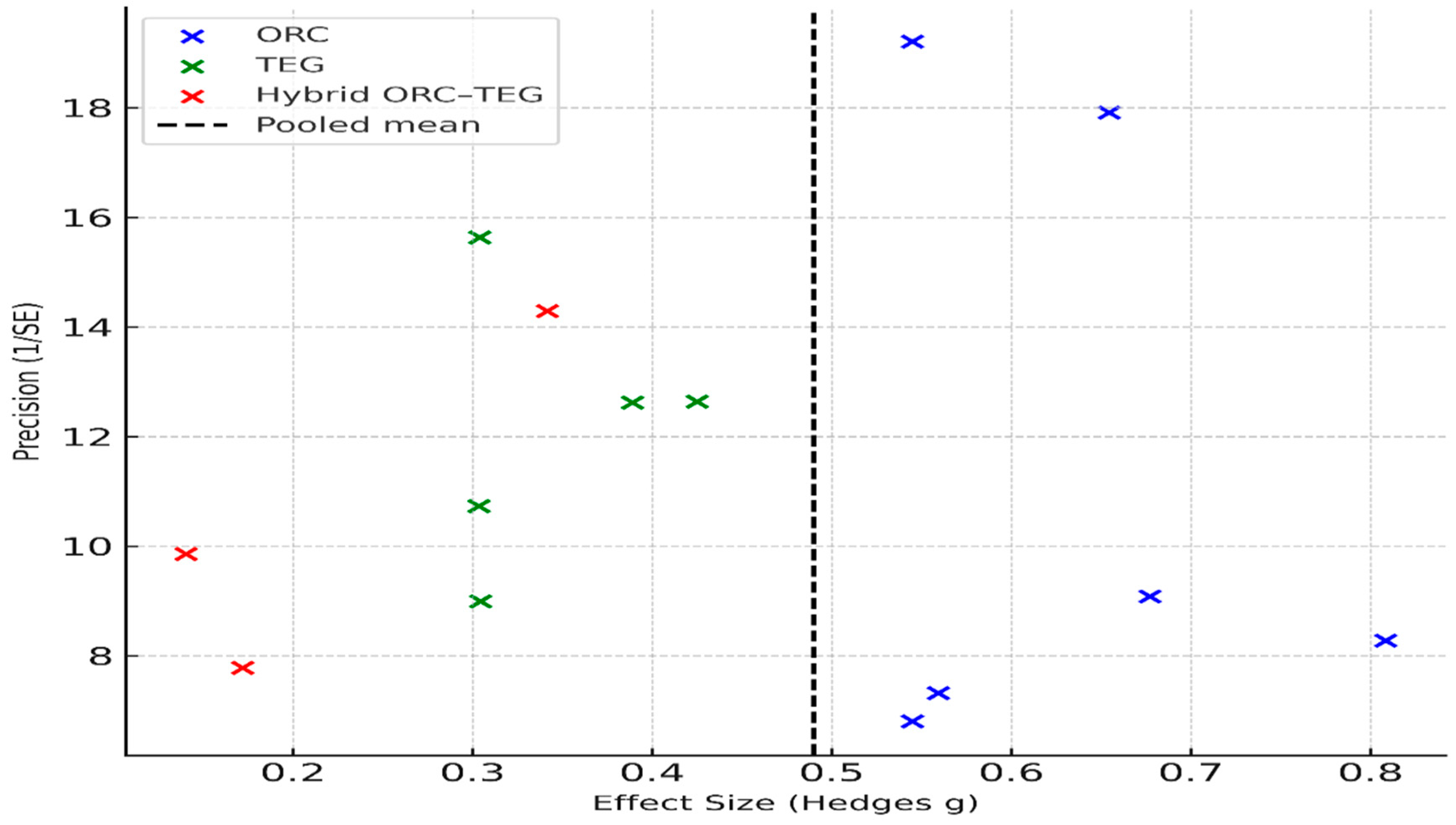
The funnel plot in Figure 6 illustrates effect sizes (Hedges’ g) versus precision (1/SE) for studies on exergy-informed waste heat-to-power (WHP) optimization, comprising the organic Rankine cycle (ORC) studies, thermoelectric generator (TEG), and the hybrid ORC–TEG systems. The pooled mean effect size (Hedges’ g ≈ 0.49) shows that the distribution is largely symmetrical, suggesting minimal publication bias (see Figure 6).
Figure 6.
Funnel plot of effect sizes and precision for WHP studies.
For ORC systems, optimization outcomes largely correspond to design-stage decisions, including working-fluid selection, expander sizing, and heat-exchanger configuration. In contrast, TEG-focused studies emphasize parametric and material-level optimization, such as temperature-gradient management and module arrangement. Hybrid ORC–TEG systems span both domains and additionally introduce operational optimization challenges, where ML is employed to balance competing objectives under varying engine loads. These distinctions are essential for interpreting the relative magnitude and variability of reported effect sizes. Meanwhile, ORC studies clustered at higher precision, reflecting robust and mature modeling frameworks, with effect sizes ranging from 0.4 to 0.8. TEG studies occupy mid-precision levels (1/SE ≈ 9–16), with the moderate effects (0.3–0.45), supporting their role in low-grade heat recovery. Hybrid ORC–TEG systems exhibit lower precision and wider dispersion (0.1–0.4), underscoring their experimental status and variability in integration strategies.
Overall, the pooled effect size confirms a moderate-to-strong positive impact of exergy-informed machine learning on WHP optimization. These findings highlight ORC as the most validated pathway, while TEG and hybrid systems remain promising but less mature. Integrating exergy indicators with ML enhances energy recovery efficiency and supports automotive decarbonization through reduced fuel consumption and CO2 emissions.
4. Conclusions
The quantified benefits of exergy-informed machine learning predominantly represent performance and design optimization improvements, rather than direct validation of closed-loop control deployment in production vehicles. Nevertheless, by embedding exergy principles within ML models, the reviewed approaches establish a scalable foundation upon which predictive optimization can be extended toward real-time automotive energy management systems.
This meta-analysis provides quantitative evidence that integrating machine learning (ML) with exergy analysis significantly enhances the optimization of automotive waste heat-to-power (WHP) systems. Across 19 studies published between 2015 and 2025, the pooled effect size (Hedges’ g = 0.49; 95% CI: 0.31–0.67) confirms consistent performance gains. ORC systems exhibited the greatest improvements, TEG studies achieved moderate but positive outcomes, and hybrid ORC–TEG configurations demonstrated synergistic benefits.
Forest plot results underline the robustness of ML-driven exergy modeling in capturing nonlinear interactions and guiding design, while funnel plot analyses confirmed minimal publication bias. The findings highlight the central role of ANNs, hybrid CFD–ML models, and multi-objective optimization algorithms in driving exergy efficiency and minimizing irreversibilities.
Beyond summarizing statistical performance gains, this study establishes that exergy-informed ML frameworks not only improve predictive accuracy but also provide scalable solutions for real-time optimization of WHP technologies via interpretability, robustness, and generalizability under transient operating conditions towards automotive energy management systems. These insights support the development of more sustainable and energy-efficient transportation systems aligned with global decarbonization.
Future Research Evaluation
Future studies may extend exergy-informed ML frameworks to larger datasets and real driving cycles to enhance generalizability. Incorporating uncertainty quantification, explainable AI (XAI), and next-generation WHP materials (e.g., high-efficiency thermoelectrics and low-GWP fluids) will strengthen predictive reliability. Cross-disciplinary approaches combining advanced exergy methods, ML, and life-cycle assessments are recommended to guide the sustainable deployment of automotive WHP technologies.
Author Contributions
Conceptualization, L.A. and C.E.; methodology, L.A.; software, L.A. and C.E.; validation, L.A. and C.E.; formal analysis, L.A.; investigation, L.A.; data curation, L.A.; writing—original draft preparation, L.A.; writing—review and editing, C.E. and L.A.; visualization, L.A.; supervision, C.E. All authors have read and agreed to the published version of the manuscript.
Funding
This research received no external funding.
Institutional Review Board Statement
Not applicable.
Informed Consent Statement
Not applicable.
Data Availability Statement
The data utilized can be found at Scopus, ScienceDirect, and Web of Science databases (open access) or made available to serious researchers.
Acknowledgments
The authors appreciate the University of South Africa for providing the resource used in this study.
Conflicts of Interest
The authors declare no conflict of interest.
References
- IPCC. Climate Change 2022: Mitigation of Climate Change. In Working Group III Contribution to the Sixth Assessment Report; Transport Chapter; Cambridge University Press: Cambridge, UK; pp. 1–2029.
- Heywood, J.B. Internal Combustion Engine Fundamentals, 2nd ed.; McGraw-Hill: New York, NY, USA, 2018. [Google Scholar]
- Nourozi, N.; Ebadi, A.G.; Bozorgian, A.R.; Hoseyni, S.J.; Vesally, E. Energy and Exergy Analysis of Internal Combustion Engine Performance of Spark Ignition for Gasoline, Methane, and Hydrogen Fuels. J. Chem. Chem. Eng. 2021, 40, 1909–1930. [Google Scholar] [CrossRef]
- Elmaihy, A.; Rashad, A.; Elweteedy, A.; Nessim, W. Energy and exergy analyses for organic Rankine cycle driven by cooling water of passenger car engine using sixteen working fluids. Energy Convers. Manag. X 2023, 20, 100415. [Google Scholar] [CrossRef] [Scilit]
- Li, F.; Sun, P.; Wu, J.; Zhang, Y.; Wu, J.; Liu, G.; Hu, H.; Hu, J.; Tan, X.; He, S. GA−BP Prediction Model for Automobile Exhaust Waste Heat Recovery Using Thermoelectric Generator. Processes 2023, 11, 1498. [Google Scholar] [CrossRef] [Scilit]
- Ionescu, V. Thermal, Energy and Exergy Analysis of Thermoelectric Generator System for Waste Heat Recovery Applications. J. Ecol. Eng. 2024, 25, 201–211. [Google Scholar] [CrossRef] [Scilit] [PubMed]
- Zhang, H.; Xu, J.; Lei, N.; Li, B.; Sun, H.; Chen, B. Surrogate-enhanced multi-objective optimization of on-board hydrogen production device for carbon-free heavy-duty vehicles. Energy 2025, 333, 137369. [Google Scholar] [CrossRef] [Scilit]
- Dincer, I.; Rosen, M.A. Exergy: Energy, Environment and Sustainable Development, 3rd ed.; Elsevier: Amsterdam, The Netherlands, 2020. [Google Scholar]
- Badra, J.A.; Khaled, F.; Tang, M.; Pei, Y.; Kodavasal, J.; Pal, P.; Owoyele, O.; Fuetterer Mattia, B.; Aamir, F. Engine Combustion System Optimization Using Computational Fluid Dynamics and Machine Learning: A Methodological Approach. J. Energy Resour. Technol. 2021, 143, 022306. [Google Scholar] [CrossRef] [Scilit]
- IEA. CO2 Emissions in 2022; International Energy Agency: Paris, France, 2023; pp. 1–17. Available online: www.iea.org (accessed on 4 November 2025).
- Reay, D.; Ramshaw, C.; Harvey, A. Process Intensification: Engineering for Efficiency, Sustainability and Flexibility; Butterworth-Heinemann: Oxford, UK, 2021. [Google Scholar]
- Jang, H.; Kim, J.B.; Stanley, A.; Lee, S.; Kim, Y.; Park, S.H.; Oh, M.-W. Fabrication of skutterudite-based tubular thermoelectric generator. Energies 2020, 13, 1106. [Google Scholar] [CrossRef] [Scilit]
- Rodríguez, R.; Preindl, M.; Cotton, J.S.; Emadi, A. Review and trends of thermoelectric generator heat recovery in automotive applications. IEEE Trans. Veh. Technol. 2019, 68, 5366–5378. [Google Scholar] [CrossRef] [Scilit]
- Heber, L. Thermoelectric Generators for Heavy-Duty Vehicles—A Systemic Approach and Development [NORMANDY CAEN ICT Conference]. German Aerospace Center (DLR). 2018. Available online: https://elib.dlr.de/120886/1/2018-07-04_Heber_Thermoelectric%20Generators%20for%20Heavy-Duty%20Vehicles.pdf (accessed on 1 July 2025).
- Bhakta, S.; Kundu, B. A Review of Thermoelectric Generators in Automobile Waste Heat Recovery Systems for Improving Energy Utilization. Energies 2024, 17, 1016. [Google Scholar] [CrossRef] [Scilit]
- Liang, Y.; Yu, Z.; Li, W. A Waste Heat-Driven Cooling System Based on Combined Organic Rankine and Vapour Compression Refrigeration Cycles. Appl. Sci. 2019, 9, 4242. [Google Scholar] [CrossRef] [Scilit]
- He, M.; Zhang, X.; Zeng, K.; Ke Gao, K. A combined thermodynamic cycle used for waste heat recovery of internal combustion engine. Energy 2011, 36, 6821–6829. [Google Scholar] [CrossRef] [Scilit]
- Sprouse, C.; Depcik, C. Review of Organic Rankine Cycles for Internal Combustion Engine Exhaust Waste Heat Recovery. Appl. Therm. Eng. 2013, 51, 711–722. [Google Scholar] [CrossRef] [Scilit]
- Xia, J.; Wang, J.; Lou, J.; Hu, J.; Yao, S. Thermodynamic, economic, environmental analysis and multi-objective optimization of a novel combined cooling and power system for cascade utilization of engine waste heat. Energy 2023, 277, 127623. [Google Scholar] [CrossRef] [Scilit]
- Alibaba, M.; Pourdarbani, R.; Hasan Khoshgoftar Manesh, M.; Herrera-Miranda, I.; Gallardo-Bernal, I.; Hernández-Hernández, J.L. Conventional and Advanced Exergy-Based Analysis of Hybrid Geothermal–Solar Power Plant Based on ORC Cycle. Appl. Sci. 2020, 10, 5206. [Google Scholar] [CrossRef] [Scilit]
- Higgins, J.P.; Thompson, S.G.; Spiegelhalter, D.J. A re-evaluation of random-effects meta-analysis. J. R. Stat. Soc. Ser. A Stat. Soc. 2009, 172, 137–159. [Google Scholar] [CrossRef] [Scilit] [PubMed] [PubMed Central]

Disclaimer/Publisher’s Note: The statements, opinions and data contained in all publications are solely those of the individual author(s) and contributor(s) and not of MDPI and/or the editor(s). MDPI and/or the editor(s) disclaim responsibility for any injury to people or property resulting from any ideas, methods, instructions or products referred to in the content. |
© 2026 by the authors. Licensee MDPI, Basel, Switzerland. This article is an open access article distributed under the terms and conditions of the Creative Commons Attribution (CC BY) license (https://creativecommons.org/licenses/by/4.0/).