


Abstract
In recent years, artificial intelligence (AI) has emerged as a transformative force in education, notably in language learning. We explored AI’s integration into International English Language Testing System (IELTS) learning environments, focusing on psychological aspects that impact learning outcomes. AI-driven tools, mobile applications, and personalized platforms used in IELTS preparation were reviewed and discussed in terms of AI and educational psychology. Emphasis is placed on the benefits and challenges of AI in motivating learners, enhancing autonomy, providing feedback, and ultimately improving proficiency. Insights into how AI can be refined to address psychological and cultural challenges are also provided.
1. Introduction
AI technology has rapidly advanced and become instrumental in transportation, healthcare, and education. In language learning, AI-driven applications and systems have significantly transformed traditional methods, offering personalized, data-driven experiences that cater to individual learners’ needs. In testing such as IELTS, AI is utilized to support preparation for listening, speaking, reading, and writing, bringing psychological and educational benefits to learners [1,2]. Considering IELTS’s role in global academic and professional contexts, understanding the influence of AI on learning motivation, autonomy, and performance is crucial.
2. AI in Language Learning and IELTS Preparation
We examined the role of AI in IELTS preparation from an educational psychology perspective in this study. By exploring the psychological processes that AI technology influences, the results of this study provide a foundation for understanding the advantages and limitations of AI in language learning, ultimately contributing to improved educational practices and learner outcomes.
2.1. Introduction
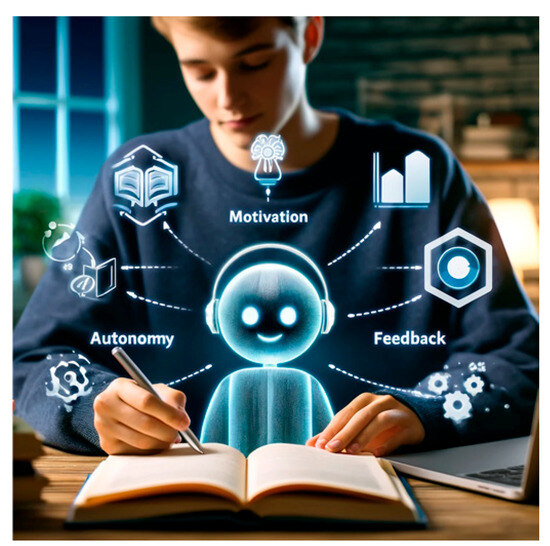
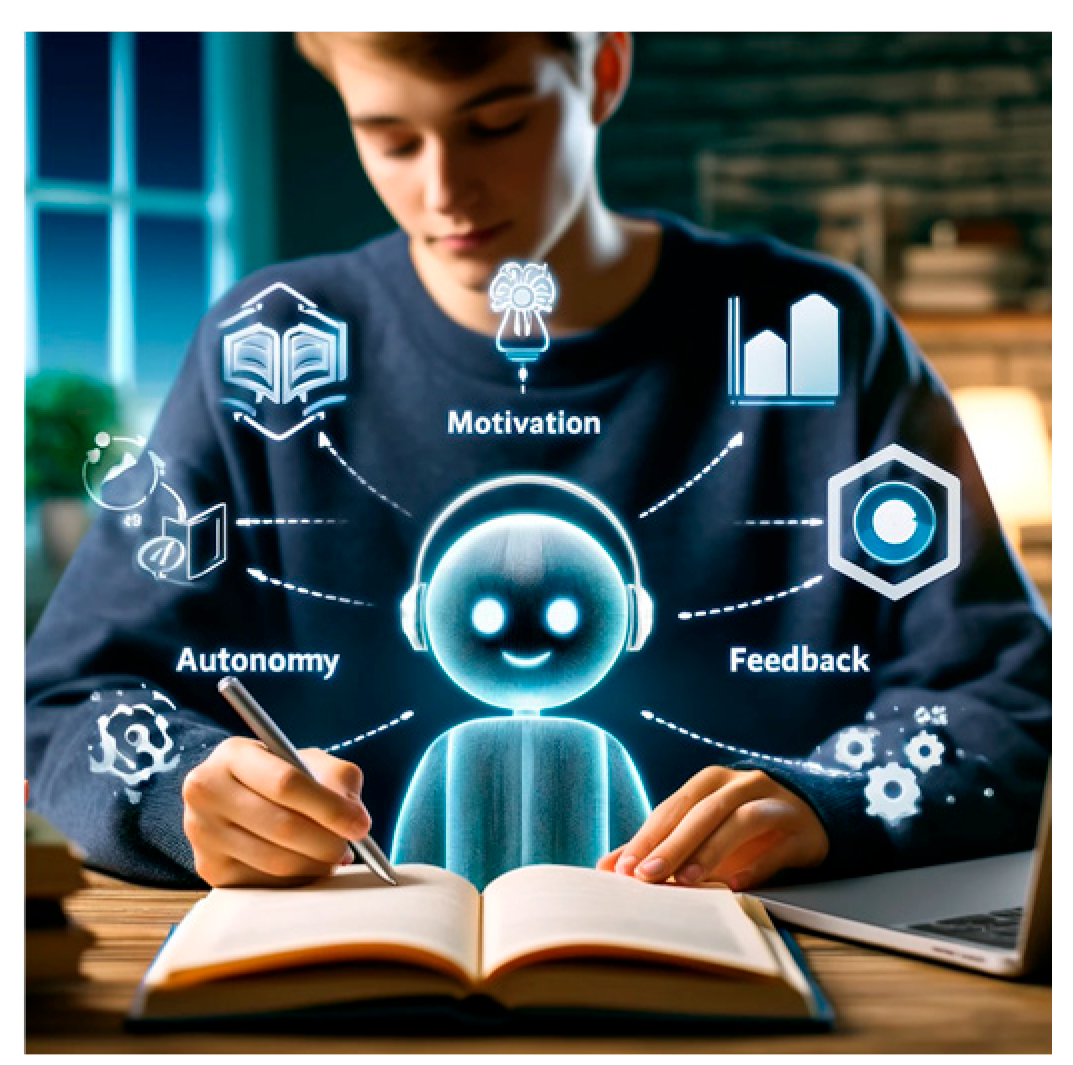
AI applications in English education trace back to the early days of Computer-Assisted Language Learning (CALL), with its foundations set in the 1960s. The maturation of technologies of big data, cloud computing, and machine learning has enabled the development of AI-based platforms for personalized content generation, feedback, and virtual learning environments [2]. At present, AI provides interactive and engaging experiences and offers personalized learning trajectories that meet diverse needs and enhance engagement [3]. As shown in Figure 1, focusing on learner motivation, autonomy, feedback mechanisms, and skill development, we analyzed how AI can facilitate English language acquisition and test readiness.
Figure 1.
The psychological process of language learning.
2.2. Personalized Learning and Motivation
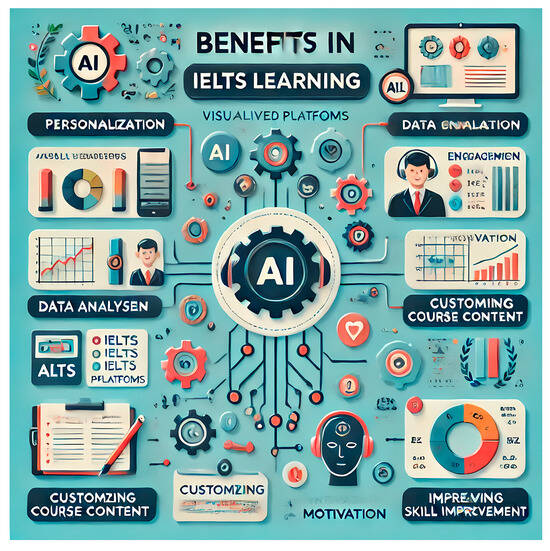
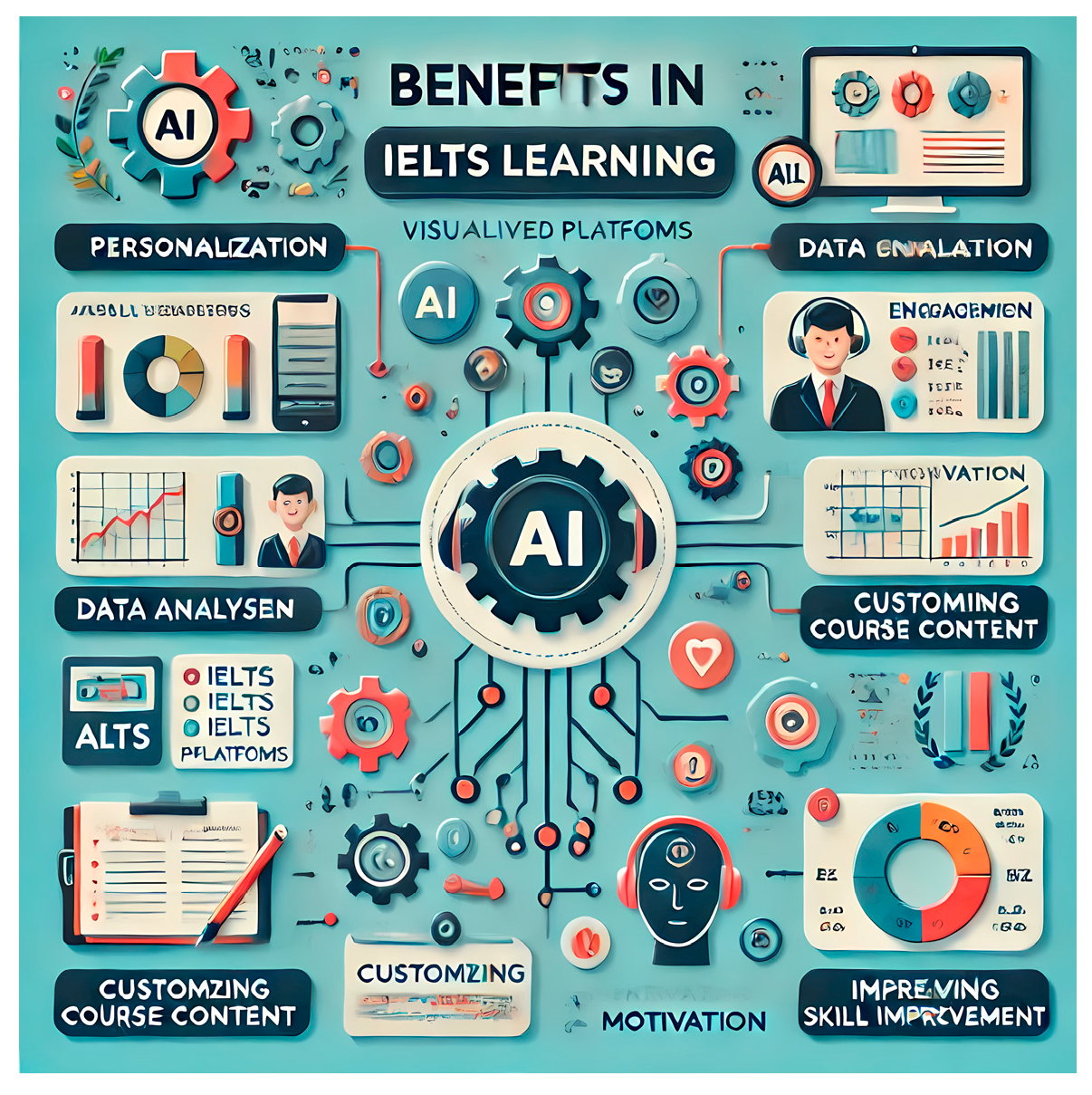
One of the primary benefits of AI in IELTS learning is its ability to provide a personalized experience. AI-driven platforms analyze learners’ data, customizing course content and difficulty levels to align with their strengths and weaknesses [4]. This personalization fosters a sense of engagement and motivation that is difficult to achieve in traditional classrooms. Students using AI-based tools for IELTS preparation demonstrate higher motivation levels and a sustained interest in improving their skills compared with those who rely solely on conventional methods [5]. Key aspects such as personalization, data analysis, engagement, motivation, and skill improvement are shown in Figure 2.
Figure 2.
Summarizing the benefits of AI in IELTS learning.
AI offers multiple benefits in IELTS learning, including personalization, data analysis, interactive feedback, and skill development. By enhancing motivation and engagement, AI effectively supports self-directed learning and boosts exam preparation efficiency (Table 1).
Table 1.
Benefits of AI in IELTS learning.
2.3. Supporting Autonomous Learning
AI platforms offer learners autonomy by allowing them to manage their study schedules, select content, and focus on their specific weaknesses [6]. Autonomy is critical in tests such as IELTS, where self-directed study is essential for achieving desired outcomes. For example, AI applications such as mobile vocabulary tools track progress and adapt content to individual performance, encouraging students to take control of their learning journey. This aligns with educational psychology’s emphasis on fostering learner independence and self-motivation in skill acquisition [7].
2.4. AI-Driven Feedback Mechanisms
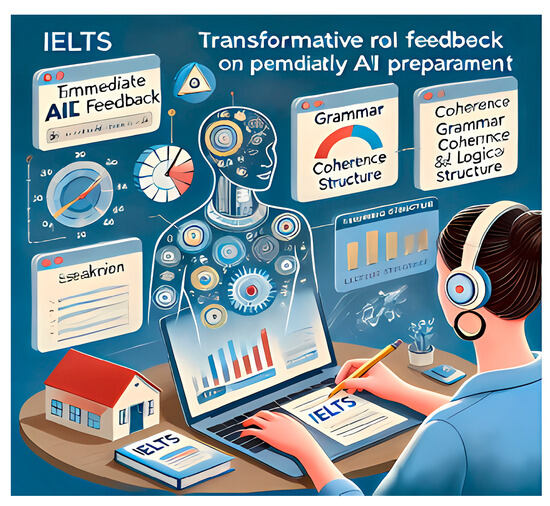
AI plays a transformative role in providing timely feedback, particularly in writing and speaking components. Automated feedback systems in AI platforms assess grammar, coherence, and logical structure, enabling students to refine their skills with actionable insights, which can be demonstrated in Figure 3. While human teachers provide valuable contextual feedback, AI delivers immediate responses, allowing students to iteratively improve their performance [8]. However, several students report challenges in interpreting AI-generated feedback without human clarification, highlighting a need for more user-friendly and intuitive feedback designs.
Figure 3.
Transformative role of AI in providing timely feedback for IELTS preparation.
3. Educational Psychology in AI-Enhanced IELTS Preparation
In IELTS preparation, maintaining motivation is a significant challenge. AI tools designed with gamified elements, goal tracking, and rewards enhance student motivation, creating a more engaging and less stressful learning environment. Educational psychology emphasizes that motivated students are more likely to succeed, and AI platforms leverage this by tracking progress and providing milestone achievements, which reinforces learners’ commitment to achieving higher scores [9].
3.1. Autonomy and Learner Control
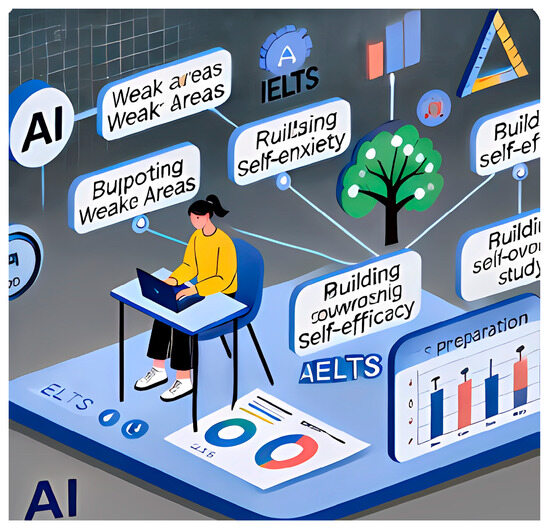
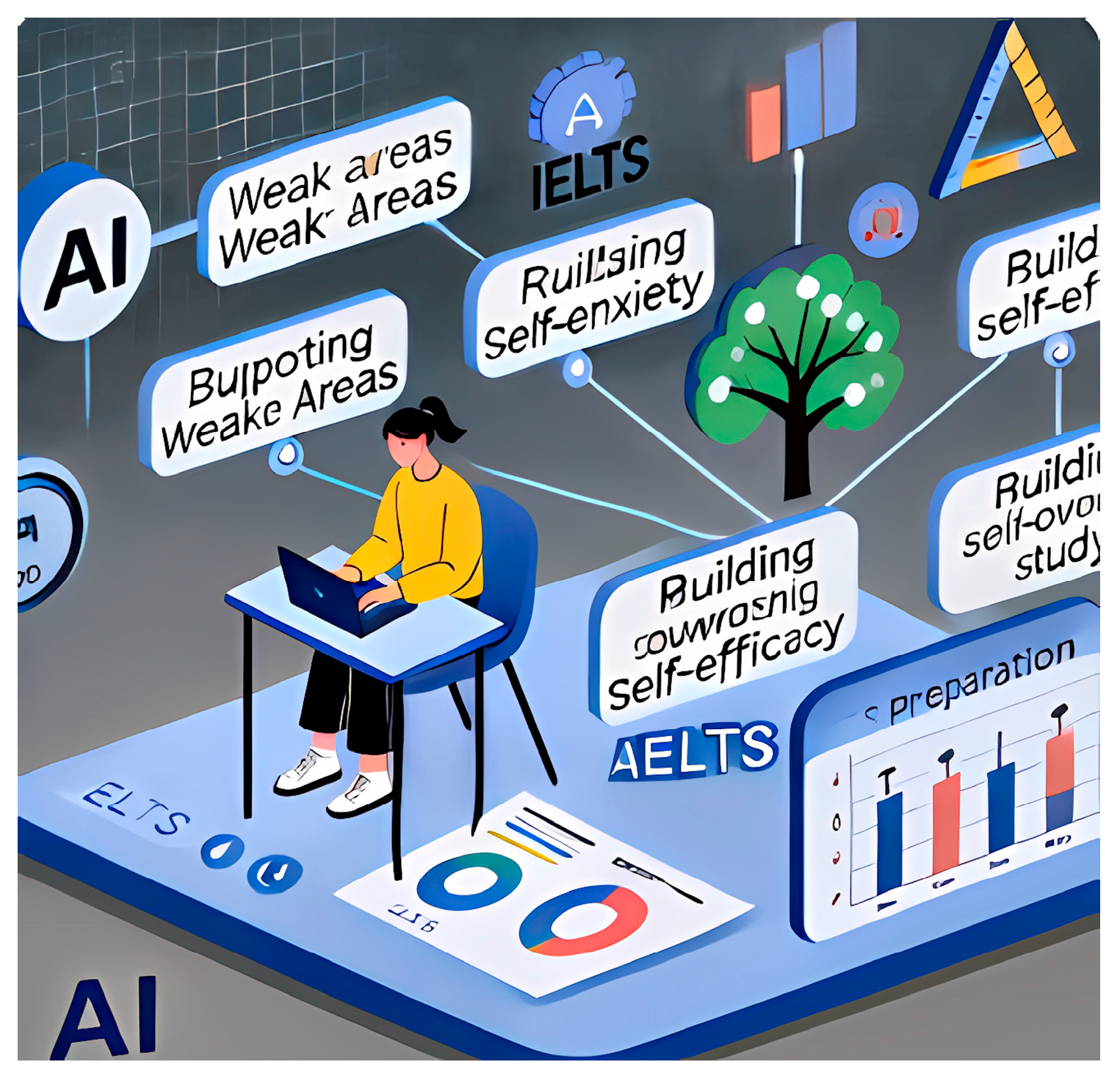
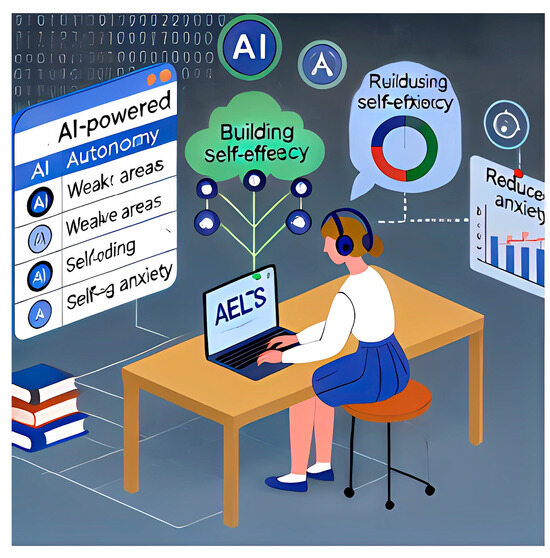
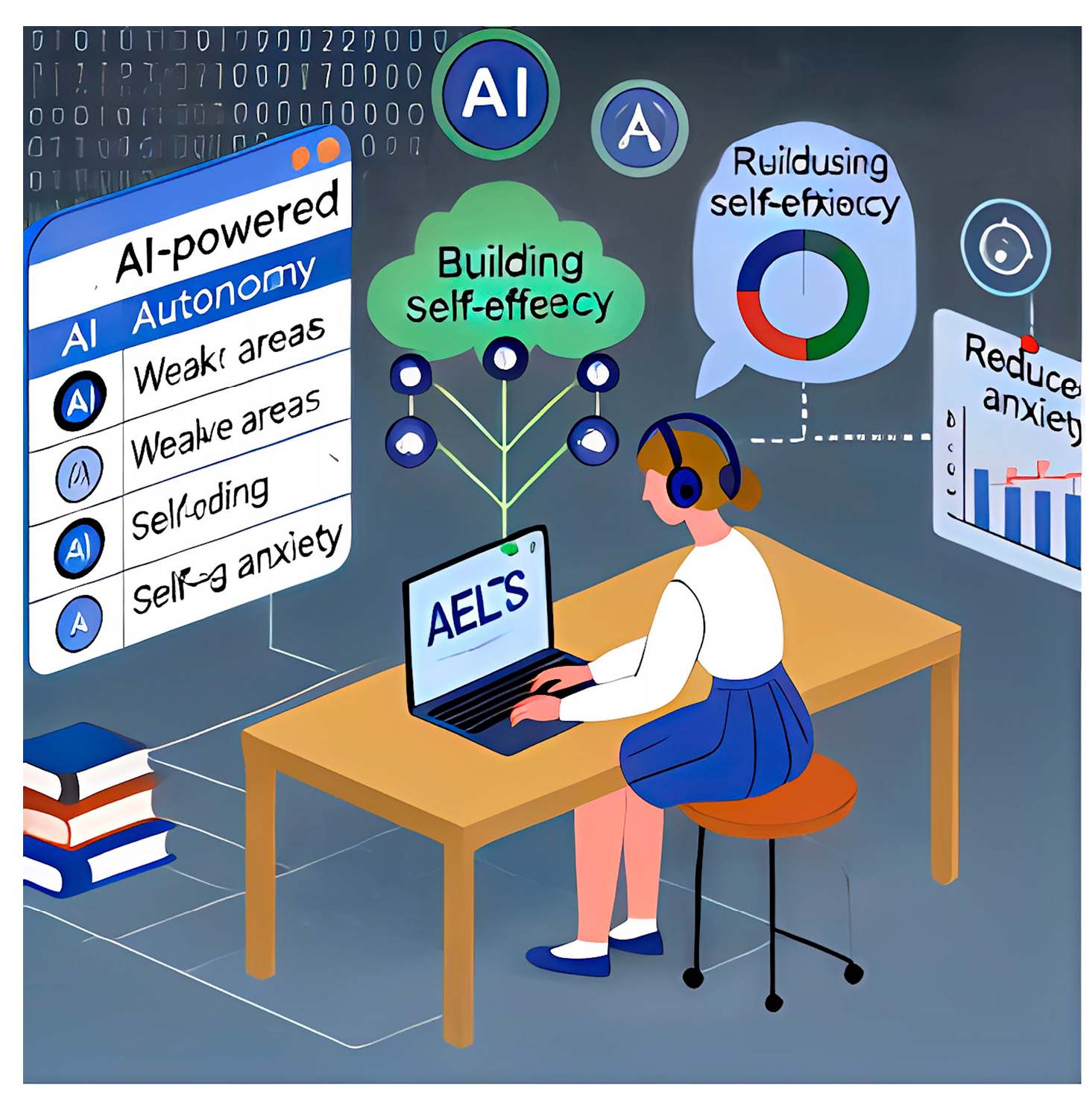
AI tools encourage students to exercise autonomy over their studies by allowing them to choose specific learning paths and materials. In IELTS, this autonomy helps students focus on weak areas without relying entirely on a teacher’s direction. By fostering learner control, AI contributes to students’ self-efficacy, a psychological concept that increases motivation and reduces test anxiety. Educational psychology suggests that autonomy can lead to a stronger sense of ownership and responsibility for learning outcomes, which is beneficial for IELTS preparation, as illustrated in Figure 4 and Figure 5.
Figure 4.
Student personalized learning paths.
Figure 5.
Focus on building self-efficacy.
3.2. Psychological Impact of AI-Generated Feedback
AI feedback tools provide immediate corrective guidance in writing and speaking, helping students identify and address errors [5]. Educational psychology recognizes the role of timely feedback in promoting learning, yet learners can find AI feedback lacking the nuance or empathy of human feedback. This leads to frustration, especially for students unfamiliar with interpreting AI-generated suggestions. To improve this, AI systems integrate explanatory components or guided interpretations to better align with learners’ psychological needs. The benefits and suggestions are described in Table 2.
Table 2.
AI feedback in IELTS preparation.
4. Challenges in AI-Enhanced Language Learning
4.1. Reduced Human Interaction and Emotional Support
One of the limitations of AI in language learning is the absence of human interaction, which is essential for emotional support. Traditional teaching provides encouragement, empathy, and elements that foster a supportive learning environment. AI lacks this relational aspect, and while it can simulate interactions, it cannot replace the nuanced, motivational influence that teachers provide. Educational psychology indicates that emotional support is crucial in building confidence and reducing learning anxiety, especially for students facing rigorous tests, including IELTS [9].
4.2. Cultural Relevance in AI Learning
In using AI platforms, cultural diversity must be considered to cater to learners from different backgrounds. Since IELTS is taken by students worldwide, AI applications must be sensitive to varying learning styles and preferences. Cultural inclusivity enhances learning effectiveness by ensuring content is relatable and accessible to a broader audience. Continuous refinement of AI platforms to reflect cultural nuances is essential for maximizing AI’s educational potential [3].
4.3. Over-Reliance on AI and Reduced Interpersonal Skills
While AI fosters independent learning, excessive reliance on it impairs interpersonal skills. IELTS preparation traditionally involves group studies or peer interactions, promoting social learning and communication skills. Overuse of AI can lead to isolation, depriving learners of collaborative opportunities crucial for comprehensive language acquisition. Educators need to balance AI applications with social learning activities to support the development of interpersonal skills.
5. Opportunities for Future Development in AI-Enhanced IELTS Preparation
5.1. Enhancing Feedback
To address students’ challenges in understanding AI feedback, future AI systems need to incorporate more interactive feedback that explains errors with examples or suggests targeted exercises. Such enhancements align with educational psychology principles, making feedback more accessible and meaningful for learners [8].
5.2. Integration of Emotional AI
Advancements in emotional AI hold the potential to create a more empathetic learning environment. Incorporating emotional recognition features into AI platforms helps gauge learners’ engagement and adjust content accordingly, providing a personalized and emotionally supportive experience [9].
5.3. Cultural Adaptation in Content and Interaction
AI needs to be refined to recognize and adapt to cultural differences in learning preferences. Through better data collection and adaptive algorithms, AI systems offer culturally relevant examples, dialogs, and scenarios, making learning inclusive and effective for a global audience.
6. Conclusions
AI offers transformative possibilities in IELTS preparation and English language learning, enhancing motivation, autonomy, and personalized feedback. From an educational psychology perspective, AI-driven tools address critical aspects of learner engagement and performance. However, challenges including limited emotional support, cultural sensitivity, and potential over-reliance on technology remain. Addressing these challenges through further research and development will allow AI to become a more robust and comprehensive tool in language education than at present. By balancing technological benefits with psychological insights, AI can contribute to a more effective and inclusive future for English language learning.
Author Contributions
Conceptualization, Y.H. and M.I.S.A.A.; methodology, Y.H.; software, Y.H.; validation, Y.H., M.I.S.A.A. and S.I.T.; formal analysis, Y.H.; investigation, Y.H.; resources, Y.H.; data curation, Y.H.; writing—original draft preparation, Y.H.; writing—review and editing, Y.H.; visualization, Y.H.; supervision, Y.H.; project administration, Y.H.; funding acquisition, M.I.S.A.A. All authors have read and agreed to the published version of the manuscript.
Funding
This research received no external funding.
Institutional Review Board Statement
Not applicable.
Informed Consent Statement
Informed consent was obtained from all subjects involved in the study.
Data Availability Statement
Data sharing is not applicable to this article.
Conflicts of Interest
The authors declare no conflicts of interest.
References
- Żammit, J. Exploring the effectiveness of VR in teaching Maltese. Comput. Educ. X Real. 2023, 3, 100035. [Google Scholar]
- Pearson, W.S. Student engagement with teacher written feedback on rehearsal essays undertaken in preparation for IELTS. SAGE Open 2022, 12, 3–8. [Google Scholar] [CrossRef] [Scilit]
- Shemshack, A.; Spector, J.M. A systematic literature review of personalized learning terms. Smart Learn. Environ. 2020, 7, 33. [Google Scholar] [CrossRef] [Scilit]
- Farsani, D. The name game: The role of cultural affordances in learning probability. Learn. Math. 2022, 42, 17–18. [Google Scholar]
- Dai, W.; Lin, J.; Jin, H. Can Large Language Models Provide Feedback to Students? A Case Study on ChatGPT. In Proceedings of the 2023 IEEE International Conference on Advanced Learning Technologies (ICALT), Orem, UT, USA, 10–13 July 2023. [Google Scholar]
- Koucheki, R.; Lex, J.R.; Morozova, A.; Ferri, D.; Hauer, T.M.; Mirzaie, S.; Ferguson, P.C.; Ballyk, B. Immersive VR and Cadaveric Bone are Equally Effective in Skeletal Anatomy Education: A Randomized Crossover Noninferiority Trial. J. Surg. Educ. 2023, 80, 1028–1038. [Google Scholar] [CrossRef] [Scilit]
- Han, Y.; Xu, Y. Student feedback literacy and engagement with feedback: A case study of Chinese undergraduate students. Teach. High. Educ. 2021, 26, 181–196. [Google Scholar] [CrossRef] [Scilit]
- Hu, R.; Trenkic, D. The effects of coaching and repeated test-taking on Chinese candidates’ IELTS scores, their English profi. ciency, and subsequent academic achievement. Int. J. Biling. Educ. Biling. 2019, 24, 1486–1501. [Google Scholar] [CrossRef] [Scilit]
- Chong, S.W. A research report: Theorizing ESL community college students’ perception of written feedback. Community Coll. J. Res. Pract. 2020, 44, 463–467. [Google Scholar] [CrossRef] [Scilit]

Disclaimer/Publisher’s Note: The statements, opinions and data contained in all publications are solely those of the individual author(s) and contributor(s) and not of MDPI and/or the editor(s). MDPI and/or the editor(s) disclaim responsibility for any injury to people or property resulting from any ideas, methods, instructions or products referred to in the content. |
© 2025 by the authors. Licensee MDPI, Basel, Switzerland. This article is an open access article distributed under the terms and conditions of the Creative Commons Attribution (CC BY) license (https://creativecommons.org/licenses/by/4.0/).