


Abstract
This study proposes an integrated Unmanned Aerial Vehicle–Internet of Things (UAV–IoT) framework for disaster assessment in the presence of damaged or unavailable communication infrastructure. The proposed system combines ground IoT sensing, UAV swarm data ferrying, High-Altitude Platform (HAP) support, Delay-Tolerant Networking (DTN), Multi-Agent Reinforcement Learning (MARL), and game-theoretic task offloading to improve data delivery, energy balance, and fault tolerance. The collapse of communication networks in disaster areas significantly affects response mechanisms, with such interruptions seriously weakening the dissemination and acquisition of information. This study introduces a new integrated model using Swarm UAV networks and ground IoT sensors for building a robust disaster verification system. The proposed design utilizes a delay-tolerant energy-balanced architecture to mitigate the obstacles posed by intermittent connectivity and constrained energy. The architecture deploys a hierarchical coordination model in which the UAV swarm serves as the mobile data ferry to transport data from IoT sensors towards HAPs. To address this challenge, this paper proposes a hybrid optimization scheme by fusing the MARL method for UAV coordination to maximize the aggregated energy efficiency with game-theoretic task offloading for distributed computation. Simulation results under the defined disaster-response scenarios show that the proposed approach reduces emergency-data delivery latency by 62%, extends UAV swarm operational lifetime by 51%, and maintains approximately 85% data-transfer performance under 30% UAV failure. These results represent a vast improvement over current approaches, validating the framework’s potential to transform disaster response by providing stable communication and assessment in times of degraded traditional infrastructure.
1. Introduction
The occurrence of natural and man-made disasters has increased significantly in frequency and impact over the past few decades, with the United Nations Office for Disaster Risk Reduction reporting a doubling of natural disasters between 2000 and 2020 compared to the previous two decades [1,2,3]. During the immediate response stage, critical information gaps—often resulting from damaged or inaccessible communication infrastructure—can worsen the disastrous effects of events such as earthquakes, floods, and wildfires [4]. Conventional disaster assessment methods based on ground staff are difficult to access and cover thoroughly in a timely manner, particularly when ground-based communication networks are disrupted [5,6,7].
Integrating the Unmanned Aerial Vehicle (UAV) swarm technology and Internet of Things (IoT) systems offers an opportunity to solve these problems. UAVs form distributed swarms for rapid deployment and collaborative autonomy, requiring minimum infrastructure to achieve complete area coverage [8,9]. When supplemented with ground-based IoT sensors, such systems can form an adaptive monitoring network to collect the essential environmental data, detect hazards, and locate survivors in hostile environments. This fusion brings the capabilities of distributed sensing by IoT sensors and the mobility for data transfer that is offered by UAV swarms together, so that even if conventional communication infrastructure collapses, operation can be sustained.
Much of the potential remains untapped; however, significant technical challenges are yet to be solved in developing reliable Swarm UAV-IoT networks for disaster situations. Energy constraints are a severe challenge, considering that both UAVs and IoT devices operate on battery power with limited battery life and without recharge at the disaster site [9]. Disruption in connectivity may result from dynamic changes in topology, physical obstacles, and limited transmission distance, which results in significant data loss and latency [10]. Moreover, the coordination complexity grows exponentially with swarm size, which makes it necessary to use advanced algorithms for path planning, task allocation, and formation control without a centralized oversight.
Although UAV swarms, IoT disaster sensing, Delay-Tolerant Networking (DTN) communication, High-Altitude Platform (HAP)-assisted networking, and Multi-Agent Reinforcement Learning (MARL)-based control have been studied separately, their integrated use for delay-tolerant and energy-balanced disaster assessment remains insufficiently developed. Existing studies commonly focus on either UAV path planning, sensing coverage, communication resilience, or edge offloading as isolated problems. In contrast, this work integrates these elements into a unified framework that jointly considers data priority, intermittent connectivity, residual energy, UAV role rotation, task offloading, and fault-tolerant recovery. This paper presents such a holistic framework designed for addressing these challenges via a delay-tolerant and energy-balanced Swarm UAV-IoT network for disaster assessment.
The key contributions of this paper are as follows.
- A three-tier UAV–IoT–HAP disaster assessment architecture is proposed to support resilient sensing and communication when ground-based infrastructure is unavailable.
- A priority-aware predictive DTN forwarding mechanism is introduced to select relay paths according to delivery probability, expected delay, bundle priority, and energy cost.
- An energy-balanced UAV swarm coordination method is developed using MARL to distribute sensing, relaying, and movement tasks among UAVs while reducing individual battery depletion.
- A game-theoretic task offloading mechanism is incorporated to distribute computation between UAVs and HAP nodes under energy and latency constraints.
- A simulation-based evaluation is conducted against baseline routing and coordination methods using latency, energy consumption, scalability, and fault-tolerance metrics.
2. Related Work
2.1. UAV Swarm Technologies for Disaster Response
Research on UAV swarms has advanced considerably, covering a wide range of disaster-response applications. Recently, UAV swarm systems with collaborative autonomy have been developed to achieve complex missions via the coordinated behavior observed in natural swarms such as bird flocks and insect colonies [11]. These systems have several significant advantages: they are scalable, robust, and fault-tolerant, making them particularly well-suited for dynamic disaster scenarios in which individual component failure is likely [1].
An effective disaster assessment relies on UAV swarm research, particularly in the areas of coordinated route planning, formation control, and task allocation. Combining swarm decision-making with AI and ML is a relatively new area of study. Authors in [12] introduced a strategy based on MARL to improve the movement and resource allocation of UAVs in disaster situations. They showed a significant improvement in energy efficiency and task latency by incorporating intelligent coordination schemes between the UAVs and High-Altitude Platforms (HAPs).
Communication is another important aspect of research in UAV swarms. Authors in [13] studied different communication technologies such as 5G, MANET, and DTN to show trade-offs between bandwidth, latency, and range in drone swarm operations. Their results show that a joint scheme using dynamic routing and adaptive frequency management provides an effective solution for disaster environments. In contrast, work on the integration of Wi-Fi HaLow and Wi-Fi 6 shows how dual-radio architecture can efficiently balance range and throughput for UAV swarm communications [14].
2.2. IoT Systems for Disaster Management
IoT-based disaster management systems have changed from simple monitoring applications to advanced systems that can provide real-time detection, classification, and alerting during disasters. These systems are usually formed of heterogeneous sensors of gas concentration, water level, temperature, and structural vibrations. These sensors are interfaced via different communication protocols to central processing units featuring edge computing, creating an IoT framework for disaster mitigation [13]. State-of-the- art systems have achieved promising results, with some reducing alert latency to below 450 ms and being scaled out over 12,000 concurrent devices. This section reviews recent and foundational studies related to UAV swarm networking, IoT-based disaster management, DTN communication, MARL-based coordination, and computation offloading. The literature was organized thematically to identify the methodological gap addressed by this work: the lack of a unified UAV–IoT disaster assessment framework that jointly handles intermittent connectivity, energy balancing, data prioritization, and distributed task offloading.
Although there have been significant advances in UAV swarm and IoT technologies independently, their integration for disaster assessment has not been adequately investigated [13]. A review of the literature has revealed that the majority of works concentrate on specific issues and have not developed a systematic model to address the unique challenges encountered in UAV-IoT interaction after a disaster [13,14,15]. Specific research gaps include:
- Limited energy optimization strategies that take into account both the drone and IoT device power constraints.
- Inadequate delay-tolerant communication protocols designed for the dynamic topology of UAV swarms while collecting data from ground sensors
- Lack of integrated architectures that could leverage both airborne and ground-based assets for persistent connectivity in infrastructure-compromised environments.
This paper bridges these critical gaps by providing a joint framework to optimize the energy efficiency and delay tolerance in the integrated UAV-IoT networks for disaster assessment applications. Finally, Table 1 shows a comparative literature review for the related previous works.
Table 1.
Summary of related studies and their relevance to the proposed UAV–IoT disaster assessment framework.
The reviewed studies show clear progress in UAV swarm coordination, coverage planning, resilience modeling, and learning-based resource allocation. However, most existing works address these issues separately. Limited attention has been given to a unified UAV–IoT disaster assessment framework that jointly considers delay-tolerant data forwarding, energy-balanced UAV operation, priority-aware emergency data delivery, HAP-assisted computation, and fault-tolerant recovery. This gap motivates the proposed integrated framework.
From the reviewed studies, three main limitations can be observed. First, many UAV swarm studies focus on coverage or path planning without jointly considering IoT sensor energy and priority-based disaster data delivery. Second, DTN-based disaster communication studies often address forwarding reliability but do not integrate swarm-level energy balancing and adaptive UAV role assignment. Third, learning-based UAV coordination methods commonly optimize mobility or throughput, while task offloading and HAP-supported edge computation are not fully coupled with disaster data priority. These limitations motivate the proposed integrated framework.
The literature clearly highlights some prominent and emerging research paths for Swarm UAV-IoT networks in disaster management. As seen in the table, the paradigm has drastically changed from centralized/unadaptable to decentralized/adaptive. This is motivated by having systems that are capable of maintaining operation even in case of part failures or loss of communication with a central controller.
3. System Architecture and Problem Formulation
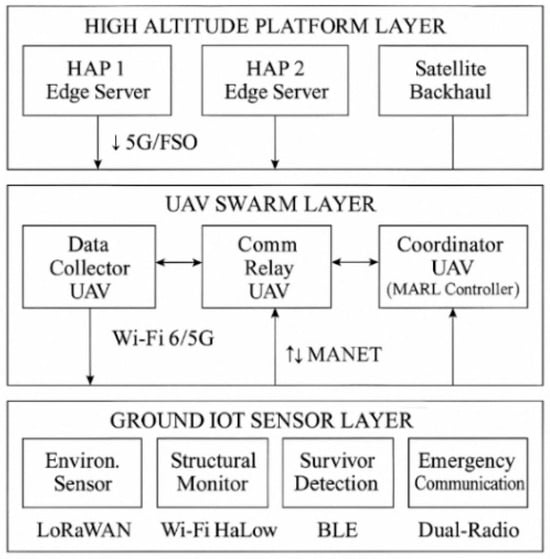
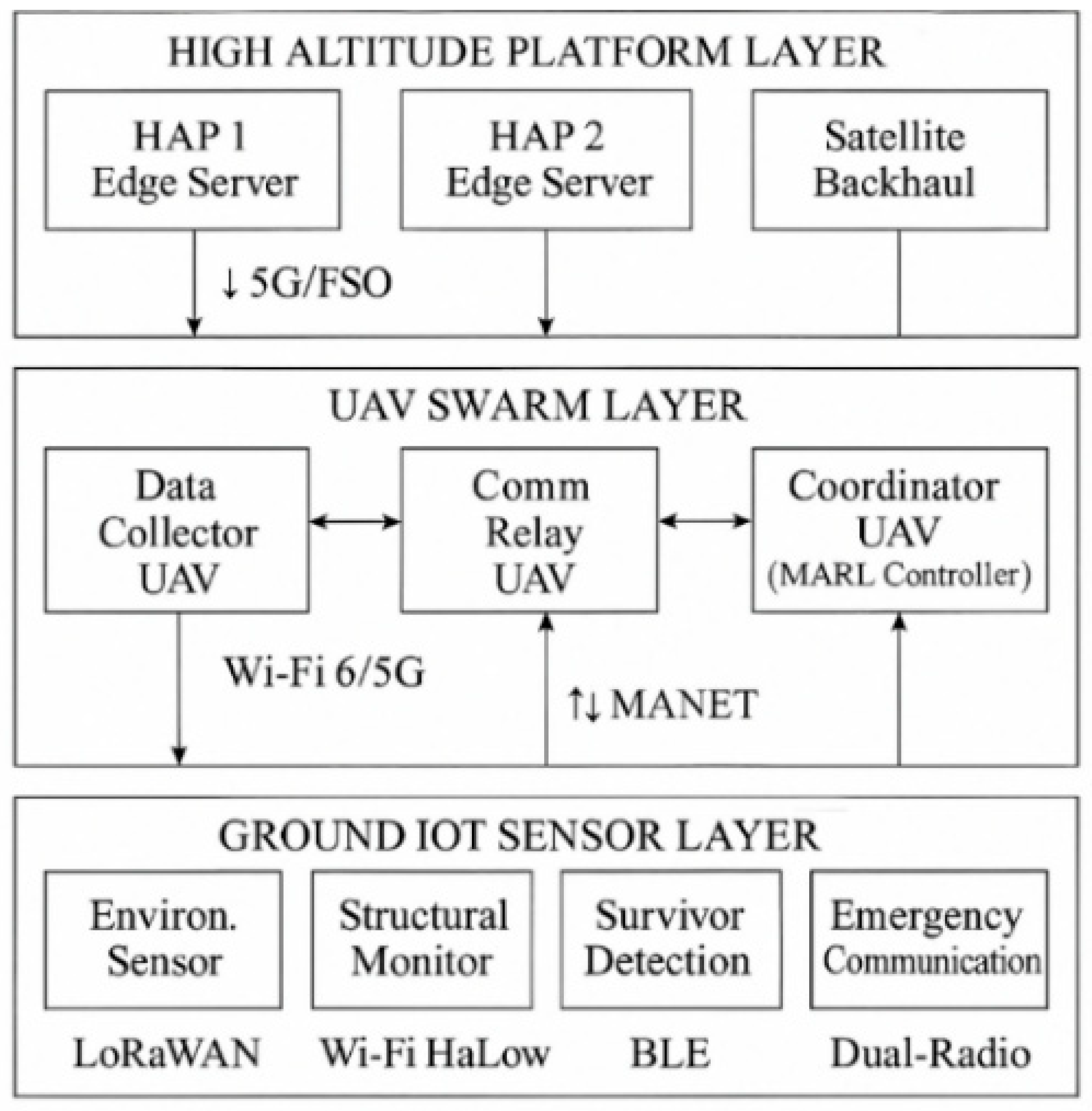
The proposed architecture consists of three cooperative layers: the ground IoT sensor layer, UAV swarm layer, and HAP-assisted edge layer. The ground layer collects environmental, structural, and emergency indicators. The UAV swarm layer performs mobile data collection, relay selection, local coordination, and adaptive path planning. The HAP layer provides wider-area connectivity and edge-computing support when ground-based networks are unavailable. Data flow is bidirectional: IoT sensors upload priority-tagged data bundles to UAVs, UAVs forward selected bundles to HAPs or other UAVs, and control updates are returned to guide sensing rate, UAV role assignment, and offloading decisions.
The proposed architecture consists of a three-tier hierarchical infrastructure that sustains operation even if conventional infrastructure is out of service. As shown in Figure 1, it forms a resilient adaptive network with the help of heterogeneous connectivity and distributed intelligence to ensure robust operation for data collection and communication under dynamic disaster environments. The proposed architecture addresses the inherent problems of intermittent connectivity, scarce energy, and coordination complexity based on well-integrated design principles integrating all system levels. The design follows the principles of distributed intelligence, where each layer has its own decision-making capability and coordinates with other layers accordingly. Such a structure allows the system to operate through degraded conditions in the face of a partial failure of one layer.
Figure 1.
Three-tier hierarchical architecture integrating ground IoT sensors, UAV swarms, and HAPs.
3.1. Overall System Framework
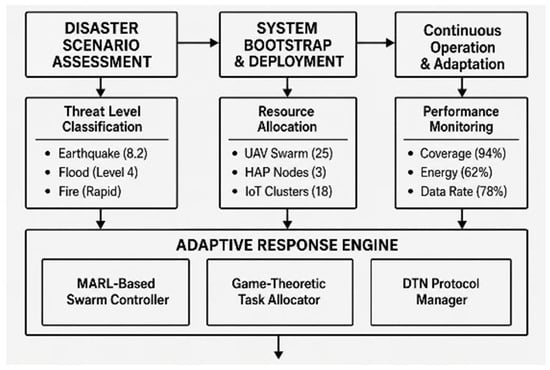
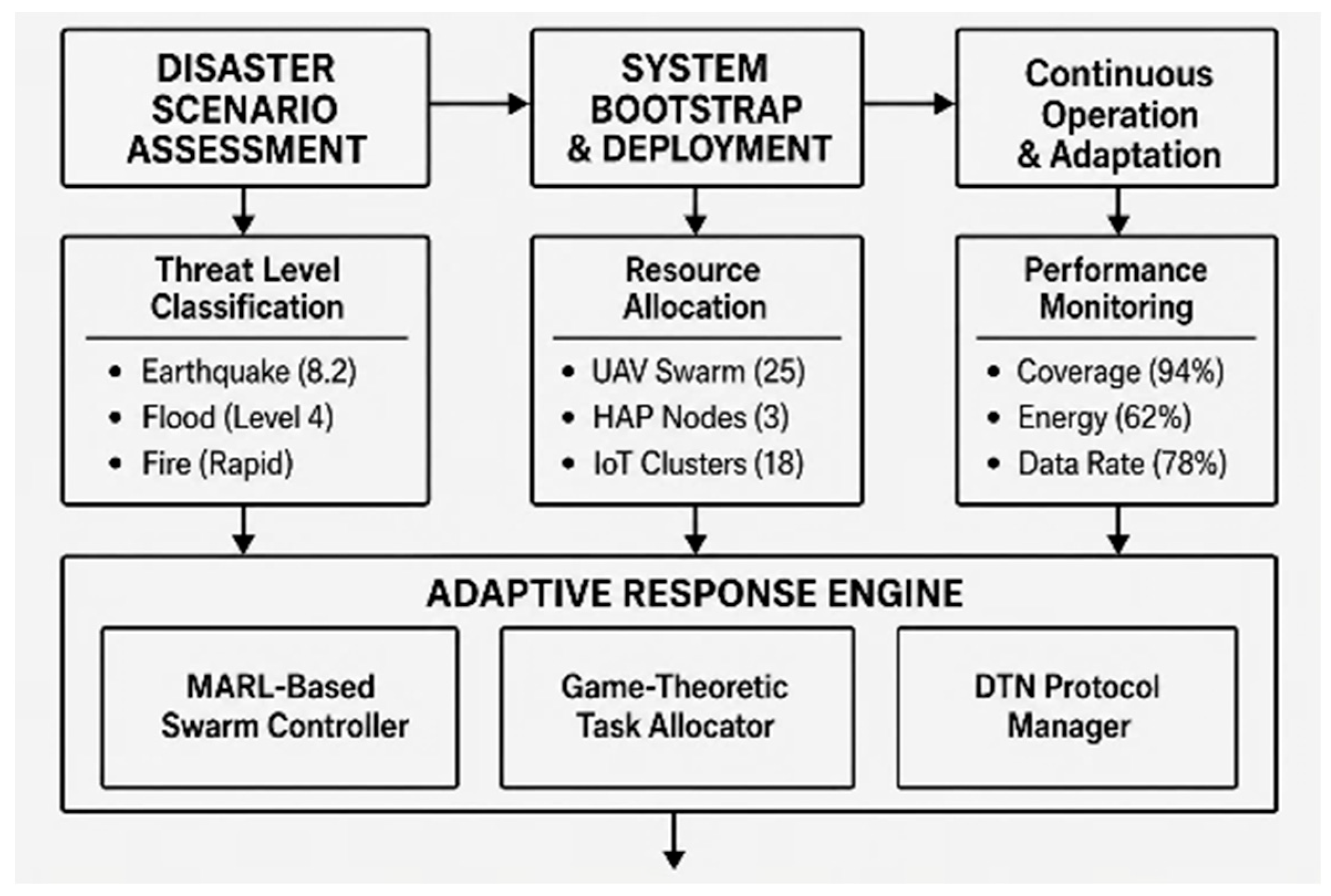
The overall design applies dynamic resource allocation, which adapts to the environment and mission requirements. Figure 2 illustrates the system framework of the adaptive response engine that coordinates system behavior based on disaster scenario assessment and continuous performance monitoring.
Figure 2.
System framework of the adaptive response.
Figure 2 represents the adaptive response cycle used by the proposed system. First, the disaster scenario is identified according to sensed indicators such as flood level, structural instability, fire risk, or communication outage. Second, the system estimates sensing demand, communication availability, UAV energy state, and mission priority. Third, UAV roles are assigned dynamically as collectors, relays, explorers, or return-to-charge units. Finally, the system continuously monitors delivery success, latency, residual energy, and coverage, and updates the coordination policy accordingly.
The architecture incorporates a feedback controller that continuously tracks the selected performance metrics and modifies the operational variables accordingly. In disaster zones, conditions might change suddenly and unexpectedly. The system uses predictive analytics to foresee when resources will be needed and then creates those assets ahead of time so that priority events can be responded to faster.
3.2. Ground IoT Sensor Layer
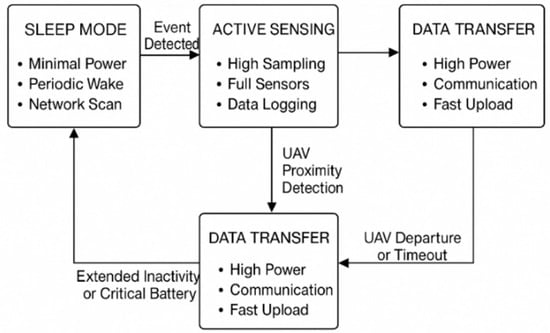
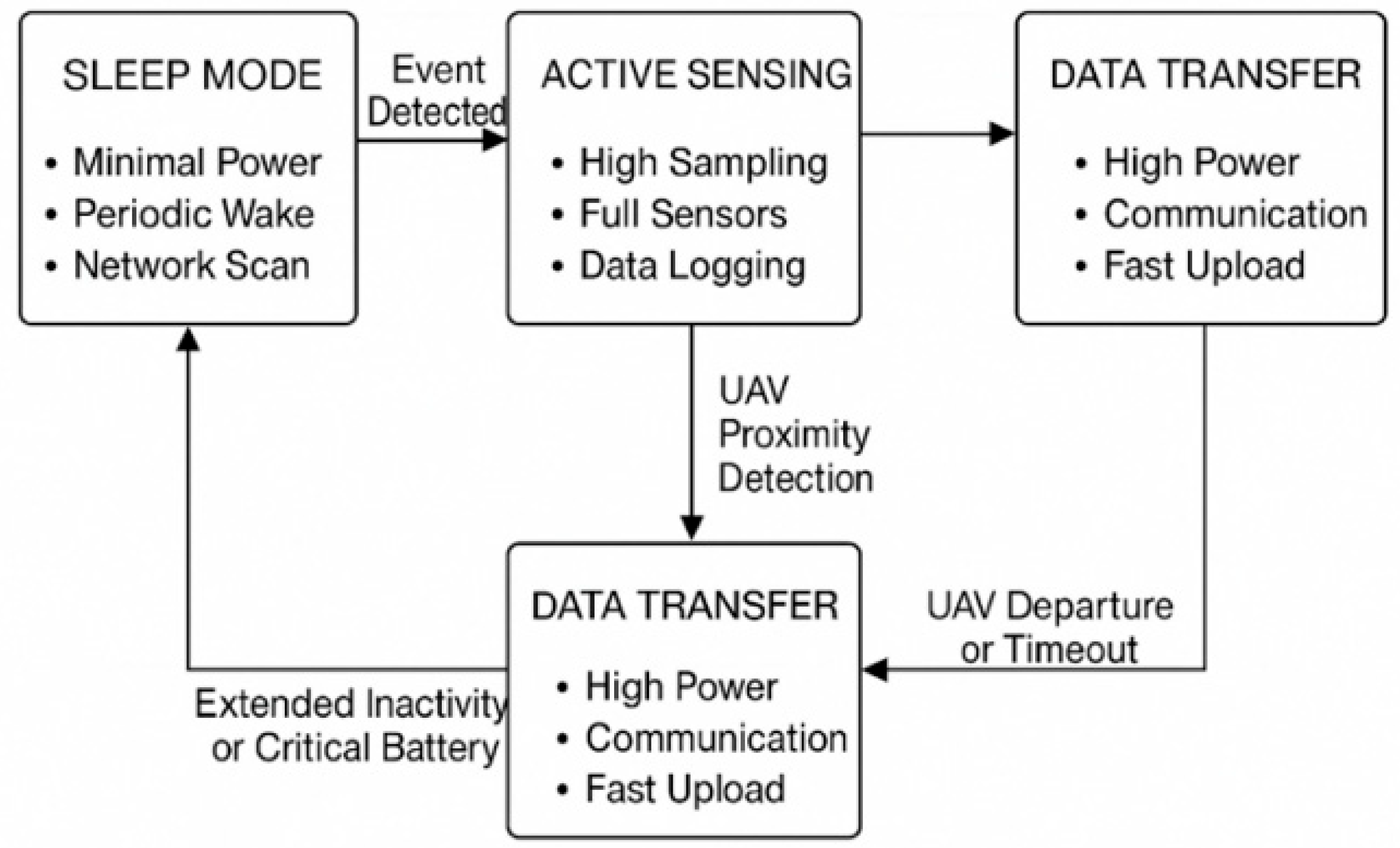
In the proposed design, a distributed sensing layer called the Ground IoT Sensor Layer comprises several types of sensors in the disaster region. With event importance and energy constraints in mind, the sensor plane employs adaptive sampling methods to reduce data collection [6,7]. Taking environmental triggers and the vicinity of UAVs into account, the operational modes of sensors can dynamically adjust, as shown in Figure 3.
Figure 3.
State diagram showing IoT sensor power management strategies that balance energy conservation with data collection requirements.
The IoT sensor layer operates using adaptive sampling. Under normal conditions, sensors remain in low-power mode and transmit periodic summaries. When an abnormal event is detected, such as rapid water-level increase, strong vibration, high temperature, or emergency signal activation, the sensor switches to event-driven mode. The sampling rate and transmission priority are adjusted according to event severity, residual battery level, and expected UAV contact time.
3.3. UAV Swarm Layer
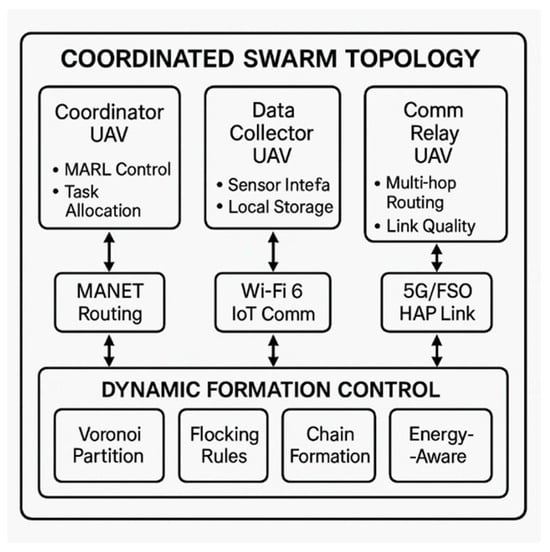
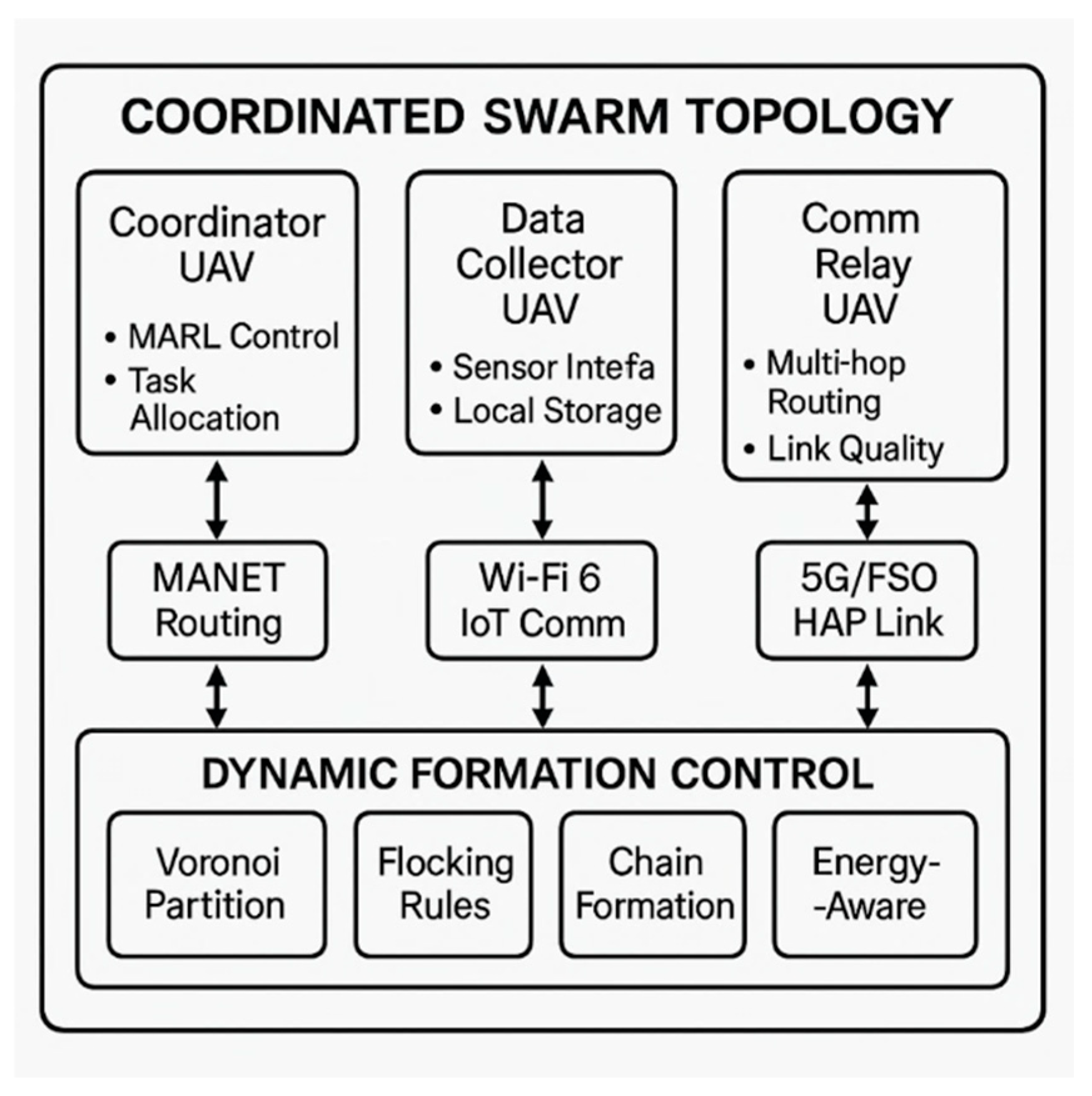
The UAV Swarm Layer acts as the mobile backbone of the system, utilizing complex coordination protocols for regional coverage and data collection purposes. The multi-role organization and the communication channels within the swarm are presented in Figure 4.
Figure 4.
UAV swarm organization showing specialized roles, communication pathways, and formation control algorithms.
In the UAV swarm layer, UAVs are assigned dynamic roles according to mission requirements and residual energy. Collector UAVs gather data from IoT sensors, relay UAVs forward bundles toward HAPs or other UAVs, explorer UAVs scan uncovered regions, and recovery UAVs replace failed or low-energy nodes. Role rotation is triggered when the residual energy of an active UAV falls below a predefined threshold or when the communication graph becomes disconnected.
3.4. HAP Layer
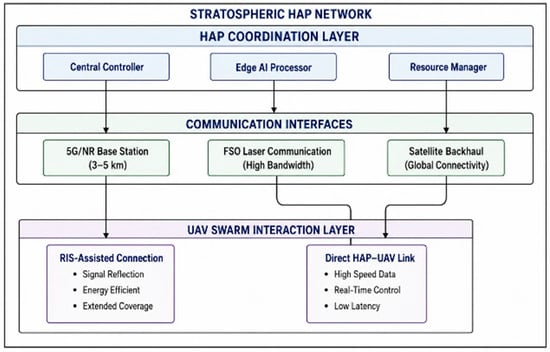
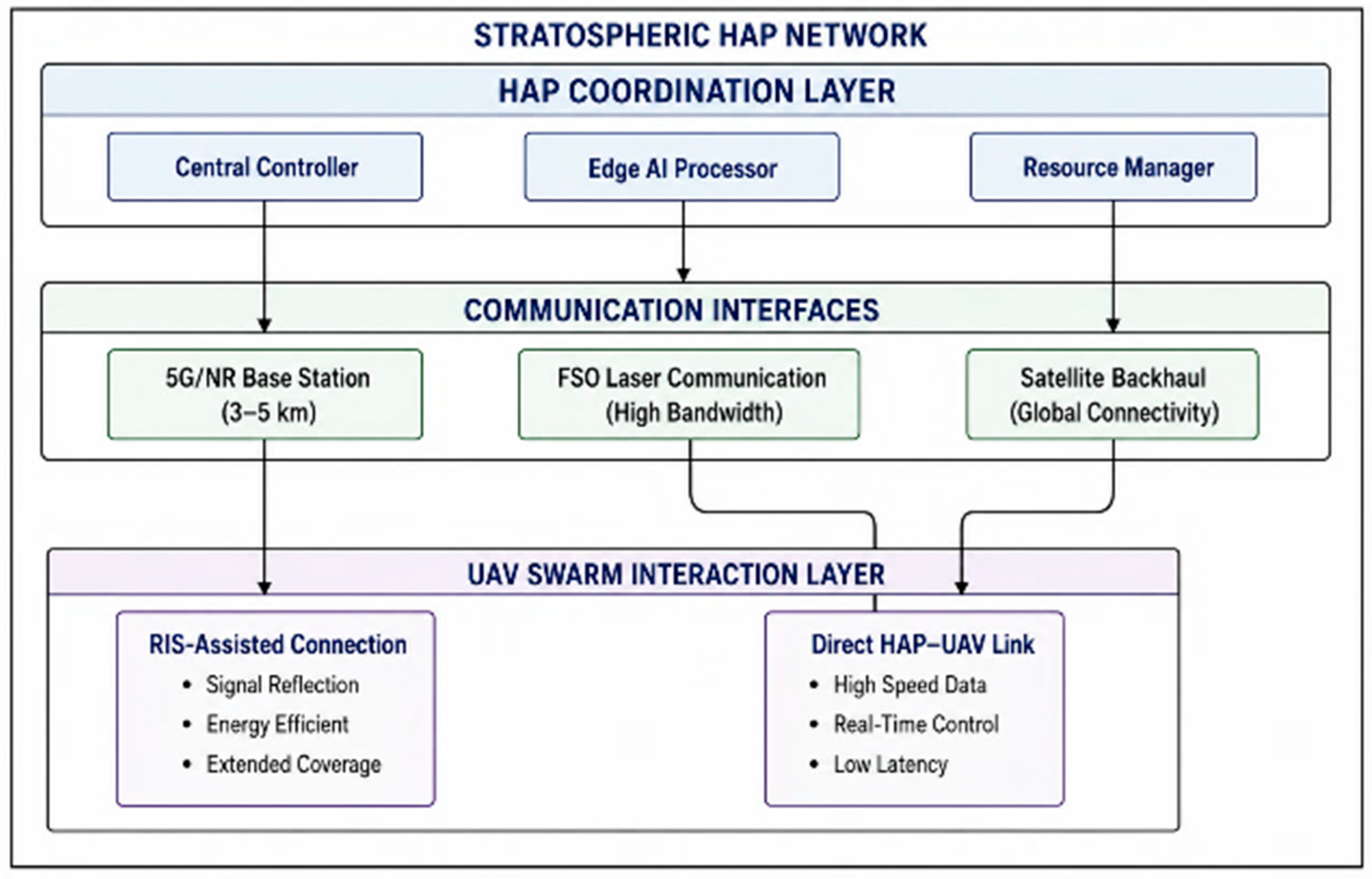
The HAP layer offers continuous connectivity and edge computing from the stratosphere. The HAP network architecture and its interfacing with the complete system are shown in Figure 5.
Figure 5.
HAP architecture showing layered communication interfaces and UAV swarm interaction mechanisms.
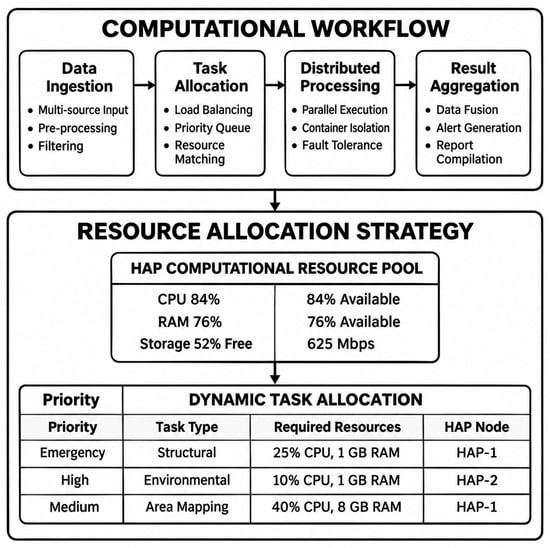
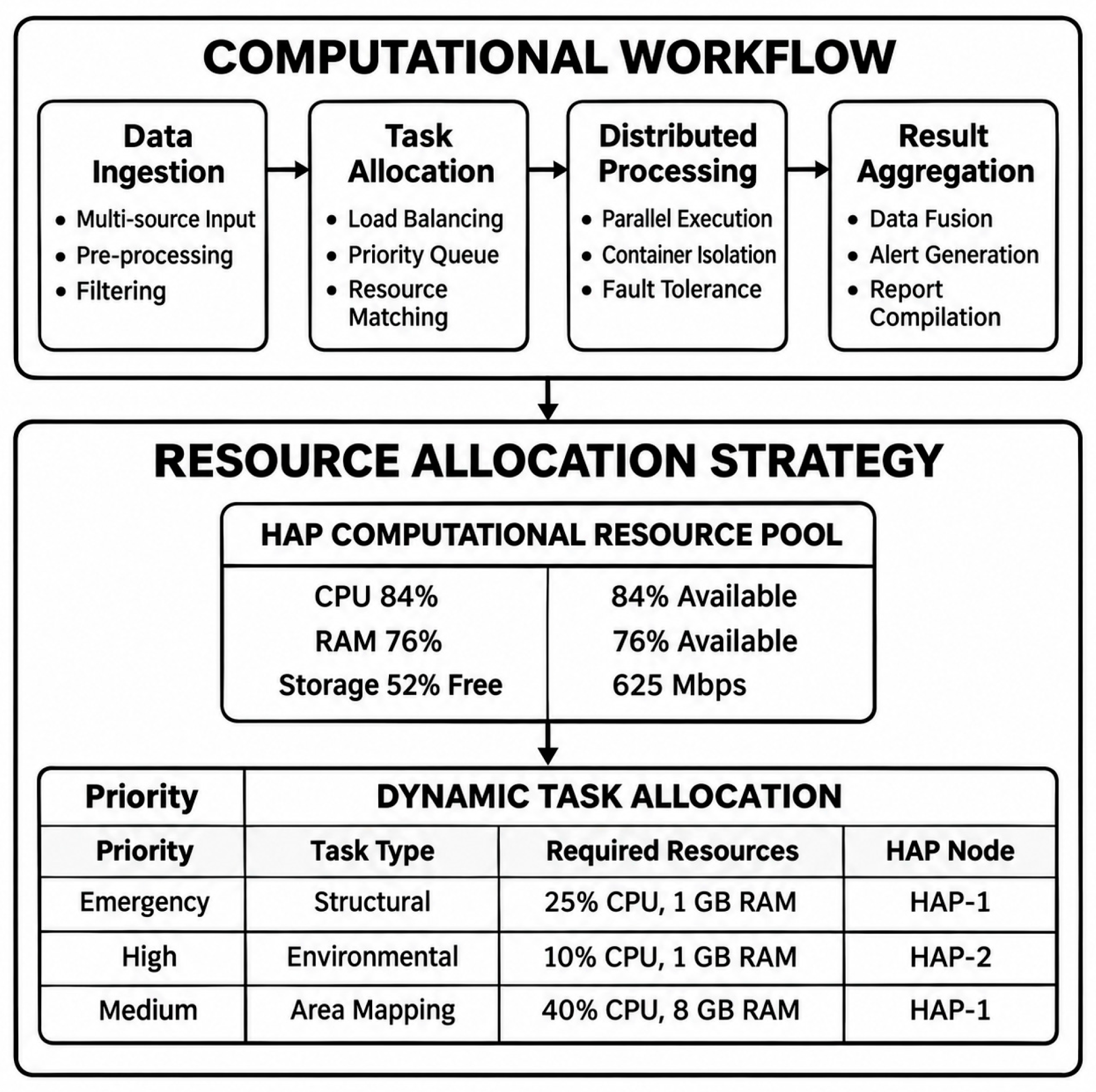
The HAP layer contains distributed edge computing and processes the data at a point that is closest to where it was injected. Figure 6 shows the computational flow and resource assignment procedure for the multi-HAP node.
Figure 6.
Computational workflow showing data processing stages and dynamic resource allocation across HAP nodes based on task priority and resource availability.
The HAP layer supports long-range communication and edge computation. When UAVs collect high-volume or computation-heavy data, such as imagery, mapping packets, or aggregated sensor reports, tasks may be offloaded to HAP nodes. The HAP layer prioritizes emergency data, performs preliminary processing, aggregates results, and forwards summarized information to the emergency control center when backhaul connectivity is available.
3.5. Problem Formulation
The operation of the proposed Swarm UAV–IoT disaster assessment network is formulated as a constrained multi-objective optimization problem. The objective is to maximize reliable disaster-data delivery and sensing coverage while minimizing delivery delay and energy consumption under intermittent connectivity, limited UAV battery capacity, and dynamic post-disaster topology.
Let U = {u1, u2, …, uN} denote the set of UAVs, S = {s1, s2, …, sM} denote the set of ground IoT sensors, and H = {h1, h2, …, hK} denote the set of HAP nodes. At time t, the network state is represented as
where PU(t) and PS(t) denote the position vectors of UAVs and IoT sensors, respectively. EU(t) and ES(t) represent the residual energy levels of UAVs and IoT sensors. C(t) is the connectivity matrix describing available communication links among sensors, UAVs, and HAPs. B(t) = {b1, b2, …, bQ} is the set of data bundles waiting for transmission, where each bundle bq has a priority value pq, size zq, generation time gq, and maximum tolerable delay .
X(t) = {PU(t),PS(t),EU(t),ES(t),C(t),B(t),QU(t)}
The main optimization objective is to select UAV movement, sensing, forwarding, role-assignment, and offloading decisions that maximize the global mission utility over the mission duration T. The objective function is defined as
where Rd is the successful data delivery ratio, Co is the sensing coverage ratio, Ec is the total energy consumption of UAVs and IoT devices, and Ld is the average delivery latency. The coefficients α, β, γ, and δ are non-negative weighting factors used to balance reliability, coverage, energy efficiency, and delay performance.
maxJ = αRd + βCo − γEc − δLd
The successful delivery ratio is calculated as
where if bundle bq is successfully delivered to a HAP or emergency control center within its allowed delay, and otherwise.
The average delivery latency is defined as
where Qd is the number of successfully delivered bundles, is the delivery time of bundle bq, and gq is its generation time.
The total energy consumption is modeled as
where , , , and represent the propulsion, communication, sensing, and computation energy of the UAV ui, respectively. represents the energy consumed by the IoT sensor sj.
The forwarding decision for each data bundle is determined using a priority-aware relay utility. For bundle bq and candidate relay r, the forwarding utility is formulated as
where is the predicted delivery probability through relay r, is the expected delivery delay, is the estimated forwarding energy cost, and pq is the priority of the bundle bq. The relay with the highest feasible utility is selected:
where Rq is the set of candidate relays available for bundle bq.
The optimization is subject to the following constraints.
First, the energy of each UAV and IoT sensor must remain above a minimum safe threshold:
Second, high-priority data bundles must satisfy the minimum delivery reliability requirement:
where Bhigh denotes the set of emergency or high-priority bundles.
Third, the delivery latency of each successfully delivered bundle must not exceed its maximum tolerable delay:
Fourth, the network must maintain a minimum sensing coverage level:
Co(t) ≥ Cmin
Finally, each UAV can perform only one primary role at a given time:
where ai(t) denotes the assigned role of UAV ui at time t.
ai(t) ∈ {colector, relay, explorer, return, idle}
This formulation captures the main trade-off in post-disaster UAV–IoT operation: emergency data must be delivered quickly and reliably, while UAV energy must be preserved and sensing coverage maintained. Therefore, the proposed delay-tolerant communication, Energy-Balanced Optimization (EBO), MARL-based swarm coordination, and game-theoretic offloading modules are designed to approximate an effective policy for this constrained optimization problem under uncertain and dynamic disaster conditions.
4. Proposed Methodology
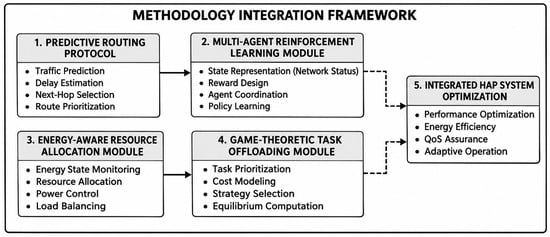
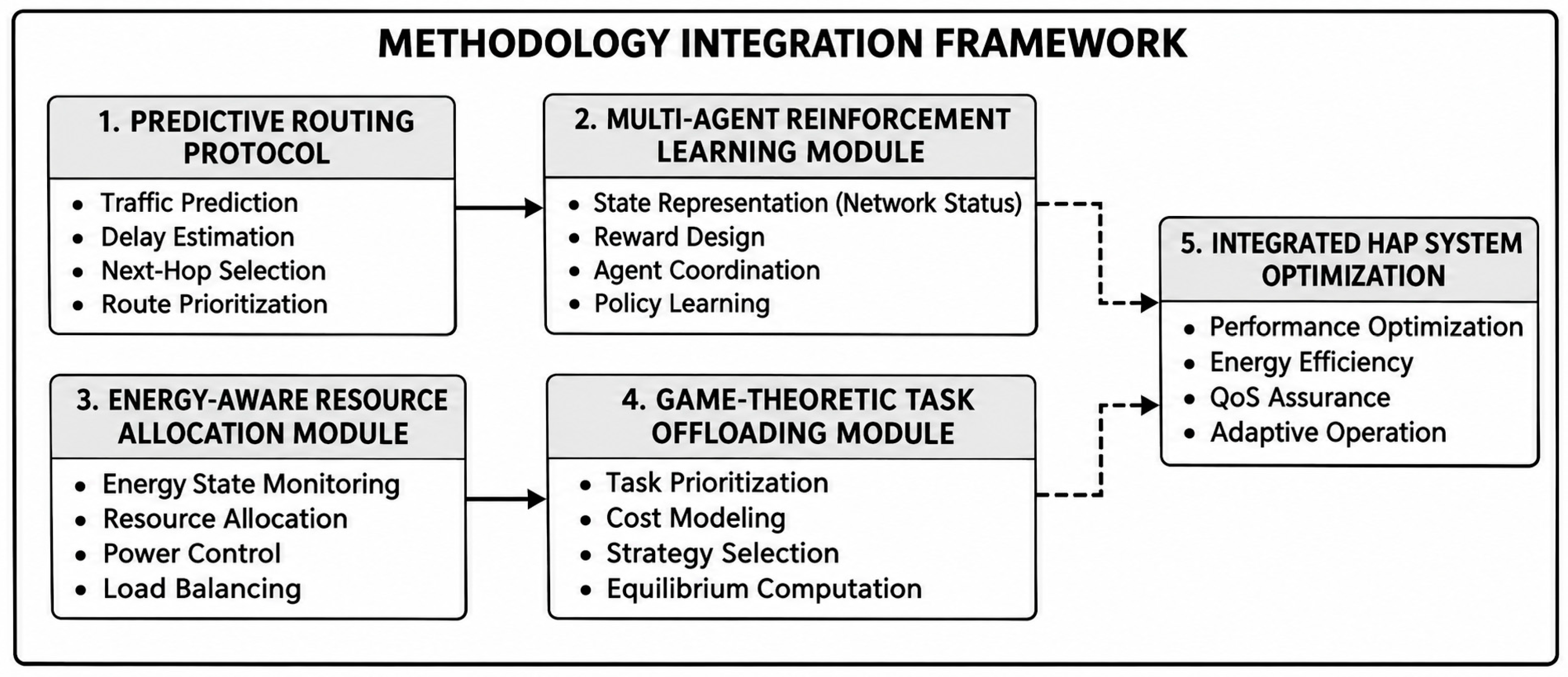
The proposed methodology consists of four coupled modules: priority-aware DTN forwarding, energy-balanced UAV operation, MARL-based swarm coordination, and game-theoretic task offloading. These modules operate jointly rather than independently. DTN forwarding determines when and where data bundles are transmitted; energy balancing controls UAV role rotation and power states; MARL learns coordination policies under uncertain disaster conditions; and game-theoretic offloading distributes computation between UAVs and HAPs as shown in Algorithm 1.
The proposed approach combines several optimization mechanisms to address issues of delay-tolerance, energy balancing, and swarm coordination in disaster environments. The proposed methodology, shown in Figure 7, is a theoretical foundation integrated with practical implementation that operates under dynamic environments without degradation in performance.
| Algorithm 1. Priority-Aware Predictive DTN Forwarding Input: Bundle queue B, relay set R, contact prediction matrix C, residual energy E Output: Forwarding decision for each data bundle. |
|
Figure 7.
Proposed integrated methodology.
The utility equation is written as follows:
The approach used is an overall optimization, where the enhancement in one aspect benefits that of another: a positive loop for performance improvements. For example, energy-aware path planning reduces the mobility of UAVs, thus reducing the communication delay through a more stable network topology. Likewise, efficient task offloading aims at balancing the computational load and obtaining more responsive reinforcement learning policies.
4.1. Delay-Tolerant Communication Protocol
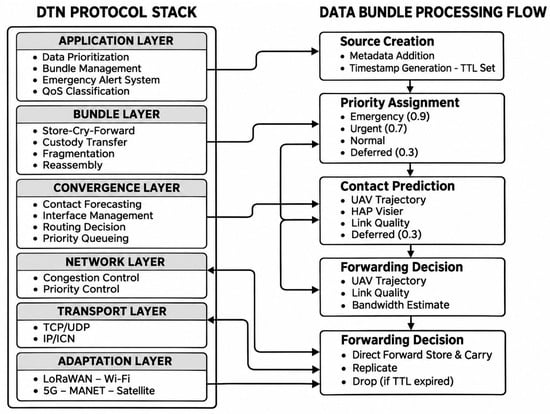
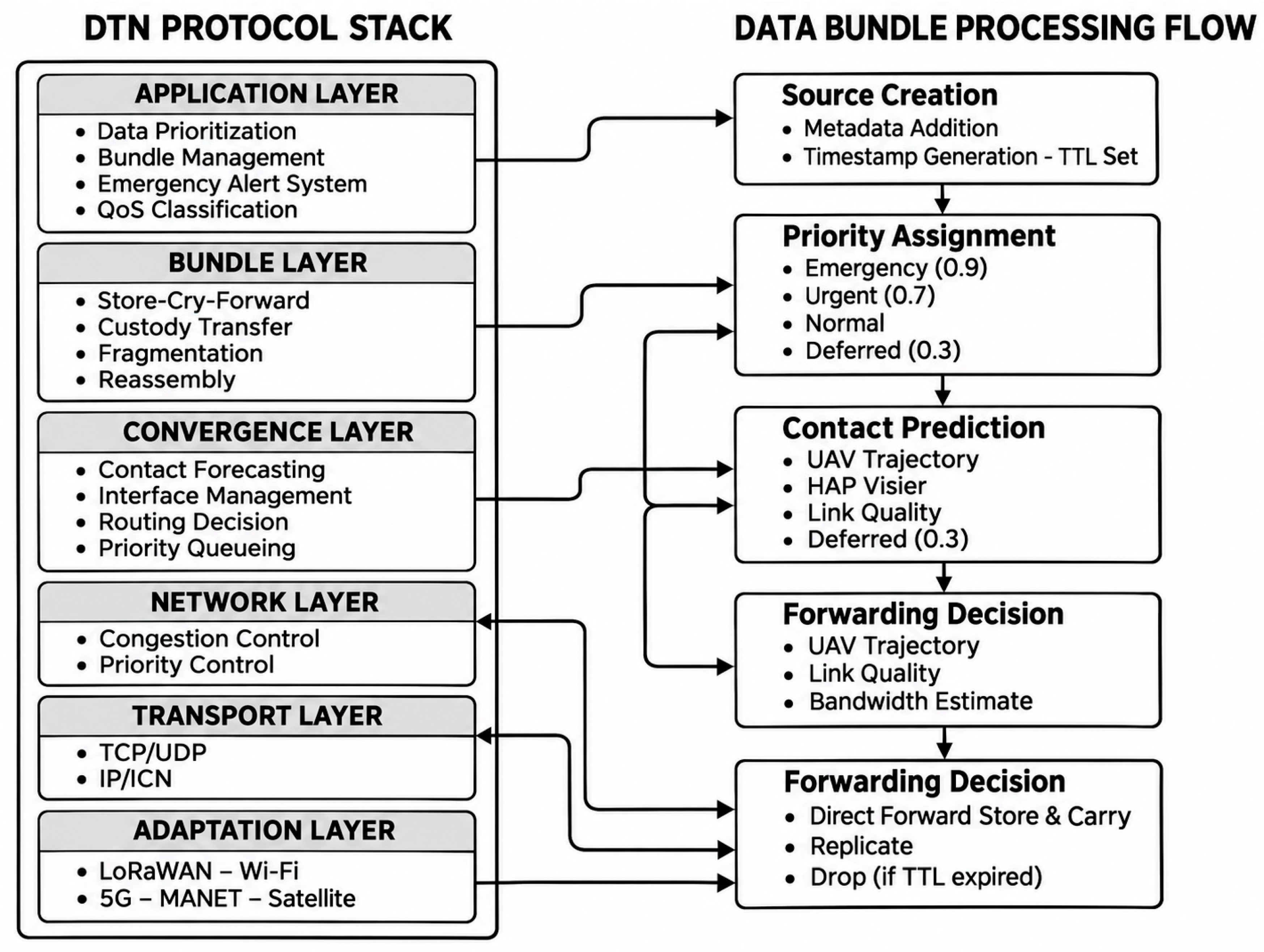
To manage the unpredictable connectivity and dynamic topology that are common in UAV-IoT networks during disaster situations, a delay-tolerant communication protocol was developed. UAVs store data they collect until there is an opportunity to communicate, according to a store-carry-forward paradigm tailored to aerial networks. The complete protocol architecture and data flow control are depicted in Figure 8.
Figure 8.
Protocol for architecture and data flow control.
The protocol utilizes predictive contact scheduling, which estimates the instant of connectivity based on UAV trajectories and HAP orbit characteristics. This prediction capability can help make bundle forwarding decisions.
Table 2 and Table 3 describe a DTN system that is designed for scheduling and managing data transmission in adverse networking conditions, using predictive contact planning and priority queue management. The routing matrix exhibits a “smart” forwarding strategy in which the HAP-1 (High-Altitude Platform) is chosen as the primary forward path even though the HAP-2 has a marginally higher delivery probability (92% compared with 85%). This selection reflects a trade-off as HAP-1 provides much lower expected delay (12 min instead of 18 min) with associated higher link quality (0.8 compared with 0.7). The UAV alternatives are considered too costly options since they have much lower delivery probabilities (45% and 38%) and longer return times than the other relay nodes.
Table 2.
Contact prediction and routing matrix.
Table 3.
Bundle queue state (priority-based).
The bundle queue indicates the well-defined priorities with high urgency (priority 0.9) as the dominant priority. The two most critical bundles (EMER-001 and SURV-045) are forwarded to HAP-1, each with less than a 5 min deadline, meaning that these are urgent messages. Different types of environmental data (ENV-128) are of a medium priority; mapping data (MAP-312) may be using almost every available HAP, and imagery data (IMG-567) is assigned the lowest priority, but can tolerate a longer delivery delay.
These components create an efficient data transfer system. The routing decisions are based on queue priorities: higher-priority bundles go over faster, more reliable paths. Thereby, important packets arrive earlier while lower-priority packets can be transmitted on the backup path or when data transmission conditions are more favorable [13].
4.2. Energy-Balanced Optimization
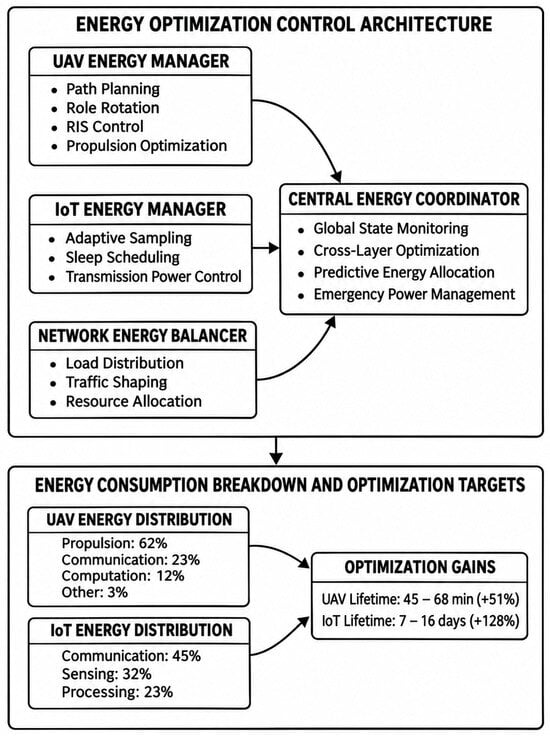
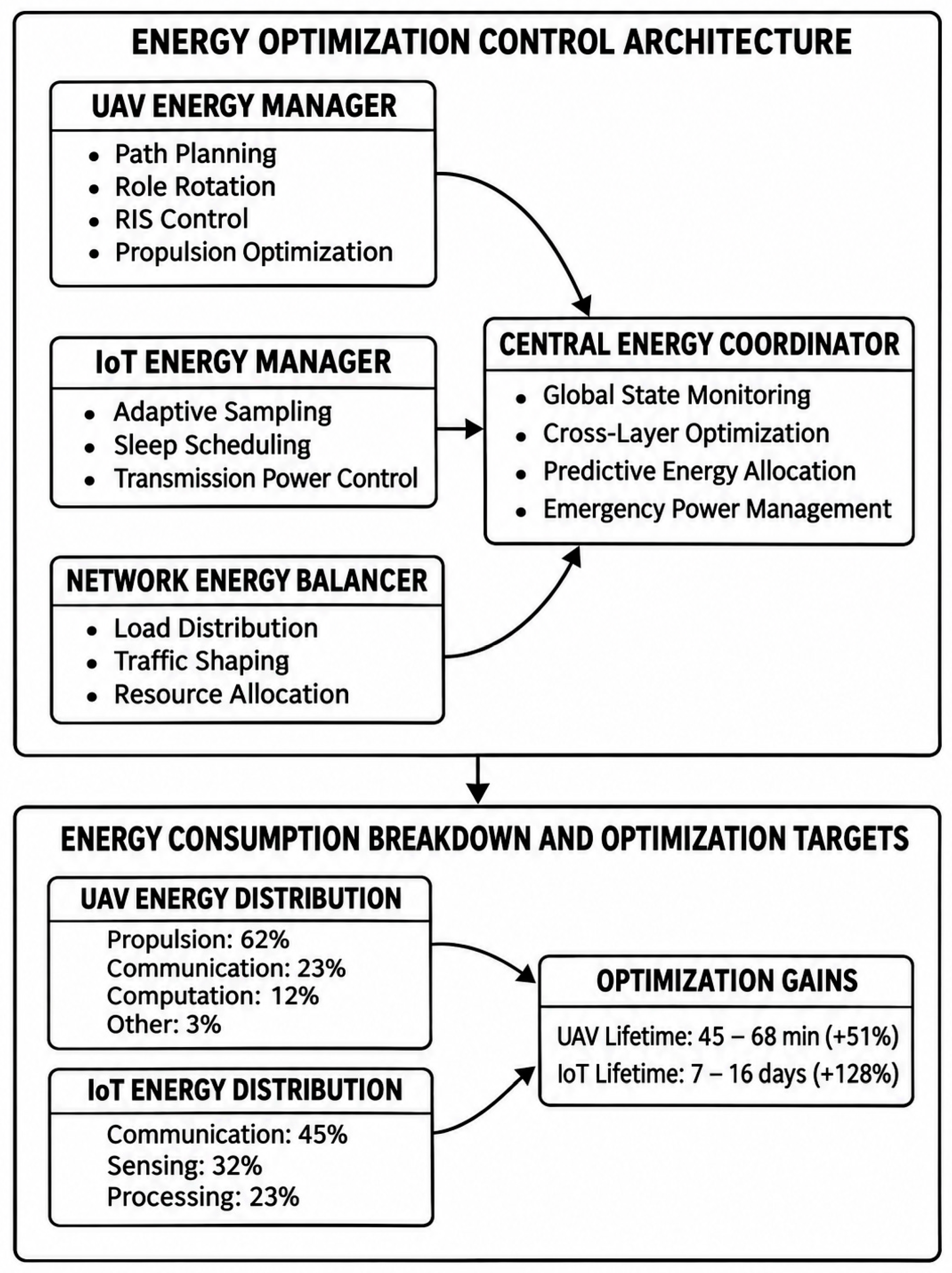
The EBO model is based on a multi-objective optimization scheme that collectively optimizes the UAV power management, energy conservation of IoT devices, and network-wide energy allocation. Figure 9 shows the energy optimization control architecture.
Figure 9.
Energy optimization control architecture.
The energy consumption of UAV i is modeled as the sum of propulsion, communication, sensing, and computation energy:
The energy-balancing controller prevents repeated selection of the same UAV for high-load relay or collection tasks. When the residual energy of a UAV i falls below , its role is reassigned, and another UAV with higher residual energy and acceptable link quality is selected.
The role-rotation rule is as follows:
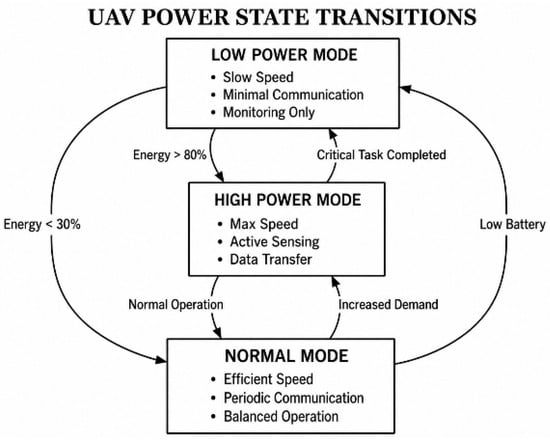
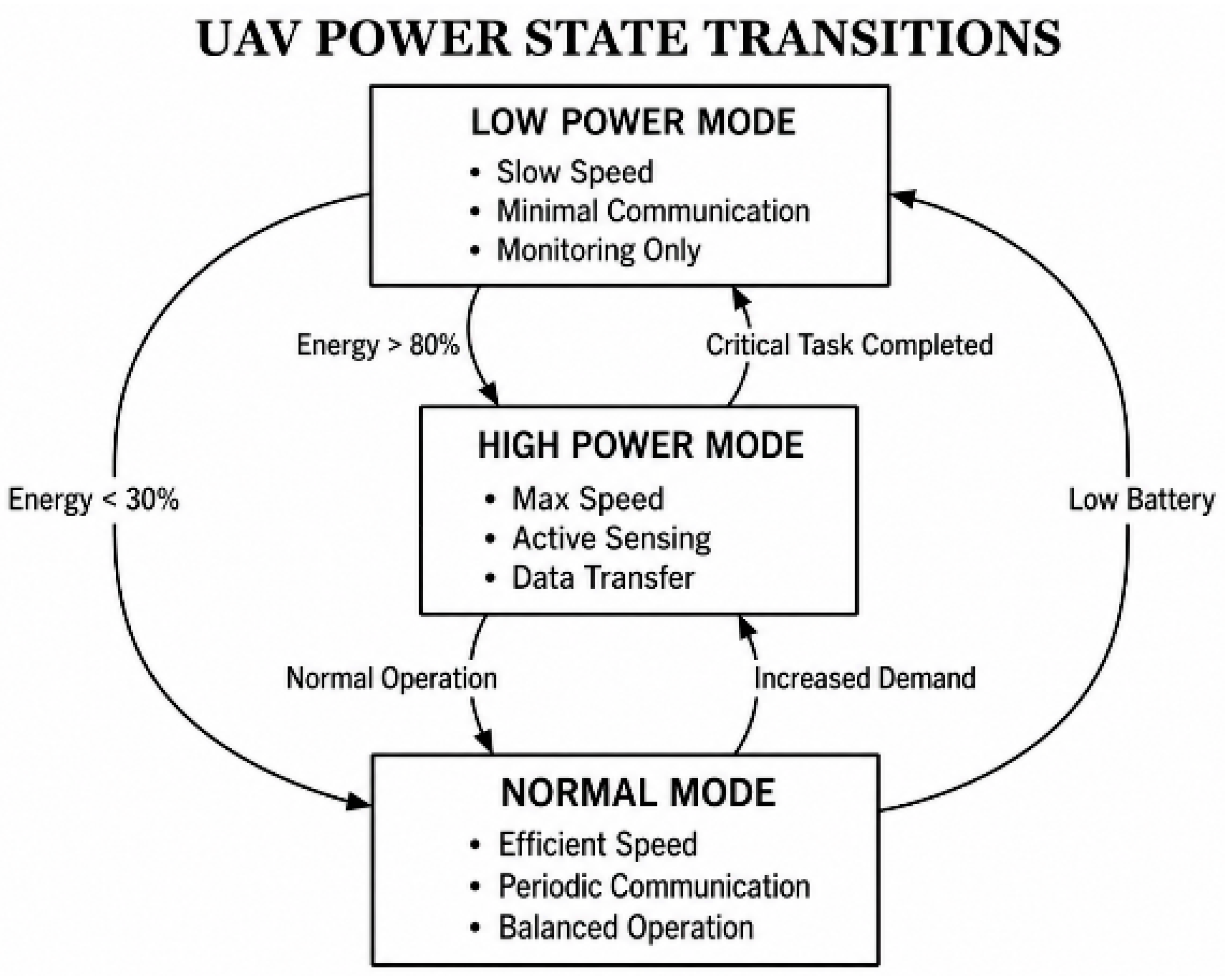
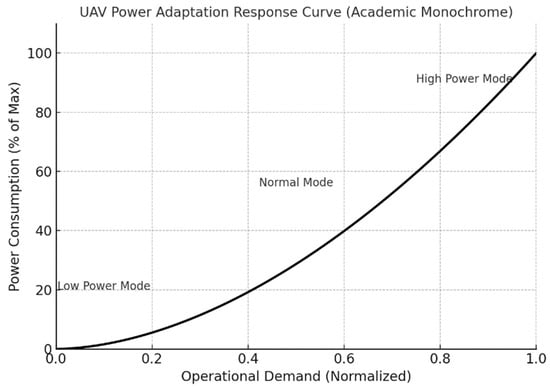
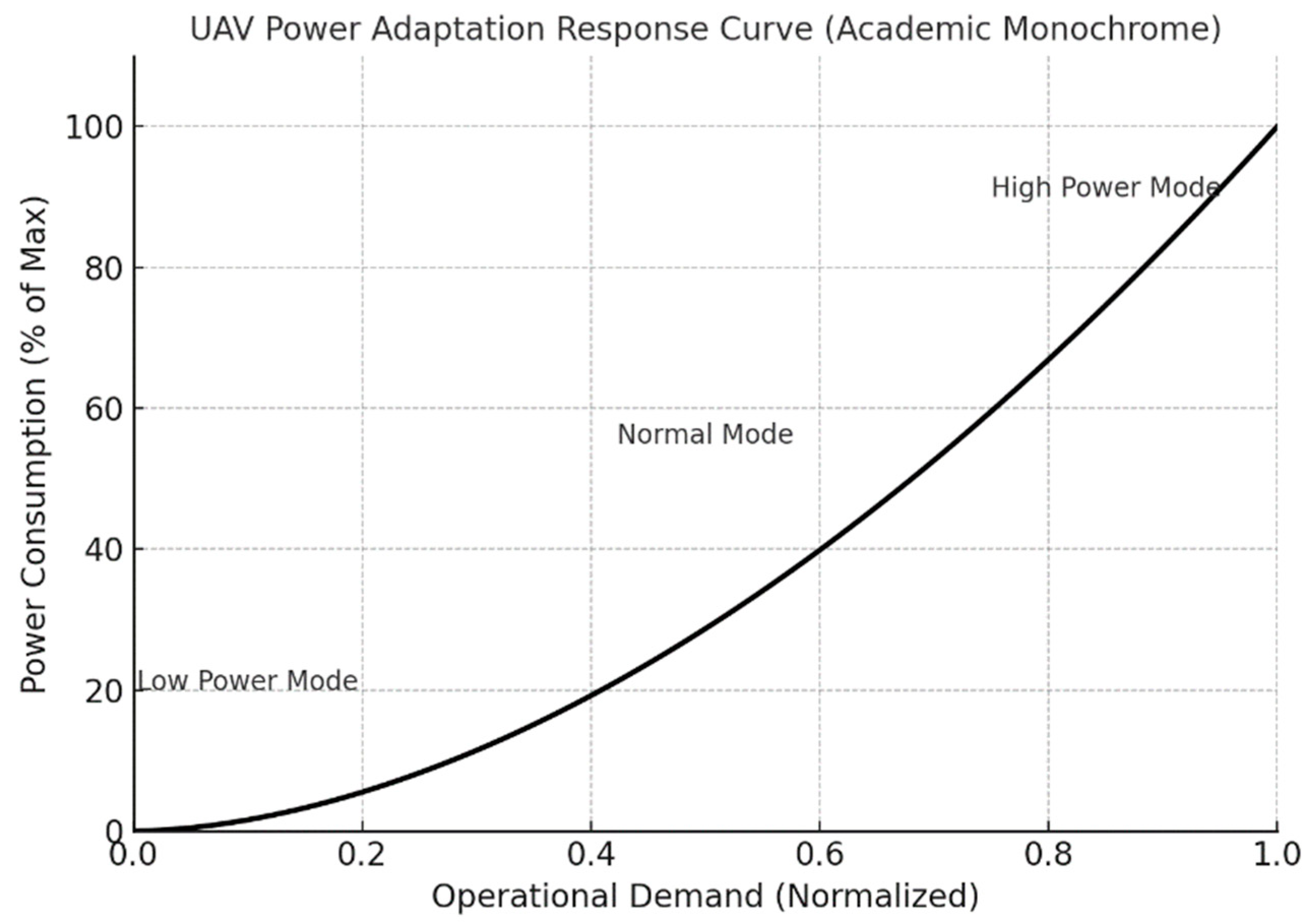
The optimization utilized dynamic power control in response to varying conditions of the operational environment. Figure 10 and Figure 11 illustrate how these algorithms distribute energy usage among the system states.
Figure 10.
Dynamic power management state transitions.
Figure 11.
UAV power state transitions and adaptation response curve.
4.3. MARL for Swarm Coordination
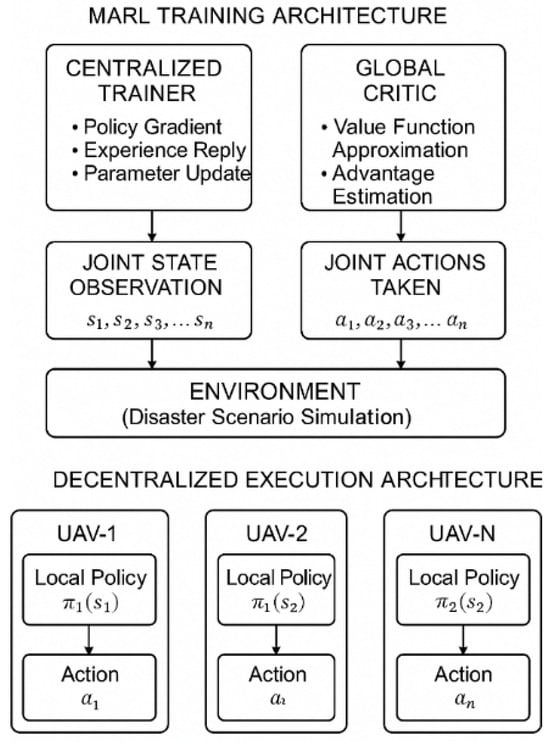
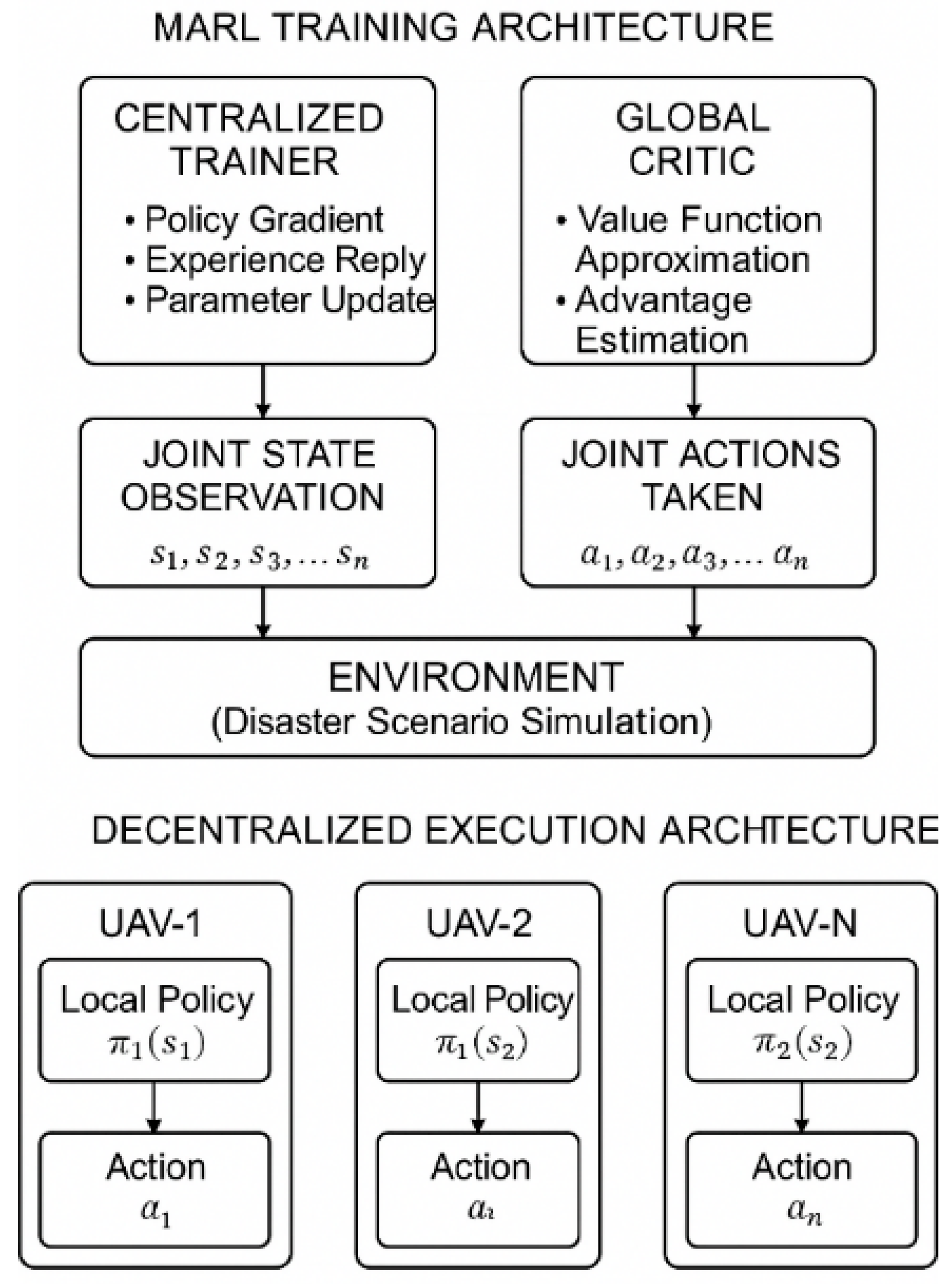
The MARL framework follows the centralized training with decentralized execution approach that allows for coordinated behavior while guaranteeing individual independence. Figure 12 shows the MARL structure and learning.
Figure 12.
MARL structure and learning architecture.
The MARL formulation is defined by state, action, reward, and policy. The local state of the UAV i includes its position, residual energy, queue length, neighboring UAV links, nearby IoT sensors, and estimated contact time with HAP nodes as shown in Algorithm 2. The action space includes movement direction, speed level, role selection, relay selection, and task offloading decision.
The reward function is defined as
where Dt is successful data delivery, Lt is latency, Et is energy consumption, Ct is coverage, and Ft is fault-recovery performance.
rt = w1Dt − w2Lt − w3Et + w4Ct + w5Ft
| Algorithm 2: MARL-Based UAV Swarm Coordination. Input: UAV states, IoT demand, connectivity graph, residual energy. |
Output: UAV movement, role assignment, and relay decisions:
|
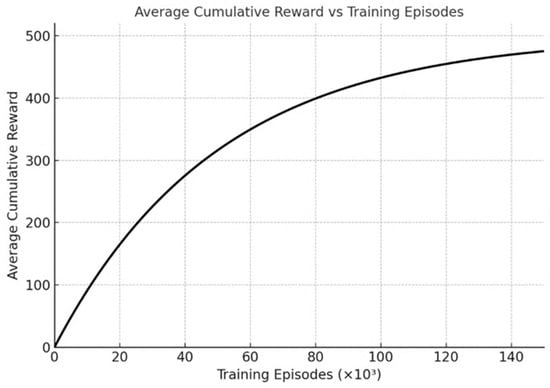
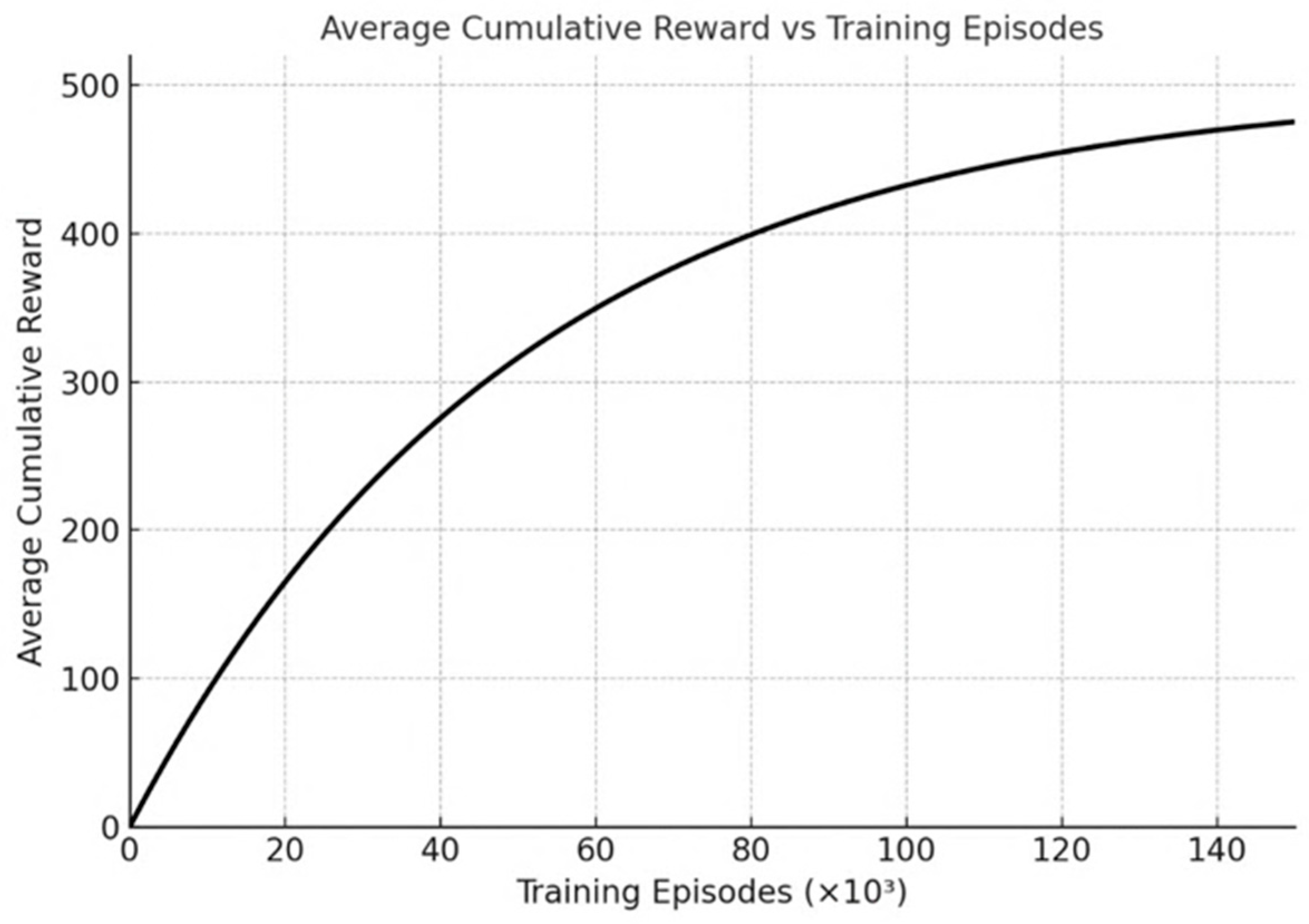
The MARL model uses reward shaping to induce learning toward desirable behaviors. Figure 13 illustrates the learning process and rewards that guide policy learning.
Figure 13.
MARL progression.
Table 4 presents the evolution of key performance metrics for the autonomous system as it progresses through its training phases. Values represent normalized scores, showing improvements (+) or reductions (−) relative to a baseline.
Table 4.
Evolution of normalized reward components during MARL training.
As shown in the table, performance improves through learning and behavior optimization across three training stages: Early, Mid, and Late. The system prioritizes achieving its central goals—data collection, connectivity, and coverage—rather than maximizing energy efficiency. By the end of its training, it has mastered its primary missions to a high degree and greatly reduced its own inefficiency, a symptom of a well-rounded operational policy.
4.4. Game-Theoretic Task Offloading
The task offloading problem is modeled as a non-cooperative game in which UAVs decide whether to process data locally, forward it to another UAV, or offload it to a HAP node. Each UAV seeks to minimize a cost function combining computation delay, transmission delay, and energy consumption.
The utility function is as follows:
where is computation time, is transmission delay, and is offloading energy cost.
The decision rule is that the selected offloading action is the one that maximizes UAV utility while satisfying latency and energy constraints.
5. Performance Evaluation
The evaluation considers five metric groups: delivery performance, energy performance, scalability, robustness, and computational efficiency. Delivery performance is measured using delivery ratio, emergency-data latency, average bundle delay, and successful forwarding rate. Energy performance is measured using total UAV energy consumption, residual energy variance, and mission lifetime. Scalability is evaluated by increasing the number of IoT devices and UAVs. Robustness is tested under UAV failure rates from 10% to 30%. Statistical reliability is assessed using 30 independent simulation runs and 95% confidence intervals.
6. Simulation Setup and Parameters
The simulation was implemented using a Python version 3.11 (Python Software Foundation, Wilmington, DE, USA)-based discrete-event simulation environment. Network topology and graph operations were modeled using NetworkX version 3.2.1 (NetworkX Development Team, USA), numerical processing was performed using NumPy version 1.26.4 (NumPy Developers, supported by NumFOCUS, Austin, TX, USA), and MARL components were implemented using PyTorch version 2.2.2 (PyTorch Foundation, Linux Foundation, Wilmington, DE, USA). The simulation modeled a 5 km × 5 km disaster region with 15–30 UAVs and 200–500 IoT sensors. Each experiment was repeated 30 times using different random seeds.
The proposed framework was compared with four baseline methods: (1) static UAV routing without energy balancing, (2) conventional DTN forwarding without predictive contact scheduling, (3) greedy nearest-relay forwarding, and (4) rule-based UAV coordination without MARL. All baselines were evaluated within the same disaster area, node density, communication range, traffic load, and failure settings.
Physical, network, and energy parameters are all realistically modeled in the simulation model of the Swarm UAV-IoT system. Table 5 presents the simulation parameter space that was explored for this investigation.
Table 5.
Simulation parameters and configurations.
Results are reported as mean values with 95% confidence intervals. Paired t-tests were used for normally distributed results, while Wilcoxon signed-rank tests were used when normality was not satisfied. A significance level of p < 0.05 was adopted. The Table 6 presents the baseline for performance comparison.
Table 6.
Baseline method for performance comparison.
7. Results and Analysis
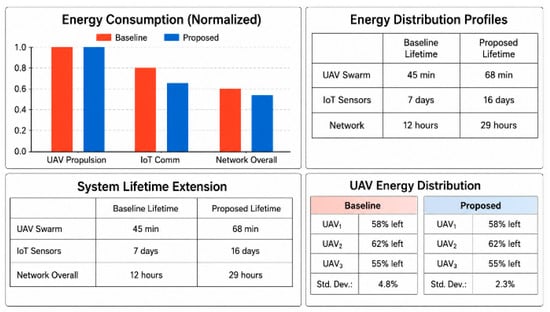
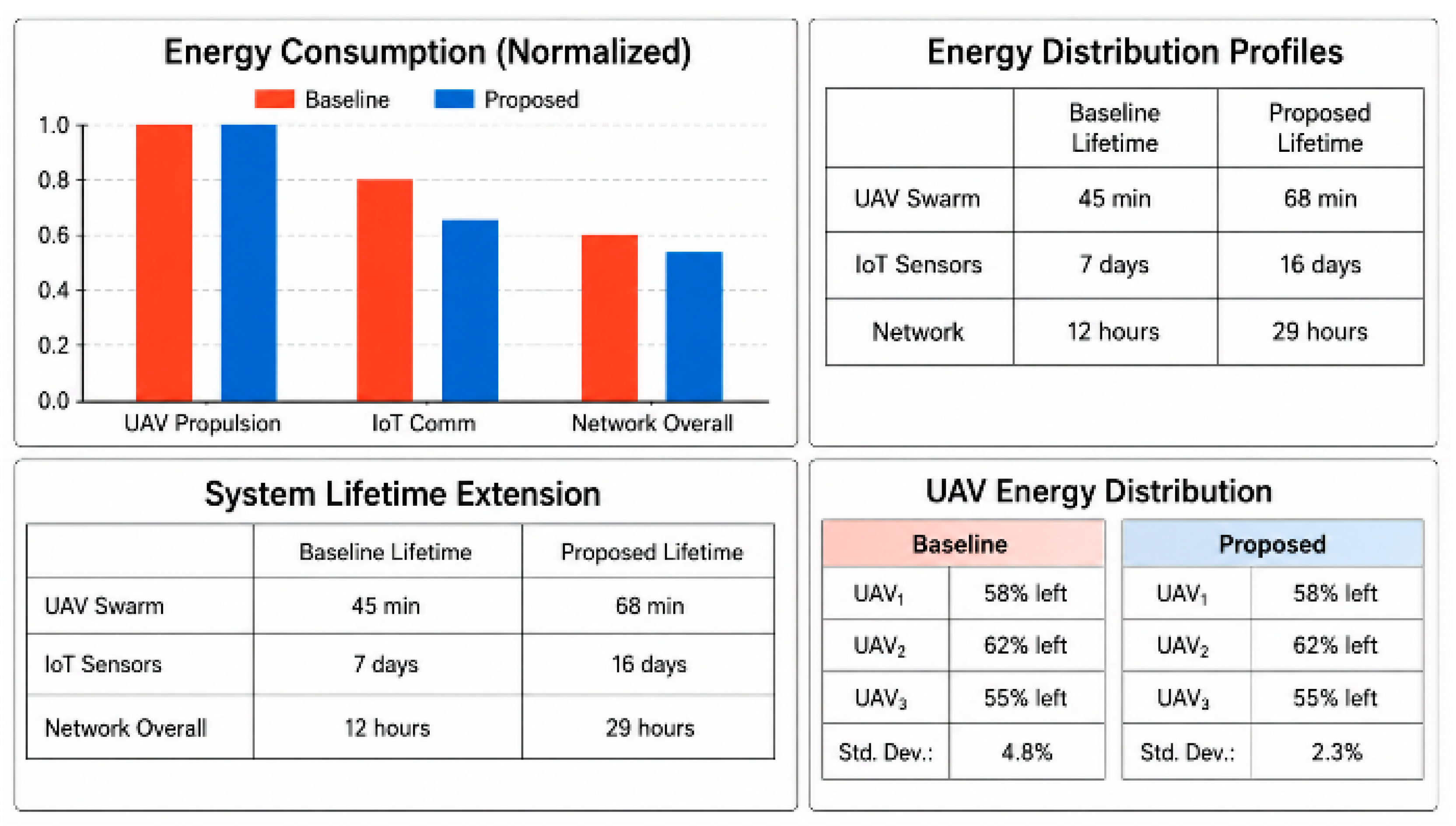
The energy efficiency analyses reveal noticeable enhancements of power management across each system component. Figure 14 shows overall energy performance results, including comparison with baseline results. To ensure fair comparison, all methods were evaluated using identical network sizes, UAV mobility limits, IoT traffic rates, radio ranges, energy models, and disaster scenarios. The only factor changed was the decision strategy used for forwarding, coordination, and energy management.
Figure 14.
Energy consumption comparison showing normalized energy usage across system components, lifetime extension achieved, and balanced energy distribution in the proposed approach.
Balanced energy optimization enables system life extension with remarkable improvement through an accumulation of various complementary approaches. The dynamic role swapping scheme mitigates individual UAV fatigue by offloading heavy jobs, and predictive path planning reduces unnecessary movements and communication overhead.
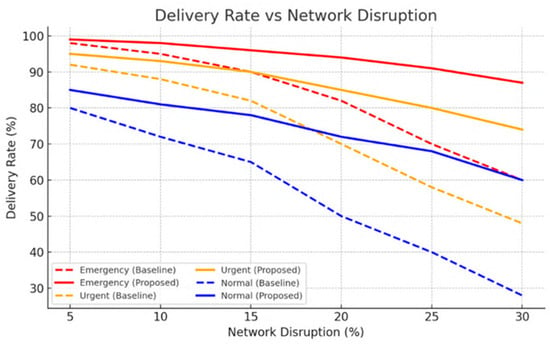
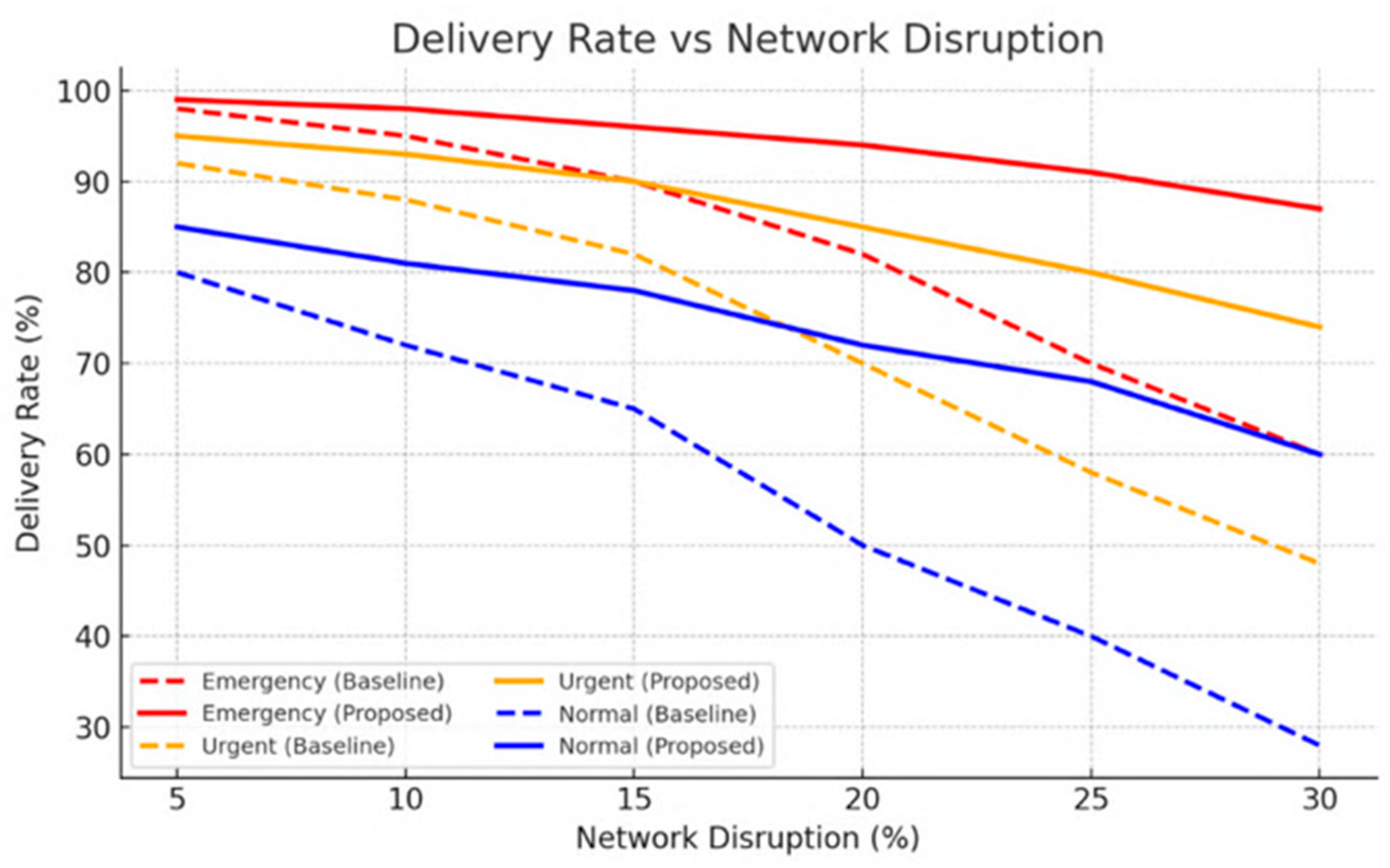
The delay-tolerant performance for the DTN protocol evaluation indicates that the technique works effectively under difficult network conditions of intermittent connectivity. Figure 15 presents the performance of data delivery for various priority levels and network conditions.
Figure 15.
Delay-tolerant protocol performance results.
Table 7 presents a comparison of data delivery performance between a baseline and proposed enhancement system on the basis of priority levels of the data. Results show significant enhancement for all priority levels, and higher-priority data transmissions benefit most. The proposed system demonstrates noteworthy efficiency improvements, especially for latency-sensitive data. The high-priority data shows the greatest improvement, with latency decreases from 8.2 min to 3.1 min, or a decrease in delivery time of 62%. This improvement is particularly beneficial for applications requiring low-latency data transmission, such as emergency response communications and real-time alert systems.
Table 7.
Delivery latency comparison across data priority levels.
Table 8 shows the resource utilization improved, decreasing from 72% to 48%, or a 3% reduction in resource utilization. By strategically transmitting at the optimal time and avoiding futile retransmission retries, the system can achieve higher performance while using less bandwidth, power, and computation.
Table 8.
Predictive contact planning effectiveness.
Scalability and Robustness
Robustness was evaluated by randomly disabling 10%, 20%, and 30% of UAVs during mission execution. The system response was measured using residual delivery ratio, recovery time, and coverage degradation. Scalability was evaluated by increasing the number of IoT devices from 250 to 500 while monitoring delivery completeness and average latency.
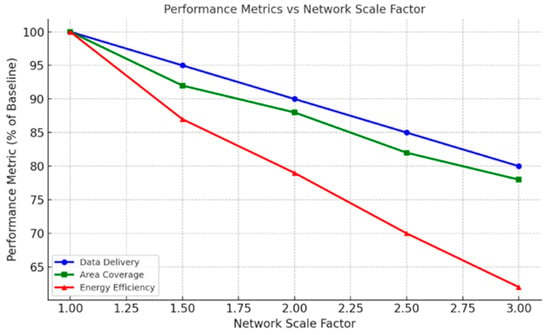
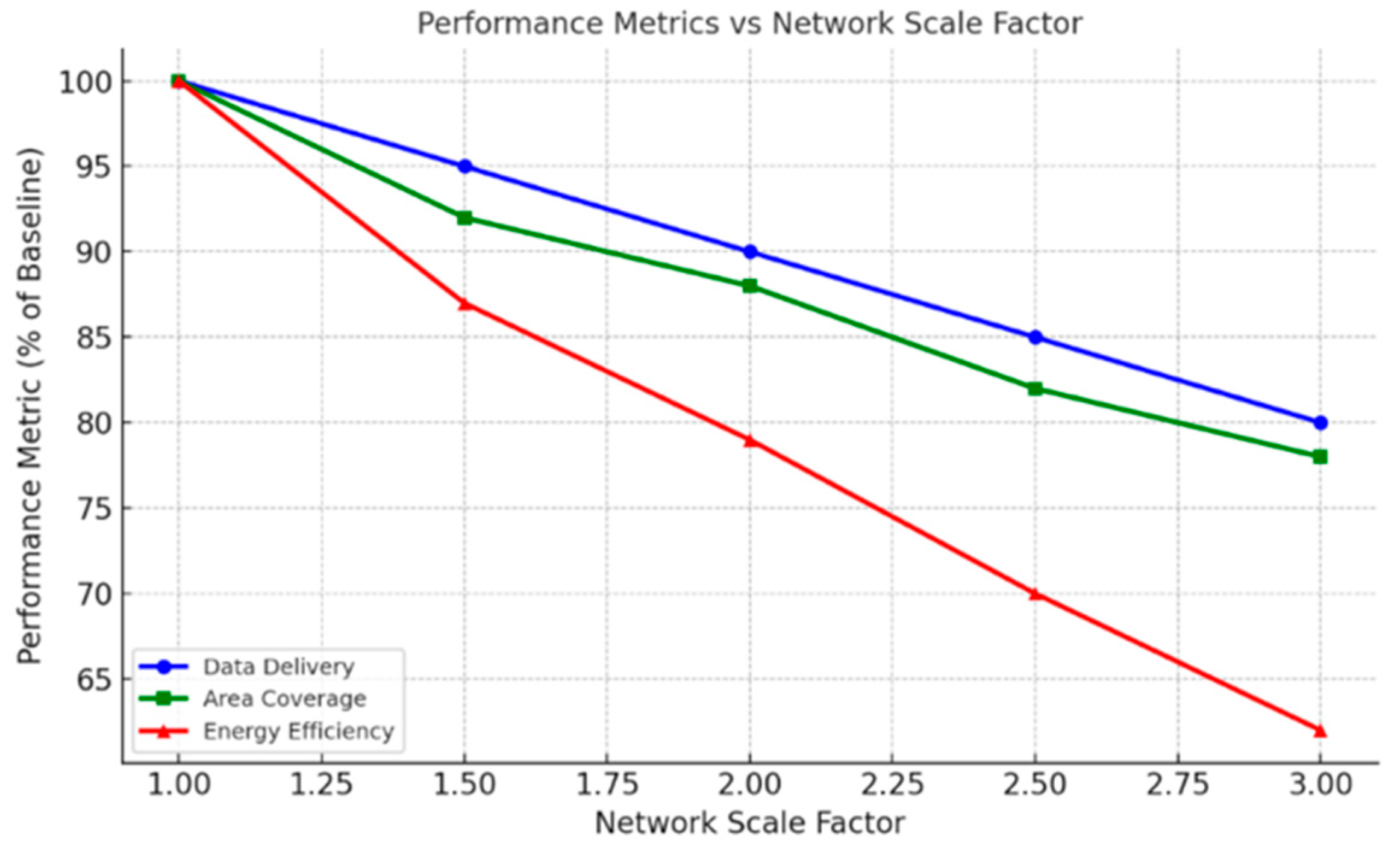
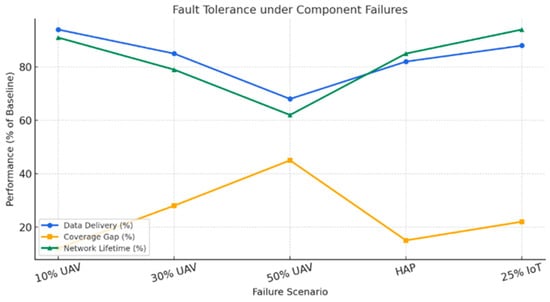
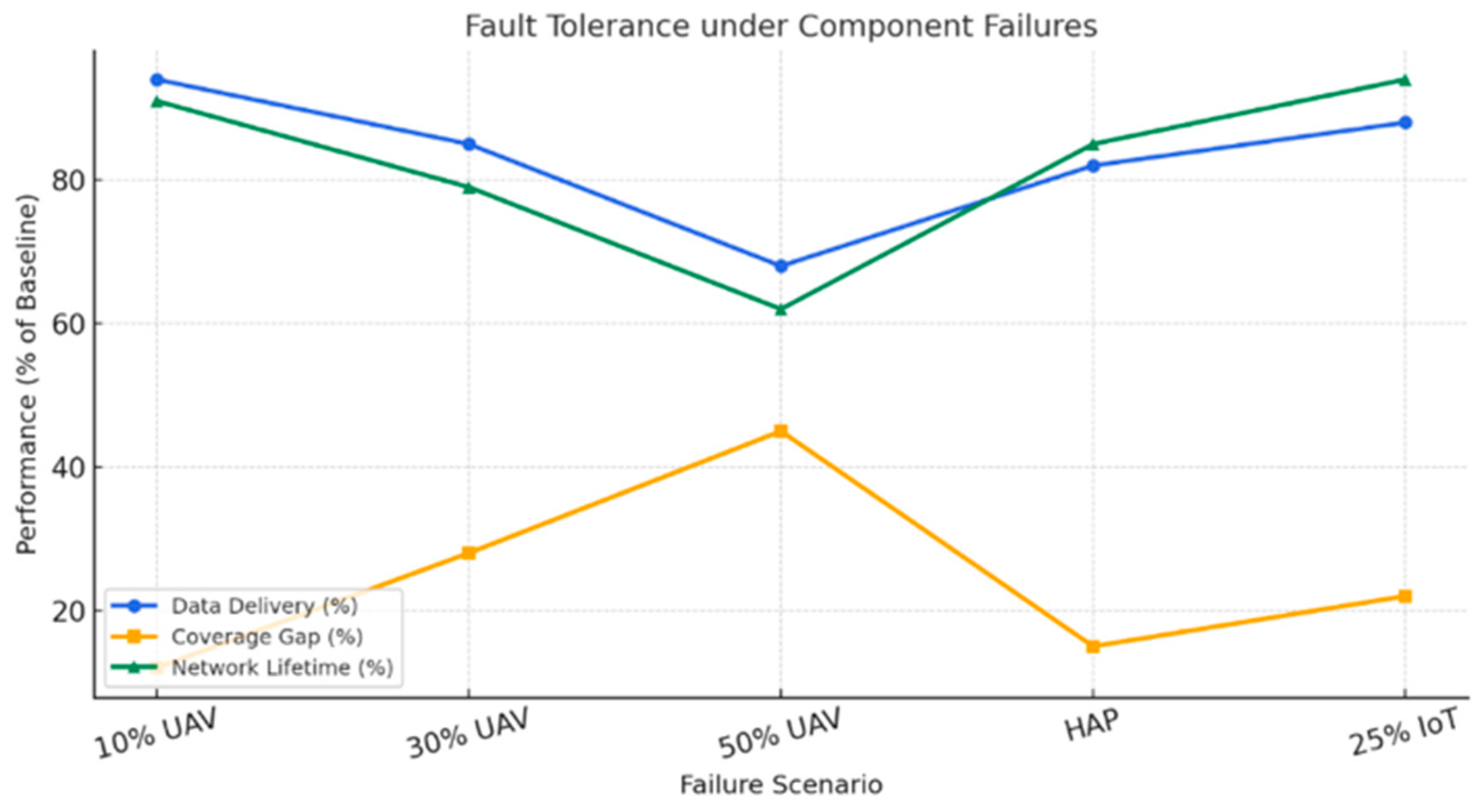
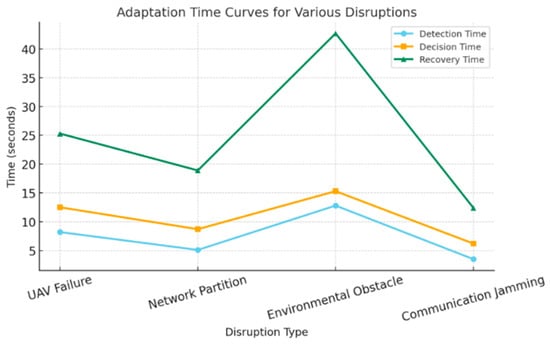
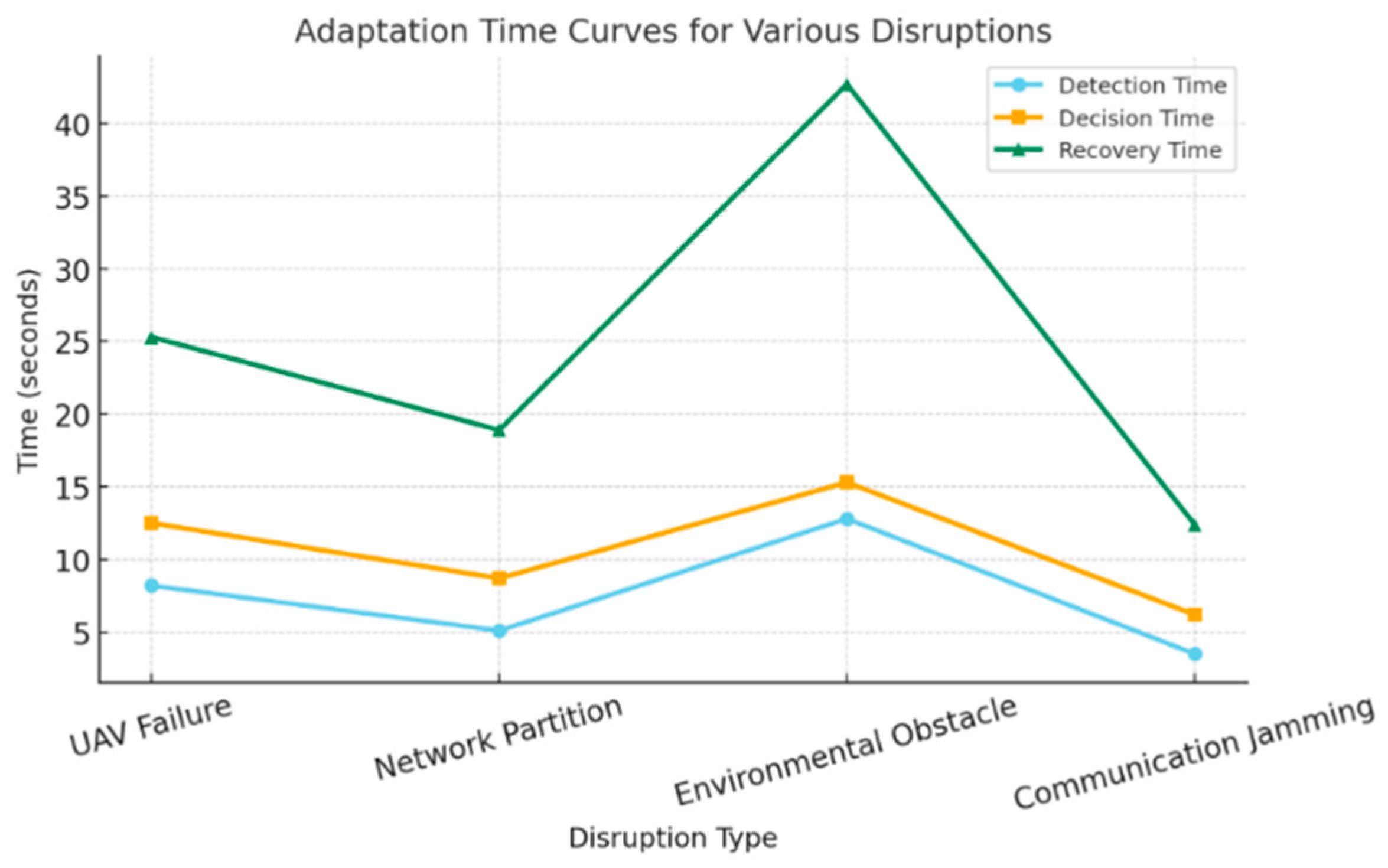
The performance and scalability analyses show that the system scales with network size and remains effective during correlated system failures. Figure 16, Figure 17 and Figure 18 illustrate the system behavior in scale and fault-tolerant conditions, the scalability with respect to increasing network size, the fault tolerance with varying component failures, and the adaptation time for different disruption types.
Figure 16.
Scalability and robustness performance.
Figure 17.
Fault tolerance under component failures.
Figure 18.
Adaptation time under disruption scenarios.
The system demonstrates excellent performance under both scaling pressure and component failure. When the size of the network is increased by a factor of 2 (from 250 to 500 IoT devices), the data collection completeness reduces by only 17%, which shows good scalability. Under a 30% UAV failure rate, the system recovers up to 85% of baseline data transfer performance by autonomously healing the data collection paths and communication links. Coordination from MARL enables a quick recovery time after disturbances: most recoveries are achieved within 30–45 s after detection.
8. Discussion
The results show that the proposed UAV–IoT framework improves disaster assessment under intermittent connectivity and limited energy conditions. The main performance gains come from integrating priority-aware DTN, EBO, MARL, and game-theoretic task offloading within one coordinated system.
The latency reduction is mainly due to priority-based forwarding, where emergency data are transmitted through relays with higher predicted delivery probability and lower expected delay. The improvement in UAV lifetime is linked to energy-aware role rotation, which distributes collection and relay tasks according to residual energy and link quality. The robustness results also show that MARL helps the swarm reorganize when some UAVs fail, leading to gradual rather than sudden performance degradation.
Compared with static routing, conventional DTN, greedy forwarding, and rule-based coordination, the proposed approach provides better adaptability because it jointly considers delay, reliability, coverage, and energy. However, the results are simulation-based and depend on the assumed UAV density, communication range, traffic load, disaster area, and failure rate.
The study has some limitations. Real deployment may be affected by wind, weather, wireless interference, localization errors, payload limits, and regulatory constraints. Future work will therefore focus on hardware-in-the-loop testing, real UAV experiments, realistic channel modeling, and security-aware disaster communication.
9. Conclusions
This paper presented an integrated Unmanned Aerial Vehicle–Internet of Things (UAV–IoT) framework for disaster assessment under disrupted communication infrastructure. The proposed approach combines Delay-Tolerant Networking (DTN), energy-balanced UAV coordination, Multi-Agent Reinforcement Learning (MARL), High-Altitude Platform (HAP)-assisted communication, and game-theoretic task offloading. The simulation results showed that the proposed method reduced emergency-data delivery latency, improved UAV swarm lifetime, and maintained acceptable delivery performance under UAV failure conditions. The main contribution of the work is the joint treatment of delay tolerance, energy balancing, data prioritization, and distributed offloading in a unified disaster-response architecture. Future work will focus on real-world deployment, hardware-in-the-loop evaluation, and validation under realistic wireless interference and mobility conditions.
Author Contributions
Conceptualization, I.A.I. and I.A.A.; methodology, H.A.M.; software, I.R.N.A.; validation, H.A.M. and H.T.S.A.; formal analysis, H.A.M.; investigation, I.A.A.; resources, I.A.I.; data curation, I.A.A.; writing—original draft preparation, writing—review H.A.M. and editing, I.R.N.A.; visualization, H.A.M.; supervision, H.T.S.A.; All authors have read and agreed to the published version of the manuscript.
Funding
This research received no external funding.
Institutional Review Board Statement
Not applicable.
Informed Consent Statement
Not applicable.
Data Availability Statement
The raw data supporting the conclusions of this article will be made available by the authors on request.
Conflicts of Interest
The authors declare no conflicts of interest.
References
- Alqudsi, Y.; Makaraci, M. UAV swarms: Research, challenges, and future directions. J. Eng. Appl. Sci. 2025, 72, 12. [Google Scholar] [CrossRef] [Scilit]
- Alqudsi, Y.S.; Kassem, A.H.; El-Bayoumi, G.M. A Robust Hybrid Control for Autonomous Flying Robots in an Uncertain and Disturbed Environment. INCAS Bull. 2021, 13, 187–204. [Google Scholar] [CrossRef] [Scilit]
- Huang, J.; Zhang, M.; Wan, J.; Chen, Y.; Zhang, N. Joint Data Caching and Computation Offloading in UAV-Assisted Internet of Vehicles via Federated Deep Reinforcement Learning. IEEE Trans. Veh. Technol. 2024, 73, 17644–17656. [Google Scholar] [CrossRef] [Scilit]
- Wibowo, A.; Amri, I.; Surahmat, A.; Rusdah, R. Leveraging artificial intelligence in disaster management: A comprehensive bibliometric review. Jàmbá J. Disaster Risk Stud. 2025, 17, 9. [Google Scholar] [CrossRef] [Scilit] [PubMed]
- Xu, X.; Feng, G.; Qin, S.; Liu, Y.; Sun, Y. Joint UAV Deployment and Resource Allocation: A Personalized Federated Deep Reinforcement Learning Approach. IEEE Trans. Veh. Technol. 2023, 73, 4005–4018. [Google Scholar] [CrossRef] [Scilit]
- Ramachandran, A.; Yadav, A.; Schroeder, A. Implementation of remote-sensing models to identify post-disaster health facility damage: Comparative approaches to the 2023 earthquake in Turkey. PLoS Digit. Health 2025, 4, e0001060. [Google Scholar] [CrossRef] [Scilit] [PubMed]
- Kirpalani, C. Technology-Driven Approaches to Enhance Disaster Response and Recovery. In Geospatial Technology for Natural Resource Management; Wiley: Hoboken, NJ, USA, 2024; pp. 25–81. [Google Scholar] [CrossRef] [Scilit]
- Tang, Z.; Jiao, Y.; Wang, X.; Pan, X.; Peng, J. Research on Scheduling Return Communication Tasks for UAV Swarms in Disaster Relief Scenarios. Drones 2025, 9, 567. [Google Scholar] [CrossRef] [Scilit]
- Raj, A.; Shetgaonkar, A.; Arora, L.; Pradhan, D.; Girija, S.S.; Kapoor, S. AI and Generative AI Transforming Disaster Management: A Survey of Damage Assessment and Response Techniques. In Proceedings of the 2025 IEEE 49th Annual Computers, Software, and Applications Conference (COMPSAC), Toronto, ON, Canada, 8–11 July 2025; pp. 1834–1840. [Google Scholar]
- Abid, S.K.; Roosli, R.; Nazir, U.; Kamarudin, N.S. AI-enhanced crowdsourcing for disaster management: Strengthening community resilience through social media. Int. J. Emerg. Med. 2025, 18, 201. [Google Scholar] [CrossRef] [Scilit] [PubMed]
- Kusyk, J.; Uyar, M.U.; Ma, K.; Wu, J.J.; Ruan, W.; Guha, D.K.; Bertoli, G.; Boksiner, J. AI Based Flight Control for Autonomous UAV Swarms. In Proceedings of the 2018 International Conference on Computational Science and Computational Intelligence (CSCI), Las Vegas, NV, USA, 12–14 December 2018; pp. 1155–1160. [Google Scholar]
- Alotaibi, J.; Oubbati, O.S.; Atiquzzaman, M.; Alromithy, F.; Altimania, M.R. Optimizing disaster response with UAV-mounted RIS and HAP-enabled edge computing in 6G networks. J. Netw. Comput. Appl. 2025, 241, 104213. [Google Scholar] [CrossRef] [Scilit]
- Zhang, H.; Zhang, R.; Sun, J. Developing real-time IoT-based public safety alert and emergency response systems. Sci. Rep. 2025, 15, 29056. [Google Scholar] [CrossRef] [Scilit] [PubMed]
- Betcher-Sbrolla, G.; Lopez-Aguilera, E.; Garcia-Villegas, E. Analysis and Proposal of Strategies for the Management of Drone Swarms Through Wi-Fi Technologies. Drones 2025, 9, 584. [Google Scholar] [CrossRef] [Scilit]
- Javed, S.; Hassan, A.; Ahmad, R.; Ahmed, W.; Ahmed, R.; Saadat, A.; Guizani, M. State-of-the-Art and Future Research Challenges in UAV Swarms. IEEE Internet Things J. 2024, 11, 19023–19045. [Google Scholar] [CrossRef] [Scilit]
- Qin, C.; Pournaras, E. Coordination of drones at scale: Decentralized energy-aware swarm intelligence for spatio-temporal sensing. Transp. Res. Part C Emerg. Technol. 2023, 157, 104387. [Google Scholar] [CrossRef] [Scilit]
- Xiong, Y.; Zhou, Y.; She, J.; Yu, A. Collaborative coverage path planning for UAV swarm for multi-region post-disaster assessment. Veh. Commun. 2025, 53, 100915. [Google Scholar] [CrossRef] [Scilit]
- Zhang, X.; Liu, J. Research on UAV Swarm Network Modeling and Resilience Assessment Methods. Sensors 2023, 24, 11. [Google Scholar] [CrossRef] [Scilit] [PubMed]
- Bu, Y.; Yan, Y.; Yang, Y. Advancement Challenges in UAV Swarm Formation Control: A Comprehensive Review. Drones 2024, 8, 320. [Google Scholar] [CrossRef] [Scilit]

Disclaimer/Publisher’s Note: The statements, opinions and data contained in all publications are solely those of the individual author(s) and contributor(s) and not of MDPI and/or the editor(s). MDPI and/or the editor(s) disclaim responsibility for any injury to people or property resulting from any ideas, methods, instructions or products referred to in the content. |
© 2026 by the authors. Licensee MDPI, Basel, Switzerland. This article is an open access article distributed under the terms and conditions of the Creative Commons Attribution (CC BY) license.