


Abstract
Recently, the yoga industry has witnessed rapid technology integration, particularly through computer vision and machine learning methods, to improve the practice experience. We developed a yoga posture detection and feedback system using a Raspberry Pi 5-based hardware setup and a combination of the Open Source Computer Vision Library, MediaPipe, and TensorFlow. The system records videos of practitioners doing five standard yoga poses and provides rapid data-based feedback to help fix misalignments. The model accurately classifies poses using convolutional neural networks and identifies important joint landmarks and limb angles, which is confirmed through confusion matrix analysis. The developed system lets its users practice safely without direct supervision from an instructor. It increases access to practical yoga training. The setup also allows for future physical therapy and athletic training applications, where proper form and alignment matter.
1. Introduction
Yoga has gained popularity due to its many physical and mental health benefits. An essential part of yoga practice is proper body alignment, which ensures effectiveness and safety and helps prevent injuries. Traditionally, instructors guide yoga sessions and provide real-time corrections and feedback on the practitioners’ posture. However, not everyone can attend in-person classes or hire private yoga instructors, especially in today’s fast-paced digital world [1]. To meet this need, technological solutions are used to help practitioners maintain correct form and posture during yoga. Advances in computer vision have also led to systems that automatically detect and classify yoga poses. These systems assess posture by analyzing joint positions, limb angles, and body symmetry, providing immediate feedback without requiring human supervision [2]. MediaPipe v0.10.33, TensorFlow 2.21.0, and Open Source Computer Vision Library (OpenCV) are widely used tools for pose estimation and classification. When implemented on affordable hardware like the Raspberry Pi 5, these technologies enable and allow for accessible and low-latency yoga training [3].
Recent research has investigated the use of computer vision and deep learning methods aimed at recognizing and correcting yoga postures. Multiple studies [4,5,6,7] emphasize real-time detection of yoga poses, reconstruction of postures, and feedback mechanisms, showcasing the efficiency of skeletal tracking and feature-based models in assessing body alignment. These methods facilitate precise pose identification and corrective input, demonstrating encouraging outcomes in enhancing user performance and assisting autonomous yoga practice without direct guidance from an instructor.
Furthermore, additional research [8,9,10,11] has explored posture monitoring and classification through machine learning utilizing different methods, such as human pose synthesis, IoT-driven posture monitoring systems, and convolutional neural network models for recognizing activities and postures. These methods have also been applied to various fields [12,13,14,15,16,17], including medical image categorization, supportive technologies, agricultural assessment, and object recognition. The ongoing effectiveness of convolutional neural networks and computer vision techniques in these areas emphasizes their resilience and flexibility in managing intricate visual data, endorsing their use in yoga posture evaluation systems.
In this study, to help users achieve correct yoga postures, we developed a system that assesses a practitioner’s posture by applying and training the system using TensorFlow, MediaPipe, and OpenCV. The developed system was tested and evaluated for performance using a confusion matrix.
2. Methodology
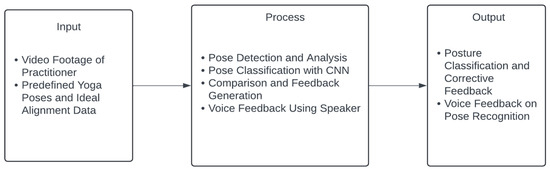
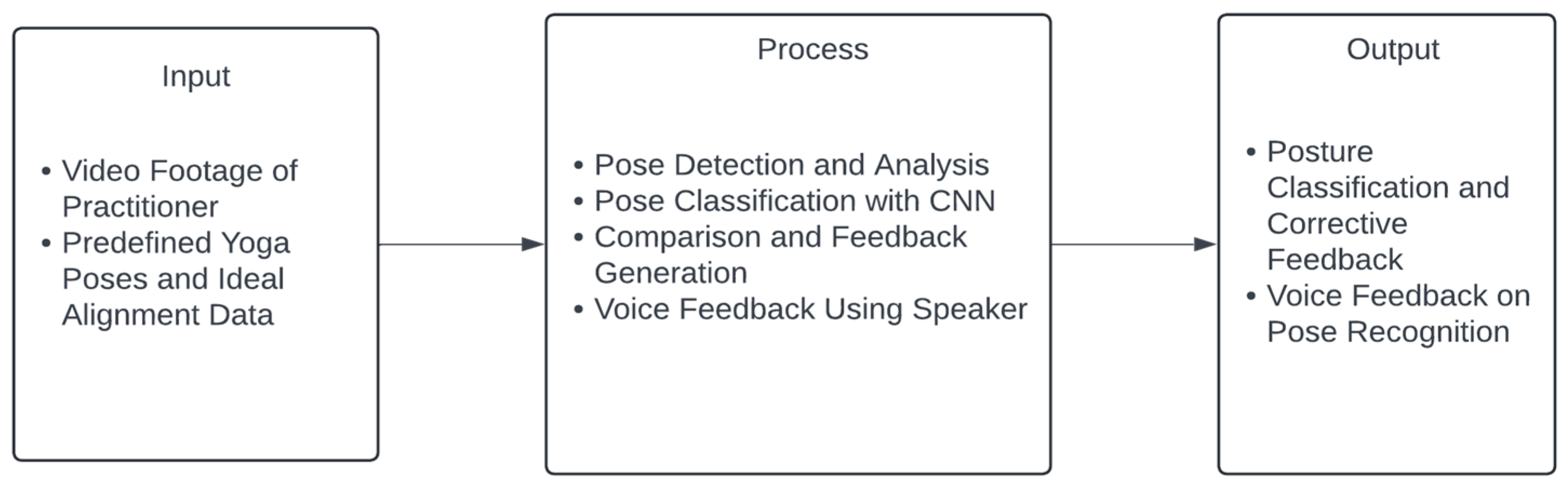
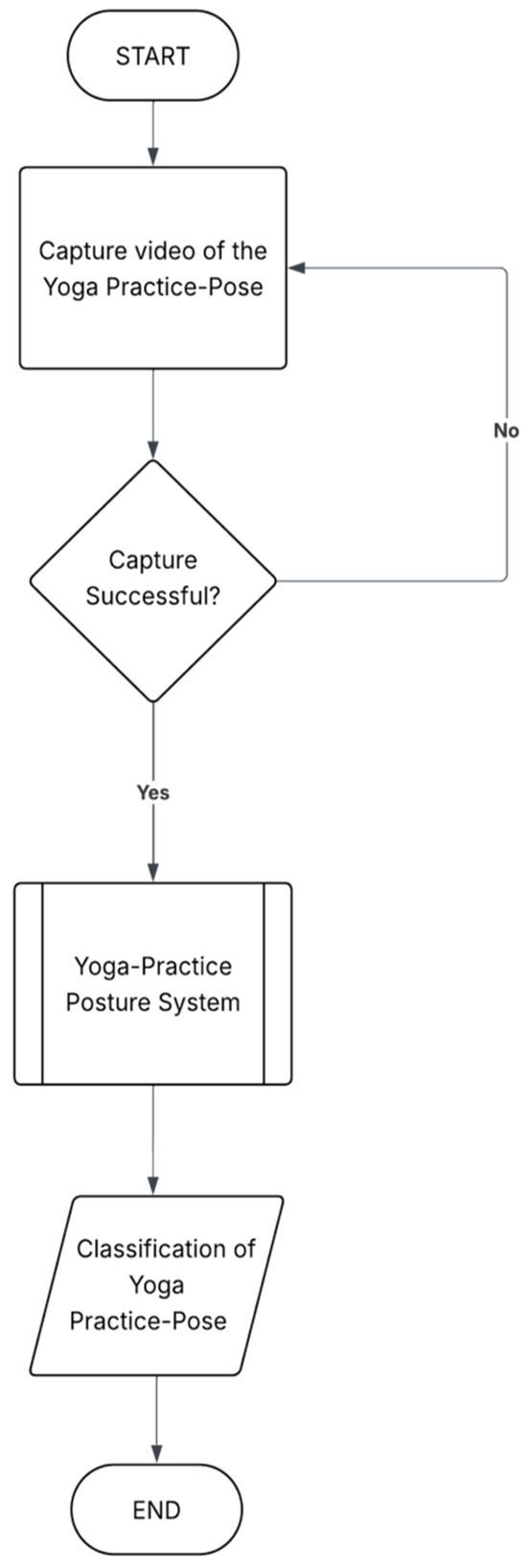
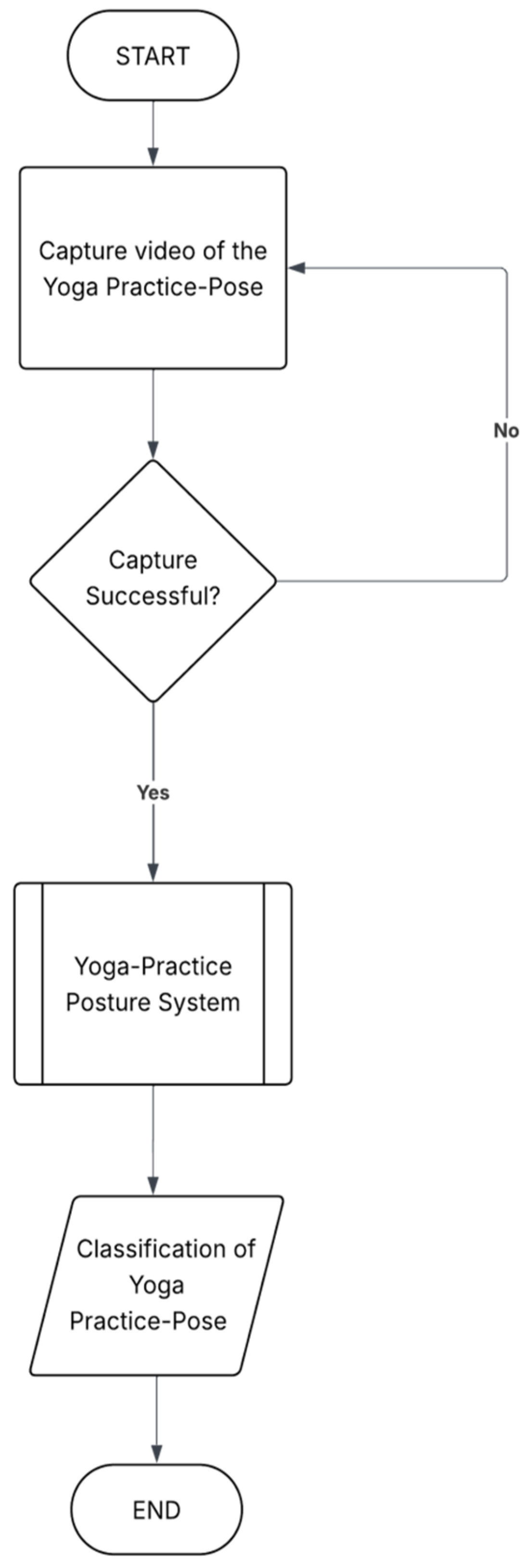
Figure 1 shows the workflow of the developed yoga posture detection and feedback system. A Raspberry Pi with a camera module captures live images of practitioners performing yoga poses. Using OpenCV and MediaPipe, skeletal landmarks and joint angles are extracted and passed to a convolutional neural network (CNN) in TensorFlow for classification. Feedback is provided visually on a monitor and audibly through a speaker.
Figure 1.
Workflow of the developed yoga posture detection and feedback system.
System Component
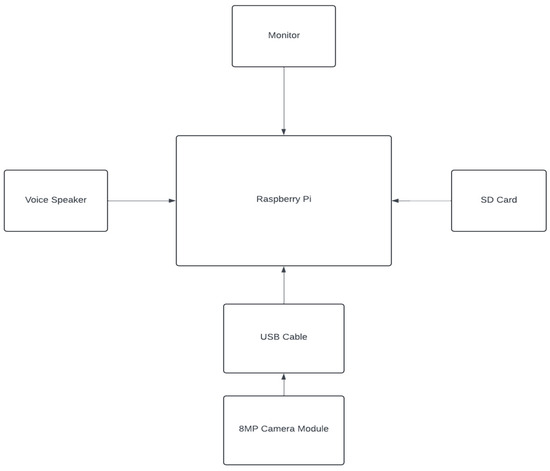
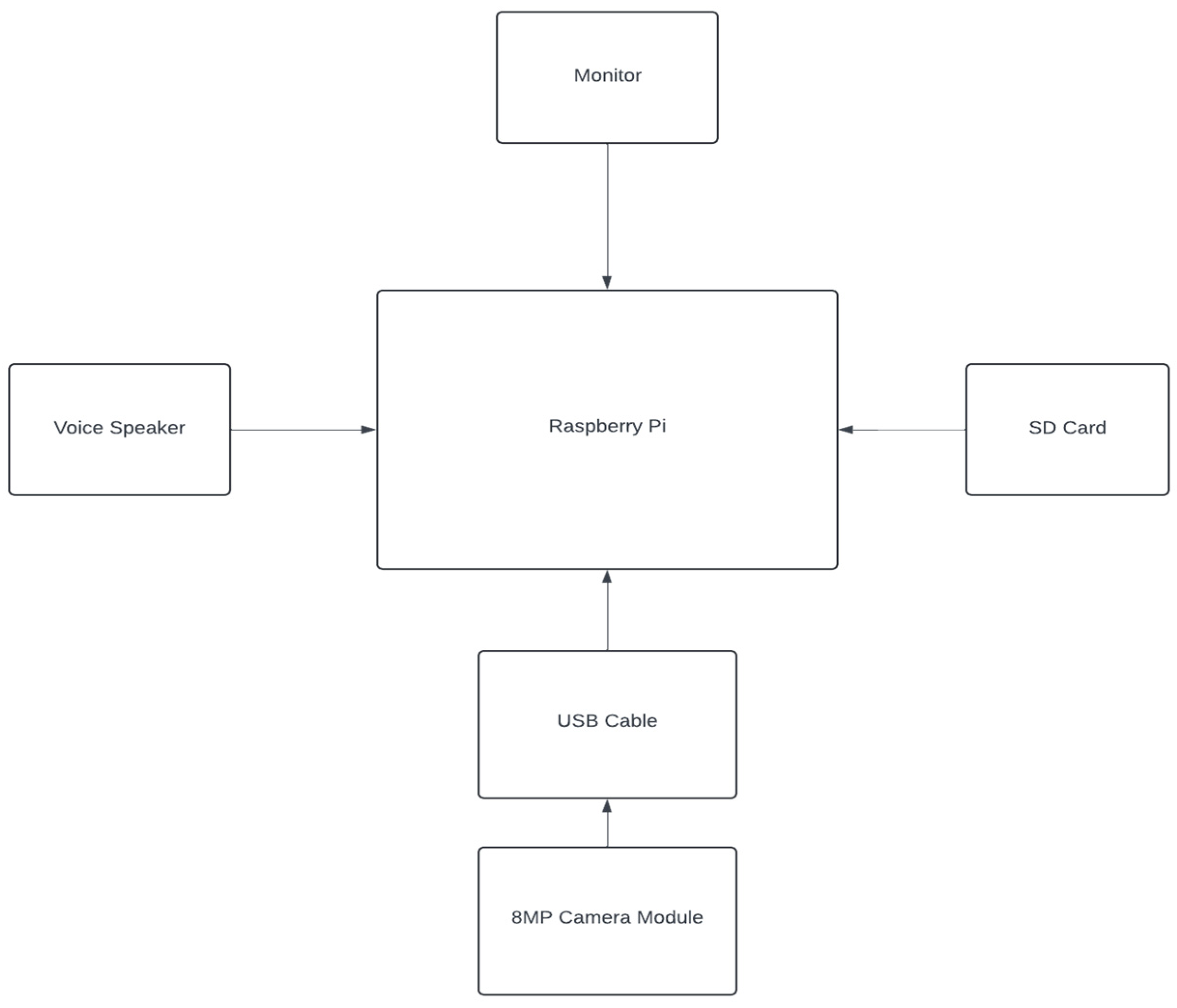
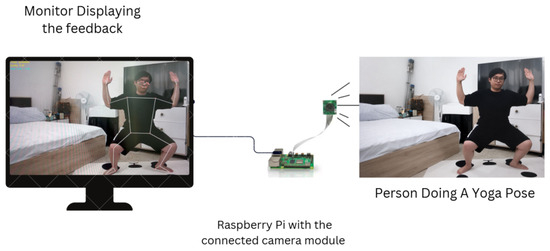
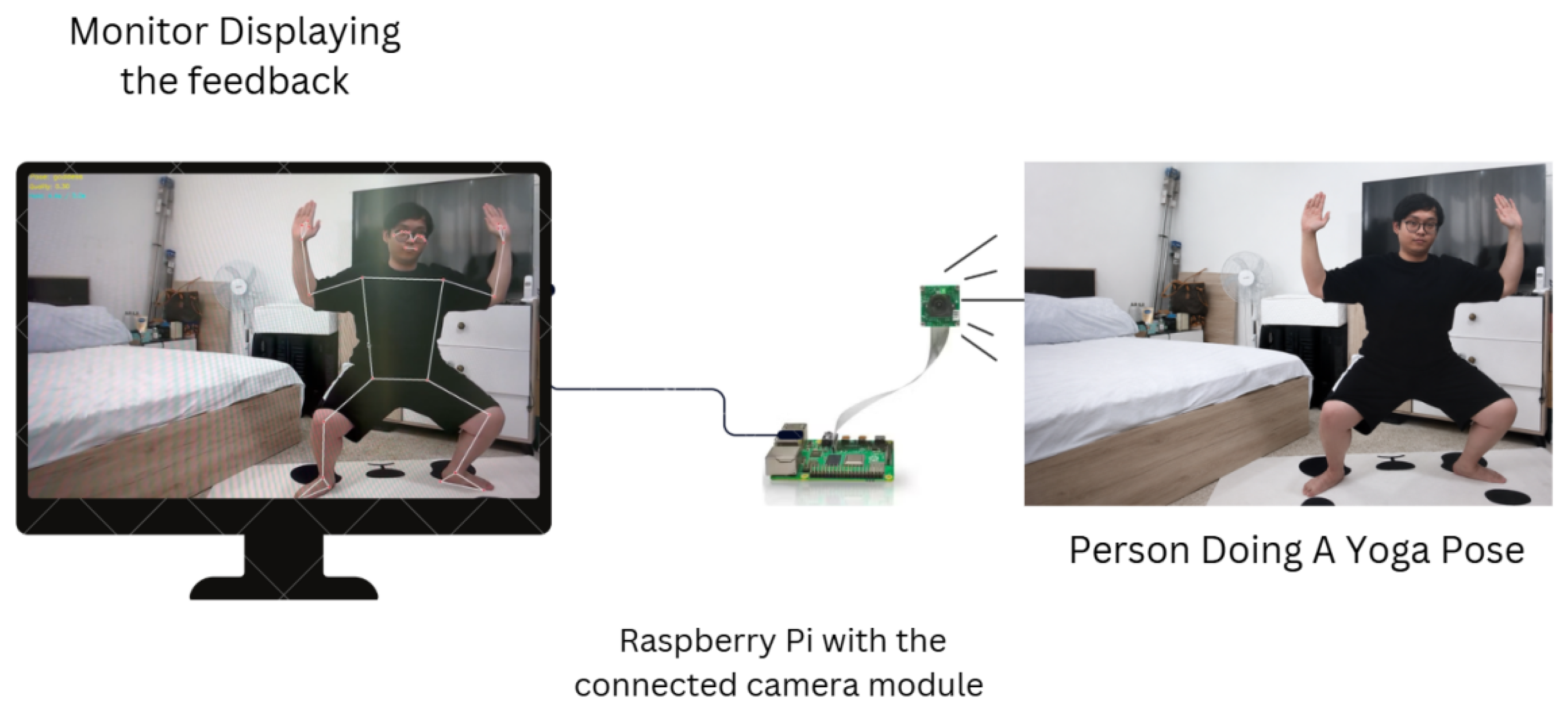
The system’s component is the Raspberry Pi 5 Model B. An 8 megapixel Raspberry Pi camera module is adopted to capture images. A connected monitor displays posture feedback through a high-definition multimedia interface, while a speaker provides auditory feedback (Figure 2). The system is compact, portable, and efficient for real-time processing.
Figure 2.
Hardware of the developed system.
OpenCV is used for image capture and preprocessing, MediaPipe extracts skeletal landmarks, and TensorFlow’s CNN performs classification. Python 3.13.13 then integrates these components for smooth data flow and feedback delivery (Figure 3).
Figure 3.
Workflow of the software of the system.
The system was tested in a controlled environment. The camera was placed two meters away at a slightly elevated angle to capture the full body. Figure 4 shows the experimental setup.
Figure 4.
Experimental setup for yoga posture classification.
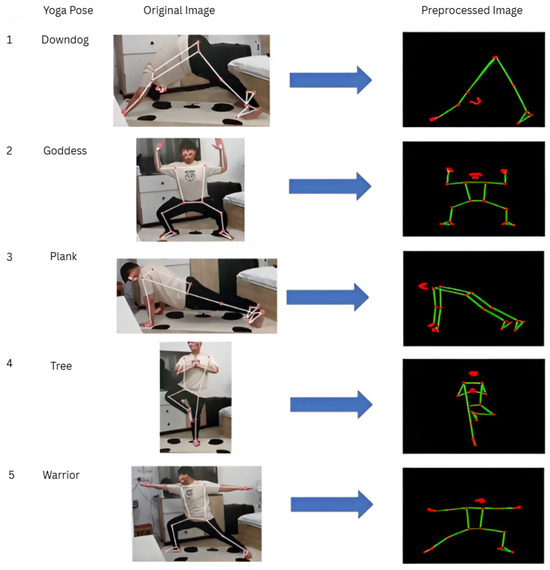
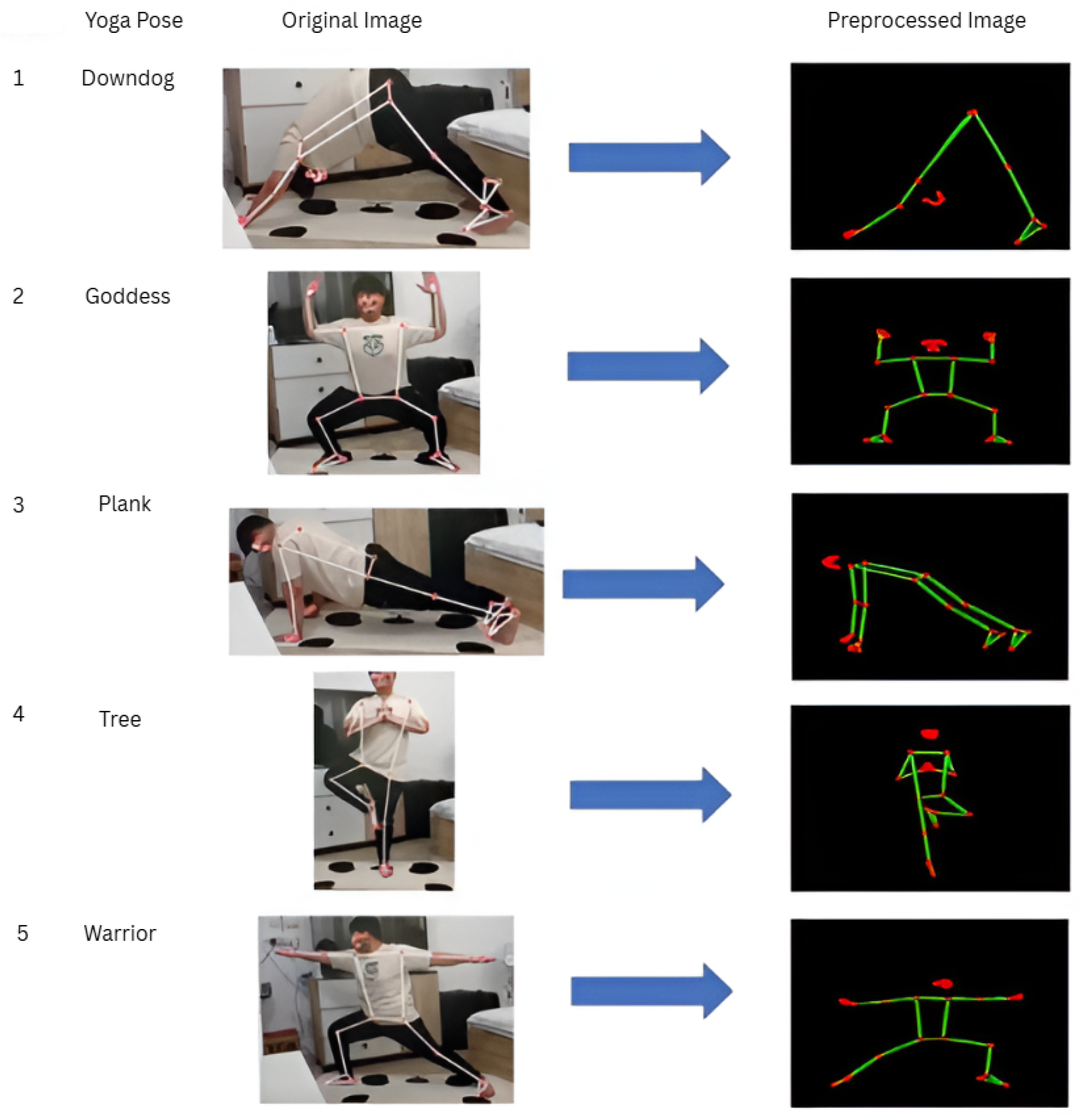
Figure 5 presents the five yoga poses included in the dataset: downward-facing dog, tree, warrior, plank, and goddess.
Figure 5.
Sample yoga poses recognized by the system.
Table 1 summarizes the data collected for five yoga poses, with 30 samples per pose used in training and testing.
Table 1.
Dataset of yoga poses used in the system.
3. Results and Discussion
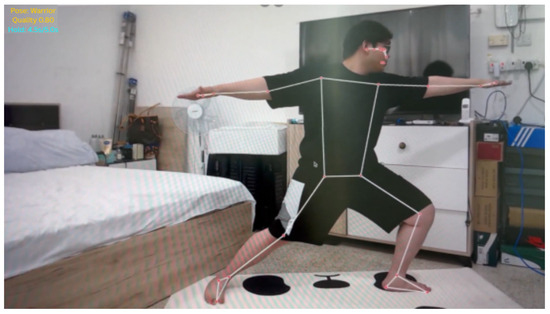
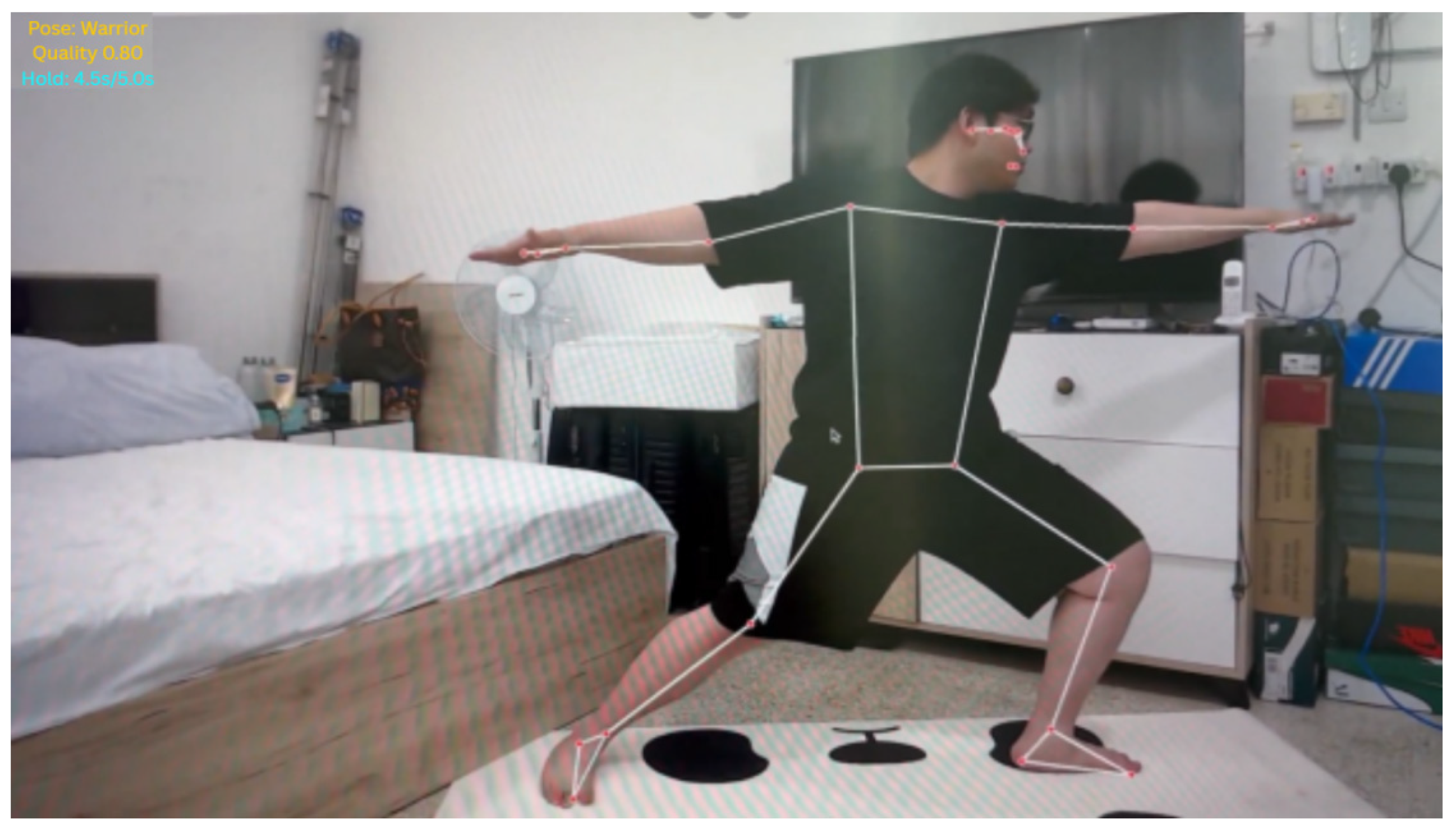
The system achieved robust classification results. Figure 6 shows the sample output of the developed system identifying the warrior pose.
Figure 6.
Sample output of the system detecting warrior pose.
Table 2.
Confusion matrix for yoga pose classification.
Table 3.
Predicted yoga posture.
Out of 150 total samples, 140 were correctly predicted, achieving 93.33% accuracy. These results indicate that the CNN model, combined with MediaPipe landmark extraction, was able to effectively distinguish between the selected yoga postures under the given test conditions.
The accuracy of the model was computed using the confusion matrix results using Equation (1). The total correct classifications were 140 out of 150, resulting in an overall model accuracy of 93.33%.
An analysis of misclassifications reveals that errors were minimal and primarily occurred between poses with similar structural characteristics. For example, warrior was occasionally misclassified as goddess or plank, likely due to similarities in lower-body stance and limb positioning. Similarly, plank and downward-facing dog showed minor confusion, which may be attributed to transitional frames or slight variations in hip alignment during data capture. Despite these minor overlaps, the model maintained high per-class consistency, with no class dropping below 90% accuracy. These findings demonstrate that landmark-based feature extraction combined with CNN classification is effective for real-time embedded pose recognition. The results support the feasibility of deploying such systems in practical applications such as home-based yoga guidance, rehabilitation monitoring, and fitness training, where reliable but lightweight models are required.
4. Conclusions and Recommendations
This study set out to create a real-time yoga posture feedback system using machine vision on an affordable embedded device. The system ran on a Raspberry Pi 5 and used MediaPipe for detecting body landmarks, OpenCV for image processing, and a Convolutional Neural Network (CNN) to classify poses. The model used landmark coordinates as input, and rule-based evaluation provided real-time corrective and motivational feedback. Tests showed the system could accurately recognize five common yoga poses, reaching an overall accuracy of 93.33%. This result shows that lightweight deep learning models can work well for real-time pose recognition on edge devices.
These results show that embedded systems could make yoga training, physical therapy, rehabilitation, and sports monitoring more accessible, especially at home or remotely. In the future, the pose dataset should include more complex and dynamic movements. The system should also be improved to work better with different body types and environments, use higher-resolution or depth sensors, support smoother pose transitions, and offer a mobile app to help users track their progress over time.
Author Contributions
Conceptualization, S.P.S.E. and R.A.M.M.; methodology, S.P.S.E.; software, S.P.S.E.; validation, S.P.S.E., R.A.M.M. and M.V.C.C.; investigation, S.P.S.E. and R.A.M.M.; resources, S.P.S.E.; data curation, S.P.S.E., R.A.M.M. and M.V.C.C.; writing—original draft preparation, S.P.S.E. and R.A.M.M.; writing—review and editing, S.P.S.E. and R.A.M.M.; visualization, S.P.S.E.; supervision, M.V.C.C. All authors have read and agreed to the published version of the manuscript.
Funding
This research received no external funding.
Institutional Review Board Statement
Not Applicable.
Informed Consent Statement
Informed consent was obtained from all subjects involved in the study.
Data Availability Statement
The data used in this study are publicly available from the original sources cited in the references.
Conflicts of Interest
The authors declare no conflict of interest.
Abbreviations
The following abbreviations are used in this manuscript:
| CNN | Convolutional Neural Network |
| HDMI | High-Definition Multimedia Interface |
| OpenCV | Open Source Computer Vision Library |
References
- Shotton, J.; Sharp, T.; Kipman, A.; Fitzgibbon, A.W.; Finocchio, M.; Blake, A.; Cook, M.; Moore, R. Real-time human pose recognition in parts from single depth images. Commun. ACM 2013, 56, 116–124. [Google Scholar] [CrossRef] [Scilit]
- Mehta, D.; Sotnychenko, O.; Mueller, F.; Theobalt, C. Single-shot multi-person 3D body pose estimation from monocular RGB input. In Proceedings of the IEEE Conference on Computer Vision and Pattern Recognition (CVPR), Honolulu, HI, USA, 21–26 July 2017; pp. 6959–6968. [Google Scholar]
- Pavlakos, G.; Zhou, X.; Derpanis, K.G.; Kumar, V. Coarse-to-Fine Volumetric Prediction for Single-Image 3D Human Pose. In Proceedings of the 2017 IEEE Conference on Computer Vision and Pattern Recognition (CVPR), Honolulu, HI, USA, 21–26 July 2017. [Google Scholar] [CrossRef] [Scilit]
- Chaudhari, A.; Dalvi, O.; Ramade, O.; Ambawade, D.D. Yog-Guru: Real-Time Yoga Pose Correction System Using Deep Learning Methods. In Proceedings of the 2021 International Conference on Communication information and Computing Technology (ICCICT), Mumbai, India, 25–27 June 2021; pp. 1–6. [Google Scholar] [CrossRef] [Scilit]
- Shum, H.P.H.; Ho, E.S.L.; Jiang, Y.; Takagi, S. Real-time posture reconstruction for Microsoft Kinect. IEEE Trans. Cybern. 2013, 43, 1357–1369. [Google Scholar] [CrossRef] [Scilit] [PubMed]
- Wu, Y.; Lin, Q.; Yang, M.; Liu, J.; Tian, J.; Kapil, D.P.; Vanderbloemen, L. A computer vision-based yoga pose grading approach using contrastive skeleton feature representations. Healthcare 2022, 10, 36. [Google Scholar] [PubMed]
- Baptista, R.; Antunes, M.; El Rahman Shabayek, A.; Aouada, D.; Ottersten, B. Flexible feedback system for posture monitoring and correction. In Proceedings of the Fourth International Conference on Image Information Processing, Shimla, India, 9–11 December 2017; pp. 1–6. [Google Scholar]
- Balakrishnan, G.; Zhao, A.; Dalca, A.V.; Durand, F.; Guttag, J.V. Synthesizing Images of Humans in Unseen Poses. In Proceedings of the 2018 IEEE/CVF Conference on Computer Vision and Pattern Recognition, Salt Lake City, UT, USA, 18–23 June 2018; pp. 8340–8348. [Google Scholar] [CrossRef] [Scilit]
- Ramalingam, M.; Puviarasi, R.; Shern, Q.C.; Chinnavan, E. Designing IoT based Posture Monitoring System. In Proceedings of the 2021 6th International Conference on Inventive Computation Technologies (ICICT), Coimbatore, India, 20–22 January 2021. [Google Scholar] [CrossRef] [Scilit]
- Agrawal, Y.; Shah, Y.; Sharma, A. Implementation of Machine Learning Technique for Identification of Yoga Poses. In Proceedings of the 2020 IEEE 9th International Conference on Communication Systems and Network Technologies (CSNT), Gwalior, India, 10–12 April 2020; pp. 40–43. [Google Scholar] [CrossRef] [Scilit]
- Ronquillo, D.N.T.; Selda, J.M.S.; Caya, M.V.C. Classification of onion species in the Philippines using a convolutional neural network (CNN). In Proceedings of the 2023 IEEE 15th International Conference on Humanoid, Nanotechnology, Information Technology, Communication and Control, Environment, and Management (HNICEM), Coron, Philippines, 19–23 November 2023; pp. 1–6. [Google Scholar] [CrossRef] [Scilit]
- Ramos, R.R.T.; Samonte, K.R.B.; Manlises, C.O. Medicine Authentication Based on Image Processing Using Convolutional Neural Networks. In Proceedings of the 2024 16th International Conference on Computer and Automation Engineering (ICCAE), Melbourne, Australia, 14–16 March 2024; pp. 278–282. [Google Scholar] [CrossRef] [Scilit]
- Bruces, V.J.B.; Padilla, D.A.; Jandusay, E.A. Two-Cell Contractions of Filipino Braille Recognition Using Extreme Learning Machine. In Proceedings of the 2021 IEEE 13th International Conference on Humanoid, Nanotechnology, Information Technology, Communication and Control, Environment, and Management (HNICEM), Manila, Philippines, 28–30 November 2021; pp. 1–6. [Google Scholar] [CrossRef] [Scilit]
- Manzano, J.K.G.; Ea, J.A.P.; Caya, M.V.C. YOLOv5-Based Image Processing for Pineapple Rind Defect Detection. In Proceedings of the 2024 IEEE International Conference on Artificial Intelligence in Engineering and Technology (IICAIET), Kota Kinabalu, Malaysia, 26–28 August 2024; pp. 54–59. [Google Scholar] [CrossRef] [Scilit]
- Sutayco, M.J.Y.; Caya, M.V.C. Identification of Medicinal Mushrooms using Computer Vision and Convolutional Neural Network. In Proceedings of the 2022 6th International Conference on Electrical, Telecommunication and Computer Engineering (ELTICOM), Medan, Indonesia, 22–23 November 2022; pp. 167–171. [Google Scholar] [CrossRef] [Scilit]
- Manlises, C.O.; Padilla, D.A.; Santos, J.B.; Adviento, P.A. Expiration Identification of Canned Goods using Convolutional Neural Network. In Proceedings of the 2024 7th International Conference on Information and Computer Technologies (ICICT), Honolulu, HI, USA, 15–17 March 2024; pp. 173–177. [Google Scholar] [CrossRef] [Scilit]
- Hortinela, C.C.; Tupas, K.J.R. Classification of Cacao Beans Based on their External Physical Features Using Convolutional Neural Network. In Proceedings of the 2022 IEEE Region 10 Symposium (TENSYMP), Mumbai, India, 1–3 July 2022; pp. 1–5. [Google Scholar] [CrossRef] [Scilit]

Disclaimer/Publisher’s Note: The statements, opinions and data contained in all publications are solely those of the individual author(s) and contributor(s) and not of MDPI and/or the editor(s). MDPI and/or the editor(s) disclaim responsibility for any injury to people or property resulting from any ideas, methods, instructions or products referred to in the content. |
© 2026 by the authors. Licensee MDPI, Basel, Switzerland. This article is an open access article distributed under the terms and conditions of the Creative Commons Attribution (CC BY) license.