Proceeding Paper

Automated Parametric Finite-Element-Model Generation and Optimization of a Composite Aircraft Wing †
Department of Aerospace Engineering, Universidad Carlos III de Madrid, Avd. de la Universidad, 30 Leganés, 28911 Madrid, Spain
*
Author to whom correspondence should be addressed.
Presented at the 15th EASN International Conference, Madrid, Spain, 14–17 October 2025.
Eng. Proc. 2026, 133(1), 114; https://doi.org/10.3390/engproc2026133114

Published: 9 May 2026

Abstract

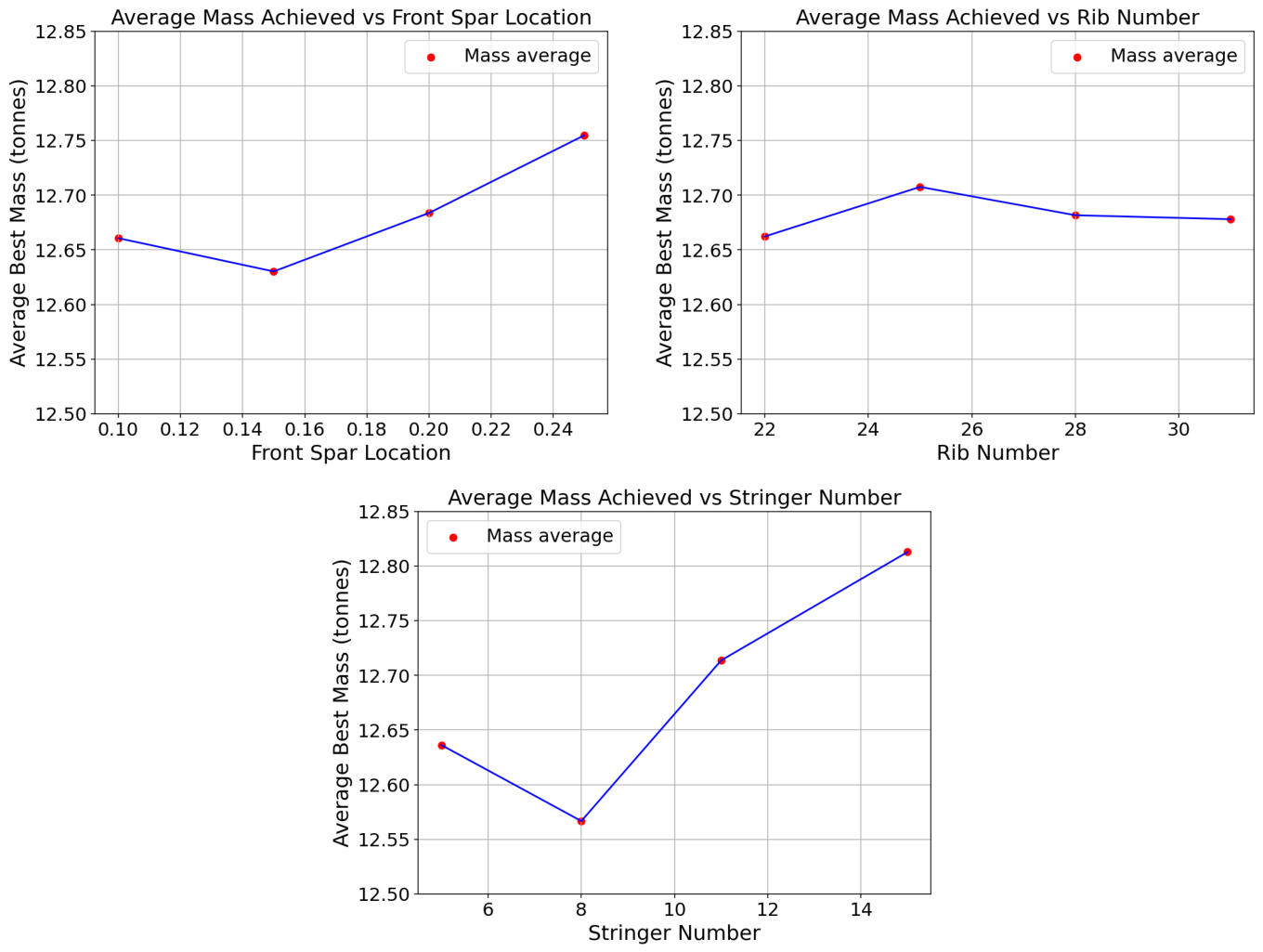
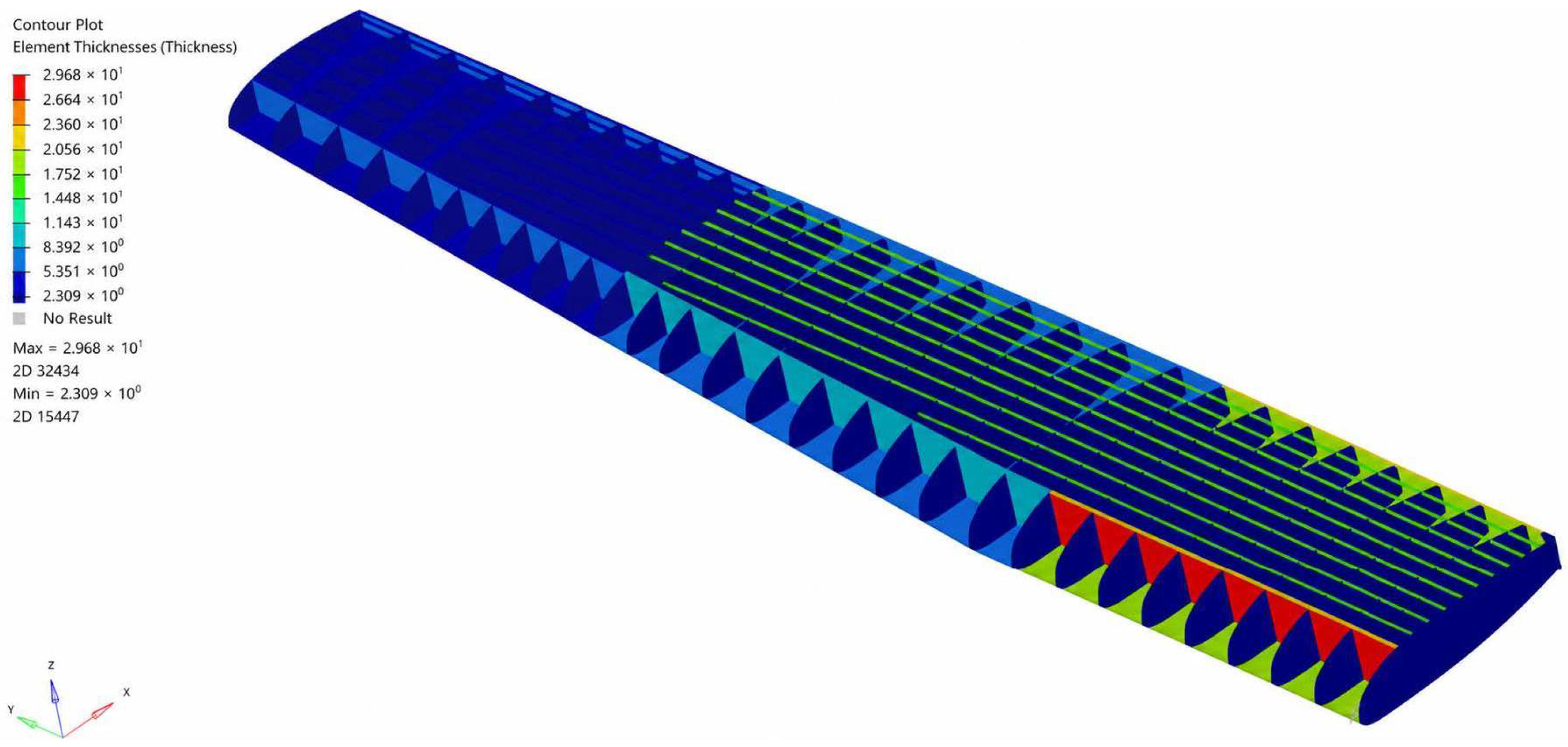
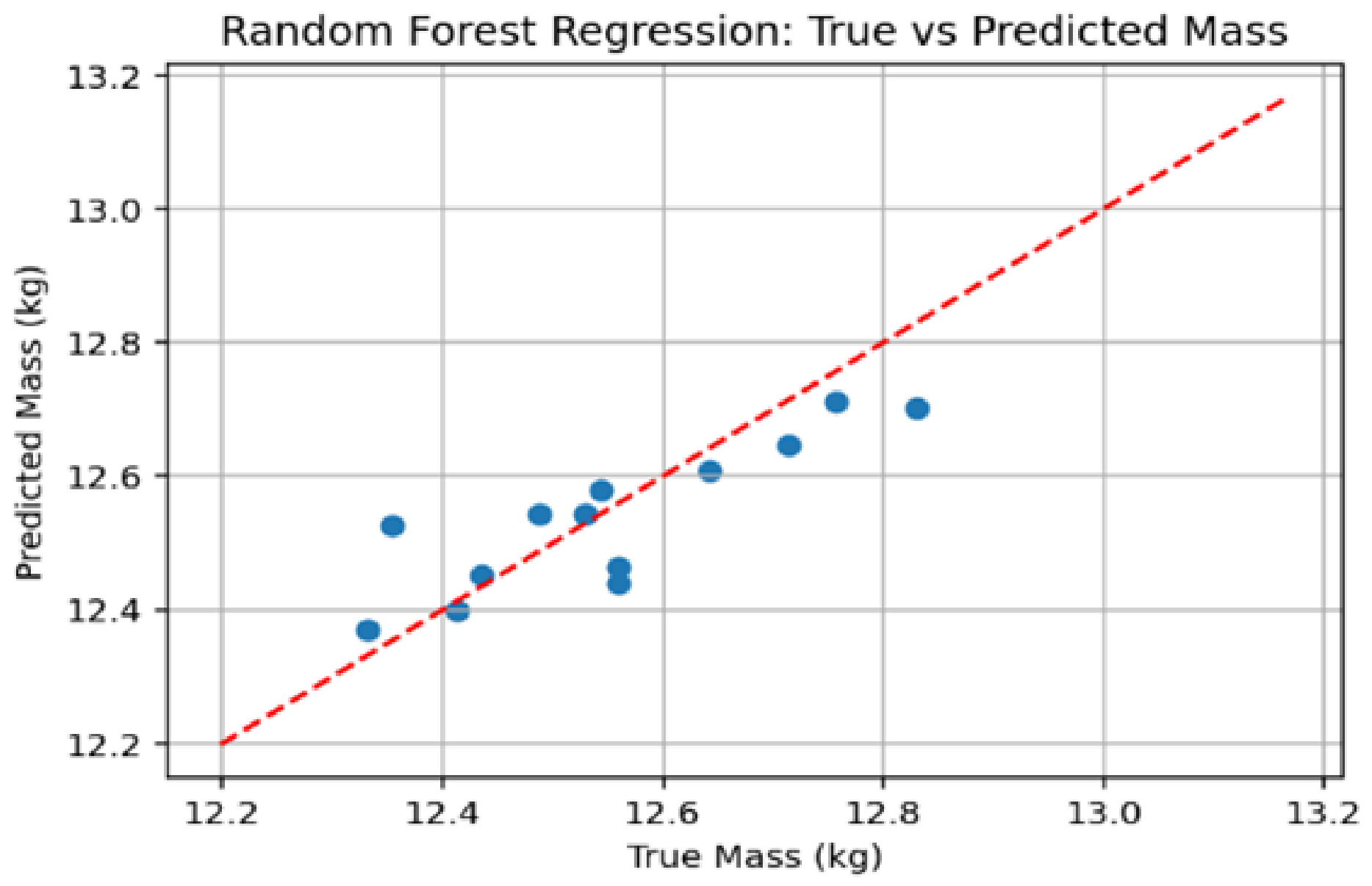
An automated framework for the parametric FE model generation and sizing of composite aircraft wings suitable for early-stage studies is presented. Implemented in Python and HyperMesh TCL, the tool controls both outer-geometry parameters, such as span, taper ratio, and twist, and internal-structural layout parameters, such as spar locations, rib spacing, and stringer layouts, and generates analysis-ready 2D composite GFEM models with material assignment and layups for size optimization. To demonstrate the workflow, a Design of Experiments (DoE) is performed on a representative transport wing internal structural layout, while keeping the outer geometry fixed. For each DoE point, OptiStruct performs gradient-based composite-size optimization to minimize structural mass, subject to composite strength (max strain), buckling, and metallic no-yielding constraints. A staged multi-run strategy is implemented to mitigate the effects of local minima. DoE results show a strong correlation and a non-monotonic effect of stringer number, an increase in mass as the front spar moves aft, and a comparatively weaker effect of the number of aluminum ribs. As a preliminary baseline, a Random Forest surrogate trained on the DoE predicts the wing structural mass with reasonable accuracy (RMSE =0.081), motivating the future implementation of Gaussian process models with uncertainty modeling. The framework accelerates early-stage structural design exploration and is amenable to surrogate-based optimization.
Keywords: parametric modeling; composite wing; structural optimization; Design of Experiments (DoE); surrogate modeling parametric modeling; composite wing; structural optimization; Design of Experiments (DoE); surrogate modeling