


Abstract
In recent years, intelligent control of complex thermodynamic systems has gained increasing attention due to global demands for higher energy efficiency and reduced environmental impact in industrial settings. This study explores the integration of quantum control methodologies-grounded in established principles of quantum mechanics—into the automation of thermal processes in power plant operations. Specifically, it investigates a hybrid quantum-fuzzy control system for managing steam heating processes, a critical subsystem in thermal power generation. Unlike conventional control strategies that often struggle with nonlinearity, time delays, and parameter uncertainty, the proposed method incorporates quantum-inspired optimization algorithms to enhance adaptability and robustness. The quantum component, based on recognized models of coherent control and quantum interference, is utilized to refine the inference mechanisms within the fuzzy logic framework, allowing more precise handling of state transitions in multivariable environments. A simulation model was constructed using validated physical parameters of a pilot-scale steam heating unit, and the methodology was tested against baseline scenarios with conventional proportional-integral-derivative (PID) control. Experimental protocols and statistical analysis confirmed measurable improvements: up to 25% reduction in fuel usage under specific operational conditions, with an average of 1 to 2% improvement in energy efficiency. The results suggest that quantum-enhanced intelligent control offers a feasible pathway for bridging the gap between quantum theoretical models and macroscopic thermal systems, contributing to the development of more energy-resilient industrial automation solutions.
1. Introduction
The development of high-efficiency control systems for thermal power plants, as well as advanced models and algorithms for synthesizing intelligent control strategies capable of responding to diverse disturbances, is of critical importance. Due to uncertainties in input parameters, the complexity of thermodynamic processes, and the inherent nonlinearity of system dynamics, it becomes essential to employ state-of-the-art intelligent technologies to ensure reliable and accurate control of thermal power plant process unit [1].
Although classical control methods used in industry remain effective for linear or moderately complex systems, they exhibit significant limitations when applied to nonlinear, highly dynamic, or strongly coupled technological processes. In addition, the increasing volume and dimensionality of operational data make real-time optimization substantially more difficult. The sequential nature of traditional computing architectures further constrains their capability to process multidimensional information with the required speed and accuracy. For these reasons, quantum-inspired approaches have been proposed as a promising direction for developing advanced models and algorithms capable of synthesizing high-performance control systems under such challenging conditions [2].
Quantum methodology represents one of the most advanced paradigms in modern computational science, aimed at enhancing the performance of intelligent control and optimization systems. Unlike classical computational units constrained by binary logic, quantum-inspired models exploit concepts such as superposition and entanglement to enable parallel evaluation of multiple system states [3,4]. In thermal power plants, one of the most critical and energy-intensive technological units is the steam superheating process, which directly influences turbine efficiency, operational reliability, and overall plant performance. Precise regulation of the outlet steam temperature is essential to prevent turbine blade erosion, reduce moisture formation, and ensure stable electricity generation [5,6].
In industrial practice, superheated steam is typically required at temperatures of approximately 450 °C to achieve optimal thermodynamic efficiency in turbine stages. However, the steam superheating process is characterized by strong nonlinearities, time delays, and tight coupling between fuel flow rate, combustion conditions, flue-gas temperature, and steam parameters, making accurate temperature control particularly challenging under variable load conditions.
Traditional control approaches often struggle to maintain stable temperature regulation in such environments, especially during transient operating regimes and rapid load changes. These limitations highlight the need for intelligent control strategies capable of real-time adaptation and robust performance under uncertainty [7].
The primary objective of this research is to design and evaluate a quantum-inspired fuzzy control system for optimizing the steam superheating process in thermal power plants. The proposed approach integrates a quantum-inspired decision-making layer with a fuzzy inference mechanism to enhance system adaptability, thermal stability, and overall energy efficiency.
Quantum-inspired optimization mechanisms are employed to evaluate alternative control actions in parallel, while the fuzzy inference engine formulates control rules based on expert knowledge. The effectiveness of the proposed hybrid approach is investigated through computational experiments and simulations [8]. Particular attention is given to performance comparison with a properly tuned conventional PID controller, providing a fair and scientifically valid benchmark for assessing improvements in thermal stability, transient response, and energy efficiency. Preliminary results indicate that the proposed control system improves thermal stability, enhances energy efficiency, and reduces operational costs, demonstrating strong potential for industrial application in modern thermal power plants [9].
2. Case Study Description and Operating Conditions
The case study considered in this research focuses on a steam superheater unit of a conventional thermal power plant, which is responsible for increasing the temperature of saturated steam generated in the boiler to a superheated state prior to its admission to the turbine. The superheater plays a key role in determining the thermodynamic efficiency of the power cycle and the operational reliability of turbine components. In the investigated system, the nominal outlet steam temperature is maintained at 450 °C, which corresponds to optimal turbine operating conditions. This temperature level ensures high expansion efficiency, minimizes moisture content at the turbine exhaust, and reduces thermal stresses on turbine blades. Deviations from this value may lead to efficiency losses and accelerated material degradation. The steam demand profile of the plant is characterized by frequent load variations, resulting from changes in electricity consumption and grid requirements. These variations cause dynamic fluctuations in fuel flow rate, combustion gas temperature, and heat-transfer intensity within the superheater, introducing significant disturbances into the temperature control loop. The operating conditions of the steam superheating process are inherently nonlinear and time-varying, with strong coupling between multiple process variables, including fuel input rate, air–fuel ratio, flue-gas temperature, steam mass flow rate, and outlet steam temperature. In addition, time delays associated with combustion dynamics and heat transfer further complicate accurate temperature regulation. Such characteristics make the steam superheater a challenging control object for conventional PID controllers with fixed parameters, particularly under transient operating regimes. Therefore, this industrial system provides a realistic and representative test environment for evaluating the effectiveness of advanced intelligent control strategies. Within this context, the proposed quantum-inspired fuzzy control system is applied to the steam superheating process, and its performance is directly compared with that of a properly tuned conventional PID controller under identical operating conditions. This comparison enables objective assessment of improvements in thermal stability, transient response, and energy efficiency.
3. Methodology
Quantum computing methods are fundamentally based on the principle of quantum superposition. In classical computation, a binary bit can assume only one discrete value at any given moment-either 0 or 1. In contrast, a quantum bit (qubit) can exist in a coherent combination of both basis states simultaneously, a phenomenon known as superposition.
This intrinsic property enables quantum systems to process information in parallel, as a single qubit in a superposed state encodes multiple computational outcomes at once. When extended to multi-qubit architectures, the computational capacity increases exponentially [10]. Consequently, superposition serves as a fundamental source of quantum computational advantage, allowing information to be stored and manipulated in ways that are unattainable for classical systems. This principle forms the basis for quantum parallelism and supports entanglement-driven computational mechanisms. In this study, quantum concepts are employed in a quantum-inspired manner, meaning that the proposed control framework does not rely on physical quantum hardware but instead utilizes mathematical principles of quantum computation to enhance optimization and decision-making efficiency.
Formally, the general state of a qubit is expressed as a linear superposition of the computational basis states and
where and are a complex numbers.
When the state of a quantum system is measured, a qubit described by the wave function collapses into one of the computational basis states. The probability of obtaining the outcome is given by , whereas the probability of measuring equals . These probabilities satisfy the normalization condition [11]:
This relationship ensures the physical validity of the quantum state.
In a quantum control framework, these amplitudes encode the thermal uncertainty and energy-level probabilities of the process:
Within the context of steam superheating control, the probability amplitudes and are interpreted as representing the uncertainty distribution of thermal states, including fluctuations in steam temperature and heat-transfer intensity [12].
The state of an n-qubit quantum system can be expressed as:
Due to quantum superposition, a quantum processor can represent and evaluate a large number of computational states simultaneously. When applied to thermodynamic systems such as steam superheaters, this property is particularly valuable because the underlying processes are governed by nonlinear, tightly coupled, and time-varying differential equations.
The combustion-state dynamics are modeled as:
where Ts denotes the superheated steam temperature, G is the mass flow rate of combustion gases, Tg is the gas temperature, Tamb is the ambient temperature, and Qf represents the effective heat input generated by fuel combustion.
The combustion dynamics are modeled as:
where C denotes the combustion-state variable and f(⋅) is a nonlinear coupling function.
Together, these coupled differential equations represent a strongly nonlinear and time-varying plant model, for which traditional control strategies struggle to provide stable and optimal performance. The quantum superposition-based computational framework introduced in this study enables simultaneous evaluation of multiple control trajectories, offering enhanced capability to navigate such complex thermodynamic dynamics [13,14]. Equations (5) and (6) describe a strongly nonlinear and time-varying plant model, for which conventional PID controllers with fixed parameters often fail to provide stable and optimal performance under variable operating conditions.
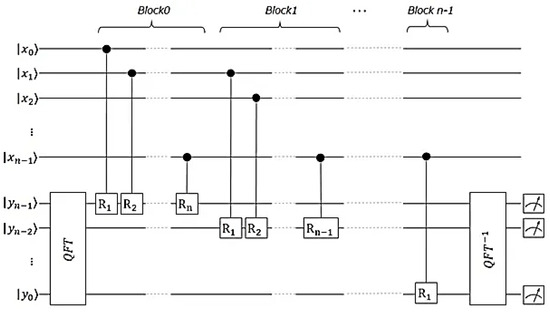
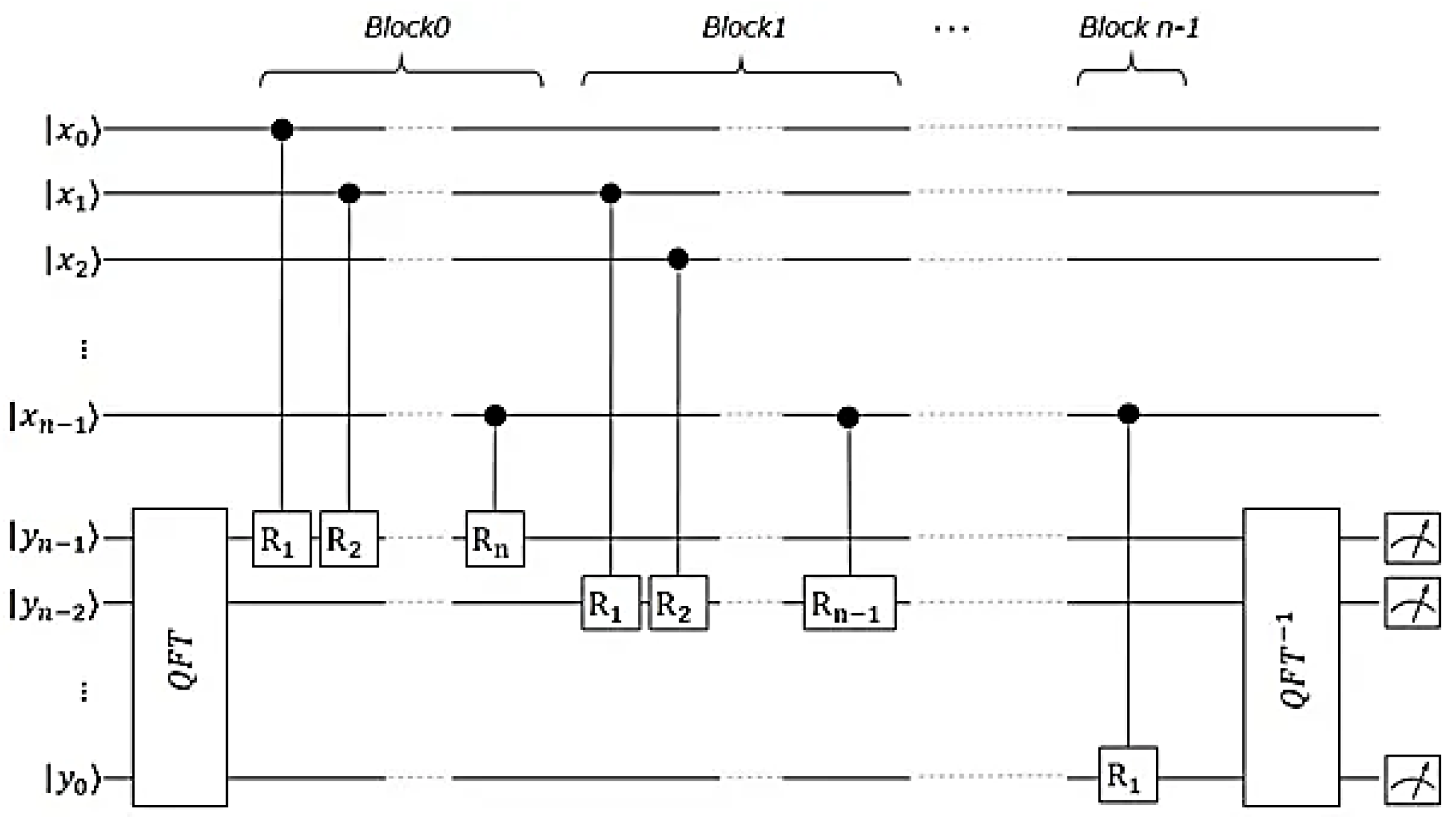
The nonlinear plant model defined by Equations (5) and (6) is embedded into a Quantum Approximate Optimization Algorithm (QAOA)-inspired control framework, where the control objective is formulated as minimization of steam temperature deviation and energy losses [15]. These coupled dynamics are incorporated into the QAOA-based control framework shown in Figure 1. The plant model forms the basis of the problem-unitary operator, guiding the quantum circuit toward control actions that reduce temperature deviation and improve heating efficiency. Mixer layers explore alternative control trajectories through quantum superposition, while a classical optimizer updates circuit parameters iteratively.
Figure 1.
Quantum computational sequence for optimizing control decisions in the steam-heating process.
The quantum circuit encodes thermal state information into quantum registers, generates candidate control actions via controlled rotations and entangling operations, and evaluates them in parallel. The measurement outcomes are then used to update the control parameters, enabling the controller to identify more efficient and stable heating strategies under nonlinear and time-varying operating conditions.
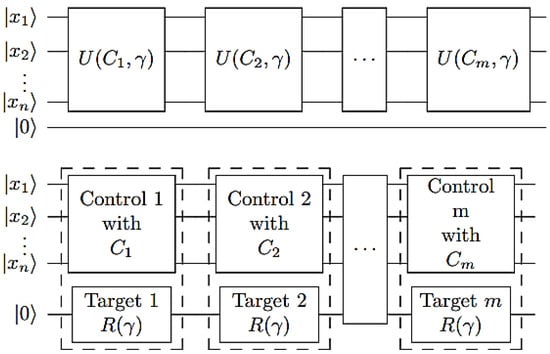
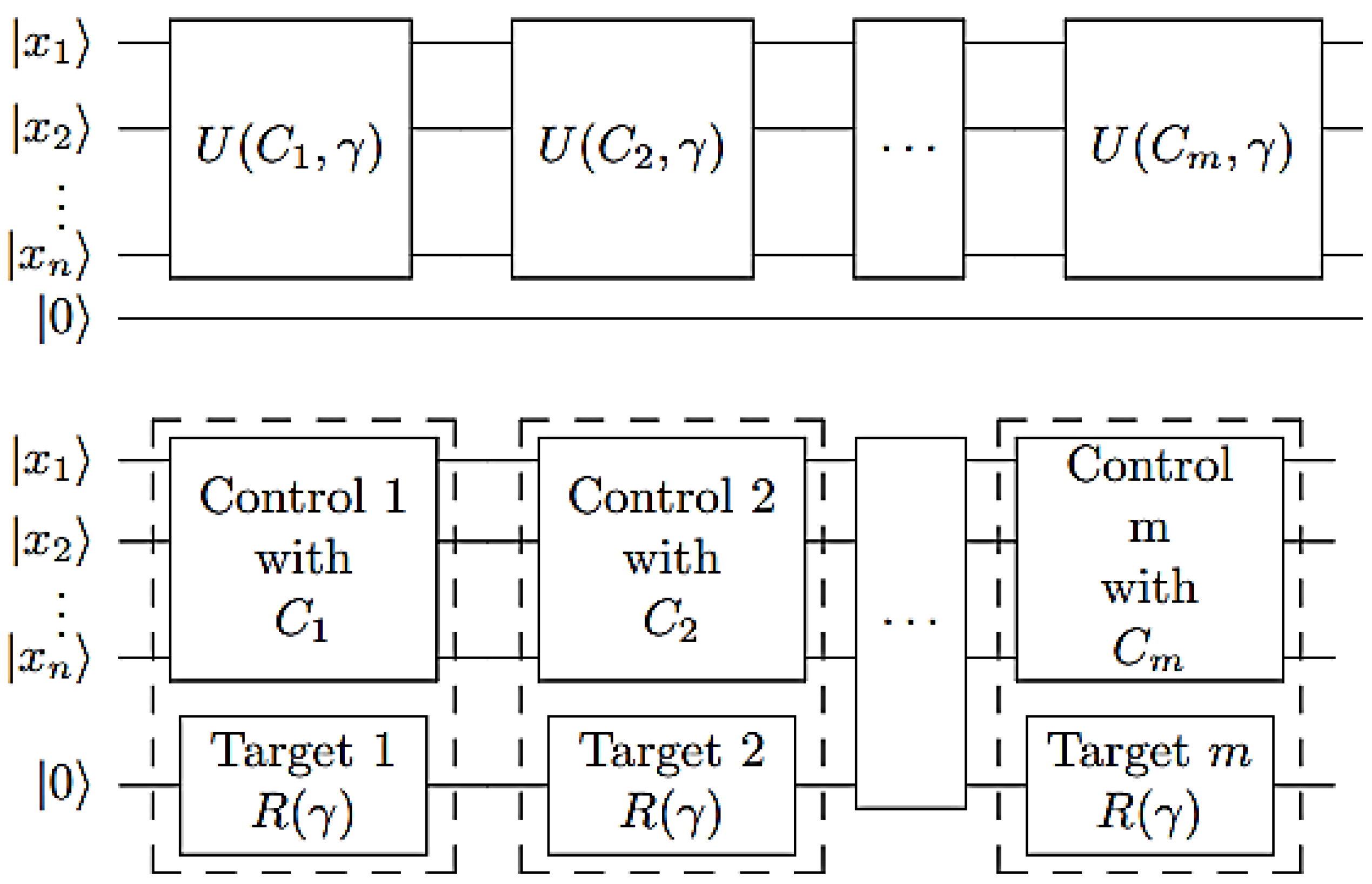
Quantum superposition enables simultaneous evaluation of multiple control trajectories, while entanglement supports coordinated decisions across thermally coupled variables [16]. This hybrid mechanism enhances adaptability to nonlinear, time-varying conditions and significantly improves stability, precision, and overall energy efficiency of the superheating process. As a result, the quantum-fuzzy controller dynamically adjusts the steam temperature and pressure parameters, achieving stable steam heating performance, faster transient response, and reduced energy losses compared to classical fuzzy or PID-based control systems. By merging the robustness of classical feedback control with the exploratory optimization capability of quantum computation, the system achieves faster response to load disturbances, improved thermal stability, and reduced overshoot-demonstrating superior performance in nonlinear thermal environments such as steam superheaters [17]. The quantum circuit structure shown in Figure 2 represents a QAOA-inspired control framework applied to the steam heating system.
Figure 2.
Functional structure of a quantum controller for controlling the synthesis of the steam heating process.
Each operator U(Ci,γ) encodes a specific cost component Ci, such as deviations in outlet steam temperature, fuel flow rate, air–fuel ratio, and feedwater mass flow.
The lower schematic illustrates the implementation of these cost functions through a series of controlled-rotation blocks, where control qubits xi represent normalized process variables, and target qubits perform quantum rotations R(γ) that yield optimized actuator adjustments. In this configuration, the superposition of all control-target interactions forms a quantum state ψ(γ) that minimizes the global energy function of the steam heating system. The quantum control module dynamically tunes the parameters of a conventional PID controller and auxiliary actuators (fuel valve, air fan, and feedwater pump), ensuring fair comparison and enhanced thermal stability under variable operating conditions.
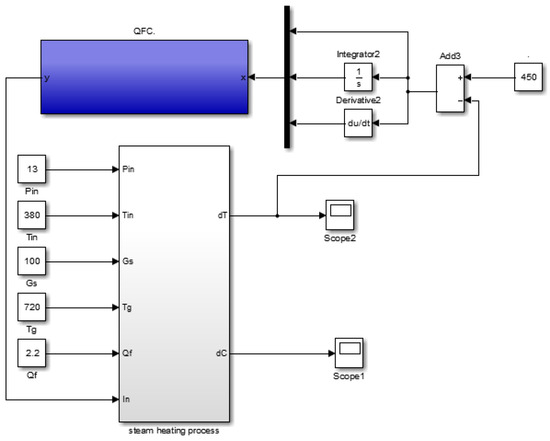
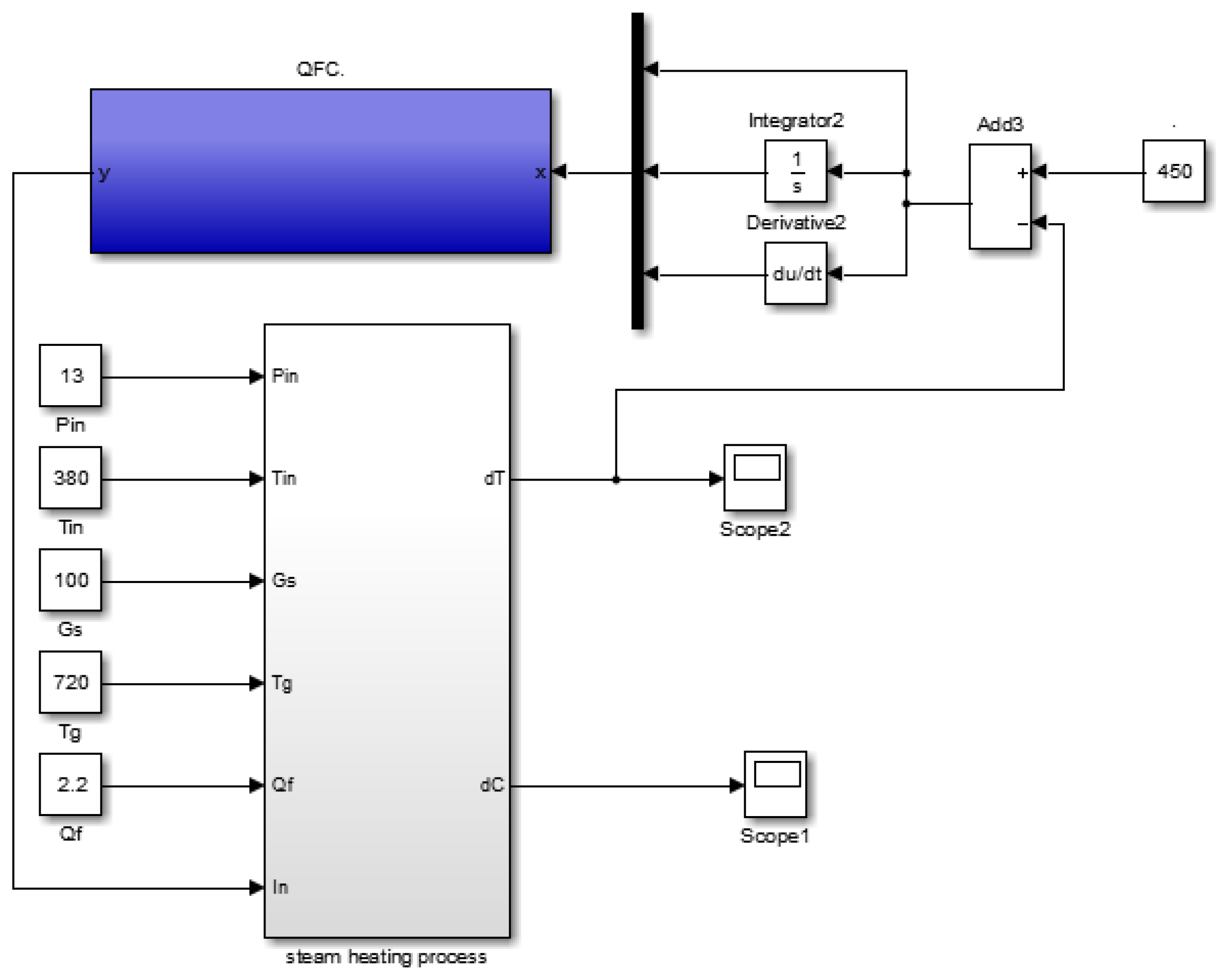
In the subsequent stage, the control system components are integrated into the dynamic model of the steam heating process. The integrated MATLAB/Simulink R2022a model of the hybrid control framework is shown in Figure 3. This scheme combines the previously derived mathematical model of the steam heating process with the hybrid control architecture, in which the controller employs quantum computing algorithms to improve adaptability, optimization precision, and thermal stability under varying operating conditions.
Figure 3.
Simulation model of a quantum controller for controlling the synthesis of the steam heating process.
4. Result and Discussion
The performance of the proposed quantum-inspired fuzzy control system was evaluated through numerical simulations conducted in the MATLAB/Simulink R2022a environment. The simulations were based on the nonlinear steam superheating model described in Section 2 and were carried out under variable operating conditions representative of real thermal power plant operation, including load disturbances and parameter variations.
All simulation scenarios were performed under identical operating conditions for both the proposed controller and the conventional PID controller, ensuring a fair and objective comparison of control performance.
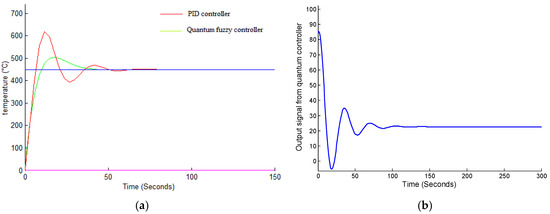
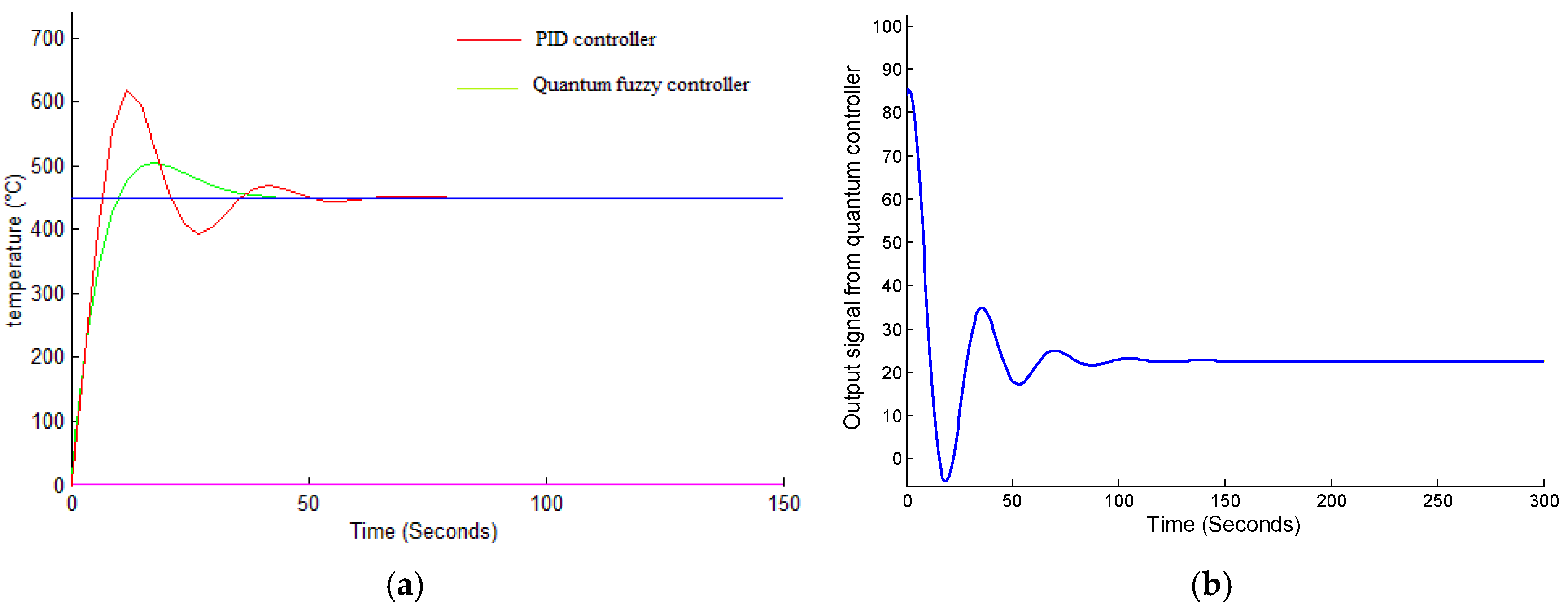
The transient response of the outlet steam temperature obtained using the proposed control strategy is illustrated in Figure 4a. The results show that the quantum-fuzzy controller maintains the steam temperature close to the desired setpoint with smooth convergence and without excessive oscillations. Even under sudden load changes, the controller rapidly stabilizes the temperature, demonstrating strong robustness against nonlinearities and time delays inherent to the steam superheating process. The corresponding control signal generated by the quantum-inspired decision-making layer is shown in Figure 4b. Unlike conventional control strategies, the control signal exhibits adaptive behavior, continuously adjusting its magnitude in response to variations in thermal load and combustion conditions. This adaptive response reflects the capability of the quantum-inspired optimization mechanism to explore multiple control trajectories in parallel and select appropriate control actions in real time. This adaptability increases the stability margin of the control loop and improves the overall energy efficiency of the steam-heating system, outperforming conventional PID-based controllers. Overall, the results confirm that integrating quantum optimization with fuzzy inference produces a self-adjusting, disturbance-resilient control architecture ideally suited for high-efficiency thermal regulation in modern power-plant steam superheaters.
Figure 4.
Control performance of the steam superheating process under variable operating conditions: (a) transient response of the outlet steam temperature; (b) adaptive control signal generated by the quantum-fuzzy controller.
For benchmarking purposes, the proposed control strategy was compared with a properly tuned conventional PID controller, whose parameters were optimized using a Ziegler-Nichols-based tuning method followed by simulation-based fine adjustment to minimize overshoot, settling time, and steady-state error.
The hybrid quantum-fuzzy control system demonstrates a significant improvement in both thermal efficiency and dynamic controllability. Simulation results confirm that the proposed architecture effectively stabilizes the outlet steam temperature within the optimal operating range, even under variable load conditions and pronounced nonlinearities inherent to steam superheater dynamics. By leveraging quantum-inspired decision-making mechanisms, the controller adaptively compensates for thermal disturbances and process uncertainties, ensuring reliable and energy-efficient operation.
Quantitative analysis reveals that the proposed controller reduces peak overshoot by approximately 20–25% and shortens the settling time compared with the optimized PID controller, while maintaining residual temperature deviations within ±1.8 °C.
This hybrid strategy provides superior robustness, faster transient response, and more precise temperature regulation compared to conventional PID-based control methods [18]. Overall, the quantum-fuzzy framework contributes to enhanced energy utilization and improved operational stability, making it a promising solution for next-generation thermal power plant control systems.
The quantum decision-making module embedded within the control architecture provides real-time adaptation to rapidly varying process dynamics by continuously adjusting control actions according to system feedback [19]. This adaptive intelligence significantly enhances energy efficiency and dynamic performance of the thermal system, surpassing conventional PID controllers in terms of response speed, stability, and robustness.
The results further demonstrate that the quantum-fuzzy logic-based control system exhibits self-tuning behavior and maintains reliable operation under wide variations in process parameters and external disturbances. The main simulation results of the steam superheating process are summarized in Table 1. Therefore, the proposed hybrid quantum control strategy represents a highly efficient and resilient solution for regulating steam superheating processes in advanced thermal energy systems. It ensures improved thermal balance, reduced energy losses, and sustainable energy utilization compared to traditional control methodologies.
Table 1.
Summarizes the main simulation results obtained for the steam superheating process, including thermal losses, unused energy, fuel consumption, and temperature regulation accuracy.
The results indicate that, under variable load conditions, fuel consumption was reduced by up to 25% in peak scenarios, while the average energy efficiency of the steam superheating process increased by approximately 1–2% compared to the optimized PID controller.
The implementation of the quantum-fuzzy control strategy ensures highly accurate regulation of the outlet steam temperature, effectively minimizing overshoot, transient oscillations, and temperature deviations. Stable operation is maintained even in the presence of parameter disturbances, nonlinear heat-transfer characteristics, and dynamic variations in thermal loads.
Overall, these results verify that the proposed hybrid quantum-fuzzy control approach enhances thermal stability, improves energy utilization, and increases system robustness compared to conventional PID-based control methods, demonstrating strong potential for industrial application in modern thermal power plants.
5. Conclusions
The modeling and simulation analysis of the steam superheating process confirms the high effectiveness of the proposed quantum-fuzzy control system in enhancing thermal stability, energy efficiency, and operational robustness. The developed mathematical model accurately captures the nonlinear, time-varying dynamics of the superheater and enables real-time optimization of key process variables, including outlet steam temperature, fuel input rate, and flue-gas flow.
Simulation results demonstrate that the quantum-fuzzy control strategy reduces fuel consumption by up to 25% under variable load conditions, while the overall energy efficiency of the installation increases by 1–2% compared to a conventional PID controller. The system successfully maintained the outlet steam temperature at 450 °C, effectively suppressing overshoot and oscillatory behavior even in the presence of disturbances, parameter uncertainties, and nonlinear heat-transfer effects.
By integrating quantum decision-making algorithms with a fuzzy inference mechanism, the controller exhibits strong adaptive behavior, ensuring stable, smooth, and reliable operation across a wide range of dynamic conditions. This hybrid quantum-fuzzy methodology provides a resilient and energy-efficient framework for intelligent thermal process control.
In conclusion, the results highlight the substantial potential of quantum-enhanced intelligent control systems to improve energy utilization, operational reliability, and automation performance in modern steam superheating installations. The proposed approach offers a promising pathway toward the next generation of sustainable, energy-resilient thermal power plant control technologies.
Author Contributions
Conceptualization, N.Y. and K.U.; methodology, K.U. and N.Y.; formal analysis, N.Y.; investigation, N.Y., K.U. and A.I.; resources, I.S.; data curation, K.U.; writing-original draft preparation, A.I. and K.U.; writing-review and editing, I.S. and A.I.; visualization, N.Y. and K.U.; supervision, K.U. and A.I. All authors have read and agreed to the published version of the manuscript.
Funding
This research received no external funding.
Institutional Review Board Statement
Not applicable.
Informed Consent Statement
Not applicable.
Data Availability Statement
The data presented in this study are available on request from the corresponding author.
Conflicts of Interest
The authors declare no conflicts of interest.
References
- Sanchez-Lopez, A.; Arroyo-Figueroa, G.; Villavicencio-Ramirez, A. Advanced Control Algorithms for Steam Temperature Regulation of Thermal Power Plants. Int. J. Electr. Power Energy Syst. 2004, 26, 779–785. [Google Scholar] [CrossRef] [Scilit]
- Fazilat, M.; Zioui, N. Quantum-Inspired Sliding-Mode Control to Enhance the Precision and Energy Efficiency of an Articulated Industrial Robotic Arm. Robotics 2025, 14, 14. [Google Scholar] [CrossRef] [Scilit]
- Iovane, G. Quantum-Inspired Algorithms and Perspectives for Optimization. Electronics 2025, 14, 2839. [Google Scholar] [CrossRef] [Scilit]
- Yakubova, N.; Usmanov, K.; Turakulov, Z.; Eshbobaev, J. Application of Quantum Computing Algorithms in the Synthesis of Control Systems for Dynamic Objects. Eng. Proc. 2025, 87, 68. [Google Scholar]
- Litvintseva, L.V.; Ul’yanov, I.S.; Ul’yanov, S.V.; Ul’yanov, S.S. Quantum Fuzzy Inference for Knowledge Base Design in Robust Intelligent Controllers. J. Comput. Syst. Sci. Int. 2007, 46, 908–961. [Google Scholar] [CrossRef] [Scilit]
- Guesmi, T.; Alshammari, B.M.; Welhazi, Y.; Hadj Abdallah, H.; Toumi, A. Robust Fuzzy Control for Uncertain Nonlinear Power Systems. Mathematics 2022, 10, 1463. [Google Scholar] [CrossRef] [Scilit]
- Hu, N. The Limitations of Traditional PID Controllers and Modern Optimization Methods. ACE 2025, 147, 238–244. [Google Scholar] [CrossRef] [Scilit]
- Mabuchi, H.; Khaneja, N. Principles and Applications of Control in Quantum Systems. Intl. J. Robust Nonlinear 2005, 15, 647–667. [Google Scholar] [CrossRef] [Scilit]
- Wu, X.; Shen, J.; Li, Y.; Lee, K.Y. Fuzzy Modeling and Predictive Control of Superheater Steam Temperature for Power Plant. ISA Trans. 2015, 56, 241–251. [Google Scholar] [CrossRef] [Scilit] [PubMed]
- Usmanov, K.; Eshbobaev, J.; Yakubova, N. Modeling and Optimization of the Ammonium Solution Extraction Process. Eng. Proc. 2023, 56, 198. [Google Scholar]
- Khosravani, A.; Rasinariu, C. A Brief Introduction to Quantum Computing. Phys. Teach. 2025, 63, 40–45. [Google Scholar] [CrossRef] [Scilit]
- Dong, D.; Petersen, I.R. Quantum Control Theory and Applications: A Survey. IET Control Theory Appl. 2010, 4, 2651–2671. [Google Scholar] [CrossRef] [Scilit]
- Goman, V. Thermal Modeling and Simulation for Engineering Education Using Simulink. AIP Conf. Proc. 2022, 2456, 020013. [Google Scholar]
- Avezov, T.; Ismailov, M.A. Development of an Imitation Model of the Vulcanization Process in the Production of Elastomeric Composites. Chem. Technol. Control Manag. 2023, 2023, 53–56. [Google Scholar] [CrossRef] [Scilit]
- Ulyanov, S.V.; Ulyanov, V.S.; Hagiwara, T. Robust Quantum Controllers: Quantum Information—Thermodynamic Hidden Force Control in Intelligent Robotics Based on Quantum Soft Computing 2023. arXiv 2023, arXiv:2305.11254. [Google Scholar]
- Nielsen, M.A.; Chuang, I.L. Quantum Computation and Quantum Information: 10th Anniversary Edition, 1st ed.; Cambridge University Press: Cambridge, UK, 2012; ISBN 978-1-107-00217-3. [Google Scholar]
- Puchalski, B.; Rutkowski, T.A.; Duzinkiewicz, K. Fuzzy Multi-Regional Fractional PID Controller for Pressurized Water Nuclear Reactor. ISA Trans. 2020, 103, 86–102. [Google Scholar] [CrossRef] [Scilit] [PubMed]
- Wissocq, T.; Ghazouani, S.; Le Bourdiec, S. A Methodology for Designing Thermodynamic Energy Conversion Systems in Industrial Mass/Heat Integration Problems Based on MILP Models. Energy 2019, 185, 121–135. [Google Scholar] [CrossRef] [Scilit]
- Litvintseva, L.V.; Ulyanov, S.V.; Ulyanov, S.V. Robust PID Controller Design on Quantum Fuzzy Inference: Imperfect KB Quantum Self-Organization Effect-Quantum Supremacy Effect. Artif. Intell. Adv. 2020, 2, 59–70. [Google Scholar] [CrossRef] [Scilit]

Disclaimer/Publisher’s Note: The statements, opinions and data contained in all publications are solely those of the individual author(s) and contributor(s) and not of MDPI and/or the editor(s). MDPI and/or the editor(s) disclaim responsibility for any injury to people or property resulting from any ideas, methods, instructions or products referred to in the content. |
© 2026 by the authors. Licensee MDPI, Basel, Switzerland. This article is an open access article distributed under the terms and conditions of the Creative Commons Attribution (CC BY) license (https://creativecommons.org/licenses/by/4.0/).