Improving Earthquake Resilience—The Role of RC Frame Asymmetry Under Successive Events: Nonlinear Dynamic Insights for Safer Building Codes †


Abstract
1. Introduction
2. Description of RC Buildings and Analysis
3. Structural Response Results
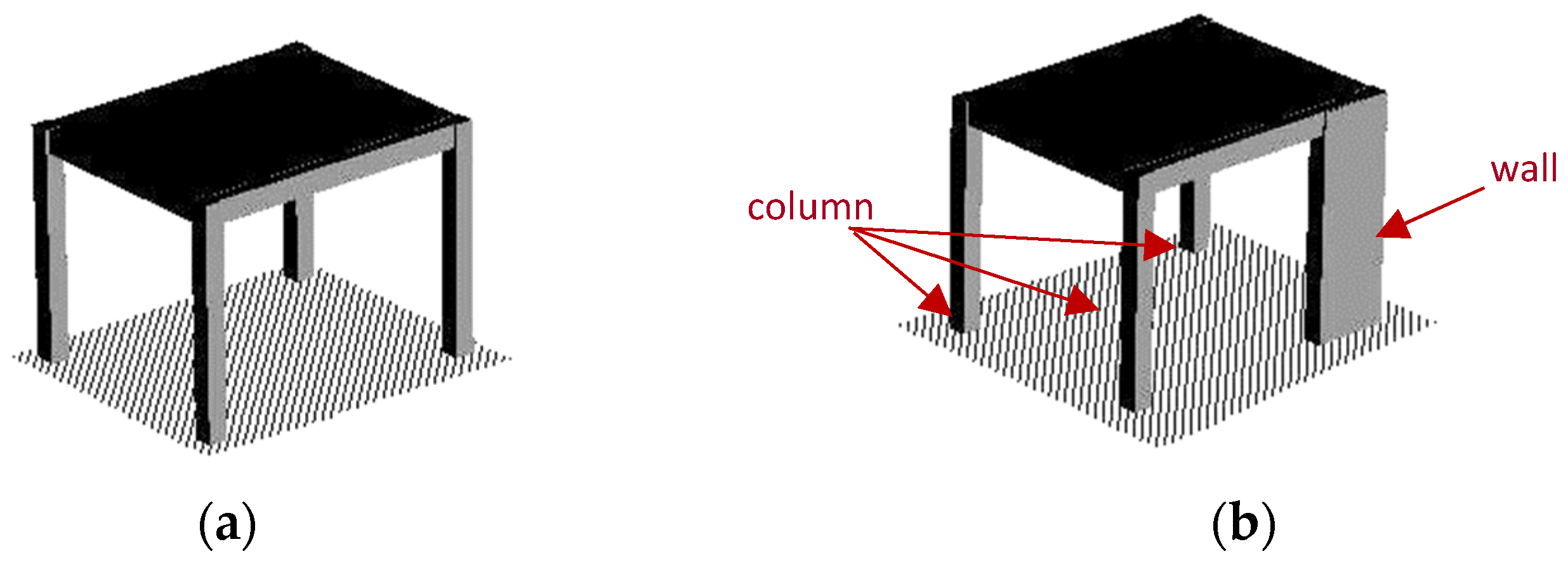
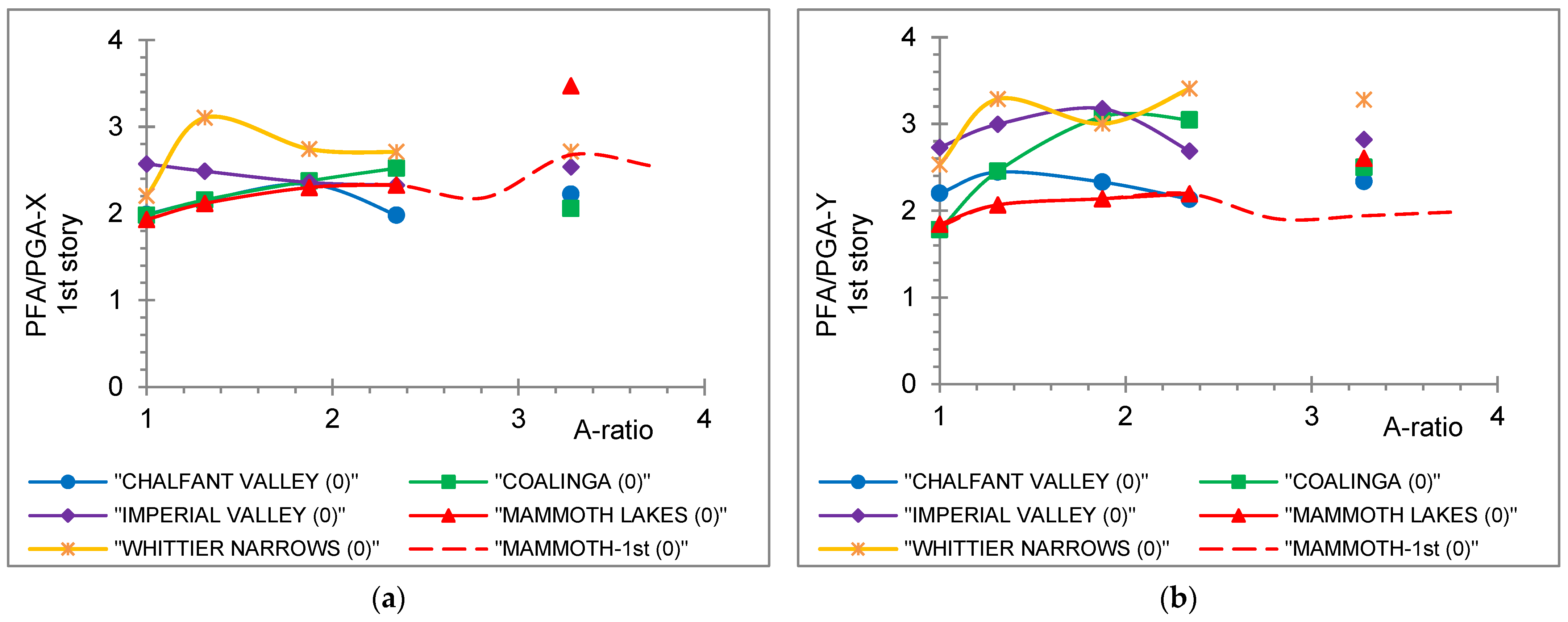
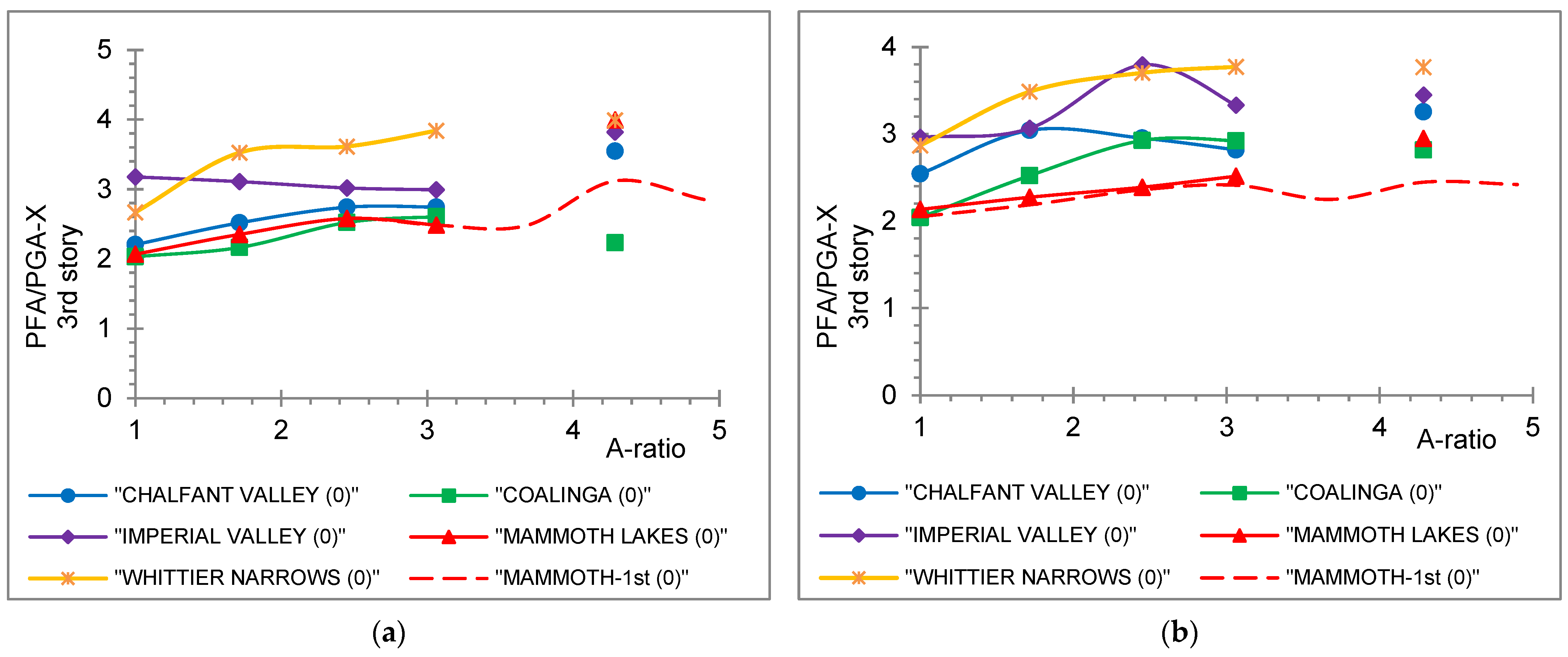
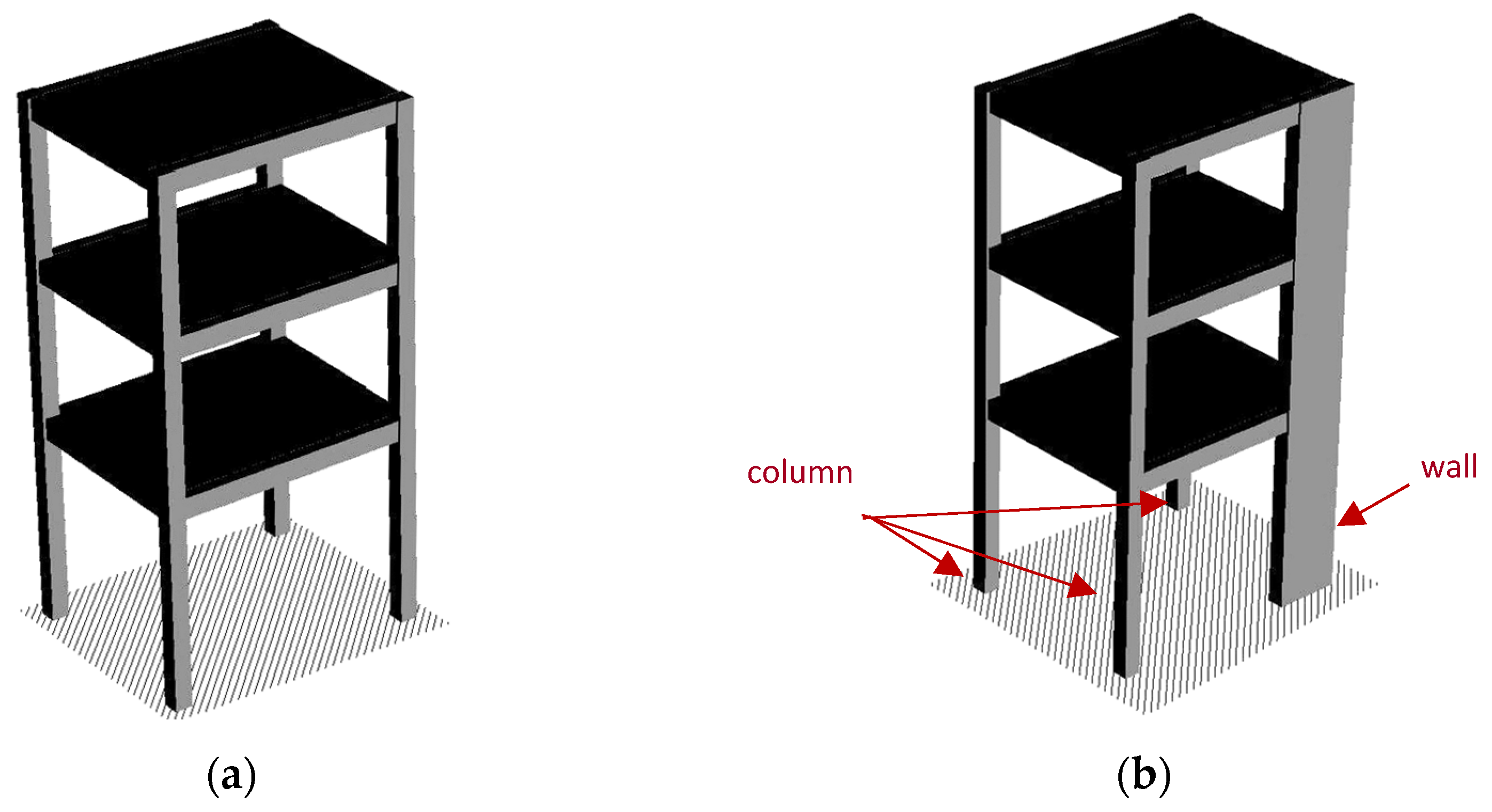
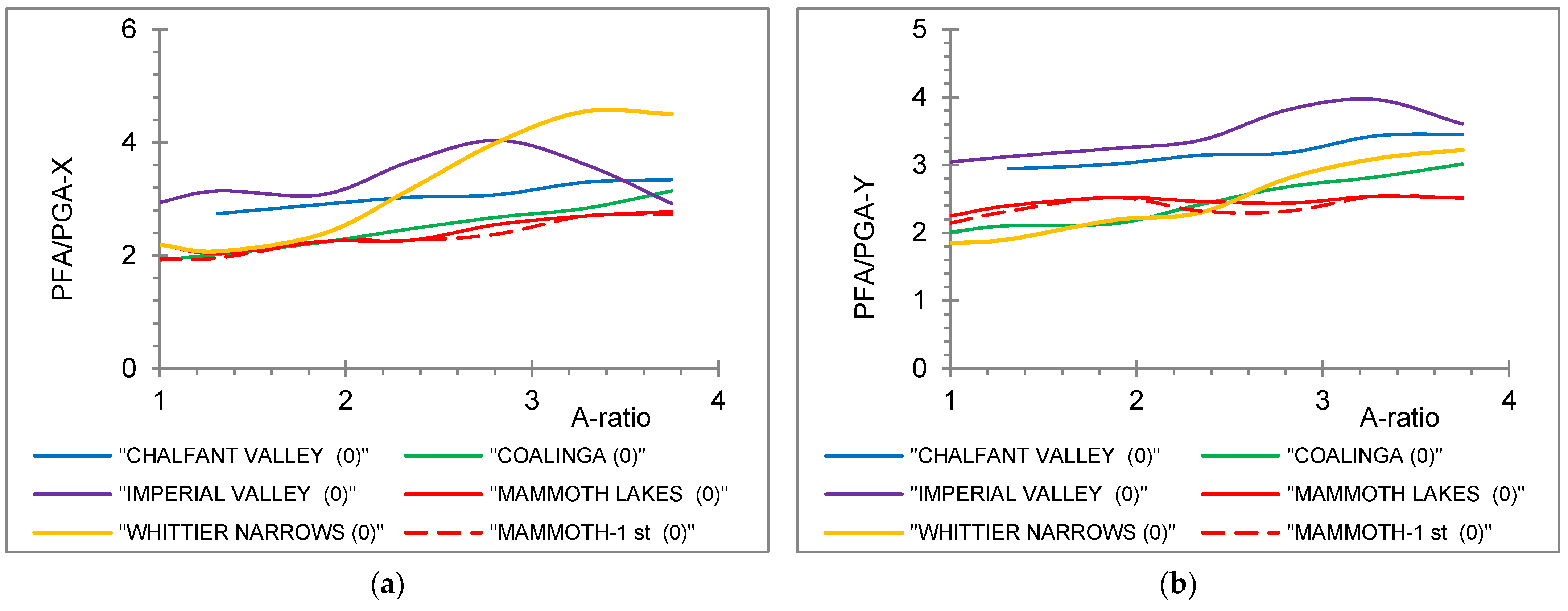
- The simple geometrical asymmetry discusses the relative asymmetry and symmetry among the supporting columns to the wall as far as the sectional area and stiffness, technically indicated as a mathematical division of the wall’s section to columns’ one, denoted as “A-ratio”, to characterize the plan asymmetry for comparative nonlinear response analysis. The interest of this work lies in the investigation of the relative imbalance of the stiffness and mass of the vertical structural elements that governs torsional coupling effects.
- Plots displaying the “peak floor acceleration to the peak ground acceleration” (“PFA/PGA” [17]) ratio help to evaluate the elastoplastic structure performance, whereas the associated thresholds are not found in the existing literature.
3.1. One-Story RC Buildings
3.2. Three-Story RC Models
4. Conclusions
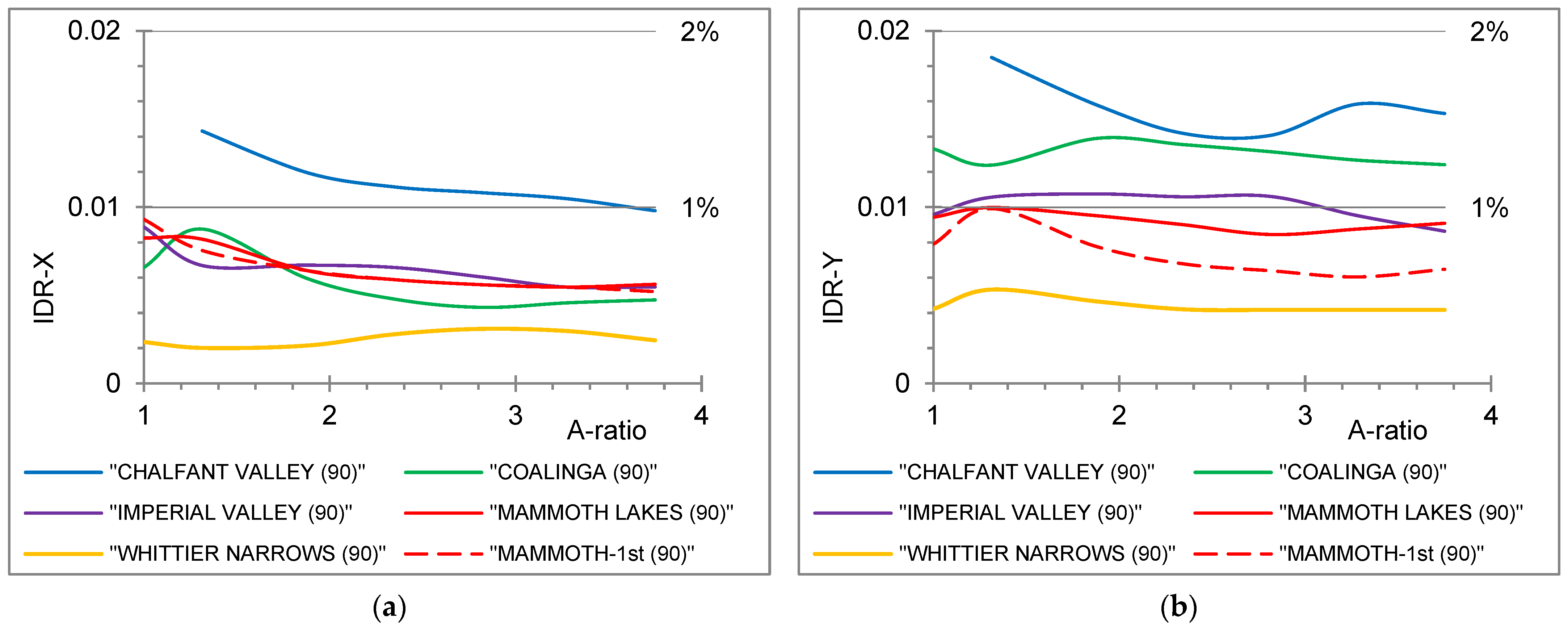
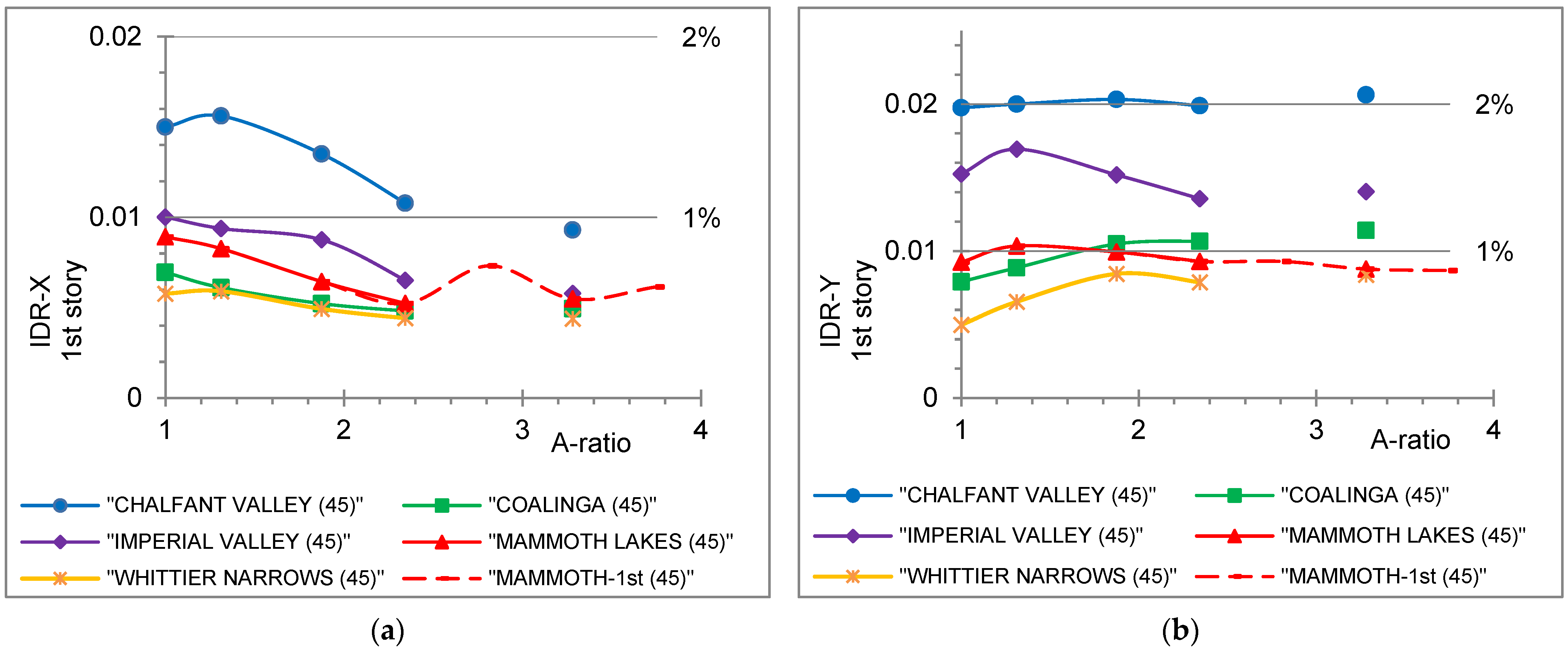
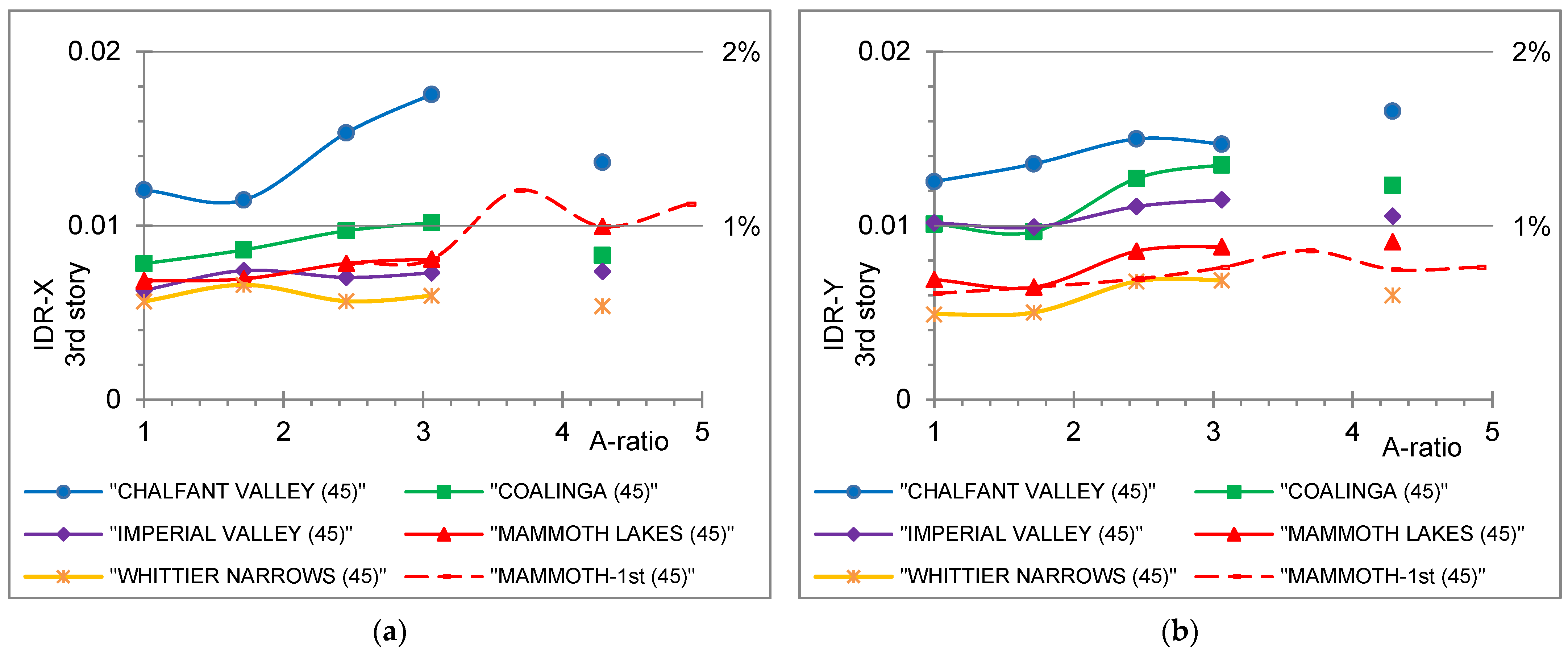
- The IDR demands increase as wall sections become larger; however, all observed values remain within acceptable seismic performance limits for reinforced concrete structures.
- The PFA/PGA ratio shows a clear upward trend with increasing wall dimensions and building height in the evaluated RC models.
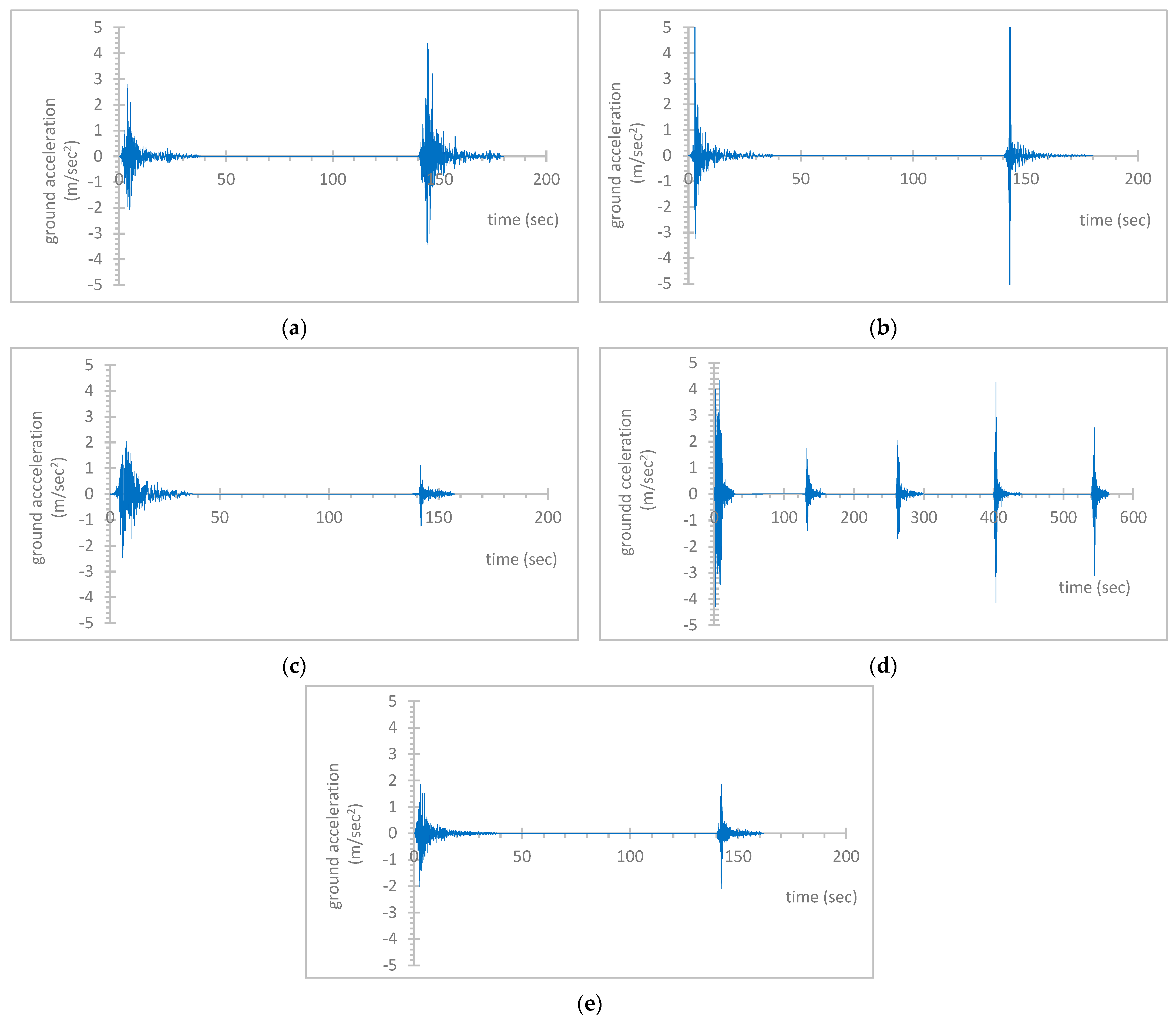
- Symmetrical one-story RC buildings exhibit heightened vulnerability under sequential earthquake loading compared to single-event excitations. A similar sensitivity is also observed in asymmetrical three-story RC frame–wall systems with large wall sections that exceed the “wall” dimensional limits prescribed by current seismic codes.
- Analyses that consider only single-event ground motions consistently underestimate the structural response, yielding smaller response quantities than those produced by the respective sequential ground motion scenarios.
- An earthquake orientation of 45° produces the most critical structural response in the examined frame models, although the 0° and 90° orientations also remain essential for comprehensive seismic assessment.
- By integrating current nonlinear performance considerations into future seismic codes, design practice can move toward a more realistic safety-oriented representation of building behavior under complex earthquake scenarios.
Funding
Institutional Review Board Statement
Informed Consent Statement
Data Availability Statement
Conflicts of Interest
References
- Das, P.K.; Dutta, S.C.; Datta, T.K. Seismic behavior of plan and vertically irregular structures: State of art and future challenges. Nat. Hazards Rev. 2021, 22, 04020062. [Google Scholar] [CrossRef]
- Bento, R.; De Stefano, M.; Köber, D.; Zembaty, Z. Seismic Behaviour and Design of Irregular and Complex Civil Structures IV, 1st ed.; Springer Nature: Cham, Switzerland, 2022. [Google Scholar] [CrossRef]
- Lazaridis, P.C.; Kavvadias, I.E.; Demertzis, K.; Iliadis, L.; Vasiliadis, L.K. Structural Damage Prediction of a Reinforced Concrete Frame Under Single and Multiple Seismic Events Using Machine Learning Algorithms. Appl. Sci. 2022, 12, 3845. [Google Scholar] [CrossRef]
- Fardis, M.N. Seismic Design, Assessment and Retrofitting of Concrete Buildings: Based on EN-Eurocode 8, 1st ed.; Springer: Berlin, Germany, 2009. [Google Scholar]
- Eurocode 2 (EC2); Design of Concrete Structures—Part 1-1: General Rules and Rules for Buildings. European Committee for Standardization (CEN): Brussels, Belgium, 2004.
- Eurocode 8 (EC8); Design of Structures for Earthquake Resistance—Part 1: General Rules, Seismic Actions and Rules for Buildings, Part 3: Strengthening and Repair of Buildings, Part 5: Foundations, Retaining Structures and Geotechnical Aspects. Part 6: Towers, Masts and Chimneys. European Committee for Standardization: Brussels, Belgium, 2004.
- Hatzigeorgiou, G.D.; Beskos, D.E. Inelastic displacement ratios for SDOF structures subjected to repeated earthquakes. Eng. Struct. 2009, 31, 2744–2755. [Google Scholar] [CrossRef]
- Hatzigeorgiou, G.D.; Liolios, A.A. Nonlinear behaviour of RC frames under repeated strong ground motions. Soil Dyn. Earthq. Eng. 2010, 30, 1010–1025. [Google Scholar] [CrossRef]
- Zhang, L.; Cheng, L.; Li, H.; Gao, J.; Yu, C.; Domel, R.; Yang, Y.; Shaoqlang, T.; Liu, W.K. Hierarchical deep-learning neural networks: Finite elements and beyond. Comput. Mech. 2021, 67, 207–230. [Google Scholar] [CrossRef]
- Xu, Z.; Wang, H.; Zhao, K.; Zhang, H.; Liu, Y.; Lin, Y. Evolutionary probability density reconstruction of stochastic dynamic responses based on physics-aided deep learning. Reliab. Eng. Syst. Saf. 2024, 246, 110081. [Google Scholar] [CrossRef]
- Eurocode 1 (EC1); Actions on Structures—Part 1-1: General Actions, Densities, Self-Weight, Imposed Loads for Buildings. European Committee for Standardization (CEN): Brussels, Belgium, 2001.
- ETABS, Version 15.2.0; Integrated Building Design Software; Computers and Structures Inc. CSI: Berkeley, CA, USA, 2015.
- Askouni, P.K. The Effect of Sequential Excitations on Asymmetrical Reinforced Concrete Low-Rise Framed Structures. Symmetry 2023, 15, 968. [Google Scholar] [CrossRef]
- Pacific Earthquake Engineering Research Center (PEER): Strong Motion Database. Available online: https://ngawest2.berkeley.edu/ (accessed on 15 October 2023).
- Sfakianakis, M.G.; Fardis, M.N. Nonlinear finite element for modeling reinforced concrete columns in three-dimensional dynamic analysis. Comput. Struct. 1991, 40, 1405–1419. [Google Scholar] [CrossRef]
- FEMA-356; Prestandard and Commentary for the Seismic Rehabilitation of Buildings. Federal Emergency Management Agency: Washington, DC, USA, 2000. Available online: https://www.nehrp.gov/pdf/fema356.pdf (accessed on 15 October 2023).
- Graziotti, F.; Tomassetti, U.; Kallioras, S.; Penna, A.; Magenes, G. Shaking table test on a full scale URM cavity wall building. Bull. Earthq. Eng. 2017, 15, 5329–5364. [Google Scholar] [CrossRef]




Disclaimer/Publisher’s Note: The statements, opinions and data contained in all publications are solely those of the individual author(s) and contributor(s) and not of MDPI and/or the editor(s). MDPI and/or the editor(s) disclaim responsibility for any injury to people or property resulting from any ideas, methods, instructions or products referred to in the content. |
© 2026 by the author. Licensee MDPI, Basel, Switzerland. This article is an open access article distributed under the terms and conditions of the Creative Commons Attribution (CC BY) license.
Share and Cite
Askouni, P.K. Improving Earthquake Resilience—The Role of RC Frame Asymmetry Under Successive Events: Nonlinear Dynamic Insights for Safer Building Codes. Eng. Proc. 2026, 124, 7. https://doi.org/10.3390/engproc2026124007
Askouni PK. Improving Earthquake Resilience—The Role of RC Frame Asymmetry Under Successive Events: Nonlinear Dynamic Insights for Safer Building Codes. Engineering Proceedings. 2026; 124(1):7. https://doi.org/10.3390/engproc2026124007
Chicago/Turabian StyleAskouni, Paraskevi K. 2026. "Improving Earthquake Resilience—The Role of RC Frame Asymmetry Under Successive Events: Nonlinear Dynamic Insights for Safer Building Codes" Engineering Proceedings 124, no. 1: 7. https://doi.org/10.3390/engproc2026124007
APA StyleAskouni, P. K. (2026). Improving Earthquake Resilience—The Role of RC Frame Asymmetry Under Successive Events: Nonlinear Dynamic Insights for Safer Building Codes. Engineering Proceedings, 124(1), 7. https://doi.org/10.3390/engproc2026124007