


Abstract
Background: Physical activity is a crucial component of diabetes prevention and management, yet participation varies across populations. Differences by country of birth may reflect cultural, socioeconomic, and structural factors that influence health behaviors among individuals with diabetic conditions. Objective: To examine the relationship between country of birth, diabetes status, and physical activity, and to assess whether country of birth is associated with diabetes prevalence. Methods: A cross-sectional analysis was conducted using U.S.-nationally representative data from the National Health and Nutrition Examination Survey (NHANES). Adults were categorized as having diabetes/prediabetes or no diabetes based on self-reported diagnosis. Physical activity was assessed using self-reported levels of moderate and vigorous leisure-time physical activity (LTPA). Sociodemographic characteristics were compared across groups. Stratified analyses were conducted to evaluate differences by country of birth and statistical tests were used to identify significant associations between diabetes status, physical activity, and sociodemographic variables. Results: Significant differences in sociodemographic characteristics were observed across diabetes status groups, particularly by age. There was no significant difference in physical activity levels between adults with diabetes compared to those without. Individuals with diabetes reported higher levels of sedentary time before adjustment for sociodemographic factors. Differences in physical activity behaviors were also observed in unadjusted analyses by country of birth, with foreign-born groups demonstrating lower levels of vigorous activity. Conclusions: Physical activity disparities exist among adults in the United States with diabetes and prediabetes and differ by country of birth, although they can be largely explained by sociodemographic factors. These findings highlight the need for culturally and socioeconomically tailored interventions to promote physical activity and support chronic disease management in diverse populations.
1. Introduction: Differences by Country of Birth
Diabetes is a chronic condition where the body fails to produce enough insulin or use insulin efficiently, resulting in high blood sugar [1]. Diabetes is the eighth leading cause of death in the United States and the leading cause of kidney failure, adult blindness, and lower-limb amputations [1]. In the past 20 years, the number of adult diabetes diagnoses has doubled, and 38 million adults in the US are living with diagnosed diabetes [1].
Prediabetes occurs when blood sugar levels are above the normal range, but below the diagnostic threshold [1]. Genetic and lifestyle factors both contribute to the development of Type 2 Diabetes (T2D) and prediabetes [2].
Health behaviors play a critical role in delaying or preventing T2D onset and slowing disease progression once diagnosed. Diabetes and prediabetes can be managed through self-management behaviors such as weight management, healthy diet, physical activity, medication adherence, and other forms of self-monitoring [1,3,4]. In fact, those with prediabetes were more likely to make lifestyle changes than those diagnosed with diabetes due to more hope about bringing A1C (blood sugar) levels into the normal range [4].
1.1. Physical Activity
Physical activity, a modifiable risk factor, is critical for diabetes prevention and management [5]. It is defined as movement that increases energy use, while exercise is defined as planned and structured physical activity [6]. Physical activity lowers blood glucose levels by increasing the body’s sensitivity to insulin [6,7]. Crucially, regular activity improves insulin sensitivity, lowers glucose levels, and reduces cardiometabolic risk independent of weight loss [6,7]. Additionally, weight loss associated with exercise improves cardiovascular fitness compared to just diet-associated weight loss [5]. Aerobic and resistance activities each improve HbA1c and insulin sensitivity but combining the two yields the greatest benefit [5,7]. Higher levels of physical activity are also associated with a lower risk of diabetes complications [5]. Demographic characteristics such as older age, female gender, lower educational attainment, and lower socioeconomic status further decrease the likelihood of meeting World Health Organization activity recommendations [8]. These findings highlight the importance of examining whether diabetes is associated with lower activity levels in the broader population.
1.2. Sociodemographic Factors
Demographic characteristics influence both diabetes risk and participation in physical activity. In general, women are less likely to engage in physical activity compared to men [9]. Xie et al. (2020) found that women are less likely to exercise regularly due to more barriers, such as lack of time and appropriate facilities [10]. Among migrant women specifically, additional barriers such as cultural norms restricting vigorous exercise, lack of social support, limited transportation, language barriers, and unsafe neighborhoods may further reduce physical activity [9,11,12]. Age and comorbidities also contribute to diabetes risk. Adults with prediabetes tend to be older, insured, and partnered [13]. Older adults are more likely to exhibit metabolic risk factors such as obesity, hypertension, or mobility limitations, which increase diabetes prevalence [14]. However, older adults also tend to adhere more consistently to diet recommendations and self-monitoring practices [10].
Social and structural conditions play a major role in diabetes prevalence, healthcare access, and health behaviors, including physical activity. Lower income is consistently linked to higher prevalence of diabetes and increased difficulty obtaining medications and preventive care [13,15]. These inequities disproportionately affect ethnic minority and immigrant communities, which may partially explain nativity-based disparities in diabetes. Education is also negatively associated with diabetes prevalence [15]. Because immigrants are more likely to have lower income and limited health system familiarity, these conditions may contribute to differences in both disease prevalence and healthy behaviors relevant to this study’s research questions [16].
Built environment and neighborhood resources also shape diabetes risk and physical activity. Areas with higher walkability, green space, and accessible care are associated with better metabolic outcomes [15]. Conversely, many immigrant and low-income communities face barriers such as limited recreational space, high fast-food density, automobile dependence, and limited access to specialists [17]. These factors may reduce routine physical activity, helping explain group-level differences in achieving sufficient physical activity.
Patterns of clustered health behaviors, such as poor diet, inactivity, smoking, and alcohol use, vary across race and ethnicity [18]. Overall, social determinants shape both diabetes risk and physical activity and may contribute to differences between U.S.-born and foreign-born populations.
1.3. Diabetes, Physical Activity and Immigrant Populations
Cultural backgrounds, beliefs, and traditions impact health behaviors, self-management activities, and chronic illness outcomes [3]. Immigration introduces environmental, socioeconomic, and cultural transitions that influence diabetes risk and physical activity, making nativity status a relevant predictor for health outcomes.
Country of birth influences diabetes and physical activity through the “healthy immigrant effect.” The Healthy Immigrant Effect postulates that recent immigrants are healthier than the native-born population, and the health gap narrows the longer they stay until their health resembles the native-born population or is worse than the native-born population [19,20,21]. For diabetes, evidence is mixed: some studies report lower diabetes prevalence among foreign-born individuals compared with U.S.-born adults [19], whereas others show equal or higher risk among certain ethnic subgroups or long-term residents [21].
Additionally, the risk of diabetes increases with time spent in the US [20,21,22]. Lo, Adame, and Cheng (2020) hypothesize this could be due to young age and good health at the time of arrival, but social stress from the immigration and acculturation process, accompanied by an increase in habits that contribute to heart disease in the new country, such as a more sedentary lifestyle, causes a decline in health and health behaviors [23]. Acculturation occurs when individuals from two distinct cultures come into contact and individuals outside the dominant culture adapt to the dominant culture’s habits and beliefs [23]. Despite gradual assimilation, many immigrants retain dietary practices from their countries of origin, which may protect or harm metabolic health depending on the context [3,21]. Structural barriers including limited insurance, language gaps, discrimination, and lack of culturally responsive care further hinder diabetes prevention and management [4,21,24]. These barriers may affect both diabetes prevalence and the ability to engage in self-management practices like physical activity.
Physical activity patterns also appear to differ across nativity status. Immigrants and refugees generally report lower levels of physical activity than nonimmigrant populations [12,25]. Recently arrived immigrants are particularly likely to be inactive, possibly due to unfamiliarity with recreational norms, lack of access to facilities, and cultural beliefs about exercise [26]. Fear of stigma, social isolation, and structural barriers may suppress activity, while social support can facilitate engagement [12,21].
In the United States, immigrants and refugees tend to have relatively low levels of physical activity compared to the non-immigrant population [12,25]. Zdravkovic et al. (2025) found that physical inactivity is more common in recently arrived migrants than the reference comparison group [26]. Many participants in focus groups organized by Wieland et al. (2016) found a lack of familiarity with physical activity and not feeling comfortable taking the initial steps to becoming physically active were notable barriers, while social support from the community, family, and friends is a significant motivational factor towards being physically active [12]. Collectively, the literature suggests that nativity may influence diabetes risk, physical activity engagement, and the intersection between the two.
Despite growing evidence linking nativity status to both diabetes risk and physical activity, less is known about how these factors interact. Therefore, the purpose of this study is to examine the relationship between diabetes status, country of birth, and physical activity among U.S. adults. Specifically, this study aims to (1) assess whether physical activity levels differ by diabetes status and nativity, and (2) evaluate whether country of birth is associated with the likelihood of having diabetes or prediabetes. By clarifying these relationships, this study seeks to better understand disparities in diabetes risk and health behaviors across populations.
The goal of this study is to investigate the association between diabetes status, country of birth, and physical activity. The primary aim is to determine if country of birth and diabetes status influence physical activity. It will also determine if country of birth impacts the likelihood of developing diabetes or prediabetes.
2. Methods
2.1. Study Design
This observational, cross-sectional study will investigate if there is an association between diabetes status, country of birth, and physical activity. The goal is to determine if country of birth is related to the likelihood of developing diabetes or prediabetes. It will also determine if country of birth and diabetes status have any relation with physical activity.
2.2. Setting
The National Health and Nutrition Examination Survey (NHANES) collects national data on health and nutrition across the US population every two years [27]. The survey collects individual demographics, nutrition, and health information from personal interviews, either online or in-person [27]. The survey aims to assess the country’s health and nutritional status by collecting data on assorted health conditions, behavioral risk factors, and physical activity levels [28]. Although self-reported measures may be subject to recall or social desirability bias, NHANES aims to minimize these effects through validated questionnaires, trained interviewers, and structured protocols [27,28]. The specific survey files used for this study were Demographics (DEMO_L.xpt), Diabetes (DIQ_L.xpt), and Physical Activity (PAQ_L.xpt).
This study will review data from the period August 2021–August 2023. When data collection resumed in August 2021 after the COVID-19 pandemic, NHANES introduced a revised sampling design to minimize direct contact between interviewers and participants; key modifications included adjustments to person-level oversampling by age group and reduced in-person interactions during data collection [28]. Another major change involved contacting fewer households for eligibility screening by discontinuing oversampling based on race, Hispanic origin, and income [28]. Consequently, participant counts for certain demographic subgroups differ substantially from prior survey cycles, leading to reduced statistical precision for groups with smaller sample sizes [28].
2.3. Bias
Consistent with other federal surveys, the 2021–2023 NHANES cycle experienced a continued decline in response rates [28]. Although low response rates do not necessarily imply substantial nonresponse bias, they serve as an important indicator of survey quality, reflecting the increased difficulty of data collection and potential risk of bias [28]. NHANES researchers conducted a comprehensive nonresponse bias assessment to evaluate whether bias was associated with nonresponse. This process involved comparing respondent characteristics with external data sources, benchmarking health estimates against other national surveys, and testing alternative post-survey weighting adjustments [28]. Findings indicated that the randomly selected counties continued to reflect the U.S. civilian, noninstitutionalized population. Despite lower response rates and the methodological adaptations necessitated by pandemic-related safety protocols, no significant sources of bias were identified that were not accounted for through weighting adjustments [28]. As in previous cycles, NHANES survey weights correct for selection probability, nonresponse, and coverage bias across each data collection phase, including the screening, interview, and examination components [28].
2.4. Study Population
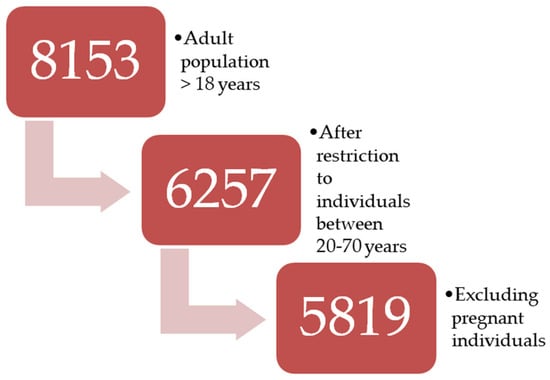
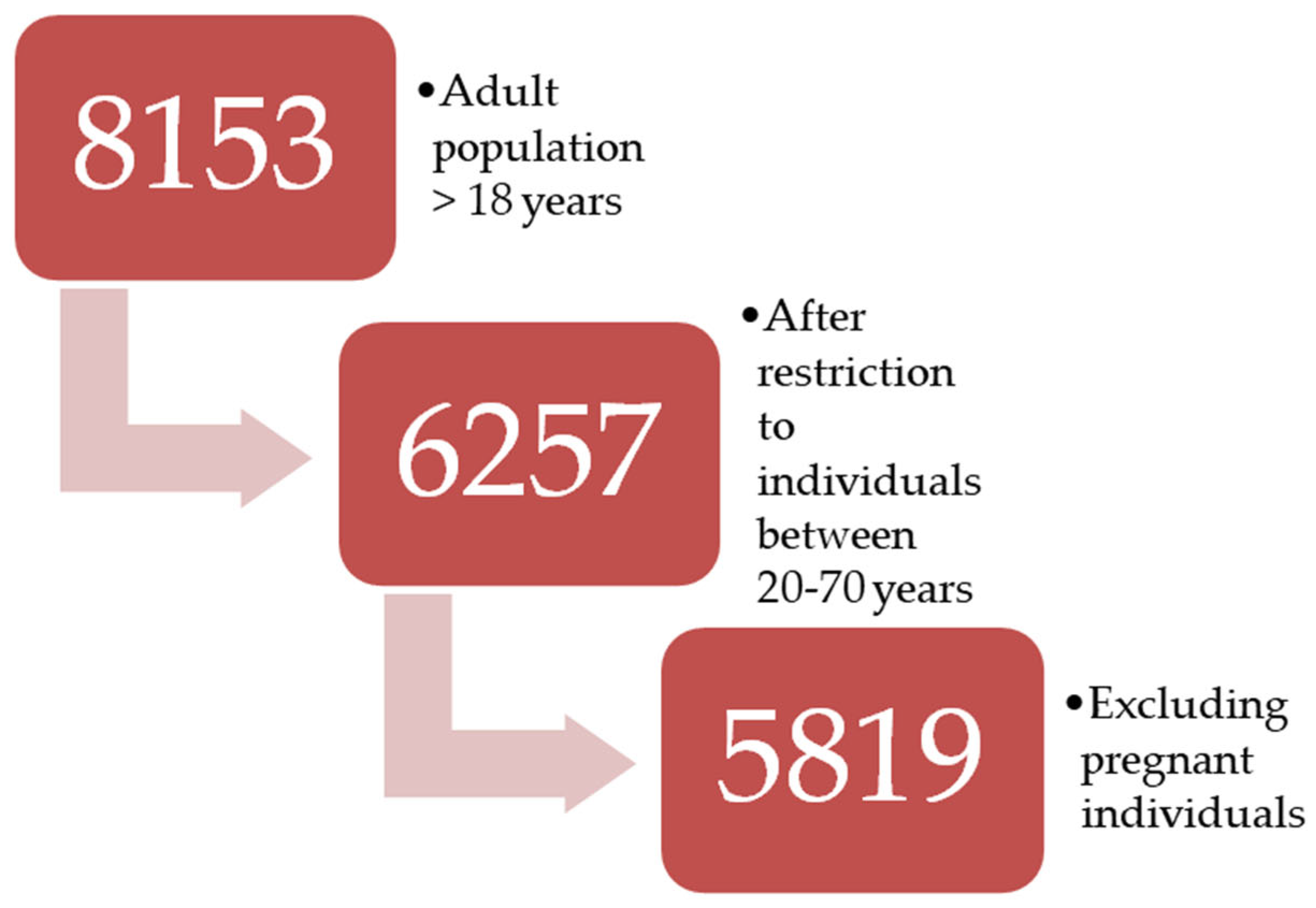
Data collected as part of NHANES, a cross-sectional study conducted from August 2021 to August 2023, was utilized for this study. The NHANES questionnaire is administered to adults over 18 at mobile examination centers or at home through in-person or telephone interviews [29]. The questionnaire collects demographic background information and household and family-level data [29]. Participants are non-institutionalized civilian residents of the United States [27]. In this context, non-institutionalized means individuals in long-term care and residential facilities are excluded. NHANES uses a nationally representative sample selected to reflect the diversity of the American population concerning age, race, ethnicity, gender, and socioeconomic status [27]. The study was restricted to individuals in the age group of 20 to 70 years. These inclusion criteria for the study were determined since education level information is missing below the age of 20 and individuals over the age of 70 are more likely to experience multimorbidity and mobility/physical activity issues. The exclusion criteria for the study were pregnant individuals due to the impact of pregnancy on diet, gestational diabetes, and overall health status. The application of the exclusion criteria to arrive at the final sample can be seen in Figure 1. An unweighted sample size of 5819 participants was included in this study.
Figure 1.
Flow diagram of final analytic sample.
2.5. Variables
The weighted population under study was adults aged 20–70 living in the United States. The independent variables are country of birth (DMDBORN4), diabetes status (DIQ010 and DIQ160), and demographic variables, while the dependent variables are physical activity habits. Demographic variables include age (RIDAGEYR), gender (RIAGENDR), race/ethnicity (RIDRETH3), education (DMDEDUC2), and poverty ratio (INDFMPIR).
Diabetes status was determined if a doctor or health professional had ever told the individual if they had diabetes (DIQ010—Doctor told you have diabetes). Those who responded with “borderline” were classified as prediabetic. Those who were told by a doctor or health professional that they had prediabetes, impaired fasting glucose or glucose tolerance, or that their blood sugar was higher than normal but not high enough to be called diabetes were also classified as prediabetic (DIQ160—Ever told you have prediabetes). Since pre-diabetics have similar underlying metabolic dysfunction as diabetes, individuals with pre-diabetes were combined with diabetes individuals to create a binary diabetes and non-diabetes category.
Information on physical activity collected includes frequency and intensity. This study will compare the minutes completed of vigorous or moderate recreational activities such as sports or fitness. Vigorous activities lead to a large increase in heart rate or breathing, while moderate activities lead to small increases in heart rate or breathing. Minutes of sedentary activity on a typical day, where a respondent is sitting but not sleeping, will also be analyzed. The specific NHANES physical activity variables are:
- PAD790Q—Frequency of moderate LTPA;
- PAD790U—Moderate LTPA unit (day/week/month/year);
- PAD800—Minutes moderate LTPA;
- PAD810Q—Frequency of vigorous LTPA;
- PAD810U—Vigorous LTPA unit (day/week/month/year);
- PAD820—Minutes of vigorous LTPA;
- PAD680—Minutes of sedentary activity.
2.6. Statistical Methods
A weighted survey analysis was conducted using the interview weights (WTINT2YR) and masked variance strata (SDMVSTRA) provided in the NHANES 2021–2023 to generate population-representative estimates for the US civilian, non-institutionalized population according to the CDC’s NHANES analytic guidance. Further, since all the variables used in the analysis were collected during household interviews, weights were used in the analysis according to the CDC guidance of using the weights corresponding to the most restrictive component. The initial analytic step included unweighted (Table S1) and weighted basic descriptive analysis of demographic variables, including country of birth in diabetes and non-diabetic individuals. Other sociodemographic variables included age, gender, race/ethnicity, education and poverty ratio. This was followed by univariate analysis of physical activity (i.e., minutes of moderate physical activity, minutes of vigorous physical activity, and minutes of sedentary physical activity) with diabetes and country of birth. The weighted regression model was created to look at the association of diabetes status and country of birth with physical activity. Similarly, a weighted linear regression model was created to determine the impact of sociodemographic variables on the association of diabetes status and country of birth on physical activity. Model diagnostics were done by checking for linearity, heteroskedasticity, normality of residuals, multicollinearity through variance inflation factor (vif), and survey-weighted leverage plot. The statistical analysis was conducted using RStudio ©2026 with statistical significance established at α = 0.05.
3. Results
This research aimed to compare physical activity behaviors between adults with diabetes or prediabetes, defined in one variable as diabetes, and those without these health conditions and compare results between diabetics and prediabetics based on country of birth. The final goal of this research was to determine if a relationship is present between diabetes status and country of birth, as well as diabetes status and LTPA when country of birth is taken into consideration.
3.1. Descriptive Analysis
There were statistically significant sociodemographic differences associated with diabetes status (Table 1). Note that Table 1 is organized by diabetes status and that race/ethnicity is not dependent on birthplace. One of the most notable differences was age; individuals with diabetes were, on average, approximately 11 years older than those without diabetes (p < 0.001). Older adults are more likely to experience metabolic changes, decreased insulin sensitivity, and accumulated lifestyle risk factors that contribute to the development of diabetes. Race and ethnicity were also significantly associated with diabetes status (p < 0.01). Certain racial and ethnic groups were disproportionately represented among individuals with diabetes, reflecting patterns consistently reported in other research studies and national surveillance data.
Table 1.
Prevalence of Diabetes in Individuals in the age group of 20–70 years by sociodemographic status in the United States.
There was also a strong statistically significant inverse relationship between educational attainment and diabetes status. Individuals with lower levels of education were more likely to report having diabetes compared with those with higher educational attainment. Furthermore, there was a significant association between the poverty ratio and diabetes prevalence. Individuals with lower income levels were more likely to report diabetes. When comparing diabetes prevalence between U.S.-born and foreign-born individuals, there was no statistically significant overall difference in diabetes prevalence by birthplace (Table 1). Additionally, no significant sociodemographic differences were identified between U.S.-born and foreign-born groups within the sample (Table 2).
Table 2.
Prevalence of Diabetes in Individuals in the age group of 20–70 years by birthplace according to sociodemographic status in the United States.
In unadjusted analyses, individuals with diabetes reported higher sedentary time, and foreign-born individuals reported fewer minutes of vigorous leisure-time physical activity. However, these associations were attenuated and no longer consistently statistically significant after adjusting for sociodemographic factors. This suggests that observed differences in physical activity and sedentary behavior may be largely explained by underlying sociodemographic characteristics rather than diabetes status or nativity alone.
3.2. Univariate Analysis
In the analysis of physical activity and sedentary behavior by diabetes status, leisure-time physical activity (LTPA) levels were compared between individuals with and without diabetes (Table 3). Moderate and vigorous LTPA levels did not significantly differ between the two groups. Surprisingly, despite statistical non-significance, individuals with diabetes reported higher minutes of moderate and vigorous LTPA compared to those without diabetes. However, there was a statistically significant difference in sedentary activity levels (p = 0.011). Individuals with diabetes reported higher levels of sedentary behavior compared with those without diabetes.
Table 3.
Descriptive Statistics of Physical activity related health behaviors dependent on their Diabetes status.
Further unadjusted analysis examined differences in moderate and vigorous LTPA and sedentary activity by country of birth (Table 4). A statistically significant association was observed between birthplace and minutes of vigorous LTPA (p = 0.041). Specifically, individuals born in the United States reported higher average minutes of vigorous LTPA (77.96 min) compared with individuals born outside the United States (60.11 min).
Table 4.
Descriptive Statistics of Physical activity related health behaviors dependent on their Birth country status.
The physical activity data was further broken down by diabetes status and country of birth to observe the presence of any differences between groups (Table 5). While there was no association between minutes of moderate physical activity and diabetes or country of birth (Table 6) or minutes of vigorous physical activity and diabetes, there was an association between minutes of vigorous physical activity and country of birth (Table 7). These findings were further supported by regression analyses (Table 7 and Table 8), which confirmed the association between birthplace and vigorous LTPA after controlling for relevant covariates. This suggests that differences in vigorous physical activity by nativity may be explained by underlying sociodemographic characteristics rather than country of birth alone.
Table 5.
Descriptive Statistics of Physical activity related health behaviors dependent on their Diabetes and birth country status.
Table 6.
Association of minutes of moderate physical activity with diabetes and birth country status.
Table 7.
Association of minutes of vigorous physical activity with diabetes and birth country status.
Table 8.
Association of minutes of sedentary activity with diabetes and birth country status.
3.3. Weighted Regression Analysis
Finally, in a stratified comparison of moderate LTPA, vigorous LTPA, and sedentary activity, no significant patterns were identified (Table 5). A weighted regression analysis showed no statistically significant effect of diabetes status and birthplace on moderate LTPA; however, birthplace was significantly associated with minutes of vigorous LTPA after adjusting for diabetes status. Individuals born outside the USA had 17.24 min of lower vigorous LTPA than individuals born in the USA (p-value < 0.05). For minutes of sedentary activity, individuals with diabetes showed approximately 100 min of sedentary activity more than individuals without diabetes (p-value = 0.013). However, after adjusting for sociodemographic variables, birthplace and diabetes status were not significantly associated with moderate, vigorous LTPA and sedentary activity (Table 9, Table 10 and Table 11).
Table 9.
Association of minutes of moderate physical activity with diabetes and birth country status adjusted for sociodemographic variables (Race, Education).
Table 10.
Association of minutes of vigorous physical activity with diabetes and birth country status adjusted for sociodemographic variables (Race, Education).
Table 11.
Association of minutes of sedentary activity with diabetes and birth country status adjusted for sociodemographic variables (Race, Education).
After adjusting for all sociodemographic variables, model diagnostics were done. The sociodemographic variables Age, Gender, and poverty ratio showed significant multicollinearity with Diabetes Status (vif > 10). To remove multicollinearity, diabetes status was included in the final model along with birth country and adjusted for race/ethnicity and education. The final models were checked for linearity, heteroskedasticity, and normality of residuals. There were some outliers, the leverage of which was checked using a survey-weighted leverage plot. Based on this, the models had an overall stable design but there were some primary sampling units in the survey that exerted higher leverage on the regression output. This suggests that the relationship between diabetes status, physical activity levels, and birthplace may be more complex than can be captured through simple stratification alone.
4. Discussion
4.1. Key Findings, Interpretations, and Implications
These results show that diabetes prevalence is associated with several sociodemographic characteristics, including age, race/ethnicity, educational attainment, and poverty ratio. Although country of birth was not directly associated with diabetes prevalence, differences in physical activity behaviors were observed between U.S.-born and foreign-born individuals in unadjusted analyses. Across all analyses, sedentary behavior emerged as the behavioral factor most consistently associated with diabetes status, although this association was attenuated after adjustment for sociodemographic variables.
The difference in average age between those with and without diabetic conditions was an expected result, as diabetes risk increases with age due to physiological changes such as decreased insulin sensitivity and increased likelihood of comorbid conditions [14]. The association between race and diabetes status also aligns with existing research demonstrating persistent disparities in diabetes prevalence among racial and ethnic minority groups [18].
The inverse association between diabetes status and educational attainment is also consistent with previous research [15,18]. Education often influences health behaviors and access to health information. Individuals with higher education levels may have greater health literacy, allowing them to better understand diabetes prevention strategies, adhere to medical advice, and navigate healthcare systems. Education may also serve as a protective factor through improved employment opportunities and greater access to health-promoting resources.
Similarly, the observed relationship between economic status and diabetes prevalence has been widely documented [13]. Individuals with lower income may face structural barriers to maintaining healthy lifestyles, including limited access to safe recreational spaces, healthy foods, and preventive healthcare services. Economic constraints can also increase stress and reduce the time available for engaging in health-promoting behaviors such as regular physical activity.
A potential explanation for higher diabetes prevalence among certain racial/ethnic groups is the difference in the social determinants of health among these groups. The disparities may reflect differences in access to healthcare, socioeconomic resources, and exposure to risk factors associated with diabetes development. Structural inequities affecting housing, employment, education, and healthcare access can create environments that increase chronic disease risk [18]. Education and socioeconomic status are particularly influential determinants, as they shape both the resources available to individuals and their ability to engage in preventive health behaviors [13,15].
While moderate and vigorous leisure-time physical activity levels did not significantly differ by diabetes status, the finding that individuals with diabetes reported significantly higher sedentary time in the unadjusted analysis is particularly important. Sedentary behavior has been increasingly recognized as an independent risk factor for metabolic disease, even among individuals who meet recommended physical activity guidelines [1,5,6]. Prolonged sitting and low levels of daily movement can negatively affect glucose metabolism, insulin sensitivity, and cardiovascular health [1,5,6]. As a result, interventions focused on reducing sedentary behavior, such as encouraging regular movement breaks, may be particularly beneficial for individuals living with diabetes.
The analysis also showed that foreign-born individuals engaged in fewer minutes of vigorous LTPA compared to U.S.-born individuals in unadjusted analyses. However, this association was not consistently significant after adjustment for sociodemographic variables. While cultural, occupational, and environmental factors may influence physical activity patterns, these findings suggest that such differences may be partly explained by underlying sociodemographic characteristics rather than nativity alone. There are several possible cultural, occupational, or environmental explanations. Cultural norms may influence preferences for certain types of physical activity, with some cultures placing less emphasis on structured or vigorous exercise. Occupational patterns may also play a role, as immigrants are more likely to work in physically demanding jobs that involve occupational physical activity rather than leisure-time exercise. Environmental factors, including neighborhood safety, access to recreational facilities, and familiarity with available resources, may also affect participation in vigorous physical activity.
These findings have implications for targeted diabetes prevention and intervention strategies. Programs designed to reduce diabetes risk should incorporate culturally tailored approaches that reflect the needs and values of diverse populations. Additionally, interventions must consider economic barriers that may limit individuals’ ability to adopt recommended lifestyle changes, such as increasing physical activity or purchasing healthier foods. Educational materials should also be designed to accommodate varying levels of health literacy to ensure accessibility and effectiveness. The findings also highlight the importance of culturally responsive physical activity interventions. Programs designed to increase physical activity among diverse populations should consider cultural preferences, language barriers, and differences in access to recreational resources. Community-based approaches that incorporate culturally familiar activities and social support networks may be particularly effective in increasing participation in physical activity among immigrant populations.
Overall, this study supports an emphasis on reducing sedentary behavior alongside promoting physical activity and the importance of socioeconomic and culturally informed diabetes prevention programs. The findings also emphasize the need to consider socioeconomic and cultural factors when designing public health interventions. By integrating these factors into diabetes prevention programs, public health practitioners can develop more effective and equitable strategies to reduce diabetes risk across diverse populations. Additionally, these findings contribute to ongoing national diabetes surveillance efforts by identifying behavioral patterns that may inform targeted intervention planning and health promotion initiatives.
4.2. Limitations
The cross-sectional study design can limit causal inference between physical activity behaviors and diabetes status. While associations can be identified, it is not possible to determine whether sedentary behavior contributed to the development of diabetes or whether individuals with diabetes became more sedentary after diagnosis. The data from NHANES is self-reported and, as such, is subject to recall bias and social desirability bias, where participants modify their answers to what they believe will make the researchers’ view of them more favorable.
In addition, leisure-time physical activity measures do not capture all forms of physical activity, such as occupational or transportation-related activity. This limitation may be particularly relevant for foreign-born populations who may engage in physically demanding work that is not reflected in leisure-time activity measures. As a result, their amount of physical activity is likely being underestimated.
Critical data on nutrition and diet was not able to be incorporated into this study due to a lack of availability. After NHANES resumed in August 2021 following the COVID-19 suspension, dietary questionnaires were dramatically shortened; the 2021–2023 “Diet Behavior and Nutrition” (DBQ) section collected only information on early-life nutrition and the in-person diet modules were eliminated [28,29].
4.3. Recommendations for Future Research
The descriptive patterns identified in this study suggest potential differences in physical activity behaviors across population subgroups, highlighting the need for further investigation into the mechanisms underlying these disparities. Future research should incorporate interaction terms in statistical models to explore how sociodemographic factors, such as race, income, and education, interact with country of birth to influence physical activity behaviors and diabetes risk. Longitudinal studies would also provide valuable insight into how physical activity patterns change over time, particularly before and after a diabetes diagnosis. Health behaviors may shift throughout the life course or in response to disease diagnosis, medical advice, or lifestyle changes. Understanding these trajectories could inform the development of more effective behavioral interventions.
Future research should also incorporate environmental and occupational activity measures. Access to exercise facilities, walkable neighborhoods, parks, and safe recreational spaces can significantly influence physical activity levels. These resources often vary by income and neighborhood characteristics [15,17], and incorporating such variables could help clarify structural barriers to physical activity. Finally, additional research examining health behaviors across specific countries of birth would provide more detailed insights into cultural influences on physical activity and diabetes risk. Several studies have found that country of birth and ethnicity can shape health behaviors, dietary patterns, and healthcare utilization [3,23,24]. Country-specific analyses could support the development of culturally relevant diabetes prevention programs and educational materials tailored to the needs of diverse immigrant populations.
Supplementary Materials
The following supporting information can be downloaded at: https://www.mdpi.com/article/10.3390/diabetology7080143/s1, Table S1: Unweighted Descriptive statistics of Diabetes in Individuals in the age group of 20–70 years by sociodemographic status in United States.
Author Contributions
Conceptualization, R.D.; methodology, R.D.; software, J.P.; validation, J.P., formal analysis, J.P.; resources, R.D.; data curation, R.D. and J.P.; writing—original draft preparation, R.D.; writing—review and editing, R.D., J.P. and I.H.; visualization, J.P.; supervision, I.H.; project administration, I.H. All authors have read and agreed to the published version of the manuscript.
Funding
This research received no external funding.
Institutional Review Board Statement
Ethical review and approval were waived for this study due to utilizing publicly available, de-identified data from the National Health and Nutrition Examination Survey (NHANES). NHANES data are collected and disseminated by the Centers for Disease Control and Prevention (CDC) with all personal identifiers removed to protect participant confidentiality. According to the National Center for Health Statistics (NCHS) Ethics Review Board (ERB), all research involving human participants conforms to U.S. federal regulations and measures were taken to protect the rights and welfare of study participants.
Informed Consent Statement
Not applicable, as this study utilizes publicly available, de-identified data from NHANES. Informed consent was obtained from all subjects involved in the study by the National Center for Health Statistics.
Data Availability Statement
NHANES data is publicly available to download and access in various formats at https://wwwn.cdc.gov/nchs/nhanes/continuousnhanes/default.aspx?Cycle=2021-2023 (accessed on 1 October 2024).
Conflicts of Interest
The authors declare no conflicts of interest.
References
- Centers for Disease Control and Prevention. Diabetes Basics. Available online: https://www.cdc.gov/diabetes/about/index.html (accessed on 18 September 2024).
- Merino, J.; Guasch-Ferré, M.; Li, J.; Chung, W.; Hu, Y.; Ma, B.; Li, Y.; Kang, J.H.; Kraft, P.; Liang, L.; et al. Polygenic scores, diet quality, and type 2 diabetes risk: An observational study among 35,759 adults from 3 US cohorts. PLoS Med. 2022, 19, e1003972. [Google Scholar] [CrossRef] [Scilit] [PubMed]
- Magny-Normilus, C.; Whittemore, R. Haitian Immigrants and Type 2 Diabetes: An Integrative Review. J. Immigr. Minor. Health 2020, 22, 399–409. [Google Scholar] [CrossRef] [Scilit] [PubMed]
- McConatha, J.T.; Kumar, V.K.; Raymond, E.; Akwarandu, A. Cultural Dimensions of Diabetes Management: A Qualitative Study of Middle Eastern Immigrants in the U.S. J. Cross Cult. Gerontol. 2020, 35, 85–98. [Google Scholar] [CrossRef] [Scilit] [PubMed]
- Zahalka, S.J.; Abushamat, L.A.; Scalzo, R.L.; Reusch, J.E.B. The role of exercise in diabetes. In Endotext; MDText.com, Inc.: South Dartmouth, MA, USA, 2025. [Google Scholar]
- Colberg, S.R.; Sigal, R.J.; Yardley, J.E.; Riddell, M.C.; Dunstan, D.W.; Dempsey, P.C.; Horton, E.S.; Castorino, K.; Tate, D.F. PhPhysical Activity/Exercise and Diabetes: A Position Statement of the American Diabetes Association. Diabetes Care 2016, 39, 2065–2079. [Google Scholar] [CrossRef] [Scilit] [PubMed]
- Syeda, U.S.A.; Battillo, D.; Visaria, A.; Malin, S.K. The importance of exercise for glycemic control in type 2 diabetes. Am. J. Med. Open 2023, 9, 100031. [Google Scholar] [CrossRef] [Scilit] [PubMed]
- Xu, L.; Li, T.; He, W.; Cao, D.; Wu, C.; Qin, L. Prevalence of sufficient physical activity among general adult population and sub-populations with chronic conditions or disability in the USA. Eur. J. Public Health 2023, 33, 891–896. [Google Scholar] [CrossRef] [Scilit] [PubMed]
- Batalha, A.P.D.B.; Marcal, I.R.; Main, E.; Ghisi, G.L.d.M. Barriers to physical activity in women from ethnic minority groups: A systematic review. BMC Women’s Health 2025, 25, 330. [Google Scholar] [CrossRef] [Scilit] [PubMed]
- Xie, Z.; Liu, K.; Or, C.; Chen, J.; Yan, M.; Wang, H. An examination of the socio-demographic correlates of patient adherence to self-management behaviors and the mediating roles of health attitudes and self-efficacy among patients with coexisting type 2 diabetes and hypertension. BMC Public Health 2020, 20, 1227. [Google Scholar] [CrossRef] [Scilit] [PubMed]
- Siddiqui, F.; Koivula, R.W.; Kurbasic, A.; Lindblad, U.; Nilsson, P.M.; Bennet, L. Physical Activity in a Randomized Culturally Adapted Lifestyle Intervention. Am. J. Prev. Med. 2018, 55, 187–196. [Google Scholar] [CrossRef] [Scilit] [PubMed]
- Wieland, M.L.; Tiedje, K.; Meiers, S.J.; Mohamed, A.A.; Formea, C.M.; Ridgeway, J.L.; Asiedu, G.B.; Boyum, G.; Weis, J.A.; Nigon, J.A.; et al. Perspectives on Physical Activity Among Immigrants and Refugees to a Small Urban Community in Minne-sota. J. Immigr. Minor. Health 2013, 17, 263–275. [Google Scholar] [CrossRef] [Scilit] [PubMed]
- Luo, H.; Chen, Z.; Bell, R.; Rafferty, A.P.; Little, R.G.; Winterbauer, N. Health literacy and behaviors. Public Health Rep. 2020, 135, 492–500. [Google Scholar] [CrossRef] [Scilit] [PubMed]
- Bardenheier, B.H.; Wu, W.-C.; Zullo, A.R.; Gravenstein, S.; Gregg, E.W. Progression to diabetes by baseline glycemic status among middle-aged and older adults in the United States, 2006–2014. Diabetes Res. Clin. Pract. 2021, 174, 108726. [Google Scholar] [CrossRef] [Scilit] [PubMed]
- Hill-Briggs, F.; Adler, N.E.; Berkowitz, S.A.; Chin, M.H.; Gary-Webb, T.L.; Navas-Acien, A.; Thornton, P.L.; Haire-Joshu, D. Social Determinants of Health and Diabetes: A Scientific Review. Diabetes Care 2021, 44, 258–279. [Google Scholar] [CrossRef] [Scilit] [PubMed]
- Bennet, L.; Agyemang, C. Prevention of type 2 diabetes in migrant populations from low- and middle-income countries living in high-income countries. Diabetologia 2025, 68, 2405–2419. [Google Scholar] [CrossRef] [Scilit] [PubMed]
- Wang, M.L.; McElfish, P.A.; Long, C.R.; Lee, M.S.; Bursac, Z.; Kozak, A.T.; Ko, L.K.; Kulik, N.; Yeary, K.H.-C.K. BMI and related risk factors among U.S. Marshallese with diabetes and their families. Ethn. Health 2019, 26, 1196–1208. [Google Scholar] [CrossRef] [Scilit] [PubMed]
- Cook, W.K.; Li, L.; Tam, C.C.; Mulia, N.; Kerr, W.C. Associations of clustered health risk behaviors with diabetes and hyperten-sion in White, Black, Hispanic, and Asian American adults. BMC Public Health 2022, 22, 773. [Google Scholar] [CrossRef] [Scilit] [PubMed]
- Adjei, J.K.; Adu, P.A.; Ackah, B.B.B. Revisiting the healthy immigrant effect with diabetes risk in Canada: Why race/ethnicity matters. Ethn. Health 2019, 25, 495–507. [Google Scholar] [CrossRef] [Scilit] [PubMed]
- Dias, J.; Echeverria, S.; Mayer, V.; Janevic, T. Diabetes Risk and Control in Multi-ethnic US Immigrant Populations. Curr. Diabetes Rep. 2020, 20, 73. [Google Scholar] [CrossRef] [Scilit] [PubMed]
- Engelman, M.; Ye, L.Z. The Immigrant Health Differential in the Context of Racial and Ethnic Disparities: The Case of Diabetes. Immigr. Health 2019, 19, 147–171. [Google Scholar] [CrossRef] [Scilit] [PubMed]
- Martinez-Cardoso, A.; Jang, W.; Baig, A.A. Moving Diabetes Upstream: The Social Determinants of Diabetes Management and Control Among Immigrants in the US. Curr. Diabetes Rep. 2020, 20, 48. [Google Scholar] [CrossRef] [Scilit] [PubMed]
- Lo, C.C.; Adame, J.L.; Cheng, T.C. Explaining Chronic Illness and Self-Rated Health Among Immigrants of Five Hispanic Eth-nicities. J. Racial Ethn. Health Disparities 2020, 7, 177–191. [Google Scholar] [CrossRef] [Scilit] [PubMed]
- Goon, S.; Chapman-Novakofski, K. Call for Cultural and Language-Concordant Diabetes Care, Nutrition Education, and Self-Management for South Asian Individuals Living in the US. J. Nutr. Educ. Behav. 2023, 55, 905–913. [Google Scholar] [CrossRef] [Scilit] [PubMed]
- Kim, H.; Cao, C.; Grabovac, I.; López Sánchez, G.F.; Rana, B.; Jacob, L.; Koyangi, A.; Veronese, N.; Yang, L.; Smith, L. Associations in physical activity and sedentary behaviour among the immigrant and non-immigrant US population. J. Epidemiol. Community Health 2020, 74, 655–661. [Google Scholar] [CrossRef] [Scilit] [PubMed]
- Zdravkovic, S.; Grahn, M.; Mangrio, E.; Rämgård, M.; Gershater, M.A. Risk factors for diabetes in recently arrived migrants in Scania, Sweden compared to the general population. Front. Public Health 2025, 13, 1451669. [Google Scholar] [CrossRef] [Scilit] [PubMed]
- Akinbami, L.J.; Chen, T.-C.; Davy, O.; Ogden, C.L.; Fink, S.; Clark, J.; Riddles, M.K.; Mohadjer, L.K. National Health and Nutrition Examination Survey, 2017–March 2020 Prepandemic File: Sample Design, Estimation, and Analytic Guidelines. In National Health and Nutrition Examination Survey; NCHS Vital and Health Statistics Series; CDC: Atlanta, GA, USA, 2022. Available online: https://stacks.cdc.gov/view/cdc/115434 (accessed on 1 October 2024).
- CDC/National Center for Health Statistics. Brief Overview of Sample Design, Nonresponse Bias Assessment, and Analytic Guidelines for NHANES August 2021–August 2023. 2024. Available online: https://wwwn.cdc.gov/nchs/nhanes/continuousnhanes/Overview-Brief.aspx?Cycle=2021-2023 (accessed on 1 October 2024).
- CDC/National Center for Health Statistics. NHANES Questionnaires, Datasets, and Related Documentation. Available online: https://wwwn.cdc.gov/nchs/nhanes/search/DataPage.aspx?Component=Questionnaire (accessed on 14 May 2026).

Disclaimer/Publisher’s Note: The statements, opinions and data contained in all publications are solely those of the individual author(s) and contributor(s) and not of MDPI and/or the editor(s). MDPI and/or the editor(s) disclaim responsibility for any injury to people or property resulting from any ideas, methods, instructions or products referred to in the content. |
© 2026 by the authors. Licensee MDPI, Basel, Switzerland. This article is an open access article distributed under the terms and conditions of the Creative Commons Attribution (CC BY) license.