Review

Psychiatric Safety of GLP-1 Receptor Agonists Across Type 2 Diabetes and Obesity: An Integrative Review


1
Department of Medical Education, Kirk Kerkorian School of Medicine at UNLV, University of Nevada, Las Vegas, NV 89102, USA
2
Office of Research, Kirk Kerkorian School of Medicine at UNLV, University of Nevada, Las Vegas, NV 89102, USA
3
College of Health, Education, and Social Transformation, New Mexico State University, MSC 3AC, Las Cruces, NM 88003, USA
4
Department of Environmental and Global Health, School of Public Health, University of Nevada, Las Vegas, NV 89119, USA
5
Coforge Ltd., 502 Carnegie Center Drive, Princeton, NJ 08540, USA
6
Jinnah Postgraduate Medical Centre (JPMC), Rafiqui Shaheed Road, Karachi 75510, Pakistan
*
Author to whom correspondence should be addressed.
Diabetology 2026, 7(8), 144; https://doi.org/10.3390/diabetology7080144
Submission received: 15 June 2026 / Revised: 14 July 2026 / Accepted: 20 July 2026 / Published: 30 July 2026
(This article belongs to the Section Treatment, Intervention and Care of Diabetes)

Abstract

Background: Glucagon-like peptide-1 receptor agonists (GLP-1 RAs) have become first-line pharmacotherapy for eligible patients with type 2 diabetes mellitus and obesity. Soon after their broad uptake, spontaneous reports of suicidal ideation, depression, and anxiety prompted regulatory investigations and a contentious debate about the neuropsychiatric safety of the class. Objective: We aimed to synthesize emerging evidence on psychiatric adverse outcomes associated with GLP-1 RAs by integrating mechanistic, pharmacovigilance, observational, and regulatory data; to trace how the evidence and regulatory assessments evolved chronologically from initial signal detection toward subsequent controlled refutation; and to translate the current balance of evidence into practical clinical guidance. Methods: We conducted a narrative integrative synthesis of peer-reviewed pharmacovigilance studies, cohort and case–control analyses, systematic reviews and meta-analyses, mechanistic literature, and regulatory communications identified through targeted searches of the published record through early 2026. Results: Disproportionality analyses of spontaneous-reporting databases have generated modest, semaglutide-predominant signals for depression and suicidality, whereas liraglutide and tirzepatide have generally not. Anxiety signals parallel those for depression, and emerging data also indicate potential benefits for substance-use, binge-eating, and sleep-disordered breathing. In contrast, large propensity-matched cohort studies, a nationwide case–time–control analysis, an administrative-claims cohort exceeding two million users, and a meta-analysis of 91 placebo-controlled trials enrolling 107,910 participants found no increased risk and, in some analyses, lower risk of suicidal ideation. The principal exception is an amplified reporting signal among patients co-prescribed antidepressants or benzodiazepines, indicating effect modification by psychiatric vulnerability. Conclusions: The preponderance of controlled evidence has not demonstrated a causal relationship between GLP-1 RAs and suicidality or major psychiatric harm, a conclusion reflected in 2024–2026 regulatory determinations. Residual uncertainty persists for psychiatrically vulnerable subgroups, justifying continued individualized monitoring rather than restriction of access.

1. Introduction

Few drug classes have entered routine practice as quickly, or as widely, as the glucagon-like peptide-1 receptor agonists (GLP-1 RAs). Developed for type 2 diabetes mellitus and subsequently approved for obesity in adults and, more recently, in adolescents, they now reach tens of millions of patients and have reshaped the pharmacological management of cardiometabolic disease through large and durable effects on weight, glycemia, and cardiovascular risk [1,2,3]. At this scale, the threshold for concern is low: psychiatric harm affecting even a small fraction of users would translate into a substantial absolute burden, whereas an unfounded safety scare could deter patients from a therapy of proven benefit. Both errors carry real consequences, which is precisely why the neuropsychiatric safety of the class has become one of the most consequential pharmacovigilance questions [4,5].
The concern originated not in trials but in spontaneous post-marketing reports of suicidal ideation, self-harm, depression, and anxiety, which prompted formal reviews by the United Kingdom Medicines and Healthcare products Regulatory Agency, the European Medicines Agency (EMA), and the United States Food and Drug Administration (FDA) from 2023 onward [5,6,7]. Such reports are difficult to interpret because the underlying biology is genuinely ambiguous. GLP-1 receptors are expressed throughout brain regions governing mood, motivation, and reward, so centrally acting metabolic drugs are biologically capable of altering affect and behavior [8,9]. Yet that same neurobiology has been invoked to explain putative antidepressant, anti-craving, and pro-cognitive benefits, meaning that prior plausibility points in both directions and cannot, on its own, establish whether the net effect is protective, harmful, or negligible [8,10].
Disentangling drug effects from background risk is a major methodological challenge. Obesity and diabetes are themselves accompanied by elevated rates of depression, anxiety, and suicidality, and the patients who receive GLP-1 RAs differ systematically from those who do not, so any naive comparison is confounded by indication and by channeling toward higher-risk individuals [2,11]. Rapid weight loss carries its own psychological sequelae, and pre-existing psychotropic use marks a population already vulnerable to mood disturbance [2]. These features explain why spontaneous-reporting signals and rigorously controlled studies have so often pointed in opposite directions, and why the apparent contradiction is, on close inspection, more a story about study design than about pharmacology [1,12]. Specifically, the two approaches point in opposite directions: uncontrolled spontaneous-reporting analyses suggest harm (excess depression and suicidality), whereas propensity-matched cohorts and pooled randomized trials show no increased risk and, in several analyses, reduced risk.
Regulatory opinion has shifted accordingly over a short span, from the cautious 2023 reviews, through reassuring assessments by the FDA and EMA in 2024, to the FDA’s 2026 decision to remove the suicidal-behavior-and-ideation warning from GLP-1 RA labeling altogether [4,5,6]. Yet residual pharmacovigilance signals persist for individual agents, psychiatrically vulnerable subgroups remain underrepresented in the definitive trials, and frontline clinicians must still translate a contested literature into day-to-day decisions. This article provides a condensed, chronological, and integrative synthesis of the emerging evidence, appraising mechanistic, pharmacovigilance, observational, and regulatory data within a common analytical framework and, because the practical question is ultimately what to do, distilling that evidence into explicit, actionable guidance for screening, monitoring, and shared decision-making [1,4,11]. For clarity, here ‘neuropsychiatric’ denotes psychiatric and behavioral outcomes—depressive and anxiety (neurotic-spectrum) symptoms, suicidality, psychotic-spectrum symptoms, sleep disturbance, substance-use and addictive behaviors, and disordered eating; neurodegenerative and neurocognitive conditions (e.g., Alzheimer and Parkinson disease) are considered only briefly as adjacent context, where current evidence positions GLP-1 RAs as potentially beneficial rather than harmful.

Why Psychiatric Safety Matters in Diabetes Care

The stakes of this question are particularly high for diabetes care. Depression is roughly two to three times as common among adults with type 2 diabetes mellitus as in the general population, and the association is bidirectional, with each condition increasing the risk of the other [13,14,15,16,17]. Comorbid depression in diabetes is not clinically inert: it is associated with poorer glycemic control [18], reduced adherence to medication and self-care behaviors [19], and a greater long-term burden of microvascular and macrovascular complications [20]. Beyond a diagnosable mood disorder, diabetes distress and the emotional burden of living with and self-managing a demanding chronic disease affect a substantial proportion of patients at any given time and independently undermine self-management and glycemic outcomes [21,22]. For these reasons, major professional bodies now regard psychosocial assessment as an integral component of routine diabetes care rather than an optional adjunct [23,24].
Against this background, the neuropsychiatric safety of a drug class now used by a large share of the diabetes population is not a peripheral pharmacovigilance curiosity but a central clinical concern. GLP-1 RAs are among the most effective agents available for glycemic control, weight reduction, and cardiovascular risk reduction in type 2 diabetes [25,26,27], yet these benefits accrue only when patients initiate and persist with therapy. A psychiatric adverse effect or even an unsubstantiated safety scare can erode adherence, prompt premature discontinuation, and thereby deprive patients of established cardiometabolic protection. Because people with diabetes already carry an elevated baseline burden of mood disorder and suicidality, separating drug-attributable risk from this background risk is essential if clinicians are to counsel patients accurately, neither over-restricting an effective therapy nor overlooking a genuinely vulnerable subgroup. The remainder of this review is framed with that clinical task in view.

2. Methods

This review was conducted as a narrative integrative synthesis rather than a formal systematic review performed under PRISMA guidelines. We assembled five complementary streams of evidence: (1) mechanistic and preclinical literature describing central GLP-1 receptor distribution and signaling; (2) disproportionality analyses of spontaneous-reporting systems, including the FDA Adverse Event Reporting System (FAERS), the World Health Organization VigiBase, and EudraVigilance; (3) cohort, case–control, and case–time–control studies using electronic health records and administrative claims; (4) systematic reviews and meta-analyses, including pooled analyses of placebo-controlled randomized trials; and (5) regulatory communications from the U.S. Food and Drug Administration (FDA) and the European Medicines Agency (EMA) [2,4,7]. Study populations were also clinically heterogeneous: many cohorts and trials enrolled patients with metabolic syndrome—a cluster of central adiposity, dysglycemia, dyslipidemia, and hypertension—rather than diabetes or obesity alone, which complicates attribution and limits cross-study comparison.
Sources were identified by searching PubMed/MEDLINE, Embase, and Scopus from January 2020 through May 2026, supplemented by hand-searching the reference lists of retrieved articles and relevant regulatory communications. This time frame was selected to encompass the contemporary pivotal trial programs for GLP-1 receptor agonists in diabetes and obesity, the emergence of neuropsychiatric safety concerns in 2023, subsequent regulatory evaluations during 2024, and the FDA’s January 2026 labeling decision. Seminal earlier publications addressing diabetes-associated psychiatric burden, GLP-1 receptor neurobiology, cardiovascular outcomes, and pharmacoepidemiologic methodology were additionally included when relevant to provide foundational context.
The search combined controlled-vocabulary and free-text terms for the drug class and individual agents (“GLP-1 receptor agonist,” “semaglutide,” “liraglutide,” “tirzepatide,” “dulaglutide,” and “exenatide”) with terms related to psychiatric outcomes (“depression,” “anxiety,” “suicidality,” “suicidal ideation,” “self-harm,” and “psychiatric adverse events”). Retrieved records were screened for methodological rigor, recency, and direct relevance to suicidality, depression, anxiety, and broader neuropsychiatric outcomes. Priority was given to large observational cohorts, randomized controlled trials, systematic reviews, meta-analyses, and official regulatory evaluations. When multiple studies addressed similar outcomes, preference was given to the most recent and methodologically rigorous evidence.
Because this review was intended as a narrative synthesis rather than a formal evidence synthesis, study selection was purposive and designed to capture the breadth of the evolving literature. No formal risk-of-bias assessment, study-quality scoring, or quantitative pooling was performed. Because study selection was purposive rather than exhaustive, this approach is susceptible to selection bias, and relevant studies may have been omitted; the synthesis should therefore be interpreted as an interpretive mapping of the evidence rather than a comprehensive or bias-minimized evidence synthesis. Effect estimates are reported as hazard ratios (HRs) from cohort studies and reporting odds ratios (RORs) from disproportionality analyses; these measures are not directly interchangeable and are interpreted accordingly [2,7]. Throughout, we distinguish disproportionality signals derived from spontaneous-reporting data, which can raise but cannot confirm a hypothesis, from statistical associations observed in controlled cohorts and from causal effects, which neither data source can establish in isolation.

Comparative Analytical Framework

Across these streams, individual studies were appraised within a consistent comparative framework organized around five domains. Population characteristics such as age, indication (diabetes versus obesity), sex distribution, and baseline psychiatric burden were recorded because confounding by indication and channeling toward higher-risk patients operate most strongly at this level. Exposure definitions ranged from any historical dispensing to time-windowed and new-user designs, a distinction that materially alters susceptibility to protopathic and immortal-time bias. Psychiatric outcome measurement spanned a gradient from spontaneously reported adverse events, through administratively coded diagnoses, to prospectively applied validated instruments, and this gradient largely explains the divergence between data sources. Effect-size directionality was compared on a common logarithmic scale, distinguishing protective hazard ratios in controlled cohorts from elevated reporting odds ratios in disproportionality analyses. Finally, clinical relevance and interpretability were judged by whether an estimate could support causal inference, whether it conveyed absolute as well as relative risk, and whether it applied to the psychiatrically comorbid patients whom clinicians most often must counsel [2,11].

3. Results

3.1. Neurobiological Plausibility

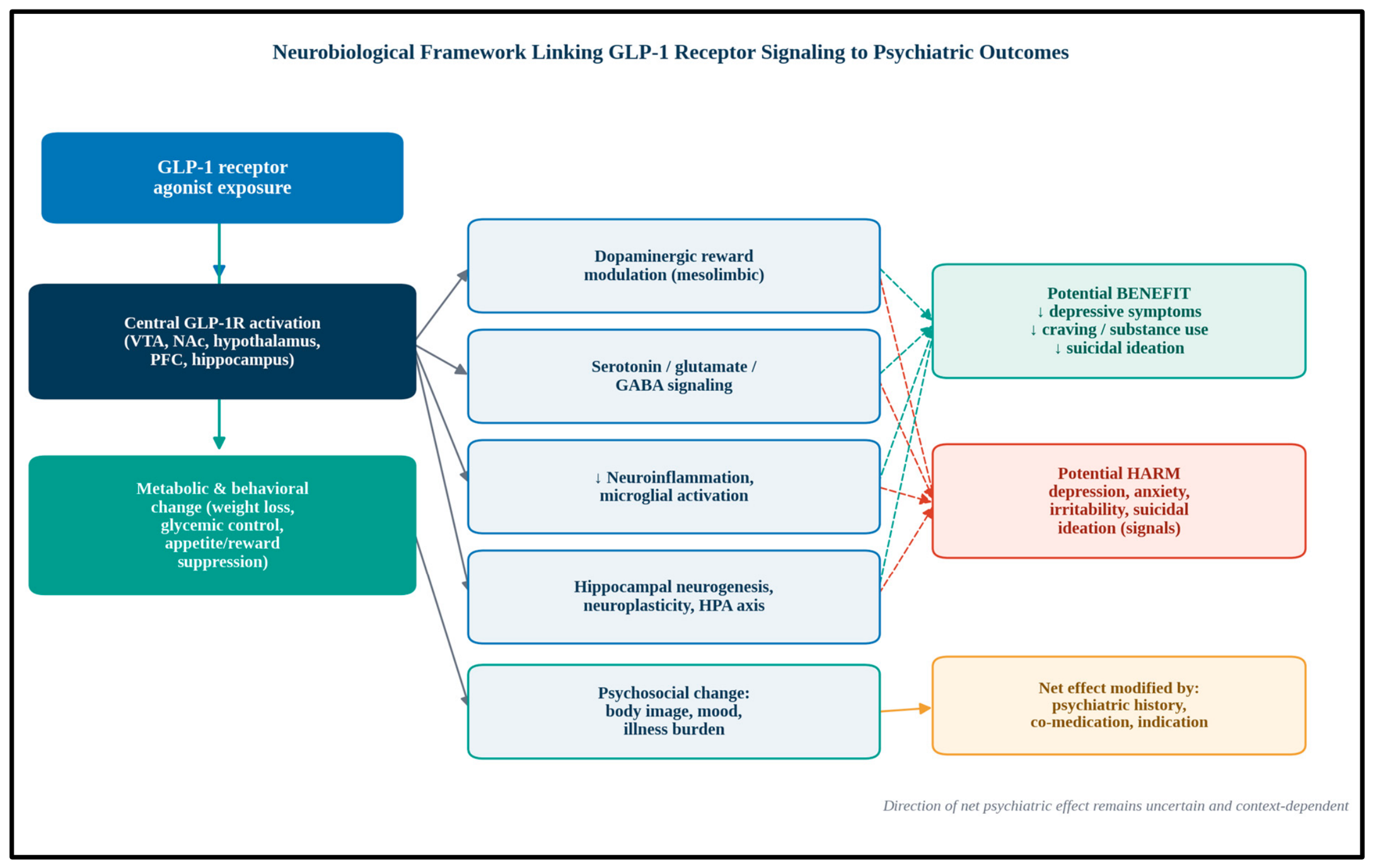
GLP-1 receptors are expressed not only peripherally but throughout brain regions central to mood, motivation, and reward, including the hypothalamus, ventral tegmental area, nucleus accumbens, prefrontal cortex, and hippocampus [8,9]. Within the mesolimbic circuit, GLP-1 signaling modulates dopaminergic transmission and reduces the rewarding value of food and other reinforcers, a property that underlies both appetite suppression and the observed reductions in craving and substance-seeking behavior [8,9]. GLP-1 also influences serotonergic, glutamatergic, and GABAergic systems that mediate depression- and anxiety-related behaviors [9].
Several of these central actions plausibly favor benefit rather than harm. Preclinical studies indicate that GLP-1 RAs attenuate microglial activation and neuroinflammation, promote hippocampal neurogenesis, enhance neuroplasticity, and normalize hypothalamic–pituitary–adrenal axis responses to stress [8,10]. Because insulin resistance and obesity are themselves associated with low-grade neuroinflammation and altered reward processing, improving the metabolic milieu may indirectly relieve depressive features such as anhedonia and cognitive slowing [8]. At the same time, agents that more readily cross the blood–brain barrier could, in principle, provoke mood disturbance, apathy, or other central adverse effects in susceptible individuals [8]. The mechanistic literature is therefore bidirectional: it supports both a therapeutic and an adverse hypothesis, and cannot by itself adjudicate the direction of the net psychiatric effect (Figure 1).

3.2. Pharmacovigilance and Disproportionality Evidence

Spontaneous-reporting databases were the first to flag a possible association and remain the principal source of positive signals. Analyses of FAERS, VigiBase, and EudraVigilance have repeatedly identified depression, anxiety, and suicidal ideation among the most frequently reported psychiatric adverse events for the class, with a minority of reports describing fatal or life-threatening outcomes [7,28]. Importantly, when individual agents are examined separately, the signal is largely concentrated in semaglutide [29,30].
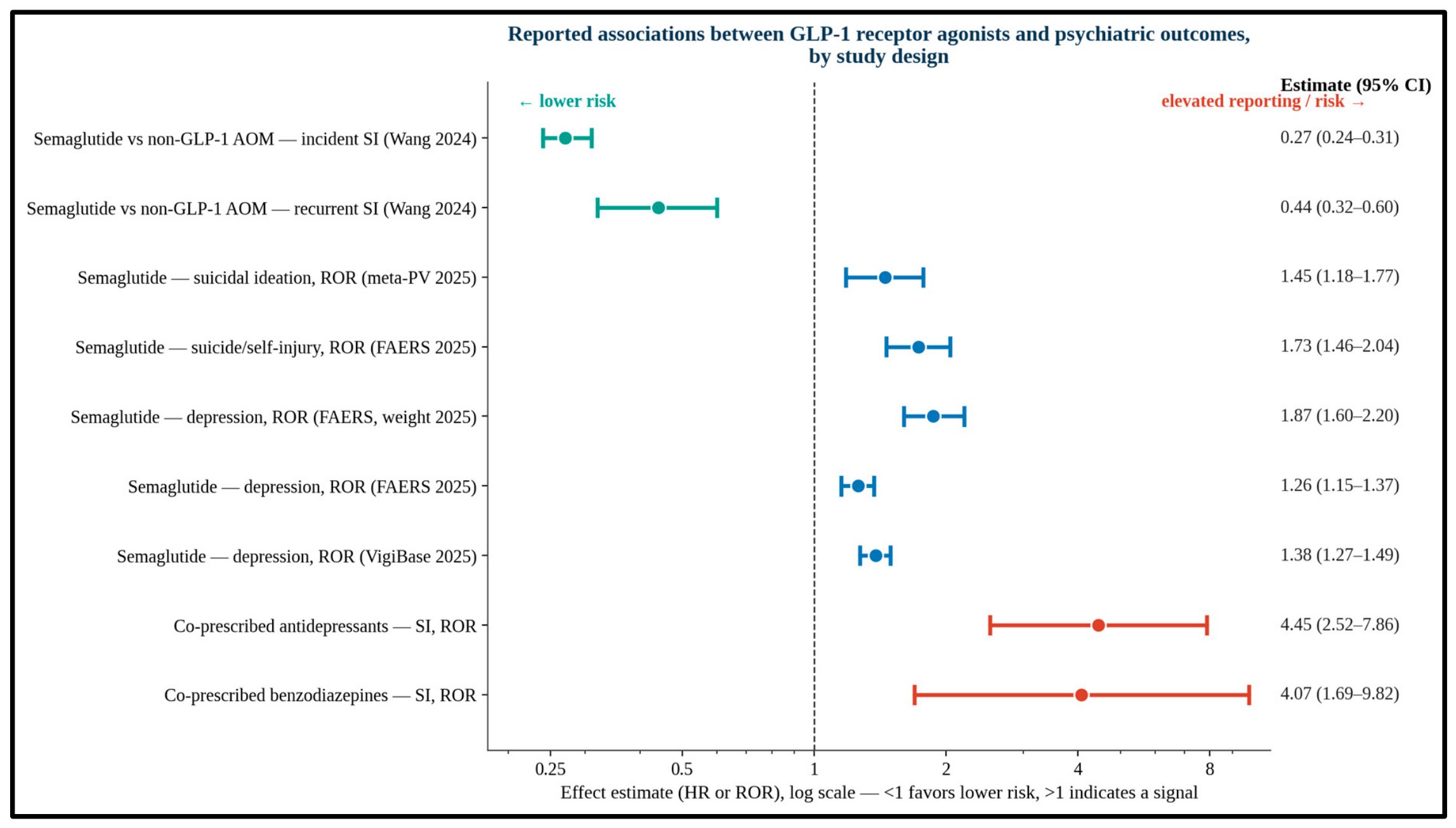
In a dual-database disproportionality analysis through December 2024, only semaglutide demonstrated statistically significant signals for depressive disorders (FAERS ROR 1.26, 95% CI 1.15–1.37; VigiBase ROR 1.38, 95% CI 1.27–1.49), whereas liraglutide and tirzepatide showed no such signals; disproportionality was greater among women and in reports submitted by health professionals [30]. A separate FAERS analysis restricted to weight-management indications similarly identified significant signals for semaglutide in both depression (ROR 1.87, 95% CI 1.60–2.20) and suicide or self-injury (ROR 1.73, 95% CI 1.46–2.04), but not for liraglutide or tirzepatide, leading the authors to hypothesize that tirzepatide may warrant further investigation in patients with psychiatric comorbidity because no significant psychiatric safety signal was observed in that analysis; however, these findings should be interpreted cautiously given the inherent limitations of spontaneous-reporting data [29]. A WHO VigiBase disproportionality analysis likewise examined semaglutide and liraglutide in relation to suicidality [7].
These findings must be weighed against the well-recognized limitations of disproportionality methods. Spontaneous reports cannot establish causation or incidence; they are vulnerable to stimulated reporting and media-driven notoriety effects, to confounding by indication, and to channeling, because patients with obesity, diabetes, and pre-existing mood disorders are both more likely to receive GLP-1 RAs and independently at elevated risk of suicidality [2,11]. The pronounced concentration of the signal in the single most heavily publicized agent, semaglutide, is itself consistent with a reporting artifact rather than a class-wide pharmacological effect [29,30]. Systematic reviews that have pooled pharmacovigilance data accordingly describe the evidence as inconsistent and of low certainty [2,11].

Agent-Level Heterogeneity

An important feature of the signal is that it is not uniform across the class. When agents are analyzed individually, disproportionate reporting of depression and suicidality is largely confined to semaglutide, whereas liraglutide and the dual GIP/GLP-1 agonist tirzepatide generally show no signal (Table 1) [29,30]. Because all marketed agents are large peptides with limited and broadly similar central nervous system access, this agent-level heterogeneity is difficult to attribute to a clean pharmacological mechanism and may reflect the far greater prescribing volume and media attention surrounding semaglutide, although true agent-specific differences cannot be completely excluded [29,31]. The stronger signal for semaglutide relative to liraglutide and tirzepatide most likely reflects its far greater prescribing volume, media attention, and consequent reporting bias rather than a genuine agent-specific difference in psychiatric risk, and apparent drug-specific differences should not be overinterpreted.

3.3. Cohort and Controlled Evidence

Controlled observational studies have produced markedly more reassuring results. In a propensity-matched retrospective cohort drawn from the TriNetX electronic health record network, semaglutide was associated with a lower risk of both incident (HR 0.27, 95% CI 0.24–0.31) and recurrent (HR 0.44, 95% CI 0.32–0.60) suicidal ideation compared with non-GLP-1 anti-obesity medications among patients with overweight or obesity, with consistent findings replicated in more than 1.5 million patients with type 2 diabetes [1]. A nationwide French case–time–control study using the national health data system similarly found no increase, and in several strata a reduction, in suicide or suicide attempt among GLP-1 RA users [32]. Cohort findings are not uniform; however, using the same electronic-record network but a general non-user comparator, Kornelius et al. reported higher risks of depression, anxiety, and suicidal behavior, underscoring those observational signals depend heavily on comparator choice and residual confounding [33].
The most definitive controlled evidence comes from the FDA’s 2025–2026 review. The agency performed a meta-analysis of 91 placebo-controlled GLP-1 RA trials enrolling 107,910 participants (60,338 receiving a GLP-1 RA and 47,572 receiving a placebo) and found no increased risk of suicidal ideation or behavior, nor of anxiety, depression, irritability, or psychosis [4]. It complemented this with a retrospective cohort of more than 2.2 million patients from the FDA Sentinel System, comparing new users of GLP-1 RAs with users of sodium–glucose cotransporter-2 inhibitors, which likewise showed no increased risk of intentional self-harm, including among patients with concurrent obesity [4]. A systematic review of the suicidality literature reached the same broad conclusion, finding no positive class-wide signal for suicidal events [12]. The contrast between study designs is summarized in Figure 2.

Summary of Pivotal Studies

Table 2 summarizes the studies that most shape current understanding, spanning electronic-health-record cohorts, a nationwide case–time–control analysis, a multimillion-patient claims cohort, pooled randomized trials, and disproportionality analyses [1,4,7,29,32]. The pattern is consistent: controlled designs converge on the absence of increased risk, whereas uncontrolled spontaneous-reporting data supply the divergent signals [11,12].

3.4. Outcome-Specific Findings

3.4.1. Suicidal Ideation and Behavior

The divergence between data sources is most acute for suicidality. Whereas spontaneous reports produce semaglutide-specific signals, controlled cohorts and pooled trial data consistently show no increase and frequently a risk reduction [1,4,12]. The most clinically informative nuance is effect modification: in a meta-analytic synthesis of pharmacovigilance data, the suicidal-ideation signal for semaglutide was substantially amplified among patients co-prescribed antidepressants (ROR 4.45, 95% CI 2.52–7.86) or benzodiazepines (ROR 4.07, 95% CI 1.69–9.82), markers of pre-existing psychiatric illness [2]. This pattern suggests that any residual risk is concentrated in psychiatrically vulnerable individuals rather than the general treated population, an interpretation echoed by multiple reviews recommending heightened vigilance in this subgroup [2,11]. This amplified signal is derived from spontaneous-reporting data and may reflect the underlying psychiatric burden of patients prescribed antidepressants or benzodiazepines rather than a true pharmacological interaction; it should therefore be interpreted with caution and not as evidence of a causal drug–drug effect.

3.4.2. Depression and Anxiety

For depression and anxiety, semaglutide-specific reporting signals coexist with reassuring controlled data [29,30]. The FDA meta-analysis found no excess of depression, anxiety, or irritability versus placebo [4]. A national cohort study from Sweden examining people with established depression and anxiety found that the latest large meta-analytic reviews incorporating placebo data have been reassuring, with no increase in suicide or depression severity, even as individual studies reported mixed beneficial, harmful, or null effects [35]. The balance of evidence suggests that, at the population level, GLP-1 RAs neither reliably worsen nor reliably treat depressive and anxiety symptoms, though modest antidepressant effects have been reported in some metabolic populations [8,10]. Several mechanisms have been proposed to account for these observations, including improvements in weight and glycemic control, enhanced insulin sensitivity, and reduced systemic and neuro-inflammation, each of which may plausibly influence mood [8,10]. GLP-1 RAs may also interrupt a cycle in which psychotropic medications promote weight gain and metabolic dysfunction that, in turn, worsen mood and adherence. These mechanistic explanations remain hypothetical and require confirmation in dedicated studies.

3.4.3. Other Psychiatric Domains and Potential Benefits

Beyond adverse outcomes, the same receptor pharmacology has generated interest in therapeutic applications. Reviews describe modest antidepressant effects, reductions in alcohol and other substance use, attenuation of binge-eating behavior, and clear metabolic benefit in patients with serious mental illness, alongside as-yet inconsistent effects on core psychotic symptomatology [8,10,11]. An umbrella review of meta-analytic evidence concluded that quality-of-life and psychiatric outcomes were generally favorable or neutral across the synthesized literature [34]. These potential benefits reinforce the view that the psychiatric profile of GLP-1 RAs is, on balance, neutral to favorable rather than predominantly harmful [10,34].
Across these domains, the evidence is concentrated in the neurotic spectrum—depression, anxiety, and suicidality—where most pharmacovigilance, cohort, and trial data lie. Evidence for psychotic-spectrum outcomes remains sparse and of low certainty, with no consistent signal of symptom worsening.
A rapidly growing literature links GLP-1 RAs to reduced addictive behavior. A 2025 synthesis of seven observational cohorts found alcohol-use-disorder incidence reduced by roughly 35% (hazard ratio 0.65; 95% CI 0.56–0.74) among treated patients, and a register-based study reported lower alcohol-related hospitalization with semaglutide and liraglutide; preclinical work consistently shows reduced alcohol, nicotine, and opioid intake [36,37]. The proposed mechanism—attenuation of mesolimbic dopaminergic reward signaling—overlaps with the appetite-suppressing action of the class.
Sleep is a further neuropsychiatric-adjacent domain in which the class appears beneficial: GLP-1 receptor agonists and the dual GIP/GLP-1 agonist tirzepatide reduce the severity of obstructive sleep apnea, largely through weight loss and decreased upper-airway fat deposition [38].
Beyond psychiatric outcomes, GLP-1 RAs have generated growing interest for neuroprotection, with real-world cohorts reporting reduced incident dementia and preclinical models of Alzheimer and Parkinson disease showing attenuated amyloid and tau pathology, reduced neuroinflammation, and preserved synaptic function [39]. These neurocognitive signals lie outside the present safety focus but reinforce that the net central effect of the class appears neutral-to-favorable.
Several mechanisms plausibly underlie these protective associations. Weight loss and improved glycemic control relieve the burden of obesity and diabetes; enhanced insulin sensitivity and reduced systemic and neuro-inflammation may directly improve mood and cognition; and modulation of reward circuitry reduces craving. Importantly, GLP-1 RAs may interrupt a vicious cycle in which psychotropic medications cause weight gain and metabolic dysfunction, which in turn worsen mood, self-image, and adherence—particularly in patients with co-occurring psychiatric illness and substance use—so that breaking this cycle may yield psychiatric benefit beyond metabolic effects. These proposed mechanisms are biologically plausible but remain hypotheses derived largely from preclinical and mechanistic data [8,10]; they have not been established as causal in clinical populations and are presented here as tentative explanatory pathways rather than confirmed effects.

3.4.4. Certainty of the Evidence

Synthesizing across designs, we provide an author-derived, GRADE-informed appraisal of the relative certainty of evidence for each principal outcome (Table 3). This appraisal is intended as a structured interpretive framework rather than a formal GRADE assessment. Certainty is highest for the absence of an increased suicidality risk in the general treated population, supported by pooled randomized data and large cohorts, but is downgraded by the systematic exclusion of psychiatrically ill patients from trials and by imprecision for rare events [4,11]. It is lowest for the possibility of harm in psychiatrically vulnerable, co-medicated patients, where only uncontrolled pharmacovigilance signals exist [2].

3.5. Evolution of the Regulatory Position

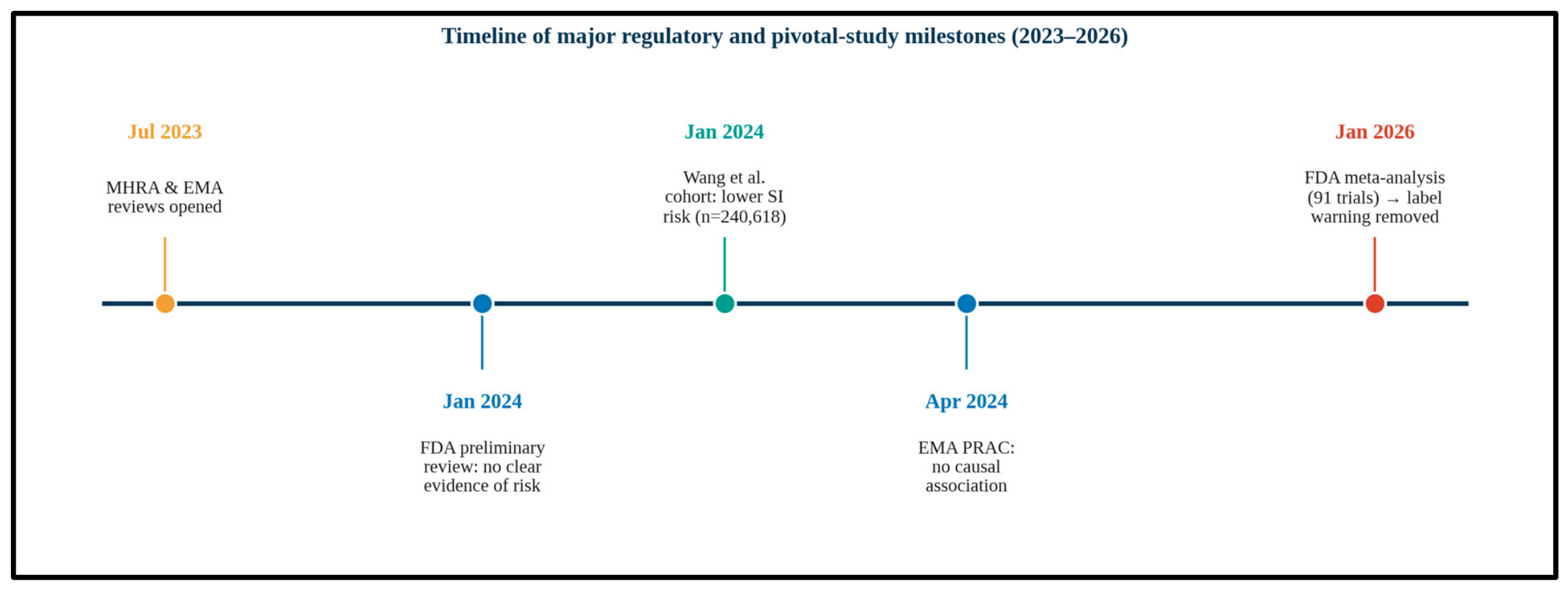
Regulatory assessments have converged over three years from cautious concern to reassurance (Figure 3). After the 2023 European and UK reviews, the FDA’s January 2024 preliminary evaluation reported no clear evidence that GLP-1 RAs cause suicidal thoughts or actions, while noting that small case counts left the estimate imprecise [5]. In April 2024, the EMA Pharmacovigilance Risk Assessment Committee concluded that the available evidence did not support a causal association, citing electronic-health-record analyses showing no such link [6]. An NIH-supported real-world analysis reported a 49% to 73% lower risk of suicidal ideation with semaglutide than with comparator agents, further countering the early anecdotal concern [40].
The most consequential step came in January 2026, when the FDA, having improved the precision of the estimate through its 91-trial meta-analysis and its multimillion-patient Sentinel cohort, concluded that the totality of the evidence did not support a causal relationship and requested removal of the suicidal-behavior-and-ideation warning from the labeling of semaglutide, liraglutide, and tirzepatide [4]. The agency nonetheless advised clinicians to continue discussing mental health with patients and to refer any patient reporting suicidal ideation for evaluation [4]. This is logical given the variety of psychiatric medications available and being prescribed for diverse patient groups who often have co-occurring psychiatric illnesses along with substance use.
The arc of this reassessment is instructive. The initial precautionary posture reflected the nature of the earliest evidence: a cluster of spontaneous post-marketing reports of suicidal ideation and self-harm, which by design can raise but never confirm a safety hypothesis, arriving at a moment of unprecedented prescribing volume and intense media attention. Faced with a signal that was biologically plausible and potentially serious, regulators reasonably prioritized caution while more definitive data were assembled. The subsequent shift was driven not by diminishing concern but by accumulating controlled evidence, large propensity-matched cohorts, a nationwide case–time–control analysis, and ultimately a pooled analysis of 91 randomized trials together with a multimillion-patient active-comparator cohort that progressively narrowed the confidence intervals around a null or protective estimate. The 2026 decision to remove the warning, therefore, reflects convergence of the most rigorous available designs rather than a reversal of principle, and regulators explicitly retained the advice to remain alert to mood symptoms in individual patients [4,5,6]. The chronology of these determinations is summarized in Table 4.

4. Discussion

4.1. Clinical Implications

The current evidence supports continued, individualized use of GLP-1 RAs without categorical psychiatric restriction [1,4]. The monitoring recommendations that follow represent expert opinion informed by the currently available evidence rather than formal evidence-based guidelines. Several practical principles follow. First, a personal or family history of mood disorder, active suicidality, or concurrent use of antidepressants or benzodiazepines identifies patients who warrant closer monitoring, because residual risk appears concentrated in this group [2,11]. Second, baseline screening for depression and suicidality with validated instruments, followed by periodic reassessment during dose escalation, is a low-cost safeguard recommended across reviews [11]. Third, patients and caregivers should receive psychoeducation to recognize and promptly report mood change, marked appetite or sleep disruption, or emerging suicidal thoughts [11]. Fourth, where psychiatric comorbidity is a concern, the agent-level pattern of pharmacovigilance signals may inform selection, although this observation derives from low-certainty data and should not override efficacy or tolerability considerations [29]. Finally, clinicians should distinguish drug-attributable effects from the substantial baseline psychiatric burden of obesity and diabetes, and from the psychological sequelae of rapid weight change (Table 5) [8,35].

4.2. Special Populations

Adolescents. Liraglutide and semaglutide are now approved for adolescents aged 12 years and older with obesity, a developmental window in which baseline rates of suicidal ideation are higher and in which the pivotal weight-loss trials enrolled limited numbers and excluded significant psychiatric illness [3]. Adolescence is itself a period of heightened vulnerability to mood disorders and suicidality, and the pivotal pediatric trials illustrate the resulting evidence gap directly: the STEP TEENS trial of once-weekly semaglutide randomized only 201 adolescents, and the liraglutide trial of Kelly and colleagues a similarly modest number, with both programs excluding youth with significant psychiatric illness and lacking statistical power to detect rare neuropsychiatric events [41,42,43]. As pediatric prescribing of agents such as Wegovy and Saxenda expands, this underrepresentation argues for a structured monitoring approach: documentation of baseline mood and suicidality with an age-appropriate validated instrument, reassessment at each dose escalation and follow-up visit, explicit involvement of caregivers in recognizing and reporting behavioral change, and a low threshold for referral to child and adolescent mental health services [11,43]. Agent-specific neuropsychiatric data in youth, therefore, remain sparse, making baseline and periodic screening for mood symptoms and suicidality, with caregiver involvement, the prudent default [3,11].
Serious mental illness. In individuals with schizophrenia, bipolar disorder, and other serious mental illnesses, GLP-1 receptor agonists have demonstrated benefits for antipsychotic-associated weight gain and metabolic abnormalities, whereas their effects on core psychiatric symptoms remain inconsistent; metabolic treatment should not be withheld from this group based on unproven psychiatric risk [11,44].
Pregnancy, lactation, and older adults. GLP-1 RAs are not recommended in pregnancy and are generally discontinued before conception, given limited safety data, with product-specific lactation guidance [3]. In older adults, polypharmacy, frailty, and sarcopenia warrant individualized assessment, although psychiatric-specific evidence is limited [11].

4.3. A Practical Monitoring Pathway

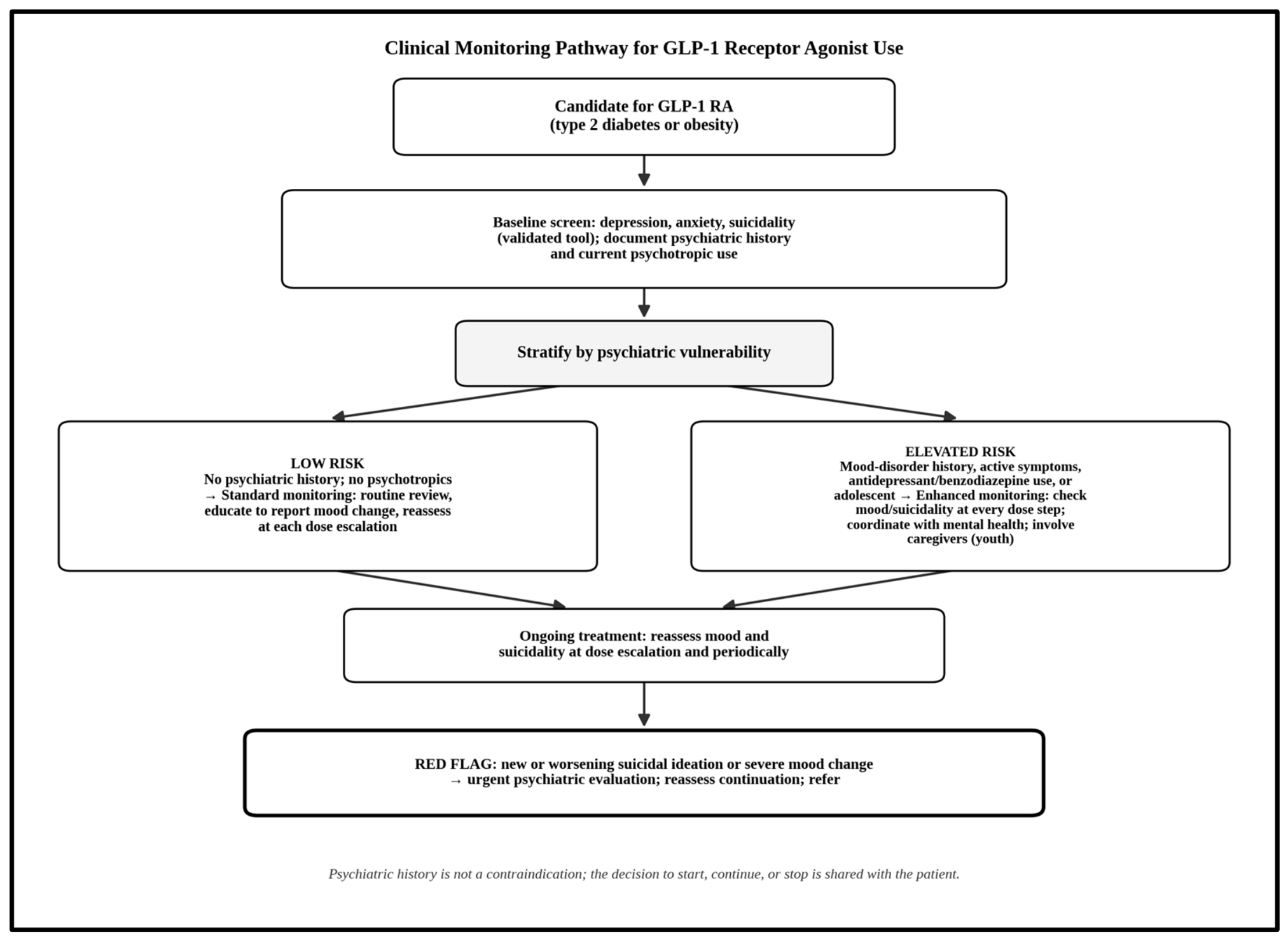
These principles reduce to a simple operational pathway (Figure 4): screen at baseline, stratify by psychiatric vulnerability, match the intensity of monitoring to that stratum, and respond decisively to red-flag symptoms without reflexively discontinuing an effective therapy [4,11]. A practical framework for monitoring neuropsychiatric safety during GLP-1 receptor agonist therapy is presented in Table 6.

4.4. Sources of Bias and Confounding

Interpreting the discordant evidence requires attention to the specific biases that distinguish the data sources. The most important is confounding by indication and its close relative, channeling bias: GLP-1 RAs are preferentially prescribed to patients with obesity, type 2 diabetes, and cardiovascular disease, all of which carry an elevated baseline burden of depression, anxiety, and suicidality [45,46]. Patients channeled toward these agents are therefore not exchangeable with untreated comparators, and any naive contrast will tend to attribute pre-existing psychiatric risk to the drug itself [47]. Propensity matching and active-comparator, new-user designs mitigate but cannot fully eliminate this distortion, because the very clinical features that drive prescribing are often incompletely captured in claims and electronic-health-record data.
Two further biases inflate the spontaneous-reporting signals specifically. Reporting, or notoriety, bias arises when intense media and regulatory attention, which semaglutide received an extraordinary share, stimulates disproportionate submission of adverse-event reports, mechanically elevating disproportionality estimates without any change in the underlying risk [48,49]. Detection bias compounds this: patients receiving GLP-1 RAs typically have more frequent healthcare encounters, creating more opportunities for psychiatric symptoms to be elicited, coded, and reported than in less closely followed comparators. Taken together, channeling, notoriety, and detection bias provide a coherent non-causal explanation for why uncontrolled reporting data and rigorously controlled studies have so consistently diverged, and they justify weighting the controlled designs more heavily in any causal appraisal [47,48].

4.5. Limitations of the Evidence Base

Several constraints temper any firm conclusion. Pharmacovigilance data cannot establish incidence or causation and are distorted by stimulated and selective reporting [2]. Observational cohorts, although large, remain susceptible to residual confounding and channeling despite propensity matching, and most have short follow-up that may miss delayed effects [1,32]. Randomized trials, the basis of the reassuring meta-analysis, systematically excluded patients with significant psychiatric illness and were not powered for rare events such as completed suicide, so they speak most directly to the general treated population rather than to the highest-risk subgroups [4,11]. Heterogeneity in agents, doses, indications, outcome definitions, and baseline psychiatric status further complicates synthesis, and the consistent underrepresentation of individuals with psychiatric disorders is the single most important gap in the literature [11,34]. These limitations can be grouped by data source. Pharmacovigilance analyses are additionally constrained by substantial under-reporting of adverse events, duplicate and incomplete case reports, and notoriety bias following safety alerts, none of which permit estimation of incidence [48,50]. Cohort studies remain vulnerable to residual confounding from unmeasured psychiatric severity and to misclassification arising from administrative coding inaccuracies, even when propensity methods are applied [45,47]. Randomized trials, finally, are limited by the routine exclusion of patients with active or severe psychiatric illness and by underpowering for rare events such as completed suicide, so that the population in greatest need of safety data is the one least represented in the highest-quality evidence [4,11].

5. Conclusions

The emerging evidence has not demonstrated a causal relationship between GLP-1 receptor agonists (GLP-1 RAs) and suicidality or major psychiatric harm in the general treated population. Current controlled evidence has not shown an increased risk in the general treated population, but this should not be equated with a complete exclusion of risk, particularly for high-risk psychiatric patients who were underrepresented in the available trials. Early spontaneous-reporting signals, largely confined to semaglutide and plausibly influenced by notoriety effects, reporting bias, and residual confounding, have not been corroborated by propensity-matched cohorts, a nationwide case–time–control study, a multimillion-patient claims cohort, or a meta-analysis of 91 placebo-controlled trials, all of which found no increased risk and, in some analyses, a reduced risk of suicidal ideation [1,4,12,32]. The principal residual uncertainty concerns psychiatrically vulnerable patients, particularly those with pre-existing mood disorders or concurrent psychotropic medication use, in whom reporting signals appear amplified and randomized data remain limited [2,11].
Importantly, any assessment of potential neuropsychiatric risk should be interpreted within the broader context of the substantial and well-established benefits of GLP-1 receptor agonists. These agents improve glycemic control, promote clinically meaningful weight loss, reduce cardiovascular risk, and are increasingly incorporated into evidence-based management strategies for type 2 diabetes and obesity [25,26,27]. Consequently, isolated pharmacovigilance signals should be weighed against the overall therapeutic benefit profile, particularly when controlled clinical and observational studies have not demonstrated a corresponding increase in psychiatric harm.
The appropriate clinical response is therefore individualized monitoring and shared decision-making rather than restriction of a therapeutic class with substantial glycemic, metabolic, cardiovascular, and potentially neuropsychiatric benefits. Baseline assessment of psychiatric history, routine monitoring for mood changes and suicidal ideation, and closer follow-up of vulnerable patient subgroups remain prudent clinical practices while additional evidence continues to emerge.
Future research should prioritize adequately powered prospective studies that deliberately include patients with pre-existing psychiatric disorders, adolescents, and other underrepresented populations. Such studies will be essential for resolving the remaining uncertainties and refining evidence-based recommendations regarding the neuropsychiatric safety of GLP-1 receptor agonists in diabetes and obesity care [11,34].

Author Contributions

Conceptualization, K.B. and J.K.; methodology, K.B., J.K. and R.B.; investigation, K.B., R.B. and S.A.A.; formal analysis, K.B. and R.B.; literature review and data curation, K.B. and R.B.; writing—original draft preparation, K.B., J.K., R.B. and S.A.A.; writing—review and editing, K.B., J.K., R.B. and S.A.A.; visualization, K.B. and R.B.; supervision, J.K.; project administration, K.B. All authors have read and agreed to the published version of the manuscript.

Funding

This research received no external funding.

Institutional Review Board Statement

Ethical review and approval were waived for this study because it is a narrative review of previously published literature and publicly available regulatory documents and did not involve human participants, animals, or identifiable private information.

Informed Consent Statement

Patient consent was waived because this study did not involve human participants, patient data, or identifiable personal information.

Data Availability Statement

No new data were created or analyzed in this study. This review synthesized information from previously published studies and publicly available regulatory documents. All sources used are cited within the manuscript and are publicly accessible through the referenced publications and websites.

Conflicts of Interest

Ravi Batra is employed by the company Coforge Ltd. The remaining authors declare that the research was conducted in the absence of any commercial or financial relationships that could be construed as a potential conflict of interest.

References

  1. Wang, W.; Volkow, N.D.; Berger, N.A.; Davis, P.B.; Kaelber, D.C.; Xu, R. Association of semaglutide with risk of suicidal ideation in a real-world cohort. Nat. Med. 2024, 30, 168–176. [Google Scholar] [CrossRef] [PubMed]
  2. Bushi, G.; Khatib, M.N.; Rohilla, S.; Singh, M.P.; Uniyal, N.; Ballal, S.; Bansal, P.; Bhopte, K.; Gupta, M.; Gaidhane, A.M.; et al. Association of GLP-1 Receptor Agonists with Risk of Suicidal Ideation and Behaviour: A Systematic Review and Meta-Analysis. Diabetes Metab. Res. Rev. 2025, 41, e70037. [Google Scholar] [CrossRef] [PubMed]
  3. Novo Nordisk. Wegovy (Semaglutide) and Saxenda (Liraglutide) Prescribing Information: Indication for Adolescents Aged 12 Years and Older with Obesity; Novo Nordisk: Bagsværd, Denmark, 2025. [Google Scholar]
  4. US Food and Drug Administration. FDA Requests Removal of Suicidal Behavior and Ideation Warning from Glucagon-Like Peptide-1 Receptor Agonist (GLP-1 RA) Medications. Drug Safety Communication. 13 January 2026. Available online: https://www.fda.gov/drugs/drug-safety-communications/fda-requests-removal-suicidal-behavior-and-ideation-warning-glucagon-peptide-1-receptor-agonist-glp (accessed on 4 June 2026).
  5. US Food and Drug Administration. Update on FDA’s Ongoing Evaluation of Reports of Suicidal Thoughts or Actions in Patients Taking a Certain Type of Medicines Approved for Type 2 Diabetes and Obesity. Drug Safety Communication. Updated 3 April 2026. Available online: https://www.fda.gov/drugs/drug-safety-communications/update-fdas-ongoing-evaluation-reports-suicidal-thoughts-or-actions-patients-taking-certain-type (accessed on 4 June 2026).
  6. European Medicines Agency. Meeting Highlights from the Pharmacovigilance Risk Assessment Committee (PRAC), 8–11 April 2024. 12 April 2024. Available online: https://www.ema.europa.eu (accessed on 4 June 2026).
  7. Schoretsanitis, G.; Weiler, S.; Barbui, C.; Raschi, E.; Gastaldon, C. Disproportionality analysis from World Health Organization data on semaglutide, liraglutide, and suicidality. JAMA Netw. Open. 2024, 7, e2423385. [Google Scholar] [CrossRef] [PubMed]
  8. Carmellini, P.; Cuomo, A.; Rescalli, M.B.; Fagiolini, A. GLP-1 Receptor Agonists in Mood Disorders: A Psychiatric Perspective. Life 2025, 15, 1422. [Google Scholar] [CrossRef] [PubMed]
  9. López-Ojeda, W.; Hurley, R.A. Glucagon-Like Peptide 1: An Introduction and Possible Implications for Neuropsychiatry. J. Neuropsychiatry Clin. Neurosci. 2024, 36, A4–A86. [Google Scholar] [CrossRef] [PubMed]
  10. Tempia Valenta, S.; Nicastri, A.; Perazza, F.; Marcolini, F.; Beghelli, V.; Atti, A.R.; Petroni, M.L. The Impact of GLP-1 Receptor Agonists (GLP-1 RAs) on Mental Health: A Systematic Review. Eur. Psychiatry 2025, 68, S982. [Google Scholar] [CrossRef]
  11. Sa, B.; Maristany, A.; Subramaniam, A.; Guillen, R.; Buonocore, B.; Smith, A.; Oldak, S.E.; Padilla, V. Psychiatric effects of GLP-1 receptor agonists: A systematic review of emerging evidence. Diabetes Obes. Metab. 2026, 28, 50–59. [Google Scholar] [CrossRef] [PubMed]
  12. Valentino, K.; Teopiz, K.M.; Cheung, W.; Wong, S.; Le, G.H.; Rosenblat, J.D.; Mansur, R.B.; McIntyre, R.S. The effect of glucagon-like Peptide-1 receptor agonists on measures of suicidality: A systematic review. J. Psychiatr. Res. 2025, 183, 112–126. [Google Scholar] [CrossRef] [PubMed]
  13. Anderson, R.J.; Freedland, K.E.; Clouse, R.E.; Lustman, P.J. The prevalence of comorbid depression in adults with diabetes: A meta-analysis. Diabetes Care 2001, 24, 1069–1078. [Google Scholar] [CrossRef] [PubMed]
  14. Khaledi, M.; Haghighatdoost, F.; Feizi, A.; Aminorroaya, A. The prevalence of comorbid depression in patients with type 2 diabetes: An updated systematic review and meta-analysis. Acta Diabetol. 2019, 56, 631–650. [Google Scholar] [CrossRef] [PubMed]
  15. Mezuk, B.; Eaton, W.W.; Albrecht, S.; Golden, S.H. Depression and type 2 diabetes over the lifespan: A meta-analysis. Diabetes Care 2008, 31, 2383–2390. [Google Scholar] [CrossRef] [PubMed]
  16. Nouwen, A.; Winkley, K.; Twisk, J.; Lloyd, C.E.; Peyrot, M.; Ismail, K.; Pouwer, F. Type 2 diabetes mellitus as a risk factor for the onset of depression: A systematic review and meta-analysis. Diabetologia 2010, 53, 2480–2486. [Google Scholar] [CrossRef] [PubMed]
  17. Egede, L.E.; Ellis, C. Diabetes and depression: Global perspectives. Diabetes Res. Clin. Pract. 2010, 87, 302–312. [Google Scholar] [CrossRef] [PubMed]
  18. Lustman, P.J.; Anderson, R.J.; Freedland, K.E.; de Groot, M.; Carney, R.M.; Clouse, R.E. Depression and poor glycemic control: A meta-analytic review of the literature. Diabetes Care 2000, 23, 934–942. [Google Scholar] [CrossRef] [PubMed]
  19. Gonzalez, J.S.; Peyrot, M.; McCarl, L.A.; Collins, E.M.; Serpa, L.; Mimiaga, M.J.; Safren, S.A. Depression and diabetes treatment nonadherence: A meta-analysis. Diabetes Care 2008, 31, 2398–2403. [Google Scholar] [CrossRef] [PubMed]
  20. Moulton, C.D.; Pickup, J.C.; Ismail, K. The link between depression and diabetes: The search for shared mechanisms. Lancet Diabetes Endocrinol. 2015, 3, 461–471. [Google Scholar] [CrossRef] [PubMed]
  21. Polonsky, W.H.; Fisher, L.; Earles, J.; Dudl, R.J.; Lees, J.; Mullan, J.; Jackson, R.A. Assessing psychosocial distress in diabetes: Development of the Diabetes Distress Scale. Diabetes Care 2005, 28, 626–631. [Google Scholar] [CrossRef] [PubMed]
  22. Fisher, L.; Hessler, D.M.; Polonsky, W.H.; Mullan, J. When is diabetes distress clinically meaningful? Establishing cut points for the Diabetes Distress Scale. Diabetes Care 2012, 35, 259–264. [Google Scholar] [CrossRef] [PubMed]
  23. Young-Hyman, D.; de Groot, M.; Hill-Briggs, F.; Gonzalez, J.S.; Hood, K.; Peyrot, M. Psychosocial care for people with diabetes: A position statement of the American Diabetes Association. Diabetes Care 2016, 39, 2126–2140. [Google Scholar] [CrossRef] [PubMed]
  24. American Diabetes Association Professional Practice Committee. 2. Diagnosis and Classification of Diabetes: Standards of Care in Diabetes-2025. Diabetes Care 2025, 48, S27–S49. [Google Scholar] [CrossRef] [PubMed]
  25. Marso, S.P.; Daniels, G.H.; Brown-Frandsen, K.; Kristensen, P.; Mann, J.F.E.; Nauck, M.A.; Nissen, S.E.; Pocock, S.; Poulter, N.R.; Ravn, L.S.; et al. Liraglutide and cardiovascular outcomes in type 2 diabetes. N. Engl. J. Med. 2016, 375, 311–322. [Google Scholar] [CrossRef] [PubMed]
  26. Marso, S.P.; Bain, S.C.; Consoli, A.; Eliaschewitz, F.G.; Jódar, E.; Leiter, L.A.; Lingvay, I.; Rosenstock, J.; Seufert, J.; Warren, M.L.; et al. Semaglutide and cardiovascular outcomes in patients with type 2 diabetes. N. Engl. J. Med. 2016, 375, 1834–1844. [Google Scholar] [CrossRef] [PubMed]
  27. Lincoff, A.M.; Brown-Frandsen, K.; Colhoun, H.M.; Deanfield, J.; Emerson, S.S.; Esbjerg, S.; Hardt-Lindberg, S.; Hovingh, G.K.; Kahn, S.E.; Kushner, R.F.; et al. Semaglutide and cardiovascular outcomes in obesity without diabetes. N. Engl. J. Med. 2023, 389, 2221–2232. [Google Scholar] [CrossRef] [PubMed]
  28. Tobaiqy, M.; Elkout, H. Psychiatric adverse events associated with semaglutide, liraglutide and tirzepatide: A pharmacovigilance analysis of individual case safety reports submitted to the EudraVigilance database. Int. J. Clin. Pharm. 2024, 46, 488–495. [Google Scholar] [CrossRef] [PubMed]
  29. Wang, M.; Yang, Z.; Yan, M.; Liu, S.; Xiao, S. Depression and suicide/self-injury signals for weight loss medications: A disproportionality analysis of semaglutide, liraglutide, and tirzepatide in FAERS database. J. Affect Disord. 2025, 389, 119670. [Google Scholar] [CrossRef] [PubMed]
  30. Wang, M.; Chen, X.; Liu, Z.; Li, Z.; Zhu, Z.; Liu, S.; Xiao, S. Exploring potential associations between GLP-1RAs and depressive disorders: A pharmacovigilance study based on FAERS and VigiBase data. EClinicalMedicine 2025, 86, 103385. [Google Scholar] [CrossRef] [PubMed]
  31. West, J.; Li, M.; Wong, S.; Le, G.H.; Teopiz, K.M.; Valentino, K.; Dri, C.E.; McIntyre, R.S. Are Glucagon-Like Peptide-1 (GLP-1) Receptor Agonists Central Nervous System (CNS) Penetrant: A Narrative Review. Neurol. Ther. 2025, 14, 1157–1166. [Google Scholar] [CrossRef] [PubMed]
  32. Bezin, J.; Bénard-Laribière, A.; Hucteau, E.; Tournier, M.; Montastruc, F.; Pariente, A.; Faillie, J.-L. Suicide and suicide attempt in users of GLP-1 receptor agonists: A nationwide case-time-control study. eClinicalMedicine 2024, 80, 103029. [Google Scholar] [CrossRef] [PubMed]
  33. Kornelius, E.; Huang, J.-Y.; Lo, S.-C.; Huang, C.-N.; Yang, Y.-S. The risk of depression, anxiety, and suicidal behavior in patients with obesity on glucagon-like peptide-1 receptor agonist therapy. Sci. Rep. 2024, 14, 24433. [Google Scholar] [CrossRef] [PubMed]
  34. Ștefănescu, C.; Bratu, E.A.; Pelin, A.M.; Boroi, D.; Crecan-Suciu, B.D.; Ștefănescu, V. Evaluating Suicidal Risk in GLP-1RA Therapy: An Umbrella Review of Meta-Analytic Evidence. Healthcare 2025, 13, 2958. [Google Scholar] [CrossRef] [PubMed]
  35. Taipale, H.; Taylor, M.; Lähteenvuo, M.; Mittendorfer-Rutz, E.; Tanskanen, A.; Tiihonen, J. Association between GLP-1 receptor agonist use and worsening mental illness in people with depression and anxiety in Sweden: A national cohort study. Lancet Psychiatry 2026, 13, 327–335. [Google Scholar] [CrossRef] [PubMed]
  36. Scheen, A.J. Glucagon-like peptide-1 receptor agonists and alcohol use disorders: An emerging unexpected beneficial effect. Diabetes Obes. Metab. 2025, 27, 4083–4091. [Google Scholar] [CrossRef] [PubMed]
  37. Lähteenvuo, M.; Tiihonen, J.; Solismaa, A.; Tanskanen, A.; Mittendorfer-Rutz, E.; Taipale, H. Repurposing semaglutide and liraglutide for alcohol use disorder. JAMA Psychiatry 2025, 82, 94–98. [Google Scholar] [CrossRef] [PubMed]
  38. Dragonieri, S.; Portacci, A.; Quaranta, V.N.; Carratu, P.; Lazar, Z.; Carpagnano, G.E.; Bikov, A. Therapeutic potential of glucagon-like peptide-1 receptor agonists in obstructive sleep apnea syndrome management: A narrative review. Diseases 2024, 12, 224. [Google Scholar] [CrossRef] [PubMed]
  39. Urkon, M.; Ferencz, E.; Szász, J.A.; Szabo, M.I.M.; Orbán-Kis, K.; Szatmári, S.; Nagy, E.E. Antidiabetic GLP-1 receptor agonists have neuroprotective properties in experimental animal models of Alzheimer’s disease. Pharmaceuticals 2025, 18, 614. [Google Scholar] [CrossRef] [PubMed]
  40. National Institutes of Health. People Taking Semaglutide Had Lower Risk of Suicidal Thoughts. NIH Research Matters. 2024. Available online: https://www.nih.gov/news-events/nih-research-matters/people-taking-semaglutide-had-lower-risk-suicidal-thoughts (accessed on 4 June 2026).
  41. Weghuber, D.; Barrett, T.; Barrientos-Pérez, M.; Gies, I.; Hesse, D.; Jeppesen, O.K.; Kelly, A.S.; Mastrandrea, L.D.; Sørrig, R.; Arslanian, S. Once-weekly semaglutide in adolescents with obesity. N. Engl. J. Med. 2022, 387, 2245–2257. [Google Scholar] [CrossRef] [PubMed]
  42. Kelly, A.S.; Auerbach, P.; Barrientos-Perez, M.; Gies, I.; Hale, P.M.; Marcus, C.; Mastrandrea, L.D.; Prabhu, N.; Arslanian, S. A randomized, controlled trial of liraglutide for adolescents with obesity. N. Engl. J. Med. 2020, 382, 2117–2128. [Google Scholar] [CrossRef] [PubMed]
  43. Bridge, J.A.; Goldstein, T.R.; Brent, D.A. Adolescent suicide and suicidal behavior. J. Child. Psychol. Psychiatry 2006, 47, 372–394. [Google Scholar] [CrossRef] [PubMed]
  44. Larsen, J.R.; Vedtofte, L.; Jakobsen, M.S.L.; Jespersen, H.R.; Jakobsen, M.I.; Svensson, C.K.; Koyuncu, K.; Schjerning, O.; Oturai, P.S.; Kjaer, A.; et al. Effect of Liraglutide Treatment on Prediabetes and Overweight or Obesity in Clozapine- or Olanzapine-Treated Patients with Schizophrenia Spectrum Disorder: A Randomized Clinical Trial. JAMA Psychiatry 2017, 74, 719–728. [Google Scholar] [CrossRef] [PubMed]
  45. Salas, M.; Hofman, A.; Stricker, B.H. Confounding by indication: An example of variation in the use of epidemiologic terminology. Am. J. Epidemiol. 1999, 149, 981–983. [Google Scholar] [CrossRef] [PubMed]
  46. Psaty, B.M.; Koepsell, T.D.; Lin, D.; Weiss, N.S.; Siscovick, D.S.; Rosendaal, F.R.; Pahor, M.; Furberg, C.D. Assessment and control for confounding by indication in observational studies. J. Am. Geriatr. Soc. 1999, 47, 749–754. [Google Scholar] [CrossRef] [PubMed]
  47. Lobo, F.S.; Wagner, S.; Gross, C.R.; Schommer, J.C. Addressing the issue of channeling bias in observational studies with propensity scores analysis. Res. Social. Adm. Pharm. 2006, 2, 143–151. [Google Scholar] [CrossRef] [PubMed]
  48. Pariente, A.; Gregoire, F.; Fourrier-Reglat, A.; Haramburu, F.; Moore, N. Impact of safety alerts on measures of disproportionality in spontaneous reporting databases: The notoriety bias. Drug Saf. 2007, 30, 891–898. [Google Scholar] [CrossRef] [PubMed]
  49. Montastruc, J.L.; Sommet, A.; Bagheri, H.; Lapeyre-Mestre, M. Benefits and strengths of the disproportionality analysis for identification of adverse drug reactions in a pharmacovigilance database. Br. J. Clin. Pharmacol. 2011, 72, 905–908. [Google Scholar] [CrossRef] [PubMed]
  50. Hazell, L.; Shakir, S.A. Under-reporting of adverse drug reactions: A systematic review. Drug Saf. 2006, 29, 385–396. [Google Scholar] [CrossRef] [PubMed]
Figure 1. Conceptual framework linking GLP-1 receptor signaling to psychiatric outcomes. Central receptor activation and downstream metabolic and behavioral change act through dopaminergic, serotonergic, glutamatergic, neuroinflammatory, and neuroplastic pathways, yielding potential benefit, potential harm, or a net effect modified by psychiatric history, co-medication, and treatment indication.
Diabetology 07 00144 g001
Figure 2. Reported associations between GLP-1 receptor agonists and psychiatric outcomes, by study design. Propensity-matched cohort estimates (green) indicate lower risk of suicidal ideation; semaglutide-specific disproportionality estimates (blue) show modest elevated reporting; and the largest reporting signals (red) occur among patients co-prescribed antidepressants or benzodiazepines, indicating effect modification by psychiatric vulnerability. Hazard ratios and reporting odds ratios are not directly interchangeable. CI, confidence interval; AOM, anti-obesity medication; SI, suicidal ideation; ROR, reporting odds ratio; PV, pharmacovigilance. The forest plot displays each estimate as a point with its 95% confidence interval on a logarithmic axis centered on the line of no effect (value 1.0); estimates to the left indicate lower risk and estimates to the right indicate higher reported risk. Plotted estimates, from top to bottom, are: incident suicidal ideation in the propensity-matched cohort of Wang et al. [1] (HR 0.27, 95% CI 0.24–0.31); recurrent suicidal ideation in the same cohort [1] (HR 0.44, 95% CI 0.32–0.60); the semaglutide depression signal in a weight-management FAERS analysis [29] (ROR 1.87, 95% CI 1.60–2.20); and the amplified suicidal-ideation reporting signal among patients co-prescribed antidepressants [29] (ROR 4.45, 95% CI 2.52–7.86). The juxtaposition makes explicit that the protective signals derive from controlled cohort designs, whereas the elevated signals derive from uncontrolled spontaneous-reporting data, with the largest signal confined to a psychiatrically co-medicated subgroup. Estimates are drawn from the propensity-matched cohort of Wang et al. [1], a meta-analysis of suicidal ideation and behaviour [2], and FAERS and VigiBase disproportionality analyses [29,30].
Diabetology 07 00144 g002
Figure 3. Timeline of major regulatory and pivotal-study milestones, 2023–2026, illustrating the trajectory from initial European and UK reviews through the FDA’s 2026 decision to remove suicidality warnings from GLP-1 receptor agonist labeling [1].
Diabetology 07 00144 g003
Figure 4. Clinical monitoring pathway for GLP-1 receptor agonist use. Baseline screening is followed by risk stratification into standard or enhanced monitoring, with predefined red-flag criteria triggering urgent psychiatric evaluation. Psychiatric history is not a contraindication, and decisions to start, continue, or stop are shared with the patient.
Diabetology 07 00144 g004
Table 1. Agent-level comparison of GLP-1 receptor agonists and their psychiatric signal pattern in pharmacovigilance.
AgentReceptor TargetPrincipal Indication (s)Psychiatric Signal in Pharmacovigilance
SemaglutideGLP-1T2DM; obesity (adults and adolescents ≥ 12 y)Significant disproportionality signals for depression and suicide/self-injury across FAERS and VigiBase; concentrated in this most heavily publicized agent
LiraglutideGLP-1T2DM; obesity (adults and adolescents ≥ 12 y)Generally no significant disproportionality signal in recent dual-database analyses
TirzepatideGIP and GLP-1 (dual)T2DM; obesityNo significant signal; proposed as comparatively favorable for patients with psychiatric comorbidity
Dulaglutide, exenatide, lixisenatideGLP-1T2DM (some pediatric T2DM use)Limited dedicated psychiatric data; no consistent class-wide signal
All marketed GLP-1 RAs are large acylated or exendin-based peptides that do not freely cross the blood–brain barrier, instead accessing discrete brain regions through the circumventricular organs; the degree of central penetrance is variable and uncertain. The concentration of signals in semaglutide is therefore more consistent with differential exposure and reporting than with an established pharmacological difference in neuropsychiatric liability.
Table 2. Summary of pivotal studies of GLP-1 receptor agonists and psychiatric outcomes.
Study (Design)Population/SampleComparisonKey Psychiatric Finding
Wang et al., 2024 [1]
(retrospective cohort, EHR)
Overweight/obesity (n = 240,618); replicated in T2DM (n = 1,589,855)Semaglutide vs. non-GLP-1 agentsLower incident (HR 0.27) and recurrent (HR 0.44) suicidal ideation
Systematic reviews/meta-analyses, 2025 [2,12,34]
(pooled)
Pooled observational and pharmacovigilance dataMixed comparatorsNo significant class-wide suicidality signal; low certainty
FDA meta-analysis, 2026 [4,5]
(pooled RCTs)
91 placebo-controlled trials; n = 107,910GLP-1 RA vs. placeboNo increase in suicidal ideation/behavior, anxiety, depression, irritability, or psychosis
FDA Sentinel cohort, 2026 [4,5]
(claims)
n = 2,243,138 with T2DMGLP-1 RA vs. SGLT2 inhibitorNo increased intentional self-harm
Disproportionality analyses, 2024–2025 [7,28,29,30]
(FAERS/VigiBase/EudraVigilance)
Spontaneous adverse-event reportsWithin-database reportingSemaglutide-predominant signals for depression and suicidality
French SNDS, 2024 [32]
(case–time–control)
Adults with suicide or attempt, 2013–2021GLP-1 RA exposure windowNo increase; reduced risk in several strata
Table 3. GRADE-informed appraisal of the certainty of evidence, by psychiatric outcome.
OutcomeDirection of Best Available EvidenceCertaintyPrincipal Basis and Limitation
Suicidal ideation/behaviorNo increased risk; possibly lowerModeratePooled RCT meta-analysis and multimillion-patient cohorts; downgraded for exclusion of psychiatric populations and rare-event imprecision
DepressionNo increased risk overall; isolated semaglutide reporting signalsLow to moderateConsistent controlled data offset by residual confounding and reporting bias
AnxietyNo increased riskLowSparse direct evidence; largely a secondary outcome
Suicidality in psychiatrically vulnerable, co-medicated patientsPossible elevated riskVery lowAmplified pharmacovigilance signal only; no controlled confirmation
Note: Certainty ratings represent an author-derived, GRADE-informed interpretation of the available evidence and should not be considered a formal GRADE assessment because no systematic risk-of-bias evaluation or quantitative evidence grading was performed.
Table 4. Chronology of major regulatory determinations on the neuropsychiatric safety of GLP-1 receptor agonists, 2023–2026.
YearAgency/BodyAction or Determination
2023EMASafety review of GLP-1 RAs in relation to suicidal ideation and self-injury initiated
2023MHRA (UK)Investigation of reports of suicidal thoughts associated with GLP-1 RAs opened
2024 (Jan)FDAPreliminary evaluation reported no clear evidence of causation; precision limited by small case counts
2024 (Apr)EMA (PRAC)Concluded that available evidence did not support a causal association
2026 (Jan)FDARequested removal of the suicidal-behavior-and-ideation warning from labeling of semaglutide, liraglutide, and tirzepatide, following a 91-trial meta-analysis (n = 107,910) and a multimillion-patient Sentinel cohort; advised continued attention to mood symptoms
Table 5. Practical Clinical Recommendations for Monitoring Neuropsychiatric Safety During GLP-1 Receptor Agonist Therapy.
Clinical DomainRecommendationRationale
Baseline AssessmentScreen for depression, anxiety, suicidality, and diabetes distress before initiating GLP-1 receptor agonist therapy.Patients with diabetes have an elevated baseline burden of mood disorders and psychosocial distress.
Psychiatric HistoryDocument prior mood disorders, suicidality, psychiatric hospitalization, and current psychotropic medication use.Residual safety signals appear most pronounced among psychiatrically vulnerable individuals.
Risk StratificationIdentify higher-risk groups, including adolescents, patients with active psychiatric symptoms, and those receiving antidepressants or benzodiazepines.Enhanced monitoring may be warranted in populations underrepresented in clinical trials.
Follow-up MonitoringReassess mood symptoms and suicidal ideation during dose escalation and at routine follow-up visits.Early identification of psychiatric symptoms facilitates timely intervention.
Patient and Caregiver EducationEducate patients and caregivers regarding potential mood changes, behavioral symptoms, and the need to promptly report concerning symptoms.Awareness may improve detection of clinically significant psychiatric changes.
Management of New SymptomsEvaluate new or worsening depression, anxiety, or suicidal ideation promptly and consider mental health referral when indicated.Psychiatric symptoms should not be dismissed as routine treatment effects.
Patients with Serious Mental IllnessCoordinate care with mental health professionals when significant psychiatric comorbidity is present.Multidisciplinary management may optimize both metabolic and psychiatric outcomes.
Benefit–Risk AssessmentContinue shared decision-making, balancing potential psychiatric concerns against the established glycemic, weight-loss, cardiovascular, and cardiometabolic benefits of GLP-1 receptor agonists.Current controlled evidence has not demonstrated a causal increase in suicidality or major psychiatric harm in the general treated population.
Table 6. Actionable Recommendations for Monitoring Neuropsychiatric Safety During GLP-1 Receptor Agonist Therapy.
Recommendation AreaActionable RecommendationSupporting Evidence
Treatment EligibilityDo not withhold GLP-1 receptor agonists solely on psychiatric grounds; current controlled evidence has not demonstrated a causal increase in suicidality or major psychiatric harm.[4]
Baseline ScreeningScreen all patients before treatment initiation for depression, anxiety, and suicidality using validated assessment tools. Document psychiatric history and current psychotropic medication use.[11]
Risk StratificationIdentify patients who may require enhanced monitoring, including those with a history of mood disorders, active psychiatric symptoms, concurrent antidepressant or benzodiazepine use, or adolescent age.[2,3]
Ongoing MonitoringReassess mood symptoms and suicidality during dose escalation and periodically throughout treatment. Provide patients and caregivers with psychoeducation regarding symptom recognition and reporting.[11]
Management of Red-Flag SymptomsTreat new or worsening suicidal ideation as a clinical red flag requiring urgent mental health evaluation, reassessment of treatment continuation, and appropriate referral rather than symptom normalization.[4,11]
Disclaimer/Publisher’s Note: The statements, opinions and data contained in all publications are solely those of the individual author(s) and contributor(s) and not of MDPI and/or the editor(s). MDPI and/or the editor(s) disclaim responsibility for any injury to people or property resulting from any ideas, methods, instructions or products referred to in the content.