


Abstract
The global interest in utilizing waste from agro–industrial processes through the implementation of clean technologies is rapidly increasing. This study evaluates the technical, economic, and environmental feasibility of valorizing regional agro–industrial residues in Santander, Colombia, specifically coffee mucilage, cocoa mucilage, and pig manure, using integrated biorefinery scenarios. Modernizing these processes is essential given a theoretical energy potential of 75,000 TJ/year, which could generate up to 20,833 GWh/year. Three biorefinery scenarios were designed and simulated using Aspen Plus® to produce bio-hydrogen, methane, and methanol. The total plant capacity was established at 31.7 t/day, distributed according to regional biomass availability: 4.62 t/day of cocoa mucilage, 1.83 t/day of coffee mucilage, and 25.25 t/day of pig manure. The technical results for Scenario 1 indicated a reformed H2 production of 0.15 t/day with an associated preheating energy requirement of 193,365 kJ/h. Environmental impact assessment using the ReCiPe 2015 Midpoint methodology identified Scenario 3 as having the lowest direct CO2 mass flow (9.28 t/day) due to carbon consumption during methanol synthesis. However, Scenario 1 reported a CO2 equivalent (CO2e) of 194.37 t/day, reflecting indirect emissions from thermal and energy requirements. Economic analysis, validated through engineering cost references, demonstrated that while Scenario 3 offers a diverse product portfolio, it is currently not cost-effective as the production costs exceed the total expected income. Consequently, Scenario 2 is identified as the most balanced alternative for the Santander context, offering a sustainable compromise between technical efficiency, environmental mitigation, and economic viability.
1. Introduction
Utilizing sustainable resources is essential for the growth and development of the agro–industrial sector, offering a viable pathway for renewable energy production and the generation of environmentally friendly fuels. Biomass, derived from agro–industrial residues, remains an underutilized resource despite its significant energy potential. Biorefineries can be a sustainable solution by converting waste materials such as coffee mucilage, cocoa mucilage, and pig manure into biofuels and value-added products.
In Santander, agro–industrial waste disposal primarily relies on traditional methods, which limit resource efficiency and contribute to environmental pollution [1]. Modernizing these processes by harnessing biomass energy potential could enhance fuel production and support sustainable waste management strategies. The theoretical energy potential of agro–industrial waste in Colombia exceeds 75,000 TJ/year, which could generate up to 20,833 GWh/year, equivalent to 9.4% of the country’s total energy production in 2015. However, much of this energy remains untapped due to waste dispersion in extensive agricultural systems [2].
Among agro–industrial residues, pig manure is the most exploited for energy generation due to its ease of collection within confined livestock systems. Implementing anaerobic biodigesters in pig farms could efficiently convert manure into biomethane and high-quality organic fertilizers with reduced microbial content [3]. Conversely, coffee mucilage, a byproduct of coffee processing, presents significant potential for biogas production, as each kilogram of cherry coffee generates approximately 91 mL of mucilage [4]. Given that Colombia exports approximately one million 60 kg bags of almond coffee annually, an estimated 55,500 tons of fresh mucilage are produced as waste [5].
Similarly, cocoa mucilage represents a valuable biomass resource due to Santander’s dominant role in national cocoa production, contributing 41% of Colombia’s total output [6]. Despite its energy potential, cocoa mucilage remains underutilized, emphasizing the need for integrated biorefinery solutions. Pig manure has proven viable for biogas production, supporting sustainable energy initiatives within Santander’s agricultural sector [7].
This study explores the techno–economic and environmental feasibility of utilizing coffee mucilage, cocoa mucilage, and pig manure within biorefinery systems. This research aims to identify optimal strategies for implementing biorefinery-based waste management solutions in agro–industrial settings by analyzing energy conversion efficiencies, economic viability, and environmental impacts.
Table 1 shows the biomass generated by each sector in tons per year, according to the information collected by Velásquez et al. [8].
Table 1.
Livestock biomass sector.
Most forms of biomass are potential renewable resources with attractive biorefinery compositions in multiple products, including bioenergy and bioactive compounds, that could reduce the dependence on fossil fuels and improve revenue streams.
However, the current use of biomass is still low, with an estimated contribution of 14% to global energy [9]. Due to the need to satisfy the municipal energy demand, the biorefinery concept was born to optimize biomass processing, make it more efficient, and minimize its environmental impacts. The economic development of biorefinery involves the approach of the sustainable development framework [10].
Feasibility studies of existing processes in biorefineries of agro–industrial wastes such as coffee mucilage, cocoa mucilage, and pig manure are limited in quantity and generate waste streams that need additional treatment. Depending on the origin of the plants, different methodologies can be applied for the recovery of agro–industrial waste; among them are the anaerobic co-digestion processes, where an alternative is offered for the treatment of any biodegradable residue or organic waste [11].
Mosquera et al. [12] consider the significant influence of the different operating parameters on biogas production during the anaerobic co-digestion of different substrates available in Colombia, creating Box–Behnken experiment designs based on the physico–chemical characterization of the percentage of nitrogen in digestion processes.
Other authors evaluated the valorization of the liquid effluent from the biodigester to obtain struvite through anaerobic digestion, modeling only the reactor in APPEN, another process such as fermentation (for reducing sugars and carbohydrates), transesterification (for oils and fats), and anaerobic digestion (for organic waste). Ethanol, methanol, n-butanol (from sugars), biodiesel (from oils), and biogas (from organic waste) are obtained from these processes [13].
López Dávila et al. [14] report that the digestion process is immediately inhibited due to the high nitrogen content of pig manure. However, microorganisms can acclimatize, decreasing volatile fatty acid concentration and producing high volumes of biogas.
Anaerobic digestion is the biological oxidation of organic matter through specific microorganisms without molecular oxygen. In this process, organic matter is transformed into stable and inert products, and biogas mainly comprises methane and carbon dioxide [15] (pp. 21–36). This process is considered one of the most useful for reducing greenhouse gas emissions and using organic waste as energy [16].
Aspen Plus has been used to evaluate the feasibility and limitations of combining unitary processes in the generation of integrated biorefineries for the recovery of multiple products [17,18,19,20]. The different process simulation models generate mass and energy balances for correctly selecting equipment and estimating costs. When combined with economic modules such as Aspen Plus, this method can be used for cost-benefit analysis and provide research and investment insights for new product development, expansion, and improvement: technology and its economic viability [21].
By generating models of biorefinery processes, these can be combined with environmental impact assessments to identify relevant environmental bottlenecks and critical points for technological improvements [22]. Life cycle assessment (LCA) is a methodology that identifies, quantifies, and characterizes the different potential environmental impacts associated with each of the life cycle stages of a product. It focuses on redesigning products under the criteria that energy resources and raw materials are not unlimited and that, commonly, they are used faster than they are replaced or new alternatives emerge.
Implementing clean technologies in Santander, Colombia, is scarce since there is no regulatory surveillance regarding managing this waste [23] (pp. 49–76); this contradicts what was expressed in the departmental development plan for 2016–2019, in which Santander was proposed as an area of high energy potential [24]. In this way, the conservation of resources privileges reducing the amount of waste generated through the product. Since this waste will continue to be produced, the ACV proposed to manage the waste sustainably from an environmental point of view, minimizing all the impacts associated with the management system [25].
To the best of the authors’ knowledge, integrated techno–economic and environmental comparisons of biorefinery pathways that simultaneously valorize coffee mucilage, cocoa mucilage, and pig manure under the specific agro-ecological and market conditions of Santander (Colombia) remain scarce. Most previous studies address anaerobic digestion, biogas reforming, or methanol production in isolation and for other feedstocks, and few couple rigorous process simulation with both techno–economic and life cycle evaluation for this particular residue mix. The present study addresses this knowledge gap by jointly assessing bio-hydrogen, methane, and methanol production routes within a single comparative framework that integrates Aspen Plus process simulation, techno–economic analysis (TEA), and life cycle assessment (LCA), thereby providing region-specific decision support for the valorization of these residues. Accordingly, the present analysis is positioned against recent peer-reviewed studies on the characterization and anaerobic conversion of these residues [26,27], biogas reforming and upgrading [28,29], pig-manure valorization [30], and Aspen Plus-based techno–economic and life cycle assessment of hydrogen production from agro–industrial residues in Colombia [31,32].
2. Materials and Methods
Three biorefinery scenarios were proposed for this research. These scenarios were initially simulated using Aspen Plus (Aspen Technology, Inc., Bedford, MA, USA), a commercial simulation software package. Aspen Plus was chosen due to its extensive library of conventional process equipment models and biological, thermodynamic, and mathematical models. This software also integrates Aspen Economic Analyzer (Aspen Technology, Inc., Bedford, MA, USA) to evaluate capital and operating costs. Following the simulation, a life cycle analysis was conducted using the ReCiPe 2015 Midpoint (H) methodology implemented in SimaPro v9.0 software. This methodology evaluates emissions and resource depletion, translating them into limited impact categories.
The methodological procedures employed to attain the study objectives are described below.
The property method used in Aspen Plus was selected according to the polarity, the operating pressure, and the presence of electrolytes and light gases in each section of the flowsheet. For the aqueous fermentation and anaerobic-digestion sections, which involve polar and slightly non-ideal mixtures at low pressure, the Non-Random Two-Liquid (NRTL) activity-coefficient model was applied; for the biogas purification, compression, and reforming sections, which operate at higher pressure and involve light gases (H2, CO, CO2, CH4), the Peng–Robinson equation of state was used. This selection follows the property-method strategy adopted in recent Aspen Plus assessments of hydrogen production from agro–industrial residues under Colombian conditions, in which the NRTL model was used to describe the process thermodynamics [31,32]. The biological conversions (dark fermentation and anaerobic digestion) were represented as stoichiometric (yield-based) reactors defined from the experimental conversions and biogas yields reported for these substrates, whereas the steam-methane reforming, water–gas shift, and methanol-synthesis reactions were modeled as equilibrium (Gibbs free-energy minimization) reactors. The main reactions considered were: CH4 + H2O → CO + 3H2 (steam reforming), CO + H2O → CO2 + H2 (water-gas shift), and CO + 2H2 → CH3OH (methanol synthesis). The dark fermentation and anaerobic-digestion reactors were operated under mesophilic conditions (about 37 °C) at near-atmospheric pressure [26,30]; the steam-reforming reactor was modeled at approximately 800 °C and 15–20 bar with a steam-to-carbon ratio close to 3 and the water–gas shift stage at 320–360 °C, both as Gibbs equilibrium reactors [28]; the methanol-synthesis reactor was modeled at approximately 250 °C and 50–80 bar over a Cu/ZnO/Al2O3 catalyst [33].
Regarding the gas-cleaning train, the purification columns S101–S105 used to remove H2S, NH3, CO, and CO2 were modeled as rate-based absorption columns using an aqueous methyldiethanolamine (MDEA) solvent for the simultaneous removal of the acid gases H2S and CO2, described with the electrolyte NRTL (ENRTL-RK) property method for this section [34,35], while NH3 was removed by water scrubbing; this representation, rather than simple split blocks, reflects an industrially realistic biogas-upgrading operation [29]. The corresponding key operating parameters (solvent flow and concentration, number of stages, operating pressure, and CO2/H2S removal efficiency) are summarized in Table S2, while the kinetic parameters and reaction scheme underlying the CO2/H2S-MDEA rate-based model are detailed in Table S1, both provided in the Supplementary Material [34,35] to ensure reproducibility.
2.1. Capacity of and Demand for Biorefinery Plants
The capacity to be installed was evaluated considering the availability of raw materials in Santander’s department. Santander is one of the regions with the highest growth of the two crops studied (coffee and cocoa), with a significant relationship in the amount of valuable mucilage capable of producing biogas.
Cocoa production is concentrated in the country’s northeast, and the Santander region contributes 28,474 tons/year. Coffee production was estimated at 54,203 tons/year, and pig production was 92,600 heads/year [36]. In general, the above data indicated that the availability of coffee mucilage (CFM), cocoa mucilage (CCM), and pig manure (S.M.) in the study area is 3545 tons, 4499 tons, and 57,910 tons, respectively [36]. This way, 4.62 t/day of cocoa mucilage was processed, along with 1.83 t/day of coffee mucilage and 25.25 t/day of pig manure.
The plant’s total processing capacity was established at 31.7 t/day, consistent with the daily availability of coffee mucilage, cocoa mucilage, and pig manure in the region. To maintain a rigorous mass balance, the total output, including digestate and process water—is adjusted to match this feedstock input, ensuring physical feasibility. The facility is designed for continuous operation 24 h a day, with a total annual uptime of 330 days. Prior to simulation, the three feedstocks were characterized to provide the inputs required by Aspen Plus: their proximate and ultimate (elemental) analyses were used to specify each residue as a non-conventional solid stream, whereas the chemical oxygen demand (COD), the total and volatile solids (TS–VS), and the macromolecular composition (carbohydrates, lipids, and proteins) were used to define the biodegradable fraction converted during dark fermentation and anaerobic digestion. Representative values adopted for the three substrates were as follows: for coffee mucilage, an acidic pH (≈4) and a high content of soluble carbohydrates suitable for dark-fermentative hydrogen production, with an organic load of about 6.5 kg COD/m3 reported for its co-digestion with swine manure [26]; for cocoa mucilage, total sugars of about 12.3 wt% (mainly fructose 4.4, sucrose 2.2, and glucose 2.1 wt%), reducing sugars near 6.4 wt% and a pH of about 3.6 [27]; and for pig manure, total solids of 5–9 wt%, volatile solids of 70–80% of TS, and a low C:N ratio reflecting its high nitrogen content [30]. These properties, together with the regional availability described above, determine the mass and energy balances of the three scenarios and follow the characterization and modeling approach adopted in recent Aspen Plus assessments of hydrogen production from agro–industrial residues under Colombian conditions [31,32].
2.2. Design and Modeling of Processes in ASPEN PLUS
Three industrial-scale biorefinery-type process scenarios were simulated. The simulation was carried out to validate the three proposed conceptual designs, obtaining productivity and performance indicators of the products obtained in each case study. Additionally, the simulations allowed for calculating and verifying design factors such as the equipment’s type, number, size, installed capacity, and approximate cost [37].
2.3. Biorefinery Scenario Description
By comparison, three scenarios were presented for using agro–industrial residues under biorefinery-type processing scenarios. The residues used were coffee mucilage, cocoa mucilage, and pig manure. In the first proposed scenario, priority was given to producing hydrogen (H2) and methane (CH4). In addition to H2 production, operations for reforming the CH4 produced were incorporated in the second scenario. Finally, in the third biorefinery scenario, the generation of methanol and hydrogen obtained from reforming the residual gases of the separation process was proposed.
The main stages of the process of coffee mucilage, cocoa mucilage, and pig manure—the preparation of raw materials, dark fermentation, anaerobic digestion, biogas processing, and digestate processing—were implemented. These processes were combined into three biorefinery scenarios described in the following subsections.
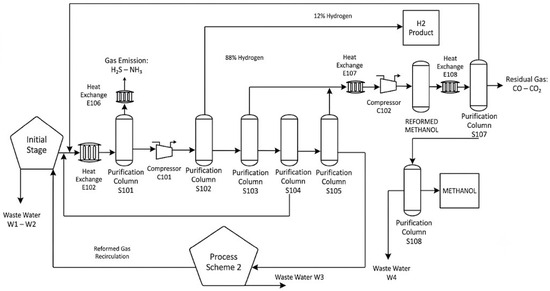
In the three proposed scenarios, the initial preparation stage begins by mixing the substrates in the proportions described in Section 2.1. Subsequently, the raw materials are preheated, requiring an estimated energy consumption of 193,365 kJ/h. This value has been adjusted to reflect the actual processing scale of 31.7 t/day, as the previously reported figure was physically unrealistic for this feedstock volume. The transformation process starts in a specialized dark fermentation reactor, producing a biogas stream, followed by the conduction of the effluent to a second reactor for anaerobic digestion. Finally, the digestate produced is decanted, and the resulting sludge is processed in centrifugal dryers to reach a moisture content of 80%.
2.3.1. Scenario 1
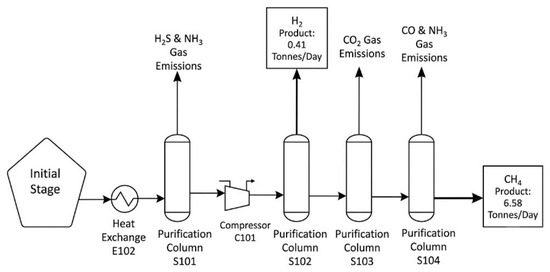
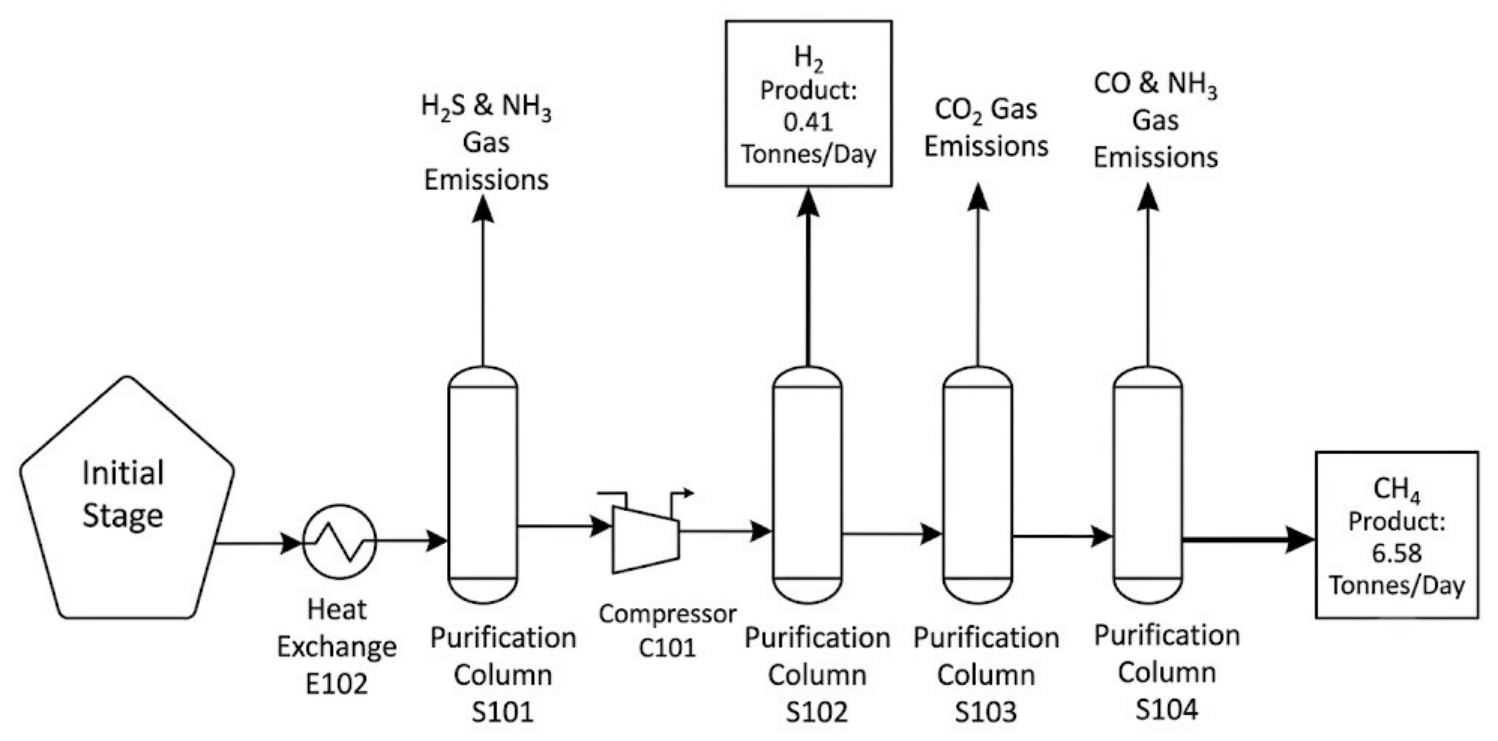
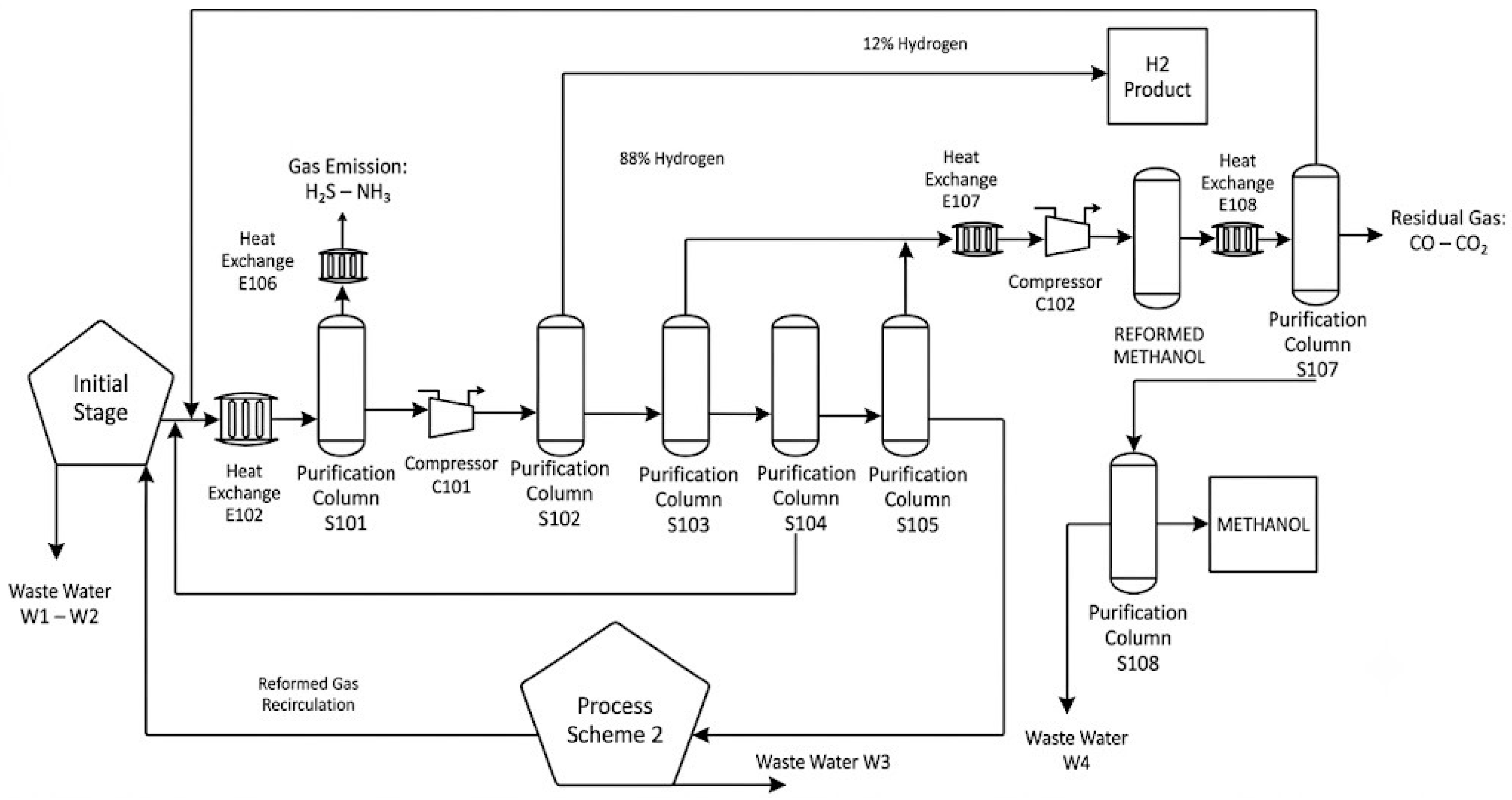
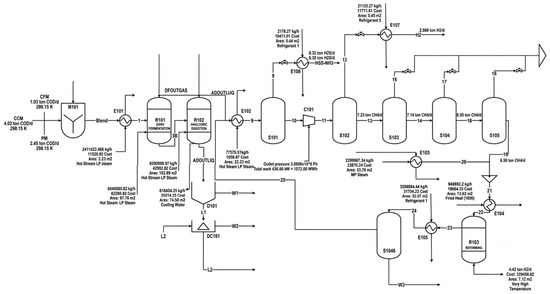
Scenario 1 is the biorefinery scenario obtained from the simulation of the process model, that is, without any modification, Figure 1, it is characterized because the gases are conducted to an initial heat exchanger and then to a column where filtration is applied to remove H2S and NH3. Then, the gas is compressed, and after it experiences a pressure drop when passing through the filter and reaching the three purification columns by reforming, a biogas current of 88% and a bio-hydrogen production of 12% are obtained.
Figure 1.
Scenario 1 process flow diagram.
2.3.2. Scenario 2
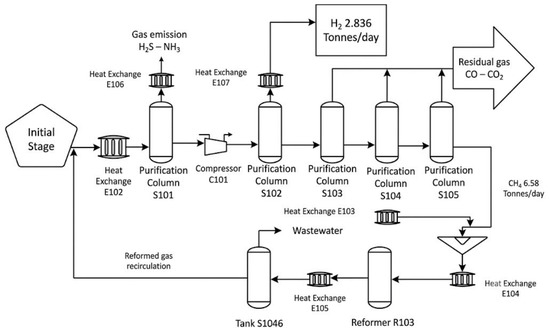
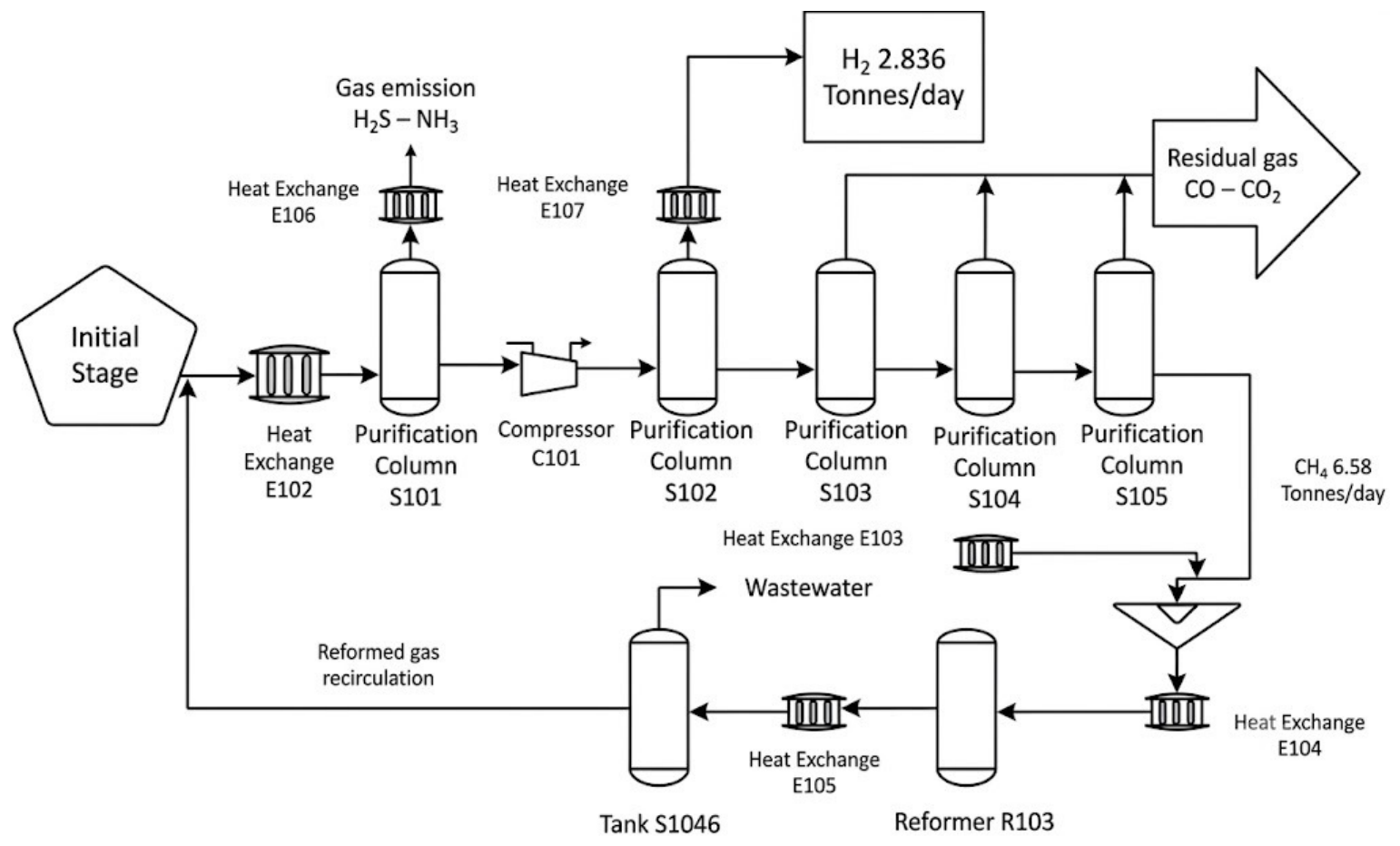
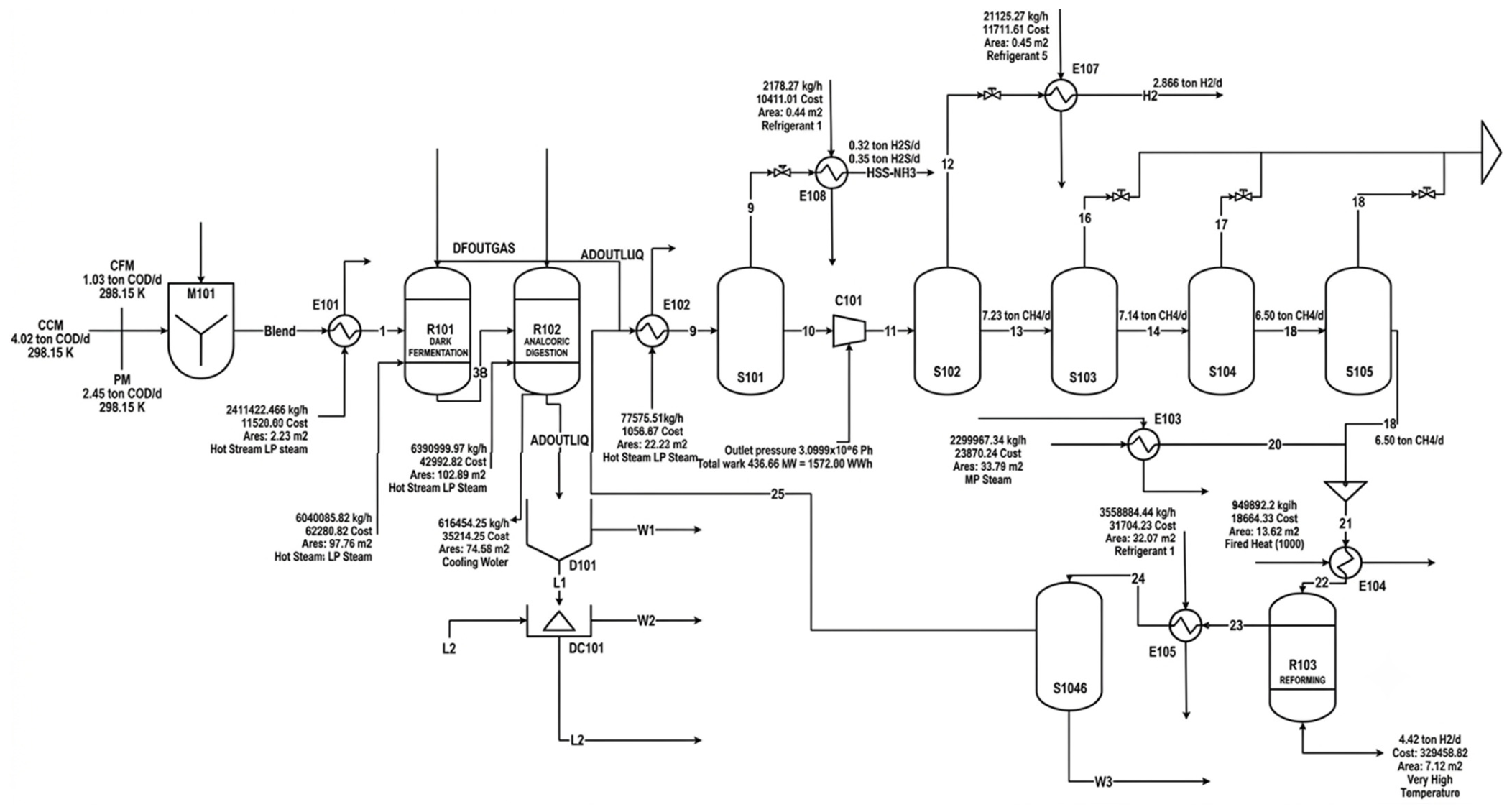
The second scenario was adopted according to Clauser et al. [38], which constantly shows how, in biorefineries, the dark fermentation process begins in substrates rich in carbohydrates and starch, helping with the operation of other equipment and prioritizing the production of gas with a higher calorific value, such as hydrogen. In Scenario 2, shown in Figure 2, different conditions were taken for biogas. After the initial stage, the biogas passes through the heat exchanger, and 77,576.51 kJ/h is added to the process, passing through a biofilter column and increasing the pressure in the compressor to 3.0398 MPa. Finally, it is removed. H2S and NH3. Separation columns S103-S104-S105 helped remove CO and CO2 after hydrogen production. After separating carbon oxide and carbon dioxide in column S105, a recovery rich in methane is achieved, which is taken to a reforming reactor, obtaining residual water. The mechanization process is inserted into the reforming process to take advantage of the biogas in energy transformation, increasing profitability and entering it back into the system as a recycle-to-exchanger [39].
Figure 2.
Scenario 2 process flow diagram.
2.3.3. Scenario 3
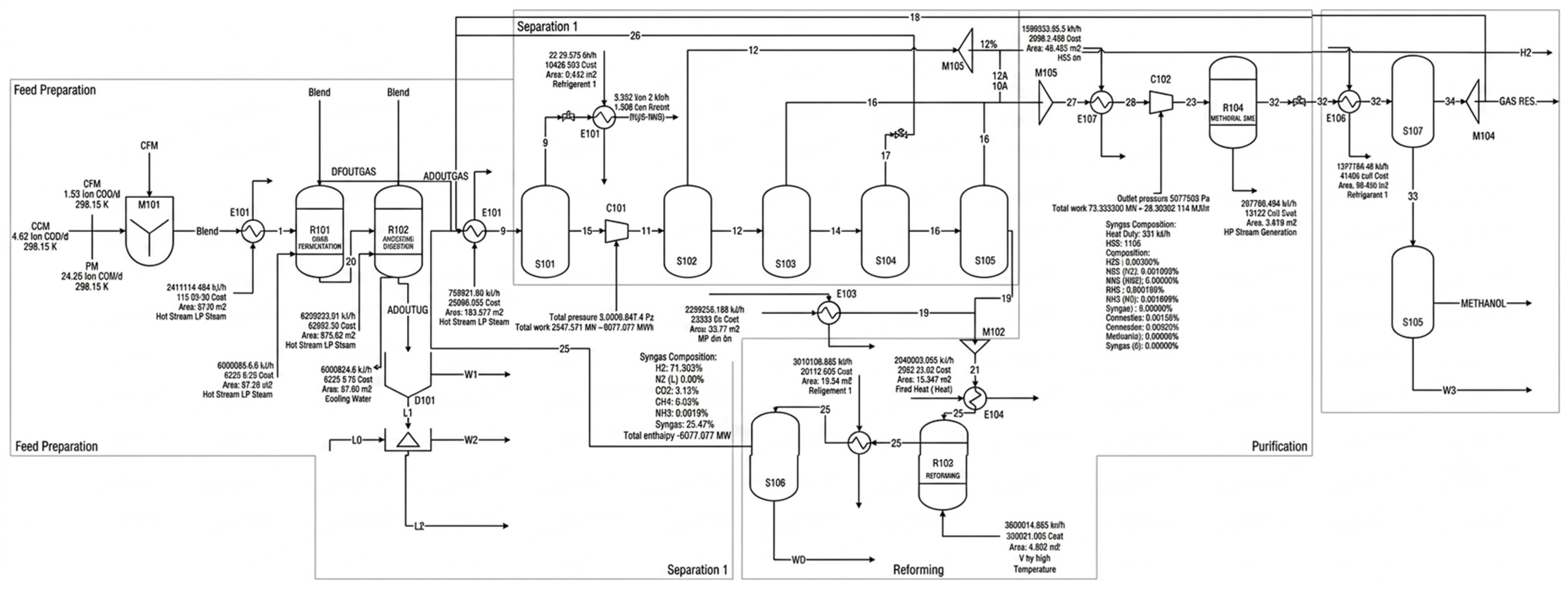
Finally, gas treatment was given priority in the simulation of Scenario 3 as the main product since they are a direct energy source for the agroindustry (Figure 3). Currently, 1% of the country’s final electricity consumption is consumed yearly [40], once the initial stage of separation and recycling of the methane-rich stream proceeds. An H2 transformation process is carried out for 88% of the production to treat the gases emitted in the separator tanks S103-S104-S105, increasing the temperature and increasing the pressure to 3.0398 MPa, helping the cogeneration of methanol and subsequently creating wastewater.
Figure 3.
Scenario 3 process flow diagram.
2.4. Life Cycle Assessment (LCA) of Biorefinery Scenarios
Life cycle assessment (LCA) is essential for decision-making and policy formulation related to the valorization of agro–industrial waste proposed in biorefinery scenarios. The impacts of product choice on the environmental loads of coffee mucilage, cocoa mucilage, and pig manure residues were thus demonstrated, identifying critical point unit processes along biorefinery process routes. Using data generated from Aspen Plus-based process models and economic analysis, life cycle analysis (LCA) was carried out to evaluate the environmental impacts of the three scenarios presented in Section 2.3. The inventory was translated into environmental loads using the ReCiPe 2015 MidPoint (H) methodology available in SimaPro v9.0 software, where emissions and resource disposal are assessed, translating them into a limited number of impact scores. Table 2 shows the environmental impact categories and their descriptions.
Table 2.
Environmental impact categories reported by the ReCiPe 2015 LCA method.
The software considers the impact of effluent mass and energy requirements of a chemical process based on the energy and mass balances generated in Aspen Plus. Then, the weighted sum of all impacts determined the total impact per kg, representing each category’s potential environmental impact [41].
This method converts life cycle inventories into 18 categories of medium-term effects, translating them into the environmental loads of each process in the different biorefinery scenarios proposed to generate valuable products. Global warming potential (GWP), fossil resource scarcity (FRS), and water consumption (WCo) were selected as relevant categories for discussion since first-generation biorefineries would mainly affect land, water, and fossil energy resources [42].
2.5. Economic Assessment
The sustainability evaluation is complemented by a techno–economic assessment of its main processes, demonstrating each proposed scenario’s economic viability. The objective is to find the potential to produce or manufacture one or more valuable products that generate benefits according to the investment. Equipment purchase costs were estimated with the Aspen Process Economic Analyzer (APEA), which sizes each unit from the simulation results and maps it to the 2022 cost basis adopted throughout the economic analysis (Table 3). Purchased-equipment costs were then escalated to the study base year using the Chemical Engineering Plant Cost Index (CEPCI) and scaled, where required, with the six-tenths rule (C2 = C1(S2/S1)^0.6). Total capital investment was obtained from the purchased-equipment cost using the factorial method of Peters, Timmerhaus, and West [43], applying installation, instrumentation, piping, electrical, civil, and indirect-cost factors. Raw material, utility, and labor unit prices were taken from the references compiled in Table 3 and from standard engineering cost references [43,44,45,46,47]. To address the reviewers’ concerns, the unit prices and installation factors used for each equipment item have been re-examined for consistency with the 31.7 t/day plant scale.
Table 3.
Inflation index: TMAR–TIR.
The economic benefit is the part of the income that can be obtained from the production process. In this way, by performing a techno–economic analysis (TEA), the different stages of the process can be designed, and the costs associated with the construction and production capital investment can be determined, as well as the operating costs for each stage of the biorefinery process based on agro–industrial waste. Capital costs are represented by the initial investment, considering the sizing of the equipment to calculate its commercial price, including transportation, labor, and installation, among others.
The economic evaluation of the three biorefineries shows the total costs, cost allocation associated with each biorefinery, net present value, real profit before taxes (URAI), and the percentage of fixed investment capital to be used. Each biorefinery behaves differently. The total cost increases over the 10-year evaluation period as the level of integration is applied and equipment is involved in the production process.
Considerations for total production costs include direct production costs or variable operating costs (VOC). These are related to the cost per unit of plant working time (USD/day), fixed costs (F.C.), and plant overheads [43]. Variable operating costs include directly related manufacturing costs such as raw material acquisition, utilities, labor, and waste disposal [44], while fixed costs include depreciation, property insurance, taxes, and land costs. The net present value, the minimum attractive rate of return (MARR), and the internal rate of return (IRR) were calculated using a discounted cash flow analysis assuming economic parameters relevant to Colombia according to Table 3.
Total capital investments (TCI) and total production costs (TPC) were queried at the source for each referenced product: biofertilizer [45], hydrogen [46,51], methane [47].
Total capital investment is the sum of fixed capital cost (FCC) and working capital (W.C.), where fixed capital costs constitute total direct cost (TDC) and total indirect cost (TIC). Total direct costs of TDC include the cost of purchasing and installing equipment, instrumentation, controls, plumbing, and electrical products [43].
3. Results and Discussion
Three biorefinery scenarios were analyzed in which the products of biological equipment were determined by a previous study to extract the details of the digestate and biogas to be reformed through separation, increase in temperature, and energy in each biorefinery process. The production capacities of each process were established based on the amount of waste generated by the agro–industrial processes of coffee, cocoa, and cattle production plantations in the department of Santander, which constitutes the feeding capacity of the designed process. The mass and energy balance was carried out based on the requirements and implementation of each piece of equipment to extract valuable products efficiently, as shown in Table 4.
Table 4.
Specification of the equipment used in the process.
3.1. Biogas Production
Initially, for Scenario 1 (Figure 4), Through the preparation of the raw material, 4.62 t/day of cocoa mucilage, 1.83 t/day of coffee mucilage, and 25.25 t/day of pig manure are processed. Accelerating the fermentation and distillation process by increasing energy in the heat exchanger provides 193,365 Kj/h. Before entering the mixture into the dark fermentation reactor, the treatment of the digestate is initiated to proceed with the treatment of wastewater and sludge. Once the energy of the second exchanger increases, providing 26,190.79 Kj/h, and the pressure in the separator tanks increases, 0.15 t/day of H2 and 6.58 t/day CH4 are produced.
Figure 4.
Scenario 1 process flow diagram for biogas production.
The verified reformed-hydrogen production of Scenario 1 is 0.15 t/day, in agreement with the value reported in the abstract, in this section, and in Table 5. The 0.41 t/day previously shown in the process-flow diagrams of Figure 1 and Figure 4 corresponded to a labeling error that has been corrected, so that text and the tables and figures are now fully consistent.
Table 5.
Biogas production scenario.
It is in the initial stage of the process where the mixture of agro–industrial products is fermented and distilled, which is the same process as the biorefinery Scenario 1. In biorefinery Scenario 2 (Figure 5), by increasing the energy, 77,576.51 KJ/h is contributed to the transformation in exchanger two, and after the separation process and pressure increase in the compressor using 3.0398 MPa, 2.836 tons/day of H2 are obtained. In the separation process of tanks S103-S104-S105, emissions of 15,888 t/day of CO2 and 0.37 t/day of C.O. are generated into the environment (Figure 6). CH4 6.50 tons/day of production is reincorporated into the reformed process to take advantage of the biogas in the energy transformation, increasing profitability by entering it back into the system as recycling to the exchanger [39,51].
Figure 5.
Scenario 2 process flow diagram for the biogas production.
Figure 6.
Scenario 3 process flow diagram for the biogas production.
Biorefinery Scenario 3 (Figure 6) proposes reducing emissions into the atmosphere through the production of methanol, satisfying the demand for this compound. In the calculation of mass balances, it is evident that hydrogen production doubles biorefinery Scenario 1, producing 0.90 ton/day; simultaneously, the mass yield of methanol is 0.22 ton/day. Taking into account the minimum conversion rate proposed by ref. [44], the author mentions that the production cost increases considerably when fewer than 1.64 tons/day are produced, which indicates that the extra cost of biorefinery three would be significantly high. Comparing these results with the reforming efficiency in biorefinery one and the methanol production in biorefinery three is very low and agrees with what was supported by ref. [52].
Considering the above data, the biorefinery with the lowest CO2 production is biorefinery Scenario 3, with 40% efficiency due to the high carbon dioxide consumption in the methanol production phase. CO2e is a factor ASPEN PLUS reported that considers the energy consumption of the analyzed equipment. In this way, the production of CO2 in biorefinery Scenario 3 corresponds to 5% of the production of Scenario 1 and 29% of Scenario 2. The CO2e data is part of the heating services and additional energy increase. For the systems, these can be optimized based on the energy integration of the biorefineries’ designs.
Biorefinery Scenarios 2 and 3 are more efficient and sustainable since their values are below the values known in traditional methods, thus demonstrating the feasibility of the processes [53]. Table 5 shows the mass production results of the three biorefinery scenarios. The complete stream tables for each scenario (stream compositions, mass and molar flow rates, temperatures, pressures, heat duties, and key equipment parameters) are provided as Supplementary Materials to support the reproducibility of the simulations.
An environmental impact assessment identifies CO2 production as a critical factor in the sustainability of the proposed biorefinery scenarios. Table 6 provides a detailed breakdown of the daily CO2 mass flow generated, showing yields between 40% and 58% relative to the process flow. The high output, particularly in scenarios involving reforming, underscores significant environmental implications that must be addressed. These values encompass the production during fermentation and chemical reforming, alongside the CO2 equivalent (CO2e)—a factor reported by Aspen Plus that accounts for the indirect emissions associated with the energy consumption and thermal requirements of the equipment. Notably, Scenario 3 presents the lowest emission levels (9.28 t/day) because a portion of the carbon dioxide is consumed as a reactant during the methanol synthesis phase [54].
Table 6.
CO2 production biorefinery scenarios.
3.2. Life Cycle Analysis (LCA)
The biorefinery valorizes coffee mucilage, cocoa mucilage, and pig manure waste, so the study’s functional unit was defined by tons of processed waste and inventories for the agro–industrial waste processes used; these were derived from mass and energy balances generated by Aspen Plus process simulation models for a plant capacity of 31.7 t/day.
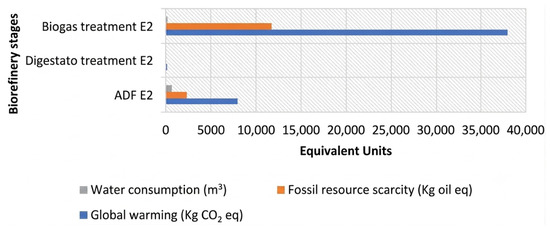
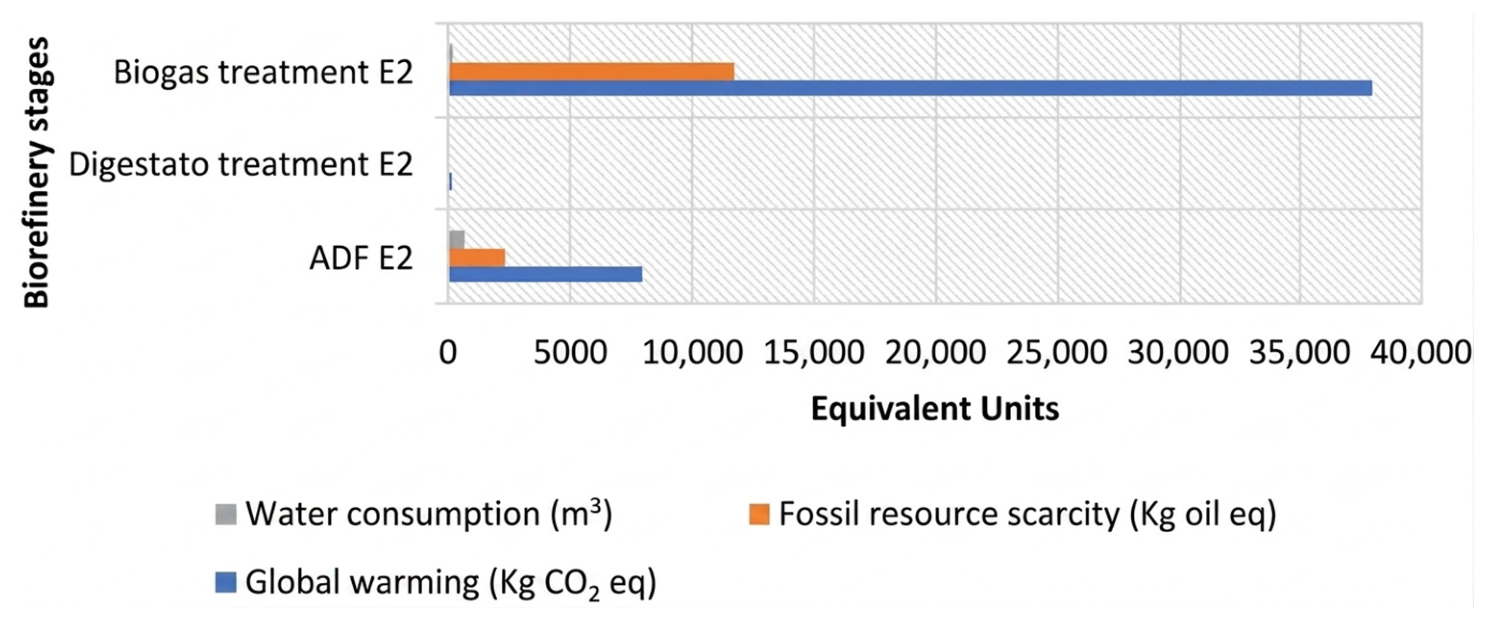
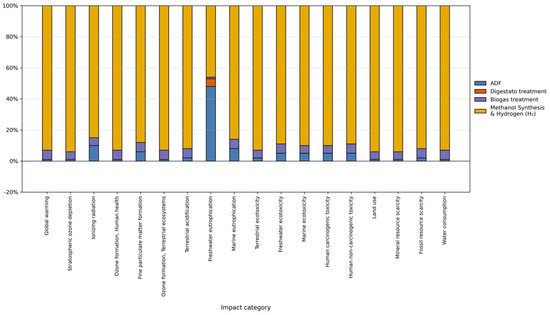
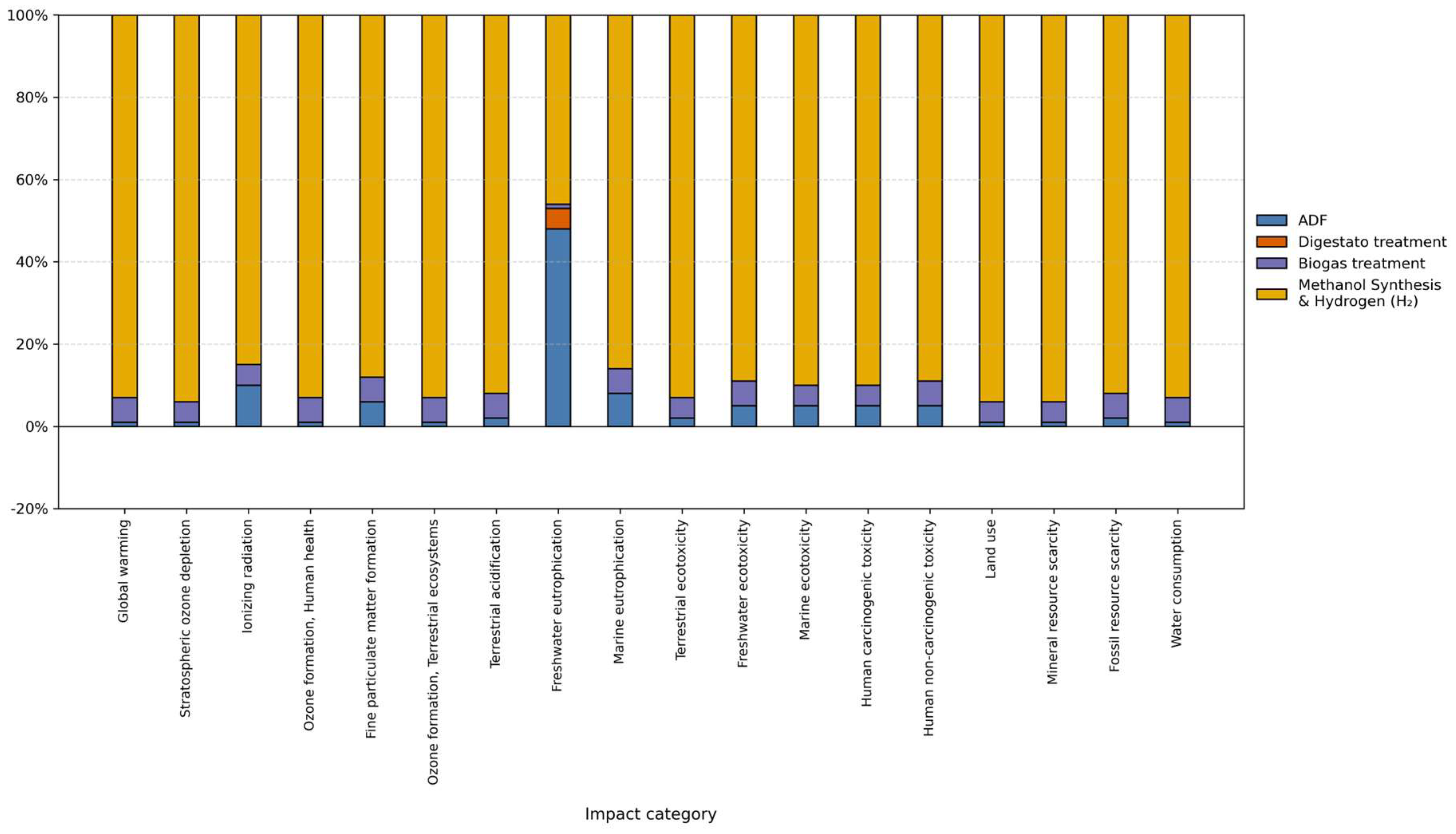
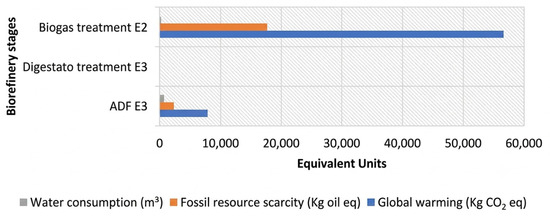
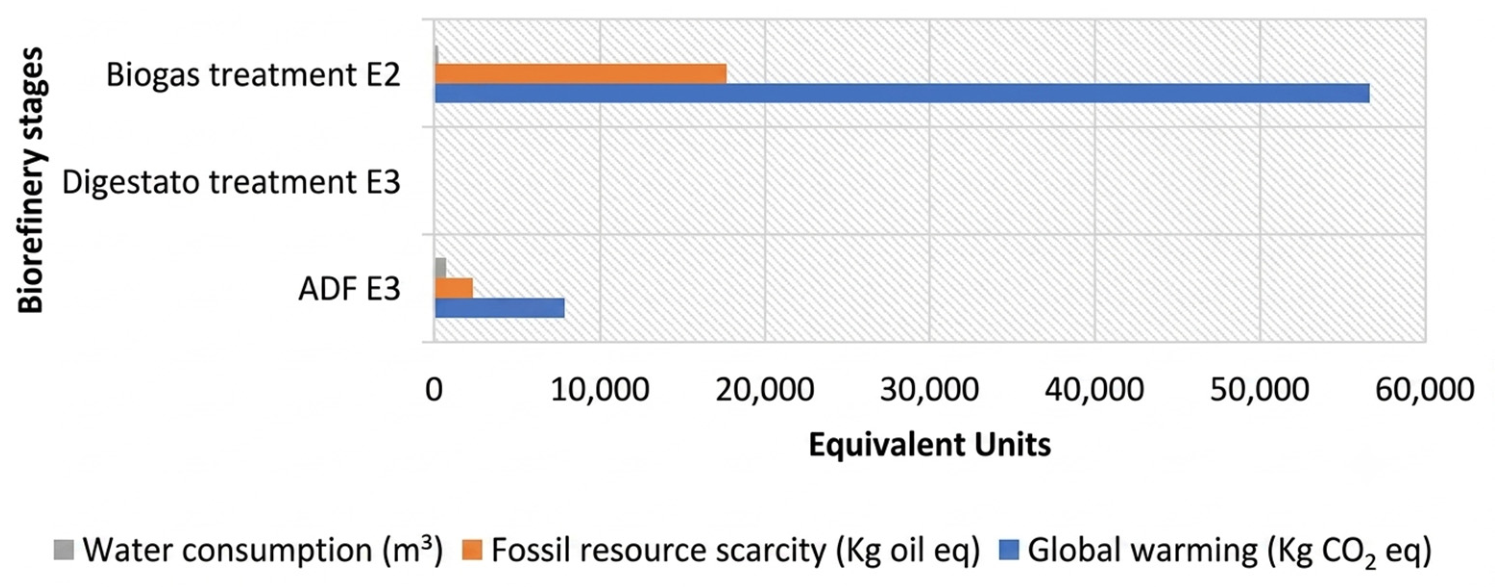
The environmental evaluation was carried out for each of the three proposed biorefineries, presenting the most significant potential environmental impact and the levels of ADF digestion, digestate treatment, and biogas treatment that showed the highest influence on the biorefineries. Within the 18 environmental impact categories analyzed in the LCA, the ReCiPe 2015 MidPoint (H) methodology was used, allowing for the observation of the processes’ behavior and results. Special attention was paid to the categories belonging to the impact groups global warming (Kg CO2 eq.), fossil resource scarcity (kg oil eq.), and water consumption (m3), detailed in Table 7.
Table 7.
Comparison of the impact of the three scenarios.
3.2.1. Biorefinery Scenario 1
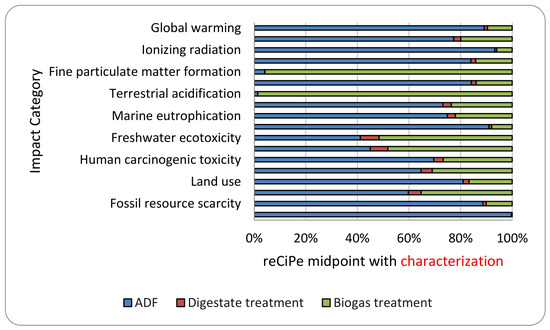
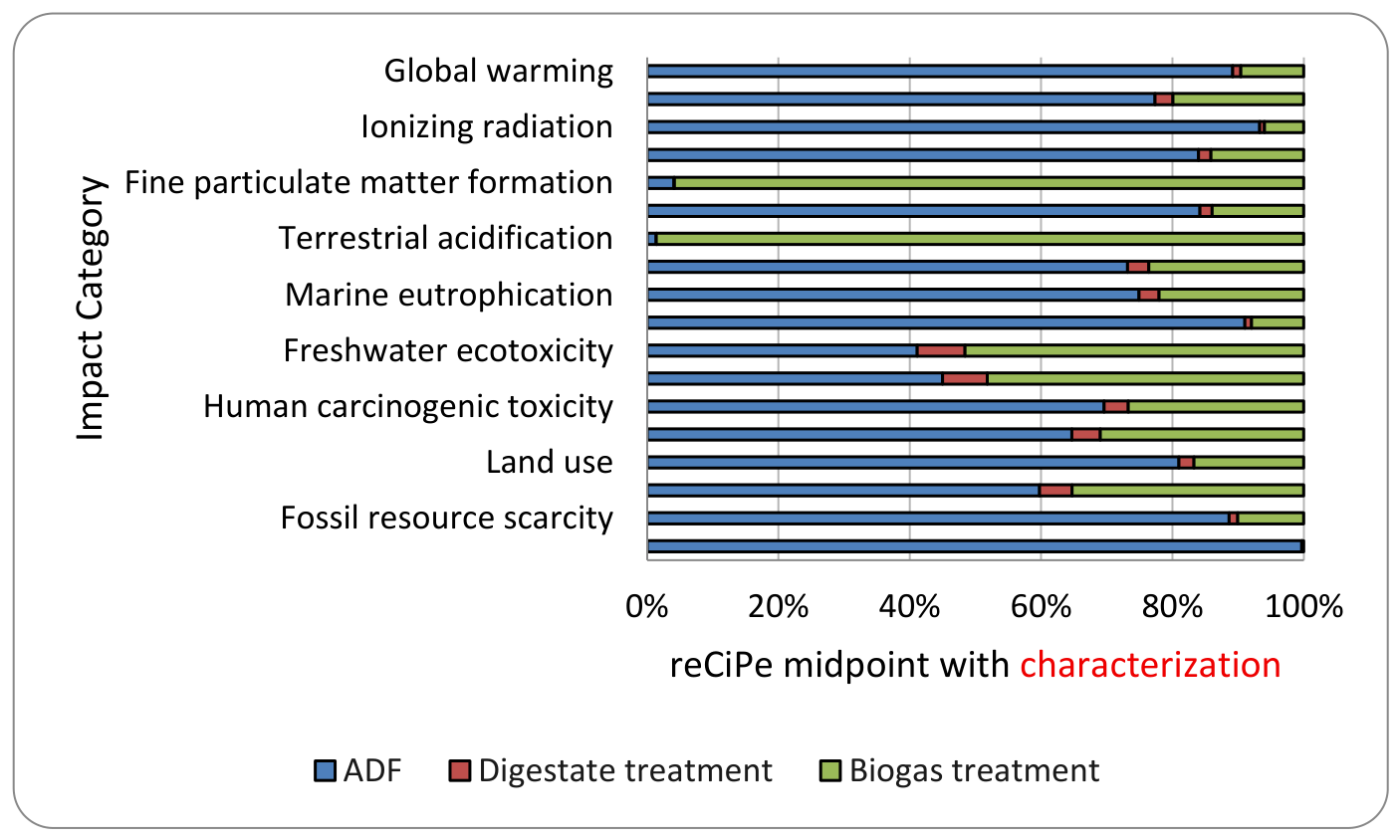
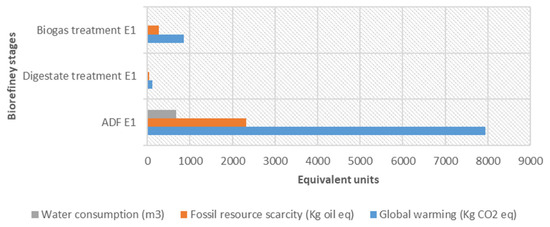
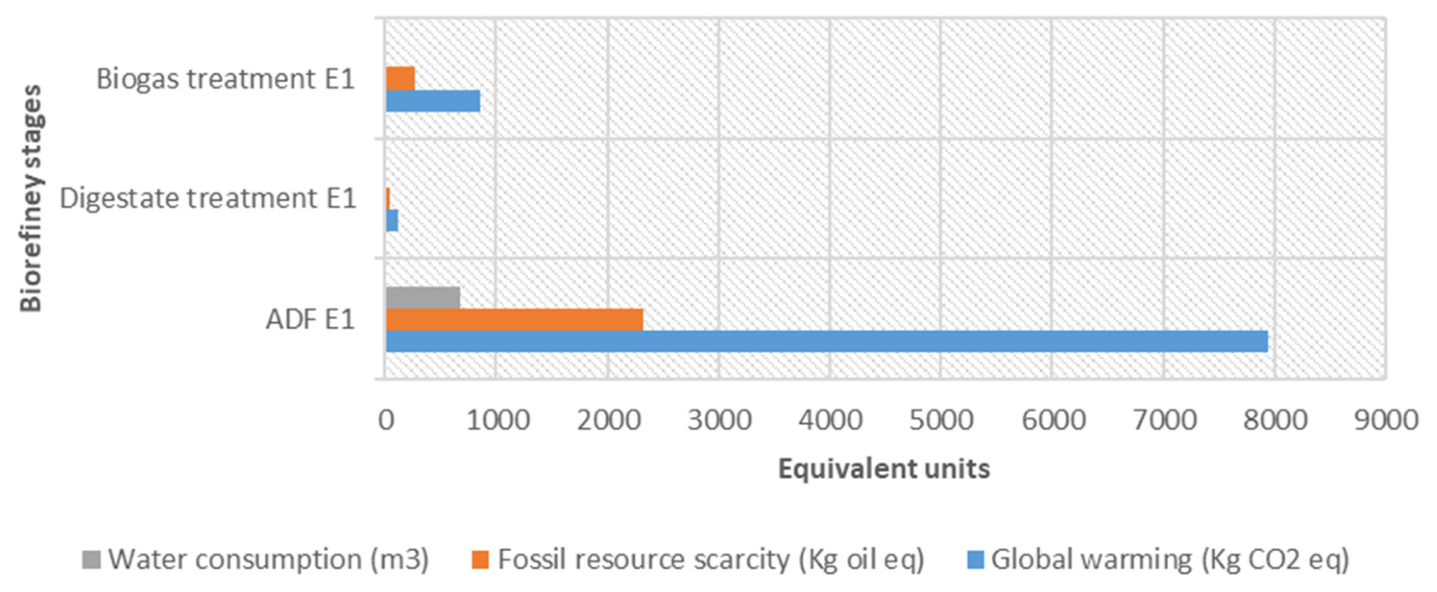
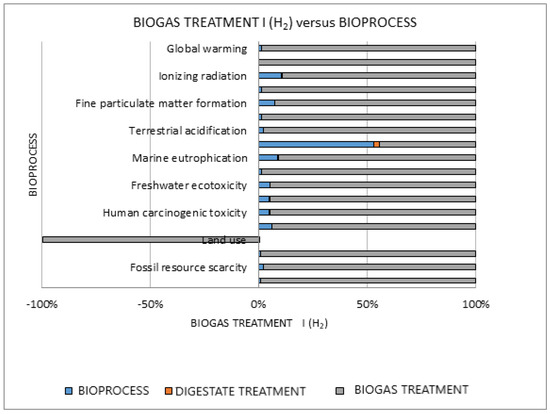
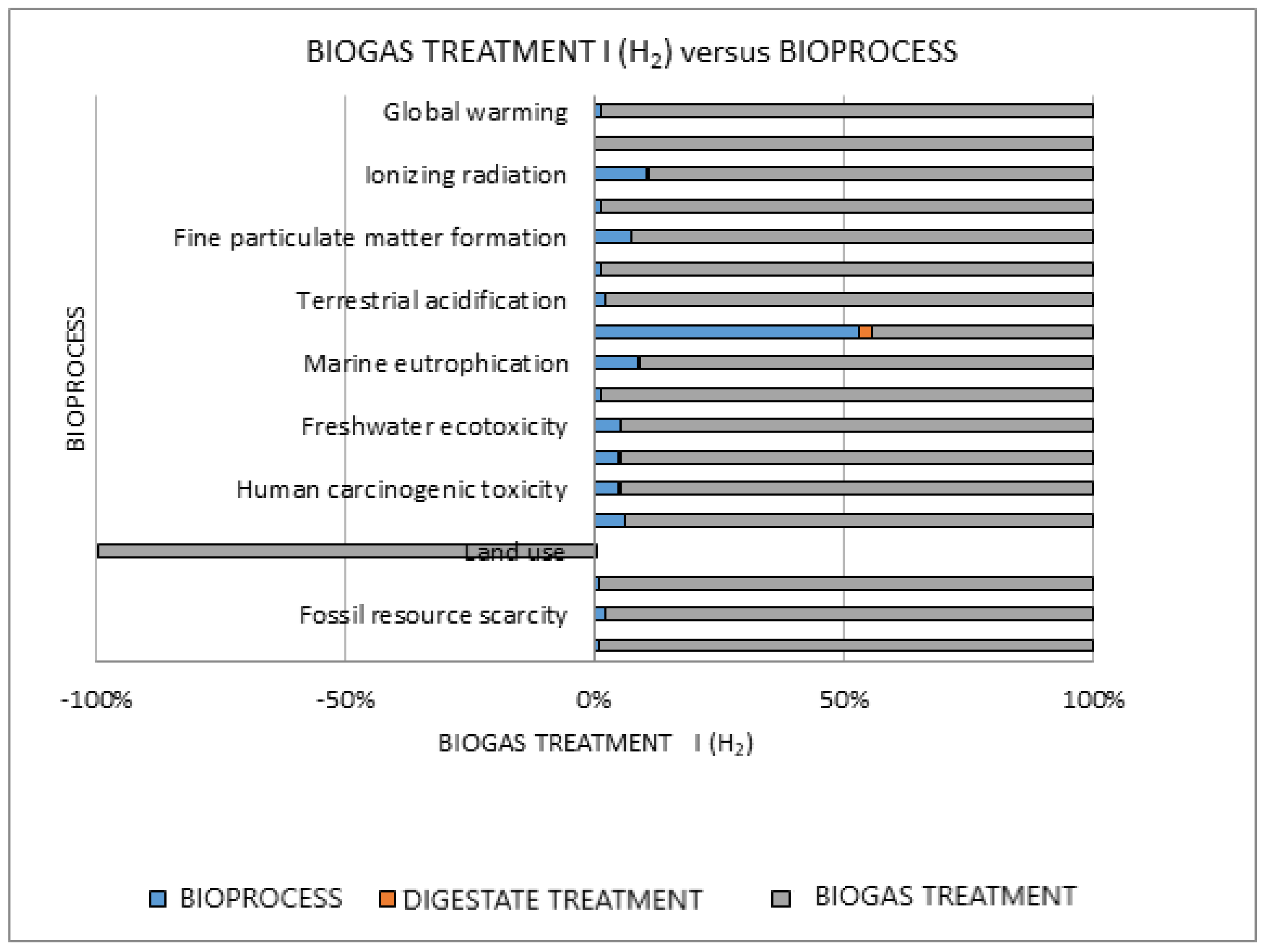
Figure 7 and Figure 8 show that of the 18 categories of environmental impact in the biorefinery Scenario 1 process for biogas treatment, the categories that contribute between 80 and 100% of the impact are associated with damage to human health and the ecosystem. These impact categories are global warming, scarcity of fossil resources, and water consumption, with values of 7947.017688 kg CO2 eq., 2321.270521 kg oil eq., and 677.5171778 m3, respectively. The high environmental impact of the biorefinery process is critically developed in anaerobic digestion, as presented by Lamnatou et al. [54] and Surra et al. [55].
Figure 7.
ACV results of biorefinery Scenario 1.
Figure 8.
Comparative analysis of biorefinery Scenario 1.
In this biorefinery process, the product with the highest quantity processed is CH4—compared to H2—which has a higher calorific value and better commercial value in Colombia.
3.2.2. Biorefinery Scenario 2
The LCA results for biorefinery Scenario 2 (Figure 9 and Figure 10) were based on the production of hydrogen, reformed from the pr4 categories. They show a significant impact on global warming, terrestrial ecotoxicity, non-carcinogenic human toxicity, and scarcity of fossil resources, with total values for the biorefinery of 1.90 × 10⁸ kg CO2 eq., 2.11 × 10⁸ kg 1,4-DCB, 4.92 × 10⁷ kg 1,4-DCB, and 2.89 × 10⁷ kg eq. of oil, respectively.
Figure 9.
Biorefinery Scenario 2 LCA results.
Figure 10.
Comparative analysis of biorefinery Scenario 2.
The pressure and temperature operating conditions of the biorefinery Scenario 2 process directly impact water consumption in the reforming line by reacting with the methane that reenters the process after the separation tanks. For the production of H2, in the reforming stage, an increase is evident in all categories of environmental impact, attributable to high water consumption and excessive generation of CO2, affirming the values presented by ref. [56]. Even so, studies show that gas reforming helps significantly reduce impact categories such as global warming, scarcity of fossil resources, and water consumption [57].
3.2.3. Biorefinery Scenario 3
The production of H2, nethanol, and CO2 in the three biorefinery processes affected the 18 environmental impact categories with high percentages (Figure 11 and Figure 12), corroborating the equivalence of the percentages between the biological process and the separation of hydrogen (Figure 12). This evidence shows that the design of biorefinery Scenario 3 at this stage is more efficient than the biorefinery Scenario 2.
Figure 11.
Biorefinery Scenario 3 LCA results.
Figure 12.
Comparative analysis of biorefinery Scenario 3.
It should be clarified that the lower direct CO2 mass flow attributed to Scenario 3 (9.28 t/day, Table 6) and its higher life cycle impacts in categories such as global warming, water consumption, and fossil-resource scarcity are not contradictory: the direct mass flow accounts only for the CO2 physically leaving the process boundary (part of which is consumed as a reactant in methanol synthesis), whereas the LCA characterization additionally includes the indirect burdens of the energy and utilities required by the reforming and methanol-synthesis sections. Because Scenario 3 is the most energy-intensive configuration, its indirect (cradle-to-gate) burdens dominate the midpoint indicators even though its direct CO2 release is the lowest. The environmental performance data and assumptions supporting this interpretation are taken from the inventories derived from the Aspen Plus balances and from the LCA references adopted in this study [41,54,55,57].
The categories global warming, terrestrial ecotoxicity, non-carcinogenic human toxicity, and scarcity of fossil resources have total values for this biorefinery scenario of 2.16 × 10⁸ kg CO2 eq., 2.38 × 10⁸ kg 1,4-DCB, 5.55 × 10⁷ kg 1,4-DCB, and 3.27 × 10⁷ kg oil eq., respectively.
In this way, reforming methanol under the operating conditions of energy (1,595,833.692 KJ/h) and pressure (6,079,500 Pa) of the design demonstrates that the synthesis of methanol and separation of H2 in this stage does not attribute significant increases in impacts corresponding to refs. [58,59,60].
3.3. Economic Analysis
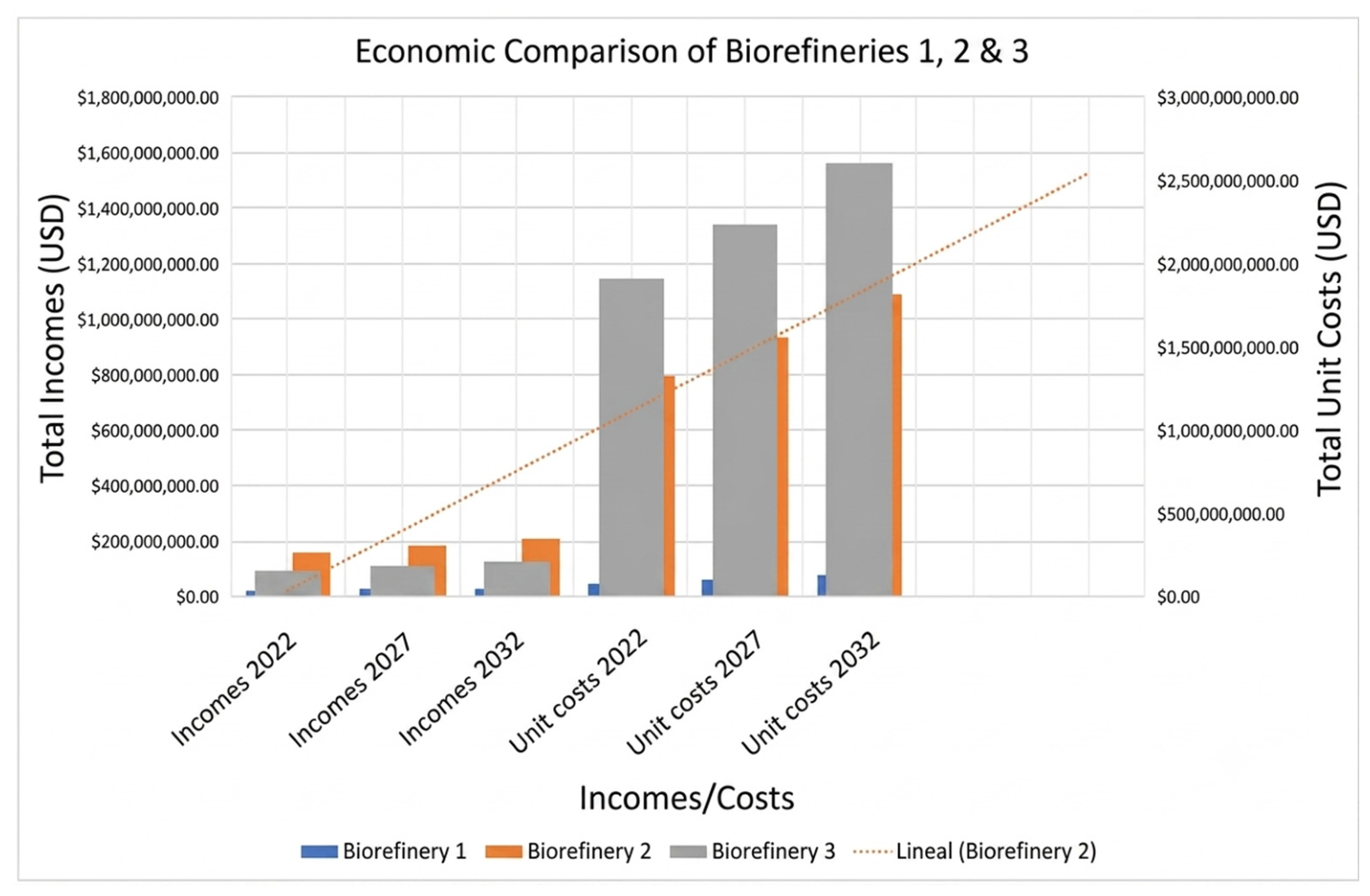
The calculations of unit costs, fixed costs, and implementation of labor required to execute the biorefineries are listed below. It is projected for ten years from moment zero in each scenario. For all economic calculations, the representative market rate (TRM) of USD 1 = 3900 COP is considered, with an inflation of 3% and Minimum Attractive Rate of Return (MARR) = 29.98%, as described in Table 8. It is estimated that for the first year, biorefinery Scenario 2 is a reference, which, according to what has been evaluated, is the scenario that is projected with more definition to the possible execution.
Table 8.
TMAR projection and inflation index.
To calculate the project’s total required investment capital (TCI), it was initially considered that the biorefinery processes would be divided into different main sections: digestate treatment, biogas purification, reforming, and methanol synthesis. The teams that are part of each technological division are presented, as described in Table 9.
Table 9.
Transparent breakdown of labor costs.
A capital of USD 795,177,825 will be injected, a value of USD 45,886,133 is assumed for fixed costs, and a value of USD 305,686.63 for labor is also estimated.
The useful life of the device is 30 years. Equipment depreciation is calculated using the straight-line method, with zero residual value and a recovery period of 10 years. Other assumptions include three years for the acquisition of land, purchase of equipment, and construction; initiation of a 6-month biorefinery operation; and 40% equity and 60% loan (loan term of 10% interest and a repayment term of 10 years) [48,49,50].
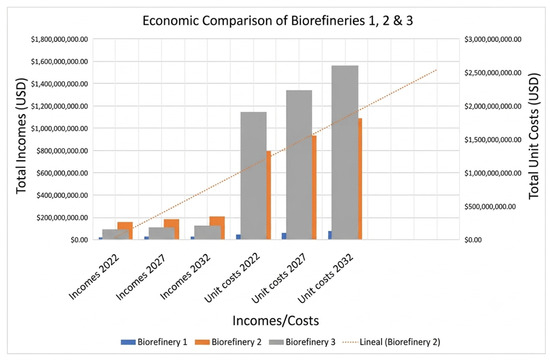
The total costs related to the proposed biorefineries are presented in Table 10. The distribution of costs for the plants was calculated considering the composition of the raw materials and the capacity of each plant to transform specific fractions of these. The costs listed below include raw materials, public services, and general and operational tasks (operational tasks, workloads, and general expenses). Estimating the configurations of the three scenarios proposed, there is an abrupt difference for each scenario depending on the technical design and increase in machinery to achieve the production objective in each biorefinery.
Table 10.
Income and unit costs.
In addition, Figure 13 also shows the distribution of the profit margin for each biorefinery made from coffee mucilage, cocoa mucilage, and pig manure. The case of biorefinery Scenario 3 stands out because even carrying out reforming, CH4 recycling, and methanol-reforming for efficient H2 production increases CO emissions into the atmosphere, and the production cost exceeds the expected total income vs. the unit costs of the plant.
Figure 13.
Expense analysis.
4. Conclusions
Biorefineries for agricultural waste from the of the production of cocoa, coffee, and pig manure are an attractive alternative strategy for managing agro–industrial waste, with the advantages of providing clean and versatile energy, diversifying raw materials, and improving the economic efficiency of the facilities of processing of agro–industrial waste. Replacing existing fossil fuels with bioenergy from waste cocoa, coffee mucilage, and pig manure will help mitigate the gradual depletion of non-renewable fossil fuels to support the bioeconomy.
The energy capacity of agro–industrial waste is evaluated based on the economic efficiency and energy analysis of waste bioprocessing plants. Evaluating coffee mucilage, cocoa mucilage, and pig manure residues for the co-production of hydrogen, methanol, and methane is not energetically sufficient or profitable. However, the combined production of biogas and hydrogen is more profitable, leads to global warming, reduces fossil fuel production, and increases investment costs and water consumption.
While incorporating methane recovery into the system can increase profits, it also comes with significant environmental impacts and the potential inability to meet the energy needs of biorefineries and other detailed scenarios. Therefore, exploring alternative treatment methods that can effectively reduce investment costs and water and energy consumption is crucial. This will ensure the practical application of agricultural waste treatment methods and the sustainability of biorefinery projects.
As explained in Section 2.3, the most suitable biorefinery is a plant for hydrogen production and methane recirculation to increase plant efficiency (Scenario 2). This is because raw materials are available from all scenarios and do not require any controlled compounds or additives to generate the H2 value product. Furthermore, although it is more detailed than biorefinery Scenario 1, the process is considered more convenient because the recirculation of methane production enters the biorefinery system, considerably reducing the environmental impacts analyzed in the life cycle (LCA). The generation of emissions into the environment is reformed to increase hydrogen production. Regarding the price, the cost of raw materials remains the same for the three cases, and the production cost is also high due to the increase in accessories for the plant.
Regarding capital expenditures, Scenario 1 is the most favorable, followed by Scenario 2, and then Scenario 3, which is the least attractive. However, Scenario 3 is promising based on cost-effectiveness. While investors may prefer Scenario 3 due to its current profitability, Scenario 2, which has lower levels of global warming and fossil fuel production, would be more environmentally appropriate. Therefore, investment decisions must weigh economic benefits and environmental emissions before implementing bioprocessing plants from coffee, manure, and pig manure.
Supplementary Materials
The following supporting information can be downloaded at: https://www.mdpi.com/article/10.3390/hydrogen7030131/s1. Table S1. Kinetic parameters (equilibrium/rate constant K and activation energy E) associated with the finite-rate reactions of the CO2–MDEA system, as implemented in the rate-based absorption/stripping model [S1]; Table S2. Key operating parameters of the MDEA-based gas-cleaning (absorption) columns used for the simultaneous removal of CO2 and H2S from the biogas stream.
Author Contributions
Conceptualization, M.A.V., J.C.T.R., C.J.R.V., J.K.S.M. and P.A.A.P.; methodology, J.K.S.M., P.A.A.P., L.M.C.R., C.E.R.T. and F.L.M.; software, P.A.A.P. and F.L.M.; validation, P.E.V.P., C.E.R.T. and F.L.M.; formal analysis, P.E.V.P., M.A.V., J.C.T.R. and C.J.R.V.; investigation, P.E.V.P., M.A.V., J.C.T.R., C.J.R.V., J.K.S.M., P.A.A.P., L.M.C.R., C.E.R.T. and F.L.M.; data curation, P.A.A.P.; writing—original draft preparation, F.L.M.; writing—review and editing, P.E.V.P. and F.L.M.; visualization, P.E.V.P. and F.L.M.; supervision, P.A.A.P.; project administration, P.E.V.P. and P.A.A.P.; funding acquisition, P.E.V.P. and L.M.C.R. All authors have read and agreed to the published version of the manuscript.
Funding
This research was funded by Universidad Cooperativa de Colombia: 860.029.924–7; Universidad EAN: 860.026.058.
Data Availability Statement
The original contributions presented in this study are included in the article/Supplementary Materials. Further inquiries can be directed to the corresponding author.
Conflicts of Interest
The authors declare no conflict of interest.
References
- Contreras, L.E. Evaluación Ambiental EX-POST del Sitio de Disposición Final de Residuos Sólidos El Carraco en el Municipio de Bucaramanga-Santander. Ph.D. Thesis, Universidas Francisco de Paula Santander, Ocaña, Colombia, 2015. [Google Scholar]
- Martínez, G.L.; Arboleda, C.B.; Lora, E.S. La biomasa residual pecuaria como recurso energético en Colombia. Visión Electrón. 2018, 12, 180–188. [Google Scholar] [CrossRef] [Scilit]
- Trujillo-Díaz, J.; Díaz-Piraquive, F.N.; Herrera, M.M.; Gómez Acero, J. Identificación de las prácticas porcinas en granjas de la región Andina central de Colombia. Cienc. Tecnol. Agropecu. 2021, 22. [Google Scholar] [CrossRef] [Scilit]
- Zambrano-Franco, D.A.; Isaza-Hinestroza, J.D. Lavado del café en los tanques de fermentación. Cenicafé 1994, 45, 106–118. [Google Scholar]
- Rodriguez, N.; Zambrano, D.A. Producción de Alcohol a Partir del Mucílago de Café; Centro Nacional de Investigaciones de Café (Cenicafé): Caldas, Colombia, 2014. [Google Scholar]
- Minagricultura. Cadena de Cacao; Dirección de Cadenas Agrícolas y Forestales: Bogotá, Colombia, 2021.
- Contexto Ganadero. El Estiércol de Cerdo Contribuye a la Generación de Energía Renovable. Available online: https://www.contextoganadero.com/ (accessed on 28 May 2026).
- Unidad de Planeación Minero Energética (UPME). Estimación del Potencial de Conversión a Biogás de la Biomasa en Colombia y su Aprovechamiento; UPME: Bogotá, Colombia, 2017. Available online: https://bdigital.upme.gov.co/handle/001/1317?utm_source=chatgpt.com (accessed on 28 May 2026).
- Tursi, A. A review on biomass: Importance, chemistry, classification, and conversion. Biofuel Res. J. 2019, 6, 962–979. [Google Scholar] [CrossRef] [Scilit]
- Cervantes, M.Y.G.; Muñoz, A.H.S.; Peláez, J.L.R.; Cabarcas, G.S. Caso de Estudio: Factibilidad Económica dentro de la Implementación de una Biorrefinería Sustentable para la Producción de Productos de Alto Valor Agregado. Jóvenes Cienc. 2017, 3, 2459–2464. [Google Scholar]
- Montenegro, K.T.; Rojas, A.S.; Cabeza, I.O.; Hernández, M.A. Determinación de Redes Regionales para la Instalación de Plantas Centralizadas de Biogás a Partir de los Residuos Agroindustriales Generados en el Departamento de Cundinamarca. Bachelor’s Thesis, Universidad Santo Tomás, Bogotá, Colombia, 2016. [Google Scholar]
- Mosquera, J.D.; Villareal, L.J.; Cabeza, I.O.; Santis, A.M.; Acevedo, P.A. Desarrollo de un modelo empírico para el proceso de co-digestión anaerobia de estiércol de cerdo. In Proceedings of the III Congreso Internacional de Tecnologías Limpias, Bogotá, Colombia, 21 November, 2020; p. 1. [Google Scholar]
- Araújo, K.; Mahajan, D.; Kerr, R.; Silva, M.d. Global Biofuels at the Crossroads: An Overview of Technical, Policy, and Investment Complexities in the Sustainability of Biofuel Development. Agriculture 2017, 7, 32. [Google Scholar] [CrossRef] [Scilit]
- López, E.; Jiménez, J.; Romero, O.; Dewulf, J. Aplicación de la tecnología de digestión anaerobia para tratar residuos sólidos agroindustriales utilizando inóculo de estiércol porcino, en condiciones mesofílicas. Tecnol. Quím. 2012, 32, 274–281. [Google Scholar]
- Linares-Hernández, I.; Martínez-Miranda, V.; Barrera-Díaz, C.; Pavón-Romero, C.; Bernal-Martínez, L.; Lugo-Lugo, L. Oxidación de materia orgánica persistente en aguas residuales industriales mediante tratamientos electroquímicos. Av. Cienc. Ing. 2011, 2, 21–36. [Google Scholar] [CrossRef] [Scilit]
- Campos, A.E. Optimización de la Digestión Anaerobia de Purines de Cerdo Mediante Codigestión con Residuos Orgánicos de la Industria Agroalimentaria. Ph.D. Thesis, Departament de Medi Ambient i Ciències del Sòl, Escola Tècnica Superior d’Enginyeria Agrària, Universitat de Lleida, Lleida, España, 2001. [Google Scholar]
- Khounani, Z.; Nazemi, F.; Shafiei, M.; Aghbashlo, M.; Tabatabaei, M. Techno-economic aspects of a safflower-based biorefinery plant co-producing bioethanol and biodiesel. Energy Convers. Manag. 2019, 201, 112184. [Google Scholar] [CrossRef] [Scilit]
- Dávila, J.A.; Rosenberg, M.; Cardona, C.A. Evaluación técnico-económica y ambiental de la producción de p-cimeno y pectina a partir de cáscara de naranja. Waste Biomass Valoriz. 2015, 6, 253–261. [Google Scholar]
- Process Design and Economics for Biochemical Conversion of Lignocellulosic Biomass to Ethanol; EERE Publication and Product Library: Washington, DC, USA, 2011.
- Lohrasbi, M.; Pourbafrani, M.; Niklasson, C.; Taherzadeh, M.J. Process design and economic analysis of a citrus waste biorefinery with biofuels and limonene as products. Bioresour. Technol. 2010, 101, 7382–7388. [Google Scholar] [CrossRef] [Scilit] [PubMed]
- Manhongo, T.T.; Chimphango, A.; Thornley, P.; Röder, M. Techno-economic and environmental evaluation of integrated mango waste biorefineries. J. Clean. Prod. 2021, 325, 129335. [Google Scholar] [CrossRef] [Scilit]
- Kwant, K.W.; Pelkmans, L.; van Ree, R.; Berntsson, T. The role of industrial biorefineries in a low-carbon economy. In Proceedings of the 26th European Biomass Conference and Exhibition, Copenhagen, Denmark, 14–18 May 2018; pp. 1258–1263. [Google Scholar]
- Moreno, C.E. Adopción de tecnologías más limpias en firmas industriales: Un estudio multimétodo sobre el efecto de la aplicación de límites en vertimiento y tasas retributivas en Santander, Colombia. Cuad. Adm. 2007, 20, 49–76. Available online: http://www.scielo.org.co/scielo.php?script=sci_arttext&pid=S0120-35922007000100003 (accessed on 2 June 2026).
- Mendivelso Castillo, A.L. Estudio de la Producción de Biogás Mediante la Co-Digestión Anaerobia Usando como Sustrato el Mucílago de Café y como Inóculos el Estiércol Porcino y Estiércol Bovino. Ph.D. Thesis, Universidad Santo Tomás, Bogotá, Colombia, 2018. [Google Scholar]
- Environmental Forum. Análisis del Ciclo de Vida (ACV). Available online: http://www.forumambiental.org/cast/archivos/eines12.htm (accessed on 28 May 2026).
- Hernández, M.A.; Rodríguez, M.; Andres, Y. Use of coffee mucilage as a new substrate for hydrogen production in anaerobic co-digestion with swine manure. Bioresour. Technol. 2014, 168, 112–118. [Google Scholar] [CrossRef] [Scilit] [PubMed]
- Balladares, C.; García, J.; Chóez-Guaranda, I.; Pérez, S.; González, J.; Sosa, D.; Viteri, R.; Barragán, A.; Quijano-Avilés, M.; Manzano, P. Physicochemical characterization of Theobroma cacao L. mucilage in the Ecuadorian coast. Emir. J. Food Agric. 2016, 28, 741–745. [Google Scholar] [CrossRef] [Scilit]
- Amran, U.I.; Ahmad, A.; Othman, M.R. Kinetic based simulation of methane steam reforming and water gas shift for hydrogen production using Aspen Plus. Chem. Eng. Trans. 2017, 56, 1681–1686. [Google Scholar] [CrossRef] [Scilit]
- Kopaç, T.; Demirel, Y. Optimizing CO2 capture from biogas: A comparative study of amine-based solvents through Aspen Plus simulations. Biomass Convers. Biorefinery 2025, 15, 21327–21347. [Google Scholar] [CrossRef] [Scilit]
- Dalby, F.; Hafner, S.; Ambrose, H.W.; Adamsen, A.P.S. Pig manure degradation and carbon emission: Measuring and modeling combined aerobic–anaerobic transformations. J. Environ. Qual. 2024, 53, e20603. [Google Scholar] [CrossRef] [Scilit] [PubMed]
- Herrera-Rodríguez, T.C.; Acevedo-Pabón, P.A.; González-Delgado, Á.D. Techno-Economic and FP2O Resilience Analysis of the Hydrogen Production Process from Palm Rachis in María La Baja, Bolívar. Processes 2026, 14, 489. [Google Scholar] [CrossRef] [Scilit]
- Acevedo Pabón, P.A.; Herrera-Rodríguez, T.C.; González-Delgado, Á.D. Sustainable Hydrogen from Palm Oil Rachis: A Techno-Environmental-Economic Assessment for Palm Rachis Gasification in Colombian Post-Conflict Rural Territories. Sustainability 2026, 18, 1661. [Google Scholar] [CrossRef] [Scilit]
- Lee, B.; Lee, H.; Lim, D.; Brigljević, B.; Cho, W.; Cho, H.-S.; Kim, C.-H.; Lim, H. Renewable methanol synthesis from renewable H2 and captured CO2: How can power-to-liquid technology be economically feasible? Appl. Energy 2020, 279, 115827. [Google Scholar] [CrossRef] [Scilit]
- Lopez, F.; Maciel Filho, R.; dos Santos Ramos, V.H.; Choque Fulguera, E.; Vasconcelos Fregolente, L.; Wolf Maciel, M. CO2 capture systems using MDEA solvent: Stripper with reboiler or with steam? An exergetic evaluation and performance enhancement criteria. Fuel 2026, 408, 137449. [Google Scholar] [CrossRef] [Scilit]
- Chunxi, L.; Fürst, W. Representation of CO2 and H2S solubility in aqueous MDEA solutions using an electrolyte equation of state. Chem. Eng. Sci. 2000, 55, 2975–2988. [Google Scholar] [CrossRef] [Scilit]
- Departamento Administrativo Nacional de Estadística (DANE). 2017. Available online: http://www.dane.gov.co/ (accessed on 2 June 2026).
- Dhavaleswarapu, R.K.; Khuntia, H.K. Biorrefinería y enfoque de economía circular para la gestión de residuos sólidos orgánicos. In Waste-to-Energy: Sustainable Approaches for Emerging Economies; Elsevier: Amsterdam, The Netherlands, 2025. [Google Scholar] [CrossRef] [Scilit]
- Clauser, N.M.; Felissia, F.E.; Area, M.C.; Vallejos, M.E. Marco para el diseño y análisis de biorrefinerías integradas multiproducto a partir de residuos agrícolas y forestales. Renovar. Sostener. Energía Rev. 2021, 139, 110687. [Google Scholar]
- Fernando, S.; Adhikari, S.; Chandrapal, C.; Murali, N. Biorefineries: Current status, challenges, and future direction. Energy Fuels 2006, 20, 1727–1737. [Google Scholar] [CrossRef] [Scilit]
- International Energy Agency (IEA). Estadísticas Internacionales de Energía. 2020. Available online: https://www.iea.org/internacional (accessed on 26 May 2026).
- Pazmiño, J.A. Biorrefinería Basada en Jatropha curcas L. (Piñón de Tempate) para Obtener Bioproductos con Valor Agregado en el Contexto Ecuatoriano. Master’s Thesis, Universidad de Bogotá Jorge Tadeo Lozano, Bogotá, Colombia, 2018. [Google Scholar]
- Martinez-Hernandez, E.; Samsatli, S. Las biorrefinerías y el nexo entre alimentos, energía y agua: Hacia un enfoque de sistemas completos para el diseño y la planificación. Actual Opin. Quím. Ing. 2017, 18, 16–22. [Google Scholar]
- Peters, M.S.; Timmerhaus, K.D.; West, R.E. Plant Design and Economics for Chemical Engineers; McGraw-Hill: New York, NY, USA, 1991. [Google Scholar]
- Seider, W.D.; Seader, J.D.; Lewin, D.R.; Widagdo, S. Product and Process Design Principles: Synthesis, Analysis, and Evaluation, 3rd ed.; John Wiley & Sons: Hoboken, NJ, USA, 2010. [Google Scholar]
- Editorial La República S.A.S. El lombricompost representa solo 10% del abono orgánico que se genera en Colombia. AGRONEGOCIOS, 8 February 2019. [CrossRef] [Scilit]
- Arango, J.G.M.; Alvarez, C.A.A. Proyección al año 2025 para el uso del hidrógeno en el sector transporte del Valle de Aburrá. Sci. Tech. 2013, 18, 327–334. [Google Scholar]
- Pinoargote, C.I.; Gallegos, R. Estudio de la Recuperación de Metano en Capas de Carbón del Sinclinal de Barruelo. 2011. Available online: https://www.dspace.espol.edu.ec/bitstream/123456789/14913/1/Estudio%20de%20la%20Recuperacion%20de%20Metano%20en%20Capas%20de%20carb%C3%B3n.pdf (accessed on 26 May 2026).
- Arora, A.; Banerjee, J.; Vijayaraghavan, R.; MacFarlane, A.F. Diseño de procesos y análisis tecnoeconómico de una biorrefinería integrada de residuos de procesamiento de mango. Ind. Cultiv. Prod. 2018, 116, 24–34. [Google Scholar] [CrossRef] [Scilit]
- Demichelis, F.; Fiore, S.; Pleissner, D.; Venus, J. Technical and economic assessment of food waste valorization through a biorefinery chain. Renew. Sustain. Energy Rev. 2018, 94, 38–48. [Google Scholar] [CrossRef] [Scilit]
- Sy, C.L.; Ubando, A.T.; Aviso, K.B.; Tan, R.R. Multi-objective target-oriented robust optimization for the design of an integrated biorefinery. J. Clean. Prod. 2018, 170, 496–509. [Google Scholar] [CrossRef] [Scilit]
- Chacón, T. Colombia Tendría el Cuarto Precio Más Bajo de Hidrógeno Verde en 2025. Rumbo Minero Internacional. 2022. Available online: https://www.rumbominero.com/colombia/colombia-precio-hidrogeno-verde-2025/ (accessed on 2 June 2026).
- Surendra, K.C.; Sawatdeenarunat, C.; Shrestha, S.; Sung, S.; Khanal, S.K. Anaerobic digestion-based biorefinery for bioenergy and biobased products. Ind. Biotechnol. 2015, 11, 103–112. [Google Scholar] [CrossRef] [Scilit]
- Lora, E.E.S.; Nascimento, M.D. Geração Termelétrica: Planejamento, Projeto e Operação; Interciência: Rio de Janeiro, Brazil, 2004. [Google Scholar]
- Lamnatou, C.; Nicolaï, R.; Chemisana, D.; Cristofari, C.; Cancellieri, D. Biogas production by means of an anaerobic-digestion plant in France: LCA of greenhouse-gas emissions and other environmental indicators. Sci. Total Environ. 2019, 670, 1226–1239. [Google Scholar] [CrossRef] [Scilit] [PubMed]
- Surra, E.; Esteves, I.A.; Lapa, N. Life cycle analysis of a biorefinery for activated carbon and biomethane production. Biomass Bioenergy 2021, 149, 106080. [Google Scholar] [CrossRef] [Scilit]
- Hajjaji, N.; Martinez, S.; Trally, E.; Steyer, J.P.; Helias, A. Evaluación del ciclo de vida de la producción de hidrógeno a partir del reformado de biogas. Int. J. Hydrogen Energy 2016, 41, 6064–6075. [Google Scholar] [CrossRef] [Scilit]
- Valente, A.; Iribarren, D.; Dufour, J. Comparative life cycle sustainability assessment of renewable and conventional hydrogen. Sci. Total Environ. 2021, 756, 144132. [Google Scholar] [CrossRef] [Scilit] [PubMed]
- Lundgren, J.; Ekbom, T.; Hulteberg, C.; Larsson, M.; Grip, C.-E.; Nilsson, L.; Tunå, P. Methanol production from steel-work off-gases and biomass based synthesis gas. Appl. Energy 2013, 112, 431–439. [Google Scholar] [CrossRef] [Scilit]
- Renó, M.L.G.; Lora, E.E.S.; Palacio, J.C.E.; Venturini, O.J.; Buchgeister, J.; Almazan, O. A LCA (life cycle assessment) of the methanol production from sugarcane bagasse. Energy 2011, 36, 3716–3726. [Google Scholar] [CrossRef] [Scilit]
- Wu, W.; Pai, C.-T.; Viswanathan, K.; Chang, J.-S. Comparative life cycle assessment and economic analysis of methanol/hydrogen production processes for fuel cell vehicles. J. Clean. Prod. 2021, 300, 126959. [Google Scholar] [CrossRef] [Scilit]

Disclaimer/Publisher’s Note: The statements, opinions and data contained in all publications are solely those of the individual author(s) and contributor(s) and not of MDPI and/or the editor(s). MDPI and/or the editor(s) disclaim responsibility for any injury to people or property resulting from any ideas, methods, instructions or products referred to in the content. |
© 2026 by the authors. Licensee MDPI, Basel, Switzerland. This article is an open access article distributed under the terms and conditions of the Creative Commons Attribution (CC BY) license.