


Abstract
Federated learning (FL) has emerged as an acceptable approach for training machine learning (ML) models across distributed devices while preserving their private data. Recently, Internet of Things (IoTs) has been widely used across three application domains: smart healthcare, homes, and cities (SHHCs). In this study, we present a systematic literature review (SLR) using the PRISMA framework to comprehensively analyze existing research on FL-IoT smart healthcare, homes, and cities (FL-IoT SHHC). We identified and categorized 84 studies into three application domains (smart healthcare, homes, and cities) and critically analyzed them to identify three frequently used FL architectures: centralized, decentralized, and hierarchical FL. Furthermore, we discuss 17 optimization algorithms, seven hyperparameters, 76 datasets, and 13 evaluation metrics. Four explainable AI approaches, five privacy attacks, the limitations of this research, and future directions are also discussed. This SLR not only provides a comprehensive overview of the state of the art in FL-IoT smart healthcare, homes, and cities but also provides a roadmap for researchers and professionals seeking to advance the field and design more robust and resilient FL-IoT systems for user privacy domains.
1. Introduction
Healthcare, homes, and cities (HHCs) impact users in our society. Healthcare involves preventing, diagnosing, and treating illnesses of these users. Homes focus on providing comfort, safety, and daily living supports. Cities focus on shared services, such as energy, transportation, and public safety. However, manual processes in the health sector, homes, and cities introduce limited access to real-time data, inefficient service delivery, slow emergency response, poor resource management, and higher costs. Furthermore, HHC settings encounter several challenges, including operational errors, energy waste, safety concerns, and unsustainable urban growth [1,2,3]. To address these challenges, healthcare, homes, and cities have adopted technologies (IoT, FL) to efficiently personalize and respond to users’ needs, making them smart. Smart healthcare, homes, and cities (SHHCs) enhance access to healthcare, reduce energy consumption, improve safety, promote sustainability, lower costs, and enhance well-being for users. However, the need for automation arises from the increasing volume, velocity, and complexity of data generated by these technologies, enabling continuous operation, scalability, and rapid response with minimal human interaction for these user and time-sensitive domains [4,5]. Although traditional automation approaches rely on centralized data collection and cloud-based learning, these methods have limitations, including privacy risks, communication issues, a single point of failure, and data regulatory issues in handling sensitive data. Nevertheless, federated learning (FL) [6] was introduced to address these challenges.
FL is a decentralized machine learning (DML) approach where IoT devices collaboratively train a shared global model without sharing raw data. In FL, each device trains the global model on its local data and sends only the updated model parameters to the central server for aggregation and improvement of the global model [6,7,8]. The Internet of Things (IoT) is an interconnected network of devices that collect and analyze data for decision-making, such as disease diagnosis, prediction, personalized and precision medicine, Internet of Medical Things (IoMT), wearable health monitoring, energy management, environmental control, behavior and activity recognition, traffic, transportation, urban infrastructure, utilities, and surveillance. IoT enhances efficiency, sustainability, and quality of life [9,10,11]. IoT devices attached to healthcare, homes, and cities are capable of collecting and analyzing data, which is a major factor in making these environments smart. FL can be applied to these SHHCs to enable intelligent learning while preserving privacy and complying with regulations. Medical institutions can jointly improve diagnostic models without exposing their patient records. Smart homes can personalize automation and optimize energy usage without requiring the upload of personal details to a central server or cloud. Smart cities can optimize traffic through shared insights without the need for centralizing sensitive data [12,13,14].
Considering the growing interest of researchers in federated learning-based approaches and their wide applications in healthcare, home, and smart cities, researchers have proposed various systematic literature review (SLR) papers, mainly focusing on FL learning in smart healthcare, with limited insight into SHHC [15,16,17], as shown in Table 1. Unlike existing SLRs, the proposed study provides a holistic and detailed study of the user privacy domain of smart healthcare, homes, and cities (SHHCs). As shown in Table 1, smart homes and cities in FL lack a detailed SLR. Additionally, to the best of our knowledge, based on the search strategy we adopted in this work, no SLR analyses FL applications and challenges across the interconnected domains of smart healthcare, homes, and cities using the same structural parallelism. This proposed SLR is the first to examine all three SHHC domains simultaneously while maintaining a structural parallelism in the analytical framework across three application domains, even though the depth of discussion varies based on the volume and characteristics of the available literature. The main contributions of this study are as follows:
- We critically analysed twenty-one existing SLRs and identified that fifteen focus on smart healthcare, only one partially addresses smart homes, and three address smart cities.
- Similarly, we analysed eighty-four existing studies from twelve journals and identified that forty-four studies focused on smart healthcare, nineteen addressed smart homes, and twenty-one addressed smart cities.
- We investigated three frequently used FL architectures—centralized, decentralized, and hierarchical FL—seventeen optimization algorithms, and seven hyperparameters employed.
- We further investigated seventy-six datasets used in these studies, thirteen evaluation metrics applied, four explainable AI approaches, and five FL privacy attacks in these domains.
- In addition, we identified challenges, limitations, research gaps, and future directions.
The rest of this paper is structured as follows: Section 2 reviews the background and related works in smart healthcare, homes, and cities. Section 3 discusses methodology, including the research questions, search approaches, inclusion and exclusion criteria, quality assessment, data extraction, and results. Section 4 addresses the research questions mentioned in the previous section in detail. Section 5 discusses research limitations and the future directions of our work. Section 6 concludes this paper, followed by the reference list.
Table 1.
Comparison with the state of the art.
2. Background and Related Works
2.1. Background
2.1.1. Federated Approach
Federated learning (FL) is a decentralized machine learning (DML) approach where multiple devices collaboratively train a shared model while keeping their data locally. Unlike traditional ML, where raw data are sent to the central server for model training. In FL, each device trains the global model on its local data and sends only the updated model parameter to the central server for aggregation. The central server aggregates these updates to improve the global model and then redistributes it to these devices for further training [6,7,8]. In FL, data privacy is enhanced by minimizing data exposure and supporting compliance with data protection regulations, which is useful in smart healthcare, homes, and cities application domains, where data is sensitive and distributed [7]. In Figure 1, we design a federated process with a central server and multiple clients (IoT devices) to demonstrate the concept of FL. The FL client-server architecture model includes a central server for model aggregation and IoT devices for model training. Below is the step-by-step operation of client-server FL.
Figure 1.
FL client-server architecture.
- Step 1: The server initializes an ML model for collaborative training across IoT devices (1, 2, 3, and N, where N = last IoT device). is the initial model generated by the server before training starts.
- Step 2: The server selects a subset of devices based on availability or system requirements.
- Step 3: The server sends the same initial global model to all selected IoT devices.
- Step 4: After these devices receive the global model from the server, each device trains the model with its local data. Training is performed on a small, randomly selected subset of the data for efficiency and stability. The device produces a local model update . k represents an individual device.
- Step 5: Each device sends model updates (not raw data) to the server.
- Step 6: The server collects and aggregates all updates to compute a new global model after each round. Using federated averaging (FedAvg), represents a globally aggregated model after training rounds. The updated model is ready for the next round:where represents the updated global model, represents a set of selected devices at round t, represents the number of data points on a device k, represents the total number of data points across selected devices, and represents the local model from a device k at round t.
- Step 7: Steps 2–6 are repeated until model weight converges or the maximum allowed training time is completed.
FL enhances IoT devices by allowing global model training on local data, thereby supporting privacy-preserving training. Furthermore, its support for collaborative and adaptive learning makes it a preferable option compared to centralized learning, with faster results that are more efficient for decision-making and suitable for smart environments.
2.1.2. Smart Healthcare
As shown in the smart healthcare section of Figure 2, IoT devices such as scanners are utilized to capture high-resolution medical images and tissue data for further processing to detect and diagnose diseases. Furthermore, smartwatches, wearable ECG monitors, blood pressure monitors, and continuous glucose monitors (CGMs) enable physicians to identify trends and predict medical conditions such as heart disease and diabetes. Personalized and precision medicine depends on genomic sequencing devices, smart drug delivery systems, insulin pumps, and smart infusion pumps to tailor treatment to an individual’s genetic profile. Connected vital-sign monitors, smart beds, ventilators, and smart thermometers enable active remote monitoring. IoT devices, such as fitness trackers, smart rings, wearable EEG devices, and pulse oximeters, are used for daily patient wearable health monitoring and self-management [36,37,38]. In SHHC, collecting user data and transmitting it to the central server for model training are not ideal, as these steps are vulnerable to various attacks such as information leakages, eavesdropping, man-in-the-middle (MITM) attacks, insider threats, and a single point of failure. Furthermore, sending raw data back and forth is time-consuming and, most importantly, may negatively impact user privacy. To address these challenges in smart healthcare FL, institutions such as hospitals and laboratories and technologies such as wearable IoT devices, even with limited datasets, benefit from collective learning, improving the diagnostic accuracy and robustness of these predictive models. FL supports active monitoring through wearable and IoT medical devices, enabling early detection and management of chronic disease and anomalies, reducing network bandwidth and storage costs and addressing data heterogeneity, thereby leading to generalized and fair clinical models [14,39,40].
Figure 2.
FL SHHC.
2.1.3. Smart Homes
As shown in the smart homes section of Figure 2, the automation of daily living using IoT devices, such as energy monitors, is helpful in managing energy and power. Furthermore, comfort and environmental control devices such as smart lights, HVAC systems, fans, curtains, and air purifiers are implemented based on user preferences. Network management devices, such as smart routers, IoT hubs, gateways, and Wi-Fi repeaters, ensure stable, secure connectivity for all smart devices in homes. Behavioural and activity recognition devices, such as motion and occupancy sensors, wearable activity trackers, and door/window sensors, trigger home automation, security alerts, and activity monitoring. In addition, voice, vision, and multimedia devices, such as smart speakers, cameras, TVs, and voice assistants, provide hands-free control, entertainment, surveillance, and seamless interaction with smart home systems [41,42,43]. In smart homes, FL-based approaches enable intelligent automation while preserving user privacy during model training. Personal data from sensors, voice assistants, cameras, and appliances remains within the home, reducing the risk of data leakage and unauthorized access. Collaborative learning across multiple households on their local data, such as occupant behavioral patterns for energy optimization, activity recognition, personalized comfort, or security monitoring, will result in more robust models. FL supports adaptability for diverse living environments and user preferences. FL for smart homes improves reliability, making it safer, efficient, and trustworthy for active deployment [44,45,46].
2.1.4. Smart Cities
The final part is the smart cities section of Figure 2. It consists of some IoT devices that enable efficient transport, resource management, and public safety. Traffic and transportation systems (TTSs) depend on smart traffic lights, GPS-enabled buses, smart parking sensors, and connected vehicles for efficient management of TTSs. Furthermore, urban infrastructure and utilities rely on data from smart grids, water flow sensors, waste-level sensors, smart streetlights, and building sensors. Also, smart CCTV cameras, facial recognition systems, IoT-enabled alarms, drones, and emergency sensors collect data for security and surveillance in smart cities [47,48,49]. In smart cities, FL-based approaches enable data-driven intelligence while protecting citizen privacy across distributed urban systems. The model is trained on data from IoT devices such as surveillance cameras, traffic sensors, and public services to reduce data breaches. In FL, communication overhead is minimized compared to the centralized learning, and real-time decision-making is supported, leading to better urban system management and public safety. It also supports multi-city collaborative learning, resulting in improved scalability and a robust model for fair and accurate usage. The application of decentralized learning for adaptive services, such as pollution monitoring, congestion prediction, and infrastructure maintenance in smart cities, strengthens trust, resilience, and sustainability [50,51,52].
2.2. Related Works
FL has improved, and it is accepted as a privacy-supported alternative to traditional centralized ML methods. Recently, several SLRs have been proposed for FL in IoTs, focusing on different domains. However, to our knowledge, there is no comprehensive SLR on smart healthcare, homes, and cities (SHHC) to date, providing a holistic overview of FL- and IoT-based approaches. In this section, we analysed twenty-one existing SLRs, out of which fifteen focused on or use case studies from smart healthcare and three [23,30,34] discussed smart cities, while one paper [35] partially addressed smart homes. The remaining six focused on non-specific domains in FL-IoT.
2.2.1. Smart Healthcare-Based SLRs
Pfitzner et al. [15] focused on existing works in the field of FL, limitations, and the areas of FL research that are most promising for the smart healthcare domain. Furthermore, the authors proposed future work, such as addressing the security and privacy aspect of FL for healthcare; conducting more research into using electronic health record (EHR) data; using text data in doctor letters and medical reports generated through federated natural language processing (NLP); exploring FL healthcare in the area of genomics; and utilizing patient data collected at home using wearable medical devices or phones. Prayitno et al. [18] focused on state-of-the-art FL methods in the area of healthcare, with future works on algorithms for addressing hybrid non-IID features and a hyperparameter framework in FL. Abreha et al. [21] address architecture, components, hardware requirements, and existing frameworks for FL, as well as the application of FL in edge computing (EC) environment, implementation challenges, and state-of-the-art solutions. Future work in the areas of multi-model support for FL and the impact of wireless channels, dynamic client selection, adaptive security solutions, and new learning approaches is also recommended by the authors. Antunes et al. [22] explore the application and architecture of FL that leverage electronic health records (EHRs). In addition, they proposed further investigation into confidentiality approaches for ML methods different from DL when used with FL, the effectiveness of aggregation methods, and the normalization of local datasets. Shaheen et al. [23] focused on the types of mobile edge applications that can leverage FL, as well as the algorithms, tools, techniques, and datasets used in edge-based FL implementations. However, the paper raised data privacy concerns and suggested extending FL benefits to areas such as food delivery systems, hazard detection, and public safety. Sohan et al. [25] addressed the possible application of FL, datasets, ML algorithms, additional privacy methods, performance measures, and comparison of FL versus conventional models. However, the authors suggest more research on privacy, benchmark datasets, and data heterogeneity.
Similarly, Rauniyar et al. [27] concentrated on the concept of FL in medical applications, with future research on efficient hyperparameter optimization, security and privacy, efficient commination paradigm, medical data heterogeneity and statistical issues, intelligent incentive algorithms, FL integration into foundational models, generative pretrained large language model, image generative AI models, contrastive learning for unlabeled medical data, benchmarking FL, and regulatory frameworks for medical applications. Khalil et al. [28] investigated the mental illness, countries, data types, and FL algorithms that have been examined in mental health detection in FL. However, new ML and DL techniques that follow the FL approach with better efficiency and accuracy—bridging the gap in developing robust privacy-preserving algorithms and creating a unified system on how to carry out data collection from multiple institutions—are suggested as future work by the authors. Ali et al. [16] focused on FL in the healthcare application domain, with a proposed future direction of developing privacy-preserving techniques, generalizing data, identifying and addressing data biases, developing new architectures for healthcare-specific tasks, combining FL with other technologies, and using FL in resource-constrained settings. Aggarwal et al. [30] concentrated on the relationship between FL and IoT, discussing implementation, application areas, challenges, and limitations of FL-IoT. The future directions proposed include areas such as data privacy mechanisms, FL with multiple multi-model data, improvements in adversarial robustness, resource-constrained optimization, heterogeneity management, and scalability.
Furthermore, Albshaier et al. [31] focused on FL and artificial intelligence (AI) and their contributions to data privacy. The authors also propose future works addressing dynamic data environments, how to ensure robust security and enhance privacy, computational efficiency optimizations, advances in model adaptability, innovative applications, and interoperability improvements. Uddin et al. [32] concentrated on state-of-the-art mechanisms for robustness in FL. For future work, they consider ensemble techniques, adaptive mechanisms, client selection, scalability, and hyperparameters that support robustness. Raza et al. [33] narrowed their research to the state of the art in FL for radiomic medical images. Furthermore, the authors proposed future work in developing a more robust framework for non-IID, strategies to minimize model size, multi-model FL, benchmarking datasets, lightweight FL, and AI hardware processors. Sana et al. [34], on the other hand, targeted a specific domain that demands high data privacy, scalability, or autonomy in FL. They also recommend future work on user privacy and model performance, use of dynamic FL, meta-learning, federated transfer learning, asynchronous FL algorithms, explainable AI (XAI), blockchain, and algorithms for resource-constrained environments. Hamad et al. [35] focused on datasets, techniques, implementation, and attacks in intrusion detection systems (IDSs) and IoT. Future directions proposed by the authors include work on data imbalance and heterogeneity, scalability, fairness, and resource constraints.
2.2.2. Non-Domain-Specific SLRs
Ogundokun et al. [19] addressed applicable machine learning (ML) methods for FL, and the relationship between federated learning and blockchain technology (BT). Furthermore, the authors proposed hybrid deep learning (DL) classification methods and larger datasets for FL as future work. Witt et al. [26] explored possible applications of the federated learning framework (FLF), the underlying blockchain architectures, and their application with FLF. They also proposed future research directions, such as improving framework performance and expanding framework functionalities. Hosseinzadeh [20] concentrated on the evaluation factors and datasets applied to FL-IoT. In addition, their study proposed open issues such as security and privacy, communication, resource management, and mobility as areas that require more research. Smestad et al. [24] concentrated on challenges in client selection, the importance of metrics, and how selection can be improved in FL. The authors suggested an improved state-of-the-art solution for client selection and thorough explorations of fairness. Solis et al. [29] extended their research to address the integration of FL and BC in fog computing (FC) to support IoT applications. However, the authors left out some future work, such as framework utilization and implementation, specification and standardization, and exploration in diverse network contexts in FL. Marin et al. [17] extended their focus to bioinspired algorithms, architecture, how data is partitioned, aggregation methods, and system heterogeneity in FL and bio-inspired computing (BIC). However, the authors proposed future work on scalability in large-scale FL systems, device and data heterogeneity management, privacy and security enhancement, efficient resource management, model convergence acceleration, and the simplified implementation of bio-inspired algorithms.
We have analysed twenty-one existing SLRs that contribute to the fast-growing area of FL-IoT. Fifteen of these works focus on smart healthcare, while only one partially addresses smart homes, and three address smart cities. However, none of the state-of-the-art solutions fully addressed the user privacy domain (smart healthcare, homes, and cities). As shown in Table 1, none of these studies fully focus on smart homes or address privacy attacks on smart homes and cities. To the best of our knowledge, based on the search strategy adopted in this work, no prior SLR presents detailed results for individual domains within FL architectures, optimizations, hyperparameters, datasets, evaluation metrics, privacy attacks, explainable AI in FL-IoT, and smart healthcare, homes, and cities.
3. Methodology
3.1. Research Questions
This research addresses eight questions in the area of smart healthcare, homes, and cities. Each research question is abbreviated as RQ:
- RQ1:
- What FL-IoT applications have been explored in smart healthcare, homes, and cities, and how do their distributions differ across these domains?
- RQ2:
- What are the frequently used FL architectures in these domains?
- RQ3:
- What optimizations and hyperparameter techniques are used by FL?
- RQ4:
- What are the available IoT datasets for FL?
- RQ5:
- What are the frequent evaluation metrics used for FL-IoT?
- RQ6:
- What are the attacks on the privacy of FL-IoT?
- RQ7:
- What are the different federated explainable AI approaches used in the literature?
- RQ8:
- What are the challenges and future works in the literature?
3.2. Search Approach
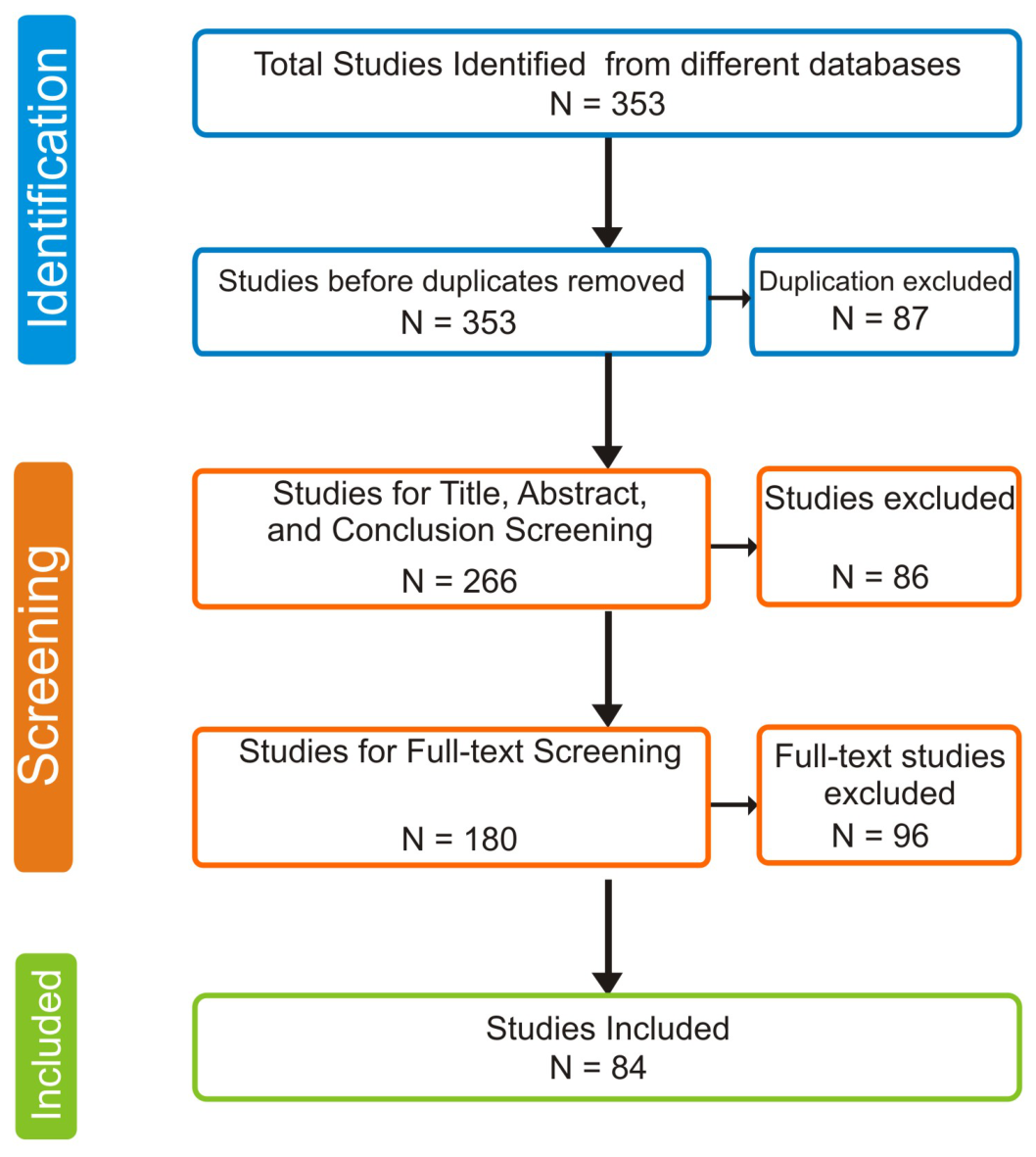
Our work employed a systematic literature search approach, utilizing the PRISMA framework [53] shown in Figure 3 to ensure rigor and transparency; the completed PRISMA checklist is provided in the Supplementary Materials. The search focused on peer-reviewed publications from 2021 to 2025 across 7 databases, including IEEE Xplore, ACM Digital Library, ScienceDirect, SpringerLink, Wiley Online Library, Nature Portfolio, and MDPI, as shown in Table 2. However, Google Scholar was adopted as a supplementary search platform; a filtered search by year range between 2021 and 2025 extracted papers published in 5 journals, including World Scientific, Journal of Computer Science and Technology Studies (JCSTS), Bentham Science, Tech Science Press, and Universidad Internacional de La Rioja (UNIR). Although FL was introduced in 2017 and [6] published a paper, the SLR focuses on studies published between 2021 and 2025 because this period reflects the rapid growth of FL from a foundational concept to a practical IoT application [54]. Since 2021, research has increasingly emphasized real-world deployment in smart healthcare, homes, and cities. We selected these sources to provide comprehensive coverage of high-quality research on federated learning, IoT, smart healthcare, homes, and cities. We conducted our review in three main steps: paper collection, filtering, and reviewing. In the paper collection phase, we retrieved papers using the following keywords:
(“federated learning” OR FL) AND (IoT OR “Internet of Things” OR IoMT OR “Internet of Medical Things” OR “Internet of Medical IoT” OR “FL-IoT”) AND (“smart healthcare” OR healthcare OR “smart home*” OR “smart cit*” OR “smart city” OR “smart cities”)
We searched Google Scholar, generated a broad set of potentially relevant articles, and filtered the results by screening their titles, abstracts, and conclusions to assess relevance to the research scope. We removed studies that did not explicitly address FL in the context of IoT. Finally, we review the remaining articles to analyse their methodologies, contributions, and findings. We present detailed inclusion and exclusion criteria, along with a quality assessment process, to ensure the relevance and reliability of the selected works.
Table 2.
Different databases and selected studies from smart healthcare, homes, and cities (SHHCs).
Figure 3.
PRISMA flow diagram.
3.3. Inclusion and Exclusion Criteria and Quality Assessment
Inclusion Criteria (IC): We clearly establish boundaries to identify high-quality and relevant studies. We ensure that the selected publications directly address FL approaches implemented with IoT-enabled environments. The first level of study qualification for selection is that the study must examine the application domain of either smart healthcare, homes, or cities. Furthermore, within these application domains, we prioritize peer-reviewed articles and reputable conference and journal papers that present detailed methodologies, FL models, optimization, datasets, experimental validation, and performance evaluations. Through these well-defined inclusion criteria, the proposed SLR maintains methodological rigor, transparency, consistency, and relevance across all selected studies. Thus, we include the following:
- Studies that focus on FL-IoT in the application domain of either smart healthcare, homes, or cities.
- Works published in peer-reviewed journals, conference proceedings, or other reputable sources.
- Studies that address FL-IoT in smart healthcare, homes, or cities, with a focus on FL model, optimization, and datasets.
- Studies that were published in the English language.
Four smart healthcare papers, each from journals including World Scientific, Journal of Computer Science and Technology Studies (JCSTS), Bentham Science, and Universidad Internacional de La Rioja (UNIR), were examined, and one smart cities paper from the Tech Science Press journal was also included, accessed via Google Scholar search platform.
Exclusion Criteria (EC): We applied exclusion criteria to define unsuitable studies for the proposed SLR. We excluded those not focused on FL-IoT in smart healthcare, homes, or cities, as shown in Table 3. Studies that are non-peer-reviewed, literature reviews, and surveys were also excluded. We further excluded those without FL architecture, optimization approaches, hyperparameter techniques, datasets, experimental validation, or performance evaluations. Thus, we exclude the following:
- Duplicate studies.
- Studies not directly addressing smart healthcare, smart homes, or smart cities within an FL-IoT context.
- Review, survey, and systematic literature review (SLR) studies, as they do not provide primary research contributions.
- Studies with insufficient experimental details, including unclear experimental setup, procedures, or unavailable dataset information.
Table 3.
Study exclusion and number of corresponding studies.
Quality Assessment (QA): We assessed methodological quality and potential risk of bias using a domain-adapted quality assessment informed by established critical appraisal principles, particularly the Critical Appraisal Skills Programme (CASP) framework [55]. The assessment considered the characteristics of FL-IoT studies and focused on the experimental validity, methodological rigor, transparency, and reproducibility of the reported studies. The questions used include the following:
- Is the FL architecture and overall system design clearly described?
- Is the model architecture and its main design components clearly described?
- Are the learning, optimization, aggregation, or training procedures clearly explained?
- Is the experimental methodology described, including the experimental setup and relevant implementation details?
- Are the datasets for FL clients adequately described?
- Are appropriate evaluation metrics suitable for FL-IoT used?
- Are appropriate baseline or existing methods used for comparison, where applicable?
Overall methodological quality of each study was classified into three levels, high, moderate, and low, which are employed to provide an overall judgement of methodological confidence rather than to determine study eligibility. High Quality: The study adequately addresses all quality assessment criteria and have no critical methodological concerns. Moderate Quality: The study has some minor methodological limitations but no critical concerns likely to substantially affect the validity of the findings. Low Quality: The study has at least one critical methodological concern that may substantially affect the validity, reliability, or interpretation of its findings. The quality assessment was not used as an additional eligibility criterion. Instead, it was used to identify methodological strengths and limitations and to inform the interpretation of the evidence synthesized in the SLR.
3.4. Data Extraction
This section explains the structured process used to systematically collect, evaluate, and organize relevant information from the total of 353 studies. We removed 87 duplications, bringing the number of studies for screening to 266. We split screening into two stages: Stage one includes title, abstract, and conclusion screening, while stage two focuses on full-text screening. During the first stage of screening, we reviewed each paper and excluded 86 papers. Then, at stage two, 96 papers were excluded. The remaining 84 papers were selected and included based on the inclusion, exclusion, and quality criteria. During the study selection process, two reviewers, including the first and second authors, independently screened the titles and abstracts of all identified papers against the predefined inclusion and exclusion criteria. Papers considered potentially eligible were later assessed independently at the full-text stage. Any disagreements between the two authors at either stage were discussed and resolved through consensus. Inter-rater agreement was assessed using Cohen’s Kappa (), which was 0.75, indicating substantial agreement between the authors [56,57]. The overall percentage of agreement between the authors was 85%. This number was selected after ensuring that the studies aligned with the research objectives and was also retained for further analysis. To efficiently organize and manage the identification of each paper, we used Microsoft Excel as our data management tool. We further divided the identification management into two parts: publication identity (PID) and contribution identity (CID). The PID captured bibliographic and contextual details such as authors, paper titles, conference or journal, DOI, publisher, and application domains (the smart healthcare, homes, or cities). PID helped categorize papers and track their sources. Furthermore, CID focused on the technical and research-specific aspects of each paper as related to the target application domains. This includes the methodology used, the FL model, the optimization, the hyperparameters applied, the type of dataset used, the evaluation metrics, communication efficiency, system reliability, privacy attacks, privacy defense, XAI, challenges, and future work stated by the authors. The combination of PID and CID ensured comprehensive coverage of publications and substantive contributions across all selected studies.
3.5. Meta-Data
The systematic search of peer-reviewed literature identified 353 studies, as shown in Figure 3. We selected only those papers from the seven specialised search engines that were relevant to the proposed SLR. Running the search query across each search engine returned many papers that were not related to the proposed SLR. For example, it returned papers related to general IoT, federated learning, smart healthcare, homes, or cities, which do not align with the scope of the proposed SLR. Therefore, we did not include these papers in the manuscript count. Following the screening and eligibility assessment, 269 studies were excluded based on predefined inclusion and exclusion criteria, as detailed in Table 3. The primary reasons for exclusion include duplication, lack of contribution to knowledge, or not being directly related to FL-IoT in smart healthcare, homes, or cities. After this rigorous filtering process, 84 studies from 12 academic journals were selected for inclusion in this SLR, as presented in Table 2. Among the included studies, 44 focused on smart healthcare applications, representing 52% and the largest research concentration. Furthermore, the smart homes category comprises 19 studies, representing 23%, while 21 studies address smart city applications, representing 25%. This research indicates that FL integration in IoT settings is mostly explored in the healthcare environment than in other applications. Furthermore, Figure 4 illustrates the number of studies by application domain and year. A quality assessment guideline was applied to evaluate methodological rigor and relevance. The approach ensures that the final selection of studies for this SLR is only high-quality research on FL-IoT applications in either smart healthcare, homes, or cities.
Figure 4.
Chart for the 84 selected studies.
4. Results and Discussion
4.1. RQ1: What FL-IoT Applications Have Been Explored in Smart Healthcare, Homes, and Cities, and How Do Their Distributions Differ Across These Domains?
4.1.1. Smart Healthcare
Smart healthcare uses connected devices, data, and AI to enhance clinical decision-making and optimize operations, as shown in Figure 5. Integrating IoT sensors, wearable devices, and electronic health records enables real-time monitoring of patients, early disease detection, and personalized treatment. In smart healthcare FL-IoT, clinical data remains local in patients’ devices while only model updates are shared. This approach promotes privacy-preserving healthcare, ensures regulatory compliance, reduces data transmission, and provides accurate predictive insights without exposing sensitive information. In this SLR, we identified forty-four works focusing on clinical intelligence applications, privacy-preserving FL-IoT, healthcare IoT security applications, and IoT device and data acquisition in smart healthcare, as shown in Table 4.
Figure 5.
FL IoT application domains.
Table 4.
Research studies associated with the RQ1: smart healthcare.
Clinical Intelligence Applications: Clinical intelligence healthcare utilizes data from wearable IoT devices, medical monitoring devices, or lab results to predict illnesses and create personalized clinical treatment plans based on the patient’s customized health profile. This approach reduces risk, improves accuracy, and ensures that patients receive care suited to their health conditions. Siddiqui et al. [58] detected the risk of obesity through the body mass index (BMI) of patients by applying an Internet of Medical Things (IoMT) architecture based on automated sensing of physiological and ambient parameters. Li et al. [59] diagnosed an early stage of alzheimer’s disease (AD), which was achieved by analysing the audio captured in an IoT device. Sharma et al. [60] utilized an ensemble learning model with the improved Jaya and coronavirus herd immunity optimization algorithms to detect thyroid cancer. Moulahi et al. [61] continueed with a combination of FL on the blockchain to predict patients at risk of developing diabetes while preserving privacy and trustworthy collaborative learning. Baucas et al. [62] also focused on FL and blockchain with proof of work (PoW) within a fog-IoT network’s distributive structure to create a collaborative network for wearable IoT devices in predictive healthcare. Sachin et al. [63] introduced a personalized FL framework called FedCure, which is customized for smart IoMT-based healthcare applications within a cloud-edge architecture environment. Selvaraj et al. [64] proposed co-training-based personalized FL with generative adversarial networks (GANs) for intelligent healthcare diagnosis (CFG-SHD), aligning with the diverse needs of modern healthcare systems and advancing patient-centric AI applications. Mishra et al. [65] implemented a collaborative IoMT-Fog-Cloud health-tracking framework for both regulating and predicting diabetes by applying the principles of digital twin (DT) for seamless data fusion. Das et al. [66] proposed an approach for medical institutions to collaborate and develop a robust patient diagnostic model for automatically diagnosing diabetic foot ulcers. Verma et al. [67] proposed FedAcc, considering clients’ validation accuracy as a smart-healthcare-amplified (SHA) metric, and also utilized transfer learning to revolutionise the healthcare system. Saini et al. [68] designed a framework as a personalized healthcare FL for various medical applications, including chronic disease surveillance, real-time anomaly detection, and personalized medication recommendations. Almogadwy et al. [69] proposed an approach to improving health monitoring in a clinical environment to achieve accurate classification and early detection of Parkinson’s disease. Furthermore, Almogadwy et al. [70] introduced fused federated learning (FFL), which integrates with IoMT devices to securely monitor patient health data in a decentralized chronic kidney disease diagnosis within healthcare 5.0. Khan et al. [71] implement FedTinyMed, which integrates TinyML and FL to enable efficient, privacy-preserving smart healthcare monitoring on resource-constrained IoMT devices. Orthi et al. [72] performed classification of chest X-ray images of tuberculosis (TB) in a decentralized healthcare environment with their privacy-preserving FL architecture. Meanwhile, Reddy et al. [73] propose a blockchain-enabled FL as a secured data processing channel using discrete-time continuous-dilation wavelet transform (DCWT) with the capacity of analysing signals across multiple scales and resolutions for the identification of unfamiliar patterns in medical data.
Privacy-Preserving FL-IoT: This approach enables the benefits of the clinical global model through collaborative training, while the patient’s data remains on local IoT devices. Sharing model updates promotes privacy of individual data while supporting the trustworthiness of the federated process. Lin et al. [74] proposed relevant access control parameters to improve the accuracy of access control for user privacy. An attribute-based secure access control mechanism (SACM) in smart healthcare utilizing federated deep learning (FDL) and an optimal threshold were included. Ngan et al. [75] proposed PriFL-Chain by applying differential privacy (DP) to FL and blockchain to securely and transparently train ML models to reduce the pressure on the central server and reduce data communication costs in mobile edge computing. However, Asad et al. [76] proposed k-anonymity-based secure hierarchical federated learning (SHFL) as a different privacy-preserved approach for smart healthcare systems. In contrast, Akter et al. [77] presented an edge-intelligence, three-fold federated edge aggregator (FEA) for an FL-based privacy protection framework for protecting smart healthcare systems at the edge server against privacy attacks. Abou et al. [78] used FL and blockchain to design a system called HealthFed, which is utilized for privacy-preserving distributed learning among multiple clinician collaborators. Mohammed et al. [79] also proposed a blockchain-enabled healthcare framework for smart healthcare workloads on fog and cloud networks. Jiang et al. [80] proposed a federated privacy-enhanced healthcare (FPEH) learning framework based on Gaussian differential privacy (DP) and Paillier homomorphic encryption (PHE) to enhance privacy for IoT-based smart healthcare systems. Sai et al. [81] implemented a smart and secure FL system for smart health diagnosis with a blockchain-based incentive mechanism and a nonfungible token (NFT)-based marketplace, which creates clear demarcations regarding patient data ownership and accessibility. Tian et al. [82] presented RPDFL, a robust and privacy-preserving decentralized deep federated learning approach for distributing parameters in the Chinese residual theorem to update threshold secret sharing for healthcare edge dropout. Singh et al. [83] focused on an intelligent healthcare framework, prioritizing energy efficiency and privacy through a blockchain FL model with the integration of DP and HE mechanisms, to prevent leakage. Akter et al. [84] introduced a serverless privacy edge intelligence-based federated learning (SPEI-FL) approach to improve the data privacy of FL, allowing clients to adapt and remove data without impacting the entire federated processes in smart healthcare systems. Khan et al. [85] proposed an expert hybrid FL support vector machines with trust improvement for security, efficiency, and power optimization in a healthcare environment. Ali et al. [86] continued with a blockchain federated learning (BFL) approach to enhance privacy preservation in electronic health records (HERs). This includes zero-knowledge proofs (ZKPs) for authentication and homomorphic encryption for secure computation. Samantray et al. [87] focused on the blockchain-enabled distributed healthcare system (BeDHS) and solidity-based smart contracts for a quantum key-based image encryption technique for health records. Wang et al. [88] designed an FL method with a meta-knowledge exchange mechanism that protects privacy by only exchanging meta-knowledge rather than the complete healthcare parameters of the network. Tawfik et al. [89] introduced a federated few-shot learning (FedMedSecure) framework to provide a secure and collaborative learning. Also, explainable AI and adaptive ensemble mechanisms for IoMT cybersecurity were examined. Furthermore, Islam et al. [90] presented an adaptive personalized federated learning algorithm (APFLA) with blockchain and differential privacy (DP) for the edge-fog-cloud health model.
Healthcare IoT Security Applications: These applications focus on the safety of federated smart healthcare through risk or intrusion detection accuracy across the environment. Through early detection of attacks, healthcare providers can prevent breaches, protect patient data, and ensure continuous operations. Rehman et al. [91] proposed an FL, blockchain, and intrusion detection system (IDS) to secure healthcare 5.0 systems and protect sensitive medical data. Alkhalifa et al. [92] developed a secure technique to identify abnormal patterns by implementing PPFL-BCSHS, a privacy-preserving federated learning with a blockchain-based smart healthcare system for Internet of Medical Things (IoMT) devices. Bhasker et al. [93] continued research on the federated blockchain-IoT system for sustainable healthcare systems (FBCI-SHS), a secure health monitoring system, and an intrusion detection system (IDS) as a mechanism for doctors to track patients’ vitals. While Sharaf et al. [94] identified and retained the most relevant features for the feature selection process in IoMT using an adversarial attack detection framework. This framework combines a federated-learning-empowered IoT medical (AADF-FLEIoTM) model with the marine predators algorithm (MPA) model.
IoT Device and Data Acquisition: IoT devices such as wearable sensors and medical imaging systems are generating real-time health data for monitoring and analysis. Wearables track health conditions, while imaging systems capture snapshots of static conditions, such as X-rays, for further analyses of individual health conditions. The accuracy of monitoring, improving, and personalization in smart healthcare highly depends on accurate data acquisition. Sun et al. [95] proposed a scalable and transferable FL system for the classification of healthcare sensor data with a parameter protection mechanism, helping to avoid catastrophic forgetting in sequential healthcare sensor data (HSD). Guo et al. [96] proposed a real-time medical data processing framework based on federated learning to handle catastrophic forgetting issues. This author utilizes incremental learning to help models review their old knowledge and learn new knowledge. Arikumar et al. [97] proposed FL-PMI, an FL-based person movement identification, using a deep reinforcement learning (DRL) framework for auto-labeling the unlabeled data. Butt et al. [98] presented a customized and collaborative FL architecture for COVID-19 screening using chest X-ray images, entailing localized and fog-computing-based FL models. Furthermore, Ullah et al. [99] implement a scalable FL framework for interactive smart healthcare systems with intermittent participating clients using chest X-ray images. Wang et al. [100] propose a privacy-preserving framework that automatically manages different combinations of sensor modalities across healthcare institutions, using a heterogeneous multi-modal sensor fusion-based mechanism (PHMS-Fed). Lastly, Dundar et al. [101] propose a classification of patients’ health scores using an FL approach to process health data obtained from wearable smart devices while preserving privacy.
4.1.2. Smart Homes
Smart homes utilize IoT devices, such as sensors and appliances, to monitor and automate the environment for efficiency, comfort, and safety, as shown in Figure 5. Smart homes with FL-IoT enable local model training, allowing homes to collaboratively improve AI-driven services while preserving privacy. In this SLR, we identified nineteen approaches focusing on ambient intelligence applications, privacy-preserving FL-IoT, home IoT security applications, and IoT device collaboration in smart homes, as shown in Table 5.
Table 5.
Research studies associated with RQ1: smart homes.
Ambient Intelligence Applications: These applications use IoT data to sense, analyse, and adapt to residents’ behaviours, including the prediction of energy usage, HVAC, personalized lighting, and appliance schedules in smart homes. Yang et al. [102] propose pFedCAM, which uses clustering and model interpolation to classify heterogeneous clients, uses the federated average algorithm in parallel, and combines the results into a personalized global model for smart homes. Gupta et al. [103] introduce FedAR+, an adaptive noise-handling method for mislabeled training data in residential energy, incorporating a joint loss function that weights the loss by the label distribution to empower the appliance recognition model against noisy labels. Skianis et al. [104] propose FedTime for predicting smart home consumption, which uses a weighting method that evaluates how old or recent the time-series datasets are for each client. Polap et al. [105] propose a solution that can optimize energy distribution by analysing energy demand in individual homes. Sadanand et al. [106] propose a novel hybrid approach that integrates convolutional neural networks (CNNs), federated learning with hierarchical clustering (FL+HC), and SecureBoost to enhance smart home energy forecasting systems. Xu et al. [107] introduce a REST API-based framework to facilitate and improve connectivity between servers and IoT devices for historical data collection, model training, and predictive optimization tasks. Al et al. [108] introduce an FL model framework, IntEnergy, to optimize energy efficiency in multiple IoT devices in an intelligent home. Lu et al. [109] propose a Wasserstein generative adversarial network (FL-WGAN) framework to improve accuracy, where each participating client trains its own generative neural network to estimate load power, and a discriminator network evaluates these estimates. Agarwal et al. [110] implement a transformer-based model using a peer-to-peer federated learning (P2P-FL) framework for non-intrusive load monitoring (NILM) in smart homes. While Dahal et al. [45] propose an FL framework with a long short-term memory (LSTM) deep learning model for activity recognition in smart homes. Privacy-Preserving FL-IoT: It allows smart homes to securely share model updates without compromising occupant data and appliance usage patterns. Zhu et al. [111] introduce a blockchain-based FL approach and a device clustering-based FL algorithm to address challenges related to data privacy and a single point of failure. Biswas et al. [112] also present a scalable blockchain-based privacy-preserving FL (BPFL) architecture. However, Khan et al. [113] propose an FL-driven explainable artificial intelligence (XAI) for smart homes, designed to improve data privacy, decision-making, and transparency, thereby increasing user trust.
Homes IoT Security Applications: This enables the detection of threats such as anomalies and device behavioral analysis to identify intrusions and abnormal user activities. Sater et al. [114] propose FSLSTM, a federated stacked long short-term memory model on IoT sensor data. The authors used FSLSTM to detect anomalies in smart buildings. Shahid et al. [115] evaluate an unsupervised variational autoencoder (VAE) in learning the features of regular patterns of daily activities and detection of anomalies. Patel et al. [116] propose a framework for early prediction to improve the responsiveness and efficiency of fire safety systems, with FL trust and transparency. Reis [117] further propose another anomaly detection framework, Edge-FLGuard+, which is a federated and lightweight approach specifically designed for a 5G-enabled smart home environment. Also, Koc et al. [118] develop a distributed, AI-based smart home intrusion detection system (IDS) to improve user privacy in IoT devices. IoT Device Collaboration: This refers to multiple home IoT devices sharing insight and coordinated decision-making. Zhong et al. [119] propose an optimization of IoT devices based on a graph neural network and FL. The authors study devices and their communication relationships to facilitate the storage of structured data before training.
4.1.3. Smart Cities
Interconnected IoT devices have been used in smart cities to collect and analyse data for efficient services, as shown in Figure 5. Smart city FL-IoT applies FL across distributed IoT devices, enabling collaborative model training. In this SLR, we identified twenty-one works focusing on urban intelligence applications, privacy-preserving FL-IoT, urban IoT security applications, and urban IoT device collaboration in smart cities, as shown in Table 6.
Table 6.
Research studies associated with RQ1: smart cities.
Urban Intelligence Applications: These applications analyze data from distributed city sensors to optimize urban services, including environmental monitoring, public transport scheduling, and traffic flow. They further identify patterns and support data-driven decision-making across interconnected urban infrastructure systems. Dey et al. [120] propose BGRU, a deep-learning-based bidirectional gated recurrent unit for the correct prediction of air quality using big data. Abdel et al. [121] propose a framework, BFLPD (blockchain-based federated learning for pandemic diagnosis), using COVID-19 as a case study. Alla et al. [122] propose an approach by combining FL with PSO, the particle swarm optimization algorithm, to improve prediction accuracy and maintain data privacy. Abdulla et al. [123] utilize adaptive and federated learning, with numerous long short-term memory (LSTM) models on edge devices to design a framework for energy consumption forecasting. Alzamil et al. [52] propose HHCTE-FL, a hierarchical hybrid convolutional transformer extractor implemented within a federated learning framework for forecasting of electricity load. The authors also implement model transparency using layer-wise interpretative attention maps (LIAM) and robustness using personalized federated optimization. Privacy-Preserving FL-IoT: This uses FL across distributed urban IoT devices to train and share updates without exposing sensitive data in smart cities. Wang et al. [124] propose model optimization methods called multi-modal fine-grained to improve the accuracy of the IoT model, with additional adaptive differential privacy (DP). Wang et al. [50] combine DP and trusted execution environments (TEEs) with FL as a set of security and privacy techniques during model training. Furthermore, Tan et al. [125] implement a fully homomorphic encryption (FHE) with an FL-based long short-term memory auto-encoder model (FedLSTMA) for deep learning and time-series model training on heterogeneous IoT data. Abbas et al. [126] present differentially private FL on ARS—accumulative reputation-based selection for the edge-aided unmanned aerial vehicle (UAV) network—while avoiding single-point failures using blockchain. Wehbi et al. [127] propose a trust-need framework for both the client and server via addressing mutual trustworthiness in a federated process.
Urban IoT Security Applications: Uses techniques such as intrusion detection and monitoring to prevent attacks on urban services. Djenouri et al. [128] propose combining federated deep learning with a trusted-authority approach to improve intrusion detection within a smart city environment. Arya et al. [129] also propose an approach to detecting intrusions based on the distributed FL of heterogeneous neural networks. Priyadarshini et al. [130] propose federated and split learning to address the dual issues of improving IoT network security and preserving user data privacy. Hamid et al. [131] propose a method for a model to leverage advanced AI techniques on an intrusion detection system dataset during federated learning. Farooq et al. [132] introduce another approach, the interpretable FL-based cyber intrusion detection model, which is customized for a smart city environment. Ragab et al. [133] proposed the AAIFLF-PPCD approach, an advanced AI federated learning framework for privacy-preserving cyber threat detection, to improve robustness and scalability. Mukherjee et al. [134] propose FedProx, which combines transformers with auto-encoders to improve recognition of patterns and detection of anomalies in heterogeneous IoT data. Urban IoT Device Collaboration: Collaboration of multiple IoT devices to improve the coverage, accuracy, and resilience by distributing workloads across devices in smart cities. Xu et al. [135] propose a multi-level aggregation architecture, split FL (multi-level SFL), to merge the benefits of split learning and FL. Wang et al. [136] address FL challenges in smart cities leveraging the space–air–ground information network using low-cost node selection in federated learning (LCNSFL). Zhang et al. [137] propose AdaptFL, which adaptively assigns custom model architectures to heterogeneous clients via a device resource-aware neural architecture search (DRNAS) method. In addition, Du et al. [51] introduce FL-based dynamic traffic management (FL-DTM), a decentralized traffic optimization framework designed for IoT-enabled smart cities.

4.2. RQ2: What Are the Frequently Used FL Architectures in These Domains?
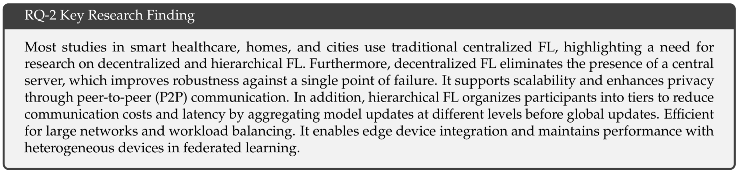
In the proposed SLR, eighty-four studies used three major FL architectures. They are centralized, decentralized, and hierarchical FL, as shown in Figure 6. These FL architectures are classified not simply by whether edge or fog components are present but rather by the structure of model aggregation and the communication topology. Centralized FL involves clients and a single central server with one primary aggregation level; decentralized FL involves peer-to-peer communication with no global server. Hierarchical FL involves clients, an intermediate edge/fog, and a central server. When multiple aggregation levels are involved in the federated process, rather than a simple client-server or peer-to-peer structure, the architecture is described as hierarchical FL. Centralized FL, also called traditional FL, is a client-server architecture. The central server sends the initial model to the IoT devices for local training. These IoT devices train their models and share the output models with the central (global) server for global updates and redistribution. This architecture relies on the global server for the federated process. In contrast, decentralized FL operates without a central server. The federated process implements a peer-to-peer network to train, aggregate, and update the model and to remove a single point of failure. However, hierarchical FL is an improved version of centralized and decentralized FL, especially for FL-IoT. It introduces intermediate or multiple layers between IoT devices and the central server to improve scalability and reduce communication latency, which is well-suited to an IoT environment. Table 7, Table 8 and Table 9 further present the distribution of studies across these FL architectures.
Figure 6.
FL architectures used in FL-IoT smart healthcare, homes, and cities.
Table 7.
Research studies associated with RQ2: smart healthcare.
Table 8.
Research studies associated with RQ2: smart homes.
Table 9.
Research studies associated with RQ2: smart cities.
4.2.1. Smart Healthcare
In smart healthcare, out of the forty-four FL-IoT smart healthcare studies, thirty implemented centralized FL [59,60,61,64,65,66,67,68,69,70,72,73,74,75,79,83,85,86,87,88,91,92,93,94,95,96,98,99,100,101], and three implemented decentralized FL [78,81,82], while hierarchical FL was implemented by eleven of the studies [58,62,63,71,76,77,80,84,89,90,97], as shown in Figure 7. These approaches support clinical intelligence applications, such as monitoring, disease detection, classification, prediction, personalized treatment, and data privacy within a distributed medical system.
Figure 7.
Chart showing FL architectures used in FL-IoT smart healthcare.
4.2.2. Smart Homes
In smart homes, out of nineteen FL-IoT smart homes studies, twelve implemented centralized FL [45,102,103,104,106,109,113,114,115,117,118,119], and four implemented decentralized FL [105,110,111,112], while hierarchical FL was implemented by three of the studies [107,108,116], as shown in Figure 8. These approaches support ambient intelligence applications, such as HVAC, energy usage prediction, personalized lighting, appliance scheduling, and data privacy within a smart home.
Figure 8.
Chart showing FL architectures used in FL-IoT smart homes.
4.2.3. Smart Cities
In smart cities, out of twenty-one FL-IoT smart cities studies, fourteen implemented centralized FL [51,120,122,123,125,127,128,129,131,132,133,134,136,137], and three implemented decentralized FL [50,121,126], while hierarchical FL was implemented by four of the studies [52,124,130,135], as shown in Figure 9. These approaches support urban intelligence applications, such as environmental monitoring, public transportation scheduling, and data privacy within smart cities.
Figure 9.
Chart showing FL architectures used in FL-IoT smart cities.
4.3. RQ3: What Optimizations and Hyperparameter Techniques Are Used by FL?
4.3.1. Optimization
Optimization in FL-IoT smart healthcare, homes, and cities focuses on improving model performance while maintaining data privacy, where data remain on IoT devices, such as wearable IMoT for smart healthcare, appliance sensors for smart homes, and urban IoT devices for smart cities, and only share model updates. Furthermore, managing IoT constraints such as energy efficiency, limited bandwidth, data, and device heterogeneity is crucial. Algorithms, as shown in Figure 10, are primarily implemented to significantly improve communication efficiency while maintaining model performance in FL [6]. In smart healthcare, optimization is employed to ensure timely and accurate monitoring and predictions. In smart homes, it is used for balancing responsiveness with minimal resource usage. In smart cities, optimization is employed to improve robust aggregation and fault tolerance. Furthermore, it is used to improve the security and privacy challenges in FL-IoT, aiming to maximize accuracy, minimize latency, reduce energy consumption, and improve system scalability. Table 10 shows algorithms and abbreviations in FL-IoT. Table 11, Table 12 and Table 13 show the existing algorithms used in smart healthcare, homes, and cities, respectively. Federated optimization algorithms are methods specifically designed to aggregate learning across distributed clients. For example, FedAvg combines locally trained client model updates to obtain a global model. Metaheuristic optimization algorithms are not inherently FL aggregation mechanisms. However, they can be incorporated into an FL system for optimization tasks. These include particle swarm optimization (PSO), the marine predators algorithm (MPA), genetic algorithms, and related methods, which are used to optimize weights, anomaly detection, and feature selection.
Figure 10.
FL optimizations and hyperparameters used in FL-IoT smart healthcare, homes, and cities.
Table 10.
Optimization algorithms with abbreviations used in FL-IoT smart healthcare, homes, and cities (FL-IoT SHHCs).
Table 11.
Optimization algorithms used in FL-IoT smart healthcare.
Table 12.
Optimization algorithms used in FL-IoT smart homes.
Table 13.
Optimization algorithms used in FL-IoT smart cities.
Federated Optimization Algorithms: This focuses on the most efficient and suitable methods for combining client updates, enhancing communication, and enabling personalization to ensure improved global model performance in FL. khan et al. [71] propose the core FL algorithm FedAvg, which allows IoT devices to train and send individual model updates to the server for global averaging to produce a global model. Ullah et al. [99] propose an SGD on the local model parameters during IoT device training to minimize loss functions using gradients computed. Sai et al. [81] propose the FedPolyak technique to aggregate local model parameters by assigning the local model weights proportional to their respective accuracies on the test dataset. Sachin et al. [63] apply Per-FedAvg, an advanced FedAvg, to allow IoT devices to maintain personalized models that support individual performance while benefiting from shared learning. Patel et al. [116] apply FedAdam, an advanced Adam in FL, where the learning rate is dynamically adjusted for each parameter, and they also used FedProx as advanced averaging by adding a proximal term to each client’s objective, constraining local updates to remain close to the global model. Samantray et al. [87] propose the Adam technique to combine momentum with adaptive learning rates on gradients, reducing misclassifications and improving accuracy, highlighting FL’s promise in safeguarding healthcare data while achieving model convergence. Islam et al. [90] propose APFLA to dynamically balance global and local model updates by adjusting personalization levels based on IoT characteristics, thereby improving performance in a heterogeneous environment.
Metaheuristic Optimization Algorithms: The focus is on general-purpose techniques inspired by natural processes that are not inherently designed for FL. However, they can be adopted to optimize hyperparameters, aggregation of weights, and selection in an FL environment. Sharma et al. [60] employ IJO and CHIO as swarm-based techniques for optimizing weights in ensemble learning within smart healthcare. Alkhalifa et al. [92] combine MGO with SCSO to identify abnormal patterns and anomaly detection during model training in the federated process. Xu et al. [107] propose PSO to optimize energy consumption and thermal comfort in a mathematical model. Mishra et al. [65] focus on an SaJAYA-ANFIS algorithm, finding perfect categorization models like interpretability. Also, they implement disease prediction and classification in smart healthcare using an adaptive neuro-fuzzy inference system (ANFIS). Sharaf et al. [94] identify and retain the most relevant features for the feature selection process using the MPA model. Furthermore, RTH-based tuning [94] is a bio-inspired optimization technique employed by the authors to dynamically adjust the model’s hyperparameters. The authors of [133] propose HHO for feature selection, identifying the most connected features in IoT data, helping to improve cyberthreat detection performance.
4.3.2. Hyperparameter
The hyperparameters in FL-IoT smart healthcare, homes, and cities, as shown in Figure 10, are an important configuration that controls how models are trained across all distributed IoT devices. It is predefined and significantly influences system efficiency, communication, convergence, and model accuracy.
Table 14 shows the hyperparameters of and corresponding studies on smart healthcare, homes, and cities. Asad et al. [76] use momentum () to accelerate training by incorporating previous gradients into current updates. Sun et al. [95] use regularization () to constrain model complexity to avoid overfitting, especially in a small dataset. Akter et al. [77] apply gradient clipping () to limit the magnitude of gradients during training. Also, weight decay () is used by Wang et al. [124] to penalize large model weights and prevent overfitting. Tawfik et al. [89] utilize the learning rate () to control how model parameters change during each update. Reis [117] sets the number of local training epochs (E) to determine how many times a client trains on its local data before sending updates. Zhong et al. [119] use batch size (B) to define the number of data samples processed before updating the model.
Table 14.
Hyperparameters used in FL-IoT smart healthcare, homes, and cities (SHHCs).

4.4. RQ4: What Are the Available IoT Datasets for FL?
4.4.1. Smart Healthcare
Smart healthcare datasets contain patient records, medical images, clinical measures, and sensor readings for diagnosis and treatment, which enable an ML model to detect diseases, predict outcomes, and personalize care. Figure 11 illustrates the datasets suitable for FL-IoT in smart healthcare, along with the total number of studies that have implemented each, and Table 15, column 2, shows the names of the datasets used in smart healthcare. A mouse above the dataset name shows the link; a click will redirect the user to where the dataset can be found.
Figure 11.
FL datasets used in FL-IoT smart healthcare.
Table 15.
Datasets used in FL-IoT smart healthcare, homes, and cities.
This section is subdivided into clinical and physiological signals; medical imaging and diagnosis; disease conditions; fitness; activity recognition; security; and general datasets. Clinical and physiological signals include MIT-BIH Arrhythmia and PTB Diagnostic ECG [75]; INCART, MIT-BIH-SUP, Sleep-EDF, and Wrist PPG during Exercise [95]; ADReSS Challenge [59]; AVEC 2013 and AVEC 2014 [88]; MIMIC-III [68,86,100] and eICU-CRD [100]; CardioFit (ECG) and GlucoWatch (glucose) [90]; PAD-UFES-20, HAM10000, and PH2 [64]; DFU images [66]; TB Chest X-ray [72]; and Breast Cancer Wisconsin [78] for monitoring vital signs, sleeping disorders, and cardiovascular problems; detecting emotions and mental health conditions; and developing a predictive model. Medical imaging and diagnosis include TDID [60]; PneumoniaMNIST [80]; COVID-19 CXR [98]; OCT images [63]; PAD-UFES-20, HAM10000, and PH2 [64]; DFU image [66]; TB Chest X-ray [72]; and Breast Cancer Wisconsin [78] for automated disease detection and image classification and assisting in diagnosing conditions.
Diseases conditions include Parkinson’s disease [91]; Alzheimer’s disease [79]; Pima Indians Diabetes [61,87]; Diabetes dataset; Maternal Health dataset [63]; UCI diabetes [65]; Chronic Kidney Disease [70]; Heart Disease [71]; and COVID-19 [76] for prediction, diagnosis, and analysis of various diseases and personalized healthcare. Fitness includes the BMI dataset [58] and the Body Performance dataset [63] for assessing physical health, fitness level, obesity risk, and recommendations based on body size. Activity recognition includes UCI HAR [62,63,68], PAMAP2 [63], Wearables [101], and HAR [97] for the recognition of human activities and monitoring of daily behavior. Security includes the NSL-KDD dataset [91]; BoT-IoT [84]; IoT Healthcare Security [93]; and CICIoMT2024 and CIDC2017 [89] for intrusion, cyber threat detection, and protection of user data in IoT-enabled environments. General datasets include MNIST, CIFAR-10 [76,84], the Facebook-Like Social Network [74], and WUSTL_EHMS-2020 [73] for social interaction and other standard datasets in FL-IoT.
4.4.2. Smart Homes
Smart homes collect data from appliances, sensors, and user interactions within a living environment, including activities, temperature, energy usage, and occupancy patterns. Figure 12 illustrates datasets suitable for FL-IoT in smart homes, along with the total number of studies that have implemented each, and Table 15, column 3, shows the names of the datasets used in smart homes. This section is grouped into energy, security, activity, and general datasets. Energy includes Tracebase [103], Residence [104], UK-DALE [106,109], and REDD [109,110] for smart meters, energy, and household electricity usage and monitoring. Security includes IoT [112], MQTTset [119], TON_IoT Network, CIC-IDS2018 [117], and IoT Intrusion [118] for intrusion, anomaly, and attack detection and the enhancement of IoT security.
Figure 12.
FL datasets used in FL-IoT smart homes.
Activity includes WESAD [115], Smart Home [113], and ARAS [45] for health monitoring, emotion recognition, human activity recognition, and behavior modeling in ambient intelligence. General datasets include Fashion MNIST, CIFAR-10 [102], MNIST [111], and Stanford Cars [112] for image classification.
4.4.3. Smart Cities
Smart cities datasets contain data from environmental sensors, infrastructure, transportation systems, and public services, including traffic flow, pollution, population movement, and energy consumption. Figure 13 illustrates the datasets suitable for FL-IoT in smart cities, along with the total number of studies that have implemented each, and Table 15, column 4, shows the names of the datasets used in smart cities. This section is subdivided into energy and environment, security, activity, and image datasets. Energy and environment include Air Quality [120], Energy and Environment [122], SmartMeter Energy Consumption Data in London Households [123], and ISONE smart city energy [52] datasets for environmental monitoring and energy consumption, emission, and environmental impact analyses. Security includes NSL-KDD [128], the TON_IoT Network [129], UNSW-NB15 [130], IoTID20 [131], CSE-CIC-IDS2018 [132], X-IIoTID [133], and N-BaIoT [134] for IoT intrusion detection, threat analysis, and cyber-attack detection. Activity includes Traffic Data Collection and Analysis (TDCA) [122], and PeMS and BikeNYC [51] are for analysing flow prediction and congestion patterns. Images datasets include POCUS, ICLUS-DB, COVIDx-US [121], CIFAR-10 [50,126], CIFAR-100 [124], HAM10000, Fashion MNIST [127,135], MNIST [136], SVHN, and CINIC-10 [137] for image classification.
Figure 13.
FL datasets used in FL-IoT smart cities.

4.5. RQ5: What Are the Frequent Evaluation Metrics Used for FL-IoT?
Evaluation metrics in FL are used to quantitatively measure performance and efficiency across the distributed IoT devices. Figure 14 illustrates the evaluation metrics used in FL-IoT smart healthcare, along with the total number of studies for each metric. Figure 15 and Figure 16 are used for smart homes and smart cities, respectively. We further grouped the metrics in the following categories: model performance, training, and system efficiency metrics. Table 16, Table 17 and Table 18 show the frequently used evaluation metrics in smart healthcare, homes, and cities, respectively.
Figure 14.
FL evaluation metrics used in FL-IoT smart healthcare.
Figure 15.
FL evaluation metrics used in FL-IoT smart homes.
Figure 16.
FL evaluation metrics used in FL-IoT smart cities.
Table 16.
Evaluation metrics used in FL-IoT smart healthcare.
Table 17.
Evaluation metrics used in FL-IoT smart homes.
Table 18.
Evaluation metrics used in FL-IoT smart cities.
In model performance, the accuracy Formula (2) [67,71,121] checks the correctness of the prediction by comparing the total corrected predictions to all predictions made across the dataset. The precision Formula (3) [67,71] checks the number of actual correct positive predictions, focusing on reducing false positives. The recall Formula (4) [67,71] checks how many actual positives are correctly identified by focusing on reducing false negatives. The F1-score Formula (5) [67,71] is used to balance precision and recall into a metric, which is useful when classes are imbalanced. The sensitivity Formula (6) [60,66] checks the portion of actual positives correctly identified, showing how well the model detects positive cases. The specificity Formula (7) [65,66] checks the portion of actual negatives correctly identified, showing how perfect the model ignores false positives. Furthermore, F2 scores [60] are similar to the F1 score; however, F2 scores emphasize recall more. ROC-AUC [60] checks how accurately a model can differentiate between classes, plotting true-positive rate (TPR) against the false-positive rate (FPR) at various probability thresholds. AUC [92] is the area under a curve summarizing model performance across all classification thresholds into a single value. The root mean squared error (RMSE) [104,115] measures the average prediction error magnitude by squaring differences before averaging to penalize larger errors. The mean absolute error (MAE) [104,110] measures the average prediction error magnitude using absolute differences, making it less sensitive to outliers by treating all errors equally. In training, the loss function [58] checks the difference between the predicted and actual values, guiding the model to improve by minimizing errors during training. In system efficiency metrics, throughput or transactions per second (TPSs) [75] indicate the system’s processing capacity and efficiency in real time. The following abbreviations are provided: TPs = true positives; TNs = true negatives; FPs = false positives; FNs = false negatives.

4.6. RQ6: What Are the Attacks on the Privacy of FL-IoT?
Privacy attacks in FL-IoT are techniques that exploit shared model updates to infer sensitive user data, even when the raw data remains on an individual user’s devices. As shown in Figure 17, the attacker can still analyse gradients, parameters, or model output to infer private data used during model training.
Figure 17.
FL privacy attacks in FL-IoT smart healthcare, homes, and cities.
For example, a semi-honest server that follows the protocol but also tries to learn private information can reconstruct training data. The honest-but-curious server can learn the model during aggregation to identify the type of data originally used in the client’s training dataset, performing an inference attack. Inference attacks can be passive or active and threaten confidentiality by identifying user data used in training or reconstructing training data, making privacy-preserving FL-IoT essential. Furthermore, we discuss the threat model, including passive and active adversaries.
Passive Adversary: This involves observing information exchanged during the federated process without modification of the training procedure. The adversary may be an honest-but-curious server observing the model updates primarily to extract sensitive information. Privacy risks under this threat model include information leakage, data leakage, and inference attacks. Information and data leakage can be unintended exposure or reconstruction of sensitive features from model updates, while inference attacks attempt to derive private information about the training data. We further explain these attacks based on leakages, such as privacy, information, and data leakages. Inference attacks, such as membership inference attacks (MIAs), gradient inversion, model inversion, and private set intersection (PSI) inversion attacks. Table 19, Table 20 and Table 21 show privacy attacks on smart healthcare, homes, and cities, respectively. In leakages, privacy leakages [59,65,74,75,100,124,126] in FL-IoT occur when sensitive personal information about participating users is exposed indirectly through shared gradients or model updates. When patterns in model updates reveal attributes such as health condition, identity, or behavior. It can also lead to inference attacks such as MIA and model inversion attacks. In addition to privacy leakages, information leakages [76,79,83,89,102,122,125] also pose significant risks. Information leakages are any unintended disclosure of useful knowledge from the training process, model output, or communication between participants. This can be in the form of leaking patterns, statistical properties, or metadata, which may lead to gradient inversion attacks. Moreover, data leakages [63,98,99,101,119,130] can occur when actual raw data are exposed through insecure communication or improper implementation outside the intended boundaries. Weak IoT device security and network vulnerabilities can increase exposure risks. Gradient inversion attacks [78,80,86] can reconstruct original data by reverse-engineering the input from the shared gradients. An attacker can recover a near-exact data sample, posing a direct violation of user privacy. Model inversion attacks [50,132] can reconstruct input features or attributes by exploiting access to a trained model update. Attackers query the model output and use its predictions to infer the type of data it was trained on.
Table 19.
Privacy attacks in FL-IoT smart healthcare.
Table 20.
Privacy attacks in FL-IoT smart homes.
Table 21.
Privacy attacks in FL-IoT smart cities.
Active Adversary: This involves not just observation but also manipulating components of the federated process. Depending on the attack, the adversary may send malicious model updates, manipulate training data, or alter model parameters, influencing the training process or aggregation. The adversary can use its participation in the federated process to create privacy risks. For example, malicious model updates can be designed to extract information from other participants. Manipulating training parameters can compromise the global model’s integrity and privacy. This includes privacy leakages [70,103,111,137] and data leakages [73,93]; membership inference attacks (MIAs) [110] aim to determine whether a specific data sample was part of the model training dataset because models often behave differently on training data. Attackers can analyse gradient, model output, or confidence scores to distinguish between seen and unseen data, exposing user involvement in application domains such as smart healthcare, homes, or cities. Gradient inversion attacks [88], model inversion attacks [68], and PSI inversion attacks [110] target private set intersection protocols used in FL-IoT to compare datasets. Attackers exploit intermediate output weakness to infer an element of another party’s private dataset.

4.7. RQ7: What Are the Different Federated Explainable AI Approaches Used in the Literature?
Explainable artificial intelligence (XAI) in FL-IoT combines transparency, as shown in Figure 18, with privacy across distributed devices. On the IoT device (client), explainable AI helps verify that the model is learning useful patterns from the local data and also allows clients to debug, detect data issues, and ensure fairness during local training. At the server layer, it helps interpret how different client updates influence the global model and detect malicious updates. The two main approaches used are the post hoc and intrinsic XAI. The post hoc XAI explains the model after training without retraining its structure, using techniques such as the SHapley Additive exPlanations (SHAPs) [89,101] and Local Interpretable Model-Agnostic Explanations (LIMEs) [52,113,116,132] to analyse both local and global predictions and identify the important features that influence the output. These are used in smart healthcare, homes, and cities. However, intrinsic XAI [89] builds interpretability directly into the model’s design using methods such as attention mechanisms or prototype-based learning, making decisions inherently understandable. It improves transparency with less post-processing, while post hoc methods offer adaptability. Table 22 shows studies that have implemented XAI in smart healthcare, homes, and cities.
Figure 18.
FL explainable AI in FL-IoT smart healthcare, homes, and cities.
Table 22.
Explainable AI in FL-IoT smart healthcare, homes, and cities.

4.8. RQ8: What Are the Challenges and Future Works in the Literature?
The section identifies the major challenges and outlines potential solutions for future work in FL-IoT based on our knowledge and analysis. The aim is to group issues identified from different studies, including smart healthcare, homes, and cities, and then offer a detailed insight that will be helpful for researchers to follow. However, this SLR is restricted to studies from 2021 to 2025, which may have excluded relevant work published before 2021.
4.8.1. Smart Healthcare
System Design and Data Limitations: FL-IoT in smart healthcare often assumes synchronized model updates across institutions, making it unrealistic in real-world scenarios where devices with network conditions are involved in the federated process. Furthermore, many systems are limited to structured medical records, which restricts the ability of training models on semi-structured and unstructured medical data. These limitations hinder adaptability and scalability in the real-world FL-IoT healthcare environment. However, future research can focus on system limitations by introducing asynchronous FL to handle heterogeneous and IoT device constraints like network delays. Also, integrating unstructured medical data can improve the medical model. This approach can resolve challenges related to the central server waiting to receive model updates from all participating clients before aggregation. It can also provide high-dimensional data processing with improved data types and realistic model updates.
Generalization: Many FL Model in healthcare are evaluated on a single dataset, limiting their ability to generalize across diverse data distributions and IoT environments. In a real smart healthcare environment, data can be noisy, incomplete, or heterogeneous, which can reduce model effectiveness. Expanding evaluation across diverse datasets can address limitations in model generalization and improve system robustness in the healthcare sector.
Adaptive Learning: FL systems involve changes in data patterns and device conditions that impact the federated process. Anomalies can cause low accuracy and reliability of the aggregated global model. However, dynamic learning strategies such as the device-aware selection technique can optimize training by considering data quality, device capabilities, and communication. Advanced anomaly detection mechanisms can also serve as a proactive means of identifying emerging threats and irregularities in the system. These approaches can enhance efficiency, personalization, and resilience in FL-IoT.
Dataset Dependency and Security Limitations: The reliance on simulated IoT datasets limits the reliability of real-world FL models, because it does not capture the complexity of the real healthcare environments. As the network’s size increases, practical applications, scalability, communication, and computational efficiency of the simulated system raise validation concerns. Additionally, limited exposure to sophisticated privacy and security attacks can expose many vulnerabilities in real-world scenarios. Future research should focus on bridging the gap between simulation and practice via deployments in a production environment and evaluations of real-world datasets. Addressing limited validation, weak defence, and scalability constraints will improve the entire federated process in this sensitive domain.
Interoperability, Privacy, and Regulatory Barriers: Integrating FL with some existing healthcare infrastructure might be challenging due to legacy systems and a lack of interoperability among healthcare providers. In a decentralized FL, where a blockchain-based solution is employed, it may suffer from limited transaction throughput, resulting in poor performance scaling. In handling sensitive healthcare records, privacy concerns remain significant, necessitating effective encryption and access control. Furthermore, a lack of regulatory compliance and specialized expertise can impact deployment. Designing an approach to overcome the three barriers mentioned is necessary to achieve a secure and compliant FL-IoT in smart healthcare.
4.8.2. Smart Homes
Communication Efficiency and Interpretability: FL-IoT-based smart homes struggle with challenges related to communication efficiency and interpretability. Frequent sharing of model updates among distributed devices leads to high communication. Furthermore, integration of XAI introduces complexity, as explaining sophisticated models to non-professional users remains difficult. Limited transparency can reduce user trust and hinder the adoption of FL-IoT in real-world home environments. Future work can focus on reducing communication overhead through model compression and efficient update strategies to enable XAI techniques to produce simpler, user-friendly explanations.
Generalization: One of the challenges that impacts model performance is generalization across diverse and decentralized datasets. Some models perform well in a centralized environment, achieving very high accuracy and balanced metrics. However, when deployed in a decentralized setting, their performance is degraded due to uneven data distribution, data heterogeneity, and constraints across participating devices. Variations in user activities, behaviors, and home configurations further complicate learning. However, future work can evaluate the framework while considering the incorporation of diverse behavioral and environmental data. Integrating feedback mechanisms from human activity data and adopting context-aware policies can improve adaptability and personalization.
Trust and Scalability: Trust management, scalability, and device heterogeneity are other areas where the smart home FL encounters challenges. The focus on a trust graph makes the system vulnerable to many attacks, in which malicious clients can manipulate trust relationships and degrade model reliability. Moreover, variations in device capabilities, such as computational power, bandwidth, and network connectivity, can lead to inconsistent model updates and reduce overall model performance in peer-to-peer FL environments. Future research can focus on designing dynamic and adaptive trust mechanisms that can respond to real-time changes in network trustworthiness. In addition, enhancing scalability to accommodate diverse appliance and user patterns and addressing the trade-off between model efficiency and privacy protection are critical.
4.8.3. Smart Cities
Computational Complexity: One of the major challenges in neural architecture search (NAS) within FL-IoT is the large search space, making selecting an efficient and accurate model computationally expensive. This is problematic in resource-constrained devices commonly found in smart cities, such as IoT sensors, where processing capacity and memory are limited. The extensive search space can lead to communication overhead and slow convergence, reducing the practicality of NAS in real-world scenarios. Hence, future work can focus on optimizing NAS strategies; reducing the search space through pruning and hierarchical search methods; or implementing an efficient resource adaptation mechanism which is customized with respect to heterogeneous devices. Furthermore, exploring lightweight and adaptive architectures that balance accuracy and computational cost can enhance model deployment in various FL environments. These approaches can make NAS-based FL more practical, scalable, and robust for dynamic smart cities and other domains such as healthcare and home applications.
Multi-Source Federated Traffic Prediction: In smart city traffic management, several challenges occur. Enhancing security is important because integrating multiple data sources, such as global positioning system (GPS) data, public transportation schedules, and weather information, increases the risk of data breaches or malicious attacks. Furthermore, fusing heterogeneous sensor data poses technical challenges, as differences in formats, sampling rates, and reliability can affect model accuracy. Additionally, continuous learning is challenging due to the evolution of traffic patterns over time, which requires models to adapt without centralized access to data. However, future work can integrate reinforcement learning with FL, enabling the model to dynamically improve traffic predictions by learning from real-world feedback and system performance. Additionally, research can explore robust multi-source data fusion techniques to ensure accurate predictions while preserving privacy. Lastly, research on designing a lightweight, secure, and adaptive FL architecture suitable for diverse edge devices will be effective in optimizing the traffic flow in smart cities.
5. Research Limitations and Future Direction
Although this research is comprehensive, this review may be limited because Google Scholar was employed as a supplementary search platform, which may omit relevant studies due to differences in indexing coverage and search functionality compared with specialised bibliographic databases. Limited keyword choices, the database, and the exclusion of non-English publications may introduce selection bias. Furthermore, the findings might be biased, as studies with positive demonstrations tend to have a higher chance of publication. This review may also have been constrained due to time limitations, overlooking recent and emerging work. This study has limited findings on FL-IoT smart homes and cities compared to smart healthcare, few FL architectures, and limited optimizations. Also, the privacy and security of FL-IoT in smart healthcare, homes, and cities were not properly examined. Our future research will focus on improving paper search using bibliographic databases; optimizations and hyperparameters that are adjustable together; hyperparameter preferences specific to each domain; and evolving privacy and security threats in IoT-enabled smart healthcare, homes, and cities. This includes privacy attack mitigation techniques. Furthermore, we will explore adaptive and lightweight security mechanisms for detection and secure aggregation methods that can enhance resilience to these attacks. In summary, future directions will focus on improving paper search, privacy, and security in FL-IoT smart healthcare, homes, and cities.
6. Conclusions
This study provides a comprehensive overview of FL-IoT through an SLR guided by the PRISMA framework. Through an analysis of 84 out of 353 publications published between 2021 and 2025, our research highlighted relevant development, methodologies, and application domains. The findings identified three user-privacy domains—smart healthcare, homes, and cities—where FL-IoT is widely applied. It further examines frequently used FL architectures, optimization and hyperparameters, available datasets, evaluation metrics, privacy attacks, and explainable AI approaches. Furthermore, this review not only summarizes the existing state of the art but also uncovers critical challenges, such as system design and data limitations, generalization, adaptive learning, dataset dependency and security limitations, interoperability, privacy, and regulatory barriers within smart healthcare. In addition, we also explored communication efficiency and interpretability, generalization, trust, and scalability in smart homes, as well as computational complexity and multi-source federated traffic prediction in smart cities. This study also outlines future research, focusing on addressing the identified challenges in these domains. Additionally, it acknowledges limitations in the review process and encourages more inclusive and diverse research contributions as a future direction. In summary, this work serves as a valuable reference for advancing efficient, secure, and trustworthy FL-IoT for smart healthcare, homes, and cities.
Supplementary Materials
The following supporting information can be downloaded at https://www.mdpi.com/article/10.3390/eng7090485/s1. File S1: PRISMA checklist [138].
Author Contributions
Conceptualization, T.J.; methodology, T.J. and J.A.K.; investigation, T.J.; data curation, T.J.; formal analysis, T.J.; validation, T.J. and J.A.K.; writing—original draft writing, T.J.; supervision, J.A.K. and A.M.; project administration, A.M.; writing—review and editing, J.A.K. and A.M. All authors read and approved the final study. All authors have read and agreed to the published version of the manuscript.
Funding
This research received no external funding.
Institutional Review Board Statement
Not applicable.
Informed Consent Statement
Not applicable.
Data Availability Statement
No new data were created or analyzed in this study. Data sharing is not applicable to this article.
Acknowledgments
The authors declare that ChatGPT (GPT-5.6 Luna) was used as a writing-assistance tool to improve the quality of ideas while writing. Furthermore, the graphics software CorelDRAW (version 12.0) is used to create high-quality figures. However, after employing these tools, the authors carefully reviewed and revised all content. The authors accept full responsibility for the final version of this study.
Conflicts of Interest
The authors declare no conflicts of interest.
Abbreviations
The following abbreviations are used in this manuscript:
| FL | Federated Learning |
| ML | Machine Learning |
| IoT | Internet of Things |
| SHHCs | Smart Healthcare, Homes, and Cities |
References
- World Health Organization; European Respiratory Society. Digital Health for the End TB Strategy: An Agenda for Action; Technical report; World Health Organization: Geneva, Switzerland, 2015. [Google Scholar]
- Betis, G.; Larios-Rosillo, V.M.; Petri, D.; Wu, X.; Deacon, A.; Hayar, A. The IEEE smart cities initiative—Accelerating the smartification process for the 21st century cities. Proc. IEEE 2018, 106, 507–512. [Google Scholar] [CrossRef] [Scilit]
- Mwaniki, D.; Ndugwa, R. The Global Urban Monitoring Approach Taken by UN-HABITAT. Inf. Raumentwickl. (IzR) 2021, 40, 32–43. [Google Scholar]
- Chen, M.; Shi, X.; Zhang, Y.; Wu, D.; Guizani, M. Deep feature learning for medical image analysis with convolutional autoencoder neural network. IEEE Trans. Big Data 2017, 7, 750–758. [Google Scholar] [CrossRef] [Scilit]
- Manyika, J.; Chui, M.; Miremadi, M.; Bughin, J.; George, K.; Willmott, P.; Dewhurst, M. Harnessing automation for a future that works. Mckinsey Glob. Inst. 2017, 1, 2–4. [Google Scholar]
- McMahan, B.; Moore, E.; Ramage, D.; Hampson, S.; Arcas, B.A. Communication-Efficient Learning of Deep Networks from Decentralized Data. In Proceedings of the 20th International Conference on Artificial Intelligence and Statistics; PMLR: Cambridge, MA, USA, 2017; Volume 54, pp. 1273–1282. [Google Scholar]
- Li, L.; Fan, Y.; Tse, M.; Lin, K.Y. A review of applications in federated learning. Comput. Ind. Eng. 2020, 149, 106854. [Google Scholar] [CrossRef] [Scilit]
- Zhang, C.; Xie, Y.; Bai, H.; Yu, B.; Li, W.; Gao, Y. A survey on federated learning. Knowl. Based Syst. 2021, 216, 106775. [Google Scholar] [CrossRef] [Scilit]
- Atzori, L.; Iera, A.; Morabito, G. The internet of things: A survey. Comput. Netw. 2010, 54, 2787–2805. [Google Scholar] [CrossRef] [Scilit]
- Kashani, M.H.; Madanipour, M.; Nikravan, M.; Asghari, P.; Mahdipour, E. A systematic review of IoT in healthcare: Applications, techniques, and trends. J. Netw. Comput. Appl. 2021, 192, 103164. [Google Scholar] [CrossRef] [Scilit]
- Mishra, P.; Singh, G. Internet of Medical Things Healthcare for Sustainable Smart Cities: Current Status and Future Prospects. Appl. Sci. 2023, 13, 8869. [Google Scholar] [CrossRef] [Scilit]
- Zheng, Z.; Zhou, Y.; Sun, Y.; Wang, Z.; Liu, B.; Li, K. Applications of federated learning in smart cities: Recent advances, taxonomy, and open challenges. Connect. Sci. 2022, 34, 1–28. [Google Scholar] [CrossRef] [Scilit]
- Pandya, S.; Srivastava, G.; Jhaveri, R.; Babu, M.R.; Bhattacharya, S.; Maddikunta, P.K.R.; Mastorakis, S.; Piran, M.J.; Gadekallu, T.R. Federated learning for smart cities: A comprehensive survey. Sustain. Energy Technol. Assess. 2023, 55, 102987. [Google Scholar] [CrossRef] [Scilit]
- Abbas, S.R.; Abbas, Z.; Zahir, A.; Lee, S.W. Federated Learning in Smart Healthcare: A Comprehensive Review on Privacy, Security, and Predictive Analytics with IoT Integration. Healthcare 2024, 12, 2587. [Google Scholar] [CrossRef] [Scilit] [PubMed]
- Pfitzner, B.; Steckhan, N.; Arnrich, B. Federated Learning in a Medical Context: A Systematic Literature Review. ACM Trans. Internet Technol. 2021, 21, 50:1–50:31. [Google Scholar] [CrossRef] [Scilit]
- Ali, M.S.; Ahsan, M.M.; Tasnim, L.; Afrin, S.; Biswas, K.; Hossain, M.M.; Ahmed, M.M.; Hashan, R.; Islam, M.K.; Raman, S. Federated Learning in Healthcare: Model Misconducts, Security, Challenges, Applications, and Future Research Directions—A Systematic Review. arXiv 2024, arXiv:2405.13832. [Google Scholar] [CrossRef] [Scilit]
- de Souza, R.M.M.; Holm, A.; Biczyk, M.; de Castro, L.N. A systematic literature review on the use of federated learning and bioinspired computing. Electronics 2024, 13, 3157. [Google Scholar] [CrossRef] [Scilit]
- Prayitno; Shyu, C.R.; Putra, K.T.; Chen, H.C.; Tsai, Y.Y.; Hossain, K.T.; Jiang, W.; Shae, Z.Y. A systematic review of federated learning in the healthcare area: From the perspective of data properties and applications. Appl. Sci. 2021, 11, 11191. [Google Scholar] [CrossRef] [Scilit]
- Ogundokun, R.O.; Misra, S.; Maskeliunas, R.; Damasevicius, R. A review on federated learning and machine learning approaches: Categorization, application areas, and blockchain technology. Information 2022, 13, 263. [Google Scholar] [CrossRef] [Scilit]
- Hosseinzadeh, M.; Hemmati, A.; Rahmani, A.M. Federated learning-based IoT: A systematic literature review. Int. J. Commun. Syst. 2022, 35, e5185. [Google Scholar] [CrossRef] [Scilit]
- Abreha, H.G.; Hayajneh, M.; Serhani, M.A. Federated learning in edge computing: A systematic survey. Sensors 2022, 22, 450. [Google Scholar] [CrossRef] [Scilit] [PubMed]
- Antunes, R.S.; da Costa, C.A.; Küderle, A.; Imrana Abdullahi Yari, a.B.E. Federated learning for healthcare: Systematic review and architecture proposal. ACM Trans. Intell. Syst. Technol. (TIST) 2022, 13, 1–23. [Google Scholar] [CrossRef] [Scilit]
- Shaheen, M.; Farooq, M.S.; Umer, T.; Kim, B.S. Applications of federated learning; taxonomy, challenges, and research trends. Electronics 2022, 11, 670. [Google Scholar] [CrossRef] [Scilit]
- Smestad, C.; Li, J. A systematic literature review on client selection in federated learning. In Proceedings of the 27th International Conference on Evaluation and Assessment in Software Engineering, Oulu, Finland, 14–16 June 2023; pp. 2–11. [Google Scholar] [CrossRef] [Scilit]
- Sohan, M.F.; Basalamah, A. A systematic review on federated learning in medical image analysis. IEEE Access 2023, 11, 28628–28644. [Google Scholar] [CrossRef] [Scilit]
- Witt, L.; Heyer, M.; Toyoda, K.; Samek, W.; Li, D. Decentral and incentivized federated learning frameworks: A systematic literature review. IEEE Internet Things J. 2023, 10, 3642–3663. [Google Scholar] [CrossRef] [Scilit]
- Rauniyar, A.; Hagos, D.H.; Jha, D.; Håkegård, J.E.; Bagci, U.; Rawat, D.B.; Vlassov, V. Federated learning for medical applications: A taxonomy, current trends, challenges, and future research directions. IEEE Internet Things J. 2023, 11, 7374–7398. [Google Scholar] [CrossRef] [Scilit]
- Khalil, S.S.; Tawfik, N.S.; Spruit, M. Exploring the potential of federated learning in mental health research: A systematic literature review. Appl. Intell. 2024, 54, 1619–1636. [Google Scholar] [CrossRef] [Scilit]
- Solis, W.V.; Marcelo, J.; Kertesz, A. Exploring the synergy of fog computing, blockchain, and federated learning for IoT applications: A systematic literature review. IEEE Access 2024, 12, 68015–68060. [Google Scholar] [CrossRef] [Scilit]
- Aggarwal, M.; Khullar, V.; Rani, S.; Prola, T.; Bhattacharjee, S.B.; Shawon, S.M.; Goyal, N. Federated learning on internet of things: Extensive and systematic review. Comput. Mater. Contin. 2024, 79, 1795–1834. [Google Scholar] [CrossRef] [Scilit]
- Albshaier, L.; Almarri, S.; Albuali, A. Federated learning for cloud and edge security: A systematic review of challenges and AI opportunities. Electronics 2025, 14, 1019. [Google Scholar] [CrossRef] [Scilit]
- Uddin, M.P.; Xiang, Y.; Hasan, M.; Bai, J.; Zhao, Y.; Gao, L. A Systematic Literature Review of Robust Federated Learning: Issues, Solutions, and Future Research Directions. ACM Comput. Surv. 2025, 57, 1–62. [Google Scholar] [CrossRef] [Scilit]
- Raza, A.; Guzzo, A.; Ianni, M.; Lappano, R.; Zanolini, A.; Maggiolini, M.; Fortino, G. Federated Learning in radiomics: A comprehensive meta-survey on medical image analysis. Comput. Methods Programs Biomed. 2025, 267, 108768. [Google Scholar] [CrossRef] [Scilit] [PubMed]
- Sana, T.Z.; Abdulla, S.; Das, A.; Nag, A.; Hassan, M.M.; Fiza, Z.Z.; Karim, A.; Kabir, S.R.R. Advancing federated learning: A systematic literature review of methods, challenges, and applications. IEEE Access 2025, 13, 153817–153844. [Google Scholar] [CrossRef] [Scilit]
- Hamad, N.A.; Bakar, K.A.; Qamar, F.; Jubair, A.M.; Mohamed, R.R.; Mohamed, M.A. Systematic Analysis of Federated Learning Approaches for Intrusion Detection in the Internet of Things Environment. IEEE Access 2025, 13, 95410–95444. [Google Scholar] [CrossRef] [Scilit]
- Msigwa, C.; Bernard, D.; Yun, J. IoT-driven wearable devices enhancing healthcare: ECG classification with cluster-based GAN and meta-features. Internet Things 2024, 28, 101405. [Google Scholar] [CrossRef] [Scilit]
- Matthew, P.; Mchale, S.; Deng, X.; Nakhla, G.; Trovati, M.; Nnamoko, N.; Pereira, E.; Zhang, H.; Raza, M. A Review of the State of the Art for the Internet of Medical Things. Science 2025, 7, 36. [Google Scholar] [CrossRef] [Scilit]
- Nazir, A.; Nazir, A.; Jamal, M.S.W.; ur Rehman Sadiq, S.; Aman, S.; Mustapha, M.J.; Lawal, S.O.; AbdulKareem, M.O.; Bamigbola, M.F. Wearable Technology and Its Potential Role in Cardiovascular Health Monitoring and Disease Management. Health Sci. Rep. 2025, 8, e71486. [Google Scholar] [CrossRef] [Scilit] [PubMed]
- Ali, M.; Naeem, F.; Tariq, M.; Kaddoum, G. Federated learning for privacy preservation in smart healthcare systems: A comprehensive survey. IEEE J. Biomed. Health Inform. 2022, 27, 778–789. [Google Scholar] [CrossRef] [Scilit] [PubMed]
- Murala, D.K.; Krishna, G.S.; Kiran, T.V.S.; Mohamud, A.K. MedShieldFL-a privacy-preserving hybrid federated learning framework for intelligent healthcare systems. Sci. Rep. 2025, 15, 43144. [Google Scholar] [CrossRef] [Scilit] [PubMed]
- Pirbhulal, S.; Zhang, H.; Alahi, M.E.E.; Ghayvat, H.; Mukhopadhyay, S.C.; Zhang, Y.T.; Wu, W. A novel secure IoT-based smart home automation system using a wireless sensor network. Sensors 2016, 17, 69, Erratum in Sensors 2017, 17, 606. https://doi.org/10.3390/s17030606. [Google Scholar] [CrossRef] [Scilit] [PubMed]
- Mocrii, D.; Chen, Y.; Musilek, P. IoT-based smart homes: A review of system architecture, software, communications, privacy and security. Internet Things 2018, 1, 81–98. [Google Scholar] [CrossRef] [Scilit]
- Vishwakarma, S.K.; Upadhyaya, P.; Kumari, B.; Mishra, A.K. Smart energy efficient home automation system using IoT. In Proceedings of the 4th International Conference on Internet of Things: Smart Innovation and Usages (IoT-SIU); IEEE: Piscataway, NJ, USA, 2019; pp. 1–4. [Google Scholar] [CrossRef] [Scilit]
- Cao, M.; Wang, Q.; Wang, Q. Federated learning in smart home: A dynamic contract-based incentive approach with task preferences. Comput. Netw. 2024, 249, 110510. [Google Scholar] [CrossRef] [Scilit]
- Dahal, A.; Moulik, S.; Mukherjee, R. FeL-MAR: Federated learning based multi resident activity recognition in IoT enabled smart homes. Future Gener. Comput. Syst. 2025, 163, 107552. [Google Scholar] [CrossRef] [Scilit]
- Shalan, M.; Hasan, M.R.; Bai, Y.; Li, J. Enhancing Smart Home Security: Blockchain-Enabled Federated Learning with Knowledge Distillation for Intrusion Detection. Smart Cities 2025, 8, 35. [Google Scholar] [CrossRef] [Scilit]
- Ke, R.; Zhuang, Y.; Pu, Z.; Wang, Y. A smart, efficient, and reliable parking surveillance system with edge artificial intelligence on IoT devices. IEEE Trans. Intell. Transp. Syst. 2020, 22, 4962–4974. [Google Scholar] [CrossRef] [Scilit]
- Syed, A.S.; Sierra-Sosa, D.; Kumar, A.; Elmaghraby, A. IoT in smart cities: A survey of technologies, practices and challenges. Smart Cities 2021, 4, 429–475. [Google Scholar] [CrossRef] [Scilit]
- Zaman, M.; Puryear, N.; Abdelwahed, S.; Zohrabi, N. A review of IoT-based smart city development and management. Smart Cities 2024, 7, 1462–1501. [Google Scholar] [CrossRef] [Scilit]
- Wang, S.; Chen, C.; Han, B.; Zhu, J. A Trusted and Decentralized Federated Learning Framework for IoT devices in Smart City. In Proceedings of the 2024 IEEE International Conferences on Internet of Things (iThings) and IEEE Green Computing & Communications (GreenCom) and IEEE Cyber, Physical & Social Computing (CPSCom) and IEEE Smart Data (SmartData) and IEEE Congress on Cybermatics; IEEE: Piscataway, NJ, USA, 2024; pp. 31–37. [Google Scholar] [CrossRef] [Scilit]
- Du, Y.; Sun, H. Federated Learning-Based Dynamic Traffic Management for IoT-Enabled Smart Cities. IEEE Trans. Consum. Electron. 2025, 71, 12332–12344. [Google Scholar] [CrossRef] [Scilit]
- Alzamil, I. Federated deep learning for scalable and explainable load forecasting in privacy-conscious smart cities. IEEE Access 2025, 13, 142237–142250. [Google Scholar] [CrossRef] [Scilit]
- Moher, D.; Liberati, A.; Tetzlaff, J.; Altman, D.G. Preferred reporting items for systematic reviews and meta-analyses: The PRISMA statement. BMJ 2009, 339, b2535. [Google Scholar] [CrossRef] [PubMed]
- Diba, B.S.; Plabon, J.D.; Mowla, T.J.; Nahar, N.; Mistry, D.; Sarker, S.; Mridha, M.; Shin, J. Open problems and challenges in federated learning for IoT: A comprehensive review and strategic guide. Comput. Electr. Eng. 2025, 126, 110515. [Google Scholar] [CrossRef] [Scilit]
- Critical Appraisal Skills Programme (CASP). CASP Qualitative Studies Checklist. 2024. Available online: https://casp-uk.net/casp-tools-checklists/qualitative-studies-checklist/ (accessed on 10 September 2026).
- Landis, J.R.; Koch, G.G. The measurement of observer agreement for categorical data. Biometrics 1977, 33, 159–174. [Google Scholar] [CrossRef] [Scilit]
- Rau, G.; Shih, Y.S. Evaluation of Cohen’s kappa and other measures of inter-rater agreement for genre analysis and other nominal data. J. Engl. Acad. Purp. 2021, 53, 101026. [Google Scholar] [CrossRef] [Scilit]
- Siddiqui, S.; Khan, A.A.; Dev, K.; Dey, I. Integrating federated learning with IoMT for managing obesity in smart city. In Proceedings of the 1st Workshop on Artificial Intelligence and Blockchain Technologies for Smart Cities with 6G, New Orleans, LA, USA, 25–29 October 2021; pp. 7–12. [Google Scholar] [CrossRef] [Scilit]
- Li, J.; Meng, Y.; Ma, L.; Du, S.; Zhu, H.; Pei, Q.; Shen, X. A federated learning based privacy-preserving smart healthcare system. IEEE Trans. Ind. Inform. 2021, 18, 2021–2031. [Google Scholar] [CrossRef] [Scilit]
- Sharma, R.; Mahanti, G.K.; Chakraborty, C.; Panda, G.; Rath, A. An IoT and deep learning-based smart healthcare framework for thyroid cancer detection. ACM Trans. Internet Technol. 2023. [Google Scholar] [CrossRef] [Scilit]
- Moulahi, W.; Jdey, I.; Moulahi, T.; Alawida, M.; Alabdulatif, A. A blockchain-based federated learning mechanism for privacy preservation of healthcare IoT data. Comput. Biol. Med. 2023, 167, 107630. [Google Scholar] [CrossRef] [Scilit] [PubMed]
- Baucas, M.J.; Spachos, P.; Plataniotis, K.N. Federated learning and blockchain-enabled fog-IoT platform for wearables in predictive healthcare. IEEE Trans. Comput. Soc. Syst. 2023, 10, 1732–1741. [Google Scholar] [CrossRef] [Scilit]
- Sachin, D.N.; Annappa, B.; Hegde, S.; Abhijit, C.S.; Ambesange, S. Fedcure: A heterogeneity-aware personalized federated learning framework for intelligent healthcare applications in iomt environments. IEEE Access 2024, 12, 15867–15883. [Google Scholar] [CrossRef] [Scilit]
- Selvaraj, A.K.; Prathiba, S.B.; Kumar, A.D.; Dhanalakshmi, R.; Gadekallu, T.R.; Srivastava, G. Co-training-based personalized federated learning with generative adversarial networks for enhanced mobile smart healthcare diagnosis. IEEE Trans. Consum. Electron. 2024, 70, 6131–6139. [Google Scholar] [CrossRef] [Scilit]
- Mishra, K.; Ghugar, U.; Rajareddy, G.; Sahoo, K.; Bhoi, S.; Bhuyan, M.; Gandomi, A. Predicting diabetes with federated learning: A digital twin and medical fog-based iot framework. Acm Trans. Internet Technol. 2025, 25, 1–30. [Google Scholar] [CrossRef] [Scilit]
- Das, S.K.; Moparthi, N.R.; Namasudra, S.; Crespo, R.G.; Taniar, D. A Smart Healthcare System Using Consumer Electronics and Federated Learning to Automatically Diagnose Diabetic Foot Ulcers. Int. J. Interact. Multimed. Artif. Intell. 2025, 9, 5–17. [Google Scholar] [CrossRef] [Scilit]
- Verma, P.; Bharot, N.; Breslin, J.G.; O’Shea, D.; Mishra, A.K.; Vidyarthi, A.; Gupta, D. Leveraging transfer learning domain adaptation model with federated learning to revolutionise healthcare. Expert Syst. 2025, 42, e13827. [Google Scholar] [CrossRef] [Scilit]
- Saini, D.K.J.B.; Shelke, N.; Pimpalkar, A.; Prajwalasimha, S.N.; Ranjima, P.; Vinitha, V. Personalized federated learning for privacy-preserving and scalable IoT-driven smart healthcare. In Proceedings of the 2025 3rd International Conference on Inventive Computing and Informatics (ICICI); IEEE: Piscataway, NJ, USA, 2025; pp. 1285–1290. [Google Scholar] [CrossRef] [Scilit]
- Almogadwy, B.; Alqarafi, A. Integrating IoMT and Federated Learning for Advanced Healthcare Monitoring in Healthcare 5.0. Curr. Pharm. Biotechnol. 2025, 27, 1005–1018. [Google Scholar] [CrossRef] [Scilit] [PubMed]
- Almogadwy, B.; Alqarafi, A. Fused federated learning framework for secure and decentralized patient monitoring in healthcare 5.0 using IoMT. Sci. Rep. 2025, 15, 24263. [Google Scholar] [CrossRef] [Scilit] [PubMed]
- Khan, S.; Perumal, K.; Alsolai, H.; Aljohani, A. FedTinyMed: Federated learning enabled tiny multi task machine learning model for smart healthcare monitoring for IoMT. Comput. Electr. Eng. 2025, 128, 110761. [Google Scholar] [CrossRef] [Scilit]
- Orthi, S.M.; Rahman, M.H.; Siddiqa, K.B.; Uddin, M.; Hossain, S.; Al Mamun, A.; Khan, M.N. Federated learning with privacy-preserving big data analytics for distributed healthcare systems. J. Comput. Sci. Technol. Stud. 2025, 7, 269–281. [Google Scholar] [CrossRef] [Scilit]
- Reddy, G.R.; Kollu, V.N.; Elshafie, H.; Qamar, S. A novel blockchain-federated learning framework with quantum neural networks and wavelet transforms for secure IoT healthcare monitoring. Biomed. Signal Process. Control 2026, 113, 108759. [Google Scholar] [CrossRef] [Scilit]
- Lin, H.; Kaur, K.; Wang, X.; Kaddoum, G.; Hu, J.; Hassan, M.M. Privacy-aware access control in IoT-enabled healthcare: A federated deep learning approach. IEEE Internet Things J. 2021, 10, 2893–2902. [Google Scholar] [CrossRef] [Scilit]
- Van, L.N.; Tuan, A.H.; The, D.P.; Vo, T.K.; Pham, V.H. A Privacy-Preserving Approach For Building Learning Models in Smart Healthcare using Blockchain and Federated Learning. In Proceedings of the 11th International Symposium on Information and Communication Technology, Hanoi, Vietnam, 1–3 December 2022; pp. 435–441. [Google Scholar] [CrossRef] [Scilit]
- Asad, M.; Aslam, M.; Jilani, S.F.; Shaukat, S.; Tsukada, M. Shfl: K-anonymity-based secure hierarchical federated learning framework for smart healthcare systems. Future Internet 2022, 14, 338. [Google Scholar] [CrossRef] [Scilit]
- Akter, M.; Moustafa, N.; Lynar, T.; Razzak, I. Edge intelligence: Federated learning-based privacy protection framework for smart healthcare systems. IEEE J. Biomed. Health Inform. 2022, 26, 5805–5816. [Google Scholar] [CrossRef] [Scilit] [PubMed]
- Abou El Houda, Z.; Hafid, A.S.; Khoukhi, L.; Brik, B. When collaborative federated learning meets blockchain to preserve privacy in healthcare. IEEE Trans. Netw. Sci. Eng. 2022, 10, 2455–2465. [Google Scholar] [CrossRef] [Scilit]
- Mohammed, M.A.; Lakhan, A.; Abdulkareem, K.H.; Zebari, D.A.; Nedoma, J.; Martinek, R.; Kadry, S.; Garcia-Zapirain, B. Energy-efficient distributed federated learning offloading and scheduling healthcare system in blockchain based networks. Internet Things 2023, 22, 100815. [Google Scholar] [CrossRef] [Scilit]
- Jiang, F.; Chen, Z.; Liu, L.; Wang, J. Federated Learning-Based Privacy Protection for IoT-based Smart Healthcare Systems. In Proceedings of the 2023 IEEE/CIC International Conference on Communications in China (ICCC Workshops); IEEE: Piscataway, NJ, USA, 2023; pp. 1–6. [Google Scholar] [CrossRef] [Scilit]
- Sai, S.; Hassija, V.; Chamola, V.; Guizani, M. Federated learning and NFT-based privacy-preserving medical-data-sharing scheme for intelligent diagnosis in smart healthcare. IEEE Internet Things J. 2023, 11, 5568–5577. [Google Scholar] [CrossRef] [Scilit]
- Tian, Y.; Wang, S.; Xiong, J.; Bi, R.; Zhou, Z.; Bhuiyan, M.Z.A. Robust and privacy-preserving decentralized deep federated learning training: Focusing on digital healthcare applications. IEEE/ACM Trans. Comput. Biol. Bioinform. 2023, 21, 890–901. [Google Scholar] [CrossRef] [Scilit] [PubMed]
- Singh, M.B.; Singh, H.; Pratap, A. Energy-efficient and privacy-preserving blockchain based federated learning for smart healthcare system. IEEE Trans. Serv. Comput. 2023, 17, 2392–2403. [Google Scholar] [CrossRef] [Scilit]
- Akter, M.; Moustafa, N.; Turnbull, B. SPEI-FL: Serverless privacy edge intelligence-enabled federated learning in smart healthcare systems. Cogn. Comput. 2024, 16, 2626–2641. [Google Scholar] [CrossRef] [Scilit]
- Khan, S.; Imtiaz, N.; Biswas, A.K.; Bin Siddique, Z.; Khan, Q.A. An expert hybrid federated learning and trust management for security, efficiency, and power optimization in smart health systems. IEEE Access 2025, 13, 58191–58210. [Google Scholar] [CrossRef] [Scilit]
- Ali, A.A.; Gunavathie, M.; Srinivasan, V.; Aruna, M.; Chennappan, R.; Matheena, M. Securing electronic health records using blockchain-enabled federated learning for IoT-based smart healthcare. Clin. eHealth 2025, 8, 125–133. [Google Scholar] [CrossRef] [Scilit]
- Samantray, B.S.; Reddy, K.H.K. A Federated Learning Approach Towards Hybrid Blockchain, Quantum-Key-Encryption based Distributed System: A Futuristic Healthcare Architecture for Smart Cities. Blockchain Res. Appl. 2025, 100385. [Google Scholar] [CrossRef] [Scilit]
- Wang, C.; Pan, D.; Shabaz, M.; Jiang, H. Privacy-Preserving Federated Learning With Meta-Knowledge Training for AIoT-Enabled Supply Chain Systems: A Case Study on Smart Healthcare. IEEE Internet Things J. 2025, 12, 39584–39593. [Google Scholar] [CrossRef] [Scilit]
- Tawfik, M.; Abu-Ein, A.A.; Noaman, H.M.; Abdelhaliem, A.H.; Fathi, I.S. FedMedSecure: Federated few-shot learning with cross-attention mechanisms and explainable AI for collaborative healthcare cybersecurity. Sci. Rep. 2025, 15, 40050. [Google Scholar] [CrossRef] [Scilit] [PubMed]
- Islam, U.; Ullah, H.; Khan, N.; Ahmad, I.; Saleem, K. Adaptive Federated Learning Framework for Privacy-Preserving Consumer-Centric IoMT: A Novel Secure Data Collaboration Model. IEEE Trans. Consum. Electron. 2025, 71, 10134–10151. [Google Scholar] [CrossRef] [Scilit]
- Rehman, A.; Abbas, S.; Khan, M.; Ghazal, T.M.; Adnan, K.M.; Mosavi, A. A secure healthcare 5.0 system based on blockchain technology entangled with federated learning technique. Comput. Biol. Med. 2022, 150, 106019. [Google Scholar] [CrossRef] [Scilit] [PubMed]
- Alkhalifa, A.K.; Alanazi, M.H.; Mahmood, K.; Almukadi, W.S.; Qurashi, M.A.; Alshehri, A.H.; Alanazi, F.; Mohamed, A.A. Harnessing Privacy-Preserving federated learning with blockchain for secure Iomt applications in smart healthcare systems. Fractals 2024, 32, 2540020. [Google Scholar] [CrossRef] [Scilit]
- Bhasker, B.; Rao, P.M.; Saraswathi, P.; Patro, S.G.K.; Bhutto, J.K.; Islam, S.; Kareemullah, M.; Emma, A.F. Blockchain framework with IoT device using federated learning for sustainable healthcare systems. Sci. Rep. 2025, 15, 26736. [Google Scholar] [CrossRef] [Scilit] [PubMed]
- Sharaf, S.A.; Nooh, S. Identifying significant features in adversarial attack detection framework using federated learning empowered medical IoT network security. Sci. Rep. 2025, 15, 31485. [Google Scholar] [CrossRef] [Scilit] [PubMed]
- Sun, L.; Wu, J. A scalable and transferable federated learning system for classifying healthcare sensor data. IEEE J. Biomed. Health Inform. 2022, 27, 866–877. [Google Scholar] [CrossRef] [Scilit] [PubMed]
- Guo, K.; Chen, T.; Ren, S.; Li, N.; Hu, M.; Kang, J. Federated learning empowered real-time medical data processing method for smart healthcare. IEEE/ACM Trans. Comput. Biol. Bioinform. 2022, 21, 869–879. [Google Scholar] [CrossRef] [Scilit] [PubMed]
- Arikumar, K.; Prathiba, S.B.; Alazab, M.; Gadekallu, T.R.; Pandya, S.; Khan, J.M.; Moorthy, R.S. FL-PMI: Federated learning-based person movement identification through wearable devices in smart healthcare systems. Sensors 2022, 22, 1377. [Google Scholar] [CrossRef] [Scilit] [PubMed]
- Butt, M.; Tariq, N.; Ashraf, M.; Alsagri, H.S.; Moqurrab, S.A.; Alhakbani, H.A.A.; Alduraywish, Y.A. A fog-based privacy-preserving federated learning system for smart healthcare applications. Electronics 2023, 12, 4074. [Google Scholar] [CrossRef] [Scilit]
- Ullah, F.; Srivastava, G.; Xiao, H.; Ullah, S.; Lin, J.C.W.; Zhao, Y. A scalable federated learning approach for collaborative smart healthcare systems with intermittent clients using medical imaging. IEEE J. Biomed. Health Inform. 2023, 28, 3293–3304. [Google Scholar] [CrossRef] [Scilit] [PubMed]
- Wang, J.; Quasim, M.T.; Yi, B. Privacy-preserving heterogeneous multi-modal sensor data fusion via federated learning for smart healthcare. Inf. Fusion 2025, 120, 103084. [Google Scholar] [CrossRef] [Scilit]
- Dündar, B.; Sezer, E.A.; Okay, F.Y.; Özdemir, S. FedSync: Synchronized and Explainable Federated Learning with XAI in IoT-Based Healthcare Data. In Proceedings of the 2025 International Conference on Smart Applications, Communications and Networking (SmartNets); IEEE: Piscataway, NJ, USA, 2025; pp. 1–6. [Google Scholar] [CrossRef] [Scilit]
- Yang, Z.; Liu, Y.; Zhang, S.; Zhou, K. Personalized federated learning with model interpolation among client clusters and its application in smart home. World Wide Web 2023, 26, 2175–2200. [Google Scholar] [CrossRef] [Scilit]
- Gupta, A.; Gupta, H.P.; Das, S.K. Fedar+: A federated learning approach to appliance recognition with mislabeled data in residential environments. In Proceedings of the ACM/IEEE 14th International Conference on Cyber-Physical Systems (with CPS-IoT Week 2023), San Antonio, TX, USA, 9–12 May 2023; pp. 78–87. [Google Scholar] [CrossRef] [Scilit]
- Skianis, K.; Giannopoulos, A.; Gkonis, P.; Trakadas, P. Data aging matters: Federated learning-based consumption prediction in smart homes via age-based model weighting. Electronics 2023, 12, 3054. [Google Scholar] [CrossRef] [Scilit]
- Połap, D.; Srivastava, G.; Jaszcz, A. Energy consumption prediction model for smart homes via decentralized federated learning with LSTM. IEEE Trans. Consum. Electron. 2023, 70, 990–999. [Google Scholar] [CrossRef] [Scilit]
- Sadanand, S.; Vinothiyalakshmi, P. Privacy-Preserving Energy Forecasting in Smart Homes using Federated Learning and SecureBoost. In Proceedings of the 2024 8th International Conference on I-SMAC (IoT in Social, Mobile, Analytics and Cloud) (I-SMAC); IEEE: Piscataway, NJ, USA, 2024; pp. 1712–1715. [Google Scholar] [CrossRef] [Scilit]
- Xu, R.; Khan, S.; Jin, W.; Khan, A.N.; Khan, Q.W.; Lim, S.; Kim, D.H. A decentralized federated learning based interoperable and heterogeneity aware predictive optimization method for energy and comfort in smart homes environment. Appl. Soft Comput. 2024, 161, 111689. [Google Scholar] [CrossRef] [Scilit]
- Al-Dahhan, A.; Hussien, A.; Baker, T.; AL Aghbari, Z. IntEnergy: An efficient federated learning model for energy consumption forecasting in smart homes. Discov. Internet Things 2025, 5, 93. [Google Scholar] [CrossRef] [Scilit]
- Lu, Y.; Xu, S.; Liu, Y.; Jiang, X. Federated learning-enhanced generative models for non-intrusive load monitoring in smart homes. Sci. Rep. 2025, 15, 27669. [Google Scholar] [CrossRef] [Scilit] [PubMed]
- Agarwal, V.; Ardakanian, O.; Pal, S. Robust peer-to-peer federated learning for non-intrusive load monitoring in smart homes. Energy Build. 2025, 329, 115209. [Google Scholar] [CrossRef] [Scilit]
- Zhu, B.; Lu, K.; Tao, T. A blockchain-based federated learning for smart homes. In Proceedings of the 2023 4th International Conference on Information Science, Parallel and Distributed Systems (ISPDS); IEEE: Piscataway, NJ, USA, 2023; pp. 689–693. [Google Scholar] [CrossRef] [Scilit]
- Biswas, S.; Sharif, K.; Latif, Z.; Alenazi, M.J.; Pradhan, A.K.; Bairagi, A.K. Blockchain controlled trustworthy federated learning platform for smart homes. IET Commun. 2024, 18, 1840–1852. [Google Scholar] [CrossRef] [Scilit]
- Khan, M.A.; Farooq, M.S.; Saleem, M.; Shahzad, T.; Ahmad, M.; Abbas, S.; Abu-Mahfouz, A.M. Smart buildings: Federated learning-driven secure, transparent and smart energy management system using XAI. Energy Rep. 2025, 13, 2066–2081. [Google Scholar] [CrossRef] [Scilit]
- Sater, R.A.; Hamza, A.B. A federated learning approach to anomaly detection in smart buildings. ACM Trans. Internet Things 2021, 2, 1–23. [Google Scholar] [CrossRef] [Scilit]
- Shahid, Z.; Saguna, S.; Ahlund, C.; Mitra, K. Federated learning for unsupervised anomaly detection in ADLs of elderly in single-resident smart homes. In Proceedings of the 39th ACM/SIGAPP Symposium on Applied Computing, Avila, Spain, 8–12 April 2024; pp. 533–535. [Google Scholar] [CrossRef] [Scilit]
- Patel, A.N.; Srivastava, G.; Maddikunta, P.K.R.; Murugan, R.; Yenduri, G.; Gadekallu, T.R. A trustable federated learning framework for rapid fire smoke detection at the edge in smart home environments. IEEE Internet Things J. 2024, 11, 37708–37717. [Google Scholar] [CrossRef] [Scilit]
- Reis, M.J. Edge-FLGuard+: A federated and lightweight anomaly detection framework for securing 5G-enabled IoT in smart homes. Future Internet 2025, 17, 329. [Google Scholar] [CrossRef] [Scilit]
- Koc, O.V.; Sharma, K.K.; Reddy, S.Y. Federated Edge Intelligence for Low-Latency Intrusion Detection in Smart Homes. In Proceedings of the 2025 9th International Conference on Man-Machine Systems (ICoMMS); IEEE: Piscataway, NJ, USA, 2025; pp. 465–470. [Google Scholar] [CrossRef] [Scilit]
- Zhong, Y. Collaboration of IoT devices in smart home scenarios: Algorithm research based on graph neural networks and federated learning. Discov. Internet Things 2025, 5, 1. [Google Scholar] [CrossRef] [Scilit]
- Dey, S.; Pal, S. Federated learning-based air quality prediction for smart cities using BGRU model. In Proceedings of the 28th Annual International Conference on Mobile Computing and Networking, Sydney, Australia, 17–21 October 2022; pp. 871–873. [Google Scholar] [CrossRef] [Scilit]
- Abdel-Basset, M.; Alrashdi, I.; Hawash, H.; Sallam, K.; Hameed, I.A. Towards efficient and trustworthy pandemic diagnosis in smart cities: A blockchain-based federated learning approach. Mathematics 2023, 11, 3093. [Google Scholar] [CrossRef] [Scilit]
- Alla, K.R.; Thangarasu, G. Federated learning for IoT devices in smart cities: A particle swarm optimation-based approach. In Proceedings of the 2023 Second International Conference On Smart Technologies For Smart Nation (SmartTechCon); IEEE: Piscataway, NJ, USA, 2023; pp. 730–734. [Google Scholar] [CrossRef] [Scilit]
- Abdulla, N.; Demirci, M.; Ozdemir, S. Smart meter-based energy consumption forecasting for smart cities using adaptive federated learning. Sustain. Energy Grids Netw. 2024, 38, 101342. [Google Scholar] [CrossRef] [Scilit]
- Wang, R.; Lai, J.; Li, X.; He, D.; Khan, M.K. RPIFL: Reliable and privacy-preserving federated learning for the Internet of Things. J. Netw. Comput. Appl. 2024, 221, 103768. [Google Scholar] [CrossRef] [Scilit]
- Tan, Z.S.; See-To, E.W.; Lee, K.Y.; Dai, H.N.; Wong, M.L. Privacy-preserving federated learning for proactive maintenance of IoT-empowered multi-location smart city facilities. J. Netw. Comput. Appl. 2024, 231, 103996. [Google Scholar] [CrossRef] [Scilit]
- Abbas, S.M.A.; Khattak, M.A.K.; Boulila, W.; Kouba, A.; Khan, M.S.; Ahmad, J. UAVs and blockchain synergy: Enabling secure reputation-based federated learning in smart cities. IEEE Access 2024, 12, 154035–154053. [Google Scholar] [CrossRef] [Scilit]
- Wehbi, O.; Arisdakessian, S.; Guizani, M.; Wahab, O.A.; Mourad, A.; Otrok, H.; Al Khzaimi, H.; Ouni, B. Enhancing mutual trustworthiness in federated learning for data-rich smart cities. IEEE Internet Things J. 2024, 12, 3105–3117. [Google Scholar] [CrossRef] [Scilit]
- Djenouri, Y.; Belbachir, A.N. Empowering urban connectivity in smart cities using federated intrusion detection. In Proceedings of the 2023 IEEE 10th International Conference on Data Science and Advanced Analytics (DSAA); IEEE: Piscataway, NJ, USA, 2023; pp. 1–9. [Google Scholar] [CrossRef] [Scilit]
- Arya, M.; Sastry, H.; Dewangan, B.K.; Rahmani, M.K.I.; Bhatia, S.; Muzaffar, A.W.; Bivi, M.A. Intruder detection in VANET data streams using federated learning for smart city environments. Electronics 2023, 12, 894. [Google Scholar] [CrossRef] [Scilit]
- Priyadarshini, I. Anomaly detection of IoT cyberattacks in smart cities using federated learning and split learning. Big Data Cogn. Comput. 2024, 8, 21. [Google Scholar] [CrossRef] [Scilit]
- Hamid, S.; Bawany, N.Z. Federated learning for enhanced intrusion detection in smart city environments. In Proceedings of the 2024 18th International Conference on Open Source Systems and Technologies (ICOSST); IEEE: Piscataway, NJ, USA, 2024; pp. 1–6. [Google Scholar] [CrossRef] [Scilit]
- Farooq, M.S.; Saleem, M.; Khan, M.; Khan, M.F.; Siddiqui, S.Y.; Aslam, M.S.; Adnan, K.M. Interpretable Federated Learning Model for Cyber Intrusion Detection in Smart Cities with Privacy-Preserving Feature Selection. Comput. Mater. Contin. 2025, 85, 5183. [Google Scholar] [CrossRef] [Scilit]
- Ragab, M.; Ashary, E.B.; Alghamdi, B.M.; Aboalela, R.; Alsaadi, N.; Maghrabi, L.A.; Allehaibi, K.H. Advanced artificial intelligence with federated learning framework for privacy-preserving cyberthreat detection in IoT-assisted sustainable smart cities. Sci. Rep. 2025, 15, 4470. [Google Scholar] [CrossRef] [Scilit] [PubMed]
- Mukherjee, P.; Khwaja, A.S.; Anpalagan, A.; Baljon, M. Federated Learning for Anomaly Detection in Smart Cities. In Proceedings of the 2025 International Conference on Wireless Communications Signal Processing and Networking (WiSPNET); IEEE: Piscataway, NJ, USA, 2025; pp. 1–5. [Google Scholar] [CrossRef] [Scilit]
- Xu, H.; Seng, K.P.; Smith, J.; Ang, L.M. Multi-level split federated learning for large-scale AIoT system based on smart cities. Future Internet 2024, 16, 82. [Google Scholar] [CrossRef] [Scilit]
- Wang, W.; Li, P.; Li, S.; Zhang, J.; Zhou, Z.; Wu, D.O.; Kim, D.K.; Zhang, G.; Gong, P. Optimizing Proximity Strategy for Federated Learning Node Selection in the Space–Air–Ground Information Network for Smart Cities. IEEE Internet Things J. 2024, 12, 6418–6430. [Google Scholar] [CrossRef] [Scilit]
- Zhang, Y.; Xia, H.; Xu, S.; Wang, X.; Xu, L. AdaptFL: Adaptive federated learning framework for heterogeneous devices. Future Gener. Comput. Syst. 2025, 165, 107610. [Google Scholar] [CrossRef] [Scilit]
- Page, M.J.; McKenzie, J.E.; Bossuyt, P.M.; Boutron, I.; Hoffmann, T.C.; Mulrow, C.D.; Shamseer, L.; Tetzlaff, J.M.; Akl, E.A.; Brennan, S.E.; et al. The PRISMA 2020 statement: An updated guideline for reporting systematic reviews. BMJ 2021, 372, n71. [Google Scholar] [CrossRef] [Scilit] [PubMed]
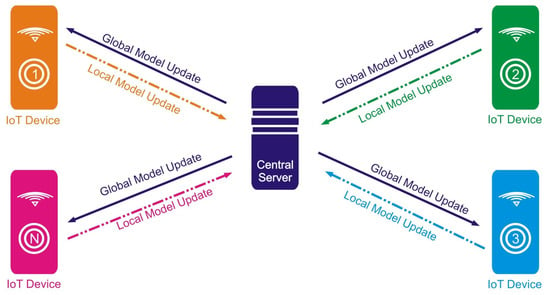
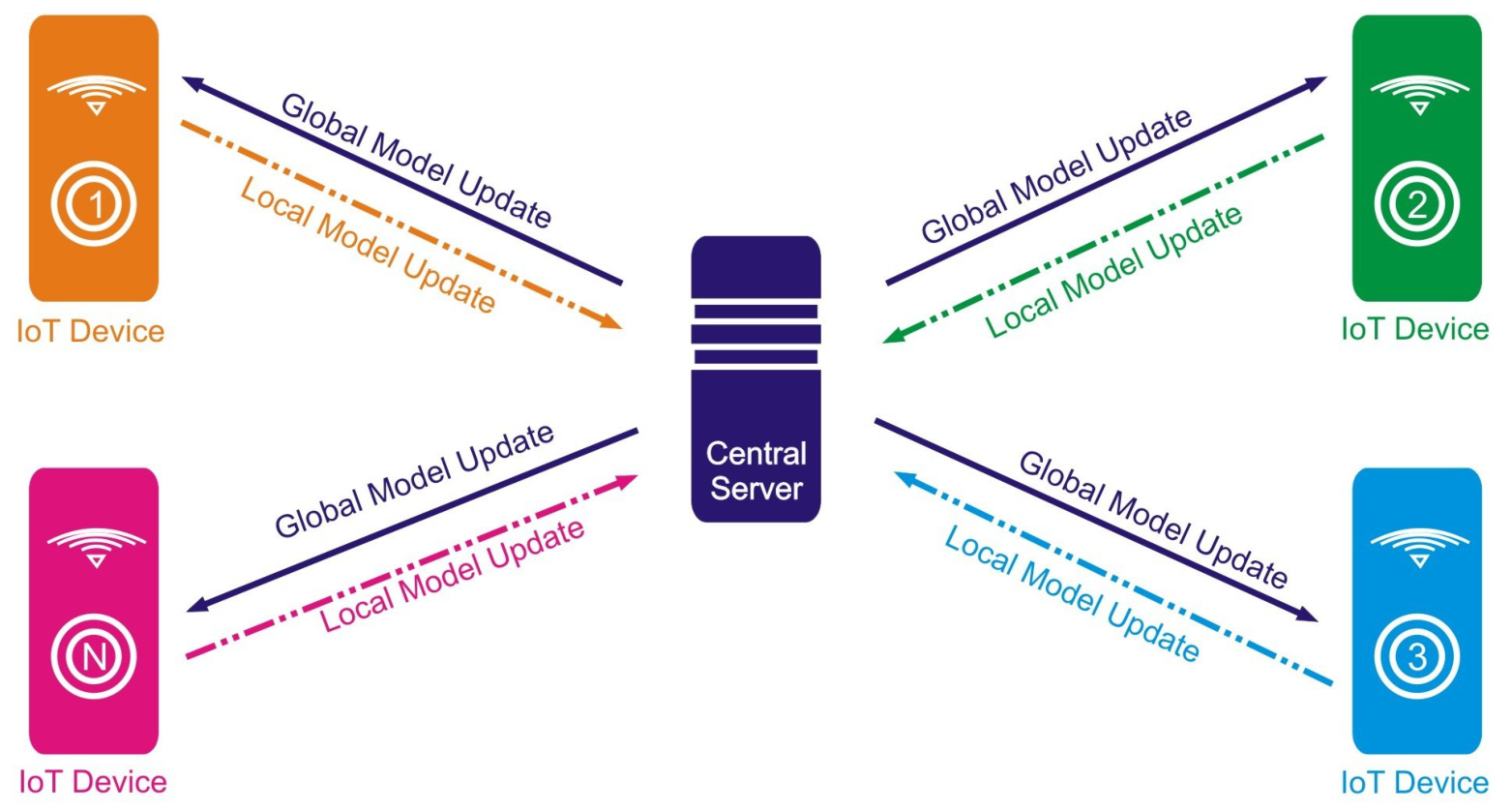
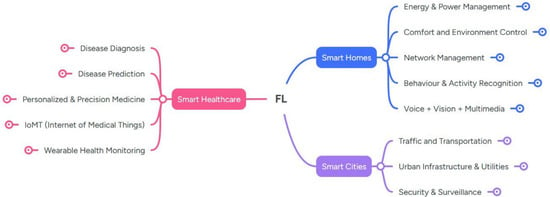
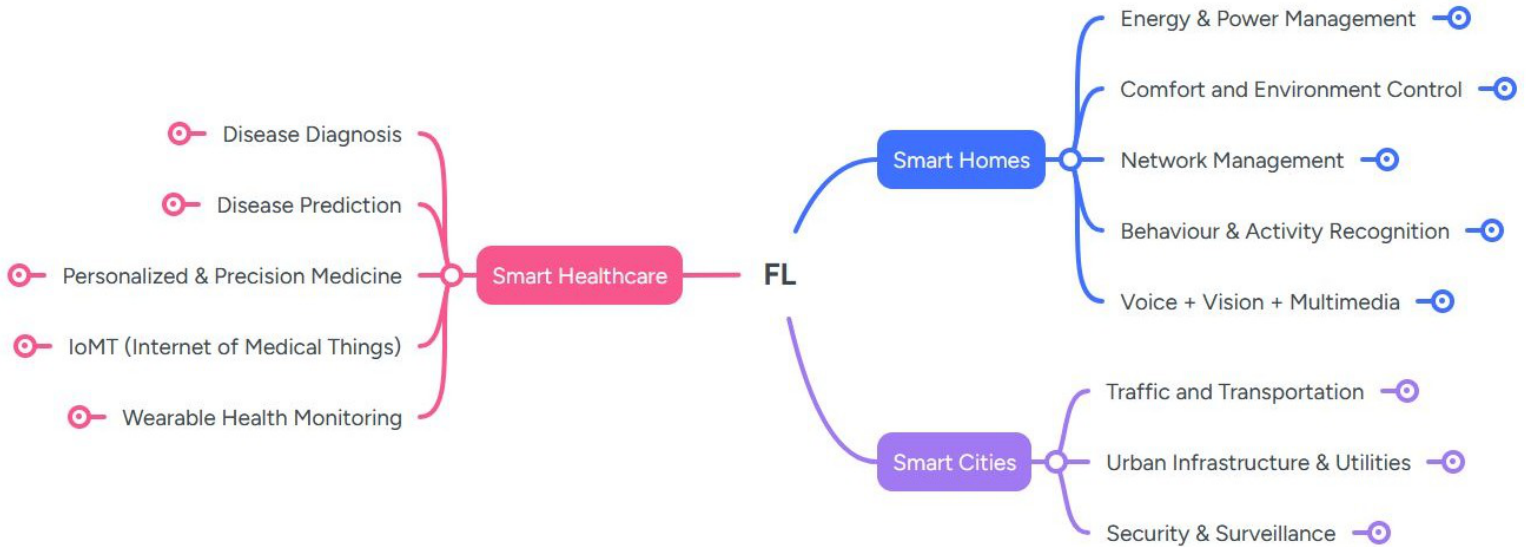
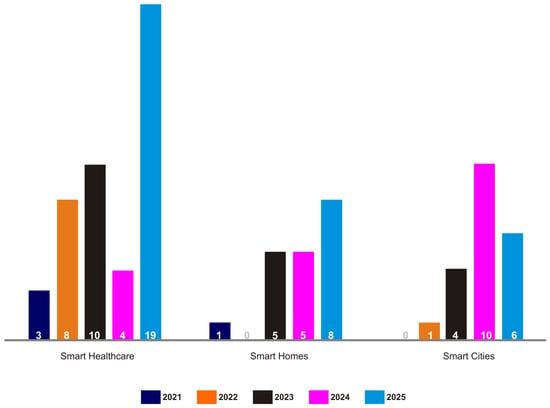
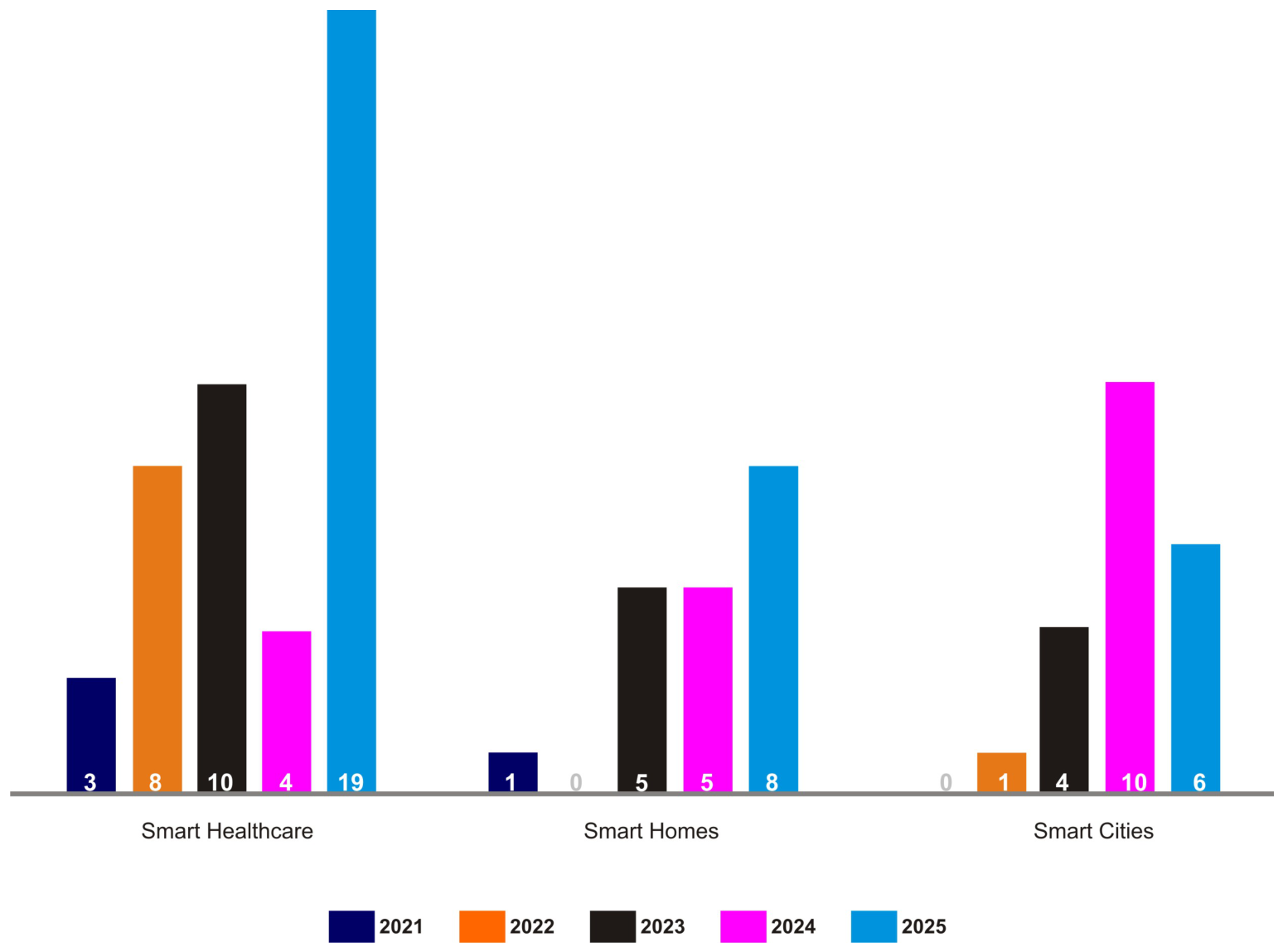
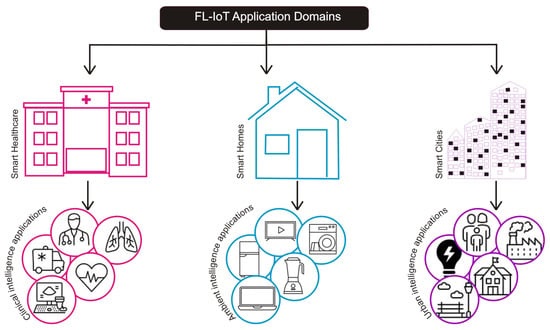
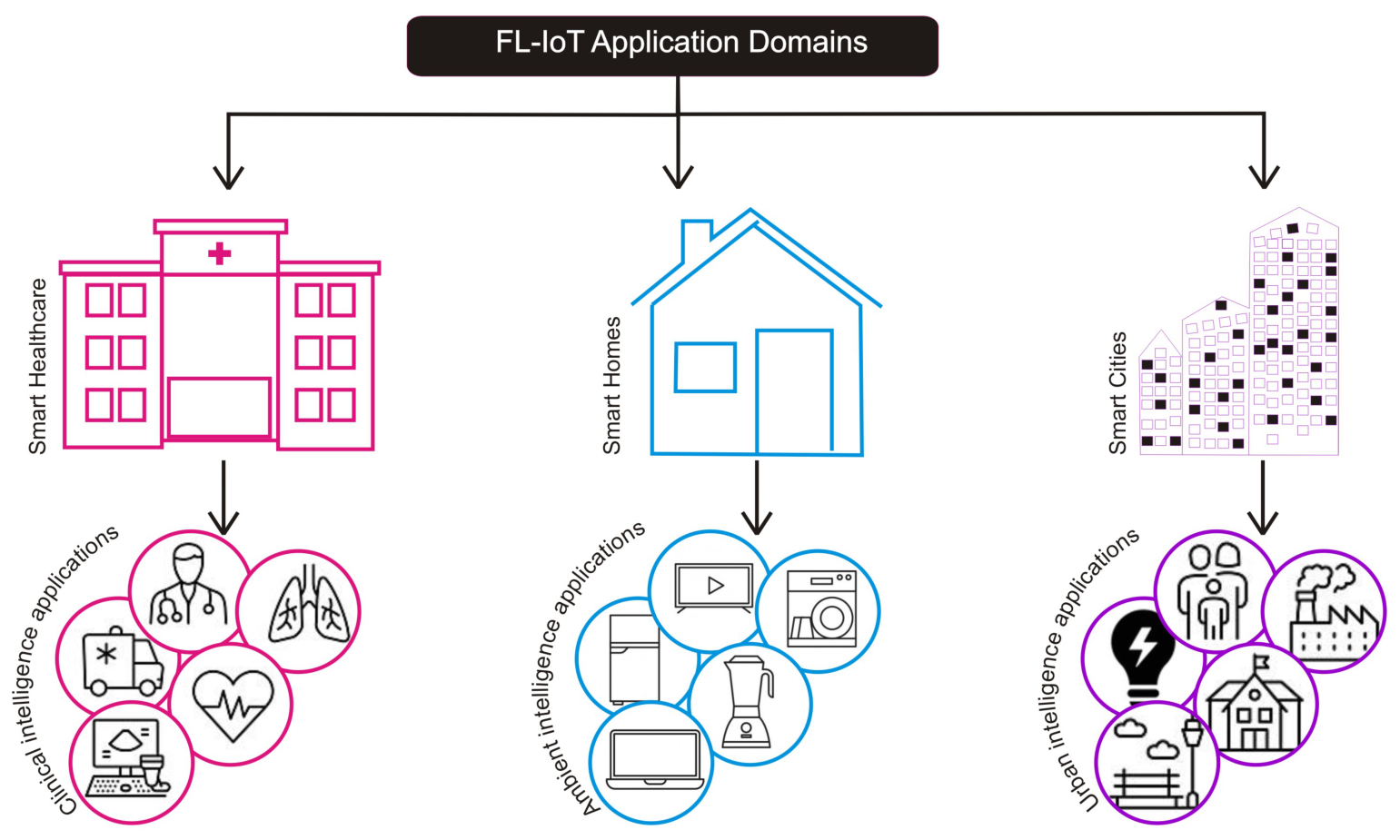
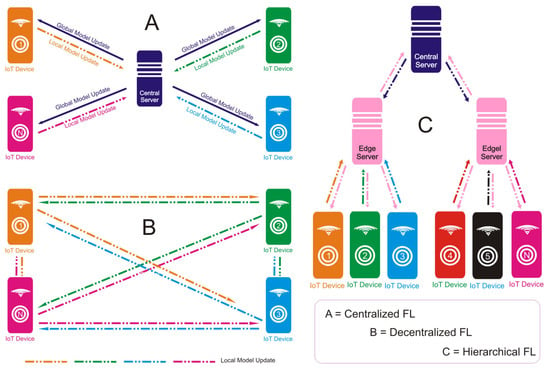
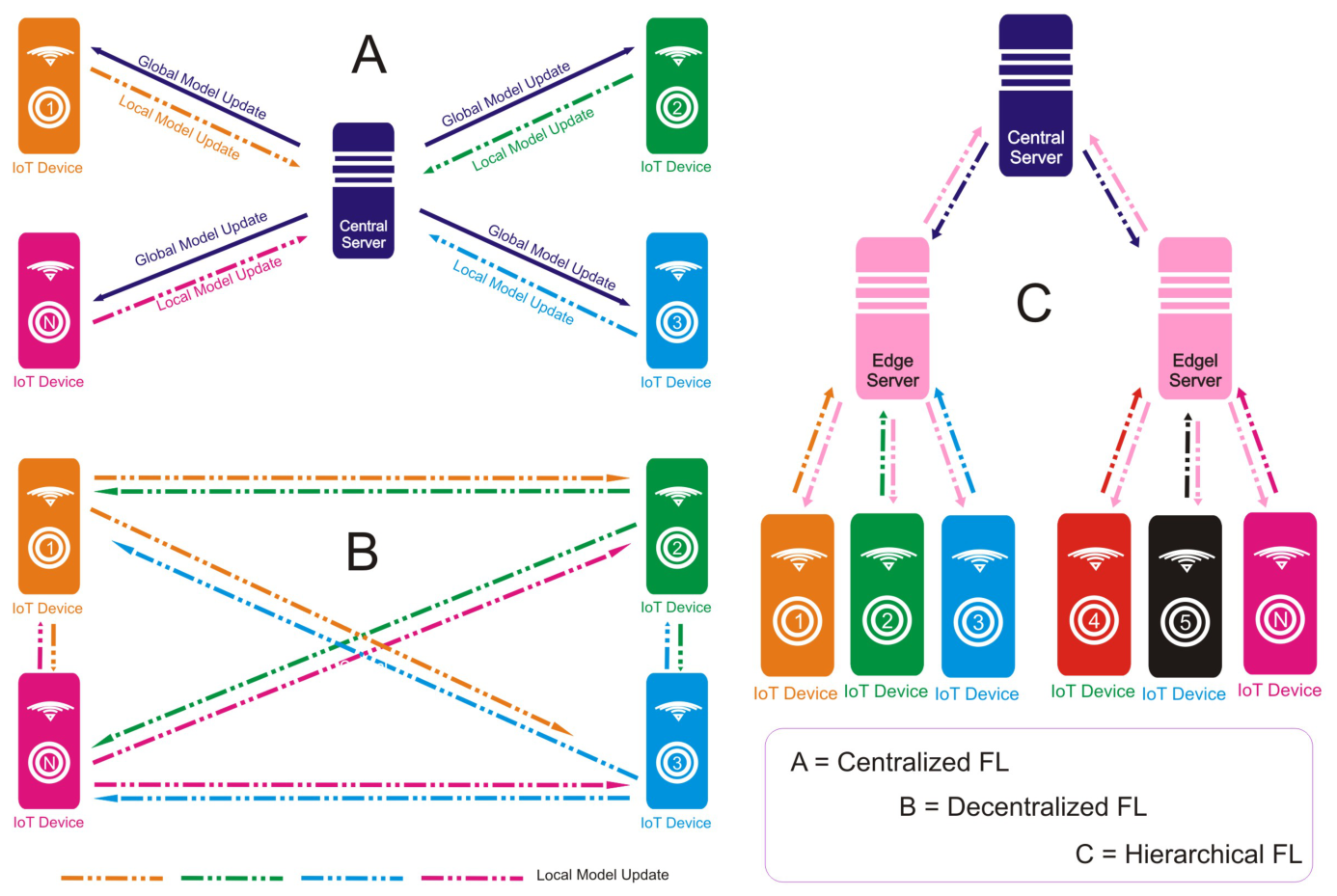






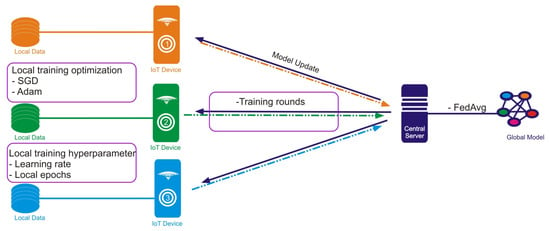
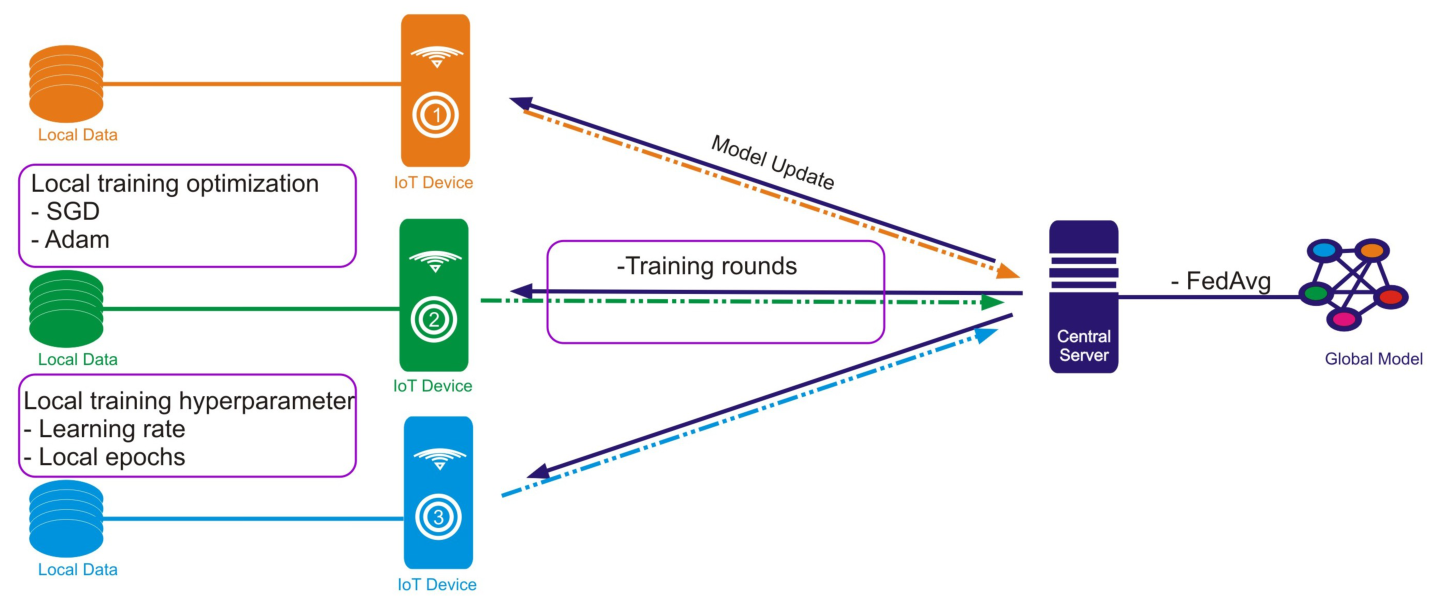
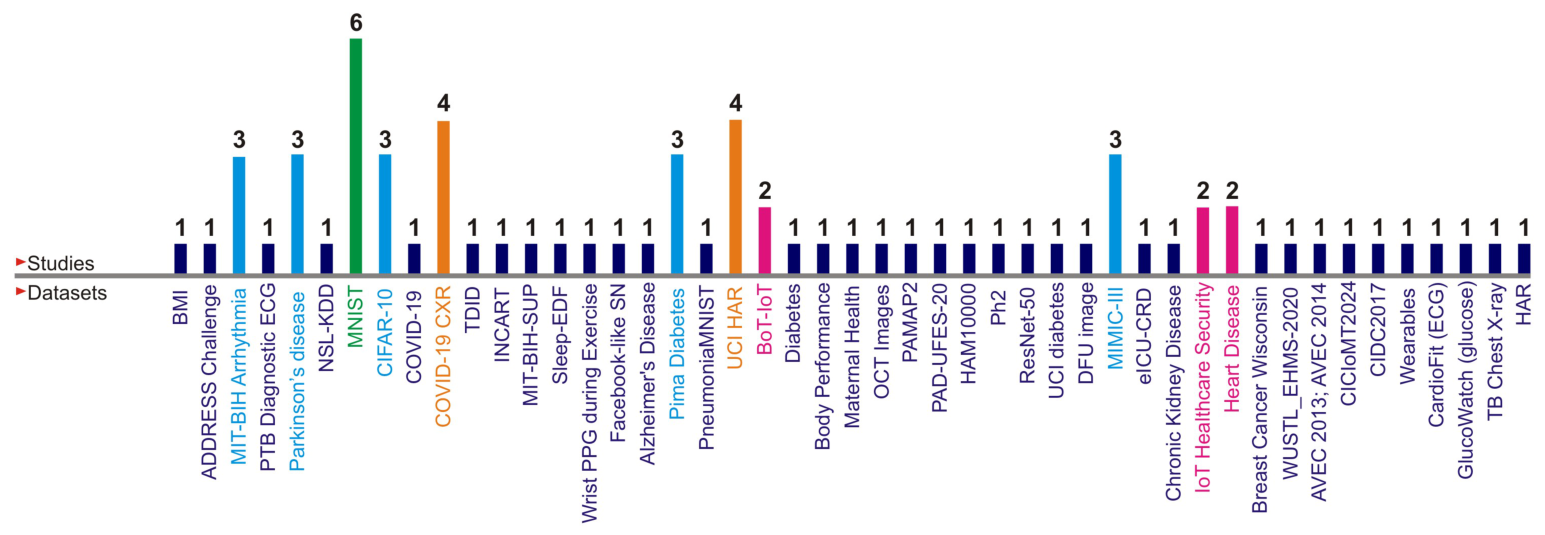
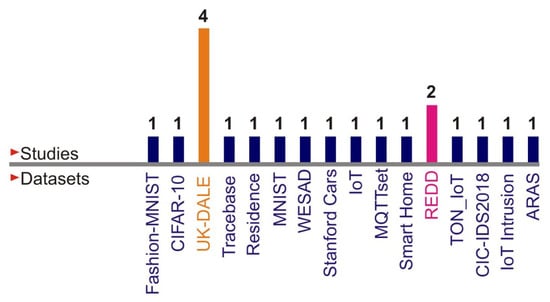
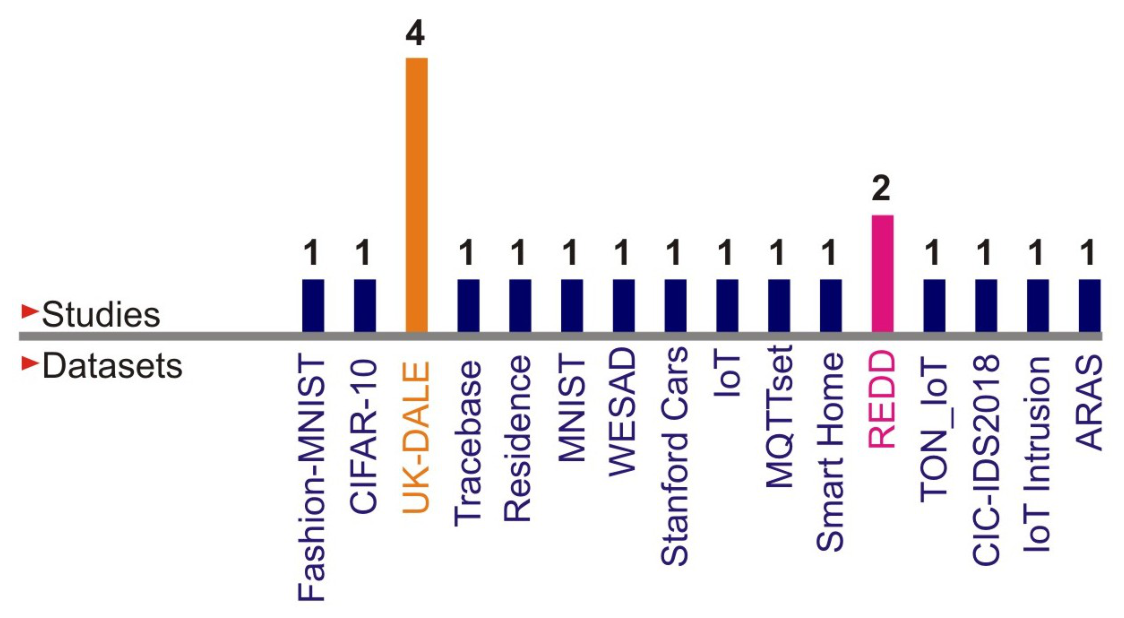
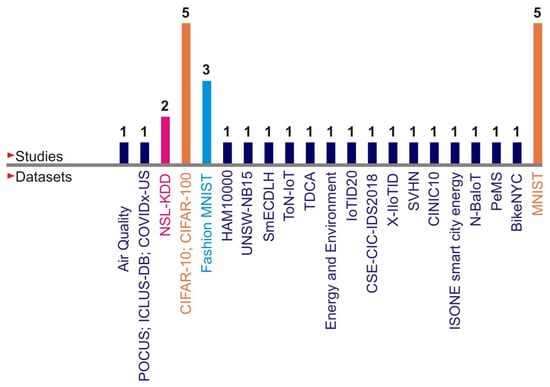
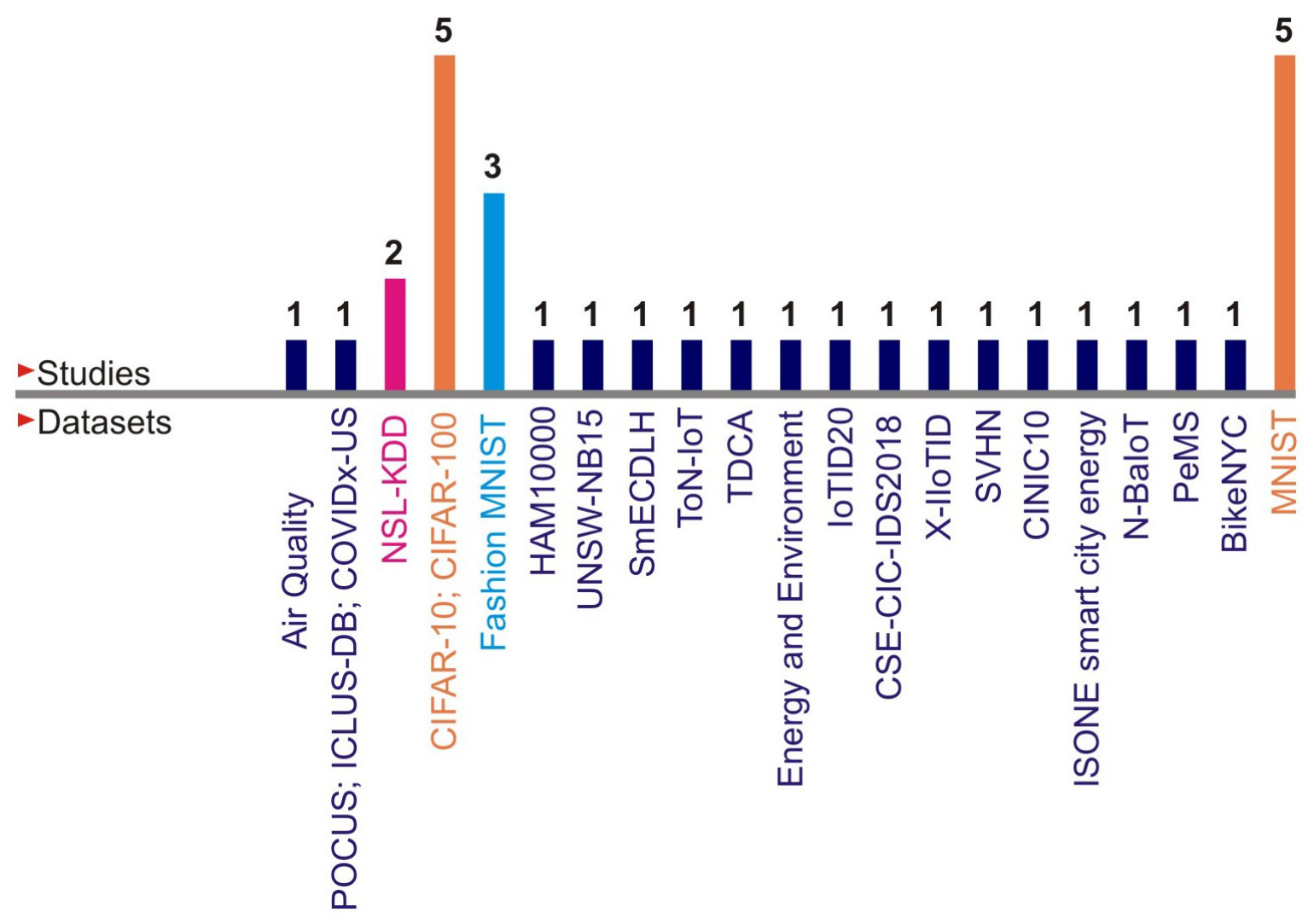
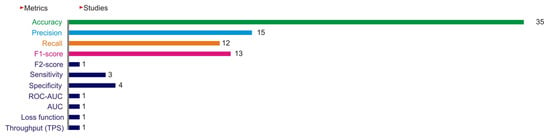
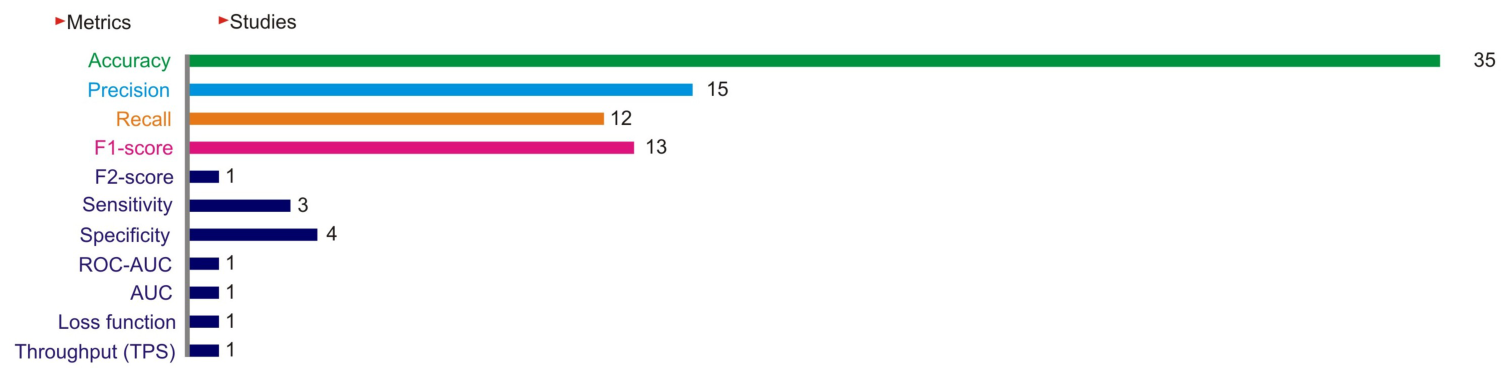
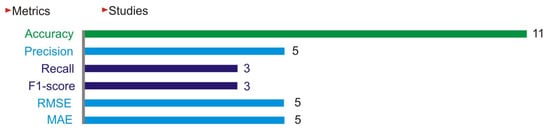
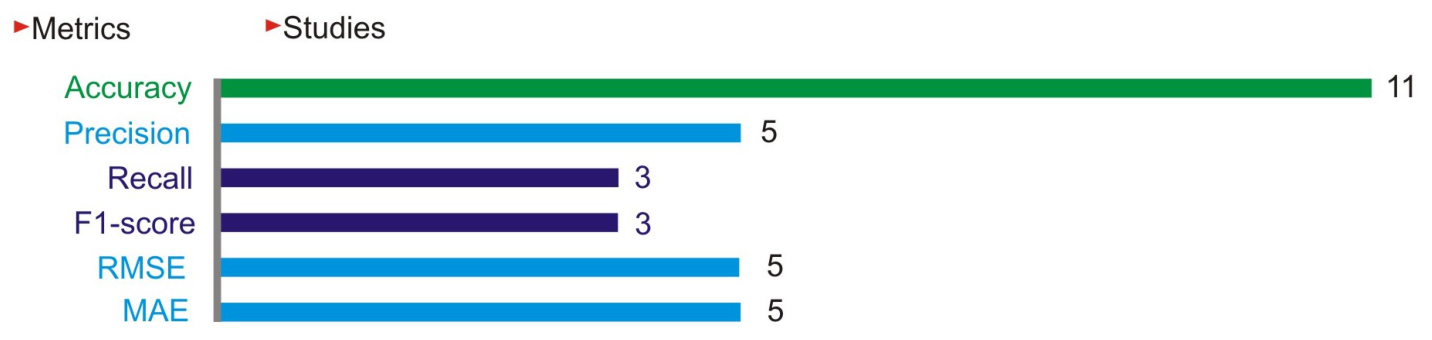
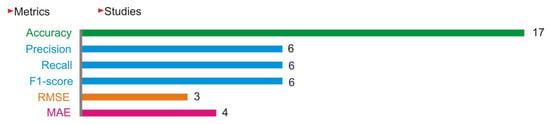
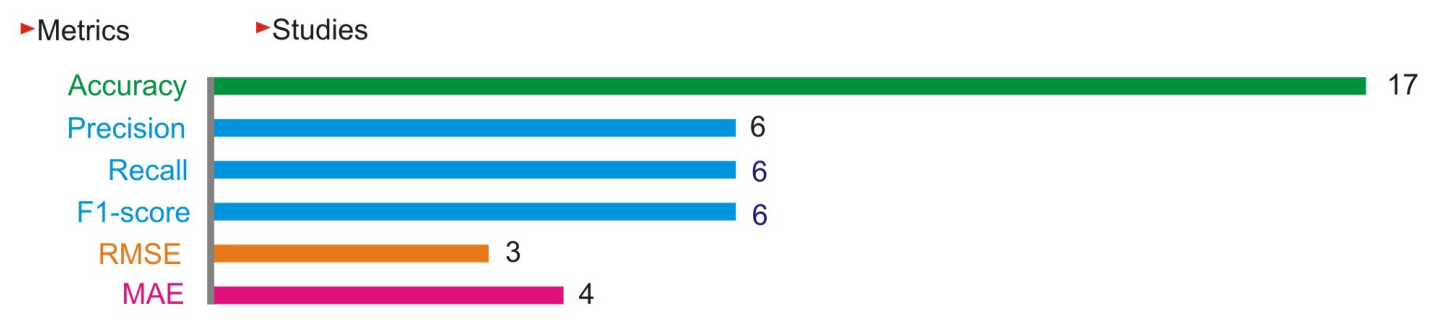
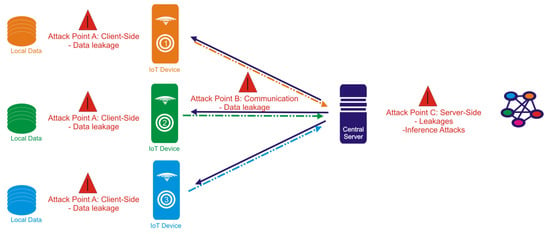
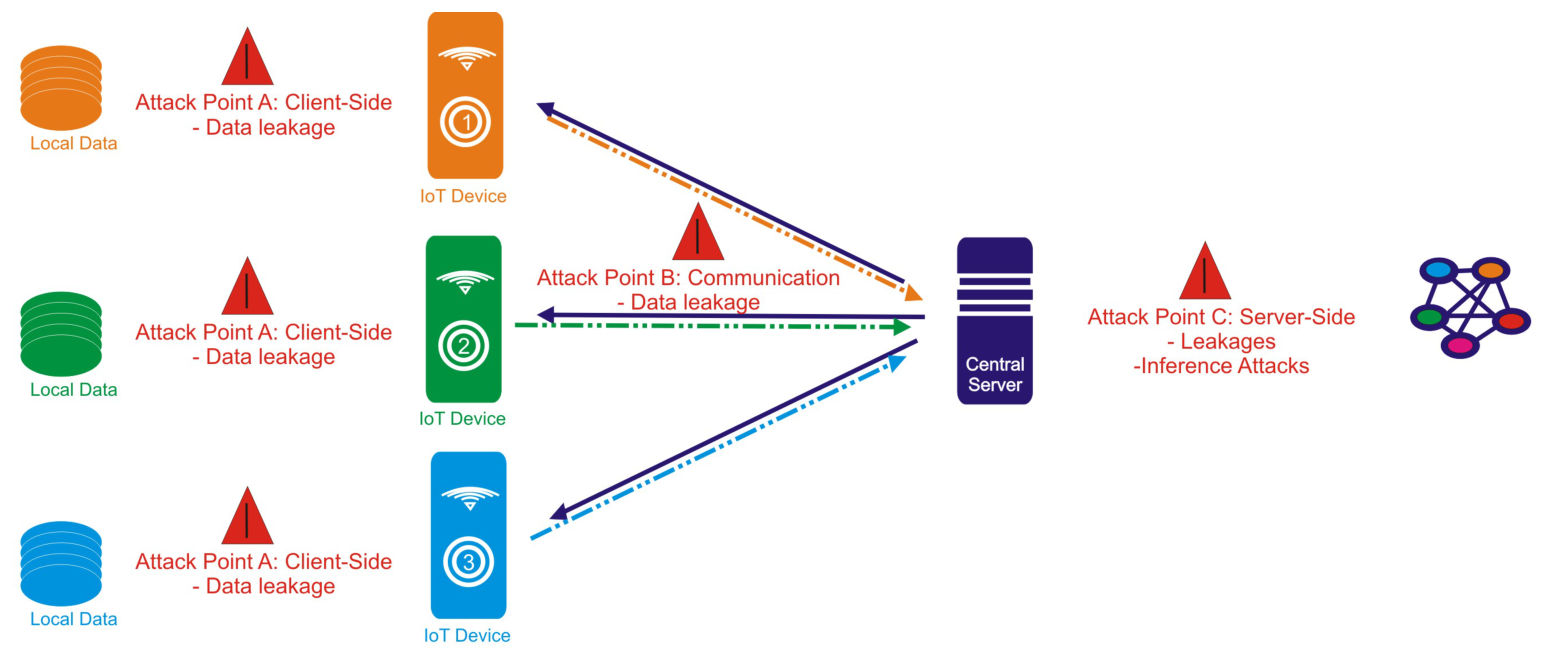
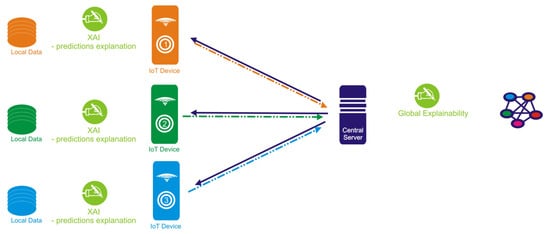
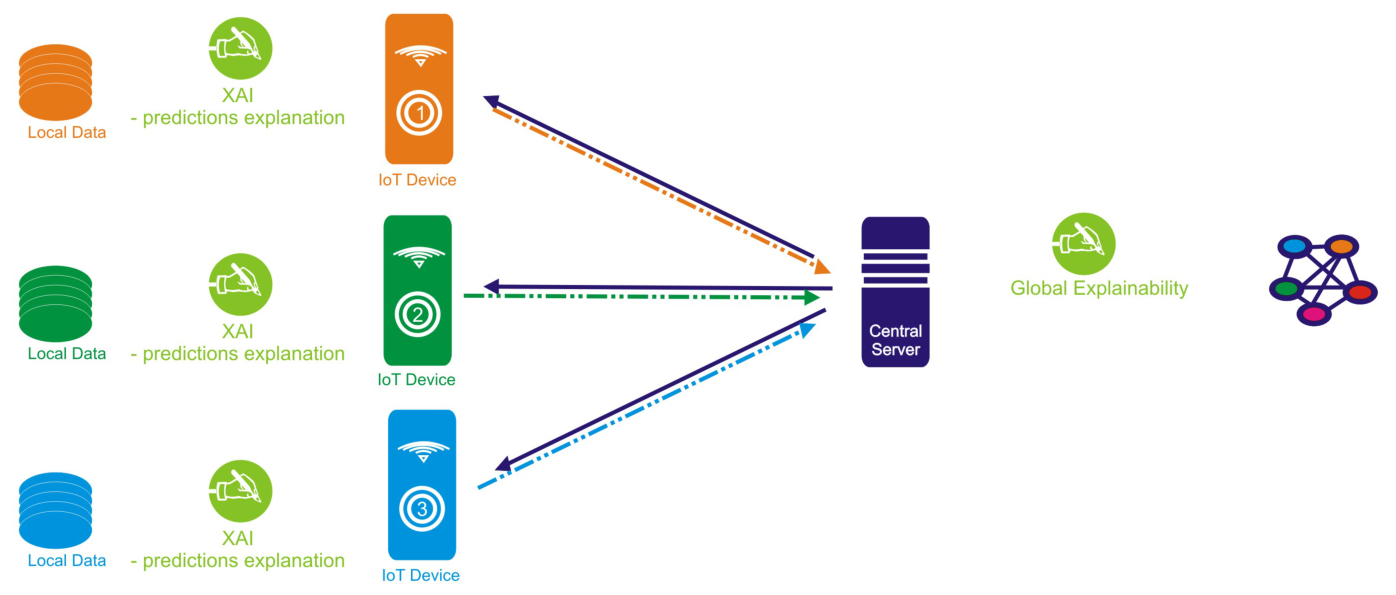

Disclaimer/Publisher’s Note: The statements, opinions and data contained in all publications are solely those of the individual author(s) and contributor(s) and not of MDPI and/or the editor(s). MDPI and/or the editor(s) disclaim responsibility for any injury to people or property resulting from any ideas, methods, instructions or products referred to in the content. |
© 2026 by the authors. Licensee MDPI, Basel, Switzerland. This article is an open access article distributed under the terms and conditions of the Creative Commons Attribution (CC BY) license.