


Abstract
To improve the aging resistance of SBS-modified asphalt (SBSMA), this study prepared two metal oxide/montmorillonite nanocomposites, TiO2/montmorillonite (TM) and CeO2/montmorillonite (CM), and investigated their effects on the rheological properties and microstructure of SBSMA before and after long-term aging. The performance differences between the two nanocomposites under different aging modes were also compared. Conventional physical property tests, dynamic shear rheometer tests (temperature sweep and linear amplitude sweep), dynamic mechanical analysis (DMA), and fluorescence microscopy were employed to evaluate the physical properties, high- and low-temperature rheological properties, fatigue resistance, and the microscopic evolution of SBSMA. The results show that before aging, the incorporation of TM and CM significantly improved the high-temperature deformation resistance of SBSMA, enhanced the SBS polymer dispersion state, and promoted the formation of a continuous network structure of polymer phase. After long-term thermal-oxidative aging, both nanocomposites effectively retarded the aging of the asphalt matrix and the SBS network; CM exhibited superior thermal-oxidative aging resistance. After long-term ultraviolet (UV) aging, both nanocomposites also showed significant protective effects, and TM outperformed CM in UV aging resistance. In summary, TM and CM show differentiated advantages in UV protection and thermal-oxidative protection, respectively, providing a theoretical basis for the design of anti-aging materials for SBSMA based on service environments.
1. Introduction
SBS-modified asphalt (SBSMA) has become one of the preferred paving materials for highways and heavy-traffic pavements due to its excellent high-temperature rutting resistance, low-temperature flexibility, and fatigue resistance. However, during storage, transportation, construction, and service life, SBSMA inevitably undergoes aging due to thermal-oxidative and ultraviolet (UV) radiation. Aging manifests as hardening, embrittlement, and cracking of the asphalt, accompanied by degradation of the SBS polymer phase, leading to destruction of its three-dimensional network structure and ultimately significantly shortening the service life of the pavement [1,2]. Therefore, improving the aging resistance of SBSMA and extending the service life of asphalt pavements have long been research hotspots in the field of road engineering.
To retard the aging process of SBSMA, researchers have introduced various functional anti-aging agents into the asphalt system. According to their mechanisms, these agents can be broadly classified into UV shielding/absorbers, antioxidants, and physical barrier materials [3,4,5]. The emergence of nanotechnology has provided new material options in this field. Nanomaterials, with their unique size effects and surface activity, show broad application prospects in anti-aging modification of SBSMA. Among them, nano-TiO2, owing to its excellent UV absorption characteristics, has been extensively studied for enhancing the UV aging resistance of asphalt [6,7]; nano-CeO2, benefiting from its abundant oxygen vacancy defects and free radical scavenging capability, has attracted attention in antioxidant modification [8,9]; and the two-dimensional layered silicate MMT, with its unique lamellar stacking structure, can effectively inhibit the inward transport of oxygen and heat, thereby slowing the thermal-oxidative aging process [10,11].
Nevertheless, single nanomaterials still face practical challenges in SBSMA modification. On one hand, the high surface energy of nanoparticles makes them prone to agglomeration, making it difficult to achieve ideal dispersion in the asphalt matrix [12]; on the other hand, single-component materials often focus on only one aspect of protection, and their protective effects are insufficient for the complex aging environment where thermal-oxidative and UV aging coexist. How to overcome dispersion issues while achieving synergistic enhancement of anti-aging functions has become a key focus in this field. To address this, researchers have proposed composite modification strategies based on functional complementarity. Zhang et al. [13] grafted organically modified layered double hydroxide (LDHs) onto SBS molecular chains, demonstrating simultaneous retardation of asphalt matrix oxidation and SBS degradation. Duan et al. [14] compared montmorillonite (MMT), expanded vermiculite (EVMT), and rectorite (REC) as carriers for ZnO particles and found that carrier type significantly influences the phase structure and aging resistance of composite modified asphalt. Zhang et al. [15] further revealed the synergistic mechanism of ZnO/EVMT composites, showing that chemical bonding between ZnO and EVMT enables concurrent UV shielding and oxygen barrier functions. These studies highlight the potential of metal oxide/layered silicate nanocomposites as multifunctional anti-aging modifiers. Among them, loading nano-TiO2 or nano-CeO2 onto the interlayer or surface of MMT is a feasible approach that combines dispersion improvement and functional synergy, the layered structure of MMT serves as a dispersion carrier for nanoparticles, while the loaded metal oxides contribute UV absorption or antioxidant activity, with both working together [16]. In the field of asphalt modification, previous work has preliminarily verified the effectiveness of CeO2/MMT nanocomposites in improving the anti-aging performance of asphalt; these composites can significantly slow the deterioration of asphalt rheological properties during aging [17,18]. However, those studies mainly focused on the improvement of anti-aging performance of base asphalt by nanocomposites; whereas, SBSMA differs significantly from base asphalt in composition and structure, the presence of the SBS polymer phase introduces complex phase separation and interfacial interactions, making the mechanism of nanocomposites in SBSMA potentially quite different. In addition, a comparative study on the anti-aging effects of MMT/TiO2 and MMT/CeO2 composite systems in SBSMA is still lacking, and the differentiated advantages of the two systems under different aging modes (thermal-oxidative, UV) have not yet been elucidated.
Based on this, this study prepared two metal oxide/montmorillonite nanocomposites, TM and CM, and investigated their effects on the rheological properties and microstructure of SBSMA before and after long-term aging. Through conventional physical property tests, dynamic shear rheometer tests (temperature sweep and linear amplitude sweep), dynamic mechanical analysis (DMA), and fluorescence microscopy, the physical properties, high- and low-temperature rheological properties, fatigue resistance, and microscopic evolution of SBSMA were comprehensively evaluated, aiming to reveal the mechanisms and performance differences in the two composites under different aging modes.
2. Materials and Methods
2.1. Materials
The base asphalt used in this study is 70# base asphalt produced by Jiangsu Baoli Asphalt Co., Ltd. (see Ref. [17] for basic information). The SBS used is YH-791H type provided by Baling Petrochemical Branch of Sinopec Group Asset Management Co., Ltd., which has a linear structure, a styrene/butadiene ratio of 30/70, a tensile strength of 20 MPa, a Shore A hardness of 70, and a melt flow rate (MFR) of 0.1 g/10 min.
Montmorillonite (MMT) with a particle size of 200 mesh and model DK4 was used, which was supplied by Zhejiang Fenghong New Materials Co., Ltd. (see Ref. [17] for basic information). Titanium oxysulfate (TiOSO4, density 1.32 g/cm3, soluble in water), cerium nitrate hexahydrate (Ce(NO3)3·6H2O, density 4.37 g/cm3, boiling point 200 °C, highly hygroscopic, soluble in water, ethanol, and acetone), and citric acid, all of analytical grade, were employed and purchased from Aladdin.
2.2. Preparation Methods of Metal Oxide/MMT Nanocomposites and Their Modified Asphalts
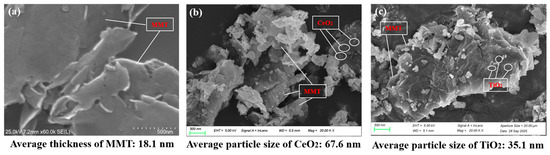
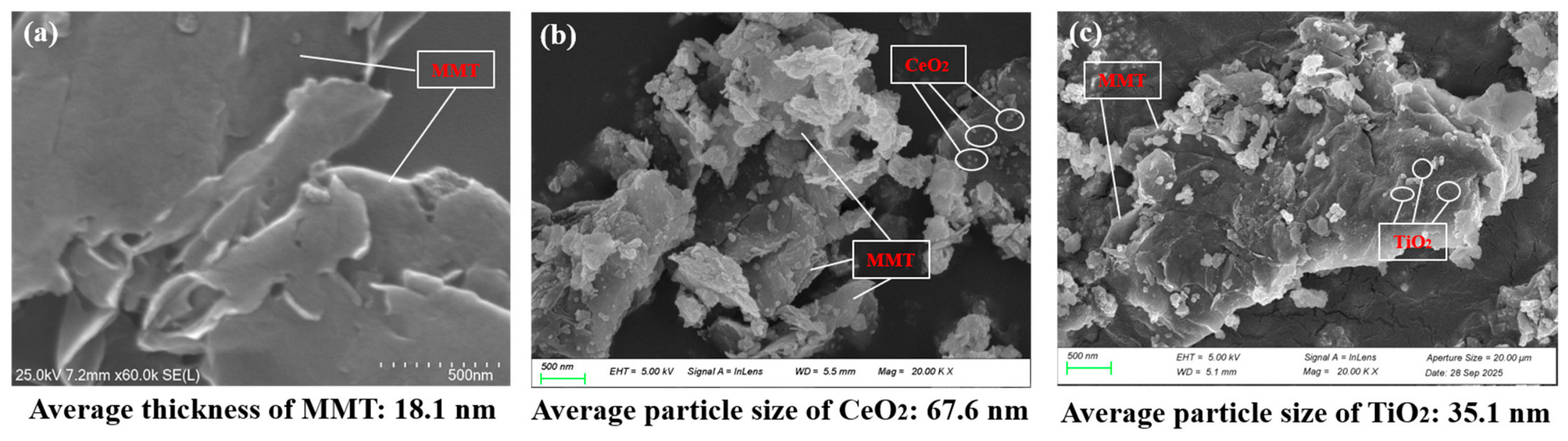
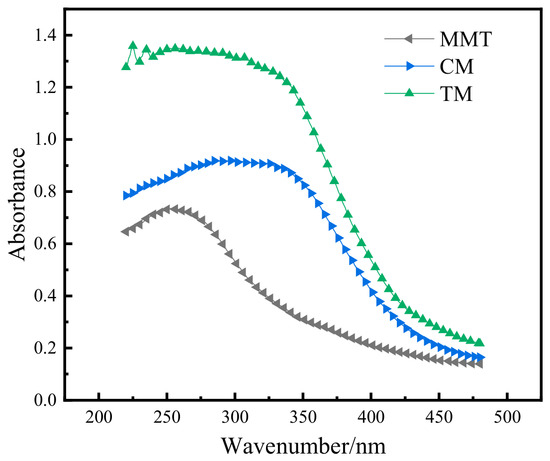
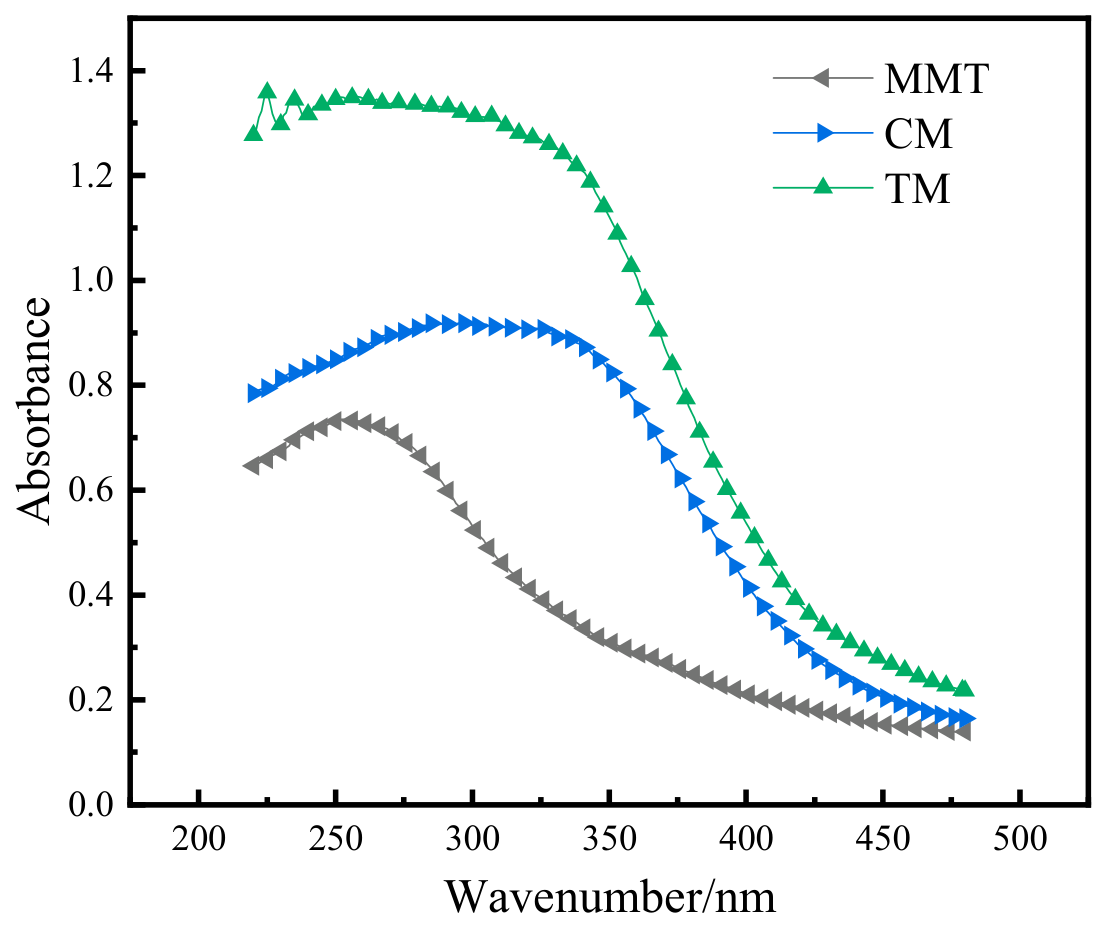
The Metal Oxide/MMT nanocomposites were prepared as follows [19,20]: First, 1 mol of TiOSO4 or Ce(NO3)3·6H2O and 1 mol of citric acid were mixed in 50 mL of deionized water, followed by ultrasonic treatment for 0.5 h at room temperature. After aging for 24 h, MMT with a mass equal to that of TiOSO4 or Ce(NO3)3·6H2O was added under stirring. The mixture was then magnetically stirred at 80 °C for 2 h and dried in an oven at 100 °C for 12 h. The obtained precursor was named P-TM or P-CM. The dried P-TM or P-CM samples were placed in a muffle furnace and heated to 800 °C at a rate of 5 °C/min, then calcined for 10 h. The calcined samples were added to an ethanol solution and ball-milled for 5 h. The resulting mixed solution was then dried in an oven at 100 °C for 24 h. The dried samples were ground and sieved to obtain the Metal Oxide/MMT nanocomposites TM and CM. The field emission scanning electron microscopy (FE-SEM) images of MMT and the two metal oxide/MMT composites are shown in Figure 1, and their ultraviolet-visible absorption (UV-Vis) spectra are shown in Figure 2. As can be seen from Figure 1, compared with the smooth and flat surface of MMT, the surfaces of CM and TM become rough, with some nano-sized particles loaded on them. In addition, Figure 2 reveals that the metal oxide/MMT nanocomposites exhibit notably higher absorbance than MMT in the ultraviolet region (220–480 nm), with TM showing the highest absorbance. These results indicate that the metal oxides have been successfully loaded onto the MMT lamellae.
Figure 1.
FE-SEM images of Metal Oxide/MMT nanocomposites (a) MMT (b) CM (c) TM.
Figure 2.
UV-Vis spectra of Metal Oxide/MMT nanocomposites.
According to previous research results, 1% CM and 2% TM are the optimal modifier dosages for CM/base asphalt and TM/base asphalt systems, respectively. In this study, these dosages were used for the preparation of composite SBSMA. The SBSMA with Metal Oxide/MMT nanocomposite was prepared as follows: First, the base asphalt was heated in an oven at (160 ± 5) °C until completely molten. Then, under constant temperature conditions, 1% CM or 2% TM (by mass percentage of asphalt) was added to the molten asphalt, and a high-speed shear emulsifier was used to shear at 4000 r/min at 160 °C for 0.5 h to initially disperse the nanocomposite in the asphalt. Subsequently, 5% (by mass percentage of asphalt) SBS modifier was added to the above mixture, the shear temperature was raised to 180 °C, and shearing continued at 4000 r/min for 1 h to fully swell and uniformly disperse the SBS in the asphalt matrix, yielding CM/SBS composite modified asphalt (CMSBSMA) and TM/SBS composite modified asphalt (TMSBSMA). The blank sample (plain SBSMA) was prepared using the same procedure but without the addition of CM or TM modifiers. The selected shearing speed and duration were adopted based on previous studies on nanomaterial modified asphalt [14,21], in which 4000 r/min for 1 h has been proven effective for achieving uniform dispersion of nanomaterials while preventing excessive degradation of the SBS polymer.
2.3. Test Methods
2.3.1. High-Temperature Storage Stability Test
The storage stability test was conducted according to the method T 0661-2025 in the Standard Test Methods of Asphalt and Asphalt Mixture for Highway Engineering (JTG 3410-2025). Approximately 50 g of asphalt sample was placed into an aluminum tube and vertically stored at 163 °C ± 5 °C in a constant-temperature oven for 48 h, then removed and cooled in a refrigerator for 4 h. The aluminum tube was then evenly cut into three sections, and the upper and lower sections were taken to determine the softening point. The difference in softening point between the upper and lower sections was used as the evaluation index; the smaller the difference, the better the storage stability of the modified asphalt. Two replicate tests were conducted.
2.3.2. Basic Physical Property Tests
The conventional physical properties mainly include penetration (25 °C), ductility (5 °C), and softening point, which were tested according to the specifications of tests T0604, T0605, and T0606 in JTG 3410-2025, respectively. Three replicate tests were conducted for penetration and ductility, and two for softening point.
The elastic recovery test was conducted according to the asphalt elastic recovery test method (T 0662-2000) in JTG 3410-2025. First, the asphalt specimens were poured and molded according to the specified method, and the prepared specimens were kept in a constant-temperature water bath at 25 °C for 1.5 h. Then, the specimen was installed on the ductility meter and stretched at a rate of 5 cm/min until reaching 10 cm, at which point the stretching was stopped and the specimen was immediately cut in the middle with scissors; if fracture occurred before reaching 10 cm, the stretching length at fracture was recorded directly. Subsequently, the two half-specimens were kept in the constant-temperature water bath at 25 °C for 60 min to recover. After the time elapsed, the residual stretched length was measured, and the elastic recovery rate of the specimen was calculated according to the relevant formula (accurate to 1%). The calculation formula is as follows (1). Three replicate tests were conducted.
where D—elastic recovery rate of the specimen (%);
D = (L − X)/L × 100
L—stretching length of 10 cm, or the length at fracture (cm);
X—residual stretched length after cutting (cm).
2.3.3. Rheological Property Tests
A MCR-101 dynamic shear rheometer was used to test the rheological properties of modified asphalts. According to ASTM D7175, the complex modulus (G*) and phase angle (δ) of asphalt samples were obtained through temperature sweep mode, with a temperature range of 30–90 °C.
The rotational viscosity test (135 °C) was conducted in accordance with ASTM D 4402.
According to AASHTO TP 101-12, the fatigue resistance of PAV-aged and UV-aged asphalt samples was evaluated using the Linear Amplitude Sweep (LAS) test at 25 °C. The test consists of two stages: first, a frequency sweep at 0.1% strain level to determine the linear viscoelastic properties of the binder; then, a series of oscillatory loading cycles at 10 Hz frequency with amplitude linearly increasing from 0.1% to 30% to accelerate fatigue failure of the asphalt binder. When the damage accumulation causes the fatigue parameter to decrease by 35% of its undamaged value, the fatigue life of the asphalt binder at different strain levels is determined.
The DMA dynamic mechanical analysis instrument used in this study was manufactured by Gabo, Niederwinkling, Germany, model Eplexor 500 N. The heated modified asphalt was injected into pre-treated test molds (sample size 50 mm × 6 mm × 2 mm), cooled, then removed and placed in a low-temperature environment. First, the linear viscoelastic range of the modified asphalt was determined by strain sweep at the lowest test temperature of −25 °C, frequency 10 Hz, and strain amplitude ranging from 0.1 to 3%. The determined strain amplitude for subsequent temperature sweep was 0.3%. In the temperature sweep test, continuous measurements were performed at a constant cooling rate. The initial temperature was set at 10 °C, and then cooled continuously to −25 °C at a constant rate of 0.5 °C/min.
All rheological tests were performed with two replicates, except for the rotational viscosity test, which was performed with three replicates.
2.3.4. Fluorescence Microscopy (FM) Test
First, glass slides and cover slips were prepared, and the modified asphalt was heated to a molten state, quickly poured onto the slide and covered with a cover slip to ensure the sample was sufficiently thin. Then, the fluorescence characteristics of the SBS polymer phase in the modified asphalt were identified by blue light excitation (wavelength 400–480 nm) to observe the distribution of polymer phase and asphalt phase, thereby analyzing the influence of CM and TM on the SBS network structure before aging and the degradation of SBS after aging. The fluorescence microscope used in this study was produced by Carl Zeiss (Shanghai, China) Management Co., Ltd., model AxioVert A1.
2.3.5. Aging Simulation Tests
In this study, the thermal-oxidative aging simulation tests of asphalt were conducted according to the provisions of T0610 “Asphalt Rolling Thin Film Oven Aging Test (RTFOT Method)” and T0630 “Asphalt Heating Aging Test (PAV Method)” in JTG 3410-2025. Meanwhile, the ultraviolet aging test was realized using a self-built UV accelerated aging system, which consisted of a 500 W high-pressure mercury lamp (radiation intensity of 8 W/m2) and a constant temperature chamber (60 ± 2 °C) [22,23]. The samples were placed 45 cm away from the light source and subjected to continuous ultraviolet irradiation for 6 days.
3. Results and Discussion
3.1. Effect of Metal Oxide/Montmorillonite Nanocomposites on the Properties of SBSMA Before Aging
3.1.1. High-Temperature Storage Stability
To evaluate the effect of TM and CM nanocomposites on the storage stability of SBSMA, the softening point difference method (difference between upper and lower softening points) was used to characterize the high-temperature segregation tendency of the three modified asphalts. The results are shown in Table 1. It can be seen that the softening point differences in all three modified asphalts are less than 2.5 °C, meeting the technical requirements of the specification for storage stability. Among them, plain SBSMA had a difference of 2.0 °C, indicating good storage stability; TMSBSMA and CMSBSMA had differences of 2.3 °C and 2.1 °C, respectively, only slightly larger than that of plain SBSMA and all within the allowable range. This indicates that although the introduction of TM and CM nanocomposites slightly increased the segregation tendency of the system, the effect is very limited and does not substantially negatively affect the high-temperature storage stability of SBSMA. It should be noted that while the storage stability results indirectly suggest acceptable dispersion of the nanocomposites in the asphalt matrix, a more direct verification of dispersion uniformity (e.g., FESEM) for the specific TM and CM systems will be addressed in future work.
Table 1.
High-temperature storage stability test results of different SBSMAs.
3.1.2. Basic Physical Properties
Elastic recovery rate is a key index to evaluate the elastic recovery ability of modified asphalt after large deformation, indirectly reflecting the integrity and stability of the SBS three-dimensional network structure. The elastic recovery rates of different SBSMAs are shown in Table 2. All three modified asphalts meet the specification requirement (≥80%). The elastic recovery rate of plain SBSMA is 92%, showing good elastic deformation ability; CMSBSMA is 94%, 2% higher than plain SBSMA, indicating that CM nanocomposite can enhance the elastic recovery performance of SBSMA. This is attributed to the adsorption effect of nano-CeO2 in CM, which optimizes the asphalt molecular composition and facilitates uniform swelling and dispersion of the SBS modifier in asphalt [17]. In contrast, TMSBSMA has an elastic recovery rate of 90%, slightly lower than that of plain SBSMA but still at a high level.
Table 2.
Elastic recovery rates of different SBSMAs.
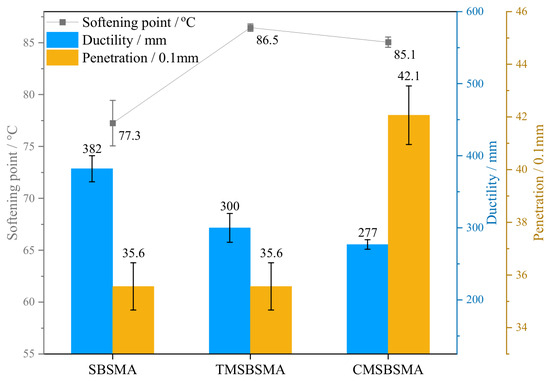
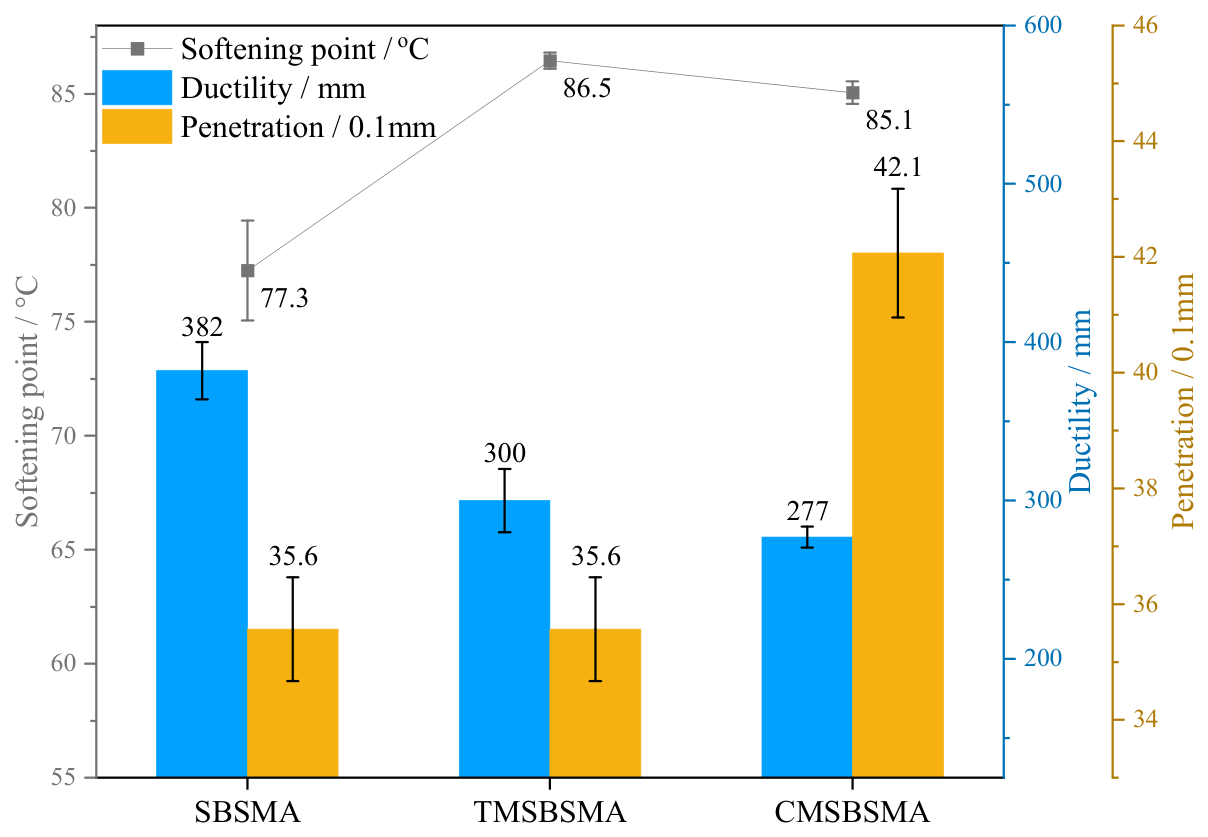
Figure 3 shows three physical properties of the three modified asphalts. Compared with plain SBSMA, the softening points of TMSBSMA and CMSBSMA increased to 86.5 °C and 85.1 °C, respectively, with increases of 9.2 °C and 7.8 °C. This is because the MMT layered structure provides physical support for the SBS elastic network [24], thereby significantly enhancing the high-temperature stability of the modified asphalt. In terms of penetration, TMSBSMA is comparable to plain SBSMA, while CMSBSMA is 18.3% higher than SBSMA. This indicates that CM has an obvious plasticizing effect at room temperature, also attributed to the adsorption effect of nano-CeO2 in CM, which optimizes the asphalt molecular composition and facilitates uniform swelling and compatible dispersion of the SBS modifier, thereby reducing the cohesive flow resistance of the system at room temperature [17]. The ductility test results show that the 5 °C ductilities of TMSBSMA and CMSBSMA are 300 mm and 277 mm, respectively, lower than that of plain SBSMA. This downward trend may be attributed to the introduction of the rigid skeleton of MMT lamellae, which increases the creep stiffness of the modified asphalt in the low-temperature zone and imposes physical constraints on the large-scale orientational deformation of the SBS soft segments during stretching [25]. However, it is worth noting that the decrease in ductility does not necessarily indicate deterioration of elastic properties. Combined with the high elastic recovery rate of 94% for CMSBSMA, it can be seen that the CM-modified system maintains excellent elastic deformation ability while reducing ductility, consistent with the findings reported by Zapién-Castillo et al. [26] that nano-clay modified asphalt shows increased penetration index, indicating that changes in ductility mainly reflect a reduction in the viscous flow component rather than damage to the elastic network.
Figure 3.
Three physical properties of different SBSMAs.
3.1.3. Rheological Properties
- (1)
- High-temperature rheological properties
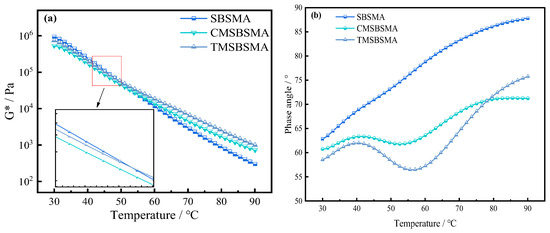
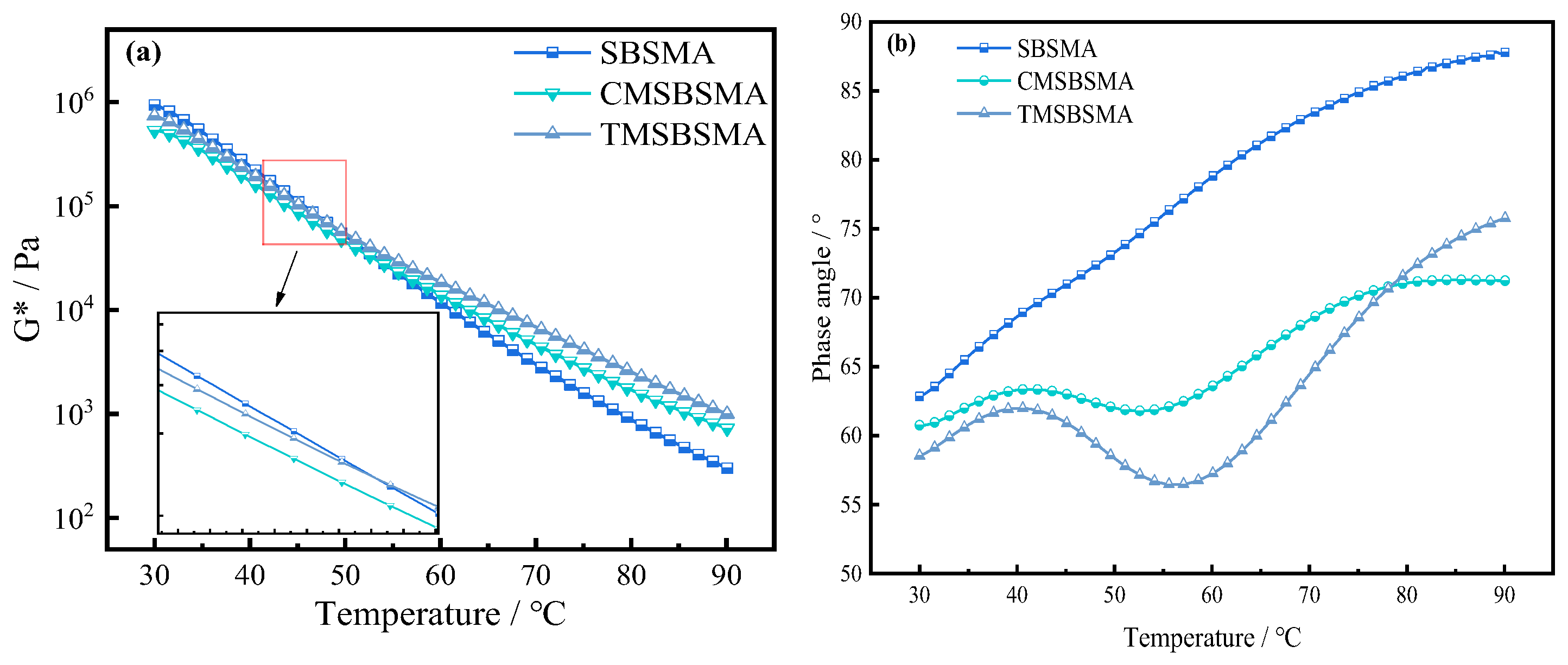
Figure 4a,b show the temperature sweep curves of G* and δ, respectively. G* reflects the high-temperature shear deformation resistance. From Figure 4a, the G* of all three modified asphalts decreases with increasing temperature. In the high-temperature range of 60–90 °C, the G* of TMSBSMA and CMSBSMA are higher than that of plain SBSMA, indicating that both nanocomposites improve the high-temperature deformation resistance of SBSMA, with TM showing the most prominent effect, consistent with the softening point results. The δ reflects the viscoelastic ratio; a smaller δ indicates a higher elastic proportion. From Figure 4b, within the entire scanning temperature range, the δ of TMSBSMA and CMSBSMA are always lower than that of plain SBSMA, indicating that the nanocomposite modification enhances the elastic response of SBSMA. Notably, in the 40–60 °C range, TMSBSMA and CMSBSMA exhibit a distinct plateau region, which is absent in plain SBSMA. The presence of this plateau indicates that TMSBSMA and CMSBSMA have a more stable polymer three-dimensional network structure, with less thermal disturbance to their elastic structure in the moderate temperature range, showing significantly better structural stability than plain SBSMA. In summary, both nanocomposite modifications can enhance the high-temperature elastic response of SBSMA, and TMSBSMA and CMSBSMA form a stable elastic plateau in the medium-high temperature range, with significant elastic enhancement effects.
Figure 4.
(a) G* and (b) δ of different SBSMAs.
The rotational viscosity (135 °C) and failure temperature of the three SBSMAs are presented in Table 3, where the failure temperature is defined as the temperature at which the rutting factor G*/sinδ of the unaged modified asphalt decreases to 1.0 kPa. The rotational viscosities of TMSBSMA and CMSBSMA were 1731 mPa·s and 1591 mPa·s, respectively, both higher than that of plain SBSMA (1353 mPa·s), with TMSBSMA showing a more pronounced increase. In addition, the failure temperatures of TMSBSMA and CMSBSMA before aging were 89.6 °C and 85.6 °C, respectively, representing a notable improvement over plain SBSMA (78.6 °C), indicating that both nanocomposites effectively enhance the high-temperature load-bearing capacity of SBSMA, with TM exhibiting a more substantial enhancement. This trend is consistent with the softening point and G* results presented earlier, further confirming the reinforcing effect of TM and CM on the high-temperature performance of SBSMA.
Table 3.
Viscosity and failure temperature of different SBSMAs.
- (2)
- Low-temperature rheological properties
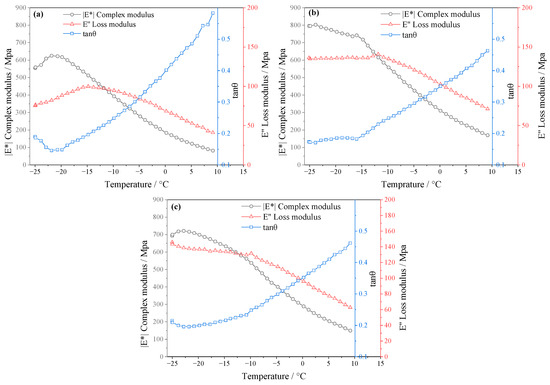
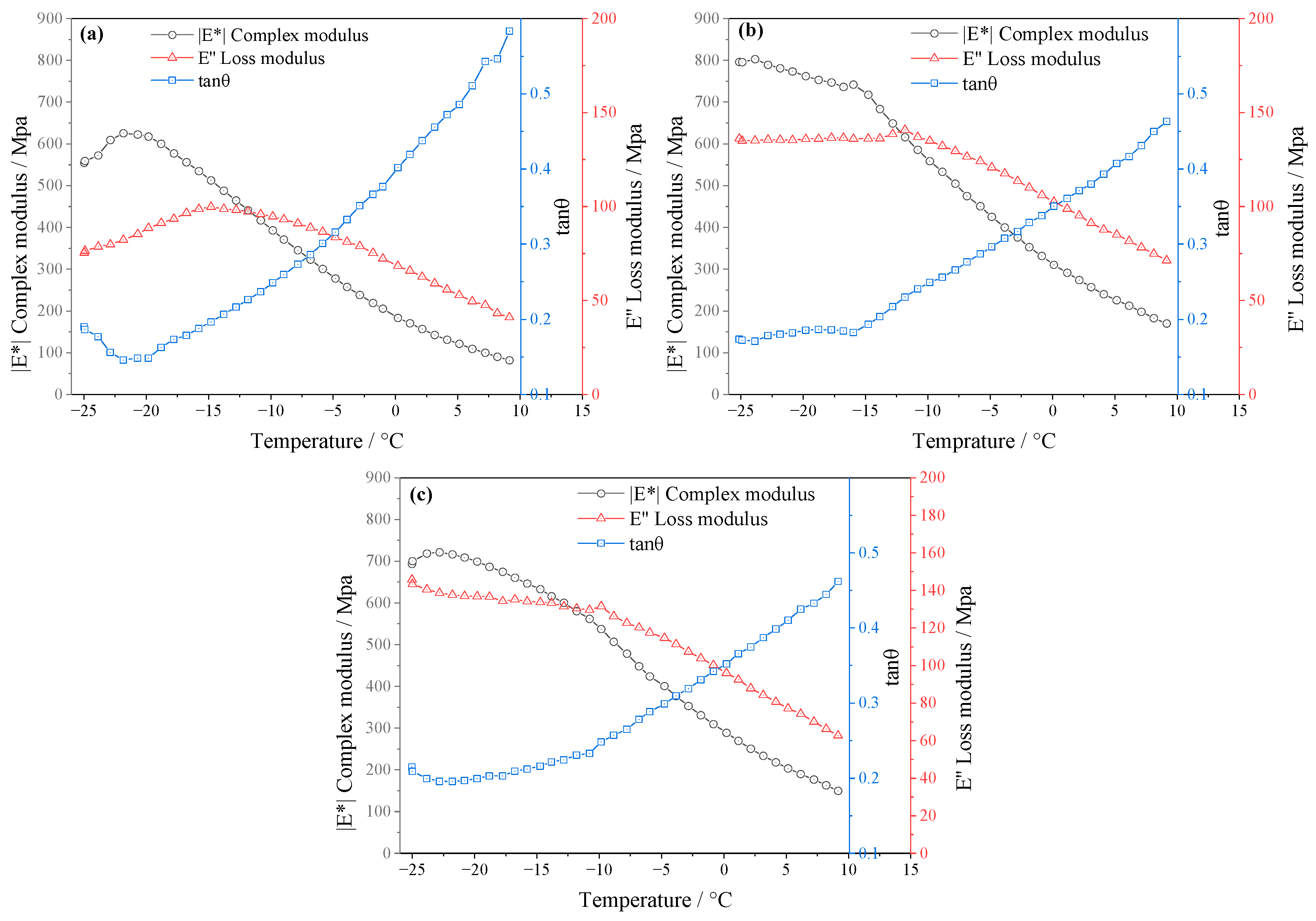
Figure 5 shows the DMA test results of different SBSMAs. The complex modulus E* reflects the total resistance of the material to deformation under dynamic loading; the loss modulus E″ characterizes the energy dissipation capacity; the loss factor tanδ reflects the relative strength of viscous and elastic components, with higher values indicating better stress relaxation ability. From the figure, throughout the test temperature range (−25 to 10 °C), the E″ and tanδ of TMSBSMA and CMSBSMA are higher than those of plain SBSMA. The increase in E″ means that the nanocomposite modification enhances the energy dissipation efficiency of SBSMA in the low-temperature zone, allowing more external load energy to be dissipated as heat rather than accumulating as internal stress concentration; the increase in tanδ indicates an increased proportion of viscous response, enhanced segmental mobility of molecular chains, which is beneficial for releasing internal thermal stress through viscous flow during sudden temperature drops. Both together indicate that TMSBSMA and CMSBSMA have superior stress relaxation and anti-cracking ability under low-temperature conditions. However, this result is inconsistent with the low-temperature crack resistance evaluation reflected by the 5 °C ductility test, where both composite-modified asphalts showed lower ductility values than plain SBSMA. This contradiction may originate from differences in test conditions and evaluation scales: the ductility test stretches the specimen to fracture at a fixed rate (5 cm/min), which is a destructive macroscopic mechanical test reflecting the plastic deformation ability of the material under ultimate tensile conditions; while the DMA temperature sweep applies small-amplitude sinusoidal strain, which is a non-destructive viscoelastic response test reflecting the segmental mobility and energy dissipation efficiency of molecular chains under small deformation. The low-temperature performance characterized by the two methods has different connotations, the former focuses on ultimate extensibility, while the latter focuses on viscoelastic dissipation and stress relaxation, and they do not necessarily show a positive correlation. This phenomenon warrants further investigation.
Figure 5.
Low-temperature rheological properties of different SBSMAs: (a) SBSMA, (b) TMSBSMA, (c) CMSBSMA.
To further verify the statistical significance of the above differences in physical and rheological properties, one-way analysis of variance (ANOVA) is performed on the elastic recovery rate, ductility (5 °C), penetration (25 °C), and rotational viscosity (135 °C) of the three SBSMAs, with a significance level of α = 0.05. The results are shown in Table 4. For elastic recovery rate, no significant differences are observed among any of the three groups, indicating that the addition of the two nanocomposites does not substantially affect the elastic recovery capacity of SBSMA from a statistical perspective. For ductility, significant differences are found between each nanocomposite-modified asphalt (TMSBSMA and CMSBSMA) and plain SBSMA, but no significant difference is detected between TMSBSMA and CMSBSMA. For penetration, CMSBSMA shows significant differences from both plain SBSMA and TMSBSMA; whereas, no significant difference is found between TMSBSMA and plain SBSMA. For viscosity, significant differences are found among all three pairs, further confirming the different degrees of enhancement of TM and CM on the flow properties of SBSMA, with TM showing a significantly greater effect on viscosity than CM. Overall, the ANOVA results generally support the findings from the preceding physical and rheological tests, providing statistical evidence for the performance differences among the three modified asphalts.
Table 4.
Significant analysis of physical and rheological properties of different SBSMAs.
3.1.4. Microstructural Analysis
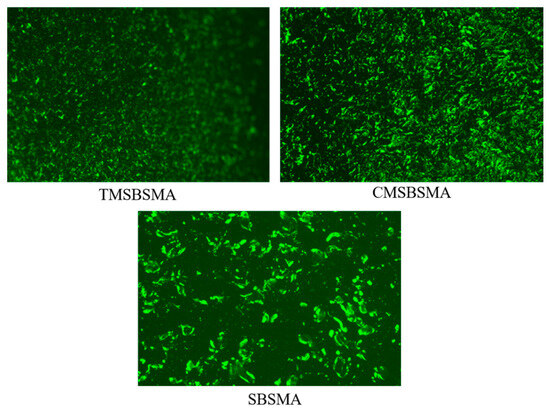
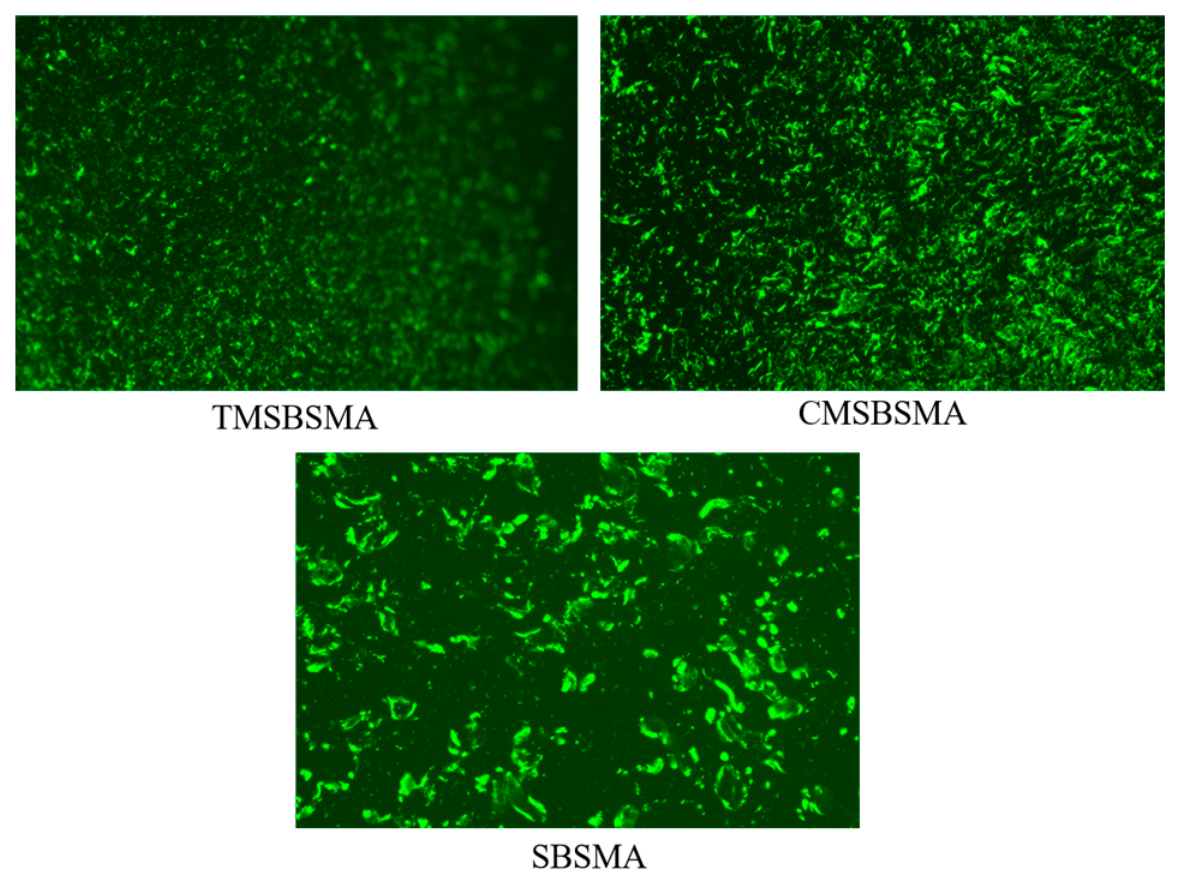
Figure 6 shows the FM images of different SBSMAs in the unaged state. The dispersion state and network structure of the SBS polymer phase in the asphalt matrix can be visually identified by fluorescence microscopy. It can be seen that plain SBSMA exhibits isolated green dots and small island-shaped fluorescence distributions, indicating that SBS mainly exists in the form of discrete aggregated particles in the asphalt matrix, without forming a continuous polymer network. In contrast, the FM images of CMSBSMA and TMSBSMA show uniform, fine, and interconnected green fluorescent network structures, with significantly improved continuity of SBS phase distribution in the asphalt matrix, and more uniform fluorescence intensity distribution. This indicates that the introduction of CM and TM nanocomposites effectively inhibits the agglomeration tendency of SBS molecules and promotes the uniform dispersion of SBS in asphalt [24].
Figure 6.
Fluorescence micrographs of different SBSMAs in the unaged state.
3.2. Effect of Metal Oxide/Montmorillonite Nanocomposites on the Long-Term Thermal-Oxidative Aging Performance of SBSMA
3.2.1. Softening Point
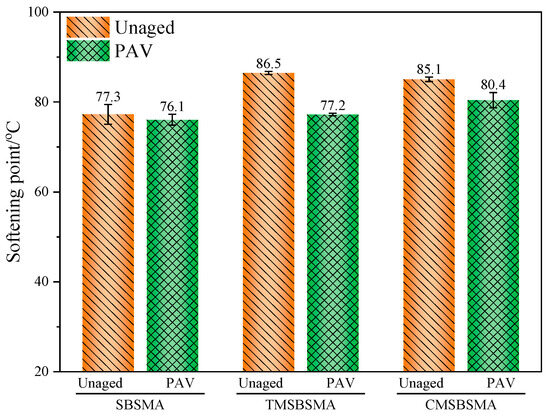
Figure 7 presents the softening points of different SBSMAs before and after PAV aging. After PAV aging, the softening point of plain SBSMA remained nearly unchanged; whereas, TMSBSMA and CMSBSMA both showed notable decreases, with TMSBSMA exhibiting a greater reduction (9.3 °C) than CMSBSMA (4.7 °C). These differences are attributable to the competitive interplay between SBS degradation and oxidative hardening of the asphalt matrix during PAV aging. In plain SBSMA, the softening point reduction due to SBS degradation and the increase due to asphalt matrix oxidation may partially cancel each other, resulting in only a minor net change. In contrast, for TMSBSMA and CMSBSMA, the nanocomposites concurrently inhibit both asphalt matrix oxidation and SBS degradation; based on the observed trends, the softening point reduction caused by SBS degradation becomes predominant, leading to a substantial drop. Nevertheless, the extent of softening point reduction alone may not serve as a direct indicator of anti-aging performance; a comprehensive assessment requires combining these data with the rheological and microstructural analyses presented in the following sections.
Figure 7.
Softening point of different SBSMAs before and after PAV aging.
3.2.2. Rheological Properties
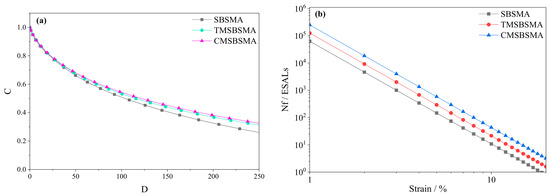
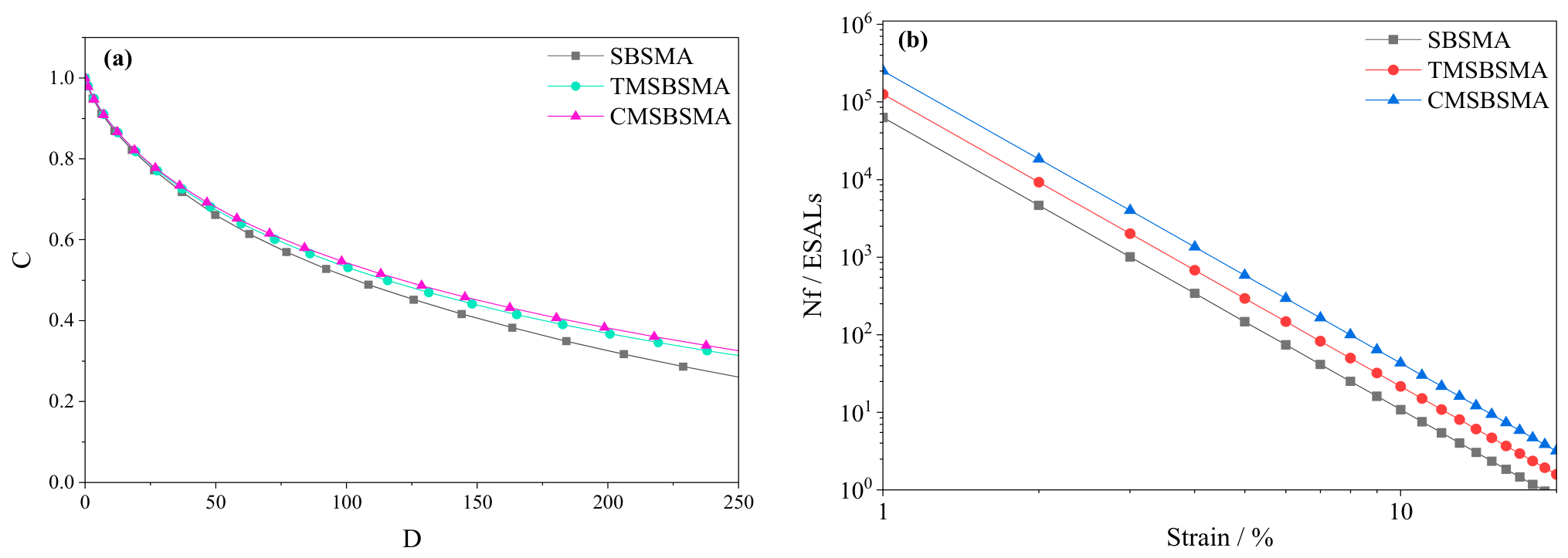
Figure 8a,b show the C-D damage characteristic curves and fatigue life Nf-strain curves of different SBSMAs after PAV aging. The LAS test, based on the viscoelastic continuum damage (VECD) theory, quantitatively evaluates the fatigue resistance of the material by simulating the accumulation of internal damage under repeated loading. From Figure 8a, at the same damage variable D, the C value of CMSBSMA is always higher than that of TMSBSMA and plain SBSMA, indicating that CMSBSMA maintains higher structural integrity after experiencing the same degree of internal damage, with stronger resistance to crack initiation and propagation. From the Nf-strain curves in Figure 8b, the fatigue life of all three modified asphalts decreases with increasing strain level, but at each strain level, the Nf values of CMSBSMA and TMSBSMA are significantly higher than those of plain SBSMA, with CMSBSMA showing the largest increase, indicating the best fatigue resistance. This difference can be attributed to the multiple protective mechanisms of nanocomposites during long-term thermal-oxidative aging. On one hand, the two-dimensional layered structure of MMT forms a physical barrier in the asphalt matrix, effectively delaying the inward diffusion of oxygen molecules [10]; on the other hand, the oxygen vacancies of CeO2 provide reversible oxygen buffering functions: under thermal-oxidative conditions, the active oxygen species can be temporarily stored in CeO2 lattice via Ce3+/Ce4+ redox cycles, thereby reducing the local oxygen concentration available for attacking asphalt molecules; this process suppresses the formation of reactive oxygen species and consequently retards the oxidative hardening of light components of asphalt [27]. The synergistic effect of these two mechanisms enables CMSBSMA to better preserve the SBS network and minimize the embrittlement of the asphalt matrix after PAV aging [8]. In summary, both TM and CM nanocomposites can effectively improve the fatigue damage resistance of SBSMA after long-term thermal-oxidative aging, with CM showing the best performance due to the combination of MMT physical barrier and CeO2 chemical antioxidant synergy.
Figure 8.
(a) C-D damage curves and (b) fatigue life Nf–strain curves of different SBSMAs after PAV aging.
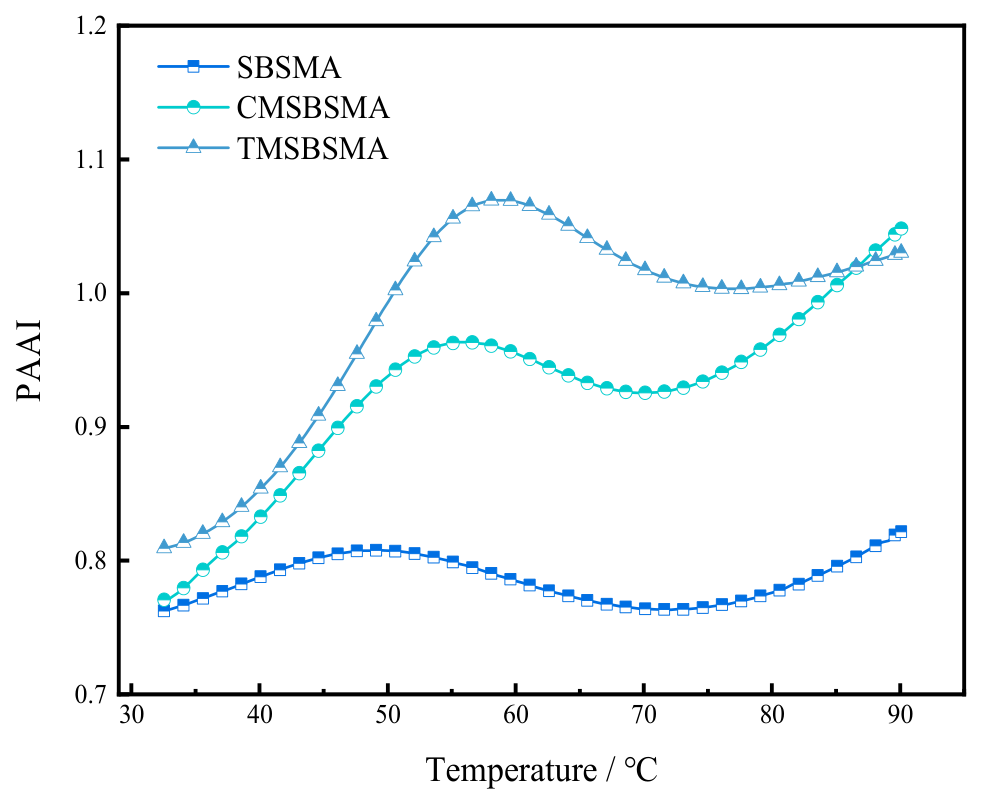
Figure 9 presents the phase angle aging index (PAAI) of different SBSMAs after PAV aging, defined as the ratio of δ after aging to that before aging. The PAAI of plain SBSMA is the lowest throughout the temperature range (about 0.75–0.82) and changes gently; CMSBSMA is in the middle; TMSBSMA is the highest, reaching a notable peak of about 1.08 at around 60 °C. The PAAI of plain SBSMA is the lowest and always less than 1.0, indicating that after PAV aging, oxidative hardening of the asphalt matrix dominates, volatile light components evaporate, aromatics convert to asphaltenes, molecular weight increases, resulting in a significant reduction in δ [28], and the material shifts toward elastic behavior. The PAAI values of CMSBSMA and TMSBSMA are both higher than that of plain SBSMA, and TMSBSMA exceeds 1.0 at around 60 °C, indicating that CM and TM effectively inhibit the oxidation process of the asphalt matrix, allowing the viscosity-increasing effect caused by SBS degradation to become apparent.
Figure 9.
PAAI of different SBSMAs after PAV aging.
3.2.3. Microstructure
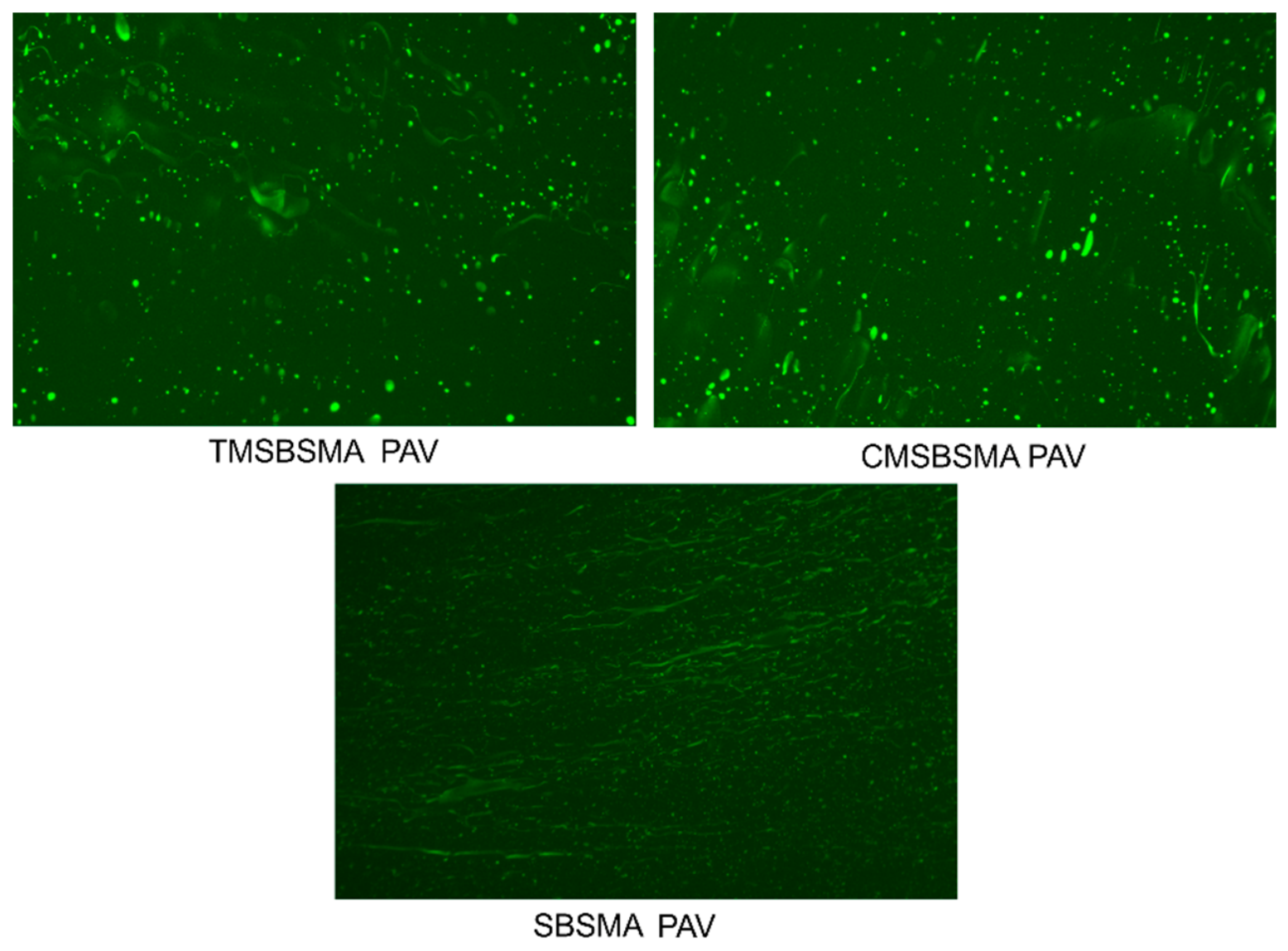
Figure 10 shows the FM images of different SBSMAs after PAV aging. Compared with the unaged state, the fluorescence signals are significantly attenuated in all, but the degree of retention varies markedly. CMSBSMA shows sparse green dot-like distributions with a few short filamentous structures, with the highest fluorescence intensity and coverage area; TMSBSMA shows slightly weaker fluorescence signals, with scattered fine dots and very short filaments; plain SBSMA shows almost complete disappearance of fluorescence, with only very faint traces. This indicates that CM and TM have good inhibitory effects on the thermal-oxidative degradation of the SBS polymer, the intercalated lamellar structure of MMT hinders oxygen diffusion, while CeO2 can exert oxygen storage and release functions under thermal-oxidative conditions, delaying the chain scission of SBS molecules, thereby maintaining a relatively intact polymer network. In contrast, the fluorescence of plain SBSMA almost completely disappears after PAV aging, indicating severe thermal-oxidative degradation of SBS and essentially complete destruction of the polymer phase.
Figure 10.
Fluorescence micrographs of different SBSMAs after PAV aging.
3.3. Effect of Metal Oxide/Montmorillonite Nanocomposites on the Long-Term Photo-Oxidative Aging Performance of SBSMA
3.3.1. Softening Point
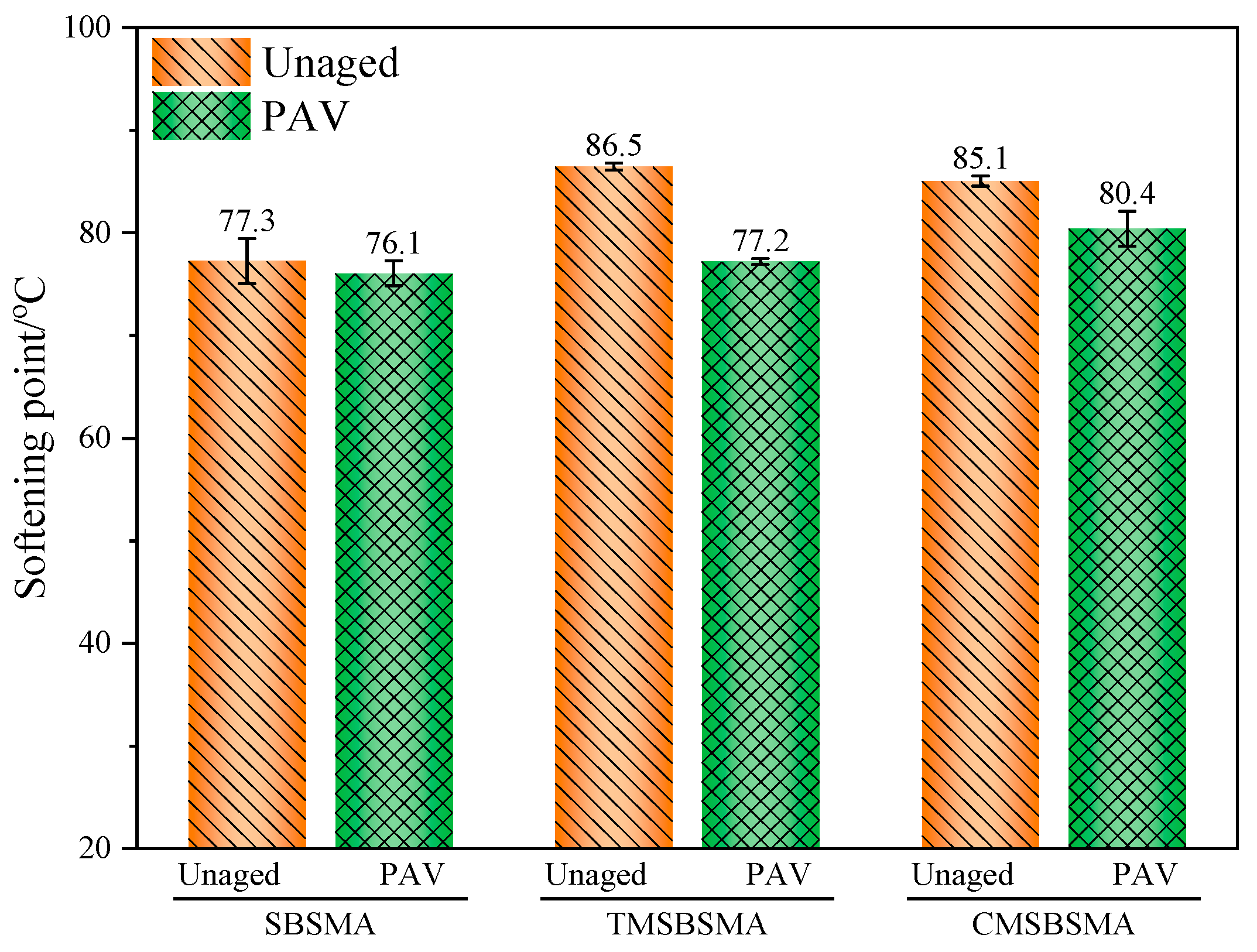
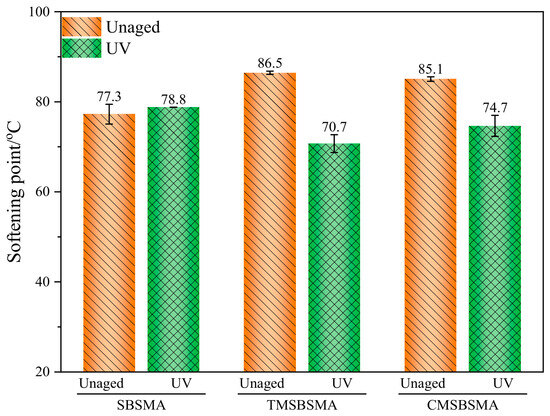
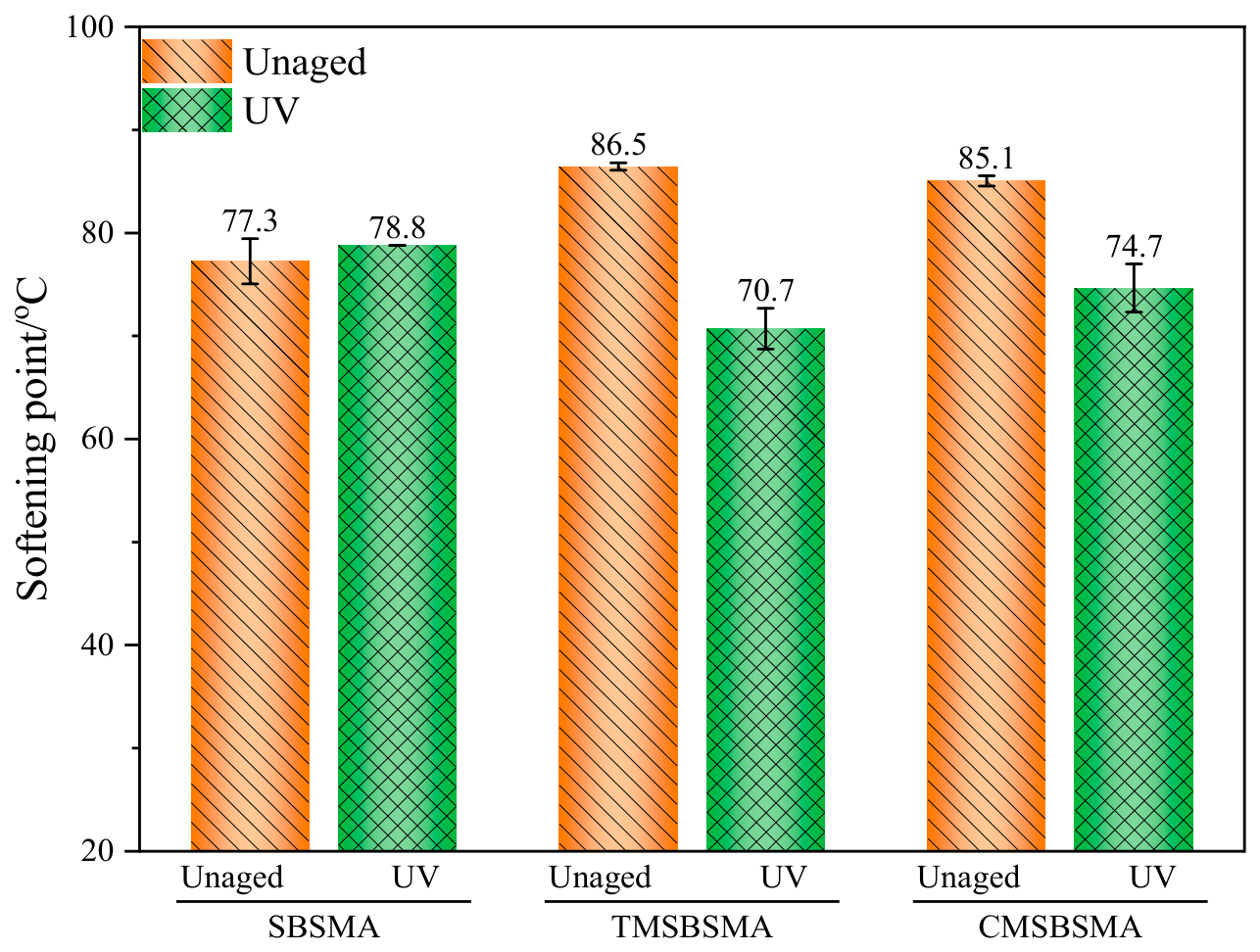
The softening points of the three modified asphalts before and after UV aging are shown in Figure 11. After UV aging, the softening point of plain SBSMA increased slightly (1.5 °C); whereas, TMSBSMA and CMSBSMA both exhibited decreases to varying degrees, with TMSBSMA showing a larger reduction (15.8 °C) than CMSBSMA (10.4 °C). Compared with the trends observed after PAV aging, the changes in softening point after UV aging were somewhat different, which may be related to the distinct competitive interplay between SBS degradation and asphalt matrix oxidation under the two aging modes. Nevertheless, as with the PAV aging case, the softening point change alone may not directly indicate better or worse UV aging resistance, and further interpretation should be based on the rheological and microstructural analyses presented below.
Figure 11.
Softening point of different SBSMAs before and after UV aging.
3.3.2. Rheological Properties
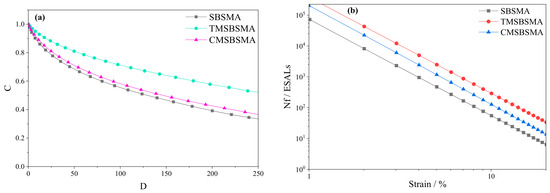
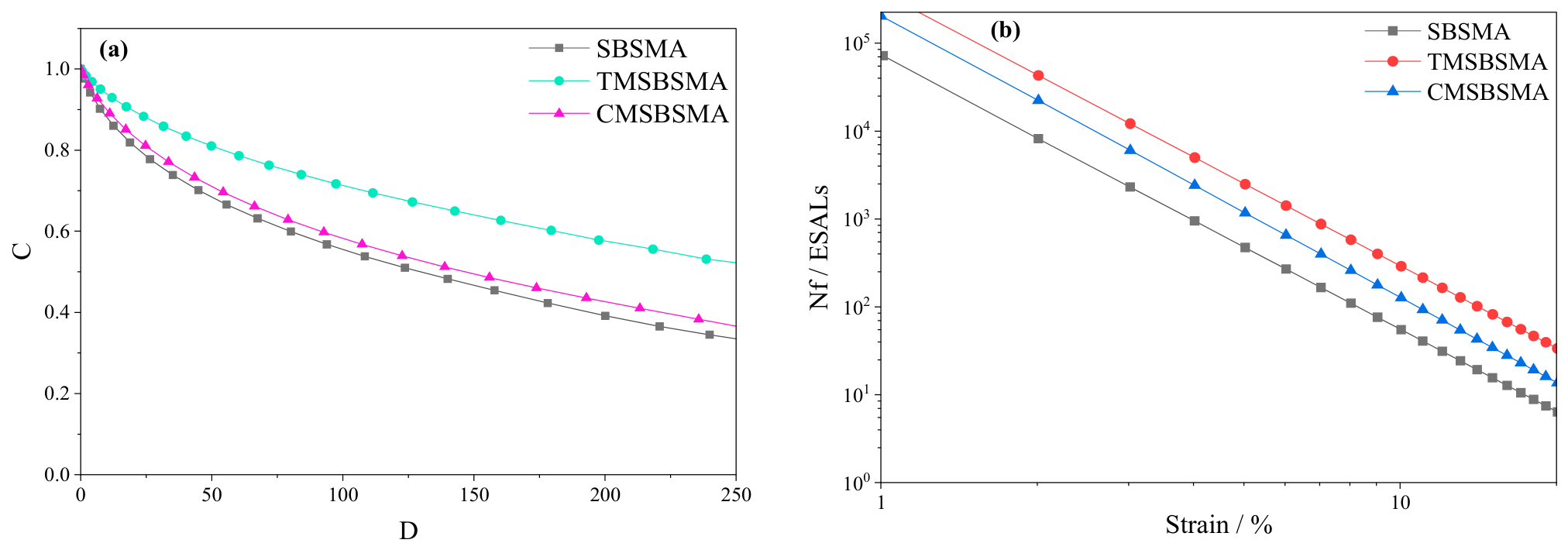
Figure 12 presents the C-D damage characteristic curves and fatigue life Nf-strain curves of different SBSMAs after UV aging. From Figure 12a, at the same damage variable D, the C values of TMSBSMA and CMSBSMA are always higher than that of plain SBSMA, with TMSBSMA showing a clear separation from the other two. This indicates that after UV aging, both nanocomposite-modified asphalts have superior structural integrity retention under fatigue damage, with the TM system showing the most outstanding resistance. From Figure 12b, the fatigue life of all three modified asphalts decreases with increasing strain level, but at each strain level, the Nf values of TMSBSMA and CMSBSMA are significantly higher than those of plain SBSMA, further confirming the improvement in fatigue resistance after UV aging by nanocomposite modification. The superior performance of the TM system is attributed to the synergy between the excellent UV shielding capability of TiO2 and the layered physical barrier effect of MMT, TiO2 effectively absorbs and scatters UV light, reducing direct damage to asphalt molecules, while the MMT lamellar structure forms a physical barrier delaying oxygen permeation, together maintaining the viscoelastic integrity of the asphalt matrix and SBS polymer network.
Figure 12.
(a) C-D damage curves and (b) fatigue life Nf-strain curves of different SBSMAs after UV aging.
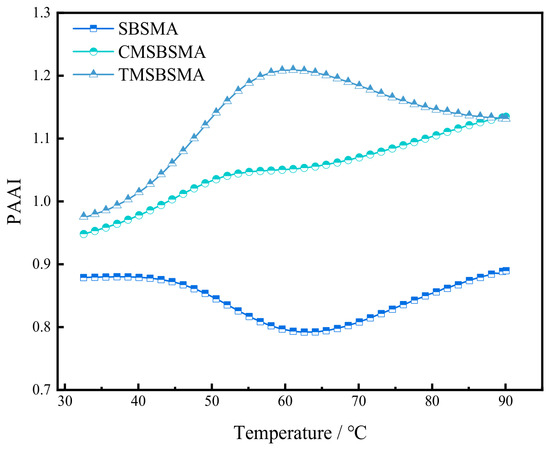
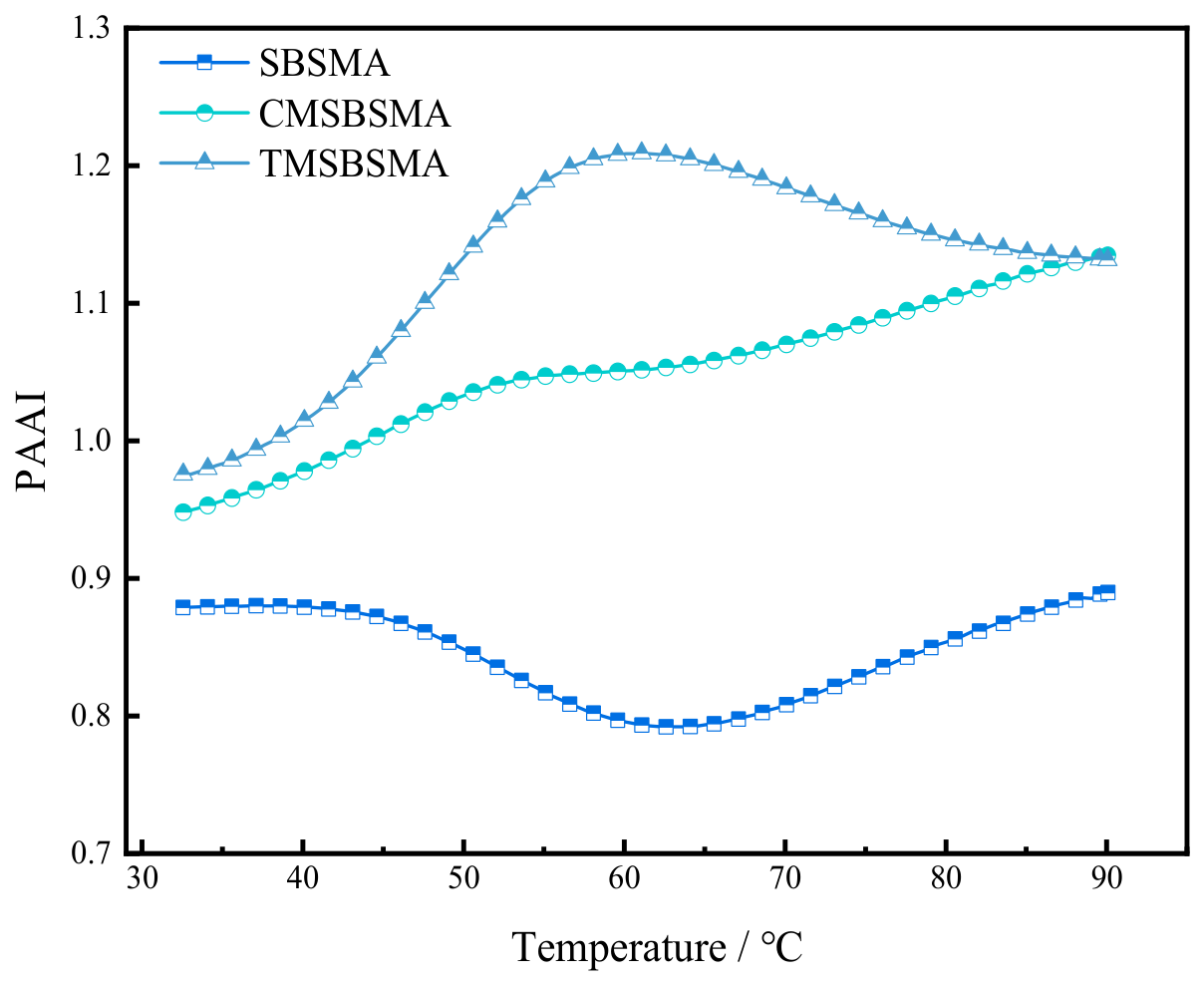
Figure 13 shows the PAAI values of different SBSMAs after UV aging. Plain SBSMA has the lowest PAAI throughout the temperature range, CMSBSMA is intermediate, and TMSBSMA is the highest. The PAAI of plain SBSMA is always less than 1.0, indicating that photo-oxidative hardening of the asphalt matrix dominates after UV aging, ultraviolet radiation generates free radicals from asphalt molecular chains, causing oxidative polymerization and intermolecular crosslinking of light components, conversion of aromatics to asphaltenes, increase in molecular weight and rigidity, leading to a significant decrease in δ, shifting the material toward elastic behavior [29]. Meanwhile, although the photo-oxidative degradation of the polybutadiene (PB) segments of SBS produces low-molecular-weight fragments that increase viscous components, this effect is masked by the hardening effect of the asphalt matrix. The PAAI values of CMSBSMA and TMSBSMA are both higher than that of plain SBSMA, and TMSBSMA exceeds 1.2 at around 60 °C, indicating that the nanocomposites effectively inhibit the photo-oxidation process of the asphalt matrix, allowing the viscosity-increasing effect caused by SBS photo-oxidative degradation to become apparent; the peak PAAI of TMSBSMA is higher than that of CMSBSMA, indicating that the TM composite system has a better inhibitory effect on asphalt photo-oxidation than CM. Nano-TiO2 has excellent UV shielding and absorption capabilities, effectively attenuating the intensity of incident UV light, reducing the driving force of photo-oxidation reactions at the source; at the same time, the layered lamellar structure of MMT forms a physical barrier network in the asphalt matrix, delaying the diffusion and permeation of oxygen molecules. The synergistic effect of the two makes the TM system exhibit more efficient barrier effects in UV protection.
Figure 13.
PAAI of different SBSMAs after UV aging.
3.3.3. Microstructure
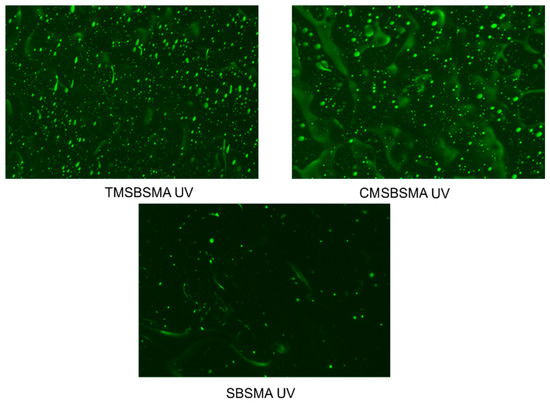
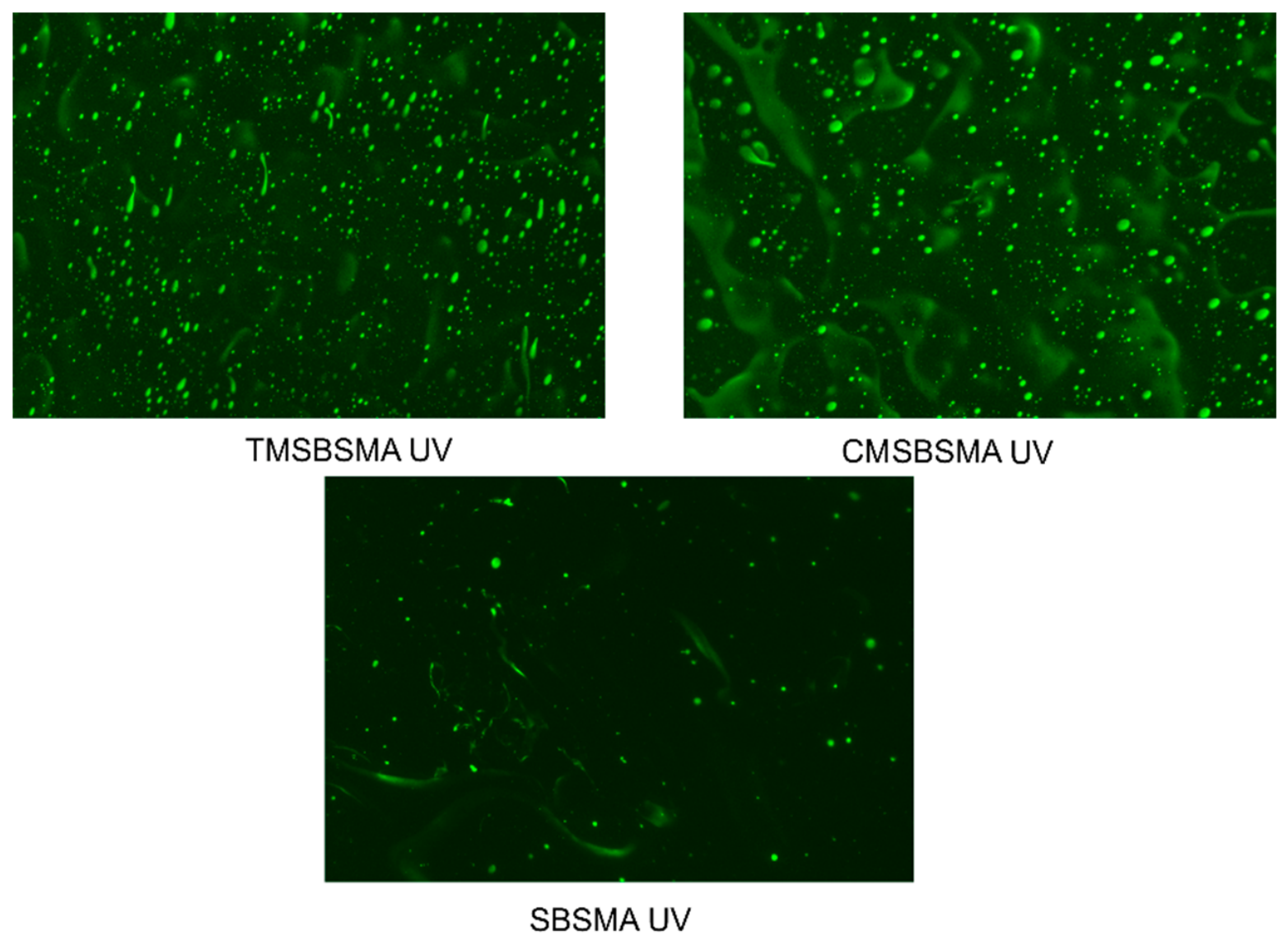
Figure 14 shows the FM images of different SBSMAs after UV aging. The fluorescence of plain SBSMA almost completely disappears, with only very faint traces remaining, indicating severe photo-oxidative degradation of the SBS polymer phase under long-term UV irradiation—the energy provided by UV light is sufficient to break the unsaturated C=C double bonds in the PB segments of SBS molecular chains, leading to chain scission, collapse of the polymer network, and a substantial reduction in fluorescent chromophores (polystyrene segments). In contrast, TMSBSMA exhibits dense green dot-like and short filamentous distributions, with the highest fluorescence intensity and uniform coverage; CMSBSMA shows bright filamentous and strip-like fluorescence structures, but the dot density is lower, and the overall fluorescence intensity is slightly lower than that of TMSBSMA. This indicates that both nanocomposite systems can effectively inhibit UV degradation of SBS, with TM showing more significant protection. This is attributed to the excellent UV shielding and absorption capability of TiO2, which effectively attenuates incident UV intensity and reduces the direct photon energy impact on SBS molecular chains; simultaneously, the physical barrier effect of the MMT layered structure works synergistically to delay the inward diffusion of oxygen molecules into the polymer phase.
Figure 14.
Fluorescence micrographs of different SBSMAs after UV aging.
4. Conclusions
This study investigated the effects of metal oxide/montmorillonite nanocomposites (TM and CM) on the rheological properties and microstructure of SBSMA before aging and after long-term thermal-oxidative and ultraviolet aging, and compared the performance differences in the two composites under different aging modes. The main conclusions are as follows:
- (1)
- The introduction of TM and CM significantly increased the softening point and high-temperature G* of SBSMA, reducing the δ, and forming a stable elastic plateau in the medium-temperature range. Fluorescence microscopy confirmed that nanocomposite modification promoted the transformation of the SBS phase from discrete island-like distributions to a uniform and continuous network structure, improving the dispersion state of the polymer phase. Low-temperature DMA showed that the loss modulus and loss factor increased, indicating enhanced stress relaxation capability, but ductility decreased. This contradiction suggests that the two evaluation methods, ultimate tensile failure and linear viscoelastic response, differ in characterizing low-temperature performance.
- (2)
- After long-term thermal-oxidative aging, both nanocomposite-modified asphalts exhibited significantly better fatigue life and structural integrity than plain SBSMA, and the fluorescence images showed higher retention of the SBS phase compared to plain SBSMA, indicating that the synergistic effect of the MMT layered physical barrier and metal oxides effectively retarded the thermal-oxidative aging of the asphalt matrix and polymer network. Further comparison revealed that CMSBSMA had better thermal-oxidative aging resistance, attributed to the oxygen storage-release function of CeO2 oxygen vacancies providing additional antioxidant capacity beyond the MMT physical barrier.
- (3)
- After long-term UV aging, both CMSBSMA and TMSBSMA showed significantly better fatigue life and SBS phase retention than plain SBSMA, again confirming that the synergistic effect of MMT physical barrier and metal oxide UV shielding effectively inhibited the photo-oxidative degradation of the asphalt matrix and polymer network. Moreover, TMSBSMA exhibited better fatigue life and fluorescence intensity than CMSBSMA, and its PAAI was significantly higher than that of CMSBSMA in the high-temperature range, indicating that TiO2, with its superior UV shielding and absorption capability, can effectively attenuate incident UV intensity at the source, reducing the driving force of photo-oxidation reactions.
While this study provides mechanistic insights at the binder level, further investigation on asphalt mixture performance (e.g., rutting resistance, low-temperature cracking, and moisture susceptibility after aging) is warranted to fully assess the field applicability of the developed nanocomposite modified SBSMA systems.
Author Contributions
G.S.: Conceptualization, Methodology, Writing—Original Draft. G.L. (Genfu Liang): Data Curation, Investigation, Formal Analysis. G.L. (Gen Li): Validation, Writing—Review and Editing. C.Z.: Supervision, Project Administration, Funding Acquisition, Writing—Review and Editing. All authors have read and agreed to the published version of the manuscript.
Funding
This work was supported by Hunan Provincial Natural Science Foundation of China (grant number 2026JJ90005), the Scientific Research Project of Hunan Provincial Education Department (grant numbers 24B0188). The authors gratefully acknowledge their financial support.
Institutional Review Board Statement
Not applicable.
Informed Consent Statement
Not applicable.
Data Availability Statement
The original contributions presented in this study are included in the article. Further inquiries can be directed to the corresponding author.
Conflicts of Interest
Authors Guangye Si, Genfu Liang and Gen Li were employed by the company CCCC Third Highway Engineering Co., Ltd. The remaining authors declare that the research was conducted in the absence of any commercial or financial relationships that could be construed as potential conflicts of interest.
References
- Zhang, J.; Guo, F.; Lv, H.; Zhuo, R.; Tan, Y. Characterization of phase structure and performance degradation of aged SBS-modified asphalt. J. Mater. Civ. Eng. 2024, 36, 04024061. [Google Scholar] [CrossRef] [Scilit]
- Zhang, D.; Zheng, Y.; Yuan, G.; Zhang, Y.; Qian, G.; Zhang, H. Research on the field aging gradient behavior of SBS-modified bitumen at different depths of pavement by rheological and microscopic characterization. Fuel 2022, 329, 125192. [Google Scholar] [CrossRef] [Scilit]
- Camargo, I.G.d.N.; Dhia, T.B.; Loulizi, A.; Hofko, B.; Mirwald, J. Anti-aging additives: Proposed evaluation process based on literature review. Road Mater. Pavement Des. 2021, 22, S134–S153. [Google Scholar] [CrossRef] [Scilit]
- Liu, L.; Liu, Z.; Hong, L.; Huang, Y. Effect of ultraviolet absorber (UV-531) on the properties of SBS-modified asphalt with different block ratios. Constr. Build. Mater. 2020, 234, 117388. [Google Scholar] [CrossRef] [Scilit]
- Chen, S.; Liu, Q.; Wu, H.; He, L.; Wu, S. Effects of antioxidant-intercalated LDHs on long-term thermal oxidation aging and ultraviolet aging resistances of SBS-modified asphalt. J. Mater. Civ. Eng. 2019, 36, 040024200. [Google Scholar]
- Yang, J.; Muhammad, Y.; Yang, C.; Liu, Y.; Su, Z.; Wei, Y.; Li, J. Preparation of TiO2/PS-rGO incorporated SBS modified asphalt with enhanced resistance against ultraviolet aging. Constr. Build. Mater. 2021, 276, 121461. [Google Scholar] [CrossRef] [Scilit]
- Liao, M.; Liu, Z.; Gao, Y.; Liu, L.; Xiang, S. Study on UV aging resistance of nano-TiO2/montmorillonite/styrene-butadiene rubber composite modified asphalt based on rheological and microscopic properties. Constr. Build. Mater. 2021, 301, 124108. [Google Scholar] [CrossRef] [Scilit]
- Li, J.; Ye, X.; Zhao, Y.; Yang, D.; Li, D.; Han, C.; Li, X. Structure-performance evolution on thermal-oxidative aging of CeO2/SBS co-modified asphalt. Int. J. Pavement Eng. 2023, 24, 2111425. [Google Scholar] [CrossRef] [Scilit]
- Zhao, Z.; Wu, S.; Liu, Q.; Yang, C.; Zou, Y.; Wan, P. Feasibility assessment of CeO2 nanoparticles as aging-resistant agent of asphalt. Constr. Build. Mater. 2022, 330, 127245. [Google Scholar] [CrossRef] [Scilit]
- Yu, J.; Wang, L.; Zeng, X.; Wu, S.; Li, B. Effect of montmorillonite on properties of styrene–butadiene–styrene copolymer modified bitumen. Polym. Eng. Sci. 2007, 47, 1289–1295. [Google Scholar] [CrossRef] [Scilit]
- Liu, S.; Zhou, S.B.; Xu, Y. Evaluation of cracking properties of SBS-modified binders containing organic montmorillonite. Constr. Build. Mater. 2018, 175, 196–205. [Google Scholar] [CrossRef] [Scilit]
- Zhang, H.; Zhu, C.; Yu, J.; Shi, C.; Zhang, D. Influence of surface modification on physical and ultraviolet aging resistance of bitumen containing inorganic nanoparticles. Constr. Build. Mater. 2015, 98, 735–740. [Google Scholar] [CrossRef] [Scilit]
- Zhang, C.L.; Yang, S.; Wang, T.; Xu, S.; Jin, P.; Dong, H.J.; Zhang, Y.; Chen, Y. A novel method to improve the anti-ageing ability of bitumen by organic LDHs/SBS composite: Preparation, performance evaluation and mechanism analysis. Fuel 2025, 383, 133845. [Google Scholar] [CrossRef] [Scilit]
- Duan, H.H.; Long, J.; Zhang, H.L.; Luo, H.; Cao, J.W. Effects of different carriers for zinc oxide (ZnO) particles on microstructure of ZnO/layered silicate composite and aging resistance of composite modified asphalt. Constr. Build. Mater. 2022, 349, 128773. [Google Scholar] [CrossRef] [Scilit]
- Zhang, H.L.; Duan, H.H.; Luo, Y. Use of synergistic effect of zinc oxide/expanded vermiculite composite to retard asphalt aging behavior. China J. Highw. Transp. 2024, 37, 185–196. [Google Scholar]
- Li, S.; Xu, Y.; Xiang, F.; Liu, P.; Wang, H.; Wei, W.; Dong, S. Enhanced corrosion resistance of self-healing waterborne polyurethane coating based on tannic acid modified cerium-montmorillonites composite fillers. Prog. Org. Coat. 2023, 178, 107454. [Google Scholar] [CrossRef] [Scilit]
- Zhu, C.Z.; Li, D.Q.; Zhang, H.L.; Zhang, D.; Su, N.; Xu, F. Effect of montmorillonite-loaded CeO2 nanocomposites with different CeO2 contents on thermal-oxidative and ultraviolet aging properties of asphalt. Constr. Build. Mater. 2026, 507, 145057. [Google Scholar] [CrossRef] [Scilit]
- Zhu, C.; Xu, Z.; Zhang, H.; Wang, Z.; Li, D.; Su, N.; Zhang, D. Rheological and micro characteristics of asphalt containing different nanocomposite ratios of CeO2/MMT during thermal-oxidative and ultraviolet aging. Constr. Build. Mater. 2025, 495, 143732. [Google Scholar] [CrossRef] [Scilit]
- Mohammadi, I.; Izadi, M.; Shahrabi, T.; Fathi, D.; Fateh, A. Enhanced epoxy coating based on cerium loaded Na-montmorillonite as active anti-corrosive nanoreservoirs for corrosion protection of mild steel: Synthesis, characterization, and electrochemical behavior. Prog. Org. Coat. 2019, 131, 119–130. [Google Scholar] [CrossRef] [Scilit]
- Sun, Y.; Fu, D.Y.; Zhu, Y.J.; Bai, Z.H.; Yuan, S.C.; Chang, Y.Y.; Meng, L.; Wang, H.Y. A novel anti-oxygen composite coating and its corrosion resistance mechanism. Corros. Sci. 2022, 201, 110298. [Google Scholar] [CrossRef] [Scilit]
- Hong, H.; Zhang, H.; Zhang, S. Effect of multi-dimensional nanomaterials on the aging behavior of asphalt by atomic force microscope. Constr. Build. Mater. 2020, 260, 120389. [Google Scholar] [CrossRef] [Scilit]
- Wang, D.; Liu, Q.; Yang, Q.; Tovar, C.; Tan, Y.; Oeser, M. Thermal oxidative and ultraviolet ageing behaviour of nano-montmorillonite modified bitumen. Road Mater. Pavement Des. 2021, 22, 121–139. [Google Scholar] [CrossRef] [Scilit]
- Feng, Z.; Yu, J.; Xue, L.; Sun, Y. Rheological and aging properties of ultraviolet absorber/styrene-butadiene-styrene-modified bitumens. J. Appl. Polym. Sci. 2013, 128, 2571–2577. [Google Scholar] [CrossRef] [Scilit]
- Cheng, P.; Zhang, Z.; Yang, Z.; Xu, J.; Li, Y. Investigating the effectiveness of nano-montmorillonite on asphalt binder from rheological, thermodynamics, and chemical perspectives. Materials 2021, 14, 1433. [Google Scholar] [CrossRef] [Scilit] [PubMed]
- Lu, Y.; Li, S.; Jiang, Y.; Yang, X.; Li, L. Rheological and aging properties of nano-clay/SBS composite-modified asphalt. Materials 2024, 17, 4376. [Google Scholar] [CrossRef] [Scilit] [PubMed]
- Zapién-Castillo, S.; Rivera-Armenta, J.L.; Chávez-Cinco, M.Y.; Salazar-Cruz, B.A.; Mendoza-Martínez, A.M. Physical and rheological properties of asphalt modified with SEBS/montmorillonite nanocomposite. Constr. Build. Mater. 2016, 106, 349–356. [Google Scholar] [CrossRef] [Scilit]
- Min, P.; Zhang, S.; Xu, Y.; Li, R. Enhanced oxygen storage capacity of CeO2 with doping-induced unstable crystal structure. Appl. Surf. Sci. 2018, 448, 435–443. [Google Scholar] [CrossRef] [Scilit]
- Zhu, C.; Zhang, H.; Li, Q.; Wang, Z.; Jin, D. Influence of different aged RAPs on the long-term performance of emulsified asphalt cold recycled mixture. Constr. Build. Mater. 2025, 458, 139680. [Google Scholar] [CrossRef] [Scilit]
- Mouillet, V.; Farcas, F.; Chailleux, E.; Sauger, L. Evolution of bituminous mix behaviour submitted to UV rays in laboratory compared to field exposure. Mater. Struct. 2014, 47, 1287–1299. [Google Scholar] [CrossRef] [Scilit]

Disclaimer/Publisher’s Note: The statements, opinions and data contained in all publications are solely those of the individual author(s) and contributor(s) and not of MDPI and/or the editor(s). MDPI and/or the editor(s) disclaim responsibility for any injury to people or property resulting from any ideas, methods, instructions or products referred to in the content. |
© 2026 by the authors. Licensee MDPI, Basel, Switzerland. This article is an open access article distributed under the terms and conditions of the Creative Commons Attribution (CC BY) license.