


Abstract
Background: The decarbonization of non-electrified rail transport requires alternative fuel solutions capable of reducing diesel-fuel consumption while maintaining the operational capabilities of existing propulsion systems. Dual-fuel operation on liquefied natural gas (LNG) offers a potential upgrade path for existing diesel locomotives, especially where full electrification is not currently possible. Objective: This study evaluates the technical, operational, and economic feasibility of converting a TEM2 shunting locomotive equipped with a PD1M diesel engine to LNG-based dual-fuel operation while retaining diesel fuel as a pilot fuel. Methods: A computational and analytical approach was used to evaluate the fuel and energy balance, LNG and pilot-diesel consumption, fuel-substitution scenarios, economic performance, and the influence of additional LNG equipment on locomotive mass distribution. The main and alternative LNG consumption scenarios were considered to assess the sensitivity of economic outcomes to fuel consumption assumptions. Results: The baseline diesel consumption of the TEM2 locomotive was approximately 428 kg/day, compared with a calculated pilot-diesel consumption of 42.8 kg/day under dual-fuel operation. The primary technical calculation resulted in an LNG consumption of approximately 350 kg/day. Under the base economic scenario, the estimated annual fuel-cost saving was approximately 2.95 million KZT per locomotive, based on a reference conversion investment of approximately 9.91 million KZT and a simple payback period of approximately 3.36 years. However, an alternative LNG-consumption scenario of 385.2 kg/day resulted in a negative annual fuel-cost effect of approximately 2.43 million KZT, demonstrating the sensitivity of the economic outcome to LNG consumption and relative fuel prices. The mass-distribution analysis showed agreement with reference locomotive data within approximately ±3%, while the calculated installation of additional gas-fuel equipment shifted the center of gravity by approximately 480 mm. Conclusions: The results demonstrate the potential technical feasibility of the proposed LNG diesel-fuel upgrade and identify fuel consumption conditions under which economic benefits can be achieved. The economic outcome is highly dependent on actual LNG consumption, relative fuel prices, and operating conditions. The analysis also highlights the importance of fuel system integration, mass distribution, low-load operation, and combustion stability in adapting existing diesel propulsion systems to dual-fuel LNG operation. Full-scale pilot studies are needed to confirm fuel consumption and combustion performance, quantify emissions including methane breakthrough, and assess long-term operational reliability under representative railway operating conditions.
1. Introduction
Railway transport remains an important component of the transport system of Kazakhstan, particularly for freight and industrial transportation. Despite ongoing railway electrification, a substantial part of the national railway network continues to operate with diesel traction. As of the end of 2025, the operational railway network of Kazakhstan was approximately 16,003 km, of which 4237.5 km were electrified. Freight operations on the remaining non-electrified sections therefore continue to rely predominantly on diesel locomotives.
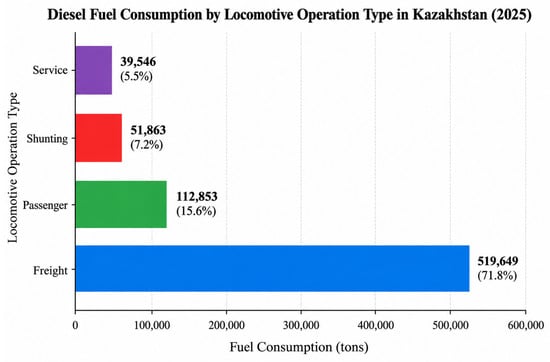
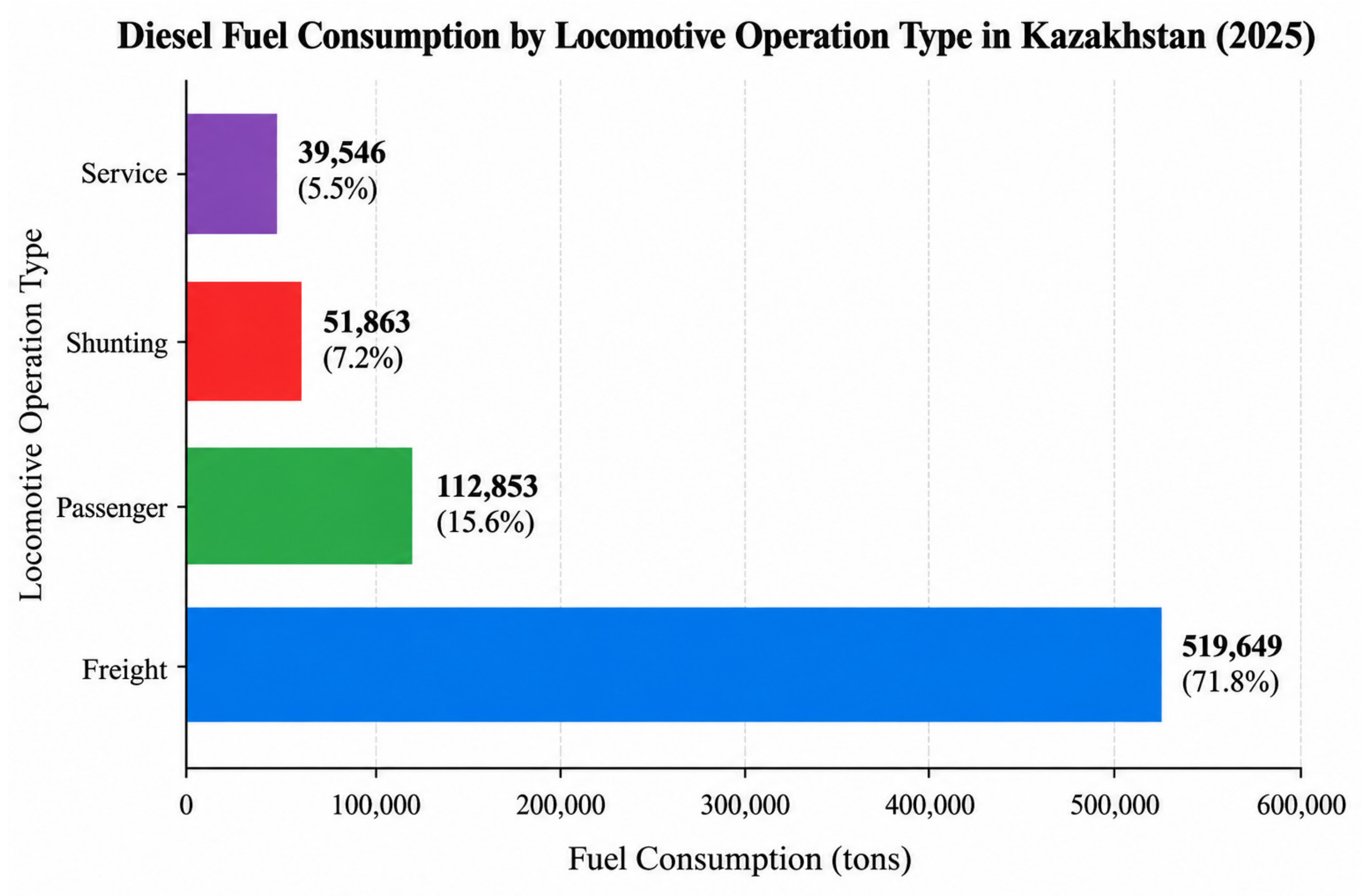
The continued use of diesel traction creates a significant demand for petroleum-based fuel and contributes to locomotive operating costs and exhaust emissions. In 2025, diesel locomotives used approximately 727,000 t of diesel fuel for traction operations in Kazakhstan [1]. The magnitude of this consumption illustrates the potential importance of alternative-fuel technologies for reducing the dependence of railway traction on conventional diesel fuel. The corresponding annual diesel-fuel consumption is shown in Figure 1.
Figure 1.
Actual diesel-fuel consumption for locomotive traction in Kazakhstan in 2025.
One potential approach is the conversion of existing diesel locomotives to dual-fuel operation using liquefied natural gas (LNG). In such systems, LNG provides the major part of the energy input, while a smaller quantity of diesel fuel is retained as a pilot fuel for ignition [1,2,3,4]. Unlike complete replacement of the original power unit, dual-fuel conversion can potentially retain the existing diesel engine and major locomotive components, thereby providing a technically less disruptive pathway for modernization [5,6,7,8,9].
Natural-gas-based dual-fuel technologies have been investigated extensively at the engine level. Previous studies have considered combustion processes, thermodynamic performance, pilot-fuel injection, gas–air mixture formation, fuel substitution, and exhaust emissions [10,11,12,13,14,15]. Reported diesel-fuel substitution levels can reach approximately 60–80% under suitable operating conditions, although the achievable substitution level depends strongly on engine design, engine load, gas composition, and pilot-fuel quantity [10]. These results demonstrate the technical potential of gas–diesel operation but also indicate that fuel substitution cannot be treated as a constant parameter under all operating conditions.
The application of these technologies to shunting locomotives presents an additional challenge. Shunting locomotives operate under highly variable loads, frequent changes in engine operating conditions, transient modes, and prolonged periods of idling. Such operating characteristics can influence combustion stability, pilot-fuel requirements, achievable gas substitution, fuel consumption, and the resulting economic effect. Therefore, the results of steady-state engine studies cannot be directly transferred to the operational conditions of an existing shunting locomotive.
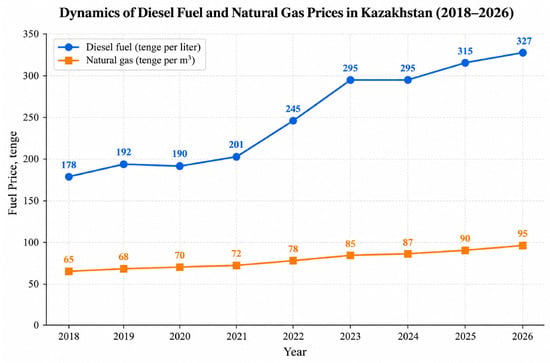
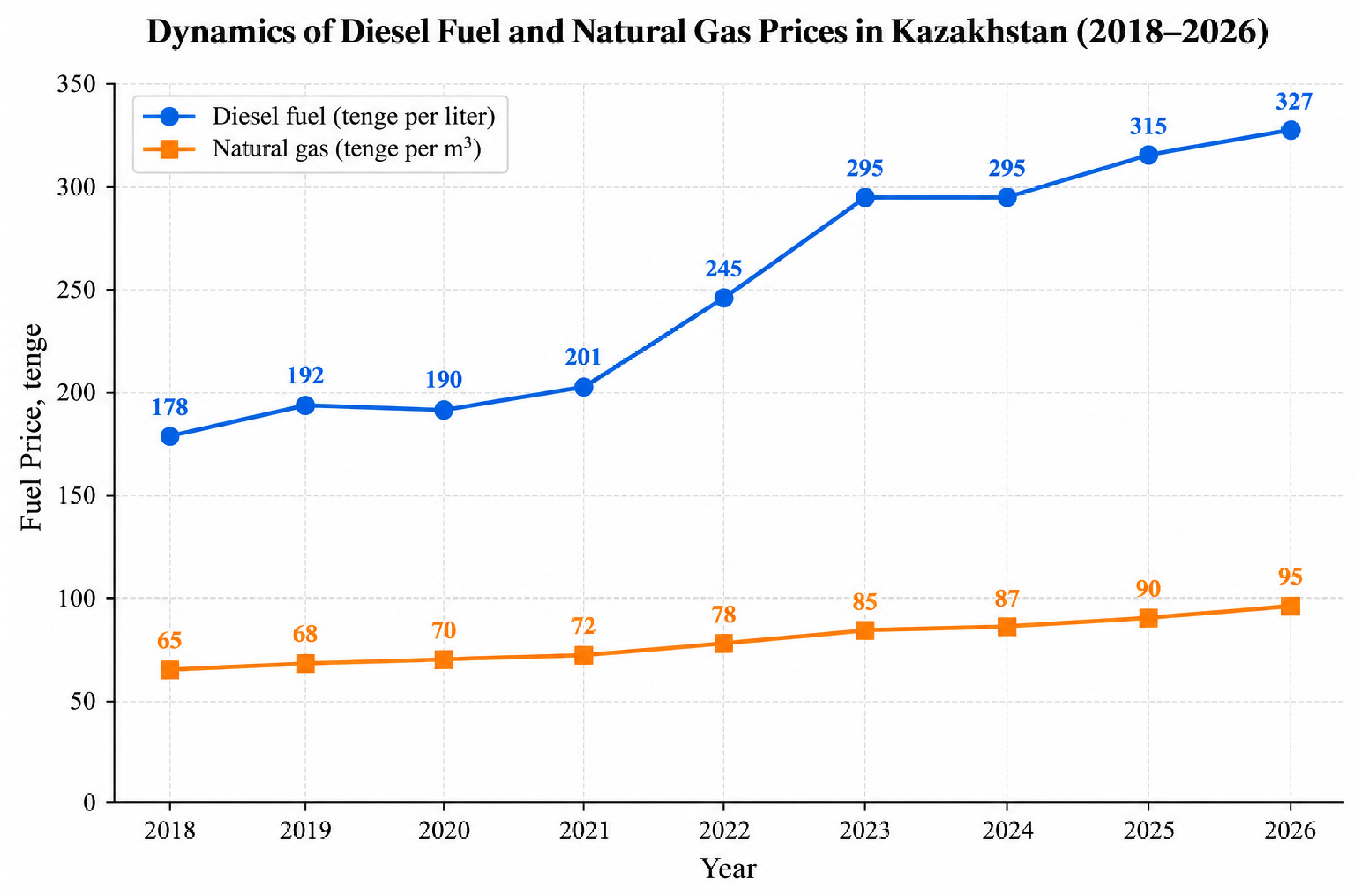
The economic context is also important. The relative cost of diesel fuel and natural gas has a direct influence on the attractiveness of dual-fuel conversion. Current fuel-price conditions in Kazakhstan provide an important background for evaluating alternative-fuel technologies. The comparative fuel-price data used in the present study are shown in Figure 2.
Figure 2.
Comparison of diesel-fuel and natural gas-fuel prices in Kazakhstan.
However, the economic comparison of LNG and diesel requires particular attention to the fuel type and measurement basis. The price of liquefied petroleum gas (LPG) sold at filling stations cannot be directly interpreted as the price of LNG, while historical prices of pipeline natural gas cannot be directly transferred to an LNG-based locomotive model. Therefore, the present study distinguishes between these fuel types and evaluates LNG within the specific fuel and economic assumptions described in Section 3.3 and Section 3.5.
Despite significant research on gas–diesel engines and alternative fuels for railway transport, several aspects remain insufficiently addressed. Existing studies predominantly focus on combustion modeling, thermodynamic characteristics, pilot-fuel injection, emission formation, or isolated engine-performance indicators [10,11,12,13,14,15]. Comparatively less attention has been given to the integrated assessment of converting an existing shunting locomotive to LNG-based dual-fuel operation.
In particular, the limited research simultaneously considers the following [10,12]:
- The fuel and energy balance of an existing shunting locomotive;
- The influence of variable operating conditions and different gas-substitution levels;
- The economic effect of LNG conversion under alternative fuel-consumption scenarios;
- The investment requirements associated with locomotive modernization;
- The influence of additional LNG equipment on locomotive mass distribution and technical feasibility.
This research gap is particularly relevant to Kazakhstan, where a large proportion of railway freight operations remain dependent on diesel traction and where existing shunting locomotives constitute an important part of railway operations. Official railway data confirm the continuing role of diesel traction on non-electrified sections of the national network.
Therefore, the objective of this study is to evaluate the technical, operational, and economic feasibility of converting a TEM2 shunting locomotive equipped with a PD1M diesel engine to LNG-based dual-fuel operation while retaining the original diesel engine and using diesel fuel as a pilot fuel.
To achieve this objective, the study addresses the following tasks:
- Determine the baseline diesel-fuel consumption and corresponding energy input of the TEM2 locomotive;
- Evaluate the LNG and pilot-diesel requirements of the proposed dual-fuel configuration;
- Investigate fuel-substitution scenarios under different locomotive operating conditions;
- Assess the economic performance of the conversion, including fuel costs, annual operating savings, conversion investment, and payback;
- Evaluate the influence of LNG equipment installation on mass distribution, center-of-gravity position, and vertical loads;
- Identify the principal technical, economic, and operational limitations affecting practical implementation.
The novelty of this study lies in the integrated engineering assessment of an existing TEM2 shunting locomotive rather than an isolated laboratory engine or a newly designed locomotive platform. The study addresses the practical problem of converting an existing shunting locomotive to LNG-based dual-fuel operation while retaining the original PD1M diesel engine. The proposed approach links energy-equivalent fuel analysis with variable shunting operating conditions, pilot-diesel requirements, economic sensitivity to LNG consumption, conversion investment, and the mechanical consequences of installing additional gas-fuel equipment.
The energy analysis is not intended to introduce a new thermodynamic formulation. Its contribution is the application of an energy-equivalent approach to an existing shunting locomotive under variable operating conditions and its integration with economic and mechanical feasibility assessments. This distinction is important because the fuel-substitution potential of a locomotive operating under prolonged idling, frequent load changes, and transient conditions cannot be represented adequately by a constant substitution ratio derived from a single engine operating point.
The main contributions of the study are as follows:
1. Fuel and Energy Assessment: The baseline diesel configuration and LNG-based dual-fuel configuration are compared using fuel properties, pilot-diesel requirements, and the corresponding energy balance.
2. Operational Assessment: The study considers different fuel-substitution scenarios and the variable operating conditions characteristic of shunting locomotives instead of assuming a constant gas-substitution ratio throughout the entire duty cycle.
3. Economic Assessment: The economic effect of the conversion is evaluated using a primary LNG-consumption scenario and an alternative, more conservative fuel-consumption scenario. This approach makes it possible to assess the sensitivity of the economic result to fuel-consumption uncertainty.
4. Technical Feasibility Assessment: The effect of additional LNG equipment on locomotive mass distribution, center-of-gravity position, and vertical loads is evaluated to determine whether the proposed conversion can be accommodated within the existing TEM2 configuration.
5. Practical Applicability: The practical applicability of the study extends beyond the specific Kazakhstan case. Although Kazakhstan provides the operational and economic context for the present assessment, the engineering constraints considered—variable shunting loads, prolonged idling, pilot-diesel requirements, LNG consumption uncertainty, conversion investment, refueling infrastructure, and the redistribution of locomotive mass caused by additional gas equipment—are relevant to the modernization of existing diesel shunting locomotives operating on non-electrified railway systems in other regions.
Thus, the proposed embodiment serves as a specific engineering application by which a comprehensive system for evaluating the conversion of existing LNG-based shunting locomotives can be demonstrated.
The practical significance of the study is associated with the possibility of reducing dependence on diesel fuel while preserving the basic power unit of an existing locomotive. The results are intended to provide an engineering basis for further experimental validation of LNG-based dual-fuel TEM2 locomotives and for the development of adaptive fuel-control strategies under variable shunting operating conditions.
2. Literature Review
The transition of railway transport toward alternative fuels has become an important research direction for improving energy efficiency, reducing dependence on petroleum-based fuels, and mitigating the environmental impact of diesel traction. Among the alternatives considered for railway applications, natural gas has received particular attention because it can be used in modified diesel engines without completely replacing the existing power unit. Previous studies have investigated both compressed natural gas (CNG) and liquefied natural gas (LNG) as potential fuels for locomotive and heavy-duty diesel applications [10,11,12].
A substantial body of research has focused on the thermodynamic and combustion characteristics of dual-fuel diesel engines. These studies generally consider the replacement of a portion of the diesel-fuel energy input by gaseous fuel while retaining a smaller quantity of diesel fuel as a pilot fuel for ignition [11,12,13]. The reported results indicate that the achievable gas-substitution level depends on engine design, operating load, gas composition, pilot-fuel injection parameters, and the method used to form the gas–air mixture. Consequently, the fuel-substitution ratio cannot be considered an independent constant parameter for all operating conditions.
Research on gas–diesel locomotive systems can be broadly divided into several directions, including combustion and thermodynamic modeling, optimization of pilot-fuel injection, gas–air mixture formation, emission analysis, and development of gas-fuel storage and supply systems [12,13,14,15]. Several studies have reported diesel-fuel substitution levels of approximately 60–80% under suitable operating conditions while maintaining acceptable engine performance [10]. These results indicate the technical potential of dual-fuel operation, but they also demonstrate that the achievable substitution level is strongly dependent on the operating regime.
An important research direction concerns the influence of operating conditions on combustion stability and engine efficiency. At relatively high loads, the increased contribution of gaseous fuel can provide substantial diesel substitution. At low loads and during prolonged idling, however, the combustion process becomes more sensitive to the quantity of pilot fuel and the characteristics of the gas–air mixture. This issue is particularly relevant to shunting locomotives because their operating cycle includes frequent changes in load, transient modes, and extended periods of idling. Therefore, results obtained from steady-state engine tests cannot always be directly transferred to shunting locomotive operation.
Another group of studies has examined the environmental effects of dual-fuel operation. The use of natural gas can reduce the formation of particulate matter and smoke and may reduce some gaseous pollutants under appropriate combustion conditions [13,14,15]. However, the environmental performance of gas–diesel engines cannot be assessed solely from the reduction in diesel consumption. Methane slip, combustion efficiency, engine load, and gas-substitution level can significantly affect the overall environmental effect. Thus, environmental conclusions obtained for one engine or operating regime should be treated cautiously when applied to railway applications.
Despite substantial progress in engine-level research, comparatively fewer studies have addressed the integrated technical and economic assessment of converting existing shunting locomotives to LNG-based dual-fuel operation. Existing publications frequently concentrate on combustion modeling, thermodynamic characteristics, emission formation, or individual engine parameters [15]. Less attention has been given to the simultaneous assessment of fuel consumption, operating conditions, fuel costs, conversion investment, and the influence of additional gas equipment on locomotive mass distribution.
This issue is particularly important for existing locomotive fleets. Conversion of an operating locomotive can have advantages over complete replacement of the power unit because the original engine, mechanical transmission, and other major components can potentially be retained. However, conversion requires additional gas-storage and fuel-supply equipment, which introduces new technical constraints associated with equipment mass, installation space, center-of-gravity position, and axle-load distribution. These aspects are not sufficiently represented in studies focused exclusively on engine-level performance.
The research gap is also relevant to the railway sector of Kazakhstan. A substantial proportion of railway lines remain non-electrified, and diesel traction continues to play an important role in freight and shunting operations [1,16]. The operating environment is additionally characterized by considerable variation in climatic and operational conditions. At the same time, Kazakhstan has significant natural-gas resources, creating a potential basis for the development of gas-fuel technologies in transport.
However, the available literature provides limited evidence on the practical feasibility of LNG conversion for existing TEM2-class shunting locomotives under Kazakhstan operating conditions. In particular, the combined effect of fuel substitution, operating mode, economic performance, and the installation of additional gas equipment has not been sufficiently investigated.
Therefore, the present study addresses this gap by considering the conversion of a TEM2 shunting locomotive equipped with a PD1M diesel engine to LNG-based dual-fuel operation. Unlike studies focused primarily on combustion simulation or individual engine parameters, the present work combines the following four complementary aspects:
- Fuel consumption and energy-performance assessment;
- Evaluation of different operating and fuel-substitution scenarios;
- Economic assessment of the conversion;
- Analysis of mass distribution and technical feasibility of LNG equipment placement.
Particular attention is given to the distinction between the technical fuel-consumption result and its economic implications, as well as to the sensitivity of the economic outcome to LNG consumption. The study also considers the effect of gas-equipment installation on locomotive mass distribution and the position of the center of gravity.
The contribution of the study is therefore not limited to demonstrating the possibility of replacing a portion of diesel fuel with gaseous fuel. It provides an integrated engineering assessment of whether an existing TEM2 shunting locomotive can be converted to LNG-based dual-fuel operation while maintaining acceptable operational characteristics and obtaining a potentially positive economic effect under defined fuel-price and operating scenarios.
3. Materials and Methods
3.1. Study Object and Operational Data
The object of the study is a TEM2 shunting diesel locomotive equipped with a PD1M diesel engine. The rated power of the power plant is 882 kW (1200 hp). The engine is a six-cylinder, four-stroke diesel engine with gas-turbine turbocharging. The cylinder bore is 318 mm, and the piston stroke is 330 mm, while the rated crankshaft speed is 750 rpm. The turbocharging system is based on a TK-30-series turbocharger (Special Design Turbochargers Bureau LLC [SKBT], 128 Kalinina St., Penza, Russia), and the specified boost pressure is 0.04–0.09 MPa. The specific fuel consumption is reported as 165–173 g/(hp·h).
The actual average diesel-fuel consumption of 18.12 kg/h was used as the initial operating parameter. With an assumed operating time of 23.5 h per day, the corresponding daily diesel consumption is approximately 428 kg/day. The data are used as a baseline for subsequent comparison with the calculated modes of gas–diesel operation [17].
When assessing operational efficiency, the variable nature of the shunting locomotive operation is taken into account. In accordance with the initial calculations used to assess operational and environmental indicators, the daily cycle includes 14.1 h of idle operation and 9.4 h of nominal operation. This distribution is used as an estimated operational profile, and not as a statement about the constant operation of the engine at one steady-state mode.
3.2. Gas Diesel Conversion Concept
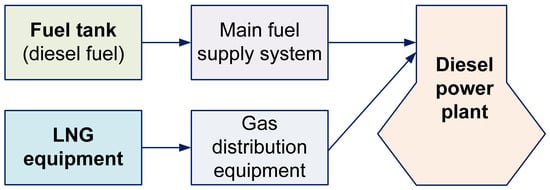
In the modernization concept under consideration, the PD1M diesel engine is switched to dual-fuel operation, in which the bulk of the power load is provided by gaseous fuel while diesel fuel is retained as a pilot fuel for ignition. The proposed configuration reduces diesel-fuel consumption while retaining the original locomotive engine. The gas–diesel power plant includes an LNG storage and supply subsystem, a gas-fuel control and metering system, as well as a modified diesel-fuel supply system for pilot-fuel injection. The supply of gaseous fuel is controlled depending on the engine operating mode, while diesel fuel provides ignition of the gas–air mixture.
The technical layout of the gas-fuel storage system is based on the technical solution developed by the authors [18]. It is planned to place the gas tank on the diesel locomotive frame, taking into account the weight distribution, overall limitations, and the possibility of connecting to the gas-fuel supply system.
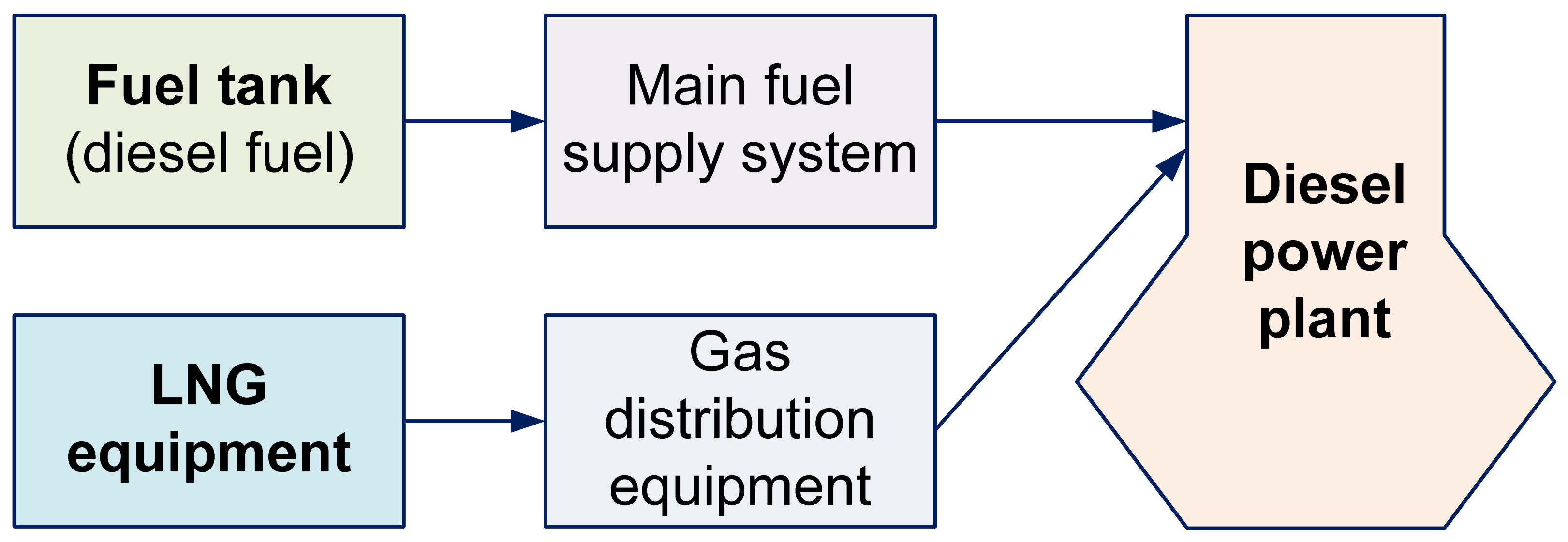
A block diagram of the proposed gas–diesel power plant is shown in Figure 3.
Figure 3.
Block diagram of a gas–diesel power plant for a shunting locomotive.
The selected configuration makes it possible to realize the gas diesel cycle without substantial structural modification of the basic locomotive engine, thereby reducing the complexity of modernization and maintaining the operational reliability of the locomotive.
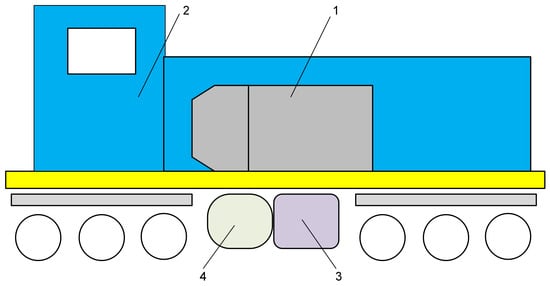
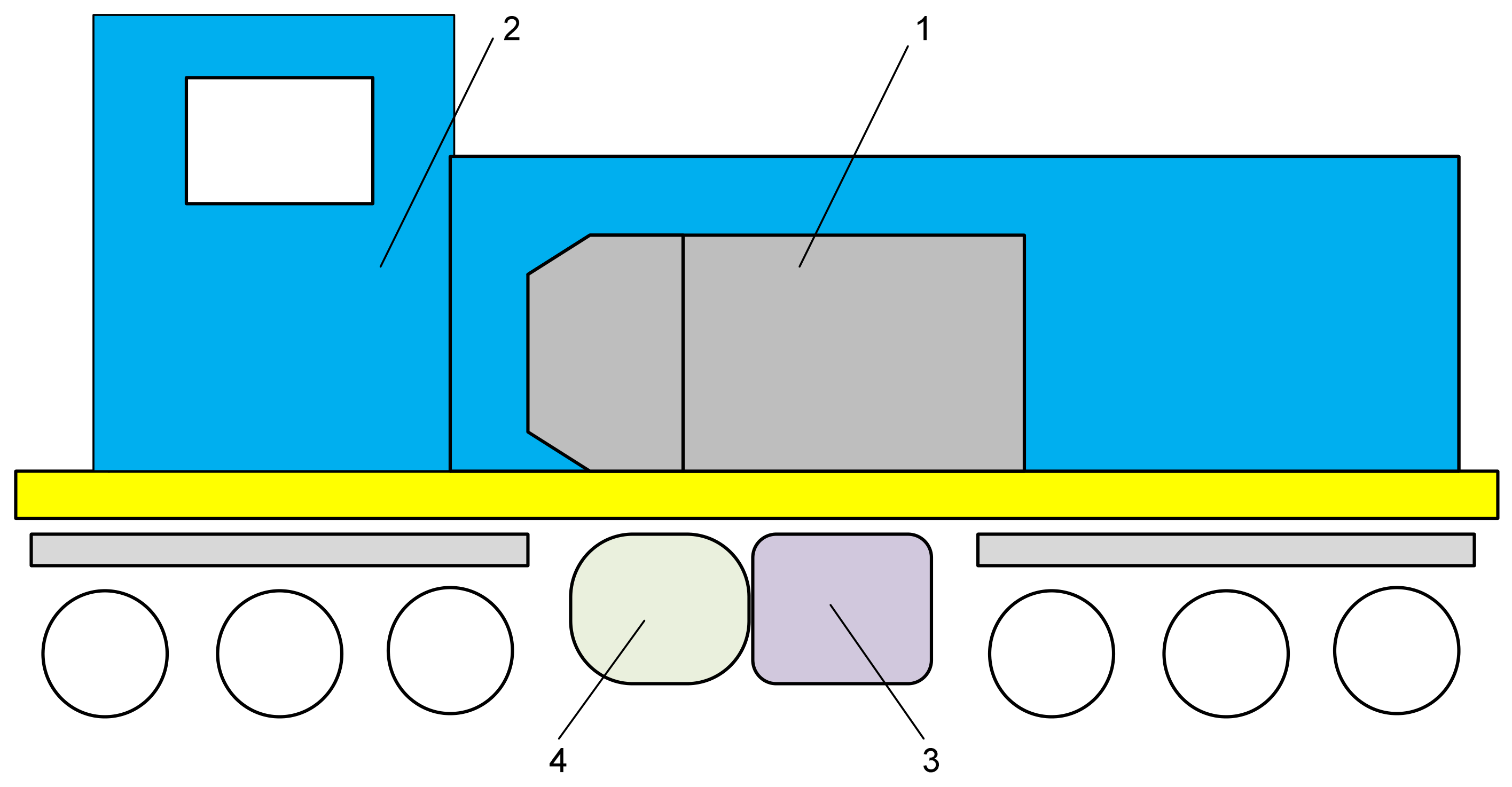
The location of the LNG storage equipment on the TEM2 shunting locomotive is shown in Figure 4. The location of the storage equipment was considered based on the available sub-frame space and the additional mass created by the LNG storage and gas supply components. The influence of the weight of the additional equipment on the load of the locomotive and weight distribution is considered in the subsequent technical assessment [18].
Figure 4.
Option for mounting a gas cylinder on a TEM2 shunting diesel locomotive: 1—diesel generator set; 2—operator’s cab; 3—main fuel tank; 4—liquefied gas tank.
An additional explanation of the operation of the subsystem is given below [19,20]:
- The gas storage subsystem can facilitate the accumulation and supply of natural gas to the engine;
- The pressure control system stabilizes fuel supply parameters;
- The metering unit regulates gas flow depending on locomotive operating mode;
- The pilot-diesel-fuel injection system can promote reliable ignition of the gas–air mixture.
The study considered both compressed natural gas (CNG) and liquefied natural gas (LNG) storage configurations at the conceptual stage.
Storage pressure up to 20 MPa was adopted for operation on compressed natural gas. Storage pressures up to 0.6 MPa were considered for operation on liquefied natural gas.
The compressed gas storage system includes fourteen metal composite cylinders with an individual weight of approximately 128 kg, providing a total gas reserve of approximately 109.8 kg.
3.3. Energy-Equivalent Fuel Balance
The baseline daily diesel-fuel consumption is 428 kg/day. The lower heating value (LHV) of diesel fuel was taken as 42.5 MJ/kg, while the LHV of natural gas was taken as 48.965 MJ/kg [21].
The daily energy content of diesel fuel is determined as:
where ED—energy content of daily diesel-fuel consumption (MJ/day);
ED = mD · LHVD,
mD—daily diesel-fuel consumption (kg/day);
LHVD—lower combustion heat of diesel fuel (MJ/kg).
In dual-fuel mode, part of the diesel fuel is retained as pilot fuel for ignition. The initial design model assumes a pilot-diesel fraction of 10% of the baseline diesel-fuel consumption:
where mp—pilot-diesel-fuel consumption, kg/day;
mp = α · mD,
α—pilot-diesel-fuel fraction.
Provided that the energy equivalent of the base mode is maintained, the required gas-fuel consumption can be pre-determined as:
where mG—estimated gas-fuel consumption, kg/day;
LHVG—lower combustion value of gas fuel, MJ/kg.
For the assumed initial values, this calculation gives a preliminary value of about 334 kg/day of gas fuel at a pilot-diesel-fuel consumption of approximately 42.8 kg/day.
However, the final LNG flow rate is determined after taking into account the differences in the efficiency of the basic diesel and dual-fuel modes. Therefore, the above calculation is considered an energy baseline estimate, which is used later to form fuel substitution scenarios [22].
3.4. Operating Scenarios and Emission Assessment
Taking into account the variable nature of the shunting locomotives, the efficiency of the dual-fuel system was estimated for several scenarios of replacing diesel fuel with gas. In contrast to the assumption of a constant substitution rate used in the initial version of the study, the considered values are interpreted as calculated scenarios and are not considered as results of field tests [1,19].
To assess the impact of the substitution level on fuel consumption and performance, several substitution levels are considered: 50%, 60%, 70%, 80%, and 90%. The main indicator of comparison is the energy fraction of substitution, since diesel fuel and LNG have different energy content.
The environmental assessment took into account the operating profile typical for shunting, adopted in the initial calculations: 14.1 h/day of idle operation and 9.4 h/day of operation at nominal load. For each mode, the corresponding calculated emission indicators given for the basic diesel and gas diesel options are used.
Emissions are estimated for major contaminants, including carbon monoxide (CO), nitrogen oxides (NOx), and carbon black. Daily and annual indicators are determined taking into account the duration of the corresponding operating modes.
The obtained environmental indicators are considered as calculated estimates based on the adopted engine model. No experimental measurements of emissions during locomotive operation on LNG were performed for this study. Therefore, parameters such as methane slip, combustion stability, and transient emission characteristics are considered as limitations of the current study and the direction of further experimental verification.
Shunting locomotives are characterized by prolonged idling, variable load conditions, frequent starts, and transient operating modes. Therefore, the assessment of fuel substitution and emissions considers different operating conditions rather than assuming a constant engine load.
From the engine-operation perspective, the calculated results indicate that LNG substitution should be treated as an operating condition-dependent parameter rather than as a fixed property of the converted engine. At higher loads, a larger contribution of LNG can be considered, whereas prolonged idling and low-load operation may require a higher pilot-diesel contribution to maintain reliable ignition and combustion stability. Therefore, the technical feasibility of the proposed conversion depends not only on the calculated daily LNG consumption but also on the ability of the gas-supply and pilot-fuel control systems to adapt the fuel ratio to the instantaneous operating state of the PD1M engine.
Low-load operation may impose limitations on dual-fuel combustion stability and ignition reliability. These effects are therefore considered as operational limitations of the proposed conversion rather than as experimentally validated performance indicators in the present study.
3.5. Economic Assessment and Sensitivity Analysis
The economic efficiency of the proposed gas–diesel modernization is estimated by comparing the operating costs of the basic diesel and dual-fuel versions of the locomotive. The main components of operating costs are diesel and LNG costs, determined on the basis of the calculated daily costs and the corresponding fuel prices.
Unlike the original version of the study, the economic model additionally takes into account the initial investment costs associated with the conversion of the locomotive and the installation of equipment for storing and supplying gas fuel [23]. If appropriate input data are available, the costs of gas infrastructure and its adaptation are also taken into account.
The annual economic effect is determined as the difference between the annual costs of the basic diesel option and the corresponding costs of the dual-fuel option:
where Sannual—annual economic effect;
Sannual = Cdiesel − Cdual−fuel,
Cdiesel—annual operating costs of the diesel option;
Cdual−fuel—annual operating costs of the dual-fuel option.
For a preliminary assessment of investment attractiveness, a simple payback period is determined:
where Tpb—simple payback period, years;
I0—initial investment costs.
To assess the sustainability of economic results, sensitivity analysis is carried out on the main parameters that can significantly affect the efficiency of modernization: the price of diesel fuel, the price of LNG, the level of fuel substitution, the annual operating time of the locomotive, and the cost of conversion. In addition, the break-even price of LNG is determined, at which the operational economic effect of switching to dual-fuel mode becomes zero.
Economic evaluation is considered as a scenario analytical calculation. The obtained indicators depend on the accepted fuel prices, operational profile and equipment cost and are therefore interpreted taking into account the corresponding uncertainty.
The economic feasibility of introducing natural gas into shunting locomotives was assessed by benchmarking operating costs between conventional diesel and dual-fuel gas diesel.
The economic evaluation included the following:
- Fuel costs;
- Costs for maintenance of locomotives;
- Expenses for lubricants and services;
- Costs of additional equipment;
- Assessment requirements for infrastructure adaptation.
The analysis also considered the need for the following:
- Installation of gas-fuel equipment on locomotives;
- Development of locomotive fueling infrastructure;
- Modernization of gas carrier depot service facilities.
The fuel prices used in the calculations were based on average market prices for diesel fuel and natural gas in Kazakhstan during the study period [1,18]. To improve the reliability of the economic evaluation, additional sensitivity analysis was performed to assess the impact of fuel price fluctuations on the economic results obtained.
4. Results
4.1. Fuel Consumption and Energy Performance
The baseline fuel consumption of the TEM2 shunting locomotive was determined from the operational data described in Section 3.1. The average diesel-fuel consumption was 18.12 kg/h. With an adopted operating time of 23.5 h per day, the calculated daily consumption is approximately 425.8 kg/day. Considering the adopted operational baseline, a value of 428 kg/day was used in the subsequent calculations.
For the dual-fuel configuration, diesel fuel was retained as a pilot fuel to initiate combustion, while LNG was considered as the main gaseous fuel [5,24]. With a pilot-fuel fraction of 10% of the baseline diesel consumption, the daily pilot-diesel consumption was estimated at 42.8 kg/day.
The energy content of the baseline diesel consumption was evaluated using a lower heating value of 42.5 MJ/kg. Accordingly, the daily chemical energy input of the conventional diesel configuration was approximately:
ED = 428 × 42.5 = 18,190 MJ/day.
For the pilot-diesel fraction in the dual-fuel configuration, the corresponding energy input was:
EP = 42.8 × 42.5 = 1819 MJ/day.
The effective efficiency of the baseline PD1M diesel engine was taken as approximately 0.38. This value is consistent with published technical characteristics of the PD1M engine, for which an effective specific fuel consumption of approximately 225 g/(kW·h) is reported.
The calculated gas–diesel modification developed in the underlying study has an effective efficiency of 0.25 and an effective power of 894.12 kW. These parameters were retained as the reference characteristics of the calculated dual-fuel configuration.
The original calculation of the gas–diesel system provided a daily gaseous-fuel consumption of approximately 350 kg/day in the technical calculation section. A higher value of 385.2 kg/day was subsequently used in the economic calculations of the underlying study. The difference between these values reflects the use of different calculation stages and assumptions and therefore requires clarification when transferring the results to an energy-equivalent analysis [25].
For this reason, the present study does not treat the gaseous-fuel consumption as a simple mass or volume substitution of diesel fuel. Instead, the fuel requirement is evaluated using the energy-equivalent methodology described in Section 3.3, taking into account the different lower heating values of diesel fuel and LNG and the assumed efficiency of the corresponding operating mode.
The baseline and calculated dual-fuel parameters are summarized in Table 1.
Table 1.
Baseline and calculated fuel-energy parameters of the TEM2 locomotive.
The comparison demonstrates that the fuel-consumption estimate is sensitive to the assumptions adopted for the thermodynamic and energy-balance calculations. Therefore, the 350 kg/day value obtained from the technical calculation is retained as the primary calculated gaseous-fuel result, whereas the 385.2 kg/day value is treated as a result of the subsequent economic calculation and is not directly used as an energy-equivalent value.
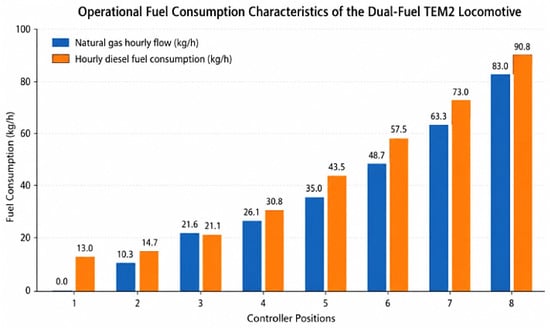
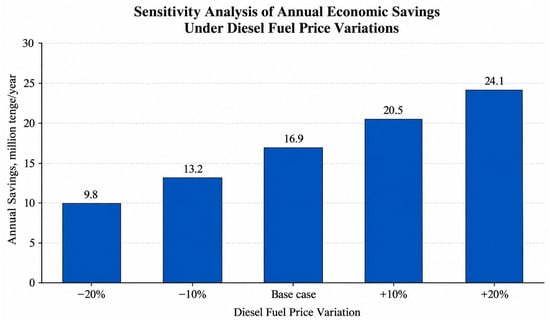
Since TEM2 locomotives operate under variable load conditions [26], operational fuel consumption was calculated for different controller positions and load states (Figure 5).
Figure 5.
Fuel-consumption characteristics of the TEM2 locomotive under different controller positions in diesel and dual-fuel operating modes.
4.2. Economic Performance of the Dual-Fuel Conversion
The economic performance of the proposed LNG-based dual-fuel conversion was evaluated using the fuel-consumption results obtained in Section 4.1 and the economic assessment methodology described in Section 3.5. The comparison was performed between the conventional diesel-powered TEM2 locomotive and the proposed dual-fuel configuration, in which diesel fuel is retained as a pilot fuel, and LNG provides the major part of the energy input [27,28].
Under the baseline operating conditions, the conventional locomotive consumes approximately 428 kg of diesel fuel per day. In the dual-fuel configuration, the calculated pilot-diesel consumption is 42.8 kg/day, while the primary technical calculation gives an LNG consumption of approximately 350 kg/day. The latter value was adopted as the base-case fuel-consumption scenario. The previously obtained value of 385.2 kg/day was retained as an alternative, more conservative scenario for sensitivity analysis.
Based on the adopted fuel-price assumptions, the daily fuel expenditure of the conventional diesel configuration is approximately 171.7 thousand KZT/day. For the base-case dual-fuel configuration, the combined expenditure for pilot diesel and LNG is approximately 163.6 thousand KZT/day. Thus, the proposed configuration provides an estimated daily fuel-cost saving of approximately 8.1 thousand KZT, corresponding to an annual saving of approximately 2.95 million KZT per locomotive under the adopted operating conditions.
The conversion investment was estimated using the available engineering cost data for the modernization project. The reference investment allocated to one locomotive is approximately 9.91 million KZT. Under the base-case scenario, the resulting simple payback period is approximately 3.36 years.
The alternative scenario based on an LNG consumption of 385.2 kg/day produces a substantially different economic result. Under this assumption, the daily fuel expenditure increases to approximately 178.4 thousand KZT/day, which is higher than the corresponding expenditure of the conventional diesel locomotive. The resulting annual difference is approximately 2.43 million KZT/year in favor of the conventional configuration, and therefore a positive fuel-cost payback is not achieved under this conservative scenario.
The comparison of the two scenarios demonstrates that the economic performance of the proposed conversion is highly sensitive to the actual LNG consumption. An increase from 350 to 385.2 kg/day corresponds to approximately 10.1% higher LNG consumption and changes the economic result from a positive annual saving to a negative fuel-cost effect. This finding highlights the importance of accurate determination of the gas-fuel consumption under actual operating conditions.
The economic assessment also indicates that the relative prices of diesel fuel and LNG, annual locomotive utilization, and the initial conversion cost are the principal factors determining the feasibility of the proposed modernization [29]. Therefore, the base-case result should be interpreted as an estimate under the adopted fuel-price and operating assumptions rather than as a universal economic effect for all operating conditions.
The main economic indicators for the conventional and dual-fuel configurations are summarized in Table 2. The sensitivity of the economic effect to the assumed LNG consumption is illustrated by comparison of the base and alternative scenarios.
Table 2.
Economic assessment scenarios for the TEM2 dual-fuel conversion.
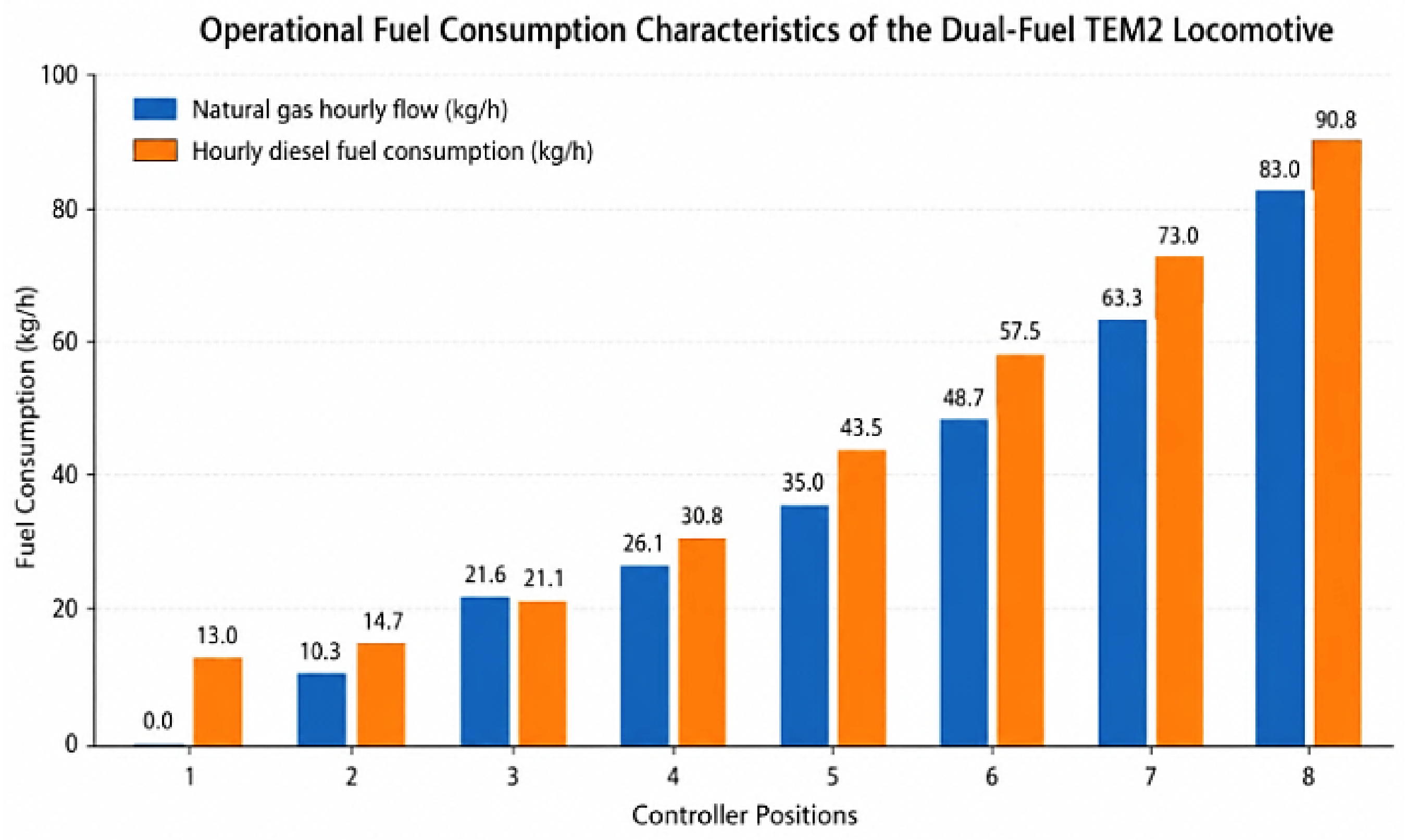
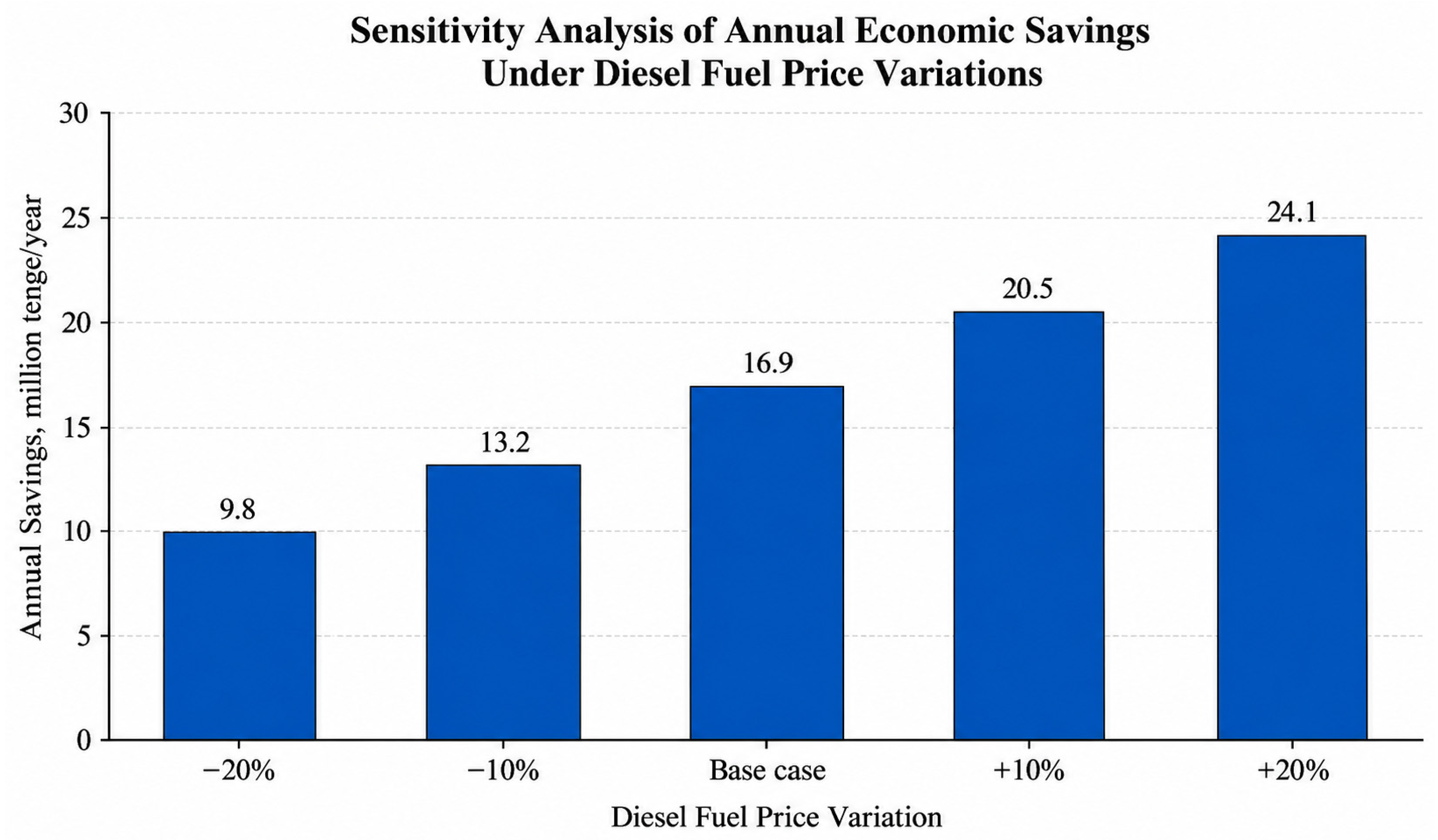
The sensitivity analysis shows how changes in diesel-fuel prices affect the estimated annual economic savings of the dual-fuel conversion. The corresponding results are presented in Figure 6.
Figure 6.
Sensitivity analysis of annual economic savings under diesel-fuel price variations.
4.3. Operational Characteristics and Fuel-Substitution Scenarios
The operational characteristics of the dual-fuel TEM2 locomotive were evaluated for different engine operating conditions. This analysis was performed because shunting locomotives operate under highly variable load conditions, including prolonged idling, partial loads, transient modes, and higher-load operation.
The calculated characteristics show that gaseous-fuel consumption increases with increasing engine speed and locomotive power. At the same time, the consumption of pilot-diesel fuel remains considerably lower than that of the conventional diesel configuration because diesel fuel is primarily used to initiate and maintain ignition of the gas–air mixture.
The results indicate that the proportion of gaseous fuel in the total energy input should be adjusted according to the operating condition of the locomotive. At higher engine loads, the contribution of LNG can be increased, whereas at low-load and idle conditions the dual-fuel operating mode may be constrained by combustion stability and ignition reliability [16,27].
The analysis therefore considers several fuel-substitution scenarios rather than assuming a constant 90% gas substitution for all operating conditions. The investigated scenarios correspond to nominal gas-substitution levels of 50%, 60%, 70%, 80%, and 90%. These scenarios are used to assess the influence of the degree of diesel substitution on fuel consumption and the economic performance of the locomotive.
The 90% substitution scenario corresponds to the maximum substitution level considered in the present calculation and should not be interpreted as a constant operating condition for the locomotive throughout the entire duty cycle. The lower substitution scenarios represent operating conditions in which a higher proportion of diesel fuel is retained to ensure stable combustion.
The results demonstrate that increasing the gas-fuel substitution level reduces diesel consumption, but the potential benefit is accompanied by increasing requirements for stable gas–air mixture ignition, particularly under low-load conditions. Therefore, the optimum substitution level should be considered as an operating parameter rather than as a fixed characteristic of the converted locomotive.
The obtained results also indicate that the use of a single average fuel-substitution coefficient may lead to an overestimation of the expected fuel and economic benefits. For this reason, the economic assessment presented in Section 4.2 considers both the primary technical fuel-consumption scenario and the more conservative alternative scenario.
The calculated fuel-consumption characteristics for different controller positions and operating modes are presented in Figure 5.
4.4. Load Distribution and Technical Feasibility of Gas Equipment Placement
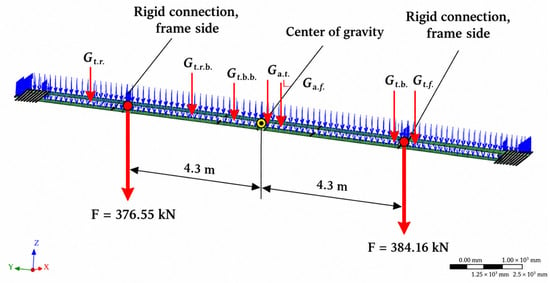
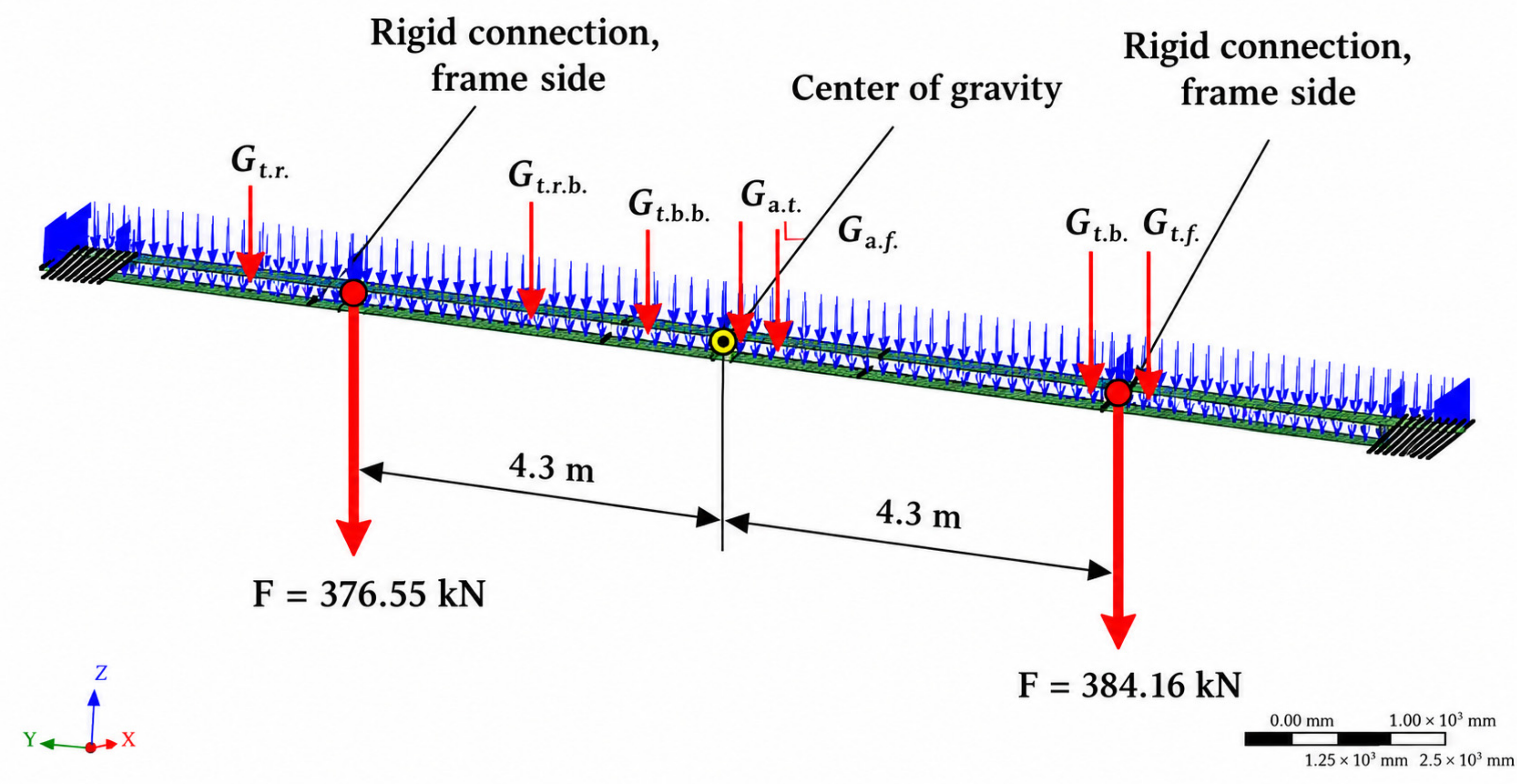
The technical feasibility of the proposed dual-fuel conversion was evaluated by analyzing the effect of the additional gas-fuel equipment on the mass distribution and vertical loads of the TEM2 locomotive. Particular attention was given to the location of the gas storage equipment because the additional mass and its position relative to the locomotive bogies can affect axle-load distribution and the position of the center of gravity.
The load-distribution analysis was performed using the calculated mass and geometric characteristics of the gas-fuel equipment. The resulting configuration was evaluated using the ARM Integrator calculation model (ARM Limited, 110 Fulbourn Road, Cambridge, CB1 9NJ, UK). The model was also compared with the available weight-list data for the baseline locomotive. The difference between the calculated and reference load values did not exceed ±3%, indicating satisfactory agreement for the adopted engineering assessment [7,30].
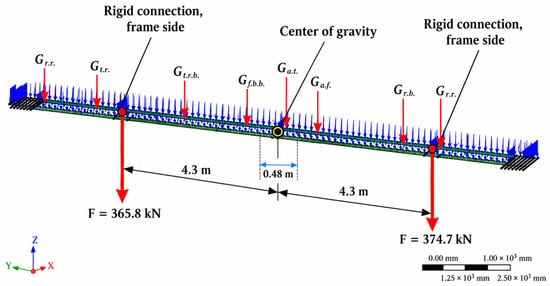
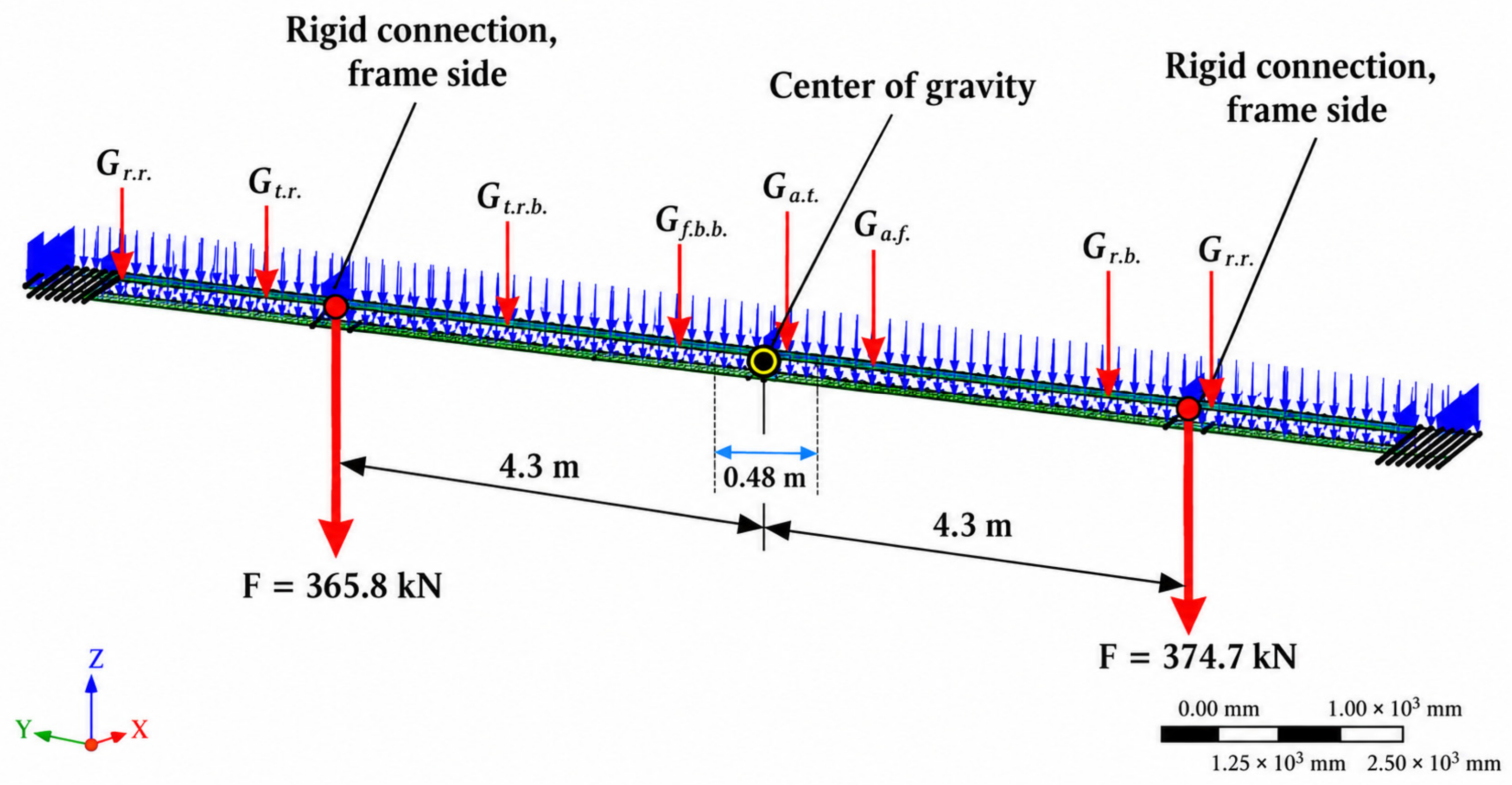
Installation of the gas storage equipment changes the longitudinal mass distribution of the locomotive. In the analyzed configuration, the center of gravity was shifted by approximately 480 mm relative to the baseline configuration. This shift is associated with the location and mass of the additional gas equipment and therefore represents an important parameter for assessing the technical feasibility of the proposed conversion.
The calculated vertical loads on the locomotive supports were subsequently analyzed to determine whether the additional equipment could be installed without producing an unacceptable redistribution of the load between the bogies. The results demonstrated that the proposed arrangement can be implemented within the considered operating constraints, provided that the location of the gas storage equipment is selected with regard to the longitudinal mass distribution.
To improve the load distribution, an alternative arrangement with additional gas cylinders was considered. The analysis showed that the redistribution of the gas-storage mass can be used to compensate for the shift in the center of gravity caused by the initial equipment arrangement. This approach makes it possible to obtain a more balanced distribution of vertical loads between the locomotive bogies while maintaining the required gas-storage capacity.
The calculated load-distribution results and the corresponding equipment arrangements are presented in Figure 7 and Figure 8.
Figure 7.
Base load calculation: red arrows indicate applied forces, while blue arrows represent the distributed load; green elements indicate the modeled structural components.
Figure 8.
Calculation of load when placing gas equipment: red arrows indicate applied forces, blue arrows represent the distributed load, and green elements indicate the modeled structural components.
Overall, the load-distribution analysis indicates that the proposed LNG equipment can be integrated into the TEM2 locomotive without compromising the considered axle-load constraints, provided that the equipment is positioned according to the calculated mass-distribution requirements.
5. Discussion
5.1. Interpretation of Fuel and Energy Performance
The results show that the effectiveness of the proposed dual-fuel conversion depends not only on the reduction in diesel consumption but also on the energy-equivalent relationship between diesel fuel and LNG. The analysis distinguishes the technical LNG-consumption result of approximately 350 kg/day from the alternative value of 385.2 kg/day used in the previous economic calculation. This distinction is important because direct mass or volume substitution does not account for differences in fuel energy content.
The energy-equivalent assessment adopted in the present study provides a more consistent basis for comparing the two fuels. At the same time, the calculated effective efficiency of the gas–diesel configuration is lower than that of the baseline PD1M diesel engine. Therefore, the expected reduction in diesel consumption should not automatically be interpreted as a proportional reduction in total fuel energy consumption. The results emphasize that the effectiveness of a dual-fuel conversion depends simultaneously on fuel properties, combustion efficiency, pilot-fuel requirements, and engine operating conditions.
This finding is particularly relevant for shunting locomotives. Unlike locomotives operating predominantly at stable high loads, shunting locomotives experience frequent changes in power demand, prolonged idling, and transient operating conditions. Consequently, the achievable gas substitution level is expected to vary during the duty cycle. The 90% gas-substitution scenario considered in this study should therefore be interpreted as an upper calculation scenario rather than as a constant operating condition.
5.2. Economic Implications of LNG Conversion
The economic analysis demonstrates that the economic outcome of the proposed conversion depends strongly on actual LNG consumption and the relative prices of LNG and diesel fuel. Under the base-case consumption of 350 kg/day, the calculations indicate a positive annual fuel-cost effect of approximately 2.95 million KZT and a simple payback period of approximately 3.36 years. However, the alternative LNG-consumption scenario of 385.2 kg/day results in an annual fuel-cost disadvantage of approximately 2.43 million KZT compared with conventional diesel operation. The difference between these scenarios demonstrates that the economic benefit cannot be inferred solely from the relative prices of the fuels. Actual LNG consumption, pilot-diesel requirements, conversion investment, locomotive utilization, and access to refueling infrastructure must also be considered. The principal economic contribution of the present study is therefore the identification of fuel-consumption conditions under which the proposed retrofit could provide economic benefits, rather than a general confirmation of its economic attractiveness.
The sensitivity of the results to LNG price also has practical implications. If LNG prices increase relative to diesel, the economic advantage decreases and the payback period becomes longer. Conversely, lower LNG prices or higher annual locomotive utilization improve the economic performance.
5.3. Operational and Technical Implications
The proposed configuration can be accommodated at the conceptual engineering level while retaining the original PD1M engine, subject to experimental verification of combustion stability, fuel consumption, structural loads, and operational reliability.
The analysis identifies low-load and idling conditions as important operational constraints for the proposed dual-fuel configuration. Under these conditions, the gas–air mixture and pilot-fuel quantity must provide sufficiently stable ignition. However, combustion stability under these operating conditions was not experimentally measured in the present study. Consequently, a high gas-substitution ratio should not be assumed to remain achievable throughout the entire locomotive duty cycle. The results support the consideration of adaptive gas-supply control according to engine speed and load, rather than the application of a fixed gas-substitution coefficient. Experimental investigation is required to establish the achievable substitution levels and verify combustion stability under representative shunting operating conditions.
The load-distribution analysis provides an additional technical consideration. Installation of the gas-storage equipment changes the longitudinal mass distribution and shifts the center of gravity. The calculated shift of approximately 480 mm demonstrates that the location of the gas-storage system is not merely a packaging issue but an important engineering parameter affecting axle-load distribution. The calculated agreement with the reference locomotive weight data within approximately ±3% supports the applicability of the adopted engineering model for preliminary assessment.
The agreement with the reference locomotive weight data within approximately ±3% provides a basis for using the adopted model for preliminary engineering assessment. Experimental verification of the actual axle loads and center-of-gravity position remains necessary after installation of the gas-fuel equipment.
5.4. Environmental Implications and Limitations
The potential environmental benefit of the proposed conversion is associated primarily with the reduction in diesel-fuel consumption. Previous studies have reported reductions in carbon dioxide, nitrogen oxides, and smoke emissions when diesel engines are operated in gas–diesel modes. These findings provide a general basis for expecting improved environmental performance from the proposed conversion.
However, the present study does not include direct experimental measurements of exhaust emissions from the converted TEM2 locomotive. Therefore, the environmental implications should be interpreted as a calculated or expected benefit rather than an experimentally validated emission reduction. This distinction is important because actual emissions depend on combustion conditions, engine load, gas substitution level, pilot-fuel quantity, and exhaust after-treatment.
Another limitation is the absence of direct measurements of methane slip. Although LNG can reduce carbon-containing emissions associated with diesel combustion, unburned methane released with the exhaust can partially offset the climate benefit because methane has a substantially higher global-warming potential than carbon dioxide. Consequently, a complete environmental assessment of the proposed system should include measurements of CH4, CO2, NOx, CO, particulate matter, and unburned hydrocarbons [13,14,15].
The present study is also primarily based on computational and analytical assessment rather than long-term operational testing of a converted TEM2 locomotive. The results provide a preliminary analytical assessment of the technical feasibility of the proposed conversion and identify the economic conditions under which the retrofit could provide fuel-cost benefits. They do not constitute full experimental validation of combustion stability, long-term reliability, methane emissions, or actual fuel consumption under railway operating conditions. Accordingly, the environmental and economic implications should be interpreted within the assumptions and limitations of the computational and analytical approach adopted in this study.
Future experimental validation should include controlled tests at different controller positions and engine loads, measurement of actual LNG and pilot-diesel consumption, exhaust-gas analysis, verification of axle loads after installation of the gas equipment, and long-term monitoring of the gas-fuel supply and control system.
5.5. Practical Implications and Future Research
The results indicate that LNG conversion is a potential modernization pathway for existing TEM2 shunting locomotives, particularly where high annual utilization and reliable LNG refueling infrastructure are available. Further research should focus on experimental validation of fuel consumption under different engine loads, adaptive gas-fuel control, methane-slip measurement, optimization of LNG storage capacity and location, and long-term evaluation of engine reliability under shunting operating conditions.
6. Conclusions
This study evaluated the technical, operational, and economic feasibility of converting a TEM2 shunting diesel locomotive equipped with a PD1M engine to dual-fuel LNG operation while maintaining the original diesel engine and using diesel fuel as pilot fuel. The main findings from the computational and analytical results are as follows.
1. As a result of the equivalent fuel assessment, the base diesel consumption is estimated to be approximately 428 kg/day, and the pilot-diesel consumption is estimated to be 42.8 kg/day for the proposed dual-fuel configuration. As a result of the initial technical calculation, LNG consumption was approximately 350 kg/day. An alternative value of 385.2 kg/day obtained under different calculation assumptions was retained as a separate economic sensitivity scenario. The difference between these values indicates the importance of consistent assumptions about fuel consumption in assessing the effectiveness of the proposed conversion.
2. The economic evaluation identified fuel consumption conditions under which the proposed upgrade could result in fuel savings. With a base LNG consumption of 350 kg/day, the estimated annual fuel-cost saving was approximately KZT2.95 million per locomotive, based on a benchmark conversion investment of approximately KZT9.91 million and a simple payback period of approximately 3.36 years. However, an alternative LNG consumption scenario of 385.2 kg/day led to a negative annual fuel cost effect of about 2.43 million tenge. Thus, the economic outcome is highly dependent on actual LNG consumption, relative fuel prices, locomotive usage, and conversion costs.
3. Operational assessment shows that gas replacement should be considered as a condition-dependent parameter, and not as a constant value throughout the entire operating cycle of the locomotive. The scenarios under consideration demonstrate the need to take into account variable engine loads, long-term idling, and pilot-diesel requirements. Therefore, when developing the proposed conversion, it is necessary to take into account the adaptive control of gas fuel in accordance with the operating conditions of the engine. Achievable levels of substitution and combustion stability require experimental testing.
4. Analysis of the mass distribution showed compliance with the reference data of the locomotive approximately within ± 3%. The design installation of additional LNG equipment shifted the center of gravity by about 480 mm. These results determine the location and weight of the gas storage equipment as important technical parameters in the conversion design. The proposed scheme demonstrates preliminary technical feasibility under the assumptions considered; verification of axial loads, structural loads, and operational stability after installation remains necessary.
5. The main contribution of the study is a comprehensive engineering assessment of LNG-based dual-fuel conversion for an existing TEM2 shunting locomotive equipped with a PD1M engine. By combining fuel and energy calculations, alternative LNG consumption scenarios, economic sensitivity assessment, and mass distribution analysis, the study identifies both the conditions supporting potential economic benefits and the main constraints affecting practical implementation. The results do not allow us to establish new experimentally confirmed characteristics of combustion or emissions reduction for a converted engine.
6. Furthermore, studies should include full-scale locomotive testing, direct measurement of LNG and pilot-diesel consumption in various operating modes, experimental assessment of combustion stability, and measurements of exhaust emissions including methane slip. Verification of axial loads and the position of the center of gravity after installation of the equipment is also required, as well as a long-term assessment of the reliability and operating costs of the gas-fuel system.
The results demonstrate the potential technical feasibility of the proposed LNG diesel-fuel upgrade and identify fuel consumption conditions under which economic benefits can be achieved. Its practical implementation requires experimental verification under representative railway operating conditions.
7. Limitations of the Study
Several limitations should be considered when interpreting the results of this study.
First, the analysis is primarily based on computational and analytical methods and does not include long-term experimental testing of a TEM2 locomotive converted to LNG-based dual-fuel operation. Therefore, the calculated fuel consumption and economic indicators should be considered as engineering estimates requiring experimental validation.
Second, the study does not include direct measurements of exhaust emissions from the converted locomotive. In particular, methane slip was not experimentally determined. Therefore, the environmental benefits discussed in this work should be interpreted as expected or calculated effects rather than experimentally verified emission reductions.
Third, the calculated LNG consumption is sensitive to the assumptions concerning engine efficiency, fuel properties, pilot-diesel fraction, and operating conditions. The difference between the 350 kg/day technical calculation and the 385.2 kg/day value used in the previous economic assessment illustrates this uncertainty. The present study therefore considers alternative fuel-consumption scenarios rather than relying on a single deterministic value.
Fourth, the economic assessment is sensitive to LNG and diesel-fuel prices, annual locomotive utilization, and conversion costs. The LNG price used in the scenario analysis should therefore not be interpreted as a fixed long-term market price for Kazakhstan.
Finally, the load-distribution analysis provides a preliminary engineering assessment of the proposed equipment arrangement. Although the calculated results show satisfactory agreement with the available reference data, experimental verification of axle loads, center-of-gravity position, structural loads, and operational stability is required after installation of the gas-fuel equipment.
Future research should therefore focus on experimental validation of fuel consumption and engine performance, exhaust-emission measurements including methane slip, optimization of gas substitution under transient operating conditions, and long-term evaluation of the reliability and economic performance of LNG-converted shunting locomotives.
Author Contributions
Conceptualization, K.S. and A.Y.; methodology, G.B.; software, K.S.; validation, G.B., G.A. and M.M.; formal analysis, M.M.; investigation, B.T.; resources, K.S.; data curation, M.M.; writing—original draft preparation, G.B., G.A. and A.Y.; writing—review and editing, K.S., M.M. and B.T.; visualization, G.B.; supervision, A.Y.; project administration, G.A.; funding acquisition, G.B. All authors have read and agreed to the published version of the manuscript.
Funding
This study was conducted with financial support from the Science Committee of the Ministry of Science and Higher Education of the Republic of Kazakhstan (Grant No. AP22688234 “Development of a method to improve the operational efficiency of shunting locomotives”).
Institutional Review Board Statement
Not applicable. The study did not involve humans or animals.
Informed Consent Statement
Not applicable. The study did not involve humans or animals.
Data Availability Statement
The data presented in this study are available from the corresponding author upon reasonable request.
Conflicts of Interest
The authors declare no conflicts of interest.
References
- Mussabekov, M.; Bakyt, G.; Omirbek, A.; Brumerčíková, E.; Buková, B. Shunting Locomotives Fuel and Power Resources Decrease. MATEC Web Conf. 2017, 134, 00041. [Google Scholar] [CrossRef] [Scilit]
- Hillmansen, S.; Roberts, C. Energy Storage Devices in Hybrid Railway Vehicles: A Kinematic Analysis. Proc. Inst. Mech. Eng. Part F J. Rail Rapid Transit 2007, 221, 135–143. [Google Scholar] [CrossRef] [Scilit]
- Lukaszewicz, P. Energy Consumption and Running Time for Trains: Modelling of Running Resistance and Driver Behaviour Based on Full Scale Testing. Doctoral Dissertation, Royal Institute of Technology (KTH), Stockholm, Sweden, 2001. [Google Scholar]
- Luque, P.; Mántaras, D.A.; Sanchez, L. Artificial Intelligence Applied to Evaluate Emissions and Energy Consumption in Commuter Railways: Comparison of Liquefied Natural Gas as an Alternative Fuel to Diesel. Sustainability 2021, 13, 7112. [Google Scholar] [CrossRef] [Scilit]
- Kou, C.; Chen, X.; Zeng, S.; E, J.; Ma, Y. Effects of Natural Gas Substitution Rate and Diesel Injection Strategies on Performance and NOx Emissions of Diesel–Natural Gas Dual-Fuel Engines. Fire 2026, 9, 297. [Google Scholar] [CrossRef] [Scilit]
- Arefin, M.A.; Nabi, M.N.; Akram, M.W.; Islam, M.T.; Chowdhury, M.W. A Review on Liquefied Natural Gas as Fuels for Dual Fuel Engines: Opportunities, Challenges and Responses. Energies 2020, 13, 6127. [Google Scholar] [CrossRef] [Scilit]
- Zhardemov, B.; Kanatbayev, T.; Abzaliyeva, T.; Koilybayev, B.; Nazarbekova, Z. Justification of Location of LNG Infrastructure for Dual-Fuel Locomotives on the Railway Network in Kazakhstan. Procedia Comput. Sci. 2019, 149, 548–558. [Google Scholar] [CrossRef] [Scilit]
- Liu, J.; Zhang, X.; Liu, Y.; Sun, P.; Ji, Q.; Wang, X.; Li, Z.; Ma, H. Experimental study on in-cylinder combustion and exhaust emissions characteristics of natural gas/diesel dual-fuel engine with single injection and split injection strategies. Process Saf. Environ. Prot. 2023, 172, 225–240. [Google Scholar] [CrossRef] [Scilit]
- Carvalhaes, B.B.; Costa, D.B.; Gomes, C.F.S. A Method to Measure the Eco-Efficiency of Diesel Locomotives. Transp. Res. Part D Transp. Environ. 2017, 51, 29–42. [Google Scholar] [CrossRef] [Scilit]
- Langshaw, L.; Ainalis, D.; Acha, S.; Shah, N.; Stettler, M.E.J. Environmental and Economic Analysis of Liquefied Natural Gas (LNG) for Heavy Goods Vehicles in the UK. Energy Policy 2020, 137, 111161. [Google Scholar] [CrossRef] [Scilit]
- Papagiannakis, R.G.; Hountalas, D.T. Experimental Investigation Concerning the Effect of Natural Gas Percentage on Performance and Emissions of a DI Dual-Fuel Diesel Engine. Appl. Therm. Eng. 2003, 23, 353–365. [Google Scholar] [CrossRef] [Scilit]
- Pfoser, S.; Aschauer, G.; Simmer, L.; Schauer, O. Facilitating the Implementation of LNG as an Alternative Fuel Technology in Landlocked Europe: A Study from Austria. Res. Transp. Bus. Manag. 2016, 18, 77–84. [Google Scholar] [CrossRef] [Scilit]
- Karim, G.A. Combustion in Gas Fueled Compression Ignition Engines of the Dual Fuel Type. J. Eng. Gas. Turbines Power 2003, 125, 827–836. [Google Scholar] [CrossRef] [Scilit]
- Abdelaal, M.M.; Hegab, A.H. Combustion and Emission Characteristics of a Natural Gas-Fueled Diesel Engine with EGR. Energy Convers. Manag. 2012, 64, 301–312. [Google Scholar] [CrossRef] [Scilit]
- Korakianitis, T.; Namasivayam, A.M.; Crookes, R.J. Natural-Gas-Fuelled Spark-Ignition and Compression-Ignition Engine Performance and Emissions. Prog. Energy Combust. Sci. 2011, 37, 89–112. [Google Scholar] [CrossRef] [Scilit]
- Sahoo, B.B.; Sahoo, N.; Saha, U.K. Effect of Engine Parameters and Type of Gaseous Fuel on the Performance of Dual-Fuel Gas Diesel Engines. Renew. Sustain. Energy Rev. 2009, 13, 1151–1184. [Google Scholar] [CrossRef] [Scilit]
- Bakyt, G.; Jailaubekov, Y.; Abdullayev, S.; Ashirbayev, G.; Ashirbayeva, I. Assessment of Carbon Dioxide Emissions in Road Transport Using Exhaust Gas Cleaning Technology in the Republic of Kazakhstan. Vibroeng. Procedia 2023, 48, 87–92. [Google Scholar] [CrossRef] [Scilit]
- Bakyt, G.B.; Sarsenov, K.Z.; Ashirbayev, G.K.; Yelshibekov, A.M.; Abdiraiymova, A.S.; Ishanov, Y.K.; Zhamankulov, M.Z. Device for Mounting a Gas Cylinder on a Shunting Diesel Locomotive with a Gas-Diesel Power Unit. Patent of the Republic of Kazakhstan No. 12513, 26 June 2026. [Google Scholar]
- Selim, M.Y.E. Effect of Engine Parameters and Natural Gas Addition on Dual Fuel Engine Performance. Energy Convers. Manag. 2004, 45, 1433–1445. [Google Scholar]
- Abd Alla, G.H. Using Exhaust Gas Recirculation in Internal Combustion Engines Operating on Natural Gas. Energy Convers. Manag. 2002, 43, 1027–1042. [Google Scholar] [CrossRef] [Scilit]
- Semin, R.; Ismail, A.R.; Bakar, R.A. Combustion Temperature Effect of Diesel Engine Convert to Natural Gas Engine. Am. J. Appl. Sci. 2009, 6, 2125–2130. [Google Scholar] [CrossRef] [Scilit]
- Abdullayev, S.; Bakyt, G.; Kamzina, A.; Suleyeva, N.; Tokmurzina-Kobernyak, N. Dynamic Interaction of the TE-33A Diesel Locomotive and the Track in a Curve with a Radius of 600 Meters. Int. J. Mech. Eng. Robot. Res. 2024, 13, 205–212. [Google Scholar] [CrossRef] [Scilit]
- Papagiannakis, R.G.; Hountalas, D.T. Combustion and Exhaust Emission Characteristics of a Dual Fuel Compression Ignition Engine Operated with Pilot Diesel Fuel and Natural Gas. Energy Convers. Manag. 2004, 45, 2971–2987. [Google Scholar] [CrossRef] [Scilit]
- Di Blasio, G.; Belgiorno, G.; Beatrice, C.; Fraioli, V.; Migliaccio, M. Experimental Evaluation of Compression Ratio Influence on the Performance of a Dual-Fuel Methane-Diesel Light-Duty Engine. SAE Int. J. Engines 2015, 8, 2253–2267. [Google Scholar] [CrossRef] [Scilit]
- Energetics Incorporated. Compressed Natural Gas Short Line Locomotive Study; New York State Energy Research and Development Authority (NYSERDA): Albany, NY, USA, 2016. Available online: https://www.nyserda.ny.gov/ (accessed on 15 May 2026).
- GlobalPetrolPrices.com. Kazakhstan Diesel Prices. Available online: https://www.globalpetrolprices.com/Kazakhstan/diesel_prices/ (accessed on 15 May 2026).
- The Times of Central Asia. The Price of Liquefied Petroleum Gas Falls Below Production Costs in Kazakhstan. 2024. Available online: https://timesca.com/the-price-of-liquefied-petroleum-gas-falls-below-production-costs-in-kazakhstan/ (accessed on 15 May 2026).
- Guo, H.; Neill, W.S.; Liko, B. An Experimental Investigation on the Combustion and Emissions Performance of a Natural Gas–Diesel Dual-Fuel Engine at Low and Medium Loads. In Proceedings of the ASME Internal Combustion Engine Division Fall Technical Conference, Houston, TX, USA, 8–11 November 2015. [Google Scholar] [CrossRef] [Scilit]
- Fasching, P.; Sprenger, F.; Aigner, M. A Holistic Investigation of Natural Gas–Diesel Dual Fuel Combustion in Heavy-Duty Engines. Emiss. Control Sci. Technol. 2017, 3, 125–139. [Google Scholar] [CrossRef] [Scilit]
- Zhang, B.; Wang, S.; Liu, J.; Li, Y. Research on Calibration, Economy and PM Emissions of a LNG–Diesel Dual-Fuel Engine. J. Mar. Sci. Eng. 2022, 10, 239. [Google Scholar] [CrossRef] [Scilit]

Disclaimer/Publisher’s Note: The statements, opinions and data contained in all publications are solely those of the individual author(s) and contributor(s) and not of MDPI and/or the editor(s). MDPI and/or the editor(s) disclaim responsibility for any injury to people or property resulting from any ideas, methods, instructions or products referred to in the content. |
© 2026 by the authors. Licensee MDPI, Basel, Switzerland. This article is an open access article distributed under the terms and conditions of the Creative Commons Attribution (CC BY) license.