


Abstract
Introduction: Remogliflozin is a sodium–glucose cotransporter-2 inhibitor used for type 2 diabetes mellitus (T2DM), but its overall efficacy and safety remain fragmented. This updated systematic review and meta-analysis evaluated the efficacy and safety of remogliflozin using evidence exclusively from randomized controlled trials (RCTs). Methods: PubMed; Scopus; and the Cochrane Library were searched from inception to 15 July 2026 for RCTs lasting at least 12 weeks that compared remogliflozin or a remogliflozin-containing regimen with placebo; usual care; or another glucose-lowering treatment in adults with T2DM (PROSPERO: CRD420261462138). Risk ratios (RRs) were calculated using the Mantel–Haenszel method and mean differences (MDs) using the inverse-variance method. Random-effects models with restricted maximum-likelihood estimation and Hartung–Knapp adjustment were applied. Heterogeneity was assessed using I2 and Cochran’s Q test. Results: Nine RCTs involving 1731 participants were included, of whom 906 (52.3%) received remogliflozin or a remogliflozin-containing regimen. Across heterogeneous comparator regimens, remogliflozin-containing treatment strategies were associated with lower HbA1c (MD −0.40 percentage points; 95% CI −0.63 to −0.16; I2 = 59.9%; p < 0.01) and body weight (MD −2.15 kg; 95% CI −3.26 to −1.03; I2 = 56.5%; p < 0.01). No statistically significant differences were detected for fasting plasma glucose (MD −6.84 mg/dL; 95% CI −16.07 to 2.38; I2 = 59.4%; p = 0.150), total adverse events (RR 1.16; 95% CI 0.93–1.43; I2 = 0%; p = 0.155), or hypoglycaemia (RR 0.89; 95% CI 0.28–2.81; I2 = 0%; p = 0.696); however, the safety estimates, particularly for hypoglycaemia, were imprecise. Conclusions: Across heterogeneous randomized comparisons, remogliflozin-containing treatment strategies were associated with modest reductions in HbA1c and body weight, whereas the effect on fasting plasma glucose remained inconclusive. The available evidence was insufficient to establish whether total adverse events or hypoglycaemia differed between treatment groups because of the small evidence base, short follow-up, sparse events, and imprecise estimates.
1. Introduction
Diabetes mellitus is a major and growing public health challenge. In 2024, an estimated 589 million adults aged 20–79 years were living with diabetes worldwide, and this number is projected to reach 853 million by 2050 [1]. Type 2 diabetes mellitus (T2DM) accounts for most cases and is characterized by progressive deterioration in glycaemic control, frequently requiring the addition of glucose-lowering therapies to metformin. Effective treatments should improve glycaemic control while limiting hypoglycaemia, weight gain, and other treatment-related adverse events.
Sodium–glucose cotransporter-2 (SGLT2) inhibitors reduce renal glucose reabsorption and promote urinary glucose excretion through an insulin-independent mechanism. In addition to lowering glycated haemoglobin (HbA1c) and fasting plasma glucose, this mechanism may facilitate body-weight reduction with a relatively low intrinsic risk of hypoglycaemia. Remogliflozin etabonate is an orally administered prodrug of remogliflozin and is approved in India for the treatment of T2DM, typically at a dose of 100 mg twice daily [2,3]. Randomized trials have evaluated remogliflozin as monotherapy, as an add-on to metformin, and in fixed-dose combinations, using placebo, dapagliflozin, dipeptidyl peptidase-4 inhibitors, and combination regimens as comparators [3,4,5,6,7].
Nevertheless, the overall evidence supporting remogliflozin remains less established than that for more widely studied SGLT2 inhibitors. The previous systematic review and meta-analysis, published in 2024, included six studies involving 1605 participants and suggested comparable glycated hemoglobin (HbA1c) lowering, greater body-weight reduction, and no clear increase in adverse events or hypoglycaemia [8]. However, its conclusions were limited by substantial heterogeneity, the inclusion of a non-randomized study, heterogeneous comparators, and a relatively small evidence base. Additional randomized trials have subsequently become available, including studies in patients with heart failure or chronic kidney disease. Furthermore, the certainty and conclusiveness of the cumulative evidence have not been examined using trial sequential analysis.
Therefore, this updated systematic review and meta-analysis aimed to evaluate the efficacy and safety of remogliflozin in adults with T2DM using evidence exclusively from RCTs with at least 12 weeks of treatment.
2. Methods
2.1. Study Protocol and Reporting Standards
This systematic review and meta-analysis followed the Cochrane Handbook, and PRISMA reporting guidelines [9,10]. Institutional review board approval was not required because only previously published data were used. The protocol was registered in PROSPERO (CRD420261462138).
2.2. Eligibility Criteria
Studies were eligible if they: (1) included adults aged ≥18 years with type 2 diabetes mellitus; (2) evaluated remogliflozin or remogliflozin etabonate administered as monotherapy, add-on therapy, or as part of a combination regimen; (3) used placebo, usual care, or another glucose-lowering treatment as the comparator; (4) reported at least one outcome of interest, including HbA1c, body weight, FPG, total adverse events, or hypoglycaemia; (5) were randomized controlled trials; and (6) had a treatment or follow-up duration of at least 12 weeks.
Studies were excluded if they: (1) were non-human studies; (2) included healthy volunteers or participants with type 1, gestational, or other forms of diabetes without separately extractable data for participants with type 2 diabetes mellitus; (3) included participants younger than 18 years; (4) did not evaluate remogliflozin or remogliflozin etabonate; (5) lacked an eligible comparator group; (6) did not report an efficacy or safety outcome of interest; (7) were observational studies, reviews, protocols, editorials, case reports, conference abstracts, dissertations, or letters without original randomized trial data; (8) had a treatment or follow-up duration of less than 12 weeks; or (9) were duplicate publications or reports involving overlapping populations. For overlapping publications, the most complete report was retained, and relevant companion reports were linked to the same trial.
For trials evaluating a remogliflozin-containing combination regimen, the extracted effect represented the complete randomized treatment strategy. When both groups received identical background therapy and remogliflozin was the only component that differed between groups, the treatment contrast was considered to estimate the incremental effect of remogliflozin. Conversely, when other active components also differed between the randomized groups, the observed effect was interpreted at the regimen level and was not attributed exclusively to remogliflozin.
2.3. Search Strategy and Data Extraction
We systematically searched PubMed, Scopus, and Cochrane Library from inception to 15 July 2026, using (“type 2 diabetes mellitus” OR “type 2 diabetes” OR “type II diabetes” OR T2DM OR T2D OR NIDDM OR “non-insulin-dependent diabetes” OR “noninsulin dependent diabetes”) AND (remogliflozin OR “remogliflozin etabonate” OR GSK189075 OR “GSK-189075” OR GSK189075A OR “GSK-189075A” OR “KGT-1681” OR KGT1681 OR “BHV-091009” OR BHV091009) AND (randomized controlled trial[pt] OR controlled clinical trial[pt] OR clinical trials as topic[mesh:noexp] OR trial[ti] OR random*[tiab] OR placebo*[tiab]). Searches were restricted to English-language articles, and gray literature was excluded. Reference lists and citing articles of included studies were manually screened for additional records. Two authors (N.K. and T.T.) independently screened records and extracted data using predefined criteria in Rayyan [11], with discrepancies resolved by consensus.
For continuous outcomes, final values measured at the end of the intervention period were preferentially extracted. When final values were not reported, change-from-baseline values were used. Final values and change scores were combined using the mean difference because all studies reported each outcome using the same measurement unit. The corresponding standard deviation for the reported data format was used in each analysis.
2.4. Outcomes and Subgroup Analyses
Primary outcomes were HbA1c, body weight, total adverse effects, fasting plasma glucose (FPG), and hypoglycemia. Subgroup analyses by comparator class, clinical population, and treatment duration were performed to explore heterogeneity and potential effect modification.
2.5. Quality Assessment
Risk of bias was evaluated with the Cochrane Risk of Bias 2 (RoB 2) tool for randomized intervention studies [12], which classifies studies as having low risk, some concerns, or high risk of bias. Two reviewers (P.P. and Z.K.) conducted the assessments independently, with any discrepancies resolved by consensus. Formal evaluation of small-study effects was not undertaken because fewer than 10 studies contributed to each outcome and the included comparisons showed substantial clinical heterogeneity. Accordingly, Egger’s test, funnel plot inspection, and trim-and-fill analysis were not applied, and publication bias could therefore not be assessed with sufficient reliability [9].
The certainty of evidence for the main outcomes was appraised using the Grading of Recommendations Assessment, Development and Evaluation (GRADE) framework. Evidence derived from randomized controlled trials was initially rated as high certainty and was subsequently downgraded, when appropriate, for concerns related to risk of bias, inconsistency, indirectness, imprecision, and publication bias. Overall certainty was categorized as high, moderate, low, or very low. Full judgments and the rationale for any downgrading are provided in the Summary of Findings table (Table S1).
2.6. Statistical Analysis
Risk ratios (RRs) with 95% confidence intervals (CIs) were used to summarize binary outcomes and were pooled using the Mantel–Haenszel method [13]. For continuous outcomes, mean differences (MDs) with 95% CIs were synthesized using the inverse-variance approach [14]. All analyses employed random-effects models, with between-study variance (τ2) estimated by restricted maximum likelihood (REML). For pooled analyses including at least two studies, 95% CIs were calculated using the Hartung–Knapp adjustment [15,16].
Where estimable, 95% prediction intervals were reported for the principal random-effects analyses to reflect the range within which the true effect of a comparable future study might be expected to lie. Statistical heterogeneity was quantified using the I2 statistic and evaluated with Cochran’s Q test. Two-sided p values < 0.05 were considered statistically significant.
Prespecified subgroup analyses were conducted according to comparator class, clinical population, and treatment duration to investigate potential sources of heterogeneity and effect modification. Robustness was further examined using leave-one-out sensitivity analyses. Baujat plots were used to identify studies with disproportionate contributions to heterogeneity and influence on the pooled estimates by displaying each study’s contribution to heterogeneity against its influence on the meta-analytic result.
All statistical analyses were performed in R version 4.3.1 using the meta and metafor packages [17].
The primary analyses pooled all eligible randomized comparisons because the review aimed to estimate the average effect of remogliflozin-containing treatment strategies across the clinical contexts in which they have been evaluated, rather than the effect of a single formulation against one uniform comparator. Outcomes were pooled only when they represented conceptually equivalent endpoints reported on the same measurement scale. Comparator-class subgroup analyses were conducted to explore whether treatment effects varied according to the type of comparator.
Trial Sequential Analysis (TSA)
Trial sequential analysis (TSA) was conducted for HbA1c and body weight using a two-sided type I error rate of 5%, 80% statistical power, and heterogeneity adjustment within a random-effects framework. The anticipated intervention effect for each outcome was based on the respective pooled effect estimate observed in the meta-analysis. Because deriving the anticipated effect from the same dataset may underestimate the required information size and lead to overly favorable stopping boundaries, the TSA was regarded as exploratory and interpreted conditionally on the specified assumptions. No alternative anticipated-effect scenarios were examined; consequently, the stability of the TSA conclusions under more conservative, smaller treatment effects could not be determined [18].
3. Results
3.1. Study Selection and Baseline Characteristics
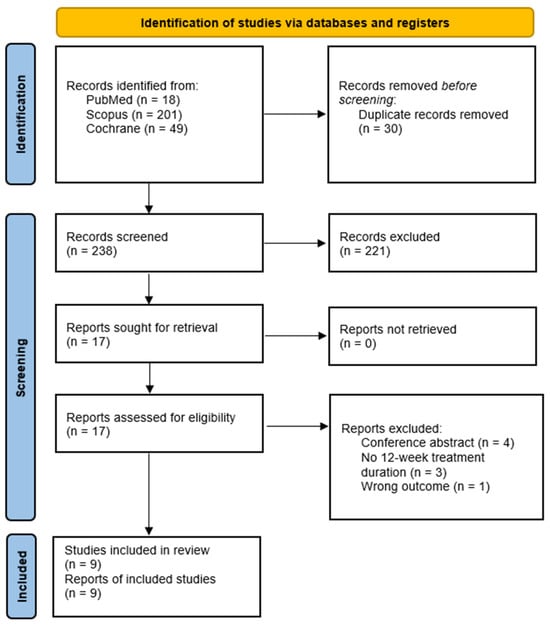
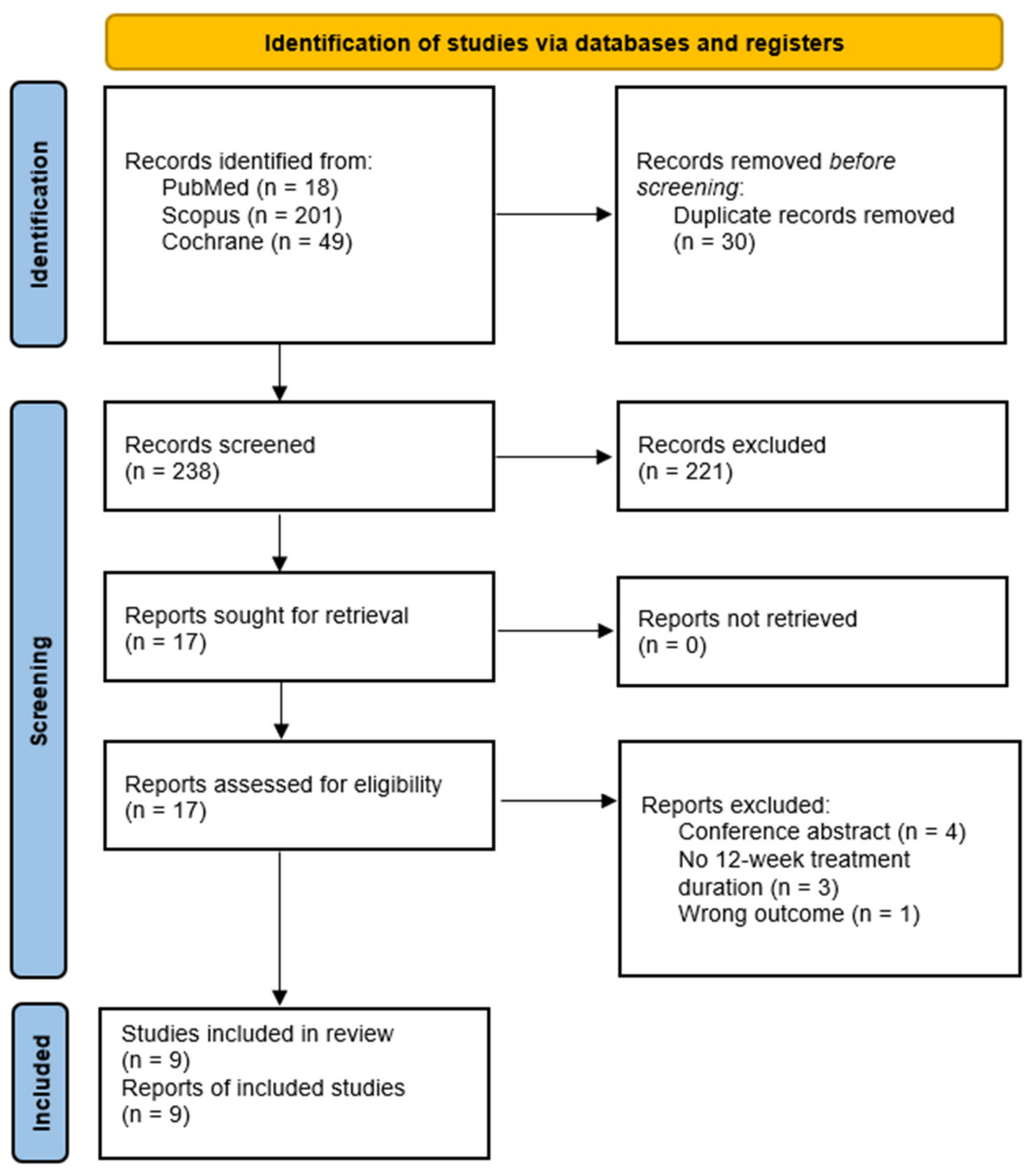
The database searches yielded 268 records. After removing 30 duplicates, 238 unique records were screened by title and abstract, resulting in the exclusion of 221 records. Seventeen reports were retrieved in full and assessed for eligibility. Of these, eight were excluded because they were conference abstracts (n = 4), involved treatment durations of less than 12 weeks (n = 3), or did not report an eligible outcome (n = 1). Ultimately, nine randomized controlled trials, each represented by a single report, fulfilled the inclusion criteria and were incorporated into the systematic review and meta-analysis (Figure 1) [3,4,5,6,7,19,20,21,22].
Figure 1.
PRISMA 2020 flow diagram of record identification, report selection, and study inclusion.
Across the nine included trials, a total of 1731 participants were analyzed. Of these, 906 (52.3%) received remogliflozin or a remogliflozin-containing regimen, whereas 825 (47.7%) received a comparator intervention. Detailed characteristics of the included studies are summarized in Table 1.
Table 1.
Baseline characteristics of the included studies.
3.2. Meta-Analysis Results
The overall pooled estimates represent average treatment contrasts across clinically heterogeneous remogliflozin-containing interventions and comparator regimens and should not be interpreted as effects relative to a single uniform comparator.
3.2.1. HbA1c
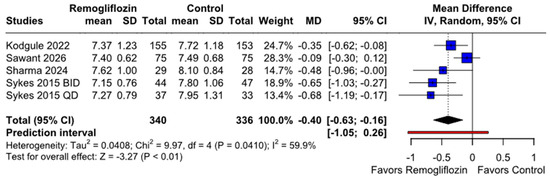
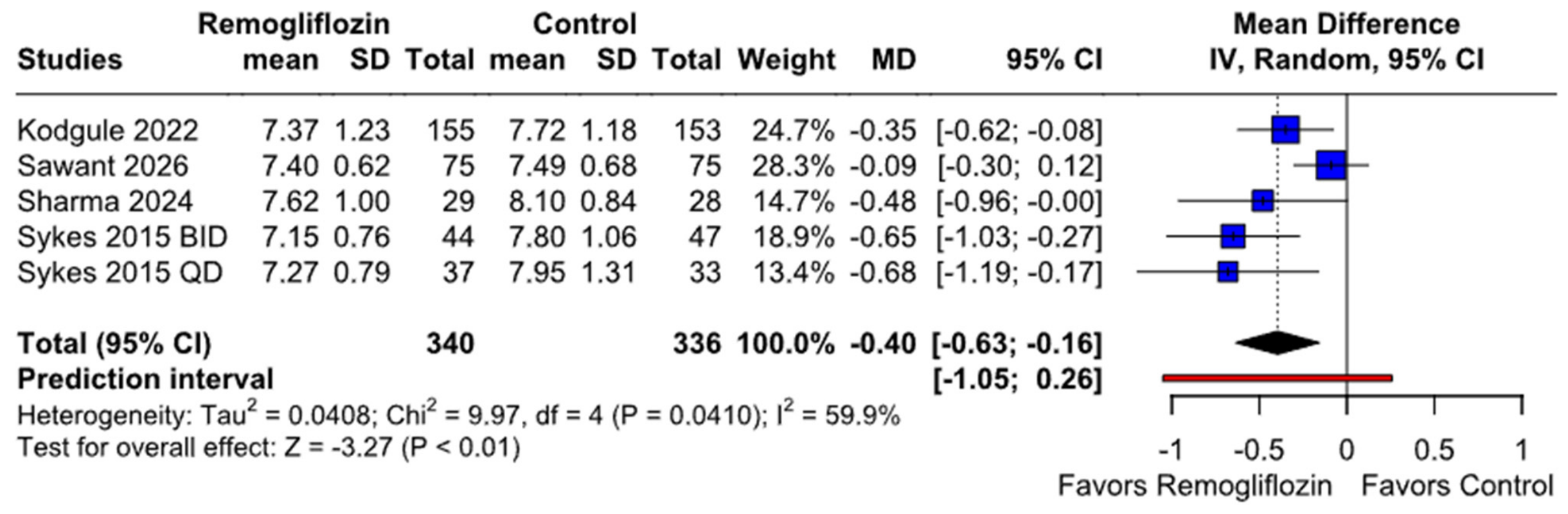
Across randomized comparisons involving pharmacologically diverse comparator regimens, remogliflozin-containing strategies were associated with a mean reduction in HbA1c of 0.40 percentage points relative to control (MD −0.40; 95% CI −0.63 to −0.16; p < 0.01). The 95% prediction interval ranged from −1.05 to 0.26 percentage points and crossed the null value, indicating uncertainty regarding the effect expected in a comparable future study. Because the control interventions differed substantially across trials, the pooled estimate should be interpreted as the average treatment contrast across the included comparisons rather than as an additional 0.40-percentage-point reduction attributable to remogliflozin versus a single standardized comparator. Moderate statistical heterogeneity was observed (I2 = 59%), warranting cautious interpretation of the pooled effect (Figure 2).
Figure 2.
Forest plot showing a statistically significant reduction in HbA1c with remogliflozin versus control interventions (MD −0.40%; 95% CI −0.63 to −0.16; I2 = 59%; p < 0.01) [4,5,7,19,22].
Under the prespecified trial sequential analysis assumptions, the cumulative Z-curve crossed the monitoring boundary and the calculated required information size was attained. Nevertheless, the anticipated intervention effect was based on the observed pooled estimate, which may have resulted in an overly favorable information-size requirement. Accordingly, the TSA findings should be regarded as exploratory rather than as definitive evidence that further information is unnecessary. Sensitivity to smaller anticipated treatment effects was not examined (Figure S1).
The certainty of evidence for the HbA1c outcome was rated as low according to GRADE, primarily because of some concerns regarding risk of bias and moderate inconsistency across studies (Table S1).
LOO sensitivity analyses demonstrated that the pooled effect remained statistically significant and continued to favor remogliflozin-containing regimens after sequential exclusion of each individual study. The resulting effect estimates ranged from MD −0.33 to −0.49, indicating that the overall finding was not driven by any single trial (Figure S2). The Baujat analysis identified Sawant 2026 [22] as the study contributing most substantially to between-study heterogeneity (Figure S3).
3.2.2. Body Weight
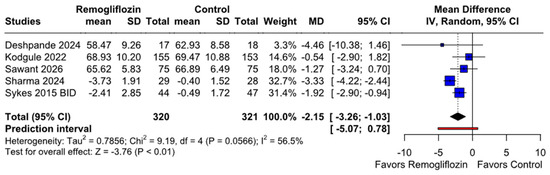
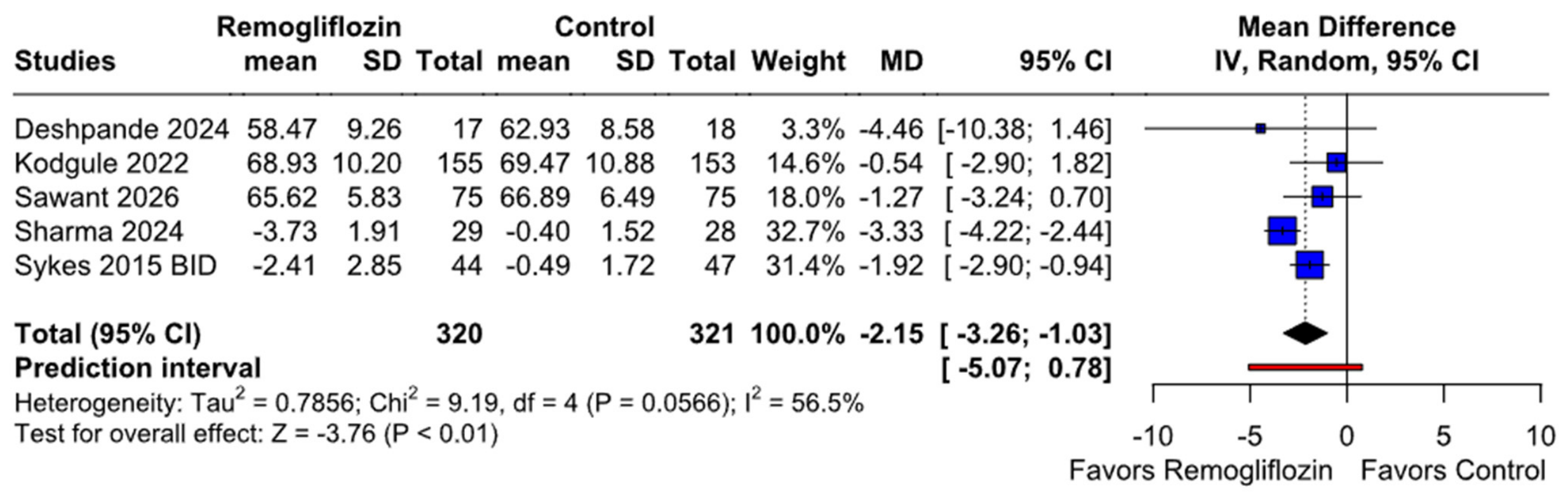
Remogliflozin-containing regimens were associated with a significant reduction in body weight compared with comparator treatments (MD −2.15 kg; 95% CI −3.26 to −1.03; p < 0.01). Moderate between-study heterogeneity was observed (I2 = 56%), and the 95% prediction interval extended from −5.07 to 0.78 kg, crossing the null value and indicating uncertainty regarding the effect expected in a comparable future study (Figure 3).
Figure 3.
Forest plot showing a statistically significant reduction in body weight with remogliflozin versus control interventions (MD −2.15 kg; 95% CI −3.26 to −1.03; I2 = 56%; p < 0.01) [4,5,7,20,22].
Under the specified trial sequential analysis assumptions, the cumulative Z-curve crossed the monitoring boundary and the calculated required information size was reached. However, because the anticipated intervention effect was derived from the observed pooled estimate, the required information size may have been underestimated. The TSA findings should therefore be considered exploratory, and their robustness to smaller anticipated treatment effects remains uncertain (Figure S4).
The certainty of evidence for body weight was rated as low according to GRADE, primarily because of some concerns regarding risk of bias and moderate inconsistency across studies (Table S1).
LOO sensitivity analyses confirmed that the pooled reduction in body weight remained statistically significant and continued to favor remogliflozin-containing regimens after sequential omission of each study. The resulting effect estimates ranged from MD −1.69 to −2.43 kg, indicating that the overall finding was not materially dependent on any single trial (Figure S5). The Baujat analysis identified Sharma 2024 as the study contributing most substantially to between-study heterogeneity (Figure S6) [7].
3.2.3. Total Adverse Events
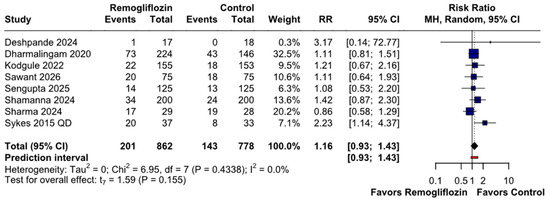
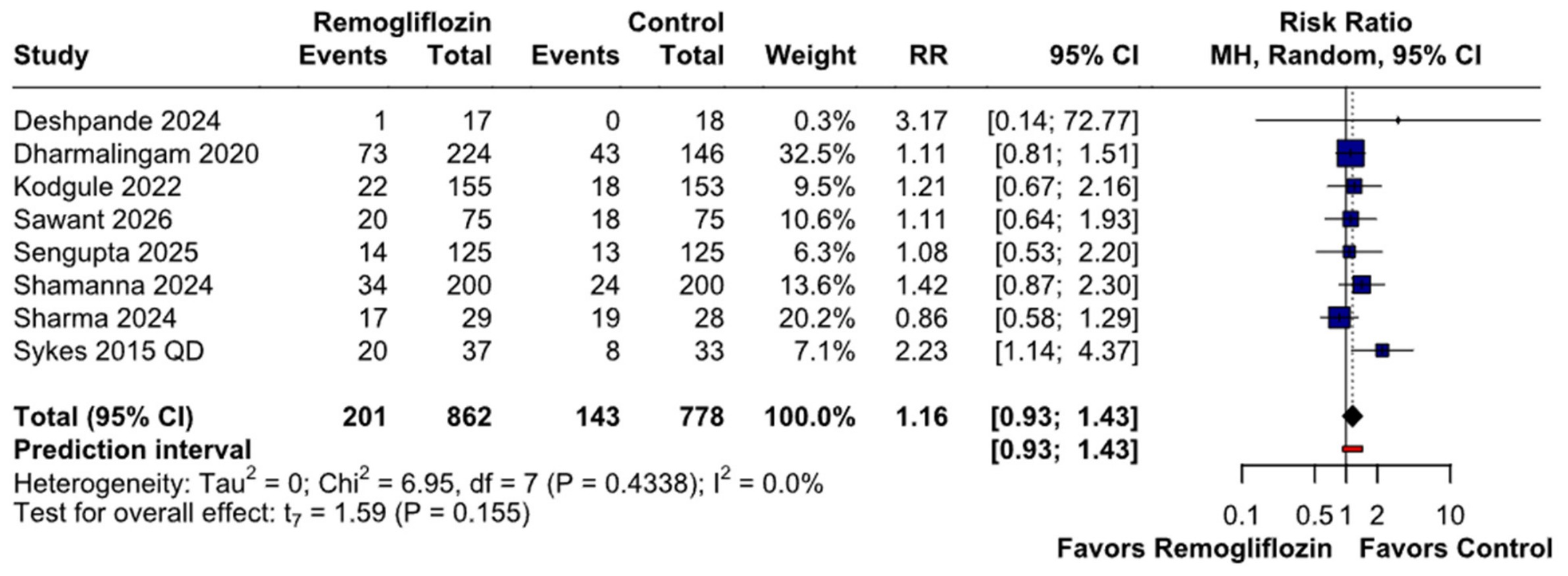
Remogliflozin-containing regimens were associated with a numerically higher risk of experiencing at least one adverse event compared with comparator interventions, although the difference did not reach statistical significance (RR 1.16; 95% CI 0.93–1.43; p = 0.155). No between-study heterogeneity was observed (I2 = 0%; Figure 4). The 95% prediction interval was identical to the confidence interval (0.93–1.43) and also crossed the null value, indicating uncertainty regarding the direction of effect in a comparable future study.
Figure 4.
Forest plot showing a numerically higher but statistically non-significant risk of total adverse events with remogliflozin versus comparator interventions (RR 1.16; 95% CI 0.93–1.43; I2 = 0%; p = 0.155) [3,5,6,7,19,20,21,22].
The certainty of evidence for total adverse events was rated as moderate according to GRADE, primarily because of some concerns regarding risk of bias (Table S1).
In the LOO sensitivity analysis, effect estimates consistently remained above the null and ranged from RR 1.10 to 1.25, indicating a persistent numerical trend toward a higher adverse-event risk with remogliflozin-containing regimens. The pooled effect remained statistically non-significant after sequential exclusion of individual studies, with the exception of Sharma et al. (2024) [7]. Excluding this study yielded a statistically significant increase in adverse-event risk with remogliflozin (RR 1.25; 95% CI 1.01–1.54; Figure S7). This suggests that the overall safety estimate was somewhat sensitive to the inclusion of Sharma et al. (2024) [7] and should therefore be interpreted with caution.
3.2.4. FPG
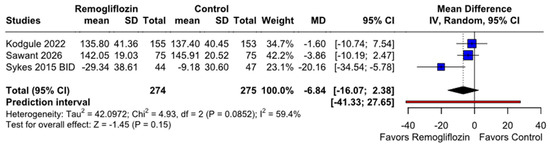
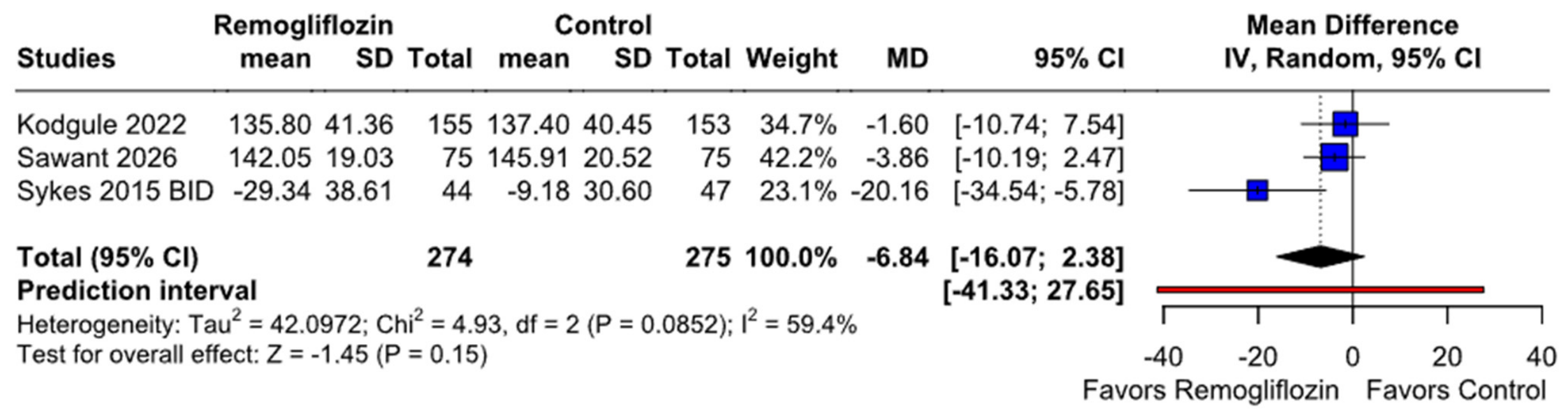
Remogliflozin-containing regimens were associated with a numerically greater reduction in fasting plasma glucose (FPG) compared with comparator interventions, although the pooled effect was not statistically significant (MD −6.84 mg/dL; 95% CI −16.07 to 2.38; p = 0.150) (Figure 5). Moderate between-study heterogeneity was present (I2 = 59.4%). The 95% prediction interval ranged from −41.33 to 27.65 mg/dL and crossed the null value, reflecting substantial uncertainty regarding the effect that might be observed in a comparable future study.
Figure 5.
Forest plot showing a numerically greater but statistically non-significant reduction in FPG with remogliflozin versus comparator interventions (MD −6.84 mg/dL; 95% CI −16.07 to 2.38; I2 = 59.4%; p = 0.150) [4,5,22].
The certainty of evidence for FPG was rated as low according to GRADE, primarily because of some concerns regarding risk of bias and moderate inconsistency across studies (Table S1).
LOO sensitivity analyses showed that the pooled effect remained statistically non-significant after sequential exclusion of each individual study. The corresponding effect estimates ranged from MD −3.13 to −10.68 mg/dL, indicating that no single trial materially altered the overall conclusion (Figure S8). The Baujat analysis identified Sykes 2015 [4] as the study contributing most substantially to between-study heterogeneity (Figure S9).
3.2.5. Hypoglycemia
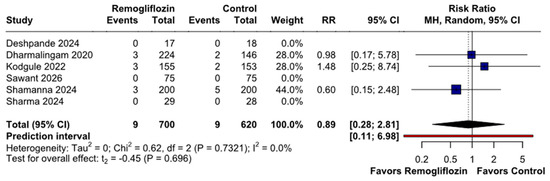
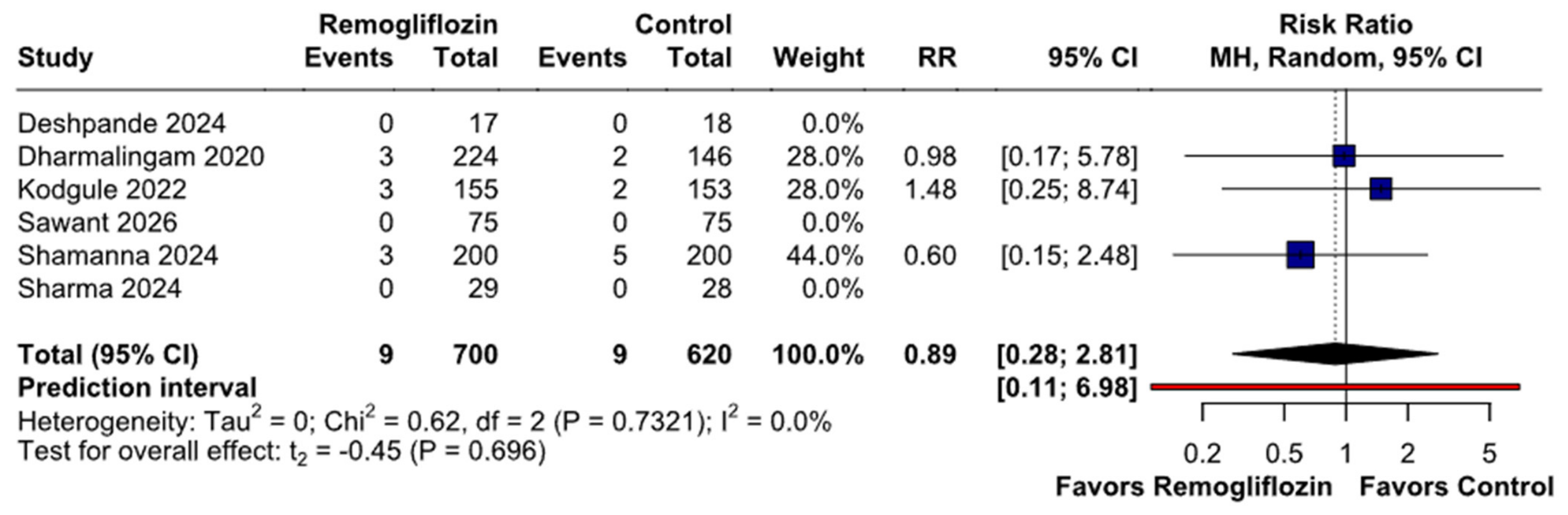
Remogliflozin-containing regimens were associated with a numerically lower risk of hypoglycaemia compared with comparator interventions, although the difference was not statistically significant (RR 0.89; 95% CI 0.28–2.81; p = 0.696). No between-study heterogeneity was observed (I2 = 0%; Figure 6). The 95% prediction interval ranged from 0.11 to 6.98 and crossed the null value, indicating substantial uncertainty and compatibility with both a lower and a higher risk of hypoglycaemia in a comparable future study.
Figure 6.
Forest plot showing a numerically lower but statistically non-significant risk of hypoglycaemia with remogliflozin versus comparator interventions (RR 0.89; 95% CI 0.28–2.81; I2 = 0%; p = 0.696) [3,5,6,7,20,22].
The certainty of evidence for hypoglycaemia was rated as moderate according to GRADE, primarily because of some concerns regarding risk of bias (Table S1).
In the LOO sensitivity analysis, the pooled risk estimates ranged from RR 0.73 to 1.20 and remained statistically non-significant after sequential exclusion of each individual study, indicating that no single trial materially changed the overall conclusion (Figure S10).
3.3. Exploratory Subgroup Analyses
All subgroup analyses were considered exploratory and hypothesis-generating. Because several subgroups contained only one or two studies, both the subgroup-specific estimates and formal interaction tests had limited statistical power and may be unstable. Statistical significance within one subgroup but not another was not considered evidence of effect modification. Accordingly, subgroup findings were interpreted primarily according to the formal interaction tests, while recognizing their limited reliability in this sparse evidence base.
3.3.1. Comparator Class
HbA1c
The interaction test suggested a possible difference in the HbA1c effect according to comparator class (p = 0.0077). However, because the comparator subgroups contained few studies, with some represented by a single trial, this finding should be regarded as exploratory and not as confirmatory evidence of effect modification. Remogliflozin significantly reduced HbA1c compared with active DPP-4 inhibitors (MD −0.38%; 95% CI −0.62 to −0.15) and placebo (MD −0.66%; 95% CI −0.96 to −0.36), but not compared with an active SGLT2 inhibitor (MD −0.09%; 95% CI −0.30 to 0.12; Figure S11). These findings should be interpreted cautiously because the subgroups contained few studies.
Body Weight
Subgroup analysis showed no evidence that the effect on body weight differed by comparator class (p = 0.767). Remogliflozin significantly reduced body weight compared with placebo (MD −1.92 kg; 95% CI −2.90 to −0.94), whereas differences versus active DPP-4 inhibitors (MD −2.16 kg; 95% CI −4.86 to 0.54), an active SGLT2 inhibitor (MD −1.27 kg; 95% CI −3.24 to 0.70), and usual care (MD −4.46 kg; 95% CI −10.38 to 1.46) were not statistically significant (Figure S12).
Total Adverse Effects
Subgroup analysis showed no evidence that the risk of adverse events differed by comparator class (p = 0.168). A significantly higher risk was observed in the active-SGLT2 subgroup (RR 1.10; 95% CI 1.07–1.14) and the single placebo-controlled study (RR 2.23; 95% CI 1.14–4.37), whereas differences in the active-DPP-4, combined SGLT2–DPP-4, and usual-care subgroups were not statistically significant (Figure S13).
FPG
Subgroup analysis showed no statistically significant difference in the effect on FPG by comparator class (p = 0.085). Remogliflozin significantly reduced FPG compared with placebo (MD −20.16 mg/dL; 95% CI, −34.54 to −5.78), whereas differences versus active DPP-4 (MD −1.60 mg/dL; 95% CI −10.74 to 7.54) and active SGLT2 comparators (MD −3.86 mg/dL; 95% CI −10.19 to 2.47) were not statistically significant (Figure S14). These findings are exploratory because each subgroup contained only one study.
Hypoglycemia
Subgroup analysis showed no evidence that the risk of hypoglycaemia differed by comparator class (p = 0.732). No statistically significant differences were observed for active DPP-4 (RR 1.48; 95% CI 0.25–8.74), active SGLT2 (RR 0.98; 95% CI 0.17–5.78), or combined SGLT2–DPP-4 comparators (RR 0.60; 95% CI 0.15–2.48; Figure S15). These results should be interpreted cautiously because events were sparse and each subgroup contained only one informative study.
Overall, the comparator-class analyses were based on sparse and unevenly distributed evidence and should be interpreted as hypothesis-generating.
3.3.2. Clinical Population
HbA1c
The interaction test suggested a possible difference in the HbA1c effect according to clinical population (p = 0.0057). However, the cardiorenal-enriched subgroup was represented by a single study, and this result should therefore be considered exploratory and potentially attributable to the characteristics of that individual trial. Remogliflozin significantly reduced HbA1c in participants with general T2DM (MD −0.49%; 95% CI −0.68 to −0.30; I2 = 0%), whereas no significant difference was observed in the cardiorenal-enriched population (MD, −0.09%; 95% CI −0.30 to 0.12; Figure S16). This interaction should be interpreted cautiously because the cardiorenal subgroup contained only one study.
Body Weight
Subgroup analysis showed no evidence that the effect of remogliflozin on body weight differed by clinical population (p = 0.612). Body weight was significantly reduced in the general T2DM population (MD −2.20 kg; 95% CI −3.62 to −0.79; I2 = 72.7%), but not in the cardiorenal-enriched population (MD −1.59 kg; 95% CI −3.48 to 0.29; I2 = 0.3%; Figure S17).
Total Adverse Effects
The risk of total adverse events did not differ significantly by clinical population (p = 0.700). The association was non-significant in both cardiorenal-enriched participants (RR 1.12; 95% CI 0.72–1.74; I2 = 0%) and the general T2DM population (RR 1.20; 95% CI 0.81–1.76; I2 = 38.4%; Figure S18).
FPG
The effect of remogliflozin on fasting plasma glucose did not differ significantly by clinical population (p = 0.529). Reductions were non-significant in both the cardiorenal-enriched population (MD −3.86 mg/dL; 95% CI −10.19 to 2.47) and the general T2DM population (MD −10.02 mg/dL; 95% CI −28.13 to 8.09; I2 = 78.1%; Figure S19).
Hypoglycemia
Subgroup differences in hypoglycemia risk could not be assessed because no events occurred in either treatment group in the cardiorenal-enriched studies. Among the general T2DM population, remogliflozin was not associated with a significant difference in hypoglycemia risk (RR 0.89; 95% CI 0.28–2.81; I2 = 0%; Figure S20).
3.3.3. Treatment Duration
HbA1c
The interaction test suggested a possible difference in the HbA1c effect according to treatment duration (p = 0.006). However, the 24-week subgroup was represented by a single study, making the interaction estimate unstable and unsuitable for confirmatory interpretation. Remogliflozin significantly reduced HbA1c at 12–16 weeks (MD −0.49; 95% CI −0.68 to −0.30; I2 = 0%), whereas no significant reduction was observed at 24 weeks (MD −0.09; 95% CI −0.30 to 0.12; Figure S21). However, the 24-week subgroup contained only one study, warranting cautious interpretation.
Body Weight
The effect of remogliflozin on body weight did not differ significantly by treatment duration (p = 0.383). A significant reduction was observed at 12–16 weeks (MD −2.32 kg; 95% CI −3.63 to −1.01; I2 = 61.1%), whereas the reduction at 24 weeks was non-significant (MD −1.27 kg; 95% CI −3.24 to 0.70; Figure S22). The 24-week subgroup was represented by only one study.
Total Adverse Effects
The risk of total adverse events did not differ significantly by treatment duration (p = 0.368). The association was non-significant at 12–16 weeks (RR 1.29; 95% CI 0.80–2.09; I2 = 40.3%), whereas a higher risk was observed at 24 weeks (RR 1.10; 95% CI 1.07–1.14; I2 = 0%; Figure S23). However, the absence of a significant subgroup interaction does not support treatment duration as an effect modifier.
FPG
The effect of remogliflozin on fasting plasma glucose did not differ significantly by treatment duration (p = 0.529). Reductions were non-significant at both 12–16 weeks (MD −10.02 mg/dL; 95% CI −28.13 to 8.09; I2 = 78.1%) and 24 weeks (MD −3.86 mg/dL; 95% CI −10.19 to 2.47; Figure S24). The 24-week subgroup contained only one study.
Hypoglycemia
Hypoglycemia risk did not differ significantly by treatment duration (p = 0.892). No significant association was observed at either 12–16 weeks (RR 0.85; 95% CI 0.00–229.94; I2 = 0%) or 24 weeks (RR 0.98; 95% CI 0.17–5.78; Figure S25). These estimates were highly imprecise because of the very small number of events and should be interpreted cautiously.
3.4. Risk of Bias Assessment
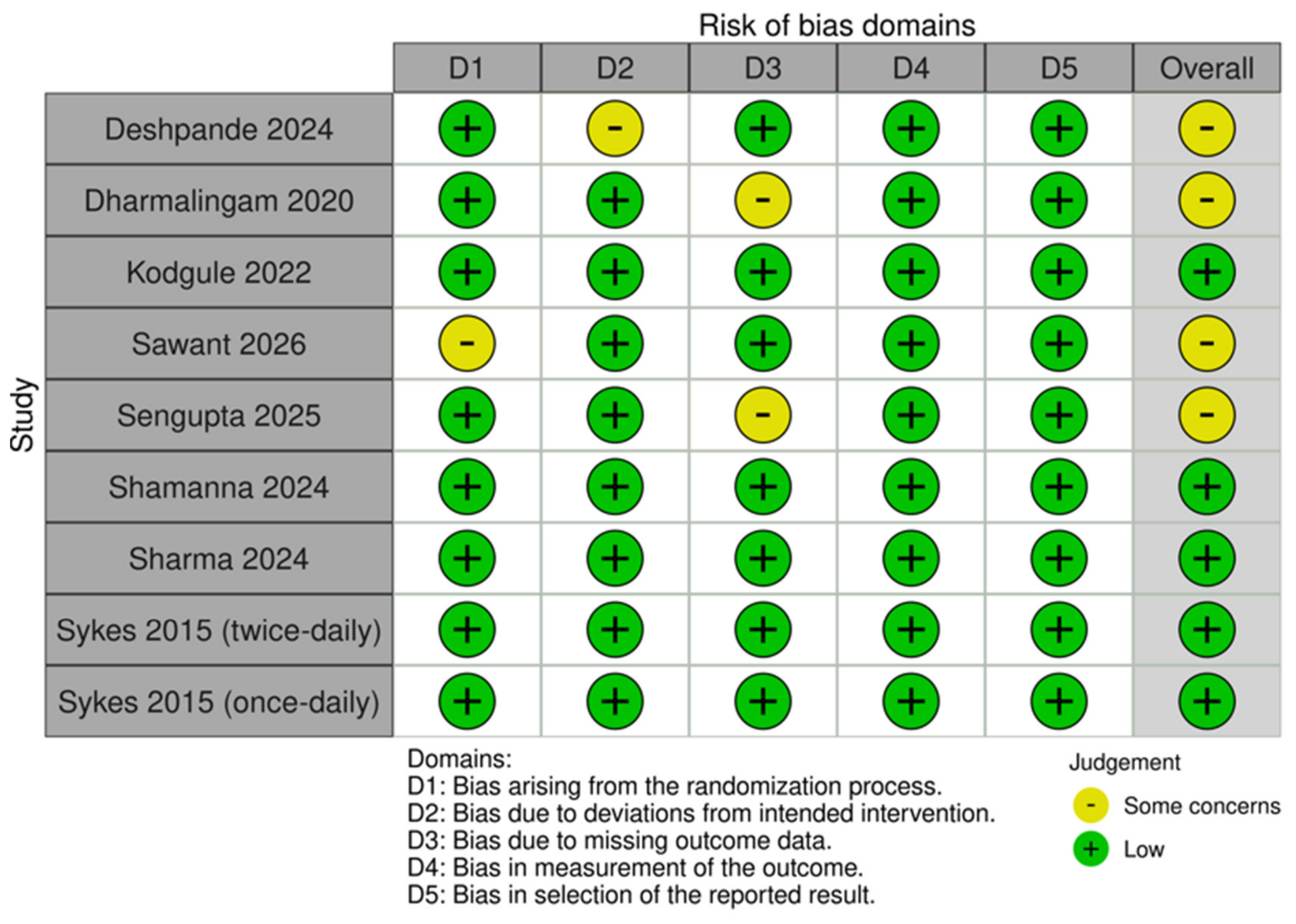
Among the nine included randomized controlled trials, five were judged to have a low risk of bias, whereas four were rated as having some concerns according to the RoB 2 framework. A detailed domain-level assessment is provided in Figure 7. Because fewer than 10 studies contributed to each outcome, small-study effects and publication bias could not be evaluated reliably.
Figure 7.
Risk of bias assessment of the included RCTs with RoB2 [3,4,5,6,7,19,20,21,22].
4. Discussion
This updated systematic review and meta-analysis of nine RCTs [3,4,5,6,7,19,20,21,22] and 1731 patients found that remogliflozin was associated with modest but statistically significant reductions in HbA1c and body weight compared with placebo or active comparators. By contrast, the reduction in FPG did not reach statistical significance. No statistically significant differences in total adverse events or hypoglycaemia were detected; however, these findings should not be interpreted as evidence of comparable safety because the evidence base was small, follow-up was short, events were sparse, and the estimate for hypoglycaemia was highly imprecise. TSA supported the findings for HbA1c and body weight under the assumptions used, while the sensitivity analyses indicated that these efficacy results were not driven by a single study.
The pooled estimates should be interpreted in the context of substantial clinical heterogeneity. Remogliflozin was evaluated as monotherapy, as add-on therapy, and as part of fixed-dose combinations, while comparator groups included placebo, usual care, DPP-4 inhibitors, other SGLT2 inhibitors, and combination regimens. Consequently, the overall estimates represent average contrasts across heterogeneous randomized treatment strategies rather than the effect of one standardized remogliflozin regimen against a uniform comparator. This broad pooling strategy summarizes the available randomized evidence but limits the applicability of the pooled estimates to any individual clinical comparison. The prediction intervals provide additional context for the applicability of the pooled findings. Although the average pooled effects on HbA1c and body weight were statistically significant, their prediction intervals included the null effect, indicating that the true effect in a comparable future clinical setting may be smaller or absent. The prediction intervals for FPG and hypoglycaemia were particularly wide, further emphasizing the uncertainty arising from the small and clinically heterogeneous evidence base.
An additional interpretative limitation concerns the inclusion of remogliflozin-containing combination regimens. In trials in which both groups received the same background treatment and remogliflozin was the only additional component, the between-group contrast can reasonably be interpreted as its incremental effect. However, when other active components differed between the randomized groups, the contribution of remogliflozin could not be separated from that of the accompanying therapies. Accordingly, the overall findings should primarily be interpreted as effects of remogliflozin-containing treatment strategies rather than effects attributable exclusively to remogliflozin. The pooled HbA1c difference of −0.40 percentage points therefore represents an average treatment contrast across placebo and pharmacologically diverse active comparators; it should not be interpreted as an additional −0.40-percentage-point effect of remogliflozin relative to a single uniform standard comparator.
Our findings extend the 2024 meta-analysis, which included both randomized and non-randomized evidence and reported comparable glycaemic efficacy, greater weight reduction, and no clear safety signal [8]. By restricting eligibility to RCTs lasting at least 12 weeks and incorporating recently published trials in populations with heart failure and chronic kidney disease [20,21,22], the present analysis provides a more focused estimate of treatment effects. The observed HbA1c reduction of 0.40 percentage points represents a modest improvement that is broadly consistent with the glucose-lowering efficacy expected from the SGLT2-inhibitor class [23]. Similarly, the 2.15-kg reduction in body weight is consistent with previous network and conventional meta-analyses demonstrating weight reduction with SGLT2 inhibitors [24,25]. This effect is biologically plausible because urinary glucose excretion produces sustained caloric loss.
Comparator-specific findings provide additional clinical context. Remogliflozin reduced HbA1c compared with placebo and active DPP-4 inhibitors but not compared with another SGLT2 inhibitor. This may indicate that remogliflozin provides greater glucose lowering than pharmacologically inactive treatment while having efficacy broadly comparable to established members of its class. Nevertheless, these comparisons should not be interpreted as evidence of superiority over DPP-4 inhibitors because some trials evaluated remogliflozin-containing combination regimens rather than remogliflozin alone. Furthermore, most comparator subgroups contained only one or two studies, making their estimates vulnerable to trial-level differences in background treatment, baseline HbA1c, renal function, and outcome measurement.
The exploratory subgroup analyses identified nominally statistically significant interaction tests for HbA1c according to comparator class, clinical population, and treatment duration. However, these findings should not be regarded as confirmatory evidence of effect modification because several subgroups contained only one study [22]. Moreover, the cardiorenal-enriched and 24-week HbA1c subgroups were represented by the same trial; consequently, clinical population, comparator class, and treatment duration were closely confounded. The apparent subgroup differences may therefore reflect the characteristics of this individual trial or its active SGLT2 comparator rather than genuine differences in the effect of remogliflozin. No reliable subgroup differences were demonstrated for body weight, FPG, total adverse events, or hypoglycaemia.
The available safety evidence was inconclusive. Although no statistically significant overall differences were detected for total adverse events or hypoglycaemia, absence of statistical significance should not be interpreted as evidence of comparable safety. Total adverse events were numerically more frequent with remogliflozin-containing regimens, and the LOO analysis became statistically significant after exclusion of Sharma et al. [7], indicating sensitivity to an individual study. Hypoglycaemic events were sparse, and the corresponding confidence interval was very wide and compatible with both appreciable benefit and harm. Furthermore, follow-up was limited to 12–24 weeks, preventing reliable assessment of uncommon or longer-term adverse events. Larger and longer-term trials with systematic safety reporting are therefore required before firm conclusions regarding the safety of remogliflozin can be drawn. Nevertheless, pooling all adverse events may conceal clinically distinct risks. Larger analyses of SGLT2 inhibitors have identified increased risks of diabetic ketoacidosis and volume depletion despite no clear increase in several other safety outcomes [26]. The included remogliflozin trials provided insufficient events to assess these specific uncommon harms reliably.
Current clinical recommendations prioritize SGLT2 inhibitors with demonstrated cardiovascular or kidney benefits in patients with heart failure, chronic kidney disease, or established cardiovascular risk [23]. Large outcome trials and meta-analyses have established such benefits for agents including empagliflozin and dapagliflozin [27,28]. The present findings should not be interpreted as demonstrating equivalent cardiorenal protection with remogliflozin. The remogliflozin studies were comparatively small, followed participants for no more than 24 weeks, and primarily evaluated surrogate or biomarker outcomes. Dedicated, adequately powered cardiovascular and kidney outcome trials are therefore required before cardiorenal benefits can be attributed to remogliflozin itself.
The TSA findings suggested that the accumulated evidence may be sufficient to support the observed HbA1c and body-weight effects under the assumptions used. However, these findings require cautious interpretation because the anticipated intervention effects were derived from the observed pooled estimates, potentially resulting in optimistic required information sizes. Alternative anticipated-effect scenarios were not evaluated, and the robustness of the TSA conclusions to smaller effects therefore remains uncertain. Accordingly, TSA should be considered an exploratory and complementary analysis rather than definitive evidence that additional trials are unnecessary [29,30].
This review has several strengths, including an updated search, restriction to RCTs, duplicate screening and extraction, RoB 2 assessment, random-effects modelling, LOO and subgroup analyses, and TSA. However, important limitations remain. Only nine RCTs were available, several had some risk-of-bias concerns, and follow-up was limited to 12–24 weeks. Trials differed in comparator treatments, background therapy, remogliflozin-containing combinations, populations, and outcome reporting. Safety events were sparse, and adverse-event definitions were not necessarily uniform. Most subgroup analyses contained too few studies to provide dependable interaction estimates. Finally, restriction to English-language full-text publications and exclusion of grey literature may have introduced selection and publication bias. However, because fewer than 10 studies contributed to each outcome, the presence or absence of small-study effects or publication bias could not be assessed reliably. A sensitivity analysis excluding all combination-regimen trials was considered but was not performed because combination therapy did not represent a uniform source of indirectness. Some trials used identical background therapy in both groups, making remogliflozin the only component that differed, whereas others compared pharmacologically different multidrug regimens. Excluding all combination trials would therefore remove clinically informative incremental comparisons and, given the small number of studies contributing to each outcome, would produce a substantially reduced and potentially unrepresentative evidence base.
These limitations were also reflected in the GRADE assessment, in which the certainty of evidence was reduced for relevant outcomes because of concerns regarding risk of bias, inconsistency, indirectness, and/or imprecision. Consequently, the pooled estimates should be interpreted in conjunction with the outcome-specific certainty ratings presented in Table S1.
5. Conclusions
Across clinically heterogeneous randomized comparisons, remogliflozin-containing treatment strategies were associated with modest reductions in HbA1c and body weight in adults with T2DM, whereas the effect on FPG remained inconclusive. These pooled estimates represent average contrasts across different intervention and comparator strategies and should not be interpreted as evidence of superiority over every individual comparator. Moreover, effects from combination-regimen trials cannot necessarily be attributed exclusively to remogliflozin. No statistically significant differences in total adverse events or hypoglycaemia were detected; however, the limited evidence base, short follow-up, sparse events, and imprecise estimates preclude conclusions of comparable safety. Larger and longer-term RCTs are required to confirm the efficacy and safety of remogliflozin.
Supplementary Materials
The following supporting information can be downloaded at: https://www.mdpi.com/article/10.3390/endocrines7040061/s1.
Author Contributions
N.K.: Writing—review and editing, Writing—original draft, Visualization, Validation, Methodology, Investigation, Formal analysis, Data curation, Conceptualization. T.T.: Writing—review and editing, Writing—original draft, Visualization, Software, Resources, Methodology, Investigation, Formal analysis, Data curation, Conceptualization. Z.K.: Writing—review and editing, Writing—original draft, Visualization, Software, Resources, Methodology, Investigation, Formal analysis, Data curation, Conceptualization; P.P.: Resources, Methodology, Investigation, Formal analysis, Data curation, Conceptualization, Supervision. All authors have read and agreed to the published version of the manuscript.
Funding
This research received no external funding.
Institutional Review Board Statement
This article is based on previously conducted studies and does not contain any new studies with human participants or animals performed by any of the authors.
Informed Consent Statement
Not applicable.
Data Availability Statement
All data are publicly available from the included studies.
Conflicts of Interest
The authors declare no conflicts of interest.
References
- International Diabetes Federation. IDF Diabetes Atlas, 11th ed.; International Diabetes Federation: Brussels, Belgium, 2025. [Google Scholar]
- Dobbins, R.L.; O’Connor-Semmes, R.; Kapur, A.; Kapitza, C.; Golor, G.; Mikoshiba, I.; Tao, W.; Hussey, E.K. Remogliflozin etabonate, a selective inhibitor of the sodium-dependent transporter 2, reduces serum glucose in type 2 diabetes mellitus patients. Diabetes Obes. Metab. 2012, 14, 15–22. [Google Scholar] [CrossRef] [Scilit]
- Dharmalingam, M.; Aravind, S.R.; Thacker, H.; Paramesh, S.; Mohan, B.; Chawla, M.; Asirvatham, A.; Goyal, R.; Shembalkar, J.; Balamurugan, R.; et al. Efficacy and safety of remogliflozin etabonate, a new sodium glucose co-transporter-2 inhibitor, in patients with type 2 diabetes mellitus: A 24-week, randomized, double-blind, active-controlled trial. Drugs 2020, 80, 587–600. [Google Scholar] [CrossRef] [Scilit]
- Sykes, A.P.; O’Connor-Semmes, R.; Dobbins, R.; Dorey, D.J.; Lorimer, J.D.; Walker, S.; Wilkison, W.O.; Kler, L. Randomized trial showing efficacy and safety of twice-daily remogliflozin etabonate for the treatment of type 2 diabetes. Diabetes Obes. Metab. 2015, 17, 94–97. [Google Scholar] [CrossRef] [Scilit]
- Kodgule, R.; Tandon, M.; Gaikwad, R.; Pendse, A.; Khaladkar, K.; Kumar, M.; Bhushan, S.; Suryawanshi, S.; Barkate, H. A randomized, double-blind, active-controlled study of remogliflozin etabonate 100 mg plus teneligliptin 10 mg twice daily versus teneligliptin 20 mg once daily as add-on to metformin monotherapy in Indian diabetic patients. J. Diabetes Treat. 2022, 7, 10104. [Google Scholar] [CrossRef] [Scilit]
- Shamanna, P.; FOREVER INVESTIGATORS; Mohan, B.; Aravind, S.R.; Balamurugan, A.R.; Chawla, M.; Asirvatham, A.J.; Bramhe, K.; Gupta, S.K.; Sharma, S.K.; et al. Efficacy and safety of a combination of remogliflozin etabonate and vildagliptin as fixed doses in patients with type 2 diabetes mellitus: A randomized, active-controlled, double-blind study (FOREVER study). Curr. Trends Intern. Med. 2024, 8, 215. [Google Scholar] [CrossRef] [Scilit]
- Sharma, V.; Chawla, S.; Garg, S.; Singh, B. Efficacy and safety of vildagliptin and remogliflozin as add-on therapy to metformin in patients of type 2 diabetes mellitus: An open-label comparative study. Sultan Qaboos Univ. Med. J. 2024, 24, 243–249. [Google Scholar] [CrossRef] [Scilit]
- Tewari, J.; Qidwai, K.A.; Rana, A.; Tewari, A.; Tewari, V.; Maheshwari, A. Safety and efficacy of remogliflozin in people with type 2 diabetes mellitus: A systematic review and meta-analysis. Cureus 2024, 16, e66145. [Google Scholar] [CrossRef] [Scilit]
- Higgins, J.; Thomas, J.; Chandler, J.; Cumpston, M.; Li, T.; Page, M.J.; Welch, V.A. Cochrane Handbook for Systematic Reviews of Interventions Version 6.4. Cochrane, 2023. Available online: https://www.cochrane.org/authors/handbooks-and-manuals/handbook#how-to-access (accessed on 1 July 2026).
- Page, M.J.; McKenzie, J.E.; Bossuyt, P.M.; Boutron, I.; Hoffmann, T.C.; Mulrow, C.D.; Shamseer, L.; Tetzlaff, J.M.; Akl, E.A.; Brennan, S.E.; et al. The PRISMA 2020 statement: An updated guideline for reporting systematic reviews. BMJ 2021, 372, n71. [Google Scholar] [CrossRef] [Scilit]
- Ouzzani, M.; Hammady, H.; Fedorowicz, Z.; Elmagarmid, A. Rayyan—A web and mobile app for systematic reviews. Syst. Rev. 2016, 5, 210. [Google Scholar] [CrossRef] [Scilit]
- Sterne, J.A.C.; Savović, J.; Page, M.J.; Elbers, R.G.; Blencowe, N.S.; Boutron, I.; Cates, C.J.; Cheng, H.Y.; Corbett, M.S.; Eldridge, S.M.; et al. RoB 2: A revised tool for assessing risk of bias in randomised trials. BMJ 2019, 366, l4898. [Google Scholar] [CrossRef] [Scilit] [PubMed]
- Mantel, N.; Haenszel, W. Statistical aspects of the analysis of data from retrospective studies of disease. J. Natl. Cancer Inst. 1959, 22, 719–748. [Google Scholar] [CrossRef] [Scilit]
- Hedges, L.V.; Olkin, I. Statistical Methods for Meta-Analysis; Academic Press: London, UK, 1985. [Google Scholar]
- Hartung, J.; Knapp, G. On tests of the overall treatment effect in meta-analysis with normally distributed responses. Stat. Med. 2001, 20, 1771–1782. [Google Scholar] [CrossRef] [Scilit]
- Knapp, G.; Hartung, J. Improved tests for a random effects meta-regression with a single covariate. Stat. Med. 2003, 22, 2693–2710. [Google Scholar] [CrossRef] [Scilit]
- R Core Team. R: A Language and Environment for Statistical Computing; R Foundation for Statistical Computing: Vienna, Austria, 2024; Available online: https://www.R-project.org/ (accessed on 1 August 2026).
- Trial Sequential Analysis (TSA), Version 0.9.5.10 Beta; The Copenhagen Trial Unit, Centre for Clinical Intervention Research, The Capital Region, Copenhagen University Hospital—Rigshospitalet: Copenhagen, Denmark, 2021.
- Sykes, A.P.; Kemp, G.L.; Dobbins, R.; O’Connor-Semmes, R.; Almond, S.R.; Wilkison, W.O.; Walker, S.; Kler, L. Randomized efficacy and safety trial of once-daily remogliflozin etabonate for the treatment of type 2 diabetes. Diabetes Obes. Metab. 2015, 17, 98–101. [Google Scholar] [CrossRef] [Scilit]
- Deshpande, N.; PB, J.; Mardikar, H.; Bhushan, S.; Mane, A.; Gadkari, R.; Choudhari, S.; Patil, S.; Barkate, H. Safety and efficacy of remogliflozin in patients with type 2 diabetes mellitus hospitalized for acute decompensated heart failure (RemoSafe AHF). Cardiol. Res. Cardiovasc. Med. 2024, 9, 259. [Google Scholar] [CrossRef] [Scilit]
- Sengupta, S.; Pathiyilbalagopalan, J.; Mehta, A.; Sawhney, J.P.S.; Suryavanshi, S.; Jamwal, N.; Kadam, D.; Gowda, A.; Dargad, R.; Bhate, A.; et al. Are two gliflozins different: A prospective multicenter randomized study to assess the effect of remogliflozin compared with empagliflozin on biomarkers of heart failure in Indian patients with type 2 diabetes mellitus with chronic heart failure (REMIT-HF study). J. Card. Fail. 2025, 31, 158–162. [Google Scholar] [CrossRef] [Scilit]
- Sawant, C.; Patil, S.; Choudhari, S.; Jadhav, M.; Gadkari, R.; Bhushan, S.; Borulkar, R.; Pandya, A.; Gupta, H.; Barkate, H. Comparative efficacy and safety of remogliflozin 100 mg versus dapagliflozin 10 mg in patients with type 2 diabetes mellitus and chronic kidney disease: A randomized, open-label study. J. Nephrol. Endocrinol. Res. 2026, 6, 1–9. Available online: https://srcpublishers.com/nephrology-endocrinology-researc/article/view/6393/6629 (accessed on 1 July 2026).
- American Diabetes Association Professional Practice Committee for Diabetes. 9. Pharmacologic approaches to glycemic treatment: Standards of Care in Diabetes. Diabetes Care 2026, 49, S183–S215. [Google Scholar] [CrossRef] [Scilit]
- Tsapas, A.; Karagiannis, T.; Kakotrichi, P.; Avgerinos, I.; Mantsiou, C.; Tousinas, G.; Manolopoulos, A.; Liakos, A.; Malandris, K.; Matthews, D.R.; et al. Comparative efficacy of glucose-lowering medications on body weight and blood pressure in patients with type 2 diabetes: A systematic review and network meta-analysis. Diabetes Obes. Metab. 2021, 23, 2116–2124. [Google Scholar] [CrossRef] [Scilit]
- Liu, X.; Chen, Y.; Liu, T.; Cai, L.; Yang, X.; Mou, C. The effects of sodium-glucose cotransporter 2 inhibitors on adipose tissue in patients with type 2 diabetes: A meta-analysis of randomized controlled trials. Front. Endocrinol. 2023, 14, 1115321. [Google Scholar] [CrossRef] [Scilit]
- Deshpande, R.; Patel, R.; Regmi, M.R.; Salih, M.; Kropp, R.; Al-Bast, B.; Sheikh, M.A.; Sagalov, A.; Kulkarni, A.; Siddique, M.; et al. Safety outcomes of sodium-glucose cotransporter-2 inhibitors in patients with type 2 diabetes and other risk factors for cardiovascular disease: A systematic review and meta-analysis. Cardiovasc. Endocrinol. Metab. 2023, 12, e0284. [Google Scholar] [CrossRef] [Scilit]
- McGuire, D.K.; Shih, W.J.; Cosentino, F.; Charbonnel, B.; Cherney, D.Z.I.; Dagogo-Jack, S.; Pratley, R.; Greenberg, M.; Wang, S.; Huyck, S.; et al. Association of SGLT2 inhibitors with cardiovascular and kidney outcomes in patients with type 2 diabetes: A meta-analysis. JAMA Cardiol. 2021, 6, 148–158. [Google Scholar] [CrossRef] [Scilit]
- EMPA-KIDNEY Collaborative Group; Herrington, W.G.; Staplin, N.; Wanner, C.; Green, J.B.; Hauske, S.J.; Emberson, J.R.; Preiss, D.; Judge, P.; Mayne, K.J.; et al. Empagliflozin in patients with chronic kidney disease. N. Engl. J. Med. 2023, 388, 117–127. [Google Scholar] [CrossRef] [Scilit]
- Wetterslev, J.; Jakobsen, J.C.; Gluud, C. Trial Sequential Analysis in systematic reviews with meta-analysis. BMC Med. Res. Methodol. 2017, 17, 39. [Google Scholar] [CrossRef] [Scilit]
- Riberholt, C.G.; Olsen, M.H.; Milan, J.B.; Hafliðadóttir, S.H.; Svanholm, J.H.; Pedersen, E.B.; Lew, C.C.H.; Asante, M.A.; Ribeiro, J.P.; Wagner, V.; et al. Major mistakes or errors in the use of trial sequential analysis in systematic reviews or meta-analyses—The METSA systematic review. BMC Med. Res. Methodol. 2024, 24, 196. [Google Scholar] [CrossRef] [Scilit]

Disclaimer/Publisher’s Note: The statements, opinions and data contained in all publications are solely those of the individual author(s) and contributor(s) and not of MDPI and/or the editor(s). MDPI and/or the editor(s) disclaim responsibility for any injury to people or property resulting from any ideas, methods, instructions or products referred to in the content. |
© 2026 by the authors. Licensee MDPI, Basel, Switzerland. This article is an open access article distributed under the terms and conditions of the Creative Commons Attribution (CC BY) license.