


Abstract
Background: Central compartment atopic disease (CCAD) is a recently developed terminology used to describe a specific phenotype of chronic rhinosinusitis (CRS). The aim of this study is to provide a thorough analysis of the clinical and radiological characteristics by assessing the prevalence of symptoms, asthma, allergy, aeroallergen sensitization and radiological sinus involvement. Methods: The authors searched for articles on PubMed, Cochrane, and Embase databases. A review of the articles was carried out following PRISMA guidelines; all articles were assessed for quality according to NICE criteria. Afterwards, the meta-analysis was performed with STATA 18SE software. Studies were also assessed for heterogeneity and risk of publication bias. Mean Lund-Mackay (LMK) score of patients with and without CCAD was compared. Results: A total of 16 studies were included, including 1254 patients with CRS; 537 of these were diagnosed with CCAD. The most prevalent symptoms were obstruction at 78% and congestion at 70%, followed by rhinorrhea at 66%, hyposmia at 54%, and facial pain at 24%. Dust mite at 71% was the most prevalent sensitization. Overall, the prevalence of asthma in patients with CCAD was 26%, prevalence of allergy was 67%. The mean difference in LMK scores was −3.38 in CCAD. Conclusions: Patients frequently present with nasal obstruction and congestion; the most common allergen sensitization is to dust mites. Findings on allergy and asthma prevalence support the “Unified Airway Disease” concept and emphasize the importance of a multidisciplinary approach to managing this phenotype. CCAD patients usually do not develop very high LMK scores; high scores may rule out this diagnosis. PROSPERO registration number: CRD420261361696.
1. Introduction
Central compartment atopic disease (CCAD) is a recently described phenotype of chronic rhinosinusitis (CRS), characterized by atopy together with polypoid degeneration of the central structures of the nasal cavity. Unlike other phenotypes of CRS, which may present with diffuse nasal and sinus involvement, CCAD’s hallmark is its focally localized inflammatory pattern, involving the middle turbinates (MT), but also the superior turbinates (ST) and the posterosuperior nasal septum (PSNS) [1]. This phenotype typically presents with nasal obstruction, nasal congestion and rhinorrhea, but also facial pressure, sneezing, nasal itchiness and ocular symptoms [1]. First, White et al. [2] described an association between isolated middle turbinate (MT) polypoid changes and atopic disease in 2014. These findings were later corroborated by Hamizan et al. in 2017 [3] in a larger series of patients, identifying a strong association between positive allergy test results and increasing degrees of isolated MT polypoid edema. Both studies highlighted the association between inhalant allergy and isolated MT polypoid changes; it was only since DelGaudio et al. in 2017 [1] that these characteristics started carrying the name of CCAD. A potential explanation for the etiology of MT edema is that the anterior surface of the MT is directly exposed to inhalant allergens through nasal airflow, leading to edematous changes that, in some patients, can become grossly polypoid [1]. The European Position Paper on Rhinosinusitis and Nasal Polyps (EPOS) 2020 defines CCAD as a type of eosinophilic CRS presenting with bilateral polyposis caused by type 2 hypersensitivity, in which a T-helper 2 cell response to inhalant allergens induces inflammation in the central upper nasal cavity [4], possibly the mechanism behind polypoid changes is accounted by the type V epithelial response to allergy as described in Jutel et al. [5]. Since CCAD is known to be an allergen-induced IgE-mediated condition, this study aimed to investigate the correlation with allergic rhinitis (AR) and asthma, a chronic inflammatory disease of the lower airways characterized by reversible airflow obstruction, bronchial hyperresponsiveness, and inflammation, often associated with type 2 inflammation and an IgE-mediated response, closely related to both CRS and allergic rhinitis [6]. Specifically, it has been described that allergic sensitization, which is a pathognomonic feature of CCAD, is a risk factor for asthma [7,8]. Appropriate diagnosis of CCAD is achieved with thorough history taking and, most importantly, endoscopic findings. The role of radiological evaluation has also already been proven useful in the evaluation of CCAD patients, where lateral sinus involvement is rare [6,9,10,11]. A combination of endoscopic findings, CT imaging and histology is necessary to achieve CCAD diagnosis [12]. This study aims to accurately investigate both clinical and radiological aspects of CCAD, with the attempt to clarify the characteristics of this pathology and guide physicians to an accurate and more uniform diagnosis. In particular, the investigations focused on assessing the prevalence of allergy and asthma in CCAD, further exploring the potential relationship between these conditions. Understanding this association may contribute to improving clinical management and early identification of at-risk individuals. Furthermore, assessing the prevalence of symptoms and allergen-type and the extent of sinus involvement in CCAD by comparing Lund-Mackay (LMK) [13] with those of non-CCAD patients. To the best of our knowledge, this study is the first systematic review and meta-analysis available that thoroughly analyses the characteristics of this pathology.
2. Materials and Methods
All articles discussing CCAD pathology in the English language available on PubMed, Cochrane Library and Embase databases were collected using the following search strategy: “(Central compartment atopic disease) OR (CCAD)”. The search terminated on 21 July 2025. Following duplicates removal, irrelevant articles, case reports, reviews and case series were excluded by reading the title and abstract. Afterwards, in the eligibility assessment phase, the full-text articles were read by two independent authors (EE and LT), and articles were excluded according to exclusion criteria: insufficient reporting of data. This whole process was carried out following the Preferred Reporting Items for Systematic Reviews and Meta-Analyses (PRISMA) [14] statement and was summarized in a forest plot. This systematic review was registered with the International Prospective Register of Systematic Reviews (PROSPERO; registration number CRD420261361696).The PRISMA 2020 Checklist can be viewed in Supplementary Material. All articles were assessed for quality according to the National Institute for Health and Clinical Excellence (NICE) assessment guidelines [15], and a funnel plot was drawn to assess for the presence of any publication bias. Data extraction was conducted, and all extracted data were reported in an Excel table according to the selected endpoints analyzing: prevalence of congestion/obstruction/hyposmia/rhinorrhea/facial pain (1), prevalence of asthma (2), prevalence of allergy (3), prevalence of type of allergen-sensitization to dust mite/pollen/animal/mold (4), mean difference in LMK scores (analyzes bilaterally ostiomeatal complex blockage and maxillary, frontal, ethmoid and sphenoid sinus opacification) (5). Data of patients with allergy diagnosis (3) was included from studies where diagnosis was achieved by positive allergy tests (skin or blood exams, indifferently). The statistical analysis was performed with the StataSE 18 software (Stata Corp., College Station, TX, USA). Galbraith plot, I2 calculation and Cochrane Q test (Q-statistic) were used to assess the between-studies heterogeneity. For the I2 calculation, according to Cochrane’s method a 0% to 40% was regarded as “might not be important”, a 30% to 60% was regarded as “may represent moderate heterogeneity”, a 50% to 90% was regarded as “may represent substantial heterogeneity”, a 75% to 100% was regarded as “considerable heterogeneity”. The Cochrane Q test result was interpreted as low heterogeneity if the p-value > 0.10. A single-arm meta-analysis was performed to analyze the prevalence. A random-effects model with Restricted Maximum Likelihood (REML) calculation method was used, and the effect size was calculated using the double arcsine transformation method (Freeman—Tukey transformation). A meta-analysis for comparisons of means and standard deviations (SD) was run to analyze differences in mean LMK scores, using a fixed-effects model with the inverse-variance calculations method. The effect size was calculated using the standard mean difference and assuming unequal variance between groups.
3. Results
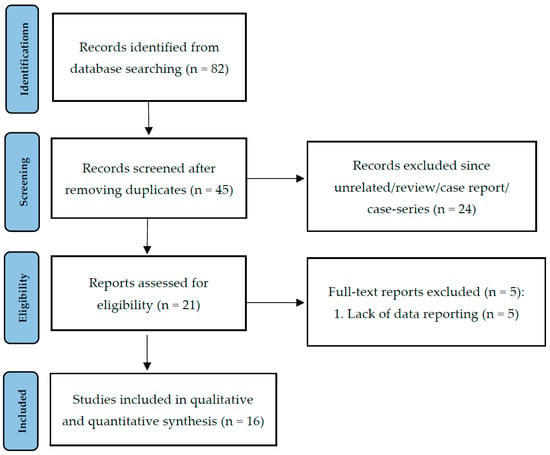
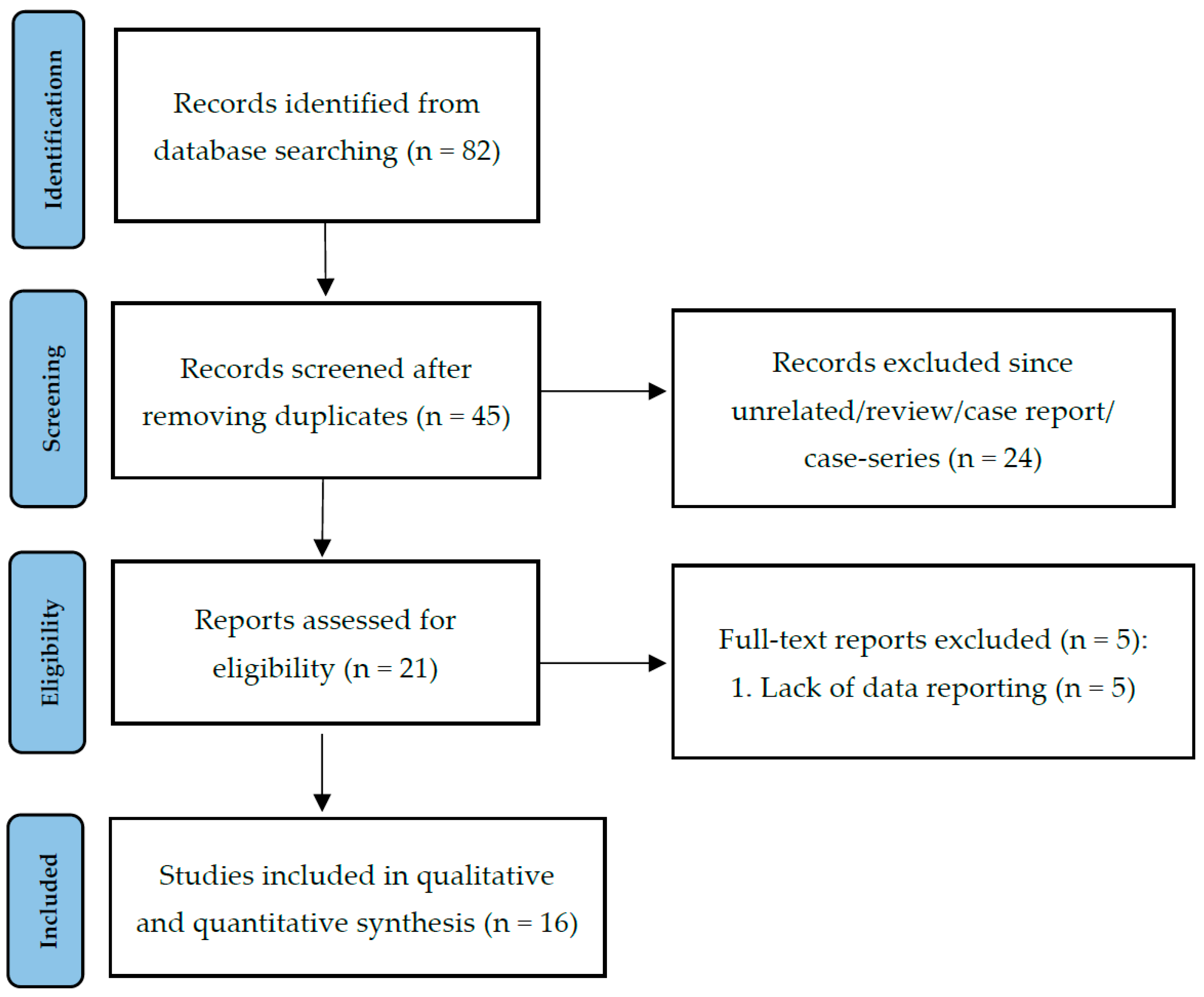
This study included 1254 patients with CRS; 537 of these were diagnosed with CCAD. A total of 82 scientific papers were identified in the literature. After screening, a total of 37 articles were removed as duplicates and a total of 24 articles were excluded since they were unrelated or were either reviews, case reports or case series. After the eligibility assessment, five full-text reports were excluded for insufficient data reporting. Finally, 16 articles were included in the quantitative and qualitative synthesis [1,6,9,10,11,16,17,18,19,20,21,22,23,24,25,26]. The inclusion process is summarized in a forest plot (Figure 1). Out of the studies included, only three were prospective studies, while the remaining ones were retrospective. Only one of the studies included was multicentric (Table 1).
Figure 1.
PRISMA flow diagram.
Table 1.
NICE quality assessment.
3.1. Symptoms Prevalence
Meta-analysis results for the analysis of symptom prevalence are summarized in Table 2. Overall, the prevalence of congestion in patients with CCAD was found to be 70% (95%CI: 16–100%), for obstruction was 78% (95%CI: 46–99%), for hyposmia was 54% (95%CI: 16–89%), for rhinorrhea was 66% (95%CI: 37–91%), for facial pain was 24% (95%CI: 14–35%).
Table 2.
Symptoms prevalence.
3.2. Atopy
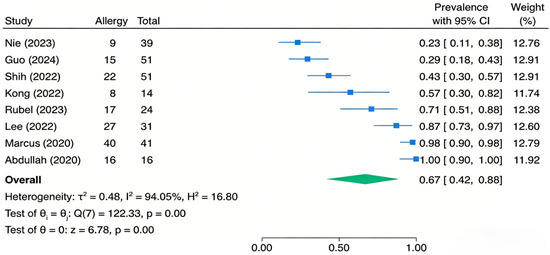
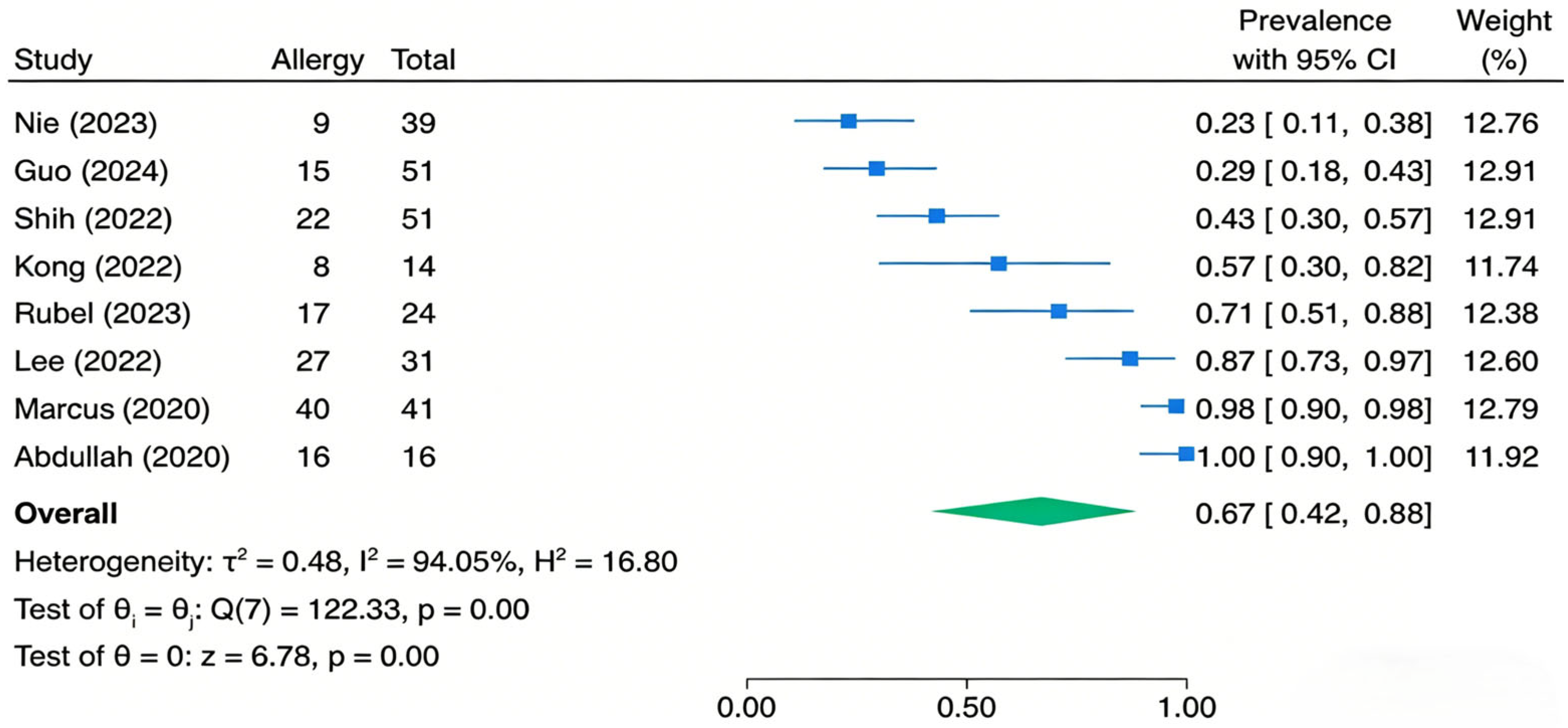
Only eight studies reported the allergy status of patients with CCAD; out of 267 patients, 154 were reported to have an allergy. Results of allergy prevalence analysis can be visualized in Figure 2. Overall, the prevalence of allergy in patients with CCAD was found to be 67% (95% CI: 42–88%), heterogeneity (I2) was 94.05%, and the test of θ found a p-value < 0.05, indicating statistical significance. Meta-analysis results for the analysis of allergen-sensitization prevalence are summarized in Table 3. Also, the nation where the studies were performed was indicated; pollen sensitization prevalence was impacted by geographical location, where warmer countries showed lower prevalence. Overall, the prevalence of dust mite sensitization in patients with CCAD was found to be 71% (95%CI: 62–80%), for pollen was 38% (95%CI: 13–67%), for animal was 31% (95%CI: 19–44%), and for mold was 12% (95%CI: 1–28%).
Figure 2.
Forest plot showing the meta-analysis results of allergy prevalence in CCAD [6,10,17,18,19,22,23,24].
Table 3.
Aeroallergens prevalence.
3.3. Comorbid Asthma
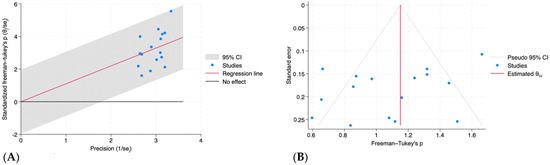
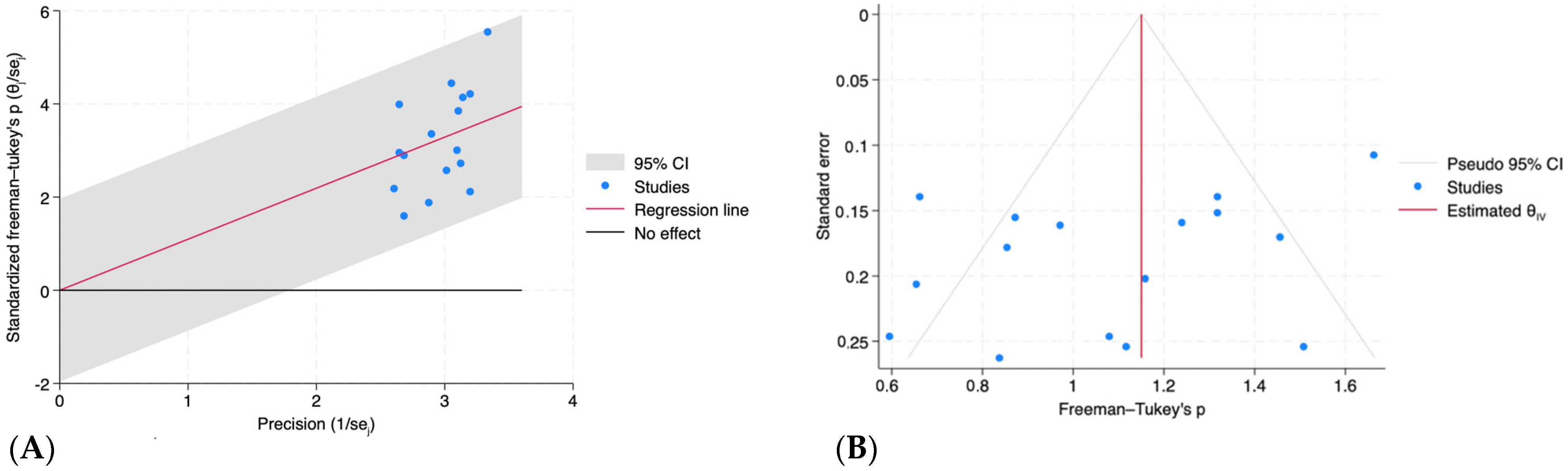
As summarized in Table 4, a total of 537 patients were analyzed, of whom 236 were females, and 301 were males. The mean age was 42.65 ± 16.73. Out of these, a total of 162 were diagnosed with asthma and 154 with allergy. Galbraith plot (Figure 3A) and funnel plot (Figure 3B) were drawn to assess heterogeneity and publication bias respectively.
Table 4.
Demography studies.
Figure 3.
(A) Galbraith plot analyzing heterogeneity. (B) Funnel plot analyzing publication bias.
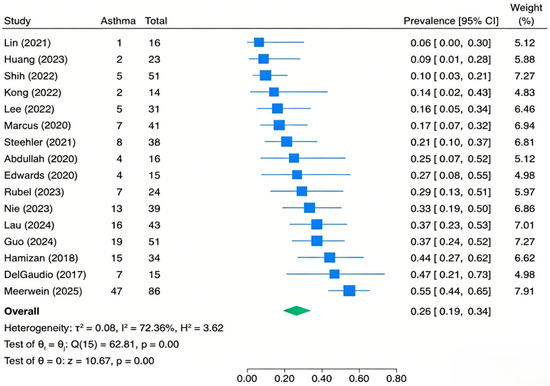
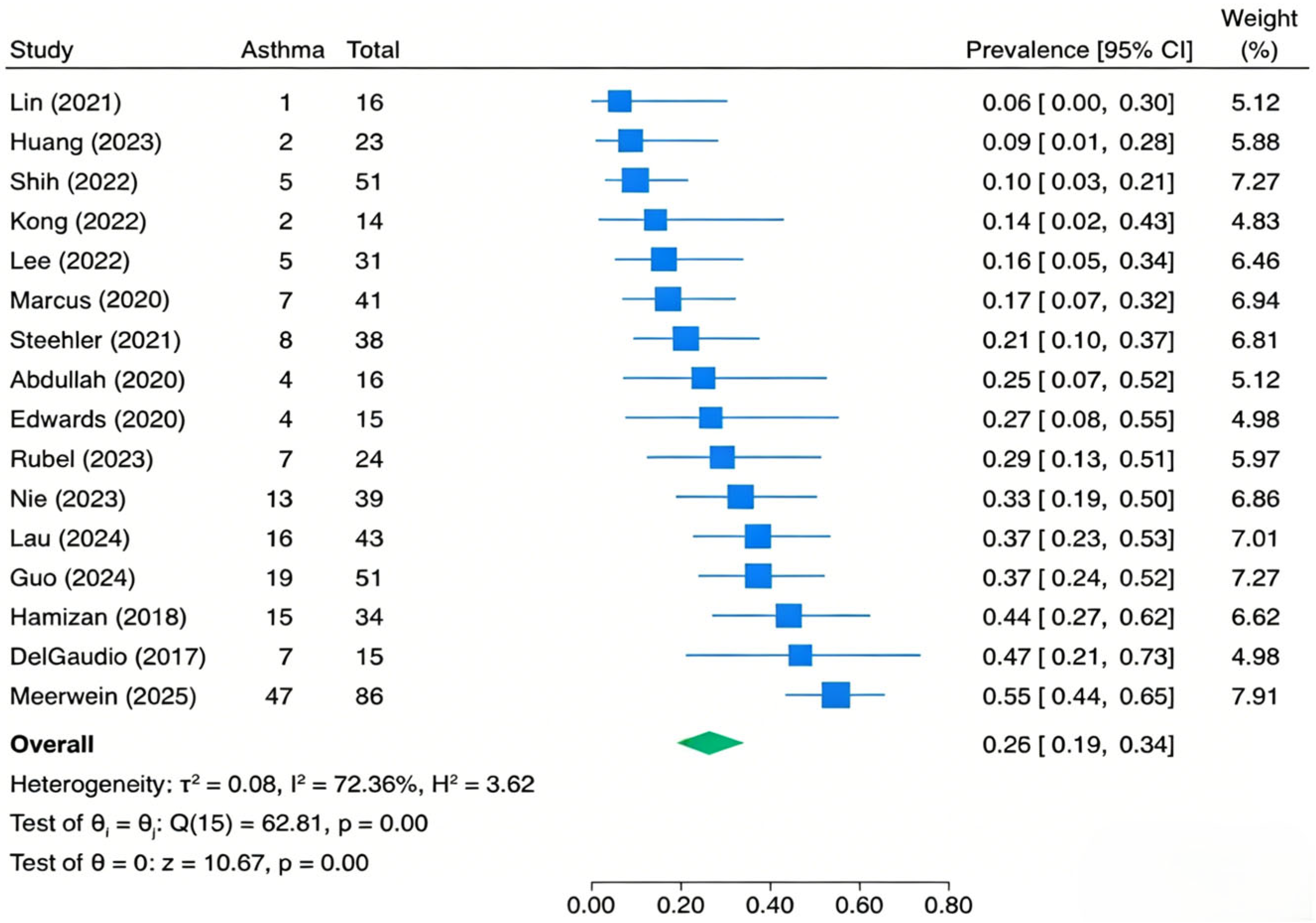
Meta-analysis results for the analysis of asthma prevalence are summarized in Figure 4. Overall, the prevalence of asthma in patients with CCAD was found to be 26% (95% CI: 19–34%), heterogeneity (I2) was 72.36%, and the test of θ found a p-value < 0.05, indicating statistical significance.
Figure 4.
Forest plot showing the meta-analysis results of asthma prevalence in CCAD [1,6,9,10,11,16,17,18,19,20,21,22,23,24,25,26].
3.4. Radiological Sinus Involvement
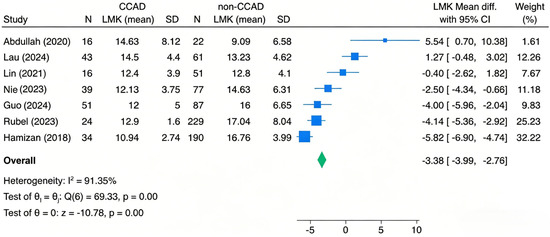
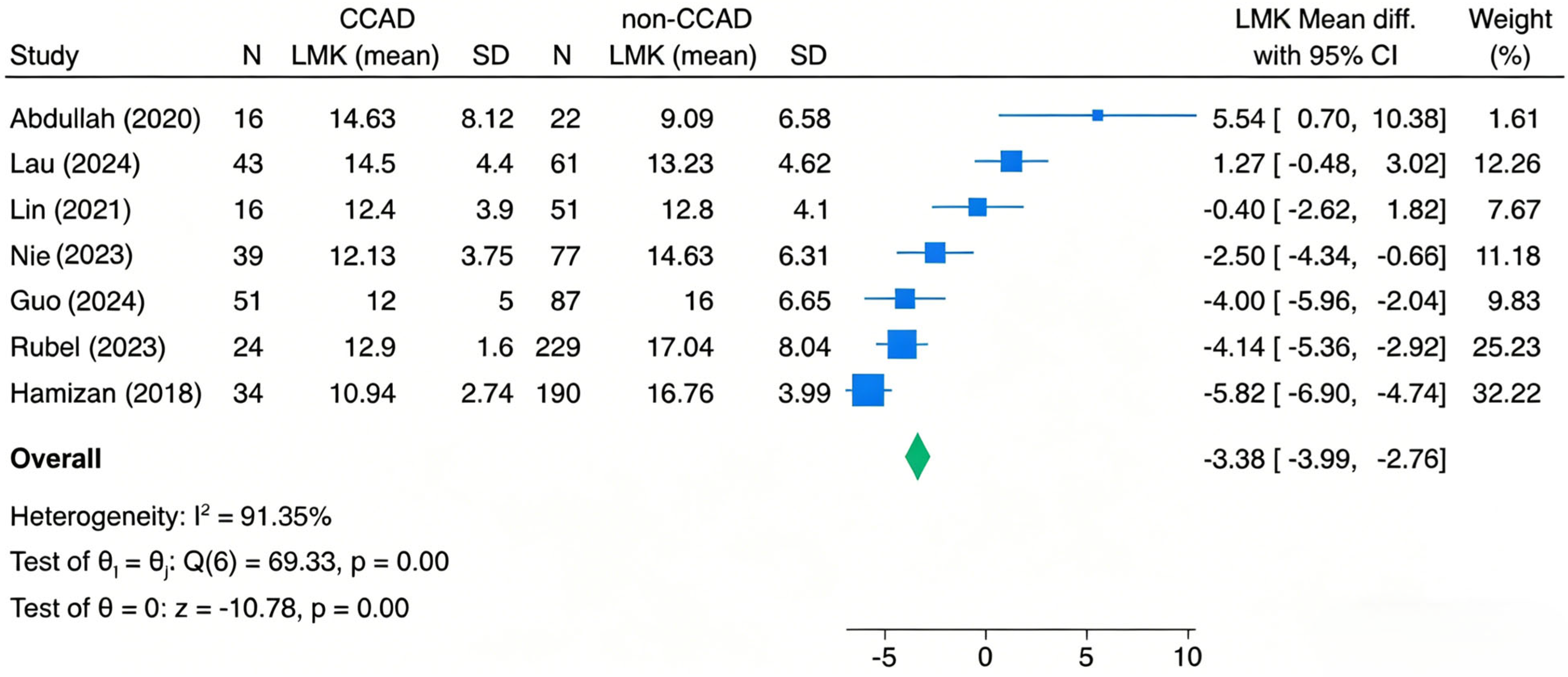
A total of 940 patients were included in the radiological analysis; of these, 223 were diagnosed with CCAD. Overall, the mean age + SD was 46.5 ± 15.72, women were 354, and men were 586 (Table 5). The mean LMK score in patients with CCAD was 12.65 ± 4.48, and the mean LMK score in non-CCAD patients was 15.71 ± 6.48. Heterogeneity (I2) was 91.35%, and the test of θ found a p-value < 0.05, indicating statistical significance. The statistical analysis found a mean difference in LMK scores of −3.38 (95% CI: −3.99; −2.76) as represented in Figure 5.
Table 5.
Characteristics of studies analyzing LMK scores.
Figure 5.
Forest plot showing meta-analysis results of mean LMK scores in CCAD versus the non-CCAD population [9,10,11,18,22,23,25].
4. Discussion
The present study demonstrates a high prevalence of asthma among patients diagnosed with central compartment atopic disease (CCAD), reinforcing the “Unified Airway Disease” concept as described by Fokkens et al. [27], who described the close pathophysiological association between upper and lower airway diseases in atopic patients. The findings contribute to improving current knowledge on the characteristics of this recently recognized phenotype of CRS, which requires further research to enhance information regarding diagnosis and characteristics of this pathology. Results summarize the findings of multiple studies available in the literature on CCAD. Concerning the clinical presentation, understandably, symptoms are nonspecific, as nasal obstruction, congestion and rhinorrhea are predominant symptoms in all CRS phenotypes. Aeroallergen sensitization was found to be more common for perennial allergens than seasonal ones. Dust mite was the most common sensitization at a prevalence of 71%. Similarly, Hamizan et al. [9] found that dust mite sensitization was higher in CCAD patients compared to non-CCAD patients; the opposite was true for pollen, animal and mold. Other studies in the literature also demonstrated the lower prevalence of dust mite sensitization in patients with CRS, Emanuel et al. at 22% [28] and Green et al. at 30% [29]; however, results go in contrast with other studies where dust mite sensitization was more common, as in Gutman et al. at 73% and Freudenberger et al. at 68% [30]. The variability in these findings is also believed to be due to the different geographical locations where the studies have been performed.
Allergy and asthma prevalence results go in contrast with findings by Bolk et al. [31], who described a prevalence of allergy and asthma in the CRS population. The prevalence of allergy was described to be between 74% and 100%, meanwhile the present study calculated a prevalence of 67% (95%CI: 42–88%), prevalence of asthma was described to be 17%, much lower when compared to the findings of the present study which demonstrated a prevalence of around 26% (95%CI: 19–34%). However, conclusions were similar in a case–control study by Shih et al. [24], where a strong relationship was observed between asthma and CCAD. Similarly, Lee et al. [6] reported that pediatric patients with CRS and the CCAD phenotype had a higher prevalence of asthma. Bolk et al. [31] also compared the prevalence of asthma and allergy in CCAD with other CRS phenotypes, such as in aspirin exacerbated respiratory disease (AERD) and allergic fungal rhinosinusitis (AFRS). In this literature review it is described that both phenotypes carry a higher prevalence of asthma when compared to CCAD, specifically 100% prevalence in AERD and 11.4–30.8% in AFRS. Meanwhile, the prevalence of allergy in AERD was 36–89.9% and in AFRS was 100%. Asthma is a pathology that carries an extremely complex inflammatory and immunological background [32]. This accounts for the overlap with multiple pathologies, especially with those involving both the upper and lower respiratory tract. The impact of asthma in patients with CCAD in terms of disease severity and management has not been investigated yet; however, as with other CRS phenotypes, the multidisciplinary management of these pathologies is playing an increasingly important role as collaboration between otolaryngologists, pneumologists and allergologists is key to achieving an appropriate disease control.
Results from this study also demonstrated how patients with CCAD, being the latter a pathology that originates in the central compartment of the nose, are more likely to develop lower LMK scores when compared to other CRS phenotypes. However, the heterogeneity encountered is probably due to a currently existing lack of standardization in CCAD diagnostic criteria; this further highlights the need to better define the characteristics of CCAD to facilitate differential diagnosis from other CRS phenotypes.
An additional aspect that warrants discussion is the role of the inferior turbinate in allergic rhinitis compared to the middle turbinate, as both play a crucial role in nasal obstruction in allergic patients. These two structures have fundamental differences in embryologic origin, as the inferior turbinate develops from the maxilloturbinal structure, whereas the middle turbinate arises from the ethmoturbinals (more closely related to the ethmoid sinus). This difference in origin also accounts for the different mucosal covering of these two structures: while the inferior turbinate is erectile tissue with abundant venous sinusoids and rich in submucosal glands, the middle turbinate is covered by less vascularized, thus non-erectile mucosa and with fewer glands. This possibly makes the middle turbinate more vulnerable to undergo polypoid changes compared to the inferior turbinate.
This study presents some limitations. First, it included no multicentric studies, but mostly observational retrospective studies. Due to the discrepancies between diagnostic approaches in patients with CCAD, the resulting heterogeneity of the population may have affected overall results. Furthermore, there was variability in the CRS phenotypes that were compared to CCAD when analyzing LMK scores; only Guo et al. [18] and Nie et al. [22] had the same CRS phenotypes in the comparison group. Despite the limitations, this study highlighted the possibility that CCAD patients have a higher prevalence of dust mite sensitization compared to other CRS subtypes; however, the role of perennial versus seasonal allergies needs further evaluation in the field of CRS. There is a non-negligible overlap between asthma and CCAD, highlighting the importance of a multidisciplinary approach in these patients. Future studies should focus on elucidating the underlying pathophysiology connecting the upper airways and lower airways in patients with CCAD and asthma. It remains unclear how to define patients with sinonasal polyps and concomitant polypoid/inflammatory changes in the central compartment: CRSwNP with allergy or CRSwNP with central compartment involvement (CRSwNP/CC) or advanced CCAD with extra-central compartment involvement? Definitions aside, it is crucial to keep in mind the previously described characteristics of CCAD and plan treatment accordingly.
In addition, there are discrepancies in the literature between how the diagnosis of CCAD is performed, as some authors used exclusively endoscopic findings, exclusively radiological findings or both. The authors advocate the need for future studies to focus on a more structured diagnostic approach when investigating this population, granting more uniformity between available data in the literature.
5. Conclusions
Nasal obstruction, congestion and rhinorrhea are highly prevalent symptoms in CCAD. Perennial aeroallergen sensitizations are the most common; specifically, dust mite is the most prevalent. Furthermore, allergy has a high prevalence in patients with CCAD, and asthma is found in about one-fourth of patients with CCAD. Findings support the Unified Airway Disease concept and highlight the need for taking into account a multidisciplinary approach to the management of this CRS phenotype. Further research is needed to clarify its pathophysiology and the impact of asthma on treatment and disease severity. Patients with CCAD tend not to develop very high LMK scores, meaning high scores may exclude the diagnosis of this pathology. However, differential diagnosis with other CRS phenotypes remains sometimes challenging. Future studies about CCAD should focus on a more structured diagnostic strategy to allow better analysis and understanding of this pathology.
Supplementary Materials
The following supporting information can be downloaded at: https://www.mdpi.com/article/10.3390/sinusitis10010008/s1, PRISMA 2020 Checklist.
Author Contributions
E.E. developed the study idea, design, and strategy. E.E., D.G. and L.T. performed the article search, data collection, and manuscript writing. E.E. performed the statistical analysis. S.I. drew the tables and figures and contributed to manuscript writing and revision. F.S. and F.P. performed the final article revision. All authors have read and agreed to the published version of the manuscript.
Funding
This research received no external funding.
Data Availability Statement
No new data were created or analyzed in this study. Data sharing is not applicable to this article.
Conflicts of Interest
The authors have no conflicts of interest to declare in relation to the content of this article. Approval from the Ethical Committee was not necessary due to the nature of the study.
Abbreviations
The following abbreviations are used in this manuscript:
| CCAD | Central Compartment Atopic Disease |
| CRS | Chronic Rhinosinusitis |
| CRSwNP | Chronic Rhinosinusitis with Nasal Polyps |
| LMK | Lund-Mackay |
References
- DelGaudio, J.M.; Loftus, P.A.; Hamizan, A.W.; Harvey, R.J.; Wise, S.K. Central Compartment Atopic Disease. Am. J. Rhinol. Allergy 2017, 31, 228–234. [Google Scholar] [CrossRef] [Scilit] [PubMed]
- White, L.J.; Rotella, M.R.; DelGaudio, J.M. Polypoid Changes of the Middle Turbinate as an Indicator of Atopic Disease. Int. Forum Allergy Rhinol. 2014, 4, 376–380. [Google Scholar] [CrossRef] [Scilit] [PubMed]
- Hamizan, A.W.; Christensen, J.M.; Ebenzer, J.; Oakley, G.; Tattersall, J.; Sacks, R.; Harvey, R.J. Middle Turbinate Edema as a Diagnostic Marker of Inhalant Allergy. Int. Forum Allergy Rhinol. 2017, 7, 37–42. [Google Scholar] [CrossRef] [Scilit] [PubMed]
- Fokkens, W.J.; Lund, V.J.; Hopkins, C.; Hellings, P.W.; Kern, R.; Reitsma, S.; Toppila-Salmi, S.; Bernal-Sprekelsen, M.; Mullol, J.; Alobid, I.; et al. European Position Paper on Rhinosinusitis and Nasal Polyps 2020. Rhinology 2020, 58, 1–464. [Google Scholar] [CrossRef] [Scilit]
- Jutel, M.; Agache, I.; Zemelka-Wiacek, M.; Akdis, M.; Chivato, T.; Del Giacco, S.; Gajdanowicz, P.; Gracia, I.E.; Klimek, L.; Lauerma, A.; et al. Nomenclature of Allergic Diseases and Hypersensitivity Reactions: Adapted to Modern Needs: An EAACI Position Paper. Allergy 2023, 78, 2851–2874. [Google Scholar] [CrossRef] [Scilit]
- Lee, K.; Kim, T.H.; Lee, S.H.; Kang, C.H.; Je, B.-K.; Oh, S. Predictive Value of Radiologic Central Compartment Atopic Disease for Identifying Allergy and Asthma in Pediatric Patients. Ear Nose Throat J. 2022, 101, 593–599. [Google Scholar] [CrossRef] [Scilit]
- Dhami, S.; Kakourou, A.; Asamoah, F.; Agache, I.; Lau, S.; Jutel, M.; Muraro, A.; Roberts, G.; Akdis, C.A.; Bonini, M.; et al. Allergen Immunotherapy for Allergic Asthma: A Systematic Review and Meta-analysis. Allergy 2017, 72, 1825–1848. [Google Scholar] [CrossRef] [Scilit]
- Craig, T.J. Aeroallergen Sensitization in Asthma: Prevalence and Correlation with Severity. Allergy Asthma Proc. 2010, 31, 96–102. [Google Scholar] [CrossRef] [Scilit]
- Hamizan, A.W.; Loftus, P.A.; Alvarado, R.; Ho, J.; Kalish, L.; Sacks, R.; DelGaudio, J.M.; Harvey, R.J. Allergic Phenotype of Chronic Rhinosinusitis Based on Radiologic Pattern of Disease. Laryngoscope 2018, 128, 2015–2021. [Google Scholar] [CrossRef] [Scilit]
- Abdullah, B.; Vengathajalam, S.; Md Daud, M.K.; Wan Mohammad, Z.; Hamizan, A.; Husain, S. The Clinical and Radiological Characterizations of the Allergic Phenotype of Chronic Rhinosinusitis with Nasal Polyps. J. Asthma Allergy 2020, 13, 523–531. [Google Scholar] [CrossRef] [Scilit] [PubMed]
- Lau, L.; Low, T.; Ong, Y.K.; Xu, X. Endoscopic and Radiologic Central Compartment Disease as Predictors of Perennial Inhalant Allergen Sensitization in Chronic Rhinosinusitis. Am. J. Rhinol. Allergy 2024, 38, 178–184. [Google Scholar] [CrossRef] [Scilit]
- Davies, C.; Wu, F.; Huang, E.Y.; Takashima, M.; Rowan, N.R.; Ahmed, O.G. Central Compartment Atopic Disease as a Pathophysiologically Distinct Subtype of Chronic Rhinosinusitis: A Scoping Review. Sinusitis 2023, 7, 12–26. [Google Scholar] [CrossRef] [Scilit]
- Hopkins, C.; Browne, J.P.; Slack, R.; Lund, V.; Brown, P. The Lund-Mackay Staging System for Chronic Rhinosinusitis: How Is. It Used and What Does It Predict? Otolaryngol.—Head Neck Surg. 2007, 137, 555–561. [Google Scholar] [CrossRef] [Scilit] [PubMed]
- Page, M.J.; McKenzie, J.E.; Bossuyt, P.M.; Boutron, I.; Hoffmann, T.C.; Mulrow, C.D.; Shamseer, L.; Tetzlaff, J.M.; Akl, E.A.; Brennan, S.E.; et al. The PRISMA 2020 Statement: An Updated Guideline for Reporting Systematic Reviews. Syst. Rev. 2021, 10, 89. [Google Scholar] [CrossRef] [Scilit] [PubMed]
- National Institute for Health and Care Excellence. The Social Care Guidance Manual; NICE Process and Methods Guides; National Institute for Health and Care Excellence (NICE): London, UK, 2016; ISBN 978-1-4731-1907-9. [Google Scholar]
- Huang, S.-K.; Hsieh, C.-H.; Weng, M.-C.; Lai, J.-T.; Shen, P.-H. Central Compartment Atopic Disease and Its Surgical Outcomes: Olfactory Changes and Technical Notes. Ther. Adv. Allergy Rhinol. 2023, 14, 27534030231217423. [Google Scholar] [CrossRef] [Scilit] [PubMed]
- Kong, W.; Wu, Q.; Chen, Y.; Ren, Y.; Wang, W.; Zheng, R.; Deng, H.; Yuan, T.; Qiu, H.; Wang, X.; et al. Chinese Central Compartment Atopic Disease: The Clinical Characteristics and Cellular Endotypes Based on Whole-Slide Imaging. J. Asthma Allergy 2022, 15, 341–352. [Google Scholar] [CrossRef] [Scilit]
- Guo, Y.; Nie, Z.; Chen, C.; Xu, Z.; Liu, W.; Lai, Y.; Fan, Y.; Shi, J.; Chen, F. Outcomes of Endoscopic Sinus Surgery in Patients with Central Compartment Atopic Disease. World Allergy Organ. J. 2024, 17, 100859. [Google Scholar] [CrossRef] [Scilit]
- Marcus, S.; Schertzer, J.; Roland, L.T.; Wise, S.K.; Levy, J.M.; DelGaudio, J.M. Central Compartment Atopic Disease: Prevalence of Allergy and Asthma Compared with Other Subtypes of Chronic Rhinosinusitis with Nasal Polyps. Int. Forum Allergy Rhinol. 2020, 10, 183–189. [Google Scholar] [CrossRef] [Scilit]
- Edwards, T.S.; DelGaudio, J.M.; Levy, J.M.; Wise, S.K. A Prospective Analysis of Systemic and Local Aeroallergen Sensitivity in Central Compartment Atopic Disease. Otolaryngol.—Head Neck Surg. 2022, 167, 885–890. [Google Scholar] [CrossRef] [Scilit]
- Steehler, A.J.; Vuncannon, J.R.; Wise, S.K.; DelGaudio, J.M. Central Compartment Atopic Disease: Outcomes Compared with Other Subtypes of Chronic Rhinosinusitis with Nasal Polyps. Int. Forum Allergy Rhinol. 2021, 11, 1549–1556. [Google Scholar] [CrossRef] [Scilit]
- Nie, Z.; Xu, Z.; Fan, Y.; Guo, Y.; Chen, C.; Liu, W.; Li, Y.; Lai, Y.; Shi, J.; Chen, F. Clinical Characteristics of Central Compartment Atopic Disease in Southern China. Int. Forum Allergy Rhinol. 2023, 13, 205–215. [Google Scholar] [CrossRef] [Scilit] [PubMed]
- Rubel, K.E.; Lubner, R.J.; Lopez, A.A.; Li, P.; Huang, L.; Sheng, Q.; Wu, J.; Wise, S.K.; DelGaudio, J.M.; Chandra, R.K.; et al. Inflammatory Characteristics of Central Compartment Atopic Disease. Int. Forum Allergy Rhinol. 2023, 13, 2133–2143. [Google Scholar] [CrossRef] [Scilit]
- Shih, L.; Hsieh, B.; Ma, J.; Huang, S.; Tsou, Y.; Lin, C.; Huang, K.; Tai, C. A Comparison of Central Compartment Atopic Disease and Lateral Dominant Nasal Polyps. Int. Forum Allergy Rhinol. 2022, 12, 1387–1396. [Google Scholar] [CrossRef] [Scilit]
- Lin, Y.; Lin, C.; Liao, C.; Chiang, B.; Yeh, T. Clinical Characteristics and Cytokine Profiles of Central-compartment-type Chronic Rhinosinusitis. Int. Forum Allergy Rhinol. 2021, 11, 1064–1073. [Google Scholar] [CrossRef] [Scilit]
- Meerwein, C.M.; Sacks, P.; Ho, J.; Choy, C.; Kalish, L.; Campbell, R.G.; Sacks, R.R.; Harvey, R.J. The Effect of Allergen Immunotherapy in Patients with Central Compartment Atopic Disease Post-surgery. Int. Forum Allergy Rhinol. 2025, 15, 128–134. [Google Scholar] [CrossRef] [Scilit] [PubMed]
- Fokkens, W.; Reitsma, S. Unified Airway Disease. Otolaryngol. Clin. N. Am. 2023, 56, 1–10. [Google Scholar] [CrossRef] [Scilit]
- Emanuel, I.A.; Shah, S.B. Chronic Rhinosinusitis: Allergy and Sinus Computed Tomography Relationships. Otolaryngol.—Head Neck Surg. 2000, 123, 687–691. [Google Scholar] [CrossRef] [Scilit]
- Green, B.J.; Beezhold, D.H.; Gallinger, Z.; Barron, C.S.; Melvin, R.; Bledsoe, T.A.; Kashon, M.L.; Sussman, G.L. Allergic Sensitization in Canadian Chronic Rhinosinusitis Patients. Allergy Asthma Clin. Immunol. 2014, 10, 15. [Google Scholar] [CrossRef] [Scilit]
- Freudenberger, T.; Grizzanti, J.N.; Rosenstreich, D.L. Natural Immunity to Dust Mites in Patients with Chronic Rhinosinusitis. J. Allergy Clin. Immunol. 1988, 82, 855–862. [Google Scholar] [CrossRef] [Scilit] [PubMed]
- Bolk, K.G.; Edwards, T.S.; Wise, S.K.; DelGaudio, J.M. Allergy and Asthma Prevalence and Management Across Nasal Polyp Subtypes. Otolaryngol. Clin. N. Am. 2024, 57, 253–263. [Google Scholar] [CrossRef] [Scilit]
- Gans, M.D.; Gavrilova, T. Understanding the Immunology of Asthma: Pathophysiology, Biomarkers, and Treatments for Asthma Endotypes. Paediatr. Respir. Rev. 2020, 36, 118–127. [Google Scholar] [CrossRef] [Scilit] [PubMed]

Disclaimer/Publisher’s Note: The statements, opinions and data contained in all publications are solely those of the individual author(s) and contributor(s) and not of MDPI and/or the editor(s). MDPI and/or the editor(s) disclaim responsibility for any injury to people or property resulting from any ideas, methods, instructions or products referred to in the content. |
© 2026 by the authors. Licensee MDPI, Basel, Switzerland. This article is an open access article distributed under the terms and conditions of the Creative Commons Attribution (CC BY) license.