
Air Pollution as a Driver of Recurrent Upper-Airway Infections and Comorbid Health Issues




Abstract
1. Introduction
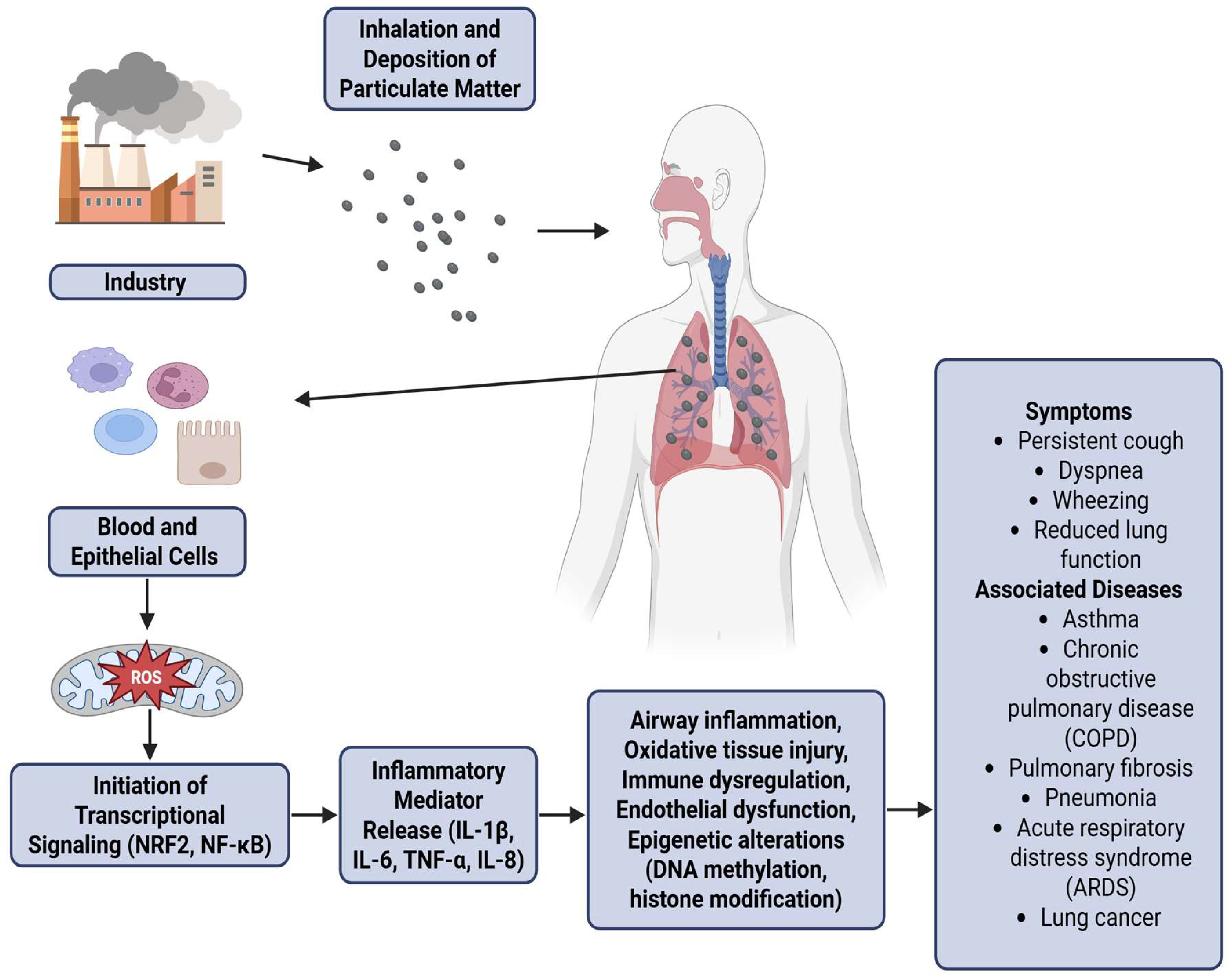
2. Molecular and Cellular Patho-Mechanisms of the Air Pollution and Immune System Interaction
3. Air Pollution and Upper-Airway Diseases
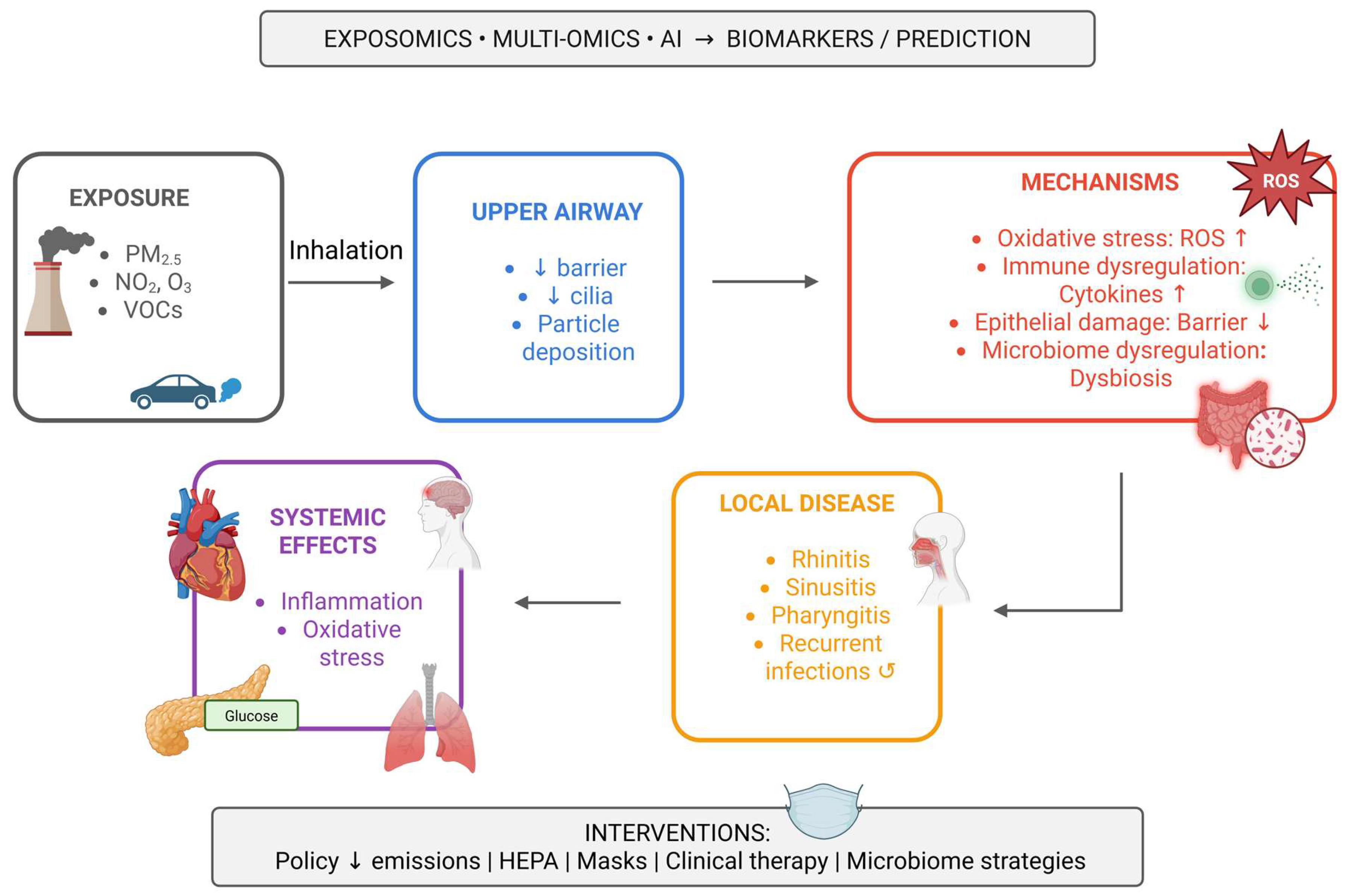
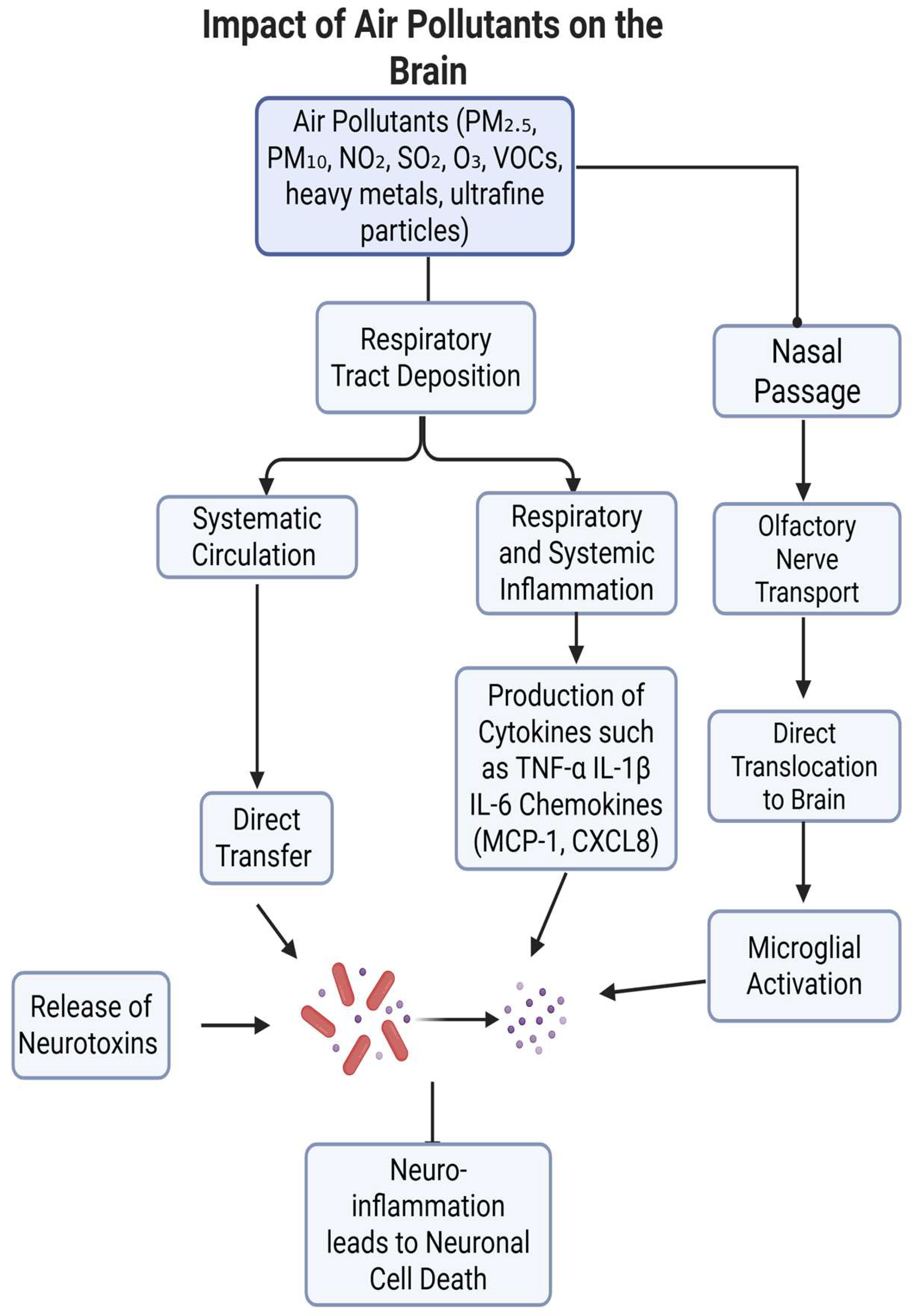
4. From Upper-Airway Injury to Multisystem Disease: Mechanistic Pathways Linking Air Pollution to Systemic Health
5. Preventive, Therapeutic, and Translational Strategies
5.1. Environmental and Exposure Reduction
5.2. Individual Protective Behaviors
5.3. Clinical Therapeutic Interventions
5.4. Microbiome and Immunomodulatory Approaches
5.5. Translational Research and Precision Medicine
6. Future Outlook and Conclusions
Author Contributions
Funding
Institutional Review Board Statement
Informed Consent Statement
Data Availability Statement
Acknowledgments
Conflicts of Interest
References
- World Health Organization. Air Pollution and Health: The Evidence; World Health Organization: Geneva, Switzerland, 2024.
- Schraufnagel, D.E.; Balmes, J.R.; Cowl, C.T.; De Matteis, S.; Jung, S.H.; Mortimer, K.; Perez-Padilla, R.; Rice, M.B.; Riojas-Rodriguez, H.; Sood, A.; et al. Air pollution and noncommunicable diseases: A review by the Forum of International Respiratory Societies’ Environmental Committee, part 2: Air pollution and organ systems. Chest 2019, 155, 417–426. [Google Scholar] [CrossRef]
- Chen, F.; Zhang, J.; Xie, J.; Fu, X. Causal relationships between air pollutants and upper respiratory tract infections: A two-sample Mendelian randomization study. J. Chin. Med. Assoc. 2025, 88, 481–485. [Google Scholar] [CrossRef] [PubMed]
- Ren, F.; Zhang, L.; Zhao, D.; Zhang, J. Association between allergic rhinitis, nasal polyps, chronic sinusitis and chronic respiratory diseases: A Mendelian randomization study. BMC Pulm. Med. 2025, 25, 109. [Google Scholar] [CrossRef] [PubMed]
- Li, X.; Liu, X. Effects of PM2.5 on chronic airway diseases: A review of research progress. Atmosphere 2021, 12, 1068. [Google Scholar] [CrossRef]
- Brook, R.D.; Rajagopalan, S.; Pope, C.A., III; Brook, J.R.; Bhatnagar, A.; Diez-Roux, A.V.; Holguin, F.; Hong, Y.; Luepker, R.V.; Mittleman, M.A.; et al. Particulate matter air pollution and cardiovascular disease: An update to the scientific statement from the American Heart Association. Circulation 2010, 121, 2331–2378. [Google Scholar] [CrossRef]
- Block, M.L.; Calderón-Garcidueñas, L. Air pollution: Mechanisms of neuroinflammation and CNS disease. Trends Neurosci. 2009, 32, 506–516. [Google Scholar] [CrossRef]
- Lelieveld, J.; Evans, J.S.; Fnais, M.; Giannadaki, D.; Pozzer, A. The contribution of outdoor air pollution sources to premature mortality on a global scale. Nature 2015, 525, 367–371. [Google Scholar] [CrossRef]
- Raju, S.; Siddharthan, T.; McCormack, M.C. Indoor air pollution and respiratory health. Clin. Chest Med. 2020, 41, 825–843. [Google Scholar] [CrossRef]
- Prata, J.C. Airborne microplastics: Consequences to human health? Environ. Pollut. 2018, 234, 115–126. [Google Scholar] [CrossRef]
- Wright, S.L.; Kelly, F.J. Plastic and human health: A micro issue? Environ. Sci. Technol. 2017, 51, 6634–6647. [Google Scholar] [CrossRef]
- Chen, F.; Zhang, W.; Mfarrej, M.F.B.; Saleem, M.H.; Khan, K.A.; Ma, J.; Raposo, A.; Han, H. Breathing in danger: Understanding the multifaceted impact of air pollution on health impacts. Ecotoxicol. Environ. Saf. 2024, 280, 116532. [Google Scholar] [CrossRef]
- Merkus, F.W.; Verhoef, J.C.; Schipper, N.G.; Marttin, E. Nasal mucociliary clearance as a factor in nasal drug delivery. Adv. Drug Deliv. Rev. 1998, 29, 13–38. [Google Scholar] [CrossRef] [PubMed]
- Miller, G.W.; Jones, D.P. The nature of nurture: Refining the definition of the exposome. Toxicol. Sci. 2014, 137, 1–2. [Google Scholar] [CrossRef] [PubMed]
- Mutlu, E.A.; Comba, I.Y.; Cho, T.; Engen, P.A.; Yazıcı, C.; Soberanes, S.; Hamanaka, R.B.; Niğdelioğlu, R.; Meliton, A.Y.; Ghio, A.J.; et al. Inhalational exposure to particulate matter air pollution alters the composition of the gut microbiome. Environ. Pollut. 2018, 240, 817–830. [Google Scholar] [CrossRef] [PubMed]
- Zhai, X.; Wang, J.; Sun, J.; Xin, L. PM2.5 induces inflammatory responses via oxidative stress-mediated mitophagy in human bronchial epithelial cells. Toxicol. Res. 2022, 11, 195–205. [Google Scholar] [CrossRef]
- Mariani, J.; Favero, C.; Spinazzè, A.; Cavallo, D.M.; Carugno, M.; Motta, V.; Bonzini, M.; Cattaneo, A.; Pesatori, A.C.; Bollati, V. Short-term particulate matter exposure influences nasal microbiota in a population of healthy subjects. Environ. Res. 2018, 162, 119–126. [Google Scholar] [CrossRef]
- Irizar, H.; Chun, Y.; Hsu, H.L.; Li, Y.C.; Zhang, L.; Arditi, Z.; Grishina, G.; Grishin, A.; Vicencio, A.; Pandey, G.; et al. Multi-omic integration reveals alterations in nasal mucosal biology that mediate air pollutant effects on allergic rhinitis. Allergy 2024, 79, 3047–3061. [Google Scholar] [CrossRef]
- Kim, S.Y.; Blanco, M.N.; Bi, J.; Larson, T.V.; Sheppard, L. Exposure assessment for air pollution epidemiology: A scoping review of emerging monitoring platforms and designs. Environ. Res. 2023, 223, 115451. [Google Scholar] [CrossRef]
- Mushtaq, Z.; Bangotra, P.; Gautam, A.S.; Sharma, M.; Suman; Gautam, S.; Singh, K.; Kumar, Y.; Jain, P. Satellite or ground-based measurements for air pollutants (PM2.5, PM10, SO2, NO2, O3) data and their health hazards: Which is most accurate and why? Environ. Monit. Assess. 2024, 196, 342. [Google Scholar] [CrossRef]
- Agbehadji, I.E.; Obagbuwa, I.C. Explainable artificial intelligence and machine learning for air pollution risk assessment and respiratory health outcomes: A systematic review. Atmosphere 2025, 16, 1154. [Google Scholar] [CrossRef]
- Schraufnagel, D.E. The health effects of ultrafine particles. Exp. Mol. Med. 2020, 52, 311–317. [Google Scholar] [CrossRef] [PubMed]
- Liu, Q.; Xu, C.; Ji, G.; Liu, H.; Shao, W.; Zhang, C.; Gu, A.; Zhao, P. Effect of exposure to ambient PM2.5 pollution on the risk of respiratory tract diseases: A meta-analysis of cohort studies. J. Biomed. Res. 2017, 31, 130–142. [Google Scholar] [CrossRef]
- Zhang, Z.Q.; Li, J.Y.; Guo, Q.; Li, Y.L.; Bao, Y.W.; Song, Y.Q.; Li, D.X.; Wu, J.; Zhu, X.H. Association between air pollution and allergic upper respiratory diseases: A meta-analysis. Eur. Respir. Rev. 2025, 34, 240266. [Google Scholar] [CrossRef] [PubMed]
- Huang, W.; Yin, L.; Li, H.; Yang, W.; Huang, S.; Wang, L.; Wang, K.; Hao, Y.; Wu, Q.; Liu, H. Impact of temperature variations on burden of lower respiratory infections under climate change (1990–2021). BMC Public Health 2025, 25, 1972. [Google Scholar] [CrossRef] [PubMed]
- Velasquez, N.; Gardiner, L.; Cheng, T.Z.; Moore, J.A.; Boudreau, R.M.; Presto, A.A.; Lee, S.E. Relationship between socioeconomic status, exposure to airborne pollutants, and chronic rhinosinusitis disease severity. Int. Forum Allergy Rhinol. 2022, 12, 172–180. [Google Scholar] [CrossRef]
- Laumbach, R.J.; Kipen, H.M. Respiratory health effects of air pollution: Update on biomass smoke and traffic pollution. J. Allergy Clin. Immunol. 2012, 129, 3–11. [Google Scholar] [CrossRef]
- Savin, I.A.; Zenkova, M.A.; Sen’kova, A.V. Bronchial asthma, airway remodeling and lung fibrosis as successive steps of one process. Int. J. Mol. Sci. 2023, 24, 16042. [Google Scholar] [CrossRef]
- Nabipur, L.; Mouawad, M.; Agrawal, D.K. Bioaerosols and airway diseases: Mechanisms of epithelial dysfunction, immune activation, and strategies for exposure mitigation. Arch. Intern. Med. Res. 2025, 8, 178–191. [Google Scholar] [CrossRef]
- Karavitis, J.; Kovacs, E.J. Macrophage phagocytosis: Effects of environmental pollutants, alcohol, cigarette smoke, and other external factors. J. Leukoc. Biol. 2011, 90, 1065–1078. [Google Scholar] [CrossRef]
- Araujo, J.A. Particulate air pollution, systemic oxidative stress, inflammation, and atherosclerosis. Air Qual. Atmos. Health 2010, 4, 79–93. [Google Scholar] [CrossRef]
- Shetty, S.S.; Deepthi, D.; Harshitha, S.; Sonkusare, S.; Naik, P.B.; Kumari, N.S.; Madhyastha, H. Environmental pollutants and their effects on human health. Heliyon 2023, 9, e19496. [Google Scholar] [CrossRef] [PubMed]
- Liu, P.; Xu, Y. Effects of air pollutants on nasal epithelial cells in chronic rhinosinusitis. Curr. Treat. Options Allergy 2025, 12, 18. [Google Scholar] [CrossRef]
- Zhang, Y.; Li, Q.; Zhang, W.; Chen, W.; Kong, Z.; Zhang, G.; Luo, Z. The air pollutant PM2.5 aggravates airway inflammation via NF-κB/NLRP3-induced pyroptosis: Partially inhibited by the TLR4 inhibitor TAK242. Int. Immunopharmacol. 2025, 163, 115229. [Google Scholar] [CrossRef] [PubMed]
- Taylor-Blair, H.C.; Siu, A.C.W.; Haysom-McDowell, A.; Kokkinis, S.; Bani Saeid, A.; Chellappan, D.K.; Oliver, B.G.G.; Paudel, K.R.; De Rubis, G.; Dua, K. The impact of airborne particulate matter-based pollution on the cellular and molecular mechanisms in chronic obstructive pulmonary disease (COPD). Sci. Total Environ. 2024, 954, 176413. [Google Scholar] [CrossRef]
- Gangwar, R.S.; Bevan, G.H.; Palanivel, R.; Das, L.; Rajagopalan, S. Oxidative stress pathways of air pollution mediated toxicity: Recent insights. Redox Biol. 2020, 34, 101545. [Google Scholar] [CrossRef]
- Garcia-Llorens, G.; El Ouardi, M.; Valls-Belles, V. Oxidative stress fundamentals: Unraveling the pathophysiological role of redox imbalance in non-communicable diseases. Appl. Sci. 2025, 15, 10191. [Google Scholar] [CrossRef]
- Bellanti, F.; Coda, A.R.D.; Trecca, M.I.; Lo Buglio, A.; Serviddio, G.; Vendemiale, G. Redox imbalance in inflammation: The interplay of oxidative and reductive stress. Antioxidants 2025, 14, 656. [Google Scholar] [CrossRef]
- Barnes, P.J. Oxidative stress in chronic obstructive pulmonary disease. Antioxidants 2022, 11, 965. [Google Scholar] [CrossRef]
- Li, K.; Song, Z.; Yue, Q.; Wang, Q.; Li, Y.; Zhu, Y.; Chen, H. Disease-specific transcriptional programs govern airway goblet cell metaplasia. Heliyon 2024, 10, e34105. [Google Scholar] [CrossRef]
- Gohy, S.; Carlier, F.M.; Fregimilicka, C.; Detry, B.; Lecocq, M.; Ladjemi, M.Z.; Verleden, S.; Hoton, D.; Weynand, B.; Bouzin, C.; et al. Altered generation of ciliated cells in chronic obstructive pulmonary disease. Sci. Rep. 2019, 9, 17963. [Google Scholar] [CrossRef]
- Wang, D.Y.; Li, Y.; Yan, Y.; Li, C.; Shi, L. Upper airway stem cells: Understanding the nose and role for future cell therapy. Curr. Allergy Asthma Rep. 2015, 15, 490. [Google Scholar] [CrossRef] [PubMed]
- Xian, M.; Ma, S.; Wang, K.; Lou, H.; Wang, Y.; Zhang, L.; Wang, C.; Akdis, C.A. Particulate matter 2.5 causes deficiency in barrier integrity in human nasal epithelial cells. Allergy Asthma Immunol. Res. 2020, 12, 56–71. [Google Scholar] [CrossRef]
- Helleday, R.; Huberman, D.; Blomberg, A.; Stjernberg, N.; Sandström, T. Nitrogen dioxide exposure impairs the frequency of mucociliary activity in healthy subjects. Eur. Respir. J. 1995, 8, 1664–1668. [Google Scholar] [CrossRef] [PubMed]
- Jia, J.; Xia, J.; Zhang, R.; Bai, Y.; Liu, S.; Dan, M.; Li, T.; Yan, T.; Chen, L.; Gong, S.; et al. Investigation of the impact of PM2.5 on the ciliary motion of human nasal epithelial cells. Chemosphere 2019, 233, 309–318. [Google Scholar] [CrossRef]
- Kayalar, Ö.; Rajabi, H.; Konyalilar, N.; Mortazavi, D.; Aksoy, G.T.; Wang, J.; Bayram, H. Impact of particulate air pollution on airway injury and epithelial plasticity: Underlying mechanisms. Front. Immunol. 2024, 15, 1324552. [Google Scholar] [CrossRef] [PubMed]
- Shah, B.K.; Singh, B.; Wang, Y.; Xie, S.; Wang, C. Mucus hypersecretion in chronic obstructive pulmonary disease and its treatment. Mediat. Inflamm. 2023, 2023, 8840594. [Google Scholar] [CrossRef]
- Hall-Stoodley, L.; McCoy, K.S. Biofilm aggregates and the host airway-microbial interface. Front. Cell. Infect. Microbiol. 2022, 12, 969326. [Google Scholar] [CrossRef]
- Paplinska-Goryca, M.; Misiukiewicz-Stepien, P.; Proboszcz, M.; Nejman-Gryz, P.; Gorska, K.; Zajusz-Zubek, E.; Krenke, R. Interactions of nasal epithelium with macrophages and dendritic cells variously alter urban PM-induced inflammation in healthy, asthma and COPD. Sci. Rep. 2021, 11, 13259. [Google Scholar] [CrossRef]
- Chen, Y.W.; Huang, M.Z.; Chen, C.L.; Kuo, C.Y.; Yang, C.Y.; Chiang-Ni, C.; Chen, Y.M.; Hsieh, C.M.; Wu, H.Y.; Kuo, M.L.; et al. PM2.5 impairs macrophage functions to exacerbate pneumococcus-induced pulmonary pathogenesis. Part. Fibre Toxicol. 2020, 17, 37. [Google Scholar] [CrossRef]
- Becker, S.; Soukup, J.M.; Sioutas, C.; Cassee, F.R. Response of human alveolar macrophages to ultrafine, fine, and coarse urban air pollution particles. Exp. Lung Res. 2003, 29, 29–44. [Google Scholar] [CrossRef]
- Bencze, D.; Fekete, T.; Pfliegler, W.; Szöőr, Á.; Csoma, E.; Szántó, A.; Tarr, T.; Bácsi, A.; Kemény, L.; Veréb, Z.; et al. Interactions between the NLRP3-dependent IL-1β and the type I interferon pathways in human plasmacytoid dendritic cells. Int. J. Mol. Sci. 2022, 23, 12154. [Google Scholar] [CrossRef]
- Mou, Y.; Liao, W.; Liang, Y.; Li, Y.; Zhao, M.; Guo, Y.; Sun, Q.; Tang, J.; Wang, Z. Environmental pollutants induce NLRP3 inflammasome activation and pyroptosis: Roles and mechanisms in various diseases. Sci. Total Environ. 2023, 900, 165851. [Google Scholar] [CrossRef] [PubMed]
- Hirota, J.A.; Im, H.; Rahman, M.M.; Rumzhum, N.N.; Manetsch, M.; Pascoe, C.D.; Bunge, K.; Alkhouri, H.; Oliver, B.G.; Ammit, A.J. The nucleotide-binding domain and leucine-rich repeat protein-3 inflammasome is not activated in airway smooth muscle upon toll-like receptor-2 ligation. Am. J. Respir. Cell Mol. Biol. 2013, 49, 517–524. [Google Scholar] [CrossRef] [PubMed]
- Bauer, R.N.; Diaz-Sanchez, D.; Jaspers, I. Effects of air pollutants on innate immunity: The role of Toll-like receptors and nucleotide-binding oligomerization domain-like receptors. J. Allergy Clin. Immunol. 2012, 129, 14–24. [Google Scholar] [CrossRef] [PubMed]
- Park, S.Y.; Jang, H.; Kwon, J.; Park, C.M.; Lee, C.M.; Song, D.J. Personal PM2.5 exposure and associated factors among adults with allergic diseases in an urban environment: A panel study. Toxics 2025, 13, 317. [Google Scholar] [CrossRef]
- Miller, R.L.; Peden, D.B. Environmental effects on immune responses in patients with atopy and asthma. J. Allergy Clin. Immunol. 2014, 134, 1001–1008. [Google Scholar] [CrossRef]
- Movassagh, H.; Prunicki, M.; Kaushik, A.; Zhou, X.; Dunham, D.; Smith, E.M.; He, Z.; Aleman Muench, G.R.; Shi, M.; Weimer, A.K.; et al. Proinflammatory polarization of monocytes by particulate air pollutants is mediated by induction of trained immunity in pediatric asthma. Allergy 2023, 78, 1922–1933. [Google Scholar] [CrossRef]
- Rider, C.F.; Carlsten, C. Air pollution and DNA methylation: Effects of exposure in humans. Clin. Epigenet. 2019, 11, 131. [Google Scholar] [CrossRef]
- Dimitri-Pinheiro, S.; Soares, R.; Barata, P. The microbiome of the nose—Friend or foe? Allergy Rhinol. 2020, 11, 2152656720911605. [Google Scholar] [CrossRef]
- Hunt, B.C.; Xu, X.; Gaggar, A.; Swords, W.E. Nontypeable Haemophilus influenzae redox recycling of protein thiols promotes resistance to oxidative killing and bacterial survival in biofilms in a smoke-related infection model. mSphere 2022, 7, e0084721. [Google Scholar] [CrossRef]
- Vanderpool, E.J.; Rumbaugh, K.P. Host-microbe interactions in chronic rhinosinusitis biofilms and models for investigation. Biofilm 2023, 6, 100160. [Google Scholar] [CrossRef] [PubMed]
- Markus, V.; Paul, A.A.; Teralı, K.; Özer, N.; Marks, R.S.; Golberg, K.; Kushmaro, A. Conversations in the gut: The role of quorum sensing in normobiosis. Int. J. Mol. Sci. 2023, 24, 3722. [Google Scholar] [CrossRef] [PubMed]
- Mazumder, M.H.H.; Hussain, S. Air-pollution-mediated microbial dysbiosis in health and disease: Lung-gut axis and beyond. J. Xenobiot. 2024, 14, 1595–1612. [Google Scholar] [CrossRef] [PubMed]
- Montanari, E.; Bernardo, G.; Le Noci, V.; Anselmi, M.; Pupa, S.M.; Tagliabue, E.; Sommariva, M.; Sfondrini, L. Biofilm formation by the host microbiota: A protective shield against immunity and its implication in cancer. Mol. Cancer 2025, 24, 148. [Google Scholar] [CrossRef]
- Cohen, M.; Kofonow, J.; Nayak, J.V.; Palmer, J.N.; Chiu, A.G.; Leid, J.G.; Cohen, N.A. Biofilms in chronic rhinosinusitis: A review. Am. J. Rhinol. Allergy 2009, 23, 255–260. [Google Scholar] [CrossRef]
- Fastenberg, J.H.; Hsueh, W.D.; Mustafa, A.; Akbar, N.A.; Abuzeid, W.M. Biofilms in chronic rhinosinusitis: Pathophysiology and therapeutic strategies. World J. Otorhinolaryngol. Head Neck Surg. 2016, 2, 219–229. [Google Scholar] [CrossRef]
- Liu, C.W.; Lee, T.L.; Chen, Y.C.; Liang, C.J.; Wang, S.H.; Lue, J.H.; Tsai, J.S.; Lee, S.W.; Chen, S.H.; Yang, Y.F.; et al. PM2.5-induced oxidative stress increases intercellular adhesion molecule-1 expression in lung epithelial cells through the IL-6/AKT/STAT3/NF-κB-dependent pathway. Part. Fibre Toxicol. 2018, 15, 4. [Google Scholar] [CrossRef]
- Shukla, S.D.; Mahmood, M.Q.; Weston, S.; Latham, R.; Muller, H.K.; Sohal, S.S.; Walters, E.H. The main rhinovirus respiratory tract adhesion site (ICAM-1) is upregulated in smokers and patients with chronic airflow limitation (CAL). Respir. Res. 2017, 18, 6. [Google Scholar] [CrossRef]
- Zheng, T.; Wang, Y.; Zhou, Z.; Chen, S.; Jiang, J.; Chen, S. PM2.5 causes increased bacterial invasion by affecting HBD1 expression in the lung. J. Immunol. Res. 2024, 2024, 6622950. [Google Scholar] [CrossRef]
- Liu, J.; Chen, X.; Dou, M.; He, H.; Ju, M.; Ji, S.; Zhou, J.; Chen, C.; Zhang, D.; Miao, C.; et al. Particulate matter disrupts airway epithelial barrier via oxidative stress to promote Pseudomonas aeruginosa infection. J. Thorac. Dis. 2019, 11, 2617–2627. [Google Scholar] [CrossRef]
- Butkevych, E.; Lobo de Sá, F.D.; Nattramilarasu, P.K.; Bücker, R. Contribution of epithelial apoptosis and subepithelial immune responses in Campylobacter jejuni-induced barrier disruption. Front. Microbiol. 2020, 11, 344. [Google Scholar] [CrossRef] [PubMed]
- Bonato, M.; Gallo, E.; Turrin, M.; Bazzan, E.; Baraldi, F.; Saetta, M.; Gregori, D.; Papi, A.; Contoli, M.; Baraldo, S. Air pollution exposure impairs airway epithelium IFN-β expression in pre-school children. Front. Immunol. 2021, 12, 731968. [Google Scholar] [CrossRef] [PubMed]
- Comunian, S.; Dongo, D.; Milani, C.; Palestini, P. Air pollution and COVID-19: The role of particulate matter in the spread and increase of COVID-19’s morbidity and mortality. Int. J. Environ. Res. Public Health 2020, 17, 4487. [Google Scholar] [CrossRef]
- Maleki, M.; Anvari, E.; Hopke, P.K.; Noorimotlagh, Z.; Mirzaee, S.A. An updated systematic review on the association between atmospheric particulate matter pollution and prevalence of SARS-CoV-2. Environ. Res. 2021, 195, 110898. [Google Scholar] [CrossRef] [PubMed]
- Galsuren, J.; Dambadarjaa, D.; Tighe, R.M.; Gray, G.C.; Zhang, J. Particulate matter exposure and viral infections: Relevance to highly polluted settings such as Ulaanbaatar, Mongolia. Curr. Environ. Health Rep. 2025, 12, 22. [Google Scholar] [CrossRef]
- Santurtún, A.; Colom, M.L.; Fdez-Arroyabe, P.; Real, Á.D.; Fernández-Olmo, I.; Zarrabeitia, M.T. Exposure to particulate matter: Direct and indirect role in the COVID-19 pandemic. Environ. Res. 2022, 206, 112261. [Google Scholar] [CrossRef]
- Kanjanawasee, D.; Limjunyawong, N.; Tantilipikorn, D. Role of air pollution in rhinitis. Explor. Asthma Allergy 2025, 3, 100985. [Google Scholar] [CrossRef]
- Sierra-Vargas, M.P.; Montero-Vargas, J.M.; Debray-García, Y.; Vizuet-de-Rueda, J.C.; Loaeza-Román, A.; Terán, L.M. Oxidative stress and air pollution: Its impact on chronic respiratory diseases. Int. J. Mol. Sci. 2023, 24, 853. [Google Scholar] [CrossRef]
- Milillo, C.; Falcone, L.; Di Carlo, P.; Aruffo, E.; Del Boccio, P.; Cufaro, M.C.; Patruno, A.; Pesce, M.; Ballerini, P. Ozone effect on the inflammatory and proteomic profile of human macrophages and airway epithelial cells. Respir. Physiol. Neurobiol. 2023, 307, 103979. [Google Scholar] [CrossRef]
- Campos, C.F.; Santos, V.S.V.; Campos, J.E.O.; da Costa Estrela, D.; Pires, L.P.; Meza Bravo, J.V.; Pereira, B.B. Assessment of genotoxicity of air pollution in urban areas using an integrated model of passive biomonitoring. Environ. Pollut. 2024, 355, 124219. [Google Scholar] [CrossRef]
- Lodovici, M.; Bigagli, E. Oxidative stress and air pollution exposure. J. Toxicol. 2011, 2011, 487074. [Google Scholar] [CrossRef] [PubMed]
- Lee, P.H.; Park, S.; Lee, Y.G.; Choi, S.M.; An, M.H.; Jang, A.S. The impact of environmental pollutants on barrier dysfunction in respiratory disease. Allergy Asthma Immunol. Res. 2021, 13, 850–862. [Google Scholar] [CrossRef] [PubMed]
- Lu, H.; Xiang, J.; Zhou, X.; Lin, M.; Huang, C.; Yi, F.; Chen, Z.; Lai, K. Alteration of the secretome in airway epithelial cells by air pollutants: Evidence from an air-liquid interface model. Lung 2025, 203, 98. [Google Scholar] [CrossRef] [PubMed]
- Moratin, H.; Lang, J.; Picker, M.S.; Rossi, A.; Wilhelm, C.; von Fournier, A.; Stöth, M.; Goncalves, M.; Kleinsasser, N.; Hackenberg, S.; et al. The impact of NO2 on epithelial barrier integrity of a primary cell-based air-liquid interface model of the nasal respiratory epithelium. J. Appl. Toxicol. 2025, 45, 482–491. [Google Scholar] [CrossRef]
- Cao, Y.; Chen, M.; Dong, D.; Xie, S.; Liu, M. Environmental pollutants damage airway epithelial cell cilia: Implications for the prevention of obstructive lung diseases. Thorac. Cancer 2020, 11, 505–510. [Google Scholar] [CrossRef]
- Aghapour, M.; Ubags, N.D.; Bruder, D.; Hiemstra, P.S.; Sidhaye, V.; Rezaee, F.; Heijink, I.H. Role of air pollutants in airway epithelial barrier dysfunction in asthma and COPD. Eur. Respir. Rev. 2022, 31, 210112. [Google Scholar] [CrossRef]
- Guttenberg, M.A.; Vose, A.T.; Tighe, R.M. Role of innate immune system in environmental lung diseases. Curr. Allergy Asthma Rep. 2021, 21, 34. [Google Scholar] [CrossRef]
- Münzel, T.; Sørensen, M.; Gori, T.; Schmidt, F.P.; Rao, X.; Brook, J.; Chen, L.C.; Brook, R.D.; Rajagopalan, S. Environmental stressors and cardio-metabolic disease: Part I—Epidemiologic evidence supporting a role for noise and air pollution and effects of mitigation strategies. Eur. Heart J. 2017, 38, 550–556. [Google Scholar] [CrossRef]
- Ma, J.; Chiu, Y.F.; Kao, C.C.; Chuang, C.N.; Chen, C.Y.; Lai, C.H.; Kuo, M.L. Fine particulate matter manipulates immune response to exacerbate microbial pathogenesis in the respiratory tract. Eur. Respir. Rev. 2024, 33, 230259. [Google Scholar] [CrossRef]
- Han, B.H.; Jang, S.H.; Jang, Y.J.; Na, S.W.; Yoon, J.J.; Moon, H.G.; Kim, S.Y.; Seo, C.S.; Lee, H.S.; Lee, Y.M.; et al. Diesel vehicles-derived PM2.5 induces lung and cardiovascular injury attenuated by Securiniga suffruticosa: Involvement of NF-κB-mediated NLRP3 inflammasome activation pathway. Biomed. Pharmacother. 2023, 162, 114637. [Google Scholar] [CrossRef]
- Cáceres, L.; Abogunloko, T.; Malchow, S.; Ehret, F.; Merz, J.; Li, X.; Sol Mitre, L.; Magnani, N.; Tasat, D.; Mwinyella, T.; et al. Molecular mechanisms underlying NLRP3 inflammasome activation and IL-1β production in air pollution fine particulate matter (PM2.5)-primed macrophages. Environ. Pollut. 2024, 341, 122997. [Google Scholar] [CrossRef]
- Chaudhuri, N.; Paiva, C.; Donaldson, K.; Duffin, R.; Parker, L.C.; Sabroe, I. Diesel exhaust particles override natural injury-limiting pathways in the lung. Am. J. Physiol. Lung Cell. Mol. Physiol. 2010, 299, L263–L271. [Google Scholar] [CrossRef] [PubMed]
- Tao, R.J.; Cao, W.J.; Li, M.H.; Yang, L.; Dai, R.X.; Luo, X.L.; Liu, Y.; Ge, B.X.; Su, X.; Xu, J.F. PM2.5 compromises antiviral immunity in influenza infection by inhibiting activation of NLRP3 inflammasome and expression of interferon-β. Mol. Immunol. 2020, 125, 178–186. [Google Scholar] [CrossRef] [PubMed]
- Matthews, N.C.; Pfeffer, P.E.; Mann, E.H.; Kelly, F.J.; Corrigan, C.J.; Hawrylowicz, C.M.; Lee, T.H. Urban particulate matter-activated human dendritic cells induce the expansion of potent inflammatory Th1, Th2, and Th17 effector cells. Am. J. Respir. Cell Mol. Biol. 2016, 54, 250–262. [Google Scholar] [CrossRef] [PubMed]
- Glencross, D.A.; Ho, T.R.; Camiña, N.; Hawrylowicz, C.M.; Pfeffer, P.E. Air pollution and its effects on the immune system. Free Radic. Biol. Med. 2020, 151, 56–68. [Google Scholar] [CrossRef]
- Jo, Y.; Kim, B.Y.; Lee, S.M.; Park, J.; Kim, W.; Shim, J.A.; Park, J.H.; Park, J.E.; Shin, Y.I.; Ryu, J.H.; et al. Particulate matter exposure induces pulmonary TH2 responses and oxidative stress-mediated NRF2 activation in mice. Redox Biol. 2025, 82, 103632. [Google Scholar] [CrossRef]
- Marín-Palma, D.; Fernández, G.J.; Ruiz-Saenz, J.; Taborda, N.A.; Rugeles, M.T.; Hernández, J.C. Particulate matter impairs immune system function by up-regulating inflammatory pathways and decreasing pathogen response gene expression. Sci. Rep. 2023, 13, 12773. [Google Scholar] [CrossRef]
- Hodgkins, S.R.; Ather, J.L.; Paveglio, S.A.; Allard, J.L.; LeClair, L.A.; Suratt, B.T.; Boyson, J.E.; Poynter, M.E. NO2 inhalation induces maturation of pulmonary CD11c+ cells that promote antigen-specific CD4+ T cell polarization. Respir. Res. 2010, 11, 102. [Google Scholar] [CrossRef]
- Damani-Yokota, P.; Khanna, K.M. Innate immune memory: The evolving role of macrophages in therapy. Elife 2025, 14, e108276. [Google Scholar] [CrossRef]
- Gavito-Covarrubias, D.; Ramírez-Díaz, I.; Guzmán-Linares, J.; Limón, I.D.; Manuel-Sánchez, D.M.; Molina-Herrera, A.; Coral-García, M.Á.; Anastasio, E.; Anaya-Hernández, A.; López-Salazar, P.; et al. Epigenetic mechanisms of particulate matter exposure: Air pollution and hazards on human health. Front. Genet. 2024, 14, 1306600. [Google Scholar] [CrossRef]
- Halper-Stromberg, A.; Jabri, B. Maladaptive consequences of inflammatory events shape individual immune identity. Nat. Immunol. 2022, 23, 1675–1686. [Google Scholar] [CrossRef]
- Jiang, L.; Shao, M.; Song, C.; Zhou, L.; Nie, W.; Yu, H.; Wang, S.; Liu, Y.; Yu, L. The role of epigenetic mechanisms in the development of PM2.5-induced cognitive impairment. Toxics 2025, 13, 119. [Google Scholar] [CrossRef]
- Afthab, M.; Hambo, S.; Kim, H.; Alhamad, A.; Harb, H. Particulate matter-induced epigenetic modifications and lung complications. Eur. Respir. Rev. 2024, 33, 240129. [Google Scholar] [CrossRef] [PubMed]
- Yan, M.; Ge, H.; Zhang, L.; Chen, X.; Yang, X.; Liu, F.; Shan, A.; Liang, F.; Li, X.; Ma, Z.; et al. Long-term PM2.5 exposure in association with chronic respiratory diseases morbidity: A cohort study in Northern China. Ecotoxicol. Environ. Saf. 2022, 244, 114025. [Google Scholar] [CrossRef] [PubMed]
- Lukyanchuk, A.; Muraki, N.; Kawai, T.; Sato, T.; Hata, K.; Ito, T.; Tajima, A. Long-term exposure to diesel exhaust particles induces concordant changes in DNA methylation and transcriptome in human adenocarcinoma alveolar basal epithelial cells. Epigenet. Chromatin 2024, 17, 24. [Google Scholar] [CrossRef] [PubMed]
- Reddy, S.R.; Bangeppagari, M.; Lee, S.J. Immune-epigenetic effects of environmental pollutants: Mechanisms, biomarkers, and transgenerational impact. Curr. Issues Mol. Biol. 2025, 47, 703. [Google Scholar] [CrossRef]
- Mukherjee, S.; Dasgupta, S.; Mishra, P.K.; Chaudhury, K. Air pollution-induced epigenetic changes: Disease development and a possible link with hypersensitivity pneumonitis. Environ. Sci. Pollut. Res. Int. 2021, 28, 55981–56002. [Google Scholar] [CrossRef]
- Morais-Almeida, M.; Baptista-Pestana, R. Environmental factors influencing the microbiome in adult asthma: Emerging mechanistic insights. Curr. Opin. Allergy Clin. Immunol. 2026, 26, 45–51. [Google Scholar] [CrossRef]
- Yu, X.; Qiu, Z.; Zeng, X.; Zhang, S.; Tang, J.; Wu, Y.; Zhang, L.; Huo, X.; Liu, C.; Liu, D. Influences of PM2.5 on gut physiology, microbiota and metabolites. Ecotoxicol. Environ. Saf. 2025, 307, 119423. [Google Scholar] [CrossRef]
- Duan, R.R.; Hao, K.; Yang, T. Air pollution and chronic obstructive pulmonary disease. Chronic Dis. Transl. Med. 2020, 6, 260–269. [Google Scholar] [CrossRef]
- Beentjes, D.; Shears, R.K.; French, N.; Neill, D.R.; Kadioglu, A. Mechanistic insights into the impact of air pollution on pneumococcal pathogenesis and transmission. Am. J. Respir. Crit. Care Med. 2022, 206, 1070–1080. [Google Scholar] [CrossRef] [PubMed]
- Zheng, P.; Zhang, B.; Zhang, K.; Lv, X.; Wang, Q.; Bai, X. The impact of air pollution on intestinal microbiome of asthmatic children: A panel study. Biomed Res. Int. 2020, 2020, 5753427. [Google Scholar] [CrossRef] [PubMed]
- Myung, H.; Joung, Y.S. Contribution of particulates to airborne disease transmission and severity: A review. Environ. Sci. Technol. 2024, 58, 6846–6867. [Google Scholar] [CrossRef] [PubMed]
- Chen, L.; Zhao, S.; Li, X.; Wang, X.; Yu, G. Synergistic effects of microplastics and bioaerosols: Emerging trends in urban air pollution complexification and public health implications. Environ. Res. 2025, 286, 122808. [Google Scholar] [CrossRef]
- Chivé, C.; Eon-Bertho, A.; Martίn-Faivre, L.; Tête, A.; Izabelle, C.; Sallenave, J.M.; Garcia-Verdugo, I.; Baeza-Squiban, A. Repeated exposures to PM2.5 alter the mitochondria and the influenza-mediated interferon response in an air-liquid interface bronchial epithelium. Environ. Pollut. 2025, 382, 126687. [Google Scholar] [CrossRef]
- Teo, S.M.; Tang, H.H.F.; Mok, D.; Judd, L.M.; Watts, S.C.; Pham, K.; Holt, B.J.; Kusel, M.; Serralha, M.; Troy, N.; et al. Airway microbiota dynamics uncover a critical window for interplay of pathogenic bacteria and allergy in childhood respiratory disease. Cell Host Microbe 2018, 24, 341–352.e5. [Google Scholar] [CrossRef]
- Man, W.H.; de Steenhuijsen Piters, W.A.; Bogaert, D. The microbiota of the respiratory tract: Gatekeeper to respiratory health. Nat. Rev. Microbiol. 2017, 15, 259–270. [Google Scholar] [CrossRef]
- Kumpitsch, C.; Koskinen, K.; Schöpf, V.; Moissl-Eichinger, C. The microbiome of the upper respiratory tract in health and disease. BMC Biol. 2019, 17, 87. [Google Scholar] [CrossRef]
- Rosas-Salazar, C.; Shilts, M.H.; Tovchigrechko, A.; Schobel, S.; Chappell, J.D.; Larkin, E.K.; Shankar, J.; Yooseph, S.; Nelson, K.E.; Halpin, R.A.; et al. Differences in the nasopharyngeal microbiome during acute respiratory tract infection with human rhinovirus and respiratory syncytial virus in infancy. J. Infect. Dis. 2016, 214, 1924–1928. [Google Scholar] [CrossRef]
- Waidyatillake, N.T.; Campbell, P.T.; Vicendese, D.; Dharmage, S.C.; Curto, A.; Stevenson, M. Particulate matter and premature mortality: A Bayesian meta-analysis. Int. J. Environ. Res. Public Health 2021, 18, 7655. [Google Scholar] [CrossRef]
- Liu, C.M.; Price, L.B.; Hungate, B.A.; Abraham, A.G.; Larsen, L.A.; Christensen, K.; Stegger, M.; Skov, R.; Andersen, P.S. Staphylococcus aureus and the ecology of the nasal microbiome. Sci. Adv. 2015, 1, e1400216. [Google Scholar] [CrossRef]
- Shukla, S.D.; Budden, K.F.; Neal, R.; Hansbro, P.M. Microbiome effects on immunity, health and disease in the lung. Clin. Transl. Immunol. 2017, 6, e133. [Google Scholar] [CrossRef]
- Lan, F.; Zhang, N.; Holtappels, G.; De Ruyck, N.; Krysko, O.; Van Crombruggen, K.; Braun, H.; Johnston, S.L.; Papadopoulos, N.G.; Zhang, L.; et al. Staphylococcus aureus induces a mucosal type 2 immune response via epithelial cell-derived cytokines. Am. J. Respir. Crit. Care Med. 2018, 198, 452–463. [Google Scholar] [CrossRef] [PubMed]
- Sbihi, H.; Boutin, R.C.; Cutler, C.; Suen, M.; Finlay, B.B.; Turvey, S.E. Thinking bigger: How early-life environmental exposures shape the gut microbiome and influence the development of asthma and allergic disease. Allergy 2019, 74, 2103–2115. [Google Scholar] [CrossRef] [PubMed]
- Yang, L.; Li, C.; Tang, X. The impact of PM2.5 on the host defense of respiratory system. Front. Cell Dev. Biol. 2020, 8, 91. [Google Scholar] [CrossRef] [PubMed]
- Loaiza-Ceballos, M.C.; Marin-Palma, D.; Zapata, W.; Hernandez, J.C. Viral respiratory infections and air pollutants. Air Qual. Atmos. Health 2022, 15, 105–114. [Google Scholar] [CrossRef]
- Zaręba, Ł.; Piszczatowska, K.; Dżaman, K.; Soroczynska, K.; Motamedi, P.; Szczepański, M.J.; Ludwig, N. The relationship between fine particulate matter (PM2.5) exposure and upper respiratory tract diseases. J. Pers. Med. 2024, 14, 98. [Google Scholar] [CrossRef]
- Zhou, Q.; Ma, J.; Biswal, S.; Rowan, N.R.; London, N.R.; Riley, C.A.; Lee, S.E.; Pinto, J.M.; Ahmed, O.G.; Su, M.; et al. Air pollution, genetic factors, and chronic rhinosinusitis: A prospective study in the UK Biobank. Sci. Total Environ. 2024, 940, 173526. [Google Scholar] [CrossRef]
- Leland, E.M.; Vohra, V.; Seal, S.M.; Zhang, Z.; Ramanathan, M., Jr. Environmental air pollution and chronic rhinosinusitis: A systematic review. Laryngoscope Investig. Otolaryngol. 2022, 7, 349–360. [Google Scholar] [CrossRef]
- Theorell, J.; Drnevich, J.; Verma, V.; Salana, S.; Lee, V.S.; Sargis, R.M.; Veiga-Lopez, A. Effects of urban PM2.5 on primary sinonasal epithelial cells in individuals with chronic rhinosinusitis. Toxicol. Sci. 2026, 209, kfaf142. [Google Scholar] [CrossRef]
- Yang, X.; Shen, S.; Deng, Y.; Wang, C.; Zhang, L. Air pollution exposure affects severity and cellular endotype of chronic rhinosinusitis with nasal polyps. Laryngoscope 2022, 132, 2103–2110. [Google Scholar] [CrossRef] [PubMed]
- Chen, M.; Xu, Z.; Fu, Y.; Zhang, N.; Liu, W.; Shi, L.; Lu, T.; Li, Z.; Tu, Z.; Li, J.; et al. Association of long-term air pollution and allergen exposure with endotype shift in chronic rhinosinusitis with nasal polyps. Ann. Allergy Asthma Immunol. 2025, 135, 171–179.e2. [Google Scholar] [CrossRef]
- Park, M.; Lee, J.S.; Park, M.K. The effects of air pollutants on the prevalence of common ear, nose, and throat diseases in South Korea: A national population-based study. Clin. Exp. Otorhinolaryngol. 2019, 12, 294–300. [Google Scholar] [CrossRef] [PubMed]
- Jang, A.S.; Jun, Y.J.; Park, M.K. Effects of air pollutants on upper airway disease. Curr. Opin. Allergy Clin. Immunol. 2016, 16, 13–17. [Google Scholar] [CrossRef] [PubMed]
- Hao, S.; Yuan, F.; Pang, P.; Yang, B.; Jiang, X.; Yan, A. Early childhood traffic-related air pollution and risk of allergic rhinitis at 2–4 years of age: Modification by family stress and male gender, a case-control study in Shenyang, China. Environ. Health Prev. Med. 2021, 26, 48. [Google Scholar] [CrossRef]
- Li, J.; Feng, C.; Ma, X.; Wu, D. Impact of the urban atmospheric environment on otolaryngologic disease outpatient visits in Lanzhou, China. Sci. Rep. 2025, 15, 21556. [Google Scholar] [CrossRef]
- Szekely, D.; Zara, F.; Patrascu, R.; Dumitru, C.S.; Novacescu, R.; Manole, A.; Mogoanta, C.A.; Iovanescu, D.; Iovanescu, G. Histopathological and molecular insights into chronic nasopharyngeal and otic disorders in children: Structural and immune mechanisms underlying disease chronicity. Life 2025, 15, 1228. [Google Scholar] [CrossRef]
- Aithal, S.S.; Sachdeva, I.; Kurmi, O.P. Air quality and respiratory health in children. Breathe 2023, 19, 230040. [Google Scholar] [CrossRef]
- Lee, J.H.; Lee, R.; Jang, H.; Lee, W.; Lee, J.W.; AiMS-CREATE; Kim, H.S.; Ha, E.H. Association between long-term PM2.5 exposure and risk of infectious diseases—Acute otitis media, sinusitis, pharyngitis, and tonsillitis in children: A nationwide longitudinal cohort study. Environ. Res. 2025, 272, 121137. [Google Scholar] [CrossRef]
- Khan, R.; Petersen, F.C.; Shekhar, S. Commensal bacteria: An emerging player in defense against respiratory pathogens. Front. Immunol. 2019, 10, 1203. [Google Scholar] [CrossRef]
- Lee, Y.G.; Lee, P.H.; Choi, S.M.; An, M.H.; Jang, A.S. Effects of air pollutants on airway diseases. Int. J. Environ. Res. Public Health 2021, 18, 9905. [Google Scholar] [CrossRef] [PubMed]
- Iqbal, M.; Khan, M.H.; Rehman, H.U.; Hussain, A.; Ahmad, J.; Ayaz, M. The impacts of air pollutants on the development and progression of ear, nose, and throat conditions. J. Popul. Ther. Clin. Pharmacol. 2024, 31, 1572–1580. [Google Scholar] [CrossRef]
- Joo, Y.H.; Lee, S.S.; Han, K.D.; Park, K.H. Association between chronic laryngitis and particulate matter based on the Korea National Health and Nutrition Examination Survey 2008–2012. PLoS ONE 2015, 10, e0133180. [Google Scholar] [CrossRef] [PubMed]
- Yang, T.; Deng, W.; Liu, Y.; Zhao, W.; Liu, J.; Cao, Y.; Deng, J. Association between ambient air pollution and laryngeal neoplasms incidence in twelve major Chinese cities, 2006–2013. Environ. Sci. Pollut. Res. Int. 2020, 27, 39274–39282. [Google Scholar] [CrossRef]
- Choo, E.L.W.; Janhavi, A.; Koo, J.R.; Yim, S.H.L.; Dickens, B.L.; Lim, J.T. Association between ambient air pollutants and upper respiratory tract infection and pneumonia disease burden in Thailand from 2000 to 2022: A high-frequency ecological analysis. BMC Infect. Dis. 2023, 23, 379. [Google Scholar] [CrossRef]
- Peeters, S.; Wang, C.; Bijnens, E.M.; Bullens, D.M.A.; Fokkens, W.J.; Bachert, C.; Hellings, P.W.; Nawrot, T.S.; Seys, S.F. Association between outdoor air pollution and chronic rhinosinusitis patient-reported outcomes. Environ. Health 2022, 21, 134. [Google Scholar] [CrossRef]
- Ge, Y.; Tang, G.; Fu, Y.; Deng, P.; Yao, R. The impact of environmental factors on respiratory tract microbiome and respiratory system diseases. Eur. J. Med. Res. 2025, 30, 236. [Google Scholar] [CrossRef]
- Volkmer, R.E.; Ruffin, R.E.; Wigg, N.R.; Davies, N. The prevalence of respiratory symptoms in South Australian preschool children. II. Factors associated with indoor air quality. J. Paediatr. Child Health 1995, 31, 116–120. [Google Scholar] [CrossRef]
- Ware, D.N.; Lewis, J.; Hopkins, S.; Boyer, B.; Montrose, L.; Noonan, C.W.; Semmens, E.O.; Ward, T.J. Household reporting of childhood respiratory health and air pollution in rural Alaska Native communities. Int. J. Circumpolar Health 2014, 73, 24324. [Google Scholar] [CrossRef]
- Noonan, C.W.; Ward, T.J.; Navidi, W.; Sheppard, L. A rural community intervention targeting biomass combustion sources: Effects on air quality and reporting of children’s respiratory outcomes. Occup. Environ. Med. 2012, 69, 354–360. [Google Scholar] [CrossRef]
- Browning, K.G.; Koenig, J.Q.; Checkoway, H.; Larson, T.V.; Pierson, W.E. A questionnaire study of respiratory health in areas of high and low ambient wood smoke pollution. Pediatr. Asthma Allergy Immunol. 1990, 4, 183–189. [Google Scholar] [CrossRef]
- Honicky, R.E.; Osborne, J.S., III; Akpom, C.A. Symptoms of respiratory illness in young children and the use of wood-burning stoves for indoor heating. Pediatrics 1985, 75, 587–593. [Google Scholar] [CrossRef] [PubMed]
- Van Miert, E.; Sardella, A.; Nickmilder, M.; Bernard, A. Respiratory effects associated with wood fuel use: A cross-sectional biomarker study among adolescents. Pediatr. Pulmonol. 2012, 47, 358–366. [Google Scholar] [CrossRef] [PubMed]
- Hassen, S.; Getachew, M.; Eneyew, B.; Keleb, A.; Ademas, A.; Berihun, G.; Berhanu, L.; Yenuss, M.; Natnael, T.; Kebede, A.B.; et al. Determinants of acute respiratory infection (ARI) among under-five children in rural areas of Legambo District, South Wollo Zone, Ethiopia: A matched case-control study. Int. J. Infect. Dis. 2020, 96, 688–695. [Google Scholar] [CrossRef]
- Sanbata, H.; Asfaw, A.; Kumie, A. Association of biomass fuel use with acute respiratory infections among under-five children in a slum urban of Addis Ababa, Ethiopia. BMC Public Health 2014, 14, 1122. [Google Scholar] [CrossRef]
- Dagne, H.; Andualem, Z.; Dagnew, B.; Taddese, A.A. Acute respiratory infection and its associated factors among children under-five years attending pediatrics ward at University of Gondar Comprehensive Specialized Hospital, Northwest Ethiopia: An institution-based cross-sectional study. BMC Pediatr. 2020, 20, 93. [Google Scholar] [CrossRef]
- Alemayehu, M.; Alemu, K.; Sharma, H.R.; Gizaw, Z.; Shibru, A. Household fuel use and acute respiratory infections in children under five years of age in Gondar city of Ethiopia. J. Environ. Earth Sci. 2014, 4, 77–85. [Google Scholar]
- Cai, Y.S.; Gibson, H.; Ramakrishnan, R.; Mamouei, M.; Rahimi, K. Ambient air pollution and respiratory health in Sub-Saharan African children: A cross-sectional analysis. Int. J. Environ. Res. Public Health 2021, 18, 9729. [Google Scholar] [CrossRef]
- Zheng, J.; Yang, X.; Hu, S.; Wang, Y.; Liu, J. Association between short-term exposure to air pollution and respiratory diseases among children in China: A systematic review and meta-analysis. Int. J. Environ. Health Res. 2022, 32, 2512–2532. [Google Scholar] [CrossRef]
- Oh, J.; Lee, S.; Kim, M.H.; Kwag, Y.; Kim, H.S.; Kim, S.; Ye, S.; Ha, E. The impact of PM2.5 on acute otitis media in children (aged 0–3): A time series study. Environ. Int. 2020, 145, 106133. [Google Scholar] [CrossRef]
- Martín Martín, R.; Sánchez Bayle, M. Impact of air pollution in paediatric consultations in primary health care: An ecological study. An. Pediatr. (Engl. Ed.) 2018, 89, 80–85. [Google Scholar] [CrossRef] [PubMed]
- Hajat, S.; Anderson, H.R.; Atkinson, R.W.; Haines, A. Effects of air pollution on general practitioner consultations for upper respiratory diseases in London. Occup. Environ. Med. 2002, 59, 294–299. [Google Scholar] [CrossRef] [PubMed]
- Qiu, H.; Yu, H.; Wang, L.; Zhu, X.; Chen, M.; Zhou, L.; Deng, R.; Zhang, Y.; Pu, X.; Pan, J. The burden of overall and cause-specific respiratory morbidity due to ambient air pollution in Sichuan Basin, China: A multi-city time-series analysis. Environ. Res. 2018, 167, 428–436. [Google Scholar] [CrossRef] [PubMed]
- Yu, L.J.; Li, X.L.; Wang, Y.H.; Zhang, H.Y.; Ruan, S.M.; Jiang, B.G.; Xu, Q.; Sun, Y.S.; Wang, L.P.; Liu, W.; et al. Short-term exposure to ambient air pollution and influenza: A multicity study in China. Environ. Health Perspect. 2023, 131, 127010. [Google Scholar] [CrossRef]
- Li, Y.; Li, C.; Liu, J.; Meng, C.; Xu, C.; Liu, Z.; Wang, Q.; Liu, Y.; Han, J.; Xu, D. An association between PM2.5 and pediatric respiratory outpatient visits in four Chinese cities. Chemosphere 2021, 280, 130843. [Google Scholar] [CrossRef]
- Yang, H.; Yan, C.; Li, M.; Zhao, L.; Long, Z.; Fan, Y.; Zhang, Z.; Chen, R.; Huang, Y.; Lu, C.; et al. Short-term effects of air pollutants on hospital admissions for respiratory diseases among children: A multi-city time-series study in China. Int. J. Hyg. Environ. Health 2021, 231, 113638. [Google Scholar] [CrossRef]
- Mondal, D.; Paul, P. Effects of indoor pollution on acute respiratory infections among under-five children in India: Evidence from a nationally representative population-based study. PLoS ONE 2020, 15, e0237611. [Google Scholar] [CrossRef]
- Woolley, K.E.; Bagambe, T.; Singh, A.; Avis, W.R.; Kabera, T.; Weldetinsae, A.; Mariga, S.T.; Kirenga, B.; Pope, F.D.; Thomas, G.N.; et al. Investigating the association between wood and charcoal domestic cooking, respiratory symptoms and acute respiratory infections among children aged under 5 years in Uganda: A cross-sectional analysis of the 2016 demographic and health survey. Int. J. Environ. Res. Public Health 2020, 17, 3974. [Google Scholar] [CrossRef]
- Rana, J.; Uddin, J.; Peltier, R.; Oulhote, Y. Associations between indoor air pollution and acute respiratory infections among under-five children in Afghanistan: Do SES and sex matter? Int. J. Environ. Res. Public Health 2019, 16, 2910. [Google Scholar] [CrossRef]
- Khan, M.S.B.; Lohano, H.D. Household air pollution from cooking fuel and respiratory health risks for children in Pakistan. Environ. Sci. Pollut. Res. Int. 2018, 25, 24778–24786. [Google Scholar] [CrossRef]
- Xu, H.; Wang, X.; Tian, Y.; Tian, J.; Zeng, Y.; Guo, Y.; Song, F.; Xu, X.; Ni, X.; Feng, G. Short-term exposure to gaseous air pollutants and daily hospitalizations for acute upper and lower respiratory infections among children from 25 cities in China. Environ. Res. 2022, 212, 113493. [Google Scholar] [CrossRef]
- Salvi, S.; Blomberg, A.; Rudell, B.; Kelly, F.; Sandström, T.; Holgate, S.T.; Frew, A. Acute inflammatory responses in the airways and peripheral blood after short-term exposure to diesel exhaust in healthy human volunteers. Am. J. Respir. Crit. Care Med. 1999, 159, 702–709. [Google Scholar] [CrossRef] [PubMed]
- Brook, R.D.; Brook, J.R.; Urch, B.; Vincent, R.; Rajagopalan, S.; Silverman, F. Inhalation of fine particulate air pollution and ozone causes acute arterial vasoconstriction in healthy adults. Circulation 2002, 105, 1534–1536. [Google Scholar] [CrossRef] [PubMed]
- Calderón-Garcidueñas, L.; González-Maciel, A.; Mukherjee, P.S.; Reynoso-Robles, R.; Pérez-Guillé, B.; Gayosso-Chávez, C.; Torres-Jardón, R.; Cross, J.V.; Ahmed, I.A.M.; Karloukovski, V.V.; et al. Combustion- and friction-derived magnetic air pollution nanoparticles in human hearts. Environ. Res. 2019, 176, 108567. [Google Scholar] [CrossRef]
- Sherenian, M.J.; Biagini, J.M.; Ryan, P.; Khurana Hershey, G.K. What allergists/immunologists can do to limit the effects of air pollution on asthma and allergies. Ann. Allergy Asthma Immunol. 2024, 132, 421–422. [Google Scholar] [CrossRef]
- Zhang, M.; Liang, C.; Chen, X.; Cai, Y.; Cui, L. Interplay between microglia and environmental risk factors in Alzheimer’s disease. Neural Regen. Res. 2024, 19, 1718–1727. [Google Scholar] [CrossRef] [PubMed]
- Mortamais, M.; Gutierrez, L.A.; de Hoogh, K.; Chen, J.; Vienneau, D.; Carrière, I.; Letellier, N.; Helmer, C.; Gabelle, A.; Mura, T.; et al. Long-term exposure to ambient air pollution and risk of dementia: Results of the prospective Three-City Study. Environ. Int. 2021, 148, 106376. [Google Scholar] [CrossRef]
- Effect of air pollution on the human immune system. Nat. Med. 2022, 28, 2482–2483. [CrossRef]
- Adami, G.; Pontalti, M.; Cattani, G.; Rossini, M.; Viapiana, O.; Orsolini, G.; Benini, C.; Bertoldo, E.; Fracassi, E.; Gatti, D.; et al. Association between long-term exposure to air pollution and immune-mediated diseases: A population-based cohort study. RMD Open 2022, 8, e002055. [Google Scholar] [CrossRef]
- Faustini, A.; Renzi, M.; Kirchmayer, U.; Balducci, M.; Davoli, M.; Forastiere, F. Short-term exposure to air pollution might exacerbate autoimmune diseases. Environ. Epidemiol. 2018, 2, e025. [Google Scholar] [CrossRef]
- Rosenberg, K. Air pollution exposure increases risk of autoimmune diseases. Am. J. Nurs. 2022, 122, 62. [Google Scholar] [CrossRef]
- Zhao, C.N.; Xu, Z.; Wu, G.C.; Mao, Y.M.; Liu, L.N.; Qian, W.; Dan, Y.L.; Tao, S.S.; Zhang, Q.; Sam, N.B.; et al. Emerging role of air pollution in autoimmune diseases. Autoimmun. Rev. 2019, 18, 607–614. [Google Scholar] [CrossRef]
- Jonidi Jafari, A.; Charkhloo, E.; Pasalari, H. Urban air pollution control policies and strategies: A systematic review. J. Environ. Health Sci. Eng. 2021, 19, 1911–1940. [Google Scholar] [CrossRef] [PubMed]
- Shindell, D.; Faluvegi, G.; Seltzer, K.; Shindell, C. Quantified, localized health benefits of accelerated carbon dioxide emissions reductions. Nat. Clim. Change 2018, 8, 291–295. [Google Scholar] [CrossRef] [PubMed]
- Burns, J.; Boogaard, H.; Polus, S.; Pfadenhauer, L.M.; Rohwer, A.C.; van Erp, A.M.; Turley, R.; Rehfuess, E. Interventions to reduce ambient particulate matter air pollution and their effect on health. Cochrane Database Syst. Rev. 2019, 5, CD010919. [Google Scholar] [CrossRef] [PubMed]
- Feng, T.; Shi, Y.; Wang, X.; Wan, X.; Mi, Z. Synergies of air pollution control policies: A review. J. Environ. Manag. 2025, 377, 124655. [Google Scholar] [CrossRef]
- Carlsten, C.; Salvi, S.; Wong, G.W.K.; Chung, K.F. Personal strategies to minimise effects of air pollution on respiratory health: Advice for providers, patients and the public. Eur. Respir. J. 2020, 55, 1902056. [Google Scholar] [CrossRef]
- Allen, R.W.; Barn, P. Individual- and household-level interventions to reduce air pollution exposures and health risks: A review of the recent literature. Curr. Environ. Health Rep. 2020, 7, 424–440. [Google Scholar] [CrossRef]
- Laumbach, R.J.; Cromar, K.R.; Adamkiewicz, G.; Carlsten, C.; Charpin, D.; Chan, W.R.; de Nazelle, A.; Forastiere, F.; Goldstein, J.; Gumy, S.; et al. Personal interventions for reducing exposure and risk for outdoor air pollution: An official American Thoracic Society workshop report. Ann. Am. Thorac. Soc. 2021, 18, 1435–1443. [Google Scholar] [CrossRef]
- Laumbach, R.J.; Cromar, K.R. Personal interventions to reduce exposure to outdoor air pollution. Annu. Rev. Public Health 2022, 43, 293–309. [Google Scholar] [CrossRef]
- Mengi, E.; Kara, C.O.; Alptürk, U.; Topuz, B. The effect of face mask usage on allergic rhinitis symptoms in patients with pollen allergy during the COVID-19 pandemic. Am. J. Otolaryngol. 2022, 43, 103206. [Google Scholar] [CrossRef] [PubMed]
- Atta, B.E.; Alanazi, T.F.; Alsayahani, K.A.M.; Al Najar, N.K.; Alyamani, G.M.; Aljasser, O.A.; Ahmad, L.; Aljohani, R.; Al Bensaad, G.A. The impact of mask-wearing on allergic rhinitis symptoms during the COVID-19 pandemic among the Saudi population: A cross-sectional study. Cureus 2024, 16, e59937. [Google Scholar] [CrossRef] [PubMed]
- Takami, H.; Mitsuhashi, T.; Usuda, D.; Nomura, T.; Sugita, M. Adverse effects of the long-term use of an N95 respirator in healthcare workers. Juntendo Med. J. 2025, 71, 173–179. [Google Scholar] [CrossRef] [PubMed]
- American Academy of Allergy, Asthma & Immunology. The Exposure: A Primer for the Allergist; American Academy of Allergy, Asthma & Immunology: Milwaukee, WI, USA, 2020. [Google Scholar]
- Carrer, P.; Wolkoff, P. Assessment of indoor air quality problems in office-like environments: Role of occupational health services. Int. J. Environ. Res. Public Health 2018, 15, 741. [Google Scholar] [CrossRef]
- World Health Organization. WHO Global Air Quality Guidelines: PM2.5, PM10, Ozone, Nitrogen Dioxide, Sulfur Dioxide, and Carbon Monoxide; WHO: Geneva, Switzerland, 2021.
- Naclerio, R.; Ansotegui, I.J.; Bousquet, J.; Canonica, G.W.; D’Amato, G.; Rosario, N.; Pawankar, R.; Peden, D.; Bergmann, K.C.; Bielory, L.; et al. International expert consensus on the management of allergic rhinitis aggravated by air pollutants: Impact of air pollution on patients with allergic rhinitis, current knowledge and future strategies. World Allergy Organ. J. 2020, 13, 100106. [Google Scholar] [CrossRef]
- Hellings, P.W.; Steelant, B. Epithelial barriers in allergy and asthma. J. Allergy Clin. Immunol. 2020, 145, 1499–1509. [Google Scholar] [CrossRef]
- Derendorf, H.; Meltzer, E.O. Molecular and clinical pharmacology of intranasal corticosteroids: Clinical and therapeutic implications. Allergy 2008, 63, 1292–1300. [Google Scholar] [CrossRef]
- Scadding, G.K.; Kariyawasam, H.H.; Scadding, G.; Mirakian, R.; Buckley, R.J.; Dixon, T.; Durham, S.R.; Farooque, S.; Jones, N.; Leech, S.; et al. BSACI guideline for the diagnosis and management of allergic and non-allergic rhinitis (revised edition 2017; first edition 2007). Clin. Exp. Allergy 2017, 47, 856–889. [Google Scholar] [CrossRef]
- Cosselman, K.E.; Allen, J.; Jansen, K.L.; Stapleton, P.; Trenga, C.A.; Larson, T.V.; Kaufman, J.D. Acute exposure to traffic-related air pollution alters antioxidant status in healthy adults. Environ. Res. 2020, 191, 110027. [Google Scholar] [CrossRef]
- Abdullah, B.; Abdul Latiff, A.H.; Manuel, A.M.; Mohamed Jamli, F.; Dalip Singh, H.S.; Ismail, I.H.; Jahendran, J.; Saniasiaya, J.; Keen Woo, K.C.; Khoo, P.C.; et al. Pharmacological management of allergic rhinitis: A consensus statement from the Malaysian Society of Allergy and Immunology. J. Asthma Allergy. 2022, 15, 983–1003. [Google Scholar] [CrossRef]
- Rabago, D.; Zgierska, A.; Mundt, M.; Barrett, B.; Bobula, J.; Maberry, R. Efficacy of daily hypertonic saline nasal irrigation among patients with sinusitis: A randomized controlled trial. J. Fam. Pract. 2002, 51, 1049–1055. [Google Scholar]
- King, D.; Mitchell, B.; Williams, C.P.; Spurling, G.K. Saline nasal irrigation for acute upper respiratory tract infections. Cochrane Database Syst. Rev. 2015, 4, CD006821. [Google Scholar] [CrossRef] [PubMed]
- Head, K.; Snidvongs, K.; Glew, S.; Scadding, G.; Schilder, A.G.; Philpott, C.; Hopkins, C. Saline irrigation for allergic rhinitis. Cochrane Database Syst. Rev. 2018, 6, CD012597. [Google Scholar] [CrossRef] [PubMed]
- Hermelingmeier, K.E.; Weber, R.K.; Hellmich, M.; Heubach, C.P.; Mösges, R. Nasal irrigation as an adjunctive treatment in allergic rhinitis: A systematic review and meta-analysis. Am. J. Rhinol. Allergy 2012, 26, e119–e125. [Google Scholar] [CrossRef]
- Elgamal, Z.; Singh, P.; Geraghty, P. The upper airway microbiota, environmental exposures, inflammation, and disease. Medicina 2021, 57, 823. [Google Scholar] [CrossRef] [PubMed]
- Brożek-Mądry, E.; Ziuzia-Januszewska, L.; Misztal, O.; Burska, Z.; Sosnowska-Turek, E.; Sierdziński, J. Nasal rinsing with probiotics: Microbiome evaluation in patients with inflammatory diseases of the nasal mucosa. J. Clin. Med. 2025, 14, 3341. [Google Scholar] [CrossRef]
- Klimkaite, L.; Liveikis, T.; Kaspute, G.; Armalyte, J.; Aldonyte, R. Air pollution-associated shifts in the human airway microbiome and exposure-associated molecular events. Future Microbiol. 2023, 18, 607–623. [Google Scholar] [CrossRef]
- Vilas-Boas, V.; Chatterjee, N.; Carvalho, A.; Alfaro-Moreno, E. Particulate matter-induced oxidative stress: Mechanistic insights and antioxidant approaches reported in in vitro studies. Environ. Toxicol. Pharmacol. 2024, 110, 104529. [Google Scholar] [CrossRef]
- Schichlein, K.D.; Smith, G.J.; Jaspers, I. Protective effects of inhaled antioxidants against air pollution-induced pathological responses. Respir. Res. 2023, 24, 187. [Google Scholar] [CrossRef]
- Molla, G.; Bitew, M. Revolutionizing personalized medicine: Synergy with multi-omics data generation, main hurdles, and future perspectives. Biomedicines 2024, 12, 2750. [Google Scholar] [CrossRef]
- Ahmed, Z. Precision medicine with multi-omics strategies, deep phenotyping, and predictive analysis. Prog. Mol. Biol. Transl. Sci. 2022, 190, 101–125. [Google Scholar] [PubMed]
- Saleh, S.; Shepherd, W.; Jewell, C.; Lam, N.L.; Balmes, J.; Bates, M.N.; Lai, P.S.; Ochieng, C.A.; Chinouya, M.; Mortimer, K. Air pollution interventions and respiratory health: A systematic review. Int. J. Tuberc. Lung Dis. 2020, 24, 150–164. [Google Scholar] [CrossRef] [PubMed]
- Chotirmall, S.H.; Bogaert, D.; Chalmers, J.D.; Cox, M.J.; Hansbro, P.M.; Huang, Y.J.; Molyneaux, P.L.; O’Dwyer, D.N.; Pragman, A.A.; Rogers, G.B.; et al. Therapeutic targeting of the respiratory microbiome. Am. J. Respir. Crit. Care Med. 2022, 206, 535–544. [Google Scholar] [CrossRef] [PubMed]
- Vandenbulcke, B.; Verhaeghe, N.; Cruycke, L.; Lelie, M.; Simoens, S.; Putman, K. Evaluating the cost-effectiveness of air pollution mitigation strategies: A systematic review. Int. J. Environ. Res. Public. Health 2025, 22, 926. [Google Scholar] [CrossRef]
- Agustí, A.; Bafadhel, M.; Beasley, R.; Bel, E.H.; Faner, R.; Gibson, P.G.; Louis, R.; McDonald, V.M.; Sterk, P.J.; Thomas, M.; et al. Precision medicine in airway diseases: Moving to clinical practice. Eur. Respir. J. 2017, 50, 1701655. [Google Scholar] [CrossRef]
- Gao, P.; Shen, X.; Zhang, X.; Jiang, C.; Zhang, S.; Zhou, X.; Schüssler-Fiorenza Rose, S.M.; Snyder, M. Precision environmental health monitoring by longitudinal exposome and multi-omics profiling. Genome Res. 2022, 32, 1199–1214. [Google Scholar] [CrossRef]
- Wang, H.; Tu, J.; Zhang, J.; Wang, W.; Yuan, Z.; Li, C.; Wang, Y. Integrated multi-omics profiling reveals shared mechanistic pathways in asthma-allergic rhinitis comorbidity: A hybrid machine learning framework leveraging Mendelian randomization for precision diagnostics. World Allergy Organ. J. 2025, 18, 101120. [Google Scholar] [CrossRef]
- Kaufman, J.D. Invited perspective: A critical part of a real-world environmental health trial is to demonstrate that the intervention reduced exposure. Environ. Health Perspect. 2022, 130, 091304. [Google Scholar] [CrossRef]
- Allen, R.W.; Barn, P.K.; Lanphear, B.P. Randomized controlled trials in environmental health research: Unethical or underutilized? PLoS Med. 2015, 12, e1001775. [Google Scholar] [CrossRef]
- Lai, P.S.; Lam, N.L.; Gallery, B.; Lee, A.G.; Adair-Rohani, H.; Alexander, D.; Balakrishnan, K.; Bisaga, I.; Chafe, Z.A.; Clasen, T.; et al. Household air pollution interventions to improve health in low- and middle-income countries: An official American Thoracic Society research statement. Am. J. Respir. Crit. Care Med. 2024, 209, 909–927. [Google Scholar] [CrossRef]
- Schulz, A.J.; Mentz, G.B.; Sampson, N.R.; Dvonch, J.T.; Reyes, A.G.; Izumi, B. Effects of particulate matter and antioxidant dietary intake on blood pressure. Am. J. Public Health 2015, 105, 1254–1261. [Google Scholar] [CrossRef] [PubMed]
- Kelly, F.J.; Fussell, J.C. Air pollution and airway disease. Clin. Exp. Allergy 2011, 41, 1059–1071. [Google Scholar] [CrossRef] [PubMed]
- Wu, Y.; Pei, C.; Wang, X.; Wang, Y.; Huang, D.; Shi, S.; Kou, S.; Shen, Z.; Li, S.; He, Y.; et al. Probiotics improve lung function and quality of life in participants with exposure to fine particulate matter air pollution: A randomized, double-blind, placebo-controlled clinical trial. Food Funct. 2025, 16, 3627–3642. [Google Scholar] [CrossRef] [PubMed]
- Wang, X.; Li, S.; Wu, Y.; Huang, D.; Pei, C.; Wang, Y.; Shi, S.; Wang, F.; Wang, Z. Effect of omega-3 fatty acids on TH1/TH2 polarization in individuals with high exposure to particulate matter ≤2.5 μm (PM2.5): A randomized, double-blind, placebo-controlled clinical study. Trials 2022, 23, 179. [Google Scholar] [CrossRef]
- Vilcassim, R.; Thurston, G.D. Gaps and future directions in research on health effects of air pollution. EBioMedicine 2023, 93, 104668. [Google Scholar] [CrossRef]
- Motsinger-Reif, A.A.; Balshaw, D.M.; Birnbaum, L.S.; Cui, Y.; DellaValle, C.T.; Dixon, C.A.; Iturriaga, E.; Jett, D.A.; Miller, A.K.; Shanmugam, V.K.; et al. Advancing exposomics: From concept to practice in environmental health sciences. Environ. Health Perspect. 2025; in press. [CrossRef]
- Zhang, P.; Carlsten, C.; Chaleckis, R.; Hanhineva, K.; Huang, M.; Isobe, T.; Koistinen, V.M.; Meister, I.; Papazian, S.; Sdougkou, K.; et al. Defining the scope of exposome studies and research needs from a multidisciplinary perspective. Environ. Sci. Technol. Lett. 2021, 8, 839–852. [Google Scholar] [CrossRef]
- Maitre, L.; Bustamante, M.; Hernández-Ferrer, C.; Thiel, D.; Lau, C.E.; Siskos, A.P.; Vives-Usano, M.; Ruiz-Arenas, C.; Pelegrí-Sisó, D.; Robinson, O.; et al. Multi-omics signatures of the human early life exposome. Nat. Commun. 2022, 13, 7024. [Google Scholar] [CrossRef]
- Guillien, A.; Ghosh, M.; Gille, T.; Dumas, O. The exposome concept: How has it changed our understanding of environmental causes of chronic respiratory diseases? Breathe 2023, 19, 230044. [Google Scholar] [CrossRef]
- Croft, D.P.; Burton, D.S.; Nagel, D.J.; Bhattacharya, S.; Falsey, A.R.; Georas, S.N.; Hopke, P.K.; Johnston, C.J.; Kottmann, R.M.; Litonjua, A.A.; et al. The effect of air pollution on the transcriptomics of the immune response to respiratory infection. Sci. Rep. 2021, 11, 19436. [Google Scholar] [CrossRef]
- Su, J.G.; Aslebagh, S.; Shahriary, E.; Barrett, M.; Balmes, J.R. Impacts from air pollution on respiratory disease outcomes: A meta-analysis. Front. Public Health 2024, 12, 1417450. [Google Scholar] [CrossRef] [PubMed]
- Li, H.; Yang, Y.; Yang, Y.; Zhai, C.; Yao, J.; Liao, W.; Wang, Y.; Wang, J.; Cao, C.; Darwish, H.W.; et al. Multiomics was used to clarify the mechanism by which air pollutants affect chronic obstructive pulmonary disease: A human cohort study. Toxicology 2024, 501, 153709. [Google Scholar] [CrossRef] [PubMed]
- Chadalavada, S.; Faust, O.; Salvi, M.; Seoni, S.; Raj, N.; Raghavendra, U.; Gudigar, A.; Barua, P.D.; Molinari, F.; Acharya, R. Application of artificial intelligence in air pollution monitoring and forecasting: A systematic review. Environ. Model. Softw. 2025, 185, 106312. [Google Scholar] [CrossRef]
- Gautam, Y.; Johansson, E.; Mersha, T.B. Multi-omics profiling approach to asthma: An evolving paradigm. J. Pers. Med. 2022, 12, 66. [Google Scholar] [CrossRef]
- Castro, J.L.; Neira, M.; Rylance, S.; Pettersen, M.V.; Pegoraro, S. Clean air prescriptions: Investing in healthy lungs and a healthier future. Eur. Respir. J. 2025, 65, 2500186. [Google Scholar] [CrossRef]
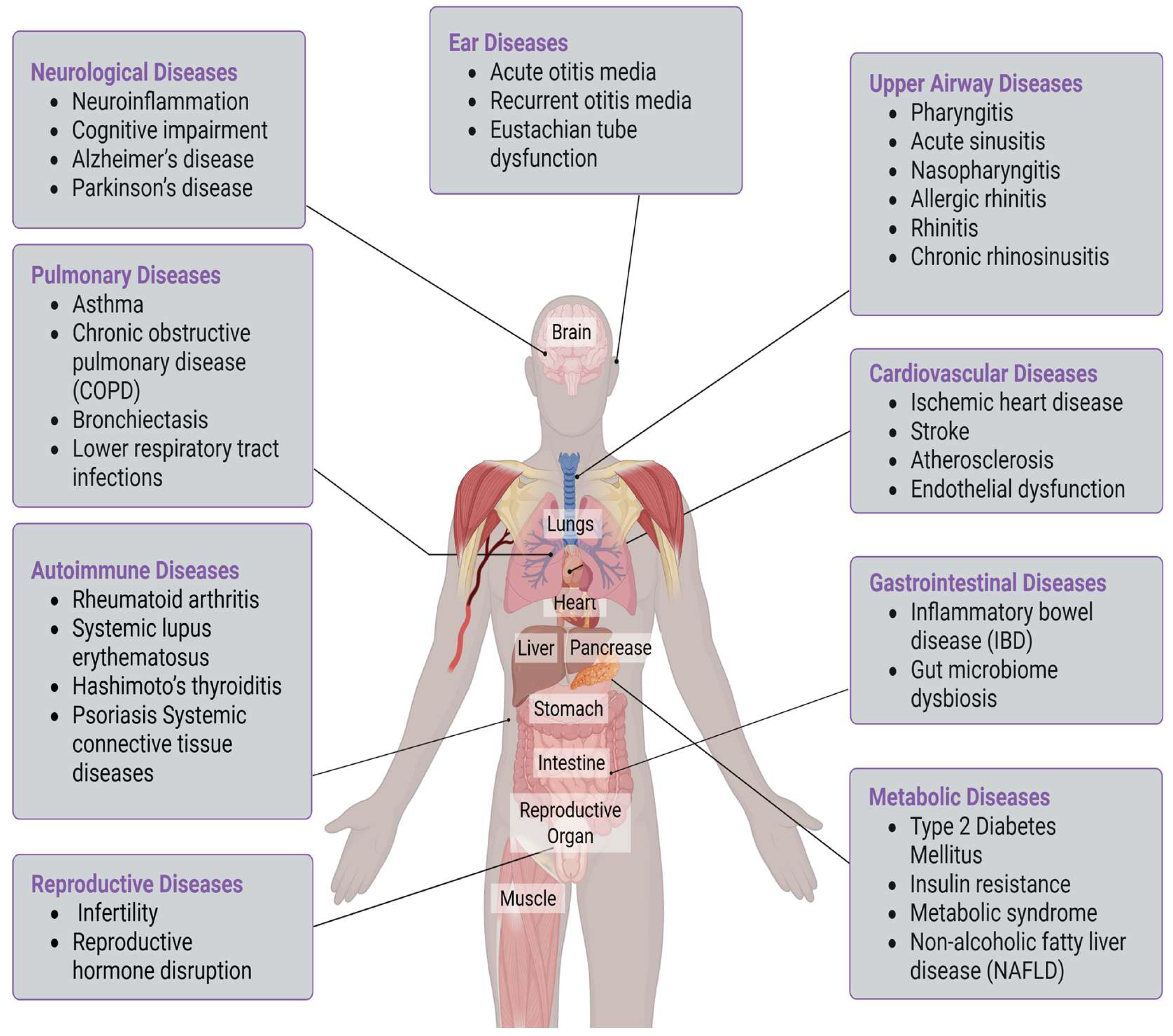



| Pathophysiological Domain | Major Pollutant Triggers | Study Design | Key Molecular Targets/Pathways | Cellular and Tissue Effects | Consequences for Host Defense | References |
|---|---|---|---|---|---|---|
| Oxidative stress and genotoxic injury | Fine and ultrafine particulate matter (PM2.5, nanoparticles), ozone (O3), nitrogen dioxide (NO2) | Narrative reviews (human, in vitro, in vivo evidence); controlled in vitro experimental study using human bronchial epithelial cells (HBEpC) and THP-1-derived macrophages exposed to ozone; biomonitoring study (plant model: Tradescantia pallida); epidemiological and experimental studies | Excess ROS/RNS generation; depletion of antioxidant defenses (glutathione, SOD); activation of redox-sensitive transcription factors (NF-κB, AP-1); impaired Nrf2 signaling; upregulation of pro-inflammatory cytokines (IL-8, TNF-α) and proteomic alterations (e.g., AKR1B10) | Lipid peroxidation, protein carbonylation, oxidative DNA base modifications, single-strand DNA breaks; epithelial senescence and aberrant repair; enhanced inflammatory signaling | Persistent mucosal inflammation, epithelial remodeling, impaired innate immune responses, and reduced pathogen clearance | [79,80,81] |
| Epithelial barrier dysfunction and mucociliary impairment | Particulate matter, gaseous pollutants (NO2, O3), traffic-related pollutants such as diesel exhaust particles (DEP) | In vitro ALI models (human airway epithelial cells, primary nasal cells); experimental pollutant exposure (O3, DEP, NO2); molecular and functional assays | Disruption of tight/adherens junctions (claudins, occludin, ZO-1, E-cadherin); altered ciliary function; increased mucin expression (MUC5AC, MUC5B); activation of alarmin cytokines (IL-25, IL-33, TSLP) and inflammatory mediators (IL-6, IL-8) | Increased epithelial permeability (decreased TEER, increased FITC-dextran flux); reduced ciliary beat frequency; ciliary loss/injury; goblet cell hyperplasia and mucus hypersecretion | Impaired mucociliary clearance, mucus retention, enhanced pathogen colonization and biofilm formation | [82,83,84,85,86,87] |
| Innate immune dysregulation and cytokine imbalance | PM2.5, diesel exhaust particles (DEPs), oxidative gases (O3, NO2) | THP-1-ASC-GFP reporter cells, primary human macrophages, and BEAS-2B/monocyte co-culture exposed to PM2.5 (ROFA, CAPs, SRM 1648a) and DEP (SRM 2975) ± TLR agonists (LPS, flagellin); dose–response (1–250 μg/mL, 6–24 h) with pharmacological inhibitors (MCC950, S1QEL 1.1, IL-1ra, anti-TNF-α, sTNFR1) and Nlrp3−/−, Casp1−/− models; endpoints: ASC-specks, cytokine ELISA, lysosomal integrity, mitochondrial ROS (MitoSOX), OCR (Seahorse), and ATP assays | Altered macrophage and dendritic cell signaling; impaired phagocytosis; activation of NLRP3 inflammasome (ASC-specks, caspase-1); dysregulated IL-1 family cytokines (IL-1β, IL-18); TNF-α, IL-6, CCL2; TLR4/CD14 signaling; K+ efflux; mitochondrial ROS; P2X7-ATP axis; suppressed type I/III interferon responses | Reduced microbicidal activity; altered antigen presentation; skewed cytokine profiles; lysosomal rupture; mitochondrial ultrastructural damage; impaired ATP-dependent IL-1β release (DEP-mediated sequestration) | Inefficient pathogen clearance, enhanced viral replication, and increased susceptibility to infection; enhanced viral/bacterial susceptibility and disruption of IL-1-mediated resolution pathways | [88,89,90,91,92,93,94,95] |
| Adaptive immune polarization | Chronic exposure to airborne pollutants | UPM-activated DCs directly induced Tm proliferation and expansion into mixed Th1/Th2/Th17 effector cells, including IFN-γ+/IL-17+ Th17.1 cells. These effects were largely MHC-II dependent and occurred in both asthmatic and healthy donors, demonstrating that particulate matter can act as both an adjuvant and antigen to drive pro-inflammatory T-cell responses | Altered costimulatory molecule expression on dendritic cells; cytokine-driven T-cell differentiation pathways (Th2, Th17) | Th2-mediated allergic inflammation; Th17-driven neutrophilic mucosal injury | Chronic airway inflammation and prolonged or recurrent infections | [96,97,98,99,100] |
| Epigenetic and trained immunity effects | Long-term pollutant exposure | Primary human monocytes or alveolar macrophages exposed to PM2.5/DEP (10–50 µg/mL, 7–14 days), rested 5–7 days, then rechallenged with LPS, E. coli, or influenza H1N1; metabolic (2-DG, etomoxir) and epigenetic (GSK-J4) inhibitors used; endpoints: ChIP-seq, ATAC-seq, DNA methylation, metabolomics, cytokines, single-cell RNA-seq | DNA methylation changes; histone modifications in immune regulatory genes; metabolic rewiring of myeloid cells | Persistent alteration of immune responsiveness; trained immunity or maladaptive tolerance states | Prolonged susceptibility to infection even after transient pollution exposure | [101,102,103,104,105,106,107,108,109,110] |
| Microbiome alterations and dysbiosis | Oxidative and chemical pollutants | Longitudinal study in children (asthmatic/healthy); clean vs. smog days; fecal 16S analysis with diversity and regression linking pollutants to microbiota; FeNO in asthmatics | Reduced microbial diversity; enrichment of oxidative-stress-resistant taxa (e.g., non-typable Haemophilus, Streptococcus spp.); disruption of quorum sensing and SCFA signaling | Biofilm formation, altered host–microbe interactions, impaired colonization resistance | Chronic colonization, recurrent infections, and reduced microbial-mediated immune protection | [111,112,113,114,115] |
| Pollutant–pathogen synergy | PM-bound microbes, gaseous oxidants | Human bronchial epithelial (Calu-3) cells at ALI model with repeated PM2.5 exposure followed by influenza A infection; assessed viral replication, interferon responses, innate pathways, mitochondrial/metabolic function, autophagy, barrier integrity (TEER), and particle uptake | Upregulation of pathogen adhesion receptors (e.g., ICAM family); epithelial apoptosis exposing basolateral adhesion sites; inhibition of interferon signaling | Enhanced pathogen adhesion, entry, and replication; increased local microbial inoculum via particulate carriers | Increased risk of viral and bacterial infection and prolonged disease courses | [116,117,118] |
| Author(s) & Year | Study Location/Country | Study Design & Population | Exposure/Pollutant(s) | Key Findings (URTI Focus) |
|---|---|---|---|---|
| Volkmer et al., 1995 [149] | South Australia/Adelaide | Cross-sectional, parent questionnaire; Preschool children (age 4–5), n = 14,124 | Indoor fuel type (gas stove, LPG, wood), flueless gas heater, parental smoking | Excessive colds (proxy for URTI): natural gas stove increased risk (OR 1.14); flueless gas heater, wood fire, parental smoking not significantly associated with colds |
| Ware et al., 2014 [150] | Rural Alaska (2 regions) | Cross-sectional, in-home survey, 561 children in 328 households | Household mold | Household concern with mold associated with elevated prevalence of respiratory infections (OR 1.6–2.5) |
| Noonan et al., 2012 [151] | Libby, MT, USA | Prospective community intervention; school children surveyed over 4 winter periods; >1100 wood stoves replaced. | Ambient PM2.5 from wood smoke (biomass combustion) | Lower PM2.5 associated with reduced odds of respiratory infections, including colds [25.4% reduction (95% CI 7.6–39.7%)] and throat infections [45.1% reduction (95% CI 29.0–57.6%)] |
| Browning et al., 2009 [152] | Seattle, WA, USA (high vs. low ambient wood smoke neighborhoods) | Cross-sectional questionnaire; children aged 1–5 years (subset of total households: 325 high smoke, 257 low smoke); initial + 2 follow-up questionnaires | Ambient wood smoke (PM10) | A higher prevalence of URTI symptoms was observed in high wood smoke areas. Congestion was more common in the initial survey (46.4% vs. 28.6%) and persisted at follow-up (29.4% vs. 0%), compared with low smoke areas |
| Honicky et al., 1985 [153] | Not specified (likely US) | Historical prospective study; preschool children (n = 62) with matched internal controls (age, sex, town) | Indoor wood-burning stoves | Moderate and severe URTI symptoms (colds, congestion, mild respiratory illness) were significantly greater in children living in homes heated by wood-burning stoves compared with controls (p < 0.001) |
| Van Miert et al., 2011 [154] | Louvain-la-Neuve, Bastogne, Lessines, Belgium (rural and urban mix) | Cross-sectional; adolescents aged ~15 years, n = 744 | Indoor wood fuel use (heating/cooking) | No increased risk of self-reported URI symptoms with wood fuel use |
| Hassen et al., 2020 [155] | Legambo District, South Wollo Zone, Ethiopia | Community-based matched case–control; under-five children (n = 139 cases, 278 controls) | Type of stove/household fuel, indoor air pollution, ventilation | ARI risk increased with the use of traditional stoves, carrying a child while cooking, and the absence of windows (URTI-relevant factors) |
| Sanbata et al., 2014 [156] | Addis Ababa, Ethiopia | Community-based cross-sectional study; 422 households with children under 5 years | Biomass fuels (wood, crop residues, dung) vs. cleaner fuels (kerosene, electricity) | A total of 60% of children lived in households that used biomass fuel. Two-week prevalence of ARI: 23.9%. Biomass fuel use is associated with increased odds of ARI (OR 2.97, 95% CI: 1.38–3.87). Kerosene use also elevated risk (OR 1.96, 95% CI: 0.78–4.89). |
| Dagne et al., 2020 [157] | Ethiopia, University of Gondar Comprehensive Specialized Hospital | Institution-based cross-sectional; under-five children attending the pediatric ward (n = 422) | Demographic, hygiene, and residence factors | Prevalence of ARI (proxy for URTI) 27.3%. Significant associations: age < 12 months (AOR = 3.39), maternal age 16–27 (AOR = 1.95) and 28–33 (AOR = 2.73), rural residence (AOR = 2.27), lack of maternal handwashing awareness (AOR = 2.79), lack of meningitis (AOR = 0.22). |
| Alemayehu et al., 2014 [158] | Gondar city, Ethiopia | Community-based cross-sectional; 715 children under 5 years | Household cooking fuel: high-pollution biomass fuels (wood, dung, straw) vs. cleaner fuels (LPG, electricity) | Prevalence of ARI 26.3%. Children in households using high-pollution fuels: 3.89 times more likely to have ARI (OR = 3.89; 95% CI: 1.54–28.25). Other significant factors: kitchen without windows (OR = 3.53), child playing nearby cooking area (OR = 7.08), child carried on lap/back during cooking (OR = 2.68). |
| Cai et al., 2021 [159] | 21 sub-Saharan African countries | Cross-sectional analysis using Demographic and Health Surveys data; 368,366 children < 5 years for cough | Ambient PM2.5 (prior-month average) | Prevalence: cough 20.5%. Overall, no significant association between short-term PM2.5 exposure and cough. Slight positive associations in countries with medium-to-high Human Development Index (cough OR = 1.022 per 1 μg/m3 increase PM2.5) |
| Zheng et al., 2022 [160] | 21 cities across China | Systematic review and meta-analysis; children < 18; 33 time-series studies with >18 million outpatient visits | PM2.5, PM10, SO2, NO2, O3 | Short-term exposure to all pollutants is associated with increased outpatient visits for respiratory diseases among children. URTI-specific outcomes were not reported separately. |
| Oh et al., 2020 [161] | Seven major cities, Republic of Korea | Time-series; children aged 0–3 years | PM2.5 | Higher PM2.5 associated with increased risk of acute otitis media, particularly in warm season and in children with recent URTI history (RR 1.011 per 10 μg/m3 increase; RR 1.017 in children with URTI in the prior week) |
| Martín & Sánchez, 2018 [162] | Madrid, Spain | Ecological study; children attending a Primary Health Care center, 2013–2015; 5125 consultations for URTI | NO2, SO2, CO, NOx, benzene | Positive correlation between NO2 and pediatric consultations for respiratory diseases (including URTIs). The number of consultations is significantly higher when NO2 > 40 μg/m3. Multiple regression confirmed NO2 as the main positive predictor. |
| Hajat et al., 2002 [163] | London, UK | Time-series analysis of daily GP consultations, 1992–1994; children aged 0–14 years from 45 to 47 family practices (≈268,718–295,740 patients) | SO2, PM10, NO2, O3, CO, black smoke | Childhood consultations for URTIs increased by 3.5% (95% CI 1.4–5.8%) per 10–90th percentile increase in SO2. Small positive effects for PM10 (2.0%, 95% CI −0.2 to 4.2%). O3 showed a negative association. Effects are strongest in winter. |
| Qiu et al., 2018 [164] | 17 cities in the Sichuan Basin, China | Multi-city time-series analysis; Children (≤14 years), ≈245,899 hospital admissions (all respiratory diseases); 115,788 URTI hospital admissions (all ages) | PM2.5, PM10, NO2, SO2 | Children were more vulnerable to ambient air pollution. A 10 μg/m3 increase in PM2.5, PM10, NO2, and SO2 was associated with increased hospital admissions for URTI, with the strongest effects at lag 0–2 days. Air pollution contributed to a measurable fraction of pediatric URTI hospitalizations. |
| Yu et al., 2023 [165] | 82 cities, China | Multi-city longitudinal observational study; children 0–14 years (68.73% of 3,735,934 cases) | PM2.5, PM10, NO2, SO2, CO, O3 | Positive short-term association between NO2, SO2, PM2.5, PM10, CO and influenza incidence. Strongest effects: NO2 & SO2. The effect is higher in children than in adults. Lag 1–7 days. A substantial attributable fraction of influenza cases due to NO2 and CO is higher in northern, polluted cities. |
| Li et al., 2021 [166] | Shijiazhuang, Xi’an, Nanjing, Guangzhou, China | Multi-city time-series study; children 0–14 years, pediatric outpatient visits for respiratory diseases (ICD J00–J99) | PM2.5 (also considered interaction with NO2) | Short-term exposure to PM2.5 is associated with increased pediatric outpatient visits for respiratory diseases. Strongest effects for URTIs at lag 0. Every 10 μg/m3 increase in PM2.5: URTIs +0.50% (95% CI: 0.19–0.81%). Cumulative effect (lag 0–7): +0.96% for URTIs. Greater effects in less polluted cities and on lower temperature days. |
| Yang et al., 2021 [167] | Guangzhou, Shanghai, Wuhan, Xining, China | Multi-city time-series study, children 0–14 years, 183,036 respiratory hospitalizations. | PM2.5, PM10, SO2, NO2, CO, O3 | PM2.5: +2.3% URTI hospitalizations (lag 0–7) PM10: +0.8% (lag 0–3) NO2: +2.4% (lag 0–7) SO2, CO, O3: no significant pooled effect Higher risk: children 4–14 years, cold season |
| Mondal & Paul 2020 [168] | India | Cross-sectional study; 247,743 children < 5 years | Indoor air pollution proxies: biomass cooking fuels, lack of a separate kitchen, and household smoking | Overall, 2.7% of children had acute respiratory infection (ARI) in the previous two weeks. Biomass fuel use increased ARI risk by 10% (OR 1.10, 95% CI 1.01–1.20), absence of a separate kitchen by 22% (OR 1.22, 95% CI 1.14–1.30), and household smoking by 6% (OR 1.06, 95% CI 1.00–1.12). The combined effect of biomass fuel use and no separate kitchen increased ARI risk by 35% (OR 1.35, 95% CI 1.21–1.51). |
| Woolley et al., 2020 [169] | Uganda (nationally representative survey, 15 regions, urban & rural areas) | Cross-sectional analysis of the 2016 Demographic and Health Survey. 15,405 children under 5 years old in households using wood/charcoal as primary cooking fuel (Urban ~18%, Rural ~82%) | Household air pollution from biomass fuels (wood, charcoal); associated pollutants: particulate matter, CO, NO2 | Compared with charcoal, wood exposure was associated with higher odds of fever (AOR 1.26, 95% CI 1.08–1.48), cough (1.15, 1.00–1.33), ARI (1.36, 1.11–1.66), and severe ARI (1.41, 1.09–1.85). Urban–rural differences showed higher odds of ARI in urban areas (AOR 1.77), while in rural areas, increased odds were observed for fever (1.23) and ARI (1.27) |
| Rana et al., 2019 [170] | Afghanistan (nationally representative, 34 provinces, urban & rural areas) | Cross-sectional study; 27,565 under-five children; predominantly rural (77.3%) | Indoor air pollution (IAP) from solid fuel use (SFU): kerosene, coal, lignite, charcoal, wood, animal dung, straw/grass; augmented measure: SFU + kitchen location (indoor/outdoor) to create low-, moderate-, and high-exposure groups | Overall ARI prevalence was 17.6%, higher among solid fuel use (SFU) households (18.7%) compared to non-SFU households (15.2%). High indoor air pollution exposure (SFU with indoor kitchen) was associated with increased ARI risk (aPR 1.17, 95% CI 1.03–1.32). Children in households with indoor kitchens were at higher risk, while rural–urban differences were less pronounced |
| Khan & Lohano 2018 [171] | Pakistan | Cross-sectional study; 11,040 children under 5 years | Polluting fuels (solid fuels: wood, crop residue, animal dung, charcoal, coal, shrubs/grass/straw; kerosene) vs. cleaner fuels (LPG, natural gas, biogas, electricity) | Children in households using polluting fuels are 1.5 times more likely to have ARI symptoms. Breastfeeding, vaccination, mothers’ education, and older maternal age reduce the risk of ARI. Household crowding and a separate kitchen were not significant. |
| Xu et al., 2022 [172] | 25 major cities in China | Multi-city time-series study. Children aged 0–18 years; 97,858 URTI hospitalizations | CO, NO2, SO2, O3 | Ozone (O3) and nitrogen dioxide (NO2) exposure were associated with increased upper respiratory tract infection (URTI) hospitalizations, whereas carbon monoxide (CO) and sulfur dioxide (SO2) showed little to no effect. Age-specific differences were observed, with children under 1 year being more sensitive to SO2 and O3, and children aged 4–6 years more sensitive to CO and NO2. The effects of O3 were stronger during the warm season |
Disclaimer/Publisher’s Note: The statements, opinions and data contained in all publications are solely those of the individual author(s) and contributor(s) and not of MDPI and/or the editor(s). MDPI and/or the editor(s) disclaim responsibility for any injury to people or property resulting from any ideas, methods, instructions or products referred to in the content. |
© 2026 by the authors. Licensee MDPI, Basel, Switzerland. This article is an open access article distributed under the terms and conditions of the Creative Commons Attribution (CC BY) license.
Share and Cite
Ali, H.; Marinova, P.; Velikova, T. Air Pollution as a Driver of Recurrent Upper-Airway Infections and Comorbid Health Issues. Sinusitis 2026, 10, 9. https://doi.org/10.3390/sinusitis10010009
Ali H, Marinova P, Velikova T. Air Pollution as a Driver of Recurrent Upper-Airway Infections and Comorbid Health Issues. Sinusitis. 2026; 10(1):9. https://doi.org/10.3390/sinusitis10010009
Chicago/Turabian StyleAli, Hassan, Petya Marinova, and Tsvetelina Velikova. 2026. "Air Pollution as a Driver of Recurrent Upper-Airway Infections and Comorbid Health Issues" Sinusitis 10, no. 1: 9. https://doi.org/10.3390/sinusitis10010009
APA StyleAli, H., Marinova, P., & Velikova, T. (2026). Air Pollution as a Driver of Recurrent Upper-Airway Infections and Comorbid Health Issues. Sinusitis, 10(1), 9. https://doi.org/10.3390/sinusitis10010009