


Abstract
Background/Objectives: Hand loss or severe impairment significantly reduces quality of life by restricting essential daily activities and professional tasks. Despite advances in prosthetics, challenges remain in affordability, accessibility, and usability. This study aimed to design and develop a low-cost, ergonomic bionic hand prototype that integrates sustainable fabrication, intuitive control, and modular electronics. Methods: A user-centred design process guided by iterative prototyping, anatomical modelling, and functional validation. The prototype was manufactured using 3D printing techniques and assembled with modular electronic components. The design included segmented fingers, independent thumb articulation, and a tendon-like actuation system driven by micro-motors. Control was implemented through an ESP32-based board and a Bluetooth-enabled mobile application. Durability was preliminarily assessed through 500 grasp–release cycles. Results: Experimental validation confirmed the feasibility of both precision and power grips. The pinch grip successfully lifted objects to 120 g, and the power grip up to 85 g, corresponding to effective output forces of approximately 1.2 N and 0.83 N, respectively. The final prototype weighed ~350 g and maintained reliable performance during 500 grasp–release cycles. Conclusions: The developed bionic hand demonstrates that an affordable, ergonomic, and functional prosthetic can be achieved through sustainable 3D printing and accessible electronics. Future work will focus on enhancing actuation strength, long-term durability, and integration of sensory feedback, with the long-term objective of clinical testing and scalable production.
1. Introduction
The human hand plays a central role in daily life, enabling complex tasks that combine strength, dexterity, and sensory feedback. The loss of upper-limb functionality, whether due to trauma, congenital anomalies, or degenerative disease, has profound consequences on autonomy, professional life, and psychological well-being. Beyond motor function, upper-limb amputation often leads to social isolation and decreased employability, especially in tasks that require bilateral hand coordination. These limitations can severely impact independence, especially in regions lacking structured rehabilitation programs. Prosthetic and orthotic devices aim to restore function and improve quality of life; however, access to such technologies remains critically limited.
The World Health Organisation (WHO) and the United States Agency for International Development (USAID) estimate that between 35 and 40 million people worldwide currently require prosthetic or orthotic services. Yet only 1 in 10 has access to them. Projections suggest that by 2050, more than 2 billion people may need assistive technologies, highlighting the urgency of developing affordable, scalable solutions [1,2].
Traditional prosthetic devices serve diverse purposes, including restoring mobility and dexterity, alleviating pain, protecting joints, and supporting social reintegration. Nonetheless, limitations persist in terms of cost, usability, and adaptability [3].
Current commercial prostheses range from passive aesthetic hands, designed primarily to restore appearance, to advanced myoelectric systems capable of executing multiple grip patterns [4,5]. While myoelectric hands such as the i-Limb Quantum [6], Bebionic [7,8], Vincente [9,10], Sensor Hand [11] or Michelangelo [12,13], Adam’s Hand [14,15] represent remarkable technological progress, their acquisition costs (USD 30,000–70,000) restrict widespread adoption, particularly in low- and middle-income countries. These high costs, along with maintenance, training, and replacement expenses, further limit accessibility. Even emerging lower-cost solutions remain beyond the financial reach of many patients.
In addition to economic barriers, the lack of regionally adapted anthropometric models for commercial prostheses may lead to poor fit, discomfort, and reduced user satisfaction. Ergonomic mismatches particularly affect populations outside of North America and Europe, underscoring the importance of culturally and anatomically contextualised solutions.
Beyond economic barriers, the process of adapting to a prosthesis is complex. Patients must overcome phantom limb pain, altered body image, and functional training to integrate the device into daily activities. Psychological and social factors also influence device acceptance, emphasising the need for ergonomic, lightweight, and user-friendly designs [16,17].
Furthermore, the lack of effective rehabilitation strategies and follow-up services in many countries exacerbates inequalities, leading to devices being abandoned after a short period of use. For individuals with congenital or acquired upper-limb deficiencies, the burden of overuse injuries and musculoskeletal discomfort—such as tendinitis or carpal tunnel syndrome—further highlights the importance of preventive and adaptive prosthetic technologies [18].
Recent research and technological advances have expanded the landscape of prosthetic solutions [19]. Mechanical, pneumatic, myoelectric [20], and hybrid systems have each introduced novel approaches to restoring hand functionality [21,22]. Additive manufacturing [23], miniaturised sensors as EMG [24,25], EEG [26] and advanced control algorithms based on Artificial Intelligence AI [27,28,29] now make it feasible to design devices that balance performance, cost, and personalisation [30,31,32,33].
Many academic prototypes remain at the proof-of-concept stage, with limited validation in real-life conditions or long-term usability studies. Bridging this gap requires interdisciplinary collaboration and clinical testing to ensure that affordable prostheses truly meet end-user needs [34].
Moreover, initiatives in open-source hardware and distributed manufacturing have created opportunities for local, low-cost production of functional prosthetic devices, reducing dependence on centralised industrial suppliers [35,36,37]. Open-source design also facilitates faster iteration, user customisation, and repairability, key factors in low-resource environments where access to replacement parts and technical support may be limited. However, gaps remain between highly advanced yet inaccessible prostheses and basic functional models with limited utility. Addressing these gaps requires not only technological accessibility but also design approaches grounded in human anatomy and biomechanics.
A precise understanding of the human hand’s anatomy is fundamental for the development of functional prosthetic devices. The hand comprises 27 bones organised into three groups: 8 carpal bones in the wrist, 5 metacarpals forming the palm, and 14 phalanges constituting the fingers. Except for the thumb, which contains two phalanges, each finger is composed of proximal, middle, and distal phalanges. These bones articulate at the metacarpophalangeal (MCP), proximal interphalangeal (PIP), and distal interphalangeal (DIP) joints, enabling complex, coordinated movements. The thumb exhibits a unique saddle-shaped carpometacarpal (CMC) joint, which allows opposition and significantly expands the hand’s functional versatility [38].
Complementing the skeletal framework, intrinsic and extrinsic muscles control finger mobility and fine manipulation [39,40]. Flexor tendons (flexor digitorum superficialis and profundus) generate flexion, while extensor tendons (extensor digitorum communis, extensor indicis, and extensor digiti minimi) restore extension. The balance between these systems is essential for dynamic stability, coordination, and the execution of both precision and power grips. From a biomechanical perspective, normal flexion ranges are approximately 90° for the MCP joints, 100–110° for the PIP joints, and up to 80° for the DIP joints. The wrist allows 80–90° of palmar flexion, ~70° of extension, 20° of radial deviation, 30–40° of ulnar deviation, and ~90° of both pronation and supination, providing the orientation necessary for functional tasks.
It is important to clarify the scope and nature of the contribution of the present work. This study does not claim novelty in individual mechanical components, actuation principles, or control strategies, many of which have been previously reported in both commercial and non-commercial prosthetic hands. Instead, the contribution lies in the system-level integration of these elements into a coherent, functional, and accessible prosthetic hand prototype. The proposed approach combines anatomy-driven modelling, modular mechanical design, embedded electronics, and intuitive hybrid control within a single low-cost platform, validated through functional testing. By explicitly addressing integration, usability, and accessibility as primary design objectives, this work aims to bridge the gap between simplified academic prototypes and high-end commercial prostheses [23,30,31,33,37].
This work presents an ergonomic bionic hand prosthesis for individuals with transradial amputations or upper-limb disabilities, prioritising affordability, intuitive control, and lightweight design. The proposed system integrates user-centred design, sensor-based technologies, and sustainable manufacturing to improve functional accessibility. In this context, control strategies based on biological signals, such as surface electromyography (sEMG), represent a natural direction for intuitive human–prosthesis interaction. However, their algorithmic development and quantitative validation are often addressed in dedicated signal-processing studies, while platform-oriented works focus on system integration and embedded feasibility.
2. Materials and Methods
The development of the bionic hand followed a structured, user-centred Design Thinking methodology. This iterative process enabled continuous refinement of the design based on user needs, mechanical requirements, and technological feasibility.
2.1. Anatomical Modelling
Anthropometric data were considered to ensure ergonomic adaptation of the prosthesis. A Chilean population study, including 598 individuals (331 women, 267 men), established average phalangeal dimensions, which served as a reference for the design process. For women, proximal phalanges ranged between 37 ± 6 mm (thumb) and 50 ± 13 mm (ring finger), while for men, values ranged from 37 ± 9 mm (little finger) to 53 ± 13 mm (middle finger). Similar proportional differences were observed in medial and distal phalanges, highlighting the importance of incorporating sex- and size-dependent variability into prosthetic modelling [41]. Although most anthropometric standards are derived from North American or European populations, these Chilean-specific measurements [42] were selected to ensure regional ergonomic relevance and greater contextual appropriateness for local users. These sex-stratified measurements are summarised in Table 1, which served as anatomical input for CAD modelling.
Table 1.
Anthropometric measurements of phalangeal lengths (mm) in Chilean adults, stratified by sex (adapted from Ref. [42]).
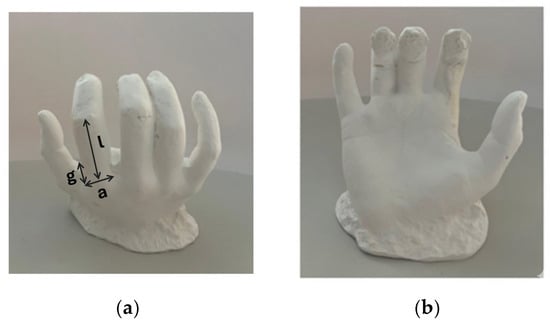
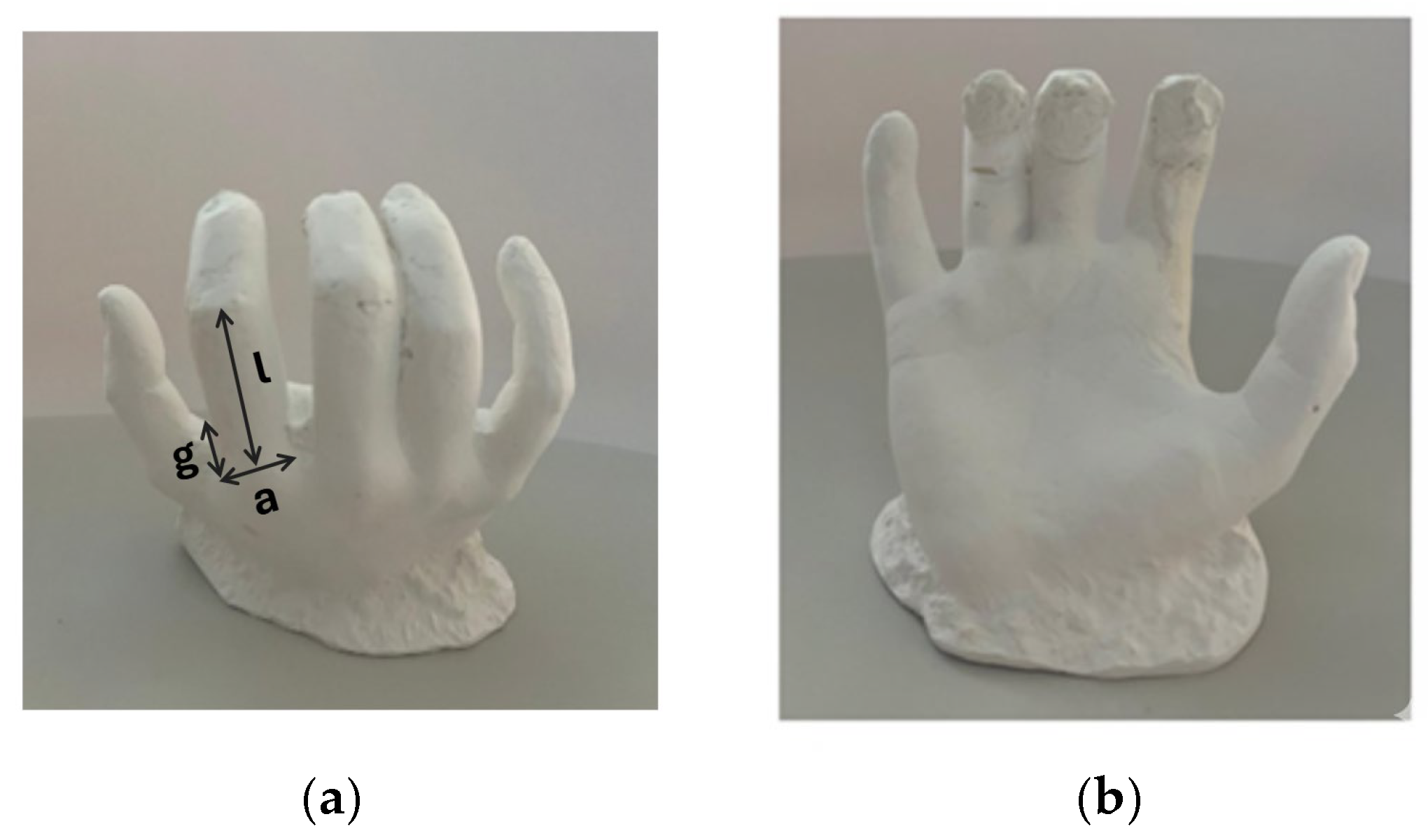
To replicate natural morphology, an anatomical model was first created using alginate casting. A negative mould of the author’s right hand was produced with a biocompatible alginate mixture, into which plaster was poured to obtain a detailed replica. This model captured realistic contours, dimensions, and proportions of the hand, serving as a foundation for CAD-based digital design. Although the cast was based on a single hand, the obtained geometry was subsequently cross-checked with average anthropometric proportions to ensure representativeness. Subsequent segmentation of the hand into phalanges and palm structures allowed integration with mechanical components while preserving anatomical fidelity. All anatomical data and model parameters used in this phase were documented to facilitate reproducibility and future adaptations to different populations or clinical needs.
This anatomical modelling phase provided critical parameters for defining joint ranges, proportions, and ergonomics, ensuring that the prosthetic prototype could mimic natural hand movements and support functional grips. The approach bridges clinical knowledge with engineering design, aligning prosthetic mechanics with human anatomy to maximise usability and user comfort.
The plaster model was obtained from a healthy 24-year-old female subject whose hand dimensions fell within the previously defined anthropometric ranges for the target population. During casting, the subject’s forearm was positioned in a neutral posture, with the wrist aligned in a neutral position and the hand maintained in a relaxed, open posture to avoid forced joint flexion or extension, Figure 1. This step provides a qualitative anatomical reference to support proportioning, finger alignment, and ergonomic constraints during the design process.
Figure 1.
(a) Plaster hand mould obtained by alginate casting, illustrating anatomical reference parameters used for design calibration (finger length (l), interdigital gap (g), and finger aperture (a)). (b) Frontal view of the mould serving as a biomimetic reference for CAD modelling.
2.2. CAD Design and Prototyping
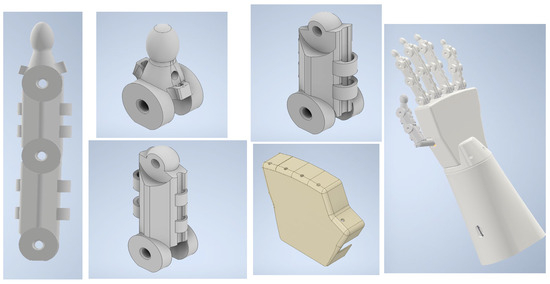
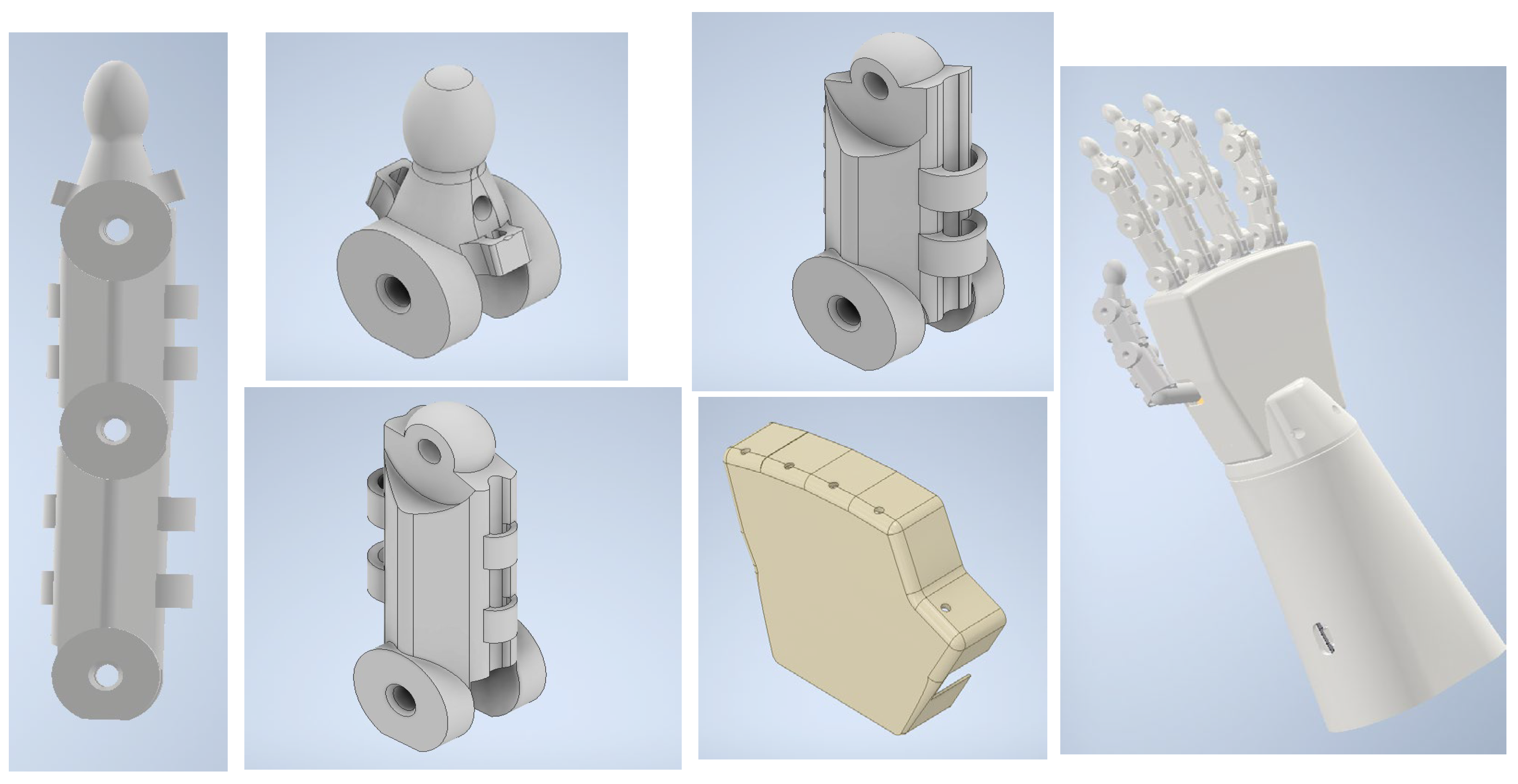
The prosthetic hand was designed in Autodesk Inventor (Autodesk Inc., San Rafael, CA, USA) using anatomical references from plaster and alginate moulds. The plaster model was not digitised directly; instead, reference dimensions and proportions were manually extracted and translated into a parametric CAD model. Ergonomic alignment, component integration, and joint motion were evaluated digitally before fabrication, Figure 2.
Figure 2.
Parametric CAD models of individual phalanges (top and side views), modular joint mechanisms, palm structure, and complete prosthetic hand assembly developed in Autodesk Inventor for additive manufacturing and mechanical integration.
The initial rigid-palm, cable-actuated finger served as a proof-of-concept. At the same time, subsequent iterations introduced segmented phalanges and an independent thumb module to enable opposition and improve grasping.
The palm and fingers were manufactured via stereolithography (SLA), achieving the ±0.05 mm dimensional tolerances required for accurate joint assembly and cable routing. The wrist and forearm were produced using fused deposition modelling (FDM) with PLA to balance mechanical strength, cost, and ease of assembly. In regions subjected to higher mechanical loads, reinforced PLA and threaded brass inserts were incorporated to improve durability and provide secure screw connections. The forearm design integrates internal compartments for actuators, electronics, and cable routing. All components were organised as modular CAD assemblies to support iterative refinement and user-specific customisation.
Overall, the CAD-based iterative approach ensured that the prosthetic hand combined anatomical fidelity with engineering functionality, establishing a robust foundation for subsequent mechanical and electronic integration.
2.3. Actuation System
The prosthetic hand was designed with a cable-driven tendon-like actuation system that replicates the biomechanical behaviour of human flexor and extensor tendons. Flexion of the fingers is achieved through tensile cables routed along the palmar side of the phalanges, while extension is passively restored by dorsal springs. This underactuated configuration reduces complexity while ensuring functional prehension.
A total of six N20 DC gear motors (6 V, 100 RPM) were integrated within the palm and forearm structure, each dedicated to actuating an individual finger. These motors were selected based on a trade-off among torque output, size constraints, and energy efficiency, deemed optimal for lightweight prosthetic use. The device weighs approximately 350 g. The thumb required two motors to reproduce its unique biomechanical behaviour, enabling both flexion/extension and opposition. These motors were mechanically coupled with miniature 5 mm pulleys, which translated rotational torque into linear cable displacement, thereby generating controlled finger flexion. Motor control was synchronised via a custom microcontroller unit, ensuring coordinated movement patterns that emulate physiological finger trajectories. The system uses an ESP32 (Espressif Systems, Shanghai, China) for general control and Bluetooth communication, and an RP2040 microcontroller for motor and IMU management, communicating via I2C.
To replicate extensor tendon function, stainless-steel tension springs were mounted dorsally on each finger segment. Springs of varying lengths (10–20 mm) and diameters (0.3 mm wire, 2 mm outer diameter) were selected according to the biomechanical demands of each joint. This configuration provided reliable restitution forces, ensuring that fingers returned to their resting position after actuation and minimising energy consumption.
In addition to digital flexion and extension, the system incorporated an actuated wrist joint. A servo motor coupled to a spur gear transmission enabled approximately 90° of pronation and supination. This range was calculated according to anthropometric wrist mobility norms to ensure functional compatibility with everyday tasks. A bearing-supported axis reduced friction and ensured stable, repeatable wrist rotation. The wrist mechanism was housed within the proximal forearm, which also contained the modular electronics and power supply. Power is provided by 3.7 V 18650 lithium-ion batteries, and the user interface is implemented through a mobile Bluetooth application that allows both manual and automatic grip control.
This actuation approach offered several advantages: modularity, low cost, and mechanical simplicity. By dedicating one motor per finger, the system provided independent control and improved dexterity, while the cable-and-spring mechanism ensured lightweight construction and reduced actuator load. Although limited in terms of maximum grip strength, the configuration successfully reproduced essential prehensile patterns, namely precision pinch and power grip, required for daily activities. Experimental measurements reported a pinch force of 1.2 N and a gross grip force of 0.83 N. The average flexion angle ranged from 65° to 80°, with full actuation achieved in 300–600 ms. Compared to high-end prosthetic actuation systems, the proposed solution achieves a favourable compromise between functionality, simplicity, and economic viability. A summary of the main hardware specifications of the prosthetic hand is presented in Table 2.
Table 2.
Complementary technical specifications of the prosthetic hand.
Experimental validation of finger flexion and extension was conducted using repeated motor activation trials under controlled conditions. Finger joint angles were measured using a smartphone-based digital goniometer application (Angle Meter 360) (Smart Tool Factory, Seoul, South Korea) by recording the angular displacement achieved at fixed motor activation intervals. Actuation timing was controlled via the mobile application, allowing incremental activation steps of 100 ms. Passive finger extension was evaluated by measuring the recovered joint angle over time after motor deactivation, enabling assessment of the elastic return provided by the spring-based mechanism.
2.4. Electronics and Control
The prosthetic hand was equipped with a modular electronic architecture that balances functionality, affordability, and scalability. The system was divided into two main subsystems: (i) high-level processing and communication, and (ii) low-level motor control and sensing.
At the core of the processing unit, an ESP32 microcontroller was selected for its integrated Bluetooth and Wi-Fi capabilities, compact size, and low power consumption. This component enabled wireless communication with external devices, particularly a custom-designed Android application, while also managing system coordination.
Motor actuation was managed by a dedicated RP2040 (Raspberry Pi Ltd., Cambridge, UK) microcontroller, chosen for its high number of general-purpose I/O pins and its efficient support for multiple actuators. The RP2040 directly interfaced with motor driver circuits to control six DC gear motors and the wrist servo motor, providing precise and independent control of each joint. Communication between the two microcontrollers was established via the I2C protocol, ensuring synchronised control and modular expandability. To enhance functionality, a BNO055 (Bosch Sensortec GmbH, Reutlingen, Germany) inertial measurement unit (IMU) was integrated, providing orientation data for wrist rotation and enabling the potential implementation of motion-based control strategies in the future. The adoption of dual-microcontroller architecture was motivated by performance and modularity considerations. The ESP32 was dedicated to high-level tasks, including Bluetooth communication with the mobile application, interpreting user commands, and coordinating the overall system. In contrast, the RP2040 was assigned low-level real-time control functions, including generating PWM signals for the six DC motors, regulating the wrist servomotor, and continuously acquiring and processing IMU data. This functional separation reduces computational load on the communication unit and minimises potential latency associated with wireless processing tasks. By isolating motor execution and inertial processing from high-level communication, the architecture ensures deterministic timing, improved responsiveness, and greater scalability for future extensions. Power was supplied by two rechargeable 18650 lithium-ion batteries housed in the forearm compartment.
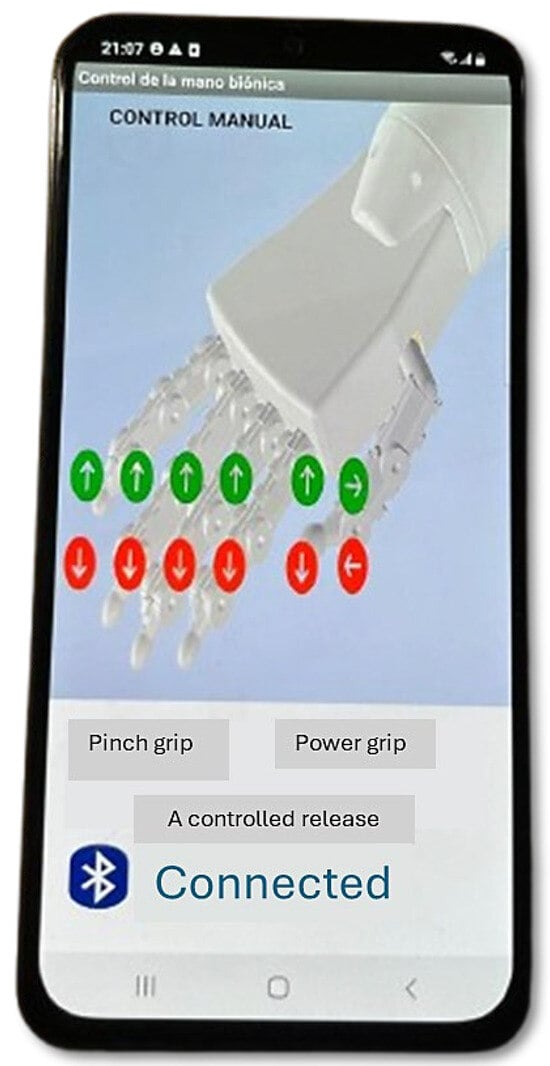
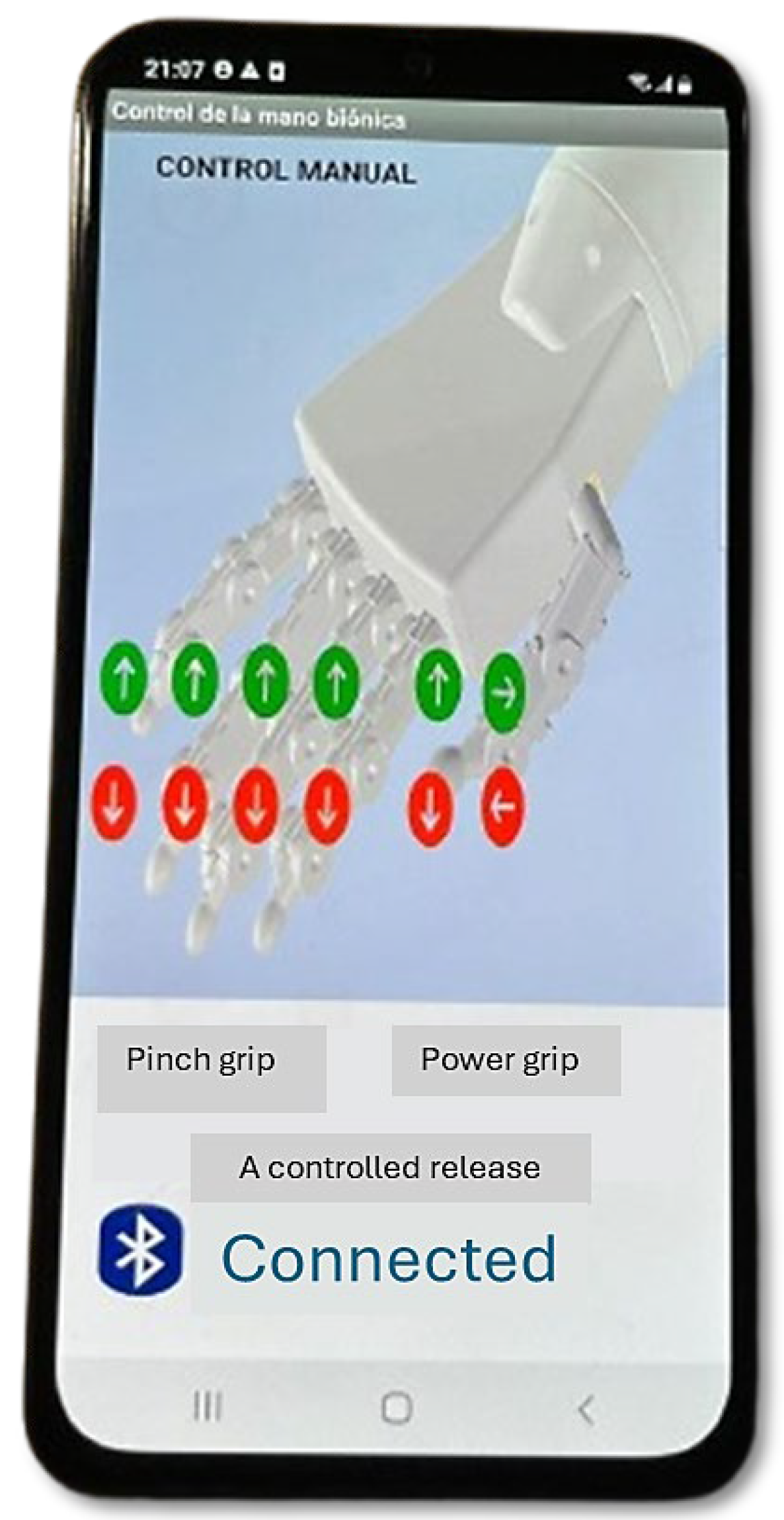
The control system followed a modular architecture, with a clear separation between input, processing, and actuation layers. The user interface was implemented through a Bluetooth-enabled Android application developed using MIT App Inventor (Massachusetts Institute of Technology, Cambridge, MA, USA). This app provides an intuitive, accessible control environment, allowing users to select predefined grips (e.g., precision pinch, power grasp) or operate individual fingers. The interface is illustrated in Figure 3, showing the available grip selection and individual finger control options. Wireless commands sent from the mobile application were processed by the ESP32 and translated into actuation signals by the RP2040, which drove the motors accordingly. The electronic architecture of the prosthetic platform is designed to support multiple input modalities and control strategies. In the present study, the prototype was operated exclusively through the Bluetooth-enabled mobile application and embedded control logic, prioritising real-time feasibility and system integration.
Figure 3.
Graphical interface of the custom Android mobile application used for real-time control of the prosthetic hand. The app allows selection of predefined grips and individual finger actuation via Bluetooth communication.
Although the hardware architecture allows future integration of biosignal-based inputs, including surface electromyography (sEMG), no EMG-based control was implemented or experimentally evaluated in this work. The artificial neural network (ANN) for sEMG signal processing referenced in [43] corresponds to prior research by the authors and is not integrated into the experimental validation presented here.
Therefore, the contribution of this manuscript is centred on the system-level integration and functional validation of the modular control architecture using mobile-app control.
Overall, the electronics and control system prioritised low cost, adaptability, and ease of use, aligning with the overarching goal of developing a prosthesis accessible to a broader patient population while maintaining essential functional capabilities.
3. Results
The final prototype demonstrated essential hand functions with promising performance indicators.
3.1. Structural Design
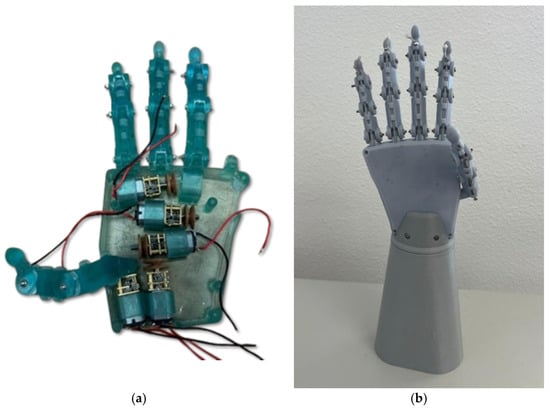
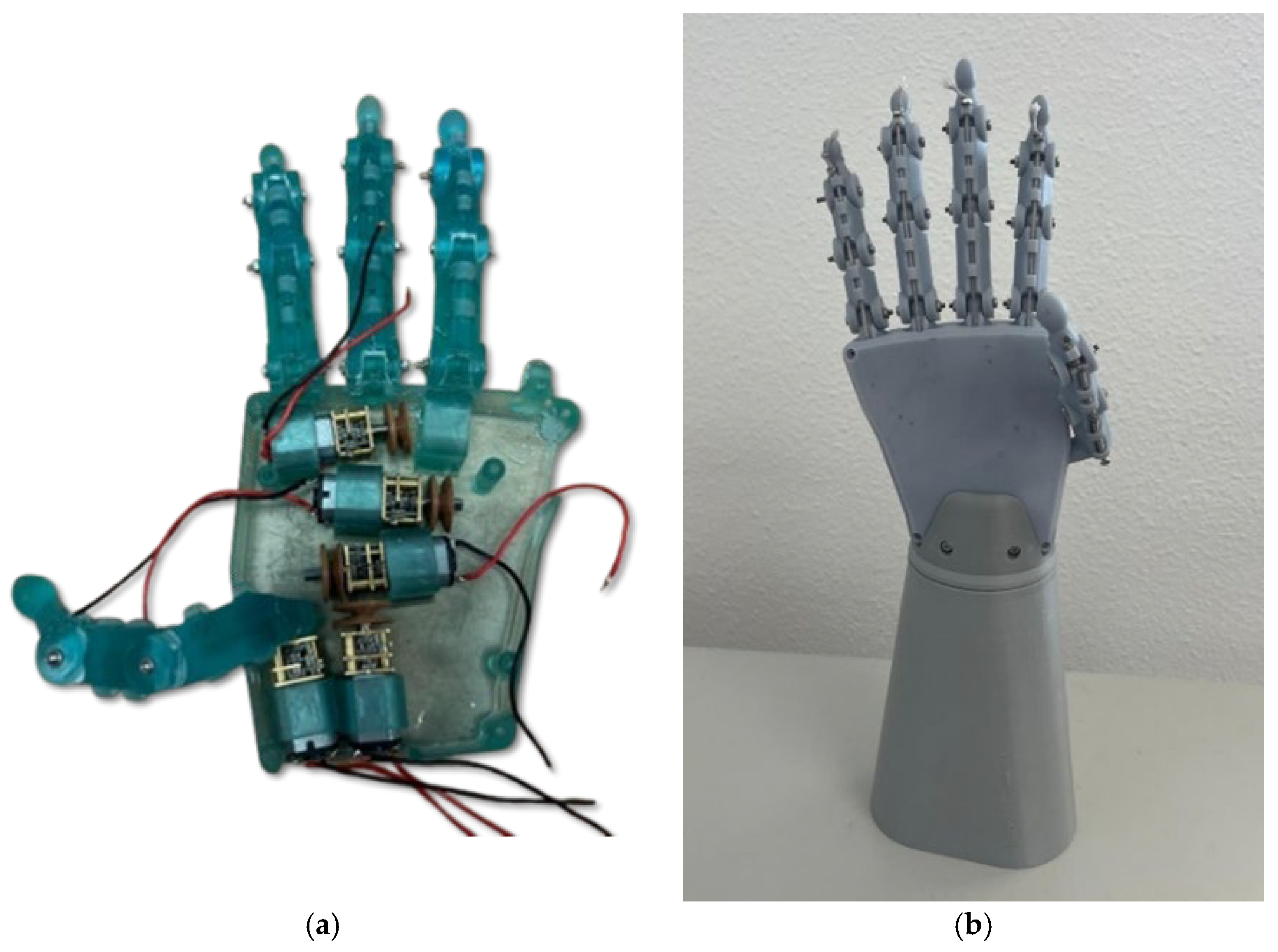
The structural design of the prosthetic hand was developed to ensure anatomical fidelity, mechanical robustness, and ergonomic comfort. Based on anthropometric measurements obtained from anatomical models and the literature, the hand was segmented into distinct components: palm, fingers, thumb, wrist, and forearm. Each region was designed to accommodate both functional biomechanics and integration of actuation and electronic subsystems, Figure 4.
Figure 4.
Evolution of the prosthetic hand design: (a) Early prototype showcasing individual finger actuation using DC micro motors and a transparent casing for debugging and testing. (b) Final refined version with an ergonomic design, integrated wrist, and improved mechanical structure for enhanced usability and aesthetics.
The palm structure was engineered as the central housing for mechanical anchoring and electronic components. Dedicated compartments were created to accommodate motors, cable passages, and fixation points for tendon-like actuators. The palm also incorporated an opening to allow independent thumb articulation, which is essential for opposition and precision grips.
The fingers and thumb were modelled with segmented phalanges connected by pin-joint assemblies that allow controlled flexion. Stainless steel shafts and polymer bushings were used to minimise friction and ensure smooth articulation. Rounded geometries and optimised contact surfaces improved grip stability during object manipulation. The thumb was designed with two degrees of freedom—flexion/extension and abduction/adduction—allowing both power and precision grasping.
The wrist and forearm were conceived as load-bearing structures that provide stability while housing the electronic control system, battery, and wiring. The wrist joint is integrated with a servo motor and a gear-driven mechanism, providing approximately 90° of rotational movement. The forearm included internal connection slots and screw-based assemblies that allow modular replacement of motors and electronic boards. Internal channels for cable routing and reinforcement ribs were incorporated to withstand repeated loading cycles.
The overall framework achieved a lightweight yet durable construction (total weight ~350 g). The combination of screw-based joints, snap-fit features, and press-fitted pins allowed straightforward assembly and disassembly, facilitating repair and modular upgrades. This structural approach ensured that the prosthesis was not only functional but also maintainable and adaptable, key factors for real-world usability.
The redesigned palm allowed independent thumb movement with two degrees of freedom. The fingers, printed in SLA resin, achieved accurate geometries with tolerances within ±0.05 mm. The wrist and forearm, printed in PLA, provided adequate housing for electronics and motors.
3.2. Functional Performance
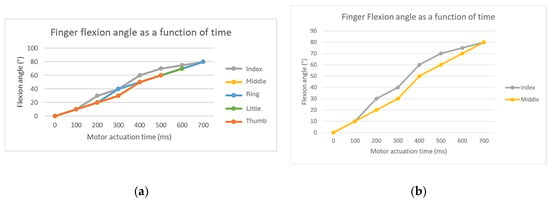
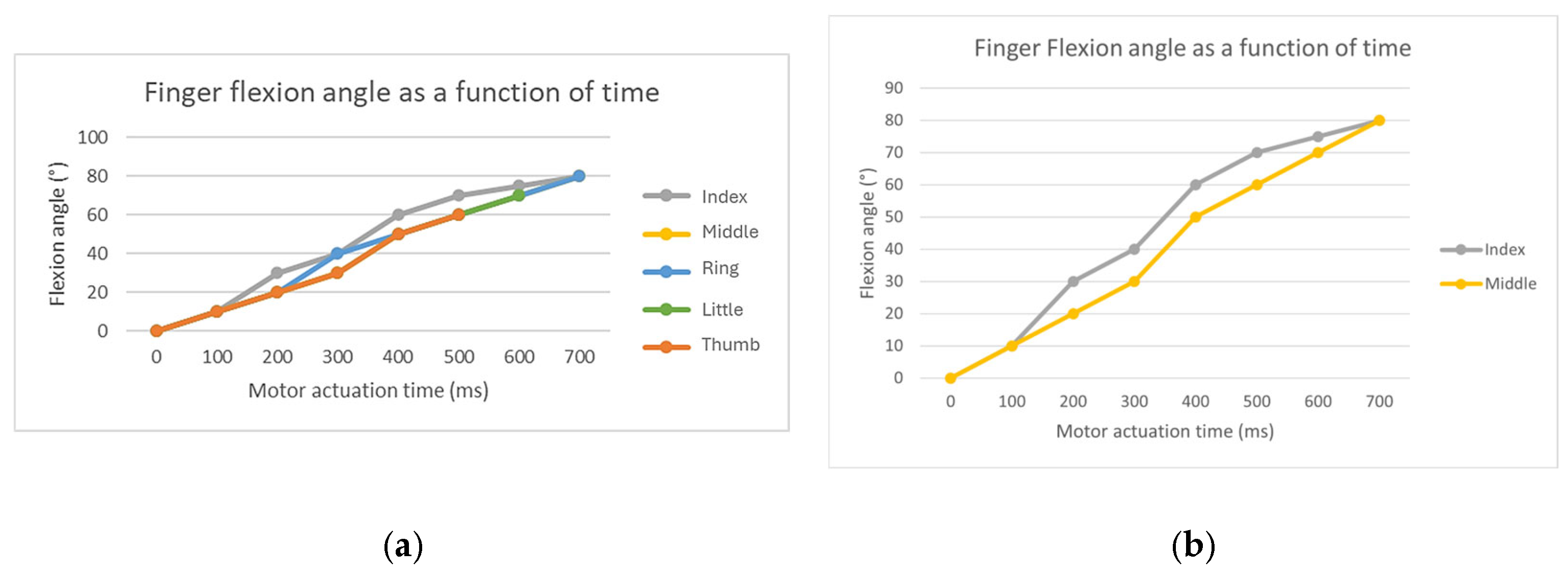
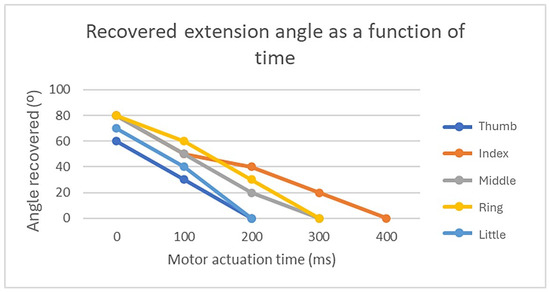
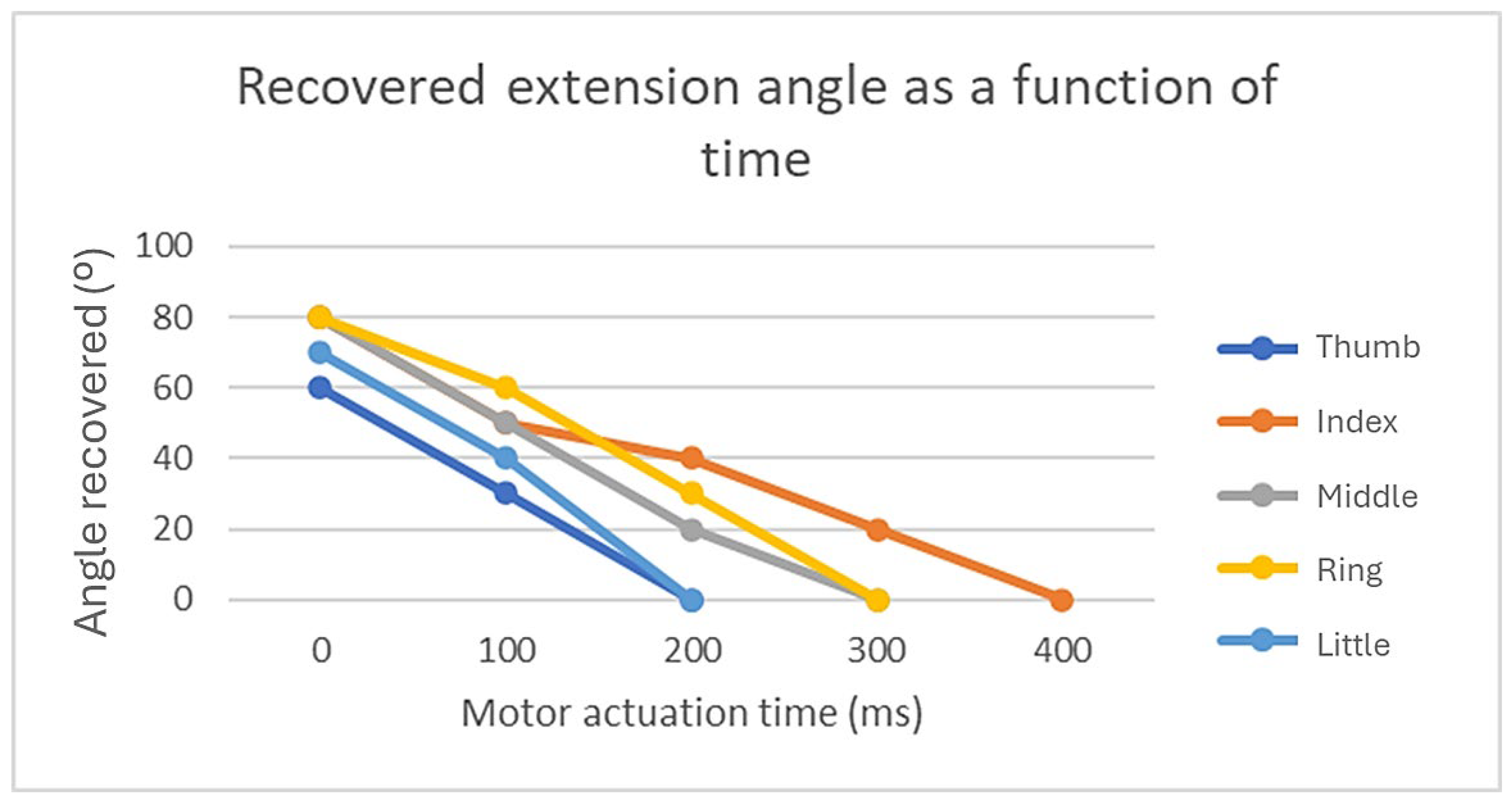
The prosthetic hand was evaluated for range of motion, grip strength, response time, and prehensile function. Each finger could flex to angles between 65° and 80°, closely replicating the physiological ranges required for daily tasks. The thumb, equipped with two degrees of freedom, enabled both opposition and flexion/extension, which were essential for achieving precision pinch and power grips. The flexion and extension angles reported in Figure 5 and Figure 6 were obtained through repeated experimental trials using controlled motor activation and digital angle measurements, as described in Section 2.3.
Figure 5.
Finger flexion angle (°) as a function of motor actuation time (ms) during active motor-driven flexion: (a) complete dataset including all fingers; (b) detailed view highlighting the index and middle fingers for clarity.
Figure 6.
Passive finger extension angle (°) versus time (ms) following motor deactivation.
As shown in Figure 5, theoretical calculations estimated traction forces of 15.68 N for pinch and 39.2 N for power grips. The actuation system generated sufficient traction force to manipulate lightweight objects reliably. During experimental trials, the pinch grip successfully lifted and manipulated objects up to 120 g, while the power grip demonstrated stability up to 85 g before slippage occurred. These results are consistent with the torque capacity of the selected N20 motors and the mechanical transmission efficiency of the cable-driven system.
The flexion dynamics recorded during actuation are shown in Figure 5, while passive extension recovery is illustrated in Figure 6. The response time for full flexion ranged from 300 to 600 ms, depending on finger load and movement amplitude, resulting in a smooth, natural actuation rhythm. Repeatability tests over 50 consecutive cycles showed consistent pinch performance without significant deviation, suggesting mechanical reliability in short-term operation.
In terms of durability, preliminary endurance testing indicated that the structural design maintained mechanical integrity and cable tension for at least 500 actuation cycles, with no visible wear or loosening of connections. Although further long-term testing is planned, these initial results demonstrate the feasibility of the chosen materials and connection strategies for functional daily use.
Overall, the prosthesis successfully reproduced essential prehensile functions for activities of daily living, with performance metrics that, although lower than those of high-end commercial bionic hands, establish a promising balance between affordability, usability, and mechanical reliability.
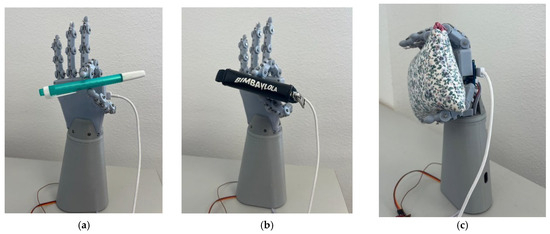
Figure 7 shows representative grasp types achieved during experimental tests. The prosthetic hand successfully performed precision, lateral, and power grips with lightweight objects, demonstrating the practical effectiveness of the actuation system.
Figure 7.
Representative grasps performed by the prosthetic hand: (a) precision pinch grasp of a pen; (b) lateral grasp of a keychain; (c) power grasp of a soft object.
3.3. Response and Repeatability
The dynamic response of the prosthetic hand was characterised by measuring actuation times and evaluating the consistency of repeated movements. The average response time for full finger flexion ranged from 300 to 600 ms, depending on finger length, load, and cable tension. These values fall within the ranges reported for other low-cost myoelectric and cable-driven prostheses, offering a smooth, natural movement profile.
Repeatability tests were conducted by performing 50 consecutive cycles of pinch and power grips. The results showed consistent performance, with negligible variation in flexion angle (<2°) and no loss of actuation precision across trials. Cable-driven motion maintained uniform displacement, and spring-based extension reliably restored finger position without evidence of slackening or asymmetry.
The results confirm that the mechanical design, in combination with the selected actuation and extension system, provides stable and repeatable movements suitable for essential grasping tasks. Although extended fatigue tests are required to assess long-term reliability under continuous use, these preliminary findings support the prototype’s structural and functional robustness.
3.4. Durability
Durability testing was performed to assess the mechanical integrity of the prosthesis under repeated actuation. Preliminary endurance trials demonstrated that the structure-maintained functionality for at least 500 continuous actuation cycles without evidence of mechanical failure, cable loosening, or joint misalignment. The SLA-printed phalanges preserved dimensional stability and surface quality, while the PLA forearm housing effectively withstood motor vibrations and loading stresses.
The cable-and-spring system exhibited stable tension throughout testing, ensuring consistent extension after flexion without loss of force transmission. Screw-based joints and brass-threaded inserts provided secure mechanical connections, avoiding degradation during repeated assembly and disassembly.
Although these results confirm short-term reliability, further long-term fatigue studies are required to evaluate material wear, cable fraying, and spring deformation under higher loads and extended operation. Additional testing with heavier objects and simulations of real-life daily activities will provide a more comprehensive understanding of performance and safety.
In summary, the prototype demonstrated satisfactory short-term durability, validating the choice of materials and connection strategies for initial functional applications, while highlighting the need for extended clinical-grade reliability assessments.
4. Discussion
The results of this project demonstrate that essential prosthetic hand functions can be achieved at a lower cost than high-end commercial devices. The emphasis on affordability and ergonomic design directly addresses accessibility barriers, particularly in low-resource environments.
4.1. Comparison with Existing Prostheses
The performance and design of the proposed bionic hand were compared with representative commercial devices currently available on the market, including the i-Limb Quantum (Össur), Bebionic (Ottobock), Michelangelo Hand (Ottobock), Adam’s Hand (BionIT Labs), and TrueLimb (Unlimited Tomorrow). These prostheses represent benchmarks in advanced myoelectric technology, offering multi-articulated grips, high levels of dexterity, and cosmetic finishes. However, their high acquisition costs, typically ranging between USD 30,000 and 70,000, remain a significant barrier to accessibility for the majority of patients worldwide. Even relatively low-cost alternatives, such as TrueLimb (~USD 8000), still exceed the financial capacity of many healthcare systems and individuals.
In terms of functionality, commercial prostheses offer 14 to 36 programmable grips, advanced gesture recognition, and in some cases integrated smartphone applications for control and customisation. By contrast, the prototype developed in this study focuses on essential prehensile patterns, specifically precision pinch and power grip, which are sufficient for many activities of daily living. While this represents a lower level of dexterity compared to high-end devices, it ensures usability and simplicity without overwhelming the user with complex calibration or training requirements.
A distinctive strength of the present prototype is its intuitive Bluetooth-based control system, which avoids exclusive dependence on electromyographic (EMG) calibration. Instead, the modular architecture allows the integration of alternative input modalities, such as electroencephalography (EEG) or other biosignal-based systems, alongside the mobile application. This flexibility broadens accessibility for individuals with limited residual muscle activity and facilitates future upgrades without requiring a redesign of the electronic platform. Additionally, the use of 3D printing and modular design allows rapid customisation, repair, and cost reduction, in contrast to the industrially manufactured, proprietary components of commercial devices.
Overall, while commercial prostheses surpass the prototype in terms of advanced features and grip variety, the presented design achieves a favourable balance between affordability, ergonomics, and functional performance. The estimated cost of approximately USD 5000 refers to the total prototype-level expenditure, including electronic components, actuators, structural materials, and assembly within a research and development context. This estimate does not include costs associated with clinical certification, regulatory compliance, industrial manufacturing, quality assurance, labour standardisation, or distribution. While this represents a substantial reduction compared to high-end commercial myoelectric prostheses (USD 30,000–70,000), it should not be interpreted as the final cost of a certified medical device. Moreover, for many low-resource settings, a price of USD 5000 remains economically challenging. Therefore, further optimisation of materials, actuator selection, and manufacturing scalability would be necessary to achieve broader accessibility.
Beyond commercial devices, numerous non-commercial and academic prosthetic hands have been reported in the literature, particularly those based on cable-driven actuation, additive manufacturing, and low-cost electronics [23,30,31,33,37]. Many of these works focus on specific aspects such as mechanical finger design, open-source fabrication, or signal-based control strategies. However, a significant number of academic prototypes remain at a proof-of-concept level, often lacking full system integration, embedded control implementation, or functional validation under repeated operation. In contrast, the present work emphasises the integration of mechanical, electronic, and control subsystems into a fully functional prototype, with explicit consideration of modularity, thumb opposition, and user-oriented control interfaces.
Accordingly, the relevance of the proposed prosthetic hand should be understood in terms of integrated design and practical feasibility rather than as a claim of technological novelty in isolated components.
From a regulatory perspective, the proposed bionic hand qualifies as a medical device intended to compensate for upper-limb functional loss. As such, its translation to clinical or commercial use would require compliance with applicable international standards and regulatory frameworks governing safety, performance, and risk management. Although the present work focuses on system-level integration and functional feasibility rather than regulatory certification, the modular architecture, low-voltage actuation, and use of biocompatible structural materials provide a suitable foundation for future alignment with medical device standards. Further development stages would include formal risk analysis, electrical safety testing, durability and fatigue assessment, and user-centred clinical evaluation in accordance with relevant international guidelines.
While the proposed design demonstrates functional feasibility and integration at the prototype level, it is important to critically examine its current limitations and the challenges that remain before broader clinical or commercial implementation can be considered.
4.2. Limitations
Despite the promising outcomes of the proposed design, several limitations must be acknowledged. First, the prototype’s grip strength was sufficient for handling lightweight objects but remained limited compared to high-end prostheses. This constraint results primarily from the torque capacity of the selected motors and the efficiency of the cable-driven transmission system. Enhancing actuation power will be necessary to expand the range of functional tasks.
Second, the absence of sensory feedback limits the user’s ability to modulate applied force and to perceive object texture and slippage. While the current design ensures basic grasping functions, future iterations should incorporate tactile or force sensors to improve control accuracy and natural interaction.
Third, durability testing was limited to preliminary short-term trials (~500 cycles). Extended fatigue assessments under real-life conditions are required to evaluate material wear, cable fraying, and spring deformation over time. Similarly, the polymer-based structural components, while cost-effective and lightweight, may exhibit reduced performance under heavy or prolonged loads compared to advanced composites or metallic alloys.
Finally, the device has not yet undergone clinical testing with amputee users, which is essential to assess comfort, usability, and long-term acceptance. Although the modular design supports integration of different control strategies (mobile app, EMG, EEG), validation with real patients will be critical to ensure effective adaptability to diverse user profiles.
In summary, the current prototype demonstrates feasibility and accessibility but requires further improvements in strength, feedback, durability, and clinical validation before reaching widespread application.
4.3. Future Perspectives
Future development of the proposed prosthesis will focus on enhancing mechanical performance, sensory integration, and clinical validation. Increasing the torque capacity of actuators and optimising the tendon-driven transmission system will be key to achieving stronger and more reliable grips. Alternative materials, such as reinforced polymers or lightweight composites, may also be incorporated to improve durability without compromising weight and ergonomics.
The integration of sensory feedback systems represents another priority. Embedding force or tactile sensors into the fingertips would provide users with real-time feedback, enabling more precise modulation of grip strength and improving the naturalness of interaction with objects. Coupled with haptic or vibrotactile feedback, this could significantly enhance user confidence and control.
From a control perspective, the modular electronic architecture enables the incorporation of multimodal input strategies. Beyond the current mobile application, the system can be extended to include EMG, EEG, or inertial sensors, allowing tailored configurations depending on user capabilities and preferences. This flexibility is expected to broaden accessibility across diverse patient populations.
Future versions could also explore adaptations for specific populations, such as paediatric patients, where size, control strategies, and cosmetic considerations differ substantially. As the system matures, alignment with relevant medical device regulations (e.g., ISO 13485 [44] or MDR for Europe [45]) will be progressively considered to support eventual certification and deployment.
In parallel, extended durability testing and clinical trials will be required to validate performance in real-world settings. Evaluations with amputee users will provide essential insights into comfort, long-term usability, and social acceptance, guiding iterative refinements. Collaboration with rehabilitation specialists and healthcare providers will be critical to ensure that the prosthesis meets not only technical but also clinical and psychosocial requirements. In addition to clinical testing, future validation should include assessments in daily life contexts to evaluate usability, social integration, and user satisfaction beyond clinical performance metrics. Ultimately, the project aims to evolve into a clinically viable, scalable, and affordable prosthetic solution that contributes to global health equity by expanding access to functional bionic hands in both high- and low-resource settings.
5. Conclusions
This study presents the design and development of an affordable, ergonomic bionic hand that combines sustainable manufacturing with intuitive control. Through iterative prototyping and user-centred design, the device achieved reliable pinch and power grips, structural stability, and cost-effectiveness. While limitations in grip strength, durability, and feedback remain, the results provide a strong foundation for further development. Future work will focus on addressing these challenges while also considering regulatory pathways, real-world usability testing, population-specific adaptations, and clinical trials to advance the prototype toward an accessible prosthetic solution that can improve quality of life worldwide.
Rather than introducing a novel mechanical concept, this work demonstrates how existing technologies can be effectively combined into an accessible and functional prosthetic system, highlighting the importance of integration and design methodology in assistive device development.
Author Contributions
Conceptualization, I.S.V. and A.R.D.V.R.; methodology, L.D.; software, L.S.; validation, L.D., I.S.V. and A.R.D.V.R.; formal analysis, L.S.; investigation, A.R.D.V.R.; resources, I.S.V.; data curation, A.R.D.V.R.; writing—original draft preparation, I.S.V.; writing—review and editing, L.D.; visualization, L.S.; supervision, I.S.V.; project administration, L.D.; funding acquisition, L.D. All authors have read and agreed to the published version of the manuscript.
Funding
This research received no external funding.
Institutional Review Board Statement
Not applicable.
Informed Consent Statement
Not applicable.
Data Availability Statement
The data are available from the corresponding author upon reasonable request.
Conflicts of Interest
The authors declare no conflict of interest.
References
- World Health Organization; USAID. Standards for Prosthetics and Orthotics; World Health Organization: Geneva, Switzerland, 2017; Available online: https://iris.who.int/handle/10665/259209 (accessed on 24 September 2025).
- World Health Organization. Global Report on Assistive Technology, 1st ed; World Health Organization: Geneva, Switzerland, 2022; Available online: https://iris.who.int/server/api/core/bitstreams/17a1cbf6-be26-466c-9fca-ab80eeb2d192/content (accessed on 24 September 2025).
- Grover, A.; Sharma, H.K.; Pandey, R.M.; Malik, R.; Rana, S.; Panda, M.; Rani, G.; Deb, S.; Singh, S.; Akash; et al. Assessing assistive technology needs, unmet demands, barriers, and gaps in the Indian population: A protocol for large epidemio-logical survey. Front. Rehabil. Sci. 2025, 6, 1650693. [Google Scholar] [CrossRef] [Scilit] [PubMed]
- Chen, Z.; Min, H.; Wang, D.; Xia, Z.; Sun, F.; Fang, B. A Review of Myoelectric Control for Prosthetic Hand Manipulation. Biomimetics 2023, 8, 328. [Google Scholar] [CrossRef] [Scilit] [PubMed]
- Kaffashian, M.; Fazaeli, S.; Fialho, J.; Araújo, F.; Fonseca, P.; Correia, A. Assessment of Maximum Torque in Implant-Supported Prostheses: A Pilot Laboratory Study. Prosthesis 2025, 7, 83. [Google Scholar] [CrossRef] [Scilit]
- Össur. i-Limb Quantum Technical Specifications. Össur Prosthetics. 2023. Available online: https://www.ossur.com/es-es/protesica/miembro-superior/i-limb-quantum (accessed on 24 September 2025).
- Medynski, C.; Rattray, B. Bebionic prosthetic design. In Proceedings of the MyoElectric Controls/Powered Prosthetics Symposium (MEC), Fredericton, NB, Canada, 14–19 August 2001; pp. 1–4. [Google Scholar]
- bebionic Hand|The Most Lifelike Prosthetic Hand. Available online: https://www.ottobock.com/en-us/product/8E7----61161 (accessed on 24 September 2025).
- VINCENTevolution4|Vincent Systems. Available online: https://www.vincentsystems.de/en/vincent-evolution4 (accessed on 6 October 2025).
- Prosthetic Hands from VINCENT Systems: A Lightweight Featuring High-Tech Quality and a Sense of Touch. Available online: https://www.rehacare.com/en/business/Prosthetic-hand-VINCENT-System-lightweight-high-tech-quality-sense-of-touch (accessed on 26 September 2024).
- Sensor Hand. Mano Mioeléctrica VariPlus Speed. Available online: https://www.ottobock.com/es-es/product/8E38~59 (accessed on 26 September 2024).
- Mano Michelangelo. Available online: https://www.ottobock.com/es-es/product/8E500 (accessed on 24 September 2025).
- Luchetti, M.; Cutti, A.; Verni, G.; Sacchetti, R.; Rossi, N. Impact of Michelangelo prosthetic hand: Findings from a crossover longitudinal study. J. Rehabil. Res. Dev. 2015, 52, 605–618. [Google Scholar] [CrossRef] [Scilit]
- BionIT Labs. Adam’s Hand: The First of its Kind. Available online: https://bionitlabs.com/clinicians-eng/ (accessed on 26 September 2025).
- Gardetto, A.; Atkins, D.J.; Cannoletta, G.; Zappatore, G.A.; Carrabba, A. Enhancing Quality of Life After Partial Brachial Plexus Injury Combining Targeted Sensory Reinnervation and AI-Controlled User-Centered Prosthesis: A Case Study. Prosthesis 2025, 7, 111. [Google Scholar] [CrossRef] [Scilit]
- Cordella, F.; Ciancio, A.L.; Sacchetti, R.; Davalli, A.; Cutti, A.G.; Guglielmelli, E.; Zollo, L. Literature Review on Needs of Upper Limb Prosthesis Users. Front. Neurosci. 2016, 10, 209. [Google Scholar] [CrossRef] [Scilit]
- Biddiss, E.A.; Chau, T.T. Upper limb prosthesis use and abandonment: A survey of the last 25 years. Prosthet. Orthot. Int. 2007, 31, 236–257. [Google Scholar] [CrossRef] [Scilit]
- Fleming, A.; Stafford, N.; Huang, S.; Hu, X.; Ferris, D.P.; Huang, H.H. Myoelectric control of robotic lower limb prostheses: A review of electromyography interfaces, control paradigms, challenges and future directions. J. Neural Eng. 2021, 18, 041004. [Google Scholar] [CrossRef] [Scilit]
- Dunai, L.; Verdú, I.S.; Turcanu, D.; Bostan, V. Prosthetic Hand Based on Human Hand Anatomy Controlled by Surface Electromyography and Artificial Neural Network. Technologies 2025, 13, 21. [Google Scholar] [CrossRef] [Scilit]
- Kristoffersen, M.B.; Franzke, A.W.; Bongers, R.M.; Wand, M.; Murgia, A.; van der Sluis, C.K. User training for machine learning controlled upper limb prostheses: A serious game approach. J. Neuroeng. Rehabil. 2021, 18, 32. [Google Scholar] [CrossRef] [Scilit]
- Kyberd, P.; Popa, A.F.; Cojean, T. A Tool to Assist in the Analysis of Gaze Patterns in Upper Limb Prosthetic Use. Prosthesis 2023, 5, 898–915. [Google Scholar] [CrossRef] [Scilit]
- Cutti, A.G.; Morosato, F.; Gruppioni, E.; Teti, G.; De Michieli, L.; Gentile, C. The Effect of the Poly-Articulated Prosthetic Hand on Shoulder and Trunk Compensatory Movements during Manipulation and Grasp Tasks. Prosthesis 2023, 5, 182–196. [Google Scholar] [CrossRef] [Scilit]
- Dababneh, S.; Dababneh, N.; Xie, C.; Henchi, H.; Efanov, J.I. Shaping the Future of Upper Extremity Prostheses Through 3D Printing. Prosthesis 2025, 7, 39. [Google Scholar] [CrossRef] [Scilit]
- Joshi, D.C.; Kumar, P.; Joshi, R.C.; Mitra, S. AI-Enhanced Analysis to Investigate the Feasibility of EMG Signals for Prosthetic Hand Force Control Incorporating Anthropometric Measures. Prosthesis 2024, 6, 1459–1478. [Google Scholar] [CrossRef] [Scilit]
- Núñez Montoya, B.; Valarezo Añazco, E.; Guerrero, S.; Valarezo-Añazco, M.; Espin-Ramos, D.; Jiménez Farfán, C. Myo Transformer Signal Classification for an Anthropomorphic Robotic Hand. Prosthesis 2023, 5, 1287–1300. [Google Scholar] [CrossRef] [Scilit]
- Gentile, C.; Gruppioni, E. A Perspective on Prosthetic Hands Control: From the Brain to the Hand. Prosthesis 2023, 5, 1184–1205. [Google Scholar] [CrossRef] [Scilit]
- Cognolato, M.; Atzori, M.; Gassert, R.; Müller, H. Improving Robotic Hand Prosthesis Control with Eye Tracking and Computer Vision: A Multimodal Approach Based on the Visuomotor Behavior of Grasping. Front. Artif. Intell. 2022, 4, 744476. [Google Scholar] [CrossRef] [Scilit]
- Huang, Z.; Zheng, J.; Zhao, L.; Chen, H.; Jiang, X.; Zhang, X. DL-Net: Sparsity Prior Learning for Grasp Pattern Recognition. IEEE Access 2023, 11, 6444–6451. [Google Scholar] [CrossRef] [Scilit]
- Yadav, D.; Veer, K. Recent trends and challenges of surface electromyography in prosthetic applications. Biomed. Eng. Lett. 2023, 13, 353–373. [Google Scholar] [CrossRef] [Scilit]
- Koprnický, J.; Najman, P.; Šafka, J. 3D printed bionic prosthetic hands. In Proceedings of the 2017 IEEE International Workshop of Electronics, Control, Measurement, Signals and their Application to Mechatronics (ECMSM), Donostia, Spain, 24–26 May 2017; pp. 1–6. [Google Scholar] [CrossRef] [Scilit]
- Zuniga, J.; Katsavelis, D.; Peck, J.; Stollberg, J.; Petrykowski, M.; Carson, A.; Fernandez, C. Cyborg beast: A low-cost 3d-printed prosthetic hand for children with upper-limb differences. BMC Res. Notes 2015, 8, 10. [Google Scholar] [CrossRef] [Scilit]
- Tabot, G.A.; Dammann, J.F.; Berg, J.A.; Tenore, F.V.; Boback, J.L.; Vogelstein, R.J.; Bensmaia, S.J. Restoring the Sense of Touch with a Prosthetic Hand through a Brain Interface. Nature 2013, 110, 18279–18284. [Google Scholar] [CrossRef] [Scilit]
- Belter, J.T.; Dollar, A.M. Performance Characteristics of Anthropomorphic Prosthetic Hands. In Proceedings of the 2011 IEEE International Conference on Rehabilitation Robotics, Zurich, Switzerland, 29 June 2011–1 July 2011. [Google Scholar] [CrossRef] [Scilit]
- Han, M.S.; Harnett, C.K. Journey from human hands to robot hands: Biological inspiration of anthropomorphic robotic manipulators. Bioinspiration Biomim. 2024, 19, 021001. [Google Scholar] [CrossRef] [Scilit]
- Dudkiewicz, I.; Gabrielov, R.; Seiv-Ner, I.; Zelig, G.; Heim, M. Evaluation of prosthetic usage in upper limb amputees. Disabil. Rehabil. 2004, 26, 60–63. [Google Scholar] [CrossRef] [Scilit] [PubMed]
- Tan, W.S.; Harito, C.; Andhini, G.K.; Martawidjaja, M.; Chainando, N.; Syafi’i, M.; Putra, K.B.; Syafrudin, M. Color Modification of Silicone-Based Prosthetic Finger by 3D-Printed Mold. Prosthesis 2024, 6, 1017–1028. [Google Scholar] [CrossRef] [Scilit]
- Hussaini, A.; Kyberd, P.; Mulindwa, B.; Ssekitoleko, R.; Keeble, W.; Kenney, L.; Howard, D. 3D Printing in LMICs: Functional Design for Upper Limb Prosthetics in Uganda. Prosthesis 2023, 5, 130–147. [Google Scholar] [CrossRef] [Scilit]
- Jaworski, Ł.; Karpiński, R. Biomechanics of the Human Hand. J. Technol. Exploit. Mech. Eng. 2017, 3, 28–33. [Google Scholar] [CrossRef] [Scilit]
- Bogumill, G.P. Functional anatomy of the flexor tendon system of the hand. Hand Surg. 2002, 07, 33–46. [Google Scholar] [CrossRef] [Scilit]
- Forro, S.D.; Munjal, A.; Lowe, J.B. Anatomy, Shoulder and Upper Limb, Arm Structure and Function; En StatPearls; StatPearls Publishing: Tampa, FL, USA, 2024; Available online: http://www.ncbi.nlm.nih.gov/books/NBK507841/ (accessed on 24 September 2025).
- Feix, T.; Romero, J.; Ek, C.H.; Schmiedmayer, H.B.; Kragic, D.A. Metric for Comparing the Anthropomorphic Motion Capability of Artificial Hands. IEEE Trans. Robot. 2013, 29, 82–93. [Google Scholar] [CrossRef] [Scilit]
- Binvignat, O.; Almagià, A.; Lizana, P.; Olave, E. Aspectos Biométricos de la Mano de Individuos Chilenos. Int. J. Morphol. 2012, 30, 599–606. [Google Scholar] [CrossRef] [Scilit]
- Dunai, L.; Seguí Verdú, I.; Sava, L.; Țurcanu, D. Artificial Neuronal Network for Surface EMG Signal Processing. In Proceedings of the 2025 IEEE International Black Sea Conference on Communications and Networking (BlackSeaCom), Chisinau, Moldova, 23–26 June 2025; pp. 1–4. [Google Scholar] [CrossRef] [Scilit]
- ISO 13485:2016; Medical Devices—Quality Management Systems—Requirements for Regulatory Purposes. International Organization for Standardization (ISO): Geneva, Switzerland, 2016. Available online: https://www.iso.org/standard/59752.html (accessed on 5 March 2026).
- European Parliament and Council of the European Union. Regulation (EU) 2017/745 on Medical Devices (MDR); Official Journal of the European Union: Brussels, Belgium, 2017; Available online: https://eur-lex.europa.eu/legal-content/EN/TXT/?uri=CELEX:32017R0745 (accessed on 5 March 2026).

Disclaimer/Publisher’s Note: The statements, opinions and data contained in all publications are solely those of the individual author(s) and contributor(s) and not of MDPI and/or the editor(s). MDPI and/or the editor(s) disclaim responsibility for any injury to people or property resulting from any ideas, methods, instructions or products referred to in the content. |
© 2026 by the authors. Licensee MDPI, Basel, Switzerland. This article is an open access article distributed under the terms and conditions of the Creative Commons Attribution (CC BY) license.