


Abstract
Background/Objectives: Choosing the best prosthetic foot for a patient is complicated by the many available options and limited evidence to distinguish them. This work aimed to clarify performance differences in the level-ground walking of K3-functional-level persons with amputations across a variety of prosthetic feet within the energy storage and return class. Methods: This clinical trial assessed 10 subjects fitted with the Ossur ProFlex foot (LP and XC) compared to their original foot after a 30-day adaptation period and careful prosthetic alignment matching. Multivariate data (walking performance, noise/play, balance and satisfaction) were collected in the gait laboratory. Results: Results were mixed across the cohort. MCID and statistical analysis were used to assess the magnitude and importance of the changes observed. Overall, the changes were small and not statistically significant. Conclusions: Our findings support that performance across a variety of measures for K3-level amputees walking over level ground is relatively insensitive to prosthetic foot componentry within the energy storage and return class. While functional performance is not the only metric that contributes to foot choice, it is an important one. This study helps to circumscribe its role in the larger decision-making framework for this class of componentry in persons with transtibial amputation.
1. Introduction
There are many prosthetic feet available in the market for persons with lower-limb amputations. Choosing the best one for each patient is a complex decision that involves many variables, such as the patient’s functional level, potential activities and preferences, cost, clinician’s experience, and knowledge of the biomechanical performance of the componentry during gait. Ideally, device selection should involve objective and quantitative methods and consider variables across the categories described above.
Bench testing to better understand the mechanical properties of prosthetic feet is important as these mechanical characteristics are central to the ultimate functional outcomes. The scientific data is rich in this area. For example, Postema et al. measured the hysteresis of four feet [1] and Lehman et al. tested the stiffness and the natural frequency of three feet [2]. Results from studies like these are not sufficient to predict performance with specific feet during gait because of the variability of the amputee anthropometrics and gait [3,4,5]. Another type of study compares different prosthetic feet using gait analysis [2,3,6,7,8,9] and some have even tried to classify the available feet [10]. Furthermore, evidence exists to clarify differences across classes of prosthetic feet. For example, compared to SACH (solid-ankle cushioned heel) feet, ESAR (energy storage and return) feet have shown increased walking speed, push-off power [11] and step length and symmetry [12]. Related work has shown increased positive mechanical work and decreased negative work with ESAR feet compared to SACH feet [13]. Hafner found crossover feet provided modest differences compared to ESAR feet across functional and perceptional outcomes but after only a short accommodation time [14]. Similarly, users reported a preference for multiprocessor ankles (MPAs) based on community mobility and socket comfort on slopes and uneven terrain compared to ESAR feet after a meaningful accommodation period of four weeks [15]. What is less well studied is how performance varies within each class of foot.
A recent paper showed meaningful differences in gait kinematics, kinetics, energetics, and user preferences across three different ESAR feet. [16]. While not the primary aim of this paper, the use of within-ESAR comparisons across multiple groups of outcome variables were a strength of this effort. A key limitation was that participants were only given a few minutes for the accommodation period, potentially undermining whether the observed differences would exist after sufficient accommodation. Another work found significant differences in the energy stored (bench testing), pressure distribution and user opinion (T-score), but the exact two ESAR feet compared and the accommodation time allowed was not clear [17]. Evidence of comparability and marginal differences on metabolic cost, physiological cost and basic performance metrics for an ESAR (S-Pace) with a non-commercial university-based design and the Vari-Flex foot were reported after a small, unspecified accommodation period [18]. Though evidence is beginning to be reported to help discriminate within the ESAR class of foot, this body of work seems considerably less developed than those evaluating inter-class comparisons. Additional data here could help to form a more complete picture to inform clinical decision-making.
The Kaluf study [15] noted above highlights an important point—that a meaningful accommodation period is important, albeit often overlooked. There is evidence that at least 3 weeks is required for the accommodation period to appropriately gage the impact of changing feet on some common functional measures [19]. Much of the body of work in the general area comparing outcomes due to componentry that supports clinical decision-making for prosthetic feet involves trials allowing much less accommodation time. It is unclear which variables and for what functional level users require the three-week stabilization period Ray et al. establish above. However, this is a meaningful conservative estimate. Research studies using extended accommodation periods seem important to help provide the sound basis required for evidence-based decision-making.
The primary objective of the present study was to use an objective multivariable approach to compare the impact of a novel design of energy-storing prosthetic feet on walking performance, comfort, and perceived stability after an extended accommodation period. Based on the study design, we were able to compare a number of different feet within the ESAR class. Our findings provide scientific support to the idea that many functional measures from level-ground walking in K3-level amputees are relatively insensitive to the specific energy storage foot when an extended adaptation time (30 days) and careful control of alignment are provided. While not a definitive study in any way, it does add one more foundational brick in the wall of scientific evidence needed to fully understand and make efficient evidence-based clinical decisions when selecting prosthetic feet.
2. Materials and Methods
2.1. Study Design
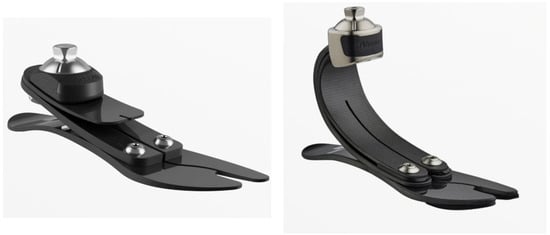
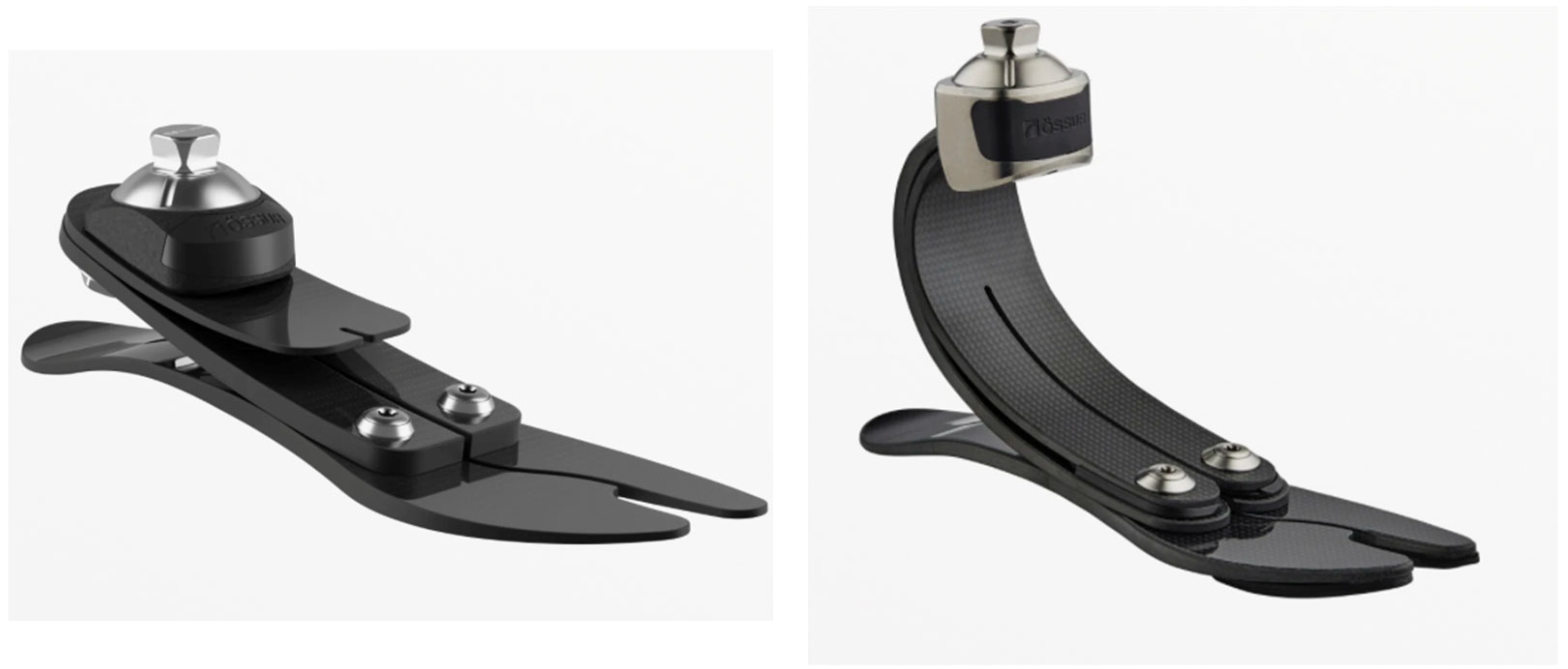
This is a prospective pilot study involving 10 transtibial prosthetic users who were evaluated under two conditions in a comparative manner walking with their own energy-storing prosthetic foot and with one of the following devices: ProFlex XC TS or Pro-Flex LP TS (Össur; Reykjavik, Iceland), as shown in Figure 1. According to the manufacturer, the ProFlex XC TS features a 3-blade design with a full effective toe lever and an anatomical split toe. The design reduces the need for the user to actively push the body forward and helps to equalize stride length. It allows for forward progression of the limb, reducing impact to the joints. The Pro-Flex LP TS has similar biomechanical characteristics but is designed for users with longer residual limbs.
Figure 1.
ProFlexTM LP (left) and XC (right) feet.
2.2. Prosthetic Componentry Description
All patients were using an energy-storing prosthetic foot during their baseline assessment, as noted in Table 1. The most common type of suspension was a silicone pin with a shuttle-lock system. Six of the ten patients had a patellar tendon-bearing (PTB) socket. After the initial assessment and depending on residual limb length, the patients received a Pro-Flex XC TS or a Pro-Flex LP TS. Details of the prosthesis characteristics are summarized in Table 1.
Table 1.
Prosthesis Description.
Participants were evaluated twice over a 4-week period; there was also an interim follow-up phone call (see Appendix A for a study procedures flow chart). In the first visit, participants were evaluated in their original socket and foot as well as in the test foot that was aligned by a prosthetist. Participants were asked to perform timed walking tests and report on the noise/play of the device and their perception of satisfaction and balance. The subjects left the first visit with their test foot to be used exclusively for the next four weeks. At the second visit, subjects were evaluated again using their test foot and afterwards were returned to their original foot and alignment.
2.3. Participants and Recruitment
Ten unilateral transtibial amputees with a functional level of K3-K4 suitable for either version of the tested foot were recruited from the outpatient patient population of the MossRehab Amputation Rehabilitation Program. Seven of the ten patients enrolled were male. The average age was 61.3 years (standard deviation 10.8, range 37–76). The average weight was 93.8 kg (standard deviation, 19.9; range 64.9–124.2) and the average height was 1.8 m (standard deviation, 10.3 cm; range, 1.62–1.93). All the patients were unilateral transtibial amputees. The cause of amputation was trauma for 5 subjects, dysvascularity for 4, and for 1 it was congenital. Details of the patient demographics are summarized in Table 2. Per manufacturer specification, the LP version of the interventional foot could accommodate a residual limb length up to 23 cm and the XC version could be used with a residual limb length up to 16 cm. This study was approved by the IRB of the Albert Einstein Healthcare Network. All participants were consented before any trial procedures were performed.
Table 2.
Patient Demographics.
2.4. Inclusion Criteria
- Person with an amputation with stable and comfortable socket use (no changes in the past 3 months) and able to walk without assistive devices.
- Ability to provide informed consent for study participation.
- ≥18 years of age.
- Any racial/ethnic group (translators may be used to assist non-English speakers).
2.5. Exclusion Criteria
- Open wounds in the residual limb.
- Phantom syndrome with use of narcotic medication.
- Issues/impairment on the contralateral limb, for example, skin lesions or pain.
- Weight ≥ 147 kg.
- Prosthetic foot size smaller than 22 cm or larger than 30 cm.
2.6. Outcome Measures
- Prosthesis Evaluation Questionnaire (PEQ): This is used to measure differences in prosthesis function and major life domains related to prosthetic function. The ambulatory, sound and appearance sections were selected to be used in this study. Each of them is scored from 0 to 100, 100 being the highest level of satisfaction with the prosthesis.
- Performance on 6MWT (6MWT): The 6 min walking test assesses distance walked over 6 min and evaluates endurance.
- L-Test (20 m-TuG): The L-test of functional mobility can be used to assess physical function in patients with a lower-limb amputation who are using a prosthesis.
- ABC test: The ABC scale is a self-report measure of balance confidence in performing various activities without losing balance or experiencing a fall. This score is 0 to 100.
- Gait velocity and the temporal spatial parameters of gait using the electronic Gait Mat II™ (EQ. Inc., Chalfont, PA, USA).
2.7. Data Collection
- (1)
- Baseline Assessment, Day 4 To Day 1
Participants were stratified to one of two feet, the Pro-Flex XC TS or the Pro-Flex LP TS, based on the participant’s residual limb length. At the baseline visit, the following data were collected with the participant’s regular prosthetic foot:
- PEQ;
- 6MWT;
- L-test;
- ABC;
- Gait velocity and temporal spatial parameters using the Gait Mat II™;
- A video during walking.
One trial of each of the above standard tests was performed, with the exception of walking over the Gait Mat II™ to capture temporospatial data, for which as many round trips over a 5 m walkway were performed as required to collect at least 20 full left and right gait cycles. These data are sampled at 100 Hz and not filtered. Data are processed in the native software—where partial steps are automatically removed and basic computations such as all temporospatial parameters (stride length, step time, etc.) are reported for each cycle. These data are then manually copied into a Microsoft Excel spreadsheet and simple descriptive measures (averages, standard deviations, etc.) are performed.
- (2)
- Intervention, Day 1 To Day 30
After data acquisition, the foot was replaced with the study foot (intervention) and aligned by the prosthetist. Patients were assessed for safety and then allowed to take the foot home for 4 weeks of acclimatation. At week 2, a phone follow-up was performed to assure the absence of AE and continued comfort. At week 4, patients returned for re-evaluation and the video and data were again recorded in the gait laboratory.
- (3)
- Follow-Up, 4 Weeks
Post-intervention follow-up data were collected at 4 weeks of the participant walking with the study foot:
- PEQ;
- 6MWT;
- L-test;
- ABC;
- Gait velocity and temporal spatial parameters using the Gait Mat II;
- A video during walking.
A full description of timelines of study events is provided in Table A1 (in the Appendix A).
2.8. Data Analysis
The descriptive statistics were calculated for the velocities, 6MWT distances, L-test times, PEQ scores and ABC scores. Non-parametric statistical analyses (Wilcoxon signed-rank test, paired; Real statistics, Charles Zaiontz) were used to assess the differences between the study and baseline foot conditions. We include the minimal clinically important difference (MCID) using established values as reported in Table 3 for the selected variables in the study [20]:
Table 3.
MCID for select variables evaluated in the study.
3. Results
3.1. Gait Velocity
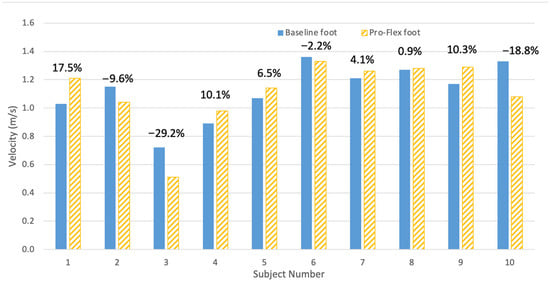
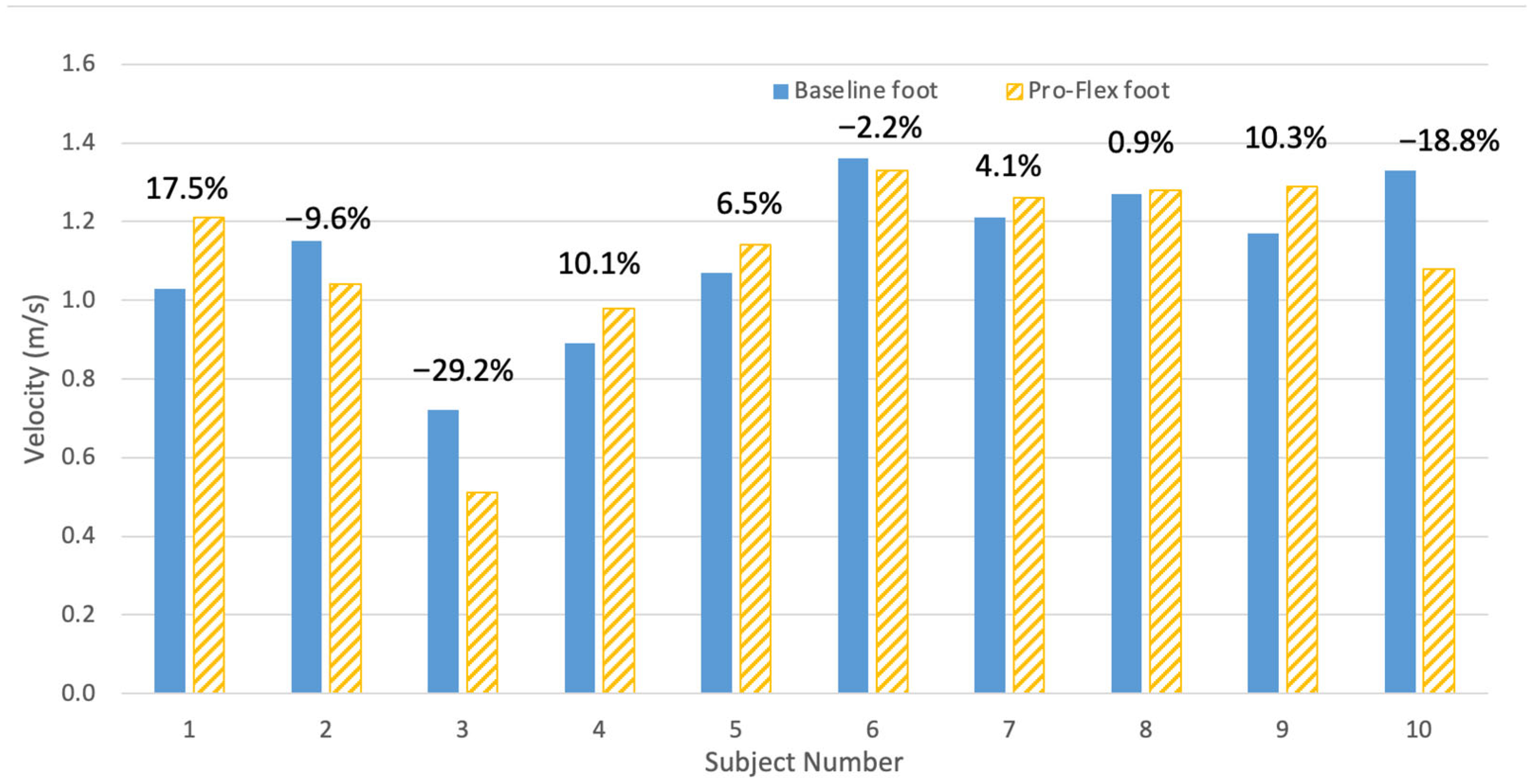
The average gait velocity was unchanged for the group; the individual data are shown in Figure 2 and in Column 2 of Table 4.
Figure 2.
Gait speed of all study subjects in both feet conditions. Measurements with the new foot were obtained after 4 weeks when subjects were acclimated to the study foot. Subject #10 was the only one to show a change greater than the MCID.
Table 4.
Changes in all the variables studied for each of the 10 subjects.
3.2. Functional Tests
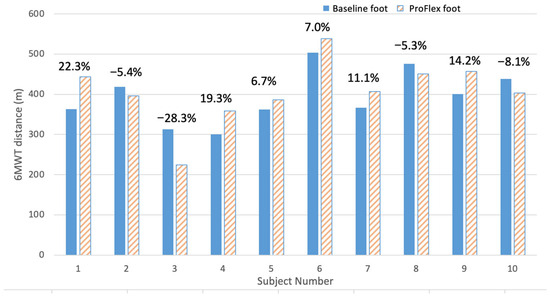
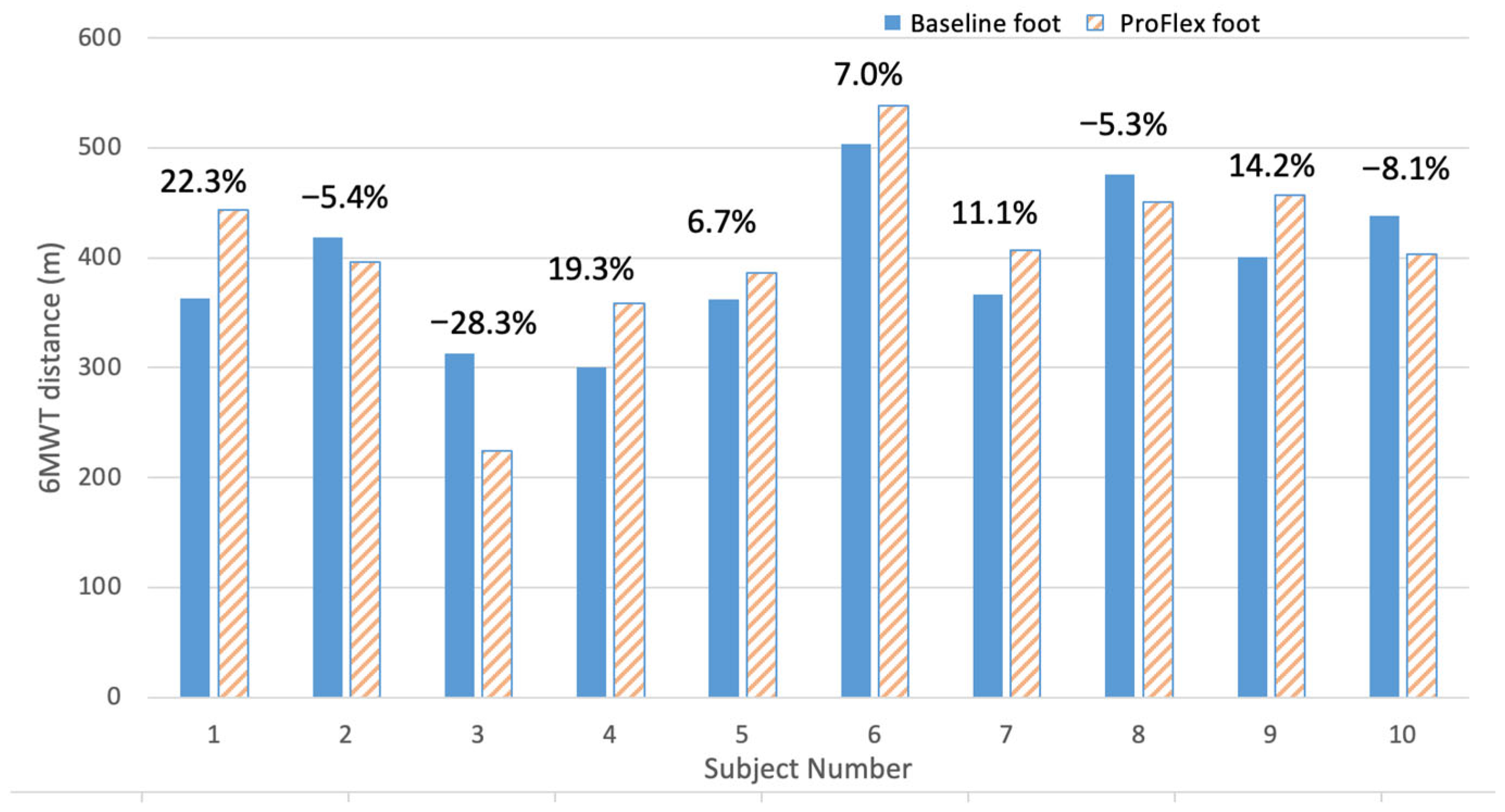
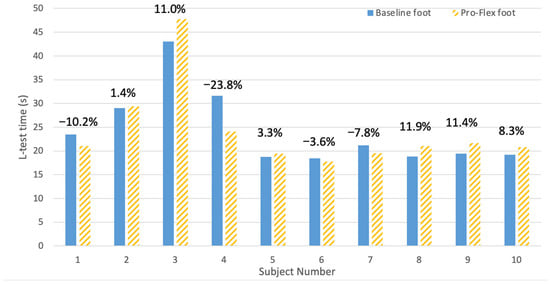
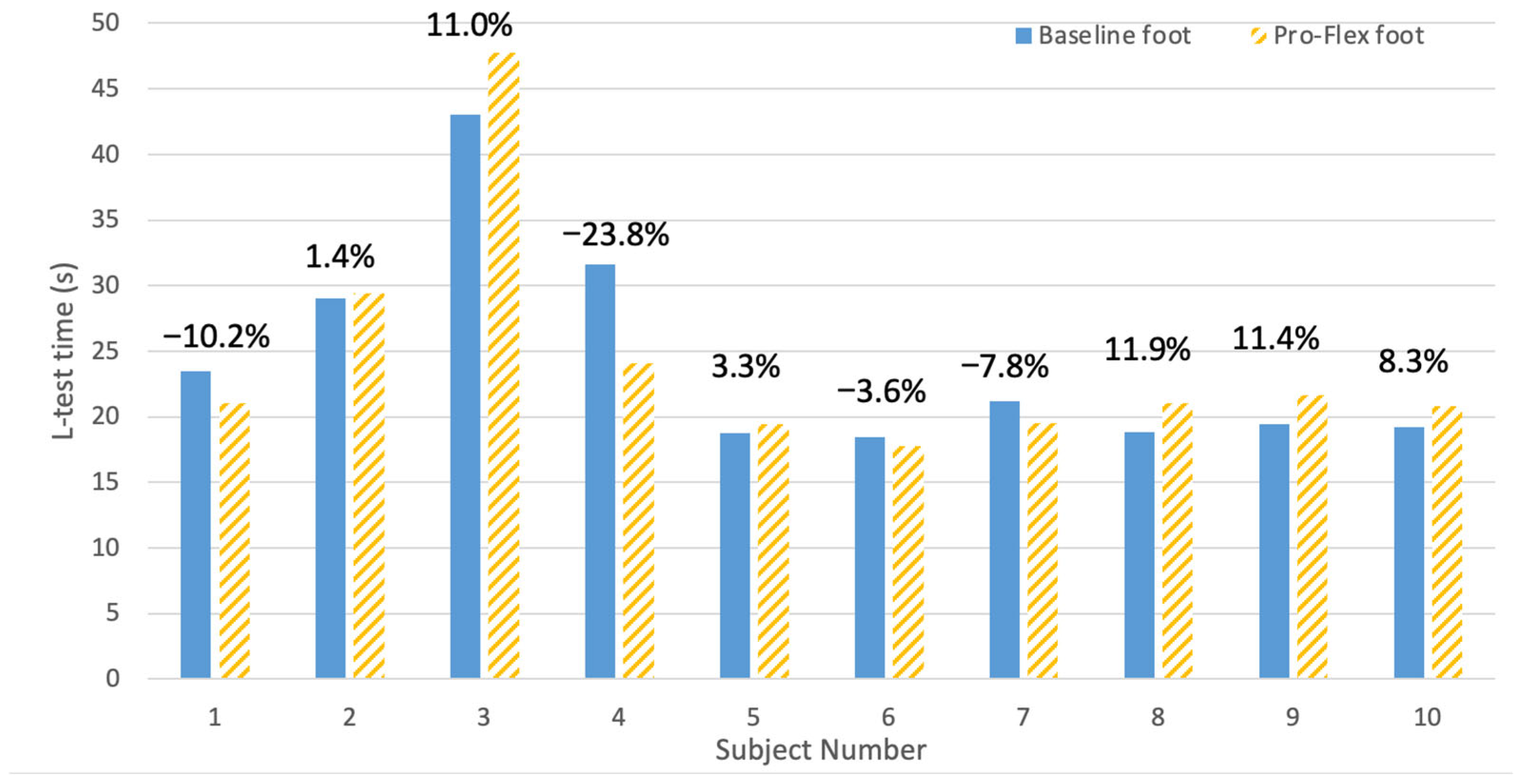
All subjects performed the 6MWT and the L-test with both their own (baseline) prosthetic foot and with the ProFlex foot. Figure 3 and Table 4 (Column 3) summarizes these results.
Figure 3.
6MWT Results.
Figure 4.
L-test results.
3.3. Patient Perception
PEQ and ABC were administered to evaluate a patient’s perception during their baseline evaluation and after 4 weeks of using the provided foot. Data are reported in Columns 4–7 of Table 4.
4. Discussion
Our data suggest that there is limited difference in level-ground walking performance at self-selected speed (ranging from about 0.5–1.4 m/s for the current cohort) for persons with transtibial amputation performing at the K3 level, when changing within this class of energy storage feet. It is noted that considerably large and/or quite consistent trends are required to generate statistically significant changes in a cohort of 10 subjects. The lack of significance does not necessarily imply that all subjects would perform the same in all ESAR feet but rather that this study was not set up to show any differences that may exist or that no meaningful differences existed for this population performing this task. If these data generalize to the larger group of K3-function-level amputees, either there are insufficient data or few meaningful differences in performance overall for K3-functional-level subjects wearing this class of feet. A larger study carefully designed to explore this could indeed provide important information. In the literature there are other published studies that support that the main changes in gait and function occur when changing from a solid-ankle cushioned heel (SACH) foot to an energy storage one, but this is less evident when changing across different kinds of energy storage feet [11,12,13,21,22,23,24,25,26,27,28,29]. Hofstad et al. published a Cochrane systematic review in 2004 and another review in 2010 that concluded there is insufficient evidence from high-quality comparative studies for the overall superiority of any individual type of prosthetic ankle foot mechanism, although there is a small trend towards the advantages of a flex foot in comparison with a SACH foot, of longer stride length and a lower energy cost in individuals with a transtibial amputation [30]. There are some studies that show benefits, such as Tomkin et al., who studied the biomechanical performance of the ProFlex foot compared with the ProFlex XC in three unilateral transtibial amputees and found that the ProFlex provided greater ankle motion during gait, but with similar push-off power [31].
While many clinicians and practitioners may know this from experience, sufficient scientific evidence does not seem to exist to support this finding, with robust and thorough data analyses for this knowledge being more widespread and common. Our results are important because there are few previous studies that comparefeet within the energy storage and return group. Also, our methodology prioritized assessing the impact of the foot after user adaptation. We used the same socket with appropriate alignment for the study foot and a substantial period of time (30 days) for the subjects to adjust and overcome the potential favorable response to a “new” device. This allowed us to more clearly attribute the observed changes to the new prosthetic foot. We also restored the baseline alignment after the test period to verify initial (baseline) performance.
Table 4 shows the important changes that occurred with the study foot. We speculate that the objective measurement of walking performance with the six-minute walk test was the most sensitive tool because it was able to detect some changes. The changes in score details in this measure are shown in Figure 3. The L-test scores were mixed—with six subjects showing small improvements in the experimental foot and the other four showing slight decreases. Overall walking velocity showed increases in seven of the 10 subjects with an average increase of under 10% for those seven.
Our multivariable approach intended to identify possible differences between energy storage design feet. Following this line of thinking, we saw that two of our 10 subjects showed improvement in most of the studied variables, so we could deduce that they benefited from the new prosthetic feet. For two subjects, most of the studied variables show a decrease, so they should probably continue to use the same prosthetic foot. For the rest of the subjects, the results are less conclusive. A proper prosthetic foot prescription needs to take into consideration multiple elements, such as patient’s functional goals, preferences and temporal–spatial parameters, such as those evaluated in this study. A multivariable approach with subjective and objective data can allow clinicians to make better informed decisions that match patient goals, improve functional outcomes and patient satisfaction as well as improving the prescription process and access to proper devices while making efficient use of resources in the healthcare system.
The limitations of this study were that it used a small convenience sample, with five subjects for each type of tested foot, and that all of the subjects were motivated users who were willing to try a new device. Other possible factors that potentially impact walking and prosthetic comfort were addressed by (1) not changing the sockets, (2) having an experienced prosthetist align the study foot following manufacturers recommendation and (3) having a 2nd experienced clinician review the study foot alignment. It is important to keep in mind these findings hold for self-selected walking velocity but may be different at fast speed or walking on uneven terrain or for different specific ESAR feet.
We believe that prosthetic feet can be more carefully and judiciously prescribed with the knowledge of what specific functional differences particular models and classes of feet provide. While this paper does not attempt to tease out any subtle differences between models of feet within this particular class, it did—generally—suggest that the differences may be better assessed by preferentially focusing on walking velocity using the 6 min walk test as an outcome. With the growing market in prosthetic feet, it is helpful to consider furthering this line of investigation, where the comparison of new devices is made with feet of similar characteristics and not with older versions. Also, having a multivariable approach, such as the one used in this study, allows us to have a wider view of the outcomes involved in prosthetic prescription and better focus our evaluation to the patient’s goals and objectives.
Author Contributions
Conceptualization, A.E. and M.F.; methodology, M.F., M.T. and A.E.; formal analysis, M.T. and D.G.; investigation, M.T. and M.F.; writing—original draft preparation, M.T. and M.F.; writing—review and editing, all; funding acquisition, A.E. All authors have read and agreed to the published version of the manuscript.
Funding
This research was supported by an educational grant from Össur and by the T. Vacheranukunkiet Fund.
Institutional Review Board Statement
The study was conducted in accordance with the Declaration of Helsinki, and approved by the Institutional Review Board of the Albert Einstein Healthcare Network (No. 4993 FBD, date: 3 August 2017).
Informed Consent Statement
Informed consent was obtained from all subjects involved in the study.
Data Availability Statement
Data will be made available upon reasonable request directly to corresponding author.
Acknowledgments
Barbara Hirai and Stella Lee assisted with data collection and analysis.
Conflicts of Interest
The authors declare no conflicts of interest. The funders had no role in the design of the study; in the collection, analyses, or interpretation of data; in the writing of the manuscript; or in the decision to publish the results.
Abbreviations
The following abbreviations are used in this manuscript:
| ESAR | Energy Storage and Return |
| SACH | Solid-Ankle Cushioned Heel |
| PEQ | Prosthesis Evaluation Questionnaire |
| 6MWT | 6-Minute Walking Test |
| AE | Adverse Events |
| ABC | Activity-Specific Balance Confidence Scale |
| MCID | Minimal Clinically Important Difference |
| PTB | Patellar Tendon-Bearing |
| TSB | Total Surface-Bearing |
| Avg. | Average |
| SD | Standard Deviation |
| K3/K4 | Medicare Functional Classification Levels (K Levels) |
| LP/XC | Low-Profile/Extra-Contour (Cross-Country) Versions of The Proflex Foot |
| Rng. | Range |
Appendix A
Table A1.
Schedule of study procedures.
References
- Postema, K.; Hermans, H.; De Vries, J.; Koopman, H.; Eisma, W. Energy storage and release of prosthetic feet—Part 1: Biomechanical analysis related to user benefits. Prosthet. Orthot. Int. 1997, 21, 17–27. [Google Scholar] [CrossRef] [Scilit]
- Lehman, J.; Price, R.; Boswell-Bessette, S.; Dralle, A.; Questad, K.; deLateur, B. Comprehensive analysis of energy storing prosthetic feet: Flex Foot and Seattle Foot versus standard SACH foot. Arch. Phys. Med. Rehabil. 1993, 74, 1225–1231. [Google Scholar] [CrossRef] [Scilit]
- Cortés, A.; Viosca, E.; Hoyos, J.V.; Prat, J.; Sánchez-Lacuesta, J. Optimisation of the prescription for trans-tibial (TT) amputees. Prosthet. Orthot. Int. 1997, 21, 168–174. [Google Scholar] [CrossRef] [Scilit] [PubMed]
- Van Der Linden, M.L.; Solomonidis, S.E.; Spence, W.D.; Li, N.; Paul, J.P. A methodology for studying the effects of various types of prosthetic feet on the biomechanics of trans-femoral amputee gait. J. Biomech. 1999, 32, 877–889. [Google Scholar] [CrossRef] [Scilit] [PubMed]
- Esquenazi, A.; Torres, M.M. Prosthetic Feet and Ankle Mechanisms. Phys. Med. Rehabil. Clin. N. Am. 1991, 2, 299–309. [Google Scholar] [CrossRef] [Scilit]
- Goujon, H.; Bonnet, X.; Sautreuil, P.; Maurisset, M.; Darmon, L.; Fode, P.; Lavaste, F. A functional evaluation of prosthetic foot kinematics during lower-limb amputee gait. Prosthet. Orthot. Int. 2006, 30, 213–223. [Google Scholar] [CrossRef] [Scilit]
- Mizuno, N.; Aoyama, T.; Nakajima, A.; Kasahara, T.; Takami, K. Functional evaluation by gait analysis of various ankle-foot assemblies used by below knee amputees. Prosthet. Orthot. Int. 1992, 16, 174–182. [Google Scholar] [CrossRef] [Scilit] [PubMed]
- Arya, A.; Lees, A.; Nirula, H.; Klenerman, L. A biomechanical comparison of the SACH, Seattle and Jaipur feet using ground reaction forces. Prosthet. Orthot. Int. 1995, 19, 37–45. [Google Scholar] [CrossRef] [Scilit] [PubMed]
- Snyder, R.D.; Powers, C.M.; Fontaine, C.; Perry, J. The effect of five prosthetic feet on the gait and loading of the sound limb in dysvascular below-knee amputees. J. Rehabil. Res. Dev. 1995, 32, 309–315. [Google Scholar] [PubMed]
- Esquenazi, A. Gait Analysis in Lower-Limb Amputation and Prosthetic Rehabilitation. Phys. Med. Rehabil. Clin. N. Am. 2014, 25, 153–167. [Google Scholar] [CrossRef] [Scilit]
- Müller, R.; Tronicke, L.; Abel, R.; Lechler, K. Prosthetic push-off power in trans-tibial amputee level ground walking: A systematic review. PLoS ONE 2019, 14, e0225032. [Google Scholar] [CrossRef] [Scilit]
- Houdijk, H.; Wezenberg, D.; Hak, L.; Cutti, A.G. Energy storing and return prosthetic feet improve step length symmetry while preserving margins of stability in persons with transtibial amputation. J. Neuroeng. Rehabil. 2018, 15, 76. [Google Scholar] [CrossRef] [Scilit] [PubMed]
- Wezenberg, D.; Cutti, A.G.; Bruno, A.; Houdijk, H. Differentiation between solid-ankle cushioned heel and energy storage and return prosthetic foot based on step-to-step transition cost. J. Rehabil. Res. Dev. 2014, 51, 1579–1590. [Google Scholar] [CrossRef] [Scilit] [PubMed]
- Hafner, B.; Halsne, E.; Morgan, S.; Davidson, G. Functional Outcomes in People with Transtibial Amputation Using Crossover and Energy-Storing Prosthetic Feet: A Pilot Study. J. Prosthet. Orthot. 2018, 30, 90–100. [Google Scholar] [CrossRef] [Scilit]
- Kaluf, B.; Duncan, A.; Bridges, W. Comparative Effectiveness of Microprocessor-Controlled and Carbon-Fiber Energy-Storing-and-Returning Prosthetic Feet in Persons with Unilateral Transtibial Amputation: Patient-Reported Outcome Measures. J. Prosthet. Orthot. 2020, 32, 214–221. [Google Scholar] [CrossRef] [Scilit]
- Prost, V.; Johnston, W.K.; Kent, J.A.; Major, M.J.; Winter, A.G. Biomechanical evaluation over level ground walking of user-specific prosthetic feet designed using the lower leg trajectory error framework. Dent. Sci. Rep. 2022, 12, 5306. [Google Scholar] [CrossRef] [Scilit] [PubMed]
- Basim, N.; Kahtan, Y.Y. A Study of the Effect of the Difference in Energy Stored in Two Prosthetic Feet Made of Carbon Fiber Amputated Below the Knee on the Efficiency of Walking. Al-Nahrain J. Eng. Sci. 2024, 27, 97–108. [Google Scholar] [CrossRef] [Scilit]
- Rakbangboon, T.; Guerra, G.; Sasaki, K.; Tangpornprasert, P.; Virulsri, C.; Phaipool, S.; Hodges, J.; Putra, A.D.; Yunihanawati, R.; Arunsaengsin, N.; et al. Affordable Energy Storage and Return Prosthesis: Functional Comparisons of the S-Pace and Ossur Vari-Flex Feet. Arch. Phys. Med. Rehabil. 2018, 99, e97. [Google Scholar] [CrossRef] [Scilit]
- Ray, S.F.; Wurdeman, S.R.; Takahashi, K.Z. Prosthetic energy return during walking increases after 3 weeks of adaptation to a new device. J. NeuroEng. Rehabil. 2018, 15, 6. [Google Scholar] [CrossRef] [Scilit]
- Linda, R.; Borgia, M. Reliability of outcome measures for people with lower-limb amputations: Distinguishing true change from statistical error. Phys. Ther. 2011, 91, 555–565. [Google Scholar] [CrossRef] [Scilit]
- Raschke, S.U.; Orendurff, M.S.; Mattie, J.L.; Kenyon, D.E.; Jones, O.Y.; Moe, D.; Winder, L.; Wong, A.S.; Moreno-Hernández, A.; Highsmith, M.J.; et al. Biomechanical characteristics, patient preference and activity level with different prosthetic feet: A randomized double blind trial with laboratory and community testing. J. Biomech. 2016, 48, 146–152. [Google Scholar] [CrossRef] [Scilit] [PubMed]
- Agrawal, V.; Gailey, R.S.; Gaunaurd, I.A.; O’tOole, C.; Finnieston, A.; Tolchin, R. Comparison of four different categories of prosthetic feet during ramp ambulation in unilateral transtibial amputees. Prosthet. Orthot. Int. 2015, 39, 380–389. [Google Scholar] [CrossRef] [Scilit]
- Gardiner, J.D.; Bari, A.Z.; Howard, D.; Kenney, L.P.J. Transtibial amputee gait efficiency: Energy storage and return versus solid ankle cushioned heel prosthetic feet. J. Rehabil. Res. Dev. 2016, 53, 1133–1138. [Google Scholar] [CrossRef] [Scilit] [PubMed]
- Hafner Brian, J.; Halsne, E.G.; Morgan, S.J.; Morgenroth, D.C.; Humbert, A.T. Effects of prosthetic feet on metabolic energy expenditure in people with transtibial amputation: A systematic review and meta-analysis. PM&R 2022, 14, 1099–1115. [Google Scholar]
- David, H.M.-J.; Nielsen, H.; Lin-Chan, S.-J.; Shurr, D. The effects of prosthetic foot design on physiologic measurements, self-selected walking velocity, and physical activity in people with transtibial amputation. Arch. Phys. Med. Rehabil. 2006, 87, 123–129. [Google Scholar]
- Elke, L.; Díaz, M.A.; Maricot, A.; Tassignon, B.; Cherelle, C.; Cherelle, P.; Meeusen, R.; De Pauw, K. Therapeutic benefits of lower limb prostheses: A systematic review. J. Neuroeng. Rehabil. 2023, 20, 4. [Google Scholar]
- McDonald Cody, L.; Kramer, P.A.; Morgan, S.J.; Halsne, E.G.; Cheever, S.M.; Hafner, B.J. Energy expenditure in people with transtibial amputation walking with crossover and energy storing prosthetic feet: A randomized within-subject study. Gait Posture 2018, 62, 349–354. [Google Scholar] [CrossRef] [Scilit]
- Heitzmann, D.W.; Salami, F.; De Asha, A.R.; Block, J.; Putz, C.; Wolf, S.I.; Alimusaj, M. Benefits of an increased prosthetic ankle range of motion for individuals with a trans-tibial amputation walking with a new prosthetic foot. Gait Posture 2018, 64, 174–180. [Google Scholar] [CrossRef] [Scilit]
- Gailey, R.S.; Gaunaurd, I.; Agrawal, V.; Finnieston, A.; Otoole, C.; Tolchin, R. Application of self-report and performance-based outcome measures to determine functional differences between four categories of prosthetic feet. J. Rehabil. Res. Dev. 2012, 49, 597–612. [Google Scholar] [CrossRef] [Scilit]
- Hofstad, C.; Linde, H.; Limbeek, J.; Postema, K. Prescription of prosthetic ankle-foot mechanisms after lower limb amputation. Cochrane Database Syst. Rev. 2004, 2004, CD003978. [Google Scholar] [CrossRef] [Scilit] [PubMed] [PubMed Central]
- Tomkin, M.; Gholizadeh, H.; Sinitski, E.; Lemaire, E.D. Transtibial amputee gait with the pro-flex foot during level, decline, and incline walking. Can. Prosthet. Orthot. J. 2018, 1, 1–2. [Google Scholar] [CrossRef] [Scilit]

Disclaimer/Publisher’s Note: The statements, opinions and data contained in all publications are solely those of the individual author(s) and contributor(s) and not of MDPI and/or the editor(s). MDPI and/or the editor(s) disclaim responsibility for any injury to people or property resulting from any ideas, methods, instructions or products referred to in the content. |
© 2026 by the authors. Licensee MDPI, Basel, Switzerland. This article is an open access article distributed under the terms and conditions of the Creative Commons Attribution (CC BY) license.