


Abstract
This study presents a Scanning Electron Microscopy and Energy-Dispersive X-ray Spectroscopy (SEM/EDS) characterization of three American Civil War era ammunition: the .56-52 Spencer, .56-56 Spencer, and .50 US carbine centerfire. Analysis revealed the Spencer rimfire cases consist of pure copper, likely to prevent the embrittlement caused by mercury fulminate in the primer, whereas the latter .50 US carbine centrefire case utilizes a brass alloy. The propellant was confirmed to be traditional black powder. Notably, traces of silicon and aluminum detected within the primer and propellant residues were thoroughly investigated. The lack of systematic glass markers suggests these elements originated from impurities or degraded organic binders, rather than intentionally added glass frictionators. Ultimately, this research addresses a gap in the literature regarding the material composition and degradation of mid-19th-century ammunition.
1. Introduction
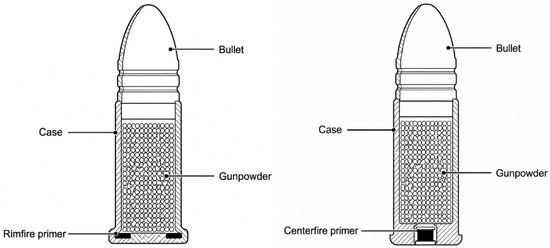
The period around the American Civil War (1861–1865) marked a transformative era in small-arms ammunition development, witnessing the transition from paper ammunition and percussion caps to self-contained metallic ammunition. These early metallic rounds, typically loaded with black powder, significantly enhanced reliability, rate of fire, and ease of loading for both military and civilian firearms. Two primary ignition systems emerged during this period: rimfire and centrefire. The rimfire system, such as that used in the .56-52 Spencer, relied on a fulminating compound distributed within the rim of the case base. Conversely, the centrefire system featured a separate primer located at the center of the ammunition base, offering improved ignition reliability and making reloading more practical. A general schematic illustrating the main internal and external components of this historical ammunition—case, primer, bullet, and propellant—is provided in Figure 1 to facilitate the understanding of their distinct mechanisms.
Figure 1.
A schematic diagram showing the ammunition case, primer, bullet, and gunpowder of a rimfire (sx) and a centerfire ammunition (dx).
The Spencer rimfire ammunition (including the .56-56 and subsequent adaptations like the .56-52) represented a major technological advancement, acting as some of the first metallic ammunition suitable for repeating rifles adopted by the Union Army. In contrast, the .50 US carbine centrefire ammunition represents a transitional design bridging early percussion-cap muzzleloaders and later smokeless powder ammunition, featuring a drawn brass case and a centerfire ignition system. Despite their historical and technological significance, there is a notable gap in the scientific literature regarding the precise material composition, manufacturing variations, and long-term chemical degradation processes of these mid-19th-century ammunition components.
Therefore, the aim of this study is to characterize the elemental composition and investigate the degradation phenomena of three American Civil War era ammunition: the .56-52 Spencer, the .56-56 Spencer, and the .50 US carbine. By utilizing Scanning Electron Microscopy and Energy-Dispersive X-ray Spectroscopy (SEM/EDS), this research addresses the existing knowledge gap by analyzing the constituent materials of the cases, bullets, propellants, and priming mixtures. Specifically, this study seeks to determine the exact alloys used in casing manufacturing, confirm the nature of the propellants, and interpret the origin of trace elements (such as silicon and aluminum) found within the primer and propellant residues. The structural and chemical insights obtained are intended to clarify historical manufacturing practices and provide valuable empirical data for the preservation, study, and forensic analysis of historical artefacts.
2. Materials and Methods
The samples analyzed in this preliminary study come from ammunition that was legally acquired in the United States by one of the authors during an estate sale. These artefacts, originating from a private collection of American Civil War relics, consisted of a set of eleven historical ammunition: five .56-.56 Spencer rimfire ammunition (c. 1860), five .56-.52 Spencer rimfire ammunition (c. 1864), and one .50 US carbine centerfire ammunition (c. 1870). Given the limited number of samples, particularly the reliance on a single.50 US carbine ammunition, the findings presented herein are intended to serve as an initial exploratory investigation rather than a generalized statistical assessment.
The samples were delivered to the electron microscopy laboratory already disassembled into their main components: case, bullet, and propellant charge. It is important to clarify that the disassembly process was carefully performed by one of the authors prior to laboratory delivery; thus, controlled handling was maintained to prevent cross-contamination during this specific phase. Nevertheless, because these artefacts were originally sourced from a private collection, their exact historical storage environments and handling conditions over the past century remain unknown. The potential impact of long-term environmental exposure prior to acquisition was therefore carefully considered during the interpretation of trace-element analytical results.
Morphological characterization and elemental composition analyses were performed using a Tescan MIRA 4 Field Emission Scanning Electron Microscope (FE-SEM) (Tescan Group a.s., Brno, Czech Republic). The instrument is equipped with a high-brightness Schottky FEG source, operating within an acceleration voltage range of 0.2 kV to 30 kV and a beam current ranging from 2 pA to 400 nA. Analyses were conducted under high-vacuum conditions (chamber pressure < 9 × 10⁻³ Pa), where the guaranteed resolution is 1.0 nm at 30 kV. Regarding image acquisition, the analysis of surface topography was conducted using an Everhart-Thornley-type Secondary Electron (SE) detector, while high-resolution imaging utilized an in-column Secondary Electron (In-Beam SE) detector. Compositional contrast analysis was performed using a scintillation Backscattered Electron (BSE) detector, characterized by an atomic-number resolution better than 0.1 Z. The instrument’s magnification range varies from 2× to 2,000,000×. Energy-Dispersive X-ray Spectroscopy (EDS) microanalysis was carried out using an integrated system to determine the elemental composition of the samples.
3. Results
This section presents the results obtained from the Scanning Electron Microscopy (SEM) and Energy-Dispersive X-ray Spectroscopy (EDS) analyses performed on the historical ammunition samples. To ensure clarity and facilitate comparison, the morphological and elemental characterization of each ammunition is systematically detailed according to its four main components: the case, the primer, the bullet, and the propellant.
3.1. Ammunition A: .56-.52 Spencer Rimfire (c. 1864)
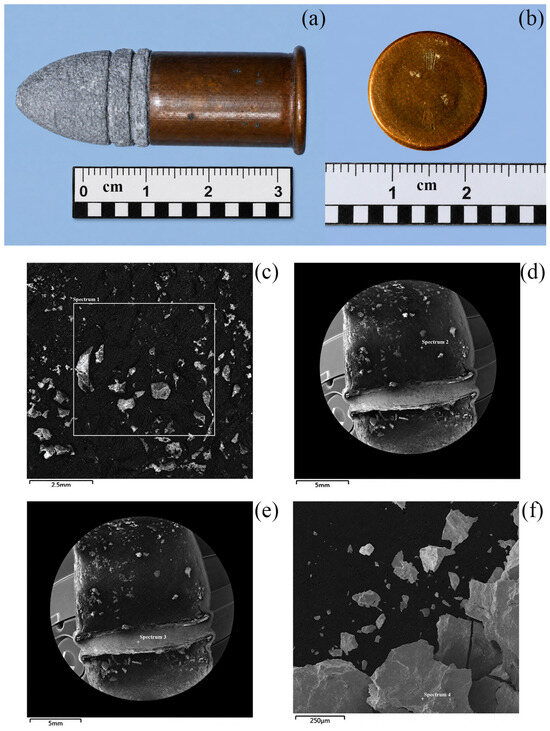
Macroscopic examination of the ammunition designated as “A” reveals a reddish metal case and a lead bullet exhibiting generalized surface oxidation, as visible in the optical images. Prior to the elemental characterization, high-resolution morphological analyses were performed using the SEM secondary electron (SE) detector.
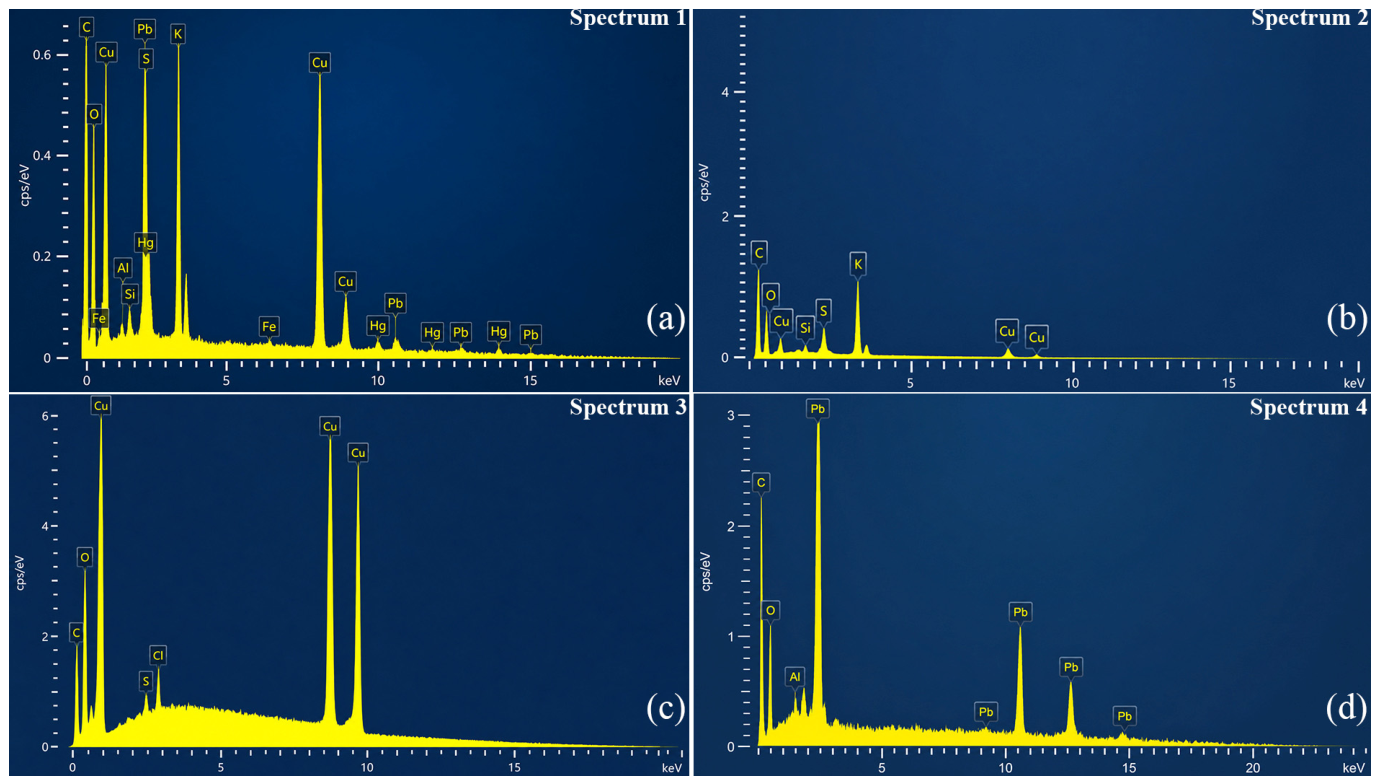
- Case: EDS analysis performed on the internal (Figure 2d,e) and external surfaces of the metallic case revealed the exclusive presence of Copper (Cu), with a total absence of Zinc (Zn) (Figure 3b,c). This unequivocally indicates that the original casing is made of pure copper rather than a brass alloy;
- Bullet: Morphological analysis of the bullet surface highlighted significant oxidative degradation (Figure 2a). EDS point analyses on cream-coloured flakes found adhered to the bullet base revealed a composition predominantly consisting of Lead (Pb), Aluminum (Al), Carbon (C), and Oxygen (O) (Figure 3d);
- Propellant: Examination of the unburnt propellant granules (Figure 2c) and their subsequent EDS microanalysis confirmed the presence of Carbon (C), Potassium (K), and Sulfur (S). These elements are perfectly consistent with the historical formulation of black powder (charcoal, potassium nitrate, and sulfur). Additionally, trace elements such as Silicon (Si) and Aluminum (Al) were observed intermixed with the powder granules (Figure 3a,b).
Figure 2.
Overview of the .56-.52 Spencer ammunition (a) and its rimfire case head (b). Secondary electron (SE) images show selected components of the ammunition: (c) internal residues near the case head; (d,e) internal surface of the case; and (f) cream-coloured flakes found adhered to the bullet base.
Figure 3.
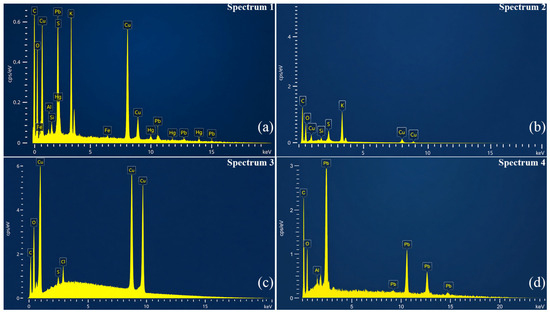
Overview of the Energy-Dispersive X-ray Spectroscopy (EDS) spectra acquired from different parts of the .56-.52 Spencer ammunition: (a) residues collected from the internal rim of the case head; (b,c) internal surface of the metallic case; and (d) cream-coloured flakes found adhered to the bullet base. The x-axis represents energy in keV, and the y-axis represents intensity in cps/eV.
EDS analysis performed on the case revealed the presence of Copper (Cu) only, with a total absence of Zinc (Zn), indicating that it is not a brass alloy. Analysis of the propellant residues (black powder) showed the presence of the expected elements, namely Carbon (C), Potassium (K), and Sulfur (S), consistent with the components of potassium nitrate, charcoal, and sulfur. Additionally, cream-coloured flakes composed of Lead (Pb), Aluminum (Al), Carbon (C), and Oxygen (O) were observed. Furthermore, Mercury (Hg) was detected in the primer residues, attributable to the decomposition of mercury fulminate originally present in the priming mixture.
3.2. Ammunition B: .56-.56 Spencer Rimfire (c. 1860)
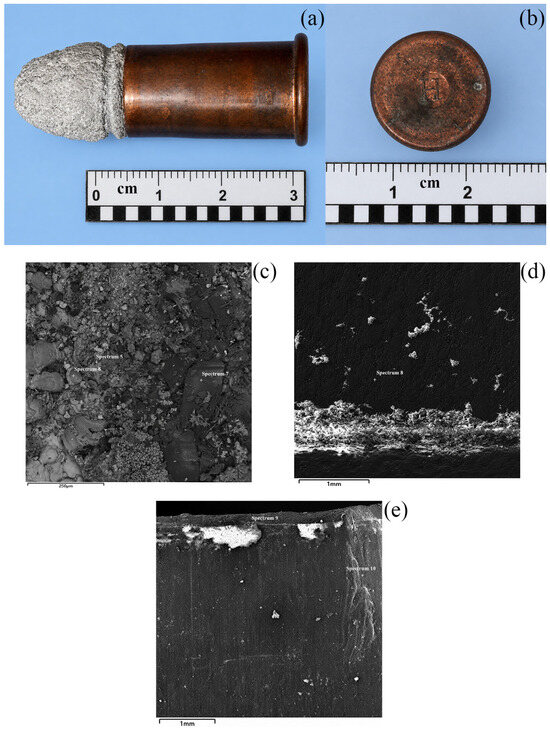
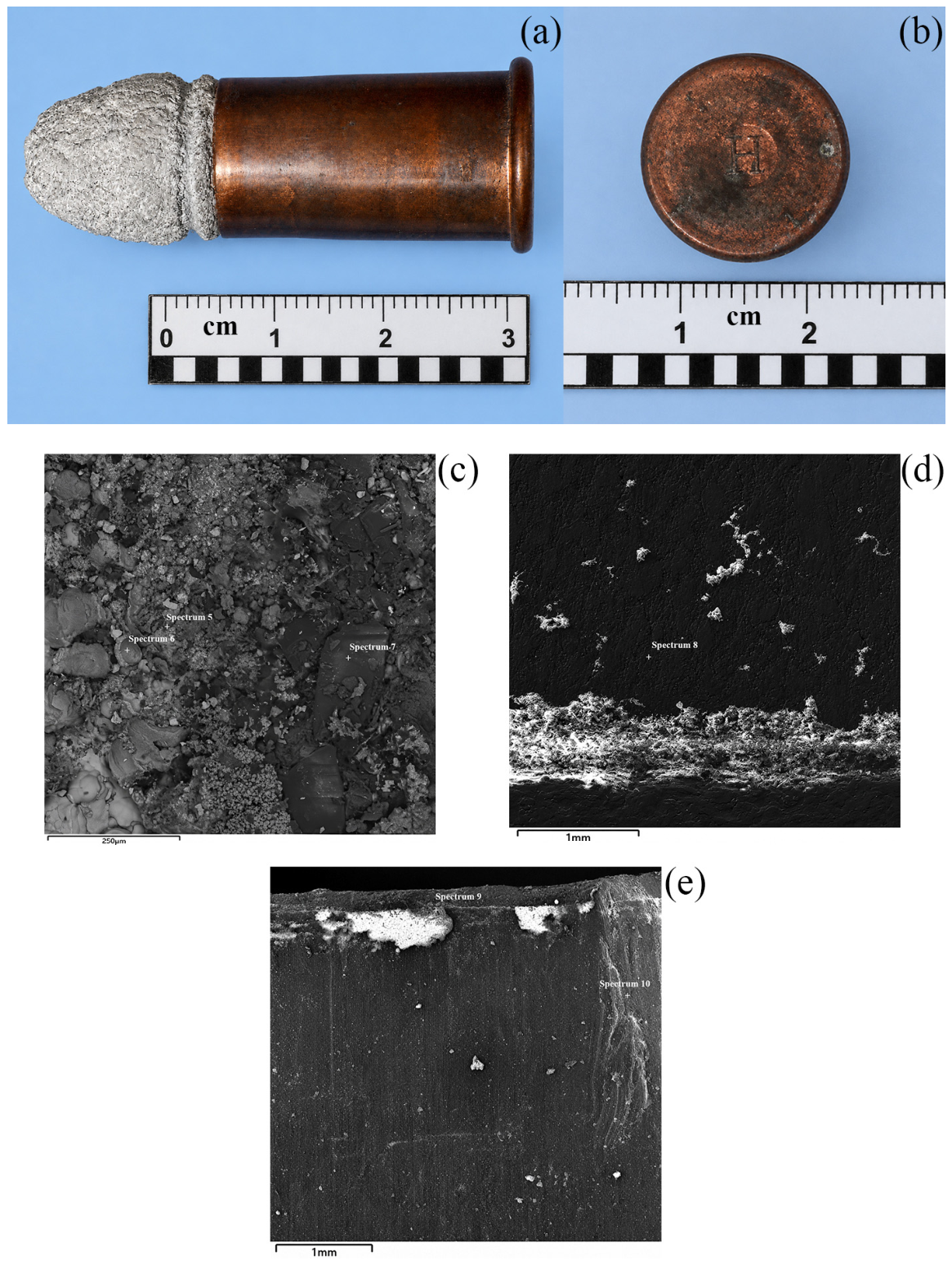
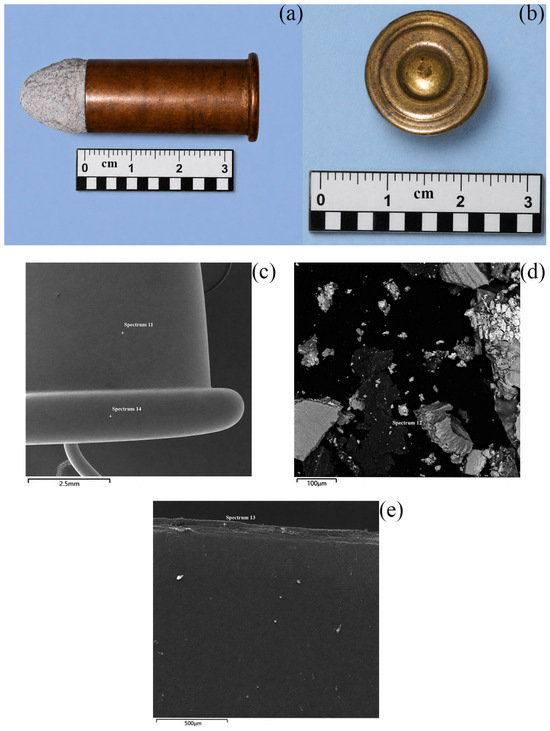
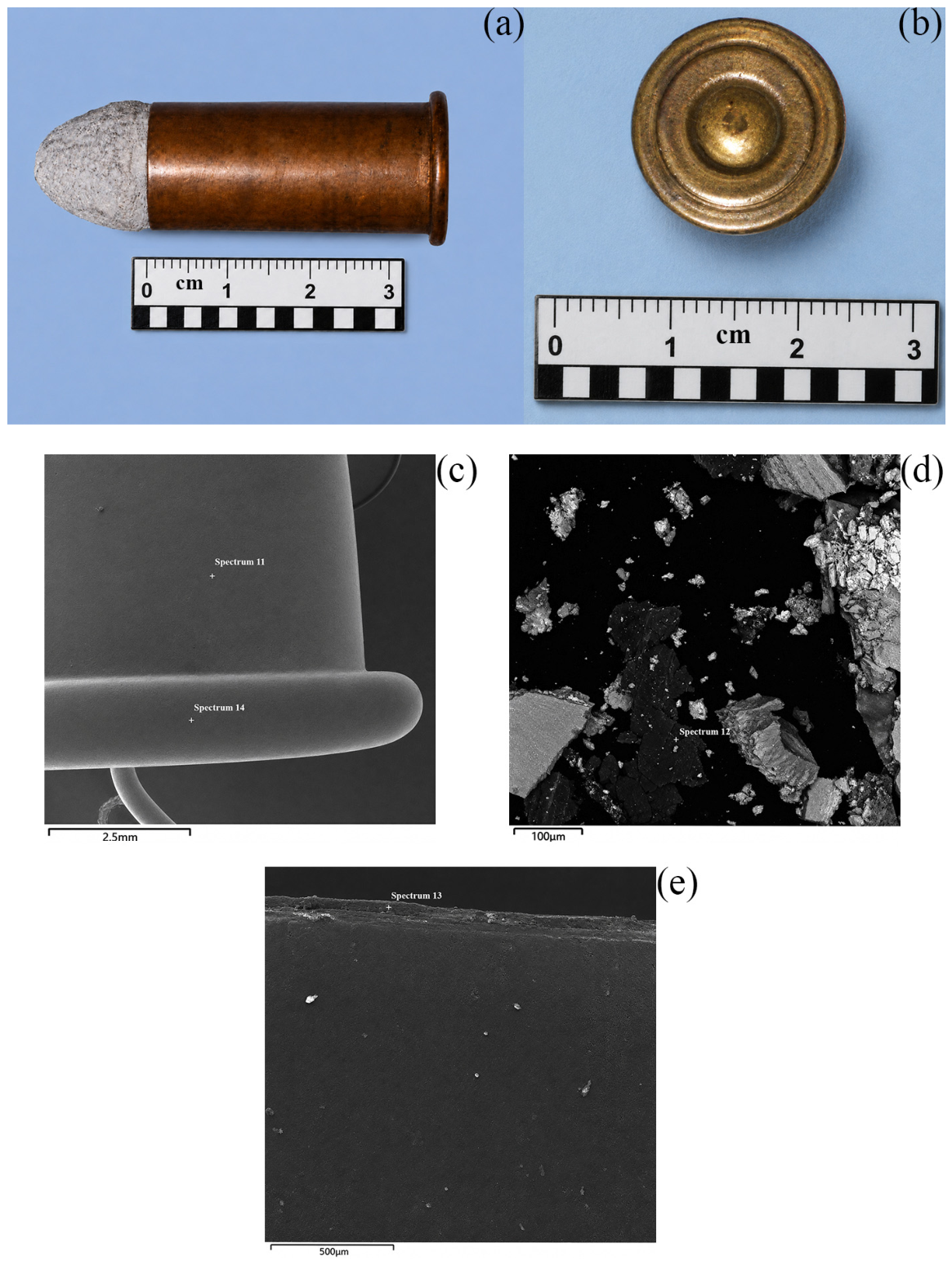
The ammunition designated as “B” exhibits a metal case structurally similar to the .56-.56, bearing a distinct headstamp depicting the letter “H” on its base (Figure 4b). SEM-SE images were acquired to detail the topography of its internal residues:
Figure 4.
Overview of the .56-.56 Spencer ammunition (a) and its rimfire case head (b). Secondary electron (SE) images show selected components of the ammunition: (c,d) internal residues near the case head; and (e) case wall.
- Primer: The investigation heavily focused on the internal residues near the case head (Figure 4c,d) to determine the priming mixture formulation. Multiple EDS point analyses were systematically performed:
- ˗
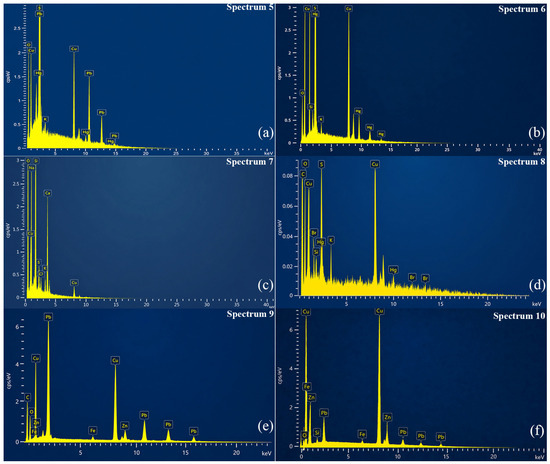
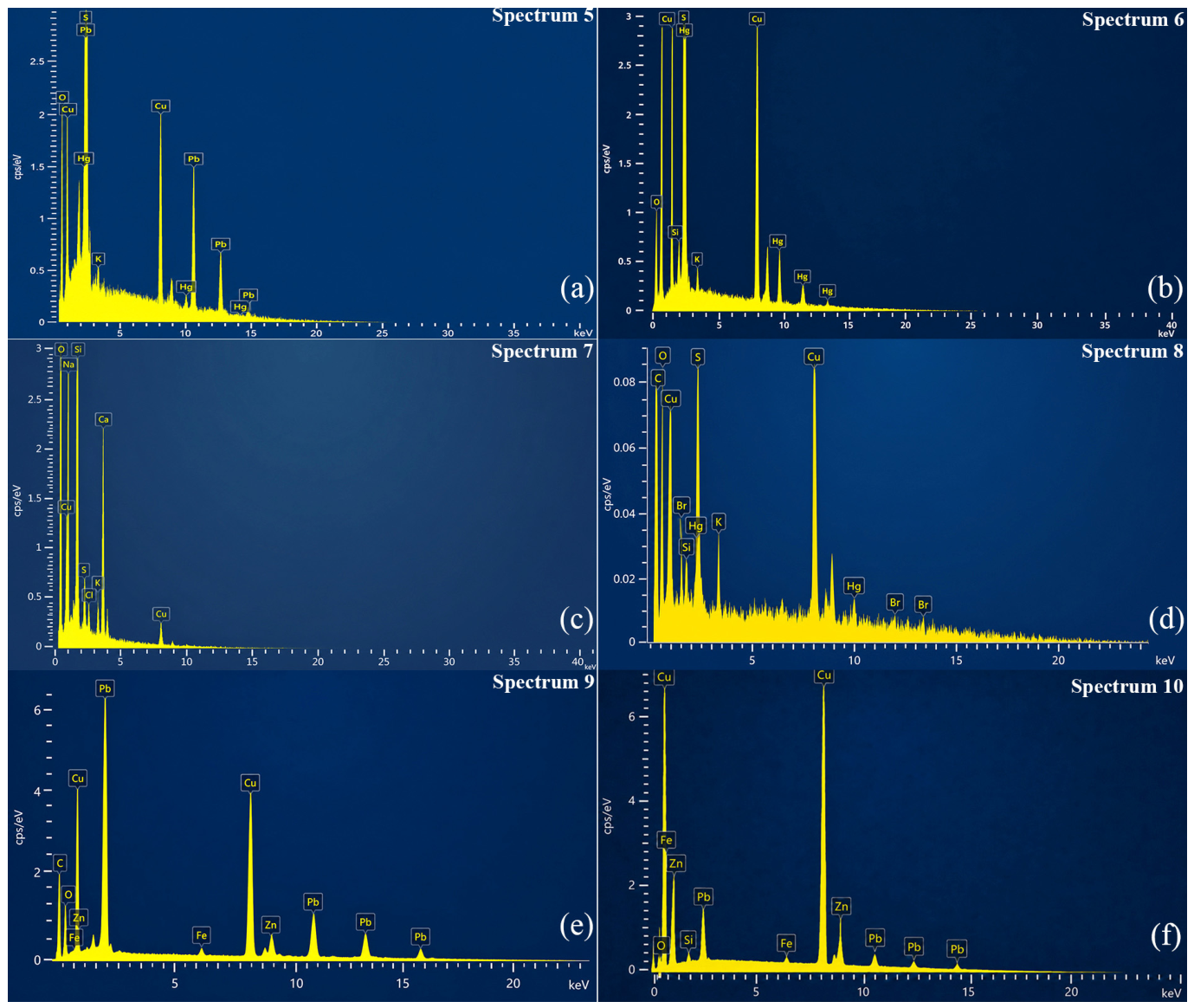
- Spectrum 5 showed a predominant presence of Lead (Pb), Sulfur (S), and Mercury (Hg), along with traces of Potassium (K) (Figure 5a);
- ˗
- Spectrum 6 detected Copper (Cu), Mercury (Hg), and Sulfur (S) as major elements, alongside Potassium (K) and Silicon (Si) (Figure 5b);
- ˗
- Spectrum 7 identified Silicon (Si), Sodium (Na), and Calcium (Ca) as major components, with Copper (Cu), Sulfur (S), Potassium (K), and Chlorine (Cl) present at minor levels (Figure 5c);
- Bullet and Propellant: In alignment with the findings from Ammunition A, the bullet was confirmed to be cast lead, while the macroscopic and chemical evaluation of the powder charge was consistent with traditional black powder, showing standard C, K, and S peaks (Figure 5e,f); it unexpectedly revealed distinct peaks of Bromine (Br) (Figure 5d).
Figure 5.
Overview of the Energy-Dispersive X-ray Spectroscopy (EDS) spectra acquired from different parts of the .56-.56 Spencer ammunition: (a–c) internal residues near the case head; and (d–f) traditional black powder. The x-axis represents energy in keV, and the y-axis represents intensity in cps/eV.
3.3. Ammunition C: .50 US Carbine Centerfire (c. 1869–1870)
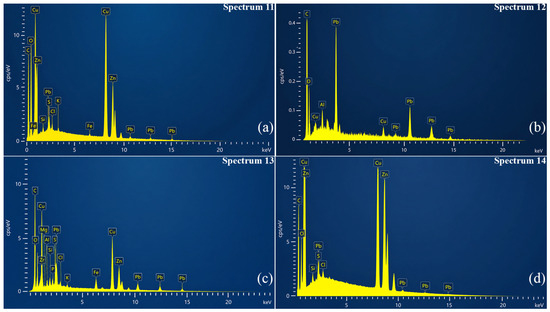
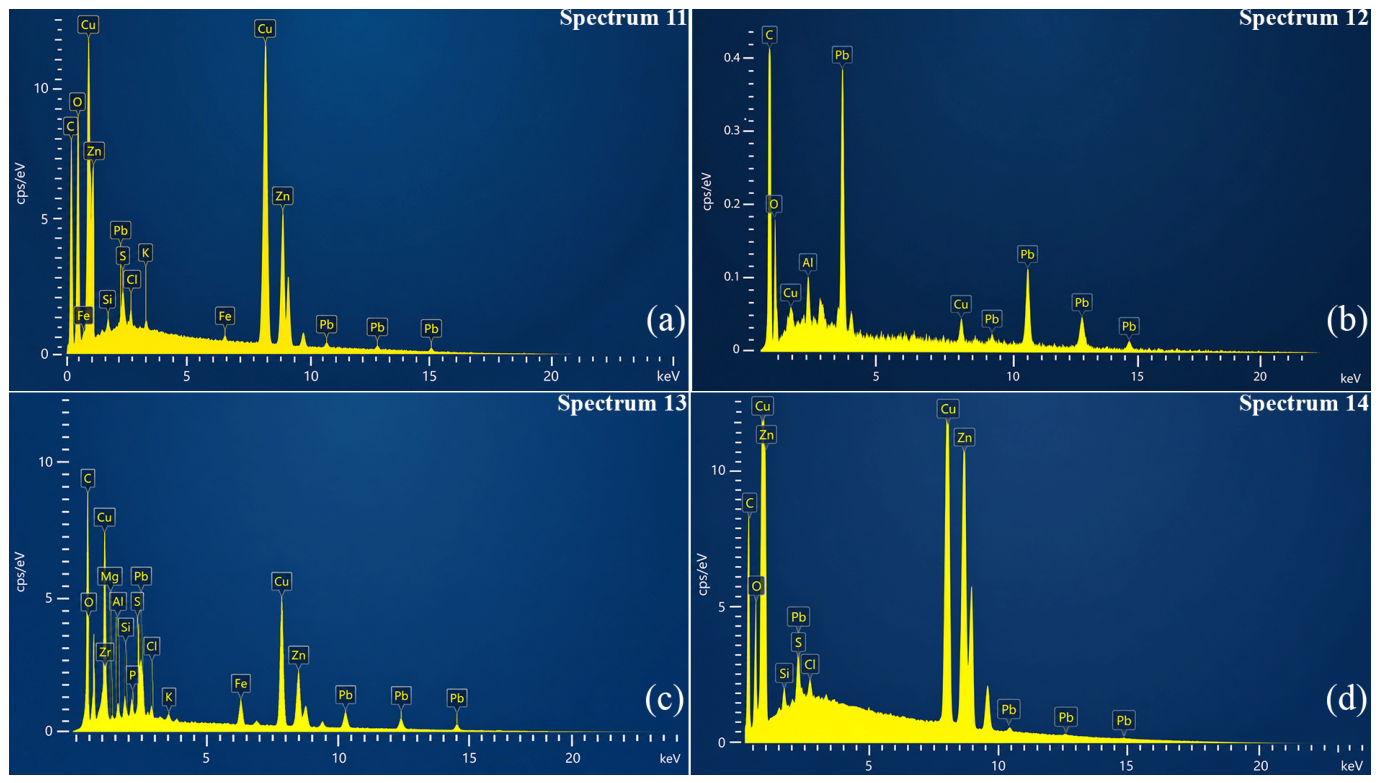
The centerfire ammunition, designated as “C”, presents a case with a distinct yellowish colour characteristic of brass alloys (Figure 6a,b). SEM imaging captured the morphological details of the case, the centerfire primer pocket, and the bullet seating. It should be noted that after dismantling the ammunition, residues were found adhering to the base of the bullet. As shown by EDS analysis, these can be attributed to degraded primer compositions. However, the absence of mercury (Hg) in the numerous spectra attributable to the primer is unusual.
Figure 6.
Overview of the .50 US carbine centerfire ammunition (a) and its centerfire case head (b). Secondary electron (SE) images show selected components of the ammunition: (c) case body; (d) surrounding pocket and internal flash hole area; and (e) residual charge.
- Bullet: An anomalous whitish material was sampled directly from the lubricant grooves of the lead bullet (Figure 6d). EDS evaluation of this specific coating revealed a complex composition predominantly featuring Carbon (C) and Oxygen (O) alongside Lead (Pb), suggesting the presence of degraded organic compounds reacting with the bullet surface (Figure 7b);
Figure 7.
Overview of the Energy-Dispersive X-ray Spectroscopy (EDS) spectra acquired from different parts of the .50 US carbine centerfire ammunition: (a) case body; (b) typical brass casing elements; (c) residual charge; and (d) case body. The x-axis represents energy in keV, and the y-axis represents intensity in cps/eV.
4. Discussion
The SEM/EDS analysis of the mid-19th-century ammunition provided valuable elemental data; however, interpreting these results requires integrating the analytical findings with historical manufacturing sources contemporary to the artefacts. As SEM/EDS is limited to elemental characterization and cannot determine chemical bonds or identify organic compounds, certain degradation mechanisms observed in this study remain inferential. To ensure clarity, the discussion is systematically divided according to the main components of the ammunition.
4.1. Case
The elemental analysis revealed a distinct metallurgical difference between the earlier Spencer rimfire ammunition and the later .50 US carbine centerfire ammunition. The cases of Ammunition “A” (.56-.52) and Ammunition “B” (.56-.56) are essentially composed of copper (Cu). In contrast, the Ammunition “C” (.50 US carbine) case consists of a standard brass alloy (CuZn). This material transition is historically and chemically coherent. With the introduction of early metallic ammunition around 1850, manufacturers discovered that brass cases were unsuitable for use with priming mixtures containing mercury fulminate, as the mercury amalgamated with zinc, causing severe embrittlement of the brass and compromising the case’s gas-sealing properties upon firing [1]. Pure copper is immune to mercuric attack, explaining its use in the earlier Spencer ammunition. The later use of brass in the .50 US carbine ammunition likely corresponds to the introduction of insulating varnishes (c. 1869), which separated the mercuric primer from the brass casing, allowing manufacturers to exploit the superior mechanical strength of brass alloys.
4.2. Primer
The detection of Mercury (Hg) in the primer residues of the Spencer ammunition confirms indirectly the historical use of mercury fulminate as the primary explosive compound. Over time, mercury fulminate spontaneously decomposes at lower temperatures into metallic mercury and organic byproducts [2,3], a process that mechanically disintegrates the priming layer [4,5,6].
A significant analytical question arose from the detection of Silicon (Si), Aluminum (Al), and Potassium (K) in the primer and internal case residues. These elements might initially suggest the intentional addition of ground glass as a frictionator—a practice that became virtually ubiquitous to improve percussion sensitivity and is still used today. Although this addition is certainly documented in the second half of the 19th century [7] and in later patents [8,9], it was undocumented in major publications during the American Civil War era. This was likely due to information being scattered across inaccessible patents or remaining buried in the secrecy of early experimenters [10]. Furthermore, SEM morphological analysis did not reveal the sharp, conchoidal fracture patterns typical of ground glass particulate [11,12]. Therefore, the presence of Silicon (Si) and Aluminum (Al) is more likely attributable to impurities or contamination in the raw materials (e.g., magnesium aluminosilicate from clay dust) or present as impurities in the organic binders (such as gum arabic or shellac) potentially used to adhere the active material circumferentially to the base of the rimfire case [8]. But the presence of such elements (Si, Mg, Al) as impurities is more likely associated with the potassium nitrate used in the production of black powder. It should not be forgotten that, in fact, in the second half of the 19th century, it was produced from “caliche”, immense evaporite sedimentary deposits originating from ancient seas, located north of Chile. These deposits consist of water-soluble salts (mainly sodium nitrate, with smaller concentrations of other salts) that impregnate a rock in which quartz, plagioclase, K-feldspar, and clays predominate.
Additionally, the unexpected detection of a Bromine (Br) peak requires cautious interpretation: it could potentially indicate an exposure to marine and/or hydrothermal high mineralized environments (e.g., salty bromine waters) and/or water use from these sources. Naturally, the presence of bromine (possibly in the form of bromides) can, alternatively, also in this case be associated with the impurities present in the saltpetre derived from Chilean nitre.
Finally, the simultaneous presence of Potassium (K), Chlorine (Cl), and Sulfur (S) alongside Mercury (Hg) strongly suggests that potassium chlorate was mixed with mercury fulminate, conforming to the standard hybrid priming formulations established in the 19th century [13].
4.3. Propellant
Analysis of the unburnt powder granules indirectly confirmed the propellant as traditional black powder, evidenced by the presence of Carbon (C), Potassium (K), and Sulfur (S). Traces of Silicon (Si) and other anomalies detected within the propellant charge are likely the result of internal cross-contamination, or, especially in the case of silicon, coming from the charcoal used in the manufacture of black powder. The spontaneous chemical degradation [2,3] and mechanical flaking of the mercuric priming mixture at the base of the case likely caused altered primer residues and degraded organic binders [8] to disperse into the free space of the casing, thereby contaminating the black powder (and vice versa) over the span of a century.
4.4. Bullet
The macroscopic examination of the .50 US carbine centerfire ammunition (Ammunition C) revealed an anomalous whitish material within the lubricant grooves. EDS analysis indicated with high likelihood an organic composition. We hypothesize that this coating resulted from the corrosive action of fatty acids produced by the oxidative rancidity of animal or vegetable fats originally applied as protective bullet lubricants. However, because SEM/EDS cannot identify molecular organic structures or oxidation states, this interpretation remains an unverified hypothesis. Conclusive identification of these degraded organic lubricants would require complementary analytical techniques, such as Gas Chromatography/Mass Spectrometry (GC/MS) or Fourier Transform Infrared (FT-IR) spectroscopy, which fall outside the scope of this preliminary SEM/EDS study.
5. Conclusions
This preliminary study successfully applied SEM/EDS analysis to characterize the material composition and degradation phenomena of mid-19th-century American Civil War era ammunition, specifically the .56-56 Spencer, .56-52 Spencer, and .50 US carbine ammunition. By moving beyond purely historical documentation, the analytical results provided empirical evidence regarding early metallurgical and chemical manufacturing practices.
The elemental analysis confirmed a significant technological shift in casing materials. The early Spencer rimfire cases were manufactured from copper, likely to prevent the severe embrittlement and catastrophic failure caused by the amalgamation of zinc with the mercury derived from the primer [1]. Conversely, the later .50 US carbine centerfire case was confirmed to be a standard brass alloy, reflecting advancements in primer insulation that permitted the use of mechanically superior alloys.
Analysis of the primer residues in the Spencer ammunition confirmed the use of mercury fulminate, likely combined with potassium chlorate. The detection of silicon and aluminum within both the primer and propellant residues was thoroughly investigated. The lack of characteristic conchoidal morphology associated with ground glass [11,12] suggests that these elements originated from raw material impurities (e.g., clay dust, impurities in charcoal), rather than being intentionally added as glass frictionators.
Furthermore, the chemical nature of the propellant was indirectly confirmed by its elemental composition, compatible with that of traditional black powder.
While SEM/EDS provided critical insights into the elemental makeup of these artefacts, the technique inherently limits the definitive identification of organic compounds, such as what we assume to be the degraded lubricants observed on the .50 US carbine bullet. Future research should incorporate complementary molecular techniques, including Raman spectroscopy [14], FT-IR, or GC/MS, to conclusively characterize these complex organic degradation products and obtain a more complete overview of the chemical constitution of the formulations. Ultimately, this research bridges the gap between historical literature and modern materials science, offering a foundational analytical framework for the forensic study and conservation of historical munitions.
Author Contributions
G.R.: Project administration, Validation, Visualization, Writing—review & editing; B.B.: Resources, Visualization; M.R.: Resources, Investigation; C.L.: Resources, Investigation; C.C.: Resources, Investigation; G.P.: Validation, Writing—original draft, Writing—review & editing; F.N.: Validation, Writing—original draft, Writing—review & editing. All authors have read and agreed to the published version of the manuscript.
Funding
This research received no external funding.
Data Availability Statement
The original contributions presented in the study are included in the article; further inquiries can be directed to the corresponding author.
Conflicts of Interest
Author Bryan Burnett was employed by the company Meixa Tech. The remaining authors declare that the research was conducted in the absence of any commercial or financial relationships that could be construed as a potential conflict of interest.
References
- Smyth Wallace, J. Chemical Analysis of Firearms, Ammunition, and Gunshot Residue, 2nd ed.; Chapman & Hall/CRC Press: Milton, UK, 2018. [Google Scholar]
- Matyáš, R.; Pachman, J. Primary Explosives; Springer: Berlin, Germany, 2013. [Google Scholar]
- Carl, L.R. Mercury fulminate, its autocatalytic reactions and their relation to detonation. J. Frankl. Inst. 1945, 240, 149–169. [Google Scholar] [CrossRef] [Scilit]
- Garner, W.E.; Hailes, H.R. Thermal decomposition and detonation of mercury fulminate. Proc. R. Soc. Lond. Ser. A 1933, 139, 576–595. [Google Scholar] [CrossRef] [Scilit]
- Boileau, J.; Fauquignon, C.; Hueber, B.; Meyer, H.H. Explosives. In Ullmann’s Encyclopedia of Industrial Chemistry; Wiley-VCH, Ed.; Wiley: Weinheim, Germany, 2009. [Google Scholar]
- Bartlett, B.E.; Tompkins, F.C.; Young, D.A. The decomposition of mercury fulminate. J. Chem. Soc. 1956, 646, 3323–3330. [Google Scholar] [CrossRef] [Scilit]
- Kast, H. Spreng- und Zündstoffe; F. Vieweg & Sohn: Braunschweig, Germany, 1921. [Google Scholar]
- Rechel, E.R. Small Arms Primers; Report No. AD0223114. U.S. Government: Washington, DC, USA, 1932. Available online: https://apps.dtic.mil/sti/html/tr/AD0223114/index.html (accessed on 10 October 2025).
- Doerfer, J.; Doerfer, J. Priming Mixtures. U.S. Patent 2,035,597, 31 March 1936. Available online: https://patents.google.com/patent/US2035597A/en (accessed on 10 October 2025).
- Gooding, S.J. Early Percussion Primer Identification. 2005. Available online: https://americansocietyofarmscollectors.org/wp-content/uploads/2025/05/Early-Percussion-Primers-S.-J.-Gooding-compressed.pdf (accessed on 10 October 2025).
- Seyfang, K.E.; Kobus, H.J.; Popelka-Filcoff, R.S.; Plummer, A.; Magee, C.W.; Redman, K.E.; Kirkbride, K.P. Analysis of elemental and isotopic variation in glass frictionators from 0.22 rimfire primers. Forensic Sci. Int. 2018, 293, 47–62. [Google Scholar] [CrossRef] [Scilit]
- Seyfang, K.E.; Lucas, N.; Redman, K.E.; Popelka-Filcoff, R.S.; Kobus, H.J.; Kirkbride, K.P. Glass-containing gunshot residues and particles of industrial and occupational origins: Considerations for evaluating GSR traces. Forensic Sci. Int. 2019, 298, 284–297. [Google Scholar] [CrossRef] [Scilit] [PubMed]
- Brede, U.; Hagel, R.; Redecker, K.H.; Weuter, W. Primer Compositions in the Course of Time: From black powder and SINOXID to SINTOX compositions and SINCO booster. Propellants Explos. Pyrotech. 1996, 21, 113–117. [Google Scholar] [CrossRef] [Scilit]
- Karahacane, D.S.; Dahmani, A.; Khimeche, K. Raman spectroscopy analysis and chemometric study of organic gunshot residues originating from two types of ammunition. Forensic Sci. Int. 2019, 301, 129–136. [Google Scholar] [CrossRef] [Scilit]
Disclaimer/Publisher’s Note: The statements, opinions and data contained in all publications are solely those of the individual author(s) and contributor(s) and not of MDPI and/or the editor(s). MDPI and/or the editor(s) disclaim responsibility for any injury to people or property resulting from any ideas, methods, instructions or products referred to in the content. |
© 2026 by the authors. Licensee MDPI, Basel, Switzerland. This article is an open access article distributed under the terms and conditions of the Creative Commons Attribution (CC BY) license.