


Abstract
Ceramic production technology is a key indicator of craft specialization and social differentiation in Late Neolithic societies of the Central Plains. This study investigates Longshan-period pottery excavated from three representative sites, Niumugang, Zhoulonggang, and Shigudui in western Shangqiu, Henan Province. A suite of archaeometric techniques, including X-ray fluorescence (XRF), infrared spectroscopy (IR), X-ray diffraction (XRD), differential thermal analysis (DTA), and scanning electron microscopy coupled with energy-dispersive spectroscopy (SEM–EDS), was employed to systematically examine the chemical composition, mineralogical phases, thermal behavior, and microstructural characteristics of the pottery assemblages. The results reveal statistically significant differences (p < 0.05) in the contents of major ceramic-forming oxides (SiO2, Al2O3, Fe2O3, CaO, etc.) among the three sites. Pottery from the Shigudui site exhibits the narrowest range of compositional variation, whereas that from the Zhoulonggang site shows moderate dispersion. In contrast, pottery from the Niumugang site displays the widest compositional range. Mineralogical analyses indicate that pottery from all three sites is primarily composed of quartz, mica, and mullite. Notably, the high degree of mineralogical homogeneity observed in the Shigudui assemblage reflects a well-controlled and technologically mature firing process. Microstructural observations further demonstrate that pottery from the Shigudui site is characterized by uniformly dense fabrics, functionally differentiated vessels from the Zhoulonggang site exhibit clear technological stratification, and black pottery from the Niumugang site shows highly compact microstructures. These technological patterns closely correspond to differences in vessel assemblages and indicate varying levels of craft specialization and production control. Together, the results provide archaeometric evidence for the differentiation of settlement hierarchy and the development of specialized handicraft production during the Longshan period, contributing to a deeper understanding of regional technological interaction and social processes within the Longshan cultural sphere of the Central Plains.
1. Introduction
The Longshan period was a critical stage of transformation in social structure, economy, and culture in the core regions of prehistoric China. Eastern Henan, located between the Songshan core area, the Haidai cultural zone, and the middle Huai and Yangtze River regions, served as a key hub of cultural interaction and integration [1,2,3], making it important for understanding early social stratification, power centralization, and regional exchange. Shangqiu, situated in this region, represents a convergence zone of multiple archaeological cultures, with a cultural sequence including the Dawenkou, Longshan, Yueshi, Shang, and Zhou cultures. However, there remains considerable debate regarding the cultural attribution of the Longshan culture in eastern Henan, with proposed interpretations including the “Qinggudui type” [4], the “Wangyoufang type” [5,6,7], and the “Zaolvtai type” [8,9,10], among others. Luan Fengshi has argued that the Wangyoufang type, similar to the Shandong Longshan culture of eastern China, maintains a close inheritance relationship with the Dawenkou culture and should be regarded as the “Wangyoufang type” within the Haidai Longshan cultural system [11], whereas others argue for a chronological gap between the local Dawenkou and Longshan cultures [12]. Li Boqian has proposed that the Wangyoufang type should be considered an independent archaeological culture, while Dong Qi has referred to it as the “Zaolvtai culture” [13]. These differing views reflect the subjectivity of archaeological classification and the uncertainty of its correspondence to actual cultural entities.
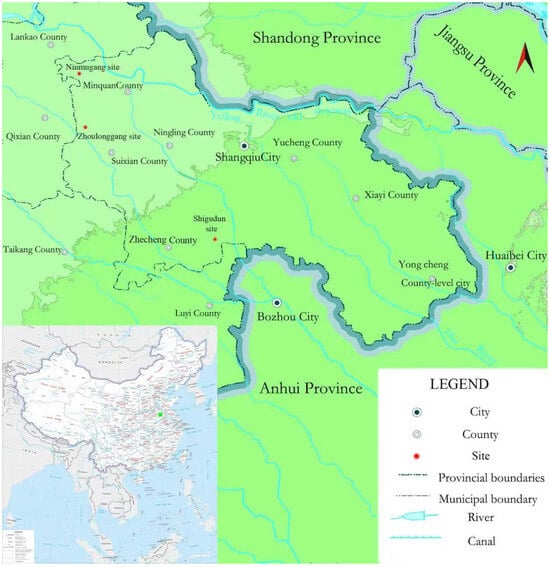
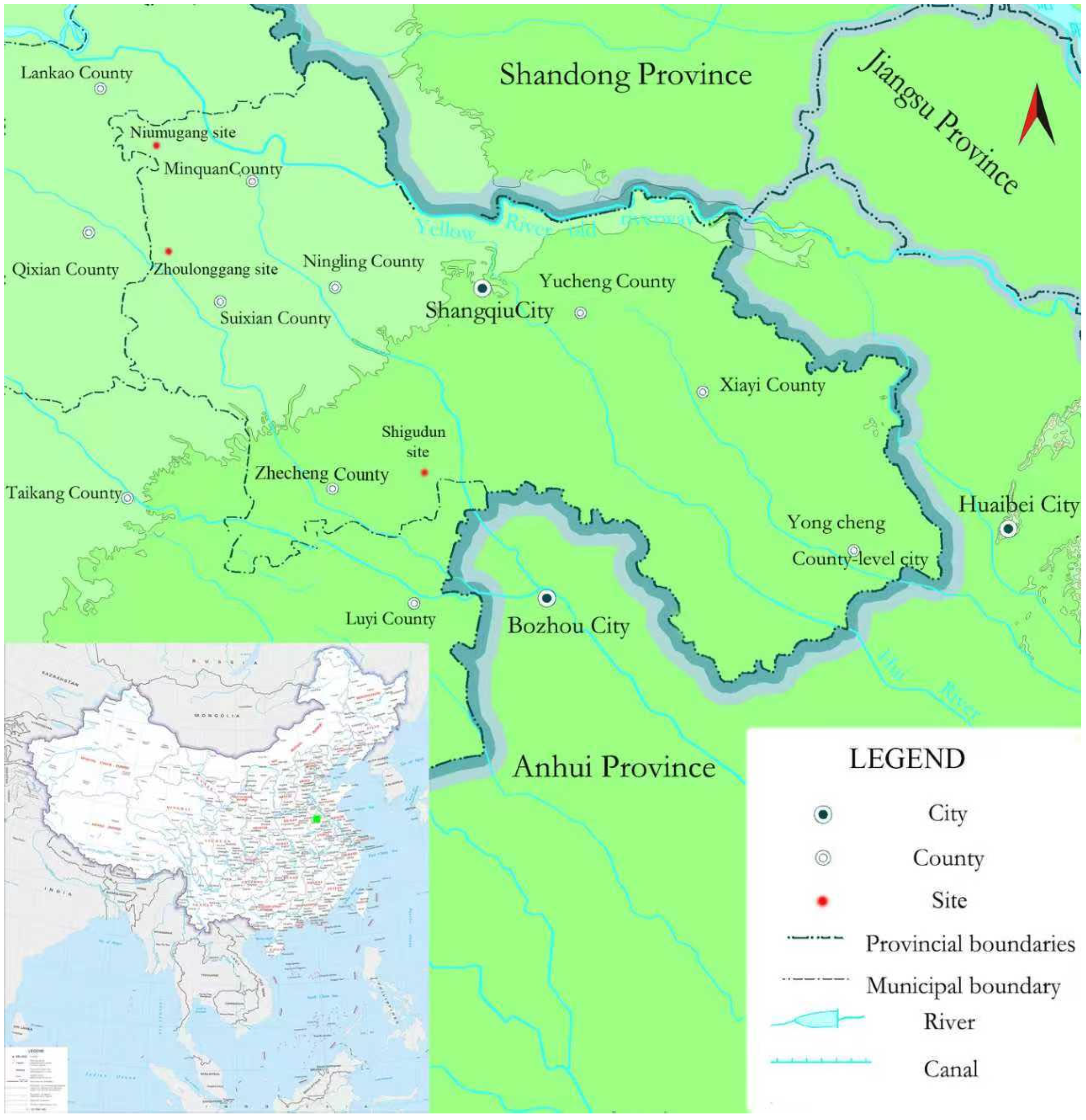
As the most common category of archaeological remains and the one with the greatest informational content, pottery not only serves as important evidence for pottery-making and production in this region and beyond [14] but also constitutes a material carrier of cultural identity and social relationships. Pottery provides direct evidence for prehistoric population mobility, trade interaction, and the transmission of ideas. With increasing social complexity, ceramic production was not only continuously refined but also embedded within systems of production and technological transmission. The development of these systems is closely associated with social stratification and the intensification of specialized labor, making pottery a key entry point for understanding social complexity during the Longshan period. The western Shangqiu region, located in eastern Henan between the Yellow River and Huai River regions, lies at the intersection of the Central Plains, Haidai, and Jianghuai cultural spheres. It functioned as an important corridor for technological and cultural interaction during the Longshan period (Figure 1). Pottery assemblages in this region incorporate both typical Central Plains Longshan elements and features derived from eastern black pottery and southern hard-pottery traditions. The late Longshan period also witnessed the simultaneous emergence of settlement hierarchy and technological differentiation in this region, highlighting its significance for understanding regional social development.
Figure 1.
Schematic map of site distribution locations.
In 2023, the Department of Archaeology at Zhengzhou University conducted surveys at 16 sites in western Shangqiu across Minquan, Ningling, Zhecheng, and Suixian. Except for the Ge State site and Laojuntang site, all yielded Longshan-period remains. Among them, the Niumugang, Zhoulonggang, and Shigudui sites are located in the core area, near ancient water systems such as the Huiji River and Maocao Ditch, and served as key nodes connecting the Wangyoufang Type of eastern Henan with surrounding regions. These sites differ in scale and contain substantial cultural deposits, with layers at Shigudui exceeding 4 m. The collected and excavated Longshan-period pottery sherds are abundant and diverse, including fine-grained gray, fine-grained black, and sandy gray pottery. Decorative patterns include typical motifs such as square patterns, rope impressions, and basket impressions. At the same time, vessel forms comprise a functionally complete assemblage, including storage jars, urns, basins, dings, Zimukou urns, and high-necked urns, Among these, the dings is a cooking vessel characterized by three legs, a deep belly, and loop handles or a lid, while the zimukou urn is distinguished by its interlocking rim structure and a constricted mouth with a deep body. These two vessel types exhibit different levels of manufacturing control in their morphological construction and rim design, making them key indicators for investigating technological practices in pottery production. These characteristics indicate pronounced regional cultural representation, and therefore, the Longshan-period pottery from these three sites was selected as the research subject.
Chinese archaeology has long focused on three main lines of inquiry in pottery research: first, emphasizing the description of ceramic characteristics [15,16] and the establishment of classification criteria, with particular attention to diachronic changes in vessel morphology and assemblage composition; second, concentrating on pottery typology and the analysis of cultural factors [17,18,19,20], through which cultural origins and interaction processes are revealed by means of stylistic evolution and regional comparison; and third, progressively extending from studies of ceramic production technology to analyses of social structure and function [21]. For example, scholars such as Li Jiafang and Gao Guangren [22] have illustrated an integrative research trajectory linking pottery studies with social analysis through their exploration of the origins, development, and social attributes of the Longshan culture. In contrast to traditional archaeological approaches that emphasize morphological description, the application of experimental archaeology and scientific analytical techniques in pottery research in China began relatively late.
In recent years, with the expansion of interdisciplinary approaches, scientific studies of pottery in China have developed into a more systematic and comprehensive framework, incorporating provenance analysis [23,24,25,26], phase identification [27], and petrographic analysis [28,29]. For example, Xiang He et al. [30] applied XRD, FT-IR, and XRF to pottery from the Daqu cemetery (Eastern Han to Cao–Wei), identifying quartz and feldspar as dominant minerals and indicating stable firing atmospheres but variable temperatures. Xinyue Ao et al. [31] used WDXRF to analyze pottery from the Qujialing–Shijiahe site at Fenghuangzui, showing consistent chemical compositions across periods and functions, but clear differences from the Zhoumaling site. Yingjie Luo et al. [32] examined four ceramic traditions at the Lajia site (2300–1900 BCE), demonstrating shared high-calcium clays but differences in production techniques. An important finding is that all of these ceramic types were made from high-calcium clays. Zichen Xie et al. [33] investigated pottery from the Wujiafentou site through microscopy and XRF, revealing patterns of continuity and change. Chao Yuan et al. [34] combined XRD, XRF, and petrography to study Xinzhai culture pottery at Huadizui, addressing production and provenance.
BAO-PING LI et al. [35] analyzed trace elements and strontium isotopes of Erlitou white pottery using ICP–MS and TIMS to explore provenance and circulation. Inductively coupled plasma mass spectrometry (ICP-MS) and thermal ionization mass spectrometry (TIMS) are highly sensitive techniques widely used in archaeological and materials research for elemental and isotopic analysis. ICP-MS is mainly used to measure major, minor, and trace elements by ionizing dissolved samples in an argon plasma and analyzing the ions according to their mass-to-charge ratios. Owing to its high sensitivity, low detection limits, and rapid multi-element capability, it is well suited for compositional and provenance studies. TIMS, in contrast, is primarily used for high-precision isotopic analysis. In this method, the target element is chemically purified, loaded onto a metal filament, and thermally ionized under vacuum for accurate isotope-ratio measurement. TIMS is particularly valuable for provenance, chronology, and raw material source studies. Together, ICP-MS and TIMS provide complementary data, combining comprehensive elemental information with precise isotopic results.
Pengfei Li et al. [36] integrated ethnoarchaeology and WDXRF to examine compositional variability in a modern pottery workshop in Henan. Shuai Yao et al. [37] used pXRF to identify compositional differences between elite and commoner pottery in Liangzhu society. Yi Gao et al. [38] employed FTIR-based firing experiments to refine temperature estimation methods, while J. Zhu et al. [39] applied thermal expansion techniques for similar purposes. Hanjun Wu et al. [40] combined multiple analytical methods (e.g., SEM–EDS, XRD, Raman) to assess composition and firing conditions of pottery from Nanzuo. Tianxing Cui et al. [41] applied X-ray diffraction (XRD), inductively coupled plasma optical emission spectrometry (ICP-OES), inductively coupled plasma mass spectrometry (ICP-MS), and multi-collector inductively coupled plasma mass spectrometry (MC-ICP-MS) to analyze the mineral composition, major and trace elements, and strontium isotopes of late Qujialing culture pottery from the middle Yangtze River region, to elucidate its provenance and circulation pattern. L. T. Yan et al. [42] applied EDXRF to clarify relationships between Zhou tomb ceramics and local kiln sites. Jiang Baiyi et al. [43] conducted petrographic analysis of prehistoric pottery from the Chengdu Plain, indicating consistent mineral composition and local raw material use. Guo Fu et al. [44] used XRF to analyze pottery from the Maiping site, identifying distinctive high-phosphorus compositions and suggesting the use of organic-rich raw materials. Lu Xiaoke et al. [45] applied spectroscopic techniques to artifacts from the Xipo site, revealing raw material composition and production practices of Yangshao-period ceramics. Despite these advances, scientific research on pottery from the Shangqiu region remains limited, constraining understanding of the Longshan culture in western Shangqiu. This study integrates traditional archaeological and materials science approaches, combining typological analysis with scientific methods. Techniques including XRF, IR, XRD, DTA, and SEM–EDS are applied to Longshan-period pottery from the Niumugang, Zhoulonggang, and Shigudui sites. Analyses focus on chemical composition, mineral structure, thermal behavior, and microstructure. The study aims to clarify raw material selection, compositional control, and technological practices, providing a basis for exploring regional variability, technological transmission, and social development during the Longshan period in western Shangqiu.
2. Experimental Part
2.1. Sites
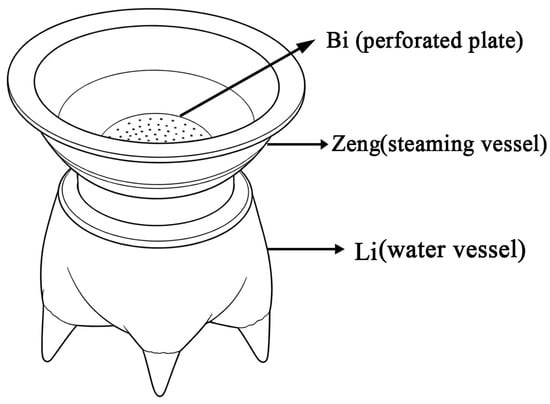
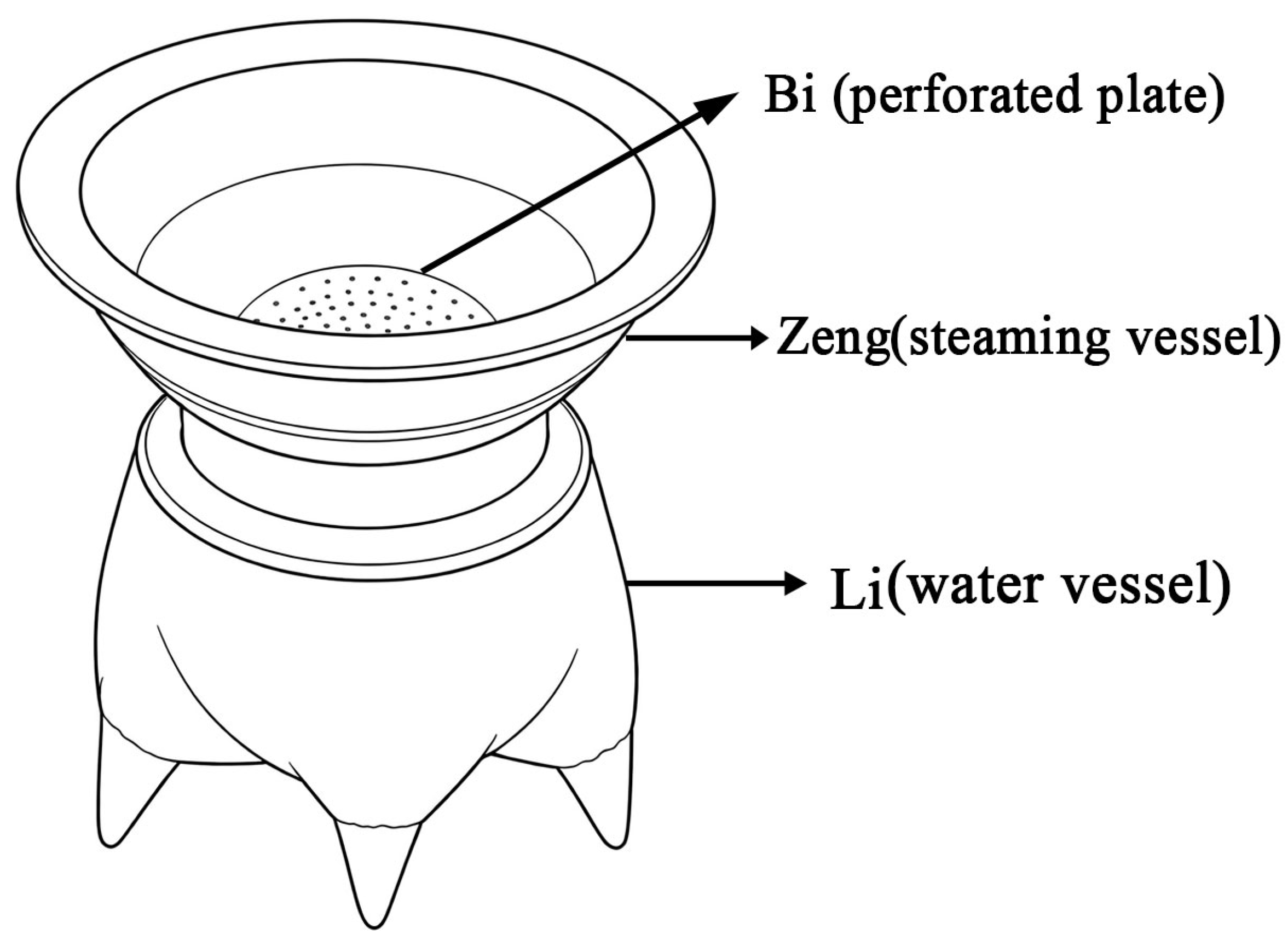
The Niumugang Site is located approximately 100 m north of Niumugang Village, Shuangta Township, Minquan County, extending about 120 m from north to south and about 100 m from east to west, with a total area of approximately 12,000 m2; cultural remains from the Yangshao Culture, Longshan Culture, Erlitou Culture, and Shang Dynasty have been collected at the site. The Longshan Culture pottery sherds are dominated by fine-grained gray pottery, with small quantities of sandy gray, fine-grained black, and fine-grained brown pottery. Decorative patterns are mainly square patterns, rope lines, basket lines, and plain surfaces, with a small number of string patterns. The principal vessel types include storage jars (ceramic vessels used for holding liquids or food), urns (ceramic vessels for storing liquid or solid materials, characterized by a small mouth and a large belly, mostly with flat bases or slightly concave flat bases, and occasionally with rounded bases), basins (vessels used for holding liquids or food or for washing, with wide mouths and relatively small bases), yan (steamers composed of an upper vessel (zeng) for food and a lower vessel (li) for water, separated by a perforated plate, with fire heated beneath the tall legs; Figure 2), ding (vessels used for cooking and holding food, commonly with round bodies, three legs, and two handles, though square-bodied examples with four legs are also present), and pottery lids (covers used to seal vessel mouths, functioning in sealing, dust prevention, or heat retention).
Figure 2.
Schematic diagram of yan.
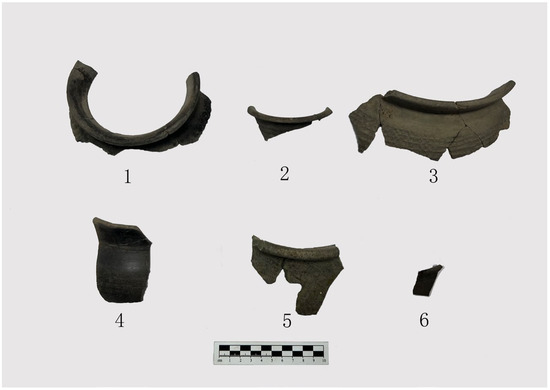
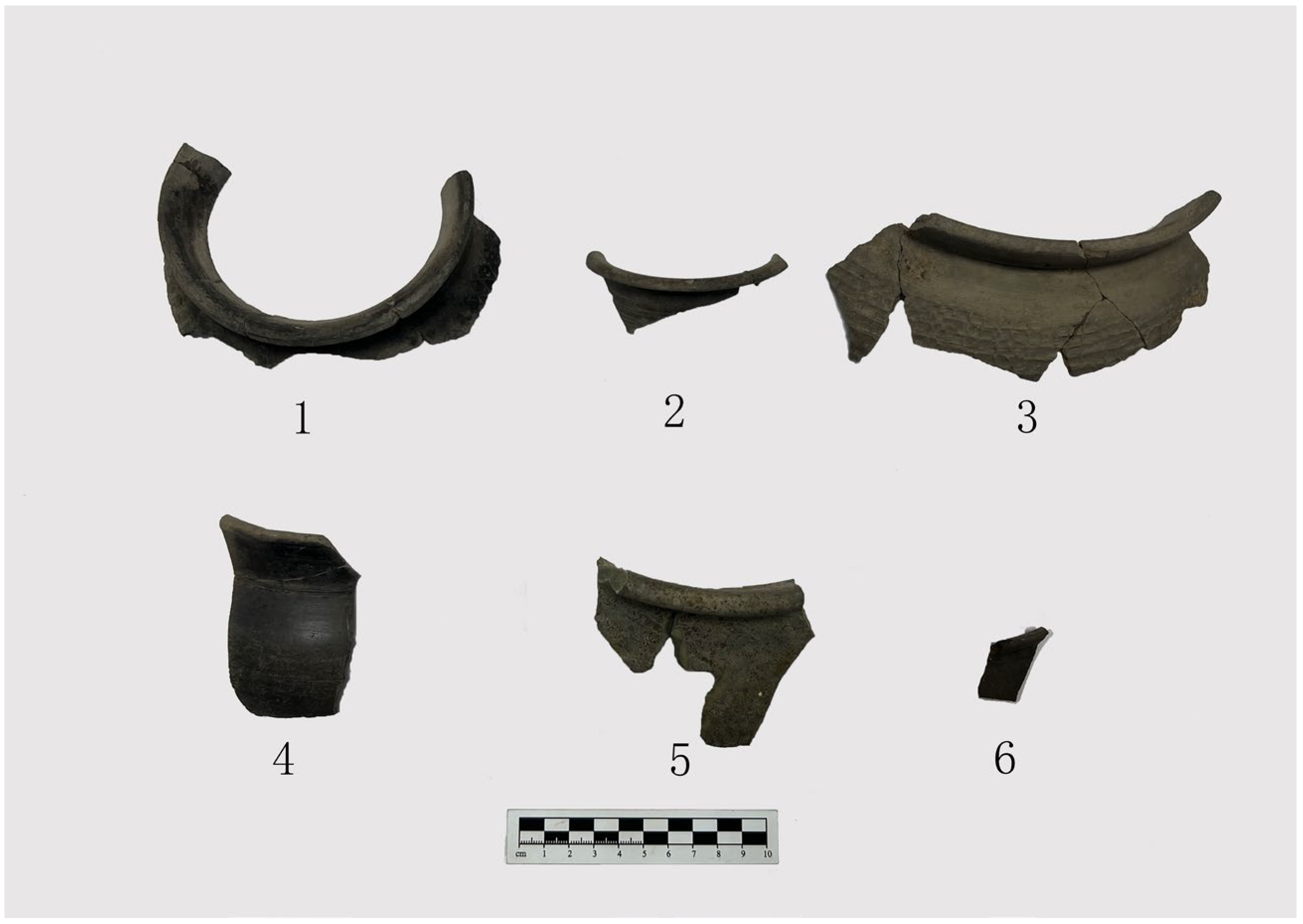
A total of six specimens were selected for analysis, including storage jars and urns; the assemblage is dominated by fine-grained gray pottery, with a small amount of fine-grained black pottery, and the decorative patterns are mainly square patterns and plain surfaces.
Among them, five specimens are storage jars, including four made of fine-grained gray pottery and one made of fine-grained black pottery.
Specimen 2023MSN④:16 is made of fine-grained gray pottery. It has a flaring mouth, a folded rim, a rounded lip, a constricted neck, and a sloping shoulder, with the portion below the shoulder missing. The shoulder is decorated with a square pattern (Figure 3: 1). Specimen 2023MSN④:31 is made of fine-grained gray pottery and has a thin wall. It has a straight mouth, a rolled rim, a rounded lip, and a curved belly, with the portion below the belly missing. The surface is plain, and the exterior is burnished (Figure 3: 2). Specimen 2023MSN④:11 is made of fine-grained gray pottery. It has a flaring mouth, a folded rim, a rounded lip, and a sloping shoulder, with the portion below the shoulder missing. The shoulder is decorated with a square pattern (Figure 3: 3). Specimen 2023MSN④:33 is made of fine-grained gray pottery. It has a flaring mouth, a folded rim, a pointed lip, a constricted neck, and a sloping shoulder, with the portion below the shoulder missing. The surface is plain (Figure 3: 6).
Figure 3.
Analyzed pottery specimens from the Longshan Culture period at the Niumugang Site. 1. Storage jar (2023MSN④:16). 2. Storage jar (2023MSN④:31). 3. Storage jar (2023MSN④:11). 4. Storage jar (2023MSN④:34). 5. Urn (2023MSN④:6). 6. Storage jar (2023MSN④:33).
Specimen 2023MSN④:34 is made of fine-grained black pottery. It has a straight mouth that is slightly flaring, a rounded lip, and a bulging belly, with the portion below the belly missing. The surface is plain, and the exterior is burnished (Figure 3: 5).
One urn was identified, Specimen 2023MSN④:6, made of fine-grained gray pottery. It has a straight mouth that is slightly flaring, a rounded lip, a high neck, and a swollen shoulder, with the portion below the shoulder missing. The surface is plain, and the exterior is burnished (Figure 3: 5).
The Zhoulonggang Site in Suixian County is located at the northwestern corner of Zhoulonggang Village, Liaodi Town; the Huiji River lies to the south of the village, and Maocao Ditch borders the site to the north. The extant site occupies slightly elevated terrain, extending approximately 300 m from north to south and 200 m from east to west. Collected remains include materials from the Longshan Culture, Erlitou Culture, Shang Dynasty, and Eastern Zhou period. The Longshan Culture pottery sherds are dominated by fine-grained gray pottery, with smaller quantities of fine-grained brown, black, and sandy gray pottery. Decorative patterns are mainly rope lines, basket lines, square patterns, and plain surfaces, with a small number of string patterns. The identified vessel types include storage jars, urns, ding, yan (steamers composed of an upper vessel (zeng) for food and a lower vessel (li) for water, separated by a perforated plate), dou (high-stemmed food vessels typically consisting of an upper dish or bowl, a slender tall stem, and a flared ring foot, used for serving meat or dishes), ring-footed plates (food vessels characterized by a shallow dish-shaped body and a relatively high ring foot), Zimukou urns (large storage vessels with an inward-curving mouth forming a double-rim structure, with a higher inner rim and a lower outer rim, facilitating tight fitting with a lid to enhance sealing), pottery lids, and bowls.
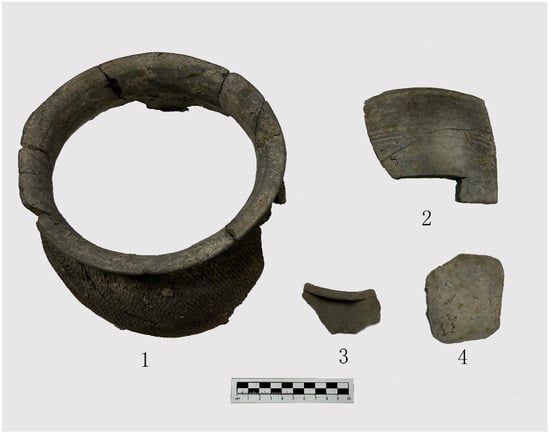
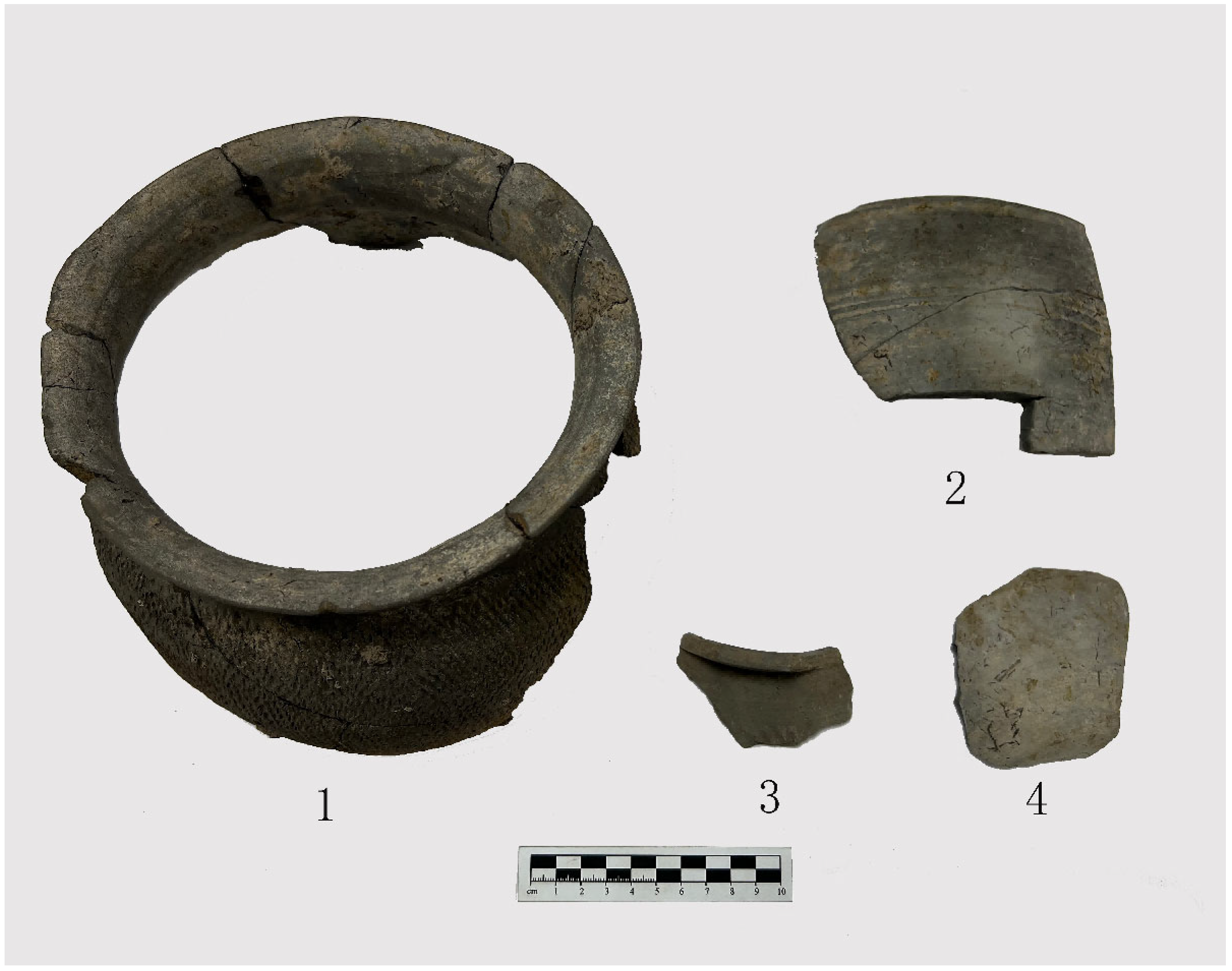
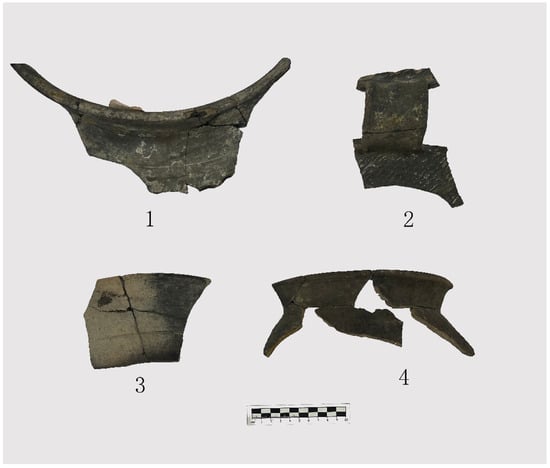
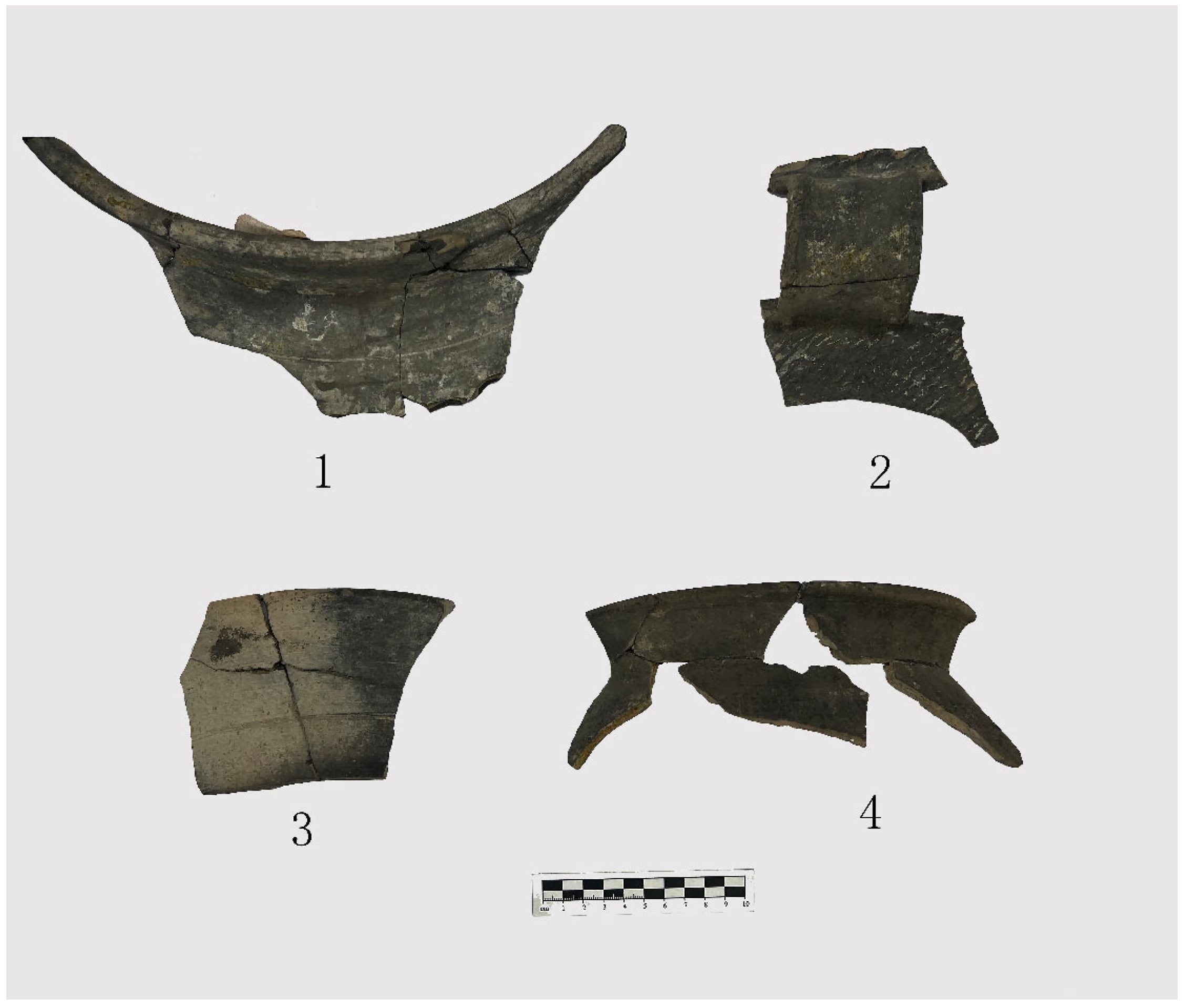
A total of four specimens were selected for analysis, including storage jars and a Zimukou urn; all are made of fine-grained gray pottery, and the decorative patterns are dominated by rope lines, followed by plain, burnished surfaces, with a small number of string patterns.
Three storage jars were identified, all made of fine-grained gray pottery. Specimen 2024SLZH2:15 is made of fine-grained gray pottery. It has a flaring mouth, a rolled rim, a rounded lip, a constricted neck, a sloping shoulder, and a bulging belly, with the portion below the belly missing (Figure 4: 1). The shoulder and the area below are decorated with rope lines. Specimen 2024SLZH2:17 is made of fine-grained gray pottery. It has a flaring mouth, a folded rim, a square lip, and a circumferential groove on the inner side of the rim, with a sloping shoulder and the portion below the shoulder missing. The shoulder is decorated with rope lines (Figure 4: 3). Specimen 2024SLZH2:19 is made of fine-grained gray pottery. It has a constricted mouth, a damaged lip, a curved belly, and a flat base. The surface is plain, and the exterior is burnished (Figure 4: 4).
Figure 4.
Analyzed pottery specimens from the Longshan Culture period at the Zhoulonggang Site. 1. Storage jar (2024SLZH2:15). 2. Zimukou urn (2024SLZH2:16). 3. Storage jar (2024SLZH2:17). 4. Storage jar (2024SLZH2:19).
One Zimukou urn, Specimen 2024SLZH2:16, is made of fine-grained gray pottery. It has a double-rim mouth with a rounded lip, a circumferential raised ridge on the shoulder, and a curved belly, with the portion below the belly missing. The mid-belly is decorated with two incised string grooves, and the exterior is burnished (Figure 4: 2).
The Shigudui Site is located to the southwest of Shigudui Village, Laowangji Township, Zhecheng County, Henan Province, covering approximately 30,000 m2 and featuring cultural deposits exceeding 4 m in thickness. Collected remains include materials dating to the Longshan Culture and the Shang Dynasty. The Longshan Culture pottery sherds are dominated by fine-grained gray pottery, with smaller quantities of fine-grained brown pottery and fine-grained black pottery. Decorative patterns are mainly basket lines, square patterns, rope lines, and plain surfaces, with a small number of string patterns, and some exhibit burnished surfaces. The identified vessel types include storage jars, urns, ding, yan, dou, ring-footed plates, and bowls.
A total of four specimens were selected for analysis, including a high-necked urn, a storage jar, a basin, and a handle. All are made of fine-grained gray pottery. The main decorative patterns are square, basket lines, plain surfaces, and string patterns, with some surfaces being burnished.
One high-necked urn, Specimen 2023ZLSH7:1, is made of fine-grained gray pottery. It has a straight mouth, a folded rim, a rounded lip, a high neck, and a swollen shoulder, with the portion below the shoulder missing. The shoulder is decorated with a single string groove, and the exterior has a plain, burnished surface (Figure 5: 1).
Figure 5.
Analyzed pottery specimens from the Longshan Culture period at the Shigudui Site. 1. High-necked urn (2023ZLSH7:1). 2. Handle (2023ZLSH7:2). 3. Basin (2023ZLSH7:4). 4. Storage jar (2023ZLSH7:3).
One storage jar, Specimen 2023ZLSH7:3, is made of fine-grained gray pottery. It has a flaring mouth, a folded rim, a square lip, a constricted neck, and a swollen shoulder, with the portion below the shoulder missing. The shoulder is decorated with a square pattern (Figure 5: 4).
One basin, Specimen 2023ZLSH7:4, is made of fine-grained gray pottery. It has an open mouth, a folded rim, a rounded lip, obliquely straight sides, and a flat base. The exterior is burnished, and the lower belly is decorated with a single incised string groove (Figure 5: 3).
One handle, Specimen 2023ZLSH7:2, is made of fine-grained gray pottery. It is a bridge-shaped handle with a plain surface, and the exterior is decorated with basket lines (Figure 5: 2).
2.2. Sample Preparation
This study applied a multidisciplinary approach to the analysis of archaeological ceramics using X-ray fluorescence spectroscopy (XRF), thermal analysis (TGA/DTA), and scanning electron microscopy (SEM-EDS). Specifically, XRF was employed to determine the elemental composition of the ceramic samples and to assess potential raw material sources. SEM-EDS was used to investigate the microstructural characteristics of the ceramic matrix. Differential thermal analysis (DTA), as part of the broader thermogravimetric analysis (TGA), was conducted to infer firing conditions.
The sample preparation and processing procedures were conducted as follows. First, pottery sherd samples were cut into small blocks of approximately 2 cm2 using a cutting machine, and the cross-sections were subsequently polished to a flat surface. The samples were then subjected to ultrasonic cleaning twice in deionized water, followed by a second cleaning with an alcohol solution. For SEM-EDS (scanning electron microscopy with energy-dispersive spectroscopy) analysis, the samples were further broken into smaller fragments using pliers. For XRF (X-ray fluorescence) and TGA (thermogravimetric analysis) tests, the fragments were sequentially crushed and ground, then passed through a 0.075 mm sieve to obtain the desired results. Table 1 shows the grouping of performance index tests, including the size and number of each test and specimen.
Table 1.
Grouping of the Performance Index tests.
2.2.1. Energy-Dispersive X-Ray Fluorescence Analysis
Energy-dispersive X-ray fluorescence (XRF) (Shimadzu EDX-8100, Kyoto, Japan) was used to test the chemical compositions of pottery (SiO2, Al2O3, Fe2O3, CaO, MgO, K2O, Na2O, and TiO2) from the three sites in Yongcheng. The analytical characteristics of the method include the following: relative standard deviations (RSDs) < 5% for major elements, linear ranges of 0.1–100 wt.% for major oxides (SiO2, Al2O3, Fe2O3, etc.), and limits of detection (LODs) between 0.01 and 0.05 wt.% for major elements. Before analysis, all samples were meticulously cleaned to minimize surface contamination using a sequential protocol that included gentle mechanical brushing with a soft brush, ultrasonic cleaning in deionized water, and a final rinse with isopropanol. XRF measurements were performed under optimized instrumental conditions: a 1.2 mm X-ray spot diameter, 30 kV tube voltage, 0.029 mA tube current, and an acquisition time of 100 s per measurement to ensure sufficient counting statistics. To ensure analytical accuracy and data reliability, the instrument was calibrated using Corning Glass D as the primary reference standard, with periodic recalibration every 20 samples to monitor instrumental drift, thereby ensuring reliable quantification of major and minor elements.
2.2.2. Infrared Spectroscopy Analysis
An infrared spectrometer (XploRA PLUS, Horiba, Longjumeau, France) was used to analyze the phase of surface coatings. Infrared spectra were collected at room temperature under the 785 nm excitation line in the 100–4000 cm−1 spectral range. The laser beam was focused by a 50× objective lens, yielding a 1 μm spot diameter and 1 mW of power.
2.2.3. X-Ray Diffraction Analysis
To use the Japanese physical X-ray diffractometer (Shimadzu Corporation, Kyoto, Japan), we dried and ground the sample and placed it in the glass groove for testing. The sampling interval was 0.04° (2θ); the sampling speed was 2°/min, and the scanning angle range was 5–70° (2θ).
2.2.4. Thermogravimetric Analysis
Thermal performance testing was conducted using a Beijing Jingyi Gaoke ZCT-B simultaneous thermal analyzer (STA). Approximately 15.0 ± 0.2 mg of each sample was accurately weighed and placed in an alumina crucible, with an empty crucible used as the reference. The test was carried out under an argon atmosphere (flow rate: 50 mL/min) with a heating rate of 10 °C/min, programmed from 30 °C to 1000 °C. Differential thermal analysis (DTA) and thermogravimetric (TG) curves of the samples were simultaneously recorded. Each group of samples was tested in triplicate to ensure data reproducibility, with an error margin of less than 5%. Before testing, temperature calibration was performed using a standard substance (α-Al2O3), ensuring a temperature measurement accuracy of ±0.5 °C.
2.2.5. Scanning Electron Microscopy Test
The microstructure of the samples was observed using a Sigma 300 field emission environmental scanning electron microscope (Carl Zeiss AG, Oberkochen, Germany). The signal encompassed secondary electrons and backscattered electrons. The acceleration voltage was 15 kV, the vacuum level was maintained at 1 Pa, the amplification range was 18–30,000 times, and the maximum resolution was 3 nm. A thin layer of gold was deposited on the samples to enhance their conductivity for scanning electron microscopy. Backscattered electron (BSE) imaging was performed at 15 kV to optimize compositional contrast. Energy-dispersive X-ray spectroscopy (EDS) analysis was performed at 20 kV to ensure sufficient X-ray excitation while minimizing beam penetration artifacts. The samples analyzed by SEM-EDS were prepared as polished resin blocks.
3. Results and Discussion
3.1. Chemical Composition Analysis
All 15 pottery specimens analyzed in this study date to the Neolithic Longshan Culture, including six specimens from the Niumugang Site (Minquan County), five from the Zhoulonggang Site (Suixian County), and four from the Shigudui Site (Zhecheng County). In terms of material composition, pottery from the Niumugang and Zhoulonggang Sites is dominated by fine-grained gray pottery, with small amounts of fine-grained black pottery, whereas all specimens from the Shigudui Site are fine-grained gray pottery. Typological analysis indicates that the Niumugang assemblage is centered on storage vessels, primarily storage jars and urns; the Zhoulonggang assemblage, in addition to jars, includes Zimukou urns and body sherds, representing typical storage-related vessels; in contrast, the Shigudui assemblage exhibits the greatest diversity of vessel types, encompassing high-necked urns, handles, storage jars, and basins, forming a relatively complete functional system that includes cooking, storage, large-scale storage, and daily-use vessels. This gradient in vessel assemblage composition not only reflects hierarchical differentiation among settlements in the western Shangqiu region during the Longshan period but also suggests that the Shigudui Site may have possessed more complex social functions and a higher degree of specialized craft production. Using X-ray fluorescence spectroscopy (XRF), systematic chemical analyses were conducted on pottery from the Niumugang, Zhoulonggang, and Shigudui Sites, focusing on major components including SiO2, Al2O3, Fe2O3, K2O, MgO, CaO, Na2O, and TiO2, and the resulting chemical characteristic data for each site are presented in Table 2, Table 3 and Table 4.
Table 2.
XRF Experimental Data Results of Niumugang Site in Western Shangqiu Area (Content: wt.%).
Table 3.
XRF Experimental Data Results of Zhoulonggang Site in Western Shangqiu Area (Content: wt.%).
Table 4.
XRF Experimental Data Results of Shigudui Site in Western Shangqiu Area (Content: wt.%).
Using oxide content as an observational variable, this study conducted a one-way analysis of variance (ANOVA) and significance testing on ceramic samples from three sites in western Shangqiu: Niumugang in Minquan County, Zhoulonggang in Sui County, and Shigudui in Zhecheng County. The ANOVA results confirm that there are statistically significant differences among the three sites in major pottery-forming oxides, including SiO2, Al2O3, Fe2O3, and CaO (p < 0.05), among which the inter-site difference in Fe2O3 is the most pronounced (F = 28.81), whereas Na2O and TiO2 do not exhibit statistical significance (p = 0.32). This spatial differentiation in chemical characteristics may indicate the existence of multiple independently developed ceramic production systems in western Shangqiu during the Longshan period.
According to the data presented in Table 5, the oxide components can be divided into two categories: major ceramic-forming oxides (SiO2, Al2O3, Fe2O3, and CaO) and other oxides (K2O, MgO, Na2O, and TiO2). It should be noted in particular that an Al2O3 content of 22.5% can be used as a threshold to distinguish between high-alumina and low-alumina raw material types [46]. Based on the compositional characteristics of the major ceramic-forming oxides, pottery from the three Longshan Culture sites in the western Shangqiu region exhibits distinct raw material preferences and technological differences. Pottery from the Niumugang Site shows SiO2 contents ranging from 53.37% to 69.18% (mean 63.39 ± 6.01%) and Al2O3 contents from 15.89% to 19.12% (mean 17.28 ± 1.24%); the four major ceramic-forming oxides—SiO2, Al2O3, Fe2O3 (5.51–8.67%, mean 6.73 ± 1.11%) and CaO (1.49–9.03%, mean 3.78 ± 2.90%)—display wide compositional ranges and high dispersion. Pottery from the Zhoulonggang Site has SiO2 contents of 62.04–67.84% (mean 64.47 ± 1.99%) and Al2O3 contents of 15.73–17.97% (mean 16.84 ± 0.89%); compared with Niumugang, the compositional ranges and dispersion of Fe2O3 (5.59–7.54%, mean 6.56 ± 0.68%) and CaO (1.87–6.12%, mean 3.00 ± 1.62%) are noticeably smaller, reflecting a more stable raw material selection strategy. In contrast, pottery from the Shigudui Site shows SiO2 contents of 69.47–70.86% (mean 69.97 ± 0.47%) and Al2O3 contents of 15.69–16.32% (mean 15.90 ± 0.22%), with Fe2O3 (4.37–4.72%, mean 4.58 ± 0.13%) and CaO (1.33–1.60%, mean 1.50 ± 0.10%) exhibiting the narrowest ranges and lowest dispersion among the three sites; notably, both the mean values and variability of Fe2O3 and CaO are markedly lower than those of Niumugang and Zhoulonggang, indicating a highly standardized clay recipe and refined technological control, and suggesting the presence of a specialized and organized pottery production system at this site.
Table 5.
Results of XRF experimental data for pottery sherds in the Western Shangqiu area (%).
3.2. Two-Dimensional Scatter Analysis of XRF Data
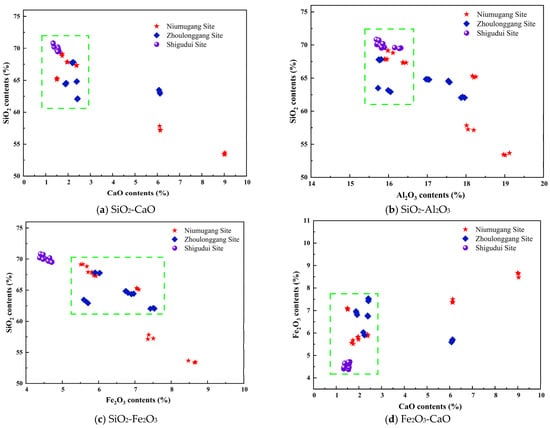
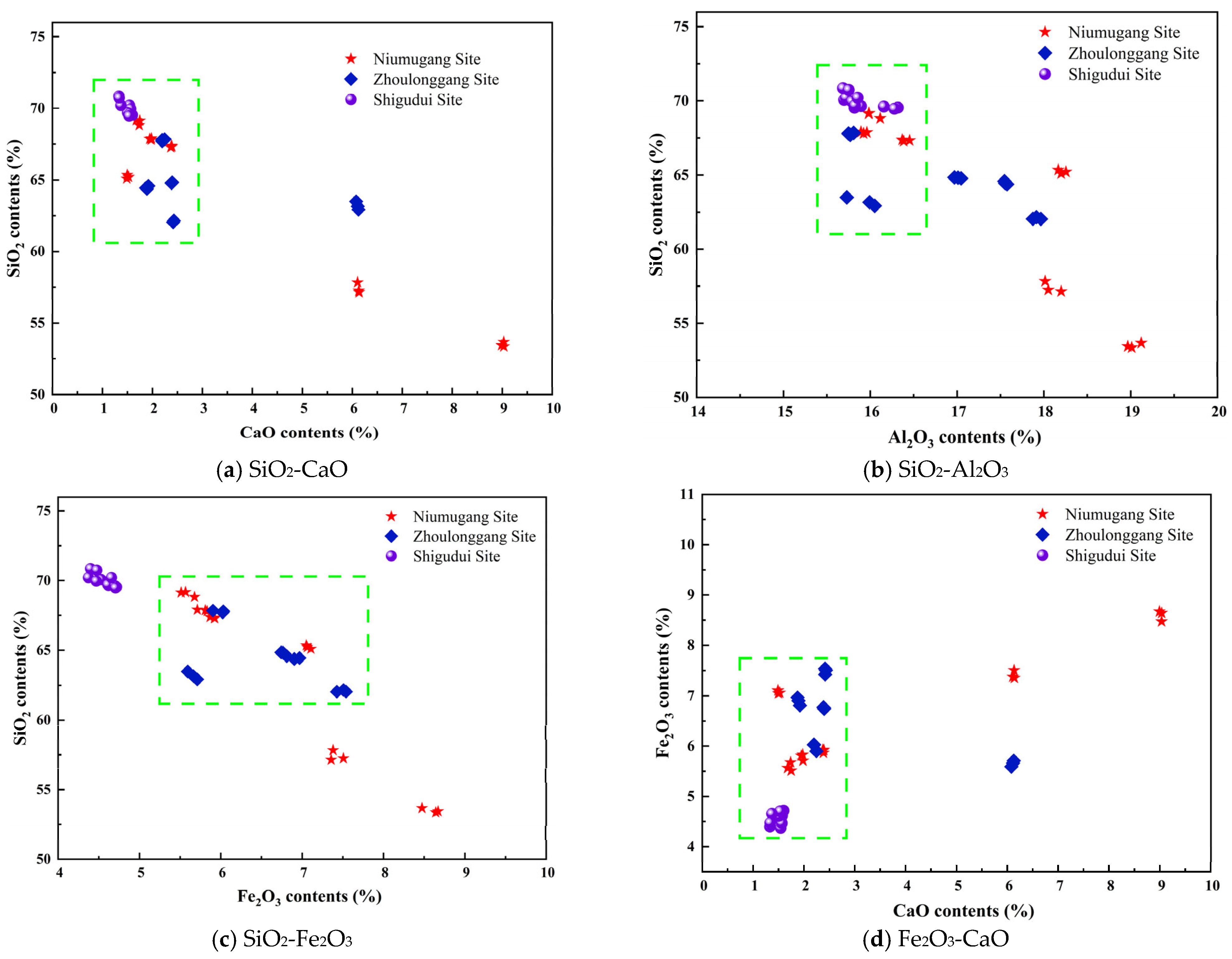
In archaeometric research, two-dimensional scatter analysis of elemental content is an important method for revealing the raw-material characteristics of ancient artifacts. Based on the pottery’s chemical composition, this study selected SiO2, Al2O3, CaO, and Fe2O3 as the four principal oxides for two-dimensional scatter analysis (Figure 6). Figure 6a presents the bivariate scatter plot of SiO2 versus CaO. As shown in the figure, samples from the Niumugang Site exhibit the widest distribution range, with SiO2 contents of 53–69% and CaO contents of 1.5–9%. Samples from the Zhoulonggang Site are concentrated within intermediate ranges of SiO2 (62–68%) and CaO (1.9–6.1%). In contrast, samples from the Shigudui Site cluster tightly within an extremely narrow field characterized by high silica (69–71%) and low calcium (1.3–1.6%), forming an almost vertical distribution pattern. This trend may reflect a technological sequence ranging from calcium-rich raw material dominance at Niumugang, through initial calcium regulation at Zhoulonggang, to intensive decalcification practices at Shigudui.
Figure 6.
Two-dimensional compositional analysis of oxides in pottery unearthed from the Niumugang, Zhoulonggang, and Shigudui Sites in the Western Shangqiu.
Figure 6b shows the bivariate distribution of SiO2 and Al2O3. The analysis indicates that samples from the Niumugang Site form a banded distribution along a SiO2 gradient (53–69%), exhibit a pronounced negative correlation with Al2O3 (16–19%), and form a linear pattern with a negative slope. This suggests diverse raw material sources and the possible use of rudimentary techniques, such as sand tempering, to adjust the silica–alumina ratio. Samples from the Zhoulonggang Site display a markedly convergent distribution, concentrated within intermediate ranges of SiO2 (62–68%) and Al2O3 (15.7–18%), with a weakened negative correlation. In contrast, samples from the Shigudui Site cluster within an extremely narrow field of high silica (69–71%) and moderate alumina (15.7–16.3%), forming an almost horizontal distribution pattern, which indicates precise control of the silica–alumina ratio achieved through refined levigation processes. This pattern reflects a technological progression from broad-spectrum raw material exploitation at Niumugang, through preliminary selection at Zhoulonggang, to standardized compositional recipes at Shigudui, highlighting an increasing understanding of raw material chemistry among Longshan-period potters.
Figure 6c presents the two-dimensional scatter plot of SiO2 versus Fe2O3. Samples from the Niumugang Site exhibit a fan-shaped distribution, showing a clear negative correlation between SiO2 (53–69%) and Fe2O3 (5.5–8.7%). Samples from the Zhoulonggang Site display a more convergent distribution, concentrated within intermediate ranges of SiO2 (62–68%) and Fe2O3 (5.6–7.5%), with a weakened negative correlation, indicating preliminary control over iron-bearing components in the raw materials. In contrast, samples from the Shigudui Site cluster tightly within a narrow field characterized by high silica (69–71%) and low iron (4.4–4.7%), forming an almost horizontal distribution pattern, suggesting the effective removal of iron impurities through refined levigation techniques.
Figure 6d illustrates the bivariate scatter plot of Fe2O3 versus CaO. Samples from the Niumugang Site show a radial distribution, with Fe2O3 (5.5–8.7%) and CaO (1.5–9.0%) exhibiting a weak positive correlation (R2 ≈ 0.48), forming a fan-shaped dispersion centered on a high-calcium, high-iron apex. Samples from the Zhoulonggang Site form a vertical band within the intermediate iron range (Fe2O3 5.6–7.5%), with a narrowed fluctuation range of CaO (1.9–6.1%) and no significant correlation with iron content. In contrast, samples from the Shigudui Site are densely clustered within an extremely narrow interval of low iron (4.4–4.7%) and low calcium (1.3–1.6%), forming a compact cluster near the origin.
3.3. Three-Dimensional Scatter Analysis of XRF Data
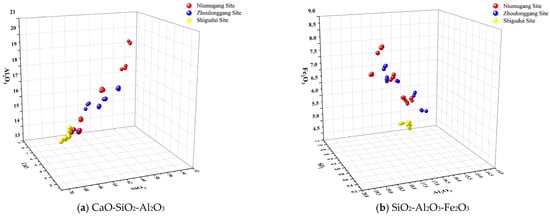
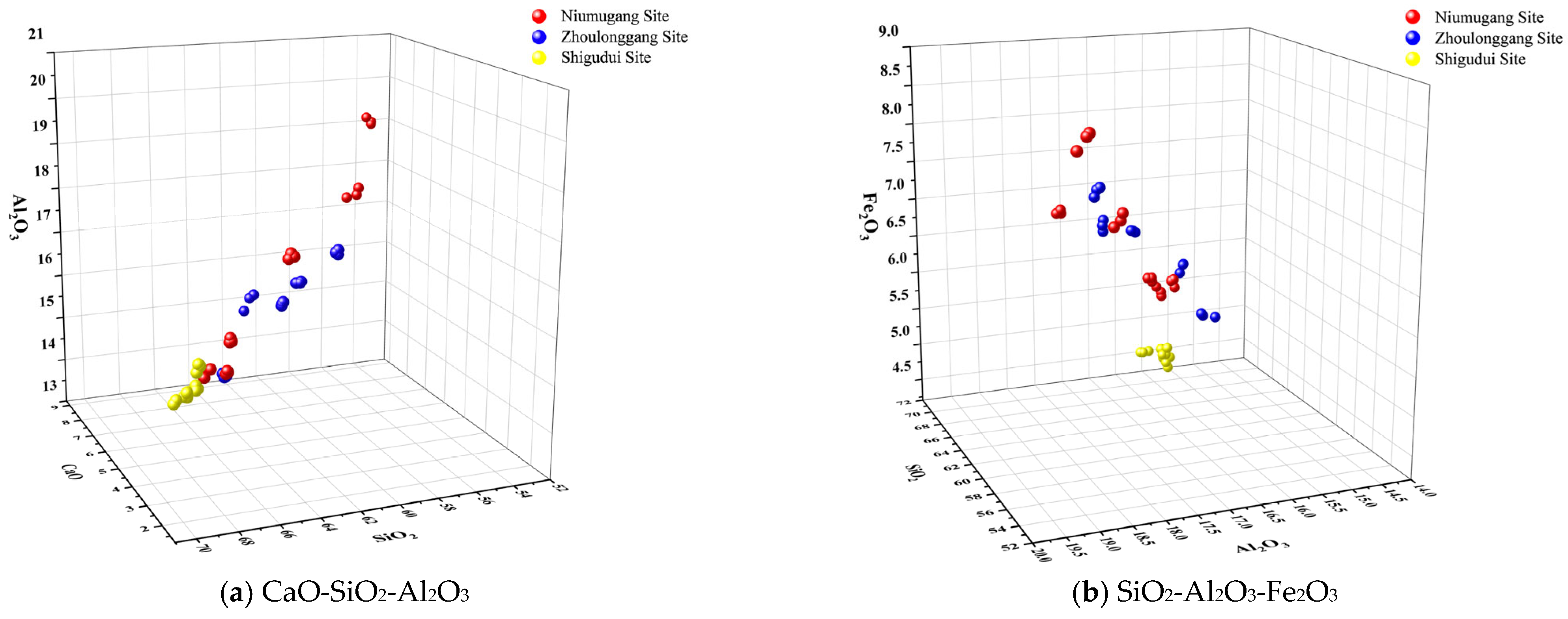
Figure 7a,b illustrate the three-dimensional distribution characteristics of the major pottery-forming oxides in ceramic samples from three sites in western Shangqiu: Niumugang in Minquan County, Zhoulonggang in Sui County, and Shigudui in Zhecheng County. Figure 7a shows the CaO–SiO2–Al2O3 ternary diagram. Based on the three-dimensional CaO–SiO2–Al2O3 distribution patterns of the ceramic samples from the three sites, the differentiation in raw material types and levels of technological control can be indirectly reflected. Samples from the Niumugang site exhibit the widest distribution range in three-dimensional space, forming a fan-shaped dispersion pattern with the high-calcium zone (CaO 1.49–9.03%) as the apex; their SiO2 (53.37–69.18%) and Al2O3 (15.89–19.12%) contents show a pronounced negative correlation, and high-calcium samples are mostly associated with low-silica and high-alumina characteristics. Samples from the Zhoulonggang site form a relatively compact spindle-shaped distribution along the medium-calcium range (CaO 1.87–6.12%), in which SiO2 (62.04–67.84%) and Al2O3 (15.73–17.97%) maintain a stable co-variation relationship, possibly indicating that an optimized proportion between quartz and clay minerals in the raw materials had been achieved. In contrast, samples from the Shigudui site cluster within an extremely narrow range characterized by low calcium (CaO 1.33–1.60%), high silica (SiO2 69.47–70.86%), and moderate alumina (Al2O3 15.69–16.32%). Figure 7b presents the SiO2–Al2O3–Fe2O3 ternary diagram. As shown, samples from the Niumugang site display the broadest distribution in SiO2–Al2O3–Fe2O3 three-dimensional space, with a wide fluctuation range in SiO2 content (53.37–69.18%) and a negative correlation with Al2O3 (15.89–19.12%) and Fe2O3 (5.51–8.67%), forming a banded distribution extending along the gradient of the silica–alumina ratio. Samples from the Zhoulonggang site show a markedly enhanced degree of clustering, mainly concentrated within a relatively narrow range of SiO2 62–68% and Al2O3 15.7–18%, and the Fe2O3 content exhibits a co-variation trend with SiO2, reflecting a relatively stable raw material source that may have undergone preliminary levigation. Samples from the Shigudui site exhibit a high degree of clustering, concentrated within a compact zone defined by high silica (69.47–70.86%), moderate alumina (15.69–16.32%), and low iron (4.37–4.72%). The three-dimensional distributions further corroborate differences among the three sites in raw material recipes and processing technologies in ceramic production, as well as the relatively high level of standardization at the Zhecheng Shigudui site.
Figure 7.
Three-dimensional scatter plot of chemical compositions of unearthed artifacts from the Western Shangqiu.
3.4. Microcomposition-IR
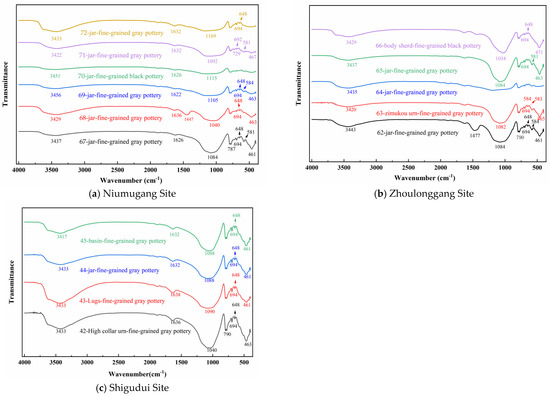
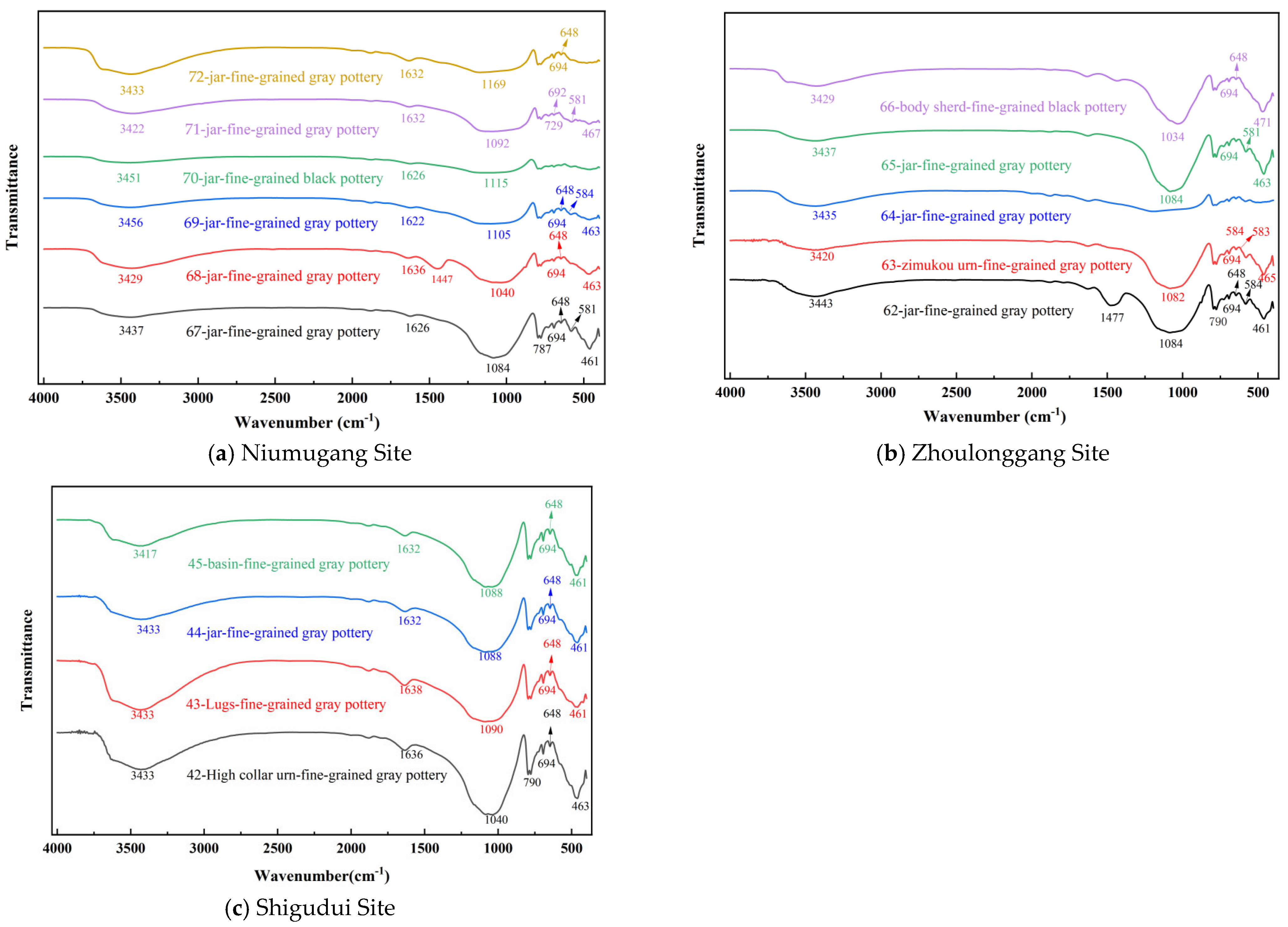
Infrared (IR) analysis was carried out on ceramic samples unearthed from three sites in western Shangqiu—Niumugang in Minquan County, Zhoulonggang in Sui County, and Shigudui in Zhecheng County—and the results are shown in Figure 8. Figure 8a presents the IR spectra of samples from the Niumugang site. Analysis indicates that all samples display a pronounced broad absorption band near 3433 cm−1, corresponding to O–H stretching vibrations. The characteristic absorption at 1632 cm−1 is attributed to O–H bending vibrations, further confirming the existence of interlayer water or crystalline water in clay minerals. In the low-wavenumber region between 400 and 1000 cm−1, all samples exhibit characteristic absorptions of the silicate framework, including Si–O–Si stretching and bending vibrations. Notably, even when comparing the same vessel type (jars) and the same ceramic fabric (fine-grained gray pottery), differences in functional groups can be observed among individual samples. For example, specimen No. 67, a fine-grained gray pottery jar, shows an isolated absorption peak at 1447 cm−1, whereas specimen No. 69, also fine-grained gray pottery, exhibits a distinct Si–O–Al vibration peak at 1084 cm−1, suggesting that its aluminum content may be higher than that of the other samples. Under otherwise identical conditions, variations in the intensity of the main absorption peaks and in the bandwidths of the absorption bands are observed, which may reflect diversity in raw material sources as well as differences in manufacturing processes.
Figure 8.
Infrared Spectral Analysis of Pottery Artifacts Unearthed from the Niumugang, Zhoulonggang, and Shigudui Sites in the Western Shangqiu.
Figure 8b shows the IR spectra of samples from the Zhoulonggang Site. Similar to Figure 6a, all samples exhibit broad and weak absorption bands near 3400 cm−1 (3420–3443 cm−1), corresponding to –OH stretching vibrations, indicating the presence of small amounts of hydroxyl groups or adsorbed water in the ceramic bodies. The absorption peak around 1080 cm−1 corresponds to the asymmetric stretching vibration of Si–O–Si, a characteristic of quartz- and feldspar-bearing silicate structures. Absorption bands in the ranges of 460–470 cm−1 and the paired peaks at 680–700 cm−1 correspond to Si–O–Al bending vibrations. Notably, the fine-grained gray pottery Zimukou urn and the fine-grained black pottery body sherd differ from other fine-grained gray pottery jars by exhibiting a pronounced absorption peak near 580–585 cm−1, reflecting enhanced Fe–O or Al–O stretching vibrations and indicating a higher proportion of iron oxides, which may be related to their specific functional uses.
Figure 8c presents the IR spectra of samples from the Shigudui Site. Overall, the spectra are similar to those from the Niumugang and Zhoulonggang Sites, with all samples showing broad and weak absorption bands near 3400 cm−1 (3417–3433 cm−1) corresponding to –OH stretching vibrations, indicating that small amounts of structural or adsorbed water are still preserved in the samples. The absorption peak near 1630 cm−1 is associated with –OH bending vibrations, further confirming the presence of clay minerals such as kaolinite and illite. The 1080–1100 cm−1 region corresponds to asymmetric Si–O–Si stretching vibrations, which are the principal characteristic peaks of silicate minerals and indicate that the ceramic raw materials are dominated by quartz- and feldspar-related components. The paired peaks at 460–470 cm−1 and 690–700 cm−1 correspond to Si–O–Al bending vibrations and in-plane Si–O vibrations, respectively, suggesting the preservation of partial layered aluminosilicate structures within the ceramic bodies. Notably, the fine-grained gray pottery high-necked urn exhibits a weak absorption peak at 790 cm−1, corresponding to Al–O or Fe–O vibrations.
3.5. Phase Analysis-XRD
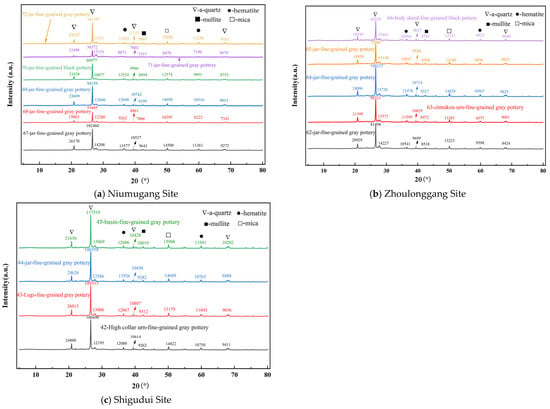
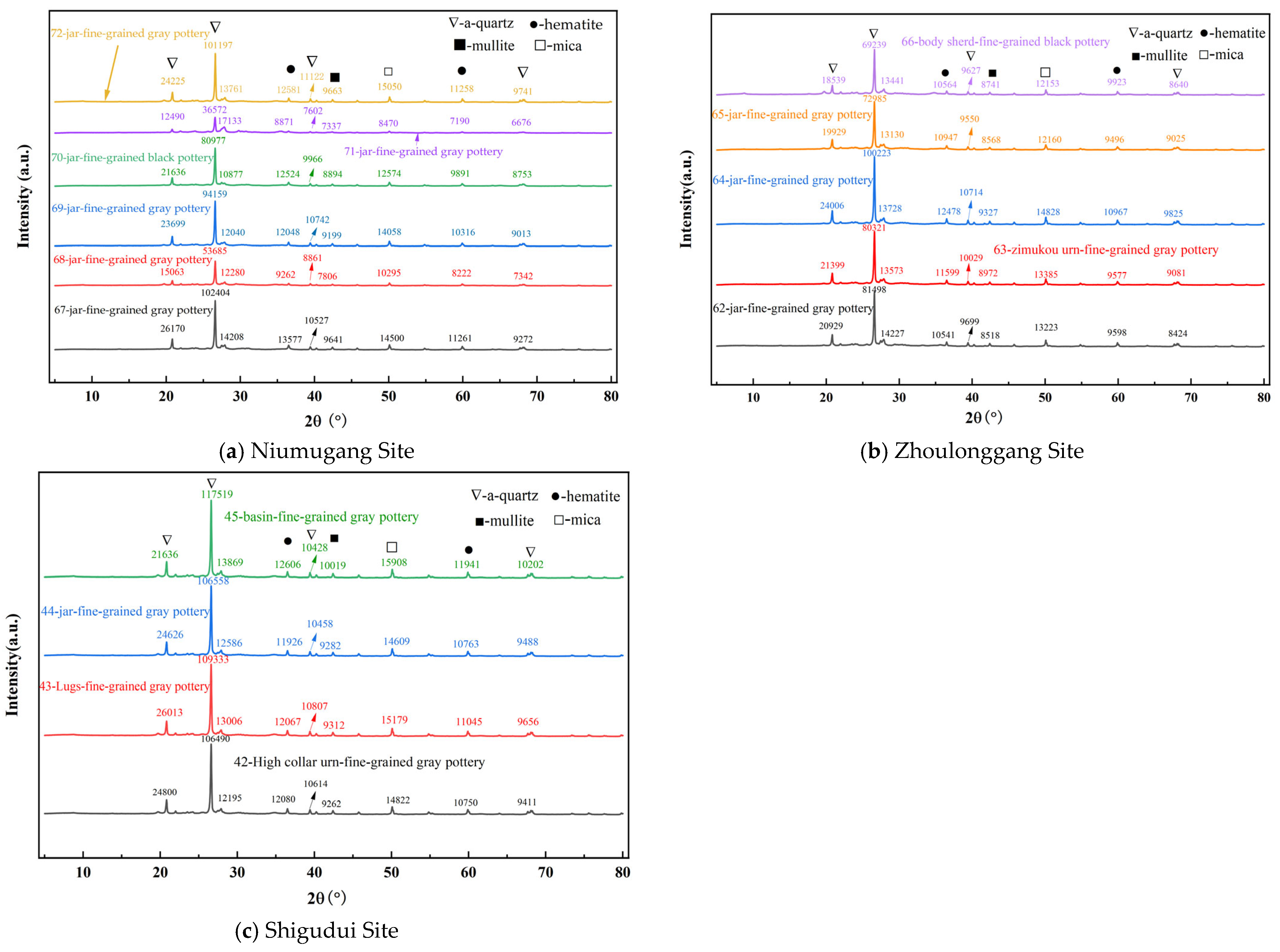
XRD analysis was conducted on ceramic remains excavated from the Niumugang site in Minquan County, the Zhoulonggang site in Sui County, and the Shigudui site in Zhecheng County in western Shangqiu, with the results shown in Figure 9. Figure 9a presents the XRD patterns of ceramics from the Niumugang site, Figure 9b those from the Zhoulonggang site, and Figure 9c those from the Shigudui site. Interpretation of the XRD patterns indicates that the main mineral compositions of the ceramics from the three sites are highly consistent, all containing characteristic phases such as mica, mullite, quartz, and hematite. Kaolinite, which served as a major raw material for ceramic bodies in northern China, underwent significant phase transformations during firing. When the temperature reached 450–650 °C, structural water was removed from kaolinite, resulting in the formation of amorphous metakaolinite. When the temperature exceeded 900 °C, metakaolinite decomposed into free Al2O3 and SiO2, and recrystallized to form mullite at approximately 1100 °C, while excess SiO2 remained in the form of quartz. It is noteworthy that the pronounced quartz peaks observed in the XRD patterns may originate from two sources: one is the crystallization of free SiO2 produced during the thermal decomposition of kaolinite, and the other is the marginal transformation of primary quartz grains. Although the mullite diffraction peaks are relatively weak, the ceramic skeletal structure formed by mullite and quartz, together with the residual hematite, confirms that the ceramics from these sites were fired at temperatures exceeding 900 °C. Figure 9a further shows that the diffraction peak intensity of hematite in sample No. 70, a fine black pottery jar from the Niumugang site, is relatively strong, indicating a general tendency between surface coloration and Fe2O3 content, consistent with observations from the Minquan Niumugang site. In Figure 9b, the hematite diffraction peak of sample No. 66, a fine black pottery sherd from the Zhoulonggang site, is significantly stronger than that of other fine gray pottery samples, forming a clear contrast with the black coloration of the vessel surface. Figure 9c shows that Longshan-period ceramics from the Shigudui site exhibit highly consistent phase compositions and crystallization characteristics. All samples are dominated by α-quartz, with sharp, intense diffraction peaks at approximately 26.6° (2θ) and a narrow full width at half maximum, indicating strict control over quartz grain size and content in the raw materials. Weak diffraction signals of mullite were detected in sample No. 43 and No. 44, suggesting that the local firing temperature of some vessels may have exceeded 900 °C.
Figure 9.
XRD Pattern Analysis of Pottery Artifacts Unearthed from the Niumugang, Zhoulonggang, and Shigudui Sites in the Western Shangqiu.
3.6. Thermal Analysis
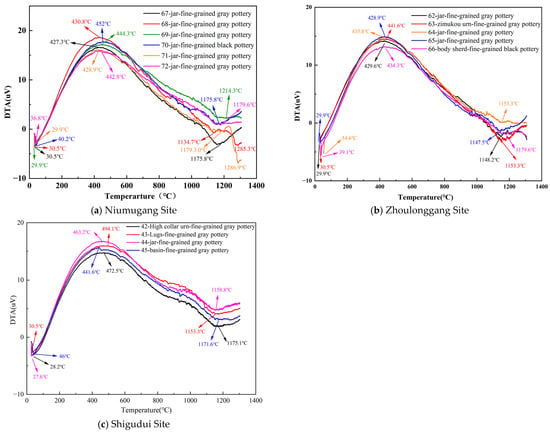
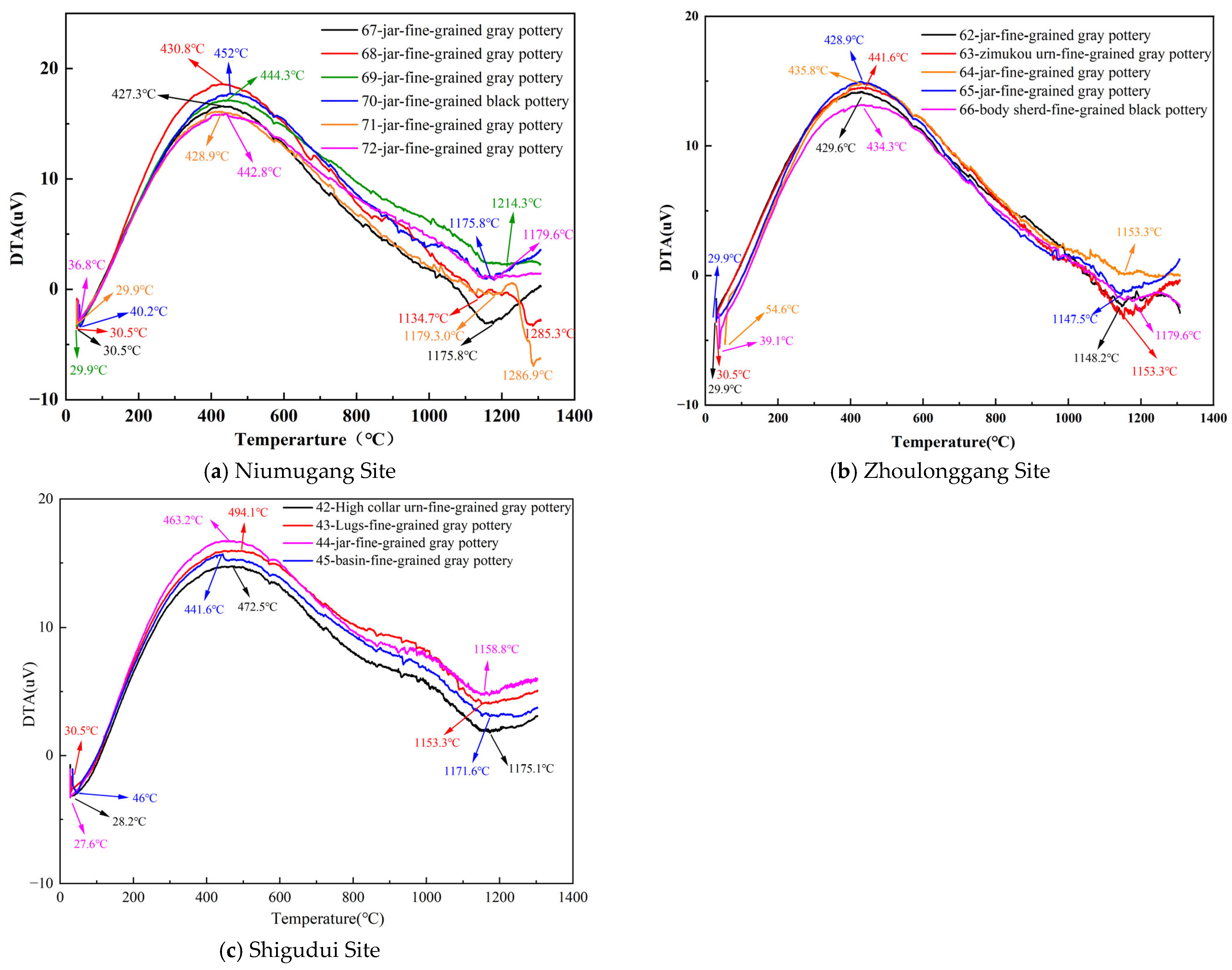
Thermal analysis was carried out on ceramic remains excavated from the Niumugang site in Minquan County, the Zhoulonggang site in Sui County, and the Shigudui site in Zhecheng County in western Shangqiu, with the results shown in Figure 10. Figure 10a presents the thermal analysis curves of ceramics from the Niumugang site, Figure 10b those from the Zhoulonggang site, and Figure 10c those from the Shigudui site.
Figure 10.
Thermal Analysis of Pottery Artifacts Unearthed from the Niumugang, Zhoulonggang, and Shigudui Sites in the Western Shangqiu.
As shown in Figure 10a, Longshan-period ceramics from the Niumugang site exhibit typical thermal transformation characteristics of clay minerals during heating. All samples display a pronounced endothermic trough in the range 430–453 °C, with peak values around 442 °C, corresponding to the removal of structural water from clay minerals such as kaolinite. In the 1135–1287 °C temperature range, differentiated exothermic peaks are observed. Among them, sample No. 70, a fine black pottery vessel, shows the lowest onset temperature of the exothermic peak (1134.7 °C) and the broadest peak shape, suggesting that its raw material may contain a higher proportion of fluxing components, such as iron-bearing phases, which promoted liquid-phase sintering. Notably, sharp exothermic peaks appear at 1285–1287 °C in sample No. 67 and No. 68, both fine gray pottery, which may be related to high-temperature polymorphic transformation of quartz or the formation of mullite, indicating a higher upper limit of firing temperature. This differentiation in thermal behavior not only reveals subtle differences in mineral composition of the ceramic raw materials at the site but also confirms that Longshan-period potters had already achieved relatively precise control over the firing temperature range.
Figure 10b shows that Longshan-period ceramics from the Zhoulonggang site exhibit regular thermal transformation behavior. All samples display an endothermic dehydroxylation trough of clay minerals within the range of 428.9–441.6 °C, with peak values concentrated between 434 °C and 442 °C, confirming that kaolinite-type minerals dominated the raw materials. Notably, sample no. 66, a fine black pottery specimen, shows the highest endothermic trough temperature (441.6 °C) and a more symmetrical trough shape, suggesting a more ordered structure or higher crystallinity of the raw material. During the high-temperature exothermic stage, the onset temperatures of the exothermic peaks for sample No. 62 and No. 64, both gray pottery jars, are 1134.7 °C and 1179.6 °C, respectively, while that of sample No. 66 further increases to 1286.9 °C. This gradient may be related to the exothermic reduction of Fe2O3 to Fe3O4 and to differences in the amount of glassy phase formation. Particularly noteworthy is that sample No. 63, a Zimukou urn, exhibits a double endothermic peak at 429.6 °C, which may indicate the presence of expandable clay minerals, such as montmorillonite, in the raw material. Together, these thermal characteristics indicate that the Zhoulonggang site achieved differentiated control over ceramic function and physical properties by adjusting raw material composition and firing technology.
As shown in Figure 10c, Longshan-period ceramics from the Shigudui site exhibit highly consistent thermal behavior. All samples display sharp endothermic troughs within the range of 441.6–494.1 °C, with peak values concentrated between 463 °C and 472 °C, corresponding to the removal of structural water from illite or mixed-layer clay minerals. The higher dehydroxylation temperatures compared with those at the Niumugang site (~442 °C) and the Zhoulonggang site (~434 °C) suggest that the raw materials may have been enriched in more thermally stable 2:1 layered silicates. In the high-temperature exothermic stage (1158–1175 °C), the peaks are steep and concentrated within a narrow temperature interval (<17 °C), which corresponds well with the low dispersion in chemical composition of the ceramics and reflects a high level of precision in firing control. Notably, sample No. 43, a ceramic ear, exhibits the highest dehydroxylation temperature at 494.1 °C among all samples, which may be related to its specific forming pressure or clay particle orientation. In addition, the exothermic peak temperatures of sample No. 45, a basin, and sample No. 44, a jar, completely coincide at 1175.1 °C, thermodynamically confirming the high degree of standardization in ceramic production at the site. This homogenization of thermal responses further demonstrates that the Shigudui site had already developed a systematic technological framework in raw material processing, forming techniques, and firing control.
3.7. Microstructure-SEM
3.7.1. Niumugang Site
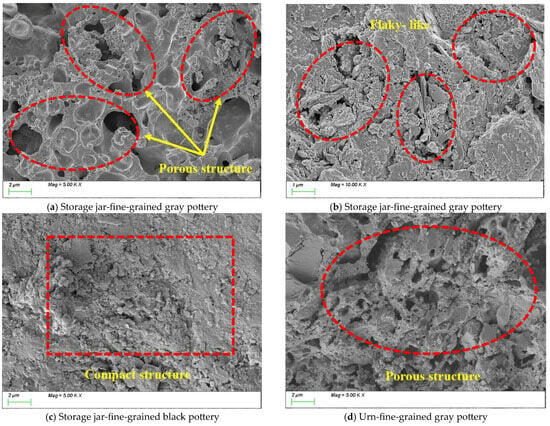
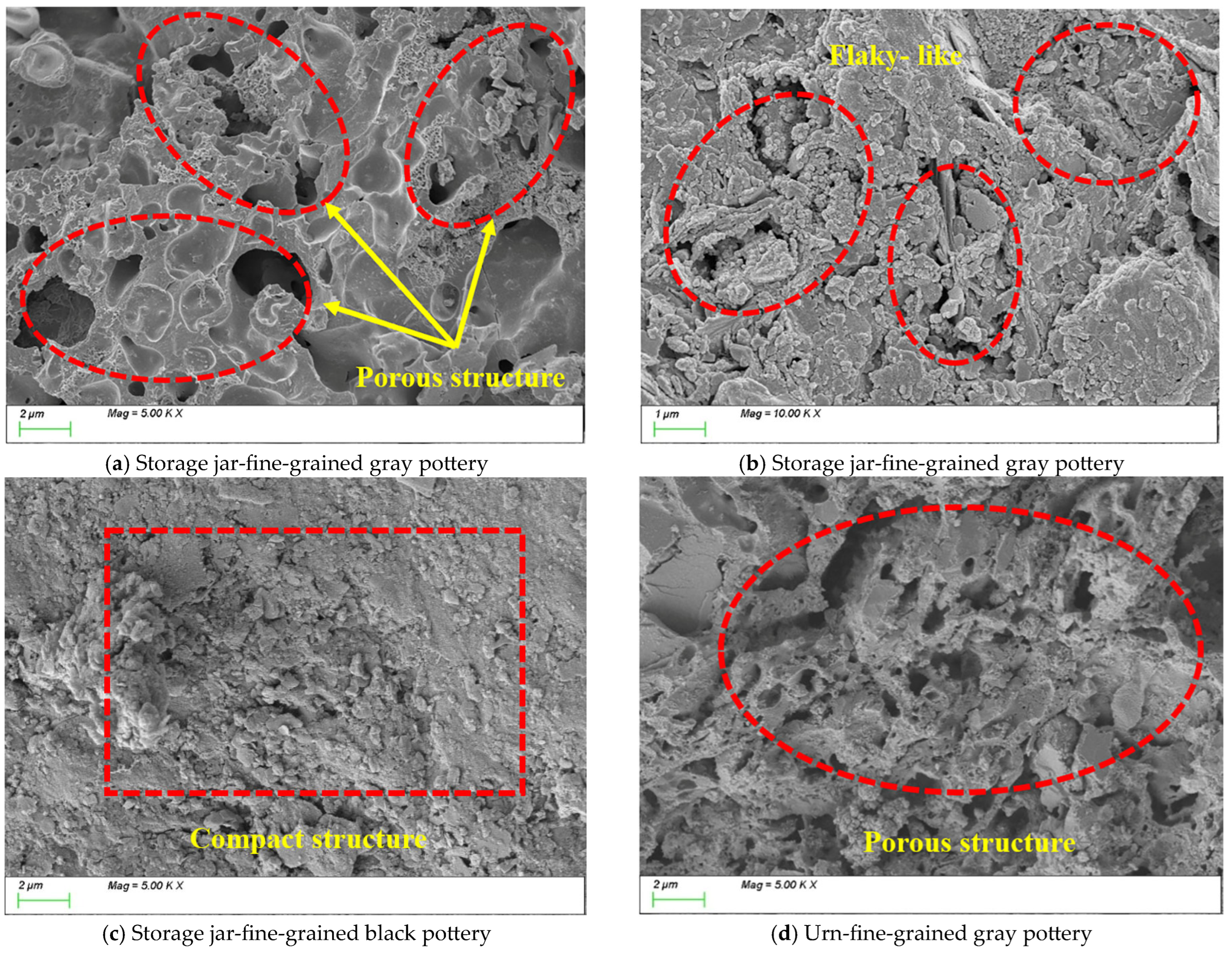
Figure 11 presents SEM images of Longshan-period pottery excavated from the Niumugang Site, in which Figure 11a,b show fine-grained gray pottery jars, Figure 11c shows a fine-grained black pottery jar, and Figure 11d shows a fine-grained gray pottery urn. From a microstructural perspective, both pottery types exhibit common features of refined raw material preparation and sufficient sintering, yet they differ in compactness and technological complexity. The fine-grained gray pottery jars (Figure 11a,b) and the gray pottery urn (Figure 11d) are characterized by matrices dominated by tightly stacked platy and micro-flocculent clay minerals, with strong interparticle bonding and interfaces tending toward fusion, forming a continuous structure; only a small number of isolated submicron- to micron-scale closed pores are sporadically distributed, without the development of interconnected pore networks or localized pore clustering. In contrast, the fine-grained black pottery jar (Figure 11c) exhibits a higher level of technological refinement: the matrix particles are finer and more densely packed, pores are extremely scarce and uniform in size, and interconnected porosity is nearly absent, resulting in a highly homogeneous and compact structure with blurred interparticle boundaries and strong bonding. Overall, the structure is continuous, with extremely low porosity, no obvious coarse particles or sandy temper, and only a few regularly shaped, submicron-scale closed pores, without the formation of connected channels or localized pore concentrations. This highly dense microstructure confers excellent mechanical strength, surface smoothness, and impermeability on the black pottery jar, enabling it to fulfill not only practical functions but also ritual roles, reflecting a dual technological adaptation to both functional performance and social symbolism. Compared with black pottery, gray pottery displays a slightly simplified firing technology, yet it still demonstrates an effective balance between functional adaptability and technological stability in pottery production during this period, to some extent reflecting the maturation of the Longshan ceramic technological system in the Central Plains.
Figure 11.
SEM images of pottery excavated from the Niumugang Site.
3.7.2. Zhoulonggang Site
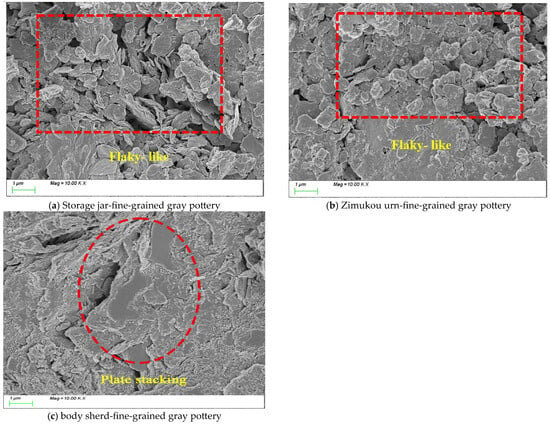
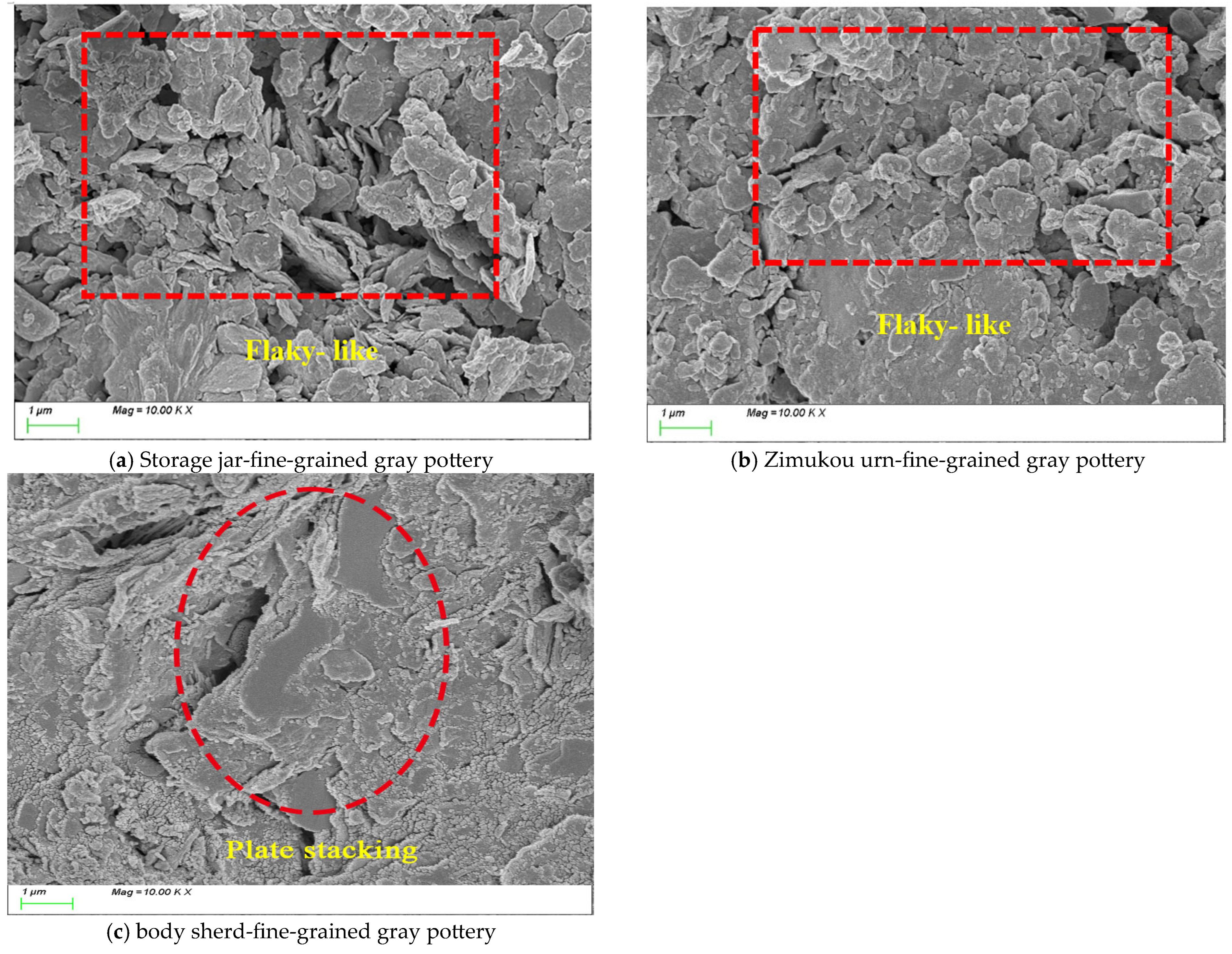
Figure 12 presents SEM images of Longshan-period pottery excavated from the Zhoulonggang Site, in which Figure 12a shows a fine-grained gray pottery jar, Figure 12b shows a fine-grained gray pottery Zimukou urn, and Figure 12c shows a fine-grained black pottery body sherd. From a microstructural perspective, although all three specimens reflect the high level of ceramic craftsmanship achieved during the Longshan period, they exhibit a clear progression in raw material preparation, sintering control, and structural compactness, indicating technological stratification in response to different functional requirements. The fine-grained gray pottery jar (Figure 12a) and the Zimukou urn (Figure 12b) both possess matrices composed of stacked platy and micro-flocculent clay minerals, with well-fused particle interfaces and low porosity, only a small number of uniformly distributed submicron-scale closed pores are observed, with no evidence of interconnected pore channels or defect aggregation. Notably, the Zimukou urn displays a more uniform, compact structure, likely due to the requirement for high-precision fitting between the vessel body and lid. In contrast, the fine-grained black pottery body sherd (Figure 12c) attains a higher structural level, characterized by tighter packing, fewer pores, and the absence of interconnected porosity; this microstructure enhances mechanical strength, surface smoothness, and impermeability, corresponding well with its social function as a high-status ritual vessel or finely made serving container.
Figure 12.
SEM images of pottery excavated from the Zhoulonggang Site.
3.7.3. Shigudui Site
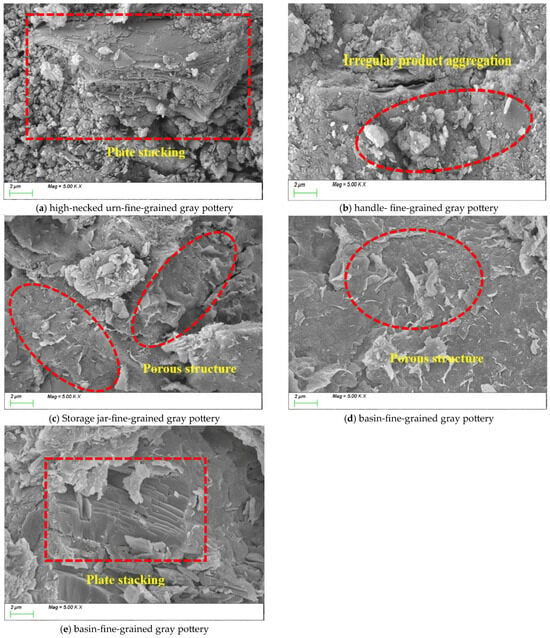
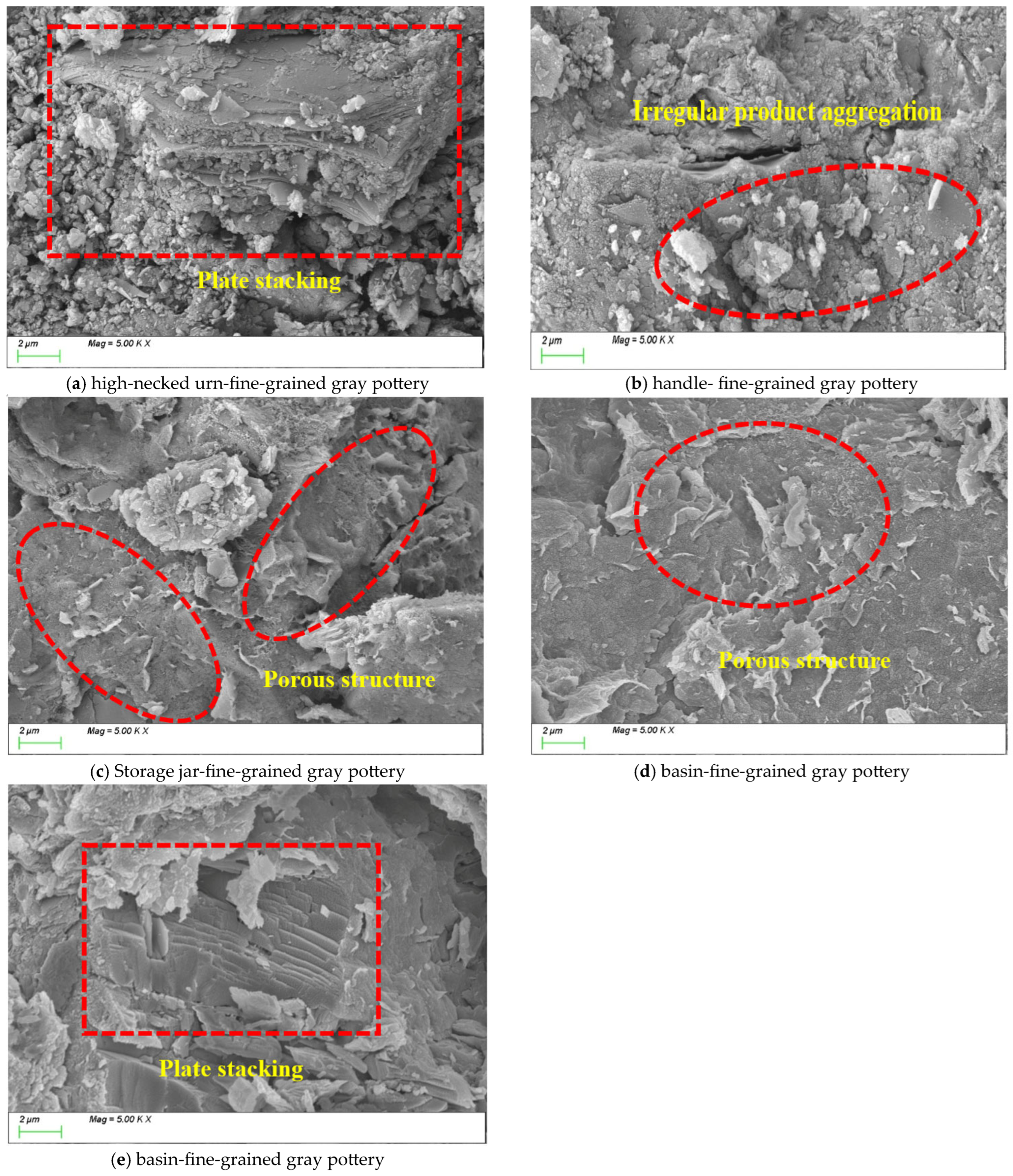
Figure 13 presents SEM images of Longshan-period pottery excavated from the Shigudui Site, in which Figure 13a shows a fine-grained gray pottery high-necked urn, Figure 13b a fine-grained gray pottery handle, Figure 13c a fine-grained gray pottery jar, and Figure 13d,e fine-grained gray pottery basins. A comprehensive examination of the microstructures reveals that the fine-grained gray pottery from the Shigudui Site exhibits a generally consistent and uniformly compact technological character. In all samples, the matrix is dominated by tightly stacked platy and micro-flocculent clay minerals, with good interparticle bonding. It interfaces tending toward fusion, resulting in a continuous structure with low porosity, only a small number of isolated submicron- to micron-scale closed pores are sporadically distributed, without the development of interconnected pore channels or localized pore clusters. This shared microstructural pattern indicates that the site had systematically mastered key technologies in fine-grained gray pottery production, including refined levigation of raw materials, uniform forming, and firing under reducing atmospheres, reflecting a high degree of technological stability. More specifically, the high-necked urn (Figure 13a), as a large storage vessel, exhibits a dense and uniform structure that balances mechanical strength and impermeability, while the high-neck design may further enhance sealing efficiency and ease of handling. The handle (Figure 13b), as a load-bearing component, likewise displays a dense and homogeneous microstructure, conducive to stress dispersion during lifting or suspension, reflecting careful consideration of material performance in functional elements. The jar (Figure 13c) and basins (Figure 13d,e), serving as everyday storage and serving vessels, also show fine and uniform matrices with well-developed sintering, demonstrating an effective integration of practical functionality and technological stability. Overall, the microstructural characteristics of this assemblage not only confirm the maturity and widespread adoption of gray pottery production techniques during the Longshan period but also indicate that the Shigudui Site was capable of producing a diverse range of vessels—from large storage containers to daily-use wares—within a unified technological framework, representing an important manifestation of the increasing standardization and regionalization of Longshan ceramic technology in the Central Plains.
Figure 13.
SEM images of pottery excavated from the Shigudui Site.
4. Conclusions
This study applies a suite of multidisciplinary archaeometric techniques, including X-ray fluorescence (XRF), infrared spectroscopy (IR), X-ray diffraction (XRD), combined thermal analysis (DTA/TGA), and scanning electron microscopy with energy-dispersive spectroscopy (SEM–EDS), to conduct a systematic technological characterization of pottery excavated from three representative Longshan-period sites in western Shangqiu, Henan Province, namely Niumugang, Zhoulonggang, and Shigudui. The main conclusions are summarized as follows:
(1) Chemical composition analysis reveals statistically significant inter-site differences (p < 0.05) in the contents of major ceramic-forming oxides (SiO2, Al2O3, Fe2O3, CaO, etc.). Pottery from the Shigudui site exhibits the narrowest compositional ranges, with both the absolute contents and statistical dispersion of Fe2O3 and CaO being consistently lower than those observed at the other two sites. Pottery from the Zhoulonggang site displays moderate chemical variability, whereas pottery from the Niumugang site shows the widest compositional distributions. The results of two-dimensional and three-dimensional scatter-plot analyses further support this gradational pattern in chemical composition.
(2) XRD and thermal analysis results indicate that pottery from all three sites is primarily composed of quartz, mica, and mullite. Pottery from the Shigudui site exhibits a highly homogeneous mineralogical composition, characterized by concentrated high-temperature exothermic peaks and a relatively narrow firing-temperature interval, suggesting greater technological standardization. In contrast, pottery from the Zhoulonggang site shows evidence of technological differentiation, with certain vessel categories (e.g., black pottery sherds) having been fired at higher temperatures and displaying mineralogical assemblages distinct from those of ordinary gray pottery. Pottery from the Niumugang site, by comparison, exhibits substantial variability in thermal behavior, indicating less uniform firing control.
(3) SEM observations demonstrate that pottery from the Shigudui site, including high-necked urns, jars, and basins, is characterized by uniformly dense and well-sintered microstructures. Pottery from the Zhoulonggang site exhibits functionally differentiated microstructural features, with vessel types such as Zimukou urns and black pottery sherds showing higher degrees of densification and structural integrity. Black pottery jars from the Niumugang site display particularly compact and well-developed microstructures.
Author Contributions
Conceptualization, L.X., D.W. and G.Z.; methodology, L.X., D.W. and G.Z.; validation, L.X. and G.Z.; formal analysis, G.Z., L.X. and Y.L.; investigation, G.Z., D.W. and Y.L.; data curation, G.Z., D.W. and Y.L.; writing—original draft preparation, L.X. and G.Z.; writing—review and editing, L.X., G.Z. and Y.L.; funding acquisition, L.X. All authors have read and agreed to the published version of the manuscript.
Funding
This research was funded by the Henan Provincial Cultural Relics Protection Research Project (No. 25HNWWJ—KJ13), Annual Project of Philosophy and Social Sciences of Henan Province (2022CKG005), National Social Science Fund Project (No. 25CKG014), Henan Province Cultural Relics Protection Project (Project Yu Wenwu Bao[2022]No. 213), Special Project for Cultural Research of Henan Cultural Revitalization Project (2024XWH266).
Data Availability Statement
The original contributions presented in the study are included in the article; further inquiries can be directed to the corresponding author.
Conflicts of Interest
The authors declare no conflicts of interest.
References
- Sun, G.Q. The Dawenkou and Qujialing cultures in Henan Province. Cult. Relics Cent. China 2000, 2, 22–28. [Google Scholar]
- Zhang, G.; Zhao, J. The Niumugang Site in Minquan County and Archaeology in Eastern Henan Province; Science Press: Beijing, China, 2013; pp. 1–285. [Google Scholar]
- Henan Provincial Institute of Cultural Relics and Archaeology. Excavation of the Wuzhuang site in Luyi County, Henan Province. Archaeology (Kaogu) 2002, 3, 5–17. [Google Scholar]
- Wu, B.; Gao, P. An Analysis of the Two Categories of Remains from Yaoguanzhuang and Qinggutun. Archaeology (Kaogu) 1978, 6, 402–408. [Google Scholar]
- Wu, R. A Preliminary Inquiry into the Xia Culture and Its Origins. Cult. Relics 1978, 9, 70–73. [Google Scholar]
- Li, Y. Discussing Several Issues Concerning Xia Culture from Several Types of the Henan Longshan Culture. In Proceedings of the First Annual Conference of the Chinese Archaeological Society; Cultural Relics Press: Beijing, China, 1979. [Google Scholar]
- Henan Team No. 2, Institute of Archaeology, Chinese Academy of Social Sciences. Excavation Report of the Wangyoutfang Site in Yongcheng, Henan. In Archaeological Collections; China Social Sciences Press: Beijing, China, 1987. [Google Scholar]
- Yan, W. The Longshan Culture and the Longshan Period. Cult. Relics 1981, 6, 41–48. [Google Scholar]
- Li, B. A Preliminary Discussion on the Zaolvtai Type. Cult. Relics 1983, 4, 50–59. [Google Scholar]
- Wei, X. A Preliminary Discussion on the Cultural Remains of the Longshan Period in the Western Part of Eastern Henan. Huaxia Archaeol. 1995, 1, 44–73. [Google Scholar]
- Luan, F. A Preliminary Study of the Wangyoutfang Type of the Longshan Culture. Archaeology (Kaogu) 1992, 10, 924–935+958. [Google Scholar]
- Sun, B. Re-discussion on the Transition from Dawenkou Culture to Longshan Culture. In Ancient Civilizations; Cultural Relics Press: Beijing, China, 2007; Volume 6, pp. 12–13. [Google Scholar]
- Dong, Q. The Central Plains During the Yu-Xia Period; Science Press: Beijing, China, 2001; p. 28. [Google Scholar]
- Douglas Price, T.; Bar-Yosef, O. The Origins of Agriculture: New Data, New Ideas: An Introduction to Supplement 4. Curr. Anthropol. 2011, 52, 163–174. [Google Scholar] [CrossRef] [Scilit] [PubMed]
- Du, J. Pottery Jue—A Study of Ancient Chinese Wine Vessels Part One. Archaeology (Kaogu) 1990, 6, 519–530+564. [Google Scholar]
- Yan, Z. Lacquered Gu, Round Pottery Discs, and Handle-shaped Objects. J. Natl. Mus. China 2020, 1, 6–22. [Google Scholar]
- Zhao, H. Periodization and Regional Types of Longshan Culture. In Collected Studies on Archaeological Cultures (III); Cultural Relics Press: Beijing, China, 1993. [Google Scholar]
- Luan, F. Periodization and Typology of Haidai Longshan Culture. In Archaeological Research on the Haidai Region; Shandong University Press: Jinan, China, 1997. [Google Scholar]
- Zhang, J. Typological Study of Early Houli Pottery. Cult. Relics Cent. China 1998, 4, 36–44. [Google Scholar]
- Beijing Municipal Institute of Cultural Relics. Zhenjiangying and Tazhao: Typology and Pedigree of Pre-Qin Archaeological Cultures in the Juma River Basin; Encyclopedia of China Publishing House: Beijing, China, 1999.
- Dai, X. Pottery Production, Settlement Patterns, and Social Change: The Yuanqu Basin from the Neolithic to the Early Bronze Age; Cultural Relics Press: Beijing, China, 2010. [Google Scholar]
- Li, J.; Gao, G. Preliminary Study on the Origin, Development, and Social Nature of Typical Longshan Culture. Cult. Relics 1979, 11, 56–62. [Google Scholar]
- Hu, X. The Origin and Firing Technology Research of Guanzhuang Ceramic. Master’s Thesis, School of History, Zhengzhou University, Zhengzhou, China, 2014. [Google Scholar]
- Zhu, T.; Wang, C.; Xu, D.; Wu, J. Preliminarily exploration to the carbonization technique of the black pottery in Shuangdun site. Sci. Conserv. Archaeol. 2005, 17, 1–8. [Google Scholar] [CrossRef]
- Guo, M.; Wen, D.; Luan, F.; Zhu, T.; Drucker, I.; Wan, J.; Lu, Q.; Sun, B.; Liang, Z. Preliminary Study on the Origin of Longshan Culture White Pottery: Examples from Samples of Liangchengzhen and Other Sites. Archaeology (Kaogu) 2024, 2, 89–106. [Google Scholar]
- Cui, J.; Wu, X.; Yang, Y. Compositional Analysis and Preliminary Provenance Study of Pottery from Neolithic Sites in Maoxian County, Sichuan. Cult. Relics 2011, 2, 79–85. [Google Scholar] [CrossRef]
- Lu, Q.; Wang, Q.; Wang, F. Ceramic Petrography and Its Application in Archaeology. Jianghan Archaeol. 2021, 2, 109–115+136. [Google Scholar]
- Liu, S. Ceramic Mineral Raw Materials and Petrographic Analysis; Wuhan University of Technology Press: Wuhan, China, 2015. [Google Scholar]
- Wang, X.; Nan, P.; Guo, Y. Chemical analysis of pottery and clay raw materials from the Longshan period at the Pingtou site in Hequ county, Shanxi province. Sci. Conserv. Archaeol. 2015, 27, 61–69. [Google Scholar] [CrossRef]
- He, X.; Wen, J.; He, Z.; Go, I.; Liu, N.; Guo, H. Exploring pottery origin by composition and technique comparison: A case study at the Daqu burial site, Beijing, China. Herit. Sci. 2024, 12, 126. [Google Scholar] [CrossRef] [Scilit]
- Ao, X.; Wu, J.; Xie, Z.; Li, T. Chemical insights into pottery production and use at Neolithic Fenghuangzui earthen-walled town in China. npj Herit. Sci. 2025, 13, 156. [Google Scholar] [CrossRef] [Scilit]
- Luo, Y.; Du, Z.; Yu, M.; Wang, Q.; Du, W.; Zhen, Q.; Cui, J. Beyond stylistic typology: Archaeometric reconstruction of diverse pottery traditions and intercommunity interactions at the Lajia site (2300–1900 BCE), Northwest China. Archaeol. Anthropol. Sci. 2025, 17, 160. [Google Scholar] [CrossRef] [Scilit]
- Xie, Z.; Hu, Y.; Shan, S.; Lü, Q.; Yuan, F.; Li, T. Changes and continuity in pottery production and use at Wujiafentou in the core zone of Youziling and Shijiahe cultures in central China. Herit. Sci. 2024, 12, 64. [Google Scholar] [CrossRef] [Scilit]
- Chao, Y.; Fen, W.Y. Characterization of pottery from the Neolithic Huadizui site, Henan province, China by using a multi-analytical approach. Archaeometry 2021, 64, 357–374. [Google Scholar] [CrossRef] [Scilit]
- Li, B.P.; Liu, L.; Chen, X.C.; Zhao, J.X.; Drennan, J.; Greig, A.; Feng, Y.X.; Lawrence, M.; Xu, H.; Han, G.H.; et al. Chemical comparison of rare Chinese white pottery from four sites of the Erlitou state: Results and archaeometrical implications. Archaeometry 2010, 52, 760–776. [Google Scholar] [CrossRef] [Scilit]
- Li, P.F.; Hu, Y.; Zhang, X.Q.; Zhang, C.Y.; Chu, X.L.; Li, T. Chemical variations of clays and pottery within a relatively small spatial extent: Initial insights from modern pottery-making in Central China. Archaeol. Res. Asia 2024, 38, 100504. [Google Scholar] [CrossRef] [Scilit]
- Yao, S.; He, L.M.; Wang, F.; Chen, M.H.; Zhao, Y. Composition analysis of pottery from the Jiangjiashan and Bianjiashan cemeteries in Liangzhu Ancient City, China. npj Herit. Sci. 2025, 13, 231. [Google Scholar] [CrossRef] [Scilit]
- Gao, Y.; Liu, S.R.; Sun, Z.F. Determining firing temperature of clay-based archaeological materials with FTIR absorptivity method. Archaeometry 2025, 67, 950–965. [Google Scholar] [CrossRef] [Scilit]
- Zhu, J.; Zhang, Y.; Wang, T.; Zhao, C.H.; Yu, J.C.; Glascock, M.D.; Wang, C.S. Determining the firing temperature of low-fired ancient pottery: An example from the Donghulin site, Beijing, China. Archaeometry 2014, 56, 562–572. [Google Scholar] [CrossRef] [Scilit]
- Wu, H.J.; Han, J.Y.; Zhang, X.N.; Cui, J.F.; Chen, G.K. Scientific research on white potteries from the Nanzuo site in Qingyang, Gansu province. Archaeometry (Kaogu) 2025, 67, 902–916. [Google Scholar] [CrossRef] [Scilit]
- Cui, T.X.; Wang, X.; Jia, Q.J.; Tao, Y.; Jin, S.A.; Zhang, J. Source of unearthed pottery from the Qujialing culture in the middle Yangtze River. npj Herit. Sci. 2025, 13, 452. [Google Scholar] [CrossRef] [Scilit]
- Yan, L.T.; Feng, S.L.; Li, L.; Ma, B.; Liu, L.; Feng, X.Q. The compositional study of ceramic samples from tombs dating to the Zhou Dynasty at Xiaoshan, Zhejiang Province (China). Archaeometry 2015, 57, 822–836. [Google Scholar] [CrossRef] [Scilit]
- Jiang, B.Y. Petrographic analysis of prehistoric pottery from the Chengdu Plain. Sichuan Cult. Relics 2018, 2, 80–89. [Google Scholar]
- Guo, F.; Jin, P.J.; Li, T.T. Compositional analysis and study of pottery from the Maiping site in Hanyuan, Sichuan. Sichuan Cult. Relics 2021, 3, 95–103. [Google Scholar]
- Lu, X.K.; Li, W.D.; Li, X.W. Spectroscopic analysis of artifacts from the Xipo site. Spectrosc. Spectr. Anal. 2020, 40, 1186–1194. [Google Scholar]
- Lu, Q.; Wang, F.; Luan, F.; Wen, D.; Druck, I.; Sun, B. Petrographic and Chemical Composition Analysis of White Pottery from the Dinggong Site and Surrounding Sites of the Long-shan Culture. Archaeology (Kaogu) 2019, 10, 106–120. [Google Scholar]

Disclaimer/Publisher’s Note: The statements, opinions and data contained in all publications are solely those of the individual author(s) and contributor(s) and not of MDPI and/or the editor(s). MDPI and/or the editor(s) disclaim responsibility for any injury to people or property resulting from any ideas, methods, instructions or products referred to in the content. |
© 2026 by the authors. Licensee MDPI, Basel, Switzerland. This article is an open access article distributed under the terms and conditions of the Creative Commons Attribution (CC BY) license.