


Abstract
The Cândești necropolis is currently the largest excavated Bronze Age necropolis in Romania, with approximately 800 graves. Notably, one grave from an earlier phase of the Monteoru culture (c. 2200–1850 BC) contained a remarkable necklace composed of 22 perforated gastropod shells and a metal pendant. Our investigation adopted an integrated approach, including taxonomic identification, taphonomic, technological and functional analyses, experimental studies, and physico-chemical investigations (Fourier Transform Infrared Spectroscopy and Raman spectroscopy) of the pigment traces present on the shells’s surface. For the metal pendant, X-Ray Fluorescence analysis was conducted to ascertain its elemental composition. The combined analysis yielded unexpected insights: the shells, belonging to the genus Conus, originated from the Mediterranean region. The perforations were not the result of anthropic intervention; rather, they were the result of natural processes, indicating that the shells were collected from thanatocoenoses. The shells were assembled into the necklace using a thread colored with a red pigment. The perforations show signs of prolonged use, suggesting that the necklace was not only a funerary offering. In conclusion, our study indicated that these exotic shells were collected post-mortem already perforated through a rubbing process in the seashore sediments, transported to the site from a distance, and prior to the death of the owner, had been previously worn as personal adornment before being deposited as grave goods.
1. Introduction
Personal adornments are an integral part of humankind’s traditional heritage, as their history has unfolded alongside that of modern humans. The earliest forms of adornment can be traced back to approximately 140,000 years ago [1] in Northern Africa. Since then, adornments have continuously embellished the human body, and were crafted from a variety of raw materials, featuring increasingly sophisticated designs and fastening systems. Our present behavior is no different from that of the early people, as we still collect beautiful shells from seashores or stones with exotic shapes and colors to wear as personal adornments. Intended to be visible, adornments carry a specific composition that aligns with the cultural traditions of the community that understands its significance. It functions as a silent language through which values and beliefs are communicated, thereby establishing itself as an essential component of society. Consequently, we may question whether, in prehistory, the primary role of adornments was purely aesthetic. In the case of prehistoric finds, the absence of complementary information sources—such as written records and direct observations—presents a significant obstacle to their understanding. In these circumstances, it is challenging to assert definitive conclusions regarding the meanings attributed then to prehistoric adornments. In support of our interpretations, we may rely solely on comparisons with traditional populations, which reveal multiple connotations associated with the use of adornments. Thus, they may be seen as indicators of ethnic affiliation, markers of distinct social status (such as marital, age or gender status), elements of sexual attraction, apotropaic functions, and objects of ritual exchange [2,3,4,5,6].
However, one may question whether the significance of adornments within the domestic areas applies also to the funerary contexts. Determining whether the meaning of adornments translates across these two domains is challenging, particularly when distinguishing between items that were personal belongings of the dead and those presented as gifts or ritual offerings by the community. As Parker Pearson [7] emphasizes, “the dead do not bury themselves”; the funerary record is constructed by the living. This distinction becomes evident, for instance, when heavily worn objects are found in the graves of newborns—items that clearly could not have been personal possessions accumulated during the infant’s life, but served instead as symbolic gifts offered by the family/community. Consequently, the placement of such items as grave goods implies a funerary ritual that is socially contextualized and governed by strict rules, possessing clear significance for the community engaged in the ritual. As Tilley [8] asserts, funerary practices are intrinsically linked to the dynamics of life rather than merely serving as rituals surrounding death. These rites play a crucial role in sustaining social cohesion within the community, as they shared beliefs and collective identities. Through the act of commemorating the dead, community members reaffirm their connections to one another, cultivate a sense of belonging, and ensure the continuity of cultural values and traditions. Again, numerous examples from traditional populations support this conclusion [9,10,11,12].
Personal adornments have long been regarded as valuable finds in Romanian archaeology, with studies consistently documenting their presence, particularly in funerary contexts. However, the information provided by these studies remains somewhat limited, primarily focusing on raw materials, typologies, and, in some cases, the positioning of ornaments relative to skeletons when discussing associated funerary objects and correlations with similar contemporary findings. Moreover, many existing analyses of personal adornments lack comprehensive frameworks that encompass critical aspects such as the chaîne opératoire, fastening systems, and evolution of use-wear. To acquire a more nuanced and robust understanding of how these ornamental items influenced social identity and fostered community cohesion, it is essential to adopt a broad interdisciplinary approach. Such an approach should integrate contextual, technological, symbolic, and economic perspectives, facilitating a richer comprehension of the roles these adornments played within their respective societies. By investigating not only the physical characteristics and production methods of the ornaments but also their cultural relevance and socio-economic impacts, researchers can gather deeper insights into the dynamics of social interactions and the processes of identity formation within prehistoric communities.
Keeping these reflections in mind, the main objective of this study is to analyze a necklace composed of perforated gastropod shells and a metal pendant from an inhumation grave in the Bronze Age Monteoru culture necropolis at Cândești, Vrancea County. Our investigation adopts an integrated approach that encompasses taxonomic identification, taphonomic analysis, technological and functional assessments, as well as experimental studies and physical-chemical investigations. In particular, we employed Fourier Transform Infrared Spectroscopy and Raman spectroscopy to analyze the pigment spots found on the surface of the shells. X-Ray Fluorescence analysis was used to determine the elemental composition of the metal pendant.
This multidisciplinary approach aimed to identify the raw materials used, thus shedding light on the provenance of the shells, and to distinguish between natural taphonomic processes and intentional human modification in the creation of shell adornments. We hypothesize that the perforations observed on the archaeological specimens are likely of natural origin, resulting from predation or mechanical abrasion prior to collection. If this hypothesis holds true, it implies a selective strategy focused on gathering pre-perforated raw materials rather than manufacturing them. Therefore, our investigation seeks to determine that the “cultural” value of these artifacts lies not in the technological act of drilling, but rather in their selection, their assembly into composite ornaments—potentially involving colored threads—and their prolonged social use, as evidenced by specific use-wear patterns. Such interpretations have broader implications for understanding various economic or cultural aspects. For instance, they can reveal networks of exchange between communities, especially when discussing imported items. Furthermore, they provide insights into the use of these objects prior to their incorporation into funerary inventories and the existence of specific funerary rituals that allowed for the burial of already used items exhibiting signs of use-wear. By exploring these, our study aims not only to enhance the understanding of the artifacts themselves but also to contribute to a deeper comprehension of the social practices and cultural dynamics of the human community involved.
2. Materials and Methods
2.1. Archaeological Context
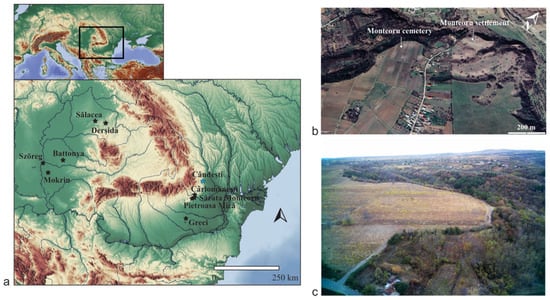
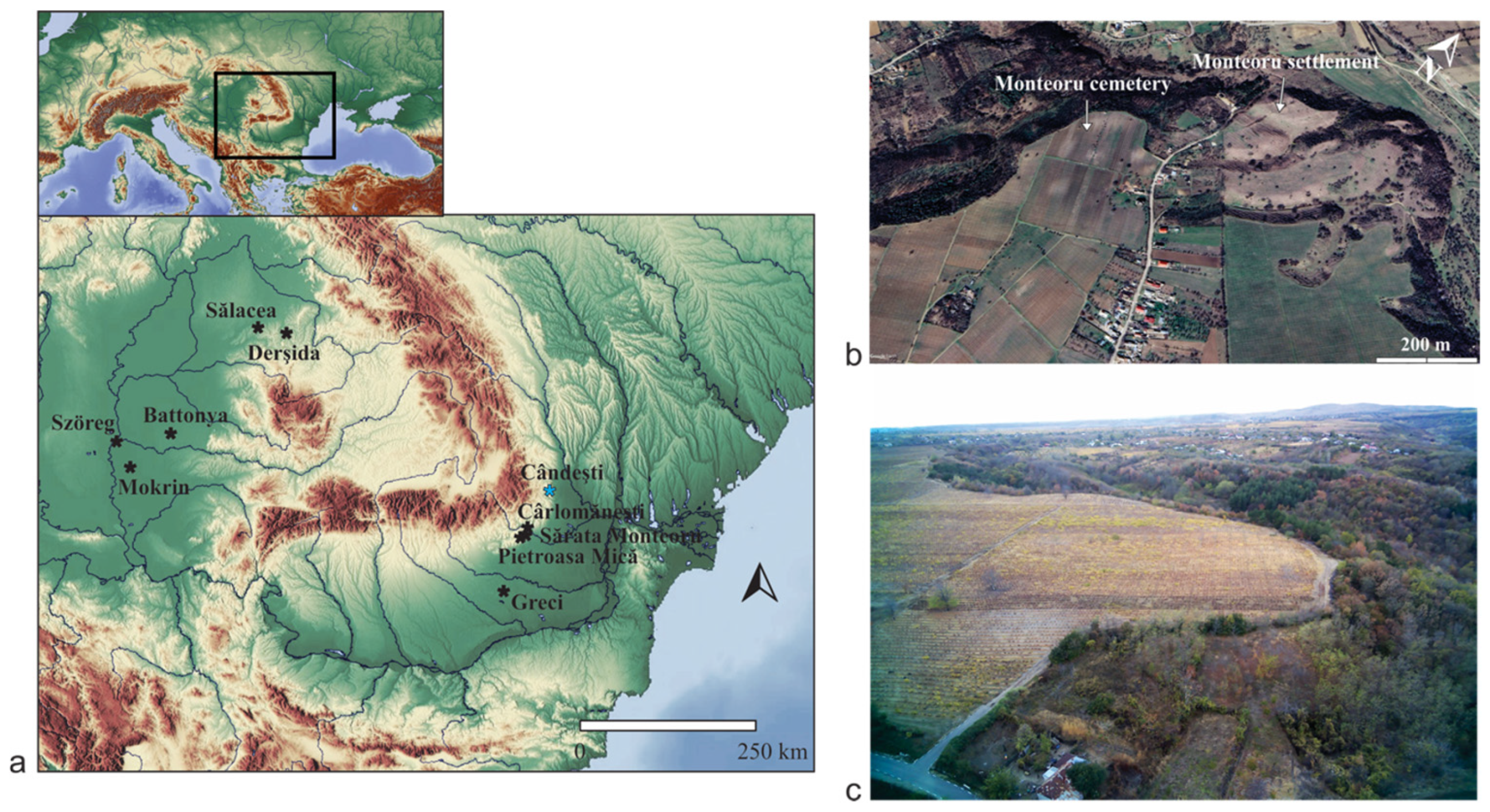
The necropolis associated with the Bronze Age settlement at Cândești (Eastern Romania, Vrancea County) (Figure 1) was excavated between 1968 and 1981. The cemetery was located on a wide terrace, in the proximity of two promontories that had been used only for residential habitation during the Bronze Age. The results of the archaeological investigations at Cândești have not been extensively published; a small number of studies though offer partial insights into the complexity of the funerary practices documented [13,14,15,16]. The number of graves excavated is considerable, approximately 800, making Cândești the largest Bronze Age necropolis identified so far in Romania. Except for a few graves assigned to later periods and some with uncertain cultural attribution, most of them are associated with the Monteoru culture, spanning from the early Ic3 to the final phase, Monteoru IIb. Most of the graves represent inhumations, although cremation burials are also present. The latter do not exceed 8% of the total number of graves in the Monteoru Ic3–Ia stages, yet their number increases in the later phases, Monteoru IIa–IIb [14,15,17]. No radiocarbon dates are available. However, 14C from other settlements and cemeteries indicate a lengthy presence of the Monteoru pottery styles in the area of the Subcarpathian Bend, ranging from the end of the 3rd millennium to the third quarter of the 2nd millennium BC [17,18].
Figure 1.
(a) Map showing the location of Cândești and other Bronze Age sites mentioned in the text (base map: https://maps-for-free.com) (accessed on 5 January 2026); (b) aerial photograph showing the area occupied by the Monteoru communities at Cândești and the location of the Monteoru cemetery (satellite image: Google Earth); (c) view from the east of the terrace where the Monteoru cemetery was located (photo by M. Stănescu).
In the early Ic3–Ic2 phases, cremated remains were placed in pits covered with a small vessel, while in the later phases, ashes and burnt bones were deposited in vessels topped with a lid or a dish, and sometimes with a small stone slab. In the case of inhumation graves, the deceased were placed in a crouched position, mainly on the left side, and less frequently on the right, with their heads facing west primarily. In the earliest phase, burial pits were either simple—circular (most commonly), oval, or rectangular—or displayed a niche, often covered with a large stone slab. Other graves (fewer in number) had walls lined with stone slabs and were covered with massive conglomerate slabs (cists). Some of the earliest graves were topped either by small mounds of stones or a massive slab of calcareous conglomerate, but most of the graves had no stone structures on the surface. However, several remarkable surface structures also belong to this early period: seven large rings, with diameters ranging from 3.50 to 8.50 m, formed of large parallelepiped stones, shaped to give them a regular appearance. These impressive stone circles formed the outer layout of a single tomb or several tombs [14,15,16].
The buried individual usually had a vessel with offerings. In addition, there is a significant presence in the graves from phase Ic3 and, more rarely, from phase Ic2 of objects such as bone buckles and ornaments (pendants and beads) made from gastropod and bivalve shells, as well as stone axes. Copper/bronze objects include small, tanged daggers, flat chisels, and also circular bracelets joined at the ends or overlapping, and hair rings, among others. Gold hair rings were also present as grave goods, but in small numbers. It is noteworthy that the early-phase graves with numerous grave goods were located in the central area of the terrace, where six large stone rings were also found [14,15,16].
Marilena Florescu, who directed the investigation of the necropolis, noted [14] that the necklace under study came from an inhumation grave of the Monteoru phase Ic3 (unfortunately, no anthropological data is available for this grave or any other Bronze Age graves in this cemetery). Such an assertion was most likely based on the presence of a vessel in the grave. Florescu also noted that the adornment originated from a grave in the central area of the terrace, which yielded the most elaborate and rich graves from phase Ic3 [15,16].
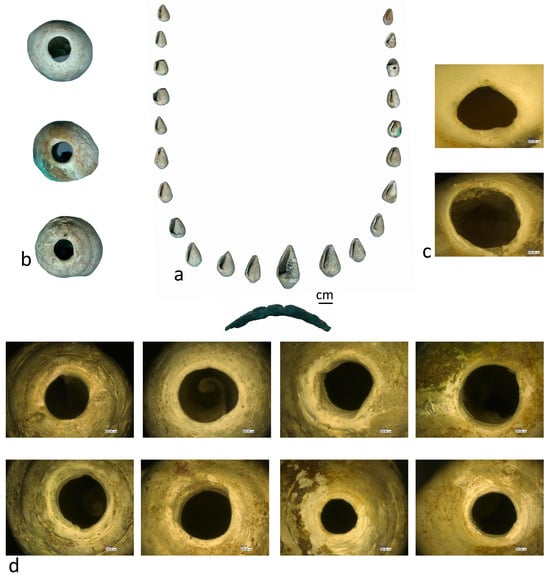
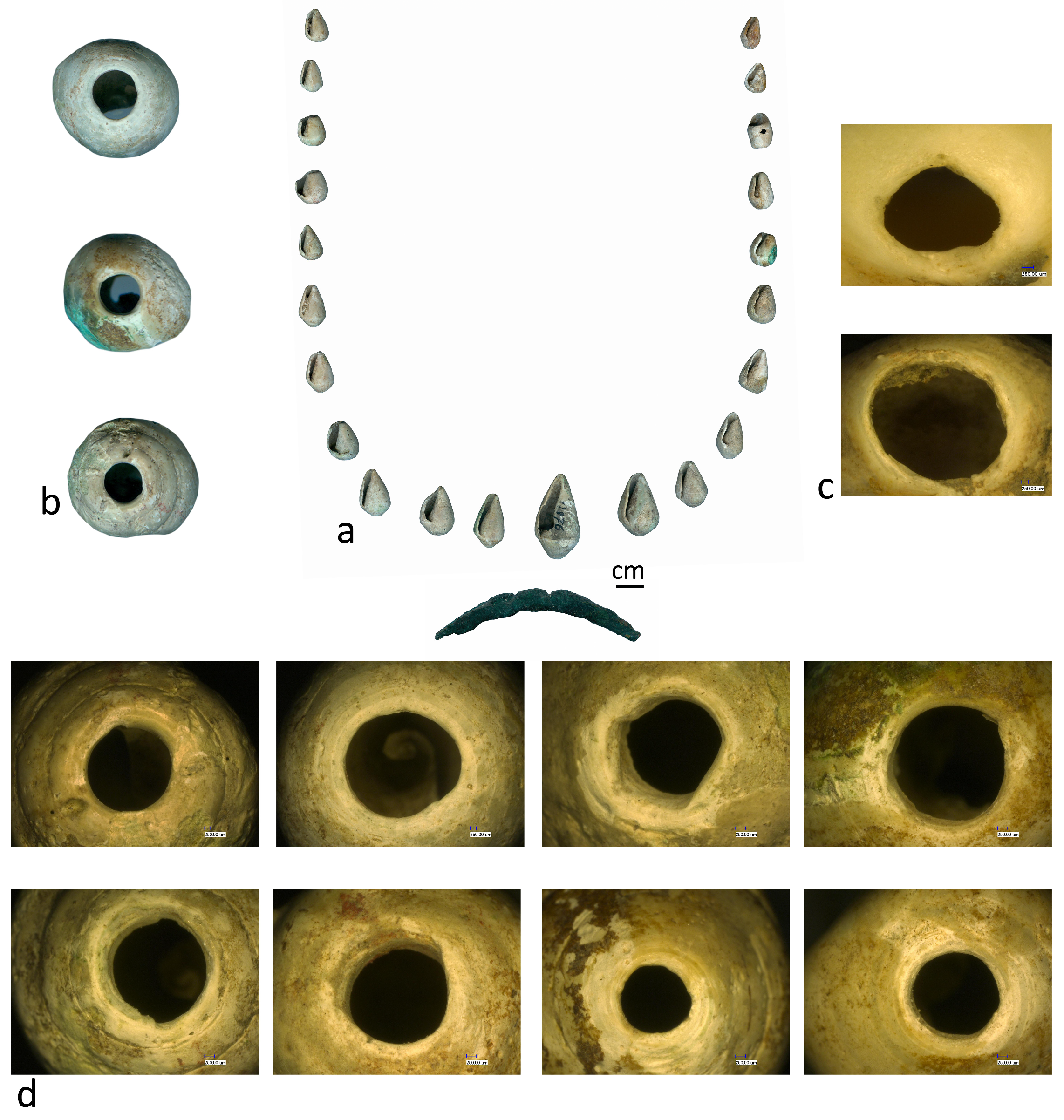
The necklace consists of 22 perforated gastropod shells and a metal pendant (Figure 2a), identified in previous publications as a bronze pendant. Mircea Petrescu-Dîmboviţa, in a volume published more than 25 years after the discovery of the tomb with the necklace, alleges the number of the tomb was no. 171 and mentions also a bracelet with a circular section and overlapping ends among the grave goods [19]. No vessel was mentioned among the latter, nor was the association of the tomb to the Monteoru Ic3 phase. On the other hand, according to the inventory register of the Vrancea Museum, the necklace originated from tomb 176, along with a two-handled cup decorated in the Monteoru Ic3 style, two bracelets, a possible tanged dagger, a sickle, and several fragments of an unidentified copper or bronze object. The unusual presence of the sickle as a grave offering might raise questions regarding the accuracy of the data; however, it is certainly not impossible. Notably, all items catalogued as grave goods, according to the register, are contemporaneous with the vessel. However, given the limited and contradictory data available about this tomb, we will only consider as certain the initial information provided by the author of the research: the discovery of a necklace made of shells and a metal pendant in a burial belonging to an early phase of the Monteoru culture (Monteoru Ic3) [14,15,16]. The possible presence of a vessel in the tomb, which could have been the basis for this chronological attribution, should also be taken into account.
Figure 2.
(a) The necklace from the Cândești necropolis; (b) details of the perforated shells from the necklace; (c) details of natural perforations present on shells recovered from thanatocoenoses; (d) details of perforations present on archaeological specimens.
Radiocarbon dates from contexts with Monteoru Ic3 pottery (there are 14 radiocarbon dates from Monteoru Ic3 contexts: 12 from the cemetery at Cârlomǎnești and one each from the settlements at Sărata Monteoru and Pietroasa Mică [17,18]) indicate the period of 2200 to 1850 BC as the most likely timeframe for the development of this cultural phase.
2.2. Methods
2.2.1. Malacological Identification
Our detailed analysis will focus on the shells that constituted elements of a composite adornment. To accurately characterize this type of artifact, several observations are necessary. Obviously, past peoples did not use the same classification systems as modern specialists. However, understanding the biotope (implicitly the origin—local or allochthonous) and the frequency of species can provide valuable insights into their economic and symbolic significance. In our investigation, taxonomic identification was performed using macroscopic criteria. Key features included the geometric shape, the total number of whorls, and the characteristics of the aperture, all of which are critical for precise identification. The metrics considered were the height and maximum diameter of the shells, as well as the size of perforations [20].
Shells were identified to the highest taxonomic level possible, usually to genus or species, by established identification keys and relevant scientific literature [21,22,23]. This methodical approach ensures a reliable classification that considers not only the physical attributes of the shells but also their contextual significance within the archaeological record.
2.2.2. Taphonomic Screening
Our primary aim was to accurately identify and differentiate the taphonomic marks from those resulting from technological processing/use-wear marks. Non-anthropogenic agents are known to produce surface modifications [24] that can closely resemble those caused by human activity, thus necessitating a careful and systematic approach to avoid misinterpretation. By aggregating the data, we aimed to refine our understanding of perforation and polish patterns, enabling a more detailed characterization of marks and their potential origins—whether natural or anthropogenic.
The evaluation of the taphonomic alterations on archaeological ornaments was carried out by the macroscopic and microscopic analysis of the shells, based on protocols described in several works. The study of taphonomic attributes for each shell artefact included: identification of the source of origin—whether fresh, from fossil deposits or from thanatocoenoses (evidence for post-mortem traces—abrasion, pseudo-perforations), as well as examination of post-depositional variables—breakage, trampling, etc. Pre-depositional alterations, comprising indicators of peri- and post-mortem exposure to a marine environment (e.g., inactive beaches), include bioerosion, epizootic encrustation, sea floors with reductive conditions, surface wear and polish resulting from beach rolling, and non-repaired damage of gastropod predation, crab predation, and boring sponges. Post-depositional taphonomic alterations include organic activity (microorganisms, fungi, bacteria, insects, animals, plants), as well as the surrounding sediments, physico-chemical phenomena (e.g., decalcification processes; calcite coating), climatic and edaphic factors (weathering, thermo-alterations) [23,24,25,26,27,28,29,30,31].
2.2.3. Experimental Tests
The shells used in the experiments came from thanatocoenoses on a seashore along the Aegean Sea in Greece. In the initial phase of our study, the shells were assessed in terms of damage incurred during their time on the beach, where they were subjected to various factors such as pressure and friction from other materials present on the shoreline, repeated passage of sea waves, and microorganisms. Importantly, we also evaluated the potential formation of holes at the apex of the shells (Figure 2c). These observations have been meticulously recorded for comparison with archaeological specimens, thereby facilitating a more accurate assessment of the collection methods employed for the latter.
Based on the perforation morphology observed on the archaeological specimens, three potential manufacturing techniques were identified: abrasion, pressure drilling, and indirect percussion. To test these methods and ensure the reliability of the observations, an experimental protocol was established wherein a minimum of four shells were processed using each technique until a consistent pattern of breakage or a successful perforation was achieved. This approach allowed us to determine whether the resulting marks were consistent across all specimens subjected to the same technique and to assess the average time required for each operation. It is important to note, however, that the recorded time estimates should be considered indicative rather than absolute. Unlike prehistoric artisans, who possessed high dexterity developed through repetitive practice and intergenerational knowledge transmission, modern experimenters lack this experience which inevitably influences the efficiency of the process.
The first experimental technique used was indirect percussion, which involved the use of a flint point applied directly to the apex of the shell, with the intermediate piece being struck with a small round stone hammer. Finding a stable position for the intermediate piece at a precise point is quite challenging due to the sharpness of the apex, which lacks a supportive area. It became evident that an intermediate piece with a more robust and rounded end proved to be more efficient. Conversely, using an intermediate piece with a fine and pointed end resulted in rapid fracture, rendering it ineffective. A thorough control of the percussion force is essential; otherwise, progress is halted, as minimal splinters detach from the shell. Due to the hardness of the shell, fine splinters also break off from the intermediate piece, which lasts no more than 5 min before requiring replacement. Additionally, the intermediate piece should be longer than 5–6 cm to mitigate the risk of inadvertently striking the fingers holding it. Overall, the procedure is relatively complex, as the shell’s shape prevents it from being stabilized in a fixed position due to the lack of a flat base.
The second technique employed was perforation by pressure, which employed a flint point applied directly to the apex of the shell in a circular motion. Maintaining the flint piece at the apex is quite difficult until it is removed, at which point a small depression forms, allowing for greater stability in the process. Again, a fine tip is not useful, as it quickly wears down; instead, a thicker, more robust sharp tool is necessary. Intense pressure must be applied during the rotation of the flint piece; otherwise, the raw material fails to detach.
The third technique—abrasion—involved rubbing the apex with a strongly abrasive stone in a back-and-forth motion, periodically introducing water to the process. This type of perforation allows for the best control over the surface being perforated and the dimensions of the perforation itself. The procedure is initially more challenging until the apex is worn down, after which it becomes significantly easier. This method of perforation is also the easiest to manipulate as the shells are relatively larger than those of other gastropods, allowing for a secure grip between the fingers without necessitating a support point as required in the other two techniques.
In the subsequent phase, we conducted a detailed description of the morphology and micro-marks associated with all three types of perforations, which were then compared with our observations of the archaeological pieces. This comparison aimed to accurately identify the techniques used in the perforation of necklace elements found in the necropolis of Cândești.
In order to determine whether a comparable pattern of use-wear development could be identified among the experimentally produced specimens, a controlled wearing experiment was designed and systematically carried out. Perforated gastropod shells were strung together to form necklaces, which were subsequently worn over extended periods of time. At regular intervals throughout the duration of the experiment, each specimen was subjected to both macroscopic and microscopic examination, with the aim of documenting and evaluating the progressive development of use-wear traces at three anatomically distinct areas: the perforation, the aperture, and the apex. This methodological approach allowed for the observation of use-wear formation in real time, providing insight into the sequential stages through which use-wear patterns evolve under conditions of prolonged suspension and friction. As a result of this experimental process, a reference collection was assembled, comprising not only the physical specimens themselves, but, most importantly, an extensive photographic record of micro-wear traces. This comparative reference corpus serves as a foundational dataset for the systematic analysis and interpretation of analogous use-wear features identified on archaeological shell ornaments, thereby enabling more robust and evidence-based attributions regarding the use and function of prehistoric personal adornments.
2.2.4. Technological and Use-Wear Analysis
Perforated shells underwent a meticulous macroscopic examination to facilitate comprehensive characterization. This examination encompassed a detailed morphological description, precise measurement of dimensions, assessment of the degree of fragmentation, and evaluation of the preservation status of each specimen. Special emphasis was placed on the analysis and description of the perforations, as these represent the only modifications to the natural morphology of the shells.
Following the macroscopic analysis, the ornaments were subjected to microscopic examination utilizing a Keyence VHX-600 digital microscope (Keyence Corporation, Osaka, Japan), which allowed for magnifications ranging from 30 to 150 times. Photographs of the specimens were captured using proprietary software integrated into the VHX-600 control unit (version 3.0). During the microscopic investigation, traces on the surface of the shells were meticulously documented, with particular attention given to the distribution and intensity of polish, edge rounding, micro-topography, deformations, and the presence of functional striations.
Moreover, instances of pigment spots identified on the surfaces of the shells were rigorously recorded. This investigation aimed to describe various attributes, including color, consistency, extent, and specific localization on the shell’s surface. The analytical criteria employed for technological and functional interpretations were established based on an extensive review of the existing literature devoted to prehistoric ornaments [32,33,34,35,36,37,38,39,40,41,42].
2.2.5. Physico-Chemical Investigations
The presence of pigment spots (see also the Section 3) on some of the perforated shells led to the call for physico-chemical investigations (Fourier Transform Infrared Spectroscopy and Raman spectroscopy) to establish the origin of these pigments, the possible mixture of substances used, etc. In the case of the metal object, we turned to such investigations (X-Ray Fluorescence) to establish the type of metal from which the piece was made.
Fourier Transform Infrared Spectroscopy (FTIR)
FTIR spectra were collected using a Bruker Vertex 80 Fourier Transform Infrared spectrometer equipped with a diamond attenuated total reflectance (ATR) module (Bruker Optics Inc., Billerica, MA, USA). Measurements were performed at a spectral resolution of 0.2 cm−1 with an accuracy of 0.1% T. The spectra were acquired in transmission mode over the range of 4000–400 cm−1, averaging 32 scans, without any prior sample preparation. Data acquisition was carried out using OPUS 7.1 software, and the resulting spectra were subsequently processed using Origin Pro 2019b software.
Raman Spectroscopy
Raman spectra were acquired using a portable Xantus-2 Raman analyzer (Rigaku, Analytical Devices, Wilmington, MA, USA) equipped with dual laser excitation sources at 785 and 1064 nm, over a spectral range of 200–2000 cm−1 with a spectral resolution of 7–18 cm−1. All measurements were performed using an excitation wavelength of 1064 nm, a laser power of 100 mW, an integration time of 10,000 ms, with accumulation of five acquisitions. Measurements were performed directly on the samples, without any prior sample preparation, and the acquired data were processed using the Origin Pro 2019b software.
X-Ray Fluorescence (XRF)
The Tracer 5i portable spectrometer produced by Bruker Nano GmbH (Berlin, Germany) was used to perform the XRF analysis. The spectrometer uses as an excitation source an X-Ray tube with a rhodium anode installed behind a beryllium window. The acceleration voltage was 40 kV, and the current intensity was 4.5 µA. The penetrating depth of the excitation radiation is of the order of tens of microns. To obtain quantitative results, the incorporated software Bruker Instrument Tools (version 1.8.0.136, Alloy2 module) was used. The acquisition took place for 60 s using an eight mm diameter collimator. Since the pendant is very thin and fragile, it was not possible to remove corrosion products from a small area of the surface to perform XRF analysis. Aware of the limitations of patina analysis [43,44], we aimed to acquire the primary identification of the metal used.
3. Results
3.1. Archaeological Samples
The principal diagnostic elements employed in establishing the taxonomy of shells, other than their general shape, include the morphology of the whorls and apex, as well as the morphology of the aperture. Two species correspond to the conical general morphology of the analyzed perforated shells: Columbella sp. and Conus sp. In the absence of the apex area, the aperture emerged as the primary distinguishing criterion.
The outer lip of Columbella shells is characteristically inflexed (bent inward) and denticulate, exhibiting small teeth or notches along its edge. Additionally, Columbella shells typically exhibit a small size, generally reaching heights of approximately 1 to 2 cm for Columbella rustica [45], the species most frequently encountered in prehistoric archaeological contexts within our area of interest. In contrast, the aperture of Conus shells is distinctly narrow and elongated, displaying a straight morphology. The edges of the aperture run parallel for much of its length, featuring a slight notch, or sinus, near the top, known as the sutural sinus. The dimensions of Conus ventricosus can vary significantly, between 1.3 and 6.3 cm [22,23].
Based on these comparative analyses, the taxonomic classification of these shells was assigned to the family Conidae, specifically within the genus Conus. This marine gastropod is widespread across the Mediterranean Sea, typically residing in shallow waters and thriving especially in sandy and rocky substrates. The architectural design of the shell allows it to burrow into sandy environments, providing both protection and camouflage from potential predators. Currently, a single species, Conus ventricosus Gmelin, 1791, is known to inhabit the Mediterranean Sea [46].
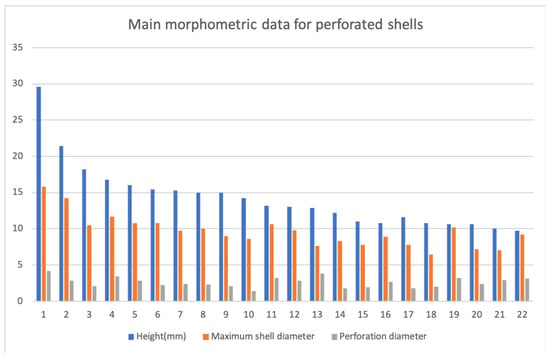
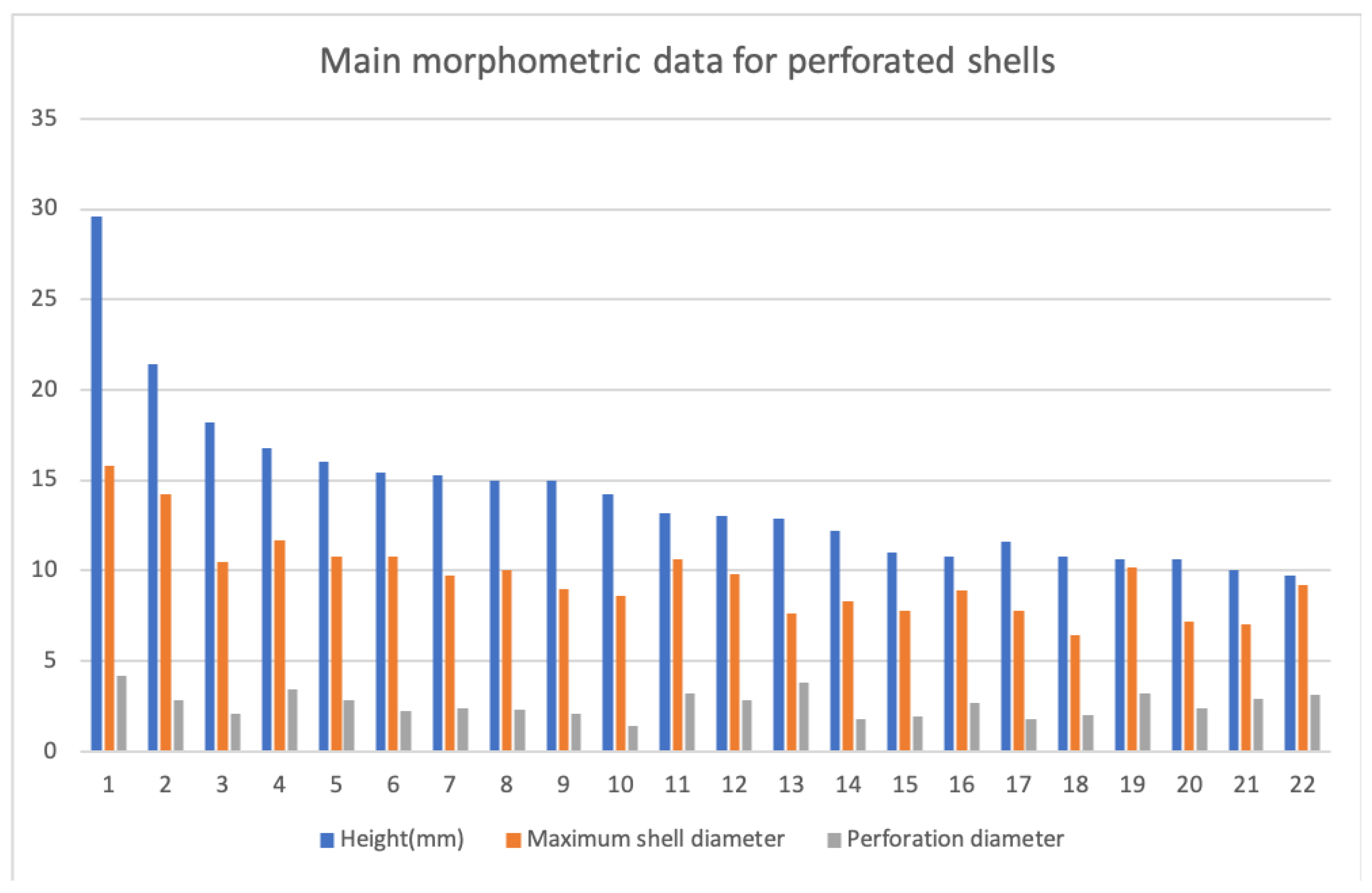
The dimensions of these shells offer insights into the species’ nutritional value. It is evident that these gastropods were not used as a food source due to their relatively small sizes, and most species of Conus are generally not recommended for consumption given their venomous nature [47]. Thus, in this case, the gathering of these shells was conducted exclusively for their use as components in ornamental adornments. In the absence of the apex, it is not possible to ascertain the original height of the shells; instead, we can only measure the height of the elements within the necklace. The morphometric coordinates of the shells that comprise the analyzed necklace reveal significant variations, with heights ranging between 2.96 and 0.9 cm (Figure 3).
Figure 3.
Main morphometric data for the perforated shells.
Notably, both the location of the perforation and the morphology itself are identical across all examined shells. The perforation occurs at the apex, resulting in its removal (Figure 2b). Characteristic features include a circular shape with the edges of the perforation displaying a regular contour, smooth and rounded walls, and lacking fractures or breakages (Figure 2d). Such a regular morphology of the perforation, devoid of specific technological marks on the contour, raises questions regarding its origins. Even if the pieces had been worn over an extended period, we would expect to observe some details of a technological nature under microscopic examination.
3.2. Experimental Perforations
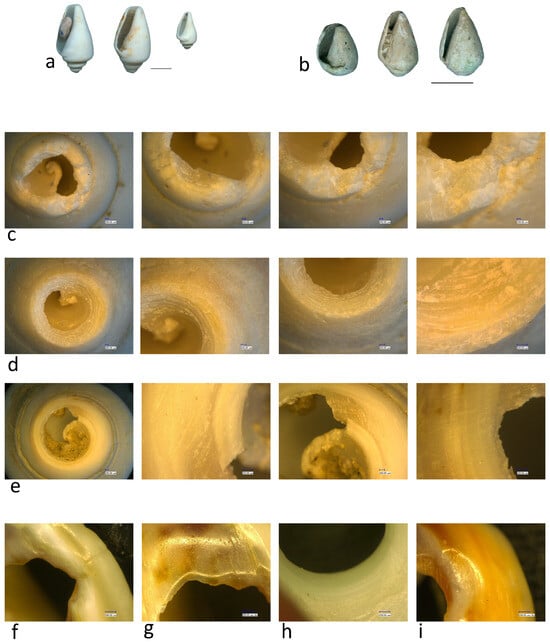
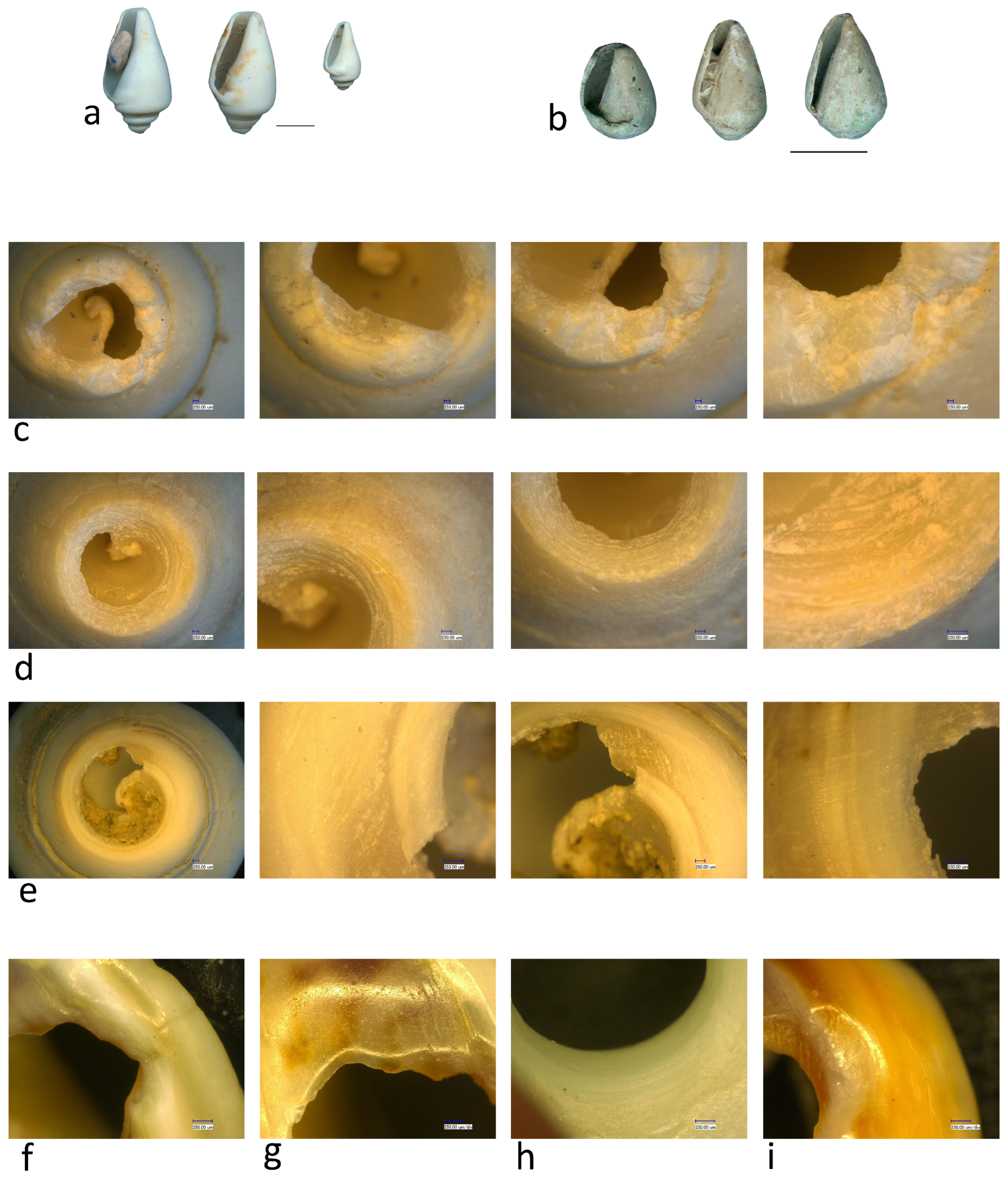
The three perforation techniques have resulted in the creation of holes with varying morphologies at the apex. In the case of indirect percussion (Figure 4c), the time required for perforation is approximately 10 min. This results in a hole characterized by a highly irregular morphology, which significantly depends on the configuration of the intermediate piece and the manner in which splinters are detached during the impact of the hammer. Visible are the imprints of repeated splinter detachments.
Figure 4.
(a) shells collected from thanatocoenoses; (b) archaeological specimens; (c) traces of perforation by indirect percussion (experimental replicas); (d) traces of perforation by rotational pressure (experimental replicas); (e) traces of perforation by abrasion (experimental replicas); (f,g) appearance of perforations made by indirect percussion after six months of use (experimental pieces); (h) appearance of perforations made by rotation after six months of use (experimental piece); (i) appearance of perforations made by abrasion after six months of use (experimental piece).
In the scenario of pressure application (Figure 4d), the time required is around 20 min. The resulting perforation manifests as a depression, exhibiting a uniformly circular contour. The walls present a concave morphology, and distinct regular rotational striations are evident.
The time required for the application of abrasion (Figure 4e) is more prolonged, estimated at approximately 35 min. This process yields a flattened area, which continuously increases in surface as the drilling procedure progresses. It is characterized by fine, oblique striations. The contour of the perforation is regular; however, under microscopic examination, it is apparent that it exhibits a slightly serrated edge due to the detachment of fine particles.
Although the surfaces of the archaeological artifacts are not well-preserved, due to slight exfoliation of the outer layer and significant use-wear of the perforations compared to experimental pieces (Figure 4a), we assert that none of the tested techniques result in the creation of perforations identical to those found on archaeological items. As a result of our experiments, we can confidently state that the origin of these perforations is likely natural. The literature (see the Section 2.2) indicates that holes in shells can occur independently of predatory or human actions. In a series of experiments involving the rolling of shells, which simulate the effects of waves and tides, Gorzelak et al. [27] demonstrated that the abrasive action of rolling shells combined with sand and pebbles can lead to the formation of holes in predictable locations that may resemble those created by predators. Thus, it is plausible that abrasion can mimic human actions as well.
Consequently, we suppose that the observed hole resulted from the erosion of the apex, implying that the shells were collected from thanatocoenoses. Additional evidence suggests that the specimens were not collected alive but rather retrieved from the beach (Figure 4b). Two shells contain trapped fragments of pebbles from the shoreline within its aperture. Moreover, several pieces exhibit small perforations on their surfaces, likely generated either by predators or the process of abrasion.
3.3. Pigment Spot Analysis
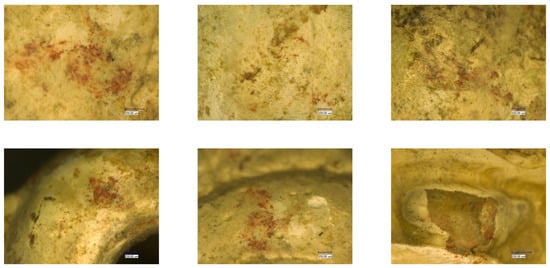
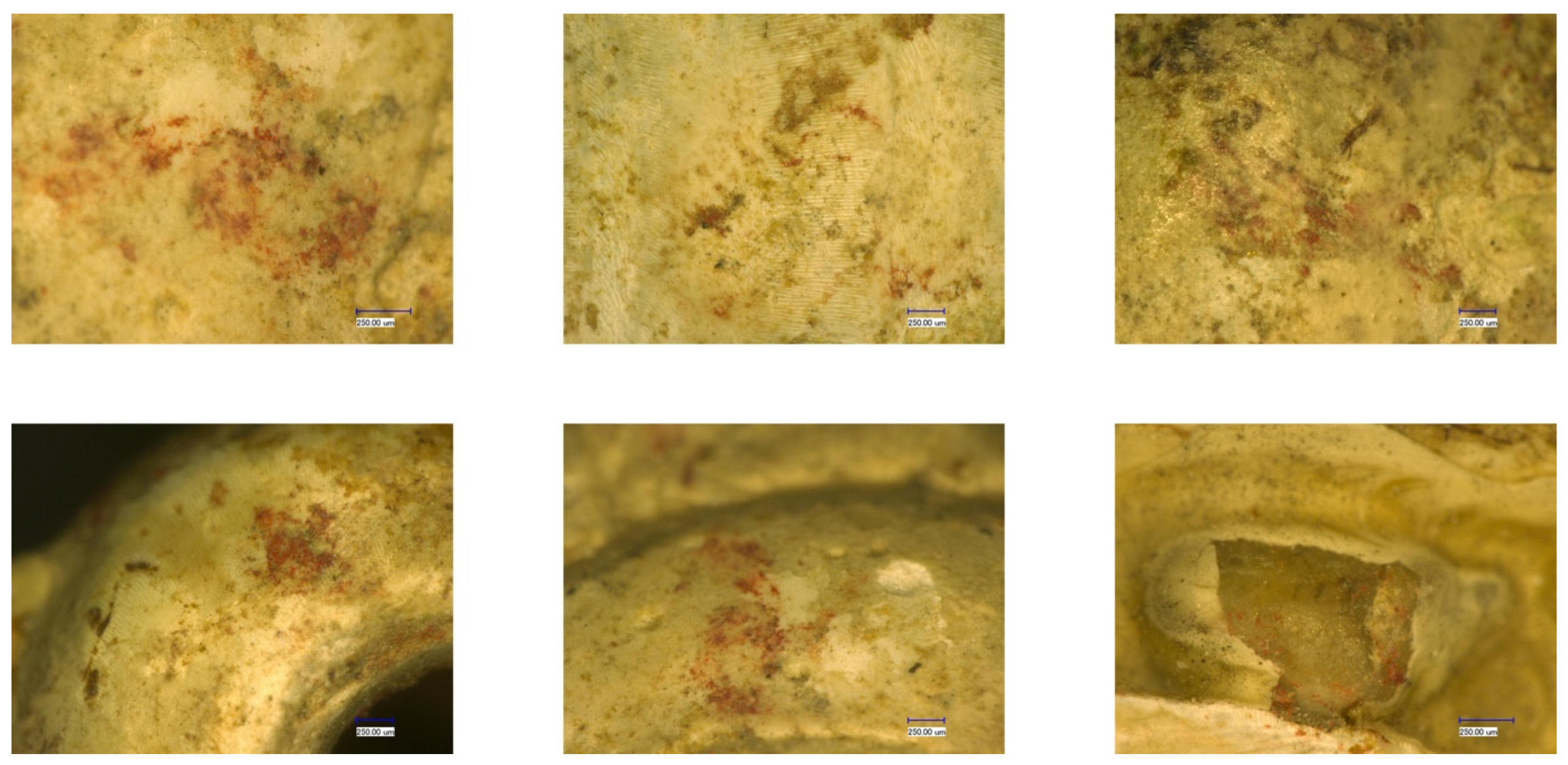
An additional detail that caught our attention during the microscopic examination is the presence of red pigment spots that were difficult to identify macroscopically. It is highly probable that this pigment was originally present on all the specimens, albeit now worn away over time. Our investigation enabled us to identify pigments on only seven shells (Figure 5).
Figure 5.
Red pigment stains on the surface of the perforated shells.
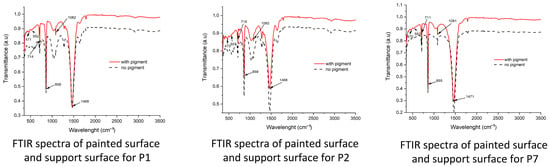
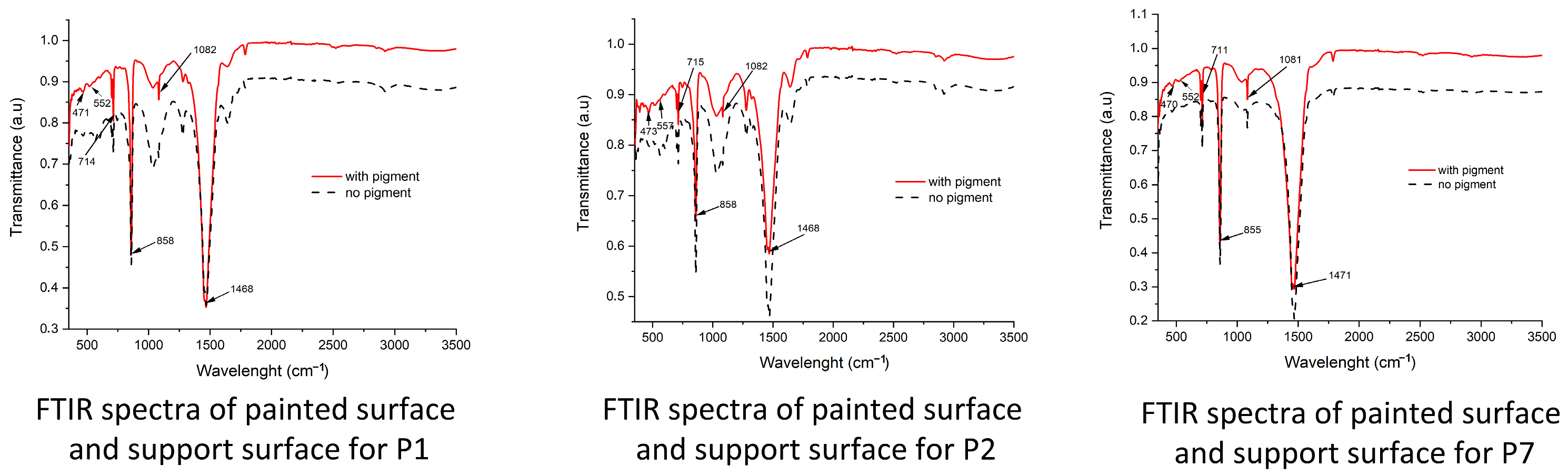
The analyses carried out by Fourier-transform infrared spectroscopy (FTIR) and Raman spectroscopy yielded important data about the composition of the investigated artifacts. The analysis of the FTIR spectra obtained on three shell samples highlights the presence of bands specific to iron oxides (Fe–O and Fe–O–H) exclusively in the pigmented areas, with characteristic maxima around 470–480 cm−1 (hematite) and 550–560 cm−1 (goethite) (Figure 6).
Figure 6.
FTIR spectra of investigated samples.
FTIR spectroscopy was carried out on three shell samples (P1, P2, and P7) to examine the chemical differences between pigmented and unpigmented surface areas. The resulting spectra show a distinct compositional contrast between these two areas. While several absorption bands related to iron-based compounds are evident in the pigmented areas, such features are absent from the unpigmented regions [48].
In particular, spectra collected from the red-colored surfaces exhibit bands associated with iron–oxygen (Fe–O) and iron–oxygen–hydroxyl (Fe–O–H) vibrations. Pronounced maxima occur at approximately 470–480 cm−1 and 550–560 cm−1, which could be assigned to hematite and goethite, respectively [49]. These spectral characteristics provide clear evidence for the presence of iron oxides and iron oxyhydroxides within the pigment applied to the shell surfaces.
The exclusive occurrence of hematite- and goethite-related bands within the pigmented areas supports the interpretation of a deliberate coloring process, most likely involving an iron-rich mineral pigment. These results are in good agreement with the Raman spectroscopic data, which independently confirm the presence of multiple iron oxide phases within the pigment. Overall, the FTIR data demonstrates that the coloration of the shell ornaments is chemically distinct from the shell substrate and can be attributed to an externally applied iron-based pigment.
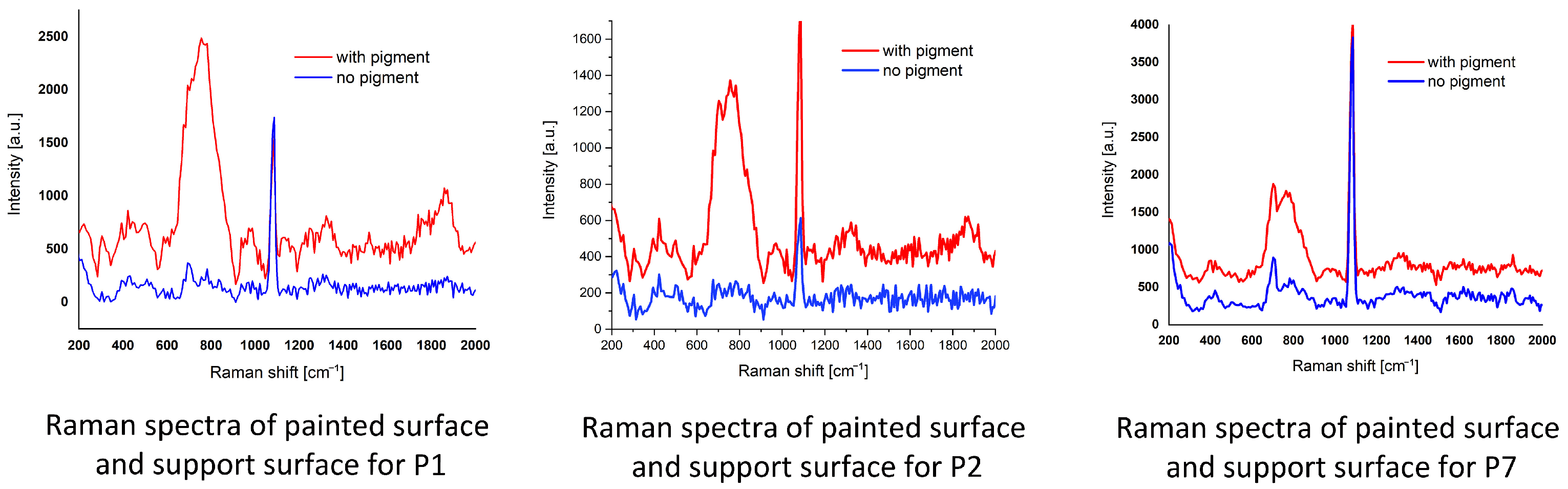
The Raman spectrum shows calcite bands that are attenuated by the presence of bands corresponding to two iron oxides: hematite (α-Fe2O3), responsible for the red color, and goethite (α-FeOOH), responsible for the yellow color (Figure 7). The final result is a mixture of these pigments, producing an overall orange hue. Black-colored inclusions were also identified, exhibiting the characteristic spectrum of “carbon black” (soot black)—a category with potentially varied origins, for example, charcoal. Therefore, we raise the possibility of a mixture of pigments with other materials to create a paste that was applied to the fastening thread.
Figure 7.
Raman spectra of the investigated samples.
Raman spectroscopic analysis provided detailed insights into the composition and distribution of the pigments observed on the shell ornaments. The spectra indicate that the iron-rich red matrix is primarily composed of lepidocrocite (γ-FeOOH), an iron oxyhydroxide commonly associated with ochre-based pigments. In addition to lepidocrocite, Raman analyses performed on several red particles revealed characteristic spectral features of hematite (α-Fe2O3), confirming the presence of multiple iron oxide phases within the pigment assemblage.
The Raman spectra obtained from translucent white particles within the samples are dominated by bands characteristic of calcite, consistent with the mineralogical composition of the shell substrate. In contrast, most of the black inclusions identified in the pigmented areas exhibit spectral signatures typical of carbon black, a material that may derive from various combustion-related sources, such as charcoal, lamp black, or burnt organic matter. Alongside these carbonaceous phases, isolated occurrences of hematite and pyrite (FeS2) were also detected, indicating a heterogeneous pigment mixture [50].
The red–yellow pigment is restricted to the whitish external surface of the shells, where it displays a discontinuous distribution, locally filling grooves and spreading irregularly over adjacent areas. Raman spectra collected from the inner, naturally reddish surface of the shells show prominent calcite bands at approximately 285, 714, and 1088 cm−1, which are partially attenuated by bands attributed to intrinsic shell pigments, most likely intrinsic polyenic shell pigments observed around 1019, 1134, and 1301 cm−1. The absence or weakness of the C=C stretching band near 1500–1530 cm−1 is consistent with near-infrared (1064 nm) excitation, where resonance enhancement is suppressed [51].
The Raman data further indicate the simultaneous presence of two iron oxides: hematite, responsible for red coloration, with characteristic bands at approximately 290, 408, 506, 608, and 642 cm−1, and goethite (α-FeOOH), responsible for yellow hues, with bands near 215, 272, 386, and 588 cm−1. The coexistence of these phases results in an overall orange-toned appearance of the pigment. Notably, no Raman bands were detected around 660 cm−1, excluding the presence of magnetite, while the dominance of hematite—recognized as the most stable iron oxide—suggests deliberate selection or processing of the pigment material.
3.4. Metal Pendant
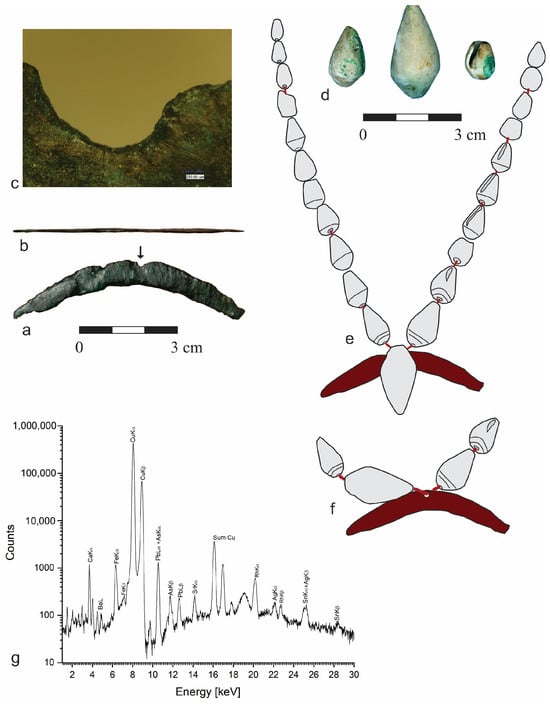
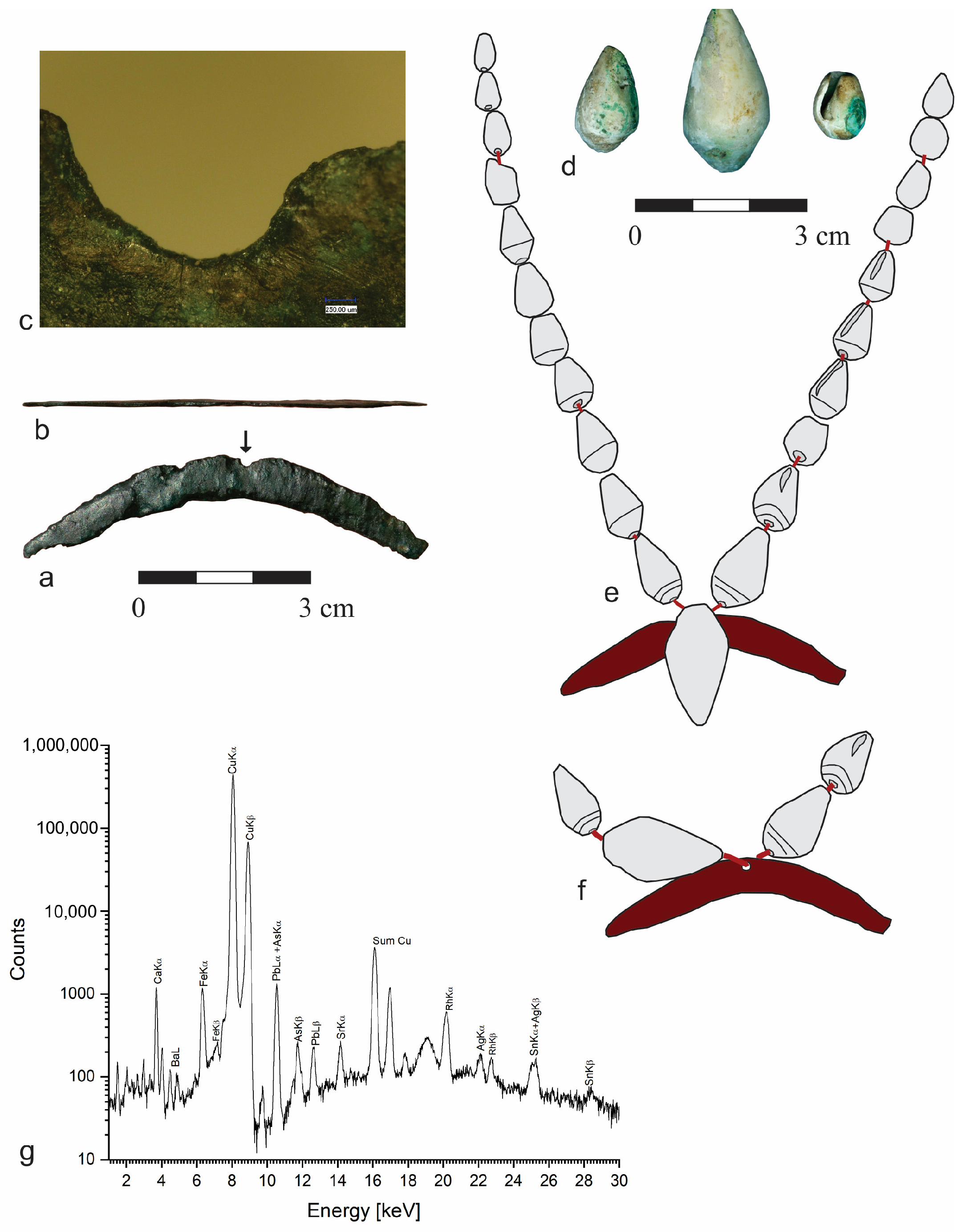
The metal artifact (Figure 8a) has been included in this analysis because, according to the excavator, it constituted a component of a necklace, alongside the perforated shells. In the first publications about the necklace, M. Florescu suggested that the shells were arranged in a certain order, with the larger ones in the middle of the string and the smaller ones towards the ends (Figure 8e). The metal pendant was placed in the middle, next to the largest shell [14,15,16]. It is likely that this reconstruction of the necklace was based on observations made in the field when the tomb was uncovered. Regrettably, no photographs of the situation in the field have been published. Some of the shells that were in contact with the pendant still bear traces of green corrosion. Among these is the larger shell, but it was most likely attached to the thread in the same way as the other shells (Figure 8d,f).
Figure 8.
(a) copper pendant; (b) upper edge of the pendant; (c) possible perforation; (d). shells with traces of green corrosion; (e) necklace—reconstruction, redrawn based on old publications; (f) the most likely way to attach the large shell and pendant; (g) X-Ray Fluorescence analysis spectra.
Unfortunately, the pendant has not survived in its entirety; the piece is notably thin and exhibits significant corrosion at its edges (Figure 8a,b). The pendant itself is crescent-shaped, flat, and has two holes along the convex edge. It has a length of 7.1 cm, a maximum width of 0.8 cm, and a thickness of 0.1 cm. One of these holes is more prominently marked (Figure 8c) and is likely intended to support a thread or cord. It is probable that a perforation existed at this location; however, due to the thinness of the wall at that point, it has succumbed to corrosion and it subsequently fractured. The two holes were made by drilling and then polished, with the polishing marks visible on the edge of the drill hole, which is better preserved, perpendicular to it. It is unclear whether the two perforations functioned simultaneously or whether one perforation was made after the other broke. The latter hypothesis is more likely, given that similar contemporary artifacts had only one perforation. It is very likely that the pendant was repaired and continued to be used. There are other cases of Bronze Age objects repaired and reused, e.g., ref. [52]. The surface of the pendant is green in color. Initially, this artifact was published as a bronze pendant; however, the XRF analysis (Figure 8g) indicated that the material in question is, in fact, copper. The analysis of the corroded surface of the object indicates the presence of copper in a proportion of 98.73%, with other elements also detected, but in small quantities, such as arsenic (0.47%), lead (0.18%) and zinc (0.22%).
4. Discussion
4.1. The Journey of the Necklace: From the Seashore to the Funeral Offering
Our experimental studies rigorously compared three common perforation techniques—indirect percussion, pressure, and abrasion—with the morphologies observed at the archaeological shells. The results unequivocally demonstrate that none of the tested human-induced perforation methods produced perforations identical to those on the archaeological specimens. Indirect percussion yielded highly irregular perforations, dependent on the intermediate tool and splinter detachment dynamics. Pressure drilling created a concave morphology with distinct rotational striations. Abrasion resulted in a flattened area with fine, oblique striations and a slightly serrated contour. In contrast, the archaeological perforations exhibit a uniformly circular shape, smoothed walls, and the absence of technological marks, even when accounting for advanced use-wear. Putting these observations together leads us to conclude that the perforations are of natural origin. This aligns with literature demonstrating that in modern assemblages, shell damage is mainly limited to structurally weaker areas, with the thin tip being the most affected [31].
A topic for reflection would be whether long-term use could not have generated the progressive rounding and smoothing of the irregular walls around the perforations, possibly diminishing or hiding marks of technical processing. This is a pertinent question because there are cases mentioned in the literature that record that on the perforations of long-used pieces, technological traces are no longer visible, e.g., ref. [53], the walls were flattened, and the perforation acquired a perfectly circular morphology. Our initial aim, in fact, was to evaluate the perforation technique under the premise of anthropogenic origin; the experimental program was designed to identify specific perforation methods. However, when these experimental results are weighed against the archaeological perforations, they align more closely with natural origins. The subsequent discussion analyzes each perforation technique in turn, starting from observations made on experimental shells perforated and worn over 6 months. Indirect percussion (Figure 4f,g): regardless of necklace use-wear, perforations produced by indirect percussion rarely achieve the uniformly circular morphology observed for the archaeological specimens. Even if the wall had been rounded through prolonged use, the resulting impact scars would likely leave a jagged perimeter or a traceable signature. Our experiments with gastropod shells [54] show that such marks tend to persist as an irregular, laced outline rather than a perfectly smooth circle. With pressure drilling by rotation (Figure 4h), while rotational marks may diminish with use, the characteristic concavity associated with pressure drilling tends to be preserved and even deepen, but this is not present on archaeological items. With abrasion (Figure 4i), although extended use could, in principle, flatten the interior contour and yield a circular outline, the periphery of the perforation (particularly the surrounding striations and flattened area) remains detectable in our experimental series, and such features are not present on the archaeological specimens.
The discrimination between natural and technologically modified shells within an archaeological assemblage is of crucial importance for it enriches our understanding not only of past raw material utilization but also of the selective criteria and collection strategies employed by prehistoric communities. When artifacts, such as shells, were gathered with pre-existing natural perforations and subsequently utilized as adornments, the act of creating the perforation itself would not have conveyed symbolic or ritualistic meaning. Conversely, the very presence of naturally modified shells within archaeological contexts implies a deliberate and intentional behavior of human groups. Consequently, their integration into an assemblage cannot be considered in isolation from the environment of their acquisition. The entire trajectory, from a natural state to a culturally impregnated artifact, represents a continuous and intricate process of transformation. These objects undergo a complex journey of recontextualization and reinterpretation, transitioning from natural elements into artifacts with social meaning within a specific human community. This underscores the necessity of analyzing their complete life, from procurement to final deposition, to fully appreciate the cultural choices and adaptations of prehistoric populations.
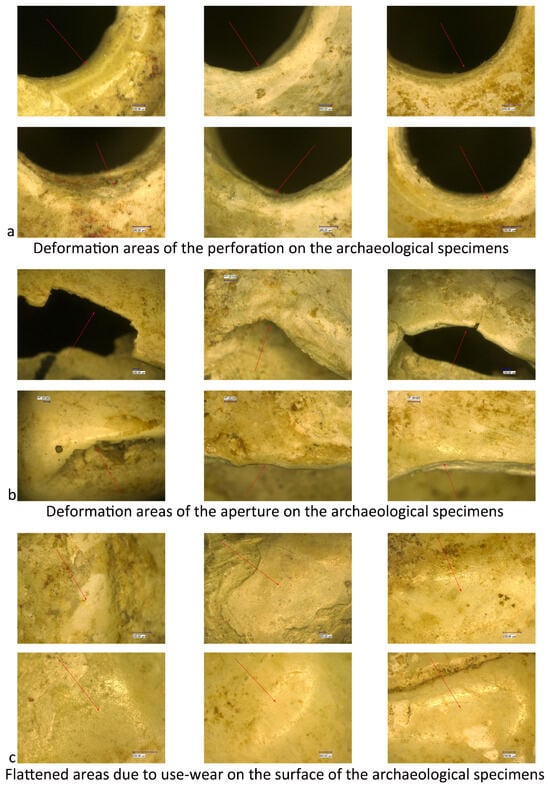
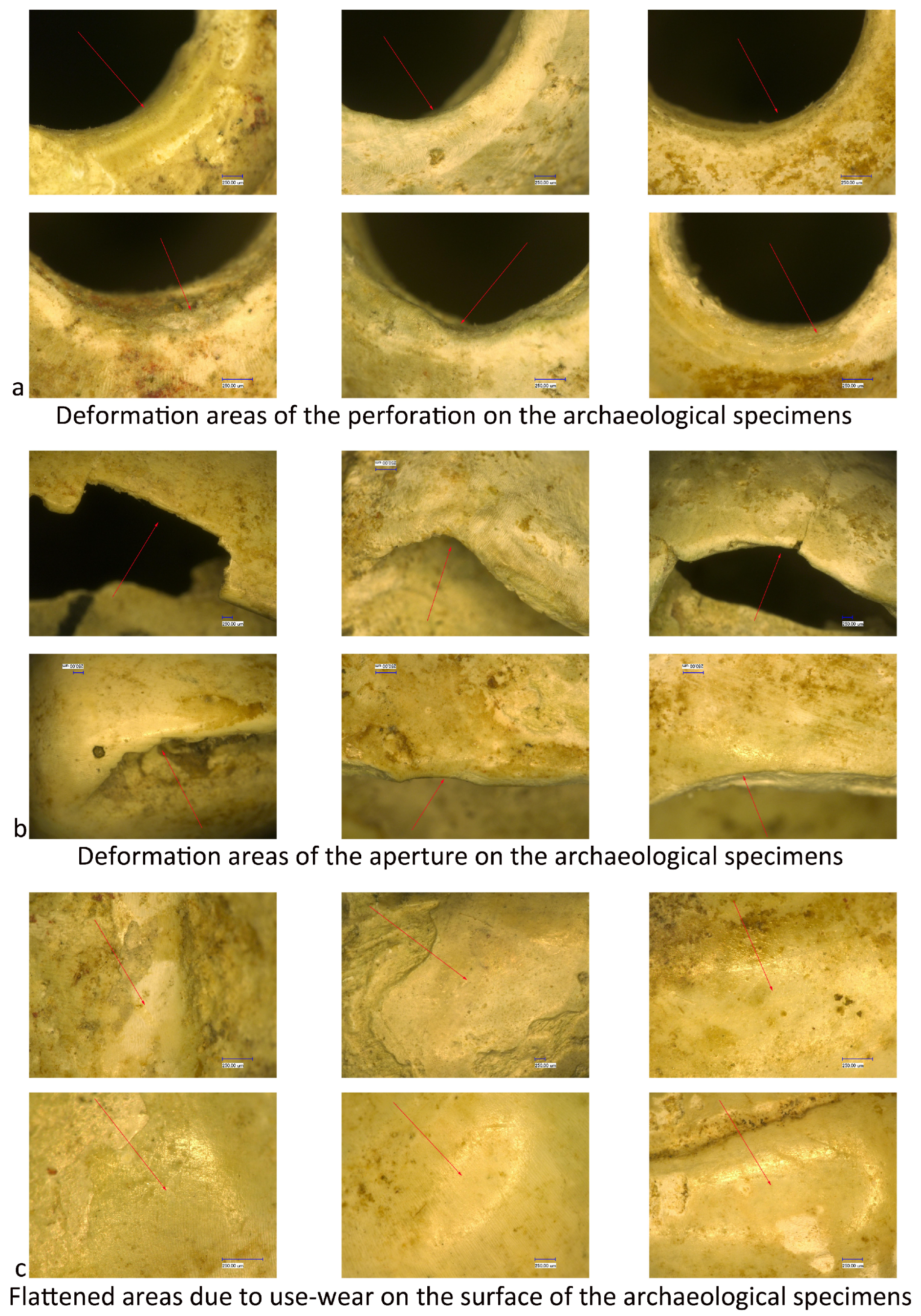
The use-wear patterns on the shells provide insights into their prolonged use as personal adornments prior to their deposition as grave goods. The pressure of a thread or the suspension of several shells striking each other can leave discriminatory marks that provide clues to the wear of the necklace. And indeed, microscopic examination revealed three distinct areas of use-wear. The first area develops at the perforation. The latter is deformed, with the appearance of a small depression, and the direction of the deformation may indicate the type of suspension—the area through which the thread was passed through the perforation and opening. The shell structure is affected in the deformation area, the wall having a slight polish, indicating the friction and pressure points of the thread (Figure 9a). The second area of use-wear is consistently located around the aperture of the shell. The aperture itself presents varied morphological alterations, ranging from pronounced rectangular fractures, indicative of significant mechanical stress, to more subtle, less marked concavities. Within the modified area of the aperture’s morphology, the shell wall appears flattened or compacted, and also exhibits a macroscopic polish (Figure 9b). This specific pattern of use-wear is most plausibly attributed to the dynamic movement of the thread against the shell’s edge, thereby suggesting a mobile attachment within a string or necklace rather than a rigid, fixed mounting. A third, distinct area of use-wear is localized in the immediate vicinity of the aperture, extending towards the apex where the shell’s curvature is more pronounced. This area is characterized by a small, flattened surface that, under macroscopic examination, displays a noticeable polish along with fine, chaotically arranged striations (Figure 9c). This particular use-wear pattern suggests sustained friction against the wearer’s skin or garments, further contributing to the evidence of the artifact’s prolonged use as a personal adornment.
Figure 9.
Use-wear marks present on the surface of the shells: (a) at the perforation level; (b) at the aperture level; (c) in the area between the aperture and the apex (red arrows indicate areas of deformation and use-wear, as cited in the text).
The pigment traces are not uniformly distributed across the entire surface of the shells; rather, they appear in specific areas, with a repeating pattern observed at all shells from which we were able to detect pigment. Specifically, the spots of pigment are localized around the perforation, in the area of perforation deformation, at the aperture and within the interior of the shell itself. This consistent pattern implies that it was not the shells that were colored red, but the attachment thread was colored red. The physico-chemical analysis of red pigment traces, difficult to discern macroscopically, offers another layer of interpretation. Raman spectroscopy demonstrates that the coloration of the shell ornaments derives from a complex mixture of iron oxides and oxyhydroxides, combined with minor carbonaceous and mineral inclusions. These results strongly support the interpretation of intentional pigment application and intentional aesthetic or symbolic aspect of the necklace’s construction. Furthermore, within the framework of adornment experiments published by one of the authors [55], a vegetal thread was coated with a pasty compound consisting of ocher, charcoal, and animal fat. The experimental pieces were strung using this thread and worn for a period of one month. Upon removal of the thread, traces of the paste remained impregnated specifically within the suspension area. Continuing the experiment over several months, it was observed that the paste dried out quite rapidly, functioning almost as an adhesive.
4.2. Broader Context: Comparative Archaeological Evidence
The presence of Conus shells from the Mediterranean in a Bronze Age burial in Romania is indicative of the existence of long-distance exchange networks and the value placed on exotic materials. Such marine gastropods are not endemic to the region and must have been acquired through trade or direct collection from distant shores. The use of Conus shells as adornments has a long history, with some of the earliest examples of naturally perforated shells found in a child’s tomb at Border Cave, South Africa, dating back approximately 74,000 years ago [29]. Similar naturally perforated Conus shells have been documented in Upper Paleolithic contexts at Ksar Akil, Üçagızlı Cave, and Hayonim Cave in the Near East [28,47,56]. In Upper Paleolithic Europe, processed Conus shells are also attested [57,58]. During the Neolithic, Conus shells were discovered in settlements and burials in Greece, becoming more numerous during the Bronze Age [59,60]. Conus shells were mainly found in funerary contexts in the Neolithic and Bronze Age on the eastern and southeastern coasts of the Mediterranean [47,61,62]. In Central European Bronze Age contexts [63,64,65] Columbella shells occur more frequently, so the deliberate selection of Conus sp. for this necklace emphasizes its uniqueness and potential significance. In Romania, Bronze Age contexts have yielded few Conus shells, with notable occurrences at Derșida (Wietenberg culture) and Sălacea (Otomani culture) [66,67].
The metal pendant, a crescent-shaped copper artifact, also contributes to the necklace’s contextualization. Similar copper pendants were found in other contemporary contexts, such as Greci, Ilfov County, near Bucharest (Tei culture—Cățelu Nou phase, contemporaneous with Monteoru Ic3 [68,69]), and in the Periam-Pecica culture (also called the Mureş or Maros culture) in the Mureș-Tisa confluence area (e.g., in the cemeteries at Mokrin, Szöreg, Battonya [70,71,72,73,74]). One of the graves at Mokrin (grave 104) containing similar pendants crescent-shaped artifacts was radiocarbon dated, indicating the time range of 1932–1750 calBC, 95.4% confidence (BRAMS-5049: 3521 ± 30 BP) [70,75]. Two graves with pendants such metal ornaments as grave goods from the Battonya cemetery yielded similar dates (grave 110: 2014–1773 calBC, 95.4% confidence, OxA-31080: 3554 ± 29 BP; grave 105: 1900–1740 calBC, 93.4% confidence, OxA-31079: 3496 ± 31 BP) [72,76]. Of interest is the significant presence of Columbella shells in the graves of the Periam-Pecica culture, including in association with pendants crescent-shaped ornaments similar to the one from Cândeşti [63,64,70].
4.3. Interpreting the Necklace: Symbolism and Cultural Significance
The combination of naturally perforated exotic shells and a metal pendant, all showing signs of prolonged use, offers a compelling narrative about the necklace’s life and its symbolic resonance within the community. The very act of collecting shells from thanatocoenoses, already modified by natural processes, implies a deliberate choice of the prehistoric peoples. Deciphering the motivation behind collecting such “beach-found” items is challenging. Can we consider the selection, transportation, transformation, and use of these objects as part of a deliberate, shared, and transmitted non-utilitarian behavior, as suggested by Jerardino and Marean [77]? Were these naturally modified forms considered more aesthetically pleasing, perhaps evoking a “tangible texture” or representing an appreciated wear that transcended a human lifespan? Or did the inherent beauty and smoothness of the Conus shells themselves, regardless of the wear, make them desirable for adornments?
The fact that these shells were not directly modified by human perforation, but rather selected for their naturally formed openings, implies that the symbolic or ritualistic significance was not derived from the act of creation, but from the inherent qualities and journey of the shells themselves. This practice highlights a cultural appreciation for materials shaped by natural forces. Moreover, the presence of shells collected from the seashores, at the interface of land and sea, could have held a symbolic meaning linking two distinct environments [23]. This dual origin might have assigned the necklace with a special significance, representing a connection between the terrestrial and maritime worlds, or perhaps life and death, given their collection from thanatocoenoses.
Another critical aspect contributing to the biography of these artifacts is the substantial geographic distance between their source and their final deposition. Considering the inland location of the cemetery, the presence of these marine shells implies their transport over significant distances (likely exceeding c. 800–900 km) from the nearest seashore. This long-distance journey transforms the shells from mere natural objects into exotic goods. The effort required to acquire them, likely through complex exchange networks, confers on them an additional level of prestige. However, it remains unclear whether the assemblage was acquired by a single individual or assembled collectively, and whether all beads followed an identical procurement or use trajectory. The observation that the constituent elements of the necklace exhibit the same degree of use-wear supports the interpretation that all components were worn concurrently. Their deposition in the grave suggests that the deceased or their community had access to these far-reaching networks, reinforcing the object’s role as a marker of social distinction.
Ultimately, this necklace, comprising exotic shells and a metal pendant, used for an extended period and then deposited as grave goods, held significant symbolic value for the community. The combination of these materials in a necklace, as well as the colors (white and red the white of the shells and the red of the pendant and the thread to which it was attached, assuming the latter was visible), could imply a particular social or ritualistic significance, potentially serving as an indicator of status or identity within the group. While definitive interpretations of the specific meaning remain speculative, the inherent qualities of the materials, their natural modifications, and their evident use history all contribute to a powerful narrative of a cherished object within the Monteoru Ic3 phase.
5. Conclusions
Our comprehensive investigation into the necklace from the Bronze Age necropolis at Cândești has provided crucial insights into its manufacturing, usage, and cultural significance. Our interdisciplinary approach, combining archaeological, taphonomic, experimental, and physico-chemical analyses, indicated that the perforations of gastropod shells are of natural origin, rather than the result of anthropic intervention. Experimental replication of various drilling techniques failed to reproduce the distinct morphological characteristics observed at the archaeological specimens, further reinforcing the natural formation hypothesis. The shells, identified as Conus from the Mediterranean region, were collected from thanatocoenoses and exhibit clear signs of prolonged use-wear, including distinct particularly deformations around the perforations and aperture. This suggests the necklace was used as a personal adornment prior to its deposition as a funerary offering. The presence of the reddish copper pendant and red pigment, applied to the thread rather than the shells, further indicates intentional aesthetic choices in its assembly.
This assemblage of exotic, naturally modified shells and a copper pendant represents a complex interplay of material acquisition, craftsmanship, and symbolic meaning. The use of naturally perforated shells, collected from a distant marine environment and integrated into a personal adornment, highlights a cultural appreciation for objects shaped by natural processes and implies the existence of long-distance exchange networks. Even in the absence of information about the archaeological context and anthropological data, it can be said that this necklace undoubtedly held significant value, serving as a powerful cultural statement within the funerary context. These finds contribute to a deeper understanding of Bronze Age funerary practices, material culture, and the intricate ways in which adornments functioned to express identity and maintain social cohesion in prehistoric communities.
Author Contributions
Conceptualization, M.M. and S.S.-T.; methodology, M.M., R.-M.I., S.S.-T. and D.C.-S.; validation, R.-M.I. and S.S.-T.; investigation, R.-M.I., S.S.-T. and D.C.-S.; writing—original draft preparation, M.M., A.-D.P., M.S., R.-M.I., S.S.-T. and D.C.-S.; writing—review and editing, M.M., A.-D.P., M.S., R.-M.I. and S.S.-T. All authors have read and agreed to the published version of the manuscript.
Funding
This research received no external funding.
Data Availability Statement
Dataset available on request from the authors.
Acknowledgments
We would like to thank Adina Boroneanț for her help in proofreading the English version of this article. We also thank the four anonymous reviewers of Heritage for their insightful comments.
Conflicts of Interest
The authors declare no conflicts of interest.
References
- Sehasseh, E.M.; Fernandez, P.; Kuhn, S.; Stiner, M.; Mentzer, S.; Colarossi, D.; Clark, A.; Lanoe, F.; Pailes, M.; Hoffmann, D.; et al. Early Middle Stone Age personal ornaments from Bizmoune Cave, Essaouira, Morocco. Sci. Adv. 2021, 7, eabi8620. [Google Scholar] [CrossRef] [Scilit] [PubMed]
- Schechter, H.C.; Reese, D.S.; Bar-Yosef Mayer, D.E.; Goring-Morris, A.N. Making ties and social identities: Drawing connections between PPNB communities as based on shell bead typology. PLoS ONE 2023, 18, e0289091. [Google Scholar] [CrossRef] [Scilit] [PubMed]
- Burenhult, G. La vie et la mort chez les Toradja. In Continuité et Changement Dans le Monde Contemporai. Les Populations Traditionnelles; Burenhult, G., Ed.; Bordas: Paris, France, 1995; pp. 62–66. [Google Scholar]
- Moholy-Nagy, H. Middens, construction fill and offerings: Evidence for the organization of Classic Period craft production at Tikal, Guatemala. J. Field Archaeol. 1997, 24, 293–313. [Google Scholar] [CrossRef] [Scilit]
- Vanhaeren, M. Speaking with beads: The evolutionary significance of personal ornaments. In From Tool to Symbols: From Early Hominids to Modern Humans; d’Errico, F., Backwell, L., Eds.; Witwatersrand University Press: Johannesburg, South Africa, 2005; pp. 525–553. [Google Scholar]
- Perlès, C. Le statut des échanges au Néolithique. Rubricatum. Rev. Del Mus. Gavà 2012, 5, 539–546. [Google Scholar]
- Parker Pearson, M. The Archaeology of Death and Burial; Sutton Publishing: Stroud, UK, 1999. [Google Scholar]
- Tilley, C. An Ethnography of the Neolithic: Early Prehistoric Societies in Southern Scandinavia; Cambridge University Press: Cambridge, UK, 1996. [Google Scholar]
- Van Gennep, A. The Rites of Passage, 2nd ed.; The University of Chicago Press: Chicago, IL, USA, 1960. [Google Scholar]
- Evans-Pritchard, E.E. Theories of Primitive Religion; Clarendon Press: Oxford, UK, 1965. [Google Scholar]
- Frazer, J.G. The Golden Bough: A Study in Magic and Religion, 3rd ed.; Macmillan and Co.: London, UK, 1976. [Google Scholar]
- Durkheim, E. The Elementary Forms of Religious Life; George Allen & Unwin Ltd.: London, UK, 1915. [Google Scholar]
- Florescu, M.; Florescu, A.C. Cercetările arheologice de la Cîndeşti-Coasta Banului, com. Dumbrăveni (jud. Vrancea), în perioda 1976–1980 (necropola aparţinînd purtătorilor culturii Monteoru, aşezarea de la sfîrşitul epocii bronzului—Cultura Noua şi resturi de locuire hallstattiene)/Les recherches de Cîndești-Coasta Banului, dép. de Vrancea, 1976–1980 (La nécropole appartenant à la civilisation de Monteoru, l’établissement de Noua-Bronze Tardif et l’établissement hallstattien). Materiale şi Cercetări Arheologice 1983, 15, 112–123. [Google Scholar]
- Florescu, M. Cîteva observații referitoare la ritul și ritualurile practicate de purtătorii culturii Monteoru în lumina săpăturilor de la Cîndești (jud. Vrancea). Carpica 1978, 28, 97–136. [Google Scholar]
- Florescu, M. Quelques observations concernant le rite et rituels des comunautés Monteoru à la lumière des fouilles de Cîndești (dép. De Vrancea). In Acted du IIe Congrès International de Thracologie (Bucarest, 4–10 Septembre 1976); Editura Academiei Republicii Socialiste România: București, Romania, 1980; pp. 73–89. [Google Scholar]
- Florescu, M. Contribuţia cercetărilor de la Cîndeşti şi Mînăstioara-Fitioneşti (jud. Vrancea) la cunoaşterea istoriei străvechi (mileniile II-I î.e.n.) a zonelor situate la curbura Carpaţilor Răsăriteni. Revista Muzeelor şi Monumentelor Monumente Istorice şi de Artă 1981, 1, 26–34. [Google Scholar]
- Motzoi-Chicideanu, I.; Şandor-Chicideanu, M. Câteva date noi privind cronologia culturii Monteoru. Mousaios 2015, 20, 9–53. [Google Scholar]
- Constantinescu, M. Începuturile Culturii Monteoru. Aşezarea de la Năeni-Zănoaga Cetatea 2; Mega: Cluj-Napoca, Romania, 2020. [Google Scholar]
- Petrescu-Dîmboviţa, M. Der Arm- und Beinschmuck in Rumänien; Franz Steiner Verlag: Stuttgart, Germany, 1998. [Google Scholar]
- Grossu, A.V. Gasteropodele din România. Melci marini, de uscat și apă dulce; Compendium: București, Romania, 1993. [Google Scholar]
- Filmer, R.M. A Catalogue of Nomenclature and Taxonomy in the Living Conidae 1758–1998; Backhuys: Leiden, The Netherlands, 2001. [Google Scholar]
- Cruz, R.A.L.; Pante, M.J.R.; Rohlf, F.J. Geometric morphometric analysis of shell shape variation in Conus (Gastropoda: Conidae). Zool. J. Linn. Soc. 2012, 165, 296–310. [Google Scholar] [CrossRef] [Scilit]
- Theodoropoulou, T. Dead from the sea: Worn shells in Aegean prehistory. In Archaeomalacology: Shells in the Archaeological Record; BAR International Series 2666; Szabó, K., Dupont, C., Dimitrijević, V., Gómez Gastélum, L., Serrand, N., Eds.; Archaeopress: Oxford, UK, 2014; pp. 77–90. [Google Scholar]
- d’Errico, F.; Jardon-Giner, P.; Soler-Mayor, B. Critères à base expérimentale pour l’étude des perforations naturelles et intentionnelles sur coquillages. In Traces et fonction: Les gestes retrouvés. Colloque International de Liège; Éditions ERAUL 50: Liège, Belgium, 1993; pp. 243–254. [Google Scholar]
- Driscoll, E.G.; Weltin, T.P. Sedimentary parameters as factors in abrasive shell reduction. Palaeogeogr. Palaeoclimatol. Palaeoecol. 1973, 13, 275–288. [Google Scholar] [CrossRef] [Scilit]
- Claassen, C. Shells; Cambridge University Press: Cambridge, UK, 1998. [Google Scholar]
- Gorzelak, P.; Salamon, M.A.; Trzesiok, D.; Niedzwiedzki, R. Drill holes and predation traces versus abrasion-induced artifacts revealed by tumbling experiments. PLoS ONE 2013, 8, e58528. [Google Scholar] [CrossRef] [Scilit]
- Bosch, M.D.; Wesselingh, F.; Mannino, M.A. The Ksâr ‘Akil (Lebanon) Mollusc Assemblage: Zooarchaeological and Taphonomic Investigations on Upper Palaeolithic Shells. Quat. Int. 2015, 390, 85–101. [Google Scholar] [CrossRef] [Scilit]
- d’Errico, F.; Backwell, L. Earliest evidence of personal ornaments associated with burial: The Conus shells from Border Cave. J. Hum. Evol. 2016, 93, 91–108. [Google Scholar] [CrossRef] [Scilit] [PubMed]
- Kubicka, A.M.; Rosin, Z.M.; Tryjanowski, P.; Nelson, E. A systematic review of animal predation creating pierced shells: Implications for the archaeological record of the Old World. PeerJ 2017, 5, e2903. Available online: https://peerj.com/articles/2903/ (accessed on 18 October 2025). [CrossRef] [Scilit] [PubMed]
- Bosch, M.D.; Buck, L.T.; Strauss, A. Perforations in Columbellidae shells: Using 3D models to differentiate anthropogenic piercing from natural perforations. J. Archaeol. Sci. Rep. 2023, 49, 103937. [Google Scholar] [CrossRef] [Scilit]
- Bonnardin, S. La Parure Funéraire au Néolithique Ancien Dans les Bassins Parisien et Rhénan Rubané, Hinkelstein et Villeneuve-Saint-Germain; Societé Préhistorique Française, Mémoire 49: Paris, France, 2009. [Google Scholar]
- Rigaud, S. La parure: Traceur de la géographie culturelle et des dynamiques de peuplement au passage Mésolithique-Néolithique en Europe. Ph.D. Thesis, Université Bordeaux 1, Bordeaux, France, 2011. [Google Scholar]
- Alarashi, H. La parure épipaléolithique et néolithique de la Syrie (12e au 7e millénaire avant J.-C.): Techniques et usages, échanges et identities. Ph.D. Thesis, Lumière – Lyon 2 University, Lyon, France, 2014. [Google Scholar]
- Cristiani, E.; Živaljević, I.; Borić, D. Residue analysis and ornament suspension techniques in prehistory: Cyprinid pharyngeal teeth beads from Late Mesolithic burials at Vlasac (Serbia). J. Archaeol. Sci. 2014, 46, 292–310. [Google Scholar] [CrossRef] [Scilit]
- Rigaud, S.; d’Errico, F.; Vanhaeren, M. Ornaments Reveal Resistance of North European Cultures to the Spread of Farming. PLoS ONE 2015, 10, e0121166. [Google Scholar] [CrossRef] [Scilit] [PubMed]
- Bar-Yosef Mayer, D.E.; Bonsall, C.; Choyke, A.M. (Eds.) Not Just for Show. The Archaeology of Beads, Beadwork and Personal Ornaments; Oxbow Books: Oxford, UK; Havertown, PA, USA, 2017. [Google Scholar]
- Baysal, E. Personal Ornaments in Prehistory: An Exploration of Body Augmentation from the Palaeolithic to the Early Bronze Age; Oxbow Books: Oxford, UK, 2019. [Google Scholar]
- Ifantidis, F. Practices of Personal Adornment in Neolithic Greece; Archaeopress Publishing Ltd.: Oxford, UK, 2019. [Google Scholar]
- Mărgărit, M. Personal Adornments in the Prehistory of the Northern Danube Area: From Aesthetic to Socio-Cultural Symbol; Cetatea de Scaun: Târgovişte, Romania, 2019. [Google Scholar]
- Baysal, E.; Yelözer, S. Searching for the Individual: Characterising Knowledge Transfer and Skill in Prehistoric Personal Ornament Making. J. Archaeol. Method Theory 2023, 30, 172–202. [Google Scholar] [CrossRef] [Scilit]
- Langley, M.C.; Kealy, S.; Mahirta; O’Connor, S. Sequins from the sea: Nautilus shell bead technology at Makpan, Alor Island, Indonesia. Antiquity 2023, 97, 810–828. [Google Scholar] [CrossRef] [Scilit]
- Lutz, J.; Pernicka, E. Energy Dispersive X-Ray Fluorescence Analysis of Ancient Copper Alloys: Empirical Values for Precision and Accuracy. Archaeometry 1996, 38, 313–323. [Google Scholar] [CrossRef] [Scilit]
- Orfanou, V.; Rehren, T. A (not so) dangerous method: pXRF vs. EPMA-WDS analyses of copper-based artefacts. Archaeol. Anthropol. Sci. 2015, 7, 387–397. [Google Scholar] [CrossRef] [Scilit]
- Perlès, C. Modern reference collections of Columbella rustica from Greece. Arkeotek J. 2016, 1, 1–18. Available online: www.thearkeotekjournal.org (accessed on 23 September 2025).
- Available online: https://www.marinespecies.org/aphia.php?p=taxdetails&id=428401 (accessed on 23 September 2025).
- Bar-Yosef Mayer, D.E.; Paz, S.; Paz, Y. Conus Ornaments from Tel Bareqet in an Early Bronze Age Near East Context. In Studies in Archaeology and Ancient Cultures in Honor of Isaac Gilead Haim Goldfus; Gruber, M.I., Yona, S., Fabian, P., Eds.; Archaeopres: Oxford, UK, 2019; pp. 210–215. [Google Scholar]
- Hwang, S.; Umar, A.; Dar, G.; Sang Hoon, K.; Rashad, B. Synthesis and Characterization of Iron Oxide Nanoparticles for Phenyl Hydrazine Sensor Applications. Sens. Lett. 2014, 12, 97–101. [Google Scholar] [CrossRef] [Scilit]
- Namduri, H.; Nasrazadani, S. Quantitative analysis of iron oxides using Fourier transform infrared spectrophotometry. Corros. Sci. 2008, 50, 2493–2497. [Google Scholar] [CrossRef] [Scilit]
- Burgio, L.; Clark, R.J.H. Library of FT-Raman spectra of pigments, minerals, pigment media and varnishes. Spectrochim. Acta Part A Mol. Biomol. Spectrosc. 2001, 57, 1491–1521. [Google Scholar] [CrossRef] [Scilit] [PubMed]
- Hedegaard, C.; Bardeau, J.-F.; Chateigner, D. Molluscan shell pigments: An in situ resonance Raman spectroscopic study. J. Molluscan Stud. 2006, 72, 157–162. [Google Scholar] [CrossRef] [Scilit]
- Baron, J.; Nowak, K. Shifting techniques in perforating animal teeth and metal objects. Some examples from Early Bronze Age context. Spraw. Archeol. 2024, 76, 615–628. [Google Scholar] [CrossRef] [Scilit]
- Osipowicz, G.; Piličiauskienė, G.; Orłowska, J.; Piličiauskas, G. An occasional ornament, part of clothes or just a gift for ancestors? The results of traceological studies of teeth pendants from the Subneolithic sites in Šventoji, Lithuania. J. Archaeol. Sci. Rep. 2020, 29, 102130. [Google Scholar] [CrossRef] [Scilit]
- Mărgărit, M. Testing the endurance of prehistoric adornments: Raw materials from the aquatic environment. J. Archaeol. Sci. 2016, 70, 66–81. [Google Scholar] [CrossRef] [Scilit]
- Mărgărit, M.; Radu, V.; Boroneanț, A.; Bonsall, C. Experimental studies of personal ornaments from the Iron Gates Mesolithic. Archaeol. Anthropol. Sci. 2018, 10, 2095–2122. [Google Scholar] [CrossRef] [Scilit]
- Stiner, M.C.; Kuhn, S.L.; Gülec, E. Early Upper Paleolithic Shell Beads at Üçagızlı Cave I (Turkey): Technology and the Socioeconomic Context of Ornament Life-Histories. J. Hum. Evol. 2013, 64, 380–398. [Google Scholar] [CrossRef] [Scilit] [PubMed]
- Vanhaeren, M.; d’Errico, F. Aurignacian Ethno-Linguistic Geography of Europe Revealed by Personal Ornaments. J. Archaeol. Sci. 2006, 33, 1105–1128. [Google Scholar] [CrossRef] [Scilit]
- Valde-Nowak, P. Worked Conus shells as Pavlovian fingerprint: Obłazowa Cave, Southern Poland. Quat. Int. 2015, 359–360, 153–156. [Google Scholar] [CrossRef] [Scilit]
- Reese, D.S. The Use of Cone Shells in Neolithic and Bronze Age Greece. Annu. Br. Sch. Athens 1983, 78, 353–357. [Google Scholar] [CrossRef] [Scilit]
- Pliatsika, V. Why so serious? An Extraordinary Cone Shell Group From Mycenae and the Problem of Identifying Mycenaean Board Gaming Material. Board Game Stud. J. 2022, 16, 51–93. [Google Scholar] [CrossRef] [Scilit]
- Mienis, H.K. The Mollusc Remains from the Burial Caves at Sha‘ar Efraym. Atiqot 2011, 66, 73–74. [Google Scholar] [CrossRef] [Scilit]
- Alarashi, H.; Benz, M.; Gresky, J.; Burkhardt, A.; Fischer, A.; Gourichon, L.; Gerlitzki, M.; Manfred, M.; Sakalauskaite, J.; Demarchi, B.; et al. Threads of memory: Reviving the ornament of a dead child at the Neolithic village of Ba’ja (Jordan). PLoS ONE 2023, 18, e0288075. [Google Scholar] [CrossRef] [Scilit] [PubMed]
- Ljuština, M.; Krečković, M.; Radišič, T. Notes on Columbella Shells from the Bronze Age Necropolis Mokrin, Northern Serbia. In Digging in the Past of Old Europe, Studies in Honour of Cristian Schuster at his 60th Anniversary; Sîrbu, V., Comșa, A., Hortopan, D., Eds.; Editura Istros a Muzeului Brăilei “Carol I”: Târgu Jiu-Brăila, Romania, 2019; pp. 189–202. [Google Scholar]
- Vitezović, S. The use of mollusc shells for ornaments in the Bronze Age of the southern Carpathian basin. Interdiscip. Stud. 2022, 27, 59–75. [Google Scholar]
- Neugebauer, C.; Neugebauer, J.-W. Franzhausen: Das frühbronzezeitliche Gräberfeld; I. F. Berger & Söhne: Wien, Austria, 1997. [Google Scholar]
- Ordentlich, I. Contribuția săpăturilor arheologice de pe Dealul Vida, com. Sălacea, la cunoașterea culturii Otomani. Satu Mare-Studii și Comunicări 1972, 2, 63–84. [Google Scholar]
- Jurcsák, T. Obiecte de podoaba de origine sudica în aşezarea de epoca bronzului de la Derşida (jud. Salaj). Acta Mvsei Porolissensis 1984, 8, 105–109. [Google Scholar]
- Ulanici, A. Noi cercetări arheologice la Greci, jud. Ilfov. Cercet. Arheol. 1979, 3, 9–26. [Google Scholar]
- Chicideanu, I. Unele probleme privind începutul culturii Tei. Thraco-Dacica 1982, 3, 101–106. [Google Scholar]
- Girić, M. Mokrin: Nekropola ranog bronzanog doba/Mokrin: The Early Bronze Age Necropolis; Arheološko društvo Jugoslavije: Beograd, Serbia, 1971. [Google Scholar]
- Bóna, I. Die mittlere Bronzezeit Ungarns und ihre Südöstlichen Beziehungen; Akadémiai Kiadó: Budapest, Hungary, 1975. [Google Scholar]
- Szabó, J.J. Früh- und mittelbronzezeitliche Gräberfelder von Battonya; Magyar Nemzeti Múzeum: Budapest, Hungary, 1999. [Google Scholar]
- Jankovits, K. Die bronzezeitlichen Anhänger in Ungarn; Archaeolingua Alapítvány: Budapest, Hungary, 2017. [Google Scholar]
- Daróczi, T.-T. Crescent rising. Semi-circular-shaped pendants from Bronze Age funerary contexts of the Eastern Carpathian Basin. Marisia 2021, 3, 15–50. [Google Scholar]
- Krečković-Gavrilović, M.; Radinović, M.; Porčić, M.; Pendić, J.; Milašinović, L.; Stefanović, S. Absolute chronology and spatial organization of the Early Bronze Age necropolis in Mokrin. Radiocarbon 2025, 67, 318–330. [Google Scholar] [CrossRef] [Scilit]
- O’Shea, J.M.; Parditka, G.; Nicodemus, A.; Kristiansen, K.; Sjögren, K.-G.; Paja, L.; Pálfi, G.; Milašinović, L. Social formation and collapse in the Tisza-Maros region: Dating the Maros Group and its Late Bronze Age successors. Antiquity 2019, 93, 604–623. [Google Scholar] [CrossRef] [Scilit]
- Jerardino, A.; Marean, C.W. Shellfish gathering, marine paleoecology and modern human behavior: Perspectives from cave PP13B, Pinnacle Point, South Africa. J. Hum. Evol. 2010, 59, 412–424. [Google Scholar] [CrossRef] [Scilit]
Disclaimer/Publisher’s Note: The statements, opinions and data contained in all publications are solely those of the individual author(s) and contributor(s) and not of MDPI and/or the editor(s). MDPI and/or the editor(s) disclaim responsibility for any injury to people or property resulting from any ideas, methods, instructions or products referred to in the content. |
© 2026 by the authors. Licensee MDPI, Basel, Switzerland. This article is an open access article distributed under the terms and conditions of the Creative Commons Attribution (CC BY) license.