


Abstract
This paper explores the value of imperfections and curated decay in the conservation of architecture and public art as vehicles of cultural memory. While conventional heritage practice treats physical degradation as a threat, newer conservation ethics argue for embracing material impermanence within an aesthetics of care. We examine how acknowledging patina, weathering, and even structural decline can become an act of care, maintaining the “spirit” and authenticity of a place. The theoretical framework integrated the aesthetics of imperfection, including concepts like the Japanese wabi-sabi, which finds beauty in the incomplete and impermanent, critical heritage theory (which questions whose memories and values are preserved or excluded) and cultural memory studies (notably Nora’s notion of lieux de mémoire, where material sites become symbolic elements of communal memory). Methodologically, the article is grounded by two case-study video essays, Imperfections (Genoa) and Scars (Nicosia), as instruments of research, which provide visual analyses of decayed architectural environments. These examples illustrate how curated decay can transform abandoned buildings and war-scarred urban zones into powerful mnemonic devices, provoking reflection on history, identity and the ethics of preservation. Despite extensive theorisation of patina/age-value and curated decay, recent heritage debates offer limited operational criteria for distinguishing intentional curated decay from unmanaged neglect in lived urban conservation contexts. Drawing on ethics and aesthetics of care, this article asks if and how care can be operationalised into a decision framework for urban conservation and tests this framework through two selected buildings: Albergo dei Poveri (Genoa) and Home for Cooperation (Nicosia). The authors argue that caring for heritage does not always mean restoring it to an as-new state; curating ageing and traces of time can support remembrance, resilience, and reconciliation, enriching heritage’s role in future urban imaginaries.
1. Introduction
Conservation practice has traditionally been preoccupied with stopping decay and restoring objects or buildings to a perceived former glory. From the 19th century, between restoration and preservation advocates, the prevailing doctrine in modern heritage management has been to prevent loss and physical degradation of significant heritage sites and historical buildings. The underlying assumption is that the material integrity of an artefact or site is essential to its value and to the transmission of cultural memory. Alternative viewpoints within conservation and heritage theory invite us to reconsider decay not as a failure, but as a dynamic process that can carry its own meaning and beauty [1,2,3,4]. Imperfections—cracks, patina, weather stains, traces of damage—may contribute to the age-value of historic objects (in Alois Riegl’s terms) and testify to their longevity and journey through time [1,5]. Over a century ago, John Ruskin implored that we honour the ageing of buildings rather than trying to erase it: “The greatest glory of a building is in its Age”, and to restore a great work “is as impossible as to raise the dead” [6] (pp. 393, 353). Such views accentuate that authenticity and memory inhabit the very imperfections and traces accumulated over time.
International doctrinal texts consolidate this orientation: the Venice Charter frames conservation and restoration as safeguarding monuments as both historical evidence and works of art, insists on permanent maintenance, and explicitly requires that ruins be maintained and conserved [7]. Subsequent authenticity frameworks further complicate the question of “what counts” as valid material continuity by insisting that authenticity is rooted in cultural context, meaning that assessments of alteration, loss, and material trace are not purely technical but value-laden and contested [8]. Cultural memory scholarship has treated monuments and urban fabric as sites of memory in which material remnants mediate collective identification and historical consciousness [9]. Despite these established foundations and the growing relevance of holistic urban heritage policy (including the Historic Urban Landscape HUL recommendation’s insistence on integrating conservation within broader urban governance and development processes) [10] there remains a practical gap: contemporary debates on patina, imperfection, and curated decay rarely provide an operational, transferable set of criteria for distinguishing ethically accountable curated decay from ordinary neglect (or from the aestheticisation of decline) in everyday urban conservation decisions.
We ask a few questions, trying to address the identified gap: How can an ethics/aesthetics of care be operationalised into a decision framework that distinguishes curated decay from neglect in urban conservation? (primary research question). Our secondary research questions are: What does videographic analysis reveal about imperfection (patina, scars, accretion, partial collapse) as a carrier of cultural memory that is likely to be under-described in text-only analysis? Under what governance and interpretive conditions does curated decay risk collapse into neglect or voyeuristic aestheticisation and what safeguards make a care-based approach accountable?
Rather than reflexively repairing or reconstructing heritage at all costs, DeSilvey suggests allowing certain sites or artefacts to undergo “an evolutionary process” of decay as “educative illustrations of how time and nature have their own powers” [11]. This approach challenges the conventional preservation paradigm by proposing that letting go of material permanence can sometimes better serve the intangible values (the stories, the associations, and the lessons) that heritage embodies. It is, in DeSilvey’s words, a move beyond an exclusively human-centred, freeze-frame view of conservation, adding an “element of evolution” that acknowledges natural processes and the eventual finitude of things [12] (p. 18). Rather than a neglect of responsibility, such curation of decay can be recognised as a deliberate act of care: a way of accompanying historic fabric through time, accepting change and loss as meaningful, and even choreographing something that falls apart so that its cultural messages are amplified rather than obliterated.
Highlighting this shift is a broader ethical turn in heritage conservation, influenced by feminist philosophies of care. An ethic of care directs attention to relationships, context and responsibility in making decisions, as opposed to abstract universal rules. Applied to heritage, it encourages custodians to ask: What—and whom—are we caring for when we intervene (or choose not to intervene) in the life of a building or artwork? Care theory highlights maintenance, ongoing attention and responsiveness to specific needs over time [13]. In the words of Joan Tronto and Bernice Fisher, “caring” is “a species activity that includes everything we do to maintain, continue, and repair our ‘world’ so that we can live in it as well as possible” [14] (p. 40). This turn to care in ethics and feminist literature has been supplemented more recently by a concomitant turn to care in aesthetics. Yuriko Saito’s recent significant publication in the area of care aesthetics builds not only on this literature but outlines a theory of an aesthetics of care, arguing that in everyday life aesthetic sensibility and ethical concerns are intimately connected, interdependent and “intertwined” [15] (p. 8). If one considers a historic building or urban artefact as part of our world, caring for it might sometimes mean physical repair. It could also mean psychological or communal care, such as preserving the memory it holds, or ensuring it remains a site of significance for communities, even if its material form is not perfectly intact.
This paper examines if and how an aesthetics of care and an appreciation for imperfection can converge in the realm of heritage conservation and public art. It proposes that imperfection can be an asset in conveying cultural memory and sustaining the genius loci. Our investigation is structured in several parts. First, we outline the theoretical framework, drawing on scholarship in the ethics of care, the aesthetics of imperfection, critical heritage studies, and cultural memory theory to establish a lens for analysing the decay of materiality as meaning. Next, we describe our methodological approach, which combines visual studies and case-based research and analysis. We then explore two case studies—Imperfections in Genoa, Italy, and Scars in Nicosia, Cyprus—each revealing different facets of curated decay in practice. Imperfections engages with the slow decline of architectural fabric in an Italian city rich with history, revealing how ageing surfaces and faded grandeur can evoke reflection and appreciation. Scars, in contrast, confronts the physical damage of conflict in a divided city, showing how bullet holes and abandoned ruins become charged memorials of trauma and resilience. Through visual and contextual analysis in these cases, we discuss the opportunities and dilemmas of embracing imperfection: How does one differentiate between caring decay and mere neglect? In what way can leaving scars visible aid collective healing or, alternatively, impede it? We address these questions by also considering the role of creators (artists, architects, conservators) in mediating the interpretation of decay for the public.
Participation in the IX Workshop Conservation/Creation—The Contributions of Conservation to Urban Futures, organised by the EAAE Conservation Network and the Department of Architecture and Design at the University of Genoa (10–13 September 2024), was instrumental for us in the decision to start presenting the analysed sites through a visual, exhibition-oriented format. The conclusions of this article, therefore, also reflect the workshop’s central concern with the intersection of conservation and creation but articulated through the concept of curated decay. We argue that strategically integrating curated decay into conservation practice, guided by an aesthetics of care, can enrich the meaning of heritage in contemporary society, ensuring that what is preserved is not only the material of the past but also its memory and lessons for the future.
To expand more on the distinction between curated decay and neglect, it is not only material but institutional. It depends on whether there is an identifiable steward, declared intent, and an accountable rationale linking non-intervention to articulated values and public responsibilities. This matters especially in urban contexts, where heritage is entangled with uneven investment, property regimes, and development pressures. This is precisely the terrain in which HUL frames conservation as a governance challenge requiring multi-stakeholder management rather than an isolated object-based intervention [10]. Without such governance conditions, curated decay can become an alibi for disinvestment (a rebranding of abandonment), or it can slip into voyeuristic aestheticisation (the consumption of dereliction as spectacle, where decay is staged as visual pleasure while the social costs of decline are externalised) [16].
Work on dereliction tourism is useful because it identifies ethical risks shared by both tourism and outsider research in ruined landscapes (voyeurism, romanticisation, and the reproduction of negative stereotypes about marginal people and places). It also notes the ambivalence that such encounters can sometimes enable alternative imaginaries and social justice awareness [16]. A care-based decision framework therefore requires not only a stance toward material change but also safeguards of interpretation and conduct: transparency about intent, attention to who is harmed or excluded, and responsible modes of presentation that prevent decay from being reduced to a consumable aesthetic commodity [10].
2. Theoretical Framework
2.1. Embracing an Aesthetics of Care in Conservation
Conservation, traditionally a technical pursuit governed by authenticity and minimal intervention, is increasingly being reimagined through an ethics of care. This concept, grounded in feminist theory and literature, foregrounds attentiveness, responsibility, and responsiveness [17,18,19,20]. Such discourse critiques the oppressive institutional and social structures that marginalise individuals based on class and gender, often excluding them from access and representation in society. In contrast, feminist care ethics emphasises a communal approach to care, viewing it as both a social and political practice. This turn to care has also become a concern within aesthetics [15] (p. 8), [21] (pp. 36–48), [22,23,24]. Yuriko Saito expands on the concept of care by framing it as both an ethical and aesthetic “mode of being in the world” [15] (p. 2). She claims that care is an aesthetic practice manifested through our everyday attention to the body, material technologies, and others—including the non-human. In doing so, Saito builds upon Heidegger’s ontology: while Heidegger uses “care” to describe the fundamental human condition of negotiating existence, Saito refines this by emphasising care as a deliberate aesthetic practice rather than just a neutral state of being [15] (p. 49).
In fact, this general conception of aesthetics is regarded as immediate in one’s quality of life. Thus, while Saito’s approach challenges a Cartesian Dualist approach, it maintains the Kantian Enlightenment synthesis of the ethical and the aesthetic and does so in a way from a virtue ethics approach combined with a Japanese aesthetics emphasis on “self-cultivation and self-discipline” in aesthetic experience [15] (p. 16). In Saito’s conception of care aesthetics, there is a sustained emphasis on attention, patience, openness, silence, disinterestedness, and the cultivation and nurturing of a moral educational journey. Within the context of conservation, an ethics and aesthetics of care invites us to ask not just how to conserve but for whom and to what end.
Applying an aesthetics of care to conservation requires a shift away from the universalist “justice perspective” that dominates traditional Western ethics toward the relational ontology articulated by feminist care theorists. While conventional ethical models prioritise abstract principles, autonomy, and rule-based decision-making, feminist care ethics—drawing on the work of Carol Gilligan and Joan Tronto—emphasises interdependence, situated judgment, and relational responsibility [17,19]. In conservation practice, this reorientation displaces the primacy of an object’s inherent or fixed “authenticity” and instead highlights the ongoing labour of maintenance, repair, and stewardship, as well as the social relationships that sustain heritage over time. Importantly, care ethics is not a sentimental or “feminine” inclination but a political intervention that challenges the systematic invisibilisation of maintenance work and custodial labour.
Joan Tronto and Berenice Fisher expand this into a multi-dimensional theory of care, defining it as a “species activity” aimed at repairing our world [14]. In a heritage context, this involves shifting from “monuments,” which Sharon Macdonald defines as the “settled heritage” of a society’s self-affirming identity, to “difficult heritage,” which remains contested and awkward for public reconciliation [25,26]. This also encompasses “unwanted heritage,” which Light [27] identifies as sites often airbrushed out of history due to their association with unattractive or mundane pasts. By treating heritage as a “matter of care” [28], conservation moves from material stasis to an active stewardship of these problematic legacies.
A care-based approach to heritage shifts the emphasis from monumental interventions to everyday maintenance, relational engagement, and, at times, deliberate inaction. This resonates with the “maintenance paradigm” as theorised by Shannon Mattern [29], which draws attention to the infrastructural and social labour often rendered invisible. In heritage contexts, regular upkeep, adaptive reuse, or respectful non-intervention are equally valid expressions of care. Veldpaus & Szemző [30] highlight this in arguing for practices that reflect ongoing relationships rather than isolated acts of technical conservation. Such actions might not freeze a site in time; instead, they negotiate a balance between continuity and change.
This relational understanding is particularly evident in urban heritage, where the state of conservation of urban facades must be understood through the “health of the territory” framework [31,32]. This framework refers to the integrated environmental, social, cultural, and spatial condition of a place and understands historic centres as dynamic systems vulnerable to climate change and the “touristification” of urban space. This aligns with the UNESCO 2011 Recommendation on the Historic Urban Landscape (HUL) [33], which moves beyond object-centric preservation toward an integrated, landscape-based approach that, although beyond the scope of this paper, includes the intangible heritage and the critical needs of residents.
DeSilvey [12] deepens this argument by introducing the idea of “palliative curation,” an acceptance of material decline when active preservation would disfigure a site’s narrative—treating ageing artefacts, similar to patients in hospice care, easing their decline, rather than aggressively resuscitating them against all odds. The point is not to abandon concern, but to exercise a different form of care: one that accepts eventual loss and finds value in the process. As DeSilvey notes, “care without conservation” can still be care [12] (p. 177). This approach is not abandonment but can be an active form of storytelling through decay. Heritage, thus, becomes a dialogue with time and values. Choices about what to preserve, and how, are not merely technical but profoundly ethical and political [30].
2.2. Aesthetics of Imperfection and the Value of Decay
Running parallel to this ethical reorientation is a shifting aesthetic sensibility that embraces imperfection and transience. The Japanese concept of wabi-sabi articulates a broader orientation toward impermanence, incompleteness, and the visible passage of time across objects, spaces, and practices [34,35]. In Western contexts, the Romantic era cultivates an aesthetic fascination with ruins, associating them with the sublime and picturesque. Georg Simmel’s essay “The Ruin” [2] eloquently articulates the fusion of culture and nature within decaying structures, suggesting that only in disintegration do buildings reveal their truest meanings.
This aesthetic has long underpinned heritage theory. Riegl’s notion of Alterswert [1] places value on the visible signs of ageing. Ruskin’s plea in “The Lamp of Memory” [6] to preserve the “golden stain of time” is echoed in conservation charters that have increasingly favoured patina and authenticity over stylistic restoration. This notion of ‘ruin aesthetics’ often highlights the contrast between human-made structures and nature’s reclaiming forces. Andreas Huyssen’s work on the aesthetics of decay captures the transitory, ephemeral nature of the ruin [36]. Huyssen sees in the city the most quintessential example of the emergence of the past and the future. “We have come to read cities and buildings as palimpsests of space, monuments as transformable and transitory, and sculpture as subject to the vicissitudes of time” [36] (p. 7). Ruins often act as symbolic proxies for historical trauma and cultural amnesia, reminders of forgotten or suppressed pasts. For Huyssen, ruins have aesthetic value when they transcend sentimentality and engage history both directly and critically.
From a technical stance, a wall stratification reveals a building’s “lived history.” We must distinguish between construction pathology as a technical failure (e.g., moisture, structural drift) and its symbolic role as a narrative of age. This echoes Ruskinian fullness [6], where symbolic integrity, the building’s “age-value,” is prioritised over a Boitian obsession with stylistic notoriety [37]. Here, construction failures are not just defects but marks of material integrity.
Likewise, Jonathan Hill [38] introduces the provocative idea that ruins act as more than a physical instantiation of a historical past of the city. Ruins act as sites of becoming that stimulate imagination, enabling viewers and occupants to perceive buildings as ongoing narratives rather than finished objects. Their incomplete form renders the ruin a metaphor for the unresolved, the creative, and the open-ended, suggesting that incompleteness represents a form of latent potential. Although Hill argues more form and architectural position, he contends that being attentive to these aspects questions “the recurring cycles of production, obsolescence and waste that feed consumption in a capitalist society” [38] (p. 295).
Additionally, the fields of Land Art and Environmental Art showcase work often comprising deliberate decay through notions of entropy (e.g., Robert Smithson [39], Tacita Dean [40,41] and Andy Goldsworthy [42] to name a few) as well and some heritage sites include deliberate installations of time where controlled ruination is experimented and interpreted (e.g., Orford Ness [43] or Ruin Lust [44]). Such cases reflect an aesthetic judgement that the decay can communicate the futility of human effort against nature or the authenticity of artefacts evolving in time.
Another example is Pablo Arboleda, who examines Italy’s widespread landscape of unfinished public works. He explores how the artist collective Alterazioni Video reframes these structures as Incompiuto Siciliano, which they conceive as a critical heritage category that exposes the political dysfunction and corruption behind their incompletion. Arboleda analyses four possible responses to these modern ruins: completion, demolition, natural decay, and “active arrested decay.” He contends that each offers different cultural and practical implications for understanding incompletion and ruins as an ongoing process rather than a failure, therefore becoming sites of experimental spaces where artistic engagement, community participation, and reinterpretation can generate new forms of value and meaning beyond conventional methods of preservation [45]. In these cases, the ethics and the aesthetics of imperfection align to present ephemerality and loss.
We argue that embracing imperfection in conservation has a deeper meaning. It develops a sensibility that sees wear, cracks and erosion not as eyesores, but as layers in the artefact’s narrative. This sensibility is revealed more in adaptive reuse architecture that retains raw, unfinished textures of old buildings, or in the choice to exhibit archaeological fragments as found rather than cleaning them up. The popularity of vintage and industrial aesthetics is a cultural trend that celebrates authenticity and the passage of time, trying to unearth forgotten or suppressed history. The message that can be communicated by a conservation practice that adopts an aesthetics of imperfection is that age is valuable, history does not equal polished monuments but also cracks and residues, and most of all that beauty can be found in the continual metamorphosis of the built environment and public art. Yet aesthetic appreciation does not occur in a vacuum; decisions about what is allowed to decay are shaped by wider cultural and political forces. Indeed, most still seek to stabilise decay. Curated decay goes further: it allows for a managed continuation of material transformation, requiring an aesthetic sensibility comfortable with ambiguity, even disappearance.
2.3. Critical Heritage and Inclusive Memory
Heritage is not a neutral act of preservation, but a selection process informed by power and identity. Laurajane Smith [46] coined “Authorised Heritage Discourse” (AHD) to critique the tendency to privilege monumental, material legacies while marginalising dissonant or ephemeral narratives. A care-based perspective challenges AHD by asking who is excluded by current preservation priorities, as accepting dissonant heritage, including decay, can democratise and enrich the understanding of the past.
Historical phenomena such as neglect and decay are aspects that often result from unequal power relations—“heritage easily reproduces structural inequalities … in the practices of maintaining and repairing some worlds and not others” [30] (p. 200). What gets cared for and maintained versus what gets allowed to crumble reflects societal values and biases. The presence of decay can signal whose heritage has been considered unworthy of preservation, and a critical, care-based approach would have us ask: Who is not being cared for in the current approach? This may, for example, reveal how certain communities might feel not cared for by an environment which is decaying, reflecting that they are also neglected by society.
Allowing a site to fall apart—or conversely, over-curating it—can both reflect political agendas. Applying critical heritage theory to curated decay means acknowledging its complexities: ruins can symbolise trauma or resistance, and embracing decay must not romanticise suffering. Macdonald’s [25] concept of “difficult heritage” reinforces this tension, advocating for sensitive engagement with sites marked by painful histories.
This is where the ethics of care re-enter: decisions about decay must be context-sensitive and participatory, especially when dealing with contested or traumatic spaces. For instance, lieux de mémoire [47] claims that sites of memory imbued with communal symbolism gain power precisely through their imperfections. The remaining fragments of the Berlin Wall are evocative not despite but because of their damaged, incomplete state.
2.4. Cultural Memory and Healing
The connection between the physical remnants and cultural memory is the link that can give curated decay power. Cultural memory scholars like Jan Assmann [48] differentiate between communicative memory (the living memory of recent generations) and cultural memory (the longer-term, ritualised or symbolically charged memory embodied by artefacts, texts or traditions). Artefacts, especially ruins, can carry memory even after the link is broken (e.g., an abandoned religious building or a cemetery, left neglected after a community’s dispersal, silently testifies to that lost community and can inspire acts of remembrance and reconciliation decades on).
In the context of post-conflict or post-disaster recovery, curated decay can be considered as a middle path, an integrative conservation, as the approaches are generally divided into: leaving the ruins intact (e.g., Hiroshima Peace Dome [49], Oradour-sur-Glane [50,51]) as a reminder to future generations never again; or rebuilding (European historic centres destroyed by WWII, such as Warsaw [52]) and erasing the scars as a signal of a new start.
The concept of care is highly relevant in these situations. As one story from Nicosia (Cyprus) puts it, “conserving a building of shared cultural heritage can provide the ground on which communities build on, to collectively heal trauma and create new possibilities” [53]. In the Buffer Zone of Nicosia—the no-man’s land splitting the city’s Greek and Turkish communities—one remarkable project was the restoration of the Home for Cooperation (an old building in the UN Buffer Zone turned into a bicommunal cultural centre) [54,55]. This initiative explicitly framed conservation as a tool for peacebuilding: by caring for a formerly neglected structure that belongs to both sides, people could come together, acknowledge their shared history (including its scars), and collaborate on a better future. In essence, the physical act of stabilising and adaptively reusing that semi-ruin was parallel to the social act of reconciliation. It literally built a bridge in an “unsuspected space in-between” the divided communities [53,54,55].
Such examples illustrate that sometimes preserving the scar (the building still carries bullet marks and patched damage) in a controlled, curated way can be therapeutic. It externalises the pain onto the physical site, which can then be approached, interpreted, and even ritually honoured, rather than remaining an abstract bitterness. However, this must be done with the consent and participation of those whose lives were impacted; otherwise, one risks re-traumatising or exploiting suffering as a spectacle.
Acknowledging and incorporating imperfection and decay in heritage is not a resignation or lapse in professionalism but can be a positive choice grounded in care ethics, aesthetic openness, critical reflection, and respect for cultural memory. It requires a reframing of the conservator’s role—from a fixer of material to a mediator of meanings. The literature review from this section sets the stage for our methodology and case studies, where we translate these ideas into an analysis of places and creative instruments of research that engage with curated decay.
3. Materials and Methods
Our research takes a qualitative, case-study-based approach, situated at the intersection of heritage studies and artistic practice. The project is inherently interdisciplinary, drawing methods from architectural analysis, visual arts, philosophy, and cultural heritage research. At its core, the methodology involves what might be termed a visual analysis of material heritage: using the video essay as both a tool of inquiry and as an instrument of research to probe how decay and imperfection convey meaning. Table 1 provides an overview of the main frameworks used in the study.
Table 1.
Overview of the analytical strategy linking theoretical frameworks to interpretive methods.
The concepts of ethics of care and aesthetics of care were discussed and further developed within the framework of two international projects, EthiCo and AesThiCo (see Funding section), which brought together collaborators from eight European countries. The Curated Decay in Architecture and Public Art series (so far analysing several sites in Cyprus, France, Italy and Romania) builds directly on the topics discussed in these projects. All sites of the series, including the two presented in this article, were visited in person by the authors as part of formally funded academic research visits, institutional collaborations, and mobility schemes. These visits constituted fieldwork rather than touristic observation and were conducted at different times and durations depending on hosting arrangements, site accessibility, and research focus; not all authors were present at every site at the same time, which is not a mandatory requirement in collaborative, multi-sited research.
The authors are senior academics trained in architecture, fine arts, and philosophy, and field engagement across the series generally involved interaction in the local language, with Nicosia as the sole exception. The recent decision to articulate the project in written form was directly influenced by the last visit to Roșia Montană, Romania, (in 2025) where local interlocutors explicitly demanded wider dissemination of the site’s troubled history; although central to the conceptual development of series, this site is not included as a case study here because the material has not yet been publicly exhibited.
For the selected sites to be presented in this article, Genoa (Italy) and Nicosia (Cyprus), we conducted field observations. These cities were chosen for their rich historical layers and the presence of notable decayed sites that encapsulate broader heritage themes—Genoa with its palimpsest of glory and decay in the built environment, and Nicosia with its raw wounds of conflict present in the Green Line and adjacent urban tissue.
In Genoa, on-site exploration included guided walking tours (conducted by experts from the University of Genoa) of the historic centre and derelict or semi-abandoned structures (for example, unused portions of heritage buildings, back alleys with peeling stucco and fading frescoes, etc.), taking photographs and notes on the conditions, textures, and ambience of decay. This research builds on more than two decades of our ongoing engagement with the city and was further supported by the structured framework of the 2024 EAAE workshop (see Introduction and Acknowledgements). In Nicosia, given the sensitivities of the UN Buffer Zone, access was limited; however, visits (where possible) to the edges of the restricted zone were utilised to observe and document the war-torn buildings, bullet-scarred walls, and overgrown no-man’s land that bisects the city. These observations were complemented by informal conversations: in Genoa, with local heritage professionals and residents about their perceptions of neglected historic sites, and in Nicosia, with academic colleagues based in the city. Such discussions helped understand local attitudes towards preserving versus erasing traces of the past.
Central to our methodology was the creation of two short video essays, Imperfections and Scars, which serve as audiovisual case studies. The process of making these videos was itself a research method: by curating shots, framing scenes of decay, and editing sequences, we engaged in a form of reflective practice that forms a key part of the research for this paper. While our intention was for the videos to function as arguments in themselves, evoking themes of imperfection, memory, and care, the video essay as a form inevitably risks a degree of surface engagement and can unintentionally reproduce aspects of the “tourist gaze” as described by Urry and Larsen [56].
Each video was treated as a text to be analysed in dialogue with our theoretical framework. We asked: In what ways does Imperfections aestheticise decay, and what might that reveal about the allure or message of ruins in Genoa? How does Scars handle the representation of conflict wounds—does it aim for neutrality, for emotional punch, for empathy? The films were shown in exhibition settings—Imperfections in Limassol (2024) and Cluj-Napoca (2025), and Scars in Cluj-Napoca (2025).
The video materials were produced using digital cameras for photography, Canva for video assembly, and generative models for sound and image; all final photographic content was collected in 2024. Visual strategies combined wide-angle shots to situate context and spatial isolation with macro close-ups to examine surface entropy and material pathology.
In addition to the creative and observational methods, a literature review was conducted to situate the case studies historically and culturally. For Genoa, historical documents on the chosen site(s) were consulted, for example, previous studies on Albergo dei Poveri, a large heritage site partly in ruins and partly reused by the Università di Genova [57,58,59,60,61]. This helped anchor our understanding of how that building’s condition came to be and what it signifies locally. For Nicosia, reports by organisations like the UN and scholarly works on the buffer zone were consulted [62,63,64,65,66], as well as photographic archives [67,68,69] to better understand the context.
The selection of sites was guided by a deliberate focus on ordinary and contested urban conditions rather than formally curated or monumentally valorised heritage. In Genoa, the study intentionally avoids privileging UNESCO-listed or institutionally restored sites, instead examining how decay manifests within less formal and less stabilised areas of the historic centre. Particular attention was given to the carruggi, where everyday urban life unfolds beyond the sanctioned heritage corridors like Via Garibaldi. The selected sites consist of common, layered, and materially deteriorated urban fragments located between the city’s main streets—Via Garibaldi, Lago della Zecca, and Via Balbi—and the Antico Porto, as well as the Albergo dei Poveri site (Figure 1), allowing observation of decay as part of a lived and evolving urban fabric.
Figure 1.
Position of the area of interest in Genoa, Italy.
In contrast, the Nicosia case is shaped by material and political constraints. The Buffer Zone is a demilitarised area subject to physical barriers, surveillance, and restricted access, precluding free documentation or direct visual recording. Accordingly, the analytical focus shifts to the adjacent urban fabric on both sides of the divide, where the effects of prolonged division and arrested development become visible and interpretable. Visual material was therefore collected in the areas surrounding the Lokmacı/Ledra Crossing (Figure 2)—one of the few pedestrian access points across the divide—where decay emerges at the edge of the Buffer Zone and can be read as a spatial and material condition shaped by inaccessibility and political stasis. A more detailed example is the Home for Cooperation situated in the middle of the Ledra Palace Crossing.
Figure 2.
Position of the area of interest in Nicosia, Cyprus.
Ethical considerations were contemplated, particularly for the Nicosia study. Photographing ruins in a conflict context raises questions: Are we sensationalising suffering? Could images be misused? We made a point to engage with both Greek Cypriot and Turkish Cypriot perspectives, taking pictures on both sides of the Buffer Zone, ensuring that the portrayal in Scars respects the fact that the scars are part of shared pain and history. Our stance intentionally focuses on the architectural fabric of these sites that also convey the human aspect—the emptiness and the personal artefacts left behind, thereby emphasising common humanity over division.
Overall, the methodology is qualitative and exploratory. It does not seek to “measure” the effect of decay in any quantitative way, but rather to understand and illustrate it. The following sections on case studies apply this methodology, first discussing the context and content of each video, and then interpreting these findings through the theoretical lenses discussed. To make this more operational, we try to define a small set of governance conditions as necessary evidence that decay is curated rather than abandoned. We applied the following criteria to two case applications from both locations:
- –
- Accountability, in the sense that there is a named steward (institution/community) whose responsibilities are publicly legible.
- –
- The declared intent is based on evidence that non-intervention (or partial intervention) is intentional and justified, not merely default.
- –
- Risk managed to avoid harm while still allowing material change.
- –
- Interpretive responsibility that resists voyeurism and acknowledges social histories and power asymmetries.
- –
- Stakeholder legitimacy provided by some form of consultation/participation shows who is cared for, who decides, and who bears the costs.
Overall, we position ourselves as external, critically engaged researchers operating within architectural, curatorial, and heritage-theoretical traditions rather than as ethnographic representatives of local communities. The qualitative and exploratory methodology is oriented toward visual, spatial, and conceptual analysis of decay as a curated and mediated condition, not toward measuring social impact or documenting lived experience exhaustively. The video essays and site-based observations function as analytical research instruments through which decay is framed, interpreted, and made intelligible within contemporary architectural and conservation discourse. Accordingly, the study works reflexively with the limits of partial access, mediation, and interpretation, acknowledging these as constitutive conditions of transnational heritage research.
4. Case Studies
4.1. Genoa: Imperfections–Curating Urban Decay
Imperfections takes us to Genoa, a city where grandeur and decay live side by side (Figure 3). Genoa’s historic centre is the result of a continuous process of stratification in which successive periods were constructed directly atop earlier urban and architectural layers. Originating as a Roman port settlement, the city expanded during the medieval period through dense networks of narrow streets and fortified structures shaped by mercantile power and maritime trade. The prosperity of the late Middle Ages and Renaissance introduced palazzi, loggias, and ecclesiastical buildings that were often inserted into, or built over, existing medieval fabric rather than replacing it. Later, Baroque interventions further overlaid this dense core, adapting earlier structures through façades, interiors, and vertical extensions [61]. Nineteenth- and twentieth-century transformations, driven by industrialisation, infrastructure, and postwar repair, continued this logic of accretion, producing a compact urban environment where Roman foundations, medieval walls, Renaissance palaces, and modern insertions coexist in physical and material continuity.
Figure 3.
Caption of the video material Imperfections.
A major Mediterranean port with a peak in wealth and influence during the Renaissance and Baroque periods, Genoa’s built environment exhibits splendid palaces, ornate churches, and humble carruggi (Figure 4)—many of which now show signs of long use and delayed maintenance. The video material focuses on Genoa’s citadel presenting a series of vignettes, narrow alleyways where light filters through the stacked buildings, revealing motes of dust in the air; close-ups of walls where layers of paint and plaster have spalled off, exposing older brick and even traces of the decorative murals beneath; walls where plants have taken root in the masonry, each green sprout both a destroyer of fabric and a symbol of life persisting. The result is a palimpsest of care and neglect: parts bustling with life and tourists, parts empty, dark alleys with peeling facades testifying to decades of people inhabiting, transforming and leaving the buildings.
Figure 4.
Caption from Imperfections—carruggi of Genova.
The visual narrative deliberately focuses on details of imperfection: a wrought-iron gate turned orange-red with rust, a marble statue in a niche whose face has been weather-worn into something unrecognisable, and the texture of wooden doors cracked and shrivelled (Figure 5). The video’s lingering treatment exhibits these flaws not as something to hurry past, but as artefacts worthy of attention. In doing so, Imperfections echoes an aesthetics of the picturesque (finding charm in decaying edifices), but it also pushes into a contemplative, almost meditative register where the viewer is drawn to contemplate the passage of time itself.
Figure 5.
Caption from Imperfections—facades of Genova.
One might ask, what is being curated in this decay? It is partly an unintentional curated decay—the result of neglect due to shifting priorities. However, by leaving these areas accessible and visible, a sort of living museum of decay has been naturally created. The significance is not lost; the citadel is beautiful in a melancholic way. These conditions tell an important story about Genoa, a story of changing fortunes, of a city that has aged and carries scars of economic downturns and social change. Imperfections sought to capture that ethos.
From a critical heritage perspective, the video implicitly critiques the dichotomy of what is preserved versus what is allowed to deteriorate—a partially conscious, partially circumstantial triage (Figure 6). By showcasing the neglected portions, the video asks viewers to value them not less than the restored ones, but perhaps even more, for their undiluted authenticity. The patina and even the damage are the handiwork of time and countless anonymous users of the space, and to remove them (by aggressive restoration) might erase this ineffable quality.
Figure 6.
Caption from Imperfections—facciate dipinte of Genova.
However, Imperfections does not suggest that doing nothing is an ideal solution for all time. In fact, the film’s title hints that there is a creative act in framing imperfections. The video’s composition is in itself an act of curation—we chose specific viewpoints that make decay legible and even aesthetically pleasing. By presenting these scenes with artistic care, we curate the viewer’s experience of decay to emphasise its poignancy rather than let it be dismissed as mere ruin or ugliness. This raises an interesting point about authenticity, as some critics might argue that by aestheticising decay, we risk romanticising or misrepresenting it. We acknowledge this tension. However, we intend to reveal details and to stimulate conversations on what should be done with such places. Following the workshop in Genoa (see Introduction), where one of the topics focused on a large-scale historic building of considerable complexity, Albergo dei Poveri, a question lingered in our minds: Should its abandoned wings of Albergo dei Poveri be fully restored and repurposed, or is there value in leaving some parts as an evocative ruin? We have seen the ideas of redevelopment, but in such a big structure, progress is slow. Meanwhile, the building “lives” on as partially ruinous.
In conclusion, Imperfections illustrate how curated decay can function in an urban heritage context, absent of direct conflict or catastrophe—it is decay born of time and neglect, yet harbouring an aesthetic and ethical message. The case study brings to light the idea that allowing buildings to age naturally, with careful consideration, can enrich the narrative layer accessible to the public. It invites a mode of appreciation that aligns with care: one does not simply use or admire the monument for what it was, but one cares for it in what it is and is becoming. The next case will bring a different perspective—that of decay resulting from human conflict—to test these ideas further.
Case Application—Albergo dei Poveri, Genoa, Italy
Albergo dei Poveri (Figure 7 and Figure 8) offers a concentrated test of the proposed care-based decision framework because it is simultaneously (i) a monumental welfare institution with a long social biography, (ii) an active educational setting within the contemporary city, and (iii) a node within a publicly legible regeneration ecology. This combination makes it particularly suitable for distinguishing curated decay from ordinary, because multiple stewards and declared programmes can be identified and evaluated rather than inferred.
Figure 7.
Albergo dei Poveri. Sources: Aerial view (caption from Google Earth); UniGe interiors (Photos by the authors).
Figure 8.
Albergo dei Poveri. Source: Photos by the authors.
Accountability (named steward; publicly legible responsibilities). At the programme level, the Comune di Genova’s PNRR portal identifies the University of Genoa as the implementing subject for the intervention “Albergo dei Poveri: restauro e risanamento conservativo della strada interna per un nuovo percorso urbano tra Università, Città e Parco della Valletta Carbonara,” i.e., a project framed as conservative restoration that creates a connective urban route through the complex [70]. Also, the PNRR portal lists a connected intervention—“recupero e valorizzazione del Parco della Valletta Carbonara”—with ASP Emanuele Brignole named as the implementing subject [71]. The consequence is analytically significant because responsibility for the site and its adjacent landscape is distributed across institutional actors, rather than disappearing into an anonymous absence of care. At the operational level of everyday use, the building’s functioning partially as an academic site is publicly legible through the University of Genoa information that identifies Albergo dei Poveri as a seat of DIGI and DISPI and publishes building planimetries for accessibility [72].
The declared intent (evidence that partial intervention/non-intervention is intentional and justified) of intervention is explicit in the PNRR project framing because the internal-route work is described as conservative restoration and urban connection, indicating that at least part of the current “unfinishedness” should be read as a managed, phased condition rather than as pure abandonment [70]. At the level of municipal governance, the Comune’s description of its PINQuA PNRR project-management role emphasises the definition and updating of schedules and financial timelines, identification of criticalities, and support to external implementing subjects, reinforcing the presence of purposeful oversight rather than default deterioration [73] What remains decisive for the curated decay claim is not whether investment exists (it does), but whether any elements of material imperfection are being deliberately retained as a value choice (patina, traces of repair, selective non-restoration, or incompleteness framed as meaningful) rather than merely tolerated as an interim by-product of long regeneration cycles. In other words, which imperfect surfaces are intentionally conserved as memory-bearing layers?
Risk managed to avoid harm while still allowing material change. Because Albergo dei Poveri is in active use, risk management can be evidenced (at least minimally) through the public operation of the building and its managed circulation. The University’s publication of accessibility planimetries functions here as a concrete indicator of controlled access and user-facing responsibilities [72]. Public reporting on the PINQuA-funded internal-route project notes preliminary remediation works (including asbestos decontamination) as part of enabling transformation and safe re-use illustrates the broader point that letting surfaces age can coexist with serious duties of risk control [73]. In the future iteration of the Imperfections, which will include Albergo dei Poveri, visible cues of risk management (barriers, restricted zones, signage, controlled entrances) should be inserted as evidence within the framework, demonstrating that care-based non-intervention is not equivalent to exposing users to hazard.
Interpretive responsibility (resisting voyeurism; acknowledging social histories and power asymmetries). Albergo dei Poveri’s interpretive stakes do not lie only in architectural grandeur and decay aesthetics, but in the building’s foundational welfare purpose and the social history of poverty relief embedded in its institutional identity. Scholarly work hosted by the University of Genoa describes the Albergo as created at the end of the seventeenth century with assistential aims in a context of urban poverty [74]. This social biography should be brought into the visual narrative so that patina does not become a free-floating aesthetic object. A care-based interpretive stance therefore frames worn surfaces and incomplete spaces as traces of lived social functions, institutional discipline, and uneven histories of who is sheltered, educated, or excluded, rather than inviting the viewer to consume melancholy ruin as texture alone.
Stakeholder legitimacy (consultation/participation; who decides, who is cared for, who bears costs). At the district scale, the Comune’s description of the Caruggi management office explicitly includes facilitation of participatory and consultative processes and the planning/management of conflicts among actors in regeneration, giving this case a governance context in which stakeholder legitimacy is at least an articulated municipal responsibility [75]. However, if specific participatory processes are not available (see AHD also), curated decay must be allowed to remain a conditional claim when legitimacy evidence is absent or ambiguous.
Secondary question: what videographic analysis reveals about imperfection as cultural memory. In the next iteration of Imperfections with Albergo dei Poveri included, moving-image analysis will document micro-temporal palimpsests that text tends to flatten: how light rakes across stratified plaster, how repairs and accretions become legible through camera movement, and how contemporary educational use coexists with older institutional fabric (Figure 7 and Figure 8). The video essay will then show imperfection as an embodied perception of time, surface as archive, not as an abstract concept. The video essay will become better structured when these ideas are explicitly linked to governance evidence (who maintains; which parts are intentionally left; which are restricted; which are activated for public use).
Secondary question: when curated decay risks collapse into neglect or voyeuristic aestheticisation—and safeguards. In Genoa, the ethical risk is less conflict spectacle and more the slippage from evocative urban melancholy into aesthetic consumption of under-maintained fabric without accountability. Scholarship on dereliction tourism and outsider research warns that ruination can be framed as aesthetic pleasure in ways that encourage voyeurism and romanticisation [16]. The safeguards for this case are evidentiary and interpretive: (i) name and cite the stewards (University/Comune/ASP) and their declared responsibilities; (ii) distinguish phased regeneration tolerance of interim imperfection from an articulated decision to conserve certain traces; and (iii) embed the building’s welfare history and present-day public responsibilities so that imperfection is framed as contested value rather than picturesque decay.
4.2. Nicosia: Scars—Memory in the Ruins of Conflict
Scars take us to Nicosia, the capital of Cyprus, and specifically into the United Nations Buffer Zone that, since the ceasefire of 1974, slices through the city—a physical and symbolical scar of war (Figure 9). Nicosia’s historic centre is structured around its sixteenth-century Venetian fortifications, whose circular form continues to define the city’s spatial and symbolic organisation. Built over earlier Lusignan and medieval layers, the walls and their bastions enclosed a dense urban fabric that evolved through Ottoman and later British periods, each leaving architectural and administrative traces embedded within the existing city [76].
Figure 9.
Caption of the video material Scars.
If Genoa’s decay is about the gentle (if sometimes neglectful) passage of centuries, Nicosia’s is abrupt and violent: buildings abandoned in haste, frozen in a state of mid-destruction and mid-use for half a century. The video material Scars is a visual exploration of these charged ruins, and grapples with the question: how do the wounds on the city’s body contribute to or complicate cultural memory and healing?
As Europe’s last divided capital [76], Nicosia is a unique proposition for conservation. A ceasefire line (the “Green Line”) established in 1974 carved the city into a Turkish Cypriot North and a Greek Cypriot South. In between lies a Buffer Zone patrolled by the UN, a strip of urban land where time virtually stopped in August 1974. Homes, shops, and even cars were left behind; over the years, nature and decay have reclaimed these spaces. For decades, the zone was inaccessible, a forbidden realm of ghosts visible only through barbed wire or from watchtowers. Even today, entry is restricted, though since the mid-2000s, crossings have opened and allow glimpses inside. The Buffer Zone is thus both taboo and tantalising, a painful reminder of conflict and loss for those who remember the war, and an object of curiosity for younger generations and foreigners, precisely because it is a modern geopolitical ruin. Echoing Trigg’s view of traumatic ruins [77], the Nicosia Buffer Zone stands as a spectral landscape where fragmentation, stillness, and absence testify to a past that remains painfully unresolved.
The site displays visceral evidence of street battles and abandonment—deserted houses, empty streets, faded shop signs, structures propped by timber supports—they speak of interrupted lives. As the video progresses, it takes viewers along roads that once connected southern and northern Nicosia, now cut off (Figure 10). In the distance, through barrel-barriers and barbed-wire fences, one can see the city’s life going on—cars, residents, tourists, commerce—which created an uncomfortable contrast: temporal simultaneity of past and present, adjacent but separate. This visual juxtaposition—the stagnant buffer in the middle, and the bustling city on the sides—accentuates the unnaturalness of the division (Figure 11). What in other capitals is the vibrant city core, here is stilled and forbidden.
Figure 10.
Caption from Scars—barriers and fences in Nicosia.
Figure 11.
Caption from Scars—decaying built environment adjacent to the Green Line.
Analytically, Scars illustrates how material remnants of conflict serve as sites of memory and forgetting. On one hand, these ruins are potent lieux de mémoire: almost every Greek or Turkish Cypriot over a certain age has personal or inherited memories tied to them (a house a family had to flee; a shop that was grandfather’s pride, etc.). The physical state of these places, decaying yet unchanged since the day of displacement, has been described by observers as “where time has stood still” [78]. This suspended decay can be psychologically powerful: unlike memorials, which are consciously designed, these are authentic traces which can evoke raw emotion. The question is whether the Buffer Zone’s ruins should continue as a museum of the conflict, a testimony to the price paid for the division?
On the other hand, there is the danger of these scars becoming fetishised or perpetuating trauma. For decades, access was so limited that these ruins might have been somewhat forgotten by the younger generation—out of sight, out of mind. This brings us to the ethics encapsulated by Scars: how to care for a painful heritage. The video’s stance, as a case study, is to acknowledge the pain without taking sides. In doing so, we attempted to generate empathy in the viewer—to see the ruins not as “enemy buildings” but as common suffering.
The title Scars itself is a careful term: a scar is the result of healing (the wound has closed, though the mark remains). By using it, we imply a hope that Cyprus’s wound can heal—the conflict is no longer active, it is a frozen scar (Figure 12). But for a scar truly to signify healing, something must come after—reconciliation, or at least a durable peace.
Figure 12.
Caption from scars—Public art showing the division and the hope for healing.
From a heritage management standpoint, the Buffer Zone’s decaying structures open discussion for real decisions. There have been common projects to conserve certain endangered monuments in the zone, but the myriads of ordinary buildings likely will not all be saved; many will collapse if nothing is done. Here, curated decay might offer a strategy by identifying a few representative sites to maintain in a controlled ruined state (with structural reinforcement where needed for safety) and allow others to gently fade away. This approach would create tangible “memory islands” in any future redevelopment of the area. In any case, public dialogue would be needed to encourage people to see and confront the physical reality of the division.
Scars presents the role of imperfections born of violence in the landscape of memory. It shows that these material scars can speak silently to those willing to look, and how caring for them (or about them) is an act entangled with caring for the communities that suffered. The case also extends the conversation about curated decay into a socio-political realm where we are not dealing only with natural ageing, but with human-inflicted damage and a long impasse. This tests the limits of how much imperfection one wants to see and live with. In this case, the nuanced middle path—keep some scars visible, with context and care (e.g., Berlin, Beirut)—seems to be the direction that aligns with both the ethic of care and the critical heritage perspective.
Selected Example: Home for Cooperation
Home for Cooperation H4C (Figure 13) is a high-value test case for the care-based criteria because it sits at the intersection of conflict governance and heritage practice. It is located in the UN Buffer Zone in the Ledra Palace area, where many buildings remain in states of daily disintegration, yet it was deliberately rehabilitated as an inter-communal educational and civic space. This makes it an empirical counter-example to both abandonment and ruin-as-spectacle. It demonstrates how an ethics/aesthetics of care can be operationalised through legible governance, declared intent, and accountable interpretation in a politically constrained landscape.
Figure 13.
Home for Cooperation evolution through time. Sources: H4C 2006 & 2012 (Photos by Georgios Psaltis [54]), H4C 2026 (Photos by Marinos Koutsomichalis).
Accountability (named steward; publicly legible responsibilities). Home for Cooperation’s stewardship is unusually explicit. The centre states that it was established by the Association for Historical Dialogue and Research (AHDR) and officially opened in 2011, operating as a community centre in the UN Buffer Zone in Nicosia [79]. The AHDR project page further clarifies organisational responsibility by noting that since 2014, Home for Cooperation has been governed by its own Governing Board (with AHDR represented) [80]. Because this building sits in the UN Buffer Zone, accountability must also be distinguished at two levels: programme governance (AHDR/H4C) and site governance (buffer-zone jurisdiction). UNFICYP documentation describes the buffer zone as UN-controlled and notes that civilian movement or activity outside designated civil-use areas requires specific UNFICYP authorisation, indicating that access and use are institutionally regulated rather than informal [81,82].
Declared intent (evidence of intentional intervention and why). The declared intent of rehabilitation is strongly documented by European heritage bodies. Europa Nostra’s award description frames the building as erected in the early 1950s and attached to Nicosia’s renaissance fortifications. It notes the building’s deterioration in the buffer zone before inclusion in the project implemented by AHDR, and it describes its present functioning as an educational centre standing for cooperation and unity, where other buildings still signify division [83]. The Council of Europe’s Strategy 21 good-practice entry reinforces this intent by framing the initiative as adaptive reuse that promotes heritage as a meeting place for intercultural dialogue, peace, and tolerance, and it reiterates the building’s function as a shared space accessible from both sides [54]. In this case, curated decay is not a romantic celebration of ruination. It is a declared choice to convert a conflict-stigmatised dead zone condition into a space of civic encounter while acknowledging the wider landscape of decay around it.
Risk managed to avoid harm while still allowing material change. The AHDR project page contains a directly relevant governance detail: among its project components, “Infrastructure” explicitly supports operational expenses centred on the functioning and maintenance of Home for Cooperation as a sustainability framework, indicating ongoing duties rather than one-off renovation [80]. The building’s continual use (workspaces, cultural/educational programmes) likewise implies ongoing operational management rather than exposure as an unmanaged ruin [80]. Risk is also shaped by buffer-zone governance because UNFICYP maintains the status quo and manages civilian movement/activity through authorisation regimes and surveillance/patrol systems, making the surrounding environment structurally distinct from ordinary urban abandonment [54,81]. The key point here is not to equate security governance with heritage care, but to show how H4C overlays programme-based care (maintenance, access, civic use) onto a constrained jurisdictional setting.
Interpretive responsibility (resisting voyeurism; acknowledging social histories and power asymmetries). Home for Cooperation’s mission statements explicitly frame the site as a bridge-builder, enabling separated communities, memories, and visions to meet through peacebuilding programmes and the transformative power of arts and culture [80]. This is interpretive responsibility expressed as practice. The building does not invite the viewer to consume conflict scars as aesthetically pleasing dereliction but curates meanings through dialogue and education. This dimension is highly important in post-conflict landscapes, where the same visual materials that testify to trauma (shuttered streets, abandoned interiors, traces of bullets, exposed structural decay) can be repackaged as spectacle. Research on dereliction tourism identifies voyeurism and romanticisation as recurring ethical hazards in outsider engagements with ruination, which makes interpretive responsibility not a supplementary virtue but a constitutive condition of care-accountable representation [16].
Stakeholder legitimacy (consultation/participation; who is cared for, who decides, who bears costs). Stakeholder legitimacy is arguably H4C’s strongest criterion. The AHDR project description repeatedly frames the Home as enabling inter-communal meetings and trustbuilding from below through civil society, education, arts, cooperation among organisations, and shared concerns across communities [80]. Europa Nostra adds a concrete access-based legitimacy claim: the site is described as accessible from both sides of the divide without having to cross checkpoints, emphasising inclusivity of use rather than symbolic ownership by one side [83]. The H4C page also discloses support from EEA and Norway Grants and the Active Citizens Fund, making the project’s sustainability ecology and civic orientation publicly legible rather than opaque [79,83].
Secondary question: what videographic analysis reveals about scars as cultural memory. The future iteration of the video essay, Scars, will introduce images from H4C. It will show scars not only as surface marks but as governed spatial relations: proximity to the buffer zone, the choreography of restricted/allowed movement, and the contrast between disintegrating buildings and a deliberately rehabilitated in-between civic infrastructure. The figure sequence depicting the building’s evolution (2006–2012–2026) will be a particularly powerful piece of evidence because it will make transformation visible as a time-bound practice rather than as abstract resilience. The video sequencing will function as an argument about memory because scars are not erased; the frame shifts from dead zone spectacle to shared civic use, altering what the urban public is invited to remember and how.
Secondary question: when curated decay risks collapse into neglect or voyeuristic aestheticization and safeguards. The buffer zone structurally intensifies the risk of accountable security without accountable cultural care. UN authority can regulate access and maintain the status quo while many buildings continue to deteriorate without a heritage-care rationale [81,82]. In such conditions, the ruin image becomes highly consumable, and the politics of looking can slide into voyeurism [16]. The safeguards demonstrated by H4C are therefore transferable: (i) make stewardship legible (named civil-society organisation, governance board, ongoing maintenance duties); (ii) state declared intent (education, dialogue, peacebuilding) so non-restoration elsewhere cannot be romantically misread as curation; (iii) foreground inclusive access and inter-communal participation as evidence of care; and (iv) in the next iteration of Scars, privilege cues of civic use and shared programming over lingering aestheticised shots of abandonment, so that scars are interpreted as contested memory work rather than as ruin porn.
5. Discussion
The two case studies, together with their selected examples, though geographically and contextually distinct, offer complementary insights into the themes of imperfection, curated decay, and memory. In discussing them side by side, we can discern several overarching points about the ethics and aesthetics of embracing imperfection in architectural heritage, as well as practical implications for conservation. The article also identifies a practical limitation in contemporary debates on patina, imperfection, and curated decay. Although these discussions legitimise material change as meaningful, they do not consistently supply operational criteria that allow researchers or practitioners to distinguish ethically accountable curated decay from unmanaged neglect in everyday urban decision-making. The comparative value of the two cases lies precisely in making this distinction legible as a governance question. This aligns with the Historic Urban Landscape approach, which frames urban heritage management as a policy and governance challenge involving multiple stakeholders, rather than a purely object-centred technical problem [10].
Applying the care criteria demonstrates how the same visible phenomenon (material imperfection) can imply different ethical statuses depending on governance evidence. At Albergo dei Poveri, accountability and intent are publicly legible through the distribution of responsibilities across the University of Genoa, the Comune di Genova, and ASP Emanuele Brignole in the PNRR/PINQuA regeneration ecosystem, yet stakeholder legitimacy and interpretive responsibility require further case-specific documentation to avoid conflating phased redevelopment with curated decay as an articulated conservation stance [73]. In contrast, Home for Cooperation provides unusually direct evidence across all criteria: a named inter-communal steward (AHDR), declared peacebuilding intent, a governing structure, sustained infrastructural support, and an interpretive programme that frames the site explicitly as a shared civic space rather than as consumable ruination [80].
5.1. Imperfection as a Narrative Device
Both Imperfections and Scars illustrate that physical imperfections—whether slowly acquired patina or sudden war damage—act as narrative triggers. In Genoa, the peeling paint and settled dust narrate a story of discreet decline, of changing social priorities, and of the layering of history. In Nicosia, the bullet holes and ruins narrate a story of interruption, of lives and urban flows violently halted. In each case, if those imperfections were wiped away (say the Albergo was fully renovated to look new, or the Buffer Zone ruins were demolished or rebuilt), a rich narrative opportunity would be lost or muted. This aligns with critical heritage thinking that values intangible heritage and memories associated with sites: the imperfections are intangible heritage made tangible.
From a practical standpoint, this suggests that conservation plans should, where appropriate, incorporate strategies to retain material traces that carry important narratives. For instance, a conservation project at Albergo dei Poveri could choose to stabilise rather than fully restore certain rooms, intentionally allowing selected sections to remain in a state of curated decay. In this sense, material ageing continues in a managed and legible way -as a visible record of the building’s trajectory. On these terms, decay is neither accidental nor abandoned, but framed, documented, and interpreted as part of the site’s ongoing life. Likewise, in an eventual rehabilitation of Nicosia’s Buffer Zone, urban planners might deliberately preserve some war-damaged structures as memorial parks or education spaces, embracing curated decay to maintain the visibility of conflict-related scars rather than sanitising the entire area.
5.2. The Role of Interpretation
Embracing imperfection does not mean simply letting everything deteriorate and expecting the public to appreciate it. The case studies underscore the importance of interpretation and framing that transforms decay into meaning. In Imperfections, our video itself acted as an instrument of research and an act of interpretation, framing decay as art and history. In a heritage context, this corresponds to providing interpretive signage, guided tours, or artistic interventions that help onlookers see the value in the imperfect. Without such mediation, there is a risk that people see only neglect and feel either apathetic or unjustly treated. The Albergo dei Poveri’s abandoned wing, for example, could be made safely accessible on limited occasions with explanatory material about the history and the decision to let it be, transforming it from an eyesore to a didactic space where one can tangibly sense the passage of time.
Similarly, if the Buffer Zone in Nicosia were ever opened, a thoughtful interpretive program (perhaps a peace museum utilising the existing ruins) would be essential to guide the narrative away from blame and towards learning and reflection. In essence, curated decay must indeed be curated—context and narrative do not automatically emerge from ruins without some storytelling framework. This is where the ethics and aesthetics of care and critical heritage merge: caring for people’s engagement with heritage means not leaving them without guidance in understanding what they see.
The two videos are curated interpretative visual constructs. They are not positioned as transparent records of lived experience, nor do they claim to represent the perspectives of urban inhabitants. The analysis focuses on what is selected, framed, and assembled in the videos, and on how these curatorial decisions may shape the intelligibility of decay within contemporary architectural heritage and conservation discourse.
5.3. Ethics and Community Involvement
The emotional responses highlight both the power and the delicate ethics of working with decay. In Nicosia, the ethical stakes were higher; the site is still sensitive to survivors, and any action should not exploit the tragedy. The ethic of care here means caring for the audience and stakeholders’ emotional well-being.
A consistent thread is that decisions about decay versus restoration should involve those who are most connected to the heritage in question. A recommendation for future practice is community engagement, as it is central to an ethic of care. Care is fundamentally about relationships, and in heritage that means including local communities, descendant communities, and other stakeholders in the decision-making in both sites under discussion.
Building on Veldpaus and Szemző’s proposition that conservation can be re-framed as caring for the matter of heritage, in the sense of making visible everyday, relational practices of care beyond formal protection, the paper translates care from an ethical orientation into operational criteria for recognising when non-intervention constitutes curated decay rather than abandonment [30]. This move resonates with Mattern’s account of maintenance and care as a paradigm that foregrounds the ordinarily invisible labour and responsibility through which material worlds are sustained, thereby challenging restoration narratives that privilege novelty or spectacular intervention [29].
5.4. Redefining Conservation Success
Traditionally, a “successful” conservation project might be judged by how well it halted deterioration or how accurately it restored a site to a past state. The examples here encourage a broader definition of success. Conservation in the mode of curated decay prioritises cultural value over material perfection. This perspective is increasingly visible in discussions around climate change and sustainability [3,84,85,86] not everything can be saved. “This makes sense if only because museum space is limited, and the global supply of formaldehyde isn’t infinite” [87]. Thus, strategic “letting go” combined with interpretive care might sometimes be the most sustainable, ethical and meaningful choice. Our case studies recommend putting this into practice: letting portions of Albergo dei Poveri remain unrestored has cost implications but adds cultural capital if managed well; keeping Nicosia’s Buffer Zone frozen has been politically necessary, but turning that frozen state into a conscious heritage asset would be a creative reframing that could serve peace education.
5.5. Risks and Limitations
It is important to acknowledge the risks of misapplying the concept of curated decay. There is a fine line between curation and abandonment. Without adequate oversight, leaving heritage to decay can lead to irreversible losses that we might later regret. There is also the risk of what one might call the “romantic ruin trap”: the tourist gaze or the inappropriate idealisation of ruins for their aesthetic without doing justice to their history or the needs of communities (such as scenarios where affluent societies delight in picturesque ruins while neglecting the socio-economic reasons that caused those ruins—e.g., gentrification patterns). Critical heritage theory must caution us to always ask who is benefiting from the process. Curated decay is not a cure-all, but it can be one of the tools which engage with the material condition of the artefacts.
The methodological limits of this study are equally important to clarify. The video essays do not claim to represent lived experience, public opinion, or community perspectives, nor do they speak on behalf of those affected by political violence or historical injustice. Instead, they operate as analytical and curatorial constructs that examine how decay, damage, and material scars are visually framed and mediated, and how these framings contribute to processes of remembrance and the formation of urban imaginaries beyond authorised heritage discourse. As such, the video essay is acknowledged as a partial but productive instrument, oriented toward interpretation rather than representation.
While some of the authors have lived experience of authoritarian and post-authoritarian contexts that inform our sensitivity to issues of aestheticisation, misappropriation, and narrative simplification, this experience is not presented as moral authority. Rather, it informs a cautious and reflexive approach, particularly in the case of Nicosia, where decay is explicitly framed in relation to political division and the potential for instrumentalisation.
5.6. Heritage as Process—Creation Through Conservation
The case studies of Genoa and Nicosia invite a reconsideration of conservation not only as an act of safeguarding the past but also as a form of cultural creation in the present. When conservation shifts its focus from restoring an idealised historical state to sustaining processes of ageing, weathering, and material transformation, it actively participates in the production of new heritage meanings. Architectural heritage, in this view, is not a fixed object inherited intact from the past, but a dynamic process continuously shaped by decisions of care, restraint, and interpretation. In this context, curated decay must be distinguished from the stabilised ruin: whereas stabilisation seeks to arrest material change and hold an object in a controlled, frozen condition, curated decay accepts ongoing transformation and treats the selective documentation, framing, and interpretation of change as an integral and meaningful form of curatorial practice.
In Genoa, the decision to leave certain layers, surfaces, and fragments unrestored allows decay itself to function as a medium of meaning. Peeling plaster, exposed masonry, and accumulated repairs operate almost as unintended installations—spaces of reflection co-produced by time, material agency, and human judgment. These sites are neither abandoned nor fully curated in a traditional museological sense; rather, they occupy an intermediate condition where conservation and curated decay become acts of framing and attunement. What is “created” is not a new object, but a condition of visibility in which history and vulnerability are made perceptible.
A similar dynamic unfolds in Nicosia, where the Buffer Zone, maintained in a state of arrested decay, has acquired the qualities of a living memorial. Although never conceived as an artwork or architectural heritage site, it has become one through the accumulation of historical events and through deliberate practices of restriction and non-intervention. Its ruinous condition is not only the residue of conflict but an ongoing spatial inscription of political division, memory, and suspended futures. By partly maintaining this condition rather than erasing it, conservation together with curated decay operate as creative acts that allow the site to communicate meanings that would otherwise be lost through normalisation or redevelopment.
While existing scholarship has addressed care ethics, ruin aesthetics, and critical heritage largely as parallel debates, this study advances the field by demonstrating how these strands converge in curated decay as an operational framework for conservation, linking ethical reasoning, aesthetic judgment, and material decision-making within concrete urban contexts.
The principle of reversibility, as articulated in the Venice Charter [7], is traditionally understood as referring to the undoing of physical interventions rather than to the prevention of material change itself. From this perspective, curated decay raises the question of whether reversibility might be reconsidered in terms of decision-making and interpretive openness, rather than solely in technical terms. Allowing controlled decay could thus be approached as a temporally situated strategy that keeps future options for intervention open, rather than being assumed from the outset as an inherently irreversible choice.
6. Conclusions
At a moment when heritage conservation is increasingly challenged by climate change, political conflict, social inequality, and resource limitations, this article has argued for curated decay as a complementary approach to conventional conservation practice. Embracing imperfection, scars and material ageing does not signal neglect or failure; rather, when undertaken deliberately and reflexively, it constitutes an ethically informed mode of care. Articulating curated decay as a possible practice of conservation rather than a descriptive condition of ruins, this research extends the current state of the art beyond theoretical appreciation of decay toward a reflexive, ethically grounded framework capable of informing contemporary conservation decisions under conditions of uncertainty, scarcity, and political complexity.
By integrating ethics and aesthetics of care with critical heritage theory, we underscore the need to remain attentive to power relations, narrative inclusion, and the consequences of deciding what is stabilised, restored, or allowed to change over time. These frameworks collectively suggest that, in certain contexts, to care is not to fix, but to accompany. In heritage, we can care for old buildings or artworks by accepting their ageing and finding ways to keep them significant and safe even as they change form.
The case studies of Genoa and Nicosia vividly illustrate the two sides of curated decay: one born of time and changing fortunes, another born of trauma and political impasse. In both, we found that material imperfections, cracks, corrosion, holes, and stains are not merely physical phenomena to be remedied but are loaded with cultural significance. They can provoke memory, teach history, and even aid healing, provided we handle them with interpretive care and moral sensitivity. Imperfections showed the poetic side of slow decay, how a city can integrate ruins as part of its living fabric and identity. Scars showed the painful side, how unresolved conflict lives on in decaying architecture, but also how facing those scars is necessary for reconciliation. Together, they reinforce the notion that decay is not the end of life for heritage; it is a phase of life, one that demands a creative and conscientious response from conservators and communities alike.
This article addressed a practical gap in contemporary heritage debates on patina, imperfection, and curated decay: the need for operational criteria that distinguish intentional, ethically accountable non-intervention from unmanaged neglect in urban conservation contexts. Responding to this gap, we translated an ethics/aesthetics of care into a decision framework grounded in governance evidence (accountability, declared intent, risk management, interpretive responsibility, and stakeholder legitimacy) consistent with the Historic Urban Landscape emphasis on management and governance involving diverse stakeholders [10].
The two examples clarify how such a framework produces transferable insight. At Albergo dei Poveri, publicly legible stewardship and declared intent are demonstrable through PNRR/PINQuA interventions linking the University, city, and Valletta Carbonara, while the broader regeneration context includes institutional mechanisms for participatory process management [73]. The criteria also present what must be evidenced to substantiate curated decay as a conservation stance rather than as a by-product of phased investment: interpretive framing and stakeholder legitimacy require explicit documentation at the building and neighbourhood level. At Home for Cooperation, by contrast, the criteria converge strongly: formalised inter-communal stewardship, an explicit programme of peacebuilding through arts and education, and public recognition of the project as adaptive reuse in the UN Buffer Zone demonstrate how care can be operationalised in a politically constrained landscape without reducing the site to ruin spectacle [80].
Across the discussion, several broader implications for conservation practice emerge. First, imperfections can operate as narrative devices and should, where appropriate, be retained rather than erased, as their removal may silence histories that cannot be otherwise conveyed. Second, curated decay requires active interpretation: without framing, mediation, and explanation, decay risks being read simply as abandonment. Third, ethical responsibility remains central. Decisions about letting decay persist must be carefully contextualised, sensitive to affected communities, and alert to the risks of romanticisation, instrumentalisation, or unequal benefit. Curated decay is not a universal solution, but one tool among others, whose appropriateness depends on context, governance, and care. We conclude that conservation practice in the 21st century can expand to include creative guardianship of decay. This means developing new standards: for instance, how to curate a structure that is intentionally left “unfinished” or decaying; how to present it to the public safely and meaningfully; how to decide ethically which sites might be appropriate for such an approach. It also means educating emerging professionals to appreciate the values of imperfection, so that “ruin appreciation” is not just a niche interest but a recognised part of heritage assessment.
Author Contributions
Conceptualization, I.M., C.V., M.O., S.M. and I.C.; methodology, I.M., C.V., M.O., S.M. and I.C.; software, I.M.; validation, I.M., C.V., M.O., S.M. and I.C.; investigation, I.M., C.V., M.O., S.M. and I.C.; writing—original draft preparation, I.M., C.V., M.O., S.M. and I.C.; writing—review and editing, I.M. and I.C.; visualization, I.M.; supervision, I.M.; project administration, I.M. All authors have read and agreed to the published version of the manuscript.
Funding
The authors wish to express their sincere gratitude to all individuals and institutions who contributed to this research in the framework of the European Culture and Technology Laboratory (ECT Lab+), EUt+ alliance. This work was significantly supported by funding received from the European Union’s Erasmus+ Programmes. Specifically, we acknowledge the financial support and collaborative framework provided by the EthiCo Project, Ethics and Ecology in Technological Education, under grant agreement [2020-1-IE02-KA203-000762]. We also extend our appreciation to the partners involved in the AesThiCo Project, Aesthetics and Ecology in Technological Education, under grant agreement [2021-1-IE02-KA220-HED-000031130]. The insights and resources developed through these projects were instrumental in shaping the conceptual framework and data collection methodologies.
Data Availability Statement
The original contributions presented in this study are included in the article. Further inquiries can be directed to the corresponding author.
Acknowledgments
The authors gratefully acknowledge the IX Workshop: Conservation/Creation—The Contributions of Conservation to Urban Futures, organized by the EAAE Conservation Network. This specific event was fundamental, marking the inception of the exhibit series focused on the topic of Curated Decay in Architecture and Public Art.
Conflicts of Interest
The authors declare no conflicts of interest. The funders had no role in the design of the study; in the collection, analyses, or interpretation of data; in the writing of the manuscript; or in the decision to publish the results.
References
- Riegl, A. The Modern Cult of Monuments: Its Essence and Development. Oppositions 1982, 25, 21–51. [Google Scholar]
- Simmel, G. The Ruin. In Essays in Sociology, 1892–1911; Wolff, K., Translator; Free Press: Glencoe, IL, USA, 1958. [Google Scholar]
- Lambrechts, L.; Lindström, K.; Hansen van der Watt, L.M.; Pitta, F.; Deane, N.; Moreschi, B.; Petersen, L. Decay without mourning: Future-thinking heritage practices. Int. J. Herit. Stud. 2025, 31, 340–357. [Google Scholar] [CrossRef] [Scilit]
- Douglas-Jones, R.; Hughes, J.J.; Jones, S.; Yarrow, T. Science, value and material decay in the conservation of historic environments. J. Cult. Herit. 2016, 21, 823–833. [Google Scholar] [CrossRef] [Scilit]
- Holtorf, C. Perceiving the Past: From Age Value to Pastness. Int. J. Cult. Prop. 2017, 24, 497–515. [Google Scholar] [CrossRef] [Scilit]
- Ruskin, J. The Lamp of Memory. In The Seven Lamps of Architecture; Smith, Elder and Co.: London, UK, 1849. [Google Scholar]
- ICOMOS. International Charter for the Conservation and Restoration of Monuments and Sites (The Venice Charter 1964). In Proceedings of the Second International Congress of Architects and Technicians of Historic Monuments, Venice, Italy, 25–31 May 1964. [Google Scholar]
- United Nations Educational, Cultural and Scientific Organization. Convention Concerning the Protection of the World Cultural and Natural Heritage World Heritage Committee, 18th Session, Phuket, Thailand, 12–17 December 1994; Nara Document on Authenticity. Experts Meeting, 1–6 November 1994. Available online: https://whc.unesco.org/archive/nara94.htm?utm (accessed on 23 February 2026).
- No. 26, Spring, 1989. Special Issue: Memory and Counter-Memory. In Representations; University of California Press: Oakland, CA, USA; Available online: https://www.jstor.org/stable/i347292 (accessed on 20 November 2025).
- UNESCO World Heritage Centre. Recommendation on the Historic Urban Landscape (HUL) (Governance and Management with Diverse Stakeholders). Available online: https://whc.unesco.org/en/hul/ (accessed on 26 February 2026).
- Fawcett, B. Caitlin DeSilvey’s Proposition (and Its Discontents). J. Wild Cult. 2017. Available online: https://wildculture.com/article/caitlin-desilvey%E2%80%99s-proposition-and-its-discontents/1642 (accessed on 18 April 2025).
- DeSilvey, C. Curated Decay: Heritage Beyond Saving; University of Minnesota Press: Minneapolis, MN, USA, 2017. [Google Scholar]
- Laurenson, P. What Is to Be Done? Contemporary Conservation Pedagogy. In Conservation Perspectives: The GCI Newsletter 2024; GCI: Los Angeles, CA, USA, 2024; Volume 39. [Google Scholar]
- Fisher, B.; Tronto, J. Toward a Feminist Theory of Caring. In Circles of Care; Abel, E., Nelson, M., Eds.; SUNY Press: Albany, NY, USA, 1990. [Google Scholar]
- Saito, Y. Aesthetics of Care: Practice in Everyday Life; Bloomsbury: London, UK, 2022. [Google Scholar]
- Mah, A. The dereliction tourist: Ethical issues of conducting research in areas of industrial ruination. Sociol. Res. Online 2014, 19, 162–175. [Google Scholar] [CrossRef] [Scilit]
- Gilligan, C. In a Different Voice: Psychological Theory and Women’s Development; Harvard University Press: Cambridge, MA, USA, 1982. [Google Scholar]
- Noddings, N. Caring: A Feminine Approach to Ethics and Moral Education; University of California Press: Berkeley, CA, USA, 1984. [Google Scholar]
- Tronto, J. Caring Democracy: Markets, Equality, and Justice; New York University Press: New York, NY, USA, 2013. [Google Scholar]
- Lynch, K. Care and Capitalism: Why Affective Equality Matters for Social Justice; Polity Press: London, UK, 2022. [Google Scholar]
- Thompson, J. Towards an aesthetics of care. In Performing Care; Manchester University Press: Manchester, UK, 2020. [Google Scholar]
- Robinson, F. Globalizing Care: Ethics, Feminist Theory, and International Relations; Westview Press: Boulder, CO, USA, 1999. [Google Scholar]
- Donovan, J. The Aesthetics of Care: On the Literary Treatment of Animals; Bloomsbury Academic: New York, NY, USA, 2016. [Google Scholar]
- O’Hara, M.; Vaughan, C. The Politics of Care: Rancière’s Aesthetics and the Critique of the Museum. Azimuth Philos. Coord. Mod. Contemp. Age 2024, 24, 221–245. [Google Scholar]
- Macdonald, S. Difficult Heritage: Negotiating the Nazi Past in Nuremberg and Beyond; Routledge: London, UK, 2009. [Google Scholar]
- Macdonald, S. Memorylands: Heritage and Identity in Europe Today; Routledge: London, UK, 2013. [Google Scholar] [CrossRef] [Scilit]
- Light, D. An Unwanted Past: Contemporary Tourism and the Heritage of Communism in Romania. Int. J. Herit. Stud. 2000, 6, 145–160. [Google Scholar] [CrossRef] [Scilit]
- Puig de la Bellacasa, M. Matters of Care: Speculative Ethics in More Than Human Worlds; University of Minnesota Press: Minneapolis, MN, 2017. [Google Scholar]
- Mattern, S. Maintenance and Care. Places J. 2018. Available online: https://placesjournal.org (accessed on 20 May 2025).
- Veldpaus, L.; Szemző, H. Heritage as a Matter of Care, and Conservation as Caring for the Matter. In Care and the City: Encounters with Urban Studies; 2021; pp. 194–203. [Google Scholar]
- Ferreira, T.M.; Eudave, R.R. Assessing and managing risk in historic urban areas: Current trends and future research directions. Front. Earth Sci. 2022, 10, 847959. [Google Scholar] [CrossRef] [Scilit]
- García-Hernández, M.; De la Calle-Vaquero, M.; Yubero, C. Cultural heritage and urban tourism: Historic city centres under pressure. Sustainability 2017, 9, 1346. [Google Scholar] [CrossRef] [Scilit]
- Recommendation on the Historic Urban Landscape. In Proceedings of the Celebrating the 10th Anniversary of the 2011 UNESCO Recommendation on the Historic Urban Landscape, Paris, France, 23–24 June 2021; Available online: https://whc.unesco.org/document/187630 (accessed on 24 November 2025).
- Parkes, G.; Loughnane, A. Japanese Aesthetics. In The Stanford Encyclopedia of Philosophy, Spring 2024 ed.; Zalta, E.N., Nodelman, U., Eds.; Stanford University: Stanford, CA, USA, 2024; Available online: https://plato.stanford.edu/archives/spr2024/entries/japanese-aesthetics/ (accessed on 23 January 2026).
- Hladik, M. Aesthetic of Imperfection: Discovering the Values of Discontinuity and Fragmentation. In Questioning Oriental Aesthetics and Thinking: Conflicting Visions of “Asia” Under Colonial Empires; International Research Center for Japanese Studies: Kyoto, Japan, 2010; Available online: https://nichibun.repo.nii.ac.jp/records/2437 (accessed on 20 May 2025).
- Huyssen, A. Present Pasts: Urban Palimpsests and the Politics of Memory; Stanford University Press: Stanford, CA, USA, 2003. [Google Scholar]
- Boito, C. Teoria del Restauro; Hoepli: Milan, Italy, 1883. [Google Scholar]
- Hill, J. The Architecture of Ruins: Designs on the Past, Present and Future; Routledge: London, UK; New York, NY, USA, 2019. [Google Scholar]
- Smithson, R. Entropy and the New Monuments. In The Collected Writings of Robert Smithson; Flam, J., Ed.; University of California Press: Berkeley, CA, USA, 1996; pp. 10–24. [Google Scholar]
- Across Dean, T.; Cooke, L.; Patrizio, A.; Warner, M. Tacita Dean: Landscape, Portrait, Still Life; Royal Academy of Arts: London, UK, 2018; pp. 45–62. [Google Scholar] [CrossRef] [Scilit]
- Pethő, Á. Tacita Dean’s Affective Intermediality: Precarious Visions in-between the Visual Arts, Cinema, and the Gallery Film. Arts 2023, 12, 168. [Google Scholar] [CrossRef] [Scilit]
- Goldsworthy, A. Andy Goldsworthy: A Collaboration with Nature; Abrams: New York, NY, USA, 1990; pp. 12–45. [Google Scholar]
- Davis, S. War, Ruins and Wildness at Orford Ness. In Transcending the Nostalgic: Landscapes of Postindustrial Europe Beyond Representation; Jaramillo, G.S., Tomann, J., Eds.; Berghahn Books: New York, NY, USA; Oxford, UK, 2021; pp. 21–43. [Google Scholar] [CrossRef] [Scilit]
- Ruin Lust, Exhibit at the Tate Britain in 2014. Available online: https://www.tate.org.uk/whats-on/tate-britain/ruin-lust (accessed on 26 February 2026).
- Arboleda, P. Reimagining unfinished architectures: Ruin perspectives between art and heritage. Cult. Geogr. 2019, 26, 227–244. Available online: https://www.jstor.org/stable/26622033 (accessed on 26 February 2026). [CrossRef] [Scilit]
- Smith, L. Uses of Heritage; Routledge: London, UK, 2006. [Google Scholar]
- Nora, P. Between Memory and History: Les Lieux de Mémoire. Representations 1989, 26, 7–24. [Google Scholar] [CrossRef] [Scilit]
- Assmann, J. Cultural Memory and Early Civilization: Writing, Remembrance, and Political Imagination; Cambridge University Press: Cambridge, UK, 2011. [Google Scholar]
- UNESCO World Heritage Centre. Hiroshima Peace Memorial (Genbaku Dome). Available online: https://whc.unesco.org/en/list/775/ (accessed on 22 January 2026).
- Moshenska, G. Curated Ruins and the Endurance of Conflict Heritage. Conserv. Manage. Archaeol. Sites 2015, 17, 77–90. [Google Scholar] [CrossRef] [Scilit]
- Farmer, S. Preserving and Presenting Ruins at Oradour-sur-Glane. In The Palgrave Encyclopedia of Cultural Heritage and Conflict; Saloul, I., Baillie, B., Eds.; Palgrave Macmillan: Cham, Switzerland, 2025. [Google Scholar] [CrossRef] [Scilit]
- UNESCO World Heritage Centre. Historic Centre of Warsaw. Available online: https://whc.unesco.org/en/list/30/ (accessed on 22 January 2026).
- Council of Europe Strategy 21. Home for Cooperation: Educational Centre in the Buffer Zone of Nicosia. Available online: https://www.coe.int/en/web/culture-and-heritage/-/home-for-cooperation-educational-centre-in-the-buffer-zone-of-nicosia (accessed on 22 January 2026).
- Akbil, E.C.; Psaltis, G. From Conflict to Reconciliation: A Case of Heritage Conservation in the Nicosia UN Buffer Zone, Cyprus. In Catastrophe and Challenge: Cultural Heritage in Post-Conflict Recovery: Proceedings of the Fourth International Conference on Heritage Conservation and Site Management, Cottbus, Germany, 5–7 December 2016; Schneider, P., Ed.; Brandenburgische Technische Universität Cottbus-Senftenberg: Cottbus, Germany, 2017; pp. 199–207. [Google Scholar]
- European Heritage Days. Home for Cooperation. 2020. Available online: https://www.europeanheritagedays.com/story/e7330/Home-for-Cooperation-an-unsuspected-space-inbetween-breathes-hope (accessed on 17 April 2025).
- Urry, J.; Larsen, J. The Tourist Gaze 3.0; SAGE Publications Ltd.: London, UK, 2011. [Google Scholar]
- Bobbio, R.; Musso, S.F. Centro storico: Problemi e Prospettive; ANCSA: Gubbio, Italy, 2020. [Google Scholar]
- Tachella, P. L’Albergo dei Poveri di Genova: Vita Quotidiana, Continuità e Cambiamento di un’ “Azienda Benefica” tra Sette e Novecento; Stefano Termanini Editore: Genova, Italy, 2018. [Google Scholar]
- De Marini, A. L’Albergo dei Poveri apre le Porte all’Università; Giuffrè: Milano, Italy, 2000. [Google Scholar]
- Brignone Cattaneo, E. (Ed.) Genova, Edifici Storici e Grandi Dimore; Allemandi: Torino, Italy, 1992. [Google Scholar]
- Comune di Genova; UNESCO World Heritage Centre. Le Strade Nuove and the System of the Palazzi dei Rolli. Available online: https://www.rolliestradenuove.it/en/ (accessed on 20 May 2025).
- Papadakis, Y.; Peristianis, N.; Welz, G. (Eds.) Divided Cyprus: Modernity, History, and an Island in Conflict; Indiana University Press: Bloomington, IN, USA, 2006. [Google Scholar]
- United Nations Peacekeeping Force in Cyprus (UNFICYP). UNFICYP Background; United Nations: New York, NY, USA; Available online: https://peacekeeping.un.org (accessed on 20 May 2025).
- Pieri, C. Preserving the Traces of Conflict: The Role and Meaning of Memory in the Rehabilitation of Buildings along Walled Nicosia’s Buffer Zone. Soc. Sci. Humanit. Open 2024, 10, 100862. [Google Scholar] [CrossRef] [Scilit]
- Foka, Z. The Space In-Between: Tracing Transformative Processes in Nicosia’s Buffer Zone; Bauhaus-Universität Weimar: Weimar, Germany, 2021. [Google Scholar]
- UNDP-ACT. The Nicosia Master Plan: A Landmark for Bicommual Planning; United Nations Development Programme: Nicosia, Cyprus, 2012. [Google Scholar]
- Hall, N. Lost in Time—The Cyprus Buffer Zone. Reuters 10 April 2014. Available online: https://www.reuters.com/news/picture/lost-in-time-the-cyprus-buffer-zone-idUSRTR3KOX3/ (accessed on 23 January 2026).
- Debebe, E. Cyprus Airport Abandoned in UN Buffer Zone. UN Photo Digital Asset Management System. Available online: https://dam.media.un.org/CS.aspx?VP3=SearchResult&VBID=2AM94S2YCZEG0&PN=1&WS=SearchResults (accessed on 23 January 2026).
- Gioumpasis, A. [Photograph]. Getty Images. Available online: https://www.gettyimages.com/search/2/image?phrase=Athanasios%20Gioumpasis%20nicosia&family=editorial&sort=mostpopular (accessed on 23 January 2026).
- Comune di Genova. Albergo dei Poveri: Restauro e Risanamento Conservativo Della Strada Interna per un Nuovo Percorso urbano tra Università, Città e Parco Della Valletta Carbonara (PNRR Portal Page). Available online: https://pnrr.comune.genova.it/interventi/albergo-dei-poveri-restauro-e-risanamento-conservativo-della-strada-interna-un-nuovo (accessed on 1 March 2026).
- Comune di Genova. ASP Emanuele Brignole—Albergo dei Poveri: Recupero e Valorizzazione del Parco Della Valletta Carbonara (PNRR Portal Page). Available online: https://pnrr.comune.genova.it/interventi/asp-emanuele-brignole-albergo-dei-poveri-recupero-e-valorizzazione-del-parco-della (accessed on 1 March 2026).
- Università di Genova (UniGe). Accessibilità Albergo dei Poveri (Planimetrie; DIGI and DISPI). Available online: https://unige.it/disabilita-dsa/accessibilita-architettonica-sensoriale/albergopoveri (accessed on 1 March 2026).
- Comune di Genova. Programma Innovativo Qualità Abitare—PNRR (Project Management Functions for PINQuA Interventions). Available online: https://www.comune.genova.it/amministrazione/elevata-qualificazione/programma-innovativo-qualita-abitare-pnrr (accessed on 1 March 2026).
- Deandreis, A. L’Albergo dei Poveri Visto Attraverso le Testimonianze dei Viaggiatori. Master’s Thesis, Università di Genova, Genova, Italy, 2022. Available online: https://unire.unige.it/handle/123456789/4190 (accessed on 1 March 2026).
- Comune di Genova. Ufficio Piano Degli Interventi del Centro Storico (Progetto Caruggi; Participatory/Consultative Process Facilitation). Available online: https://www.comune.genova.it/amministrazione/uffici/ufficio-piano-degli-interventi-del-centro-storico (accessed on 1 March 2026).
- Köksaldı, E.; Turkan, Z.; Asilsoy, B. Landscape in Historical Urban Textures: “Walled City Nicosia from the Past to The Present”. Eur. J. Sustain. Dev. 2021, 10, 127–146. [Google Scholar] [CrossRef] [Scilit]
- Trigg, D. The place of trauma: Memory, hauntings, and the temporality of ruins. Mem. Stud. 2009, 2, 87–101. [Google Scholar] [CrossRef] [Scilit]
- Powell, J. Where Time Has Stood Still for 50 Years: UN Buffer Zone in Cyprus—In Pictures. The Guardian, 20 July 2024.
- Home for Cooperation. About Us. Available online: https://www.home4cooperation.info/who-we-are/ (accessed on 1 March 2026).
- Association for Historical Dialogue and Research (AHDR). Home for Cooperation (Project Page; Governing Board Since 2014; Infrastructure Pillar for Maintenance/Operation). Available online: https://www.ahdr.info/project/home-for-cooperation/ (accessed on 1 March 2026).
- UNFICYP (United Nations Peacekeeping Force in Cyprus). Operations Since 1974 (Status Quo; Surveillance; Civilian-Use Areas and Authorisation). Available online: https://unficyp.unmissions.org/operations-1974 (accessed on 1 March 2026).
- UNFICYP (United Nations Peacekeeping Force in Cyprus). About the Buffer Zone (Crossing Points Including Ledra Palace; Civilian Movement and Authorisation Rules). Available online: https://unficyp.unmissions.org/about-buffer-zone (accessed on 1 March 2026).
- European Heritage Awards/Europa Nostra Awards. Home for Cooperation: Educational Centre in the Buffer Zone of Nicosia (Award Description; Accessibility from Both Sides). Available online: https://www.europeanheritageawards.eu/winners/home-cooperation-educational-centre-buffer-zone-nicosia/ (accessed on 1 March 2026).
- Erbach, T. Using Cultural Heritage in Climate Adaptation: Fields of Application and Functions. WIREs Clim. Change 2025, 16, e70011. [Google Scholar] [CrossRef] [Scilit]
- Chatziandreou, K.; Haupt, W. Integrating Cultural Heritage and Climate Policy? Insights from UNESCO World Heritage Cities. Eur. Plan. Stud. 2026, 1–23. [Google Scholar] [CrossRef] [Scilit]
- Niu, X.; Wang, X.; Bi, X. Mapping the Nexus of Sustainability and Cultural Heritage: A Systematic Review and Empirical Analysis. NPJ Herit. Sci. 2025, 13, 471. [Google Scholar] [CrossRef] [Scilit]
- Ashley-Smith, J. The Ethics of Conservation. Conservator 1982, 6, 1–5. [Google Scholar] [CrossRef] [Scilit]
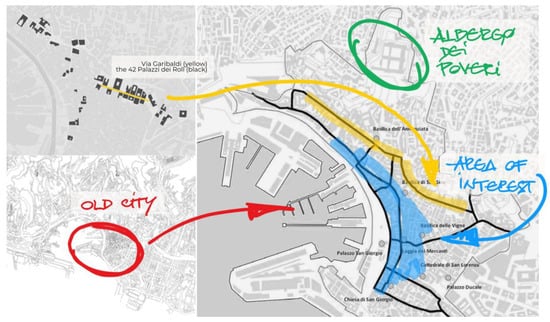
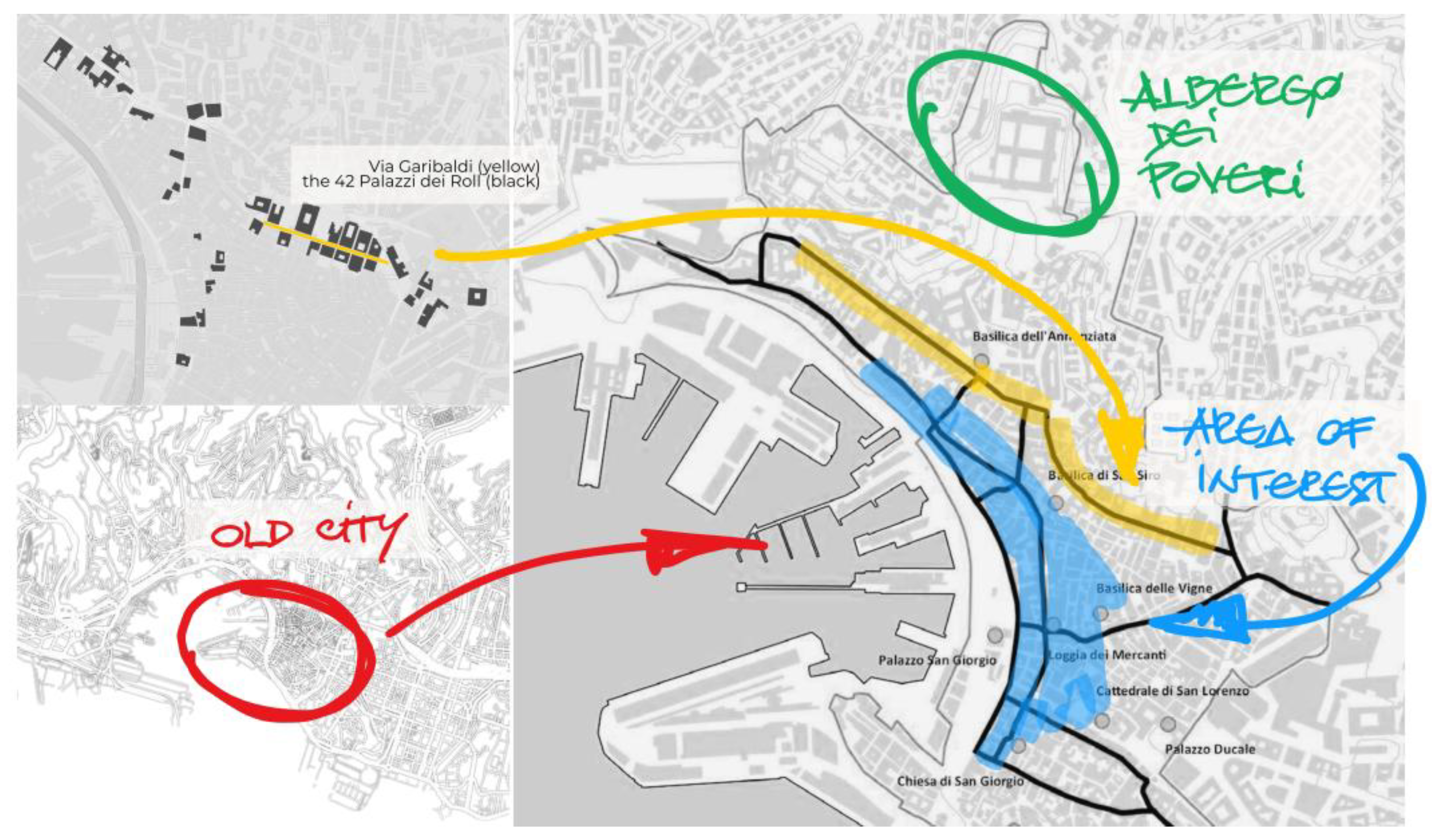
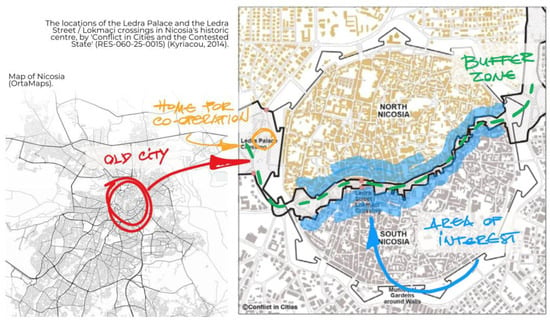
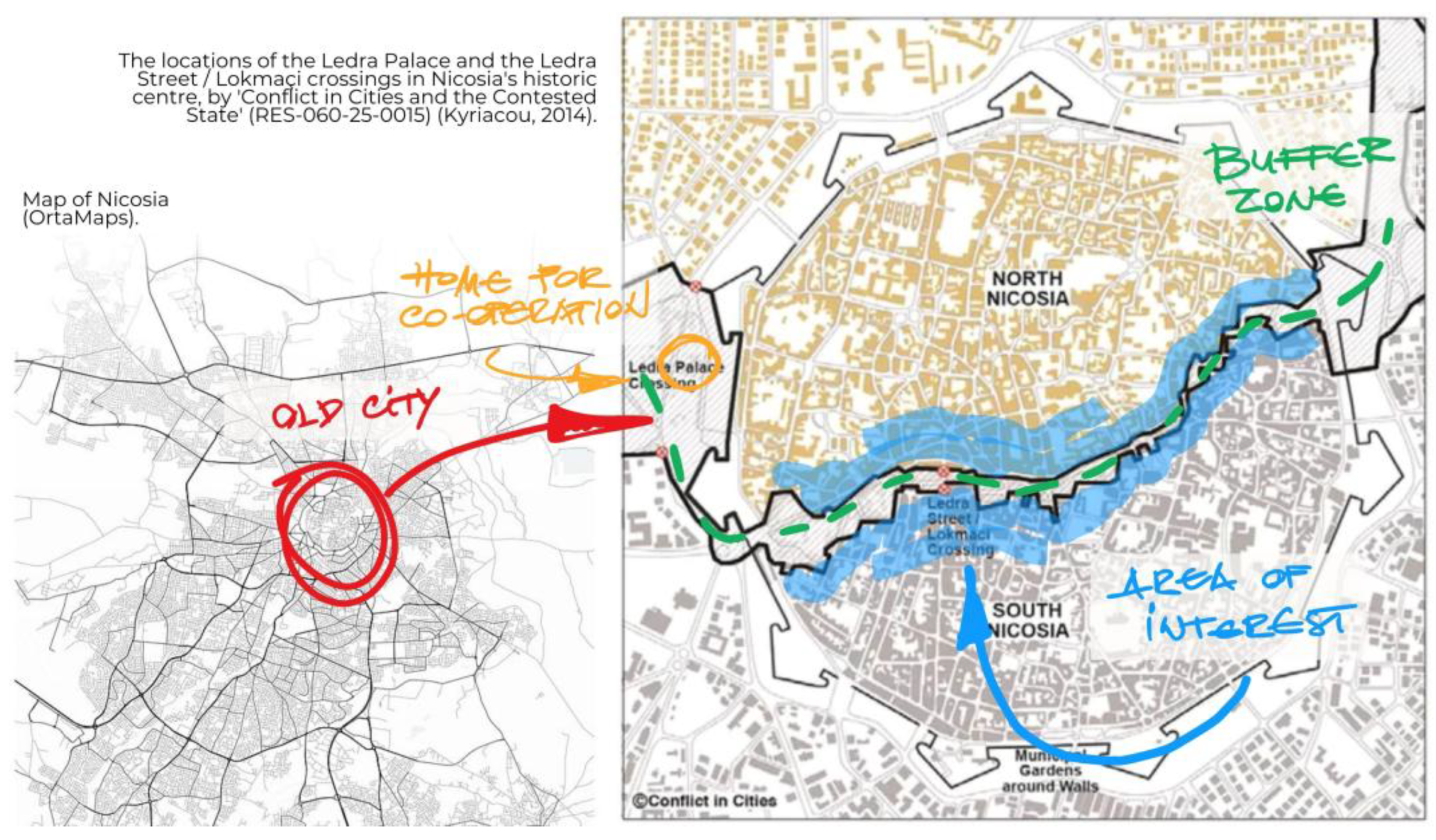
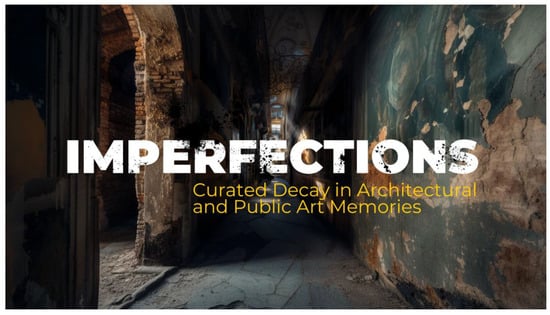
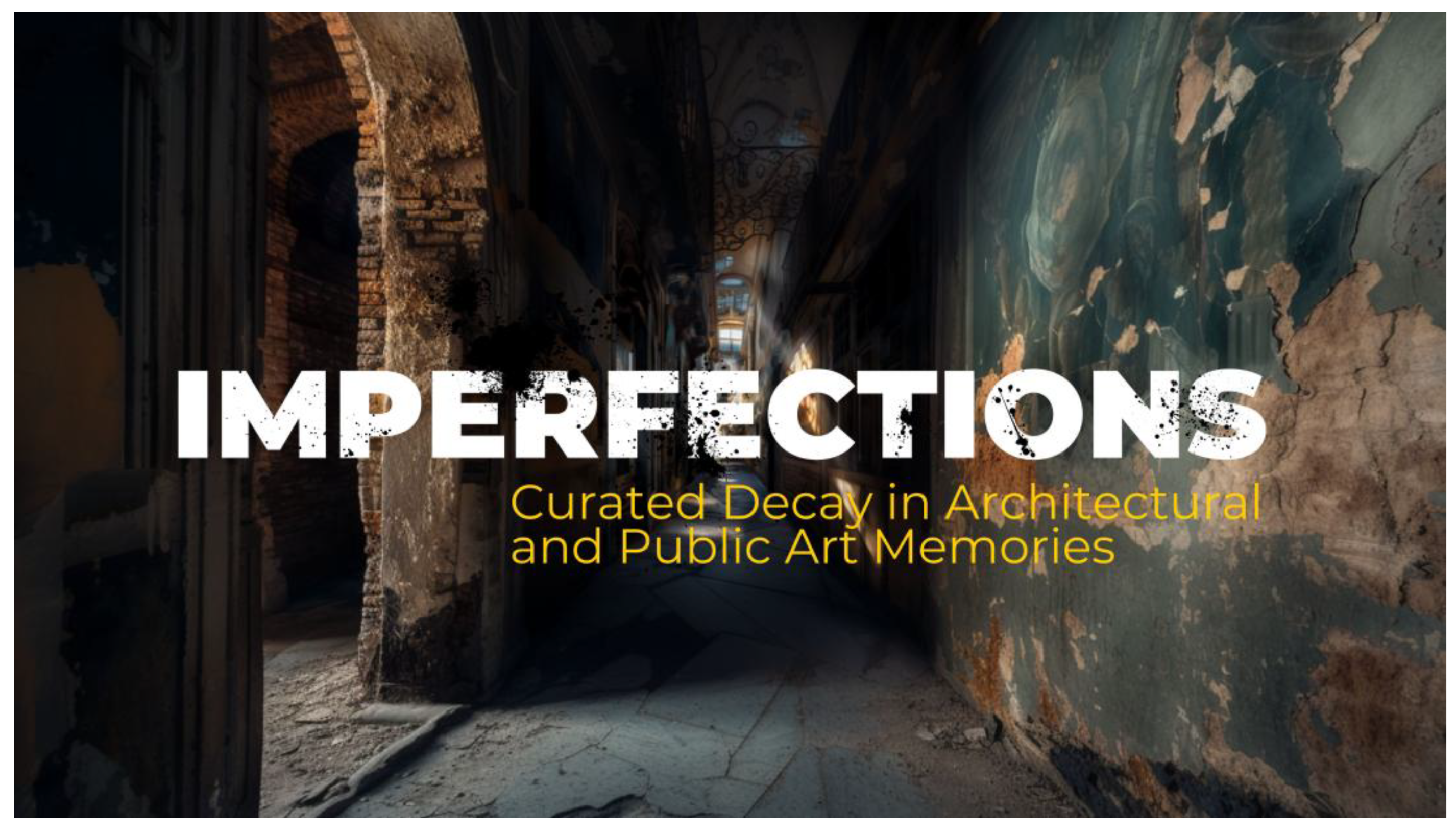
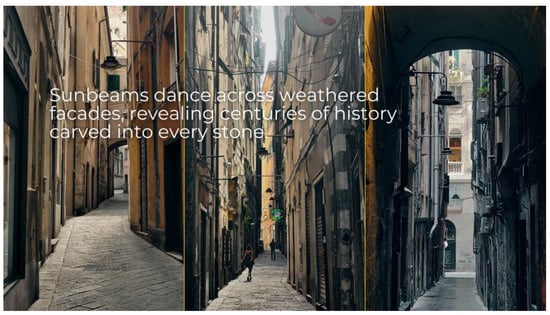
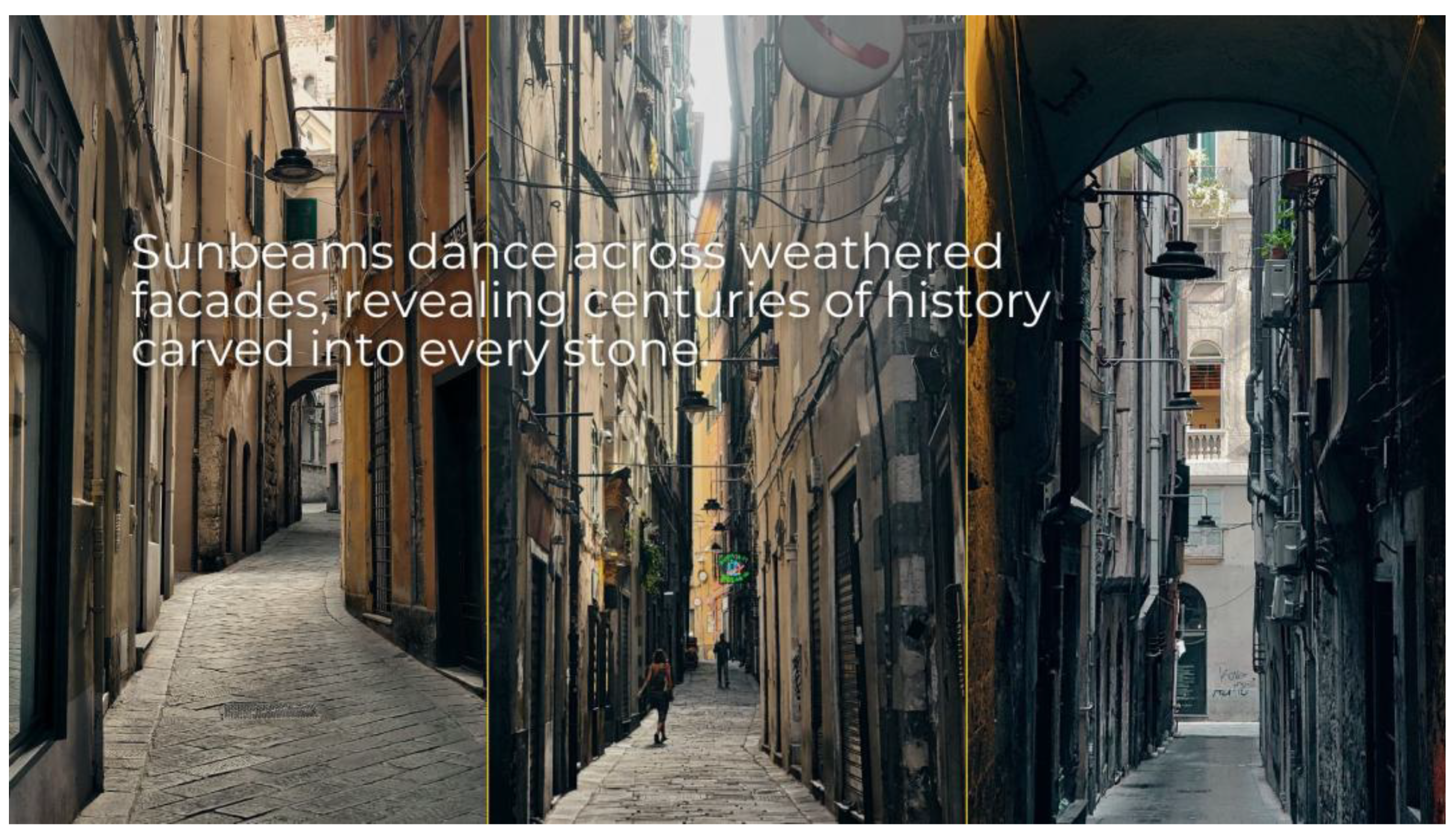
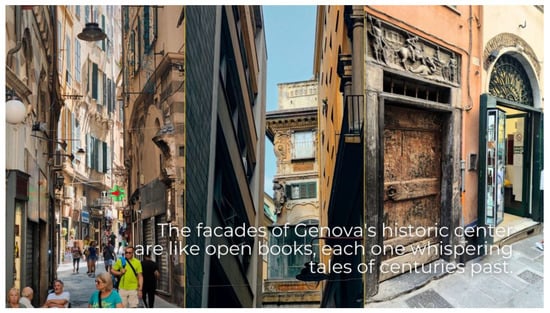
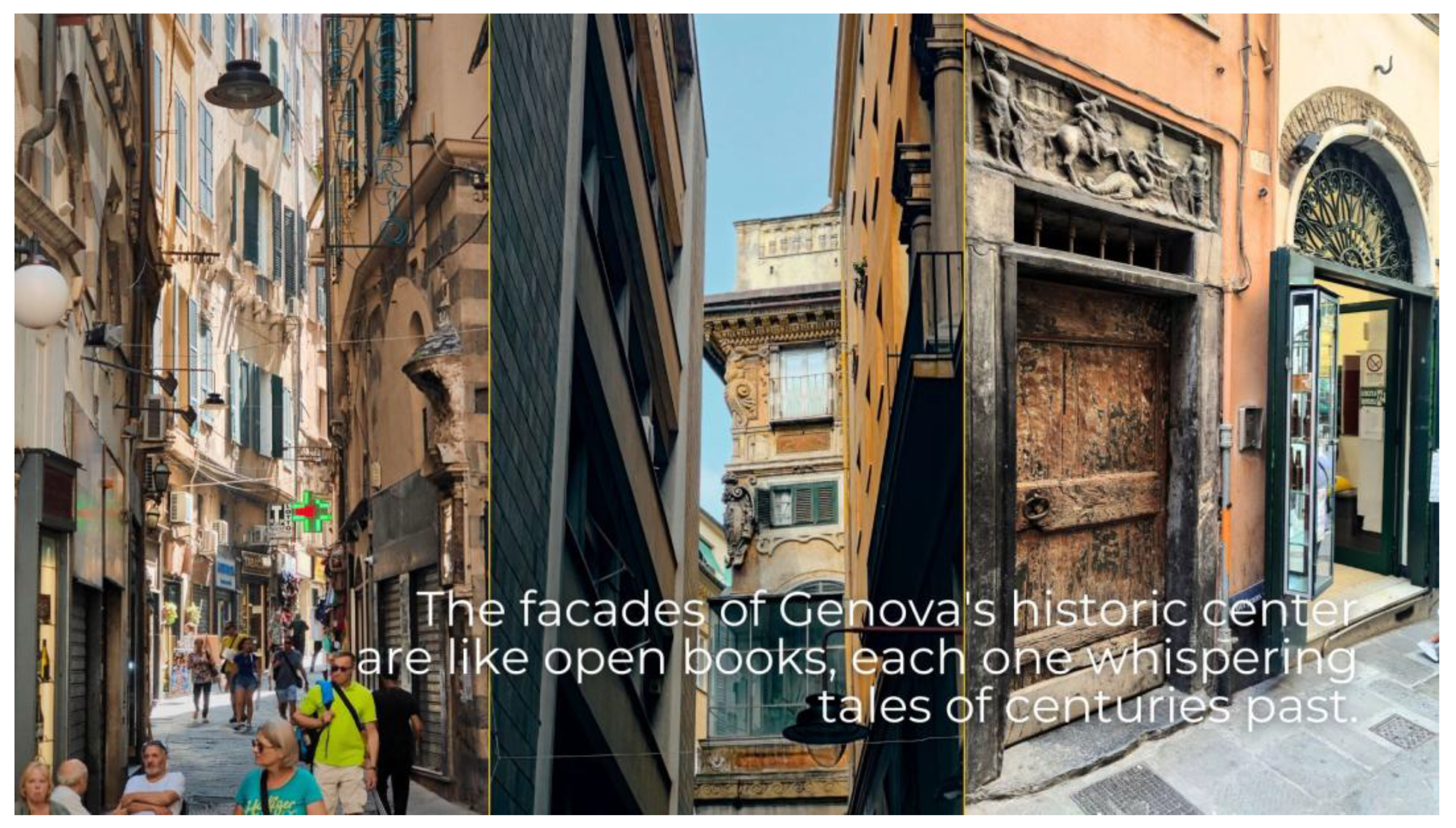
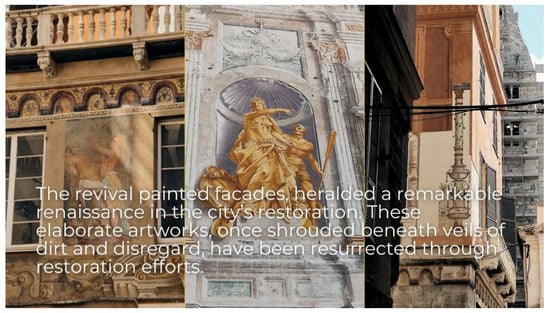
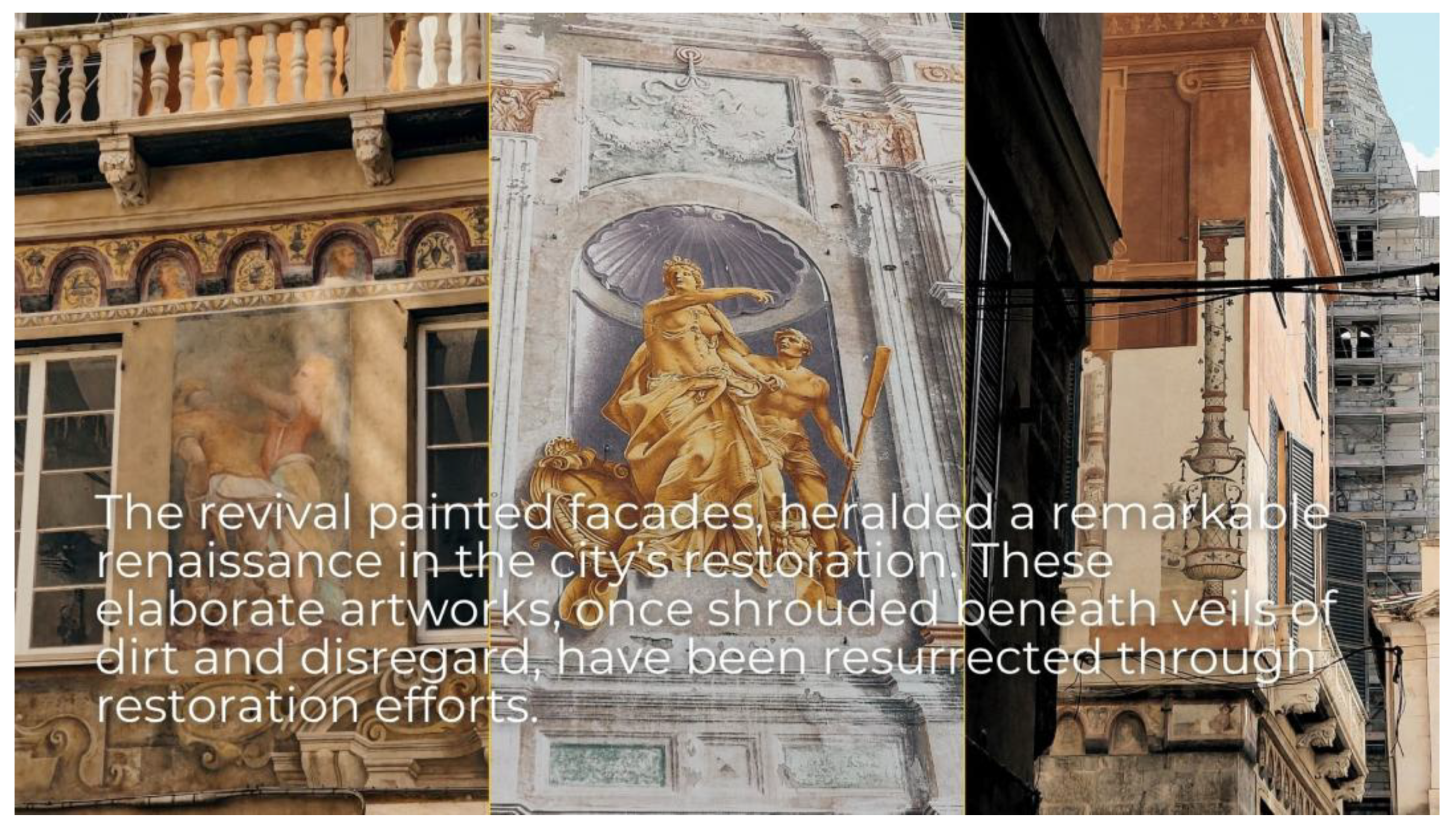
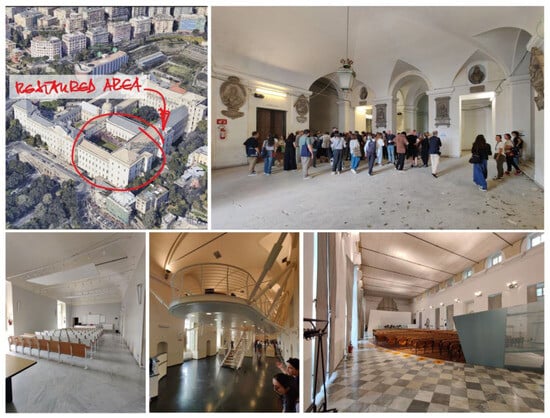
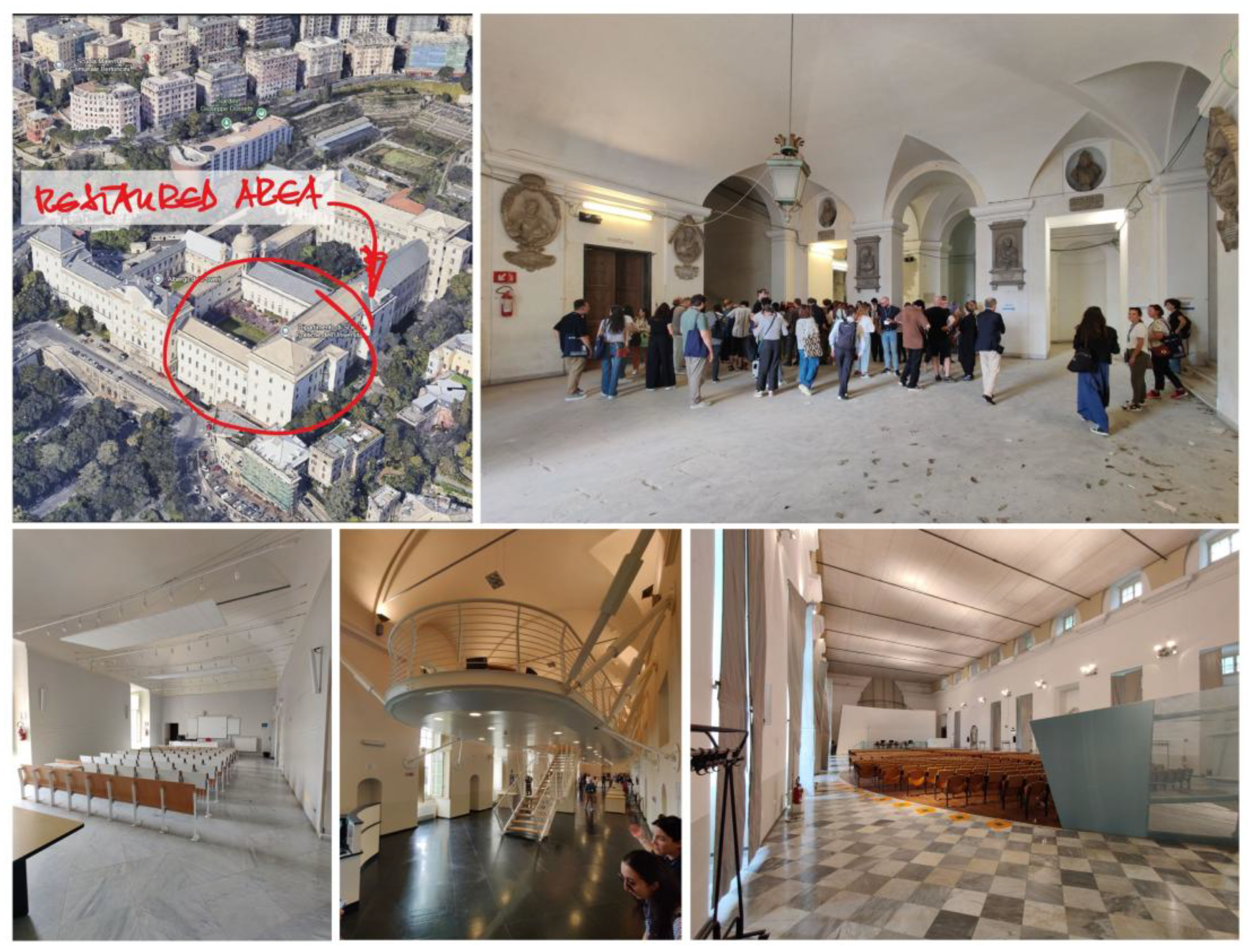
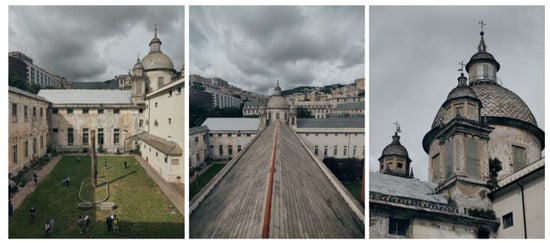
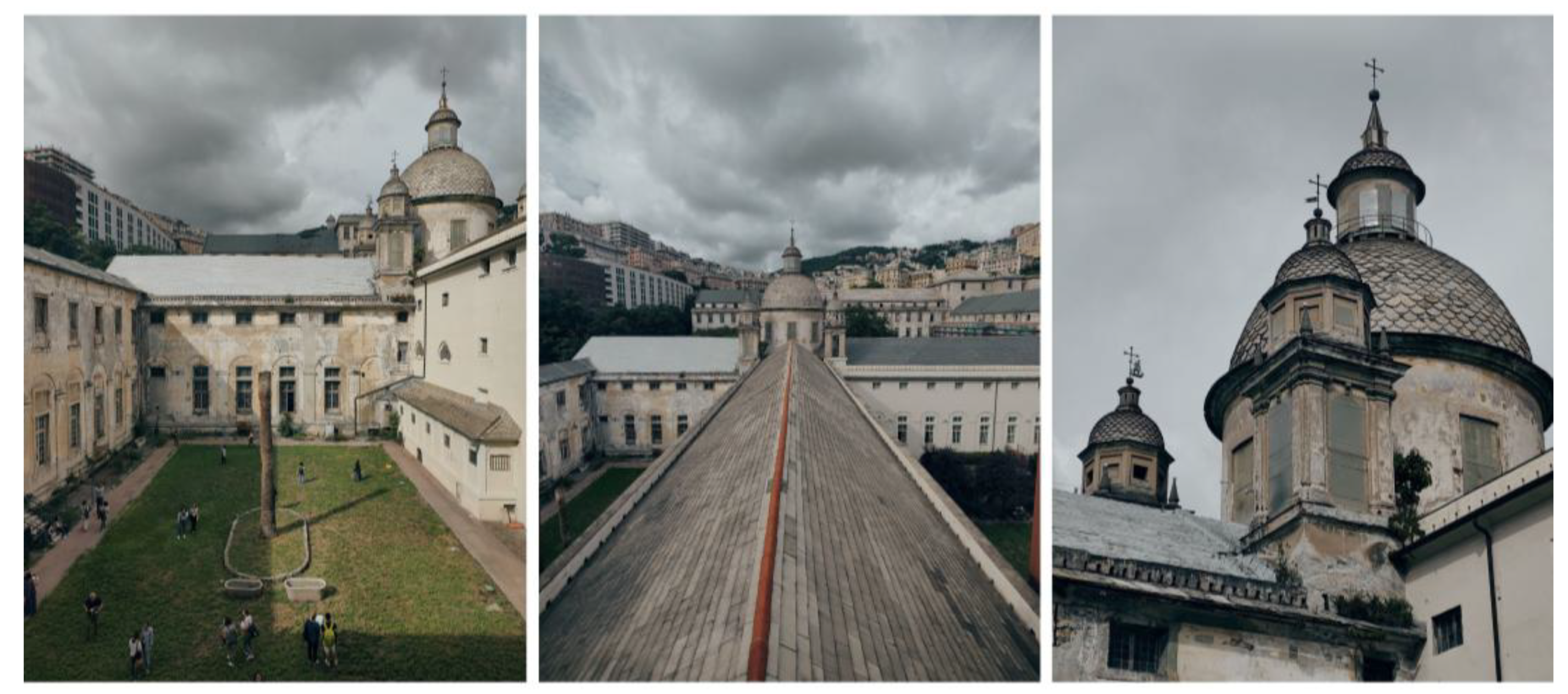
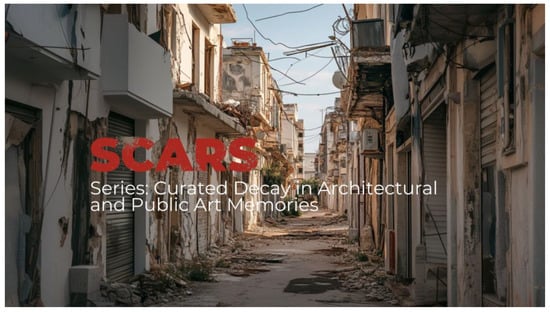
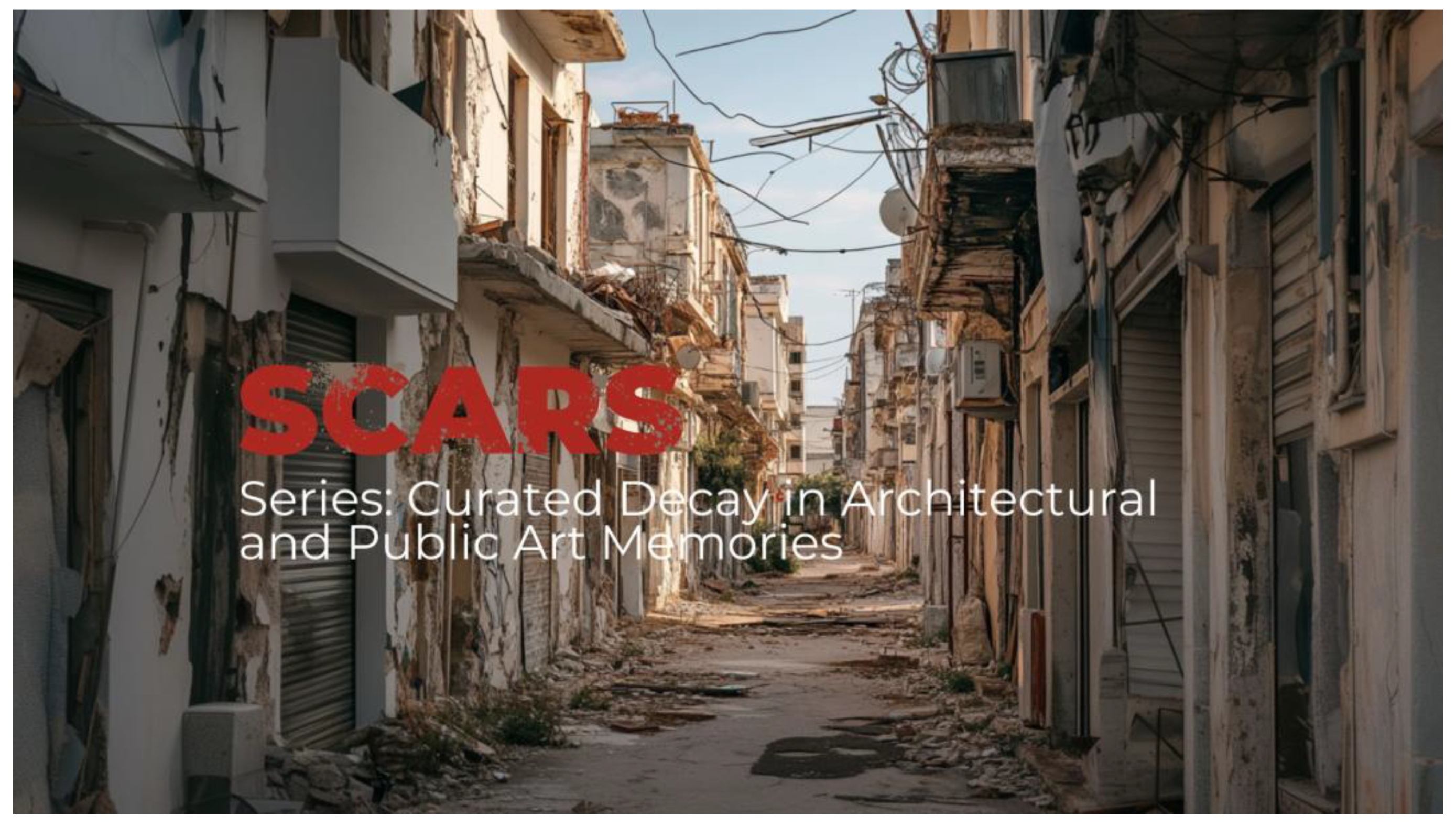
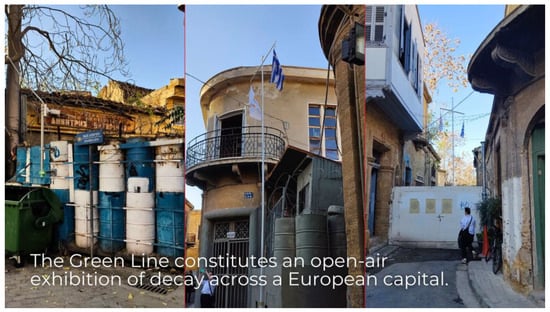
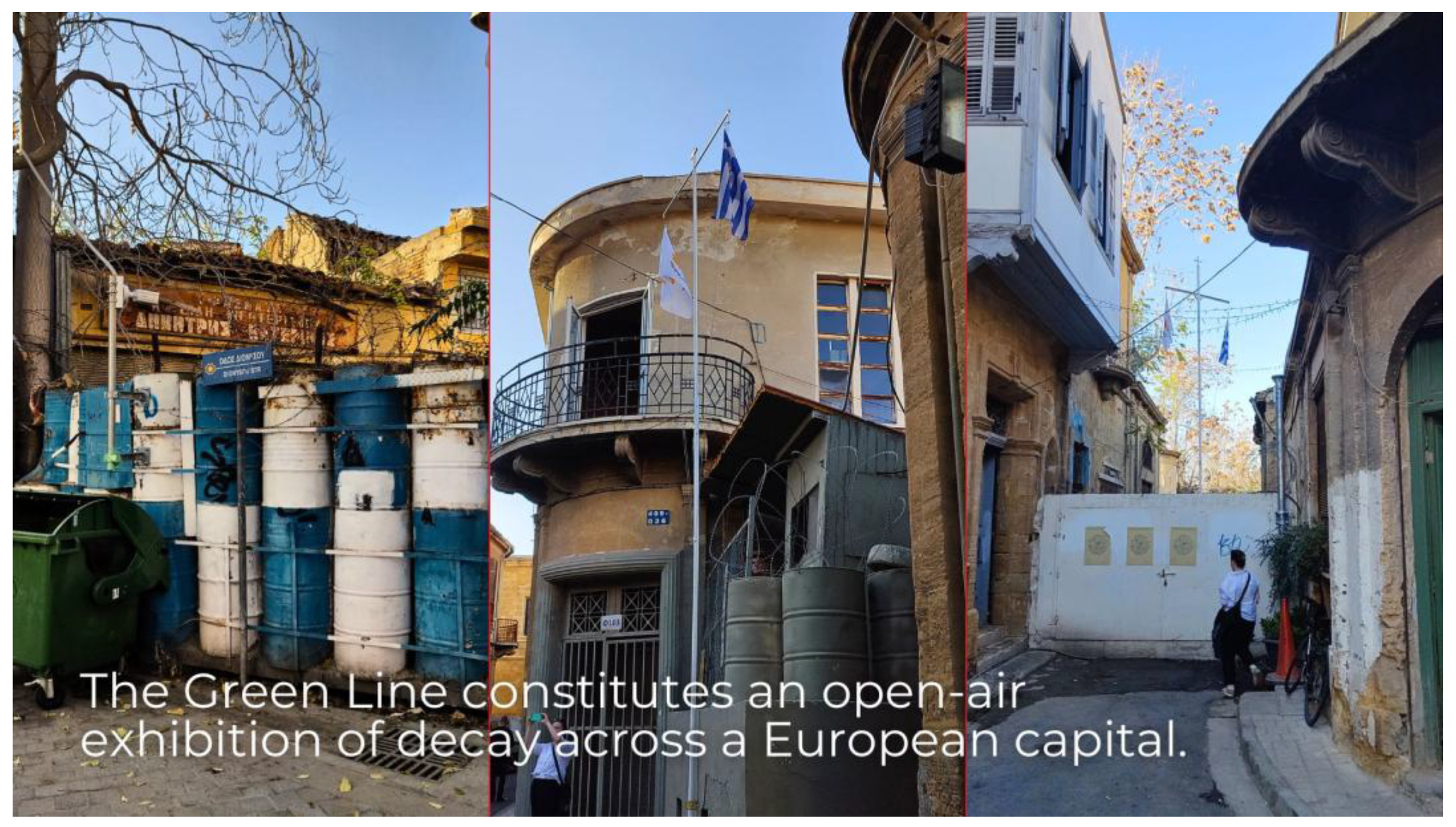
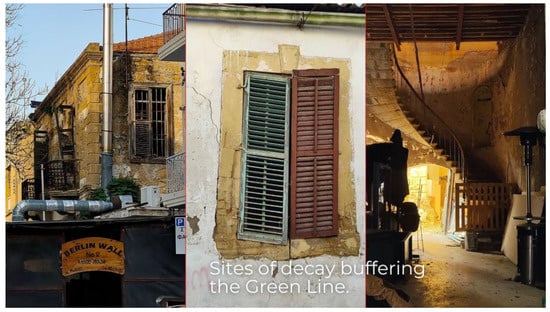
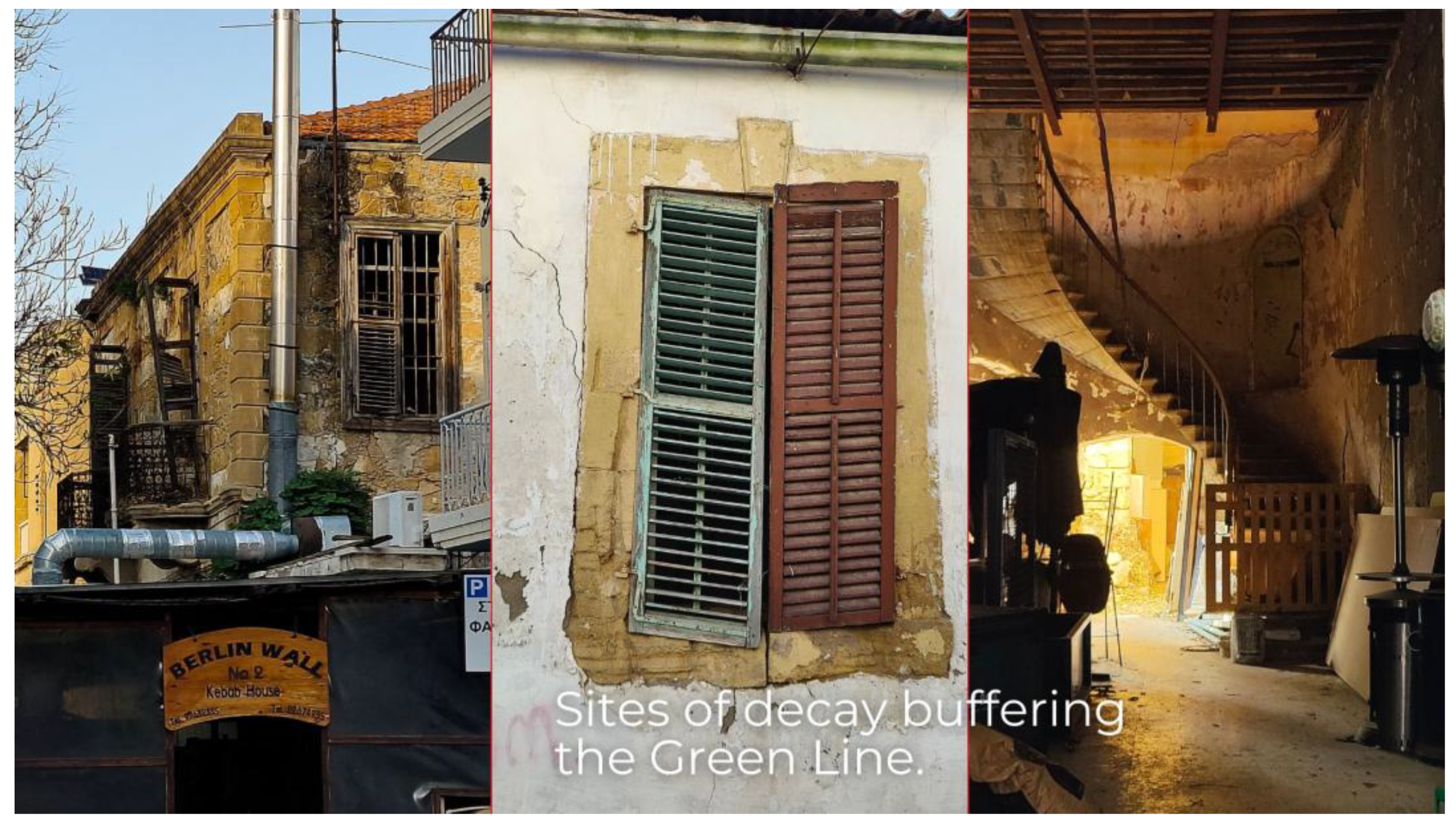
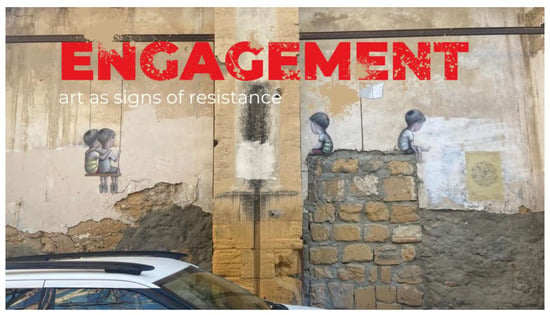
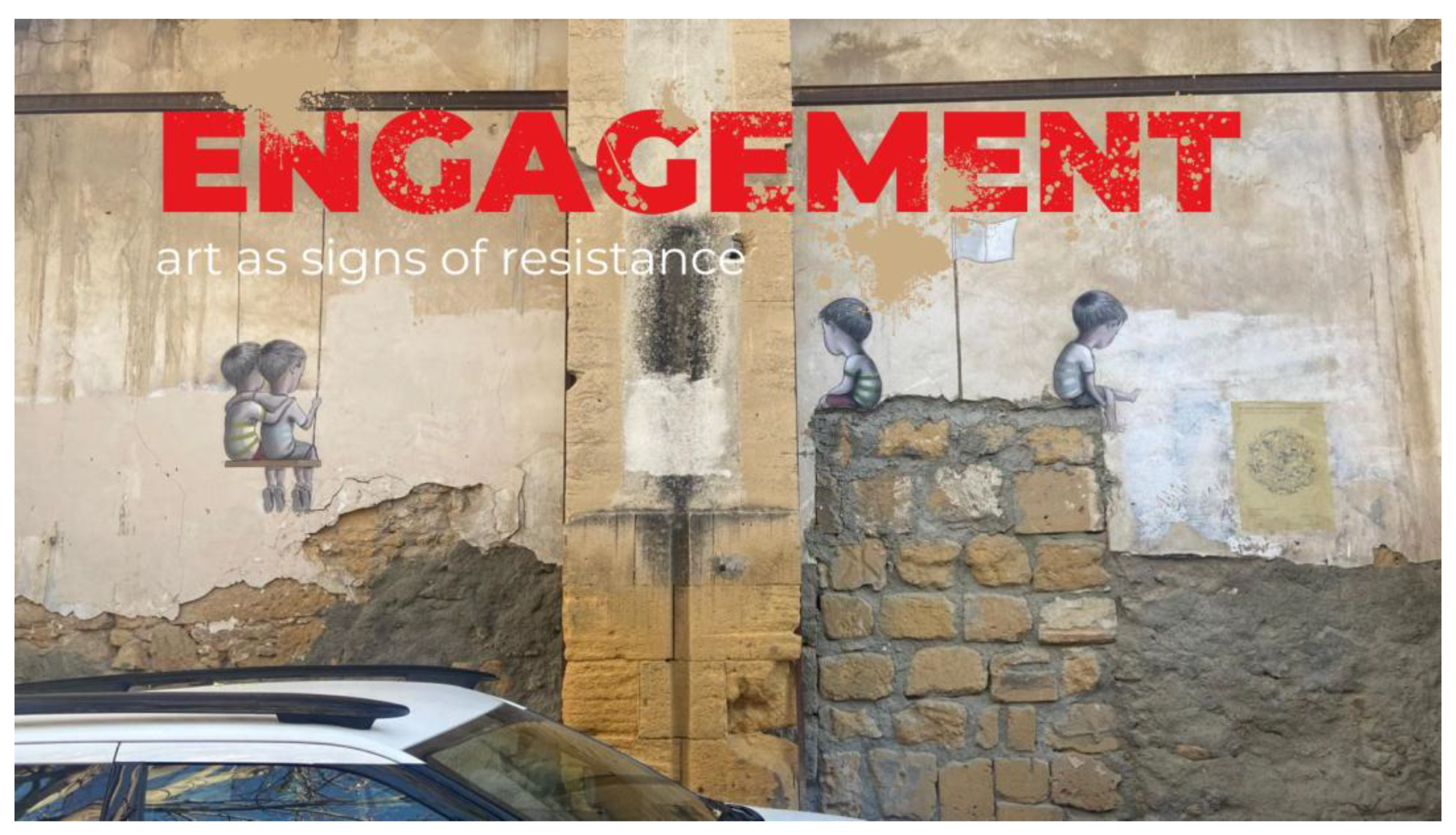
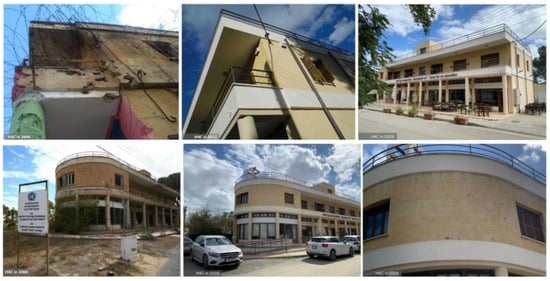
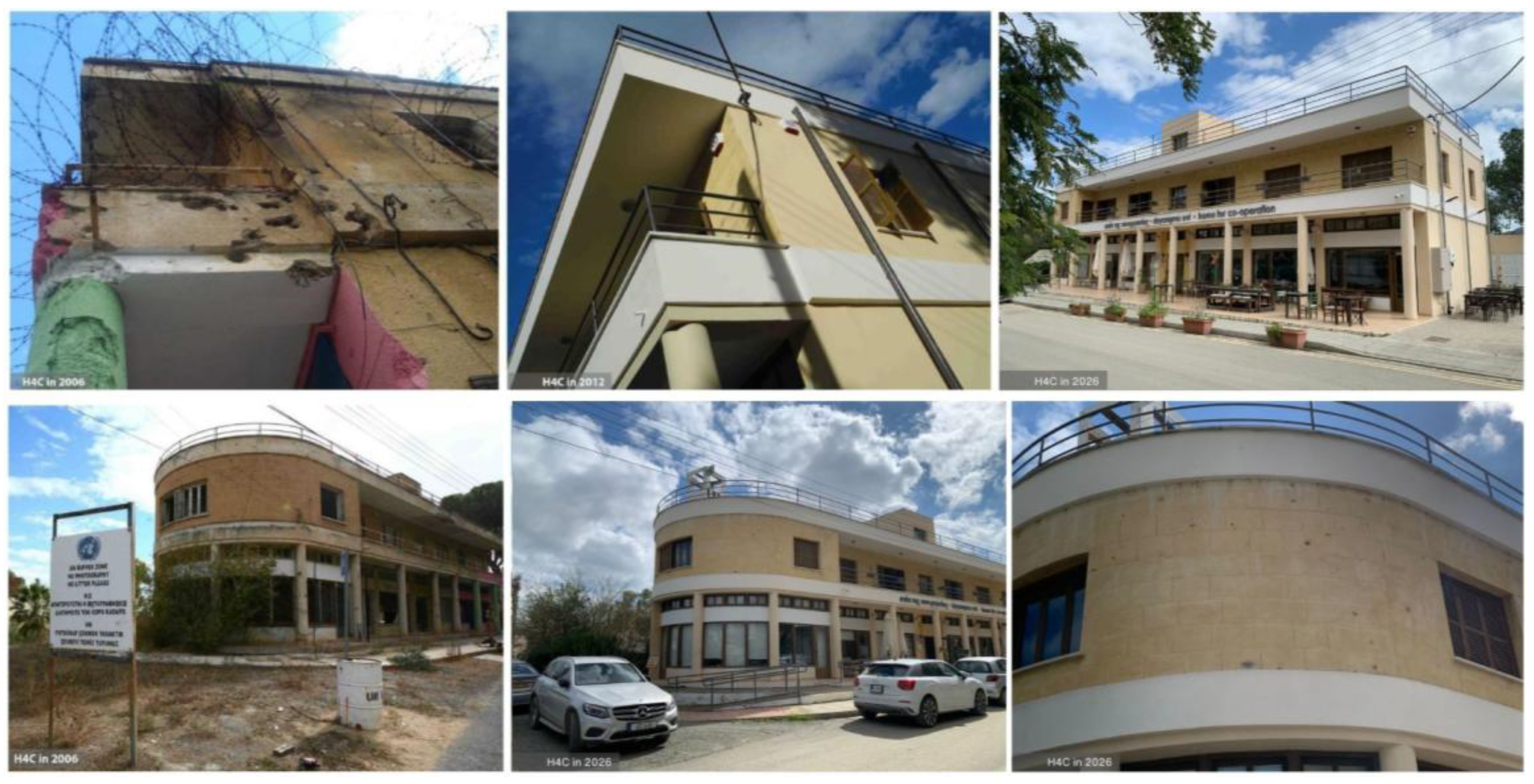

Disclaimer/Publisher’s Note: The statements, opinions and data contained in all publications are solely those of the individual author(s) and contributor(s) and not of MDPI and/or the editor(s). MDPI and/or the editor(s) disclaim responsibility for any injury to people or property resulting from any ideas, methods, instructions or products referred to in the content. |
© 2026 by the authors. Licensee MDPI, Basel, Switzerland. This article is an open access article distributed under the terms and conditions of the Creative Commons Attribution (CC BY) license.