
Article

Legitimisation of Historical Artifact Forgeries: Analytical Framework and Cases in Medieval Polish–Lithuanian Numismatics

by
Valdas Kavaliauskas
,
Mindaugas Kiškis
* and
Arūnas Žebrauskas
Faculty of Public Governance and Business & MRU Law School, Mykolas Romeris University, Ateities g. 20, LT-08303 Vilnius, Lithuania
*
Author to whom correspondence should be addressed.
Heritage 2026, 9(3), 107; https://doi.org/10.3390/heritage9030107
Submission received: 15 December 2025 / Revised: 19 February 2026 / Accepted: 26 February 2026 / Published: 10 March 2026
(This article belongs to the Special Issue The Medieval Cultural Heritage of the Baltic Sea Region)

Abstract

This article investigates the phenomenon of numismatic forgery legitimisation and its impact on the fields of numismatics, archaeology, history and law. Forgery legitimisation is a broad phenomenon that encompasses both physical forgery and the presentation of fake artifacts as genuine in research literature, auction catalogues, and other contexts. Using the qualitative case-study methodology, the authors propose an analytical framework for suspected forgery legitimisation that incorporates a novel classification of forms and types of forgery, as well as socio-legal mens rea elements. The framework also accounts for factors contributing to the legitimisation of forgeries, including lack of competence, low competition in coin catalogue publication, tradition, closed numismatic communities, and insufficient academic and legal attention. Using this framework, the authors examine two cases of legitimisation of fake coins in medieval Polish–Lithuanian numismatics. The analysis shows how repetition across sources can legitimise fake artifacts, complicating later correction and corrupting heritage research, history and museum science, as well as market integrity. The proposed analytical framework can be useful for investigating other dubious artifacts and for developing analysis methods for forgery legitimisation cases.

1. Introduction

Historical artifacts have been and continue to be forged1 and it is likely that they will be forged as long as people are interested in history, archaeology and heritage research. Forgery is not only a problem for the market of historical artifacts but also a humanitarian, social, economic and legal issue. Forgery of historical artifacts is most commonly explored from the legal perspective as a criminal act [1] (Oliveri et al. 2022), or from a perspective of history and technology, as best illustrated by Paul Craddock’s monograph (Craddock 2009) [2], but forgery has wide-ranging negative social, economic, and legal consequences.
Unfortunately, there are documented cases where scientists and researchers became involved in forgery, including in the presentation of fake artifacts as genuine in research literature, auction catalogues, and other contexts. Therefore, forgery of historical artifacts may intertwine with falsification in scientific research. Falsification in scientific research, which also affects historical research, is recognised and codified in the European Federation of Academies of Exact Sciences and Humanities (ALLEA)2 European Code of Conduct for Research Integrity, in which Section 3.1 of the ALLEA Code directly identifies fabrication and falsification as inappropriate behaviour in conducting scientific research. Misconduct in scientific research is traditionally defined as fabrication, falsification, or plagiarism in proposing, conducting, or reviewing research, or in reporting its results. The ALLEA Code elaborates that fabrication is the making up of results and recording them as if they were real; falsification is the manipulation of research materials, equipment, or processes, or the alteration, omission, or concealment of data or results without justifiable reason; plagiarism is the use of other people’s work or ideas without properly acknowledging the original source, thereby violating the primary author’s or authors’ rights to their intellectual work. The ALLEA Code notes that these three types of violations are considered particularly serious because they distort the record of scientific research results. Arguably, plagiarism is the most prevalent form of scientific misconduct; however, falsification and fabrication are also widespread.
Falsification and fabrication do not spare the sphere of tangible culture and history and directly manifest in research pertaining to historical artifacts. Falsification and fabrication actually combine into attempts to present fake historical artifacts as genuine, where falsified research provides the context (provenance) for the fake artifact and fabrication may produce an actual physical fake artifact. Throughout this article the term “forgery legitimisation” is used to describe a phenomenon that encompasses physical forgery and the presentation of fake artifacts as genuine in research literature, auction catalogues, and other contexts, thus providing the ostensibly legitimate context (provenance) for the artifact. The term “legitimisation” is preferred to “authentication”, since the goal or the outcome of forgery legitimisation is to confer general legitimacy onto a forgery and the article focuses on socio-legal context, rather than more focused perspectives of crime, historical accuracy or authentication. Forgery legitimisation of tangible cultural objects, especially historical objects, very often has a commercial aspect and legally may be considered fraud—i.e., deception to secure unfair or unlawful gain, which is universally criminalised in all European jurisdictions and elsewhere. Empirical evidence presented in existing research on the fine art market proves that forgery detection has influence on heritage market prices and returns [3] (Scorcu et al. 2021).
The goal of this article is to analyse the phenomenon of legalising forged historical artifacts using the novel analytical framework and cases in medieval Polish–Lithuanian numismatics. Historically, Lithuanian coins have been attributed to Polish numismatic; however, since the restoration of Lithuanian independence in 1990, the individual features of Lithuanian coins have been highlighted in numismatics research and broad attribution to Polish–Lithuanian Commonwealth has been slowly changing towards differentiation of Polish and Lithuanian coins as two separate coinages, but the history of the numismatics of these two jurisdictions is very closely intertwined.
The authors propose an analytical framework based on qualitative research methodology and test it by examining specific cases in medieval Polish–Lithuanian numismatics. More specifically, the coins in the case studies are attributed to medieval Lithuanian coinage. Analysed cases have not been previously systematically analysed in historical or numismatics literature. Although the empirical part of this research focusses on numismatics, the consequences of forgery (and fabrication) directly affect the entire field of heritage and historical research more broadly, as coins and other material cultural artifacts are used as sources in archaeology, history and related disciplines. The motives of perpetrators, the scale of forgery, and the methods of legalising forgeries in the case of numismatic objects may partly differ from those of other historical artifacts; therefore, they are identified and analysed individually in the analytical framework proposed by the authors.
It is important to note that numismatics as a historical discipline is traditionally open not only to academic historians but also to numismatic enthusiasts and collectors. Numismatic historians and museum staff regularly rely on commercial catalogues and commercial auction data as important research sources. Many publications, including periodicals, are not formally classified as scientific literature, yet they have a significant impact on the disciplines of numismatics, heritage research and are unambiguously and universally recognised by the numismatic community. This aspect can be considered an important distinguishing feature of numismatics among other historical disciplines. While amateur historians and enthusiasts in most other historical disciplines are marginalized and not recognised as serious authors and experts, in numismatics, in contrast, numerous non-professional historians, such as collectors or antiquarians, are considered as highly impactful and important authorities, or even leaders in specific fields [4] (Miller 2017, pp. 123–139). This is due to the traditional commercialisation and collectible appeal of numismatic materials. At the same time, the commercial aspect of numismatics amplifies the negative consequences of forgery and the legitimisation of forgeries.
Due to the aforementioned reasons, the authors believe that a qualitative study of numismatic forgery legitimisation using the specialised framework and case study method, as well as focussing on real-world forgery legitimisation cases is the most useful methodology for systematic and structured analysis of the phenomena of legalising counterfeit historical artifacts. Although there is an objectively large volume and general abundance of numismatic materials, their accessibility for research is often limited. Even more limited is in-depth literature on forgeries, which is compounded by the complexity of forgery phenomenon. All of this makes studying forgeries rather daunting. In order to achieve a maximally broad and deep analysis of the issue, a real-world case-study method is the most appropriate [5] (Gerring 2017, p. 37).
Case study requires the development of an analytical plan (a framework) that may be a useful basis for the broader field of historical research and is therefore an additional theoretical contribution to the field by the authors of this article. In this article, the authors have devised the analytical framework for the socio-legal analysis of suspected numismatic forgeries. On the basis of the proposed framework, the authors analyse two selected cases of medieval Polish–Lithuanian numismatics, specifically of Lithuanian coinage. Due to its historical specificity and the distribution of its materials among Lithuanian, Polish, Belarusian, Ukrainian, Russian, Latvian, and other countries’ scholars and collectors, it allows adequate and extensive examination of the defined topic, while maintaining a connection with the artifacts themselves, detecting and analytically describing attempts to legalise numismatic forgeries throughout the region. Cases for analysis were selected based on the coin mentions in the previous literature, novelty and technical obviousness of the forgery. Limitations of this research consist of the limited number of analysed cases (two), which may be an incomplete representation of the studied phenomenon, as well as potential case-selection bias. Nevertheless, the cases are indicative of the studied phenomenon, and allow sufficient verification of the proposed analytical framework, which may be used for further research.

2. Framework for Socio-Legal Analysis of Suspected Numismatic Forgeries

In the known literature, numismatic, cultural and historical forgeries are most often analysed from a technological aspect, i.e., by examining forgery and forgery detection technologies, rather than the types, forms, context, goals, or motivations of the forgeries themselves [2] (Craddock 2009), or from a legal perspective [6] (Lenain 2014, pp. 37–60). There are attempts in the numismatic literature to identify types of forgeries and deception, including classifying forgeries into copies, reproductions, and counterfeits [7,8] (Sayles 2001; Larson 2004). The existing literature sometimes describes the intentions and motivation of forgers, often detailing specific cases and noting that it may not necessarily be illegal; for example, a manufacturer may publicly declare their intent to produce artifacts as authentically as possible for a certain historical period. Such artifacts may be used both legally, when their provenance is openly disclosed, or illegally if it is concealed. There are no known attempts to systematise this into the common analytical framework.
The authors’ analysis of the existing sources on the topic of historical forgery suggests that socio-legal analysis of suspicious forgeries, particularly the processes by which forgeries become legitimised through catalogues, scholarship and institutions, remains limited. Existing numismatic studies offer important typologies and case-based discussions, but they rarely consolidate these elements into a common analytical framework that explicitly integrates intentions (mens rea) with modes of legitimisation. Therefore, this article proposes the analytical framework presented below and applies it to the coin forgery case studies analysed in this article.
It is important to acknowledge that forgery encompasses not only the physical counterfeiting of coins but also the deliberate or inadvertent fabrication of coin descriptions (e.g., misstatement of issuer, date, or other attributes). While a private sale of a physical forgery is harmful, the wider damage arises when a forgery is publicly presented as an original artifact of national history in catalogues, research sources or institutions. Throughout this article, this process is referred to as legitimisation of forgeries.
The authors propose an analytical framework for numismatic forgeries consisting of five elements, including two objective ones—types of forgeries, and form of legitimisation; as well as three subjective ones—legitimisation objectives; mens rea or forgers’ intentions; and the contributing premises.
Types of forgeries include the following:
  • Antique forgeries—counterfeit coins made pre-20th century and not intended for circulation; such coins may aim to deceive collectors by being presented as genuine; a great example would be the 19th-century forgeries by Józef Majnert and Fajn [9,10] (Mańkowski 1930; Beyer 1909).
  • Contemporary forgeries (circulation forgeries)—counterfeit coins intended for circulation, causing harm to the original currency issuer. These coins are often misattributed, and their false descriptions are legalised. A good example is the misattribution of primitive random 1661–1666 Lithuanian copper shillings of John Casimir as Ukrainian Cossack coins [11] (Nechitaĭlo 2011);
  • Imitation coins—coins that are modelled after another coinage. They bear the same obverse and reverse types as the originals, but not the same legends. Instead, the legends typically give out the identity and/or location of the issuer [12] (Day 2004). These coins are often misattributed, and their false descriptions are legalised in order to make them more appealing to collectors or to justify claims in academic discussions [13] (Huletski, Bagdonas 2021, pp. 252–253);
  • Flawed coins—coins that, due to defects during minting and complicated attribution, are misattributed and have their false descriptions legalised, in order to present them as different original or counterfeit coins [14] (Zhebrauskas 2014);
  • Phantom coins—coins that have never existed and circulated as a legal tender, including coins that have never existed at all, and coins that have been physically minted as phantasies rather than a legal tender (monetary counterfeits). According to the Polish scientist Prof. B. Paszkiewicz, the former subtype “derives mostly from mistakes of old literature where, e.g., two sides of different coins were misplaced side by side in an illustration or description, or a badly legible coin was interpreted in a wrong way and next counterfeited according to this wrong pattern, description or interpretation (ex. Polish “16th century” talers made by Józef Majnert (1813–1879) according to the woodcuts from contemporary Müntz-Buecher were never-existent phantasies of an artist) [1,9] (Mańkowski 1930; Beyer 1909)”. A latter subtype of the phantom coins—phantasy coins—coins that have never been in the circulation as actual money, hence phantom coins, but were minted by artists or collectors and then entered antique/numismatic markets as a real coin artifact. Vilnius Mint groat of Alexander analysed further in this article is an example of this subtype of a phantom coin, as it was based on a phantasy coin made in the first half of the 19th century.
  • Misattributed coins—coins based on bad-faith research or negligent research, rather than actual forgeries. An example of such bad-faith research would be E. Ivanauskas’ attempt to attribute a portion of the 1660 John Casimir shillings minted in Ujazdów to the Kraków mint [15] (Ivanauskas 2009, p. 311, catalogue No. 3JK9-7).
Forms of forgery legitimisation:
  • Commercial catalogues—one of the most common ways to legalise historical artifacts is by including them in commercial catalogues. The more popular and influential the catalogue and the compiler of such catalogues, the more damage the legitimisation of forgeries causes. An example of such form of legitimisation would be the 1620 Sigismund Vasa three-half-groat described in E. Ivanauskas’ 2009 catalogue [15] (Ivanauskas 2009, p. 271).
  • Research sources—forgery legitimisation cases also occur in scientific articles. A probable example would be Kuklik and Filipow’s publication about the 1667–68 Lithuanian shillings of John Casimir, which the authors attributed to Hetman Gosiewski, even though such coins never existed [16] (Kuklik, Filipov 2006).
  • Auctions and other sales platforms—auctions often feature attempts (often successful) to sell forgeries as genuine coins. An example is the clearly counterfeit Lithuanian half-groat from supposedly 1515 sold at a large Polish auction, which is a forgery3, and which is analysed in more detail as the case study in this article.
  • Sales or donations to museums—sometimes forged coins are found in museum collections, which traditionally have some authority especially with respect to the general public. A copy of the Alexander groat, which is analysed in more detail as the case study in this article, is included in the coin collection of the Lithuanian National Museum.
  • Archaeological hoax (fake find)—archaeological hoaxes apply to all kinds of artifacts and may include either a completely falsified find of totally fictitious and unknown material or alternatively adding forgeries to an otherwise legitimate archaeological find [17] (Hudson 2005). Multiple cases have come to light where counterfeit coins were surreptitiously planted at archaeological excavation sites and then “discovered” under contrived conditions. This deceived the archaeologists present into believing that the finds were authentic and, after such legitimisation, similar artifacts (fake coins) were distributed on the antiquarian market as genuine.
  • Other methods—often, counterfeit coins are posted on numismatic forums, displayed at collectors’ clubs and fairs to attract attention and receive favourable comments for the forged artefact. Such attempts carry very low risk for the perpetrator and leave a small trace of forgery detection. They are generally aimed at amateur collectors and when highlighted often receive negative and strict responses from the numismatic community.
Legitimisation objectives:
  • Commercial—this purpose for the legitimisation of forgeries is self-explanatory and requires no further commentary. It is evident that by properly publicising a forgery, one can project and demand a significantly higher price for it. The mere fact of authoritative publication serves as a provenance for the forgery, allowing its origin to go unquestioned and its history of appearance to be ignored.
  • Academic—forgeries published with this aim are intended to provide novelty and exclusivity to academic research, providing academic recognition and prestige and sometimes warranting the very possibility of publication.
  • Political—a rarely encountered objective; however, it is observed in Ukraine and Belarus and is used for nation-building purposes. A commercial aspect cannot be ruled out either, since such objectives increase the sentimental value. Collectors are more interested in artifacts related to their own country than in the artifacts of foreign ones.
  • Combined—in many cases, the objectives of forgers and those who legalise the forgeries are multiples of the objectives identified here. Often, the objectives change based on the “success” or “failure” of the legitimisation attempt and are not fully ascertained at the outset.
Mens rea (forgers’ intentions):
  • Intentional—forged numismatic material is often legalised intentionally—with a clear understanding of what the author of the article or publisher of the catalogue is doing. A subset of intentional acts is acting negligently and not verifying the material that is presented in pursuit of the objectives identified above. Often, such legitimisation is carried out by a well-known expert in their field, with many years of practice in a specific area of numismatics. Sometimes references to sources are faked or, more commonly, there are no explanations or motives in the publications as to why the author is misleadingly describing the material.
  • Unintentional—the person legalising the material sometimes publishes it by mistake, or by mixing up individual catalogue positions or parts of the article. In most cases, in such situations, the person legitimising the forgeries behaves unintentionally, for example by relying on unverified previously published information. This may be done in pursuit of catalogue completeness, in providing exhaustive references to academic material, or just for personal or even sentimental reasons.
Premises for the legitimisation of forgeries:
  • Lack of competence—often, artifacts that enter museums or large private collections are not properly examined. Sometimes there is a lack of competence among museum numismatists or collectors, but often, due to time and financial constraints, numismatic material (especially donated) is accepted without proper vetting.
  • Low competition in issuing coin catalogues—in Lithuania, there is still no comprehensive peer-reviewed numismatic material catalogue, or at least a catalogue published by an academic publisher. All publications of this nature in Lithuania and in other countries in the region are privately or commercially published. A similar situation exists throughout the region—Poland, Ukraine, Belarus. Due to low competition in this field (a large amount of numismatic literature is published only in Poland), catalogue users have little choice. For example, the aforementioned E. Ivanauskas catalogue [15] (Ivanauskas 2009) remains the main and only comprehensive Lithuanian numismatic catalogue. Despite the forgeries legalised in this catalogue, numismatists have no alternative options, but to use and to reference this catalogue (including in this article), thus perpetuating the authority of the catalogue.
  • Tradition—the centuries-old tradition, with numerous recognised publications containing many legalised forgeries, has also affected the numismatic community. The presence of forgeries in a publication is not considered a major flaw, at least in part due to the fact that forgeries have always been a part of history.
  • The closedness and prevailing ethical standards of the numismatic community—During the soviet period, the numismatic community was heavily persecuted by the communist regimes and therefore resorted to secrecy and did not adhere to strict ethical standards. Numismatist activities as recent as 30 years ago were illegal; collectors feared both the state and the attention of criminal actors. As a result, particularly close and closed groups of numismatic experts and collectors have formed, accustomed to hiding information about the provenance, price, and authenticity of artifacts. Even now, a collecting activity is in a grey legal area, due to lack of clear legal regulation. Lastly, there is no incentive to recognise forgeries in private collections as it would adversely impact the value of the collection.
  • Lack of academic/ethical consequences—the academic research of the issues is generally very limited, there are only a handful researchers in the region, many researchers are amateurs and do not adhere to any institutional ethics rules. In such a situation there is a general avoidance of escalating academic ethics violations, especially more nuanced violations like falsifications and forgeries for which there is no objective proof, as in cases of plagiarism. It is also noteworthy that research ethics frameworks are only relatively recently established in the academic institutions of the region. For all of these reasons, the obliviousness to forgery-related ethics violations, including numismatic and historical research, is high.
  • Lack of legal consequences—although many cases of forgery legitimisation have the characteristics of criminal fraud, due to the specifics discussed in items 1–5 above, the legitimisation of forgeries does not attract the attention of either public law enforcement agencies or private civil enforcement actions. Law enforcement is uninterested in such specialised niche areas, where the demand for specialised expertise and cost of enforcement is very high. Private enforcement is also deterred by costs and complexities, which are compounded by the adverse impact on the value of private collections. As a result, emerging problems are usually resolved privately and informally.

3. Case Studies

Analysis of the two cases is done by thoroughly applying the analytical framework proposed in the preceding section of the article. The beginning of the legitimisation of known Lithuanian coin forgeries can be traced back to the mid-19th century. This activity coincides with the start of the publication of the first widely accessible public coin catalogues in Poland and Lithuania [18] (Ivanauskas 2004), which implies the role of the authors of such catalogues in forgery legitimisation.
As has already been noted, it is important to acknowledge that forgery is not just the physical counterfeiting of coins but also the deliberate or inadvertent forgery of their descriptions (information about them). The most common form of the latter is the invention of coins, which may have never existed in history—phantom coins. Such phantoms are legalised using various methods of disclosure and presenting forgeries as authentic artifacts. In the authors’ opinion, phantom coins are especially harmful to science, the numismatic market, the general public, and historical and numismatic communities, as they are a falsification of national history. The primary case that was selected for case study is an example of the phantom coin, which is only known from the publications describing it.
The most famous case of a Lithuanian phantom coin, of the phantasy coin subtype, which is analysed in detail, is the case of the groat coin of Alexander Jagiellon (Polish: Aleksander Jagiellończyk, Lithuanian: Aleksandras Jogailaitis) Grand Duke of Lithuania (1492–1506) and King of Poland (1501–1506). The history of this phantasy coin began in the mid-19th century. By the end of the 20th century, its authenticity was doubted, and in the early 21st century, it was publicly recognised as fake [18] (Ivanauskas 2004). However, in 2019, this evidently dubious coin was again legalised and reintroduced as allegedly genuine [19] (Ivanauskas, Douchis 2019, pp. 14, 15).
Alexander’s groat coin is not a questionable variant of a real coin, and not even a new type. It is a new, atypical large denomination for the region. Evidence of the existence of this coin would fundamentally change our knowledge of the 1495 monetary reform in Lithuania, the general economic condition of the state of Lithuania at that time, the technological capabilities of the Vilnius mint, relations with more advanced foreign mints, and the issue of coordinating monetary policy with Poland [20] (Ivanauskas, Douchis 2002, pp. 12–14). Thus, this coin is the most important numismatic forgery in Lithuanian numismatics and illustrates the problems analysed in this article.
According to E. Ivanauskas and R. Douchis, Alexander’s groat was first published in 1857 in H. Grote’s monograph Munzstudien [20] (Ivanauskas, Douchis 2002, pp. 12–14). They further conclude that the coin was actually minted between 1845 and 1857 after the appearance of I. Zagórski’s catalogue in 1845 [20] (Ivanauskas, Douchis 2002, pp. 12–14). The author’s reference to I. Zagórski’s catalogue seems odd since the catalogue itself describes Lithuanian coins only from the beginning of Sigismund the Old’s reign (1506–1548) [21] (Zagórski 1845). This coin is not present in the most important 19th-century Polish–Lithuanian encyclopaedic coin catalogue by E. Hutten-Czapski [22] (Hutten-Czapski 1880). Given the detail and comprehensiveness of E. Hutten-Czapski’s collection, this circumstance is a red flag, since Alexander’s groat coin was allegedly the largest denomination and rarest coin of this ruler and this would make it highly desirable for the greatest and wealthiest collector of such coins. Especially if, as it is claimed, it was forged in 1845–47 (published in 1857) [18] (Ivanauskas 2004), and E. Hutten-Czapski’s catalogue was released only in 1880, so there was plenty of time to acquire such a coin.
In 1921, M. Gumowski wrote about this coin [23] (Gumowski 1921). The coin was included in the encyclopaedic and widely cited Polish–Lithuanian 20th-century catalogues—E. Kopicki’s four-volume edition of 1995 [24] (Kopicki 1995, p. 168, catalogue No. 3127). The coin, as a trial piece, was also indicated in the first Lithuanian coin catalogue [25] (Sajauskas, Kaubrys 1993, p. 61, catalogue No. 86). It was also included in the first E. Ivanauskas Lithuanian coin catalogue [26] (Ivanauskas, Douchis 1999, pp. 40, 42, catalogue No. 43:35).
According to E. Ivanauskas’ 2002 monograph, during Alexander’s monetary reform, it was not planned to mint groat value coins—“The structure of the monetary system planned in the Lithuanian currency reform was simple [20]. The system consisted of two monetary units—the pinigas (penny) and the half-groat coins. The groat, consisting of 10 pinigas (pennies), was left as a counting unit. This system is decimal, very advanced, and unique in Europe at that time.” [20] (Ivanauskas, Douchis 2002, p. 16).
In 2004, in a publication of the Lithuanian National Museum, E. Ivanauskas published an article titled Lithuanian Groat of Alexander Jagiellon—a 19th Century Forgery. The author justified that the coin was a forgery based on a study of heraldry, legend font, and design features. E. Ivanauskas also pointed out that the authenticity of the coin was doubted by Prof. B. Paszkiewicz as early as 1988 [18] (Ivanauskas 2004), while B. Paszkiewicz notes that the first researcher to question the coin was K. Filipow [27] (Filipow 1988). Since 2004, Alexander’s groat has not been mentioned in the Lithuanian coin catalogues published by E. Ivanauskas [15,28] (Ivanauskas, Douchis 2004; Ivanauskas 2009).
The current interpretation of the story of this coin, according to Prof. B. Paszkiewicz, is that the physical artefact did exist and Karol Beyer (1818–1877), a famous Polish numismatist and coin dealer, bought it from Hermann Grote, a renowned German numismatist and researcher. This coin was allegedly found in Germany in a hoard of Meissen groschen, an example of an archaeological hoax, since no other hoards dominated with Meissen groschen are known from the 16th century. The coin with a large part of Beyer’s collection was bought by Count Zamoyski and stored in the Zamość Estate Library, which was deliberately burnt together with all the Zamoyski Estate Library by German Wehrmacht in 1944. It may have been a unique artistic artifact rather than legal tender, a phantasy coin, which no longer exists.
At the beginning of the 21st century, based on the research of Prof. B. Paszkiewicz and efforts by E. Ivanauskas, the Alexander’s groat coin was removed from scientific circulation of Lithuanian numismatics. It should be noted that the numismatic community accepted this fact very favourably, and no attempts to refute E. Ivanauskas’ arguments have been recorded either in academic or informal polemics. However, in the 2019 reissued and supplemented E. Ivanauskas monograph, the following claim can be found: “at first, only half-groat coins (Figure 4) and episodically groat coins (Figure 5) were minted. […] Episodically minted Prague groat (note 12) (Figure 6)” (NB: Referenced figures and note refer to the figures and note in the source material) and Note 12 in the monograph is presented as “Ivanauskas E., 2004—Lithuanian groat of Alexander Jagiellon—a 19th-century forgery, Numismatics 2–3, p. P311”. In the same 2019 text—“It was claimed here that the Lithuanian Prague groat known in historiography is a collectible forgery. Now it is thought differently.” E. Ivanauskas further states—“The structure of the monetary system planned in the Lithuanian currency reform was simple. The system consisted of four monetary units—the denarius, half-groat, 10 denarii worth groat, and most likely 15 denarii worth Prague groat. This system is decimal, very advanced, and unique in Europe at that time” [19] (Ivanauskas, Douchis 2019, pp. 14–16, 19).
This staggering change of opinion is apparently based on a 2019 article by Belarusian numismatist A. Gromyko in an online publication issued in Russia [29] (Gromyko 2019, pp. 250–253). The English version of the same article was later included into the 2021 catalogue of Lithuanian coins from 1495 to 1536, which was published in Lithuania [30] (Hramyka 2021). The article discusses a controversial coin found in Ukraine with Alexander’s half-groat obverse and an unknown (unattributed) reverse. This is a very interesting but unique find, for which A. Gromyko suggests several hypotheses regarding its origin, authenticity, minting period, and purpose. It is essential to emphasise that the Belarusian numismatist does not call this coin Alexander’s groat. This is the only known publication concerning this artifact (until E. Ivanauskas’ monograph).
Meanwhile, E. Ivanauskas in his updated monograph describes not two but four denominations of Alexander’s coins. E. Ivanauskas calls the coin described by A. Gromyko as Alexander’s half-groat with a groat coin obverse. In the text, E. Ivanauskas argues that groat coins were minted episodically at the beginning of Alexander’s coinage [19] (Ivanauskas, Douchis 2019, pp. 14–16, 19) and draws this conclusion from the description of the coin die impression that should be subjected to academic criticism. E. Ivanauskas, without any reasoning, claims that this specimen was a full-fledged part of the Lithuanian monetary system of Alexander.
Even more alarming is E. Ivanauskas’ treatment of his previously debunked but then again legalised Alexander’s groat. E. Ivanauskas identifies this coin as the Lithuanian variant of the denomination of Prague groat. These Prague groats are also not attributed by E. Ivanauskas to forgeries or, at least, trial coins but are claimed to be episodically minted circulation coins, a legitimate part of the Lithuanian monetary system of Alexander [18] (Ivanauskas 2004). It should be noted that there is not a single surviving coin of this kind, only a few copies of unclear origin including the copy in the Lithuanian National Museum presented in Table 1. Meanwhile, Alexander’s half-groat and denarii coins are still found in huge quantities and are well-attributed and researched. Respected experts and catalogue authors call the imaginary Alexander’s Prague groat an ancient forgery and exclude this coin from the Lithuanian monetary system [13] (Huletski, Bagdonas 2021).
It is also worth noting that, while presenting such revolutionary ideas about the Alexander’s groat, E. Ivanauskas not only provides few arguments for his implausible discoveries, offers no published evidence, but also does not even attempt to refute his previous motives for recognising this coin as a forgery [19] (Ivanauskas, Douchis 2019, pp. 14–16, 19). To clearly question such an unexpected change of opinion by E. Ivanauskas, the questionable record of the publications of this numismatist since 2009 needs to be mentioned. In the fundamental Lithuanian coin catalogue, the author found a place for multiple other phantom coins, including the unique coin of Mindaugas II, minted on a German 1918 5 pfennig coin [15] (Ivanauskas 2009, p. 334, catalogue No. 1M1-1); or the privately minted, supposedly trial 1990 Lithuanian 1 and 50 cent coins in Birmingham [15] (Ivanauskas 2009, p. 350, 359, 360, catalogue No. 1AR1-1, 1AR2-1, 6AR1-1, 6AR2-1 and others). Multiplicity of such phantom coins first claimed by E. Ivanauskas is very unusual and raises questions about research integrity. The history of the origin of these coins apparently remains exclusively in E. Ivanauskas’ unpublished knowledge and is not revealed in either the catalogue itself or other publications.
In the aforementioned supplemented 2019 monograph on the history of Lithuanian coin minting, for the first time, the questionable Sigismund Vasa’s 1619 three denarius coin and the three-half-groat coin without a date, attributed by E. Ivanauskas to 1618, as well as the 1650 John Casimir’s shilling are published [19] (Ivanauskas, Douchis 2019, p. 173, 193, photos 98, 100, and 115). E. Ivanauskas claims multiple unprecedented discoveries in the Lithuanian monetary system—not only new coin variants, but also new types and even previously unknown denominations! As mentioned earlier, the author does not try to explain and research these discoveries. E. Ivanauskas simply falsely inserts the claimed newly emerged link of the Lithuanian monetary system into the text of his old monograph, and the discovery is illustrated with a photo of an unclear specimen from a “private collection”. E. Ivanauskas does not question or critically evaluate any of the newly emerged coins, which is a definite red flag for any new discovery. On the contrary, all of these new discoveries by means of one publicly unavailable and poorly minted or poorly preserved specimen, are immediately placed side by side with the well-known coin types that have been known for centuries.
The saddest part is that E. Ivanauskas is considered the pioneer and prominent researcher of modern Lithuanian numismatics. His catalogues since 1999 have been marked by a critical approach to earlier Polish coin catalogues (often covering Lithuanian coins) and their content. E. Ivanauskas was one of the first to use photographs instead of drawings for coin illustrations. E. Ivanauskas himself claims to have stopped publishing “phantoms coins” and to include only those coins in his catalogues that he saw himself [15,26] (Ivanauskas, Douchis 1999; Ivanauskas 2009 and others). This affected not only Lithuanian, but also Polish, Belarusian, and Ukrainian numismatic publications, making coin research more transparent and heightening the quality requirements for such publications. At present, the publishers are reluctant to publish coins without photographic evidence simply because those coins are mentioned in old catalogues from the end of the 19th and 20th century by E. Hutten-Czapski or E. Kopicki [13,31,32] (See: Parchimowicz, Brzezinski 2014; Huletski, Bagdonas 2021; Huletski 2022 and others).
The long-term presence of Alexander’s groat in Lithuanian numismatics, as well as the elimination of this coin from Lithuanian numismatics, is a representative case of incorrectly legalised Lithuanian numismatic material from the 19th and 20th centuries. The activity of E. Ivanauskas, which began in 2009, aimed at reintroducing this already exposed forgery back into numismatic circulation, coinciding with attempts to legalise other new dubious numismatic objects, is very alarming. Such activity poses a huge danger not only to numismatics but also to historical science in general. E. Ivanauskas actions are carried out in a particularly unscientific manner, eliminating any element of reasonable verification, rejecting any reasonable critique, and relying solely on the authority of the publishing person.
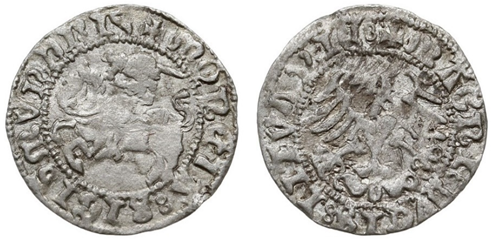
Analysis of the Vilnius Mint groat of Alexander, according to the proposed analytical framework is presented in Table 1.
The second case of legalised forgery to be analysed in detail is the 1515 Lithuanian half-groat of Sigismund the Old—King of Poland and Grand Duke of Lithuania (1506–1548). In November 2013 this coin was listed and sold by the well-known and long-established Polish numismatic auction house WCN (Warszawskie Centrum Numizmatyczne). This 1515 half-groat of Sigismund the Old sold successfully4, as the authenticity of the coin was apparently ascertained by the auction house. The coin was thought to be the so-called “short date” type and, in the authors’ opinion, it is a contemporary 16th-century forgery. The main tells for this conclusion are two. First, not a single authentic coin of 1515 with a “short date” is known. All known coins from this year have a full “1515” date. Second, the coat of arms images of the coin (Lithuanian Vytis and the Polish Eagle) do not correspond to any of the known authentic coins of Sigismund the Old. The overall presentation of the coin and its details indicate that the coin is fake for circulation.
A short date 1515 half-groat of Sigismund the Old coin has not been described in any modern relevant catalogue [15] (Ivanauskas 2009 and others). The Polish auction legalised this circulation forgery coin and was able to sell it thanks to it being erroneously described in old, outdated catalogues (this specifically refers to catalogues of Sajauskas, Kaubrys [25] (Sajauskas, Kaubrys 1993), as well as Kurpiewski [33] (Kurpiewski 1994) as a rare possible coin type.
From public information it is impossible to conclude if this case was intentional manipulation of information about the auctioned coin by the auction house; therefore, it is likely a case of research error or unintentional legitimisation. It is regrettable that experts were not publicly consulted in appraisal of the coin, which is evidently dubious, and the auction did not react to the note that the coin was a possible fake sent by the first author of this article after the sale had concluded.
Analysis of the Vilnius Mint 1515 Lithuanian half-groat of Sigismund the Old, based on the proposed analytical framework, is presented in Table 2.
The cases analysed in this article are by no means exhaustive. As was mentioned, multiple attempts to legalise other dubious coins have been made by E. Ivanauskas alone. Also, in the same WCN auction house in September 2021, another rare Lithuanian coin—supposedly a circulation forgery of a 1565 two-groats—was sold5. The auction house appraised the coin as a circulation forgery based on a hole punched in the coin. In the 16th century, forgeries removed from circulation were often “marked” this way. However, in the authors’ opinion this particular coin is likely genuine, albeit in very poor condition. The auction misappraisal and misattribution of the coin as a circulation forgery was likely a mistake, since a circulation forgery of such a rare coin is an even rarer phenomenon and likely would be appraised as more valuable. If the coin were to be identified as genuine, due to its damage and particularly poor condition, a different sale price could be expected.
All such legalised forgeries await full scrutiny and complete elimination from numismatics and history. The cases analysed in the article were also meant to validate the proposed analytical framework, which may be useful for routine assessment and publication of all legalised forgeries. The authors will continue this important work and would like to encourage the numismatic and historian communities to contribute.

4. Conclusions

In international practice, the most well-known cases of historical artifact forgery aim for financial gain; however, forgery is a much more complex phenomenon in which financial gain may be a secondary or even tertiary motive. Forging numismatic material has little significance (including financial gain) if the forgeries themselves are not publicised, i.e., not made public to a wide circle of interested parties. As the cases analysed in this article demonstrate, references in publications or auction catalogues legalise forgeries and thus create and contribute to the value of such forgeries in their eventual sale. Moreover, the forged material forms a fictitious authority and reputation for researchers, which generates indirect benefits, such as increased recognition and scientific work opportunities in the future, speaking fees, career possibilities, etc.
Although the forgery cases examined in this article were relatively simple, even these forgeries still remain a popularly recognised part of medieval Polish–Lithuanian numismatics due to a lack of critical research and publications to debunk the forgery. This is well illustrated by the case study of the Vilnius Mint groat of Alexander. The repeated erroneous record makes it difficult to remove these forgeries from numismatics, history and commercial circulation. The outdated historical publications legalising forgeries and the lack of publications refuting them, also allows forgeries to be mistakenly recognised and sold at auctions as genuine, as illustrated by the case study of Vilnius Mint 1515 half-groat of Sigismund the Old.
The intentions of the forgers are an important aspect of forgery legitimisation, since sometimes intentions can be entirely non-commercial and even seemingly noble; for example, when fake numismatic material is portrayed as supporting a national idea [11] (Nechitaĭlo 2011). Regardless of the intentions, the legitimisation of numismatic forgeries is a phenomenon that has a clearly negative impact on the science of history in general, especially numismatics, distracts attention from the investigation of genuine material, potentially distorts heritage conservation and restoration efforts, and—most importantly—establishes anti-scientific, dishonest, and dubious behaviour as an acceptable norm.
In this article, the authors sought not only to highlight the problem and investigate specific cases related to medieval Polish–Lithuanian numismatics but also to propose a useful and novel systematic analytical framework for the socio-legal investigation of suspected forgeries. The analytical framework suggested by the authors, combines objective and subjective elements, complements existing technological analysis frameworks and can be useful in investigating dubious artifacts, assigning known forgeries to their respective types, and accounting for socio-legal criteria allowing more specific differentiation of the forgeries. The framework can be beneficial in developing a detailed ontology of historical artifact forgery and also automated (machine learning and AI software-based) analysis methods for better understanding of forgery legitimisation cases.
The authors wish to encourage the numismatic and historian communities not to ignore other attempts at forgery legitimisation, but to analyse and publicise them. The proposed framework should be useful for this continued effort.

Author Contributions

Conceptualization, V.K. and A.Ž.; methodology, V.K. and M.K.; validation, V.K., M.K. and A.Ž.; formal analysis, M.K.; investigation, V.K., M.K. and A.Ž.; data curation, V.K.; writing—original draft preparation, M.K.; writing—review and editing, V.K., M.K. and A.Ž.; supervision, M.K. All authors have read and agreed to the published version of the manuscript.

Funding

This research received no external funding.

Data Availability Statement

All used data is public.

Conflicts of Interest

The authors declare no conflict of interest.

Abbreviations

ALLEAAll European Academies (European Federation of Academies of Exact Sciences and Humanities).

Notes

1
See the well-known historical forgery cases: https://canmore.org.uk/site/43402/dumbuck (Accessed on 8 November 2025) https://archive.archaeology.org/0101/newsbriefs/godshands.html (Accessed on 8 November 2025) https://elpais.com/cultura/2020/02/03/actualidad/1580720424_846642.html (Accessed on 8 November 2025).
2
ALLEA currently brings together 58 academies from more than 40 countries in the Council of Europe region. The academies belonging to the federation act as scientific societies, institutes of ideas and organisations engaged in research.
3
See: http://wcn.pl/auctions/55/229 (Acessed on 8 November 2025).
4
See note 3 above.
5

References

  1. Oliveri, V.; Porter, G.; Davies, C.; James, P. Art crime: The challenges of provenance, law and ethics. Mus. Manag. Curatorship 2022, 37, 179–195. [Google Scholar] [CrossRef]
  2. Craddock, P. Scientific Investigation of Copies, Fakes and Forgeries; Butterworth-Heinemann: Amsterdam, The Netherlands, 2009. [Google Scholar]
  3. Scorcu, A.E.; Vici, L.; Zanola, R. To fake or not to fake: An empirical investigation on the fine art market. J. Cult. Econ. 2021, 45, 143–152. [Google Scholar] [CrossRef]
  4. Miller, P.N. History and Its Objects. Antiquarianism and Material Culture Since 1500; Cornell University Press: Ithaca, Greece, 2017. [Google Scholar]
  5. Gerring, J. Case Study Research: Principles and Practices, 2nd ed.; Cambridge University Press: Cambridge, UK, 2017. [Google Scholar]
  6. Lenain, T. The Narrative Structure of Forgery Tales. In Cultural Property Crime: An Overview and Analysis of Contemporary Perspectives and Trends; Brill: Leiden, The Netherlands, 2014; pp. 37–60. [Google Scholar]
  7. Sayles, W.G. Classical Deception; Krause Pubns Inc.: Iola, WI, USA, 2001. [Google Scholar]
  8. Larson, C.M. Numismatic Forgery; Zyrus Press: Irvine, CA, USA, 2004. [Google Scholar]
  9. Mańkowski, H. Fałszywe Monety Polskie; Księgarnia Nakładowa: Poznań, Poland, 1930. [Google Scholar]
  10. Beyer, K. O numizmatach polskich podrobionych lub zmyślonych w nowszych czasach. In Wiadomości Numizmatyczno-Archeologiczne 19 1909; reprinted in Henryk Mańkowski, Fałszywe monet polskie; Polskie Towarzystwo Archeologiczne i Numizmatyczne: Warsaw, Poland, 1973. [Google Scholar]
  11. Nechitaĭlo, V.V. Katalog Monet Ukraini Periodu Kozachchinni XV–XVIII st.; Naukova Dumka: Kiev, Ukraine, 2011. [Google Scholar]
  12. Day, W.R. Early Imitations of the Gold Florin of Florence and the Imitation Florin of Chivasso in the name of Theodore I Paleologus, Marquis of Montferrat (1306–1338). Numis. Chron. 2004, 164, 183–199. [Google Scholar]
  13. Huletski, D.; Bagdonas, G. Lithuanian Coins. 1495–1536; Dzmitry Huletski: Vilnius, Lithuania, 2021. [Google Scholar]
  14. Zhebrauskas, A. Netipichnye mednye shillingi Iana II Kazimira Vazy (1648–1668). Bankauski Vesn. 2014, 3, 28–35. [Google Scholar]
  15. Ivanauskas, E. Coins of Lithuania 1386–2009; Eugenijus Ivanauskas: Vilnius, Lithuania, 2009. [Google Scholar]
  16. Kuklik, B.; Filipov, K. Mednye sheliagi polevogo getmana Vincentiia Gonsevskogo velikogo podskarbiia litovskogo. Bankauski Vesn. 2006, 4, 73–74. [Google Scholar]
  17. Hudson, M. For the people, by the people: Postwar Japanese archaeology and the Early Palaeolithic hoax. Anthropol. Sci. 2005, 113, 131–139. [Google Scholar] [CrossRef]
  18. Ivanauskas, E. Aleksandro Jogailaičio Lietuviškas Grašis—XIX a. Klastotė, Numizmatika 2–3; Lietuvos Nacionalinis Muziejus: Vilnius, Lithuania, 2004; pp. 301–305. [Google Scholar]
  19. Ivanauskas, E.; Douchis, R.J. Lietuvos Monetų Kalybos Istorija 1495–1769; Alytaus Spaustuvė: Alytus, Lithuania, 2019. [Google Scholar]
  20. Ivanauskas, E.; Douchis, R.J. Lietuvos Monetų Kalybos Istorija 1495–1769; Savastis: Vilnius, Lithuania, 2002. [Google Scholar]
  21. Zagórski, I. Monety Dawnéj Polski Jakoteż Prowincyj i Miast do Niéj Niegdy Należących, z Trzech Ostatnich Wieków/Zebrane, Uporządkowane i z Przywiedzeniem Zródeł Historycznych Opisane Przez Ignacego Zagórskiego; S. H. Merzbach: Warszawa, Poland, 1845. [Google Scholar]
  22. Hutten-Czapski, E. Catalogue de la Collection des Médailles et Monnaies Polonaises du Comte Emeric Hutten-Czapski; Chez Carl Ricker: St.-Pétersbourg, Russia; Cracovie, Poland, 1880; Volume III. [Google Scholar]
  23. Gumowski, M. Mennica Wileńska w XVI i XVII Wieku; E. Wende: Warszawa, Poland, 1921. [Google Scholar]
  24. Kopicki, E. Ilustrowany Skorowidz Pieniędzy Polskich i z Polską Związanych; Polskie Towarzystwo Numizmatyczne—Zarząd Główny: Warszawa, Poland, 1995. [Google Scholar]
  25. Sajauskas, S.; Kaubrys, D. Lietuvos Didžiosios Kunigaikštystės Numizmatika; Žaltvykslė: Vilnius, Lithuania, 1993. [Google Scholar]
  26. Ivanauskas, E.; Douchis, R.J. Coins of Lithuania 1386–1707; Savastis: Vilnius, Lithuania, 1999. [Google Scholar]
  27. Filipow, K. Ikonografia monet jagiellońskich Wielkiego Księstwa Litewskiego. In Problematika Mincovníctva Jagelovcov. Problematyka Mennictwa Jagiellonów. The Problems of the Monetary System of the Jagellons; Materiály z V. československo-poľskej numizmatickej konferencie, Svit, 20–22 mája 1988; Kolníková, E., Ed.; Slovenská Numizmatická Spoločnosť: Nitra, Slovakia, 1988; pp. 186–203. [Google Scholar]
  28. Ivanauskas, E.; Douchis, R.J. Pocket Catalogue of Lithuanian Coins 1386–1938; Profari: Kaunas, Lithuania, 2004. [Google Scholar]
  29. Gromyko, A. Neopisanyĭ litovskiĭ polugrosh Aleksandra Iagellona s unikalnym tipom reversa, Rus‘, Litva. Orda 2019, 6, 250–253. [Google Scholar]
  30. Hramyka, A. Unpublished Lithuanian half-groat of Alexander Jagiellon with a unique type of reverse. In Dzmitry Huletski, Giedrius Bagdonas, Lithuanian Coins. 1495–1536; Dzmitry Huletski: Vilnius, Lithuania, 2021; pp. 50–55. [Google Scholar]
  31. Parchimowicz, J.; Brzeziński, M. Monety Stefana Batorego, Króla Polski 1576–1586; Wydawnictwo Nefryt: Szczecin, Poland, 2014. [Google Scholar]
  32. Huletski, D. Lithuanian Grand Ducal Coins Before 1401; Baltijos Kopija: Vilnius, Lithuania, 2022. [Google Scholar]
  33. Kurpiewski, J. Katalog Monet Polskich 1506–1573 (Zygmunt I Stary–Zygmunt II August–Bezkrólewie 1573); Polskie Towarzystwo Numizmatyczne (PTN): Warszawa, Poland, 1994. [Google Scholar]
  34. Kavaliauskas, V. O litovskom polugroshe Sigizmunda Starogo (15)15 g. (typ „nepolnyĭ god“). Numiz. I Falerystyka 2016, 4, 38–40. [Google Scholar]

Table 1. Case study of Vilnius Mint groat of Alexander.
Casa Study 1: Vilnius Mint Groat of Alexander
Sources:
Ivanauskas, Douchis, 2019 [19].
Ivanauskas, 2004 [18].
Description:
Copy of phantasy coin of the Vilnius Mint groat of Alexander
Heritage 09 00107 i001
Type of forgeriesAncient forgeriesNo known physical specimens of this coins exist now. Only museum copies (photo of the copy from the Lithuanian National Museum) made from a “missing” Polish 19th-century museum specimen, which is considered a 19th-century forgery by multiple scholars. There are no reasonable arguments for the minting of the Alexander groat at the Vilnius Mint—no historical record of such a coin in monetary reform scholarship, no such coins have ever been found, no such coins are known in any collections. The most recent single coin is known only from an online publication by E. Ivanauskas, who is trying to legalise it and introduce it into scientific circulation, without examining it in person (as this is never mentioned). E. Ivanauskas does not refer to any metrological or metallurgical analysis data. Moreover, E. Ivanauskas’ claims contradict both the findings of other researchers and his own earlier claims.
Contemporary forgeries (circulation forgeries)
Imitation coins
Flawed coins
Phantom coinsPhantasy coin likely minted in mid-19th century in Germany or Poland.
Misattributed coins
Form of forgery legitimisationCommercial catalogues
Research sourcesIvanauskas, Douchis, 2019 [19].
Auctions and other sales platforms
Sales or donations to museums
Archaeological hoaxThis coin was allegedly found in Germany in a hoard of Meissen groschen, which is thought to be an archaeological hoax, because no hoards dominated with Meissen groschen are known from the 16th century.
CommercialThe physical artifact is thought to have existed and resold to the Polish numismatist in the 19th century.
Legitimisation objectivesAcademicCurrently propagated for sensationalist claims of unique scientific discovery, looking for academic prestige and numismatic recognition, as at this stage no such coin has been offered for sale or appraised. This objective is the most important in modern times.
Political
Combined
IntentionalE. Ivanauskas contradicts his own earlier writing in presenting this coin, and omits any justification and critical analysis, which suggest that this was not an accidental mistake.
Mens rea (forgers’ intentions)Unintentional
Lack of competence
Premises for the legitimisation of forgeriesLow competition in issuing coin catalogues
Tradition
The closedness and prevailing ethical standards of the numismatic communityNo ethical consequences or academic criticism.
Lack of academic/ethical consequencesNo ethical consequences or academic criticism.
Lack of legal consequences
Table 2. Case study of Vilnius Mint 1515 half-groat of Sigismund the Old.
Case Study 2: Vilnius Mint 1515 Counterfeit Half-Groat of Sigismund the Old
Sources:
WCN auction listing information
http://wcn.pl/auctions/55/229 (accessed on 25 February 2026);
[34] Kavaliauskas 2016.
Description:
Vilnius Mint 1515 counterfeit half-groat of Sigismund the Old, visibly dated to “short date” 15 (presumed 1515)
Heritage 09 00107 i002
Type of forgeriesAncient forgeries
Contemporary forgeries (circulation forgeries)A type not recognised in any contemporary catalogues, and mentioned only in incorrect old catalogues without any visual description or photograph;
the coin is a circulation forgery (16th-century forgery) based on visual examination. Not a single authentic coin of 1515 with a “short date” is known and was not known in reputable catalogues at the time of the auction. The coat of arms images on the obverse of the coin (Lithuanian Vytis and the Polish Eagle) do not correspond to any of the known authentic coins of Sigismund the Old.
Imitation coins
Flawed coins
Phantom coins
Misattributed coins
Form of forgery legitimisationCommercial catalogues
Research sources
Auctions and other sales platformsAuction: http://wcn.pl/auctions/55/229 (accessed on 25 February 2026)
Sales or donations to museums
Archaeological hoax
Other methods
Legitimisation objectivesCommercialSeller and auction were misled by incorrect historical record of the coin in incorrect old catalogues, by selling the forgery as a genuine coin.
Academic
Political
Combined
Mens rea (forgers’ intentions)Intentional
UnintentionalAuction appraiser ignored dubious authenticity and lack of contemporary catalogue record. The coin is visually very different from the original coins of this type and period.
Premises for the legitimisation of forgeriesLack of competence
Low competition in issuing coin catalogues
Tradition
The closedness and prevailing ethical standards of the numismatic communityForgery noticed by the first author of the article in 2014 after the auction sale. Electronic notification to the local numismatic community (forum boards) and the auction was sent by the first author of the article in 2014; however, the auction did not react to it.
Lack of academic/ethical consequencesNot known. Although the auction was notified of the possible forgery, the listing was not updated.
Lack of legal consequencesNot known. Although the auction was notified of the possible forgery, the listing was not updated.
Disclaimer/Publisher’s Note: The statements, opinions and data contained in all publications are solely those of the individual author(s) and contributor(s) and not of MDPI and/or the editor(s). MDPI and/or the editor(s) disclaim responsibility for any injury to people or property resulting from any ideas, methods, instructions or products referred to in the content.