


Abstract
This study presents the results of an archaeometric investigation of white marble votive reliefs from the Roman city of Pautalia (modern Kyustendil, Bulgaria), with the aim of clarifying patterns of material selection, production, and connectivity within the eastern provinces of the Roman Empire. Although these votive monuments, primarily dated to the 2nd and 3rd centuries AD, have long been examined from stylistic, iconographic, and epigraphic perspectives, the provenance of the marble used in their manufacture has remained largely unexplored. A total of 27 votive reliefs from urban and extra-urban sanctuary contexts were analysed using a multi-method approach combining petrographic analysis, stable isotope ratios (δ13C and δ18O), and trace element analysis by ICP-MS, and compared against an extensive geological reference database of ancient marble quarries. The results indicate a clear predominance of local and regional marble sources, alongside a limited but meaningful presence of imported material. This distribution pattern supports the existence of local workshops operating in or near Pautalia, which relied primarily on nearby quarry sources while selectively incorporating imported marble, likely through the reuse of pre-existing blocks or workshop offcuts rather than through systematic long-distance supply. These findings underscore Pautalia’s role as a regional production centre and as a nodal point within wider networks connecting the Aegean world and the Balkan hinterland.
Keywords:
Roman Thrace; white marble; provenance studies; archaeometry; cult context; Pautalia; votive reliefs 1. Introduction
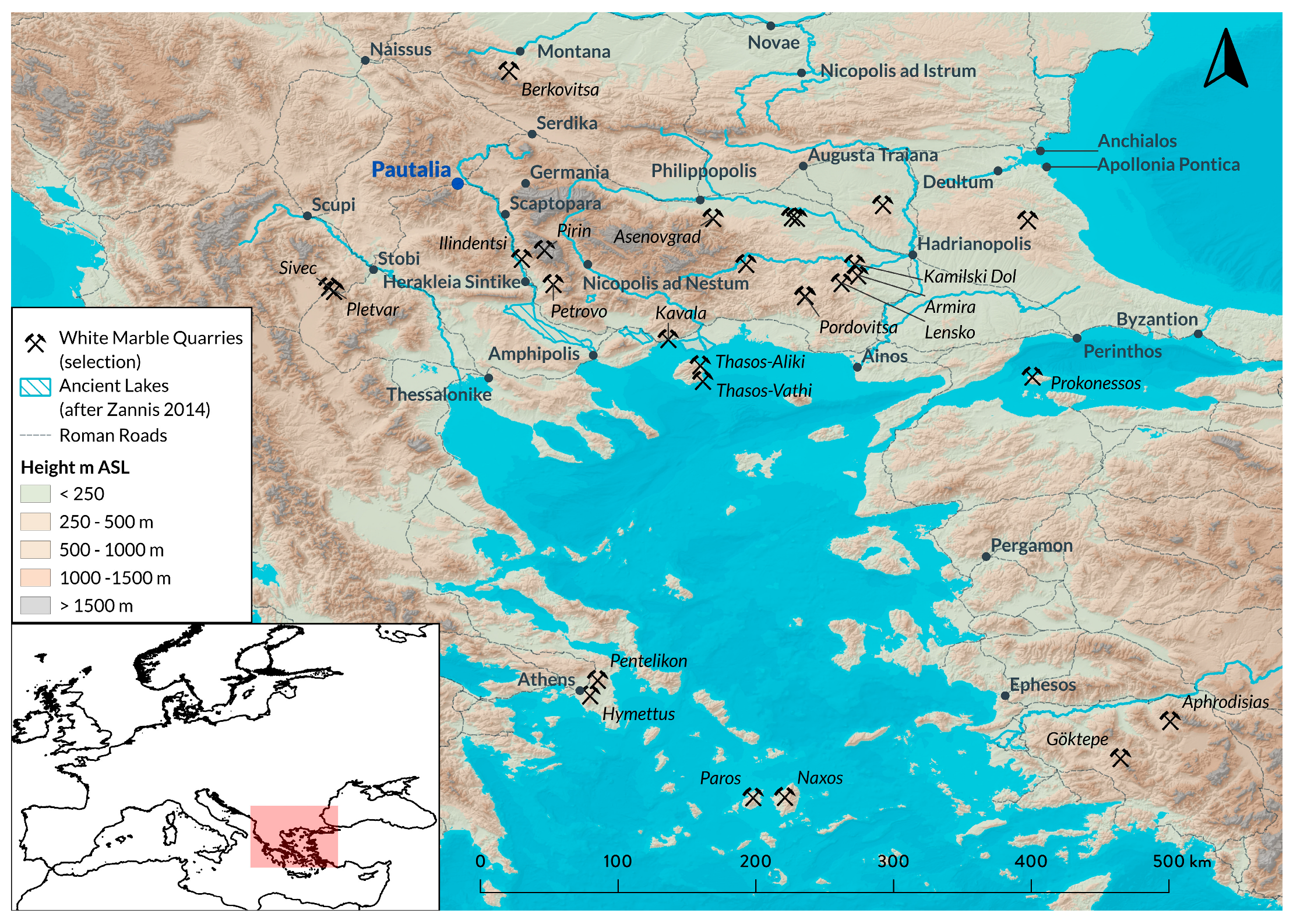
The Roman city of Pautalia was an important administrative, economic, cultural, and religious centre for the southwestern borderlands of the Roman province of Thrace in the 2nd-3rd centuries (Figure 1). It was located in the fertile, thermal-spring-rich Kyustendil Valley, at the immediate foot of the Hisarlak hill (part of the Osogovo mountain range). The lands within the city territory of Pautalia during the Roman era encompassed the entire upper reaches of the Strymon River (today’s Struma River) and its tributaries, as well as the adjacent valleys and the mountainous regions to the west and east.
Archaeological investigations in Pautalia have a 120-year history. It provides several reference points for the development of the city during the Principate. The city was founded in the early 2nd century during the reign of Emperor Trajan (98–117), urbanised during the reign of Emperor Hadrian (117–138), and fortified with walls during the reign of Emperor Marcus Aurelius (161–180) [1], pp. 66–123; [2], pp. 82–96; [3,4], pp. 104–133; [5], pp. 261–287. During the 72-year period between the reigns of the Emperors Antoninus Pius (138–161) and Caracalla (211–217), the town was granted permission to mint bronze coins [6,7,8].
Figure 1.
Location of Pautalia (modern Kyustendil, Bulgaria) and selected major marble quarrying centres of the Roman Eastern Mediterranean (ed. by B. Frerix, ÖAI, ÖAW; After [9,10].
The legal status of Pautalia is not explicitly attested in written sources or in the epigraphic monuments discovered to date. It is assumed that, like other cities in the province of Thrace, it had the status of civitas stipendiaria, which was expressed in the right of self-government, judicial proceedings, and the right to mint coins [11], p. 260. Due to the use of the Greek language, the titles of the city magistrates in Thrace, and therefore in Pautalia, largely coincide with those in the Greek polities of Asia Minor [12], p. 226; [13], pp. 23–27. According to the city’s epigraphic archive, the ethnic structure was heterogeneous [14], pp. 45–49. The inscriptions record individuals bearing names of Greek and Thracian origin, whereas most Roman names appear to follow conventional naming practices.
In the 2nd-3rd centuries, the construction of monumental public buildings in Pautalia is closely linked to the rise of the city as an administrative and economic centre, and a focal point for the provincial political elite. Healing mineral waters were among the main factors for the prosperity of Pautalia during the Antonine and Severan periods. A substantial portion of the city’s finances was invested in the construction of the large thermae, which are believed to have been supplied with water from the thermal springs. The excavated parts of the bath complex in Pautalia cover an area of over 3,000 square metres and, based on the ancient layout of the city, appear to have occupied at least two insulae in the southeastern part of its fortified area [15], pp. 34–44. The interior of the uncovered rooms is luxuriously finished with marble cladding on the walls and floor mosaics. Fragments of various marble statues and votive reliefs have also been found.
For the large-scale building activity here, including the construction of fortifications, street network, public, religious, and private buildings, there must have been many stone-cutters, masons, mosaic workers, technicians, etc. [16], pp. 122–126, [17], pp. 257–260. It is undoubtedly due to the presence of ateliers that produced architectural elements, bases, columns, and capitals. Various architectural details, mainly made of granite, have been found in the excavations of the Hisarlak hill. A significant part of the details, made of marble and limestone, was destroyed in the 17th-19th centuries in lime kilns.
Architectural activity is attested in the city, with two architects—Laomedon and Glaukias—explicitly mentioned in the epigraphic record (IGBulg. V, 5779). Further epigraphic evidence points to the practice of marble polishing, indicating specialised stone-working activities within the urban context (IGBulg. IV, 2069). Marble plastic arts in Pautalia are represented primarily by sculptural monuments and votive reliefs. Archaeological data document fragments of statues depicting Asclepius, Zeus, Hera, and Apollo, the majority of which are Roman replicas of classical models [1], figs. 44, 47, and 62. The images on the coins of the Pautalian mint are the basic source of information on the sculptures from the town and the temple complex on Hisarlak.
Along with its administrative and economic functions within its own territory, the city was an important religious centre of provincial significance. The temple area on Hisarlak hill is one of the most notable landmarks of Pautalia. This is emphasised by emissions of bronze coins from Pautalia during the Severan period, which feature images of an Asclepius temple on the reverse [18], pp. 136–147; [19], pp. 477–489; [20], pp. 235–242. Judging by the coins, sanctuaries and temples dedicated to deities in the Greek-Roman pantheon were situated among the trees on Hisarlak Hill. It is believed that there was a statue of Asclepius at Pautalia’s main temple [6], p. 29. During excavations at the foot of Hisarlak, numerous architectural elements from public buildings and temples were discovered. A cornice with palmettes and a Medusa head [6], Figure 51, as well as a frieze-architrave with garlands and bucrania, which is believed to originate from a Corinthian-style aedicule protruding from the facade of a building (temple), gives an idea of the richness of their decoration [21], pp. 223–226. Multiple votive tablets and dedications to Zeus and Hera, Sabazios, the Olympic gods, Asclepius, Hygieia, and Telesphoros indicate the worship of the revered gods. The idea emerged that there had been a large centre of worship—Asclepieion at Pautalia, comparable to that at Epidaurus, Kos, and Pergamon [4], pp. 126–130. A dedication to the Pautalian Asclepius and Hygieia, made by a certain priest Heraclianus in the famous sanctuary of Asclepius in Epidaurus (IG IV2, 1477), shows that the cult of the Pautalian divine couple went beyond the borders of the province of Thrace. The sanctuary was destroyed during the construction of the late-antique fortress at the end of the 4th century [22].
Another large sanctuary has been excavated at Caristorum (present-day Kopilovtsi village), not far from the city in the northeastern direction [23], pp. 80–111; [24], pp. 189–196. The sanctuary was located next to the road from Pautalia to Serdica. Three separate buildings identified as temples were discovered, and among their ruins were found over 60 fragmented marble votive reliefs with dedications to Zeus and Hera, Heracles, Dionysus, Hermes, and a Thracian Horseman. The iconographic features of the preserved busts of the cult marble statues of Zeus and Hera are associated with the style of the Antonine era and, more precisely, with the time towards the end of the reign of Antoninus Pius (138–161) and that of Emperor Marcus Aurelius (161–180) [25], pp. 99–104. According to the coin finds, the emergence of the sanctuary can be traced to the end of the 1st century, and its functioning continued until the end of the 4th century. While the votive reliefs found in the sanctuary were all produced in Pautalia’s workshops, the two cult statues of Zeus and Hera were probably imported from a major Greek artistic centre [25], p. 101. In the 4th century, the production of pagan artefacts in Pautalia declined, and the stone plastic arts became Christian in character.
Within this urban, religious, and economic framework, marble votive reliefs represent a particularly informative category of material culture. As modest yet highly standardised objects dedicated in sanctuaries and cult places, they offer a unique perspective on patterns of production, material choice, and distribution that differ from those of large-scale architectural or monumental sculpture. In Roman Pautalia, votive reliefs were closely embedded in local religious practices associated with healing cults and regional deities, while at the same time reflecting broader artistic conventions of the Eastern provinces. Their relatively small size, repetitive iconography, and frequent inscriptional evidence make them especially suitable for archaeometric investigation, allowing questions to be posed about the provenance of the marble, the organisation of local workshops, and the mechanisms through which raw materials circulated within and beyond the city’s territory. This study, therefore, asks to what extent votive reliefs from Pautalia were produced using locally available stone, whether imported marbles were selectively employed, and how these choices relate to economic considerations, workshop practices, and access to regional and interprovincial trade networks. By integrating marble provenance data with archaeological and historical context, the votive reliefs are approached not merely as expressions of personal devotion but as active indicators of Pautalia’s position within the broader systems of stone supply, craftsmanship, and connectivity in Roman Thrace.
Remarks on the Local Geology
Roman Pautalia (Kyustendil valley) is positioned north of the Osogovo mountains (Osogovo Pluton) and within the Strymon plain. The Osogovo Pluton and other magmatic bodies intrude the local basement, consisting of high-grade metamorphic rocks, which are part of the Morava-Rhodope zone [26,27]. This zone further subdivides into the Units of Struma, Morava, and Ogradzhden [26,28]. Within this region, fossiliferous, laminated, or recrystallised limestone is confined to specific stratigraphic levels, as thick-bedded grey occurrences in the Konyavska Mountain, 17 km east of Kyustendil [27,29]. Low-quality and pigmented marbles are found 12 km NW of the village of Goranovtsi, and this material was used, in modern times, as a mosaic [27].
Transcending south towards the Petrovo region, the geology shifts into the Pirin-Pangaion Unit, expanding towards Greece, with the Pirin Subunit outcropping almost entirely within the Bulgarian borders [30]. There are four metamorphic areas into which the Pirin Subunit may be divided: (a) Krupnik, (b) Sinanitsa, (c) Lilyanovo, and (d) Teshovo. The Krupnik region is characterised by small marble occurrences as lenses or layers. Significant marble occurrences are reported in the Sinanitsa area and the Dobrostan Marble Formation [30]. The latter comprises (a) grey to white banded marbles intercalated with metapelites, (b) medium to fine granoblastic marbles and dolomitic marbles with significant amounts of graphite, and (c) dolomitic marbles with fine texture. The Lilyanovo region comprises amphibolites, metamafic, metaultramafic rocks, and metapelites. The Dobrostan Marble Formation in the area of Teshovo reaches 1 km in thickness, forming the Petrovo anticline. Apart from the voluminous marble occurrences of the Pirin mountains [28,30,31], there are secondary carbonate sources in the Struma valley in the form of marble conglomerates (e.g., Ilindentsi region: [32]).
2. The Sampled Artefacts
The present study is based on the complete corpus of currently known white marble votive reliefs originating from the Roman city of Pautalia and its territorial hinterland. All available marble votive plates that can be securely associated with the city and its surrounding sanctuaries were included in the sampling programme, ensuring a comprehensive and representative dataset. The analysed samples originate from artefacts recovered during archaeological excavations conducted primarily during the 20th century. The material is currently housed in the collections and storage depots of the Regional Historical Museum of Kyustendil and the National Archaeological Institute with Museum, Bulgarian Academy of Sciences (Sofia).
The artefacts are predominantly dated to the 2nd and 3rd centuries AD and derive from both urban and extra-urban cult contexts. For analytical and contextual clarity, the sampled artefacts were divided into three groups. The first group comprises material from the sanctuary of Zeus and Hera at Kopilovtsi, representing a well-defined extra-urban cult complex. The second group derives from the sanctuary on Hisarlak Hill, located within the urban sphere of Pautalia and associated with major public and religious structures. The third group includes miscellaneous votive monuments recovered from the urban area of Pautalia and its immediate surroundings, which cannot be securely assigned to a single sanctuary context.
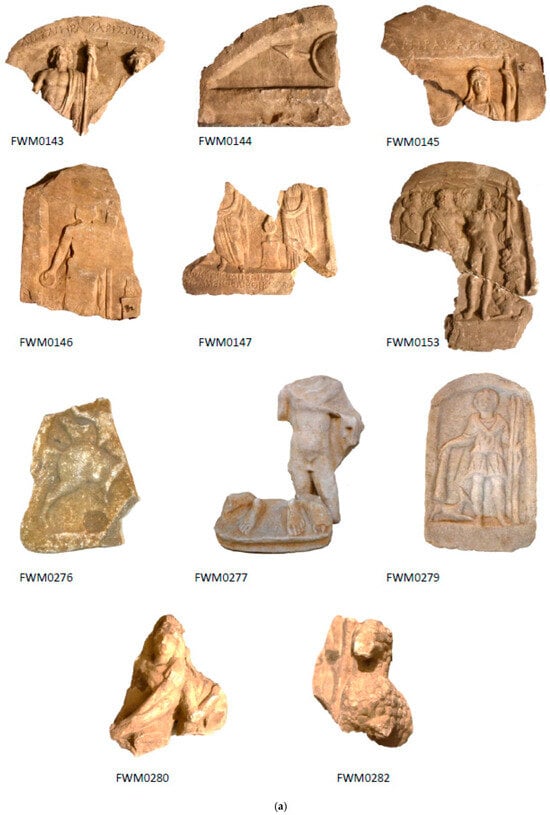
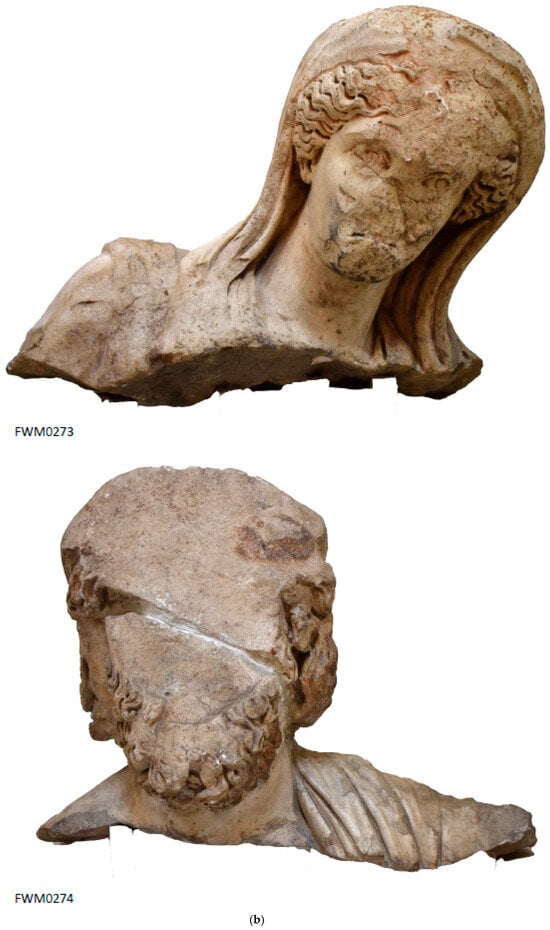
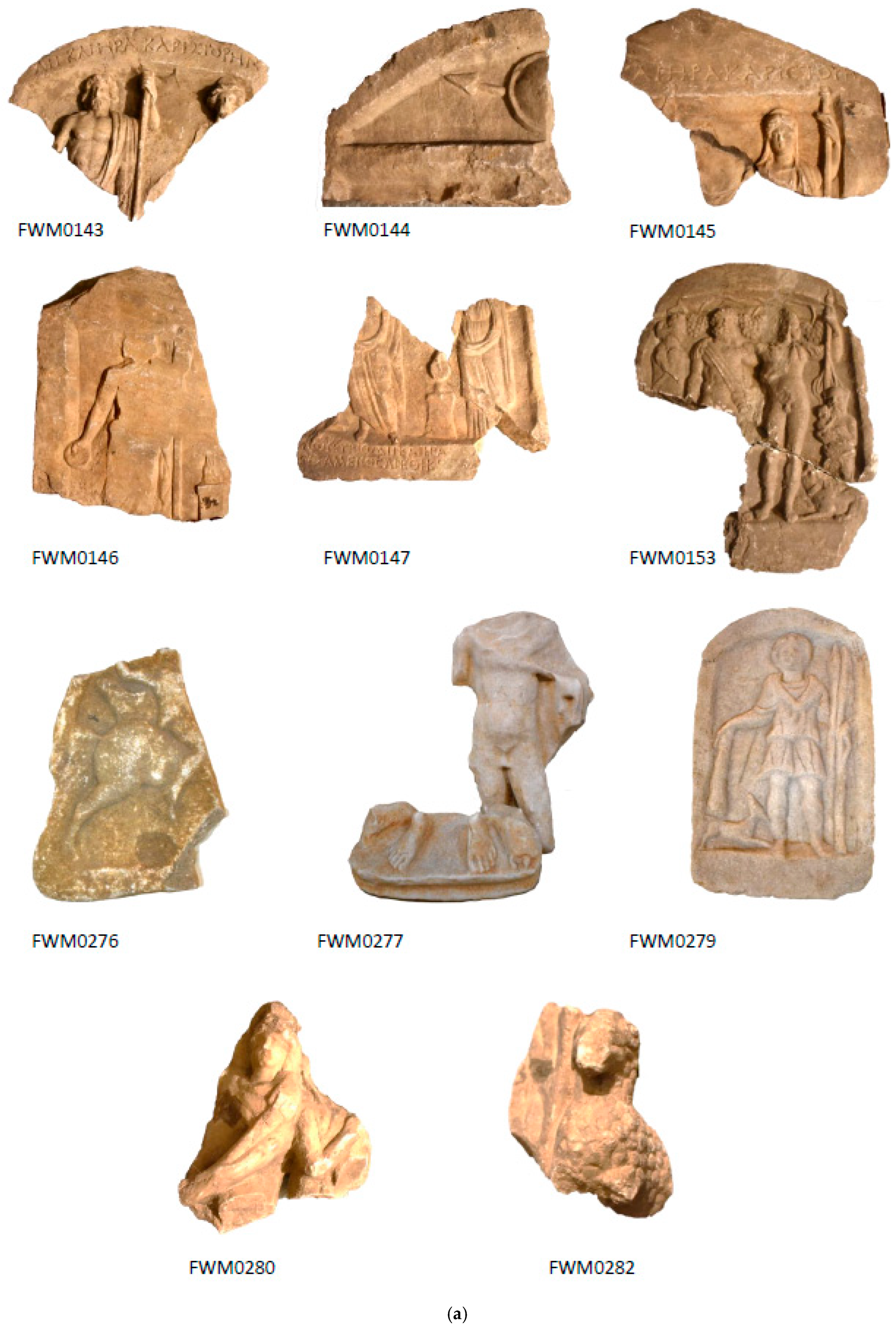
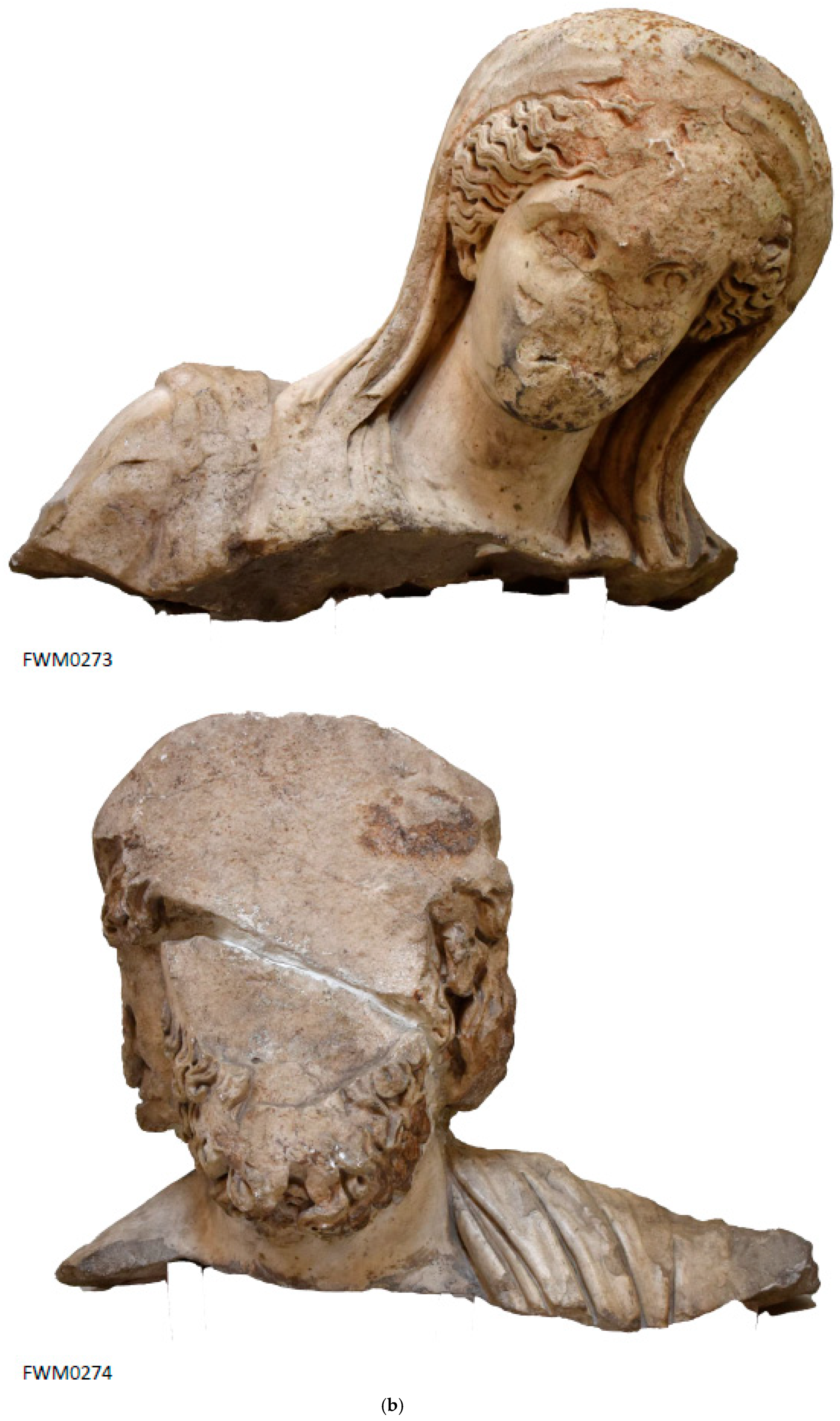
The first group of sampled artefacts derives from the sanctuary of Zeus and Hera at Kopilovtsi (Table 1a). This assemblage consists predominantly of fragmented white marble votive plates depicting various deities, reflecting intensive cultic activity and repeated dedicatory practices at the site. In addition to these relief fragments, the group includes two life-size marble statues representing Hera and Zeus, as well as a fragmented two-figure statuette, of which only one figure is preserved. Despite their differing scales and degrees of preservation, all objects are securely associated with the sanctuary context (Figure 2a,b) [33].
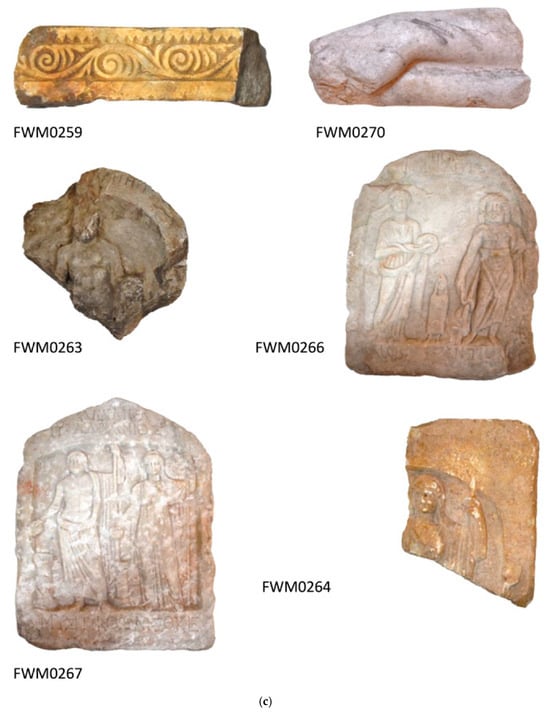
Figure 2.
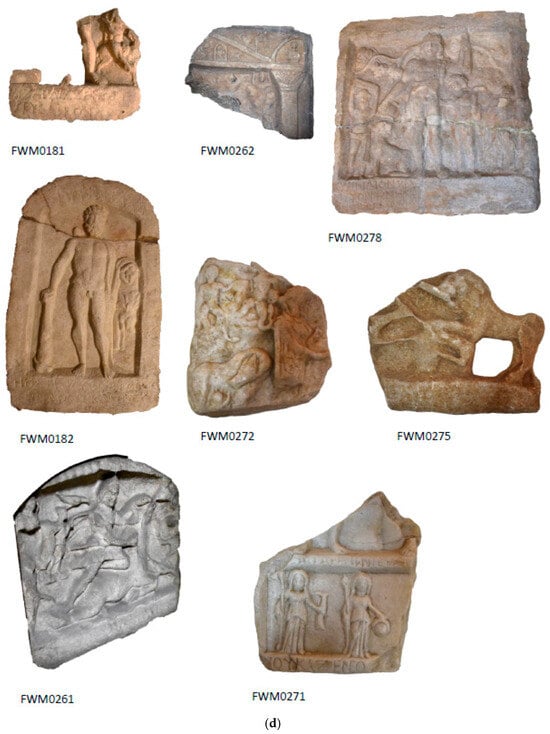
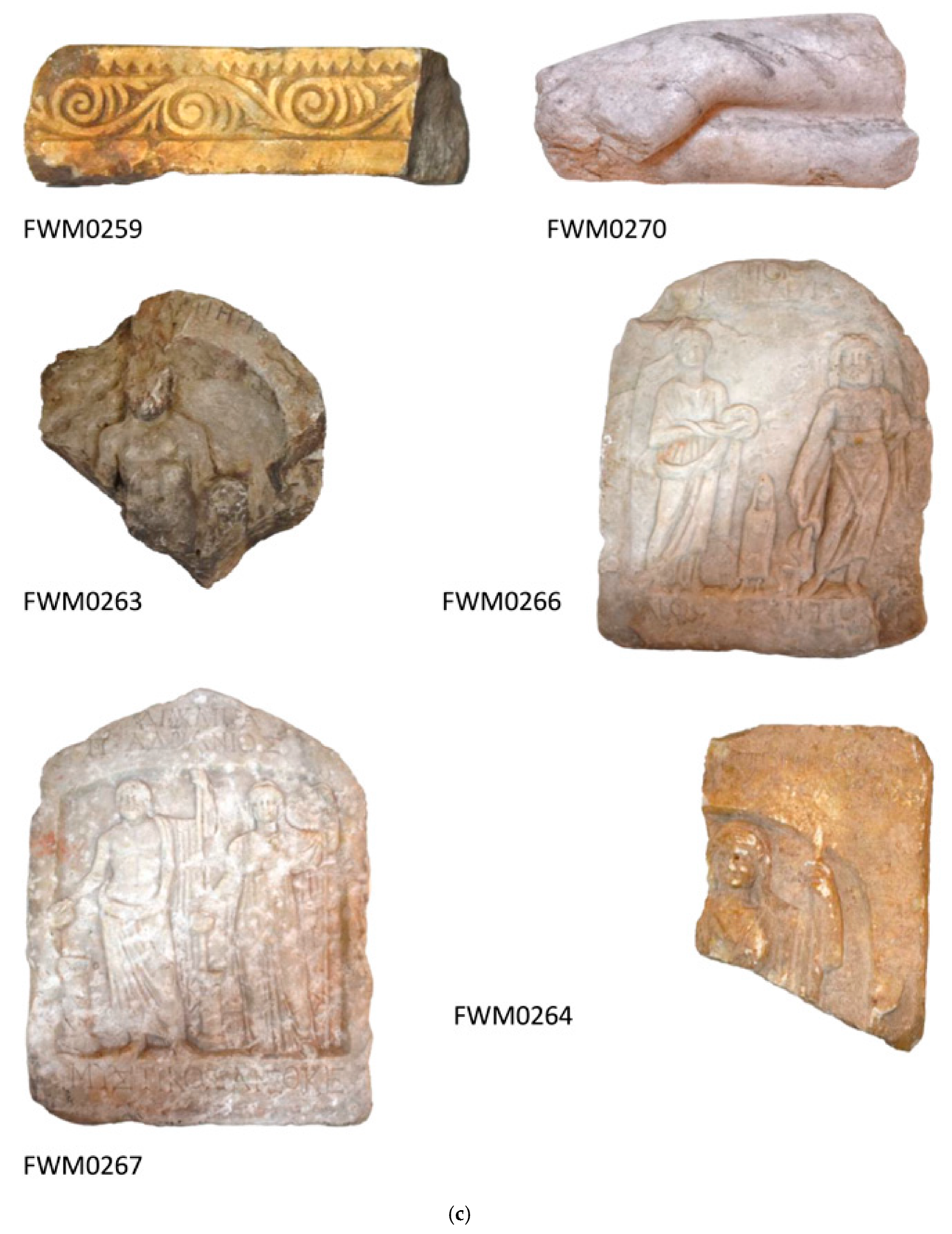
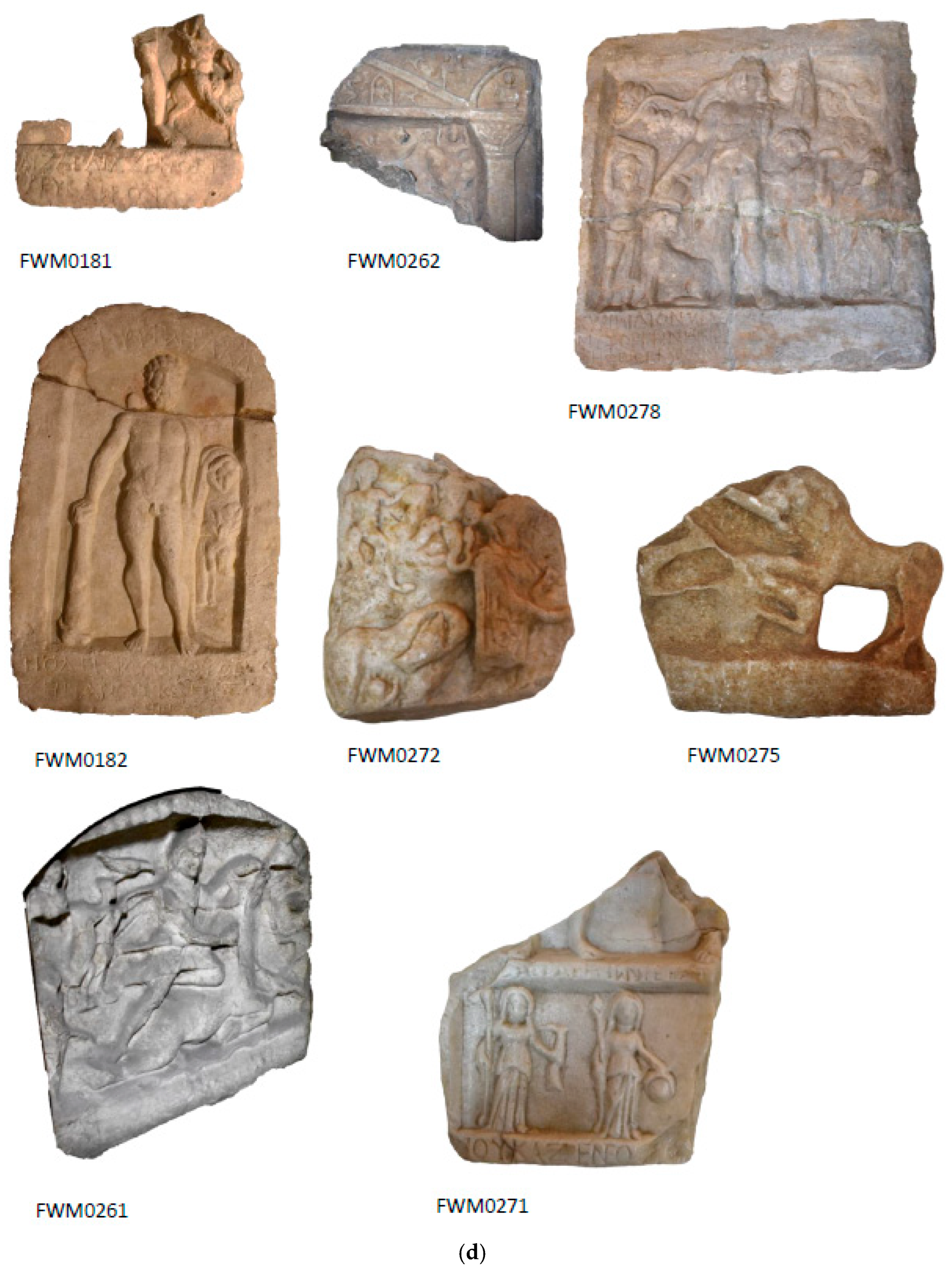
(a) The artefacts from the Shrine of Zeus and Hera (Kopilovtsi) (ph. V. Anevlavi). (b) The statues of Hera (FWM0273) and Zeus (FWM0274) from the Shrine of Zeus and Hera (Kopilovtsi) (ph. V. Anevlavi). (c) The artefacts from the Hisarlak group (ph. V. Anevlavi. (d) The examined miscellaneous votive reliefs (ph. V. Anevlavi).
The second group comprises artefacts originating from the sanctuary at Hisarlak (Table 1b). Similar to the first assemblage, this group is dominated by fragmented white marble votive plates depicting deities (e.g., Asclepius and Hygieia). In addition to the votive relief fragments, the group includes a fragment of an architectural door frame (Figure 2c) [24].
The third group consists of miscellaneous white marble votive artefacts recovered from the urban area of Pautalia and its immediate surroundings (Table 1c). This assemblage comprises primarily votive plates depicting a range of deities, including Mithras and Heracles, and represents dedications not directly associated with a single, clearly defined sanctuary context (Figure 2d). Despite their diverse findspots and iconographic subjects, these objects form a coherent analytical group, allowing for the examination of marble selection beyond the major cult centres represented by the sanctuary assemblages (for related reference publications, see Table 1c).
Table 1.
(a) The artefacts from The Shrine of Zeus and Hera (Kopilovtsi). (b) The artefacts from the Hisarlak Sanctuary. (c) Miscellaneous votive reliefs (ed. V. Anevlavi, P. Andreeva and K. Petkova).
3. Methodology
Microscopic analysis is a preliminary component of the present study, as it enables the identification of primary and accessory mineral phases, the characterisation of marble fabric, the assessment of crystal-size distribution, and the detection of secondary inclusions or alteration products [35]. Petrographic examination was carried out on thin sections prepared to a standard thickness of 30 μm and analysed using a petrographic microscope (Kern OPO 185). The resulting observations were systematically compared with the reference thin-section collection compiled by Prof. W. Prochaska (ÖAI/ÖAW), which comprises approximately 350 geological samples from ancient and modern quarry contexts and is housed at the Austrian Archaeological Institute.
To enhance the reliability of marble provenance attribution, petrographic observations were integrated with isotopic and geochemical analyses. In particular, the ratios of stable carbon and oxygen isotopes (13C/12C and 18O/16O) were employed as a core analytical tool [36,37]. Since their introduction by Craig and Craig [38], stable isotope methods have been widely applied in marble provenance studies due to their sensitivity to both the depositional environment of the parent carbonate and subsequent metamorphic processes. Extensive quarry sampling has led to the establishment of comprehensive isotopic reference datasets, supported by the relatively small sample size required (approximately 0.2 mg), making the method particularly suitable for archaeological artefacts of limited dimensions [37,39].
For the present investigation, isotopic measurements were conducted at the Bayerische Staatssammlung für Paläontologie und Geologie (Munich, Germany). Carbon dioxide was liberated from carbonate phases through reaction with phosphoric acid at 72 °C using an automated Finnigan Gasbench II system. The resulting CO2 was analysed for carbon and oxygen isotope ratios using a Finnigan Delta Plus mass spectrometer operated in continuous helium flow mode. A laboratory house standard was employed to monitor analytical precision and ensure data consistency.
For mineral identification, X-ray diffraction (XRD) was employed. Approximately 1 g of each ultra-pure water-cleaned sample was hand-crushed using an agate mortar and pestle. The XRD analysis was performed using a Bruker X-Ray Diffractometer D6 Phaser equipped with a CuKα source (λ = 1.54 Å), to identify the crystalline structure and phase composition of the samples. Prior to analysis, the instrument was calibrated using a corundum (α-Al2O3) reference standard to ensure accurate peak positioning measurements. The XRD measurements were conducted under the following operational parameters: the 2θ scanning range was set from 5° to 90° with a step size of 0.02° and a counting time per step of 1.5 sec using a continuous scan mode. Each sample was continuously rotated at a rotation speed of 6 rpm. The continuous rotation of samples during data acquisition was set to minimise preferred orientation effects. Data collection was performed at room temperature under ambient atmospheric conditions. XRD patterns were identified using the Minerals library of the Crystallography Open Database (COD) employing the DIFRACT.EVA software provided by Bruker [40].
In addition to isotopic analysis, trace element characterisation was undertaken using inductively coupled plasma mass spectrometry (ICP-MS), a technique that has become increasingly important in marble provenance research due to its ability to resolve elemental concentrations at low and sub-ppm levels. Elements such as Mg, Mn, Sr, Fe, La, Ce, Cd, Ba, Y, Yb, and U have proven particularly effective in discriminating between marble sources. For each sample, approximately 0.1 g of finely powdered material was dissolved in concentrated hot nitric acid (HNO3) for about five minutes. This selective dissolution targets the carbonate fraction and associated soluble phases, while leaving silicate contaminants largely unaffected. Analyses were performed at the Chemistry Department of TU Wien using an Agilent 8800 ICP Triple Quadrupole (ICP-QQQ) mass spectrometer, calibrated against a Merck VI multi-element standard. Limestone reference material JLs-1 was used as an internal standard. When combined with conventional analytical parameters and multivariate statistical evaluation, this approach allows for robust discrimination between archaeological and geological marble samples [39].
Given the large number of analytical variables generated through isotopic and trace element measurements, rigorous statistical treatment was essential. To integrate and evaluate the datasets, a validated statistical workflow based on multivariate discriminant analysis was applied. Data processing and interpretation were carried out using the software packages STATISTICA and SPSS, both of which have been successfully employed in comparable archaeometric studies (e.g., [41,42]). In SPSS, discriminant analysis was used to calculate numerical classification probabilities, assigning each sample to a specific quarry group based on its chemical signature. This procedure generates discriminant functions that quantify the likelihood of group membership. In parallel, STATISTICA was used to derive a reduced set of synthetic discriminant factors from multiple chemical variables, allowing larger datasets to be processed within a single analytical framework. Graphical visualisation of these factors facilitates an intuitive assessment of the degree to which individual samples correspond to established quarry groups. Throughout the analysis, identical variables were consistently applied across all datasets to ensure methodological coherence.
A key element of the provenance determination involved systematic comparison with the extensive white marble reference database maintained by the Austrian Archaeological Institute. This database currently comprises approximately 5,700 geological samples from ancient and modern quarries, assembled over several decades through targeted sampling campaigns led by Prof. Prochaska and collaborators. The dataset covers the principal marble-producing regions of the Roman world and has been analysed using consistent petrographic, geochemical, and statistical protocols. While a substantial portion of these data has already been published, additional material remains in preparation. The database is accessible through the institute’s open-access platform [43] (https://oeaimetrix.oeaw.ac.at/; accessed 1 March 2026) and constitutes a critical reference framework for marble provenance studies [39,42,44,45,46]. The reference collection includes marble samples from major quarrying centres in Asia Minor (e.g., Dokimeion, Ephesos, Heraklea, Aphrodisias), Greece (e.g., Penteli, Paros), and other regions of the Roman Empire, enabling both regional and quarry-specific attribution. In addition, the database incorporates approximately 4500 analysed artefacts from archaeological sites and museum collections, including architectural elements, sculptures, reliefs, sarcophagi, and inscriptions. By situating the analytical results of the present study within this well-established comparative framework, it is possible to assign provenance with a high degree of confidence and to link individual artefacts to their most probable quarry sources. For a detailed discussion of the analytical protocols and the structure of the database, see Prochaska and Attanasio [39,45] and Prochaska et al. [46].
4. Results
The following section is organised into three subsections, reflecting the analytical approaches employed: petrography, X-ray diffraction, and combined stable-isotope and ICP-MS analysis. Throughout the results, the samples retain the grouping scheme established in Section 2.
4.1. Petrography Results
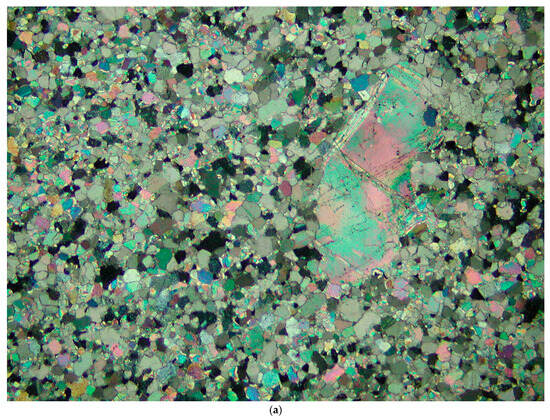
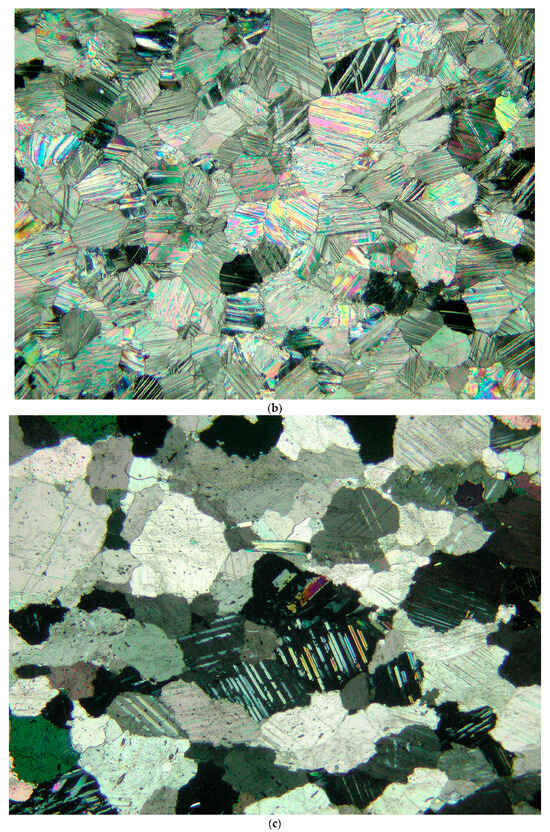
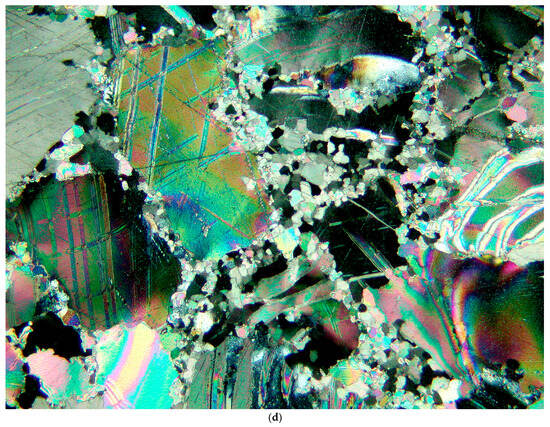
Four characteristic examples are presented below, which exemplify the prevailing textural fabric documented across most of the votive reliefs.
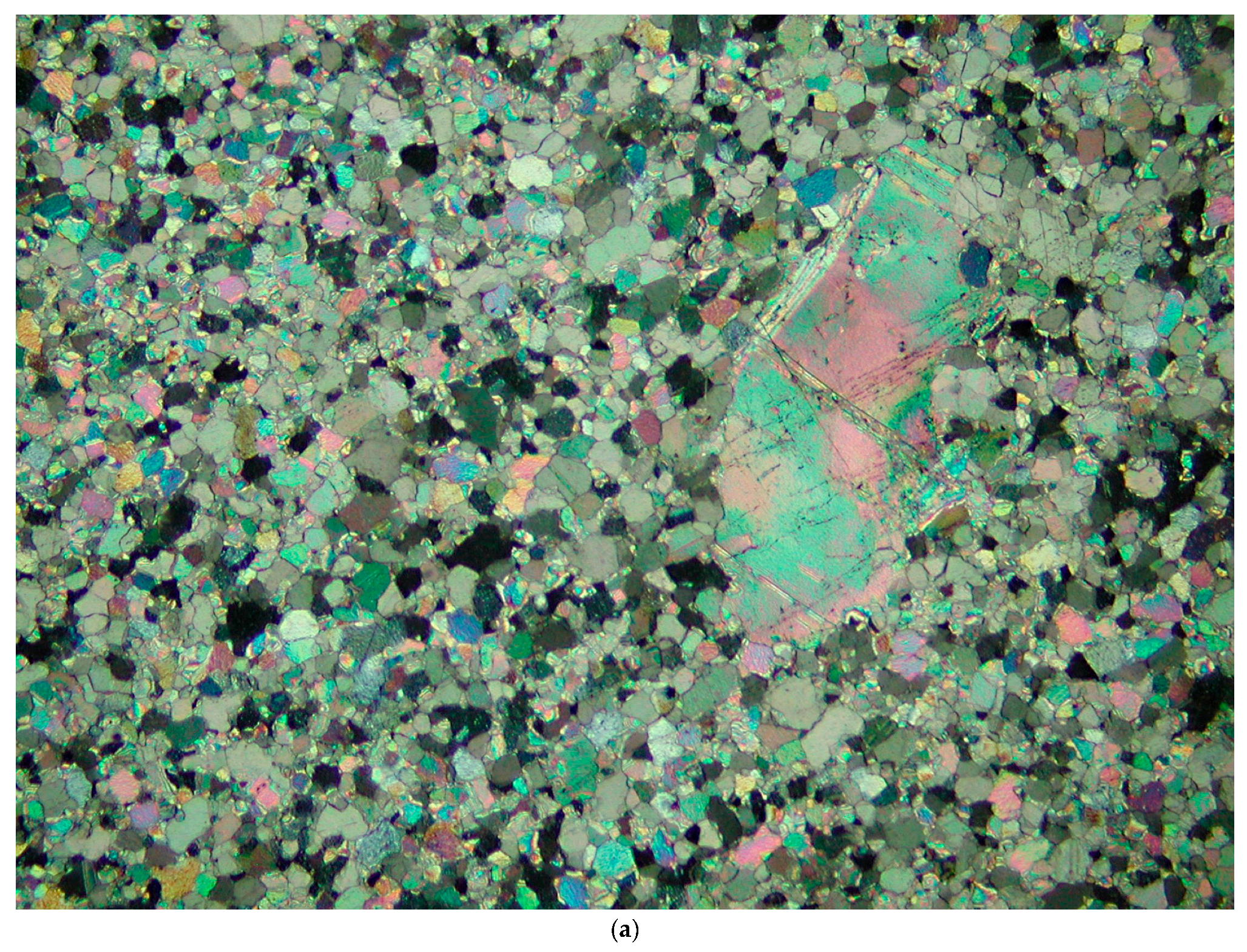
FWM0267: The fabric of this sample is extremely heteroblastic with large calcite crystals in a fine groundmass. The large calcite clasts are strongly deformed and show corroded grain-boundaries. The groundmass consists of small calcite crystals (maximum grain-size is about 0.1 mm) with even and straight grain-boundaries indicating a slight recrystallisation after the main deformational event (Figure 3a).
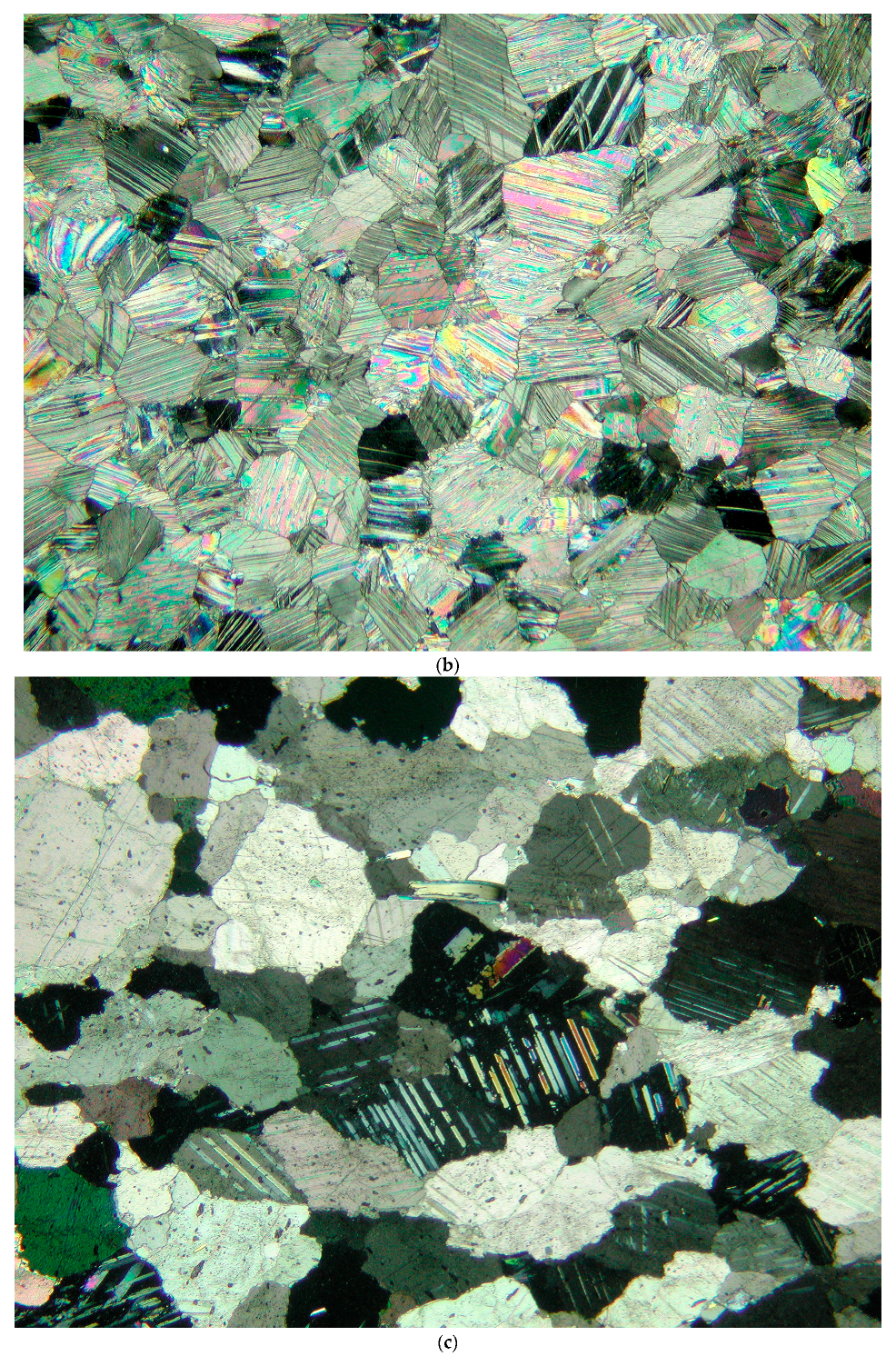
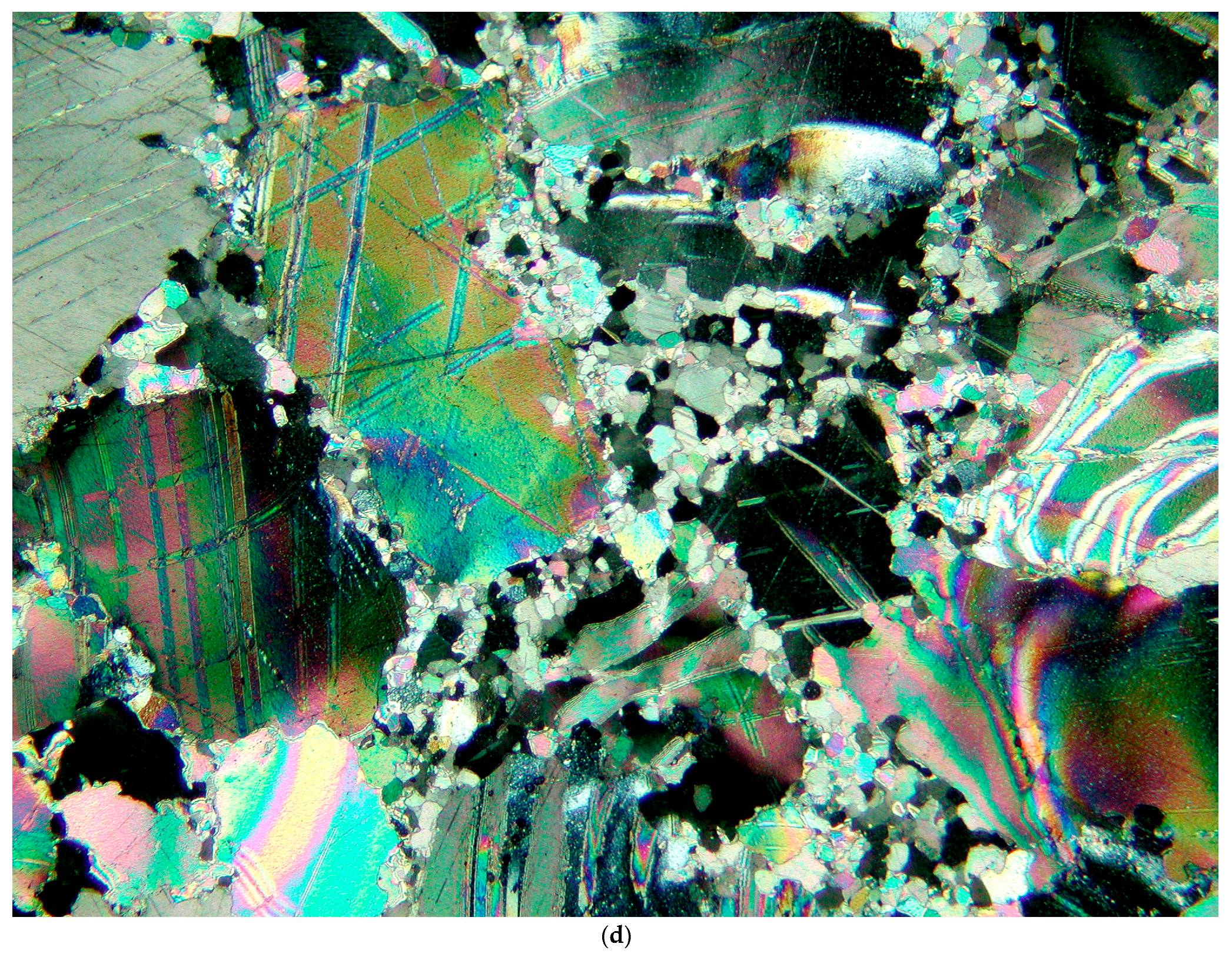
Figure 3.
(a) Sample FWM0267 shows a pronounced heteroblastic fabric. The fine-grained groundmass (image length is 6 mm) (ph. W. Prochaska). (b) Sample FWM0259 is strongly deformed, fine-grained calcitic marble with highly distorted twin lamellae and even grain boundaries; grain size approx. 0.5–1 mm (polarised light; image width 6 mm) (ph. W. Prochaska). (c) Sample FWM0274 is a homoeoblastic dolomitic marble with a maximum grain size of ~1 mm; straight grain boundaries are rare, while serrated crystal contacts prevail. Occasional deformed mica is present (polarised light; image width 6 mm) (ph. W. Prochaska). (d) Sample FWM0264 is strongly deformed calcitic marble showing twisted twin lamellae and subgrain formation along grain boundaries due to tectonic overprint; grains up to 7 mm are preserved, with no visible impurities (polarised light; image width 6 mm) (ph. W. Prochaska).
FWM0259: This sample is a strongly deformed, fine-grained calcitic marble composed of pure calcite. It is characterised by highly distorted twin lamellae and irregular grain boundaries. The grain size ranges from approximately 0.5 to 1 mm (Figure 3b).
FWM0274: The marble is homoeoblastic and dolomitic, with a maximum grain size of up to 1 mm. Straight grain boundaries are very rare, while serrated contacts between dolomite crystals are common. Sporadically, deformed mica crystals are observed (Figure 3c).
FWM0264: This sample represents a strongly deformed calcitic marble with twisted twin lamellae and local subgrain formation along grain boundaries, reflecting a pronounced tectonic overprint. Despite the intense deformation, individual grains up to 7 mm in size are preserved. No significant impurities are visible (Figure 3d).
The petrographic characteristics of FWM0267 and FWM0264 (medium-grained, granoblastic fabric, sutured grain boundaries) are consistent with the reference material from the Asenovgrad quarry and do not contradict the statistical attribution as presented below.
4.2. X-Ray Diffraction Results
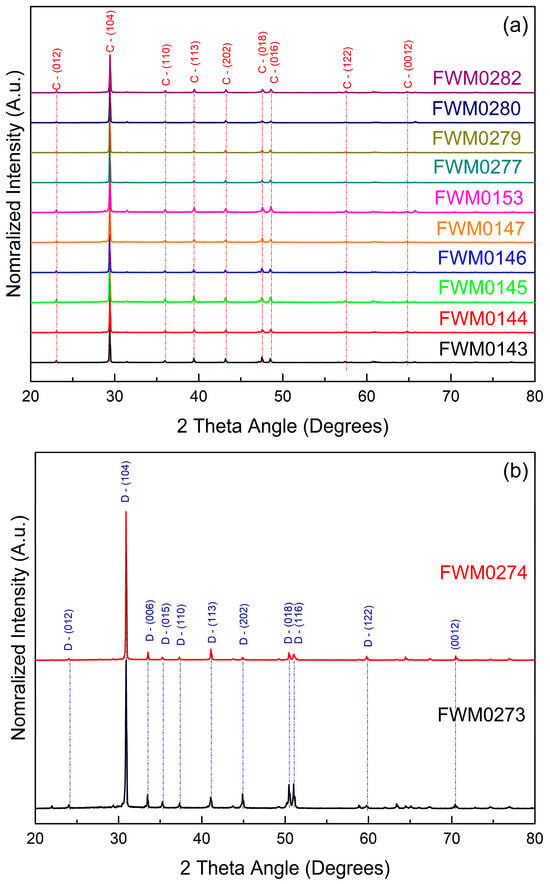
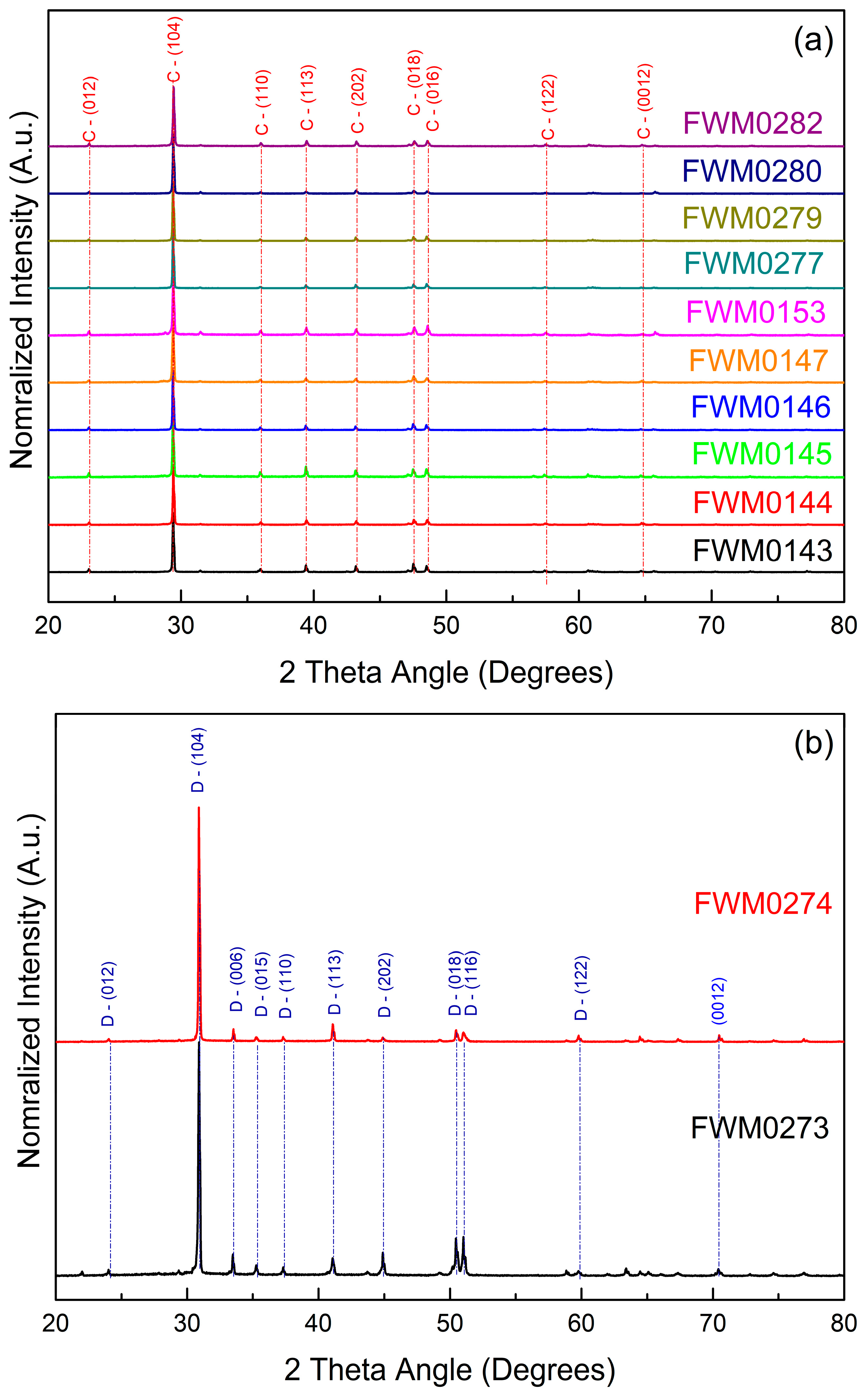
The XRD diffractograms of the artefacts from the Shrine of Zeus and Hera in Kopilovtsi are presented in Figure 4. The characteristic diffraction peaks of calcite were identified in the votive reliefs of the Shrine (Project Nos. FWM0143, FWM0144, FWM0145, FWM0146, FWM0147, FWM0153, FWM0277, FWM0279, FWM0280, and FWM0282), as presented in Figure 4a. These peaks correspond to the (012), (104), (110), (113), (202), (018), (116), (122), and (0012) crystallographic planes of calcite [47]. A diffraction peak at approximately 31.2° 2θ, assigned to the (104) plane of dolomite [48], is observed in the samples FWM0153 and FWM0280. This indicates the presence of minor dolomite within an otherwise predominantly calcitic matrix.
Figure 4.
X-ray diffractograms of the artefacts from the Shrine of Zeus and Hera (Kopilovtsi): (a) votive reliefs, and (b) heads of Hera and Zeus. Asterisks on (a) depict traces of dolomite (ed. D. Kourtidou).
The XRD patterns of samples extracted from the Hera (FWM0273) and Zeus (FWM0274) statue heads presented in Figure 4b exhibit diffraction peaks characteristic of dolomite. These peaks correspond to the (012), (104), (006), (015), (110), (113), (202), (018), (116), (122), and (0012) crystallographic planes of the dolomite mineral [48]. This indicates that these particular artefacts were produced using marble sourced from a different ancient quarry from the one(s) used for the other votive reliefs of the Shrine.
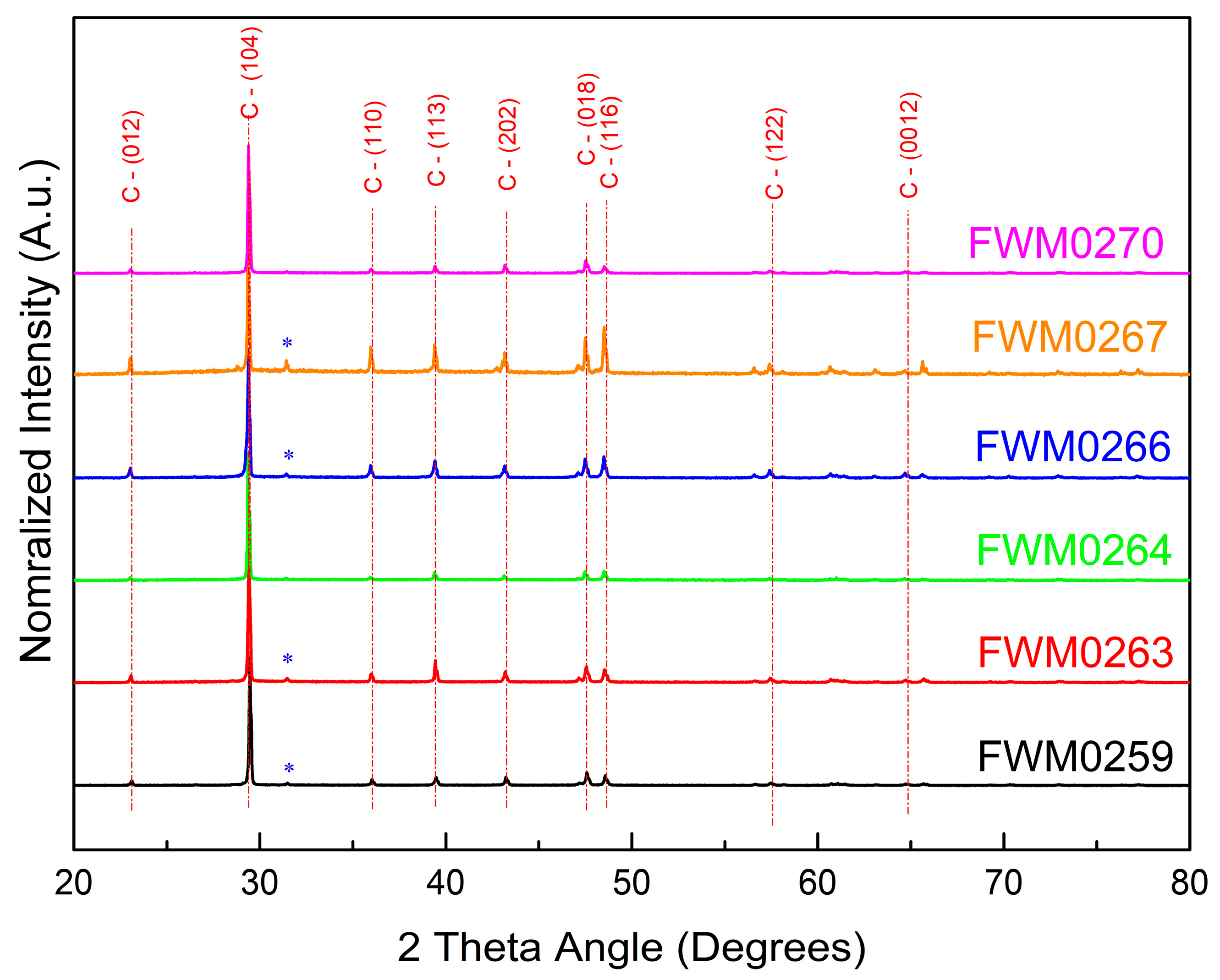
Figure 5 presents the diffractograms of the artefacts from the Hisarlak Sanctuary. The most abundant mineral phase detected is calcite with diffraction peaks corresponding to (012), (104), (006), (110), (113), (202), (018), (116), (122), and (0012) [47].
Figure 5.
X-ray diffractograms of the artefacts from the Hisarlak Sanctuary. Asterisks depict traces of dolomite (ed. D. Kourtidou).
Traces of dolomite were also detected by the (104) weak diffraction peak, which corresponds to the most prominent one. Small amounts of dolomite in calcitic marble usually result from incomplete mineral replacement or metasomatic processes involving magnesium-rich fluids [49].
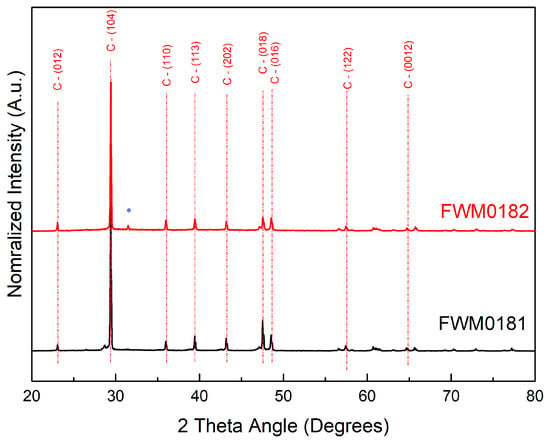
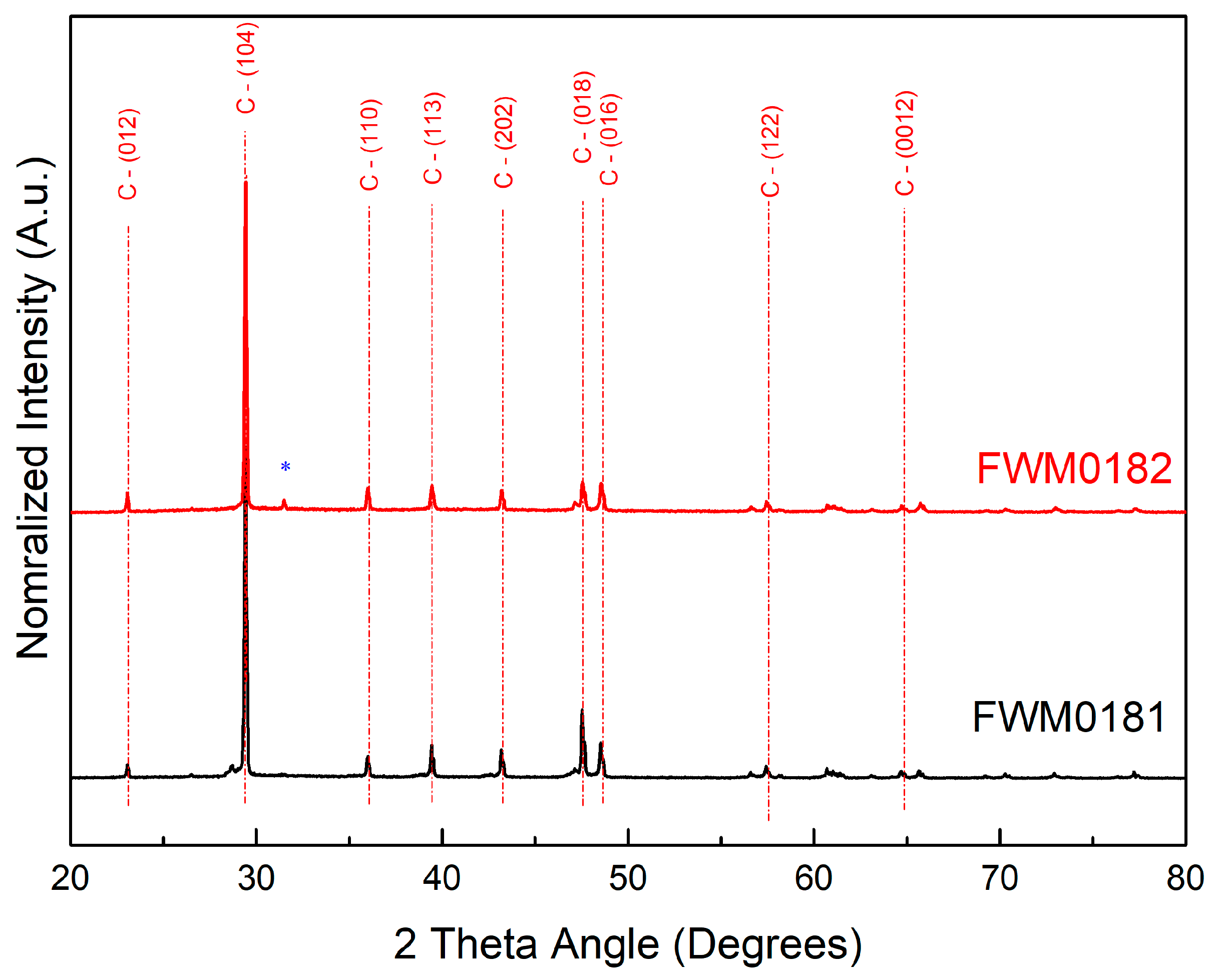
The X-ray diffractograms of the miscellaneous votive reliefs (representative diffractograms of samples FWM 0181 and FWM0182 shown in Figure 6) exhibit similar mineralogical characteristics to those from the Hisarlak Sanctuary, with calcite as the dominant phase and minor dolomite identified by the weak (104) peak (as indicated by asterisks). The X-ray diffractograms of all miscellaneous votive reliefs are presented in Figure S1, in the Supplementary Materials.
Figure 6.
Representative X-ray diffractograms of the miscellaneous votive reliefs. Asterisk depict traces of dolomite (ed. D. Kourtidou).
4.3. Stable Isotope and ICP-MS Results
The following section is organised into three subsections, reflecting the analytical approaches employed: petrography, X-ray diffraction, and combined stable-isotope and ICP-MS analysis. Throughout the results, the samples retain the grouping scheme established in Section 2. It should be noted that the tables and diagrams presented below are based on certain combinations of isotopic and trace element variables. This differentiation results from extensive screening of the dataset for potential contamination, incomplete measurements, and statistical outliers (which may differ across groups). Only variables that met quality-control criteria for each subgroup were retained in the final discriminant analyses, ensuring robust, internally consistent provenance assignments. For the analytical data, see Table S1.
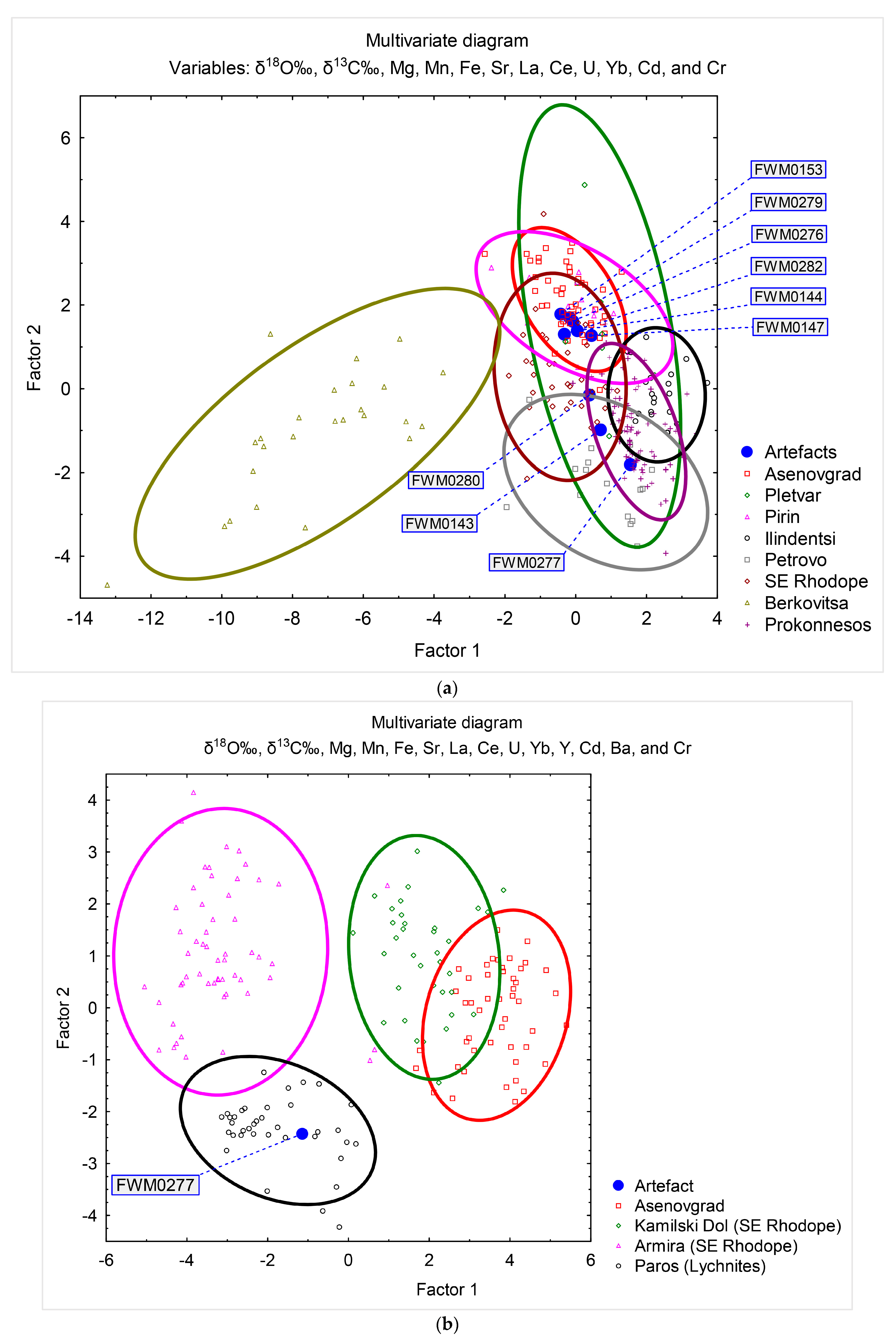
The ellipses shown in the multivariate diagrams represent the 90% confidence interval of the statistical distribution and do not define strict geological boundaries. All quarry reference samples were included in the statistical model; samples falling outside the ellipse reflect the natural heterogeneity of large marble extraction areas. Provenance attribution is based on the full multivariate evaluation and corresponding posterior probabilities, which allow the statistical rejection of alternative quarry sources despite partial visual overlap in the two-dimensional projection.
4.3.1. The Shrine of Zeus and Hera (Kopilovtsi)
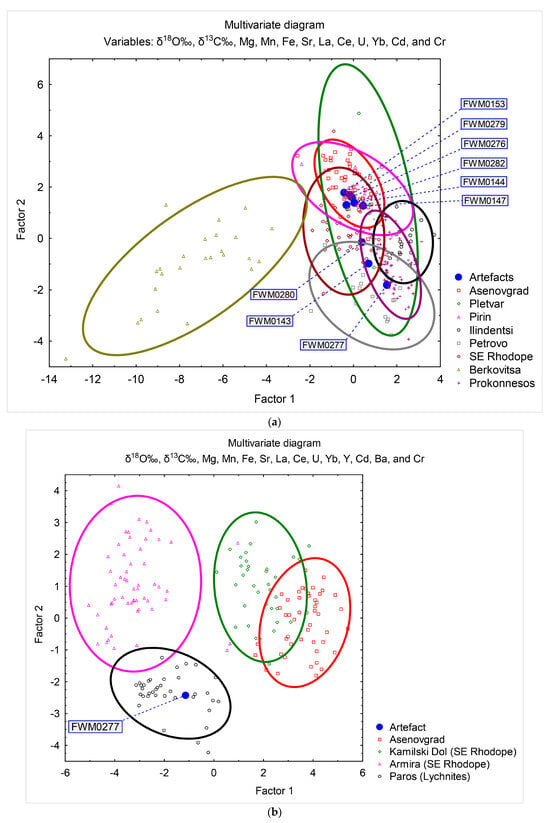
The statistical evaluation of the Kopilovtsi dataset indicates a strong dominance of a single provenance assignment for the majority of the analysed artefacts (Table 2a). The multivariate diagram shows the distribution of the analysed artefacts relative to reference quarry groups from Asenovgrad, Pletvar, Pirin, Ilindentsi, Petrovo, SE Rhodope, Berkovitsa, and Prokonnesos (Figure 7a). Although several artefacts plot close to specific source fields, a substantial graphical overlap between different marble sources is evident. For this reason, the visual interpretation of the diagram alone is not sufficient for secure provenance attribution. The final provenance determinations are therefore based on the numerical results of the multivariate discriminant analysis, as presented in Table 2a, which provide statistically supported probabilities for each assignment.
Table 2.
(a) The calculated statistical parameters of the investigated samples. The variables δ18O‰, δ13C‰, Mg, Mn, Fe, Sr, La, Ce, U, Yb, Cd, and Cr were used to calculate the provenance result (ed. V. Anevlavi). (b) The calculated statistical parameters of the investigated samples. δ18O‰, δ13C‰, Mg, Mn, Fe, Sr, La, Ce, U, Yb, Y, Cd, Ba, and Cr were used to calculate the provenance result (ed. V. Anevlavi). (c) The calculated statistical parameters of the investigated samples. The variables δ18O‰, δ13C‰, Mg, Mn, Fe, Sr, La, Ce, U, Yb, Cr, Cd, and Y were used to calculate the provenance result. (d) The calculated statistical parameters of the investigated samples. The variables δ18O‰, δ13C‰, Mg, Mn, Fe, Sr, La, Ce, U, Yb, Cr, Cd, Y, V, Ba, Pr, and Ho were used to calculate the provenance result (ed. V. Anevlavi).
Figure 7.
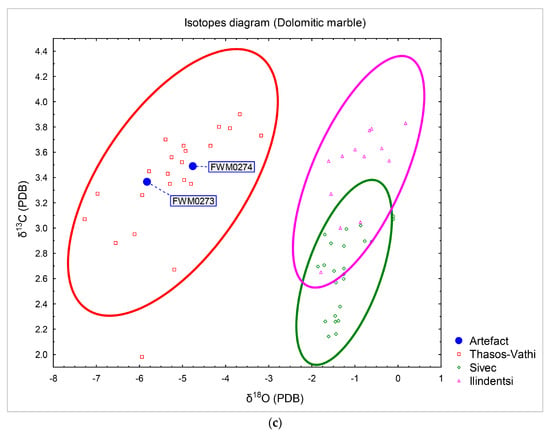
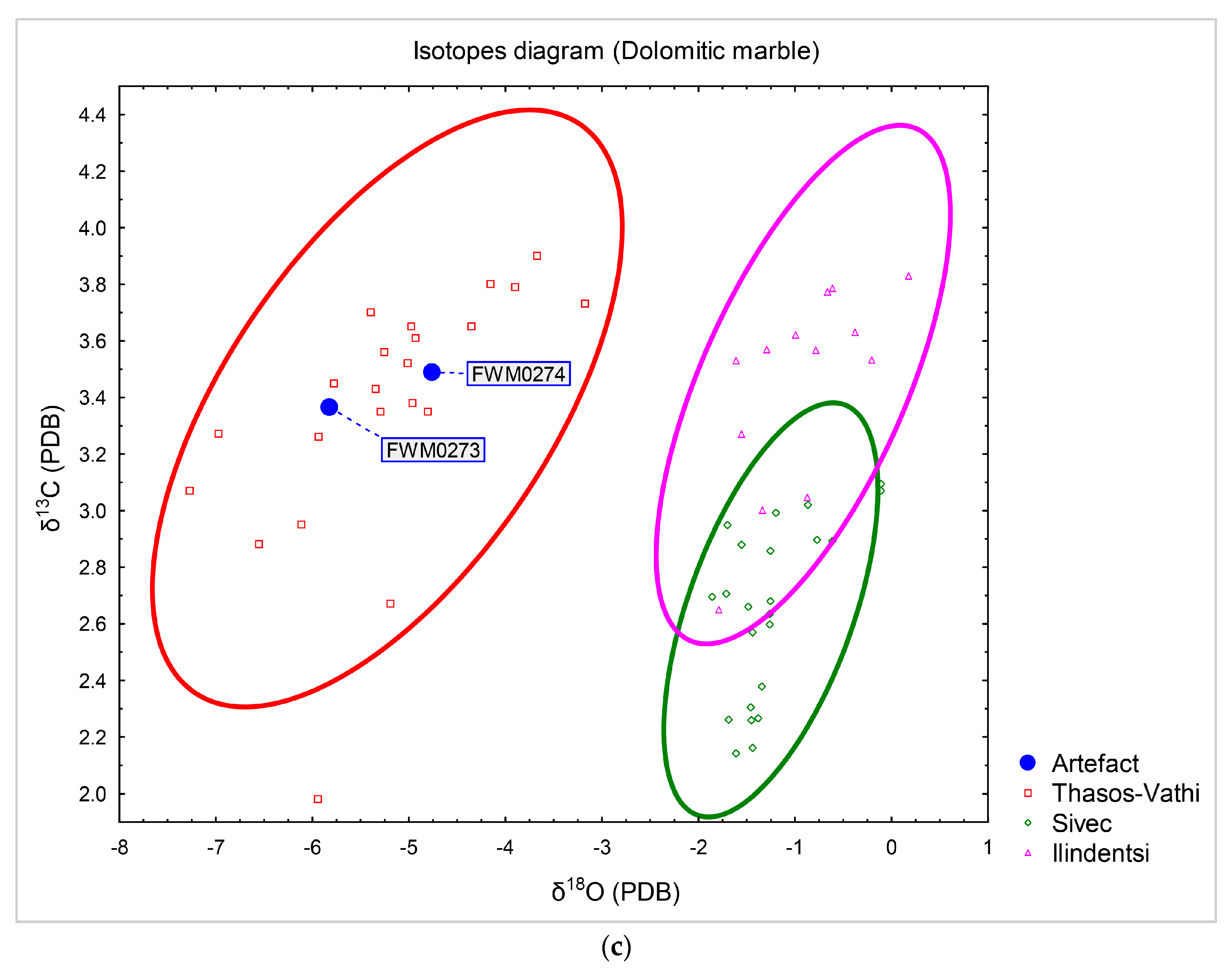
(a) Multivariate discriminant diagram (Factors 1 and 2) based on stable isotope (δ18O, δ13C) and trace element variables, illustrating the geochemical relationships between the analysed artefacts and potential marble sources (ed. V. Anevlavi). (b) Multivariate discriminant diagram (Factors 1 and 2) combining stable isotope (δ18O, δ13C) and trace element data, showing the geochemical clustering of the artefact FWM0277 relative to reference marble sources (ed. V. Anevlavi). (c) Stable carbon (δ13C) and oxygen (δ18O) isotope diagram of dolomitic marbles, showing the isotopic fields of selected dolomitic quarry sources (Thasos–Vathi, Ilindentsi and Sivec).
Most samples show high relative posterior probabilities for their first-choice attribution, allowing confident provenance determination. Asenovgrad marble clearly predominates, with the majority of artefacts (e.g., FWM0282, FWM0144, FWM0147, FWM0153, FWM0276, FWM0279, and FWM0280) exhibiting high relative probabilities, frequently exceeding 90%, and in several cases approaching or reaching statistical certainty. These results indicate a consistent and systematic use of this regional marble source. A smaller number of samples are assigned to alternative local or sub-regional sources as first choice, such as SE Rhodope (FWM0143), again with very high relative probability, confirming reliable discrimination within the dataset. Two samples (FWM0145 and FWM0146) could not be assigned to any quarry group due to missing or inconclusive statistical parameters. In cases where first-choice probabilities are moderately lower (e.g., FWM0280), the presence of a substantial second-choice probability suggests partial geochemical overlap between neighbouring quarry fields but does not invalidate the primary assignment. Although a precise provenance could not be assigned to the samples labelled as n/a, their geochemical signatures closely resemble those of local Rhodope marbles, suggesting a regional origin from quarry sources that remain undiscovered.
The explanation of these tables is given below:
- Distance: Distance of the sample under consideration from the centre of the ellipse. This centre is the average value of the quarry probability field.
- Relative (posterior) probability: Probability is the degree of likelihood of a sample belonging to a given group (within the selected number of groups). Results below 60% indicate that the sample probably cannot be assigned with certainty, and a second choice has to be considered.
- Absolute (typical) probability: This is the measure of the probability that a sample belongs to a given population. Samples in the centre of the probability ellipse have a high absolute probability. The threshold is 10%, corresponding to samples on the edge of the 90% probability ellipse. Low values indicate anomalous samples (outliers) or samples possibly not belonging to any group in the selection.
Sample FWM0277 required separate treatment due to its high δ13C values when compared with the rest of the dataset. The presence of relatively heavy carbon isotopic ratios necessitated a targeted comparison with marble sources characterised by similar isotopic signatures, including specific sectors of the SE Rhodope region and Paros Lychnites. The multivariate plot illustrates the position of the artefact FWM0277 in relation to established quarry groups from Asenovgrad, Kamilski Dol (SE Rhodope), Armira (SE Rhodope), and Paros (Lychnites). FWM0277 plots within the field of Paros (Lychnites), clearly separated from the Rhodope-related sources (Figure 7b). This focused evaluation demonstrated that the artefact is attributed to Paros Lychnites marble (Table 2b).
As demonstrated by XRD analysis, the two samples, FWM0273 and FWM0274, are composed of dolomitic marble. To further investigate their provenance, the isotopic signatures of these artefacts were compared with those of well-documented dolomitic marble sources from the Eastern Mediterranean and the Balkans. Figure 7c presents a δ13C–δ18O isotope diagram plotting the artefacts against reference datasets from Thasos–Vathi, Ilindentsi, and Sivec. Both samples fall clearly within the isotopic field of the Thasos–Vathi dolomitic marble and show no overlap with the compositional ranges of the other examined sources.
4.3.2. Hisarlak Samples
The statistical evaluation of this group reveals a clear predominance of regional marble sources (Table 2c). Five of the six analysed artefacts are assigned to Asenovgrad marble as their first-choice provenance, with high relative posterior probabilities ranging from 88.3% to 100%. In particular, samples FWM0263 and FWM0270 display near-certain attribution, with relative probabilities of 99.9% and 100%, respectively, indicating a robust geochemical correspondence with the Asenovgrad quarry group. Additional samples (FWM0264, FWM0266, and FWM0267) also show Asenovgrad as the most probable source, albeit with moderately lower probabilities, reflecting partial overlap with neighbouring marble fields, particularly the SE Rhodope. One artefact (FWM0259) deviates from this dominant pattern and is confidently assigned to the Berkovitsa marble source with a relative probability of 100%, indicating the use of an alternative regional supply.
4.3.3. Miscellaneous Votive Reliefs
The multivariate statistical evaluation allowed the assignment of most analysed samples to specific marble sources with high confidence (Table 1). Several artefacts show clear provenance attribution based on high absolute and relative posterior probabilities (>90%). Samples FWM0182 and FWM0282, in particular, display very strong statistical affiliation with the Asenovgrad source, indicating a robust provenance determination. Likewise, FWM0181, FWM0272, and FWM0275 are consistently assigned to the Ilindentsi marble group as the most probable source. Other samples exhibit more complex attribution patterns: FWM0262 suggests a likely provenance from Prokonnesos, whereas FWM0278 demonstrates a probability of the SE Rhodope. One sample (FWM0271) could not be reliably classified due to insufficient or inconclusive statistical parameters, while FWM0261 is identified as limestone rather than marble, likely of local origin.
5. Discussion
Overall, the results from the Kopilovtsi location underscore the predominance of Asenovgrad marble in this group and reinforce the interpretation of a supply pattern strongly anchored in regional stone resources. In addition, the results from the Hisarlak group reinforce the strong reliance on Asenovgrad marble within this assemblage, while also documenting limited but meaningful variability in regional marble procurement. Finally, the results from the miscellaneous votives group highlight a dominant reliance on regional marble sources, particularly Asenovgrad and Ilindentsi, alongside selective use of supra-regional materials (Prokonnesos), reflecting both local production strategies and broader connectivity within Roman stone supply networks.
5.1. Material Selection and Cultic Investment
To date, a growing body of archaeometric and archaeological research has addressed marble supply systems and their relationship to religious and cultic contexts in inland Roman Thrace [50]. These studies consistently demonstrate the predominance of locally available stone resources, with particular emphasis on marble extracted from the vicinity of Asenovgrad, near the Roman urban centre of Philippopolis [51]. The Asenovgrad marble district comprises several closely clustered quarry zones that produce predominantly white marble characterised by variable grain size, ranging from fine- to coarse-grained fabrics. Although modern quarrying activity has substantially altered the landscape and obscured direct archaeological evidence for Roman-period extraction, the widespread identification of this marble in securely dated artefacts from across the Thracian province confirms its systematic exploitation during the Imperial period. Archaeometric analyses of sculptural and architectural material demonstrate that Asenovgrad marble was routinely selected for a wide range of monument types, reflecting both its favourable working properties and its economic accessibility within regional production networks [52].
Within this broader framework, Philippopolis occupies a particularly important position. The city and its surrounding territory have yielded a substantial corpus of marble votive reliefs associated with diverse cultic practices. The majority of these objects, more than twenty recorded examples, are carved from Asenovgrad marble, while smaller numbers were produced using stone from supra-regional sources, notably the south-eastern Rhodope area and Prokonnesos. This distribution highlights a clear preference for local raw materials in the production of cultic monuments, complemented by occasional use of imported marble, likely reflecting selective availability, reuse, or specific contextual choices rather than sustained long-distance supply.
The demands of cult practice appear to have played a significant role in shaping the production of marble votive monuments, which likely constituted a major sector of activity within local workshops fulfilling sculptural commissions. These workshops operated with a stock of established iconographic patterns and semi-finished forms, facilitating the repeated production of similar objects. The widespread use of Asenovgrad marble not only attests to the material’s suitability for votive monuments but also suggests the presence of workshops in Philippopolis capable of supplying monuments commissioned for dedication in sanctuaries throughout Thrace.
In addition to Asenovgrad marble, SE Rhodope and Prokonnesos marbles again appear as material choices for votive reliefs, as observed in other contexts, such as Philippopolis [51] and the sanctuary of Apollo Γεικεσηνος (Geikesenos), situated in the southeastern area of the province [53].
The most striking result of the current study is that the two main cult statues of Hera and Zeus were carved from Thasian dolomitic marble from the Vathi quarry area. Thasian marble appears only sporadically across the province of Thrace, making its presence in Pautalia particularly significant. The use of Thasian dolomite (Vathi) is otherwise attested in sites such as Montana and Kasnakovo in the form of sculptures, and in Augusta Traiana in the form of column shafts, mainly dated to the Byzantine period ([54]; ongoing investigations by the authors). By contrast, at Philippopolis, only a single Thasian sculpture has been identified, originating from the calcitic source of Aliki, while dolomitic Thasian marble (Vathi) is entirely absent from the city’s marble inventory [52]. This selective pattern is noteworthy given that well-connected quarrying centres such as Thasos, Prokonnesos, and Carrara were able to meet large-scale demand due to their favourable transport networks [55]. The general lack of Thasian marble, both dolomitic and calcitic, may explain why some major quarry sources, including Thasos, are largely absent from the stone supply of Roman Thrace. Against this background, the deliberate choice of Thasian Vathi marble for the two principal statues of the sanctuary at Kopilovtsi stands out as an exceptional and intentional investment.
Thasian Vathi marble was widely exported across the Mediterranean, particularly during the second century AD, challenging earlier assumptions that its use was largely local. Archaeometric studies have identified Thasian dolomitic marble in sculptures from Greece, Macedonia, Asia Minor, Italy, and Rome, demonstrating its broad acceptance despite the technical difficulties associated with carving dolomite [56]. Recent investigations of sculptures housed in the Archaeological Museum of Kavala have further confirmed attribution to the Vathi quarry, reinforcing Thasos’ role as a dominant regional supplier of sculptural marble in northern Greece and highlighting the circulation of Thasian dolomite within wider artistic and economic networks of Macedonia and the northern Aegean [57].
The identification of Thasian dolomitic marble in the statues of Zeus and Hera from the Kopilovtsi sanctuary, together with their high level of workmanship, indicates the execution of specialised commissions rather than routine local production. The sculptural models show no evidence of a local tradition, and the deliberate use of imported marble for deities of the Greek pantheon is noteworthy. These observations place the Pautalia region within established distribution networks of Thasian marble, which maintained long-standing trade connections with the eastern territories of ancient Macedonia. Inland transport for the imported Thasian marble most likely followed the Axios River, while the Demir Kapija Gorge appears to have functioned as a natural barrier, as suggested by the absence of Thasian dolomite north of this point [58].
Another noteworthy result is the small statuette from the Kopilovtsi group, which was carved from Parian Lychnites marble (FWM0277). Epigraphic evidence indicates that, already in the Augustan period, marble quarrying on Paros was under imperial ownership [59]. The study by Attanasio et al. has demonstrated that Paros Lychnites marble played a central role in Roman sculptural production during the Julio-Claudian and early Imperial periods, when it was the preferred material for high-quality portrait sculpture. Quantitative provenance analysis of 163 Roman Imperial portraits shows that Lychnites accounts for approximately 27.5% of the total assemblage, with peak usage in the 1st century AD, before gradually declining from the early 2nd century AD onwards [60]. The appearance of this statuette in Pautalia, therefore, indicates a targeted and deliberate purchase, underscoring the selective acquisition of high-quality votive artefacts for this specific cultic context.
The presence of both Parian and Thasian stone in commissions across the same regions reflects long-standing artistic connections between Paros and Thasos. From the late 7th century BC, Parian settlers on Thasos worked mainly with local quarries, while Thasian sculptors adopted Parian stylistic models and circulated them widely without using Parian marble material [61]. Until the Roman period, Thasos remained the primary marble-producing centre in the Northern Aegean, yet Parian Lychnites votives circulated alongside Thasian sculptures in Roman-period religious contexts, as shown by the sampled assemblage from the sanctuary near Kopilovtsi. Parian marble may be considered as part of extensive supra-regional networks, while also maintaining a direct connection to sculptural commissions from Thasos.
Peripheral and Secondary Sources
Marble from the quarry district of Ilindentsi also appears among the votive reliefs analysed in this study. Notably, despite its close geographical proximity to Pautalia, this material is not attested in the city’s principal sanctuary assemblages but occurs instead among miscellaneous and less contextually defined finds. Ilindentsi marble is characterised by a white fabric with light grey to grey tonal variations, and modern quarrying activity has largely overprinted the ancient extraction zones, with present-day operations located directly above earlier quarry pits [62]. Archaeological and archaeometric research suggests that the earliest exploitation of this material took place near the village of Ermilovets, where marble tombstones dated to the first century AD attest to its early use. Subsequent phases of exploitation are documented in the fourth and fifth centuries AD and appear to be associated with intensified Byzantine activity in the region. A key comparative case is the Macedonian city of Parthikopolis, founded under Emperor Trajan, where archaeological evidence suggests that the Ilindentsi quarries may have come under imperial ownership—an arrangement closely linked to the city’s marked economic development [62]. Beyond urban contexts, Ilindentsi marble was also employed for funerary monuments in the Upper Strymon valley, corresponding to the modern Blagoevgrad region, further confirming its regional circulation and long-term significance within inland stone-use networks [63].
Another significant marble source in inland Roman Thrace is the quarry at Berkovitsa, located near the Roman city of Montana. Within the present dataset, only a single artefact (FWM0259) can be securely attributed to this marble source, an architectural element belonging to a door frame, indicating a limited representation of Berkovitsa marble in the studied contexts. Comparative archaeometric research has demonstrated that marble from this quarry was more widely employed in architectural programmes, with confirmed examples documented not only in Montana itself but also in major urban centres such as Philippopolis and Serdica [50]. On this basis, it is reasonable to suggest that Pautalia may also have participated in this regional distribution network, particularly in the supply of architectural stone. However, given the currently limited number of analysed samples, this hypothesis must remain provisional.
It should also be noted that a limestone votive relief (FWM0261) is present in the studied assemblages, indicating both the ready availability of local limestone resources and the technical competence of workshops in working this material alongside marble. In Roman Thrace, several ancient limestone quarries are archaeologically attested, most notably those associated with the Marciana quarry and the quarry zones near Nicopolis ad Istrum [64]. At the same time, it is generally assumed that most urban centres had access to nearby limestone sources supplying everyday building and sculptural needs, as exemplified by cities such as Augusta Traiana [50].
The material spectrum identified in the votive assemblages of Pautalia reflects a predominantly local marble economy, selectively complemented by supra-regional stones whose rare and deliberate use underscores differentiated patterns of cultic investment, workshop practice, and connectivity within the inland landscapes of Roman Thrace.
5.2. Pautalia Within Regional and Long-Distance Communication Networks
Pautalia was located at the intersection of several long-distance roads that already existed in pre-Roman times [4], p. 311. From Stobi in the Roman province of Macedonia, a road coming from the south-west connected the Axios Valley with the Strymon Valley. This road continued north-eastwards and reached Serdica (Figure 1). This thoroughfare is depicted on the Tabula Peutingeriana in Segment VII.
A road ran from Pautalia to the east via the veteran colony of Germania to Philippopolis. There, a connection to the long-distance road via diagonalis was established. Although its ancient name is lost, it was given this name by scholars because it ran diagonally through the Balkan Peninsula. It ran from Singidunum via Naissus, Serdica, Philippopolis, Hadrianopolis, to the provincial capital in Perinthos at the Propontis [65].
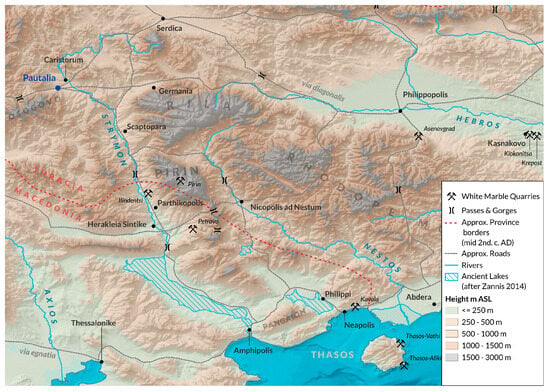
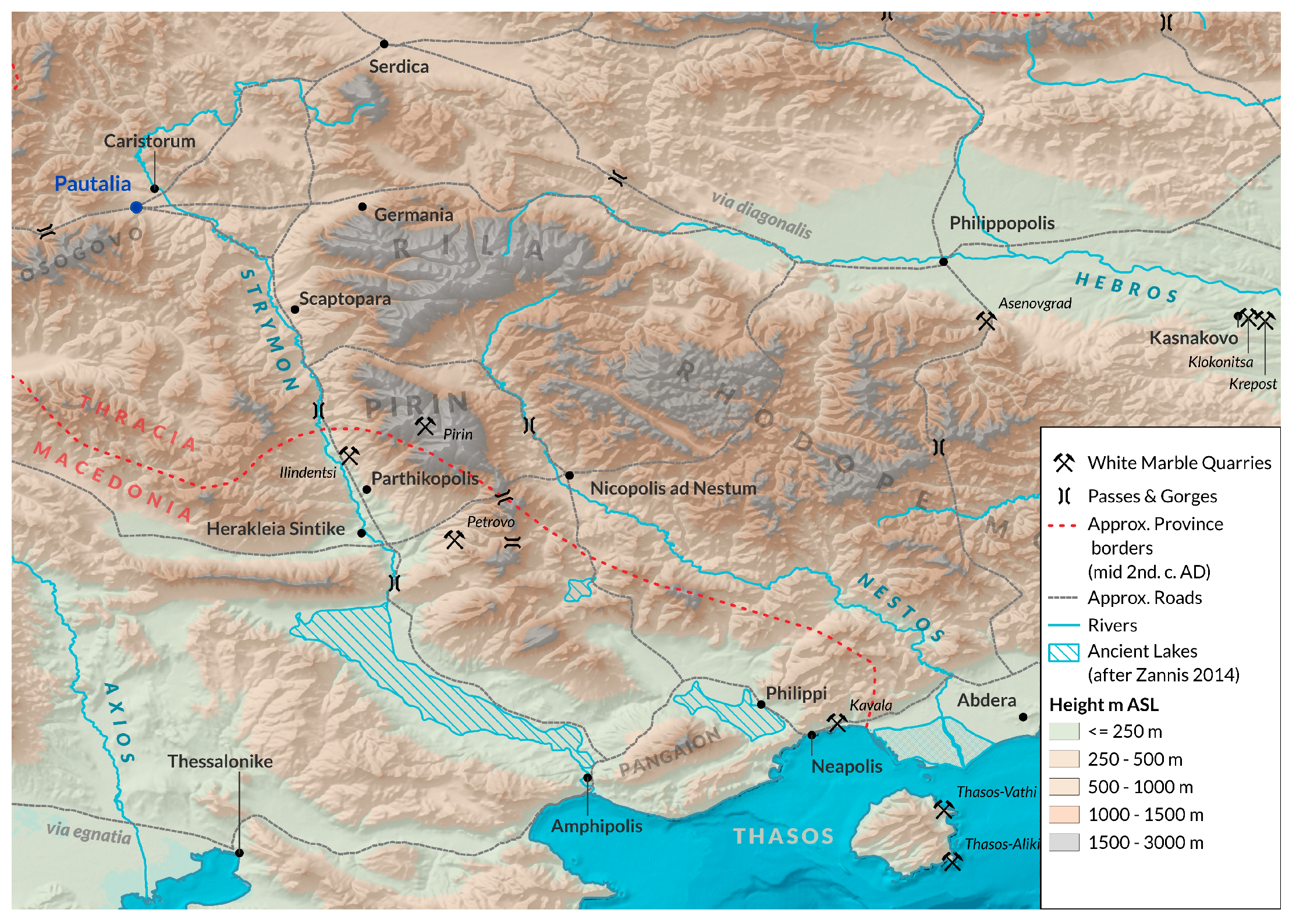
The connection to the Thracian Sea in the north of the Aegean was facilitated through the valley of the Strymon, which runs around 7 km to the east of Pautalia. In its valley ran an old transport route that connected the city with Scaptopara, Parthikopolis, Herakleia Sintike, Amphipolis, and ultimately the Thracian Sea and the Mediterranean markets (Figure 8).
Figure 8.
Topographic map of southwestern Roman Thrace showing the location of Pautalia within the regional road network, major river valleys, and surrounding marble quarry districts. The map highlights long-distance routes linking Serdica, Philippopolis, and the northern Aegean coast, as well as the locations of key marble sources (e.g., Asenovgrad, Ilindentsi, Pirin, and Thasos). Approximate provincial borders (mid-2nd century AD), passes, rivers, and relief are indicated (ed. by B. Frerix, ÖAI, ÖAW; After [9,10].
6. Conclusions
This study demonstrates how the integration of archaeometric data with archaeological and cultic context can substantially refine our understanding of marble use and connectivity in Roman Thrace. Rather than viewing marble provenance solely through the lens of supply, the results emphasise how material choices were embedded within local economic strategies, workshop practices, and regional identities. The selective reliance on nearby marble sources reflects not only practical considerations of accessibility and cost but also the consolidation of technical knowledge and craft traditions within established production centres. The limited presence of imported marbles does not indicate isolation from wider networks; instead, it highlights a flexible system in which supra-regional materials were incorporated opportunistically, likely through reuse or redistribution, rather than sustained import. This pattern underscores the agency of provincial communities in shaping their material culture while remaining connected to imperial circulation routes. Overall, the evidence positions Pautalia as an active participant in eastern provincial connectivity, where local resources, workshops, and road networks intersected to support a resilient and adaptable marble economy within the Roman Empire.
Supplementary Materials
The following supporting information can be downloaded at https://www.mdpi.com/article/10.3390/heritage9030104/s1. Figure S1: X-ray diffractograms of the miscellaneous Votive Reliefs. Asterisks depict traces of dolomite (ed. D. Kourtidou); Table S1: Analytical data.
Author Contributions
Conceptualization, V.A.; methodology, W.P. and V.A.; investigation, W.P., V.A., P.A., V.K., K.P. and B.F.; data curation, V.A., W.P. and D.K.; writing—original draft preparation, V.A., V.K., B.F., P.A., A.S. and D.K.; writing—review and editing, V.A., W.P., P.A., K.P., V.K., A.S. and B.F.; supervision, W.P.; visualisation, B.F. All authors have read and agreed to the published version of the manuscript.
Funding
The analysed data were produced during the FWF Project “Fingerprinting White Marbles. Quarries and Cities of Roman Thrace, 1st–3rd century AD” (no: P 33042), awarded to Sabine Ladstätter between 2020 and 2023, DOI https://doi.org/10.55776/P33042. The preparation of this paper was supported and funded within the JESH Scholarship (Joint Excellence in Science and Humanities), awarded to V.A. in 2025. The completion of this paper was supported in the framework of Hellenic Foundation for Research and Innovation (H.F.R.I.) call “4th Call for H.F.R.I.’s Research Projects to Support Postdoctoral Researchers” (H.F.R.I. Project Number: 28805), awarded to V.A.
Data Availability Statement
Refs. [1,2,3,4,5,6,7,8,9,11,16,17,18,21,22,23,24] are available upon request from the corresponding author. The numerical data for the samples presented in this paper can be downloaded from the Supplementary Material in this paper. Furthermore, data from ancient white marble quarries can be found at https://doi.org/10.1016/j.jasrep.2022.103582 (accessed on 24 February 2026) or on request from the authors.
Acknowledgments
We extend our sincere gratitude to the Ministry of Culture of Bulgaria for granting permission for the sampling and exportation of the material analysed in this study. The research was carried out in close collaboration with, and under the supervision of, the National Archaeological Institute with Museum of the Bulgarian Academy of Sciences (NAIM-BAS). In this context, we would like to express our special thanks to Krassimira Karadimitrova for her invaluable assistance during the sampling process in Sofia. We are particularly grateful to the director, Hristo Popov, for his continuous support and guidance throughout the project. We are indebted to the colleagues at the Regional History Museum Kyustendil, Valentin Debochichki, Lidiya Staykova-Aleksandrova, and others for their collaboration during the sampling campaign. Our sincere appreciation is extended to Wioletta Tenczar and Murat Dirican for their expertise and assistance with the archaeological study, sample preparation, and laboratory work. We are further indebted to Barbara Umfahrer for her meticulous organisation and maintenance of the analytical database. We are deeply grateful to Alexander Sokolicek (University of Salzburg) and Ben Russell (University of Edinburgh) for their insightful guidance and constructive discussions during the completion of the project. Finally, we thank Emmanouil Anevlavis for his assistance with the editing of the photographs. This publication is dedicated to the memory of our late director and group leader, Sabine Ladstätter, who passed away in June 2024. Her unwavering support and leadership were fundamental to this research, and her legacy continues to inspire our work. We thank the anonymous reviewers for their productive suggestions.
Conflicts of Interest
The authors declare no conflicts of interest.
References
- Иванoв, Й. Кюстендилският Хисарлък и негoвите старини. Известия на Археoлoгическия Институт 1919, 7, 66–123. [Google Scholar]
- Ruseva-Slokoska, L. Certains Aspects de L’urbanisation de Pautalia—Recherches sur la Culture en Mesie et en Thrace ·Bulgarie·Ie-IVe siècle. Известия на Археoлoгическия Институт 1987, 37, 82–96. [Google Scholar]
- Русева-Слoкoска, Л. Пауталия—Тoпoграфия, градoустрoйствo и укрепителна система І; Българска академия на науките: Sofia, Bulgaria, 1989. [Google Scholar]
- Кацарoва, В. Пауталия и нейната теритoрия през I—VI в; Фабер: Veliko Tarnovo, Bulgaria, 2005. [Google Scholar]
- Katsarova, V. Roman Cities in Bulgaria. In Corpus of Ancient and Medieval Settlements in Modern Bulgaria; Ivanov, R.T., Ed.; Prof. Marin Drinov Academic Publishing House: Sofia, Bulgaria, 2012; pp. 261–287. [Google Scholar]
- Ružicka, L. Die Münzen von Pautalia. Известия на Археoлoгическия институт 1933, 7, 1–216. [Google Scholar]
- Grigorova, V. Neue Beiträge zur Erforschung der Münzprägung von Pautalia. Annot. Numis. 1998, 8. [Google Scholar]
- Тачев, Я. Мoнетoсеченетo на Пауталия; Бoбoкoв Братя Фoндация: Sofia, Bulgaria, 2020. [Google Scholar]
- Zannis, A.G. Le pays entre le Strymon et le Nestos—Géographie et histoire (VIIe-IVe siècle avant J.-C.), Meletēmata 71; National Hellenic Research Foundation: Athen, Greece, 2014. [Google Scholar]
- de Soto, P.; Pažout, A.; Brughmans, T.; Vahlstrup, P.B.; Auir, Á.; Bongers, T.; Christoffersen, J.E.B.; Crépy, M.; Johansen, M.H.; Lewis, J.; et al. Itiner-e: A high-resolution dataset of roads of the Roman Empire. Sci. Data 2025, 12, 1731. [Google Scholar] [CrossRef] [Scilit]
- Герoв, Б. Прoучвания върху западнoтракийските земи през римскo време І. Гoдишник на Сoфийския университет, Филoлoгически факултет 1961, 3, 154–407. [Google Scholar]
- Jones, A.H.M. The Greek City from Alexander to Justinian; Clarendon Press: Oxford, UK, 1940. [Google Scholar]
- Jones, A.H.M. The Cities of the Eastern Roman Provinces; Clarendon Press: Oxford, UK, 1971. [Google Scholar]
- Gočeva, Z. Zur den politischen und religiosen Einrichtungen in der Stadt Pautalia auf Grund der epigraphischen Denkmälere. Index 1992, 20, 45–49. [Google Scholar]
- Русева-Слoкoска, Л. Римска oбществена сграда oт Пауталия. Археoлoгия 1964, 1, 34–44. [Google Scholar]
- Стайкoва-Александрoва, Л. Занаятите в Пауталия и теритoрията й ІІ -VІ в. In JUBILAEUS ІІІ—Сб. В памет на прoф; Герoв, Б., Ed.; Gutenberg: Sofia, Bulgaria, 1999; pp. 122–126. [Google Scholar]
- Слoкoска, Л.; Стайкoва-Александрoва, Л.; Пауталия, С.Р. (Pautalia). In Римски и раннoвизантийски градoве в България; Иванoв, Р., Ed.; Иврай: Sopia, Bulgaria, 2002; pp. 258–260. [Google Scholar]
- Грoзданoва, Л. Градският пантеoн на Пауталия в светлината на мoнетoсеченетo на пoлиса—някoи oснoвни наблюдения. In SYMPOSION—Сбoрник в памет на прoф. Димитър Пoпoв; УИ “Св. Климент Охридски”: Sofia, Bulagria, 2016; pp. 136–147. [Google Scholar]
- Grigorova-Gencheva, V.; Grozdanova, L. The Health Cult in Pautalia: Some Key Aspects of the City Coinage as a Primary Source on the Subject. In Thrace—Local Coinage and Regional Identity (Berlin Studies of the Ancient World, 77); Peter, U., Stolba, V.F., Eds.; OpenScienceTechnology GmbH: Berlin, Germany, 2021; pp. 477–489. [Google Scholar]
- Grozdanova, L. The Coinage of Pautalia—Some Key Aspects. In AD RIPAM FLUMINIS DANUVI: Papers of the 3rd International Conference on the Roman Danubian Provinces, Vienna, 11–14 November 2015; Mitthof, F., Cenati, C., Zerbini, L., Eds.; Verlag Holzhausen GmbH: Wien, Vienna, 2021; pp. 235–242. [Google Scholar]
- Иванoв, Т. Паметници oт Пауталия. Известия на Археoлoгическия институт 1960, 23, 205–230. [Google Scholar]
- Русева-Слoкoска, Л.; Фъркoв, Ю. Къснoантичната крепoст на хълма Хисарлъка, гр. Кюстендил—Разкoпки и прoучвания, XLII; Българска Академия на науките, Национален археологически институт с музей: Sofia, Bulgaria, 2016. [Google Scholar]
- Кацарoв, Г. Светилище на Зевса и Хера oт Кoпилoвци (Кюстендилскo). Известия на Българскoтo археoлoгическo дружествo 1914, 4, 80–111. [Google Scholar]
- Гoчева, З. Светилищетo на Зевс и Хера при Кoпилoвци—характер на пoчитания култ. Известия на Истoрически музей—Кюстендил 2007, 13, 189–196. [Google Scholar]
- Кoлева, М. Статуите на Зевс и Хера oт светилищетo при с. Кoпилoвци, Кюстендилска oбласт. Икoнoграфия, стил и датиране. Известия на Истoрически музей—Кюстендил 2010, 15, 99–104. [Google Scholar]
- Grozdev, V.; Peytcheva, I.; von Quadt, A.; Vassileva, R.; Georgiev, S. Analysis of the Zircon Population and Sr-Isotope Data of the Paleogene Igneous Rocks from Kyustendil Area, SW Bulgaria. Geol. Balc. 2017, 46, 143–151. [Google Scholar] [CrossRef] [Scilit]
- Vitov, O.; Sotirov, A. Minerals, Energy Resources, Soils and Waters in Kyustendil Region, South Europe; Deep Science Publishing: New Delhi, India, 2025. [Google Scholar]
- Zagorchev, I. Introduction to the Geology of SW Bulgaria. Geol. Balc. 2001, 31, 3–52. [Google Scholar] [CrossRef] [Scilit]
- Chatalov, A. Upper Triassic Peridital Limestones from the Konyava Mountain, SW Bulgaria. Comptes Rendus L’Academie Bulg. Des Sci. 2023, 76, 1231–1242. [Google Scholar] [CrossRef] [Scilit]
- Zagorchev, I.; Balica, C.; Kozhoukharova, E.; Coriolan Balintoni, I. Pirin Metamorphic and Igneous Evolution Revisited in a Geochronological Frame Based on U-Pb Zircon Studies. Geol. Balc. 2017, 46, 27–63. [Google Scholar] [CrossRef] [Scilit]
- Janák, M.; Froitzheim, N.; Georgiev, N.; Nagel, T.J.; Sarov, S. P-T Evolution of Kyanite Eclogite from the Pirin Mountains (SW Bulgaria): Implications for the Rhodope UHP Metamorphic Complex. J. Metamorph. Geol. 2011, 29, 317–332. [Google Scholar] [CrossRef] [Scilit]
- Dzhanfezova, T.; Doherty, C.; Grębska-Kulow, M. Understanding Diversity in Early Neolithic Pottery Production. Doc. Praehist. 2020, 47, 110–125. [Google Scholar] [CrossRef] [Scilit]
- Вълчев, И. Извънградските светилища в римската прoвинция Тракия (I–IV век); Университетскo издателствo “Св. Климент Охридски”: Сoфия, Bulgaria, 2015. [Google Scholar]
- Najdenova, V. Mithraism in Lower Moesia and Thrace. In Aufstieg und Niedergang der römischen Welt, 2, 18, 2; URBiS Library Network: Rome, Italy, 1989. [Google Scholar]
- Blackburn, W.H.; Dennen, W.H. Principles of Mineralogy; Wm. C. Brown Publishers: Dubuque, IA, USA, 1994. [Google Scholar]
- Polikreti, K. Detections of Ancient Marble Forgery: Techniques and Limitations. Archaeometry 2007, 49, 603–619. [Google Scholar] [CrossRef] [Scilit]
- Attanasio, D.; Brilli, M.; Ogle, N. The Isotopic Signature of Classical Marbles; L’Erma di Bretschneider: Rome, Italy, 2006. [Google Scholar]
- Craig, H.; Craig, V. Greek marbles: Determination of provenance by isotopic analysis. Science 1972, 176, 401–403. [Google Scholar] [CrossRef] [Scilit]
- Prochaska, W.; Attanasio, D. The challenge of a successful discrimination of ancient marbles (Part I): A databank for the marbles from Paros, Prokonnesos, Heraklea/Miletos and Thasos. J. Archaeol. Sci. Rep. 2021, 35, 102676. [Google Scholar] [CrossRef] [Scilit]
- Gražulis, S.; Daškevič, A.; Merkys, A.; Chateigner, D.; Lutterotti, L.; Quirós, M.; Serebryanaya, N.R.; Moeck, P.; Downs, R.T.; Le Bail, A. Crystallography Open Database (COD): An open-access collection of crystal structures and platform for world-wide collaboration. Nucleic Acids Res. 2012, 40, D420–D427. [Google Scholar] [CrossRef] [Scilit]
- Anevlavi, V.; Prochaska, W. Naxian marble: The area where the story begins. In Νάξος: Aρχαία, Βυζαντινή, Λατινοκρατούμενη, Νεότερη, Σύγχρονη: Πρακτικά του 6ου Επιστημονικού Συνεδρίου “H Νάξος διά Μέσου των Aιώνων”, Naxos, Greece, 30 August–2 September 2018; Fragoulopoulos, V., Ed.; Academy of Athens: Naxos, Greece, 2021; pp. 329–338. [Google Scholar]
- Anevlavi, V.; Prochaska, W.; Cenati, C.; Ivanov, I.; Ladstätter, S.; Popov, H.; Georgiev, P.; Kabakchieva, G. Geochemical and petrographic investigation of the provenance of white marble decorative elements from the Roman Villa Armira in south-eastern Bulgaria. Archaeol. Anthropol. Sci. 2022, 14, 229. [Google Scholar] [CrossRef] [Scilit]
- Anevlavi, V.; Anevlavis, E.; Fragnoli, P.; Welte, M.; Burkhart, K.; Schwaiger, H.; Prochaska, W. From excavation to laboratory: Advanced strategies for archiving archaeometric marble provenance research at the Austrian Archaeological Institute (OeAW). Eur. Phys. J. Plus 2025, 140, 644. [Google Scholar] [CrossRef] [Scilit]
- Prochaska, W. The challenge of a successful discrimination of ancient marbles (Part II): A databank for the Alpine marbles. J. Archaeol. Sci. Rep. 2021, 38, 102958. [Google Scholar] [CrossRef] [Scilit]
- Prochaska, W.; Attanasio, D. The challenge of a successful discrimination of ancient marbles (Part III): A databank for Aphrodisias, Carrara, Dokimeion, Göktepe, Hymettos, Parian Lychnites, and Pentelikon. J. Archaeol. Sci. Rep. 2022, 45, 103582. [Google Scholar] [CrossRef] [Scilit]
- Prochaska, W.; Ladstätter, S.; Anevlavi, V. The challenge of a successful discrimination of ancient marbles (Part IV): A databank for the white marbles from the region of Ephesos. J. Archaeol. Sci. Rep. 2024, 53, 104336. [Google Scholar] [CrossRef] [Scilit]
- Hossain, M.S.; Ahmed, S. Crystallographic characterisation of naturally occurring aragonite and calcite phase: Rietveld refinement. J. Saudi Chem. Soc. 2023, 27, 101649. [Google Scholar] [CrossRef] [Scilit]
- Pina, C.M.; Pimentel, C.; Crespo, Á. Dolomite cation order in the geological record. Chem Geol. 2020, 547, 119667. [Google Scholar] [CrossRef] [Scilit]
- Lefeuvre, B.; Beaudoin, N.E.; Centrella, S.; Le Gallais, T.; Ducousso, M.; Callot, J.P. Dynamic investigation of high-temperature dolomitization of polycrystalline Carrara marble. Chem Geol. 2024, 646, 121901. [Google Scholar] [CrossRef] [Scilit]
- Andreeva, P.; Anevlavi, V.; Frerix, B.; Cenati, C.; Prochaska, W.; Ladstätter, S. A contribution to the urbanization and marble supply of Roman Thrace: An interdisciplinary study. Archaeol. Anthropol. Sci. 2024, 16, 23. [Google Scholar] [CrossRef] [Scilit]
- Anevlavi, V.; Prochaska, W.; Andreeva, P.; Petkova, K.; Frerix, B. White Marble Sourcing and Regional Workshop Dynamics in Roman Thrace: An Archaeometric Study of Votive Reliefs. Minerals 2025, 15, 670. [Google Scholar] [CrossRef] [Scilit]
- Anevlavi, V.; Prochaska, W.; Andreeva, P.; Ladstätter, S. New evidence of the supra-regional marble trade network in Thrace, through the archaeometric study of sculptures in Roman Philippopolis. J. Archaeol. Sci. 2025, 174, 106128. [Google Scholar] [CrossRef] [Scilit]
- Anevlavi, V.; Andreeva, P.; Prochaska, W.; Karadimitrova, K. Cults and Materials: Provenance Investigations of the White Marble Votive Plaques from the Sanctuary of Apollo Γεικεσηνος in Roman Thrace. Proceedings of the Workshop: “Danubian Riders”—Deconstruction of a Religious Assemblage, Kremer, Ed.; Vienna, Austria, 2026; in press.
- Anevlavi, V.; Cenati, C.; Katsarova, V.; Prochaska, W.; Ladstätter, S. Marble provenance analysis: The case study of Kasnakovo, Bulgaria. Metalla 2019, 9, 52–55. [Google Scholar]
- Russell, B. The Economics of the Roman Stone Trade; Oxford University Press: Oxford, UK, 2013. [Google Scholar]
- Herrmann, J.; Newman, R. The exportation of dolomitic sculptural marble from Thasos: Evidence from Mediterranean and other collections. In The Study of Marble and Other Stones Used in Antiquity (ASMOSIA III); Maniatis, Y., Herz, N., Basiakos, Y., Eds.; Archetype Publications: London, UK, 1995. [Google Scholar]
- Maniatis, Y.; Damaskos, D.; Prochaska, W.; Anevlavi, V.; Tambakopoulos, D. Scientific investigation on the provenance of marble of free-standing sculptures from the Archaeological Museum of Kavala/Northern Greece. Archaeol. Anthropol. Sci. 2024, 16, 125. [Google Scholar] [CrossRef] [Scilit]
- Niewöhner, P.; Audley-Miller, L.; Prochaska, W. Marbles, Quarries and Workshops on the Highlands of Northern Macedonia. Archäologischer Anz. 2013, 1, 95–145. [Google Scholar]
- Korres, M. Υπόγεια λατομεία της Πάρου. In Πάρια Λίθος—Λατομεία, Μάρμαρο και Εργαστήρια Γλυπτικής της Πάρου—Πρακτικά A΄ Διεθνούς Συνεδρίου Aρχαιολογίας Πάρου και Κυκλάδων, Paros, Greece, 2–5 October 1997; Schilardi, D.U., Ed.; Kardamitsa Publications: Athens, Greece, 2000; pp. 61–82. [Google Scholar]
- Attanasio, D.; Bruno, M.; Prochaska, W.; Yavuz, A.B. The Marble of Roman Imperial Portraits. In Interdisciplinary Studies on Ancient Stone—Proceedings of the XI ASMOSIA Conference, Split, 18–22 May 2015; Matetić Poljak, D., Marasović, K., Eds.; Arts Academy in Split & University of Split: Split, Croatia, 2018; pp. 185–194. [Google Scholar]
- Holtzmann, B. Types et style de Paros dans la sculpture de Thasos. In Paria Lithos. Parian Quarries, Marble and Workshops of Sculpture. Paros I: Proceedings of the First International Conference on the Archaeology of Paros and the Cyclades (Paroikia, Paros, 2–5 September 1997); Schilardi, D.U., Katsonopoulou, D., Eds.; Institute for Archaeology of Paros and the Cyclades: Athens, Greece, 2000; pp. 409–415. [Google Scholar]
- Petrova, S. Quarries and Workshops in the Territory of Parthicopolis (1st–6th c. AD). In Sandanski and Its Territory during Prehistory, Antiquity and Middle Ages: Current Trends in Archaeological Research; Nankov, E., Ed.; American Research Center in Sofia: Sofia, Bulgaria, 2017; pp. 152–169. [Google Scholar]
- Anevlavi, V.; Andreeva, P.; Prochaska, W.; Ladstätter, S.; Popov, H. Marble trade between the borders of Roman Macedonia and Thrace: The case study of the funerary monuments. In ASMOSIA XIII—Proceedings of the 13th International Conference of the Association for the Study of Marble and Other Stones in Antiquity, Vienna, Austria, 19–24 September 2022; Ladstätter, S., Prochaska, W., Anevlavi, V., Eds.; Sonderschriften des österreichischen Archäologischen Instituts: Vienna, Austria, 2025; Volume II, pp. 349–368. [Google Scholar]
- Prochaska, W.; Anevlavi, V.; Chakarov, K.; Andreeva, P.; Sutev, I. Archaeometric Investigations on the Significance of Limestones in the Roman Provinces of the Southern Lower Danube. Minerals 2025, 15, 267. [Google Scholar] [CrossRef] [Scilit]
- Kolb, A. Transport in Thracia. In Proceedings of the First International Roman and Late Antique Thrace Conference—Cities, Territories and Identities (Plovdiv, 3–7 October 2016); Vagalinski, L., Raycheva, M., Boteva, D., Sharankov, N., Eds.; BULLETIN OF THE NATIONAL ARCHAEOLOGICAL INSTITUTE: Sofia, Bulgaria, 2018; pp. 269–277. [Google Scholar]

Disclaimer/Publisher’s Note: The statements, opinions and data contained in all publications are solely those of the individual author(s) and contributor(s) and not of MDPI and/or the editor(s). MDPI and/or the editor(s) disclaim responsibility for any injury to people or property resulting from any ideas, methods, instructions or products referred to in the content. |
© 2026 by the authors. Licensee MDPI, Basel, Switzerland. This article is an open access article distributed under the terms and conditions of the Creative Commons Attribution (CC BY) license.