


Abstract
This paper develops the Mobilized Nostalgia Tourism conceptual model, positioning historic automotive events as dynamic, multisensory mobile heritage performances through which nostalgia is actively produced rather than merely recalled. Drawing on interdisciplinary scholarship across heritage studies, mobilities and performance perspectives, and destination branding, the model specifies how event design levers (sensory staging, narrative scripting, participation architecture, and digital mediation) can mobilize nostalgia as an affective mechanism, shaping visitor outcomes (authenticity, memorability, attachment, advocacy) and, under certain conditions, destination outcomes (brand meaning, dispersion effects, and cultural capital). The paper uses three illustrative cases—Mille Miglia (Italy), Goodwood Revival (England), and the Historic Acropolis Rally (Greece)—to demonstrate the model’s portability and to highlight variation in how mobilized nostalgia is staged and contested. By clarifying constructs, boundary conditions, and propositions, the paper provides an analytical vocabulary that supports comparative research and offers practical insight for designing heritage events that are emotionally resonant, culturally legitimate, and strategically coherent. The proposed model is widely applicable, extending beyond automotive events to vintage railway, aviation, maritime heritage tourism, and diverse cultural festivals. Furthermore, it translates the mechanism model into a practical design toolkit that can inform event organizers, destination managers, and policymakers as they develop affect-rich heritage experiences and manage trade-offs around authenticity, community legitimacy, and sustainability. Last, the paper outlines empirical pathways, including mixed-method approaches, for future validation of its conceptual propositions.
1. Introduction
Historic automotive rallies and festivals have moved well beyond niche enthusiast culture to become highly visible, itinerary-shaping elements of heritage tourism calendars. Events built around classic vehicles do not only display artifacts; they animate roads, town squares, and landscapes through movement, sound, ritual, and curated esthetics. In doing so, they make the past feel present—through the bodily immediacy of engines, the choreography of processions and routes, and the social performance of “period” identities. Yet these events are more than motorsport exhibitions—they represent immersive cultural performances that deeply entwine heritage, identity, nostalgia, and tourism development [1]. Therefore, they sit at an intersection that matters for heritage tourism: they are simultaneously cultural events, experience-designed tourism products, and strategic branding platforms [2,3,4].
A substantial body of tourism scholarship already explains why nostalgia and experience are powerful in heritage settings. Research on experiential tourism has shown that visitors increasingly seek emotionally engaging, co-created encounters rather than passive consumption [5,6]. Work on nostalgia in tourism has clarified that nostalgia is not merely sentimental “yearning,” but a meaningful affective resource that can deepen attachment, enrich interpretation, and shape behavioral intentions [7,8]. Parallel strands of event tourism and destination branding research highlight that events can function as place-making devices—organizing attention, staging identity, and contributing to the symbolic and economic positioning of destinations [4,9]. Yet these studies often develop in parallel, and they do not fully capture the distinctive character of heritage experiences that are produced in motion.
The core gap this article addresses is therefore not simply that historic car events are “under-studied,” but that existing heritage and event models remain largely site-bound in their underlying assumptions. Heritage tourism has traditionally privileged fixed places and relatively stable interpretive scripts, making it difficult to explain how heritage meaning is generated when the “heritage encounter” is distributed across routes, moving objects, and repeated performances over time [10,11]. In addition, nostalgia is frequently invoked either as an individual emotion or as a marketing lever, but less often theorized as a mechanism that links designed cues (sensory triggers, narrative framing, participation) to experiential outcomes (memorability, attachment) and then to destination-level consequences (brand meaning, place identity, development narratives). As a result, we currently lack an integrative conceptual account of how mobile heritage events mobilize nostalgia, and how that mobilization translates into value for visitors, communities, and destinations.
This gap matters for two reasons. Conceptually, without a mechanism-oriented model, it is difficult to compare mobile heritage formats across contexts or to explain why some events generate durable attachment and iconic destination associations while others remain short-lived spectacles. Practically, destinations increasingly invest in experience-led heritage offerings, but the absence of a clear conceptual map makes design choices (route selection, esthetic curation, community involvement, sponsorship fit, media strategy) appear intuitive rather than analytically grounded. An integrative model is therefore needed that treats mobility, sensory engagement, and participation not as peripheral “features,” but as central drivers of heritage meaning-making and destination identity construction [6,12].
Accordingly, the purpose of this article is to develop an integrative conceptual model that explains how mobile heritage events mobilize nostalgia through designed cues and participatory performance, and how this process can be expected to shape experiential and place-brand outcomes. To address this need, this article develops a conceptual model termed Mobilized Nostalgia Tourism. The model positions historic automotive heritage events as “engines of memory”: mobile platforms through which nostalgia is actively produced and circulated rather than merely felt. It explains this process through three linked domains—(1) mobilization of memory, (2) experiential engagement, and (3) destination branding and development—and clarifies the relationships among them. By explicitly foregrounding this interactive process and integrating existing concepts from diverse fields—heritage studies, cultural geography, experiential marketing, and performance theory—the model reflects scholarly consensus that nostalgia is a dynamic, co-created social practice [13] and specifies how it can be mobilized through designed cues and participatory performance [14]. Consequently, the new model of Mobilized Nostalgia Tourism provides an integrative account of how memory and place identity are co-constructed through motion, sensory immersion, and affective interactions [15]. Moreover, the conceptual model presented is transferable beyond automotive heritage events, addressing critiques of limited scope. It is applicable to broader heritage tourism contexts, such as vintage railway journeys, maritime voyages, aviation heritage, and various cultural festivals and events, which similarly leverage mobility and sensory engagement to activate collective and personal nostalgia.
The article remains intentionally conceptual. The three cases—Mille Miglia, Goodwood Revival, and the Historic Acropolis Rally—are used as illustrative examples to demonstrate plausibility, highlight variation in how mobilized nostalgia is staged, and show how the model can travel across different cultural and destination settings. They are not presented as empirical “tests” of causal claims; rather, they function as grounded, recognizable contexts that make the model’s logic visible and usable.
This article makes four contributions to heritage tourism and event scholarship. First, it offers an integrative conceptual account that connects nostalgia, experiential co-creation, and destination branding through the distinctive lens of mobility—showing how movement and multisensory staging can be central to heritage meaning-making rather than merely logistical. Nostalgia is theorized here as an active structuring force—personal and collective—shaping experience design and tourist identity, rather than merely a marketing device [16]. Second, it extends heritage tourism thinking beyond static sites by conceptualizing routes, moving artifacts, and repeated performances as heritage infrastructures that generate “memoryscapes” through embodied encounter. Third, it provides a model that is transferable beyond automotive events to other mobile heritage formats (for example, heritage rail, maritime, or aviation experiences) where nostalgia is activated through motion, ritual, and sensory design. Recognizing the broader applicability of experiential heritage formats, this paper explicitly positions vintage car rallies within a wider spectrum of potential heritage tourism applications. As heritage tourism strategies evolve, experiential formats like vintage car rallies offer destinations compelling means to differentiate offerings, reach niche audiences, and extend seasonality [4,17]. When heritage is enacted rather than displayed, it gains emotive traction and market value [18]. Fourth, it translates the model into a clear analytical vocabulary that can guide destination managers and event designers in making the practical significance of “nostalgia” and “heritage performance” operational rather than rhetorical. Taken together, these contributions clarify the analytical value of treating mobility, sensory design and nostalgia as interdependent components of contemporary heritage tourism experiences.
The remainder of the article proceeds as follows. The next section synthesizes relevant scholarship around four mechanisms—mnemonic activation, embodied co-creation/performance, value translation, and boundary conditions—that underpin the Mobilized Nostalgia Tourism model. The subsequent section develops the Mobilized Nostalgia Tourism model and clarifies its components and relationships. The illustrative cases then demonstrate how the model can be applied to interpret different event configurations, before the article concludes with implications for theory, practice, and future research.
2. Literature Review
This article adopts a mobilities-and-performance view of heritage tourism in which heritage meaning is produced through embodied movement and staged participation, while nostalgia operates as an affective mechanism that translates curated sensory cues into attachment and, in some contexts, destination brand meaning. Building from this theoretical position, the literature review is synthesized around four mechanisms that explain how “mobilized nostalgia” can be generated in heritage events that unfold in motion: (1) mnemonic activation, (2) embodied co-creation and performance, (3) value translation, and (4) boundary conditions and tensions. A brief opening subsection situates historic automotive events as a mobile heritage format that makes these mechanisms especially visible and analytically tractable. While historic automotive events provide the focal setting here, the mechanism lens is intended to be portable to other mobile heritage formats in which nostalgia is activated through movement, sensory staging, and participatory performance [4,17,18].
Despite substantial scholarship on nostalgia tourism, heritage performance, and event branding, three limitations remain salient for mobile heritage formats. First, nostalgia is often treated as a background emotion or visitor motivation rather than specified as a mediating mechanism linking designed cues to experiential and place-related outcomes. Second, mobility is frequently treated as a logistical condition (travel-to-site) rather than as constitutive of heritage meaning-making in routes, moving artifacts, and sequenced performances. Third, legitimacy tensions—authenticity negotiations, event–place fit, community governance, sustainability, and platform mediation—are often acknowledged but not integrated into explanatory models. The Mobilized Nostalgia Tourism model addresses these limitations by specifying design levers, mechanism dimensions, and translation pathways, while locating boundary conditions as moderators.
2.1. Historic Car Events in Tourism Studies
Historic automotive events (e.g., rallies, reliability runs, vintage races, and festival weekends) provide an analytically revealing domain for theorizing mobilized nostalgia because they stage heritage through movement. The vehicle operates as a mobile artifact that carries industrial, national, and personal histories; in event settings it becomes a sensorial object—sound, vibration, smell, and material patina—that can trigger memory and invite narration [19,20]. Across various scenic-drive and vintage-motoring formats, curated routes, retro esthetics, and participatory rituals can convert landscapes into performative memoryscapes, engaging tourists as both audience and co-creators [3]. Gronau and Gabriel [21] outline diverse classic car tourist profiles—from performance-driven enthusiasts to nostalgia-seeking cultural travelers—revealing intersecting motivations rooted in identity and memory. Unlike site-based heritage encounters, the heritage “text” in these events is distributed across routes, checkpoints, and repeated performative moments, aligning with mobilities scholarship that treats movement as constitutive of experience rather than merely a means of reaching places [11,12,22].
These events are also explicitly performative. Participants and spectators enact period identities, shared etiquette, and ritualized practices that co-produce meanings of authenticity and belonging [2,23]. Because historic car events combine designed sensory cueing, embodied participation, and mediated storytelling, they make visible the connections between memory work, experiential engagement, and place meaning that the Mobilized Nostalgia Tourism model later formalizes. Accordingly, historic automotive events are used here not as the object of a comprehensive sector review, but as a setting that clarifies why the four mechanisms synthesized below matter for mobile heritage tourism [10,24,25].
2.2. Mechanism 1: Mnemonic Activation Through Mobility and Sensory Cueing
Nostalgia has become central to understanding why heritage experiences matter to visitors, yet it is often treated as a background emotion rather than a process that can be activated and shaped. In memory research and psychology, nostalgia is commonly described as a resource that can enhance meaning, social connectedness, and positive self regard, especially when it is triggered by recognizable cues [7,26,27]. For heritage tourism, this implies that nostalgia is not simply “brought” by tourists; it can be invited by the environment through symbols, objects, narratives, and atmospheres that connect present experience to imagined or remembered pasts [28].
The mobilities literature adds an important refinement: the conditions of movement can amplify mnemonic activation. Rather than encountering heritage only at fixed sites, visitors increasingly engage with curated sequences of places and moments that form a temporal experience as much as a spatial one [11]. Within the “new mobilities paradigm,” movement is not merely transport; it is a meaningful practice that shapes perception, emotion, and social interaction [12,22]. Heritage can therefore be encountered as a shifting set of stimuli across routes, speeds, soundscapes, and encounters, which alters how memory is felt and narrated.
In mobile heritage events, sensory cueing is especially consequential because embodied sensation is continuous and difficult to bracket out [29]. Sounds, smells, textures, and visual esthetics can serve as mnemonic prompts, strengthening the feeling that the past is being touched rather than simply interpreted [30,31]. The “emotional geographies” of movement described in mobilities scholarship are helpful here: atmospheres emerge from the interplay of bodies, objects, and environments in motion, producing affective intensity that can be remembered and shared [32,33]. This provides a conceptual bridge between nostalgia as an affective state and mobility as an experiential condition that intensifies cue exposure and reinforces remembrance [34].
Heritage studies also clarify why certain cues become powerful. Heritage is rarely encountered as raw materiality; it is organized into interpretive scripts and fragments that stand in for broader narratives [35,36]. In mobile events, such fragments may be distributed across an itinerary—through signage, costumes, period esthetics, iconic objects, or route landmarks—producing what can be understood as a moving “memoryscape” rather than a single place of memory. Taken together, the literature suggests that mnemonic activation in mobile heritage events can be conceptualized as a designed alignment of (a) sensory cueing, (b) narrative framing, and (c) the affective intensification that comes with movement [11,12,37]. This mechanism underpins the model’s mobilization of memory dimension.
2.3. Mechanism 2: Embodied Co-Creation, Ritual, and Performance
In tourism contexts, nostalgia manifests in various interconnected forms. Cho [38] identifies personal nostalgia (rooted in one’s own past), historical nostalgia (longing for unexperienced times), and vicarious nostalgia (shaped by collective narratives or media). If mnemonic activation explains how nostalgia is sparked, performance oriented tourism scholarship explains how nostalgia becomes socially and bodily inhabited. Heritage tourism has long been discussed as an embodied practice in which visitors do not only view places but enact roles, routines, and gestures that make experiences feel authentic [2,23,39]. From this perspective, events function as dramaturgical settings: they stage conditions under which visitors can perform identities, participate in rituals, and contribute to the production of meaning.
The experiential tourism literature provides a complementary vocabulary for this process. The “experience economy” framing is useful not because it reduces heritage to consumption, but because it highlights how experiences are designed through environments, interactions, and affective pacing [5,37]. In heritage contexts, experiences become more memorable when they combine sensory immersion with interpretive coherence and opportunities for participation [17,29]. Co-creation scholarship further refines this point: visitors are not simply recipients of staged heritage; they are contributors who shape what is noticed, shared, and valued through storytelling, interaction, and content production [6,40].
Ritual and communitas deepen this dynamic by explaining why collective participation can feel transformative. Event settings can produce temporary but intense social bonds, especially when shared dress codes, scripted behaviors, and repeated ceremonial moments signal belonging [41]. In such conditions, nostalgia is not only individual longing; it becomes a collective practice that is performed, witnessed, and affirmed by others. This matters for mobile heritage formats because routes and moving spectacles create repeated opportunities for interaction and recognition, linking participants and spectators into a circulating community that co-authors the meaning of the event. Historic motoring events exemplify nostalgia’s immersive power; rallies like Austria’s Ennstal Classic activate memory through motion, as vintage vehicles traverse culturally resonant landscapes, blending esthetics, sensory stimuli, and national identity [42]. Unlike static heritage presentations, these events transform heritage into performative, embodied encounters—where history is actively lived and experienced [43].
Digital mediation extends the performative field beyond the event itself. Social platforms support real time narration, community formation, and the circulation of nostalgic images and stories, enabling experiences to continue as shared memory work after physical participation ends [44]. At the same time, the literature cautions that technologically intensified experience can raise ethical concerns around commodification and the governance of personal data, particularly where heritage is packaged as shareable content [45].
Overall, the synthesis implies that embodied co creation is the mechanism through which nostalgia shifts from being merely triggered to being enacted as an experience of authenticity, social meaning, and identity performance [2,6]. This mechanism informs the model’s experiential engagement dimension.
2.4. Mechanism 3: Translating Experience into Attachment and Destination Meaning
A third body of work is needed to explain why mobilized nostalgia can matter beyond the moment of participation. Research on emotion and experience quality in tourism consistently indicates that affective responses influence satisfaction, memorability, and attachment, which in turn shape loyalty and advocacy [46,47]. Within heritage contexts, this pathway is particularly plausible because meaningful past oriented narratives can become part of how visitors interpret self and place. Nostalgia can therefore be seen as a mechanism that strengthens attachment by linking experience to identity, belonging, and continuity [7,27].
Event tourism and place branding scholarship explains how these visitor level effects can scale to destination level meaning. Events are widely conceptualized as place making devices: they organize attention, dramatize identity, and create image forming stories that can circulate through media and word of mouth [4,48,49]. When an event’s esthetic and narrative align with destination identity, it can contribute to brand salience and differentiation by attaching emotionally resonant associations to place [9,50]. In other words, branding here is not only promotional messaging; it is the accumulation and stabilization of meaning produced through repeated performances and mediated representations.
Emotional immersion and sensory design matter for branding not as descriptive “add-ons,” but because they help convert event participation into stable, retrievable place associations [51]. Experiential depth—built through coherent narrative framing, esthetic staging, and multisensory cueing—can strengthen perceived brand equity by making the destination feel distinctive, meaningful, and easy to recall and narrate [17,52]. For heritage events in particular, nostalgia can act as the affective “glue” that binds these cues to identity-relevant interpretations of place. However, the same intensity can backfire when perceived fit is weak: if the event’s themes, staging, or partners are read as misaligned with destination identity, visitors may interpret the experience as contrived, which can erode authenticity perceptions and weaken brand meaning rather than reinforce it [53,54].
Beyond these symbolic and meaning-based effects, the literature also emphasizes that value is not only symbolic. Events can support economic activity and can be mobilized within strategies of regional development, although the extent and distribution of such benefits depend on how events are embedded in local systems [55,56,57]. For a conceptual model, the key point is not to claim universal “impact,” but to explain the pathway through which affective experience might plausibly translate into social and economic value: mobilized nostalgia strengthens attachment and distinctiveness, which can support advocacy, repeat visitation, and reputational capital. This also resonates with work on symbolic capital, where prestige and recognition can produce downstream benefits for places, organizations, and communities [58].
Value translation can also take socio-cultural forms, particularly when emotionally meaningful heritage events strengthen norms and practices of stewardship. Legacy and meaning-oriented heritage travel research suggests that nostalgia can encourage visitors to interpret participation as personally significant, which may increase receptivity to conservation narratives and support for preservation-oriented initiatives [59]. In this sense, mobilized nostalgia can plausibly translate into renewed attention to restoration cultures, craft knowledge, and place-based identity work—though the durability and distribution of such benefits depend on governance arrangements and community participation [60].
Taken together, the synthesis suggests a translation chain that is central to Mobilized Nostalgia Tourism: designed cues and staged participation can mobilize nostalgia; nostalgia strengthens experiential intensity and memorability. This translation pathway underpins the model’s destination branding and development dimension by clarifying how visitor-level affect and memorability can plausibly scale to place-level meaning when amplified through storytelling, media circulation, and strategic embedding [4,9]. This mechanism underpins the model’s destination branding and development dimension.
2.5. Mechanism 4: Boundary Conditions and Tensions
A mechanism-based account is incomplete without specifying when mobilized nostalgia is likely to be welcomed, credible, and sustainable. The authenticity literature is foundational here. Heritage experiences often rely on claims of authenticity, yet authenticity is not a single property; it is negotiated through expectations, performances, and interpretation [61]. “Staged authenticity” critiques caution that excessive scripting or commercialization can weaken perceived integrity, even if the experience is entertaining [30]. This tension is likely to be especially visible in highly curated events where performance and consumption are inseparable.
A related boundary condition is event–place fit. Branding research warns that symbolic dissonance—when an event’s themes, sponsors, or esthetics conflict with local identity—can undermine credibility and reduce positive associations [53,54,62]. For mobile heritage formats, fit is not only about messaging; it includes route choices, but the cultural meaning of landscapes also traversed, and the extent to which local communities recognize themselves in the narrative being performed. Heritage scholarship further highlights that authorized or expert led narratives can marginalize community memory and everyday heritage, raising questions of whose past is being mobilized and who benefits from its staging [60,63,64]. Framing heritage as “constantly recreated” also implies obligations around participation and consent, rather than treating community culture as a backdrop [65].
Sustainability constitutes an additional tension that cannot be treated as an afterthought in mobility-based tourism. Even where the symbolic value of mobile heritage is high, the environmental and social costs of staging movement centered events can create legitimacy risks if they are not addressed through responsible planning [66]. In conceptual terms, sustainability matters because it can moderate how nostalgia is interpreted: an event may feel celebratory to some audiences but ethically problematic to others, altering attachment and advocacy. Importantly, nostalgia-oriented tourism can drive preservation. Events attract emotionally engaged audiences who support conservation, restore regional identities, and reactivate dormant heritage resources [59]. In this way, nostalgia aligns cultural memory with sustainable tourism strategies.
Finally, digital mediation functions as both amplifier and risk. While platforms can extend the “afterlife” of nostalgic experience through sharing and community building, they can also intensify commodification pressures and generate concerns around privacy and control [44,45]. These tensions do not negate the value of mobilized nostalgia; they clarify the conditions under which it is likely to produce durable meaning rather than short term spectacle.
In summary, the literature indicates that mobilized nostalgia emerges from the interplay of mnemonic activation and embodied performance, and that its value depends on translation mechanisms that connect experience to attachment and destination meaning. However, these effects are shaped by authenticity negotiations, event–place fit, governance and community participation, sustainability, and digital mediation. These tensions specify the conditions under which the model’s relationships are likely to hold. The next section formalizes this synthesis into the Mobilized Nostalgia Tourism conceptual model.
3. A Conceptual Model of Mobilizing Memory Through Historic Car Events
Historic automotive events offer a revealing setting for modeling heritage tourism beyond static sites because they stage heritage in motion. Curated routes, sensory atmospheres, and ritualized participation turn roads and vehicles into performative infrastructures through which visitors encounter the past as something enacted rather than merely interpreted [2,67]. Building on the mechanism synthesis in Section 2, this section specifies Mobilized Nostalgia Tourism as a conceptual model that explains how event design can mobilize nostalgia and how that mobilization can plausibly shape visitor experience and destination meaning.
To reduce abstraction and clarify analytical value, the model is presented as a mechanism architecture that makes the underlying “what causes what” logic explicit. Figure 1 summarizes the core pathway: event design levers (sensory staging, narrative scripting, participation architecture, and digital mediation) shape mobilized nostalgia as an affective mechanism (nostalgic affect intensity, temporal transportation, collective memory alignment, and post event persistence), which generates experiential outcomes (perceived authenticity, memorability, place attachment, and advocacy intentions) and can translate into destination outcomes (brand salience/meaning, tourism flow dispersion, cultural capital accumulation, and development outcomes), with a feedback loop through which circulating brand narratives and media representations reshape future scripts and expectations. Table 1 defines the model’s constructs and provides observable indicators and potential measures, while Table 2 states propositions that clarify the model’s key claims without presenting them as empirically tested in this article. Finally, because these pathways are not unconditional, Section 3.5 specifies a moderating layer of boundary conditions (e.g., authenticity negotiations, event–destination fit, community endorsement and governance, sustainability legitimacy, visitor segments, and platform governance) that shape when mobilized nostalgia strengthens, weakens, or becomes contested.
Figure 1.
Mechanism model of Mobilized Nostalgia Tourism. Solid arrows = primary mechanism pathway; dashed arrows = feedback; dashed boundary box = moderators.
Table 1.
Construct definitions, indicators, and potential measures.
Table 2.
Propositions for the Mobilized Nostalgia Tourism mechanism model.
3.1. Mobilization of Memory
Historic car events function as kinetic archives, transforming intangible histories into embodied, multisensory experiences. Unlike static displays of heritage, these mobile encounters activate memory in motion—animating landscapes, vehicles, and participants in a choreography of remembrance. Drawing on Nora’s [68] notion of lieux de mémoire, these events move memory beyond fixed sites, fusing industrial heritage, national symbolism, and personal recollection into dynamic cultural performances [69].
At the center of this mnemonic activation is the vintage car itself—a tactile, auditory, and olfactory catalyst for affective recall. The creak of leather upholstery, the distinctive timbre of an aging engine, and the scent of oil and petrol serve as sensory triggers that ground historical narratives in corporeal experience [30,31]. These impressions are not incidental but essential, shaping the emotional architecture of the event and enhancing its perceived authenticity [70].
The soundscapes and visual esthetics of rallies further contribute to what Bissell [32] describes as “emotional geographies of motion”—fleeting atmospheres charged with memory and place-based pride. Connell and Page [24] emphasize that such moving spectacles generate layered meanings that fluctuate with landscape, speed, and context, especially in regions where motorsport is interwoven with cultural identity. Memory here is not passively consumed but actively performed [71]. Participants inhabit the past by driving period-specific vehicles, adopting era-appropriate clothing, and engaging in historically inflected rituals. This aligns with Edensor’s [2] view of tourism as embodied and performative, where visitors co-create meaning by enacting narratives in real time [23]. Such practices reanimate history as lived experience—vivid, mobile, and participatory.
Urry and Larsen’s [11] temporal reframing of the tourist gaze further supports this idea, suggesting that visitors increasingly seek curated moments charged with symbolic time, rather than fixed spatial landmarks. Routes traced through historically resonant terrain—be it wartime roads or scenic byways—become meaningful narrative corridors [72]. Material traces, such as rally signage, vintage posters, or commemorative uniforms, function as what Kirshenblatt-Gimblett [35] calls “metonymic fragments,” anchoring memory through sensorially engaging artifacts [36].
In this way, historic car events extend our comprehension of memory mobilization in tourism contexts. They underscore that remembrance is not merely a static or passive retrospective engagement, but a vibrant, continuously evolving process activated through motion, sensory immersion, and collective enactment [24,73]. By positioning participants as active temporal co-travelers [11], historic car events explicitly enact memory through embodied performances, sensory stimuli, and participatory rituals, thus reconceptualizing heritage tourism as a dynamic interplay of emotional, spatial, and kinetic dimensions [23,34,36]. Crucially, these elements align closely with the Mobilized Nostalgia Tourism conceptual model, which advances scholarship by integrating affective mobility and sensory engagement explicitly into heritage tourism frameworks. The model elucidates how mobile heritage platforms like vintage car events offer nuanced opportunities for co-constructing place identity and memory, illustrating the significance of embodied experiences and emotional geographies in shaping contemporary tourist encounters [32,72]. This perspective expands theoretical understandings proposed by Ashworth et al. [63], emphasizing how heritage and nostalgia are actively negotiated, reassembled, and performed in tourism, thereby moving beyond traditional static or object-based conceptions toward an innovative, participatory, and emotionally resonant engagement with the past [6].
In Figure 1, mobilization of memory is operationalized through design levers (sensory staging and narrative scripting) that activate mobilized nostalgia (affect intensity, temporal transportation, and collective memory alignment). The next subsection explains how mobilized nostalgia becomes socially enacted through participation architecture and how it shapes experiential outcomes.
3.2. Experiential Engagement
Historic car events exemplify a distinctive modality of experiential tourism—one that transforms passive observation into embodied participation through the staging of nostalgia, ritual, and multisensory immersion. These events are not simply viewed; they are lived, co-produced, and emotionally inhabited. At their core lies the capacity to generate deeply affective and socially meaningful encounters with heritage, repositioning tourism as an act of shared performance rather than isolated consumption [74].
The theoretical foundation of this transformation draws from Pine and Gilmore’s [5] Experience Economy, classifying experiences into four domains. Historic car rallies traverse each domain with striking efficacy. The spectacle of vintage vehicles and curated ceremonial moments entertain; interpretive signage and oral histories provide educational scaffolding; period dress and dramatized routes enable escapism; while polished vehicles, rural scenery, and auditory landscapes coalesce into powerful esthetic experiences [37]. Yet these experiences are not delivered unilaterally—they are co-created. Participants actively shape the event through storytelling, role play, digital sharing, and esthetic performance, dissolving the boundary between tourist and producer [6]. Events such as Rallye Monte-Carlo Historique exemplify this participatory dynamic, where visitors become temporal actors, collaboratively constructing meaning and memory [40].
This co-creation amplifies emotional impact. Research by Hosany and Gilbert [46] identifies pleasure, arousal, and dominance as affective dimensions that enhance destination attachment. Nostalgic immersion in mobile heritage events activates these emotions, intensifying bonds between individual experience and place [47]. The presence of vintage vehicles in motion evokes not only admiration but also a felt connection to time, identity, and community. Learning in these contexts is informal, social, and deeply embodied. As Falk and Dierking [75] argue, knowledge acquisition is contextually driven; here, it is realized through tactile interactions, sensory cues, and interpersonal exchanges [76]. Authenticity emerges not through static interpretation, but through direct involvement in the rituals of heritage performance.
Meticulous esthetic curation further heightens this immersion. From route design to costume, the events are choreographed to evoke temporal authenticity and emotional coherence [17]. Social media sustain this engagement beyond the event, facilitating virtual participation, memory sharing, and global community formation [44].
Ultimately, historic car events reconceptualize tourism as emotionally and socially resonant co-performances [77], actively engaging tourists as integral participants rather than passive observers. These events cultivate a participatory ethos wherein affect, heritage narratives, and identity are dynamically intertwined, signifying a pivotal shift in experiential tourism theorization and practice [6,61]. Such transformative experiences directly illustrate the core assertions of the Mobilized Nostalgia Tourism conceptual model, emphasizing how mobility, sensory immersion, and participatory engagement collaboratively reconfigure the boundaries between past and present [32]. By explicitly foregrounding nostalgia not merely as reflective sentimentality but as an active catalyst for emotional connection and communal identity construction [28], this model advances scholarly discourse beyond traditional interpretations. It highlights the importance of embodied co-creation, multidimensional sensory involvement, and collective enactment in shaping tourist experiences [23,36], thereby positioning heritage tourism as a profoundly interactive, affectively rich, and culturally productive field.
In Figure 1, experiential engagement is represented as a set of visitor outcomes—authenticity, memorability, attachment, and advocacy—through which mobilized nostalgia becomes durable and communicable. The following subsection traces how these visitor-level outcomes translate into destination-level meaning and development outcomes.
3.3. Destination Branding and Development
Historic car events operate not only as nostalgic reenactments but as agents of destination branding and regional revitalization. By embedding heritage narratives within immersive, multisensory experiences, they enable destinations to articulate distinctive identities and leverage cultural capital within an increasingly saturated global tourism market [49].
At the heart of destination branding lies the crafting of emotionally resonant and culturally specific place narratives. Events can function as temporal anchors and storytelling platforms that dramatize local identity, enabling destinations to communicate uniqueness through spectacle and symbolism [4]. Historic car rallies are particularly adept at this. Their esthetic allure—polished chrome, vintage livery, historic backdrops—paired with emotionally rich narratives of resilience, craftsmanship, or national pride, creates a layered branding proposition that is both visually captivating and symbolically potent [54]. Such events appeal strongly to high-value niche segments—collectors, heritage tourists, and luxury travelers—who often seek experiences imbued with authenticity and cultural depth [17]. The result is not only heightened brand salience but also the accumulation of symbolic capital [58], which translates into reputational gains, inward investment, and elevated civic pride [50].
Beyond image-building, these events can generate economic activity. Events may generate direct revenues across accommodation, gastronomy, and transport sectors, while also catalyzing broader development: infrastructure upgrades, heritage conservation, and skills training within hospitality and event management [57]. Small and medium-sized enterprises are significant beneficiaries, gaining access to extended seasonal activity.
Media and digital amplification further extend these effects. The photogenic nature of vintage rallies—coupled with their capacity to evoke emotional storytelling—renders them ideal content for social platforms, travel journalism, and branding campaigns. These mediated representations reinforce destination imagery and facilitate global engagement [78]. Yet, the mere presence of events is not enough. As Chalip and Costa [9] argue, impact depends on strategic embedding within broader tourism ecosystems. Without alignment to regional development plans, heritage values, and integrated marketing strategies, events risk operating as isolated spectacles [79].
Crucially, authenticity and sustainability must remain guiding principles. Effective branding requires fidelity to local cultural narratives, avoiding commodified clichés or superficial historicism [62]. Moreover, environmental stewardship—through emissions mitigation, conservation partnerships, or responsible logistics—ensures that the heritage celebrated is also preserved.
In sum, historic car events may transcend mere nostalgic celebrations and can function instead as strategic catalysts for place-making and sustainable tourism development [80]. Their thoughtful integration into destination planning provides enduring symbolic resonance, tangible economic benefits, and informed policy outcomes, potentially contributing to a comprehensive approach to regional revitalization [9,57]. By leveraging multisensory experiences, participatory engagement, and authentic heritage narratives [17], these events embody the Mobilized Nostalgia Tourism conceptual model, highlighting how active mobilization of memory can reinforce destination identity and distinctiveness. Moreover, by explicitly aligning with broader sustainability objectives and cultural authenticity [79,81], Mobilized Nostalgia Tourism positions heritage events not merely as isolated spectacles but as dynamic platforms capable of generating sustained cultural value, meaningful visitor engagement, and long-term economic resilience, thereby enriching both theoretical perspectives and practical strategies within heritage tourism scholarship.
In Figure 1, destination outcomes include brand salience and brand meaning, tourism flow dispersion, and cultural capital accumulation, with a feedback loop through which circulating destination narratives reshape future memory scripts and event design. Section 3.5 specifies the boundary conditions under which these pathways are likely to strengthen, weaken, or become contested, including authenticity negotiations, event–destination fit, community endorsement, and sustainability legitimacy.
3.4. Model Architecture, Constructs, and Propositions
Figure 1 specifies Mobilized Nostalgia Tourism as a mechanism model that links event design decisions to visitor- and destination-level consequences. The model retains the three conceptual domains established earlier (mobilization of memory; experiential engagement; destination branding and development) but makes their internal logic explicit: design levers shape mobilized nostalgia; mobilized nostalgia produces experiential outcomes; and experiential outcomes translate into destination outcomes under identifiable boundary conditions. This specification shifts the model from a broad “three-bucket” description to a structured account of causal pathways that can be examined conceptually and, in future, operationalized empirically.
3.4.1. Event Design Levers (Antecedents)
The first layer of the model identifies event design levers that organizers can intentionally configure. Sensory staging refers to the deliberate orchestration of sound, smell, tactility, and visual esthetics that make the past perceptible in the present. Narrative scripting refers to the heritage storyline and authenticity cues through which an event frames “what the past means” and why it matters. Participation architecture refers to how roles, rituals, and community involvement are designed, enabling visitors and locals to enact heritage rather than only observe it [2,23]. Digital mediation refers to the design of shareable moments, hashtags, and platform-facing storytelling that extends the experience beyond the event’s temporal boundaries [44,45]. In the model, these levers function as antecedents that shape whether nostalgia is merely invoked rhetorically or becomes experientially “mobilized.”
3.4.2. Mobilized Nostalgia (Core Mechanism)
Mobilized nostalgia is defined here as an affective mechanism through which curated cues and staged participation translate the past into a lived present. It is specified with four interrelated dimensions. Nostalgic affect intensity captures the strength of the nostalgic emotional response [68]. Temporal transportation captures the felt sense of being “moved” into another time through embodied encounter and atmosphere. Collective memory alignment captures the degree to which participants converge on a shared narrative of the past (a performative “we remember”), rather than remaining in purely private recollection. Post-event nostalgia persistence captures whether nostalgic meaning continues after participation through continued narration, social sharing, and repeated engagement with event and destination stories [73]. These dimensions operationalize the model’s “mobilization of memory” domain and provide a mechanism bridge between design inputs and downstream outcomes.
3.4.3. Experiential Outcomes (Visitor-Level Consequences)
The next layer specifies visitor-level outcomes through which mobilized nostalgia becomes analytically meaningful. Mobilized nostalgia is expected to strengthen perceived authenticity (particularly when staged cues are read as credible rather than contrived), increase memorability (through affective intensity and sensory distinctiveness), and build place attachment (through identity-relevant meaning and belonging). These experiential outcomes also shape advocacy intentions (recommendation, revisitation, and post-event storytelling), which are critical for translating experience into destination-level meaning [6,47,82].
3.4.4. Destination Outcomes and Feedback Loop
At destination level, aggregated advocacy and mediated storytelling can contribute to brand salience and brand meaning by attaching emotionally resonant associations to place [4]. Events like the Rally de Portugal Histórico or Tour du Péloponnèse in Greece do not merely entertain; they project aspirational identities, extend tourism geographies, and may catalyze infrastructural investments [57]. A 1962 Porsche navigating the switchbacks of Mount Olympus is not just a mechanical spectacle—it is a mobile archive of modernity, identity, and intergenerational remembrance [72]. In this view, travel becomes a narrative gesture through which memory is curated, shared, and reimagined.
For mobile heritage events, outcomes may also include tourism flow dispersion, as routes, checkpoints, and distributed spectacles draw attention beyond single nodes and into peripheral landscapes. In addition, repeated performances and recognizable prestige narratives can contribute to cultural capital accumulation [58], shaping how destinations are valued, recognized, and legitimized. In doing so, they embed heritage within contemporary tourism economies through emotional branding and spatial storytelling. Importantly, the model includes a feedback loop: destination brand narratives and circulating media representations can reshape the memory scripts through which future events are staged and consumed, influencing subsequent narrative scripting, sensory emphasis, and participation design.
3.4.5. Construct Definitions and Propositions
Table 1 defines the model’s constructs and provides observable indicators and potential measures. Although the paper remains conceptual, the model specifies relationships as propositions to clarify analytical value and guide future empirical inquiry (Table 2). In this article, the propositions are not “tested”; they are offered to make the model’s logic explicit and to enable structured comparison across the illustrative cases presented later.
Table 1 is intended as an operational guide: it defines each construct at a level suitable for future empirical work and lists indicative (non-exhaustive) indicators and measures. The indicators are offered as examples to support mixed-method operationalization rather than as mandatory metrics.
Table 2 states directional propositions that make the model’s causal logic explicit. Because this article is conceptual, these propositions are advanced as testable expectations for future research rather than as empirically verified results.
3.5. Boundary Conditions and Tensions: A Moderating Layer
Because this paper synthesizes the literature around four mechanisms, the model must also specify where the fourth mechanism—boundary conditions and tensions—“lives.” In Figure 1, boundary conditions are represented as a moderating layer surrounding the main pathway. Their role is to clarify when mobilized nostalgia is welcomed as meaningful heritage, dismissed as commodified staging, or contested on ethical or political grounds.
Heritage governance provides an important backdrop to these boundary conditions because it shapes what many audiences assume “authentic” heritage should look like. Influential conservation traditions have historically anchored heritage value in the integrity of material fabric and the minimization of visible change, an orientation strongly associated with the Venice Charter [83]. This emphasis aligns with what Smith [60] terms the Authorized Heritage Discourse, in which expert-led narratives stabilize heritage meanings and privilege monumental, site-bound forms of heritage, often sidelining every day, performative, and mobile practices [63]. For mobility-centered events, these assumptions can surface as skepticism towards staging, sponsorship, and embodied “play,” thereby shaping how nostalgia is judged as meaningful heritage versus commodified spectacle. The growing recognition of intangible heritage as something “constantly recreated” by communities [65] supports a more processual view of heritage [64], but it also intensifies questions of participation and consent: whose past is being mobilized, who is authorized to narrate it, and who benefits from its performance.
Against this heritage-governance backdrop, first, authenticity negotiations moderate the pathway from mobilized nostalgia to experiential outcomes. When visitors interpret staging as credible and identity-relevant, mobilized nostalgia is more likely to generate authenticity perceptions and attachment [61]. When staging is experienced as overly commercial or performatively hollow, nostalgia may still be felt but is less likely to produce attachment or positive advocacy [30].
Second, event–destination identity fit (including sponsor fit) moderates the translation from experiential outcomes to destination brand meaning. Where event narratives align with destination identity and local heritage imaginaries, the event can plausibly strengthen brand meaning; where symbolic dissonance is present, destination meaning may be diluted or contested [53,54,62].
Third, community endorsement and governance moderate both participation architecture and perceived legitimacy. Where local communities recognize themselves in the heritage narrative and have meaningful participation in how heritage is staged, mobilized nostalgia is more likely to support place identity and stewardship; where narratives are imposed or extractive, contestation is more likely [60,64].
Fourth, sustainability practices and legitimacy moderate advocacy and long-term viability. Mobility-centered heritage events can face legitimacy risks if environmental and social costs are not addressed; visible mitigation and responsible governance can protect the acceptability of nostalgia-based celebration and reduce backlash [66]. Sustainability legitimacy can be operationalized as the extent to which an event’s mobility and staging impacts are (a) measured and transparently reported, (b) mitigated through credible reduction practices, and (c) justified through place-protective governance and reinvestment. In practical terms, legitimacy is strengthened when organizers adopt an event sustainability management approach (e.g., ISO 20121), publish footprint boundaries and assumptions consistent with recognized emissions accounting approaches, and report comparable indicators year-to-year (e.g., total and per capita CO2e, transport mode split, congestion/noise incidents, waste diversion, and reinvestment in conservation or education). For mobility-centered events, motorsport-adapted accreditation schemes, like the FIA Environmental Accreditation Program, also function as a credibility signal by providing tiered benchmarks for improvement and external audit processes [84].
Finally, visitor segments and digital platform governance moderate both activation and persistence. Visitors vary in nostalgia orientation, prior knowledge, and desired modes of participation; these differences affect how strongly mobilized nostalgia translates into attachment and advocacy. Similarly, digital amplification can extend the afterlife of experience, but platform logics (privacy/data concerns; algorithmic visibility) can shape what is circulated and how it is interpreted [44,45].
These boundary conditions do not weaken the model; they increase explanatory clarity by specifying when the same design levers and nostalgic cues produce different experiential and destination outcomes.
4. Method: Research Design and Illustrative Case Approach
4.1. Purpose of the Cases and Research Design
This study is conceptual in orientation: it develops the Mobilized Nostalgia Tourism mechanism model and specifies its constructs, relationships, and boundary conditions. It was constructed through an iterative conceptual synthesis of peer-reviewed literature across heritage studies, mobilities/performance, nostalgia, event tourism, and destination branding, prioritizing sources that theorize mechanisms, design cues, and legitimacy tensions in heritage and event contexts; this synthesis was then formalized into the construct set and propositions (Table 1 and Table 2). The three cases are used illustratively, not as empirical tests of causality. Their purpose is to (a) demonstrate the model’s interpretive usefulness in recognizable real-world settings, (b) show how different configurations of event design levers can mobilize nostalgia in distinct ways, and (c) support transferability by applying the same construct vocabulary across varied contexts. Accordingly, the case material is presented as structured exemplification—a means of making the model’s logic visible and operational, rather than a basis for statistical generalization or hypothesis testing.
4.2. Case Selection Rationale
Three internationally recognized historic automotive events were selected as information-rich cases with substantial public documentation and clear differences in format and positioning: Mille Miglia (Italy), Goodwood Revival (England), and the Historic Acropolis Rally (Greece). The selection was purposive and variation-seeking. The cases differ across (i) event format (route-based rally vs. immersive retro festival vs. endurance-style historic rally), (ii) narrative emphasis (industrial/design heritage; post-war social imaginaries; landscape-linked national myth and endurance), (iii) participation architecture (levels and styles of role enactment, ritual, and spectator integration), and (iv) branding ecology (relationships with sponsors, media visibility, and destination positioning). This variation supports the model’s aim to explain “mobilized nostalgia” as a mechanism that can be staged through different design choices, while also revealing how boundary conditions (authenticity negotiations, event–place fit, governance, sustainability legitimacy) shape reception and outcomes.
Focal editions and comparability: to standardize cross-case comparison, each event was anchored to one focal edition that had stable, accessible public documentation at the time of data collection: Historic Acropolis Rally (2025 edition), 1000 Miglia/Mille Miglia (2024 edition), and Goodwood Revival (2024 edition). For each focal edition, all time-bounded sampling (official updates, third-party media coverage, and social media traces) was conducted using the same event-window rule: the four weeks prior to the official start date (T − 4) through the four weeks after the official end date (T + 4). This consistent window ensured that sources captured comparable phases of event narration (pre-event promotion, event-time representation, and immediate post-event meaning-making) across all three cases.
4.3. Data Sources and Case Corpus
Corpus accounting and counting rules: for transparency, each corpus item was counted as a unique, retrievable unit (i.e., one unique URL for a webpage, one unique PDF document, one unique online video page, or one unique social-media post/video with a persistent URL). Duplicate URLs (e.g., syndicated reprints, mirrored pages, and identical content posted across platforms) were removed prior to counting. Academic sources (peer-reviewed articles and books) were used for conceptual development and are not included in the “case corpus” counts reported below, which focus on non-academic public materials used for illustrative evidence mapping.
Because the cases are illustrative, the analysis draws on publicly available materials that document how events narrate themselves, how they are represented in media, and how participants and organizations communicate meanings. The corpus for each case was assembled from five source categories:
- Official event materials: event websites (including “about/history” pages), route pages and route maps (including stage/checkpoint descriptions), rally guides/event guides, supplementary regulations/sporting regulations (where available), participant and spectator information pages, programs, press releases, branding guidelines, and official media assets such as photo galleries, press-image packs, and official recap/after-movie videos (including special-stage video compilations when provided).
- Destination and institutional documents: tourism-board communications and publicly available policy or sustainability reports where relevant (used descriptively and cited as such).
- Media coverage: reports and features in international, national, and specialist outlets (travel, heritage, and motorsport press). To maintain comparability, materials were sampled within a defined window around each event edition (the four weeks before the event start date and the four weeks after the event end date), prioritizing the most recent editions covered by available documentation, with additional background items used only to establish historical context.
- Academic sources: peer-reviewed research and scholarly books providing context on automobile heritage tourism, mobilities/performance, nostalgia, authenticity, and event branding.
- Social media traces (illustrative): publicly visible posts on major platforms (e.g., Instagram, YouTube, X/Twitter, Facebook) were sampled using event-identifying hashtags and official accounts (e.g., #MilleMiglia, #GoodwoodRevival, #HistoricAcropolisRally; where relevant also event-specific variants such as #PemaHistoricAcropolisRally). Sampling followed the same event-window logic used for media coverage (the four weeks before the event start date and the four weeks after the event end date), focusing on (i) posts from official event accounts and (ii) a bounded set of high-visibility public posts surfaced through hashtag pages; high-visibility posts were identified using platform-provided ordering cues (e.g., ‘Top’ or most-engaged posts displayed on hashtag pages) within the defined event window. Social material is treated as evidence of circulating narratives, esthetics, and mnemonic cueing rather than as a representative measure of visitor attitudes.
Corpus size and retrieval period (Table 3): the non-academic, case-specific corpus comprised 19 retrievable items (unique URLs) across the three cases, drawn from official event materials, destination/institutional documents, owned-media items, and illustrative social traces. In terms of official event materials (webpages and documents), the corpus included Historic Acropolis Rally (n = 7 official items: 5 webpages and 2 PDFs), Mille Miglia (n = 5 official items: 4 webpages and 1 PDF), and Goodwood Revival (n = 2 official event webpages), with additional Goodwood organizational reporting/owned-media items included as documented in Supplementary Materials Table S1 (Case corpus log). Online sources were accessed during the manuscript preparation period (October 2025–January 2026); individual access dates are recorded for each item in Supplementary Materials Table S1 (Case corpus log).
Table 3.
Overview of non-academic case corpus (illustrative evidence mapping) *.
Third-party media coverage (n = 15 items per case; total n = 45) were identified through targeted web searches conducted during the data collection period using consistent query strings for each case (e.g., “1000 Miglia 2024”, “Goodwood Revival 2024”, “Historic Acropolis Rally 2025”). Inclusion criteria were: (i) the piece primarily discussed the focal event edition (or clearly referenced the edition year); (ii) it was published within the standardized event window (T − 4 to T + 4 weeks); (iii) it was publicly accessible; and (iv) it originated from an identifiable outlet (general news, travel press, or specialist motorsport/heritage media). Exclusion criteria were: duplicate syndications, purely promotional reposts of the same press release without added editorial content, and items not clearly attributable to an outlet. Public social-media traces were inspected as illustrative evidence of circulating narratives and esthetic/mnemonic cueing (n = 120 public posts/videos across Instagram, YouTube, X (formerly Twitter), Facebook, and LinkedIn).
4.4. Analytical Procedure: Model-Guided Evidence Mapping
The case analysis followed a structured mapping procedure aligned to the model’s constructs (Table 1) and propositions (Table 2). The analysis proceeded in five steps:
- Corpus compilation: materials were collected and organized by case and source type (official, institutional, media, academic, social).
- Coding template development: an a priori coding template was created from the model’s construct set: event design levers (sensory staging, narrative scripting, participation architecture, digital mediation), mobilized nostalgia dimensions (affect intensity, temporal transportation, collective memory alignment, persistence), experiential outcomes (authenticity, memorability, place attachment, advocacy intentions), destination outcomes (brand salience/meaning, dispersion effects, cultural capital, development outcomes), and boundary conditions (authenticity regime, event–place fit, community endorsement/governance, sustainability legitimacy, visitor segments, platform governance).
- Evidence extraction: for each case, relevant excerpts and artifacts were extracted from the defined source corpus and entered to a case memo under the construct codes. Extracted materials included textual descriptions (e.g., official “about” narratives, press releases), route pages/maps and stage/checkpoint descriptions, rally guides and supplementary regulations (where available), and visual/audio-visual materials such as official photo galleries, press images, and recap/special-stage videos, alongside representative third-party media framings and illustrative hashtag posts. Where numeric “impact” claims appear in public documents or media, they are reported explicitly as source claims rather than as results generated by this study.
- Within-case synthesis: each case was summarized as a configuration of design levers → mobilized nostalgia mechanism → outcomes, with explicit notes on boundary conditions that appear salient for that event.
- Cross-case comparison: a cross-case matrix was used to compare how the same constructs are staged and narrated across the three contexts, identifying common pathways as well as distinctive configurations. The within-case mappings and cross-case contrasts are reported in the case section through structured subheadings and summary tables.
4.5. Credibility Checks and Limitations
Credibility was strengthened through triangulation across multiple source types (official narratives, third-party media, institutional documents, and social traces). The analysis maintained transparency by grounding interpretive claims in clearly cited materials and by distinguishing between (a) descriptive statements supported by sources and (b) conceptual inferences derived from the model’s logic.
Ethics and use of public social media traces; social media material used in this study was limited to publicly accessible posts and videos that were viewable without joining private groups or circumventing access controls. No private messaging, account interaction, or participant contact was undertaken, and no automated scraping was used. Where social media content is referenced, it is used only to illustrate circulating narratives and esthetic cues; user handles are not reproduced in the manuscript unless the account belongs to an identifiable public organization (e.g., an official event account). Any illustrative quotations are kept minimal and paraphrased where possible to reduce identifiability, and the analysis focuses on thematic/narrative features rather than profiling individuals.
Important limitations follow from the illustrative design. First, the study does not involve primary fieldwork, interviews, or representative visitor sampling; therefore, it does not estimate causal effects or population parameters. Second, social media material reflects platform-specific visibility and engagement logics and should be interpreted as circulating representation rather than as an unbiased measure of visitor response. These limitations do not undermine the conceptual purpose of the cases; they delineate what the case material can and cannot justify and clarify avenues for future empirical examination.
5. Illustrative Cases: Applying the Mobilized Nostalgia Tourism Model
This section applies the Mobilized Nostalgia Tourism mechanism model to three illustrative cases: the Historic Acropolis Rally (Greece), the Mille Miglia (Italy), and the Goodwood Revival (England). The cases are used to demonstrate the model’s interpretive usefulness and portability across contrasting event formats, narrative styles, and destination-brand ecologies. They are not presented as empirical tests of the propositions listed in Table 2; instead, each case is analyzed through a consistent template that maps publicly documented event features and representations onto the model constructs in Table 1. These illustrative cases were selected because they represent contrasting configurations of format, narrative emphasis, participation architecture, and destination positioning, while also offering rich public documentation.
5.1. Case 1: Historic Acropolis Rally (Greece)
5.1.1. Context and Positioning
Event positioning (narrative scripting) repeatedly frames the Historic Acropolis Rally as the “Rally of the Gods,” as a heritage motorsport event that links competitive endurance culture with iconic Greek landscapes and long-standing national imaginaries of resilience and myth. First run in the post-war period and later revived as a historic rally format, the event is presented not only as a sporting spectacle but as a moving encounter with place—where route, terrain, and atmosphere are central to meaning-making. In this sense, the rally provides an information-rich setting for illustrating how mobilized nostalgia is staged through movement, sensory intensity, and performative participation [85,86].
5.1.2. Evidence for Memory Mobilization Mechanisms (Mapped to Constructs)
In publicly available route narratives and promotional materials, the rally’s itinerary is typically anchored in recognizable landscapes and culturally resonant place names, encouraging visitors to interpret the journey as a traversal of “storied” national terrain rather than a purely technical course. This corresponds to the model’s narrative scripting lever: the event frames mobility as heritage encounter by linking movement to place based memory scripts and authenticity cues [68,87].
The rally’s sensory staging is also central. Gravel surfaces, dust, engine acoustics, and the bodily sensations of speed and vibration are repeatedly foregrounded in photography, video, and participant storytelling, inviting an affective relationship with “pastness” through embodied perception rather than museum like contemplation [88]. Such cueing is consistent with the model’s mechanism claim that multisensory intensity can amplify nostalgic affect and temporal transportation [27,32,89,90].
Vintage vehicles function as mobile artifacts that carry design histories and personal/collective associations, and this artifact logic is reinforced in official documentation and imagery. For example, event documentation and official visual material foreground historic vehicles as the core heritage object around which participation is organized [86,89]. In model terms, these shared artifact cues support collective memory alignment by giving audiences common reference points for narrating endurance, craft, and motorsport heritage—strengthening the pathway from design levers to mobilized nostalgia.
5.1.3. Evidence for Experiential Engagement Mechanisms (Mapped to Constructs)
The rally’s participation architecture emphasizes co-produced experience under conditions of challenge. Drivers and navigators engage in role specific rituals of teamwork, timekeeping, and endurance, while spectators enact place-based participation through roadside viewing practices, repeated checkpoint gatherings, and event day routines that blend observation with social performance [86,91]. In model terms, this participation architecture provides the enactment script through which mobilized nostalgia is translated into visitor outcomes such as perceived authenticity, memorability, and place attachment.
In participant generated media and journalistic representations, the experience is often narrated through “peak moments” (terrain, weather, mechanical strain, celebration at finishes), which operationalizes memorability within the model’s visitor outcomes. Digital mediation—through official recap videos, hashtags (e.g., #PemaHistoricAcropolisRally; #HistoricAcropolisRally), and participant posting—extends post event nostalgia persistence by keeping the event’s story circulating beyond the physical rally window [44,90,92,93,94].
5.1.4. Evidence for Branding/Development Pathways (Mapped to Constructs)
The rally’s destination meaning is shaped by its combination of antiquity-adjacent place imagery and modern performance. Media representations that juxtapose historic landscapes with vintage vehicles position the destination as kinetic and experiential rather than solely monumental, aligning with the model’s claim that advocacy and mediated storytelling can contribute to brand salience and brand meaning [4,85,87].
Because the event is route-based and multi-sited, it also provides a plausible pathway for tourism flow dispersion: attention is distributed across towns, stops, and landscapes rather than concentrated in a single heritage node. Development outcomes (e.g., local business participation, municipal hosting, or infrastructure attention) should be reported cautiously as source-claims when documented, rather than as outcomes generated by this study. If economic figures are retained, they should be explicitly attributed to the reporting organization and described as estimates (e.g., “reported impact” rather than audited value) [86].
5.1.5. What This Case Refines in the Model
Across official event documentation and stage-focused media, the Historic Acropolis Rally foregrounds a configuration in which difficulty and landscape intensity are not peripheral but constitutive of mobilized nostalgia: rugged sensory staging and endurance oriented participation architecture [86,90] that can strengthen temporal transportation and authenticity perceptions by making heritage feel “earned” through embodied challenge. This suggests that, within the model, the intensity of terrain and effort can operate as an amplifier of the design levers → nostalgia mechanism pathway, while simultaneously increasing the importance of boundary conditions such as sustainability legitimacy and community endorsement [60,66]. The case therefore refines the model by clarifying how “heroic” or endurance inflected nostalgia may be staged through the coupling of narrative scripting with physically demanding mobility.
5.2. Case 2: Mille Miglia Rally (Italy)
5.2.1. Context and Positioning
Event positioning (narrative scripting) frames Mille Miglia (“Thousand Miles”) as a prestigious heritage motoring procession organized around an iconic route linking northern Italy to Rome and back [95,96,97]. This positioning establishes an aspirational memory script; in public narratives, the event is framed not only as a sporting tradition but as a traveling celebration of Italian design, craftsmanship, and cultural landscapes. The case is well suited to illustrating how mobilized nostalgia can be staged as a blend of historical remembrance and aspirational prestige, through sensory staging, route ceremony, and media circulation.
5.2.2. Evidence for Memory Mobilization Mechanisms (Mapped to Constructs)
The event’s narrative scripting consistently emphasizes continuity with an earlier motoring era, often mobilizing “Made in Italy” imaginaries of industrial artistry and post war modernity [98]. This framing functions as an authenticity cue by positioning the route as a living archive of national style and technological heritage [36,68,95,99].
Sensory staging reinforces this script through the tactile and visual materiality of classic vehicles (interiors, patina, mechanical sound), which are repeatedly foregrounded in promotional media and spectator photography. In model terms, such cueing plausibly strengthens nostalgic affect intensity and temporal transportation by making historical design feel proximate and inhabitable [27,95,100].
Participation architecture also contributes to collective memory alignment. Ceremonial starts, checkpoint rituals, and repeated interactions between participants and towns along the route create a shared script for “how one participates” in Mille Miglia, enabling audiences to converge around a recognizable heritage performance rather than isolated individual reminiscence [97,101].
Digital mediation extends these scripts. Official and participant content tends to stabilize iconic motifs—specific marques, uniforms, and “signature” route scenes—supporting post event nostalgia persistence through repeated narration and circulation [44,96,100].
5.2.3. Evidence for Experiential Engagement Mechanisms (Mapped to Constructs)
Mille Miglia illustrates experiential engagement through a combination of spectacle and staged participation. Towns along the route become temporary performance stages in which residents and visitors enact welcome rituals, viewing practices, and localized celebrations. This supports the model’s emphasis on co creation: meaning is produced not only by organizers but by repeated participant–spectator–place interaction [2,6,97].
Sensory staging and esthetic coherence are visible in the event’s official recap content, which repeatedly foregrounds curated vehicle line ups, period styling, and ceremonial choreography [95,100]. Hence, the event’s esthetic coherence also supports memorability: recurring visual codes (period styling, vehicle curation, ceremonial spatial choreography) make the experience highly narratable, encouraging advocacy intentions in the form of recommendation, repeat following, and digital storytelling. These outcomes are not claimed as measured effects here; they are treated as plausible consequences evidenced through the event’s emphasis on sharing, repetition, and narrative legibility.
5.2.4. Evidence for Branding/Development Pathways (Mapped to Constructs)
At destination level, the event offers a pathway through which experiential outcomes can translate into brand meaning: the repeated coupling of Italian landscapes, heritage towns, and classic design imagery supports a distinctive association between place and cultural sophistication [102]. In this sense, branding is not only promotional messaging but the accumulation of meaning through repeated performances and representations [4].
Where economic or development figures are cited, they should be presented explicitly as organization reported estimates. For example, regional institutional materials describe Mille Miglia as generating substantial value for hospitality and territorial promotion [103,104]. Such claims can be used illustratively to indicate how the event is positioned within development narratives, while avoiding the implication that this study independently verifies impact magnitude.
5.2.5. What This Case Refines in the Model
In official messaging and imagery, Mille Miglia is framed as a prestigious heritage procession: nostalgia is mobilized through the coupling of heritage scripting with aspirational esthetics and high-status brand ecosystems [95]. In this configuration, event–destination identity fit and sponsor fit become especially salient moderators: coherence between heritage narrative, luxury positioning, and place identity can strengthen brand meaning, while misalignment risks reinterpretation as commodified spectacle [53,54]. The case therefore refines the model by showing how mobilized nostalgia may be simultaneously backward looking and aspirational, and how prestige amplification can intensify post event persistence through media circulation and status signaling narratives.
5.3. Case 3: Goodwood Revival (England)
5.3.1. Context and Positioning
Event positioning (narrative scripting) frames the Goodwood Revival (held annually in West Sussex) as an immersive reconstruction of mid twentieth century British motoring culture, typically bounded within the late 1940s to mid 1960s, making “time-marked” heritage central to the experience [105]. Rather than relying primarily on a long distance route, this positioning signals a configuration in which mobilized nostalgia is expected to arise not only through spatial movement but through atmospheric and performative temporal transportation; the event’s distinctiveness lies in total environment staging: architecture, fashion, music, signage, and ritual combine to produce an experience that is explicitly “time marked.” As an illustrative case, it clarifies how mobilized nostalgia can be generated not only through spatial movement but also through performative and atmospheric “temporal mobility” [105].
5.3.2. Evidence for Memory Mobilization Mechanisms (Mapped to Constructs)
Narrative scripting is unusually explicit in this case: official materials define a period boundary and invite participants to interpret the setting as a coherent historical world. This produces strong authenticity cues and supports temporal transportation by narrowing interpretive ambiguity (“this is what the past looks and feels like here”) [105].
Sensory staging operates through dense period detail: vehicle soundscapes, visual design codes, and material culture (clothing, interiors, retro signage) provide continuous mnemonic prompts, repeatedly foregrounded in official event imagery and visitor-facing guidance [105,106]. In model terms, these cues plausibly intensify nostalgic affect and support collective memory alignment by giving participants common reference points for narration and performance [27,68]. Digital mediation reinforces persistence, as the event’s “styled” visual world is highly shareable and repeatable in post event storytelling [44].
5.3.3. Evidence for Experiential Engagement Mechanisms (Mapped to Constructs)
Participation architecture is central. The Revival is widely recognized for encouraging, and in many contexts expecting, period dress and role enactment, thereby moving visitors from spectatorship to performance. This aligns with performance-oriented tourism scholarship in which authenticity and meaning emerge through embodied practice and shared ritual rather than passive observation [2,23,105,106].
The event’s ritual density—recurring ceremonies, themed spaces, and repeated interaction scripts—is repeatedly visible in official and media photo narratives, which depict visitors enacting shared period roles and social routines beyond spectatorship [105,106]. In model terms, this strengthens the pathway from mobilized nostalgia to memorability and advocacy intentions by providing clear “story units” that visitors can recount and share.
5.3.4. Evidence for Branding/Development Pathways (Mapped to Constructs)
Goodwood Revival illustrates how an event can act as a place making platform that attaches distinct meanings to destination and region: craftsmanship, heritage performance, and a stylized form of British cultural memory. The Revival embodies adaptive reuse, transforming a WWII airfield into a cultural venue aligned with sustainable tourism principles [107]. Organizational reporting also positions the event as a significant visitation and economic catalyst; for instance, Goodwood Estate’s sustainability reporting provides institutional framing of scale and operational priorities [108]. Such figures should be treated as organization reported and used to illustrate positioning rather than as independently verified impacts.
The case also foregrounds legitimacy narratives linked to stewardship and operational responsibility, which connect directly to the model’s boundary conditions. For example, organizational sustainability reporting frames how the event justifies scale, operations, and longer-term acceptability [108]. In model terms, sustainability legitimacy and governance claims shape whether nostalgic staging is received as credible heritage performance or dismissed as commodified spectacle [61,66].
5.3.5. What This Case Refines in the Model
Goodwood Revival refines the model by demonstrating that mobilized nostalgia can be generated through temporal reconstruction even when spatial mobility is comparatively bounded, as indicated by the event’s explicit period framing and participation guidance [105]. This strengthens the importance of temporal transportation as a core mechanism dimension and suggests that “mobility” in Mobilized Nostalgia Tourism should be interpreted broadly as embodied movement through curated space–time, not only as long distance travel. The case also highlights how authenticity negotiations are shaped by heritage governance expectations: where audiences value material continuity regimes, staged immersion may be criticized as entertainment; where existential authenticity and participatory heritage are valued, staging can deepen attachment and advocacy. This reinforces the need to treat authenticity regime, sponsor/event–place fit, and platform amplification as key moderators in the model [45,60].
5.4. Cross-Case Synthesis: Configurations and Model Refinement
Taken together, the three cases demonstrate the portability of the Mobilized Nostalgia Tourism mechanism model while also revealing that “mobilized nostalgia” is staged through different configurations of design levers and different dominant nostalgia orientations. Rather than treating the cases as confirmatory tests, the synthesis below identifies recurring patterns and case-specific refinements that strengthen the model’s explanatory clarity.
Table 4 summarizes three configuration archetypes visible across the cases. The archetypes are not exhaustive categories; they are heuristics that clarify how different bundles of design choices can mobilize nostalgia through distinct experiential and branding pathways.
Table 4.
Configuration archetypes across the illustrative cases.
Across the cases, three cross-cutting refinements stand out. First, the cases suggest that the dominant nostalgia orientation varies by event and shapes which levers do the most work. The Historic Acropolis Rally foregrounds a collective-historical and endurance-inflected nostalgia anchored in landscape challenge; Mille Miglia foregrounds a historical–aspirational nostalgia in which prestige, design heritage, and route ceremony are central; Goodwood Revival foregrounds a “time-reconstruction” nostalgia in which temporal transportation is produced through total-environment staging. This reinforces visitor segment/nostalgia orientation as a meaningful moderator and clarifies why identical design levers may yield different mechanism signatures across audiences.
Second, the cases indicate that different design-lever bundles produce different paths to destination meaning. In the Acropolis configuration, rugged sensory staging and heroic narrative scripting plausibly support a branding pathway centered on resilience and mythic landscape; in the Mille Miglia configuration, prestige co-branding and ceremonial route scripting support a pathway centered on “Made in Italy” sophistication; in the Goodwood configuration, immersive participation architecture and esthetic coherence support a pathway centered on heritage performance and craftsmanship. This strengthens the model’s claim that branding outcomes are not a direct function of “having an event,” but emerge when advocacy and mediated storytelling stabilize a coherent place association. At the construct level (Table 1), the same core pathway in Figure 1 is preserved, but different levers dominate (e.g., sensory staging and endurance participation vs. explicit period scripting and costume participation), producing different mechanism emphases (e.g., temporal transportation versus post-event persistence).
Third, boundary conditions operate differently across configurations. Authenticity negotiations and event–destination fit are salient across all cases, but the risks differ: endurance configurations heighten sustainability and community-legitimacy sensitivities; prestige configurations heighten sponsor fit and commodification sensitivities; temporal-reconstruction configurations heighten authenticity-regime sensitivities (i.e., whether staged immersion is accepted as meaningful heritage). These patterns support the placement of boundary conditions as a moderating layer in Figure 1 and clarify how governance, sustainability legitimacy, and platform amplification can strengthen or weaken the same basic mechanism pathway. They also suggest that the feedback loop in Figure 1 (destination meaning reshaping future scripts) may operate differently by configuration, depending on how easily motifs, esthetics, and narratives can be reproduced and circulated.
Case-informed refinements can be incorporated into the model in two practical ways: (a) by referencing the configuration archetypes in the Figure 1 caption (as illustrative instantiations of the mechanism pathway), and/or (b) by extending Table 2 with the following additional propositions that formalize configuration effects:
- P13 (challenge amplification): In endurance-oriented configurations, higher challenge intensity amplifies temporal transportation, strengthening the link from mobilized nostalgia to perceived authenticity and memorability.
- P14 (prestige amplification): In prestige-oriented configurations, high-status brand ecosystems amplify post-event nostalgia persistence via media circulation, while increasing sensitivity to commodification and sponsor/event–place fit.
- P15 (temporal reconstruction): In temporal-reconstruction configurations, explicit period scripting and costume-based participation architecture produce high temporal transportation even when spatial mobility is bounded.
6. Discussion
This paper set out to strengthen conceptual integration in heritage tourism research on mobility-centered events by specifying Mobilized Nostalgia Tourism as a mechanism model rather than a set of parallel themes. The contribution is not that historic automotive events are simply “interesting,” but that they make visible how heritage meaning can be produced through embodied movement, staged participation, and mediated circulation—conditions that remain under-specified in many site-based heritage and event frameworks. By defining event design levers, specifying mobilized nostalgia as a mediating mechanism with identifiable dimensions, and locating boundary conditions as moderators of the pathway, the model clarifies what must be true for nostalgia to translate into experiential outcomes and, in some contexts, destination-level meaning and development narratives. The illustrative cases and configuration synthesis (Table 3) then show how the same core pathway can be staged in different ways and why outcomes and tensions are not uniform across mobility-based heritage formats.
6.1. From Parallel Concepts to Mechanism Explanation
A key theoretical move in the model is to shift from a “concept bundle” approach—where nostalgia, experience, and branding are treated as adjacent topics—toward an explanation of how they connect. In Figure 1, event design levers (sensory staging, narrative scripting, participation architecture, digital mediation) are not descriptive add-ons; they are positioned as antecedents that shape the intensity, form, and persistence of mobilized nostalgia. Nostalgia is then treated not as a background emotion or marketing trope, but as a mechanism that plausibly links curated cues to outcomes such as authenticity perceptions, memorability, and place attachment, which in turn can translate into brand meaning and other destination effects.
This mechanism framing helps resolve a persistent tension in the literature: experience-focused accounts often describe what visitors feel, while branding and development accounts describe what destinations hope to achieve, but the causal logic connecting the two frequently remains implicit. By specifying intermediate constructs and arrows, the model makes it possible to compare mobile heritage formats in a structured way: the analytic question becomes not whether an event “creates nostalgia,” but which levers mobilize which nostalgia dimensions, for whom, and under what legitimacy conditions. In this sense, the model is designed to be generative: it does not only label phenomena; it provides a structured vocabulary for explaining variation and for identifying points of fragility where the same design choice may generate attachment in one context and contestation in another.
6.2. Reconceptualizing Mobility: Heritage Meaning as Produced in Motion and in Time
The model’s mobilities/performance spine implies that movement is constitutive of heritage experience rather than merely a means of accessing it [11,12]. What is refined here is the claim that mobility operates simultaneously in space (routes, landscapes, distributed checkpoints) and time (period framing, temporal cues, embodied “time travel”). The configuration synthesis indicates that “mobilized” should not be read narrowly as long-distance travel; it also includes the curated movement of bodies through staged environments that produce temporal transportation and collective alignment even when spatial distance is bounded. This broader interpretation aligns with performance-based heritage perspectives in which authenticity and meaning are enacted through embodied practice rather than secured by static materiality alone [2,23].
Conceptually, this matters because it challenges inherited assumptions about where heritage “resides.” In site-bound frameworks, heritage value is often anchored in location and object permanence; in mobility-centered formats, heritage can be distributed across sequences and rhythms—routes, starts, rituals, stops, and repeated performative moments. The model formalizes this by treating narrative scripting and sensory staging as levers that operate across movement: rather than a single interpretive moment, the heritage “text” is assembled iteratively through cumulative cues. This has implications beyond automotive events for other mobile heritage experiences (heritage rail, maritime journeys, aviation heritage, pilgrimage routes), where the itinerary itself functions as an interpretive device and where the affective intensification of movement can shape what becomes memorable and narratable.
6.3. Nostalgia as an Active, Social Mechanism: Intensity, Transportation, Alignment and Persistence
Across the model, nostalgia is specified through four dimensions—affect intensity, temporal transportation, collective memory alignment, and post-event persistence—to emphasize that nostalgia is not a single feeling but a multi-component process. This specification builds on psychological and social accounts that treat nostalgia as meaningful and identity-relevant [7,27], while also aligning with tourism scholarship that highlights co-creation, performance, and the social circulation of memory [6]. The model’s distinctive claim is that in mobility-based heritage events, nostalgia can be produced through design—invited by sensory cueing and narrative framing—and then stabilized through participation and mediated repetition.
The cross-case configurations clarify that nostalgia is not mobilized in the same way across events. Endurance-oriented configurations foreground a “heroic” or challenge-inflected nostalgia in which embodied difficulty becomes part of perceived authenticity and temporal transportation. Prestige-procession configurations foreground aspirational and status-laden nostalgia where historic continuity is paired with elite esthetics and strong media packaging, amplifying persistence through iconic motifs. Temporal-reconstruction configurations foreground vicarious or historical nostalgia produced through dense period scripting and costume-based participation, generating high transportation through total-environment staging. These distinctions are theoretically useful because they highlight why “nostalgia tourism” cannot be treated as a homogeneous category: different nostalgia orientations imply different dominant levers and different risks, and they position visitor segment/nostalgia orientation as a meaningful moderator rather than a demographic afterthought.
Because the model intentionally draws together concepts that also appear in several adjacent studies, the next subsection clarifies where Mobilized Nostalgia Tourism overlaps with—yet differs from—existing nostalgia tourism, heritage performance, and nostalgia sport tourism models.
6.4. Positioning Mobilized Nostalgia Tourism Relative to Adjacent Models
Several established bodies of work already speak to parts of what Mobilized Nostalgia Tourism seeks to explain—most notably nostalgia tourism research, heritage-as-performance perspectives, and nostalgia sport tourism models. Because conceptual contributions can be underestimated when they appear to “recombine” familiar ideas, it is useful to state explicitly what is distinctive about this model and what it is not trying to replace. Table 5 provides a compact comparison across the main dimensions where overlap is most likely to be assumed.
Table 5.
How Mobilized Nostalgia Tourism differs from adjacent models.
First, in nostalgia tourism research, nostalgia is commonly treated as a motivation, affective disposition, or experiential resource that helps explain why certain heritage encounters feel meaningful and why they may influence attachment, satisfaction, or revisit intentions [27,28,59]. This literature is foundational for recognizing nostalgia as more than sentimental longing, and it supports the present model’s claim that nostalgia can strengthen meaning and social connection [7]. However, much nostalgia tourism work is comparatively under-specified on mechanism and design: it often starts with nostalgia (as a visitor attribute or general affect) and moves to outcomes, without detailing how organizers actively configure cues, scripts, and participation to mobilize nostalgia in motion. Mobilized Nostalgia Tourism complements this literature by formalizing how nostalgia can be staged through event design levers (sensory staging, narrative scripting, participation architecture, digital mediation) and by specifying nostalgia as a mediating mechanism with separable dimensions (intensity, temporal transportation, collective memory alignment, persistence), rather than as a single undifferentiated mood state [26,27].
Second, heritage performance and embodied tourism perspectives offer a powerful language for explaining how heritage is enacted through practice, role-taking, ritual, and “doing” rather than simply viewing [2,23,41]. Related storyscape and co-construction work shows how heritage meaning is produced through participation and narrative labor rather than retrieved from objects alone [13,36]. Mobilized Nostalgia Tourism is aligned with this tradition in treating heritage events as staged arenas of embodied meaning-making. Its distinct move is to treat nostalgia as the affective mechanism that links performance to downstream effects, and to embed that mechanism inside an explicit causal pathway that also includes destination-level translation [4,81]. In other words, where performance perspectives richly describe the how of enactment, the present model adds a mechanism specification that clarifies what the enactment does (when it increases authenticity perceptions, memorability, attachment, and advocacy; and when it fails or becomes contested).
Third, nostalgia sport tourism research—especially the conceptual model of nostalgia sport tourism and associated measurement work—already provides a structured account of how nostalgic dispositions and event-related antecedents can influence behavioral outcomes [88,109]. This is a major strength: it demonstrates that nostalgia can be modeled rigorously and operationalized, not merely invoked. Mobilized Nostalgia Tourism is compatible with this logic but differs in unit of analysis and theoretical emphasis. It is designed around mobile heritage event systems, where heritage meaning is distributed across routes, moving artifacts, and repeated performative moments, and where the translation from experience to destination meaning is central rather than secondary. It also places stronger emphasis on heritage governance and legitimacy as moderators—authenticity regimes, event–place fit, community endorsement, sustainability legitimacy, and platform governance—because these often determine whether staged nostalgia is interpreted as meaningful heritage or dismissed as commodified spectacle [30,60,61,64,65]. In this sense, the model’s novelty is not that it “discovers” nostalgia effects, but that it specifies a heritage–mobilities–branding translation chain and situates it inside a boundary-conditions layer that is especially salient in heritage contexts [11,12].
Finally, event tourism and destination branding scholarship establishes that events can function as place-making devices and brand-meaning carriers, especially when event narratives align with destination identity and circulate through media and word-of-mouth [4,9,55]. Mobilized Nostalgia Tourism does not attempt to supplant these perspectives; instead, it strengthens them by adding a clearly articulated affective mechanism (mobilized nostalgia) and by showing why mobility and multisensory staging are not merely “experience enhancers” but can be the very infrastructure through which place meaning is generated and stabilized over time [12,32].
In summary, Mobilized Nostalgia Tourism is positioned as an integrative mechanism model that (i) treats mobility and staged participation as constitutive of heritage meaning, (ii) specifies nostalgia as a multi-dimensional mediator rather than a diffuse theme, (iii) makes the micro-to-macro translation pathway explicit (experience → attachment/advocacy → destination meaning/value), and (iv) formalizes legitimacy and governance tensions as moderators rather than afterthoughts. The result is not a new “topic label,” but a comparative template that can be operationalized using the construct definitions (Table 1) and propositions (Table 2) and applied across mobile heritage formats beyond the three illustrative cases.
Compared with our earlier conceptualization of historic car rallies as heritage-based sport tourism experiences [34], the present model broadens the unit of analysis to the mobile heritage event system (routes, moving artifacts, staged participation, and mediation) and makes the micro-to-macro translation pathway explicit, including the legitimacy conditions that shape whether nostalgic staging strengthens or weakens destination meaning.
6.5. Translating Experience into Destination Meaning: Pathway Clarity and the Feedback Loop
The model also clarifies how visitor-level experiences may scale into destination-level meaning without assuming that all events “drive branding.” The translation pathway in Figure 1 is conditional: mobilized nostalgia strengthens narratability (memorability, advocacy intentions), and repeated narration and mediated circulation can contribute to brand salience and brand meaning when the event’s story coheres with destination identity and circulates through credible channels [4,110]. This strengthens event-branding research by specifying why symbolic outcomes may follow from experience design: the relevant mechanism is not exposure alone, but the creation of repeatable story units and imagery that visitors and media can reproduce [111].
A further contribution is the explicit inclusion of a feedback loop: destination narratives and circulating representations can reshape future memory scripts and expectations, influencing subsequent design choices (what gets emphasized, which motifs become canonical, which rituals are repeated). This loop helps explain why some heritage events become “iconic” while others remain one-off spectacles: ionization depends on repeated stabilization of meaning through both organizational scripting and audience-mediated repetition. The configuration synthesis suggests that the feedback loop may operate differently across event types—prestige ecosystems may accelerate motif repetition and cultural capital accumulation, while endurance configurations may amplify landscape myth narratives and route-based dispersion effects. Making the loop explicit helps prevent a common conceptual shortcut in branding discussions: treating destination meaning as an output rather than as a recursive process that co-evolves with event design.
6.6. Boundary Conditions as Theory, Not Caveats: Authenticity Regimes, Fit, Governance, Sustainability and Platforms
A major reason mobility-centered heritage events produce mixed reactions is that they operate under competing authenticity regimes. In heritage governance traditions that privilege material continuity and expert-authorized narratives [60,83], performative staging and sponsorship can be interpreted as commodification, regardless of participant emotion. Process-oriented perspectives associated with intangible heritage [64,65] can legitimate performance and co-creation as heritage practice but also intensify questions of consent and representation. By placing authenticity regime and governance in the moderating layer (Figure 1), the model treats these tensions as explanatory variables: they shape whether the same cues are interpreted as meaningful heritage, themed entertainment, or contested appropriation.
Event–destination identity fit functions similarly. The model suggests that branding outcomes are most plausible when narrative scripting and sponsorship align with local identity imaginaries and when communities recognize themselves in the story being performed [53,81]. Misfit does not merely reduce “effectiveness”; it can actively reframe the event as contrived, weakening authenticity perceptions and undermining advocacy. Sustainability legitimacy is another boundary condition that is particularly salient for mobility-centered events: environmental and social costs can change whether nostalgia is interpreted as celebratory or ethically problematic [66]. Finally, platform governance matters because digital mediation is not a neutral amplifier. Algorithmic visibility, privacy concerns, and the commodification of shareable heritage esthetics can shape what persists, whose narratives dominate, and how the event’s meaning is stabilized [45]. Treating these conditions as moderators rather than afterthoughts reinforces the model’s analytical value: it explains not only when mobilized nostalgia might “work,” but why it sometimes produces backlash or fragility.
6.7. Model Refinements and Implications for Comparative Research
The configuration synthesis (Table 4) suggests one refinement to how the model should be read: Figure 1 expresses a common pathway, but it should be interpreted as a family of possible configurations rather than a single uniform script. Different events may mobilize nostalgia by privileging different levers and producing different mechanism signatures (e.g., transportation-dominant versus persistence-dominant patterns). This configurational reading supports a comparative research agenda: rather than comparing events only by size or economic claims, future studies can compare them by lever bundles, mechanism signatures, and moderator profiles using the construct table (Table 1) and propositions (Table 2) as a shared analytic template.
In that sense, the model’s contribution is both integrative and diagnostic. Integrative, because it connects mobilities/performance perspectives with nostalgia-as-mechanism and with branding as meaning accumulation rather than promotion alone. Diagnostic, because it identifies where and why the pathway is likely to strengthen or weaken—through authenticity regimes, fit, governance, sustainability legitimacy, visitor segment differences, and platform amplification. The result is a conceptual map that is specific enough to guide structured case comparison and future empirical operationalization, while remaining flexible enough to travel across mobile heritage formats beyond the automotive domain.
6.8. Model Scope and Applicability
While initially conceptualized around automotive heritage events, the Mobilized Nostalgia Tourism model offers useful analytical value and practical utility across diverse forms of heritage tourism. Its integrative framework—emphasizing mobility, participatory engagement, sensory immersion, and affective nostalgia—extends well beyond vintage car rallies, providing valuable insights into a variety of mobile heritage contexts.
Vintage rail tourism exemplifies another significant application of the model. Heritage train journeys, such as the Venice Simplon-Orient-Express (Europe), the Jacobite Steam Train (Scotland), or the Darjeeling Himalayan Railway (India), similarly mobilize memory through curated routes, period-specific esthetics, and sensory-rich engagements [112]. Passengers actively participate in reenacting historical narratives, dressing in vintage attire, interacting with period-accurate settings, and experiencing landscapes through tactile, auditory, and visual stimuli, all aligning closely with the Mobilized Nostalgia Tourism principles.
Aviation heritage tourism also benefits from this model. Events such as historic airshows like the Flying Legends Airshow (England) or commemorative flights at venues like the Smithsonian National Air and Space Museum (USA) utilize nostalgia-driven experiences, interactive participation, and sensory engagements—ranging from the distinctive sounds of historic engines to immersive aerial displays—to dynamically activate collective memory and heritage appreciation [113].
Maritime heritage events, including tall ship festivals like Sail Amsterdam (Netherlands) or historic naval re-enactments such as the Battle of Trafalgar commemorations (UK), further illustrate the model’s applicability. These events mobilize nostalgia through participatory activities, onboard historical reenactments, multisensory interactions with maritime environments, and digitally mediated storytelling, thereby reinforcing destination branding and fostering emotional connections [54].
Furthermore, broader cultural festivals and events like medieval fairs, historical parades, and folklore celebrations (e.g., Siena’s Palio horse race in Italy, Edinburgh’s Hogmanay festival in Scotland, or Japan’s Gion Matsuri festival) similarly exemplify Mobilized Nostalgia Tourism’s principles. By embedding heritage narratives within participatory, multisensory, and mobility-driven experiences, these events actively construct cultural memories, deepen visitor engagement, and strategically enhance destination appeal [3]. In summary, the Mobilized Nostalgia Tourism conceptual model possesses broad analytical scope and practical relevance across various forms of heritage tourism. By explicitly extending its application to rail, aviation, maritime heritage, and diverse cultural celebrations, the model may underscore its versatility and broad applicability within contemporary tourism scholarship and practice.
7. Managerial and Policy Implications: Operationalizing Mobilized Nostalgia Tourism
The mechanism pathway in Figure 1 is specified through a defined construct set (Table 1) and a set of propositions (Table 2). This section operationalizes those implications by linking the model’s components to implementable design levers, the actors typically responsible for them, salient legitimacy risks, and illustrative monitoring indicators (KPIs). The purpose is not to prescribe a single event template, but to show how the model can be used as an analytic framework for planning, evaluating, and iteratively refining mobility-centered heritage events.
7.1. Deriving Operational Implications from the Construct–Proposition Set
For transparency, the toolkit is derived directly from the model’s propositions. Propositions P1–P4 specify how the four design levers (sensory staging, narrative scripting, participation architecture, digital mediation) are expected to mobilize distinct dimensions of nostalgia (affect intensity, temporal transportation/collective memory alignment, and persistence). Propositions P5–P9 specify the translation chain from mobilized nostalgia to visitor outcomes (authenticity, memorability, attachment, advocacy) and onward to destination meaning, including the feedback loop whereby stabilized destination meaning reshapes future scripts and expectations. Propositions P10–P12 identify key boundary conditions (identity fit, community governance, and sustainability legitimacy) that strengthen or weaken translation.
A minimal implementation sequence consistent with this logic is as follows:
- Specify the intended nostalgia orientation and positioning (Table 4), recognizing that orientations may vary across audiences and configurations.
- Define a coherent lever bundle (Table 1) and articulate which mechanism dimensions it is intended to activate (P1–P4).
- Evaluate boundary conditions likely to affect legitimacy and translation (P10–P12; Table 1 moderators), including authenticity regime sensitivity and platform governance (Section 3.5).
- Select monitoring indicators that correspond to the intended pathway (e.g., nostalgia/transportation → authenticity/memorability → attachment → advocacy → brand meaning) rather than generic event metrics (P5–P9).
- Iterate across editions by revising scripts, touchpoints, participation design, and media strategies in light of monitoring results, consistent with the feedback proposition (P9).
7.2. Proposition-Derived Design Implications
Three design implications follow from the mechanism specification.
First, cue coherence is central to mnemonic activation. Because sensory staging and narrative scripting are posited to strengthen nostalgic affect intensity and temporal transportation/collective alignment (P1–P2), cue environments should be designed as coherent sets rather than as a large number of disconnected “heritage signals.” Coherence supports authenticity judgements and memorability through the mobilized nostalgia mechanism (P5), whereas incoherence increases the likelihood that staging is interpreted as contrived.
Second, participation architecture is not an embellishment but a core driver of collective alignment. Participation is expected to strengthen mobilized nostalgia through collective memory alignment and affect intensity (P3), and to translate into attachment via authenticity and memorability (P5–P6). In heritage settings, this pathway is expected to be especially sensitive to governance and legitimacy: community endorsement and participatory governance strengthen the participation → authenticity/attachment link (P11). Operationally, this implies that event design should provide role-appropriate modes of participation (for participants and spectators) while maintaining clear mechanisms for community voice, benefit-sharing, and consent.
Third, mediated narratability and persistence are central to destination translation. Digital mediation is expected to strengthen post-event nostalgia persistence (P4), and advocacy and mediated storytelling are posited to contribute to brand salience and meaning (P8), with destination meaning feeding back into future scripts (P9). However, this translation is conditional on event–destination identity fit (P10) and on the legitimacy conditions under which nostalgia-based celebration is received (including sustainability legitimacy, P12). Operationally, this implies that media strategies should stabilize place-linked motifs and story units while maintaining sponsor and narrative fit and avoiding representational harms.
7.3. Operational Implications Matrix
Table 6 operationalizes the model by mapping each construct to illustrative design levers, responsible actors, salient legitimacy tensions, and monitoring indicators. To make the derivation visible, the proposition basis is indicated directly in the construct labels (Table 1; P1–P12). The indicators are intended as adaptable monitoring options rather than validated effect measures.
7.4. Governance Implications for Destination and Public Actors
From a governance perspective, the model implies that mobility-centered heritage events should be treated as heritage-and-experience systems rather than as logistics-only interventions. Four governance implications follow.
- Identity fit and co-branding discipline (P10): public partners can require explicit sponsor/event–place fit criteria and narrative consistency rules across partners to reduce symbolic dissonance and reputational risk.
- Community endorsement and procedural legitimacy (P11): permitting and partnership arrangements can embed consultation and co-decision points (route selection, touchpoints, staging), grievance mechanisms, and transparent benefit-sharing expectations.
- Sustainability legitimacy and reporting (P12): authorities and destination organizations can require a minimum reporting template (e.g., travel mode split, congestion/noise incidents, waste diversion, and transparent footprint boundary/methodology) to strengthen legitimacy and enable comparability across editions.
- Platform governance and consent safeguards (Table 1 moderators): guidance on consent, privacy, and official-channel moderation can be formalized to reduce harms associated with digitally mediated heritage representation.
7.5. Diagnostic Prompts for Design and Evaluation
The following prompts summarize the main design and governance considerations implied by the model:
- Narrative scripting (P2): What specific past (and whose past) is being institutionalized through the storyline and place-linked scripts, and how is interpretive authority evidenced?
- Cue design (P1–P2–P5): Which sensory and narrative cues are intended to produce affect intensity and transportation, and how will coherence be maintained across route, staging, and media?
- Participation and governance (P3–P6–P11): What participation scripts exist for different roles (participants, spectators, residents), and what procedural arrangements support community endorsement and legitimacy?
- Translation and fit (P7–P10–P12): Under what conditions is advocacy likely to translate into destination meaning, and where are the key legitimacy vulnerabilities (fit, sustainability, representation)?
- Learning loop (P9): Which monitoring indicators will be used to refine scripts and staging across editions, and how will results be incorporated into subsequent design decisions?
8. Limitations and Future Research
While this paper advances the Mobilized Nostalgia Tourism mechanism model and demonstrates its analytic portability through three illustrative cases, several limitations delineate what the study can and cannot claim and point to priorities for future research.
First, the cases focus on internationally visible “signature” events with substantial documentation and media presence. This supports conceptual clarity but may bias the model’s illustrative instantiation toward highly curated, professionally branded formats. Future studies should examine smaller-scale or informal mobilities-based heritage events (e.g., regional rallies, local parades, community-led festivals) to assess how the model travels across different organizational capacities, resource levels, and legitimacy contexts. Such work would strengthen the model’s transferability by showing which constructs remain stable and which require adaptation in less institutionalized settings.
Second, the illustrative cases are concentrated in European contexts (Italy, Greece, England). Although the model is framed to be portable, future research should apply it in a wider range of cultural and political settings where the meaning, acceptability, and governance of nostalgia may differ [114]. Comparative work could examine how different nostalgia orientations (e.g., personal, historical, vicarious) and different authenticity regimes shape mobilized nostalgia pathways across contexts, including settings where heritage narratives are contested or where community authority over heritage is structured differently [27]. Such research would not simply “add cases,” but refine the model’s boundary conditions by specifying how governance, representation, and participation shape whether nostalgic staging is welcomed or resisted.
Third, the analysis relies on publicly available materials (official webpages and documents, media coverage, and bounded social-media traces). This supports transparency and auditability, but it also means that the study primarily observes front-stage representations rather than backstage decision-making, resident negotiations, or systematically sampled visitor experience. Future research could extend the model empirically by operationalizing the constructs in Table 1 and examining the propositions in Table 2 through mixed methods [109]. Quantitative survey designs could test relationships among mobilized nostalgia, authenticity, memorability, attachment, and advocacy [46,115], while qualitative approaches could examine how memory scripts and identity performances are co-produced in situ. Ethnographic and netnographic studies are particularly well suited to investigating how nostalgia is enacted and circulated across physical and digital spaces [116,117], and sensory ethnography could clarify how sound, smell, touch, and atmosphere shape transportation and authenticity judgements in mobile heritage settings [32].
Finally, environmental sustainability and legitimacy remain critical issues for mobility-centered heritage tourism. Classic vehicle events can involve emissions, noise, congestion, and material resource demands, which may alter how nostalgia-based celebration is evaluated by residents, visitors, and policy actors. Future research should examine how sustainability practices (e.g., low-emission logistics, transparent accounting/offsetting, reinvestment in conservation or education) moderate the acceptability and durability of mobilized nostalgia, and how sustainability legitimacy interacts with event–place fit and community endorsement. Rather than assuming that mitigation “solves” the issue, research should evaluate trade-offs and legitimacy effects across event configurations.
In sum, further development of the Mobilized Nostalgia Tourism model calls for broader contextual application, diversified and more systematic data collection, and explicit operationalization of the model’s constructs, propositions, and moderators. These directions would strengthen the model’s explanatory power and clarify the conditions under which mobilized nostalgia can generate durable heritage meaning and responsible destination value.
9. Conclusions
This paper has developed the Mobilized Nostalgia Tourism model as a mechanism-based account of how heritage meaning can be produced through movement and staged participation. Rather than treating nostalgia, experience, and branding as parallel themes, the model specifies how event design levers (sensory staging, narrative scripting, participation architecture, and digital mediation) can mobilize nostalgia as a mediating mechanism (intensity, temporal transportation, collective memory alignment, and persistence), generating visitor outcomes (authenticity, memorability, attachment, advocacy) and, under identifiable boundary conditions, may contribute to destination-level meaning and value. The three illustrative cases demonstrate the model’s analytic portability by showing how different event configurations foreground different levers, nostalgia orientations, and legitimacy risks, without presenting the cases as confirmatory tests.
The central theoretical contribution is conceptual integration with explanatory specificity. The model extends mobilities/performance perspectives by treating routes, atmospheres, and ritualized participation as heritage infrastructures that distribute “the heritage encounter” across time and space. It reconceptualizes nostalgia as an active mechanism linking designed cues to outcomes, rather than as a vague sentiment or an assumed marketing effect. It also strengthens event–destination work by clarifying a conditional translation pathway from experience to place meaning, including a feedback loop through which circulating narratives and images reshape future expectations and staging. By defining constructs, propositions, and boundary conditions, the paper provides a comparative template that can be applied to other mobile heritage formats beyond automotive events.
As a conceptual framework, Mobilized Nostalgia Tourism is advanced as a set of propositions and construct definitions rather than as an empirically tested explanation. The illustrative cases and public materials support plausibility and transferability, but the strength and direction of relationships are likely to vary by event configuration, visitor segments, and legitimacy contexts (e.g., authenticity regimes, community governance, sustainability practices, and platform mediation). Empirical validation will require primary data and mixed-method designs that operationalize the constructs in Table 1.
In sum, Mobilized Nostalgia Tourism helps clarify when—and under what conditions—movement becomes heritage: not through mobility alone, but through the coherent design and legitimate governance of cues, performances, and narratives that can make the past experientially present and socially shareable.
Supplementary Materials
The following supporting information can be downloaded at: https://www.mdpi.com/article/10.3390/heritage9030103/s1, Supplementary Material S1 (Table S1: Case corpus log for Historic Acropolis Rally; Table S2: Case corpus log for 1000 Miglia/Mille Miglia; Table S3: Case corpus log for Goodwood Revival).
Author Contributions
Conceptualization, E.C. and I.S.; methodology, E.C. and I.S.; validation, E.C. and I.S.; formal analysis, E.C. and I.S.; investigation, E.C. and I.S.; resources, E.C. and I.S.; data curation, E.C. and I.S.; writing—original draft preparation, E.C. and I.S.; writing—review and editing, E.C. and I.S. All authors have read and agreed to the published version of the manuscript.
Funding
This research received no external funding.
Data Availability Statement
The original contributions presented in this study are included in the article/Supplementary Materials. Further inquiries can be directed to the corresponding authors.
Acknowledgments
During the preparation of this manuscript/study, the authors used ChatGPT 5.2 Pro for the purposes of improving the readability and language of the manuscript. The authors have reviewed and edited the output and take full responsibility for the content of this publication.
Conflicts of Interest
The authors declare no conflicts of interest.
Abbreviations
The following abbreviations are used in this manuscript:
| DMO | Destination Management Organization |
| FIA | Fédération Internationale de l’Automobile |
| ICOMOS | International Council on Monuments and Sites |
| KPIs | Key Performance Indicators |
| Portable Document Format | |
| UNESCO | United Nations Educational, Scientific and Cultural Organization |
| URL | Uniform Resource Locator |
References
- Capriello, A.; Mastretta, I. Product innovation for repositioning and destination development marketing strategies: The Museo Nazionale dell’Automobile in Turin, Italy. In Automobile Heritage and Tourism, 1st ed.; Conlin, M.V., Jolliffe, L., Eds.; Routledge: London, UK, 2016; pp. 202–215. [Google Scholar]
- Edensor, T. Performing tourism, staging tourism: (Re)producing tourist space and practice. Tour. Stud. 2001, 1, 59–81. [Google Scholar] [CrossRef] [Scilit]
- Getz, D.; Page, S.J. Progress and prospects for event tourism research. Tour. Manag. 2016, 52, 593–631. [Google Scholar] [CrossRef] [Scilit]
- Morgan, N.; Pritchard, A.; Pride, R. Destination Branding: Creating the Unique Destination Proposition, 2nd ed.; Routledge: London, UK, 2010. [Google Scholar]
- Pine, B.J.; Gilmore, J.H. The Experience Economy: Work is Theatre & Every Business a Stage; Harvard Business Press: Boston, MA, USA, 1999. [Google Scholar]
- Campos, A.C.; Mendes, J.; Valle, P.O.; Scott, N. Co-creation of tourist experiences: A literature review. Curr. Issues Tour. 2018, 21, 369–400. [Google Scholar] [CrossRef] [Scilit]
- Routledge, C.; Arndt, J.; Wildschut, T.; Sedikides, C.; Hart, C.M.; Juhl, J.; Vingerhoets, A.J.J.M.; Schlotz, W. The past makes the present meaningful: Nostalgia as an existential resource. J. Pers. Soc. Psychol. 2011, 101, 638–652. [Google Scholar] [CrossRef] [Scilit]
- Wildschut, T.; Sedikides, C. Psychology and nostalgia: Towards a functional approach. In Intimations of Nostalgia: Multidisciplinary Explorations of an Enduring Emotion; Jacobsen, M.H., Ed.; Bristol University Press: Bristol, UK, 2021; pp. 110–128. [Google Scholar] [CrossRef] [Scilit]
- Chalip, L.; Costa, C.A. Sport event tourism and the destination brand: Towards a general theory. Sport Soc. 2005, 8, 218–237. [Google Scholar] [CrossRef] [Scilit]
- Timothy, D.J.; Boyd, S.W. Heritage Tourism; Prentice Hall: Upper Saddle River, NJ, USA, 2003. [Google Scholar]
- Urry, J.; Larsen, J. The Tourist Gaze 3.0; SAGE Publications Ltd.: London, UK, 2011. [Google Scholar]
- Sheller, M.; Urry, J. The new mobilities paradigm. Environ. Plan. A 2006, 38, 207–226. [Google Scholar] [CrossRef] [Scilit]
- Chronis, A. Co-constructing heritage at the Gettysburg storyscape. Ann. Tour. Res. 2005, 32, 386–406. [Google Scholar] [CrossRef] [Scilit]
- Binkhorst, E.; Den Dekker, T. Agenda for Co-Creation Tourism Experience Research. J. Hosp. Mark. Manag. 2009, 18, 311–327. [Google Scholar] [CrossRef] [Scilit]
- Larsen, J. De-exoticizing tourist travel: Everyday life and sociality on the move. Leis. Stud. 2008, 27, 21–34. [Google Scholar] [CrossRef] [Scilit]
- Holbrook, M.B.; Schindler, R.M. Nostalgic bonding: Exploring the role of nostalgia in the consumption experience. J. Consum. Behav. 2003, 3, 107–127. [Google Scholar] [CrossRef] [Scilit]
- Mossberg, L. A marketing approach to the tourist experience. Scand. J. Hosp. Tour. 2007, 7, 59–74. [Google Scholar] [CrossRef] [Scilit]
- Dodds, R.; Jolliffe, L. Experiential tourism: Creating and marketing tourism attraction Experiences. In The Handbook of Managing and Marketing Tourism Experiences; Sotiriadis, M., Gursoy, D., Eds.; Emerald Group Publishing Limited: Bingley, UK, 2016; pp. 113–129. [Google Scholar] [CrossRef] [Scilit]
- Gronau, W.; Gabriel, S. Understanding drive tourists—A typology of German classic car enthusiasts. Z. Tourismuswiss. 2023, 15, 100–108. [Google Scholar] [CrossRef] [Scilit]
- Jolliffe, L.; Conlin, M.V. Automobile heritage and tourism: Future research directions. In Automobile Heritage and Tourism, 1st ed.; Conlin, M.V., Jolliffe, L., Eds.; Routledge: London, UK, 2016; pp. 221–228. [Google Scholar]
- Tasci, A.D.A.; Epperly, J.L., II. Significance of Amelia Island Concours d’Elegance, Florida, USA. In Automobile Heritage and Tourism, 1st ed.; Conlin, M.V., Jolliffe, L., Eds.; Routledge: London, UK, 2016; pp. 48–72. [Google Scholar]
- Urry, J. Mobilities; Polity Press: Cambridge, UK, 2007. [Google Scholar]
- Crouch, D. Surrounded by place: Embodied encounters. In Tourism: Between Place and Performance; Coleman, S., Crang, M., Eds.; Berghahn Books: New York, NY, USA, 2002; pp. 207–218. [Google Scholar]
- Connell, J.; Page, S.J. Event Tourism: Critical Concepts in Tourism; Routledge: London, UK, 2010. [Google Scholar]
- Conlin, M.V.; Jolliffe, L. Automobile Heritage and Tourism; Routledge: London, UK, 2016. [Google Scholar] [CrossRef] [Scilit]
- Wildschut, T.; Sedikides, C.; Arndt, J.; Routledge, C. Nostalgia: Content, triggers, functions. J. Pers. Soc. Psychol. 2006, 91, 975–993. [Google Scholar] [CrossRef] [Scilit] [PubMed]
- Sedikides, C.; Wildschut, T.; Arndt, J.; Routledge, C. Nostalgia: Past, present, and future. Curr. Dir. Psychol. Sci. 2008, 17, 304–307. [Google Scholar] [CrossRef] [Scilit]
- Jarratt, D.; Gammon, S. ‘We had the most wonderful times’: Seaside nostalgia at a British resort. Tour. Recreat. Res. 2016, 41, 123–133. [Google Scholar] [CrossRef] [Scilit]
- Tung, V.W.S.; Ritchie, J.R.B. Exploring the essence of memorable tourism experiences. Ann. Tour. Res. 2011, 38, 1367–1386. [Google Scholar] [CrossRef] [Scilit]
- Chhabra, D.; Healy, R.; Sills, E. Staged authenticity and heritage tourism. Ann. Tour. Res. 2003, 30, 702–719. [Google Scholar] [CrossRef] [Scilit]
- Domínguez-Quintero, A.M.; González-Rodríguez, M.R.; Roldán, J.L. The role of authenticity, experience quality, emotions, and satisfaction in a cultural heritage destination. J. Heritage Tour. 2019, 14, 491–505. [Google Scholar] [CrossRef] [Scilit]
- Bissell, D. Animating suspension: Waiting for mobilities. Mobilities 2007, 2, 277–298. [Google Scholar] [CrossRef] [Scilit]
- Mehmetoglu, M.; Engen, M. Pine and Gilmore’s concept of experience economy and its dimensions: An empirical examination in tourism. J. Qual. Assur. Hosp. Tour. 2011, 12, 237–255. [Google Scholar] [CrossRef] [Scilit]
- Christou, E.; Fotiadis, A.; Simeli, I. Driving nostalgia: Historic car rallies and heritage-based sport tourism experiences in Europe. Tour. Recreat. Res. 2025, 1–16. [Google Scholar] [CrossRef] [Scilit]
- Kirshenblatt-Gimblett, B. Destination Culture: Tourism, Museums, and Heritage; University of California Press: Berkeley, CA, USA, 1998. [Google Scholar]
- Macdonald, S. Memorylands: Heritage and Identity in Europe Today; Routledge: London, UK, 2013. [Google Scholar]
- Oh, H.; Fiore, A.M.; Jeoung, M. Measuring experience economy concepts: Tourism applications. J. Travel Res. 2007, 46, 119–132. [Google Scholar] [CrossRef] [Scilit]
- Cho, H. Importance of leisure nostalgia on life satisfaction and leisure participation. Serv. Ind. J. 2020, 40, 90–109. [Google Scholar] [CrossRef] [Scilit]
- Poria, Y.; Butler, R.; Airey, D. The core of heritage tourism. Ann. Tour. Res. 2003, 30, 238–254. [Google Scholar] [CrossRef] [Scilit]
- Rihova, I.; Buhalis, D.; Moital, M.; Gouthro, M.-B. Social layers of customer-to-customer value co-creation. J. Serv. Manag. 2013, 24, 553–566. [Google Scholar] [CrossRef] [Scilit]
- Turner, V. The Ritual Process: Structure and anti-structure; Aldine: Chicago, IL, USA, 1969. [Google Scholar]
- Sims, R. Food, place and authenticity: Local food and the sustainable tourism experience. J. Sustain. Tour. 2009, 17, 321–336. [Google Scholar] [CrossRef] [Scilit]
- Jin, Y.; Hou, B.; Kong, X. The Practice Characteristics of Authorized Heritage Discourse in Tourism: Thematic and Spatial. Land 2024, 13, 816. [Google Scholar] [CrossRef] [Scilit]
- Munar, A.M.; Jacobsen, J.K.S. Motivations for sharing tourism experiences through social media. Tour. Manag. 2014, 43, 46–54. [Google Scholar] [CrossRef] [Scilit]
- Neuhofer, B.; Buhalis, D.; Ladkin, A. Smart technologies for personalized experiences: A case study in the hospitality domain. Electron. Mark. 2015, 25, 243–254. [Google Scholar] [CrossRef] [Scilit]
- Hosany, S.; Gilbert, D. Measuring tourists’ emotional experiences toward hedonic holiday destinations. J. Travel Res. 2010, 49, 513–526. [Google Scholar] [CrossRef] [Scilit]
- Kim, J.-H.; Ritchie, J.R.B.; McCormick, B. Development of a scale to measure memorable tourism experiences. J. Travel Res. 2012, 51, 12–25. [Google Scholar] [CrossRef] [Scilit]
- Getz, D. Event tourism: Definition, evolution, and research. Tour. Manag. 2008, 29, 403–428. [Google Scholar] [CrossRef] [Scilit]
- Jago, L.; Chalip, L.; Brown, G.; Mules, T.; Ali, S. Building events into destination branding: Insights from experts. Event Manag. 2003, 8, 3–14. [Google Scholar] [CrossRef] [Scilit]
- Hanna, S.; Rowley, J. Towards a model of the Place Brand Web. Tour. Manag. 2015, 48, 100–112. [Google Scholar] [CrossRef] [Scilit]
- Kaplanidou, K.; Vogt, C. The interrelationship between sport event and destination image and sport tourists’ behaviors. J. Sport Tour. 2007, 12, 183–206. [Google Scholar] [CrossRef] [Scilit]
- Lee, I.; Arcodia, C. The role of regional food festivals for destination branding. Int. J. Tour. Res. 2011, 13, 355–367. [Google Scholar] [CrossRef] [Scilit]
- Hede, A.M. Sports-events, tourism and destination marketing strategies: An Australian case study of Athens 2004 and its media telecast. J. Sport Tour. 2005, 10, 187–200. [Google Scholar] [CrossRef] [Scilit]
- Hall, C.M. Urban entrepreneurship, corporate interests and sports mega-events: The thin policies of competitiveness within the hard outcomes of neoliberalism. Sociol. Rev. 2006, 54, 59–70. [Google Scholar] [CrossRef] [Scilit]
- Richards, G.; Wilson, J. The impact of cultural events on city image: Rotterdam, Cultural Capital of Europe 2001. Urban Stud. 2004, 41, 1931–1951. [Google Scholar] [CrossRef] [Scilit]
- Ziakas, V.; Costa, C.A. Event portfolio and multi-purpose development: Establishing the conceptual grounds. Sport Manag. Rev. 2011, 14, 409–423. [Google Scholar] [CrossRef] [Scilit]
- Gratton, C.; Shibli, S.; Coleman, R. The economic impact of major sports events: A review of ten events in the UK. Sociol. Rev. 2006, 54, 41–58. [Google Scholar] [CrossRef] [Scilit]
- Bourdieu, P. The forms of capital. In Handbook of Theory and Research for the Sociology of Education; Richardson, J.G., Ed.; Greenwood Press: Westport, CT, USA, 1986; pp. 241–258. [Google Scholar]
- McCain, G.; Ray, N.M. Legacy tourism: The search for personal meaning in heritage travel. Tour. Manag. 2003, 24, 713–717. [Google Scholar] [CrossRef] [Scilit]
- Smith, L. Uses of Heritage, 1st ed.; Routledge: London, UK, 2006. [Google Scholar] [CrossRef] [Scilit]
- Wang, N. Rethinking authenticity in tourism experience. Ann. Tour. Res. 1999, 26, 349–370. [Google Scholar] [CrossRef] [Scilit]
- Kavaratzis, M.; Ashworth, G.J. City branding: An effective assertion of identity or a transitory marketing trick? Tijdschr. Econ. Soc. Geogr. 2005, 96, 506–514. [Google Scholar] [CrossRef] [Scilit]
- Ashworth, G.J.; Graham, B.; Tunbridge, J.E. Pluralising Pasts: Heritage, Identity and Place in Multicultural Societies; Pluto Press: London, UK, 2007. [Google Scholar]
- Harrison, R. Heritage: Critical Approaches; Routledge: London, UK, 2013. [Google Scholar]
- UNESCO. Text of the Convention for the Safeguarding of the Intangible Cultural Heritage, 2003. Available online: https://ich.unesco.org/en/convention (accessed on 21 June 2025).
- Fjelstul, J.; Fyall, A. Sustainable drive tourism: A catalyst for change. Int. J. Tour. Res. 2015, 17, 460–470. [Google Scholar] [CrossRef] [Scilit]
- Jönsson, C.; Jolliffe, L. Heritage motoring and tourism in Barbados. In Automobile Heritage and Tourism, 1st ed.; Conlin, M.V., Jolliffe, L., Eds.; Routledge: London, UK, 2016; pp. 14–29. [Google Scholar]
- Nora, P. Between memory and history: Les lieux de mémoire. Representations 1989, 26, 7–24. [Google Scholar] [CrossRef] [Scilit]
- Winter, T. Asian tourism and the retreat of Anglo-Western centrism in tourism theory. Curr. Issues Tour. 2009, 12, 21–31. [Google Scholar] [CrossRef] [Scilit]
- Clark, J. (Ed.) The Routledge Companion to Automobile Heritage, Culture, and Preservation; Routledge: London, UK, 2020. [Google Scholar]
- Conlin, M.V.; Jolliffe, L. Pebble Beach and Barrett-Jackson: The nexus of automobile heritage and tourism. In The Routledge Companion to Automobile Heritage, Culture, and Preservation, 1st ed.; Conlin, M.V., Jolliffe, L., Eds.; Routledge: London, UK, 2019; pp. 243–254. [Google Scholar]
- Waterton, E.; Watson, S. Culture, Heritage and Representation: Perspectives on Visuality and the Past; Routledge: London, UK, 2010. [Google Scholar]
- Edensor, T. Automobility and National Identity: Representation, Geography and Driving Practice. Theory Cult. Soc. 2004, 21, 101–120. [Google Scholar] [CrossRef] [Scilit]
- Ramshaw, G. Assembling heritage tourism: The BMW Museum and factory tour. In Automobile Heritage and Tourism, 1st ed.; Conlin, M.V., Jolliffe, L., Eds.; Routledge: London, UK, 2016; pp. 161–171. [Google Scholar]
- Falk, J.H.; Dierking, L.D. The Museum Experience Revisited; Routledge: London, UK, 2016. [Google Scholar]
- Harahsheh, S.; Haddad, R. The role of the Royal Automobile Museum in tourism and heritage education in Jordan. In Automobile Heritage and Tourism, 1st ed.; Conlin, M.V., Jolliffe, L., Eds.; Routledge: London, UK, 2016; pp. 172–181. [Google Scholar]
- Stiefel, B.L.; Clark, J. Driven heritage: Introduction. In The Routledge Companion to Automobile Heritage, Culture, and Preservation, 1st ed.; Stiefel, B.L., Clark, J., Eds.; Routledge: London, UK, 2019; pp. 1–16. [Google Scholar]
- Echtner, C.M.; Ritchie, J.R.B. The meaning and measurement of destination image. J. Tour. Stud. 2003, 14, 37–48. [Google Scholar]
- Kaminski, J.; Frost, P.; Smith, G. The economic impact of historic vehicle events: The case of the 2010 London to Brighton Veteran Car Run. In Automobile Heritage and Tourism, 1st ed.; Conlin, M.V., Jolliffe, L., Eds.; Routledge: London, UK, 2016; pp. 30–47. [Google Scholar]
- Jolliffe, L. The Bricklin: From automobile to place narrative. In Automobile Heritage and Tourism, 1st ed.; Conlin, M.V., Jolliffe, L., Eds.; Routledge: London, UK, 2016; pp. 75–83. [Google Scholar]
- Kavaratzis, M.; Hatch, M.J. The dynamics of place brands: An identity-based approach to place branding theory. Mark. Theory 2013, 13, 69–86. [Google Scholar] [CrossRef] [Scilit]
- Hosany, S.; Ekinci, Y.; Uysal, M. Destination image and destination personality: An application of branding theories to tourism places. J. Bus. Res. 2006, 59, 638–642. [Google Scholar] [CrossRef] [Scilit]
- ICOMOS. International Charter for the Conservation and Restoration of Monuments and Sites (The Venice Charter). 1964. Available online: https://civvih.icomos.org/wp-content/uploads/2022/03/Charter-of-Venice_1964.pdf (accessed on 27 May 2025).
- Fédération Internationale de l’Automobile. Environmental Accreditation Programme. Available online: https://www.fia.com/environmental-accreditation-programme (accessed on 5 February 2026).
- Historic Acropolis Rally. Historic Acropolis Rally 2023: Following the Spirit of the Old Acropolis Rallies! 2023. Available online: https://rally2023.historicacropolis.gr/en/historic-acropolis-rally-2023-following-the-spirit-of-the-old-acropolis-rallies/ (accessed on 12 October 2025).
- Historic Acropolis Rally. Historic Acropolis Rally 2025 Rally Guide (PDF). 2025. Available online: https://rally2025.historicacropolis.gr/wp-content/uploads/2025/07/Rally_Guide_-EHAR_-2025_ENG.pdf (accessed on 12 October 2025).
- Historic Acropolis Rally. Historic Acropolis Rally 2024: The Start! 2024. Available online: https://rally2024.historicacropolis.gr/en/historic-acropolis-rally-2024-the-start/ (accessed on 12 October 2025).
- Cho, H.; Lee, H.-W.; Moore, D.; Norman, W.C.; Ramshaw, G. A Multilevel Approach to Scale Development in Sport Tourist Nostalgia. J. Travel Res. 2017, 56, 1094–1106. [Google Scholar] [CrossRef] [Scilit]
- Historic Acropolis Rally. Sporting—Start (Image Gallery). 2025. Available online: https://rally2025.historicacropolis.gr/en/sporting-start/ (accessed on 12 October 2025).
- Historic Acropolis Rally. Special Stages Videos. 2025. Available online: https://rally2025.historicacropolis.gr/en/sporting/special-stages-videos/ (accessed on 12 October 2025).
- Historic Acropolis Rally. Historic Acropolis Rally 2025 Supplementary Regulations (FIA Final) (PDF). 2025. Available online: https://rally2025.historicacropolis.gr/wp-content/uploads/2025/07/Supp-Regulations-Historic-Acropolis-Rally-FIA-FINAL.pdf (accessed on 12 October 2025).
- Historic Acropolis Rally. PEMA Historic Acropolis Rally: With 53 Entries from 11 Countries! 2025. Available online: https://rally2025.historicacropolis.gr/en/pema-historic-acropolis-rally-with-53-entries-from-11-countries/ (accessed on 12 October 2025).
- Avgerinopoulou, D.-T. Pema Historic Acropolis Rally 2025—Εκκίνηση στην Aκρόπολη (LinkedIn Post). 2025. Available online: https://www.linkedin.com/posts/avgerinopoulou_pemahistoricacropolisrally-acropolis-ancientolympia-activity-7369341604878266369-kPxD/ (accessed on 12 October 2025).
- YouTube. #HistoricAcropolisRally (Hashtag Landing Page). Available online: https://m.youtube.com/hashtag/historicacropolisrally (accessed on 12 October 2025).
- 1000 Miglia. Launched the 1000 Miglia 2024 week. 2024. Available online: https://1000miglia.it/en/2024/06/07/launched-the-1000-miglia-2024-week/ (accessed on 29 November 2025).
- 1000 Miglia. 1000 Miglia (Official Website; History + Social Links). Available online: https://1000miglia.it/en/ (accessed on 29 November 2025).
- Turismo Roma. 1000 Miglia 2023. 2023. Available online: https://www.turismoroma.it/en/events/1000-miglia-2023 (accessed on 3 January 2026).
- Bregoli, I. Repositioning an industrial city through automobile heritage: The role of the Mille Miglia in the tourism development of Brescia, Italy. In Automobile Heritage and Tourism, 1st ed.; Conlin, M.V., Jolliffe, L., Eds.; Routledge: London, UK, 2016; pp. 189–201. [Google Scholar]
- 1000 Miglia. The Route—1000 Miglia 2024. Available online: https://1000miglia.it/en/events/1000-miglia/1000-miglia-2024/the-route-1000-miglia-2024/ (accessed on 29 November 2025).
- 1000 Miglia. Videos—1000 Miglia 2024 (Official Video Recaps). Available online: https://1000miglia.it/en/videos/1000-miglia-2024/ (accessed on 29 November 2025).
- 1000 Miglia. Special Race Regulations: 1000 Miglia 2024 (PDF). 2023. Available online: https://1000miglia.it/wp-content/uploads/2023/11/srr-mm-2024-07112024-eng-pubblicazione-pt.pdf (accessed on 29 November 2025).
- Anholt, S. Definitions of place branding—Working towards a resolution. Place Brand. Public Dipl. 2010, 6, 1–10. [Google Scholar] [CrossRef] [Scilit]
- Della Lucia, M.; Franch, M. The effects of local context on world heritage site management: The Dolomites natural World Heritage Site, Italy. J. Sustain. Tour. 2017, 25, 1756–1775. [Google Scholar] [CrossRef] [Scilit]
- Regione Lombardia. Mille Miglia: Un Evento di Rilevanza Internazionale per la Promozione del Territorio Lombardo; Regione Lombardia: Milano, Italy, 2022; Available online: https://www.regione.lombardia.it/ (accessed on 1 March 2026).
- Goodwood. What to Wear. Goodwood Revival. Available online: https://www.goodwood.com/motorsport/goodwood-revival/plan-your-day/vintage-style/what-to-wear/ (accessed on 28 December 2025).
- Roberts, R. The Best Photos of Friday at the 2024 Goodwood Revival, 2024. Goodwood Road & Racing. Available online: https://www.goodwood.com/grr/event-coverage/goodwood-revival/the-best-photos-of-friday-at-the-2024-goodwood-revival/ (accessed on 28 December 2025).
- Best, G.P. Nostalgic automotive yearnings on the road to the museum. In Automobile Heritage and Tourism, 1st ed.; Conlin, M.V., Jolliffe, L., Eds.; Routledge: London, UK, 2016; pp. 123–139. [Google Scholar]
- Goodwood Estate. Sustainability Report 2024. 2024. Available online: https://www.goodwood.com/estate/sustainability/report/ (accessed on 28 December 2025).
- Cho, H.; Ramshaw, G.; Norman, W.C. A conceptual model for nostalgia in the context of sport tourism: Re-classifying the sporting past. J. Sport Tour. 2014, 19, 145–167. [Google Scholar] [CrossRef] [Scilit]
- Csapó, J.; Kusumaningrum, S.D. Uncovering trends in destination branding and destination brand equity research: Results of a topic modelling approach. J. Tour. Herit. Serv. Mark. 2025, 11, 34–45. [Google Scholar] [CrossRef] [Scilit]
- Michael, N.; Chunawala, M.A.; Fusté-Forné, F. Instagrammable destinations: The use of photographs in digital tourism marketing in the United Arab Emirates. J. Tour. Herit. Serv. Mark. 2025, 11, 3–10. [Google Scholar] [CrossRef] [Scilit]
- Dann, G.M.S.; Parrinello, G.L. (Eds.) The Sociology of Tourism: European Origins and Developments; Tourism Social Science Series; Emerald: Bingley, UK, 2009; Volume 12, p. 14 + 466. [Google Scholar]
- Pijet-Migoń, E. Aviation Heritage in the Urban Landscape—Concept and Examples from Berlin. Heritage 2025, 8, 225. [Google Scholar] [CrossRef] [Scilit]
- Ahn, Y.-J.; Nazirjonov, I.; Juraev, Z. Tourism, territory and transition: Heritage spatialization in Uzbekistan. J. Tour. Herit. Serv. Mark. 2025, 11, 72–83. [Google Scholar] [CrossRef]
- Coudounaris, D.N.; Björk, P.; Trifonova Marinova, S.; Jafarguliyev, F.; Kvasova, O.; Sthapit, E.; Varblane, U.; Talias, M.A. ‘Big-5’ personality traits and revisit intentions: The mediating effect of memorable tourism experiences. J. Tour. Herit. Serv. Mark. 2025, 11, 46–60. [Google Scholar] [CrossRef] [Scilit]
- Nasution, S.; Kersapati, M.I.; Lekakis, S.; Geros, C.L.; Aswandi, A.; Farid, M.; Sarah, P.N.; Rais, H.; Nadia, Z.; Faturohman, F.; et al. The Maluku archipelagic landscape: Exploring and evaluating the outstanding universal value towards World Heritage nomination. J. Tour. Herit. Serv. Mark. 2025, 11, 54–71. [Google Scholar] [CrossRef]
- Kozinets, R.V. Netnography: Doing Ethnographic Research Online; SAGE: London, UK, 2010. [Google Scholar]
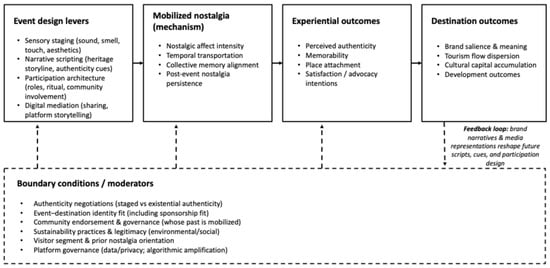
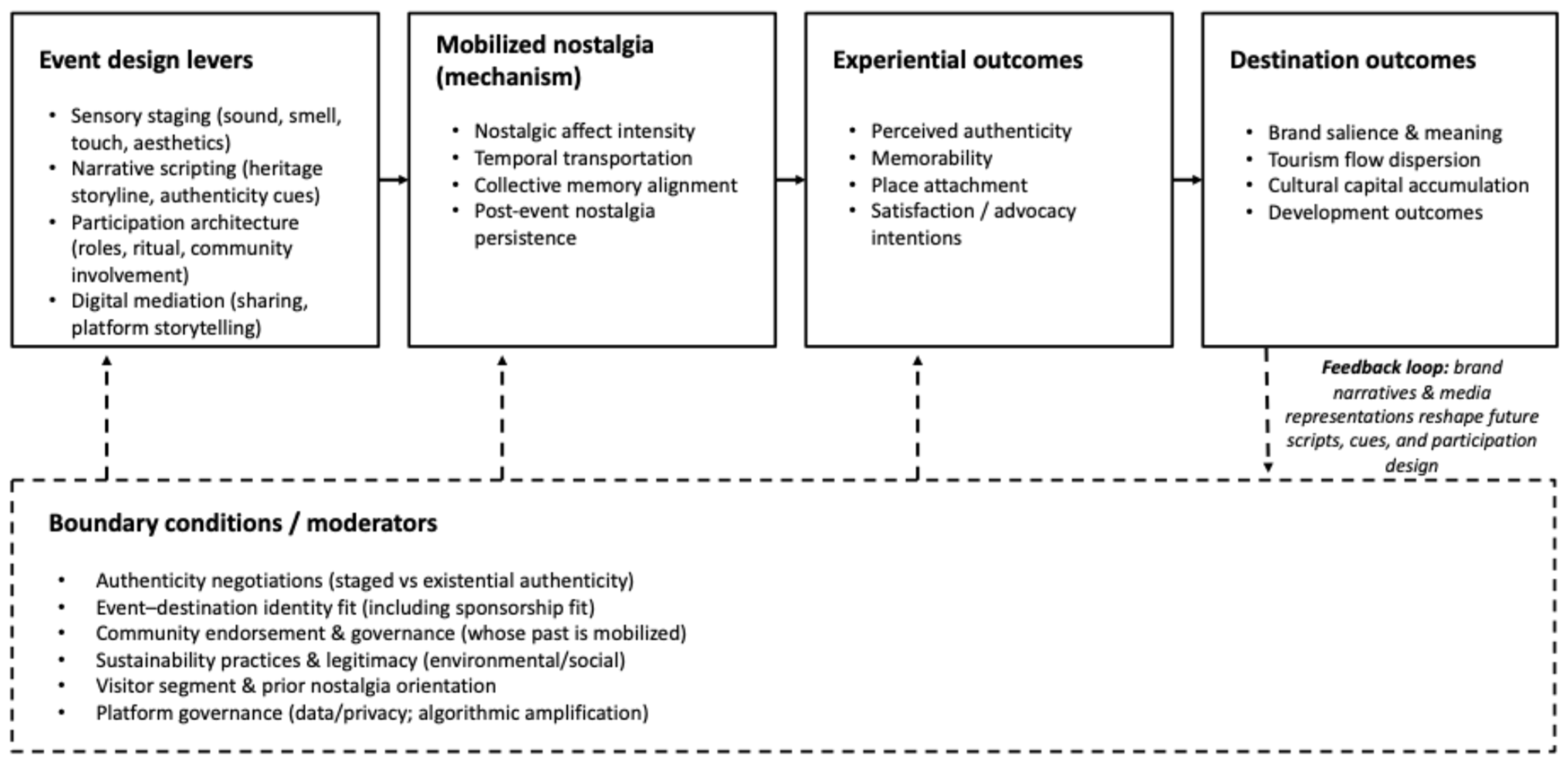

Disclaimer/Publisher’s Note: The statements, opinions and data contained in all publications are solely those of the individual author(s) and contributor(s) and not of MDPI and/or the editor(s). MDPI and/or the editor(s) disclaim responsibility for any injury to people or property resulting from any ideas, methods, instructions or products referred to in the content. |
© 2026 by the authors. Licensee MDPI, Basel, Switzerland. This article is an open access article distributed under the terms and conditions of the Creative Commons Attribution (CC BY) license.