Article

Tribological Study of Multi-Walled Carbon Nanotube-Reinforced Aluminum 7075 Using Response Surface Methodology and Multi-Objective Genetic Algorithm


by
Endalkachew Mosisa Gutema
1,2,*,
Mahesh Gopal
1 and
Hirpa G. Lemu
2,*
1
Department of Mechanical Engineering, College of Engineering and Technology, Wollega University, Nekemte P.O. Box 395, Ethiopia
2
Department of Mechanical and Structural Engineering and Materials Science, Faculty of Science and Technology, University of Stavanger, N-4036 Stavanger, Norway
*
Authors to whom correspondence should be addressed.
J. Compos. Sci. 2025, 9(3), 137; https://doi.org/10.3390/jcs9030137
Submission received: 23 January 2025 / Revised: 3 March 2025 / Accepted: 7 March 2025 / Published: 14 March 2025
(This article belongs to the Special Issue Characterization and Modeling of Composites, 4th Edition)

Abstract

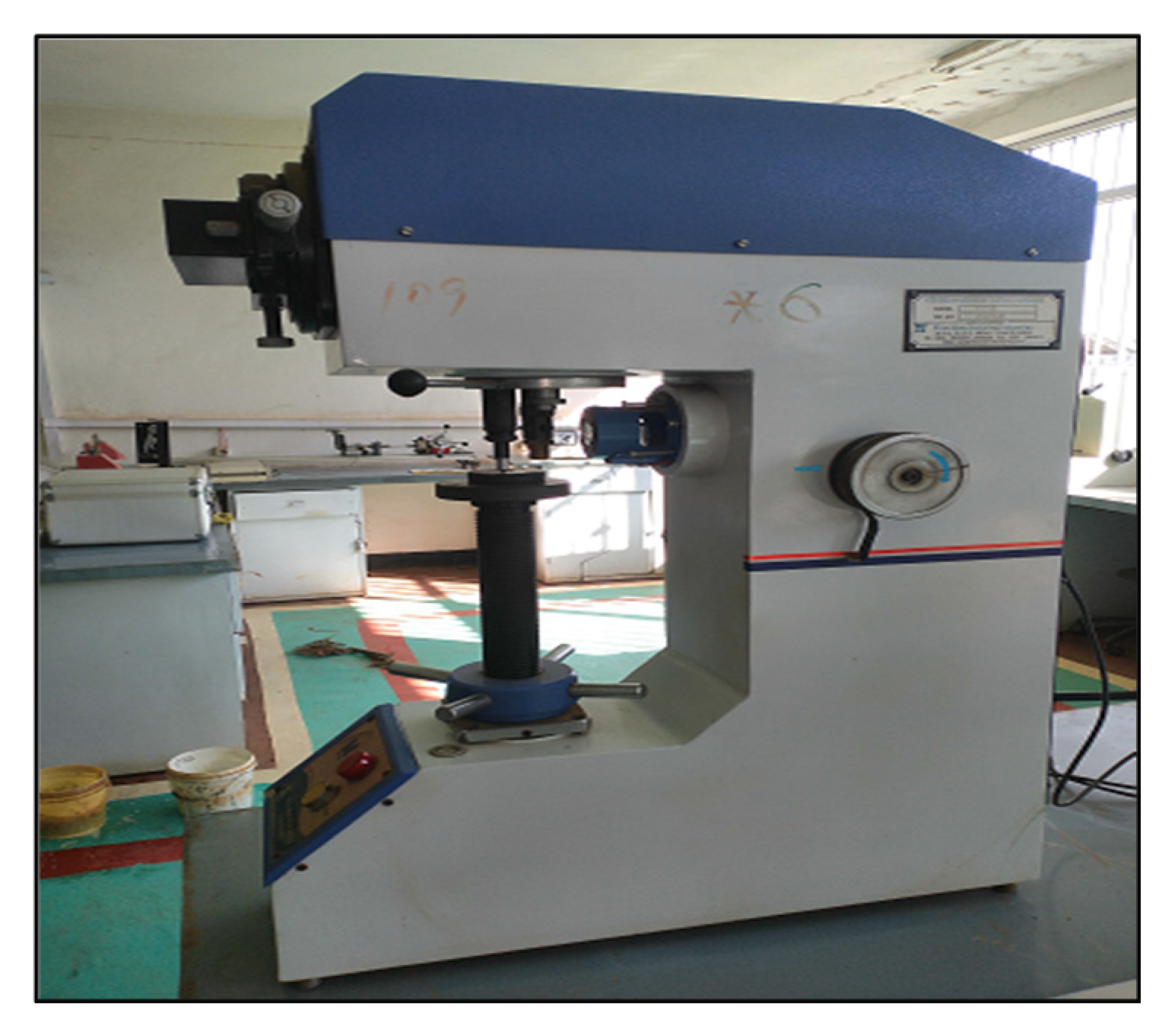
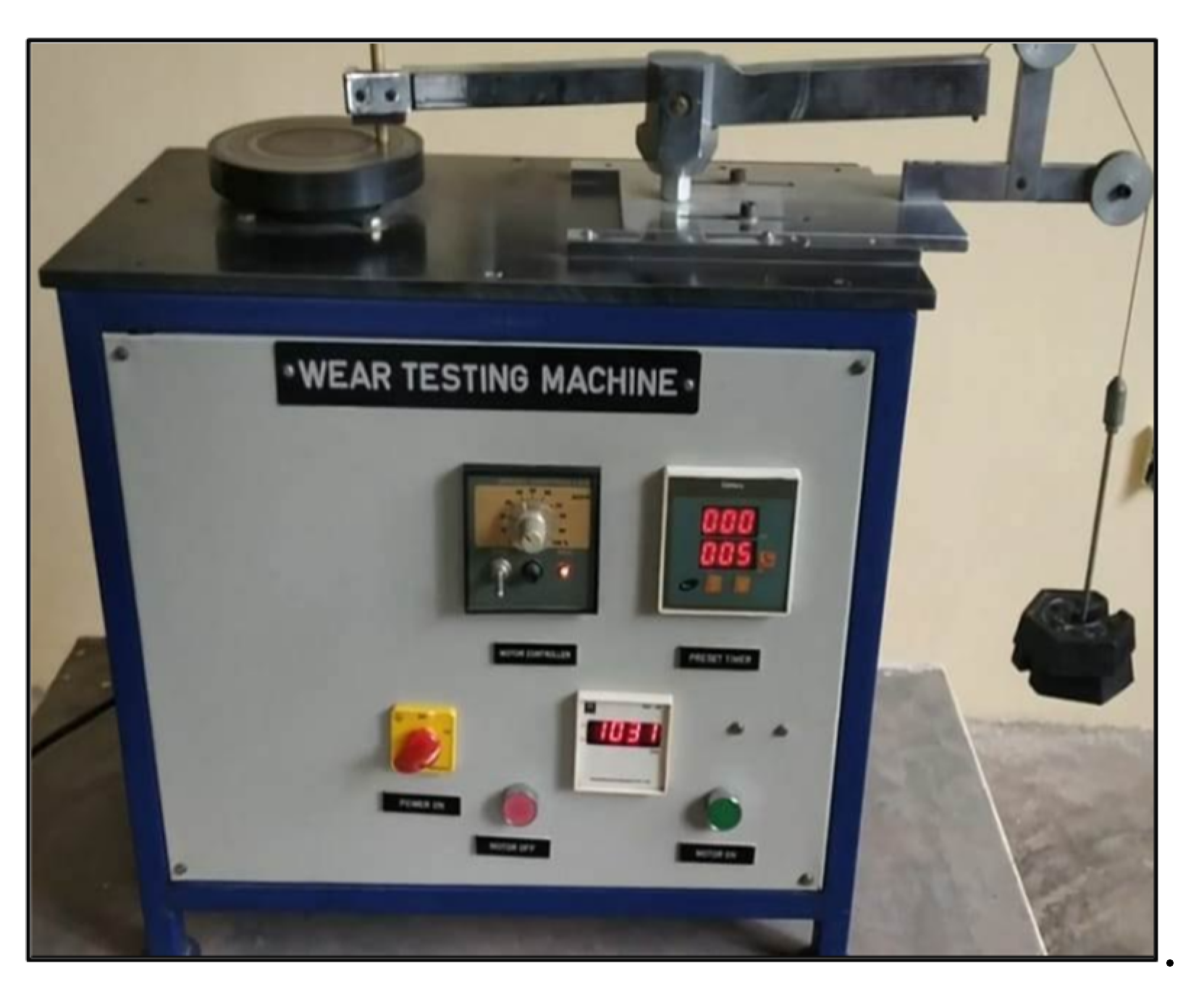
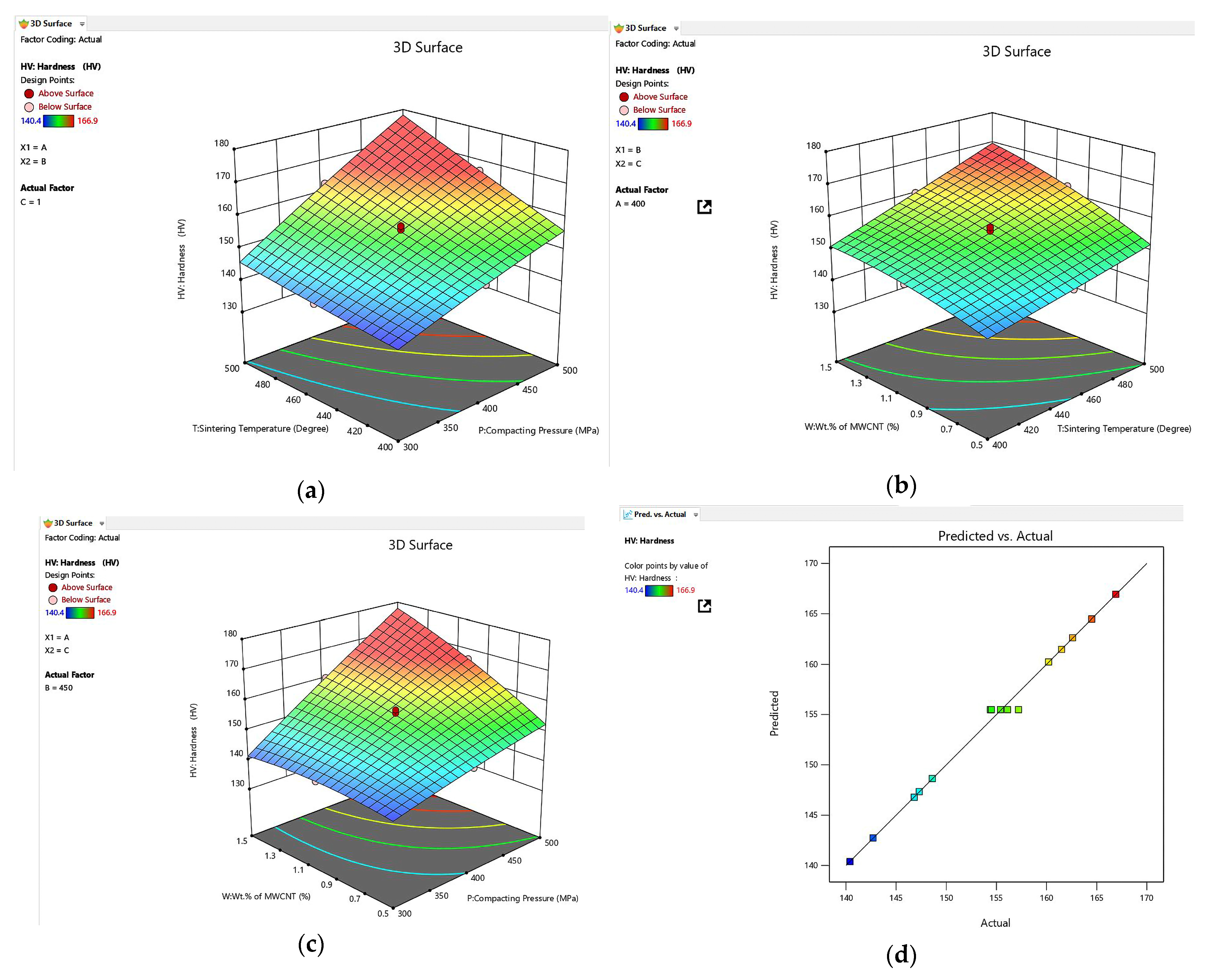
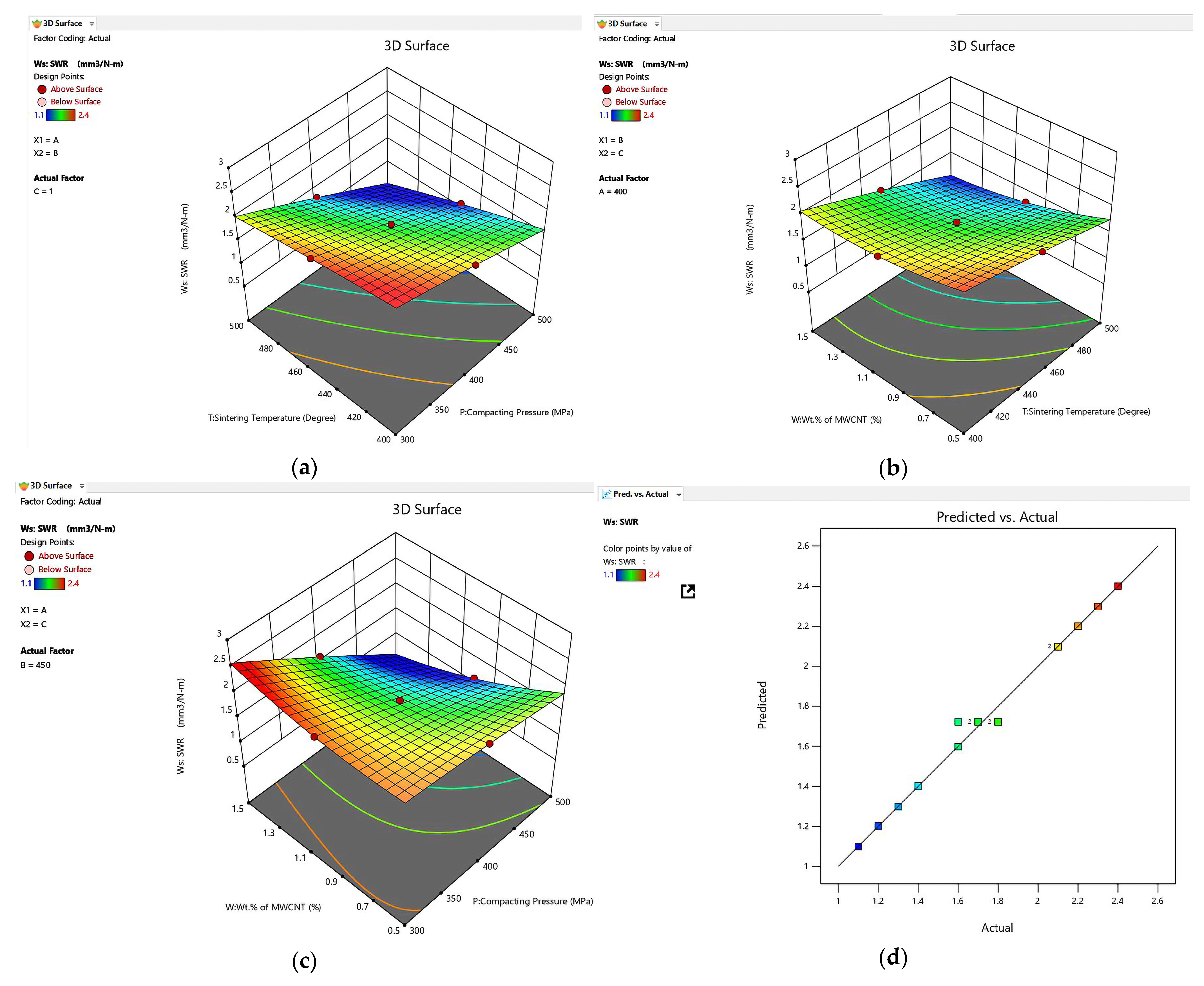
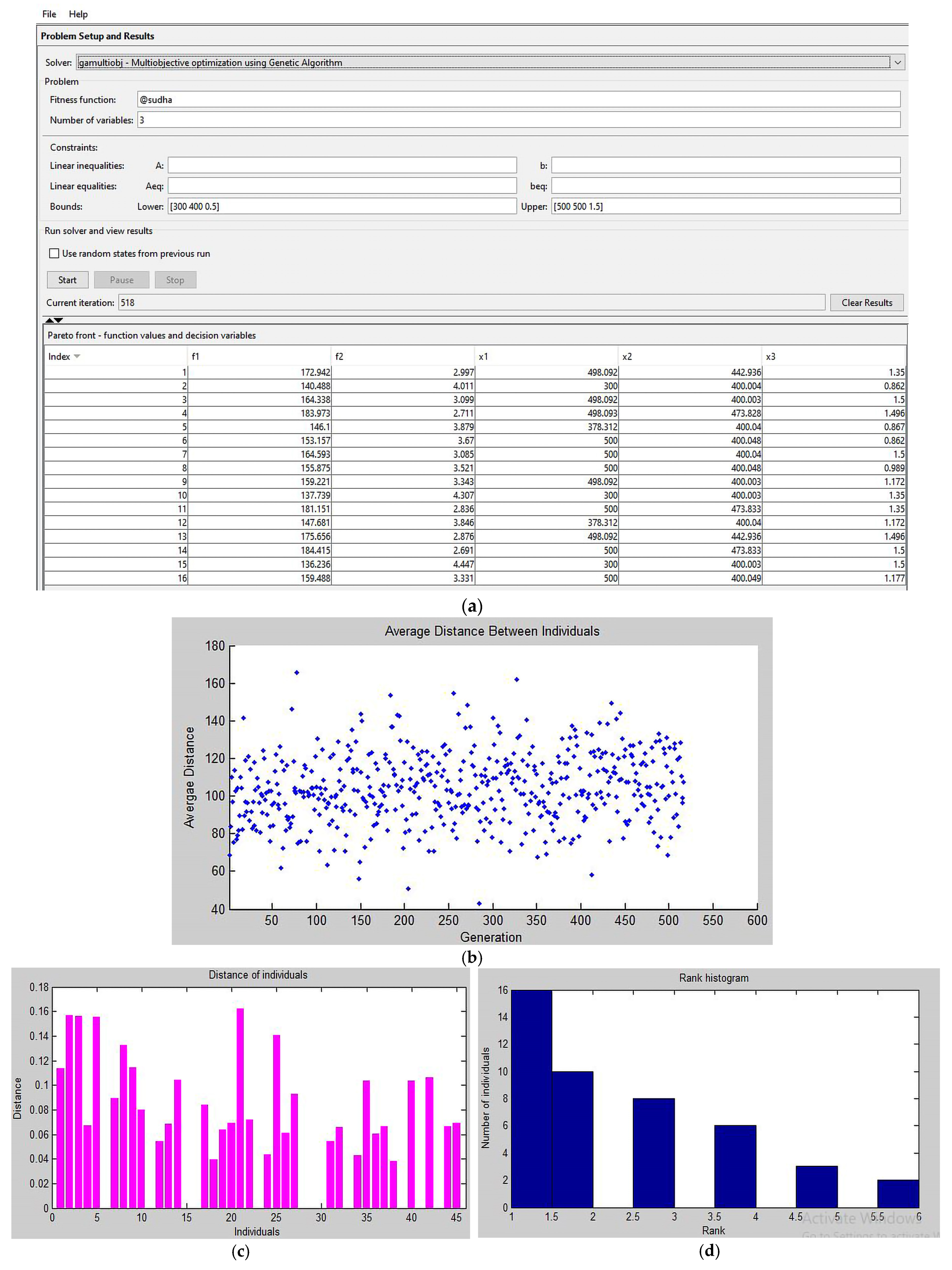
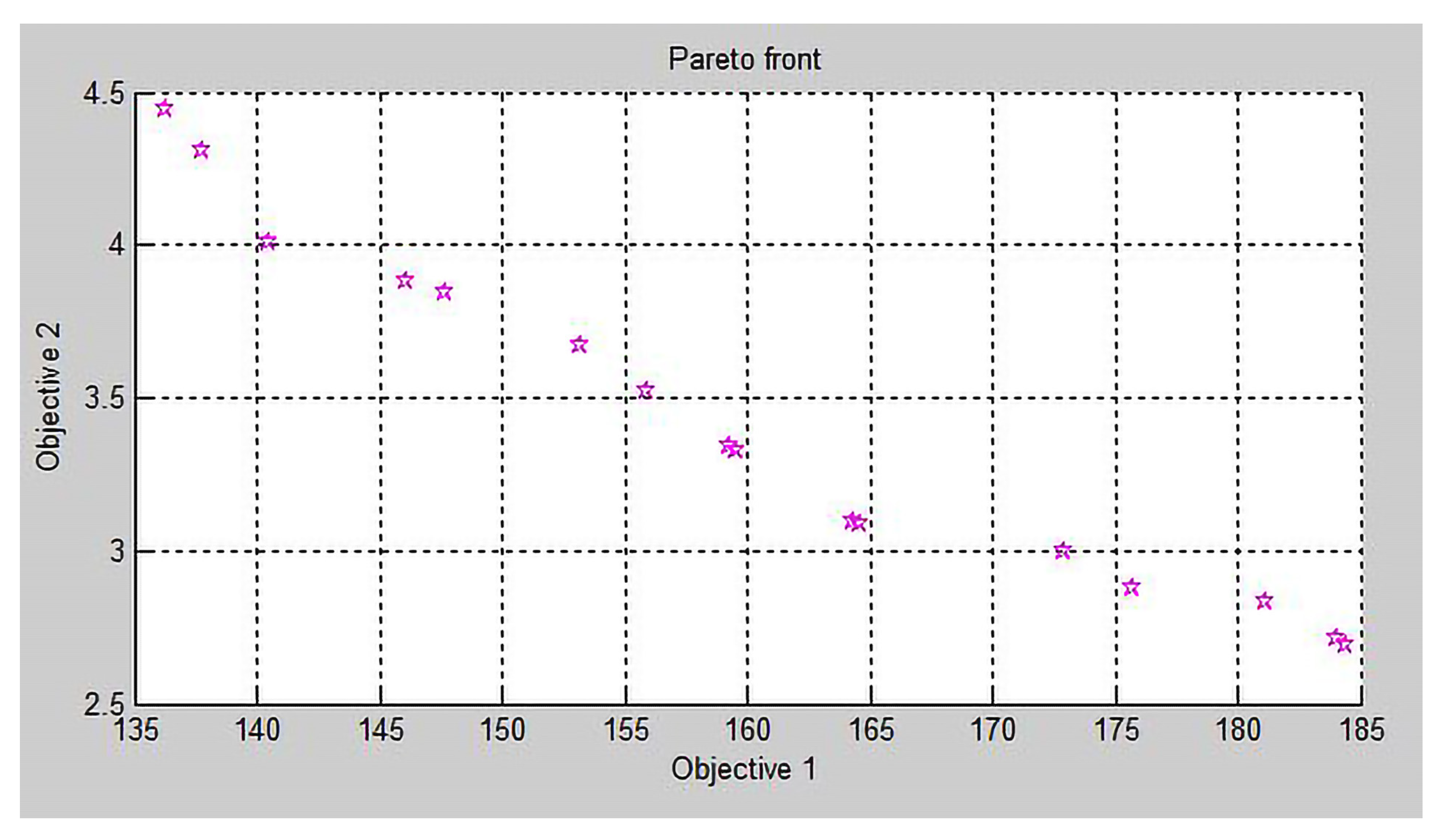
Aluminum metal matrix composites (AlMMCs) are widely employed in the aerospace and automotive industries due to their greater qualities in comparison to the base alloy. Adding nanocomposites like multi-walled carbon nanocomposites (MWCNTs) to aluminum enhances its mechanical properties. In the current research, aluminum 7075 with MWCNT particles was prepared and characterized to study its tribological behaviors, such as its hardness and specific wear rate. The experiment was designed with varying weight percentages of MWCNTs of 0.5, 1.0, and 1.5, and these were fabricated using powder metallurgy, employing compacting pressures of 300, 400, and 500 MPa and sintering temperatures of 400, 450, and 500 °C. Further, the experimental setup was designed using Design-Expert V13 to examine the impact of influencing parameters. A second-order mathematical model was developed via central composite design (CCD) using a response surface methodology (RSM), and the performance characteristics were analyzed using an analysis of variance (ANOVA). The hardness (HV) and specific wear rate (SWR) were measured using a hardness tester and pin-on-disk apparatus. From the results thus obtained, it was observed that an increase in compacting pressure and sintering temperature tends to increase the hardness and specific wear rate. An increasing weight percentage of MWCNTs increased their hardness, while the SWR was less between the weight percentages 0.9 and 1.3. A multi-objective genetic algorithm (MOGA) was trained and evaluated to provide the best feasible solutions. The MOGA suggested sixteen sets of non-dominated Pareto optimal solutions that had the best and lowest predicted values. The confirmatory analytical results and predicted characteristics were found to be excellent and consistent with the experiential values.
Keywords: aluminum 7075; multi-walled carbon nanotubes; central composite design; response surface methodology; analysis of variance; multi-objective genetic algorithm aluminum 7075; multi-walled carbon nanotubes; central composite design; response surface methodology; analysis of variance; multi-objective genetic algorithm