


Abstract
Improving the durability of reinforced concrete sleepers is essential for railway infrastructure exposed to dynamic loading, moisture, and repeated freeze–thaw action. This study proposes a material-level modification approach for heavy concrete for type 2 reinforced concrete sleepers based on the combined use of activated microsilica, a ferroalloy-production byproduct, electrolyzed mixing water, and a polycarboxylate superplasticizer. The novelty of the work lies in the preliminary electrochemical activation of microsilica in an alkaline medium and in the optimization of its joint use with KN-5 by means of second-order experimental design. The concrete was evaluated by compressive and bending strength tests, scanning electron microscopy (SEM), water-penetration testing, and freeze–thaw resistance testing. All modified mixtures outperformed the reference concrete. The highest 28-day compressive strength reached 67.0 MPa, while bending strength reached 7.26 MPa. SEM observations showed a denser and more homogeneous cement matrix with reduced capillary porosity and improved interfacial transition zones. Water resistance improved from W8 for the reference mixture to W10–W14 for the modified concretes. Most modified mixtures achieved a frost resistance grade of F500, and the composition containing 15% activated microsilica and 1.0% superplasticizer reached F550. The proposed approach is effective at the material level for producing heavy concrete with enhanced strength and durability characteristics for reinforced concrete sleeper applications.
1. Introduction
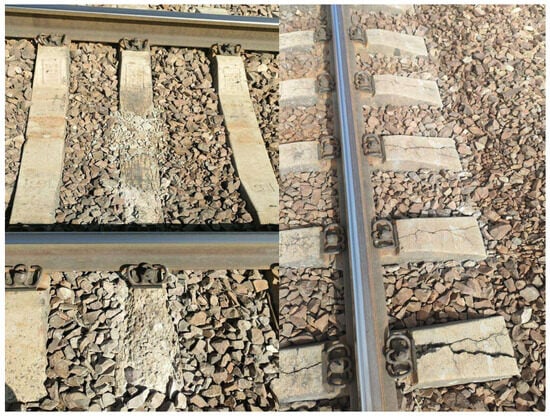
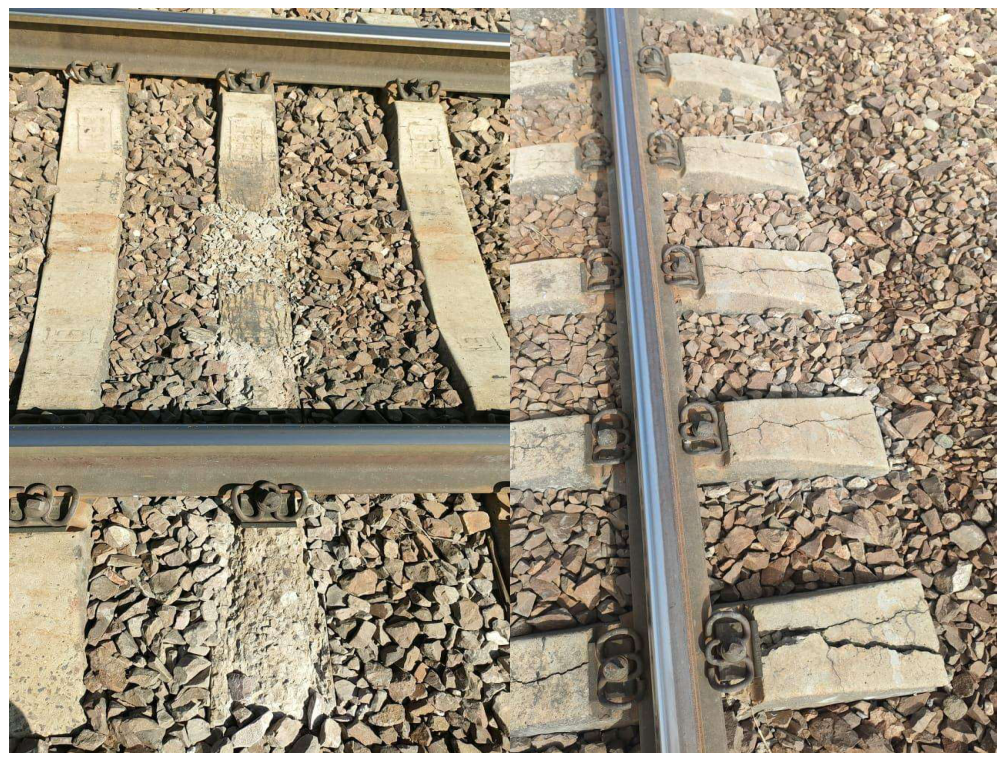
Reinforced concrete sleepers are a key component of the railway track superstructure, ensuring load transfer from the rails to the ballast bed and the stability of the rail-sleeper grid [1]. Under operating conditions, they are subjected to significant dynamic loads, exposure to moisture and aggressive environments, and repeated freeze–thaw cycles [2]. The combination of these factors significantly affects the durability of concrete elements and requires the use of materials with enhanced strength and performance characteristics. This issue is substantiated by the analysis of the performance of reinforced concrete sleepers manufactured in Kazakhstan, which revealed that the type 1 sleepers made of C40/45 concrete according to [3] are characterized by a relatively short warranty period of approximately 5 years, which leads to premature costs for the repair and replacement of track superstructure elements (Figure 1). This fact indicates the need to improve the concrete mix design and develop effective methods to increase its service life.
Figure 1.
Photographic evidence of deteriorated reinforced concrete sleepers (taken by authors).
Earlier, our research group investigated ways to improve the durability of heavy concrete using volumetric fiber reinforcement, which made it possible to reduce shrinkage deformation by up to 20% and increase frost resistance and water impermeability by up to 30% [4]. The results obtained confirmed the prospects for research aimed at modifying the microstructure of cement paste and increasing the strength of concrete. At the same time, the requirements of [3] for Type 2 sleepers made of C45/50 concrete with a guaranteed service life of only 10 years indicate the need to use high-strength concretes and develop new approaches to their modification. An analysis of [3,5,6,7] shows that increasing the durability of concrete used under conditions of high loads and aggressive influences is one of the pressing challenges in modern materials science. In this regard, research aimed at improving the structure of cement paste and increasing concrete’s resistance to adverse operational factors is of particular relevance.
According to the results of studies [8,9] on the calculation and design of track upper structure elements in regions with harsh climatic conditions, ensuring the reliable operation of railway infrastructure requires the use of concrete with high-strength properties and a stable microstructure. Furthermore, the operation of structures under conditions of significant temperature fluctuations and dynamic loads requires a comprehensive improvement in concrete properties, including its durability and resistance to external influences [10].
Another important area of research is the improvement of concrete’s hydro-physical properties, such as frost resistance and water impermeability. Early studies [11,12,13] show that the durability of concrete is largely determined by the structure of its pore space and the density of the cement paste. In this regard, the addition of silica-containing components to the concrete mix promotes the intensification of pozzolanic reactions, the formation of additional calcium silicates, and the densification of the cement paste structure, which leads to improved frost resistance and water impermeability of the material [14]. When designing heavy concrete for use under conditions of repeated freeze–thaw cycles, it is also necessary to take into account the requirements of the relevant regulatory documents [15].
The durability of concrete elements is significantly affected by the corrosion of the cement paste, which occurs when exposed to moisture and aggressive environments. Experimental studies [12] simulating real-world operating conditions for reinforced concrete sleepers have shown that, under conditions of high humidity and abrasive action, Type I cement stone corrosion, the leaching corrosion, occurs. This process is accompanied by the leaching of calcium hydroxide, Ca(OH)2, the content of which can reach 20% of the total amount of Portland cement hydration products [11]. Leaching results in the decomposition of calcium hydrosilicates, i.e., 3CaO·2SiO2·3H2O → 2SiO2 + 3CaO + 3H2O, which leads to a reduction in the strength of the cement paste by 40% or more [16,17]. One effective way to improve concrete’s resistance to leaching corrosion is to incorporate active mineral admixtures capable of converting soluble portlandite into low-basicity, water-insoluble calcium hydrosilicates [18,19]. A further reduction in concrete permeability can be achieved through the use of chemical admixtures (plasticizers and water repellents) [20]. Of particular interest are studies on the use of microsilica, the inclusion of which in the concrete mix at a concentration of 10–15% significantly accelerates the hydration process and increases the compressive strength of concrete, including during heat-moisture curing and normal hardening [21]. In addition, microsilica has a positive effect on the rheological and thixotropic properties of cement systems, contributing to the formation of the spatial structure of the cement paste.
At the same time, an analysis of the literature [22,23,24] shows that the issues of optimizing microsilica dosage and improving its efficiency in concrete mixtures remain understudied. In particular, a promising direction is the activation of microsilica particles, which allows for a reduction in its consumption while maintaining or improving the performance characteristics of concrete.
One possible way to increase the reactivity of cement system components is to use electrochemically activated mixing water. According to findings of [25], the catholyte and anolyte obtained in an electrochemical diaphragm reactor from slightly mineralized water possess significantly higher reactivity and differ in their physicochemical characteristics from solutions obtained by conventionally dissolving chemical reagents. Electrochemical activation technology is characterized by high values of redox potential, pH, electrical conductivity, and other parameters, which allow activated water to be used as an effective reaction medium for controlling physicochemical processes [26]. The practical application of this technology is confirmed by the widespread use of plants for producing activated solutions, which are used in various industries, including construction [27]. Despite the significant amount of research conducted, the issues regarding the combined use of activated silica-containing components and electrochemically activated mixing water for modifying the concrete of reinforced concrete sleepers have not been sufficiently studied.
The focus of this study is the development and justification of the composition of C45/55-grade heavy concrete using amorphous microsilica activated with water treated by electrolysis, as well as the evaluation of its structural and performance characteristics. To achieve this goal, a series of research tasks were systematically addressed in this work. In the first stage, the main materials for the study were selected in accordance with current regulatory documents governing their use in the production of heavy concrete, after which the reference composition of C45/55 concrete was calculated and selected. Next, the amorphous microsilica particles were activated using water treated by electrolysis to increase their reactivity. Taking into account the required strength characteristics of concrete of this class, a mathematical model was developed based on a second-order orthogonal central factorial design for two variable factors: microsilica content and chemical admixture. Based on the results of mathematical modeling, the nominal composition of C45/55 concrete was determined, which was subsequently subjected to laboratory testing. To identify the structural formation characteristics of the developed compositions, the microstructure of concrete samples was investigated using reflection imaging with an electron microscope at magnifications of ×1000, ×2000, and ×3000. The final stage of the study involved assessing the serviceability of the concrete mixtures developed, including testing the specimens for water impermeability and frost resistance at 28 days of age. The present study is focused on the development and material-level evaluation of modified heavy concrete for reinforced concrete sleepers, with emphasis on strength, microstructure, water impermeability, and frost resistance as the primary indicators controlling durability; sleeper-level mechanical qualification parameters such as elastic modulus and fatigue resistance are considered subsequent stages of validation.
2. Materials and Methods
2.1. Description and Specifications of the Materials Used
Table 1 shows the specifications of the binder (cement) selected according to [28].
Table 1.
Cement specifications [28].
Table 2 shows the chemical composition of CEM I 52.5, which was analyzed in accordance with the procedures described in [29].
Table 2.
Chemical compositions of CEM I 52.5 [29].
To verify that the selected binder complied with established standards and requirements, several tests were conducted using the methods specified in standards [28,29]. The results allowed the following parameters to be determined:
- (1)
- Fineness of grinding, which was 91.7% for the binder under test.
- (2)
- Normal density and setting time of the cement paste. The normal density of the binder under study was 26.6%. The setting began 2 h and 15 min after mixing, and was complete 4 h and 19 min after mixing. The obtained parameters correspond to the provisions of [28,29].
Table 3 shows the fine aggregate (sand) specifications selected according to [30].
Table 3.
Sand specifications [30].
Table 4 shows the specifications of coarse aggregate (crushed stone) selected according to [31].
Table 4.
Crushed stone specifications [31].
Table 5 and Table 6 show the specifications and chemical composition of the micro-filler (amorphous microsilica) selected according to [32].
Table 5.
Microsilica specifications [33].
Table 6.
Chemical composition of amorphous microsilica [33].
Table 7 shows the specifications of the superplasticizer (polycarboxylate ether (PCE)), the admixture regulating the setting kinetics of concrete, selected according to [34] and based on our previous experience [21].
Table 7.
PCE specifications [34].
The effectiveness of the PCE was evaluated based on the change in strength (, %) in the main concrete compositions compared to the reference at 1 and 28 days as follows:
where and —strength of reference and main concrete compositions, respectively, MPa; t—curing age, days.
2.2. Calculation and Selection of the Reference Composition for C45/55 Heavy Concrete
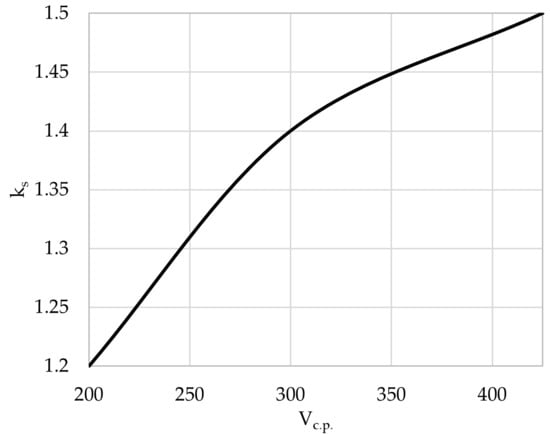
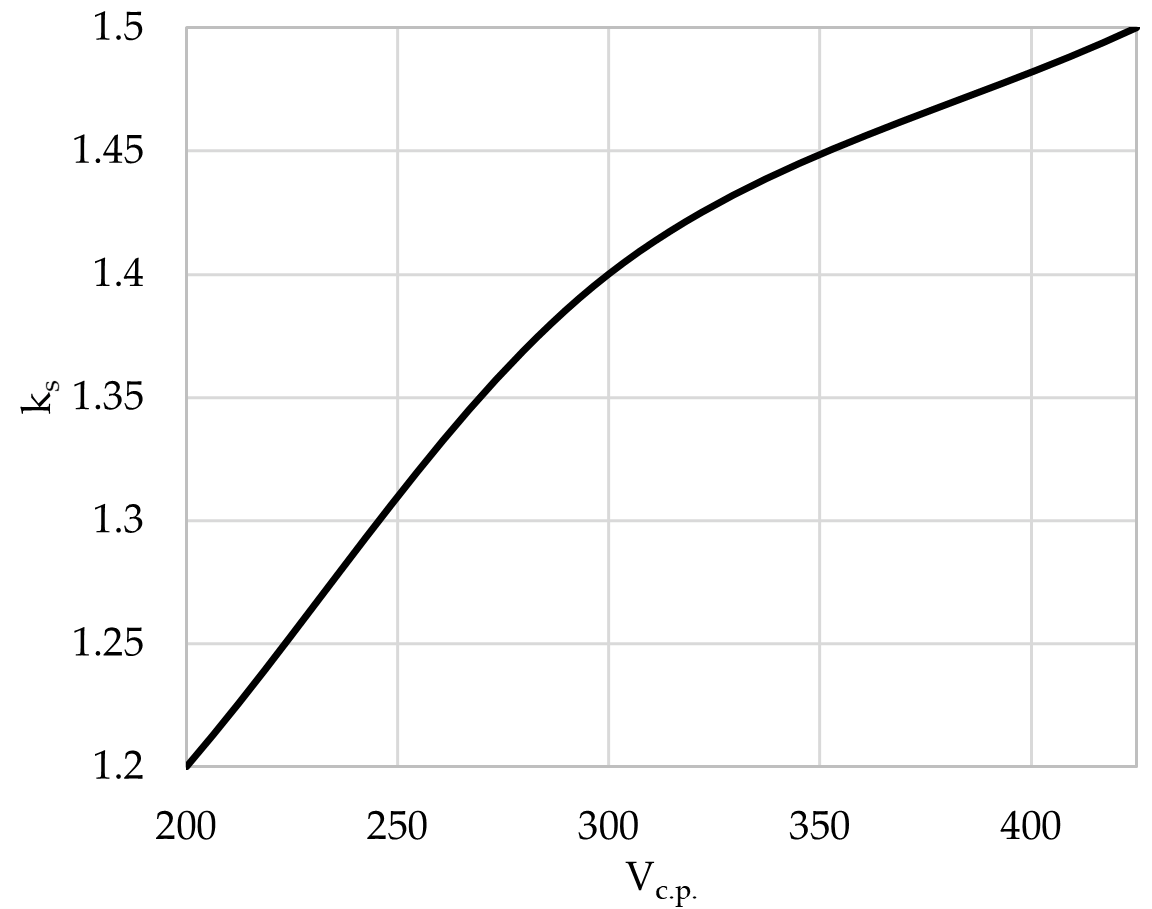
To determine the composition of marketable concrete grades, taking into account the dependency (Figure 2) between the grain spread coefficient () and the volume of the cement paste (), a well-established calculation method [35] was applied, which ensures that the mixture meets the required strength and performance characteristics.
Figure 2.
Dependency between and [35].
The calculation involves the sequential resolution of several interrelated stages. First, technical specifications are formulated, taking into account not only standard requirements for the strength and workability of the concrete mix, but also the minimum permissible value of ultimate tensile strain, based on the forming conditions and expected or measured values of possible deformations. Next, raw materials are selected, and the necessary data on their properties are collected, including the water demand of the aggregates. In the next stage, the concrete mix design is calculated, determining the consumption of the main components in kg/m3. The procedure concludes with experimental testing of the resulting mix and its adjustment, if necessary, which ensures that the concrete meets the specified technical and performance characteristics.
In the first step, we determined the specified compressive strength of concrete (), based on the relationship between concrete strength, cement activity (), and the water–cement ratio:
where —coefficient depending on aggregate type (3.5 for crushed stone) [35]; —coefficient depending on concrete type (1.5 for heavy concrete) [35]; W—water content, kg; C—cement content, kg.
Equation (2) is valid for calculating the strength of compacted concrete that has hardened at 95% humidity and was tested using the standard method at 28 days of age [36].
Next, the consumption of coarse and fine aggregates (kg/m3) was determined:
where —crushed stone content, kg; —emptiness of crushed stone at bulk condition, m3; —bulk density of crushed stone, kg/m3; —true density of crushed stone, kg/m3; S—sand content, kg; , , —grain densities of cement, crushed stone, and sand, respectively, kg/m3; —water density, kg/m3.
The sum of the component weights is numerically equal to the average density of the concrete mix, expressed in kg/m3. The mix design is based on solving a system of equations for heavy concrete, which includes well-known and widely used mathematical expressions, such as the fundamental law of concrete strength, the equation of absolute volumes, as well as the aggregate particle separation coefficient, which together ensure a correlation between the consumption and properties of the main components and the strength of the concrete and the workability of the concrete mix:
where A—coefficient that accounts for the quality of the aggregates; —is determined based on the particle size distribution of the aggregates (for 5–20 mm crushed stone, r = 0.55–0.8 is recommended; for 5–10 mm crushed stone, r = 0.65–1.5 is recommended) [35].
Based on the concrete composition obtained by calculation (reference composition), to construct an adequate mathematical model, the consumption rates for crushed stone, sand, cement, and water were set as constant values for all developed compositions (Table 8), equal to 1000 kg, 750 kg, 450 kg, and 150 L, respectively. And the contents of MC-95 and KN-5 were selected as governing factors influencing compressive strength at 7 and 28 days.
Table 8.
Experimental compositions.
Summary data on the compositions of the modified heavy concrete are presented in Table 8.
The concrete mixes were experimentally verified for workability class of S1 (slump test per [36]) during laboratory mixes, after which test specimens were prepared and subjected to compression and bending according to [37].
At this stage, the experimental program was limited to the properties most directly associated with the targeted transition from conventional sleeper concrete to a more durable Type 2 concrete, namely compressive strength, bending strength, microstructural features, water impermeability, and freeze–thaw resistance. These characteristics were selected to assess the effect of activated microsilica and KN-5 on matrix densification and durability-related performance. The determination of static elastic modulus and fatigue resistance was not included in the present material-screening stage and should be considered in subsequent studies on full mechanical qualification of the developed concrete for sleeper applications.
2.3. Transformation of Amorphous Microsilica into an Active Form
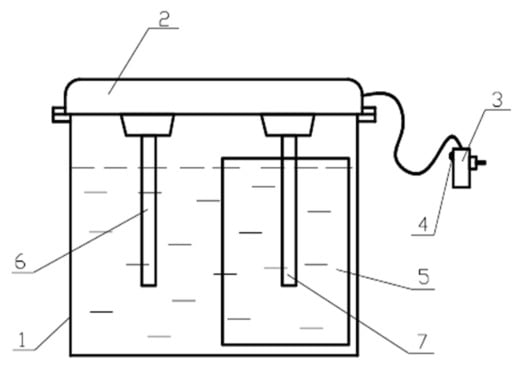
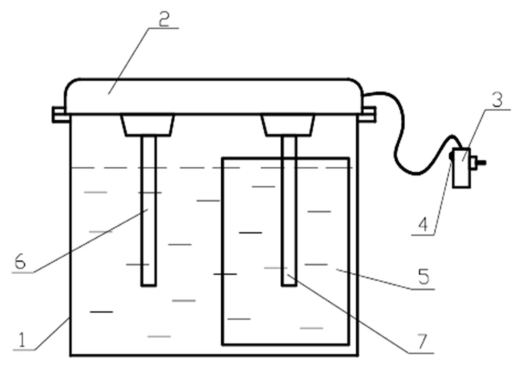
After analyzing the theoretical data from [16] on the behavior of amorphous silica in an alkaline medium at pH = 10.2, it was decided to use tap water, pretreated by electrolysis, as the medium, which contains Ca(HCO3)2 and Mg(HCO3)2. For the laboratory studies, a “Melesta” electrolyzer (Melesta LLC, Ufa, Russia) was used (Figure 3) [38].
Figure 3.
Melesta electrolyzer schematic diagram [38]: (1) main chamber; (2) removable top cover; (3) power supply; (4) indicator light; (5) removable inner chamber with diaphragm; (6) cathode; (7) anode.
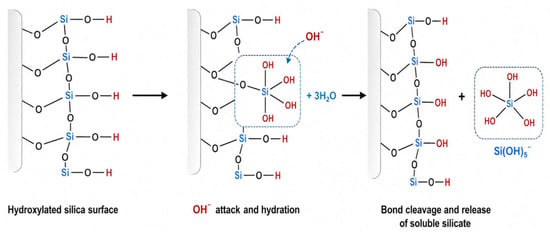
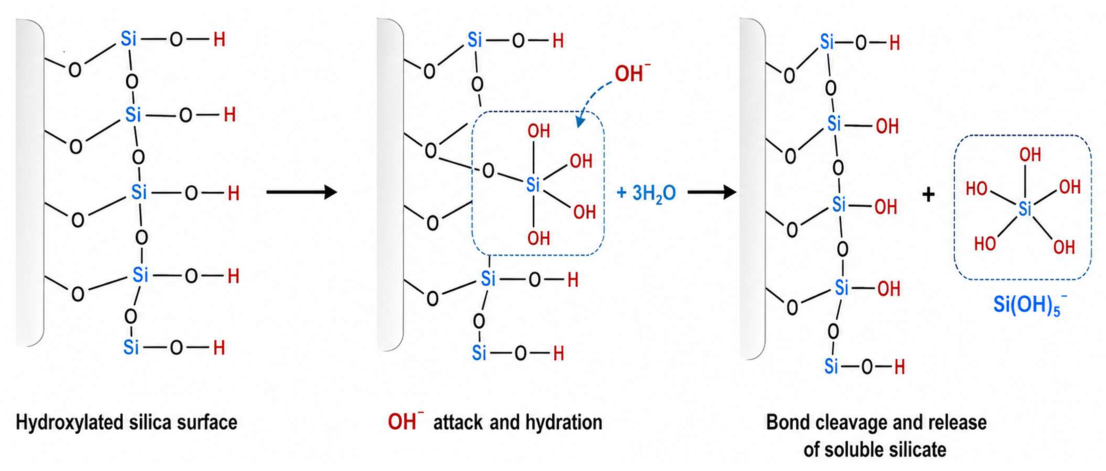
The cathode in the device is made of stainless steel, and the anode is made of titanium coated with ruthenium oxide. To convert amorphous microsilica into its active form, 0.8 L of tap water was poured into the Melesta device, and electrolysis was performed in accordance with the device’s specifications [38] until the water reached a temperature of 35 °C. As a result of the water treatment, an alkaline environment with a pH of 10.2 formed in the main chamber, and an acidic environment with a pH of 2.6 formed in the inner chamber. To study the behavior of silica in an alkaline environment, it is first necessary to define the “solubility” of silica, which refers to the concentration of Si(OH)4 reached when equilibrium is established between the processes of polymerization and depolymerization. The mechanism of silica dissolution in water in the presence of hydroxyl ions is shown in Figure 4.
Figure 4.
Author-drawn schematic representation of the hydroxyl-assisted dissolution of amorphous silica in alkaline water in the presence of hydroxyl ions, based on the mechanism described by [16].
From the chemical reactions shown in Figure 4, it follows that the process initially involves the adsorption of OH− ions, followed by the transfer of a surface silicon atom into the solution in the form of a silicate ion, which, at pH 10.2, hydrolyzes to form OH− ions and soluble silica molecules Si (OH)4, which is consistent with the findings in [11]. In this pH range, soluble amorphous silica is in equilibrium with both the neutral monomer and the silicate ions, the reactions of which are represented by Equations (6) and (7):
The index denotes a decrease of one in the number of monomer units in the silica polymer chain; that is, represents the residue of the polymeric microsilica after the removal of one molecule of silicic acid . Similarly, the negative exponent in the expression indicates the negative charge of the ions formed during hydrolysis in an alkaline medium. After analyzing the theoretical data presented above regarding the behavior of amorphous silica in an alkaline medium at pH = 10.2, it was decided to use tap water, pretreated by electrolysis, which contains Ca(HCO3)2 and Mg(HCO3)2, as the medium:
Electrolysis of tap water results in its softening (Equations (8) and (9)) due to the conversion of soluble calcium and magnesium hydrocarbonates into insoluble compounds. This process takes place at the anode. At the cathode, electrochemical hydrogen evolution occurs (Equation (10)), since calcium and magnesium have a redox potential significantly more negative than that of hydrogen and are at the beginning of the electrochemical series. The resulting hydroxide ion () determines the alkaline nature of the solution. After measuring the pH of the water treated by electrolysis, the pH of the medium was determined to be 10.2. It had previously been established that microsilica introduced into the treated water, due to alkaline excitation and in the presence of ions, acquires increased chemical activity according to the following reaction:
At the same time, the pH of the medium decreases from 10.2 to 7.5.
When activated microsilica is added to cement, the hydrolysis and hydration processes of the cement particles proceed more intensively. When microsilica activated with water treated by electrolysis and stabilized with a superplasticizer is added to cement, the hydrolysis and hydration processes of the cement particles proceed even more intensively. In our opinion, this occurs due to the formation of hydrolysis products of activated microsilica, which concentrate new formations around themselves, forming a colloidal system. The finely dispersed microsilica particles act as a substrate for the formation of crystallization and nucleation centers, as confirmed by studies [19,39].
2.4. Mathematical Modeling
Two factors were selected to assess the effect of composition on concrete strength: the dosage of the KN-5 chemical admixture (X1) and the dosage of MC-95 microsilica (X2). The ranges of variation for the factors were determined based on preliminary tests and the recommendations of the additive manufacturers, which allowed for technological constraints to be taken into account and ensured the reliability of the data obtained. The minimum and maximum values of the factors were selected to include the most effective additive concentrations that did not cause a deterioration in the properties of the concrete mix, while the variation step (MC-95—2.5%, KN-5—0.125%) provided sufficient resolution for constructing response surfaces.
To systematically study the influence of these factors on concrete strength, the second-order Central Composite Design (CCD) method [40] was employed, which allows for the evaluation of both the linear and quadratic effects of each factor, as well as their interactions, with a minimum number of experiments. In accordance with the selected design, four factorial points, four axial points, and one central point were used, totaling nine experimental series. The application of this approach enables the construction of an adequate mathematical model that allows for the prediction of concrete strength characteristics and the optimization of the mix design without the need for a large number of test mixes, thereby increasing the efficiency and accuracy of the study. A quadratic regression model was adopted for all output parameters:
where —compressive/bending strength value, MPa; —content of activated microsilica MC-95, % by mass of the binder; —content of superplasticizer KN-5, % by mass of the binder.
2.5. Scanning Electron Microscopy
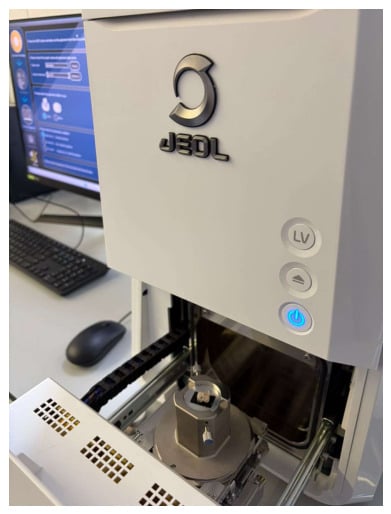
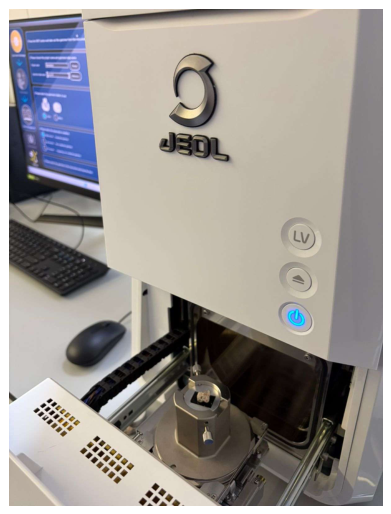
The microstructure of the hardened heavy concrete specimens after 28 days was examined by scanning electron microscopy (SEM) using JEOL-7000 equipment (JEOL Ltd., Tokyo, Japan), operating at an accelerating voltage of 10 kV, with a working distance of 14 mm in high-vacuum mode. Images were captured at magnifications of ×1000, ×2000, and ×3000, focusing on the morphology of hydration products, pore features, and the interphase transition zones (ITZ) between the cement matrix and aggregates at resolutions of 5 and 10 μm. For each specimen, the micrographs were obtained from representative regions of the fracture surface selected to characterize the cement matrix, pores, and ITZ; the images at different magnifications correspond to the same specimen, although not necessarily to exactly the same microscopic point.
Small concrete fragments approximately 1–2 cm in size were extracted from 100 × 100 × 100 mm cubic specimens after compressive strength testing, using the fracture surfaces formed during loading. No chemical treatment was applied to the specimens. Before analysis, loose dust was removed with compressed air, and the fragments were mounted on conductive metal holders for SEM observation. Figure 5 illustrates the specimen preparation arrangement used for SEM analysis and the manner in which the fractured concrete fragment was fixed prior to examination in the microscope chamber.
Figure 5.
Preparation and mounting of fractured concrete fragments on conductive holders prior to SEM examination in a JEOL JSM-7000 microscope.
The analysis of the concrete microstructure using SEM was conducted on four main concrete specimens containing 0% (i.e., reference specimen), 10%, 15%, and 20% activated MC-95, respectively, according to [41].
2.6. Determination of Water Resistance
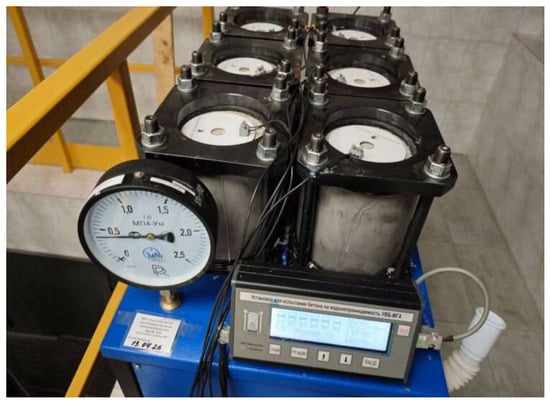
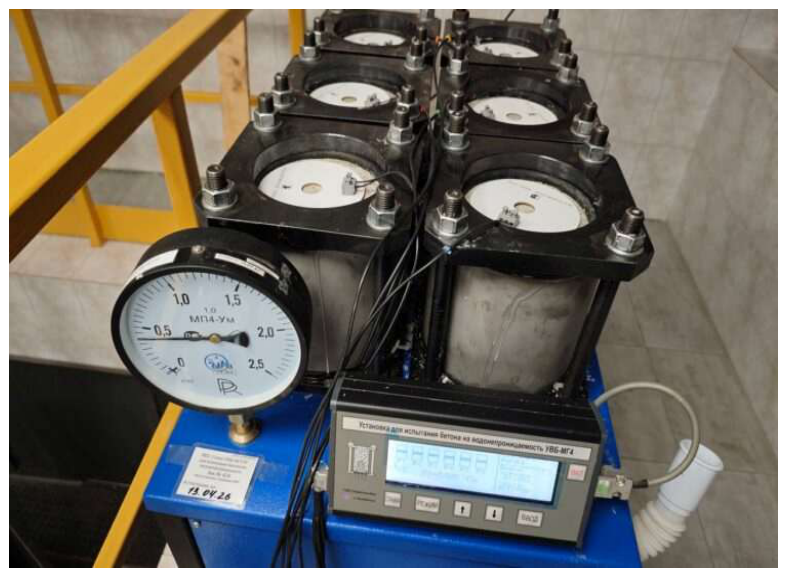
The water resistance tests were conducted according to [42]. For each tested composition, cylindrical specimens with a diameter of 150 mm and a height of 150 mm, based on the fact that the maximum aggregate particle size was 20 mm, were prepared and stored in a standard curing chamber set at a temperature of 20 ± 2 °C and a relative humidity of 95 ± 5%, with a preliminary aging period of 1 day in the laboratory before testing. Figure 6 shows the specimens during the water resistance tests. The tests were conducted on a UVB-MG4.01 water resistance testing machine (Stroypribor LLP, Chelyabinsk, Russia) and consisted of applying a water pressure of 500 ± 50 kPa to cylindrical specimens for 72 ± 2 h, followed by splitting the specimens to measure the maximum depth of water penetration.
Figure 6.
Water resistance test setup.
2.7. Determination of Frost Resistance
The frost resistance tests were conducted in accordance with the requirements of [15], involving alternating cycles of freezing at −27 °C and thawing in a 3% NaCl solution at +20 °C. The tests were conducted according to the protocol presented in Table 9 and Table 10, and the evaluation criteria were the loss of mass after each freeze–thaw cycle and the ratio of the specimen’s strength after the freeze–thaw test to the strength in a water-saturated state before (hereinafter referred to as the strength change ratio).
Table 9.
Test conditions for determining frost resistance [15].
Table 10.
Testing mode [15].
3. Results
3.1. Compression and Bending Test Results
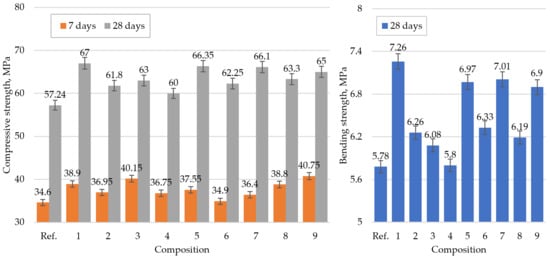
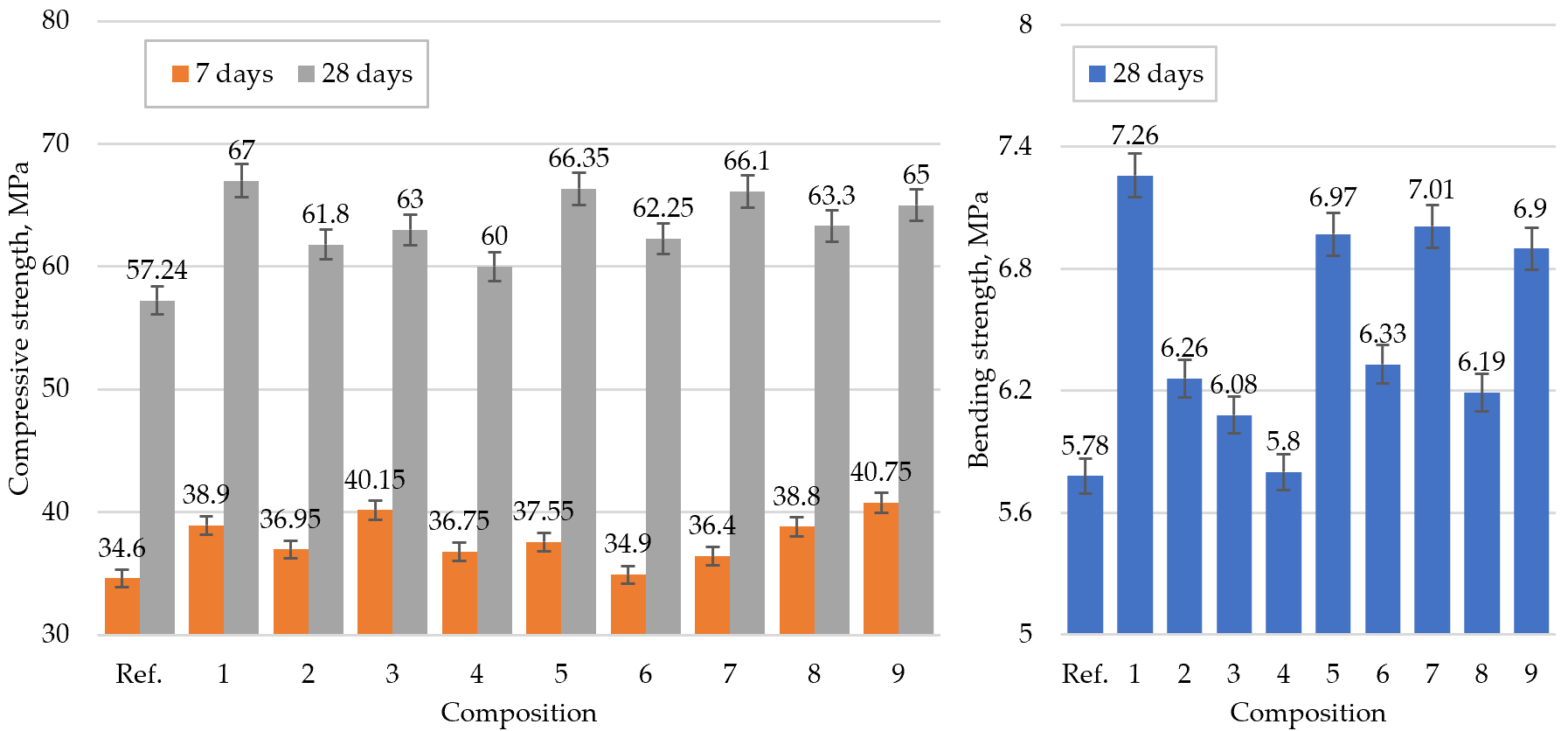
Figure 7 presents the test results for the reference and modified C45/55 concrete mixtures with varying contents of active microsilica MC-95 and superplasticizer KN-5, including compressive strength values at 7 and 28 days, as well as bending strength at 28 days.
Figure 7.
Test results for compressive (left) and bending strength (right) of the samples (enumeration of compositions corresponds to Table 8, with Ref. standing for the reference composition).
Analysis of the results shows that, with constant cement and aggregate content, the strength characteristics of the concrete depend most significantly on the dosage of active microsilica and superplasticizer. Compared to the reference composition, all modified mixtures demonstrated an increase in 28-day compressive strength from 57.24 to 60.0–67.0 MPa, and in bending strength from 5.78 to 5.8–7.26 MPa. The highest 28-day compressive strength was obtained for composition No. 1 (67.0 MPa), containing 90 kg of microsilica and 4.5 kg of superplasticizer, which clearly indicates the effectiveness of the combined action of a highly dispersed activated mineral additive and an increased dosage of superplasticizer. Compositions 5 and 7 showed similar results, with 28-day strengths of 66.35 and 66.1 MPa, respectively, indicating a fairly wide range of effective combinations of components provided that the dense structure of the cement paste is maintained. It should be noted that the effect of microsilica is nonlinear. When its content is increased from 45 to 90 kg with the same superplasticizer dosage of 4.5 kg, an increase in 28-day strength from 61.8 to 67.0 MPa is observed, whereas with 2.25 kg of superplasticizer, the increase is less pronounced: from 60.0 to 63.0 MPa. This indicates that the effect of microsilica is most fully realized with sufficient dispersion of the cement system and a reduction in the mixture’s water demand. A similar trend is observed for bending strength: the maximum value of 7.26 MPa was also obtained for composition 1, whereas in the reference composition it is 5.78 MPa. The data obtained suggest that the increase in strength is due not only to the pozzolanic activity of microsilica, which promotes the binding of portlandite to form an additional low-basicity C-S-H gel, but also to its micro-filling action, which promotes the densification of the cement paste structure and, in particular, the interface between the cement paste and the aggregate. The addition of a superplasticizer, in turn, improves particle distribution within the system, helps reduce the effective water–cement ratio, and decreases capillary porosity. Collectively, this leads to the formation of a denser and less defective matrix, which is consistent with the observed increase in both compressive and bending strength. Thus, what is decisive is not the separate presence of a mineral or chemical additive, but their optimal combination, which ensures the fullest realization of the modified cement system’s potential, consistent with previously published data [23,24].
3.2. Mathematical Modelling Results
Based on the results of the second-order CCD, empirical regression Equations (13) and (14) were obtained by statistically fitting the experimental data to describe the effect of the dosage of superplasticizer KN-5 (X1) and microsilica MC-95 (X2) on the compressive () and bending () strength of the concrete under study. These equations are not universal constitutive relationships for all heavy concretes; rather, they are valid within the investigated factor space and characterize the response of the studied concrete system to changes in the contents of MC-95 and KN-5.
The coefficient of determination (R2) for Equation (13) was R2 = 0.86, while for Equation (14) it was R2 = 0.90, indicating a good agreement between the regression models and the experimental results within the studied dosage range. Since these equations were obtained by fitting the test data, they should be interpreted as predictive models for the selected experimental domain rather than as universally applicable equations. Their main practical benefit is that they make it possible to quantitatively evaluate the individual and combined effects of activated MC-95 and KN-5, identify the presence of nonlinear behavior and interaction effects, and determine the region of rational dosages without carrying out a much larger number of additional trial mixtures. In this way, the models serve as an efficient tool for mix optimization and for locating the range in which compressive and bending strength reach their maximum values.
An analysis of the regression coefficients shows that an increase in the activated microsilica content has a more pronounced effect on the strength parameters than a comparable change in the dosage of KN-5. The positive coefficients for the interaction term indicate a synergistic effect when the mineral and chemical modifiers are used together. At the same time, the negative coefficients for the quadratic terms and indicate the presence of an extremum in the response functions, which confirms that the effect of the modifying components is nonlinear and that an optimum combination of factors exists within the investigated range. Thus, the regression analysis not only describes the experimental data but also explains why the highest strength is achieved at a balanced rather than maximum dosage of the components.
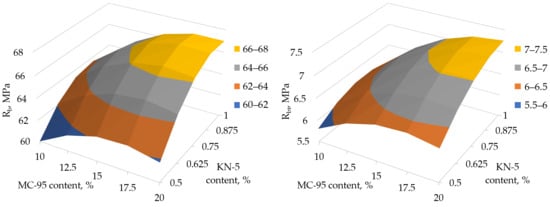
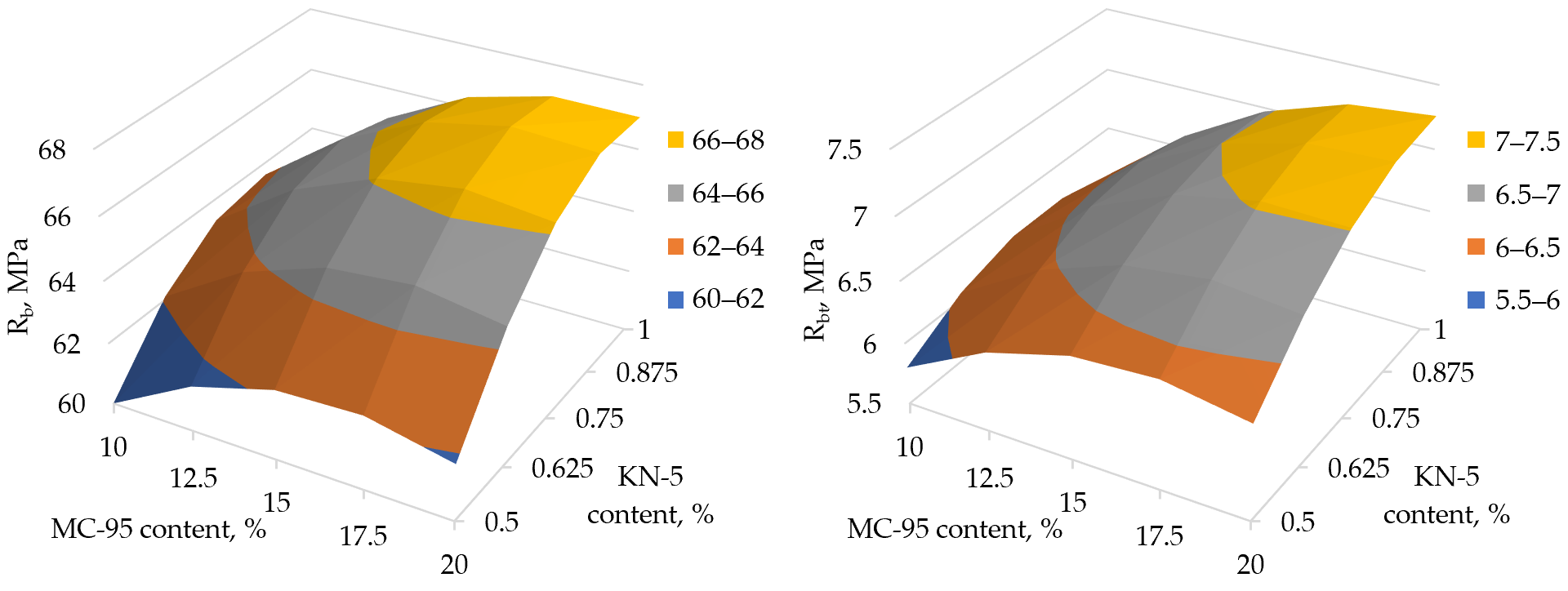
The response surfaces constructed from Equations (13) and (14) are shown in Figure 8. These surfaces were used to visualize the variation in compressive and bending strength over the investigated factor space and to identify the region in which the target functions reach their maximum values. The adequacy of the regression models was automatically verified using Fisher’s criterion, while the approximation error remained within 1–1.5%, confirming that the models satisfactorily represent the experimental trends.
Figure 8.
Regression models for (left) and (right).
Based on the results of mathematical modeling and subsequent laboratory verification, it was established that the maximum increase in compressive strength () and bending strength () is achieved in specimens containing activated microsilica at a dosage of 15–20% by weight of binder and KN-5 at a dosage of 1%. Under these conditions, compressive strength increased by 17.05% relative to the reference specimen, and bending strength by 25%, which in absolute terms corresponds to 9.76 MPa and 1.48 MPa, respectively. At the same time, the analysis shows that increasing the dosage of activated microsilica from 15% to 20% does not produce a substantial additional increase in strength, which may be explained by the onset of system supersaturation with reactive fine particles. Therefore, the obtained regression equations adequately describe the dependence of the 28-day compressive and bending strength of modified heavy concrete on the contents of activated MC-95 and KN-5 and can be used as a practical tool for selecting rational dosages of the modifying components within the investigated range. These results are consistent with previous studies [43].
3.3. SEM Results
Figure 9 shows the SEM micrographs of the fragment of the reference specimen in magnifications of ×1000, ×2000, and ×3000.
Figure 9.
SEM micrographs of the reference specimen showing representative microstructural features of the cement matrix, pore system, and ITZ: (a) ×1000; (b) ×2000; (c) ×3000.
SEM analysis of a fragment of the reference specimen (without the addition of MU-95) reveals a predominantly heterogeneous microstructure characterized by an uneven distribution of hydration products and a well-developed pore system. The matrix shows zones with a decompacted structure alternating with areas of local compaction, indicating varying degrees of hydration process progression within the material. Hydration products are mainly represented by plate- and flake-like morphological formations, aggregated into loose clusters without a clearly defined spatial organization. It has a blocky character and consists of weakly crystallized layers of highly basic metastable calcium hydrosilicates (CaO·SiO2·H2O with CaO/SiO2 ˃1.5) or C2SH2; these newly formed structures with increased basicity tend to form clumps, with water molecules held within by adsorption forces. Additionally, the microstructure reveals regions with increased microporosity and local defects, including open capillary pores and weakly ordered interphase regions, which is consistent with the opinion of [44]. The observed morphology indicates limited development of spatially oriented hydrated phases and the preservation of pronounced heterogeneity of the cement stone at the microlevel.
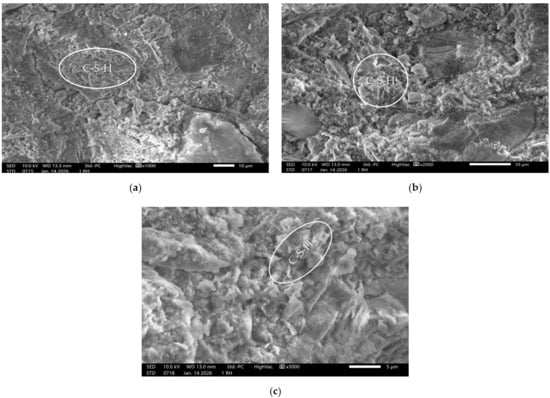
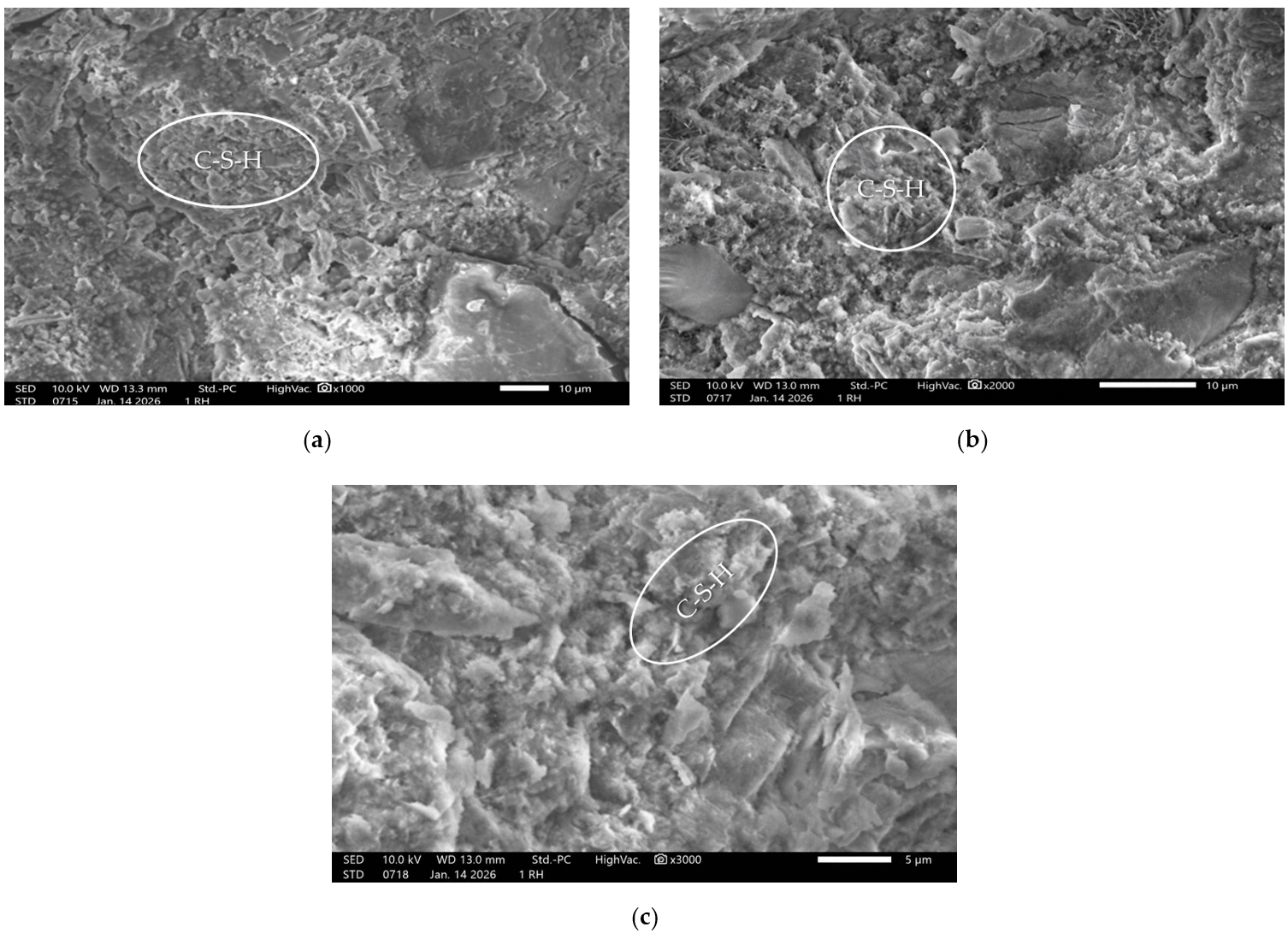
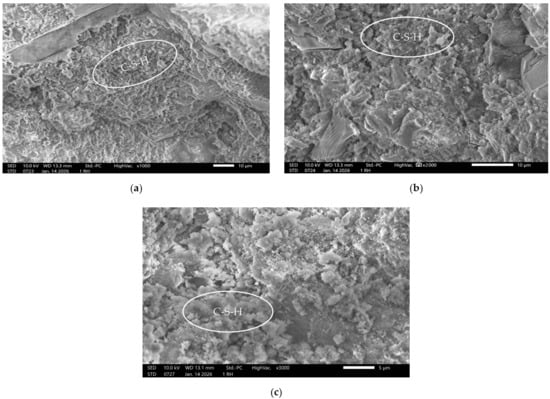
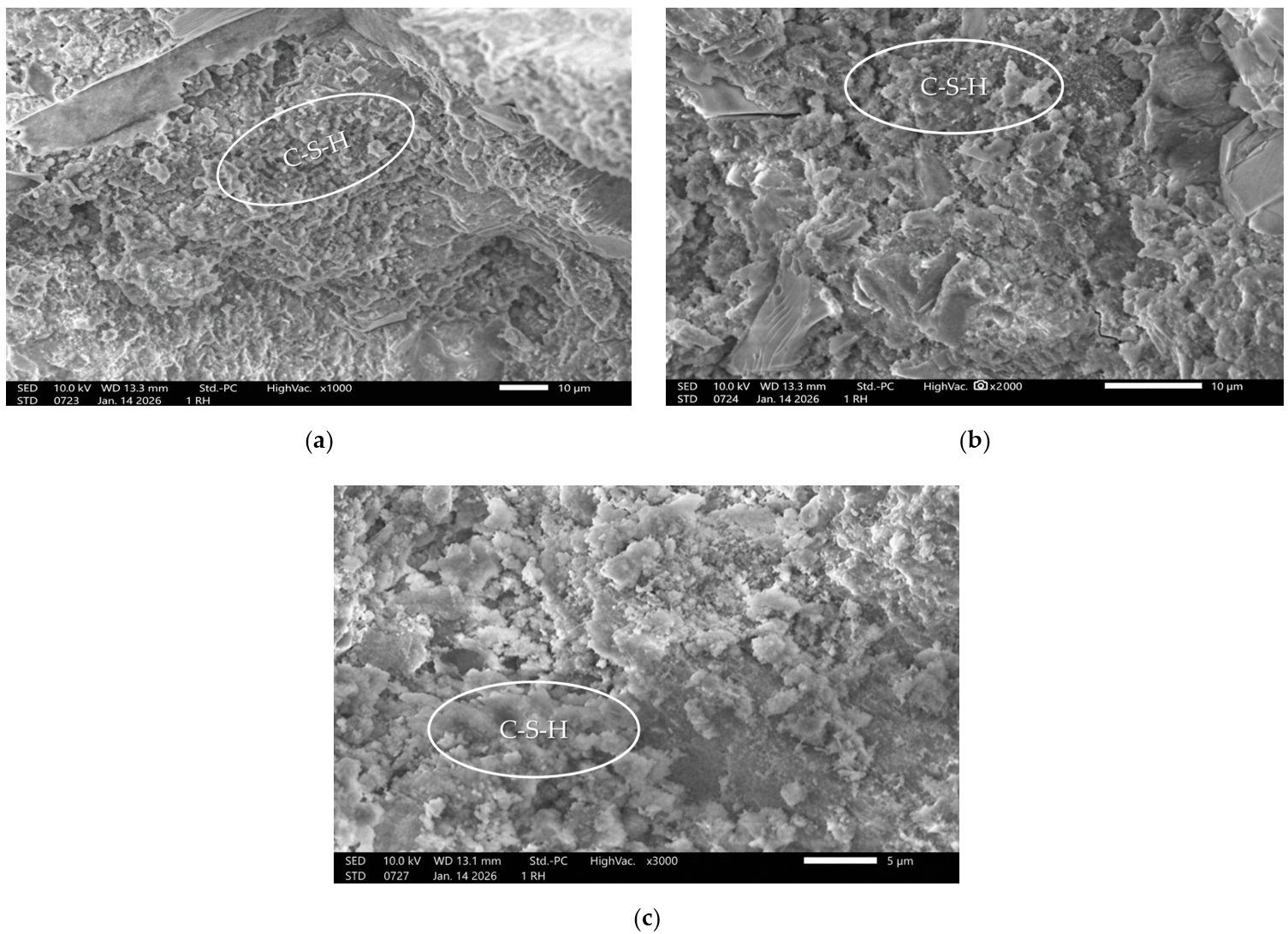
Figure 10 shows the SEM micrographs of the fragment of the specimen with 10% of activated MC-95 (No. 2 in Table 8) in magnifications of ×1000, ×2000, and ×3000.
Figure 10.
SEM micrographs of the specimen containing 10% activated MC-95, showing representative hydration products, pore features, and ITZ: (a) ×1000; (b) ×2000; (c) ×3000.
SEM analysis of a specimen containing 10% activated MKU-95 suggests a denser and more organized structure compared to the reference composition. A decrease in porosity and an increase in the degree of bonding of the hydrated matrix have been observed. The main hydration products are presumably calcium hydrosilicates C–S–H, calcium hydroxide Ca(OH)2, and, to a lesser extent, calcium hydro-aluminates. The introduction of microsilica (activated SiO2) promotes the pozzolanic reaction (SiO2 + Ca(OH)2 + H2O→C–S–H), resulting in a decrease in the content of portlandite Ca(OH)2 and an increase in the volume of the secondary C–S–H gel, which leads to the densification of the cement matrix. The microstructure is characterized by a uniform distribution of finely dispersed plate- and gel-like C–S–H formations, forming a spatially interconnected structure. The pores are predominantly isolated and irregular in shape; their size and extent are reduced, and there is no developed capillary network. In the interphase zones, improved adhesion and partial filling of voids with secondary hydration products are observed, indicating an increase in the compactness of the cement stone. Thus, the addition of 10% activated MC-95 intensifies the hydration reactions of clinker minerals (C3S, C2S) and the pozzolanic interaction with Ca(OH)2, ensuring the formation of a denser and more homogeneous structure, which is consistent with the opinion given in [16].
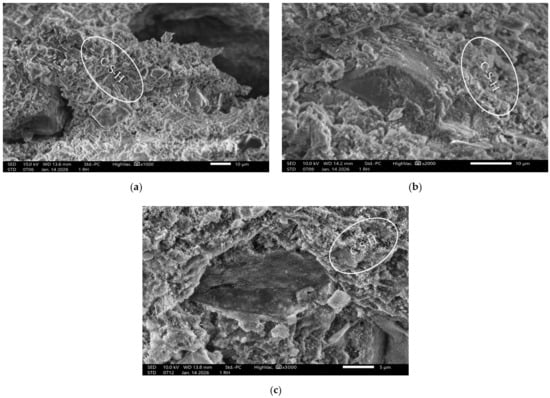
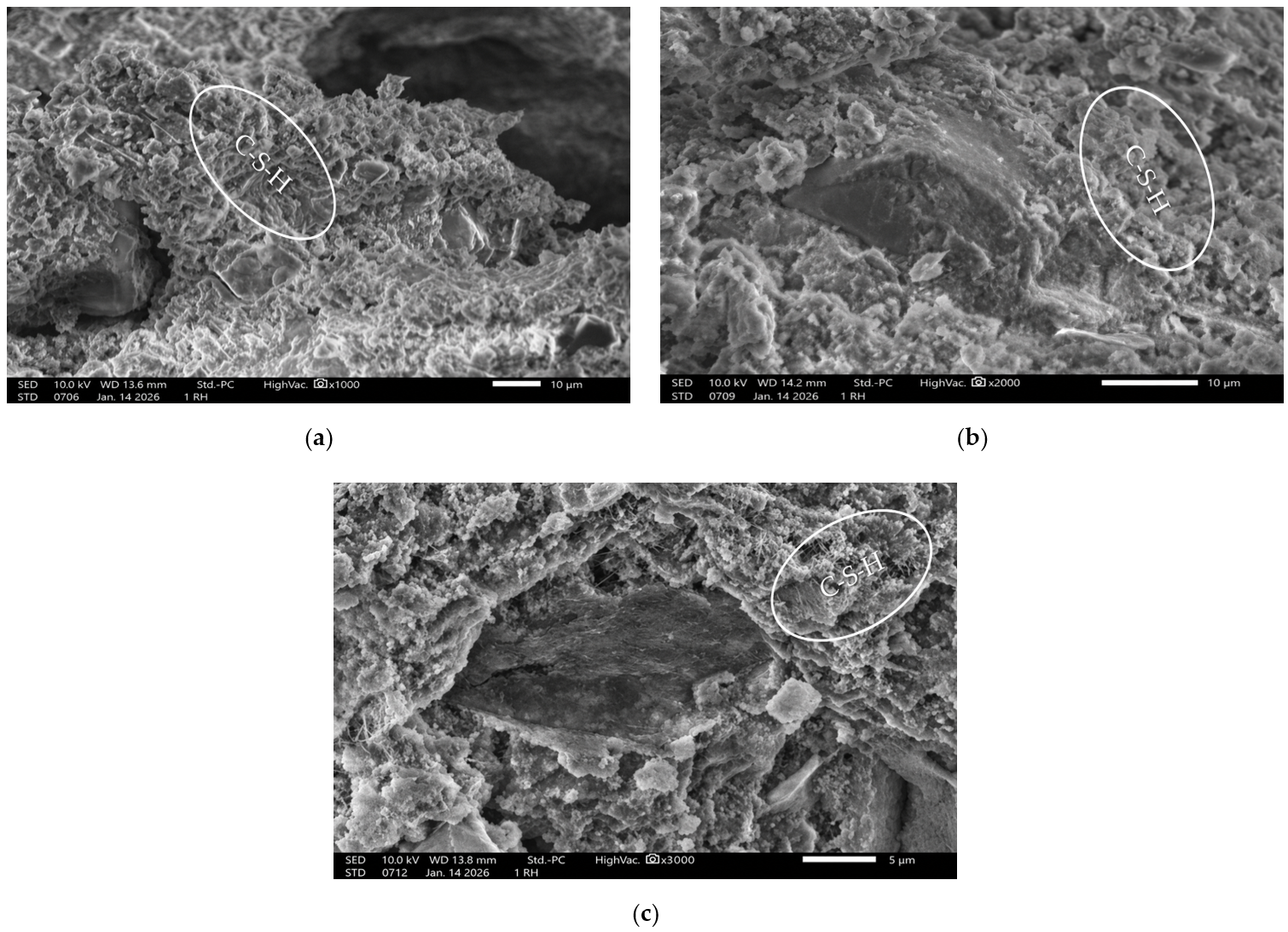
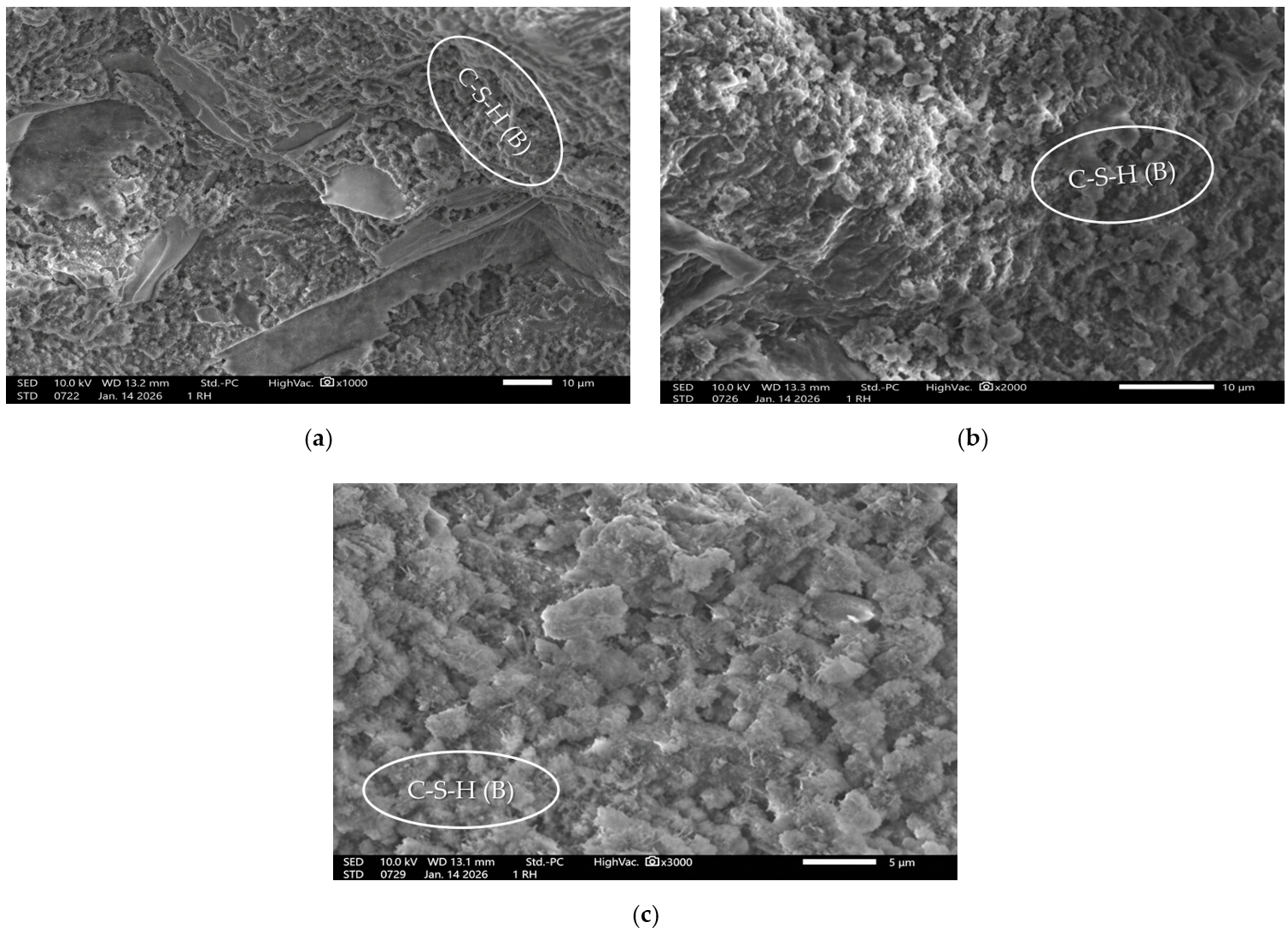
Figure 11 shows the SEM micrographs of the fragment of the specimen with 15% of activated MC-95 (No. 7 in Table 8) in magnifications of ×1000, ×2000, and ×3000.
Figure 11.
SEM micrographs of the specimen containing 15% activated MC-95, showing representative hydration products, pore features, and ITZ: (a) ×1000; (b) ×2000; (c) ×3000.
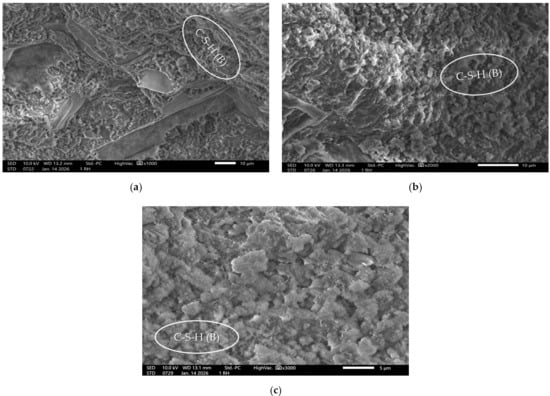
According to the SEM data presented above, the cement stone of this sample exhibits the highest level of structural compactness and orderliness among all the series studied. The formation of a nearly continuous cement matrix with uniformly distributed hydrate formations indicates a high degree of completion of hydration reactions and active structural hardening processes. It has been established that in the crystals of modified cement stone (composition No. 7 in Table 8), their size decreases from 80 to 110 nm (Figure 11), which is significantly lower than in the reference composition—from 200 to 300 nm (Figure 9) and composition No. 2 in Table 8—from 100 to 200 nm (Figure 10). The observed changes are associated with the formation of an additional amount of low-basic calcium hydrosilicates due to the alkaline activation of silica-containing particles. The microstructure is characterized by the predominance of finely dispersed hydrate phases forming a densely packed matrix with pronounced spatial connectivity. Signs of developed capillary porosity and defective regions are practically absent in the studied structure. The nature of the interfacial interactions indicates a high degree of interaction between the structural components of the cement stone. The reaction between the clinker hydration products and activated microsilica is essentially a process involving the interaction of Ca(OH)2 and the active SiO2 present in the microsilica, which creates conditions for the formation of a structure with the most densely packed crystals, consisting mainly of low-basic calcium silicate hydroxides of the CSH(B) type, for example, Ca5(OH)2Si6O16·4H2O with CaO/SiO2 < 1.5, which confirms the theory presented in [45]. Overall, the identified microstructural features indicate that an optimal level of compaction of the cement–silica matrix and uniformity of its structure have been achieved, which creates the prerequisites for improving the performance properties of concrete, including its strength, frost resistance, and water impermeability.
Figure 12 shows the SEM micrographs of the fragment of the specimen with 20% of activated MC-95 (No. 1 in Table 8) in magnifications of ×1000, ×2000, and ×3000.
Figure 12.
SEM micrographs of the specimen containing 20% activated MC-95, showing representative hydration products, pore features, and ITZ: (a) ×1000; (b) ×2000; (c) ×3000.
SEM analysis of a specimen containing 20% of activated microsilica suggested the formation of a denser and more uniform microstructure of the cement stone. Intensive hydration of clinker minerals proceeds via the reactions 2C3S + 6H→C3S2H3 + 3Ca(OH)2 and 2C2S + 4H → C3S2H3 + Ca(OH)2; the resulting portlandite Ca(OH)2 actively undergoes a pozzolanic reaction with activated silica SiO2 + Ca(OH)2 + H2O → C–S–H; consequently, the volume of the secondary C–S–H gel increases, the structure becomes dense, with a minimal number of capillary pores and a high degree of interphase adhesion. However, a 20% content of activated microsilica can be considered excessive. Here, one should not overlook the visible processes of excessive recrystallization of the system caused by a sufficiently large amount of activated microsilica, which can lead to an increase in internal stresses and the subsequent formation of microcracks. Excessive compaction of the structure and the intensive formation of secondary calcium hydrosilicates are accompanied by an increase in autogenous shrinkage and internal stresses, which may subsequently contribute to the formation of microcracks, as shown in the study [46]. Thus, at 20% of activated MC-95, the maximum degree of cement matrix compaction is achieved; however, this dosage is at the limit of rationality in terms of the material’s durability and service life.
3.4. Water Resistance Test Results
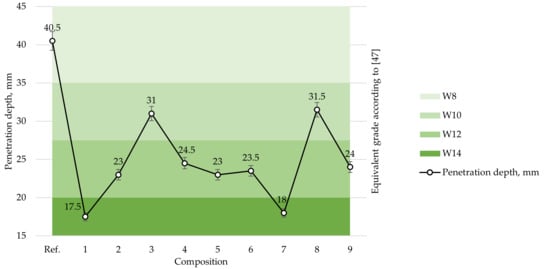
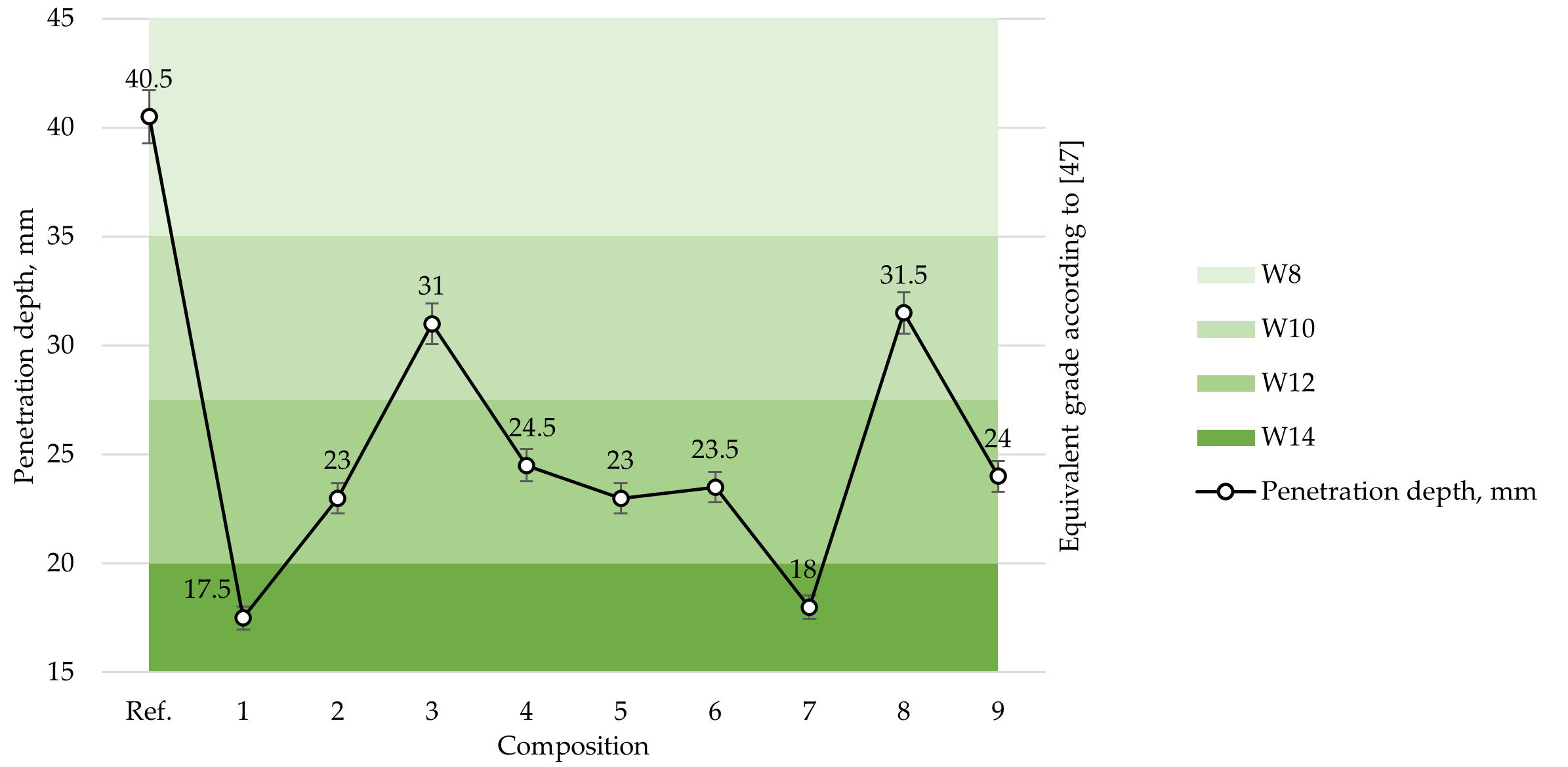
Figure 13 shows the results of water resistance tests of the specimens from the reference and 9 experimental compositions in Table 8.
Figure 13.
Water resistance indicators of compositions (enumeration of compositions corresponds to Table 8, with Ref. standing for the reference composition).
According to the data presented in Figure 13, modifying the concrete composition with MC-95 microsilica and the KN-5 PCE superplasticizer results in a significant reduction in the depth of water penetration under pressure compared to the reference composition. For the reference composition, this parameter was 40.5 mm, which corresponds to a water resistance grade of W8 (according to [47]), whereas for the modified mixtures it ranged from 17.5 to 31.5 mm, corresponding to grades W10–W14. The best results were obtained for compositions No. 1 and 7, containing 20% and 15% MC-95, respectively, with 1.0% KN-5 (Table 8); the water penetration depth was 17.5 and 18.0 mm, corresponding to the W14 grade. When the KN-5 dosage was reduced to 0.75%, the water penetration depth increased to 23.0–24.0 mm, and at 0.5%, to 24.5–31.5 mm. This indicates that the increase in water resistance is determined not only by the addition of microsilica but also by the effectiveness of the cement system’s dispersion by the superplasticizer. It is likely that the combined action of the micro-filling and pozzolanic effects of MC-95, as well as the reduction in the effective water–cement ratio under the action of KN-5, ensures the compaction of the cement paste, a decrease in capillary porosity, and an improvement in the structure of the interface between the cement paste and the aggregate. These findings are consistent with [23,48].
3.5. Frost Resistance Test Results
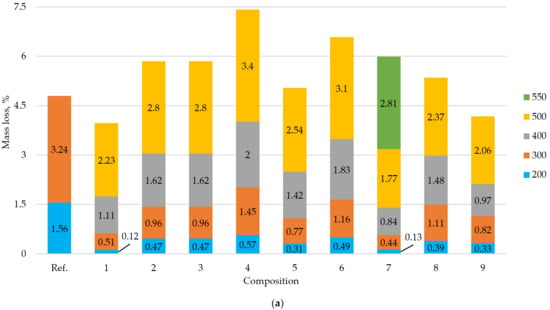
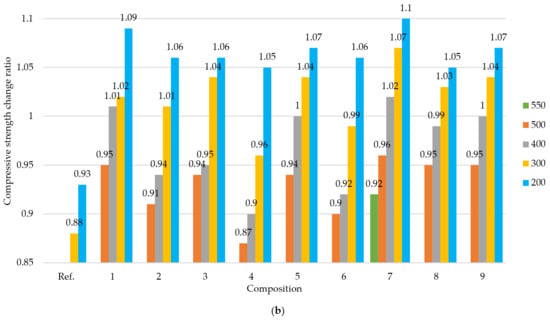
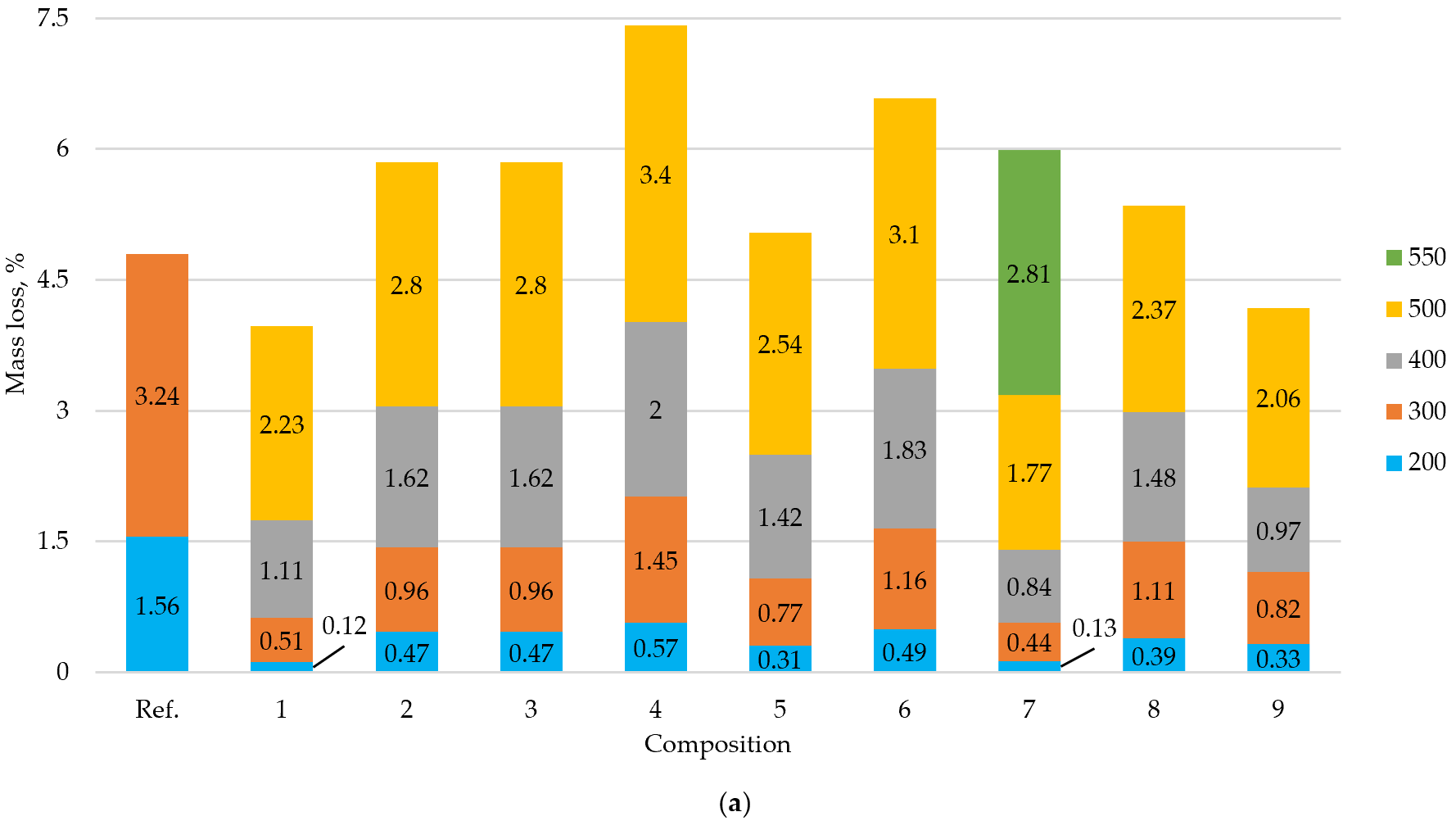
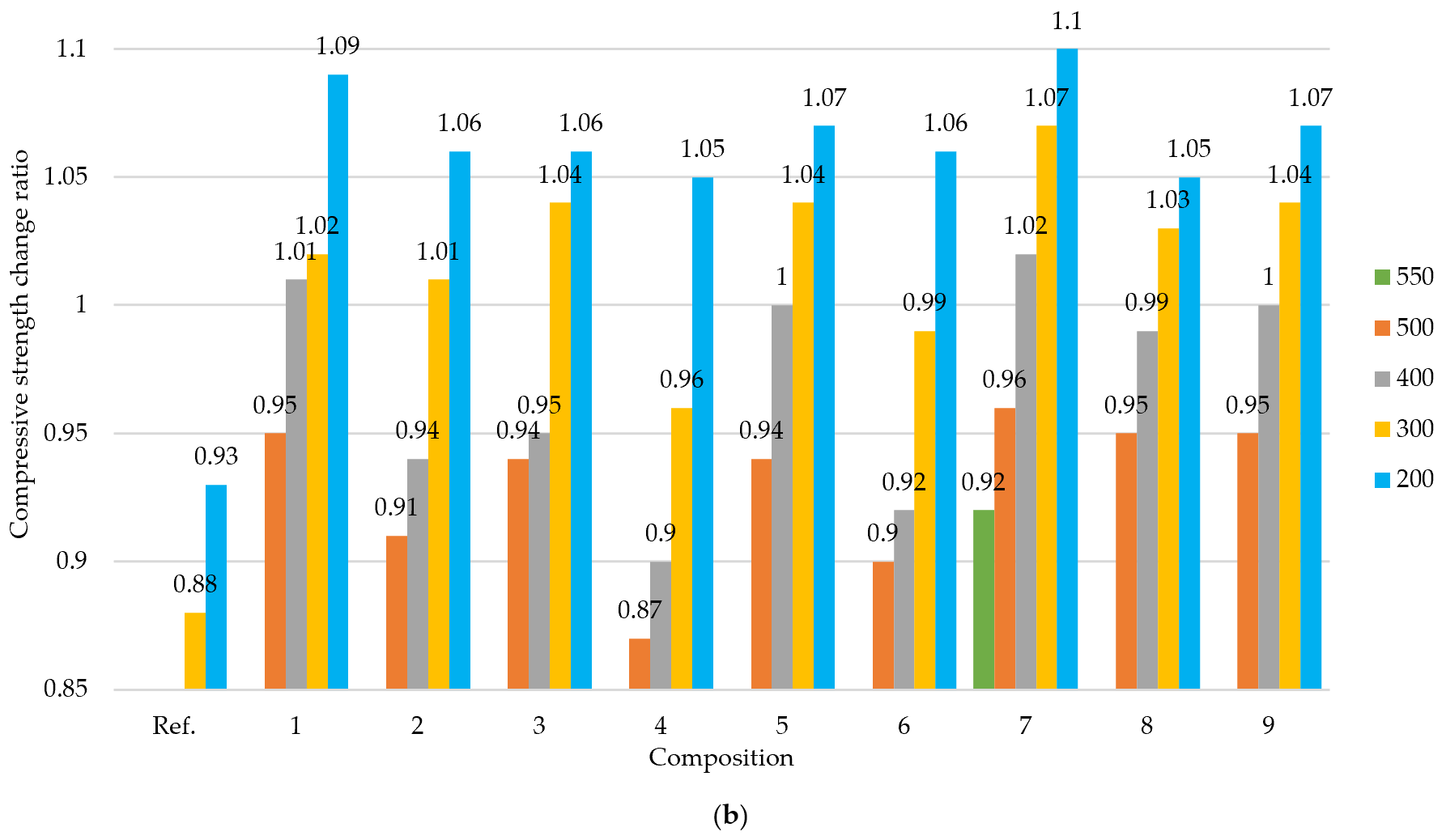
Figure 14 shows the results of frost resistance tests of the specimens from the reference and 9 experimental compositions in Table 8.
Figure 14.
Frost resistance indicators of compositions: (a) mass loss; (b) compressive strength change ratio (enumeration of compositions corresponds to Table 8, with Ref. standing for the reference composition).
The results of frost resistance tests showed that modifying the concrete composition with MC-95 activated microsilica and KN-5 PCE superplasticizer significantly improves the concrete’s resistance to cyclic freezing and thawing compared to the reference composition. The reference composition provided frost resistance graded only F300, with a total mass loss of 4.80% and a compressive strength change ratio reduced to 0.88. Most of the modified mixtures achieved F500, while composition No. 7 achieved F550, performing best. The composition No. 7, containing 15% MKU-95 and 1.0% KN-5 had mass losses of 0.13%, 0.44%, 0.84%, 1.77, and 2.81% after 200, 300, 400, 500, and 550 cycles, respectively, while the compressive strength change ratio remained at 1.10, 1.07, 1.02, 0.96, and 0.92. This indicates the slowest rate of frost damage accumulation and the highest structural stability of this mixture. A comparison of the compositions shows that frost resistance is determined not only by the microsilica content but also by its combination with the dosage of the PCE superplasticizer. Thus, with 20% MC-95, increasing the KN-5 content from 0.5% to 1.0% leads to a noticeable improvement in performance: the total mass loss decreases from 5.85% for composition No. 3 to 3.97% for composition No. 1, and the compressive strength change ratio after 500 cycles increases from 0.94 to 0.95. A similar pattern is observed for mixtures containing 15% MC-95: composition No. 7 with 1.0% KN-5 outperforms compositions No. 8 and 9 with 0.5% and 0.75% KN-5, respectively. At the same time, compositions with 10% MC-95 generally showed lower frost resistance, especially at reduced KN-5 content; the worst results were obtained for composition No. 4 (10% MKU-95 and 0.5% KN-5), in which the total mass loss reached 7.42% and the compressive strength change ratio decreased to 0.87. Consequently, in the studied system, the optimal dosage of components is not the maximum but a balanced one, ensuring the formation of the densest and most homogeneous cement paste structure. The results obtained are consistent with [49], indicating that silica fume reduces permeability, densifies the matrix and the transition zone, and enhances concrete’s resistance to freeze–thaw damage through the pozzolanic reaction and the micro-filling effect. At the same time, the literature [50,51,52] indicates that the optimal silica fume content is typically in the range of 10–20% and depends on the system composition, whereas an excessive amount without sufficient dispersion may not provide any additional benefit or may even degrade the structure. The role of KH-5 in this case is to effectively disperse the particles, reduce water demand, and form a denser pore structure. Therefore, the F550 frost resistance achieved for composition No. 7 can be explained by the synergistic action of 15% MC-95 and 1.0% KN-5, which ensures the optimal combination of cement paste density, low capillary permeability, and structural resistance to internal stresses caused by freezing water. Such a composition complies with the requirements set by [3] for the reinforced concrete sleepers and can be recommended for their manufacture.
4. Discussion
The results obtained indicate that the preliminary preparation of the mineral additive, microsilica (a byproduct of ferroalloy production), has a significant effect on the structure-forming processes in the hydration system of cement stone. SEM microscopy data show an intensification of the hydrolysis and hydration processes of cement grains upon the introduction of activated microsilica. The most pronounced effect is observed when using microsilica activated with water treated by electrolysis (pH 10.2) and stabilized with a polycarboxylate superplasticizer. Similar patterns have been described in a number of studies on the use of microsilica in cement systems. In [19,39], it is shown that the addition of finely dispersed silica promotes accelerated cement hydration and the formation of additional calcium hydrosilicates (C–S–H), which leads to densification of the cement paste structure. The results obtained in this study are consistent with the aforementioned data and confirm the role of microsilica as a highly active pozzolanic additive involved in the formation of secondary hydrate phases.
A likely mechanism for the observed effect is the formation of hydrolysis products of activated microsilica, which act as nucleation sites for the formation of new hydrate phases. The formation of a colloidal system around these sites promotes accelerated crystallization and a more uniform distribution of hydrate compounds throughout the cement paste. A similar mechanism for the formation of the cement paste structure involving active pozzolanic components is described in studies [46], where it is noted that microsilica can serve as a substrate for the formation of crystallization centers for hydrate phases. Unlike the traditional introduction of microsilica, in this work an additional effect is achieved through its preliminary activation with electrolyzed water, which contributes to an increase in the reactivity of the silica particles.
An analysis of the strength characteristics showed that the optimal content of the composite admixture (15% of MC-95 microsilica by binder weight, activated with electrolyzed water at pH 10.2, in combination with 1% of the polycarboxylate superplasticizer KN-5) provides a 17.05% increase in compressive strength and a 25% increase in bending strength compared to the reference composition. The obtained values are comparable to the results of studies [43], which also note an increase in concrete strength when microsilica is used in an amount of 10–15% of the cement mass. In this case, the increase in strength is associated with the densification of the cement paste structure, a more uniform distribution of the hydration phases, and a reduction in the concentration of structural defects. However, increasing the content of activated microsilica to 20% does not result in a further increase in strength. A similar trend is observed in [46], where it is shown that an excessive content of pozzolanic additives can lead to supersaturation of the system with reactive components. As a result, enhanced recrystallization of the hydrated phases occurs, accompanied by an increase in internal stresses and the formation of microcracks in the cement paste structure.
Significant changes were also observed in the material’s hydrophysical properties. The addition of an optimal amount of activated microsilica in combination with a superplasticizer improves the concrete’s water resistance from W8 to W14. A similar improvement in water resistance when using microsilica is also noted in [23,48], where it was established that finely dispersed silica particles contribute to a reduction in the volume of capillary pores and the formation of a denser cement paste structure. In the case under consideration, an additional contribution to the compaction of the structure is made by a polycarboxylate superplasticizer, which ensures particle dispersion and a reduction in the water–cement ratio. High frost resistance performance (mass loss of no more than 1.77% and strength reduction of no more than 5.0% after 500 test cycles) also corresponds to the results of studies [39], which show that the use of reactive pozzolanic additives promotes the formation of a closed, fine-pored structure in the cement paste. Such a structure is characterized by a reduced volume of capillary pores and increased resistance to cyclic freezing and thawing.
At the same time, from the standpoint of the practical implementation of the developed concrete in reinforced concrete sleepers, additional mechanical characteristics remain important. In particular, the static modulus of elasticity is required for a more complete assessment of stiffness, deformation compatibility, and stress redistribution in prestressed sleeper elements under service loading, while fatigue resistance is essential for confirming the long-term behavior of the material under repeated cyclic loading from rail traffic. These parameters were not determined in the present work because the study was designed as a material-level investigation of composition optimization and durability improvement rather than as a full structural qualification program for sleeper production. Nevertheless, the obtained increase in compressive and bending strength, together with the observed densification of the cement matrix and improved resistance to water and freeze–thaw action, indicates that the developed composition is a promising candidate for further testing that should include modulus of elasticity, crack resistance, and fatigue performance.
The results thus obtained confirm the findings of previously published studies and demonstrate the effectiveness of using a complex modifying admixture based on activated microsilica and a polycarboxylate superplasticizer to produce heavy concrete with enhanced strength and performance characteristics. It was also established that the preliminary activation of microsilica with electrolyzed water allows for a further increase in its reactivity and enhances the structure-forming processes in the cement system. The data obtained formed the basis for the development of a heavy concrete mix design for reinforced concrete sleepers of type 2, with a specified set of properties in accordance with the requirements [3]. Future research should focus on determining the modulus of elasticity, fatigue resistance, crack resistance, and corrosion resistance of the modified concrete, as well as analyzing the internal stresses that arise during the service life of reinforced concrete products.
5. Conclusions
This study demonstrated that activated microsilica obtained from ferroalloy production waste, used in combination with the KN-5 polycarboxylate superplasticizer, is effective for producing heavy concrete with improved properties for reinforced concrete sleeper applications. The optimum composition identified in this work corresponded to 15% activated MC-95 and 1.0% KN-5 by mass of binder, which provided the most balanced combination of strength and durability indicators. Compared with the reference concrete, the modified compositions showed higher compressive and bending strength, denser microstructure, improved water resistance up to W14, and frost resistance up to F500–F550. The results confirm that the preliminary activation of microsilica with electrolyzed water enhances its efficiency in the cement system and contributes to the formation of a compact and homogeneous cement matrix. At the same time, the present work was limited to material-level evaluation; therefore, further studies are required to determine the modulus of elasticity and fatigue resistance of the developed concrete and to confirm its performance in full sleeper-scale applications.
Author Contributions
Conceptualization, A.I. and M.A.; methodology, D.A.; software, T.M.; validation, A.I. and Y.U.; formal analysis, B.A.; investigation, T.M.; resources, M.K.; data curation, D.A.; writing—original draft preparation, A.I. and D.A.; writing—review and editing, Y.U.; visualization, M.K.; supervision, M.A.; project administration, M.A.; funding acquisition, B.A. All authors have read and agreed to the published version of the manuscript.
Funding
This research received no external funding.
Data Availability Statement
The raw data supporting the conclusions of this article will be made available by the authors on request.
Conflicts of Interest
The authors declare no conflicts of interest.
References
- Kaewunruen, S.; Ngamkhanong, C.; Lim, C.H. Damage and Failure Modes of Railway Prestressed Concrete Sleepers with Holes/Web Openings Subject to Impact Loading Conditions. Eng. Struct. 2018, 176, 840–848. [Google Scholar] [CrossRef] [Scilit]
- Li, D.; Kaewunruen, S. Effect of Extreme Climate on Topology of Railway Prestressed Concrete Sleepers. Climate 2019, 7, 17. [Google Scholar] [CrossRef] [Scilit]
- GOST 33320-2015; Ferroconcrete Cross Ties for Railways. Standardinform: Moscow, Russia, 2019; p. 28.
- Akhmetov, D.A.; Pukharenko, Y.V.; Vatin, N.I.; Akhazhanov, S.B.; Akhmetov, A.R.; Jetpisbayeva, A.Z.; Utepov, Y.B. The Effect of Low-Modulus Plastic Fiber on the Physical and Technical Characteristics of Modified Heavy Concretes Based on Polycarboxylates and Microsilica. Materials 2022, 15, 2648. [Google Scholar] [CrossRef] [Scilit]
- EN 13230-1:2016; Railway Applications—Track—Concrete Sleepers and Bearers—Part 1: General Requirements. CEN: Brussels, Belgium, 2016; p. 37.
- EN 206:2013+A1:2016; Concrete—Specification, Performance, Production and Conformity. CEN: Brussels, Belgium, 2016; p. 102.
- EN 1992-1-1; Eurocode 2: Design of Concrete Structures—Part 1-1: General Rules and Rules for Buildings. CEN: Brussels, Belgium, 2004; p. 225.
- Liu, X.; Zhao, P.; Dai, F. Advances in Design Theories of High-Speed Railway Ballastless Tracks. J. Mod. Transp. 2011, 19, 154–162. [Google Scholar] [CrossRef] [Scilit]
- Apshikur, B.; Chigambayev, T.; Almas, A.; Alimkulov, M.; Makhanov, B.; Abaikhan, Y. Hydromechanical Behaviour and Reinforcement Performance of Railway Embankments Under Seasonal Inundation: A Laboratory Investigation and Numerical Modelling. Geotechnics 2026, 6, 10. [Google Scholar] [CrossRef] [Scilit]
- Chen, R.; Zhao, X.; Wang, Z.; Jiang, H.; Bian, X. Experimental Study on Dynamic Load Magnification Factor for Ballastless Track-Subgrade of High-Speed Railway. J. Rock Mech. Geotech. Eng. 2013, 5, 306–311. [Google Scholar] [CrossRef] [Scilit]
- Moskvin, V.; Ivanov, F.; Alekseyev, S.; Guzeyev, E. Concrete and Reinforced Concrete Deterioration and Protection; Mir Publishers: Moscow, Russia, 1983; p. 339. [Google Scholar]
- Gorbunov, N.N.; Velichko, D.V. Adaptation of Concrete Sleepers Production into Modern Requirements. Naučnye Probl. Transp. Sib. i Dal’nego Vostoka 2014, 2014, 71–74. Available online: https://www.elibrary.ru/item.asp?id=22897829 (accessed on 16 March 2026).
- Zhumadilova, Z.; Kanarbay, A.; Akhmetov, D.; Aldigaziyeva, A. Fine-Grained Self-Compacting Concrete with Polyfunctional Additive and Enhanced Performance Properties. tbus 2025, 5, 0089. [Google Scholar] [CrossRef] [Scilit]
- Mehta, P.K.; Monteiro, P.J.M. Concrete: Microstructure, Properties, and Materials; McGraw-Hill: New York, NY, USA, 2006; p. 659. [Google Scholar]
- CEN/TS 12390-9:2016; Testing Hardened Concrete—Part 9: Freeze-Thaw Resistance with de-Icing Salts—Scaling. CEN: Brussels, Belgium, 2016; p. 32.
- Iler, R.K. The Chemistry of Silica: Solubility, Polymerization, Colloid and Surface Properties, and Biochemistry; Nachdr; Wiley: New York, NY, USA, 2004; p. 866. ISBN 978-0-471-02404-0. [Google Scholar]
- Chukin, G.D. Surface Chemistry and Structure of Dispersed Silica. In Monograph; Printa LLC: Moscow, Russia, 2008; p. 171. [Google Scholar]
- Neville, A.; Aïtcin, P.-C. High Performance Concrete—An Overview. Mater. Struct. 1998, 31, 111–117. [Google Scholar] [CrossRef] [Scilit]
- Zarehparvar-Shoja, M.; Eskandari-Naddaf, H. Optimizing Compressive Strength of Micro- and Nano-Silica Concrete by Statistical Method. Civ. Eng. J. 2017, 3, 1084–1096. [Google Scholar] [CrossRef] [Scilit]
- Shannag, M.J. High Strength Concrete Containing Natural Pozzolan and Silica Fume. Cem. Concr. Compos. 2000, 22, 399–406. [Google Scholar] [CrossRef] [Scilit]
- Utepov, Y.; Akhmetov, D.; Akhmatshaeva, I. Effect of Fine Fillers from Industrial Waste and Various Chemical Additives on the Placeability of Self-Compacting Concrete. Comput. Concr. 2020, 25, 59–65. [Google Scholar] [CrossRef]
- Sun, X.; Gao, Z.; Cao, P.; Zhou, C. Mechanical Properties Tests and Multiscale Numerical Simulations for Basalt Fiber Reinforced Concrete. Constr. Build. Mater. 2019, 202, 58–72. [Google Scholar] [CrossRef] [Scilit]
- Su, Y.; Luo, B.; Luo, Z.; Huang, H.; Li, J.; Wang, D. Effect of Accelerators on the Workability, Strength, and Microstructure of Ultra-High-Performance Concrete. Materials 2021, 15, 159. [Google Scholar] [CrossRef] [Scilit] [PubMed]
- Cheah, C.B.; Chow, W.K.; Oo, C.W.; Leow, K.H. The Influence of Type and Combination of Polycarboxylate Ether Superplasticizer on the Mechanical Properties and Microstructure of Slag-Silica Fume Ternary Blended Self-Consolidating Concrete. J. Build. Eng. 2020, 31, 101412. [Google Scholar] [CrossRef] [Scilit]
- Bakhir, V.M.; Panicheva, S.A.; Prilutsky, V.I.; Panichev, V.G. Electrochemical Activation: Inventions, Systems, Technology; Marketing Support Services LLC: Moscow, Russia, 2021; p. 660. [Google Scholar]
- Petrushanko, I.Y.; Lobyshev, V.I. Physicochemical Properties of Aqueous Solutions Obtained in a Membrane Electrolyzer. Biophysics. Mol. Biophys. Ser. 2004, 49, 22–31. [Google Scholar]
- Lukomsky, Y.Y.; Gamburg, Y.D. Physical and Chemical Fundamentals of Electrochemistry. In Textbook; Intellect: Dolgoprudny, Russia, 2013; p. 448. [Google Scholar]
- EN 197-1:2011; Cement—Part 1: Composition, Specifications and Conformity Criteria for Common Cements. CEN: Brussels, Belgium, 2011; p. 38.
- EN 196-2:2013; Method of Testing Cement—Part 2: Chemical Analysis of Cement. CEN: Brussels, Belgium, 2013; p. 78.
- GOST 8736-2014; Sand for Construction Works. Standardinform: Moscow, Russia, 2019; p. 21.
- GOST 8267-93; Crushed Stone and Gravel of Solid Rocks for Construction Works. Standardinform: Moscow, Russia, 2018; p. 14.
- EN 13263-1:2005+A1:2009; Silica Fume for Concrete—Part 1: Definitions, Requirements and Conformity Criteria. CEN: Brussels, Belgium, 2009; p. 23.
- STS LLP 46976-1901-21-002-2014; Tau-Ken Temir LLP Condensed Microsilica. Tau-Ken Temir LLP: Karaganda, Kazakhstan, 2014; p. 1.
- EN 934-2:2009+A1:2012; Admixtures for Concrete, Mortar and Grout—Part 2: Concrete Admixtures—Definitions, Requirements, Conformity, Marking and Labelling. CEN: Brussels, Belgium, 2009; p. 24.
- Bazhenov, Y.M. Concrete Technology; ACB: Moscow, Russia, 2007; p. 528. [Google Scholar]
- EN 12350-2:2019; Testing Fresh Concrete—Part 2: SLUMP Test. CEN: Brussels, Belgium, 2019; p. 8.
- GOST 10180-2012; Methods for Strength Determination Using Reference Specimens. Standardinform: Moscow, Russia, 2012; p. 36.
- TS 5156-002-32064510-07; Operation Manual. Melesta LLC: Ufa, Russia, 2011; p. 3.
- Teramoto, A.; Maruyama, I.; Mitani, Y. Influence of Silica Fume Additive and Temperature History on the Volume Change of Ultra-High-Strength Cement Paste and Concrete. Adv. Civ. Eng. Mater. 2019, 8, 153–172. [Google Scholar] [CrossRef] [Scilit]
- Guthrie, W.F. NIST/SEMATECH e-Handbook of Statistical Methods; (NIST Handbook 151); National Institute of Standards and Technology: Gaithersburg, MD, USA, 2020.
- GOST 70753-2023; Method of Microscopical Quantative Structure Analysis. FGBU: Moscow, Russia, 2023; p. 20.
- EN 12390-8:2019; Testing Hardened Concrete—Part 8: Depth of Penetration of Water under Pressure. CEN: Brussels, Belgium, 2019; p. 8.
- Begentayev, M.M.; Kuldeyev, E.I.; Akhmetov, D.A.; Zhumadilova, Z.O.; Suleyev, D.K.; Utepov, Y.B.; Awwad, T.; Kuttybay, M.T. The Effect of Mineral Fillers on the Rheological and Performance Properties of Self-Compacting Concretes in the Production of Reinforced Concrete Products. J. Compos. Sci. 2025, 9, 235. [Google Scholar] [CrossRef] [Scilit]
- Zhakipbekov, S.; Aruova, L.; Toleubayeva, S.; Ahmetganov, T.; Utkelbaeva, A. The Features of the Hydration and Structure Formation Process of Modified Low-Clinker Binders. Mag. Civ. Eng. 2021, 103, 10302. [Google Scholar] [CrossRef]
- Yu, R.; Spiesz, P.; Brouwers, H.J.H. Effect of Nano-Silica on the Hydration and Microstructure Development of Ultra-High Performance Concrete (UHPC) with a Low Binder Amount. Constr. Build. Mater. 2014, 65, 140–150. [Google Scholar] [CrossRef] [Scilit]
- Massana, J.; Reyes, E.; Bernal, J.; León, N.; Sánchez-Espinosa, E. Influence of Nano- and Micro-Silica Additions on the Durability of a High-Performance Self-Compacting Concrete. Constr. Build. Mater. 2018, 165, 93–103. [Google Scholar] [CrossRef] [Scilit]
- GOST 12730.5-2018; Methods for the Determination of Water Tightness. Standardinform: Moscow, Russia, 2019; p. 20.
- Zhagifarov, A.M.; Akhmetov, D.A.; Suleyev, D.K.; Zhumadilova, Z.O.; Begentayev, M.M.; Pukharenko, Y.V. Investigation of Hydrophysical Properties and Corrosion Resistance of Modified Self-Compacting Concretes. Materials 2024, 17, 2605. [Google Scholar] [CrossRef] [Scilit] [PubMed]
- Khan, M.I.; Siddique, R. Utilization of Silica Fume in Concrete: Review of Durability Properties. Resour. Conserv. Recycl. 2011, 57, 30–35. [Google Scholar] [CrossRef] [Scilit]
- Šoukal, F.; Bocian, L.; Novotný, R.; Dlabajová, L.; Šuleková, N.; Hajzler, J.; Koutný, O.; Drdlová, M. The Effects of Silica Fume and Superplasticizer Type on the Properties and Microstructure of Reactive Powder Concrete. Materials 2023, 16, 6670. [Google Scholar] [CrossRef] [Scilit] [PubMed]
- Mao, Y.; Jiao, D.; Hu, X.; Jiang, Z.; Shi, C. Effect of Dispersion Behavior of Silica Fume on the Rheological Properties and Early Hydration Characteristics of Ultra-High Strength Mortar. Cem. Concr. Compos. 2024, 152, 105654. [Google Scholar] [CrossRef] [Scilit]
- Lukpanov, R.; Dyussembinov, D.; Yenkebaev, S.; Tsygulyov, D.; Karacasu, M. Complex Additive for Improving the Strength Properties of Heavy Concrete Based on Industrial Waste. tbus 2024, 4, 0067. [Google Scholar] [CrossRef] [Scilit]

Disclaimer/Publisher’s Note: The statements, opinions and data contained in all publications are solely those of the individual author(s) and contributor(s) and not of MDPI and/or the editor(s). MDPI and/or the editor(s) disclaim responsibility for any injury to people or property resulting from any ideas, methods, instructions or products referred to in the content. |
© 2026 by the authors. Licensee MDPI, Basel, Switzerland. This article is an open access article distributed under the terms and conditions of the Creative Commons Attribution (CC BY) license.