


Abstract
The present study reports the variation of the mechanical properties of engineered metakaolin-based geopolymers synthetized using NaOH-KOH alkali activators and sodium disilicate, investigated after 7 and 28 days of aging by means of unconfined compression tests for mechanical strength analysis. The geopolymers were synthetized by mixing KOH and NaOH in different proportions in the alkaline activating solution, from 0% to 100% of KOH addition, fixing the Si/Al ratio and water content. The binders were synthetized with different curing temperatures. A novel composition using quarry-derived materials (silt from sedimentation lakes) was developed to realize an innovative composite. The materials were characterized by XRD, ESEM-EDS and unconfined compression tests. The mechanical results underlined that the addition of the filler tends to preserve the mechanical properties of the composite. Generally, curing at 40 °C followed by a 28-day aging period for the mixed Na-K geopolymers demonstrated the highest mechanical strength of all the synthesized products, with a maximum strength of 21 MPa. Mixed NaOH-KOH composites generally exhibited lower performances compared to sample consisting solely of 100% NaOH when cured at a temperature of 85 °C. Nonetheless, the synthetized composites reported in this study can have diverse applications across various technological fields requiring low-strength materials.
1. Introduction
Geopolymers are relatively new and innovative materials, mainly first introduced by Davidovits throughout the 70s with the idea and aim of substituting organic polymers that have shown some limitations in certain applicative fields, where the urgent need for non-combustible products was arising [1]. Geopolymers are aluminosilicate-based inorganic polymers, produced at medium–low temperatures (25–100 °C) through a polymerization reaction between an aluminosilicate precursor (e.g., metakaolin, fly ash, volcanic ash, blast furnace slag, red mug, mine tailings), which contains Si and Al, and a sodium/potassium alkaline activator (either Na+ or K+, or both) [1,2].
Nowadays, geopolymer research is mostly driven by the practical and environmental need to replace ordinary Portland cement (OPC), one of the most employed construction materials in the world [3,4]. The principal aim is to reduce a consistent part of CO2 emissions caused by the production of concrete but still present idoneous practical (engineering) and mechanical properties. It is worth remembering that the production of cements accounts for ~6% of the global greenhouse gases emissions (GHGs) [5], with the most consistent part being associated with the high-temperature (about 1400 °C) calcination process of limestone, which releases 0.55 tons of CO2 per ton of cement produced, together with 0.40 tons from carbon-fuel combustion [6,7]. The sixth assessment report (AR6) of the Intergovernmental Panel on Climate Change (IPCC) published from 2021 to 2023 has underlined that the threshold of ~400 ppm and 400 CO2 eq. greenhouse gas presence in atmosphere, to keep the global temperature below +1.5 °C, was already exceeded in 2019, reaching 410 ppm, stressing the anthropogenic nature of the problem [8]. Moreover, it was highlighted that the construction sector alone was responsible in 2019 alone for 12 GtCO2-eq emissions, stating that the current situation is posing the urgent need to find carbon mitigation strategies to reduce the risks associated with an overall global increase of +2.0 °C [9,10]. In this context, geopolymers have the great advantage of being produced at much lower temperatures (40–100 °C) than ordinary Portland cement (OPC), hence with lower associated energy consumption than that required by concrete production [5]. Therefore, their production and use could contribute to cutting up to roughly 80% of the total CO2 emissions coming from the concrete industry [11].
In addition to their environmental friendliness, wide variety and availability, aluminosilicate reagents can be used as starting raw materials for geopolymerization [12]. In this context, the precursor material is required to be rich in both alumina and silica content, such as rock-forming minerals, amorphous silica, and industrial by-products like coal fly ash and blast furnace slags [2,13]. Obviously, the type of aluminosilicate employed in the synthesis will change the final characteristics and application of the geopolymer [12,14]. Application fields are mainly in construction [15], road surfaces [16], fire protection [17,18], agriculture [19] and even radioactive waste stabilization and, for the latter, several studies have pointed out the possibility of encapsulating toxic elements (existing in the waste) in the cement binder, allowing their safe immobilization [20,21,22]. Additionally, in the construction and building materials sector, the possibility to employ inert materials coming from wastes, such as silt from quarries and mine tailings, and develop new materials through the geopolymer process is currently under investigation. Indeed, depending on their mineralogy, some mineral fillers would not be adequate for geopolymer synthesis (e.g., they would be not reactive in alkaline conditions), but they could be promising when employed as fillers in geopolymer mixtures [23]. These small grain-sized fillers can effectively reduce the pore size of the binder and contribute to creating a stronger network [1,23]. Since most of these materials are generally landfilled, several studies investigated the possible benefits of using them for second-life material purposes for the environment and the economy [24,25].
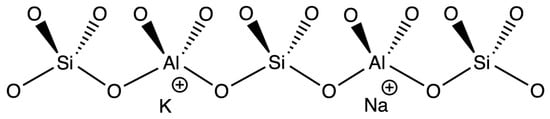
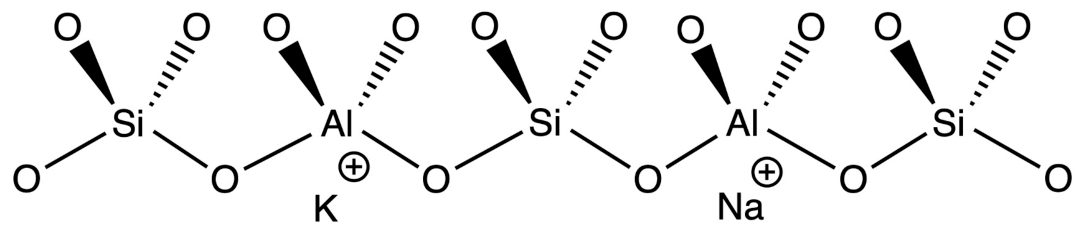
The goals of the present study are two-fold: firstly, to investigate the effects of Na+ and K+ content on the strength of geopolymer binder composition and, secondly, to assess the possibility to substitute environmentally precious inert materials (e.g., sand and gravel) with some fraction of waste silt by checking the mechanical performance of the geopolymer/waste product. Regarding the first objective, the raw material employed in the present study to develop the geopolymer binder for construction applications is a metakaolin combined with an alkaline activating solution (AAS) made of a mix of KOH and NaOH and sodium disilicate (Na2Si2O5). The geopolymers synthetized in the present study strictly follow the research and discoveries of Davidovits [1,2,7] and belong to the category of poly(sialate-siloxo) geopolymers, with ratio of Si:Al = 2:1, represented by tetrahedra structures of SiO4 and AlO4 linked alternatively by sharing oxygens (Figure 1). Inside the polymeric structure, the alkali cations (K+ and Na+) are present in the framework cavities neutralizing the negative charges of tetrahedra units.
Figure 1.
Generic and schematic structure of a Poly(sialate-siloxo).
The present study investigated the mechanical and the mineralogical/crystallo-chemical properties of geopolymers synthetized by varying the KOH/NaOH ratio to understand whether the mechanical properties of the binder are affected by the sodium/potassium content in the alkaline solution. The second objective was the addition of waste silt as inert filler to increase the mechanical performance of the final geopolymer/filler composite products.
The idea is to realize a low-cost and eco-friendly composite material with low-strength mechanical properties suitable for civil engineering applications. In this paper we conducted targeted unconfined compression tests (UCTs) on specimens tested after a 28-day aging period. It is important to report that, in addition to the planned analysis after 28 days, other tests were conducted after 7 days to quickly assess the material behavior and facilitate an initial screening process. The mineralogical and crystallo-chemical properties of the materials were investigated through X-ray diffraction (XRD) and environmental scanning electron microscopy (ESEM) with energy-dispersive spectroscopy (EDS) analyses.
It is worth remembering that the temperature represents an important parameter that can affect the time required to complete the geopolymerization reaction [1], the cost of the process, and eventually the mechanical properties of the final product [26,27]. In fact, several studies have underlined that curing at low-to-medium temperatures could enhance the overall strength of the geopolymer [27,28,29,30]. For these reasons, as part of the present investigation, the effect of temperature on the strength of the geopolymer was characterized by considering synthesis at 40 °C (for 4 h), 60 °C (3 h) and 85 °C (2 h).
2. Materials and Methods
2.1. Raw Materials
A commercial metakaolin, Metamax (Basf SE, Ludwigshafen, Germany), was used as precursor raw material for the synthesis of the (Na,K)polysialate-siloxo geopolymers. The reactivity of the Metamax has already been tested and compared with other metakaolin products showing good performances [31]. In Table 1 the chemical composition expressed in oxides and determined by X-ray fluorescence (XRF) analysis (Shimadzu, Kyoto, Japan) is reported [23].
Table 1.
Chemical composition of metakaolin (Metamax).
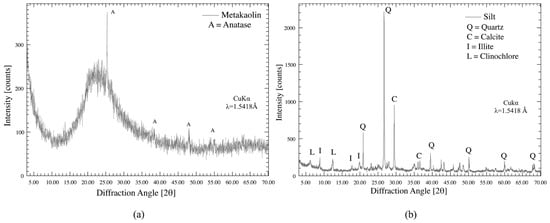
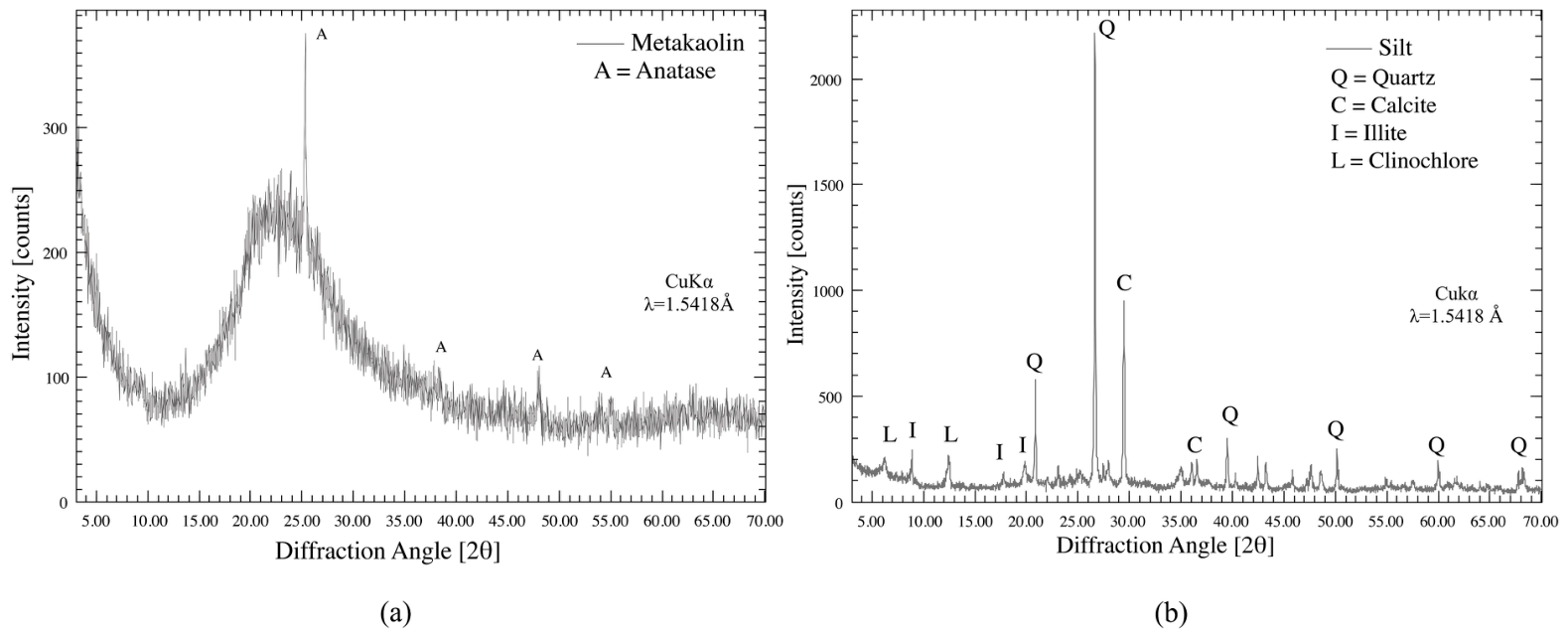
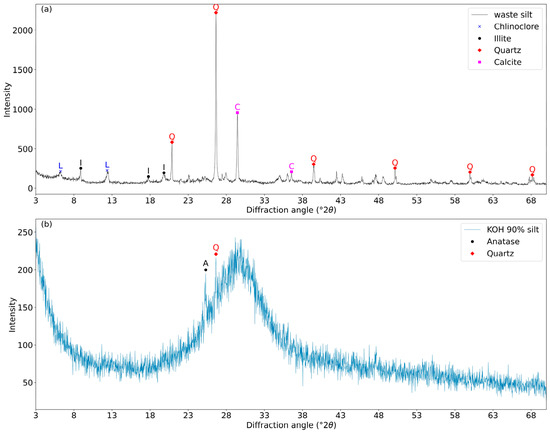
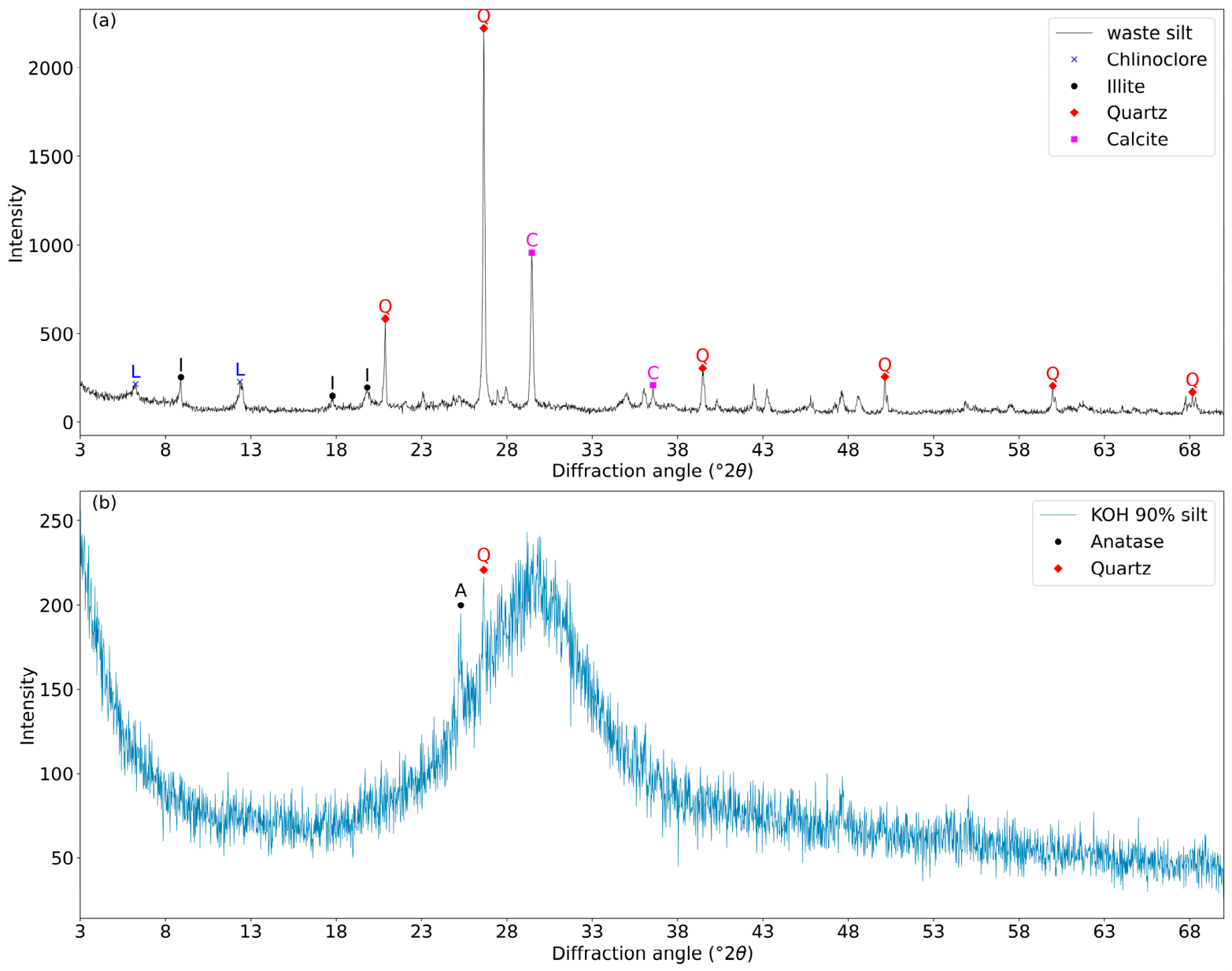
The X-ray diffraction (XRD) pattern of this material is reported in Figure 2a showing an amorphous material as a major component and a few recognizable sharp peaks related to anatase (TiO2), a residual phase generally present in commercial metakaolin [32].
Figure 2.
XRD diffraction patterns of (a) Metamax metakaolin and (b) silt extracted from sedimentation lakes acquired with CuKα radiation of .
The silt used in this work is a by-product of the limestone aggregate production recovered from waste waters, which was excavated from the sedimentation lakes of Società Anonima Prodotti Asfaltico Bituminosi Affini (S.A.P.A.B.A. s.r.l.), Bologna, Italy. These sediments were recently characterized and employed in the work of Solouki et al. [23]. The waste silt was finely ground and then used as filler in the geopolymer formulation. The relative XRD pattern is reported in Figure 2b, showing the presence of highly crystalline phases, i.e., quartz, calcite, and clay minerals such as illite and clinochlore.
2.2. Activators
The alkaline activating solution (AAS) was prepared by adding a mixture of sodium hydroxide and potassium hydroxide in different proportions to a sodium disilicate water solution (Na2Si2O5, with molar ratio MR = 2.0). The sodium disilicate employed in this research was supplied by INGESSIL S.r.l (Verona, Italy), whose physico-chemical properties reported in Table 2 were provided by the company.
Table 2.
Chemical and physico-chemical characteristics of sodium disilicate (Na2Si2O5) provided by INGESSIL S.r.l (VR).
The NaOH and KOH (in pellets) used in this study are acquired from Carlo Erba Reagents S.r.l. (Cornaredo, Milano, Italy).
The AAS was prepared 15 h prior to the geopolymer synthesis to better homogenize the components. The mixture was magnetically stirred, properly covered by a plastic (paraffin) film to avoid any loss of water due to evaporation. To investigate the effect of the amount of NaOH and KOH in the activating solution, eleven different Na1−xKxOH + Na2Si2O5 alkali activating solutions were prepared, with 0 ≤ x ≤ 1 potassium addition.
2.3. Synthesis and Curing Process
The synthesis of the metakaolin-based 2:1 geopolymers was performed according to molar ratio ranges suggested by Davidovits [1]. Using 30 g of metakaolin (Table 1) for each batch, the SiO2/Al2O3 and the M2O/Al2O3 (with M = Na+ and K+) molar ratios were fixed at 4.0 and 1.0, respectively. Molar ratio was fixed at 4.0 considering both originating from the metakaolin and the sodium disilicate and assuming for the latter ratio that M+ is exclusively provided by the sodium and potassium hydroxides.
The synthesis procedure was performed as follows:
- the metakaolin was mixed with the activating solution with a mechanical stirrer for 10 min and left to rest for 1 h. During this time, a geopolymer resin starts to form;
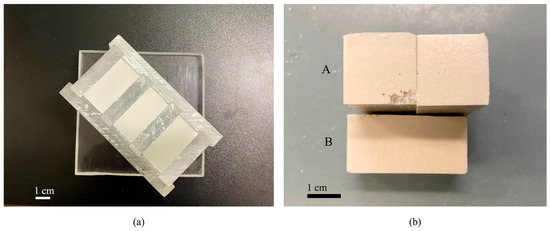
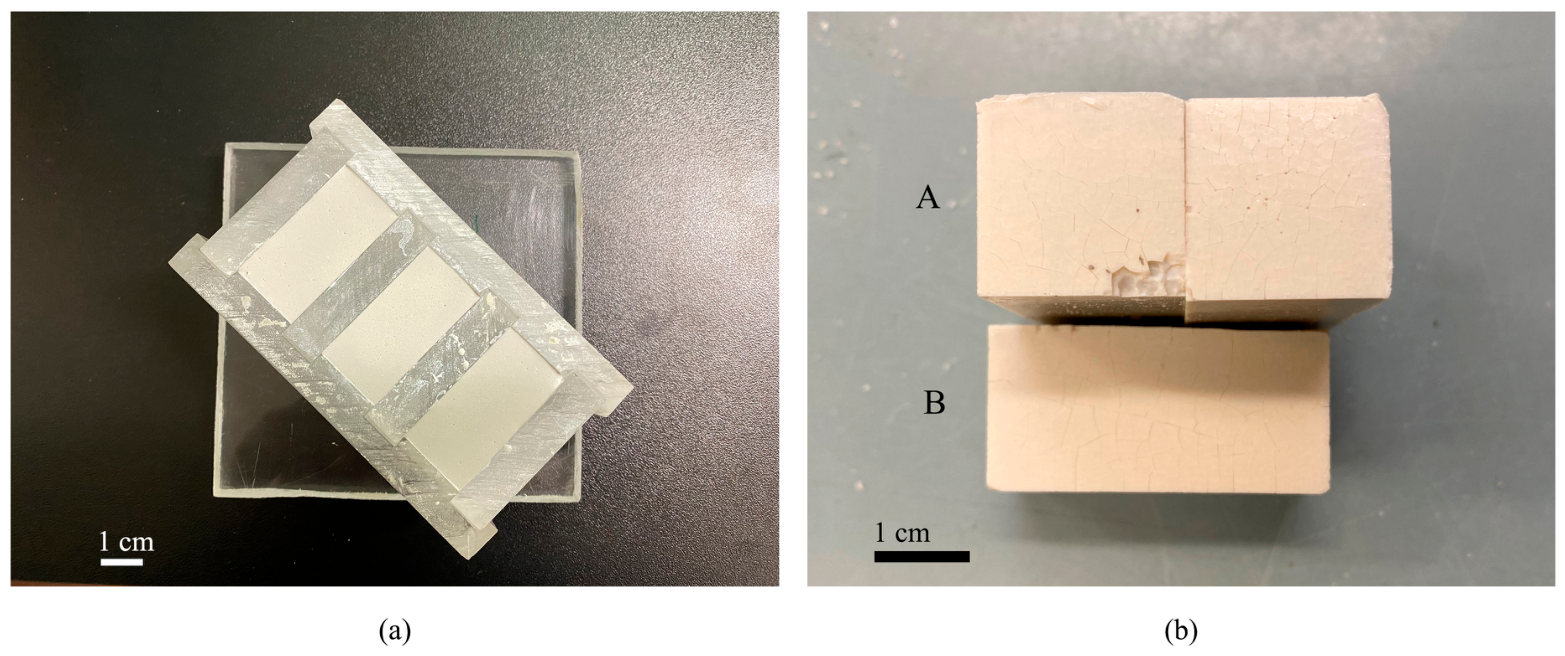
- the geopolymer resin was poured into a plexiglass mold (Figure 3a) with three compartments shaped as rectangular prisms. Each block measured 3.60 cm in length, 1.80 cm in width and 1.75 cm in height.Figure 3. (a) Removable mold employed for the synthesis of both geopolymers and geopolymer/silt composites. Example of the mold loaded and ready. The lid that lies at the bottom covers the fresh surface to prevent volatile components from leaving the sample. (b) Example of three geopolymer specimens with the same composition, 50% of KOH addition and 60 °C of curing; with respect to the geometry of the mold: (A) side view faces, (B) top view face.
- the plexiglass mold was then placed in a pre-heated incubator to cure the resin at 85 °C for 2.0 h;
- finally, the specimens were removed from the mold, cooled at ambient temperature (see Figure 3b) and kept in airtight plastic bags, where they rested throughout the entire aging process.
This approach follows the principles required and requested by the standardized mechanical tests used in cement and concrete industries (e.g., UNI EN 1015-11:2019 [33]), where each specimen in the present work (geopolymers and geopolymer/silt composites) is made in three exact replicas that are tested to obtain statistically meaningful results of the elastic properties. An example of the three samples obtained from this procedure is reported in Figure 3b. The selected amount of reagents also allowed us to synthesize a fourth sample that was employed for the X-ray diffraction and scanning electron microscopy characterization.
In the present work, in addition to the NaOH/KOH ratio in the alkaline activating solution, we also tested the effect of the curing temperature and time on the selected geopolymeric binder compositions, varying the settings in synthesis step #3, therefore changing time and temperature of curing. We compared the mechanical resistance of geopolymers synthesized at 60 °C for 3.0 h and 40 °C for 4.0 h and matched the data with those of the same composition obtained at 85 °C for 2.0 h.
Finally, to create geopolymer/filler composites, we performed an additional synthesis step between #2 and #3 where 3.0 g of waste silt (10% of the mass of metakaolin) was prepared and incorporated into the geopolymer mixture right before pouring the mixture (#2) and curing it (#3). These samples were tested after an incubation at 85 °C for 2.5 h and 28 days of aging.
2.4. Unconfined Compression Strength Test (UCT)
The mechanical properties were investigated through an unconfined compression test (UCT). The samples with parallelepipedal shape with an aspect ratio of about 2.0 (3.6 cm in height and 1.8 cm of the side of the base), and flat and smooth surfaces, were tested by applying a constant uniaxial load. The tests followed the guidelines outlined by the Italian Standardization Organization known as UNI EN 1015-11:2019, that states the standard methodology procedure for testing hardened mortars to determine their flexural and compressive strength. The load and deformation values for each specimen were recorded as a load–deformation curve, then transformed into a stress–strain curve. The software connected to the laboratory instrument at the University of Bologna is GEO-PC, produced by GeoEngineering S.a.s Velletri (Rome, Italy).
2.5. X-Ray Diffraction Analysis (XRD)
X-ray diffraction was used for the characterization of the crystalline phases present in the developed materials and to also characterize the starting raw materials employed (metakaolin and silt). The analysis was performed with a Philips/Panalytical diffractometer (Malvern Panalytical, Almelo, The Netherlands) with a PW3710/00 unit control and a P1050/37 goniometer using (λ = 1.5418 Å) radiation. The diffractograms were obtained at the angular range between 3° (2θ) and 70° (2θ) with an acquisition step of 0.02° (2θ) and an integration time of 1 s per step [34]. The identification of the mineral/crystalline phases was performed using the QualX computer program [35].
2.6. Environmental Scanning Electron Microscopy (ESEM)
The main morphological and microchemical characterizations of the samples were carried out using a ThermoFisher FEG-ESEM Quattro S (Thermo Fisher Scientific, Waltham, MA, USA), equipped with a silicon drift detector (SDD) for energy-dispersive spectroscopy (EDS). Small fragments of selected geopolymers were fixed on an aluminium stub with a double-sided carbon tape. ESEM micrographs were acquired with an electron acceleration voltage of 15 kV and a working distance between 9.1 and 10 mm, using a low-vacuum environment of 70 Pa. The analytical setup was selected according to previous results from ESEM-EDS protocols [36,37,38].
3. Results and Discussion
The first step of the study involved the synthesis of eleven geopolymeric binders referring to eleven alkaline activating solutions with different KOH/NaOH ratios, which were mechanically tested after 7 days and cured at 85 °C for 2 h. The geopolymers with compositions that showed at this stage a high value of fracture stress (about 12 MPa) were then evaluated after 28 days of aging. The effects of curing temperature and time were investigated on these selected geopolymer compositions. Finally, a novel composite material made of waste silt used as inert filler mixed with the geopolymeric binder was developed using the selected KOH/NaOH ratios and mechanically tested after aging for 28 days.
The results will be presented divided in three subsections:
- Unconfined compression tests (UCTs) with KOH/NaOH ratio with a curing temperature of 85 °C;
- Analysis of the effect of the curing temperature (60 °C and 40 °C, compared to 85 °C) on the elastic properties of the geopolymer binder;
- Analysis of samples with waste silt employed as filler.
3.1. UCTs of the Mixed KOH/NaOH Binders (T = 85 °C)
It is well known that the curing temperature influences the dissolution rate of the aluminosilicate precursor (i.e., the interaction between the solid and the liquid phases) and the reaction kinetics [39,40]. Since a high temperature improves the reactiveness of the aluminosilicate species, a first screening of the synthesized geopolymers from alkaline solutions, with different percentages of KOH from 0% to 100%, was conducted on samples cured at 85 °C for 2 h and aged for 7 days.
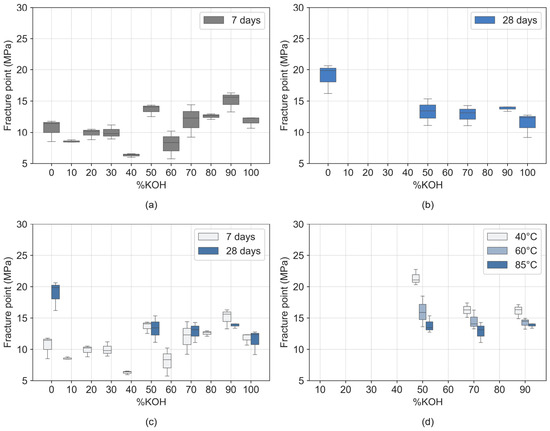
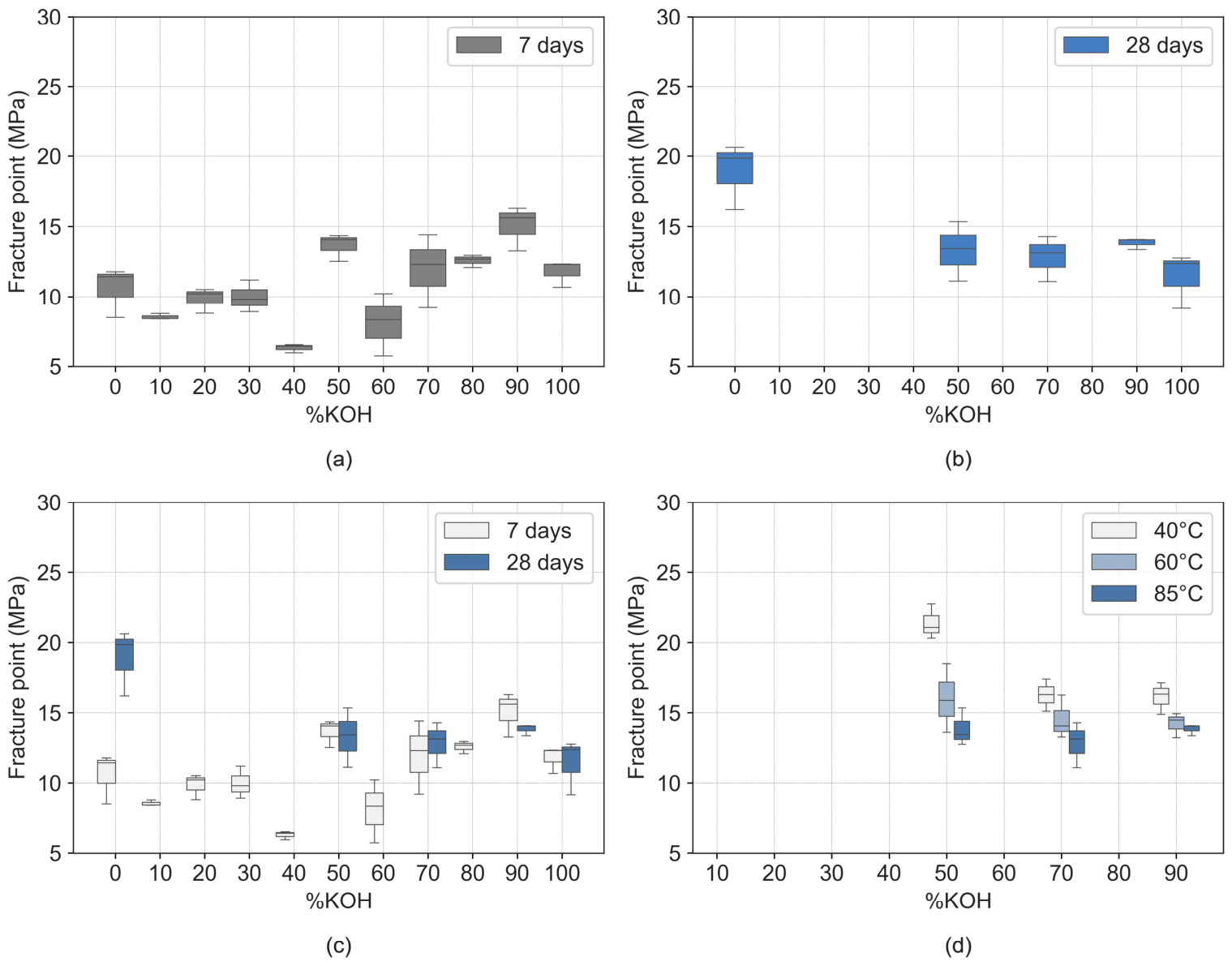
The elastic properties obtained from the analysis of σ–ε curves, i.e., the fracture point and the Young’s modulus (E), for each batch of geopolymers are reported as a box plot in Figure 4a as the average of the three tested specimens with the calculated standard deviation. From a first examination of the data it was observed that the presence of small quantities of K+ ions in the alkaline solution, predominantly referring to samples with KOH addition in a range going from 10% to 40% (e.g., mixed KOH-NaOH composites, below the threshold of 50% KOH addition), results in diminished strength in geopolymeric binders, while samples composed of 0% and 100% KOH exhibit similar rupture stress. Considering these preliminary observations, we selected the geopolymer compositions that produced a high fracture stress, namely the samples with 0%, 50%, 70%, 90% and 100% KOH, to also be tested after 28 days of aging. In Table 3 the average results of new batches of five sample compositions are reported as the fracture point values and the relative Young’s moduli, graphically represented in Figure 4b. For complete results we refer the reader to the Supplementary Materials.
Figure 4.
Box plot of mechanical results in comparison, the black solid lines represent the correlated standard deviation. Each box plot defines the average value obtained from the 3 tested specimens. Panel (a) shows the mechanical results of geopolymers from 0% to 100% addition of KOH and cured at 85 °C, tested after 7 days of aging. In panel (b), the results of geopolymers with 0%, 50%, 70%, 90% and 100% KOH addition, tested after 28 days of aging, are shown. In panel (c), the 7-day and 28-day aging samples are plotted together for a direct comparison. Panel (d) reports the variation of the fracture stress of selected geopolymer compositions as a function of the curing temperature after 28 days of aging of the samples with 50%, 70% and 90% KOH addition in the AAS.
Table 3.
Comparison of the fracture points and Young’s moduli (E) of geopolymer samples cured at 85 °C for 2 h and aged for 7 and 28 days. The numbers preceding the sample name represent the KOH concentration (%) in the alkaline activating solution.
The geopolymers with 50%, 70% and 90% KOH in the alkaline activating solution exhibited higher fracture points, with a rupture stress higher than 12 MPa after 7 days (Table 3). This trend seemed to be unaffected even with prolonged aging time (Δ ≅ 13 MPa) although maintaining lower values compared to the sample with full Na+ in the alkaline activating solution and tested after 28 days which conversely improved its mechanical performance, reaching ~20 MPa (Figure 4c).
In the literature, several studies have underlined that, over time, regardless of the specific type of employed alkaline activator, an overall improvement in the compressive strength of the geopolymer is expected, when the curing temperature is below 90 °C [2,11]. This behavior was consistently observed in the sample synthesized here with 0% KOH content, whereas binders formulated with 50%, 70%, 90% and 100% KOH did not exhibit discernible improvement after a 28-day aging period. Moreover, Young’s modulus (E) appears to exhibit a decreasing trend with prolonged aging except for the 100% NaOH and 100% KOH samples. There is evidence from previous works of possible correlation of the E and the curing time and temperature, typically observing a higher stiffness of the sample when curing temperature is around 80–90 °C, with the lowest value recorded at ambient temperature, predominantly caused by a higher rate of solubility of the precursor at a higher temperature, resulting in a lower risk of obtaining unreacted material in the final product [41,42]. However, this study considered metakaolin as the aluminosilicate precursor, and different behaviors could arise when using other reactants for geopolymerization, e.g., fly ash or blast furnace slag, which present different compositions and reactivity compared to metakaolin [12,43].
Based on the data observation, our results did not show a direct correlation between the composition of the alkaline hydroxides in the activating solution and the ultimate fracture stress, leaving space for additional factors that may contribute to the oscillation of the strength among the specimens such as the Si/Al ratio [14,42], the curing conditions [40], the concentration of the hydroxides [44] and the microstructure [45].
Specifically, the Si/Al ratio is often cited as a primary driver of compressive strength [13,46]. Duxson et al. [14] demonstrated that metakaolin-based geopolymers synthetized with mixed-alkaline solutions (K+, Na+) exhibit significantly higher mechanical strength and Young’s moduli than those using either 100% NaOH or 100% KOH. Their study further noted that K-containing samples outperformed Na specimens when the Si/Al was less than 2. In contrast, Rocha et al. [44] observed that, at a Si/Al ratio of 1, replacing Na2SiO3 with K2SiO3, using 100% sodium hydroxide, resulted in a consistent average strength of approximately ~80 MPa after 28 days.
In the present study, however, our results deviated from the trends reported in the literature [44], due to the specific Si/Al ratio of 2 used in our synthesis. Differently from the improvements seen in previous studies, the introduction of mixed KOH-NaOH and Na2Si2O5 appeared to destabilize the binder structure compared to the reference pure Na geopolymer. Moreover, the Young’s moduli calculated for geopolymers with KOH addition exceeding 10% and aged for 7 days are generally lower than those observed in samples made with 100% NaOH, except for the 50% KOH sample with a calculated E = 755 MPa.
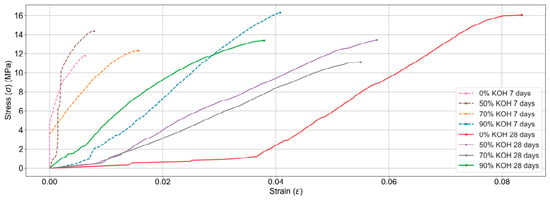
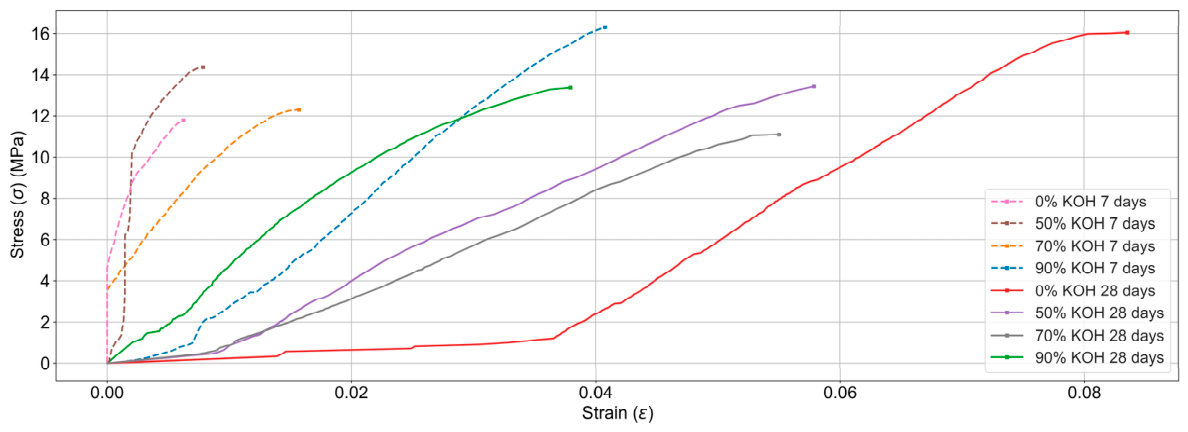
Figure 5 reports some selected stress–strain (σ–ε) curves obtained from the unconfined compression test performed on different samples, showing the general trends of the mechanical properties measured in the present work. Two general trends were observed from the UCTs. The first one shows an initial elastic behavior during the early stages of the compression until the yield point, with no or negligible deformation of the specimen, followed by a short linear trend until fracture, with a typical ceramic-like behavior. This trend was observed for samples with 0% and 50% KOH tested respectively after 7 and 28 days. Typically, the second trend displays a linear behavior right from the beginning, continuing up to the point where the sample experiences the rupture stress point. This behavior is indicative of a viscoelastic nature, commonly observed in polymer materials [47].
Figure 5.
Examples of strain vs. stress curves obtained from selected geopolymer samples (see the legend) synthesized with different proportions of KOH/NaOH in the alkaline activating solution, aged for 7 days (dashed lines) and 28 days (solid lines). The last point in each curve marks the breaking point of the material. The plotted samples are chosen among the 0, 50, 70 and 90% additions of potassium hydroxide in the alkaline activating solution.
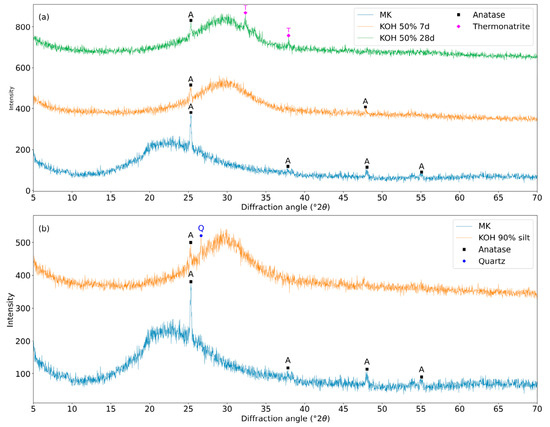
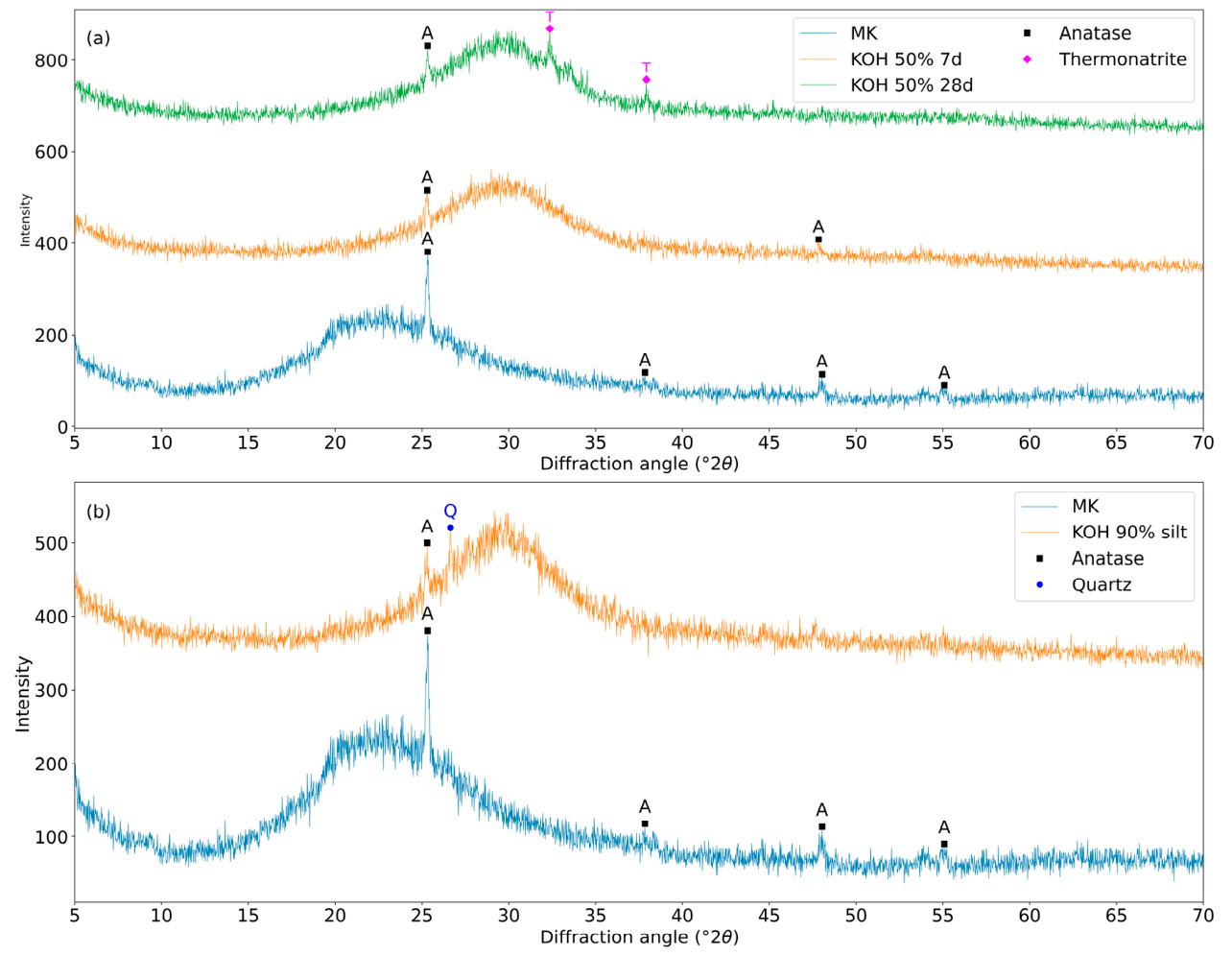
To better comprehend the potential factors influencing the mechanical properties of the various geopolymers produced in the present study, we conducted both morphological and crystallo-chemical analyses of the samples. Figure 6a shows some typical XRD diffractograms of two geopolymer samples with 50% KOH in the alkaline activating solution, the first aged for 7 days and the second for 28 days. Figure 6b shows the diffractogram of the 90% KOH geopolymer with waste silt addition. Compared to the metakaolin precursor, the samples show an XRD 2θ shift of the amorphous hump towards 30° (2θ), meaning that no reagent was left in the product. Peaks belonging to TiO2 (anatase) are still present, as this mineral phase did not participate in the geopolymerization. The difference between the geopolymers resides in the presence of thermonatrite, i.e., monohydrate sodium carbonate (Na2CO3·H2O), a newly formed phase in the 50% KOH sample aged for 28 days which is formed by the reaction between atmospheric CO2 with excess Na+ ions found in pore solutions. In detail, the reaction is triggered by the presence of unreacted alkaline activating solution exuding from the geopolymeric matrix, forming a sticky film on the surface of the sample and resulting in the formation of efflorescence, which can be found either on the surface of the geopolymeric material or inside the pores [41]. In both cases, it is known that thermonatrite may compromise the mechanical properties of geopolymers, as also reported in previous studies [31,32]. A validation of this hypothesis is further emphasized, within the present study, by the formation of bubbles revealed by the ESEM micrographs, which are reported in Figure 7.
Figure 6.
(a) XRD patterns of geopolymers with 50% KOH in the AAS after 7 (in orange) and 28 (in green) days of aging compared with that of metakaolin (MK) in blue. The peaks at 32.3° (2θ) and 37.8° (2θ) determine the presence of thermonatrite (T) phase detected in the sample with 50% KOH aged 28 days. (b) Comparison of the XRD pattern of the sample with 90% KOH in AAS with the addition of waste silt within the geopolymeric matrix and aged for 28 days with the metakaolin pattern.
Figure 7.
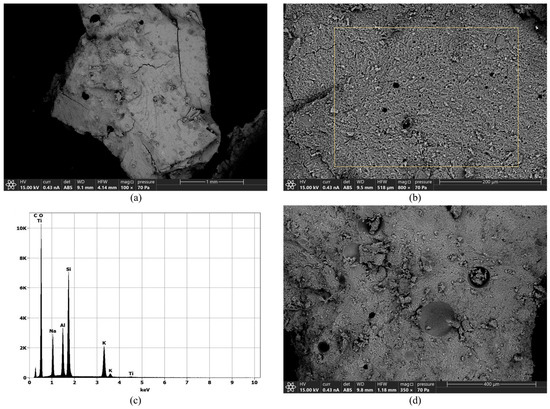
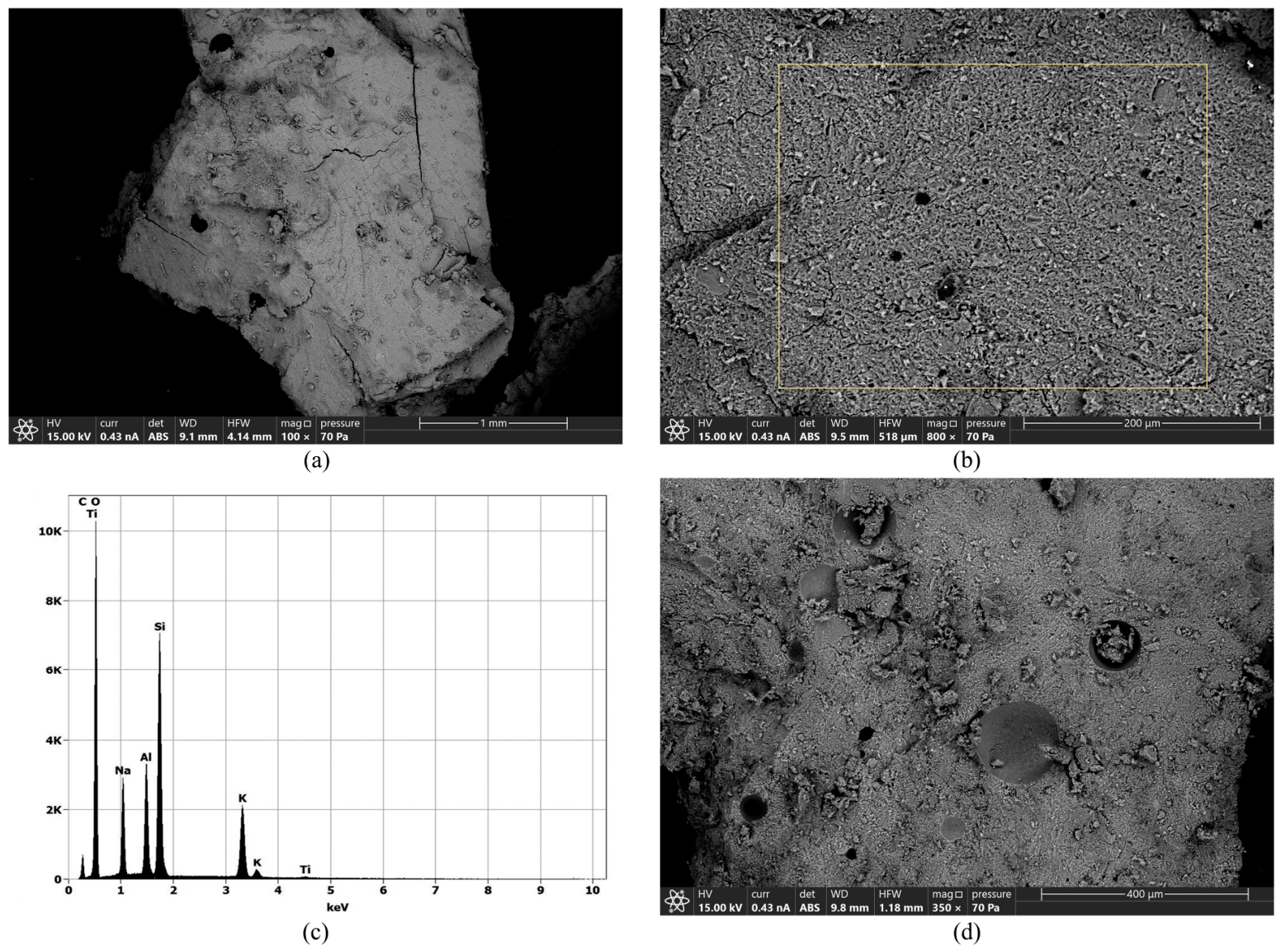
(a) ESEM micrograph of the sample with 90% KOH addition cured at 85 °C and mechanically tested. The specimens exhibit voids and bubbles with a diameter of 50–140 µm. (b) ESEM micrograph of the sample with same composition (90% KOH) at different magnification. The diameters of the bubbles and voids in this area are in the range of 5–10 µm. (c) ESEM-EDS microchemical spectra referring to the area highlighted in panel (b). The presence of the geopolymer elements, titanium from anatase, sodium disilicate, and potassium from the KOH is well evidenced. (d) ESEM micrograph of the sample with 50% KOH addition cured at 85 °C and tested by UCT. The presence of the bubbles and voids is quite evident and they range from 20–160 µm in diameter.
Indeed, the microstructure of the composites plays an important role in the properties of the materials [48]. These defects represent a persistent pattern among the series of samples analyzed and may be responsible of the reduced mechanical performances of the binder. In the present work, the geopolymer resin was slowly cast into the mold, however, this method alone was insufficient in preventing the formation of bubbles, which could be mitigated using a vibrating table to remove any trapped air before the curing process [40,49,50,51]. The combination of these factors, i.e., the formation of thermonatrite, the presence of persistent bubbles and fractures in the final products, may explain the lower fracture stress measured for most of the samples tested after 28 days. Specimens that underwent prolonged aging time were affected the most, due to the greater amount of products formed and a higher extension of the fractures along the voids.
Interestingly, although the specimens synthetized with 100% KOH in alkaline activating solution did not show any presence of thermonatrite, they still exhibit lower mechanical performances when tested after 28 days compared to the results obtained after 7 days of aging. In this latter case, the lack of improvement in the fracture stress could only be due to the presence of bubbles and voids. Our observations revealed that several cracks extended across voids and bubbles, forming continuous paths of weakness along the surfaces of the specimens. Void and bubble diameters were in a range going from 5 µm to 160 µm in samples cured at 85 °C. From these observations it may be argued that curing at a high temperature implies a controlled environment when dealing with the drying and aging process as the abrupt change of temperature may be a factor in the increasing presence of cracks. The presence of bubbles is persistently found among all the samples analyzed.
Similar patterns were observed in the study of Rocha et al. [44] which compared the mixing combination of Na-K silicates and hydroxides, observing that the mixed sodium disilicate with potassium hydroxide led to a substantial presence of bubbles and cracks propagating along the pores of the material which interestingly were less present in mortars with potassium silicate, rather exhibiting a more compact and reduced porosity. Moreover, this observation perfectly aligns with the themogravimetric analysis (TGA) performed by Rocha and colleagues, highlighting that the samples with a combination of Na silicates and KOH are subjected to a higher loss of mass compared to the other mixtures with 5.5% of mass already at 100 °C in contrast with 1.9% when employing K silicate and NaOH for the alkaline activating solution.
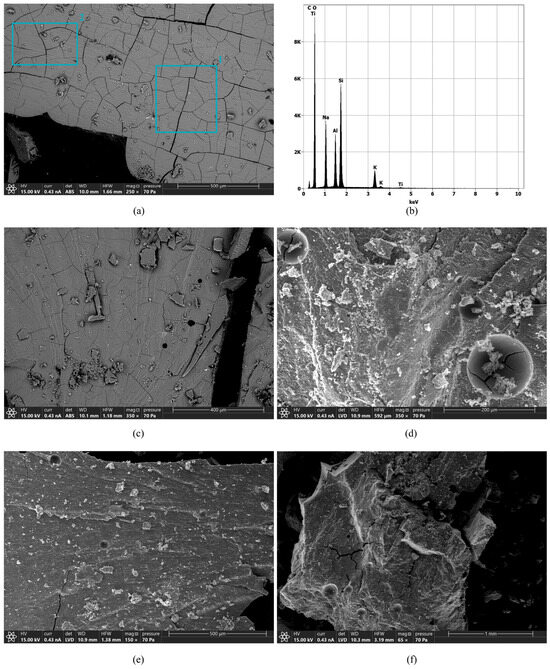
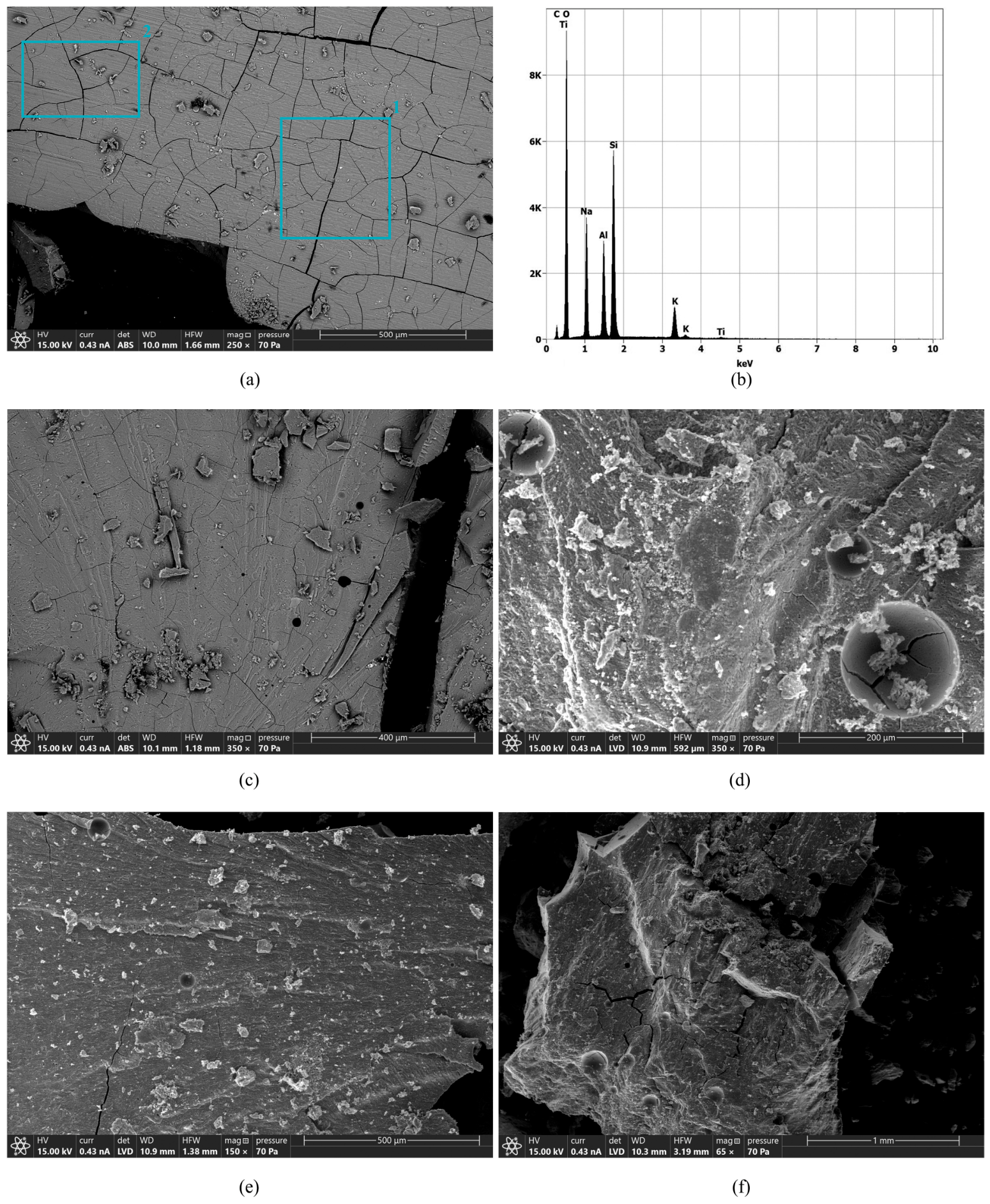
Alongside microstructure examination, numerous microchemical analyses were conducted using ESEM energy-dispersive X-ray spectroscopy (ESEM-EDS). Figure 7b,c and Figure 8a,b show some examples. These EDS spectra are typical and representative of the microchemistry of the binders. The results show the main presence of the expected elements (Si, Al, Na and K), together with small amounts of Ti, in agreement with the XRD analysis.
Figure 8.
(a) Typical ESEM micrograph of 50% KOH sample aged 28 days and cured at 40 °C, showing the geopolymeric matrix containing microcracks and fractures. (b) EDS microanalysis spectrum performed on the marked area 1 in the ESEM micrograph (a). (c) ESEM micrograph acquired with a back-scattered detector (BSD) of the sample with 50% KOH cured at 40 °C. Voids and bubble marks present with an average size of ∅2–20 μm. (d) Typical SEM micrograph of the sample with 50% KOH with a curing temperature of 60 °C (bubble diameter ∅50–144 μm). (e) Typical micrograph of the sample with 70% KOH cured at 60 °C with secondary electrons—low vacuum detector (LVD) set at a pressure of 70 Pa. Bubble diameters range from ∅2–12 μm and ∅42–62 μm. (f) 90% KOH sample cured at 60 °C. It is possible to observe bubbles and voids with typical diameters ranging between 32 and 176 μm.
Based on the present results, we chose geopolymer compositions with 50%, 70%, and 90% KOH content in the alkaline activating solution for next step syntheses involving the choice of different curing settings, i.e., they were cured at temperatures of 60 °C for 3 h and 40 °C for 4 h and tested after 28 days.
3.2. Analysis of the Effects of Curing at 60 °C for 3 h and 40 °C for 4 h on the Elastic Properties of the Geopolymer Binder
The idea of lowering the curing temperature is primarily linked to the goal of enhancing the sustainability of the process, as heating at lower temperatures reduces the overall power consumption, even considering the extended curing time. Moreover, the decision was aimed at understanding whether the main driver of the formation of the cracked surfaces and bulk was the curing temperature rather than the chemical composition. As reported in Section 2, we compared the mechanical properties of geopolymers cured at lower temperatures, i.e., 60 °C and 40 °C. Curing at relatively low temperatures required a prolonged time to allow the geopolymerization reaction to complete, namely, 3 and 4 h respectively.
The unconfined compression test results for the samples synthesized at 60 °C and 40 °C are reported in Table 4, whereas Figure 4d reports a graphical comparison of the unconfined compression test data with those for the geopolymers synthesized at 85 °C for 2 h. Evidence of the general improvement of the strength can also be corroborated by the ESEM micrographs taken for the samples at 40 °C with 50% KOH (Figure 8c,d) and the EDS microchemical analysis has been performed to attest and confirm the average composition of the material (Figure 8a,b). The presence of cracks is still evident, although to a lesser extent, with cracks propagating along voids and bubbles. This suggests that the chemical formulation and temperature are not the sole factors determining the microstructure of the samples. The major source of cracks and fissures is represented by the loss of moisture, as previously pointed out for the samples cured at 85 °C, suggesting that complete sealing and controlled humidity/temperature are the key factors to obtain a less porous and cracked surface. However, it is worth considering that the samples were analyzed after the mechanical tests, while voids and bubbles appear to be less present and with an average diameter ranging between 2 and 20 µm, therefore they are relatively small compared to those of the samples cured at 85 °C. Nonetheless, the ESEM micrographs showed a relatively smooth surface with no evidence of unreacted products while the EDS area spectrum in Figure 8b shows Ti, Na, Al, Si and K as major elements of the sample with 50% KOH in the alkaline solution, which is in line with the expected geopolymer composition, as the sodium content comes from both NaOH and Na2Si2O5.
Table 4.
Fracture point and Young’s modulus (E) of samples cured at 60 °C and 40 °C, tested after 28 days of aging.
Relatively higher compressive strength was obtained by reducing the curing temperature at the same chemical composition. From the comparison between Table 3 and Table 4 it is possible to note that the 50% KOH composition reached 16 MPa when cured at 60 °C, compared to 13.8 MPa achieved at the curing temperature of 85 °C. At T = 40 °C, the rupture stress resistance almost doubled, reaching 21.4 MPa. Similar results were observed with the sample containing 70% KOH in the alkaline activating solution, gaining +1.7 MPa and +3.5 MPa when cured at 60 °C and 40 °C, respectively, when compared to the samples cured at 85 °C with the same chemical composition. The 90% KOH sample gained +0.4 MPa at 60 °C and +2.3 MPa at 40 °C compared to the same product cured at T = 85 °C. The curing temperature of 40 °C appears to be more effective in terms of mechanical strength compared to 60 °C, although a minimal difference was recorded. The geopolymer composition with 50% KOH appears more stable and more dependent on the curing temperature when compared to the other formulations, with a slight increase in the strength going down from 85 °C to 40 °C. Further evidence should be obtained to validate the hypothesis that curing under controlled laboratory conditions may lead to more stable and stronger products. In this context, avoiding abrupt temperature variations during pre- and post-curing processes and preventing excessive loss of moisture, e.g., by implementing a degassing procedure and properly sealing the mold, could be effective procedures to obtain the desired results.
In the work of Garcìa-Mejìa et al. [27], which dealt with metakaolin-based geopolymers using KOH, it was stated that geopolymers with KOH with a concentration of 12 M in the alkaline solution cured at 60 °C showed better results compared to those cured at 40 °C, reaching a maximum of 20 MPa in their experimental and preparation conditions. Additionally, the samples were pre-cured at 25 °C for 96 h, removed from the mold and cured in a climatic camera. Conversely, in our study, samples cured at 40 °C have shown generally better performances compared to those cured at 60 °C. One of the main differences may rely on the pre-curing process, which was not included in our study, instead, the samples were left perfectly sealed at a temperature of ~20 °C after curing. It is worth remembering that the rate of the geopolymerization process is strictly dependent on the temperature, therefore it is more likely that at 60 °C there were no reagents left in the products, improving the microstructure network of the samples and generating a higher compressive strength compared to 40 °C. Moreover, the pre-cured step could have slightly changed the final properties of the geopolymers, leading to a more gradual change of temperature from 25 °C to 60 °C which in our study was reached employing a temperature of curing of 40 °C.
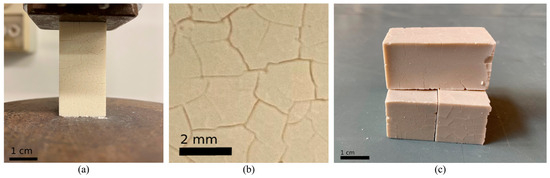
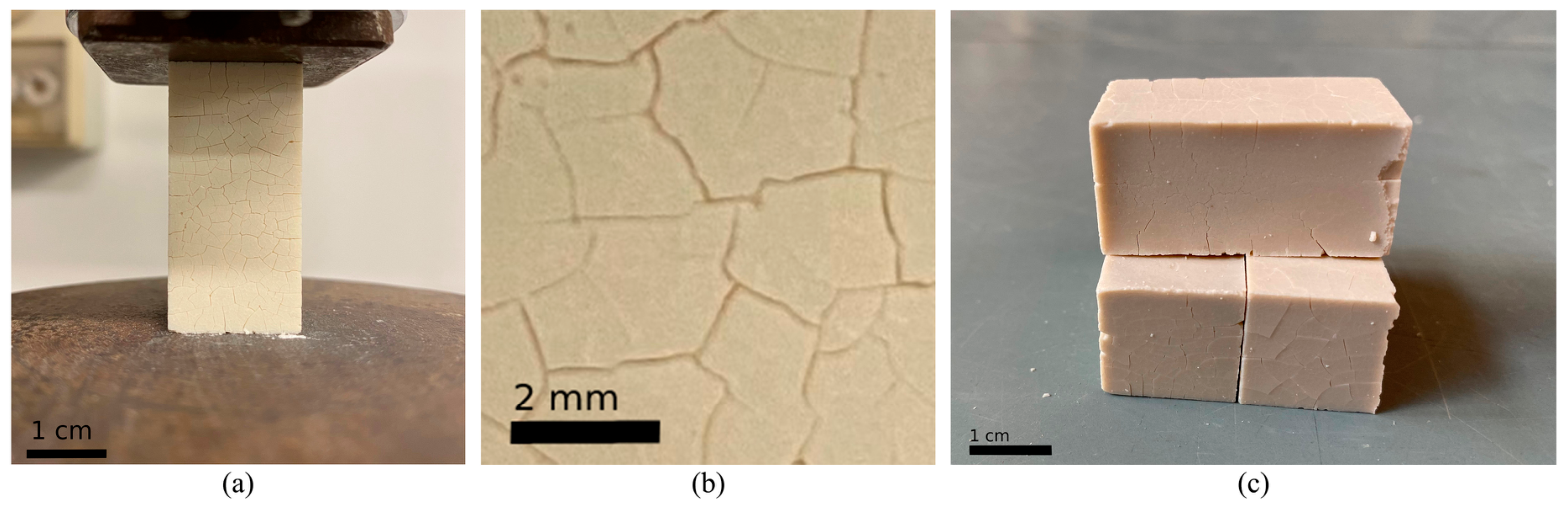
Additionally, Garcìa-Mejìa et al. [27] noted that the strength of the product gradually decreased when KOH molar concentration addition was lower, measuring a compressive strength of 8 MPa with a molarity of 8 M. From this observation derived from the literature, we may attest that the temperature alone could not be the main driving factor. To support his hypothesis, we prepared different alkaline activating solutions with a KOH concentration ranging from 0 M (100% NaOH) to 5.9 M (100% KOH), showing a slightly different behavior of the composites under the same temperature conditions. Specifically, in our products, we observed the maximum of strength at a concentration of 3.25 M (50% KOH). This comparison reinforces the knowledge that both the gel preparation and curing procedures may play a key role in determining the compressive strength of the geopolymer binder. In addition, due to the higher presence of extensive cracks and voids at the surface of the samples cured at 60 °C (see Figure 9), we may infer that these defects and the microstructure were also pivotal in weakening the structure of the geopolymers cured at 60 °C. It has been observed that the formation of cracks was persistent among all the synthetized samples, however, with a higher extent in those cured at higher temperatures. This led to the insight that, to avoid the formation of cracks, particular attention should be directed to controlling the loss of moisture during curing, e.g., by properly sealing the samples. Moreover, although the curing temperature was lower than for the first set of samples (T = 85 °C), it was still noted that an abrupt change of temperature during the drying procedure facilitated the extension of fractures [40]. In this context, the water requirement is directly correlated to the ratios (H2O/Na2O) chosen for the synthesis, and it is equivalent to the sum of the bound water in the reactants and the solvent water. Moreover, since we are working in low-temperature environments (i.e., T < 150–300 °C) it plays a pivotal role in both the dissolution process, forming hydroxyl groups (OH) with Si and Al during the polycondensation reaction, and in the geopolymerization process, during which it is released [1].
Figure 9.
(a) Presence of cracks on the surface and bulk of the sample with 50% KOH addition and cured at 60 °C after 28 days of aging (50-KOH60), before the UCT. (b) Magnification of the sample in panel (a). (c) Image after 28 days of the 90-KOH60 sample, with 90% KOH addition and cured at 60 °C, pervaded by cracks and fractures.
In the work of Perera et al. [40], the authors did not observe any substantial difference in curing at 40 °C or 60 °C for geopolymers synthetized with Si/Al = 2 and Na/Al = 1. The samples reached a mechanical strength of ~57 MPa when curing at 60 °C for 24 h and ~61 MPa when curing at 40 °C for 24 h in ambient conditions (i.e., relative humidity) while controlling the open porosity and the weight loss of the samples. Moreover, they succeeded in curing the geopolymers even at ambient temperature for 24 h (22 °C), obtaining a crack-free sample with a compressive strength of ~59 MPa [40]. These observations emphasize the knowledge that multiple factors control the formation of the final product and affect the relative mechanical performance such as chemistry, microstructure, temperature and humidity conditions.
3.3. Analysis of the Geopolymer with the Waste Silt Incorporation (T = 85 °C)
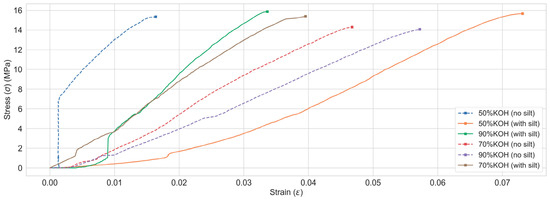
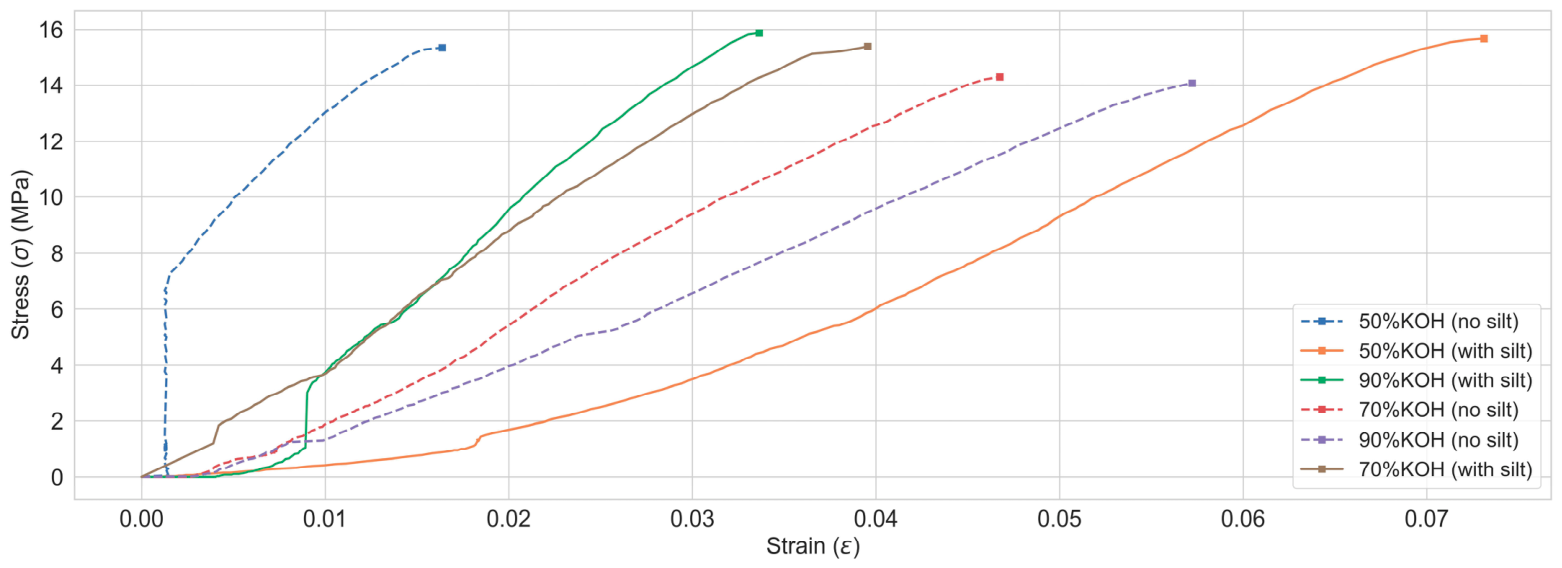
It has been reported in the literature that mixing a geopolymeric binder with inert materials (i.e., fillers) results in composites with improved compressive strength [1,23]. Here we considered the addition of 10% wt. waste silt with respect to the amount of metakaolin in the geopolymer mixture. The unconfined compression tests were conducted on selected samples with 50%, 70% and 90% KOH addition in the alkaline activating solution, according to the aforementioned results presented in Figure 4. Table 5 reports the unconfined compression tests results (fracture stress and Young’s modulus) for the geopolymer/silt composites mentioned above, cured at 85 °C for 2 h and aged for 28 days [1]. In general, no significant differences were observed among the binders and the composites as visible from the σ–ε curves of the silt composites (solid lines) and the geopolymers (dashed lines) in Figure 10, displaying a typical ceramic-like behavior. The geopolymer/silt composites revealed that the incorporation of the filler material did not yield significant improvement in the strength of the geopolymer, with a slightly higher Young’s modulus with respect to the binder (see Table 3). The 50% KOH sample was mostly unaffected by the addition of silt with a compressive strength going down from 13.8 MPa (without silt) to 12.7 MPa, followed by the 90% KOH sample (−1.1 MPa), while the 70% KOH sample resulted in a slight increase of +1.3 MPa with the addition of silt.
Table 5.
Fracture points and calculated Young’s moduli of samples with 10% wt. silt added as filler cured at 85 °C for 2 h.
Figure 10.
Examples of stress–strain curves of geopolymer/silt composites (10% waste silt) tested after 28 days of aging. The solid lines denote the representative σ–ε curves of the samples with 90%, 70% and 50% KOH in alkaline activating solution with the addition 10% waste silt in geopolymeric matrix. For a direct comparison, the dashed lines report the σ–ε data of the geopolymer binder with the same characteristics but without the waste silt addition.
A shared characteristic among the various silt/geopolymer composites synthesized and tested in this study is the uneven distribution of the filler. Specifically, the particles tended to settle down on the bottom of the mold right after the stirring process, a phenomenon that became more pronounced with higher KOH concentrations in the alkaline activating solution. This likely stems from the binder’s initially low viscosity before geopolymerization, which increases as the concentration of potassium ions in the liquid mixture rises, enhancing the mixing factor of the geopolymer paste [22,23,52,53]. These observations suggested that, to prevent the filler particles from settling when dealing with a low-viscosity solution, it would be appropriate to reduce the setting time of the composite right after the stirring process to hasten the condensation by curing at a higher temperature.
The XRD analysis of the composite (Figure 11b) in comparison with the filler reported in Figure 11a illustrates the hump of the amorphous phase shifted at higher 2θ angles, between 22° (2θ) and 38° (2θ), with respect to the metakaolin precursor (14° (2θ)–33.5° (2θ)). In addition to anatase, residual phase of the metakaolin (peak with highest intensity at 25.3° (2θ)), we also observed the presence of quartz at 26.7° (2θ), which is the only retained phase detectable of the highly crystalline waste silt after geopolymerization. This indicates that the filler partially reacted with the amorphous geopolymeric matrix without causing any significant alteration [23]. Small amounts of thermonatrite were found in the composite made with 50% KOH, but not in those with higher potassium hydroxide content in the alkaline activating solution.
Figure 11.
(a) XRD pattern of waste silt added into the geopolymer matrix as filler in the sample with 50%, 70% and 90% KOH. The illite is a general clay mineral, with a variable content of K, Al and Mg. The pattern clearly shows the high crystallinity of the sample, with the detected presence of chlinoclore, quartz and calcite. (b) XRD pattern of a geopolymer sample with 90% KOH addition in the alkaline activating solution with the addition of 10% silt in the geopolymeric matrix. The higher crystallinity of the silt has consequently led to some unreacted materials in the geopolymer composite which are here shown by the peak of quartz detected at the position of 26.7° (2θ).
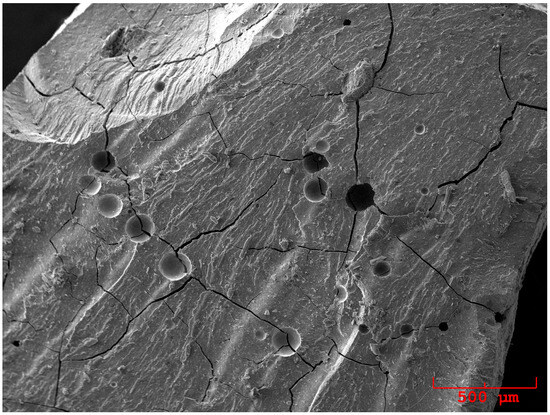
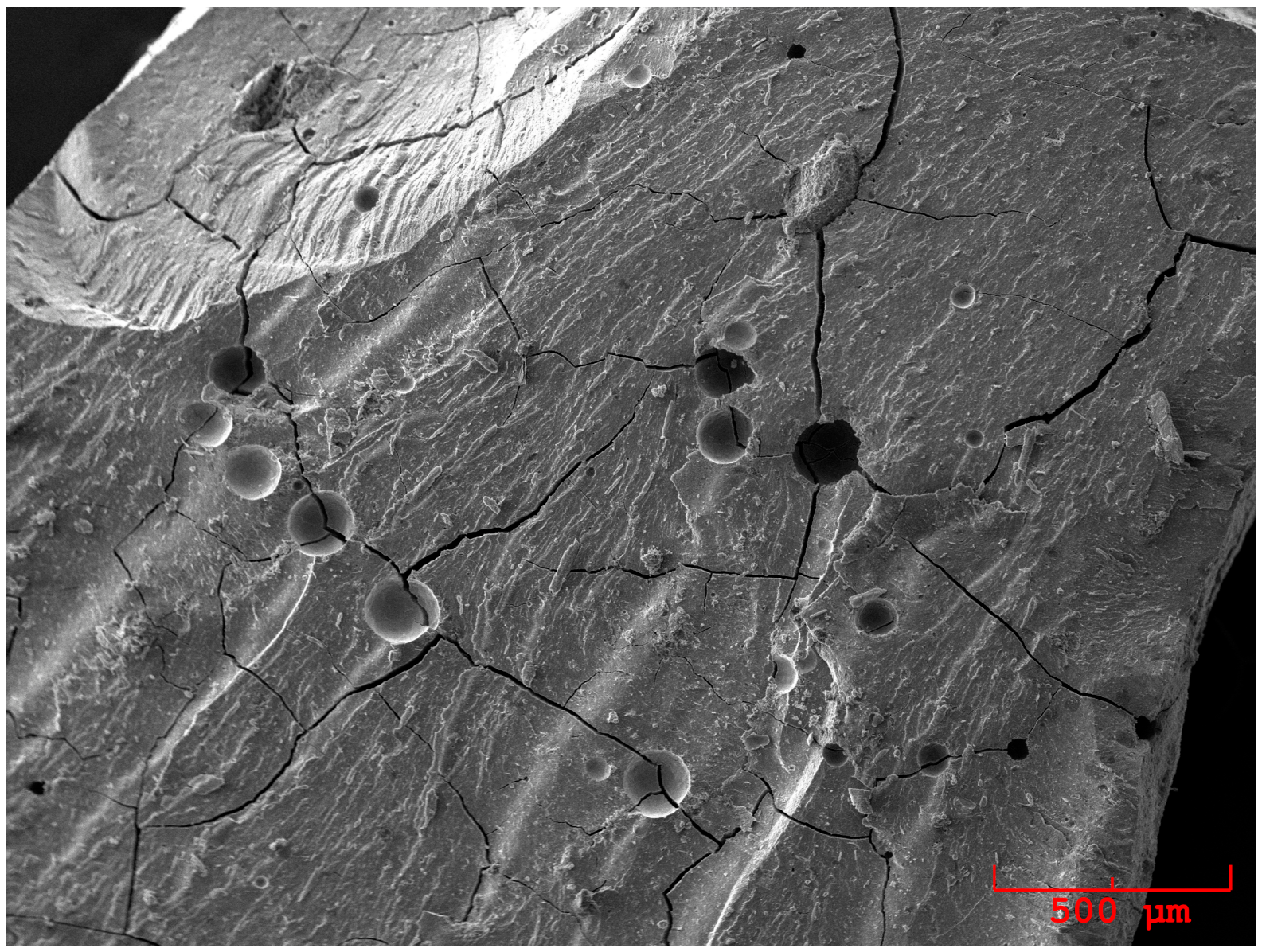
SEM analysis of the composites provided a microstructure not dissimilar to that of the sole geopolymer, with an extensive presence of empty bubbles, voids (d 130 µm) and fractures (with an extension of ~0.1 mm) on the specimen surface. Notably, a significant proportion of cracks were observed to propagate through these voids and bubbles, as visible in Figure 12, representing the internal surface of the sample with 90% KOH. These features appear to be interconnected, forming a continuous path of weakness that permeates the bulk of the samples, a pattern very close to the one observed from samples without filler and cured at T = 85 °C.
Figure 12.
Typical ESEM micrograph of a fragment of the same sample used for the XRD (90% KOH + silt) analysis in Figure 11b. Cracks and bubble marks of a diameter of 50–20 µm are visible.
According to the results obtained from the XRD and microstructure analysis it can be stated that the filler alone cannot substantially improve the resistance of the composite as most of the weakness is caused by the presence of bubbles and cracks, most probably due to loss of moisture and abrupt change of temperature right after the curing process. Moreover, based on the comparison of the unconfined compression test of the binders only and composites it is reasonable to say that the amount of filler added might not have been sufficient to improve the overall mechanical strength of the geopolymer, allowing for further evaluations while increasing the filler fraction until reaching the saturation limit [23].
4. Conclusions
The mechanical and microstructural properties of mixed Na, K geopolymer composites (Si:Al = 2:1) were investigated, focusing on the effects of KOH concentration in the alkaline activating solution, curing regimes, and the incorporation of waste silt.
The curing temperature was identified as the primary driver of mechanical performance. While initial synthesis at 85 °C was explored, lowering the temperature to 40 °C (with extended curing time) significantly enhanced structural integrity. Specifically, the 50% KOH sample presented a compressive strength of 21.4 MPa at 40 °C and 13.8 MPa at 85 °C. This behavior suggested that a slower geopolymerization at lower temperatures mitigates the internal stresses associated with the rapid moisture loss.
The addition of 10% wt. waste silt in the formulation produced composites with mechanical properties comparable to the pure binders, confirming its viability as a sustainable filler for non-structural or moderate load-bearing applications. The filler did not significantly increase the fracture stress. This was partly due to the low initial viscosity of the high-KOH binders, which led to the uneven settling of silt particles at the bottom of the molds. Such materials are highly viable for civil engineering applications where moderate load-bearing properties are required, providing an effective method for repurposing industrial waste.
The analysis performed in the present study also identified several structural weaknesses, in particular the formation of thermonatrite and the presence of micro- to macroscopic cracks and voids (ranging from 5 µm to 160 µm). ESEM analysis confirmed that these voids can create preferential pathways for structural failure, especially when the material is subjected to temperature variations. These defects were often triggered by rapid moisture loss and trapped air during the synthesis process. To address these limitations, future research should prioritize the study of stabilizing the geopolymerization environment. This can be done by evaluating the effect of degassing stages and strictly controlling humidity levels to manage evaporation rates. Furthermore, refining the viscosity of the alkaline solutions and optimizing pre-curing thermal protocols is essential to mitigate internal defect creation and to ensure the long-term durability of the composites.
Supplementary Materials
The following supporting information can be downloaded at: https://www.mdpi.com/article/10.3390/jcs10050238/s1, Table S1: Comparison of the fracture points and Young’s moduli of geopolymer samples cured at 85 °C for 2 h and aged for 7 and 28 days; Figure S1: ESEM micrograph of the sample with 50% KOH addition cured at 85 °C. Image taken at 500× magnification. The diameters of the bubbles and voids range in the order of 6 µm to 20 µm; Figure S2: ESEM micrograph of 70% KOH cured at 85 °C. Image taken at 200× magnification. Voids diameter ranges from 50 µm to 110 µm.
Author Contributions
Conceptualization, G.U. and G.V.; methodology, D.M., F.R., C.S., G.U. and G.V.; validation, D.M., G.U. and G.V.; formal analysis, D.M., F.R., C.S., G.U. and G.V.; investigation, D.M., F.R. and G.U.; data curation, D.M., F.R., C.S., G.U. and G.V.; writing—review and editing, D.M., F.R., C.S., G.U. and G.V.; visualization, D.M., F.R. and G.U.; supervision, C.S. and G.V. All authors have read and agreed to the published version of the manuscript.
Funding
The research was financed by the European Union—Next Generation EU through the Italian Ministry of University and Research under PNRR—Mission 4 Component C2, Investment 1.1 “Fondo per il Programma Nazionale di Ricerca e Progetti di Rilevante Interesse Nazionale (PRIN)”, grant number 2022BCL34N.
Data Availability Statement
The results obtained in the present work are available from the authors on specific request.
Acknowledgments
The authors also wish to thank the University of Bologna for supporting the research.
Conflicts of Interest
There are no conflicts of interest to declare.
References
- Davidovits, J. Geopolymer Chemistry and Applications, 5th ed.; Institut Géopolymère: Saint-Quentin, France, 2020; Volume 1, ISBN 9782954453118. [Google Scholar]
- Davidovits, J. Geopolymers: Ceramic-like Inorganic Polymers. J. Ceram. Sci. Technol. 2017, 8, 335–350. [Google Scholar] [CrossRef] [Scilit]
- Heath, A.; Paine, K.; Goodhew, S.; Ramage, M.; Lawrence, M. The Potential for Using Geopolymer Concrete in the UK. Proc. Inst. Civ. Eng. Constr. Mater. 2013, 166, 195–203. [Google Scholar] [CrossRef] [Scilit]
- Imbabi, M.S.; Carrigan, C.; McKenna, S. Trends and Developments in Green Cement and Concrete Technology. Int. J. Sustain. Built Environ. 2012, 1, 194–216. [Google Scholar] [CrossRef] [Scilit]
- Van Deventer, J.S.J.; Provis, J.L.; Duxson, P.; Brice, D.G. Chemical Research and Climate Change as Drivers in the Commercial Adoption of Alkali Activated Materials. Waste Biomass Valorization 2010, 1, 145–155. [Google Scholar] [CrossRef] [Scilit]
- Davidovits, J. Geopolymers: Man-Made Rock Geosynthesis and the Resulting Development of Very Early High Strength Cement. J. Mater. Edu. 1994, 16, 91–137. [Google Scholar]
- Davidovits, J. Properties of Geopolymer Cements. In Proceedings of the First International Conference on Alkaline Cements and Concretes, Scientific Research Institute on Binders and Materials; VIPOL Stock Company: Kiev, Ukraine, 1994; pp. 131–149. [Google Scholar]
- Intergovernmental Panel on Climate Change (IPCC). Climate Change 2021—The Physical Science Basis: Working Group I Contribution to the Sixth Assessment Report of the Intergovernmental Panel on Climate Change; Cambridge University Press: Cambridge, UK, 2023; ISBN 9781009157896. [Google Scholar]
- Riahi, K.; Schaeffer, R.; Arango, J.; Calvin, K.; Guivarch, C.; Hasegawa, T.; Jiang, K.; Kriegler, E.; Matthews, R.; Peters, G.P.; et al. Mitigation Pathways Compatible with Long-Term Goals. In Climate Change 2022—Mitigation of Climate Change; Cambridge University Press: Cambridge, UK, 2023; pp. 295–408. [Google Scholar]
- Intergovernmental Panel on Climate Change (IPCC). Future Global Climate: Scenario-Based Projections and Near-Term Information. In Climate Change 2021—The Physical Science Basis: Working Group I Contribution to the Sixth Assessment Report of the Intergovernmental Panel on Climate Change; Cambridge University Press: Cambridge, UK, 2023; pp. 553–672. [Google Scholar]
- Provis, J.L. Alkali-Activated Materials. Cem. Concr. Res. 2018, 114, 40–48. [Google Scholar] [CrossRef] [Scilit]
- Cong, P.; Cheng, Y. Advances in Geopolymer Materials: A Comprehensive Review. J. Traffic Transp. Eng. (Engl. Ed.) 2021, 8, 283–314. [Google Scholar] [CrossRef] [Scilit]
- Castillo, H.; Collado, H.; Droguett, T.; Sánchez, S.; Vesely, M.; Garrido, P.; Palma, S. Factors Affecting the Compressive Strength of Geopolymers: A Review. Minerals 2021, 11, 1317. [Google Scholar] [CrossRef] [Scilit]
- Duxson, P.; Mallicoat, S.W.; Lukey, G.C.; Kriven, W.M.; van Deventer, J.S.J. The Effect of Alkali and Si/Al Ratio on the Development of Mechanical Properties of Metakaolin-Based Geopolymers. Colloids Surf. A Physicochem. Eng. Asp. 2007, 292, 8–20. [Google Scholar] [CrossRef] [Scilit]
- Terrones-Saeta, J.M.; Luís, A.T.; Romero, E.; Fortes Garrido, J.C.; Diaz-Curiel, J.; Grande, J.A. Factor Analysis of the Physical–Mechanical Properties for Geopolymers Based on Brick Dust and Biomass Bottom Ash as Eco-Friendly Building Materials. Processes 2023, 11, 2491. [Google Scholar] [CrossRef] [Scilit]
- Callai, S.C.; Tataranni, P.; Sangiorgi, C. Preliminary Evaluation of Geopolymer Mix Design Applying the Design of Experiments Method. Infrastructures 2021, 6, 35. [Google Scholar] [CrossRef] [Scilit]
- Arellano Aguilar, R.; Burciaga Díaz, O.; Escalante García, J.I. Lightweight Concretes of Activated Metakaolin-Fly Ash Binders, with Blast Furnace Slag Aggregates. Constr. Build. Mater. 2010, 24, 1166–1175. [Google Scholar] [CrossRef] [Scilit]
- Lyon, R.E.; Balaguru, P.N.; Foden, A.; Sorathia, U.; Davidovits, J.; Davidovics, M. Fire-Resistant Aluminosilicate Composites. Fire Mater. 1997, 21, 67–73. [Google Scholar] [CrossRef]
- Aiken, T.A.; Sha, W.; Kwasny, J.; Soutsos, M.N. Resistance of Geopolymer and Portland Cement Based Systems to Silage Effluent Attack. Cem. Concr. Res. 2017, 92, 56–65. [Google Scholar] [CrossRef] [Scilit]
- Terrones-Saeta, J.M.; Suárez-Macías, J.; Castañón, A.M.; Gómez-Fernández, F.; Corpas-Iglesias, F.A. Retention of Pollutants Elements from Mine Tailings of Lead in Geopolymers for Construction. Materials 2021, 14, 6184. [Google Scholar] [CrossRef] [Scilit] [PubMed]
- Kurumisawa, K.; Omatu, H.; Yamashina, Y. Effect of Alkali Activators on Diffusivity of Metakaolin-Based Geopolymers. Mater. Struct./Mater. Constr. 2021, 54, 169. [Google Scholar] [CrossRef] [Scilit]
- Kim, B.; Lee, J.; Kang, J.; Um, W. Development of Geopolymer Waste Form for Immobilization of Radioactive Borate Waste. J. Hazard. Mater. 2021, 419, 126402. [Google Scholar] [CrossRef] [Scilit] [PubMed]
- Solouki, A.; Fathollahi, A.; Viscomi, G.; Tataranni, P.; Valdrè, G.; Coupe, S.J.; Sangiorgi, C. Thermally Treated Waste Silt as Filler in Geopolymer Cement. Materials 2021, 14, 5102. [Google Scholar] [CrossRef] [Scilit]
- Lampris, C.; Lupo, R.; Cheeseman, C.R. Geopolymerisation of Silt Generated from Construction and Demolition Waste Washing Plants. Waste Manag. 2009, 29, 368–373. [Google Scholar] [CrossRef] [Scilit]
- Valente, M.; Sambucci, M.; Sibai, A. Geopolymers vs. Cement Matrix Materials: How Nanofiller Can Help a Sustainability Approach for Smart Construction Applications—A Review. Nanomaterials 2021, 11, 2007. [Google Scholar] [CrossRef] [Scilit]
- Duxson, P.; Fernández-Jiménez, A.; Provis, J.L.; Lukey, G.C.; Palomo, A.; Van Deventer, J.S.J. Geopolymer Technology: The Current State of the Art. J. Mater. Sci. 2007, 42, 2917–2933. [Google Scholar] [CrossRef] [Scilit]
- García-Mejía, T.A.; de Lourdes Chávez-García, M. Compressive Strength of Metakaolin-Based Geopolymers: Influence of KOH Concentration, Temperature, Time and Relative Humidity. Mater. Sci. Appl. 2016, 7, 772–791. [Google Scholar] [CrossRef]
- Al Bakria, A.M.; Kamarudin, H.; BinHussain, M.; Nizar, I.K.; Zarina, Y.; Rafiza, A.R. The Effect of Curing Temperature on Physical and Chemical Properties of Geopolymers. Phys. Procedia 2011, 22, 286–291. [Google Scholar] [CrossRef] [Scilit]
- Rahim, A.R.H.; Rahmiati, T.; Azizli, K.A.; Man, Z.; Nuruddin, M.F.; Ismail, L. Comparison of Using NaOH and KOH Activated Fly Ash-Based Geopolymer on the Mechanical Properties. Mater. Sci. Forum 2015, 803, 179–184. [Google Scholar] [CrossRef] [Scilit]
- Rahmiati, T.; Azizli, K.A.; Man, Z.; Ismail, L.; Nuruddin, M.F. The Effect of KOH Concentration on Setting Time and Compressive Strength of Fly Ash-Based Geopolymer. Appl. Mech. Mater. 2014, 625, 94–97. [Google Scholar] [CrossRef] [Scilit]
- Moro, D.; Fabbri, R.; Romano, J.; Ulian, G.; Calafato, A.; Solouki, A.; Sangiorgi, C.; Valdrè, G. Thermal, X-Ray Diffraction and Oedometric Analyses of Silt-Waste/NaOH-Activated Metakaolin Geopolymer Composite. J. Compos. Sci. 2021, 5, 269. [Google Scholar] [CrossRef] [Scilit]
- Simão, L.; Fernandes, E.; Hotza, D.; Ribeiro, M.J.; Montedo, O.R.K.; Raupp-Pereira, F. Controlling Efflorescence in Geopolymers: A New Approach. Case Stud. Constr. Mater. 2021, 15, e00740. [Google Scholar] [CrossRef] [Scilit]
- UNI EN 1015-11:2019; Methods of Test for Mortar for Masonry—Part 11: Determination of Flexural and Compressive Strength of Hardened Mortar 2019. European Committee for Standardization: Brussels, Belgium, 2019.
- Giacosa, G.; Moro, D.; Ulian, G.; Zanna, S.; Valdrè, G. Ceramic Recipes: Cross-Correlated Analytical Strategy for the Characterization of the Iron Age Pottery from Ancient Karkemish (Turkey). Measurement 2018, 128, 180–188. [Google Scholar] [CrossRef] [Scilit]
- Altomare, A.; Cuocci, C.; Giacovazzo, C.; Moliterni, A.; Rizzi, R. QUALX: A Computer Program for Qualitative Analysis Using Powder Diffraction Data. J. Appl. Crystallogr. 2008, 41, 815–817. [Google Scholar] [CrossRef] [Scilit]
- Moro, D.; Ulian, G.; Valdrè, G. Monte Carlo SEM-EDS Micro- and Nanoanalysis of Ultrathin Gold Leaves in Glass Mosaic Tesserae: Thickness Effects and Measurement Strategy. Measurement 2018, 129, 211–217. [Google Scholar] [CrossRef] [Scilit]
- Moro, D.; Ulian, G.; Valdrè, G. SEM-EDS Nanoanalysis of Mineral Composite Materials: A Monte Carlo Approach. Compos. Struct. 2021, 259, 113227. [Google Scholar] [CrossRef] [Scilit]
- Moro, D.; Ulian, G.; Valdrè, G. Fibre-Reinforced Geopolymer Composites Micro-Nanochemistry by SEM-EDS Simulations. J. Compos. Sci. 2021, 5, 214. [Google Scholar] [CrossRef] [Scilit]
- Ranjbar, N.; Kuenzel, C.; Spangenberg, J.; Mehrali, M. Hardening Evolution of Geopolymers from Setting to Equilibrium: A Review. Cem. Concr. Compos. 2020, 114, 103729. [Google Scholar] [CrossRef] [Scilit]
- Perera, D.S.; Uchida, O.; Vance, E.R.; Finnie, K.S. Influence of Curing Schedule on the Integrity of Geopolymers. J. Mater. Sci. 2007, 42, 3099–3106. [Google Scholar] [CrossRef] [Scilit]
- Werling, N.; Dehn, F.; Krause, F.; Steudel, A.; Schuhmann, R.; Emmerich, K. Solubility of Precursors and Carbonation of Waterglass-Free Geopolymers. Clays Clay Miner. 2020, 68, 524–531. [Google Scholar] [CrossRef] [Scilit]
- Rowles, M.; O’Connor, B. Chemical Optimisation of the Compressive Strength of Aluminosilicate Geopolymers Synthesised by Sodium Silicate Activation of Metakaolinite. J. Mater. Chem. 2003, 13, 1161–1165. [Google Scholar] [CrossRef] [Scilit]
- Sajan, P.; Jiang, T.; Lau, C.K.; Tan, G.; Ng, K. Combined Effect of Curing Temperature, Curing Period and Alkaline Concentration on the Mechanical Properties of Fly Ash-Based Geopolymer. Clean. Mater. 2021, 1, 100002. [Google Scholar] [CrossRef] [Scilit]
- Rocha, T.d.S.; Dias, D.P.; França, F.C.C.; de Salles Guerra, R.R.; de Oliveira, L.R.D.C. Metakaolin-Based Geopolymer Mortars with Different Alkaline Activators (Na+ and K+). Constr. Build. Mater. 2018, 178, 453–461. [Google Scholar] [CrossRef] [Scilit]
- Kamseu, E.; Bignozzi, M.C.; Melo, U.C.; Leonelli, C.; Sglavo, V.M. Design of Inorganic Polymer Cements: Effects of Matrix Strengthening on Microstructure. Constr. Build. Mater. 2013, 38, 1135–1145. [Google Scholar] [CrossRef] [Scilit]
- Dimas, D.; Giannopoulou, I.; Panias, D. Polymerization in Sodium Silicate Solutions: A Fundamental Process in Geopolymerization Technology. J. Mater. Sci. 2009, 44, 3719–3730. [Google Scholar] [CrossRef] [Scilit]
- Pan, Z.; Sanjayan, J.G. Stress–Strain Behaviour and Abrupt Loss of Stiffness of Geopolymer at Elevated Temperatures. Cem. Concr. Compos. 2010, 32, 657–664. [Google Scholar] [CrossRef] [Scilit]
- Vickers, L.; van Riessen, A.; Rickard, W.D.A. Thermal Properties of Geopolymers. In Fire-Resistant Geopolymers: Role of Fibres and Fillers to Enhance Thermal Properties; Springer: Berlin/Heidelberg, Germany, 2015; pp. 77–98. ISBN 978-981-287-311-8. [Google Scholar]
- Duxson, P.; Provis, J.L.; Lukey, G.C.; Mallicoat, S.W.; Kriven, W.M.; Van Deventer, J.S.J. Understanding the Relationship between Geopolymer Composition, Microstructure and Mechanical Properties. Colloids Surf. A Physicochem. Eng. Asp. 2005, 269, 47–58. [Google Scholar] [CrossRef] [Scilit]
- Lahoti, M.; Narang, P.; Tan, K.H.; Yang, E.H. Mix Design Factors and Strength Prediction of Metakaolin-Based Geopolymer. Ceram. Int. 2017, 43, 11433–11441. [Google Scholar] [CrossRef] [Scilit]
- Zhang, H.; Li, L.; Sarker, P.K.; Long, T.; Shi, X.; Wang, Q.; Cai, G. Investigating Various Factors Affecting the Long-Term Compressive Strength of Heat-Cured Fly Ash Geopolymer Concrete and the Use of Orthogonal Experimental Design Method. Int. J. Concr. Struct. Mater. 2019, 13, 63. [Google Scholar] [CrossRef] [Scilit]
- Kioupis, D.; Zisimopoulou, A.; Tsivilis, S.; Kakali, G. Development of Porous Geopolymers Foamed by Aluminum and Zinc Powders. Ceram. Int. 2021, 47, 26280–26292. [Google Scholar] [CrossRef] [Scilit]
- Siciliano, U.C.C.S.; Trindade, A.C.C.; de Andrade Silva, F. Effect of Potassium-Waterglass Composition on Strength Development and Leaching Behavior of Geopolymers in Different Curing Conditions. Int. J. Ceram. Eng. Sci. 2025, 7, e10251. [Google Scholar] [CrossRef] [Scilit]

Disclaimer/Publisher’s Note: The statements, opinions and data contained in all publications are solely those of the individual author(s) and contributor(s) and not of MDPI and/or the editor(s). MDPI and/or the editor(s) disclaim responsibility for any injury to people or property resulting from any ideas, methods, instructions or products referred to in the content. |
© 2026 by the authors. Licensee MDPI, Basel, Switzerland. This article is an open access article distributed under the terms and conditions of the Creative Commons Attribution (CC BY) license.