


Abstract
Laser surface hardening is a technique that improves various mechanical characteristics of different materials. The methods are being extensively used in the automobile, aerospace, tool manufacturing, and construction industries for various components. The present review highlights the hardness and hardened surface depth improvement of different steels and non-ferrous alloys in as-bought and pre-heat treatment conditions. Diode and fibre lasers have rendered higher surface hardness and hardened depth, while consuming higher power. Nd:YAG lasers have resulted in a precise increase in hardness and a very minimal 0.8 in ferrous and 2 mm in surface-hardened depth of non-ferrous alloys, proving a better efficiency. The pre-heat treatments are selected to enhance mechanical properties and reduce the deformations and defects. An increase of 300.43 and 282.38% of surface hardness due to laser hardening as compared to the core material of AISI 420 was observed using a high-power diode laser. A huge 281.41% of increase in surface hardness was observed for ICD-5 tool steel using Nd:YAG lasers. The annealing pre-heat treatment has also affected the hardenability, resulting in high hardness. Non-ferrous alloys such as titanium and A356 alloys have recorded 200 and 125% increase in surface hardness compared to their core using Nd:YAG lasers.
Keywords:
laser; surface hardening; heat treatment; hardness; hardened depth; manufacturing; infrastructure 1. Introduction
Steel has been a widely used material throughout its history, with numerous applications. Hence, the surface modifications of steels have served as a major alternative to industrial applications. Several types of surface treatment methods serve different purposes and achieve various results for a range of materials. Carburising, nitriding, cyaniding, induction, flame, and laser surface hardening are the various surface hardening treatments. Laser surface hardening has seen significant advancements in recent years due to the enhancement in the process’s precision, applicability, and efficiency, which has resulted in it being a more viable option for industry applications [1]. When subjected to laser hardening, the microhardness of the surface of the material is much higher than that of the base metal. Focal plane position, laser power, and scanning speed are the major parameters for laser surface hardening that influence the hardened layer of the materials. Subjecting the material to laser hardening in a controlled atmosphere can yield better and more curated results [2].
Laser technologies have a very broad industrial role due to their flexible laser processing and the capability to operate on different materials, such as metals, ceramics, and composites, with multiple functional goals, such as surface texture, wear resistance, and enhanced adhesion. Surface wettability can be mainly controlled by laser processing parameters and surface texturing. The corrosion resistance of the surface can be enhanced by laser texturing, which has led to alteration of diffusion paths of corrosive agents [3]. Material properties such as hardness, roughness, and micrography can be controlled by altering the laser parameters such as pulse count, power density, and width, resulting in better texturing with enhanced wettability and tribological properties [4]. Adhesion of carbon fibres in carbon fibre reinforced polymers (CFRP) can be enhanced through laser texturing, which creates laser-induced cavities and leads to better curing of structural adhesives [5]. Laser heat treatment of metallic coating using different electrodes has resulted in higher wear resistance of harder coatings and increased microhardness due to the formation of hard phases in the laser heat-treated metal coatings [6].
1.1. Lasers for Laser Surface Hardening (LSH)
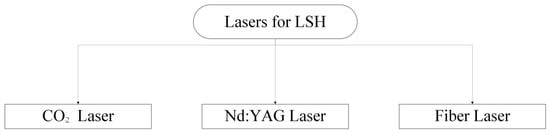
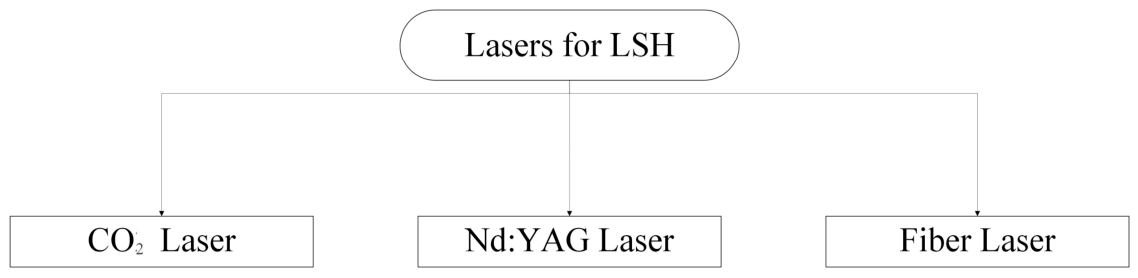
Different laser outputs are generated by different lasers depending on the various parameters, such as materials, surface area, power output, and type of application. The main classifications of lasers are shown in Figure 1.
Figure 1.
Classification of lasers for LSH.
CO2 lasers—High-power gas lasers with a maximum power of 5 kW and 10.6 µm, which involve both continuous wave (CW) lasers. Steel or cast iron can also be hardened using these lasers, resulting in very high surface hardness. These can be used for a large surface area and involve high maintenance [7]. Pulsed wave (PW) lasers are used for localised hardening with a small spot diameter, which needs lower energies of up to 2.5 J. Even in pulsed lasers, hardness increases to a very high level, but is comparatively lower than that of CW lasers [8].
Nd:YAG lasers—Solid-state lasers that utilise lower wavelengths and laser power, but with better accuracy and precision. Ni-Cr cast iron was surface-hardened using a CW laser with 1 kW maximum power, which is lower compared to CO2 lasers. The laser surface microhardness was increased to almost three times that of the material with a homogeneous microstructure [9]. PW lasers were used to harden the surface of some stainless steels with a pulse duration of 20 ns. With pulse repetition rate and scanning speed being the variables of surface hardening, properties such as surface roughness, hardness, and laser penetration depth have improved with better precision and accuracy, hence proving to be a high-efficiency LSH process [10]. Some advantages are localised hardening and the ability to harden very intricate geometries.
Fibre laser—Optical fibre lasers with high beam quality and efficiency. A 600 W fibre laser was used to harden the surface of ductile cast iron with focus distance, wavelength, and optical efficiency as parameters. This type of laser surface hardening has achieved the highest increase in surface hardness of more than 250% compared to all other types of lasers [11]. Even H13 tool steels’ surface hardness was improved, similar to the previous material using the 2 kW power of the fibre laser, improving wear characteristics as well [12].
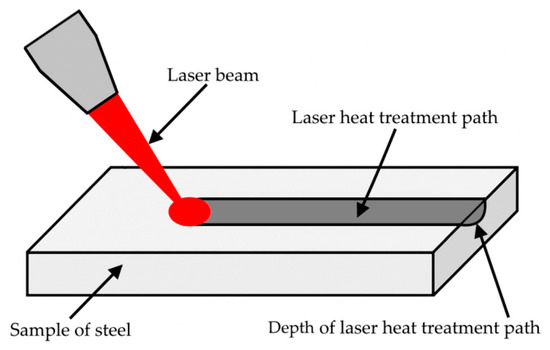
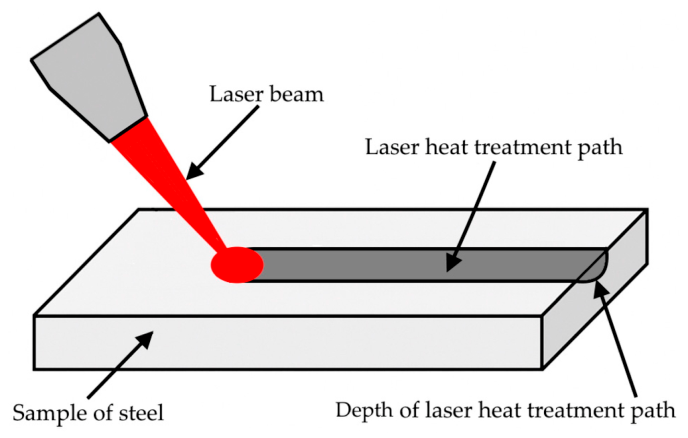
There are also some other lasers, such as diode lasers or high-power diode lasers, which utilise more than 0.5 W of continuous wave output power with power density ranging from 104 to 105 W/cm2. Two slabs of semiconductor material forming a p-n junction are a single diode, resulting in a diode laser. Multiple individual emitters are arranged in a single line for enhanced output power [13]. Figure 2 shows the working principle of the laser surface hardening process on the material surface.
Figure 2.
Laser surface hardening working principle [14].
1.2. Methodology
The paper discusses the extensive analysis of the different metal alloys with and without pre-heat treatment, and then the implementation of laser surface hardening. The hardness characteristics and microstructural behaviour are critically reviewed. The material was subjected to laser surface hardening with different lasers, such as diode lasers, fibre lasers, Nd:YAG lasers, etc., with varying parameters such as laser power, energy, scanning speed, focal plane position, and spot diameter. The different pre-heat treatments were involved in metal alloys. For steels, various annealing, normalising, hardening and tempering, and stress relieving were induced. The non-ferrous alloys were subjected to solutionising and aging, laser directed energy deposition, annealing, and water quenching. The steels are usually initially austenitised around 900 °C for a particular soaking time until they are completely austenitised and then cooled according to the type of heat treatment. For hardening of AISI 4140 steel, the materials were heated just below 900 °C and then quenched. Then, the material is tempered from 400 to 600 °C and then cooled, resulting in a martensitic starting phase microstructure with less than 40 MPa residual stresses [15]. The same steel, upon quenching and tempering, has a minor drop in hardness and higher tensile residual stress, and when oil quenched, increased hardness with tempered martensite was observed [16,17]. In another case, the normalised material has undergone austenitisation at 1400 °C just below the melting temperature and then cooled in atmospheric air [18]. Quenching and tempering of AISI 4340 steel have led to uniform core hardness of the material [19]. Initially, SAE 9254 steel was austenitised, then isothermally kept for a short duration of 15 min at bainitic region temperatures, air cooled, and finally tempered, have led to the formation of bainitic ferrite structure with slightly higher hardness [20]. The 100Cr6 steel was subjected to spheroidisation at 840 °C for 2 h of soaking and then slowly cooled. The material was also subjected to conventional hardening and tempering. The material was austenitised at 760 °C for 1 h, then oil quenched, and then tempered at 170 °C for 1.5 h and cooled [21]. Many steels, such as SAE 52100, die steel, 40CrNiMo, bainitic steel, and AISI 1018, 1045, and 1070 steels, have exhibited the formation of martensite upon hardening, and then they have softened a little with the removal of deformation or defects upon tempering [22,23,24,25,26,27]. Al6061 had undergone the T6 heat treatment condition of solutionising and aging, resulting in better hardness and strength due to the formation of grain boundaries along with precipitated phases [28]. The solutionising was conducted at around 530 °C for 1 to 2 h, then quenching (using either water or oil), then artificial aging around 160 to 180 °C for a prolonged period, and then cooling. Another aluminium Al-Si alloy is softened, resulting in the forming a hypereutectic material with coarse-grained morphology, consisting of interdendritic silicon particles and plate-like Al-rich phase [29]. The material AZ31B Mg alloy was subjected to annealing at 400 °C for 2 h and then water-quenched to room temperature, which led to stress relief [30].
1.3. Microstructural Implications
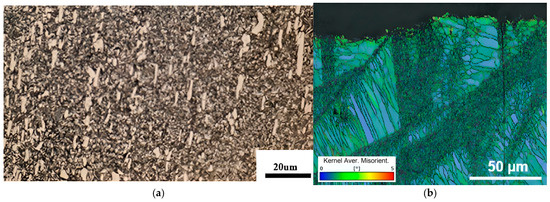
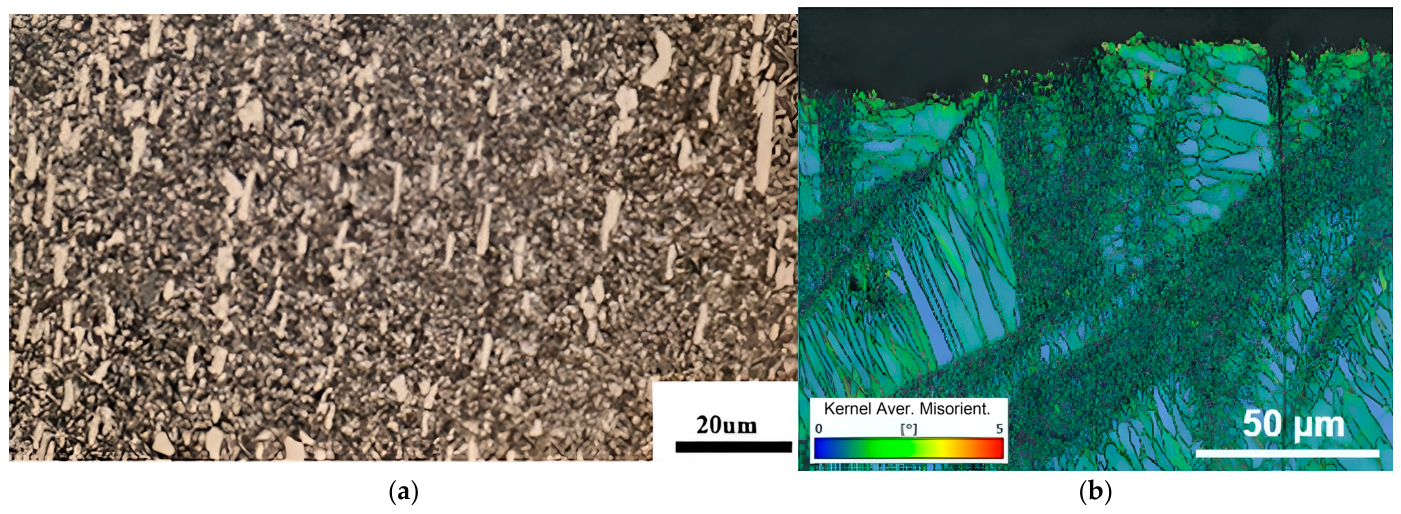
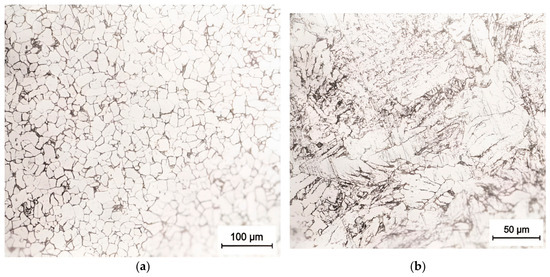
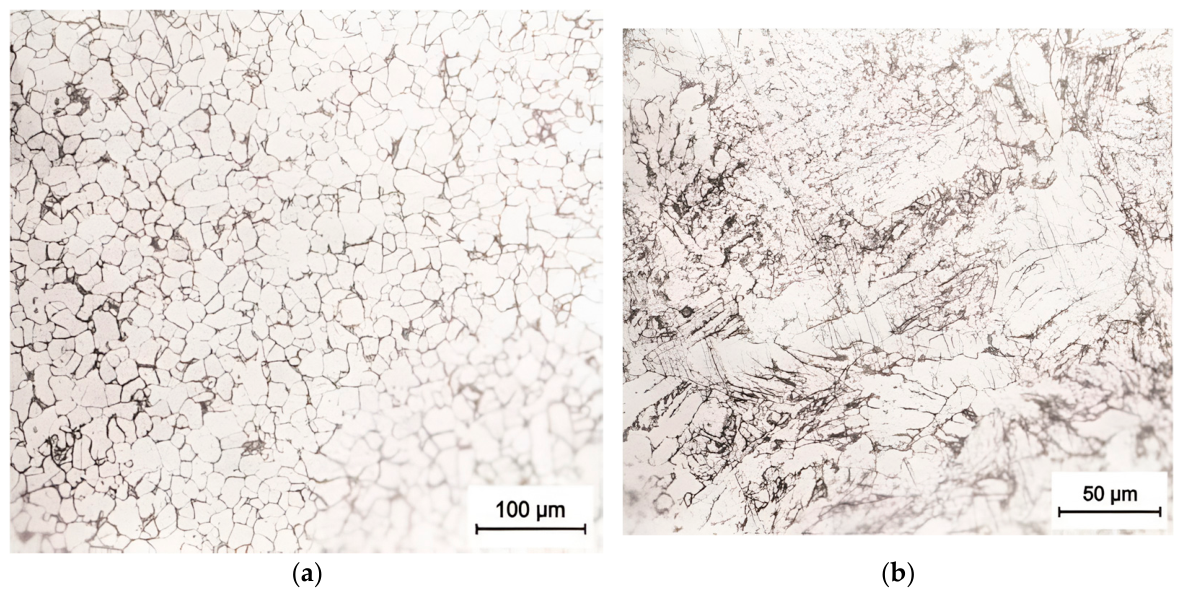
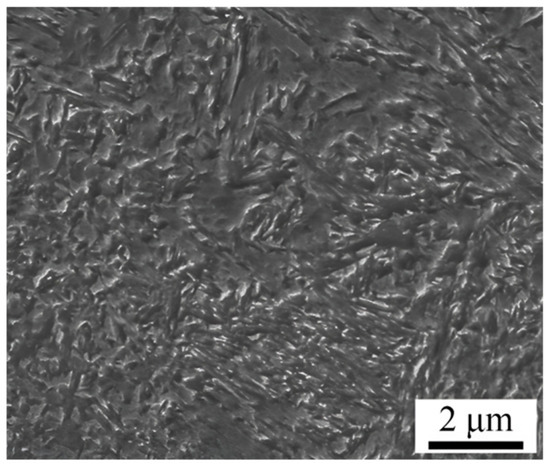
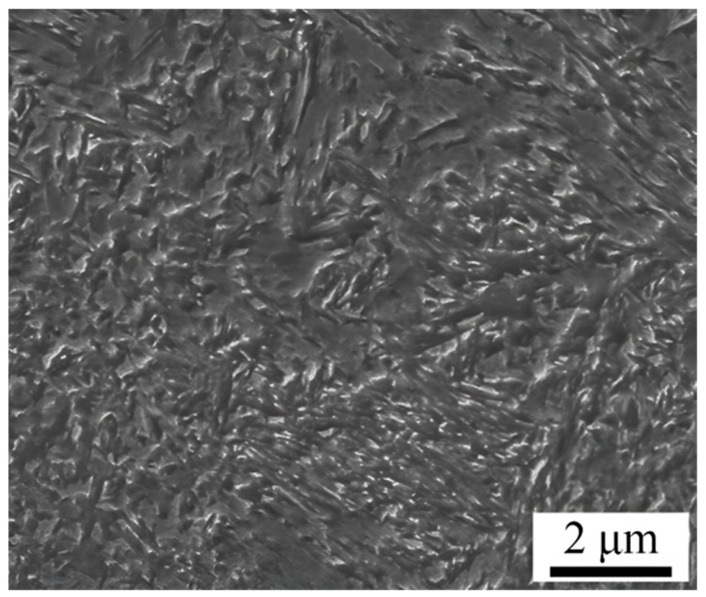
All the hardened surface microstructures in the case study will be martensitic structures, resulting in very hard but brittle material. The advantage of laser surface hardening is that it retains the core material as a base material and has only localised surface hardening, bypassing the issue of brittleness and associated characterisation issues. For example, 55SiMoVA bearing steel plates were subjected to laser shock peening (LSP), resulting in an increased hardened surface. The microstructure resulted in grain refinement due to crystal defects such as dislocation walls, cells, entanglements, and deformation twins [31]. LSP of annealed M50 steels with different overlap rates has increased the surface hardness value, increasing the carbide particles in the microstructure. The surface morphology evolves to a granular structure to filamentous shape and hence increases the dislocation density caused by LSP [32]. W18Cr4V high-speed steel was subjected to laser surface hardening with 1500 W laser power, 15 mm/s scanning speed, focal plane position, and 50% overlap. After laser quenching a major amount of martensite, carbide networks were present, along with dendritic carbides, and a small amount of residual austenite was retained, as shown in Figure 3a [33]. Scalmalloy® was fabricated using laser powder-bed fusion, and then laser shot peening was induced. This led to improved hardness, which is evident in Figure 3b, where sharp, structured martensite is clearly visible. Figure 3b is the kernel average misorientation microstructure of the material [34].
Figure 3.
Microstructure of (a) W18Cr4V high-speed steel [33]. (b) Scalmalloy® [34].
1.4. Laser Hardening
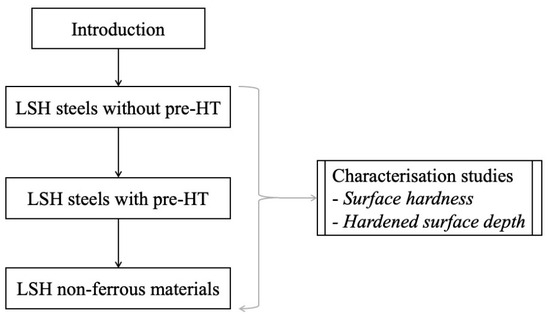
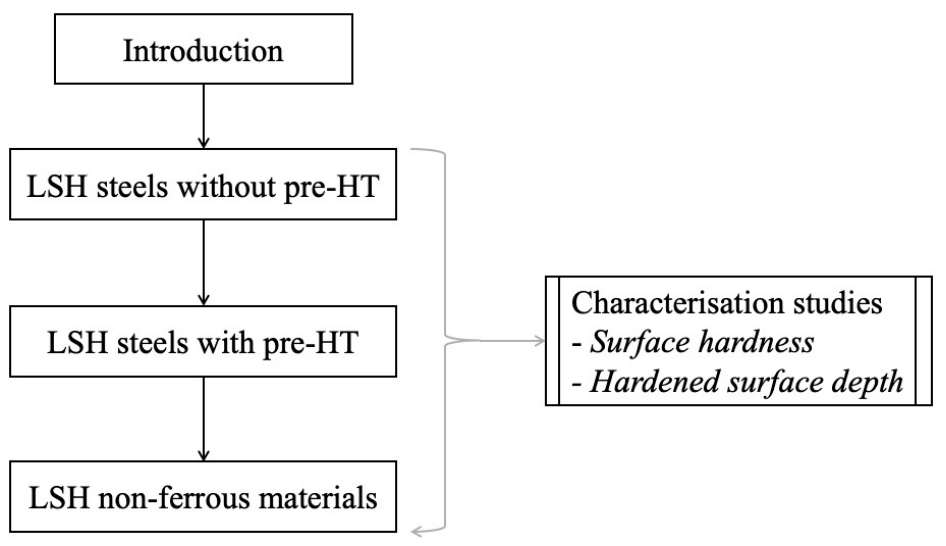
The current review of the laser surface hardening of various materials, such as ferrous and non-ferrous materials, has been discussed in the study. The variations in the mechanical properties with and without pre-heat treatments were analysed to identify the efficient and ideal laser surface hardening method concerning the hardness and laser-hardened surface depth, resulting in an optimal material for industrial applications. Initially, the hardness characterisation of LSH steels without pre-HT, followed by LSH steels with pre-HT, and then LSH non-ferrous materials, was analysed. The flow of the review study is shown in Figure 4.
Figure 4.
Flowchart of the review studies.
Laser surface hardening has paved the way for the optimisation of several material properties, including corrosion resistance, surface roughness, tribological behaviour, and surface texturing, leading to industrial scalability and various applications. Some low-alloy steels have shown better corrosion resistance upon administering the laser surface hardening [35]. By utilising a high-power diode laser, the surface properties of steels such as AISI 4340 and 5140 have been altered, resulting in enhanced corrosion resistance and a better shelf life of products in the aerospace and automotive industries, as well as in applications involving beams and columns as structural steels. Even sintered parts made of steel, when subjected to laser hardening, have resulted in the prevention of hardening cracks and a reduction in hardening distortion compared to induction hardening [36]. Apart from lasers used as surface heat treatment processes, they are also used in laser-induced additive manufacturing sectors. Hence, surface texturing analysis could lead to a better understanding of LSH materials. Hardness studies of the laser-treated surface and the hardened depth will ensure the optimisation of surface texturing, roughness, and other resulting properties due to LSH.
The literature review is conducted mainly focused on application-driven studies. The current industrial applications of ferrous and non-ferrous materials alloys were reviewed, and the current challenges were identified, including hardness, brittleness, fatigue, corrosion, etc. Laser surface hardening of ferrous and non-ferrous materials in as-bought and pre-heat-treated conditions was conducted. A critical review of hardness and surface-hardened depth characteristics was conducted, as LSH is primarily applied to materials to produce a hard surface while retaining the properties of the core. Future studies should focus on various other properties of LSH material and their applications.
2. Laser Surface Hardening Treatment of Ferrous Alloys
2.1. Hardness Characteristics
2.1.1. As-Bought Steels
Table 1 shows the hardness characteristics of laser surface-hardened ferrous alloys in the as-bought condition.
Table 1.
Percentage increase in the surface hardness of steel without pre-heat treatment due to laser surface hardening.
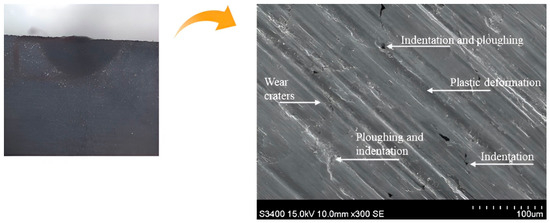
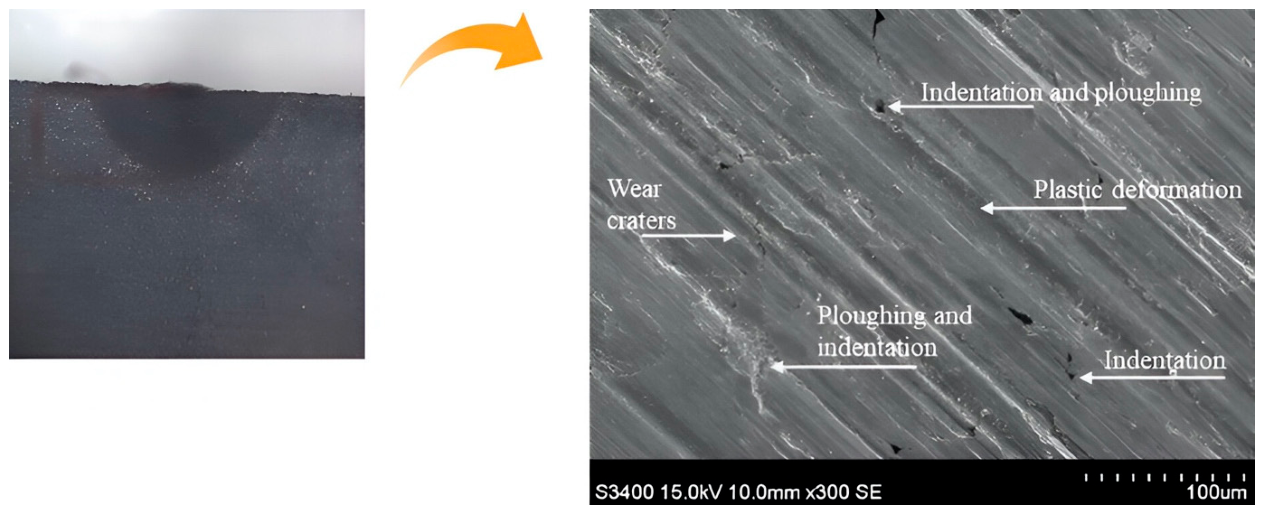
A significant increase of more than 300% hardness can be observed in AISI 420 steel when subjected to fibre laser hardening with a power of 200–300 W and a scanning speed of 1–10 mm/s. This can be attributed to the significant refinement in the grain structure with rapid heat treatment cycles. The variation in wear material removal pattern and lower ploughing on the surface indicated a hard martensite structure, as shown in Figure 5 [46]. Figure 5 indicates the optical microscope image of the surface, indicating the surface depth and the same region SEM microstructure image. According to the Hall-Petch relationship, smaller grain sizes contribute to the higher hardness of the material. Also, when the material is subjected to surface hardening with a high-power diode laser of 800–1600 W and a scanning speed of 4–8 mm/s, it can result in a very high hardness of 803 HV from 210 HV in as-bought material. This is due to the formation of martensite in the microstructure [43]. Here, a uniform microstructure was observed with a smaller ferritic structure and finely dispersed carbide particles. High-power lasers can also result in a very high increase in hardness of 282.38%. With still higher laser power of 1500 W and scanning speed from 2–3 mm/s, it can result in a high increase in surface hardness of 219.05% [44]. AISI 420 steel subjected to this high laser power exhibits martensite and carbide phases in the localised hardened surface.
Figure 5.
Hardened surface—cross-section and SEM image of AISI 420 steel subjected to wear [46].
AISI 52100 steel, when subjected to surface laser hardening using a pulsed solid-state laser with power up to 370 W, 80 ns of pulse duration, and scanning speed from 1000–5000 mm/s, can result in a very high increase in hardness of 297.6%. Many microcracks were observed, but the re-austenitisation on the surface during the heat treatment process resulted in high surface hardness [49]. When the same material is subjected to laser hardening using a fibre laser, it can result in an increase of 260% in surface hardness with a scanning speed from 10–100 mm/s. Some cracks were observed, but due to the martensitic transformation, a drastic increase in hardness was observed [50].
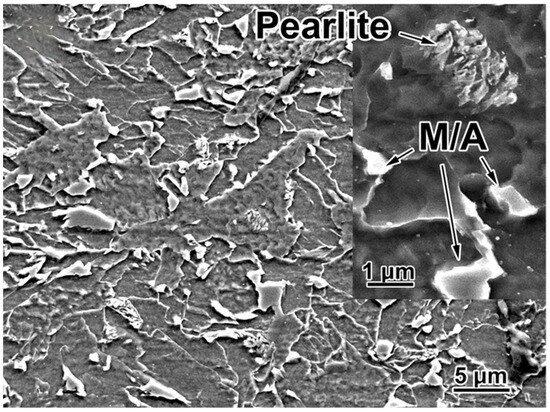
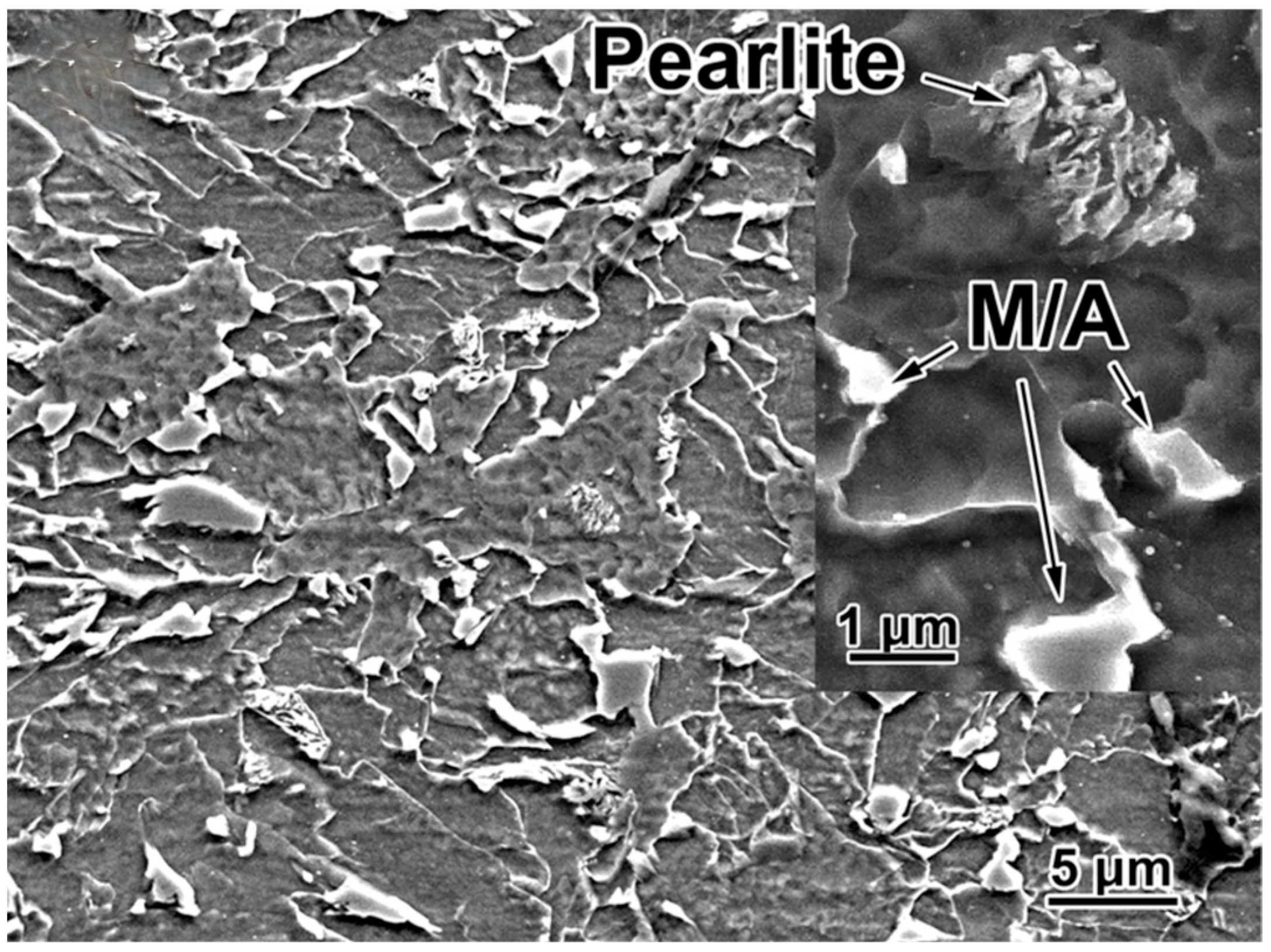
A very high hardness of 281.41% improvement in AISI 4140 steel when subjected to laser surface hardening using an Nd:YAG laser with 1350–1550 W power, scanning speed of 15–20 mm/s, and spot diameter from 7–8 mm. Fine martensite with retained austenite in the microstructure may be the reason for the highly hardened surface [38]. When AISI 1040 steel is induced with laser surface hardening using a diode laser with 741–969 W power and a scanning speed of 8–14 mm/s, a 218.18% increase in the hardness of the surface was observed as compared to the core of the material. This can be due to minimal deformations and homogeneous martensite formation on the surface [48]. These structural steels have a wide range of applications, one of which is boiler pipes in steam plants. These pipes are always engaged in elevated temperatures, leading to distortion in the properties of tensile strength and hardness. Transformation of martensite and residual austenite in the base metal to coarse ferrite and pearlite grains in the heat-affected zone, as shown in Figure 6a,b, was observed, which led to a decrease in hardness of approximately 32% and even decreased the yield point as well. The research proved that the added weld material improved the properties of the pipes at elevated temperatures [56]. As in the previous studies [38,48], applying laser surface hardening to AISI 4140 steel, a structural steel, could increase surface hardness, improve performance at elevated temperatures, and enhance the suitability of boiler pipes used in steam plants.
Figure 6.
Microstructure of AISI 4140 steel used as boiler pipe. (a) Base metal. (b) Heat-affected zone.
Nominal increase in hardness was observed, i.e., below 50% in laser surface-hardened materials such as super ferritic stainless steel and AISI 301LN TRIP steels. In super ferritic stainless steel, a negligible increase in hardness is due to the small energy of 1 J/pulse of laser. Using the Nd:YAG laser, not much grain refinement was observed [53]. LSP treatment without any ablative layer resulted in the delineation of grain boundaries without any chemical attack. In a different study of the same steel, a minimal increase in hardness can be attributed to early saturation of hardness due to minimal martensitic transformation [55]. In one of the samples, the highest martensite (by volume) was observed quantitatively at 16.54% using the equation of reference intensity ratio (RIR) method:
where i is reflection, a is phase, I is intensity, Kia represents various factors such as structure, multiplicity, Lorentz-polarisation, temperature, and scale factors, X is weight fraction, ρ is density (kg/m3), and µ is linear attenuation coefficient (m−1) [55].
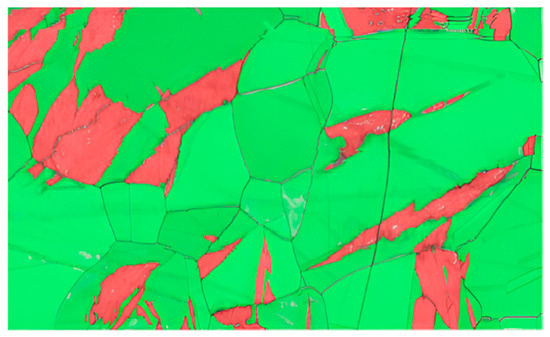
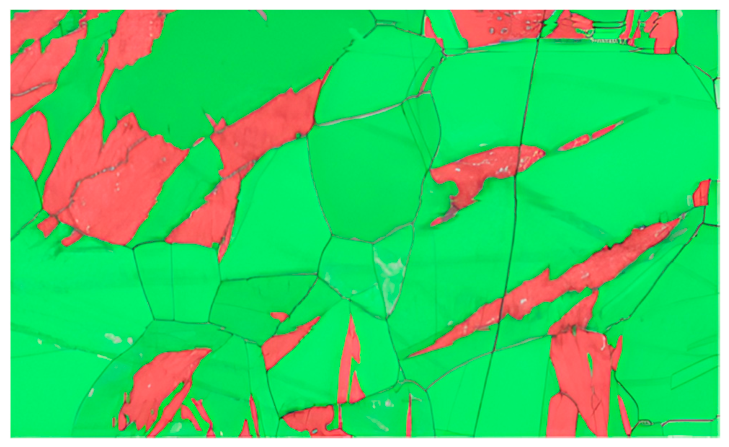
This quantitative data was validated using a SEM based technique, which analyses the crystalline material called the Electron Backscatter Diffraction (EBSD) qualitatively, as shown in Figure 7, where the red region indicates martensite (α′) and the green region indicates austenite (γ).
Figure 7.
LSH AISI 301LN TRIP steel EBSD image (Red—Martensite, Green—Austenite) [55].
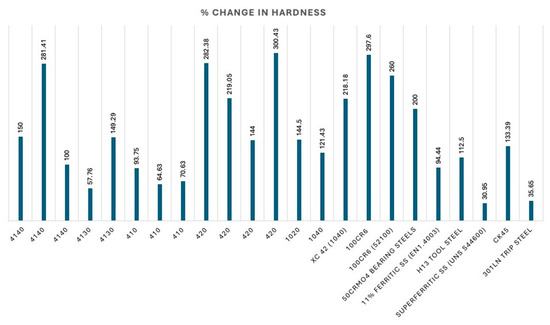
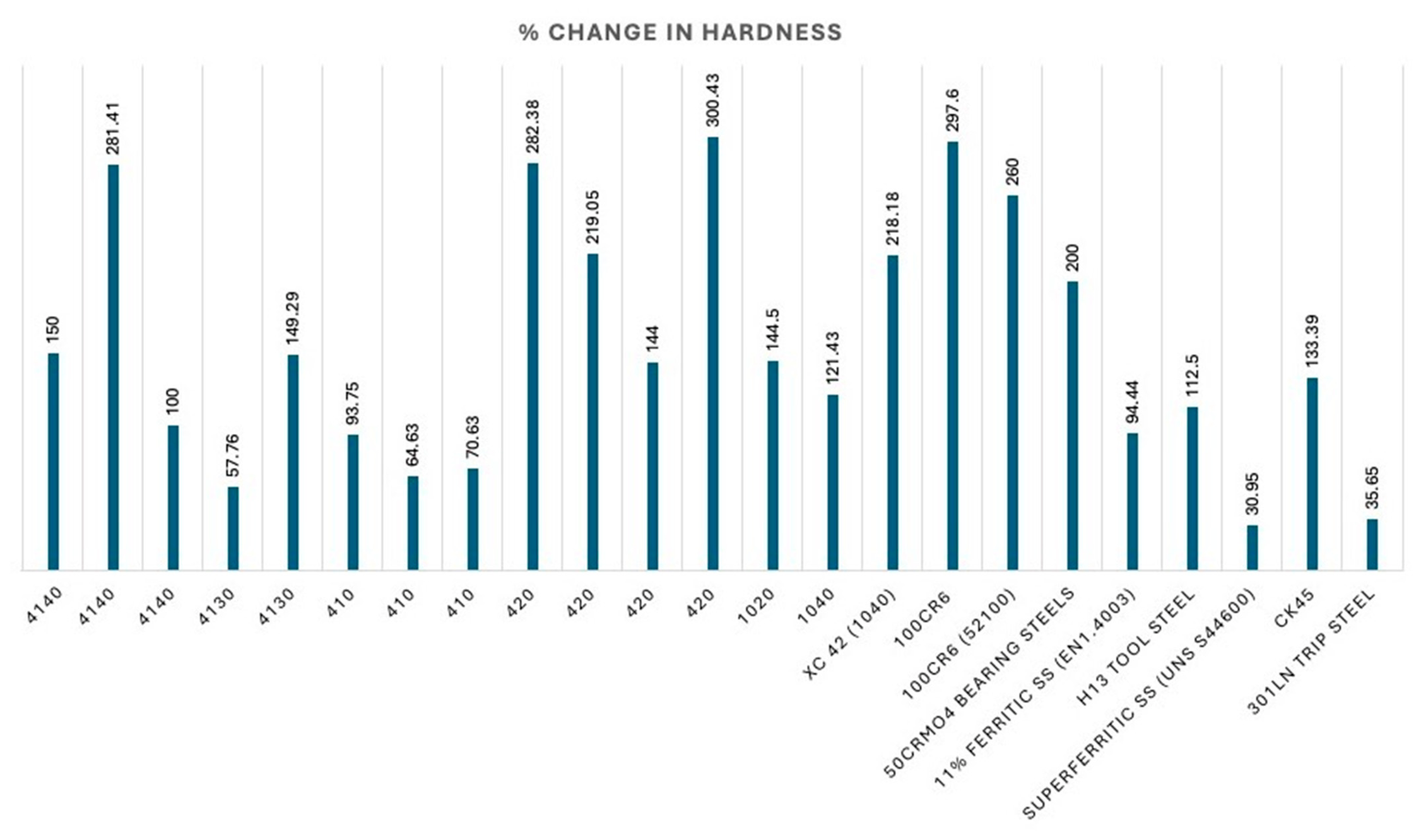
Figure 8 shows the percentage increase in the hardness of the surface of steels due to LSH. High hardness was achieved due to many factors, such as laser power, type of laser, and scanning speed. The higher the laser power, the greater the transformation of microstructure to austenite, which then transforms into martensite during quenching. The Nd:YAG laser was observed to be the most popular laser hardening machine due to its high efficiency. With fairly lower power, high hardness was achieved with uniform grains and complete transformations in the microstructure phases.
Figure 8.
Hardness variation (%) due to LSH of steels without pre-HT.
2.1.2. Pre-Heat-Treated Steels
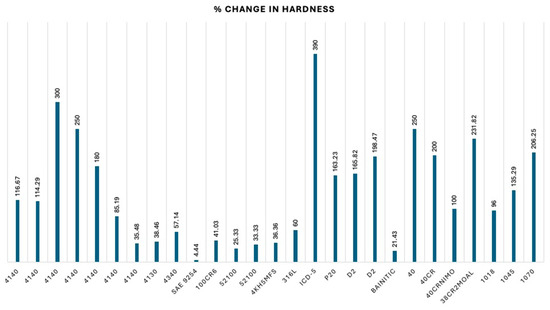
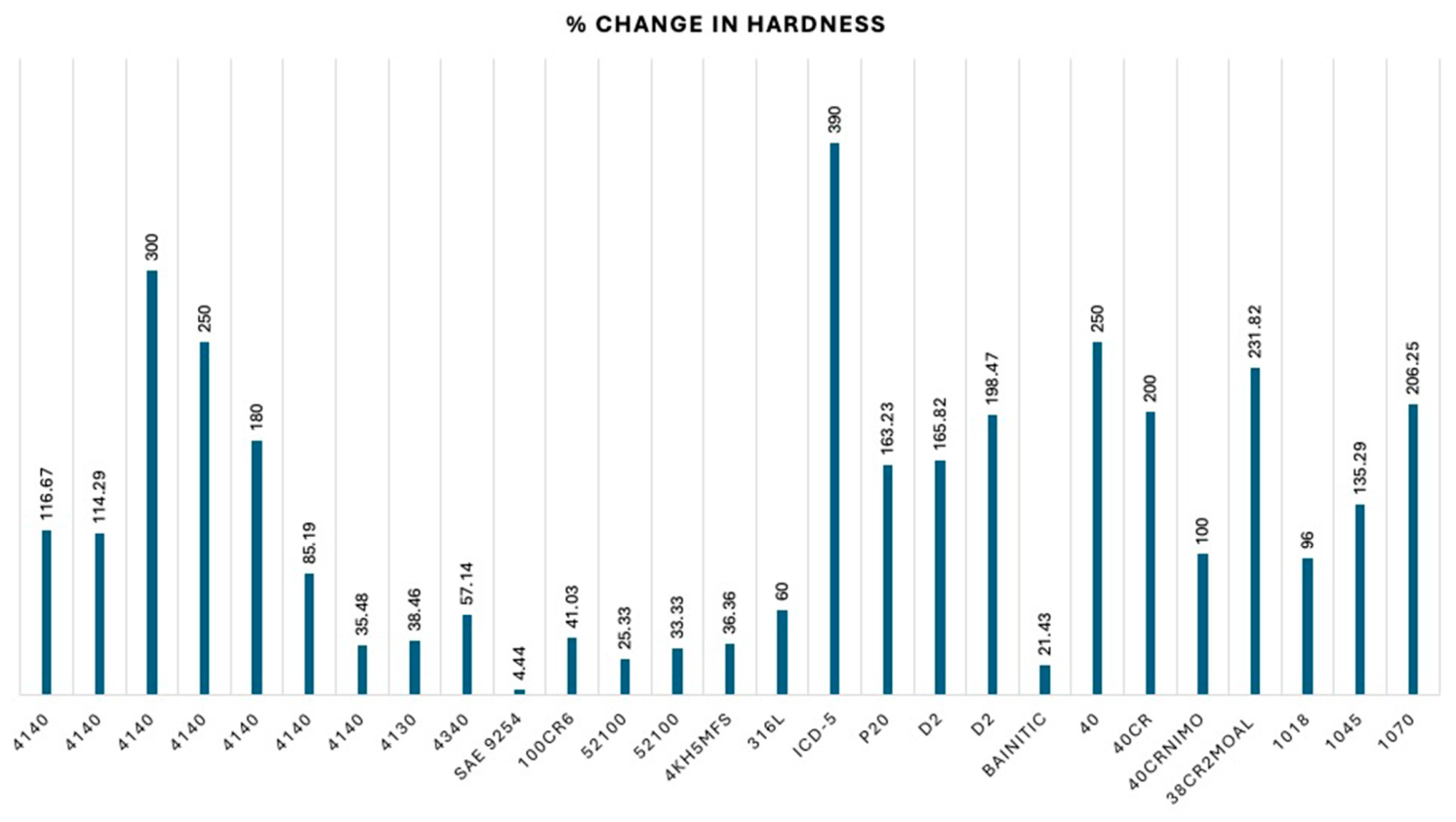
A very high increase in hardness value, even above 300%, can be observed here. A very high increase in the hardness (390%) was observed in ICD-5 tool steel, as shown in Table 2.
Table 2.
Percentage increase in the surface hardness of steel with pre-heat treatment due to laser surface hardening.
The material was fully annealed, resulting in very low hardness, due to the surface hardening of the steel using a fibre laser with a very high power of 500 W, which was induced upon the tool steel, and due to high power density. This has resulted in the complete dissolution of carbides in the austenitic phase, resulting in very high hardness with a butterfly and thin plate martensite microstructure in the hardened surface at 0.25 mm depth [60]. As much as 300% of hardness increased in AISI 4140 steel when induced with normalising ferrite pearlite pre-HT and then with CW disk laser surface hardening with very high power of up to 1600 W, resulting in martensitic coarsening [57].
SAE 9254 has seen the lowest increase in hardness, just 4.44%, due to the high hardness of the base metal and the pre-HT of quenching and tempering, resulting in less room for plastic deformation. There was a plastic deformation in the surface and changes further towards the quenched and tempered material sample. The material was subjected to hardening and tempering, resulting in a hardness of 506.8 HV and 529.3 HV when induced with Nd:YAG laser surface hardening. This minimal increase in hardness can be due to plastic deformation induction leading to microstructural grain refinement [20]. Bainitic steel also has a lower increase in hardness, just 21.43%, when comparing tempered and CO2 laser surface-hardened material. This can be due to the formation of fine martensite lath structure, which is similar to a bainite martensite structure, as shown in Figure 9 [25].
Figure 9.
LSH of pre-HT material of bainitic steel [25].
EN10025 steel is a structural steel used in construction and infrastructure projects. Upon hot rolling and thermomechanical controlled processing, there was relatively lower overall tensile strength in hot rolling. The grain boundary was observed as shown in Figure 10. At a lower temperature of thermomechanical controlled processing, the impact energy absorbed decreased [63]. As the analysis of literature on LSH of heat-treated steels, when the above EN10025 steel is induced with LSH, there can be improved surface characteristics leading to better structural steel characteristics for infrastructure projects, leading to a hard surface without brittleness and better product life cycle. Figure 11 shows the comparative percentage increase in the hardness of pre-heat-treated steels.
Figure 10.
Steel microstructure after heat treatment [63].
Figure 11.
Hardness variation (%) due to LSH of pre-HT steels.
2.2. Hardened Surface Depth Profile
2.2.1. As-Bought Steels
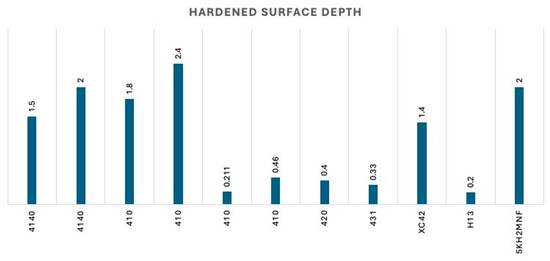
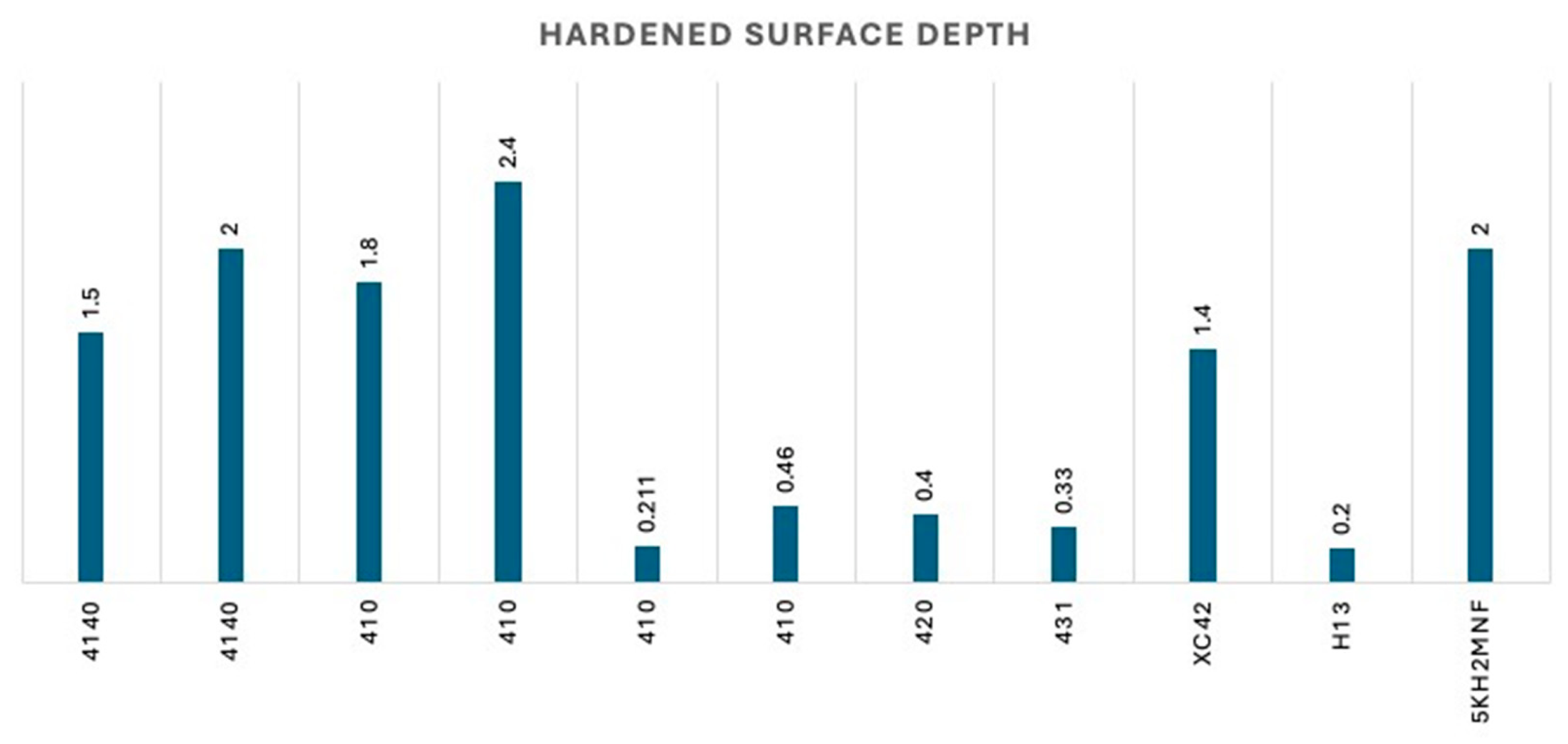
Table 3 shows the surface-hardened depth behaviour of laser surface-hardened ferrous alloys in the as-bought condition. AISI 410 steel, when induced with a laser face hardening process, has generated a hardened surface depth of 2.4 mm, which is very high compared to other materials. This can be due to the combination of input variables of slow scanning speed, focal plane position, and high power. The diode laser has very high working power; hence, the heat entering the surface increases, leading to a higher depth of surface-hardened layer and decreased ferritic percentage in the martensite region [64].
Table 3.
Surface-hardened depth of steel without pre-heat treatment due to laser surface hardening.
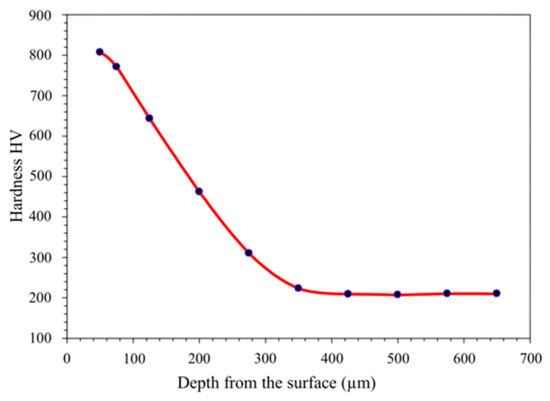
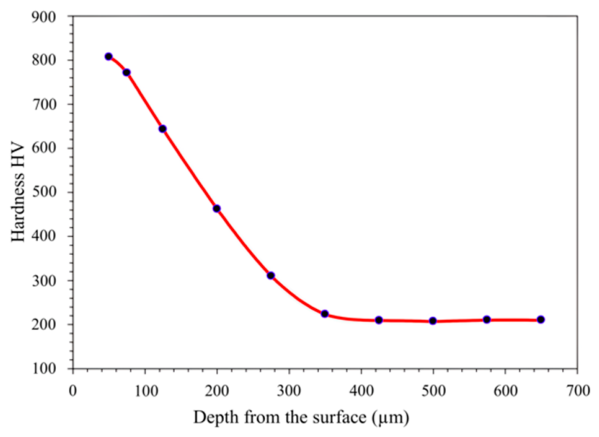
The Nd:YAG laser, used for laser surface hardening, has resulted in the lowest hardened depth. Lower than 0.5 mm was achieved in materials such as AISI 410 and 431 stainless steels. This can be attributed to the precision of the work, especially the austenitising and quenching cycle. When comparing the surface-hardened AISI 410 steels with diode and Nd:YAG lasers, the Nd:YAG laser’s laser-hardened depth was much less, as compared to the diode laser’s laser-hardened depth, mainly due to the rectangular laser beam distribution in the diode laser-induced beam, resulting in more exposure to thermal and hence the higher hardened depth [42]. AISI 431 stainless steel induced with ND:YAG laser surface hardening, including the input variables such as laser power, pulse width, frequency, FPP, and speed, has resulted in a high increase in hardness of more than 600 HV, though with a lower penetration depth of less than 0.5 mm [66]. Fibre laser hardening of H13 tool steel had a low hardened depth due to very high scanning speeds from 33.6–366 mm/s. With the increase in energy density of the laser, the depth of the melted zone increases in the steel. The carbides completely melt during laser irradiation and transform into martensite, creating a hardened surface. There is a drastic reduction in hardness in HAZ, which indicates the hardness across the hardened surface depth in varying scan rates [52]. The depth of the hardened surface of AISI 420 steel was 0.4 mm, which is also very low compared to any other hardened surface material, as shown in Figure 12. This can be due to a scanning speed of 1 mm/s and laser power of 300 W. Many other factors, such as the low thermal conductivity of AISI 420 steel, allow for a deeper penetration of heat and microstructure transformations [46].
Figure 12.
Distribution of hardness along the depth of AISI 420 steel [46].
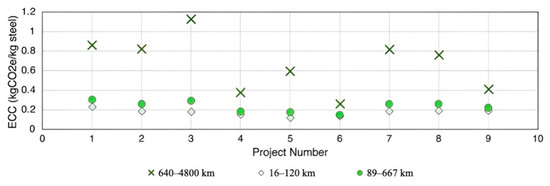
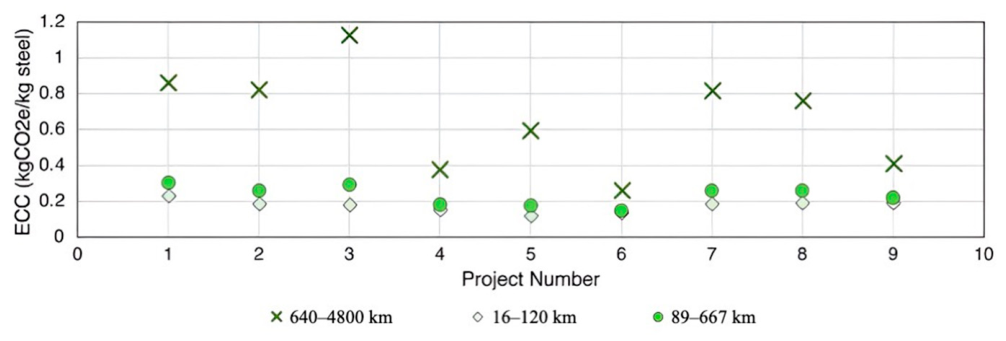
The structural steels used as steel gravity beams and columns for buildings showed that reused steels were better than recycled steels in terms of greenhouse gas emissions. The limitation of this research has also demonstrated that there is a need for more uniform granular steels, which can lead to better and maintain uniformity in the mechanical properties in heavy-section steels. The embodied carbon efficiency (ECC) is the measure of the amount of greenhouse gases emitted. Figure 13 reveals the three scenarios of logistical impact: a low bound, middle bound, and high bound scenario, implying different distances covered ranging from 16 to 4800 km. A staggering 290% increase in the global warming potential (GWP) for reused steels was obtained in the high-bound scenario as compared to the other two scenarios, giving serious environmental implications. The magnitude of these environmental impacts on substantial carbon saving upon reusing of steel using heat treatments to mitigate the consequences better. This will lead to reduced carbon footprints with better, responsible, and sustainable manufacturing applications. With the transportation scenarios, there was a 290% increase for reused steels and just 60% increase for recycled steels, as shown in Figure 13 [68]. The literature review of laser-hardened surface depth of different steels has addressed the issue of the above limitation of reused heavy-section structural steels for buildings, and a higher increase in ECC. Upon subjecting the surface using a laser, the reused steels may have uniform properties along the hardened depth irrespective of the core material properties, rendering a uniform and defect-free surface microstructure. The life cycle of reused steel products could be increased with LSH, leading to a decrease in greenhouse gas emissions. Figure 14 shows the comparative laser surface-hardened depth of steels.
Figure 13.
ECC as transportation variability of reused steels [68].
Figure 14.
LSH-hardened surface depth (mm) of steels without pre-HT.
2.2.2. Pre-Heat-Treated Steels
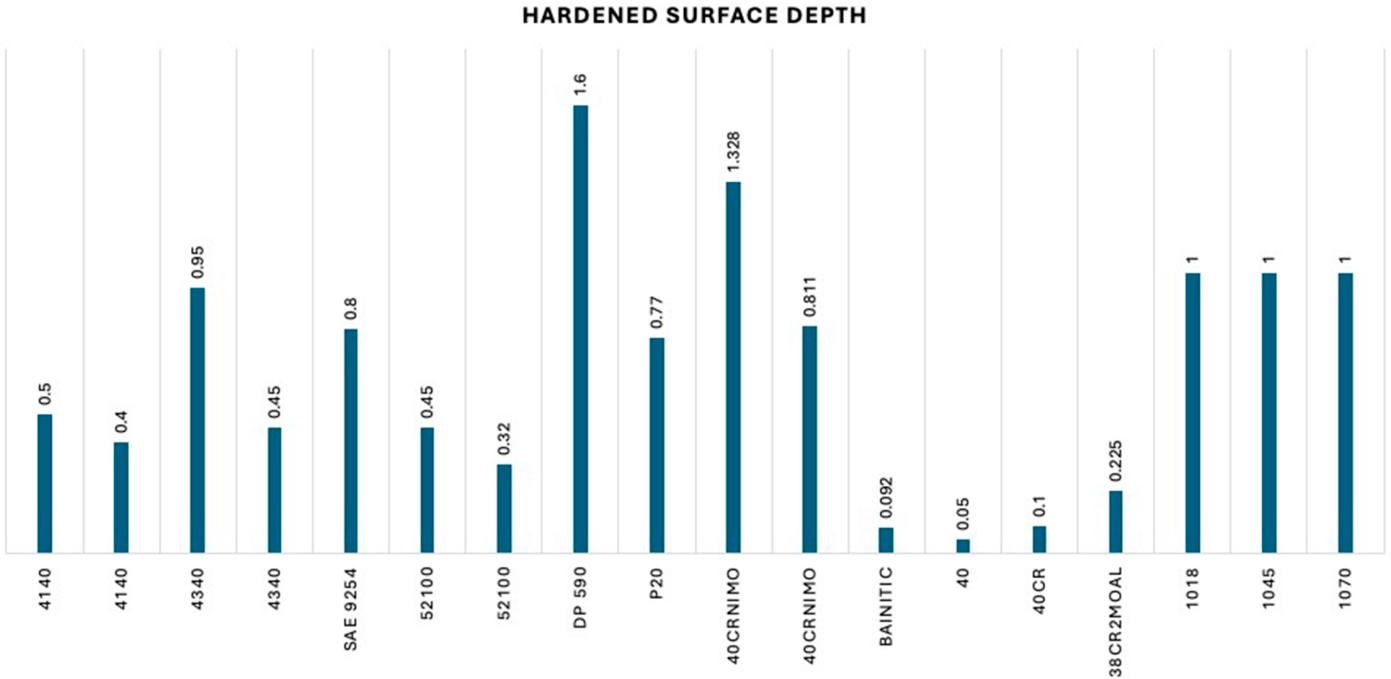
Table 4 shows the surface-hardened depth behaviour of laser surface-hardened ferrous alloys in heat-treated conditions. A very high hardened surface depth of 1.6 mm is formed in the DP 590 steel sheet. Here, copper heat sink-assisted laser transformation hardening of material is used to create the hardened surface. Since the material is a steel sheet of 2 mm thickness, it is also assisted by a heat sink, which has led to a higher hardened surface depth [69]. Also, 40CrNiMo has formed a highly hardened surface depth of 1.328 mm due to the high laser power of the fibre laser surface hardening treatment. The material was induced with pre-HT hardening and tempering and then subjected to laser treatment on the surface, forming a martensite phase structure near the surface [24].
Table 4.
Surface-hardened depth of steel with pre-heat treatment due to laser surface hardening.
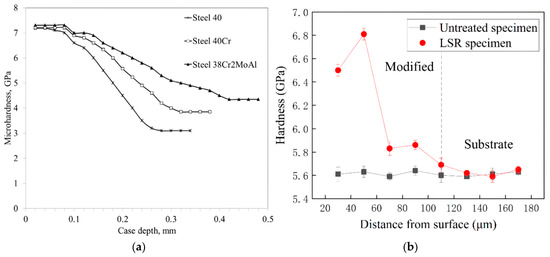
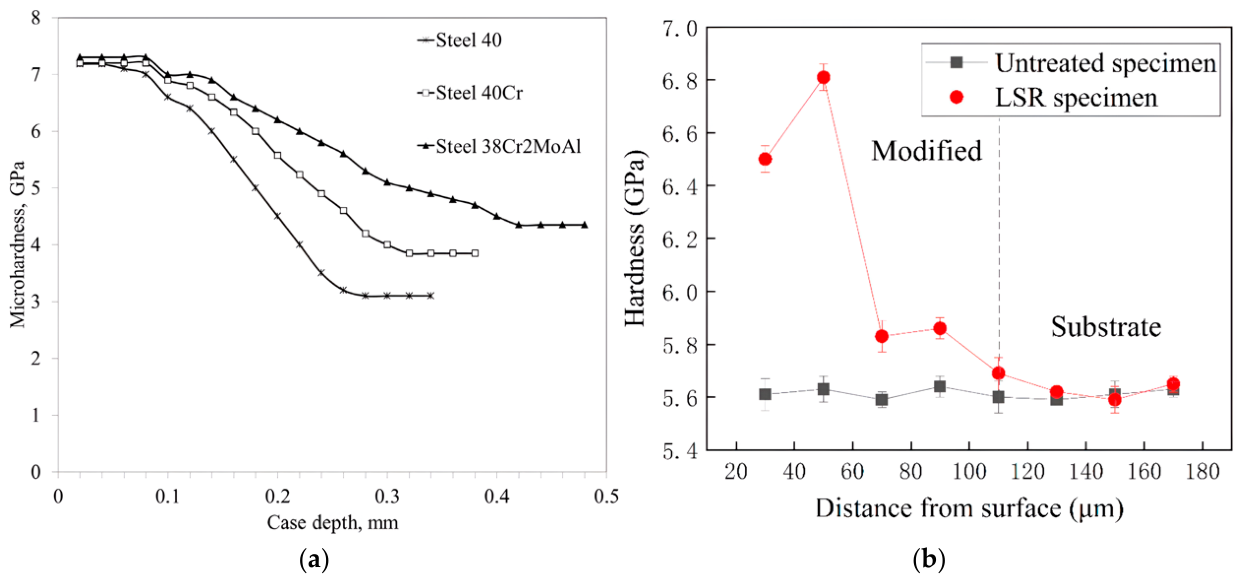
Steel grade 40, i.e., AISI 1040 steel, which is pre-HT with hardening and tempering, has a very low laser hardened surface depth of 0.05 mm. This is mainly due to the very high laser scanning speed of 25 mm/s, which is very tough to maintain and has very little applicability, but with a lower scanning speed of 8.33 mm/s, the depth has increased to 0.4 mm. As observed in Figure 15a, the hardened surface depth is quite low, mainly due to the steel being medium carbon steel, and it has undergone pre-HT hardening and tempering. Steel grades 40Cr and 38Cr2MoAl, i.e., AISI 5140 and 4130 steels, have also recorded a much less hardened depth of 0.1 and 0.225 mm, respectively, due to the similar case laser hardening of AISI 1040 steel [26]. Bainitic steel has undergone air quenching and tempering and then been induced with laser surface hardening with a high scanning speed of 110 mm/s and has generated a much less hardened depth of 0.092 mm. Even the hardness gradient variation along the depth of the surface is also very low in this case due to the nature of pre-HT, as shown in Figure 15b [25]. Figure 16 shows the comparative laser surface-hardened depth of pre-heat-treated steels.
Figure 15.
Distribution of hardness along depth with pre-HT. (a) QT AISI 1040, 5140, 4130 steels [26]. (b) Hardness gradient of QT bainitic steel [25].
Figure 16.
LSH-hardened surface depth (mm) of pre-HT steels.
2.3. Applications
The induction of laser surface hardening to various steels has resulted in a wide range of applications, as reviewed in the above sections. The diode laser surface-hardened AISI 4140 steel has various applications in the manufacturing of automotive components, machine tools and dies, heavy-duty machinery parts, aerospace parts, rails, and wheels [37]. Due to improved wear resistance and fatigue life of Nd:YAG LSH steel, the material could be used in the manufacturing of large-diameter pitch bearings, which connect the blade root to the rotor hub [38]. AISI 4130 steel has applications in low-carbon steel parts, automotive and aerospace industries, due to high manufacturing accuracy and speed of diode lasers [40]. With the LSH of AISI 410 steels, they have general industrial applications with better corrosion resistance, product life, and defect-free tools in manufacturing [40,42]. LSH using diode or fibre lasers on AISI 420 has a wide range of applications, such as martensitic stainless steel manufacturing components for steam generators, pressure vessels, steam turbine blades, compressors, replacement of bones, artificial joints, dental implants, and surgical equipment [43,44,46]. Application of the Nd:YAG laser for LSH of the steel could be used to treat specific locations of cyclic turbine blades [45]. Inducing a high-power diode laser on AISI 1040 steel could be used for steel components for various industrial applications [47]. The lasers were used for targeted hardening in hardening-restricted zones of the steel [48]. Laser treatment on 100Cr6 bearing steel was used as a pre-treatment process for optimising the adhesive property of the surface for applying anticorrosion polymer coating [49]. The LSH was used for localised hardening requirements for ferritic stainless steels in mildly corrosive environment parts of automotive exhaust systems [51]. The LSH of H13 tool steel was used in the tooling industry, with high machining speed and high-performance parts [52]. With laser surface texturing of CK45 steel, the resulting surface could be used to enhance hydrophobicity, reducing corrosion and ice formation [54].
The pre-heat-treated steels have shown a wide range of applications due to the flexibility in optimising the properties according to the application requirements. The hardened and tempered AISI 4140 steel is used for gears, where there is a possibility of laser-hardening [15]. LSH of soft annealed steel could improve the functionality for industrial applications [57]. The normalised steel, subjected to LSH, could be used for gears, specifically crane gears [18]. The method of dynamic multi-pass LSH of soft annealed AISI 4130 steel could be applied to the surface modification of sliding guideways and engine cylinder liners [58]. The quenching and tempering of steels such as AISI 4340, 1018, 1045, 1070, SAE 254, SAE 52100, 4Kh5MFS, 40CrNiMo, and bainitic steels would reduce any deformations and defects, which would act as a foundational process for better LSH steel products [19,20,22,23,24,25,27]. The implementation of diode LSH on spheroidised 100Cr6 steels would result in better products, such as precision measuring tools, dies, and rotating devices [21]. The laser peening without coating of stress-relieving-treated AISI 316L could be applied to the components used in a saline atmosphere due to improved corrosion resistance [59]. Utilising the fibre laser for LSh of fully annealed ICD-5 tool steel was used in the fabrication of large moulds used for stamping and forming car body parts [60].
3. Laser Surface Hardening Treatment of Non-Ferrous Alloys
3.1. Hardness Characteristics
3.1.1. As-Bought Alloys
Table 5 shows the hardness characteristics of laser surface-hardened non-ferrous alloys in the as-bought condition.
Table 5.
Percentage increase in the surface hardness of non-ferrous materials without pre-heat treatment due to laser surface hardening.
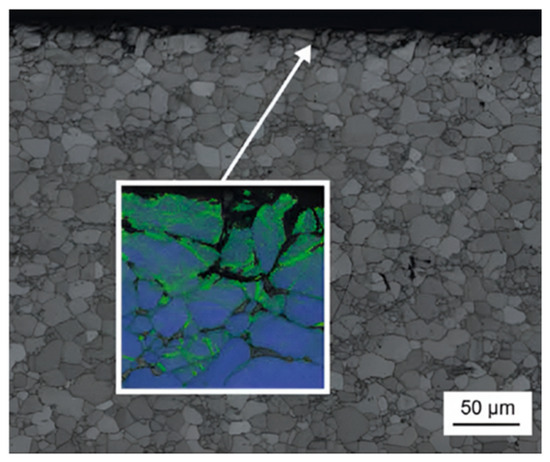
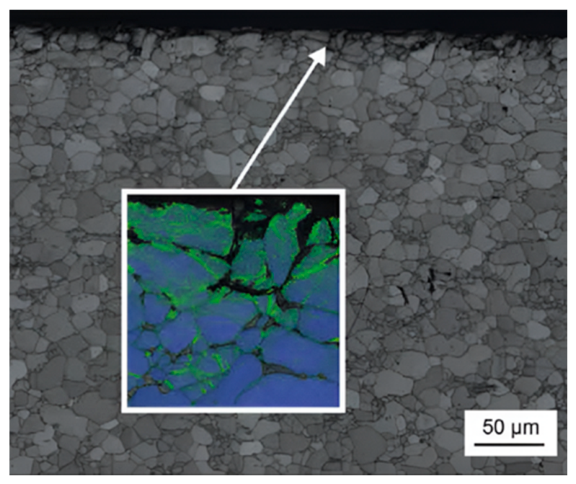
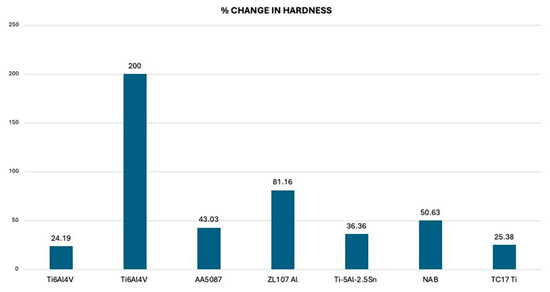
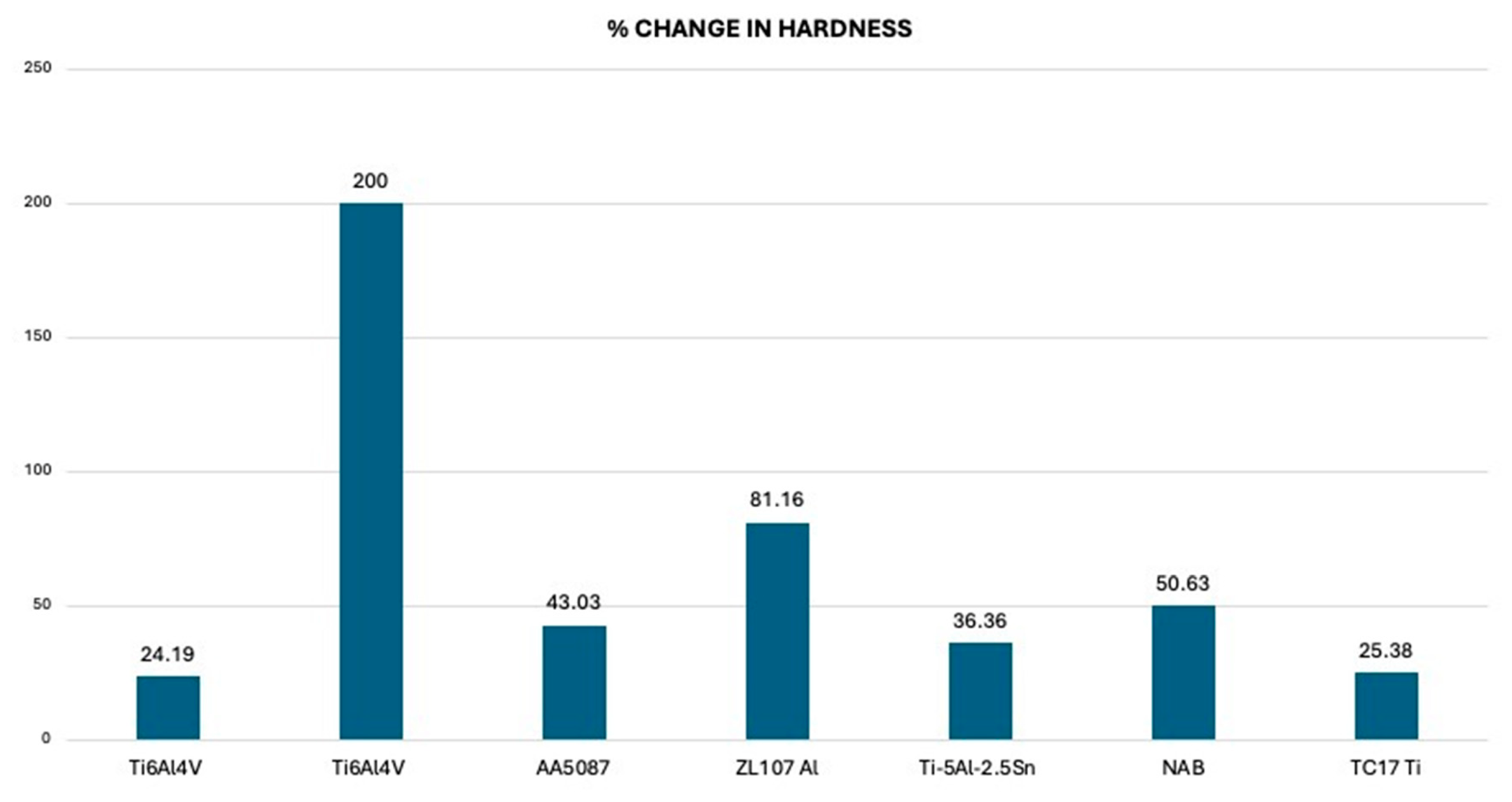
The laser surface hardening of the Ti6Al4V titanium alloy surface has resulted in one of the lowest and highest increases in surface hardness. A very short pulse duration of 10 ns and a wavelength of 1054 nm has resulted in as low as 24.19% increase in hardness as compared to the as-bought material. Figure 17 shows the shear band of the EBSD scan, and local misorientation can be observed in the higher magnification region [70]. Titanium alloy TZ17 has shown an increase in hardness of 25.38% when subjected to laser shock peening. The deformation twins are very low on the top of the surface and increase as the depth increases, and in a lower hardness region [76]. The material also has the highest increase in hardness of 200%. This can be due to dimple laser texturing, resulting in a periodic pattern and being defect-free. There was an increase in the hardness of 43.03% of AA5087 when subjected to LSP due to dislocation strengthening [72]. Another aluminium alloy, ZL107, when subjected to an fs laser of 27.5 TW/cm2, has recorded more than 81% increase in hardness due to shockwave propagation and the damping effect of heat [73]. Figure 18 shows a comparative study of the percentage increase in hardness of non-ferrous metals due to LSH.
Figure 17.
Microstructure EBSD of LSH non-ferrous material Ti6Al4V: band contrast with shear banding highlighted [70].
Figure 18.
Hardness variation (%) due to LSH of non-ferrous alloys.
3.1.2. Pre-Heat-Treated Alloys
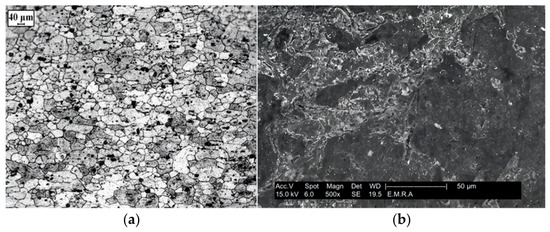
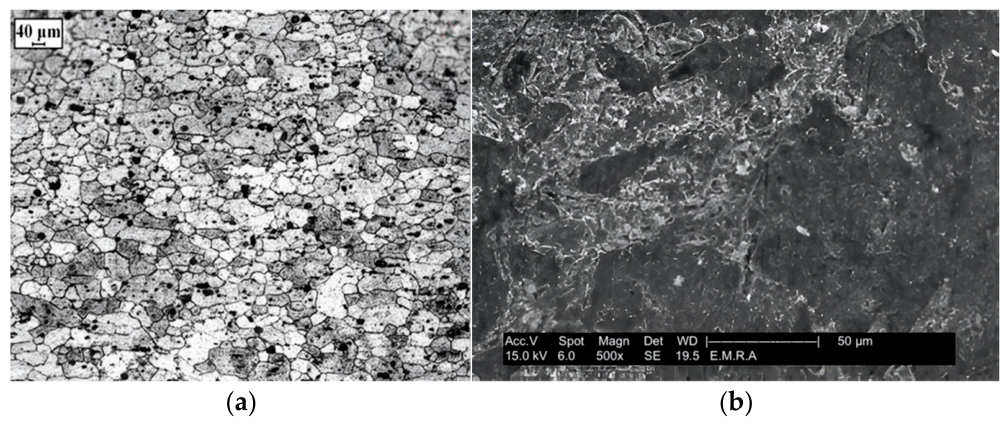
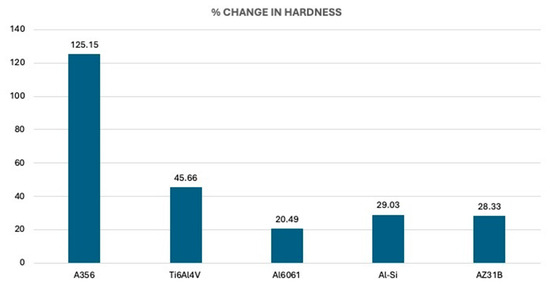
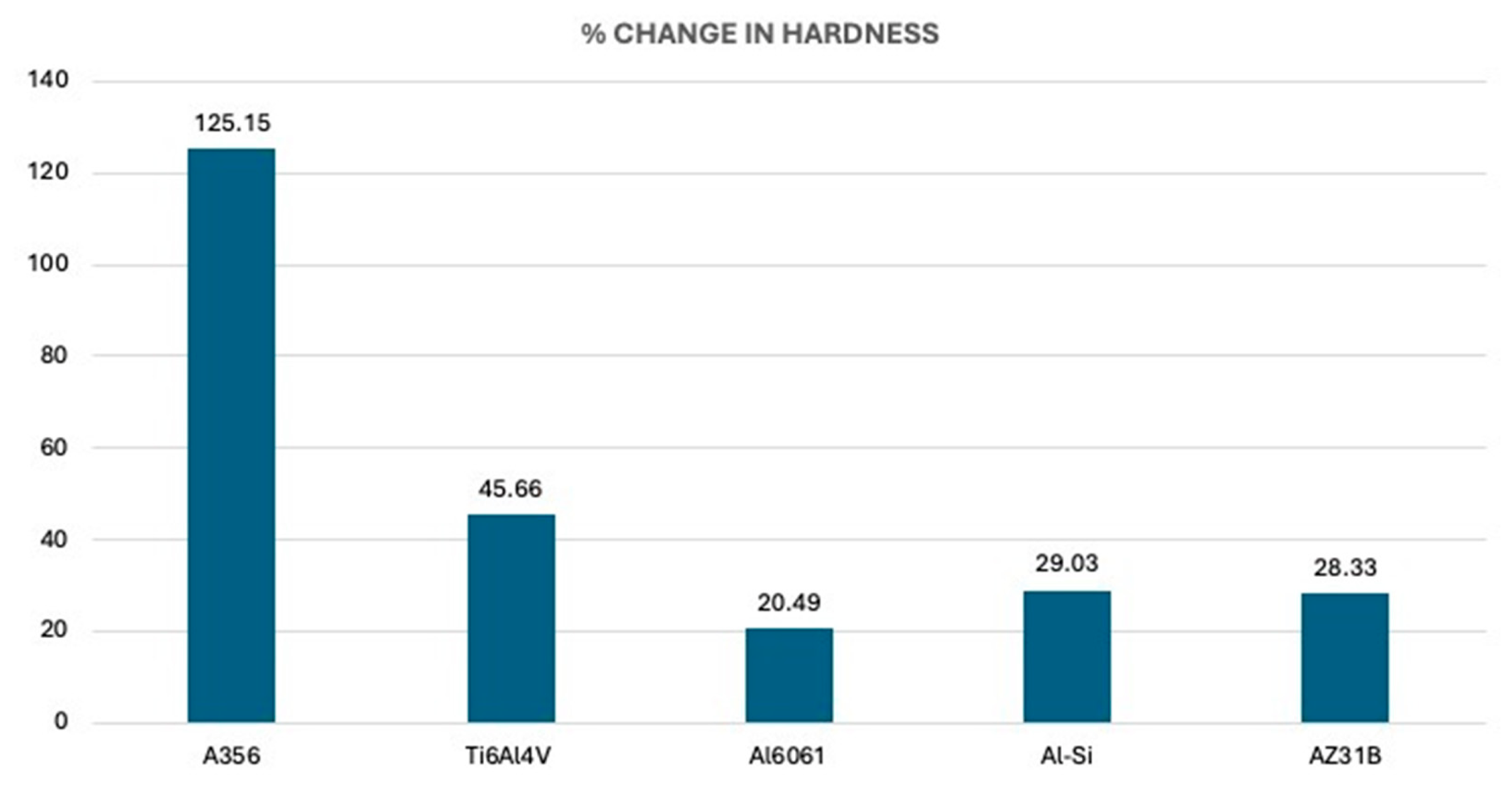
The aluminium alloy A356 induced with Nd:YAG laser surface hardening has recorded a high hardness increment of 125.15%. The main reason for this huge increase in hardness is due to the warm laser peening with working temperatures ranging from 25 to 210 °C. This is mainly due to the dynamic strain aging pinning effect of the dislocation caused by the proliferation, which increases the dislocation density and leads to the grain refinement. Figure 19a indicates the highly refined grain structure of warm laser-peened material, leading to a higher change in hardness [77]. Another aluminium alloy, Al 6061, has an increase in hardness of 20.49% due to plastic deformation and cyclic strain hardening because of the double-shot laser. It has recorded one of the lowest improvements in hardness due to lower pulse energy and power density [28]. In aluminium cast alloy Al-18wt%Si, when subjected to laser surface hardening, precipitation of silicon in the aluminium matrix and eutectic silicon structure becomes more refined, as shown in Figure 19b [29]. When this Ti alloy was subjected to the laser-directed energy disposition method of hardening, the surface hardness increased to 45.66%, mainly due to the increase in dislocation density leading to grain refinement [78]. Figure 20 shows the comparative study of the percentage increase in hardness of pre-heat-treated non-ferrous metals due to LSH.
Figure 19.
Microstructure of LSH non-ferrous materials. (a) SA pre-HT A365 [77]. (b) Al-SI alloy [29].
Figure 20.
Hardness variation (%) due to LSH of pre-HT non-ferrous alloys.
3.2. Hardened Surface Depth Profile
3.2.1. As-Bought Alloys
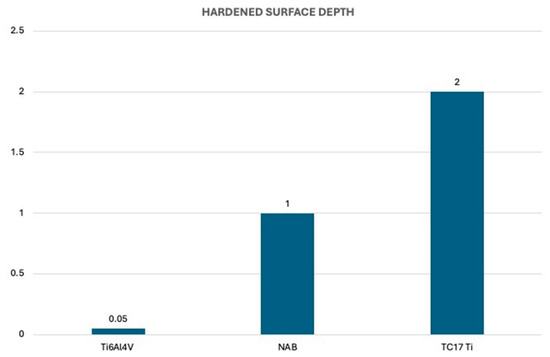
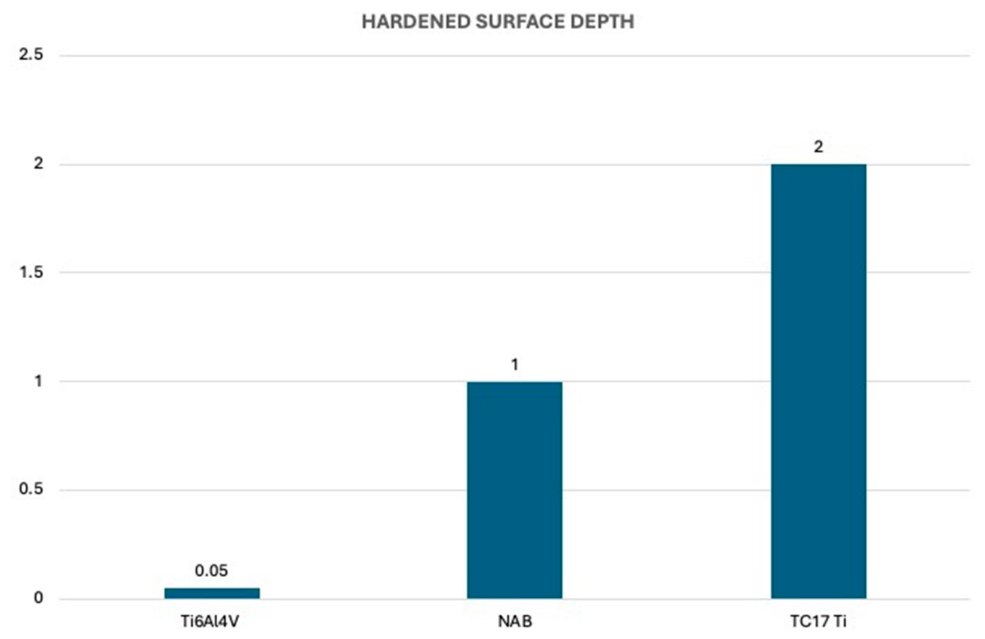
Figure 21 represents Table 6. The titanium alloy Ti6Al4V has seen a very low hardened surface depth of 0.05 mm due to the presence of dislocation cells. The work also involves metal shot peening post-LSP, due to this condition resulting in high plastic deformation [70]. Nickel-aluminium bronze (NAB) alloy subjected to laser surface hardening has led to increased hardness due to increased plastic deformation at higher pulse energy [75]. The grain size is finer in the LSP sample as compared to the LSP and annealed samples, resulting in higher hardness, and as depth increases, the grain dislocations and twins have increased [76]. Figure 18 shows the comparative laser surface-hardened depth of non-ferrous metals.
Figure 21.
LSH-hardened surface depth (mm) of non-ferrous alloys.
Table 6.
Percentage increase in the surface hardness of non-ferrous materials with pre-heat treatment due to laser surface hardening.
Table 7 shows the surface-hardened depth behaviour of laser surface-hardened non-ferrous alloys in the as-bought condition.
Table 7.
Surface-hardened depth of non-ferrous material without pre-heat treatment due to laser surface hardening.
3.2.2. Pre-Heat-Treated Alloys
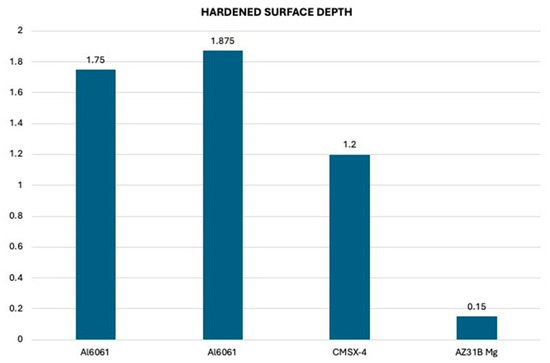
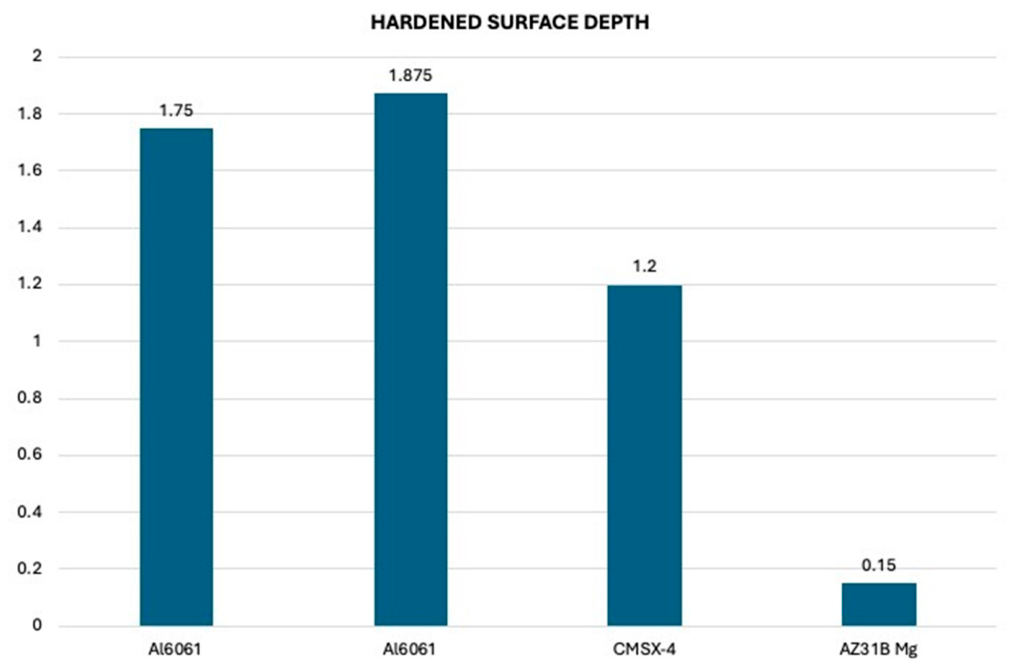
Table 8 shows the surface-hardened depth behaviour of laser surface-hardened non-ferrous alloys in heat-treated conditions. Al 6061 T6 has recorded the highest depth of hardened surface when induced with laser surface hardening. A 1.75 mm hardened surface depth is generated from 3.5 GPa shock wave pressure with one repetition [79]. When the same Al 6061 T6 is subjected to laser surface hardening using an Nd:YAG laser, the hardness is reduced with the increased depth of the hardened surface. Here, there is a higher degree of cyclic strain hardening because of increased overlap rate and laser shots, leading to the highest hardened depth of 1.875 mm [28]. Although CMSX-4 is a Ni-based superalloy and is available as a single crystal, the hardened surface depth was approximately 1.2 mm when subjected to LSP using an Nd:YLF laser. The effect of severe plastic deformation due to LSP on the directional coarsening behaviour of the Ni-based super alloy can be found [80]. AZ31B is a magnesium alloy that has recorded the lowest hardened surface depth of 0.15 mm when treated with laser shot peening. This can be due to the gradient nature in the plastic strain hardening along the depth of the surface [30]. Figure 22 shows the comparative laser surface-hardened depth of pre-heat-treated Al 6061, CMSX-4, and Mg alloy.
Table 8.
Surface-hardened depth of non-ferrous material with pre-heat treatment due to laser surface hardening.
Figure 22.
LSH-hardened surface depth (mm) of pre-HT non-ferrous alloys.
3.3. Applications
Non-ferrous alloys have also shown a wide applicability of the laser surface hardening process. The laser shot peening of titanium alloy Ti6Al4V has applications in fan blades of aerospace and high-cost components, while another titanium alloy Ti5Al2.5Sn was utilised in aircraft engine parts [70,74]. The LSH of aluminium AL-Mg alloy could lead to applications in shipbuilding and military industries [72]. The LSP of cast aluminium alloy has applications in automotive engine cylinder liners and engine blocks [73]. The nickel-aluminium bronze alloy has marine applications, such as in propellers and equipment where high reliability and corrosion resistance are required [75]. A lot of applications were also recorded on the heat-treated LSH non-ferrous alloys due to their flexibility in property enhancements. The solutionising and aging of aluminium alloy induced with LSH have given some applications. A356 alloy was utilised as engine blocks, cylinder heads, and liners, and Al6061 was utilised due to its high corrosion resistance and strength-to-weight ratio [28,77]. Annealed AZ31B Magnesium alloy upon LSH mainly focused on medical and orthopaedic implants [30].
4. Discussion
The changes in the mechanical characteristics and microstructural behaviour depend on the different materials, pre-heat treatment conditions, different types of lasers, and laser parameters, such as laser power, density, scanning speed, focal plane position, overlap percentage, etc. Different types of lasers utilised for property enhancement include CO2, fibre, diode, and Nd:YAG lasers. Diode lasers utilise semiconductor material to produce lasers for surface hardening, which has a relatively high absorption rate. AISI 4140 steel was subjected to a diode laser with optimised parameters of power ranging from 800 to 1200 W, scanning speed of 0.5 to 2 mm/s, and 5 mm overlap, resulting in a 150% increase in surface hardness. This kind of selective laser hardening is utilised for the manufacturing of specific machine components where complex designs were used [37]. The material also achieved a relatively lower increase in hardness of 47.53% due to a lower power of 130 W, a scanning speed of 2 mm/s, and a frequency of 50 Hz. They have a wide range of applications from the manufacturing of hot working tools, splines, moulds, and stamps [39]. AISI 4130 steel has achieved 57.76% increase in hardness due to the power of 1490 W, with a high scanning speed of above 4 mm/s, with 50% overlap. AISI 410 also achieved a 64.63% increase in hardness with similar parameters, but with a power of 970 W and a scanning speed above 8 mm/s. Lasers are used to study material properties and behaviour, as well as to improve welding, cutting, and drilling [40]. The material also achieved a 93.75% increase in surface hardness with laser power ranging from 1000 to 1600 W, scanning speed from 5 to 6 mm/s, and FPP from 60 to 70 mm. The laser surface-hardened material was having industrial applications in the manufacturing of dies and steel parts for different machinery [42]. AISI 420 steel had achieved a huge increase in hardness of 28.38% with a high power of up to 1600 W, scanning speed ranging from 4 to 8 mm/s, and FPP ranging from 60 to 80 mm [43]. The material also achieved a slightly lower increase in hardness of 219.05% with parameters, high power of 1500 W, scanning speed of 2 mm/s, and FPP of 40 mm [44]. AISI 1040 achieved a 121.43% increase in hardness due to relatively lower power ranging from 100 to 300 W and scanning speed 12 to 20 mm/s [47]. The spheroidised, hardened, and tempered 100Cr6 steel has achieved 41.03% of increase in hardness due to the laser power being 3200 W, scanning speed of 20 mm/s, and frequency of 10 Hz [21]. The hardened and tempered 52100 steel has achieved 33% increase in hardness with similar parameters applied to 100Cr6 material [22].
Fibre lasers have seen a huge amount of increase in the laser surface hardness due to the high wavelength of lasers. An increase of 300.43% in hardness was observed in AISI 420 steel by implementing a CW laser with a power ranging from 210 to 300 W, scanning speed from 1 to 10 mm/s, and FPP from 175 to 225 mm. They have wide applications in the biomedical field as bone replacements and dental implants, and as biomedical equipment [46]. AISI 52100 and 50CrMo4 steels have observed an increase in hardness of 260% and 200%, respectively, which is slightly lower than the previous material, with parameters being laser power 100 to 250 W, scanning speed 10 to 100 mm/s, FPP of 300 mm, and spot diameter of 0.5 mm. They have some specific applications in the manufacturing of fuel injector nozzles, bearings, and electronic components [50]. Ferritic stainless steel has a low increase in hardness of 94.44% with laser power being 1850 W, scanning speed of 11 mm/s, higher FPP of 250 mm, and larger spot diameter of 8.8 mm [51]. Hardened and tempered AISI 4340 steel has observed only 57.14% increase in hardness with 1900 to 2500 W laser power and 2 to 6 mm/s scanning speed due to the pre-heat treatment condition [19]. ICD5 tool steel has observed a 390% huge increase in hardness, which may be due to the fully annealed condition increasing its hardenability, with laser power being 500 W, scanning speed of 2.3 to 6.5 mm/s, and spot diameter up to 4.7 mm [60]. A 100% increase in surface hardness was observed in hardened and tempered 40CrNiMo steel with a laser power of 2010 W and a scanning speed of 11 to 13 mm/s. The already hardened and tempered condition has resulted in lower hardenability as compared to the previous pre-heat treatment condition for tool steel [24].
Nd:YAG lasers are extensively used on all kinds of materials due to their precision and accuracy. Even for non-ferrous materials, these lasers are utilised for the surface hardening process. A huge increase of 281.41% of hardness was observed on the surface due to very high laser power of 1550 W, scanning speed ranging from 15 to 20 mm/s, and spot diameter 7 to 8 mm [38]. Superferritic stainless steel had only 30.95% increase in hardness with parameters of low laser energy 1 J, repetition rate of 10 Hz, and high overlap of up to 88% [53]. The hardened and tempered SAE 9254 steel had one of the lowest increases in hardness of 4.44% due to the pre-heat treatment condition, rendering low hardenability, and due to very low power of 0.3 J and 0.8 mm spot diameter [20]. Even though AISI 316L steel has undergone stress-relieving heat treatment, the low laser power of 0.2 J has rendered a low increase in hardness of 60% with a lower repetition rate of 5 Hz and a 1 mm spot diameter [59]. Nd:YAG lasers were implemented for laser surface hardening of non-ferrous alloys as well, such as aluminium and titanium alloys. AA5087 has observed a 43.03% increase in hardness with laser power up to 1500 W, scanning speed 10 to 20 mm/s, and spot diameter of 3 mm [72]. Titanium alloy Ti-5Al-2.5Sn, which is already a hard material, has observed a 36.37% of increase in hardness with relatively lower laser power up to 165 W and FFP being up to 6.5 mm. Due to their high strength-to-weight ratio and corrosion resistance, the material has applications in the manufacturing of aircraft engine parts [74]. Laser directed energy deposited titanium alloy has observed a 45.66% of increase in hardness with energy of 0.37 J, 60% overlap, and 0.8 mm spot diameter. There is a wide range of applications for the laser-hardened material in the military, space, and biomedical fields [78].
Table 9 analyses the influence of different LSH treatments on hardness and surface-hardened depth across ferrous and non-ferrous alloys. The characteristics data indicate that LSH is highly dependent on the initial condition of alloys and different laser parameters. Medium carbon low alloy steels have the highest responsiveness to their LSH. Inducing a diode laser on AISI 4140 steel had achieved a 150% increase in hardness with a high case depth of 2 mm [37]. Due to the high laser power of the fibre laser upon implementation to AISI 420 steel, 300.43% of increase in hardness was observed with a minor hardened depth of 0.4 mm [46]. Relatively lower increase in hardness could be observed from Table 9 across the materials, mainly due to the saturated effect of pre-existing heat-treated effects of quenching and tempering of steels and solutionising and aging of aluminium alloys [20,22,28]. Using Nd:YAG lasers for LSH treatments has shown a relatively lower increase in hardness, while increasing the process efficiency and precision, rendering optimal utilisation of input parameters, resulting in better and wider applications.
Table 9.
Comparison of hardness variations and hardened surface depth induced by different LSH treatments.
5. Conclusions
This review study has comprehensively analysed the laser surface hardening across various ferrous and non-ferrous metals in as-bought and heat-treated conditions. Significant advancements in mechanical performance enhancements and microstructural analysis have been highlighted:
- The core properties of metals are retained, and LSH enables surface microstructure transformations to finer phases of martensite and the distribution of the hardness gradient. The primary merits of LSH are minimal distortion and localised hardening leading to precise and accurate dimension products, ensuring precision and repeatability.
- Diode lasers and CO2 lasers have rendered a higher hardness of the surface; the hardened depth has also increased, causing microstructural interventions to the core material. Nd:YAG lasers, which are solid crystal lasers, have utilised lesser power with more accuracy and a very low hardness gradient along the depth.
- Using a diode laser on AISI 420 steel has resulted in surface hardening increases of 300.43 and 282.38%, which is one of the highest hardness increases. This has also consumed huge laser power as well. The Nd:YAG laser has been the most efficient utilisation of power consumption, resulting with 281.41% increase in surface hardness. The effect of annealing on ICD-5 steel has led to better hardenability, leading to a huge 390% increase in surface hardening upon fibre laser with higher power. Non-ferrous alloys like titanium alloy have recorded a 200% increase in surface hardness upon laser ablation, and solutionised and aged A356 alloy has recorded 125% increase in surface hardness upon Nd:YAG laser surface hardening.
- Some drawbacks have been identified involving high capital costs and scanning speed, spot diameter, and laser power processing parameters that require meticulous control. At elevated laser intensities, thermal cracking on the surface poses a major risk.
- Various pre-heat treatment conditions, such as different types of annealing, normalising, quenching-tempering for ferrous metals, and solutionising-aging for non-ferrous materials, can enhance the mechanical properties and avoid defects such as thermal cracking.
- The laser surface-hardened steels have a very wide range of applications. The steels with laser hardened surface have applications in the field of automotive, aerospace, railways, and medical industries as moulds, bearings, pressure vessels, turbine blades, steam generators, replacement to polymer coatings, replacement to bones, artificial joints, dental implants, and surgical equipment. The non-ferrous alloys with laser hardened surface have applications in the field of aircraft, aerospace, shipbuilding, and military industries as engine parts, fan blades, engine cylinder liners and blocks, propellers, medical, and orthopaedic implants.
- Structural steels are used for construction and as infrastructure materials. There is a huge scope for laser surface hardening of these steels, which can lead to better property materials with longer product life cycle and lower carbon footprint.
- Future trends should focus on the LSH combined with other heat treatments, leading to multifunctional performance for tailored gradient microstructure. Pre-heat treatments provide flexibility to the materials and wider applicability. Hence, identifying the best laser treatments, pre-heat treatments, and materials can lead to a better applicability in the manufacturing and construction industrial sectors. Further studies can be conducted for more material characteristics, such as corrosion studies, new polymer materials, and different laser parameters.
Author Contributions
Conceptualization, S.K. and G.B.M.; methodology, S.K.; validation, G.B.M., S.S. and S.Y.M.; formal analysis, S.K.; investigation, G.B.M.; resources, P.H.; data curation, A.H.; writing—original draft preparation, S.K.; writing—review and editing, S.K. and S.S.; visualization, P.H. and A.H.; supervision, G.B.M. and S.S.; funding acquisition, G.B.M. All authors have read and agreed to the published version of the manuscript.
Funding
This research received no external funding.
Data Availability Statement
No new data were created or analysed in this study.
Conflicts of Interest
The authors declare no conflicts of interest.
Abbreviations
The following abbreviations are used in this manuscript:
| AA | Aluminium Alloy |
| AISI | American Iron and Steel Institute |
| CW | Continuous Wave |
| EBSD | Electron Back Scatter Diffraction |
| FPP | Focal Plane Position |
| HT | Heat Treatment |
| HV | Hardness Value |
| LDED | Laser Directed Energy Deposition |
| LSH | Laser Surface Hardening |
| LSP | Laser Shock Peening |
| MSP | Metal Shot Peening |
| QT | Quenching and Tempering |
| SA | Solutionising and Aging |
| SEM | Scanning Electron Microscope |
| SS | Stainless Steel |
| TEM | Transmission Electron Microscope |
| WLP | Warm Laser Peening |
References
- Łach, Ł. Recent Advances in Laser Surface Hardening: Techniques, Modeling Approaches, and Industrial Applications. Crystals 2024, 14, 726. [Google Scholar] [CrossRef] [Scilit]
- Muthukumaran, G.; Babu, P.D. Laser transformation hardening of various steel grades using different laser types. J. Braz. Soc. Mech. Sci. Eng. 2021, 43, 103. [Google Scholar] [CrossRef] [Scilit]
- Zhou, J.; Wu, J.; Tang, S.; Li, Y. Review of Laser Texturing Technology for Surface Protection and Functional Regulation of Aluminum Alloys: Wettability, Anti-Icing, Corrosion Resistance, and Wear Resistance. Coatings 2025, 15, 567. [Google Scholar] [CrossRef] [Scilit]
- Lei, P.; Zhang, P.; Song, S.; Liu, Z.; Yan, H.; Sun, T.; Lu, Q.; Chen, Y.; Gromov, V.; Shi, H. Research status of laser surface texturing on tribological and wetting properties of materials: A review. Optik 2023, 298, 171581. [Google Scholar] [CrossRef] [Scilit]
- Parodo, G.; Sorrentino, L. Improving adhesive performance of CFRP joints through combined laser texturing and resin pre-coating. J. Adhes. 2025, 102, 744–762. [Google Scholar] [CrossRef] [Scilit]
- Oláh, A.; Machedon-Pisu, T.; Vizureanu, P. Wearing Resistance of Metal Coating Layers after Laser Beam Heat Treatment. Coatings 2023, 13, 1645. [Google Scholar] [CrossRef] [Scilit]
- Fayyadh, S.K. Enhancement of Mechanical Properties and Corrosion Resistance of Cast Iron Alloy Using CO2 Laser Surface Treatment. J. Mech. Eng. 2022, 11, 185–198. [Google Scholar] [CrossRef] [Scilit]
- Alwan, A.S.; Khalid, E.A.; Fayyadh, S.K. Improvement the surface properties of metal valves used in agriculture engine by using CO2 laser beam. Biochem. Cell. Arch. 2019, 19, 1581–1585. [Google Scholar]
- Al-Sayed, S.R.; Elshazli, A.M.; Hussein, A.H.A. Laser Surface Hardening of Ni-hard White Cast Iron. Metals 2020, 10, 795. [Google Scholar] [CrossRef] [Scilit]
- Dywel, P.; Szczesny, R.; Domanowski, P.; Skowronski, L. Structural and Micromechanical Properties of Nd:YAG Laser Marking Stainless Steel (AISI 304 and AISI 316). Materials 2020, 13, 2168. [Google Scholar] [CrossRef] [Scilit]
- Ghaini, F.M.; Ameri, M.; Torkamany, M. Surface transformation hardening of ductile cast iron by a 600w fiber laser. Optik 2020, 203, 163758. [Google Scholar] [CrossRef] [Scilit]
- Wang, L.; Zhao, J.; Fan, X. The Effect of Laser Surface Hardening on Microstructure and High Temperature Wear Resistance of H13 Steel for Mandrel of Tube Mill. J. Mater. Eng. Perform. 2025, 34, 5416–5428. [Google Scholar] [CrossRef] [Scilit]
- Kennedy, E.; Byrne, G.; Collins, D. A review of the use of high power diode lasers in surface hardening. J. Mech. Work. Technol. 2004, 155–156, 1855–1860. [Google Scholar] [CrossRef] [Scilit]
- Kluczyński, J.; Jasik, K.; Łuszczek, J.; Pokropek, J. Laser Surface Hardening of Carburized Steels: A Review of Process Parameters and Application in Gear Manufacturing. Materials 2025, 18, 3623. [Google Scholar] [CrossRef] [Scilit]
- Frerichs, F.; Lu, Y.; Lübben, T.; Radel, T. Process Signature for Laser Hardening. Metals 2021, 11, 465. [Google Scholar] [CrossRef] [Scilit]
- Schüßler, P.; Damon, J.; Mühl, F.; Dietrich, S.; Schulze, V. Laser surface hardening: A simulative study of tempering mechanisms on hardness and residual stress. Comput. Mater. Sci. 2023, 221, 112079. [Google Scholar] [CrossRef] [Scilit]
- Ye, C.; Suslov, S.; Kim, B.J.; Stach, E.A.; Cheng, G.J. Fatigue performance improvement in AISI 4140 steel by dynamic strain aging and dynamic precipitation during warm laser shock peening. Acta Mater. 2011, 59, 1014–1025. [Google Scholar] [CrossRef] [Scilit]
- Lu, Y.; Ehle, L.C.; Richter, S.; Radel, T. Influence of multi-pass laser hardening of normalized AISI 4140 on the grain size. Surf. Coat. Technol. 2021, 421, 127434. [Google Scholar] [CrossRef] [Scilit]
- Barka, N.; Karganroudi, S.S.; Fakir, R.; Thibeault, P.; Kemda, V.B.F. Effects of Laser Hardening Process Parameters on Hardness Profile of 4340 Steel Spline—An Experimental Approach. Coatings 2020, 10, 342. [Google Scholar] [CrossRef] [Scilit]
- Prabhakaran, S.; Kalainathan, S.; Shukla, P.; Vasudevan, V.K. Residual stress, phase, microstructure and mechanical property studies of ultrafine bainitic steel through laser shock peening. Opt. Laser Technol. 2019, 115, 447–458. [Google Scholar] [CrossRef] [Scilit]
- Anusha, E.; Kumar, A.; Shariff, S. A novel method of laser surface hardening treatment inducing different thermal processing condition for Thin-sectioned 100Cr6 steel. Opt. Laser Technol. 2020, 125, 106061. [Google Scholar] [CrossRef] [Scilit]
- Anusha, E.; Kumar, A.; Shariff, S.M. Diode laser surface treatment of bearing steel for improved sliding wear performance. Optik 2020, 206, 163357. [Google Scholar] [CrossRef] [Scilit]
- Aborkin, A.V.; Vaganov, V.E.; Shlegel’, A.N.; Bukarev, I.M. Effect of Laser Hardening on Die Steel Microhardness and Surface Quality. Metallurgist 2015, 59, 619–625. [Google Scholar] [CrossRef] [Scilit]
- Li, J.; Yan, H.; Li, S. Microstructure characteristics at different depths of 40CrNiMo steel after laser hardening. Mater. Charact. 2023, 197, 112680. [Google Scholar] [CrossRef] [Scilit]
- Yu, Y.; Zhang, M.; Guan, Y.; Wu, P.; Chong, X.; Li, Y.; Tan, Z. The Effects of Laser Remelting on the Microstructure and Performance of Bainitic Steel. Metals 2019, 9, 912. [Google Scholar] [CrossRef] [Scilit]
- Idan, A.F.; Akimov, O.; Golovko, L.; Goncharuk, O.; Kostyk, K. The study of the influence of laser hardening conditions on the change in properties of steels. East.-Eur. J. Enterp. Technol. 2016, 2, 69–73. [Google Scholar] [CrossRef] [Scilit]
- Cerda, F.C.; Goulas, C.; Jones, D.; Kamyabi, A.; Hamre, D.; Méndez, P.; Wood, G. Modelling the laser surface hardening process in a steel with a spheroidized initial microstructure. J. Manuf. Process. 2024, 125, 364–373. [Google Scholar] [CrossRef] [Scilit]
- Salimianrizi, A.; Foroozmehr, E.; Badrossamay, M.; Farrokhpour, H. Effect of Laser Shock Peening on surface properties and residual stress of Al6061-T6. Opt. Lasers Eng. 2016, 77, 112–117. [Google Scholar] [CrossRef] [Scilit]
- Nassar, A.; Taha, M.A.; Saadallah, F.A. Surface Hardening of Hypereutectic Al-Si Alloy Treated by Nd: YAG Laser. Middle East J. Appl. Sci. 2015, 5, 31–35. [Google Scholar]
- Zhang, R.; Zhou, X.; Gao, H.; Mankoci, S.; Liu, Y.; Sang, X.; Qin, H.; Hou, X.; Ren, Z.; Doll, G.L.; et al. The effects of laser shock peening on the mechanical properties and biomedical behavior of AZ31B magnesium alloy. Surf. Coat. Technol. 2018, 339, 48–56. [Google Scholar] [CrossRef] [Scilit]
- Zhu, D.; He, X.; Zhong, L.; Wang, G.; Wei, G.; Pang, G.; Liao, W. Effect of laser shock peening on tribological properties of 55SiMoVA bearing steel. Opt. Laser Technol. 2024, 181, 111704. [Google Scholar] [CrossRef] [Scilit]
- Yang, S.; Zhang, M.; Yu, P.; Sun, Y.; Su, Y.; Yu, X. Effect of laser shock peening overlap rate on microstructure and wear resistance of M50 steel. Opt. Laser Technol. 2025, 184, 112548. [Google Scholar] [CrossRef] [Scilit]
- Deng, W.; Gong, X.; Du, C.; Zhang, J. Effect of laser hardening on surface properties of high-speed steel. J. Phys. Conf. Ser. 2025, 2951, 012146. [Google Scholar] [CrossRef] [Scilit]
- Maharjan, N.; Msolli, S.; Peng, D.; Pham, D.Q.; Luzin, V.; Buividas, R.; Ang, A. Evaluating residual stresses and structural changes in L-PBF Scalmalloy® by femtosecond laser peening process. Opt. Laser Technol. 2026, 199, 115077. [Google Scholar] [CrossRef] [Scilit]
- Albahlol, O.; Cug, H.; Akgul, Y.; Eticha, A.; Incesu, A. Effect of laser hardening on the mechanical, tribological and corrosion properties of low alloy steels. J. Min. Met. Sect. B Met. 2023, 59, 255–267. [Google Scholar] [CrossRef] [Scilit]
- Sato, M.; Adachi, Y.; Motoyama, H. Application of laser hardening technology to sintered parts. SEI Tech. Rev. 2016, 82, 66–69. [Google Scholar]
- Lakhkar, R.S.; Shin, Y.C.; Krane, M.J.M. Predictive modeling of multi-track laser hardening of AISI 4140 steel. Mater. Sci. Eng. A 2008, 480, 209–217. [Google Scholar] [CrossRef] [Scilit]
- Zhang, H.; Zhu, M.; Ji, S.; Zhang, J.; Fan, H. Numerical simulation and experimental study on laser hardening process of the 42CrMo4 steel. Adv. Mech. Eng. 2021, 13, 16878140211044649. [Google Scholar] [CrossRef] [Scilit]
- Zhao, L.; Hu, Z.; Wang, X.; Chen, X.; Huan, P.; Zhang, H. Laser surface remelting of AISI 4140 steel. IOP Conf. Ser. Mater. Sci. Eng. 2020, 774, 012082. [Google Scholar] [CrossRef] [Scilit]
- Karamimoghadam, M.; Moradi, M.; Azami, M. A comparative investigation of different overlaps of the diode laser hardening in low-carbon steel and stainless steel. Optik 2022, 251, 168093. [Google Scholar] [CrossRef] [Scilit]
- Casalino, G.; Moradi, M.; Moghadam, M.K.; Khorram, A.; Perulli, P. Experimental and Numerical Study of AISI 4130 Steel Surface Hardening by Pulsed Nd:YAG Laser. Materials 2019, 12, 3136. [Google Scholar] [CrossRef] [Scilit]
- Moradi, M.; Arabi, H.; Moghadam, M.K.; Benyounis, K.Y. Enhancement of surface hardness and metallurgical properties of AISI 410 by laser hardening process; diode and Nd:YAG lasers. Optik 2019, 188, 277–286. [Google Scholar] [CrossRef] [Scilit]
- Moradi, M.; Sharif, S.; Nasab, S.J.; Moghadam, M.K. Laser surface hardening of AISI 420 steel: Parametric evaluation, statistical modeling and optimization. Optik 2020, 224, 165666. [Google Scholar] [CrossRef] [Scilit]
- Rabiei, A.; Ghadami, F.; Malek, F. Microstructural characteristics and tribological properties of the localized laser surface treatment of AISI 420 stainless steel. Tribol. Int. 2022, 177, 107969. [Google Scholar] [CrossRef] [Scilit]
- Mahmoudi, B.; Torkamany, M.; Aghdam, A.S.R.; Sabbaghzade, J. Laser surface hardening of AISI 420 stainless steel treated by pulsed Nd:YAG laser. Mater. Des. 2010, 31, 2553–2560. [Google Scholar] [CrossRef] [Scilit]
- Wagh, S.V.; More, S.R.; Madhav, V.V.V.; Saxena, K.K.; Bandhu, D.; Sunil, B.; V, R.; Siddiqui, I.H. Effects of low-power laser hardening on the mechanical and metallurgical properties of biocompatible SAE 420 steel. J. Mater. Res. Technol. 2024, 30, 1611–1619. [Google Scholar] [CrossRef] [Scilit]
- Guarino, S.; Barletta, M.; Afilal, A. High Power Diode Laser (HPDL) surface hardening of low carbon steel: Fatigue life improvement analysis. J. Manuf. Process. 2017, 28, 266–271. [Google Scholar] [CrossRef] [Scilit]
- Saavedra, E.; Ramil, A.; López, A.J.; Álvarez, J. Laser Hardening of XC42 Steel: Numerical Analysis of Quenched Area. Mater. Sci. Forum 2010, 636–637, 1165–1171. [Google Scholar] [CrossRef] [Scilit]
- Buling, A.; Sändker, H.; Stollenwerk, J.; Krupp, U.; Hamann-Steinmeier, A. Laser surface pretreatment of 100Cr6 bearing steel—Hardening effects and white etching zones. Appl. Surf. Sci. 2016, 378, 564–571. [Google Scholar] [CrossRef] [Scilit]
- Maharjan, N.; Zhou, W.; Zhou, Y.; Wu, N. Underwater laser hardening of bearing steels. J. Manuf. Process. 2019, 47, 52–61. [Google Scholar] [CrossRef] [Scilit]
- Sundqvist, J.; Manninen, T.; Heikkinen, H.-P.; Anttila, S.; Kaplan, A. Laser surface hardening of 11% Cr ferritic stainless steel and its sensitisation behaviour. Surf. Coat. Technol. 2018, 344, 673–679. [Google Scholar] [CrossRef] [Scilit]
- Lee, J.-H.; Jang, J.-H.; Joo, B.-D.; Son, Y.-M.; Moon, Y.-H. Laser surface hardening of AISI H13 tool steel. Trans. Nonferr. Met. Soc. China 2009, 19, 917–920. [Google Scholar] [CrossRef] [Scilit]
- Spadaro, L.; Gomez-Rosas, G.; Rubio-González, C.; Bolmaro, R.; Chavez-Chavez, A.; Hereñú, S. Fatigue behavior of superferritic stainless steel laser shock treated without protective coating. Opt. Laser Technol. 2017, 93, 208–215. [Google Scholar] [CrossRef] [Scilit]
- Al-Obeidi, A.F.; Al-Hamaoy, A.R.; Obeidi, M.A. CK 45 steel surface hardening using 1064 fiber laser. AIP Conf. Proc. 2024, 3125, 020011. [Google Scholar] [CrossRef] [Scilit]
- Rezayat, M.; Moradi, M.; Mateo, A. Nanosecond multi-passes laser surface texturing on AISI 301LN TRIP steel. Int. J. Adv. Manuf. Technol. 2024, 132, 4753–4764. [Google Scholar] [CrossRef] [Scilit]
- Lazić, V.; Arsić, D.; Nikolić, R.R.; Rakić, D.; Aleksandrović, S.; Djordjević, M.; Hadzima, B. Selection and Analysis of Material for Boiler Pipes in a Steam Plant. Procedia Eng. 2016, 149, 216–223. [Google Scholar] [CrossRef] [Scilit]
- Lu, Y.; Meyer, H.; Radel, T. Multi-cycle phase transformation during laser hardening of AISI 4140. Procedia CIRP 2020, 94, 919–923. [Google Scholar] [CrossRef] [Scilit]
- Moradi, M.; Moghadam, M.K.; Shamsborhan, M. How the laser beam energy distribution effect on laser surface transformation hardening process; Diode and Nd:YAG lasers. Optik 2020, 204, 163991. [Google Scholar] [CrossRef] [Scilit]
- Kalainathan, S.; Sathyajith, S.; Swaroop, S. Effect of laser shot peening without coating on the surface properties and corrosion behavior of 316L steel. Opt. Lasers Eng. 2012, 50, 1740–1745. [Google Scholar] [CrossRef] [Scilit]
- Ameri, M.; Ghaini, F.M.; Torkamany, M. Investigation into the efficiency of a fiber laser in surface hardening of ICD-5 tool steel. Opt. Laser Technol. 2018, 107, 150–157. [Google Scholar] [CrossRef] [Scilit]
- Li, Z.; Zhang, J.; Dai, B.; Liu, Y. Microstructure and corrosion resistance property of laser transformation hardening pre-hardened AISI P20 plastic die steel. Opt. Laser Technol. 2020, 122, 105852. [Google Scholar] [CrossRef] [Scilit]
- Lesyk, D.; Martinez, S.; Dzhemelinskyy, V.; Lamikiz, A.; Mordyuk, B.; Prokopenko, G. Surface microrelief and hardness of laser hardened and ultrasonically peened AISI D2 tool steel. Surf. Coat. Technol. 2015, 278, 108–120. [Google Scholar] [CrossRef] [Scilit]
- Zurnadzhy, V.; Stavrovskaia, V.; Chabak, Y.; Petryshynets, I.; Efremenko, B.; Wu, K.; Efremenko, V.; Brykov, M. Enhancing the Tensile Properties and Ductile-Brittle Transition Behavior of the EN S355 Grade Rolled Steel via Cost-Saving Processing Routes. Materials 2024, 17, 1958. [Google Scholar] [CrossRef] [Scilit] [PubMed]
- Moradi, M.; Arabi, H.; Shamsborhan, M. Multi-objective optimization of high power diode laser surface hardening process of AISI 410 by means of RSM and desirability approach. Optik 2020, 202, 163619. [Google Scholar] [CrossRef] [Scilit]
- Moradi, M.; Ghorbani, D.; Moghadam, M.K.; Kazazi, M.; Rouzbahani, F.; Karazi, S. Nd:YAG laser hardening of AISI 410 stainless steel: Microstructural evaluation, mechanical properties, and corrosion behavior. J. Alloys Compd. 2019, 795, 213–222. [Google Scholar] [CrossRef] [Scilit]
- Khorram, A.; Jamaloei, A.D.; Jafari, A.; Moradi, M. Nd:YAG laser surface hardening of AISI 431 stainless steel; mechanical and metallurgical investigation. Opt. Laser Technol. 2019, 119, 105617. [Google Scholar] [CrossRef] [Scilit]
- Grezev, N.V.; Begunov, I.A.; Shamov, E.M. Laser hardening of gear teeth using a powerful fibre laser. Weld. Int. 2016, 30, 875–879. [Google Scholar] [CrossRef] [Scilit]
- Berglund-Brown, J.; Ochsendorf, J. Reusing Heavy-Section Steel in Buildings: Carbon Reduction Potential and Material Availability. J. Arch. Eng. 2025, 31, 04025020. [Google Scholar] [CrossRef] [Scilit]
- Ki, H.; So, S.; Kim, S. Laser transformation hardening of carbon steel sheets using a heat sink. J. Mech. Work. Technol. 2014, 214, 2693–2705. [Google Scholar] [CrossRef] [Scilit]
- Lainé, S.J.; Knowles, K.M.; Doorbar, P.J.; Cutts, R.D.; Rugg, D. Microstructural characterisation of metallic shot peened and laser shock peened Ti–6Al–4V. Acta Mater. 2017, 123, 350–361. [Google Scholar] [CrossRef] [Scilit]
- Kumari, R.; Scharnweber, T.; Pfleging, W.; Besser, H.; Majumdar, J.D. Laser surface textured titanium alloy (Ti–6Al–4V)—Part II—Studies on bio-compatibility. Appl. Surf. Sci. 2015, 357, 750–758. [Google Scholar] [CrossRef] [Scilit]
- Dai, W.; Guo, W.; Xiao, J.; Zhu, Y.; Qi, Z.; Shi, J.; Yin, C.; He, D.; Chi, J.; Wan, Z.; et al. Tailoring properties of directed energy deposited Al-Mg alloy by balancing laser shock peening and heat treatment. J. Mater. Sci. Technol. 2024, 203, 78–96. [Google Scholar] [CrossRef] [Scilit]
- Pan, X.; Zhou, L.; Hu, D.; He, W.; Liu, P.; Yu, Z.; Liang, X. Superior wear resistance in cast aluminum alloy via femtosecond laser induced periodic surface structures and surface hardening layer. Appl. Surf. Sci. 2023, 636, 157866. [Google Scholar] [CrossRef] [Scilit]
- Khorram, A.; Jamaloei, A.D.; Jafari, A. Surface transformation hardening of Ti-5Al-2.5Sn alloy by pulsed Nd:YAG laser: An experimental study. Int. J. Adv. Manuf. Technol. 2018, 100, 3085–3099. [Google Scholar] [CrossRef] [Scilit]
- Gao, Y.; Yang, W.; Huang, Z.; Lu, Z. Effects of residual stress and surface roughness on the fatigue life of nickel aluminium bronze alloy under laser shock peening. Eng. Fract. Mech. 2021, 244, 107524. [Google Scholar] [CrossRef] [Scilit]
- Yang, Y.; Zhou, K.; Zhang, H.; Hu, H.; Qiao, H. Thermal stability of microstructures induced by laser shock peening in TC17 titanium alloy. J. Alloys Compd. 2018, 767, 253–258. [Google Scholar] [CrossRef] [Scilit]
- Chen, H.; Zhou, J.; Sheng, J.; Meng, X.; Huang, S.; Xie, X. Effects of Warm Laser Peening on Thermal Stability and High Temperature Mechanical Properties of A356 Alloy. Metals 2016, 6, 126. [Google Scholar] [CrossRef] [Scilit]
- Singh, S.N.; Deoghare, A.B. Microstructure, microhardness, tensile and fatigue investigation on laser shock peened Ti6Al4V manufactured by high layer thickness directed energy deposition additive manufacturing. Opt. Laser Technol. 2024, 177, 111132. [Google Scholar] [CrossRef] [Scilit]
- Montross, C.; Brandt, M.; Swain, M. Self-Limiting Hardness Changes in Laser Peened 6061-T6 Aluminium. Inst. Mater. Miner. Min. 2001, 17, 477–482. [Google Scholar] [CrossRef] [Scilit]
- Holtham, N.; Brooks, N.; Rowe, R.; Hackel, L.; Zargaran, A.; Davami, K. Unraveling the mechanics of directional coarsening in single crystal Ni-based superalloys via laser peening: Insights from experimental characterization and microstructural analysis. J. Alloys Compd. 2024, 1004, 175851. [Google Scholar] [CrossRef] [Scilit]

Disclaimer/Publisher’s Note: The statements, opinions and data contained in all publications are solely those of the individual author(s) and contributor(s) and not of MDPI and/or the editor(s). MDPI and/or the editor(s) disclaim responsibility for any injury to people or property resulting from any ideas, methods, instructions or products referred to in the content. |
© 2026 by the authors. Licensee MDPI, Basel, Switzerland. This article is an open access article distributed under the terms and conditions of the Creative Commons Attribution (CC BY) license.