


Abstract
Morocco’s semi-arid farms are under growing pressure to lower nitrous oxide (N2O) emissions while maintaining crop yields and soil health. Agriculture is a major anthropogenic source of N2O emissions in Morocco; improved nitrogen management is therefore relevant to the country’s broader climate mitigation efforts. This review examines regulatory, technical, and economic measures that have reduced nitrogen losses or agricultural N2O emissions in other countries and assesses their potential relevance to Morocco’s smallholder-dominated farming systems. In 2018, Moroccan managed soils released 13,108 Gg of carbon dioxide equivalents (CO2-eq) according to the national inventory, highlighting the importance of improved nitrogen management for agricultural climate mitigation. The study compares peer-reviewed research, policy documents, and regulatory frameworks from four benchmark countries: Denmark, the Netherlands, the United Kingdom, and Brazil. It addresses three questions: which nitrogen management strategies have evidence of reducing agricultural N2O emissions in contexts relevant to Morocco; which institutional, regulatory, and socioeconomic barriers may constrain their adoption; and how these strategies could be incorporated into a phased national framework. For each intervention, the review synthesizes reported outcomes, the agronomic and climatic conditions under which they were obtained, and their potential transferability to Morocco’s semi-arid agricultural systems. Outcomes are differentiated as direct N2O measurements, nitrogen loss or fertilizer use indicators, agronomic feasibility evidence, or policy and enabling evidence. The review also identifies gaps in Morocco’s fertilizer governance under Law No. 53-18 and considers national enabling assets, including soil fertility mapping, emerging organic-fertilizer supply chains, conservation agriculture initiatives, and existing agricultural-support programmes. The review presents an author-proposed Integrated Nitrogen Management Framework (INMF) based on three complementary pillars: regulatory reform, field-level technical measures, and economic instruments. It presents three implementation periods—2027–2029, 2029–2032, and 2032–2035—for testing, validating, and progressively scaling these measures under Moroccan conditions. The INMF is a conceptual, phased implementation framework rather than a quantitative national mitigation model. It does not estimate an aggregate agricultural N2O emission reduction because the reviewed interventions differ in their production context, evidence type, and measured outcome. Morocco’s unconditional Nationally Determined Contribution (NDC) provides the broader policy context, but its economy-wide target is not interpreted as a sector-specific target for agricultural N2O emissions. The review discusses implementation challenges, including data limitations, institutional capacity constraints, and smallholder adoption barriers. It identifies priorities for Morocco: field measurement of N2O emissions and emission factors, multi-site evaluation of mitigation practices, strengthened monitoring and advisory systems, and socioeconomic assessment of farmer adoption and policy feasibility.
1. Introduction
Nitrous oxide (N2O) is a potent greenhouse gas (GHG) in the atmosphere. The global warming potential of N2O is approximately 298 times greater than that of carbon dioxide when measured over a 100-year period, and N2O remains in the atmosphere for more than one century [1]. Global N2O emissions have been estimated at approximately 17.7 teragrams of nitrogen expressed as N2O–N (Tg N2O–N yr−1), including both natural and anthropogenic sources [2]. Within this total, anthropogenic activities account for about 38% of global N2O–N emissions, and agricultural systems contribute roughly 60–80% of anthropogenic N2O–N emissions [1,2,3]. These values refer to N mass (N2O–N) and to different denominators (total versus anthropogenic emissions) and are therefore not additive or directly interchangeable; they are used here only to indicate orders of magnitude. Among the activities that add N2O to the atmosphere, agriculture is the largest anthropogenic contributor. Fertilized soils produce most of the agricultural N2O emissions through the microbial processes of nitrification and denitrification. To avoid confusion in later sections, the manuscript explicitly distinguishes between N2O–N mass units, CO2-equivalent (CO2-eq) values, and fertilizer-N inputs when reporting emission estimates and mitigation outcomes. Modelling studies show that agricultural N2O emissions increased from 0.4 to 1.4 teragrams of N2O–N per year in the 1960s to 1.3 to 3.3 teragrams of N2O–N per year in the 2010s. The main driver was the expansion of nitrogen fertilizer use in Asia and other rapidly growing agricultural regions [4]. This increase underscores the importance of improving nitrogen management as part of agricultural climate mitigation efforts.
Semi-arid agricultural systems face unique environmental conditions that can intensify N2O emissions compared with temperate regions. Limited and highly variable rainfall creates alternating periods of drought and short-lived soil saturation, promoting both nitrification and denitrification and increasing N2O production [5]. Morocco exemplifies these challenges in several ways. Approximately half of the country’s cultivable land receives less than 300 mm of annual rainfall, and per capita water availability is projected to decline below 500 m3 by 2030 [6]. These climatic constraints coincide with the significant use of synthetic nitrogen fertilizers in Moroccan farming systems. A reliance on synthetic fertilizers has been documented in peri-urban production systems, although the available evidence should not be interpreted as nationally representative. N2O emission factors can differ substantially depending on the type of fertilizer, soil characteristics, climate, moisture levels, and agricultural management. Because of this, general emission factor values cannot be assumed to apply to Morocco’s fields. Local testing is needed to ensure that these values are accurate [7,8]. Moreover, where nitrogen inputs exceed crop demand or are poorly synchronized with crop uptake, fertilizer management may contribute to changes in soil microbial communities and reduce nitrogen use efficiency (NUE); the direction and magnitude of these effects depend on fertilizer source and rate, application timing, crop system, soil properties, and long-term management. In some semi-arid cropping systems, low NUE values (typically below 35%) have been reported under conventional nitrogen management practices, illustrating how inefficient nitrogen use can coexist with elevated N inputs. These examples are used here as broader evidence from vegetable systems and are not presented as national estimates for Morocco [9]. Together, these factors highlight the considerable potential for improving nitrogen management while simultaneously reducing GHG emissions.
Agriculture is Morocco’s largest anthropogenic source of N2O emissions, as documented in the Fourth National Communication to the United Nations Framework Convention on Climate Change (UNFCCC) [10]. Emissions from managed soils rose by an average of 2.3% per year from 2004 to 2018. This rise shows that better nitrogen management is necessary for Morocco’s wider plan to mitigate emissions. Morocco’s unconditional Nationally Determined Contribution (NDC) aims to cut the country’s GHG emissions by 18.3% below the business-as-usual path by 2030 [6]. This economy-wide target provides the broader policy context for agricultural mitigation but should not be treated as an equivalent percentage target for agricultural N2O relative to the 2018 inventory [6]. However, Morocco’s current fertilizer governance framework, established under Law No. 53-18 (2021) [11], primarily focuses on fertilizer quality, product registration, and market regulation. It contains no provisions for reducing N2O emissions, implementing site-specific nutrient management, or promoting enhanced-efficiency fertilizers (EEFs). This contrasts with the integrated nitrogen management systems developed in countries such as Denmark, where coordinated regulatory and economic policies have been associated with reductions in nitrogen losses over several decades [12,13], and the Netherlands, where precision agriculture technologies have reduced fertilizer use without compromising crop productivity [14]. Similarly, Brazil’s large-scale biological nitrogen fixation programmes demonstrate the potential to reduce dependence on synthetic nitrogen fertilizers [15]. These cases are considered as comparative policy and technology benchmarks rather than as direct agroecological or institutional analogues of Morocco. Their relevance lies in the potential adaptation of specific instruments and implementation arrangements to Moroccan conditions. However, the applicability of these approaches to Morocco’s semi-arid, smallholder-dominated agricultural systems has not yet been evaluated through an integrated assessment of technical, regulatory, and economic dimensions.
Existing reviews, including that by Hassan et al. (2022) [1], comprehensively assess technical approaches for mitigating agricultural N2O emissions, including nitrification inhibitors, organic fertilizers, precision nutrient management, and cover crops. However, they devote comparatively little attention to the institutional, regulatory, and economic dimensions that determine successful implementation in semi-arid developing countries. Similarly, a previous multi-GHG assessment of Moroccan agriculture [16] identified precision nitrogen management as one of four major mitigation pathways but did not examine nitrogen-specific regulatory reforms or implementation strategies in detail. Building on this earlier work, the present review comparatively evaluates regulatory, technical, and economic nitrogen management interventions and assesses their potential adaptation to Morocco’s agroecological, institutional, and socio-economic contexts.
Accordingly, this review looks at three research questions: (1) Which regulatory, technical, and economic nitrogen management strategies have evidence of reducing agricultural N2O emissions in contexts relevant to Morocco? (2) Which institutional, regulatory, and socioeconomic challenges constrain the adoption of these strategies in Morocco’s farming sector? (3) How can these evidence-based strategies be organized into a step-by-step nitrogen management framework that is consistent with Morocco’s climate policy objectives as outlined in its NDC? The rest of this paper is organized as follows: Section 2 describes the literature search strategy, benchmark country selection, and analytical framework. Section 3 synthesizes comparative evidence across regulatory, technical, and economic interventions. Section 4 discusses the findings in the context of Morocco’s agricultural systems and presents the proposed Integrated Nitrogen Management Framework. Finally, Section 5 presents the principal conclusions, and Section 6 outlines research priorities for Morocco.
2. Review Methodology
This review adopts a structured comparative narrative approach, which is an appropriate methodological design for addressing the study’s research questions. It looks at the rules and regulations, the actions taken on the ground, and the financial tools used in various countries. This analysis uses peer-reviewed research studies, official laws, and reports from relevant institutions to support its findings. It is presented as a structured comparative review rather than as a formal systematic review. The review was not conducted as a systematic review or meta-analysis, and the Preferred Reporting Items for Systematic Reviews and Meta-Analyses (PRISMA) checklist was therefore not applied. Nevertheless, the main steps of the literature search and source selection process are reported to improve methodological transparency. The search strategy, source selection criteria, selection results, and analytical framework are described in the following subsections to clarify the comparative basis of the review and the way evidence was assessed for potential relevance to Morocco.
2.1. Search Strategy
A targeted literature and document search was conducted using Web of Science, Scopus, Google Scholar, and official institutional sources. The search supported a structured comparative narrative review rather than an exhaustive systematic review or meta-analysis. Its purpose was to identify relevant scientific and policy evidence for comparing nitrogen management interventions across the selected countries. The core literature search was conducted between January and September 2025 and was updated in March 2026 to include newly available relevant literature and institutional documents.
The search covered publications from 2000 to March 2026. The lower temporal boundary was selected to capture the emergence of modern nitrogen management policies, including Denmark’s early nitrogen action plans and the successive implementation phases of the European Union Nitrates Directive. It also ensured that the review remained focused on contemporary evidence.
One seminal study published before 2000 was retained because it continues to provide a primary empirical benchmark that has not been superseded by more recent research. Specifically, Harrison et al. (1995) [17] was included for its widely adopted N2O emission factor data. Schou et al. (2000) [18], which falls at the lower boundary of the review period, was retained for its evaluation of nitrogen tax scenarios in Denmark. Both studies are extensively cited in national greenhouse gas inventories and subsequent policy evaluations, justifying their inclusion in the evidence base.
Search terms were developed in both English and French using Boolean operators and were adapted to the search functions and indexing conventions of each source. They covered four main areas: N2O emissions and nitrogen losses; field-level nitrogen management practices; regulatory and economic instruments; and relevance to Morocco and the four benchmark countries.
The search began with key combinations. First, “N2O emissions” was paired with “agriculture” and “mitigation”. Then, “nitrification inhibitors” was combined with “semi-arid”. Next, “precision nitrogen management” was combined with “fertilizer”. After that, “biological nitrogen fixation” was linked to “legumes”. The term “nitrogen taxation” was combined with “agricultural policy”. “Organic fertilizer” was combined with “nitrous oxide”. Following that, “cover crops” was matched with “nitrate leaching”. Next, “Moroccan agriculture” was linked to “greenhouse gas emissions”. Finally, “fertilizer regulation” was paired with “Morocco”.
To identify country-specific evidence, each of the four benchmark country names—Denmark, the Netherlands, the United Kingdom, and Brazil—was combined with the terms “nitrogen management”, “N2O emission reduction”, and “fertilizer policy”. Official documents were identified through the websites and repositories of relevant national authorities, the European Union, and intergovernmental organizations, particularly the UNFCCC. The search syntax was adapted to the functions and indexing conventions of each source.
Conducting searches in both English and French enabled the inclusion of Moroccan institutional publications and French regulatory documents that are not consistently indexed in English-language databases.
The search was designed to identify evidence relevant to the comparative assessment and was not intended to constitute an exhaustive systematic evidence synthesis. Sources identified through this process were assessed using the eligibility criteria described in Section 2.2. They were then classified and compared according to the analytical framework presented in Section 2.4. This approach provides a transparent and traceable methodology consistent with the comparative narrative design of the review.
2.2. Selection Criteria
Sources were selected according to their relevance to the comparative framework. Priority was given to sources that (i) reported N2O emission outcomes or measurable improvements in nitrogen use efficiency directly linked to a specific management practice or policy instrument; (ii) examined agricultural systems relevant to semi-arid environments, smallholder farming systems, or institutional contexts typical of developing countries; and (iii) were published as peer-reviewed journal articles or as official policy and regulatory documents from national governments, the European Union, or intergovernmental bodies such as the UNFCCC.
Official policy, regulatory, inventory, and institutional documents were included when they provided authoritative information on nitrogen management or agricultural greenhouse gas mitigation. These documents were not required to report direct N2O measurements because they were used to assess regulatory and governance arrangements rather than field-level emission responses.
Sources were not included if they focused on non-agricultural greenhouse gas emissions, relied entirely on modelling or simulation without real-world field validation for technical or agronomic mitigation claims, or studied agroecological conditions that are very different from those found in Morocco—such as tropical flooded-rice systems or boreal agroforestry. Modelling studies were retained when they directly assessed the design or potential effects of an economic or regulatory instrument. Their findings were classified as policy evidence rather than as direct evidence of N2O mitigation. Conference abstracts, unpublished reports, and unsupported grey literature without adequate methodological documentation were also excluded. Only documents published in English or French were considered, reflecting the principal languages of Morocco’s scientific and governmental records.
Source Selection Results
The searches and document retrieval process produced a consolidated working bibliography containing 182 records. Records identified through Web of Science, Scopus, Google Scholar, and institutional sources were progressively merged into this working file. The original source-specific exports and duplicate removal logs were not retained separately. Consequently, the number of records retrieved from each source and the exact number of duplicates removed could not be reconstructed reliably. These values were not estimated retrospectively.
All 182 records were examined during library consolidation and eligibility screening. Titles, abstracts, or executive summaries were assessed first. Full texts were consulted when the available information was insufficient to determine eligibility. Duplicate entries, out-of-scope publications, and sources that did not meet the eligibility criteria were not carried forward. Sources were also not retained where the available evidence was insufficiently documented or where the same evidence was available in a more complete or authoritative source.
The final evidence base comprised 66 sources. Because the selection process was conducted progressively, reliable numerical counts for each individual reason for exclusion were not available and were not reconstructed retrospectively.
The sources that were chosen were compared using four areas: (i) agronomic performance; (ii) environmental performance; (iii) financial feasibility; and (iv) policy relevance for Morocco. This comparative approach facilitated the assessment of different evidence types and informed the development of the proposed Integrated Nitrogen Management Framework.
To make the origin of the evidence explicit, each result was assigned to one of four groups: (i) direct N2O measurement, in which N2O concentrations, fluxes, cumulative emissions, or emission factors were measured; (ii) nitrogen loss or fertilizer use indicators, such as changes in fertilizer use, synthetic nitrogen requirements, nitrogen surplus, nitrate leaching, or other nitrogen losses; (iii) agronomic feasibility evidence, including crop performance, soil outcomes, or the suitability of specific treatments; or (iv) policy or enabling evidence, including regulations, institutions, advisory services, monitoring systems, and financial conditions that support implementation.
The final evidence base comprised two complementary categories of sources. The first consisted of peer-reviewed academic literature evaluating the effectiveness of nitrogen mitigation technologies, agronomic management practices, and economic policy instruments under field conditions. This category included primary experimental studies and meta-analyses synthesizing sufficiently comparable bodies of evidence.
The second category included laws, regulations, and policy documents. These included Morocco’s Law No. 53-18 (2021), the European Union Nitrates Directive (91/676/EEC), Nationally Determined Contributions (NDCs), national communications submitted to the UNFCCC, and agricultural strategies from the benchmark countries. Together, these documents provide the regulatory and governance background within which technical mitigation measures are assessed and the proposed Integrated Nitrogen Management Framework is considered for future implementation.
Rather than seeking to identify every potentially eligible publication, this structured comparative review adopts a purposive approach that prioritizes empirically informative and policy-relevant evidence suitable for assessing potential adaptation to Morocco’s semi-arid, smallholder-dominated agricultural systems. The consolidated selection process provides a transparent account of how the final evidence base was assembled.
2.3. Country Selection Rationale
Four benchmark countries—Denmark, the Netherlands, the United Kingdom, and Brazil—were purposively selected for the comparative analysis because they illustrate contrasting regulatory, technical, and economic approaches to nitrogen management. They were selected as policy and technology archetypes rather than as direct agroecological, farm-structural, or institutional analogues of Morocco. The selection was based on three complementary criteria.
First, the selected countries provide documented evidence of nitrogen management interventions associated with reductions in nitrogen losses, synthetic nitrogen use, nitrogen surplus, or, in some cases, directly measured agricultural N2O emissions. The type, scale, and strength of the available evidence differ among countries and interventions. National trends, field measurements, fertilizer use indicators, and policy evaluations were therefore distinguished during the analysis.
Second, the four countries collectively represent distinct regulatory and implementation approaches to nitrogen management. Denmark and the Netherlands have relied on mandatory nutrient management planning, farm-level nitrogen controls, and economic instruments. Nitrogen tax scenarios have also been evaluated through policy modelling.
The United Kingdom has combined regulatory measures with agri-environment payments and the voluntary adoption of precision-agriculture tools. In Brazil, substantial reductions in synthetic nitrogen fertilizer use have been associated with the use of biological nitrogen fixation in soybean farming. This shift was mostly driven by research efforts, extension services, and improved inoculant products rather than by strict regulatory requirements.
The deliberate inclusion of these contrasting approaches enables the separate and integrated evaluation of regulatory, technical, and economic pathways for mitigating agricultural N2O emissions. Denmark provides lessons on regulatory coordination and nutrient accounting. The Netherlands provides evidence on variable-rate management and data-enabled decision support. The United Kingdom illustrates the combination of nutrient regulation and agri-environment instruments. Brazil provides experience with biological nitrogen fixation and integrated production systems. These experiences were assessed at the instrument level rather than transferred as national performance benchmarks.
Third, the benchmark countries were selected because their experience provides potentially informative policy and technical lessons for Morocco. They were not treated as direct agroecological equivalents of Morocco.
Rather, the review assessed the relevance of specific instruments, technologies, and implementation arrangements in relation to Morocco’s water scarcity, rain-fed cereal production, dependence on synthetic nitrogen fertilizers, smallholder farm structures, and extension constraints.
This instrument-level assessment considered agroecological conditions, crop system compatibility, farm structure, institutional capacity, cost, equipment requirements, water availability, and the type and strength of the available evidence. It therefore supports a more cautious interpretation than the direct transfer of national outcomes from the benchmark countries to Morocco.
2.4. Analytical Framework
The comparative analysis was structured around three predefined thematic axes established a priori to address the research questions presented in the Introduction and to guide the development of the Integrated Nitrogen Management Framework (INMF) proposed in Section 4. The four benchmark countries were selected as contrasting policy and technology archetypes, rather than as direct agroecological, farm-structural, institutional, or economic analogues of Morocco. Their experience was used to examine individual instruments, implementation arrangements, and evidence types that may be relevant for adaptation, not to transfer national outcomes or policy packages directly to Morocco.
The first analytical axis examines the regulatory frameworks. Morocco’s fertilizer governance under Law No. 53-18 (2021) [11] is compared with the regulatory systems of the four benchmark countries, with particular attention to nitrogen application limits, mandatory nutrient management planning, the designation of Nitrate Vulnerable Zones (NVZs), and the use of economic instruments designed to improve nitrogen use efficiency and reduce agricultural N2O emissions. This comparison does not assume that the regulatory capacity, enforcement mechanisms, agricultural support systems, or policy instruments operating in Denmark, the Netherlands, the United Kingdom, or Brazil can be replicated directly in Morocco. Instead, it identifies regulatory functions that could be tested and progressively adapted to Moroccan institutional capacity and agricultural conditions.
The second analytical axis evaluates the technical mitigation measures implemented at the farm level. It brings together information about nitrification inhibitors such as dicyandiamide (DCD) and 3,4-dimethylpyrazole phosphate (DMPP), organic fertilizer substitution, precision nitrogen management tools, biological nitrogen fixation, and cover crops.
For each method, the review reports quantitative outcomes from the selected studies and distinguishes direct measurements of N2O emissions from indirect indicators, such as reductions in fertilizer use, nitrogen surplus, nitrate leaching, and agronomic performance. The review also identifies the agronomic context in which these outcomes were achieved and assesses their transferability to Morocco’s semi-arid production systems. The reported outcomes were interpreted within their original climatic, crop, soil, water-management, farm-structure, and institutional contexts. They were not treated as estimates of expected performance under Moroccan conditions.
Transferability was evaluated according to eight criteria: soil moisture and broader agroecological conditions; crop system compatibility; farm structure; institutional and advisory capacity; cost and financing requirements; equipment accessibility; water availability; and the type and strength of the available evidence. These criteria were used to identify both potential points of relevance and constraints on adaptation. In particular, the analysis recognizes the substantial differences between Morocco and the highly regulated, high-input agricultural systems of Denmark and the Netherlands, as well as the crop-specific nature of Brazil’s soybean-based biological nitrogen fixation experience.
The third analytical axis examines economic and governance-related instruments. It considers nitrogen taxes, subsidies for enhanced-efficiency fertilizers, carbon credit programmes, and mandatory nutrient planning. The review assesses their reported effects on nitrogen use efficiency and agricultural N2O emissions in the benchmark countries. The analysis further considers the institutional conditions required for the effective implementation of comparable policy instruments within Morocco’s agricultural sector. Modelled tax scenarios and policy arrangements from benchmark countries were classified as policy or enabling evidence, rather than as direct evidence of mitigation outcomes transferable to Morocco.
Evidence identified within each analytical axis was first synthesized at the individual country level and subsequently compared across the four benchmark countries to identify recurring intervention archetypes and their reported quantitative outcomes. Each outcome was assigned to one of four evidence classes: direct N2O measurement, nitrogen-loss or fertilizer use indicator, agronomic feasibility evidence, and policy or enabling evidence.
Reported outcomes were not combined into a single mitigation estimate because they represent different endpoints, including direct N2O emissions, fertilizer use, nitrogen surplus, nitrate leaching, and agronomic performance. Instead, outcomes were interpreted according to their evidence type and study conditions. This differentiated interpretation was used to identify intervention priorities, implementation requirements, and possible constraints in Morocco. These outcomes were not treated as additive mitigation coefficients or as predictions of national performance. The resulting framework is therefore based on a context-sensitive synthesis of individual instruments and evidence classes, rather than on the assumption that the benchmark countries provide a directly transferable empirical model for Moroccan agriculture.
Based on this differentiated interpretation, the comparative findings informed the development of the three-pillar Integrated Nitrogen Management Framework presented in Section 4. The three successive implementation periods—2027–2029, 2029–2032, and 2032–2035—are presented as an author-proposed, scenario-based sequence rather than as a quantified national emission trajectory. The framework is intended to support local testing, evidence generation, and phased adaptation under Moroccan crop–soil–water and institutional conditions before any wider implementation is considered.
The overall analytical progression—from international evidence to the identification of Morocco’s regulatory and technical gaps, and subsequently to the formulation of the proposed framework—is summarized in Figure 1.
Figure 1.
Author-proposed analytical framework illustrating the progression from international comparative evidence to the development of the Integrated Nitrogen Management Framework (INMF) for Morocco’s semi-arid agricultural systems.
3. Results
The comparative analysis of Morocco and the four benchmark countries, organized according to the three analytical axes described in Section 2, generated evidence for the regulatory, technical, and economic dimensions of agricultural nitrogen management. All quantitative findings reported in this section were drawn directly from the cited literature. For clarity, direct N2O measurements are distinguished throughout this section from indirect nitrogen loss or fertilizer use indicators, agronomic feasibility evidence, and policy or enabling evidence. Reported values are interpreted within their original study contexts and are not treated as additive estimates of national mitigation for Morocco.
Where experimental conditions differ substantially from Morocco’s semi-arid agricultural systems, these differences are explicitly identified to support a transparent assessment of transferability. The comparative interpretation of these findings reflects their relevance to Morocco rather than an estimate of national mitigation performance. Evidence, mechanistic interpretation, and Morocco-specific implications are distinguished throughout this section.
3.1. Comparative Analysis of Fertilizer Regulatory Frameworks
Morocco’s fertilizer governance is currently governed by Law No. 53-18 (2021) [11], which places regulatory responsibility with the National Office for Food Safety (ONSSA). The law sets out rules for fertilizer registration, fertilizer composition, product labelling, and quality control for both imported and locally produced fertilizers. However, the law does not establish limits on nitrogen use according to crop or soil type, require nutrient management plans, designate environmentally sensitive or nitrate-vulnerable areas, or include economic instruments intended to improve nitrogen use efficiency and reduce agricultural N2O emissions. Consequently, regulatory monitoring and enforcement focus on fertilizer quality and product safety rather than on environmental performance or nitrogen management.
Denmark has taken a different approach to fertilizer regulation. Since the 1980s, Denmark has progressively strengthened its nitrogen regulations through a series of national action plans. Danish rules include nitrogen application limits, farm-level nitrogen controls, and nutrient management requirements. These measures form part of a system that goes beyond the minimum requirements established by the European Union’s Nitrates Directive. These instruments improve the alignment of permitted nitrogen inputs with crop requirements and make nutrient flows traceable at farm level [12,13,19]. Lower farm nitrogen surpluses may reduce the mineral nitrogen available for nitrification, denitrification, and nitrate leaching. However, fertilizer use and nitrogen surplus remain indirect indicators and are not equivalent to direct measurements of N2O mitigation.
Farmers are required to submit annual farm-specific nitrogen accounts, with compliance directly linked to agricultural subsidy eligibility. Over several decades, changes in regulation, nutrient accounting, advisory support, agricultural production, technology, and wider economic conditions have been associated with reductions in fertilizer use and national nitrogen surplus [12,13]. Economic instruments, including nitrogen tax scenarios, have been evaluated through policy modelling as potential complements to regulatory and advisory measures; these scenarios should not be interpreted as evidence of a nationally implemented nitrogen tax [18,20]. The reported reductions therefore reflect a multi-factor historical transition rather than the causal effect of a single policy instrument or package [12,13].
The European Union establishes a complementary regulatory architecture through two principal legislative instruments. The Nitrates Directive (91/676/EEC) [21] requires Member States to designate Nitrate Vulnerable Zones (NVZs) and establish action plans that set limits on nitrogen use, regulate fertilizer application, and require nutrient management. Regulation (EU) 2019/1009 [22] regulates the marketing of fertilizer products by establishing requirements for their composition, labelling, and quality. It also creates a specific regulatory pathway for enhanced-efficiency fertilizers (EEFs), including products containing nitrification inhibitors. Together, these instruments distinguish environmental regulation from fertilizer product regulation while maintaining their overall coordination. The EU framework and Brazil illustrate alternative approaches to nitrogen governance. Under the EU Nitrates Directive, nutrient management requirements apply in nitrate-vulnerable zones (NVZs) [21]. Brazil has supported biological nitrogen fixation in commercial soybean production through research, extension, and inoculant development [15,23,24].
A comparison with these benchmark systems reveals five principal regulatory gaps within Morocco’s current fertilizer governance framework, as summarized in Table 1: the absence of crop-specific nitrogen application limits, lack of designated nitrate-vulnerable zones, absence of mandatory nutrient management planning, lack of economic instruments promoting nitrogen-use efficiency, and limited policy support for the adoption of enhanced-efficiency fertilizers. These deficiencies are particularly significant because Morocco already possesses important enabling infrastructure through the FERTIMAP national soil fertility database, which covers approximately 8.7 million hectares and could provide a technical foundation for Nitrate Vulnerable Zone designation and farm-level nutrient planning. However, the FERTIMAP dataset used in this review is based on the 2006 report, representing an important limitation that should be addressed before it can support mandatory planning and regulatory implementation on a national scale [25]. For Morocco, the transferable elements are individual instruments rather than the wholesale replication of European regulatory systems. These instruments include phased nutrient planning, pilot action programmes in nitrate-sensitive areas, updated soil information systems, a dedicated EEF registration pathway, and farmer support linked to agricultural incentives. Their implementation would depend on data quality, enforcement capacity, advisory services, farmer affordability, and institutional coordination.
Table 1.
Comparative analysis of fertilizer regulatory frameworks in Morocco, Denmark, the United Kingdom, and Brazil, alongside the EU framework. The table reports the legal or policy status identified in the cited sources; it does not report direct N2O emission reductions.
3.2. Field-Level Technical Mitigation Options
Field-level nitrogen management practices are the primary means of reducing agricultural N2O emissions at their source. Regulatory instruments set the rules for how fertilizers are used, while field-level emissions are influenced by farmers’ management decisions. These decisions involve the type of fertilizer, how the fertilizer is applied, which crops are planted in rotation, how plant residues are managed, and how nitrogen is managed overall. Each of these decisions directly affects how much nitrogen becomes available to the soil microbes that carry out nitrification and denitrification. These are the two microbial processes that produce soil N2O [1,5]. The mitigation options reviewed below range from direct biochemical interventions to broader agronomic system redesigns, with their applicability to Morocco varying according to climatic conditions, farming systems, and institutional capacity. Nitrification can produce N2O during ammonium oxidation. Denitrification can release N2O when nitrate reduction to dinitrogen is incomplete. Management practices modify these pathways by changing ammonium, nitrate, labile carbon, soil aeration, and the timing of crop nitrogen uptake [1,5].
Soil Moisture, Irrigation Timing, and Fertigation. In semi-arid agricultural systems, the timing of fertilizer application relative to irrigation and rainfall can influence soil N2O production. Alternating drying and rewetting may stimulate mineral nitrogen transformations and generate short-lived N2O emission pulses, particularly when mineral nitrogen is present during or immediately after a wetting event. Water-filled pore space (WFPS), defined as the proportion of soil pore volume occupied by water, influences soil aeration and therefore the relative importance of nitrification and denitrification. As soil moisture increases and oxygen diffusion declines, denitrification may become more important; however, N2O responses also depend on soil texture, carbon availability, temperature, nitrogen source, and the duration of wet conditions [1,5]. Greater WFPS restricts oxygen diffusion and can increase the relative contribution of denitrification. Under drier and more aerated conditions, nitrification may contribute more strongly. The response is not controlled by moisture alone because soil texture, carbon availability, temperature, nitrogen source, and the duration of wet conditions modify both processes [1,5].
For Morocco, fertilizer management should therefore consider the timing, amount, and frequency of irrigation, as well as forecasted rainfall where this information is available. Split nitrogen application and fertigation may improve synchronization between nitrogen supply and crop demand in irrigated systems, but they should not be interpreted as inherently reducing N2O emissions in the absence of direct field measurements under Moroccan conditions. Their effects will depend on irrigation control, crop growth stage, soil moisture conditions, fertilizer source and rate, and the avoidance of excessive nitrogen supply during periods conducive to N2O production [1,5].
Accordingly, future Moroccan field trials should measure N2O fluxes before and after fertilizer application, irrigation, and major rainfall events, while recording WFPS, soil temperature, nitrogen source, application rate, timing, crop stage, and irrigation regime. Such measurements would help identify emission peaks, generate locally relevant management recommendations for Morocco’s principal crop–soil–water systems, and support the development of country-specific evidence relevant to national greenhouse gas inventory improvement [5,10]. This event-based design would distinguish short-lived emission peaks from background fluxes and test whether improved synchronization limits the simultaneous availability of mineral nitrogen and favorable soil moisture conditions.
3.2.1. Enhanced-Efficiency Fertilizers and Nitrification Inhibitors
Enhanced-efficiency fertilizers (EEFs) incorporating nitrification inhibitors represent a field-level option with substantial direct N2O mitigation evidence under specific experimental conditions, although their effectiveness varies with fertilizer source, inhibitor chemistry, soil properties, moisture conditions, temperature, crop system, and management practices [26,27,28]. In 2018, synthetic nitrogen fertilizers accounted for approximately 1.13 Gt CO2-eq across their global production and agricultural use, representing 10.6% of total agricultural emissions [29]. Urea, which constitutes approximately 66% of global synthetic nitrogen fertilizer consumption [30], can generate highly variable N2O emissions depending on soil properties, moisture conditions, temperature, fertilizer management practices, and the timing of wetting events [7]. Field measurements conducted under temperate conditions in the United Kingdom demonstrated that fertilizer-derived N2O accounted for approximately 90% of the total soil N2O emissions within 25 days of fertilizer application [17]. This evidence is particularly relevant to Morocco, where urea-based synthetic fertilizers were reported as the principal fertilizer source among the peri-urban farms surveyed by Hakimi et al. (2022) [8], making fertilizer-derived N2O emissions a potential mitigation priority. This finding supports the need to assess fertilizer-derived N2O emissions and mitigation options across Morocco’s major agricultural production systems. Nitrification inhibitors act principally by slowing the microbial oxidation of ammonium to nitrate, thereby delaying nitrate accumulation and potentially reducing the substrate available for subsequent denitrification. Their effectiveness nevertheless depends on inhibitor chemistry, fertilizer formulation, application timing, soil properties, moisture conditions, temperature, crop uptake, and irrigation management [26,27,28]. This mechanism can reduce N2O formed during nitrification and can indirectly restrict denitrification by limiting nitrate accumulation. Its field expression depends on inhibitor persistence and contact with ammonium and active nitrifying microorganisms [26,27,28]. Beyond synthetic nitrification inhibitors, some crops may also reduce nitrification through compounds released from their roots. In wheat, Khatri et al. identified benzoxazinoids in root exudates as potential compounds involved in biological nitrification inhibition. However, their effects on nitrogen losses and N2O emissions still require confirmation under field conditions [31].
Among EEF technologies, the nitrification inhibitors dicyandiamide (DCD) and 3,4-dimethylpyrazole phosphate (DMPP) have received the most empirical attention. Recio et al. (2018) [27] reported reductions in N2O emissions from highly fertilized, irrigated Mediterranean cropping systems. This study provides evidence from irrigated Mediterranean conditions that may be more relevant to Morocco than evidence from sugarcane systems. However, differences in soil properties, fertilizer practices, crop species, irrigation regimes, and product availability still require local validation. In contrast, Soares et al. (2015) [32] reported reductions of up to 90% in N2O emissions following urea application in sugarcane production in Brazil. Although this represents one of the highest mitigation rates reported in the literature, direct extrapolation to Morocco should be approached cautiously because tropical sugarcane systems differ substantially from the country’s dominant cereal and vegetable production systems.
A comprehensive global meta-analysis by Akiyama et al. (2010) [26] found that nitrification inhibitors reduced N2O emissions by an average of 38% relative to conventional fertilizers. More recently, Ribeiro et al. (2023) [28] noted that elevated air temperatures may reduce the effectiveness of inhibitors under tropical conditions. Morocco’s cooler winter temperatures during the principal growing season may provide more favorable conditions for inhibitor performance than equatorial tropical environments, although validation under Moroccan semi-arid conditions remains necessary before large-scale implementation. The inhibitor studies are treated primarily as direct N2O measurement evidence because they report measured N2O responses under the stated experimental conditions. Their reported mitigation values remain context-dependent and should not be interpreted as fixed coefficients for Moroccan agriculture [26,27,28]. Temperature influences inhibitor persistence and microbial nitrogen turnover, while soil moisture controls oxygen availability and contact among ammonium, inhibitor, and nitrifying microorganisms. Thus, performance in Morocco likely cannot be inferred from temperature alone [26,27,28].
Additional evidence supports the environmental advantages of improved nitrogen management. A global meta-analysis by Liu et al. (2017) [33] showed that synthetic nitrogen fertilizers increased soil NO emissions more than organic nitrogen sources. Collectively, these findings provide a robust empirical basis for policies promoting both enhanced-efficiency fertilizers and the partial substitution of synthetic fertilizers with organic nutrient sources. This comparison reflects the fertilizer forms, soils, and management conditions represented in that meta-analysis [33]; it does not imply that every organic amendment will reduce N2O [34].
3.2.2. Organic Fertilizer Substitution
Organic fertilizer substitution may mitigate N2O emissions through two complementary mechanisms. First, it lowers the immediate availability of mineral nitrogen in the soil, thereby reducing substrate availability for nitrification and denitrification. Second, organic amendments modify soil microbial communities in ways that favor complete denitrification, which involves the conversion of N2O to environmentally benign N2, over incomplete denitrification, which releases N2O into the atmosphere [35,36]. The form of organic amendments is also critical. Composted materials consistently outperform fresh or partially decomposed residues because composting stabilizes organic matter and reduces readily mineralizable nitrogen before field application [34,37]. However, the response is not uniformly negative. Fresh amendments rich in readily mineralizable nitrogen and carbon may stimulate nitrification or denitrification after irrigation or rainfall. The net effect therefore depends on amendment composition and maturity, carbon-to-nitrogen ratio, application rate and timing, soil aeration, and moisture [34,35,37]. In contrast, fresh residues can supply larger short-term pools of nitrogen and carbon than composted materials [34,37].
Evidence from long-term farming systems further demonstrates the potential of organic nutrient management for mitigation. Skinner et al. (2019) [38] reported that certified organic production systems emitted 40.2% less N2O per hectare than conventional systems in a long-term Swiss field experiment. However, this value represents a whole-system response achieved under temperate conditions, where organic fertilization was combined with cover cropping and certified organic management practices. It cannot therefore be attributed solely to fertilizer substitution or treated as a transferable upper-bound estimate for Morocco. The magnitude and direction of the response under Moroccan conditions will depend on climate, soil, crop, amendment quality, and water management [33,34,39].
Evidence from Morocco and other arid regions also supports the agronomic feasibility of increasing organic fertilizer use. Taiek et al. (2014) [40] demonstrated that composted fish waste improves soil physical and chemical properties under Moroccan field conditions. Similarly, Bourioug et al. (2018) [41] found that treated sewage sludge increased sunflower productivity while enhancing soil organic matter, whereas Mancer et al. (2024) [42] reported that poultry manure alone was associated with the highest potato yield among three farms on arid sandy soils. Although these studies did not directly quantify N2O emissions, they demonstrated that organic nutrient substitution is potentially relevant to Moroccan farming systems. Because N2O responses vary with soil characteristics, moisture conditions, and amendment composition, site-specific management is essential to maximize the mitigation benefits [39]. The international studies reporting N2O outcomes are treated as direct measurement evidence, whereas the studies on composted fish waste, sewage sludge, and poultry manure provide agronomic feasibility evidence rather than direct evidence of N2O mitigation [40,41,42]. Local trials should compare amendments on an equivalent plant-available-nitrogen basis and measure N2O, mineral nitrogen, soil moisture, nitrate loss, and crop yield [40,41,42].
3.2.3. Precision Nitrogen Management
Precision nitrogen management can support reductions in N2O emissions by aligning nitrogen application more closely with crop demand, thereby minimizing the surplus soil nitrogen available for nitrification and denitrification. In the studies reviewed here, reductions in fertilizer application are treated as indirect indicators of potential N2O mitigation. The mechanism depends on whether variable-rate application corrects actual over-application while maintaining crop nitrogen uptake. A reduction in fertilizer input is therefore not equivalent to the same percentage reduction in measured N2O emissions.
In the Netherlands, global positioning system (GPS)-guided variable-rate fertilizer application reduced total nitrogen inputs by approximately 25% in potato production without compromising yield [14]. This outcome may be relevant to Morocco’s irrigated potato and vegetable production systems, provided that technology costs, farm size, service access, irrigation infrastructure, and advisory capacity are addressed. For cereal production, Yue et al. (2012) [43] developed nitrogen requirement–yield relationships for winter wheat, which provide a valuable framework for crop-specific nitrogen management. However, these recommendations require calibration under Morocco’s semi-arid conditions prior to practical implementation.
Although the reported Dutch experience provides useful technical evidence, the practical feasibility of precision agriculture in Morocco will depend on farm structure, equipment costs, access to advisory services, data availability, and service provision. Cooperative or service provider arrangements may reduce the capital requirements associated with precision agriculture technologies, but their organizational feasibility and farmer demand require local assessment. Morocco’s existing agricultural support network, together with the modernization objectives of the Generation Green 2020–2030 strategy [44], may provide an institutional foundation for pilot cooperative precision agriculture services, subject to local assessment of organizational capacity, service costs, farmer demand, and technical support. This approach is already reflected in emerging domestic digital precision agriculture platforms exemplified by AgriEdge [45].
3.2.4. Biological Nitrogen Fixation
Biological nitrogen fixation (BNF) can lower the need for synthetic nitrogen by supplying biologically fixed nitrogen. It is therefore treated in this review as biological N supply and potential synthetic N substitution rather than as direct evidence that N2O emissions are eliminated [23,46,47]. Biologically fixed nitrogen remains part of the soil–plant nitrogen cycle, and N2O emissions may still arise from subsequent soil nitrogen transformations and from the decomposition of legume residues. The net N2O outcome consequently depends on crop rotation, residue management, soil conditions, and the extent to which synthetic nitrogen is displaced [1].
Brazil provides a large-scale example of biological nitrogen fixation in soybean systems, although its agronomic and institutional conditions differ substantially from those of Morocco. Supported by nationally regulated inoculant standards and sustained public and private investment, Brazil’s soybean inoculation programme achieves biological nitrogen fixation rates of up to 300 kg N ha−1 yr−1, thereby substantially reducing or, under the reported commercial soybean conditions, replacing the need for synthetic nitrogen fertilizer [23]. This finding describes biological N supply in Brazilian soybean systems and does not by itself demonstrate the elimination of N2O emissions [1,23]. Recent research has shown that co-inoculation with Bradyrhizobium spp. and Azospirillum brasilense further improves nodulation and crop productivity compared with Bradyrhizobium inoculation alone [24]. Large-scale soybean BNF programmes have been associated with reduced dependence on synthetic nitrogen fertilizers and related economic benefits under Brazilian production conditions [15,23,24]. These values should be interpreted as context-specific estimates associated with reduced synthetic fertilizer demand rather than as direct field measurements of N2O mitigation [1,15].
Although the Brazilian soybean–Bradyrhizobium system represents one of the most productive biological nitrogen fixation systems currently available, it cannot be directly transferred to Morocco’s predominantly cereal-based agriculture, where direct inoculation provides comparatively limited agronomic benefits.
In Morocco, the most practical application of biological nitrogen fixation is the integration of grain legumes into cereal-based crop rotations. Chickpeas, lentils, and faba beans are relevant candidates for cereal-based rotations in Mediterranean semi-arid farming systems and are already part of Moroccan agricultural practice [46,47]. Morocco’s objective of expanding conservation agriculture to one million hectares by 2030 provides a strong institutional platform for the integration of legume-based rotations into the national nitrogen management strategy [46]. The Brazilian soybean evidence therefore indicates biological N supply and reduced demand for synthetic N under soybean production conditions. The Moroccan legume-rotation literature provides agronomic feasibility and transferability evidence. Direct local N2O validation is still required across crop rotations and residue management conditions [23,24,46,47]. The expected mechanism is partial displacement of synthetic fertilizer rather than elimination of soil N2O. Residue nitrogen may subsequently be mineralized and converted to N2O if its release is poorly synchronized with crop uptake [1].
3.2.5. Cover Crop Integration
Cover crop integration can reduce reactive nitrogen losses, principally nitrate leaching, by capturing residual soil nitrogen during fallow periods [48]. A global meta-analysis encompassing 238 observations from 28 studies across multiple climatic regions found that nonleguminous cover crops reduced nitrate leaching by an average of 56% compared with no cover crop controls [48]. However, long-term Danish field experiments have demonstrated that increased nitrogen mineralization following prolonged cover crop use can increase nitrate leaching, highlighting the need to adjust fertilizer inputs and cover crop management [49]. Because the Danish study was conducted under temperate coastal conditions, its results should not be treated as a directly transferable expectation for Morocco’s semi-arid environments, where limited soil moisture constrains cover crop establishment and biomass production. Consequently, cover crop integration may be most feasible initially within irrigated production systems or relatively wetter agroecological zones, subject to species selection, water availability, forage demand, and local biomass production constraints. The reported nitrate leaching outcomes are treated as indirect nitrogen loss indicators and should not be interpreted as equivalent percentage reductions in direct N2O emissions [48,49]. Nitrate uptake lowers the residual nitrate pool available for leaching and may also restrict substrate for denitrification while the cover crop is growing. However, decomposition of nitrogen-rich residues can later release mineral nitrogen and labile carbon, potentially stimulating N2O production after termination [1]. Species choice, residue handling, termination date, soil moisture, and the duration of post-termination measurement therefore determine the net N2O response [1].
Brazil’s integrated crop–livestock–forestry (ICLF) systems provide a complementary model for improving nitrogen use efficiency through diversified production systems. Research has reported changes in soil, water, and nutrient losses under integrated production systems, together with potential gains in system resilience [50,51]. Because mixed crop–livestock systems are already present in Moroccan smallholder agriculture [16], elements of this approach may be relevant; however, the Brazilian crop–livestock–forestry model requires adaptation to Moroccan land availability, water constraints, forage needs, tree species suitability, and farm management capacity. Similarly, the integrated crop–livestock–forestry evidence is treated as an indirect nutrient loss and system performance indicator rather than as direct N2O mitigation evidence [50,51].
Implementation conditions differ across Morocco’s farming systems. As a preliminary implementation priority, nitrification inhibitors and precision nitrogen management services may be considered initially in higher-value irrigated vegetable, potato, and horticultural systems, where fertilizer expenditures, irrigation control, and potential agronomic benefits may justify pilot assessment. Their adoption would nevertheless depend on product registration, reliable supply, equipment or service access, farmer training, and advisory support. In rain-fed cereal and mixed crop–livestock systems, legume rotations, improved fertilizer timing, organic amendments, and selected cover crop options may be more compatible with existing production practices, although water availability, amendment quality, forage demand, labour, and seasonal risk remain important constraints [8,42]. Cooperative or service provider arrangements can help lower equipment costs for farmers, but the feasibility of such arrangements depends on local conditions and farmer demand. These are evidence-informed priorities for testing, not demonstrated Moroccan N2O outcomes.
Overall, the evidence indicates that no single field-level measure works universally to reduce emissions. Instead, the effectiveness of these methods depends on climatic conditions, farming systems, institutional capacity, and farmer adoption. A comparative synthesis of the reported mitigation performance, supporting evidence, study context, and assessed transferability to Morocco is presented in Table 2. Table 2 therefore separates direct N2O measurements from fertilizer input or nitrogen loss indicators, biological N supply, and agronomic feasibility evidence.
Table 2.
Comparative synthesis of field-level nitrogen management options, reported study outcomes, evidence types, study conditions, limitations, and conditional relevance to Morocco. Reported values are study-specific and should not be interpreted as additive estimates or predicted national N2O reductions for Morocco. Values are study-specific, retain the precision supported by the cited sources, and must not be added or interpreted as predicted national N2O reductions for Morocco.
3.3. Economic and Governance Instruments
Economic and governance instruments influence farmers’ nitrogen management decisions by modifying the financial and institutional incentives associated with fertilizer use. The comparative evidence identifies three categories of instruments with demonstrated or emerging relevance for agricultural nitrogen management: nitrogen taxation, targeted subsidies for enhanced-efficiency fertilizers (EEFs), and carbon-based incentive mechanisms. These instruments influence N2O indirectly through adoption, compliance, and changes in fertilizer rate, timing, form, or nitrogen surplus. They should therefore be distinguished from field interventions supported by direct N2O measurements.
A potential feature of Danish nitrogen-tax scenarios is revenue recycling, whereby tax proceeds may be channelled toward agricultural research, extension services, and farmer support programmes rather than absorbed into the general government budget. These scenarios were evaluated as modelled policy options, rather than as evidence from a nationally implemented nitrogen tax. The approximately 40% reduction in national nitrogen surplus reported for Denmark reflects broader multi-decadal changes in nitrogen management and agricultural systems, rather than an effect attributable solely to a tax scenario or a single integrated policy package [12,13]. The Danish experience suggests that economic instruments may be more effective when embedded within a comprehensive regulatory framework rather than implemented as an isolated fiscal instrument [12,13,18]. For Morocco, a phased and geographically targeted pilot approach would be more appropriate than direct replication of the Danish policy model. Nutrient accounting and price signals can influence the amount of nitrogen entering the farm balance, but their environmental effect depends on farmer response, enforcement, advisory support, and possible substitution among inputs [12,13,18].
Targeted subsidies for enhanced-efficiency fertilizers appear to be among the more readily adaptable economic instruments within Morocco’s current institutional context, provided that product registration, farmer eligibility, monitoring arrangements, and cost-effectiveness are established.
Enhanced-efficiency fertilizers may involve higher purchase costs than conventional urea, which can constrain adoption among capital-constrained farmers. The magnitude of any cost differential, farmer willingness to pay, and cost-effectiveness under Moroccan conditions require assessment before a subsidy programme is designed. Morocco already operates agricultural input subsidy programmes, most notably for drip irrigation technologies, providing an established administrative model upon which an EEF subsidy programme could be developed. Although none of the benchmark countries has implemented a national subsidy scheme specifically targeting EEF adoption, Morocco’s existing institutional capacity suggests that such an approach is administratively feasible, provided that it is accompanied by systematic monitoring and evaluation. This administrative analogy does not demonstrate that an EEF subsidy would be effective; effectiveness would require field validation and programme evaluation.
Carbon credits and payment for ecosystem services (PES) mechanisms are considered here as potential long-term instruments for Morocco’s agricultural sector. However, Morocco’s exposure to the European Union’s Carbon Border Adjustment Mechanism (CBAM), whose transitional reporting period began on 1 October 2023, creates an incentive for fertilizer producers and exporters of CBAM-covered goods to quantify embedded greenhouse gas emissions throughout their supply chains [52]. Although Morocco does not yet have an agricultural N2O carbon credit mechanism, the broader policy orientation of the Generation Green 2020–2030 strategy may provide a basis for considering such instruments as national monitoring, reporting, and verification (MRV) capacity develops [44]. These mechanisms are enabling instruments rather than direct mitigation measures. Their credibility would depend on defensible baselines, additionality, verified N2O reductions, governance, and avoidance of double counting.
Table 3 synthesizes the documented outcomes of these economic instruments, their institutional requirements, and their assessed feasibility within Morocco’s agricultural context. The table explicitly distinguishes observed trends, modelled scenarios, and author-proposed options.
Table 3.
Economic and governance instruments for agricultural nitrogen management: documented benchmark country evidence, institutional requirements, and author-assessed conditional feasibility for Morocco. Outcomes from benchmark countries and modelled policy scenarios are not predictions of Moroccan mitigation performance. Observed historical outcomes, modelled scenarios, and proposed Moroccan options are distinguished; none is presented as a predicted national N2O reduction for Morocco.
4. Discussion
The evidence assembled in this review shows that substantial reductions in agricultural N2O emissions may be achieved in Morocco when regulatory, technological, and economic actions are used together as part of a comprehensive nitrogen management plan rather than as separate measures. The results show that mitigation works best when more than one type of technology or policy instrument is used. It also requires coordination between regulatory reform, land management, financial support, and institutional arrangements.
Looking at the three analytical axes presented in Section 3, this section discusses the main constraints and enabling conditions for managing nitrogen in Morocco. It also presents the Integrated Nitrogen Management Framework (INMF) developed from this review (Figure 2).
Figure 2.
Proposed Integrated Nitrogen Management Framework (INMF) for Morocco’s Semi-Arid Agriculture. The framework organizes regulatory reform, field-level technical measures, and economic instruments across three author-proposed implementation phases. It represents a conceptual policy roadmap for testing, validating, and scaling nitrogen management measures under Moroccan conditions and does not provide a quantitative forecast of national agricultural N2O reduction. Sources: [11,14,25,26,34,38,44,46,48,52,54,55].
The framework directly addresses the three research questions formulated in the Introduction by integrating regulatory reform, field-level mitigation technologies, and economic policy instruments into a phased implementation strategy. Collectively, these measures provide a basis for the progressive testing and adoption of improved nitrogen management practices under Moroccan conditions. The reported outcomes are not combined into an aggregate national N2O reduction because they differ in geographic scope, experimental context, measured endpoint, and transferability. Morocco’s unconditional Nationally Determined Contribution (NDC), which targets an 18.3% reduction in total national greenhouse gas emissions below the business-as-usual trajectory by 2030, provides the broader climate policy context for the proposed framework. However, this economy-wide target should not be interpreted as an equivalent sector-specific reduction in agricultural N2O relative to the 2018 national inventory [6,10].
4.1. Pillar I—Regulatory Reform
Morocco’s current fertilizer governance framework, established under Law No. 53-18 (2021) [11], primarily regulates fertilizer quality, product registration, and market oversight, rather than environmental nitrogen management. It establishes neither nitrogen application limits differentiated by crop or soil type, nor environmentally sensitive management zones, nor regulatory mechanisms that promote the adoption of enhanced-efficiency fertilizers (EEFs). Consequently, the current framework provides only limited capacity to directly influence agricultural N2O emissions. This regulatory gap represents the principal enabling constraint across all three pillars of the Integrated Nitrogen Management Framework, because technical interventions and economic incentives can only be implemented, monitored, and enforced effectively within an appropriate regulatory system.
Denmark provides an instructive international model for integrated nitrogen governance. Through successive national action plans, Denmark has combined legally binding nitrogen application ceilings, farm-level nitrogen quotas, mandatory nutrient management planning, and advisory arrangements within a single regulatory framework. The reductions in national fertilizer use and nitrogen surplus reported in Danish assessments occurred over several decades and alongside changes in agricultural production, technology, regulation, and economic conditions [12,13]. They should therefore not be attributed to one intervention or to a single policy package. Nitrogen tax instruments were assessed in modelled policy analyses, including the Vejle Fjord watershed study [18], rather than demonstrated as an implemented national tax outcome. Therefore, the Danish experience suggests that economic instruments may be more effective when coordinated with nutrient accounting, advisory services, monitoring, and institutional capacity, rather than considered as stand-alone fiscal measures [12,13,18].
For Morocco, the first regulatory priority should be the designation of Nitrate Vulnerable Zones (NVZs) within priority agricultural watersheds where groundwater nitrate concentrations exceed or are at risk of exceeding 50 mg L−1, particularly in the Gharb, Souss-Massa, and Tadla plains [56,57,58,59,60]. Establishing NVZs would create the legal and spatial framework required to progressively introduce region-specific nitrogen application limits and mandatory nutrient management planning. This approach follows the underlying principles of the EU Nitrates Directive while remaining adapted to Morocco’s institutional capacity and agroecological diversity. Therefore, nitrogen application limits should be differentiated according to regional climatic and soil conditions rather than being imposed as a uniform national standard.
The second regulatory priority is the establishment of a dedicated approval pathway for enhanced-efficiency fertilizers through amendments to Law No. 53-18 [11], drawing on the regulatory framework established under Regulation (EU) 2019/1009 [22]. The current regulatory framework does not identify a dedicated pathway for registering enhanced-efficiency fertilizers containing nitrification inhibitors. Establishing such a pathway would require clear product registration, quality control, and labelling provisions, informed where relevant by the product regulation approach under Regulation (EU) 2019/1009. Such a pathway would enable controlled pilot evaluation of nitrification inhibitors, but would not by itself demonstrate or guarantee N2O mitigation under Moroccan field conditions. Without an appropriate regulatory framework governing product approval and quality standards, the broader adoption of these technologies cannot occur, regardless of the availability of financial incentives.
Nevertheless, Morocco possesses an important institutional advantage that distinguishes it from many developing countries pursuing comparable reforms. The FERTIMAP soil fertility database, developed jointly by the Ministry of Agriculture and OCP Group, covers approximately 8.7 million hectares [25] and may provide a technical starting point for updated soil information systems relevant to targeted nitrate-sensitive area assessment and farm-level nutrient planning, subject to systematic updating and validation [25]. Although the information used in this review is based on the 2006 FERTIMAP report and requires updating to reflect current soil conditions, the database’s existence may reduce some of the information development requirements associated with future regulatory reform. The Al Moutmir Initiative and APNI demonstrate the availability of science-based nutrient recommendation and advisory initiatives in Morocco [54,55]. Therefore, the principal challenge may lie less in technical feasibility than in scaling these existing initiatives from voluntary advisory programmes to nutrient management arrangements more closely linked to regulatory compliance and agricultural support mechanisms.
A phased implementation approach could begin with voluntary, advisory-supported nutrient plans in priority irrigated and nitrate-sensitive areas. Under Law No. 53-18, ONSSA would continue to provide the relevant framework for fertilizer product oversight [11]. Existing soil information and advisory initiatives could support soil testing, fertilizer recommendations, record-keeping, and farmer training [25,54,55]. Any transition from voluntary pilots to mandatory requirements would depend on updated soil and water information, administrative capacity, farmer support, and transparent links between compliance and agricultural incentives.
4.2. Pillar II—Field-Level Technical Measures
The six technical measures reviewed in Section 3 differ considerably in terms of the strength of supporting evidence, mitigation potential, implementation requirements, and transferability to Morocco’s semi-arid agricultural systems. Rather than functioning as competing alternatives, these measures should be viewed as complementary components of an integrated nitrogen management strategy that may generate combined agronomic and environmental benefits when implemented within the same production system or across crop rotations. Within this pillar, nitrification inhibitor studies provide the clearest direct N2O measurement evidence. By contrast, fertilizer use reductions, nitrate-leaching reductions, biological N supply, and Moroccan amendment trials provide indirect, agronomic feasibility, or transferability evidence. These evidence types support intervention prioritization but should not be interpreted as equivalent mitigation percentages [26,27,28].
Among the available technologies, nitrification inhibitors, particularly dicyandiamide (DCD) and 3,4-dimethylpyrazole phosphate (DMPP), represent one of the stronger sources of direct N2O measurement evidence among the interventions reviewed. Their performance under Moroccan conditions will depend on soil properties, temperature, moisture dynamics, fertilizer source, application timing, irrigation management, and inhibitor chemistry. A global meta-analysis by Akiyama et al. (2010) [26] reported an average reduction of 38% in N2O emissions with nitrification inhibitors, while Recio et al. (2018) [27] demonstrated substantial mitigation under highly fertilized, irrigated Mediterranean cropping systems. Because Mediterranean irrigated agriculture more closely resembles Morocco’s intensive production systems than tropical environments, these findings provide an important evidence base for prioritizing adaptation trials. Furthermore, Morocco’s relatively moderate winter temperatures during the principal cropping season may be more favorable than the high-temperature tropical conditions assessed by Ribeiro et al. (2023) [28]. However, this comparison does not substitute for direct validation across Moroccan soil, crop, fertilizer, and irrigation conditions. Nevertheless, the absence of field validation under Moroccan semi-arid conditions remains a critical knowledge gap that should be addressed before the large-scale deployment of these technologies.
Organic fertilizer substitution provides a complementary pathway for reducing greenhouse gas emissions while improving soil quality. The 40.2% reduction in N2O emissions reported by Skinner et al. (2019) [38] for long-term certified organic farming systems should be interpreted as a whole-system outcome derived from temperate conditions rather than as a directly transferable estimate for Morocco. However, the underlying biological mechanisms are well-established across diverse agroecological settings. Composted organic amendments reduce the immediate availability of mineral nitrogen while promoting microbial pathways that favor complete denitrification, thereby decreasing N2O emissions [35,36]. Evidence from Morocco and other arid regions further supports the agronomic feasibility of this method. Composted fish waste improves soil physical and chemical properties [40], processed sewage sludge enhances sunflower productivity while increasing soil organic matter [41], and poultry manure alone was associated with the highest potato yield among three farms on arid sandy soils [42]. Institutional conditions have become increasingly favorable. FIMABIO, the interprofessional federation now representing Morocco’s organic sector, was formally established in 2016 [61], succeeding the earlier AMABIO association [62]. Morocco’s organic fertilizer sector has become more structured, despite the country’s certified organic area remaining limited to only 5955 ha in 2007 [63]. These institutional and commercial developments indicate potential foundations for expanded organic input use. However, they do not establish the scale, cost, quality, or spatial availability of organic amendments required for broader adoption. Targeted incentives, composting infrastructure, and support for domestic production are therefore proposed policy options rather than documented existing measures. The presence of local manufacturers, such as Éléphant Vert Morocco [64], indicates supply-side activity but does not by itself demonstrate national market expansion.
Precision nitrogen management may help address nitrogen use efficiency (NUE) constraints reported in vegetable production systems [9]. In the Netherlands, GPS-guided variable-rate fertilization reduced fertilizer application by approximately 25% without compromising potato yields [14], illustrating the capacity of precision technologies to improve both economic and environmental performance. This fertilizer use reduction is an indirect indicator of potential N2O mitigation, not a direct measurement of reduced N2O emissions. These findings are particularly relevant for Morocco’s irrigated horticultural regions, where production intensity and farm profitability increase the feasibility of technological investments. Although widespread adoption may be constrained by farm fragmentation, equipment costs, limited extension services, and access to digital and remote sensing services, the relative importance of these barriers should be assessed across Moroccan farming systems. Cooperative equipment-sharing arrangements and service-based precision agriculture models may provide practical mechanisms for extending access to smallholders while reducing their capital requirements.
For these systems, fertilizer recommendations must be linked to crop demand, irrigation scheduling, and the timing of fertigation or split nitrogen applications. Pilot programmes could begin by prioritising crops and areas where water control, advisory support, and farm-level records are available. For smallholders, service-based arrangements may be more feasible than individual ownership of precision equipment; however, costs, service reliability, organizational capacity, and farmer willingness to participate should be evaluated locally before scale-up [14,54,55].
Biological nitrogen fixation (BNF) through legume integration may represent one of the most socially compatible and institutionally feasible technical pathways for Morocco. Unlike Brazil’s soybean-based inoculation programme, which depends on highly specialized soybean–rhizobium symbioses, Morocco’s greatest opportunity lies in expanding rotations that include chickpeas, lentils, and faba beans, which are already well adapted to semi-arid Mediterranean environments and deeply embedded within traditional farming systems [46,47]. These legumes may contribute biologically fixed nitrogen to subsequent cereal crops and thereby reduce dependence on synthetic fertilizers under appropriately managed rotations. This potential substitution does not mean that BNF eliminates N2O emissions. Nitrogen derived from legume residues remains subject to mineralization and subsequent soil N2O production; therefore, the net mitigation outcome requires direct field validation under Moroccan conditions [23,46,47]. Morocco’s objective of expanding conservation agriculture to one million hectares by 2030 provides an institutional platform through which legume integration can be systematically promoted. Incorporating legume rotation and nitrogen management objectives into this programme could strengthen its contribution to climate mitigation, provided that agronomic performance, synthetic N substitution, residue management, and N2O responses are monitored under Moroccan conditions. Furthermore, Morocco’s cereal systems, which historically averaged approximately 4.5 million hectares between 2010 and 2020, represent the principal landscape-scale opportunity for introducing diversified crop rotations that more effectively integrate legumes [65].
Cover crops and integrated crop–livestock systems complete the technical pillar by addressing nitrogen retention and system resilience, respectively. Although the global average reduction of 56% identified by Thapa et al. (2018) [48] for nonleguminous cover crops cannot be assumed to be fully achievable under Morocco’s semi-arid climate, this study demonstrates the capacity of cover crops to reduce reactive nitrogen losses where sufficient biomass production is possible. These nitrate leaching reductions should not be interpreted as equivalent reductions in direct N2O emissions. Accordingly, implementation could focus on irrigated production systems and higher-rainfall agroecological zones [48]. Within these regions, priority should be given to dual-purpose nonlegume–legume cover crop mixtures that simultaneously protect the soil and provide livestock forage, thereby addressing one of the principal constraints in mixed crop–livestock systems. Brazil’s integrated crop–livestock–forestry systems offer an instructive systems-based model. Research has reported changes in soil, water, and nutrient losses, together with potential gains in system resilience [50,51]. Although the Brazilian production environment differs substantially from that of Morocco, the long-standing integration of livestock within Moroccan smallholder farming systems provides a culturally familiar foundation for adapting similar approaches under local conditions.
4.3. Pillar III—Economic Instruments
The regulatory and technical interventions proposed in the preceding sections cannot achieve their full mitigation potential without a complementary economic framework that aligns farmers’ financial incentives with sustainable nitrogen management. Evidence from benchmark countries consistently demonstrates that economic instruments are most effective when integrated within broader regulatory systems rather than being implemented independently. Denmark’s nitrogen governance combines regulatory limits, farm-level nutrient accounting, advisory services, and policy instruments. Economic instruments, including nitrogen tax scenarios evaluated in Danish policy research, illustrate the potential role of price signals when they are integrated with monitoring and advisory support [12,18]. These scenarios are modelled policy evidence, not evidence of a nationally implemented Danish nitrogen tax. This coordinated approach may enhance policy effectiveness and long-term political acceptance.
Morocco’s existing agricultural support arrangements may provide an administrative reference point for a future incentive-based approach [44]. A targeted EEF support pilot may be considered, provided that product registration, farmer eligibility, monitoring, and cost-effectiveness are established. A targeted subsidy could reduce the initial purchase cost barrier associated with EEF adoption. Its effectiveness, distributional effects, and administrative requirements would need to be assessed before broader implementation.
By contrast, nitrogen taxation should be viewed as a medium-term policy instrument. Given Morocco’s food security priorities and the economic vulnerability of many smallholder households, immediate nationwide implementation would pose significant social and political challenges. A phased approach beginning with pilot programmes in high-value irrigated production systems would allow policymakers to evaluate agronomic, economic, and behavioral responses before considering broader implementation. Consistent with the recommendations of Hajib et al. (2026) [16], any future nitrogen taxation should incorporate transparent revenue recycling to strengthen farmer acceptance while financing extension services, precision agriculture programmes, and EEF subsidies.
Carbon credit mechanisms and payments for ecosystem services represent the long-term component of the economic pillar. Morocco’s exposure to the European Union’s Carbon Border Adjustment Mechanism creates an incentive for exporters, including fertilizer manufacturers such as the OCP Group, to quantify and reduce greenhouse gas emissions throughout their supply chains [53]. Although the institutional prerequisites for an operational agricultural N2O carbon market are not yet in place, the Generation Green 2020–2030 strategy signals the government’s commitment to more resilient and eco-efficient agriculture [44]. As Morocco’s national monitoring, reporting, and verification (MRV) capacity matures, carbon-based incentive mechanisms may become an increasingly viable component of its agricultural climate policy.
4.4. Integrated Nitrogen Management Framework
The Integrated Nitrogen Management Framework (INMF) synthesizes the regulatory, technical, and economic findings of this review into a phased implementation roadmap spanning three sequential policy horizons. The framework is designed to establish enabling conditions progressively, ensuring that each implementation phase creates the institutional and technical foundations required for the subsequent stages.
The following implementation phases represent an author-proposed sequencing of priority actions derived from the comparative assessment. Their dates, activities, and milestones are intended to guide policy discussions, support field testing, and facilitate implementation. They do not represent measures already adopted by the Moroccan government or a quantified national emissions reduction pathway.
Short-term (2027–2029): Build a foundation. The first steps include amending Law No. 53-18 to enable the creation of Nitrate Vulnerable Zones (NVZs) and establishing rules for registering enhanced-efficiency fertilizers. The Gharb, Souss-Massa, and Tadla plains could be assessed as potential pilot areas for NVZ designation. Nutrient management plans could then be linked to eligibility for relevant Generation Green support mechanisms. Other proposed actions include updating the FERTIMAP database and launching a pilot programme involving up to 500,000 smallholders to assess the adoption of enhanced-efficiency fertilizers.
Medium-term (2029–2032): Expand the pilot programme.
Building upon the enabling framework, this phase would introduce pilot nitrogen taxation within intensive irrigated production areas, with revenues transparently recycled into extension services and EEF subsidy programmes. Additional priorities include expanding cooperative precision agriculture service models across major irrigated regions, promoting organic fertilizer adoption through fiscal incentives and composting infrastructure investments, and incorporating explicit legume rotation targets into Morocco’s conservation agriculture programme in collaboration with ICARDA and INRA.
Long-term (2032–2035): National implementation and climate policy integration. The final phase would consider scaling validated nutrient management planning and digital precision agriculture services where administrative capacity and farmer support are sufficient. It would also strengthen agricultural greenhouse gas monitoring, reporting, and verification (MRV) arrangements capable of developing country-specific N2O emission factors and improving inventory estimates. Carbon credit mechanisms should be considered only after robust MRV, governance, and market conditions are established.
The INMF should be interpreted as an author-proposed policy and implementation scenario rather than as a model-derived national mitigation pathway. The international evidence reviewed in this study supports the selection of improved fertilizer management [1], nitrification inhibitors [26], organic management systems [38], and cover crop integration [49] as potential components of this framework. However, the reported outcomes cannot be combined directly because they represent different interventions, production systems, adoption conditions, and measured endpoints. They also represent different evidence classes, including direct N2O measurements, indirect nitrogen loss or fertilizer use indicators, agronomic feasibility evidence, and policy or enabling evidence. The framework therefore uses this evidence to identify priorities and implementation sequences rather than to assign an aggregate national reduction percentage. Building on the Sustainable Nitrogen Management Programme proposed by Hajib et al. (2026) [16], the INMF provides a nitrogen-specific structure for generating evidence under Moroccan conditions, supporting farmer adoption, and progressively integrating validated measures into agricultural and climate policy.
Quantifying the framework’s contribution to national agricultural N2O mitigation would require disaggregated baseline emissions for Morocco’s principal crop–soil–water systems, locally measured intervention effects, spatially differentiated adoption scenarios, and an assessment of possible interactions among practices. These elements would need to be incorporated into a modelling framework consistent with Morocco’s national greenhouse gas inventory [10]. Until this evidence base is available, the contribution of the INMF should remain qualitative rather than being expressed as a fixed national reduction percentage.
4.5. Limitations and Uncertainties
Several limitations should be considered when interpreting the findings and the proposed framework. First, Morocco needs field-validated N2O emission factors for its dominant soil types and crop systems. Consequently, most quantitative outcomes considered in this review were derived from studies conducted in temperate, Mediterranean, or tropical environments and were assessed for potential transferability through structured transferability assessments [26,27,38]. Although these assessments provide a transparent basis for interpretation, they inevitably introduce uncertainty regarding the magnitude of the potential mitigation achievable under Moroccan semi-arid conditions.
Second, the FERTIMAP dataset (2006) is the most comprehensive national soil-fertility database available for Morocco [25]. However, its age—nearly two decades—limits its suitability for precise Nitrate Vulnerable Zone (NVZ) delineation and farm-level nutrient management planning without systematic updating and validation.
Third, the adoption rates of recommended technologies and management practices remain uncertain, particularly among smallholder farmers. The diversity of farm structures, production systems, and resource endowments documented in Morocco may further influence farmers’ capacity to adopt these interventions [8]. While Morocco’s digital agriculture and agricultural support initiatives indicate an emerging capacity to promote innovation [44,45], the transition toward improved nitrogen management will require substantial behavioural, institutional, technical, and knowledge-based changes.
Fourth, the proposed carbon credit mechanisms and Carbon Border Adjustment Mechanism (CBAM)-related pathways should be regarded as enabling economic and policy mechanisms rather than as measures that directly reduce agricultural N2O emissions [53]. Their future relevance will depend on robust national monitoring, reporting, and verification (MRV) systems, adequate institutional capacity, and long-term financial support. More broadly, this review does not estimate an aggregate national reduction in agricultural N2O emissions. The reviewed studies were conducted across heterogeneous production systems and reported different evidence classes and outcomes, including direct N2O emissions, fertilizer use, nitrogen surplus, nitrate leaching, and agronomic performance. These outcomes cannot therefore be combined directly into a national mitigation estimate. Developing a quantitative national scenario would require Moroccan field data, spatially differentiated adoption assumptions, an assessment of interactions among interventions, and a modelling framework consistent with Morocco’s national greenhouse gas inventory [10]. Consequently, the INMF should be interpreted as a framework for evidence generation and phased implementation rather than as a prediction of national mitigation performance.
Fifth, the comparative design prioritizes evidence relevant to the selected benchmark countries and Morocco’s policy context. It does not constitute an exhaustive inventory of all international studies on agricultural N2O mitigation.
Future research should therefore prioritize: (i) field measurement of country-specific N2O emission factors across Morocco’s major agroecological zones; (ii) multi-site evaluation of nitrification inhibitors under representative Moroccan soil and climatic conditions; (iii) long-term assessment of Soil Health Card (a soil-testing programme providing farmers with nutrient status reports and fertilizer recommendations) implementation on fertilizer use efficiency, farm profitability, and emissions; and (iv) socio-economic analyses of farmer adoption, policy acceptance, and implementation barriers associated with integrated nitrogen management.
5. Conclusions
This structured comparative review identifies regulatory, technical, and economic measures that could support reductions in agricultural N2O emissions in Morocco when adapted to local soil, climate, crop, irrigation, and institutional conditions [2,20]. Given the contribution of agriculture to Morocco’s N2O emissions [10], improved nitrogen management could contribute to the country’s broader mitigation efforts under its unconditional Nationally Determined Contribution (NDC). However, the official 18.3% target applies to total national greenhouse gas emissions below a business-as-usual trajectory and should not be interpreted as an equivalent sector-specific target for agricultural N2O [6].
The comparison shows that regulatory reform is an important factor in reducing nitrogen losses and agricultural N2O emissions. Law No. 53-18 (2021) [11] deals with the quality of fertilizers and their placement on the market. This law does not establish environmental nitrogen management requirements. It does not set limits on how much nitrogen is used. It does not create areas where water is at risk from nitrates. It does not require plans to manage nutrients properly. It also does not create rules for enhanced-efficiency fertilizers. Evidence from Denmark and the wider European Union shows that nitrogen governance can bring together limits on how much nitrogen is applied, mandatory nutrient management plans, and clear rules that support new fertilizer technologies [12,13,21]. The Danish historical outcome should nevertheless be interpreted as a multi-factor transition over several decades, rather than as the effect of a single integrated policy package. Morocco’s existing institutional assets, including the FERTIMAP soil fertility database [25] and the Al Moutmir/APNI nutrient advisory platform [54,55], provide existing foundations that could support these reforms and facilitate their implementation.
The review further indicates that no single field-level intervention [1] is sufficient to achieve meaningful mitigation under Morocco’s heterogeneous agroecological conditions in the long term. The greatest potential lies in combining measures. The complementary measures include nitrification inhibitors, partial substitution of synthetic fertilizers with organic nutrient sources, precision nitrogen management, biological nitrogen fixation through legumes, and carefully chosen cover crop integration. Their performance depends on climate, soil conditions, irrigation availability, fertilizer source and timing, crop uptake, and farming systems [5,27,28]. This variation supports a differentiated implementation strategy in which EEFs and precision agriculture are prioritized in intensive irrigated systems, whereas organic amendments, legume rotations, and crop–livestock integration are emphasized within mixed smallholder production systems. Nitrification inhibitors require direct field validation under Moroccan soil–crop–water conditions, and their reported mitigation values should not be treated as fixed coefficients for Morocco.
Economic instruments constitute the third essential component of an integrated mitigation strategy. Potential instruments include targeted subsidies for EEFs, cooperative service models supporting precision agriculture, phased nitrogen taxation with transparent revenue recycling, and the future development of N2O-oriented carbon market mechanisms. These instruments could provide complementary approaches to improve nitrogen use efficiency while minimizing adverse impacts on farm profitability and food security [14,18,26]. Evidence from benchmark countries suggests that such instruments may be effective when embedded within a coherent regulatory framework supported by advisory services, monitoring systems, and institutional capacity, rather than being implemented independently. This interpretation is based on context-specific policy experience and modelled scenarios and should not be understood as a causal estimate for Morocco.
The review synthesizes these findings and proposes the Integrated Nitrogen Management Framework (INMF). This framework follows a step-by-step approach with three complementary pillars: regulatory reform, field-level technical measures, and economic instruments. It also includes three time periods for implementation—2027 to 2029, 2029 to 2032, and 2032 to 2035. This framework builds on research about greenhouse gases in agriculture. It translates evidence from other contexts into actions that can be tested and adapted to Moroccan conditions. Morocco has diverse agroecological zones and numerous smallholder farms, and this framework is meant for these systems. It supports the broader direction of Morocco’s climate commitments but does not assign an aggregate reduction percentage to agricultural N2O. Its proposed measures are supported by different evidence classes, ranging from direct N2O measurements to indirect nitrogen loss indicators, agronomic feasibility findings, and policy or enabling evidence. These distinct forms of evidence guide intervention prioritization but should not be interpreted as additive national mitigation outcomes. Quantifying the national contribution of the INMF will require field measurements across representative Moroccan crop–soil–water systems. It will also require spatially differentiated adoption scenarios, an assessment of interactions among interventions, and integration with the national greenhouse gas inventory [10].
Although uncertainties remain regarding country-specific emission factors, technology performance under Moroccan conditions, and farmer adoption dynamics, the framework provides a structured and policy-relevant basis for integrating N2O mitigation into Morocco’s agricultural and climate strategies. By combining regulations, locally adapted agronomic practices, and carefully designed economic incentives, the proposed framework could support reductions in agricultural N2O emissions where interventions are validated across Moroccan crop–soil–water systems, while strengthening soil health [41,66], improving nitrogen use efficiency [9,14], and safeguarding long-term agricultural productivity. For legume-based BNF, this contribution should be understood as potential substitution for synthetic nitrogen rather than as evidence that biological inputs eliminate N2O emissions [1,23].
6. Research Priorities for Morocco
Future research should focus on producing country-specific evidence that can support the implementation of sustainable nitrogen management in Morocco. The highest priority must be the field-based quantification of nitrous oxide (N2O) emissions across Morocco’s principal agroecological zones. This would enable the replacement of generalized IPCC default emission factors with nationally derived estimates for nitrous oxide (N2O). Particular emphasis should be placed on long-term experiments evaluating the effectiveness of nitrification inhibitors under semi-arid conditions, different irrigation regimes, and the country’s dominant cereal, vegetable, and horticultural production systems to achieve this goal.
A national research network should include representative rain-fed cereal, irrigated vegetable, horticultural, and mixed crop–livestock systems. Field protocols should use event-based N2O sampling after fertilizer application, irrigation events, and significant rainfall, because short-lived emission peaks may not be captured by infrequent sampling. Measurements should be accompanied by water-filled pore space (WFPS), soil temperature, mineral nitrogen, fertilizer source and rate, application timing, irrigation regime, crop stage, residue management, and soil characteristics. Standardized quality assurance procedures, interoperable data management, and linkage with the national greenhouse gas inventory would enable locally derived emission factors and more defensible evaluation of mitigation practices [5,10].
Further research is needed to assess the agronomic, economic, and environmental performance of integrated nitrogen management practices. These practices include partial substitution of synthetic fertilizers with organic nutrient sources, precision nitrogen management, legume integration for biological nitrogen fixation, and cover crop integration. These studies should evaluate not only N2O mitigation, but also nitrogen use efficiency, crop productivity, soil health, water quality, and farm profitability under Moroccan conditions.
It is also very important to study the economic and policy dimensions of adoption, including farmers’ willingness to use these methods, willingness to adopt new technologies, institutional capacity, and the cost-effectiveness of nitrogen management options. This kind of research should identify barriers to adoption, assess the effectiveness of incentives, and support the design of environmentally sound and socially acceptable policies.
Finally, the field network and the rules that were mentioned earlier should be progressively integrated into Morocco’s national system for measuring, reporting, and verifying greenhouse gas emissions from farming. Establishing standardized monitoring protocols, national emission factors, and reliable reporting mechanisms could improve the accuracy of greenhouse gas inventories, enable evidence-based policy evaluation, facilitate participation in emerging carbon markets, and strengthen Morocco’s ability to monitor progress toward its Nationally Determined Contribution (NDC) commitments under the Paris Agreement [6,10].
Author Contributions
A.H.: Conceptualization, methodology, investigation, validation, visualization, writing—original draft. M.N.: Conceptualization, methodology, validation, supervision, writing—review and editing. M.C.: Conceptualization, methodology, validation, supervision, writing—review and editing. All authors have read and agreed to the published version of the manuscript.
Funding
This study received no external funding.
Data Availability Statement
No new data were created or analyzed in this study. Data sharing is not applicable to this article.
Acknowledgments
The authors are grateful to the Hassan II Institute of Agronomy and Veterinary Medicine and the Hassan II Academy of Science and Technology for their institutional and scientific support through the GISEC project. No dedicated research funding was received for this study.
Conflicts of Interest
The authors declare no conflicts of interest.
Abbreviations
| AMABIO | Association Marocaine de l’Agriculture Biologique (Moroccan Association of Organic Agriculture). |
| APNI | African Plant Nutrition Institute. |
| Al Moutmir | Agricultural advisory and knowledge transfer initiative of OCP Group, Morocco. |
| BAU | Business-as-Usual. |
| BNF | Biological Nitrogen Fixation. |
| CBAM | Carbon Border Adjustment Mechanism. |
| CH4 | Methane. |
| CO2 | Carbon Dioxide. |
| CO2-eq | Carbon Dioxide Equivalent. |
| DCD | Dicyandiamide (nitrification inhibitor). |
| DMPP | 3,4-dimethylpyrazole phosphate (nitrification inhibitor). |
| EEF | Enhanced-Efficiency Fertilizer. |
| EF | Emission Factor. |
| EU | European Union. |
| FERTIMAP | Soil Fertility Mapping Project, Morocco (Ministry of Agriculture–OCP Group). |
| FIMABIO | Fédération Interprofessionnelle Marocaine de la Filière de l’Agriculture Biologique. |
| GHG | Greenhouse Gas. |
| Gg | Gigagram (1 Gg = 1000 metric tonnes). |
| GPS | Global Positioning System. |
| ICARDA | International Center for Agricultural Research in the Dry Areas. |
| ICLF | Integrated Crop–Livestock–Forestry. |
| INMF | Integrated Nitrogen Management Framework. |
| INRA | Institut National de la Recherche Agronomique (National Institute for Agricultural Research, Morocco). |
| IPCC | Intergovernmental Panel on Climate Change. |
| M&E | Monitoring and Evaluation. |
| MRV | Measurement, Reporting, and Verification. |
| Mt | Megatonne (1 Mt = 1 million metric tonnes). |
| N | Nitrogen. |
| N2 | Dinitrogen. |
| N2O | Nitrous Oxide. |
| N2O–N | Nitrous oxide expressed as nitrogen mass; used when N2O emissions are reported on an N-mass basis rather than as the mass of the complete N2O molecule. |
| NDC | Nationally Determined Contribution. |
| NUE | Nitrogen Use Efficiency. |
| NVZ | Nitrate Vulnerable Zone. |
| OCP | Office Chérifien des Phosphates (OCP Group, Morocco). |
| ONSSA | Office National de Sécurité Sanitaire des Produits Alimentaires (National Office for Food Safety, Morocco). |
| PES | Payment for Ecosystem Services. |
| R&D | Research and Development. |
| SNMP | Sustainable Nitrogen Management Programme. |
| Tg | Teragram (1 Tg = 106 metric tonnes = 1 million metric tonnes). |
| UNFCCC | United Nations Framework Convention on Climate Change. |
| USD | United States Dollar. |
| VRT | Variable Rate Technology. |
| WFPS | Water-filled pore space. |
References
- Hassan, M.U.; Aamer, M.; Mahmood, A.; Awan, M.I.; Barbanti, L.; Seleiman, M.F.; Bakhsh, G.; Alkharabsheh, H.M.; Babur, E.; Shao, J.; et al. Management strategies to mitigate N2O emissions in agriculture. Life 2022, 12, 439. [Google Scholar] [CrossRef] [Scilit] [PubMed]
- Signor, D.; Cerri, C.E.P. Nitrous oxide emissions in agricultural soils: A review. Pesqui. Agropecu. Trop. 2013, 43, 322–338. [Google Scholar] [CrossRef] [Scilit]
- Tian, H.; Xu, R.; Canadell, J.; Thompson, R.; Winiwarter, W.; Suntharalingam, P.; Davidson, E.; Ciais, P.; Jackson, R.; Janssens-Maenhout, G.; et al. A comprehensive quantification of global nitrous oxide sources and sinks. Nature 2020, 586, 248–256. [Google Scholar] [CrossRef] [Scilit] [PubMed]
- Ma, J.; Olin, S.; Anthoni, P.; Rabin, S.S.; Bayer, A.D.; Nyawira, S.S.; Arneth, A. Soil nitrous oxide emissions from global land ecosystems and their drivers within the LPJ-GUESS model. Geosci. Model Dev. 2025, 18, 3131–3151. [Google Scholar] [CrossRef] [Scilit]
- McDonald, M.D.; Lewis, K.L.; DeLaune, P.B.; Boutton, T.W.; Reed, J.D.; Gentry, T.J. Nitrous oxide consumption potential in a semi-arid agricultural system: Effects of conservation soil management and nitrogen timing on nosZ-mediated N2O consumption. Front. Environ. Sci. 2021, 9, 702806. [Google Scholar] [CrossRef] [Scilit]
- Kingdom of Morocco. Morocco’s Nationally Determined Contribution Under the UNFCCC; Ministry of Energy Transition and Sustainable Development: Rabat, Morocco, 2021. [Google Scholar]
- Buckingham, S.; Anthony, S.; Bellamy, P.; Cárdenas, L.; Higgins, S.; McGeough, K.; Topp, C. Review and analysis of global agricultural N2O emissions relevant to the UK. Sci. Total Environ. 2014, 487, 164–172. [Google Scholar] [CrossRef] [Scilit] [PubMed]
- Hakimi, F. Characterization of the diversity of peri-urban farms in the metropolis of Casablanca in Morocco to facilitate their agroecological transition to more sustainable food systems. Int. J. Environ. Agric. Biotechnol. 2022, 7, 155–161. [Google Scholar] [CrossRef] [Scilit]
- Jalpa, L.; Mylavarapu, R.S. Estimation of fertilizer use efficiency in vegetable systems using 15N: An overview. Discov. Agric. 2024, 2, 128. [Google Scholar] [CrossRef] [Scilit]
- Kingdom of Morocco. Fourth National Communication to the United Nations Framework Convention on Climate Change; Ministry of Energy Transition and Sustainable Development: Rabat, Morocco, 2021. [Google Scholar]
- Kingdom of Morocco. Law on Fertilizers and Growing Media; Law No. 53-18; Kingdom of Morocco Official Bulletin: Rabat, Morocco, 2021. [Google Scholar]
- Dalgaard, T.; Hansen, B.; Hasler, B.; Hertel, O.; Hutchings, N.J.; Jacobsen, B.H.; Jensen, L.S.; Kronvang, B.; Olesen, J.E.; Schjørring, J.K.; et al. Policies for agricultural nitrogen management—Trends, challenges and prospects for improved efficiency in Denmark. Environ. Res. Lett. 2014, 9, 115002. [Google Scholar] [CrossRef] [Scilit]
- Kronvang, B.; Blicher-Mathiesen, G.; Windolf, J. 30 years of nutrient management learnings from Denmark: A successful turnaround and novel ideas for the next generation. In Science and Policy: Nutrient Management Challenges for the Next Generation; Currie, L.D., Hedley, M.J., Eds.; Occasional Report No. 30; Fertilizer and Lime Research Centre, Massey University: Palmerston North, New Zealand, 2017. [Google Scholar]
- Kempenaar, C.; Been, T.; Booij, J.; van Evert, F.V.; Michielsen, J.; Kocks, C. Advances in variable rate technology application in potato in The Netherlands. Potato Res. 2017, 60, 295–305. [Google Scholar] [CrossRef] [Scilit] [PubMed]
- Hungria, M.; Nogueira, M.; Campos, L.J.M.; Menna, P.; Brandi, F.; Ramos, Y.G. Seed pre-inoculation with Bradyrhizobium as time-optimizing option for large-scale soybean cropping systems. Agron. J. 2020, 112, 5222–5236. [Google Scholar] [CrossRef] [Scilit]
- Hajib, A.; Naimi, M.; Chikhaoui, M. Four Agricultural GHG Emission Mitigation Pathways in Morocco: Roadmaps from 2024 CCPI High-Performers. Agriculture 2026, 16, 124. [Google Scholar] [CrossRef] [Scilit]
- Harrison, R.; Yamulki, S.; Goulding, K.; Webster, C. Effect of fertilizer application on NO and N2O fluxes from agricultural fields. J. Geophys. Res. Atmos. 1995, 100, 25923–25931. [Google Scholar] [CrossRef] [Scilit]
- Schou, J.S.; Skop, E.; Jensen, J.D. Integrated agri-environmental modelling: A cost-effectiveness analysis of two nitrogen tax instruments in the Vejle Fjord watershed, Denmark. J. Environ. Manag. 2000, 58, 199–212. [Google Scholar] [CrossRef] [Scilit]
- Grant, R.; Blicher-Mathiesen, G. Danish policy measures to reduce diffuse nitrogen emissions from agriculture to the aquatic environment. Water Sci. Technol. 2004, 49, 91–100. [Google Scholar] [CrossRef] [Scilit][Green Version]
- Henseler, M.; Delzeit, R.; Adenäuer, M.; Baum, S.; Kreins, P. Nitrogen Tax and Set-Aside as Greenhouse Gas Abatement Policies Under Global Change Scenarios: A Case Study for Germany. Environ. Resour. Econ. 2020, 76, 299–329. [Google Scholar] [CrossRef] [Scilit]
- Council Directive 91/676/EEC of 12 December 1991 Concerning the Protection of Waters Against Pollution Caused by Nitrates from Agricultural Sources. Off. J. Eur. Communities 1991, L 375, 1–8.
- Regulation (EU) 2019/1009 of the European Parliament and of the Council of 5 June 2019 Laying Down Rules on the Making Available on the Market of EU Fertilising Products. Off. J. Eur. Union 2019, L 170, 1–114.
- Hungria, M.; Franchini, J.C.; Campo, R.J.; Graham, P.H. The Importance of Nitrogen Fixation to Soybean Cropping in South America. In Nitrogen Fixation in Agriculture, Forestry, Ecology, and the Environment; Werner, D., Newton, W.E., Eds.; Springer: Dordrecht, The Netherlands, 2005; pp. 25–42. [Google Scholar] [CrossRef] [Scilit]
- Prando, A.M.; Barbosa, J.Z.; Oliveira, A.B.; Nogueira, M.A.; Possamai, E.J.; Hungria, M. Benefits of soybean co-inoculation with Bradyrhizobium spp. and Azospirillum brasilense: Large-scale validation with farmers in Brazil. Eur. J. Agron. 2024, 155, 127112. [Google Scholar] [CrossRef] [Scilit]
- FERTIMAP. Soil Fertility Mapping Project Morocco—Final Report; Ministry of Agriculture & OCP Group: Rabat, Morocco, 2006. [Google Scholar]
- Akiyama, H.; Yan, X.; Yagi, K. Evaluation of effectiveness of enhanced-efficiency fertilizers as mitigation options for N2O and NO emissions from agricultural soils: Meta-analysis. Glob. Change Biol. 2010, 16, 1837–1846. [Google Scholar] [CrossRef] [Scilit]
- Recio, J.; Vallejo, A.; Le-Noë, J.; Garnier, J.; García-Marco, S.; Álvarez, J.M.; Sanz-Cobena, A. The effect of nitrification inhibitors on NH3 and N2O emissions in highly N fertilized irrigated Mediterranean cropping systems. Sci. Total Environ. 2018, 636, 427–436. [Google Scholar] [CrossRef] [Scilit] [PubMed]
- Ribeiro, P.L.; Carlos, F.; Barth, G.; Mühling, K.H. Do tropical climatic conditions reduce the effectiveness of nitrification inhibitors? A meta-analysis of studies carried out in Brazil. Nutr. Cycl. Agroecosyst. 2023, 125, 345–358. [Google Scholar] [CrossRef] [Scilit]
- Menegat, S.; Ledo, A.; Tirado, R. Greenhouse gas emissions from global production and use of nitrogen synthetic fertilisers in agriculture. Sci. Rep. 2022, 12, 14490. [Google Scholar] [CrossRef] [Scilit] [PubMed]
- Zhang, Y.; Wang, W.; Yao, H. Urea-based nitrogen fertilization in agriculture: A key source of N2O emissions and recent development in mitigating strategies. Arch. Agron. Soil Sci. 2023, 69, 663–678. [Google Scholar] [CrossRef] [Scilit]
- Khatri, P.K.; Kaur-Bhambra, J.; Madriz-Ordeñana, K.; Laursen, B.B.; Thordal-Christensen, H.; Fan, X.; Sølve, J.; Gubry-Rangin, C.; Hama, J.; Brandt, K.K.; et al. Benzoxazinoids as candidate compounds for biological nitrification inhibition in wheat. Plant Physiol. Biochem. 2026, 234, 111303. [Google Scholar] [CrossRef] [Scilit] [PubMed]
- Soares, J.R.; Cantarella, H.; Vargas, V.P.; Carmo, J.B.; Martins, A.A.; Sousa, R.M.; Andrade, C.A. Enhanced-efficiency fertilizers in nitrous oxide emissions from urea applied to sugarcane. J. Environ. Qual. 2015, 44, 423–430. [Google Scholar] [CrossRef] [Scilit] [PubMed]
- Liu, S.; Lin, F.; Wu, S.; Ji, C.; Sun, Y.; Jin, Y.; Li, S.; Li, Z.; Zou, J. A meta-analysis of fertilizer-induced soil NO and combined NO+N2O emissions. Glob. Change Biol. 2017, 23, 2520–2532. [Google Scholar] [CrossRef] [Scilit] [PubMed]
- Lazcano, C.; Zhu-Barker, X.; Decock, C. Effects of organic fertilizers on the soil microorganisms responsible for N2O emissions: A review. Microorganisms 2021, 9, 983. [Google Scholar] [CrossRef] [Scilit] [PubMed]
- Tang, Q.; Moeskjaer, S.; Cotton, A.; Dai, W.; Wang, X.; Yan, X.; Daniell, T.J. Organic fertilization reduces nitrous oxide emission by altering nitrogen cycling microbial guilds favouring complete denitrification at soil aggregate scale. Sci. Total Environ. 2024, 946, 174178. [Google Scholar] [CrossRef] [Scilit] [PubMed]
- Xie, L.; Li, L.; Xie, J.; Wang, J.; Anwar, S.; Du, C.; Zhou, Y. Substituting inorganic fertilizers with organic amendment reduced nitrous oxide emissions by affecting nitrifiers’ microbial community. Land 2022, 11, 1702. [Google Scholar] [CrossRef] [Scilit]
- De Rosa, D.; Rowlings, D.; Biala, J.; Scheer, C.; Basso, B.; Grace, P. N2O and CO2 emissions following repeated application of organic and mineral N fertiliser from a vegetable crop rotation. Sci. Total Environ. 2018, 637–638, 813–824. [Google Scholar] [CrossRef] [Scilit] [PubMed]
- Skinner, C.; Gattinger, A.; Krauss, M.; Krause, H.-M.; Mayer, J.; van der Heijden, M.G.A.; Mäder, P. The impact of long-term organic farming on soil-derived greenhouse gas emissions. Sci. Rep. 2019, 9, 1702. [Google Scholar] [CrossRef] [Scilit] [PubMed]
- Chirinda, N.; Trujillo, C.; Loaiza, S.; Salazar, S.; Luna, J.; Tong Encinas, L.A.; Becerra López Lavalle, L.A.; Tran, T. Nitrous oxide emissions from cassava fields amended with organic and inorganic fertilizers. Soil Use Manag. 2021, 37, 257–263. [Google Scholar] [CrossRef] [Scilit]
- Taiek, T.; Boutaleb, N.; Bahlaouan, B.; Jaafari, A.; Tilly, V.L.; Sire, O.; Antri, S. Biotransformation de déchets halieutiques au Maroc—Essais de production d’un fertilisant biologique. LARB J. 2014, 1, 158–171. [Google Scholar]
- Bourioug, M.; Krouna, M.; Abouabdillah, A.; Harraq, A.; Bouabid, R.; Aleya, L. Sewage sludge used as organic manure in Moroccan sunflower culture: Effects on certain soil properties, growth and yield components. Sci. Total Environ. 2018, 627, 681–688. [Google Scholar] [CrossRef] [Scilit] [PubMed]
- Mancer, H.; Rouahna, H.; Souici, S.; Otmani, Z.; Bettiche, F.; Menasria, H.; Rechachi, M.Z.; Chaib, W.; Mostephaoui, T. Effects of mineral and organic fertilization on potato production in sandy soil in arid region. Sci. Afr. 2024, 23, e02112. [Google Scholar] [CrossRef] [Scilit]
- Yue, S.; Meng, Q.; Zhao, R.; Ye, Y.; Zhang, F.; Cui, Z.; Chen, X. Change in nitrogen requirement with increasing grain yield for winter wheat. Agron. J. 2012, 104, 1687–1693. [Google Scholar] [CrossRef] [Scilit]
- Kingdom of Morocco. Generation Green 2020–2030 Strategy; Ministry of Agriculture, Fisheries, Rural Development, Water and Forests: Rabat, Morocco, 2020. Available online: https://www.scribd.com/document/956429156/Green-Generation (accessed on 3 March 2026).
- AgriEdge. Precision Agriculture Digital Solutions for Farmers. Available online: https://www.agriedge.ma/en (accessed on 13 September 2025).
- ICARDA. Morocco to Convert 1M ha to Conservation Agriculture-How ICARDA/INRA Fit In. ICARDA News. 28 November 2021. Available online: https://icarda.org/media/blog/morocco-convert-1m-ha-conservation-agriculture-how-icardainra-fit (accessed on 13 September 2025).
- Mrabet, R.; Moussadek, R.; Fadlaoui, A.; van Ranst, E. Conservation agriculture in dry areas of Morocco. Field Crops Res. 2012, 132, 84–94. [Google Scholar] [CrossRef] [Scilit]
- Thapa, R.; Mirsky, S.B.; Tully, K.L. Cover crops reduce nitrate leaching in agroecosystems: A global meta-analysis. J. Environ. Qual. 2018, 47, 1400–1411. [Google Scholar] [CrossRef] [Scilit] [PubMed]
- Hansen, E.M.; Djurhuus, J.; Kristensen, K. Nitrate leaching as affected by introduction or discontinuation of cover crop use. J. Environ. Qual. 2000, 29, 1110–1116. [Google Scholar] [CrossRef] [Scilit]
- Moraes, A.; Carvalho, P.C.F.; Lustosa, S.B.C.; Lang, C.R.; Deiss, L. Research on integrated crop–livestock systems in Brazil. Rev. Ciênc. Agron. 2014, 45, 1024–1031. [Google Scholar] [CrossRef] [Scilit]
- Zolin, C.A.; Matos, E.S.; Magalhães, C.A.S.; Paulino, J.; Lal, R.; Spera, S.T.; Behling, M. Short-term effect of a crop–livestock–forestry system on soil, water and nutrient loss in the Cerrado–Amazon ecotone. Acta Amazon. 2021, 51, 102–112. [Google Scholar] [CrossRef] [Scilit]
- European Commission. Commission Implementing Regulation (EU) 2023/1773 of 17 August 2023 Laying Down the Rules for the Application of Regulation (EU) 2023/956 of the European Parliament and of the Council as Regards Reporting Obligations for the Purposes of the Carbon Border Adjustment Mechanism During the Transitional Period. Off. J. Eur. Union 2023, L 228, 94–195. Available online: https://eur-lex.europa.eu/eli/reg_impl/2023/1773/oj/eng (accessed on 22 September 2026).
- Berahab, R.; Dadush, U. What Will Be the Effect of the EU’s Carbon Border Tax on Morocco, and How Should Morocco React? Policy Paper PP-21/21; Policy Center for the New South: Rabat, Morocco, 2021. [Google Scholar]
- APNI. Timely Farm Forum Emphasizes Best Nutrient Management Practices for Morocco’s Cereals. Available online: https://www.apni.net/2023/11/21/timely-farmer-forum-emphasizes-best-nutrient-management-practices-for-moroccos-cereals/ (accessed on 30 November 2025).
- OCP Group. Al Moutmir Initiative—Activity Report 2020–2021. Available online: https://www.almoutmir.ma/en (accessed on 3 March 2026).
- Barakat, A. Groundwater NO3 concentration and its potential health effects in Beni Moussa perimeter (Tadla plain, Morocco). Geoenviron. Disasters 2020, 7, 14. [Google Scholar] [CrossRef] [Scilit]
- Bouita, M.; El Madhi, Y.; Sbai, H.; Bouita, I.; El Bakouri, A.; Ibrahimi, E.M.; Chakir, E.M. Assessment of nitrogen pollution of groundwater in the Maamora Gharb aquifer, Morocco. Egypt. J. Aquat. Biol. Fish. 2021, 25, 739–758. [Google Scholar] [CrossRef] [Scilit]
- El-Halouani, H.; Ait Yacine, Z.; Hasib, A. Study of the groundwater quality in the irrigated plain of Tadla. J. Mater. Environ. Sci. 2017, 8, 2792–2799. [Google Scholar] [CrossRef] [Scilit]
- El Mandour, A.; Nouayti, N.; Khattach, D.; Ouahidi, M.; Boufaraj, A.; Farssi, M. Health risk assessment of nitrates in the groundwater of Beni Amir irrigated perimeter, Tadla plain, Morocco. Hum. Ecol. Risk Assess. 2020, 26, 2110–2125. [Google Scholar] [CrossRef] [Scilit]
- Tagma, T.; Hsissou, Y.; Bouchaou, L.; Bouragba, L.; Boutaleb, S. Groundwater nitrate pollution in Souss-Massa basin (south-west Morocco). Afr. J. Environ. Sci. Technol. 2009, 3, 301–309. [Google Scholar]
- FIMABIO. Fédération Interprofessionnelle Marocaine de la Filière Biologique—Présentation et Missions. Available online: https://www.fimabio.ma/organic-production/ (accessed on 3 March 2026).
- AMABIO. Association Marocaine de L’Agriculture Biologique Annual Report; AMABIO Press: Casablanca, Morocco, 2016. [Google Scholar]
- Alaoui, M. Organic Farming in the World, and Case Study of Morocco. In Organic Farming in the World; FAO: Rome, Italy, 2009; pp. 111–120. [Google Scholar]
- Éléphant Vert. Morocco Subsidiary Operations Report. Available online: https://www.elephant-vert.com/en/find-us/morocco-subsidiary/ (accessed on 13 September 2025).
- Belmahi, M.; Hanchane, M.; Mahjoub, A.; Najjari, F.; Khayati, A.; Kessabi, R. Sustainability assessment of the main cereals market in Morocco: Evaluating production and import. Eur. J. Sustain. Dev. 2023, 12, 135–150. [Google Scholar] [CrossRef] [Scilit]
- Rerhou, B.; Mosseddaq, F.; Naimi, M.; Moughli, L.; Ezzahiri, B.; Mokrini, F.; Bel-Lahbib, S.; Ibno Namr, K. Compost applications improve soil fertility, sugar beet performances, and decrease Sclerotium rolfsii Sacc. survival under saline irrigation in a semi-arid climate. J. Soil Sci. Plant Nutr. 2024, 24, 586–605. [Google Scholar] [CrossRef] [Scilit]
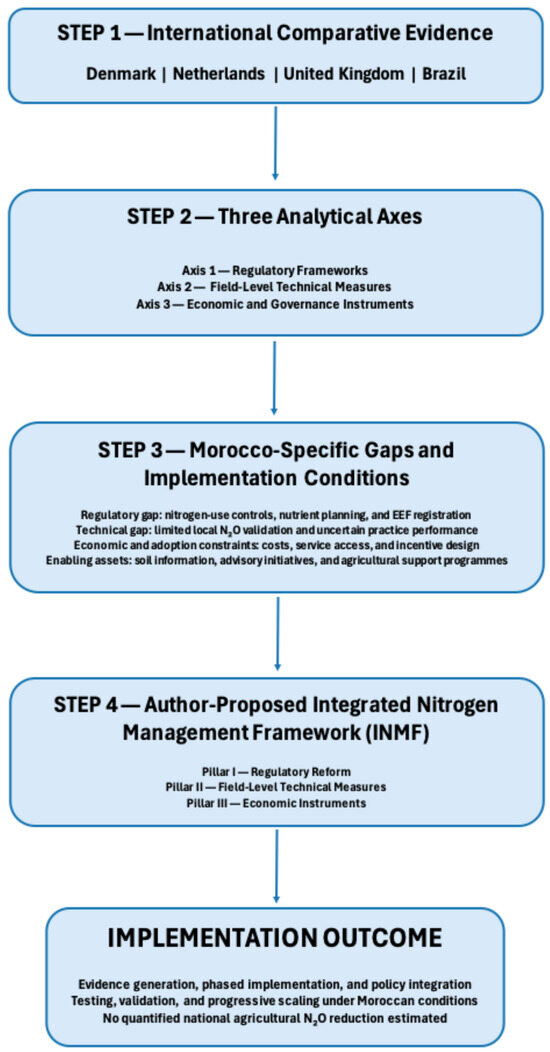
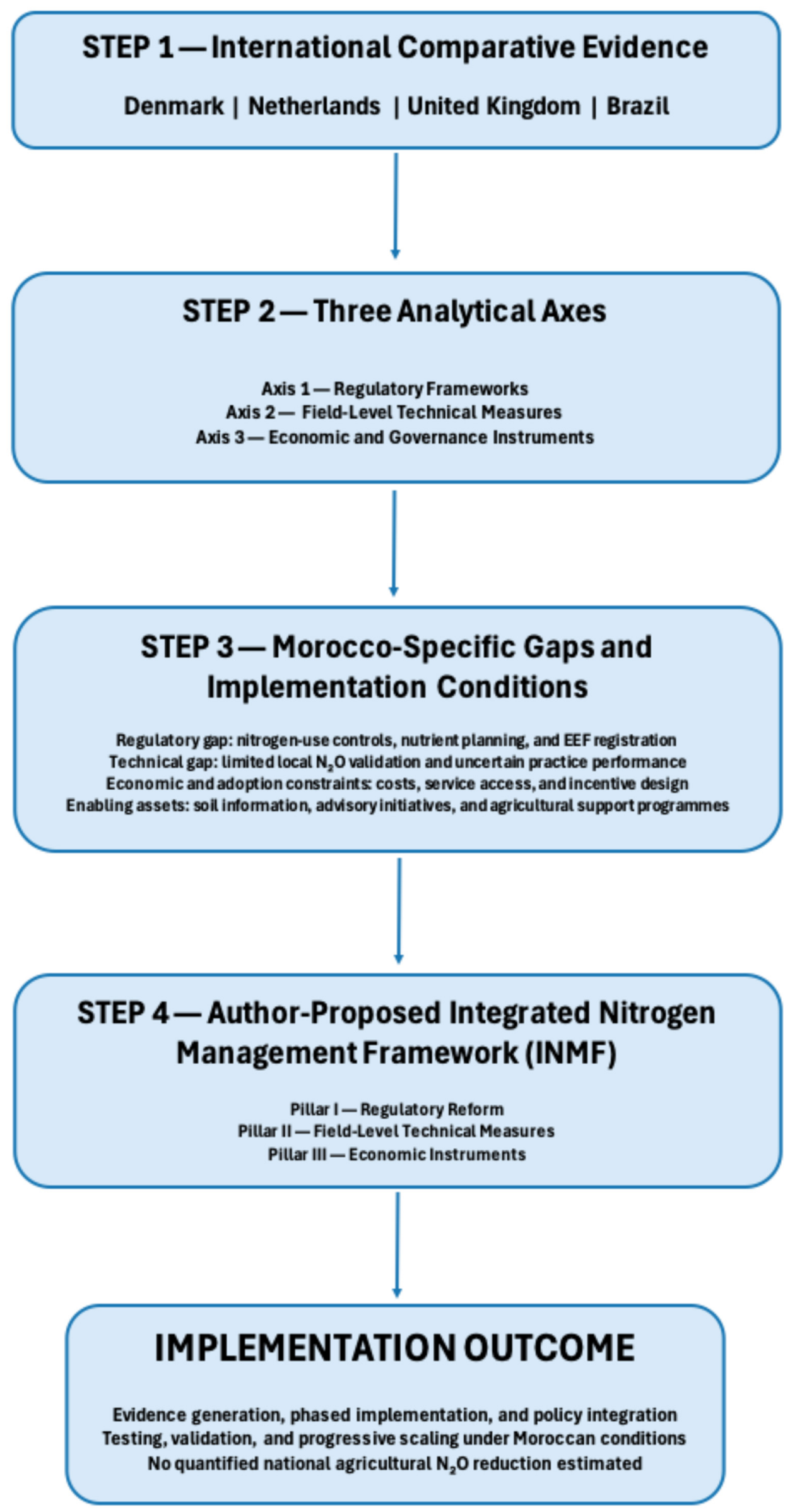
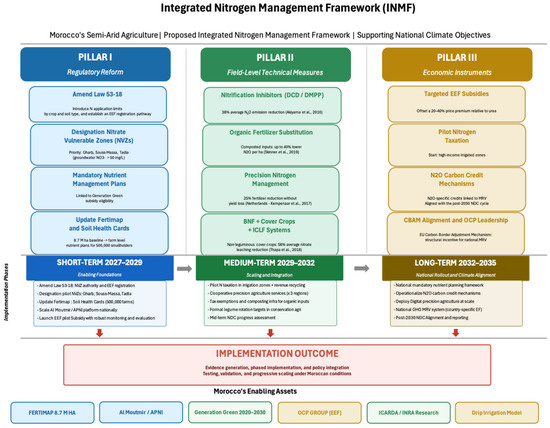
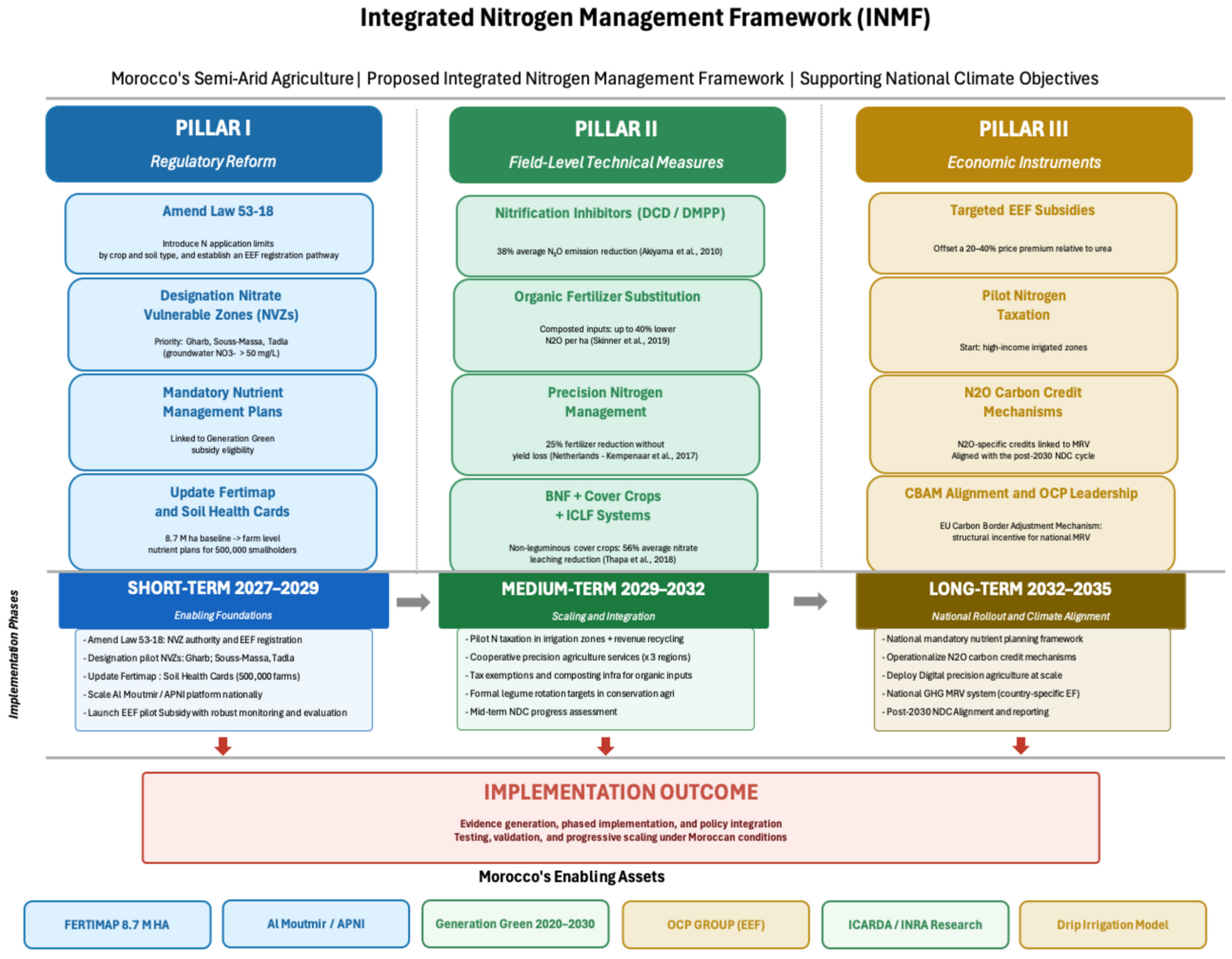

Disclaimer/Publisher’s Note: The statements, opinions and data contained in all publications are solely those of the individual author(s) and contributor(s) and not of MDPI and/or the editor(s). MDPI and/or the editor(s) disclaim responsibility for any injury to people or property resulting from any ideas, methods, instructions or products referred to in the content. |
© 2026 by the authors. Licensee MDPI, Basel, Switzerland. This article is an open access article distributed under the terms and conditions of the Creative Commons Attribution (CC BY) license.