


Abstract
Aquaponics is a production system that results from the interaction between aquaculture and hydroponics. Whereas the mechanistic view of aquaculture and hydroponics has been explained using a simplistic nitrogen (N) cycle pathway, a new perspective on aquaponics could be obtained through the lens of a meta-holobiont. In this perspective, the symbiotic interplay across levels involving fish, plants, and microbes will be crucial for understanding and engineering aquaponics. With the advent of omics technology, it has become easier to explain the molecular basis of nutrient cycling and system stability. Although most available data are descriptive at present, they provide a foundation for understanding microbial interactions within the system. In this paper, we examine the genomic signatures of the N cycle, focusing on the roles of comammox bacteria and nifH-mediated N fixation. Moreover, the functionality of siderophore-producing microbes in enhancing nutrient bioavailability will be analyzed. Additionally, we explore the molecular mechanisms involved in the synthesis of secondary metabolites and Induced Systemic Resistance. Lastly, we discuss the path to aquaponics 4.0 and bio-digital twin modeling in aquaponics.
1. Introduction: Systems Biology and the “Aquaponic Holobiont”
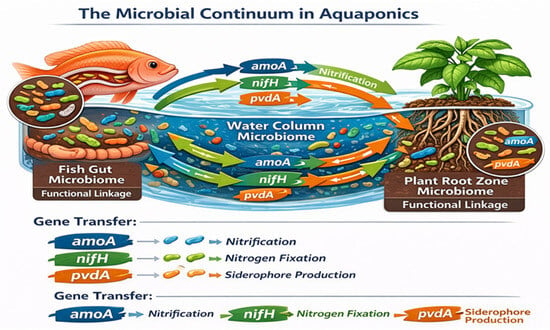
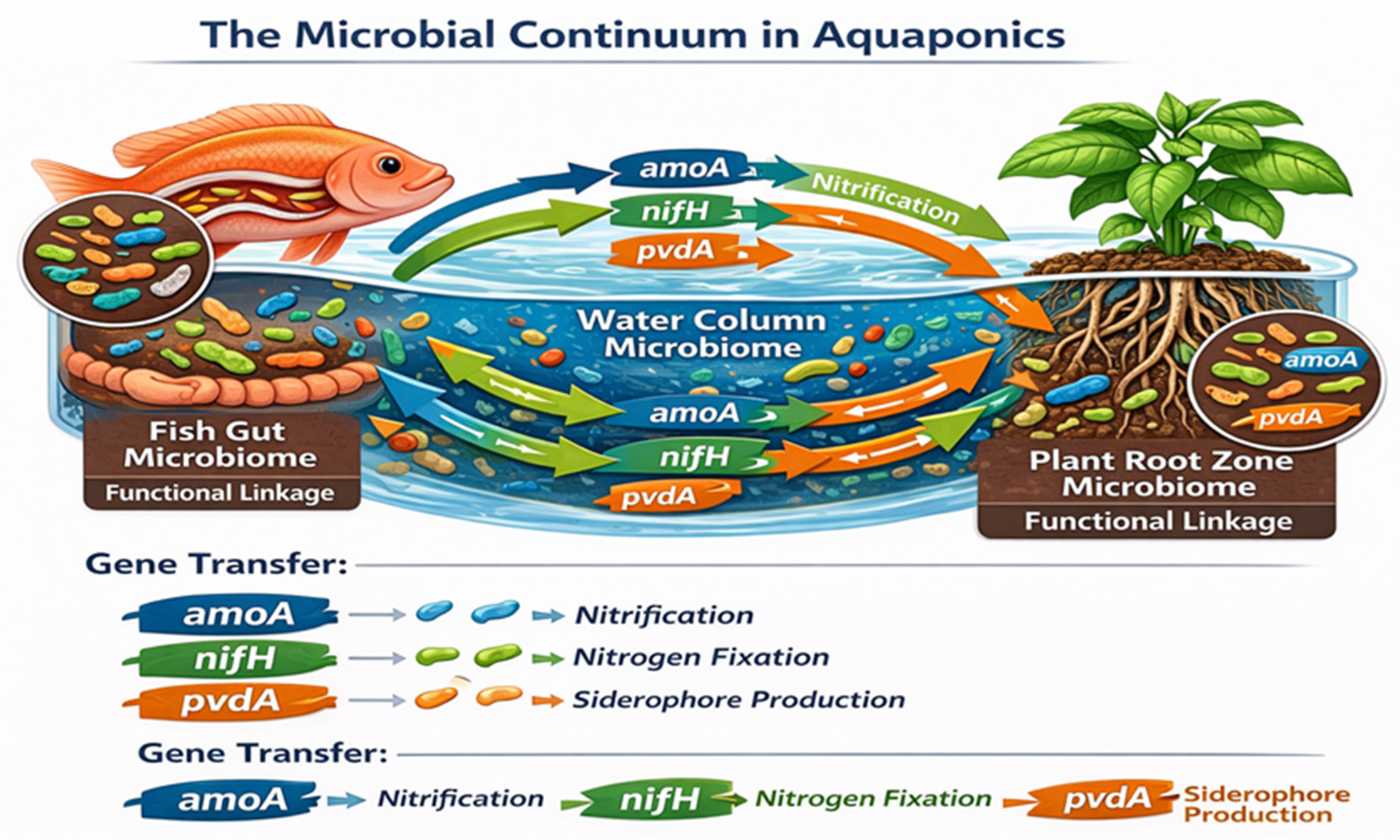
The need for a sustainable food production system has been a major driving force behind the development and application of closed-loop technologies to use water and nutrients efficiently [1]. In this context, aquaponics has been recognized as an integrated biosystem that recycles nutrient-rich wastewater from aquaculture for the soilless cultivation of hydroponic plants. Drawing from a systems biology perspective, recent studies recognize aquaponics as a dynamic, molecularly interconnected microbial continuum [2]. The existing knowledge and perspective of the system, as presented by the systems biology discipline, have recognized it as a dynamic, interconnected microbial continuum at the molecular level. However, while the traditional meaning of the term holobiont is a host and its associated microbiota working together as a functional unit of selection, a new term, Aquaponic meta-holobiont, is being proposed. This is because, although the fish and the plants are different biological hosts, the high connectivity of microbes in the water column leads to a functional co-dependency. The key difference between an ecosystem and an aquaponic system is that the latter is a techno-biological hybrid, with its infrastructure serving as a scaffold for this functional community. The analogy is being borrowed here not to imply a functional unit of evolution but to highlight the requirement for metabolic integration (Figure 1) [3]. Within this meta-holobiont framework, it is argued that the fish gut, water column, and root zone (rhizosphere) microbiomes are in constant cross-talk, regulating the overall metabolic output. Although classical microbiological approaches can detect only 1% of the microbial diversity in this ecosystem, Next-Generation Sequencing (NGS) and high-throughput omics approaches have enabled exploration of the genetic potential of this black box [4]. While N remains the primary limiting factor and focus of this journal, its cycling within the aquaponic meta-holobiont is inextricably linked to phosphorus (P) solubilization and micronutrient bioavailability, which collectively ensure food security.
Figure 1.
Conceptual Framework of the Aquaponic Meta-Holobiont.
Methodology and Scope of the Review
This narrative review has compiled high-impact studies published between 2015 and 2026, mainly retrieved from Web of Science, Scopus, and PubMed databases. The methodology employed Boolean operations to search for “aquaponics” along with “metagenomics,” “metatranscriptomics,” “metabolomics,” and “multi-omics integration.” The selection of studies was based on prioritizing primary studies on integrated aquaponic systems, both coupled and decoupled. However, where specific molecular mechanisms remain understudied in aquaponics, reliable data from recirculating aquaculture systems and hydroponic rhizospheres have been included as comparative measures. A total of 62 peer-reviewed studies have been included to ensure a strong evidence base for the proposed framework.
This diagram demonstrates the functional interdependence and metabolic connectivity among the three microbiomes—the fish gut, the water column, and the rhizosphere. The size of the systemic nodes (the circles) symbolically indicates the level of microbial population and metabolic complexity in each habitat. The arrows symbolically denote the flow of signaling and nutritive compounds, with their thickness indicating the extent of bio-communication (e.g., quorum-sensing compounds and organic acids). Key mechanisms such as Induced Systemic Resistance (ISR), siderophore production, and P solubilization are positioned at the interface of these nodes to highlight their role as bridge functions for system-wide resource circularity.
Recent metagenomic and metatranscriptomic approaches have revealed that microbial communities in aquaponics are not restricted to nitrification processes. Instead, they play significant roles in providing ecosystem services, such as ISR, siderophore production, and P solubilization. However, the main challenge in the field of aquaponics is how to use the large amount of data collected from these omic approaches, referred to as big data, to enhance system efficiency (multi-omics integration) [5].
This review article focuses on the fish–microbiome–plant troika of aquaponics from a molecular perspective, highlighting how omics approaches can be used to enhance the system’s role as a regulator of nutrient uptake and plant defense responses. This research aims to fill gaps in the field of aquaponics by providing a strategic approach to transforming this conventional production system into a bio-digital twin.
2. Nutrient Flux and Molecular Regulation Mechanisms in Aquaponic Ecosystems
The sustainability of such systems relies on the kinetics of transforming macro- and micronutrients present in fish waste into plant-accessible inorganic forms. The process is not haphazard but rather an orchestrated event regulated by the genomic potential and transcriptomic activity of specific microbe populations within the aquaponic holobiont.
2.1. Molecular Dynamics of the Nitrogen Cycle: From AmoA to NifH
While N cycle management in aquaponics has previously been understood only in terms of the conversion of ammonia to nitrate, current metagenomic and metatranscriptomic data suggest that this process has a much more complex, multilayered genomic architecture [6]. For example, the former theory of the dominance of Nitrosomonas and Nitrospira strains has been replaced by new insights into the management of the nitrogen cycle, including the current expression of the genes involved (amoA and nxrB enzymes of these strains [7]). In addition, the emergence of comammox microorganisms that can oxidize ammonia in a single step has been an outstanding innovation for predicting N flow in integrated systems. Such microorganisms have high substrate affinity when located in biofilms with fluctuating oxygen gradients. Therefore, it is possible to state that such bacteria play a crucial role in maintaining system stability, as other microorganisms cannot survive under the high organic matter load [8]. It is therefore important to consider not only the taxonomic diversity of these microbial communities but also the functional genetic potential they encode for key metabolic processes such as nitrification and N fixation.
On the contrary, because of the high levels of nitrates in the water fed to the aquaponics system, it was hypothesized that N fixation would be low, as it would be inhibited under these conditions. The inhibitory effect here is due to the energy required for N fixation, which requires at least 16 ATPs per N2 molecule [9]. In addition, high levels of nitrate inhibit nif gene expression via transcriptional regulation by the Ntr mechanism [10].
Previous metagenomic analyses had revealed a complex community of free-living diazotrophs, including Azotobacter and Rhizobium species, that carry the nifH gene cluster in the aquaponics rhizosphere [11]. Although the initial results from [12] suggested that these microorganisms might play a role in supplying N, later research by [13,14] showed that microbial community function changes significantly across locations within the system. This observation suggests that the nifH gene cluster may serve as a local buffering mechanism for variable nitrate levels rather than a consistent N source. Therefore, the transition from genomic potential to active metabolic flux must be demonstrated using methods such as metatranscriptomics or SIP before the real contribution of these metabolic pathways to the system’s N budget can be determined. This shows that biological N fixation is a local buffering mechanism that maintains nutrient availability when competition between microbial and plant nutrient demands increases in the rhizosphere. The co-existence of the two opposing ends of the N cycle, namely, nitrification and fixation, proves that the nutrient use efficiency of the system can be improved not only by physical modulation of inputs but also by microbial genetic modulation. Furthermore, it provides critical insight into how the rate of N loss through denitrification can be reduced in the system. The integration of multi-omics provides a better understanding of how the activities of amoA and nifH are in metabolic synchronization with the dissolved organic carbon (DOC) fraction of the aquatic environment, converting the aquaponic system from a static N cycle into a data-driven bioreactor model.
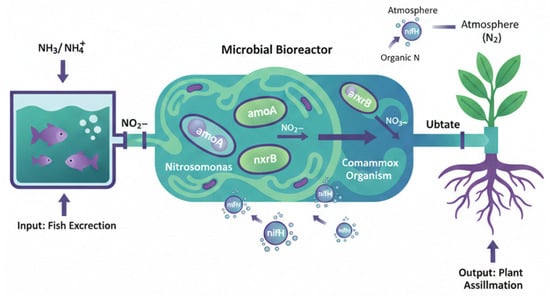
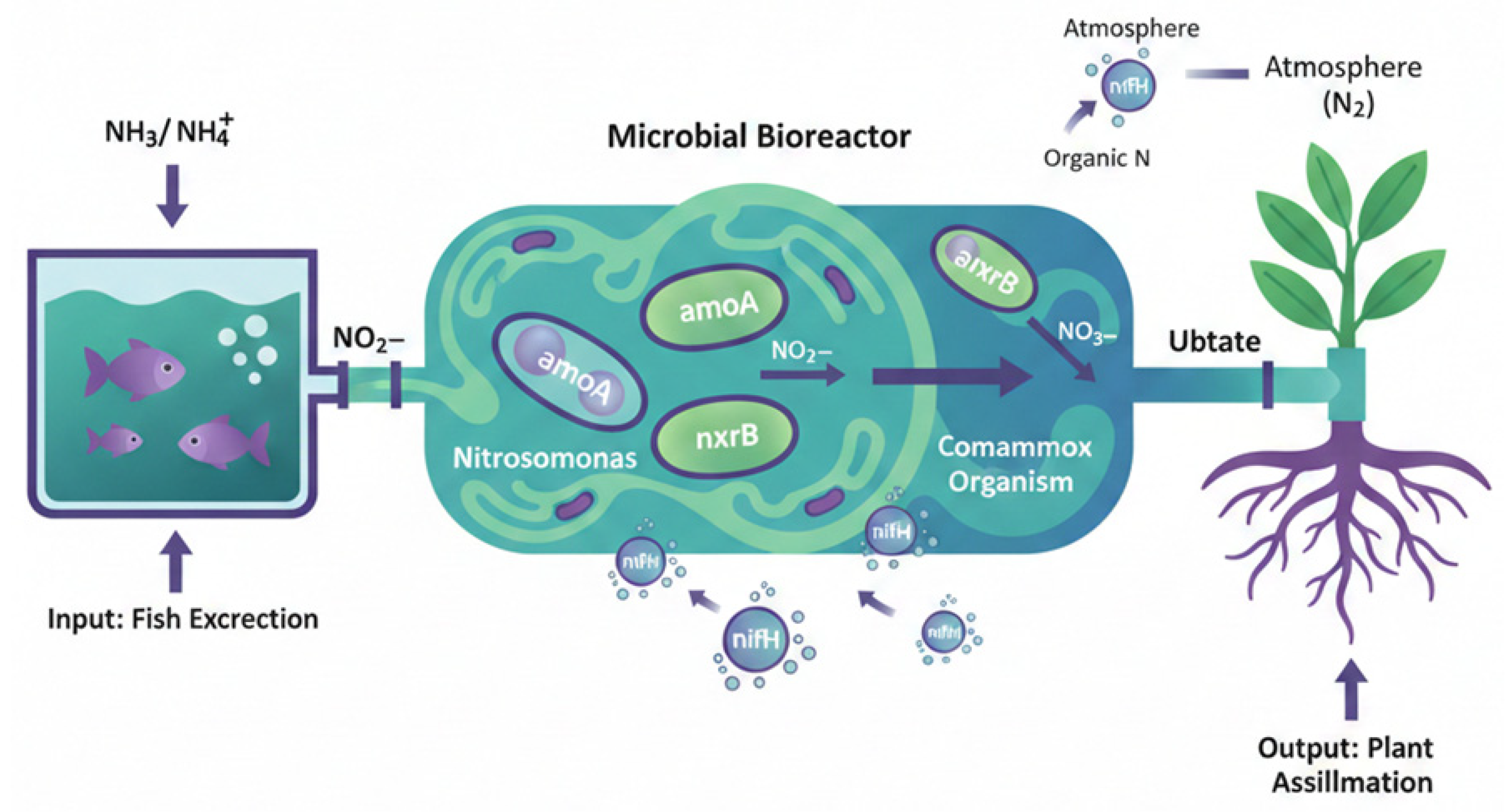
Figure 2 shows the molecular schematic of the N cycle in an aquaponics ecosystem. The schema includes the traditional nitrification process with amoA and nitrite oxidoreductase (nxrB) genes, as well as the recently described comammox process (complete ammonia oxidation) and N fixation with nifH mechanisms in the root zone. The varying density of amoA enclosures represents functional gene abundance gradients tailored to substrate availability. The diagram illustrates the conceptual link between the presence of functional genes and the metabolic pathways governing nutrient flux. Regarding topological specificity, Nitrosomonas species are positioned as primary oxidizers in ammonia-rich zones, while comammox (Nitrospira) are strategically localized to ensure efficiency in oligotrophic conditions. While the schema defines the biological directionality of these transformations, it serves as a qualitative framework for identifying key enzymatic checkpoints rather than a quantitative representation of kinetic rates.
Figure 2.
Molecular Architecture of the Nitrogen Cycle within the Biofilm-Based Bioreactor.
In aquaponic systems, nitrification and N fixation occur simultaneously, creating a unique challenge for maintaining the system’s energy balance [15]. Comammox bacteria, such as Nitrospira inopinata, thrive in low-ammonia conditions. Their success depends on the energy available from diazotrophs that carry out nifH-mediated fixation. These processes involve a trade-off: when ammonia is limited, comammox activity increases, but high levels of DOC in the rhizosphere help cover the ATP costs of N fixation. This shows that the system controls the N cycle through microbial energy flow instead of relying on physical management [15].
2.2. Phosphorus Mobilization and Organic Acid Exudation
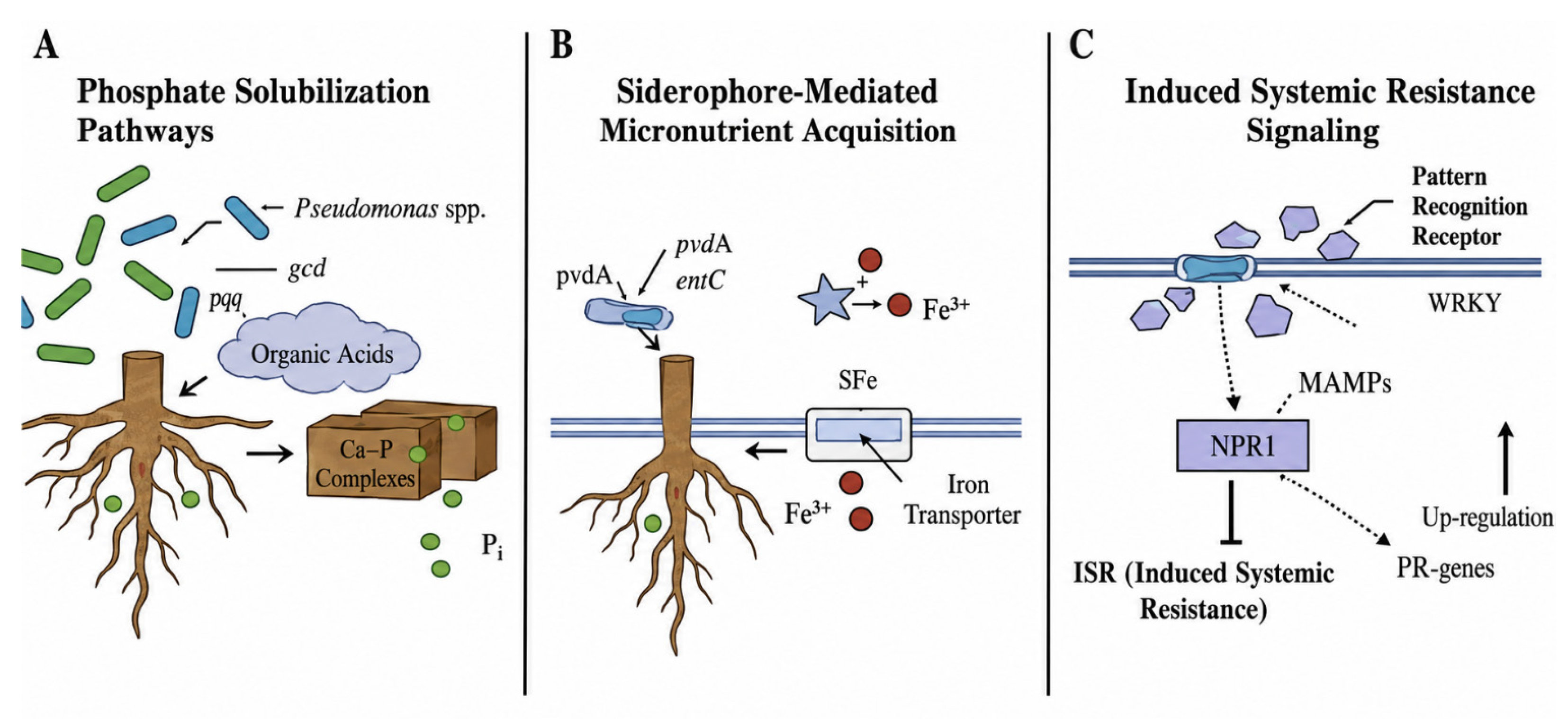
In aquaponic systems, P management differs from the N cycle in that it depends on a balance between physicochemical precipitation and microbial solubility [16]. It has been noted that a substantial fraction of phosphorus entering the system from the fish feed is unavailable for plant uptake due to the alkaline water, which causes it to precipitate as calcium phosphates. This means that 30% to 50% of the P in the system is lost as solid waste [2]. Overcoming this critical bottleneck is possible through both enzymatic and acidification-based strategies of phosphate-solubilizing bacteria (PSB) communities located in the rhizosphere (Figure 3). Metaproteomics studies confirm that aphA (acid phosphatase) and alkP (alkaline phosphatase) enzymes are present in high concentrations in the aquaponic rhizosphere, and that these enzymes hydrolyze organic phosphate (phytate) in fish excrement, converting it into inorganic orthophosphate that can be directly absorbed by plant roots [17].
Figure 3.
Phosphorus Mobilization and Microbial Synergy.
This enzymatic catalytic process works synergistically with organic acid exudation, another arm of microbial metabolism. Specifically, the glucose dehydrogenase gene, located in the genomes of dominant PSB strains such as Pseudomonas and Bacillus, regulates the synthesis of low-molecular-weight organic acids, such as gluconic acid, by oxidizing glucose [18]. The release of these acids into rhizosphere micro-niches lowers the local pH, breaking stable inorganic phosphate bonds and maximizing P bioavailability [19]. Critically, multi-omics data revealed that transcript abundance of these functional genes correlates directly with P dissolution rates, providing a dynamic, real-time indicator of P bioavailability that static chemical measurements cannot capture (Table 1).
Table 1.
Synthesized Metagenomic Data on Phosphorus-Solubilizing Bacteria and Functional Genes in Aquaponics Systems.
This diagram illustrates the qualitative pathways of inorganic phosphate cleavage and organic phytate hydrolysis in the rhizosphere. To complement this schematic, Table 1 (see below) synthesizes reported functional gene abundances and dominant PSB taxa across recent metagenomic studies. While this figure serves as a mechanistic roadmap, the integrated data in Table 1 provide a meta-analysis of the genomic potential across different aquaponic configurations, bridging the gap between theoretical pathways and observed microbial profiles.
The genetic activation of P solubility is immediately affected by the pH levels of the medium. According to the literature, when the pH of the biofilm layer exceeds 7.8, the expression of the alkP gene, which encodes alkaline phosphatase, is activated by 40–60% above basal levels to counteract calcium phosphate precipitation [17].
2.3. Siderophore Production and Micronutrient Chelation: The PhlD/Pvd Axis
The bioavailability of micronutrients such as iron (Fe) and zinc (Zn) is often limited by precipitation and oxidation reactions in the alkaline water matrix of aquaponic systems. The presence of microbial chelation mechanisms identified in the biofilm layers and rhizosphere of aquaponic systems through functional metagenomics is of vital significance for alleviating this abiotic limitation. In this regard, the occurrence of iron-chelating gene clusters such as pvdA (pyoverdine biosynthesis gene cluster) and entC (enterobactin biosynthesis gene cluster) in Pseudomonas and Enterobacteriaceae-dominant microbial communities suggests the intrinsic biochelation potential of the aquaponics system. The active transcription of this intrinsic potential suggests the presence of natural nutrient flux modulators that convert ferric iron (Fe3+) into a more bioavailable form.
The microbial chelation process not only provides nutrients but also exerts a synergistic effect on plant health and disease suppression [22,23]. Transcriptomic data from RNA sequencing revealed that colonization of the rhizosphere by bacteria carrying the phlD gene, which encodes the synthesis of the secondary metabolite 2,4-diacetylphloroglucinol, triggered the expression of specific metal transport proteins in plant roots [24]. This molecular-level interaction between microbial metabolites and the plants’ genetic composition culminates in a metabolic priming effect. As documented in [25], this process puts the plants into a defense-oriented state while simultaneously increasing cellular capacity for micronutrient uptake, thereby enhancing overall systemic resilience. Therefore, it can be asserted that the cycle of micronutrients in the context of aquaponics is controlled by a complex cross-talk between the microbial metabolites and the genetic composition of the plants.
In the context of Fe bioavailability, the threshold effect of activating the pvdA gene, which encodes pyoverdine synthesis, is of considerable importance. Indeed, the research conducted by Kramer et al. [26] verifies that under conditions where the concentration of free Fe3+ is below 10−7 M, a situation that prevails when the pH of the system exceeds 7.5, an increase of up to 120% in the expression of genes that control the synthesis of siderophores gets activated. This molecular-level event represents an autonomous survival mechanism of the system.
2.4. Nutrient Use Efficiency and Multi-Omics Integration
Optimizing resource use in aquaponics can be achieved through a quantitative study of the dynamic interactions among the biological components of the system, rather than through input–output analysis. Multi-omics integration provides the high-resolution data layer required for a precision aquaponics strategy by defining causal relationships between the genomic potential and the metabolic output of this complex system [27]. Specifically, measuring signaling molecules, Acyl-homoserine lactones (AHLs), in the aquatic system using non-targeted metabolomics analysis enables us to forecast when microbial communities will change functionally and how quickly they will release nutrients through the quorum-sensing mechanism [28]. Unraveling these molecular messages will enable the temporal coordination of nutrient delivery and plant requirement in the system, reducing nutrient loss as in conventional systems.
The conceptual models proposed in the scientific literature [29] indicate that managing such molecular feedback loops can improve total nutrient use efficiency by 25%. This efficiency gain is predicated on the precise alignment of fish metabolic outputs with plant uptake kinetics. For instance, in a high-density system (e.g., 20–40 kg/m3), Nile tilapia (Oreochromis niloticus) excretes approximately 55–65% of the N consumed via feed as total ammonia nitrogen (TAN) and organic waste [27]. Quantitatively, a tilapia-based system with a feed protein content of 32% can generate roughly 30–40 g of N per kg of feed, which aligns with the peak vegetative requirements of leafy greens such as lettuce (Lactuca sativa) (typically 2.5–3.5 g N per kg of harvested biomass). Multi-omics integration enables this 25% improvement by leveraging real-time metabolic flux data to dynamically adjust feeding ratios and flow rates, thereby minimizing the typical 15–20% N loss due to denitrification or solid waste accumulation in non-optimized systems. Such improvement in efficiency is not only associated with the rate of plant development but also with the control of nutrient recovery capacity in the waste stream at the molecular level. Matching the genetic capacity, as indicated by metagenomic data, with real-time activity, as indicated by metabolomics data, converts the aquaponics system from an uncontrolled biological process into an autonomous production system that can be simulated and controlled in real time using digital twins, as proposed in [3].
3. Phytophysiological Responses: Molecular Defense and Nutraceutical Quality
The effect of aquaponic systems on plant health is mediated by the complex network of microbial interactions, in contrast to the sterile environment provided by traditional hydroponic systems. Beneficial microbes in aquaponic water interact with plant roots, establishing molecular immune memory and initiating a systemic resistance response, as described in the literature as ISR [30]. Metatranscriptomics analyses have shown a permanent but weak activation in the defense signaling pathways of plants cultivated in aquaponic systems, specifically in the jasmonic acid (JA) and ethylene (ET) signaling pathways [8]. This permanent activation maintains the plant’s defense genes (e.g., PR genes, WRKY transcription factors) in a primed state, allowing the plant to rapidly and strongly activate its molecular response when a potential pathogen threatens it [31]. The functional effectiveness of these interactions can be demonstrated by species-specific differences in biomass production and quality across various aquaponics systems. From the information provided in Table 2, it is evident that high-resolution studies have revealed distinctive molecular mechanisms in crops such as Lactuca sativa and Solanum lycopersicum. The presence of activated genes for nutrient transporters and antioxidant metabolism contributes positively to the efficient recovery of resources and the generation of value. This information serves as the basis for shifting from microbial biology to metabolic engineering.
Table 2.
Integration matrix of multi-omic layers and physical sensors for the Bio-Digital Twin framework: A roadmap for predictive and proactive aquaponic management.
The specific environmental factors provided by aquaponic systems, such as mild osmotic stress and microbial interactions, are crucial for plant secondary metabolism. Non-targeted metabolomics analyses have demonstrated that specific microbial exudates and changes in water chemistry in the aquaponic systems trigger the biosynthesis of protective compounds, such as phenolics and flavonoids, in the plant [4]. The non-targeted metabolomics revealed that microbial secretion in aquaponic systems can trigger the biosynthesis of protective metabolites, including phenolics and flavonoids, via the Shikimate pathway [4]. The sophisticated pathway consists of seven biochemical reactions that bridge primary and secondary metabolism, in which the end products of glycolysis (PEP and E4P) are converted into aromatic amino acids, namely phenylalanine, tyrosine, and tryptophan. Under aquaponics conditions, microbes may regulate the expression of phenylalanine ammonia-lyase, an essential enzyme that directs carbon flow toward secondary metabolites. Despite the hypothesis that antioxidant properties may increase in leafy vegetables grown in aquaponics, outcomes differ across aquaponic systems. Instead of providing better nutrition, aquaponics creates a distinctive microbial community that can induce secondary metabolism in plants [1]. This makes aquaponics not only a sustainable but also a strategic mode of production for high-value-added functional food. The nutritional superiority of these phenolic and flavonoid compounds in the human diet is essential, as they act as potent antioxidants, neutralizing reactive oxygen species and modulating key cellular signaling pathways. Metabolites offer considerable health benefits through anti-inflammatory and cardioprotective properties that help alleviate oxidative stress, the root cause of chronic inflammatory conditions [34]. Optimizing N metabolism in this regard is inherently associated with microbial food safety, as increased N supply may favor pathogen growth. Still, the dominant role of specialized nitrifying and diazotrophic microorganisms leads to competitive exclusion. By reducing ecological space and resource use, the optimized N microbiome ensures that high productivity does not compromise biosecurity [35].
Case-Specific Physiological and Metabolomic Responses
The physiological plasticity of plant species in aquaponics is highly dependent on their metabolic sinks and their interaction with the microbial continuum. For instance, in lettuce (Lactuca sativa), while studies by [32] have focused on yield and mineral composition under microbial inoculation, the observed enhancement in nutrient use efficiency suggests a sophisticated physiological adaptation to the aquaponic environment. In fruiting crops like tomatoes (Solanum lycopersicum), the evidence for metabolic recalibration is more pronounced at the secondary metabolite level. As documented by [34], tomatoes grown in aquaponic systems exhibit significantly higher lycopene accumulation than their conventional soil-grown counterparts, indicating a shift in carotenoid biosynthetic flux. Moreover, aquaponics has a noticeable effect on the production of aromatic herbs, particularly basil (Ocimum basilicum). According to [34], there is a pronounced change in the volatile compound composition, including a higher concentration of linalool. It appears that the unique nature of nutrients and microbial signaling may have influenced this particular change. Moreover, Buitrago-Villanueva et al. [33] observed an increase in metabolite diversity in watercress, further validating the notion of species-specific metabolic responses to aquaponic conditions. Although the precise role of the transcriptome remains under exploration, it has been shown that the aquaponic holobiont alters the metabolic signature.
4. Microbiological Safety and the Nitrogen–Pathogen Nexus
The confluence of rapid N turnover and microbial safety is a pivotal factor in the sustainability of food sovereignty. The efficiency of N metabolism in the aquaponic holobiont ecosystem directly relates to the reduction in pathogens via competitive exclusion. The dominance of specific microorganisms in N-tropic processes minimizes the niche for enteric pathogens. Here, the findings from [32] indicate that E. coli is extremely rare in aquaponics, with only three samples showing minimal contamination and no traces of Salmonella. Weller et al. [36] highlight the complexity of the aquaponics microbiome, noting that Proteobacteria and Bacteroidetes predominate among Bacterial phyla. Dinev et al. [37] note that while pathogens can enter these systems, proper hygiene practices can maintain system safety. This mode of competition is achieved not only through the utilization of resources such as nutrients and available niches, but also through the exclusion of these pathogens from the system by bacteriocins and lytic enzymes secreted by beneficial microbiome species [38]. The literature indicates that an established microbiome in aquaponics functions as a natural bio-barrier against pathogen inoculation, cleaning the production area at the molecular level and providing food safety from farm to table [3].
5. Future Horizons: Bio-Digital Twin (BDT) Integration and Precision Management
Within the Aquaponics 4.0 concept, the role of the system’s digital twin is no longer limited to being a passive data reflection tool; it becomes a cybernetic controller of the metabolic potential of the “Holobiont”. While the integration of multi-omics with real-time digital monitoring remains a theoretical framework, we propose a roadmap for a BDT as a conceptual controller for the meta-holobiont. In addition, while the above models are limited to managing linear changes in water chemistry, our proposed architecture for the BDT incorporates physical sensor data and metabolic flux analysis (MFA) of the biotic elements of the system. A suggested approach for designing the BDT architecture helps achieve cybernetic management of the aquaponic holobiont by combining physical sensory information with MFA. Instead of being a mere descriptive technique, the BDT is a prediction model that harmonizes the metabolic products of fish with the consumption kinetics of plants. In this way, the biology of aquaponics becomes predictable, turning the whole process into a precise production chain [3,39].
5.1. The Molecular–Physical Interface: Synergy of Multi-Omics and IoT
To not only track the data flow but also to be able to foresee the future state of the system (predictive analytics), the following critical correlations are advocated within the scope of the article:
5.1.1. Transcriptomic–Physical Coupling & Pre-Clinical Diagnostics
Physical sensors such as dissolved oxygen (DO), pH, etc., typically report a critical condition after a system has failed. However, in fish such as O. niloticus, genes such as hif-1α and hsp70 are expressed early, days before physical damage occurs [20]. The use of HIF-1α is based on the premise that it acts as a master regulator of oxygen homeostasis. Under normal conditions, the subunits of (Hypoxia-Inducible Factor 1-alpha) HIF-1α molecules undergo proteolysis using the prolyl hydroxylase (PHD) pathway. However, as DO concentration decreases, PHD activity is inhibited, leading to the stabilization and nuclear translocation of HIF-1α. This molecule activates other gene expressions by binding to the hypoxia response elements. As a result, energy production is adapted earlier towards anaerobic processes and erythropoiesis before symptoms such as gasping or pipping occur. The importance of these genes in BDT lies in their kinetic behavior, which indicates the presence of a buffer zone. As a result, aeration can be adjusted according to the condition without causing critical effects on biomass metabolism, such as acidosis. In BDT, the stabilization of HIF-1α is triggered post-transcriptionally by changes in oxygen concentration and acts as a master regulator of gene expression before gasping occurs [40]. The induction of hsp70, which acts as a molecular chaperone, prevents proteins from unfolding under thermal and ammonia-induced proteotoxic stress [21]. By incorporating these transcriptomic fingerprints into the BDT model, a molecular sentinel strategy can be employed, in which the system responds to sublethal cellular stressors rather than their physiological consequences. Nonetheless, it must be understood that these molecular activities have mostly been documented in experimental fish physiology studies conducted at the laboratory scale. Within the realm of commercial aquaponics, there is still room to improve transcriptomic profiling as a viable method for early detection, as current issues with cost and analysis time delays remain. The application of omics in the context of operational deployment in Aquaponics 4.0 is carried out in a two-part process: monitoring and transforming the system itself. More specifically, metagenomics and transcriptomics, through their molecular signature analyses (e.g., HIF-1α), serve as monitoring processes for the diagnostic assessment of system stability [41,42]. However, metabolomics and proteomics act as drivers of system change, with the profiling of exuded materials used to create new system structures that enhance resource efficiency [43]. This way, all the processes in question are assigned a clear purpose, ranging from mere monitoring to optimization based on an AI/ML architecture [44]. In practical applications, transcriptomics enables very precise diagnosis of any occurring stress factors. Indeed, the transcriptomic response to stress has proven more sensitive than conventional criteria such as growth rate or swimming behavior in fish [21]. For example, the induction of the gene encoding hsp70 is a highly conserved biomarker of temperature stress across fish taxa and tissues, helping develop resistance to these conditions before damage occurs [45]. In addition to revealing predictive compensatory responses through transcriptomics [46], the BDT model translates diagnostic significance into action-oriented strategies. In particular, with the help of BDT, it becomes possible to adjust the operation of various equipment, such as thermal management systems (e.g., by adjusting the thermostat), based on cellular-level biomarkers [44] before the stress develops into low feed intake or death rates in fish populations.
5.1.2. Metagenomic Resilience & Community Stability Index
Failure of biofilters is typically due to genetic dilution in nitrifying bacteria (AOB/NOB) populations [22]. While the standard culture-based technique can take months to determine the microbial profile, MinION nanopore sequencing can serve as a rapid-cycle genomics platform, enabling microbial profiling within days, as evidenced by 24-h microbiome baseline profiling in commercial aquaculture [47]. Currently, the technology readiness level of MinION nanopore sequencing for real-time aquaponics management is at the experimental stage. Various challenges, such as the demand for pure DNA isolation, bioinformatics pipeline standardization [48], and high costs, need to be overcome. Although the conceptual framework for a stability index derived from on-site sequencing appears to be an interesting approach for proactively managing aquaponics, its commercial implementation remains difficult. This is due to the current lack of aquaponics-specific validation studies correlating rapid genomic changes with long-term system sustainability. This allows simulation of the system’s ability to buffer environmental stressors beforehand [49]. In such a system, the biofilter health score can be viewed as a composite index derived from metagenomic quantification. This can be achieved by evaluating the relative abundance of genes responsible for N cycling, such as amoA and nitrite oxidation (nxrB), as well as the presence of comammox-Nitrospira. An increase in the biofilter health score indicates that the bacterial community has sufficient genomic diversity to maintain nitrification in the event of environmental shock, such as a drop in temperature or a pH change [49]. The suggested stability index uses high-throughput metagenomic sequencing data to assess Shannon diversity and functional redundancy within the nitrifying guild. The presence of specific genomic markers, nxrB and amoA, can be used by BDT to assess the functional buffer capacity of the biofilter. The reduction in these genomic markers is a precursor to genetic dilution, allowing biofilter management to undertake preemptive measures to introduce beneficial microbial inoculations before an inevitable ammonia shock. The use of metagenomics enables tailored biofilter management. With metagenomics, the dynamics of the microbial community within biofilters can be observed in a customized manner rather than making assumptions based on standard operating procedures [50]. In particular, since amoA genes are crucial biomarkers for the identification and quantification of ammonia oxidizers [41], incorporating these genes into the BDT approach opens the door to highly effective diagnostics. In this regard, we suggest using the ratio of the amoA and nxrB genes to detect imbalances in nitrifier activity, referred to as nitrification stalling. Traditionally, such situations could only be addressed by replacing the entire water volume at great expense. Still, metagenomics-guided solutions would enable much more targeted bioaugmentation practices, as demonstrated by research on the accelerated start-up of the nitrification process in inoculated filters [51].
5.1.3. Phenomics–Metabolomics Integration: From Rhizosphere Tuning to Nutraceutical Quality Maximization
Secondary metabolites (phenolics, organic acids) released from plant roots not only modulate nutrient absorption but also quorum sensing mechanisms in the rhizosphere [52]. BDT optimizes the nutrient recipe based on the plant’s instantaneous phenological stage and defense needs by correlating fluctuations in electrical conductivity (EC) with exometabolomic profiles [53]. This adaptive tuning relies on the detection of AHLs and specific strigolactones that dictate the recruitment of beneficial plant growth-promoting rhizobacteria. The BDT analyzes the relationship between organic acid exudates (such as malate and citrate) from the roots and the solubility constant of both P and Fe. The information gleaned from this process enables the BDT system to automatically regulate the nutrient solution’s pH or chelation rate, depending on the plant’s actual physiological need, for example, during its flowering stage. Hands-on metabolomic monitoring enables a shift toward precision harvesting, in which crop collection timing is optimized based on molecular saturation rather than chronological age. The significance of this timing, often referred to as the balsamic time, is critical for maximizing the concentration of secondary metabolites and ensuring high-quality nutraceuticals [43]. Within the BDT framework, we propose a closed-loop integration in which multispectral sensing forecasts phytochemical composition to monitor indices such as the anthocyanin reflectance index and the photochemical reflection index [34]. It is essential to distinguish between the various levels of biological organization represented in the BDT framework. While the transcriptomic and metagenomic layers target specific molecular biomarkers (e.g., HIF-1α and amoA), the NDVI (Normalized Difference Vegetation Index) utilized in the phenomics layer functions as a high-level phenotypic proxy rather than a molecular marker. The NDVI provides a non-destructive assessment of canopy-scale vigor and chlorophyll density, operating at a different scale of biological organization than the cellular-level metabolites described in the previous sections [34].
5.2. Integrative Data Synthesis Matrix
The following matrix summarizes the causal relationships between molecular layers and physical control parameters:
The integration model proposed in Table 2 follows a multimodal data-fusion approach to address chronic efficiency bottlenecks in aquaponic systems. Matching transcriptomic signals, for example, HIF-1α, with physical measurements of the water column, for example, a DO sensor, enables the early identification of sublethal stress states in the aquaponics system that would otherwise go undetected, as emphasized in the study of [54]. Likewise, matching rhizosphere metabolomic signals, such as siderophores and AHLs, with EC values enables dynamic management of nutrient demand in the aquaponic system. This synchronization of the molecular and the physical in the aquaponic system shifts the focus from the search for chemical equilibrium to metabolic optimization, as emphasized by [55]. Therefore, the matrix embodies a proactive technical roadmap that prevents malfunction at the molecular level in the aquaponic system, rather than a reactive approach that only reacts to it.
5.3. Critical Challenges and Technical Bottlenecks in Aquaponic Omics
Nevertheless, the transfer of these high-resolution analytical techniques into the laboratory setting is obstructed by many factors. First and foremost, the major barriers include financial constraints and bioinformatics challenges in combining multi-omics data. For example, integrating diverse data types, such as 16S rRNA sequence information and non-targeted metabolomics results, poses serious technical challenges due to their differing normalization and batch-effect handling requirements, as well as their differing temporal resolutions [56]. Besides the obvious financial and computational costs, there is ambiguity in interpreting such data, as the distinction between potential capabilities and actual functioning of organisms should be made. Even the identification of key enzymes involved in specific metabolic pathways, such as amoA, responsible for nitrification, and nifH, associated with N fixation, does not guarantee their active synthesis and functioning [57]. Additionally, methodological biases in microbiomics research, ranging from ineffective DNA extraction methods to primer biases, continue to raise concerns about reproducibility. Such biases are intensified by the use of databases that fail to capture the taxonomic depth required for the aquaponics systems [58]. Lastly, the scalability of omics discoveries poses a challenge because microorganisms’ behavior in laboratory settings in small systems will not always scale up to large commercial settings, where variations in hydraulic retention time and loading rates occur. Therefore, future research should incorporate system-specific factors, such as differences between coupled and decoupled systems, to inform omics discoveries that can serve as predictors for aquaponics globally.
6. Conclusions and Future Projection: Aquaponics 4.0 and Digital Twins
The molecular data discussed in this review clearly show that the sustainability of aquaponic systems is not a random biological process, but a genetic and metabolic synchronization of the aquaponic holobiont. Multi-omic frameworks have significantly elucidated the previously opaque biological mechanisms in aquaponic systems, providing higher-resolution insights into metabolic and microbial interactions. Such approaches to introducing the BDT architecture rely on the systematic integration of high-throughput omic datasets into AI/ML frameworks. This helps develop effective predictive models that can manage the complexity of the BDT, thereby enabling proactive change management strategies rather than reactive observations. Although the concept itself is currently only at the stage of conceptual elaboration, the course of research appears to demonstrate its potential to create a theoretical framework for integrating omics with sensor data flows into a single structure. The initial ideas for applying digital twin technology to optimize the aquaponics production process were based on dynamic, data-driven application systems [41]. Nevertheless, contemporary evaluations prove that actual implementation of such models is still in its preliminary phase [59]. Future studies should therefore focus on validating the scalability of the proposed models and on developing high-fidelity digital models for real-time simulations [44]. In other words, overcoming bottlenecks related to limited computational resources and high data accumulation [60] is necessary for the successful implementation of BDT. These models, based on nifH gene activity in the rhizosphere or fluctuations in AHL signaling molecules in the aquatic environment, will be able to diagnose a potential nutrient bottleneck or pathogen threat in the system before physical symptoms (e.g., chlorosis or root rot) appear. Integration of various genomic platforms, including high-accuracy illumina and PacBio systems for laboratory validation alongside in-situ nanopore sequencing technologies, into commercial-scale systems will enable operators to instantly read the genetic signature of the water and dynamically modulate the fish ration or water chemistry accordingly [61,62]. While established platforms provide superior throughput, the portability of nanopore devices offers a unique advantage for on-site, real-time diagnostic applications.
In conclusion, the omic integration in aquaponics facilitates the transition toward highly resilient, autonomous production systems that ensure food safety at the molecular level. The economic feasibility of this transition remains a critical factor; however, the ongoing reduction in sequencing costs, driven by nanopore flow cells and reagents that have significantly lowered the cost-per-sample, is narrowing the gap between laboratory research and industrial application. While initial investment in bio-digital twin infrastructure remains high, the long-term cost-effectiveness stems from preventing catastrophic system failures and optimizing resource use efficiency. Therefore, the strategic roadmap for the scientific community must prioritize improving the signal-to-noise ratio in multi-omic data and standardizing cost-effective protocols to transition these technologies from pilot-scale experiments to global industrial standards.
Author Contributions
Conceptualization, A.B., M.B., G.A. and H.A.; methodology, A.B., M.B., G.A., H.A. and A.R.A.-T.; software, A.B., M.B., G.A. and H.A.; validation, A.B., M.B., G.A., H.A. and A.R.A.-T.; formal analysis, A.B., M.B. and G.A.; investigation, A.B., M.B., G.A. and H.A.; resources, A.B., data curation, A.B., M.B., G.A. and H.A.; writing—original draft preparation, A.B., M.B., G.A., H.A. and A.R.A.-T.; writing—review and editing, A.B., M.B., G.A., H.A. and A.R.A.-T.; visualization, A.B., M.B., G.A., H.A. and A.R.A.-T.; supervision, A.B.; project administration, A.B.; funding acquisition, A.B., All authors have read and agreed to the published version of the manuscript.
Funding
This research was funded by the Scientific and Technological Research Council of Türkiye (TÜBİTAK) and Atatürk University with grant numbers 123N039 and FDA-2023-13258, respectively.
Data Availability Statement
No new data were created or analyzed in this study.
Conflicts of Interest
The authors declare no conflicts of interest.
References
- Goddek, S.; Joyce, A.; Kotzen, B.; Burnell, G.M. (Eds.) Aquaponics Food Production Systems: Combined Aquaculture and Hydroponic Production Technologies for the Future; Springer Nature: Berlin/Heidelberg, Germany, 2019. [Google Scholar]
- Wongkiew, S.; Hu, Z.; Chandran, K.; Kim, J.W.; Khanal, S.K. Nitrogen Transformations in Aquaponic Systems: A Review. Aquac. Eng. 2017, 76, 9–19. [Google Scholar] [CrossRef] [Scilit]
- Schmautz, Z.; Espinal, C.A.; Bohny, A.M.; Rezzonico, F.; Junge, R.; Frossard, E.; Smits, T.H.M. Environmental Parameters and Microbial Community Profiles as Indication towards Microbial Activities and Diversity in Aquaponic System Compartments. BMC Microbiol. 2021, 21, 12. [Google Scholar] [CrossRef] [Scilit] [PubMed]
- Schmautz, Z.; Graber, A.; Jaenicke, S.; Goesmann, A.; Junge, R.; Smits, T.H.M. Microbial Diversity in Different Compartments of an Aquaponics System. Arch. Microbiol. 2017, 199, 613–620. [Google Scholar] [CrossRef] [Scilit]
- Yukgehnaish, K.; Kumar, P.; Sivachandran, P.; Marimuthu, K.; Arshad, A.; Paray, B.A.; Arockiaraj, J. Gut Microbiota Metagenomics in Aquaculture: Factors Influencing Gut Microbiome and Its Physiological Role in Fish. Rev. Aquac. 2020, 12, 1903–1927. [Google Scholar] [CrossRef] [Scilit]
- Heise, J.; Müller, H.; Probst, A.J.; Meckenstock, R.U. Ammonium Removal in Aquaponics Indicates Participation of Comammox Nitrospira. Curr. Microbiol. 2021, 78, 894–903. [Google Scholar] [CrossRef] [Scilit] [PubMed]
- Sakoula, D.; Koch, H.; Frank, J.; Jetten, M.S.M.; van Kessel, M.A.H.J.; Lücker, S. Enrichment and Physiological Characterization of a Novel Comammox Nitrospira Indicates Ammonium Inhibition of Complete Nitrification. ISME J. 2021, 15, 1010–1024. [Google Scholar] [CrossRef] [Scilit]
- Sobotka, D.; Kowal, P.; Zubrowska-Sudol, M.; Makinia, J. COMAMMOX—A New Pathway in the Nitrogen Cycle in Wastewater Treatment Plants. J. Civ. Eng. Environ. Sci. 2018, 4, 031–033. [Google Scholar] [CrossRef] [Scilit]
- Dixon, R.; Kahn, D. Genetic Regulation of Biological Nitrogen Fixation. Nat. Rev. Microbiol. 2004, 2, 621–631. [Google Scholar] [CrossRef] [Scilit]
- Martín-Nieto, J.; Herrero, A.; Flores, E. Control of Nitrogenase mRNA Levels by Products of Nitrate Assimilation in the Cyanobacterium Anabaena sp. Strain PCC 7120. Plant Physiol. 1991, 97, 825–828. [Google Scholar] [CrossRef] [Scilit] [PubMed]
- Hamelin, J.; Fromin, N.; Tarnawski, S.; Teyssier-Cuvelle, S.; Aragno, M. nifH Gene Diversity in the Bacterial Community Associated with the Rhizosphere of Molinia coerulea, an Oligonitrophilic Perennial Grass. Environ. Microbiol. 2002, 4, 477–481. [Google Scholar] [CrossRef] [Scilit]
- Bartelme, R.P.; Smith, M.C.; Sepulveda-Villet, O.J.; Newton, R.J. Component Microenvironments and System Biogeography Structure Microorganism Distributions in Recirculating Aquaculture and Aquaponic Systems. mSphere 2019, 4, e00143-19. [Google Scholar] [CrossRef] [Scilit]
- Schmautz, Z.; Walser, J.C.; Espinal, C.A.; Gartmann, F.; Scott, B.; Pothier, J.F.; Frossard, E.; Junge, R.; Smits, T.H. Microbial Diversity Across Compartments in an Aquaponic System and its Connection to the Nitrogen Cycle. Sci. Total Environ. 2022, 852, 158426. [Google Scholar] [CrossRef] [Scilit] [PubMed]
- Choi, H.; Park, J.; Kim, D.; Oshiki, M.; Okabe, S.; Lee, C. Residual Ammonia Shapes Nitrite-oxidizing Activity and Microbial Spatial Dynamics in Gel-immobilized Anammox Biomass Under Mainstream Conditions. Chem. Eng. J. 2025, 519, 165408. [Google Scholar] [CrossRef] [Scilit]
- Li, C.; Hu, H.-W.; Chen, Q.-L.; Chen, D.; He, J.-Z. Comammox Nitrospira Play an Active Role in Nitrification of Agricultural Soils Amended with Nitrogen Fertilizers. Soil Biol. Biochem. 2019, 138, 107609. [Google Scholar] [CrossRef] [Scilit]
- Cerozi, B.S.; Fitzsimmons, K. Phosphorus Dynamics Modeling and Mass Balance in an Aquaponics System. Agric. Syst. 2017, 153, 94–100. [Google Scholar] [CrossRef] [Scilit]
- Cunha, J.R.; Tervahauta, T.; van der Weijden, R.D.; Temmink, H.; Hernandez Leal, L.; Zeeman, G.; Buisman, C.J.N. The Effect of Bioinduced Increased pH on the Enrichment of Calcium Phosphate in Granules During Anaerobic Treatment of Black Water. Environ. Sci. Technol. 2018, 52, 13144–13154. [Google Scholar] [CrossRef] [Scilit] [PubMed]
- Sharma, S.B.; Sayyed, R.Z.; Trivedi, M.H.; Thivakaran, A. Phosphate Solubilizing Microbes: Sustainable Approach for Managing Phosphorus Deficiency in Agricultural Soils. SpringerPlus 2013, 2, 587. [Google Scholar] [CrossRef] [Scilit] [PubMed]
- Alori, E.T.; Glick, B.R.; Babalola, O.O. Microbial Phosphorus Solubilization and Its Potential for Use in Sustainable Agriculture. Front. Microbiol. 2017, 8, 971. [Google Scholar] [CrossRef] [Scilit]
- Eissa, N.; Wang, H.-P. Transcriptional Stress Responses to Environmental and Husbandry Stressors in Aquaculture Species. Rev. Aquac. 2016, 8, 61–88. [Google Scholar] [CrossRef] [Scilit]
- Rimoldi, S.; Terova, G.; Ceccuzzi, P.; Marelli, S.; Antonini, M.; Saroglia, M. HIF-1α mRNA Levels in Eurasian Perch (Perca fluviatilis) Exposed to Acute and Chronic Hypoxia. Mol. Biol. Rep. 2012, 39, 4009–4015. [Google Scholar] [CrossRef] [Scilit]
- Gupta, P.; Dash, P.K.; Sanjay, T.D.; Pradhan, S.K.; Sreevathsa, R.; Rai, R. Cloning and Molecular Characterization of the phlD Gene Involved in the Biosynthesis of “Phloroglucinol”, a Compound with Antibiotic Properties from Plant Growth Promoting Bacteria Pseudomonas spp. Antibiotics 2023, 12, 260. [Google Scholar] [CrossRef] [Scilit]
- Getzke, F.; Hassani, M.A.; Crüsemann, M.; Schulze-Lefert, P. Cofunctioning of Bacterial Exometabolites Drives Root Microbiota Establishment. Proc. Natl. Acad. Sci. USA 2023, 120, e2221508120. [Google Scholar] [CrossRef] [Scilit]
- Almario, J.; Prigent-Combaret, C.; Muller, D.; Moënne-Loccoz, Y. Effect of Clay Mineralogy on Iron Bioavailability and Rhizosphere Transcription of 2,4-Diacetylphloroglucinol Biosynthetic Genes in Biocontrol Pseudomonas protegens. Mol. Plant-Microbe Interact. 2013, 26, 566–574. [Google Scholar] [CrossRef] [Scilit]
- Poltronieri, P.; Reca, I.B. Microbial Products and Secondary Metabolites in Plant Health. In Applied Plant Biotechnology for Improving Resistance to Biotic Stress; Academic Press: Cambridge, MA, USA, 2020; pp. 189–202. [Google Scholar] [CrossRef] [Scilit]
- Kramer, J.; Özkaya, Ö.; Kümmerli, R. Bacterial Siderophores in Community and Host Interactions. Nat. Rev. Microbiol. 2020, 18, 152–163. [Google Scholar] [CrossRef] [Scilit] [PubMed]
- Rai, N.; Kachore, A.; Julka, J.M.; Panigrahi, A.; Das, S.P.; Nan, F.-H. Symbiotic Strategies: Deciphering the Role of Gut Microbiota in the Nutrition and Metabolism of Fish and Shellfish. Front. Cell. Infect. Microbiol. 2025, 15, 1639426. [Google Scholar] [CrossRef] [Scilit]
- Stock, F.; Cirri, E.; Nuwanthi, S.G.L.I.; Stock, W.; Ueberschaar, N.; Mangelinckx, S.; Pohnert, G.; Vyverman, W. Sampling, Separation, and Quantification of N-Acyl Homoserine Lactones from Marine Intertidal Sediments. Limnol. Oceanogr. Methods 2021, 19, 169–187. [Google Scholar] [CrossRef] [Scilit]
- Javed, T.; Indu, I.; Singhal, R.K.; Shabbir, R.; Shah, A.N.; Kumar, P.; Jinger, D.; Dharmappa, P.M.; Shad, M.A.; Saha, D.; et al. Recent Advances in Agronomic and Physio-Molecular Approaches for Improving Nitrogen Use Efficiency in Crop Plants. Front. Plant Sci. 2022, 13, 877544. [Google Scholar] [CrossRef] [Scilit] [PubMed]
- Pieterse, C.M.J.; Zamioudis, C.; Berendsen, R.L.; Weller, D.M.; Van Wees, S.C.M.; Bakker, P.A.H.M. Induced Systemic Resistance by Beneficial Microbes. Annu. Rev. Phytopathol. 2014, 52, 347–375. [Google Scholar] [CrossRef] [Scilit]
- Martínez-Porchas, M.; Vargas-Albores, F.; Garibay-Valdez, E.; Martínez-Córdova, L.R. Advances and Perspectives in Integrated Multi-Trophic Aquaculture. Front. Mar. Sci. 2023, 10, 1197343. [Google Scholar] [CrossRef] [Scilit]
- Patloková, K.; Pokluda, R. Optimization of Plant Nutrition in Aquaponics: The Impact of Trichoderma harzianum and Bacillus mojavensis on Lettuce and Basil Yield and Mineral Status. Plants 2024, 13, 291. [Google Scholar] [CrossRef] [Scilit]
- Buitrago-Villanueva, I.; Barbosa-Cornelio, R.; Coy-Barrera, E. Specialized Metabolite Profiling-based Variations of Watercress Leaves (Nasturtium officinale R.Br.) from Hydroponic and Aquaponic Systems. Molecules 2025, 30, 406. [Google Scholar] [CrossRef] [Scilit]
- Braglia, R.; Costa, P.; Di Marco, G.; D’Agostino, A.; Redi, E.L.; Scuderi, F.; Gismondi, A.; Canini, A. Phytochemicals and Quality Level of Food Plants grown in an Aquaponics System. J. Sci. Food Agric. 2021, 101, 5124–5133. [Google Scholar] [CrossRef] [Scilit]
- Kasozi, N.; Abraham, B.; Kaiser, H.; Wilhelmi, B. The Complex Microbiome in Aquaponics: Significance of the Bacterial Ecosystem. Ann. Microbiol. 2021, 71, 1. [Google Scholar] [CrossRef] [Scilit]
- Weller, D.L.; Saylor, L.; Turkon, P. Total Coliform and Generic E. coli Levels, and Salmonella Presence in Eight Experimental Aquaponics and Hydroponics Systems: A Brief Report Highlighting Exploratory Data. Horticulturae 2020, 6, 42. [Google Scholar] [CrossRef] [Scilit] [PubMed]
- Dinev, T.; Velichkova, K.; Stoyanova, A.; Sirakov, I. Microbial Pathogens in Aquaponics Potentially Hazardous for Human Health. Microorganisms 2023, 11, 2824. [Google Scholar] [CrossRef] [Scilit] [PubMed]
- Srivastava, A.; Verma, N.; Kumar, V.; Apoorva, P.; Agarwal, V. Biofilm Inhibition/Eradication: Exploring Strategies and Confronting Challenges in Combatting Biofilm. Arch. Microbiol. 2024, 206, 212. [Google Scholar] [CrossRef] [Scilit] [PubMed]
- Ahmed, A.; Zulfiqar, S.; Ghandar, A.; Chen, Y.; Hanai, M.; Theodoropoulos, G. Digital Twin Technology for Aquaponics: Towards Optimizing Food Production with Dynamic Data Driven Application Systems. In Methods and Applications for Modeling and Simulation of Complex Systems; Springer: Singapore, 2019; pp. 3–14. [Google Scholar] [CrossRef] [Scilit]
- Nikinmaa, M.; Pursiheimo, S.; Soitamo, A.J. Redox State Regulates HIF-1α and its DNA Binding and Phosphorylation in Salmonid Cells. J. Cell Sci. 2004, 117, 3201–3206. [Google Scholar] [CrossRef] [Scilit]
- Del Pinto, R.; Pietropaoli, D.; Chandar, A.K.; Ferri, C.; Cominelli, F. Association Between Inflammatory Bowel Disease and Vitamin D Deficiency: A Systematic Review and Meta-analysis. Inflamm. Bowel Dis. 2015, 21, 2708–2717. [Google Scholar] [CrossRef] [Scilit]
- Geist, J.; Auerswald, K. Physicochemical Stream Bed Characteristics and Recruitment of the Freshwater Pearl Mussel (Margaritifera margaritifera). Freshw. Biol. 2007, 52, 2299–2316. [Google Scholar] [CrossRef] [Scilit]
- Hazrati, S.; Mousavi, Z.; Nicola, S. Harvest Time Optimization for Medicinal and Aromatic Plant Secondary Metabolites. Plant Physiol. Biochem. 2024, 212, 108735. [Google Scholar] [CrossRef] [Scilit]
- Prunet, P.; Cairns, M.T.; Winberg, S.; Pottinger, T.G. Functional Genomics of Stress Responses in Fish. Rev. Fish. Sci. 2008, 16, 157–166. [Google Scholar] [CrossRef] [Scilit]
- Rebl, A.; Goldammer, T. Under Control: The Innate Immunity of Fish from the Inhibitors’ Perspective. Fish Shellfish Immunol. 2018, 77, 328–349. [Google Scholar] [CrossRef] [Scilit]
- Connon, R.E.; Jeffries, K.M.; Komoroske, L.M.; Todgham, A.E.; Fangue, N.A. The Utility of Transcriptomics in Fish Conservation. J. Exp. Biol. 2018, 221, jeb148833. [Google Scholar] [CrossRef] [Scilit]
- Strutt, J.P.B.; Bessarab, I.; Goh Ying Min, J.; Marican, H.; Summers, S. Rapid Nanopore Cloud-based Monitoring and Analysis of Commercial Aquaculture Microbiomes. bioRxiv 2024, bioRxiv:607111. [Google Scholar] [CrossRef] [Scilit]
- Werner, D.; Acharya, K.; Blackburn, A.; Zan, R.; Plaimart, J.; Allen, B.; Mgana, S.M.; Sabai, S.M.; Halla, F.F.; Massawa, S.M.; et al. MinION Nanopore Sequencing Accelerates Progress Towards Ubiquitous Genetics in Water Research. Water 2022, 14, 2491. [Google Scholar] [CrossRef] [Scilit]
- Gonçalves, A.T.; Collipal-Matamal, R.; Valenzuela-Muñoz, V.; Nuñez-Acuña, G.; Valenzuela-Miranda, D.; Gallardo-Escárate, C. Nanopore Sequencing of Microbial Communities Reveals the Potential Role of Sea Lice as a Reservoir for Fish Pathogens. Sci. Rep. 2020, 10, 2895. [Google Scholar] [CrossRef] [Scilit] [PubMed]
- Kirisits, M.J.; Emelko, M.B.; Pinto, A.J. Applying Biotechnology for Drinking Water Biofiltration: Advancing Science and Practice. Curr. Opin. Biotechnol. 2019, 57, 197–204. [Google Scholar] [CrossRef] [Scilit] [PubMed]
- Albers, G.W.; Marks, M.P.; Kemp, S.; Christensen, S.; Tsai, J.P.; Ortega-Gutierrez, S.; McTaggart, R.A.; Torbey, M.T.; Kim-Tenser, M.; Leslie-Mazwi, T.; et al. Thrombectomy for Stroke at 6 to 16 Hours with Selection by Perfusion Imaging. N. Engl. J. Med. 2018, 378, 708–718. [Google Scholar] [CrossRef] [Scilit]
- Bais, H.P.; Weir, T.L.; Perry, L.G.; Gilroy, S.; Vivanco, J.M. The Role of Root Exudates in Rhizosphere Interactions with Plants and Other Organisms. Annu. Rev. Plant Biol. 2006, 57, 233–266. [Google Scholar] [CrossRef] [Scilit]
- Verdouw, C.; Tekinerdogan, B.; Beulens, A.; Wolfert, S. Digital Twins in Smart Farming. Agric. Syst. 2021, 189, 103046. [Google Scholar] [CrossRef] [Scilit]
- Manan, H.; Jalilah, M.; Kamaruzzan, A.S.; Razman, M.M.A.; Kasan, N.A.; Ikhwanuddin, M. Aquaponics: A Sustainable Technology for Aquaculture and Agriculture Food Security. Planet. Sustain. 2025, 3, 33–44. [Google Scholar] [CrossRef] [Scilit]
- Srivastava, M.; Aftab, J.; Tyll, L. The Influence of Artificial Intelligence and Additive Manufacturing on Sustainable Manufacturing Practices and Their Effect on Performance. Sustain. Futures 2025, 10, 100820. [Google Scholar] [CrossRef] [Scilit]
- Misra, B.P.; Langefeld, C.; Olivier, M.; Cox, L.A. Integrated Omics: Tools, Advances and Future Approaches. J. Mol. Endocrinol. 2019, 62, R21–R45. [Google Scholar] [CrossRef] [Scilit]
- Ortiz-Estrada, Á.M.; Gollas-Galván, T.; Martínez-Córdova, L.R.; Martínez-Porchas, M. Predictive Functional Profiles Using Metagenomic 16S rRNA Data: A Novel Approach to Understanding the Microbial Ecology of Aquaculture Systems. Rev. Aquac. 2018, 11, 234–245. [Google Scholar] [CrossRef] [Scilit]
- Yep, B.; Zheng, Y. Aquaponic Trends and Challenges: A Review. J. Clean. Prod. 2019, 228, 1586–1599. [Google Scholar] [CrossRef] [Scilit]
- Føre, M.; Alver, M.O.; Alfredsen, J.A.; Rasheed, A.; Hukkelås, T.; Bjelland, H.V.; Su, B.; Ohrem, S.J.; Kelasidi, E.; Norton, T.; et al. Digital Twins in Intensive Aquaculture—Challenges, Opportunities and Future Prospects. Comput. Electron. Agric. 2024, 218, 108676. [Google Scholar] [CrossRef] [Scilit]
- Mihai, S.; Yaqoob, M.; Hung, D.V.; Davis, W.; Towakel, P.; Raza, M. Digital Twins: A Survey on Enabling Technologies, Challenges, Trends and Future Prospects. IEEE Commun. Surv. Tutor. 2022, 24, 2255–2291. [Google Scholar] [CrossRef] [Scilit]
- Leggett, R.M.; Clark, M.D. A World of Opportunities with Nanopore Sequencing. J. Exp. Bot. 2017, 68, 5419–5429. [Google Scholar] [CrossRef] [Scilit]
- Antonucci, F.; Costa, C. Precision Aquaculture: A Short Review on Engineering Innovations. Aquac. Int. 2020, 28, 15–42. [Google Scholar] [CrossRef] [Scilit]

Disclaimer/Publisher’s Note: The statements, opinions and data contained in all publications are solely those of the individual author(s) and contributor(s) and not of MDPI and/or the editor(s). MDPI and/or the editor(s) disclaim responsibility for any injury to people or property resulting from any ideas, methods, instructions or products referred to in the content. |
© 2026 by the authors. Licensee MDPI, Basel, Switzerland. This article is an open access article distributed under the terms and conditions of the Creative Commons Attribution (CC BY) license.